1. Introduction
The growing demand for functional and high-performance textiles has driven the development of materials capable of providing additional properties beyond their conventional roles, including ultraviolet (UV) protection, antimicrobial activity, self-cleaning performance, and thermal regulation [
1]. Among these functionalities, UV protection has attracted considerable attention owing to increasing awareness of the harmful effects of ultraviolet radiation on human health, including premature skin ageing, DNA damage, and skin cancer [
2,
3]. Consequently, the development of textile materials with enhanced UV-shielding properties has become an important research topic in both academic and industrial sectors.
Cotton remains one of the most widely used textile fibres because of its comfort, breathability, and skin compatibility. However, untreated cotton fabrics generally provide limited protection against UV radiation due to their relatively open structure and low intrinsic UV absorption. The UV-protective performance of cotton is influenced not only by fibre composition and fabric construction, but also by surface reflectance, light scattering, the presence of optical brightening agents, dye chemistry, colour strength, and laundering history [
4,
5,
6,
7,
8]. Dyeing can partially improve UV protection, particularly when dyes contain chromophore groups capable of absorbing UV radiation. Reactive dyes are extensively employed for cotton colouration because they form covalent bonds with cellulose, resulting in excellent wash fastness and colour durability [
9,
10]. Previous studies have shown that reactive dyes can significantly modify the UV-transmission behaviour of cotton fabrics, with the magnitude of the effect depending on dye chemistry, dyestuff concentration, and fabric construction [
11,
12]. The photostability of reactive dyes varies according to their chromophoric structure and may remain a critical issue under prolonged UV exposure. For this reason, different strategies have been explored, including the synthesis of reactive dyes containing UV-absorbing parts and the incorporation of inorganic UV-shielding agents during or after dyeing [
13,
14]. Therefore, applying additional protective agents to dyed textiles may improve UV protection while limiting the photodegradation of the dyed textile.
Multifunctional textiles can be obtained with the use of nanomaterials [
15,
16]. Among the various nanomaterials investigated for textile functionalization, titanium dioxide (TiO
2) nanoparticles have emerged as particularly attractive owing to their strong UV absorption, chemical stability, relatively low toxicity under conventional textile-use conditions, and cost-effectiveness [
17,
18,
19]. TiO
2 has been applied to cotton through several routes, including surface treatment, in situ growth, sol–gel processing, hydrothermal deposition, and binder-assisted pad–dry–cure treatments. These approaches have generally focused on improving UV shielding, photocatalytic activity, self-cleaning behaviour, or antimicrobial performance rather than on preserving the optical appearance of already dyed fabrics [
20,
21,
22,
23].
Several studies have demonstrated the ability of TiO
2 nanoparticles to improve the UV-shielding performance of textile substrates while also influencing optical and surface properties [
24,
25]. However, much of the available literature has focused on undyed cotton, pretreated substrates, single dye systems, or simultaneous dyeing and functionalisation processes [
14,
26,
27,
28]. Comparatively limited attention has been paid to post-deposition of TiO
2 onto already dyed cotton fabrics and, more importantly, to the combined influence of the specific reactive dye, dyestuff concentration, and TiO
2 treatment in determining the final optical and UV-protective performance. This distinction is relevant because TiO
2 alters surface scattering and reflectance, while the underlying dyes exhibit different absorption spectra and chromophoric structures. Consequently, the same TiO
2 treatment may not produce equivalent changes in colour strength and UV protection for yellow, blue, and red fabrics or for different dye concentrations.
Moreover, previous studies have rarely assessed, within the same experimental framework, the combined effects of TiO2 pad–dry–cure treatment on apparent colour strength, colour fastness, UV protection, fabric stiffness, surface morphology, and durability after washing.
Furthermore, although interactions between TiO2 nanoparticles and cellulose have been discussed in previous studies, the relationship between deposition durability, surface morphology, and functional performance remains insufficiently understood.
In this context, the present study investigates the effect of TiO2 nanoparticle treatment on reactive-dyed cotton fabrics prepared using three reactive dyes, corresponding to yellow, blue, and red hues, at three dyestuff concentrations. Accordingly, this study provides a systematic evaluation of the influence of the specific reactive dye, dyestuff concentration, and TiO2 loading on the optical, mechanical and UV-protective performance of reactive-dyed cotton fabrics before and after washing. Particular attention is given to the influence of TiO2 concentration and washing treatment on colour strength, colour fastness, UV protection, fabric stiffness, and immediate washing resistance. FTIR and SEM analyses are employed to examine the processed fibre surface and to assess changes in the surface characteristics and morphology associated with TiO2 deposition and washing.
2. Materials and Methods
2.1. Materials
A 100% cotton woven fabric was used as the substrate (scoured and bleached under industrial conditions). The fabric had an areal density of 105 g m−2, an end density of 160 ends per inch (EPI), a pick density of 96 picks per inch (PPI), a warp crimp of 10%, and a weft crimp of 22.3%. Three commercial reactive dyes supplied by Huntsman (Singapore) were used: Novacron Yellow FN-R (C.I. Reactive Yellow 206), Novacron Blue FN-R (C.I. Reactive Blue 325), and Novacron Red FN-R (C.I. Reactive Red 238).
Titanium dioxide (TiO2) nanoparticles (21 nm, Merck, Mumbai, India) were purchased commercially and used as received. Glauber’s salt (anhydrous sodium sulfate, Merck, Mumbai, India), soda ash (sodium carbonate, Merck, Mumbai, India), and caustic soda (sodium hydroxide, Merck, Mumbai, India) were used during the dyeing process. Sarabid Spider was used as the levelling agent during the dyeing process, whereas ECE A detergent was used exclusively for the standardised washing procedure and was not employed during TiO2 dispersion. An acrylic binder (Ascuryl E-HL, Asutex, Barcelona, Spain) was incorporated at a concentration of 1 g L−1 to promote nanoparticle adhesion to the fibre surface, while the surfactant (ECE A detergent, James H. Heal, Halifax, UK) was added to improve nanoparticle dispersion. ECE A detergent (James H. Heal, UK) was used during the standard washing procedure. Dyacel A-340 (Dysin Chem Industries Ltd., Dhaka, Bangladesh) was employed as the soaping agent after dyeing.
All chemicals were of laboratory grade and were used as received. Distilled water was used throughout all experimental procedures.
2.2. Methodology
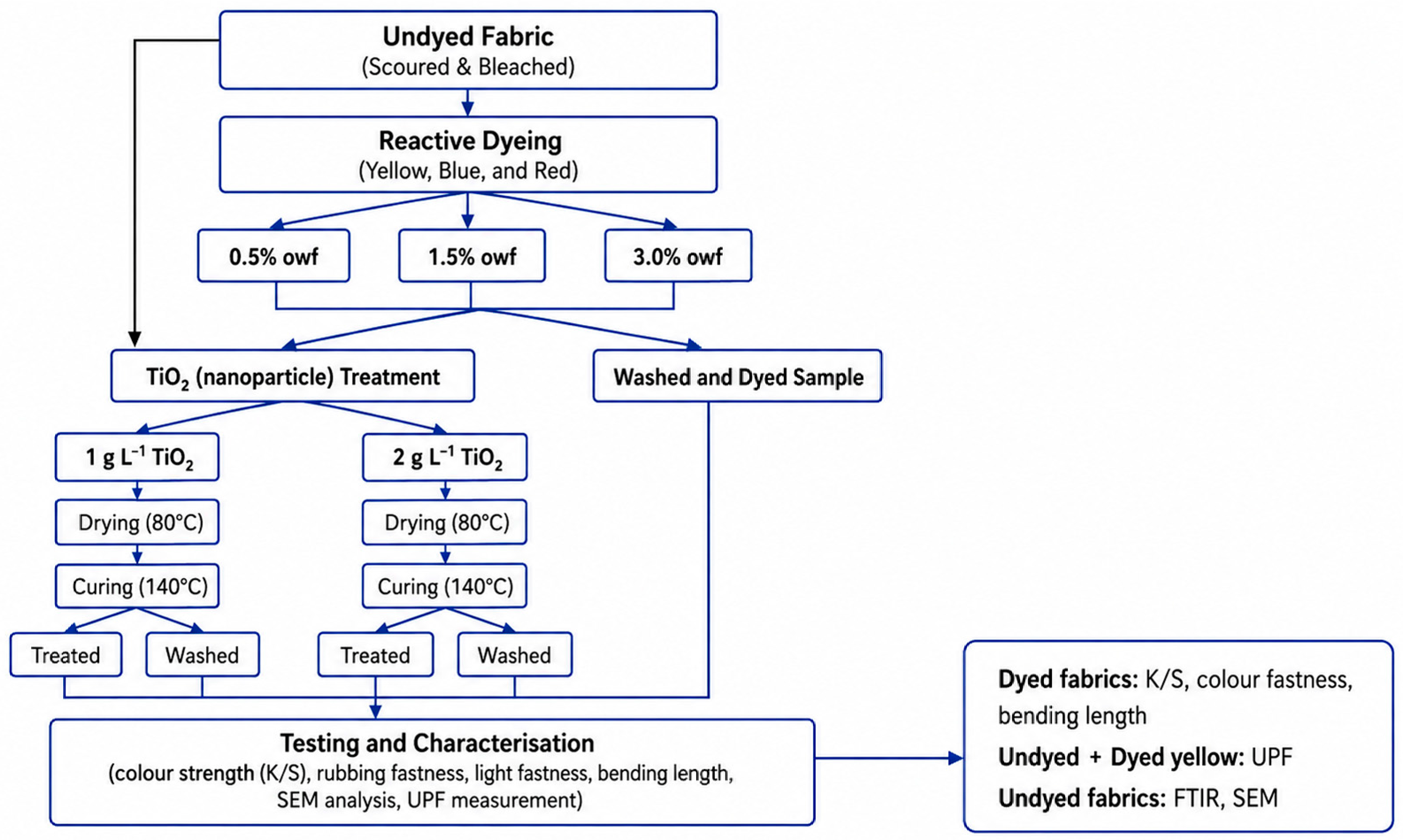
The experimental workflow adopted in this study is summarized in
Figure 1.
Scoured and bleached cotton fabrics were first dyed with three reactive dyes (yellow, blue, and red) at three dyestuff concentrations (0.5%, 1.5%, and 3.0% owf). The dyed fabrics were subsequently treated with TiO2 nanoparticles using a pad–dry–cure process at two concentrations (1 and 2 g L−1). To evaluate durability, a portion of the treated samples was subjected to a washing procedure after the treatment.
Accordingly, five sample groups were considered for each dye and dyestuff concentration: dyed and washed control samples (DW), TiO
2-treated samples treated with 1 g L
−1 (T1), washed samples finished with 1 g L
−1 of TiO
2 (T1-W), TiO
2-treated samples processed with 2 g L
−1 (T2), and washed samples finished with 2 g L
−1 of TiO
2 (T2-W). To evaluate the resistance of the deposited TiO
2-containing treatment to a standard laundering treatment, processed samples were subjected to one washing cycle according to ISO 105-C06 (C2S) [
29] using a Gyrowash machine (James H. Heal, UK). The washing bath contained ECE A detergent (4 g L
−1), sodium perborate (1 g L
−1), and 25 stainless steel balls in a total liquor volume of 50 mL. Washing was carried out at 60 °C for 30 min.
The influence of dye concentration, TiO2 loading, and washing treatment on fabric performance was evaluated through colour strength (K/S), colour fastness to rubbing and light, ultraviolet protection factor (UPF), Fourier transform infrared spectroscopy (FTIR), scanning electron microscopy (SEM), and bending length.
2.2.1. Dyeing of the Cotton Fabric
Laboratory-scale dyeing and washing procedures were carried out using a Gyrowash machine (James H. Heal, Halifax, UK). Cotton fabrics were dyed using a conventional exhaust dyeing method using reactive dyes in yellow, blue, and red hues at concentrations of 0.5%, 1.5%, and 3.0% owf. Dyeing was performed at a material-to-liquor ratio of 1:10 for 40 min at 60 °C. Glauber’s salt was used as an electrolyte to promote dye exhaustion, while soda ash and caustic soda were employed to provide the alkaline (pH 11) conditions required for dye fixation through covalent bonding between reactive dye molecules and cellulose hydroxyl groups [
30,
31].
After dyeing, the samples were neutralised with acetic acid (1 g L
−1) at 60 °C for 10 min. Subsequently, a soaping treatment was performed using a soaping agent (1 g L
−1) at 80 °C for 10 min to remove hydrolysed and unfixed dye molecules from the fabric surface. The fabrics were then thoroughly rinsed with water and dried under ambient conditions. These samples were designated as dyed and washed control samples (DW) and were used as reference materials for subsequent TiO
2 treatment and characterisation studies. The detailed dyeing recipe is reported in
Table 1.
2.2.2. TiO2 Nanoparticle Pad–Dry–Cure Treatment
Dyed cotton fabrics were functionalised with TiO
2 nanoparticles (average particle size 21 nm) using a conventional pad–dry–cure process. Padding was performed at a roller pressure of 0.3 bar and a roller speed of 25–27 rpm. TiO
2 dispersions were prepared in distilled water at two concentrations (1 and 2 g L
−1) under continuous magnetic stirring at room temperature for 30 min. An acrylic binder (Ascuryl E-HL) was incorporated to promote nanoparticle adhesion to the fibre surface, while a surfactant was added to improve nanoparticle dispersion [
32].
The fabrics were immersed in the treatment bath and subsequently passed through a laboratory-scale padding machine to ensure uniform impregnation. The padded fabrics were dried at 80 °C for 4 min and then cured at 140 °C for 3 min. Drying and curing were carried out using a laboratory stenter machine (Guangzhou Hongtong Textile Machinery Co. Ltd., Guangzhou, China) [
30].
To evaluate the immediate washing resistance, a portion of the treated samples was subjected to a washing procedure after the pad–dry–cure treatment. The samples were coded as follows: dyed and washed control sample (DW), TiO2-treated sample treated with 1 g L−1 (T1), washed sample treated with 1 g L−1 of TiO2 (T1-W), TiO2-treated sample treated with 2 g L−1 (T2), and washed sample treated with 2 g L−1 of TiO2 (T2-W).
2.2.3. Measurement of Colour Strength (K/S Value)
Reflectance spectra were measured using a Datacolor 650 spectrophotometer (Datacolor, Lawrenceville, NJ, USA). The corresponding Kubelka–Munk colour strength (K/S) values were calculated at the dominant wavelength of each dye hue, namely 430 nm for the yellow-dyed samples, 630 nm for the blue-dyed samples, and 520 nm for the red-dyed samples. For each dye hue, the same wavelength was used consistently for all dyestuff concentrations, TiO2 treatment conditions, and washing conditions. Accordingly, comparisons were performed within each dye hue. The K/S value was used as an indicator of the apparent colour strength of the samples. In addition to colour strength, colour difference (ΔE) and lightness difference (ΔL) were determined to evaluate the influence of TiO2 nanoparticle treatment on the visual appearance of the dyed fabrics.
2.2.4. Measurement of Colour Fastness to Rubbing
Colour fastness to rubbing was evaluated using a crockmeter (James H. Heal, UK) according to ISO 105-X12:2016 [
33]. Tests were performed under both dry and wet rubbing conditions in the weft direction. Fabric specimens measuring approximately 6 cm × 20 cm were mounted on the instrument platform. For dry rubbing tests, a dry cotton crocking cloth (5 cm × 5 cm) was attached to the rubbing finger. For wet rubbing tests, a cotton crocking cloth with 100% wet pick-up was used (James H. Heal, UK). The specimens were subjected to 10 rubbing cycles at a rate of 1 cycle s
−1 [
34].
After testing, the degree of staining on the white crocking cloth was assessed using the grey scale for staining in accordance with ISO 105-A03:2019 [
35]. Fastness ratings were assigned on a scale from 1 (poor fastness) to 5 (excellent fastness), with higher ratings indicating lower colour transfer during rubbing.
2.2.5. Measurement of Colour Fastness to Light
Colour fastness to light was evaluated according to ISO 105-B02 [
36].using a light fastness tester (James H. Heal & Co. Ltd., UK) in conjunction with blue wool reference standards. Test specimens and blue wool standards were cut to dimensions of approximately 5 cm × 1 cm and mounted on the specimen holder. During the test, part of each specimen was covered while the remaining area was exposed to the light source. Exposure was continued until the contrast between the exposed and unexposed portions of the specimen corresponded to grade 4 on the grey scale for colour change. The colour change of the test specimens was then compared with the blue wool standards to determine the light fastness rating. Light fastness ratings were assigned according to the ISO 105-B02 evaluation procedure, with higher ratings indicating greater resistance to photodegradation upon light exposure.
2.2.6. Measurement of Bending Length
Fabric bending length was determined using a Shirley stiffness tester (SDL International Co. Ltd., Manchester, UK) based on the cantilever principle, in accordance with BS 3356:1990 [
37]. Rectangular fabric specimens measuring 6 in × 1 in were placed on the horizontal platform of the instrument and advanced gradually until the leading edge bent under its own weight and intersected the plane inclined at 41.5° below the horizontal.
The overhanging length corresponding to this position was recorded from the instrument scale and used to calculate the bending length of the fabric. Measurements were performed at multiple locations on each specimen, including both fabric ends and reversed orientations, to improve measurement consistency. Bending length measurements were performed on five specimens for each experimental condition, the results are reported as mean ± standard deviation (SD) (n = 5) and was determined in the weft direction. The test was conducted to evaluate the influence of TiO2 nanoparticle pad–dry–cure treatment on the stiffness and flexibility of the cotton fabrics.
2.2.7. Fourier Transform Infrared (FT-IR) Analysis
Fourier transform infrared (FTIR) spectroscopy was performed using a PerkinElmer Spectrum FTIR spectrometer (PerkinElmer, Shelton, CT, USA). The analysis was conducted to identify the characteristic functional groups of cotton cellulose and to investigate potential interactions between TiO2 nanoparticles and the fabric substrate. FTIR spectra were recorded in the wavenumber range of 4000–400 cm−1 in transmittance mode. The spectra of untreated, TiO2-treated, and washed-after-process samples were compared to evaluate changes in characteristic absorption bands associated with nanoparticle deposition and immediate washing resistance.
2.2.8. Scanning Electron Microscopy (SEM) Analysis
Scanning electron microscopy (SEM) was employed to examine the surface morphology of the cotton fabrics and the distribution of TiO2 nanoparticles before and after the washing treatment. SEM observations were performed using a JEOL scanning electron microscope (JEOL, Inc., Peabody, MA, USA). Before analysis, fabric specimens were cut into small sections and sputter-coated with a thin layer of gold to minimise charging effects during electron beam exposure. The micrographs were used to evaluate the presence, distribution, and apparent retention of TiO2 nanoparticles on the fibre surface following the pad–dry–cure and washing processes.
2.2.9. Determination of Ultraviolet Protection Factor (UPF)
The ultraviolet protection performance of the fabrics was evaluated by measuring their ultraviolet protection factor (UPF). Spectral transmittance measurements were performed using a Lambda 35 UV/Vis spectrophotometer (PerkinElmer, USA) equipped with an integrating sphere accessory to account for both direct and diffusely transmitted radiation. Before testing, the fabric samples were conditioned under standard atmospheric conditions (21 °C and 65% relative humidity). Spectral transmittance was measured over the wavelength range of 280–400 nm, covering both the UVB (280–315 nm) and UVA (315–400 nm) regions. All measurements were performed in triplicate.
UPF values were calculated from the measured transmittance spectra according to AATCC Test Method 183 using the following equation:
where E
λ is the erythemal spectral effectiveness, S
λ is the solar spectral irradiance (W m
−2 nm
−1), T
λ is the spectral transmittance of the fabric, and Δ
λ is the wavelength interval. The calculated UPF values were subsequently classified according to the corresponding protection categories defined by the standard.
3. Results and Discussion
3.1. Influence of TiO2 Treatment on Colour Strength (K/S)
The effect of TiO
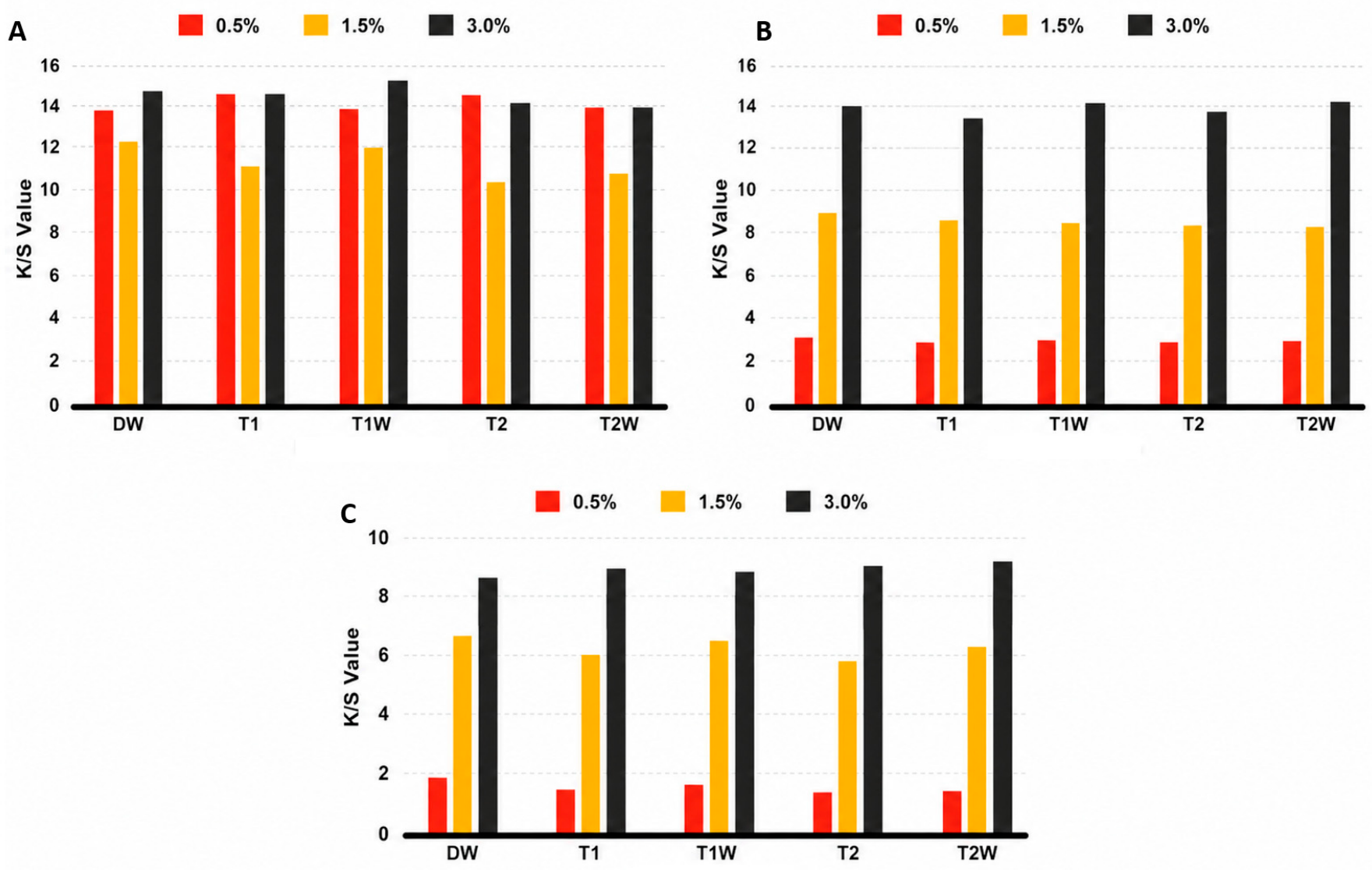
2 nanoparticle treatment on the colour strength (K/S) of reactive-dyed cotton fabrics is presented in
Figure 2 for the yellow, blue, and red dyes, evaluated at 430, 630, and 520 nm, respectively. The results indicate that the influence of TiO
2 treatment on colour strength depends on the specific dye, dyestuff concentration, TiO
2 concentration, and washing condition, and washing treatment.
For the yellow-dyed fabrics (
Figure 2A), the effect of TiO
2 treatment varied with concentrations of dyestuff. At the lowest dye concentration (0.5% owf), slightly higher K/S values were observed for the processed samples (T1 and T2) compared with the dyed and washed control sample (DW). At the intermediate dyestuff concentration (1.5% owf), a decrease in K/S was observed after TiO
2 treatment, particularly for the T2 sample. In contrast, at the highest dye concentration (3.0% owf), the washed sample treated with 1 g L
−1 TiO
2 (T1-W) exhibited the highest K/S value among the investigated conditions. These observations suggest that TiO
2 deposition may influence the optical response of the fabric surface, although the magnitude and direction of the effect depend on both dye concentration and pad–dry–cure process conditions.
The behaviour of the blue-dyed fabrics (
Figure 2B) differed from that observed for the yellow samples. In general, TiO
2 treatment resulted in slightly lower K/S values at the 0.5% and 1.5% dye concentrations compared with the control samples. However, at the highest concentrations of dyestuff (3.0% owf), the washed treated samples (T1-W and T2-W) exhibited K/S values comparable to or slightly higher than those of the control fabric. This trend suggests that the effect of TiO
2 treatment on colour strength is more evident at higher dye concentrations and may be influenced by changes in surface characteristics following washing. For the red-dyed fabrics (
Figure 2C), the effect of TiO
2 treatment was generally less pronounced. At the lower concentration (0.5% and 1.5% owf), treated samples showed K/S values comparable to or slightly lower than those of the control fabrics. At the highest concentration of dyestuff (3.0% owf), all TiO
2-treated samples exhibited K/S values similar to or higher than the corresponding control sample, with the highest value observed for T2-W. These results indicate that TiO
2 treatment does not substantially alter the colour strength of red-dyed fabrics and may contribute to slight increases in apparent colour strength under specific treatment conditions.
Overall, the results suggest that the influence of TiO
2 nanoparticles on colour strength is dependent on the specific reactive dye, concentration of dyestuff, deposition concentration, and washing treatment. While some processed samples exhibited slightly higher K/S values than the corresponding controls, the effect was not consistent across all dye colours and treatment conditions. The observed variations may be related to changes in the optical properties of the treated fabric surface induced by TiO
2 nanoparticle deposition and subsequent washing. The different responses observed for the yellow-, blue-, and red-dyed fabrics can be interpreted considering the combined optical behaviour of the dye-fibre-TiO
2 system rather than the effect of TiO
2 alone. According to the Kubelka-Munk theory [
38], the apparent colour strength depends on the balance between light absorption and diffuse reflectance. The deposition of TiO
2 nanoparticles introduces an additional scattering phase at the fabric surface because of the high refractive index of TiO
2. Consequently, part of the incident radiation is scattered before reaching the dye molecules, while another fraction is diffusely reflected towards the detector. Since the reactive dyes employed in this study possess different chromophoric structures and absorption spectra, the interaction between TiO
2-induced scattering and dye absorption is expected to vary among the different hues. Depending on the spectral overlap between the dye absorption bands and the modified reflectance of the finished surface, TiO
2 deposition may produce either a slight increase or a slight decrease in the measured K/S values. Therefore, the observed variations should not be interpreted as changes in dye concentration or dye fixation, but rather as changes in the optical response of the processed fabric.
The influence of dye concentration can be interpreted similarly. At higher dyestuff concentrations, the stronger intrinsic absorption of the dye layer partially compensates for the additional scattering introduced by TiO2, whereas at lower dye concentrations the relative contribution of surface scattering becomes more significant. This explains why the magnitude and even the direction of the K/S variation depend simultaneously on the specific dye and dyestuff concentration.
3.2. Influence of TiO2 Treatment on Colour Fastness to Rubbing
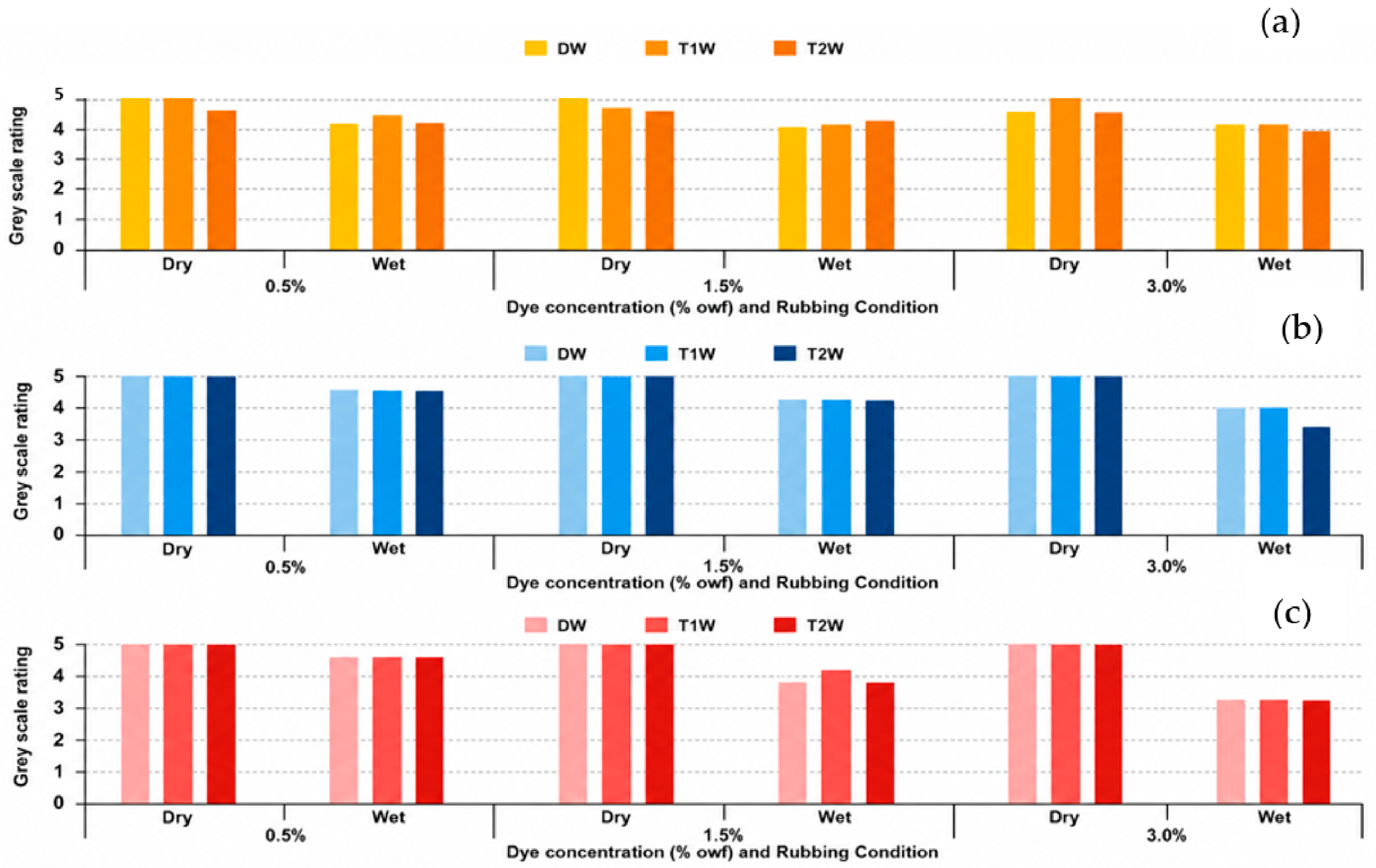
The colour fastness to rubbing of the dyed and TiO
2-treated cotton fabrics was evaluated under dry and wet conditions in the weft direction. The results are presented in
Figure 3. Three sample groups were considered: dyed and washed control fabrics (DW), fabrics treated with 1 g L
−1 of TiO
2 and subsequently washed (T1-W), and fabrics treated with 2 g L
−1 of TiO
2 and subsequently washed (T2-W).
For the yellow-dyed fabrics (
Figure 3a), excellent dry rubbing fastness was observed at all concentrations of dyestuff, with ratings ranging from 4.7 to 5. Under wet rubbing conditions, the ratings were slightly lower than those obtained under dry conditions, with values between approximately 4.3 and 4.5. The TiO
2-treated samples exhibited rubbing fastness values comparable to those of the control fabrics, indicating that the treatment did not adversely affect colour transfer resistance. A similar behaviour was observed for the blue-dyed fabrics (
Figure 3b). Dry rubbing fastness remained consistently high, with ratings close to 5 for all dye concentrations and treatment conditions. Wet rubbing fastness was lower than dry rubbing fastness and showed a slight decrease at the highest concentration of dyestuff (3.0% owf), particularly for the T2-W sample. Nevertheless, the differences among the treatment conditions remained limited, suggesting that the TiO
2 process had little influence on rubbing fastness performance. This limited effect suggests that the treatment remained predominantly confined to the fibre surface without significantly affecting the dye-fibre interactions created during reactive dyeing. Likewise, the similar behaviour observed for the three dye hues indicates that the treatment did not produce measurable deterioration in rubbing fastness, suggesting that the established dye–fibre interactions were not substantially affected. For the red-dyed fabrics (
Figure 3c), dry rubbing fastness ratings were also close to 5 irrespective of the concentration of dyestuff or treatment condition. As observed for the yellow and blue fabrics, lower ratings were obtained under wet rubbing conditions. The reduction was more pronounced at the highest concentration of dyestuff (3.0% owf), where wet rubbing ratings were approximately 3.4. However, the TiO
2-treated samples exhibited values comparable to those of the corresponding control fabrics.
Overall, the results indicate that TiO2 nanoparticle deposition has a negligible effect on colour fastness to rubbing. Excellent dry rubbing fastness was maintained for all dyed fabrics, while wet rubbing fastness was consistently lower, particularly at higher concentrations of dyestuffs. The observed behaviour is consistent with the greater tendency of fabrics dyed at higher dyestuff concentrations to release small amounts of dye under wet mechanical action. Nevertheless, the TiO2-treated samples generally exhibited rubbing fastness ratings comparable to those of the untreated controls, demonstrating that the process did not compromise the durability of dye fixation.
3.3. Effect of TiO2 on Colour Fastness to Light
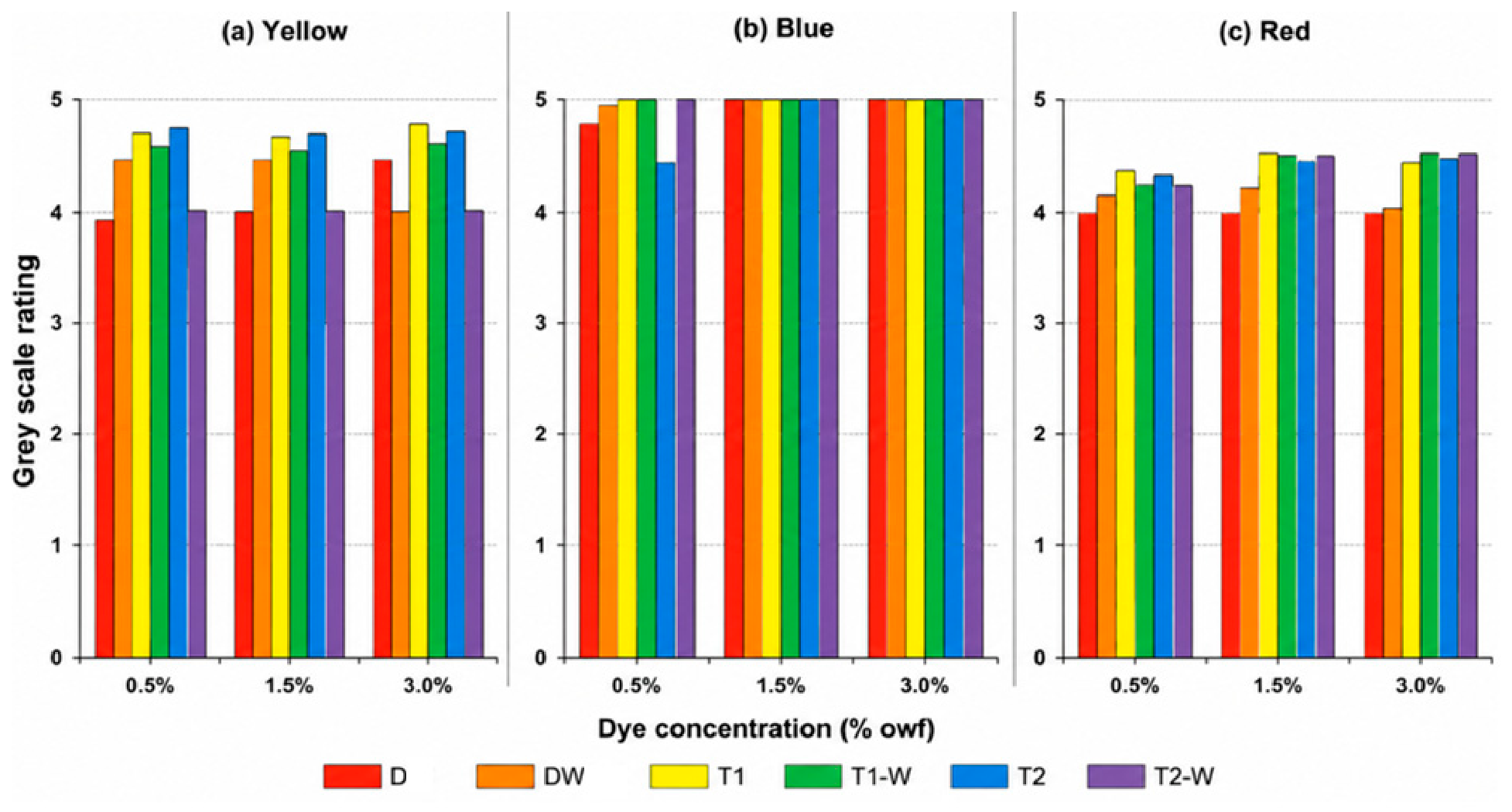
The colour fastness to light of the dyed and TiO
2-treated cotton fabrics was evaluated using a xenon lamp exposure test. The results are presented in
Figure 4a–c for the yellow, blue, and red dyed fabrics, respectively.
For the yellow-dyed fabrics (
Figure 4a), light fastness ratings ranged from approximately 4.0 to 4.8 depending on the concentration of dyestuff and treatment condition. In general, the TiO
2-treated samples exhibited ratings comparable to or slightly higher than those of the untreated control fabrics. The highest ratings were observed for the finished samples at dyestuff concentrations of 0.5% and 1.5%. After washing, a slight reduction in rating was observed for some treatment conditions; however, the values remained within the range of good to excellent light fastness. The blue-dyed fabrics (
Figure 4b) exhibited the highest light fastness among all investigated hues. Most samples achieved ratings close to 5 regardless of dye concentration or TiO
2 treatment condition. Only minor variations were observed among the different sample groups, indicating that TiO
2 treatment had little influence on the already high photostability of the blue dye. For the red-dyed fabrics (
Figure 4c), light fastness ratings were generally lower than those observed for the yellow and blue fabrics, with values ranging from approximately 4.0 to 4.5. Nevertheless, the TiO
2-treated samples exhibited ratings comparable to or slightly higher than those of the corresponding controls, particularly at the medium and high concentrations of dyestuffs. The limited effect of TiO
2 concentration on light fastness indicates that the applied treatment levels were sufficient to provide additional UV screening without significantly modifying the intrinsic photostability of the reactive dyes. Differences among the investigated dyes are therefore mainly due to the different photochemical stability of the chromophoric system rather than to the TiO
2 treatment itself.
Overall, the results demonstrate that TiO2 nanoparticle treatment did not substantially impair the light-fastness performance of reactive-dyed cotton fabrics and may provide slight improvements under certain treatment conditions. The consistently high ratings observed after treatment and washing suggest that the functionalisation process does not compromise the photostability of the dyed fabrics.
3.4. Bending Length (Fabric Stiffness Analysis)
The bending lengths of the dyed and TiO
2-treated cotton fabrics measured in the weft direction are reported in
Table 2 for the yellow, blue, and red dyed samples. The reported bending lengths correspond to the average of three specimens.
For the yellow-dyed fabrics, bending length values ranged from 1.49 to 1.60 cm across all concentrations of dyestuff and treatment conditions. Only minor variations were observed following TiO2 process and washing, indicating a limited influence of the treatment on fabric stiffness. A similar behaviour was observed in the blue-dyed fabrics, with bending lengths ranging from 1.52 to 1.60 cm. The treated and washed samples exhibited values comparable to those of the corresponding control fabrics, suggesting that the TiO2 treatment did not substantially affect the material’s flexibility. For the red-dyed fabrics, bending length values ranged from 1.50 to 1.60 cm. Slight increases were observed for some processed samples, particularly at the higher TiO2 concentration; however, the magnitude of these changes remained small.
Overall, the results indicate that TiO2 nanoparticle treatment has a negligible effect on fabric stiffness. The negligible differences between the two TiO2 concentrations suggest that the relatively low nanoparticle loading, together with the thin binder layer, did not substantially modify the flexibility of the cotton fibres or the fabric architecture. This finding is advantageous from an application perspective, as the functional treatment improved fabric performance without substantially affecting flexibility and comfort-related properties.
3.5. FT-IR Analysis
Fourier transform infrared (FTIR) spectroscopy was performed using a PerkinElmer Spectrum FTIR spectrometer (PerkinElmer, USA). Spectra were recorded in transmittance mode over the wavenumber range 4000–400 cm
−1. The available spectra were compared qualitatively, and no spectral normalisation to a reference band was applied. Consequently, differences in band intensity were interpreted cautiously and were not used for quantitative determination of the residual TiO
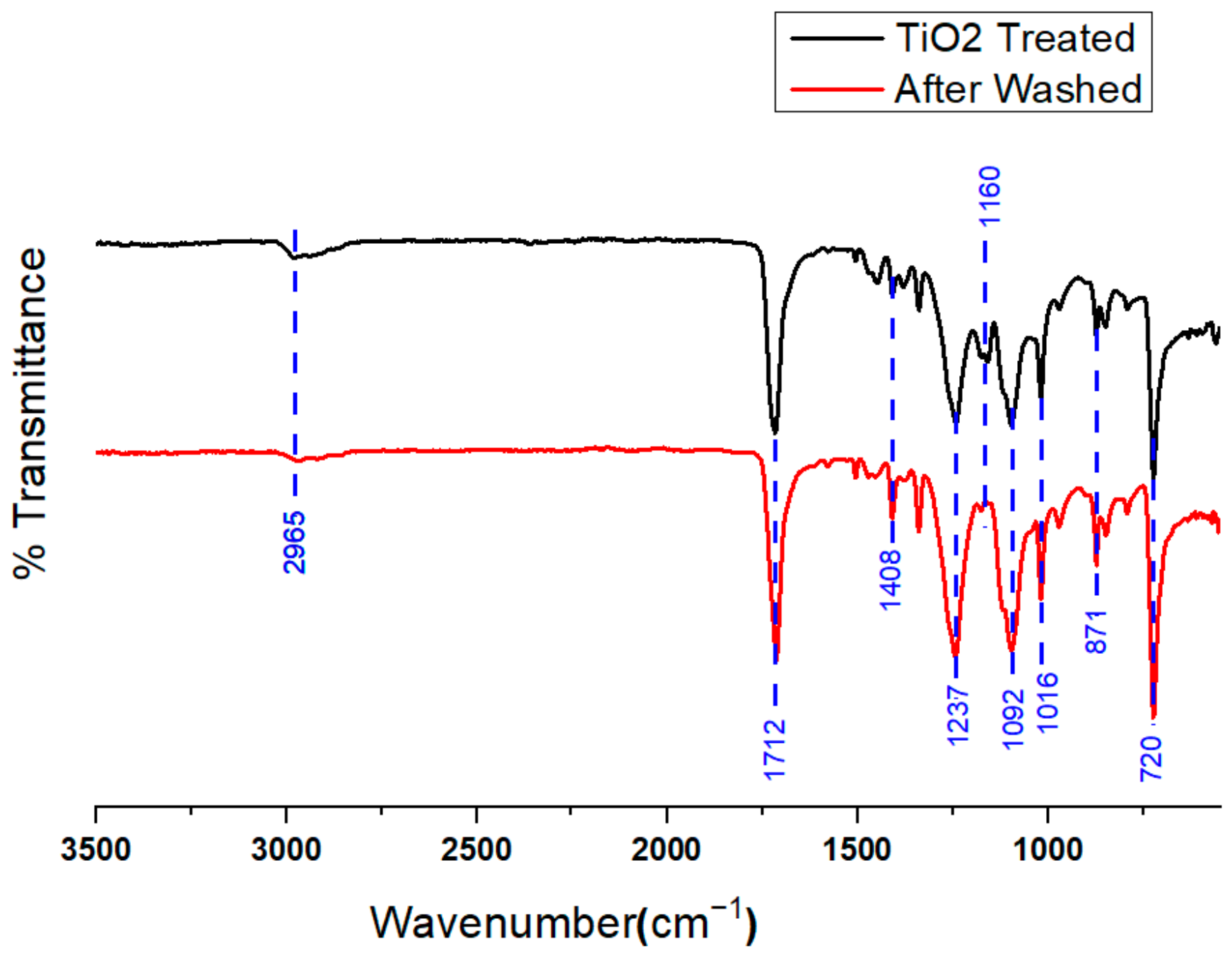
2 content. The spectra of undyed TiO
2-treated and washed-after-process samples are presented in
Figure 5.
The FTIR spectra exhibited the characteristic absorption bands of the organic components of the treated fabrics, including both the cellulose substrate and the acrylic binder. The band observed at approximately 2950–2965 cm
−1 is associated with aliphatic C-H stretching vibrations and may arise from contributions of both cellulose and the acrylic binder [
39,
40]. Likewise, the absorption band at approximately 1712 cm
−1 is more consistently attributed to the carbonyl stretching vibration of the acrylic binder than to native cellulose [
41]. The spectral region around 1160 cm
−1 may contain overlapping contributions from ester C-O-C stretching vibrations of the acrylic binder together with glycosidic C-O-C vibrations of cellulose. Similarly, the bands within the 1237–1020 cm
−1 region are primarily associated with C-O and C-O-C vibrations of cellulose, although contributions from the acrylic binder cannot be excluded [
42,
43].
Following the washing treatment, a reduction in the intensity of several bands was observed, particularly within the 1160–1020 cm
−1 region. These spectral changes indicate modifications of the treated surface after laundering and are consistent with the partial removal of the pad–dry–cure treatment. However, because several bands originate from overlapping contributions of cellulose and the acrylic binder, the FTIR spectra do not allow the individual components responsible for these changes to be quantitatively distinguished. Weak absorption bands were observed at approximately 871 cm
−1 and 720 cm
−1. Similar bands have previously been reported for Ti-O and Ti-O-Ti vibrations in TiO
2-containing systems [
44,
45]. Their presence is therefore consistent with the deposition of TiO
2-containing material on the fibre surface, although the absence of spectra of the neat TiO
2 dispersion and binder-only controls does not allow these assignments to be considered conclusive.
Overall, the FTIR results are consistent with the presence of TiO
2-containing treatment material on the cotton surface. The spectral changes observed after washing are consistent with modifications or partial removal of the surface treatment, although they cannot be used to quantify residual TiO
2. Although FTIR spectroscopy does not provide a direct quantitative determination of the residual TiO
2 content, the observed spectral changes indicate partial removal of the treatment following laundering and are consistent with the corresponding SEM observations and the reduction in UV protection after washing. The retention of TiO
2 nanoparticles on the cotton fibres is likely promoted by the combined action of the acrylic binder and interfacial interactions between hydroxyl groups on the cellulose surface and hydroxylated TiO
2 species [
13,
44,
46]. These interactions are expected to contribute to treatment adhesion during the pad–dry–cure process and to the partial retention of the pad–dry–cure process after washing [
47,
48].
FTIR spectroscopy alone does not provide sufficient evidence to establish either the elemental composition of the treatment or the chemical nature of these interactions between TiO2 nanoparticles, the acrylic binder, and the cellulose substrate. Therefore, while the observed spectral changes support the successful deposition and partial retention of the pad–dry–cure treatment after washing, they do not allow definitive identification of the underlying bonding mechanism or quantitative determination of the residual TiO2 content. Further surface-sensitive characterisation techniques, such as X-ray photoelectron spectroscopy (XPS) or energy-dispersive X-ray spectroscopy (EDX), would be required to directly determine the elemental composition of the treated surface and elucidate the nanoparticle-cellulose interface.
3.6. SEM Analysis
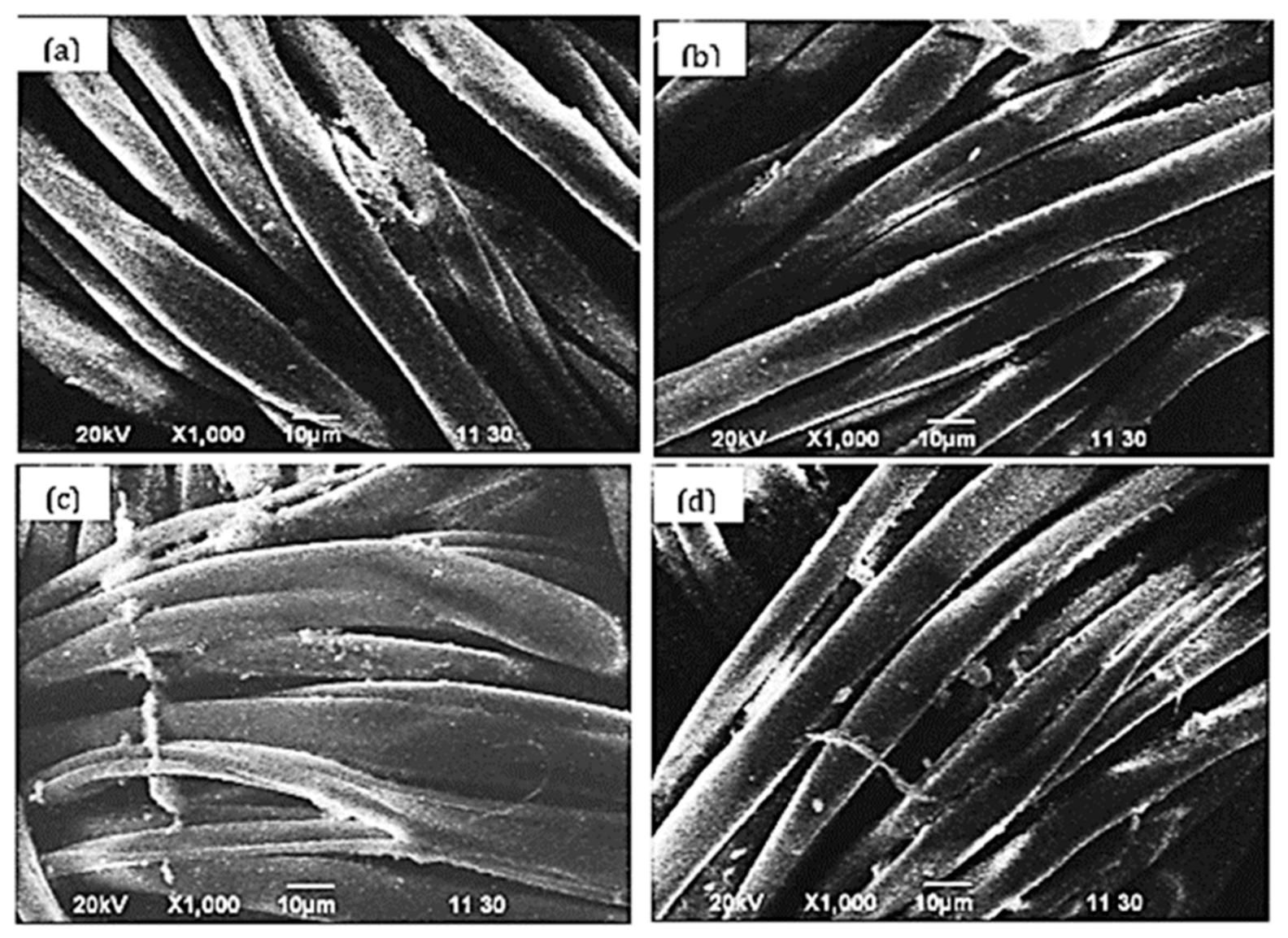
Scanning electron microscopy (SEM) was employed to examine the surface morphology of the cotton fabrics after TiO
2 treatment and washing. Representative SEM micrographs are presented in
Figure 6a–d. The micrograph of sample T1 (1 g L
−1 TiO
2 deposition) (
Figure 6a) shows the presence of surface deposits distributed along the cotton fibres. The treated fibres exhibited a rough appearance, suggesting the deposition of TiO
2-containing material on the fibre surface. Localised particle agglomerations were also observed, indicating that the nanoparticle distribution was not completely uniform.
For the washed sample T1-W (
Figure 6b), surface deposits remained visible after laundering, although the apparent coverage and the extent of agglomeration appeared lower than those observed for the corresponding unwashed sample. These observations suggest partial removal of treatment material during washing while indicating that a portion of the deposited material remained associated with the fibre surface. The SEM micrograph of sample T2 (2 g L
−1 TiO
2 treatment) (
Figure 6c) exhibited a greater degree of surface coverage than T1. The fibre showed more extensive surface coverage, and agglomerated structures were observed more frequently, consistent with the higher TiO
2 concentration used during treatment. Following washing (T2-W,
Figure 6d), surface deposits remained visible on the fibres, although some reduction in apparent surface coverage was observed compared with the unwashed T2 sample. Nevertheless, the treated fibre morphology suggested that part of the deposited treatment was retained after laundering.
Overall, the SEM observations indicate successful deposition of TiO2-containing material on the cotton fibre surface and reveal partial changes in surface morphology after washing. The results are consistent with the FTIR analysis, which also suggested partial removal of treatment material during laundering.
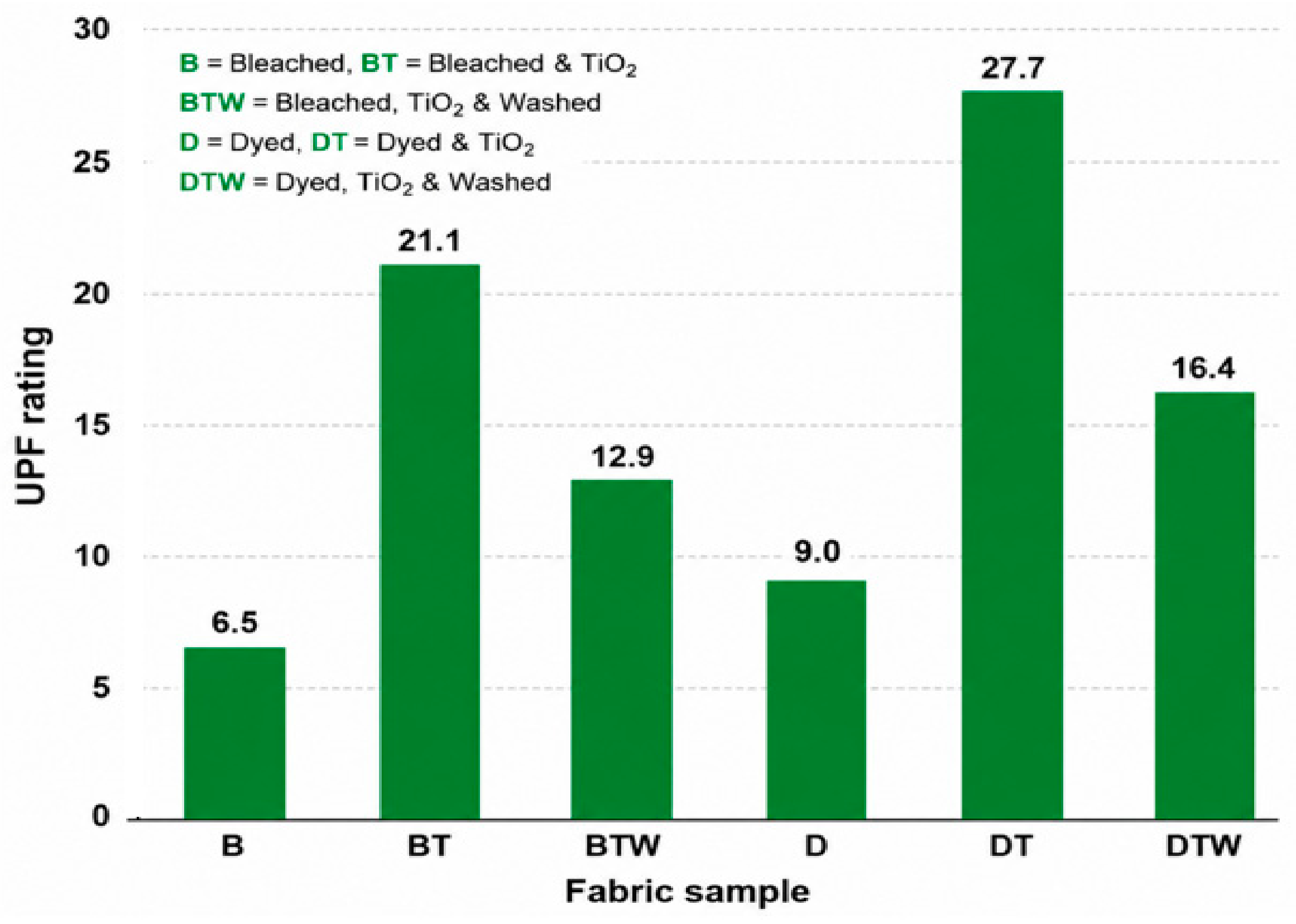
3.7. Ultraviolet Protection Factor (UPF) Analysis
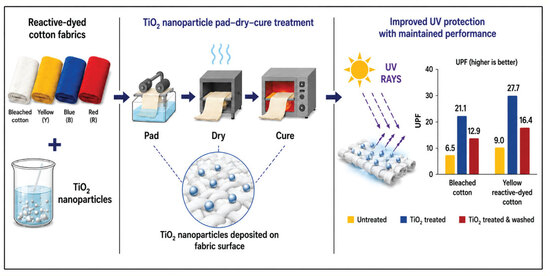
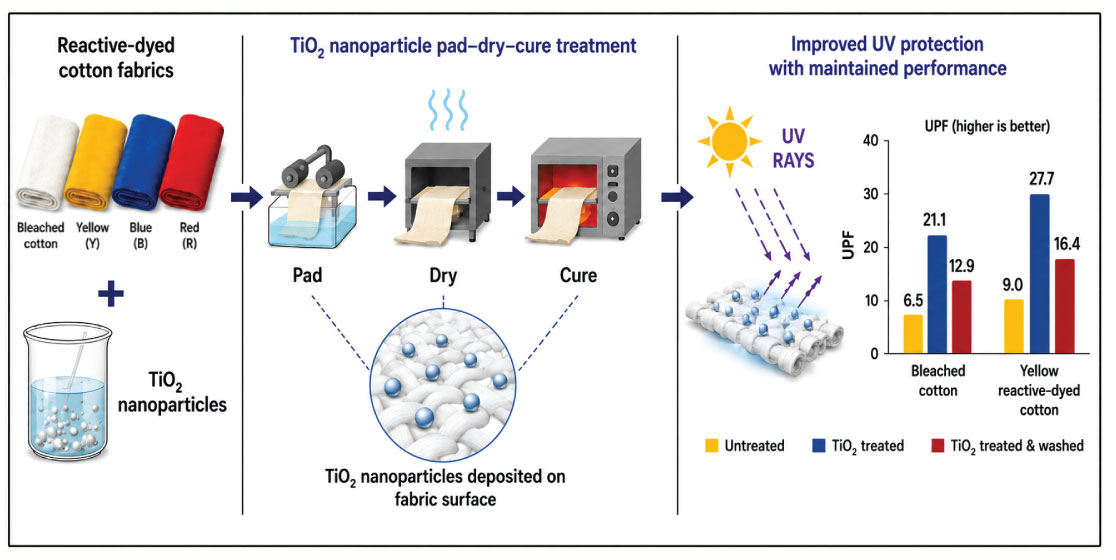
The ultraviolet protection performance was evaluated for the bleached cotton fabric and for the cotton fabric dyed with the yellow reactive dye, both before TiO
2 pad–dry–cure treatment, after treatment, and after one standardised washing cycle. Blue- and red-dyed fabrics were not included in the UPF measurements. The results are presented in
Figure 7.
The untreated bleached cotton fabric exhibited a low UPF value of 6.5, indicating limited protection against ultraviolet radiation. The dyed fabric showed a slightly higher UPF value (9.0); however, it remained within the category of low UV protection. This behaviour is consistent with the relatively high UV transmittance typically observed in lightweight cotton fabrics [
49]. A substantial increase in UPF was observed after TiO
2 treatment. The UPF value of the bleached fabric increased from 6.5 to 21.1 after the pad–dry–cure process, corresponding to the “good protection” category. An even higher UPF value of 27.7 was obtained for the dyed and TiO
2-treated fabric, which falls within the “very good protection” category. This improvement may be attributed to the UV-absorbing and UV-scattering properties of TiO
2 nanoparticles, combined with the intrinsic UV absorption of the dye molecules [
24]. The improvement in UV protection can be interpreted considering the complementary roles of TiO
2 nanoparticles and reactive dye molecules. TiO
2 possesses a wide band gap (~3.0–3.2 eV) [
50] that enables efficient absorption of ultraviolet radiation, while its high refractive index promotes multiple scattering of incident UV light, thereby reducing radiation transmission through the fabric [
24,
51]. In parallel, reactive dyes contribute to UV protection through the absorption of ultraviolet radiation by their conjugated chromophoric systems [
11,
12]. The extent of this contribution depends on the molecular structure of the dye or dyestuff and the dyestuff concentration, since higher dye concentrations generally yield a greater density of UV-absorbing chromophores within the textile substrate. Consequently, the enhanced UPF observed after treatment is attributed to the combined action of the dye-fibre-TiO
2 system, where the intrinsic UV absorption of the dyed fabric is complemented by the absorption and scattering mechanisms introduced by the TiO
2 treatment.
Following washing, a reduction in UPF was observed for both bleached and dyed processed samples. The present washing treatment consisted of a single ISO 105-C06 laundering cycle and therefore provides an assessment of the treatment’s immediate washing resistance rather than its long-term laundering durability. The UPF value of the bleached treated fabric decreased from 21.1 to 12.9, while the dyed treated fabric decreased from 27.7 to 16.4. Despite this reduction, the dyed treated sample retained a UPF value within the “good protection” range. The decrease in UPF after washing is consistent with the FTIR and SEM observations, which suggested partial removal of treatment material during laundering. Nevertheless, the treated fabrics maintained higher UV protection levels than the corresponding untreated samples, demonstrating the effectiveness of the TiO2 pad–dry–cure process as a functional finishing treatment for cotton fabrics.
4. Conclusions
This study investigated the effect of TiO2 nanoparticle treatment on the colour performance, durability, ultraviolet protection, and surface characteristics of reactive-dyed cotton fabrics. TiO2-containing material was deposited on the fabric surface using a pad–dry–cure process to the fabric surface, and their influence was evaluated through colour strength, colour fastness, bending length, FTIR spectroscopy, SEM analysis, and UPF measurements.
The results showed that the effect of TiO2 treatment on colour strength depended on the specific reactive dye, concentration of dyestuff, and washing condition. In general, TiO2 treatment did not cause substantial changes in colour strength, although slight variations in K/S values were observed depending on the treatment conditions. Colour fastness to rubbing and light remained high after the process, indicating that the TiO2 treatment did not adversely affect the durability of the dyed fabrics. FTIR and SEM analyses suggested the successful deposition of TiO2-containing material on the cotton fibre surface and indicated partial changes in pad–dry–cure treatment characteristics after washing. The reduction in the intensity of selected FTIR bands and the morphological differences observed in SEM images were consistent with the partial removal of treatment material during laundering.
The most significant effect of the treatment was observed in the ultraviolet protection performance. TiO2 treatment substantially increased the UPF values of both bleached and dyed cotton fabrics, with the yellow-dyed and TiO2-treated samples. Although UPF values decreased after washing, the treated fabrics maintained higher UV protection than the corresponding untreated fabrics. Bending length measurements showed only minor variations among the different treatment conditions, indicating that the TiO2 treatment had a negligible effect on fabric stiffness and handle. Overall, the results demonstrate that TiO2 nanoparticle treatment is an effective approach for improving the UV-protective performance of cotton fabrics while preserving their colour fastness and mechanical comfort characteristics.
A limitation of the present study is the absence of direct surface elemental characterisation (e.g., XPS or EDX), which would enable quantitative assessment of TiO2 retention after washing and provide additional insight into the pad–dry–cure mechanism. A further limitation is that UPF measurements were restricted to bleached cotton and yellow reactive-dyed cotton; therefore, the influence of the blue and red reactive dyes on UV-protective performance could not be assessed. Future studies should focus on improving immediate washing resistance through enhanced fixation strategies, reducing nanoparticle agglomeration, evaluating long-term laundering performance, and assessing the industrial scalability of the treatment process.




 ,
,