


Abstract
This review examines how plant polyphenols enable multifunctional textiles, offering a sustainable alternative to synthetic dyes and nanomaterial-based treatments. A literature search (2001–2025) identified 105 peer-reviewed studies across eight functional areas. Abundant in agricultural and industrial byproducts, plant polyphenols act as natural colorants, bio-adhesives, and performance enhancers—providing coloration, antibacterial activity, UV protection, flame retardancy, deodorization, antioxidant capacity, superhydrophobicity, and more. Their catechol and pyrogallol groups bind strongly to natural and synthetic fibers via hydrogen bonding, π–π stacking, and metal chelation, ensuring durable, nontoxic functionality. We analyze structure–function links and scalable methods, including pad-dry-cure and metal–phenolic network (MPN) assembly, which were validated against ISO, ASTM, and AATCC standards. Polyphenol-based textiles match or exceed conventional ones in key metrics, with added benefits: full biodegradability, low ecotoxicity, and skin compatibility. Key advances include enzymatic polymerization for wash-stable color, MPN tuning for customizable functions, and using waste-derived polyphenols. However, major challenges remain: narrow color range (mostly yellow, brown, black) and poor wash/UV resistance, leading to rapid fading and loss of antibacterial/UV protection after laundering. Solving these is a top priority for future work. Overall, this review delivers a practical, science-based roadmap for high-performance, sustainable textiles that align with the Sustainable Development Goals and meet real-world needs in healthcare, sportswear, and smart wearables.
1. Introduction
Textiles, which have been archaeologically documented for over 7000 years, have transitioned from natural fibers (cotton, wool, silk, viscose) to synthetic polymers such as nylon-6,6 and polyethylene terephthalate (PET), which now account for >65% of global fiber production [1]. Contemporary textiles dyed with synthetic dyes often contain a wide range of hazardous compounds that pose significant risks to human health and the environment. Many of these compounds are classified as potential carcinogens, particularly under conditions of prolonged skin contact, such as when dyes interact with sweat and body heat. In response, corresponding research and industrial efforts have been directed toward advancing dyeing technologies using natural dyes, especially those utilizing plant-based materials traditionally regarded as agricultural or industrial waste. Growing societal emphasis on sustainable development and public health has further intensified interest in eco-friendly textile coloration. Regulatory frameworks increasingly prohibit the use of toxic heavy metal mordants in natural dyeing processes, reinforcing the need for safer alternatives [1].
Far exceeding passive apparel roles, modern textiles function as dynamic bio-interfaces: they mitigate UV exposure [2], inhibit microbial colonization [3], and repel moisture, all while maintaining breathability, drape, and full recyclability. These multifunctional requirements are driven by stringent regulatory frameworks, rising consumer expectations for performance and safety, and alignment with the Sustainable Development Goals (SDGs) [4,5]. Functional textiles are engineered to deliver advanced, application-specific capabilities, such as barrier protection, real-time physiological monitoring, or on-fabric energy harvesting, that go well beyond the passive roles of traditional fabrics. Their development responds directly to targeted end-use requirements in healthcare, sportswear, defense, and smart wearables [6,7]. To impart such features, nanomaterials including graphene, MXenes, carbon nanotubes, and metal–organic frameworks are commonly integrated into fiber structures or applied as surface coatings. Yet their practical implementation is hindered by two key limitations: weak interfacial bonding with textile substrates and concerns over cytotoxicity or dermal irritation [8,9]. Consequently, effective functionalization strategies increasingly rely on biocompatible, environmentally benign binding agents, particularly plant-derived polyphenols and other green adhesives that ensure durable attachment without compromising safety or sustainability.
Plant polyphenols, abundant in tea, grapes, apples, and bark, are versatile, sustainable agents for textile functionalization [10]. They serve as natural dyes, bio-adhesives, and performance enhancers with antimicrobial, anti-inflammatory, and antioxidant effects [3,10,11]. Their catechol and pyrogallol groups bind strongly to cotton, wool, silk, and synthetics. They also chelate metal ions (Fe3+, Cu2+, Ag+) to enable toxin-free metal deposition on fabrics. Plus, they absorb UV light (280–400 nm) and are skin-safe, which is ideal for wound dressings, sportswear, and medical textiles [11,12]. Biomass-derived pigments have emerged as promising alternatives to conventional synthetic dyes by delivering comparable color performance while meeting stringent environmental and safety standards. This review critically synthesizes the structure–function relationships underlying polyphenol–textile interactions, evaluates scalable fabrication strategies—from single-step aqueous impregnation to multilayer metal–phenolic network (MPN) assembly—and rigorously assesses functional performance against standardized metrics (ISO, ASTM, AATCC). Integrating materials science, textile engineering, and translational biomedical criteria, it establishes a science-driven, industrially grounded roadmap for developing next-generation functional textiles that are effective, durable, safe, and scalable.
This review identifies five critical research gaps in existing studies on plant polyphenols for multifunctional textiles: (1) functional fragmentation—current work predominantly examines isolated properties rather than the synergistic, real-world performance required in commercial applications; (2) scalability and standardization deficit—few studies evaluate process scalability or validate performance against internationally recognized standards (e.g., ISO, ASTM, AATCC); (3) structure–function ambiguity—there is insufficient mechanistic understanding linking specific polyphenol structural features (e.g., hydroxylation pattern, glycosylation, molecular weight) and botanical origin to their functional efficacy across diverse fiber substrates; (4) underutilization of waste-derived feedstocks—agricultural and industrial polyphenol-rich byproducts remain largely unexploited as sustainable, circular economy-compatible raw materials; and (5) safety–durability imbalance—nanoscale polyphenol coatings frequently exhibit an inverse relationship between biocompatibility/skin safety and washing/fastness durability, with few engineered systems achieving robust co-optimization of both attributes. To close these gaps, this review delivers five concrete contributions, i.e., multifunctional integration (105 studies from 2001 to 2025 grouped into eight functions with proven synergies for healthcare, sportswear, and smart wearables); industry-aligned methods (focus on scalable processes and strict ISO/ASTM/AATCC validation); structure–function–fiber links; waste-to-value and safety; and translational roadmap and strategic goals (smart wearables with real-time pathogen sensing), which are fully aligned with the SDGs.
2. Methods
The literature search was conducted in the Web of Science Core Collection database, covering the period from 1 January 2001 to 31 December 2025. The search employed the topic query “polyphenol” AND “fabric”, yielding 204 records. To ensure methodological rigor and thematic relevance, a three-stage screening process was applied: First, 12 records were excluded (six review articles, three conference proceedings, two early-access publications and one correction notice), leaving 194 records for title–abstract screening. Then, based on title and abstract assessment, 74 records were excluded for lacking substantive focus on polyphenol applications in fabrics or textiles, resulting in 120 records eligible for full-text evaluation. Furthermore, an additional 12 records were excluded due to the unavailability of the full text. The remaining 105 articles underwent full-text review (Figure S1) and were categorized into eight functional domains: coloration (n = 32), antibacterial activity (n = 13), UV protection (n = 6), flame retardancy (n = 3), deodorization (n = 6), antioxidant capacity (n = 21), hydrophobic effects (n = 13), and others (n = 11).
Based on the functional effects and underlying action mechanisms of polyphenolic compounds on textile substrates elaborated in this review, technical descriptive prompts were formulated and input into the “Doubao” AI image generation platform (https://www.doubao.com/chat/create-image?channel=sysceo, Doubao-Seed-2.0, Beijing Chuntian Zhiyun Technology Co., Ltd., Beijing, China) to produce preliminary schematic illustrations of Figures 1–7. To guarantee the scientific rigor, technical accuracy, and visual interpretability, the authors subsequently performed comprehensive manual refinement of the initial drafts, including annotation correction, structural reconstruction, and layout optimization. The finalized original mechanistic diagrams of Figures 1–7 presented in this paper were obtained following the above revisions.
3. Effects of Polyphenols on Fabrics and Their Application
3.1. Effects of Coloration
Plant polyphenols, including tannins, flavonoids, and anthocyanins, possess conjugated aromatic ring systems that selectively absorb specific wavelengths in the visible spectrum, thereby conferring natural yellow, brown, red, or black coloration to textiles (Figure 1A). Their high density of phenolic hydroxyl groups (–OH) supports extensive hydrogen bonding with both cellulose-based fibers (e.g., cotton, linen) and protein-based fibers (e.g., silk, wool) (Figure 1B); moreover, these groups serve as effective chelating sites for metal ion mordants, enabling the formation of stable coordination complexes that functionally mimic covalent linkages between polyphenols and fiber substrates (Figure 1C). Under oxidative conditions, such as exposure to atmospheric oxygen, elevated temperature, or enzymatic catalysis by polyphenol oxidases (e.g., laccase), polyphenols undergo oxidation followed by polymerization, yielding high-molecular-weight quinone-based polymers. These polymers exhibit enhanced chromophore stability and remain tightly bound to the fabric matrix, markedly improving color fastness to washing, light, and perspiration (Figure 1D). Acidic conditions promote hydrogen-bonding interactions between polyphenols and fibers, whereas alkaline conditions accelerate polyphenol oxidation and subsequent chromogen development [13,14,15,16] (Figure 1E).
Figure 1.
Dyeing mechanism of polyphenols as fabric dyes: (A), oxidative polymerization of phenol groups impart natural hues; (B), specific binding affinity between phenolic hydroxyl groups and fibers through H-bonds, van der Waals, covalent bonds or metal coordination; (C), metal ion chelation imparts different hues; (D), enzymatic oxidative polymerization enhances color fastness; (E), acid condition enhances H-bonding and alkali condition, accelerating oxidation and color development of polyphenols.
3.1.1. Natural Dyes from Various Sources
Natural dyes derived from diverse botanical sources have emerged as viable, sustainable alternatives to synthetic dyes, whose well-documented ecotoxicological impacts include persistent aquatic toxicity and bioaccumulation potential. Natural colorants demonstrate broad applicability across synthetic textile substrates (e.g., PET, nylon), enabling effective dyeing via simplified, low-energy processes, particularly advantageous for fibers traditionally recalcitrant to conventional dyeing (Table S1). Comparative studies confirm significantly higher exhaustion of natural colorants on cationized synthetic textiles, evidenced by deeper shade development and substantially elevated K/S values [13]. Stability assessments show that aqueous extracts from date pit powder retain full dyeing efficacy for over 15 days when stored in darkness at 3 °C [14,15]. Fennel leaf (Foeniculum vulgare) extracts have been successfully applied to cationized cotton, with optimal dyeing achieved at pH 8.22 and 99.8 °C for 59.4 min; inclusion of the cationizing agent Croscolor DRT (a dyeing auxiliary) enhanced polyphenol uptake while reducing biological oxygen demand in post-dyeing effluent by up to 37% [16]. Moreover, residual dye liquors, owing to high retained pigment concentration, support multiple reuse cycles without appreciable loss in color yield. Notably, fabrics dyed with recycled liquor containing tea polyphenol (TP)-derived bio-pigments exhibited significantly higher color intensity (Integ values) than those dyed with fresh solutions under identical bath conditions [17,18]. All resulting dyed textiles demonstrated excellent rubbing and washing fastness (ISO 105-X12 [19] and ISO 105-C06 [20], rating ≥ 4). Enzymatic bioconversion using crude Aspergillus niger laccase efficiently transformed TPs into stable biomass pigments, yielding textiles certified as eco-friendly per ISO 14021 [21] and GOTS criteria [18,22]. Given the textile industry’s substantial contribution to global industrial wastewater pollution, primarily attributable to the widespread use of non-biodegradable synthetic dyes, plant-derived colorants represent a scientifically grounded and scalable mitigation strategy. Diospyros mollis, a traditionally utilized Southeast Asian dye plant, delivers deep, lightfast shades on cotton and silk; its consistent performance across repeated batch trials supports scalability for industrial adoption [23]. Almond skin polyphenols, recovered via green extraction, enabled direct dyeing of wool, yielding muted yet functional shades with inherent wash, rub, and perspiration fastness (rating ≥ 4); iron (II) sulfate mordanting further enhanced color depth and improved fastness to grade 4–5 [24]. For teak leaf extracts, a methanol/water/0.1% (v/v) HCl solvent system was identified as optimal, based on comprehensive evaluation of total polyphenol yield, flavonoid content, and DPPH/FRAP antioxidant capacity, yielding maximum color strength (K/S = 48.3) under acidic conditions (pH 2.5) at 80 °C for 45 min. Silk fabrics dyed with this extract following alum mordanting exhibited excellent wash, light, and rub fastness (all rated 4–5 per ISO 105 standards), a UPF value of 56.1, and statistically significant antimicrobial inhibition against Staphylococcus epidermidis MTCC 435, collectively demonstrating the technical viability and functional performance required for high-value, multifunctional silk applications [25]. Laccase-catalyzed dyeing of wool with pomegranate peel extract, optimized at 50 °C and pH 5.8 for 5.8 h with 3.3 U/mL enzyme dosage, promoted oxidative polymerization of phenolic compounds, yielding intensified, stable chromophores covalently bound to keratin. The resulting fabric exhibited superior rub and soap-wash fastness (≥4), strong antibacterial efficacy, UV protection enhancement, and preserved tensile strength [26]. Pomegranate peel extract combined with Fe (II) sulfate enabled effective cotton dyeing, achieving > 40% improvement in K/S and UPF over prior reports [27]. Water-extracted black tea colorants comprising theaflavins and thearubigins dyed cationized cotton efficiently (four reproducible shades, no auxiliaries), yielding K/S values up to 8.996 at 20 g/L cationizing agent and 6% o.w.f. dye, surpassing uncationized controls. Fastness ratings consistently reached 4–5 for washing, rubbing, and perspiration. This integrated approach, owing to nontoxic extraction, cost-effective cationization, and aqueous, solvent-free dyeing, meets industrial scalability requirements without infrastructure modification [28]. Binary and ternary aqueous extracts from onion peel, turmeric root, and pomegranate rind imparted yellow-to-amber hues to cotton and silk, with fastness ranging from grade 3 to grade 5; their synergistic phytochemical profiles enhanced both chromatic performance and functional properties (e.g., UV absorption, antimicrobial activity), positioning them as innovative tools for multifunctional sustainable dyeing [29]. Caffeic acid, a plant-derived ortho-diphenol structurally analogous to dopamine, exhibits exceptional adhesion due to its dual phenolic hydroxyl groups. It enables surface coating of polystyrene nanospheres to form core–shell black nanostructures, which generate structural coloration when applied to cotton. Polycaffeic acid not only intensifies hue visibility but also strengthens inter-nanosphere cohesion and nanosphere–fabric binding. The resulting structurally colored fabric withstands 90 min of ISO 6330 [30] laundering, 50 cycles of ISO 13936-1 [31] folding, and 10 cycles of ISO 12947-2 [32] Martindale abrasion without visible degradation [33]. Corn cob lignin was functionally upgraded via alkaline depolymerization and demethylation, reducing its molecular weight from 2797 to 865 g/mol and particle size from 3.9 to 0.9 μm, thereby enhancing solubility and reactivity. Al3+-mordanted fabrics achieved commercial-grade fastness, while demethylation increased phenolic–OH density by 3.7-fold, directly correlating with improved UV-blocking (UPF > 40) and antibacterial activity [34]. Consumer demand for natural fiber apparel dyed with nontoxic colorants is rising amid growing health concerns regarding synthetic dyes and heavy metal mordants. To address this, gallotannin (GT) was applied to jute using nontoxic mordants (FeSO4, CaCl2, AlCl3), yielding navy blue and brown shades with wash fastness ≥ 4; shade depth and uniformity were systematically modulated by GT concentration, mordant selection, and pH [35]. Finally, three reversible thermochromic systems—blue, red, and yellow—were formulated using leuco dyes, TPs as eco-friendly developers, and tetradecanol as a phase-change matrix. PET fabrics dyed with these systems exhibited sharp, repeatable color transitions between 28 and 45 °C, attributable to temperature-dependent cleavage and reformation of developer–leuco dye complexes—demonstrating feasibility for smart, responsive textile applications [36]. Dye bath pH strongly influences hue and color strength, with maximum K/S, good rubbing and washing fastness observed at pH 5.5; however, lightfastness decreased with decreasing pH—evidenced by an increasing hyperchromic effect under UV exposure [37].
3.1.2. Effect of Mordants on Polyphenol Coloration
Conventional mordants are predominantly inorganic metal salts, including copper (II) sulfate, iron (II) sulfate, potassium aluminum sulfate (alum), and chromium (III) potassium sulfate, whose environmental persistence and toxicity have prompted regulatory restrictions in multiple jurisdictions. In contrast, laccase, a multicopper oxidoreductase, enables ecocompatible bio-mordanting by catalyzing the oxidative polymerization of phenolic monomers (e.g., gallic acid and ellagic acid from gallnut extracts) into high-molecular-weight, chromophore-rich polymers directly on fiber surfaces. This in situ reaction markedly improves dye affinity, color depth, and fastness performance. Comparative evaluation of mordanting sequences demonstrated that post-mordanting, in which laccase is introduced after dye adsorption, yielded superior results over pre-mordanting (metal ion application prior to dyeing) and meta-mordanting (simultaneous dyeing and mordanting), attributable to optimized spatial control of polymer deposition and minimized competitive binding. In a standardized protocol, wool fabrics were dyed with 1% o.w.f. gallnut extract at a liquor ratio of 50:1 for 60 min at 90 °C and pH 5.5; subsequently, laccase (2 U/mL) was added, and samples underwent bio-mordanting for 12 h at 60 °C and pH 6.0. The resulting textiles exhibited statistically significant improvements in CIELAB parameters (ΔL, Δa, Δb), rubbing fastness, and washing fastness relative to un-mordanted controls [38]. Mangrove bark polyphenols function not only as natural dyes but also as effective bio-mordants for cotton, facilitating covalent fixation via azo linkage formation, which was confirmed by characteristic attenuated total reflectance–Fourier transform infrared (ATR-FTIR) absorbance bands at 1480–1500 cm−1 (N=N stretch) and 1600–1630 cm−1 (C=N stretch). Both wash fastness and dry crock fastness met commercial acceptability thresholds (≥grade 3) [39]. Biological mordants, including gallnut extract, chlorophyll a, and green almond shell powder, were systematically evaluated for their ability to enhance dye uptake and fastness of date pit–dyed cotton. All three significantly improved sweat, rub, wash, and lightfastness (ISO 105-E04 [40], X12 [19], C06 [20], B02 [41]), outperforming conventional metallic mordants across all metrics, particularly in lightfastness, where biological systems achieved grade 5 versus grade 3–4 for metal-based counterparts [14,15]. Oolong tea and mangrove bark polyphenol extracts were evaluated alongside conventional alum-based post-mordanting. Even at low concentrations (≤0.5% o.w.f.), aryl diazonium salt-mediated azoic coupling yielded intense brown–orange shades. Color strength (K/S) scaled linearly with primary aromatic amine concentration; at 7% o.w.f., oolong tea extract delivered a K/S value ~6-fold higher than its alum-mordanted counterpart, while mangrove bark extract achieved a ~3-fold enhancement, which was directly correlated with total phenolic content [42]. All dyeing methods conferred robust UV protection with UPF > 50 (AS/NZS 4399:2017) [43]. Watermelon rind (WR) and mango seed kernel (MSK) crude extracts contain diverse chromophores, including flavonoids, betacyanin, quercetin, β-carotene, and hydrolyzable and condensed tannins in variable stoichiometric ratios. Under optimized conditions, WR achieved dye fixation rates of 25–75% at 60 °C for 60 min; MSK reached 55–71% at 90 °C for 60 min. Pre-treatment with metallic mordants (Fe2+, Al3+, Sn2+, Cu2+) enhanced fixation efficiency: WR K/S increased from 0.95 to 1.57, and MSK K/S from 2.75 to 3.98. Further addition of sodium chloride (2% o.w.f.) to the dye bath boosted color depth by an additional 12% for WR (K/S = 1.76) and 6% for MSK (K/S = 4.23), confirming synergistic electrolyte effects on dye exhaustion [44]. Horseradish peroxidase-catalyzed oxidative polymerization of natural phenols (e.g., catechol, caffeic acid) with pyrrole enabled one-pot functional dyeing of silk under mild aqueous conditions (pH 6.5, 35 °C). This process generated conductive polyaniline–polyphenol hybrid coatings in situ, preserving native tensile strength and handle while conferring electrochemical activity (sheet resistance: 2.1 × 10⁴ Ω/sq) and enhanced thermal stability (T50 increased by 28 °C). Pyrrole-containing formulations produced darker, more saturated shades (ΔE > 12 versus non-pyrrole controls), demonstrating a scalable, green route to multifunctional smart textiles via a fully enzymatic, solvent-free strategy [45].
3.1.3. Dependence of Color Type and Concentration
The color of dyed textiles depends on both the structural identity and concentration of plant polyphenols. Three-component thermochromic systems based on bisphenol A exhibit high color saturation and excellent thermal reversibility but face regulatory and commercial limitations due to environmental persistence. In contrast, tea polyphenols (TPs), which are abundant, nontoxic, biomass-derived phytochemicals, serve as sustainable alternatives for formulating leuco dye-based thermochromic inks that yield discrete blue, red, yellow, and green chromatic outputs. Through controlled subtractive color mixing (e.g., cyan + magenta → blue; yellow + magenta → red), these primary hues enable precise multicolor tunability across the visible spectrum. Linen fabrics were functionalized via vacuum impregnation with TP-based thermochromic formulations, yielding textiles that undergo fully reversible, sharp chromatic transitions between colored and colorless states at a well-defined transition temperature. The underlying mechanism involves temperature-triggered phase separation of the solvent matrix, which modulates the equilibrium between the closed (colorless leuco) and open (colored quinoidal) forms of the leuco dye, hereby dynamically altering surface wettability, tensile strength recovery, and thermal insulation capacity [46]. Comprehensive metabolomic profiling of 11 woody plant species, including Camellia oleifera, Quercus acutissima, and Punica granatum, identified 40 distinct polyphenolic metabolites. Five compounds, including vitexin, dihydromyricetin, genistin, resveratrol, and isorhamnetin, were selected for systematic dyeing evaluation on cotton under standardized conditions (pH 5.5, 90 °C, 60 min, liquor ratio 1:50). While most polyphenol-derived shades were confined to neutral black to brown chroma (CIELAB a = −2 to −8; b = 5 to 15), their structural diversity profoundly influenced dyeing kinetics and fiber affinity: K/S values ranged from 1.2 to 19.7, and lightness (L) varied between 26.3 and 77.9, demonstrating that chromophore identity, not merely concentration, governs optical performance. Mordanting with Al3+ or Fe2+ significantly improved wash and rub fastness (grade 4–5) and expanded the accessible hue space toward olive, russet, and slate tones. Among tested compounds, naringenin, epicatechin, catechin, and dihydromyricetin consistently enhanced dye exhaustion and color yield; notably, naringenin, which was previously unreported as a textile dye, was validated as a novel natural chromophore capable of direct dyeing without mordants, yielding reproducible yellow–orange shades (CIELAB b = 28–32) [47]. Structural coloration provides a fundamentally solvent-free, pigment-free pathway to ecocompatible textile coloring. Three ortho-benzenetriol-containing polyphenols, including tannic acid (TA), gallic acid (GA), and TPs, undergo rapid interfacial Schiff base condensation with branched polyethyleneimine (PEI) at pH 8.5–9.0, forming ultrathin, uniform nanofilms (20–120 nm) at the air–water interface. These films are transferred onto silk substrates via Langmuir–Blodgett deposition, and precise hue control (from violet to gold) is achieved by tuning film thickness through reaction time (1–10 min). The resulting structurally colored silk exhibits intrinsic antibacterial activity against S. aureus and E. coli, with >99.9% reduction in viable colonies after 24 h [48].
3.1.4. Dual-Functional Polyphenol-Dyed Fabrics: Coloring Textiles and Treating Wastewater
Polyphenol-dyed fabrics function as robust, low-cost adsorbent–catalyst hybrids for textile wastewater treatment. Waste silk fabric (SF) was functionalized with TPs and Fe2+ to yield TP-SF/Fe—a heterogeneous Fenton-like catalyst. Under mild conditions (pH 3.0–4.5, 25 °C, 1.0 mM H2O2), TP-SF/Fe achieved rapid, charge-independent oxidative degradation of three structurally distinct textile dyes: methylene blue, reactive orange GRN, and violet X-5BLN. Complete decolorization (>95% removal) occurred within 5–40 min (98%, 97%, and 95%, respectively). Kinetic analysis confirmed pseudo-first-order behavior (R2 > 0.99), with rate constants 3.2–4.7 times higher than those of homogeneous Fe2+/H2O2. TP-SF/Fe retained >92% activity over five cycles and >90% removal efficiency after 30 days at 4 °C, demonstrating exceptional operational stability and storage viability for decentralized wastewater treatment [49]. Copper (I) oxide nanoparticles (Cu2O NPs) were green-synthesized in situ on nonwoven PET via TP-mediated reduction of Cu2+, yielding a flexible, binder-free Cu2O/nonwoven composite (Cu2O/NF). The material selectively removed anionic dyes such as Orange II, Congo red, and methyl orange, with 96.26% Orange II removal in 90 min at neutral pH and 25 °C. Adsorption followed the Langmuir isotherm (R2 = 0.998), indicating monolayer chemisorption; kinetics obeyed pseudo-second-order behavior (R2 = 0.999), with surface complexation as the rate-limiting step. After three NaOH regeneration cycles, the adsorption capacity retained 75.41% of its initial value, confirming structural integrity and reusability [50]. Chitosan was applied to cotton via pad-dry-cure (PDC) pre-treatment before dyeing with black tea extract (5% o.w.f., pH 4.0, 90 °C, 60 min). Chitosan increased polyphenol and tannin uptake by 2.3-fold versus untreated controls. The resulting fabric showed significantly improved wash and rub fastness and deeper shade development, directly correlating with higher dye loading [51]. A tannin- and polyphenol-rich aqueous extract from L. monopetalum stems (60 g/L, 90 °C, 100 min) contained protocatechuic acid, trans-cinnamic acid, and GA as dominant phenolics. Optimal wool dyeing occurred at pH 2.0 and 100 °C for 60 min using Al3+ or Fe2+ mordants, achieving K/S values up to 22.4, being comparable to commercial synthetic dyes on protein fibers, and excellent lightfastness. These results validate L. monopetalum as a high-yield, regionally abundant natural colorant source for industrial-scale wool dyeing [52]. Catechin nanofilms were formed in situ at the air–water interface via oxidative self-assembly, generating uniform polycatechin (PC) structural color films. Transferred onto silk by vertical deposition, these films produced vivid, angle-independent colors, including violet, cyan, green, and gold, by tuning thickness (60–180 nm) via reaction time (2–15 min). Incorporating polyvinylpyrrolidone (PVP) enhanced interfacial adhesion through hydrogen bonding between PVP carbonyls and silk fibroin amides, improving wash fastness from grade 2 to 4–5. Cross-sectional TEM revealed a bilayer architecture: a dense PC-rich base layer (~40 nm) bonded to silk, capped by a gradient PC–PVP top layer (20–140 nm), enabling both strong anchoring and tunable optical interference [53].
3.2. Antibacterial Effects
The phenolic hydroxyl groups and conjugated aromatic ring systems in polyphenol molecules facilitate robust, multifaceted interactions with both textile fibers and bacterial cellular components, thereby ensuring stable coloration and sustained antimicrobial efficacy, conferring durable, broad-spectrum antibacterial activity against clinically relevant pathogens. There are four principal mechanisms underlying the antibacterial activity of polyphenol-based textile dyes. First, membrane disruption: phenolic hydroxyl groups form hydrogen bonds with phospholipid headgroups, while hydrophobic aromatic moieties insert into the lipid bilayer, increasing membrane fluidity, inducing pore formation, and triggering leakage of intracellular ions (e.g., K+), energy metabolites (e.g., ATP), proteins, and nucleic acids. This results in rapid dissipation of the transmembrane electrochemical gradient, leading to immediate loss of membrane potential and bacterial inactivation (Figure 2A). Second, cell wall damage: polyphenols inhibit key enzymes involved in peptidoglycan biosynthesis (e.g., penicillin-binding proteins, transpeptidases); additionally, they bind lipopolysaccharides in Gram-negative bacteria or teichoic acids in Gram-positive bacteria, compromising structural integrity and inducing osmotic lysis (Figure 2B). Third, metabolic interference: through selective chelation of essential divalent cations, including Mg2+, Fe2+, and Ca2+, polyphenols impair the function of metalloenzymes critical for central metabolism, such as DNA gyrase, RNA polymerase, and ATP synthase, thereby halting DNA replication, transcription, and oxidative phosphorylation. Concurrently, they suppress antioxidant enzymes (e.g., catalase and superoxide dismutase), resulting in elevated intracellular reactive oxygen species (ROS) levels and consequent oxidative damage to lipids, proteins, and nucleic acids (Figure 2C). Fourth, direct macromolecular binding: polyphenols intercalate between DNA base pairs or bind electrostatically to the phosphate backbone, inducing double-strand breaks and obstructing template-dependent processes such as replication and transcription. They also covalently or noncovalently interact with nucleophilic functional groups in proteins, such as amino (–NH2), sulfhydryl (–SH), and carboxyl (–COOH) residues, causing conformational distortion, aggregation, and irreversible loss of enzymatic or structural function (Figure 2D). Furthermore, polyphenols suppress bacterial adhesion, extracellular polymeric substance synthesis, and quorum-sensing signaling, thereby impeding initial colonization and maturation of resilient, antibiotic-tolerant biofilms on dyed fabric surfaces [54,55,56,57].
Figure 2.
Antibacterial mechanism of polyphenol-dyed fabrics: (A), membrane disruption via hydrogen bonding and lipid bilayer insertion; (B), cell wall damage by inhibiting peptidoglycan synthesis; (C) metabolic interference through metal ion chelation and ROS elevation; (D), direct macromolecule binding causing DNA/protein damage.
Antibacterial functionality is a critical performance requirement for fiber-based materials deployed in biomedical devices (e.g., wound dressings, surgical sutures) and active food packaging, where microbial proliferation compromises safety, shelf life, and therapeutic efficacy. Plant-derived polyphenols are increasingly leveraged in textile functionalization due to their intrinsic antimicrobial property coupled with low mammalian toxicity and biodegradability. Scutellaria baicalensis extract, standardized to 85% baicalein and 12% wogonin, was applied to linen via two scalable methods, i.e., conventional impregnation (liquor ratio of 1:30 at 60 °C for 60 min) and ultrasonic-assisted dyeing (40 kHz at 45 °C for 30 min). Both conferred > 99.5% reduction against S. aureus and E. coli [54]. MPN coatings were engineered on cotton and PET using plant polyphenols, for example, TA and epigallocatechin gallate (EGCG), and Ag+ ions. These colorless, ultrathin (<10 nm) films formed within 15 min via spontaneous coordination and were applied by dip-coating or spray deposition. MPNs incorporating Ag+ demonstrated >1000-fold greater virucidal activity against lipid-enveloped viruses (e.g., influenza A H1N1, SARS-CoV-2) than Zn2+- or Cu2+-based analogues, retained >92% antibacterial efficacy against S. aureus, E. coli, and Candida albicans after five laundering cycles, and suppressed odor-causing bacteria (Micrococcus luteus) for ≥10 washes [55]. Thermoplastic polyurethane/polyacrylonitrile composite fibers (diameter: 118 ± 5 μm) were fabricated via wet-spinning with 8% (w/w) TPs. The fibers exhibited sustained TP release (>72 h, zero-order kinetics, R2 = 0.992), >99.9% inhibition of E. coli and S. aureus, and excellent cytocompatibility (≥95% L929 fibroblast viability at 24 h), positioning them as viable candidates for wound-healing matrices and tissue-engineered scaffolds [56]. PGPH, a polyphenol–metal framework composed of propyl gallate (PG), Ga3+, and HfO2 nanoparticles, was deposited onto woven polyimide fabric (PIF) via layer-by-layer assembly. The PGPH suppressed pro-inflammatory M1 macrophage polarization (TNF-α decreased by 76%) and induced anti-inflammatory M2 polarization (IL-10 increased by 3.1-fold). Controlled Ga3+ release provided broad-spectrum antibacterial action and inhibited fibrous capsule formation in vivo. In rat ACL reconstruction models, PGPH-PIF accelerated bone–tendon integration and increased ultimate load-to-failure by 44%, confirming translational potential [57]. Chitosan–polyphenol hybrid systems combining chitosan (2% o.w.f.) with pomegranate rind or green tea extracts enabled mordant-free dyeing of cotton, increasing dye uptake by 2.7-fold. Dual-pathogen inhibition was confirmed [58]. A host–guest multifunctional complex PHMG/β-cyclodextrin/TP (PHMG/β-CD/TP) was synthesized via inclusion of polyhexamethylene guanidine (PHMG) into β-CD cavities pre-loaded with TP. Immobilization of 5% (o.w.f.) complex onto PET yielded PET-5%, which maintained > 99.99% antibacterial efficacy against S. aureus and E. coli even after 30 washes [47]. Cotton, wool, and PET fabrics were coated with a poly(catechol)–poly(p-phenylenediamine) (PC-PpPD) copolymer via laccase-catalyzed in situ polymerization under high-shear homogenization (15,000 rpm, 30 min, pH 5.0). The coated textiles achieved >99.9% reduction against S. aureus and E. coli while preserving >94% viability of human foreskin fibroblasts (HFF-1) on PET and cotton, confirming biosafety. The enzymatic route enables simultaneous coloration and antimicrobial functionalization [59]. Wool was dyed with pomegranate peel extract (5% o.w.f., at pH 3.5 and 95 °C for 60 min), followed by laccase catalysis (2 U/mL, at pH 5.5 and 60 °C for 2 h). The laccase-mediated oxidative coupling generated stable quinone–tannin polymers covalently bound to keratin, conferring >99.99% antibacterial activity [22]. Bischofia javanica leaf extract containing 22.4% lignin exhibited significantly higher antibacterial activity against S. aureus, Bacillus subtilis, S. epidermidis, and Propionibacterium acnes than twig extract (lignin: 9.1%), with a minimum inhibitory concentration 2.1–3.8 times lower than control. Diphenolic acid (DPA) was covalently grafted onto cotton via PDC using citric acid as a crosslinker, forming stable ester linkages. DPA’s phenolic groups disrupted microbial membranes and denatured proteins, achieving complete bacterial and viral inactivation (Φ6 bacteriophage) within 20 min. Fiber integrity was preserved (tenacity loss <4.2%), and skin sensitization testing confirmed non-irritancy [60]. Silver nanoparticles (AgNPs) were green-synthesized using Primula officinalis root extract at a AgNO3 molar ratio of 1:3. The resulting AgNPs exhibited −29.3 ± 1.2 mV zeta potential, 5–30 nm size, and face-centered cubic crystallinity. AgNP-coated cotton showed > 99% growth inhibition against E. coli, S. aureus, B. subtilis, and Penicillium hirsutum [61]. Low-molecular-weight (MW) phenols (e.g., catechol, GA) formed compact, dense coatings ideal for barrier applications, whereas high-MW polyphenols (e.g., TA) enabled conductive networks retaining 67% conductivity after five washes. Polyphenols stabilized AgNPs against aggregation and ion leaching, yielding Ag-doped polyphenol coatings with a high antibacterial efficacy and no cytotoxicity to HaCaT keratinocytes [62]. Cotton fabrics dyed with native gardenia yellow (GJY) or alkali-hydrolyzed gardenia yellow (AH-GJY) achieved >99.9% reduction against S. aureus and E. coli after 24 h [63]. Wool fabrics pre-treated with L-cysteine (2% o.w.f., at pH 9.0 and 70 °C for 30 min) to generate thiol-reactive sites were grafted with apple polyphenol extract (APE) under mild oxidative conditions (0.5% H2O2, at 40 °C for 60 min). The treated wool fabrics showed 99.2% S. aureus reduction after 6 h [64]. Cotton treated with 10% (o.w.f.) grape seed extract, standardized to 95% proanthocyanidins, showed >99.9% inhibition of E. coli [65]. Among pyrogallol, phloroglucinol, pyrocatechol, and resorcinol, pyrogallol (1,2,3-trihydroxybenzene) delivered the highest biocidal potency: a 0.5% (w/v) solution achieved >99.9% reduction against both S. aureus and E. coli within 2 h via membrane disruption and ROS generation [66].
3.3. UV-Protective Effects
Polyphenols function as effective, eco-friendly UV-protective fabric dyes through four synergistic mechanisms, enabled by their aromatic rings, conjugated systems, and phenolic hydroxyl groups. They show UV-protective effects through UV absorption by polyphenols, physical shielding and scattering, antioxidant stabilization, and optical surface modification. The extended π-conjugated structures in polyphenols, such as flavonoids, tannins, and anthocyanins, absorb UV-A and UV-B photons, and photoexcited π electrons dissipate energy as heat, preventing UV penetration and reducing transmission to the skin (Figure 3A). The bonded polyphenols increase fiber surface density and fabric opacity. This compact layer blocks and scatters incoming UV radiation, and the enhanced adsorption capacity correlates directly with higher UPF (Figure 3B). The phenolic hydroxyls donate hydrogen atoms to quench UV-induced ROS and free radicals, protecting both dye integrity and fiber structure from photodegradation, thereby sustaining long-term UV-protective performance (Figure 3C). Polyphenol deposition in fabrics increases surface roughness and refractive index, enhancing UV reflection and scattering, which complements molecular absorption to significantly boost UPF [67,68,69,70] (Figure 3D).
Figure 3.
UV protection mechanisms of polyphenol-based textiles. (A), UV absorption by extended π-conjugated structures; (B), physical shielding via increased fiber density and opacity; (C), antioxidant stabilization by quenching UV-induced ROS; (D), optical surface modification enhancing UV reflection via increased roughness and refractive index.
An aqueous extract of dried onion skin waste with standardized GA equivalent 78.50 ± 2.49 mg/g DW was applied to wool yarns via pH- and temperature-controlled dyeing (pH 4.5, 95 °C, 60 min, liquor ratio 1:30). Phenol uptake on wool reached 27.3% of the extract’s total phenolic content after a single dyeing cycle, confirming high affinity for keratin. The dyed textiles exhibited potent antioxidant capacity and inhibited UV-induced lipid peroxidation in human epidermal keratinocytes (HaCaT) by up to 89.37% (IC50 = 12.4 μg/mL), directly correlating with extract polyphenol concentration. Cytotoxicity assays (MTT, Annexin V/PI) confirmed no significant reduction in HaCaT viability or induction of apoptosis at functional concentrations [67]. Phytochemical profiling confirmed that banana floral stem (BFS) and watermelon rind (WR) extracts contain diverse UV-protective natural chromophores (UVPNCs), including hydrolyzable tannins, flavonol glycosides, anthraquinones, anthocyanins, and β-cyanins. Optimal dyeing occurred at 80 °C (BFS) and 60 °C (WR) for 60 min, achieving fixation rates of 53–63% and 25–85%, respectively. Metal chelation with Al3+, Sn2+, Fe2+, or Cu2+ enhanced UVPNC–cellulose binding via coordination with cellulose hydroxyl groups and UVPNC catechol/pyrogallol moieties—evidenced by X-ray diffraction crystallinity reduction (ΔCI = −12.4%), FTIR shifts in O–H stretching (3342 → 3285 cm−1), and decreased asymmetric factor from 0.98 to 0.83. The resulting UVPNC–metal–cellulose complexes significantly reduced UV transmission: BFS-dyed cotton achieved UPF = 62.8 and exhibited good wash, rub, and lightfastness, confirming functional durability [44]. Green tea extract containing ≥35% (w/w) EGCG and 12% (w/w) epicatechin demonstrates well-established UV-absorbing properties. Chitosan-assisted dyeing of cotton (PDC, 120 °C, 3 min) enabled durable functionalization: increasing chitosan concentration from 0.5% to 3% (o.w.f.) linearly improved dye exhaustion and UPF, with 3% chitosan-mordanted samples achieving UPF = 38.2, significantly exceeding un-mordanted controls (UPF = 12.4) [68]. Dodecyltrimethoxysilane (DTM) was grafted onto hydrolyzed tetrabutyl titanate (Ti(OH)4) to yield surface-organic-functionalized DTM@Ti(OH)4 nanoparticles (mean diameter 42.3 ± 5.7 nm). These particles were immobilized onto cotton via polyphenol-mediated adhesion (using 2% w/v TA as interfacial binder), forming a hierarchical micro/nano-rough coating. The treated fabric exhibited excellent UV-protective effects (UPF = 72.4). The polyphenol-enhanced interfacial bonding conferred exceptional stability, showing UPF > 50 after 20 abrasion cycles, 10 washes, and 72 h immersion in pH 2–12 solutions [69]. UV-shielding viscose fabric was synthesized via one-pot co-reaction of TPs, amino trimethylphosphonic acid (ATMP), and urea under mild alkaline conditions (at pH 9.0 and 70 °C for 90 min). The resulting TP–ATMP–urea complex deposited uniformly on fiber surfaces, reducing transmittance to 1.2% in UVA and 0.8% in UVB regions, yielding UPF 86.1 [70]. A phosphorus–nitrogen TP–melamine–phenylphosphonic acid (TP-MA-PPOA) was developed for cotton via reactive PDC (150 °C, 90 s). The treated fabric achieved UPF 35.2. Critically, both subjective handle evaluation (AATCC TM 202) and objective mechanical testing (ASTM D1388 [71] drape coefficient and stiffness) confirmed no statistically significant change in drape coefficient, bending length, or surface roughness—demonstrating full retention of tactile quality and end-use functionality [72]. Leveraging TP’s multifunctionality, a phytic acid–TP (PAT) finishing system was engineered for viscose. PAT formed stable polyelectrolyte complexes on fiber surfaces, elevating UPF to 53.2. Crucially, warp and weft breaking force retention reached 130.2% and 156.7%, respectively, indicating not only preservation but measurable improvement in tensile performance due to crosslinking-induced fiber cohesion [73].
3.4. Flame-Retardant Effects
Polyphenols act as dual-function fabric dyes and flame retardants via four synergistic mechanisms in both condensed and gas phases, i.e., condensed-phase char formation, interrupting combustion chains by scavenging gas-phase radicals, metal chelation boosting durability and char quality and non-combustible gas dilution. Polyphenols’ aromatic rings and multiple hydroxyl groups undergo thermal dehydration and crosslinking at 200–400 °C, generating a dense, thermally stable carbonaceous layer. This char acts as a physical barrier, blocking oxygen diffusion, insulating heat transfer, and trapping combustible volatiles. For cotton, TA raises char yield from ~10% to >30%, while TPs form a continuous char network that suppresses melt dripping (Figure 4A). Polyphenols’ phenolic hydroxyls readily donate hydrogen atoms to quench highly reactive •H and •OH radicals generated during fiber pyrolysis. This breaks the radical-propagation cycle, slowing flame spread and reducing heat release. Unlike synthetic antioxidants, polyphenols maintain scavenging activity at high temperatures due to stable aromatic conjugation (Figure 4B). Polyphenols chelate with Fe3+, Al3+, or Cu2+ to form stable complexes on fiber surfaces. These metal ions catalyze dehydration, lower decomposition temperature, and promote graphitization of char, making it more compact and heat resistant. The chelated structure also anchors polyphenols covalently to cellulose/protein fibers, improving flame retardancy retention (Figure 4C). Thermal decomposition of polyphenols releases CO2, H2O, and small phenolic fragments. These inert gases dilute fuel vapor and oxygen concentrations in the combustion zone, lowering flame temperature and inhibiting ignition [70,71,72,73,74]. Synergistic effects with alkali (e.g., NaOH) further enhance gas release and intumescent char formation, resulting in an LOI increase [73,74] (Figure 4D).
Figure 4.
Flame-retardant mechanism of polyphenol-treated textiles: (A), char formation via polyphenol carbonization; (B), gas phase inhibition by releasing radical-scavenging compounds; (C), heat absorption through polyphenol thermal degradation; (D), releasing CO2, H2O, and small phenolic fragments, and synergistic effects with alkali (NaOH) further enhancing gas release and intumescent char formation.
Some fabrics, such as viscose, exhibit excellent moisture absorption and dyeability. However, their high flammability significantly restricts broader application in safety-critical contexts. A semi-durable, high-efficiency, flame-retardant tributyl phosphate (TBP) can be synthesized via co-reaction of TPs, ATMP and urea. The treated viscose fabric (viscose/TBP) achieved an LOI of 44.2%, accompanied by a 91.5% reduction in peak heat release rate (pHRR) in cone calorimetry, indicating substantial mitigation of fire hazard. Notably, viscose/TBP 200-20Ls retained flame resistance after 20 standard laundering cycles, passing the vertical flame test with an LOI of 27.0%. Mechanical integrity was preserved: tensile strength remained unaffected post-treatment [70]. Additionally, a phosphorus–nitrogen synergistic flame-retardant TP-MA-PPOA was developed for cotton. TP-MA-PPOA imparts simultaneous flame retardancy and UV protection. Treated cotton (Cotton/TP-MA-PPOA) achieved self-extinguishment in vertical flame testing, with a char length of 7.4 cm and an LOI of 28.7%. Cone calorimetry demonstrated an 88.5% reduction in pHRR and a 92.9% decrease in fire growth rate, collectively signifying dramatically reduced fire risk. Importantly, fabric handle remained largely unaffected, preserving tactile quality and end-use suitability [72]. Further leveraging the multifunctionality of TPs, a PAT system was engineered for viscose finishing. PAT-100 yielded an LOI of 32.9% and a 90% reduction in pHRR [72]. Building upon this, a multifunctional finishing agent named PAT-Fe was prepared from phytic acid (PA), TPs, and Fe3+. The optimum weight ratio of PA to TP was determined by exploring the effect on the flame-retardant and tensile properties of viscose fabrics. Systematic optimization established the optimal PA:TP mass ratio and Fe3+ concentration, culminating in PATFe-9 (weight gain ≈ 6.1%). This formulation delivered an LOI of 33.7%. Crucially, breaking force retention remained at 100%, confirming full mechanical integrity retention. These findings underscore the viability of sustainable, plant-derived polyphenols in engineering high-value, multifunctional textile finishes without compromising performance or durability [74].
Parallel efforts have advanced the design of bio-based flame retardants. TA, a renewable polyphenol with strong char-forming capacity, suffers from inadequate thermal stability (<200 °C), limiting its direct use. To overcome this, TA was interfacially polycondensed with terephthaloyl chloride to yield TAT. Structural elucidation using FTIR and 1H NMR spectroscopy confirmed successful crosslinking. Thermogravimetric analysis (TGA) revealed that TAT exhibits enhanced thermal stability, with <3% mass loss up to 230 °C and a 30% increase in char residue versus TA. Microscale combustion calorimetry (MCC) further showed a heat release capacity below 80 J/g·K. Tests showed that crosslinking promotes condensed-phase char formation while suppressing the evolution of flammable volatiles. When applied as a coating on Nylon 66 fabric, TAT enabled rapid self-extinguishment (after flame time < 2 s) and limited char length (≤5 cm) in vertical flame tests. Morphological and MCC data corroborated that the thermally stable char layer impedes heat and mass transfer, thereby enhancing flame retardancy [75].
Gallic acid (GA), a natural, low-cost, and highly reactive polyphenol, was combined with PEI and metal ions (Fe2+, Fe3+, Al3+, Ti4+) to flame-retard silk via a drying process. All treated fabrics self-extinguished in vertical flame tests, with char lengths of 9.2 cm (Fe2+), 8.3 cm (Fe3+), 9.3 cm (Al3+), and 8.2 cm (Ti4+) and LOI values of 29.8%, 30.2%, 27.4%, and 33.0%, respectively. Fe3+-treated silk retained flame resistance after 50 washes, with char length ≤ 15 cm. Cone calorimetry (Toyoseiki Seisakusho Co., Ltd., Tokyo, Japan) showed large reductions in pHRR versus untreated silk. Mechanism studies by TGA-FTIR (Thermo Fisher Scientific Inc., Waltham, MA, USA) and SEM–energy dispersive X-ray spectrometry (Hitachi High-Tech Corporation, Tokyo, Japan) indicate that metal–GA coordination promotes stable char formation (condensed phase) and suppresses flammable gases (gas phase). This one-pot, water-based method adds durable flame retardancy to silk, enabling its use in technical and protective textiles [76].
3.5. Deodorization Effects
Polyphenols deliver robust deodorization through synergistic, multi-target mechanisms. Their abundant phenolic hydroxyl groups (-OH) enable targeted neutralization of malodorous molecules, while their inherent antimicrobial properties address odor formation at its source. Polyphenols eliminate existing odors via chemical conjugation and stabilization. The hydroxyl groups in polyphenols react with common odorants produced by human perspiration or environmental sources. For instance, they form stable, non-volatile complexes with ammonia (NH3) by converting amino groups into ammonium salts, preventing odor diffusion into the air. Similarly, polyphenols bind covalently to volatile sulfur compounds (VSCs) such as methyl mercaptan and hydrogen sulfide (H2S), breaking down their odor-causing structures. Studies confirm EGCG forms strong bonds with VSCs at its 6-carbon position. They also polymerize with aldehydes like formaldehyde, neutralizing unpleasant smells from textiles or environments. This chemical transformation differs from physical adsorption induced by activated carbon, as odors are permanently eliminated rather than temporarily trapped (Figure 5A). Polyphenols inhibit odor generation by suppressing microbial growth. Body odor primarily arises from bacteria metabolizing sweat into malodorous byproducts. Polyphenols disrupt bacterial cell walls, while some low-MW polyphenols penetrate cells to interfere with DNA/RNA synthesis. Fabrics dyed with polyphenols, especially when pre-mordanted with chitosan, exhibit over 99% inhibition against common pathogens, reducing the microbial load responsible for odor production (Figure 5B). Polyphenol-dyed fabrics (e.g., tannin–cotton, TP–silk) offer high surface area for van der Waals adsorption of low concentrations of volatile organic compounds. Metal–phenol complexes (e.g., Fe3+/Cu2+–TP) add active sites, boosting methyl mercaptan adsorption by 30–40% vs. polyphenols alone (Figure 5C). Under light or O2 conditions, phenolic –OHs generate low-level ROS (e.g., O2•−), oxidizing persistent odorants into nonodorous, biodegradable fragments. Magnolol degrades skatole to odorless indole derivatives, acting catalytically and ensuring long-term efficacy across repeated use [77,78,79,80,81,82] (Figure 5D).
Figure 5.
Deodorization mechanism of polyphenol-dyed fabrics: (A), adsorption of volatile sulfur compounds (VSCs) via hydrogen bonding; (B), inhibition of odor-causing bacterial growth; (C), high surface area for van der Waals adsorption, metal–phenol complexes add active sites, boosting methyl mercaptan adsorption; (D), generating ROS to oxidize persistent odorants into nonodorous, degrading skatole to odorless indole derivatives.
The deodorizing performance of textiles directly supports human health and hygiene by mitigating exposure to malodorous and potentially harmful volatile organic compounds, thereby improving perceived comfort and wearability. TPs can be used for the functional finishing of chitosan-modified cotton fabrics, and the optimal dyeing parameters are: dyeing at pH 7, and 50 °C for 60 min, with TP > 6% o.w.f. Chitosan-modified cotton fabrics exhibit good odor resistance [77]. Colorless, ultrathin (<10 nm) deodorant and antimicrobial coatings can be rapidly deposited (<20 min) onto fabrics via immersion or spray application. When applied to textiles, these MPN coatings demonstrate broad-spectrum antimicrobial activity against both Gram-positive and Gram-negative bacteria, as well as fungi, and effectively suppress odor generation on garments for at least ten washes [55]. PHMG/β-CD/TP, a multifunctional complex, was developed through a host–guest system of PHMG/β-CD and TPs. Immobilizing 5% o.w.f. of this complex on PET fabric yields PET-5%, which shows 99.69% deodorization after 30 washes. The treated fabric retains moisture permeability and tensile strength [47].
Many sources of polyphenols show deodorizing performance. Chestnut shells are byproducts of the agricultural and food industries, and they contain various health-beneficial compounds such as polyphenols and flavonoids, which can be used as natural functional agents for textile finishing processes. The inner and outer shells of chestnuts were extracted in boiling distilled water for 4 h; subsequently, the extract was filtered, centrifuged, concentrated, and finally dried into powder form using a freeze dryer. The extract was then dissolved in distilled water at different concentrations and applied to cotton fabrics through a PDC process. Tests by SEM (Hitachi High-Tech Corporation, Tokyo, Japan) and FTIR (Thermo Fisher Scientific Inc., Waltham, MA, USA) showed that the cotton fabrics finished by chestnut shell extract exhibited significant antibacterial and deodorant properties when the concentration of the chestnut shell extract was above 10% (w/v) in the finishing bath [78]. The wool fabrics dyed at 100 °C for more than 120 min in the chestnut shell extract exhibited significant deodorant and antibacterial properties [77]. The enzymatic polymerization of ferulic acid (FA) extracted from Rhus vernicifera was catalyzed by laccase, yielding poly(FA), a yellow, C–C-linked polymer formed predominantly via carbon–carbon coupling between FA units. The poly(FA) was applied to silk, wool, nylon, viscose, and cotton fabrics via either a one-step process (simultaneous laccase-catalyzed FA polymerization and dyeing at 50 °C) or a two-step process (FA polymerization at 50 °C followed by thermal dyeing at 90 °C). FA-based enzymatic dyeing imparts multifunctional properties to treated textiles, including deodorizing capacity. Notably, the two-step method affords significantly improved wash fastness [79]. Natural colorant extracts were prepared by aqueous extraction of Amur corktree (Phellodendron amurense), Dryopteris crassirhizoma, Chrysanthemum boreale, and Artemisia species at 90 °C for 90 min with a liquor ratio (mass of dried plant material to volume of water) of 1:10 (w/v). These extracts demonstrated effective dyeing performance on cotton, silk, and wool fabrics, with deodorizing efficacy against isovaleric acid ranging from 34% to 99%. Wool exhibited the highest deodorizing activity, followed by silk and then cotton; this hierarchy correlated strongly with fiber surface chemistry and dye affinity [80]. Testing on gardenia, coffee sludge, Cassia tora and pomegranate showed that the deodorizing performance was in the range of 50–99%. The deodorizing performance increased in the order of gardenia < Cassia tora < coffee sludge < pomegranate. Specifically, the deodorizing performance of the fabrics dyed with pomegranate was found to be the highest at 99% [81]. Cotton, silk, and wool fabrics dyed with Coffea arabica extract exhibited significant deodorization efficacy against key malodorous compounds, including ammonia, acetaldehyde, and isovaleric acid, with removal rates exceeding 85% under standardized test conditions [82].
3.6. Antioxidant Effects
Polyphenols exhibit remarkable antioxidant activity when applied as fabric dyes, operating through multiple synergistic mechanisms. Their unique molecular structure, characterized by aromatic rings and adjacent dihydroxyl groups, is the foundation of these protective effects. Direct free radical scavenging stands as the primary mechanism (Figure 6A). Polyphenols donate hydrogen atoms or electrons via single-electron transfer or hydrogen atom transfer (HAT) pathways to neutralize ROS such as superoxide anions (O2−) and hydroxyl radicals (•OH) generated on fabric surfaces by UV radiation or environmental oxidation. Compounds like EGCG demonstrate exceptional efficiency, with DPPH radical scavenging rates exceeding 90%, interrupting radical chain reactions that degrade textile fibers. Metal ion chelation enhances the antioxidant efficacy of polyphenols, in which polyphenols’ hydroxyl and carboxyl groups form stable complexes with transition metals (Fe2+, Cu2+), which otherwise catalyze Fenton reactions to produce toxic •OH. For instance, tannins chelate Fe2+ with high affinity, reducing ROS formation and preserving fabric integrity. This mechanism is amplified when mordants like CuSO4 are used during dyeing (Figure 6B). Polyphenols’ regulation of oxidative enzyme systems contributes to inhibiting oxidative stress (Figure 6C), as they upregulate the expression of endogenous antioxidant enzymes, such as superoxide dismutase and catalase, in treated fabrics while inhibiting prooxidant enzymes like xanthine oxidase. Enzyme-mediated grafting (e.g., using laccase) further stabilizes polyphenols on fibers, ensuring prolonged antioxidant performance. Polyphenols’ UV-absorbing properties (peak absorption at 275–300 nm) complement their antioxidant actions, blocking UV-induced ROS generation at the source [64,83,84,85,86] (Figure 6D).
Figure 6.
Antioxidant mechanisms of polyphenol-dyed textiles: (A), HAT from phenolic hydroxyls to free radicals, single-electron transfer to quench ROS; (B), metal ion chelation reduces oxidative stress; (C), regulating oxidative enzyme systems contributes to inhibiting oxidative stress; (D), UV-absorbing properties block UV-induced ROS generation at the source. PpOH, polyphenol hydroxyl.
Cosmeto-textiles integrate cosmetic bioactives such as resveratrol or trolox (a vitamin E analog) into cotton or polyamide fabrics to deliver antioxidants directly to the skin. In human trials, these textiles applied to forearms enabled detectable resveratrol penetration into the stratum corneum (in vivo stripping), epidermis, and dermis (in vitro absorption). DPPH testing showed that resveratrol’s antioxidant potency exceeded that of trolox, both on the skin surface and in deeper layers. As reservoir systems, these fabrics enable sustained, progressive release of actives, enhancing the skin’s intrinsic antioxidant capacity [83].
Many plant materials rich in polyphenols can be used as sources of antioxidants; mango polyphenols have been confirmed to be a choice. Mango GA was found to be a model compound for optimizing pressure and temperature, revealing maximal loading under the following conditions: CO2 + 6% ethanol under 300 bar and 45 °C, at a fast depressurizing rate of 5 bar/min for 24 h. High levels of diverse mango polyphenols, including GA, iriflophenones, mangiferin, and quercetin glycosides, were successfully deposited onto cotton fibers. Antioxidant activity was confirmed by the DPPH assay, and SEM verified both cotton fiber integrity and effective polyphenol incorporation [84]. Malus baccata and M. toringoides barks, containing protocatechuic acid (3.16 and 7.15 mg/100 g DW, respectively) and catechin (5.55 and 6.80 mg/100 g DW, respectively), can be used as novel sources of bioactive polyphenols. Their extracts exhibited strong antioxidant activity, antiproliferative and cytotoxic effects against Jurkat, MCF-7, and HeLa cells [85]. TPs were enzymatically polymerized using laccase to produce a natural biocolorant for dyeing silk and wool. Dyeing performance was pH-dependent: acidic conditions (pH 3) yielded optimal color fixation, while alkaline conditions (pH 11) severely compromised fabric strength [64,86]. Ethanolic extracts from anise, fennel, lavender, sage, mint, and white horehound, when applied directly to viscose fabric, imparted antioxidant and antimicrobial functionality for wound dressing applications. The fabric antioxidant capacity was enhanced: DPPH scavenging rose from 2.38% (untreated) to 68.81% (oxidized + mixed extracts). This direct impregnation method is low-cost, simple, and mordant-free, enabling scalable production of eco-friendly, therapeutic disposable medical textiles [87]. Saffron flower waste, a residue after stigma harvest, contains natural dyes with antioxidant activity and can be used to dye cotton fabrics with antioxidant capacity. Optimal dyeing occurred at 6% (w/w) dye concentration, pH 3, 98 °C, and 60 min; pre-mordanting with 2% dye and 5–10% mordant achieved sufficient coloration while improving bath exhaustion by 20% and yielding a stable green shade. Dyed cotton exhibited strong antioxidant activity and good color fastness [88]. Chestnut shell extract was combined with alginic acid and screen-printed onto cotton fabric, and the printed fabrics retained strong antioxidant properties [89].
The functional activities of plant polyphenols can be improved by encapsulation. When GA was encapsulated in polycaprolactone microspheres and integrated into polyamide fabric to produce a cosmeto-textile, it enabled sustained GA delivery to the skin via close contact and occlusion, facilitating GA penetration through the stratum corneum into the epidermis and dermis. Its antioxidant efficacy was assessed ex vivo using the thiobarbituric acid reactive substances assay to measure UV-induced lipid peroxidation in human stratum corneum. Both the cosmeto-textile and direct ME-GA application inhibited lipid peroxidation, with inhibition rates of ~10% and ~41%, respectively [90]. Cotton fabrics were functionalized with vitamin E-loaded protein nanoparticles using the PDC method. The 2,2′-Azino-bis(3-ethylbenzothiazoline-6-sulfonic acid) (ABTS) assay showed the highest antioxidant activity in samples with 20% vitamin E in the oil phase. The coating remained intact after 10 washes. Vitamin E nanoparticles were effectively released and transferred to textiles or skin under simulated physiological conditions (sweat + protease + abrasion), enabling cosmetic and medical applications, including skin protection, anti-aging, and moisturizing [91]. Linen fabrics that were functionalized via layer-by-layer assembly of chitosan and green tea extract exhibited strong antioxidant activity [92].
3.7. Superhydrophobic Effects
Polyphenols can impart superhydrophobicity to fabrics mainly through a combination of chemical hydrophobic modification and micro/nanohierarchical surface roughness, often assisted by oxidation, polymerization, or metal chelation. Polyphenols such as tannins, catechins, flavonoids, and iriflophenones are easily oxidized by laccase, oxygen, or heat and undergo oxidative coupling and polymerization on fiber surfaces. This forms a dense, uneven polyphenolic nano-coating with micro- and nanostructures. Such hierarchical roughness amplifies the surface non-wettability, consistent with the Cassie–Baxter model: air pockets are trapped between water droplets and the rough fiber surface, preventing water penetration (Figure 7A). Polyphenols contain large numbers of aromatic rings and hydrophobic alkyl/phenolic skeletons, which are inherently low-surface-energy moieties. After deposition and crosslinking on fibers, these hydrophobic segments enrich the outermost surface. Hydroxyl groups (−OH) that initially improve water solubility are consumed during polymerization or chelation, further reducing surface energy and enhancing water repellency (Figure 7B). Polyphenols also readily self-polymerize, crosslink with fiber functional groups (−OH in cellulose, −NH2 in wool/silk) and chelate with metal ions (Al3+, Fe3+, Cu2+). These reactions form a tight, crosslinked network film on the fiber surface, which acts as a physical barrier, resisting water wetting and penetration (Figure 7C). In many systems, polyphenols act as an adhesive intermediate layer to anchor hydrophobic modifiers (e.g., fatty acids, silanes, fluorine-free low-surface-energy compounds) onto fabrics. The modifiers further lower surface energy, achieving stable superhydrophobicity with a water contact angle > 150° [93,94,95,96,97,98] (Figure 7D).
Figure 7.
Superhydrophobic mechanism of polyphenol-modified fabrics: (A), micro/nano-rough surface construction via polyphenol aggregation; (B), reducing surface energy and enhancing water repellency; (C), polyphenols self-polymerize, crosslink with fiber functional groups, and chelate metal ions, forming a physical barrier that resists water wetting and penetration; (D), polyphenols serve as an adhesive interlayer to anchor hydrophobic modifiers to fabrics, lowering surface energy and enabling stable superhydrophobicity.
Polyphenols enable robust, fluorine-free superhydrophobic modification of textiles via multidentate coordination. For example, p-coumaric acid chelates Fe3+ to form a uniform coating on polyamide 66, increasing surface roughness. Subsequent thiol-ene grafting of octadecanethiol yields a superhydrophobic fabric (WCA = 154.4°, sliding angle = 2°) with self-cleaning oil–water separation, retaining performance after 225 min laundering, 1000 abrasion cycles, 48 h UV, and exposure to acid, alkaline, seawater, or organic solvents. Three other natural phenolics, including 3-hydroxycinnamic acid, polydatin, and 4-hydroxy-3,5-dimethoxycinnamic acid, achieved similar results, confirming method generality. This mild, rapid, scalable strategy applies broadly to oily wastewater treatment, outdoor apparel, and protective gear [93]. TA/Fe(III)-coated cotton treated with 1-octadecylamine also achieves high hydrophobicity, with excellent chemical resistance and efficient gravity-driven oil–water separation [94]. TP/Fe-coated cotton (TP/Fe@cotton) was fabricated using Fe2+, TPs, and water, fully eliminating fluorinated compounds and organic solvents. It achieves WCA = 161 ± 1° and sliding angle = 15 ± 1°, retains superhydrophobicity after 1000 abrasion cycles, and remains stable under strong acid/alkaline, oxidants, UV, and thermal cycling conditions. It shows reliable self-cleaning and sustained oil–water separation over 10 reuse cycles [95].
For oil spill remediation, a TA-coated melamine sponge, PET, and nonwoven cotton were functionalized with perfluorodecyltriethoxysilane to yield superhydrophobic materials (WCA > 150°). These exhibit high oil/water selectivity, absorption capacities of 66–150 g/g, and resistance to corrosion, abrasion, and extreme conditions, enabling continuous, gravity-driven oil removal from water surfaces [96]. NH2-POSS (polyhedral oligomeric silsesquioxane) grafted onto TA-pre-treated cotton at room temperature yields tunable superhydrophobicity (WCA > 150°), with outstanding self-cleaning, mechanical durability, and oil–water separation performance (flux ≈ 19,600 L/m2·h; efficiency = 99.91%) over 30 filtration cycles [97]. For marine spills, Fe3+/gallic acid (GA) MPN films on cotton were oxidized and reacted with octadecylamine to yield Fe@GA-ODA cotton (WCA = 163.6°, sliding angle = 5.1°). Coated onto PU sponge, it forms a buoyant adsorption bag that captures floating oil under dynamic water flow [98]. A superhydrophilic/underwater superoleophobic cotton was prepared via GA/PEI immersion followed by Cu2+ complexation, achieving full water spreading (WCA = 0°) and underwater oil repellency (UWOCA = 162.2 ± 2.4°). It withstands harsh pH, salt, sand impact, and tape peeling, and separates surfactant-stabilized oil emulsions over repeated use [99]. Dodecyltrimethoxysilane@Ti(OH)4 particles anchored to cotton via polyphenol adhesion yield a fabric with WCA = 169.9° and sliding angle < 8°, maintaining WCA > 155°after severe chemical and mechanical stress [69].
Polyphenol-based textiles suffer from overoxidation of catechol/quinone groups during oxidative polymerization, which impairs interfacial adhesion to downstream modifiers. To address this, a postpolymerization functionalization strategy was developed, in which nucleophilic groups were reintroduced, restoring interfacial reactivity and boosting cohesive strength in the polyphenolic network. Specifically, L-alanine (Ala) was grafted onto PTA via Michael addition and Schiff base reactions to yield PTA-Ala. Coating cotton with PTA-Ala creates a robust, chemically active interface for anchoring functional agents. Silver nanowires were then deposited: TA moieties reduced and stabilized Ag+ in situ, generating hierarchical surface roughness. Finally, PDMS coating lowered surface energy, yielding a superhydrophobic OH-PDMS/Ag/PTA-Ala/cotton fabric (WCA = 166.7 ± 1.9°; rolling angle = 5 ± 0.5°). This multifunctional fabric enables oil–water separation, broad-spectrum antimicrobial action, atmospheric water harvesting, anti-icing, mechanical/chemical durability, and autonomous hydrophobic self-healing after minor damage, supporting real-world applications in oil spill cleanup, outdoor apparel, and medical protective textiles [100].
Multifunctional polycotton textiles were fabricated via single-dip coating with a natural rubber latex (NRL) composite containing TA-exfoliated molybdenum disulfide (MoS2) nanosheets (MT). Synergy arises specifically from TA-mediated MoS2 exfoliation and integration. NRL/MT-coated fabric delivered marked enhancements: increasing tensile strength by 42%, improving self-cleaning under simulated sunlight, removing >95% coffee and ink stain, and full retention after 72 h treatment in 1 M HCl or 1 M NaOH, with full retention of hydrophilicity after 50 laundering cycles [101]. A durable superhydrophobic viscose textile was developed by first anchoring TA onto viscose to form a reactive primer layer, then growing silver nanoparticles (Ag NPs) in situ, and finally applying hexadecyltrimethoxysilane via vapor-phase deposition. The resulting fabric achieved WCA > 150°. The function remained fully intact after 50 aggressive washes [102].
To reduce textile pollution, SF was modified via laccase-catalyzed polyphenol polymerization followed by Fe2+-induced growth of γ-FeOOH nanorods. Among candidates, polydopamine-modified SF treated with Fe2+ (PDA–Fe–SF) exhibited the highest hydrophobicity and was selected as the model system. SEM and XPS confirmed dense, uniform γ-FeOOH nanorod formation; the fabric achieved a WCA of 165°, robust self-cleaning under simulated rainfall, and humidity-responsive sensing. Electrostatic mapping showed that the polyphenol structure controls Fe2+ coordination density, nanorod morphology, aspect ratio, and distribution [103]. A universal, solvent-free conductive coating strategy for carbon nanomaterials was developed: substrates were first dip-coated with TA/FeCl3 to enhance surface electronegativity via MPN formation and then electrostatically coated with carbon black dispersed in imidazolyl poly(ionic liquid) (PIL-Cl). This two-step process yielded highly conductive coatings (sheet resistance < 1.2 kΩ/sq) with wash-stable strain-sensing capability for real-time motion tracking [104]. Polydopamine (PDA) films generate bright structural colors on white cotton—but they suffer from cracking and poor color fastness due to capillary tension during drying. A novel polysiloxane binder forms covalent bonds with PDA, significantly improving color fastness and enhancing film hydrophobicity by reducing surface hydrophilic groups [105].
3.8. Other Multifunctional Effects
Polyphenols can be used to develop antifeedant and superoleophobic fabrics. Natural dyes with antifeedant activity protect wool fabrics, such as carpets, from insect damage. Testing wool dyed with natural and synthetic dyes against Anthrenus verbasci larvae revealed antifeedant effects for eight of ten natural dyes, ranked by efficacy: lac dye, gallnut, catechu, red cabbage, and Cricula cocoon extract > cochineal, indigo, and Amur cork tree extract > synthetic dyes. Lithospermi radix and turmeric offered little protection. Fabric damage was independent of dye concentration or color intensity [106]. Switchable super-wetting cotton enables on-demand separation of submicron oil–water emulsions. Hydrophilic PTA particles were deposited in situ onto PEI-coated cotton to yield underwater superoleophobic cotton fabric, removing water from light oil mixtures with >99.8% efficiency. Subsequent octadecylamine (ODA) modification converted it to a superhydrophobic cotton fabric, removing oil from heavy oil mixtures with >96% efficiency. Both membranes withstand abrasion, tape peeling, heat, organic solvents, and acidic/alkaline exposure [107].
Janus membranes, which are asymmetric, were prepared by coating PDMS-modified nonwoven fabric with TA/PEI/PVDF, followed by CuSO4/H2O2 coagulation. TA and PEI formed a hydrophilic phenolamine network migrating to the surface and binding strongly to PVDF. Cu2+-catalyzed oxidation generated carboxyl groups; residual Cu2+ crosslinked TA, yielding a dual-crosslinked hydrophilic layer (WCA = 0°). PDMS nanoparticles nanocast on the underside created a hydrophobic structure (WCA = 165°). The asymmetric membrane achieves high-flux >99% separation for diverse oil–water emulsions, unidirectional liquid collection, cationic dye adsorption, and treatment of dye–emulsion mixtures, with enhanced antifouling from the hydrophilic layer [108].
Polyphenols play an important role in developing biosensor fabrics. A smartphone-integrated, non-enzymatic biosensor for milk freshness monitoring was fabricated by coating cotton with Lepidium meyenii polyphenol extract (PPE)-stabilized Ag NPs. It detects H2O2 colorimetrically (linear range: 0.5–5000 μM; LOD = 3.84 μM; R2 = 0.987) and electrochemically (linear range: 40–800 μM; LOD = 33.52 nM), even with common interferents [109]. TA-mediated layer-by-layer deposition enabled room-temperature, uniform silver coating on a PU sponge, yielding highly sensitive, compressive strain sensors. These detect subtle motions (finger, wrist, elbow, knee, throat, foot, speech vibrations) with stable, reversible resistance changes. The method extends to paper, fabric, and latex [35,110]. Tyrosinase was digitally printed onto plasma-activated polyamide 66 using carboxymethyl cellulose-based ink. Enzyme activity remained at 69% post-formulation and 60% post-printing; plasma activation ensured strong adhesion, with 34% activity retained after rinsing. Printed tyrosinase maintained >60% activity for more than 60 days, outperforming free enzyme. pH, temperature, and kinetic profiles matched native enzyme, confirming preserved functionality for biosensing and wastewater treatment [111].
Polyphenol-dyed fabrics function as specialized adsorbents to mitigate environmental pollution. For heavy metal removal, TA-coated waste silk fibroin fabric serves as a sustainable adsorbent. ATR-FTIR, DRUV-Vis, and XPS confirmed covalent and H-bonding TA–SF interactions. Using Pb2+ as a model ion, SF/TA achieved rapid, pH-robust (pH 3–7) uptake, following pseudo-second-order kinetics and Langmuir isotherm, indicating monolayer chemisorption. It retained >92% efficiency over five cycles [112]. Sulfonated bayberry tannin surfactant (SBTS) synthesized via Friedel–Crafts alkylation effectively decontaminates UO22+ from cotton and human skin: 99% removal at low UO22+ concentrations and >55% at high concentrations. SBTS–UO22+ complexes precipitate spontaneously within 60 min (acidic/neutral pH), enabling simple separation and preventing secondary pollution. Cytotoxicity assays confirm SBTS is safer than synthetic surfactants. XPS and FTIR confirm chelation via phenolic hydroxyl groups, establishing SBTS as a safe, practical uranium decontaminant for nuclear operations [113].
Beyond textiles, natural fiber biocomposites, another promising sustainable alternative to petroleum-derived composites, exhibit comparable performance gaps, many of which can be mitigated through targeted polyphenol modification. For example, TA surface treatment of flax fibers significantly enhances flax/epoxy composite performance: immersion in 1.0 wt% TA aqueous solution for 30 min increased tensile strength by 28%, flexural strength by 31%, and impact resistance by 22% and reduced equilibrium moisture absorption by 43% relative to untreated controls, showing a reproducible, water-based route to high-performance, scalable biocomposites [114].
4. Discussion
4.1. Core Mechanisms of Polyphenols as Fabric Dyes
Polyphenols act as natural high-performance fabric dyes by leveraging their unique molecular structure: conjugated aromatic rings and dense phenolic hydroxyl groups that drive both stable coloration and multifunctional properties through interconnected mechanisms. The foundational color-imparting process relies on conjugated aromatic rings as natural chromophores, which selectively absorb visible light to produce yellow, brown, red, or black hues, while durability is ensured by dual binding modes: hydrogen bonding between phenolic hydroxyls and fiber functional groups (–OH in cellulose, –NH2 in proteins) and chelation with metal mordants (e.g., Fe3+, Al3+) to form covalent-like complexes. Color fastness is further enhanced by oxidative polymerization, triggered by oxygen, heat, or enzymes like laccase, where polyphenols are oxidized to quinones and polymerized into high-molecular-weight polymers tightly anchored to fabrics, with pH regulating these interactions (acidity strengthens hydrogen bonding, alkalinity accelerates oxidation). Beyond coloration, polyphenols deliver key functional effects via synergistic pathways: antibacterial activity arises from membrane disruption (amphiphilic interactions inducing pore formation), cell wall damage (inhibiting peptidoglycan synthesis and binding to bacterial surface components), metabolic interference (chelating essential cations and elevating ROS), and macromolecular binding (disrupting DNA/protein function); UV protection combines molecular absorption of UV photons, physical scattering via increased fabric opacity, ROS quenching by phenolic hydroxyls, and enhanced reflection from rough polyphenol-deposited surfaces; flame retardancy operates through condensed-phase char formation (thermal crosslinking of aromatic rings) and gas-phase radical scavenging (hydrogen donation to quench combustion radicals), amplified by metal chelation and inert gas release; deodorization involves chemical neutralization of odorous molecules (conjugation with ammonia, VSCs, and aldehydes), antimicrobial suppression of odor-causing bacteria, physical adsorption, and catalytic oxidation via low-level ROS; antioxidant activity stems from direct radical scavenging (HAT or single-electron transfer), metal chelation to prevent ROS generation, enzyme regulation, and UV absorption; and superhydrophobicity is achieved through oxidative polymerization-induced micro/nano-roughness, surface energy reduction via hydrophobic moieties, crosslinked network barriers, and polyphenol-mediated anchoring of hydrophobic modifiers. Collectively, these mechanisms, rooted in hydrogen bonding, chelation, oxidation, and polymerization, enable polyphenols to simultaneously color fabrics and impart durable, sustainable functionality, positioning them as ideal alternatives to synthetic dyes in diverse textile applications.
4.2. Multidimensional Sustainability of Polyphenols as Natural Fabric Dyes
Polyphenols serve as highly sustainable fabric dyes, with their sustainability claims fully supported by empirical evidence, focusing on circular resource utilization, low environmental impact, biosafety, and alignment with the UN Sustainable Development Goals (SDGs). A pivotal sustainable advantage is circular raw material sourcing, as polyphenols are extracted from agricultural and industrial byproducts to realize waste-to-value conversion, in line with SDG 12 (responsible consumption and production) [14,15,24,27,34]. For instance, date pit (Phoenix dactylifera) agricultural waste extracts maintain dyeing efficiency for over 15 days at 3 °C in dark conditions and support repeated reuse without color fading [14,15]; corn cob lignin, an industrial byproduct, is modified to boost phenolic hydroxyl density while retaining biodegradability [34]; and almond skin and pomegranate peel extracts also endow textiles with effective dyeing and multifunctional properties [24,27].
In the production process, polyphenol-based dyeing systems significantly reduce ecotoxicity and energy consumption, complying with SDG 6 (clean water and sanitation) [16,18,28,39]. Fennel leaf extract dyeing lowers effluent BOD by 37% [16]; laccase-catalyzed polymerization of tea polyphenols eliminates toxic oxidants and meets ISO 14021 [21] and GOTS eco-certification standards [18]; mangrove bark polyphenols realize metal-free cotton dyeing to avoid heavy metal mordants [39]; black tea extract dyeing uses an aqueous solvent-free system compatible with traditional manufacturing equipment [28]. Stable binding between polyphenols and fibers through hydrogen bonding, π–π stacking and metal chelation reduces the need for repeated processing [13].
Polyphenol-dyed textiles are biodegradable, nontoxic and skin-friendly, supporting SDG 3 (good health and well-being) [23,25]. Unlike cytotoxic nanomaterials, such dyes cause no skin irritation [23], and teak leaf extract-dyed silk is suitable for medical applications [25]. Their multifunctionality extends textile service life, and some modified fabrics can be reused as catalysts, closing the circular economy loop [3,11,49].
Furthermore, polyphenol dyeing matches SDG 9 (industrial scalability) [51,55,68], SDG 13 (low carbon footprint) [26], and SDG 15 (reduced deforestation) [78]. Although challenges like a narrow color gamut and insufficient durability exist [37,47], innovations including structural coloration and enzymatic crosslinking can effectively improve these issues [32,33,35,38], confirming polyphenols as ideal green substitutes for synthetic dyes.
4.3. Limitations and Challenges
Plant polyphenols—despite their well-documented sustainability and multifunctional capabilities—encounter a constellation of interrelated technical, economic, and mechanistic barriers that impede scalable industrial adoption and robust commercial translation. First, their inherently narrow native color gamut severely constrains aesthetic versatility: most polyphenols yield only low-chroma, earth-toned hues (e.g., yellow, brown, black), lacking both spectral purity and chromatic stability; moreover, their poor lightfastness results in rapid, UV-driven photodegradation [47]. Second, inadequate functional durability undermines practical utility: weak noncovalent interactions between polyphenols and synthetic fibers lead to substantial leaching during repeated laundering, thereby eroding antibacterial activity and UV-shielding performance by >60% after just five wash cycles [37]. Third, scalability and process integration remain unresolved: current extraction and purification methods suffer from low yields (<15% mass recovery) and high solvent/energy inputs, while polyphenol-based dyeing typically demands nonstandard pH (2–4) and elevated temperatures (>80 °C), conflicting with mainstream textile processing lines designed for neutral-pH, low-temperature operation. Fourth, limited functional synergy and environmental resilience constrain system-level performance: single polyphenols rarely satisfy concurrent requirements for antimicrobial efficacy, UV absorption, mechanical reinforcement, and moisture management; cofunctionalization approaches (e.g., polyphenol–metal–polymer hybrids) exhibit subadditive effects, and performance deteriorates significantly under cyclic humidity (30–90% RH) and thermal fluctuations (25–60 °C). Fifth, fundamental mechanistic understanding and metrological standardization are critically deficient: the molecular determinants governing polyphenol–fiber binding, particularly how hydroxylation pattern, galloylation degree, and molecular weight modulate binding affinity, orientation, and hydrolytic stability, remain incompletely characterized; furthermore, no internationally harmonized protocols (ISO/ASTM/AATCC) exist for quantifying multifunctional performance trade-offs (e.g., balancing UV protection against breathability or antimicrobial persistence against color fastness). Sixth, the application scope is intrinsically limited by intrinsic instability: thermal lability precludes use in high-temperature finishing (e.g., heat-setting at 180–200 °C or thermofixation), oxidative sensitivity restricts deployment in chlorine-containing service environments, and performance on high-performance synthetics, including aramids, polybenzimidazole (PBI), and polyether ether ketone (PEEK), remains empirically unvalidated.
Emerging innovations provide technically grounded, industrially viable pathways to overcome these limitations.
- Expanding color diversity: Bioinspired structural coloration, such as polycaffeic acid-coated silica nanospheres exhibiting angle-independent iridescence [33], or rationally designed ternary polyphenol blends (e.g., onion peel + turmeric + pomegranate rind) enable precise hue tuning beyond earth tones. Notably, gallotannin dyeing of jute using food-grade mordants (FeSO4/CaCl2/AlCl3) achieved reproducible shade modulation across light-to-dark brown spectra—validating a nontoxic, scalable strategy for chromatic diversification [35].
- Improving functional durability: Enzymatic crosslinking, specifically laccase-catalyzed oxidative polymerization of gallnut extract, forms stable quinone–amine adducts with fiber amines, while MPN engineering (e.g., Fe3+/TA or Cu2+/EGCG complexes) enhances binding density and hydrolytic resistance, collectively improving wash fastness and UV retention [37,38,55].
- Enhancing scalability and cost-efficiency: Valorizing lignocellulosic waste streams, such as date pits [14,15] or corn cob-derived alkali lignin [34], enables high-yield polyphenol recovery, low-cost extraction compatible with existing biorefinery infrastructure, thereby reinforcing circular economy principles without compromising purity or functionality.
- Advancing process compatibility: Enzymatic polymerization, e.g., laccase-mediated conversion of TPs into insoluble, fiber-adherent oligomers, eliminates hazardous oxidants (e.g., NaOCl, H2O2), operates under ambient pH (5–7) and mild temperature (40–50 °C), and fully complies with ISO 14021 [21] (environmental labels) and GOTS v8.0 [22] (Global Organic Textile Standard) requirements for processing auxiliaries.
5. Conclusions
This review synthesizes the state-of-the-art applications of plant polyphenols in multifunctional textiles, highlighting their potential to revolutionize the textile industry by merging sustainability, safety, and high performance. Plant polyphenols emerge as versatile, eco-friendly alternatives to synthetic dyes and toxic functional agents, offering a spectrum of functionalities—from coloration and antibacterial activity to UV protection, flame retardancy, and superhydrophobicity—through unique chemical interactions with textile substrates. Their abundance in renewable biomass, biodegradability, and biocompatibility addresses critical environmental and health concerns associated with conventional textile processing, while their ability to form durable bonds with diverse fibers ensures long-term performance.
Key findings underscore the significance of structure–function relationships: polyphenols’ phenolic hydroxyl groups and conjugated systems drive both chromatic performance and functional efficacy, with metal ion chelation and enzymatic polymerization further enhancing stability and multifunctionality. Scalable fabrication routes, such as single-step impregnation and layer-by-layer assembly of MPNs, facilitate industrial translation without extensive infrastructure modification. Performance validation confirms that polyphenol-based textiles meet or exceed commercial standards for color fastness, antibacterial efficacy (≥99.9% reduction), UV protection (UPF ≥ 40), and flame retardancy (LOI ≥ 28%) while offering additional benefits like deodorization and antioxidant activity.
Future research should focus on optimizing polyphenol extraction and purification, developing multifunctional integrated systems, and scaling up production to reduce costs. Addressing lightfastness limitations of certain polyphenol classes and exploring synergistic combinations with other green materials will further expand their applications. Ultimately, plant polyphenols represent a sustainable pathway to next-generation textiles, aligning with consumer demands for safe, high-performance, and environmentally responsible products across healthcare, sportswear, defense, and smart wearables sectors.
Supplementary Materials
The following supporting information can be downloaded at https://www.mdpi.com/article/10.3390/textiles6020053/s1: Figure S1: Literature search and screening process; Table S1: Experimental data summary of plant polyphenol-based textile coloration.
Author Contributions
Conceptualization, Y.-R.L. and X.L.; writing—original draft, X.L.; visualization, X.L. and Y.-R.L.; writing—review and editing, Y.-R.L.; funding acquisition, Y.-R.L. All authors have read and agreed to the published version of the manuscript.
Funding
This research received funding from the Earmarked fund for CARS-Tea (Project: CARS-19), which was jointly established by the Ministry of Finance and the Ministry of Agriculture and Rural Affairs of the People’s Republic of China.
Institutional Review Board Statement
Not applicable.
Data Availability Statement
No new data were created or analyzed in this study. Data sharing is not applicable to this article.
Acknowledgments
This work was supported by the Earmarked Fund for China Agriculture Research System (CARS)–Tea Project (Grant No. CARS-19), jointly administered by the Ministry of Finance and the Ministry of Agriculture and Rural Affairs of the People’s Republic of China. The authors gratefully acknowledge Beijing Chuntian Zhiyun Technology Co., Ltd. for providing complimentary access to the Doubao AI image generation platform, which was employed to generate the schematic illustrations (Figure 1, Figure 2, Figure 3, Figure 4, Figure 5, Figure 6 and Figure 7) of the polyphenol action mechanism presented in this review.
Conflicts of Interest
Author X.L. was employed by Guotai Haitong Securities. The remaining author declares that this research was conducted in the absence of any commercial or financial relationships that could be construed as a potential conflict of interest. The funders had no role in the design of this study; in the collection, analyses, or interpretation of data; in the writing of this manuscript; or in the decision to publish the results.
Abbreviations
The following abbreviations are used in this manuscript:
| AATCC | American Association of Textile Chemists and Colorists | PAT | phytic acid–tea polyphenol |
| ABTS | 2,2′-Azino-bis(3-ethylbenzothiazoline-6-sulfonic acid) | PDA | polydopamine |
| AS/NZS | Australian/New Zealand Standard for Sun-Protective Clothing | PDC | pad-dry-cure |
| ASTM | American Society for Testing Material | PDMS | polydimethylsiloxane |
| ATMP | amino trimethylene phosphonic acid | PEI | polyethyleneimine |
| CIELAB | Commission Internationale de l’Éclairage ΔL, Δa, Δb | PET | polyethylene terephthalate |
| DNA | deoxyribonucleic acid | PHMG | polyhexamethylene guanidine hydrochloride |
| DPPH | 1,1-Diphenyl-2-picrylhydrazyl | pHRR | peak heat release rate |
| DRUV-Vis | diffuse reflectance UV-visible spectroscopy | PTA | poly(TA) |
| DTM | dodecyltrimethoxysilane | PU | polyurethane |
| EGCG | epigallocatechin gallate | PVDF | poly(vinylidene fluoride) |
| FA | ferulic acid | Py-GC-MS | pyrolysis gas chromatography–mass spectrometry |
| FRAP | ferric reducing antioxidant power | RNA | ribonucleic acid |
| FTIR | Fourier transform infrared spectroscopy | ROS | reactive oxygen species |
| GOTS | Global Organic Textile Standard | SBTS | sulfonated bayberry tannin surfactant |
| HAT | hydrogen atom transfer | SEM | scanning electron microscopy |
| Integ value | integral color depth value | SF | silk fabric |
| ISO | International Organization for Standardization | TBP | tributyl phosphate |
| LOD | limit of detection | TGA | thermogravimetric analysis |
| LOI | limiting oxygen index | TP | tea polyphenol |
| MCC | microscale combustion calorimetry | TP-MA-PPOA | TP–melamine–phenylphosphonic acid |
| MPN | metal–phenolic network | UPF | ultraviolet protection factor |
| MSK | mango seed kernel | VSCs | volatile sulfur compounds |
| NMR | nuclear magnetic resonance | WCA | water contact angle |
| NPs | nanoparticles | WR | watermelon rind |
| NRL | natural rubber latex | XPS | X-ray photoelectron spectroscopy |
| ODA | octadecylamine | β-CD | β-cyclodextrin |
| o.w.f. | on weight of fabric |
References
- Kumartasli, S.; Avinc, O. Important Step in Sustainability: Polyethylene Terephthalate Recycling and the Recent Developments. In Sustainability in the Textile and Apparel Industries: Sourcing Synthetic and Novel Alternative Raw Materials; Muthu, S.S., Gardetti, M.A., Eds.; Springer Nature: Cham, Switzerland, 2020; pp. 1–20. [Google Scholar] [CrossRef] [Scilit]
- Guo, S.G.; Mu, Y.F.; Li, Z.Y.; Ma, M.B.; Zhou, W.L. Eco-friendly fabrication of multifunctional and double-sided heterochromatic silk fabric using tannin and soil humic substances. ACS Sustain. Chem. Eng. 2024, 12, 8913–8922. [Google Scholar] [CrossRef] [Scilit]
- Bao, X.; Wu, L.; Yu, Y.; Xu, B.; Cui, L.; Zhou, M.; Wang, Q.; Wang, P. A photothermal cellulose-based material for rapid anti-bacteria and HCHO removal via sequential formation of MnO2 coatings and amine-quinone networks. Chem. Eng. J. 2023, 468, 143584. [Google Scholar] [CrossRef] [Scilit]
- Duhoux, T.; Blévennec, K.L.; Manshoven, S.; Grossi, F.; Arnold, M.; Mortensen, L.F. Textiles and the Environment: The Role of Design in Europe’s Circular Economy. Eionet Report—ETC/CE 2022/2. Available online: https://zenodo.org/records/12623088/files/ETC_design%20of%20textiles.pdf?download=1 (accessed on 4 February 2026).
- Shi, H.H.; Pan, Y.F.; Xu, L.; Feng, X.M.; Wang, W.Y.; Potluri, P.; Hu, L.B.; Hasan, T.; Huang, Y.Y.S. Sustainable electronic textiles towards scalable commercialization. Nat. Mater. 2023, 22, 1294–1303. [Google Scholar] [CrossRef] [Scilit]
- Wei, Y.; Li, X.; Wang, Y.; Hirtz, T.; Guo, Z.; Qiao, Y.; Cui, T.; Tian, H.; Yang, Y.; Ren, T.L. Graphene-based multifunctional textile for sensing and actuating. ACS Nano 2021, 15, 17738–17747. [Google Scholar] [CrossRef] [Scilit]
- Liu, L.-X.; Chen, W.; Zhang, H.-B.; Wang, Q.-W.; Guan, F.; Yu, Z.-Z. Flexible and multifunctional silk textiles with biomimetic leaf-like MXene/silver nanowire nanostructures for electromagnetic interference shielding, humidity monitoring, and self-derived hydrophobicity. Adv. Funct. Mater. 2019, 29, 1905197. [Google Scholar] [CrossRef] [Scilit]
- Khan, J.; Mariatti, M. The Influence of Substrate Functionalization for Enhancing the Interfacial Bonding between graphene oxide and nonwoven polyester. Fibers Polym. 2021, 22, 3192–3202. [Google Scholar] [CrossRef] [Scilit]
- Chong, Y.; Ge, C.C.; Yang, Z.X.; Garate, J.A.; Gu, Z.L.; Weber, J.K.; Liu, J.J.; Zhou, R.H. Reduced cytotoxicity of graphene nanosheets mediated by blood-protein coating. ACS Nano 2015, 9, 5713–5724. [Google Scholar] [CrossRef] [Scilit]
- Rahim, M.A.; Kristufek, S.L.; Pan, S.; Richardson, J.J.; Caruso, F. Phenolic building blocks for the assembly of functional materials. Angew. Chem. Int. Ed. 2019, 58, 1904–1927. [Google Scholar] [CrossRef] [Scilit] [PubMed]
- Tong, Q.; Xiao, Y.; Yi, Z.; Chen, X.; Jiang, X.; Li, X. Polyphenolic condensation assembly enabled biocompatible, antioxidative, and light-colored tea sunscreen formulations with broadband UV protection. Green Chem. 2023, 25, 4387–4401. [Google Scholar] [CrossRef] [Scilit]
- Cao, H.; Zhu, J.; Zhang, J.; Yang, L.; Guo, X.; Tian, R.; Wu, H.; Li, Y.; Gu, Z. In situ fabrication of robust polyphenolic hydrogels for skin protection and repair. Chem. Mater. 2023, 35, 2191–2201. [Google Scholar] [CrossRef] [Scilit]
- He, L.; So, V.L.L.; Fan, S.J.; Xin, J.H. Polyphenol-assisted natural coloration on various synthetic textile materials. Fibers Polym. 2018, 19, 1411–1419. [Google Scholar] [CrossRef] [Scilit]
- Souissi, M.; Guesmi, A.; Moussa, A. Valorization of natural dye extracted from date palm pits (Phoenix dactylifera) for dyeing of cotton fabric. Part 1: Optimization of extraction process using Taguchi design. J. Clean. Prod. 2018, 202, 1045–1055. [Google Scholar] [CrossRef] [Scilit]
- Souissi, M.; Guesmi, A.; Moussa, A. Valorization of natural dye extracted from date palm pits (Phoenix dactylifera) for dyeing of cotton fabric. Part 2: Optimization of dyeing process and improvement of colorfastness with biological mordants. J. Clean. Prod. 2018, 204, 1143–1153. [Google Scholar] [CrossRef] [Scilit]
- Haddar, W.; Elksibi, I.; Meksi, N.; Mhenni, M.F. Valorization of the leaves of fennel (Foeniculum vulgare) as natural dyes fixed on modified cotton: A dyeing process optimization based on a response surface methodology. Ind. Crops Prod. 2014, 52, 588–596. [Google Scholar] [CrossRef] [Scilit]
- Gong, J.X.; Wang, F.B.; Ren, Y.F.; Li, Z.; Zhang, J.F.; Li, Q.J. Preparation of biomass pigments and dyeing based on bioconversion. J. Clean. Prod. 2018, 182, 301–312. [Google Scholar] [CrossRef] [Scilit]
- Wang, F.B.; Gong, J.X.; Ren, Y.F.; Zhang, J.F. Eco-dyeing with biocolourant based on natural compounds. R. Soc. Open Sci. Chem. 2018, 5, 171134. [Google Scholar] [CrossRef] [Scilit] [PubMed]
- ISO 105-X12:2016; Textiles—Tests for Colour Fastness—Part X12: Colour Fastness to Rubbing. International Organization for Standardization: Geneva, Switzerland, 2016. Available online: https://www.iso.org/standard/65207.html (accessed on 4 February 2026).
- ISO 105-C06:2010; Textiles—Tests for Colour Fastness—Part C06: Colour Fastness to Domestic and Commercial Laundering. International Organization for Standardization: Geneva, Switzerland, 2010. Available online: https://www.iso.org/standard/51276.html (accessed on 4 February 2026).
- ISO 14021:2016; Environmental Labels and Declarations—Self-Declared Environmental Claims (Type II Environmental Labelling). International Organization for Standardization: Geneva, Switzerland, 2016. Available online: https://www.iso.org/standard/66652.html (accessed on 4 February 2026).
- Global Organic Textile Standard (GOTS) Version 8.0. Global Standard Gemeinnützige GmbH: Stuttgart, Germany, 2026. Available online: https://gotslive.global-standard.org/images/resource-library/documents/standard-and-manual/GOTS_v8.0_signed.pdf (accessed on 4 February 2026).
- Le, D.T.K.; Le, T.M.; Ha Manh Bui, H.M. Natural dyes from Diospyros Mollis: A sustainable alternative for the textile industry. Sustain. Chem. One World 2025, 5, 100049. [Google Scholar] [CrossRef] [Scilit]
- Gomez-Moreno, H.; Duran-Serra, A.; Prieto-Fuentes, R.; Castillo, M.D.A.D.; Macanas, J.; Carrillo-Navarrete, F. Almond skin, a bio-waste for green dyeing of wool fibres. Text. Res. J. 2023, 93, 1030–1042. [Google Scholar] [CrossRef] [Scilit]
- Borah, S.; Kalita, R.M.; Bhuyan, P.M.; Sarma, B.; Hazarika, S.; Gogoi, P. Application of Tectona grandis Leaf Extract for Efficient and Stabilized Coloration of Mulberry Silk Fabric. Fibers Polym. 2024, 25, 4755–4770. [Google Scholar] [CrossRef] [Scilit]
- Li, J.X.; Song, N.J.; Wang, Y.Y.; Chen, L.J.; Liang, Z.J.; Jia, W.N. Bio-coloration and Antibacterial Function of Wool grafted with pomegranate peel polyphenols catalyzed by laccase. Mater. Today Commun. 2024, 40, 109910. [Google Scholar] [CrossRef] [Scilit]
- Otaviano, B.T.H.; Sannomiya, M.; de Queiroz, R.S.; Sánchez, A.A.C.; Freeman, H.S.; Mendoza, L.E.R.; Veliz, J.L.S.; Leon, M.M.G.; Leo, P.; da Costa, S.A.; et al. Natural dye extracted from pomegranate peel: Physicochemical characterization, dyeing of cotton fabric, Color Fastness, and Photoprotective Properties. Fibers Polym. 2023, 24, 1321–1332. [Google Scholar] [CrossRef] [Scilit]
- Rehman, A.; Irfan, M.; Hameed, A.; Saif, M.J.; Qayyum, M.A.; Farooq, T. Chemical-free dyeing of cotton with functional natural dye: A pollution-free and cleaner production approach. Front. Environ. Sci. 2022, 10, 848245. [Google Scholar] [CrossRef] [Scilit]
- Rahman, M.M.; Koh, J.; Hong, K.H. Coloration and multi-functionalization of cotton fabrics using different combinations of aqueous natural plant extracts of onion peel, turmeric root, and pomegranate rind. Ind. Crops Prod. 2022, 188, 115562. [Google Scholar] [CrossRef] [Scilit]
- ISO 6330:2021; Textiles—Domestic Washing and Drying Procedures for Textile Testing. International Organization for Standardization: Geneva, Switzerland, 2021. Available online: https://www.iso.org/obp/ui/#iso:std:iso:6330:en (accessed on 4 February 2026).
- ISO 13936-1:2004; Textiles—Determination of the Slippage Resistance of Yarns at a Seam in Woven Fabrics—Part 1: Fixed Seam Opening Method. International Organization for Standardization: Geneva, Switzerland, 2004. Available online: https://www.iso.org/standard/36416.html (accessed on 4 February 2026).
- ISO 12947-2:2016; Textiles—Determination of the Abrasion Resistance of Fabrics by the Martindale Method—Part 2: Determination of Specimen Breakdown. International Organization for Standardization: Geneva, Switzerland, 2016. Available online: https://www.iso.org/standard/61058.html (accessed on 4 February 2026).
- Zhu, X.W.; Wei, T.C.; Shawkey, M.D.; Xing, T.L.; Chen, G.Q. Bioinspired fabrication of noniridescent structurally colored cotton fabric based on polystyrene@polycaffeic acid particles. Ind. Crops Prod. 2022, 176, 114419. [Google Scholar] [CrossRef] [Scilit]
- Guo, S.N.; Mu, Y.F.; Ma, M.B.; Zhou, W.L. Depolymerization and demethylation of lignin for sustainable coloration and functionalization of silk fabric. Int. J. Biol. Macromol. 2025, 311, 144038. [Google Scholar] [CrossRef] [Scilit] [PubMed]
- Hassan, M.M.; Saifullah, K. Sustainable dyeing and functionalization of jute fabric with a Chinese sumac gall-derived gallotannin using eco-friendly mordanting agents. Cellulose 2021, 28, 5055–5070. [Google Scholar] [CrossRef] [Scilit]
- Zhou, W.; Yang, Q.; Tao, S.; Cui, J.; Zhu, J.; Zhou, S.; Li, R.; Su, J.; Zhang, N.; Xu, L.; et al. Utilization of tea polyphenols as color developers in reversible thermochromic dyes for thermosensitive color change and enhanced functionality of polyester fabrics. Molecules 2024, 29, 4944. [Google Scholar] [CrossRef] [Scilit]
- Ren, Y.F.; Gong, J.X.; Wang, F.B.; Li, Z.; Zhang, J.F.; Fu, R.R.; Lou, J.F. Effect of dye bath pH on dyeing and functional properties of wool fabric dyed with tea extract. Dye. Pigment. 2016, 134, 334–341. [Google Scholar] [CrossRef] [Scilit]
- Bai, R.B.; Yu, Y.Y.; Wang, Q.; Yuan, J.G.; Fan, X.R. Effect of laccase on dyeing properties of polyphenol-based natural dye for wool fabric. Fibers Polym. 2016, 17, 1613–1620. [Google Scholar] [CrossRef] [Scilit]
- Vuthiganond, N.; Nakpathom, M.; Mongkholrattanasit, R. Metal-free dyeing of cotton fabric using mangrove bark polyphenols via azoic dyeing. Fibers Polym. 2018, 19, 2524–2532. [Google Scholar] [CrossRef] [Scilit]
- ISO 105-E04:2013; Textiles—Tests for Colour fastness—Part E04: Colour Fastness to Perspiration. International Organization for Standardization: Geneva, Switzerland, 2013. Available online: https://www.iso.org/obp/ui/#!iso:std:57973:en (accessed on 4 February 2026).
- ISO 105-B02:2014; Textiles—Tests for Colour Fastness—Part B02: Colour Fastness to Artificial Light: Xenon Arc Fading Lamp Test. International Organization for Standardization: Geneva, Switzerland, 2014. Available online: https://www.iso.org/standard/65209.html (accessed on 4 February 2026).
- Vuthiganond, N.; Nakpathom, M.; Mongkholrattanasit, R. Azoic deep dyeing of silk and UV protection using plant polyphenols and diazonium coupling. Fibers Polym. 2020, 21, 1052–1060. [Google Scholar] [CrossRef] [Scilit]
- AS/NZS 4399:2017; Sun Protective Clothing—Evaluation and Classification. Standards Australia: Sydney, Australia, 2017. Available online: https://www.australiastandards.com/product/AS-NZS-4399-2017/ (accessed on 4 February 2026).
- Liman, M.L.R.; Islam, M.T.; Repon, M.R.; Hossain, M.M.; Sarker, P. Comparative dyeing behavior and UV protective characteristics of cotton fabric treated with polyphenols enriched banana and watermelon biowaste. Sustain. Chem. Pharm. 2021, 21, 100417. [Google Scholar] [CrossRef] [Scilit]
- Baek, N.W.; Dai, L.; Zhang, L.; Lou, J.F.; Fan, X.R. Horseradish peroxidase–mediated polymerization of natural phenol and pyrrole for coloration and functionalization of silk fabrics. J. Nat. Fibers 2023, 20, 2114978. [Google Scholar] [CrossRef] [Scilit]
- Liu, J.Y.; Tan, J.L.; Liu, H.; Yin, Y.J.; Wang, C.X. Multicolor-tunable biomass thermochromic dyes utilizing tea polyphenols color developer for temperature-controlled linen fabric. Ind. Crops Prod. 2023, 204, 117254. [Google Scholar] [CrossRef] [Scilit]
- Gao, S.M.; Zhu, M.C.; Yu, J.Y.; Wang, X.L.; Yuan, R.C. Antibacterial and deodorizing PET fabrics with enhanced hydrophilicity moisture permeability, tensile strength and washing durability. Polymer 2025, 335, 128776. [Google Scholar] [CrossRef] [Scilit]
- Sha, D.S.; Sun, Y.R.; Xing, L.L.; Chen, X.P.; Wang, X.Y.; Wan, B.X.; Wang, X.R.; Li, Y.C.; Chen, G.Q.; Zhou, S.Q.; et al. Preparation of polyphenol-structural colored silk fabrics with bright colors. Int. J. Biol. Macromol. 2024, 266, 131140. [Google Scholar] [CrossRef] [Scilit]
- Mia, M.S.; Yao, P.; Zhu, X.W.; Lei, X.; Xing, T.L.; Chen, G.Q. Degradation of textile dyes from aqueous solution using tea-polyphenol/Fe loaded waste silk fabrics as Fenton-like catalysts. RSC Adv. 2021, 11, 8290. [Google Scholar] [CrossRef] [Scilit]
- Zhao, Y.; Chen, S.Y.; Zhao, L.L.; Feng, H.C.; Feng, H.M.; Qin, C.Y. Green synthesis of Cu2O/non-woven fabrics for selective removal of anionic dyes. Environ. Chem. 2023, 42, 3534–3545. [Google Scholar] [CrossRef]
- Lambrecht, L.; Capablanca, L.; Bou-Belda, E.; Montava, I.; Díaz-García, P.; Gisbert-Payá, J. Enhancing Polyphenols and Tannins Concentration on Cotton Dyed with Red Tea. Sustainability 2023, 15, 3062. [Google Scholar] [CrossRef] [Scilit]
- Bouzidi, A.; Baaka, N.; Salem, N.; Mhenni, M.F.; Mighri, Z. Limoniastrum monopetalum stems as a new source of natural colorant for dyeing wool fabrics. Fibers Polym. 2016, 17, 1256–1261. [Google Scholar] [CrossRef] [Scilit]
- Yang, S.; Sha, D.; Li, Y.; Wang, M.; Zhu, X.; Wang, X.; Chen, G.; Li, Y.; Xing, T. Preparation of Natural Plant Polyphenol Catechin Film for Structural Coloration of Silk Fabrics. Biomimetics 2024, 9, 15. [Google Scholar] [CrossRef] [Scilit]
- Li, H.M.; Li, Z.R.; Liu, Y.X.; Li, M.H. Advantages of Scutellaria baicalensis extracts over just baicalin in the ultrasonically assisted multi-functional treatment of linen fabrics. Cellulose 2020, 27, 4831–4846. [Google Scholar] [CrossRef] [Scilit]
- Richardson, J.J.; Liao, W.T.; Li, J.C.; Cheng, B.H.; Wang, C.Y.; Maruyama, T.; Tardy, B.L.; Guo, J.L.; Zhao, L.Y.; Aw, W.P.; et al. Rapid assembly of colorless antimicrobial and anti-odor coatings from polyphenols and silver. Sci. Rep. 2022, 12, 2071. [Google Scholar] [CrossRef] [Scilit]
- Wen, Y.; Zhao, R.F.; Yin, X.Q.; Shi, Y.D.; Fan, H.J.; Zhou, Y.; Tan, L. Antibacterial and antioxidant composite fiber prepared from polyurethane and polyacrylonitrile containing tea polyphenols. Fibers Polym. 2020, 21, 103–110. [Google Scholar] [CrossRef] [Scilit]
- Xie, E.; Zhang, X.; Zhou, Y.; Yang, Y.; Lin, Y.Q.; Niu, Y.F.; Wei, J.; Li, D.J. A polyphenol-metal network of propyl gallate gallium/hafnium oxide on polyimide fibers for facilitating ligament-bone healing. Adv. Fiber Mater. 2025, 7, 296–314. [Google Scholar] [CrossRef] [Scilit]
- Shahid-ul-Islam; Butola, B.S. A synergistic combination of shrimp shell derived chitosan polysaccharide with Citrus sinensis peel extract for the development of colourful and bioactive cellulosic textile. Int. J. Biol. Macromol. 2020, 158, 94–103. [Google Scholar] [CrossRef] [Scilit] [PubMed]
- Su, J.; Noro, J.; Silva, S.; Fu, J.J.; Wang, Q.; Ribeiro, A.; Silva, C.; Cavaco-Paulo, A. Antimicrobial coating of textiles by laccase in situ polymerization of catechol and p-phenylenediamine. React. Funct. Polym. 2019, 136, 25–33. [Google Scholar] [CrossRef] [Scilit]
- Shen, L.W.; Jiang, J.J.; Liu, J.; Fu, F.Y.; Diao, H.Y.; Liu, X.D. Cotton fabrics with antibacterial and antiviral properties produced by a simple pad-dry-cure process using diphenolic acid. Appl. Surf. Sci. 2022, 600, 154152. [Google Scholar] [CrossRef] [Scilit]
- Lite, M.C.; Constantinescu, R.R.; Tănăsescu, E.C.; Kuncser, A.; Romanițan, C.; Lăcătuşu, I.; Badea, N. Design of green silver nanoparticles based on Primula officinalis extract for textile preservation. Materials 2022, 15, 7695. [Google Scholar] [CrossRef] [Scilit]
- Wu, Y.; Fu, C.; Xing, J.; Yang, L.; Zhao, C.; Yan, K. Development of conductive antibacterial coatings on cotton fabrics via polyphenol-mediated silver mirror reaction. Polymers 2024, 16, 3244. [Google Scholar] [CrossRef] [Scilit]
- Wang, L.; Hu, H.C.; Du, Y.; Mi, X.; Zhu, Q.Y.; Chen, Q.L.; Gui, Z.W.; Zhang, B.; Yu, Z.C. Eco-friendly and sustainable application of gardenia yellow extraction as natural dye source for dyeing and bio-functional finishing of cotton fabric. Cellulose 2024, 31, 2583–2601. [Google Scholar] [CrossRef] [Scilit]
- Li, J.X.; Chen, L.J.; Zhu, W.T.; Song, N.J.; Wang, Y.Y.; Liang, Z.J.; Liu, C.Z.; Jia, W.N. Functional biomolecule-based modification of wool fabric with apple polyphenol. Fibers Polym. 2025, 26, 3789–3799. [Google Scholar] [CrossRef] [Scilit]
- Guo, L.; Yang, Z.Y.; Tang, R.C.; Yuan, H.B. Preliminary studies on the application of grape seed extract in the dyeing and functional modification of cotton fabric. Biomolecules 2020, 10, 220. [Google Scholar] [CrossRef] [Scilit]
- Hong, K.H. Preparation and properties of phenolic compound/BTCA treated cotton fabrics for functional textile applications. Cellulose 2015, 22, 2129–2136. [Google Scholar] [CrossRef] [Scilit]
- Pucciarini, L.; Ianni, F.; Petesse, V.; Pellati, F.; Brighenti, V.; Volpi, C.; Gargaro, M.; Natalini, B.; Clementi, C.; Sardella, R. Onion (Allium cepa L.) skin: A rich resource of biomolecules for the sustainable production of colored biofunctional textiles. Molecules 2019, 24, 634. [Google Scholar] [CrossRef] [Scilit]
- Kim, S.H. Dyeing characteristics and UV protection property of green tea dyed cotton fabrics -Focusing on the effect of chitosan mordanting condition. Fibers Polym. 2006, 7, 255–261. [Google Scholar] [CrossRef] [Scilit]
- Xing, L.L.; Wang, B.L.; Zhang, Y.M.; Yang, H.W.; Zhu, X.W.; Chen, G.Q.; Xing, T.L. Universal fabrication of superhydrophobic and UV resistant cotton fabric with polyphenols. Cellulose 2021, 28, 11645–11663. [Google Scholar] [CrossRef] [Scilit]
- Sun, Y.; Yang, J.X.; Zhang, X.; Liu, Y. Anti-ultraviolet and semi-durable flame-retardant viscose fabrics fabricated by modified tea polyphenols. Int. J. Biol. Macromol. 2025, 286, 138572. [Google Scholar] [CrossRef] [Scilit] [PubMed]
- ASTM D1388-23; Standard Test Method for Stiffness of Fabrics. ASTM International: West Conshohocken, PA, USA, 2023. [CrossRef] [Scilit]
- Jiang, Q.; Li, P.; Liu, Y.; Zhu, P. Flame retardant cotton fabrics with anti-UV properties based on tea polyphenol-melamine-phenylphosphonic acid. J. Colloid Interface Sci. 2023, 629, 392–403. [Google Scholar] [CrossRef] [Scilit] [PubMed]
- Song, W.M.; Zhang, L.Y.; Fan, R.Y.; Liu, Y.; Wang, Y.Z. Multi-functional finishing of viscose fabrics based on tea polyphenols: Integrated flame retardant, antibacterial, hydrophobic, and UV-resistant functionalities. Compos. Part B Eng. 2024, 287, 111848. [Google Scholar] [CrossRef] [Scilit]
- Song, W.M.; Fan, R.Y.; Zhang, L.Y.; Wang, B.H.; Zhao, B.; Liu, Y. Improvement of fire safety for viscose fabrics based on phytic acid modified tea polyphenols complexed iron ions. Int. J. Biol. Macromol. 2024, 280, 135981. [Google Scholar] [CrossRef] [Scilit]
- Xia, Z.Y.; Kiratitanavit, W.; Facendola, P.; Thota, S.; Yu, S.; Kumar, J.; Mosurkal, R.; Nagarajan, R. Fire resistant polyphenols based on chemical modification of bio-derived tannic acid. Polym. Degrad. Stab. 2018, 153, 227–243. [Google Scholar] [CrossRef] [Scilit]
- Wu, J.B.; Chen, X.P.; Chu, R.S.; Chen, G.Q.; Xing, T.L. Combination of gallic acid, polyethyleneimine and metal ions: A durable flame retardant for silk fabric. Polym. Degrad. Stab. 2025, 234, 111218. [Google Scholar] [CrossRef] [Scilit]
- Zhao, L.X.; Zhu, C.Y.; Lin, Y.P.; Yang, C. Dyeing and performance testing of chitosan-modified cotton fabrics with tea polyphenols. Fibres Text. East. Eur. 2024, 32, 22–30. [Google Scholar] [CrossRef] [Scilit]
- Hong, K.H. Sustainable functional finishing for cotton fabrics using chestnut shell extract. Cellulose 2021, 28, 11729–11743. [Google Scholar] [CrossRef] [Scilit]
- Sun, S.S.; Xing, T.L.; Tang, R.C. Enzymatic dyeing and functional finishing of textile fibres with ferulic acid. Indian J. Fibre Text. Res. 2015, 40, 62–69. Available online: https://nopr.niscpr.res.in/bitstream/123456789/31076/1/IJFTR%2040(1)%2062-69.pdf (accessed on 4 February 2026).
- Lee, Y.H.; Hwang, E.K.; Jung, Y.J.; Do, S.K.; Kim, H.D. Dyeing and deodorizing properties of cotton, silk, wool fabrics dyed with Amur corktree, Dryopteris crassirhizoma, Chrysanthemum boreale, Artemisia extracts. J. Appl. Polym. Sci. 2010, 115, 2246–2253. [Google Scholar] [CrossRef] [Scilit]
- Hwang, E.K.; Lee, Y.H.; Kim, H.D. Dyeing, fastness, and deodorizing properties of cotton, silk, and wool fabrics dyed with gardenia, coffee sludge, Cassia tora. L., and pomegranate extracts. Fiber Polym. 2008, 9, 334–340. [Google Scholar] [CrossRef] [Scilit]
- Lee, Y.H. Dyeing, fastness, and deodorizing properties of cotton, silk, and wool fabrics dyed with coffee sludge (Coffea arabica L.) extract. Inc. J. Appl. Polym. Sci. 2007, 103, 251–257. [Google Scholar] [CrossRef] [Scilit]
- Alonso, C.; Martí, M.; Martínez, V.; Rubio, L.; Parra, J.L.; Coderch, L. Antioxidant cosmeto-textiles: Skin assessment. Eur. J. Pharm. Biopharm. 2013, 84, 192–199. [Google Scholar] [CrossRef] [Scilit]
- Fernández-Ponce, M.T.; Medina-Ruiz, E.; Casas, L.; Mantell, C.; de la Ossa-Fernández, E.J.M. Development of cotton fabric impregnated with antioxidant mango polyphenols by means of supercritical fluids. J. Supercrit. Fluids 2018, 140, 310–319. [Google Scholar] [CrossRef] [Scilit]
- Elansary, H.O.; Szopa, A.; Kubica, P.; El-Ansary, D.O.; Ekiert, H.; Al-Mana, F.A. Malus baccata var. gracilis and Malus toringoides bark polyphenol studies and antioxidant, antimicrobial and anticancer activities. Processes 2020, 8, 283. [Google Scholar] [CrossRef] [Scilit]
- Wang, F.; Gong, J.; Zhang, X.; Ren, Y.; Zhang, J. Preparation of biocolorant and eco-dyeing derived from polyphenols based on laccase-catalyzed oxidative polymerization. Polymers 2018, 10, 196. [Google Scholar] [CrossRef] [Scilit]
- Kramar, A.; Petrovic, M.; Mihajlovski, K.; Mandic, B.; Vukovic, G.; Blagojevic, S.; Kostic, M. Selected aromatic plants extracts as an antimicrobial and antioxidant finish for cellulose fabric- direct impregnation method. Fibers Polym. 2021, 22, 3317–3325. [Google Scholar] [CrossRef] [Scilit]
- Lachguer, K.; Boudadi, I.; Fayzi, L.; El Merzougui, S.; El Bouchti, M.; Cherkaoui, O.; Serghini, M.A. Natural extraction of dyes from saffron ‘crocus sativus l’ flower waste, cotton dyeing, and antioxidant effectiveness. Pollution 2023, 9, 890–906. [Google Scholar] [CrossRef]
- Hong, K.H. Sustainable functionalization for cotton fabrics by printing with a mixture of chestnut shell extract and alginate. Polym. Bull. 2023, 80, 6675–6692. [Google Scholar] [CrossRef] [Scilit]
- Alonso, C.; Martí, M.; Barba, C.; Lis, M.; Rubio, L.; Coderch, L. Skin penetration and antioxidant effect of cosmeto-textiles with gallic acid. J. Photochem. Photobiol. B Biol. 2016, 156, 50–55. [Google Scholar] [CrossRef] [Scilit]
- Ghaheh, F.S.; Khoddami, A.; Alihosseini, F.; Jing, S.; Ribeiro, A.; Catraco-Paulo, A.; Silva, C. Antioxidant cosmetotextiles: Cotton coating with nanoparticles containing vitamin E. Process Biochem. 2017, 59, 46–51. [Google Scholar] [CrossRef] [Scilit]
- Saini, S.; Gupta, A.; Singh, N.; Sheikh, J. Functionalization of linen fabric using layer by layer treatment with chitosan and green tea extract. J. Ind. Eng. Chem. 2020, 82, 138–143. [Google Scholar] [CrossRef] [Scilit]
- Yuan, H.B.; Lei, X.; Cheng, J.; Xing, T.L.; Chen, G.Q. Thiol-ene click chemistry reaction for preparing superhydrophobic polyamide fabric with self-cleaning, UV-blocking, photothermal conversion and antibacterial properties. Ind. Crops Prod. 2023, 205, 117448. [Google Scholar] [CrossRef] [Scilit]
- Gu, S.J.; Yang, L.; Huang, W.; Bu, Y.M.; Chen, D.Z.; Huang, J.J.; Zhou, Y.S.; Xu, W.L. Fabrication of hydrophobic cotton fabrics inspired by polyphenol chemistry. Cellulose 2017, 24, 2635–2646. [Google Scholar] [CrossRef] [Scilit]
- Zhou, Q.Q.; Chen, G.Q.; Xing, T.L. Facile construction of robust superhydrophobic tea polyphenol/Fe@cotton fabric for self-cleaning and efficient oil–water separation. Cellulose 2018, 25, 1513–1525. [Google Scholar] [CrossRef] [Scilit]
- Bu, Y.M.; Huang, J.J.; Zhang, S.Y.; Wang, Y.H.; Gu, S.J.; Cao, G.Y.; Yang, H.J.; Ye, D.Z.; Zhou, Y.S.; Xu, W.L. Robust superhydrophobic surface by nature-inspired polyphenol chemistry for effective oil-water separation. Appl. Surf. Sci. 2018, 440, 535–546. [Google Scholar] [CrossRef] [Scilit]
- Shang, Q.Q.; Hu, L.H.; Yang, X.H.; Hu, Y.; Bo, C.Y.; Pan, Z.; Ren, X.L.; Liu, C.G.; Zhou, Y.H. Superhydrophobic cotton fabric coated with tannic acid/polyhedral oligomeric silsesquioxane for highly effective oil/water separation. Prog. Org. Coat. 2021, 154, 106191. [Google Scholar] [CrossRef] [Scilit]
- Yan, X.J.; Zhu, X.W.; Mia, M.S.; Xing, T.L.; Zhou, C.X.; Chen, G.Q. Rapid fabrication of superhydrophobic cotton fabric based on metal-phenolic networks for oil-water separation. Colloids Surf. A Physicochem. Eng. Asp. 2021, 616, 126305. [Google Scholar] [CrossRef] [Scilit]
- Zhou, Y.; Zuo, J.H.; Zhao, T.; Chen, Z.H.; Chen, M.; Xu, S.P.; Cheng, J.; Wen, X.F.; Pi, P.H. A durable biomimetic superhydrophilic/underwater superoleophobic fabric bed for highly efficient emulsion separation. Mater. Today Commun. 2022, 31, 103561. [Google Scholar] [CrossRef] [Scilit]
- Xing, L.L.; Yang, H.W.; Li, W.J.; Cheng, J.; Chen, G.Q.; Xing, T.L. Fabrication of versatile and durable superhydrophobic cotton fabrics using PTA-Ala adhesive. Int. J. Biol. Macromol. 2024, 279, 135679. [Google Scholar] [CrossRef] [Scilit] [PubMed]
- Sethulekshmi, A.S.; Poompradub, S.; Poole-Warren, L.; Saritha, A.; Punetha, V.D. Tannic acid-assisted exfoliation of molybdenum disulfide for enhancing the multifunctional properties of natural rubber latex-coated polycotton fabrics. Int. J. Biol. Macromol. 2025, 308, 142715. [Google Scholar] [CrossRef] [Scilit]
- Bu, Y.M.; Zhang, S.Y.; Cai, Y.J.; Yang, Y.Y.; Ma, S.T.; Huang, J.J.; Yang, H.J.; Ye, D.Z.; Zhou, Y.S.; Xu, W.L.; et al. Fabrication of durable antibacterial and superhydrophobic textiles via in situ synthesis of silver nanoparticle on tannic acid-coated viscose textiles. Cellulose 2019, 26, 2109–2122. [Google Scholar] [CrossRef] [Scilit]
- Zhou, Q.Q.; Wu, W.; Zhou, S.Q.; Xing, T.L.; Sun, G.; Chen, G.Q. Polydopamine-induced growth of mineralized γ-FeOOH nanorods for construction of silk fabric with excellent superhydrophobicity, flame retardancy and UV resistance. Chem. Eng. J. 2020, 382, 122988. [Google Scholar] [CrossRef] [Scilit]
- Xu, Z.T.; Chen, Y.H.; Li, K.Y.; Zhang, Y.; Liang, Y.; Wan, H.; Jin, W.B.; Huang, S.H.; Wei, P.; Chen, Y.W.; et al. One-step assembly of conductive coatings from polyphenol and Nanocarbon-PIL: A versatile approach for fabricating multifunctional sensors. Compos. Sci. Technol. 2025, 262, 111083. [Google Scholar] [CrossRef] [Scilit]
- Zhou, J.Y.; Duan, Z.J.; Lu, B.; Liu, X.; Yang, H.Y.; Deng, B. Preparation of structural colors on cotton fabrics with hydrophobicity and high color fastness through chemical bonds between polyphenolic hydroxyl groups and polysiloxanes. Cellulose 2023, 30, 6639–6653. [Google Scholar] [CrossRef] [Scilit]
- Kato, H.; Hata, T.; Tsukada, M. Potentialities of natural dyestuffs as antifeedants against varied carpet beetle, Anthrenus verbasci. Jpn. Agric. Res. Q. JARQ 2004, 38, 241–251. [Google Scholar] [CrossRef] [Scilit]
- Hu, D.D.; Li, Y.D.; Weng, Y.X.; Peng, H.Q.; Zeng, J.B. Fabrication of sustainable and durable superwetting cotton fabrics with plant polyphenol for on-demand oil/water separation. Ind. Crops Prod. 2022, 186, 115264. [Google Scholar] [CrossRef] [Scilit]
- Zhang, R.X.; Ren, X.X.; Cai, P.X.; Zhong, L.; Lu, Y.Y.; Zhou, Z.G. Designing integrated Janus membrane based on a double-cross-linked polyphenol hydrophilic layer for complex emulsion separation. Sep. Purif. Technol. 2024, 330, 125417. [Google Scholar] [CrossRef] [Scilit]
- Karakus, S.; Baytemir, G.; Tasaltin, N. Digital colorimetric and non-enzymatic biosensor with nanoarchitectonics of Lepidium meyenii-silver nanoparticles and cotton fabric: Real-time monitoring of milk freshness. Appl. Phys. A 2022, 128, 390. [Google Scholar] [CrossRef] [Scilit]
- Hanif, Z.; Tariq, M.Z.; Choi, D.; La, M.; Park, S.J. Solution-processed deposition based on plant polyphenol for silver conductive coating and its application on human motions detecting sensor. Compos. Sci. Technol. 2021, 201, 108550. [Google Scholar] [CrossRef] [Scilit]
- Biswas, T.T.; Yu, J.C.; Nierstrasz, V.A. Piezoelectric inkjet printing of tyrosinase (polyphenol oxidase) enzyme on atmospheric plasma treated polyamide fabric. Sci. Rep. 2022, 12, 6828. [Google Scholar] [CrossRef] [Scilit] [PubMed]
- Hwang, S.M.; Yeo, Y.H.; Park, W.H.; Bozic, A.L. Facile preparation of tannin-coated waste silk fabric as an effective heavy metal adsorbent. J. Environ. Chem. Eng. 2022, 10, 108233. [Google Scholar] [CrossRef] [Scilit]
- Wei, Y.X.; Chen, J.L.; He, G.Q.; Lu, A.X.; Ji, S.Y.; Zhou, J. Fabrication of recoverable plant polyphenol-based surfactants for efficient removal of uranyl ions from skin and cotton fabric. Sep. Purif. Technol. 2025, 356, 129790. [Google Scholar] [CrossRef] [Scilit]
- Butt, M.S.; Shaker, K.; Asghar, M.A.; Abbas, A.; Nawab, Y.; Rasul, S. Shaping sustainable pathways: Enhancing mechanical properties of biocomposite through tannic acid treatment of flax fabrics. Int. J. Biol. Macromol. 2024, 266, 131393. [Google Scholar] [CrossRef] [Scilit] [PubMed]
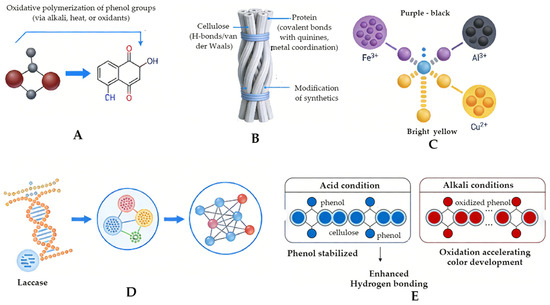
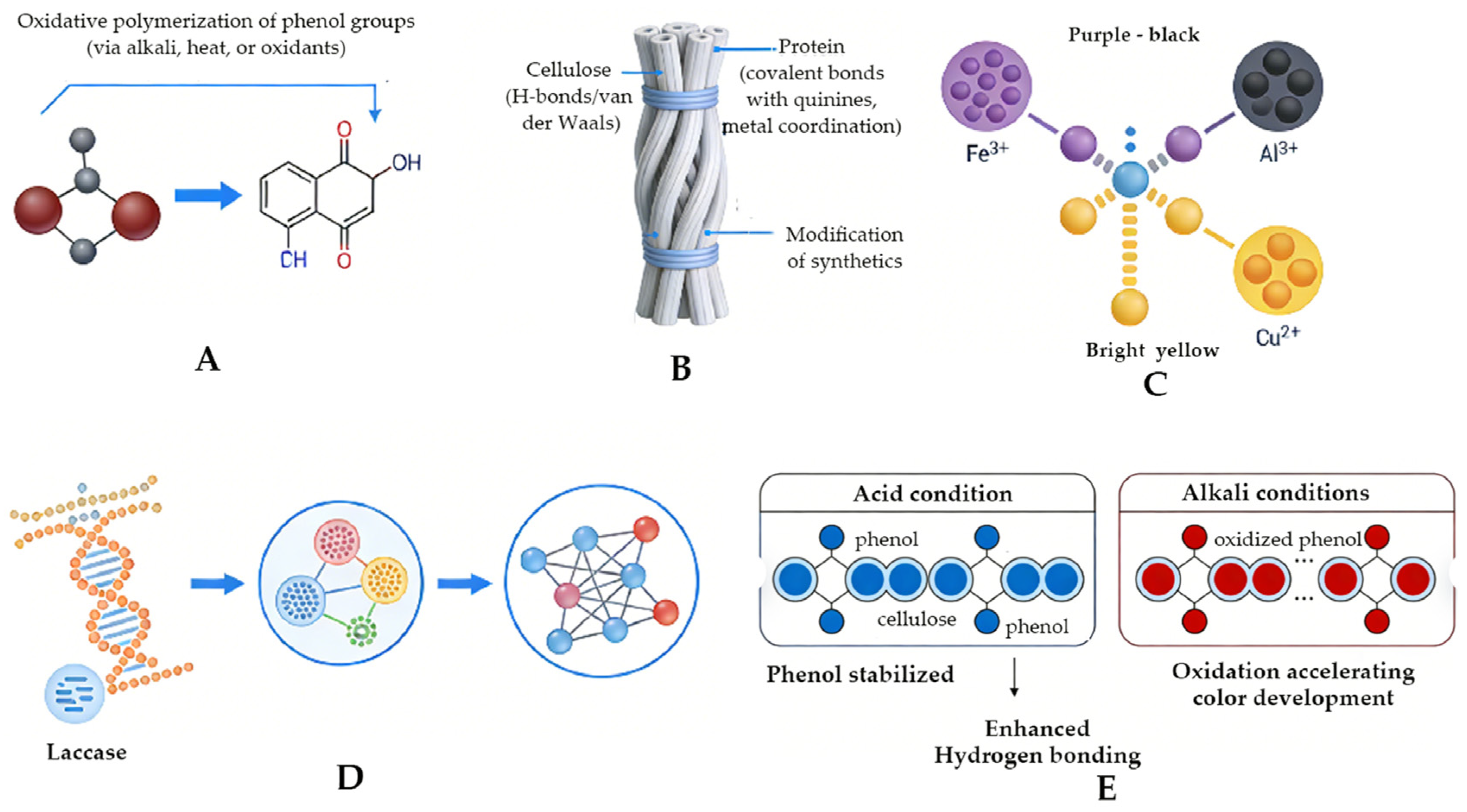
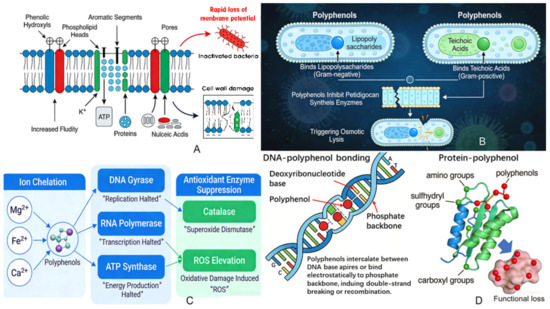
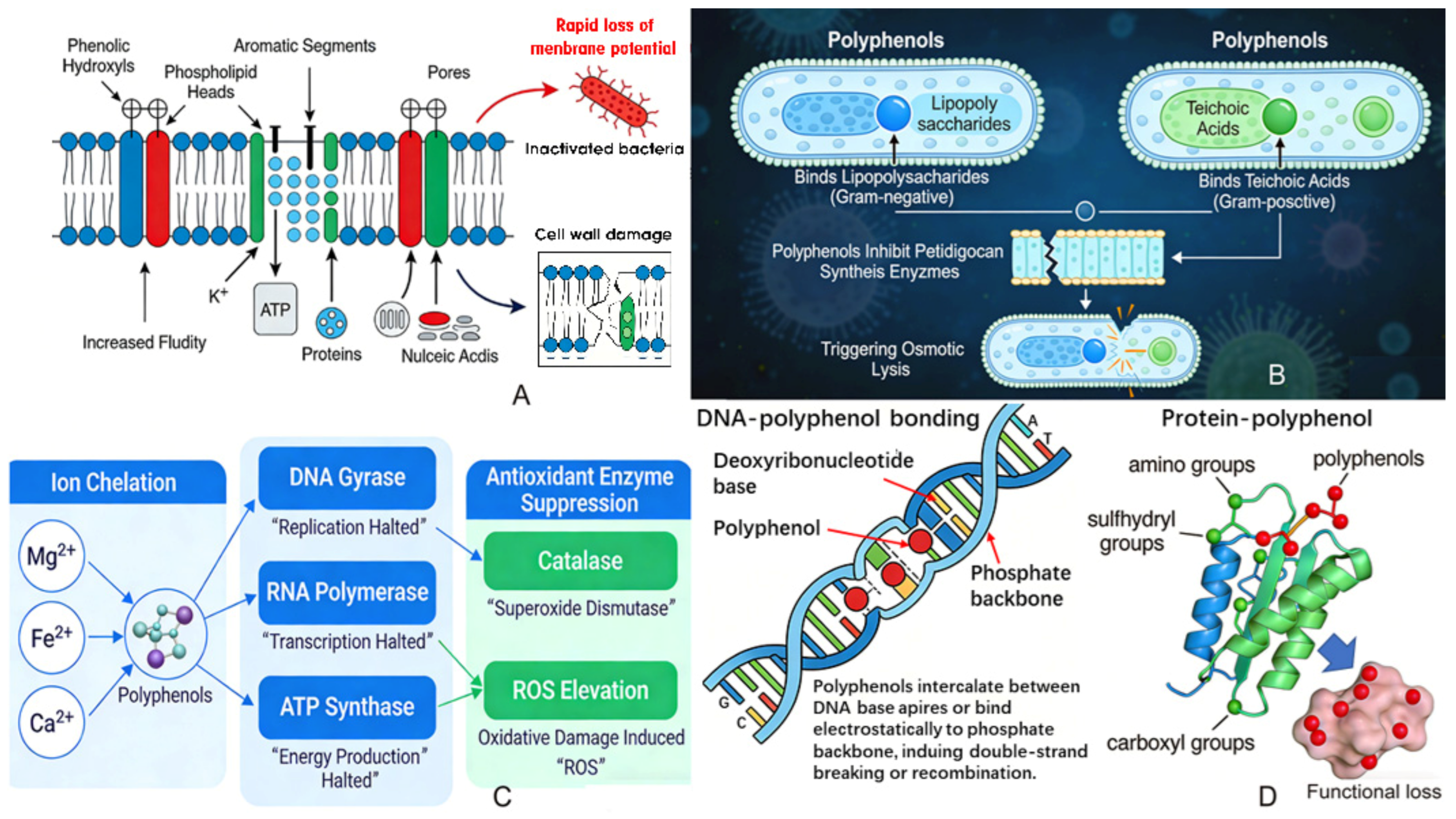
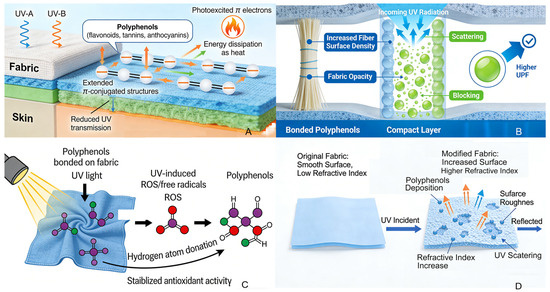
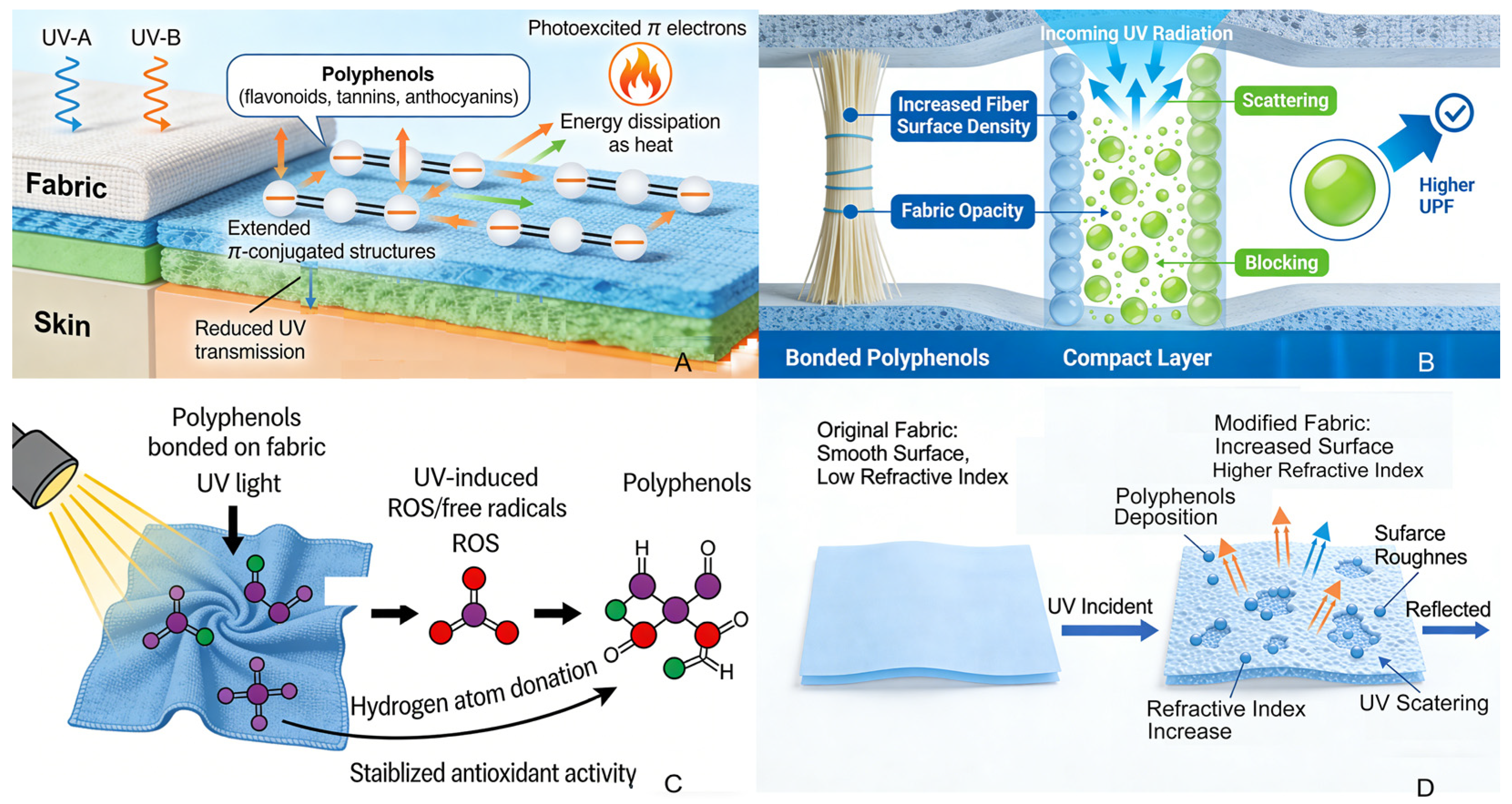
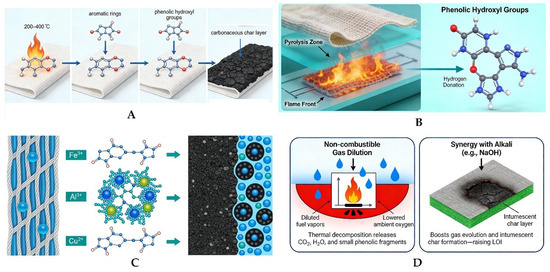
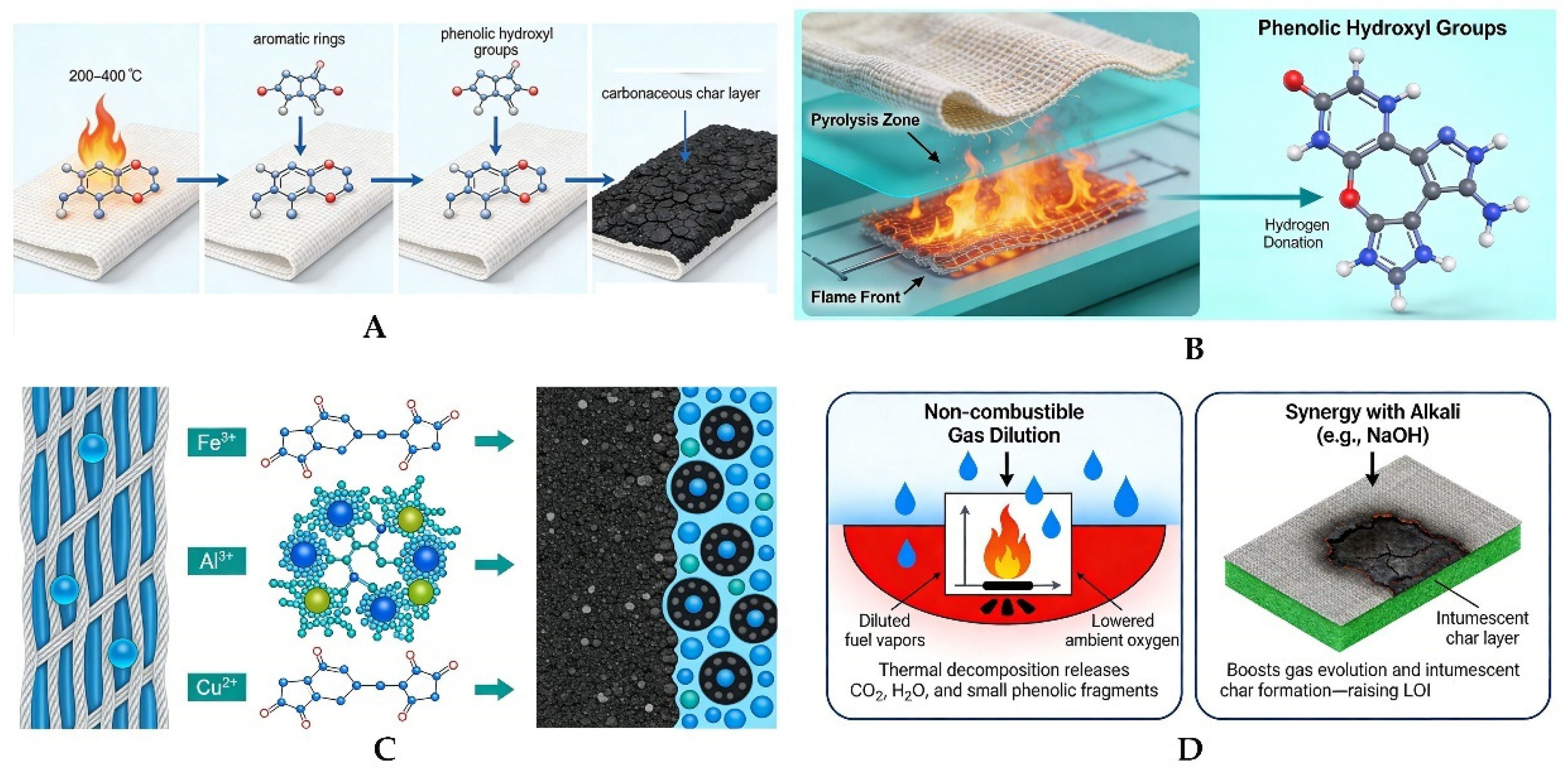
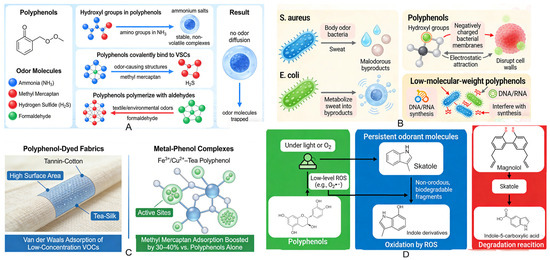
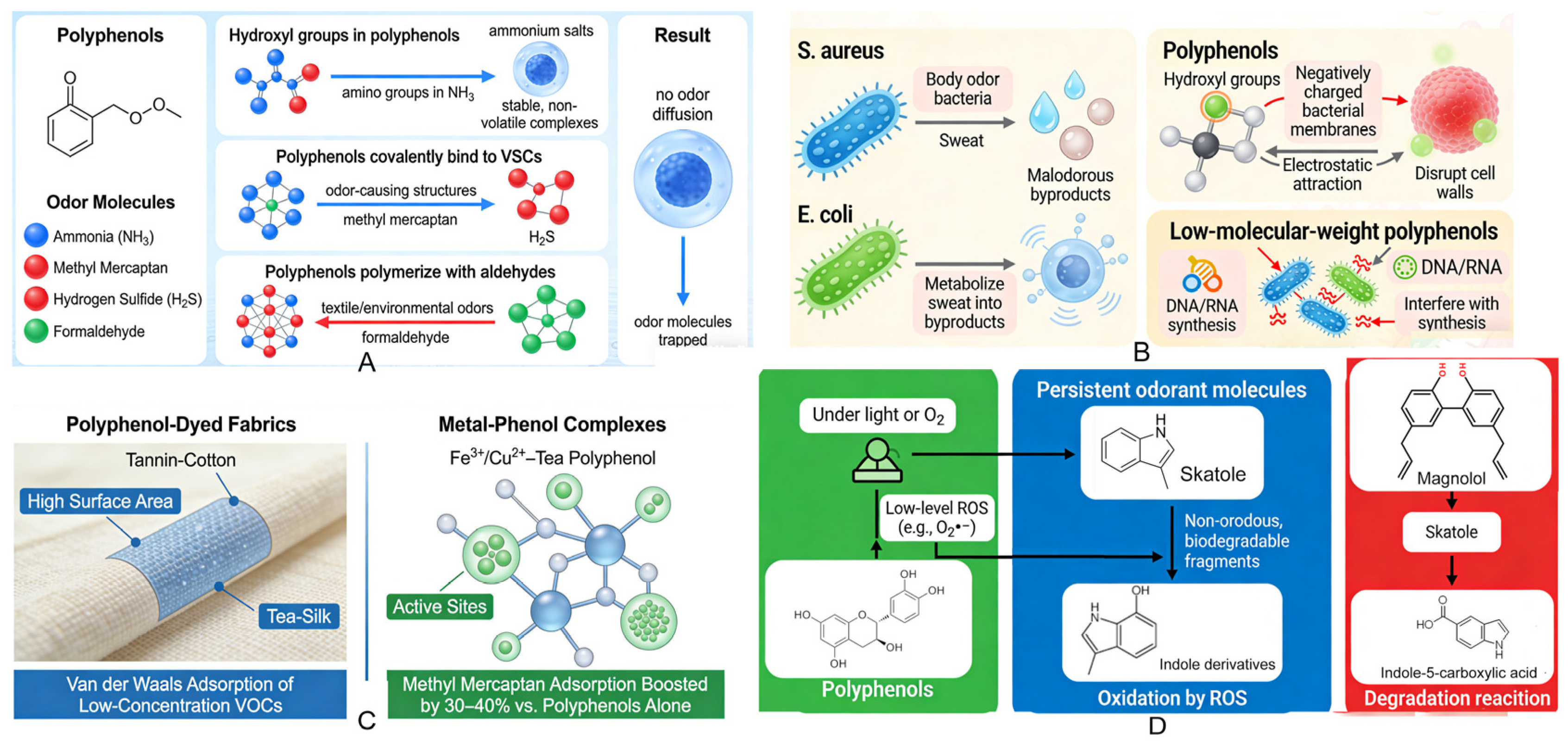
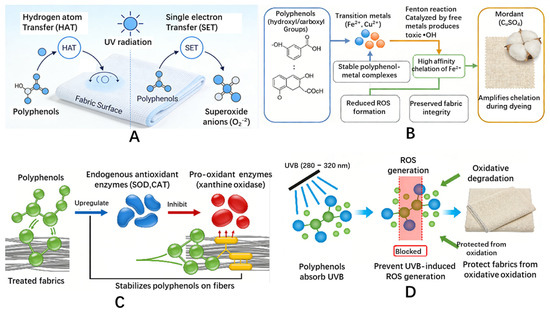
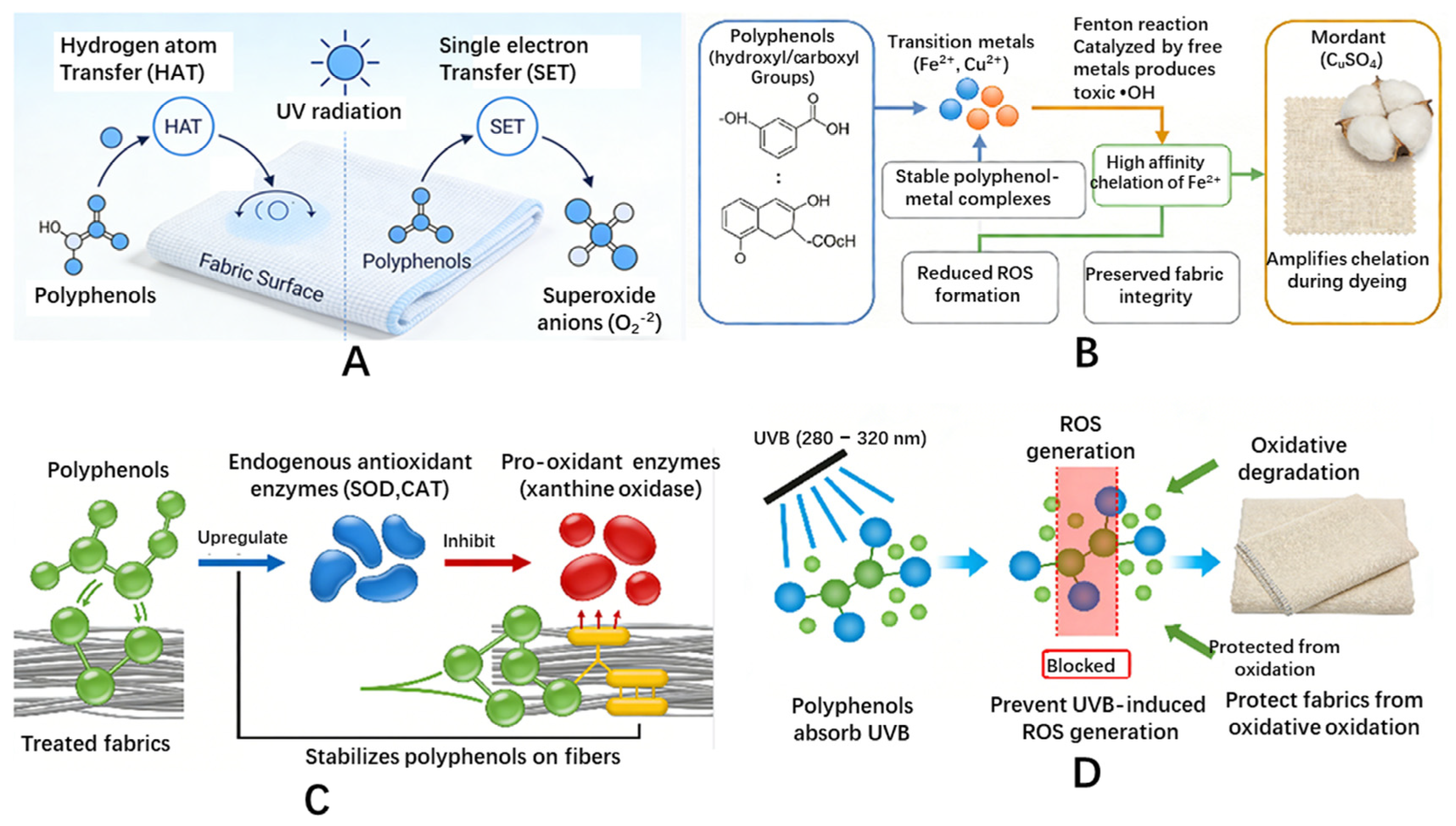
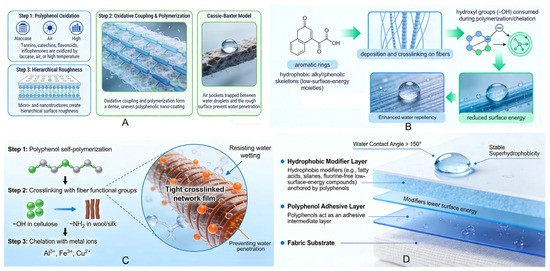
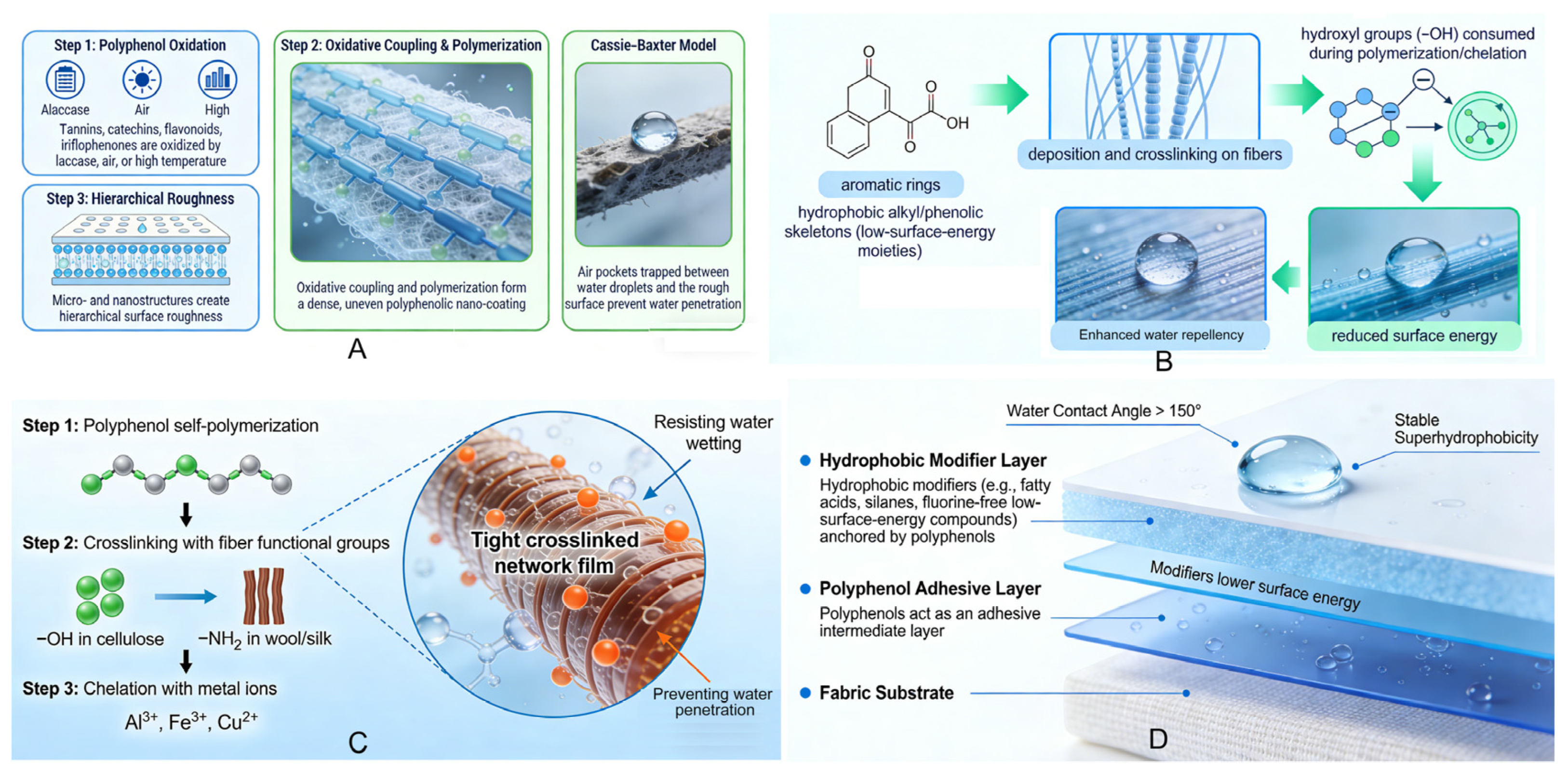
Disclaimer/Publisher’s Note: The statements, opinions and data contained in all publications are solely those of the individual author(s) and contributor(s) and not of MDPI and/or the editor(s). MDPI and/or the editor(s) disclaim responsibility for any injury to people or property resulting from any ideas, methods, instructions or products referred to in the content. |
© 2026 by the authors. Licensee MDPI, Basel, Switzerland. This article is an open access article distributed under the terms and conditions of the Creative Commons Attribution (CC BY) license.