


Abstract
Adhesion between fused deposition modelling (FDM) printed polymers and textile substrates is critical for durable printed-on-textile hybrids. Since no dedicated test standard exists for additively manufactured textile interfaces, many studies use T-peel methods adapted from adhesive-bond standards. However, printed-on-textile joints are often governed by polymer penetration into the fabric and mechanical interlocking, rather than by a discrete adhesive layer. This work evaluates a fixture-based perpendicular (normal-separation) tensile method, using a circular dolly printed directly onto a cotton plain-weave substrate and a fully 3D-printable, threaded, self-aligning clamping assembly. Three representative filaments, namely polyethylene terephthalate glycol-modified (PETG), polylactic acid (PLA), and thermoplastic polyurethane (TPU), were tested using both the proposed pull-off method and an ISO 11339-type T-peel benchmark, with n = 8 specimens per polymer. The perpendicular method produced complete datasets for all polymers and clearly differentiated adhesion performance (TPU > PLA > PETG). In contrast, for T-peel, the standard evaluation window (25–125 mm) was completed for all PETG specimens but only for a subset of PLA specimens and a single TPU specimen. In the remaining tests, premature substrate failure prevented completion of this window, so the results could not be evaluated. Microscopy confirmed distinct interlocking morphologies across polymers, supporting the observed differences in failure behavior between peel and normal separation. Overall, the results indicate that perpendicular dolly pull-off testing is a practical and reproducible alternative for quantifying adhesion across a wider range of printed-on-textile bonding conditions.
1. Introduction
Fused deposition modelling (FDM) printed directly onto textile substrates enables hybrid structures that combine the comfort and conformability of fabrics with the geometric freedom and functional integration of additive manufacturing (AM). Beyond decorative customization, published studies show that direct FDM printing on textiles can be used to create polymer–textile composites and that their performance depends strongly on printing parameters, substrate type, and adhesion behavior [1,2]. In protective applications, such structures have been studied for adhesion, quasi-static stab resistance, and air permeability, including stab-proof vest concepts and sandwich structures with textiles placed between FDM-printed layers [3,4,5]. These studies aimed to balance protection performance with wearer comfort and air permeability. Direct FDM printing on textiles also supports functional applications. Conductive polymers printed on textile substrates have been investigated in terms of adhesion, sensing, and electrical connection [6,7]. More broadly, 3D-printed stretchable smart fibers and textiles have been developed for self-powered e-skin applications [8].
Across these application areas, the integrity of the polymer–textile bond remains a key limitation. If adhesion is too low, the printed elements can detach during bending, abrasion, laundering, or cyclic deformation. If the mechanical interlocking is strong but only local, the textile itself can become the weakest part. For this reason, the quantification of polymer–textile “adhesion” has become a common methodological requirement in FDM-on-textile research. It is important because it supports the comparison of materials, printing parameters, and textile structures [9].
In related upholstery-material testing, mechanical performance is commonly evaluated with established test procedures [10]. This is different from AM polymer–textile adhesion, where standardization is still limited. Because no dedicated standard exists for AM–textile interfaces, most studies focused on adhesion have used peel-based tests, often reported as a “T-peel” approach. In most cases, this was done by adapting two existing standards: DIN 53530 [11], often used as a practical basis for separating a printed strip from a fabric, and ISO 11339 [12], a T-peel standard for bonded flexible adherends, which is the main reference considered in the present study.
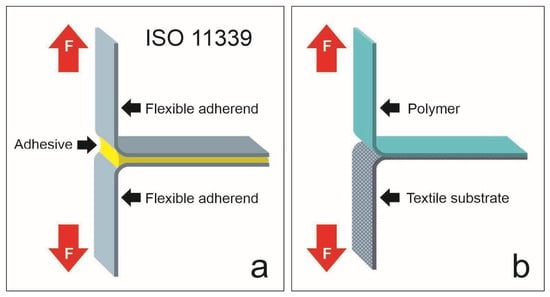
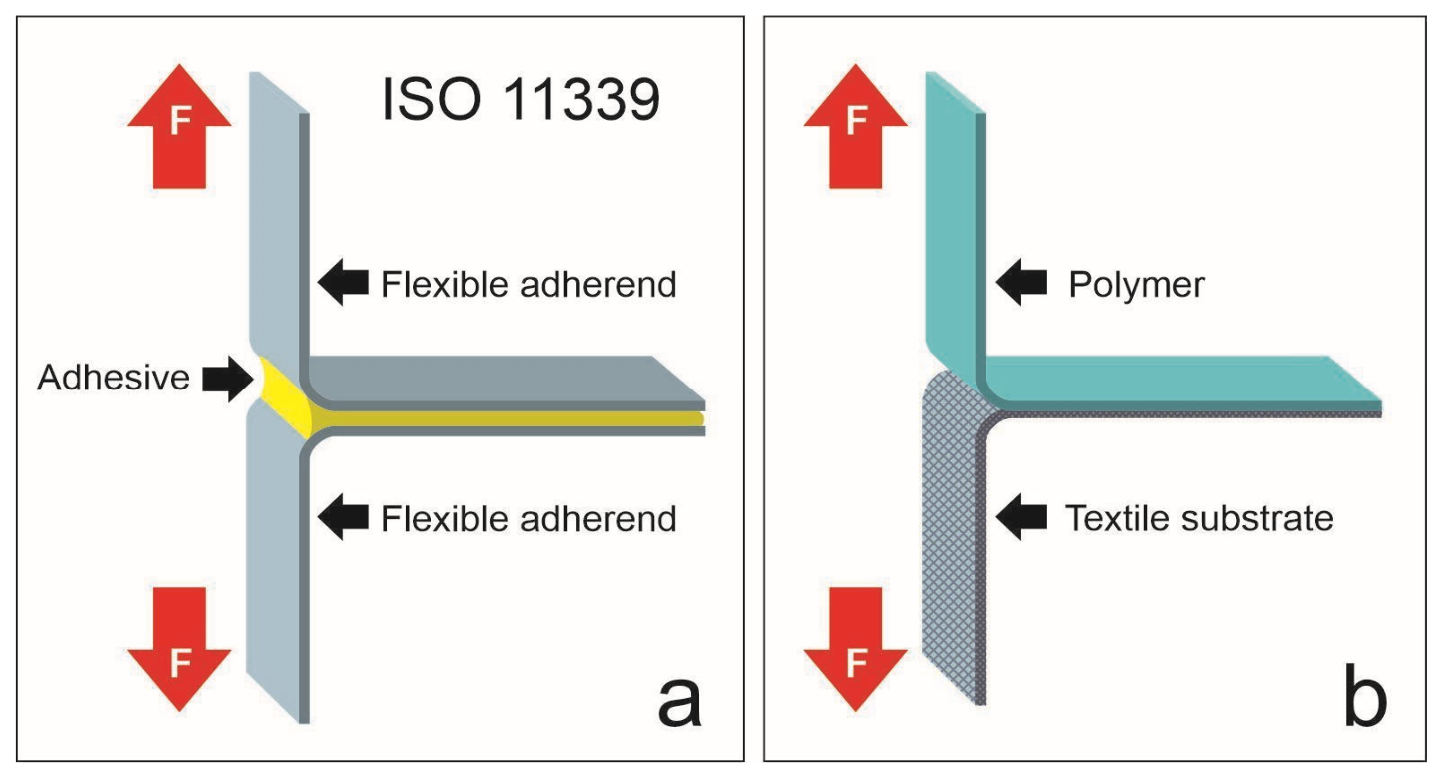
This use of the T-peel test in FDM-on-textile testing becomes easier to understand when the original purpose of the standard is stated clearly. As shown in Figure 1a, ISO 11339 defines the T-peel test for determining the peel strength of an adhesive by measuring the peeling force in a bonded assembly made of two flexible adherends. The standard also states that this method was developed to characterize adhesive bonds, not to provide design information [12].
Figure 1.
Schematic comparison of the ISO 11339 T-peel concept and its adaptation to 3D printing on textiles: (a) flexible adherends bonded by an adhesive layer (ISO 11339 joint); (b) printed-on-textile T-peel, where the deposited polymer functions as both the adherend and the bonding medium.
The test is based on the idea that a bond line, meaning an adhesive layer, exists between two adherends and fails before the adherends in a controlled way. In direct FDM printing onto textiles, the situation is different. The joint contains only two components, the polymer and the textile, and the printed polymer acts both as the adherend and as the bonding medium, as shown in Figure 1b. This difference is important because the measured response does not always represent only interface separation. Depending on the textile construction and the behavior of the polymer, it can also reflect damage to one of the two components.
The limitations become clearer when the failure modes reported in the literature on 3D printing onto textiles are examined in detail. During peel testing, different types of failure can occur. These include failure inside the printed polymer layer (cohesive failure), interfacial delamination, and rupture of the textile substrate itself [9]. There are also clear examples in which the fabric breaks during the adhesion test before the printed element detaches, indicating that the test result is governed by textile failure, not by interface failure [13].
T-peel results can be difficult to compare from one study to another, because these failure modes depend on how the polymer penetrates the textile structure, and on how stresses are redistributed between yarns during peeling. For this reason, the failure mode should be reported and interpreted clearly. In such cases, the result should be understood as a combined measure of interface response and adherend integrity.
The peel geometry itself can also introduce uncertainty. Textiles rarely behave like ideal flexible adherends with a stable peel angle. During testing, deformation of the textile substrate can influence both the measured force and the failure path. This effect has already been reported in earlier studies on textile-based hybrids, where deformation of the textile structure during peeling was shown to affect the peel response [14].
Another practical issue is the way peel data are processed and reported. Many studies based on DIN 53530 show strongly undulating force–displacement curves [11]. These curves are often evaluated with multi-peak methods described in ISO 6133 [15], which is often cited as the “method for more than 20 peaks” [16]. Similar approaches based on peak selection and averaging have also been reported for ISO 11339-type T-peel tests used on AM–textile composites [2]. In practice, this can create a methodological ambiguity. When specimens show early textile damage or polymer fracture, some studies may still report an “average peel force” if enough peaks were recorded before failure. In this way, a complex mixed-mode response is reduced to a single scalar value. This can be useful for comparisons within the same study, but it should be interpreted with caution when the dominant failure mechanism is not interfacial separation.
In response to these limitations, several studies have explored perpendicular (pull-off-type) tensile testing. In this approach, the polymer–textile joint is loaded normal to the fabric surface. This loading direction matches the way the polymer penetrates the textile and forms mechanical interlocks through the thickness. Compared with peel testing, this method reduces the influence of a moving peel front and of large substrate deformations, which can strongly affect the results in compliant textiles. An important contribution was made by Malengier et al., who presented three testing methods for 3D printing on textiles—perpendicular tensile, shear, and peel testing—with the aim of improving the suitability and comparability of adhesion measurements [17].
Although perpendicular or pull-off-type tests are less common than T-peel, they have been used in different studies. Gorlachova and Mahltig used a separation-based method to detach printed features from cotton and to study adhesion trends for different materials and processing conditions [18]. Silvestre et al. proposed a custom tensile adhesion test for polymer-on-textile specimens, showing the need for stable methods when textiles are compliant and failure is mixed [6]. In a broader AM hybridization context, Maier et al. used tensile adhesion testing to evaluate bonding quality in additively manufactured structures on textile-reinforced thermoplastic composites. This showed that perpendicular tests can provide a direct mechanical metric when peel results are difficult to interpret [19]. More recently, Robinson et al. used perpendicular adhesion testing as part of a multi-test evaluation of additive manufacturing on textiles, together with peel and shear tests, again showing that the approach is viable and informative [20].
Perpendicular testing offers clear advantages, but it has not become the main method in AM–textile adhesion research. The reasons seem to be mainly practical rather than theoretical. Earlier versions often used custom fixtures, often with metal parts, together with less accessible specimen geometries and stricter alignment requirements. These conditions can be handled in specialized laboratories, but they can limit wider use in the AM community [9,17].
This work aims to reduce this adoption gap by proposing a fully accessible perpendicular tensile adhesion test. The method is based on an easy-to-make, self-aligning clamping assembly and a circular specimen concept. By design, the method aims to (i) reduce the influence of warp/weft selection as a first-order limitation, (ii) support both rigid and flexible printed polymers, without the instability often seen in peel testing on compliant substrates, and (iii) make perpendicular adhesion testing more practical for typical FDM users and laboratories, enabling more consistent reporting and comparison across future AM–textile studies.
2. Materials and Methods
This study evaluates adhesion between FDM-printed polymers and a woven textile substrate by using two complementary test methods. The first method is a T-peel configuration, used as a benchmark from the literature. The second method is a normal-separation (perpendicular) tensile pull-off test. This test is based on a circular printed dolly and a self-aligning, threaded clamping fixture developed in this work. Three polymer families were selected in order to cover a broad range of interface behavior. These included relatively rigid filaments (PLA and PETG) and one flexible filament (TPU). For each polymer, the specimens were printed on the same textile substrate under controlled and repeatable conditions. Adhesion was then quantified with both test methods, together with systematic documentation of the observed failure mode.
2.1. Materials
Three commercially available FDM filaments (nominal diameter 1.75 mm) were used to cover a practical range of stiffness and interfacial behavior: PLA [M15.1] (eSUN ePLA, Fire Engine Red; Shenzhen Esun Industrial Co., Ltd., Shenzhen, China), PETG (eSUN PETG, Solid White; Shenzhen Esun Industrial Co., Ltd., Shenzhen, China), and TPU (eSUN eTPU-95A, Transparent Red; Shore A 95; Shenzhen Esun Industrial Co., Ltd., Shenzhen, China). All filaments were used as received from the manufacturer.
The textile substrate was a plain-woven cotton fabric. It was selected as a representative apparel-type textile and as a common baseline material in FDM-on-textile adhesion studies [1,17]. Plain weave was also selected because it offers dimensional stability and a more repeatable peel and tensile response than highly extensible textile structures. At the same time, it still provides a porous structure that allows polymer penetration and mechanical interlocking. The fabric had an areal density of about 140 g/m2 and a thickness of about 0.20 mm, measured according to ISO 5084 [21]. Its thread density was 24 ends/cm in warp and 22 picks/cm in weft. Before printing and testing, the fabric was conditioned for 24 h in the standard atmosphere of 20 ± 2 °C and 65 ± 4% relative humidity, in accordance with ISO 139 [22].
2.2. Equipment and Printing Setup
All specimens were manufactured by material extrusion on a Prusa i3 MK2 FDM printer (Prusa Research a.s., Prague, Czech Republic) equipped with a 0.4 mm nozzle. Slicing and toolpath generation were performed in OrcaSlicer, version 2.3.1. Printing was carried out directly on the conditioned textile substrate.
To obtain stable printing of tall features on a compliant textile substrate, the fabric was fixed on the build plate with double-sided adhesive tape. High-tack adhesives were not used because they can make removal of freshly printed specimens more difficult and can damage the textile or cause premature debonding during removal. Instead, a lower-tack fixation arrangement was applied. The specimens were removed only after cooling in order to reduce unintended interfacial damage before testing.
Printing parameters were selected to control the polymer–textile interface and were kept consistent across all specimens. For each filament, the main process settings were fixed within the ranges commonly reported for FDM printing onto textiles. The nozzle/bed temperatures were 215/60 °C for PLA, 225/70 °C for PETG, and 230/30 °C for TPU. The first-layer speed was set to 15 mm/s for PLA and PETG, and to 10 mm/s for TPU. The first-layer parameters governing polymer interpenetration were kept constant for all materials and specimen types: 0.20 mm layer height, 100% infill, and a fixed raster orientation for solid regions. The nozzle-to-plate distance was set to 0.30 mm, measured relative to the bare metallic build plate. This value corresponded to the combined thickness of the double-sided adhesive fixation layer (~0.10 mm) and the cotton fabric (~0.20 mm). Therefore, during first-layer deposition, the nominal nozzle-to-textile clearance was approximately 0 mm. The 0.20 mm first layer was consequently deposited under slight compression into the textile surface rather than as a free-standing layer above it. This setting was selected to promote polymer squeeze-in and penetration into the fabric porosity, while avoiding excessive nozzle drag, textile displacement, or first-layer clogging during the longer T-peel prints. Parameters above the first layer were allowed to follow the standard settings of each specimen type (e.g., to reduce printing time), but they remained consistent within each specimen geometry.
Testing was performed using a SATRA STM 466 universal testing machine (SATRA Technology Centre, Kettering, United Kingdom) equipped with a 2 kN load cell. Data acquisition and test control were conducted using SATRA Material Testing Centre software, version 3.4b (SATRA Technology Centre, Kettering, United Kingdom).
Microscopy imaging was performed using an Optech microscope (Optech Optical Technology, Munich, Germany). Images were acquired and processed using Vision Image Analysis software, version 1.0 (Optech Optical Technology, Munich, Germany).
2.3. Geometry and Method Development for Perpendicular Tensile Testing
2.3.1. Reference Dolly Geometry from Prior Work
The initial pull-off specimen geometry was based on the dolly concept reported in prior adhesion-testing work for 3D printing on textiles, using a circular contact area with the diameter D = 24 mm. This starting geometry was selected to maintain comparability with the literature and to follow an established precedent for perpendicular tensile adhesion measurements in printed-on-textile systems [17].
2.3.2. Dolly Geometry Scaling and Final Selection
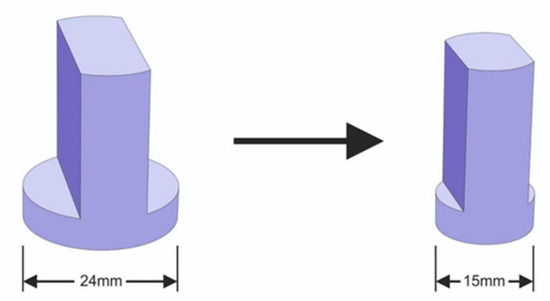
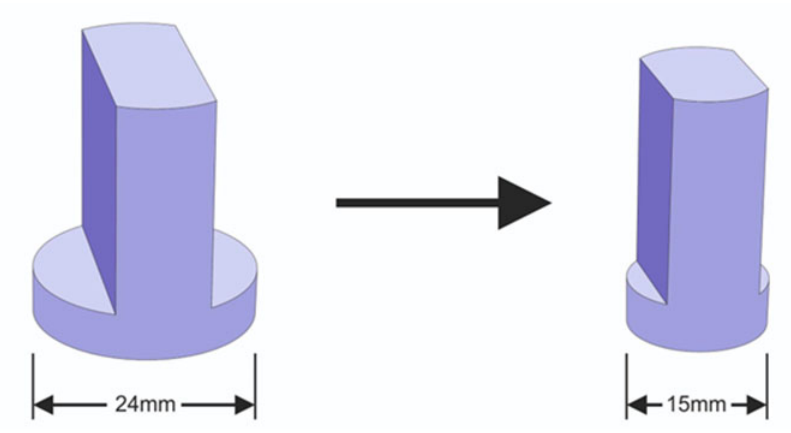
Preliminary trials confirmed that the D = 24 mm dolly enabled stable testing for PLA and PETG on the selected woven substrate. For TPU, however, the same geometry frequently produced substrate-limited behavior, i.e., failure by fabric rupture rather than interfacial separation, which reduces the ability of the test to distinguish adhesion differences at the polymer–textile interface. To keep the method informative across a wide adhesion range—spanning weak to very strong bonding—and to avoid systematic textile failure for high-adhesion polymers, the bonded contact area was reduced by scaling the dolly diameter to D = 15 mm as shown in Figure 2.
Figure 2.
Pull-off dollies: literature-based geometry (D = 24 mm, after Malengier et al.) and the scaled geometry used in this study (D = 15 mm) following preliminary trials.
The final diameter was selected to provide reliable fabrication of a tall dolly on a compliant textile substrate, while maintaining sufficient base stability to avoid print instability or build failure. A detailed description of the final specimen geometry and the corresponding self-aligning fixture is provided in Section 2.3.3.
2.3.3. Dolly and Fixture Design
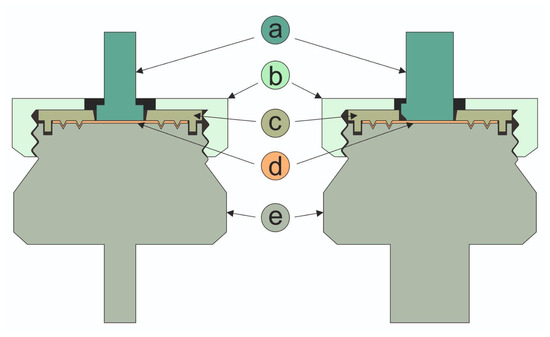
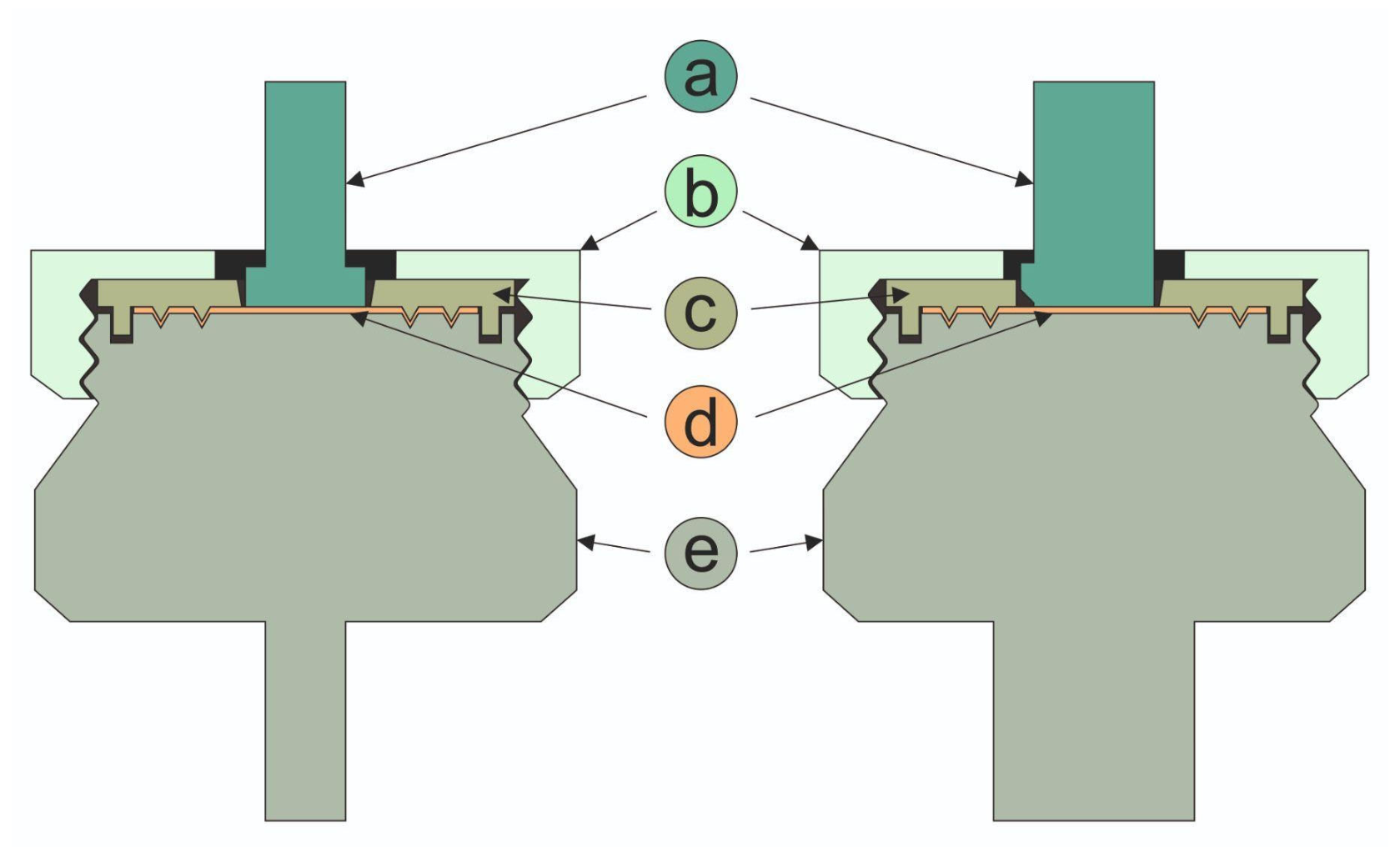
A normal-separation (pull-off) adhesion test was performed using a circular dolly printed directly onto the textile and a 3D-printable, threaded, self-aligning clamping fixture designed to immobilize the fabric and enforce repeatable alignment during testing. The fixture shown in Figure 3 consists of three parts: (i) a threaded support body (Part e), (ii) a fixing/indexing plate (Part c), and (iii) a threaded cap (Part b).
Figure 3.
Front and side section of the perpendicular tensile testing fixture. Labelled components: (a) printed dolly; (b) threaded cap; (c) fixing/indexing plate; (d) textile substrate; (e) threaded support body.
The support body presented in Figure 3e acts as the main structural element of the fixture, providing both a lower gripping region for the universal testing machine (UTM) jaws and a geometric reference for axial alignment. It includes an external grip region for manual handling and an internal thread to accept the cap. The upper surface includes a clean, planar seating area around the dolly region to promote predominantly axial loading. Two guidance/anti-slip systems are integrated on the upper face: (i) two radial rows of recesses that mate with pyramid-like protrusions on the fixing plate, creating mechanical interlocking that stabilizes the plate under compressive clamping, and (ii) two large radial keyways that mate with corresponding protrusions on the fixing plate to prevent rotation of both the plate and the textile during tightening.
The fixing plate presented in Figure 3c maintains the textile in a fixed and repeatable position and defines the clearance geometry around the dolly. It incorporates (i) two radial protrusions that engage the support-body keyways to prevent rotation during tightening and loading, and (ii) a set of radially distributed pyramid-like protrusions that engage the two rows of recesses in the support body, increasing friction and resisting slip under clamp pressure. The central opening for the dolly was designed with a radial clearance of ~0.5 mm relative to the dolly diameter to avoid contact during the test. To minimize parasitic contact and to enable complete vertical separation, this opening is slightly conical (a truncated cone with the smaller diameter oriented downward), rather than a straight cylindrical hole.
To ensure repeatable angular positioning and collinearity between the upper and lower grips, the printed dolly includes a small orientation key/feature, and the fixing plate includes a complementary indexing recess. This indexing prevents rotation of the dolly–textile assembly and ensures that the dolly is consistently presented to the upper jaws in the same orientation.
The cap shown in Figure 3b closes the assembly and applies clamping pressure through the internal thread of the support body. It includes an external grip region for repeatable manual tightening and a central clearance opening around the dolly to avoid contact and eliminate frictional or lateral constraint during pull-off.
The three-part threaded fixture was fabricated by FDM with a 0.20 mm layer height, 4 perimeters (walls), and 98% gyroid infill to ensure sufficient stiffness and dimensional stability during clamping and loading. The geometry was designed to be self-supporting, requiring no support structures, which simplifies fabrication and improves repeatability across printers. The system can be produced in PLA for routine use and method validation; however, for repeated tightening, higher clamp loads, or long-term durability, fabrication in a tougher polymer such as PETG or ABS is recommended. The printable files for the dolly and fixture device can be downloaded at: https://www.mdpi.com/article/10.3390/textiles6020054/s1.
2.3.4. Perpendicular Tensile Testing Using Proposed Method
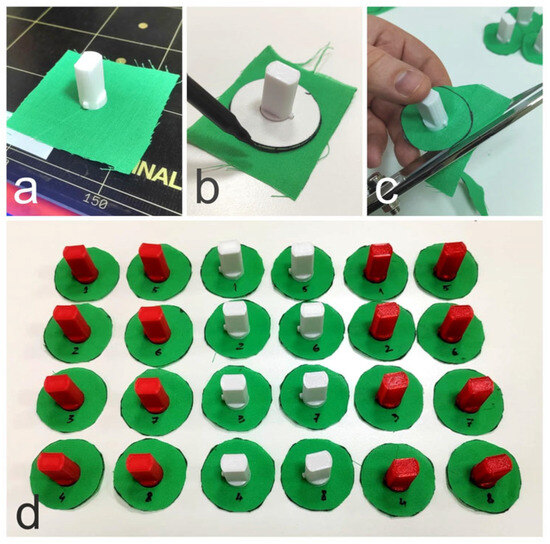
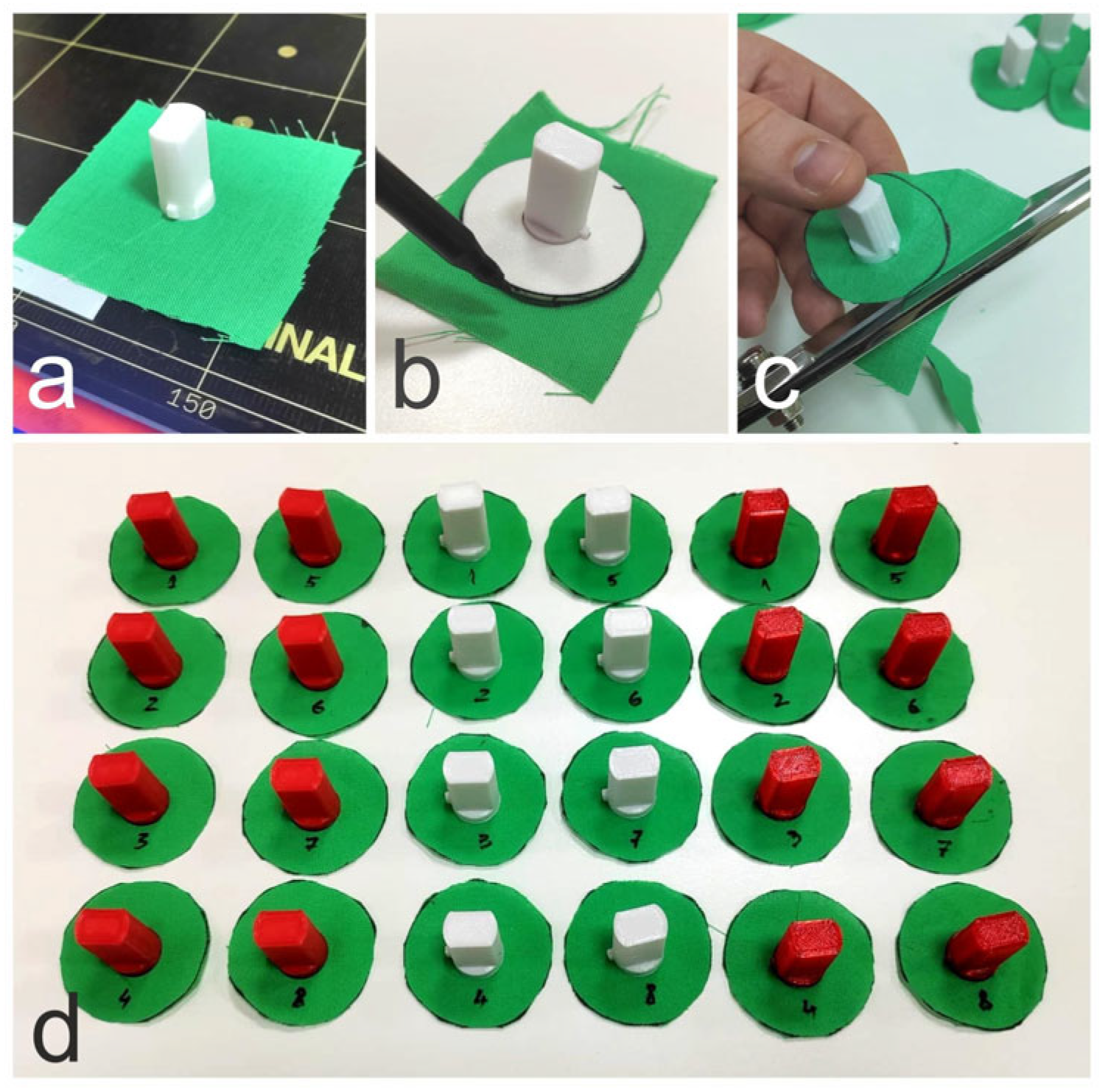
For each polymer (PLA, PETG, and TPU), n = 8 pull-off specimens were manufactured and tested using the final dolly geometry (D = 15 mm) and the fixture and test protocol. Key procedural steps are documented in Figure 4 (specimen fabrication workflow: dolly printing on textile, specimen cutting, and the full specimen set).
Figure 4.
Perpendicular-dolly specimen fabrication workflow: (a) dolly printed directly onto the textile substrate; (b) marking the cutting outline using a template; (c) cutting the circular specimen; (d) complete specimen set (n = 8 per polymer).
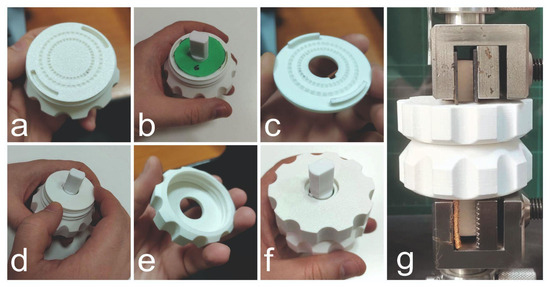
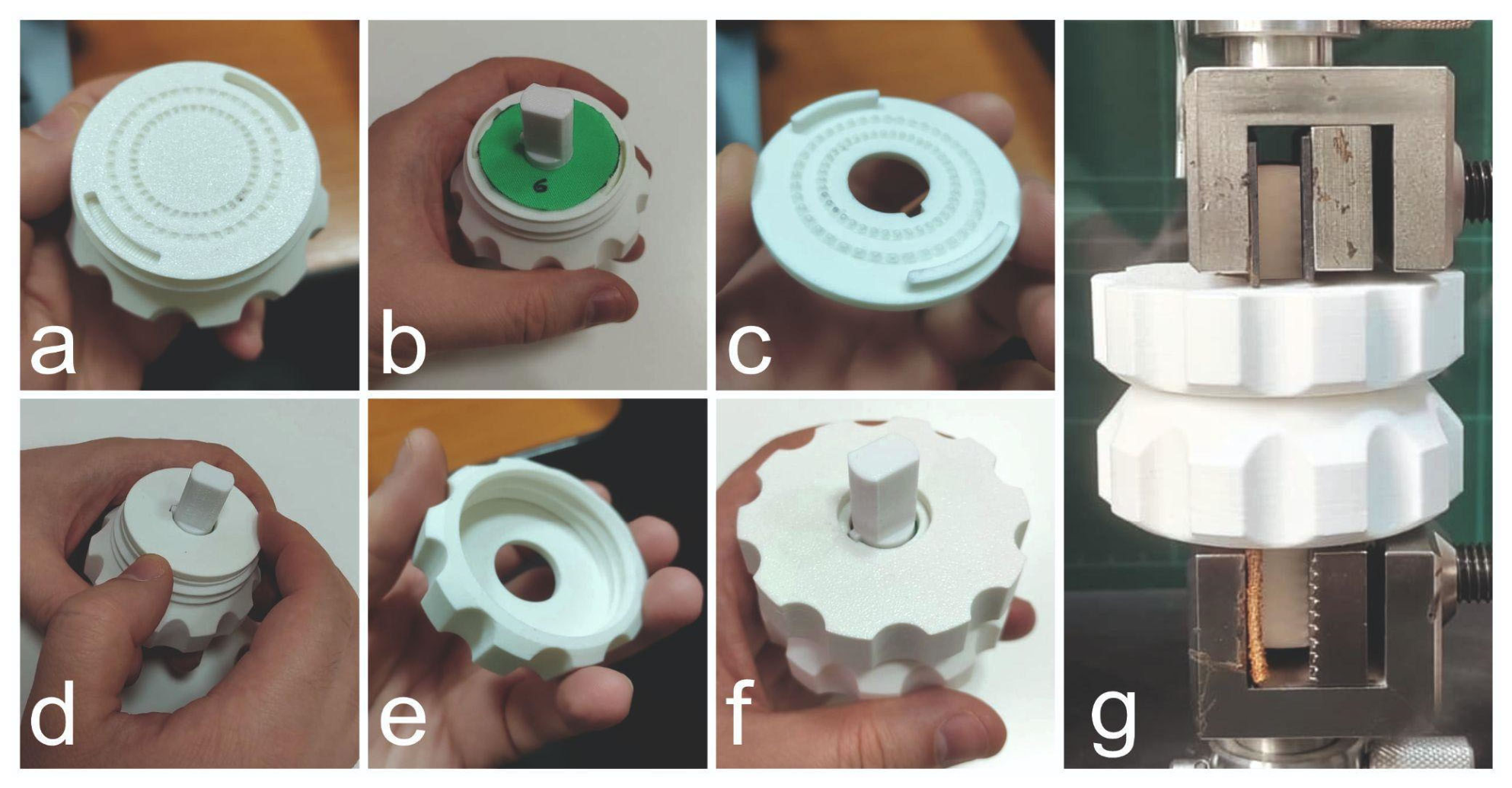
The textile specimen with the printed dolly was placed onto the support body. The fixing/indexing plate was positioned such that the anti-rotation protrusions engaged the support-body keyways and the interlocking features mated. The cap was then tightened until the textile was firmly clamped. The assembled fixture was mounted in the lower jaws of a universal testing machine, while the dolly was gripped in the upper jaws. Figure 5 presents the fixture assembly and mounting in the UTM.
Figure 5.
Assembly of the perpendicular-dolly fixture and mounting in the testing machine: (a) threaded support body; (b) dolly with textile placed on the support; (c) fixing/indexing plate; (d) plate positioned to clamp the textile; (e) threaded cap; (f) cap tightened to complete the assembly; (g) assembled fixture mounted in the universal testing machine.
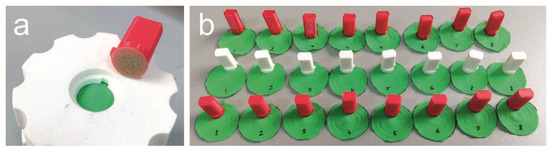
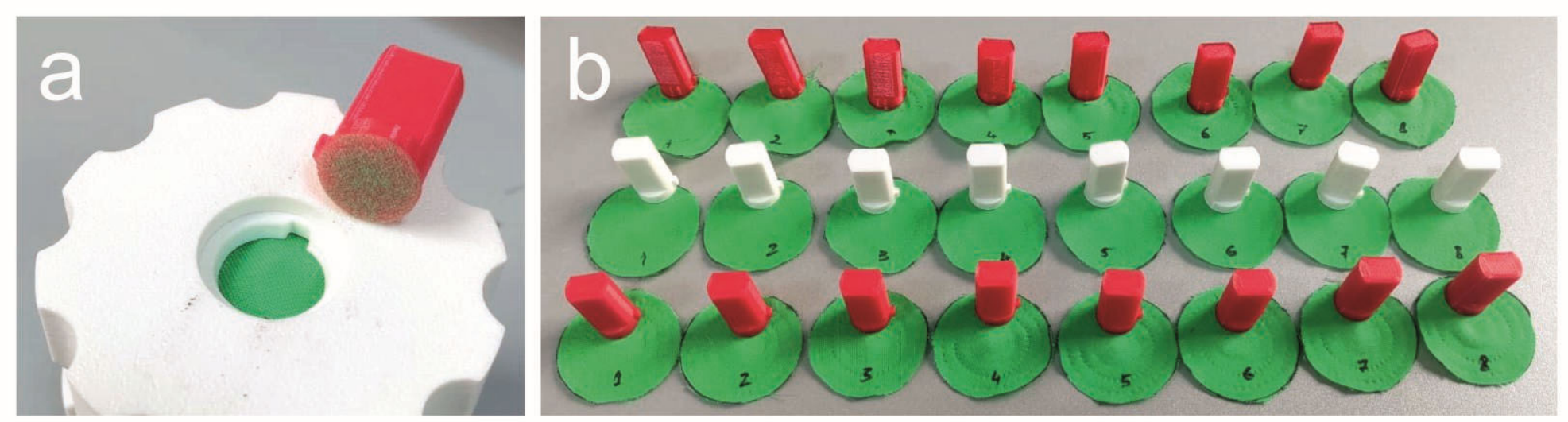
A displacement-controlled tensile test was run at a crosshead speed of 50 mm/min (constant for all specimens), and the force–displacement curve was recorded continuously until complete separation. The primary response was the maximum force, (N), for each specimen. Figure 6 shows the specimens after testing, illustrating typical post-test appearance.
Figure 6.
Post-test appearance of perpendicular-dolly specimens: (a) PLA specimen immediately after testing; (b) complete set of tested specimens, with each dolly placed on its corresponding textile substrate.
2.4. T-Peel Test (Benchmark)
A T-peel adhesion test was used as a benchmark method and performed in accordance with ISO 11339 [12], adapted to FDM-printed polymer strips on a woven textile substrate. For each polymer, n = 8 T-peel specimens were manufactured and tested under identical conditions.
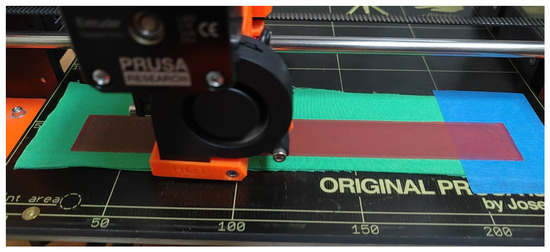
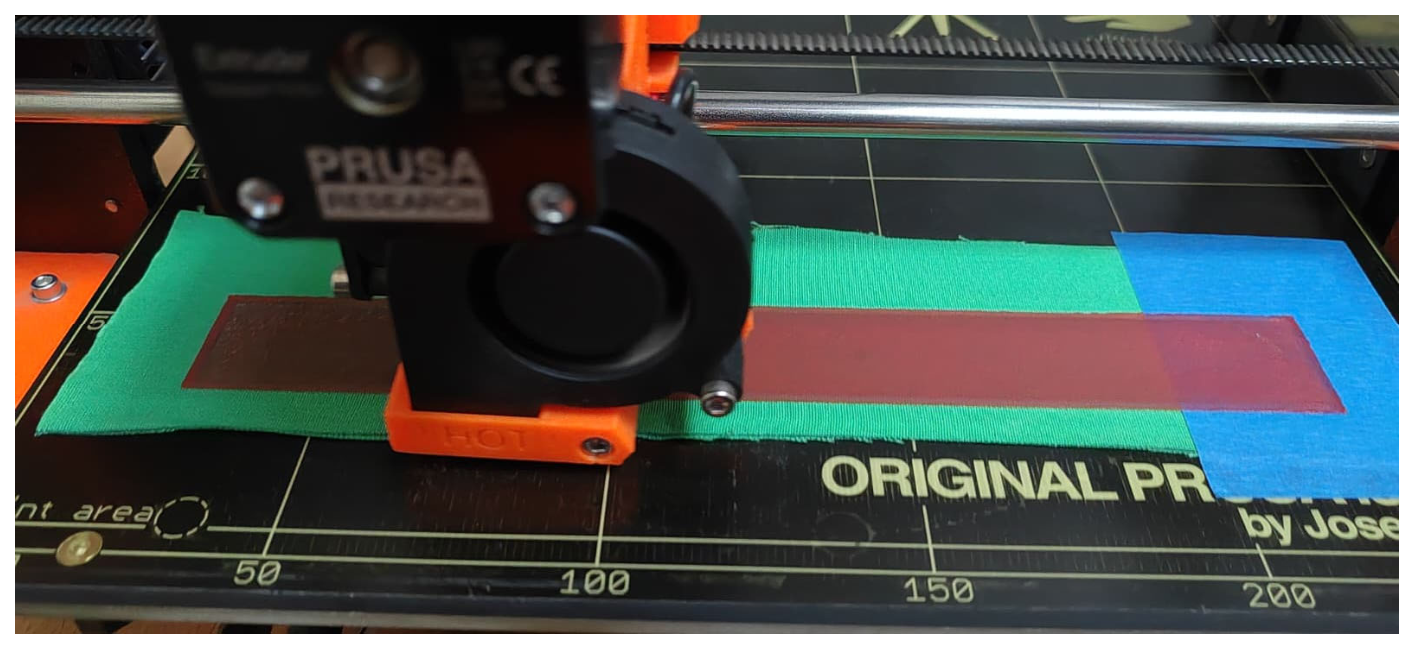
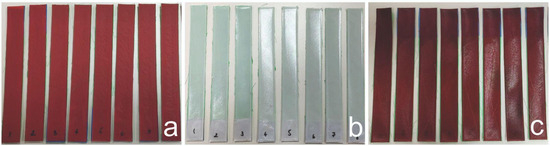
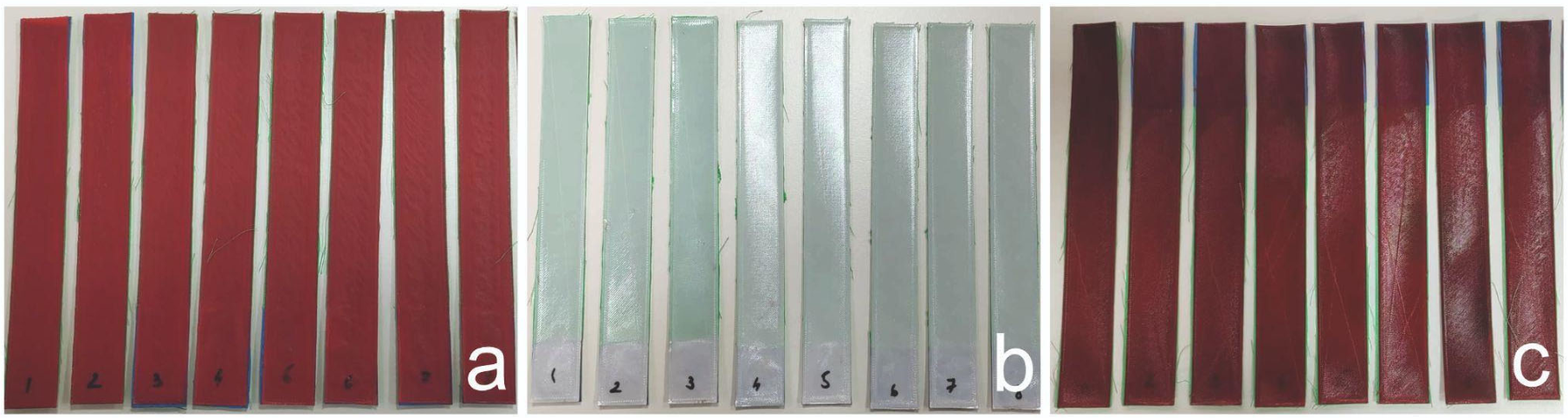
Each T-peel specimen had an overall length of 200 mm, a constant width of 25 mm, and a printed-strip thickness of 0.6 mm (3 layers at 0.20 mm). A 30 mm section at one end of the intended bonded region was covered with masking tape during printing to intentionally prevent bonding between the polymer and the textile, thereby creating a reproducible free “arm” for gripping in the test machine. The fabric was oriented with the warp direction along the specimen length, and the print direction was aligned with the warp to keep textile anisotropy controlled across specimens. As shown in Figure 7, masking-tape was used for polymer–substrate separation during printing. Figure 8 illustrates the complete T-peel specimen set.
Figure 7.
T-peel specimen during printing (PLA).
Figure 8.
Complete T-peel specimen sets (n = 8 per polymer): (a) PLA, (b) PETG, (c) TPU.
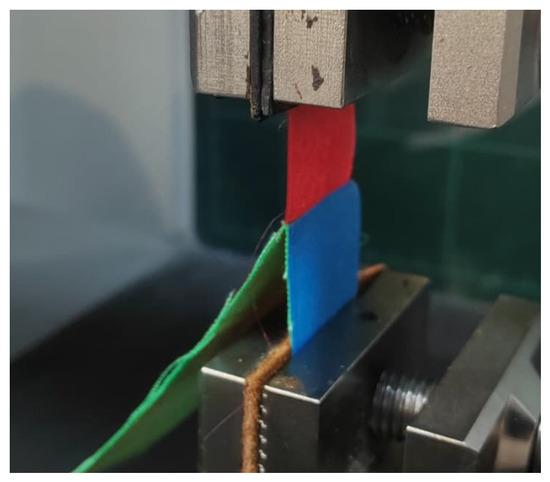
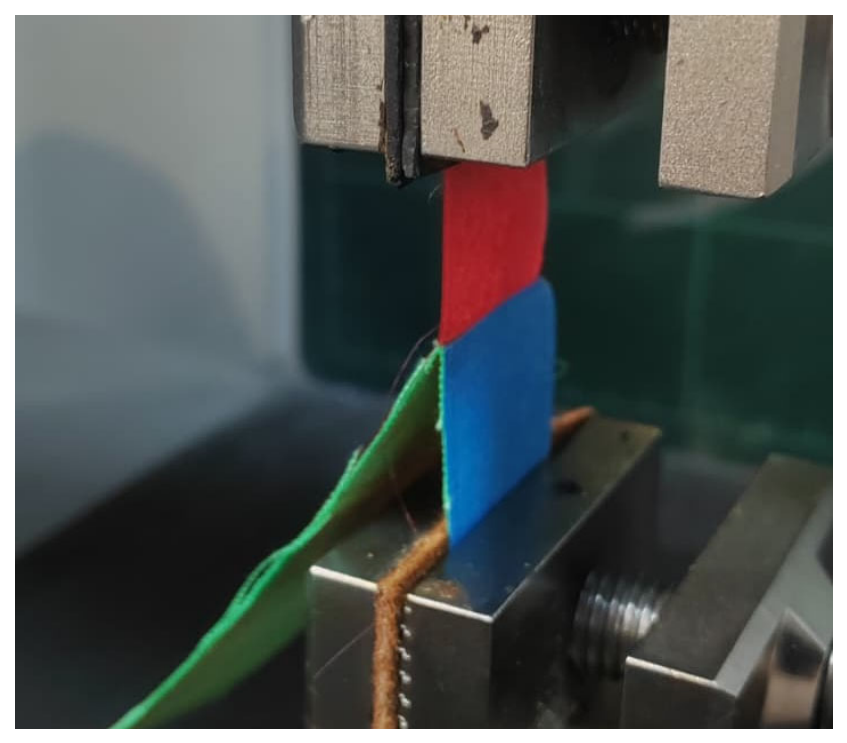
The two free arms (polymer and textile) were clamped in opposing grips of the universal testing machine to form an approximately 180° T-peel configuration. Alignment of the peel arms with the loading axis (collinearity) was ensured manually during clamping, as is typical for this setup when a dedicated self-aligning peel fixture is not used. A displacement-controlled test was run at a constant crosshead speed of 100 mm/min, while force–displacement data were recorded continuously until separation or premature failure. A representative specimen mounted in the grips is shown in Figure 9.
Figure 9.
T-peel specimen mounted in the universal testing machine.
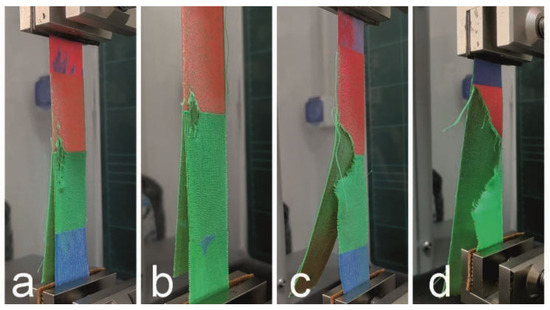
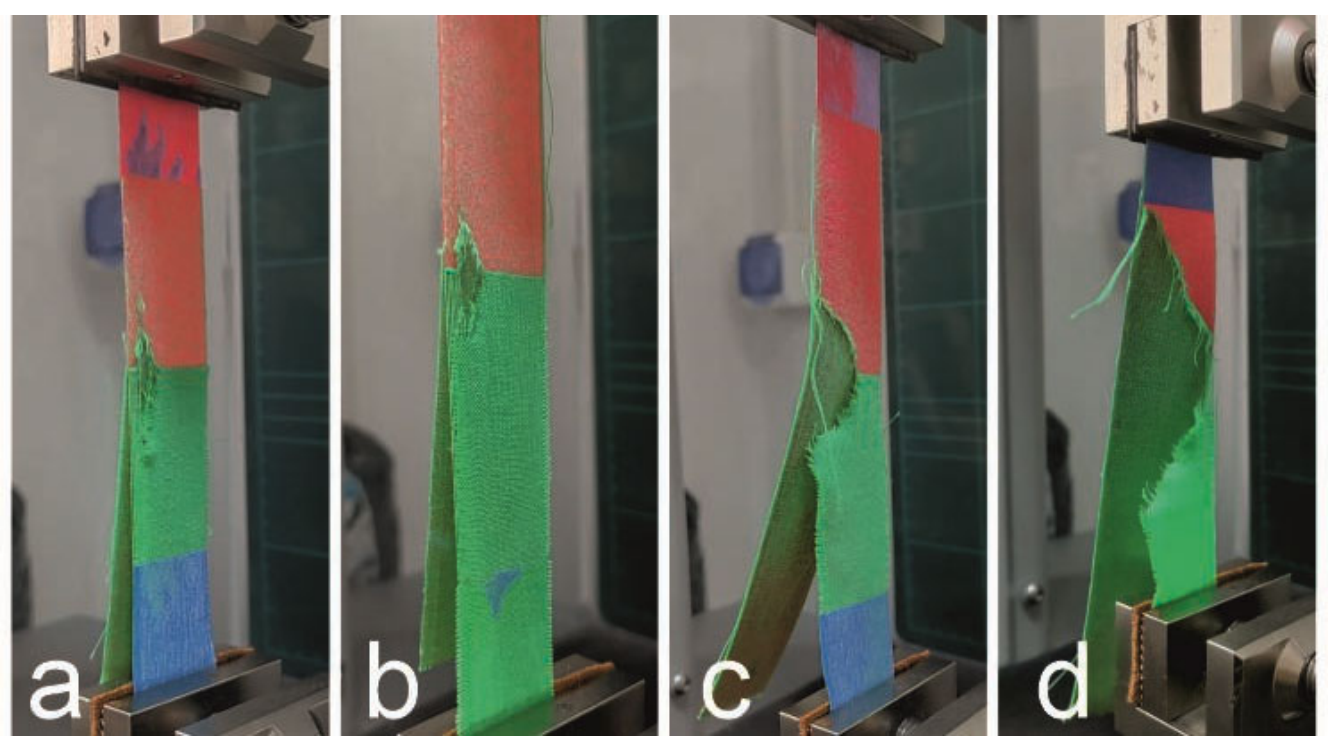
Peel resistance was calculated as the mean peeling force divided by the specimen width, and is therefore reported in N/mm, over the standard evaluation window (25–125 mm) according to ISO 11339, excluding the initial transient region [12]. The failure mode was documented for each specimen (interfacial separation, polymer fracture, or textile damage). Examples of non-interfacial failure cases are illustrated in Figure 10.
Figure 10.
Examples of premature T-peel failures during testing: (a,b) PLA specimens; (c,d) TPU specimens.
2.5. Microscopy
Microscopy was used to document interface morphology and post-test surface features relevant to adhesion and failure mode interpretation. Representative specimens were prepared and examined in three complementary views: (i) cross-sections through the polymer–textile interface, obtained by sectioning through the bonded region to expose the through-thickness penetration and yarn encapsulation; (ii) cross-sections through the polymer after textile removal, examined after both T-peel and perpendicular (dolly) tests to visualize the remaining interlocking protrusions/features formed within the fabric structure; and (iii) the fabric surface opposite the printed side (backside) after testing, examined after both test methods to document polymer residue trapped in weave openings and any deformation of the textile structure.
The microscopy observations focused on qualitative comparison of polymer penetration depth/extent, geometry and apparent density of interlocking features, and the presence/distribution of polymer remnants on the textile backside, enabling correlation between interface morphology and the observed test outcomes under peel versus normal separation loading.
3. Results and Discussion
3.1. Dataset and Reported Outputs
A total of 48 specimens were produced and tested (3 polymers × 2 test methods × 8 replicates). Results are reported separately for the T-peel benchmark and the proposed perpendicular tensile (dolly) method, using a clear distinction between valid tests (suitable for quantitative comparison) and premature failures (reported as failure rate and illustrated qualitatively).
For the T-peel benchmark, peel performance is reported as peel resistance in N/mm, calculated by dividing the mean peeling force recorded over the defined evaluation window (25–125 mm) by the specimen width, consistent with ISO 11339 practice [12]. Because multiple specimens—especially for TPU—failed prematurely (e.g., textile rupture or specimen damage before a stable peeling segment could be obtained), the dataset is split into valid tests used for peel-resistance statistics and premature failures excluded from peel-resistance statistics but retained for failure-rate reporting and qualitative interpretation. In the final dataset, the number of tests meeting the analysis criteria was n = 8 for PETG, n = 5 for PLA, and n = 1 for TPU; all remaining T-peel runs are reported as premature failures.
For the perpendicular tensile (dolly) method, all specimens produced a complete normal-to-surface separation without test failures; therefore, all replicates were treated as valid (n = 8 per polymer). The primary reported outcome is the maximum load, Fmax (N). In addition, an area-normalized metric is reported as a nominal normal tensile strength, calculated as:
where is the bonded circular area and D is the dolly diameter used in the final geometry. This normalization supports comparison across geometries and across studies that report strengths as stress rather than force. Summary statistics are reported as mean ± SD, alongside min–max for each polymer.
To document both repeatability and failure behavior, representative mechanical response curves are presented as follows. For T-peel, two representative valid curves and two representative failed curves are shown for PLA; two representative valid curves are shown for PETG; for TPU, a compact panel is used that groups four failed curves together and contrasts them with the single valid curve. For the perpendicular tensile method, two representative curves per polymer are shown to illustrate the typical response and scatter, since no failures occurred in this configuration. Interface morphology is examined using close-up/microscopy images to support failure-mode interpretation; these observations are discussed in Section 3.4 and are used to link the measured responses to polymer penetration and mechanical interlocking at the textile interface.
3.2. Perpendicular Tensile Test (Proposed Method): Quantitative Outcomes and Repeatability
The proposed perpendicular tensile method generated a complete, valid dataset for all three polymers (n = 8 per polymer), with no test interruptions due to specimen slippage, grip-related damage, or fixture-related instability. The primary reported outcome was the maximum load at separation (), extracted from each load–displacement curve. In addition, a nominal normal separation stress () was calculated by dividing by the bonded circular area (A = π(D/2)2 = 176.7 mm2 for D = 15 mm). This stress should be interpreted as an apparent (nominal) metric intended for within-study comparison, since non-uniform load transfer and stress concentrations are expected at a rigid–flexible interface.
As summarized in Table 1, the method clearly discriminated the three polymer systems under normal-to-surface loading. was calculated as /A, where A = 176.7 mm2 (circular bonded area for D = 15 mm) and N/mm2 is equivalent to MPa.
Table 1.
Summary statistics for the perpendicular tensile (dolly) test (D = 15 mm).
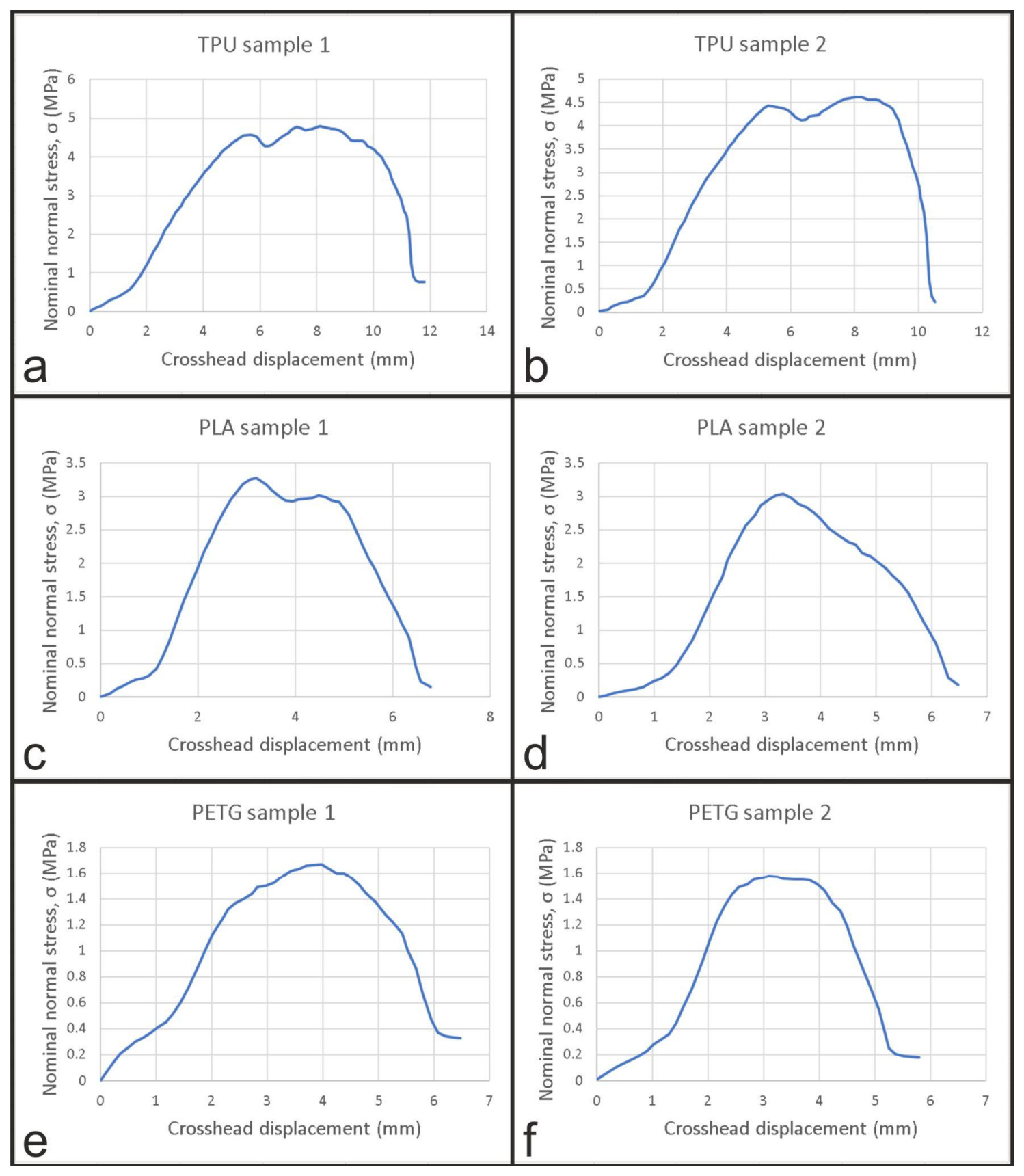
PETG exhibited the lowest separation loads ( = 291.9 ± 15.2 N; = 1.652 ± 0.086 MPa), PLA showed intermediate values ( = 606.5 ± 44.4 N; = 3.432 ± 0.251 MPa), and TPU presented the highest resistance to separation ( = 830.8 ± 46.9 N; = 4.701 ± 0.265 MPa). Relative variability was moderate and acceptable for this type of textile–polymer interface test, with coefficients of variation (based on ) of 5.21% for PETG, 7.32% for PLA, and 5.64% for TPU.
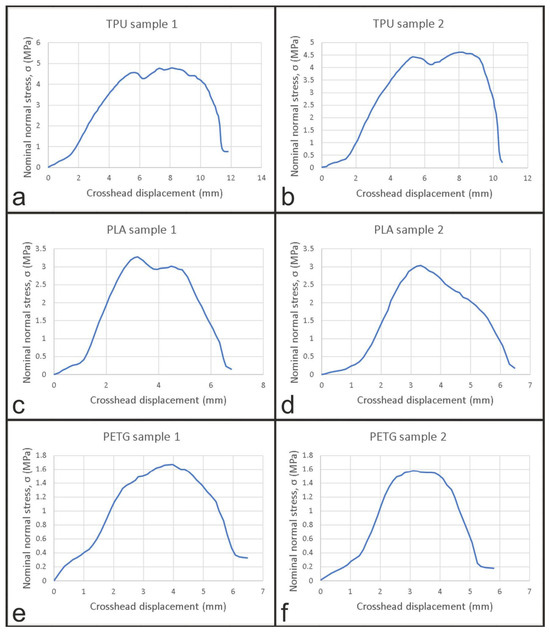
Representative nominal stress–displacement curves (two per polymer) are shown in Figure 11a–f. All curves exhibit a short initial seating region followed by a monotonic load increase toward a clearly defined maximum and a rapid drop associated with separation. Unlike peel testing, this method does not depend on identifying a long constant-force evaluation window, because the reported outcome is anchored to a robust peak event. A further practical advantage is geometric: because the bonded region is circular, the response is not inherently direction-sensitive with respect to warp/weft orientation, reducing a common source of variability when testing woven substrates.
Figure 11.
Representative nominal stress–displacement curves from the perpendicular-dolly tensile test: (a,b) TPU specimens; (c,d) PLA specimens; (e,f) PETG specimens. Nominal stress was calculated by dividing the recorded load by the circular dolly area, A = 176.7 mm2.
3.3. Benchmark T-Peel Results and Failure Modes (ISO 11339)
T-peel testing was used as a benchmark method because it is the most frequently reported approach for assessing polymer–textile bonding in FDM-on-textile studies. Peel resistance was calculated in N/mm by dividing the mean peeling force recorded over the fixed 100 mm evaluation window (25–125 mm) by the specimen width, excluding the initial transient, following ISO 11339 practice [12]. In practice, many specimens—especially at higher adhesion—did not yield usable data across the full evaluation window. The textile often failed before the window was completed, or the T-peel curve showed strong monotonic drift instead of a near-stationary response.
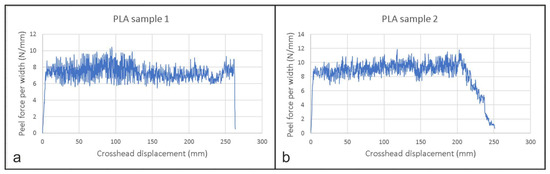
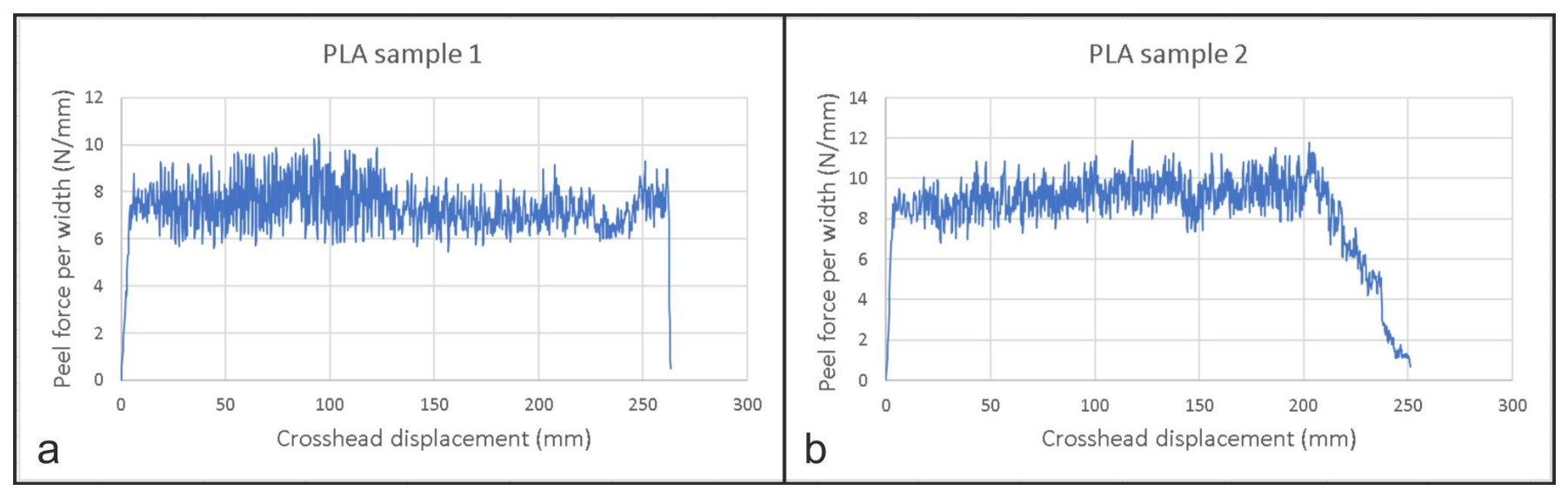
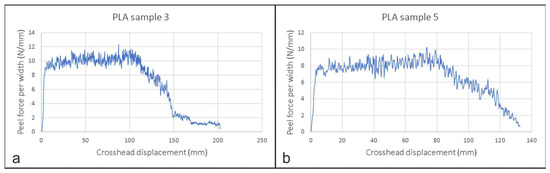
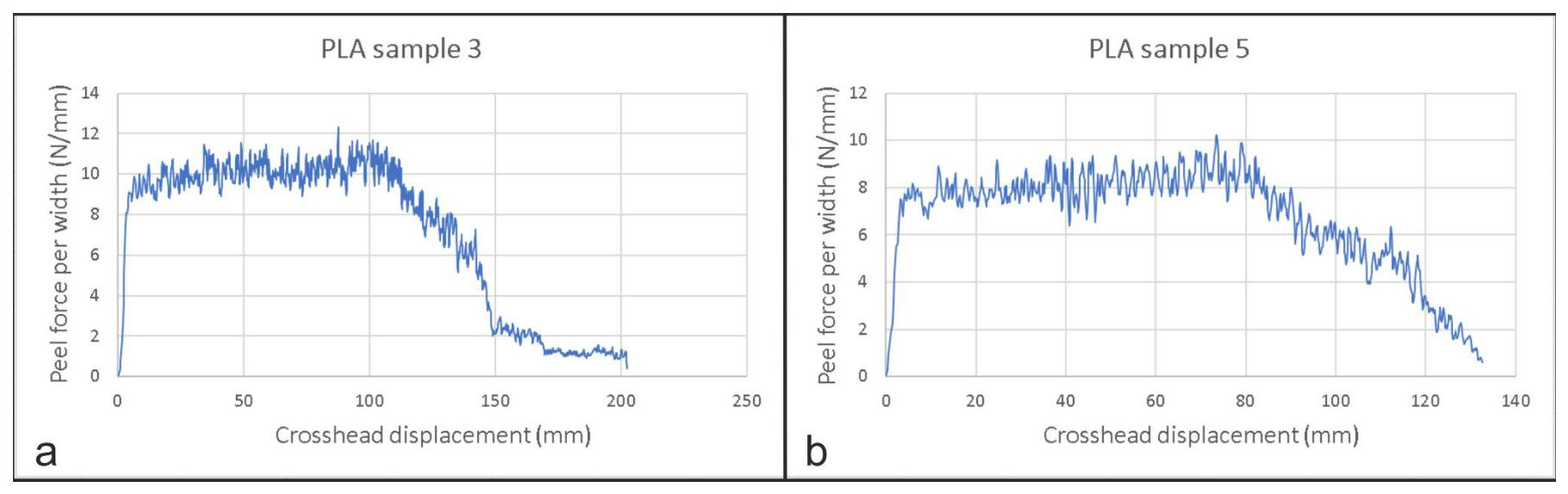
Across the three materials, the ability to obtain “standard-compliant” curves differed markedly. PLA showed partial validity (5/8): several specimens provided a measurable evaluation segment, while others failed early through fabric rupture or mixed failure, preventing extraction of a compliant 100 mm window. Valid sample graphs for PLA are presented in Figure 12, and failed examples in Figure 13.
Figure 12.
Representative T-peel curves for two valid PLA tests: (a) sample 1; (b) sample 2.
Figure 13.
Representative T-peel curves for two failed PLA tests: (a) sample 3; (b) sample 5.
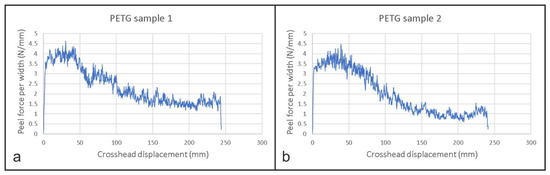
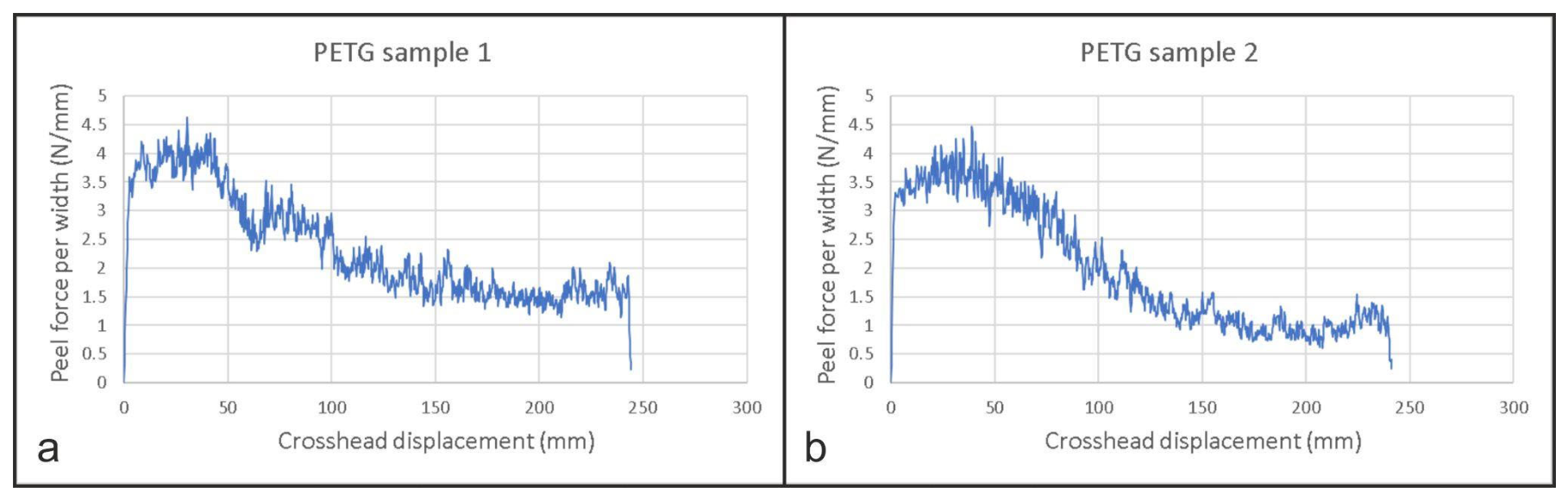
PETG produced valid curves for all specimens (8/8), typically characterized by an early higher-force phase followed by a gradual decrease toward a lower level, but the same fixed evaluation window (25–125 mm) was applied to ensure consistent processing across materials. Valid sample graphs for PETG are presented in Figure 14.
Figure 14.
Representative T-peel curves for two valid PETG tests: (a) sample 1; (b) sample 2.
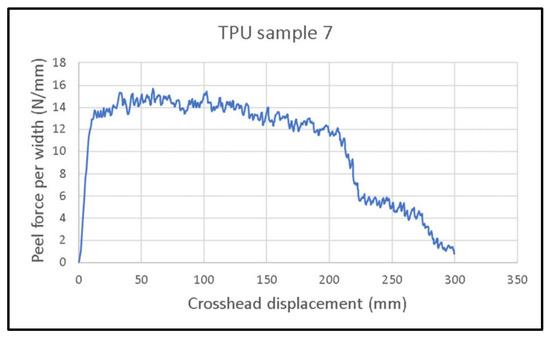
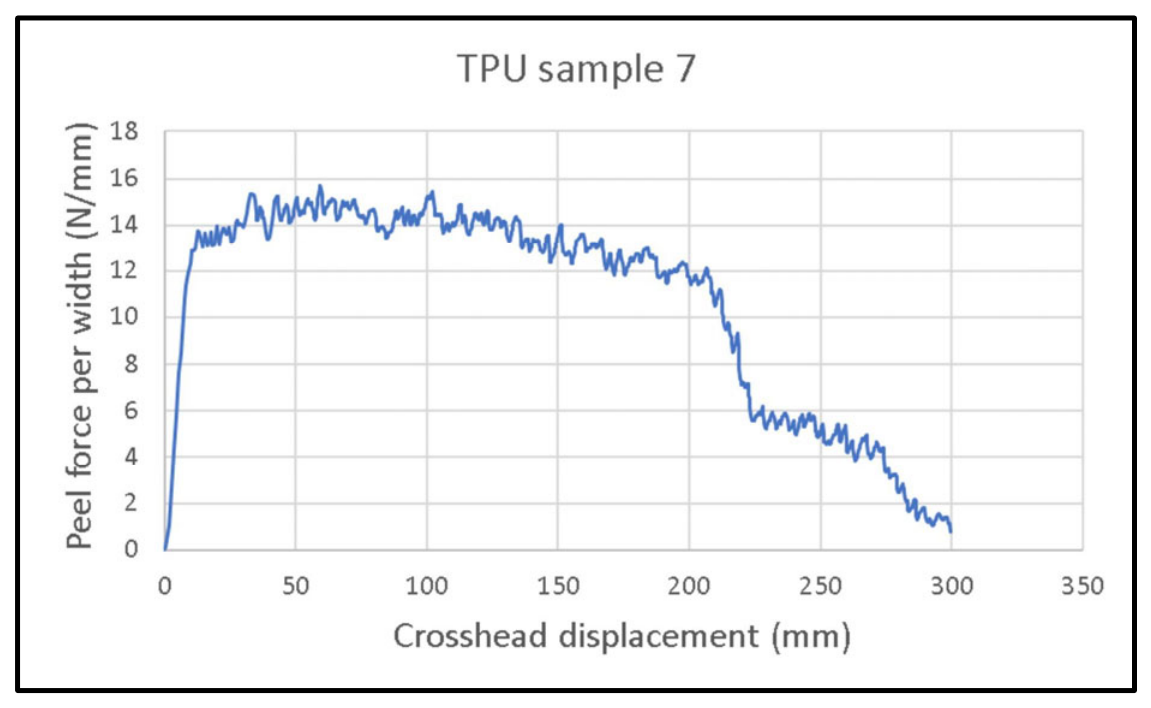
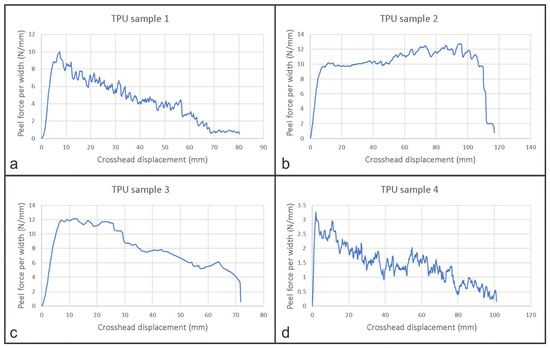
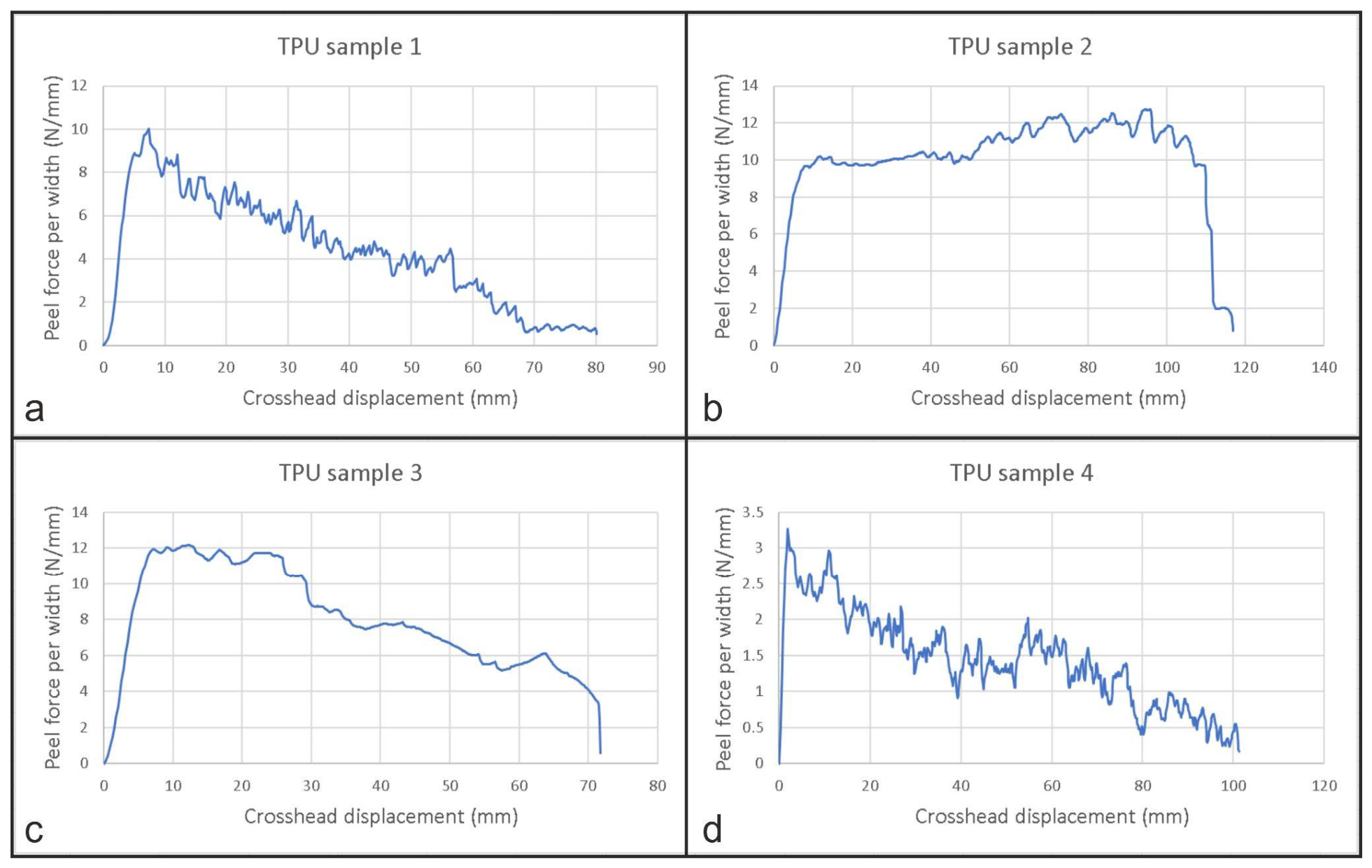
TPU exhibited the strongest substrate-limited behavior: most TPU specimens could not complete the required 25–125 mm evaluation window (7/8). Only one specimen met the minimum data-length requirement. The valid test graph is shown in Figure 15. Failed sample graphs are presented in Figure 16.
Figure 15.
T-peel curve for the single valid TPU test: sample 7.
Figure 16.
Representative failed TPU T-peel curves: (a) sample 1; (b) sample 2; (c) sample 3; (d) sample 4.
Table 2 reports T-peel resistance normalized by the 25 mm specimen width, calculated as the mean peeling force over the ISO 11339 evaluation window (25–125 mm) for specimens that provided the required window [12]. Specimens that ruptured or otherwise did not complete the evaluation segment were excluded from peel-resistance statistics and are reported as invalid counts rather than being averaged. To retain information from all tests, peak-force () statistics include all specimens within each polymer group.
Table 2.
Summary of T-peel test results (ISO 11339).
For TPU, only one specimen completed the required ISO 11339 evaluation window. Therefore, the TPU T-peel resistance value is reported only as a single valid observation and should not be interpreted as a statistically representative mean or as a population estimate. No standard deviation or confidence interval can be associated with this value.
Overall, the T-peel benchmark clearly differentiated PETG (lower, stable peel) from PLA (higher peel with mixed validity), while TPU could not be robustly quantified by T-peel on this woven fabric because the test became dominated by substrate failure rather than interfacial separation—exactly the regime where an alternative normal-to-surface method is needed.
3.4. Interface Morphology and Interlocking Features (Microscopy)
Direct FDM deposition onto textiles rarely creates a simple, planar bond line. Instead, the interface develops as a three-dimensional engagement zone in which molten polymer penetrates the fabric porosity and partially surrounds yarns before solidifying. This penetration generates mechanical interlocking features for the more pronounced cases, which can strongly influence both the measured response and the dominant failure mode, particularly under peel loading where bending and off-axis extraction are inherent to the test. The microscopy sets presented below are therefore used to connect the observed macroscopic behavior (valid tests versus premature failures) to the underlying interface morphology for each polymer. Accordingly, these images are used for qualitative morphological interpretation of polymer penetration, yarn wrapping and interfacial failure features.
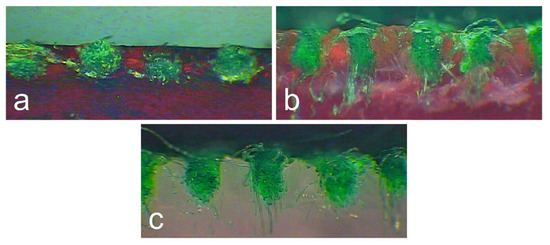
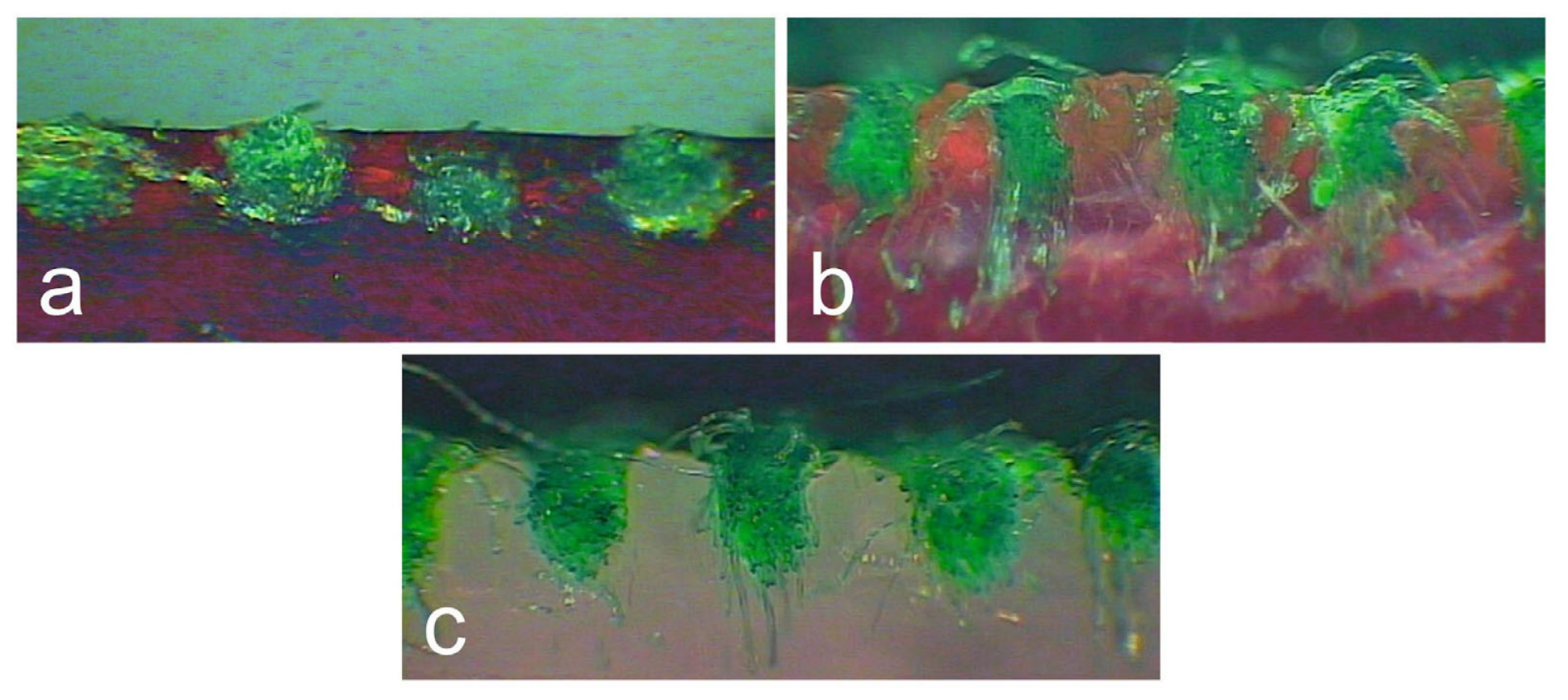
Figure 17 illustrates a cross-section through the polymer–textile interface and shows clear differences in penetration and encapsulation. For TPU (a), the polymer visibly envelops the textile structure, forming a continuous film that extends through the fabric thickness and can be observed even on the opposite side, indicating extensive impregnation and strong mechanical interlocking. For PLA (b), a similar—but less pronounced—behavior is observed: the polymer infiltrates the inter-yarn gaps and forms distinct protruding interlock features within the weave openings. For PETG (c), penetration appears more limited; the polymer does not immerse the textile to the same extent, and the resulting interlock features are smaller and less pronounced. Collectively, these sections support a simple morphological ranking that mirrors the adhesion trends: extensive encapsulation/interlocking for TPU, intermediate interlocking for PLA, and more limited interlocking for PETG.
Figure 17.
Cross-sectional microscopy images of the printed polymer–textile interface: (a) TPU, (b) PLA, (c) PETG.
These microscopy observations help explain why TPU produced the highest resistance, despite being a soft elastomer. The stronger TPU response should be interpreted as a process-interface effect rather than as a consequence of higher intrinsic stiffness or strength. Previous FDM-on-textile studies have shown that adhesion is strongly influenced by printing parameters, especially the nozzle-to-textile or nozzle-to-bed distance, because reduced distance can press molten polymer between yarns and fibers and promote mechanical interlocking [1,16]. In the present study, TPU was more compliant than PLA and PETG and could conform more effectively to the yarn architecture during first-layer deposition. Combined with the near-zero effective nozzle-to-textile clearance, this likely promoted deeper squeeze-in, yarn wrapping and stronger mechanical anchoring. Therefore, the higher TPU response under normal separation is consistent with an interface governed by polymer penetration and mechanical interlocking, rather than by polymer stiffness alone.
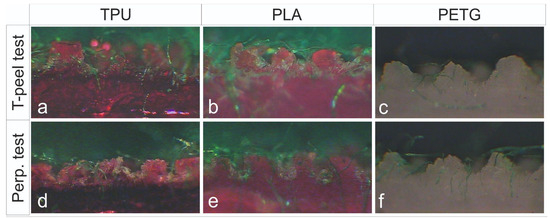
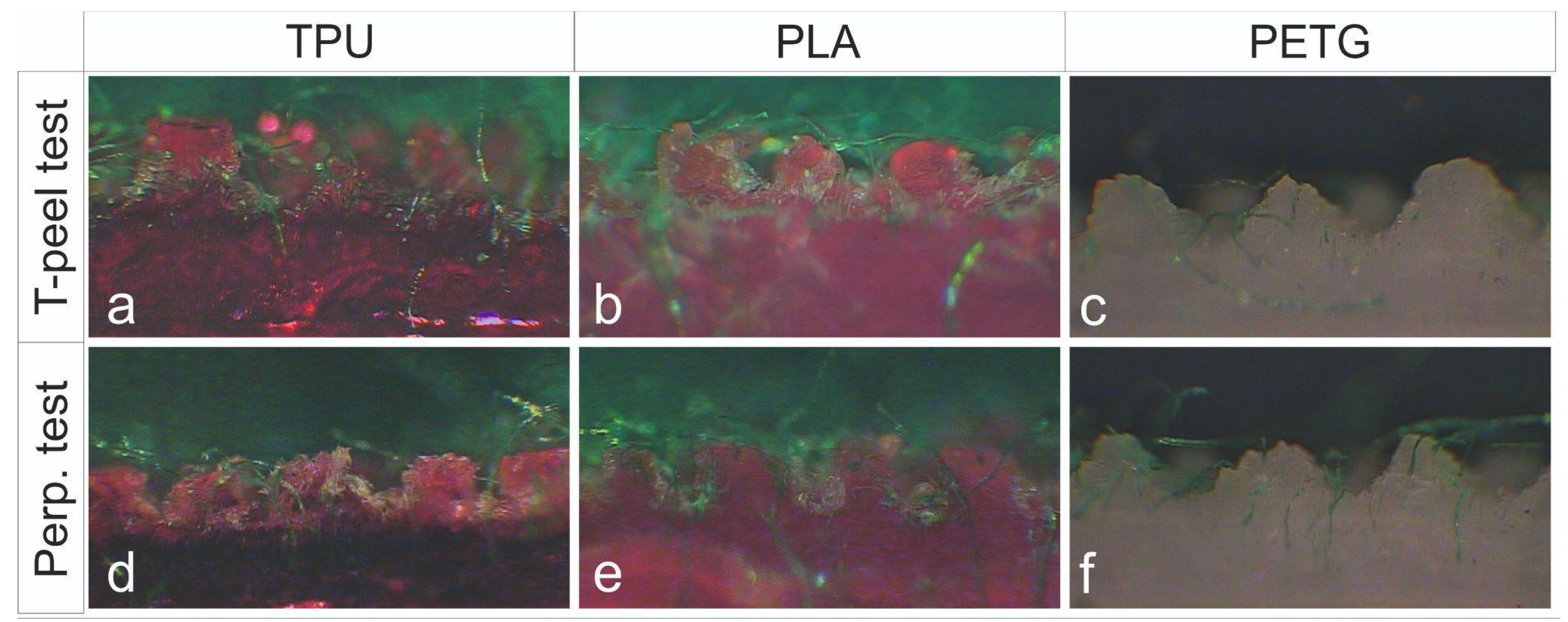
Figure 18 compares the polymer surface after textile removal for both loading paths, highlighting how the same interfacial morphology can respond differently under peel versus normal separation. After T-peel, TPU shows evidence of partial damage to the polymer-side interlocking features in some regions, consistent with a mixed response in which the measured force may include not only interface separation but also local rupture of polymer structures formed within the fabric porosity. In contrast, after the perpendicular (pull-off) test, the TPU polymer surface retains a dense population of interlocking features with a more uniformly preserved appearance, suggesting that these features were primarily pulled out from the textile rather than torn within the polymer. For PLA and PETG, the polymer-side surfaces appear broadly similar between the two tests, with interlocking features largely preserved; however, the peel geometry can still promote yarn pull-out and textile damage when the features are more pronounced and rigid, which provides a plausible morphological explanation for the substrate-limited outcomes observed in a subset of PLA T-peel specimens. For PETG, the interlocking features are smaller and smoother, resembling rounded protrusions, which likely reduces snagging of yarns under peel loading and is consistent with the absence of textile rupture during PETG T-peel testing in this study.
Figure 18.
Comparative cross-sectional microscopy of the polymer after textile removal: (a–c) after T-peel—(a) TPU, (b) PLA, and (c) PETG; (d–f) after perpendicular-dolly testing—(d) TPU, (e) PLA, and (f) PETG.
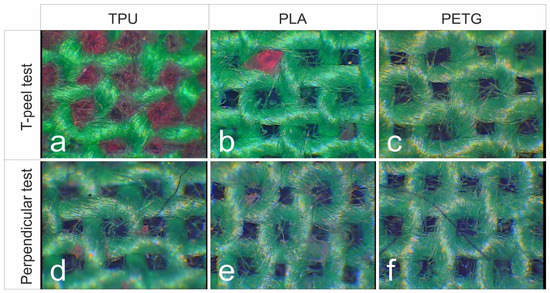
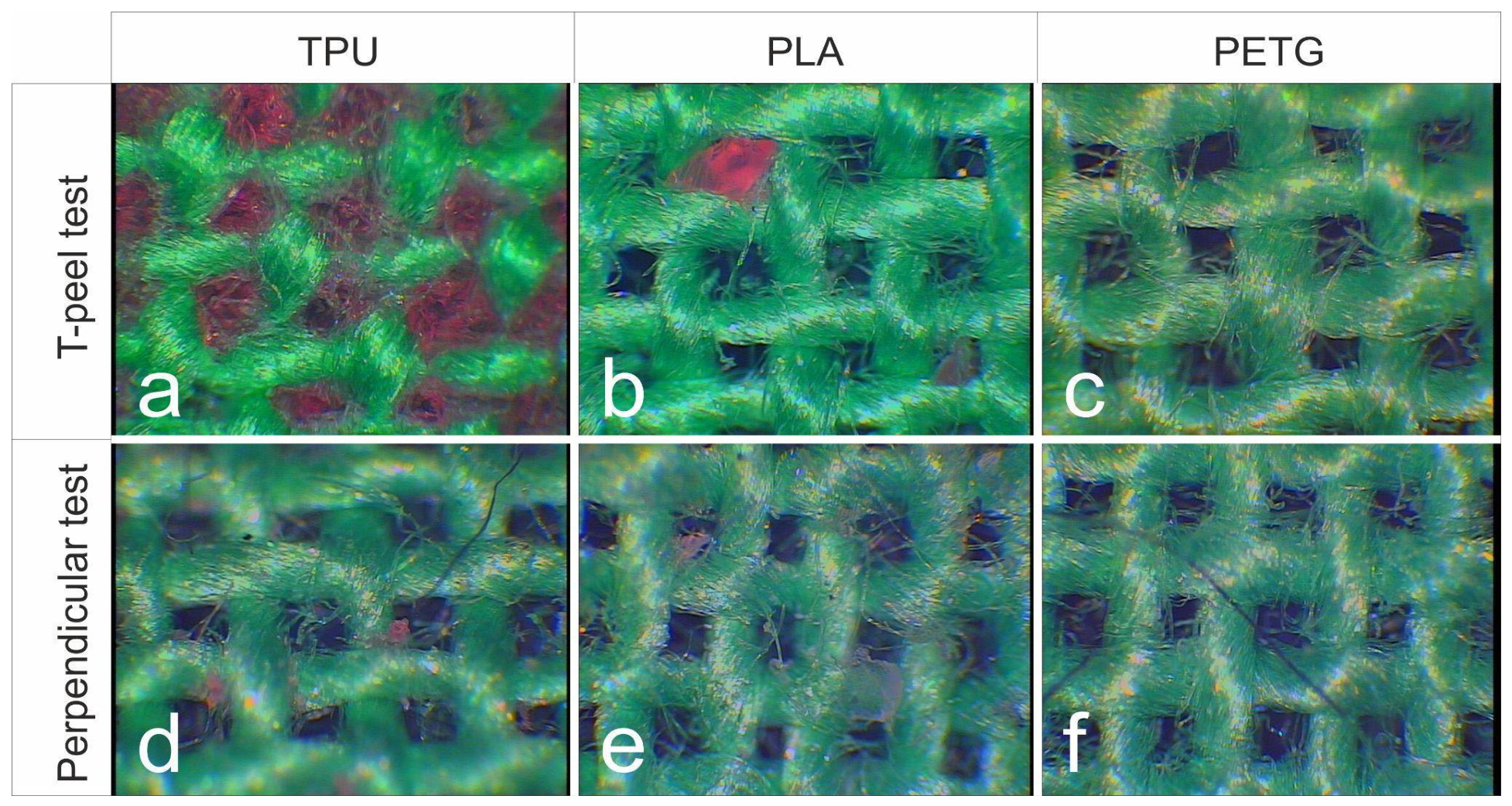
Figure 19 compares the fabric surface opposite the printed side after testing for both T-peel and perpendicular pull-off. For TPU under T-peel, polymer residue is distributed across a large area of the back surface, with interlock remnants visibly occupying weave openings—direct evidence that torn interlock material remained embedded in the textile during peeling. In contrast, TPU under perpendicular testing shows only sparse, localized polymer traces, supporting the interpretation that axial extraction favored a cleaner separation without widespread tearing of polymer features. For PLA under T-peel, sporadic polymer remnants are visible together with noticeable deformation of the weave openings, consistent with localized yarn displacement/pull-out during off-axis peel extraction. Under PLA perpendicular testing, polymer traces are again limited and more sporadic, indicating that normal-to-surface extraction reduces lateral yarn displacement and promotes a cleaner detachment pathway. Finally, for PETG, where adhesion was the lowest in both methods, the textile back surfaces show minimal differences between T-peel and perpendicular tests; neither prominent polymer residues nor notable deformation of the weave openings are observed, consistent with a weaker mechanical interlocking contribution overall.
Figure 19.
Comparative microscopy of fabric surface opposite the printed side after testing. Woven fabric (a–c) after T-peel test—(a) TPU, (b) PLA, and (c) PETG; (d–f) after perpendicular-dolly testing—(d) TPU, (e) PLA, and (f) PETG.
Taken together, these microscopy observations support two conclusions: (i) stronger apparent adhesion in printed-on-textile systems is closely linked to the extent and geometry of polymer penetration/interlocking, and (ii) the same interlocking morphology can lead to fundamentally different measured behavior depending on the loading path—mixed or substrate-limited response under peel versus a cleaner, more interpretable response under normal (perpendicular) extraction.
4. Discussion
Beyond interpretability, the two methods also differ in practical implementation and experimental throughput. T-peel can be perceived as a straightforward “print-and-test” benchmark because it relies on familiar strip specimens and a widely used peel configuration. However, when the full workflow is considered—including specimen fabrication footprint, first-layer reliability over extended toolpaths, test duration, and the proportion of tests that reach a standard-compliant evaluation window—its practical advantage becomes less clear relative to a compact pull-off (dolly) approach.
In this study, the printed polymer mass was similar for both specimen types (≈3.5 g), so the main fabrication penalty of T-peel was not polymer usage but print footprint and exposure time. T-peel specimens require longer, wider first-layer toolpaths over a larger textile area. The most critical process issues were observed at the first layer, where extended continuous deposition increases the likelihood of filament agglomeration and partial nozzle obstruction. This effect is amplified when stronger adhesion strategies are used (e.g., lower stand-off/higher flow), because those settings must be maintained across a large first-layer area. By contrast, the perpendicular-dolly specimen concentrates the interface into a compact circular zone. The first layer is short and localized, which reduces exposure to time-dependent first-layer instabilities and makes it practical to use more assertive first-layer settings to promote penetration without paying the same reliability penalty encountered in long T-peel prints.
Print times were similar for dolly specimens across materials (≈24–26 min per specimen for PLA/PETG/TPU). For T-peel specimens, printing time was comparable for PLA and PETG (≈24 min per specimen) but increased for TPU (≈35 min per specimen), further extending first-layer exposure in the material that also exhibited the highest failure rate in peel. On the testing machine, a typical T-peel run with ~150 mm effective peel length corresponds to ~300 mm total arm travel, which at 100 mm/min requires ~3 min of crosshead travel per specimen, not including mounting and manual alignment. In contrast, the perpendicular pull-off event is completed within seconds once the fixture is mounted and aligned; the full set of eight specimens can therefore be tested in minutes rather than tens of minutes, with lower operator dependence.
T-peel also places more demand on mounting consistency. Gripping, collinearity and the evolving peel angle can influence the effective loading condition, and long peel distances increase the chance that the test transitions into mixed or substrate-limited behavior. This is reflected in the present dataset by the large fraction of non-compliant T-peel outcomes for high-adhesion cases, where premature textile damage prevents steady-state evaluation. The perpendicular-dolly method avoids the need for a long evaluation window and standardizes mounting through a self-aligning fixture, which reduces sensitivity to grip setup and helps ensure that the test reaches a clear separation event.
Finally, the perpendicular approach supports more direct comparison across setups when geometry and bonded area are reported, because results can be expressed as both peak force and nominal pull-off stress based on a defined contact area. Previous work using related perpendicular-separation approaches provides a useful load-range reference for the proposed fixture. For example, Malengier et al. [17] reported a perpendicular tensile test in which directly printed PLA dollies were detached from cotton textile substrates. From their published graph, the maximum forces can be estimated at approximately 80–170 N, depending on textile construction. In the present study, the fully 3D-printable fixture sustained substantially higher pull-off loads, with PLA reaching 606.5 ± 44.4 N and TPU reaching 830.8 ± 46.9 N, with a maximum recorded TPU value of 886.8 N, without fixture failure or loss of alignment. This comparison is not intended to establish direct adhesion equivalence across different polymers, textile systems or printing conditions. Rather, it shows that the proposed fixture is mechanically robust enough to evaluate strong FDM-on-textile interfaces.
T-peel remains useful as a benchmark where steady-state peeling can be achieved, but its practical throughput and completion rate become limiting in strong-bonding regimes—precisely the regimes where routine screening and parameter studies require a robust, repeatable test.
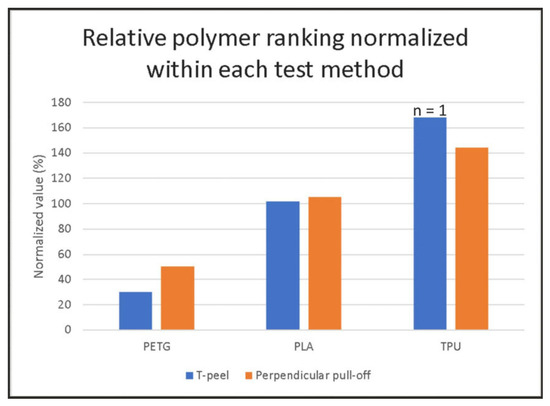
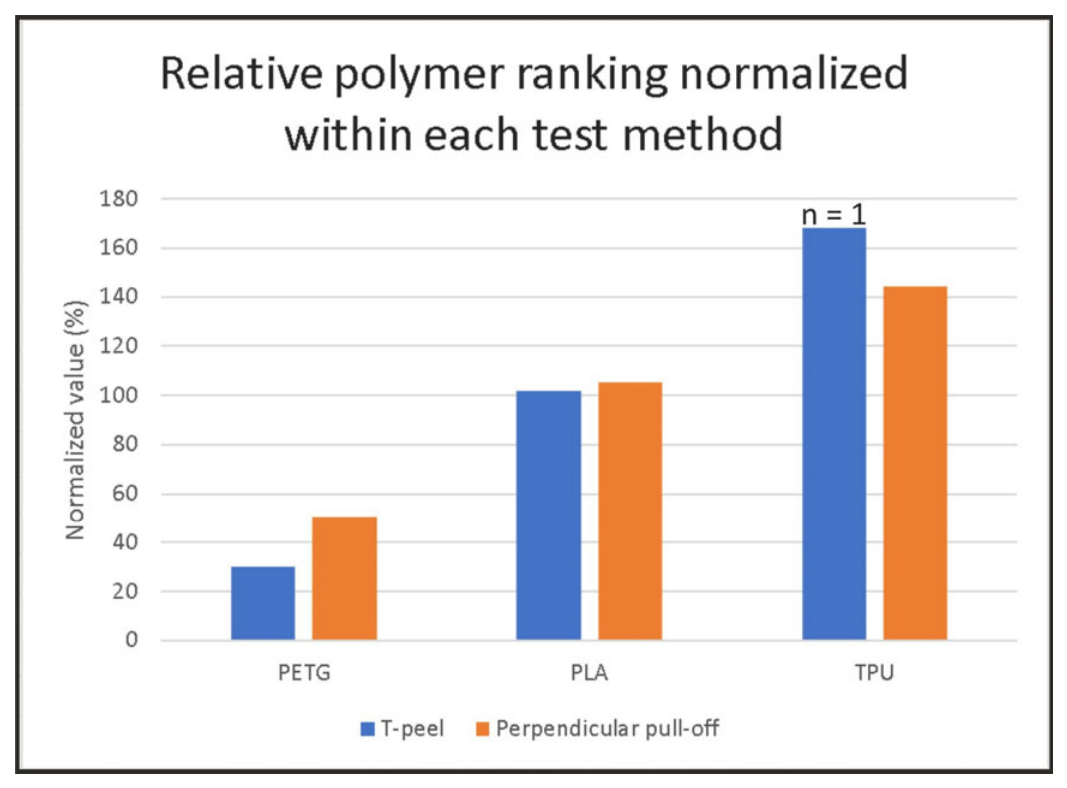
To summarize within-method ranking without implying direct equivalence between peel and pull-off magnitudes, Figure 20 presents normalized trends referenced to each method’s mean. The graph summarizes the available within-method ranking, while highlighting the reduced completeness of the T-peel dataset for TPU, where many specimens could not be evaluated under the ISO window and were therefore excluded from the trend.
Figure 20.
Relative polymer ranking normalized within each test method. T-peel values were normalized from peel resistance (N/mm), while perpendicular pull-off values were normalized from maximum nominal stress (MPa). The TPU T-peel value is labelled as n = 1 because it represents a single valid observation and is shown for indicative comparison rather than as a statistically representative mean.
5. Conclusions
This study evaluated adhesion testing for FDM-printed polymers on a woven cotton substrate using (i) an ISO 11339-type T-peel benchmark and (ii) a fixture-based perpendicular (pull-off) method built around a printed circular dolly and a fully 3D-printable, self-aligning clamping assembly. Across three representative filaments (PETG, PLA, and TPU; n = 8 per polymer), the perpendicular method consistently produced complete datasets and clearly discriminated the normal-separation response of the three polymer–textile systems (TPU > PLA > PETG).
In contrast, T-peel quantification over the ISO evaluation window (25–125 mm) was strongly material-dependent: PETG yielded valid curves for all specimens, PLA produced a mixed dataset, and TPU was largely substrate-limited, with most runs failing before the evaluation window could be completed. These outcomes highlight a practical limitation of peel-based benchmarks for high-interlocking FDM-on-textile systems, where the test can become dominated by textile damage rather than interface separation.
Microscopy supported the mechanical results by revealing distinct penetration and interlocking morphologies across polymers and by showing that the same interfacial architecture can respond differently under peel versus normal separation. From a practical point of view, concentrating the interface into a small, standardized circular area and enforcing alignment through a self-aligning fixture improves robustness and throughput, enabling routine adhesion screening across a wider bonding range than T-peel.
Future work should validate the proposed perpendicular method across a broader range of textile substrates and structures, including fabrics with different weave architectures, knitted constructions (with higher compliance and loop mobility), and nonwoven fabrics (with stochastic porosity and fiber entanglement).
A second direction is further scaling of the dolly contact area to extend the quantifiable range in very-high-adhesion regimes where substrate-limited behavior becomes likely. Reducing dolly diameter below the current geometry could shift failure away from textile rupture and toward measurable separation events, improving discrimination among strong-bonding conditions while preserving the method’s key advantage: a compact, repeatable, area-defined normal-separation test.
Supplementary Materials
The following supporting information can be downloaded at: https://www.mdpi.com/article/10.3390/textiles6020054/s1, The printable files for the dolly and fixture device.
Author Contributions
Conceptualization, R.F., M.C.L., C.E.A. and A.T.; methodology, R.F., C.E.A., S.D.I. and E.C.L.; software, E.C.L., A.T. and R.F.; validation, M.C.L., S.D.I. and E.C.L.; formal analysis, M.C.L., S.D.I. and C.E.A.; investigation, R.F., C.E.A. and A.T.; resources, R.F. and E.C.L.; data curation, C.E.A. and S.D.I.; writing—original draft preparation, R.F., C.E.A. and A.T.; writing—review and editing, S.D.I. and E.C.L.; supervision, M.C.L.; project administration, S.D.I. All authors have read and agreed to the published version of the manuscript.
Funding
This research was funded by the European Union’s Horizon Europe programme, grant number 101132596. The APC was funded by the same grant.
Data Availability Statement
The original contributions presented in this study are included in the article/Supplementary Material. Further inquiries can be directed to the corresponding authors.
Acknowledgments
The authors acknowledge the information and knowledge support offered by the “Craft Revitalization Action for Future-proofing the Transition to Innovative Technologies for Sustainable Development—CRAFT-IT4SD” project.
Conflicts of Interest
The authors declare no conflicts of interest.
Abbreviations
The following abbreviations are used in this manuscript:
| FDM | Fused deposition modelling |
| PETG | Polyethylene terephthalate glycol |
| PLA | Polylactic acid |
| TPU | Thermoplastic polyurethane |
| ISO | International Organization for Standardization |
| AM | Additive manufacturing |
| DIN | Deutsches Institut für Normung |
| RH | Relative humidity |
| UTM | Universal testing machine |
| ABS | Acrylonitrile butadiene styrene |
References
- Spahiu, T.; Al-Arabiyat, M.; Martens, Y.; Ehrmann, A.; Piperi, E.; Shehi, E. Adhesion of 3D printing polymers on textile fabrics for garment production. IOP Conf. Ser. Mater. Sci. Eng. 2018, 459, 012065. [Google Scholar] [CrossRef] [Scilit]
- Loh, G.H.; Sotayo, A.; Pei, E. Development and testing of material extrusion additive manufactured polymer-textile composites. Fash. Text. 2021, 8, 2. [Google Scholar] [CrossRef] [Scilit]
- Cakar, S.; Ehrmann, A. Adhesion and stab-resistant properties of FDM-printed polymer/textile composites. Tekstilec 2023, 66, 211–217. [Google Scholar] [CrossRef] [Scilit]
- Sitotaw, D.B.; Muenks, D.; Kebash, A.K. 3D printing applications on textiles: Measurement of air permeability for potential use in stab-proof vests. J. Eng. Fibers Fabr. 2024, 19, 15589250241232152. [Google Scholar] [CrossRef] [Scilit]
- Özev, M.S.; Ehrmann, A. Sandwiching textiles with FDM printing. Commun. Dev. Assem. Text. Prod. 2023, 4, 88–94. [Google Scholar] [CrossRef] [Scilit]
- Silvestre, R.; Garcia-Breijo, E.; Ferri, J.; Montava, I.; Bou-Belda, E. The influence of the structure of cotton fabrics on the adhesion of conductive polymer printed with 3D printing technology. Polymers 2023, 15, 668. [Google Scholar] [CrossRef] [Scilit] [PubMed]
- Monteiro, E.; Carvalho, H.; Rocha, A.M.; Tama Bırkocak, D.; Puga, H. 3D printing of flexible conductive polymers on textiles for sensing and electrical connection. Tekst. Muhendis 2022, 29, 315–321. [Google Scholar] [CrossRef] [Scilit]
- Chen, Y.; Deng, Z.; Ouyang, R.; Zheng, R.; Jiang, Z.; Bai, H.; Xue, H. 3D printed stretchable smart fibers and textiles for self-powered e-skin. Nano Energy 2021, 84, 105866. [Google Scholar] [CrossRef] [Scilit]
- Popescu, D.; Amza, C.G. 3D printing onto textiles: A systematic analysis of the adhesion studies. 3D Print. Addit. Manuf. 2024, 11, e586–e606. [Google Scholar] [CrossRef] [Scilit] [PubMed]
- Costea, M.; Seul, A.; Mihai, A. Slit tear resistance of leather used in upholstery manufacturing. Ind. Text. 2023, 74, 296–302. [Google Scholar] [CrossRef] [Scilit]
- DIN 53530:1981-02; Testing of Organic Materials; Separation Test on Fabric Plies Bonded Together. Deutsches Institut für Normung: Berlin, Germany, 1981.
- ISO 11339:2010; Adhesives-T-Peel Test for Flexible-to-Flexible Bonded Assemblies. International Organization for Standardization: Geneva, Switzerland, 2010.
- Čuk, M.; Bizjak, M.; Muck, D.; Kočevar, T.N. 3D printing and functionalization of textiles. In Proceedings of the 10th International Symposium on Graphic Engineering and Design (GRID 2020), Novi Sad, Serbia, 12–14 November 2020. [Google Scholar] [CrossRef] [Scilit]
- Narula, A.; Pastore, C.M.; Schmelzeisen, D.; El Basri, S.; Schenk, J.; Shajoo, S. Effect of knit and print parameters on peel strength of hybrid 3-D printed textiles. J. Text. Fibrous Mater. 2018, 1, 2515221117749251. [Google Scholar] [CrossRef] [Scilit]
- ISO 6133:2015; Rubber and Plastics-Analysis of Multi-Peak Traces Obtained in Determinations of Tear Strength and Adhesion Strength. International Organization for Standardization: Geneva, Switzerland, 2015.
- Meyer, P.; Döpke, C.; Ehrmann, A. Improving adhesion of three-dimensional printed objects on textile fabrics by polymer coating. J. Eng. Fibers Fabr. 2019, 14, 1558925019895257. [Google Scholar] [CrossRef] [Scilit]
- Malengier, B.; Hertleer, C.; Cardon, L.; Van Langenhove, L. 3D printing on textiles: Testing of adhesion. J. Fash. Technol. Text. Eng. 2018, S4, 013. [Google Scholar] [CrossRef]
- Gorlachova, M.; Mahltig, B. 3D-printing on textiles—An investigation on adhesion properties of the produced composite materials. J. Polym. Res. 2021, 28, 207. [Google Scholar] [CrossRef] [Scilit]
- Maier, J.; Vogel, C.; Lebelt, T.; Geske, V.; Behnisch, T.; Modler, N.; Gude, M. Adhesion studies during generative hybridization of textile-reinforced thermoplastic composites via additive manufacturing. Materials 2021, 14, 3888. [Google Scholar] [CrossRef] [Scilit] [PubMed]
- Robinson, B.; Imam, A.; Sabir, T.; Ahmed, A. Application of additive manufacturing on textiles. In Proceedings of the 93rd Textile Institute World Conference (TIWC 2025), Porto, Portugal, 7–10 October 2025. [Google Scholar]
- ISO 5084:1996; Textiles-Determination of Thickness of Textiles and Textile Products. International Organization for Standardization: Geneva, Switzerland, 1996.
- ISO 139:2005; Textiles-Standard Atmospheres for Conditioning and Testing. International Organization for Standardization: Geneva, Switzerland, 2005.

Disclaimer/Publisher’s Note: The statements, opinions and data contained in all publications are solely those of the individual author(s) and contributor(s) and not of MDPI and/or the editor(s). MDPI and/or the editor(s) disclaim responsibility for any injury to people or property resulting from any ideas, methods, instructions or products referred to in the content. |
© 2026 by the authors. Licensee MDPI, Basel, Switzerland. This article is an open access article distributed under the terms and conditions of the Creative Commons Attribution (CC BY) license.