1. Introduction
The kinematics of the knee joint form the basis for the design and construction of devices for the lower limbs, such as prostheses, orthoses, exoskeletons, and rehabilitation equipment [
1,
2,
3]. Traditionally, most of these devices were designed based on general anatomical criteria without considering the patient’s anthropometry [
4,
5], which causes problems in the individual’s adaptation to the prosthesis, resulting in an unnatural gait and instability in movements [
6]. However, some authors suggest the development of customized devices that focus on the patient rather than standard devices to which the patient must adapt, due to their potential to improve the success of long-term treatments [
7,
8]. Customized devices could offer advantages such as reduced rejection rates and shorter recovery times [
3,
9].
It is important to note that the use of devices not based on the patient’s joint kinematics can cause asymmetries and impact gait by altering the musculoskeletal system [
10,
11,
12]. In the specific case of the knee, tibiofemoral joint kinematics is characterized by its axis of rotation in space, and, in simplified terms, it can be represented in the sagittal plane as the instantaneous center of rotation. This trajectory is formed during flexion-extension movements [
11].
Various studies show variations between the kinematics of the leg and the prosthesis, revealing significant differences in gait patterns compared to healthy patterns and between healthy limbs and amputated limbs [
11,
13,
14]. Mechanisms with 4 or more axes do not conform to tibiofemoral joint kinematics and differ in terms of centroid position during the trajectory [
15].
The kinematics of the knee joint are directly related to walking [
16,
17]. Cases in which the knee joint requires medical attention are related to locomotor disorders resulting from injuries, degenerative pathologies, musculoskeletal disorders, and various neurological damages [
18]. Additionally, kinematic data collected during body movement provide clinical evidence for treatment and diagnosis [
19]. This could help doctors in the rehabilitation of the tibiofemoral joint [
20] and prosthetic rehabilitation [
21]. On the other hand, it also enables the evaluation of gait behavior in people with unilateral transfemoral amputation who use external knee prostheses [
22]. For these reasons, it is essential to know the personalized knee kinematics of each patient [
23,
24], to design prostheses, orthoses, exoskeletons, and rehabilitation devices [
25,
26,
27].
It is known that the natural movement of the tibia relative to the femur has six degrees of freedom, comprising flexion-extension, varus-valgus, internal-external rotation, and relative displacement. However, its biomechanical influence is predominantly observed during motion in the sagittal plane. Consequently, the femur and tibia, articulated through the femorotibial joint, are typically modeled as undergoing planar kinematics. Relative movement in the plane can be characterized by knowing the relative geometric location between the segments [
24,
28].
Prototypes have also been developed based on a 4-bar mechanism that determines the trajectory of the rotational axis (RAP) of the knee in motion more quickly, accurately, and reliably than a manual measurement system [
17,
29,
30,
31]. These prototypes use an imaging system and markers on a 4-bar mechanism that represents the cruciate ligaments. Nietert [
32] asserts that it is much more likely that the shape of the condyles of the femur and tibia was created due to the arrangement of the lateral and cruciate ligaments. Other authors developed the design and optimization of a six-bar mechanism with one degree of freedom (DOF) for performing walking trajectories. Based on a genetic optimization algorithm, the dimensions of the six-bar mechanism are obtained to adjust to the walking trajectories [
33].
To determine knee kinematics, it has been established that the relative position between the tibia and femur in the sagittal plane could coincide with the point of intersection of the ligaments (PILC) in that same plane. Therefore, the position of the PILC during flexion-extension is sufficient to characterize the tibiofemoral joint, considered as a flat joint kinematically [
23,
34,
35].
Several methods have been developed to determine the kinematics of the knee joint, ranging from early approaches to modern techniques employing advanced equipment. The most relevant include:
Realeaux Method: Determines the instantaneous center of rotation, which describes a semicircular trajectory due to the progressive decrease in the curvature radius of the femoral condyles from extension to flexion. The procedure locates this center using two points defined on the medial tibial plateau (anterior and posterior sectors), identified in the sagittal plane obtained through radiography. The intersection of the perpendicular bisectors of the segments connecting these points establishes the tibiofemoral rotation center [
36].
Blankevoort Method (1990): Defines the spatial trajectory of rotation axes during flexion–extension, considering the axial rotation of the tibia along its longitudinal axis. Its designation derives from the geometry described by the axes during displacement [
23].
Four-Bar Linkage Model: Establishes that the instantaneous center of rotation is located at the intersection of the anterior and posterior cruciate ligaments. The model employs four bars representing the tibial plateau, femoral condyle, and both cruciate ligaments, with the intersection point defining the tibiofemoral rotation center [
37].
Contact-Based Methods: Define the center of rotation as the midpoint of the shortest distance between the tibial plateau and femoral condyle surfaces, thereby establishing the rotation center at the contact point [
38,
39].
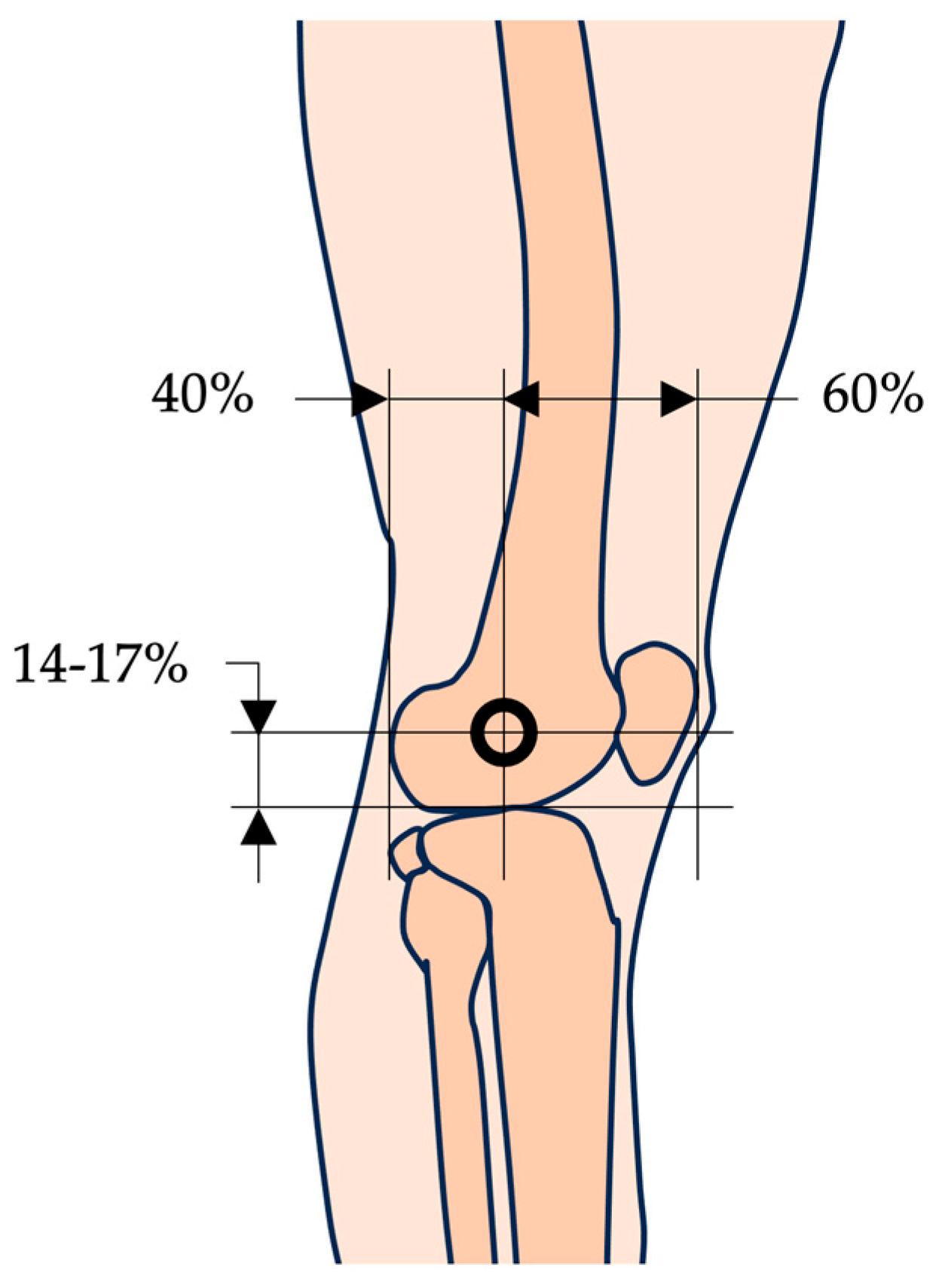
A device has been proposed to determine the pivot point of the knee joint, which, for this study, has been named PPKJ. It is based on the width of the knee and the sagittal plane, as shown in
Figure 1. The 60–40% ratio is highlighted due to the shape that characterizes the tibiofemoral joint [
40].
On the other hand, prosthetic device manufacturer Otto Bock, with its 743A8 device, called the knee pivot point calibrator, achieves a 60–40% ratio, thereby determining the knee joint pivot point (PPKJ). This point precisely defines the lateral center of the prosthetic socket, allowing for better initial alignment of prosthetic devices, such as external knee prostheses, for individuals with transfemoral amputations. Limited to obtaining only the PPKJ by placing a mark on the surface of the leg in a standing position.
Based on the relationship between the relative position of the tibia and femur in the sagittal plane and the dimensions of the knee joint, this study proposes the development of a mechanism to non-invasively record the geometric location and obtain the PPKJ during knee flexion.
The mechanism established by Nietert [
32], is used to easily characterize the personalized kinematics of the knee of the study subjects. The device can be reproduced and used by designers and researchers to capture these characteristic trajectories as a function of joint motion. This information can serve as a basis for developing various medical devices, rehabilitation systems, external knee prostheses, and exoskeletons, and for designing solutions that more closely conform to anatomical movements, establishing a foundation for personalized devices.
2. Materials and Methods
The mechatronic device, capable of characterizing the kinematics of the knee joint, was designed to measure the angles generated during movement from flexion to extension and vice versa, as performed during human walking. The measurements obtained can be used as data for designing customized prostheses and rehabilitation equipment that involve the knee joint. Likewise, this device could be used to measure the evolution in rehabilitation processes of the knee joint.
Figure 2 shows the methodology used to obtain the results.
The dimensions of the device were based on a participant with a height of 1.59 m and a body mass of 57 kg. To obtain the dimensional data of the participant’s lower limb, a 3D scanner was used. By scanning the leg, a more precise representation of its geometry is obtained, enabling the development of the mechatronic device and all its components based on this 3D model. This is particularly useful for designing the elements that attach to the leg, such as the thigh support clamp.
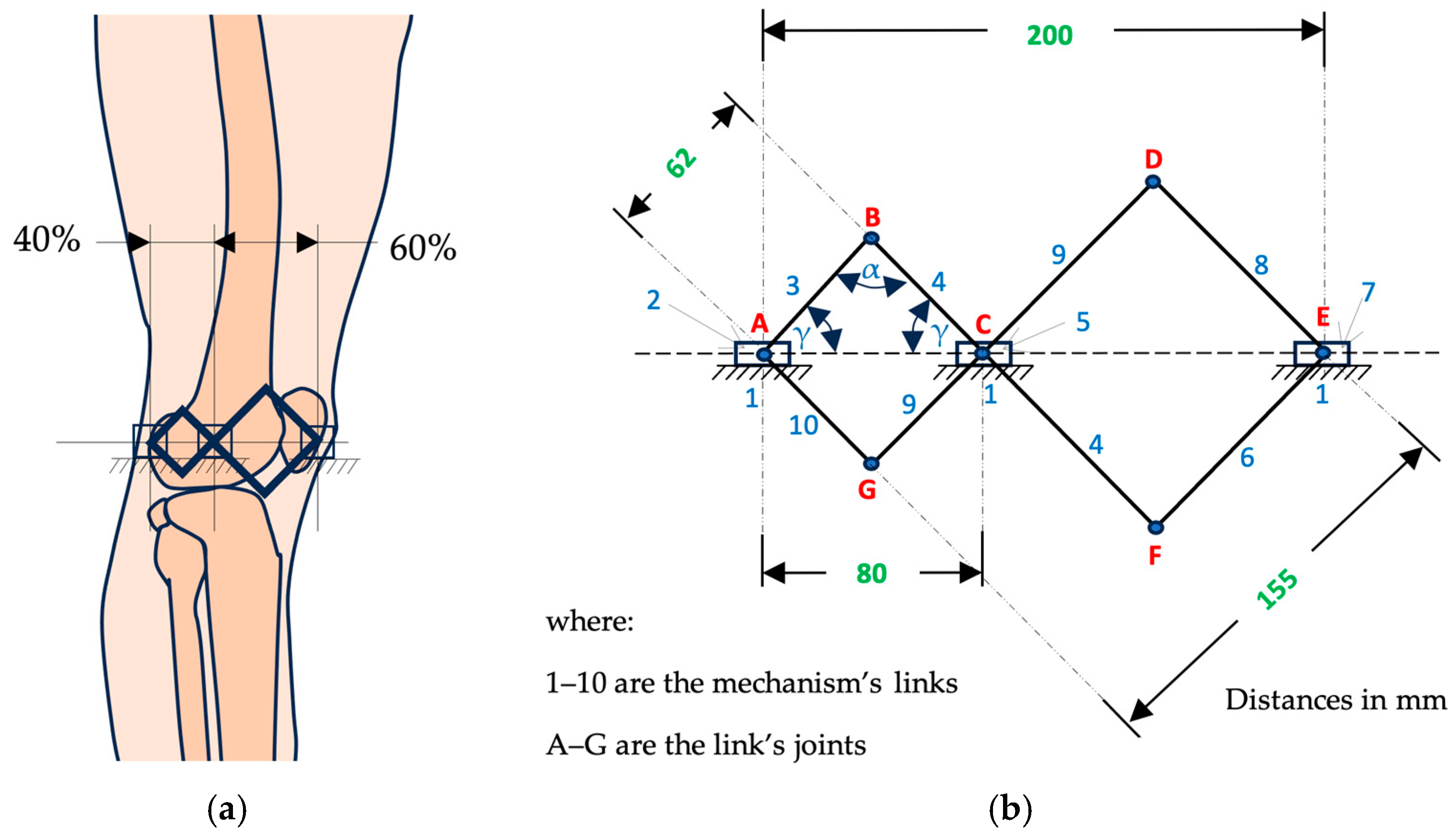
The device was based on a 60–40% proportional mechanism (see
Figure 3), coupled to both sides of the knee joint (see
Figure 3a), and aligned with anatomical reference points, specifically to locate the PPKJ and generate the points of the kinematic evolution of the knee joint during flexion and extension movements, and to store these data enabling its processing and analysis in subsequent stages. In the present study, the design and application of the device were considered only for participants without obesity, with a body weight between 48 and 59 kg and a height between 150 and 163 cm. Obesity could limit the correct positioning of the device by hindering the detection of anatomical reference points, which are located close to the bony structures, thus introducing potential errors in the measurements and in the claims derived from them. Therefore, the validity of the results presented here cannot be directly extrapolated to subjects with obesity, and this group remains the target of future specific studies.
Figure 3b shows the location of the pivot point between the femur and tibia (PPKJ), specifically the kinematic joint C. The mechanism consists of 7 rotational pairs and 3 pin-and-slot pairs. The total dimension corresponds to the distance between pin groove 2 and pin groove 7. To comply with the 60/40% ratio of the total distance, values were assigned to each link, and the measurements shown in
Figure 3b were determined. The mechanism must maintain a 60–40% dimensional ratio defined in the sagittal plane from the lateral condyle: 60% corresponds to the distance from this point to the most anterior bony prominence of the knee, and 40% to the distance from the lateral condyle to the posterior margin of the joint, as described in
Figure 3a.
The 60–40% mechanism served to determine the approximate trajectory of the knee pivot point during knee flexion. Based on the proposed mechanism and the cosine theorem (Equation (1)), the modulus and direction of the vector that determines the center of rotation of the tibio-femoral joint were calculated.
where (see also
Figure 3b):
AC is the distance between joint A and C
BC is the distance of link #4 (62 mm)
AB is the length of link #3 (62 mm)
α is the angle between links #3 and #4.
2.1. Sensor Calibration
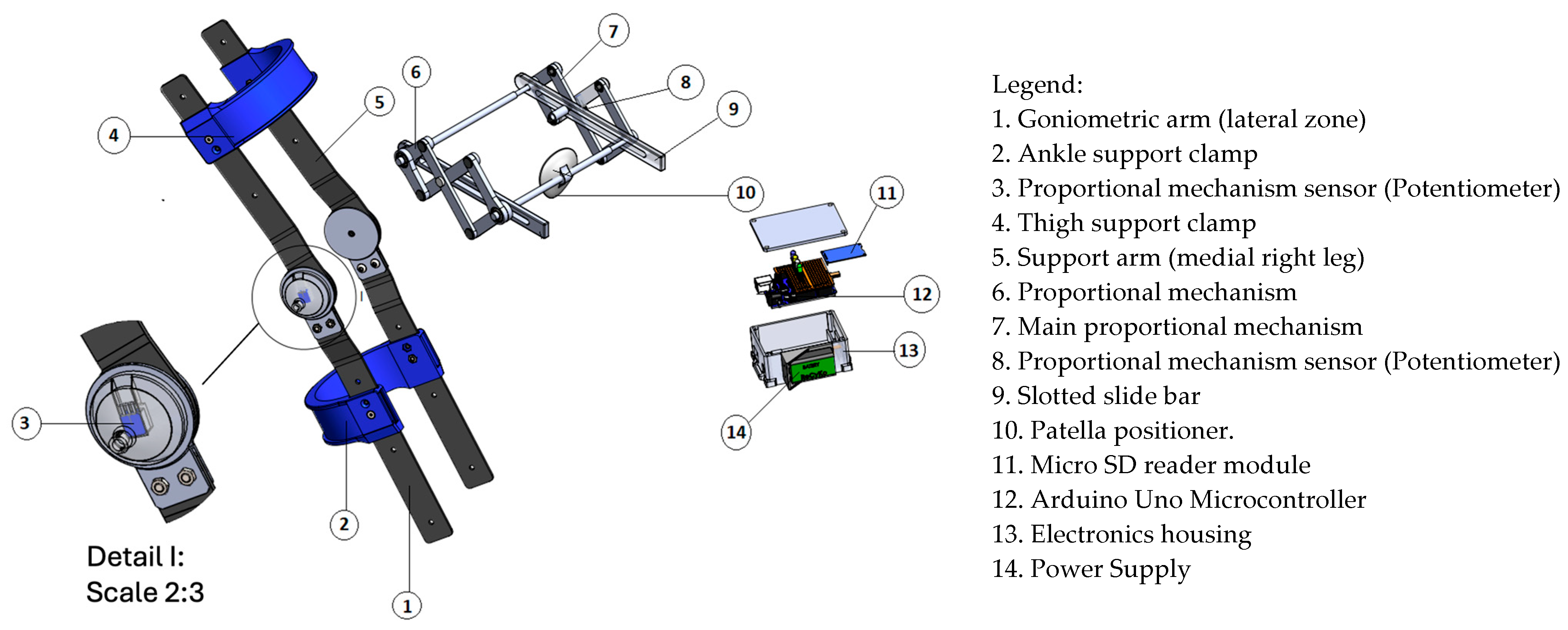
In this study, two sensors were used: 5 kΩ potentiometers for angular measurement (components 3 and 8, as detailed in
Figure 4), together with a digital orthopedic angular goniometer (model GR311-L, High-tech Industry Park Chaoyang Road, Guilin, Guangxi, China) to compare the results obtained. The goniometer is an electronic device with an accuracy of
and a resolution of
. It was aligned with the same anatomical reference points as the mechanical device and used to record knee flexion-extension angles in a series of static positions covering the functional range of motion, and these measurements were then compared with the potentiometer reading for calibration and validation.
2.1.1. Potentiometer
Two 5 kΩ potentiometers were used, with a maximum rotation of 302°. The angular position of the potentiometer is proportional to the position of the rotation axis.
The Arduino Uno controller-USA, reads this output in digital format, with values ranging from 0 to 1023 (corresponding voltage range of 0–5 V). This reading is then converted into an angular value using a linear calibration function.
2.1.2. Function
The relationship between the potentiometer readings (x) and the rotation angles (y) is described by the following linear equation, obtained during the calibration process:
where
represents the angle in degrees, and
is the potentiometer reading (ranging from 0 to 1023).
2.1.3. Comparison with the Goniometer
To validate the angles obtained with the potentiometer, they were compared with the values measured using a goniometer. This comparison allowed the precision of the measurement system to be assessed.
The data sampling frequency was set to 50 Hz. This frequency means the data were acquired at 20-ms intervals. This frequency was chosen to ensure the system captured variations in the potentiometer’s position without introducing noise or overloading the Arduino Uno processor.
The system’s accuracy was evaluated by comparing the calculated angles with the actual values obtained through the goniometer. The error metrics for sensors 1 and 2, respectively, were:
MSE (Mean Squared Error): 0.50595 and 0.9173
RMSE (Root Mean Squared Error): 0.7113 and 0.95776
Coefficient of Determination (): 0.99993 and 0.9999
The coefficient of determination (R2) close to 1 indicates a highly precise relationship between the measured angles and the values obtained from the potentiometer, confirming that the linear fit is suitable for angle measurement.
3. Results
Figure 4 illustrates the measurement system designed to enable natural and synchronized leg movement. To couple the 60–40% mechanism to the knee joint, a leg support system is designed. It consists of a pair of bars or arms (1) positioned parallel to the tibia. Additionally, it features an ankle support brace (2) that ensures the device is properly aligned with the lower part of the limb. In addition, a pair of support arms (5), in conjunction with a second clamp (4), helps to complete the correct fastening of the whole piece. The Nietert mechanism (7), its stabilization complement (6), and a patella positioner (10) measure knee displacement as a function of the flexion angle, recording the corresponding data. The links of the mechanism, identified as 3, 4, 6, 8, 9 and 10, as detailed in
Figure 3b, slide freely on two slotted bars (9) of
Figure 4, which consolidate a stable movement.
Additionally, the device requires the implementation of two proportional rotational sensors (5 kΩ potentiometers). The first sensor is placed in the joint between elements 1 and 5 of
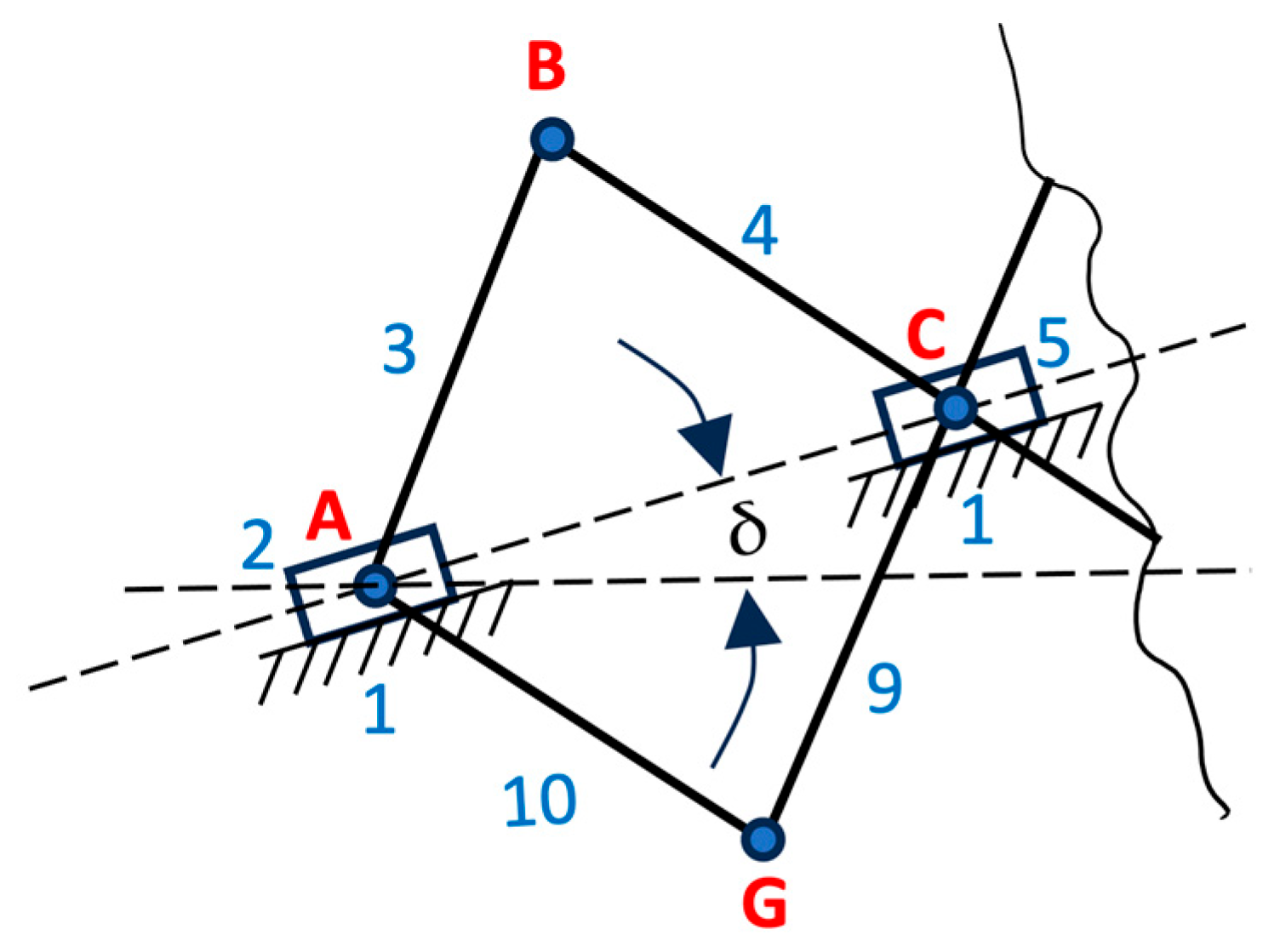
Figure 5 to determine the angle generated between the femur and the tibia. The second sensor is placed in joint C (see
Figure 3b) of the mechanism to measure its angular displacement. This sensor determines the angle (
) formed between links 4 and 9 of the mechanism.
The angle γ is obtained from a rotational proportional sensor (5 kΩ potentiometer), with a maximum rotation of 302°, located at joint C (see
Figure 3b) of the mechanism as described in
Section 2.1.1. The angular value is calculated using a simple rule of three. The angular value is obtained using a simple rule of three. Knowing that the angles beta and gamma are equal, the sum of the internal angles (see
Figure 3b) of the proportional mechanism can be expressed by Equation (2):
By substituting the values from (2) into (1), the magnitude of segment AC is determined. To measure the flexion-extension angle between the femur and tibia, another proportional sensor is placed at the junction between element 1 and element 5 of the device (see
Figure 4). This angle is named δ, with 0° being full extension (see
Figure 5).
Once the AC distance and the tibiofemoral displacement angle
have been obtained, the point of rotation between the femur and the tibia is defined as expressed in Equation (3).
For controlling the electronic system, data acquisition, processing, and executing instructions, the Arduino Uno board is used. This system is powered by an 8.4 V, 200 mAh rechargeable battery. The elements are integrated on an electronic board. The data obtained from the 5 kΩ proportional sensors is stored on a microSD card.
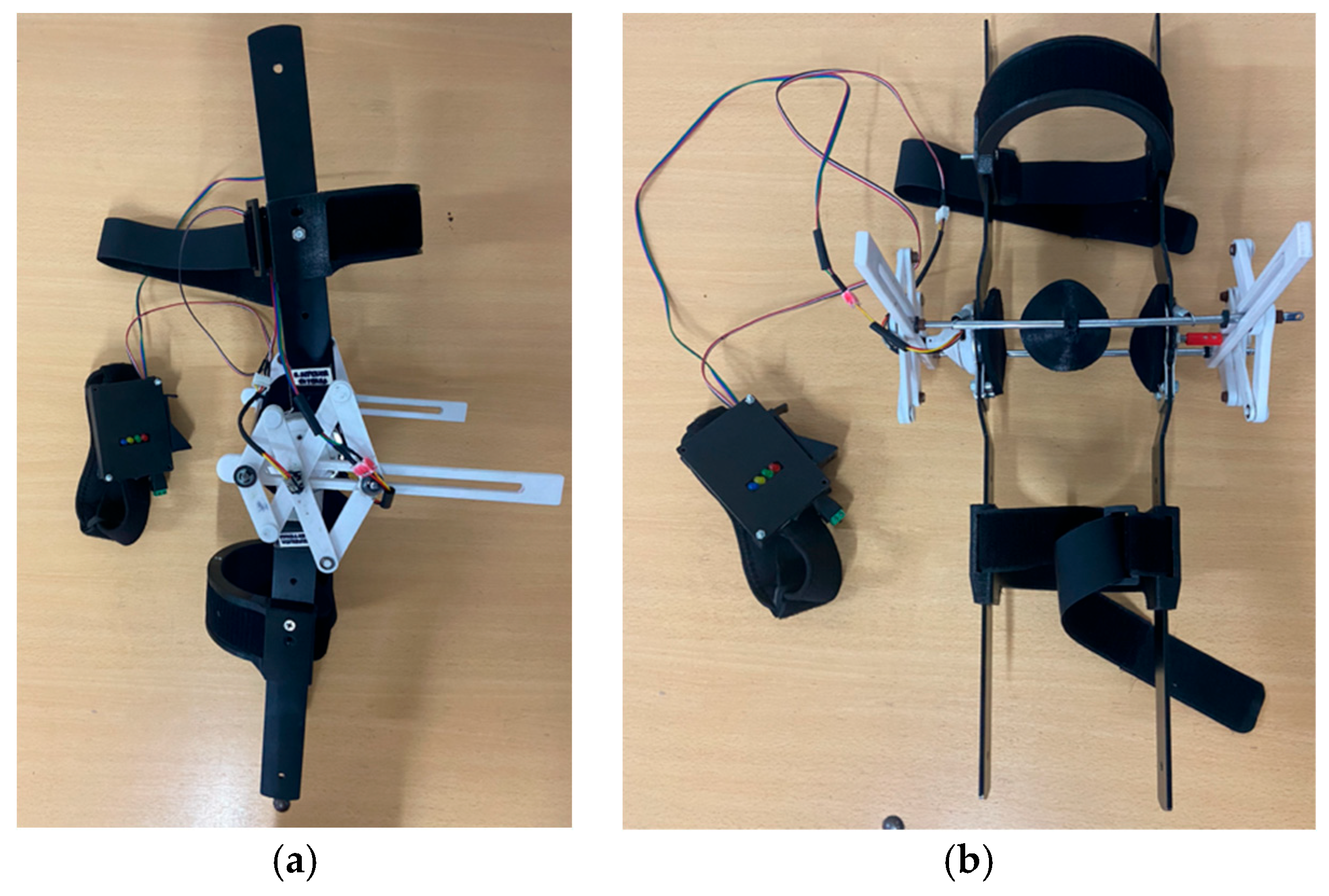
Figure 6 shows the assembled device.
Figure 4 illustrates the system architecture employed for joint motion analysis. A potentiometer (3) (refer to Detail I) is utilized to acquire data necessary for quantifying the flexion-extension range of motion of the joint. This sensor is embedded within a connection cone positioned at the interface between the lower limb segment (tibia) and the upper limb segment (femur). A secondary potentiometer (8), integrated into the Nietert mechanism, transmits the signal to an Arduino Uno microcontroller (12), which processes the input and relays the data to a microSD reader module (11). The recorded data are stored on an SD card. The system is powered by a 9-volt battery (14), and all electronic components are enclosed within a protective casing (13) to ensure operational integrity.
To carry out the tests, it is necessary to ensure that the movements are as natural as possible, to avoid forced displacements. The device testing protocol is structured in six steps, which are described below.
Participants in the mass range of 48 to 66 kg and height between 150 and 164 cm are selected since the device has a better adjustment to this range.
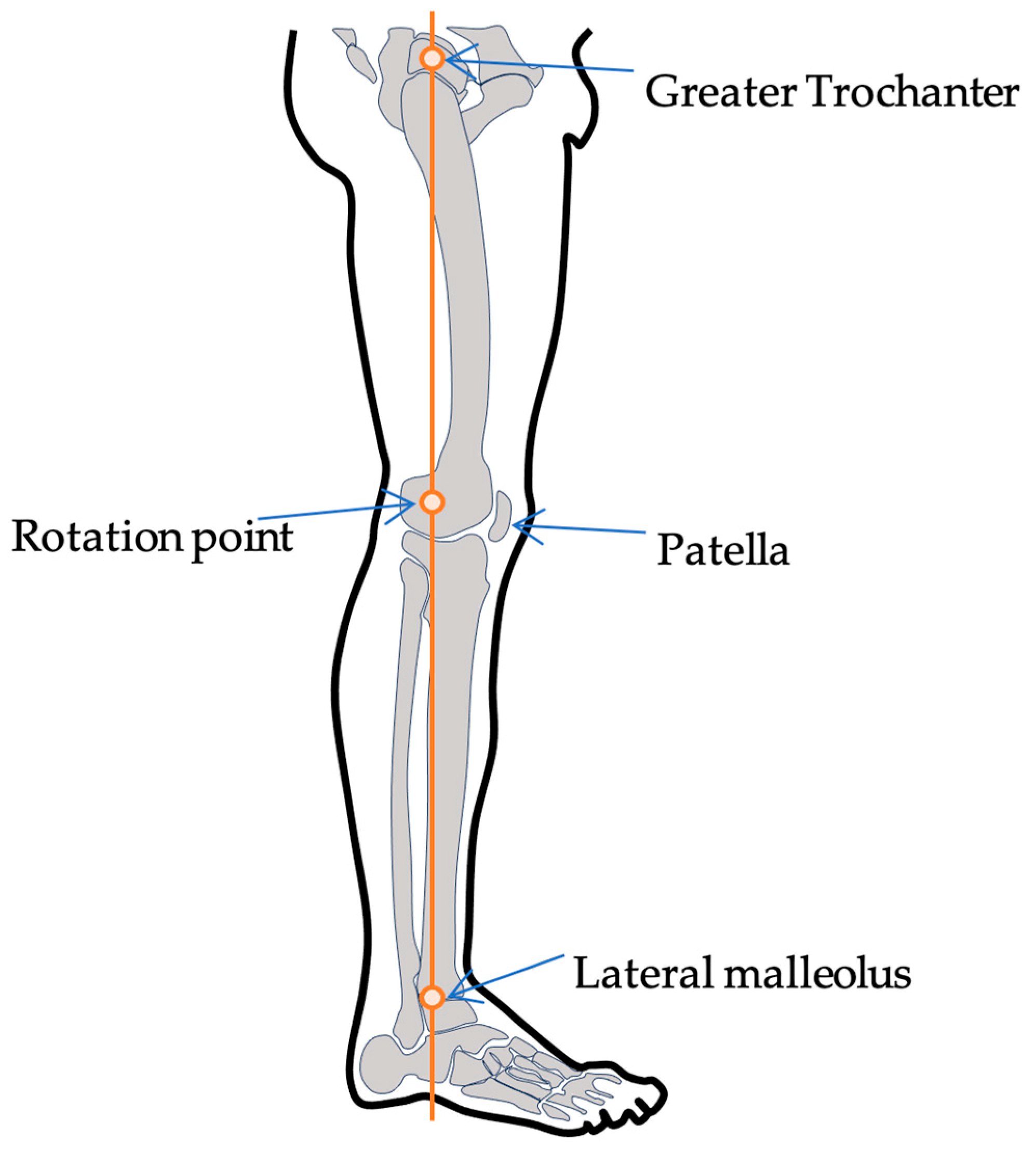
The alignment of the device is based on three anatomical landmarks, as illustrated in
Figure 7: the greater trochanter, patella, and the lateral malleolus. Installation is performed with the patient’s leg in full extension. Bar 5 (
Figure 4) must be positioned along an imaginary axis connecting the greater trochanter and the rotation center. Similarly, bar 1 (see
Figure 4) must be aligned with the axis between the rotation center and the lateral malleolus. Additionally, the sensor of the proportional mechanism (component C in
Figure 3b and Detail 1 in
Figure 4) is positioned at the rotation center by aligning the three identified anatomical landmarks. Finally, the patella positioner (see
Figure 4) must be adjusted to coincide with the patella.
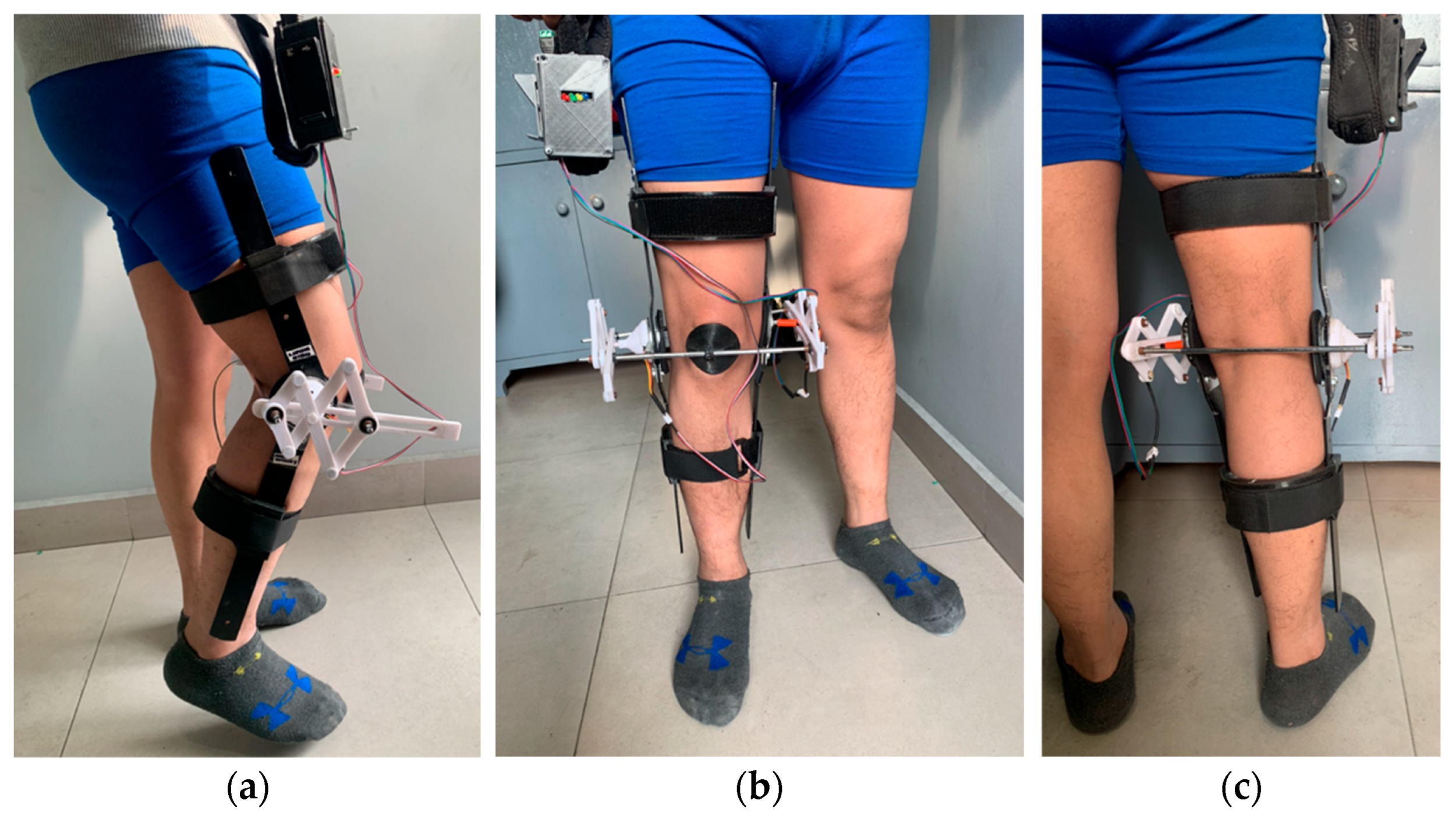
Figure 8a–c depicts the device in its operational configuration during the data acquisition process.
Once the device is placed, as indicated above, it is fixed with adhesive tape. To ensure that there is no interference between the clothing and the device, the device is placed directly on the skin surface of the lower extremity, and for a better fit, it is fixed with adhesive tapes between element 4 and the contour of the thigh, and in the same way between element 2 and the contour of the tibia. Elements 2 and 4 are flexible, allowing for a smooth and comfortable fit that avoids unnecessary displacement (see
Figure 8). Although the device presents an anterior protrusion, no alterations in movement were detected during the trials, since during aquatting the legs are kept at normal distance apart to maintain balance. Proper adjustment of the adhesive straps was sufficient to keep the device stable and aligned. To ensure reproducibility of the trials, supervision and guidance were provided by medical personnel specializing in prosthetic alignment.
Flexion-extension movements of the joint are performed to verify correct placement.
For data collection, the participant in an upright standing position performs the squat movement for at least 2 to 3 min. Additionally, the outward full extension angle should be verified, and the flexion-extension angle reflected in the data collection should be confirmed.
Once the data are obtained, they are processed to define the PPKJ during tibio-femoral displacement; these data are represented in the YZ sagittal plane as a function of the knee joint flexion angle.
To carry out the tests, 10 healthy subjects were selected, with no lower extremity pathologies, aged between 22 and 26 years, with heights ranging from 1.50 to 1.63 m, and body masses ranging from 48 to 59 kg (see
Table 1). The device was placed on the right leg and then on the left leg to obtain the trajectories during the squat movement. With the data obtained, two trajectory sets were formed based on knee joint flexion: one set from extension to flexion and the other from flexion to extension. For each set, the average trajectory and a cubic polynomial regression were computed, Equation (4). The similarity between the average trajectories for each set was also determined using the cumulative Euclidean distance for the two established sets: extension to flexion and flexion to extension. Upon completion of the data collection process, the program processes the information and provides a graph corresponding to the estimated intersection, based on the flexion-extension movement of the joint.
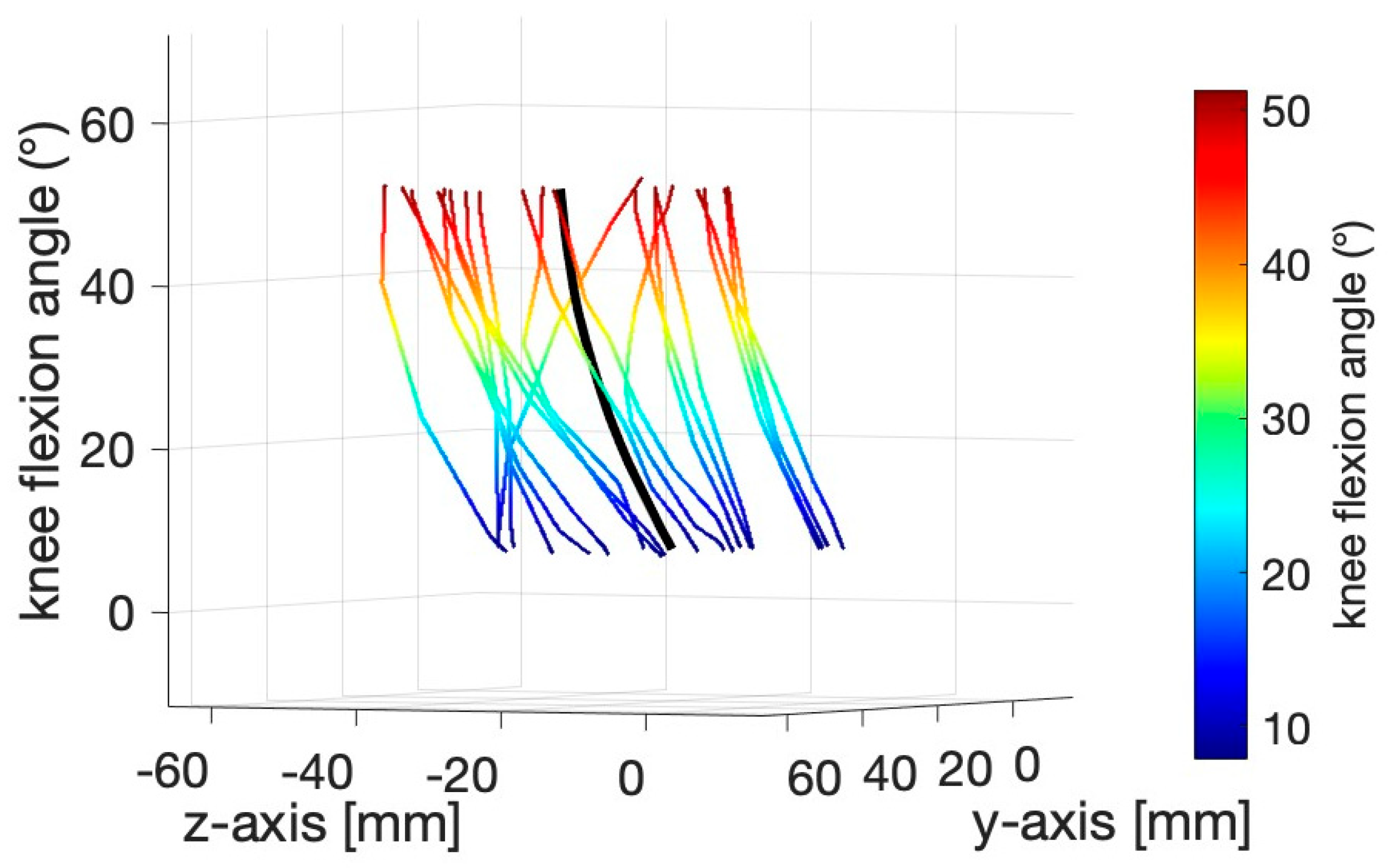
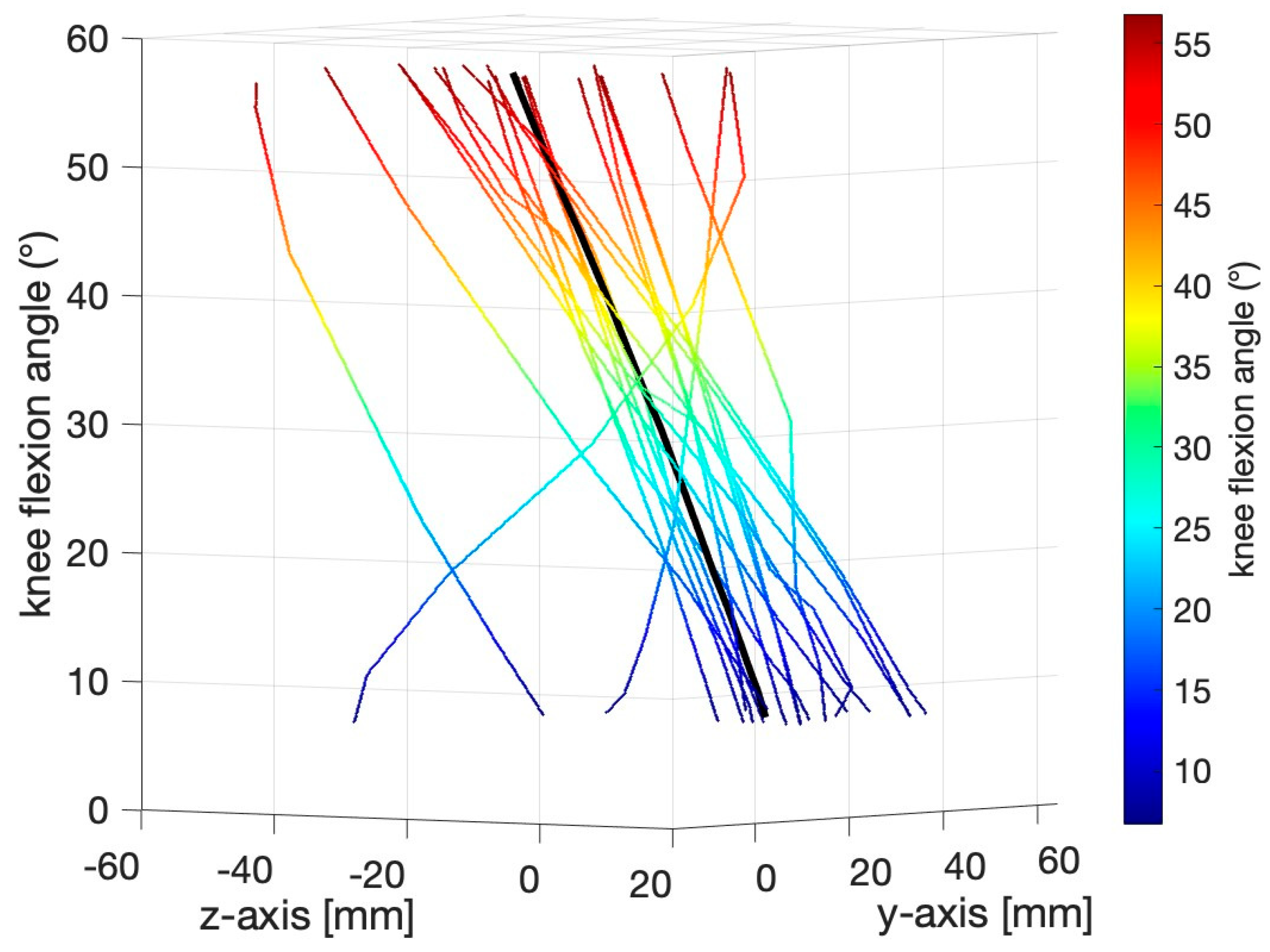
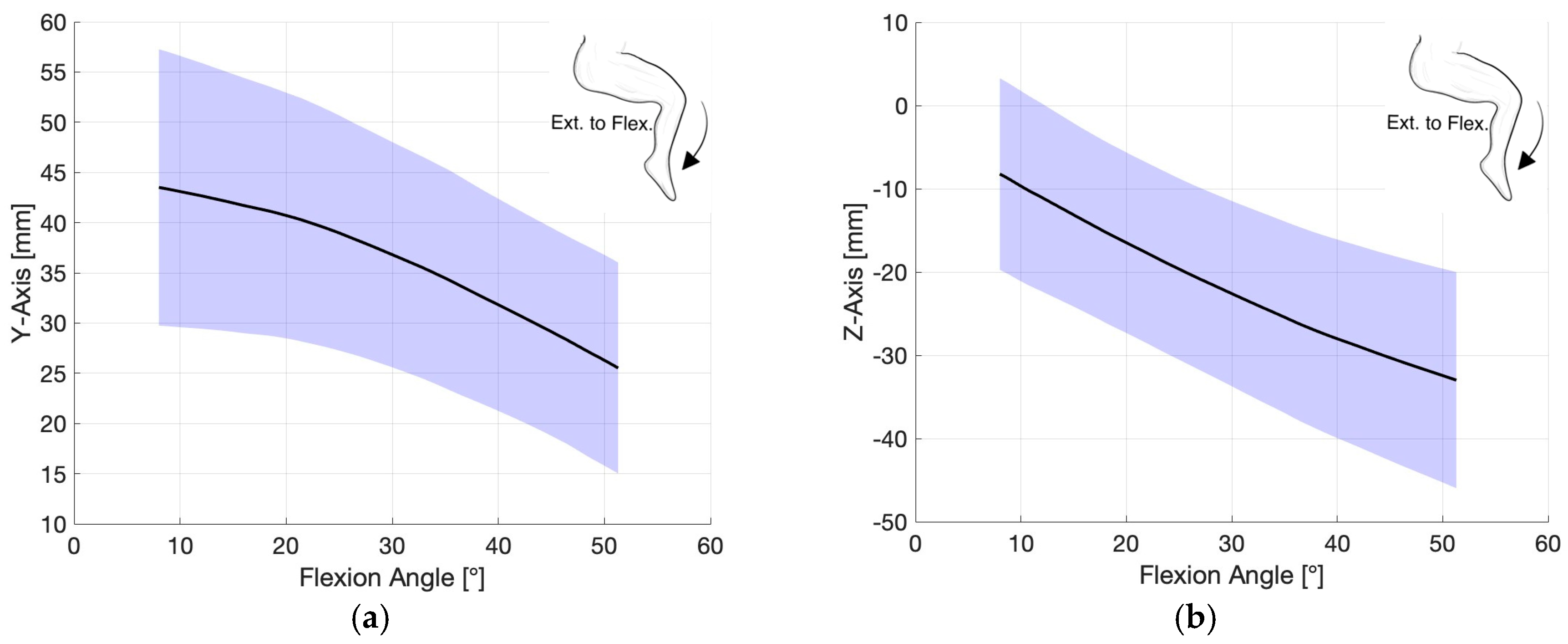
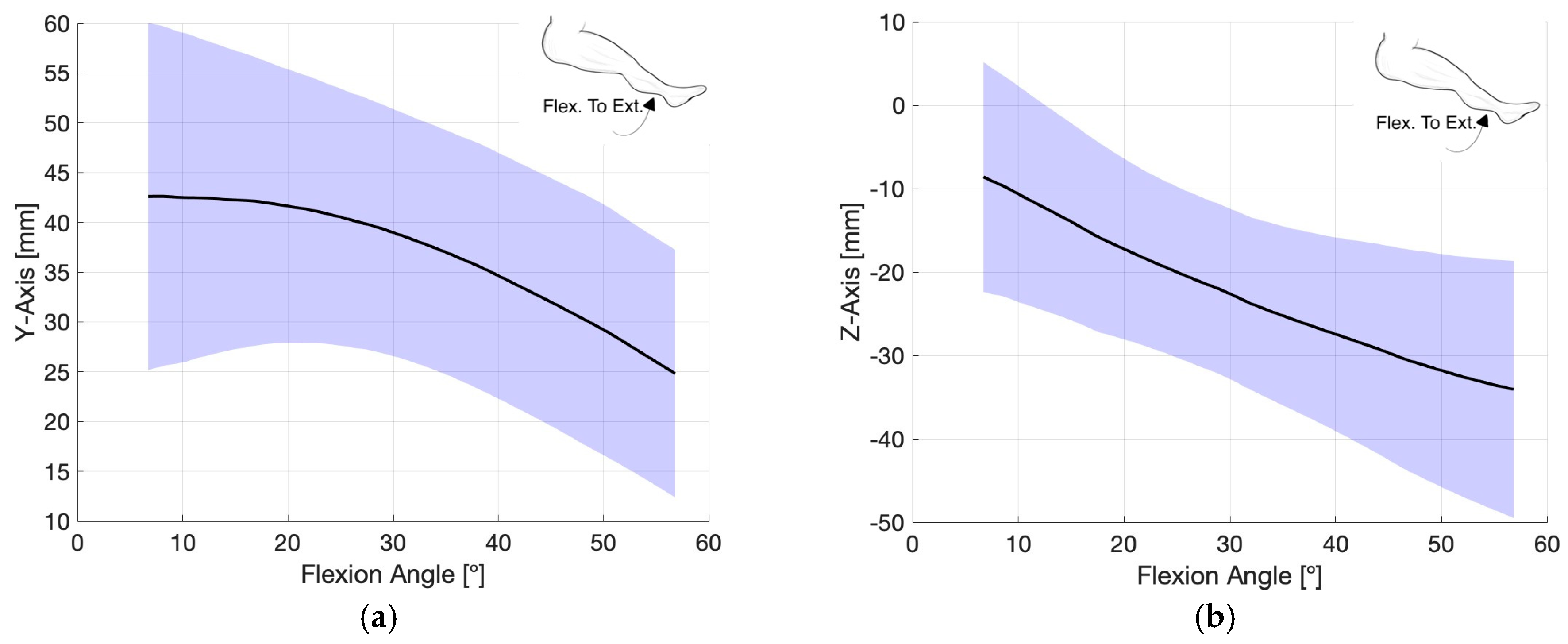
A total of forty PPKJ trajectories were recorded and categorized into two sets: extension (
Figure 9) and flexion (
Figure 10). The corresponding standard deviations for each set are presented in
Figure 11 and
Figure 12, respectively. The flexion trajectories ranged from 6.7° to 56.83°, while the extension trajectories spanned from 8° to 51.3°. The average trajectory for each set is represented by the black curve in the respective figures.
Using the CurveXpert Professional 2.7.3 software, 70 functions are compared to determine the one that best fits the mean trajectory. For this study, the Rational Model function is given with a standard error of 0.100, a correlation coefficient (r) of 0.999, and computed by;
For the extension to flexion set, whose constants are: a = −67.2135, b = 1.4914, c = 0.0101, d = −0.0006. For flexion to extension, with a standard error of 0.3548, with a correlation coefficient (r) of 0.9987, whose constants are a = −66.7281, b = 1.5553, c = 0.0127, d = −0.0008.
The spread of values for any given angle is associated with inter-subject variability, since each participant exhibits their own trajectory for each movement. In addition, there is anthropometric variability between individuals that could influence the results obtained.
3.1. Validation
As a geometric validation of the PPKJ device, an internal comparison analysis was conducted considering the same subject and the same experimental trial. The aim of this analysis was to assess the repeatability and consistency of the trajectories obtained by the device during knee flexion-extension movements.
To this end, multiple flexion-extension cycles recorded within a single experimental session were analyzed for each subject. Individual trajectories were first interpolated as a function of the knee flexion angle, ensuring a common angular domain across cycles. Subsequently, these trajectories were compared against the corresponding mean trajectory obtained for each subject and movement condition.
The following error metrics were computed to quantify intra-session repeatability: root mean square error (RMSE) along the Y-axis, RMSE along the Z-axis, RMSE in the YZ plane, and the maximum geometric error in the YZ plane. These metrics provide complementary information regarding both directional and overall geometric discrepancies between individual cycles and the mean trajectory.
Table 2 summarizes the results of the internal comparative validation, reporting the common flexion range, the number of analyzed cycles, and the corresponding error metrics for each experimental condition. Overall, low RMSE values were observed for most subjects, indicating a high degree of intra-session consistency in the reconstructed PPKJ trajectories.
Comparative Validation with an Optical Motion Capture System
As an external validation, a direct quantitative comparison was performed between the proposed PPKJ system and a widely validated optical motion capture system (VICON NEXUS). This analysis aimed to assess the geometric consistency and measurement accuracy of the proposed low-cost wearable device with respect to a gold-standard reference system.
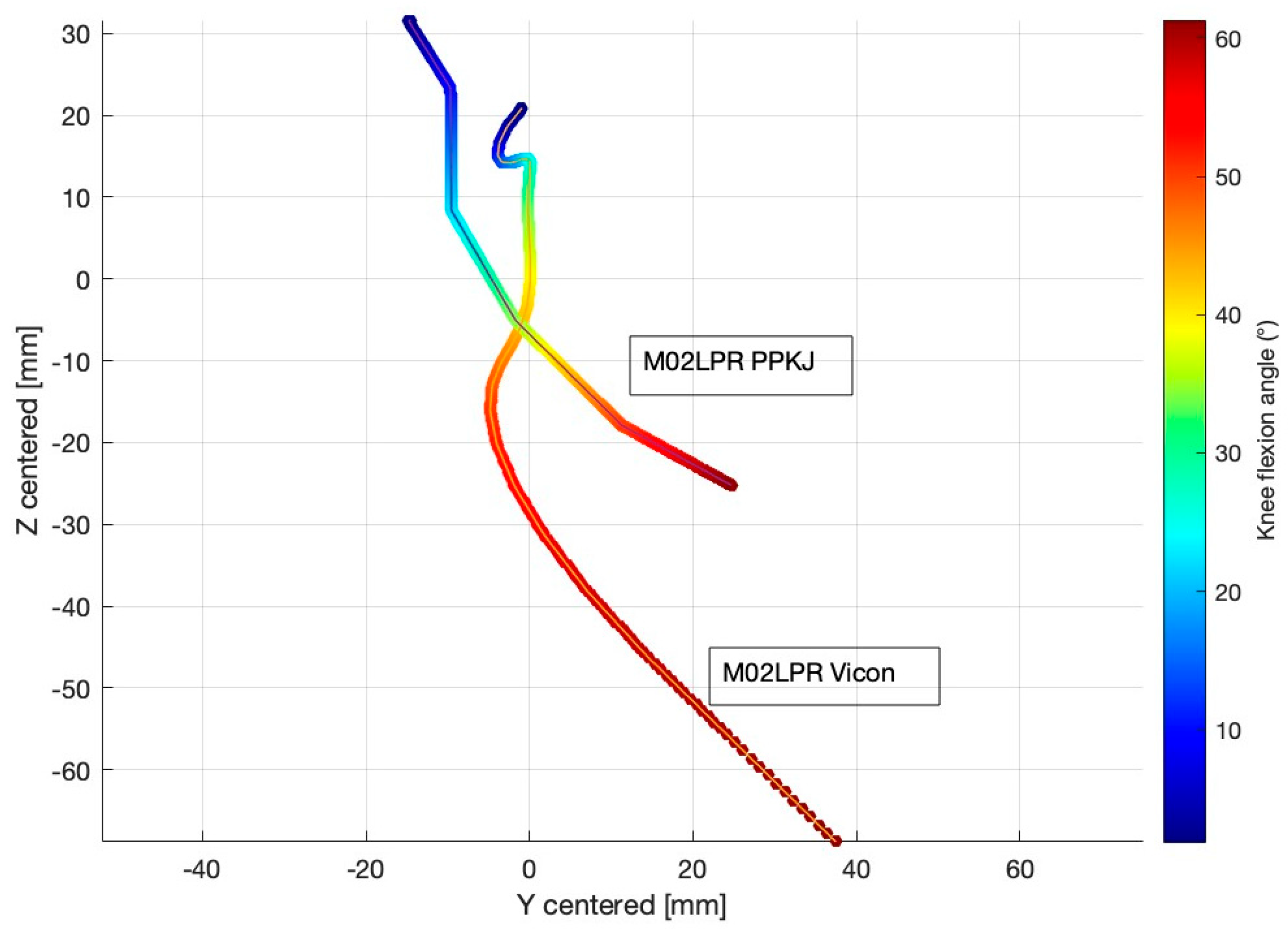
The comparison was conducted for participant M02LPR, right leg, during the flexion-to-extension movement. The PPKJ-derived trajectory was compared against the trajectory obtained using the VICON NEXUS system equipped with six infrared cameras. The VICON data correspond to a previously reported study by [
42], acquired from the same participant under comparable movement conditions.
To ensure a consistent and meaningful comparison, both trajectories were linearly interpolated as a function of the knee flexion angle using a uniform angular step of 0.1°. Subsequently, the centroid of each trajectory was computed, and both trajectories were translated with respect to their centroids to eliminate absolute positional offsets. Finally, the trajectories were truncated to the common angular flexion range shared by both datasets, as illustrated in
Figure 13.
Based on this processed pair of trajectories, the following error metrics were computed: RMSE along the Y-axis, RMSE along the Z-axis, RMSE in the YZ plane, and the maximum geometric error in the YZ plane. Additionally, a shape-based metric was calculated using the discrete Fréchet distance, providing a global measure of geometric similarity between the two trajectories.
The obtained results yielded RMSE(Y) = 9.38 mm, RMSE(Z) = 10.90 mm, and RMSE(YZ) = 14.38 mm. The maximum error in the YZ plane was 45.39 mm, occurring at a knee flexion angle of 61.3°. The discrete Fréchet distance between both trajectories was 45.39 mm, indicating a comparable overall geometric shape despite local discrepancies.
This comparison was not intended to demonstrate superiority over optical motion capture systems, but rather to quantitatively evaluate the agreement between the proposed device and a reference system under controlled conditions.
3.2. Sensor Selection and Calibration Considerations
Although Hall-effect encoders are commonly employed in commercial prosthetic systems due to their robustness, low cost, and non-contact operation, the present study employs potentiometers as angular sensors. This selection is motivated by the specific objectives and constraints of the proposed device.
The primary goal of the PPKJ system is not absolute joint angle tracking, but rather the reconstruction of the knee joint pivot point trajectory through a proportional mechanical scaling mechanism. Within the limited operating range of the mechanism, potentiometers provide a direct, linear, and easily calibratable measurement of relative angular displacement. This simplifies the calibration procedure and ensures sufficient resolution for the intended application.
Moreover, the overall measurement uncertainty of the system is predominantly influenced by factors such as anatomical landmark placement and soft tissue interaction with the device, rather than by the intrinsic resolution of the angular sensor. The calibration results and validation metrics reported in
Section 2.1 confirm that the selected sensing approach provides adequate accuracy and repeatability for subject-specific PPKJ trajectory reconstruction.
4. Discussion
The development of a non-invasive device focused on a specific set of participants based on their mass, height, and age, which can obtain the PPKJ of the tibiofemoral joint in vivo. The device developed to determine PPKJ demonstrates substantial advantages over traditional radiographic methods [
36,
37,
38,
39], as it enables a precise and non-invasive estimation of knee trajectory while avoiding exposure to ionizing radiation from X-rays, computed tomography, or fluoroscopy. Furthermore, the acquisition of knee kinematic data with the proposed device is performed while the patient performs squats, in contrast to previous studies where measurements were obtained in a static position, disregarding the activation of muscles surrounding the knee joint. Conventional methods require sophisticated equipment for radiographic capture of the knee’s anatomical structure, which limits the number of samples that can be obtained and significantly increases costs. Additionally, the absence of an anatomical reference frame and the restriction to a reduced spatial environment may compromise the accuracy of tibiofemoral motion capture.
Its design is conceived to be constructed with basic tools, easily acquired elements, and the use of 3D printing to create parts with elastomeric materials that easily adapt and adjust to complex geometries, such as the lower extremities. By easily determining the PPKJ, it can be useful in many scenarios, primarily supporting the medical sector in diagnosing degenerative pathologies, injuries, musculoskeletal disorders, and various neurological damages [
16]. It also contributes information on the rehabilitation process [
20] and provides the basis for the development of personalized medical devices such as rehabilitation devices, prostheses, and exoskeletons with designs that are more closely aligned with natural kinematics, allowing the device to adapt to the participant. This is possible because a personalized medical device can be manufactured to potentially minimize collateral damage to the knee. In other words, the device could help replicate the natural movement of the patient’s anatomical joint. It has been found that most devices developed come in a range of standardized sizes [
21,
22,
23,
24]. forcing participants to adapt to the device, which can result in a series of walking pathologies.
The device is engineered for a target population with statures ranging from 1.50 to 1.63 m and body masses between 48 and 59 kg; therefore, the proportional mechanism and its fastening system can be scaled from approximate measurements, as long as the 60–40% ratio is maintained. That is, the device could be replicated in smaller versions, for example, for pediatric populations, or in larger versions for taller participants, while always preserving the 60–40% proportional mechanism ratio defined in this study. The knee joint’s 60–40% dimensional ratios, noted by Nietert and verified in the Otto Bock mechanism (series 743A8), are scalable and can therefore be used to develop smaller or larger designs according to the user’s anthropometric measurements. If the mechanism’s dimensions are altered such that this ratio is not respected, data acquisition will be incorrect, as the pivot point will be offset from its reference, invalidating the obtained data and hindering proper alignment of the mechanism with the anatomical reference points shown in
Figure 8. It is important to store data for later analysis and comparison to facilitate the early detection of anomalies or as an assessment tool in a specific rehabilitation program.
In this study, the inclusion of only ten participants with a narrow anthropometric spectrum (restricted height and body mass) limits the generalizability of the findings. Although the sample size is acceptable for a pilot validation of the device and the measurement protocol, the statistical power is limited, and the confidence intervals for the trajectory estimates may be wide, with a risk of selection bias. Consequently, it is recommended to expand the cohort to include a more heterogeneous distribution of sex, age, height, and body mass, as well as functional ranges of knee flexion and clinical conditions (healthy and pathological populations), to assess the method’s robustness to inter-subject variability.
The results of this study demonstrate that the proposed mechatronic device is capable of reconstructing subject-specific PPKJ trajectories with a high degree of intra-session repeatability and acceptable agreement with an optical motion capture reference system. The internal validation results indicate low geometric variability across repeated cycles for most subjects, supporting the consistency of the measurement approach.
The external comparison with the VICON NEXUS system further supports the geometric plausibility of the reconstructed trajectories. While local discrepancies were observed, particularly at higher flexion angles, the overall trajectory shape and trends were preserved, as reflected by the RMSE values and the discrete Fréchet distance.
It is important to note that the objective of the proposed system is not to replace optical motion capture technologies but to provide a non-invasive, wearable, and cost-effective alternative for capturing knee pivot point trajectories under functional movement conditions. Unlike optical systems, the proposed device enables measurements outside laboratory environments and avoids the need for complex camera setups and reflective marker placement.
The current study focuses on a limited participant group within a defined anthropometric range. Nevertheless, the presented methodology establishes a solid framework for future extensions, including larger cohorts, pathological gait analysis, and integration into the design process of personalized prosthetic and rehabilitation devices.
5. Conclusions
The present study demonstrated the feasibility of a low-cost, non-invasive mechatronic device for estimating the pivot point trajectory of the knee joint (PPKJ) under functional movement conditions. Within the defined anthropometric range (height 150–163 cm and body mass 48–59 kg), the device provided consistent and repeatable measurements, as supported by intra-session validation metrics and geometric error analysis.
By reconstructing the PPKJ trajectory directly from joint motion, the proposed approach offers an alternative to conventional imaging-based methods and enables kinematic characterization during dynamic tasks. The internal comparative validation showed low RMSE values for most participants, indicating good repeatability across repeated flexion–extension cycles. Additionally, the external comparison with an optical motion capture system demonstrated a reasonable geometric agreement, confirming the plausibility of the reconstructed trajectories within the common flexion range.
The use of averaged PPKJ trajectories, modeled through polynomial regression for extension-to-flexion and flexion-to-extension movements, provides a practical basis for the design of subject-specific biomechanical mechanisms. In this context, the results support the potential application of the proposed methodology in the development of personalized prosthetic knees, exoskeletons, and lower-limb rehabilitation devices, where alignment with natural knee kinematics is critical.
Despite these encouraging results, the applicability of the proposed device is currently limited to a restricted population and movement conditions. Future studies should extend the validation to broader anthropometric profiles and clinical populations, as well as assess performance under different functional tasks. Nonetheless, the present work establishes a validated methodological framework for non-invasive PPKJ estimation and contributes a practical step toward personalized knee-related medical device design.