


Abstract
Background: This study aimed to investigate the association between occlusal splint use and several key parameters, including body position perception, tongue pressure, temporomandibular joint dysfunction (TMD) severity, jaw functional limitation, and neck muscle endurance. Methods: A total of 157 individuals diagnosed with bruxism were screened, and 52 eligible participants were enrolled and divided into two groups: occlusal splint users (n = 26) and non-users (n = 26). Body position perception was assessed with a digital inclinometer, tongue pressure was measured using the Iowa Oral Performance Instrument (IOPI), and neck muscle endurance was evaluated by the Cranio-Cervical Flexion Test (CCFT). TMD severity and jaw functional limitation were assessed via the Fonseca Anamnestic Questionnaire and Jaw Functional Limitation Scale-20, respectively. Gender-based analyses showed higher TMD severity and mandibular limitation scores in females using occlusal splints than in males. Results: No statistically significant differences were found between the splint and non-splint groups in body position perception, tongue pressure and neck muscle endurance (p > 0.05). However, significant differences were observed in the Jaw Functional Limitation Scale (CFKS) subscales. Splint users reported higher functional limitations in chewing, mobility, and expression compared to non-splint users (all p = 0.000), with small effect sizes (d = 0.23–0.29). Conclusions: Occlusal splint use was not associated with better proprioception, orofacial muscle function, or TMD-related symptoms compared with non-splint users. However, splint users were associated with higher mandibular functional limitation based on CFKS subscale scores.
1. Introduction
The temporomandibular joint is a complex joint consisting of bilateral mandibular condyles, menisci, the glenoid fossa, joint ligaments, and the associated muscular system working in harmony [1].
Temporomandibular disorder (TMD) is a highly complex condition characterized by multiple symptoms and signs. It often involves a range of musculoskeletal disorders that may affect the neck, shoulders, and masticatory system. It is estimated that approximately 60–70% of the population experience at least one symptom related to TMD [2]. Symptoms of TMD can include reduced mandibular range of motion, temporomandibular joint pain, headaches, joint noises, myofascial pain, and ear pain [3].
Bruxism is defined as a repetitive jaw-muscle activity characterized by clenching or grinding of the teeth, as well as supporting or thrusting of the lower jaw. Although new treatment methods for bruxism have emerged, the most commonly prescribed treatment remains the acrylic occlusal splint [4].
A literature review reveals that studies evaluating the physical and functional capacity effects of occlusal splint use in patients diagnosed with bruxism and TMD are limited [5,6]. However, these studies have linked the cervical spine with the temporomandibular joint. Our literature search did not identify any studies investigating the effects of occlusal splint use on tongue muscle strength and proprioception of the cervical, thoracic, and lumbar spinal regions under different surface and visual stimulus conditions in patients with bruxism and TMD.
This study investigates the relationships of occlusal splints on key parameters such as body position perception, tongue pressure, temporomandibular joint dysfunction severity, jaw functional limitation, and neck muscle endurance in patients with bruxism-related temporomandibular dysfunction. Based on previous literature suggesting that occlusal splints may modulate neuromuscular activity and reduce functional limitations, we hypothesized that (1) splint users would demonstrate different jaw proprioception performance compared to non-users, (2) orofacial muscle activity and tongue pressure characteristics would differ between the groups, and (3) there would be group differences in jaw functional limitation. Because the study employed a cross-sectional design, these hypotheses refer to expected associations between splint use and the measured outcomes, rather than causal effects.
2. Materials and Methods
This study was designed as a single-blind, cross-sectional observational comparative study to evaluate differences between patients with bruxism-related temporomandibular dysfunction using occlusal splints and those not using splints in terms of body position perception, tongue pressure, TMD severity, jaw functional limitation, and neck muscle endurance at cervical, thoracic, and lumbar levels under different surface and visual conditions.
Ethical approval for the study was obtained from the Scientific Research Ethics Committee of Necmettin Erbakan University, Faculty of Health Sciences on 01 March 2023 with decision number 2023/379.
2.1. Sample Size Calculation
Data from the cranio-cervical flexion pressure (mmHg), which measures neck muscle endurance, reported in the study titled “A randomized controlled trial of exercise and manipulative therapy for cervicogenic headache” by Jull et al. [7] was utilized. The sample size calculation was performed using the G*Power 3.1.9.4 software. According to the calculation, with an alpha error of 0.05, a power of 0.80, and an effect size of 0.701, the minimum required sample size was determined to be 26 participants per group. Thus, the study sample consisted of 52 participants in total, with 26 individuals in each group. The chosen effect size (d = 0.701) was based on the change in cranio-cervical flexion pressure, which represents a clinically meaningful medium-to-large effect relevant to our primary outcome measure of neck muscle dysfunction. The study was thus powered to detect a significant difference in this most critical objective variable.
2.2. Participants
Between 21 March 2023 and 5 December 2023, individuals diagnosed with bruxism who applied to the Faculty of Dentistry were screened for temporomandibular disorders (TMD). Bruxism was identified using a self-report questionnaire combined with clinical examination findings (tooth wear, morning jaw pain, and masseter hypertrophy), and the diagnosis of TMD was established by a dentist through a physical examination based on the Diagnostic Criteria for Temporomandibular Disorders (DC/TMD). To estimate symptom severity, the Fonseca Anamnestic Questionnaire (FAA) was also applied. While the FAA is a validated screening tool that provides a quick assessment of TMD-related symptom severity, it does not offer a definitive diagnosis. Therefore, the FAA was used to complement the DC/TMD-based clinical examination rather than replace it. Reliance on the FAA alone may limit the clinical interpretability and external validity of results, which should be considered when interpreting the findings. Patients diagnosed with bruxism routinely receive an occlusal splint for nighttime use as part of their treatment.
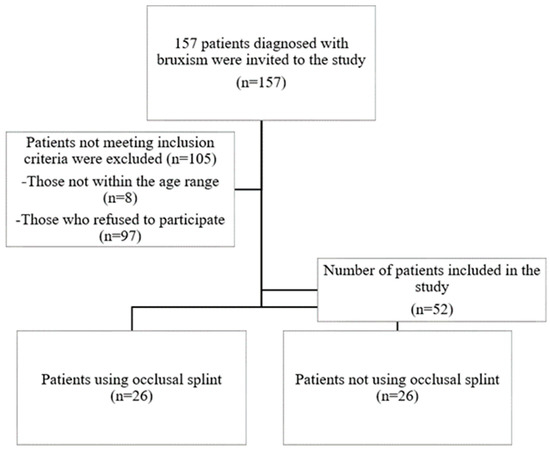
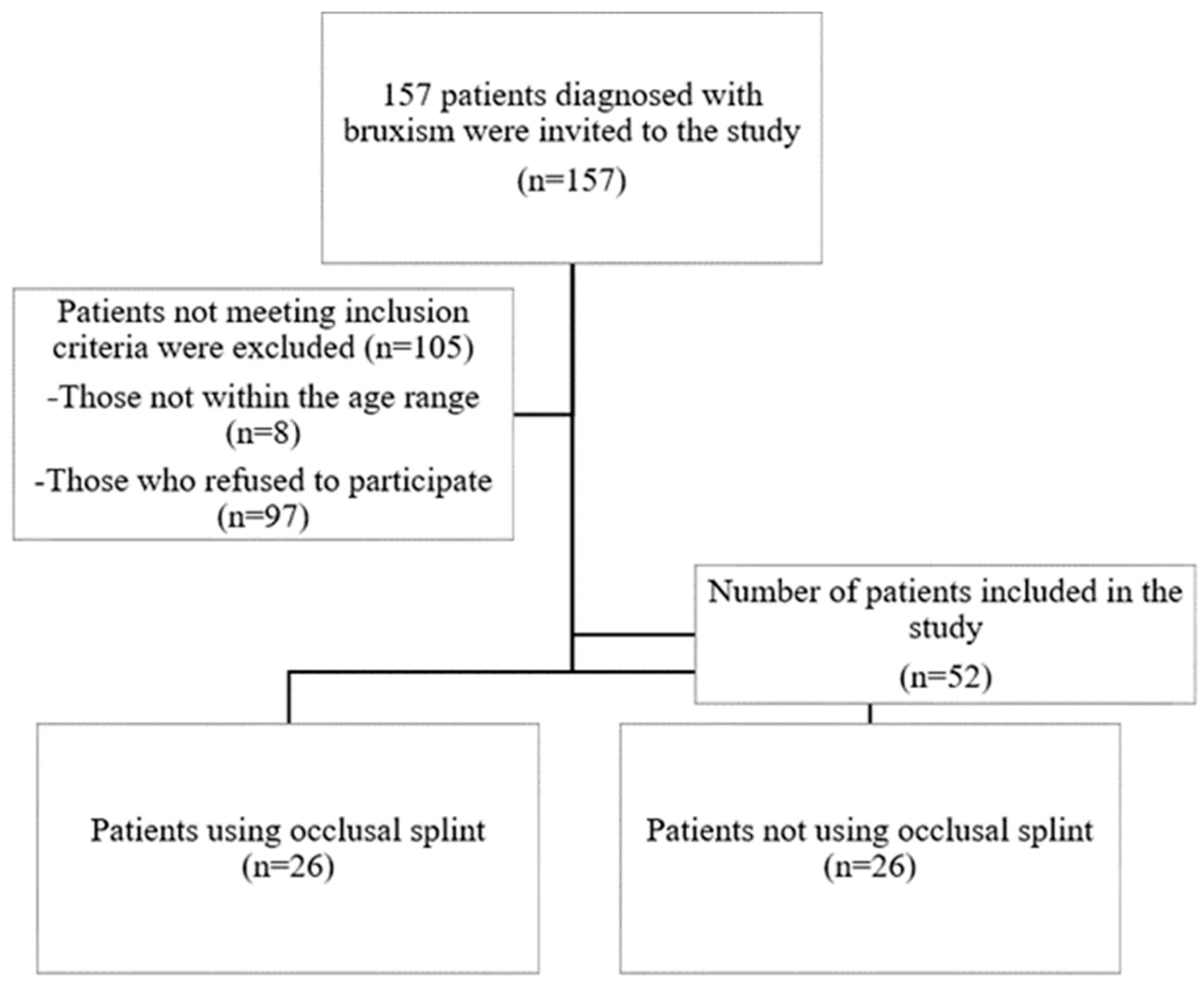
In this study, patients with TMD who had been using occlusal splints for at least 3 months were invited to participate. Written informed consent was obtained from all participants, who were then grouped according to their splint usage status. Out of the initial 157 patients invited, 97 declined participation and 8 did not meet the age inclusion criteria, resulting in 52 eligible participants. These participants were divided equally into two groups: the occlusal splint group (n = 26) and the non-splint group (n = 26) (Figure 1). Participants in the non-splint group did not receive any other treatment (e.g., physiotherapy, medication) during the study period. Assessments were conducted for all participants after obtaining their informed consent. Although the study was not randomized, it was conducted as a single-blind trial: the researcher performing the assessments was unaware of the participants’ group allocation. The study flow diagram is presented in Figure 1.
Figure 1.
Study Flow Diagram.
2.3. Inclusion and Exclusion Criteria
Inclusion criteria were as follows: age between 18 and 65 years, voluntary participation, diagnosis of temporomandibular disorders (TMD) by a dentist, and the presence of bruxism, determined by a self-report questionnaire, was considered a potential risk factor for TMD.
Exclusion criteria included ongoing dental or physical treatments, planned surgical procedures, having more than one missing tooth per quadrant in either the upper or lower jaw, use of removable prostheses, orthopedic or neurological conditions that could interfere with assessments, neurological, psychiatric, or motor disorders, use of medications affecting temporomandibular joint motor functions (e.g., benzodiazepines, L-dopa, neuroleptics, tricyclic antidepressants), cancer, pregnancy, history of rheumatoid arthritis, fractures or malignancies, and prior surgical operations involving the face, jaw, or cervical region.
Participants were recruited in a cross-sectional design, and therefore, pre-treatment measurements were not available. As such, the study aimed to examine associations between occlusal splint usage and clinical parameters rather than to determine causal effects. This limitation was considered in the study design, and all interpretations of splint-related differences are presented as observed relationships rather than definitive treatment outcomes.
2.4. Data Collection Tools
Demographic data of the patients (name-surname, age, gender, weight, height, occupation, education level, marital status, comorbidities, medications used), splint usage status and duration, and temporomandibular joint dysfunction severity were recorded through questioning.
2.4.1. Body Position Perception Assessment
Body position perception was assessed using a digital inclinometer (Acumar Dual Digital Inclinometer, Lafayette Instrument Company, Inc., Lafayette, IN, USA), which has been reported as sufficiently sensitive, reliable, and valid for measuring deviations from target angles in three regions: cervical, thoracosacral, and lumbosacral.
2.4.2. Cervical Position Sense Assessment
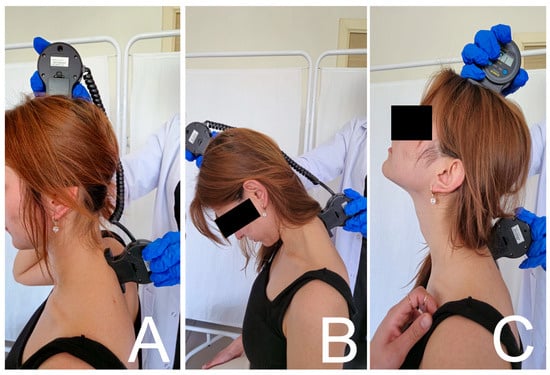
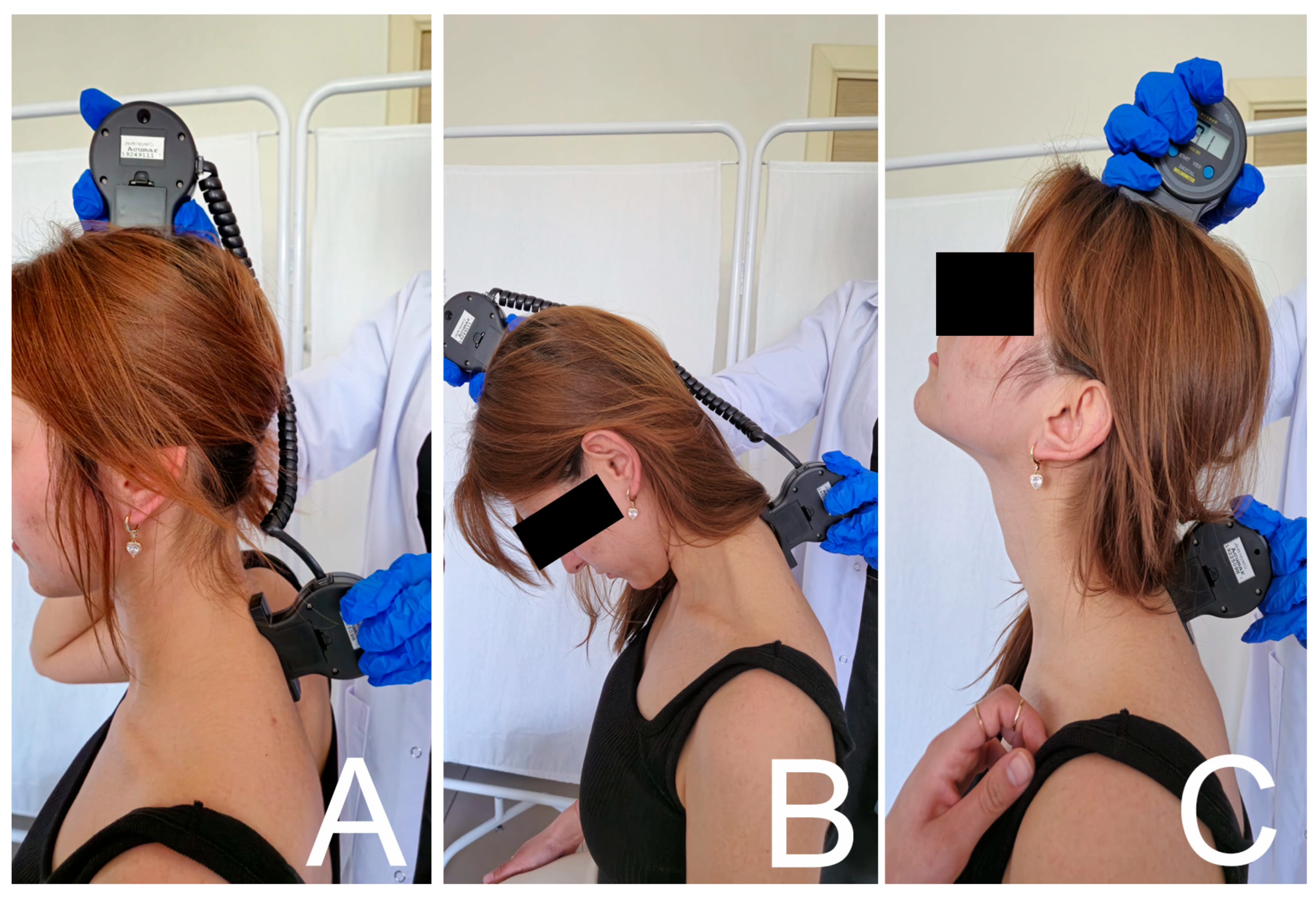
Assessments were performed with participants seated on a standard chair with hips and knees flexed at 90°, eyes closed. Target angle tests were conducted at 30° cervical flexion and 20° cervical extension. The evaluator passively positioned the participant’s head from neutral to the target angle and instructed them to memorize this position. After returning to neutral, participants actively reproduced the target angle (Figure 2). The angular difference between the target and reproduced positions in the sagittal plane was recorded in degrees. Each test was repeated three times with 20-s intervals, and the average was calculated [8].
Figure 2.
Cervical Position Sense Assessment (A). Neutral Position (B). Flexion Position (C). Extension Position.
2.4.3. Thoracosacral and Lumbosacral Position Sense Assessment
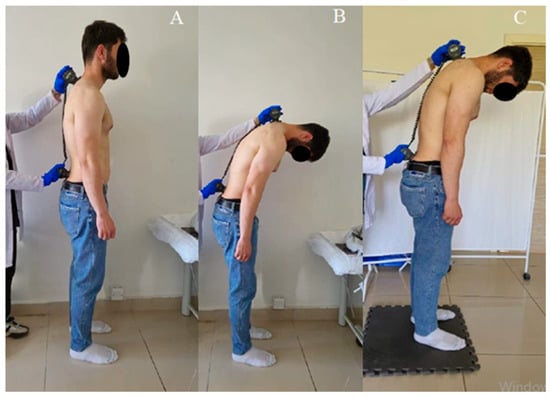
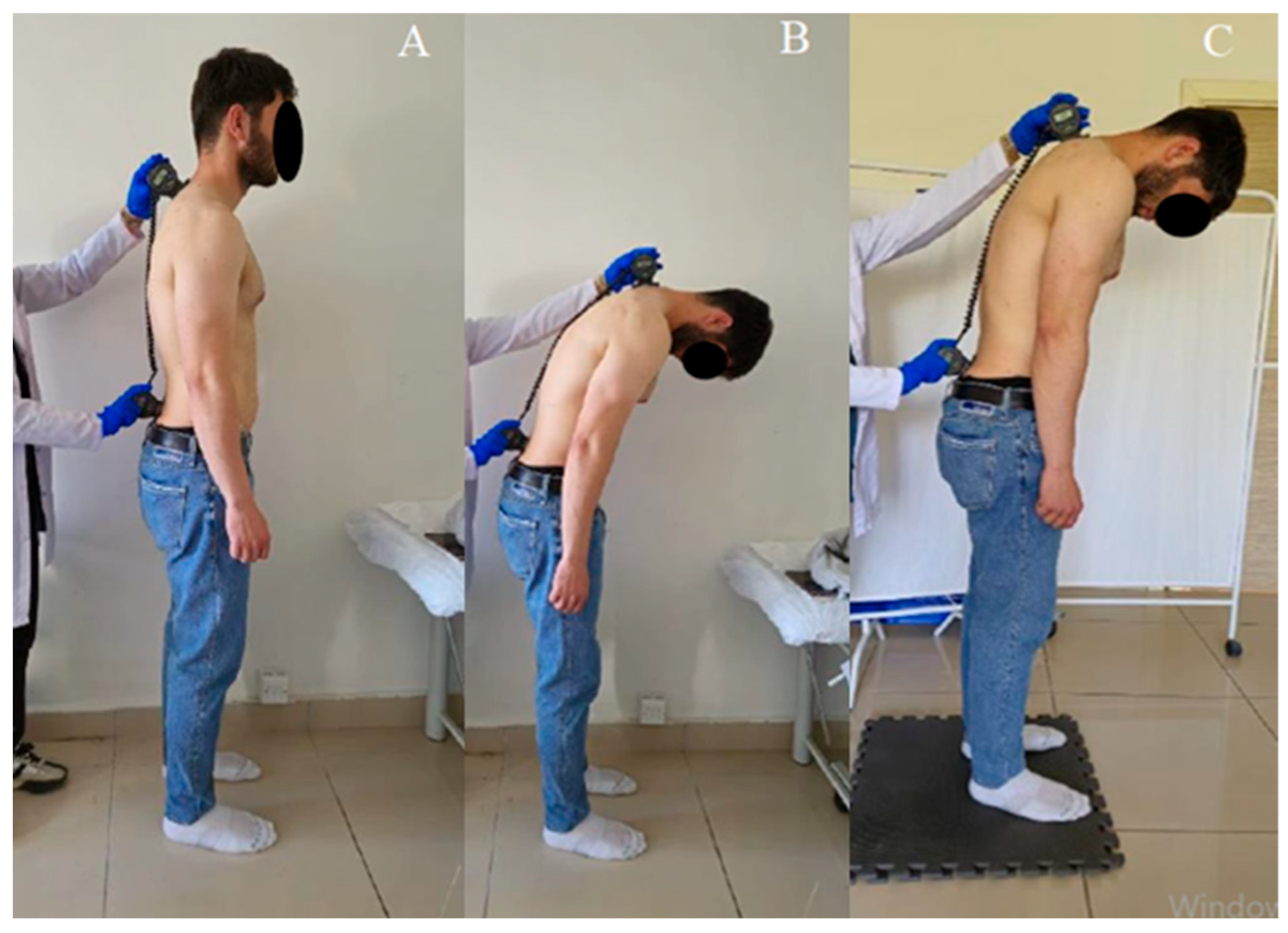
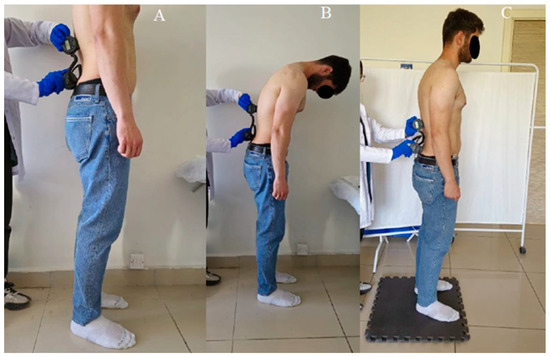
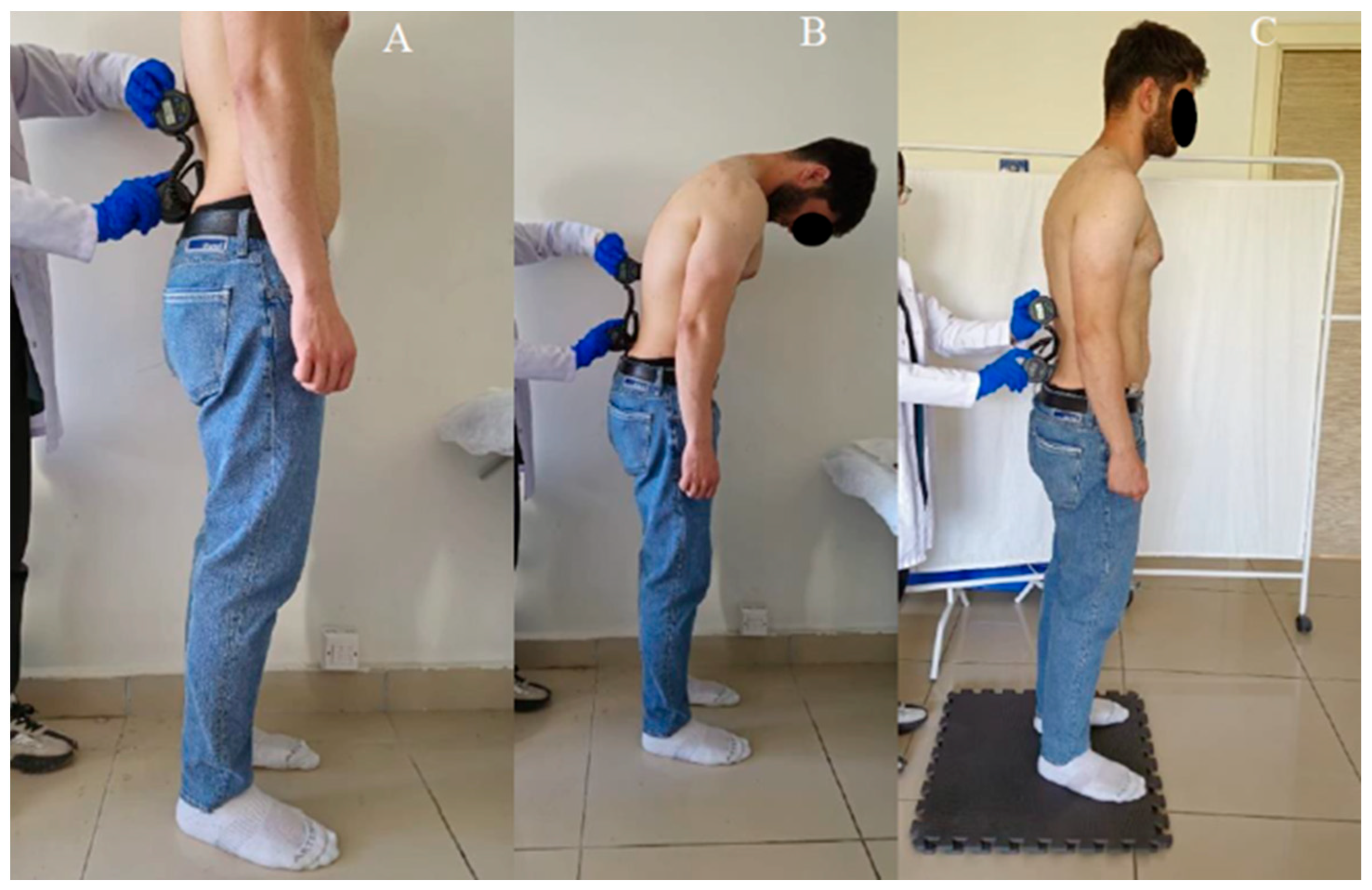
For the thoracosacral region, the primary part of the inclinometer was placed on T1 and the secondary part on the midpoint of the sacrum (Figure 3). For the lumbosacral region, the primary part was positioned on T12 and the secondary on the midpoint of the sacrum in the sagittal plane (Figure 4). Cervical, thoracosacral, and lumbosacral position sense assessments are illustrated in Figure 2, Figure 3 and Figure 4.
Figure 3.
Thoracosacral Position Sense Measurement (A). Firm Surface Neutral Position (B). Firm Surface Flexion Position (C). Soft Surface Flexion Position.
Figure 4.
Lumbosacral Position Sense Measurement (A). Firm Surface Neutral Position (B). Firm Surface Flexion Position (C). Soft Surface Neutral Position.
2.4.4. Testing Conditions and Procedure
Tests were performed under three conditions: eyes open on firm surface, eyes closed on firm surface, and eyes open on soft surface. Prior to testing, verbal instructions and practice trials were provided to minimize errors. During practice, participants were guided into 30° trunk flexion to familiarize with the target angle, then returned to neutral. During tests, participants stood barefoot with a shoulder-width stance and were instructed not to lift their feet, bend their knees, or touch any object with their arms. The difference between the achieved trunk flexion angle and the target 30° was recorded as the trunk repositioning error; for example, an achieved angle of 38° corresponded to an 8° error. Each test was repeated three times, and the mean score was used for analysis.
2.4.5. Tongue Pressure Assessment
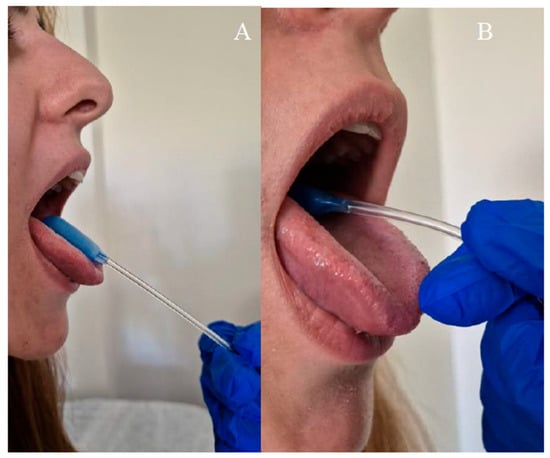
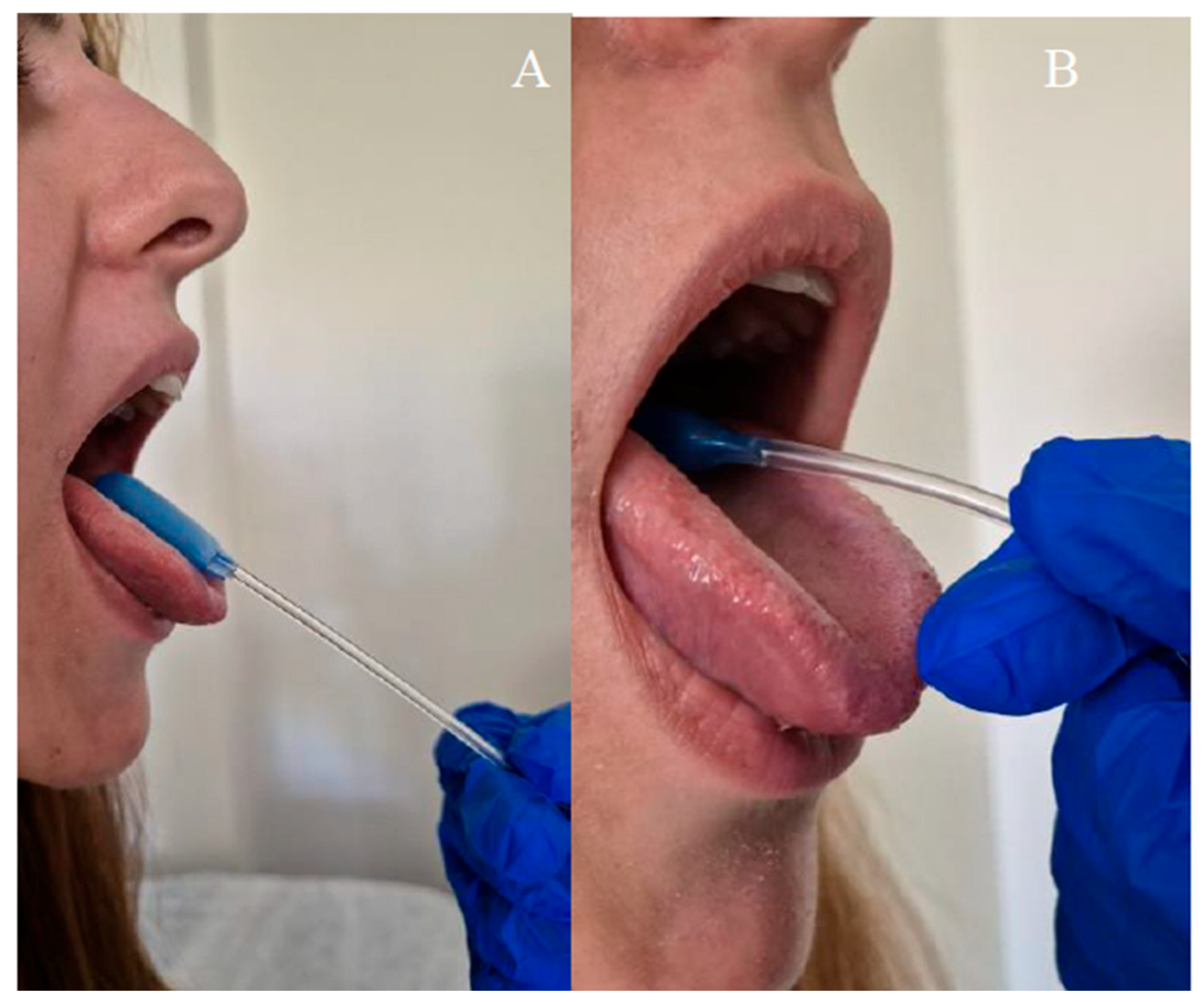
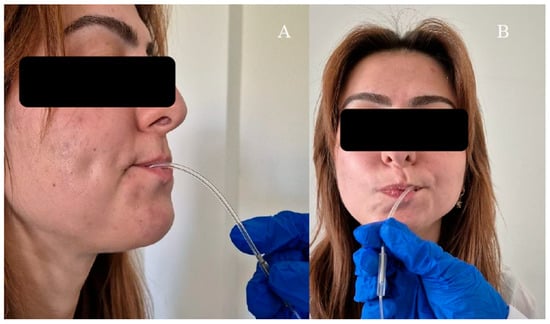
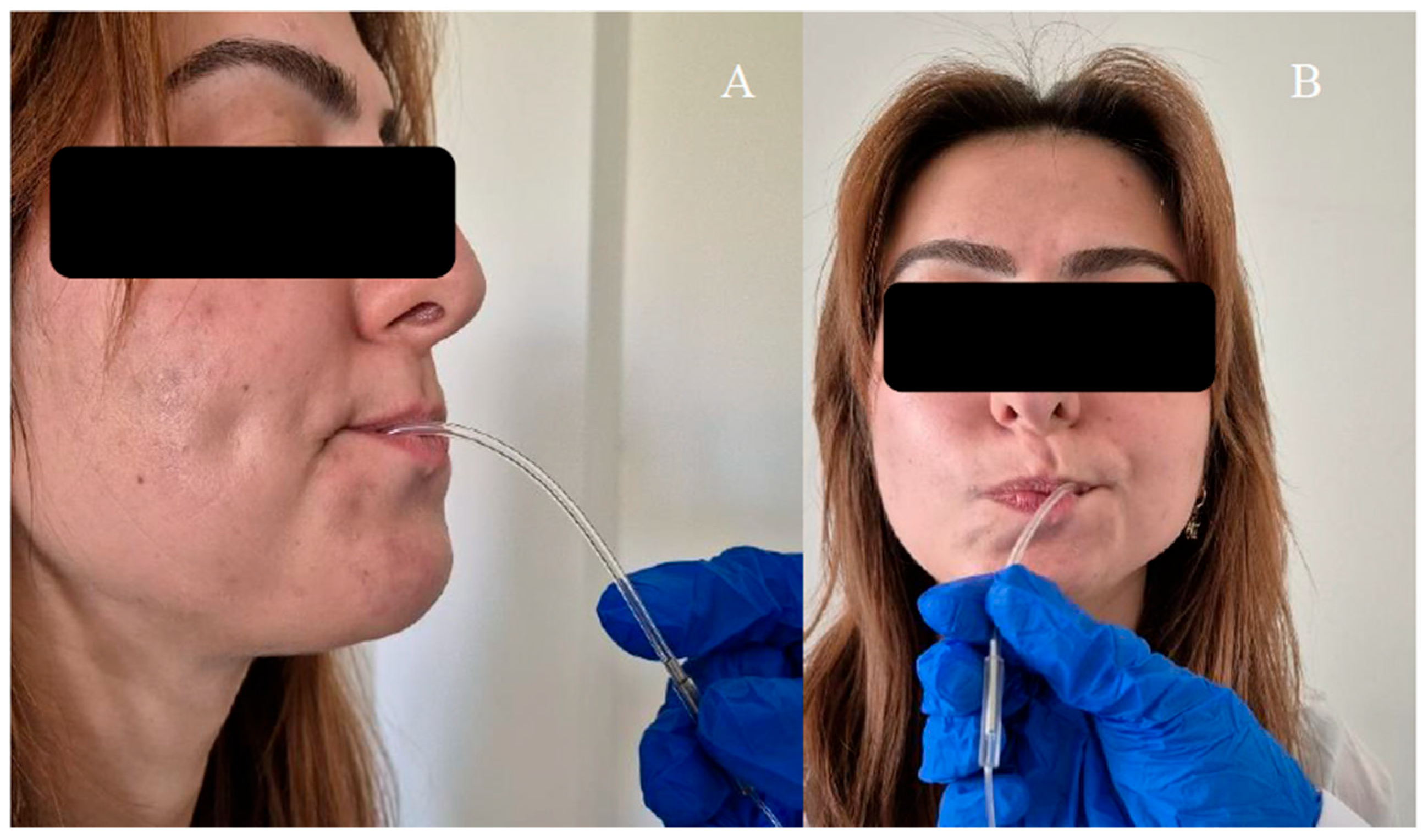
Tongue pressure measurements were performed three times and averaged. Anterior tongue pressure (ATP) was measured by longitudinally positioning the bulb behind the alveolar ridge along the hard palate, while posterior tongue pressure (PTP) was measured with the bulb placed along the posterior border of the hard palate (Figure 5) [9,10]. Lip pressure was assessed by placing the bulb beside the oral commissure and inside the cheek, asking patients to compress the bulb against the buccal surfaces of the teeth by puckering their lips as firmly as possible [11]. Right and left lip pressures were measured by placing the bulb between the right and left anterior buccal areas and the teeth, respectively (Figure 6). Tongue and lip pressure measurement positions are shown in Figure 5 and Figure 6.
Figure 5.
(A). Anterior Tongue Pressure Measurement Positioning (B). Posterior Tongue Pressure Positioning.
Figure 6.
(A). Right Lip Pressure Measurement (B). Left Lip Pressure Measurement.
2.4.6. Neck Muscle Endurance Assessment
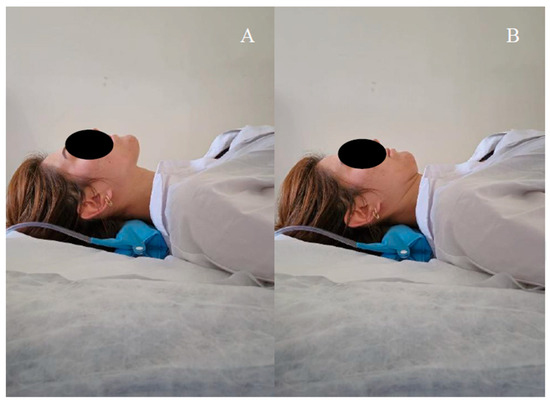
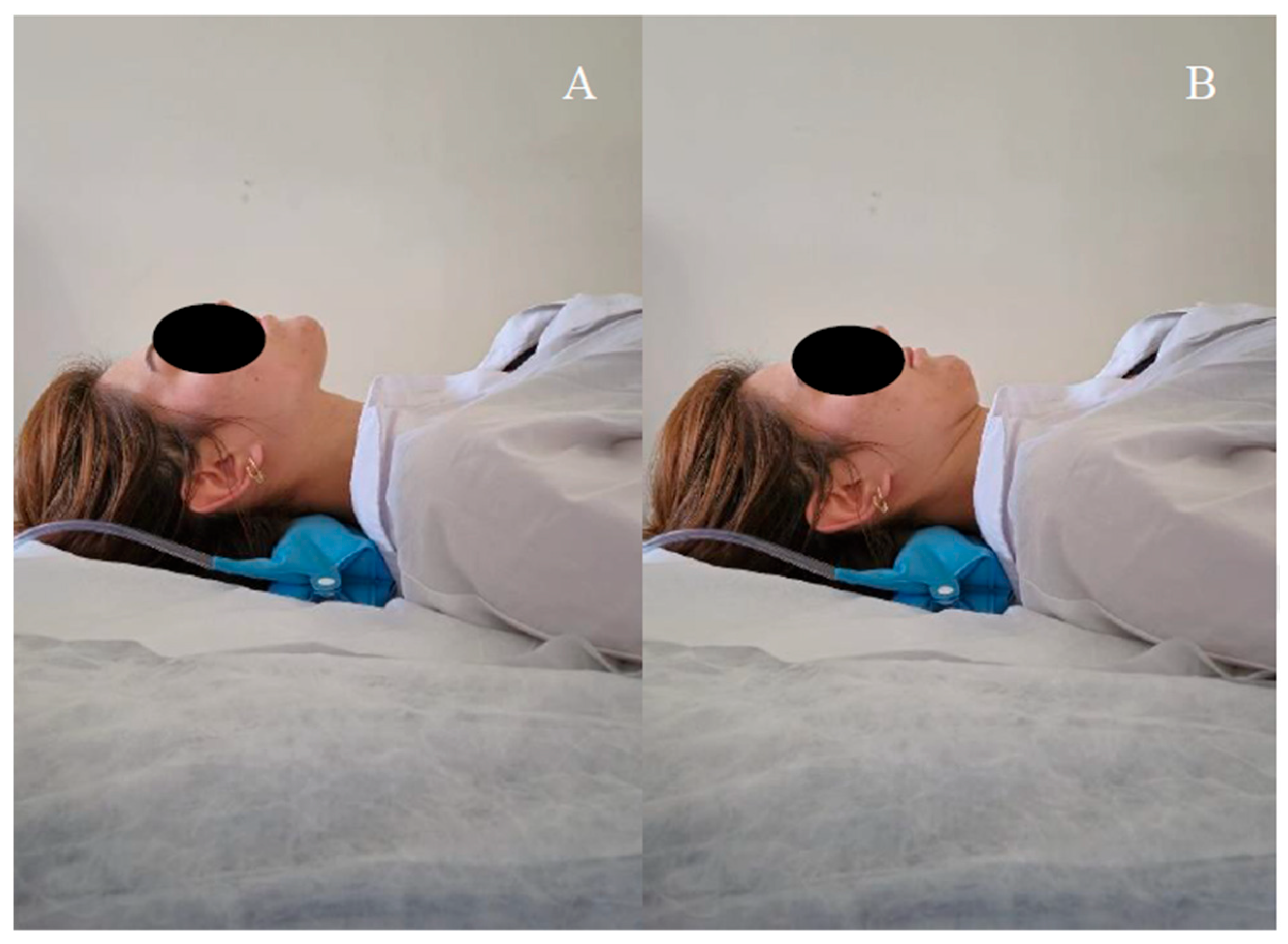
Neck muscle endurance was evaluated using the Cranio-Cervical Flexion Test (CCFT), which assesses the activation and isometric endurance of deep cervical flexor muscles (M. Longus capitis and M. Longus colli). A stabilizer pressure biofeedback device was used for measurement [7]. The neck muscle endurance assessment protocol is provided in Figure 7.
Figure 7.
Assessment of Neck Muscle Endurance (A). Test Starting Position (B). Upper Cervical Flexion Position.
2.4.7. CCFT Procedure
The test was conducted with patients lying supine with the head in a neutral position. The pressure unit of the device was placed beneath the occiput and lower cervical region, set to a baseline pressure of 20 mmHg without increasing cervical lordosis (Figure 7). Participants were instructed to keep their lips closed, teeth slightly apart, and tongue placed on the palate. While performing a slow head nod without lifting the chin from the neck, they were asked to maintain incremental pressure levels (22, 24, 26, 28, and 30 mmHg) for 10 s, with 5 s rest between repetitions. The activation score was the sum of the baseline (20 mmHg) and the incremental pressure reached. Performance index was calculated by multiplying the highest pressure level held for 10 s by the duration the participant maintained it. For example, a patient maintaining 24 mmHg for 6 s had an activation score of 22 and a performance index of 24 × 6 = 144 mmHg·s [7].
2.4.8. Temporomandibular Joint Dysfunction and Mandibular Function Assessment
Temporomandibular joint dysfunction was assessed using the Fonseca Anamnestic Questionnaire [12], and mandibular functional limitation was evaluated with the Jaw Functional Limitation Scale-20 [13].
The digital inclinometer, IOPI, and CCFT were employed to assess cervical/thoracic/lumbar position sense, tongue pressure, and deep cervical flexor performance, respectively. The digital inclinometer has demonstrated good to excellent intrarater reliability (ICC = 0.92–0.95) in measuring lumbar lordosis in healthy subjects. The IOPI device has shown strong reliability and validity for tongue pressure measurements, with intrarater ICC values ranging from 0.77 to 0.92 in asymptomatic individuals. The CCFT has been reported to have high inter-rater reliability (ICC = 0.907) in asymptomatic subjects. However, population-specific validation for patients with bruxism and TMD is limited and is acknowledged as a study limitation. Although validated measurement tools were used, the psychometric properties (test–retest reliability, standard error of measurement [SEM], minimal detectable change [MDC], and construct validity) of the digital inclinometer, IOPI, and CCFT have not been previously reported specifically for the TMD/bruxism population. This study provides preliminary data on these measurement properties in this specific population.
2.5. Statistical Analysis
Data were analyzed using SPSS Version 25.0. Quantitative data were expressed as mean, median, standard deviation, minimum and maximum values; qualitative data were presented as numbers and percentages. Due to small group sizes, non-parametric tests were used. Chi-square test was applied to analyze differences in qualitative variables. Mann–Whitney U test was used for comparisons between two groups, and Kruskal–Wallis test was applied to assess differences among the three levels of TMD severity. To control for type I error due to multiple comparisons, Bonferroni correction was applied. Effect sizes (r for non-parametric tests) and 95% confidence intervals (CIs) were calculated for all primary outcomes to allow clinical interpretation. Relationships between variables were evaluated using Spearman’s correlation coefficient. A p-value of less than 0.05 was considered statistically significant.
3. Results
3.1. Study Results
3.1.1. Descriptive Characteristics and Assessments of All Participants
A total of 157 patients aged between 18 and 65 years, diagnosed with temporomandibular joint dysfunction (TMD) related to bruxism, were invited to participate in the study. Of those invited, 97 individuals declined participation, and 8 patients were excluded due to being outside the age range. The study was completed with 52 patients, including 26 who had used occlusal splints and 26 who had not. The mean age of the splint-using group was 39.61 years, while the mean age of the non-splint group was 40.76 years. Statistical analysis between the groups revealed no significant differences in age, weight, or FAA (p > 0.05) (Table 1). Comparisons of gender distribution, splint usage duration, education level, and marital status between groups are presented in Table 1. The socio-demographic characteristics of both groups were similar.
Table 1.
Descriptive Characteristics of All Participants.
Jaw function assessed via the Fonseca Anamnestic Index (FAA) and the Jaw Function Limitation Scale (CFKS) showed statistically significant differences in CFKS subscales: Chewing (d = 0.27, 95% CI [0.10, 0.44]), Mobility (d = 0.23, 95% CI [0.08, 0.38]), Expression (d = 0.29, 95% CI [0.12, 0.46]), with splint users reporting slightly higher self-reported functional limitations compared to non-users (p < 0.001). The FAA showed a small effect size (d = 0.28, 95% CI [−0.20, 0.70]) and no significant difference between groups.
Overall, the majority of measures demonstrated minimal clinical differences, as reflected by small effect sizes and confidence intervals including zero for most outcomes. These results are summarized in Table 2.
Table 2.
Comparison of Neck Muscle Endurance, Position Sense, Tongue and Lip Pressures, and Jaw Function Between Splint and Non-Splint Users.
Overall, the majority of measures showed small effect sizes and confidence intervals including zero, indicating minimal clinical differences. These results are summarized in Table 2.
3.1.2. Descriptive Findings and Assessments of Participants Using Occlusal Splints by Gender
In the statistical analysis of evaluation findings by gender among individuals using splints, significant differences were found in mandibular functional mobility limitation (p = 0.008) and mandibular functional expression limitation (p = 0.028) (Table 3).
Table 3.
Descriptive Findings and Assessments of Participants Using Occlusal Splints by Gender.
3.1.3. Descriptive Findings and Assessments of Participants Not Using Occlusal Splints by Gender
In the statistical analysis by gender among individuals not using splints, a significant difference was found only in the expression parameter of mandibular functional limitation (p = 0.029) (Table 4).
Table 4.
Descriptive Findings and Assessments of Participants Not Using Occlusal Splints by Gender.
3.1.4. The Effect of Temporomandibular Joint Dysfunction Severity on Other Parameters
In all individuals (n = 52), the effect of temporomandibular joint dysfunction severity (Fonseca) on other parameters was examined using the Kruskal–Wallis statistical analysis method. Accordingly, a significant relationship was found between the severity of temporomandibular joint dysfunction and mandibular chewing, mobility, and expression limitations (Table 5).
Table 5.
The Effect of TMD Severity on Other Parameters.
In individuals using splints (n = 26), the effect of temporomandibular joint dysfunction severity (Fonseca) on other parameters was examined using the Kruskal–Wallis statistical analysis method.
A significant difference was found in the chewing aspect of mandibular functional limitation between mild and severe TMD (p = 0.000). A significant difference was found in the chewing aspect of mandibular functional limitation between moderate and severe TMD (p = 0.047). A significant difference was found in the mobility aspect of mandibular functional limitation between mild and severe TMD (p = 0.000). A significant difference was found in the mobility aspect of mandibular functional limitation between moderate and severe TMD (p = 0.003). A significant difference was found in the expression aspect of mandibular functional limitation between mild and severe TMD (p = 0.001).
In individuals not using splints (n = 26), the effect of temporomandibular joint dysfunction severity (Fonseca) on other parameters was examined using the Kruskal–Wallis statistical analysis method.
There is a significant difference in the chewing parameter of mandibular functional limitation across all TMD severity levels. Significant differences in chewing were observed between mild and moderate, moderate and severe, and mild and severe TMD groups. A significant difference in the mobility parameter of mandibular functional limitation was found between mild and severe TMD (p = 0.013). A significant difference in the expression parameter of mandibular functional limitation was found between moderate and severe TMD (p = 0.000). A significant difference in the expression parameter of mandibular functional limitation was also found between mild and severe TMD (p = 0.000).
4. Discussion
Our study aimed to compare patients with bruxism-related temporomandibular dysfunction who used occlusal splints and those who did not in terms of body position perception, tongue pressure, temporomandibular joint dysfunction severity, jaw functional limitation, and neck muscle endurance. Overall, no significant differences were observed between splint users and non-users in most of the assessed parameters; however, splint users demonstrated significantly higher jaw functional limitation scores. Consistent with the cross-sectional design, these findings represent observed differences and associations rather than therapeutic effects, and our hypotheses were not confirmed, except for some exploratory gender-based comparisons. Since the CFKS is based on self-reported functional limitations, another possible explanation for the higher scores observed in splint users may be increased awareness of jaw function following splint therapy. Individuals may have become more conscious of their mandibular movements and, consequently, adopted a more protective or cautious behavioral pattern, perceiving greater limitation without an actual deterioration in mobility. This heightened somatic awareness and self-monitoring could partly explain the unexpected direction of the CFKS findings.
This study compared individuals with bruxism-related temporomandibular dysfunction who used occlusal splints with those who did not, focusing on body position perception, tongue pressure, jaw functional limitation, and neck muscle endurance. While no statistically significant differences were found between the groups in most of the assessed parameters, an important and unexpected finding emerged in the Jaw Functional Limitation Scale (CFKS). Splint users reported significantly higher functional limitation scores in the chewing, mobility, and expression subscales compared with non-users, despite similar overall FAA scores (TMD severity).
This discrepancy between objective indicators of dysfunction (neck endurance, tongue pressure body position perception) and self-reported functional limitations highlights the complexity of symptom perception in individuals undergoing splint therapy. Because the CFKS is a subjective, self-reported measure, one plausible explanation is that splint users may develop greater awareness of their jaw function throughout the course of splint therapy. Increased somatic attention and monitoring of mandibular movements may lead individuals to perceive and report more limitations, even in the absence of objectively measurable impairment. This heightened awareness may also reflect increased caution or protective behavior in everyday functional tasks such as chewing or speaking.
Importantly, these findings challenge the commonly held assumption that splint therapy uniformly improves all dimensions of jaw function. Although splints are effective for controlling parafunctional activity and protecting dental structures, their influence on perceived functional limitation appears more nuanced. Future longitudinal studies are needed to determine whether subjective functional limitations decrease, remain unchanged, or increase over time with continued splint use. Additionally, integrating objective functional assessments with self-reported measures may provide a more comprehensive understanding of how splint therapy influences both physical function and symptom perception.
In the analysis by gender among individuals using occlusal splints, TMD severity, mandibular mobility, and expression limitations were found to be higher in females compared to males, with a significant difference between genders. Among individuals not using occlusal splints, the analysis by gender revealed that only mandibular expression limitation was more pronounced in females.
In the analysis by gender of all patients diagnosed with bruxism and experiencing TMD, it was reported that splint usage did not cause differences in the measured parameters in females, whereas in males, complaints related to mandibular mobility were higher among those not using splints. Accordingly, it can be interpreted that occlusal splint use may improve mandibular mobility limitations in male patients with TMD associated with bruxism.
De Paula Gomes et al. [14] conducted a double-blind randomized study using the Fonseca Anamnestic Questionnaire to distinguish between TMD patients and healthy controls. They randomly assigned 28 individuals with TMD to massage therapy and occlusal splint groups. Both treatments were applied for 4 weeks. A digital caliper was used to measure mandibular range of motion (ROM) before and after treatment. As a result, both massage therapy applied to the masticatory muscles and the use of occlusal splints led to an increase in mandibular joint ROM in TMD patients, similar to the healthy control group. In our study, the finding that occlusal splint use reduced mandibular mobility limitation in male patients supports the result of De Paula Gomes et al., indicating that occlusal splints increase mandibular joint range of motion.
In our study, we found that male patients using occlusal splints benefited more from the splint compared to female patients, which may have several reasons. The literature provides conflicting information regarding the role of female sex hormones in the etiology of joint disorders. Some studies state that estrogen is necessary for the development of collagen and proteins in the temporomandibular joint [15,16,17,18], while others report that increased estrogen levels also raise the prevalence of TMD [19]. However, more studies emphasize that estrogen is essential for the temporomandibular joint. According to these findings, the higher FAA scores (severity of TMD) in females in our study support the literature. We believe that the lower impact of occlusal splint use on outcomes in females compared to males in our study is due both to the higher severity of TMD and the larger number of female participants.
A limitation of this study is its cross-sectional design, which does not allow for pre-treatment measurements and therefore precludes causal conclusions regarding the effects of occlusal splints. Consequently, the observed differences between splint users and non-users should be interpreted as associations only. Future longitudinal or interventional studies are warranted to establish the causal impact of occlusal splints on temporomandibular disorders and related clinical parameters.
Baldini et al. [20] reported that patients with TMD showed good postural balance both with and without occlusal splints using a force platform. However, occlusal splint use was associated with a significant reduction in the body’s center of gravity sway index and sway area. While Baldini et al. stated that occlusal splint use improves balance, in our study, we did not observe any change in position sense, which affects postural control. We believe there may be two reasons for this: firstly, the duration of splint use during the day might have been insufficient, and secondly, the three-month history of splint use may not have been long enough.
5. Conclusions
Bruxism is a highly bothersome parafunctional habit occurring both during the day and sleep. It is known that if bruxism persists, individuals may experience problems in their temporomandibular joints. In the treatment of bruxism, the occlusal splint, commonly used during sleep, is frequently preferred. Our study aimed to examine the differences in body position sense, tongue pressure, neck muscle endurance and mandibular functional limitation in patients using occlusal splints.
In the comparison between patients with bruxism-related TMD using and not using occlusal splints, no significant differences were found in cervical, thoracic, and lumbar region position sense, neck muscle endurance and tongue pressure strength. However, mandibular functional limitation scores were significantly higher in the splint-using group.
Among bruxism-related TMD patients using occlusal splints, females were found to have greater TMD severity, mandibular mobility limitation, and mandibular expression limitation complaints compared to males.
In bruxism-related TMD patients not using occlusal splints, mandibular expression limitation was found to be better in males.
A limitation of our study is that, in the group using occlusal splints, we relied solely on patient self-reporting regarding regular use, considering a minimum usage period of three months; however, no objective monitoring was conducted in this regard. We believe that periodically assessing patients’ compliance and providing necessary motivation to continue treatment during the splint usage period could potentially influence the results. We also consider that three months may be an early period for the splint’s effect to cause changes in body composition. It is thought that long-term use of occlusal splints may have a beneficial effect on the parameters we evaluated, and therefore, further studies with extended follow-up are needed. Consistent with the literature, the higher number of female participants in both groups might have affected the results of gender analyses; thus, we recommend increasing the sample size by gender in future studies.
Another limitation of this study is its cross-sectional design, which does not allow for pre-treatment measurements and therefore precludes causal conclusions regarding the effects of occlusal splints.
Our strengths lie in identifying, through a review of the current literature, that analyses focusing on neck muscle endurance and performance, tongue pressures, and body position sense—specifically regarding the thoracic and lumbar regions—in patients with TMD secondary to bruxism are insufficient. We hope that the data we have obtained will contribute to the literature in this field and provide guidance for future studies.
Author Contributions
Conceptualization, N.A.Y. and B.Ç.; methodology, N.A.Y. and B.Ç.; software, B.Ç.; validation, N.A.Y. and M.T.T.; formal analysis, B.Ç.; investigation, N.A.Y. and B.Ç.; resources, M.T.T.; data curation, B.Ç.; writing—original draft preparation, N.A.Y. and B.Ç.; writing—review and editing, M.T.T. and F.E.; visualization, B.Ç.; supervision, N.A.Y.; project administration, N.A.Y.; funding acquisition, N.A.Y. All authors have read and agreed to the published version of the manuscript.
Funding
This research received no external funding.
Institutional Review Board Statement
The study was conducted in accordance with the Declaration of Helsinki, and ethical approval was obtained from the Scientific Research Ethics Committee of Necmettin Erbakan University, Faculty of Health Sciences on 1 March 2023, with the decision number 2023/379.
Informed Consent Statement
Informed consent forms were obtained from all participants involved in the study.
Data Availability Statement
The datasets generated during the current study are available from the corresponding author on reasonable request.
Acknowledgments
The authors would like to thank the Necmettin Erbakan University Faculty of Dentistry for providing the institutional support and facilities necessary for this research. We also thank all participants for their time and cooperation.
Conflicts of Interest
The authors declare that there is no conflict of interest related to this study.
Abbreviations
The following abbreviations are used in this manuscript:
| ATP | Anterior Tongue Pressure |
| PTP | Posterior Tongue Pressure |
| TMD | Temporomandibular Joint Dysfunction |
| FAA | Fonseca Anamnestic Questionnaire |
| CFKS | Jaw Functional Limitation Scale |
| CCFT | Cranio-Cervical Flexion Test |
| IOPI | Iowa Oral Performance Instrument |
| NME-AS | Neck Muscle Endurance Activation Score |
| NME-PI | Neck Muscle Endurance Performance Index |
| LS-GA-SZ | Lumbosacral Eyes Open Firm Surface |
| LS-GK-SZ | Lumbosacral Eyes Closed Firm Surface |
| LS-GA-YZ | Lumbosacral Eyes Open Soft Surface |
| TS-GA-SZ | Thoracosacral Eyes Open Firm Surface |
| TS-GK-SZ | Thoracosacral Eyes Closed Firm Surface |
| TS-GA-YZ | Thoracosacral Eyes Open Soft Surface |
| ICC | Intraclass Correlation Coefficient |
| SEM | Standard Error of Measurement |
| MDC | Minimal Detectable Change |
| ROM | Range of Motion |
References
- Xiong, X.; Ye, Z.; Tang, H.; Wei, Y.; Nie, L.; Wei, X.; Liu, Y.; Song, B. MRI of Temporomandibular Joint Disorders: Recent Advances and Future Directions. J. Magn. Reson. Imaging 2021, 54, 1039–1052. [Google Scholar] [CrossRef] [Scilit] [PubMed]
- Bormane, D.S.; Kakkeri, R.B.; Kakkeri, R.B. Surface Electromyography Signal Classification for the Detection of Temporomandibular Joint Disorder Using Spectral Mapping Method. Int. J. Adv. Comput. Sci. Appl. 2022, 13, 526–529. [Google Scholar] [CrossRef] [Scilit]
- Osiewicz, M.A.; Lobbezoo, F.; Loster, B.W.; Loster, J.E.; Manfredini, D. Frequency of Temporomandibular Disorders Diagnoses Based on RDC/TMD in a Polish Patient Population. Cranio 2018, 36, 304–310. [Google Scholar] [CrossRef] [Scilit] [PubMed]
- Bergmann, A.; Edelhoff, D.; Schubert, O.; Erdelt, K.J.; Pho Duc, J.M. Effect of Treatment with a Full-Occlusion Biofeedback Splint on Sleep Bruxism and TMD Pain: A Randomized Controlled Clinical Trial. Clin. Oral Investig. 2020, 24, 4005–4018. [Google Scholar] [CrossRef] [Scilit] [PubMed]
- Ferrillo, M.; Marotta, N.; Giudice, A.; Calafiore, D.; Curci, C.; Fortunato, L.; Ammendolia, A.; de Sire, A. Effects of Occlusal Splints on Spinal Posture in Patients with Temporomandibular Disorders: A Systematic Review. Healthcare 2022, 10, 739. [Google Scholar] [CrossRef] [Scilit] [PubMed]
- Manfredini, D.; Castroflorio, T.; Perinetti, G.; Guarda-Nardini, L. Dental Occlusion, Body Posture and Temporomandibular Disorders: Where We Are Now and Where We Are Heading For. J. Oral Rehabil. 2012, 39, 463–471. [Google Scholar] [CrossRef] [Scilit] [PubMed]
- Jull, G.; Trott, P.; Potter, H.; Zito, G.; Niere, K.; Shirley, D.; Emberson, J.; Marschner, I.; Richardson, C. A Randomized Controlled Trial of Exercise and Manipulative Therapy for Cervicogenic Headache. Spine 2002, 27, 1835–1842. [Google Scholar] [CrossRef] [Scilit] [PubMed]
- Wibault, J.; Vaillant, J.; Vuillerme, N.; Dedering, Å.; Peolsson, A. Using the Cervical Range of Motion (CROM) Device to Assess Head Repositioning Accuracy in Individuals with Cervical Radiculopathy in Comparison to Neck-Healthy Individuals. Man. Ther. 2013, 18, 403–409. [Google Scholar] [CrossRef] [Scilit] [PubMed]
- Arakawa, I.; Igarashi, K.; Imamura, Y.; Müller, F.; Abou-Ayash, S.; Schimmel, M. Variability in Tongue Pressure among Elderly and Young Healthy Cohorts: A Systematic Review and Meta-Analysis. J. Oral Rehabil. 2021, 48, 430–448. [Google Scholar] [CrossRef] [Scilit] [PubMed]
- Kim, H.D.; Choi, J.B.; Yoo, S.J.; Chang, M.Y.; Lee, S.W.; Park, J.S. Tongue-to-Palate Resistance Training Improves Tongue Strength and Oropharyngeal Swallowing Function in Subacute Stroke Survivors with Dysphagia. J. Oral Rehabil. 2017, 44, 59–64. [Google Scholar] [CrossRef] [Scilit] [PubMed]
- Medical Professionals—IOPI Medical. IOPI Medical: Medical Professionals 2020. Available online: https://iopimedical.com/medical-professionals/ (accessed on 19 November 2025).
- Abacı, H.E. Investigation of the Effectiveness of Telerehabilitation in Individuals with Bruxism and Temporomandibular Joint Dysfunction. Master’s Thesis, Hasan Kalyoncu University, Gaziantep, Turkey, 2022. [Google Scholar]
- Ohrbach, R.; Larsson, P.; List, T. The Jaw Functional Limitation Scale: Development, Reliability, and Validity of 8-Item and 20-Item Versions. J. Oral Facial Pain Headache 2008, 22, 219–230. [Google Scholar]
- Gomes, C.A.F.d.P.; Politti, F.; Andrade, D.V.; de Sousa, D.F.M.; Herpich, C.M.; Dibai-Filho, A.V.; Gonzalez, T.d.O.; Biasotto-Gonzalez, D.A. Effects of Massage Therapy and Occlusal Splint Therapy on Mandibular Range of Motion in Individuals with Temporomandibular Disorder: A Randomized Clinical Trial. J. Manip. Physiol. Ther. 2014, 37, 164–169. [Google Scholar] [CrossRef] [Scilit] [PubMed]
- Farzin, M.; Taghva, M.; Babooie, M. Comparison of Temporomandibular Disorders between Menopausal and Non-Menopausal Women. J. Korean Assoc. Oral Maxillofac. Surg. 2018, 44, 232. [Google Scholar] [CrossRef] [Scilit] [PubMed]
- Madani, A.S.; Shamsian, A.A.; Hedayati-Moghaddam, M.R.; Fathi-Moghadam, F.; Sabooni, M.R.; Mirmortazavi, A.; Golmohamadi, M. A Cross-Sectional Study of the Relationship between Serum Sexual Hormone Levels and Internal Derangement of Temporomandibular Joint. J. Oral Rehabil. 2013, 40, 569–573. [Google Scholar] [CrossRef] [Scilit] [PubMed]
- Okuda, T.; Yasuoka, T.; Nakashima, M.; Oka, N. The Effect of Ovariectomy on the Temporomandibular Joints of Growing Rats. J. Oral Maxillofac. Surg. 1996, 54, 1201–1210. [Google Scholar] [CrossRef] [Scilit] [PubMed]
- Yasuoka, T.; Nakashima, M.; Okuda, T.; Tatematsu, N. Effect of Estrogen Replacement on Temporomandibular Joint Remodeling in Ovariectomized Rats. J. Oral Maxillofac. Surg. 2000, 58, 189–196. [Google Scholar] [CrossRef] [Scilit] [PubMed]
- Smith, Y.R.; Stohler, C.S.; Nichols, T.E.; Bueller, J.A.; Koeppe, R.A.; Zubieta, J.-K. Pronociceptive and Antinociceptive Effects of Estradiol through Endogenous Opioid Neurotransmission in Women. J. Neurosci. 2006, 26, 5777. [Google Scholar] [CrossRef] [Scilit] [PubMed]
- Baldini, A.; Tecco, S.; Cioffi, D.; Rinaldi, A.; Longoni, S. Gnatho-Postural Treatment in an Air Force Pilot. Aviat. Space Environ. Med. 2012, 83, 522–526. [Google Scholar] [CrossRef] [Scilit] [PubMed]

Disclaimer/Publisher’s Note: The statements, opinions and data contained in all publications are solely those of the individual author(s) and contributor(s) and not of MDPI and/or the editor(s). MDPI and/or the editor(s) disclaim responsibility for any injury to people or property resulting from any ideas, methods, instructions or products referred to in the content. |
© 2026 by the authors. Licensee MDPI, Basel, Switzerland. This article is an open access article distributed under the terms and conditions of the Creative Commons Attribution (CC BY) license.