
Bioactive Compounds from Allium Species: Chemical Features and Molecular Mechanisms in Polycystic Ovary Syndrome—A Narrative Review


 , , , ,
  and
and 
Abstract
1. Introduction
2. Materials and Methods
2.1. Literature Search Strategy
2.2. Eligibility Criteria
2.3. Study Selection and Data Extraction
2.4. Data Synthesis
2.5. Quality Considerations
3. The Genus Allium: General Characteristics and Relevance
3.1. Botanical Diversity, Distribution, and Traditional Use of Allium Species
3.2. Morphological Characteristics of Allium Species
3.3. Dietary Use and Phytotherapeutic Potential of Selected Allium Species
3.4. Selected Allium Species Relevant to Phytotherapeutic Potential
3.4.1. Allium sativum (Garlic)
3.4.2. Allium cepa (Onion)
3.4.3. Other Relevant Allium Species Include A. fistulosum, A. ampeloprasum, A. schoenoprasum, and A. ursinum
3.5. Phytochemical Diversity and Bioactive Constituents of Allium Species
3.5.1. Organosulfur Compounds of Allium Species
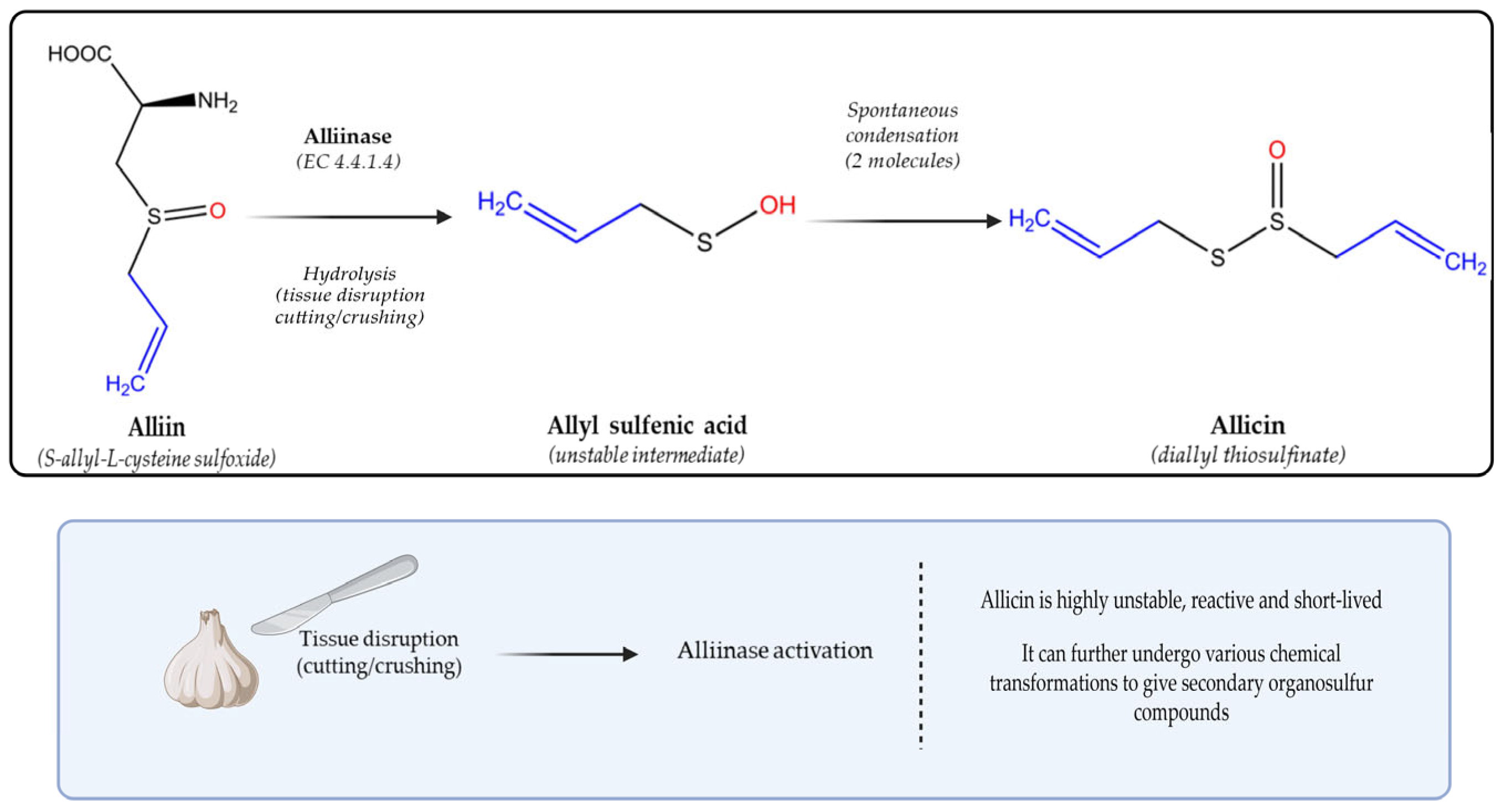
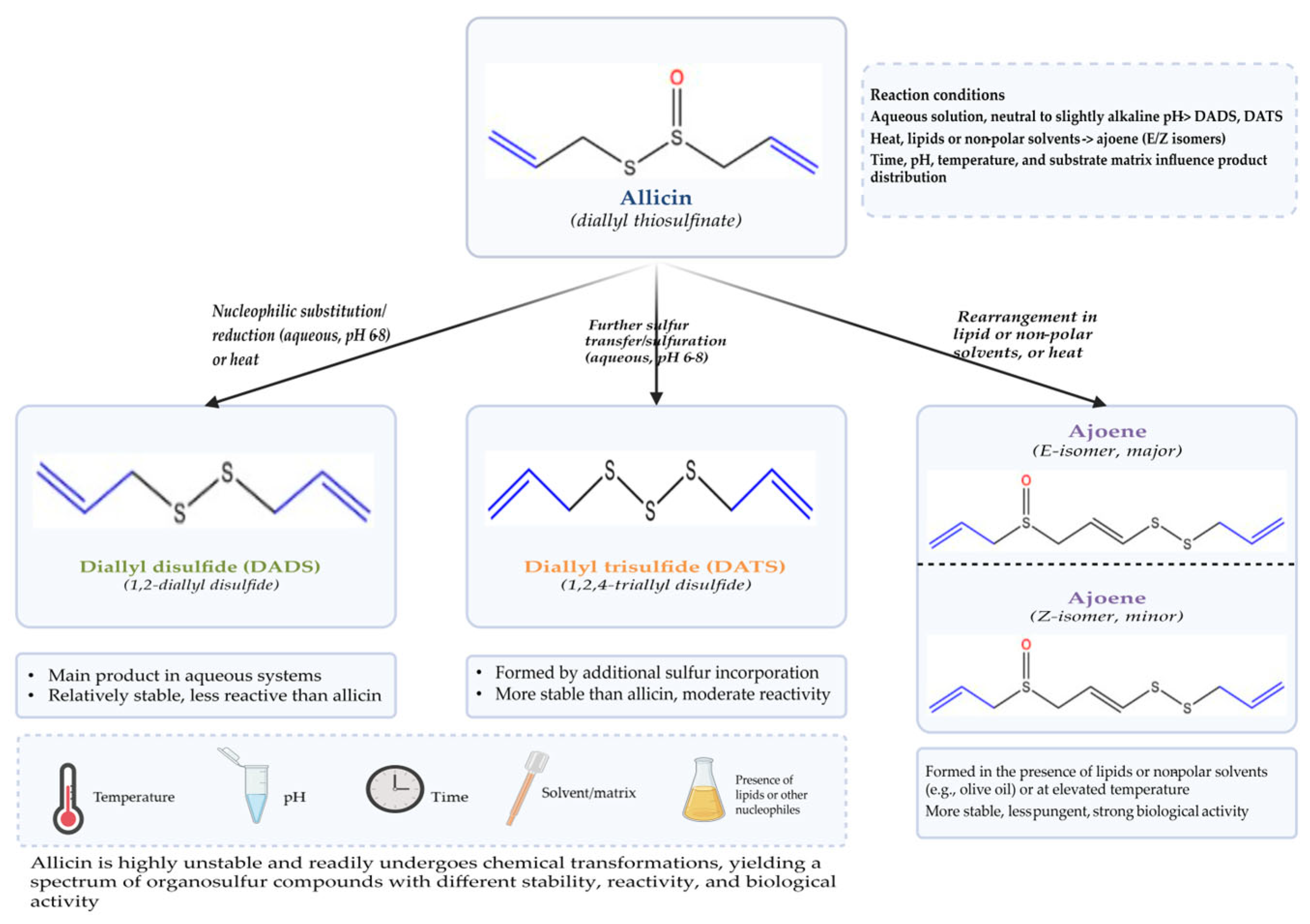
Allicin: Biosynthesis, Stability, and Biological Effects
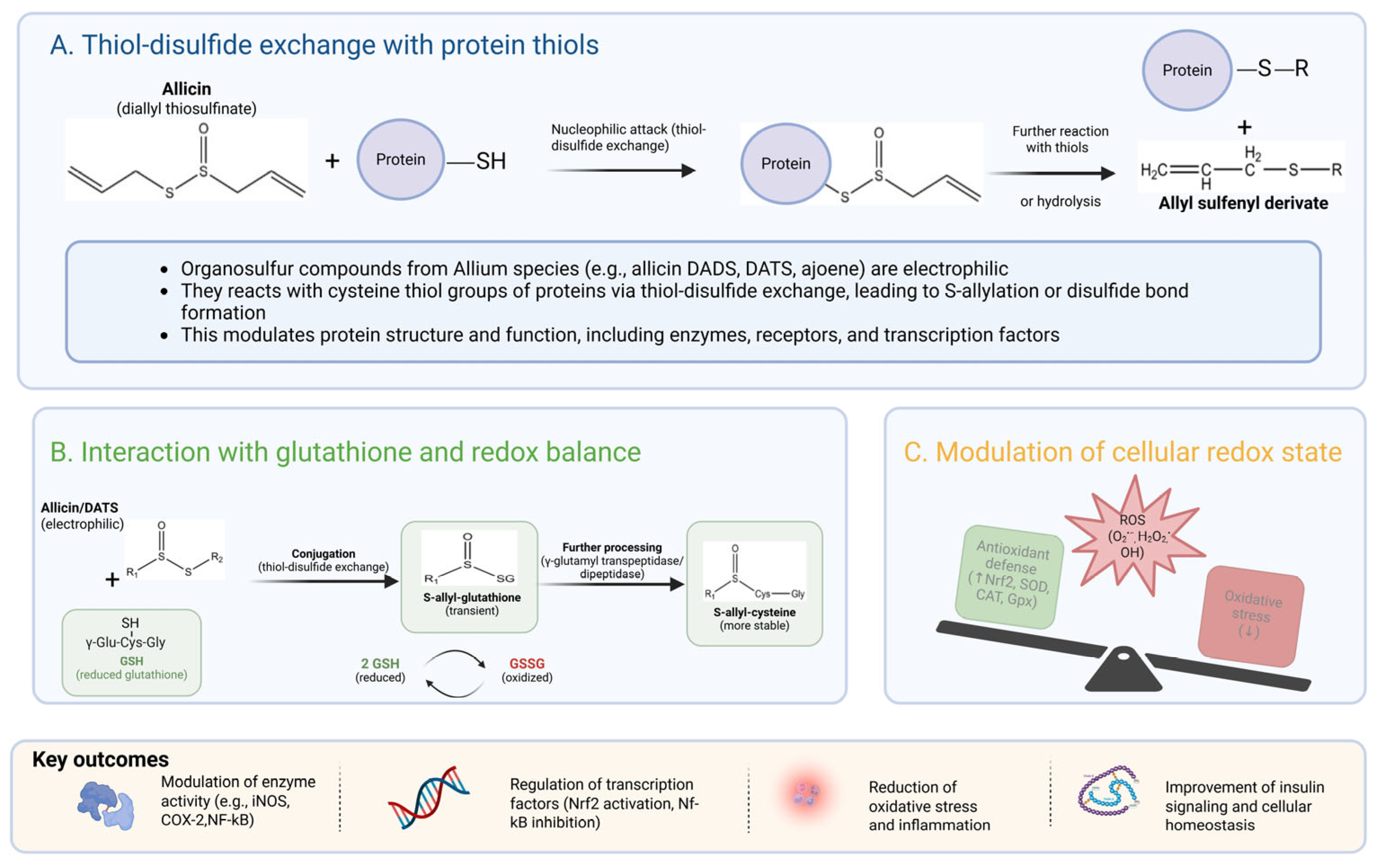
- Antimicrobial: Allicin exhibits strong activity against Gram-positive and Gram-negative bacteria, fungi, and viruses. Its mechanism involves reacting with thiol (–SH) groups of microbial enzymes, thereby inhibiting essential metabolic processes and protein synthesis [45].
- Antioxidant and Anti-inflammatory: Allicin scavenges free radicals and reduces reactive oxygen species (ROS) levels. It also induces endogenous antioxidant enzymes, including superoxide dismutase (SOD), catalase, and glutathione peroxidase. Allicin reduces the expression of pro-inflammatory cytokines (TNF-α, IL-1β, IL-6) and enzymes such as COX-2 and iNOS, inhibiting NF-κB and MAPK signaling pathways and alleviating inflammation [46].
- Anticancer: Allicin can induce apoptosis, arrest the cell cycle, and inhibit tumor cell proliferation. It also modulates angiogenesis and metastasis through the regulation of genes such as Bax, Bcl-2, p53, and VEGF [47].
- Cardioprotective and reproductive support: Allicin lowers LDL-cholesterol and triglycerides, increases HDL, inhibits platelet aggregation, and prevents lipid oxidation, thus reducing the risk of atherosclerosis and cardiovascular diseases. Preliminary animal studies indicate allicin may help restore regular estrous cycles and improve the health of ovarian tissues [45,48].
- Metabolic Effects and Hormonal balance: Allicin exerts hypoglycemic effects by improving glucose tolerance, stimulating insulin secretion, and enhancing insulin sensitivity in peripheral tissues. Studies suggest allicin may help decrease elevated testosterone levels and increase Sex Hormone-Binding Globulin (SHBG), which helps neutralize excess free androgens [48,49].
Ajoene: A Stable Bioactive Metabolite of Allicin
S-Allyl-L-Cysteine (SAC): A Key Marker of Aged Garlic Extract
Allyl Mercaptan: Reactive Thiol Metabolite and Epigenetic Modulator
Diallyl Trisulfide (DATS): Modulation of Redox and Inflammatory Signaling
Chemical Reactivity of Allicin and Interactions with Thiol-Containing Biomolecules
3.6. Polyphenolic Compounds of Allium Species
3.7. Terpenoids in Allium Species
3.8. Phytosterols in Allium Species
3.9. Vitamins and Minerals in Allium Species
3.10. Polysaccharides in Allium Species
3.11. Structure–Activity Relationships (SAR) of Allium-Derived Bioactive Compounds and Their Biological Relevance in PCOS
4. PCOS: Mechanistic and Therapeutic Perspectives
5. Overview and Discussion of Clinical and Preclinical Evidence on the Effects of Allium Species in PCOS-Related Outcomes
5.1. Evidence from Clinical Studies
5.1.1. Modulation of Glycemic Control and Insulin Resistance
5.1.2. Effects on Hormonal Homeostasis and Androgen Excess
5.1.3. Impact on Lipid Metabolism and Cardiometabolic Risk Profile
5.1.4. Effects on Oxidative Stress and Antioxidant Defense Systems
5.2. Evidence from Experimental Models of PCOS
5.2.1. Antioxidant and Redox-Modulating Effects of Allium Species
5.2.2. Metabolic and Endocrine Regulation in Experimental PCOS Models

| A. spp./ Form/ Dosage | Study Type | Ref. | Aim of Study/ Purpose | Design/ Sample Size/ Duration | Major Findings/ Hormonal Profile and Ovarian Morphology Characteristics | Major Findings/ Anthropometry and Metabolic Function | Major Findings/ Others |
|---|---|---|---|---|---|---|---|
| Allium ampeloprasum; Aqueous extract; 192, 384, and 768 mg/kg | Animal experimental study | [108] | To provide scientific evidence of the efficacy of Allium ampeloprasum against female infertility, the effect of the aqueous extract of the said plant (AE) were evaluated in rats with letrozole-induced PCOS | 66 female Wistar rats with PCOS induced by letrozole (1 mg/kg orally for 21 days) Treatment: After PCOS induction, rats received aqueous extract (AE) of Allium ampeloprasum var. Porrum (leek) by oral gavage Doses tested: 192, 384, and 768 mg/kg/day for 15 days Comparison/Control groups: Normal control (no PCOS induction); PCOS control (letrozole, no treatment); Positive drug control: clomiphene citrate (1 mg/kg) + metformin (200 mg/kg) | ↓ LH ↓ testosterone ↑ number of Graafian follicles and corpora lutea ↓ cystic and atretic follicles restored the estrous cycle; induced uterine epithelial cell hypertrophy | ↓ body weight, abdominal fat weight ↓ TC ↓ LDL cholesterol ↓ atherogenic indices ↑ HDL cholesterol | ↓ oxidative stress |
| Allium fistulosum; Aqueous extract; 500 mg/kg/day | Animal experimental study | [109] | To test whether Welsh onion root extract (from Allium fistulosum) can reverse or ameliorate ovarian dysfunction and hormonal imbalance in a rat model of PCOS induced by letrozole | Female rats were induced with PCOS by letrozole n: total = 27, groups: I control (n = 6), II temporary letrozole removal (n = 5), III letrozole only (PCOS) (n = 6), IV letrozole + AF extract (500 mg/kg/day) (n = 10) 2 weeks | ↓ LH (toward normal) ↓ LH/FSH ratio ↑ Estrogen (restored) ↓ Testosterone (partial) ↓ Number of cystic follicles ↑ Graafian follicles & corpora lutea Improved granulosa cell layers Estrous cycle normalization | ↔ in body weight ↔ in glucose, triglycerides | ↑ Cyp19a1 (aromatase) expression ↑ Aromatase protein localization in ovary Normalized Lhr, Pgr, Esr1 expression |
| Allium Sativum; Aqueous extract, Amicon ultrafiltration system + SDS electrophoresis—R10 fraction; Intraperitoneal injection 20 mg/kg | Animal experimental study | [105] | To evaluate the potential immune-modulatory effects of R10 fraction of garlic in a mouse model of PCOS | Model: NMRI female mice; PCOS induced by a single intramuscular injection of estradiol valerate (40 mg/kg); n = 60 mice divided into 5 groups (normal, PCOS, sham, R10 Treat1, R10 Treat2; n = 12 each) | treatment with R10 fraction both groups: ↓ estradiol, testosterone progesterone R10 Treat 2 group: ↑ number of corpus luteum R10 Treat 2 group: ↓ number of cysts | / | ↓ IFN-γ & IL-17, slight ↑ IL-4—R10 Treat1 ↓ IFN-γ & IL-17 significantly, ↑ IL-4 robustly—R10 Treat2 ↑ Gpx3 (near-normal), ↑ Ptx3—R10 Treat2 ↓ MDA; ↑GSH |
| Alium cepa seeds ethanol extract oral administration; 0.3 cc/rat/day in sesame oil | Animal experimental study | [107] | To investigate the apoptotic and antioxidant effects of Allium cepa seed ethanolic extract in estradiol valerate-induced experimental PCOS in rats | Female Wistar rats (n = 60). Control groups (saline, extract alone, sesame oil) and experimental PCOS groups induced with single IM injection of estradiol valerate (4 mg/rat). One PCOS group additionally received Allium cepa extract supplementation. Treatment duration: 60 consecutive days | ↑ Hyperemia, ovarian cyst number, and granulosa cell apoptosis in PCOS rats and reduced after Allium cepa treatment ↓ Large antral follicles in PCOS groups | / | ↑ TAC in extract-treated groups compared with untreated PCOS rats. The extract compensated antioxidant depletion associated with PCOS Oxidative stress markers improved compared with untreated PCOS rats |
| Allium fistulosum; Aqueous extract; 500 mg/kg/day | Animal experimental study | [109] | To test whether Welsh onion root extract (from Allium fistulosum) can reverse or ameliorate ovarian dysfunction and hormonal imbalance in a rat model of PCOS induced by letrozole | Female rats were induced with PCOS by letrozole n: total = 27, groups: I control (n = 6), II temporary letrozole removal (n = 5), III letrozole only (PCOS) (n = 6), IV letrozole + AF extract (500 mg/kg/day) (n = 10) 2 weeks | ↓ LH (toward normal) ↓ LH/FSH ratio ↑ Estrogen (restored) ↓ Testosterone (partial) ↓ Number of cystic follicles ↑ Graafian follicles & corpora lutea Improved granulosa cell layers Estrous cycle normalization | ↔ in body weight ↔ in glucose, triglycerides | ↑ Cyp19a1 (aromatase) expression ↑ Aromatase protein localization in ovary Normalized Lhr, Pgr, Esr1 expression |
5.2.3. Effects on Reproductive Function, Ovarian Morphology and Histopathological Features
5.2.4. Immunomodulatory and Anti-Inflammatory Mechanisms in PCOS
5.3. Translational Relevance of Allium Species in PCOS Management
5.4. Toxicity and Safety Profile
6. Limitations and Future Implications
7. Conclusions
Author Contributions
Funding
Data Availability Statement
Conflicts of Interest
Abbreviations
| PCOS | Polycystic ovary syndrome |
| DAS | Diallyl sulfide |
| DADS | Diallyl disulfide |
| DATS | Diallyl tri-sulfide |
| SAC | S-allyl cysteine |
| ROS | Reactive oxygen species |
| SOD | Superoxide dismutase |
| GSH-Px | Glutathione peroxidase |
| MDA | Malondialdehyde |
| SHBG | Sex hormone-binding globulin |
| DTS | Diallyl tetrasulfide |
| FPG | Fasting plasma glucose |
| FAI | Free androgen index |
| CAT | Catalase |
| LH | Luteinizing hormone |
| FSH | Foliculostimulating hormone |
| SAR | Structure-activity relationship |
References
- Arentz, S.; Abbott, J.A.; Smith, C.A.; Bensoussan, A. Herbal medicine for the management of polycystic ovary syndrome (PCOS) and associated oligo/amenorrhoea and hyperandrogenism; a review of the laboratory evidence for effects with corroborative clinical findings. BMC Complement. Altern. Med. 2014, 14, 511. [Google Scholar] [CrossRef] [Scilit] [PubMed]
- Block, E. (Ed.) Allium botany and cultivation, ancient and modern. In Garlic and Other Alliums: The Lore and the Science; Royal Society of Chemistry: Cambridge, UK, 2010; pp. 1–32. [Google Scholar]
- Teshika, J.D.; Zakariyyah, A.M.; Zaynab, T.; Zengin, G.; Rengasamy, K.R.R.; Pandian, S.K.; Fawzi, M.M. Traditional and modern uses of onion bulb (Allium cepa L.): A systematic review. Crit. Rev. Food Sci. Nutr. 2019, 59, S39–S70. [Google Scholar] [PubMed]
- Fritsch, R.M.; Friesen, N. Evolution, domestication and taxonomy of Allium. In Allium Crop Science: Recent Advances; Rabinowitch, H.D., Currah, L., Eds.; CABI Publishing: Wallingford, UK, 2002; pp. 5–30. [Google Scholar]
- Fritsch, R.M.; Blattner, F.R.; Gurushidze, M. New classification of Allium L. subg. Melanocrommyum (Webb & Berthel.) Rouy (Alliaceae) based on molecular and morphological characters. Phyton 2010, 49, 145–220. [Google Scholar]
- Adeyemo, O.; Oko, I.; Onadipe, A. Molecular diversity of three Allium spp. local races based on RAPD data and assessment of SSR markers in cross-species transferability. Int. J. Veg. Sci. 2020, 26, 521–536. [Google Scholar]
- Fu, X.; Xie, D.F.; Zhou, Y.Y.; Cheng, R.Y.; Zhang, X.Y.; Zhou, S.D.; He, X.J. Phylogeny and adaptive evolution of subgenus Rhizirideum (Amaryllidaceae, Allium) based on plastid genomes. BMC Plant Biol. 2023, 23, 70. [Google Scholar] [CrossRef] [Scilit] [PubMed]
- FAOSTAT. Food and Agriculture Organization Corporate Statistical Database; Food and Agriculture Organization of the United Nations: Rome, Italy, 2021; Available online: https://www.fao.org/faostat/en/#data/QC/visualize (accessed on 10 January 2023).
- Anackov, G. Rod Allium L. 1754 (Amaryllidales, Alliaceae) u Flori Vojvodine [Genus Allium L. 1754 (Amaryllidales, Alliaceae) in Flora of the Vojvodina]. Master’s Thesis, University of Novi Sad, Faculty of Sciences, Novi Sad, Serbia, 2003. [Google Scholar]
- Simin, N.; Mitić-Ćulafić, D.; Pavić, A.; Orčić, D.; Svirčev, E.; Mimica-Dukić, N.; Beara, I. An overview of the biological activities of less known wild onions (genus Allium sect Codonoprasum). Biol. Serb. 2019, 41, 57–62. [Google Scholar]
- Božin, B. Biohemijska i Farmakološka Ispitivanja Vrsta Roda Allium L. (sect. Allium) [Biochemical and Pharmacological Investigations of Species of the Genus Allium L. (sect. Allium)]. Ph.D. Thesis, University of Novi Sad, Faculty of Science, Novi Sad, Serbia, 2009. [Google Scholar]
- Friesen, N.; Smirnov, S.V.; Shmakov, A.I.; Hurka, H. Allium species of section Rhizomatosa, early members of the Central Asian steppe vegetation. Flora 2020, 263, 151536. [Google Scholar] [CrossRef] [Scilit]
- Sönmez, I.; Erol, Ü.H.; Sarpkaya, K. Comprehensive morphological and biochemical characterization of garlic (Allium sativum L.) genotypes using multivariate analysis. BMC Plant Biol. 2025, 25, 856. [Google Scholar] [CrossRef] [Scilit] [PubMed]
- Čepulienė, V.; Juškevičienė, D.; Viškelis, J.; Morkeliūnė, A.; Karklelienė, R. Biological diversity and nutritional importance of Allium perennial vegetable species. Sustainability 2024, 16, 7931. [Google Scholar] [CrossRef] [Scilit]
- Jang, J.E.; Baasanmunkh, S.; Nyamgerel, N.; Oh, S.Y.; Song, J.H.; Yusupov, Z.; Tojibaev, K.; Choi, H.J. Flower morphology of Allium (Amaryllidaceae) and its systematic significance. Plant Divers. 2024, 46, 3–27. [Google Scholar] [CrossRef] [Scilit] [PubMed]
- Baasanmunkh, S.; Lee, J.K.; Jang, J.E.; Park, M.S.; Friesen, N.; Chung, S.; Choi, H.J. Seed morphology of Allium L. (Amaryllidaceae) from Central Asian countries and its taxonomic implications. Plants 2020, 9, 1239. [Google Scholar] [CrossRef] [Scilit] [PubMed]
- Yusupov, Z.; Ergashov, I.; Volis, S.; Makhmudjanov, D.; Tojibaev, K.; Deng, T.; Sun, H. Seed macro- and micro-morphology in Allium (Amaryllidaceae) and its phylogenetic significance. Ann. Bot. 2022, 129, 869–911. [Google Scholar] [CrossRef] [Scilit] [PubMed]
- Friesen, N.; Smirnov, S.V.; Leweke, M.; Blattner, F.R. Taxonomy and phylogenetics of Allium section Decipientia (Amaryllidaceae): Morphological characteristics do not reflect the evolutionary history revealed by molecular markers. Bot. J. Linn. Soc. 2021, 197, 190–228. [Google Scholar]
- Petrovska, B.B.; Cekovska, S. Extracts from the history and medical properties of garlic. Pharmacogn. Rev. 2010, 4, 106–110. [Google Scholar] [CrossRef] [Scilit] [PubMed]
- Marrelli, M.; Amodeo, V.; Statti, G.; Conforti, F. Biological properties and bioactive components of Allium cepa L.: Focus on potential benefits in the treatment of obesity and related comorbidities. Molecules 2019, 24, 119. [Google Scholar] [CrossRef] [Scilit] [PubMed]
- Böttcher, C.; Krähmer, A.; Stürtz, M.; Widder, S.; Schulz, H. Effect of cultivar and cultivation year on the metabolite profile of onion bulbs (Allium cepa L.). J. Agric. Food Chem. 2018, 66, 3229–3238. [Google Scholar] [CrossRef] [Scilit] [PubMed]
- Alimardanova, M.; Tlevlesova, D.A.; Simov, Z.; Dimitrov, D.; Matibayeva, A.I. Incorporating Allium odorum as a vegetable ingredient of processed cheeses. Res. J. Pharm. Biol. Chem. Sci. 2015, 6, 330–338. [Google Scholar]
- Voća, S.; Šic Žlabur, J.; Fabek Uher, S.; Peša, M.; Opačić, N.; Radman, S. Neglected Potential of Wild Garlic (Allium ursinum L.)—Specialized Metabolites Content and Antioxidant Capacity of Wild Populations in Relation to Location and Plant Phenophase. Horticulturae 2022, 8, 24. [Google Scholar] [CrossRef] [Scilit]
- Bongiorno, P.B.; Fratellone, P.M.; LoGiudice, P. Potential health benefits of garlic (Allium sativum): A narrative review. J. Complement. Integr. Med. 2008, 5, 1. [Google Scholar] [CrossRef] [Scilit]
- Verma, T.; Aggarwal, A.; Dey, P.; Chauhan, A.K.; Rashid, S.; Chen, K.T.; Sharma, R. Medicinal and therapeutic properties of garlic, garlic essential oil, and garlic-based snack food: An updated review. Front. Nutr. 2023, 10, 1120377. [Google Scholar] [CrossRef] [Scilit] [PubMed]
- Rouf, R.; Uddin, S.J.; Sarker, D.K.; Islam, M.T.; Ali, E.S.; Shilpi, J.A.; Nahar, L.; Tiralongo, E.; Sarker, S.D. Antiviral potential of garlic (Allium sativum) and its organosulfur compounds: A systematic update of pre-clinical and clinical data. Trends Food Sci. Technol. 2020, 104, 219–234. [Google Scholar] [CrossRef] [Scilit] [PubMed]
- Beigoli, S.; Behrouz, S.; Memar Zia, A.; Ghasemi, S.Z.; Boskabady, M.; Marefati, N. Effects of Allium cepa and its constituents on respiratory and allergic disorders: A comprehensive review of experimental and clinical evidence. Evid. Based Complement. Altern. Med. 2021, 2021, 5554259. [Google Scholar] [CrossRef] [Scilit] [PubMed]
- Kianian, F.; Marefati, N.; Boskabady, M.; Ghasemi, S.Z.; Boskabady, M.H. Pharmacological properties of Allium cepa, preclinical and clinical evidences: A review. Iran. J. Pharm. Res. 2021, 20, 107–134. [Google Scholar] [CrossRef] [Scilit] [PubMed]
- Padula, G.; Xia, X.; Hołubowicz, R. Welsh onion (Allium fistulosum L.) seed physiology, breeding, production and trade. Plants 2022, 11, 343. [Google Scholar] [CrossRef] [Scilit] [PubMed]
- Guenaoui, C.; Mang, S.; Figliuolo, G.; Neffati, M. Diversity in Allium ampeloprasum: From small and wild to large and cultivated. Genet. Resour. Crop Evol. 2013, 60, 97–114. [Google Scholar] [CrossRef] [Scilit]
- Algharib, A.M.; El-Gohary, A.E.; Hendawy, S.F.; Hussein, M.S. Response of chive (Allium schoenoprasum L.) plant to natural fertilizers. J. Ecol. Eng. 2021, 22, 200–208. [Google Scholar] [CrossRef] [Scilit] [PubMed]
- Eisazadeh, S.; Asadi Kapourchal, S.; Homaee, M.; Noorhosseini, S.A.; Damalas, C.A. Chive (Allium schoenoprasum L.) response as a phytoextraction plant in cadmium-contaminated soils. Environ. Sci. Pollut. Res. Int. 2019, 26, 152–160. [Google Scholar] [CrossRef] [Scilit] [PubMed]
- Cinkmanis, I.; Augšpole, I.; Sivicka, I.; Vucane, S. Evaluation of the phenolic profile of bear’s garlic (Allium ursinum L.) leaves. Proc. Latv. Acad. Sci. B Nat. Exact. Appl. Sci. 2022, 76, 512–516. [Google Scholar] [CrossRef] [Scilit]
- Alam, A.; Al Arif Jahan, A.; Bari, M.S.; Khandokar, L.; Mahmud, M.H.; Junaid, M.; Shilpi, J.A. Allium vegetables: Traditional uses, phytoconstituents, and beneficial effects in inflammation and cancer. Crit. Rev. Food Sci. Nutr. 2023, 63, 6580–6614. [Google Scholar] [CrossRef] [Scilit] [PubMed]
- Iwar, K.; Ochar, K.; Seo, Y.A.; Ha, B.K.; Kim, S.H. Alliums as potential antioxidants and anticancer agents. Int. J. Mol. Sci. 2024, 25, 8079. [Google Scholar] [CrossRef] [Scilit] [PubMed]
- Kurnia, D.; Ajiati, D.; Heliawati, L.; Sumiarsa, D. Antioxidant properties and structure-antioxidant activity relationship of Allium species leaves. Molecules 2021, 26, 7175. [Google Scholar] [CrossRef] [Scilit] [PubMed]
- Vuković, S.; Popović-Djordjević, J.B.; Kostić, A.Ž.; Pantelić, N.D.; Srećković, N.; Akram, M.; Laila, U.; Katanić Stanković, J.S. Allium species in the Balkan region—Major metabolites, antioxidant and antimicrobial properties. Horticulturae 2023, 9, 408. [Google Scholar] [CrossRef] [Scilit]
- Fredotovic, Z.; Puizina, J. Edible Allium species: Chemical composition, biological activity and health effects. Ital. J. Food Sci. 2019, 31, 19–39. [Google Scholar]
- Kucekova, Z.; Mlcek, J.; Humpolicek, P.; Rop, O.; Valasek, P.; Saha, P. Phenolic compounds from Allium schoenoprasum, Tragopogon pratensis and Rumex acetosa and their antiproliferative effects. Molecules 2011, 16, 9207–9217. [Google Scholar] [CrossRef] [Scilit] [PubMed]
- Denaro, M.; Smeriglio, A.; Barreca, D.; De Francesco, C.; Occhiuto, C.; Milano, G.; Trombetta, D. Antiviral activity of plants and their isolated bioactive compounds: An update. Phytother. Res. 2020, 34, 742–768. [Google Scholar] [CrossRef] [Scilit] [PubMed]
- Parvu, A.E.; Parvu, M.; Vlase, L.; Miclea, P.; Mot, A.C.; Silaghi-Dumitrescu, R. Anti-inflammatory effects of Allium schoenoprasum L. leaves. J. Physiol. Pharmacol. 2014, 65, 309–315. [Google Scholar] [PubMed]
- Vuković, S.; Moravčević, D.; Gvozdanović-Varga, J.; Dojčinović, B.; Vujošević, A.; Pećinar, I.; Kilibarda, S.; Kostić, A.Ž. Elemental profile, general phytochemical composition and bioaccumulation abilities of selected Allium species biofortified with selenium under open field conditions. Plants 2023, 12, 349. [Google Scholar] [CrossRef] [Scilit] [PubMed]
- Bajac, J.; Nikolovski, B.; Kocić-Tanackov, S.; Stupar, A.; Mandić, A.; Varga, J. Extraction of different garlic varieties (Allium sativum L.)—Determination of organosulfur compounds and microbiological activity. Food Feed Res. 2018, 45, 161–171. [Google Scholar]
- Zhou, S.; Wang, H.; Zhang, X.; Zhou, C.; Liu, J. Evaluate the stability of synthesized allicin and its reactivity with endogenous compounds in garlic. npj Sci. Food 2025, 9, 6. [Google Scholar] [CrossRef] [Scilit] [PubMed]
- Salehi, B.; Zucca, P.; Orhan, I.E.; Azzini, E.; Adetunji, C.O.; Mohammed, S.A.; Banerjee, S.K.; Sharopov, F.; Rigano, D.; Sharifi-Rad, J.; et al. Allicin and health: A comprehensive review. Trends Food Sci. Technol. 2019, 86, 502–516. [Google Scholar] [CrossRef] [Scilit]
- Nadeem, M.S.; Kazmi, I.; Ullah, I.; Muhammad, K.; Anwar, F. Allicin, an antioxidant and neuroprotective agent, ameliorates cognitive impairment. Antioxidants 2021, 11, 87. [Google Scholar] [CrossRef] [Scilit] [PubMed]
- Pandey, P.; Khan, F.; Alshammari, N.; Saeed, A.; Aqil, F.; Saeed, M. Updates on the anticancer potential of garlic organosulfur compounds and their nanoformulations: Plant therapeutics in cancer management. Front. Pharmacol. 2023, 14, 1154034. [Google Scholar] [CrossRef] [Scilit] [PubMed]
- Savairam, V.D. Allicin: A review of its important pharmacological activities. J. Pharmacogn. Phytochem. 2023, 12, 215–221. [Google Scholar]
- Abd El-Ghany, W.A. Potential effects of garlic (Allium sativum L.) on performance, immunity, gut health, antioxidant status, blood parameters, and intestinal microbiota of poultry: An updated comprehensive review. Animals 2024, 14, 498. [Google Scholar] [CrossRef] [Scilit] [PubMed]
- Deng, Y.; Ho, C.T.; Lan, Y.; Xiao, J.; Lu, M. Bioavailability, Health Benefits, and Delivery Systems of Allicin: A Review. J. Agric. Food Chem. 2023, 71, 19207–19220. [Google Scholar] [CrossRef] [Scilit] [PubMed]
- Borlinghaus, J.; Albrecht, F.; Gruhlke, M.C.; Nwachukwu, I.D.; Slusarenko, A.J. Allicin: Chemistry and biological properties. Molecules 2014, 19, 12591–12618. [Google Scholar] [CrossRef] [Scilit] [PubMed]
- El-Saber Batiha, G.; Magdy Beshbishy, A.M.; Wasef, L.G.; Elewa, Y.H.A.; Al-Snafi, A.A.; El-Mleeh, A.; Ilesanmi, A.A.; Abdel-Kader, H.M.; Kumar, D. Chemical Constituents and Pharmacological Activities of Garlic (Allium sativum L.): A Review. Nutrients 2020, 12, 872. [Google Scholar] [CrossRef] [Scilit] [PubMed]
- El-Saadony, M.T.; Saad, A.M.; Korma, S.A.; Al-Gazzar, N.; Ibrahim, A.M.; Salem, H.M.; Alkafaas, S.S.; Elsalahaty, M.I.; Elkafas, S.S.; Mosa, W.F.A.; et al. Garlic bioactive substances and their therapeutic applications for improving human health: A comprehensive review. Front. Immunol. 2024, 15, 1277074. [Google Scholar] [CrossRef] [Scilit] [PubMed]
- Colín-González, A.L.; Ali, S.F.; Túnez, I.; Santamaría, A. On the antioxidant, neuroprotective and anti-inflammatory properties of S-allyl cysteine: An update. Neurochem. Int. 2015, 89, 83–91. [Google Scholar] [CrossRef] [Scilit] [PubMed]
- Xu, S.; Cho, B.H.S. Allyl mercaptan, a major metabolite of garlic compounds, reduces cellular cholesterol synthesis and its secretion in Hep-G2 cells. J. Nutr. Biochem. 1999, 10, 654–659. [Google Scholar] [CrossRef] [Scilit] [PubMed]
- Cho, B.H.S.; Xu, S. Effects of allyl mercaptan and various allium-derived compounds on cholesterol synthesis and secretion in Hep-G2 cells. Comp. Biochem. Physiol. C Toxicol. Pharmacol. 2000, 126, 195–201. [Google Scholar] [CrossRef] [Scilit] [PubMed]
- Kusza, D.A.; Venter, G.A.; Mabunda, M.; Biwi, J.; Samanta, S.K.; Klinck, J.D.; Singh, S.V.; Hunter, R.; Kaschula, C.H. Finding the Ajoene Sweet-Spot: Structure-Activity Relations that Govern its Blood Stability and Cancer Cytotoxicity. ChemMedChem 2024, 19, e202400087. [Google Scholar] [CrossRef] [Scilit] [PubMed]
- Padiya, R.; Banerjee, S.K. Garlic as an anti-diabetic agent: Recent progress and patent reviews. Recent Pat. Food Nutr. Agric. 2013, 5, 105–127. [Google Scholar] [CrossRef] [Scilit] [PubMed]
- Madkour, H.I.; Khalaf, Y.O.; El Said, H.M.; Ali, E.M. Evaluation of the possible role of diallyl disulfide in letrozole-induced polycystic ovary syndrome in rats. Sphinx J. Pharm. Med. Sci. 2025, 9, 45–60. [Google Scholar] [CrossRef] [Scilit]
- Ali, E.M.; Yousef, R.S.; Abdelkareem, R.M.; Madkour, H.I. Diallyl disulfide ameliorates kidney damage associated with polycystic ovary syndrome by targeting STAT1/NF-κB and Nrf2/HO-1 signaling. Rec. Pharm. Biomed. Sci. 2024, 8, 144–159. [Google Scholar] [CrossRef] [Scilit]
- Lisanti, A.; Formica, V.; Ianni, F.; Blasi, F.; Cossignani, L.; Simonetti, M.S. Antioxidant activity of phenolic extracts from different cultivars of Italian onion (Allium cepa) and relative human immune cell proliferative induction. Pharm. Biol. 2016, 54, 799–806. [Google Scholar] [CrossRef] [Scilit] [PubMed]
- Galavi, A.; Hosseinzadeh, H.; Razavi, B.M. The effects of Allium cepa L. (onion) and its active constituents on metabolic syndrome: A review. Iran. J. Basic. Med. Sci. 2021, 24, 3–16. [Google Scholar] [CrossRef] [Scilit] [PubMed]
- Ülger, T.G.; Çakıroğlu, F.P. A comparative study on the antioxidative activity and phenolic content of fresh and black (fermented) Allium vegetables. Fermentation 2024, 10, 486. [Google Scholar] [CrossRef] [Scilit]
- Kothari, D.; Lee, W.D.; Kim, S.K. Allium flavonols: Health benefits, molecular targets, and bioavailability. Antioxidants 2020, 9, 888. [Google Scholar] [CrossRef] [Scilit] [PubMed]
- Barbu, I.A.; Toma, V.A.; Moț, A.C.; Vlase, A.M.; Butiuc-Keul, A.; Pârvu, M. Chemical composition and antioxidant activity of six Allium extracts using protein-based biomimetic methods. Antioxidants 2024, 13, 1182. [Google Scholar] [CrossRef] [Scilit] [PubMed]
- Olayemi, R.F. The role of monoterpenoids and sesquiterpenoids as defense chemicals in plants—A review. Niger. Res. J. Chem. Sci. 2017, 3, 1–15. [Google Scholar]
- Ajayi, G.O.; Akinsanya, M.A.; Agbabiaka, A.T.; Oyebanjo, K.S.; Hungbo, T.D.; Olagunju, J.A. D-Limonene: A major bioactive constituent in Allium fistulosum identified by GC-MS analysis. J. Phytopharm. 2019, 8, 257–259. [Google Scholar] [CrossRef] [Scilit]
- Yu, L.; Yan, J.; Sun, Z. D-limonene exhibits anti-inflammatory and antioxidant properties in an ulcerative colitis rat model via regulation of iNOS, COX-2, PGE2 and ERK signaling pathways. Mol. Med. Rep. 2017, 15, 2339–2346. [Google Scholar] [CrossRef] [Scilit] [PubMed]
- Lachowicz, S.; Oszmiański, J.; Wiśniewski, R. Determination of triterpenoids, carotenoids, chlorophylls, and antioxidant capacity in Allium ursinum L. at different times of harvesting and anatomical parts. Eur. Food Res. Technol. 2018, 244, 1269–1280. [Google Scholar] [CrossRef] [Scilit]
- Gylling, H.; Plat, J.; Turley, S.; Ginsberg, H.N.; Ellegård, L.; Jessup, W.; Jones, P.J.; Lütjohann, D.; Maerz, W.; on behalf of the European Atherosclerosis Society Consensus Panel on Phytosterols; et al. Plant sterols and plant stanols in the management of dyslipidemia and prevention of cardiovascular disease. Atherosclerosis 2014, 232, 346–360. [Google Scholar] [CrossRef] [Scilit] [PubMed]
- Salehi, B.; Quispe, C.; Sharifi-Rad, J.; Cruz-Martins, N.; Nigam, M.; Mishra, A.P.; Konovalov, D.A.; Orobinskaya, V.; Abu-Reidah, I.M.; Zam, W.; et al. Phytosterols: From Preclinical Evidence to Potential Clinical Applications. Front. Pharmacol. 2020, 11, 599959. [Google Scholar] [CrossRef] [Scilit] [PubMed]
- Chaturvedi, R.; Khanna, P.; Chowdhary, A. Phytosteroids from tissue culture of Allium cepa L. and Trachyspermum ammi S. Sprague. J. Pharmacogn. Phytochem. 2013, 1, 42–48. [Google Scholar]
- Shang, A.; Cao, S.Y.; Xu, X.Y.; Gan, R.Y.; Tang, G.Y.; Corke, H.; Mavumengwana, V.; Li, H.B. Bioactive compounds and biological functions of garlic (Allium sativum L.). Foods 2019, 8, 246. [Google Scholar] [CrossRef] [Scilit] [PubMed]
- Corzo-Martínez, M.; Corzo, N.; Villamiel, M. Biological properties of onions and garlic. Trends Food Sci. Technol. 2007, 18, 609–625. [Google Scholar] [CrossRef] [Scilit]
- Petropoulos, S.A.; Di Gioia, F.; Polyzos, N.; Tzortzakis, N. Natural antioxidants, health effects and bioactive properties of wild Allium species. Curr. Pharm. Des. 2020, 26, 1816–1837. [Google Scholar] [CrossRef] [Scilit] [PubMed]
- Griffiths, G.; Trueman, L.; Crowther, T.; Thomas, B.; Smith, B. Onions—A global benefit to health. Phytother. Res. 2002, 16, 603–615. [Google Scholar] [CrossRef] [Scilit] [PubMed]
- Li, G.; Chen, P.; Zhao, Y.; Zeng, Q.; Ou, S.; Zhang, Y. Isolation, structural characterization and anti-oxidant activity of a novel polysaccharide from garlic bolt. Carbohydr. Polym. 2021, 267, 118194. [Google Scholar] [CrossRef] [Scilit] [PubMed]
- Chen, J.; Huang, G. Antioxidant activities of garlic polysaccharide and its phosphorylated derivative. Int. J. Biol. Macromol. 2019, 125, 432–435. [Google Scholar] [CrossRef] [Scilit] [PubMed]
- Benkeblia, N. Fructooligosaccharides and fructans analysis in plants and food crops. J. Chromatogr. A 2013, 1313, 54–61. [Google Scholar] [CrossRef] [Scilit] [PubMed]
- Wang, Y.; Guan, M.; Zhao, X.; Li, X. Effects of garlic polysaccharide on alcoholic liver fibrosis and intestinal microflora in mice. Pharm. Biol. 2018, 56, 325–332. [Google Scholar] [CrossRef] [Scilit] [PubMed]
- Li, T.; Xie, C.; Tian, Z.; Chai, R.; Ren, Y.; Miao, J.; Xu, W.; Chang, S.; Zhao, C. A soluble garlic polysaccharide supplement alleviates fatigue in mice. npj Sci. Food 2024, 8, 98. [Google Scholar] [CrossRef] [Scilit] [PubMed]
- Hesari, N.G.; Sadatmahalleh, S.J.; Mohebbi, P.; Nasiri, M.; Khosravi, A. Efficacy of garlic (Allium sativum) on metabolic syndrome components in women with polycystic ovary syndrome: Randomized controlled trial. J. Health Popul. Nutr. 2025, 44, 282. [Google Scholar] [CrossRef] [Scilit] [PubMed]
- Tudu, C.K.; Dutta, T.; Ghorai, M.; Biswas, S.; Samanta, S.; Oleksak, L.; Jha, M.K.; Kumar, M.; Proćków, J.; de la Lastra, J.M.P.; et al. Traditional uses, phytochemistry, pharmacology and toxicology of garlic (Allium sativum), a storehouse of diverse phytochemicals: A review of research from the last decade focusing on health and nutritional implications. Front. Nutr. 2022, 9, 949554. [Google Scholar] [CrossRef] [Scilit] [PubMed]
- Singh, N.; Gusain, A.; Nigam, M.; Mishra, A.P. The pharmacological and therapeutic versatility of Allium species: A comprehensive exploration of bioactive constituents and biological activities. Discov. Appl. Sci. 2025, 7, 349. [Google Scholar] [CrossRef] [Scilit]
- Rose, P.; Moore, P.K.; Whiteman, M.; Zhu, Y.Z. An Appraisal of Developments in Allium Sulfur Chemistry: Expanding the Pharmacopeia of Garlic. Molecules 2019, 24, 4006. [Google Scholar] [CrossRef] [Scilit] [PubMed]
- Asdaq, S.M.B.; Challa, O.; Alamri, A.S.; Alsanie, W.F.; Alhomrani, M.; Almutiri, A.H.; Alshammari, M.S. Cytoprotective Potential of Aged Garlic Extract (AGE) and Its Active Constituent, S-allyl-l-cysteine, in Presence of Carvedilol during Isoproterenol-Induced Myocardial Disturbance and Metabolic Derangements in Rats. Molecules 2021, 26, 3203. [Google Scholar] [CrossRef] [Scilit] [PubMed]
- Bi, J.; Wang, W.; Du, J.; Chen, K.; Cheng, K. Structure-activity relationship study and biological evaluation of SAC-Garlic acid conjugates as novel anti-inflammatory agents. Eur. J. Med. Chem. 2019, 179, 233–245. [Google Scholar] [CrossRef] [Scilit] [PubMed]
- Demirci Kayiran, S.; Eroglu Ozkan, E.; Mataraci Kara, E.; Yilmaz, M.A.; Zengin, G.; Boga, M. Comprehensive analysis of an uninvestigated wild edible medicinal garlic species from Turkey: Allium macrochaetum Boiss. & Hausskn. J. Food Biochem. 2019, 43, e12928. [Google Scholar] [CrossRef] [Scilit] [PubMed]
- World Health Organization. HRP Annual Report 2023: Highlights of the Programme’s Key Achievements; World Health Organization: Geneva, Switzerland, 2023; Available online: https://www.who.int/publications/i/item/9789240091177 (accessed on 2 December 2025).
- Kwak, Y.; Kim, Y.; Baek, K.A. Prevalence of irregular menstruation according to socioeconomic status: A population-based nationwide cross-sectional study. PLoS ONE 2019, 14, e0214071. [Google Scholar] [CrossRef] [Scilit] [PubMed]
- Joksimovic Jovic, J.; Sretenovic, J.; Jovic, N.; Rudic, J.; Zivkovic, V.; Srejovic, I.; Mihajlović, K.; Draginic, N.; Andjic, M.; Milinkovic, M.; et al. Cardiovascular properties of the androgen-induced PCOS model in rats: The role of oxidative stress. Oxid. Med. Cell Longev. 2021, 2021, 8862878. [Google Scholar] [CrossRef] [Scilit] [PubMed]
- Malik, S.; Saeed, S.; Saleem, A.; Khan, M.I.; Khan, A.; Akhtar, M.F. Alternative treatment of polycystic ovary syndrome: Pre-clinical and clinical basis for using plant-based drugs. Front. Endocrinol. 2024, 14, 1294406. [Google Scholar] [CrossRef] [Scilit] [PubMed]
- Balkrishna, A.; Rana, M.; Mishra, S.; Bhardwaj, R.; Srivastava, D.; Singh, S.; Rajput, S.K.; Arya, V. Incredible Combination of Lifestyle Modification and Herbal Remedies for Polycystic Ovarian Syndrome Management. Evid. Based Complement. Altern. Med. 2023, 2023, 3705508. [Google Scholar] [CrossRef] [Scilit] [PubMed]
- Muhammed Saeed, A.A.; Noreen, S.; Awlqadr, F.H.; Farooq, M.I.; Qadeer, M.; Rai, N.; Farag, H.A.; Saeed, M.N. Nutritional and herbal interventions for polycystic ovary syndrome (PCOS): A comprehensive review of dietary approaches, macronutrient impact, and herbal medicine in management. J. Health Popul. Nutr. 2025, 44, 143. [Google Scholar] [CrossRef] [Scilit] [PubMed]
- Kaadaaga, H.F.; Ajeani, J.; Ononge, S.; Mwaka, A.D.; Okello, E.S.; Kaye, D.K. Prevalence and factors associated with use of herbal medicine among women attending an infertility clinic in Uganda. BMC Complement. Altern. Med. 2014, 14, 27. [Google Scholar] [CrossRef] [Scilit] [PubMed]
- Ciebiera, M.; Esfandyari, S.; Siblini, H.; Prince, L.; Elkafas, H.; Wojtyła, C.; Al-Hendy, A.; Ali, M. Nutrition in gynecological diseases: Current perspectives. Nutrients 2021, 13, 1178. [Google Scholar] [CrossRef] [Scilit] [PubMed]
- Masjedi, M.; Izadi, Y.; Montahaei, T.; Mohammadi, R.; Helforoush, M.A.; Rad, K.R. An illustrated review on herbal medicine used for the treatment of female infertility. Eur. J. Obstet. Gynecol. Reprod. Biol. 2024, 302, 273–282. [Google Scholar] [CrossRef] [Scilit] [PubMed]
- Akbaribazm, M.; Goodarzi, N.; Rahimi, M. Female infertility and herbal medicine: An overview of the new findings. Food Sci. Nutr. 2021, 9, 5869–5882. [Google Scholar] [CrossRef] [Scilit] [PubMed]
- Tesfaye, A. Revealing the therapeutic uses of garlic (Allium sativum) and its potential for drug discovery. Sci. World J. 2021, 2021, 8817288. [Google Scholar] [CrossRef] [Scilit] [PubMed]
- Ansary, J.; Forbes-Hernandez, T.Y.; Gil, E.; Cianciosi, D.; Zhang, J.; Elexpuru-Zabaleta, M.; Simal-Gandara, J.; Giampieri, F.; Battino, M. Potential health benefit of garlic based on human intervention studies: A brief overview. Antioxidants 2020, 9, 619. [Google Scholar] [CrossRef] [Scilit] [PubMed]
- Zadhoush, R.; Alavi-Naeini, A.; Feizi, A.; Naghshineh, E.; Ghazvini, M.R. The effect of garlic (Allium sativum) on polycystic ovary syndrome related hormones and glycemic parameters: A randomized, double-blinded clinical trial. Int. J. Prev. Med. 2023, 14, 98. [Google Scholar] [CrossRef] [Scilit] [PubMed]
- Zadhoush, R.; Alavi-Naeini, A.; Feizi, A.; Naghshineh, E.; Ghazvini, M.R. The effect of garlic (Allium sativum) supplementation on the lipid parameters and blood pressure levels in women with polycystic ovary syndrome: A randomized controlled trial. Phytother. Res. 2021, 35, 6335–6342. [Google Scholar] [CrossRef] [Scilit] [PubMed]
- Ebrahimi-Mamaghani, M.; Saghafi-Asl, M.; Pirouzpanah, S.; Asghari-Jafarabadi, M. Effects of raw red onion consumption on metabolic features in overweight or obese women with polycystic ovary syndrome: A randomized controlled clinical trial. J. Obstet. Gynaecol. Res. 2014, 40, 1067–1076. [Google Scholar] [CrossRef] [Scilit] [PubMed]
- Zadhoush, R.; Alavi-Naeini, A.; Feizi, A.; Naghshineh, E.; Ghazvini, M.R. The therapeutic impact of garlic (Allium sativum) on oxidative stress markers among polycystic ovary syndrome patients: A randomized, double-blinded clinical trial. Int. J. Prev. Med. 2023, 14, 1. [Google Scholar] [CrossRef] [Scilit] [PubMed]
- Falahatian, S.; Haddad, R.; Pakravan, N. Modulatory effects of R10 fraction of garlic (Allium sativum L.) on hormonal levels, T cell polarization, and fertility-related genes in mice model of polycystic ovarian syndrome. J. Ovarian Res. 2022, 15, 4. [Google Scholar] [CrossRef] [Scilit] [PubMed]
- Vanky, E.; Salvesen, K.A.; Carlsen, S.M. Six-month treatment with low-dose dexamethasone further reduces androgen levels in PCOS women treated with diet and lifestyle advice, and metformin. Hum. Reprod. 2004, 19, 529–533. [Google Scholar] [CrossRef] [Scilit] [PubMed]
- Ghasemzadeh, A.; Farzadi, L.; Khaki, A.; Ahmadi, S.K. Effect of Allium cepa seeds Ethanolic Extract on Experimental Polycystic Ovary Syndrome (PCOS) Apoptosis induced by Estradiol-Valerate. Life Sci. J. 2013, 10, 170–175. [Google Scholar]
- Tedongmo, A.D.F.; Mvondo, M.A.; Momo, C.N.; Ndjonka, D.; Kamanyi, A.; Njamen, D. Allium ampeloprasum var. porrum (leek) improves metabolic and reproductive disorders associated with polycystic ovary syndrome in Wistar rats. Biochem. Res. Int. 2024, 2024, 8364343. [Google Scholar] [CrossRef] [Scilit] [PubMed]
- Lee, Y.H.; Yang, H.; Lee, S.R.; Kwon, S.W.; Hong, E.J.; Lee, H.W. Welsh onion root (Allium fistulosum) restores ovarian functions from letrozole induced-polycystic ovary syndrome. Nutrients 2018, 10, 1430. [Google Scholar] [CrossRef] [Scilit] [PubMed]
- Vasave, K.; Oagale, S.; Aate, J. Therapeutic Potential of Allium Fistulosum in the Management of Diabetes Mellitus: A Comprehensive Review. Int. J. Pharm. Res. Appl. 2025, 10, 152–158. [Google Scholar] [CrossRef] [Scilit]
- Heryanto, R.; Tedjo, A.; Noor, D.R. In silico Prediction of Sodium-Glucose Co-Transporter-2 (SGLT2) Inhibition Activity by Allium Fistulosum Compound Based on SkelSpheres Molecular Descriptor. Indones. J. Med. Chem. Bio. 2023, 2, 1023. [Google Scholar] [CrossRef] [Scilit]
- Alrefaie, Z.A.; Amin, H.A.; Elgayed, S.H. Estrogenicity of outer scales of onion on uteri of immature mice. Can. J. Physiol. Pharmacol. 2011, 89, 829–835. [Google Scholar] [CrossRef] [Scilit] [PubMed]
- Mannani, N.; Modaresi, M. The effects of red onion’s extract on ovarian histology of laboratory mice. Indo Am. J. Pharm. Sci. 2020, 7, 657–663. [Google Scholar] [CrossRef]
- Suri, S.; Khan, S.S.; Naeem, S.; Un Nisa, Z.; Alam, N.; Majeed, S.; Kumar, S.; Alam Khan, R. The beneficial effect of Allium cepa bulb extract on reproduction of rats; a two-generation study on fecundity and sex hormones. PLoS ONE 2024, 19, e0294999. [Google Scholar] [CrossRef] [Scilit] [PubMed]
- Xiong, Y.L.; Liang, X.Y.; Yang, X.; Li, Y.; Wei, L.N. Low grade chronic inflammation in the peripheral blood and ovaries of women with polycystic ovarian syndrome. Eur. J. Obstet. Gynecol. Reprod. Biol. 2011, 159, 148–150. [Google Scholar] [CrossRef] [Scilit] [PubMed]
- Barry, J.A.; Azizia, M.M.; Hardiman, P.J. Risk of endometrial, ovarian and breast cancer in women with polycystic ovary syndrome: A systematic review and meta analysis. Hum. Reprod. Update 2014, 20, 748–758. [Google Scholar] [CrossRef] [Scilit] [PubMed]
- Borrelli, F.; Capasso, R.; Izzo, A.A. Garlic (Allium sativum L.): Adverse effects and drug interactions in humans. Mol. Nutr. Food Res. 2007, 51, 1386–1397. [Google Scholar] [CrossRef] [Scilit] [PubMed]
- Ailabouni, A.S.; Singh, D.K.; Thakur, A.; Boone, E.C.; Gaedigk, A.; Paine, M.F.; Prasad, B. Quantitative Contributions of Hepatic and Renal Organic Cation Transporters to the Clinical Pharmacokinetic Cimetidine-Metformin Interaction. Clin. Pharmacol. Ther. 2025, 118, 343–354. [Google Scholar] [CrossRef] [Scilit] [PubMed] [PubMed Central]
- Kumar, R.; Chhatwal, S.; Arora, S.; Sharma, S.; Singh, J.; Singh, N.; Bhandari, V.; Khurana, A. Antihyperglycemic, antihyperlipidemic, anti-inflammatory and adenosine deaminase- lowering effects of garlic in patients with type 2 diabetes mellitus with obesity. Diabetes Metab. Syndr. Obes. 2013, 6, 49–56. [Google Scholar] [CrossRef] [Scilit] [PubMed] [PubMed Central]
- Li, L.; Yang, X.; Tran, D.; Seo, S.K.; Lu, Y. Combined Oral Contraceptives As Victims of Drug Interactions. Drug Metab. Dispos. 2023, 51, 718–732. [Google Scholar] [CrossRef] [Scilit] [PubMed] [PubMed Central]
- Hajda, J.; Rentsch, K.M.; Gubler, C.; Steinert, H.; Stieger, B.; Fattinger, K. Garlic extract induces intestinal P-glycoprotein, but exhibits no effect on intestinal and hepatic CYP3A4 in humans. Eur. J. Pharm. Sci. 2010, 41, 729–735. [Google Scholar] [CrossRef] [Scilit] [PubMed]
- Ho, B.E.; Shen, D.D.; McCune, J.S.; Bui, T.; Risler, L.; Yang, Z.; Ho, R.J. Effects of Garlic on Cytochromes P450 2C9- and 3A4-Mediated Drug Metabolism in Human Hepatocytes. Sci. Pharm. 2010, 78, 473–481. [Google Scholar] [CrossRef] [Scilit] [PubMed] [PubMed Central]


| Group of Compounds | Key Bioactive Compounds | Major Sources (Allium Species) | Main Biological Functions | References |
|---|---|---|---|---|
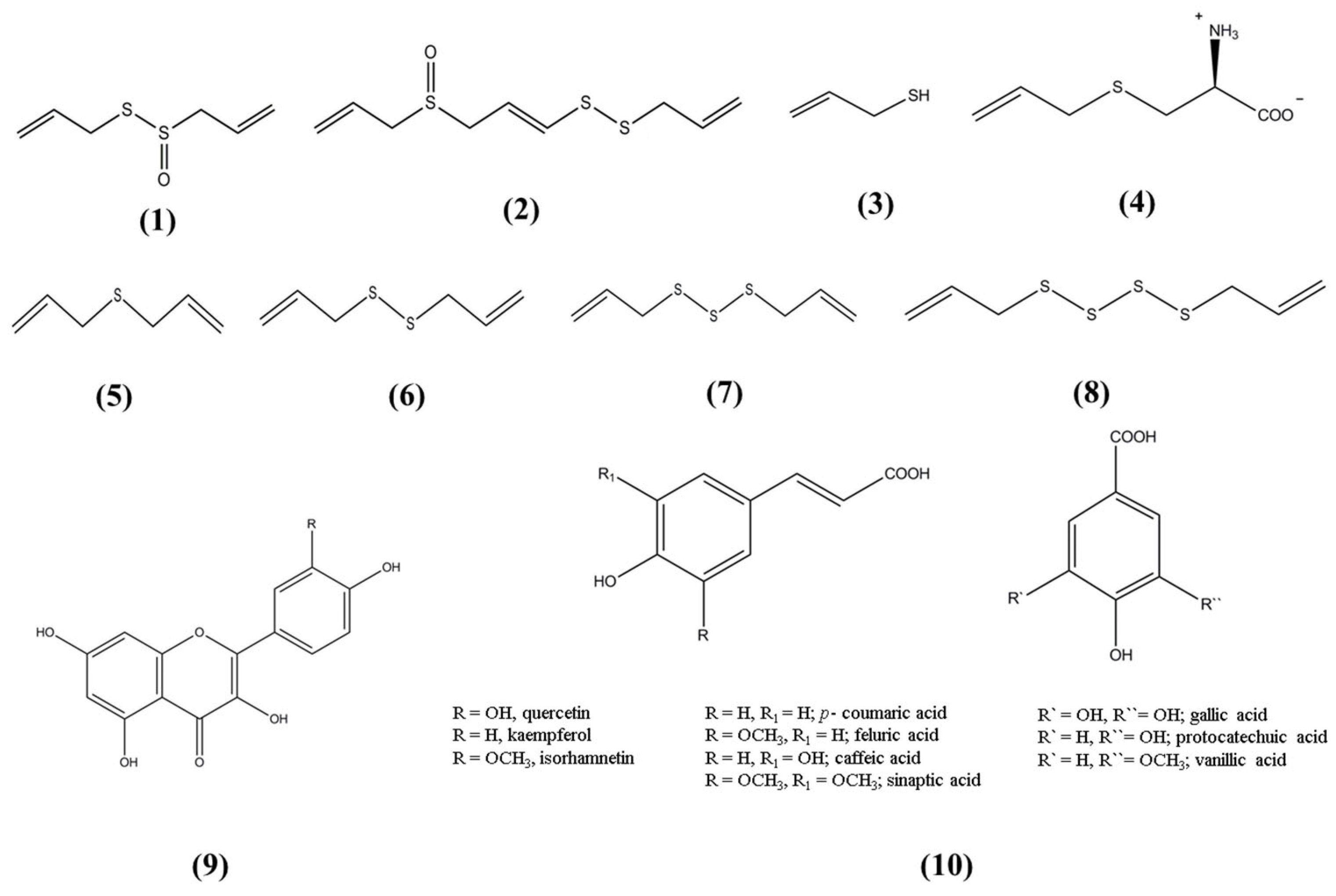
| Organosulfur compounds | Allicin, ajoene, allyl mercaptan, diallyl sulfide (DAS), diallyl disulfide (DADS), diallyl trisulfide (DATS), S-allyl cysteine (SAC) | Mostly A. sativum (garlic), also present in A. cepa, A. ursinum | Antioxidant, anti-inflammatory, antiandrogenic, lipid regulation, glycoregulation, anticancer, anticoagulant, antiplatelet, hepatoprotective, nephroprotective | [45,46,47,48,49,50,51,52,53,54,55,56,57,58,59,60,67] |
| Flavonoids | Quercetin, kaempferol, isorhamnetin, myricetin, apigenin, luteolin | A. cepa (especially red onion), A. fistulosum, A. porrum, A. schoenoprasum | Antioxidant, improvement of insulin sensitivity, hypolipidemic effects, vascular protection | [61,62] |
| Phenolic acids | Ferulic, p-coumaric, caffeic, gallic, sinapic acids | A. cepa, A. porrum, A. schoenoprasum, A. ursinum | Antioxidant, reduction in oxidative stress, lipid peroxidation, anti-inflammatory, hepatoprotective | [63,64,65] |
| Terpenoids | Linalool, geraniol, citronellol, α-pinene, β-pinene, limonene, farnesol, nerol, α-terpineol, β-caryophyllene | A. cepa, A. sativum, A. fistulosum, A. ursinum | Antioxidant, anti-inflammatory, antimicrobial, cardioprotective, neuroprotective | [66,67,68,69] |
| Phytosterols | β-sitosterol, stigmasterol, campesterol | A. cepa, A. sativum, A. porrum, A. ursinum | Hypolipidemic (LDL↓, HDL↑), anti-inflammatory, antioxidant, immunomodulatory, anticancer | [70,71,72] |
| Vitamins and minerals | Vitamin C, B1, B6, B9 (folate), E, K; Selenium, Ca, Mg, K, P, Fe, Zn, Mn, Cu | Present in all Allium species, especially A. ursinum | Antioxidant, cofactor in enzymatic reactions, metabolism regulation, immunomodulatory, support of phytochemical activity | [74,75,76] |
| Polysaccharides | Fructans (inulin, oligofructose), glucose, galactose, arabinose, mannose | A. sativum, A. cepa, A. porrum, A. ursinum | Prebiotic effect, regulation of intestinal microbiota, improvement of glucose and lipid metabolism, immunomodulatory, antioxidant | [77,78,79,80,81] |
| Compound | Chemical Structure (Key Functional Groups) | Key Structural Features | Chemical Properties | Lipophilicity | Main Biological Activities (Relevant to PCOS) | |
| Reactivity | Stability | |||||
| Allicin (diallyl thiosulfinate) |  |
| Very high ++++ | Very low + | 1.3 | ↑ Antioxidant (↑ Nrf2, ↑ GSH, ↓ROS) ↓ Inflammation (↓ NF-kB, ↓ cytokines) ↑ Insulin sensitivity ↓ Androgen synthesis ↑ Mitochondrial protection |
| Diallyl disulfide (DADS) |  |
| Moderate ++ | Moderate ++ | 2.2 | ↑ Antioxidant ↓ Inflammation ↓ Lipid accumulation ↑ Insulin sensitivity |
| Diallyl trisulfide (DATS) |  |
| Moderate to low + | High ++++ | 2.6 | ↑ Antioxidant ↓ Inflammation ↑ Insulin signaling ↓ Oxidative stress |
| Ajoene (E/Z isomers) |  |
| Moderate ++ | High ++++ | 1.7 | ↑ Antioxidant ↑ Anti-inflammatory (↓ NF-kB) ↑ Insulin sensitivity ↓ Androgen synthesis |
| S-allyl-L-cysteine (SAC) |  |
| Low + | Very high +++++ | −2.1 | ↑ Antioxidant (indirect ↑GSH) ↓ Inflammation ↑ Insulin sensitivity ↑ Glucose uptake |
| General SAR trends for organosulfur compounds | SAR of major flavonoids in Allium species | |||||
|  | Key structural determinants of activity | ||||
 |
| |||||
| Example: quercetin | ||||||
| A. spp./ Form/ Dosage | Study Type | Ref. | Aim of Study/ Purpose | Design/ Sample Size/ Duration | Major Findings/ Hormonal Profile | Major Findings/ Anthropometry | Major Findings/ Metabolic Function | Major Findings/ Others |
|---|---|---|---|---|---|---|---|---|
| Allium sativum; Pills; 300 and 500 mg/day | Randomized, double-blind, placebo-controlled clinical trial | [101] | To investigate the effect of garlic supplementation on androgen levels and glycemic-related markers in patients with PCOS | 80 women with PCOS Intervention: Garlic tablets 800 mg/day (two divided doses) Duration: 8 weeks | ↔ in LH, FSH, testosterone, SHBG, or FAI between groups | ↔ in BMI, weight, or waist-to-hip ratio | ↓ FPG in the garlic group vs. placebo ↓ HOMA-IR in the garlic group ↓ QUICKI | / |
| Allium sativum; Tablets; 800 mg/day | Randomized, double-blind, placebo-controlled | [102] | To evaluate whether garlic supplementation improves lipid parameters and blood pressure in women with PCOS | 80 women with PCOS Intervention: Garlic supplement (total 800 mg/day) vs. placebo Duration: 8 weeks | / | / | ↓ TC and LDL-C in the garlic group vs. placebo ↔ HDL-C or TG compared with placebo | ↓ Systolic BP in the garlic group compared with baseline; between-group difference was not statistically significant ↔ Diastolic BP |
| Allium sativum; Tablets; 1000 mg/day | Randomized, double-blind, placebo-controlled | [82] | To evaluate whether garlic supplementation can improve MetS components in women with PCOS who also meet criteria for MetS. | 97 women with PCOS and MetS Intervention: Garlic tablets (500 mg, containing 2–3 mg allicin) twice daily (≈1 g/day total) vs. placebo Duration: 8 weeks | ↑ SHBG in the garlic group improved QoL & sexual function | ↓ body weight, BMI, and waist circumference | ↓ fasting blood glucose ↓ TC, LDL-C, and TG; HDL-C slightly increased, but not significantly | ↓ in systolic and diastolic BP ↓ CRP |
| Allium cepa; raw red onion; High-onion group (100–150 g/day) vs. low-onion (30–40 g/day) | Randomized controlled clinical trial | [103] | To assess whether daily consumption of raw red onion improves metabolic features (lipids, glucose metabolism, anthropometry) in overweight or obese women with PCOS | 54 overweight/obese women with PCOS Intervention: High-onion group: 100–150 g/day raw red onion (dose adjusted by BMI) Low-onion group: 30–40 g/day raw red onion Duration: 8 weeks | Slight, non-significant ↑ difference in the occurrence of menstruation in the high-onion group | ↔ in weight, BMI, or waist circumference | ↓ TC and LDL in the high-onion group ↔ in TG or HDL ↔ in FBG | / |
| Allium sativum; Pills; 800 mg/day | Randomized, double-blind, placebo-controlled clinical trial | [104] | To evaluate the therapeutic effects of garlic (Allium sativum) supplementation on oxidative stress markers and anthropometric indices in women with PCOS | Randomized (n = 80): Intervention (n = 40)—800 mg/day garlic pills Placebo (n = 40) 8 weeks | / | ↓ weight ↓ BMI ↓ waist circumference ↔ hip circumference ↔ waist to hip circumference ratio | / | ↑ CAT ↑ GSH ↔ TAC ↔ MDA |
Disclaimer/Publisher’s Note: The statements, opinions and data contained in all publications are solely those of the individual author(s) and contributor(s) and not of MDPI and/or the editor(s). MDPI and/or the editor(s) disclaim responsibility for any injury to people or property resulting from any ideas, methods, instructions or products referred to in the content. |
© 2026 by the authors. Licensee MDPI, Basel, Switzerland. This article is an open access article distributed under the terms and conditions of the Creative Commons Attribution (CC BY) license.
Share and Cite
Todorovic, T.; Jakovljevic, V.; Mihajlovic, K.; Milinkovic Sorgic, M.; Novakovic, S.; Todorovic, D.; Krivokapic, M.; Pecarski, T.; Jovic, N.; Joksimovic Jovic, J. Bioactive Compounds from Allium Species: Chemical Features and Molecular Mechanisms in Polycystic Ovary Syndrome—A Narrative Review. Compounds 2026, 6, 38. https://doi.org/10.3390/compounds6030038
Todorovic T, Jakovljevic V, Mihajlovic K, Milinkovic Sorgic M, Novakovic S, Todorovic D, Krivokapic M, Pecarski T, Jovic N, Joksimovic Jovic J. Bioactive Compounds from Allium Species: Chemical Features and Molecular Mechanisms in Polycystic Ovary Syndrome—A Narrative Review. Compounds. 2026; 6(3):38. https://doi.org/10.3390/compounds6030038
Chicago/Turabian StyleTodorovic, Teodora, Vladimir Jakovljevic, Katarina Mihajlovic, Milica Milinkovic Sorgic, Sladjana Novakovic, Dusan Todorovic, Milos Krivokapic, Teodora Pecarski, Nikola Jovic, and Jovana Joksimovic Jovic. 2026. "Bioactive Compounds from Allium Species: Chemical Features and Molecular Mechanisms in Polycystic Ovary Syndrome—A Narrative Review" Compounds 6, no. 3: 38. https://doi.org/10.3390/compounds6030038
APA StyleTodorovic, T., Jakovljevic, V., Mihajlovic, K., Milinkovic Sorgic, M., Novakovic, S., Todorovic, D., Krivokapic, M., Pecarski, T., Jovic, N., & Joksimovic Jovic, J. (2026). Bioactive Compounds from Allium Species: Chemical Features and Molecular Mechanisms in Polycystic Ovary Syndrome—A Narrative Review. Compounds, 6(3), 38. https://doi.org/10.3390/compounds6030038