1. Introduction
Many studies highlight beekeeping, which aims to raise bees, mainly of the genus Apis mellifera, to produce and collect valuable substances such as honey, propolis, royal jelly, pollen, and wax, and is also crucial for agricultural pollination and biodiversity preservation [
1]. Because these agricultural products have demonstrated pharmacological properties and health benefits, they have led to the development of functional foods and nutraceuticals [
2,
3].
Royal jelly is a nutritious substance produced by young bees to feed the queen bee and larvae in their first days. It is responsible for the queen’s longevity and fertility, allowing her to live for years while worker bees live for months. It is rich in proteins, vitamins (B complex, D, E), sugars, lipids, and minerals [
4]. Previous findings demonstrated that royal jelly has antioxidant and anti-inflammatory properties [
5]. Regarding these actions, royal jelly modulates nuclear factor erythroid 2-related factor 2 (Nrf2) and nuclear factor Kappa B (NFkB), decreasing the toxicity induced by reactive species and pro-inflammatory cytokines [
6,
7], as well as tissue damage. Other data have demonstrated the beneficial effects of royal jelly in elderly animals and in Alzheimer’s models [
8].
Regarding the effects of royal jelly on Alzheimer’s disease models, previous studies demonstrated that its natural product reduced beta-amyloid levels [
9,
10] and neurodegeneration [
9,
10,
11] while increasing antioxidant capacity [
9,
11,
12] and neuronal metabolic activity [
9]. Moreover, royal jelly elevated hippocampal BDNF levels [
10]. Finally, also improved learning and memory impairment [
10,
11,
12]. These data highlight its pharmacological potential in AD. We found one article in the literature that investigated the effects of royal jelly in females, which used APP/PS1 transgenic mice; the other studies used only male mice. Therefore, the beneficial effects in females and the mechanisms underlying these actions still require further investigation. Moreover, this study will investigate freeze-dried royal jelly. This technique improves the stability of the extract, a breakthrough that could enhance its effectiveness while preserving bioactive compounds.
The incidence of dementia is experiencing a concerning increase, with nearly 10 million new cases reported each year. In 2023, previous data estimated that over 55 million people worldwide are affected by some form of dementia, particularly Alzheimer’s disease (AD) [
13]. Previous data predict a greater number of women with AD compared to men in the coming years, due to increased longevity in women, as well as biological changes [
14]. In this context, in women, sex-linked risk factors are pregnancy and menopause. Since pre-eclampsia, which can occur during pregnancy, and the drop in estrogen with natural or surgically induced menopause, especially before the age of 45, increase the risk of developing AD. However, few studies have investigated the pathophysiological mechanisms of the disease in females, underscoring the need for further research [
15].
AD is the most prevalent neurodegenerative disease [
16]. It arises with aging, which is particularly relevant given that the world’s population life expectancy is increasing dramatically, with the number of individuals aged 65 years or older projected to more than double by 2050 [
17]. Added to this are the high costs to the healthcare system of treating patients with AD and the enormous suffering of patients and their families [
18]. Currently, at least three treatments—acetylcholinesterase inhibitors, N-methyl-D-aspartate receptor antagonists, and monoclonal antibodies targeting amyloid—have been approved by the Food and Drug Administration (FDA) to alleviate symptoms in patients with AD or to slow the progression of cognitive disorders at an early stage [
19,
20]. It is crucial to emphasize that these treatments cannot prevent the development of the disease, underscoring the need for new therapeutic strategies to prevent and treat the pathophysiological changes in AD. Moreover, the side effects of synthetic drugs highlight a significant crisis within the pharmaceutical industry, making it crucial to develop new natural, traditional, and non-synthetic therapeutic solutions. The use of natural ingredients has always been a cornerstone of traditional medicine, and apitherapy is emerging as a promising approach in this context [
21]. Therefore, in the present study, we aim to evaluate the physicochemical and chemical properties of royal jelly extract and to investigate its neuroprotective potential and behavioral actions in female mice on an experimental model of AD induced by aluminum chloride and D-galactose administration.
2. Materials and Methods
2.1. Physicochemical Properties
2.1.1. Preparation of the Royal Jelly Extract
The examined royal jelly (BALPARMAK laboratory, Istanbul, Turkey) is a natural raw material, extracted directly from the hive and harvested with great care. For the investigation of chemical and biological properties, we used a single batch of royal jelly. Moreover, to preserve its nutritional and biological properties, we subjected it to freeze-drying. This technique enables extended product storage without compromising its quality. Subsequently, the procedure pulverizes the freeze-dried sample into a fine powder for various applications. Finally, the extract used in the study is a 1% solution diluted in water.
2.1.2. pH and Free Acidity
The procedure used a pH meter according to established protocols, with minor modifications [
22]. To 25 mL of carbon dioxide-free water, 3 g of the royal jelly sample were meticulously dissolved and mixed with a magnetic stirrer. We carefully rinsed the pH electrode before immersing it in the solution for pH measurement. To assess free acidity, the procedure titrated the same solution with 1.0 N NaOH to a pH of 8.30 and recorded the volume of NaOH consumed.
2.1.3. Moisture Content
This method aims to determine the sample’s moisture content. The procedure involved weighing the royal jelly on a high-precision balance and placing it in an oven at 105 °C for 3 h [
23]. The moisture content was then determined using the following formula:
2.1.4. Conductivity
For this method, we used a conductivity meter (ADAWA Instruments, Cluj-Napoca, Romania) to measure conductivity and collected about two drops of the sample at a temperature not exceeding 20 °C. Subsequently, we immersed the electrode in the royal jelly extract [
24].
2.2. Preliminary Chemical Screening
Chemical screening is a set of analytical methods used to identify the presence or absence of various classes of secondary metabolites in natural products. This approach relies on observable reactions, such as chromatic changes, precipitations, or other macroscopic alterations. We subjected the royal jelly extract to a series of reactions detailed in the following sections (
Table 1).
2.3. Chemical Analyses
2.3.1. Determination of Total Phenolic Content (TPC)
The measurement of total phenolic content uses the Folin–Ciocalteu reagent, diluted 1/10 in distilled water, which turns blue in alkaline conditions due to the reduction in phenolic compounds. The assay measures the color intensity at 760 nm, which correlates with the concentration. For the analysis, we mixed 250 μL of extract with 1250 μL of the reagent and 1000 μL of diluted sodium carbonate (7.5%), then incubated in the dark for 2 h. Gallic acid (1%) serves as the reference for establishing the calibration curve, and the results are expressed as mg of gallic acid equivalents per 100 g of dry extract [
33].
2.3.2. Determination of Total Flavonoid Content (TFC)
The procedure determined the total flavonoid content by forming a yellow complex between flavonoids and aluminum nitrate, measuring it at 415 nm. In the analysis, we mixed 500 μL of royal jelly extract with 200 μL of aluminum nitrate (0.1%) and 200 μL of ammonium acetate (7.7%), then incubated in the dark for 40 min. The calibration curve reference is Quercetin (1%), with results expressed as mg of quercetin equivalents per 100 g of dry extract [
34].
2.3.3. Total Sugar Content
The determination of total sugar content employs phenol and concentrated sulfuric acid, which trigger the formation of water from sugars and produce hydroxymethyl furfural (HMF) with hexoses and furfural with pentoses. Yellowish-brown complexes form when phenol reacts with sulfuric acid and reducing sugars or carbohydrates that can release reducing sugars upon hydrolysis, with color intensity directly proportional to carbohydrate concentration, peaking at 490 nm for hexoses and 480 nm for pentoses [
35,
36]. In the procedure, we mixed 250 μL of royal jelly extract or standard with 250 μL of phenol and 1250 μL of H
2SO
4, then incubated in the dark for 5 min. The calibration standard curve is maltose, with concentrations up to 1 mg/mL, and expresses the results as mg of maltose per 100 g of dry extract.
We used maltose as the reference standard because of its chemical relevance to the compounds present in the sample and its proven effectiveness in the analytical methods performed. Maltose has shown better sensitivity and accuracy; In addition, this is particularly relevant in calibration procedures with sulfuric acid and dinitrosalicylic acid, where the maltose reaction is better documented and validated [
37].
2.3.4. Reducing Sugars
The determination of reducing sugars involves their reaction with 3,5-dinitrosalicylic acid (DNS), prepared with 3.5% dinitrosalicylic acid, potassium-sodium tartrate, and sodium hydroxide, in which the carbonyl groups (C=O) convert DNS into 3-amino-5-nitrosalicylic acid, resulting in an orange color. The intensity of this color correlates with the concentration of reducing sugars [
38]. In the procedure, 250 μL of the extract or standard is mixed with 250 μL of DNS and incubated for 5 min in a boiling water bath. The mixture is then cooled by adding 2 mL of distilled water and placed on ice. Absorbance is measured at 540 nm using a spectrophotometer (UVLine 9400, Alès, France) immediately after cooling. Maltose at 1% is used as a reference to establish a calibration curve up to 1 mg/mL, with the results expressed as mg of maltose per 100 g of dry extract.
2.4. Fourier Transform Infrared Spectroscopy (FTIR-ATR)
Fourier Transform Infrared (FTIR) spectroscopy is a rapid analytical technique for characterizing functional groups and components of a sample by detecting the unique vibrations of chemical bonds that absorb infrared radiation, resulting in distinct absorption spectra [
39]. In royal jelly analysis, the sample is prepared at room temperature and placed on a crystal window. After calibrating the FTIR spectrometer (Jasco 6800 International Co., Ltd., Tokyo, Japan) and recording the spectrum, the data undergoes a Fourier transformation to identify characteristic absorption bands associated with molecular vibrations. This analysis reveals key functional groups, such as O–H and C–H bonds, and detects spectral signatures of sugars, amino acids, and other bioactive compounds, providing insights into the chemical profile and potential therapeutic properties of royal jelly.
2.5. Antioxidant Activity
2.5.1. DPPH Radical-Inhibition Assay
The DPPH assay is a widely recognized method for assessing antioxidant activity due to the radical’s stability and ease of spectrophotometric analysis [
40]. Characterized by a deep violet color with an absorbance peak at 515–518 nm [
41], DPPH undergoes reduction in the presence of antioxidants, facilitating quick quantification of antioxidant capacity [
42]. In the procedure, we combined 50 μL of sample or standard with 1950 μL of DPPH solution. Subsequently, incubate the mixture in the dark for 30 min, measuring the residual absorbance at 515 nm, using ascorbic acid as a reference for a calibration curve up to 1 mg/mL, with results expressed as milligrams of ascorbic acid equivalents per 100 g of dry extract (mg EAA/100 g PS).
We calculated the percentage of inhibition of DPPH radical or radical scavenging activity (RSA) using the following equation:
2.5.2. ABTS Radical-Scavenging Assay
The ABTS assay assesses antioxidant activity by forming the cationic radical ABTS•+, produced by reacting potassium persulfate with ABTS. The antioxidants reduced this blue-green radical, resulting in a decrease in color intensity, quantified at 734 nm [
36,
43]. We mixed a 7 mM ABTS solution with a 2.4 mM potassium persulfate solution and allowed the mixture to react in the dark for 16 h. The solution was diluted with ethanol to achieve an absorbance of 0.70 ± 0.02 at 734 nm. For the assay, 30 μL of extract was added to 2970 μL of diluted ABTS•+ solution, and the mixture was incubated in the dark for 6 min, with the final absorbance measured at 734 nm against a blank.
We calculated the DPPH radical inhibition percentage or radical scavenging activity (RSA) using the following equation:
2.5.3. Ferric Ion Reducing Antioxidant Power (FRAP)
The FRAP assay assesses the reducing potential of extracts by measuring the conversion of the ferric complex [Fe(III)-TPTZ] to the ferrous complex [Fe(II)-TPTZ] in an acidic environment. This reaction produces a blue ferrous complex, with color intensity proportional to the reducing power, quantified at 595 nm. Ferric chloride (FeCl
3) facilitates this colorimetric measurement [
44]. The assay employs a sodium acetate buffer (300 mM, pH 3.6), a 10 mM TPTZ solution in 40 mM HCl, and a 20 mM ferric trichloride solution. We incubated a mixture of 50 μL of extract or standard with 1500 μL of FRAP reagent for 5 min in the dark, then measured the absorbance at 593 nm. A calibration curve using ferric sulfate heptahydrate allows the calculation of Fe(II) concentration in mmol/100 g of dry extract.
2.6. Animal Subjects
For this study, 34 female Naval Medical Research Institute (NMRI) mice from Algiers, Algeria, were selected, with an average body weight of 30 ± 5 g. These mice, 9 underwent toxicity testing and 25 for the royal jelly neuroprotective potential evaluation, obtained from the Pasteur Institute of Algiers (IPA) and acclimated to the conditions of the animal facility at the Pharmacognosy and Apitherapy Research Laboratory of the University of Mostaganem, Algeria, and housed in a standardized environment with a 12 h light and 12 h dark cycle, along with controlled ambient temperature and humidity. We provided a standard cereal-based feed and mineral water ad libitum. The institutional Animal Ethics Committee approved all experiments conducted under the experimental protocol (1205/c/08/CPCSEA, 8 April 2021). Additionally, the experimental procedures complied with the U.K. Animals (Scientific Procedures) Act, 1986, and associated guidelines.
2.7. Acute Toxicity Test
A toxicity test was conducted prior to in vivo studies to assess the potential harmful effects of royal jelly, in accordance with OECD guidelines (2008). The test involved administering varying single doses of royal jelly to mice, with observations starting 30 min after administration and continuing at regular intervals over 24 and 48 h, followed by daily monitoring for 14 days. We carefully recorded behavioral changes, abnormal signs, activity levels, and mortality. Nine NMRI mice, averaging 30 ± 5 g, were divided into three groups of three, each receiving one of three doses (150, 300, and 1000 mg/kg) via gastric gavage in a single administration.
2.8. Evaluation of the Neuroprotective Activity of Royal Jelly
First Phase (Pre-treatment): Daily administration of royal jelly solution at two doses (150 and 300 mg/kg) and the synthetic drug rivastigmine (Exelon™) at a dose of 1.5 mg/kg was conducted via intragastric gavage using a gastric tube from the first to the forty-fifth day of the experiment. Second Phase: To the AD induction we achieved through daily oral administration of aluminum chloride (AlCl3) at 100 mg/kg, combined with intraperitoneal D-galactose at 120 mg/kg. Moreover, aluminum chloride and D-galactose dilution occurred in saline, and Rivastigmine in distilled water.
2.9. Experimental Design
In this study, a total of 25 adult female mice were divided into five groups, each consisting of five mice, as follows:
Control Group (C): This group received distilled water via intragastric administration for 45 days, followed by physiological saline administered orally and intraperitoneally (IP) for an additional 45 days, and then subjected to the same stress as the other groups.
Alzheimer Group (ALZ): Mice in this group were administered distilled water intragastrically for the first 45 days, followed by oral administration of aluminum chloride (AlCl3) at 100 mg/kg and D-galactose via IP at 120 mg/kg for the subsequent 45 days.
Standard Group (ALZ-STD): This group received Rivastigmine at 1 mg/kg via intragastric administration for 45 days, followed by the co-administration of AlCl3 (100 mg/kg orally) and D-galactose (120 mg/kg via IP) for the remaining 45 days.
ALZ-D1 Group: Mice in this group were administered royal jelly at a dosage of 150 mg/kg via the intragastric route for 45 days, followed by co-administration of AlCl3 (100 mg/kg orally) and D-galactose (120 mg/kg via IP) for the next 45 days.
ALZ-D2 Group: This group received royal jelly at a dosage of 300 mg/kg via intragastric administration for 45 days, followed by co-administration of AlCl3 (100 mg/kg orally) and D-galactose (120 mg/kg via IP) for the subsequent 45 days.
2.10. Neurological Memory Tests
The animals performed the memory tests starting on day 91 of the protocol, and these tests lasted five days, as described in the following subsections.
2.10.1. Arm Radial Maze Test
The Arm radial maze test, introduced by Wan et al. (1997) [
45], is a prominent tool in animal behavior research for assessing spatial memory and memory linked to motivational signals, such as food. Comprising a central area with eight entrances leading to equal-length arms, the maze allows for manual control of openings, enabling researchers to guide animal movements and evaluate memory performance. This standardized methodology effectively studies cognitive processes, particularly concerning motivation, in laboratory animal models.
Spatial Working Memory (SWM) Test
The eight-arm radial maze test, introduced by Olton (1981) [
46], assesses the working spatial memory of mice. In this task, mice must locate food at the ends of the eight arms while avoiding areas they have already visited. During the four-day learning phase, we documented the number of errors (repeated visits), and the fifth day is set aside for the formal spatial memory test, evaluating the performance over five minutes. This standardized approach provides an objective evaluation of memory and spatial navigation in food-seeking rodents.
Spatial Reference Memory (SRM) Test
In this variant of the radial maze, only two of the eight arms are accessible, with the mouse starting at the center and both paths open. During a four-day learning phase, we recorded the time spent in the food-containing Arm. On the fifth day, the procedure assesses reference spatial memory, with performance measured over 5 min. This simplified maze effectively evaluates spatial memory abilities in mice in a food-seeking context.
2.10.2. Morris Water Maze Test (Morris Pool)
The Morris water maze is a widely employed test for assessing memory and learning, developed by Richard Morris in the early 1980s. In this task, the animal must escape an aversive situation by locating a submerged platform, relying on spatial cues to construct and utilize a mental representation of its environment [
47].
Spatial Working Memory (SWM) Test
In this variant, the mouse enters a cylindrical tank with a diameter of 147 cm and a height of 25 cm, filled with water maintained at 25 °C. An apparent platform is situated within the pool, surrounded by visual landmarks. The procedure records the time required for the mouse to reach the platform across four learning trials conducted over four days, with the fifth day designated for a five-minute test.
Spatial Reference Memory (SRM) Test
In this variant, the tank water is dyed with a non-toxic dye to render the platform invisible. The experiment records the time the mouse requires to locate the platform across four learning trials conducted over four days, with the fifth day designated for a five-minute test.
2.11. Behavioral Assessment
All animals performed the following two tests on the 96th day of the experimental protocol. The behavioral tests were conducted on the same day, as it is essential to conduct them within a short time frame to ensure consistent results.
2.11.1. Elevated Plus Maze Test
The elevated plus maze test serves as a valuable tool for evaluating anxiety-related behaviors and risk-taking tendencies in animals [
48]. Positioned 50 cm above the ground, the maze comprises an open arm and a closed arm connected by a central platform. The open arms are considered more anxiety-inducing and perilous for rodents due to their illumination and exposure to open space. Mice are individually placed on the central platform, facing an open arm, and permitted to explore the maze freely for 4 phases, each lasting 5 min. The assessment focuses on the duration of time spent in the closed (protected) Arm [
48,
49].
2.11.2. Forced Swimming Test (FST)
The Porsolt test, also known as the FST, is a widely used behavioral model for evaluating the potential efficacy of antidepressant treatments [
50]. The procedure involves placing the animal in a warm water bath at 25 °C. After an initial period of vigorous swimming, the rodent eventually becomes immobile, reflecting a state of despair. The duration of this immobility, defined by horizontal floating with minimal movement to keep the head above water, is recorded. This measure serves as an important indicator for assessing the effects of antidepressant treatments in animal models.
2.12. Histopathological Examination of Brain Tissue Sections
After completing the neurological tests, chloroform inhalation euthanized the mice. The brain was harvested and fixed in 10% formalin for histological analysis. This analysis was conducted at the Pharmacognosy and Api-Phytotherapy Research Laboratory of the University Abd El Hamid Ibn Badis, Mostaganem, following the manual on anatomical and cytopathological techniques [
51]. We paraffin-embedded the brain and sectioned it at 4 μm to obtain histological sections of the hippocampus and cortex, then stained with eosin and hematoxylin for qualitative analysis of brain structure.
2.13. Statistical Analysis
The obtained data were statistically analyzed using SPSS software (version 23). We performed a one-way analysis of variance (ANOVA) to compare means across the experimental groups. Moreover, we used Tukey’s post hoc test for multiple comparisons if the analysis identified significant differences.
3. Results
3.1. Physicochemical Properties
This study presents a comprehensive physicochemical analysis of royal jelly, revealing several key characteristics of this natural product. The analysis indicated moderate acidity (pH 3.9) and a Brix of 8.4, suggesting a relatively low concentration of soluble sugars. Conductivity of 147.4 mS indicates a significant concentration of dissolved ions, likely associated with its mineral and bioactive compound richness. The moisture content was 8.66%, indicating a concentrated sample. Additionally, an acidity level of 9.5 (1 mol/L NaOH/100 g) indicates the presence of organic acids that contribute to the flavor and preservative qualities of royal jelly (
Table 2).
3.2. Preliminary Chemical Screening
The analysis of bioactive compounds in royal jelly indicates significant levels of total phenols, flavonoids, alkaloids, saponins, terpenoids, lipids, oils, and coumarins, highlighting its antioxidant and health-beneficial properties. Sterols and triterpenes are present at moderate levels, while sugars also contribute to their energy properties. However, the absence of tannins, catechin tannins, and anthocyanins suggests a unique bioactive composition that may influence its nutritional properties (
Table 3).
3.3. Chemical Contents
The analysis of secondary metabolites in royal jelly reveals a total phenolic content of 623.2 mg ± 0.052 EAG/100 g, indicating substantial levels of phenolic compounds known for their antioxidant properties and ability to neutralize free radicals. Flavonoids are present at 118.08 mg ± 0.005 EQ/100 g, contributing to this antioxidant effect while also providing anti-inflammatory and cardioprotective benefits.
Regarding tannins, condensed tannins are quantified at 28.89 mg ± 0.004 EC/100 g, indicating their presence, though less pronounced compared to hydrolysable tannins, which amount to 50.99 mg ± 0.003 EAT/100 g. This diversity in tannin types may influence the organoleptic properties and biological effects of royal jelly.
Total sugars are measured at 635.7 ± 0.0001 EM/100 g, highlighting a significant energy source essential for metabolic functions. Reducing sugars, measured at 165.36 mg ± 0.015 EM/100 g, play a critical role in the flavor profile and digestibility of royal jelly.
These findings illuminate the chemical complexity of royal jelly, emphasizing its potential as a nutraceutical. The richness in secondary metabolites suggests not only health applications but also implications for research into the functional properties of foods (
Table 4).
3.4. Attenuated Total Reflectance Fourier Transform Infrared (FTIR-ATR) Spectroscopy Analysis of Royal Jelly Extract
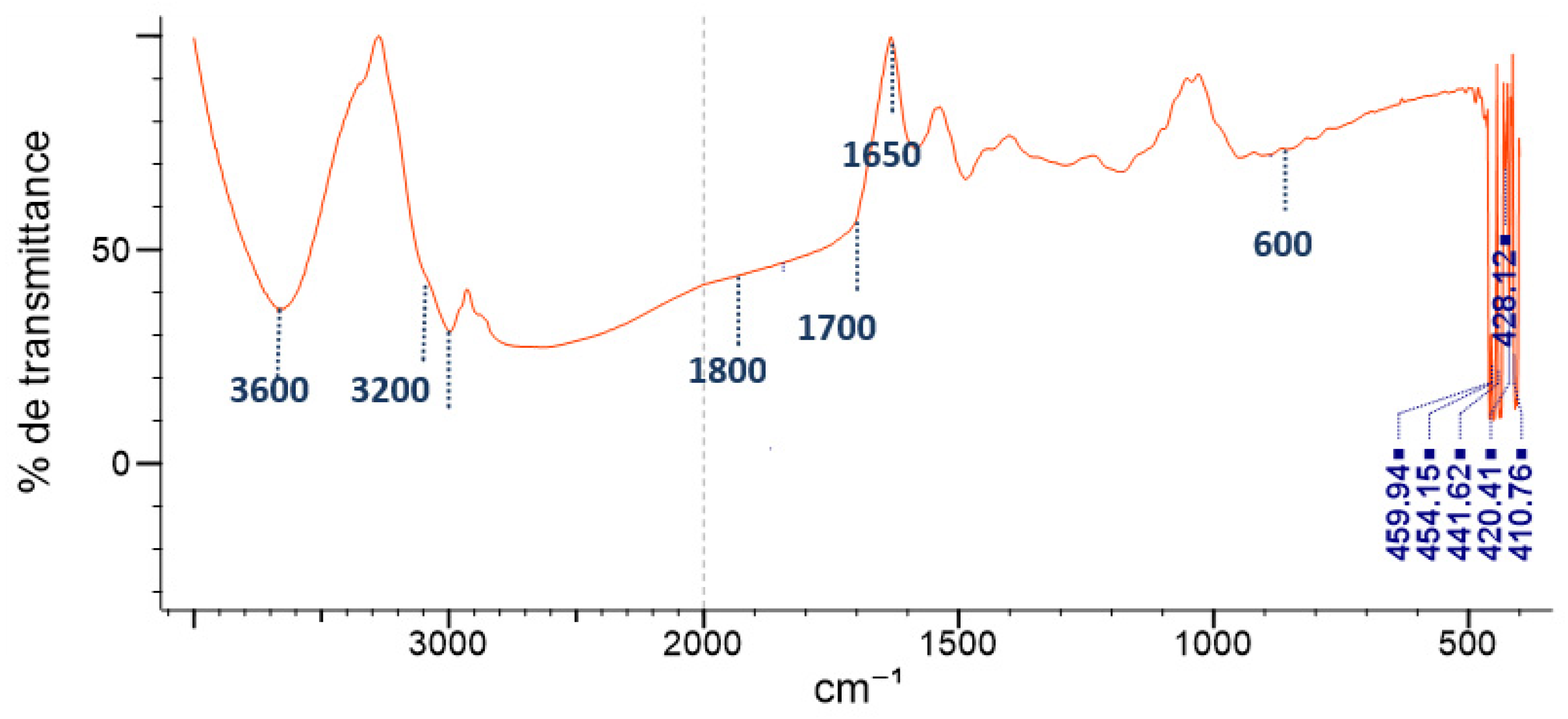
The FTIR-ATR spectroscopic analysis of freeze-dried royal jelly reveals a diverse array of functional groups, highlighting the sample’s chemical complexity. The data obtained by FTIR-ATR reflect the overall composition of royal jelly and allow identification of characteristic bands associated with specific chemical bond vibrations.
A broad absorption band between 3200 and 3600 cm−1 is attributed to O–H and N–H stretching vibrations, indicating the presence of hydroxyl groups from phenols, amino acids, and residual water. The region between 2800 and 3000 cm−1 highlights C–H vibrations from methyl and methylene groups, typical of aliphatic chains, lipids, or fatty acids, as well as secondary metabolites such as terpenes, alkaloids, and saponins.
Around 1700 cm−1, bands associated with carbonyl (C=O) vibrations confirm the presence of organic acids, amides, flavonoids, and 10-hydroxy-2-decenoic acid (10-HDA). An intense band at 1525 cm−1 likely reflects C–O–C and C–OH vibrations of sugars, particularly glucose and fructose, which are abundant in this sample. Signals recorded between 1650 and 1700 cm−1 also indicate the presence of conjugated aromatic rings characteristic of flavonoids.
Additionally, bands observed around 888 cm
−1 signal out-of-plane bending vibrations of =C–H bonds, often associated with cyclic structures of carbohydrates. Finally, bands located below 600 cm
−1, particularly between 410 and 460 cm
−1, correspond to skeletal or torsional vibrations, suggesting the presence of organic macromolecules, proteins, or mineral complexes (
Figure 1) and (
Table 5).
3.5. Antioxidant Activity
The table summarizes the antioxidant activity values of royal jelly, assessed using various methods. In the DPPH assay, royal jelly exhibited an IC50 value of 0.36 mg/mL, indicating the concentration required to achieve a 50% reduction in DPPH radical intensity. This finding corresponds to an inhibition percentage of 6.52%, suggesting moderate antioxidant activity relative to the reference, which demonstrated an IC50 of 0.065 mg/mL.
In the ABTS assay, royal jelly also showed an IC50 of 0.38 mg/mL and an inhibition percentage of 5.94%, indicating slightly lower efficacy than the reference at 0.26 mg/mL. Lastly, in the FRAP assay, royal jelly displayed an antioxidant capacity of 194 ± 0.006 mmol Fe (II)/100 g of extract, providing a quantitative measure of its reducing ability of 18.87 ± 2.62.
These results underscore the antioxidant potential of royal jelly, although its efficacy is lower than that of the references in both the DPPH and ABTS assays. This antioxidant activity may contribute to its health-promoting properties, highlighting its potential as a nutritional supplement (
Table 6).
3.6. Royal Jelly Extract Toxicity Test
To perform in vivo experimental analyses of the royal jelly’s neuroprotective properties, it is essential to determine its toxic concentration. Thus, we administered various intragastric doses of royal jelly (150 mg/kg, 300 mg/kg, and 1000 mg/kg) to female mice for 14 days, during which we did not observe any signs of toxicity. Regarding this, the absence of mortality and notable behavioral changes, such as agitation or lethargy, indicates that no acute toxicity was induced. These results align with established toxicological standards, which require studies to demonstrate tolerance to the tested doses to validate a product’s safety. Thus, the experimental results confirm that royal jelly at these concentrations has a good safety profile, justifying its use for further research into its neuroprotective properties.
3.7. Royal Jelly Extract Effects on Cognitive Impairment
3.7.1. Eight-Arm Radial Maze
Working Spatial Memory (WSM)
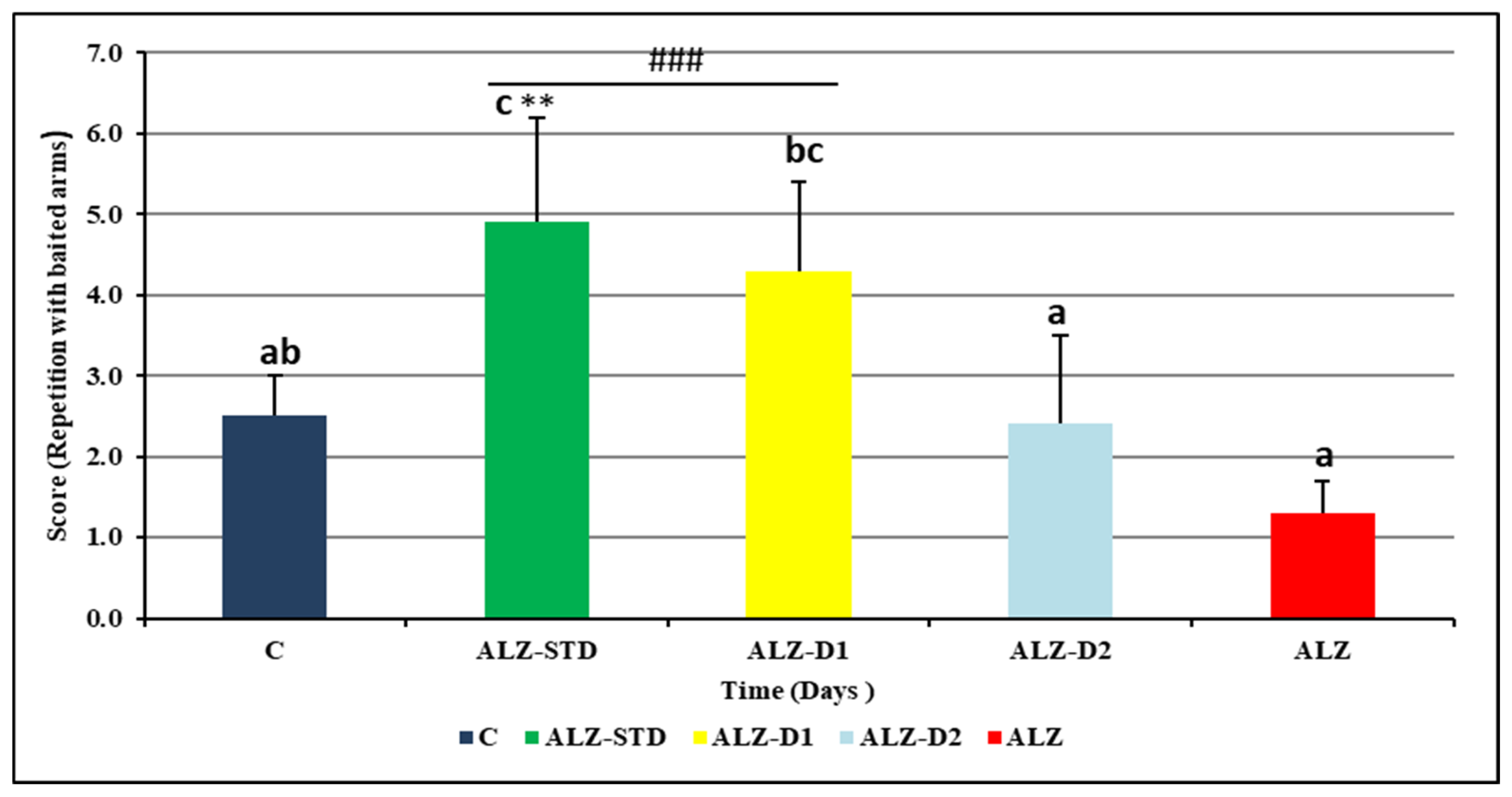
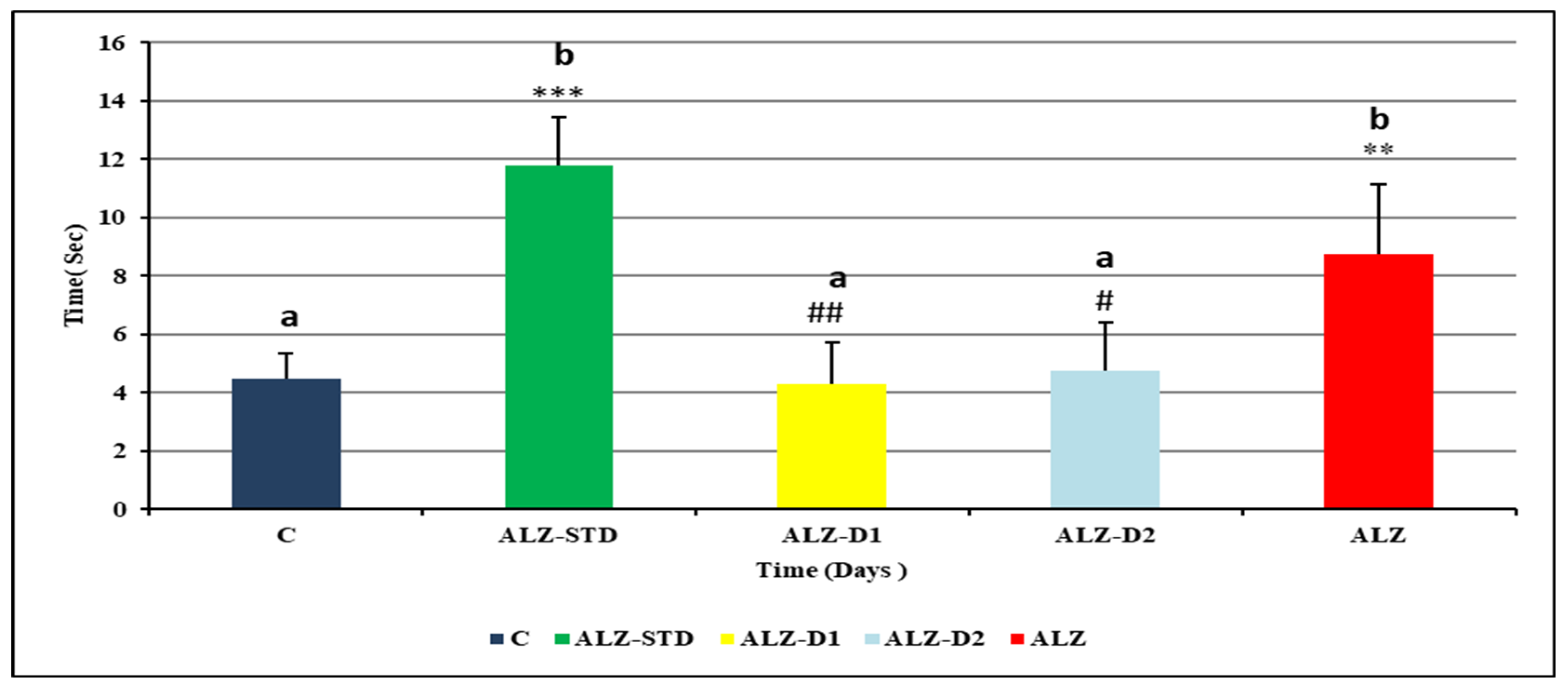
On the fifth day of the testing phase in the Memory Tests using the Eight-Arm Radial Maze to assess Working Spatial Memory (WSM), the control group (C) exhibited significantly higher cognitive performance scores compared to the Alzheimer model mice treated with standard interventions (ALZ-STD) and the specific treatment groups (ALZ-D1 and ALZ-D2), with a highly significant difference (
p ≤ 0.001). Furthermore, the Alzheimer model mice receiving the advanced intervention (ALZ) demonstrated a significant improvement over the other treatment groups (
p ≤ 0.01) (
Figure 2).
Position Distinction Test
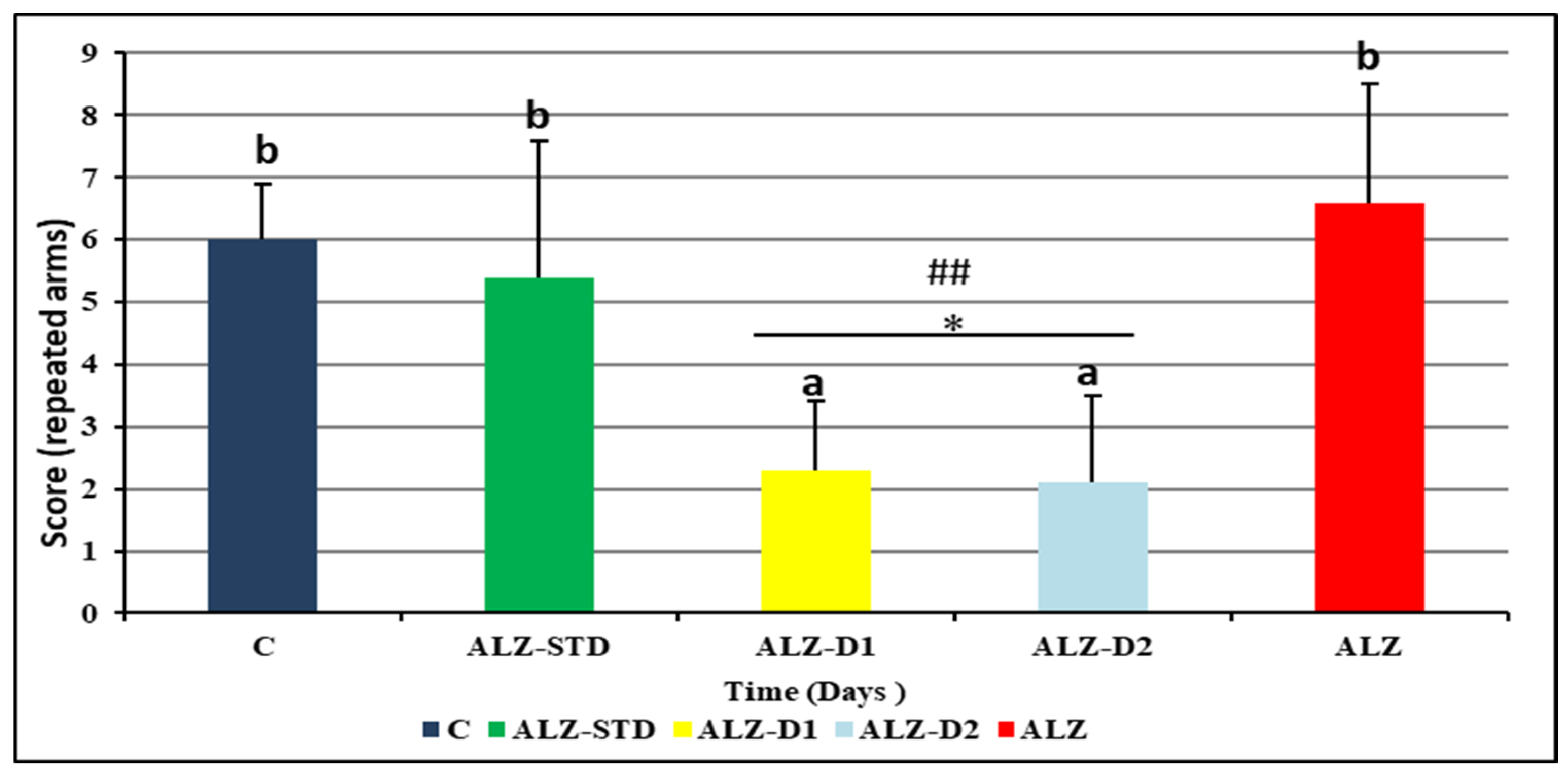
The graph shows that the control group (C) is better at avoiding re-exploration of the arms than the Alzheimer-treated groups. The standard intervention (ALZ-STD) yields significantly superior results (
p < 0.01), while the ALZ-D1 and ALZ-D2 groups show notable cognitive deficits. The ALZ group, despite treatment, exhibits persistent difficulties, with highly significant results (
p < 0.001), indicating significant memory impairments. The results reveal significant statistical differences between the groups, confirming the treatments’ impact on cognitive abilities (
Figure 3).
3.7.2. Morris Water Maze
Working Spatial Memory (WSM)
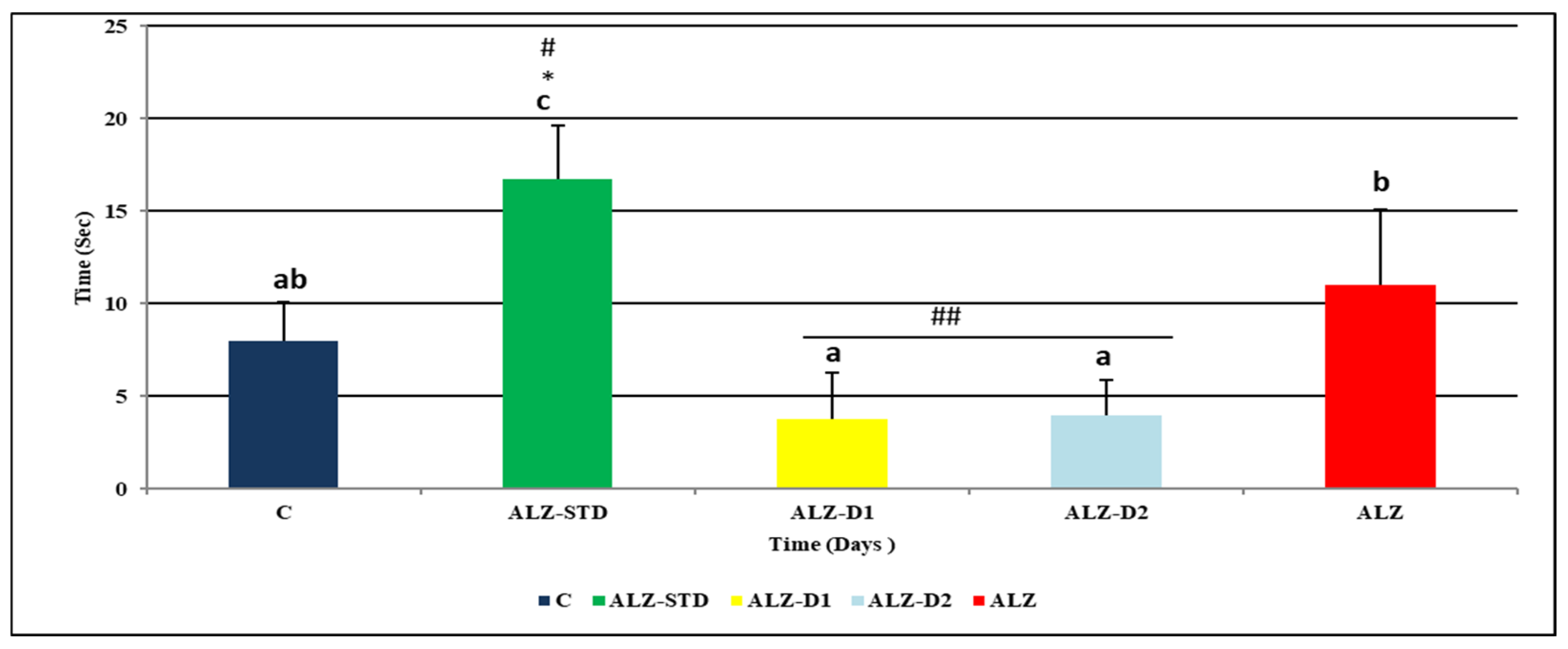
In the Morris water maze test, the control group (C) showed no statistically significant difference in the time it took the ALZ group to find the platform. However, both groups took less time (
p ≤ 0.05) than the ALZ-STD group, which reached the platform more slowly (
Figure 4). Notably, mice treated with royal jelly extract at 150 mg/kg (ALZ-D1) and 300 mg/kg (ALZ-D2) improved their performance compared to the ALZ and ALZ-STD groups, showing a highly significant difference compared to the ALZ group (
p ≤ 0.01), highlighting the treatment’s effectiveness in improving cognitive deficits (
Figure 4).
Reference Spatial Memory (RSM)
In the Morris water maze test, the control group (C) exhibited the shortest time to reach the platform (
p ≤ 0.01 and
p ≤ 0.001) compared with the ALZ and ALZ-STD groups, indicating optimal memory function (
Figure 5). In contrast, the Alzheimer model mice (ALZ) took significantly longer time (
p ≤ 0.01) to reach the platform, indicating cognitive deficits (
Figure 5). Mice treated with royal jelly extract at doses of 150 mg/kg (ALZ-D1) and 300 mg/kg (ALZ-D2) also demonstrated improved performance, compared to the ALZ-STD group, and showed a highly significant difference compared to the ALZ group (
p ≤ 0.01) (
Figure 5).
3.8. Behavioral Test Results
3.8.1. Royal Jelly Extract Properties in Anxiety Test
Elevated Plus Maze
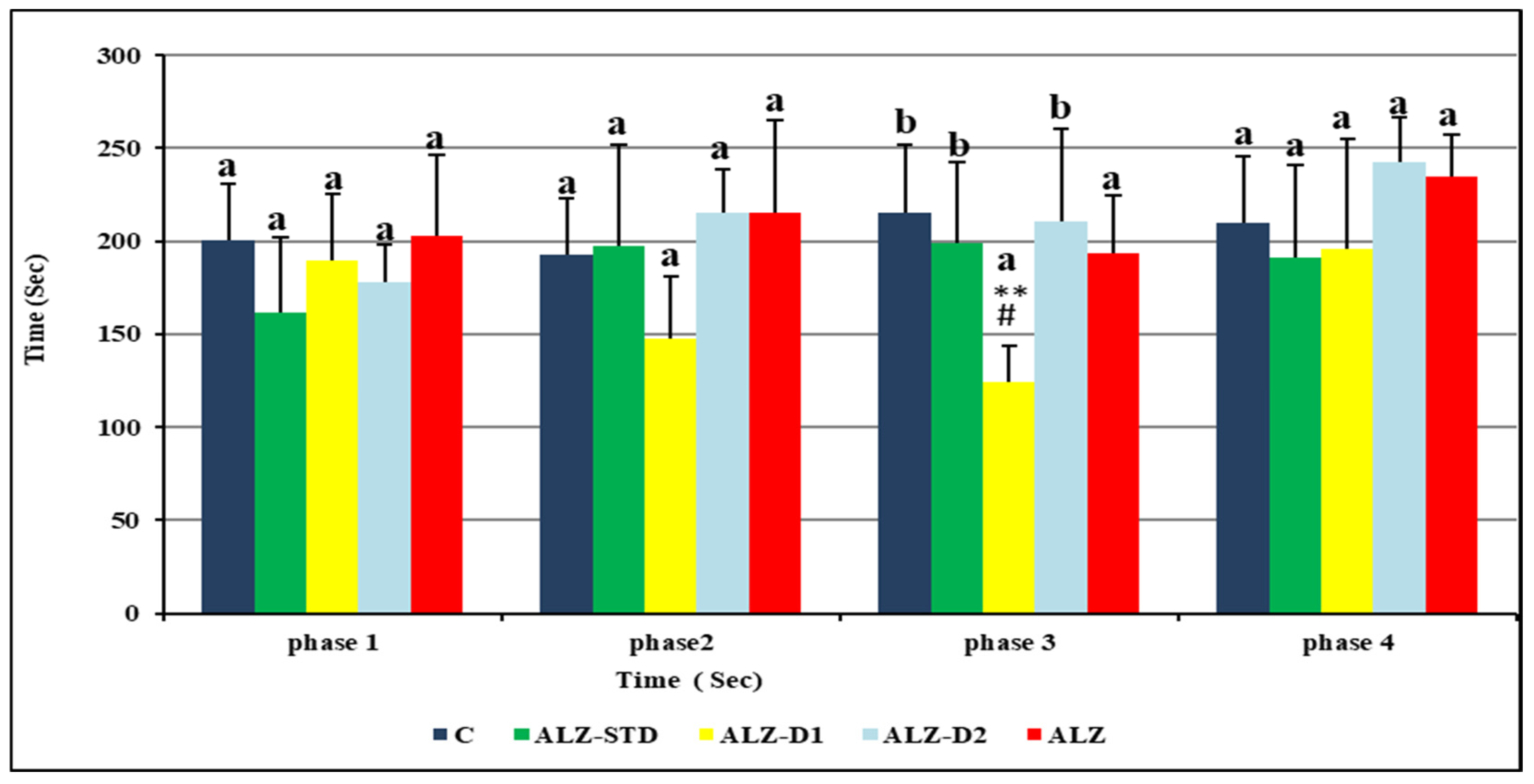
The Elevated Plus-Maze test studied the effects of royal jelly extract on behavior across four phases. The control (C) and standard treatment (ALZ-STD) groups showed normal anxiety levels. In phase 3, the Alzheimer model (ALZ) group spent significantly more time in closed arms (
p ≤ 0.01), indicating increased anxiety. In contrast, the royal jelly extract-treated groups (ALZ-D1 and ALZ-D2) showed improved behavior, with the ALZ-D2 group spending significantly less time in the closed arms than the ALZ group (
p ≤ 0.05) (
Figure 6).
3.8.2. Forced Swim Test (FST)
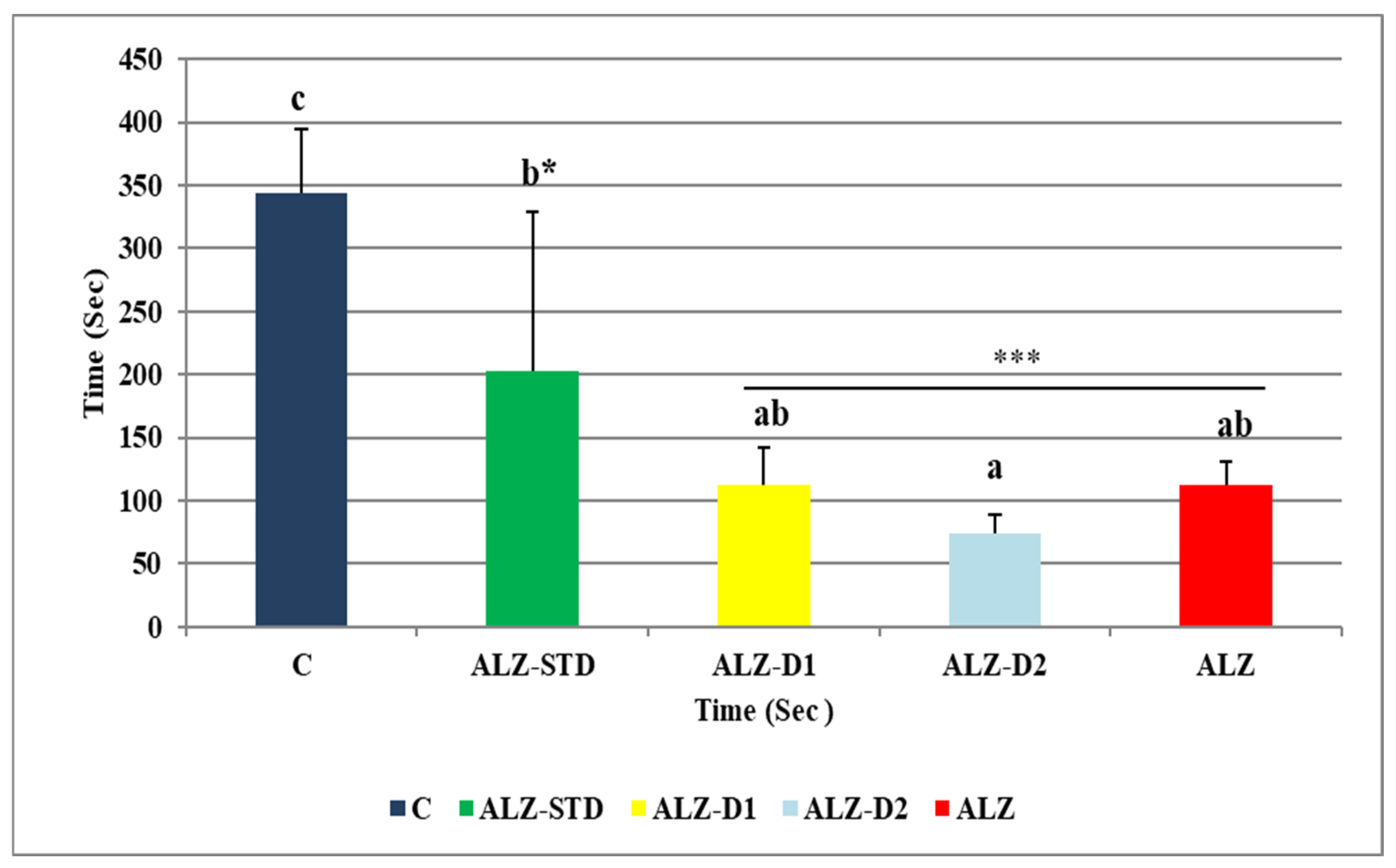
The forced swim test demonstrated a significantly reduced immobility duration (
p ≤ 0.001) in Alzheimer model mice (ALZ-D2, ALZ-D1, ALZ) compared to control mice (T). Conversely, the group treated with the synthetic drug (ALZ-STD) exhibited a shorter immobility duration than the control group (T), with a statistically significant difference (
p ≤ 0.05) (
Figure 7).
3.9. Royal Jelly Extract Neuroprotection on Hippocampal and Cortical Histopathological Alterations
3.9.1. Hippocampus
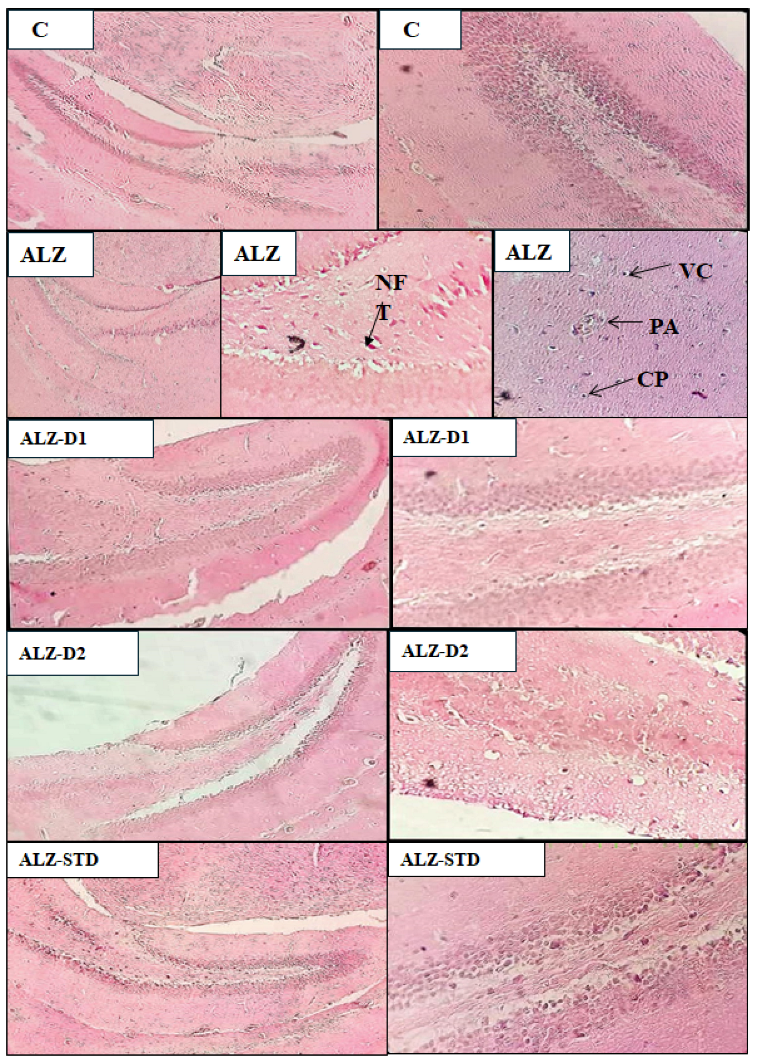
Histological analysis of the hippocampus revealed that the control group (C) exhibited intact tissue architecture, with well-structured neurons, free of degeneration or pathological alterations, indicating an optimal physiological state. In contrast, the Alzheimer model group (ALZ) displayed significant structural abnormalities, including pycnotic cells and vacuoles, as well as signs of neurofibrillary degeneration and the accumulation of senile plaques. Alzheimer model groups treated with royal jelly extract at 150 mg/kg (ALZ-D1) and 300 mg/kg (ALZ-D2) doses showed a notable reduction in these anomalies compared with the untreated group (ALZ). Furthermore, the group receiving the Rivastigmine 1.5 mg/kg (ALZ-STD) dose exhibited nearly standard hippocampal structure (
Figure 8).
3.9.2. Cerebral Cortex
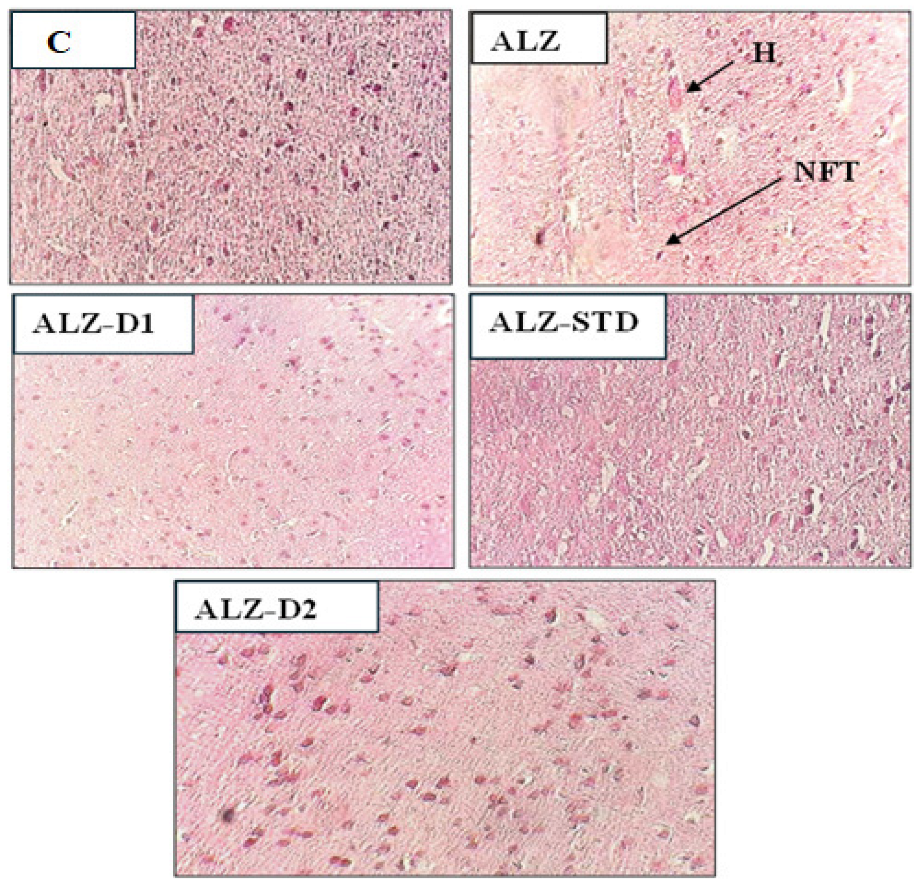
The histological examination of the cerebral cortex revealed a typical architecture in all groups, except in the Alzheimer group, which exhibited pathological abnormalities, including hemorrhages in some cortical regions and neurofibrillary tangles within neurons. In contrast, mice treated with Rivastigmine at 1.5 mg/kg, as well as those receiving royal jelly extract at 150 mg/kg and 300 mg/kg, displayed an apparently standard cortical structure (
Figure 9).
4. Discussion
The lack of therapies that can act preventively and have the potential to treat AD adequately highlights the importance of new therapeutic approaches for this neurodegenerative disease. In this context, natural products containing royal jelly stand out for their previously documented neuroprotective potential and their ability to reduce acetylcholinesterase activity and beta-amyloid levels [
9,
12,
52]. Given royal jelly’s potential, its physicochemical analysis is essential to evaluate its physical and chemical properties, including pH, moisture content, acidity, conductivity, and bioactive compounds. This assessment is vital for ensuring product quality, identifying potential adulteration, and enhancing the understanding of its biological properties. The recorded pH of 3.9 reflects natural acidity, consistent with previous findings of 4.3 [
53], 3.57 [
54], 3.95 for Jordanian samples [
55], and 3.92 for Bulgarian samples [
56]. Variations in pH, ranging from 3.8 to 4.5, underscore the influence of geographical factors, bee diets, and storage conditions [
57], highlighting the need for standardization in production.
The moisture content of 8.66% is critical for maintaining long-term stability, especially after freezing. Other studies reported lower levels, such as 3.8% [
58] and 5% [
2]. Royal jelly typically comprises 60–70% water, emphasizing the need for effective preservation methods [
59]. The electrical conductivity of 147.4 mS indicates the presence of minerals and their purity, with values lower than those reported in fresh royal jelly studies. Conductivity in Saudi Arabia ranged from 571.60 to 745.80 μS/cm [
60], while Turkey reported 451.33 ± 9.03 μS/cm, likely influenced by the freeze-dried state of our sample [
61].
The titratable acidity of 9.5 mL of 1N NaOH/100 g is higher than reported in Georgia 3.062 ± 0.85 [
54] but lower than 100.62 mEq/kg in Turkey [
62], reflecting the impact of sample origin and processing conditions [
63]. The Brix reading of 8.4% aligns with ISO 12824 standards, which stipulate a sugar content range of 7% to 16%. A Spanish study reported 10.67% [
55], while other research indicated values between 8% and 12%, underscoring the influence of harvesting and processing methods [
64].
The comparison of our chemical screening of freeze-dried royal jelly with that of Ab Hamid et al. (2020) [
65] reveals notable similarities, particularly in the abundance of flavonoids, phenols, alkaloids, saponins, terpenoids, and coumarins. Our extract demonstrates a more concentrated profile, likely due to the freeze-drying process, which enhances the bioavailability of active compounds. Conversely, tannins were absent in our sample but present in the comparative study, possibly due to differences in botanical origins or extraction methods. Sterols, triterpenes, lipids, and sugars were found at comparable levels, confirming that freeze-drying preserves the primary bioactive metabolites of royal jelly.
Prior studies have emphasized the richness of bioactive compounds in royal jelly. For instance, Kolayli et al. (2016) [
66] analyzed the chemical composition across various geographical sources, revealing significant variations in flavonoid and phenolic acid levels. Botezan et al. (2023) [
61] reported notable antioxidant properties associated with these compounds. This chemical analysis underscores the importance of freeze-drying for concentrating and preserving royal jelly’s bioactive compounds, paving the way for further exploration of its pharmacological properties and applications.
To evaluate the antioxidant properties of royal jelly, we utilized DPPH, ABTS, and FRAP assays. The DPPH assay yielded an IC50 of 0.36 mg/mL, corresponding to 6.52% inhibition. While this is lower than the 25.1% inhibition previously reported, it is comparable to the findings of El-Guendouz et al. (2020) [
67], which reported IC50 values ranging from 0.2 to 11.7 mg/mL. The ABTS assay yielded an IC50 of 0.38 mg/mL and 5.94% inhibition, consistent with the results of El-Guendouz et al. (2020) [
67] and Li et al. (2023) [
68]. The FRAP assay demonstrated an activity of 194 mg EFC/100 g, within the lower range of reported values. Although these classical colorimetric tests have limitations, they offer simplicity and provide preliminary indications of the chemical composition of the royal jelly extract. However, we intend to conduct further studies to deepen our knowledge of the bioactive compounds present in royal jelly extract, using quantitative and more specific approaches, such as chromatography or mass spectrometry, in future investigations.
In our investigation, we found an inhibition percentage of 6.52%, indicating moderate antioxidant activity. Although an inhibition percentage below 7% is considered low compared to potent antioxidants, this may still indicate significant antioxidant capacity in the context of royal jelly [
67,
69], especially given its regular consumption [
7,
70]. Moreover, its antioxidant effects are biologically relevant in Alzheimer’s disease. A previous study demonstrated that royal jelly reduced lipid peroxidation and increased total antioxidant capacity in the hippocampus of Wistar rats administered cerebroventricular beta-amyloid [
12]. Another research showed that royal jelly decreased malondialdehyde levels in the brains and plasma of APP/PS1 mice [
10]. This neuroprotective potential reduced oxidative stress-induced neurotoxicity and neuronal death, thereby improving cognitive deficits in these experimental models [
10,
12]. Highlighting the essential role of the royal jelly antioxidant actions in Alzheimer’s disease.
Previous data highlights that AD is more frequent and more prevalent in women than in men [
15], demonstrating the importance of studies to investigate the pathophysiological and behavioral changes in females. The literature lacks information about sex differences regarding royal jelly effects in Alzheimer’s disease, with investigations mainly focused on males. However, hormonal differences between the sexes, including variations in estrogen and testosterone levels, may affect both susceptibility to disease and response to therapeutic interventions. Regarding this, a previous study demonstrated that royal jelly has estrogenic activity [
71], as its fatty acids can modulate estrogen receptors [
72,
73], thereby improving menopausal symptoms. Moreover, a randomized placebo-controlled clinical trial showed that eight weeks of royal jelly administration alleviated menopausal symptoms [
74]. This royal jelly property has an essential role in AD since estrogen deficiency after menopause is associated with autonomic nervous changes, leading to memory impairment and increased susceptibility to AD [
75].
Our study demonstrated, for the first time, the beneficial effect of the royal jelly extract, which possesses high bioavailability of bioactive compounds and thermal stability, on cognitive deficits and in cortical and hippocampal structures in female animals subjected to a combination of aluminum chloride and D-galactose, an AD model. This experimental model induced learning and memory impairment, hippocampal neuronal loss, increased TAU hyperphosphorylation, and elevated acetylcholinesterase activity [
76], all of which are essential for investigating new pharmacological strategies.
In our experimental study, we assessed short-term and long-term memory using the eight-arm radial maze and Morris water maze tests. Alzheimer model female mice exhibited significant cognitive deficits, making more repeated visits to baited arms compared to control mice. Notably, those treated with royal jelly extract at 150 mg/kg (ALZ-D1) and 300 mg/kg (ALZ-D2) showed improved memory performance compared with untreated AD models. The cholinergic hypothesis posits that Alzheimer’s symptoms arise from structural changes at cholinergic synapses and a decline in acetylcholine-producing neurons [
77]. We suggested that royal jelly extract has neuroprotective effects, which are involved in its cognitive properties. In this context, another research demonstrated that royal jelly enhances the synthesis of neurotrophic factors and exerts neuroprotective effects, particularly in the hippocampus [
78], highlighting its potential to improve learning and memory.
In AD, cortical thickness is reduced even in pre-symptomatic individuals, suggesting that cortical thinning accelerates at disease onset and then decelerates. In contrast, hippocampal volume loss accelerates continuously as cognitive deficits progress [
79], particularly in the temporal and limbic regions [
80]. Histological examination in our study revealed significant neuronal alterations in Alzheimer model female mice, including pycnotic cells and neurofibrillary tangles. However, those treated with royal jelly extract showed improvements in neuronal structure. Regarding these alterations, a previous finding demonstrated that royal jelly reduced amyloid accumulation [
9]. Moreover, the synergistic effects observed with Rivastigmine treatment further underscore the potential of royal jelly in mitigating neurodegenerative changes.
In addition to the previously mentioned neurocognitive changes, the relationship between AD and anxiety is not yet fully understood. Previous data have shown that approximately 40% of Alzheimer’s patients experience anxiety [
81]. This neuropsychiatric alteration appears to affect individuals with mild cognitive impairment primarily and may promote the progression of the disease to more advanced stages [
81]. Our results showed that female develops anxiety in this experimental model. Notably, royal jelly extract administration promotes anxiolytic effects, highlighting its properties since anxiety can increase cognitive impairment in AD.
The FST is a widely recognized method for assessing anxiety and depression-like behaviors in animal models, allowing consistent comparisons with another AD study [
82]. While reduced immobility can indicate changes in motor activity, it often reflects an active response to treatment, particularly relevant to our investigation of royal jelly’s extract neuroprotective effects. Moreover, we complemented the FST with other assessments, such as the Morris Water Maze, to provide a holistic view of cognitive and behavioral impacts. The test also helps elucidate neurobiological mechanisms in AD by showing how treatment may modulate pathways associated with depression and anxiety, which have direct clinical implications for AD patients and contribute to the development of natural therapies.




 ,
,