1. Introduction
In contemporary tourism, festivals are increasingly recognized as an important instrument for destination development, as they contribute to the diversification of the tourism offer, stimulate visitor spending, and enhance competitiveness in the global market (
Getz & Page, 2014;
Lin et al., 2021;
Oklobžija, 2015;
Šušić & Mojić, 2014). Beyond direct economic effects, festivals also have a strong indirect impact through enhancing the destination’s image and positioning (
Stojanović, 2020). In this context, festivals occupy a distinct role as they integrate tourism, agriculture, culture, and creative industries, contributing to sustainable development (
Bessiere, 2013). Within this framework, the present study positions Belmužijada as a gastronomic festival and examines its role as an instrument of destination positioning, focusing on three key dimensions: perceived festival quality, visitor satisfaction, and loyalty expressed through recommendation and revisit intention. Gastronomic festivals represent a significant segment of the tourism offering, as food represents an integral component of cultural identity and serves as a key element in destination differentiation (
Duda, 2024;
Kilibarda et al., 2018). Gastronomic festivals attract diverse visitor groups by linking everyday life, tradition, and food experiences (
Campoverde-Aguirre et al., 2022). Traditional food shapes authentic tourist experiences and contributes to the preservation of intangible cultural heritage (
Popović et al., 2026;
Seočanac, 2022). This form of travel is motivated by tourists’ desire to experience a destination through its local cuisine and culinary traditions (
Hermawan et al., 2025). In this way, gastronomic festivals strengthen destination identity, branding and competitiveness (
Lee & Arcodia, 2011). Although numerous studies have examined gastronomic festivals, relatively few provide comprehensive analysis of the relationships among perceived festival quality, visitor satisfaction, behavioral intentions, and destination image, particularly in rural and less-developed tourism areas. This context remains insufficiently explored in the existing literature, despite the significant potential of such destinations to develop authentic tourism products (
Molina-Gómez et al., 2021;
Sulkaisi & Siska, 2021). This study examines the perceived quality of the Belmužijada festival, visitor satisfaction, behavioral intentions, and the festival’s contribution to the image of the tourist destination of Svrljig, with a potential indirect impact on the broader positioning of the destination within Serbian tourism. In Serbia, gastronomic festivals represent a significant segment of the tourism offer, as they support the preservation of tradition, the promotion of local products, and enhance the tourist attractiveness of rural areas (
Ossowska et al., 2023;
Stanišić et al., 2018). The aim of this study is to examine how the perceived quality of the Belmužijada gastronomic festival influences visitor satisfaction, intention to revisit, willingness to recommend, and the perception of the destination image. Particular attention is given to gastronomic authenticity and the quality of festival organization as key determinants of the overall tourist experience.
Based on the above, the study explores the following research questions:
Q1: How do visitors perceive Belmužijada, particularly in terms of the authenticity of the gastronomic experience?
Q2: How much do the quality of the food offer and festival organization influence visitor satisfaction?
Q3: Does satisfaction affect the intention to revisit and to recommend the festival to others?
Q4: How does Belmužijada influence the perception of Svrljig as a tourist destination?
Q5: Are there differences in attitudes depending on socio-demographic characteristics?
The scientific contribution of this study lies in examining the relationship between the quality of a gastronomic festival, visitor satisfaction, and behavioral intentions within the context of the development and competitiveness of rural tourist destinations, using Svrljig as a case study. The findings contribute by providing knowledge on the role of gastronomic festivals in shaping destination image and encouraging visitor loyalty, while also providing practical implications for the management and improvement of the tourism offer.
2. Theoretical Framework and Literature Review
With the growing importance of gastronomy in tourism, gastronomic festivals have become an important component of the tourism offer, contributing to the preservation of regional identity and the development of the local economy (
Everett & Aitchison, 2008). Traditional cuisine and local products are becoming the foundation of destination branding and the development of its competitive advantage (
Podovac et al., 2023). Similarly,
Hall and Mitchell (
2005) emphasize that gastronomic festivals serve as a means of destination differentiation and a driver of the local economy. Empirical research further highlights the broader impacts of such festivals across different regions. In the European context, gastronomic festivals contribute to regional recognition and help extend the tourist season (
Folgado-Fernández et al., 2019). Studies from Asia indicate that gastronomic experience has a direct impact on the formation of destination image, visitor satisfaction, and the intention to revisit (
Carpio et al., 2021;
M. Chang et al., 2018).
Cheng and Jiang (
2024) and
Singh and Seal (
2024), argue that gastronomic tourism contributes to the preservation of cultural heritage and the strengthening of national identity, while
Okumus et al. (
2018) indicate that gastronomic festivals can serve as an instrument for positioning a destination in the international market.
In addition to economic and marketing effects, recent studies show that gastronomic festivals play a significant role in preserving cultural heritage and presenting local traditions (
Campoverde-Aguirre et al., 2022;
Everett & Aitchison, 2008). In the Serbian context,
Gagić et al. (
2013) and
Zrnić et al. (
2021) highlight that food and beverage festivals in Serbia represent a means of revitalizing tradition in areas with limited tourism resources. These findings provide a theoretical basis for formulating the hypothesis that visitors positively perceive the contribution of gastronomic festivals to the preservation of local tradition and culture. In this study, the perception of preserving local tradition is conceptualized as part of the broader construct of authenticity, which allows these theoretical perspectives to be directly linked to the analysis of the authentic gastronomic experience.
The concept of authenticity occupies a central place in gastronomic tourism, as traditional dishes and local products contribute to the creation of a unique tourist experience (
Stanišić et al., 2018;
Vuksanović et al., 2019).
Podovac et al. (
2023) emphasize that the gastronomic offer represents a strategic tool for building destination identity and recognition, while
Okumus et al. (
2018) indicate that integrating local tradition into the tourism product strengthens the perception of authenticity. Based on these insights, it can be expected that visitors perceive Belmužijada as an authentic gastronomic experience.
Numerous studies indicate that the quality of the gastronomic offer and festival organization significantly influences overall visitor satisfaction (
Campoverde-Aguirre et al., 2022;
Marković, 2019).
Carpio et al. (
2021) and
J. Chang et al. (
2021) find that a positive gastronomic experience has a direct impact on perceived quality and tourist satisfaction.
Folgado-Fernández et al. (
2019) also indicate that the quality of festival organization influences visitors’ experience and their perception of value. Based on the above, the hypothesis is formulated that the perceived quality of gastronomy and organization significantly affects visitor satisfaction. In this study, the quality of the gastronomic offer and the quality of organization are treated as a single operational construct, as both elements jointly shape the overall festival experience in practice. This approach is consistent with authors who emphasize the integrated nature of gastronomic festival experiences.
According to consumer behavior theory in tourism, satisfaction represents a key prerequisite for loyalty, the intention to revisit, and the willingness to recommend to others.
J. Chang et al. (
2021) and
Yoon et al. (
2010) demonstrate that satisfaction with the gastronomic experience directly influences the intention to recommend and positive word-of-mouth.
Vukolić et al. (
2025) further emphasize the importance of social media, where satisfied visitors share their experiences, thereby increasing destination visibility. Accordingly, a significant relationship can be expected between visitor satisfaction and their intention to recommend the festival to others. These findings support the hypothesis that a positive visitor attitude is associated with their willingness to recommend Belmužijada to others.
Finally, gastronomic festivals have a broader impact on the destination image and competitiveness.
Hall and Mitchell (
2005) emphasize the role of festivals in destination differentiation and economic development, while
Podovac et al. (
2023) highlight that gastronomy contributes to branding and the formation of a positive destination image. Positive visitor experiences contribute to the development of favorable destination perceptions and encourage intentions for future visits (
Kalenjuk Pivarski et al., 2023;
Stylidis et al., 2017).
Okumus et al. (
2018) indicate that gastronomic festivals can serve as an instrument for positioning destinations in the international market. Accordingly, the hypothesis is proposed that the perceived impact of Belmužijada on destination image positively influences the intention to revisit.
2.1. Gastronomic Tourism and Festivals
Festival tourism is recognized as a significant element in the development and promotion of tourist destinations, as well as one of the most important forms of tourist activity (
Čavić & Mandarić, 2021). Tourism festivals are typically planned activities designed to attract visitors through their content and quality, regardless of the presence of similar attractions in the surrounding area (
Ilinčić, 2017;
Nikolić et al., 2025). In practice, such festivals are often embedded within broader regional development strategies, contributing to increased tourist flows and the overall attractiveness of the destination (
Dugalić, 2020;
Rabotić, 2013). Festivals can influence destination image both in the short and long term, while also supporting local community development, cultural exchange, and economic growth (
Bjeljac, 2010). This positions gastronomic festivals as complex tourism phenomena that integrate cultural, emotional, and marketing dimensions of the tourism experience.
Gastronomic tourism, in which the primary motivation for travel is the enjoyment of local food and beverages and the exploration of culture through gastronomy, plays a significant role in destination marketing (
Hall & Sharples, 2003;
Ellis et al., 2018,
Bessiere, 2013). Local products and traditional cuisine hold particular importance, as they represent key carriers of cultural identity and intangible heritage. Building on the theoretical framework and findings of previous studies, gastronomic festivals can be conceptualized as key factors in the preservation of local tradition and cultural heritage, as well as significant generators of authentic tourism experiences.
Based on this, the following research hypotheses were formulated:
H1. Visitors positively perceive the contribution of Belmužijada to the preservation of local tradition and culture.
H2. Visitors perceive Belmužijada as an authentic gastronomic experience.
2.2. Visitor Satisfaction and Revisit Intention
Visitor satisfaction is a central concept in tourism research and is most commonly explained through expectancy theory and perceived service quality (
Nikolić et al., 2025;
Yüksel & Yüksel, 2008). Previous studies show that factors such as festival organization, the quality of gastronomic offer, and accompanying activities significantly influence overall visitor satisfaction (
Mason & Paggiaro, 2012). A positive festival experience is closely linked to visitors’ willingness to recommend the festival to others and to the development of loyalty (
Yoon et al., 2010). Furthermore, gastronomic festivals with a high level of organization tend to achieve higher revisit rates (
M. Chang et al., 2018).
Ellis et al. (
2018) emphasize that the experiential component (both emotional and cognitive aspects of the tourism experience) plays a crucial role in shaping destination image and long-term perceptions in the minds of tourists, thereby contributing to destination brand value. Accordingly, it can be expected that the quality of the gastronomic offer and festival organization influences visitor satisfaction, and that satisfaction, in turn, significantly affects their behavioral intentions. This provides the theoretical basis for the following hypotheses:
H3. The perceived quality of the gastronomic offer and festival organization has a significant impact on high visitor satisfaction.
H4. Visitor satisfaction is significantly associated with their intention to recommend Belmužijada to others.
2.3. The Impact of Festivals on Destination Image
Festivals play a significant role in shaping and improving the image of a tourist destination, as positive visitor experiences create favorable impressions and encourage interest in future visits (
Nikolić et al., 2025;
Veljković & Đorđević, 2011). Previous research shows a strong connection between festival experience, destination image, and revisit intention. In this context, gastronomic festivals are especially important, as they help increase the visibility and attractiveness of smaller and less developed destinations (
Stylidis et al., 2017;
Kalenjuk Pivarski et al., 2023).
Destination branding aims to create and communicate a unique identity of a destination by integrating its natural, cultural-historical, and tourism values into a coherent whole (
Veljković & Đorđević, 2011). In conditions of intensified competition in the tourism market, less developed destinations increasingly rely on branding strategies to highlight their unique characteristics and comparative advantages (
Cvijanovic & Vukotic, 2019;
Demirovic et al., 2017;
González-Rodríguez et al., 2023). Empirical findings indicate that a positive destination image significantly influences tourists’ intention to visit and recommend it to others (
Jimenez-García et al., 2025), while destination branding represents a key factor of long-term competitiveness (
Ritchie & Crouch, 2003). Although destination branding refers to the strategic creation of identity, while image represents the perceptual reflection of that identity in the minds of visitors, the two concepts are closely interrelated. In this study, the emphasis is placed on the perception of destination image, while branding is used as a theoretical foundation to explain the mechanisms through which positive perceptions of a destination are formed. These findings provide the theoretical basis for formulating the following hypothesis:
H5. The perception of the impact of Belmužijada on destination image significantly influences revisit intention.
Based on the presented theoretical assumptions and empirical findings, the hypotheses are formulated to operationalize the key concepts of this research.
2.4. Conceptual Framework and Operationalization of Variables
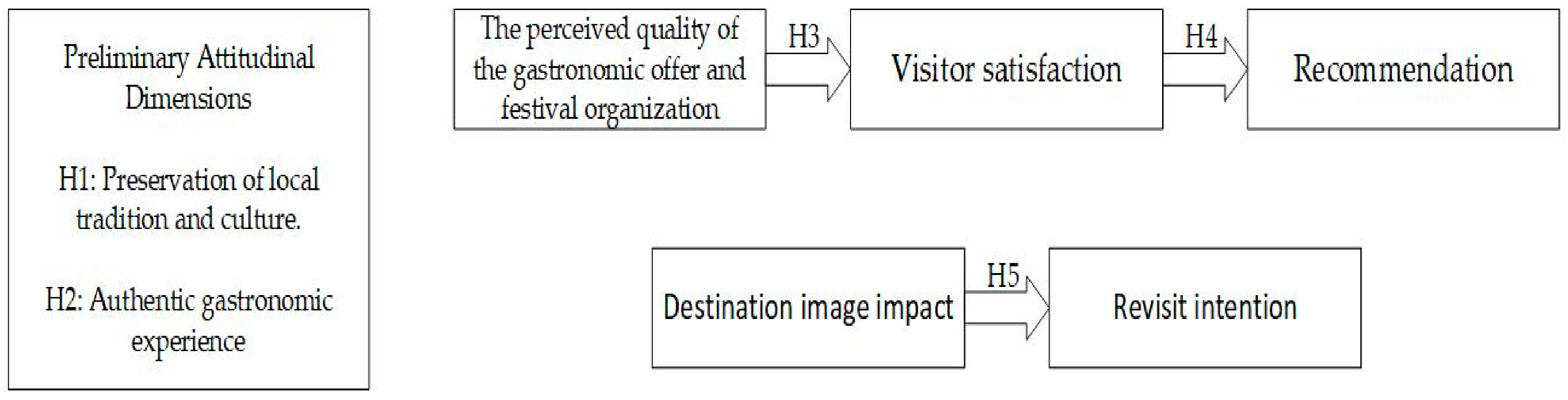
The conceptual model of this study assumes that the overall event experience of the Belmužijada festival has a direct effect on overall visitor satisfaction, which in turn influences their behavioral intentions, including recommendation and revisit intention. In addition, it is assumed that the perceived impact of the festival on destination image has a significant effect on revisit intention.
In this research, the event experience is operationally defined through the evaluation of the gastronomic offer and the quality of festival organization, as these elements jointly shape the overall festival experience. Based on these relationships, the conceptual research model was developed and is presented in
Figure 1. To improve conceptual clarity, the model presents only the key relationships between perceived festival quality, visitor satisfaction, destination image, and behavioral intentions. Hypotheses H1 and H2 are treated as preliminary attitudinal dimensions of the festival experience, capturing visitors’ perceptions of authenticity and the preservation of local tradition. As they are not modeled as causal relationships within the analytical framework, they are presented separately from the structural conceptual model.
The study examines the following constructs: perceived festival quality, overall satisfaction, destination image, and behavioral intentions (recommendation and revisit intention). Perceived festival quality is operationalized through the evaluation of the gastronomic offer, festival organization, activity schedule, price and festival promotion. Overall satisfaction is measured through a global assessment of the visitor experience. Destination image is assessed through respondents’ attitudes regarding the festival’s contribution to the reputation and attractiveness of the destination. Behavioral intentions include willingness to recommend and intention to revisit.
3. Materials and Methods
3.1. Study Area
One of the less established gastronomic festivals in Eastern Serbia is Belmužijada, which has been held in Svrljig since 2006, traditionally during the first weekend of August (
Stojanović, 2020). The festival is dedicated to the promotion of the traditional dish belmuž, which was inscribed on the National List of Intangible Cultural Heritage of Serbia in 2012 (
Duvnjak et al., 2014;
Jovanović et al., 2012). The research was conducted in the municipality of Svrljig, located in the eastern part of Serbia, within the Nišava Administrative District (
Petrović, 2012).
3.2. Research Sample and Data Collection
The research was conducted after the Belmužijada festival in September 2025, with respondents who attended the festival. The study primarily follows a quantitative approach, as data were collected through a standardized questionnaire and analyzed using statistical methods. In addition, elements of a qualitative approach were included through the analysis of responses to open-ended questions, which provided further insight into visitors’ attitudes, experiences, and suggestions. A total of 294 questionnaires were collected and included in the analysis. Due to partially incomplete responses, the number of valid cases slightly varies across individual statistical analyses.
Data were collected using a combined approach, through an online questionnaire (Google Forms) as well as on-site surveying of visitors during and immediately after the festival. The online questionnaire was distributed through local social media groups, festival-related online communities, and personal networks of visitors who attended the event. In addition, a portion of the respondents were approached directly during and immediately after the festival at the festival location. Participation in the survey was voluntary and anonymous. The questionnaire was completed shortly after attending the festival, allowing respondents’ answers to reflect fresh and immediate impressions of the event experience. Due to partially incomplete questionnaires, the number of valid responses slightly varied across individual items. Although the sample is not fully representative, it is considered adequate for examining visitor attitudes and perceptions related to the festival.
The questionnaire consisted of four thematic sections. The first section referred to the socio-demographic characteristics of respondents and included questions on gender, age, level of education, and place of origin. It also included questions related to the main reasons for attending the festival, the level of spending during the visit, and the sources of information about the festival. The second section focused on visitors’ attitudes and perceptions of the Belmužijada festival. Respondents rated statements related to the preservation of tradition and culture, authenticity of the experience, quality of organization, gastronomic offer, media promotion, and willingness to recommend the festival. All statements were measured using a five-point Likert scale, where 1 indicated “strongly disagree” and 5 indicated “strongly agree”. The third section examined how visitors perceive the impact of the festival on Svrljig as a tourist destination. This part included statements regarding the festival’s contribution to destination awareness, the presentation of tourism resources, accessibility of tourist sites, as well as its influence on revisit intention and destination image. A five-point Likert scale was also applied in this section.
The fourth section included both open-ended and closed-ended questions related to overall visitor satisfaction, the most attractive part of the festival, aspects that require improvement, preferred festival duration, and suggestions for introducing new content in the future.
3.3. Statistical Methods of Data Analysis
To test the proposed hypotheses, the collected data were statistically analyzed using the IBM SPSS 20 Statistics software package. The number of responses per item slightly varied (N = 286–294) due to incomplete questionnaires. The analyses were conducted using available data (pairwise deletion), which is a common practice in studies where some questionnaire items remain unanswered. This approach was applied in order to preserve the largest possible number of valid responses for individual statistical analyses while minimizing unnecessary data loss. The reliability of the applied psychometric scales was assessed using Cronbach’s alpha coefficient. Both scales show good reliability (α = 0.895; α = 0.855) (
Appendix A), indicating a high level of internal consistency of the items and justifying their further use in statistical analyses (
Ahmad et al., 2024).
Descriptive statistics were used to present the basic characteristics of the sample and to summarize respondents’ answers, including percentages (%), mean values (M), and standard deviation (SD). To examine differences between groups of respondents (e.g., by gender, age, and place of origin), parametric tests were applied, including the independent samples t-test and analysis of variance (ANOVA), followed by post hoc tests (LSD) to identify specific group differences.
A one-sample t-test was applied to test hypotheses H1 and H2. Pearson correlation analysis was applied to examine the relationships between the key variables and to test hypothesis H4.
The effects of different factors (such as perceived festival quality, organization, and gastronomic offer) on the likelihood of high satisfaction were analyzed using logistic regression analysis (H3). In this model, the predictors were defined in line with the operationalization of the construct “perceived festival quality,” which includes the evaluation of the gastronomic offer, organization, activity schedule, and festival promotion. To examine the impact on the destination image and intention to revisit, multiple linear regression analysis was applied (H5).
This study has certain limitations. The sample was based on a convenience sampling method and is not fully representative, which limits the generalizability of the findings. Future research should include larger and more diverse samples, as well as comparative analyses across different destinations.
4. Results
4.1. Analysis of Demographic and Social Characteristics of Respondents
The sample predominantly consisted of female respondents (55.10%), while male respondents accounted for 44.90% of the sample. The largest share of respondents belonged to the 31–45 age group (36.05%), followed by respondents aged 46–60 (24.83%). Regarding education level, most respondents had completed secondary education (48.30%), while respondents with higher education accounted for a significant proportion of the sample. Most visitors came from Svrljig and nearby areas (60.88%), while a smaller proportion of respondents visited the festival from other parts of Serbia. Gastronomy and local food represented the dominant motives for attending the festival, followed by cultural content, entertainment, and social interaction. Social media and recommendations from friends and relatives were identified as the most important sources of information about the festival. The findings indicate that Belmužijada primarily attracts visitors interested in gastronomy, local tradition, and authentic cultural experiences.
4.2. Descriptive Analysis of Visitors’ Attitudes and Perceptions of the Festival
The results presented in
Table 1 indicate generally positive visitor perceptions of the Belmužijada festival. The highest mean scores were recorded for willingness to recommend the festival to others (M = 4.19) and satisfaction with the gastronomic offer (M = 4.18). Respondents also highly evaluated the festival’s contribution to preserving local tradition and culture (M = 4.13), as well as the authenticity of the overall festival experience.
Moderate evaluations were recorded for festival organization, infrastructure, and media promotion. The lowest mean values referred to visitor expectations and certain accompanying tourism facilities, indicating areas with potential for further improvement. Overall, the findings suggest that gastronomy and cultural authenticity represent the strongest components of visitor satisfaction at the festival.
4.3. Analysis of Respondents’ Attitudes Toward the Destination Svrljig
The results presented in
Table 2 indicate generally positive visitor perceptions regarding the impact of the Belmužijada festival on destination image. High mean values were recorded for the statement that the festival contributes positively to the recognition and attractiveness of Svrljig as a tourism destination (M = 4.11).
Visitors also demonstrated relatively positive behavioral intentions, particularly regarding recommendations to other potential visitors and intentions to revisit the destination in the future. More moderate evaluations were observed regarding familiarity with other tourist attractions in the destination and the availability of additional tourism content during the festival. Overall, the findings indicate that the festival contributes positively to destination image formation and visitor loyalty, while additional tourism content could further strengthen the overall destination experience.
4.4. Results of Empirical Testing of Hypothesis H1
To test hypothesis H1, a one-sample t-test was conducted to examine whether the mean response to the selected statement is statistically significantly higher. The neutral value of the scale is 3, representing a position of neither agreement nor disagreement. If the mean value is significantly higher than this threshold, it can be concluded that respondents express a positive attitude toward the festival’s contribution to the preservation of local tradition and culture. The results of the test are presented in the following table (
Table 3).
The results of the one-sample t-test show that the mean rating of respondents regarding the statement that Belmužijada contributes to the preservation of local tradition and culture is statistically significantly higher than the neutral value on the Likert scale (M = 4.13; p < 0.001).
Based on these findings, it can be concluded that visitors hold a statistically significant positive attitude toward the role of the festival in preserving intangible cultural heritage, thereby confirming hypothesis H1.
4.5. Results of Empirical Testing of Hypothesis H2
The results of the one-sample
t-test (
Table 4) indicate that the mean rating of respondents regarding the perception of Belmužijada as an authentic gastronomic experience is statistically higher than the neutral value on the Likert scale.
The test results show that the mean rating of respondents regarding the perception of Belmužijada as an authentic gastronomic experience is statistically significantly higher than the neutral value (M = 3.76; SD = 1.20; t = 10.85; p < 0.001). The mean difference (M − μ0 = 0.759) indicates a positive deviation from the neutral value. These findings suggest that visitors largely perceive Belmužijada as a unique and authentic gastronomic experience, thereby confirming hypothesis H2.
4.6. Results of Empirical Testing of Hypothesis H3
To examine the influence of the perceived quality of gastronomy and festival organization on overall visitor satisfaction, logistic regression analysis was applied. The dependent variable was defined as high satisfaction (ratings ≥ 4 on the scale), while the independent variables included socio-demographic factors (age, education), visit expenditures, and perceptions of organization and the gastronomic offer. Socio-demographic variables and visit expenditures were included as control variables to ensure a more reliable estimation of the effect of perceived festival quality on satisfaction. This does not alter the conceptual framework of the model but ensures that the estimated effect of quality is not confounded by potential external factors.
The results indicate that the model has good predictive performance, with an overall classification accuracy of 84.35%, while the cross-validation accuracy (5-fold) is 83.00% (SD = 6.05%). In addition, the values of precision (81.19%), recall (75.23%), and F1-score (78.10%) suggest a satisfactory balance between model accuracy and sensitivity (
Appendix B).
The regression results indicate that the perceived quality of festival organization has a strong and statistically significant positive effect on the probability of high satisfaction (β = 1.9124; OR = 6.77), indicating that an increase in the perception of organization significantly raises the likelihood that a visitor will be satisfied.
Similarly, the gastronomic offer also has a significant positive effect (β = 1.3946; OR = 4.03), indicating that food quality is a key determinant of satisfaction.
Age (β = −0.2793; OR = 0.76) and visit expenditures (β = −0.1178; OR = 0.89) show a negative effect on the probability of high satisfaction, while education shows a moderate positive effect (β = 0.1369; OR = 1.15) (
Appendix C).
The results indicate that festival organization and the gastronomic offer are the most significant predictors of visitor satisfaction, thereby confirming Hypothesis H3.
To further explore the relationships among the examined variables, a mediation (path) analysis was conducted to assess the indirect effect of organization on satisfaction through the perceived quality of gastronomy. The results indicate that festival organization has a statistically significant positive effect on perceived quality (a = 0.4125;
p < 0.001), as well as on overall satisfaction (c = 0.5071;
p < 0.001). The indirect effect of organization on satisfaction through gastronomy is 0.1024, while the direct effect is 0.4047, indicating the presence of partial mediation. The indirect effect accounts for 20.19% of the total effect of organization on visitor satisfaction (
Appendix D).
These findings suggest that festival organization influences visitor satisfaction not only directly but also indirectly through the perceived quality of the gastronomic offer, highlighting the importance of integrated management of key festival elements.
4.7. Results of Empirical Testing of Hypothesis H4
To examine the relationships between the key research variables, Pearson’s correlation coefficient was applied. The results reveal statistically significant positive relationships among the key variables, namely the perceived quality of the festival, and its destination-related effects. A relatively strong positive correlation was identified between the overall attitude toward Belmužijada and the perceived contribution of the festival to Svrljig as a tourist destination (
r = 0.733;
p < 0.01). Significant correlations were also found among several individual festival attributes, including organization, gastronomic offer, and tourism-related activities. These findings suggest that more favorable evaluations of festival quality are accompanied by more positive perceptions of its impact on the destination image, as well as a stronger intention to revisit the destination (
Appendix E).
The results are particularly relevant for testing Hypothesis H4, which assumes that a positive attitude and satisfaction with the festival are associated with visitors’ willingness to recommend Belmužijada to others. A statistically significant and relatively strong positive correlation was identified between satisfaction with the festival and the intention to recommend it to others (r = 0.663; p < 0.01), confirming that more satisfied visitors are more likely to recommend the festival.
These findings are consistent with the conceptual model, in which satisfaction directly influences recommendation behavior, while destination image functions as an indirect mechanism related to revisit intention. Recommendation, as a key indicator of visitor loyalty, further supports this relationship, the findings confirm that the quality of the festival experience plays a crucial role in shaping and disseminating a positive image of both the festival and the destination.
Based on these results, Hypothesis H4 is confirmed.
4.8. Results of Empirical Testing of Hypothesis H5
The multiple regression analysis is statistically significant (F = 7.049; p < 0.001), explaining 63.3% of the variance in the dependent variable (R2 = 0.633). The explained variance (R2 = 0.633) indicates a strong influence of destination image on revisit intention, as proposed in Hypothesis H5.
The level of explained variance suggests a strong influence of perceived destination image on revisit intention, which is consistent with previous studies identifying image as one of the most powerful predictors of tourist behavior. These findings directly support Hypothesis H5, indicating that the perception of destination image has a statistically significant and positive effect on revisit intention.
In particular, the perception of the positive impact of Belmužijada on the destination image emerges as a significant predictor, exerting a positive influence on the intention to revisit Svrljig (β = 0.307; t = 2.884; p = 0.005). These results suggest that Belmužijada, through strengthening the positive image of the destination, contributes to an increased likelihood of repeat visitation.
These results imply that Belmužijada contributes to strengthening the image of Svrljig as a tourist destination, which in turn positively affects visitors’ behavioral intentions. This is further supported by the descriptive findings, where respondents reported a high level of agreement regarding the positive impact of the festival on destination image (M = 4.11).
Based on these findings, Hypothesis H5 is confirmed.
4.9. Comparative Analysis of Visitors’ Attitudes According to Demographic and Behavioral Characteristics
To examine differences in visitors’ attitudes, a one-way analysis of variance (ANOVA) was applied, followed by post hoc tests. The results indicate the presence of statistically significant differences depending on selected grouping variables. Given that group sizes varied (e.g., the smaller proportion of international visitors), a robust ANOVA approach was applied, after testing homogeneity of variances. For the identification of intergroup differences, the LSD post hoc test was used, as it is appropriate for moderate sample sizes and provides higher sensitivity in detecting differences. With respect to place of origin, significant differences were identified in the evaluation of festival schedule and activities (F = 3.186; p = 0.043), quality of gastronomy (F = 4.855; p = 0.008), expectations of the festival (F = 7.389; p = 0.001), suitability for different age groups (F = 3.300; p = 0.038), and accessibility of local attractions (F = 7.670; p = 0.001). Post hoc analysis shows that non local visitors, particularly those from other parts of Serbia and to a lesser extent international tourists, consistently report more favorable evaluations than visitors from Svrljig and its surroundings. Regarding the reason for visit, statistically significant differences were observed in the perception of contribution to the preservation of tradition and culture (F = 5.898; p < 0.001), authenticity (F = 2.974; p = 0.012), festival organization (F = 2.339; p = 0.042), gastronomy (F = 2.460; p = 0.033), willingness to recommend (F = 2.755; p = 0.009), value for money (F = 2.816; p = 0.017), as well as in the overall attitude scale (F = 2.614; p = 0.025) and perceived contribution to the destination (F = 5.073; p < 0.001). These differences are most pronounced between visitors motivated by gastronomy and those attending for entertainment or social purposes, with the former group assigning higher ratings to gastronomy, authenticity, and overall experience.
In terms of information sources, significant differences were found in the perception of authenticity (F = 2.804;
p = 0.026), organization (F = 2.574;
p = 0.038), media promotion (F = 2.640;
p = 0.034), suitability for different age groups (F = 2.648;
p = 0.034), learning about the destination (F = 5.377;
p < 0.001), presentation of tourism resources (F = 6.659;
p < 0.001), accessibility of local attractions (F = 5.881;
p < 0.001), and overall contribution to the destination (F = 6.395;
p < 0.001). Post hoc results suggest that visitors who learned about the festival through recommendations (word-of-mouth) and social media tend to assign significantly higher ratings compared to those informed via traditional media channels (
Appendix F).
These results indicate that the perception of Belmužijada differs significantly depending on visitors’ place of origin, travel motivation, and sources of information.
4.10. Qualitative Analysis of Open-Ended Responses
Most respondents identified the entertainment and music program (32.7%) as the most important segment of the festival, indicating its dominant role in shaping the overall visitor experience. However, traditional and gastronomic components are also well represented, particularly the preparation of belmuž (16.8%) and the cultural and artistic program featuring folklore (15.5%), confirming the preservation of the festival’s cultural identity. In addition, some importance is attributed to sports competitions, the selection of the shepherd and shepherdess, as well as the offer of local products, indicating the diversity of festival content. Regarding potential improvements, respondents most frequently emphasized the need to enhance the music program and sound system, along with better organization, a more dynamic schedule, and the introduction of new activities. Visitors also expressed particular interest in content that promotes tradition and local tourism potential, such as traditional craft workshops and organized site visits. Although a smaller proportion of respondents believe that no changes are necessary, the majority indicate significant potential for further improvement and enrichment of the festival in the future.
4.11. Analysis of Willingness to Recommend
To further examine visitor loyalty and their willingness to recommend the festival, the Net Promoter Score (NPS) was used as a key indicator of satisfaction and behavioral intentions. The results show that most respondents fall into the category of promoters (84.0%), reflecting a high level of satisfaction and a strong willingness to recommend Belmužijada. The proportion of passive respondents is 9.6%, while detractors account for only 6.5%. Based on these findings, the calculated NPS is 77.5, reflecting an exceptionally high level of visitor loyalty. According to standard NPS interpretation, values above 70 are considered excellent, further confirming a strong propensity among visitors to recommend the festival. Such values are rarely reported in tourism research, particularly in the context of rural destinations, highlighting the distinct position of Belmužijada in this regard.
These results align with the correlation analysis, indicating a significant relationship between visitor satisfaction and behavioral intentions, particularly willingness to recommend. The NPS results further support the observed relationships, as it is widely applied in tourism studies to assess visitor loyalty and their readiness to engage in electronic word-of-mouth (eWOM).
The observed structure of responses—characterized by a high share of promoters and a low share of detractors—corroborates the descriptive and correlation findings, confirming a highly positive overall evaluation of the festival. Moreover, the high NPS value further supports Hypothesis H4, indicating that satisfied visitors are highly likely to recommend the festival to others. These findings indicate a strong potential for generating positive electronic word-of-mouth.
6. Conclusions
The study examined visitor satisfaction with the gastronomic festival Belmužijada, as well as its role in preserving local tradition, strengthening the image of Svrljig as a tourist destination, and influencing revisit intention. The findings provide clear empirical support for the proposed research model. The findings highlight the significant role of the Belmužijada gastronomic festival in shaping the overall tourism experience, as well as in enhancing the destination image. The results confirm that visitors largely perceive this festival as an important factor in preserving local tradition and cultural heritage, as well as an authentic tourism experience. Furthermore, the results indicate that key elements of festival quality, particularly organization and the gastronomic offer, have a significant impact on the level of visitors’ satisfaction. These factors emerge as the main predictors of high satisfaction. The findings highlight the importance of high-quality organization and the preservation of gastronomic authenticity as fundamental determinants of festival success.
In addition, a statistically significant and positive relationship was identified between visitor satisfaction and their willingness to recommend the festival to others. This suggests that satisfied visitors represent an important channel of informal promotion, contributing to the dissemination of a positive destination image.
Finally, the results of the regression analysis demonstrate that the perception of the positive impact of Belmužijada on destination image significantly influences visitors’ interest in revisiting Svrljig, supporting the proposed conceptual relationships between destination image and revisit intention. Overall, the research findings confirm the structure of the proposed conceptual model, in which perceived festival quality acts as the initial driver of the tourism experience, satisfaction represents the central mediating variable, while recommendation, revisit intention, and destination image constitute the final behavioral outcomes. The confirmation of all hypotheses (H1–H5) indicates that Belmužijada functions as an integrated tourism product whose elements collectively contribute to the formation of visitor loyalty. These findings contribute to the broader theoretical understanding of the role of gastronomic festivals in tourism, demonstrating that local festivals can generate strong psychological and behavioral effects in line with established models of tourist behavior. From a practical perspective, the study suggests that gastronomic festivals in rural destinations should be strategically positioned not only as entertainment events, but also as mechanisms for preserving intangible cultural heritage and strengthening destination identity. The integration of local food traditions into destination branding strategies may contribute to stronger market differentiation, increased visitor engagement, and more sustainable tourism development in less-developed areas. The importance of quality and authenticity as primary determinants of satisfaction is reaffirmed, while a positive destination image functions as a stable driver of loyalty.
The practical implications of the study suggest that particular attention should be devoted to improving organizational aspects of the festival, preserving the authenticity of the gastronomic offer, and further developing content that enhances the overall visitor experience. Additionally, the results point to the need for the strategic use of the festival as a tool for destination branding. Although the findings indicate a high level of satisfaction and a positive perception of the festival, certain shortcomings were identified, particularly in the areas of organization, media promotion, and integration with the broader tourism offer. In particular, improving the linkage between the festival and local tourism resources may contribute to a more effective valorization of the overall tourism potential of Svrljig. Overall, the study confirms the relevance of gastronomic festivals as instruments of destination positioning, cultural preservation, and visitor loyalty development in rural tourism contexts.
Limitations
Although the study provides valuable insights, several limitations should be acknowledged when interpreting the results. First, the study relied on a convenience sampling approach, which may limit the generalizability of the findings to the broader population of festival visitors. Second, the research focused on a single gastronomic festival within one destination, limiting the possibility of broader comparative conclusions. Third, the study is based on self-reported perceptions collected shortly after the festival experience, which may increase the influence of temporary emotions and social desirability bias. Finally, the cross-sectional nature of the study does not allow the examination of changes in visitor attitudes over time. Future studies should therefore include longitudinal and comparative approaches involving multiple gastronomic festivals and destinations.




 ,
,