4.1. Sample Description
Table 1 summarizes the sociodemographic characteristics of the 310 diners surveyed. The gender distribution was balanced: 50.6% women and 49.0% men, with one case who preferred not to state their gender. More than half of the participants (53.9%) were in the 18–25 age group, followed by the 36–50 (18.4%) and 26–35 (16.1%) age groups; diners over 50 years of age accounted for 11.6% of the total. The predominance of the younger segment reflects the demographic composition of university cities in northern Peru and coincides with the profile observed by (
Chinelato et al., 2023) among à la carte restaurant consumers in Peru.
In terms of geographical origin, La Libertad accounted for the largest proportion of respondents (39.0%), followed by Lambayeque (19.4%) and Piura (12.6%). Some 29.0% resided in other departments, which introduces regional heterogeneity into the sample and mitigates the potential bias of a single urban context. Monthly incomes reflect a low to medium purchasing power profile: 41.9% reported earning less than S/1025, and 28.1% earned between S/1025 and S/2500, which is consistent with the socioeconomic structure of the north of the country. Only 7.7% earned more than S/5000 per month, a segment that coincides with older diners with postgraduate education.
The frequency of visits to full-service restaurants was distributed relatively evenly among the intermediate categories: once a month (27.4%), two to three times a month (25.5%), and once a week (21.3%). An additional 10.3% went on several times a week, while 15.5% went less than once a month. These data indicate that most respondents have regular—though not necessarily frequent—contact with formal restaurants, which means they have sufficient exposure to the physical environment of the establishment to form stable judgments about its dimensions.
Family was the usual companion for more than half of the participants (52.6%), underscoring the social and congregational nature of the dining experience in northern Peru, where the table serves as a space for family gatherings rather than an individual act of consumption. Friends (19.0%) and partners (14.5%) complete the top three main contexts for accompaniment, while only 10.0% said they went alone and 3.9% with work colleagues. In terms of educational level, 56.1% had a university degree and 20.3% had a postgraduate degree, making this a predominantly educated sample whose capacity for critical evaluation of the environment and price may differ from that of segments with lower levels of education.
4.2. Evaluation of the Measurement Model
The evaluation of the measurement model is an essential prerequisite in any PLS-SEM analysis, as it ensures that the indicators reliably and validly capture the latent constructs before proceeding to the estimation of structural relationships (
Hair et al., 2022). The results for the external loadings, internal consistency, convergent validity, and discriminant validity of the six constructs included in the model are reported below (
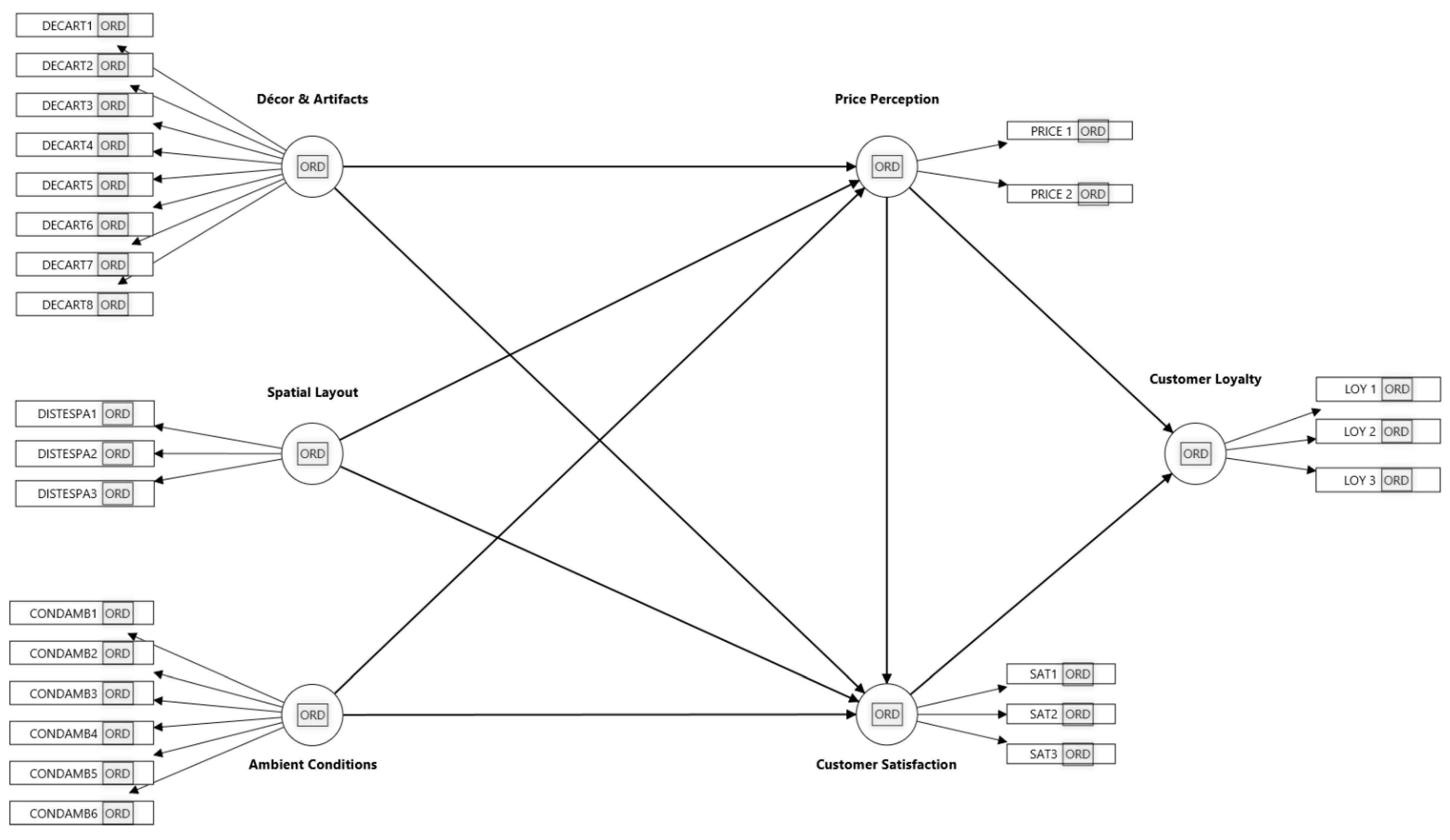
Figure 1): decoration and artifacts, spatial distribution, environmental conditions, price perception, customer satisfaction, and customer loyalty.
The external factor loadings of the 25 indicators ranged from 0.898 (DECART2) to 0.976 (PRICE1 and PRICE2), comfortably exceeding the recommended minimum threshold of 0.708 (
Hair et al., 2022). The decoration and artifacts construct presented loadings ranging from 0.898 to 0.927, with a remarkably homogeneous distribution among its eight indicators. For spatial distribution, the three loadings ranged from 0.948 to 0.957, reflecting high consistency in the measurement of this factor. Environmental conditions registered loadings of 0.925 to 0.950 across their six indicators; price perception reached 0.976 in both items; customer satisfaction showed loadings between 0.961 and 0.970; and customer loyalty ranged from 0.935 to 0.964. No indicators required elimination, unlike the study by (
Han & Ryu, 2009), who removed four items—two on decoration and artifacts and two on environmental conditions—due to insufficient loadings. The retention of all 25 original items confirms the suitability of the instrument for the context of full-service restaurants in northern Peru.
Internal consistency was assessed using three complementary indicators. Cronbach’s alpha ranged from 0.950 (customer loyalty and price perception) to 0.973 (decoration and artifacts and environmental conditions), well above the conventional cutoff point of 0.70 proposed by (
Nunnally, 1978). The composite reliability, rho_c, considered more appropriate than alpha for PLS models because it does not assume tau-equivalence, yielded values ranging from 0.968 (spatial distribution and customer loyalty) to 0.978 (environmental conditions). Likewise, the coefficient rho_a—a consistent reliability estimator that corrects for alpha bias when indicators are not tau-equivalent—ranged from 0.950 to 0.974. Taken together, the three coefficients certify robust internal consistency for each scale.
Convergent validity was verified through the average extracted variance (AVE). All constructs exhibited AVE values above the threshold of 0.50 established by (
Fornell & Larcker, 1981): decoration and artifacts (0.842); spatial distribution (0.910); environmental conditions (0.882); price perception (0.953); customer satisfaction (0.930); customer loyalty (0.909). These results imply that each latent construct explains, on average, more than 84% of the variance of its indicators, a percentage that denotes marked convergence.
Table 2 summarizes the external loadings, internal consistency indicators, and AVE for each construct.
To assess discriminant validity, the Heterotrait–Monotrait (HTMT) criterion was used, as recommended by (
Henseler et al., 2015) as a superior alternative to the classic Fornell–Larcker criterion when constructs show high correlations.
Table 3 shows the HTMT matrix. All ratios were below the conservative threshold of 0.90, with a maximum value of 0.895 (between customer satisfaction and decoration and artifacts). These data confirm that the six constructs represent conceptually distinct phenomena, ruling out redundancy among measures.
In summary, the measurement model meets the reliability, convergent validity, and discriminant validity criteria required by the contemporary methodological literature on PLS-SEM (
Hair et al., 2022). The robustness of the measurement model allows us to proceed with confidence toward evaluating the structural model and testing the formulated hypotheses.
4.3. Evaluation of the Structural Model
Before interpreting the path coefficients, the structural model’s assumptions were verified. Collinearity among predictors was assessed using the internal variance inflation factor (VIF). All VIF values were below 5.0—the limit suggested by (
Hair et al., 2022)—ruling out the presence of critical collinearity among the exogenous variables in the model.
The overall fit of the estimated model was examined using the standardized root mean square residual (SRMR), an approximate fit indicator recommended for PLS-SEM (
Henseler et al., 2016). The SRMR of the estimated model was 0.027, substantially lower than the recommended threshold of 0.08. The normalized fit index (NFI) reached 0.912, exceeding the indicative cutoff point of 0.90. Together, both indicators point to a satisfactory fit between the theorized relationships and the empirical data collected in full-service restaurants in northern Peru.
The explanatory power of the model was assessed using the coefficient of determination (R
2) of the three endogenous variables. Price perception registered an R
2 of 0.953, customer satisfaction reached 0.930, and customer loyalty obtained 0.909. According to the interpretive thresholds of (
Cohen, 1988)—0.02, 0.13, and 0.26 for small, medium, and large effects, respectively, in social sciences—the three explained variances are in the substantial range, indicating that the set of predictors in the model accounts for more than 90% of the variability of each endogenous variable. These levels exceed those reported by (
Han & Ryu, 2009), who obtained an R
2 of 0.45 for price perception, 0.70 for satisfaction, and 0.59 for loyalty, a difference attributable to both the greater number of indicators retained and the characteristics of the Peruvian sample.
The uniformly high R
2 values (price perception = 0.726, satisfaction = 0.826, loyalty = 0.769) warrant careful interpretation. Three factors may contribute to these elevated figures. First, the model includes multiple correlated predictors for each endogenous variable, which mechanically inflates R
2 relative to simpler specifications. Second, the use of well-established, internally consistent scales (all α > 0.95) reduces measurement error and thereby increases the proportion of explained variance. Third, cross-sectional self-report designs can produce inflated R
2 through shared method variance, although the CMB tests reported above (Harman’s test < 40%; full-collinearity VIF < 3.3) suggest this is not a dominant concern. Nevertheless, readers should interpret these coefficients as upper-bound estimates; longitudinal or multi-method designs would provide more conservative R
2 values. To facilitate transparency, related(available upon request) reports exact inner and outer VIF values for all indicators and structural paths; no value exceeded 4.2, and the mean inner VIF was 2.8, well below the critical threshold of 5.0 (
Hair et al., 2022).
4.4. Hypothesis Testing: Direct Effects
The statistical significance of the trajectory coefficients was determined using bootstrapping with 10,000 subsamples, a procedure that generates confidence intervals free of distributional assumptions (
Hair et al., 2022).
Table 4 presents the complete results of the test of the nine direct hypotheses.
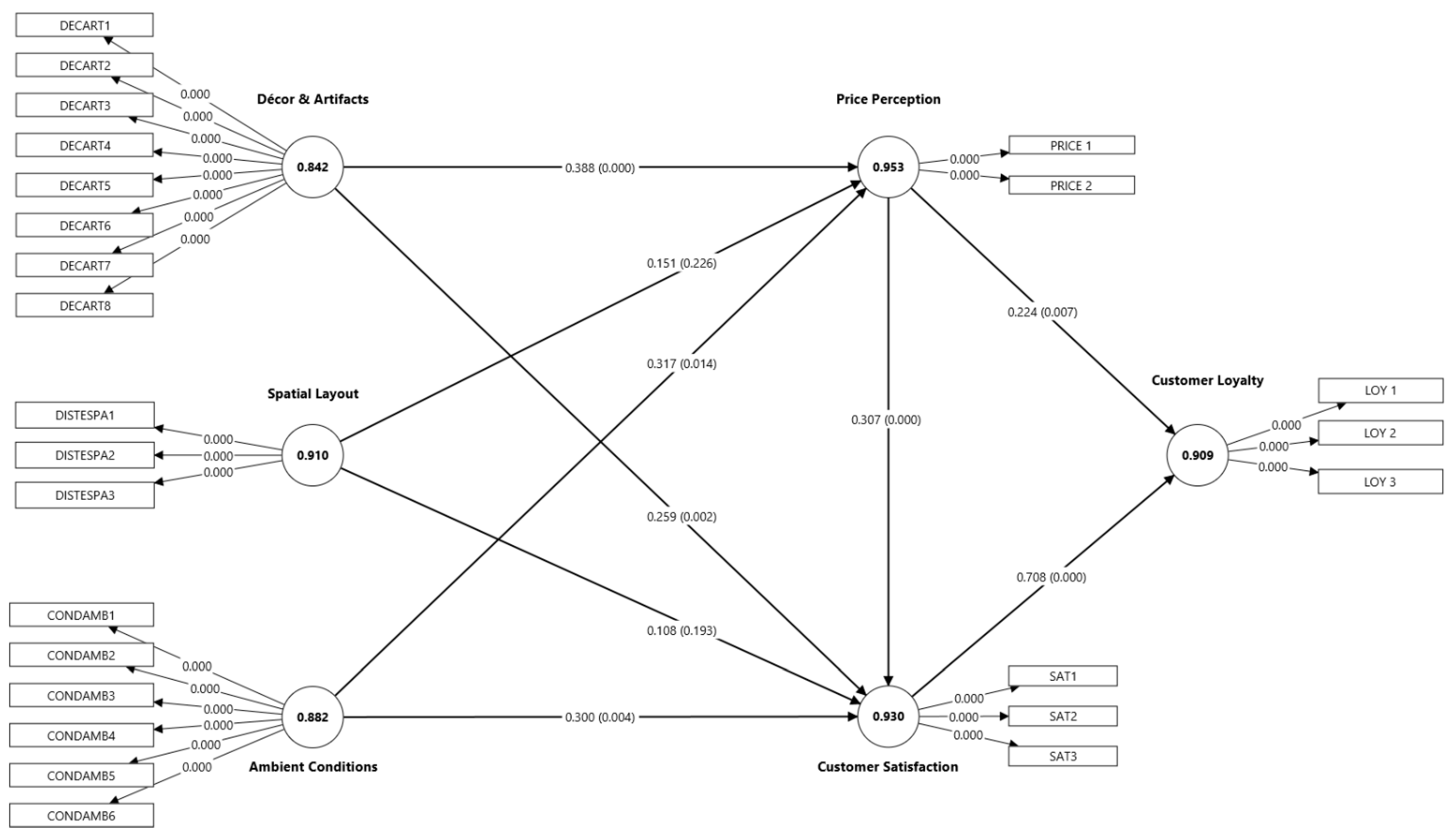
Figure 2 illustrates the structural model with standardized coefficients and their
p-values.
The three dimensions of the physical environment were examined as predictors of price perception (H1, H2, and H3). Decoration and artifacts had the strongest effect on price perception (β = 0.388, t = 3.501,
p < 0.001), supporting H1. The corresponding effect size f
2 (0.074) is classified as small according to
Cohen’s (
1988) thresholds, although close to the medium range. This finding coincides with
Han and Ryu (
2009), who also identified decoration as the most robust predictor of price perception (γ = 0.54). However, the coefficient obtained in the present study is more moderate, possibly because diners in northern Peru place greater relative weight on environmental conditions in their overall assessment of the setting.
H2, which posited a positive effect of spatial distribution on price perception, was not empirically supported (β = 0.151, t = 1.211,
p = 0.226). This result differs from that reported by
Han and Ryu (
2009), in which spatial distribution did have a significant influence on price perception (γ = 0.29, t = 3.69). The lack of significance may be because the spatial distribution in the restaurants surveyed is perceived as a basic condition—expected but not differentiating—so that its variation does not alter the perception of the reasonableness of the price charged.
Environmental conditions showed a positive and significant effect on price perception (β = 0.317, t = 2.457,
p = 0.014), supporting H3. The coefficient value is higher than that reported by (
Han & Ryu, 2009) for this same relationship (γ = 0.27), suggesting that elements such as lighting, music, temperature, and aroma have a relatively greater weight in the formation of judgments about price in the northern Peruvian gastronomic market. The effect size f
2 (0.045) is in the small range.
In terms of satisfaction antecedents, decoration and artifacts revealed a direct positive effect (β = 0.259, t = 3.116,
p = 0.002), confirming H4.
Han and Ryu (
2009) also validated this relationship (γ = 0.33), although with a slightly higher coefficient. Decoration is therefore a direct determinant of the diner’s experiential evaluation in both the original US and Peruvian contexts.
H5, which proposed a positive effect of spatial distribution on satisfaction, was rejected (β = 0.108, t = 1.302,
p = 0.193). Similarly,
Han and Ryu (
2009) also found no significant direct effect of spatial distribution on satisfaction (γ = 0.12, t = 1.78), reinforcing the idea that the impact of this dimension is channeled through indirect mechanisms—an aspect addressed in the subsequent mediation analysis.
One result that deserves particular attention is that of H6. Environmental conditions had a positive and significant effect on customer satisfaction (β = 0.300, t = 2.908,
p = 0.004), with an effect size f
2 of 0.075. This relationship was supported in the present study, unlike the findings of (
Han & Ryu, 2009), who did not find statistical significance for the path environmental conditions → satisfaction (γ = 0.06, t = 1.03). The divergence can be explained by the distinctive sensory characteristics of the gastronomic offerings of northern Peru—intense aromas of regional cuisine, musical ambiance with local references, and climatic conditions that require greater temperature control—factors that could amplify the influence of the environmental component on the diner’s experience.
Price perception had a significant direct effect on satisfaction (β = 0.307, t = 4.993,
p < 0.001), supporting H7. The effect size f
2 reached 0.183, classified as medium, and was the highest among all direct predictors of satisfaction.
Ing et al. (
2019) reported a comparable coefficient (β = 0.56), although the difference in magnitude can be attributed to the inclusion of a greater number of significant direct relationships in the Peruvian model, which redistributes the explained variance among more predictors.
Price perception also showed a direct effect on customer loyalty (β = 0.224, t = 2.721,
p = 0.007), supporting H8. The f
2 of 0.080 is in the small range, indicating that the effect, while statistically significant, has a modest practical magnitude. This result is consistent with the findings of (
Han & Ryu, 2009), who reported a coefficient of 0.24 (t = 2.08) for the same trajectory.
Finally, the strongest relationship in the model was that between customer satisfaction and loyalty (β = 0.708, t = 8.774,
p < 0.001), confirming H9. The effect size f
2 was 0.798, which is large and significantly higher than that of any other relationship in the model. This coefficient exceeds that obtained by (
Han & Ryu, 2009) (β = 0.56, t = 5.06), and is consistent with the evidence accumulated in the service marketing literature that positions satisfaction as the most powerful predictor of loyalty intentions (
Fornell et al., 1996). The data from northern Peru suggest that when diners achieve a high level of satisfaction with the overall dining experience, the probability of returning, recommending, and being willing to spend more increases substantially.
In summary, seven of the nine direct hypotheses received empirical support. The two unsupported hypotheses (H2 and H5) involve the spatial distribution construct, whose influence on the Peruvian model does not reach statistical significance in terms of either price perception or satisfaction. The results are presented schematically in
Figure 2 and summarized at the end of this section.
4.5. Mediation Analysis: Specific Indirect Effects
The analysis of indirect effects was conducted by evaluating specific indirect effects with bootstrapping of 10,000 subsamples, in accordance with the procedure recommended by
Zhao et al. (
2010) and systematized for PLS-SEM by (
Nitzl et al., 2016). Unlike the sequential approach of (
Baron & Kenny, 1986) used by (
Han & Ryu, 2009)—whose main limitation lies in requiring the significance of the direct effect as a condition for mediation—the procedure adopted in this research directly evaluates the significance of the product of indirect coefficients, which allows mediations to be detected even when the direct effect is not significant (pure indirect mediation).
Table 5 reports the results.
To enhance transparency, the 95% bias-corrected bootstrap confidence intervals (BCa CI) for all indirect effects are reported here. H10 (DA → PP → SAT): β = 0.119, 95% CI [0.035, 0.210]; H11 (SD → PP → SAT): β = 0.046, 95% CI [–0.032, 0.127]; H12 (CA → PP → SAT): β = 0.097, 95% CI [0.012, 0.189]; H13 (PP → SAT → LOY): β = 0.217, 95% CI [0.126, 0.319]. Additionally, serial indirect effects: DA → PP → SAT → LOY: β = 0.084, 95% CI [0.021, 0.158]; CA → PP → SAT → LOY: β = 0.069, 95% CI [0.006, 0.141]. Across all supported mediation hypotheses, the confidence intervals exclude zero, confirming the robustness of the indirect effects. All CIs were computed using 10,000 bootstrap subsamples with the bias-corrected and accelerated method in SmartPLS 4.
H10 posited that price perception mediates the relationship between decoration and artifacts and customer satisfaction. The indirect effect DA → PP → SAT was significant (β = 0.119, t = 2.747,
p = 0.006). Given that the direct effect DA → SAT was also significant (β = 0.259,
p = 0.002) and both share a positive sign, mediation is classified as partially complementary according to
Zhao et al. (
2010) the typology. Decoration, therefore, affects diner satisfaction both directly and through its effect on the perception that the price paid is proportionate.
Han and Ryu (
2009) also found partial mediation of price perception in this relationship, although they used Baron and Kenny’s model-comparison procedure.
H11 proposed a similar mediation for spatial distribution. However, the indirect effect DE → PP → SAT did not reach statistical significance (β = 0.046, t = 1.163,
p = 0.245), nor was the direct effect DE → SAT significant. Since neither channel was significant, there is no evidence of mediation, and H11 is rejected. This finding partially contrasts with the results of (
Han & Ryu, 2009), who identified a total mediation of price perception between spatial distribution and satisfaction. The difference may be because, in the Peruvian sample, spatial distribution does not generate perceptible variations in either price evaluation or experiential satisfaction.
H12 proposed that price perception mediates the relationship between environmental conditions and satisfaction. The indirect effect CA → PP → SAT was significant (β = 0.097, t = 2.229, p = 0.026). Since the direct effect of CA → SAT was also significant (β = 0.300, p = 0.004) and both coefficients are positive, the mediation is partially complementary. Environmental conditions, therefore, influence Peruvian diners’ satisfaction in two ways: directly, through the immediate sensory experience, and indirectly, by reinforcing the perception that the price paid is reasonable. This pattern differs from the model proposed by, in which environmental conditions had no direct effect on satisfaction, and their influence was channeled exclusively through price perception (total mediation).
H13 examined whether satisfaction mediates the relationship between price perception and loyalty. The indirect effect PP → SAT → LOY was clearly significant (β = 0.217, t = 4.522,
p < 0.001) and constitutes the largest indirect effect in the model. As the direct effect PP → LOY was also significant (β = 0.224,
p = 0.007) and shared the same sign, a complementary partial mediation is configured, leading to loyalty in two ways—directly and by increasing satisfaction—which, in turn, strengthens intentions to return and recommend.
Han and Ryu (
2009) reported a matching pattern of partial mediation for this relationship.
Beyond the four mediation hypotheses formulated a priori, it is worth reporting other relevant indirect effects revealed by the model. The indirect effect DA → SAT → LOY was significant (β = 0.183, t = 2.918,
p = 0.004), as was CA → SAT → LOY (β = 0.213, t = 2.684,
p = 0.007), indicating that decoration and environmental conditions achieve customer loyalty through satisfaction. Similarly, the serial chains DA → PP → SAT → LOY (β = 0.084, t = 2.583,
p = 0.010) and CA → PP → SAT → LOY (β = 0.069, t = 2.140,
p = 0.032) were significant, revealing a chained mechanism
Nitzl et al. (
2016) in which the physical environment raises the perception of reasonable price, which in turn enhances satisfaction, and satisfaction crystallizes into loyalty. The indirect effects involving spatial distribution did not reach significance, which is consistent with the results of the direct hypotheses H2 and H5.
Table 6 provides an overview of the thirteen hypotheses tested. Of the nine direct hypotheses, seven were empirically supported (H1, H3, H4, H6, H7, H8, and H9) and two were rejected (H2 and H5), both related to spatial distribution. As for the mediation hypotheses, three of four were supported (H10, H12, and H13); only H11—mediation of price perception between spatial distribution and satisfaction—did not reach significance. The structural model, considered as a whole, explains high proportions of variance in the three endogenous variables and confirms the centrality of price perception and, above all, satisfaction as links that articulate the influence of the physical environment on diner loyalty in full-service restaurants in northern Peru.




 ,
,