1. Introduction
Tourism is inherently connected to the visual experience of places (
Feighey, 2003). Landscapes play a central role in how destinations are imagined, remembered, and anticipated, often well before any physical encounter occurs (
Minca, 2007). This pre-visit phase is particularly relevant in contemporary contexts, where exposure to places increasingly occurs through mediated forms rather than direct experience, as destinations are often encountered through images and representations prior to physical travel (
Urry & Larsen, 2011;
Leszczynski, 2015). Within tourism studies, considerable attention has been given to the role of media in shaping destination perceptions, particularly under the umbrella of film-induced tourism. This body of literature has predominantly focused on outcomes such as destination image change, tourist motivation, and visitation effects (
Riley et al., 1998;
Beeton, 2006;
Hudson & Ritchie, 2006;
Cardoso et al., 2017). While these studies have contributed valuable insights into the influence of media exposure on tourism behaviour, they tend to conceptualise mediated landscapes primarily as promotional stimuli and assess their impact through evaluative constructs, such as attractiveness or intention to visit. Consequently, the underlying cognitive and perceptual processes through which viewers visually engage with and mentally process landscapes depicted in fiction remain underexplored.
Although destination image is widely acknowledged as a key concept in tourism, this emphasis has led to a relative neglect of the processes through which visual stimuli are attended to, selected, and transformed into mental representations. In the context of audiovisual fiction, landscapes are not necessarily designed to promote destinations, yet they may capture viewers’ attention, evoke emotional responses, and leave lasting cognitive traces. Understanding how such landscapes are visually attended to and processed is therefore crucial for advancing tourism theory beyond intentional promotion and behavioural effects. As evidenced by state-of-the-art reviews in the field of neurotourism developed by
Cardoso et al. (
2024) and
Cardoso and Fraga (
2024), among others, methods emerging from the interface between neuroscience and computation provide robust foundations for an epistemological shift in tourism studies, including research on destination image. By enabling the integration of self-reported measures with objective data, either computationally simulated or collected from human participants, these methods allow for a deeper understanding of perceptual, attentional, and affective processes. Consequently, such approaches have the potential to substantially reconfigure destination image research.
Thus, neuroaesthetic approaches and research on visual attention offer a promising avenue to address this gap. Neuroaesthetics focuses on how visual stimuli are perceived, attended to, and emotionally processed, highlighting the role of attention and aesthetic salience in shaping cognitive experience (
Chatterjee, 2011). However, despite its relevance, neuroaesthetic research has rarely been applied to tourism contexts, and even less so to the study of landscapes mediated by fictional audiovisual narratives. This represents a missed opportunity to deepen the understanding of how visual experiences of place are cognitively constructed in situations where tourism is not the explicit frame of reference.
Recent scholarship has increasingly recognised that television series constitute complex mediated experiences in which geographical spaces are transformed through narrative, aesthetic and emotional strategies, extending beyond traditional models of destination promotion or film-induced tourism (
H. Kim & Richardson, 2003;
Reijnders, 2011;
Cardoso et al., 2017). However, existing approaches have remained largely focused on representational, cultural or outcome-oriented dimensions of media-tourism relations. Empirical research examining how such mediated landscapes are perceptually attended to and cognitively processed through neuroaesthetic mechanisms remains limited. In this context, mediated landscapes can be understood as spatial configurations shaped through audiovisual narratives and aesthetic strategies, which actively guide visual attention, emotional engagement and cognitive processing of place (
Cardoso et al., 2024).
This gap highlights the need for process-oriented investigations capable of integrating visual attention and destination imagery, particularly in fictional contexts where tourism is not an explicit or intentional frame of reference. In response to this gap, the present study adopts a neuroaesthetic perspective to examine how landscapes depicted in a fictional television series are visually attended to and cognitively processed by viewers. Rather than focusing on destination image evaluations or tourism intentions, the study investigates the perceptual and cognitive mechanisms through which mediated landscapes attract visual attention and give rise to destination imagery. In doing so, it positions tourism as a field concerned not only with behavioural outcomes, but also with the foundational visual and cognitive processes through which places are experienced and represented.
Accordingly, the general objective of this study is to contribute to tourism research by advancing the understanding of the perceptual–cognitive processing of mediated landscapes, integrating visual attention analysis with destination imagery as a cognitive process. Based on this objective, the study is guided by the following research question: How are landscapes depicted in fictional audiovisual narratives visually attended to and cognitively processed as destination imagery?
By addressing this question, the study seeks to expand tourism scholarship through an interdisciplinary approach that bridges neuroaesthetics, visual attention, and destination imagery, offering a process-oriented perspective on how places are experienced through mediated visual encounters. To do so, the study adopts an exploratory mixed-methods design that combines qualitative content analysis of free recall responses with simulated visual attention modelling (saliency-based analysis) applied to selected scenes from the series.
1.1. Tourism, Mediated Landscapes and Visual Experience: Landscape as a Core Element of Tourism Experience—The Role of Pre-Visit Phase
First, the epistemological dimension of landscape constitutes a key issue, as it is a polysemic concept. Second, landscape has long been recognised as a fundamental component of the tourism experience (
Knudsen et al., 2008). There are several approaches in the literature, for example,
Liang and Wu (
2024) examined the role of individual landscape elements in enhancing landscape aesthetics within the context of sustainable tourism experiences.
Beyond its physical and geographical dimensions, landscape plays a central role in shaping how destinations are perceived, imagined, and remembered. Although there are congruence and concordance mediated by culture, social groups, among other factors, the relationship between landscape and individuals also has a personal dimension, since the same landscape can be felt and perceived in diverse ways. Therefore, landscape, as a core element of the tourism experience, should take into account both objectivity and subjectivity (
Knudsen et al., 2008). In particular, landscape and tourism involve not only movement through space, but also aesthetic and sensory engagement with places in which visual perception occupies a privileged position.
The experience of landscape contributes to tourists’ emotional responses, sense-making processes, and overall impressions of destinations, both during and beyond the moment of visitation (
Metro-Roland & Soica, 2018). Within tourism research, landscapes have been addressed from multiple perspectives, including destination attractiveness, place identity, and experiential consumption. However, these approaches have often treated landscape as an external attribute of the destination or as a backdrop against which tourism activities occur. While such perspectives acknowledge the importance of visual elements, they tend to underplay the perceptual and cognitive mechanisms through which landscapes are visually engaged with and transformed into mental representations. As a result, the visual experience of landscape remains conceptually present but analytically underdeveloped within tourism studies.
Tourism experiences do not begin with physical arrival at a destination, and the landscape has been a fundamental reference in the construction of the tourism imaginary (
Minca, 2007). A substantial part of the tourism experience unfolds prior to travel, through processes of imagination, anticipation, and mental simulation of places. Destinations are frequently encountered first through images, narratives, and representations, which shape expectations and frame subsequent experiences (
Ye & Tussyadiah, 2011).
Thus, the role of pre-visit phase is particularly relevant in contemporary contexts, where exposure to places increasingly occurs through mediated forms rather than direct experience. Mediated encounters with places contribute to the formation of spatial representations that are produced and circulated through media, shaping how space is known and experienced beyond physical presence (
Leszczynski, 2015). These mediated experiences allow individuals to visually engage with landscapes, develop emotional responses, and construct meanings associated with place. Importantly, such engagements do not necessarily imply a tourism-related intention, yet they may still play a role in how destinations are cognitively structured and remembered (
Visch et al., 2010;
H. Kim & Richardson, 2003).
1.2. Pre-Visit Phase: Media, Fiction, and Tourism: Contributions and Limitations
Mediated landscapes constitute a form of visual experience that intersects tourism without being confined to it. Tourism research has acknowledged the relevance of imagination and anticipation in destination choice and experience but has rarely examined how visually mediated encounters with landscape operate as perceptual and cognitive experiences in their own right. In this sense, in the pre-visit phase, the relationship between media and tourism has been extensively explored, particularly through literature on film tourism and film-induced tourism (
Ingram et al., 2013).
Early studies conceptualised the phenomenon as movie tourism, focusing primarily on behavioural responses and location curiosity among visitors seeking to experience filming locations in situ (
Riley et al., 1998). As research progressed, it became evident that screen-based narratives extend beyond cinema alone, with television series, long-form franchises and serialised productions exerting similar or stronger influences due to narrative continuity and character familiarity (
Cardoso et al., 2017).
Subsequent conceptual developments led to the adoption of the term film-induced tourism, emphasising audiovisual media as agents of destination image formation. This body of research demonstrated how films and television series influence symbolic meaning, perceived authenticity, local identity and destination branding (
Beeton, 2006;
Hudson & Ritchie, 2006). Over time, the field evolved into a multidimensional research area addressing tourist motivation, place-making, community impacts and the commodification of screen narratives within tourism contexts (
Cardoso et al., 2017).
However, the dominant orientation of this literature has remained largely outcome-driven. Media representations of place are typically conceptualised as stimuli whose effects are assessed through changes in destination image, attitudes, intentions, or tourist flows. Within this framework, landscapes depicted in fiction tend to be treated as instrumental elements contributing to destination appeal, rather than as visual environments that are perceptually engaged with and cognitively processed by viewers. Authors such as
Cui (
2023) go further by addressing integrated modeling between tourism and films; for instance, since 2016 in China, the “all-in-one” approach has been employed to promote region-wide tourism development through the integration of resources. In this sense, it is important to understand cognitive and behavioral aspects in order to identify factors such as perceived authenticity, perceived value, and satisfaction in relation to revisit and recommendation intentions, including in online contexts. Building on previous studies,
Shi and Phakdee-auksorn (
2025) examine this issue from a word-of-mouth (WOM) perspective, suggesting that film-induced tourism increasingly needs to incorporate particularly cognitive and emotional processes to better address challenges related to visitors’ behavioral intentions.
Moreover, much of the existing literature assumes an implicit tourism frame, even when the media content itself is not designed to promote destinations. Fictional narratives frequently portray landscapes in aesthetically complex, emotionally charged, or morally ambiguous ways, challenging the assumption that screen representations function primarily as positive promotional imagery. Consequently, there remains limited understanding of how viewers visually engage with landscapes in fictional contexts where tourism is not the dominant interpretative lens.
1.3. From Destination Image to Destination Imagery: A Process-Oriented Perspective and Mediated Landscapes as Visual and Cognitive Experiences
Destination image has been one of the most influential constructs in tourism research, commonly defined as a set of beliefs, ideas, and impressions associated with a place. Despite its centrality, the concept has been approached through multiple disciplinary lenses, resulting in a wide range of definitions and measurement approaches (
Echtner & Ritchie, 1993). While this concept has proven valuable for understanding destination evaluation and tourist behaviour, it has predominantly been approached as a relatively stable and outcome-oriented construct, primarily operationalised through self-reported assessments of destination attributes and overall impressions, offering limited insight into the cognitive processes through which place-related perceptions are formed and activated (
Gallarza et al., 2002;
Tasci & Gartner, 2007).
A major theoretical advance emerged with the distinction between destination image and destination imagery, which conceptualises destination image as a global composite of cognitive and affective evaluations stored in long-term memory, and destination imagery as the dynamic, short-term processing of perceptual and sensory cues in working memory (
Cardoso et al., 2019). This distinction is consistent with the imagery–image duality model, which argues that destination imagery comprises the total set of place-related mental associations activated by individuals, while destination image functions as an overall evaluative heuristic or mental shortcut (
Araújo et al., 2019;
Cardoso et al., 2019).
Together, these perspectives further articulate this distinction, emphasising the contrast between relatively stable evaluative representations and dynamic mental simulation processes (
Cardoso et al., 2020). From this perspective, films and television series do not directly modify stored destination image but instead trigger destination imagery by activating multisensory simulations that draw on both retrospective memories and prospective expectations, allowing viewers to mentally experience places through narrative structure, aesthetic composition, and emotional tone (
Josiassen et al., 2016).
Despite the growing recognition that destination perception involves dynamic cognitive and perceptual processes, much of tourism research continues to operationalise destination image primarily as an evaluative end state. Recent studies have begun to adopt more dynamic and multimodal approaches, acknowledging the role of visual, emotional, and cognitive cues in shaping place representations (
Liu et al., 2025). However, these approaches still offer limited insight into the specific perceptual and cognitive mechanisms through which mediated visual stimuli are attended to, organised, and transformed into mental representations prior to evaluation.
This process-oriented reconceptualisation of destination perception provides the conceptual grounding for neurotourism as an explicitly interdisciplinary perspective at the intersection of tourism research and cognitive science. Rather than referring to neuroscientific measurement or neural imaging, neurotourism is understood here as an approach concerned with how perceptual, attentional and affective mechanisms shape the experience of places, including those encountered through mediated visual stimuli (
Cardoso et al., 2024;
Cardoso & Fraga, 2024). From this perspective, landscapes depicted in audiovisual fiction become legitimate objects of tourism research not because they promote visitation, but because they activate cognitive processes, such as visual attention, mental simulation and emotional engagement, through which places are experienced, imagined and remembered. Situating mediated landscapes within a neurotourism framework therefore enables tourism research to move beyond outcome-driven models and to examine how places are cognitively constructed through visual experience, even in the absence of physical travel.
In this study, the term “neurotourism” does not imply direct neural measurement nor a reduction in tourism phenomena to neural mechanisms. Rather, it denotes a functional and interdisciplinary perspective concerned with how tourism-related stimuli are mediated through perceptual, attentional, affective and decisional processes as implemented in the human nervous system. The “neuro” prefix signals alignment with mechanistic models of these functions, while empirical access may occur through behavioural, computational, psychophysiological or neural indicators. Neurotourism is thus positioned as a relational layer of analysis that complements tourism theory rather than replacing it.
Taken together, the literature suggests that tourism research acknowledges the importance of landscapes, media, and visual representations, yet offers limited insight into the perceptual and cognitive processes through which mediated landscapes are actually experienced (
Urry, 2002;
Crang, 1997). While prior studies have examined the effects of media exposure on tourism-related outcomes, comparatively less attention has been paid to visual attention, aesthetic salience, and the cognitive processing of landscape itself as a visual experience.
Empirical research has shown that screen-based narratives foreground specific environmental elements such as monuments, architectural features, natural landscapes and urban spaces, which emerge as salient referents in audience perceptions of place (
S. Kim, 2012;
Reijnders, 2011). These visual hierarchies suggest that mediated landscapes are not experienced holistically, but through selective attention to particular spatial elements that structure destination imagery (
Cardoso et al., 2019;
Araújo-Vila et al., 2024).
1.4. Visual Attention as a Foundation for Destination Imagery
Understanding how these landscape elements capture attention and are cognitively processed is therefore essential for advancing tourism theory towards a more process-oriented and interdisciplinary perspective on how a place is experienced through media. In this sense, visual attention constitutes a fundamental mechanism through which visual environments are cognitively processed. Rather than perceiving landscapes as complete and undifferentiated wholes, viewers selectively attend to specific elements within a visual scene. This selective process determines which spatial features are perceptually foregrounded and made available for further cognitive processing, preceding conscious interpretation or evaluative judgement (
Wolfe, 1994;
Corbetta & Shulman, 2002).
In mediated landscapes, visual attention is guided by perceptual salience arising from low-level visual features such as colour, luminance intensity, and orientation. Saliency-based models of visual attention describe how these features compete to attract early fixations, reflecting bottom-up mechanisms of attentional capture that operate prior to semantic interpretation (
Itti & Koch, 2001). Through this process, certain spatial elements emerge as perceptual anchors, structuring how landscapes are initially apprehended and mentally organised.
Understanding destination imagery as a cognitive process unfolding in working memory highlights the relevance of visual attention at this early stage. Destination imagery has been defined as the dynamic processing of perceptual cues in working memory, shaped by short-lived visual inputs that provide the foundation for initial mental representations of place (
Cardoso et al., 2019). Elements that successfully capture attention are therefore more likely to be encoded and stabilised as part of emerging imagery, particularly when visual stimuli include landscape, architectural, or symbolic spatial features.
Gestalt principles further explain how visually salient elements are organised into coherent perceptual units. Processes such as perceptual grouping, figure–ground organisation, and continuity influence how viewers segment and stabilise visual scenes, reinforcing the formation of recognisable spatial configurations that can be more easily internalised in working memory (
Treisman & Gelade, 1980;
Pomerantz & Portillo, 2011;
Wagemans et al., 2012). These organisational mechanisms interact with saliency-driven attention, shaping the perceptual structure from which imagery develops.
From a broader cognitive perspective, these perceptual processes are compatible with predictive accounts of attention, which conceptualise perception as an inferential process driven by the interaction between sensory input and internal expectations (
Friston, 2010;
Spratling, 2017). In mediated visual contexts, early attention guided by perceptual salience supports the initial structuring of place-related information, while destination imagery evolves through the progressive integration and refinement of these perceptual cues. In this sense, visual attention can be understood as a foundational stage in the cognitive processing of mediated landscapes, preceding evaluative judgements or tourism-related intentions.
2. Materials and Methods
This study adopts an exploratory, process-oriented mixed-methods approach, combining qualitative content analysis of open-ended responses with simulated visual attention analysis. Mixed-methods designs are particularly suitable for examining complex perceptual and cognitive phenomena, as they allow different forms of evidence to be integrated and interpreted in relation to one another, thereby providing a more comprehensive understanding of how visual experiences are constructed (
Greene et al., 1989;
Tashakkori & Teddlie, 2010;
Creswell & Plano Clark, 2011). The methodological strategy is explicitly aligned with the general objective of the study, which is to advance the understanding of how mediated landscapes depicted in fictional audiovisual narratives are visually attended to and cognitively processed as destination imagery.
Rather than treating destination perception as an evaluative outcome, the methodology is designed to examine early-stage perceptual and cognitive processes, integrating content-analysed responses that reflect cognitive salience with computational modelling of perceptual salience. Together, these two analytical components operationalise the study’s overarching objective by addressing complementary stages of the same perceptual–cognitive process, from early visual attention to the formation of destination imagery in working memory. This integrative approach is particularly appropriate for research on visual experience, as attentional and perceptual mechanisms operate prior to conscious evaluation and interpretation, shaping which elements of a visual scene become available for further cognitive processing (
Duchowski, 2017;
Wolfe, 1994). This approach allows destination imagery to be examined as a dynamic cognitive process unfolding prior to conscious evaluation or tourism-related intention.
In line with this objective, the study is structured around two complementary analytical components, which function as interdependent sub-objectives contributing directly to the achievement of the overall research objective.
Sub-objective 1: To identify which landscape elements are spontaneously perceived as visually salient by viewers during exposure to a fictional television series, through qualitative content analysis of open-ended responses, used as indicators of destination imagery.
Sub-objective 2: To analyse the perceptual salience of landscape elements depicted in selected scenes through simulated visual attention modelling, identifying image regions most likely to attract early visual fixation based on low-level visual features.
By addressing these sub-objectives in parallel, the study establishes a direct analytical link between perceptual salience and cognitive salience, thereby advancing a process-oriented understanding of how mediated landscapes are visually attended to and cognitively processed as destination imagery, rather than treated as post hoc evaluative outcomes (
Denzin, 2012).
2.1. Data Collection: Open-Ended Responses
Data on destination imagery was collected through a questionnaire administered after exposure to the series. In accordance with the study’s process-oriented focus, the instrument included a single open-ended question designed to capture spontaneous visual attention rather than evaluative judgement: Which landscape elements caught your attention the most during the series?
The question was intentionally non-evaluative and non-directive, avoiding references to attractiveness, preference, or intention to visit. This design follows established destination imagery research that conceptualises imagery as a cognitive process unfolding in working memory and is accessed most effectively through free recall techniques rather than structured evaluative measures (
MacInnis & Price, 1987;
Cardoso et al., 2019). By avoiding predefined categories or prompts, the question allows viewers to freely recall the landscape elements that were most visually salient during viewing, thereby capturing top-of-mind representations that reflect early-stage perceptual and cognitive processing rather than post hoc rationalisation.
Free recall has been widely employed in destination imagery research as a method for eliciting holistic, non-evaluative mental representations, particularly when the objective is to understand how place-related stimuli are processed and organised in working memory (
Echtner & Ritchie, 1993;
Stepchenkova & Li, 2014;
Cardoso et al., 2019). In this context, spontaneous recall is especially appropriate for examining mediated visual experiences, as it reflects the elements that were most readily encoded during exposure, without imposing an explicit tourism or decision-making frame.
However, because destination imagery operates as a dynamic and selective working-memory process, the single free-recall prompt used in this study should be interpreted as capturing the most cognitively salient and readily verbalised elements, rather than providing an exhaustive representation of the full richness or structural organisation of imagery. Accordingly, free recall is treated here as a partial but theoretically consistent indicator of imagery activation.
Data were collected through an online questionnaire administered via Google Forms between 8 January and 8 February 2025. Participation was entirely voluntary and anonymous, and no identifying, personal, medical or sensitive data were collected at any stage of the process. Respondents could withdraw from the questionnaire at any point without any consequence. Before accessing the questionnaire, participants were presented with an information statement describing the study purpose, the voluntary and anonymous nature of participation, and the right to withdraw; proceeding to the questionnaire was treated as the provision of informed consent. In accordance with the ethical guidelines of the Research Ethics Committee of the Federal University of Juiz de Fora (UFJF), Brazil, research instruments based on anonymous, voluntary participation and non-sensitive information are exempt from prior institutional ethical review.
A total of 260 valid responses were collected.
For transparency and to enhance replicability, basic sociodemographic characteristics of the sample are presented in
Table 1. Participants were aged between 18 and 44 years (N = 78.8%), with the majority concentrated in the 18–24 and 25–34 age groups. Regarding gender distribution, 93.8% identified as female and 1.9% as male. All participants were residents in Brazil.
Participants were predominantly young adults, reflecting the typical demographic profile of viewers of contemporary television series. Given the exploratory and process-oriented nature of the study, the sociodemographic variables presented in
Table 1 were not treated as analytical dimensions in subsequent analyses.
The resulting responses constitute qualitative data reflecting viewers’ spontaneous attention and mental representation of landscapes encountered through audiovisual fiction. These responses are interpreted as indicators of destination imagery, capturing cognitively salient landscape elements that emerged from mediated visual exposure prior to conscious evaluation or tourism-related intention.
2.2. Simulated Visual Attention Analysis
To complement the analysis of viewers’ responses, simulated visual attention analysis was employed to model bottom-up perceptual salience in selected scenes, using saliency-based modelling grounded in established theories of visual attention. This approach identifies visually salient regions based on low-level image features, including colour contrast, luminance intensity, and orientation, which guide early stages of visual attention prior to semantic interpretation (
Itti & Koch, 2001;
Wolfe, 1994). Although saliency modelling does not involve direct neural measurement, it operationalises computational models derived from neurocognitive research on attentional selection, which describe how low-level visual features compete for early attentional selection within the human perceptual system (as originally formalised in saliency-based models). In this sense, the modelling approach provides an indirect but theoretically grounded approximation of attentional mechanisms as implemented in the nervous system, consistent with the epistemological positioning of neurotourism adopted in this study.
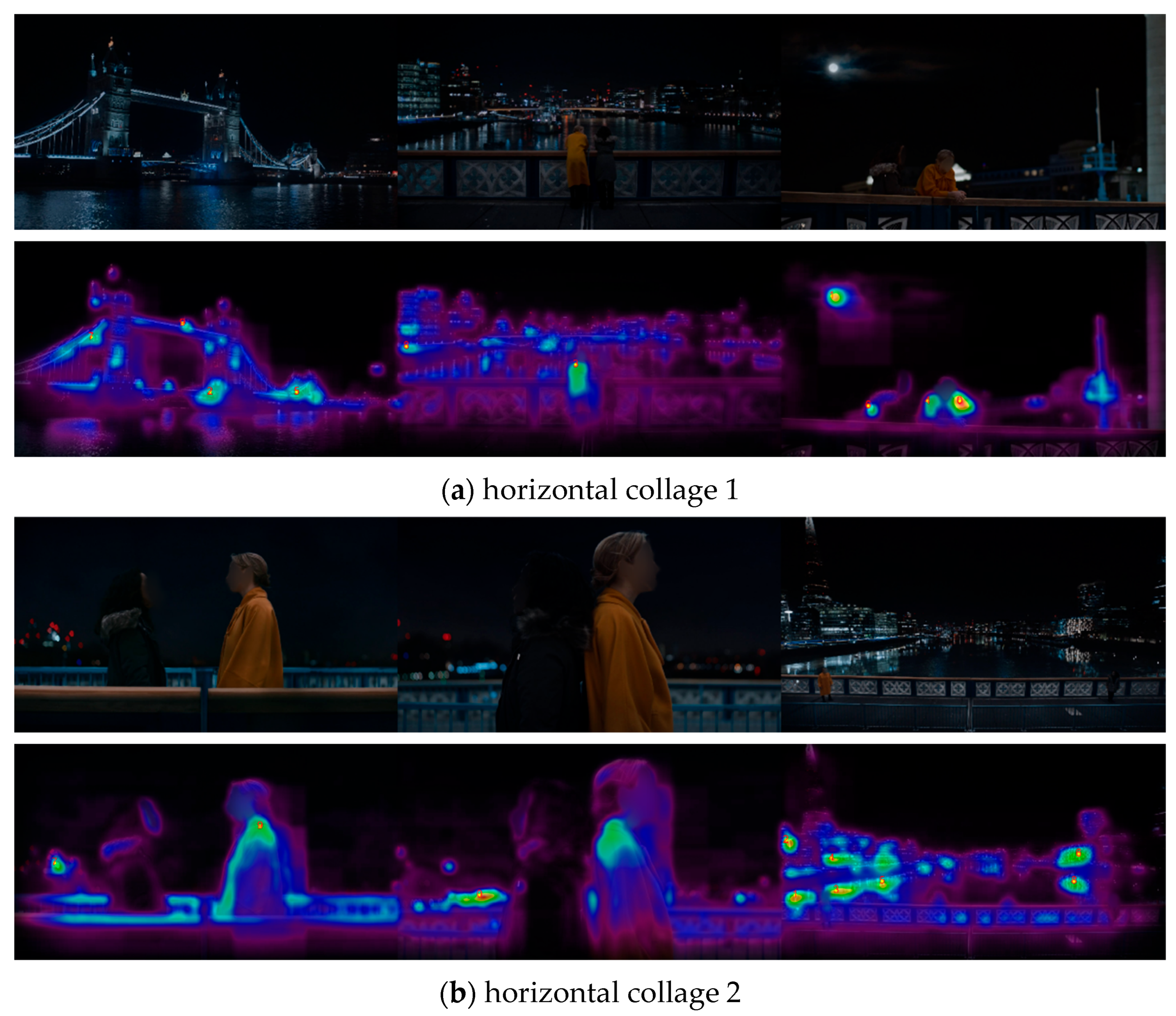
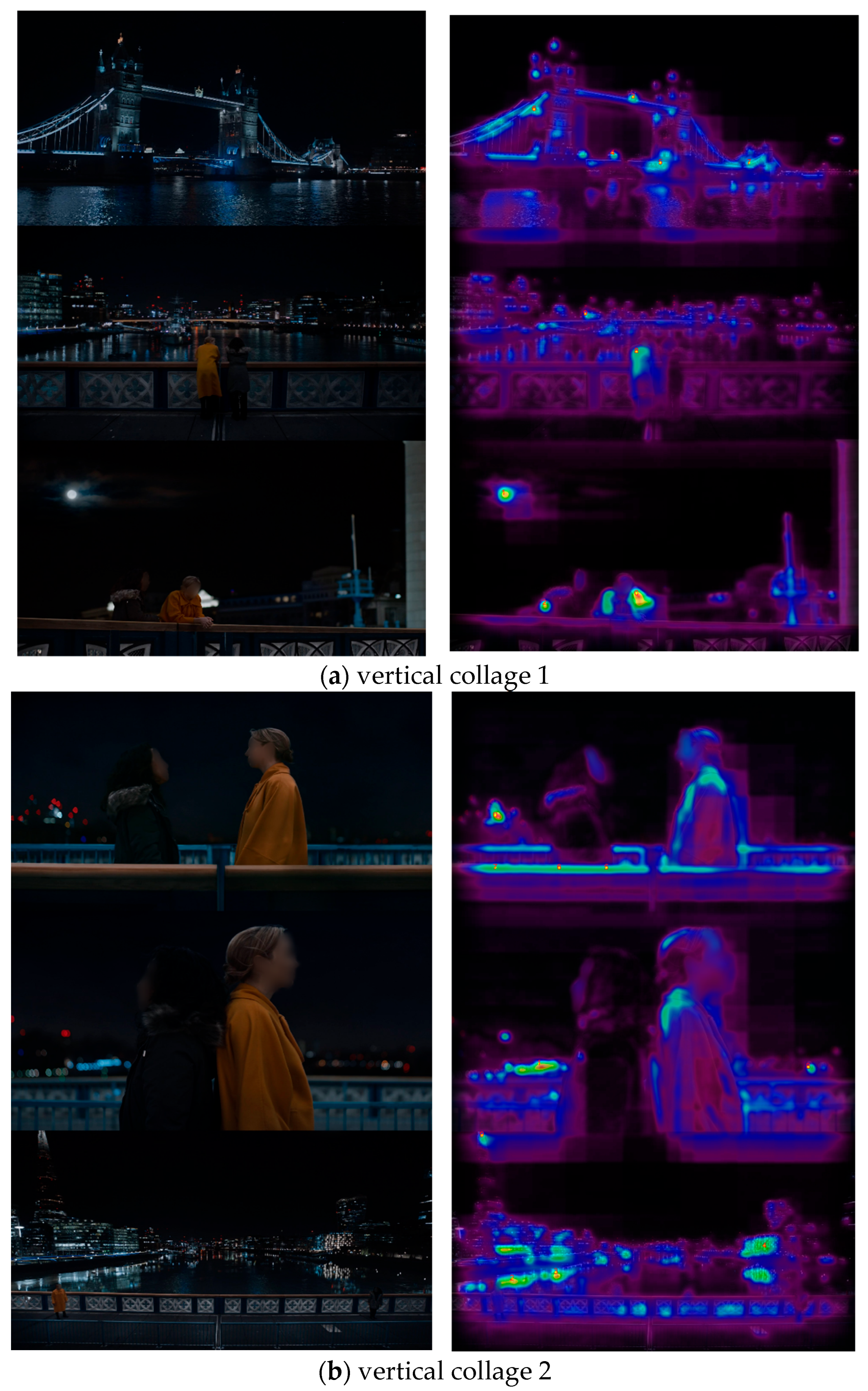
Saliency maps were generated using OGAMA (Open Gaze and Mouse Analyzer, version 5.1.7759), providing a theory-informed approximation of pre-attentive visual processing rather than a replication of empirical eye-tracking data. Simulated saliency modelling has been widely used to approximate attentional guidance mechanisms in situations where empirical eye-tracking data are not available, offering an analytically robust means of examining perceptual salience inherent in visual stimuli (
Duchowski, 2017;
Henderson & Hayes, 2017). The resulting maps indicate image regions most likely to attract early visual fixations, independently of narrative comprehension or conscious evaluation (
Itti & Koch, 2001).
Regions of high perceptual salience were subsequently identified and compared with the landscape elements most frequently articulated in the qualitative content analysis of viewers’ responses. This comparative procedure enabled the examination of correspondences and divergences between predicted perceptual salience and cognitively salient elements, supporting a process-oriented analysis linking visual attention and destination imagery.
The selection of visual stimuli was empirically grounded in viewer responses to the open-ended question. Across the 260 valid responses, a strong convergence emerged around the final scene of Season 3, Episode 8, set on Tower Bridge in London. Specifically, references to “Tower Bridge” appeared 19 times in the cleaned lexical corpus (relative frequency = 0.0139), ranking among the most frequently mentioned unique spatial referents in the dataset. Based on this quantitative convergence, the Tower Bridge sequence was selected as the focal scene for analysis. Six representative frames were extracted from this sequence, preserving spatial composition, character positioning, and architectural features referenced by participants. This data-driven approach to stimulus selection is consistent with qualitative research practices in which analytical materials are derived from participant-generated data rather than imposed a priori by the researcher (
Schreier, 2014).
In addition to this empirical grounding, Killing Eve constitutes an analytically suitable case for the present study due to its distinctive visual aesthetics, international urban settings, and cinematographic emphasis on architectural and landscape composition. The series is characterised by visually striking spatial contrasts, carefully framed urban environments, and recurrent use of iconic landmarks, thereby offering a rich visual context for examining perceptual salience and destination imagery processes from a neuroaesthetic perspective centred on visual perception and attention.
The use of audiovisual material in this study complies with ethical standards for academic research involving copyrighted media. Formal authorisation to reproduce selected still frames from the television series Killing Eve was requested and granted by the rights holder, FIFTH SEASON, on 15 July 2025. The permission covers the non-commercial use of selected frames from the final scene of Season 3, Episode 8 for academic research and publication purposes.
The extracted frames were conceptualised as narrative units rather than isolated still images. In addition to frame-level analysis, horizontal and vertical image collages were constructed to examine variations in predicted visual attention under different spatial aggregation conditions. This procedure allows visual attention to be examined within an integrated narrative context, reflecting the sequential and relational nature of audiovisual storytelling.
2.3. Analytical Procedures
The analysis followed an integrative, process-oriented procedure combining qualitative content analysis with visual attention modelling, in direct alignment with the study’s objective of examining how mediated landscapes are perceptually and cognitively processed as destination imagery.
First, the open-ended responses were analysed using qualitative content analysis. This stage aimed to identify cognitively salient landscape elements articulated by viewers, reflecting the outcomes of early perceptual processing. Lexical extraction was conducted using DBGnosis, a software developed by Centre for Tourism Research, Development and Innovation (CiTUR), Polytechnic Institute of Leiria, resulting in an initial corpus of 2861 lexical units extracted from the questionnaire responses.
Following standard procedures in lexical and qualitative analysis grounded in Zipf’s Law, high-frequency grammatical words, commonly referred to as stop words, were removed to prioritise semantically meaningful content (
Piantadosi, 2014). This step ensured that subsequent analyses focused on conceptually relevant lexical material rather than structural features of language. The dataset was subsequently standardised through a multi-step cleaning process, including case normalisation, removal of punctuation, manual exclusion of non-informative terms, and the unification of morphological variants through stemming using the Porter Stemmer (
Kirilenko & Stepchenkova, 2018). Targeted normalisation procedures were applied in specific cases, such as consolidating different lexical forms referring to the same narrative or spatial entity under a single label, in order to preserve semantic coherence.
After cleaning and standardisation, word frequencies were recalculated, resulting in a final dataset of 398 distinct and meaningful lexical units. The distribution of word frequencies was verified against Zipf’s Law, yielding a slope consistent with expected Zipfian patterns and thereby confirming the robustness and internal coherence of the lexical dataset (
Cardoso et al., 2024).
The refined lexical dataset was then categorised using NVivo (version 1.7.2), guided by a conceptual framework adapted from
Echtner and Ritchie (
1993) and
Cardoso et al. (
2019,
2020). The analysis focused on identifying recurring landscape-related elements and patterns of cognitive salience across responses, rather than on evaluative or affective judgements, in line with the study’s process-oriented focus.
Following lexical extraction and data cleaning, the analysis proceeded through a deductive qualitative content coding process. Lexical units were coded into predefined imagery categories based on a conceptual framework adapted from
Echtner and Ritchie (
1993), distinguishing functional and psychological dimensions as well as attribute-based and holistic representations, as commonly applied in qualitative studies of destination perception and mediated place meanings (e.g.,
Connell, 2012).
Coding was conducted using NVivo (version 13/R1/2020) software by a team of three researchers. The responsible for the overall analytical design coordinating the coding process and participating as one of the coders. All coders received detailed instructions regarding the imagery categorisation model, including formal definitions of each category and illustrative examples drawn from the dataset, in order to minimise interpretative ambiguity. After the individual coding tasks were completed, the coded files were integrated into a single dataset and submitted to an intercoder reliability assessment.
In cases where lexical units were consistently classified into a combination of two imagery categories, this combined classification was retained and included in the reliability analysis. Intercoder reliability was assessed using Krippendorff’s Alpha (
Hayes & Krippendorff, 2007;
Krippendorff, 2019), calculated using IBM SPSS Statistics (Version 30). The resulting Alpha coefficient (α = 0.86) exceeds commonly accepted thresholds for qualitative content analysis, indicating a high level of coding consistency and analytical reliability.
2.4. Methodological Considerations and Scope
This study adopts an exploratory, process-oriented design and is not intended to establish causal relationships between media exposure and tourism behaviour. Its contribution lies in advancing the conceptual and methodological understanding of destination imagery as a perceptual and cognitive process, rather than in predicting behavioural or evaluative outcomes.
The use of simulated visual attention modelling, as opposed to empirical eye-tracking data, reflects a deliberate methodological choice aligned with the study’s focus on early-stage perceptual salience. While this approach does not capture individual viewing behaviour, it provides a theory-informed approximation of bottom-up attention mechanisms inherent in the visual composition of the scenes.
Whereas simulated saliency modelling isolates stimulus-driven perceptual guidance, empirical eye-tracking would additionally allow examination of top-down influences, individual viewing strategies, and variability related to narrative engagement or prior experience.
The empirical focus on a single fictional audiovisual narrative limits the generalisability of the findings. However, this focused design enables a controlled and in-depth examination of mediated landscapes as visual and cognitive experiences, consistent with the exploratory aims of the study and providing a foundation for future comparative research across different narratives and media contexts.
4. Discussion and Conclusions
4.1. Integrated Interpretation of Findings
This study sets out to examine how landscapes depicted in fictional audiovisual narratives are visually attended to and cognitively processed as destination imagery, adopting a neuroaesthetic and process-oriented perspective. By integrating qualitative free recall data with simulated visual attention modelling, the research moves beyond outcome-driven approaches to media and tourism, offering an integrated account of the computationally modelled perceptual salience and the cognitive mechanisms underlying mediated place experience.
It is important to note that the following interpretations are grounded in a culturally specific empirical context, as the sample consisted exclusively of Brazilian residents, predominantly young adults; the findings should therefore be understood as context-bound rather than universally generalisable.
This article contributes theoretically by reframing mediated landscapes not as stable destination images, but as dynamic destination imagery processes emerging from the interaction between visual attention, emotion and narrative meaning.
The results confirm that landscape remains a core element of the tourism experience even in mediated and non-visit contexts, functioning as a visual and cognitive anchor through which places are imagined, emotionally engaged with and mentally structured. In fictional audiovisual narratives, landscapes do not operate merely as background scenery, but actively shape viewers’ perceptual engagement and imaginative involvement with place.
The findings indicate that mediated landscapes can be analytically described as unfolding through two complementary stages. At an early stage, bottom-up visual attention can be theoretically characterised as being guided by low-level visual features such as architectural form, luminance contrast and spatial orientation, which structure perceptual salience independently of narrative meaning (
Wolfe, 1994;
Itti & Koch, 2001). The simulated saliency analysis provides a model-based estimation of which elements are more likely to attract early visual attention based on these features. At a subsequent stage, qualitative content analysis shows that only a subset of these perceptually salient elements is retained and articulated as destination imagery through recall, imagination and narrative association, predominantly in psychological and attribute-based terms (
Echtner & Ritchie, 1993;
Cardoso et al., 2019). Taken together, these findings suggest a theoretically coherent relationship between model-estimated perceptual salience and cognitive recall, supporting a process-oriented view of destination imagery as selective, affectively charged and cognitively constructed rather than as a direct outcome of visual exposure.
This sequential relationship between model-estimated perceptual salience and cognitive recall suggests that visual prominence alone does not determine destination imagery formation. Instead, destination imagery emerges as a cognitively mediated construction shaped by the interaction between attention, emotion and narrative meaning in working memory (
Cardoso et al., 2019). Consistent with the image–imagery distinction outlined in
Section 1.3, this distinction between perceptual visibility and cognitive imagery constitutes a foundational theoretical contribution of the study. The findings reinforce the distinction between destination image as an evaluative outcome and destination imagery as a dynamic cognitive process.
Importantly, this integrated analysis situates the study within the emerging field of neurotourism by operationalising a neuroaesthetic perspective on mediated place experience. Neurotourism is here understood as the examination of how perceptual, attentional and cognitive mechanisms shape the experience of places encountered through visual stimuli rather than through physical travel alone. In this sense, neurotourism is mobilised not as a neuroscientific measurement agenda, but as a conceptual lens through which perceptual–cognitive processes of mediated place experience can be theorised and analysed. In this context, neuroaesthetics is not treated as the measurement of neural activity, but as an analytical framework concerned with how visual stimuli are perceived, attended to and emotionally processed, shaping cognitive experience (
Chatterjee, 2011).
In direct response to the research question, the findings indicate that landscapes in fictional audiovisual narratives are computationally modelled as perceptually salient through bottom-up visual features, and subsequently cognitively processed as destination imagery through selective recall, imagination and narrative embedding. Overall, mediated landscapes emerge not as holistic destination images, but as selectively organised experiential constructs shaped by attention, emotion and narrative meaning.
4.2. Theoretical Implications
This research contributes to tourism theory by reinforcing a process-oriented understanding of destination perception, in which mediated landscapes are approached not as promotional stimuli or image-building tools, but as visual and cognitive experiences. By foregrounding attention, perceptual salience and narrative framing, the study shifts the analytical focus from behavioural outcomes to the underlying mechanisms through which places are mentally structured and experienced. This perspective extends existing work on film-induced tourism by reorienting analysis towards perceptual and cognitive processes that precede evaluation, intention or visitation.
By doing so, the study explicitly challenges outcome-driven and marketing-oriented paradigms that dominate film-induced tourism research.
The findings also strengthen the theoretical relevance of the destination imagery construct by empirically demonstrating how destination imagery can be accessed through spontaneous recall rather than through evaluative judgement. The predominance of psychological and attribute-based imagery indicates that mediated place experience is organised around selective, emotionally charged elements, rather than holistic or comprehensive destination representations. This provides empirical grounding for treating destination imagery as a dynamic cognitive process rather than a post hoc evaluative representation.
Beyond reinforcing individual theoretical constructs, the study contributes by integrating multiple strands of theory that are rarely articulated together within tourism research. By bringing destination imagery theory into dialogue with visual attention models and neuroaesthetic perspectives, the research offers an interdisciplinary framework for understanding mediated landscapes as perceptual–cognitive experiences. This integration reflects an explicitly interpretive and process-oriented epistemology concerned with how mediated place experience is cognitively assembled rather than predicted.
Finally, the incorporation of simulated visual attention modelling contributes to the theoretical consolidation of neurotourism as an emerging field of inquiry by demonstrating how computational modelling of perceptual salience can inform process-oriented tourism theory. Rather than equating neurotourism with neuroscientific measurement or behavioural prediction, the study demonstrates how neuroaesthetic concepts can be operationalised through the analysis of attention and imagery processes. In doing so, the study positions neurotourism as a theoretically grounded approach concerned with how perceptual and attentional mechanisms, together with higher-order cognitive processing, shape mediated place experience, extending tourism theory beyond marketing-oriented or outcome-driven paradigms.
4.3. Methodological Implications
Methodologically, the study demonstrates the value of integrating qualitative and computational approaches to investigate mediated visual experience. The combination of free recall analysis and saliency-based modelling provides complementary insights into what viewers report as cognitively salient and what is computationally estimated as perceptually salient, offering a replicable framework for process-oriented tourism research.
The use of simulated visual attention modelling, rather than empirical eye-tracking, represents a deliberate methodological choice aligned with the study’s focus on early-stage perceptual mechanisms. While simulated saliency maps do not capture individual gaze behaviour, they provide a theory-informed approximation of bottom-up attentional guidance inherent in visual stimuli, allowing perceptual salience to be examined independently of narrative comprehension or conscious evaluation.
Rather than a methodological compromise, this choice enables analytical separation between perceptual salience and higher-order cognitive interpretation.
Furthermore, the use of image collages as analytical units strengthens the robustness of the findings by highlighting stable and recurrent model-estimated perceptual patterns across multiple frames, reducing the likelihood that identified salience effects are artefacts of momentary or frame-specific configurations. This approach offers a valuable methodological strategy for future studies of audiovisual narratives characterised by temporal continuity and complex visual composition.
4.4. Practical Implications
Although this study does not aim to inform destination marketing or predict tourism behaviour, it offers conceptual reflections that may be of interest to practitioners engaged in media production, place-making and destination management. These reflections are derived from the perceptual and cognitive processes identified in the analysis and should be interpreted as interpretive insights into mediated place experience rather than as prescriptive managerial guidelines.
The findings suggest that certain landscape elements, particularly architectural structures, spatial contrasts and visually distinctive features, function as perceptual anchors that are more likely to be attended to and later remembered, even when tourism is not an explicit objective. For destination managers and urban planners, this implies that the experiential visibility of a place is shaped less by comprehensive spatial representation and more by selective, visually salient elements that structure attention and memory.
For audiovisual content producers, the results highlight how visual composition, lighting, framing and spatial orientation can unintentionally contribute to the symbolic and emotional significance of places depicted on screen. Fictional narratives may therefore play a role in shaping place meanings and memories even when destinations are not deliberately promoted.
More broadly, these insights are relevant for cultural institutions and creative industries involved in place representation, heritage interpretation and urban storytelling, suggesting that mediated landscapes can acquire cognitive and emotional significance through perceptual salience and narrative embedding rather than through explicit promotional intent.
By clarifying how perceptual salience structures cognitive recall, this study also offers implications for strategic place communication. Destination managers may benefit from recognising that mediated visibility does not depend on holistic representation but on the repeated visual foregrounding of specific spatial elements that function as cognitive anchors. Similarly, audiovisual producers and location planners may consider how visual composition, spatial framing and lighting conditions shape the memorability of landscapes beyond explicit promotional intent. These insights suggest that mediated place experience is shaped less by explicit messaging and more by perceptual design, reinforcing the relevance of attention-based perspectives for tourism management and creative industries.
4.5. Limitations and Future Research
As an exploratory study, this research has several limitations that open avenues for future investigation. The empirical focus on a single television series and a single narrative sequence limits the generalisability of the findings. Future studies could apply the proposed framework across different genres, cultural contexts and media formats to examine how perceptual and cognitive patterns vary.
Although free recall is theoretically consistent with the conceptualisation of destination imagery as a dynamic working-memory process, the use of a single open-ended question primarily captures the most salient and readily verbalised imagery fragments at the moment of retrieval, rather than providing an exhaustive mapping of all activated mental associations. Future research could complement free recall with additional elicitation techniques in order to explore more fully the structure and organisation of destination imagery processes.
In addition, the sample consisted exclusively of Brazilian residents, predominantly young adults, and cultural background may influence visual attention, emotional resonance and the cognitive articulation of mediated landscapes. The findings should therefore be interpreted as context-bound rather than universally generalisable, and future research could examine how different cultural and demographic contexts shape destination imagery processes.
The reliance on simulated visual attention modelling represents another limitation. While appropriate for examining bottom-up salience, saliency maps provide computational approximations of perceptual conspicuity rather than direct measurements of human gaze behaviour. Future research could therefore combine saliency modelling with empirical eye-tracking data to explore how model-estimated perceptual salience corresponds to, diverges from, or interacts with individual viewing strategies, narrative engagement and prior knowledge. Such comparative designs would allow a more precise examination of the relationship between stimulus-driven visual features and actual perceptual behaviour. These limitations point less to methodological shortcomings than to unresolved theoretical questions regarding how attention, memory and imagination interact in mediated environments.
Finally, further research could deepen the integration between perceptual and cognitive analyses by systematically comparing model-identified salient regions with recalled imagery elements, thereby advancing a more fine-grained understanding of how attention, memory and imagination jointly contribute to destination imagery formation.




 ,
,