Article

Experiencing Biodiversity in Upper Secondary Education and Botanical Gardens Through a Novel Karyotype-Based Educational Approach Using the Genus Tulipa L. as a Model


1
Laboratory of Systematic Botany, Faculty of Crop Science, Agricultural University of Athens, Iera Odos 75, 11855 Athens, Greece
2
Agios Stefanos Lyceum, Ag. Sotiros 1, 14565 Agios Stefanos, Greece
3
Laboratory of Ecology, Faculty of Biology, Aristotle University of Thessaloniki, 54124 Thessaloniki, Greece
4
Institute of Plant Breeding and Genetic Resources, Hellenic Agricultural Organization Demeter, Thermi, P.O. Box 60458, 57001 Thessaloniki, Greece
5
Department of Viticulture, Floriculture & Plant Protection, Institute of Olive Tree, Subtropical Crops and Viticulture, Hellenic Agricultural Organization-Demeter (ELGO-Dimitra), 71307 Heraklion, Greece
6
Wild Tulip Specialist Group, IUCN Species Survival Commission, International Union for the Conservation of Nature, IUCN Headquarters, Rue Mauverney 28, 1196 Gland, Switzerland
7
Institute of Agri-Food and Life Sciences, Research Center of the Hellenic Mediterranean University, 71410 Heraklion, Greece
*
Authors to whom correspondence should be addressed.
J. Zool. Bot. Gard. 2026, 7(1), 13; https://doi.org/10.3390/jzbg7010013
Submission received: 13 January 2026 / Revised: 5 February 2026 / Accepted: 19 February 2026 / Published: 23 February 2026

Abstract

This study presents an innovative and interdisciplinary didactic approach for teaching biodiversity to high school students, aiming to enhance basic learning skills and promoting deeper understanding of biological concepts. The designed educational proposal aims to support policy-driven collaboration between schools and botanical gardens within the framework of coordinated and long-term educational policies. The intervention was designed to cultivate both cognitive and metacognitive skills within three (3) didactic hours, offering a holistic learning experience through the study of Tulipa members used as an alluring model. A total of 168 Greek first- and second-grade high school students (on average 16 years old) participated in the study. Biodiversity was examined in a multidisciplinary fashion, focusing on species’ diversity (phenotypic), genetic-karyological diversity, and habitat diversity. The core components of the approach included: (a) the completion of a corresponding worksheet module, which effectively engaged students in the learning process using the 5E didactic model, and (b) a karyotype lab experiment using living Tulipa specimens. The learning process was evaluated through two questionnaires assessing the acquisition of scientific knowledge and behavioral outcomes. The results showed a positive impact on students’ understanding regarding the genetic material and biodiversity, with the karyotype experiment playing a key role in achieving high performance in both cognitive and affective learning objectives. Knowledge scores were higher in the second-grade students (53–73%) than in the first-grade students (44–69%) of high school, especially regarding concepts such as karyotype applications and biodiversity-ecosystem balance. The karyotype experiment positively correlated with both the evaluation of the intervention and the shifts in biodiversity beliefs (Pearson’s r = 0.649, 0.515; p < 0.05, respectively). The modeled inquiry-based approach with living tulips and karyotype experiments can help schools and botanic gardens counteract plant blindness by enhancing cognitive and affective learning outcomes within a limited instructional timeframe.

1. Introduction

Biodiversity plays a vital role in education by fostering the knowledge, skills, and attitudes necessary for society to address its responsibilities towards sustainability [1], with formal public education widely acknowledged as a crucial tool for promoting biodiversity awareness [2]. Educational research indicates that encouraging responsible environmental behavior does not derive from knowledge of conceptions alone [3], but rather from learning experiences that promote the development of personal, affective, and collective learning skills [4,5,6]. In this context, environmental education as provided through national school curricula gradually evolves into education for sustainable development [7], emphasizing the understanding of biodiversity as a fundamental concept [8].
In response to the growing environmental concerns and global biodiversity loss, botanic gardens have increasingly redefined their mission since the second half of the twentieth century. Botanic gardens function to date as mediators between scientific knowledge and society, prioritizing environmental sustainability, biodiversity conservation, and climate change adaptation [9,10,11,12,13,14,15,16]. They are centers of scientific research, formal and informal education, and public learning, with a particularly significant role in fostering environmental literacy [17]. Their educational function is further reinforced through collaborations among governments, non-governmental organizations, and scientific institutions aimed at promoting sustainability and reducing species and habitat loss [18].
It is now well established that plant conservation cannot succeed without environmental awareness deriving from relevant formal education. Several studies have established that species identification, interest in nature, and experiential learning are crucial in promoting comprehension of biodiversity [19,20,21,22,23,24,25]. Educating students about: (a) the concept of biodiversity [26,27,28,29,30,31,32,33,34]; (b) biodiversity’s significance [35]; (c) ecosystem diversity including local ecosystems [28,31,32]; (d) species identification [30,31], and (e) the structure, function and dynamics of ecosystems [27,32], constitute an essential cognitive process [36]. However, while species identification is commonly addressed in biodiversity education, the concomitant genetic diversity has received comparatively less attention, with school curricula focusing mainly on ecological and macroscopic perspectives [23,25,37,38,39,40,41,42,43,44,45,46]. The latter is often combined with plant blindness—the widespread tendency to overlook plants and underestimate their ecological, cultural, and esthetic importance [47]. In this study, botanic gardens represent educational environments capable of communicating the importance of plants to human well-being and global ecosystems [48]. As major public learning spaces with high outreach potential, botanic gardens employ both on-site and digital didactic strategies to engage diverse audiences and promote social inclusion [10,49,50,51]. Their unique role as educational ecosystems complements classroom-based instruction by enabling direct engagement with living plant diversity and authentic cytogenetic observation opportunities that are largely absent from formal secondary education. Innovative experiential learning approaches—such as interactive sustainability education and utilization of landscape narratives—may further enhance visitor engagement and foster pro-environmental behavior [52,53]. Botanic gardens have also been identified as potentially effective educational settings for counteracting plant blindness through their taxonomic and conservation-oriented practices [47,54]. However, their educational impact still remains limited [55,56,57,58,59], failing to meet contemporary educational expectations [60,61].
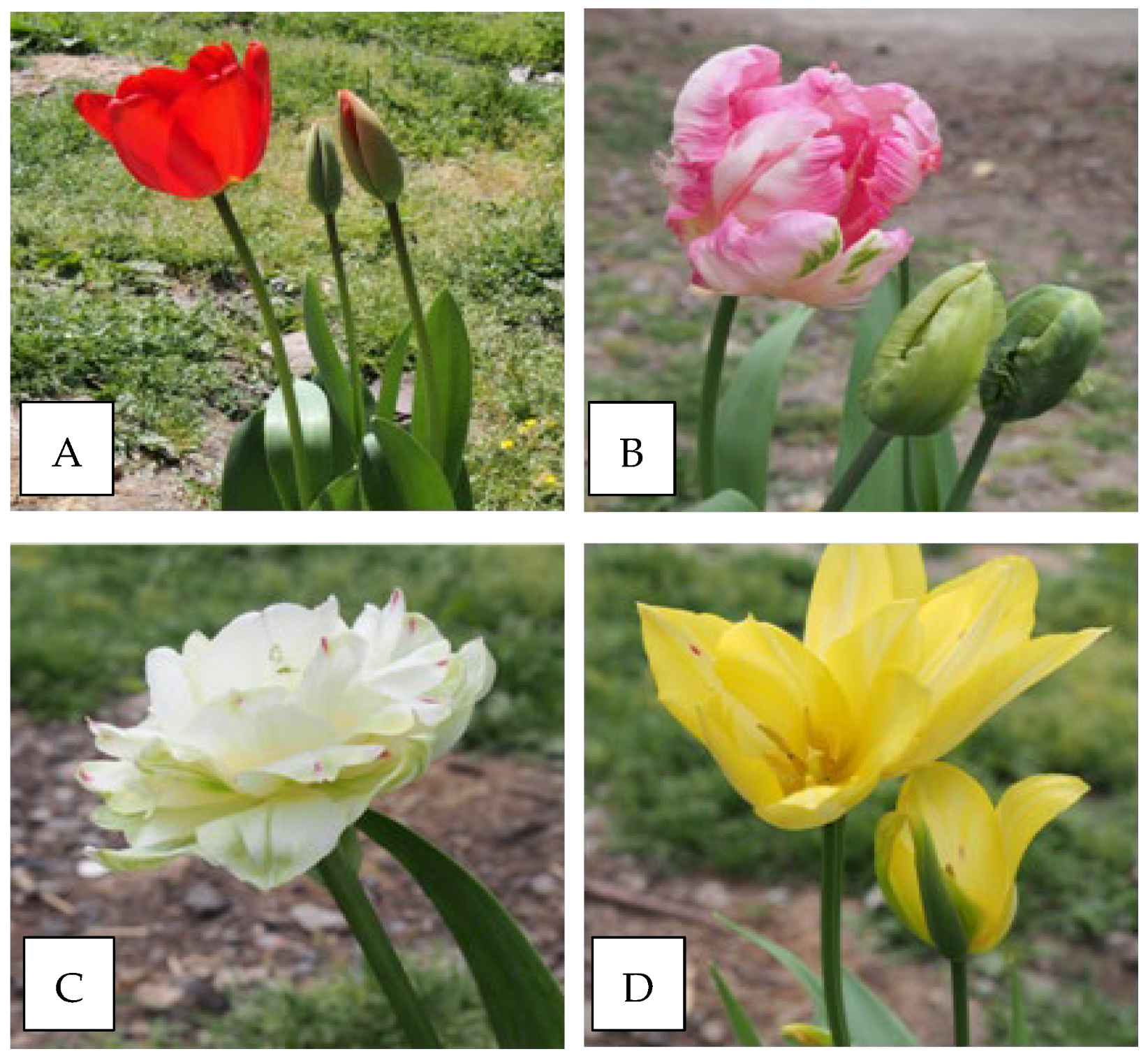
Upon encountering the vast expanse of biological diversity, the variety of genetic material, and the remarkable adaptability of organisms to diverse habitats, one cannot help but feel awe upon observing the chromosomes of a living organism. This sense of wonder may further deepen when one focuses on tulips (Tulipa spp.)—a captivating group of plants with a rich history and global appreciation. This attractive plant group boasts approximately one hundred species worldwide (https://powo.science.kew.org/, accessed on 13 January 2026), along with over 8000 natural or artificial hybrids originating from primitive varieties through the longstanding crossbreeding efforts of dedicated horticulturists driven by the desire to cultivate the most exquisite cultivars [62]. This study proposes that Tulipa, a plant group with strong interest for scientists, horticulturists, and lay people, can be effectively used as a model genus for teaching biodiversity concepts in secondary schools and/or in botanic gardens. From a historical perspective, the wild origin of tulips traces back to the mountainous regions of the Pamir Alay and the Caucasus region in the Orient, radiating to neighboring regions such as the mountainous territories of the Balkans, including Greece. Through assisted migration by humans, these plants along with their unique and large genomes (ca. 32–24 Gb) have naturally adapted to thrive in diverse environments from the Siberian steppes to the African deserts, and from the Far East and Near East to the Mediterranean region, but also commonly found in botanic gardens, home gardens and parks worldwide as ex situ cultivated plants [63,64]. The large, well-defined chromosomes and stable basic chromosome number (x = 12) of tulips allow clear karyotype analysis and illustrate how genetic and phenotypic diversity can arise from karyotypic variation. With extensive phenotypic and genotypic variability, Tulipa as a model offers an ideal platform to explore genetic variability, diversified species, and habitat/ecosystem diversity. The cultural familiarity and aesthetic appeal of tulips further enhance student engagement, compared to less familiar plant taxa. With distinct beauty and allure, tulips have captivated artists throughout history and served as recurring motifs in art and literature worldwide [63].
Along with the proposed model organism (tulips), the novelty of this study lies in its interdisciplinary didactic approach to biodiversity. The complexity of the concept requires the integration of concepts across different scientific domains [65,66] with the concurrent exploration of karyotypic, phenotypic, and habitat-level diversity explored through hands-on karyotype experimentation. Rather than treating cytogenetics and biodiversity as separate topics, the proposed learning sequence deliberately connects chromosomal variation to phenotypic diversity and species distribution, thus offering a multi-level framework for understanding biodiversity. Through the proposed interdisciplinary, experiential learning activities—such as visually analyzing Tulipa’s karyotypes, narratively examining its distribution (including ranges of different species) and cultural significance worldwide, and actively engaging in karyotype lab experiments—students can develop essential 21st century learning skills, while gaining a deeper, holistic understanding of biodiversity [67,68,69].
In this context, the educational approach in the present study aimed at exploring the following challenge: “Using Tulipa as a model, how well can students understand biodiversity within three didactic hours in high schools and/or in botanic gardens?”. The study was implemented at secondary formal education (high schools), but it is equally applicable within botanic gardens settings, especially when combined with school visits to botanic gardens in spring during the flowering period of tulips. The pivotal educational approach addresses biodiversity at the genetic, species, and ecosystem diversity levels, using the plant genus Tulipa L. as a model for promoting understanding and conservation of biodiversity, with the scope to be further integrated into programs implemented at schools and/or within botanical garden settings. Overall, the study proposes an educational framework aligned with the institutional and legal framework concerning biodiversity protection and the integration of environmental education and botanical gardens (see Supplementary Materials, Note S1), and the educational role of botanical gardens and their primary aim of understanding, documenting, and conserving biodiversity. All proposed teaching methodology supports sustained and structured collaboration between schools and botanical gardens, moving beyond isolated initiatives towards a systematic and long-term instructional design.

2. Materials and Methods

2.1. Overarching Concept

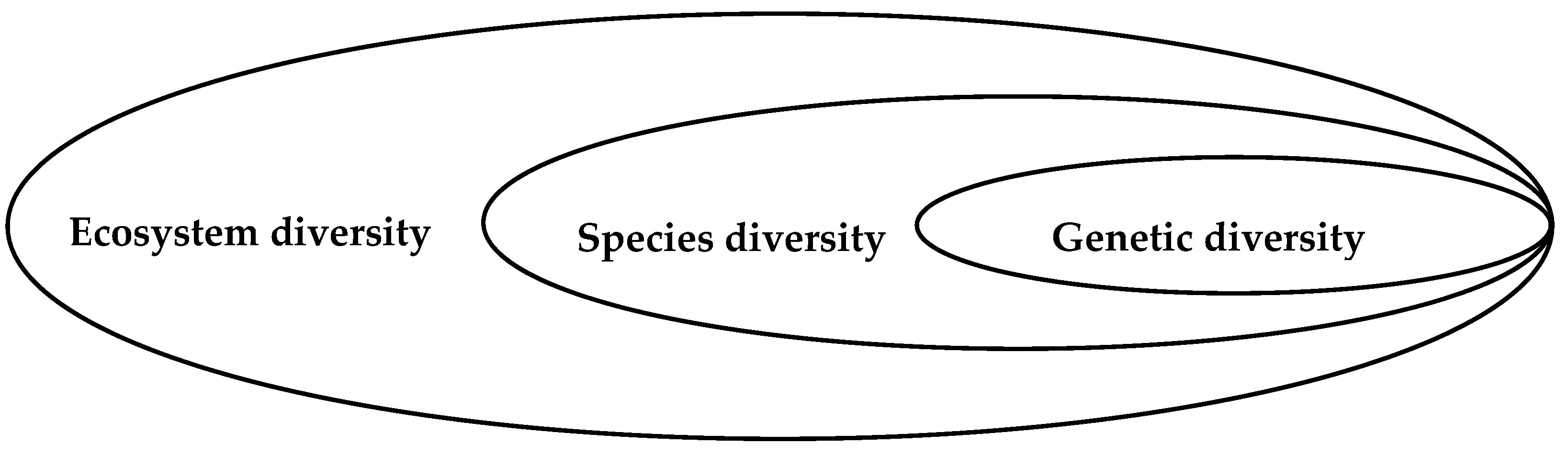
The present study introduces a didactic methodology for teaching the concept of biodiversity alongside the structure and function of genetic material by examining the phenotypic and karyotypic variation in Tulipa spp., a widely recognized group of ornamental plants. The research incorporates both quantitative and qualitative variables to analyze the relationship between students’ knowledge and attitudes regarding the concept of biodiversity and Tulipa, as well as their correlation to a karyotype laboratory experiment. The approach encompasses the three basic levels of the biodiversity concept [1], i.e., genetic diversity (interspecies diversity), species diversity (species richness), and ecosystem diversity (Figure 1). By studying Tulipa’s karyotype, students can explore and understand the interconnected levels of biodiversity in a practical and engaging manner.

2.2. Population Characteristics, Sample Size, and Period of Implementation

The study was conducted over two academic years in a public Greek General Upper Secondary School (Lyceum). Students came from similar socio-economic backgrounds and from the same urban region of metropolitan Athens, a city with several botanic gardens often visited by high schools (e.g., Dimomides Botanical Garden, National Garden, Botanical Garden of the University of Athens, Mediterranean Garden Society at Sparoza, Attica). In the first year (2023–2024), a total of 118 students participated in the study, while in the second year (2024–2025), 65 additional students participated (Table 1). Regarding gender, 38.80% of the participants were biological boys and 61.20% were biological girls. Among the participants, 36.10% were first-grade students enrolled in 2023 (A_23), 28.40% were second-grade students enrolled in 2023 (B_23), and 35.50% were first-grade students enrolled in 2024 (A_24). Overall, 71.60% were first-grade, and 28.40% were second-grade students, while 64.50% of the sample belonged to the academic year 2023 and 35.50% to that of 2024. The inclusion of students from both grades was deliberate to ensure the population sample’s representativeness [70,71]. The absence of third-grade high school students is attributed to the fact that Biology as a subject is not included in the curricula of all orientations of this grade. Concerning the current field of study or the future academic orientation, 32.80% of the students stated selection of humanities-oriented studies, 61.20% selected basic sciences orientation, while 6.00% provided no or unspecified information. The didactic intervention was carried out in three didactic hours (45 min each) scheduled in accordance with the formal school timetable.

2.3. Development of Instructional Design

The primary goal of the teaching intervention was to integrate the understanding of genetic material with fundamental knowledge of biodiversity, using Tulipa as the overarching conceptual framework. Our pedagogical approach was designed in accordance with the objectives of all existing national Curricula (G.G. 1366/Issue B’/18-10-2001, 1373/Issue B’/18-10-2001, 1374/Issue B’/18-10-2001, 1375/Issue B’/18-10-2001, 1376/Issue B’/18-10-2001, G.G. 5341/Issue B’/17-11-2021). According to the 2001 Biology Curriculum, students in the first and second years of high school (Lyceum) are expected to have acquired fundamental genetic knowledge during lower secondary education (Gymnasium) (See Supplementary Materials, Box S1). This supports an emerging conceptual understanding of biodiversity grounded in genetics and evolution.
In alignment with the general principles and learning goals of the National Curriculum of the first and second grade of General Upper Secondary School (Lyceum) (Official Government Gazette, Issue B’ 138/18.01.2023), the study addressed the following cognitive (a, b) and behavioral (c) teaching goals:
a.
Cognitive objective: To enable students to develop comprehensive knowledge of the structure and function of genetic material as a fundamental component of living organisms;
b.
Awareness-related objective: To enable students to develop awareness of biodiversity and its importance in biological/ecological systems;
c.
Attitudinal and behavioral objective: To foster attitudes and behaviors that promote appreciation of biodiversity and highlight its essential role in sustaining life on Earth.
Building on this framework, and in accordance with the 2021 Biology Curriculum [72], in which biodiversity protection is identified as a central educational objective across all grades of upper secondary education, emphasizing the relationship between genetic information, biodiversity, and evolution, the instructional design focused on four core learning objectives (see Supplementary Materials, Box S1):
(a)
Understanding the structure, function, and transmission of genetic material (DNA, RNA, genes, and chromosomes);
(b)
Explaining inheritance, genetic variation, and basic Mendelian principles;
(c)
Distinguishing between mitosis and meiosis and understanding their role in genetic continuity and diversity; and
(d)
Recognizing the importance of genetic diversity and biodiversity conservation, including the impact of environmental degradation on species diversity.
The instructional design took into consideration previous students’ knowledge, ideas, and misconceptions [29,30,33,73,74,75,76,77,78,79,80,81,82,83]. It was based on a constructivist model proposed by several authors [35,84,85,86] as implemented in previous studies [87,88,89,90]. This process included a series of instructional sequences and steps, which provided a framework for guiding students through the various stages of the learning process, culminating in the laboratory experiment of karyotyping (Table 2). The teaching strategy was structured according to a defined instructional sequence; it began with a theoretical phase, during which students were introduced to the key concepts underpinning the topic through guided instruction and discussion (Phase 1: Problem analysis and Phase 2: Learning goals). Theory was followed by an experimental phase, in which students actively engaged in hands-on activities designed to explore and apply theoretical concepts in practice (Phase 3: Scaffolding strategy). The intervention concluded with a discussion phase, allowing students to reflect on their observations, interpret experimental results, and connect their findings to the initial theoretical framework (Phase 4: Instructional implementation overview). This sequential design (theory → experiment → discussion) was implemented to support conceptual understanding and ensure the reproducibility of the intervention. In total, nine (9) curricula-related learning goals were pursued, spreading in all phases of the intervention (Table 2).

2.4. Teaching Strategy, Conceptual Framework, and Students’ Learning Skills

The teaching strategy encompassed two complementary approaches. The first one interpreted the structure and function of genetic material through a reductionist analysis of its components. Simultaneously, a holistic approach was applied, examining these components within the context of their interactions. This dual framework, widely used in genetics, evolutionary biology, and ecology, leads to a deeper understanding of complex biological concepts such as biodiversity [91].
Inquiry-based and guided discovery learning activities formed the core of the intervention, relying on students’ prior experiences and encouraging observation, comparison, measurement, classification, generalization, and hypothesis testing. Classroom and laboratory tasks were structured to reflect student interests and to be completed incrementally through multidisciplinary collaboration. Key concepts were explored in the classroom in accordance with the scaffolding strategy using a spiral learning model, progressing from specific to general concepts, and from simple and familiar to complex and unfamiliar content, followed by practical application in the laboratory. All educational activities promoted the lifelong development of 21st century learning skills, such as creativity, collaborative learning, analytical and synthetic thinking, and supported field-based and/or laboratory-based educational practices, making them suitable for implementation in botanic gardens. It should be noted that implementing such educational activities in the multi-sensory environment of a botanical garden is expected to maximize the development of students’ skills and, therefore, can promote even deeper experiential learning.
The following pedagogical principles, which are critical for personal development and effective learning, were applied:
  • Conceptual understanding and meaningful learning occur when new information is built upon prior knowledge, experiences, and cognitive frameworks;
  • New concepts are either assimilated into existing knowledge or lead to the modification of cognitive frameworks (accommodation);
  • Students’ misconceptions are particularly valuable for fostering cognitive conflict and facilitating conceptual change;
  • Teaching should engage students in an active, continuous process of knowledge construction, encouraging initiative and participation;
  • Group work enhances learning through cognitive interaction, idea exchange, argumentation, and reflection [92].
In regard to the teaching workflow and student involvement, worksheet-based reasoning process began with intuitive or experiential observations and progressed to evidence-based conclusions (see Supplementary Materials, Box S2). Effectiveness increased as students transitioned from theoretical understanding to empirical practice, through experimentation. The instructional strategy focused on solving a concrete problem—constructing a karyotype and interpreting the information it provides. The experiment enabled students to draw associations and cultivate environmentally conscious attitudes toward biodiversity conservation. The tulip, as a study subject, was examined across hierarchical levels of biological organization—gene, cell, organism, population, species, and ecosystem. As the analysis progressed upward, new properties emerged, some of them partially explainable by lower-level interactions. The laboratory component also provided a preview of the scientific method and demonstrated the processes underlying biological principles and laws. It cultivated essential scientific skills such as observation, measurement, classification, and hypothesis generation. Group work during the karyotyping experiment reinforced learning through cognitive interactions, idea exchange, and argumentation. Students connected the hands-on experiment with the multisensory exploration of tulips, encompassing phenotypic, karyotypic, and environmental diversity. Additional in-depth information was acquired concerning the structure and function of genetic material, the diversity of different tulips and hybrids at both karyotypic and species levels, and their ecological adaptations. Historical and economic aspects regarding the tulip’s cultural role were also included. Visual documentation of Tulipa habitats in Greece helped bridge classroom learning with real-world natural phenomena, enhancing students’ understanding of wider biodiversity levels and their ability to study natural and social environments. The use of visual aids stimulated student interest, allowed the teacher to adapt instruction dynamically, and enabled exploration of otherwise inaccessible topics. This multi-sensory problem-solving process leveraged existing knowledge to arrive at solutions, resulting in a deeper understanding.

2.5. Structure and Focus per Didactic Hour

The teaching intervention lasted three (3) didactic hours. It was structured as follows:
(a)
First hour: Introduction to the organization of genetic material, from molecules to chromosomes, with emphasis on the relationship between structure and function. The concepts of mitosis and meiosis were introduced to support comprehension.
(b)
Second hour: Presentation of the historical dissemination of tulips, their cultural and economic significance, and their remarkable diversity and range, using an extensive photographic archive. This stage prompted students to confront a fundamental cognitive conflict: despite the diversity of species, they all belong to the genus Tulipa, thus highlighting commonalities among them and a common genetic background.
(c)
Third hour: Execution of the karyotyping experiment and completion of a corresponding worksheet-module. The 5E didactic model was followed [93,94], offering first-hand experience in observing the chromosomes of a living organism in real time.
The objective of the first teaching hour learning activities was to clarify the two types of cell division (mitosis, meiosis) and the structure and organization of genetic material through non-visible structures, such as the DNA molecule, with transition to visible ones under a microscope, such as chromatin fibers, chromosomes, and sister chromatids. In designing these activities, it was necessary to adapt the content to the cognitive level of secondary school students. One limitation of the study relates to the required simplification of genetic concepts to align with the cognitive level of secondary school students. Consequently, the learning activities focused on basic chromosomal features and numerical relationships, while more complex genetic and molecular aspects of mitosis and meiosis were not addressed in depth. This content-related constraint may limit the extent to which the findings can be generalized to more advanced educational levels. In addition to these content-related considerations, it should be acknowledged that part of the observed learning gains may also be influenced by factors such as the novelty of the laboratory-based activity and the facilitating role of the teacher, elements that are inherent to experiential educational settings.
Initially, the focus was on understanding how a fully complete organism develops from a single cell, the zygote, which originates from the fertilization of an ovule by pollen in plants (or of an egg by a sperm in animals). Students recalled the form (double helix) and structure (four different nucleotides, genes, chromosomes) of DNA, which remains consistent in differentiated cells derived from successive mitotic divisions. It was emphasized that the number of chromosomes is characteristic of each species and remains constant across all cells except for gametes, which have half the chromosome number.
The process of gamete formation through meiosis was then discussed, highlighting the halving of the chromosome number to ensure that the zygote and all other cells of the organism maintain the species-specific chromosome number. It was further emphasized that different species vary in chromosome number, chemical composition, and allelic genes. Karyograms of different organisms were employed to introduce the concepts of homologous chromosomes, maternal and paternal origin, allelic genes, DNA structure, chromatin fibers, DNA replication, cell cycle, and sister chromatids. The cell cycle was illustrated, highlighting its stages and phases of cell division. In an isolated image of a chromosome, the location of allelic genes on pairs of homologous chromosomes from both maternal and paternal origin was identified.
Students practiced with a worksheet using a Tulipa karyotype for counting chromosomes. The learning activities developed linguistic, social/cooperative, and numerical skills. They included observing differences in size and centromere position, and performing simple calculations, such as determining the number of chromosomes, sister chromatids, and DNA molecules in metaphase of mitosis, as well as the number of chromosomes and DNA molecules in meiosis. Through this practice, students’ prior knowledge was integrated with new learning, resulting in conceptual change that contributed to meaningful understanding [95].
During the second teaching hour, students were introduced to the fascinating journey of the tulips through space and time via a storytelling activity that combined linguistic and visual stimuli. For example, in Greece alone, there are 15 wild-growing species according to the official website of the Vascular Flora of Greece: an annotated checklist (http://portal.cybertaxonomy.org/flora-greece/, accessed on 13 September 2025), while over 8000 hybrids have been developed worldwide. Narration is a high-efficiency didactic tool, especially in environmental education at school settings or in botanic gardens, as it engages emotions and attitudes to make learning scientific concepts memorable [96]. Historical milestones were highlighted, and images of different species and varieties of tulips, along with their karyotypes, were presented in a comparative fashion. Students were introduced to the immense variability and adaptability of the tulips to a wide range of natural and human-modified environments, the associated influence on human history, and the role of humans in spreading their cultivation worldwide. At this stage, the concept of biodiversity was introduced at three levels -genetic, species, and ecosystem (Figure 1). The following question was posed: “How is it possible for such different plants, even with different chromosome numbers, to be tulips?”. In the context of upper secondary education, carefully selected questions of this type may explicitly connect students to their prior conceptions and explore evidence that builds ideas in a constructivist manner [97]. Students became dissatisfied with their existing mental scheme and gradually understood the common basic chromosome number and possibly allelic genes among the different tulip species, through a cognitive conflict.
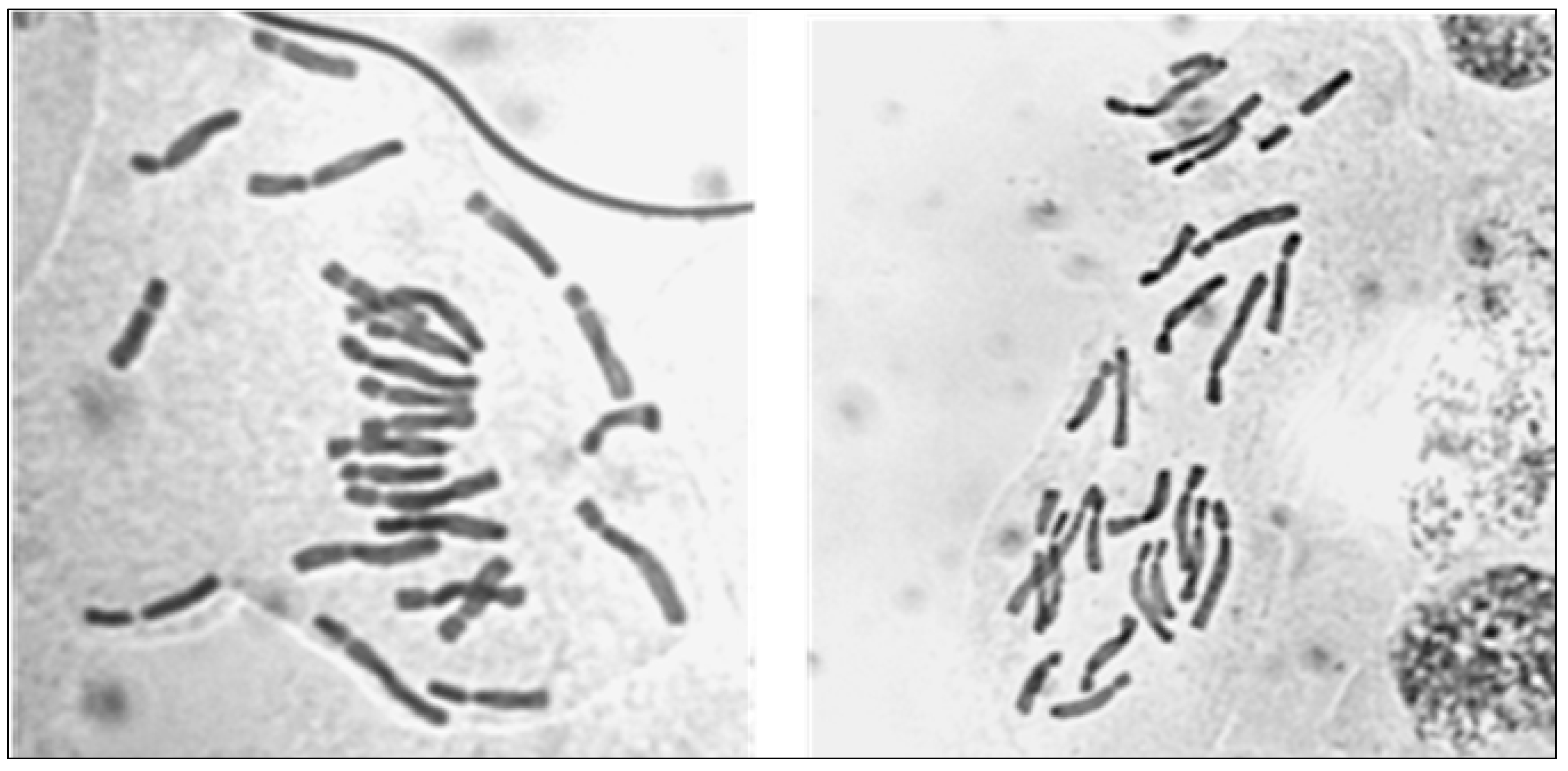
The third teaching hour was dedicated to conducting a karyotype experiment, in groups of four students. The activity involved the use of Tulipa spp. root tips prepared in advance by the teacher, after which students prepared samples on microscope slides using the squashing technique. Students observed chromosomes under the microscope and completed structured worksheets, with the teacher encouraging collaboration without providing direct instruction. Cognitive goals, including understanding of the structure and function of genetic material as well as the importance and value of biodiversity, were addressed through a complex problem-solving process that requires creative thinking and reasoning [98]. With the use of optical microscopes, students observed and drew chromosomes from living material, examining Tulipa’s morphological and genetic diversity (Figure 2 and Figure 3). Then, they reflected on the benefits of Tulipa to humans and nature and discussed the importance of preserving the biodiversity gene pool, its significance in species survival, art and culture, its ecological significance, and its role in shaping human values and attitudes. The combination of cooperative inquiry and emotional engagement maximized learning outcomes [99]. Knowledge of the structure and function of genetic material was gradually built while simultaneously exploring biodiversity at the genetic and organism levels.
All three teaching hours can be easily implemented in botanic garden settings. Learning can be greatly assisted by guided botanical tours during spring, profiting from the visual attractiveness of living tulip specimens in flowering. In all other seasons, desiccated herbarium specimens, selected photographic material, and/or botanical illustrations can be used.

2.6. Design, Application Reliability, and Validity of Assessment Tools

The learning outcomes of the didactic intervention were evaluated using two (2) different questionnaires in an additional fourth hour, after all learning activities (including the laboratory experiment) were completed. Questionnaires A and B (AB) were designed to assess knowledge acquisition. The Q Questionnaire aimed to evaluate students’ attitudes towards the importance of biodiversity (see Supplementary Materials, Table S1), with particular emphasis on tulips, and more broadly, on all life forms. All questionnaires were completed anonymously and with the voluntary participation of all students, following parental consent and in compliance with the official protocol for conducting educational research in public schools. The development of the questionnaires followed the methodological approaches of mixed methods research design used in similar studies on genetics and biodiversity education [100,101,102,103,104,105]. Using a post-intervention design, learning outcomes were evaluated based on students’ performance against curriculum-aligned and criterion-referenced benchmarks. Educational significance was defined using predefined thresholds (approximately 70% of correct responses on knowledge-based items; mean Likert score ≥ 3.5), selected in consideration of the cognitive demands of the learning content and the exploratory as well as due to the time-limited nature of the instructional intervention.
The AB Questionnaires evaluated students’ (n = 183) understanding and acquisition of knowledge, regarding: (a) the structure and function of genetic material; (b) biodiversity associated with the tulips at morphological, genetic (karyotypic), and ecosystem levels; and (c) the significance of biodiversity conservation. Each questionnaire item was coded and analyzed independently based on response correctness; logically opposite items were not examined for internal consistency at the individual level. The questionnaire contained ten (10) groups of questions with different themes, totaling forty (41) questions. Grouping was content-based to assess students’ understanding of the functional significance of biodiversity across multiple levels of biological organization. Specifically, Group F was designed to evaluate students’ ability to integrate genetic and karyotypic knowledge with evolutionary processes, human-mediated plant breeding, and ecosystem services, while addressing conceptually distinct biological domains (biochemistry, cytogenetics, plant breeding, and ecosystem services). Each question had three (3) response options (correct, false, or unknown) as follows (see Supplementary Materials, Table S2):
  • Group A: Cognition of the molecular composition of genetic material and its function (Phase 2: Learning Goal 1);
  • Group B: Identification of somatic cell division (mitosis) and the time point at which chromosomes become visible (Phase 2: Learning Goal 2);
  • Group C: Recognition of the concepts of sister chromatids and chromatin fiber (Phase 2: Learning Goals 1, 8);
  • Group D: Identification of anthropogenic factors that contributed to the geographical distribution of tulips (Phase 2: Learning Goal 6);
  • Group E: Identification of morphological diversity and habitat diversity, and their correlation with genetic diversity (Phase 2: Learning Goals 3, 4, 5);
  • Group F: Applications of research at the biochemical and karyotypic level in tulips (Phase 2: Learning Goals 7, 8, 9);
  • Group G: Interpretation of the factors contributing to biodiversity within tulip populations (Phase 2: Learning Goal 6);
  • Group H: The correlation between biodiversity and ecosystem stability (Phase 2: Learning Goals 7, 9);
  • Group I: Comparison of the potential impacts of the extinction of an animal species with that of a tulip species (Phase 2: Learning Goals 7, 9);
  • Group J: The role of biodiversity in sustaining ecological balance within ecosystems (Phase 2: Learning Goals 7, 9).
The Q Questionnaire focused on students’ (n = 173) attitudes towards biodiversity and the teaching interaction itself, specifically, the extent to which their attitudes were influenced by the karyotype experiment and the preceding presentation focused on tulip biodiversity. It comprised eight (8) Likert-type questions with five (5) pre-coded responses (three correct/false questions, one brainstorming word-association question, and one ranking question), that referred to the following learning objectives (Supplementary Materials, Tables S3 and S4):
  • Perceived impact of biodiversity of Tulipa and other organisms on humans: Opinions on how much biodiversity and the presence of Tulipa and other organisms affect humans (Questions Q5, Q7);
  • Impact of habitat loss: Opinions on how the disappearance of various habitats would affect other organisms (Question Q6);
  • Willingness to volunteer: Readiness to participate in an environmental protection group (Question Q8);
  • Beliefs about the importance of biodiversity: Estimating the degree to which students believe biodiversity will impact the future (Question Q9);
  • Changes in views on biodiversity: Assessing how much students’ perspectives on biodiversity changed after the lesson (Question Q12);
  • Opinions on teaching methods: Evaluation of the teaching approach used before the questionnaire (Question Q13);
  • Enjoyment of the experiment: Evaluating the extent to which students enjoyed the karyotype experiment (Question Q14).
Differences in response rates between Questionnaires AB and Q reflect methodological choices of the study design. The timing of the administration of the assessment tools was considered methodologically significant. Specifically, Questionnaire Q was administered to students four months after the instructional intervention to examine long-term effects on students’ attitudes toward biodiversity. During this follow-up phase, reduced participation was observed due to student absences related to the seasonal influenza outbreak. The remaining sample was considered sufficient for exploratory analysis of attitude-related trends; therefore, the results should be interpreted with this limitation borne in mind.
Internal reliability was assessed using Kuder–Richardson Formula 20 (KR-20). The reliability and validity of the assessment tools were confirmed through the stability of their measurements and the alignment with the research objectives [71]. Questions of Questionnaire A, which related to knowledge about the structure and function of genetic material, had a very low reliability (KR-20 = 0.41); therefore, non-parametric analyses were applied at the item level and thematic group level rather than using a composite score. In contrast, questions of the AB Questionnaires involving knowledge considering both genetic material and biodiversity were found to be reliable (KR-20 = 0.71) (Supplementary Materials, Tables S5 and S6).
Based on the content of the Likert scales’ sentences, questions were grouped into a two-factor analysis, with separate factors being ‘biodiversity’ and ‘teaching influence’. The biodiversity scale demonstrated near-acceptable validity (63.3%, i.e., ca. 65%) and near-acceptable reliability (Cronbach’s alpha) (0.650). The teaching influence scale exhibited high validity (72.3%) and high reliability (Cronbach’s alpha) (0.810) [103]. Both factors’ analysis was conducted using varimax rotation in a correlation matrix, with loadings greater than 0.400, with adequacy of sample (>0.600), and no matrix calculation problems (Bartlett’s Test of Sphericity: p < 0.05). Some questions were removed due to low validity and low reliability (Supplementary Materials, Tables S5–S8).

3. Results

3.1. Assessment of the Teaching Outcome

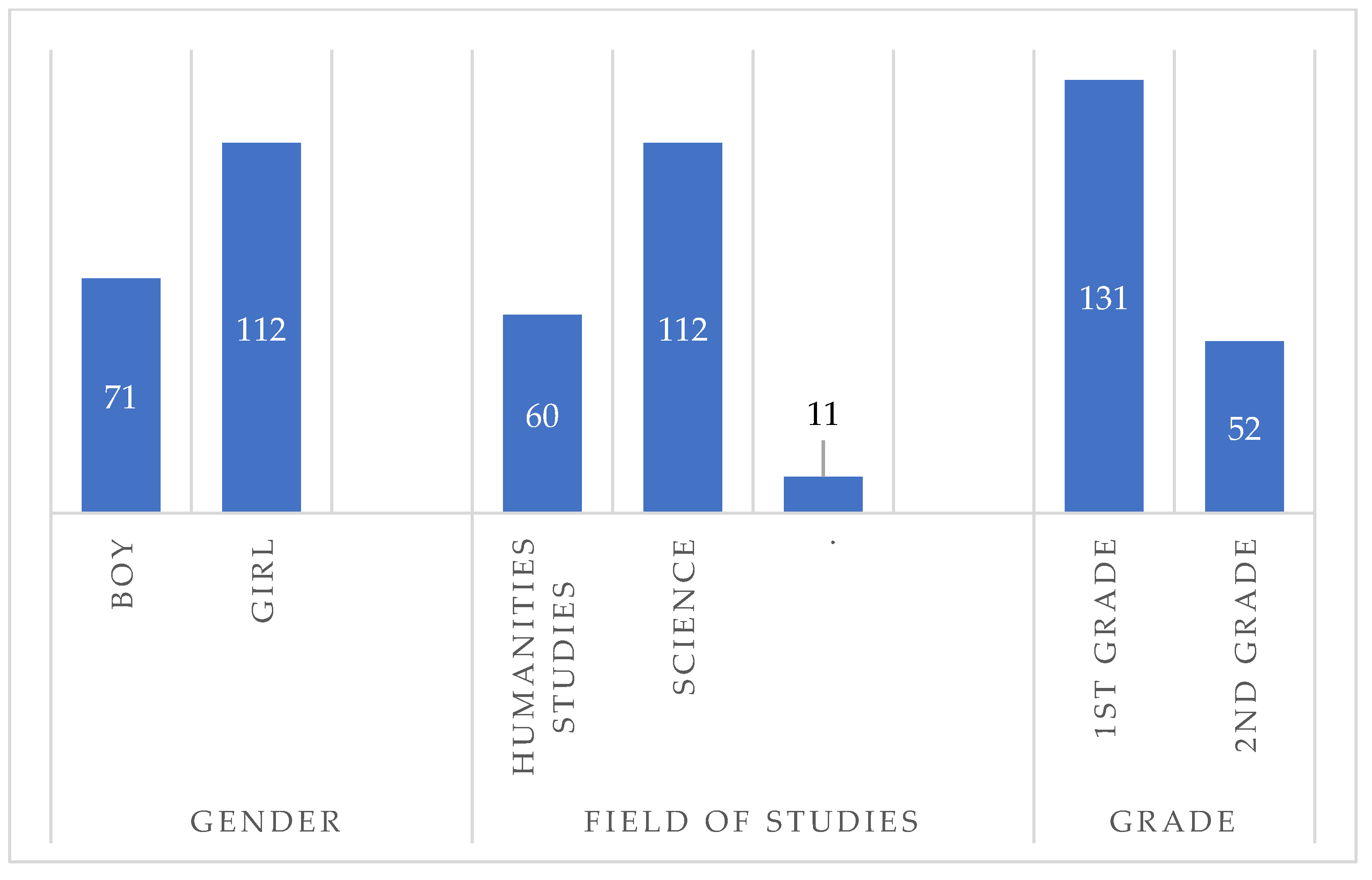
Questionnaires A and B were administered to all students (n = 183) (valid, correct answers as presented in Table 3). A total of 112 were biological girls, 131 were first-grade students, and 112 students wanted to pursue an academic study in basic sciences (Figure 4). The one-sample Kolmogorov–Smirnov test revealed significant deviations from normality across all groups (Groups A–J, p < 0.05), indicating that the distribution of responses was not normal, thus necessitating the use of non-parametric statistical methods for subsequent analysis.
Overall, in certain questions (A1, B3, B11, B20), the participants achieved high percentages of correct answers. In others (A10, A11, B13, B14), the percentages were low (Table 3).
In Questionnaire A, the highest percentage of correct answers was found in question A1 (97.8%). On the other hand, very low percentages were recorded in questions A12 (25%) and A11 (27.4%). Overall, the percentages in Questionnaire A ranged from 25.0% to 97.8%, with moderate to good performance in several questions (e.g., A2: 68.7%, A13: 69.9%) (see Supplementary Materials, Table S9 and Table 3).
In Questionnaire B, high performance was observed in questions B3 (83.0%), B11 (70.0%), and B20 (69.3%). However, very low percentages of correct answers were noted in questions B13 (20.5%), B14 (32.0%), and B12 (40.6%). In general, the values in Questionnaire B ranged from 20.5% to 83.0% (see Supplementary Materials, Table S9 and Table 3).
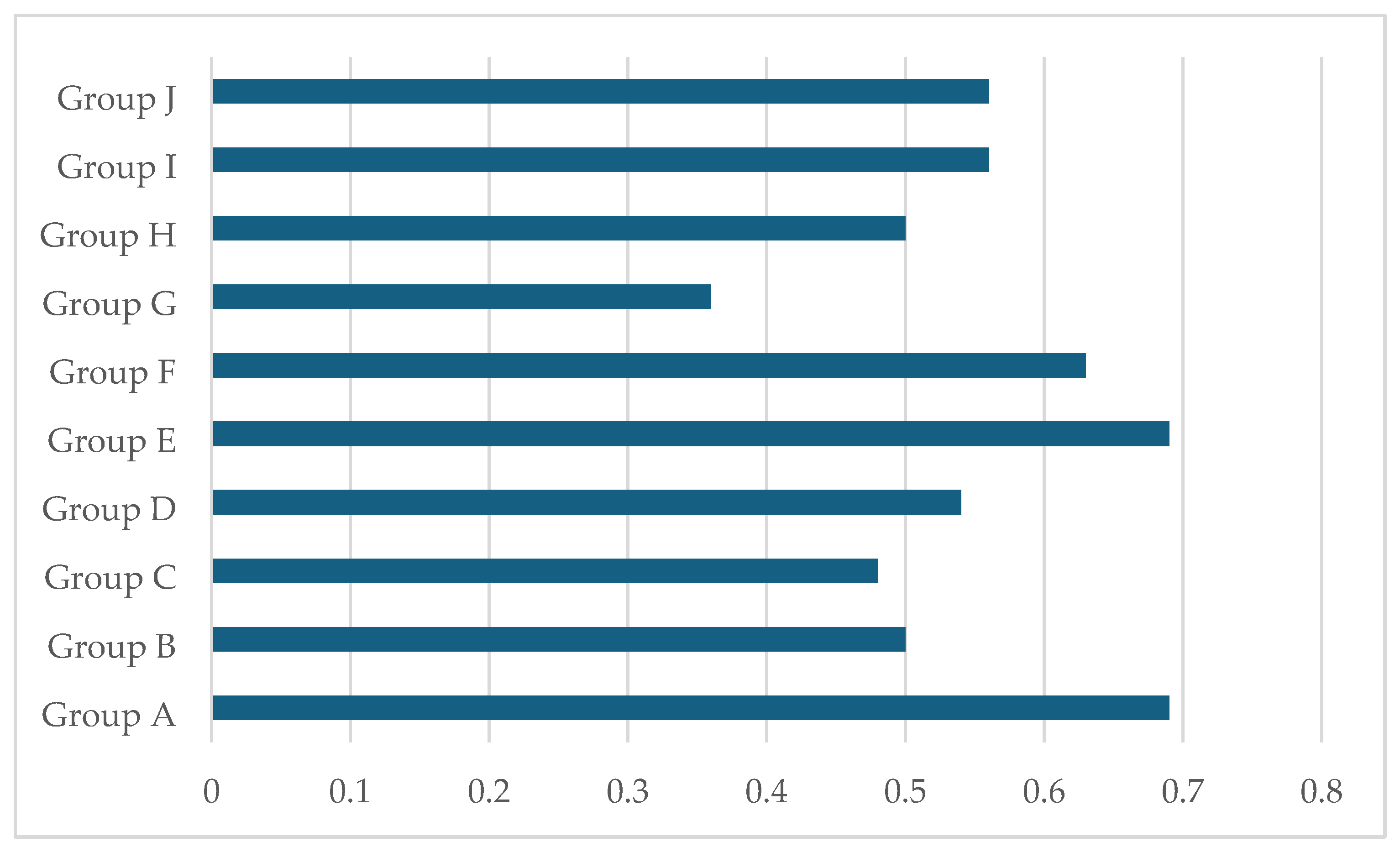
The questions were grouped into thematic categories according to the biological concepts they addressed. Specifically, Groups A and C included questions examining genetics in relation to molecular-level concepts (Genetics vs. molecule), whereas Group B comprised questions focusing on genetics in relation to cell division processes (genetics vs. cell division). The students’ performance differed across these groups. Group A questions yielded one of the highest mean scores (mean = 0.69), whereas Group C questions demonstrated lower performance (mean = 0.48). The Group B questions also showed relatively low performance (mean = 0.50) and the largest variability among all groups (s.d. = 0.37) (Figure 5, Table 4).
Similarly, questions related to biodiversity were organized into thematic groups based on the conceptual focus of biodiversity. Groups D and G included questions examining biodiversity in relation to respective drivers (biodiversity vs. drivers of biodiversity), Groups E, H, I, and J focused on core biodiversity concepts, and Group F consisted of questions addressing applications of biodiversity knowledge (biodiversity vs. applications). Differentiated performance was also observed across these thematic groups. Group E questions had one of the highest mean scores (mean = 0.69), while Group F questions showed relatively high performance (mean = 0.63). In contrast, Group G questions demonstrated lower performance (mean = 0.49), and Group D showed moderate performance (mean 0.54). Standard deviations varied across groups, with Group A and Group J questions presenting relatively small standard deviations (s.d. = 0.21) (Figure 5, Table 4).
Overall, the highest performance was observed in Groups A and E (mean = 0.69), with the lowest performance noted in Group C questions (mean = 0.48). Groups A and J questions gave the most consistent answers (s.d. = 0.21). The most variable answers were observed in Group B questions (s.d. = 0.37) (Table 4).
In response to the brainstorming question “If you had to use one word that made the most positive impression on you in the lessons about Tulipa’s biodiversity, what would that be?”, students provided the following answers: 23.10% of the sample wrote Tulipa, 27.2% biodiversity, 16.8% other, 8.70% chromosome, 7.5% karyotype, 1.2% genetic material, and 0.6% DNA (Table 5).
In the question, ”If you were given the following three terms, could you place them in order from partial to total?” optioning (a) karyotypic diversity, (b) biodiversity of different species, and (c) biodiversity of different habitats, 28.9% of the sample selected the correct order. Other sequences chosen were a-c-b (6.9%), b-a-c (9.8%), b-c-a (11%), c-a-b (17.9%), and c-b-a (20.2%) (Table 6).
In the knowledge-based true/false questions (Q2, Q3, and Q4), a high proportion of correct responses were observed. Students’ performance on these items was notably strong, with correct response rates exceeding 81.5%.
The analysis of the attitude questionnaire (Q) indicated that for most Likert-type items, the mean scores exceeded the neutral midpoint of three (Table 7). In addition, mean scores for attitudes toward biodiversity and perceived teaching influence were examined in relation to participants’ performance on the true/false knowledge questions (Q2–Q4). Participants who answered correctly generally exhibited higher mean scores across most variables compared with those who answered incorrectly (Table 8). Of particular interest was item Q14, which assessed students’ enjoyment of the karyotyping experiment. Correlation coefficients between students’ attitudes towards the experiment (Q14) and a series of variables related to biodiversity knowledge, perceptions, and the teaching intervention were all statistically significant (Table 9). Therefore, positive correlation, though varying in strength, was found between Q14 and all Likert-type responses.

3.2. Analysis of Grouped Items by Demographics

Significant differences were observed in several areas regarding participant characteristics. A Κruskal–Wallis test for independent samples was used to examine differences between categorical variables (demographic variables) and group topic variables. Mean analysis was then conducted to identify where the differences nested in these comparisons, and in whose favor (Table 10).
This analysis showed the following:
  • Gender: A significant association was found with Group F (χ2(1) = 4.77, p = 0.029).
  • Grade: Significant differences were observed in Group B (χ2(1) = 3.91, p = 0.048), Group C (χ2(1) = 8.53, p = 0.003), Group F (χ2(1) = 9.28, p = 0.002), Group H (χ2(1) = 15.24, p < 0.001), and Group J (χ2(1) = 10.68, p = 0.001).
  • Field of study: A significant association was found only with Group A (χ2(1) = 8.25, p = 0.004).
  • Year of participation: Significant effects were found for Group C (χ2(1) = 4.09, p = 0.04), Group F (χ2(1) = 11.73, p < 0.001), and Group G (χ2(1) = 5.82, p = 0.02).
  • Educational cohort: Significant associations were also observed with Group C (χ2(2) = 9.02, p = 0.011), Group F (χ2(2) = 14.32, p = 0.001), Group G (χ2(2) = 6.16, p = 0.046), Group H (χ2(2) = 15.34, p < 0.001), and Group J (χ2(2) = 10.71, p = 0.005) (Table 11).
  • Overall question group performance: The highest mean percentage for correct answers was in Group A (69%) and Group E (69%), followed by Group F (63%), Group I (56%), Group J (56%), Group D (54%), Group H (50%), Group B (50%), Group G (49%), and Group C (48%) (Table 4).
  • Grade level differences: Within grade cohorts, the second-grade students in 2023 achieved the highest mean percentages in Group J (64%), Group I (63%), Group H (63%), Group C (59%), Group B (59%), Group E (73%), and Group F (72%). First-grade students in 2023 scored highest in Group A (72%) and Group D questions (56%). Group G questions had the highest means in the first-grade students in 2024 (53%) (Table 12).
Compared across grades, Group E and Group F questions showed higher scores in the second-grade students (73% and 72%, respectively) compared to the first-grade ones (67% and 59%, respectively). Similarly, Group H, Group I, and Group J questions exhibited a significant increase in knowledge level between the first- and the second-grade students. Conversely, terms like those in Group A, Group B, Group C, and Group G questions had relatively moderate scores across students of both grades, with slight improvements in the second-grade students.
  • Gender differences: Female students had higher mean percentages in Group J (58%), Group I (58%), Group H (51%), Group C (49%), Group E (70%), Group F (66%), and Group G questions (50%). Male students showed higher means in Group A (71%) and Group B questions (52%). Both genders scored equal means in Group D questions (54%) (Table 13).
  • Field of study differences: Students oriented in basic sciences studies generally showed higher mean percentages than those in humanities-oriented studies across most categories, as shown in Group A (0.72 vs. 0.63), Group D (0.55 vs. 0.53), Group E (0.72 vs. 0.67), Group H (0.50 vs. 0.49), and Group I questions (0.58 vs. 0.56). Conversely, students oriented in humanities-oriented studies had higher mean percentages in Group C questions (0.47 vs. 0.50). The categories of Group B, Group F, Group G, and Group J questions were similar across both orientation fields (Table 14).

4. Discussion

The importance of scientific literacy for biodiversity conservation has been emphasized in the literature, highlighting the limited awareness of this issue, particularly regarding plants [106]. A more multimodal educational approach is necessary to create opportunities for aesthetic, perceptual, ethical, and political responses [107], with a focus on the values that young people use to make informed decisions [29]. In this line, the present study introduced a novel didactic approach in environmental education employing tulips (Tulipa spp.) as a model organism. This study examined the learning outcomes of a three-hour experiential didactic intervention that used a culturally familiar plant known to most students as a central reference concept, addressing it both as the subject of scientific knowledge, and as an issue of ecological importance. Compared to commonly used educational plant models such as Arabidopsis thaliana (L.) Heynh. or typical garden plants, Tulipa offers the additional advantage of pronounced, easily observable phenotypic variation across species and cultivars, coupled with clear links to genetic diversity and habitat differentiation, thus making it particularly suitable for addressing genetic diversity in an educational context.
Another key advantage of the proposed didactic approach lies in its flexibility: it can be implemented in school units and/or botanical gardens, extending beyond the formal classroom setting, using living plant material during winter and spring, or alternatively, tulips’ herbarium specimens in combination with botanical illustrations and/or photographic material during the non-dormant phase of tulips. From a practical perspective, the approach can be readily adopted by teachers by combining brief introductory activities on the structure and function of genetic material with visual stimuli (photographic material of phenotypes, habitats, and karyotypes) and a hands-on karyotype experiment, using either living plant material in collaboration with botanic gardens or alternative classroom-based resources. Numerous teaching practices implemented in schools and botanic gardens, and related interventions can be found in the literature, all aiming at broadening and enhancing environmental awareness. For example, previous studies have presented an interesting approach for students’ awareness regarding birds [83], arguing that one way to improve pro-environmental attitudes is to expand students’ knowledge base. However, plant-focused studies have received comparatively less attention to date and are limited in numbers [55,56,57,58,59]. In such cases, the everyday use and socio-cultural significance of plants have been identified as key factors in shaping positive attitudes toward both plants and the environment [77]. Plant-centered hands-on activities can promote a more balanced and inclusive understanding of biodiversity within science education [108]. Especially in botanic gardens, it has been shown that through visual appreciation of plant life and by interviewing botany and horticulture specialists associated with botanic gardens’ living plant collections and educational functions, a process that can notably help enhance plant awareness, promote active engagement with plant life, and counteract the tendency to overlook plants [108]. In this context, botanic garden settings offer distinct pedagogical advantages over classroom-only implementation, since direct interaction with living plant collections, authentic or recreated habitats, and specialized scientific personnel enhances experiential learning, contextual understanding of biodiversity, and students’ emotional engagement with plant life. Scientists should therefore continue to highlight biodiversity and the functional importance of lesser-known taxa through public communication and outdoor activities, strengthening conservation and inspiring future generations to become naturalists [109].
Overall, the interdisciplinary didactic intervention created an environment that encouraged and activated the learning process, while the conducted experiment served as a memorable experience for students. With respect to the overall effectiveness of the intervention, students became aware of the diversity of tulips in terms of phenotype, karyotype, and their habitats/ecosystems (Group E questions). They were also acquainted with the fact that tulips’ genetic material enables different species to survive in a wide range of environments and to reproduce freely and effectively through seeds and/or bulbs (Group G questions). Furthermore, students acknowledged the importance of karyotype studies in tulips for scientific research, as well as the value of biodiversity in preserving natural (phytogenetic) resources and maintaining ecosystem balance (Group F and Group J questions). Although many students acknowledged that Greece hosts numerous wild-growing species of tulips, unlike the Netherlands, and that humans have played a significant role in the evolution and creation of new hybrids (Group D questions), the considerable variability in responses suggested that this understanding has not been equally consolidated among all learners; the latter indicated a need for further instructional reinforcement.
Regarding knowledge acquisition, the teaching methodology applied in the present study linked the theoretical concept of biodiversity—exemplified within the members of the genus Tulipa—to hands-on learning activities on genetic diversity, such as the execution of the karyotype experiment. In response to the brainstorming question “If you had to use one word that made the most positive impression on you in the lessons about Tulipa’s biodiversity, what would that be?” (Q10), the experience was memorably encapsulated by the students in two words: Tulipa and biodiversity.
Several studies have highlighted that both students and teachers may often overlook genetic diversity as an integral component of biodiversity. Previous studies have shown that most students and/or teachers understand the basic concepts of species diversity and ecosystem diversity [35], but many of them do not comprehend the concept of genetic diversity in depth. The ability to interlink genetics, species, and habitat/ecosystem within the concept of biodiversity is a fundamental objective in biology education and, in environmental education more broadly [27,28,36,45,46]. Our approach integrated the teaching of biodiversity through the study of karyotypes in a certain group of biological plant entities (tulips). Currently, there are only scarce studies that integrate genetics within an environmental education focus on biodiversity (e.g., a study using 12 flowering plant species to construct morphological and molecular phylogenetic trees [110]), and there is probably an absence of studies using either a certain plant entity as a model (such as Tulipa spp. in this study) or karyotype analysis as an educational tool. In the present study, most of the students demonstrated an understanding of the interconnection among the three levels of biodiversity (Q11), i.e., genetic diversity, morphological diversity, and habitat/ecosystem diversity.
Specifically, data analysis of students’ responses to the AB Questionnaires indicated that students showed higher comprehension in areas concerning the basic structure and function of genetic material, as well as the relationship between morphological and habitat diversity with genetic diversity. Regarding the consistency of answers, the most uniform responses were found in Groups A and J questions (standard deviation = 0.21), addressing the role of biodiversity in sustaining ecological balance and those dealing with fundamental knowledge of genetic material, respectively. Students’ responses regarding the understanding of concepts related to genetic material and its function had a positive impact (Group A and Group B questions, Table 4). The highest performance was recorded in Groups A and E questions, which focused respectively on the knowledge of the molecular composition and function of genetic material, and on the identification of morphological and habitat diversity and their correlation with genetic diversity. Students demonstrated knowledge that DNA is the involved genetic material and that the genes are found located in chromosomes (questions A2, A3 in Table 3 and Supplementary Materials, Table S1). It appears that they correctly recognized that somatic cells divide through mitosis (question A6) and that chromosomes become visible shortly before cell division (A8).
Although earlier studies employing the morphology of 12 species of flowering plants, molecular phylogenetic trees, biological techniques, and bioinformatics tools linking environmental education to genetics [110] are directly relevant to the present study, our approach, in contrast, extends this line of inquiry by fostering a deeper understanding of genetic concepts while simultaneously establishing meaningful connections to biodiversity and the natural environment. To this end, it is known that teaching concepts related to mitosis and meiosis is one of the most challenging topics in biology education [100]. The crucial role of visual information [111] and laboratory experiments [112,113] in fostering deeper learning in science education has long been emphasized in the literature. Aligned with the latter, the present approach further confirmed this role by combining rich visual stimuli (photographic material of phenotypes, habitats, and karyotypes) with the students’ execution of the karyotype experiment.
Regarding attitude development, the instructional design of the novel intervention initially reinforced students’ prior knowledge regarding the structure and function of genetic material and subsequently introduced the concept of biodiversity. By explicitly linking genetic diversity to species- and ecosystem-level biodiversity through an accessible plant model, the present approach demonstrated how abstract genetic concepts can be meaningfully embedded within biodiversity education. Our findings showed that students considered plants important regarding sustaining life on the planet (Group I questions). By incorporating a karyotype experiment with living tulips, students’ perception of the significance of plants was further enhanced. Students became more actively engaged in observing and exploring plant diversity and spontaneously began to value plants as equally important to animals. Through our intervention, students overcame a common tendency to regard plants as inferior or less relevant than animals—a cognitive barrier that is commonly described as plant blindness [47,58,106,114].
Our experiential didactic approach fostered positive attitudes towards the concept of biodiversity, with tulips as a key didactic tool and via the karyotype experiment. The analysis of the results of Questionnaire B (which investigated students’ attitudes toward biodiversity following the instructional intervention and the karyotype experiment) revealed a beneficial impact on both knowledge and attitudes toward biodiversity (questions in Groups D, E, and F, with G, H, I, and J at the threshold). In comparison to previous studies reporting that students have a strong belief that highly disturbed ecosystems can fully recover and are extremely resilient to the balance of nature [27], our findings showed that students were able to understand and acknowledge biodiversity’s role in the maintenance of the ecosystem equilibrium. This concept was further cultivated through multiple cooperative activities and constant interaction with the teacher, in discussions where students could exchange ideas and construct new knowledge.
Regarding the analysis of the responses in Questionnaire Q, most students expressed their willingness to volunteer for a nature conservation organization, such as botanic gardens and environmental agencies or organizations, and recognized the consequences of biodiversity loss on the planetary scale. The latter contrasts with previous findings [34]; however, we argue that this is partly due to the effectiveness of the innovative teaching approach applied in the current didactic intervention. Such hands-on activities significantly contribute to strengthening students’ attitudes toward biodiversity. In our approach, a positive correlation, though varying in strength, was found between question Q14 (assessing students’ enjoyment of the karyotype experiment) and all other Likert-type responses. The experiment enhanced the overall educational experience (Q13) and fostered greater awareness of biodiversity’s importance (Q12). Specifically, students who reported greater enjoyment of the karyotype activity also expressed stronger agreement with statements emphasizing the benefits of biodiversity to humans (Q5), the ecological impact of habitat destruction (Q6), the significance of the tulip plant for humans (Q7), and the protective role of biodiversity in preventing large-scale ecological crises (Q9). A positive correlation between the impact of the karyotype lab experiment and students’ attitudes toward biodiversity was observed for most students (Q14). Overall, significant positive correlations (at 0.05 level) were observed between students’ attitudes conducting the karyotype lab experiment and each of the following aspects: (a) the perceived importance of biodiversity after the experiment; (b) the awareness of the impact of habitat extinction on other organisms; (c) the positive evaluation of the learning process; and (d) students’ willingness to volunteer for an environmental organization.
Performance outcomes further suggested a positive relationship between content knowledge and attitudes toward biodiversity. In the knowledge-based true/false questions (Q2, Q3, and Q4), students who answered correctly also achieved higher mean scores on most of the attitude-related questions (Q5, Q6, Q7, Q8, Q9, Q12, Q13, Q14) (Table 8), thus suggesting a link between content knowledge and positive attitudes. Students who demonstrated stronger understanding also reported higher mean scores on attitude-related questions. This pattern implied that deeper knowledge may foster more positive perceptions of biodiversity’s ecological and cultural significance, an issue of particular importance for school communities or botanic gardens initiatives.
The variation in standard deviations across groups indicated heterogeneity in student responses, pointing to differences in prior knowledge, clarity of instruction, or the formulation of the questions. Some misconceptions regarding the relationship between genes and proteins remained, indicating a knowledge gap (A4, A5 in Table 3, Supplementary Materials, Table S1). Our study showed that students also encountered greater difficulties in distinguishing between chromatid and chromatin structures, as well as with the process of mitosis. This confusion persisted regarding whether the chromatin fiber constitutes genetic material, with several incorrect answers (A10, A11) (Supplementary Materials, Table S1). A similar issue was observed when students were asked to identify whether chromatin fiber, chromosome, and sister chromatid are equivalent (questions A12, A13). The lowest performance was observed in Group C questions, related to understanding sister chromatids and chromatin fiber, while the greatest variability in answer consistency was recorded in Group B questions, concerning mitosis and the timing of chromosome visibility. These findings reinforce the idea that students experienced some difficulty in correlating these concepts, as also reported in the literature [87,100,102,115,116,117,118,119,120,121,122,123,124,125,126,127,128]. Nevertheless, this study successfully drew students’ attention almost equally to species diversity and habitat/ecosystem diversity, with genetic diversity integrated in the background, addressing a prominent issue that has received comparatively limited attention to date (e.g., [25,46]). These findings suggested that integrating genetic-level investigations into biodiversity education can support a more holistic understanding of biodiversity and may foster inclusive learning pathways that address cognitive and affective dimensions of learning. Further research could also examine the long-term effects of such interventions on students’ attitudes and engagement with biodiversity conservation.
With respect to differences in students’ perceptions of scientific concepts between the biological sexes (male–female), numerous studies have associated such issues with differences in upbringing in connection with societal stereotypes [115]. This social dimension contributes to the gender gap in children’s perceptions of the environment [129] and their understanding of species diversity (number and composition of species). Research shows that biological girls tend to appreciate plants more [130] and express a stronger emotional attachment to animals compared to biological boys [107]. Previous studies have also found that biological girls usually mention more ornamental plants [131], whereas biological boys are often more familiar with wild-growing plants. In our study, gender-based differences were also observed: female respondents generally outperformed male ones, particularly in questions concerning research applications at the biochemical and karyotypic level in tulips. Students’ academic orientation appeared to be another influential factor. Those inclined toward basic sciences-related fields performed better than those oriented towards humanitarian studies, suggesting that intrinsic motivation and alignment with future educational goals can enhance engagement and conceptual understanding in biology-related topics. Finally, analysis of the instructional effectiveness revealed a notably higher level of knowledge acquisition among second-grade students compared to first-grade students. This difference appears to be primarily associated with the greater cognitive maturity of older students, which allowed a more effective engagement with the concepts introduced.
Students often hold preconceived notions about the natural world that do not align with scientific understanding, making them resistant to instruction and the assimilation of new knowledge. This is also evident in misconceptions among both teachers and students regarding cell division, particularly meiosis, and DNA replication [100,102,103,116,117,118,132,133]. Many authors have studied misconceptions of students regarding scientific principles and contexts, especially in environmental education [134,135,136,137]. Numerous studies have investigated misconceptions among students and teachers about biodiversity itself and biodiversity loss [28,30,80,138,139,140,141,142], while several others have specifically addressed species diversity [26,31]. Our findings suggested a strong level of general understanding of the multidimensional concept of biodiversity among students, with some variation in student performance across different groups of questions, encompassing both scientific and philosophical levels [143].

5. Conclusions

The didactic intervention presented herein was designed to engage high school students in understanding the complex concept of biodiversity within a three-hour teaching sequence. This approach applies to environmental education programs in schools and/or botanical gardens, and may contribute to strengthening awareness, counteracting plant blindness, and understanding biodiversity. The well-known and globally appreciated plants, namely tulips (Tulipa spp.), were employed as a model, given their particular significance in terms of biodiversity at the genetic–karyotypic, species, and habitat/ecosystem levels. At the same time, Tulipa as a model constitutes an exemplary interdisciplinary educational tool due to its profound influence on the shaping of human culture, as illustrated through notable historical and cultural contexts. Our teaching methodology fostered students’ environmental awareness, as evidenced herein by their evaluated responses. Moreover, the karyotype experiment enriched the educational experience and enhanced awareness of biodiversity’s value and appreciation. Our findings indicated that the structured didactic approach, followed with reference to the karyotype and diversity of Tulipa species, aligned with current national curricula, can successfully introduce the concept of biodiversity within the model genus (Tulipa) and, by extension, across all forms of plant life, even in a short time span.

Supplementary Materials

The following supporting information can be downloaded at: https://www.mdpi.com/article/10.3390/jzbg7010013/s1, Note S1. Institutional and legal framework concerning biodiversity protection and integration of environmental education and botanical gardens; Box S1: Detailed fundamental learning objectives for Lower (Gymnasium) and Upper (Lyceum) Secondary Education aligned with the 2001 Greek Biology Curricula; Box S2: Worksheet based on the 5E instructional model examining biodiversity through tulips (Tulipa spp.) as a case study, focusing on karyotype analysis and genetic–phenotypic variation. This worksheet was implemented during the third instructional session in which the tulip karyotype experiment was conducted; Table S1: Questionnaires A and B administered in each class of Lyceum students during the academic year 2023–2024 (first- and second-grade students) and 2024–2025 (only first-grade students). Each question had three response options (correct, false, or unknown); Table S2: Grouping of the correct/false questions administered in each class of Lyceum students during the academic year 2023–2024 (first- and second-grade students) and 2024–2025 (only first-grade students); Table S3: Likert-type questions for assessment of attitudes toward biodiversity; Table S4: Likert type questions for assessment of attitudes toward teaching influence; Table S5: Kuder–Richardson Formula 20 (KR-20)—reliability test specified for correct/false answers; Table S6: Normality Test Results (One-Sample K–S) for the groups of questions A–J; Table S7: Factor analysis of students’ attitudes toward biodiversity; Table S8: Factor analysis of students’ attitudes toward teaching influence; Table S9: Total scores of Correct—Valid Percent (AB Questionnaires, Supplementary Materials, Table S1) of student responses (N) across the entire student sample (2023–2024 and 2024–2025).

Author Contributions

Conceptualization, E.K., P.B., N.K. and V.D.N.; Methodology, E.K., N.K., V.D.N. and P.B.; software, E.K.; validation, V.D.N., P.B. and N.K.; formal analysis, E.K. and V.D.N.; investigation, E.K.; resources, E.K.; data curation, E.K.; writing—original draft preparation, E.K.; writing—review and editing; E.K., V.D.N., N.K. and P.B.; visualization, E.K. and P.B.; supervision, P.B. and N.K.; project administration, P.B. and N.K. All authors have read and agreed to the published version of the manuscript.

Funding

This research received no external funding.

Institutional Review Board Statement

The study was conducted in accordance with the Declaration of Helsinki and approved by the Institutional Ethics Committee of Agricultural University of Athens (protocol code 06/04.03.2025 and date of approval 20/12.03.2025) and in accordance with the Head Administrator of Agios Stefanos Lyceum (High School) (protocol code 7/24.2.2025).

Informed Consent Statement

Informed parental consent was obtained from all subjects involved in the study.

Data Availability Statement

The original data presented in this study are included in the article and its Supplementary Materials. Further inquiries can be directed to the corresponding authors.

Conflicts of Interest

The authors declare no conflicts of interest.

Abbreviations

The following abbreviations are used in this manuscript:
ABAB Questionnaire related to knowledge acquisition concepts
APart of Questionnaire AB related to questions concerning genetic material
BPart of Questionnaire AB related to questions concerning biodiversity
QQ Questionnaire related to attitude acquisition according to biodiversity and the impact left by the application of the teaching)
A1, B1, Q1Questions concerning the relevant questionnaires, i.e., A1, B1, Q1, indicating the first question of A, B, and Q questionnaires, respectively (similarly for all the other questions)

References

  1. Kassas, M. Environmental education: Biodiversity. Environmentalist 2002, 22, 345–351. [Google Scholar] [CrossRef]
  2. CBD-UNESCO. Consultative Working Group of Experts on Biological Diversity—Education and Public Awareness: Discussion Paper for the Proposed Global Initiative on Biological Diversity Education and Public Awareness; CBD-UNESCO: Bilbao, Spain, 2001; Available online: https://www.cbd.int/meetings/GEEPA-03 (accessed on 7 January 2026).
  3. Hungerford, H.R.; Volk, T.L. Changing learner behavior through environmental education. J. Environ. Educ. 1990, 21, 8–21. [Google Scholar] [CrossRef]
  4. Chawla, L.; Flanders Cushing, D. Education for strategic environmental behavior. Environ. Educ. Res. 2007, 13, 437–452. [Google Scholar] [CrossRef]
  5. Jordan, J.R.; Hungerford, H.R.; Tomera, A.N. Effects of two residential environmental workshops on high school students. J. Environ. Educ. 1986, 18, 15–22. [Google Scholar] [CrossRef]
  6. Karatzia-Stavlioti, E.; Nikita, V.; Alahiotis, S. Empirical instructional testing of the new pedagogical theory of “biopedagogism”. Int. J. Assess. Eval. 2015, 22, 45–60. [Google Scholar] [CrossRef]
  7. Jickling, B.; Wals, A.E.J. Globalization and environmental education: Looking beyond sustainability and sustainable development. J. Curric. Stud. 2008, 40, 1–21. [Google Scholar] [CrossRef]
  8. Gayford, G. Biodiversity education: A teacher’s perspective. Environ. Educ. Res. 2000, 6, 347–361. [Google Scholar] [CrossRef]
  9. Gray, H.H. Renaissance humanism: The pursuit of eloquence. J. Hist. Ideas 1963, 24, 497–514. Available online: https://scispace.com/pdf/renaissance-humanism-the-pursuit-of-eloquence-42v101cv3g.pdf (accessed on 13 January 2026). [CrossRef]
  10. Neves, K.G. Botanic gardens in biodiversity conservation and sustainability: History, contemporary engagements, de-colonization challenges, and renewed potential. J. Zool. Bot. Gard. 2024, 5, 260–275. [Google Scholar] [CrossRef]
  11. Miller, D.P.; Reill, P.H. (Eds.) Visions of Empire: Voyages, Botany, and Representations of Nature; Cambridge University Press: Cambridge, UK, 2011. [Google Scholar]
  12. Rakow, D.A.; Lee, S.A. Western botanical gardens: History and evolution. Horticult. Rev. 2015, 43, 269–310. [Google Scholar] [CrossRef]
  13. Jaramillo, M.A.; Jimenez, P.; Frediani, K. The educational garden: Exploring the multifaceted roles of university botanic gardens through history. Biol. Divers. 2025, 2, 85–94. [Google Scholar] [CrossRef]
  14. Hu, Z.G.; Ma, H.Y.; Ma, J.S.; Hong, D.Y. History of Chinese botanical institutions. In Plants of China: A Companion to the Flora of China; De-Yuan, H., Blackmore, S., Eds.; Cambridge University Press: Cambridge, UK, 2015; pp. 237–255. [Google Scholar]
  15. Hu, Y.; Vincent, G.; Chen, X. How can botanical gardens support sustainable urban development? A case study of Shanghai Chenshan Botanical Garden. Ann. Mo. Bot. Gard. 2017, 102, 303–308. [Google Scholar] [CrossRef]
  16. Schulman, L.; Lehvävirta, S. Botanic gardens in the age of climate change. Biodivers. Conserv. 2011, 20, 217–220. [Google Scholar] [CrossRef]
  17. Willison, J.A. Natural environment for learning. In Proceedings of the 1st International Congress on Education in Botanic Gardens, Utrecht, The Netherlands, 14–16 May 1991; Willison, J., Jackson, P.W., Eds.; Botanic Gardens Conservation International: Richmond, UK, 1992; pp. 7–11. Available online: https://www.bgci.org/wp/wp-content/uploads/2019/04/1st_Congress_A_Natural_Env_for_Learning-Utrecht.pdf (accessed on 13 January 2026).
  18. Blackmore, S.; Gibby, M.; Rae, D. Strengthening the scientific contribution of botanic gardens to the second phase of the Global Strategy for Plant Conservation. Bot. J. Linn. Soc. 2011, 166, 267–281. [Google Scholar] [CrossRef]
  19. Chawla, L. Life paths into effective environmental action. J. Environ. Educ. 1999, 31, 15–26. [Google Scholar] [CrossRef]
  20. Corcoran, P.B. Formative influences in the lives of environmental educators in the United States. Environ. Educ. Res. 1999, 5, 207–220. [Google Scholar] [CrossRef]
  21. Palmberg, I.E.; Kuru, J. Outdoor activities as a basis for environmental responsibility. J. Environ. Educ. 2000, 31, 32–36. [Google Scholar] [CrossRef]
  22. Lindemann-Matthies, P. Investigating nature on the way to school: Responses to an educational programme by teachers and their pupils. Int. J. Sci. Educ. 2006, 28, 895–918. [Google Scholar] [CrossRef]
  23. Baumgartner, E.; Zabin, C.J. A case study of project-based instruction in the ninth grade: A semester-long study of intertidal biodiversity. Environ. Educ. Res. 2008, 14, 97–114. [Google Scholar] [CrossRef]
  24. Palmberg, I.; Berg, I.; Jeronen, E.; Kärkkäinen, S.; Norrgörd-Sillanpää, P.; Persson, C.; Vilkonis, R.; Yli-Panula, E. Nordic–Baltic student teachers’ identification of and interest in plant and animal species: The importance of species identification and biodiversity for sustainable development. J. Sci. Teach. Educ. 2015, 26, 549–571. [Google Scholar] [CrossRef]
  25. Wiegelmann, J.; Zabel, J. Biodiversity researchers as a model for school students: An innovative approach to foster meaningful understanding. Environ. Educ. Res. 2021, 27, 1245–1262. [Google Scholar] [CrossRef]
  26. Bermudez, G.M.A.; Lindemann-Matthies, P. What matters is species richness—High school students’ understanding of the components of biodiversity. Res. Sci. Educ. 2020, 50, 2159–2187. [Google Scholar] [CrossRef]
  27. Ergazaki, M.; Ampatzidis, G. Students’ reasoning about the future of disturbed or protected ecosystems and the idea of the balance of nature. Res. Sci. Educ. 2012, 42, 511–530. [Google Scholar] [CrossRef]
  28. Fiebelkorn, F.; Menzel, S. Student teachers’ understanding of the terminology, distribution, and loss of biodiversity: Perspectives from a biodiversity hotspot and an industrialized country. Res. Sci. Educ. 2013, 43, 1593–1615. [Google Scholar] [CrossRef]
  29. Grace, M.M.; Ratcliffe, M. The science and values that young people draw upon to make decisions about biological conservation issues. Int. J. Sci. Educ. 2002, 24, 1157–1169. [Google Scholar] [CrossRef]
  30. Kilinc, A.; Yeşiltaş, N.K.; Kartal, T.; Demiral, Ü.; Eroğlu, B. School students’ conceptions about biodiversity loss: Definitions, reasons, results and solutions. Res. Sci. Educ. 2013, 43, 2277–2307. [Google Scholar] [CrossRef]
  31. McLeod, W.; Smith, L.; Wilson, B.; Boylan, C. Biodiversity: What do students know about it? Sci. Educ. News 2004, 53, 153–160. Available online: https://search.informit.org/doi/10.3316/aeipt.141444 (accessed on 13 January 2026).
  32. Menzel, S.; Bögeholz, S. The loss of biodiversity as a challenge for sustainable development: How do pupils in Chile and Germany perceive resource dilemmas? Res. Sci. Educ. 2009, 39, 429–447. [Google Scholar] [CrossRef]
  33. Menzel, S.; Bögeholz, S. Values, beliefs and norms that foster Chilean and German pupils’ commitment to protect biodiversity. Int. J. Environ. Sci. Educ. 2010, 5, 31–49. Available online: http://www.ijese.net/makale/1411.html (accessed on 13 January 2026).
  34. Nisiforou, O.; Charalambides, A.G. Assessing undergraduate university students’ level of knowledge, attitudes and behaviour towards biodiversity: A case study in Cyprus. Int. J. Sci. Educ. 2012, 34, 1027–1051. [Google Scholar] [CrossRef]
  35. Yli-Panula, E.; Jeronen, E.; Lemmetty, P.; Pauna, A. Teaching methods in biology promoting biodiversity education. Sustainability 2018, 10, 3812. [Google Scholar] [CrossRef]
  36. Grotzer, T.A.; Basca, B.B. How does grasping the underlying causal structures of ecosystems impact students’ understanding? J. Biol. Educ. 2003, 3, 16–29. [Google Scholar] [CrossRef]
  37. Green, U.; Almeida, S.; Bombaugh, R.; Mal, T.K. Involving school children in the establishment of a long-term plant biodiversity study of an urban green space. Am. Biol. Teach. 2006, 68, 213–220. [Google Scholar] [CrossRef]
  38. McCoy, M.; McCoy, K.; Levey, D. Teaching biodiversity to students in inner city and under-resourced schools. Am. Biol. Teach. 2007, 69, 473–476. [Google Scholar] [CrossRef]
  39. Richardson, M.L.; Hari, J. Teaching students about biodiversity by studying the correlation between plants and arthropods. Am. Biol. Teach. 2008, 70, 217–220. [Google Scholar] [CrossRef]
  40. Pfeiffer, V.D.I.; Gemballa, S.; Jarodzka, H.; Scheiter, K.; Gerjets, P. Situated learning in the mobile age: Mobile devices on a field trip to the sea. Res. Learn. Technol. 2009, 17, 187–199. [Google Scholar] [CrossRef]
  41. Clary, R.; Wandersee, J. Banking on the future: Seed bank investigations teach biodiversity and biocomplexity. Sci. Teach. 2013, 80, 66–71. Available online: https://www.tandfonline.com/doi/pdf/10.2505/4/tst13_080_03_66 (accessed on 13 January 2026).
  42. Hopwood, J.L.; Flowers, S.K.; Seidler, K.J.; Hopwood, E.L. Race to displace: A game to model the effects of invasive species on plant communities. Am. Biol. Teach. 2013, 75, 194–201. [Google Scholar] [CrossRef]
  43. Trautmann, N.M.; Makinster, J.G.; Batek, M. What lives where and why? Understanding biodiversity through geospatial exploration. Am. Biol. Teach. 2013, 75, 462–467. [Google Scholar] [CrossRef]
  44. Basey, J.M.; Maines, A.P.; Francis, C.D.; Melbourne, B. Impacts of digital imaging versus drawing on student learning in undergraduate biodiversity labs. Bioscene 2014, 40, 15–21. Available online: https://files.eric.ed.gov/fulltext/EJ1069980.pdf (accessed on 7 January 2026).
  45. Kimble, G. Children learning about biodiversity at an environment center, a museum and at live animal shows. Stud. Educ. Eval. 2014, 41, 48–57. [Google Scholar] [CrossRef]
  46. Dieser, O.; Bogner, F.X. Young people’s cognitive achievement as fostered by hands-on-centred environmental education. Environ. Educ. Res. 2016, 22, 943–957. [Google Scholar] [CrossRef]
  47. Wandersee, J.H.; Schussler, E.E. Preventing plant blindness. Am. Biol. Teacher 1999, 6, 84–86. [Google Scholar] [CrossRef]
  48. Adamou, A.; Ashwell, A.; Graham, B.; Humphrey, V.; Jones, L.; Law, B.; Linares, E.; Ndam, N.; Paternoster, M.; Royal, A.; et al. Education Guidelines: Environmental Education in Botanic Gardens—Guidelines for Developing Individual Strategies; Botanic Gardens Conservation International: Richmond, UK, 1994; Available online: https://www.bgci.org/files/Worldwide/Education/EE_guidelines/ee_guidelines_english.pdf (accessed on 13 January 2026).
  49. Dodd, J.; Jones, C. Redefining the Role of Botanic Gardens: Towards a New Social Purpose; Research Centre for Museums and Galleries: Leicester, UK, 2010; Available online: https://le.ac.uk/-/media/uol/docs/research-centres/rcmg/publications/redefining-the-social-role-of-botanic-gardens.pdf (accessed on 13 January 2026).
  50. Willison, J. An environmental education strategy for botanic gardens. In The Second International Congress on Education in Botanic Gardens: Cultivating Green Awareness; Botanic Gardens Conservation International: Gran Canaria, Spain, 1993; pp. 29–36. Available online: https://www.bgci.org/wp/wp-content/uploads/2019/04/2nd_Congress_Cultivating_Green_Awareness-Gran_Canaria.pdf (accessed on 13 January 2026).
  51. Willison, J.; Dodd, J.; Stocks, L. A Case Study: Change, Growth, Impact—Botanic Gardens Conservation International Breaking New Ground with the School of Museum Studies; University of Leicester: Leicester, UK, 2010; Available online: https://le.ac.uk/-/media/uol/docs/research-centres/rcmg/publications/bgci-case-study-change-growth-impact.pdf (accessed on 13 January 2026).
  52. Chang, L.S.; Bisgrove, R.J.; Liao, M.Y. Improving educational functions in botanic gardens by employing landscape narratives. Landsc. Urban Plan. 2008, 86, 233–247. [Google Scholar] [CrossRef]
  53. Zelenika, I.; Moreau, T.; Lane, O.; Zhao, J. Sustainability education in a botanical garden promotes environmental knowledge, attitudes and willingness to act. Environ. Educ. Res. 2018, 24, 1581–1596. [Google Scholar] [CrossRef]
  54. Powledge, F. The evolving role of botanical gardens. Bioscience 2019, 61, 49–74. [Google Scholar] [CrossRef]
  55. Kritzinger, A. ‘Plant blindness’ is a real thing: Why it’s a real problem too. The Conversation. 19 September 2018. Available online: https://theconversation.com/plant-blindness-is-a-real-thing-why-its-a-real-problem-too-103026 (accessed on 13 January 2026).
  56. Krishnan, S.; Moreau, T.; Kuehny, J.; Novy, A.; Greene, S.; Khoury, C. Resetting the table for people and plants: Botanic gardens and research organisations collaborate to address food and agricultural plant blindness. Plants People Planet 2019, 1, 157–163. [Google Scholar] [CrossRef]
  57. Knapp, S. Are humans really blind to plants? Plants People Planet 2019, 1, 164–168. [Google Scholar] [CrossRef]
  58. Thomas, H.; Ougham, H.; Sanders, D. Plant blindness and sustainability. Int. J. Sustain. High. Educ. 2022, 23, 41–57. [Google Scholar] [CrossRef]
  59. Amprazis, A.; Papadopoulou, P. Plant blindness: A faddish research interest or a substantive impediment to achieve sustainable development goals? Environ. Educ. Res. 2019, 26, 1065–1087. [Google Scholar] [CrossRef]
  60. Darwin-Edwards, I. Education by stealth: The subtle art of educating people who didn’t come to learn. In The Power for Change: Botanic Gardens as Centres of Excellence in Education for Sustainability, Proceedings of the 4th International Congress on Education in Botanic Gardens, Thiruvananthapuram, Kerala, India, 8–12 November 1999; Hosted by the Tropical Botanic Garden and Research Institute; Sutherland, L.A., Abraham, T.K., Thomas, J., Eds.; Botanic Gardens Conservation International Descanso House: Richmond, UK, 2001; pp. 38–43. Available online: https://www.bgci.org/resources/bgci-tools-and-resources/4th-education-congress-resources/ (accessed on 13 January 2026).
  61. Kramer, A.; Havens, K.; Guerrant, E.O. Getting plant conservation right (or not): The case of the United States. Int. J. Plant Sci. 2014, 175, 3–10. [Google Scholar] [CrossRef]
  62. Christenhusz, M.J.M.; Govaerts, R.; David, J.C.; Hall, T.; Borland, K.; Roberts, P.S.; Tuomisto, A.; Buerki, S.; Chase, M.W.; Fay, M.F. Tiptoe through the tulips—Cultural history, molecular phylogenetics and classification of Tulipa (Liliaceae). Bot. J. Linn. Soc. 2013, 172, 280–328. [Google Scholar] [CrossRef]
  63. Everett, D. The genus Tulipa: Tulips of the World; Kew Publishing: Kew, UK, 2013. [Google Scholar]
  64. Krigas, N.; Lykas, C.; Ipsilantis, I.; Matsi, T.; Weststrand, S.; Havström, M.; Tsoktouridis, G. Greek tulips: Worldwide electronic trade over the internet, global ex situ conservation and current sustainable exploitation challenges. Plants 2021, 10, 580. [Google Scholar] [CrossRef] [PubMed]
  65. Li, W.; Liao, J. Microscopic analysis of flow resistance of oil displacement fluid in reservoir fractures. Reserv. Sci. 2026, 2, 16–33. [Google Scholar] [CrossRef]
  66. Tahir, M.U.; Guo, S. Preliminary investigation of fracture behavior during carbon dioxide fracturing of natural reservoir with hard-core imperfections. Reserv. Sci. 2026, 2, 34–51. [Google Scholar] [CrossRef]
  67. Jankowska, D.M. Factual and experiential understanding as the goals of the 21st century education. Int. J. Pedagog. Innov. New Technol. 2023, 10, 41–51. [Google Scholar] [CrossRef]
  68. Kolb, D.A. Experiential Learning: Experience as the Source of Learning and Development; Prentice-Hall: Englewood Cliffs, NJ, USA, 2014. [Google Scholar]
  69. Trilling, B.; Fadel, C. 21st Century Skills: Learning for Life in Our Times; John Wiley & Sons: Hoboken, NJ, USA, 2009. [Google Scholar]
  70. Oppenheim, A.N. Questionnaire Design, Interviewing, and Attitude Measurement; Pinter Publishers: London, UK, 1992. [Google Scholar]
  71. Johnson, B.; Christensen, L. Educational Research: Quantitative, Qualitative, and Mixed Approaches; Pearson Education: Boston, MA, USA, 2004. [Google Scholar]
  72. Kotsis, K.T.; Gikopoulou, O.; Patrinopoulos, M.; Kapotis, E.; Kalkanis, G. Designing the new science curricula for primary education in Greece. In Challenges and Concerns in 21st Century Education; Soulis, S.G., Liakopoulou, M., Galani, A., Eds.; Cambridge Scholars Publishing: Cambridge, UK, 2023; pp. 101–116. Available online: https://samwell-prod.s3.amazonaws.com/essay-resource/fbb1f2e3dd-Cambridge-9.pdf (accessed on 13 January 2026).
  73. Hailikari, T.; Katajavuori, N.; Lindblom-Ylänne, S. The relevance of prior knowledge in learning and instructional design. Am. J. Pharm. Educ. 2008, 72, 113. [Google Scholar] [CrossRef]
  74. Collins, M.A.J. Student attitudes towards animals. Am. Biol. Teach. 1976, 38, 491–493. [Google Scholar] [CrossRef]
  75. Munson, B.H. Ecological misconceptions. J. Environ. Educ. 1994, 25, 30–34. [Google Scholar] [CrossRef]
  76. Palmer, D.H. Students’ application of the concept of interdependence to the issue of preservation of species: Observations on the ability to generalize. J. Res. Sci. Teach. 1997, 34, 837–850. [Google Scholar] [CrossRef]
  77. Natarajan, C.; Chunawala, S.; Apte, S.; Ramadas, J. Lessons for teaching botany: What middle school students know about plants. In Rethinking Science and Technology Education to Meet the Demands of Future Generations in a Changing World, Proceedings of the 10th International Organization for Science and Technology Education (IOSTE) Symposium, Foz do Iguaçu, Paraná, Brazil, 28 July–2 August 2002; Education Resources Information Center: Washington, DC, USA, 2002; pp. 3–13. Available online: https://www3.hbcse.tifr.res.in/research-development/lessons-for-teaching-botany.pdf (accessed on 13 January 2026).
  78. Hunter, L.M.; Brehm, J. Qualitative insight into public knowledge of, and concern with biodiversity. Hum. Ecol. 2003, 31, 309–320. Available online: https://www.jstor.org/stable/4603472 (accessed on 13 January 2026). [CrossRef]
  79. Lindemann-Matthies, P. “Loveable” mammals and “lifeless” plants: How children’s interest in common local organisms can be enhanced through observation of nature. Int. J. Sci. Educ. 2005, 27, 655–677. [Google Scholar] [CrossRef]
  80. Barman, C.R.; Griffiths, A.K.; Okebukola, P.A.O. High school students’ concepts regarding food chains and food webs: A multinational study. Int. J. Sci. Educ. 1995, 17, 775–782. [Google Scholar] [CrossRef]
  81. Knight, A.J. Bats, snakes and spiders, oh my! How aesthetic and negativistic attitudes, and other concepts predict support for species protection. J. Environ. Psychol. 2008, 28, 94–103. [Google Scholar] [CrossRef]
  82. Novacek, M.J. Engaging the public in biodiversity issues. Proc. Natl. Acad. Sci. USA 2008, 105, 11571–11578. [Google Scholar] [CrossRef]
  83. Prokop, P.; Kubiatko, M.; Fančovičová, J. Slovakian pupils’ knowledge of, and attitudes toward birds. Anthrozoos 2008, 21, 221–235. [Google Scholar] [CrossRef]
  84. Ballantyne, R.R.; Packer, J.M. Teaching and learning in environmental education: Developing environmental conceptions. J. Environ. Educ. 1996, 27, 25–32. [Google Scholar] [CrossRef]
  85. Pines, A.L.; West, L.H. Conceptual understanding and science learning: An interpretation of research within a sources-of-knowledge framework. Sci. Educ. 1986, 70, 583–604. [Google Scholar] [CrossRef]
  86. Riemeier, T. Moderater konstruktivismus. In Theorien in der Biologiedidaktischen Forschung; Krüger, D., Vogt, H., Eds.; Springer: Berlin, Germany, 2007; pp. 69–79. [Google Scholar]
  87. Kriemadi, E. An approach to teaching genetic material using karyotypes and phenotypes of 11 plant taxa. Mentor—J. Sci. Educ. Res. 2017, 15, 16–33. Available online: https://www.iep.edu.gr/wp-content/uploads/2025/01/%CE%9C%CE%AD%CE%BD%CF%84%CE%BF%CF%81%CE%B1%CF%82_%CF%84%CE%B5%CF%8D%CF%87%CE%BF%CF%82_15.pdf (accessed on 13 January 2026).
  88. Kriemadi, E.; Krigas, N.; Bareka, P. Microteaching of the karyotype diversity of the genus Tulipa as an application on environmental education. In Proceedings of the 7th Panhellenic Conference of the Panhellenic Union of Bioscientists: Biology in Education, Athens, Greece, 15–17 December 2023; pp. 49–52. [Google Scholar]
  89. Kriemadi, E.; Krigas, N.; Bareka, P. Experiencing biodiversity using members of the genus Tulipa as a model: A novel approach for high school students with a karyotype study lab experiment. In Proceedings of the 11th International Conference on Environmental Management, Engineering, Planning and Economics (CEMEPE) and SECOTOX Conference, Lefkada Island, Greece, 16–20 June 2024; p. 462. [Google Scholar]
  90. Kriemadi, E.; Nikita, V.; Krigas, N.; Bareka, P. Teaching biodiversity through the plant genus Tulipa: A novel educational proposal aligned with the new curriculum. In Proceedings of the 12th Conference of the Hellenic Ecological Society, Athens, Greece, 1–4 October 2025; Hellenic Ecological Society: Thessaloniki, Greece, 2025; pp. 403–404. Available online: https://www.helecos.gr/en/activities/helecos-congresses/2025-12th-helecos-conference/HELECOS12-2025-abstracts.pdf (accessed on 13 January 2026).
  91. Andersen, A. The history of reductionism versus holistic approaches to scientific research. Endeavour 2001, 25, 153–156. [Google Scholar] [CrossRef]
  92. Linn, M.C.; Burbules, N.C. Construction of knowledge and group learning. In The Practice of Constructivism in Science Education; Tobin, K.G., Ed.; Lawrence Erlbaum Associates/AAAS Press: Hillsdale, NJ, USA, 1993; pp. 91–119. Available online: https://www.taylorfrancis.com/books/edit/10.4324/9780203053409/practice-constructivism-science-education-kenneth-tobin (accessed on 13 January 2026).
  93. Bybee, R.W.; Taylor, J.A.; Gardner, A.; Van Scotter, P.; Powell, J.C.; Westbrook, A.; Landes, N. The BSCS 5E Instructional Model: Origins and Effectiveness; BSCS: Colorado Springs, CO, USA, 2006; pp. 88–98. Available online: https://bscs.org/reports/the-bscs-5e-instructional-model-origins-and-effectiveness/ (accessed on 13 January 2026).
  94. Kalkanis, G. The scientific-educational method with inquiry and good practices. Sci. Technol. Educ. Res. 2021, 1, 21–38. [Google Scholar] [CrossRef]
  95. Novak, J.D. Meaningful learning: The essential factor for conceptual change in limited or inappropriate propositional hierarchies leading to empowerment of learners. Sci. Educ. 2002, 86, 548–571. [Google Scholar] [CrossRef]
  96. Banister, F.; Ryan, C. Developing science concepts through story-telling. Sch. Sci. Rev. 2001, 82, 75–84. Available online: https://www.researchgate.net/profile/Charly-Ryan/publication/234691332_Developing_Science_Concepts_through_Story-Telling/links/5510101f0cf2ac2905afc3cb/Developing-Science-Concepts-through-Story-Telling.pdf (accessed on 13 January 2026).
  97. Tanner, K.; Allen, D. Approaches to biology teaching and learning: Understanding the wrong answers—Teaching toward conceptual change. Cell Biol. Educ. 2005, 4, 112–117. [Google Scholar] [CrossRef]
  98. Großmann, N.; Wilde, M. Experimentation in biology lessons: Guided discovery through incremental scaffolds. Int. J. Sci. Educ. 2019, 41, 759–781. [Google Scholar] [CrossRef]
  99. Syafii, W.; Yasin, R.M. Problem solving skills and learning achievements through problem-based module in teaching and learning biology in high school. Asian Soc. Sci. 2013, 9, 220–228. [Google Scholar] [CrossRef]
  100. Banet, E.; Ayuso, E. Teaching genetics at secondary school: A strategy for teaching about the location of inheritance information. Sci. Educ. 2000, 84, 313–351. [Google Scholar] [CrossRef]
  101. Riemeier, T.; Gropengießer, H. On the roots of difficulties in learning about cell division: Process-based analysis of students’ conceptual development in teaching experiments. Int. J. Sci. Educ. 2008, 30, 923–939. [Google Scholar] [CrossRef]
  102. Duncan, R.G.; Tseng, K.A. Designing project-based instruction to foster generative and mechanistic understandings in genetics. Sci. Educ. 2011, 95, 21–56. [Google Scholar] [CrossRef]
  103. Giasemis, I. High School Students’ Study of Knowledge and Attitudes in Biotechnology and Genetics Topics. Ph.D. Thesis, University of Patras, Patras, Greece, 2011. [Google Scholar]
  104. Borinca, I.; Maliqi, A. The influence of teachers on increasing student’s motivation to the Ismail Qemaili High School in the city of Kamenica, Kosovo. Psychology 2015, 6, 915–921. [Google Scholar] [CrossRef]
  105. Rattray, J.; Jones, M.C. Essential elements of questionnaire design and development. J. Clin. Nurs. 2007, 16, 234–243. [Google Scholar] [CrossRef]
  106. Pedrera, O.; Ortega-Lasuen, U.; Ruiz-González, A.; Díez, J.R.; Barrutia, O. Branches of plant blindness and their relationship with biodiversity conceptualization among secondary students. J. Biol. Educ. 2023, 57, 566–591. [Google Scholar] [CrossRef]
  107. Pointon, P. ‘The city snuffs out nature’: Young people’s conceptions of and relationship with nature. Environ. Educ. Res. 2014, 20, 776–794. [Google Scholar] [CrossRef]
  108. Daniel, J.; Russo, A.; Burford, B. How might we utilise the concept of botanic gardens in urban contexts to challenge plant blindness? Biodivers. Conserv. 2023, 32, 2345–2364. [Google Scholar] [CrossRef]
  109. Snaddon, J.L.; Turner, E.C.; Foster, W.A. Children’s perceptions of rainforest biodiversity: Which animals have the lion’s share of environmental awareness? PLoS ONE 2008, 3, e2579. [Google Scholar] [CrossRef]
  110. Bokor, J.R.; Landis, J.B.; Crippen, K.J. High school students’ learning and perceptions of phylogenetics of flowering plants. CBE Life Sci. Educ. 2014, 13, 653–665. [Google Scholar] [CrossRef]
  111. Kirschner, P. Cognitive load theory: Implications of cognitive load theory on the design of learning. Learn. Instr. 2002, 12, 1–10. [Google Scholar] [CrossRef]
  112. Kirschner, P.; Van Visteren, P.; Hummel, H.; Wigman, M. The design of a study environment for acquiring academic and professional competence. Stud. High. Educ. 1997, 22, 151–171. [Google Scholar] [CrossRef]
  113. Fassinato, C.; Nicorelli, E.; Corrà, F.; Irato, P.; Guidolin, L.; Santovito, G. An innovative approach to deal with biodiversity at school with its investigation in different environments. In Proceedings of the EDULEARN 18, 10th International Conference on Education and New Learning Technologies, Palma, Spain, 2–4 July 2018; IATED Digital Library: Valencia, Spain, 2018; pp. 2671–2678. [Google Scholar] [CrossRef]
  114. Comeau, P.; Hargiss, C.L.M.; Norland, J.E.; Wallace, A.; Bormann, A. Analysis of children’s drawings to gain insight into plant blindness. Nat. Sci. Educ. 2019, 48, 1–10. [Google Scholar] [CrossRef]
  115. Keller, E.F. Refiguring Life: Metaphors of Twentieth-Century Biology; Columbia University Press: New York, NY, USA, 1995. [Google Scholar]
  116. Dikmenli, M. Misconceptions of cell division held by student teachers in biology: A drawing analysis. Sci. Res. Essay 2010, 5, 235–247. Available online: https://academicjournals.org/journal/SRE/article-abstract/E98624416980 (accessed on 13 January 2026).
  117. Garvin-Doxas, K.; Klymkowsky, M.; Elrod, S. Building, using, and maximizing the impact of concept inventories in the biological sciences: Report on a National Science Foundation sponsored conference on the construction of concept inventories in the biological sciences. CBE Life Sci. Educ. 2007, 6, 277–282. [Google Scholar] [CrossRef]
  118. Mills Shaw, K.R.; Van Horne, K.; Zhang, H.; Boughman, J. Essay contest reveals misconceptions of high school students in genetics content. Genetics 2008, 178, 1157–1168. [Google Scholar] [CrossRef]
  119. Abraham, J.K.; Perez, K.E.; Price, R.M. The Dominance Concept Inventory: A Tool for Assessing Undergraduate Student Alternative Conceptions about Dominance in Mendelian and Population Genetics. CBE—Life Sci. Educ. 2014, 13, 349–358. [Google Scholar] [CrossRef]
  120. Carver, R.B.; Castéra, J.; Gericke, N.; Evangelista, N.A.M.; El-Hani, C.N. Young adults’ belief in genetic determinism, and knowledge and attitudes towards modern genetics and genomics: Τhe PUGGS questionnaire. PLoS ONE 2017, 12, e0169808. [Google Scholar] [CrossRef]
  121. Hafner, J.C.; Hafner, M.S. Laboratory investigations and discussions: An alternative pedagogical strategy in evolutionary biology. In Proceedings of the 1992 Evolution Education Research Conference, Baton Rouge, LA, USA, 4–5 December 1992; Good, R.G., Trowbridge, J.E., Demastes, S.S., Wandersee, J.H., Hafner, M.S., Cummins, C.L., Eds.; Louisiana State University: Baton Rouge, LA, USA, 1992; pp. 115–123. Available online: https://files.eric.ed.gov/fulltext/ED361183.pdf?utm_source=chatgpt.com (accessed on 13 January 2026).
  122. Kindfield, A.C.H. Confusing chromosome number and structure: A common student error. J. Biol. Educ. 1991, 25, 193–200. [Google Scholar] [CrossRef]
  123. Lewis, J.; Wood-Robinson, C. Genes, chromosomes, cell division and inheritance—Do students see any relationship? Int. J. Sci. Educ. 2000, 22, 177–195. [Google Scholar] [CrossRef]
  124. Newman, D.L.; Catavero, C.M.; Wright, L.K. Students fail to transfer knowledge of chromosome structure to topics pertaining to cell division. CBE Life Sci. Educ. 2012, 11, 425–436. [Google Scholar] [CrossRef] [PubMed]
  125. Raste, S.; Deep, A.; Murthy, S.K. Karyotype: An interactive learning environment for reasoning and sense making in genetics through a case-based approach. In Proceedings of the 29th International Conference on Computers in Education (ICCE 2021), Online, 22–26 November 2021; Rodrigo, M.M.T., Iyer, S., Mitrovic, A., Cheng, H.N.H., Kohen-Vacs, D., Matuk, C., Palalas, A., Rajenran, R., Seta, K., Wang, J., Eds.; Asia-Pacific Society for Computers in Education: Taoyuan, Taiwan, 2021; pp. 396–397. Available online: https://library.apsce.net/index.php/ICCE/article/view/4173/4048 (accessed on 13 January 2026).
  126. Wright, L.K.; Cortez, P.; Franzen, M.A.; Newman, D.L. Teaching meiosis with the DNA triangle framework: A classroom activity that changes how students think about chromosomes. Biochem. Mol. Biol. Educ. 2022, 50, 44–54. [Google Scholar] [CrossRef]
  127. Wright, L.K.; Newman, D.L. An interactive modeling lesson increases students’ understanding of ploidy during meiosis. Biochem. Mol. Biol. Educ. 2011, 39, 344–351. [Google Scholar] [CrossRef] [PubMed]
  128. Wright, L.K.; Wrightstone, E.; Trumpore, L.; Steele, J.; Abid, D.M.; Newman, D.L. The DNA landscape: Development and application of a new framework for visual communication about DNA. CBE Life Sci. Educ. 2022, 21, 1–8. [Google Scholar] [CrossRef] [PubMed]
  129. Loughland, T.; Reid, A.; Walker, K.; Petocz, P. Factors influencing young people’s conceptions of environment. Environ. Educ. Res. 2003, 9, 3–19. [Google Scholar] [CrossRef]
  130. Prokop, P.; Tuncer, G.; Chudá, J. Slovakian students’ attitudes toward biology. Euras. J. Math. Sci. Technol. Educ. 2007, 3, 287–295. [Google Scholar] [CrossRef]
  131. Campos, C.M.; Greco, S.; Ciarlante, J.J.; Balangione, M.; Bender, J.B.; Nates, J.; Lindemann-Matthies, P. Students’ familiarity and initial contact with species in the Monte desert (Mendoza, Argentina). J. Arid Environ. 2012, 82, 98–105. [Google Scholar] [CrossRef]
  132. Mungsing, W. Students’ Alternative Conceptions about Genetics and the Use of Teaching Strategies for Conceptual Change. Ph.D. Thesis, University of Alberta, Alberta, AB, Canada, 1993. [Google Scholar]
  133. Uminski, C.; Newman, D.L.; Wright, L.K. Probing visual literacy skills reveals unexpected student conceptions of chromosomes. CBE Life Sci. Educ. 2025, 24, 1–20. [Google Scholar] [CrossRef]
  134. Bahar, M. Misconceptions in biology education and conceptual change strategies. Educ. Sci. Theory Pract. 2003, 3, 5564. Available online: https://www.researchgate.net/publication/285749401_Misconceptions_in_biology_education_and_conceptual_change_strategies (accessed on 13 January 2026).
  135. Paraskevopoulos, S.; Padeliadu, S.; Zafiropoulos, K. Environmental knowledge of elementary school students in Greece. J. Environ. Educ. 1998, 29, 55–60. [Google Scholar] [CrossRef]
  136. Stamp, N. Misconceptions about plant–herbivore interactions, especially plant defenses. Bull. Ecol. Soc. Am. 2004, 85, 201–205. [Google Scholar] [CrossRef]
  137. Stamp, N.; Armstrong, M.; Biger, J. Ecological misconceptions, survey III: The challenge of identifying sophisticated understanding. Bull. Ecol. Soc. Am. 2006, 87, 168–175. [Google Scholar] [CrossRef]
  138. Kumandaş, B. Misconceptions in Biology Education: A Review of Relevant Research. Master’s Thesis, İhsan Doğramacı Bilkent University, Ankara, Turkey, 2015. Available online: https://repository.bilkent.edu.tr/items/b4769a73-9c28-4c0b-ad72-341457d5ab4a (accessed on 13 January 2026).
  139. Ilhamdi, M.L.; Rahmani, A.V.; Syazali, M. Analysis of misconceptions of senior high school students on biodiversity materials, interactions, and their role in nature. J. Pijar Mipa 2022, 17, 764–769. [Google Scholar] [CrossRef]
  140. Erdoğan, M.; Erentay, N.; Barss, M.; Nechita, A. Students’ awareness of endangered species and threatened environments: A comparative case-study. Int. J. Hands-Sci. 2008, 1, 46–53. Available online: http://www.ijhsci.info/wp-content/uploads/2008/12/ijhsci_p1_erdogan_p2_online.pdf#:~:text=Students%20reported%20that%20they%20obtained%20environmental%20information,and%20activities%20were%20somewhat%20perceived%20as%20adequate (accessed on 4 February 2026).
  141. Jäkel, L. Interest and learning in plant biodiversity, as influenced by teaching contexts. In E-Book Proceedings of the European Science Education Research Association (ESERA) Conference: Science Education Research for Evidence-Based Teaching and Coherence in Learning, Nicosia, Cyprus, 2–7 September 2013; Constantinou, C.P., Papadouris, N., Hadjigeorgiou, A., Eds.; European Science Education Research Association: Nicosia, Cyprus, 2014; pp. 2260–2271. Available online: https://www.researchgate.net/publication/281345526_E-Book_Proceedings_of_the_ESERA_2013_Conference_Science_Education_Research_For_Evidence-based_Teaching_and_Coherence_in_Learning#:~:text=measure%20students’%20motivation.-,...,of%20teachers’%20training%2C%20etc (accessed on 13 January 2026).
  142. Vilches, A.M.; Legarralde, T.I.; Ramírez, S.; Darrigran, G. Conocimiento y valoración sobre biodiversidad en futuros profesores de biología y geografía. Rev. Educ. Biol. 2015, 18, 46–58. [Google Scholar] [CrossRef]
  143. Dreyfus, A.; Wals, A.E.; Van Weelie, D. Biodiversity as a postmodern theme for environmental education. Can. J. Environ. Educ. 1999, 4, 155–175. Available online: https://cjee.lakeheadu.ca/article/view/326 (accessed on 13 January 2026).
Figure 1. Schematic representation of the three interconnected basic levels of biodiversity applied in the current didactic approach using Tulipa as a model. The nested shapes demonstrate that genetic diversity underpins species diversity, which is embedded within ecosystem diversity, while their overlap highlights the dynamic and interdependent nature among these components of biodiversity.
Jzbg 07 00013 g001
Figure 2. Illustrated examples of morphological diversity of Tulipa members (A, D: Wild species; B, C: Cultivars).
Jzbg 07 00013 g002
Figure 3. Karyotypes of Tulipa cultivars resulting from a karyotyping experiment performed in a classroom.
Jzbg 07 00013 g003
Figure 4. Overview of respondents’ performance by grade, gender, and field of study.
Jzbg 07 00013 g004
Figure 5. Overall performance percentages of correct responses in the AB Knowledge Questionnaire across question groups.
Jzbg 07 00013 g005
Table 1. Total student population sample (dynamic) that compiled the knowledge (AB) and attitude (Q) questionnaires (Supplementary Materials Table S1) administered in each class during the academic year 2023–2024 (Grades A and B) and 2024–2025 (Grade A).
ClassDynamicQuestionnaire AΒ (Knowledge)Questionnaire Q (Attitudes) ClassDynamicQuestionnaire AΒ (Knowledge)Questionnaire
Q (Attitudes)
2023–2024
A Grade
A1221966 sum *1462 sum *Β GradeΒ1211852 sum *1647 sum *
A2221919Β2201919
A3211611Β3201512
A4211218
ClassDynamicQuestionnaire AΒ (Knowledge)Questionnaire Q (Attitudes)
2024–2025
A Grade
A121965 sum *964 sum *
A2221819
A3241917
A4231919
Sum *: number of students that participated in the survey in each academic year.
Table 2. Overview of the four (4) phases of the didactic design that were applied in the innovative teaching intervention.
PHASE 1. Problem AnalysisPHASE 2. Learning GoalPHASE 3. Scaffolding StrategyPHASE 4. Instructional Implementation Overview
Students may lack awareness or understanding of the fact that all cells within an organism originate from the same source (the zygote) and contain identical genetic material1: The zygote is formed through the fertilization of an ovule carrying half of the chromosomes from one parent, with a pollen grain from the other parent carrying the other half of the chromosomes Utilizing visual representations of fertilization to scaffold students’ understanding of the DNA molecule’s relationship to the structure of chromosomesLesson 1. Introductory classroom activities integrating visual material, worksheets, and guided discussion on genetic material (DNA, chromatin, chromosomes, sister chromatids), cell division, and basic karyotype concepts
Students have a rudimentary understanding of the two types of cell division2: Comprehending the basic processes of cell division (mitosis and meiosis) in stagesScaffold the cognitive goal by emphasizing that each species requires a specific chromosome number, which necessitates that gametes contain half the number of chromosomes(included in Lesson 1)
Students are unfamiliar with the meanings of genetic variability and karyotype variability3: Genetic material specifies genetic variability and karyotype variabilityProvide students with karyotype photographs of different species(included in Lesson 1)
Students lack the concept of variability within species4: Variability in the phenotypes of Tulipa speciesProvide students with photographs exhibiting the diverse phenotypes of various Tulipa speciesLesson 2: Exploratory activities focusing on Tulipa phenotypic diversity, origin, distribution, habitat diversity, and human-mediated spread, emphasizing biodiversity concepts
Students lack knowledge about the origin and global distribution of Tulipa members5: Explanation of the origin of Tulipa members and their diverse habitats worldwideAllow students to apply their knowledge about the range of distribution of Tulipa members(included in Lesson 2)
Students lack knowledge
about the role of humans
in the worldwide range of Tulipa members
6: Explanation of the human-driven spreading, artificial selection, and evolution of Tulipa speciesNarrate Tulipa’s journey through the time and history of the eastern and western civilizations(included in Lesson 2)
Students are unaware
of the existence of native
wild-growing Tulipa species;
they only consider the
existence of hybrids resulting from breeding
7: Explain the essential benefits and services of biodiversity to societal needsDevelop a problem-centered skill focused on how humans benefit from the existence of natural (wild-growing) Tulipa species(included in Lesson 2)
Students are unfamiliar with conducting a karyotype study in the laboratory8: Instruct step-by-step the concept of a karyotype study within a genuine environmentEngage in hands-on lab experiments to promote interactive learning and skill developmentLesson 3: Guided karyotype laboratory experiment followed by structured discussion
Students should gather the knowledge they have acquired to establish connections between karyotype diversity and species diversity9: Acquiring metacognitive skills to articulate the concept of biodiversityFoster analytical thinking skills by utilizing the collective data and photographs from both the presentation and the lab experiment(included in Lesson 3)
Table 3. Highest- and lowest-performing questions and performance range scores of Correct—Valid Percent (AB Questionnaires, Supplementary Materials, Table S1) of student responses (N) across the entire student sample (2023–2024 and 2024–2025).
Questionnaire A Questionnaire B
No of QuestionCorrect—Valid PercentNo of QuestionCorrect—Valid Percent
A197.80%B383.00%
A1225.00%B1320.50%
All questions25.00–97.80%All questions20.50–83.00%
Table 4. Total mean scores and standard deviation (s.d.) of student responses (N) across the entire sample (2023–2024 and 2024–2025) of A and B grades (for question groups, see Supplementary Materials, Table S2). Values reflect the overall performance and variability of participants’ responses across these groups.
Question GroupTotal
MeanNs.d.
Group A0.691740.21
Group B0.51730.37
Group C0.481760.29
Group D0.541780.28
Group E0.691780.27
Group F0.631580.24
Group G0.491710.23
Group H0.51680.28
Group I0.561690.32
Group J0.561570.21
Table 5. Word association by students related to the brainstorming question: “If you had to use one word that made the most positive impression on you in the lessons about Tulipa’s biodiversity, what would that be?”
Word
Mentioned
Frequency Percent (%)Valid Percent (%)Cum. Percent (%)
Tulipa4023.1027.2027.20
chromosome158.7010.2037.40
karyotype137.508.8046.30
biodiversity4727.2032.0078.20
DNA10.600.7078.90
genetic material21.201.4080.30
other2916.8019.70100.00
missing2615.00
Total173100.00
Table 6. Results related to the question: “If you were given the terms (a) karyotypic diversity, (b) biodiversity of different species, and (c) biodiversity of different habitats, could you place them in order from partial to total?”
OrderFrequency Percent (%)Valid Percent (%)Cum. Percent (%)
a-b-c5028.9030.5030.50
a-c-b126.907.3037.80
b-a-c179.8010.4048.20
b-c-a1911.0011.6059.80
c-a-b3117.9018.9078.70
c-b-a3520.2021.30100.00
Missing 95.20
Total173100.00
Table 7. Total means for attitudes toward biodiversity and teaching influence.
Question GroupTotal
MeanNs.d.
Q53.661731.01
Q63.971731.11
Q72.861731.22
Q83.651731.34
Q93.651691.19
Q123.091731.21
Q133.641731.14
Q144.111731.19
Attitudes toward biodiversity (Q5–Q9)
Attitudes toward teaching influence (Q12–Q14)
3.621690.72
3.611731.01
Table 8. Mean scores for attitudes toward biodiversity and teaching influence according to participants’ performance on the true/false knowledge questions Q2, Q3, and Q4.
Question GroupQ2 Correct Q2 False Q3 Correct Q3 False Q4 Correct Q4 False
MeanNs.d.MeanNs.d.MeanNs.d.MeanNs.d.MeanNs.d.MeanNs.d.
Q53.681520.993.41171.233.721411.013.37301.003.691631.003.20101.14
Q63.971521.134.12170.864.021411.073.67301.273.991631.083.50101.51
Q72.891521.222.65171.112.911411.222.70301.182.861631.232.90101.10
Q83.661521.313.88171.453.671411.313.63301.503.691631.343.10101.20
Q93.771491.092.44161.463.651391.213.62291.123.671591.173.30101.42
Q123.131521.232.82170.882.981411.173.57301.333.111631.212.70101.34
Q133.661521.163.47171.073.621411.133.80301.193.671631.153.00100.67
Q144.131521.194.00171.174.101411.194.13301.254.131631.183.80101.40
Attitudes toward biodiversity (Q5–Q9)3.661490.723.41160.673.671390.723.44290.743.641590.723.35100.73
Attitudes toward teaching influence (Q12–Q14)3.641521.033.43170.793.571411.003.83301.063.641631.013.17100.92
Table 10. Kruskal–Wallis independent sample test (double asterisk ** indicates statistical differences).
Question GroupGenderDf = 1 GradeDf = 1 StudiesDf = 1
Chi-Sq.Asymp. Sig. Chi-Sq.Asymp. Sig. Chi-Sq.Asymp. Sig.
Group A2.130.144 0.400.525 8.250.004**
Group B0.310.581 3.910.048**0.010.913
Group C0.050.824 8.530.003**0.100.757
Group D0.000.963 0.270.606 0.160.686
Group E0.320.573 1.700.193 0.790.373
Group F4.770.029**9.280.002**0.000.967
Group G1.170.279 2.780.095 0.030.866
Group H0.810.369 15.240.000**0.020.892
Group I0.830.363 3.080.079 0.110.743
Group J1.740.187 10.680.001**0.010.995
yearDf = 1 educational cohortDf = 2
Chi-Sq.Asymp. Sig. Chi-Sq.Asymp. Sig.
Group A1.410.23 3.260.195
Group B1.330.25 3.960.138
Group C4.090.04**9.020.011**
Group D0.040.85 0.520.771
Group E1.570.21 2.220.329
Group F11.730**14.320.001**
Group G5.820.02**6.160.046**
Group H2.680.1 15.340.000**
Group I2.550.11 3.790.151
Group J3.130.08 10.710.005**
Table 11. Means and standard deviation (s.d.) of student answers (N) per question group, grade (A or B), and year (2023, 2024) (educational cohort) (for groups of questions, see Supplementary Materials, Table S2).
Question GroupGrade A 2023Grade A 2024Grade Β 2023
MeanNs.d.MeanNs.d.MeanNs.d.
Group A0.72620.210.66600.210.67520.2
Group B0.47590.360.46630.350.59510.38
Group C0.46610.240.42630.290.59520.31
Group D0.56620.250.54640.320.53520.28
Group E0.69640.280.66620.260.73520.26
Group F0.64560.250.54520.240.72500.17
Group G0.42600.220.53590.190.49520.25
Group H0.43570.280.45620.250.63490.28
Group I0.56570.30.51600.360.63520.29
Group J0.53530.220.52550.210.64490.2
Table 12. Means and standard deviation (s.d.) of student answers (N) per grade (for groups of questions, see Supplementary Materials, Table S2).
Question GroupGrade AGrade B
MeanNs.d.MeanNs.d.
Group A0.691220.210.67520.2
Group B0.471220.360.59510.38
Group C0.441240.260.59520.31
Group D0.551260.290.53520.28
Group E0.671260.270.73520.26
Group F0.591080.250.72500.17
Group G0.471190.210.54520.25
Group H0.441190.270.63490.28
Group I0.531170.330.63520.29
Group J0.531080.210.64490.2
Table 13. Means and standard deviation (s.d.) of student answers (N) per sex (for groups of questions, see Supplementary Materials, Table S2).
Question GroupBiological BoyBiological Girl
MeanNs.d.MeanNs.d.
Group A0.71690.210.671050.2
Group B0.52690.390.491040.36
Group C0.48670.320.491090.27
Group D0.54680.30.541100.27
Group E0.67660.290.71120.25
Group F0.59590.240.66990.23
Group G0.48640.210.51070.24
Group H0.47640.280.511040.29
Group I0.53660.350.581030.3
Group J0.53600.220.58970.21
Table 14. Means and standard deviation (s.d.) of student answers (N) per orientation of student studies (for groups of questions, see Supplementary Materials, Table S2).
Question GroupOrientation in Humanitarian StudiesOrientation in Basic Sciences
MeanNs.d.MeanNsd
Group A0.63590.190.721060.2
Group B0.52570.330.511060.39
Group C0.5580.280.471070.29
Group D0.53600.30.551080.27
Group E0.67600.290.721070.25
Group F0.65520.20.64990.25
Group G0.5570.230.491040.22
Group H0.49540.270.51050.29
Group I0.56550.320.581060.32
Group J0.57480.180.571010.23
Table 9. Person correlations of factor Q14 pertaining to the extent to which students enjoyed the karyotype experiment with the remaining attitude-related items of the Q questionnaire (** p < 0.05).
Q5Q6Q7Q8Q9Q12Q13
Q14
(students’ attitudes)
0.324 **0.297 **0.203 **0.304 **0.294 **0.515 **0.649 **
Disclaimer/Publisher’s Note: The statements, opinions and data contained in all publications are solely those of the individual author(s) and contributor(s) and not of MDPI and/or the editor(s). MDPI and/or the editor(s) disclaim responsibility for any injury to people or property resulting from any ideas, methods, instructions or products referred to in the content.