Article

Beyond Barren Land: Establishing Gypsum Botanical Gardens as a Successful Tool for Conservation and Ecosystem Restoration


by
Juan Francisco Mota
1,
Francisco López-de-Haro
2,
Fabián Martínez-Hernández
3,*,
Esteban Salmerón-Sánchez
4,
Antonio Jesús Mendoza-Fernández
3,
Francisco Javier Pérez-García
1,
Federico Carlos Escudero-Clares
2,
Paula Mota-Merlo
2,
María Jesús Fernández-Cobo
2,
Lucía Miranda-Hernández
2,
María del Mar González-Beltrán
2,
Kevin Hernández-Martínez
2 and
Encarna Merlo
4
1
Department of Biology and Geology, University of Almería, CECOUAL, CEI·MAR, Ctra. Sacramento s/n, La Cañada de San Urbano, 04120 Almearía, Spain
2
Department of Biology and Geology, University of Almería, Ctra. Sacramento s/n, La Cañada de San Urbano, 04120 Almería, Spain
3
Department of Botany, University of Granada, CECOUAL, CEI·MAR, 18071 Granada, Spain
4
Department of Biology and Geology, University of Almería, ENGLOBA, CEI·MAR, MMM ENGLOBA, CIEMAR, Ctra. Sacramento s/n, La Cañada de San Urbano, 04120 Almería, Spain
*
Author to whom correspondence should be addressed.
J. Zool. Bot. Gard. 2026, 7(1), 14; https://doi.org/10.3390/jzbg7010014
Submission received: 19 December 2025 / Revised: 2 February 2026 / Accepted: 20 February 2026 / Published: 28 February 2026

Abstract

Modern botanical gardens are essential for conservation, research, education, and recreation. However, recreating habitats with extreme edaphic conditions, such as the Iberian gypsum steppes (priority habitat 1520), poses a significant challenge due to the severe physicochemical constraints of gypsisols. This work aimed to present and evaluate a biomimetic protocol for establishing two gypsum botanical gardens in the southeast Iberian Peninsula, one on a university campus and one at a mining concession, to fulfil all four prototypical functions. The design was biomimetic, replicating the floristic (Gypsophiletalia scrublands) and edaphic characteristics of natural gypsum areas. Crucially, gypsum-milling waste (fines) from the mining operation was repurposed as the main substrate to create the artificial gypsisols. Physicochemical analyses confirmed this strategy effectively replicated the key chemical properties of natural gypsisols, including high CaSO4 concentration, pH, and electrical conductivity, although the artificial soils displayed the low carbon and nitrogen content typical of disturbed gypsum soils. The gardens successfully fulfilled their conservation role by maintaining populations of endemic and threatened gypsophilous species, which flowered and set fruit. The industrial garden validated a research function by serving as a platform for the successful translocation of threatened Narcissus tortifolius bulbs. This project validates a replicable, biomimetic technical protocol that transforms a mining residue into a functional substrate for conservation. The dual model (academic/industrial) maximizes the botanical garden’s functions, offering an effective and highly visible strategy for conserving gypsum biodiversity and countering the social undervaluation of these extreme ecosystems.

1. Introduction

Botanical gardens are the result of a complex functional evolution. Far from being primitive recreational spaces, they emerged in ancient civilizations as displays of imperial grandeur and later flourished in Europe as sites for cultivating medicinal herbs. Following utilitarian expansion during the Colonial Era, they have ultimately transformed into modern centres for research, education, and biodiversity conservation, maintaining strong links to academic institutions. Botanical gardens have, therefore, four main functions: conservation, by protecting endangered species and serving as reservoirs of biodiversity; research, by enabling scientific studies on plants; education, by disseminating botanical knowledge to the public; and exhibition, by displaying collections of living flora from different origins [1,2,3,4,5].
Our research group has promoted the creation of two small botanical gardens dedicated to gypsicolous flora, aimed to foster inherent functions within these spaces. The uniqueness of the ecosystems recreated in these gardens represents a vast challenge. Boissier [6], when referring to gypsum outcrops, remarked: “Nothing is sadder than the appearance of these barren places, totally deprived of fresh water.” This idea was later echoed by de Buen [7], who described these landscapes as “…a sad sight with skeletal figures; completely white in many areas, covered with stunted vegetation…”
The earliest studies on gypsum flora in Spain predate the remarks of the aforementioned authors. These works date back to the late 18th century, when Asso and del Río [8] and Cavanilles [9] identified plants specifically associated with gypsum. Later, Simón de Rojas Clemente, in the early 19th century [10], documented said flora in the gypsum outcrops of Almería. Additionally, Huguet del Villar [11] laid the scientific foundations in Europe by introducing the key concepts “gypsophile flora” and “gypsophiletum” (shrublands on gypsum). Thus, the link between plants and gypsum soils was first formalized between the late 18th and early 19th centuries. From that point onward, a detailed description of Spanish gypsophilous shrublands has been established thanks to the research of Salvador Rivas Goday [12,13,14], Rivas Martínez and Costa [15], Lázaro [16,17], Alcaraz et al. [18] and Mota et al. [19,20] in the southeastern Iberian Peninsula.
Gypsophilous flora and vegetation constitute an example of edaphism, where gypsophilia (defined as a close link or fidelity to soils containing gypsum, known as gypsisols) is the result of the physical and chemical limitations imposed by this type of substrate [21]. Nevertheless, the relationship between vegetation and gypsisols has rarely been substantiated beyond mere inductive observation. For instance, there is no data regarding the gypsum percentage in the soil when referring to the type of vegetation living on it [22]. The most characteristic and widespread vegetation type throughout all Iberian gypsum outcrops is the gypsicolous shrubland of the Gypsophiletalia order, according to phytosociological nomenclature [23]. Specifically, this corresponds to habitat 1520, designated as “Mediterranean gypsicolous vegetation (Gypsophiletalia),” considered a priority by the EU Habitats Directive [24]. Because of its richness and uniqueness, 143 locations harbouring this habitat in Spain have been declared protected (https://eunis.eea.europa.eu/habitats/10028#sites (accessed on 19 December 2025)). Despite these efforts, its conservation status in the EU is considered unfavourable–inadequate for almost 100% of its extent. This means that there is no danger of it disappearing in the foreseeable future, even though a change in management or policy is required to return the habitat to favourable status (https://nature-art17.eionet.europa.eu/article17/habitat/summary/?period=5&subject=1520 (accessed on 19 December 2025)).
The shrublands of the Gypsophiletalia order are established on special soils, generally called gypsisols, which are described by the Food and Agriculture Organization of the United Nations [25,26] as soils with a gypsic or petrogypsic horizon within 100 cm of depth. They develop mainly in arid regions and are equivalent to Gypsids in the USDA Soil Taxonomy and to Yermosols or Xerosols in older classifications. These soils present a significant accumulation of gypsum (CaSO4·2H2O), which determines their properties and exerts a decisive influence over natural vegetation and crops. In the U.S. Soil Taxonomy, gypsum soils are included in the Aridisols order, within the Gypsids suborder. In this context, it is essential for them to show a characteristic diagnostic horizon, namely gypsic, petrogypsic or hypergypsic horizons. In the FAO Classification, these soils—defined as mineral soils conditioned by climate in arid regions and characterized by a substantial accumulation of secondary calcium sulphate—are grouped under the denomination of gypsisols (including the petric, calcic, luvic, and haplic groups) if they present any horizon with a substantial accumulation of gypsum. Although the general definition is qualitative, soils with gypsum contents below 5% would not be classified as gypsiferous soils. In general, all soil classification systems assume that a significant presence of gypsum greatly influences soil properties and vegetation. The key issue is to determine what percentage of gypsum is considered significant [22].
Concerning gypsiferous soils, Spain is a country with a long research tradition [27,28,29], although, as already mentioned, vegetation type has rarely been linked to soil characteristics. Among the exceptions that can be cited are Merlo et al. [30] and Salmerón-Sánchez et al. [31]. As stated by Mota et al. [22], the most relevant aspect for establishing defined and unbiased thresholds that differentiate gypsophile and non-gypsophile plants is gypsum concentration in soils, but there is very little data available. According to the aforementioned authors, gypsophile plants often tolerate 50% soil gypsum levels or higher. However, gypsophiles are not the only species able to thrive in gypsisols. Gypsovags species [32] are also capable of growing in soils showing concentrations close to 90% gypsum [22].
Depending on the percentage of gypsum, gypsisols generate stressful and restrictive conditions for plant life, especially in arid and semi-arid regions [33]. From a chemical perspective, these soils exhibit very low fertility [23], being characterized by poor levels of organic matter, phosphorus, and nitrogen [34]. In addition, the high gypsum content causes nutritional imbalances, including high concentrations of calcium and sulphates in the soil solution [34] and an unfavourable Ca/Mg ratio, clearly leaning towards calcium [21,33].
As for physical properties, vegetation must endure extreme aridity [23] due to the scarce availability of water usable by plants [33], even though gypsum has an acceptable moisture retention capacity [21]. Finally, the presence of superficial, edaphic, and biological crusts is considered a severely stressful factor, as they exert a negative influence on seed germination and seedling establishment, and resist root penetration [35].
Looking back to the understanding of gypsum landscapes settled on by Boissier [6] and de Buen [7] at the end of the 18th century, their claims can hardly be considered overstatements. These landscapes’ apparent emptiness is a direct consequence of severe chemical conditions, low fertility, and extreme aridity (both climatic and edaphic). These characteristics lead to sparse vegetation cover, reinforced by harsh physical conditions due to the substrate’s nature, in which crusts form and pores are obstructed by the recrystallization of gypsum, and fragile, erodible surface horizons are generated [28]. The outcome is a seemingly barren landscape, barely covered by sparse vegetation, thinner and more scattered than that of the surrounding areas.
Despite the apparently desolated appearance and fragility, these environments serve as a refuge for a very significant portion of global biodiversity and provide essential ecosystem services [36]. However, the popular perception influenced by ancestral biases such as “hydrophilia” and “phytophilia” (preference for water- and vegetation-abundant landscapes) leads to the undervaluation and rejection of these habitats by most of the population. As López-de-Haro et al. [37] acknowledge, this low social valuation becomes a problem for their conservation, making it imperative to implement educational strategies to raise awareness towards these ecosystems, which are crucial for life on Earth.
In this regard, the creation of both described gardens, located in very different areas and contexts, can contribute enhancing their appreciation and acknowledging the high biodiversity of this type of vegetation, both for experts and for the general population. Since our research group has provided botanical–ecological advice for many restoration projects over nearly 25 years, the gathered experience has served as inspiration for the creation and design of the two botanical gardens addressed here.
The main objective of this research is to present a protocol for the creation of botanical gardens that recreate the typical vegetation of gypsum outcrops in the most arid territory in Europe, the southeastern Iberian Peninsula, integrated into two very different social contexts: academic (University of Almería, UAL) and industrial (the Los Yesares mining concession). For this purpose, inspiration was sought in nature, focusing on two fundamental elements: the characteristics of the dominant vascular vegetation in these gypsum ecosystems and their edaphic features. Therefore, it may be argued that a biomimetic approach was adopted. To this end, floristic information was reviewed regarding the composition of the plant communities characteristic of each area to be recreated, as well as the associated edaphic characteristics. Although much of this information was obtained through bibliographic sources, including our own publications, the experience acquired during our restoration efforts in gypsum quarries was also of great importance.
Associated with this main objective, a secondary goal is to show how the establishment of the gypsum botanical gardens serves the four essential functions already mentioned: scientific research, conservation, education, and social/recreational purposes.

2. Materials and Methods

In establishing the two gardens, particular attention was given to their location to ensure accessibility for both researchers and the wider public, while also guaranteeing representativeness of the habitats recreated. For this reason, they were set in very different contexts. One of them is situated within a university campus (36°49′55.3″ N 2°23′58.1″ W, 12 m), the University of Almería (UAL), and is linked to the UAL Biological Collections Center (CECOUAL). Established in 2016, this garden is situated in the province of Almería, near the village of La Cañada de San Urbano. It represents the culmination of nearly thirty years of collaboration between a gypsum mining company and the UAL, reflected in numerous publications focused on identifying the most effective strategies for the ecological restoration of gypsum quarries [38,39,40].
The second garden is associated with a gypsum quarry, Los Yesares. It is probably the world’s most productive gypsum quarry and the largest in Europe [41]. The garden is located at the entrance to the Los Yesares concession (37°07′57.8″ N 2°03′38.2″ W, 410 m), just past the access control point, but still outside the exploitation area. Created in 2021, this garden lies near Sorbas, likewise in the Almería province. The concession covers 365.27 ha, of which 120.98 ha have already been exploited to date. In conjunction with the extraction activities, different areas have been progressively restored, so that approximately 43.97 ha have been restored as of now. The pace of these restoration efforts, starting in 2002, has been inconsistent, but in recent years around 4 ha per year have been restored, compared to the 3 ha/year of exploited area. These latest restorations were carried out through a planting system supported by the production of nursery-grown plants. Each of these plantations involved between 20 and 30 perennial species, almost all of them being sub-shrubs and always linked to the characteristic gypsicolous shrublands [23]. Among them, gypsophile species, i.e., those exclusively associated with gypsum soils, are particularly abundant.

2.1. Study Area

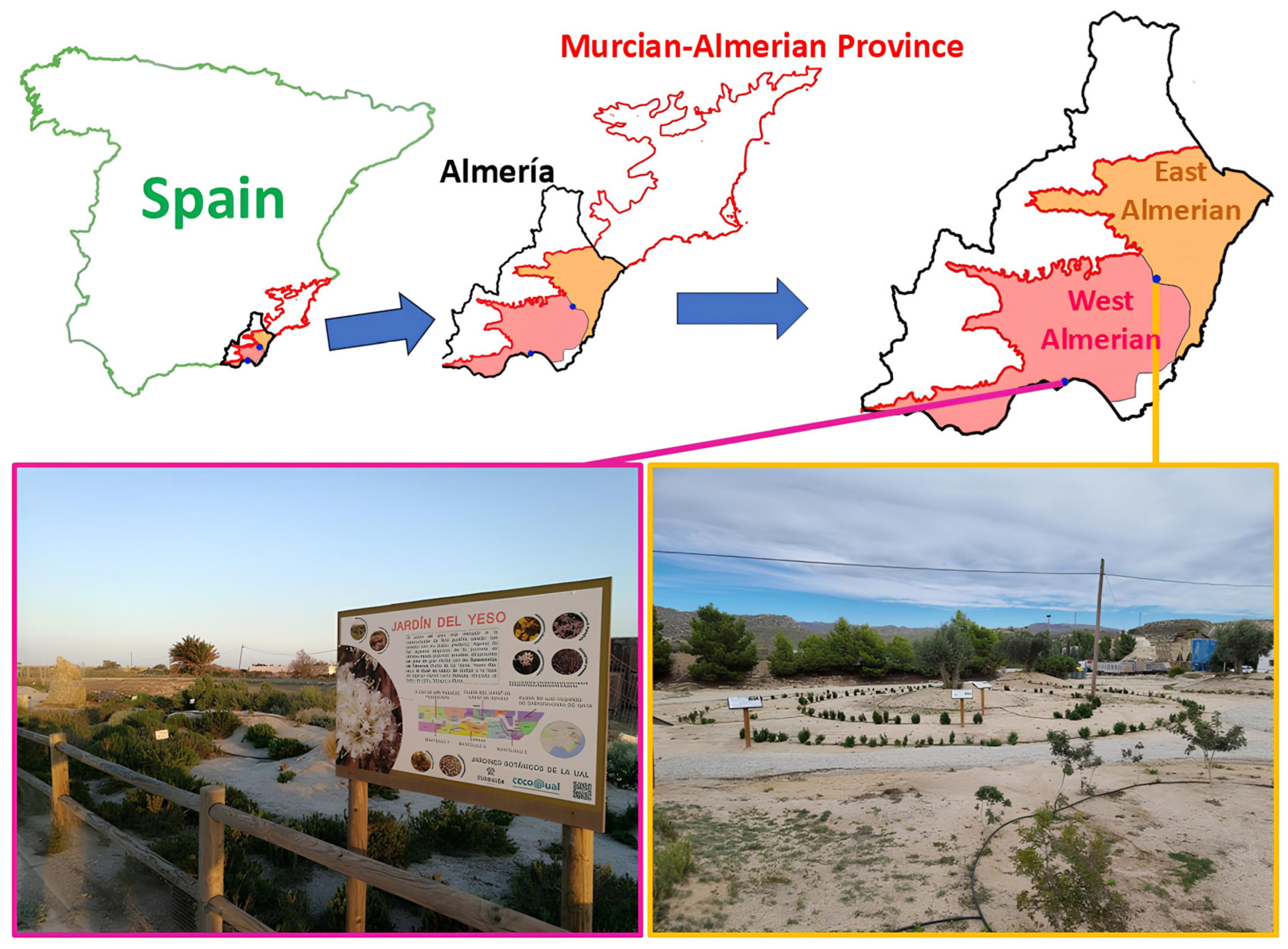
In order to set up the two botanical gardens described in this study, two gypsum outcrop complexes identified by Mota et al. [23] in the province of Almería were considered as reference areas. According to these authors, the complexes are referred to as the eastern and western complexes. In this context, gypsum outcrop complexes are a group of areas which share the same floristic pool and belong to the same biogeographic unit, even though they can be separated from one another. Both complexes are located in the southeastern Iberian Peninsula (IP), a region characterized by extreme aridity (Figure 1). Due to their insular nature, gypsum outcrops exhibit high β-diversity [23,42], explaining why their floristic composition is somewhat variable from one to another [43]. This characteristic affects not only the local endemisms (e.g., the Teucrium genus), but also elements widely distributed across Spanish gypsum outcrops, such as Ononis tridentata, Lepidium subulatum, or Frankenia thymifolia [23].
These two complexes possess clear and well-defined floristic and biogeographic identities despite their geographical proximity [23]. Both gardens simulate outcrops associated with evaporitic sedimentary levels of the Upper Miocene (Messinian). The predominant soils are haplic gypsisols [44,45], characterized by a high calcium content, high base concentration, and a pH ranging from moderately alkaline to alkaline (7.5–7.9). The aridity associated with these basins is the most decisive factor for vegetation, establishing a very clear division between species that tolerate the harsh conditions of gypsum and those that do not [23,34]. Table 1 and Table 2 summarize the main characteristics and key aspects of these outcrops. For further climatic information, see Mota et al. [23].

2.2. Gypsum Soils or Gypsisols

A key aspect in the creation of the gypsum gardens was the preparation of the ground and the replication of this type of soil which, as previously noted, is characterized by its high gypsum content. This, paired with the low presence of organic matter, even in the surface horizon, often gives the soil a pale colour that makes it highly distinctive. With the dual objective of emulating both the physical and chemical characteristics of these soils, residues from gypsum mining were used, specifically milling debris (fines), which consist almost entirely of pure gypsum. In both cases, once these protosoils were spread, five soil samples were analysed from each garden to verify the extent to which the edaphic characteristics of the soils associated with these ecosystems had been successfully or partially replicated.
For this purpose, in each case being studied, five samples of the surface of these protosoils (0–15 cm depth) were collected. The samples were airdried at room temperature (approximately 20 °C) for seven days. Subsequently, the content of each soil sample was homogenized and sieved using a stainless-steel sieve with a mesh opening of 2 mm to remove plant residues and gravel. An amount of 10 g of the sieved material was subsampled and ground for 60 s in a mixer mill (Retsch MM200) to standardize particle size. From each ground sample, one gram was destined for chemical analysis.
Basic physicochemical analyses were carried out using standardized methods. Soil pH was measured in a soil–water suspension (ratio 1:5, w/v) using a glass electrode and a pH meter (Crison micropH 2001, Crison Instruments S.A., Alella, Spain), following the Hayward et al. [46] procedure. Electrical conductivity (EC) was obtained from the soil saturation paste extract, according to the methodology of MAPA [47]. Determination of total organic carbon (TOC) and total nitrogen (N), for the C/N ratio, was performed using the CEBAS-CSIC method (https://www.cebas.csic.es/general_spain/ionomica.html (accessed on 19 December 2025)) with an elemental analyser, the TRUSPEC CN628 LECO Corporation, St. Joseph, MI, USA model. For this purpose, samples were weighed and encapsulated, then oxidized at high temperature in the analyser. Carbon measurements were obtained by infrared detection, and nitrogen measurements by thermal conductivity, following the Dumas method [48]. Soil carbonates (CO32−) were calculated according to Barahona et al. [49]. The gypsum percentage was quantified using the method proposed by Artieda et al. [50]. The total content of soil elements was determined at the Ionomics Laboratory of the Centro de Edafología y Biología Aplicada del Segura (CEBAS-CSIC). Samples were analysed to quantify up to 29 elements, though only the seven elements considered key for interpreting gypsophily (Ca, K, Mg, Na, P, S and Sr) are presented [34]. Inductively coupled plasma atomic emission spectrometry (ICPOES) was employed for this purpose. Results were expressed as dry weight percentage (% d/w).
In addition, the results obtained for these samples were compared to the literature data for gypsum soils [23], as well as to some of our own samples collected in previous investigations [30,31]. In the latter case, the analyses were carried out following the same methodology described and included samples of unaltered gypsum soils from the study area. Furthermore, other gypsum soils located across the Iberian Peninsula on which shrublands of the order Gypsophiletalia develop [31] were also included. Finally, soils created by anthropogenic activity were considered, such as those from quarries where processes of spontaneous succession have been studied [42].

2.3. Flora and Vegetation Formations

The main plant species of the two gypsum outcrop complexes that the gardens aim to reproduce are detailed in Mota et al. [23] and are partially shown in Table 1 and Table 2. All species nomenclature follows Mota et al. [23]. These tables also include other environmental characteristics and legal aspects related to their protection. According to the reviewed sources, gypsum areas are composed of mosaics of vegetation ranging from shrublands dominated by Ephedra fragilis and Pistacia lentiscus to therophytic grasslands with some endemic and distinctive elements such as Chaenorrhinum grandiflorum or Campanula fastigiata. However, the most widespread vegetation type is undoubtedly the gypsicolous shrubland dominated by small shrubs such as Gypsophila struthium and Helianthemum squamatum. Owing to their characteristic and diverse vegetation, these outcrops are considered a priority habitat by the EU [23,24]. Other shrub communities that shape the landscapes of gypsum outcrops in the southeastern Iberian Peninsula include those dominated by broom species (Genista spartioides, G. ramosissima, and G. jimenezii), the Stipa tenacissima grasslands and ruderal shrublands dominated by species of the genus Artemisia (A. barrelieri, A. campestris subsp. glutinosa, A. herba-alba).

2.4. Gypsicolous Flora and Gypsophily

Considering that gypsicolous vegetation occurs in mosaic patterns and that the definition of a gypsisol is qualitative in nature, addressing the creation of a botanical garden that recreates a gypsum ecosystem is not a straightforward task. In this case, not only is it a matter of selecting the species that should be represented, but it is also a matter of reproducing a type of soil capable of hosting them, by replicating its basic physicochemical characteristics. Information on this subject, particularly in the latter case, as already noted, is scarce and has rarely been directly related to the vegetation it supports.

2.5. Statistical Analysis

To determine whether significant differences existed in soil properties (gypsum content, pH, EC, C/N ratio, and element concentrations) between UAL_G (UAL gypsum garden) and LY_G (Los Yesares gypsum garden) soils, statistical analyses were carried out. In addition, comparisons were made with data from other related sites: GYPSO (soils associated with shrublands of the order Gypsophiletalia in Spain), M_GS (soils from the Almerian shrublands of the Gypsophiletalia order), and Q (soils spontaneously colonized by vegetation in gypsum quarries of Almería corresponding to the previous group). In the latter two sites, biogeographic separation was not maintained as statistical differences could not be analysed due to insufficient sample size.
For each of the soil parameters mentioned, a one-way Analysis of Variance (ANOVA) was employed to test the null hypothesis of equality of means among the groups. Prior to the ANOVA, the assumption of homogeneity of variances was verified using Levene’s test. If Levene’s test was not significant, the result of the standard ANOVA was interpreted. If Levene’s test was significant at p < 0.05, the Welch F test was prioritized, as it is robust to violations of the homogeneity of variance assumption.
For the multiple comparison analysis, given the recurrent presence of heteroscedasticity (unequal variances) in most variables, the Games–Howell post hoc test was used in all cases where the ANOVA or Welch F test was significant (p < 0.05). This test, which does not assume equal variances, was the most appropriate method for identifying homogeneous subsets of groups whose means do not differ significantly from each other (p > 0.05), and it served to establish a hierarchy among them. To assess the magnitude of the differences, the effect size (ω2) was calculated, a measure that estimates the proportion of total variance explained by the grouping factor, thereby providing an evaluation of the practical significance of the differences. All analyses were performed using a significance level of α = 0.05.
The statistical analyses were performed using the programs PAST (PAleontological STatistics, version 5.2.2) [51] and JASP (version 0.19.3) [52].

3. Results and Discussion

3.1. UAL Garden Description

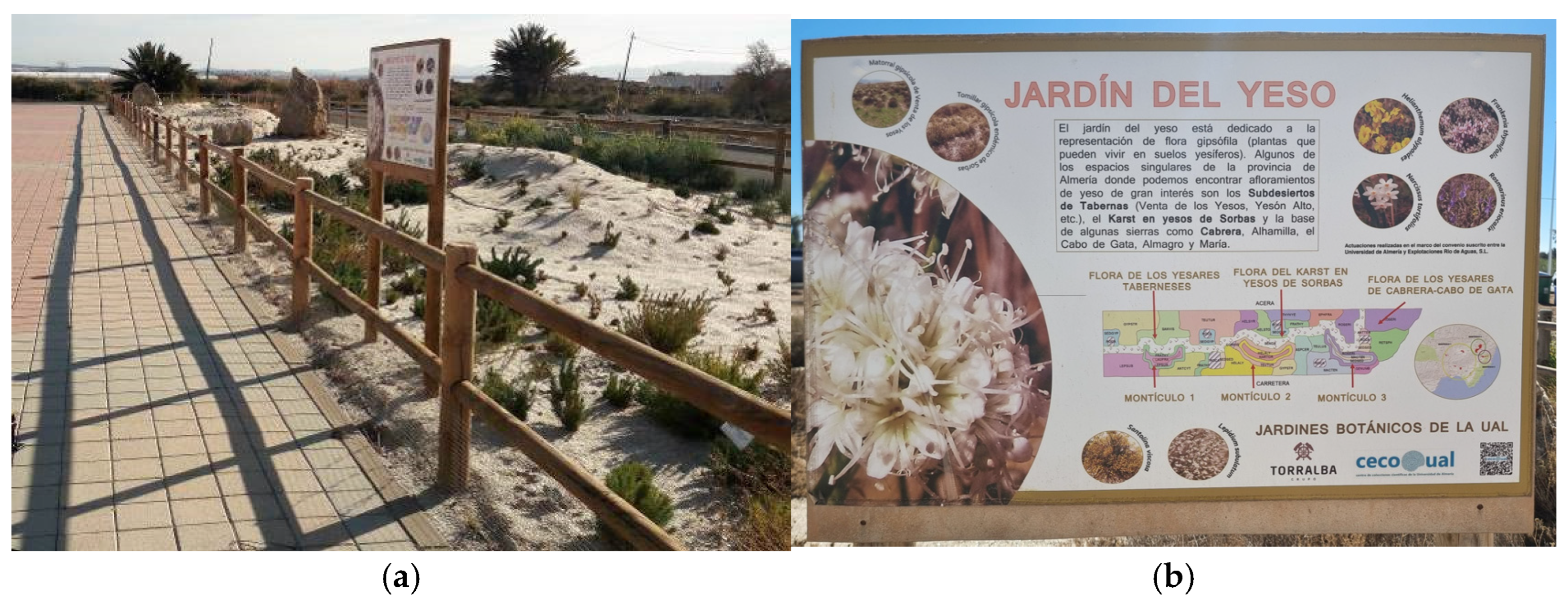
The UAL gypsum garden occupies a 605 m2 area, on a plot measuring 65 m in length and nearly 10 m in width (Appendix A). Its design included the representation of typical shrublands of both eastern and western Almerian biogeographic districts. The former have a more temperate climate and are rich in local endemisms such as Helianthemum alypoides and Teucrium turredanum. These outcrops also contain other non-endemic gypsophilous flora that are not present in continental gypsum formations in western Almería. In contrast, the western complex includes Lepidium subulatum and Frankenia thymifolia, both widely distributed across the Iberian Peninsula, but found only in colder inland areas. In the eastern Almerian gypsum outcrops, other differentiating species can be noted when compared to the latter. A couple of examples of this are the regional endemisms Narcissus tortifolius, one of the few geophytes almost exclusively associated with gypsum, and O. tridentata, a species widely distributed across the Iberian Peninsula that is also present in Morocco. O. tridentata is the tallest known gypsophyte, as it can exceed 1.5 m in height. Both outcrops share a considerable number of gypsophile species, such as Helianthemum squamatum, Gypsophila struthium, Rosmarinus eriocalix, Santolina viscosa, and Coris hispanica. The last two are regional endemisms, while the former extends to North Africa in highly localized areas. This pool of species is complemented by other very common species in gypsum soils, such as the gypsovags Stipa tenacissima, Thymus hyemalis, Anthyllis cytisoides, Sedum sediforme, and the gypsoclines Sedum gypsicola and Helianthemum squamatum.
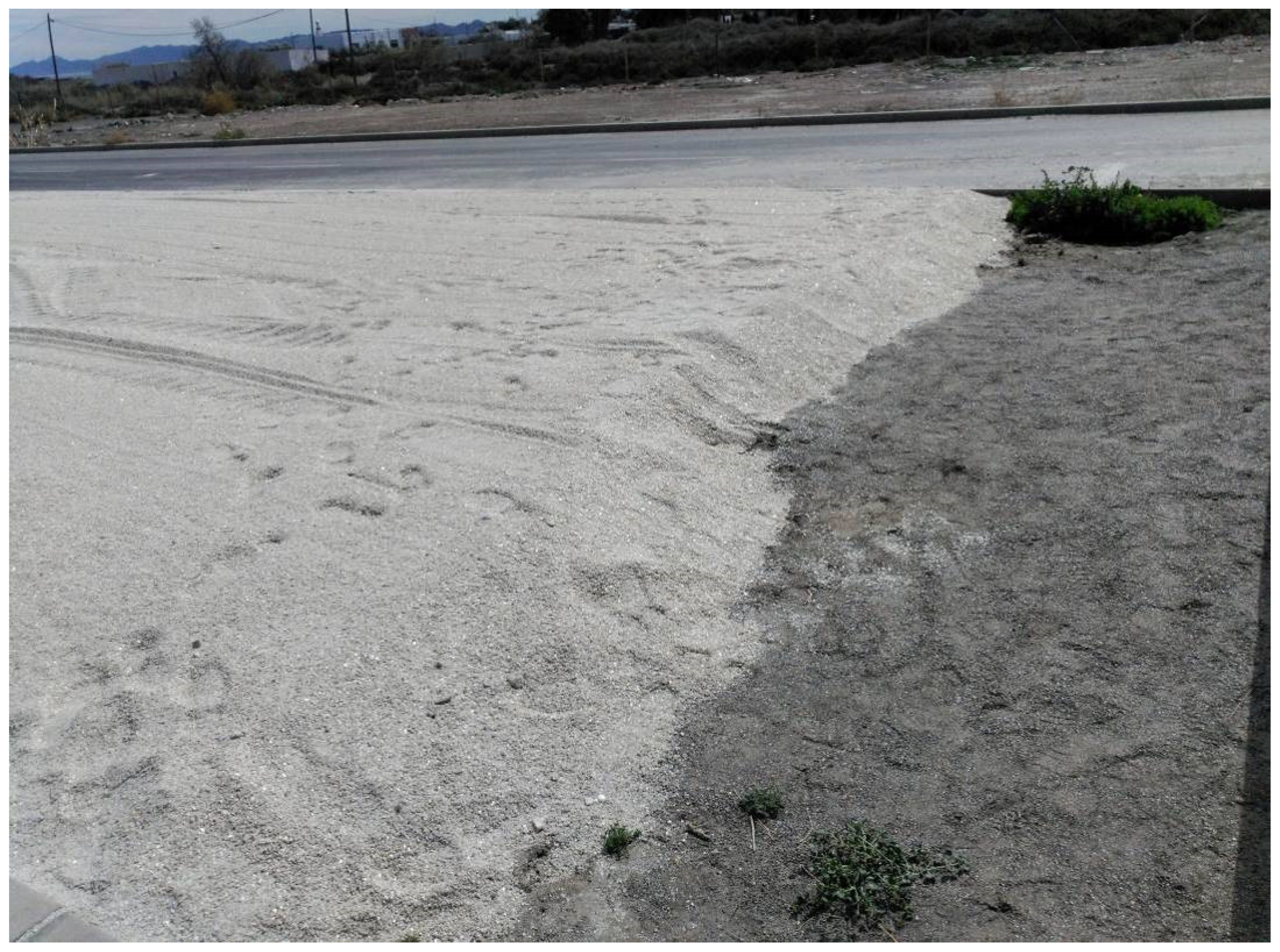
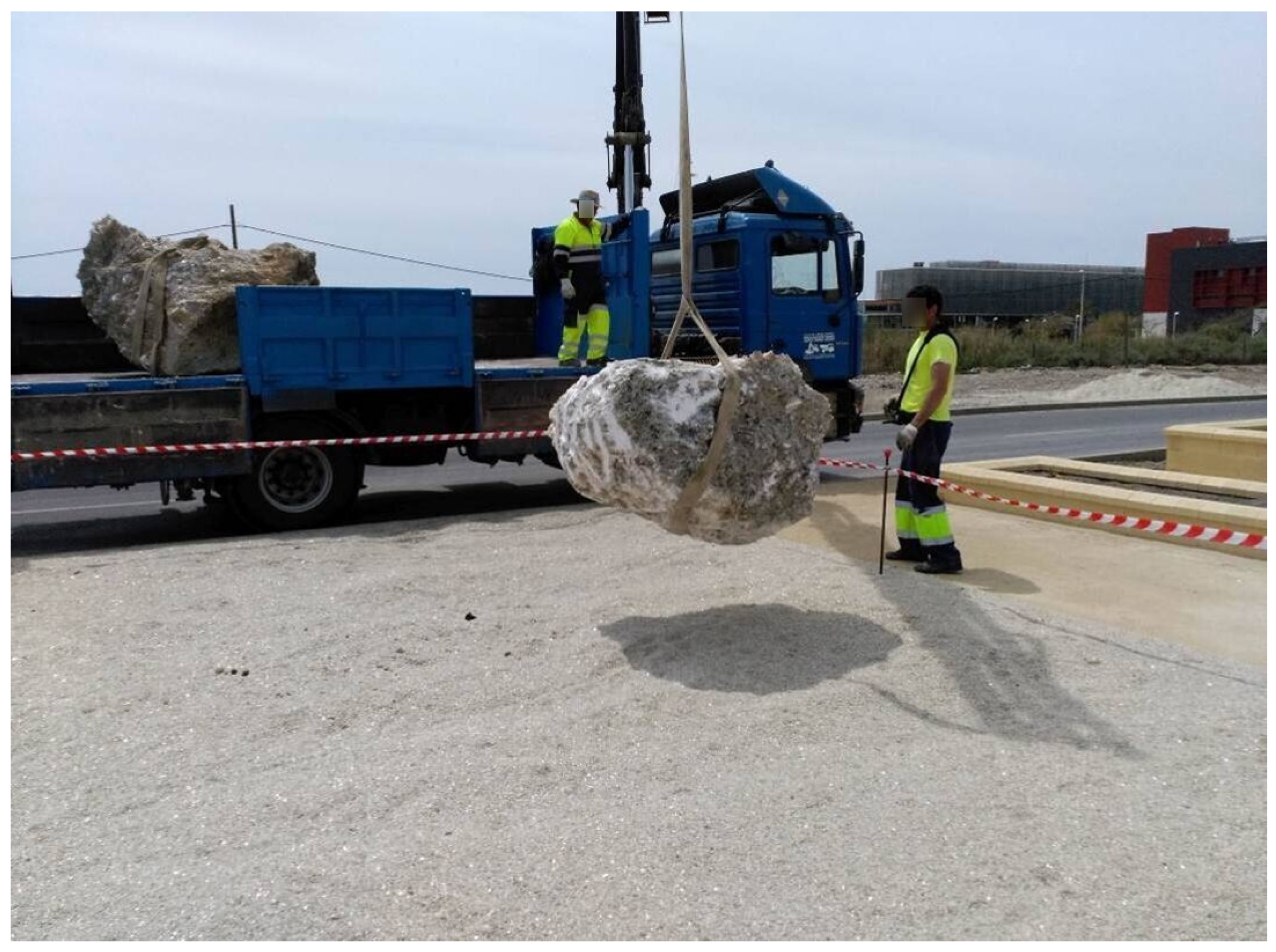
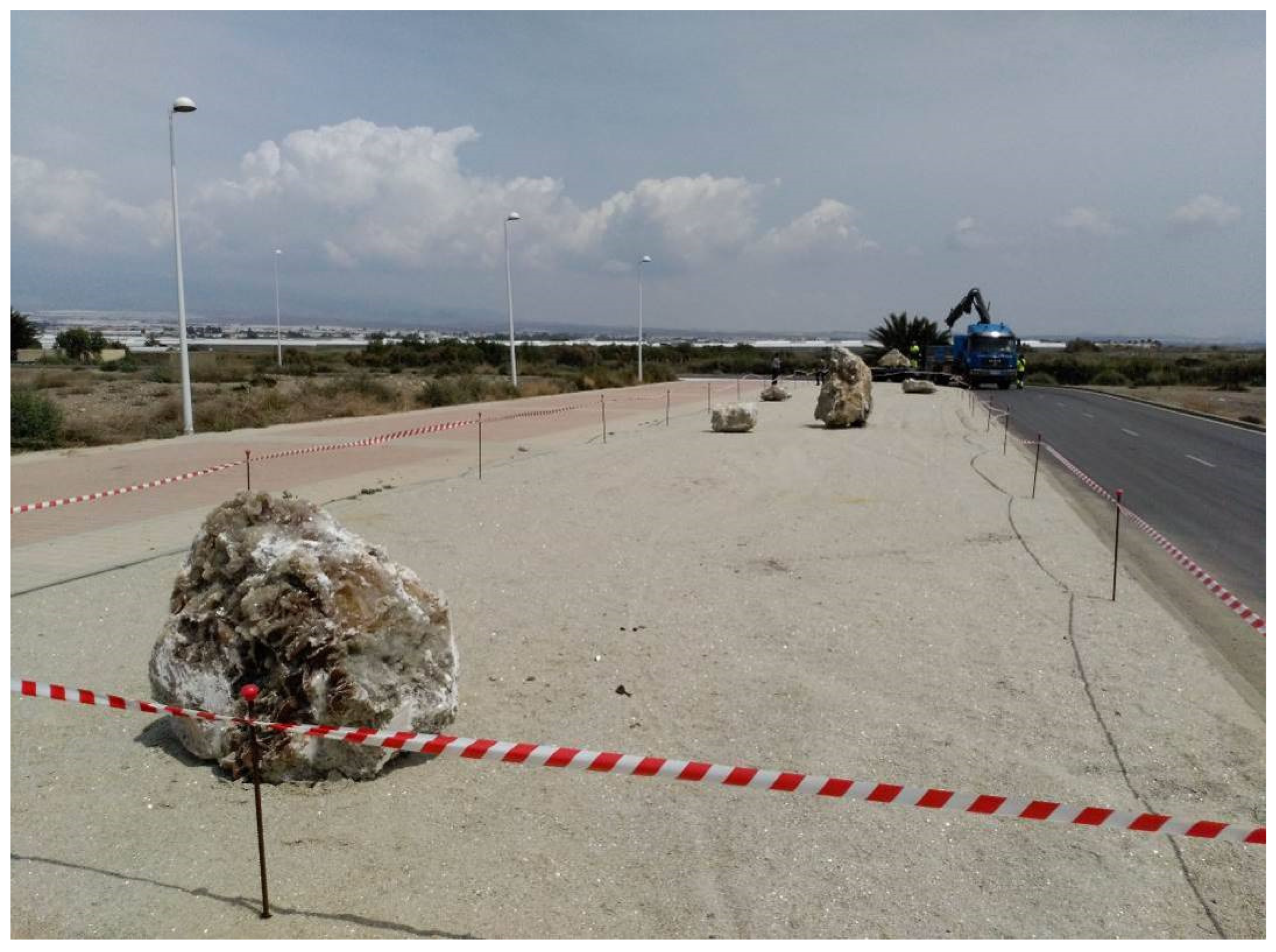
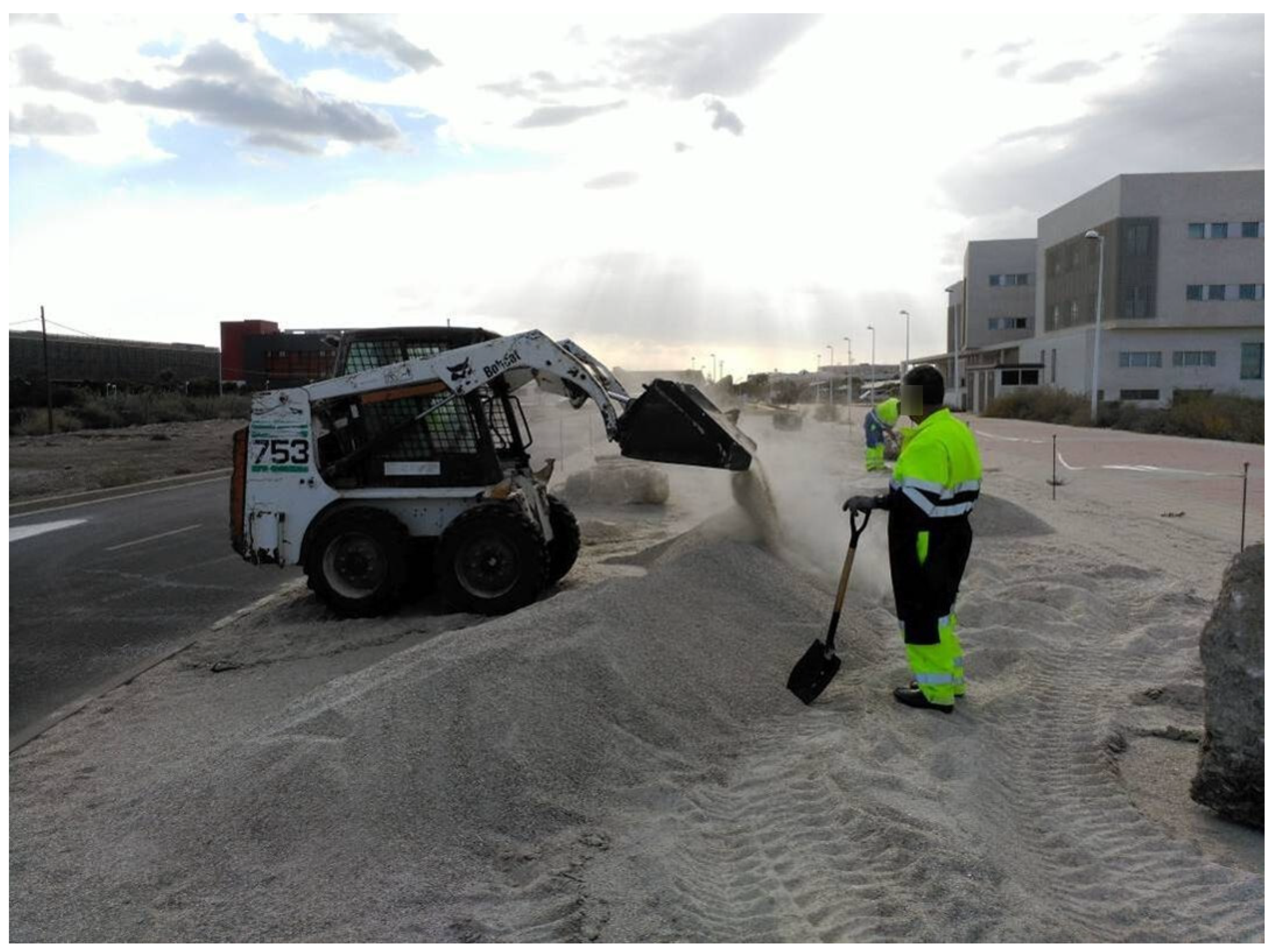
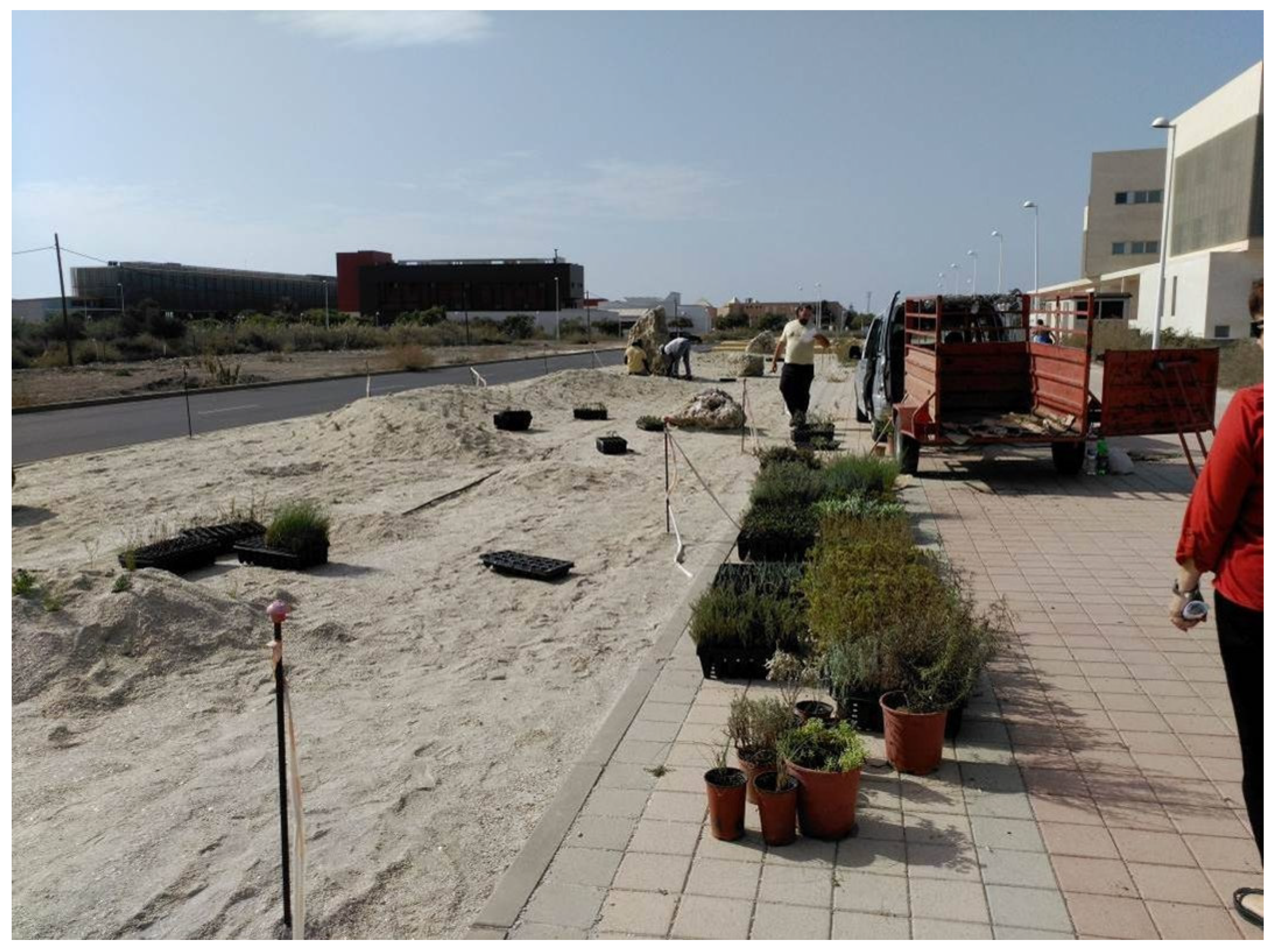
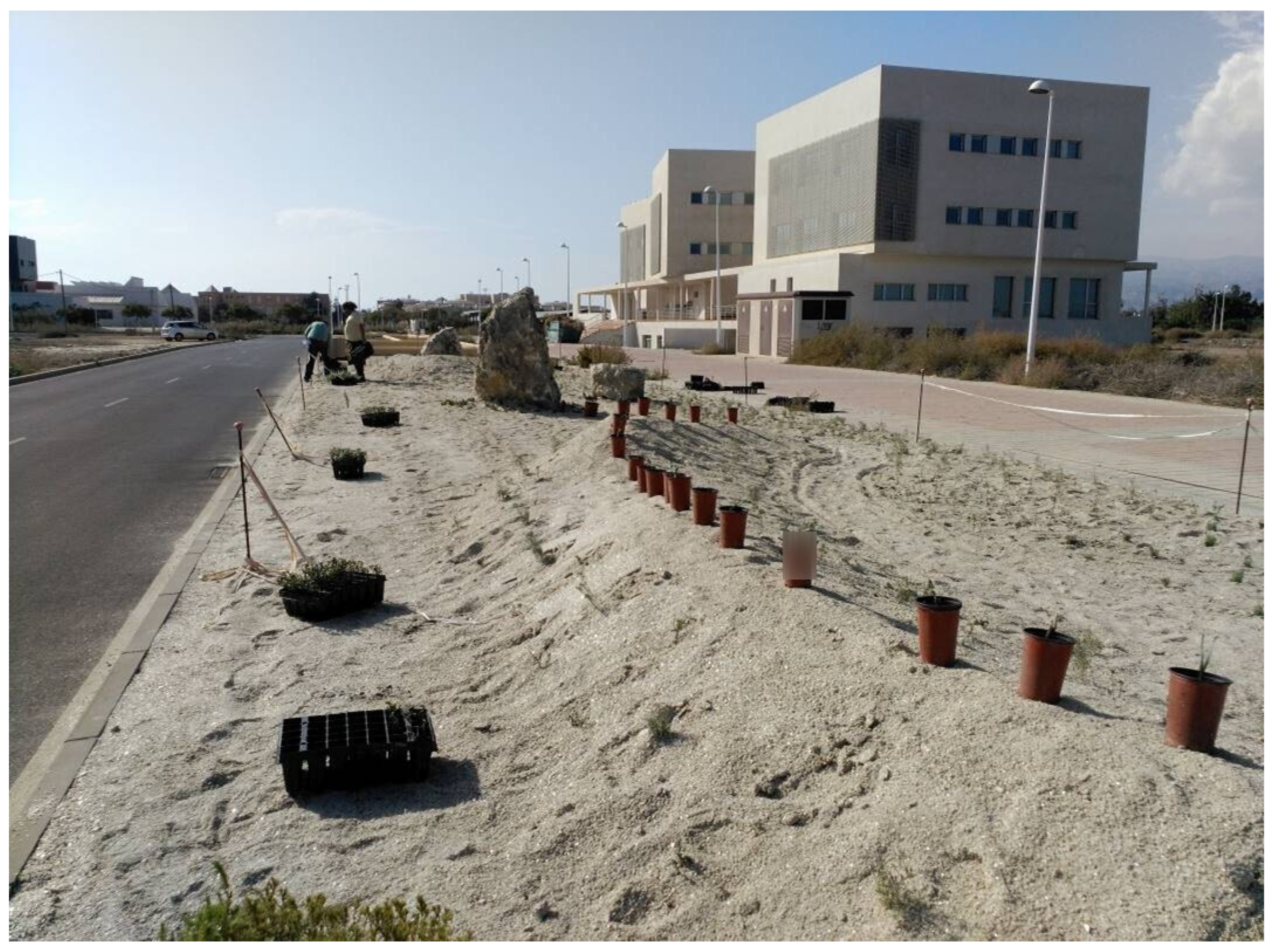
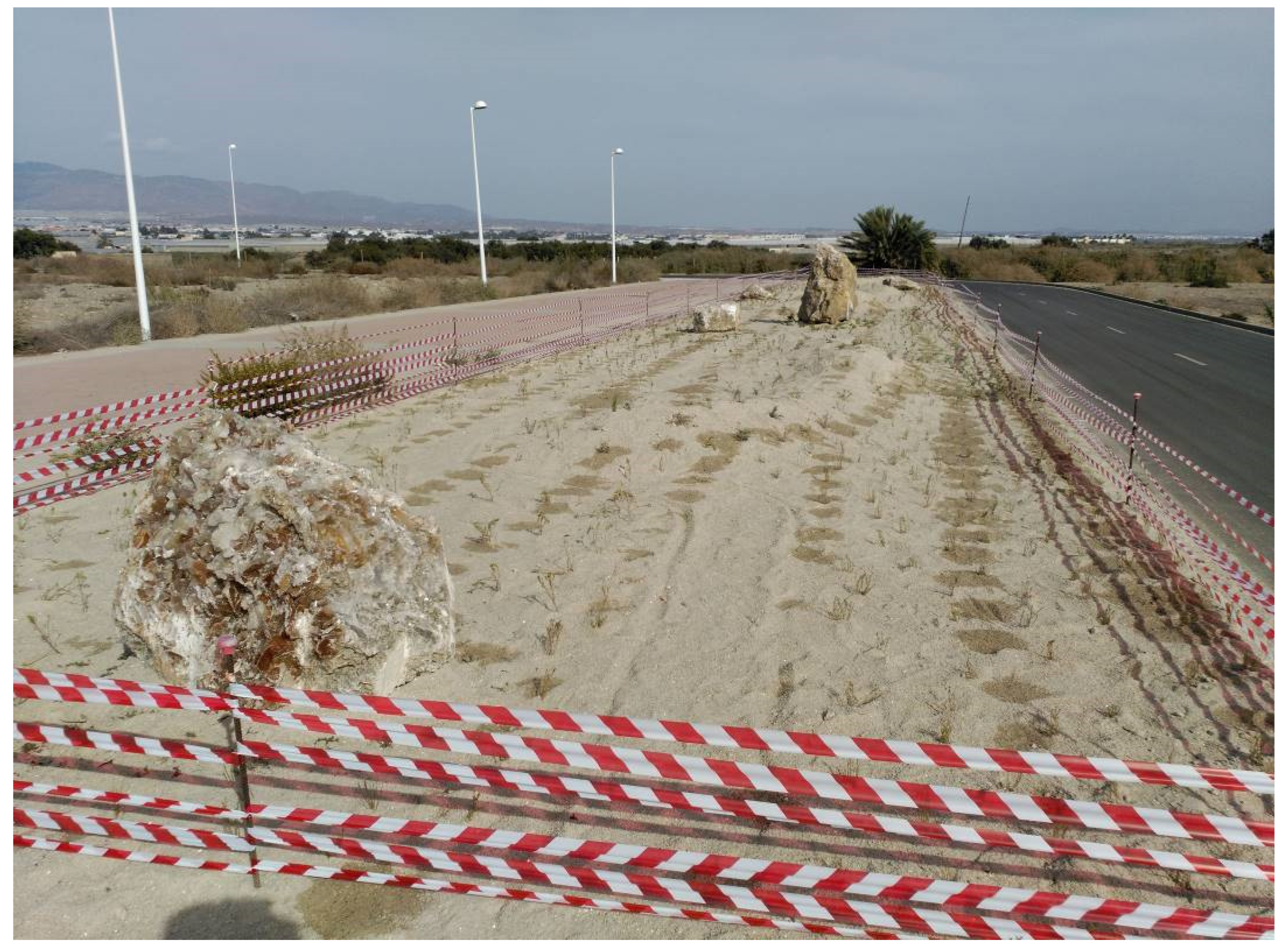
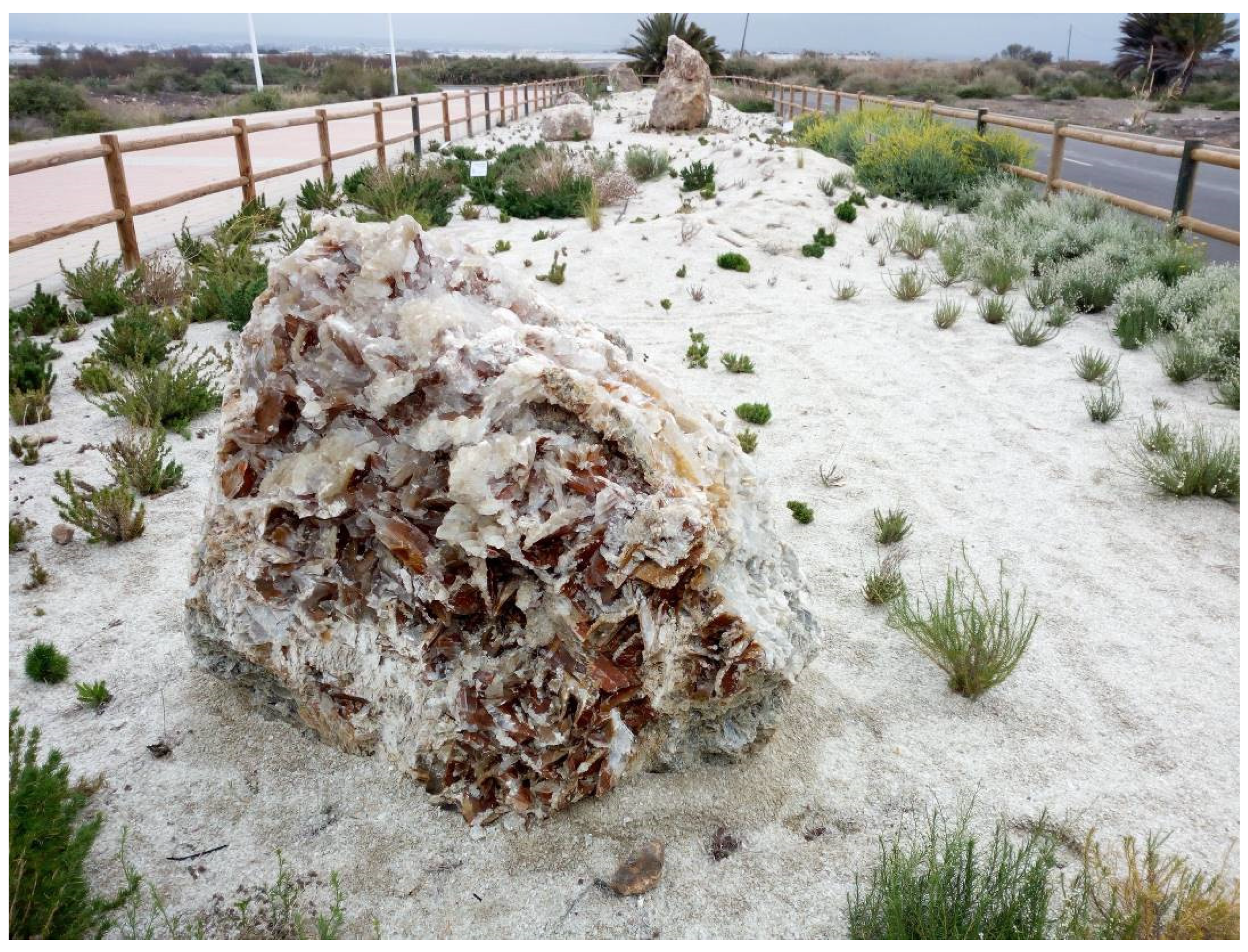
In order to recreate the substrate where the plants would later be placed, the saline conditions of the university campus soils needed to be reduced. This campus is located in a coastal area, thus presenting soils with high salinity. Although gypsum vegetation has been linked to saline soils, gypsophile plants do not tolerate saline, highly electrically conductive soils [22]. In fact, gypsum soils exhibit moderate electrical conductivity (see Table 3). In other gypsum outcrops of the Iberian Peninsula, halophytic and gypsophilous vegetation can come into contact in the transition zone, in which halo–gypsophile species appear [53,54], but this neighbouring situation is almost unknown in the gypsum outcrops in Almería. Since true gypsophiles do not tolerate salinity, it was necessary to break the capillarity of the soils surrounding the UAL, which are naturally dominated by Amaranthaceae species (Chenopodiaceae) such as Arthrocnemum macrostachyum, Salicornia fruticosa, and Tamarix gallica shrubs (Tamaricaceae), Salsola oppositifolia in ruderalized environments, Atriplex halimus, and the invasive Zygophyllum fabago (Zygophyllaceae). For this purpose, various textures of gypsum-milling residue fines were spread over the area, with coarser fractions placed at the bottom (Appendix A) to break soil capillarity. At this stage of the project, small mounds of fines were also placed, and large selenitic gypsum crystal blocks were added. From this point onward, two biogeographic environments were differentiated: the western Almerian district, dominated by Lepidium subulatum, and the eastern Almerian district characterized by the already noted local endemisms Helianthemum alypoides and Teucrium turredanum, among other plants. Figure 2, on the right, shows the spatial arrangement of the plots.

3.2. Los Yesares Garden Description

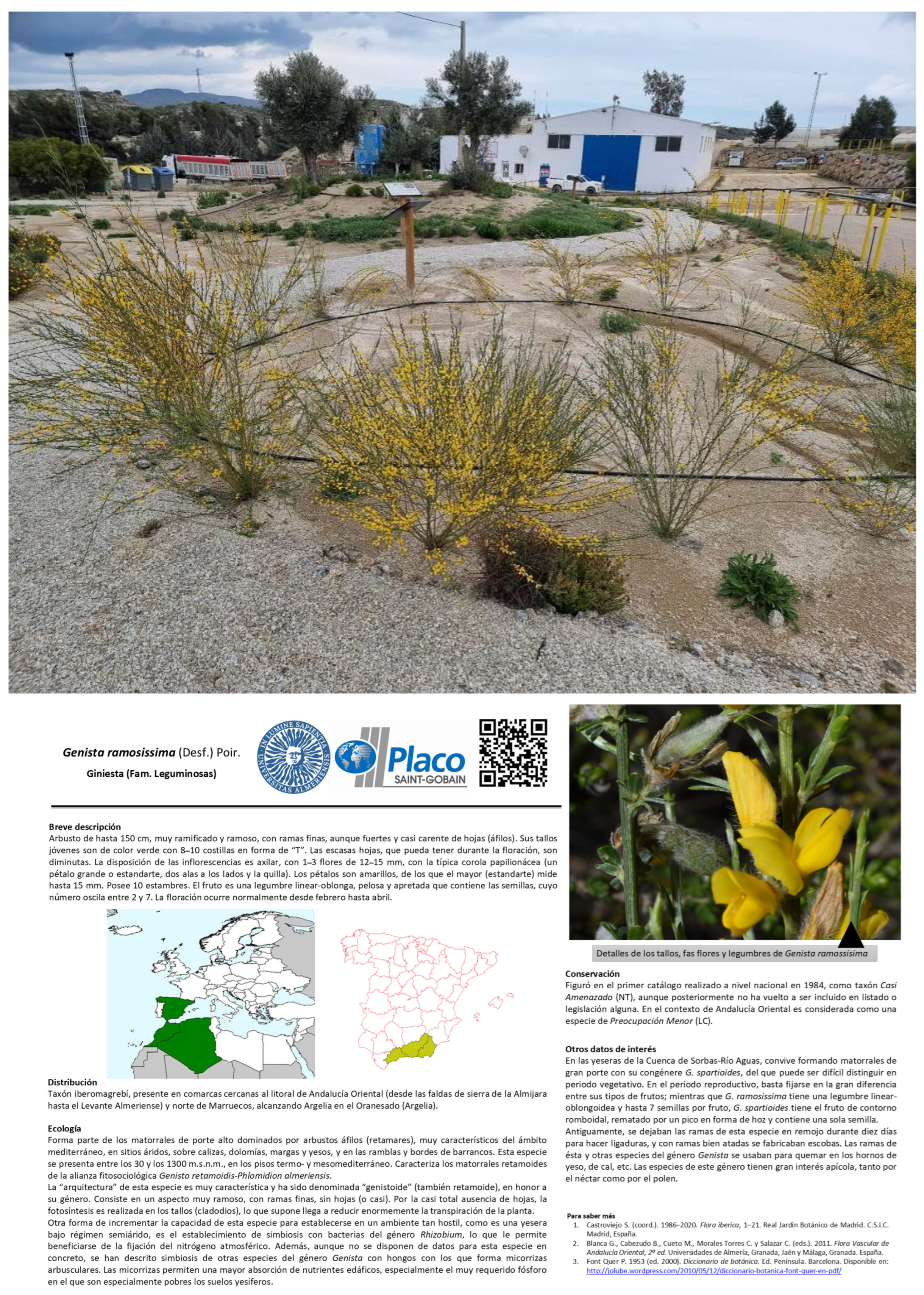
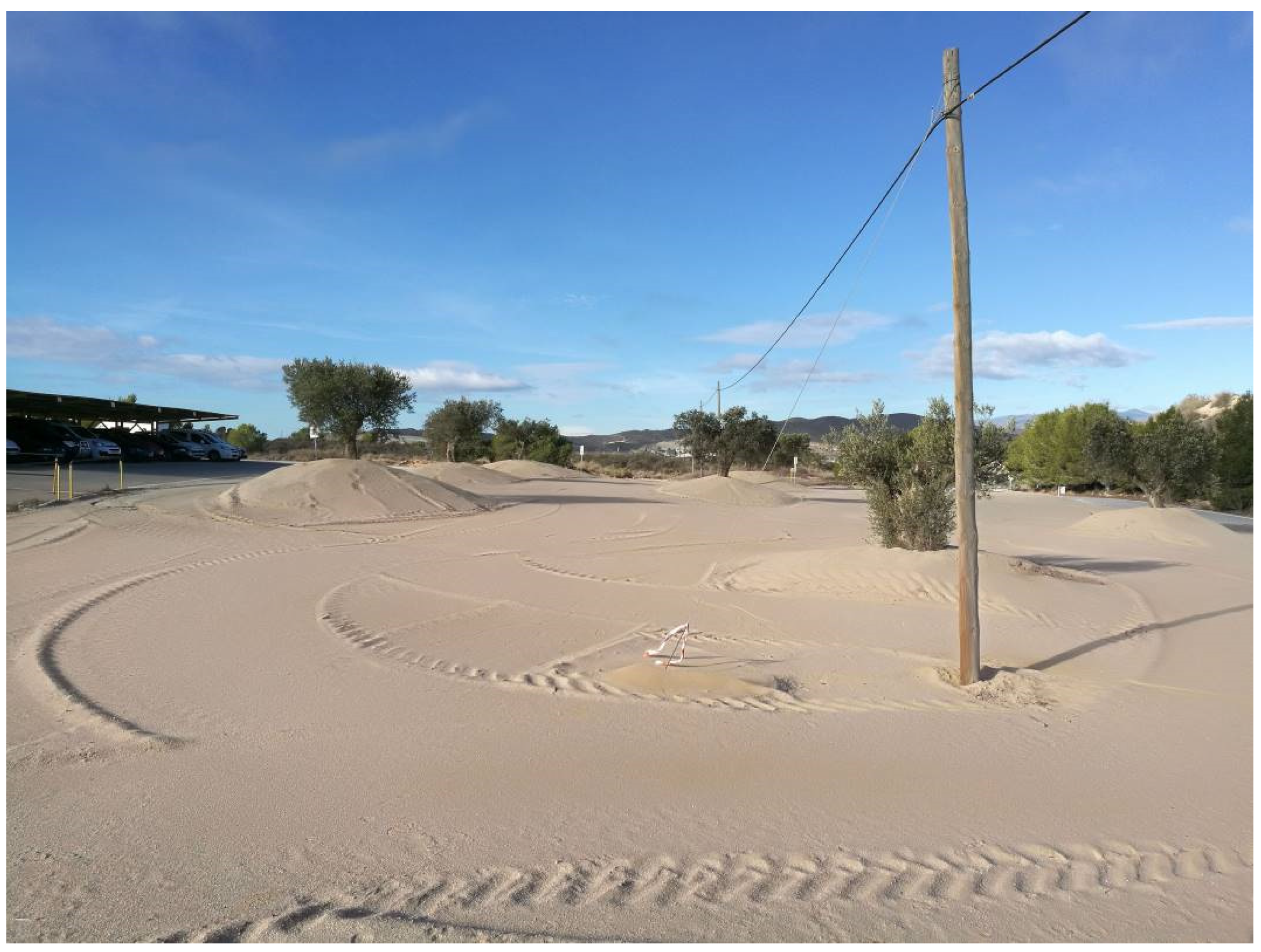
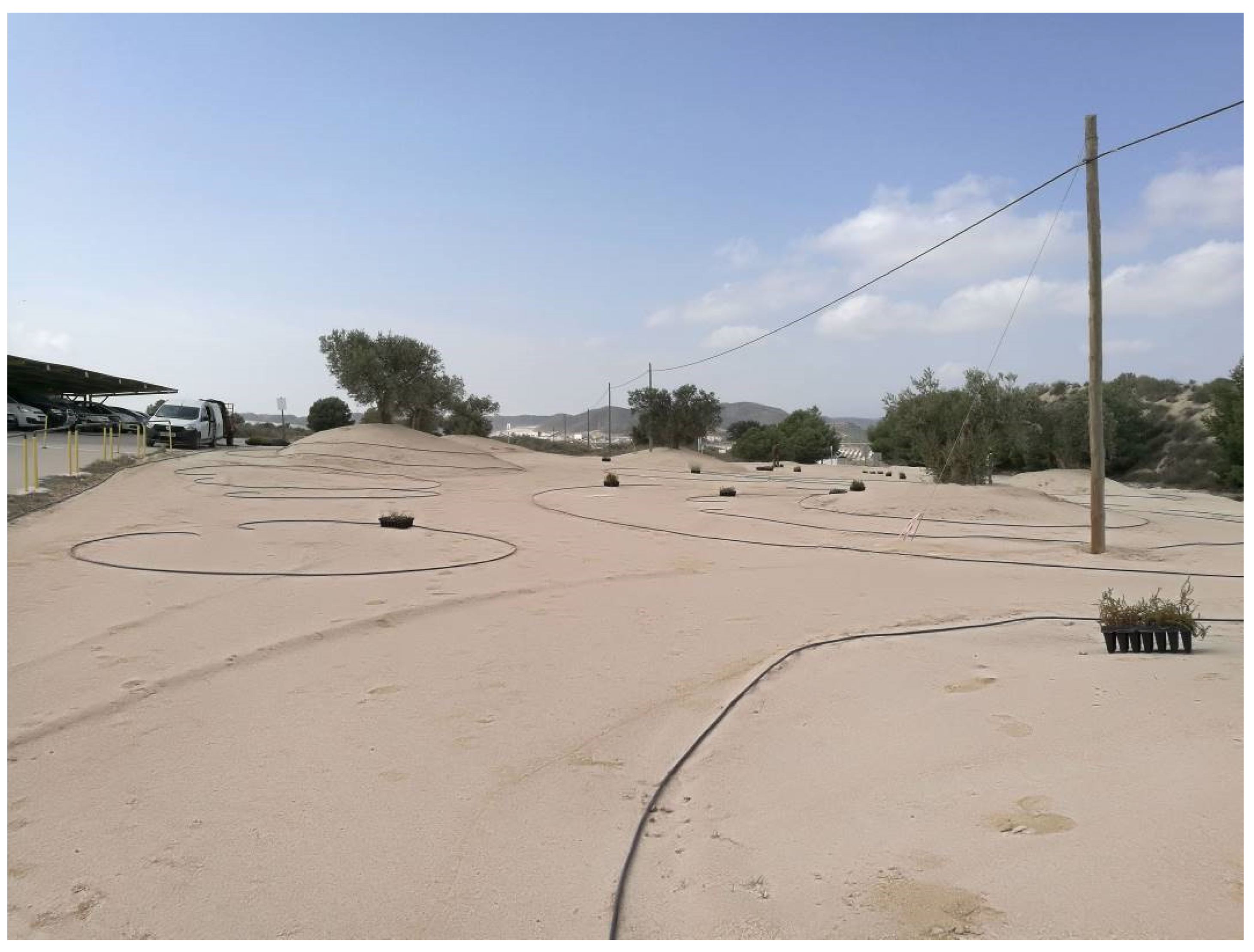
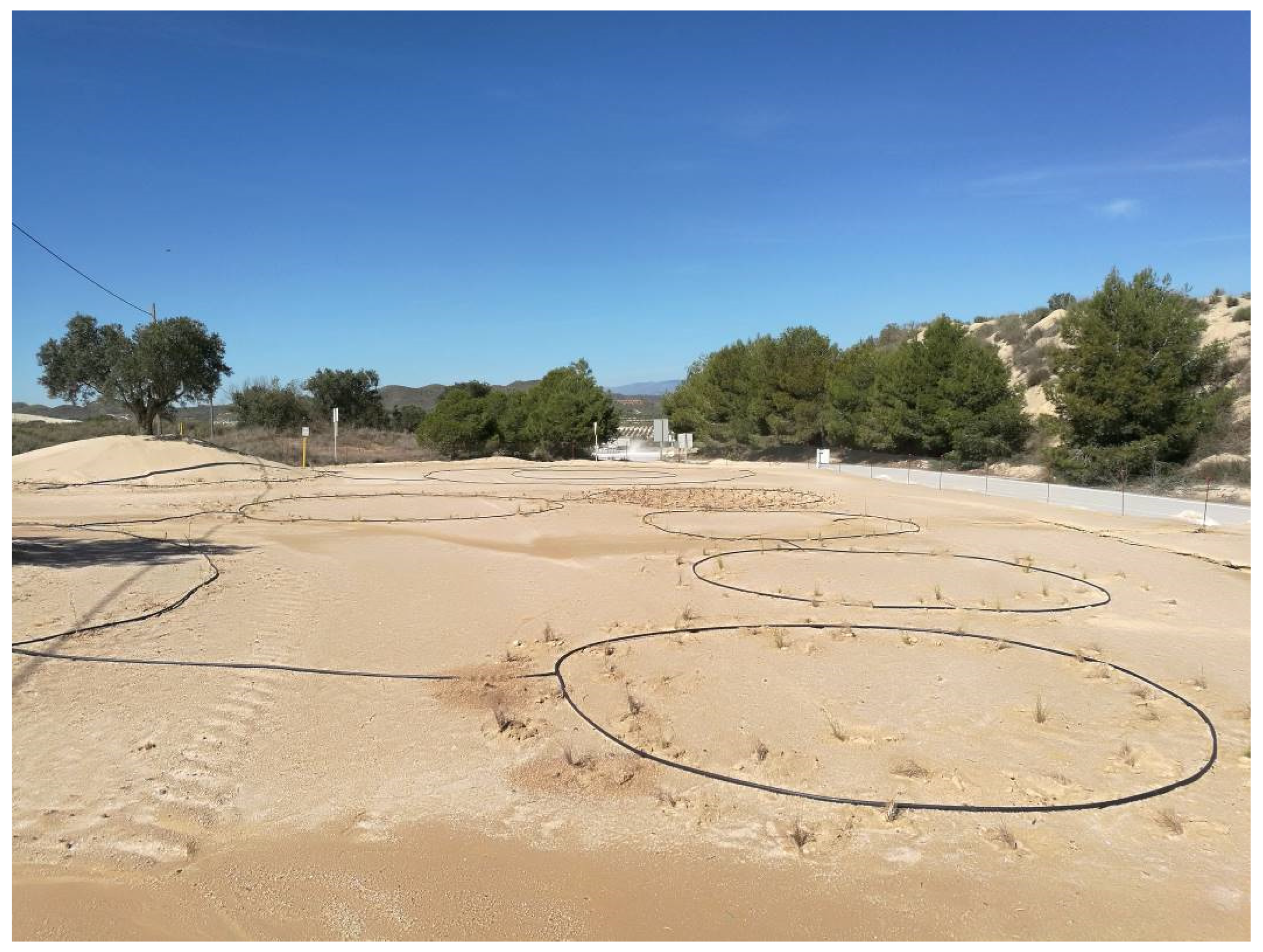
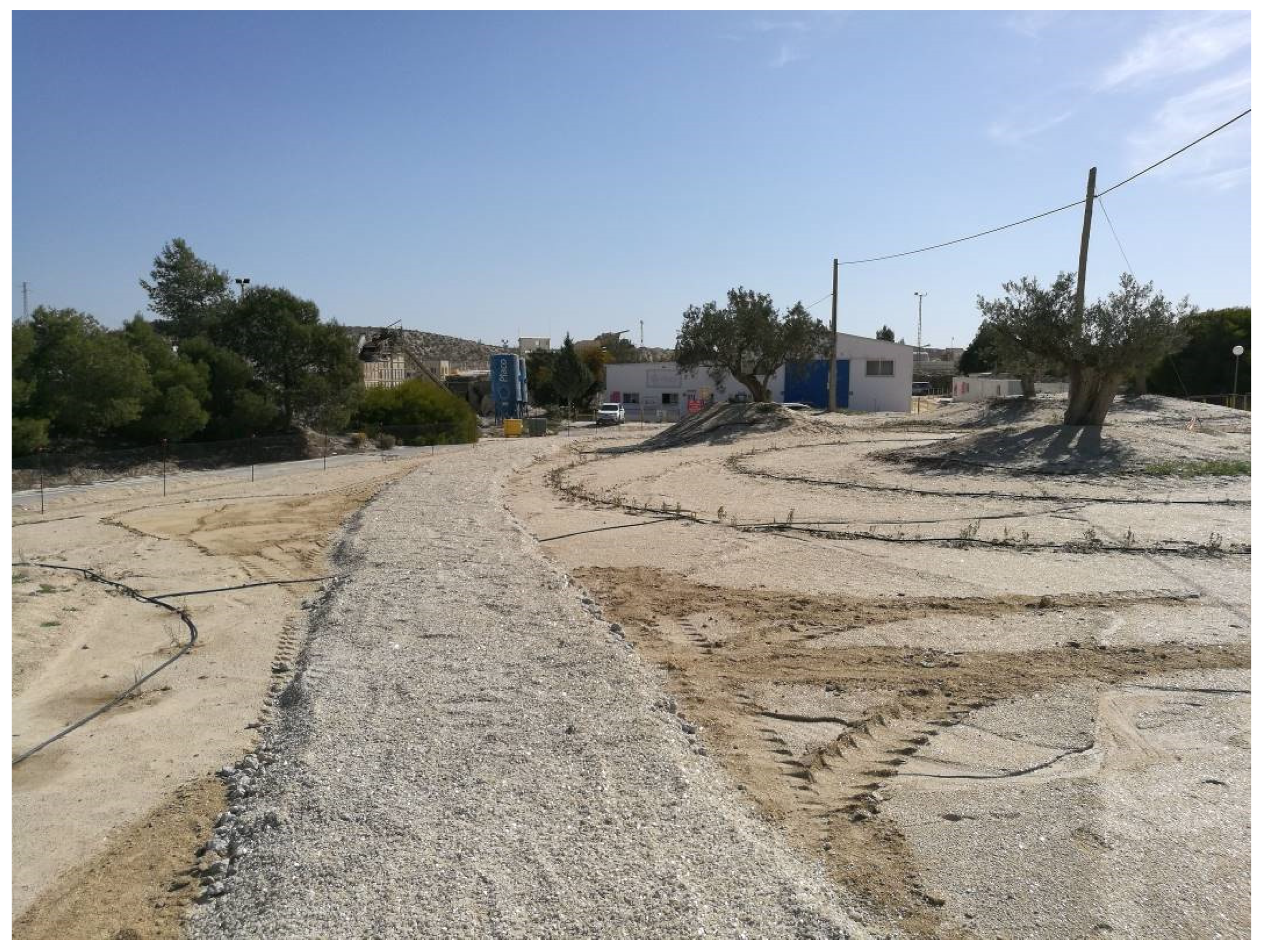
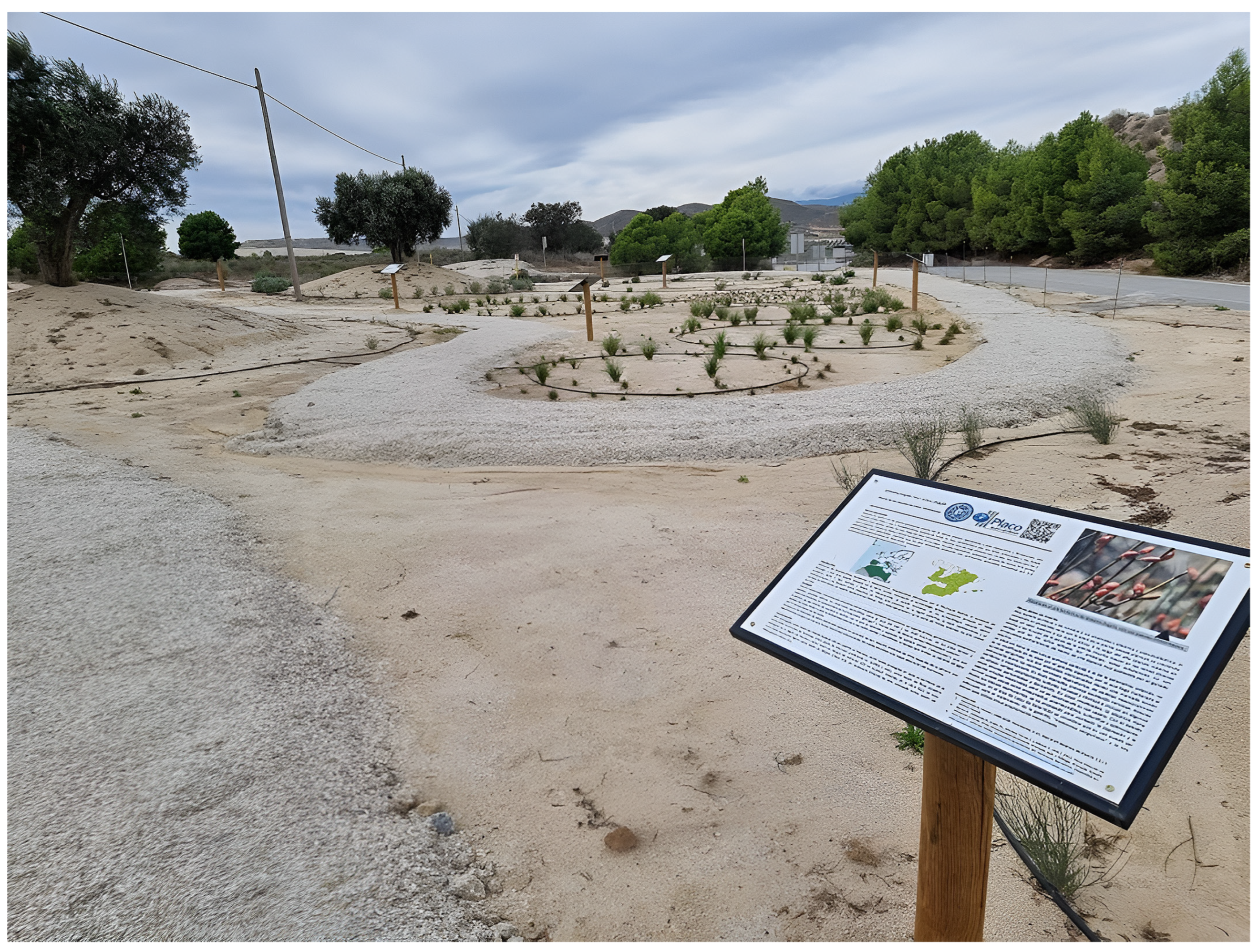
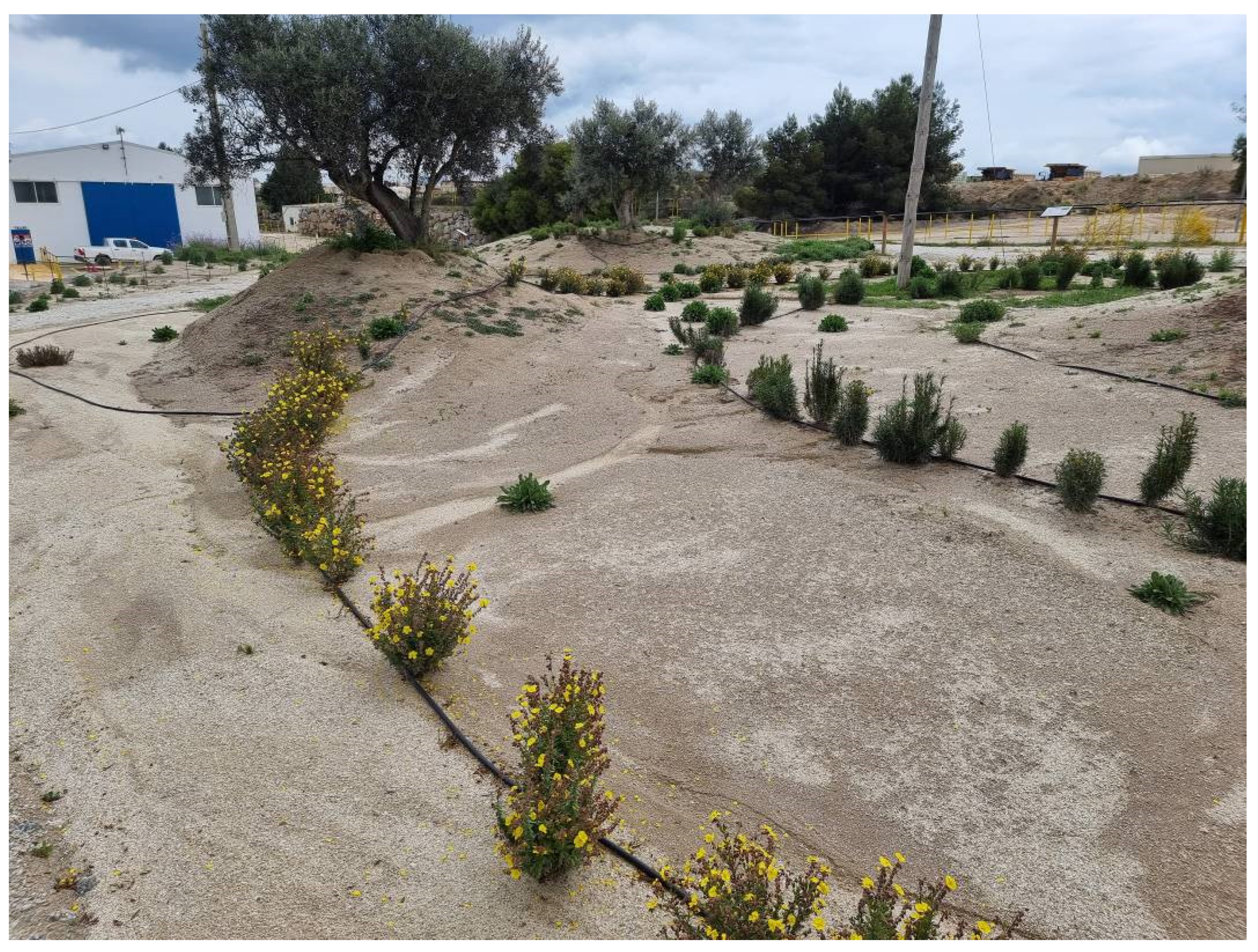
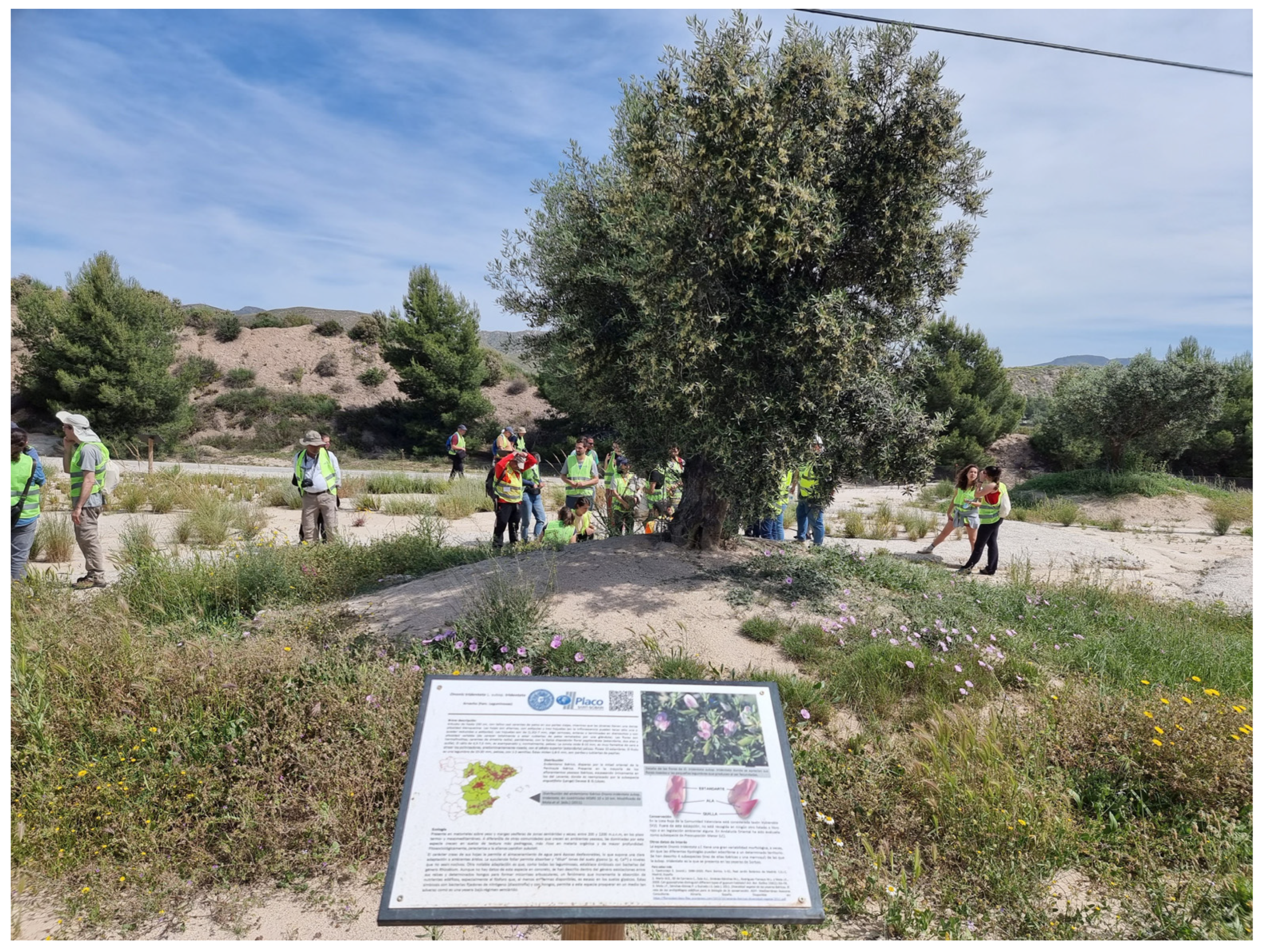
Unlike the previous one, and as already noted, this garden meets all the requirements to be considered a botanical garden, although it is not located within a university campus. Its location within the main and most extensive gypsum outcrop of the province of Almería—the Karst in Gypsum Natural Park of Sorbas—allows it to be classified as an in situ botanical garden. Situated at the entrance of the most productive gypsum quarry in the world, with more than 4 million tons extracted annually, it was first conceived mainly as a source of seeds and propagules for the restoration projects carried out each year, as well as for flora and Biological Soil Crust (BSC) translocation experiments. For this reason, the garden is supplied with plants taken from areas destined to be destroyed by the advance of quarrying fronts. In this case, the nature of the original soil was much more favourable than in the previous garden. Although it was not a soil of distinctly gypsiferous character, it did not present limiting conditions for plant development. In order to reproduce the characteristics, including the colour, of the gypsisols of the area [44,45] (Table 3), the original soils were also covered with fines (Appendix B). Given that the space of this garden is larger, visitors are allowed to enter its interior along established paths (Figure 3), whose boundaries are simply marked by laying milling fines coarser than those smaller, compact fines covering the original soil.
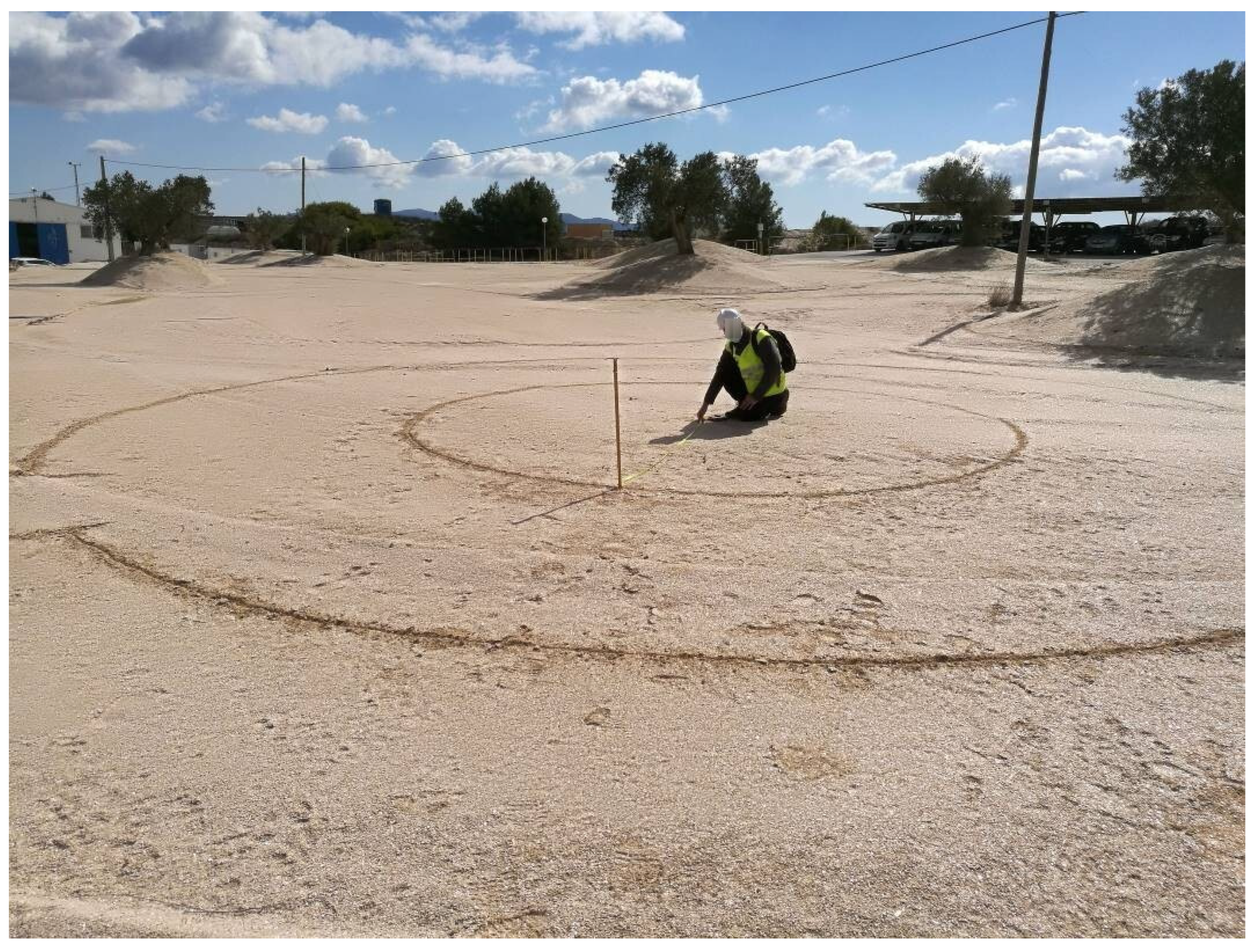
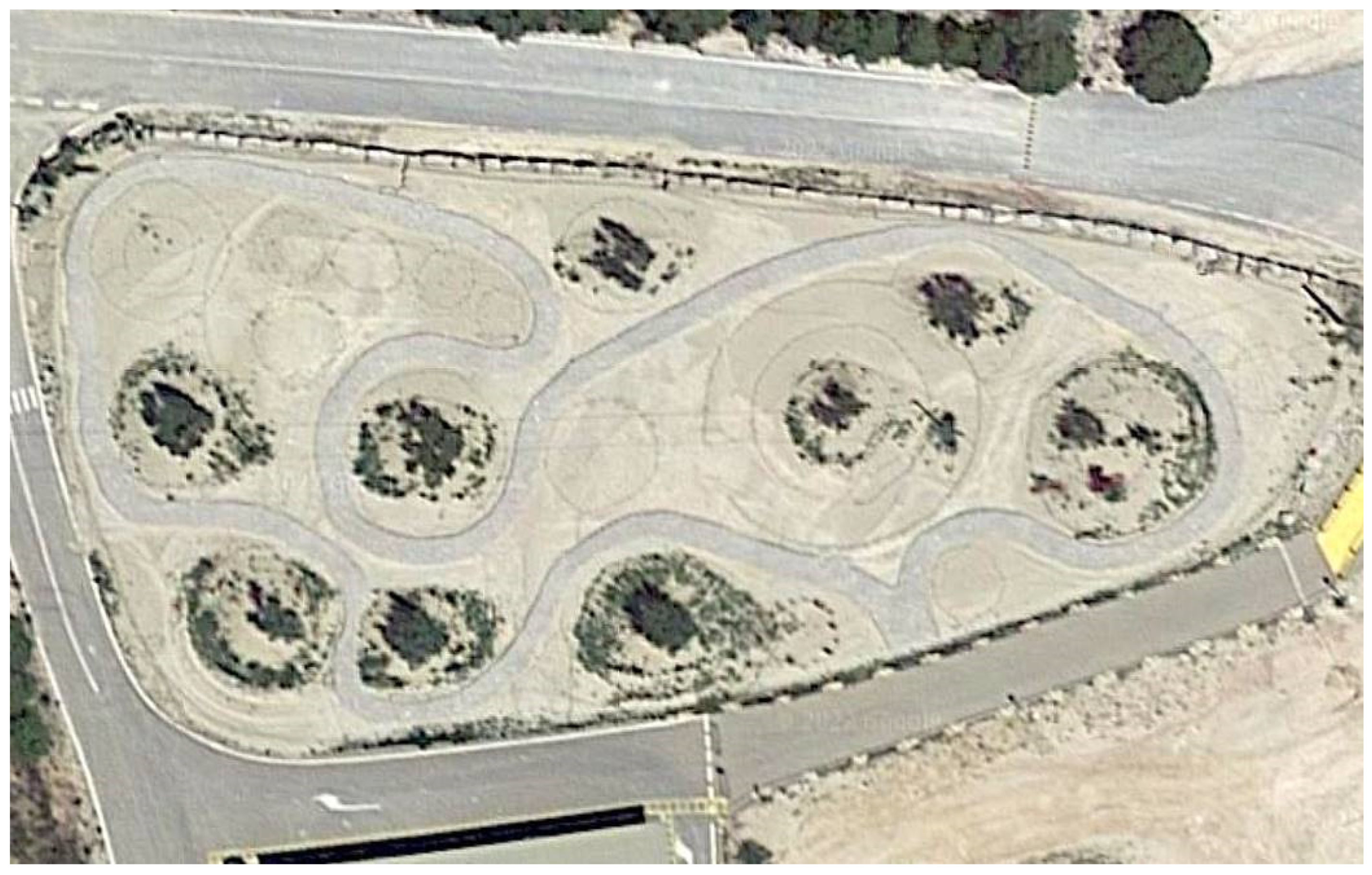
Without a doubt, the mining concession in which this garden is located can be considered a reference site for the restoration activities beginning in 2002. Its ovoid surface area exceeds 3240 m2. Three olive trees planted 27 years prior to the establishment of the garden were preserved, serving as a reference for the sowing of the chosen species. Concentric lines centred on those trees were traced, simulating flower whorls, with trees being the gynoecium (Figure 3). Because this garden is located in the eastern Almerian district, it does not include any of the species linked to the western Almerian sector mentioned in the description of the UAL gypsum garden.
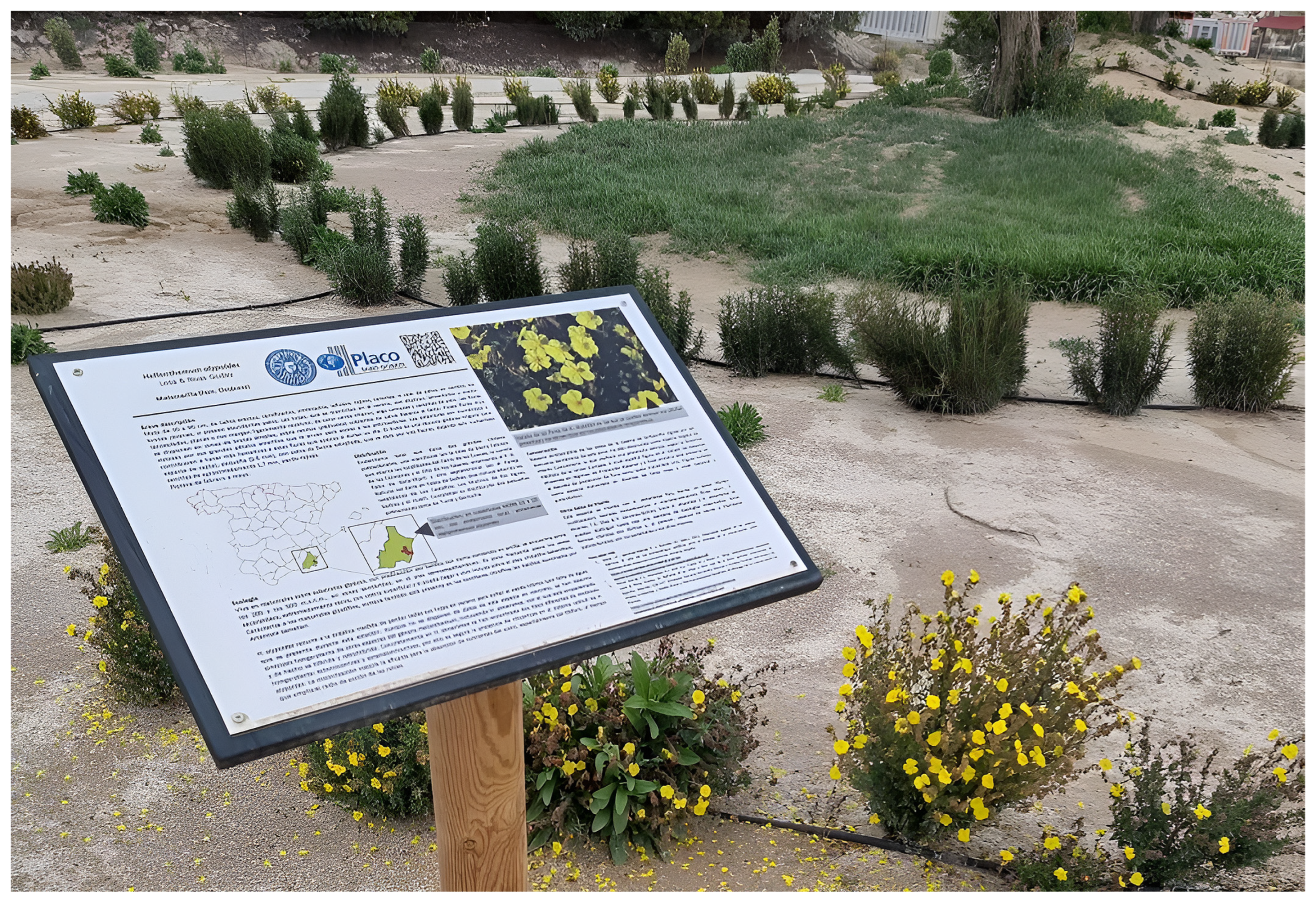
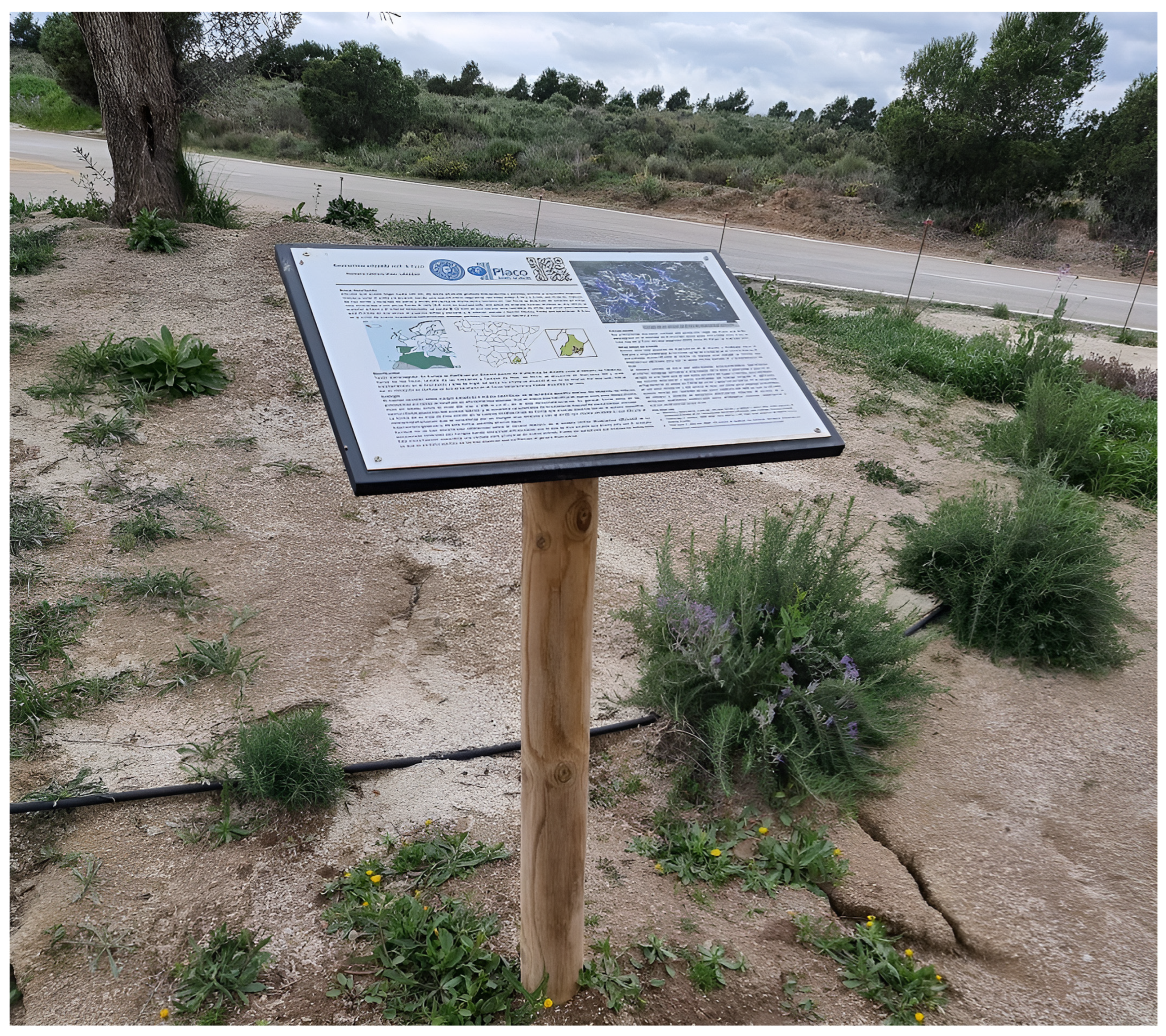
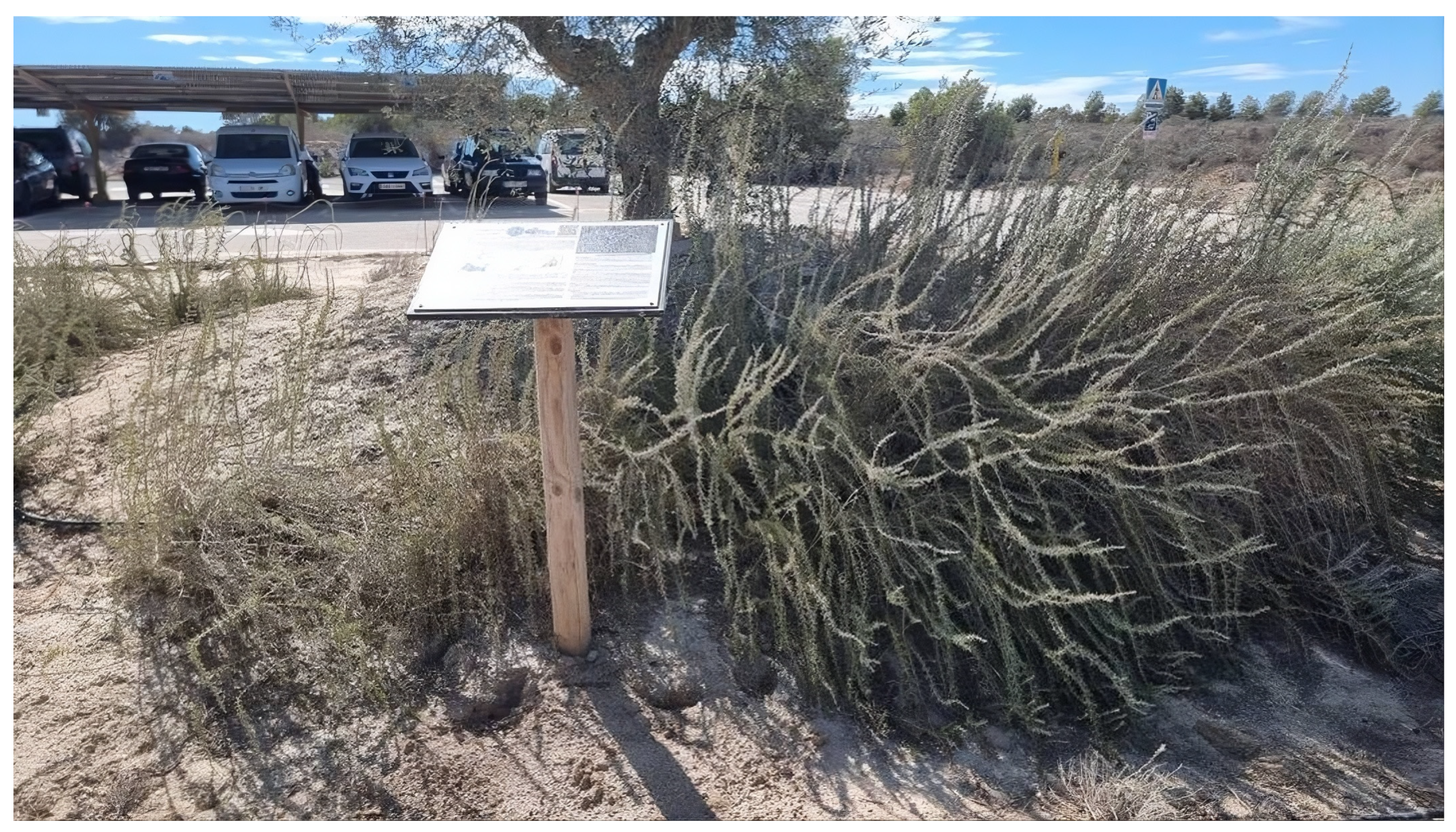
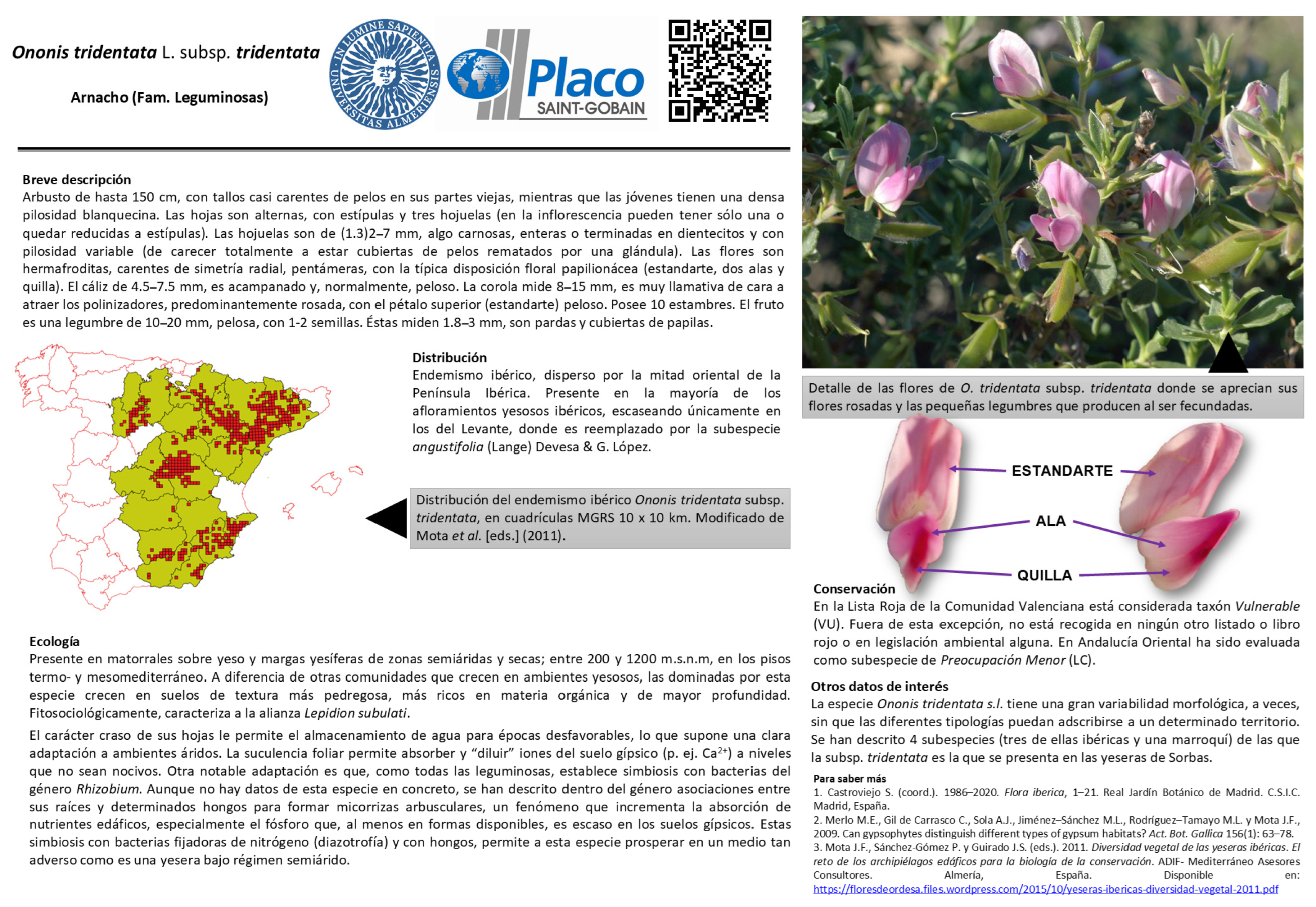
Unlike the university garden, the Los Yesares one features in situ panels including a photograph, a description of the main morphological characteristics, a distribution map, the ecological requirements, the threat status, and other relevant information for each species. In addition, visitors are offered other sources of information about the species through a section titled “to learn more”. Among the species in this garden, local (Teucrium turredanum, Helianthemum alypoides), regional (Coris hispanica, Santolina viscosa), and Ibero–Mauritanian endemisms (Gypsophila struthium, Helianthemum squamatum, Ononis tridentata, Rosmarinus eriocalix) can be found. This assemblage is further enriched by gypsum-tolerant species, which are very frequent and abundant in these soils, such as Stipa tenacissima, Helianthemum syriacum, Anthyllis terniflora, and Thymus hyemalis. Typical small shrubs are present as well, including Pistacia lentiscus, Ephedra fragilis, Genista spartioides, and Genista ramosissima. Floristic data of interest for both gardens is provided in Appendix C.
According to the methodology applied in the UAL garden, planting was carried out using one-year-old seedlings produced in nurseries from seeds collected from wild plants in the area. These seedlings were planted in the garden and then received supplementary irrigation. Both gardens were equipped with very simple irrigation systems, made of 16 mm PVC pipes with spaced drippers to meet the watering needs of the seedlings.
In both gardens, the soils upon which gypsophile species were planted clearly convey the idea of these habitats being made ad hoc for these plants because of their aspect and colour. Milling fines, utilized in habitat restorations as well [40], successfully created an outcrop resemblance.
Regarding the specific values of the measured parameters, the analysis of the gypsum percentage showed that the clearest difference was found in the group with the highest average value, UAL_G, which was significantly higher than LY_G and GYPSO. On the other hand, the Iberian shrublands of the order Gypsophiletalia (GYPSO) consistently have the lowest mean gypsum percentage, being significantly different from all groups except M_GS. This result is quite logical considering that the latter group is also composed of gypsicolous shrublands, although restricted to the southeast of Spain. The mean value for gypsum content, nearly 60% (Table 3), is far above that reported by Gil de Carrasco and Ramos-Miras [23] for Spanish gypsisols and can even exceed 97%. With respect to pH, the overall difference among the analysed groups is almost entirely due to the significant difference between GYPSO and the protosoil of the UAL garden (UAL_G). In practical terms, the pH of GYPSO is the more alkaline of the two; the other groups are statistically indistinguishable from each other (Appendix D). The locations of the soil sampling sites within the Iberian Peninsula (GYPSO) are presented in Appendix E.
With regard to electrical conductivity, the results suggest a clear dichotomy in the data; that is, two groups can be distinguished: one corresponding to the unaltered shrublands with high values (M_GS and GYPSO), and another with low values, associated with the artificialized environments of gardens and quarries (LY_G, UAL_G, and Q). Total organic carbon shows a clear distinction between groups with low and very low content. The UAL_G group has the lowest value, so the hierarchy of this parameter can be summarized from highest to lowest as: (M_GS ≈ GYPSO ≈ Q) > (LY_G ≈ UAL_G). The C/N ratio follows a very similar pattern, (GYPSO ≈ M_GS ≈ Q) > (LY_G ≈ UAL_G), in which the effect size is large. As for carbonates, there is no group differentiation like those previously noted. In this case, the difference found is mainly due to UAL_G having significantly lower content than GYPSO and LY_G. The other groups (M_GS and Q) do not differ significantly from either end. The effect size supports this analysis. In the case of carbonates, the separation between groups is almost identical to that of gypsum content, so there is a very strong inverse relationship between the two parameters. It can be stated that as gypsum increases, CaCO3 decreases.
Phosphorus has been identified as perhaps the most limiting element for plants growing on gypsum [34] (see Table 4). Drohan and Merkler [55] indicate that P is the scarcest nutrient in plant species living on gypsum soils, and Mota et al. [21] highlight it as a limiting factor in gypsum soils, above N and K. The results of the Games–Howell test for P content establish a clear hierarchy of groups, separating the shrubland soils (GYPSO and M_GS) with the highest values from the rest of the groups with lower values (LY_G, UAL_G, and Q), although the GYPSO group acts as a bridge (Appendix D). Differences in K are scarcely noteworthy, as shown by a very small effect size. A similar situation occurs with Ca, where the UAL_G group has a significantly lower content than the rest, forming a homogeneous subset. By contrast, Mg content was significantly higher in the Gypsophiletalia shrublands (GYPSO) compared to the other groups, which did not show significant differences among themselves. Regarding S, another key element for interpreting gypsophily, the UAL_G group presented a significantly lower content than GYPSO, M_GS, and Q. These three groups formed a homogeneous subset, while LY_G was intermediate in its S values. Finally, Na proved to be very homogeneous and statistically indistinguishable across all groups.
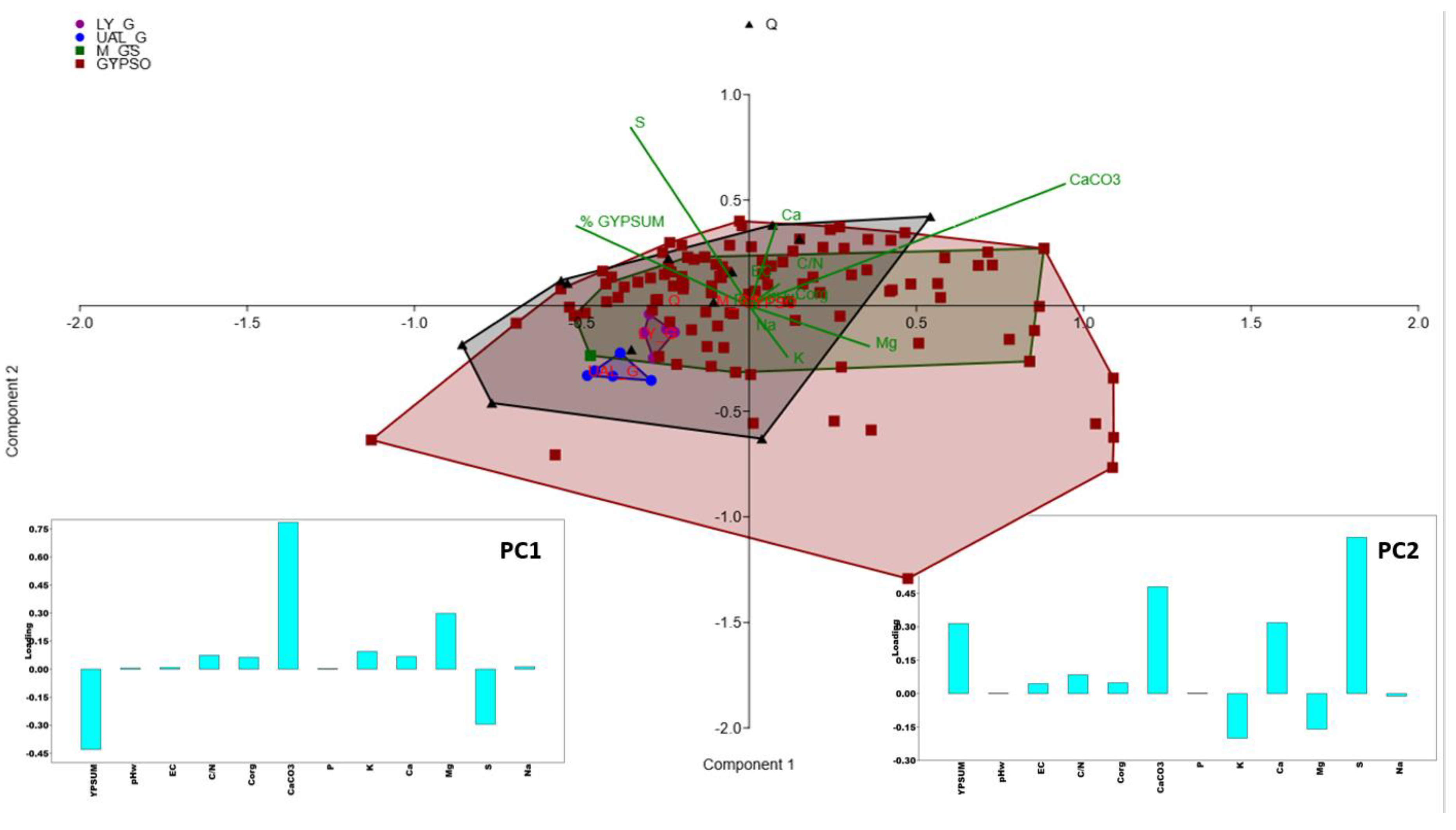
The statistical analysis carried out on the physicochemical properties of the studied soils reveals highly significant differences in many of the parameters analysed. These differences allow a clear segregation of the groups, with the separation between gypsicolous shrubland soils and artificial or anthropogenic soils as the main driver of variation. This circumstance becomes clear when analysing soil fertility variables related to organic matter and to phosphorus. However, for some of these parameters, the quarry soils studied resembled those of the shrublands. The variables related to the mineral and saline composition of the soil are characterized by the deviant behaviour of the UAL_G soils (Appendix D). This result is consistent with the fact that, in this case, a protosoil had to be generated from nearly pure gypsum residues. This type of parameters shows that the LY_G soil can hardly be distinguished from the rest of the soils studied. Despite the differences noted, the PCA (Figure 4) showed that, even in the case of UAL_G, the variations recorded remain within the variations of the set of shrubland soils of the order Gypsophiletalia.
Regarding the four objectives attributed to botanical gardens, conservation is clearly linked to the performance of the two gardens. Both host populations of threatened species are included in books, red lists, and legal decrees. Since their planting, all populations of these species (see Table 1 and Table 2) have persisted and flowered and fruited abundantly. Their seeds have been used to supply the GERMHUAL seed bank. The only major problem was posed by Narcissus tortifolius in the UAL garden, as its bulbs were removed—probably by wildlife—before the garden was fenced. In contrast, the Los Yesares garden hosts roughly fifty Narcissus bulbs, translocated from the quarry working face before being affected by it (Appendix B). Unfortunately, the limited space of the two gardens, together with the lack of specialized staff dedicated to these tasks, prevented the rescue of thousands of bulbs. Although translocation is a strategy that yields very poor results with non-bulbous species [56], it is quite effective when bulbs are properly managed. Undoubtedly, translocation experiences, due to their experimental and innovative nature, are closely related to the research function inherent to these spaces. The success rate of translocations can be easily determined in the case of bulbous species.
Botanical gardens can also provide data on the longevity of different species. If the garden is kept in good condition, e.g., through irrigation, by monitoring mortality among individuals, the life expectancy of the species under theoretically ideal conditions in the garden can be inferred. The key factor is to distinguish between senescence and death caused by an environmental crisis. So far, no detailed monitoring was aimed at this kind of study in either garden, but over nearly 10 years differential survival among perennial species can be observed. In the case of threatened ligneous species such as T. turredanum, R. eriocalix, or H. alypoides, survival was nearly 100% while continuous maintenance and monitoring of the gardens was in place. Unfortunately, the effects of lack of maintenance are evident in the UAL garden. Apparently, this space was not covered by the company responsible for maintaining the university’s green areas. Despite this fact, only one individual of R. eriocalix was lost over a period of nine years, while populations of the other two threatened species, as well as of local endemisms, were clearly decimated. Except for Narcissus tortifolius, all species initially planted are still represented in the garden, some of them thanks to their own propagation, such as the regional endemic C. hispanica, which is normally annual or biennial.
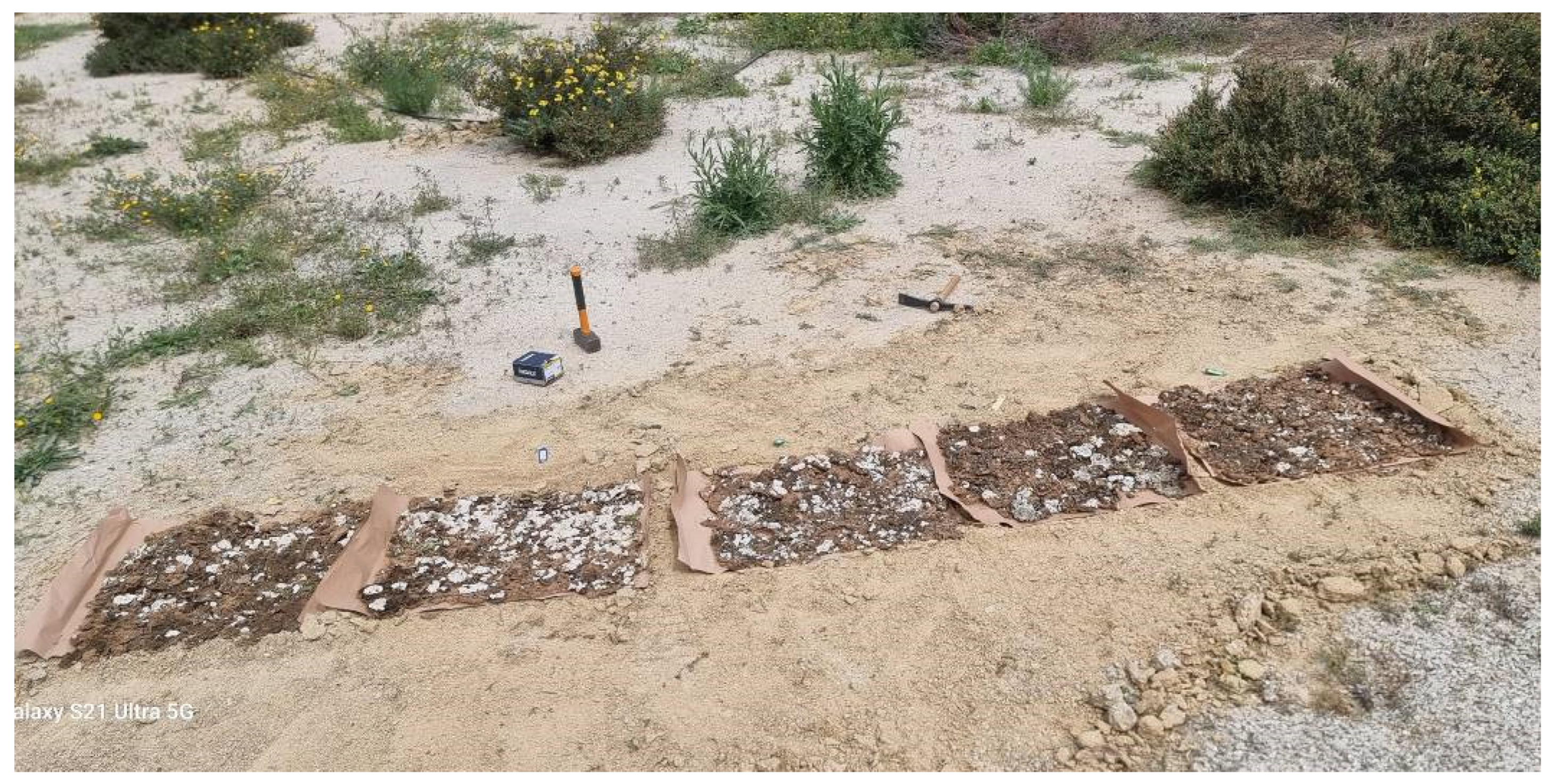
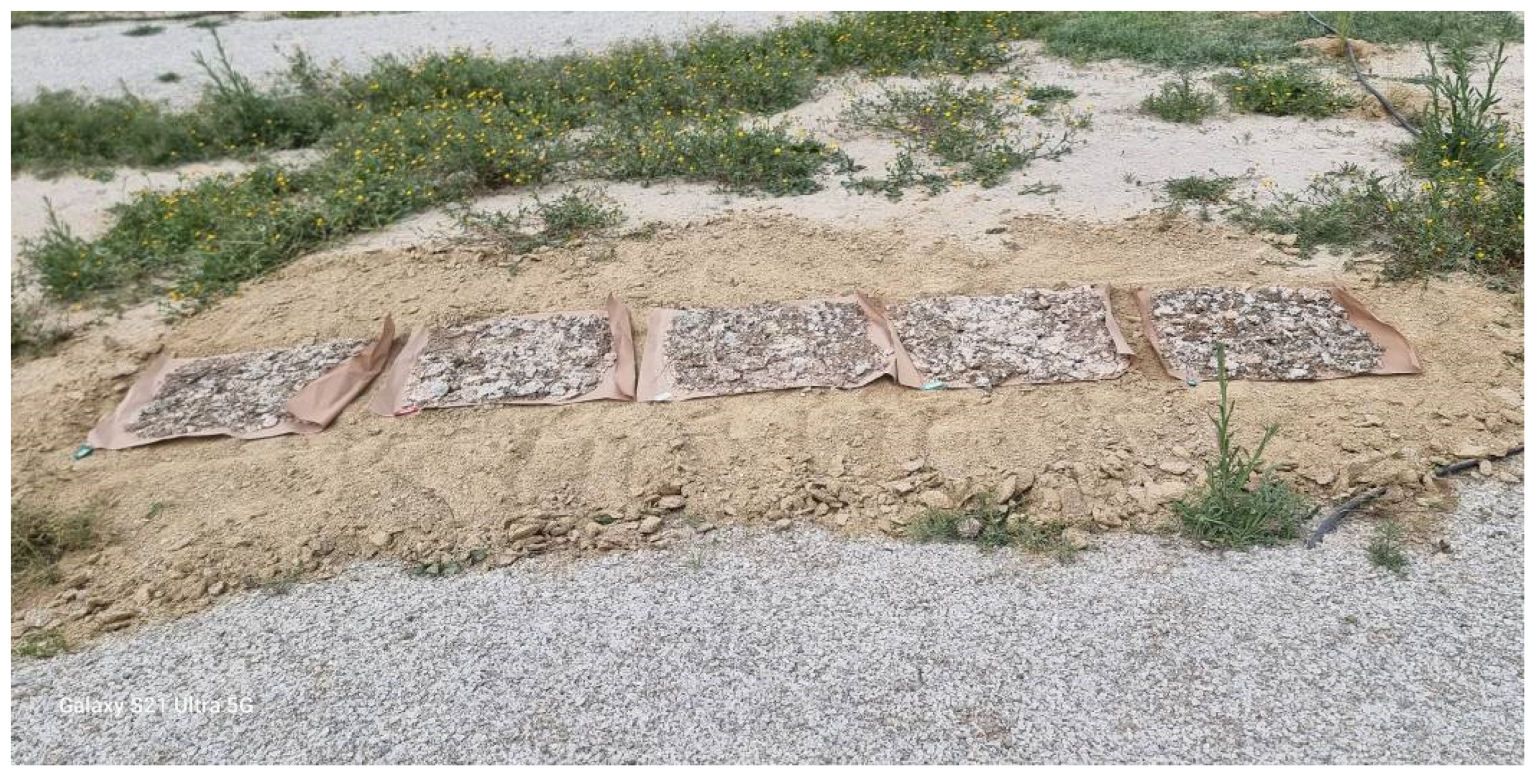
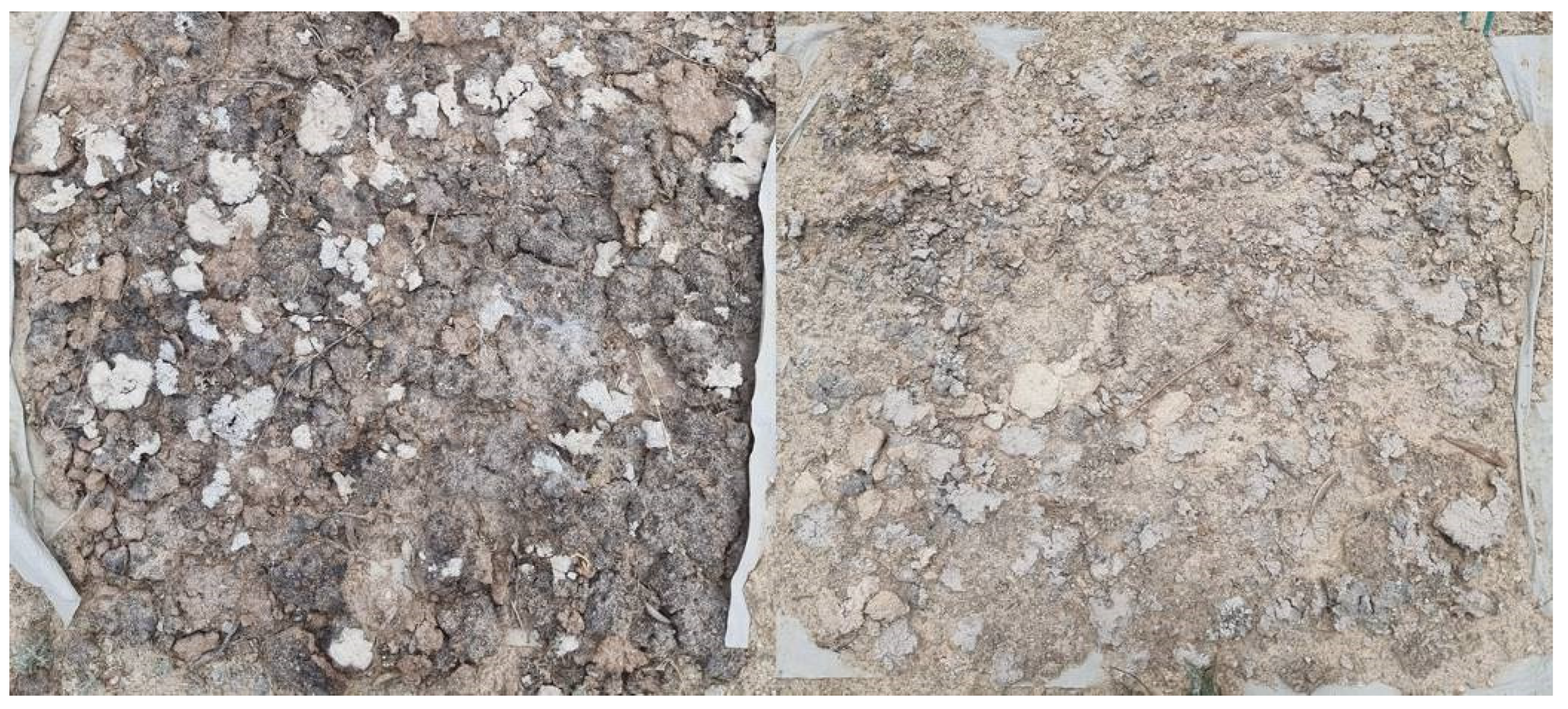
The work involving BSCs is another example of practical research. Although only a couple of direct translocation experiences have been carried out so far, our intention is to resort to other procedures to improve the success of these operations. Up until now, it can only be concluded that saxicolous communities withstand translocations better than the so-called basiphilous terricolous ones, according to the nomenclature used by Casares-Porcel and Gutiérrez-Carretero [57]. However, due to the limited number of experiences, it is difficult to delve further into the matter at the moment. As has already been pointed out, BSCs can become even more relevant than the vascular vegetation stratum in gypsum ecosystems [58]. When considering this BSCs in gypsum outcrops, the “Three-Layer Problem” emerges. Because of the abundance of selenitic gypsum in the outcrops of Almería, there is plenty of space for endoliths to nest and conform an extraordinarily biodiverse microcosm [59]. Botanical enclosures offer an excellent opportunity to not only make the general public aware of the existence of these hidden microecosystems [microcosms], but also test “sowing” methods and transfer the experience to the restoration of degraded gypsum ecosystems. These endoliths, conceived as terrestrial analogues to those of Mars, where gypsum dunes exist [60], can help society move away from considering them sterile habitats and reinterpret them as extreme habitats within a different scale of ecosystem diversity.
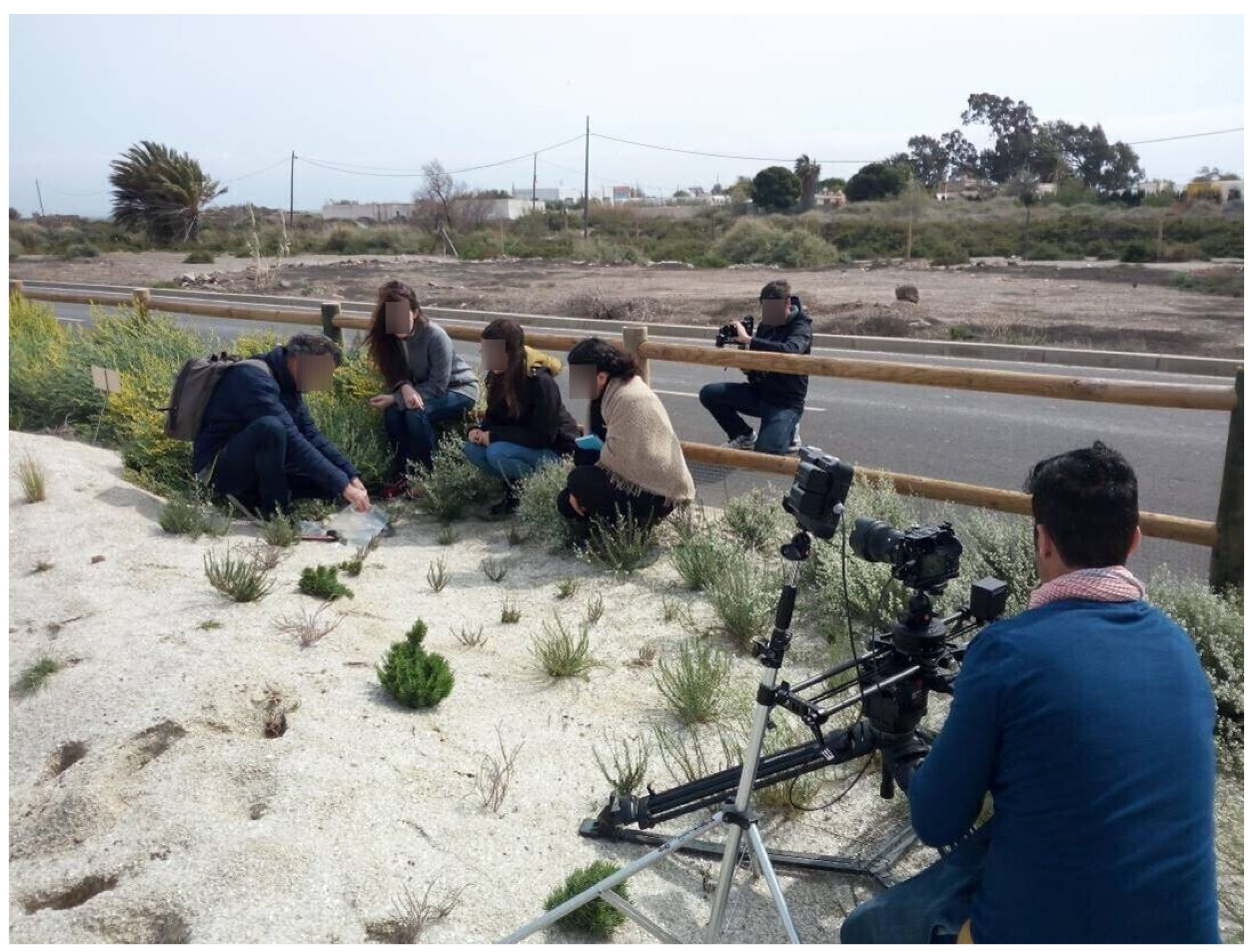
The third pillar of botanical gardens, dissemination and awareness, is crucial in the case of spaces dedicated to gypsum flora and vegetation. The comments of de Buen [7] and Boissier [6] have already been recalled, but it is worth highlighting those of Simón de Rojas Clemente [10]. This historic author, who travelled for two years through the former Kingdom of Granada at the beginning of the 19th century, said in relation to the gypsum flora of Sorbas: “Upon this barren gypsum, the plants of gypsum landscapes thrive”. The sparse and scattered vegetation covering the gypsum outcrops was frequently interpreted as a problem itself, or as degraded areas that needed to be restored. It is evident that the negative perception of these landscapes was a historical factor that influenced their management and that, even today, this disaffection toward such landscapes persists [37]. In fact, the lack of knowledge and social valuation of these ecosystems has led to serious maintenance mistakes [23]. Therefore, one of the most effective ways to promote the conservation of these ecosystems is to foster and disseminate scientific knowledge on them [23]. Activities of this kind are carried out annually on the University of Almería campus through events such as Science Week or Ambioblitz (a modality of BioBlitz held on the UAL campus). This garden has been supporting students completing their undergraduate and master’s degrees, especially in relation to research on the nutrition and propagation of these plants. However, among all the basic functions of a botanical garden, the one related to environmental awareness and dissemination is the most essential, given that CECOUAL is a centre that holds most of its activities here (https://www.ual.es/investigacion/investiga/centros-institutos/centro/121 (accessed on 19 December 2025)).
The garden also welcomes visits from students from other universities as well as citizens who weekly attend the Natural History Pavilion of the UAL, located next to the garden. In the case of the Los Yesares garden, visits are more sporadic, even though this is one of its main functions. Nevertheless, it has hosted some very relevant events such as the visit of participants of the III International Workshop within the framework of the GYPWORLD project, A Global Initiative to Understand Gypsum Ecosystem Ecology, held from 9 May to 13 May 2022 at the University of Almería. It also welcomed participants of the XIX International Congress on Geological and Mining Heritage, held in 2022 in Cuevas del Almanzora (Almería) and sponsored by the Spanish Society for the Defense of Geological and Mining Heritage, and the Society for the History of Archaeology, among other organizations. In addition, both gardens have been visited by scientists with whom we collaborate on edaphism studies, from UNAM (National Autonomous University of Mexico), John Carroll University, NMSU (New Mexico State University), and North-West University (NWU, Potchefstroom, South Africa).
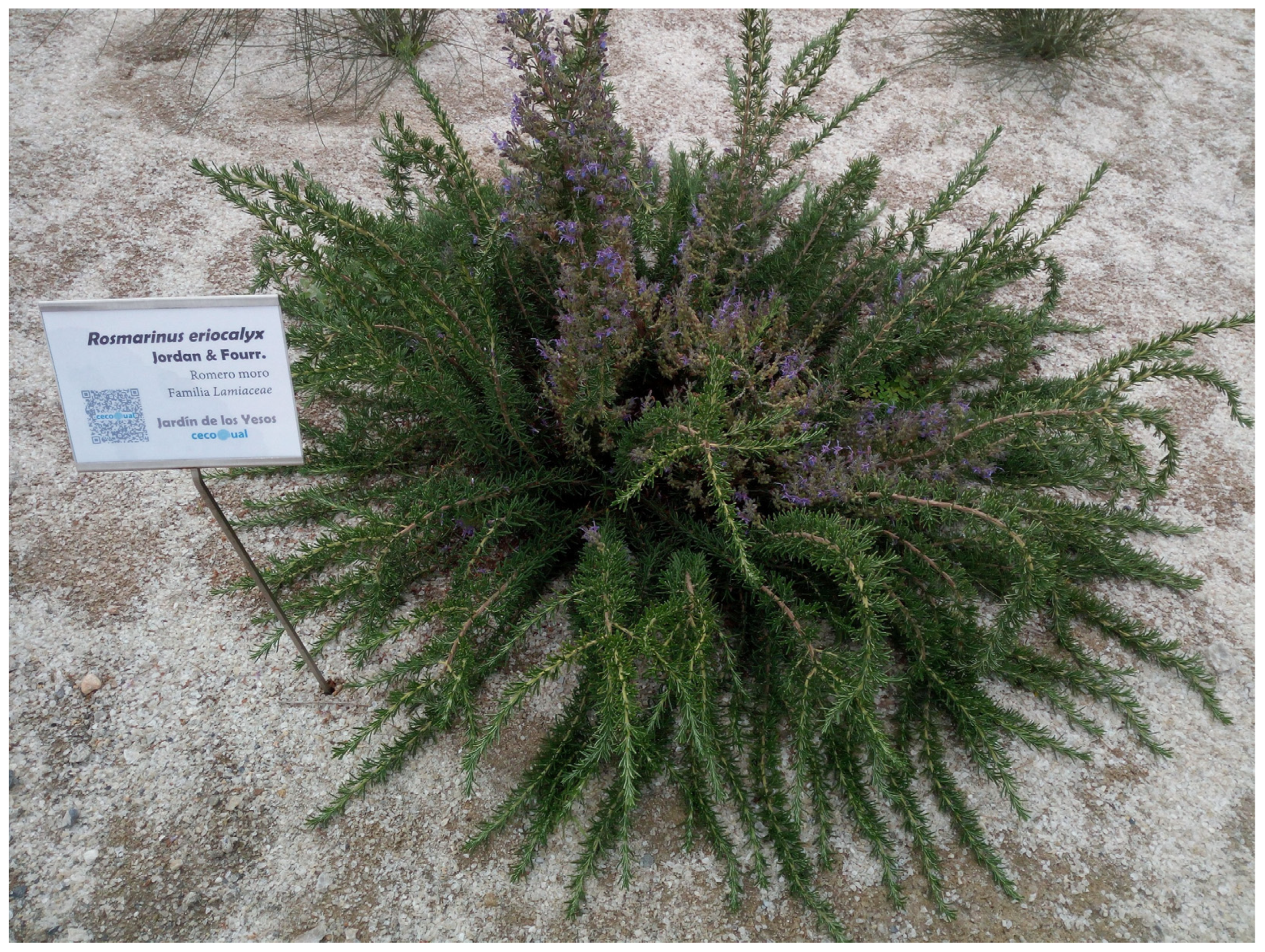
Regarding their role as centres for the exhibition of collections, an aspect closely tied to the function of scientific dissemination, both gardens fulfil this role. In them, all vascular species characteristic of gypsum can be identified, in addition to BSCs and, in the near future, certain types of endoliths. The QR codes associated with the different species, in the case of the UAL garden, and the illustrative panels found in the Los Yesares garden allow for a self-guided visit, although visit authorisation is required in the latter case.
Lastly, as far as conservation is concerned, in recent years not only have both gardens served to provide seeds to GERMHUAL, but the collection of these for restoration in the Los Yesares concession has gained particular importance. Three consecutive years of extreme drought have prevented the abundant collection of seeds from some very rare species in the wild environment, such as R. eriocalix, Fumana hispidula, or G. ramosissima, making it essential to complement wild collections with those associated with the garden. This situation may unfortunately become more recurrent over time. In this scenario, the gardens can be of great help when planning future restorations. The populations established in the gardens can also assist in cases such as that of O. tridentata, a legume that represents a focal point in restoration tasks not only because it is the tallest gypsophyte and for its ability to fix N (diazotrophy), but also due to the difficulty of obtaining healthy seeds in the wild, since most often they are partially predated and rendered non-viable. Although seed production in the garden is also reduced, it is easier to control predators and carry out collections more frequently, which decreases the rate of predated seeds.

4. Conclusions and Future Prospects

The comparative analysis between the soils of the artificial gardens and the natural gypsophile shrublands revealed that the edaphic replication strategy was partially successful, achieving emulation of the basic mineral geochemistry. However, it failed to replicate soil maturity in relation to parameters such as organic carbon and total phosphorus. Despite this, it should be noted that even undisturbed gypsum soils show very low values for these parameters. The best future strategy to emulate these soils should focus on addressing the organic matter limitation and adjusting the composition of the starting material.
The trial showed that the Los Yesares garden, being located on a non-limiting soil simply covered with gypsum fines, was the most successful strategy for replicating the edaphic features of gypsic soil horizons. In fact, an edaphic, mineral, and saline matrix that was indistinguishable from or very close to that of typical gypsisols was generated. These features were also exhibited by the protosoil of the UAL garden, despite having been created from pure gypsum residues to mitigate the pre-existing edaphic salinity. Another important aspect is that the creation of the gardens has contributed to the revaluation of residues from mining operations. This has enabled the preparation of substrates that resemble gypsic horizons—only in terms of colour, though differing in texture and structure—for the planting of species. In terms of chemical properties, soils within the gardens can be categorized as gypsisols, despite being divergent and showing a characteristic hypergypsic horizon profile.
However, the restricted scale of these experimental gardens—notably the University site at approximately 600 m2—subjects them to critical ecological vulnerabilities, including pronounced edge effects and a heightened sensitivity to external disturbances or maintenance lapses. Such limited areas lack the spatial complexity required to buffer environmental stressors or support the natural successional dynamics of a self-sustaining community. These limitations underscore the urgent necessity of transitioning from isolated micro-plots to larger-scale restoration areas. Securing robust, long-term funding is therefore essential not only to mitigate these ecological risks but to ensure that these reconstructed gypsic ecosystems can achieve true functional resilience and long-term stability.
Our trial has also shown that the two gypsum botanical gardens described successfully fulfil the four classical functions of such spaces and add a fifth: the supply of seeds for restoration in times of climate crisis. In this way, the gardens constitute a tool for reconciling resource exploitation with biodiversity conservation. These gardens have been proven viable and useful as replicable models that serve conservation, education and research purposes, now contributing to active restoration as well.
Moreover, the gardens harbour populations of threatened gypsicolous species that, in most cases, have remained viable over the course of these 10 years. Only poor management has reduced the populations of some species due to administrative issues and the lack of specialized staff.
Although it is still too early to draw conclusions about the rescue and translocation of crusts, it is evident that these spaces offer a good opportunity to carry out innovative experiments. Only very recently have we initiated trials related to the third biological layer of these ecosystems, the endoliths, which have been largely overlooked in the restoration of such ecosystems, despite their considerable relevance in ecology and as terrestrial analogues in astrobiology.
These spaces also represent a valuable opportunity to develop dissemination and public awareness activities. From our point of view, we are only able to preserve what is known to us, and without such knowledge it is impossible to conserve habitats as peculiar and overlooked as gypsum barrens, their associated endemic and microendemic flora and their unnoticed cryptogamic microcosms.
What remains to be accomplished? There is certainly much work ahead. Regarding vascular flora, it would be of great interest to incorporate into the gardens populations of annual species such as C. fastigiata or the endemics C. grandiflorum, Linaria oblongifolia subsp. aragonensis, and Linaria oligantha.
Regarding BSCs, monitoring and enhancing already tested translocation strategies is necessary to improve their effectiveness. It has already been pointed out that, in these highly complex ecosystems, attention should not be limited to vascular vegetation and macroscopic cryptogamic crusts. In these environments, particularly where selenitic gypsum outcrops are abundant, the “Three-Layer Problem” emerges. This “third layer” is represented by the endoliths, dominant microcosms in nearly half of the gypsum outcrops in the surroundings of the Natural Area of the Karst in Gypsum of Sorbas. The challenge is to incorporate and maintain these cryptogamic microcosms in the gardens and make them visible to citizens. Citizen-oriented science activities, sponsored by the UAL and mining companies, could be of great help.
In the educational sphere, enhancing the use of these spaces through the development of specific programs and activities could be desirable. In this regard, various entities that carry out educational, outreach, and tourism activities in the Karst in Gypsum of Sorbas Natural Area—often with the support of the regional administration—could include visits to the Los Yesares garden as a first event on their activity programmes, and complementing the in situ observation of gypsum vegetation in its natural environment. The same applies to the case of the UAL, where already existing teaching activities could be reinforced and further integrated into different study programmes, in addition to making these spaces available to external users through CECOUAL. These spaces hold great potential for engaging students and the wider public through activities and games that bring them closer to the flora, helping them create emotional connections that strengthen their commitment to conservation.
Despite all the work that still lies ahead, these gardens represent a successful model that should be implemented in other gypsum mining regions with high edaphic biodiversity, especially in extreme environments where only the conservation of pristine habitats constitutes an effective conservation measure. Attempting to conserve populations of these species in non-native soils lacking their specific edaphic conditions appears unfeasible in the long term, except on a very small scale requiring intensive management.
These gardens also convey a powerful message. Just as the gardens of Mesopotamia and Babylon symbolized the triumph over aridity, these gypsum gardens serve to raise awareness in modern society that arid environments harbour extraordinary biodiversity values and are worthy of conservation.

Author Contributions

Conceptualization, J.F.M., F.L.-d.-H., E.M., A.J.M.-F., E.S.-S., F.J.P.-G. and F.M.-H.; data curation, J.F.M., E.M., P.M.-M., A.J.M.-F., F.J.P.-G., F.M.-H., M.J.F.-C., K.H.-M., L.M.-H. and F.C.E.-C.; formal analysis, J.F.M., F.L.-d.-H., E.M., P.M.-M., A.J.M.-F., E.S.-S. and F.M.-H.; funding acquisition, J.F.M., E.M., A.J.M.-F. and F.M.-H.; investigation, J.F.M., F.L.-d.-H., E.M. and F.M.-H.; methodology, J.F.M., F.L.-d.-H., E.M., E.S.-S., F.J.P.-G., M.d.M.G.-B. and F.M.-H.; project administration, J.F.M. and E.M.; resources, J.F.M., E.M., P.M.-M., E.S.-S., M.d.M.G.-B., M.J.F.-C., K.H.-M., L.M.-H. and F.C.E.-C.; software, J.F.M., A.J.M.-F., E.S.-S. and F.M.-H.; supervision, J.F.M., F.L.-d.-H., E.M. and E.S.-S.; validation, J.F.M., F.L.-d.-H., E.M., P.M.-M., A.J.M.-F., E.S.-S., F.J.P.-G., M.d.M.G.-B., F.M.-H., M.J.F.-C., K.H.-M., L.M.-H. and F.C.E.-C.; visualization, J.F.M., F.L.-d.-H., A.J.M.-F., E.S.-S., F.J.P.-G. and F.M.-H.; writing—original draft, J.F.M., F.L.-d.-H. and E.M.; writing—review and editing, J.F.M., F.L.-d.-H., E.M., E.S.-S., F.J.P.-G., M.d.M.G.-B., F.M.-H. and F.C.E.-C. All authors have read and agreed to the published version of the manuscript.

Funding

This study was funded by Projects UAL2020-RNM-B2007 FEDER (European Regional Development Fund), the Fundación Biodiversidad (Spanish Ministry for Ecological Transition and the Demographic Challenge) through the FEDER co-funded project “Los afloramientos de yeso como infraestructura verde: una visión integral para la conectividad biológica y la conservación de la biodiversidad (GYPSINBIO)”, “Monitoring and Applied Scientific Research for Ecological Restoration of Gypsum Mining Concessions (Majadas Viejas and Marylen), and Spreading of Results (ECORESGYP)” sponsored by the company Explotaciones Río de Aguas S.L. (Torralba Group), and “Monitoring and evaluation of environmental restoration of the mining concessions of Los Yesares, Ana María Morales, and el Cigarrón II”, sponsored by the company Saint Gobain S.A.

Institutional Review Board Statement

Not applicable.

Informed Consent Statement

Not applicable.

Data Availability Statement

Any data that is required will be provided.

Acknowledgments

Viveros MUZALÉ S.L.

Conflicts of Interest

The authors declare no conflicts of interest. The funders had no role in the design of the study; in the collection, analyses, or interpretation of data; in the writing of the manuscript; or in the decision to publish the results.

Appendix A

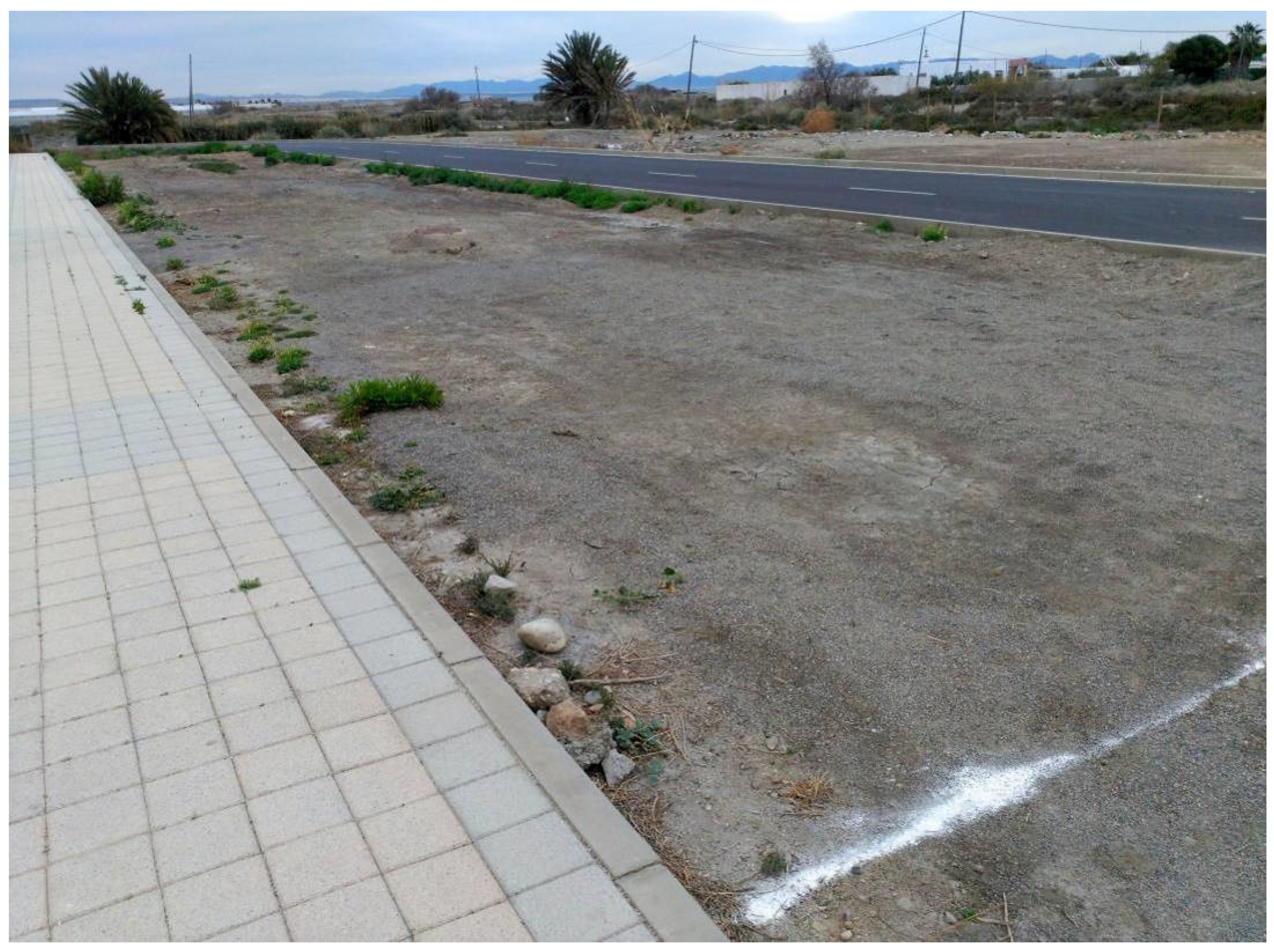
Figure A1. Original soil before starting the preparation of the garden plot.
Jzbg 07 00014 g0a1
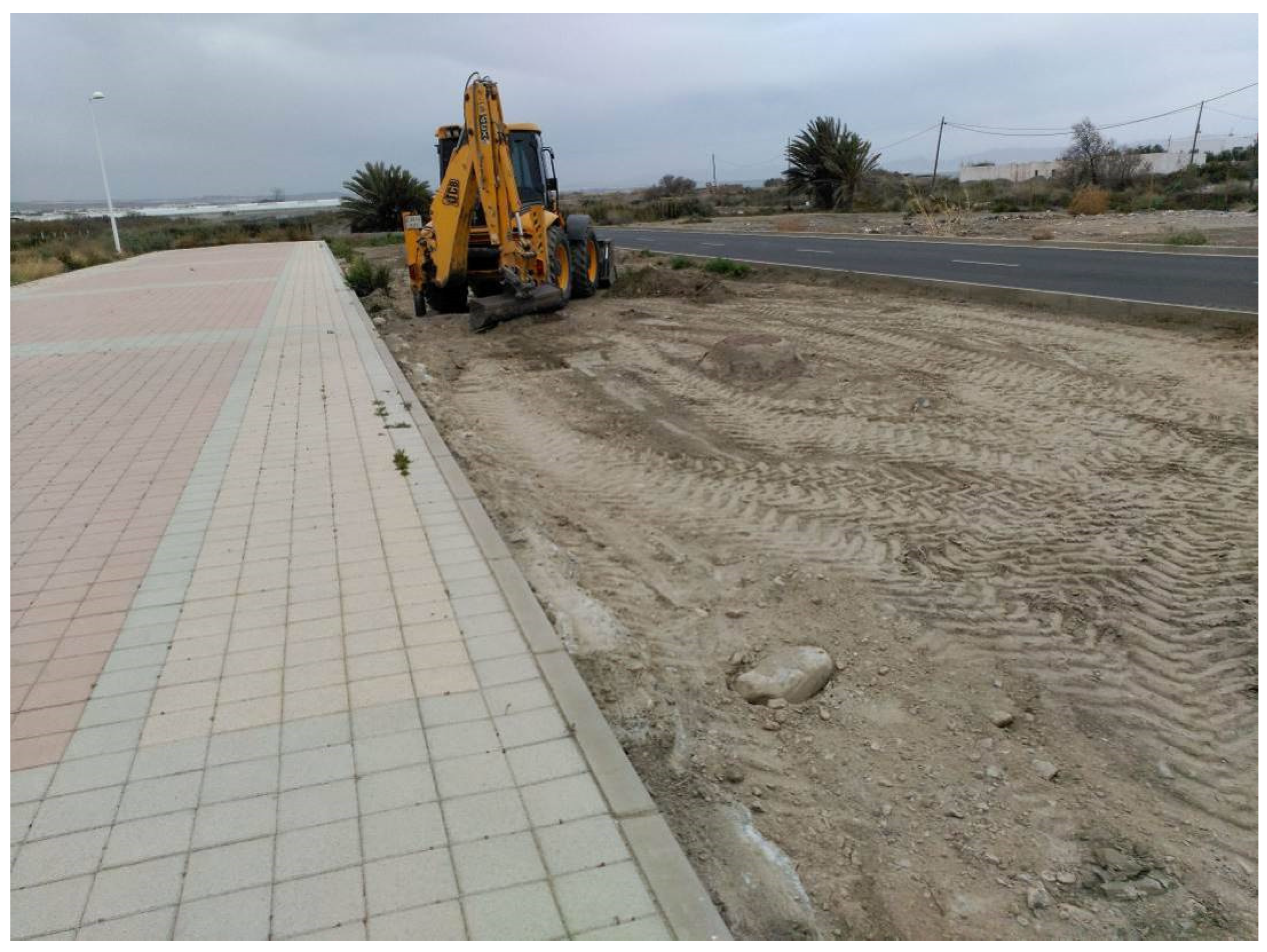
Figure A2. Removal of the original soil.
Jzbg 07 00014 g0a2
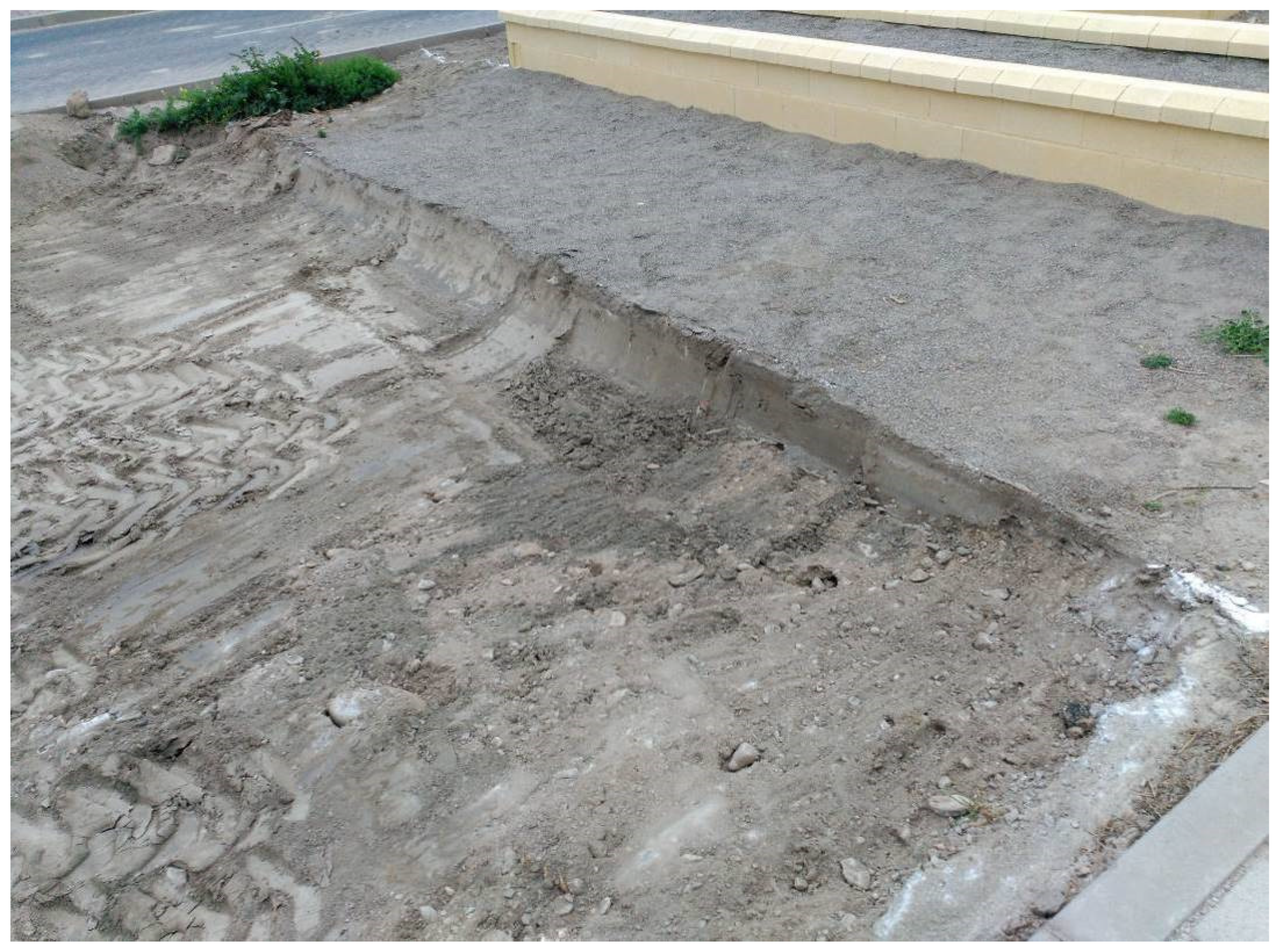
Figure A3. Detail of the plot after the topsoil layer of the original soil had been removed.
Jzbg 07 00014 g0a3
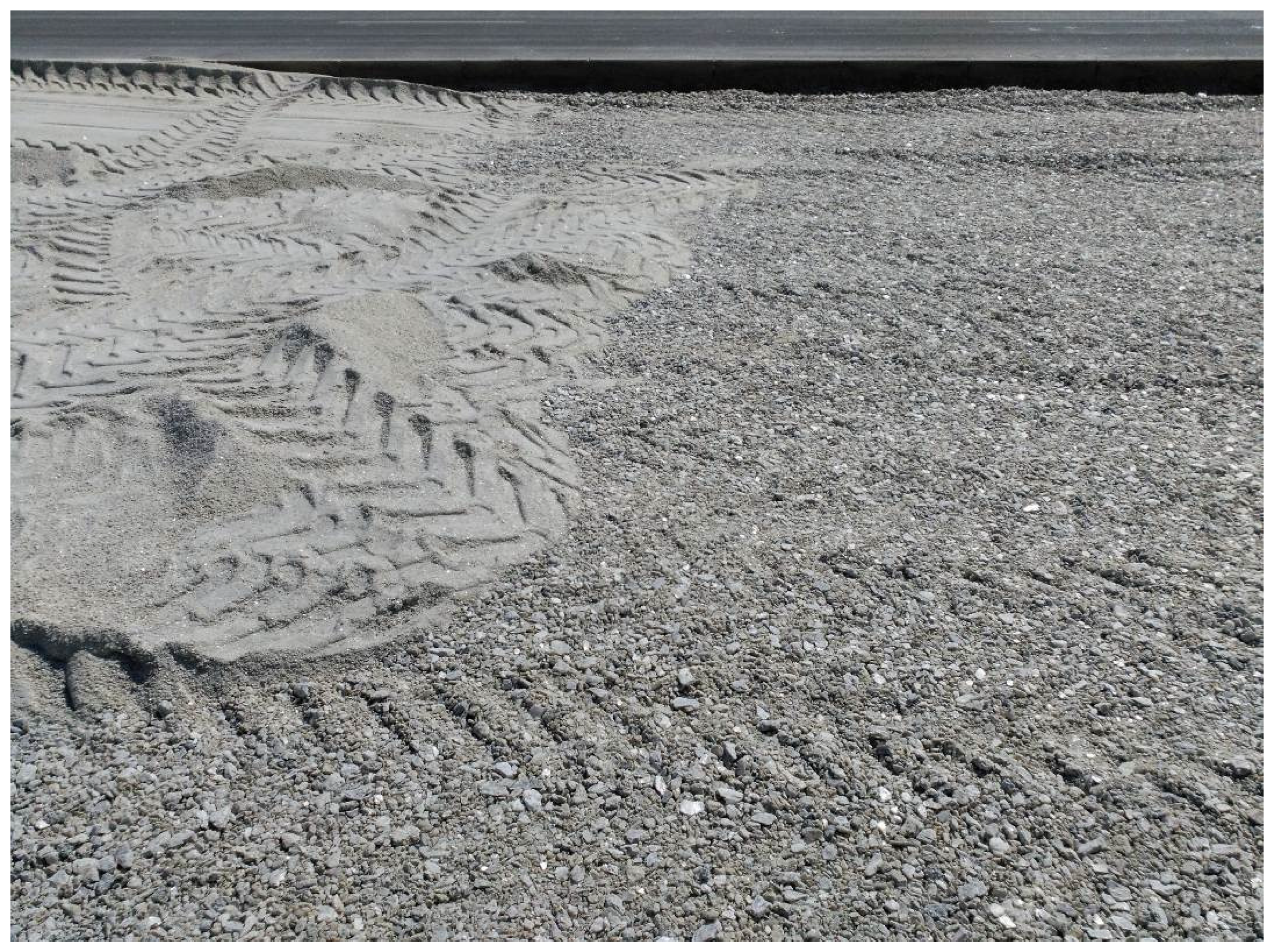
Figure A4. Filling with coarse gypsum gravel.
Jzbg 07 00014 g0a4
Figure A5. Addition of the topsoil with fine gravel.
Jzbg 07 00014 g0a5
Figure A6. Placement of selenitic gypsum boulders.
Jzbg 07 00014 g0a6
Figure A7. Overview of the garden with the fine gravel cover and selenitic gypsum blocks in place.
Jzbg 07 00014 g0a7
Figure A8. Remodelling the relief, recreating small hills.
Jzbg 07 00014 g0a8
Figure A9. Nursery seedlings prepared for planting.
Jzbg 07 00014 g0a9
Figure A10. Pots with bulbous plants ready for transplanting.
Jzbg 07 00014 g0a10
Figure A11. Overview of the newly planted garden after the first watering.
Jzbg 07 00014 g0a11
Figure A12. General view of the gypsum garden, where flowering plants can be observed.
Jzbg 07 00014 g0a12
Figure A13. Educational and outreach activities in the garden.
Jzbg 07 00014 g0a13
Figure A14. Rosmarinus eriocalix with its associated QR code. https://nevada.ual.es/biocon/rosmarinus-eriocalix.html (accessed on 19 December 2025).
Jzbg 07 00014 g0a14

Appendix B

Figure A15. Appearance of the Los Yesares Garden at the beginning of land preparation; Covering the original space with fine materials.
Jzbg 07 00014 g0a15
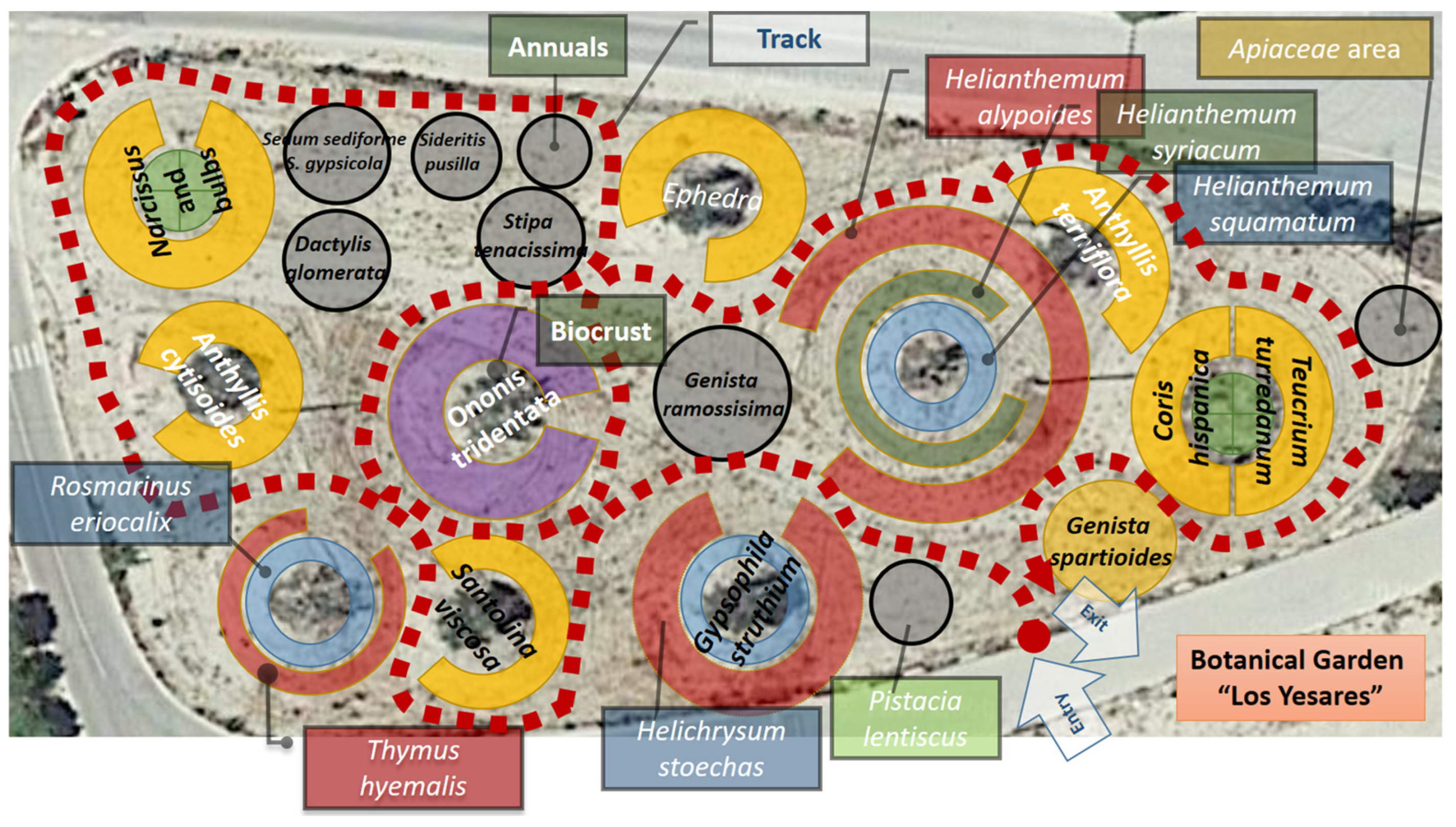
Figure A16. Creation of circular spaces as a planting framework.
Jzbg 07 00014 g0a16
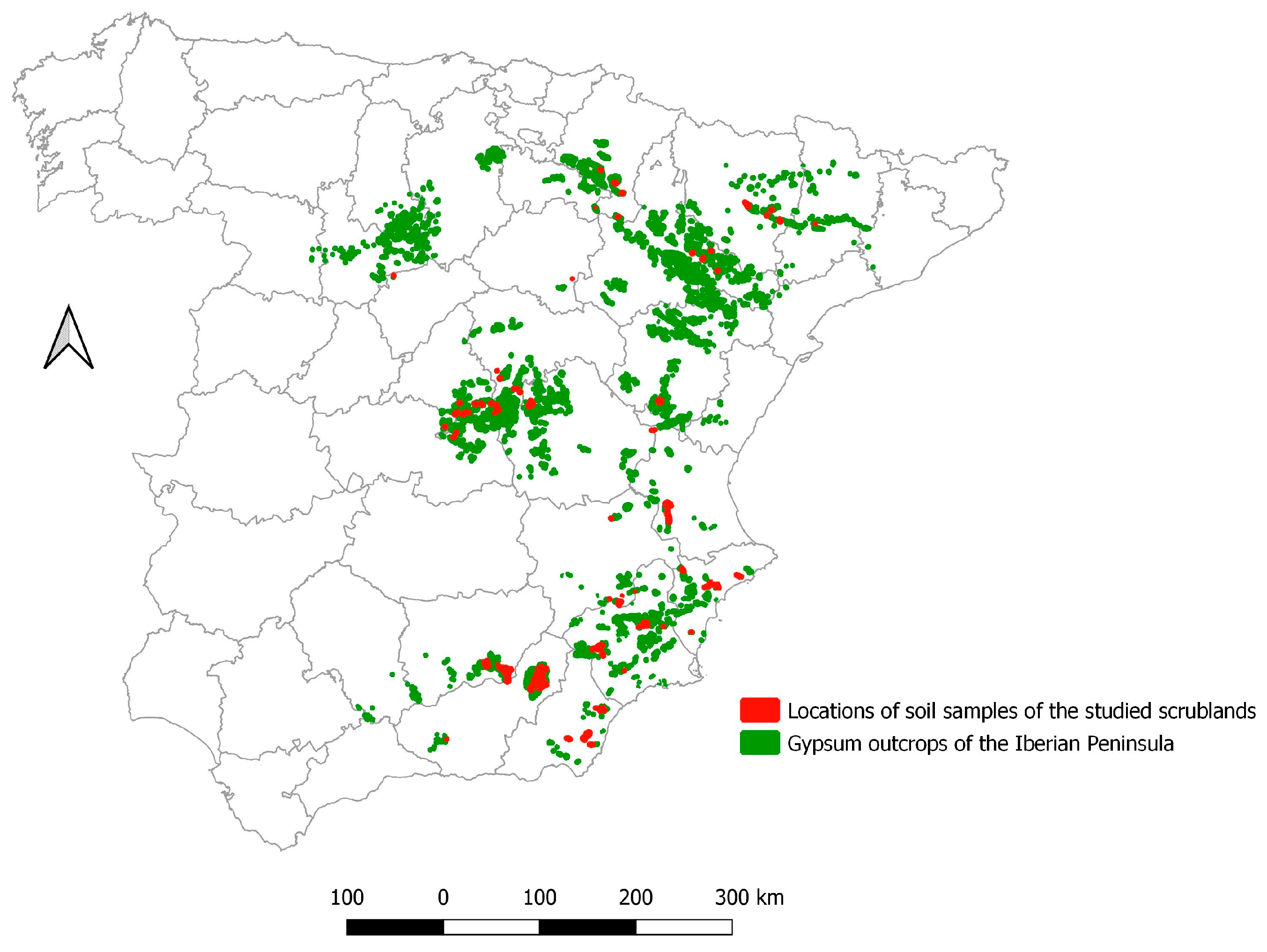
Figure A17. Arrangement of the irrigation pipes following the established circles.
Jzbg 07 00014 g0a17
Figure A18. First plantations.
Jzbg 07 00014 g0a18
Figure A19. Creation of paths to guide visitors during the visit using materials with a clearly coarser texture than the fine ones that covered the original floor.
Jzbg 07 00014 g0a19
Figure A20. Panoramic view of the garden with the paths, plant circles and interpretive panels. https://nevada.ual.es/biocon/ephedra-fragilis-desf.-subsp.-fragilis.html (accessed on 19 December 2025).
Jzbg 07 00014 g0a20
Figure A21. Panoramic view of the garden showing the first flowering of the microendemism Helianthemum alypoides.
Jzbg 07 00014 g0a21
Figure A22. H. alypoides and its explanatory panel. https://nevada.ual.es/biocon/helianthemum-alypoides.html (accessed on 19 December 2025).
Jzbg 07 00014 g0a22
Figure A23. Rosmarinus eriocalix and its explanatory panel. https://nevada.ual.es/biocon/rosmarinus-eriocalix.html (accessed on 19 December 2025).
Jzbg 07 00014 g0a23
Figure A24. R. eriocalix population four years later. https://nevada.ual.es/biocon/rosmarinus-eriocalix.html (accessed on 19 December 2025).
Jzbg 07 00014 g0a24
Figure A25. Translocation of crusts dominated by lichens of the species Squamarina lentigera and other Lichens (clay plasters).
Jzbg 07 00014 g0a25
Figure A26. Translocation of crusts dominated by lichens of the Diploschistes species (saccharide gypsum).
Jzbg 07 00014 g0a26
Figure A27. Detail of the translocated lichen crusts.
Jzbg 07 00014 g0a27
Figure A28. Visit to the garden during the III International Workshop of the GYPWORLD Project: A global initiative to understand gypsum ecosystem ecology. https://nevada.ual.es/biocon/ononis-tridentata-subsp.-tridentata.html (accessed on 19 December 2025).
Jzbg 07 00014 g0a28
Figure A29. Explanatory panel of the gypsophyte Ononis tridentata. https://nevada.ual.es/biocon/ononis-tridentata-subsp.-tridentata.html (accessed on 19 December 2025).
Jzbg 07 00014 g0a29
Figure A30. Satellite image of the garden at the beginning of its implementation.
Jzbg 07 00014 g0a30
Figure A31. Schematic plan of the Los Yesares Botanical Garden indicating the main species it contains.
Jzbg 07 00014 g0a31

Appendix C

Table A1. Species from each gypsum garden and their characteristics. UAL: gypsum garden at the University of Almería; LY: gypsum garden at Los Yesares (Sorbas).
SpeciesFamilyPlant CommunityUALLYDegree of ThreatBiological Type
Anthyllis cytisoidesLeguminosaeRosmarinetea officinalisxx Chamaephyte
Asphodelus cerasiferusLiliaceaeLygeo-Stipeteaxx Geophyte
Barlia robertianaOrchidaceaePistacio-Rhamnetalia alaterni xLCGeophyte
Coris hispanicaPrimulaceaeGypsophilo-Santolinenion viscosaexxVUChamaephyte
Dactylis glomerataGramineaeMolinio-Arrhenatheretea x Hemicryptophyte
Dipcadi serotinumLiliaceaeLygeo-Stipetea x Geophyte
Distichoselinum tenuifoliumUmbelliferae x Geophyte
Ephedra fragilisEphedraceaePistacio-Rhamnetalia alaternixx Phanerophyte
Ferula communis subsp. catalaunicaUmbelliferaeBrachypodietalia phoenicoidis x Hemicryptophyte
Frankenia thymifoliaFrankeniaceaeSalsolo vermiculatae-Peganion harmalaex IEChamaephyte
Genista ramosissimaLeguminosaeGenisto-Phlomidion almeriensis x Chamaephyte
Genista spartioidesLeguminosaeGenisto-Phlomidion almeriensis x Chamaephyte
Genista umbellataLeguminosaeRosmarinetea officinalisx Chamaephyte
Gladiolus communisIridaceaeBrachypodietalia phoenicoidis x Geophyte
Gynandriris sisyrinchiumIridaceaePoetea bulbosae x Geophyte
Gypsophila struthium subsp. struthiumCaryophyllaceaeLepidion subulatixxLCChamaephyte
Helianthemum alypoidesCistaceaeGypsophilo-Santolinenion viscosaexxVUChamaephyte
Helianthemum squamatumCistaceaeLepidion subulatixx Chamaephyte
Helianthemum syriacumCistaceaeRosmarinetea officinalisxx Chamaephyte
Lapiedra martineziiAmaryllidaceaeStipion tenacissimae x Geophyte
Launaea fragilisCompositaeLepidion subulatix Chamaephyte
Lepidium subulatumCruciferaeGypsophiletaliax LCChamaephyte
Stipa tenacissimaGramineaeStipion tenacissimaexx Hemicryptophyte
Narcissus tortifoliusAmaryllidaceae xxENGeophyte
Ononis tridentata subsp. tridentataLeguminosaeLepidion subulati xLCPhanerophyte
Ophrys luteaOrchidaceaeLygeo-Stipetalia x Geophyte
Ophrys speculumOrchidaceae x Geophyte
Pistacia lentiscusAnacardiaceaePistacio-Rhamnetalia alaternixx Phanerophyte
Reseda stricta subsp. funkiiResedaceae Resedo lanceolatae-Moricandion xLCTherophyte
Rosmarinus eriocalixLabiataeGypsophilo-Santolinenion viscosaexxENPhanerophyte
Santolina viscosaCompositaeGypsophilo-Santolinenion viscosaexxVUChamaephyte
Sedum gypsicolaCrassulaceaeSedion micrantho-sediformisxxLCChamaephyte
Sedum sediformeCrassulaceaeSedion micrantho-sediformisxx Chamaephyte
Sideritis pusillaLabiataeThymo-Sideritidion leucanthae x Chamaephyte
Teucrium turredanumLabiataeGypsophilo-Santolinenion viscosaexxENChamaephyte
Thapsia villosaUmbelliferaeAgrostietalia castellanae x Hemicryptophyte
Thymus hyemalis subsp. hyemalisLabiataeAnthyllidetalia ternifloraexxLCChamaephyte
Urginea maritimaLiliaceae x Geophyte
“x” means the presence on each garden.

Appendix D

Table A2. Statistical comparison of edaphic variables among the different soil groups. Groups: GYPSO, natural Gypsophiletalia scrubland soils from the Iberian Peninsula; M_GS, natural Gypsophiletalia scrubland soils restricted to the Almería province; Q, gypsum quarry soils in Almería with spontaneous revegetation; UAL_G, artificial soil (technosol) from the University of Almería gypsum garden; LY_G, artificial soil (technosol) from the “Los Yesares” mining concession gypsum garden. Statistical parameters: ANOVA p, significance value from one-way Analysis of Variance; Welch p, significance value from Welch’s robust test (reported when Levene’s test indicates unequal variances); Levene p, p-value for Levene’s test of homogeneity of variance; ω2 (Effect), Omega squared effect size, with magnitude indicated in parentheses (S: Small, M: Medium, L: Large); Mean ± SD, arithmetic mean ± standard deviation. Different letters in the Homogeneous Subset column indicate statistically significant differences between groups (post hoc test, p < 0.05). JASP (version 0.19.3).
ParameterANOVA pWelch pω2 (Effect)Levene pGROUPSMEAN-SDHomogeneous Subset
GYPSUM (%)0.0001027.666 × 10−100.1002 (L)0.0009937Q78.465 ± 16.076a
LY_G77.842 ± 1.335a
M_GS62.694 ± 29.358a,b
GYPSO59.537 ± 20.765b
UAL_G58.797 ± 2.341a
pHw6.086 × 10−70.0028640.1995 (L)0.0005165GYPSO7.892 ± 0.173a
Q7.775 ± 0.190a,b
M_GS7.772 ± 0.128a,b
UAL_G7.744 ± 0.062b
LY_G7.420 ± 0.446a,b
EC (dS/m−1)3.53 × 10−72.2 × 10−90.2062 (L)0.487M_GS2.766 ± 0.199a
GYPSO2.703 ± 0.453a
LY_G2.236 ± 0.046b,c
UAL_G2.228 ± 0.085b
Q2.013 ± 0.312c
C/N2.47 × 10−52.994 × 10−70.152 (L)0.06351M_GS12.919 ± 5.333a
GYPSO11.666 ± 5.368a
Q10.894 ± 3.602a
UAL_G3.898 ± 2.557b
LY_G1.880 ± 1.756b
Corg g/100 g2.297 × 10−61.533 × 10−120.1829 (L)0.003733M_GS0.807 ± 0.416a
Q0.769 ± 0.368a
GYPSO0.704 ± 0.350a
UAL_G0.084 ± 0.100b
LY_G0.024 ± 0.017b
CaCO3 g/100 g0.22861.056 × 10−70.01203 (S)0.01472GYPSO26.449 ± 23.104a
M_GS25.295 ± 28.463a
Q19.523 ± 22.830a
LY_G11.752 ± 0.938a,b
UAL_G7.364 ± 1.281b
P g/100 g0.0053881.037 × 10−80.0753 (M)3.193 × 10⁻¹³M_GS0.044 ± 0.019a
GYPSO0.034 ± 0.026a,b
Q0.018 ± 0.012b
LY_G0.011 ± 0.001b
UAL_G0.011 ± 0.001b
K g/100 g0.31613.38 × 10−70.005528 (VS)0.04837GYPSO0.387 ± 0.415a
Q0.281 ± 0.256a,b
LY_G0.234 ± 0.029b,c
M_GS0.233 ± 0.180b
UAL_G0.128 ± 0.016c
Ca g/100 g0.000052812.403 × 10−90.1097 (L)0.003604Q16.237 ± 6.352a
GYPSO14.362 ± 3.480a
M_GS13.141 ± 3.582a
LY_G12.241 ± 2.225a
UAL_G7.693 ± 0.681b
Mg g/100 g0.0012882.496 × 10−60.09676 (M/L)1.201 × 10−6GYPSO1.244 ± 1.394a
M_GS0.228 ± 0.248b
Q0.181 ± 0.167b
UAL_G0.146 ± 0.035b
LY_G0.136 ± 0.020b
S g/100 g0.067575.655 × 10−60.03432 (S)0.05467Q8.678 ± 3.848a
GYPSO8.407 ± 3.629a
M_GS7.980 ± 3.105a,b
LY_G5.872 ± 1.169b
UAL_G4.310 ± 0.785b
Na g/100 g0.79080.024250 (N)0.03623LY_G0.036 ± 0.004a
Q0.035 ± 0.023a,b
GYPSO0.031 ± 0.024a,b
UAL_G0.026 ± 0.005b
M_GS0.024 ± 0.022b

Appendix E

Figure A32. Locations of soil samples of the studied scrublands.
Jzbg 07 00014 g0a32

References

  1. Chen, G.; Sun, W. The role of botanical gardens in scientific research, conservation, and citizen science. Plant Divers. 2018, 4, 181–188. [Google Scholar] [CrossRef] [PubMed]
  2. Faraji, L.; Karimi, M. Botanical gardens as valuable resources in plant sciences. Biodivers. Conserv. 2022, 31, 2905–2926. [Google Scholar] [CrossRef]
  3. Bavcon, J.; Malovrh, K.; Tomšič, M.; Ravnjak, B. Educational Activities in the Ljubljana University Botanic Gardens. J. Zool. Bot. Gard. 2024, 5, 788–804. [Google Scholar] [CrossRef]
  4. Catahan, N.; Hopwood, M.; Suraweera, P. Botanic Garden Tourism, Social Value, Health, and Well-Being. J. Zool. Bot. Gard. 2024, 5, 187–199. [Google Scholar] [CrossRef]
  5. Grötzner Neves, K. Botanic Gardens in Biodiversity Conservation and Sustainability: History, Contemporary Engagements, Decolonization Challenges, and Renewed Potential. J. Zool. Bot. Gard. 2024, 5, 260–275. [Google Scholar] [CrossRef]
  6. Boissier, E. Voyage Botanique Dans Le Midi de L’Espagne Pendant L’Annee 1837; Gide et Cie: Paris, France; pp. 1839–1845.
  7. de Buen, O. Apuntes geográfico–botánicos sobre la zona central de la Península ibérica. Anales Soc. Esp. Hist. Nat. 1883, 12, 421–440. [Google Scholar]
  8. Asso, I.; del Río, I.J. Synopsis Stirpium Indigenarum Aragoniae; Massiliae: Marselle, France, 1779. [Google Scholar]
  9. Cavanilles, A.J. Observaciones Sobre la Historia, Geografía, Agricultura, Población y Frutos del Reyno de Valencia; I, II; Imprenta Real de Madrid: Madrid, Spain; pp. 1795–1797.
  10. Gil Albarracín, A. Simón de Rojas Clemente, Viaje a Andalucía. Historia Natural del Reino de Granada (1804–1809); GBG Editora: Barcelona, Spain, 2002. [Google Scholar]
  11. Huguet del Villar, E. Avance geobotánico sobre la pretendida estepa central de España. Ibérica 1925, 23, 344–350. [Google Scholar]
  12. Rivas-Goday, S.; Fernández-Galiano, E.; Rigual, A.; Rivas-Martínez, S.; Borja-Carbonell, J.; Monasterio, A. Aportaciones a la Fitosociología Hispánica (Proyectos de comunidades hispánicas). Nota II (Comunidades gypsófitas fruticosas, del centro y sudeste de España). Anales Inst. Bot. Cavanilles 1957, 14, 433–500. [Google Scholar]
  13. Rivas-Goday, S.; Rigual-Magallon, A. Algunas asociaciones de la provincia de Alicante. An. Inst. Bot. Cavanilles 1958, 16, 533–548. [Google Scholar]
  14. Rivas Goday, S.; Esteve Chueca, F. Nuevas comunidades de “tomillares” del sureste árido ibérico. An. Inst. Bot. Cavanilles 1968, 23, 11–78. [Google Scholar]
  15. Rivas-Martínez, S.; Costa, M. Comunidades gipsícolas del centro de España. An. Inst. Bot. Cavanilles 1970, 27, 193–224. [Google Scholar]
  16. Lázaro, R. Contribución al Estudio de la Flora y Vegetación Gipsícola de la Provincia de Almería. Licenciature Thesis, Universidad de Valencia, Valencia, Spain, 1984. [Google Scholar]
  17. Lázaro, R.; Asensi, A. Plantagini (ovatae)–Chaenorrhinetum grandiflori (Stipion capensis). ass. nova para los yesos del sector Almeriense. Lazaroa 1986, 8, 269–274. [Google Scholar]
  18. Alcaraz, F.; Díaz, T.E.; Rivas Martínez, S.; Sánchez-Gómez, P. Datos sobre la vegetación del sureste de España. Itinera Geobot. 1989, 2, 5–133. [Google Scholar]
  19. Mota, J.F.; Alvarado, J.J.; Gómez, F.; Valle, F.; Cabello, J. Vegetación gipsícola y conservación de la naturaleza. Colloq. Phytosociol. 1995, 21, 677–688. [Google Scholar]
  20. Mota, J.F.; Garrido-Becerra, J.A.; Pérez-García, F.J.; Sola, A.J.; Valle, F. Use of the multi-response permutation procedure and indicator species value for the statistical classification of the gypsicolous Iberian scrub communities. Candollea 2010, 65, 117–134. [Google Scholar] [CrossRef]
  21. Mota, J.F.; Garrido-Becerra, J.A.; Merlo, M.E.; Medina-Cazorla, J.M.; Sánchez-Gómez, P. The edaphism: Gypsum, dolomite and serpentine flora and vegetation. In The Vegetation of the Iberian Peninsula; Loidi, J., Ed.; Springer: Berlin/Heidelberg, Germany, 2017; Volume 2, pp. 277–354. [Google Scholar] [CrossRef]
  22. Mota, J.F.; Garrido Becerra, J.A.; Pérez-García, F.J.; Salmerón-Sánchez, E.; Sánchez-Gómez, P.; Merlo, E. Conceptual baseline for a global checklist of gypsophytes. Lazaroa 2016, 37, 7–30. [Google Scholar] [CrossRef]
  23. Mota, J.F.; Sánchez-Gómez, P.; Guirado, J.S. Diversidad Vegetal de las Yeseras Ibéricas. El Reto de los Archipiélagos Edáficos para la Biología de la Conservación; ADIF-Mediterráneo Asesores Consultores: Almería, Spain, 2011. [Google Scholar]
  24. Escudero, A. 1520 Vegetación gipsícola mediterránea (Gypsophiletalia). In Bases Ecológicas Preliminares para la Conservación de los Tipos de Hábitat de Interés Comunitario en España; Hidalgo, R., Bermejo, E.B., Morillo, F.M., Zarzoso, J.C.S., Eds.; Ministerio de Medio Ambiente, y Medio Rural y Marino: Madrid, Spain, 2009; pp. 1–78. [Google Scholar]
  25. Driessen, P.; Deckers, J.; Spaargaren, O.; Nachtergaele, F. Lecture Notes on the Major Soils of the World; FAO: Rome, Italy, 2001. [Google Scholar]
  26. IUSS Working Group WRB. World Reference Basis for Soil Resources 2006; World Soil Resources Reports No. 103; FAO: Rome, Italy, 2006. [Google Scholar]
  27. Herrero, J. Morfología y Génesis de Suelos Sobre Yesos; Monografías INIA No 77; Instituto Nacional de Investigación y Tecnología Agraria y Alimentaria: Madrid, Spain, 1991. [Google Scholar]
  28. Porta, J. Methodologies for the analysis and characterization of gypsum in soils: A review. Geoderma 1998, 87, 31–46. [Google Scholar] [CrossRef]
  29. Herrero, J.; Porta, J. The terminology and the concepts of gypsum-rich soils. Geoderma 2000, 96, 47–61. [Google Scholar] [CrossRef]
  30. Merlo, M.E.; Gil de Carrasco, C.; Sola-Gómez, A.J.; Jiménez-Sánchez, M.L.; Rodríguez-Tamayo, M.L.; Mota, J.F. Can gypsophytes distinguish different types of gypsum habitats? Acta Bot. Gallica 2009, 156, 63–78. [Google Scholar] [CrossRef]
  31. Salmerón-Sánchez, E.; Martínez-Nieto, M.I.; Martínez-Hernández, F.; Garrido-Becerra, J.A.; Mendoza-Fernández, A.J.; Gil de Carrasco, C.; Ramos Miras, J.J.; Lozano, R.; Merlo, M.E.; Mota, J.F. Ecology, genetic diversity and phylogeography of the Iberian endemic plant Jurinea pinnata (Lag.) DC. (Compositae) on two special edaphic substrates: Dolomite and gypsum. Plant Soil 2014, 374, 233–250. [Google Scholar] [CrossRef]
  32. Mota, J.F.; Sánchez Gómez, P.; Merlo Calvente, M.E.; Catalán Rodríguez, P.; Laguna Lumbreras, E.; de la Cruz Rot, M.; Navarro Reyes, F.B.; Marchal Gallardo, F.; Bartolomé Esteban, C.; Martínez Labarga, J.M.; et al. Aproximación a la checklist de los gipsófitos ibéricos. An. Biol. 2009, 31, 71–80. [Google Scholar]
  33. Escudero, A.; Palacio, S.; Maestre, F.T.; Luzuriaga, A.L. Plant life on gypsum: A review of its multiple facets. Biol. Rev. 2015, 90, 1–18. [Google Scholar] [CrossRef]
  34. Merlo, M.E.; Garrido-Becerra, J.A.; Mota, J.F.; Salmerón-Sánchez, E.; Martínez-Hernández, F.; Mendoza-Fernández, A.; Pérez-García, F.J. Threshold ionic contents for defining the nutritional strategies of gypsophile flora. Ecol. Indic. 2019, 97, 247–259. [Google Scholar] [CrossRef]
  35. Palacio, S.; Escudero, A.; Montserrat-Martí, G.; Maestro, M.; Milla, R.; Albert, M.J. Plants living on gypsum: Beyond the specialist model. Ann. Bot. 2007, 99, 333–343. [Google Scholar] [CrossRef] [PubMed]
  36. Mendoza-Fernández, A.; Pérez-García, F.J.; Martínez-Hernández, F.; Medina-Cazorla, J.M.; Garrido-Becerra, J.A.; Calvente, M.E.; Guirado Romero, J.S.; Mota, J.F. Threatened plants of arid ecosystems in the Mediterranean Basin: A case study of the south-eastern Iberian Peninsula. Oryx 2014, 48, 548–554. [Google Scholar] [CrossRef]
  37. López-de-Haro, F.; Martínez-Chico, M.; Martínez-Hernández, F.; López-Tomás, J.; Mota, J.F. Development and validation of a photo-based attitudes scale towards the conservation of semi-arid habitats. Biodivers. Conserv. 2023, 32, 4805–4829. [Google Scholar] [CrossRef]
  38. Mota, J.F.; Merlo, E.; Oyonarte, C.; Peñas, J.; Pérez-garcía, J.; Rodríguez-Tamayo, M.L.; Aguilera, A.; Bonilla, G.; Cabello, J.; Cueto, M.; et al. Vegetación, sucesión y restauración ecológica en canteras de yeso. In Minería y Medio Ambiente en la Cuenca Mediterránea; Servicio de Publicaciones de la Universidad de Almería: Almería, Spain, 1999; pp. 83–93. [Google Scholar]
  39. Mota, J.F.; Sola, A.J.; Dana, E.D.; Jiménez-Sánchez, M.L. Plant succession in abandoned gypsum quarries in SE Spain. Phytocoenologia 2003, 33, 13–28. [Google Scholar] [CrossRef]
  40. Mota, J.F.; Martínez-Hernández, F.; Salmerón-Sánchez, E.; Mendoza-Fernández, A.J.; Pérez-García, F.J.; Merlo, M.E. Spontaneous Primary Succession and Vascular Plant Recovery in the Iberian Gypsum Quarries: Insights for Ecological Restoration in an EU Priority Habitat. Plants 2023, 12, 1162. [Google Scholar] [CrossRef] [PubMed]
  41. Castillejo, J.M. Ingeniería Ecológica de la Rehabilitación de Escombreras en Canteras de Yeso en el Sureste Peninsular (Los Yesares, Sorbas, Almería). Ph.D. Thesis, Universidad Politécnica de Madrid, Madrid, Spain, 2009. [Google Scholar]
  42. Mota, J.F.; Martínez-Hernández, F.; Pérez-García, F.J.; Mendoza-Fernández, A.J.; Salmerón-Sánchez, E.; Merlo, M.E. Shipwrecked on the Rock, or Not Quite: Gypsophytes and Edaphic Islands. Plants 2024, 13, 970. [Google Scholar] [CrossRef] [PubMed]
  43. Martínez-Hernández, F.; Mendoza-Fernández, A.J.; Pérez-García, F.J.; Martínez-Nieto, M.I.; Garrido-Becerra, J.A.; Salmerón-Sánchez, E.; Merlo, M.E.; Gil, C.; Mota, J.F. Areas of endemism as a conservation criterion for Iberian gypsophilous flora: A multiscale test using the NDM/VNDM program. Plant Biosyst. 2015, 149, 483–493. [Google Scholar] [CrossRef]
  44. Pérez, A.; Oyonarte, C.; García-Chicano, J.L.; Fernández, A.; Burgos, R.; Quesada, M.C.; Guirado, J.L.; Díaz, J.L. Mapa de Suelos Escala 1:100.000 de la Hoja 1030 (Tabernas); Proyecto LUCDEME; Revisatlas: Madrid, Spain, 1987. [Google Scholar]
  45. Pérez, A.; Oyonarte, C.; Torres, M.; Fernández, A.; Burgos, R.; Guirado, J.L.; Mendoza, R.M.; Díaz, J.L. Mapa de Suelos Escala 1:100.000 de la Hoja 1031 (Sorbas); Proyecto LUCDEME; Revisatlas: Madrid, Spain, 1989. [Google Scholar]
  46. Hayward, E.W.; Piper, C.S.; Jakson, R.K. Soils and Plant Analysis; Interscience: New York, NY, USA, 1973. [Google Scholar]
  47. MAPA. Métodos Oficiales de Análisis de Suelos y Aguas; Ministerio de Agricultura, Pesca y Alimentación: Madrid, Spain, 1994.
  48. Skoog, D.A.; West, D.M.; Holler, F.J.; Crouch, S.R. Fundamentos de Química Analítica, 9th ed.; Cengage Learning: Santa Fe, Mexico, 2015. [Google Scholar]
  49. Barahona, E.; Cadahia, C.; Casado, M.; Chaves, M.; Gárate, A.; Heras, L.; Lachica, M.; Lasala, M.; Llorca, R.; Montañés, L.; et al. Determinación de carbonatos totales y caliza activa. In Proceedings of the I Congreso Nacional de la Ciencia del Suelo, Madrid, Spain, 4–8 June 1984; Volume I, pp. 53–67. [Google Scholar]
  50. Artieda, O.; Herrero, J.; Drohan, P.J. Refinement of the differential water loss method for gypsum determination in soils. Soil Sci. Soc. Am. J. 2006, 70, 1932–1935. [Google Scholar] [CrossRef]
  51. Hammer, Ø.; Harper, D.A.; Ryan, P.A. Past: Paleontological statistics software package for education and data analysis. Palaeontol. Electron. 2001, 4, 4. [Google Scholar]
  52. JASP Team. JASP, Version 0.95.3; JASP Team: Amsterdam, The Netherlands, 2025. Available online: https://jasp-stats.org/ (accessed on 13 September 2025).
  53. Esteve, F.; Varo, J. Estudio geobotánico de las comunidades halófilas interiores de la provincia de Granada. An. Inst. Bot. Cavanilles 1975, 32, 1351–1374. [Google Scholar]
  54. Escudero, A.; Iriondo, J.M.; Olano, J.M.; Rubio, A.; Somolinos, R.C. Factors affecting establishment of a gypsophyte: The case of Lepidium subulatum (Brassicaceae). Am. J. Bot. 2000, 87, 861–871. [Google Scholar] [CrossRef]
  55. Drohan, P.J.; Merkler, D.J. How do we find a true gypsophile? Geoderma 2009, 150, 96–105. [Google Scholar] [CrossRef]
  56. Miranda-Hernández, L.; Salmerón-Sánchez, E.; Fernández-Cobo, M.J.; Merlo, E.; Salazar-Mendías, C.; Mendoza-Fernández, A.J.; Martínez-Hernández, F.; Pérez-García, F.J.; Mota, J.F. Hybridization, ecological niche, and conservation of threatened endemic species Limonium estevei: An integrated approach in the genus Limonium. Biodivers. Conserv. 2026, 35, 54. [Google Scholar] [CrossRef]
  57. Casares-Porcel, M.; Gutiérrez-Carretero, L. Síntesis de la vegetación liquénica gipsícola termo- y mesomediterránea de la Península Ibérica. Cryptog. Bryol. Lichénol. 1993, 14, 361–388. [Google Scholar]
  58. Dana, E.D.; Mota, J.F. Vegetation and soil recovery on gypsum outcrops in semi-arid Spain. J. Arid Environ. 2006, 65, 444–459. [Google Scholar] [CrossRef]
  59. Merlo, M.E.; González-Beltrán, M.; Salmerón Sánchez, E.; Sánchez Castillo, P.; Martínez-Hernández, F.; Mota Merlo, P.; Mendoza-Fernández, A.J.; Mota, J.F. Preliminary advances in the identification of photoautotrophic endoliths in the gypsum outcrops of the Sorbas Karst (Almería, Spain). In Proceedings of the II Congreso de Botánica Sebot, Seville, Spain, 22–25 September 2025. [Google Scholar]
  60. de Luis, M.; López-Pujol, J.; Mota, J.; Merlo, M.E.; Álvarez-Jiménez, J.; Aparicio, J.I.; Bartolomé, C.; Ormö, J.; Parro, L.M. Gypsophytes and the use of Martian Gypsum: A review of their potential for agriculture on Mars. Life Sci. Space Res. 2026, 48, 17–25. [Google Scholar] [CrossRef]
Figure 1. (Above): geographic and biogeographic locations of the two botanical gardens addressed in this study. (Below): a general overview of both gardens, with the UAL garden (UAL_G) on the (left), and the Los Yesares garden (LY_G) on the (right). https://nevada.ual.es/biocon/index.asp (accessed on 19 December 2025).
Jzbg 07 00014 g001
Figure 2. (a) A panoramic view of the UAL gypsum garden; (b) general interpretive panel of the garden, showing the distribution of the different zones and the main gypsophilous species. https://nevada.ual.es/biocon/index.asp (accessed on 19 December 2025).
Jzbg 07 00014 g002
Figure 3. (Top): partial view of the Los Yesares garden with Genista ramosissima in the foreground. (Bottom): explanatory panel associated with this species. https://nevada.ual.es/biocon/genista-ramosissima.html (accessed on 19 December 2025).
Jzbg 07 00014 g003
Figure 4. PCA of the studied soil groups in which the first two axes are represented, accounting for 65.16% of the variance. Loading plots for the studied variables are also represented for these two principal components (PC1 and PC2).
Jzbg 07 00014 g004
Table 1. General data regarding the outcrop complex of the East Almerian district.
BiogeographyEast Almerian district, Almerian sector, Murcian–Almerian province.
ExtensionComplex occupation area: 28.9 km2. The largest outcrop is the Sorbas-Río de Aguas complex (20.01 km2).
Altitude (m)Average elevation of about 450 above sea level (asl); maximum value of 664 above sea level and minimum value of 260 above sea level.
ClimateLow thermomediterranean level with a semi-arid ombroclimate.
Soils/GeomorphologyHaplic Calcisols, rich in gypsum (70–90%) and base-saturated. Alkaline pH (7.5–7.9). Moderate capacity for useful water retention.
The area presents notable karst formations (galleries and cavities).
Floristic RichnessIt is one of the richest territories in terms of gypsophyte species in the Iberian Peninsula, harboring 13 gypsophytes; see Mota et al. [23].
Key Species and EndemismsLocal endemisms: Helianthemum alypoides (matamarilla) and Teucrium turredanum (romerillo de Turre). Regional endemisms: Narcissus tortifolius, Coris hispanica, Santolina viscosa, and Rosmarinus eriocalix. This last species is also distributed across Algeria, Libya, Morocco, and Tunisia. Differentiating elements, absent in the west gypsums: Ononis tridentata and Salsola webbii.
Plant CommunitiesShrublands of the order Gypsophiletalia (Helianthemo alypoidis-Gypsophiletum struthii association), communities dominated by Stipa tenacissima (“atochares” or alfa grass fields) rich in gysophytes and gypsicolous therophytic grasslands (Campanulo fastigiatae-Chaenorhinetum grandiflori).
ConservationA large part of the area is included in the Karst in Gypsum of Sorbas Natural Park and LIC (Sites of Community Importance) zones. Endemic species are categorized as “Endangered” (EN) or “Vulnerable” (VU).
Table 2. General data regarding the outcrop complex of the West Almerian district.
BiogeographyWest Almerian district, Almerian sector, Murcian–Almerian province.
ExtensionComplex occupation area: 21.12 km2. The Venta de los Yesos outcrop is the largest in this group (2.5 km2).
Altitude (m)Varies between 50 and 650 asl.
Soils/GeomorphologyHaplic Yermosols, with high calcium content and base-saturated. Moderately alkaline pH and low salt concentration (NaCl).
Crystalline selenitic gypsum and clay flats are notable microhabitats.
Floristic RichnessThe complex harbours 14 gypsophytes; see Mota et al. [23].
Key Species and EndemismsTypical elements: Santolina viscosa, Coris hispanica, Rosmarinus eriocalix. Differentiating elements, absent in the eastern gypsums: Lepidium subulatum and Frankenia thymifolia. Notable absence of gypsophilous species from the East Almerian district and a representative of the pumilum section of the genus Teucrium.
Plant CommunitiesPerennial shrublands (Santolino viscosae-Gypsophiletum struthii) and annual grasslands (Plantagini ovatae-Chaenorhinetum grandiflori).
ConservationDespite being near LICs, the best representations of this gypsum complex (Venta de los Yesos) remain outside any protected area. Species such as Santolina viscosa, Rosmarinus eriocalix, and Coris hispanica are categorized as “Vulnerable” (VU).
Table 3. Edaphic parameters measured for the different soils considered in this study: UAL_G = soil from the botanical garden within the University of Almería; LY_G = soil from the botanical garden within the Los Yesares mining concession; GYPSO = soils from the Iberian shrublands of the Gypsophiletalia order; HA_GS = soil from the outcrop complex of Sorbas (Helianthemo alypoidis–Gypsophiletum struthii association); SV_GS = soil from the outcrop complex of Venta de los Yesos, Tabernas (Santolino viscosae–Gypsophiletum struthii association); Q_SO = soil from the gypsum quarry complex of Sorbas; Q_VY = soil from the quarry complex of the Venta de los Yesos outcrops, Tabernas. The abbreviations used in the tables are defined as follows: n, number of samples; Gypsum %, gypsum content (%); σ, standard deviation; pHw, soil pH measured in water; EC, electrical conductivity; TOC, total organic carbon; C/N, carbon-to-nitrogen ratio; Corg, organic carbon; CaCO3, calcium carbonate content. This nomenclature follows standard international conventions for soil science and statistical reporting.
nGypsum %σpHwσEC dS m−1σTOC (g/100 g)σC/NσCorg (g/100 g)σCaCO3 (g/100 g)σ
UAL_G587.972.347.740.062.230.090.150.173.902.560.090.107.361.28
LY_G577.841.347.420.452.240.050.040.031.891.760.020.0211.750.94
GYPSO10659.54 *20.777.89 *0.172.70 *0.451.23 *0.6111.67 *5.370.70 *0.3526.45 *23.10
HA_GS1063.3930.117.800.122.800.191.430.7813.054.880.820.4528.6930.21
SV_GS259.2435.967.650.072.580.111.290.5412.279.890.750.318.332.95
Q_SO872.9617.087.700.162.100.091.360.7311.913.380.780.4227.0024.93
Q_VY489.484.927.930.161.830.521.280.518.873.570.740.294.563.58
* Indicates parameters that do not follow a normal distribution.
Table 4. Total mineral contents of the soils included in this study: UAL_G = soil from the botanical garden within the University of Almería; LY_G = soil from the botanical garden within the Los Yesares mining concession; GYPSO = soils from the Iberian shrublands of the Gypsophiletalia order; HA_GS = soil from the outcrop complex of Sorbas (Helianthemo alypoidis–Gypsophiletum struthii association); SV_GS = soil from the outcrop complex of Venta de los Yesos, Tabernas (Santolino viscosae–Gypsophiletum struthii association); Q_SO = soil from the gypsum quarry complex of Sorbas; Q_VY = soil from the quarry complex of the Venta de los Yesos outcrops, Tabernas.
nPσKσCaσMgσSσNaσ
UAL_G50.010.000.130.027.690.680.150.044.310.790.030.01
LY_G50.010.000.230.0312.242.230.140.025.871.170.040.00
GYPSO1060.03 *0.030.39 *0.4214.363.481.24 *1.408.413.630.03 *0.02
HA_GS100.050.020.230.1814.392.310.230.268.503.160.020.02
SV_GS20.020.020.260.286.920.320.200.245.390.640.050.05
Q_SO80.020.010.360.2818.515.590.240.188.754.090.040.03
Q_VY40.020.020.120.0611.695.800.070.048.543.900.020.01
* Indicates parameters that do not follow a normal distribution.
Disclaimer/Publisher’s Note: The statements, opinions and data contained in all publications are solely those of the individual author(s) and contributor(s) and not of MDPI and/or the editor(s). MDPI and/or the editor(s) disclaim responsibility for any injury to people or property resulting from any ideas, methods, instructions or products referred to in the content.