Proceeding Paper

Effect of Fly Ash Fineness in Cement Replacement on the Compressive Behavior and Durability of Normal-Strength High-Volume Fly Ash Concrete †
Department of Civil Engineering, Faculty of Engineering, Universitas Muhammadiyah Surakarta, Surakarta 57102, Indonesia
*
Author to whom correspondence should be addressed.
Presented at the 9th Mechanical Engineering, Science and Technology International Conference (MEST 2025), Samarinda, Indonesia, 11–12 December 2025.
Eng. Proc. 2026, 137(1), 2; https://doi.org/10.3390/engproc2026137002
Published: 20 May 2026

Abstract

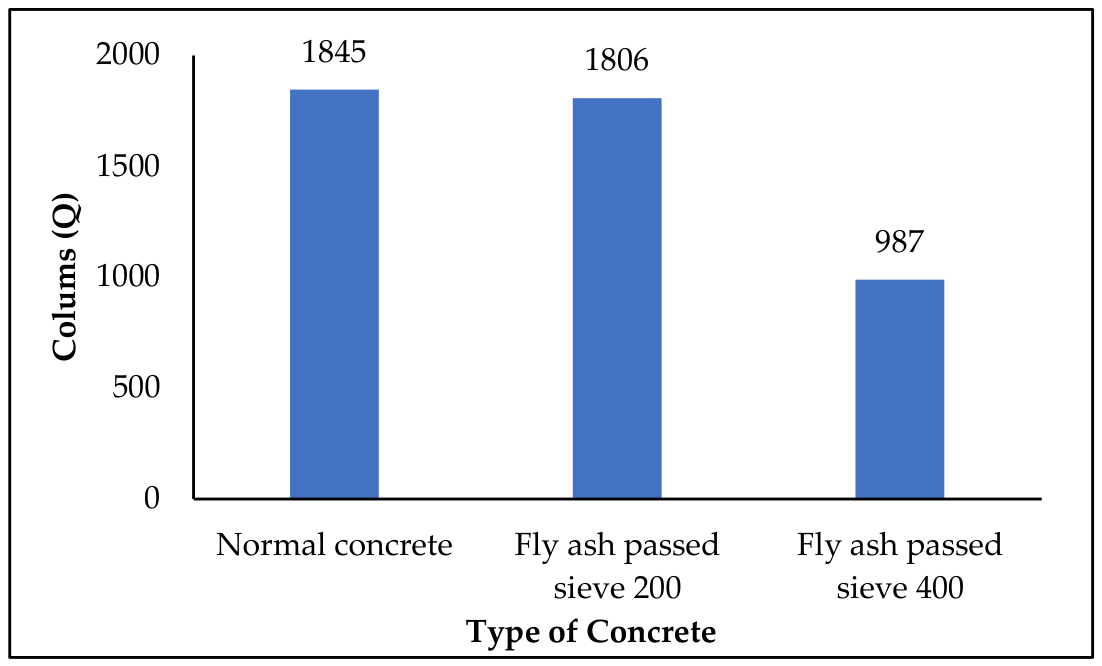
Concrete remains one of the most extensively utilized construction materials for buildings, bridges, and infrastructure. High-volume fly ash (HVFA) concrete has emerged as a sustainable choice to conventional mixtures, primarily due to its reduced cement demand and enhanced durability. Nevertheless, systematic investigations on the fineness fly ash contributions both for strength growth and durability performance of normal-strength HVFA concrete remain limited. The present study examines the effect of fly ash particle size, employed as a partial cement replacement, on the compressive strength and durability of normal-strength HVFA concrete. In this work, 50% of the cement by weight was substituted with fly ash of two fineness levels: passing sieve No. 200 and sieve No. 400. Twelve specimens were prepared for each mix variation, comprising compressive strength specimens (Ø15 cm × 30 cm) tested at 14, 28, and 56 days, as well as durability specimens assessed using the Rapid Chloride Penetration Test (RCPT) at 56 days. The results demonstrate that finer fly ash markedly improves compressive strength, with the highest value of 36.33 MPa recorded at 56 days for HVFA concrete comprising fly ash passing sieve No. 400. Regarding durability, increased fineness substantially reduced chloride ion ingress, as indicated by a decline in charge passed from 1845 coulombs in normal concrete to 987 coulombs in HVFA concrete with fly ash passing sieve No. 400, corresponding to a classification of very low chloride penetrability. These findings highlight the critical contribution of the fineness of fly ash in optimizing both mechanical performance and durability characteristics of HVFA concrete.

1. Introduction

Concrete is known as a major material in construction worldwide. Nearly all types of projects, including buildings, bridges, and other infrastructure, rely on concrete as a primary component. The elementary constituents of concrete consist of water, Portland cement, coarse and fine aggregates, and, when required, supplementary additives, each contributing distinct functions and effects. Among its properties, compressive strength is considered the most critical, as higher compressive strength generally correlates with improved overall performance. Several factors influence concrete strength, including the quality and proportion of constituent materials, the ratio of water to cement, aggregate gradation, maximum size of aggregate, production methods (mixing, placing, compaction, and curing), and the age of the concrete [1].
The main reason why concrete is used worldwide is because it has high compressive strength. Many efforts have been made to attain the higher compressive strength of concrete, one of which is by adding waste pozzolanic materials to the concrete mixture. An example of pozzolanic waste that can be added to the concrete composition is fly ash.
Fly ash is collected from the boiler chamber as fine particulate matter released as a by-product of coal combustion, and it has been widely applied as a partial replacement material in concrete. Based on chemical composition and source, fly ash can be generally categorized into three types: Class C Fly ash, containing more than 10% CaO and typically derived from sub-bituminous or lignite coal; Class F, with less than 10% CaO originating from bituminous or anthracite coal; and Class N, referring to natural pozzolans or combustion residues such as diatomaceous earth, opaline chert and shales, tuff, and volcanic ash [2].
If it is disposed openly, fly ash can cause environmental pollution because it has several toxic elements such as: antimony, arsenic, boron, chromium, and vanadium. Therefore, one way to prevent fly ash from polluting the environment is to use it as a partial cement substitution for in concrete production [3].
In fact, the particle fineness of fly ash is not much different from that of cement. The fineness of fly ash particles can affect the hydration and setting time processes. The reaction between pozzolanic materials and water begins on the surface of the pozzolanic particles, so that the higher the surface area of the particles, the faster the process of hydration. This means that fine particles will become stronger and produce hydration heat faster than coarser particles [1].
High-volume fly ash concrete refers to mixtures in which fly ash constitutes more than 50% of the binder. Such mixtures exhibit high workability and improved durability against chemical attacks [4].
Sari [5], in her study entitled “Utilization of High Volume Fly Ash Concrete Technology to Produce Normal Compressive Strength Concrete”, has reported that the compressive strength of HVFA concrete reached 94% (18.109 MPa) at 14 days, 100% (19.241 MPa) at 28 days, and 102% (19.618 MPa) at 56 days. Similarly, Umboh, Sumajouw, and Windah [6], in their publication “The Effect of Utilizing Fly Ash from North Sulawesi PLTU II as a Partial Substitute for Cement on Concrete Compressive Strength”, demonstrated that a 30% cement replacement with fly ash produced a strength of 24.18 MPa. Increasing the replacement level to 40%, 50%, 60%, and 70% resulted in reduction strengths of 15.3 MPa, 12.28 MPa, 8.02 MPa, and 4.79 MPa, respectively, at 28 days.
Durability is a decisive parameter in assessing the long-term performance and service life of concrete structures, particularly under aggressive environments rich in chloride ions. Chloride-induced corrosion is recognized as the most detrimental damage factors, significantly reducing the lifespan of concrete in coastal areas and in the areas that face deicing salts. A testing method that is widely adopted for evaluating chloride ingress resistance is the Rapid Chloride Penetration Test (RCPT), which measures the total electrical charge passing through a concrete specimen under a constant voltage, in accordance with ASTM C1202 [7,8]. RCPT provides a rapid and comparative assessment of ionic permeability, making it an effective tool for examining the role of supplementary cementitious ingredients, such as fly ash, in enhancing concrete durability.
Although HVFA concrete has been broadly studied as a sustainable infrastructure material, the majority of prior research has concentrated on the influence of replacement levels on strength and durability. In contrast, the effect of fly ash fineness, particularly at high replacement ratios, on compressive strength development and chloride penetration resistance in normal-strength concrete has received limited attention. Moreover, systematic comparisons between different fineness levels under identical mix proportions and curing conditions remain scarce. Therefore, the present study investigates the impact of fly ash fineness—specifically passing sieve No. 200 and No. 400—used as a 50% cement replacement on the compressive strength and durability of normal-strength HVFA concrete.

2. Materials and Method

This research was conducted at the Civil Engineering Laboratory of Universitas Muhammadiyah Surakarta. The study began with a literature review to serve as a guide and reference, followed by the preparation of materials and equipment. Test specimens in the form of concrete cylinders were then fabricated, cured by immersion for 14, 28, and 56 days, and subsequently tested for compressive strength and durability.
The concrete mixtures were composed of aggregates (fine and coarse), Portland cement, fly ash, water, and a superplasticizer. Preliminary material characterization involved visual examination of cement and fly ash, while fine and coarse aggregates were subjected to direct testing. The mix proportions were designed following the American Concrete Institute (ACI) guidelines to achieve a target compressive strength of 30 MPa. Adjustments were subsequently made by adopting a water-to-binder ratio of 0.30 and incorporating a superplasticizer at 1.25% of the cement weight. The complete mixture proportions are summarized in Table 1.
After determining the composition of the concrete cylinder test specimens the equipment required for mixing was prepared. Once all materials and equipment were ready, the mixing process was carried out according to the planned composition as described in Table 2. Sand and gravel were first placed into the mixer and blended until homogeneous, followed by the addition of cement and fly ash, and then water. After achieving homogeneity, the superplasticizer was added. Mixing continued until all ingredients were uniformly combined, after which the mixture was poured into the designated container and tested in its fresh state. The fresh concrete test produced a slump value of 15 cm. Subsequently, the fresh concrete mixture was cast into 36 cylindrical molds.
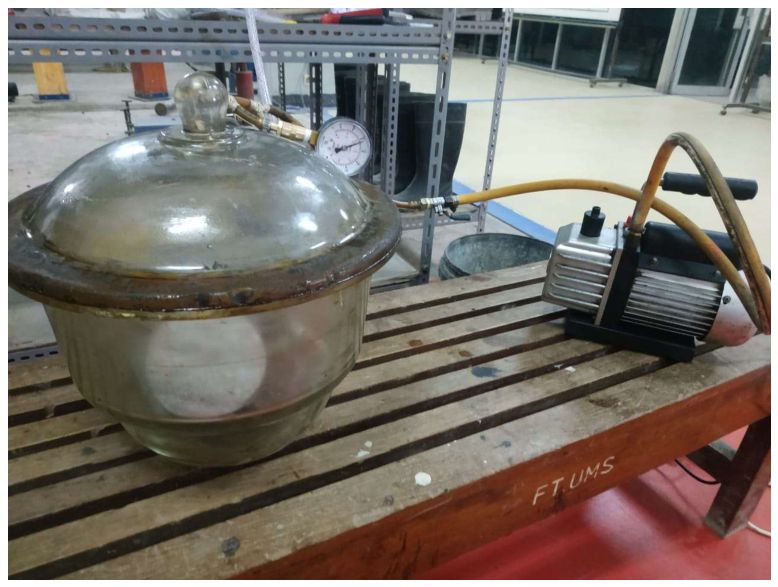
After casting, all specimens were casted in cylindrical molds and remain there for 48 h before demolding. They were then submerged in a curing pond for 14, 28, and 56 days to complete the curing process. Upon completion of curing, compressive strength test was conducted using a Compression Testing Machine (CTM, PT Panairsan Pratama, Jakarta, Indonesia) and its maximum load capacity is 2000 kN. Furthermore, durability was assessed through the Rapid Chloride Penetration Test (RCPT). Prior to RCPT, specimens were subjected to a vacuum condition for 3 h to remove entrapped air, followed by water soaking for 18 h (Figure 1). The RCPT was performed by following ASTM C1202 [8], employing NaOH solution on the positive terminal and NaCl solution on the negative terminal, under a constant direct current of 60 V. The test duration was 6 h, with measurements recorded at 30-min intervals.
From the concrete testing observations of cylindrical specimens and durability assessments, data were obtained and subsequently processed to analyze the mechanical properties of concrete.

3. Result and Discussion

3.1. Slump Test

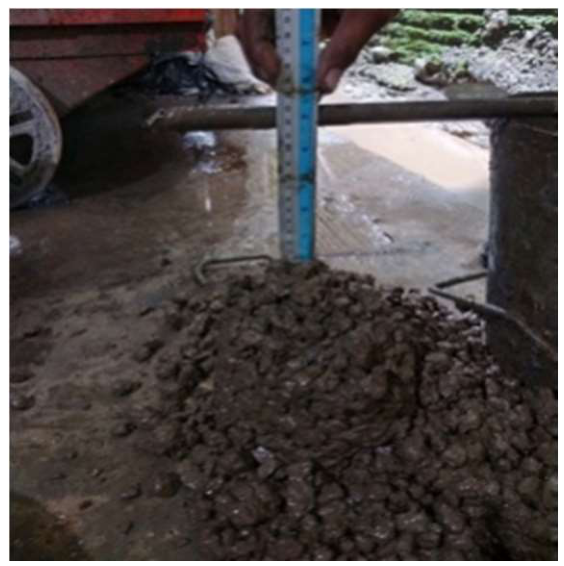
The slump test is employed to assess the workability and uniformity of fresh concrete intended for placement in formwork as described in Figure 2. Following ASTM C143 [9] procedures, the test involves an Abrams cone, which is filled with freshly mixed concrete and subsequently determining the vertical displacement (slump) of the specimen.
From the results presented in Table 3, the slump test indicates that HVFA concrete experiences a reduction in slump value compared to normal concrete, although it remains within the permissible range of 10–20 cm. This reduction is attributed to the lower water content used in HVFA mixtures. Despite differences in particle fineness, no significant variation in slump was observed between fly ash passing sieve No. 200 and No. 400. This behavior can be explained by the use of a constant water-to-binder ratio (0.30) and a fixed superplasticizer dosage (1.25%), which effectively mitigated the influence of particle fineness on workability. Furthermore, the spherical morphology of fly ash particles provides a lubrication effect and enhances particle packing, enabling the concrete to maintain adequate workability even at reduced water content. Rommel and Rusdianto [10] also reported that concrete incorporating fly ash requires less mixing water due to the water absorption capacity of fly ash particles. Similar findings have been confirmed in recent studies, which demonstrated that the combined use of high-volume fly ash and chemical admixtures can preserve workability while reducing water demand [10,11,12,13].

3.2. Compressive Strength Test

The concrete compressive strength, which is determined on concrete cylinders, was determined using a Compression Testing Machine (CTM) in compliance with ASTM C39 [14] through standardized testing. Specimens were cured for 14, 28, and 56 days, after which strength development was evaluated. The compressive strength of each specimen was calculated based on the maximum applied load divided by its cross-sectional area.
f c = P A
explanation:
  • f c : concrete compressive strength (N/mm2)
  • P: maximum load (N)
  • A: cross-sectional area of test object (mm2)
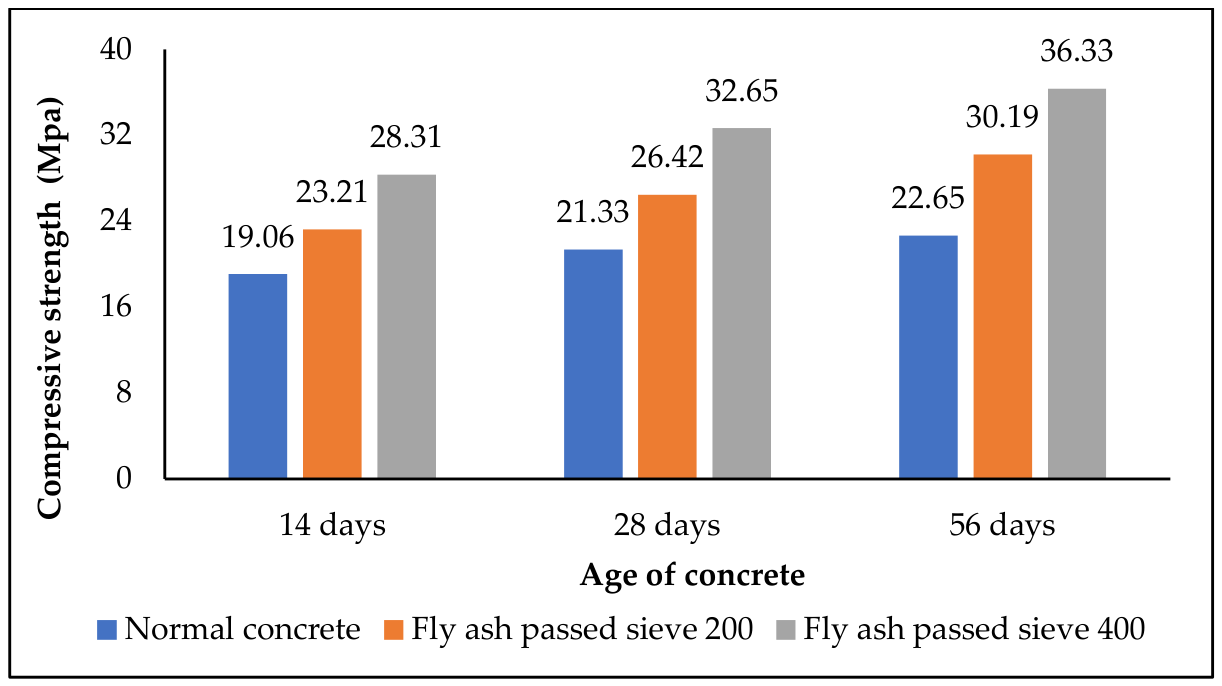
As demonstrated in Figure 3, the compressive strength of normal concrete exhibited its most notable increase at 28 days, reaching 10.64%. For HVFA concrete containing fly ash passing sieve No. 200, the highest gain was observed at 56 days with an increment of 12.48%. In contrast, the mixture incorporating fly ash passing sieve No. 400 showed the greatest improvement at 28 days, amounting to 13.29%. These results demonstrate that finer fly ash contributes to better improvement in compressive strength, primarily due to the formation of a denser concrete matrix in which voids are effectively filled by smaller particles. Moreover, strength development was found to progress with concrete age, aligning with the observations by Simatupang et al. [2], who reported continuous improvement between 7 and 56 days.
The enhancement in compressive strength observed in HVFA concrete comprising finer fly ash is primarily due to the synergistic effects of enhanced pozzolanic activity and microstructural refinement [15]. Due to their larger specific surface area, finer fly ash particles accelerate the reaction with calcium hydroxide released during cement hydration, leading to the generation of additional calcium silicate hydrate (C–S–H) gel [16]. In addition, the filler function of these particles decreases pore connectivity and minimizes voids within the concrete matrix, with the effect becoming more evident at extended curing ages. Consistent findings have been reported in the recent literature, indicating that HVFA concrete incorporating finer fly ash achieves superior long-term strength compared to mixes with coarser particles, owing to sustained pozzolanic reactions and improved microstructural densification [7,17].

3.3. Concrete Durability Test

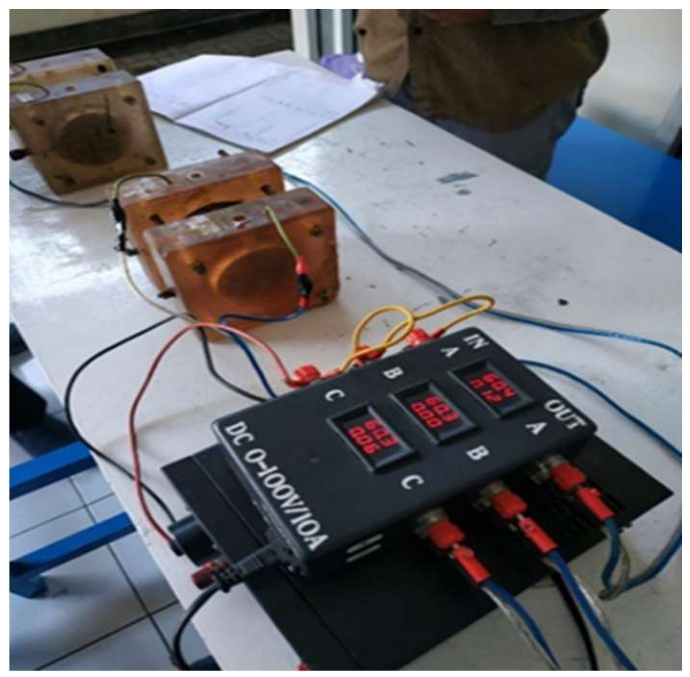
The durability assessment was performed to examine the resistance of concrete against chemical exposure using NaOH and NaCl solutions. Cylindrical specimens with a diameter of 100 mm and a height of 50 mm were cast for testing. In the procedure, NaCl solution was applied to the negative terminal and NaOH solution to the positive terminal, under a constant direct current of 60 V as shown in Figure 4. The experiment was conducted for a duration of 6 h, with current measurements taken at 30-min intervals using an ammeter. Each specimen was placed between electrodes and tested with a Rapid Chloride Penetration Test (RCPT) apparatus in compliance with ASTM C1202 [8].
As shown in Figure 5, durability testing revealed that the average charge passed for normal-strength concrete was 1845 coulombs. In comparison, HVFA concrete incorporating fly ash passing sieve No. 200 recorded an average of 1806 coulombs, whereas the mixture with fly ash passing sieve No. 400 exhibited a significantly lower value of 987 coulombs. Based on ASTM C1202 [8] classification, these results belongs to the category of very low level of chloride ion penetrability, as summarized in Table 4. The outcomes clearly indicate that the incorporation of finer fly ash markedly improves the resistance of concrete to chloride ingress.
The enhanced durability of HVFA concrete incorporating finer fly ash is primarily associated with microstructural refinement arising from both filler and pozzolanic mechanisms. Smaller fly ash particles efficiently occupy capillary voids and reduce pore interconnectivity, thereby forming a denser cementitious matrix with reduced ionic permeability [8,18]. Furthermore, the pozzolanic interaction among fly ash and calcium hydroxide resulted in increasing of calcium silicate hydrate (C–S–H) gel content, which further impedes chloride ion transport pathways [17]. This beneficial effect becomes increasingly evident with higher levels of fineness, as demonstrated by the substantially lower charge passed in concrete containing fly ash that passed sieve No. 400 [13]. Comparable outcomes have been documented in recent investigations, confirming that HVFA concrete incorporating finer fly ash exhibits superior resistance to chloride penetration relative to conventional concrete [12,19].

4. Conclusions

From the results and discussion presented in Section 3, several conclusions can be highlighted:
  • The average slump value of HVFA mixtures containing 50% fly ash passing sieve No. 200 and No. 400 was 15 cm, suggesting that fly ash fineness has minimal influence on workability.
  • The fly ash fineness gives significant effect on compressive strength, with the most significant improvement recorded at 28 days, reaching 13.29%.
  • Finer fly ash particle plays a critical role in enhancing resistance to chloride ion ingress, in which the use of finer particles resulted in a denser and more compact concrete matrix, thereby lowering electrical conductivity and improving durability.

Author Contributions

This paper was made available with support of the following contributors: M.S. made the conceptualization of the research program, M.S. and A.R. did supervision of the experimental program, I.R. and I.N.I. contributed in data curation and formal analysis, F.M. was involved as project administration, M.S. and A.R.P. conducted writing of the original draft, review, and editing. All authors have read and agreed to the published version of the manuscript.

Funding

This research made available by internal funding from Universitas Muhammadiyah Surakarta through the Hibah Integrasi Tridharma (HIT) Research Grant, contract number 232/A.3-III/FT/VI/2022, and no external funding involved.

Institutional Review Board Statement

Not applicable.

Informed Consent Statement

Not applicable.

Data Availability Statement

Raw collected data for this research article will be made available by the authors upon request.

Acknowledgments

The authors expresses their appreciation to the Civil Engineering Laboratory of Universitas Muhammadiyah Surakarta, which provided facilities during the research, and PT. Varia Beton, which provided fly ash material for this research.

Conflicts of Interest

The authors stated there is no potential conflicts of interest with respect to the research, writing, and/or publication of this article.

References

  1. Tjokrodimuljo, K. Teknologi Beton (Concrete Technology); Biro Penerbit Teknik Sipil Universitas Gadjah mada: Yogyakarta, Indonesia, 2017. (In Indonesian) [Google Scholar]
  2. Simatupang, P.H.; Sir, T.M.W.; Kurniaty, A.S. Pengaruh Substitusi Parsial Semen dengan Abu Terbang Terhadap Karakteristik Teknis Beton (The Effect of Partial Cement Substitution with Fly Ash on the Technical Characteristics of Concrete). J. Tek. Sipil 2016, 5, 139–148. (In Indonesian) [Google Scholar]
  3. Marthin, D.J.S.; Dapas, S.O. Elemen Struktur Beton Bertulang Geopolymer (Geopolymer Reinforced Concrete Structural Elements); Andi Publisher: Yogyakarta, Indonesia, 2013. [Google Scholar]
  4. Malhotra, V.M.; Mehta, P.K. High-Performance, High-Volume Fly Ash Concrete: Materials, Mixture Proportioning, Properties, Construction Practice, and Case Histories; Suplementary Cementing Materials for Sustainable Development Inc.: Ottawa, ON, Canada, 2005. [Google Scholar]
  5. Sari, N.A.; Solikin, M.; Nurchasanah, Y. Basuki Pemanfaatan Teknologi High Volume Fly Ash Concrete untuk Memproduksi Beton Kuat Tekan Normal (Utilization of High Volume Fly Ash Concrete Technology to Produce Normal Compressive Strength Concrete). Bachelor’s Thesis, Universitas Muhammadiyah Surakarta, Surakarta, Indonesia, 2016. (In Indonesian) [Google Scholar]
  6. Umboh, A.H.; Sumajouw, R.S.W.M.D.J. Pengaruh pemanfaatan abu terbang (fly ash) dari pltu II sulawesi utara sebagai substitusi parsial semen terhadap kuat tekan beton (The Effect of Utilizing Fly Ash from North Sulawesi II Thermal Power Plant as a Partial Substitute for Cement on Concrete Compressive Strength). JSS 2014, 2, 352–358. (In Indonesian) [Google Scholar]
  7. De Maeijer Patricia, K.; Bart, C.; Ruben, S.; Hadi, K.-K.; Michel, L.; Koen, J.; Gert, N. Effect of ultra-fine fly ash on concrete performance and durability. Constr. Build. Mater. 2020, 263, 120493. [Google Scholar] [CrossRef]
  8. ASTM C1202; Standard Test Method for Electrical Indication of Concrete’s Ability to Resist Chloride Ion Penetration. ASTM International: West Consecutive Hawken, PA, USA, 2012.
  9. ASTM C 143/C 143M; Standard Test Method for Slump of Hydraulic-Cement Concrete. ASTM International: West Consecutive Hawken, PA, USA, 2010.
  10. Rommel, E.; Rusdianto, Y. Pemakaian Fly-Ash Sebagai Cementitious Pada Beton Mutu Tinggi Dengan Steam Curing (The Use Of Fly-Ash as Cementitious on High-Strength Concrete with Steam Curing). Media Tek. Sipil 2014, 10, 128–136. (In Indonesian) [Google Scholar] [CrossRef]
  11. Mohsen, M.O.; Aburumman, M.O.; Al Diseet, M.M.; Taha, R.; Abdel-Jaber, M.; Senouci, A.; Taqa, A.A. Fly Ash and Natural Pozzolana Impacts on Sustainable Concrete Permeability and Mechanical Properties. Buildings 2023, 13, 1927. [Google Scholar] [CrossRef]
  12. Solikin, M.; Setiawan, B.; Nurchasanah, Y.; Prayogi, S. Analisis Penetrasi Ion Klorida pada Beton High Volume Fly Ash Mutu Tinggi dengan Variasi Tingkat Kehalusan Fly Ash (nalysis of Chloride Ion Penetration in High-Strength High Volume Fly Ash Concrete with Variation in Fly Ash Fineness). Teras J. 2022, 12, 425–434. (In Indonesian) [Google Scholar] [CrossRef]
  13. Mahajan, L.; Mahadik, S.; Bhagat, S.R. Investigation of Fly Ash Concrete by Slump Cone and Compaction Factor Test. IOP Conf. Ser. Mater. Sci. Eng. 2020, 970, 12011. [Google Scholar] [CrossRef]
  14. ASTM C 39/C 39M; Standard Test Method for Compressive Strength of Cylindrical Concrete Specimens. ASTM International: West Consecutive Hawken, PA, USA, 2008.
  15. Wu, C.; Huang, C.; Kan, Y.; Yen, T. Effects of Fineness and Dosage of Fly Ash on the Fracture Properties and Strength of Concrete. Appl. Sci. 2019, 9, 2266. [Google Scholar] [CrossRef]
  16. Wu, C.; Yang, Y.; Pang, B.; Cui, Y. The Effect of Different Particle Sizes of Fly Ash on the Properties of Mortar. Materials 2025, 18, 4693. [Google Scholar] [CrossRef] [PubMed]
  17. Gunasekara, C.; Zhou, Z.; Law, D.W.; Sofi, M.; Setunge, S.; Mendis, P. Microstructure and strength development of quaternary blend high-volume fly ash concrete. J. Mater. Sci. 2020, 55, 6441–6456. [Google Scholar] [CrossRef]
  18. Chen, Z.; Li, M.; Guan, L. Safety and Effect of Fly Ash Content on Mechanical Properties and Microstructure of Green Low-Carbon Concrete. Appl. Sci. 2024, 14, 2796. [Google Scholar] [CrossRef]
  19. Mubarak, F.; Solikin, M.; Sunarjono, S. Perbandingan Tingkat Kehalusan Fly Ash terhadap Durabilitas dan Sifat Mekanis High Volume Fine Fly Ash-Self Compacting Concrete (Comparison of Fly Ash Fineness Levels on the Durability and Mechanical Properties of High Volume Fine Fly Ash-Self Compacting Concrete). Wahana Tek. Sipil 2023, 28, 5243. (In Indonesian) [Google Scholar] [CrossRef]
Figure 1. Concrete vacuum testing.
Engproc 137 00002 g001
Figure 2. Slump measurement results.
Engproc 137 00002 g002
Figure 3. The development of concrete compressive strength.
Engproc 137 00002 g003
Figure 4. Concrete durability testing.
Engproc 137 00002 g004
Figure 5. Concrete durability test results.
Engproc 137 00002 g005
Table 1. Concrete composition for 1 m3.
MaterialsNormal ConcreteFly Ash 50% Passes Sieve 200Fly Ash 50% Passes Sieve 400
Fine Aggregate (kg)854854854
Coarse Aggregate (kg)101410141014
Fly ash (kg)-158.5158.5
Cement (kg)317158.5158.5
Water (L)959595
Total (kg)228022802280
Table 2. Number of test items.
Percentage of Fly Ash Passes Sieve 200 & 400Compressive Strength
(Ø 15 cm, Height 30 cm)
Durability
(Ø10 cm, Height 5 cm)
14 Days28 Days56 Days56 Days
0%3333
50% passes sieve 2003333
50% passes sieve 4003333
Total36
Table 3. Slump test results.
Type of
Concrete
Water Usage per m3 (L)Slump Result
(cm)
PlanActual
normal concrete9515018
Passed Sieve 2009510515
Passed Sieve 4009510515
Table 4. Chloride ion penetrability based on charge passed [8].
Charge Passed (Coulombs)Chloride Ion Penetrability
>4000High
2000–4000Moderate
1000–2000Low
100–1000Very low
<100Negligible
Disclaimer/Publisher’s Note: The statements, opinions and data contained in all publications are solely those of the individual author(s) and contributor(s) and not of MDPI and/or the editor(s). MDPI and/or the editor(s) disclaim responsibility for any injury to people or property resulting from any ideas, methods, instructions or products referred to in the content.