


Abstract
In long-haul flights, cold non-insulated structural zones within aircraft cabins can lead to discomfort for passengers and crew, particularly during cruise phases. Moreover, during ground operations in cold weather, maintaining the thermal conditioning of the cabin becomes challenging, especially with open doors. This article presents the development of an active air curtain designed to address these issues by isolating significant cold zones and enhancing cabin comfort. The conceptual design is based on redirecting conditioned air to form a controlled barrier, which reduces thermal gradients and air mixing. The cold stream infiltrating from non-insulated structures was characterized under typical cruise scenarios using flight test data, while the open-door scenario on the ground was characterized analytically. A CFD analysis was performed to optimize nozzle geometry, airflow rate, and placement. Based on simulation results, a prototype was manufactured and tested in a controlled laboratory environment. The experimental validation confirmed the effectiveness of the air curtain in minimizing heat loss and improving thermal comfort. This paper discusses design trade-offs, thermal performance, and integration considerations, highlighting the potential of air curtains as a lightweight and low-impact solution for environmental control systems in modern transport cargo aircraft.
1. Introduction
Military transport aircraft are experiencing a significant increase in operational demands in adverse climatic conditions. In a geopolitical context that requires rapid responses to global crises and conflicts in various regions of the world, including aerial delivery operations and extreme temperatures where cold non-insulated structural zones within aircraft cabins can lead to discomfort for passengers and crew, particularly during cruise phases, it is necessary to drive the development of new technologies. These technologies should improve the energy efficiency of the aircraft, increase the comfort of the troops, and enhance the aircraft’s tactical capabilities.
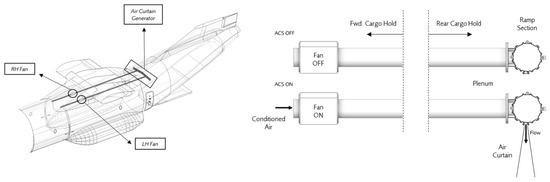
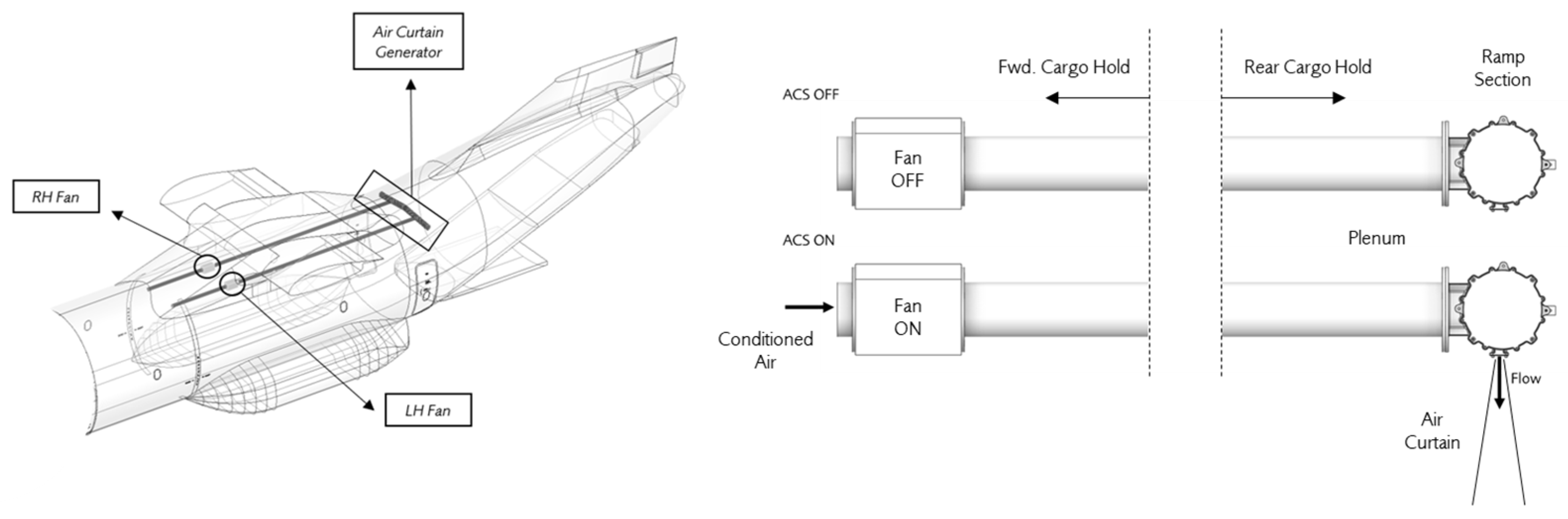
In this context, AIRBUS has led the development of a challenging and innovative insulation system. The system architecture (Figure 1) consists of a plenum supplied with air from the conditioned cargo hold area through a compressor, with the aim of generating a curtain of hot air to thermally isolate the cargo hold from the external cold air and cold non-insulated structural zones by acting as an invisible barrier. The Air Curtain System (ACS) aims to improve thermal comfort in the cargo hold during prolonged loading and unloading operations, as well as during aerial delivery missions where environmental conditions are extremely cold. It is expected that the development of this technology will achieve energy savings through improvements in several key areas: thermal insulation, aircraft heating performance, faster aircraft availability during operations with open doors in cold environments, and the reduction in environmental qualification requirements for equipment in the cargo hold position.
Figure 1.
Air Curtain System (ACS) architecture.
The Air Curtain System (ACS) is designed to meet a comprehensive set of requirements to ensure its effective and safe operation within military transport aircraft. In terms of general requirements, the ACS must provide thermal insulation for the cargo compartment in various operational scenarios, including both closed and open ramp conditions, as well as during in-flight and ground operations.
The ACS aims to utilize existing fans in the current recirculation architecture of the environmental control system (ECS) to use the cabin’s own air, at approximately 24 °C, to be ejected in the tail section; thus, no additional heat input is needed. These fans have an associated power of approximately 4 kVA to move an airflow of 500 L/s. It is crucial that the system does not generate high velocities within the cargo compartment that could cause discomfort or annoyance to passengers, and it must adhere to noise limits, not exceeding 85 dBA of sound pressure level (SPL). Additionally, the ACS should maintain a maximum vertical thermal gradient of 5 °C between measurements taken at different z positions in a section located 1.00 m from the air barrier, and it must not interfere with paratrooping or aerial delivery operations. Compatibility with the aircraft’s electrical system and smoke detection system is also mandatory.
From an engineering and design perspective, the ACS should utilize recirculated air from the cargo hold compartment, and its design should minimize the impact on aircraft installation while maximizing retrofit capability. Furthermore, the ACS design should not interfere with the aircraft’s loading and unloading operations mentioned before. These requirements collectively ensure that the ACS enhances thermal comfort and energy efficiency without compromising the safety, functionality, or operational capabilities of military aircraft.
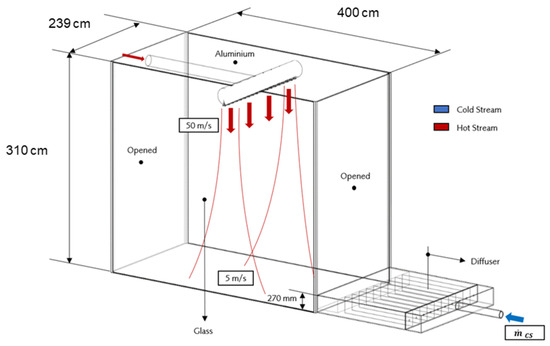
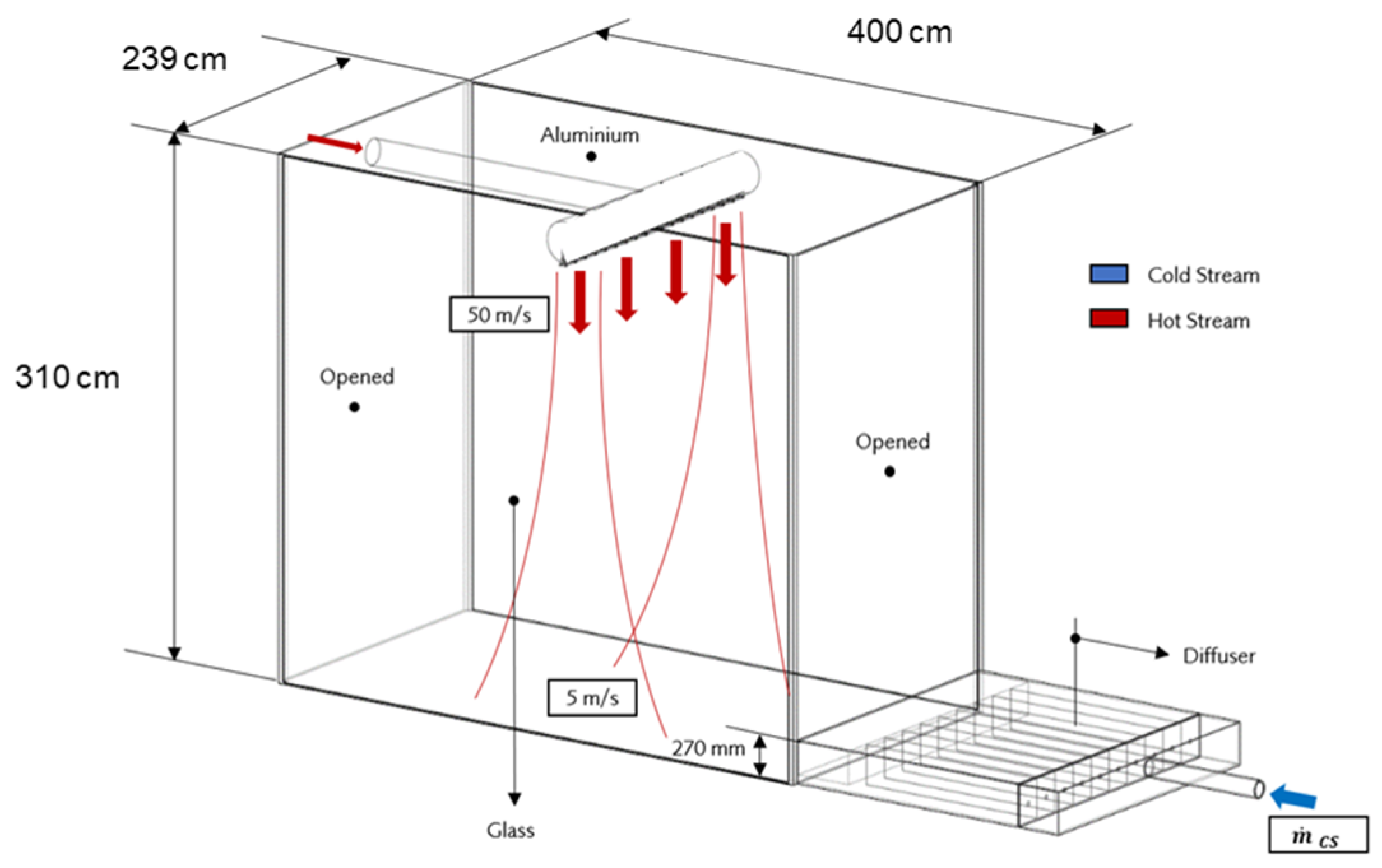
To verify the behavior and feasibility of the system based on the aforementioned requirements, AIRBUS has created a test bench that replicates the dimensions of a half-section of the A400M cargo hold. This test bench consists of a thermally sensorized volume, a cold air inlet (diffuser) to replicate environmental conditions, and the Air Curtain System (ACS). Figure 2 shows the main details of the test bench.
Figure 2.
Air Curtain System (ACS) test bench scheme.
2. Materials and Methods
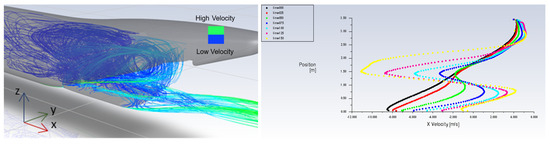
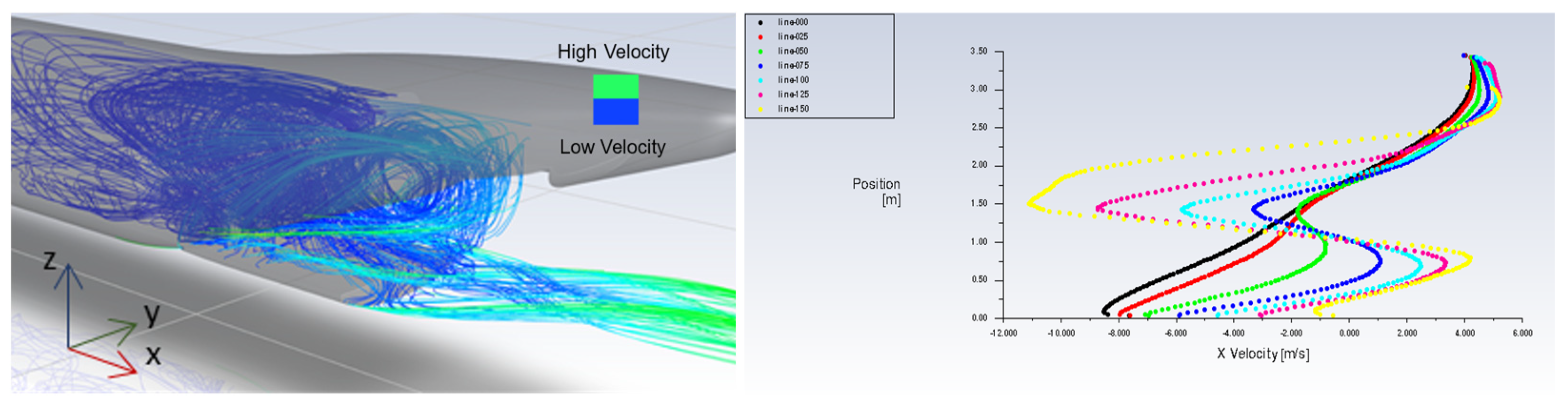
Initially, a computational model of the Air Curtain System (ACS) was generated to analyze the fluid dynamics results under different diffuser flow conditions sized from previous jet characterization [1] to achieve an effective thermal effect [2,3,4]. This flow corresponded to two distinct critical cases in which the system is intended to be used: closed ramp and aerial delivery. The characterization of the diffuser flow in the first case was derived from flight tests conducted on the A400M, while the conditions for the aerial delivery case were obtained through computational methods (Computational Fluid Dynamics). In the latter case, a similar aircraft in typical aerial delivery conditions (M0.3 aircraft speed, −30 °C outside ambient temperature and 25 kft aircraft altitude) was modeled using the commercial software ANSYS Fluent 2024R2, and an average velocity distribution was obtained at different XZ Planes located at different Y positions from the aircraft symmetry plane (line-000 cm) in the ramp section. Figure 3 represents the velocity profile obtained.
Figure 3.
Aerial delivery streamlines and velocity profile at ACS section.
- Normal Operation—Closed Door Configuration: This case corresponded to a uniform velocity profile with a homogeneous exit velocity of 1.6 m/s.
- Aerial Delivery—Open Door Configuration: In this case, a triangular velocity profile was established with a maximum exit velocity objective of 9 m/s (obtained in the center of symmetry of the cargo hold).
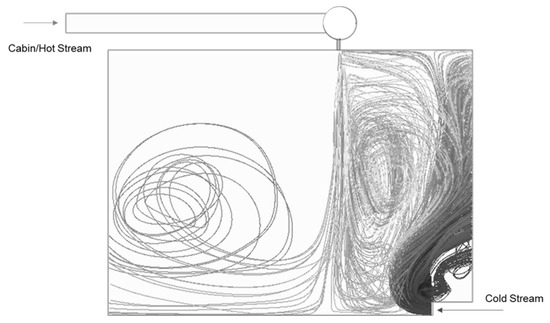
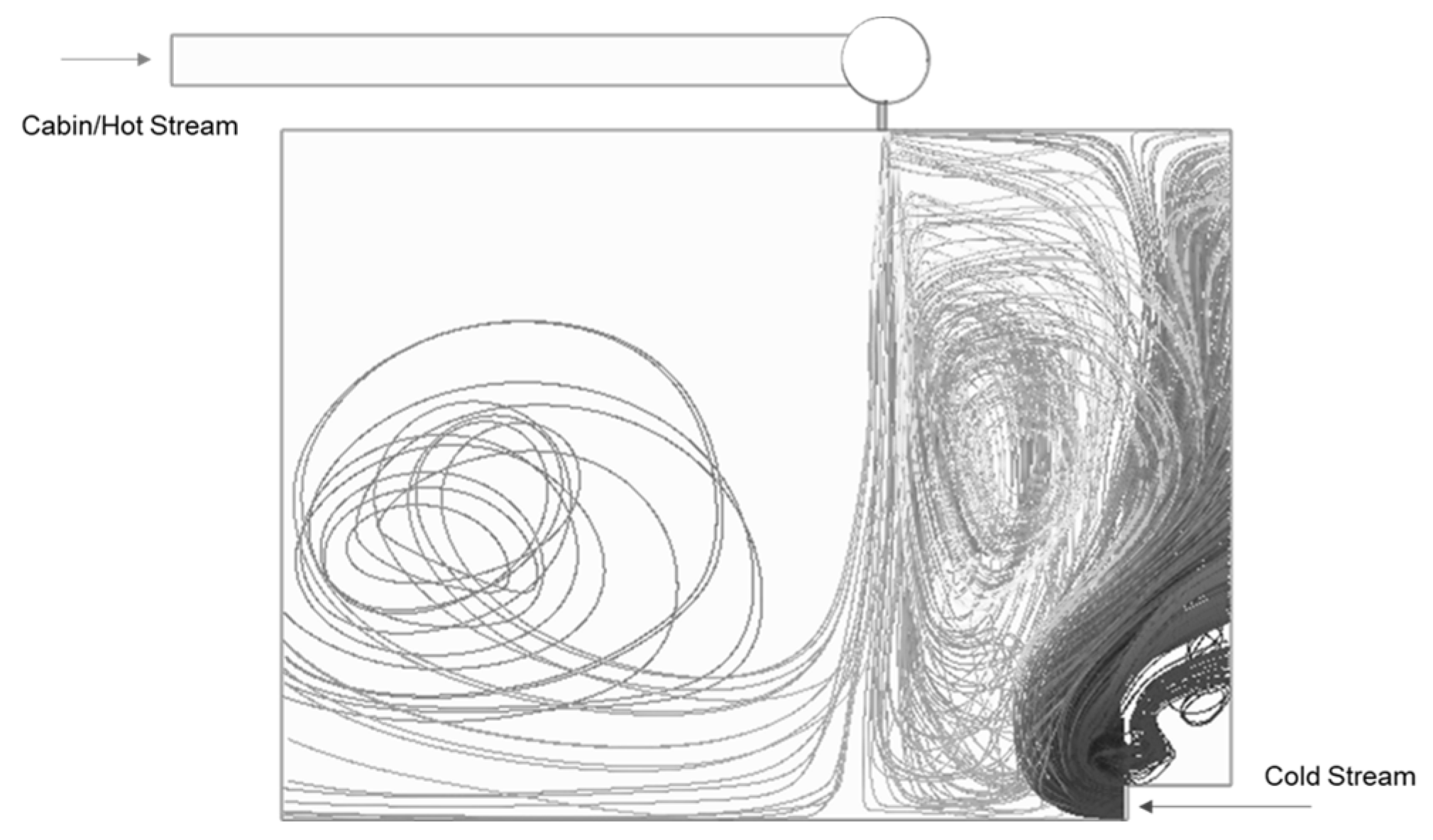
The supply of hot air responsible for generating the air curtain was studied for different entry conditions, where hot air entered through a central duct located in the plane of symmetry and was then uniformly distributed through the outlet slots thanks to the design of restrictors to calibrate the flows. The results demonstrated satisfactory behavior of the system for the analyzed conditions, blocking the passage of cold air at the hot air outlet section of the ACS, and reaching a level of maturity where the basic operating principles of the system had been analytically validated.
As can be observed in Figure 4, the airflow lines from the cold air diffuser are completely blocked in the curtain section, ensuring that the blockage occurs due to momentum blocking.
Figure 4.
Air Curtain System streamlines (CFD).
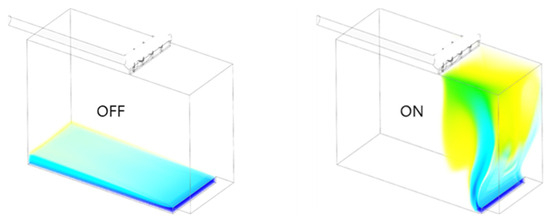
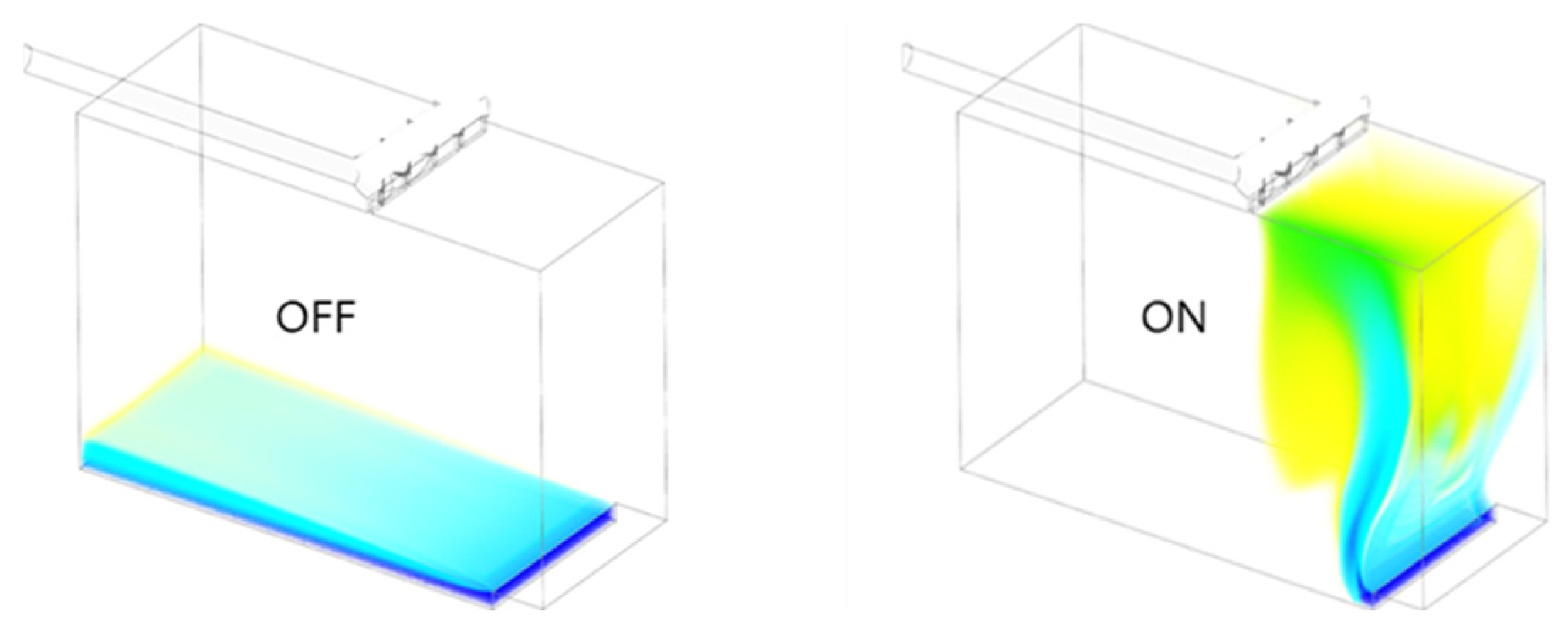
The subsequent figures (Figure 5) show a volume rendering to visualize the cold flow (closed ramp) when the ACS is off and on.
Figure 5.
Air Curtain System performance (CFD) with volume rendering (T < 0 °C).
Test Bench Manufacturing and Assembly
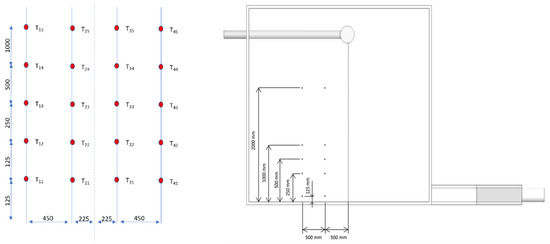
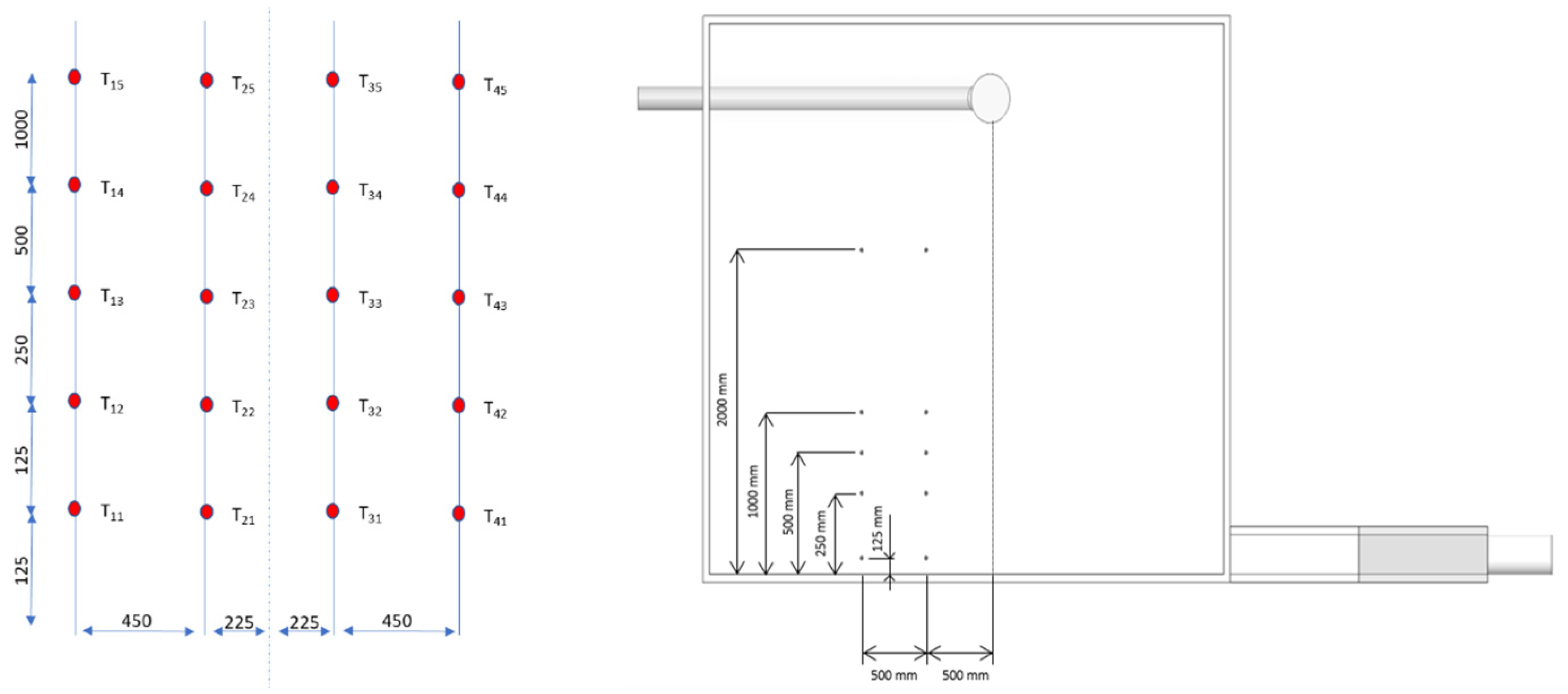
The construction of the A/C cargo hold (L400 × W239 × H310 cm) was carried out by assembling modular aluminum profiles to form the main structure. This structure was then covered with methacrylate panels to simulate floor, ceiling and lateral walls while the rear and front walls remain opened, and the thermocouple matrices located in two different sections, as shown in Figure 6, were integrated (40 sensors in total). In addition, a dedicated control panel for this test rig was manufactured, which includes the elements for rig operation, as well as the HW for signal acquisition. The following figure shows a diagram of the thermocouple distribution.
Figure 6.
Thermocouple distribution pattern.
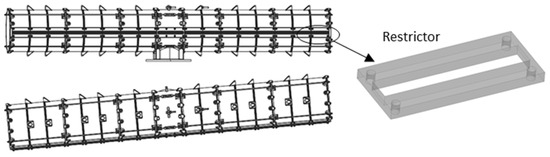
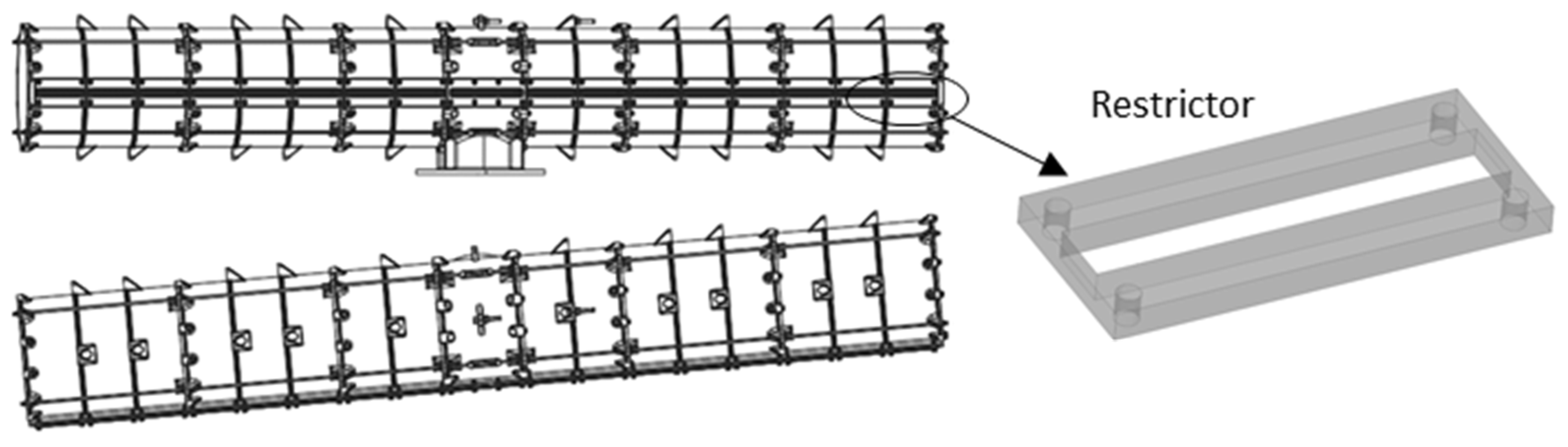
Regarding plenum (hot stream or air curtain generator) manufacturing, based on computational model design during the preliminary simulation phase, thicknesses and geometries were adapted to achieve a self-supporting design for ALM manufacturing. This design did not require internal structure during printing and could be fabricated using this technology while minimizing overall changes to the model. To be able to calibrate the outlet air speed for a fixed inlet flow, a set of restrictors was manufactured, to be installed in the plenum outlets. The width of these restrictors varies from 2.5 mm to 20 mm in 2.5 mm steps. The goal is to obtain 5 m/s of air speed at floor level.
The installation of the plenum was subject to two specific restrictions. Firstly, the relative angle between the plenum axis and the diffuser must be maintained at 5°, as specified in the air conditioning (A/C) conditions. Secondly, the relative angle of the plenum outlet in relation to the vertical plane should be adjustable, ranging from 0° to 15°. This adjustment must be performed while ensuring that the 5° angle between the plenum and the diffuser is consistently maintained. Figure 7 shows the final fabricated model for the cylindrical plenum design.
Figure 7.
Plenum manufactured design and restrictor example.
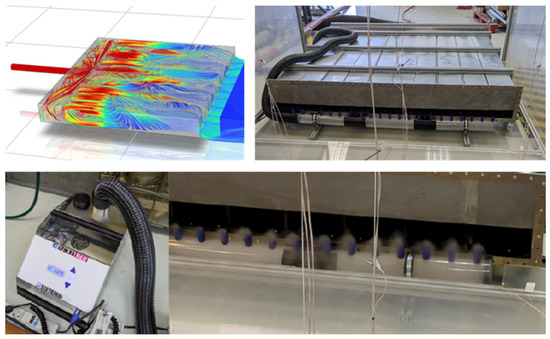
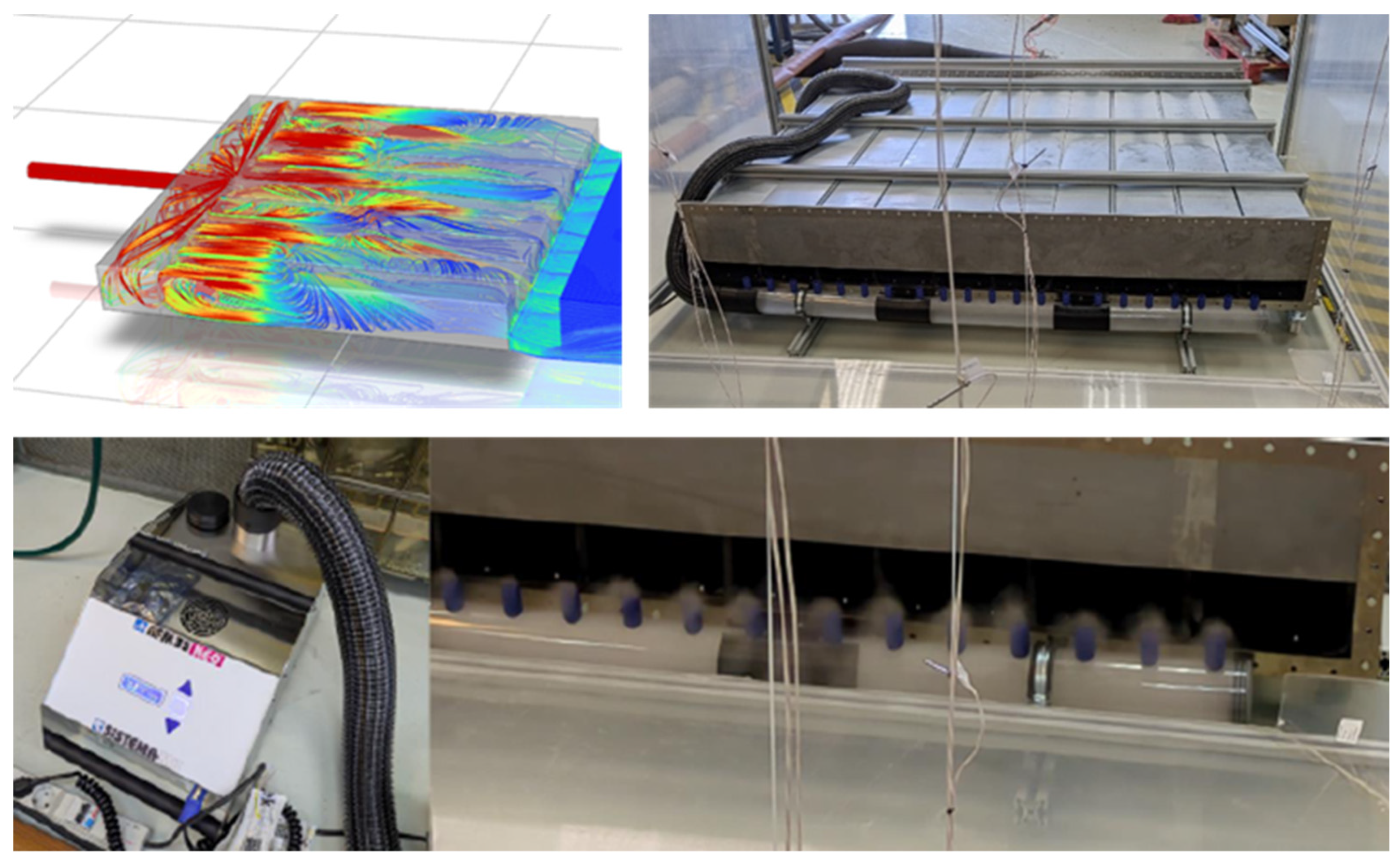
Finally, the diffuser (cold stream) was designed to replicate the flow of cold air under aerial delivery conditions, as well as during normal operation with the ramp closed. The diffuser was designed and manufactured with an inlet plenum to ensure an even distribution of air across the various diffuser bodies; ten rectangular aluminum ducts (each measuring L175 × W20 × H25 cm); a restrictor positioned between the plenum and the rectangular ducts, featuring a specific hole pattern to properly distribute flow (two versions of this restrictor were created: one for when the door is closed and another for when the door is open); and a plate installed at the outlet of the square ducts to regulate and calibrate the air speed for the desired cold airflow (Figure 8). A custom structure made from aluminum profiles was constructed. This structure facilitates the adjustment of the relative distance between the diffuser outlet and the air curtain, allowing for precise positioning and optimal performance.
Figure 8.
Fluid dynamic analysis and diffuser installation with smoke tracer.
To determine the dimensions of the perforated holes in the plates, analytical codes and fluid dynamics analyses were employed, adhering to the design criterion of maintaining the Mach number within a specified range for both configurations. The behavior of the flow was studied in terms of both velocity and distribution by means of a fog generator (MK AFM35-NEO, Sistema-MK GmbH, Ostfildern, Germany).
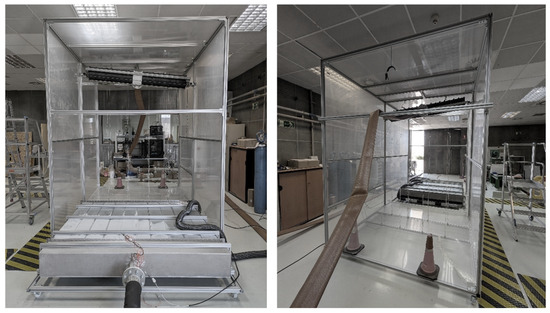
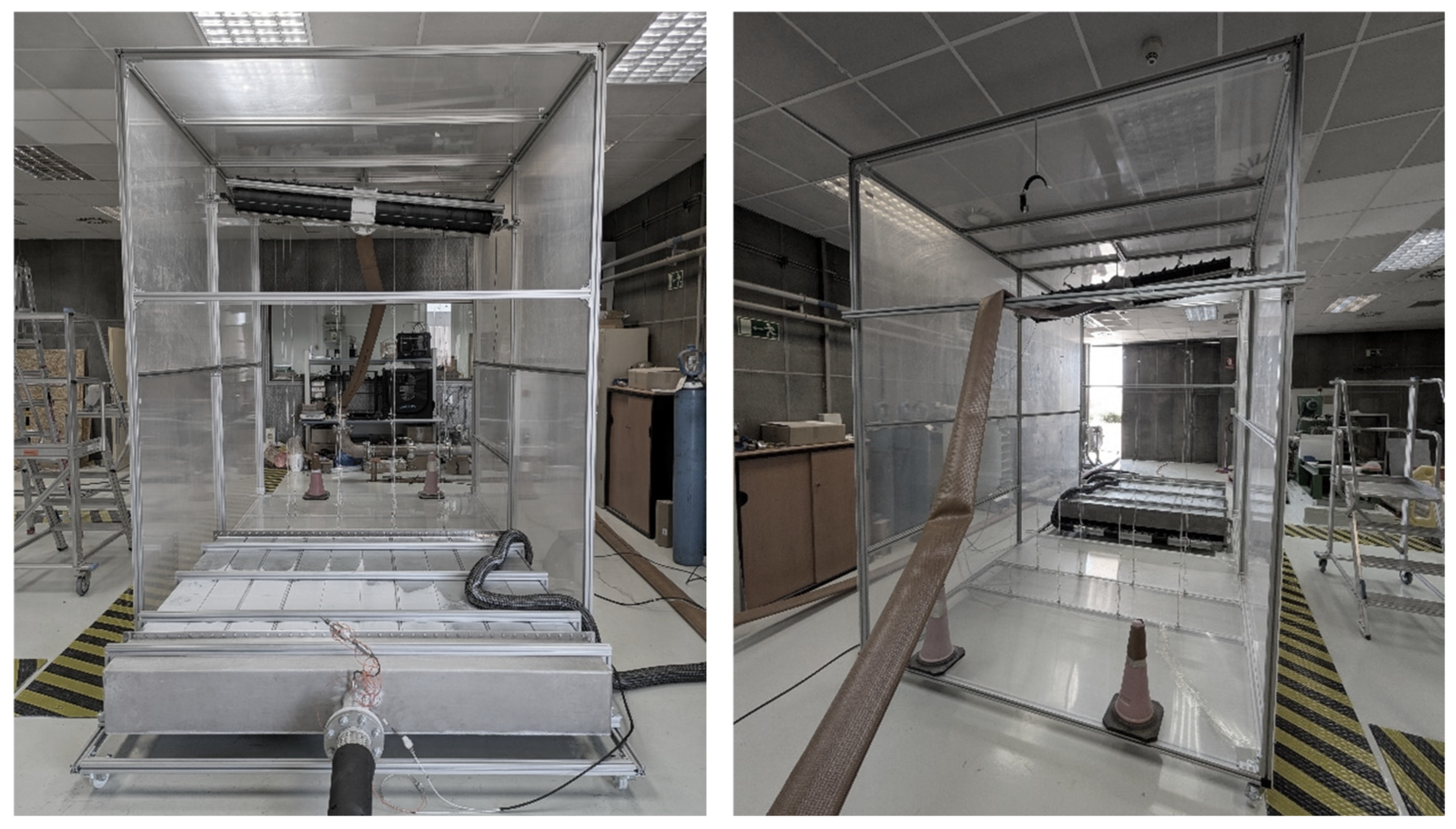
Figure 9 shows the final assembly of the test bench for performance demonstration of the Air Curtain System (ACS).
Figure 9.
Test bench final assembly.
3. Test and Results
The experimental test was conducted for various internal designs of the air curtain generator plenum, with a total of eight tests conducted for each model. Below some of the data obtained for the most representative cases are summarized in Table 1.
Table 1.
Test cases.
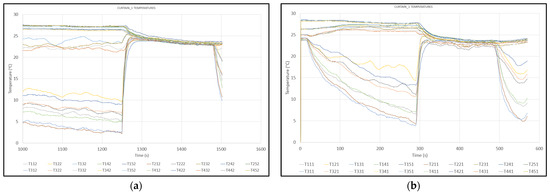
Figure 10 shows the results obtained in the Close Ramp case.
Figure 10.
(a) ID1 Normal Operation—closed ramp configuration with plenum at 0°; (b) ID2 Normal Operation—closed ramp configuration with plenum at 15°.
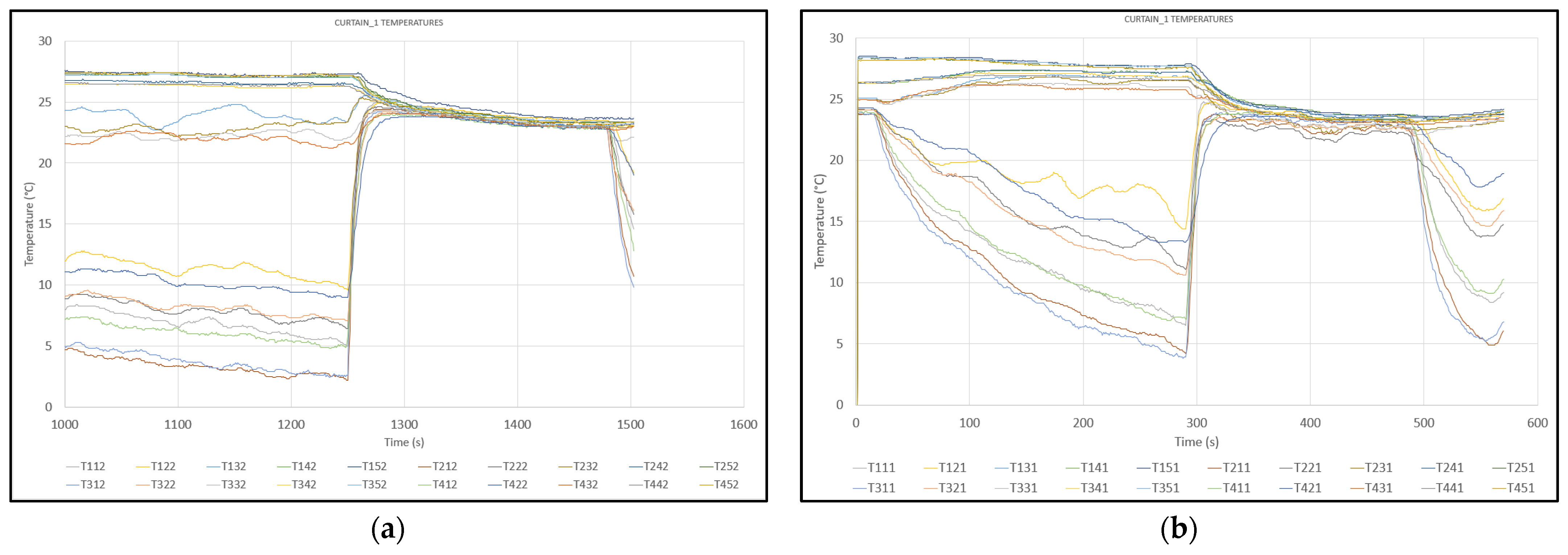
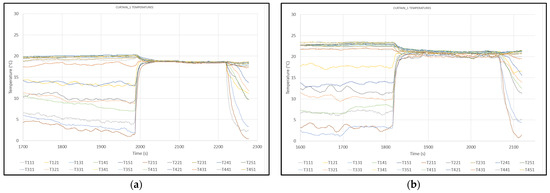
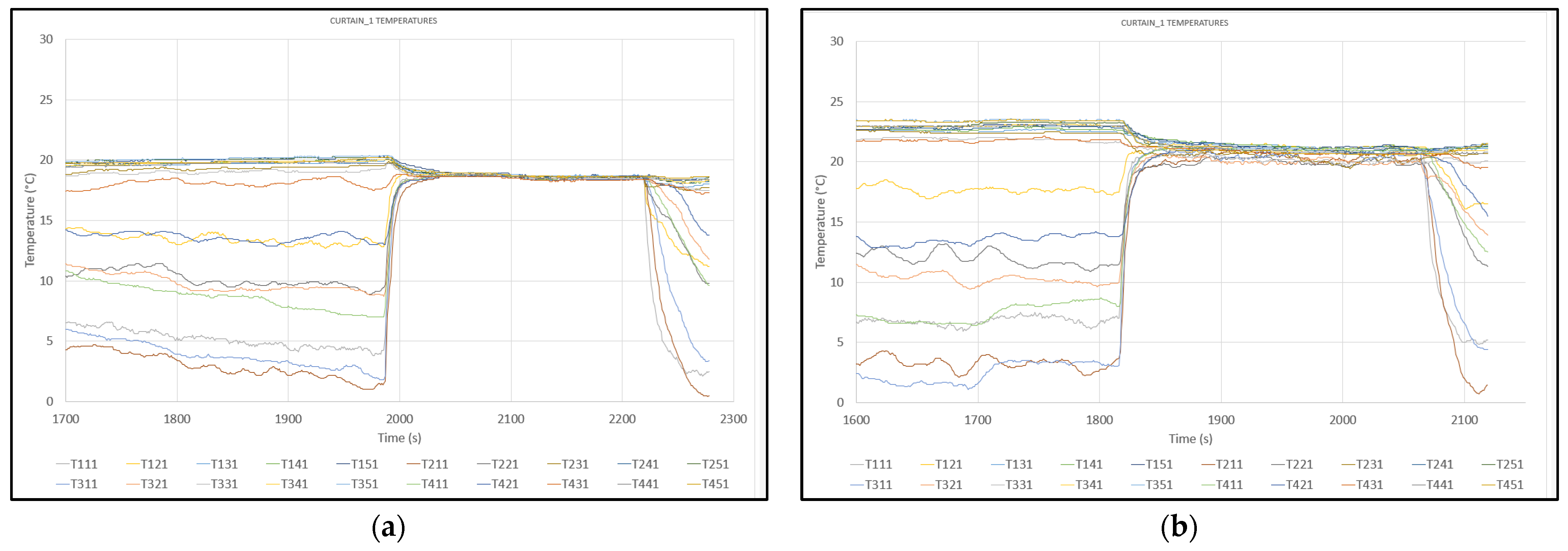
Figure 11 shows the results obtained in the Aerial Delivery case.
Figure 11.
(a) ID3 Aerial Delivery—open ramp configuration with plenum at 0°; (b) ID4 Aerial Delivery—open ramp configuration with plenum at 15°.
The upper figures demonstrate the correct functioning for both orientations of the plenum, equalizing the temperatures downstream of the air curtain at the time of activation and, therefore, validating the proposed solution for normal operation cases with the ramp closed and aerial delivery. The temperature gradient obtained after activation is below a comfort criterion of 5 °C, and it was observed during the trial that the solution oriented at 15° induced lower speeds in the cargo hold area. Additionally, it is verified that the sensors whose temperature measurement decreases when the system is off correspond to those directly impacted by the cold air jet, located at a height approximately twice the height of the diffuser inlet (100 mm), as shown in Figure 12.
Figure 12.
Area affected by cold stream.
It is noteworthy that, for the rest of the cases not included in the upper graphs, the flow of cold air was successfully stopped in all instances.
4. Conclusions
From the results, it can be concluded that, for all the different cases tested, the Air Curtain System (ACS) is capable of stopping cold airflow. The flow descends vertically downward to the lower area where, upon impacting the floor, it generates an air distribution in two preferential directions: towards the interior of the cargo hold and the diffuser. The flow parallel to the floor that moves towards the diffuser directly encounters the cold air, lifting it and preventing its progression into the interior of the test chamber. Therefore, it has been demonstrated that activating the system immediately increases the temperature measured by the sensors located behind the air curtain. This evidence shows that the vertical airflow generated from the plenum can act as an invisible barrier, preventing the cold air from advancing towards the interior of the aircraft, as intended. Thus, the system is viable for use in both closed ramp and open ramp operations.
Author Contributions
Conceptualization, J.G.R., P.L.D. and A.C.C.; methodology, J.G.R., P.L.D. and A.C.C.; software, J.G.R., P.L.D. and A.C.C.; validation, J.G.R., P.L.D. and A.C.C.; formal analysis, J.G.R., P.L.D. and A.C.C.; investigation, J.G.R., P.L.D. and A.C.C.; resources, J.G.R., P.L.D. and A.C.C.; data curation, J.G.R., P.L.D. and A.C.C.; writing—original draft preparation, J.G.R., P.L.D. and A.C.C.; writing—review and editing, J.G.R., P.L.D. and A.C.C.; visualization, J.G.R., P.L.D. and A.C.C.; supervision, J.G.R., P.L.D. and A.C.C.; project administration, J.G.R., P.L.D. and A.C.C.; funding acquisition, J.G.R., P.L.D. and A.C.C. All authors have read and agreed to the published version of the manuscript.
Funding
This project (CETACEO) has been subsidized by the CDTI (https://www.cdti.es/en), with the support of the Ministry of Science and Innovation, under file number PTAG-20231008 through the 2022 call for grants for Strategic Sectoral Initiatives for Business Innovation (“Aeronautical Technology Program”), within the framework of the Recovery, Transformation and Resilience Plan (funded by Next Generation EU funds, including the Recovery and Resilience Mechanism) and the State Program to Catalyze Innovation and Business Leadership of the State Plan for Scientific and Technical Research and Innovation 2021–2023.
Data Availability Statement
The data presented in this study are available on request from the corresponding authors due to company privacy restrictions.
Conflicts of Interest
Authors were employed by the company AIRBUS Defence and Space. The authors declare that the research was conducted in the absence of any commercial or financial relationships that could be construed as a potential conflict of interest.
Abbreviations
The following abbreviations are used in this manuscript:
| ACS | Air Curtain System |
| A/C | Air Conditioning |
| CFD | Computational Fluid Dynamics |
| SPL | Sound Pressure Level |
References
- AlAsfoury, A.; Abou El-Kassem, E.; Taha, S. Flow Field Characteristics of a Single Plane Jet Air Curtain Directed Vertically Downward at Opening Between Two Non-Isothermal Zones. In Proceedings of the 7th International Energy Conversion Engineering Conference, Denver, CO, USA, 2–5 August 2009. [Google Scholar] [CrossRef] [Scilit]
- Bergman, T.L.; Lavine, A.S.; Incropera, F.P.; Dewitt, D.P. Chapter 7: External flow. In Fundamentals of Heat Transfer, 4th ed.; Wiley: Hoboken, NJ, USA, 1996. [Google Scholar]
- Churchill, S.W.; Chu, H.H. Correlating equations for laminar and turbulent free convection from a vertical plate. Int. J. Heat Mass Transf. 1975, 18, 1323–1329. [Google Scholar] [CrossRef] [Scilit]
- Ostrach, S. An Analysis of Laminar Free-Convection Flow and Heat Transfer About a Flat Plate Parallel to the Direction of the Generating Body Force; NACA-TR-1111; NACA: Washington, DC, USA, 1953.



Disclaimer/Publisher’s Note: The statements, opinions and data contained in all publications are solely those of the individual author(s) and contributor(s) and not of MDPI and/or the editor(s). MDPI and/or the editor(s) disclaim responsibility for any injury to people or property resulting from any ideas, methods, instructions or products referred to in the content. |
© 2026 by the authors. Licensee MDPI, Basel, Switzerland. This article is an open access article distributed under the terms and conditions of the Creative Commons Attribution (CC BY) license.