Review

Impact of Traditional Cigarette Smoking on Liver Structure and Function

1
Internal Medicine Department, Gastroenterology Division, University Hospital of Split, 21000 Split, Croatia
2
Faculty of Health Sciences, University of Split, 21000 Split, Croatia
3
Private Clinic Matulic, Osjecka Ulica 24a, 21000 Split, Croatia
4
Cardiovascular Disease Department, University Hospital of Split, 21000 Split, Croatia
5
Internal Medicine Department, School of Medicine, University of Split, 21000 Split, Croatia
6
Department of Internal Medicine, Division of Rheumatology, Allergology and Clinical Immunology, University Hospital of Split, 21000 Split, Croatia
7
Department of Internal Medicine, Division of Nephrology, Dialysis and Arterial Hypertension, University Hospital of Split, 21000 Split, Croatia
8
Clinical Propedeutics Department, School of Medicine, University of Split, 21000 Split, Croatia
*
Authors to whom correspondence should be addressed.
These authors contributed equally to this work.
Livers 2026, 6(3), 34; https://doi.org/10.3390/livers6030034
Submission received: 17 December 2025 / Revised: 7 March 2026 / Accepted: 10 April 2026 / Published: 24 April 2026

Abstract

Background: Cigarette smoking exposes the human body to a complex mixture of toxic and carcinogenic compounds that can exert widespread biological effects across different organ systems. From addictive responses and consequence maladaptive neuroendocrine responses, cigarette smoke delivers a variety of reactive oxygen species, polycyclic aromatic hydrocarbons, nitrosamines, and heavy metals that collectively contribute to oxidative stress, inflammation, endothelial dysfunction, and metabolic disruption. The liver, as the primary organ responsible for xenobiotic metabolism, plays a central role in processing these harmful substances and is therefore uniquely susceptible to their effects. This narrative review will aim to provide an overview of the current evidence of cigarette smoking effects on hepatic structure and function and discuss clinical implications. Methods: This narrative review synthesizes evidence from in vitro studies, animal models, and human clinical research examining the effects of cigarette smoking on liver biology. Mechanistic pathways of injury, metabolic and vascular alterations, and clinical consequences for liver disease were considered. Results: Smoking influences hepatic function both directly—through biotransformation pathways generating reactive intermediates—and indirectly via vascular impairment, immune modulation, hormonal alterations, and changes in lipid and glucose metabolism. Emerging evidence indicates that cigarette smoking contributes to hepatic steatosis, accelerates fibrosis progression, worsens outcomes in viral and alcohol-related liver disease, and increases the risk of hepatocellular carcinoma. Conclusions: Cigarette smoking exerts multifaceted deleterious effects on the liver. Recognition of smoking as a modifiable risk factor for liver-related morbidity underscores the importance of smoking cessation in patients with or at risk for liver disease and highlights implications for research and clinical practice.

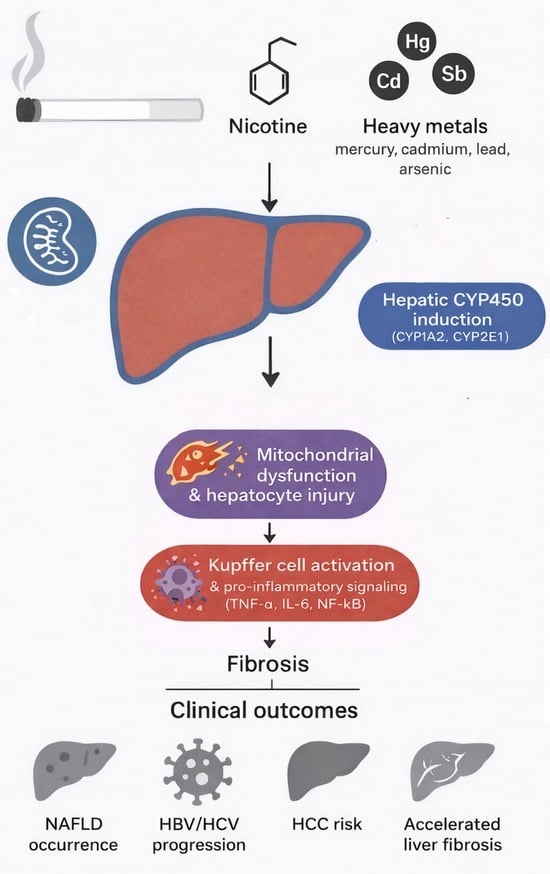
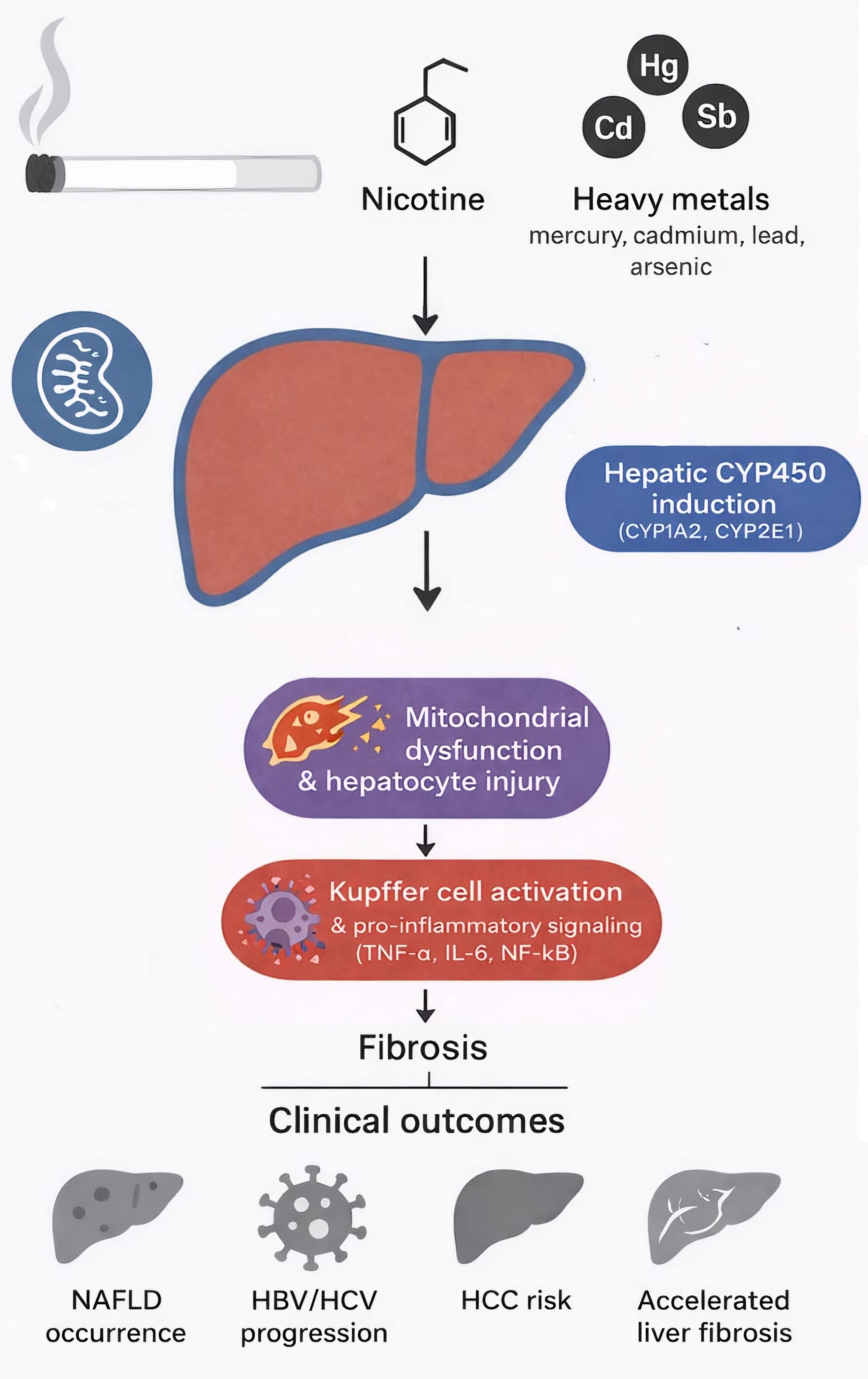
Graphical Abstract

1. Introduction

Tobacco smoking remains one of the most pervasive and modifiable risk factors for premature mortality worldwide and is a major contributor to an extensive range of diseases, most notably cardiopulmonary disorders and cancer [1,2,3,4]. Although global smoking prevalence has declined over the recent decades, many regions continue to report substantial rates of tobacco use, with some countries experiencing increasing rates of tobacco use [5,6]. The evolving landscape of nicotine consumption, characterized by the increasing use of electronic nicotine delivery systems (ENDS), including e-cigarettes and other vaping devices, may be perpetuating nicotine dependence at the population level. A considerable proportion of individuals engage in dual use, combining conventional combustible tobacco with ENDS, a pattern that appears to reinforce habitual smoking behaviors and sustain long-term nicotine addiction. Emerging evidence further suggests that dual use may attenuate the perceived urgency to quit, thereby undermining cessation efforts and complicating population-level tobacco control strategies. Moreover, the concurrent exposure to nicotine from multiple sources may potentiate neurobiological pathways involved in dependence, raising concerns about a sustained or even amplified addiction burden within the population [7,8].
While the majority of research on tobacco’s harms has focused on cardiovascular, pulmonary, and oncological consequences, the liver—the body’s central xenobiotic-metabolizing organ—is uniquely vulnerable to tobacco-derived toxicants such as nicotine, polycyclic aromatic hydrocarbons (PAH), nitrosamines, aldehydes, and reactive oxygen species. Yet until recently, the hepatic consequences of smoking received comparatively limited attention. Emerging evidence now suggests that smoking is associated with increased risk of metabolic-associated fatty liver disease (MASLD) and metabolic-associated steatohepatitis (MASH), fibrosis progression, and higher incidence of hepatocellular carcinoma (HCC) [9,10].
Tobacco smoke is a complex aerosol containing over 7000 chemical compounds, partitioned into a gaseous phase—including carbon monoxide (CO), hydrogen cyanide (HCN), volatile organic compounds (VOCs), and carbonyls such as formaldehyde and acrolein—and a particulate phase carrying hydrophobic, low-volatility chemicals such as nicotine, PAHs, tobacco-specific nitrosamines (TSNA), phenols, and heavy metals [11,12]. Many of these compounds are rapidly absorbed across the pulmonary alveolar-capillary membrane due to their small size and lipophilicity, entering the systemic circulation and distributing extensively, including to the liver.
Nicotine, the primary psychoactive constituent of tobacco, is absorbed via the lungs and, to a lesser extent, buccal and gastric mucosa. At physiological pH (~7.4), roughly 31% of nicotine is unionized, facilitating passive diffusion across cell membranes, with minimal plasma protein binding (<5%), enabling free tissue penetration. Distribution studies indicate high accumulation in the liver, kidney, spleen, and lungs, reflecting high perfusion and the liver’s central role in metabolism [9,10,11,12]. Nicotine also crosses the placenta, concentrates in gastric juice, saliva, and breast milk, highlighting its systemic and foetal bioavailability.
In the liver, nicotine undergoes extensive phase I metabolism, primarily via CYP2A6, which oxidizes nicotine to a reactive nicotine Δ1′(5′)-iminium ion. This intermediate is further oxidized by aldehyde oxidase to cotinine, the predominant human metabolite (~70–80%), which, although less pharmacologically active than nicotine, retains modulatory effects on hepatic metabolism and vascular tone. Minor pathways include nicotine N-oxide formation via flavin-containing monooxygenases (FMOs), glucuronidation via UDP-glucuronosyltransferases (UGTs), and formation of nornicotine, with most metabolites excreted renally. The reactive iminium ion can form covalent adducts with nucleophilic sites on proteins and DNA, contributing to hepatocellular stress, oxidative injury, and potentially mutagenesis [13,14].
CYP2A6 activity varies with sex, age, and genetics. Female livers express significantly higher CYP2A6 mRNA and protein, and women metabolize nicotine and cotinine more rapidly than men [12,13,15,16,17,18]. Estrogen induces CYP2A6, and oral contraceptive use or pregnancy may further accelerate metabolism, leading to higher nicotine turnover and cumulative metabolic stress [15,16,17,18]. Age-related decreases in hepatic blood flow and enzyme activity slow nicotine clearance in older adults (>65 years), increasing exposure duration and risk of hepatocellular injury [19]. Common genetic variants (e.g., CYP2A6*2, *4, *9, *12) reduce or abolish nicotine metabolism, prolonging systemic exposure to reactive metabolites and enhancing oxidative stress and liver injury risk [20,21].
Mechanistically, tobacco constituents induce oxidative stress, mitochondrial dysfunction, and inflammatory activation in the liver. CYP-mediated metabolism generates reactive oxygen species (ROS) and depletes glutathione (GSH), promoting lipid peroxidation and hepatocellular damage. Nicotine and aldehydes activate Kupffer cells, stimulating secretion of pro-inflammatory cytokines such as tumour necrosis factor alpha (TNF-α) and interleukin-6 (IL-6), which in turn activate hepatic stellate cells, driving fibrosis over time. Tobacco exposure also disrupts hepatic energy homeostasis by inhibiting AMP-activated protein kinase (AMPK), decreasing fatty acid oxidation, and upregulating sterol regulatory element-binding protein 1c (SREBP-1c), promoting de novo lipogenesis and hepatic fat accumulation. Collectively, these molecular alterations underlie the progression of MASLD, MASH, fibrosis, and ultimately, increased susceptibility to HCC [10,20,21,22,23].
Despite these mechanistic insights, research on the hepatic effects of tobacco remains fragmented. Most evidence focuses on epidemiological associations with liver disease, with fewer studies elucidating precise molecular pathways, sex- and age-specific differences, or the impact of exposure timing (e.g., prenatal, early adulthood).
Given the persistence of nicotine addiction worldwide, the ongoing diversification of nicotine delivery modalities and the substantial global burden of chronic liver disease, a focused narrative review integrating mechanistic, clinical and epidemiological evidence is warranted. This review will address the full continuum of tobacco-related exposures, including combustible cigarettes, waterpipe smoking, electronic nicotine delivery systems and third-hand smoke, and synthesize data from human studies, animal models and in vitro experimental systems. In addition, it will critically evaluate hepatic outcomes across multiple biological levels, from molecular and biochemical alterations to histopathological features and clinically meaningful endpoints. Unlike prior reviews that have primarily focused on epidemiological associations or on individual liver disease entities, this narrative review integrates mechanistic and translational evidence across multiple biological levels, including hepatic xenobiotic metabolism, oxidative stress, mitochondrial dysfunction, immune activation, vascular impairment, and gut–liver axis interactions. We further link these pathways to clinically relevant outcomes across major liver diseases, including metabolic dysfunction–associated steatotic liver disease (MASLD/MASH), alcohol-related liver disease, chronic viral hepatitis, cirrhosis, liver transplantation outcomes, and hepatocellular carcinoma. In addition, we briefly contextualize emerging non-combustible nicotine delivery systems while maintaining a clear distinction between combustible cigarette smoke and alternative aerosol exposures. By adopting this integrative framework, the present review aims to clarify how smoking acts as a disease modifier that accelerates liver disease progression rather than as an isolated etiological factor.

2. Materials and Methods

This narrative review synthesizes mechanistic, clinical, and epidemiological evidence on the hepatic consequences of tobacco smoking and related nicotine exposures. In order to conduct this narrative review, a comprehensive literature search was conducted. Three electronic databases were searched from their inception to 1 December 2025: PubMed (Medline), Scopus and Web of Science. Additional targeted searches were performed using Google Scholar to identify relevant grey literature and recent preprints when appropriate. The search strategy was designed to capture experimental, translational, and clinical studies addressing both direct and indirect effects of tobacco smoke on liver structure and function. Search terms were selected to encompass exposure characteristics (e.g., cigarette smoking, tobacco smoke, nicotine), liver-related outcomes (steatosis, fibrosis, cirrhosis, hepatocellular carcinoma), and mechanistic pathways (oxidative stress, mitochondrial dysfunction, immune activation, cytochrome P450 metabolism). Eligible studies included human, animal, and in vitro investigations, as well as systematic reviews and meta-analyses where relevant. Studies focusing exclusively on non-combustible nicotine delivery systems were excluded unless they provided mechanistic insights applicable to tobacco-related liver injury.

2.1. Search Strategy

Search terms were combined using Boolean operators and included combinations of exposure terms, including “tobacco smoking”, “cigarette smoke” and “nicotine”, liver-related terms “liver”, “hepatocyte”, “MASLD”, “alcoholic liver disease”, “cirrhosis” and “hepatocellular carcinoma” as well as mechanistic terms such as “oxidative stress”, “Kupffer cell”, “cytochrome P450”, “metabolism”, “immune response” and “pathophysiology”. Reference lists of key articles were manually screened to identify additional relevant studies.

2.2. Eligibility Criteria

Studies were included if they investigated tobacco smoking and reported liver-related outcomes, including molecular, biochemical, histological or clinical endpoints. All studies involving human subjects, animal models or in vitro hepatic systems were included. Studies that did not report data on hepatic function and disease were excluded. This narrative review included original research articles and secondary research that examined the hepatic consequences of traditional tobacco smoking. Eligible study designs comprised randomized controlled trials, non-randomized interventional studies, cohort studies, case–control studies, cross-sectional studies, and systematic reviews or meta-analyses that reported liver-related outcomes in human subjects. Experimental animal studies were included when they provided mechanistic insight into smoking-related hepatic injury. The following types of publications were excluded: case reports, case series, editorials, letters to the editor, commentaries, conference abstracts, expert opinions, and narrative reviews that did not present original data or systematic methodology. Only studies published in the English language were considered eligible. Articles for which only the abstract was available, without access to the full text, were excluded from the review. There were no restrictions regarding publication year; however, studies had to specifically evaluate traditional combustible tobacco smoking. Studies focusing exclusively on electronic cigarettes, heated tobacco products, or other non-combustible nicotine delivery systems were excluded. Studies were ultimately selected based on their relevance to hepatic outcomes, the depth of mechanistic insight provided, and their clinical applicability.

3. Results

3.1. In Vitro Studies

Several in vitro studies have provided evidence that tobacco smoke exerts direct hepatotoxic effects through multiple cellular mechanisms, including disruption of hepatic drug transporter function, impairment of cellular energy metabolism, and induction of reactive oxygen species (ROS) production [24,25,26,27,28]. The list of studies included is summarized in Table 1. Sayyed et al. (2016) demonstrated that exposure of human hepatocytes to tobacco smoke led to downregulation of hepatic drug transporters, resulting in impaired xenobiotic metabolism and clearance [24].
Lucendo-Villarin et al. (2017) reported sex-dependent effects in human hepatoblasts derived from pluripotent stem cells [25]. While ATP production was relatively preserved in female-derived hepatoblasts, caspase activation was more than twofold higher compared to male counterparts, indicating enhanced susceptibility to apoptosis in females under tobacco smoke exposure.
Yamamoto et al. (2022) highlighted the role of oxidative stress, showing that tobacco smoke induced micronucleus formation, cytotoxicity, and ROS production in hepatocyte cultures [26]. These effects were dose-dependent and modulated by intracellular antioxidant levels, including glutathione (GSH), N-acetylcysteine (NAC), and buthionine sulfoximine (BSO).
Ma et al. (2020) combined in vivo and in vitro approaches, showing that second-hand smoke exposure increased serum lipid levels in mice and reduced low lipoprotein (LDL) receptor expression in HepG2 hepatocytes, linking smoke exposure to alterations in lipid metabolism [27]. Finally, Bovard et al. (2022) used 3D cultured hepatocytes and liver spheroids to demonstrate that tobacco smoke exposure modifies liver cytochrome P450 activity in a dose-dependent manner, further confirming the direct impact of smoke on hepatic enzymatic function [28]. While in vitro models provide valuable mechanistic insight into tobacco-induced hepatocellular stress, their translational relevance is inherently limited by the use of supraphysiological exposure concentrations, simplified cellular systems, and the absence of systemic metabolic, vascular, and immune interactions. Consequently, these findings should be interpreted as hypothesis-generating rather than directly predictive of clinical liver injury.

3.2. Animal Studies

Most preclinical studies investigating the effects of tobacco smoke on liver health have been conducted using rodent models, primarily mice and rats [29,30,31,32,33,34,35,36,37,38,39,40,41,42,43,44]. A total of 15 animal studies were included in this review, with key details summarized in Table 2. The studies included reported on diverse aspects of hepatic function, ranging from histological changes to metabolic and epigenetic alterations, under varying conditions of tobacco exposure, including direct inhalation, second-hand smoke, prenatal exposure, and exposure to specific tobacco constituents such as nicotine or nitrosamines.
Several studies consistently demonstrated that tobacco smoke exposure adversely affects liver structure and function. Zabala et al. reported that rats exposed to tobacco-specific nitrosamines exhibited increased ethanol-induced liver damage, including enhanced inflammation and insulin and insulin-like growth factor (IGF) resistance [29]. Similarly, Li et al. observed impaired glucose metabolism and reduced hepatic glycogen synthesis in rats exposed to second-hand smoke [30]. Also, early life exposure to tobacco smoke also had long-term metabolic consequences. Soares et al. and Li et al. showed that postnatal or maternal exposure during gestation led to hepatic lipid accumulation, steatosis, oxidative stress, and glucose intolerance in offspring, with some effects being sex-specific [31,32].
Prenatal and paternal exposures were found to influence hepatic metabolism through epigenetic mechanisms. Lkhagvadorj et al. reported that prenatal exposure to tobacco smoke enhances nicotine metabolism in offspring [33]. Liu et al. demonstrated that paternal smoking induces alterations in sperm DNA methylation, potentially predisposing progeny to long-term hepatic dysfunction [38]. Similarly, Zeng et al. reported organ- and sex-specific changes in hepatic IGF1 promoter methylation following prenatal exposure, suggesting persistent alterations in growth and metabolic programming [35].
In adult models, exposure to second-hand or direct cigarette smoke induced hepatic steatosis, inflammation, fibrosis, and dysregulated lipid metabolism. Tommasi et al. and Ma et al. observed increased fat accumulation, collagen deposition, and downregulation of LDL receptor expression [27,34]. Additional studies confirmed these findings, showing oxidative stress, inflammatory signalling, and metabolic dysregulation as common features of tobacco-induced liver injury [36,37,38,39,40]. Notably, interventions such as antioxidant or lycopene supplementation partially mitigated some of these detrimental effects [37,40].
Emerging evidence also implicates tobacco smoke in gut-liver axis perturbations. Meng et al. found that chronic smoke exposure altered gut microbiota and liver gene regulation, whereas Pan et al. linked tobacco-induced upregulation of hepatic nicotinic acetylcholine receptors to inflammatory stress [41,42]. In a murine model of α-galactosylceramide-induced fulminant hepatitis, Pavlovic et al. found that mesenchymal stem cells cultured in cigarette smoke–exposed medium acquired a pro-inflammatory phenotype with reduced production of hepatoprotective and immunosuppressive cytokines and were unable to attenuate liver injury or suppress inflammatory immune cell infiltration, in contrast to control MSCs cultured in non-smoke-exposed medium [43]. Nemmar et al. demonstrated that water pipe smoke caused hepatic degeneration, lipid peroxidation, immune cell infiltration, and elevated liver enzymes, underscoring the hepatotoxic potential of various forms of tobacco use [44]. Although animal models consistently demonstrate smoking-related steatosis, inflammation, and fibrotic changes, important interspecies differences in nicotine metabolism, exposure patterns, and liver physiology limit direct extrapolation to humans. Variability in diet composition, duration of exposure, and use of isolated tobacco constituents versus whole smoke further contributes to heterogeneity across studies.

3.3. Human Clinical and Epidemiological Studies

A growing body of clinical and epidemiological evidence highlights the adverse effects of tobacco use on liver health in humans [45,46,47,48,49,50,51,52,53,54,55,56,57,58,59,60,61,62,63,64,65,66,67,68,69,70,71,72]. These studies span observational cohorts, retrospective analyses, case–control genetic studies, proteomics, and systematic reviews, and collectively examine both direct and indirect effects of tobacco exposure on liver structure, function, and disease progression (Table 3).
Several studies have linked tobacco use to the onset and progression of MASLD. Okamoto et al. and Zhang et al. demonstrated that cigarette smoking independently increases MASLD risk, with synergistic effects observed when certain genetic polymorphisms are present [48,51,54]. Smoking has also been associated with more severe liver fibrosis in MASLD patients, as shown in cross-sectional and meta-analytic studies [52,55,62]. Notably, retrospective and prospective analyses indicate that smoking cessation may reduce long-term MASLD risk, although short-term weight gain may transiently influence disease markers [66,67,70].
Maternal smoking exerts detectable effects on foetal liver development. Drake et al., Filis et al., and Walker et al. found that in utero exposure to tobacco smoke alters nutrient metabolism, protein expression, and fatty-acid transporter transcripts, which could predispose offspring to metabolic dysregulation [47,49,57]. Mentholated cigarette use in young adults was also shown to slow nicotine metabolism, highlighting pharmacokinetic differences that may modulate hepatic risk [50].
Tobacco use further impacts liver function through metabolic, enzymatic, and inflammatory pathways. Studies report elevations in liver enzymes alanine aminotransferase (ALT) and gamma-glutamyltransferase (GGT), C-reactive protein, and dyslipidemia in smokers, often compounded by other risk factors such as alcohol or high BMI [58,63,64]. CYP1A2 activity, a key hepatic metabolic enzyme, is reduced in chronic smokers but transiently induced in acute second-hand smoke exposure, suggesting complex modulatory effects on xenobiotic metabolism [61].
In the context of liver transplantation, smoking—both by donors and recipients—was associated with adverse outcomes, including increased risk of early thrombosis, graft failure, and reduced overall survival [45,53,60,72]. Tobacco exposure also appears to elevate the risk of liver cancer and autoimmune liver disease, particularly primary biliary cirrhosis (PBC), with ever-smokers showing a threefold higher risk of advanced fibrosis compared to non-smokers [45,56,62].
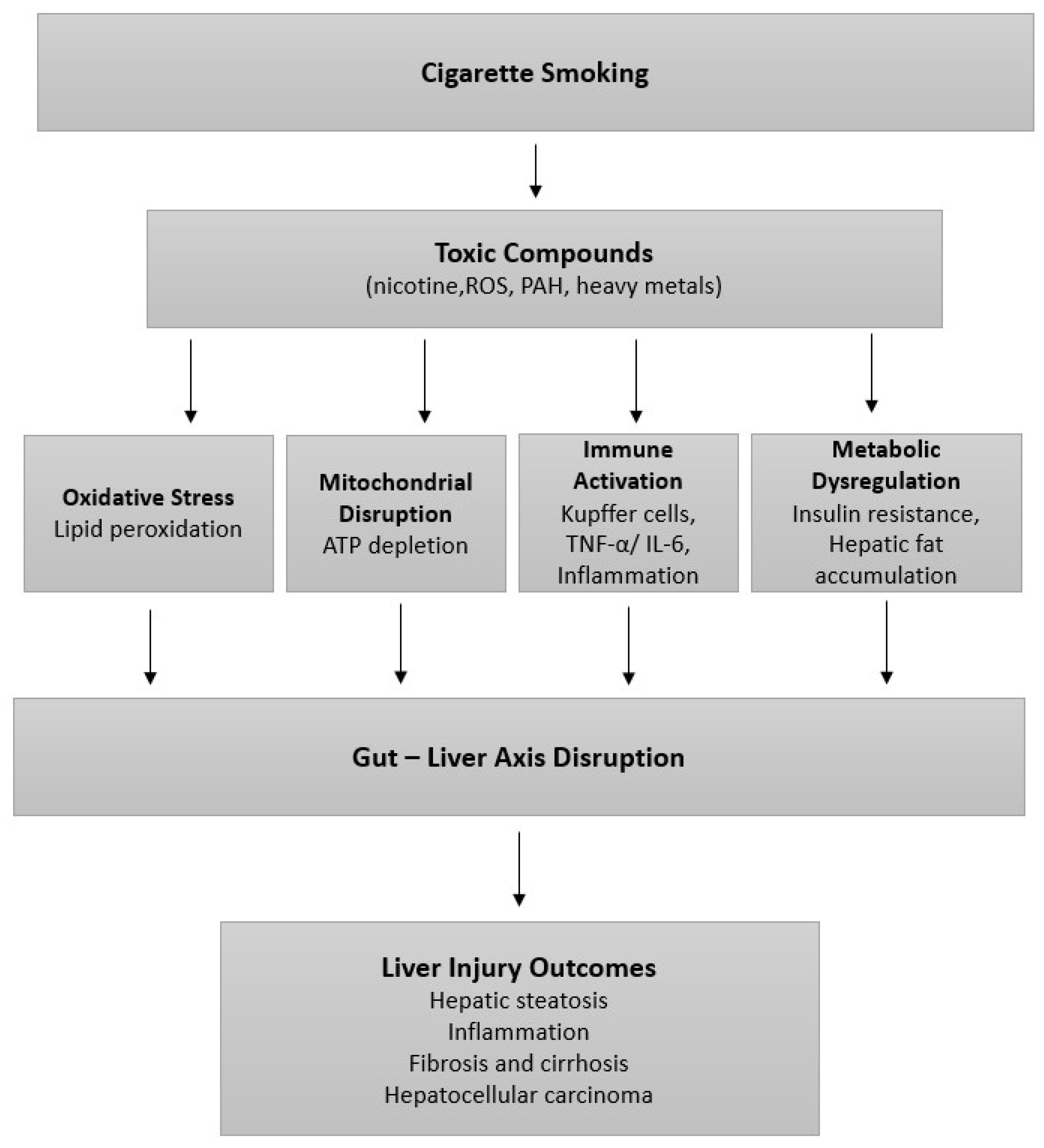
Additional studies underscore the dose-dependent nature of tobacco’s hepatic effects. Both initiation at an early age and cumulative exposure correlate with increased fibrosis and MASLD severity, while smoking cessation generally attenuates these risks [69,70,71]. Nicotine-specific exposure has also been linked to gallstone formation, highlighting a broader hepatobiliary impact beyond steatotic disease [68]. Human studies provide the strongest evidence linking smoking to adverse liver outcomes; however, most data derive from observational designs that are vulnerable to residual confounding by alcohol consumption, metabolic factors, socioeconomic status, and lifestyle behaviors. While dose–response relationships and benefits of smoking cessation are reported in several cohorts, causal inference remains limited by inconsistent exposure definitions and the relative scarcity of prospective longitudinal studies. Collectively, available experimental and clinical data support an integrated model in which tobacco smoking induces hepatic injury through converging and mutually reinforcing pathways. The principal pathophysiological mechanisms linking cigarette smoke exposure to liver injury are summarized in Figure 1. Cigarette smoke exposure promotes oxidative stress and mitochondrial dysfunction within hepatocytes, which in turn impairs lipid handling, energy homeostasis, and cellular resilience to secondary insults. Simultaneously, nicotine and other smoke constituents modulate immune responses by activating Kupffer cells and hepatic stellate cells, thereby amplifying inflammatory signaling and fibrogenesis. Vascular dysfunction and endothelial injury further exacerbate hepatic hypoxia and metabolic stress, while alterations in gut microbiota and increased intestinal permeability facilitate endotoxin-driven inflammation via the gut–liver axis.
These interconnected mechanisms act synergistically to accelerate disease initiation and progression, positioning smoking not merely as an isolated hepatotoxic exposure, but as a disease modifier that lowers the threshold for liver injury across diverse clinical contexts.

4. Impact of Smoking on Metabolic Dysfunction-Associated Liver Disease (MASLD)

Tobacco smoking, primarily via nicotine, exerts significant effects on liver metabolism, contributing to the development and progression of MASLD. Multiple mechanistic and epidemiological studies highlight the role of nicotine in promoting insulin resistance, dyslipidaemia, and oxidative stress, key drivers of hepatic steatosis and progression toward steatohepatitis [34,39]. Nicotine directly impairs insulin signalling in hepatocytes and peripheral tissues, promoting hyperglycaemia and compensatory hyperinsulinemia [30,61]. Concurrently, nicotine alters lipid metabolism by increasing hepatic lipogenesis, reducing fatty acid oxidation, and promoting dyslipidaemia, with elevated serum triglycerides and LDL cholesterol [27,39]. This metabolic milieu promotes excessive lipid deposition within hepatocytes, thereby creating a permissive environment for the development of MASLD. Cigarette smoking not only contributes to the initiation of hepatic steatosis but also accelerates its transition toward MASH. Mechanistic evidence indicates that nicotine-induced oxidative stress, mitochondrial dysfunction and gut-derived endotoxaemia interact with underlying metabolic derangements to amplify hepatocellular injury and inflammatory signalling [22,41]. Clinical cohorts report that smokers with MASLD are more likely to develop ballooning degeneration, lobular inflammation, and fibrosis, consistent with a higher MASH burden [36,73]. The deleterious effects of smoking on MASLD are exacerbated by obesity and metabolic syndrome. Nicotine amplifies insulin resistance and dyslipidaemia in overweight individuals, increasing hepatic fat deposition and inflammatory signalling [74,75,76,77,78]. These interactions suggest that smoking acts as a disease modifier, worsening outcomes in patients with pre-existing metabolic risk factors.

5. Smoking and Alcoholic Liver Disease (ALD): Synergistic Effects

Tobacco smoking and alcohol consumption frequently co-occur, and use of one often increases the intake of the other [79,80]. Epidemiological studies show that combined exposure is associated with higher liver enzyme levels, increased steatosis, and faster progression to fibrosis compared with either exposure alone [81].
Both alcohol and nicotine induce liver injury via oxidative stress, mitochondrial dysfunction, and lipid accumulation [34,82]. Nicotine also promotes hepatic fat deposition and collagen accumulation through CYP2A5-mediated pathways [21,83]. Animal studies demonstrate that nicotine enhances ethanol-induced steatosis and collagen deposition, even without increasing inflammation, suggesting a direct pro-fibrotic effect [84].
In hypercholesterolemic mouse models, combined exposure to ethanol and tobacco smoke results in markedly greater hepatic steatosis and tissue hypoxia compared with either insult alone [85,86]. Clinically, individuals with alcohol-associated liver disease who smoke exhibit significantly elevated serum AST, ALT and GGT levels, more advanced stages of hepatic fibrosis and poorer long-term clinical outcomes than nonsmokers with comparable alcohol consumption [57,81,87].
While nicotine itself contributes to steatosis and fibrosis, other compounds in cigarette smoke, including aldehydes and polycyclic aromatic hydrocarbons, amplify oxidative stress and hepatocellular damage [21,33,82]. Findings from mouse models indicate that while nicotine alone can promote hepatic lipid accumulation, exposure to whole cigarette smoke elicits substantially greater inflammatory activation and hepatocellular injury, reflecting the additive toxicity of smoke-derived constituents beyond nicotine [21,82,88].

6. Smoking and Viral Hepatitis (HBV, HCV)

Multiple clinical studies show that cigarette smoking accelerates fibrosis progression in chronic viral hepatitis. In patients with HCV, Hézode et al. demonstrated significantly more advanced fibrosis, necroinflammatory activity, and steatosis in smokers compared with non-smokers, independent of alcohol intake and metabolic factors [89]. Mallat et al. identify smoking as a major environmental factor accelerating chronic HCV progression by intensifying oxidative stress and hepatic stellate cell activation [90]. Some investigators have reported that smoking exacerbates histological liver injury in both HCV- and HBV-infected individuals, although the evidence supporting this association in HBV appears comparatively limited [2,91].
In chronic HCV infection, smoking is markedly overrepresented, and qualitative research shows that patients frequently use cigarettes to cope with the psychological burden of diagnosis and treatment, highlighting a high-risk behavioural phenotype rather than a purely biological effect [92]. Early biopsy-based studies reported more severe necrosis and inflammation and fibrosis in HCV smokers, while mechanistic reviews have proposed that smoke-induced oxidative stress and stellate-cell activation may accelerate fibrogenesis [89,90,91]. Wang et al. demonstrated that smoking increases HCC risk through measurable immunovirological pathways, including sustained elevations in HBV viral load, higher ALT, impairment of NK-cell frequency and function, and reduced interferon-γ production—indicating that nicotine and smoke constituents may directly weaken antiviral immunity [93].
The most robust epidemiological data come from a 2023 meta-analysis, which showed a striking synergistic effect between smoking and HBV or HCV infection on hepatocellular carcinoma, and even higher risk in HBV/HCV coinfection [94]. Despite these convergent signals for carcinogenesis, evidence that smoking consistently accelerates fibrosis progression remains inconsistent, likely due to confounding by alcohol, metabolic factors, and socioeconomic variables. Importantly, the impact of smoking on antiviral treatment response remains poorly characterized, representing a major gap in the literature. Overall, the available data suggest that smoking acts as a cofactor that worsens immunologic control of HBV, may aggravate histological injury in HCV, and significantly amplifies HCC risk across both infections, but high-quality prospective studies are urgently needed to clarify its role in fibrosis progression and treatment outcomes.

7. Smoking and Hepatocellular Carcinoma (HCC)

Epidemiological data consistently identify smoking as an independent and clinically meaningful risk factor for HCC. In a large prospective cohort of patients with MASLD, active smokers demonstrated significantly higher incidence of HCC compared with non-smokers, even after adjustment for metabolic comorbidities, body mass index (BMI), and fibrosis severity [81]. Population-based evidence from the Singapore Chinese Health Study similarly showed that current smokers had a substantially increased risk of HCC, with a clear dose–response relationship according to number of cigarettes and years smoked [95].
High-level syntheses confirm this pattern: an umbrella review of systematic reviews and meta-analyses reported smoking as a consistent, moderate-strength carcinogenic risk factor for HCC, with pooled effect sizes generally in the range of 1.3–2.0 after adjustment for alcohol and viral hepatitis [96].
The risk becomes substantially amplified when smoking co-occurs with HBV or HCV infection. A recent meta-analysis of >22,000 participants found supra-additive interactions, where smoking combined with HBV or HCV infection exponentially increased the risk for developing HCC [94]. HBV-infected smokers exhibit higher viral loads, persistent ALT elevation, impaired NK-cell function, and reduced interferon-γ levels—immunological changes that contribute directly to hepatic oncogenesis [93]. The interaction with alcohol is also clinically meaningful: alcohol promotes oxidative stress and acetaldehyde-mediated DNA damage, while smoking introduces nitrosamines and PAH, creating a multihit environment that accelerates mutagenesis in hepatocytes. In MASLD, smoking enhances insulin resistance, promotes lipotoxicity, accelerates fibrosis progression, and increases HCC risk even in the absence of cirrhosis—supporting its role as a disease modifier.
The carcinogenic mechanisms underlying smoking-related HCC involve several well-characterized pathways. Tobacco smoke contains nitrosamines (e.g., NNK), PAH, benzene, and heavy metals, all of which induce DNA adduct formation, oxidative DNA damage (8-oxo-dG), and mutational signatures affecting tumour suppressors such as TP53—a mechanism supported by genomic studies in smoking-related cancers. Chronic exposure alters hepatic methylation patterns, disrupts DNA repair pathways, and induces epigenetic modifications that facilitate malignant transformation [97].
Nicotine itself is not a classical carcinogen, but it promotes hepatocarcinogenesis indirectly through activation of nicotinic acetylcholine receptors (nAChRs), enhancement of angiogenesis (VEGF upregulation), anti-apoptotic signalling (Akt, MAPK pathways) and immunomodulation that weakens anti-tumour surveillance. However, nicotine’s contribution is minor compared with the directly carcinogenic compounds in smoke [11]. Studies comparing tobacco vs. nicotine-alone exposures consistently show that nicotine facilitates tumour progression but does not initiate carcinogenesis by itself.

8. Alterations in Liver Enzymes (ALT, AST, GGT) Among Smokers

Cigarette smoking is associated with modest but consistent elevations in liver enzymes, including ALT, AST and GGT. Population-based analyses, such as the Tromsø Study, demonstrated higher mean GGT levels among current smokers compared with never-smokers, independent of alcohol intake, age, and BMI [98]. Similarly, a large cohort study reported both independent and supra-additive effects of smoking, alcohol, and metabolic syndrome on ALT, AST, and GGT, highlighting that smoking contributes to hepatic enzyme elevations even in the absence of excessive alcohol consumption [99].
GGT is particularly sensitive to smoking, likely due to its role in glutathione metabolism and oxidative stress defence. Tobacco smoke induces reactive oxygen species (ROS) and xenobiotic-metabolizing enzymes, increasing hepatic oxidative burden and triggering compensatory upregulation of GGT. Mechanistically, nicotine and other smoke constituents enhance cytochrome P450 activity, promoting metabolic processing of xenobiotics and secondary oxidative stress, which can also mildly elevate ALT and AST. Preclinical models support this: in nicotine-administered mice, hepatocellular stress and lipid accumulation led to increased ALT and AST, whereas interventions reducing oxidative or metabolic load, such as corn silk extract, attenuated these elevations [100].
Importantly, several studies indicate that these enzyme elevations are at least partially reversible upon smoking cessation, suggesting that ongoing exposure maintains oxidative and metabolic stress on hepatocytes. Reduction in GGT, ALT, and AST after cessation may reflect decreased xenobiotic load, lower ROS production, and improved hepatic lipid metabolism.

9. Differences Between Nicotine-Containing Cigarettes and E-Cigarettes

Cigarette smoke and e-cigarette aerosol differ fundamentally in chemical composition. Traditional cigarette smoke contains thousands of chemicals, including tar, polycyclic aromatic hydrocarbons, nitrosamines, heavy metals, and reactive oxygen species, whereas e-cigarette aerosols primarily deliver nicotine, propylene glycol, glycerol, and flavouring compounds, with far fewer combustion products [2,11,101,102,103,104,105].
Nicotine itself exhibits hepatotoxic effects, promoting oxidative stress, lipid dysregulation, and mild hepatocellular injury. However, studies comparing nicotine-containing and nicotine-free e-cigarettes indicate that the additional toxins present in cigarette smoke amplify liver damage beyond the effects of nicotine alone. Notably, a preclinical study in mice under high-fat diet conditions found that e-vapour reduced fat mass, and only nicotine-containing e-vapour improved glucose tolerance; in chow-fed mice, e-vapour increased both blood and liver lipid content. These findings suggest that nicotine may exert both harmful and partly protective effects on liver metabolism depending on the metabolic context, but combustion products in cigarette smoke exacerbate hepatotoxicity [106].
Available data on e-cigarettes and liver outcomes remain limited and largely short-term, with evidence of oxidative stress, DNA damage, and mild liver enzyme elevations reported in studies [107,108]. While the long-term hepatotoxic potential of e-cigarettes is not yet fully known, these studies indicate that the focus of hepatotoxicity in both traditional and electronic cigarettes should remain on nicotine and its interaction with metabolic stressors, as well as the additive effects of other smoke or aerosol constituents in conventional tobacco. Available evidence on the hepatic effects of e-cigarettes remains limited and is derived predominantly from short-term experimental and observational studies, which consistently report increased oxidative stress, DNA damage, and mild elevations in liver enzymes [107,108]. Although the long-term hepatotoxic potential of e-cigarettes has yet to be fully characterized, current data suggest that nicotine, through its metabolic and inflammatory and oxidative pathways, constitutes a central driver of hepatic susceptibility. Moreover, the potential additive or synergistic effects of other aerosol constituents, including carbonyl compounds, metals, and ultrafine particles, highlight the need for caution when interpreting e-cigarettes as a harmless alternative to combustible tobacco. Overall, these findings underscore the importance of continued investigation into both nicotine-mediated toxicity and the broader chemical burden associated with electronic aerosol exposure.

10. Clinical Implications and Practice Recommendations

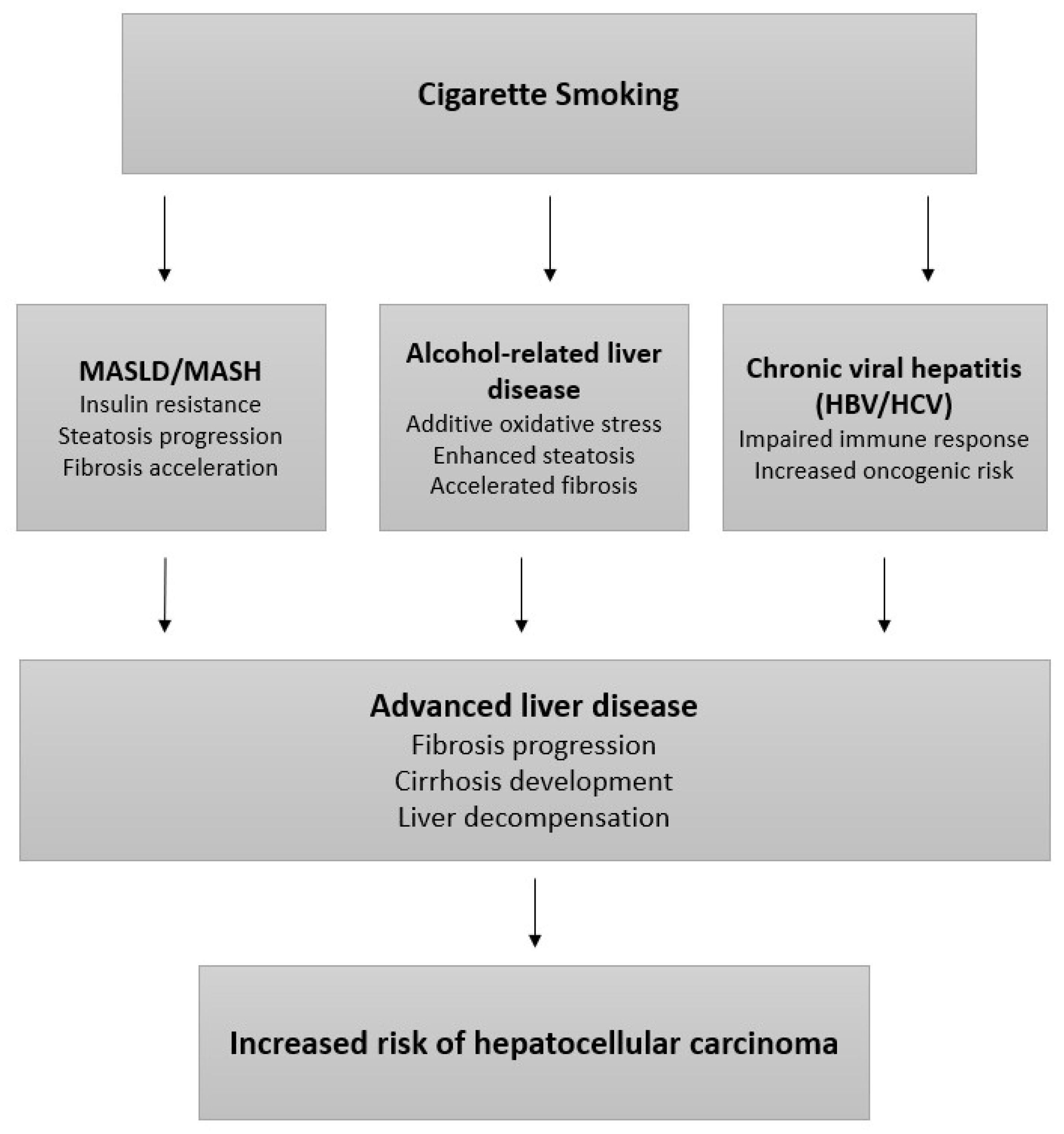
Assessment of smoking habits is crucial in hepatology practice, as cigarette use significantly influences disease progression and treatment outcomes across multiple liver conditions. The role of smoking as a disease modifier across major chronic liver diseases is summarized in Figure 2. In patients with metabolic dysfunction-associated steatotic liver disease (MASLD), smoking exacerbates insulin resistance, dyslipidaemia, and steatosis, contributing to faster progression toward MASH and fibrosis [81]. Among individuals with chronic hepatitis B or C, smoking is associated with higher viral loads, impaired immune responses, accelerated fibrosis, and increased risk of hepatocellular carcinoma [2,93]. In alcoholic liver disease (ALD), combined exposure to alcohol and tobacco amplifies hepatic steatosis, oxidative stress, and fibrogenesis, worsening clinical outcomes [2,22,84].
Beyond its etiological role, smoking status has direct implications for disease management, prognosis, and therapeutic decision-making across major liver diseases. In MASLD/MASH, active smoking amplifies insulin resistance, dyslipidaemia, and fibrotic progression, potentially accelerating the transition to advanced disease stages and hepatocellular carcinoma. In chronic viral hepatitis, smoking has been associated with impaired immune control, higher viral loads, and increased oncogenic risk, suggesting that continued tobacco exposure may attenuate long-term treatment benefits even in the era of effective antiviral therapy. Among patients with alcohol-associated liver disease, concurrent smoking acts synergistically with ethanol to worsen oxidative stress, steatosis, and fibrosis, contributing to poorer clinical outcomes. In advanced liver disease and transplantation settings, smoking by both recipients and donors is linked to increased perioperative complications, graft failure, and reduced survival, underscoring the prognostic relevance of smoking status throughout the disease continuum.
Given these findings, systematic evaluation of smoking status should be incorporated into all routine hepatology assessments. Clinicians should provide clear counselling on the additive and synergistic hepatotoxic, metabolic and oncologic consequences of tobacco use, emphasizing its influence on disease progression and treatment outcomes. The integration of structured smoking-cessation strategies—including behavioural counselling, evidence-based pharmacotherapy such as nicotine replacement therapy or varenicline, and regular follow-up, should be considered a standard component of hepatology care. Targeted cessation interventions delivered at key clinical junctures, such as the diagnosis of MASLD, HBV or HCV infection, or alcohol-associated liver disease, have the potential to improve clinical trajectories, reduce liver-related morbidity and lower the long-term risk of hepatocellular carcinoma [2,78].

11. Limitations of the Available Literature

Despite a growing body of evidence linking smoking to various liver diseases, several limitations of the available literature must be acknowledged. Most studies are observational and cross-sectional, with a paucity of longitudinal or randomized controlled trials, limiting the ability to infer causality [2,76]. Definitions of smoking exposure vary widely, ranging from self-reported current smoking to pack-years, and methodologies for assessing liver outcomes differ between cohorts, creating heterogeneity that complicates data synthesis [78]. Confounding factors, including alcohol consumption, metabolic syndrome, obesity, and concomitant medication use, are frequently present and not uniformly controlled for, which may bias associations between tobacco use and liver outcomes. Additionally, while animal models provide mechanistic insights, translational limitations exist: differences in nicotine metabolism, liver physiology, and dose exposure between rodents and humans restrict the direct applicability of preclinical findings to clinical. Our recent systematic review of nicotine-free electronic cigarettes reported acute endothelial dysfunction and oxidative stress, alongside experimental evidence of mitochondrial injury and systemic inflammation [109]. Given the established role of oxidative stress and mitochondrial dysfunction in liver disease, these observations suggest a possible mechanistic link between nicotine-free aerosol exposure and hepatic pathophysiology [109]. Evidence regarding dose–response relationships suggests that both cumulative exposure and early initiation of smoking are associated with greater liver disease severity, while smoking cessation is generally linked to attenuation of hepatic risk over time. However, distinctions between current, former, and relapsed smokers remain inconsistently defined across studies, limiting precise risk stratification. In addition, data on alternative nicotine delivery systems, including electronic cigarettes and heated tobacco products, remain limited and largely derived from short-term experimental or observational studies. Although emerging evidence indicates that non-combustible aerosols may induce oxidative stress and inflammatory responses, their long-term hepatic consequences and comparative risk relative to conventional cigarette smoking remain insufficiently characterized. These gaps highlight the need for more rigorous, standardized, and prospective research to clarify the causal pathways and quantify the true impact of smoking on liver disease progression.

12. Conclusions

Current evidence indicates that nicotine, independent of other toxic constituents of cigarette smoke, plays a substantive pathogenic role in the initiation and progression of multiple liver diseases, including alcohol-associated liver disease, metabolic dysfunction–associated steatotic liver disease, viral hepatitis and hepatocellular carcinoma. Nicotine promotes insulin resistance, dyslipidemia, oxidative stress and immune dysregulation, thereby exacerbating hepatocellular injury, inflammation and fibrogenesis. Clinically, tobacco use constitutes a major modifiable risk factor that can alter disease severity, impair therapeutic responses and contribute to adverse long-term outcomes in hepatology patients. Despite these insights, key knowledge gaps persist, including the scarcity of longitudinal and randomized controlled studies, inconsistent characterization of nicotine exposure and the limited translational relevance of existing preclinical models. Future research should prioritize delineating the direct hepatotoxic effects of nicotine from those of other combustion and aerosol-derived toxicants, clarifying dose–response relationships across diverse exposure modalities and evaluating the clinical effectiveness of structured smoking-cessation interventions embedded within standard hepatology care. Greater integration of mechanistic, biomarker-driven approaches with large-scale epidemiological studies will be essential to strengthen causal inference and refine risk stratification. Ultimately, a more comprehensive understanding of nicotine’s impact on liver health will be critical for improving patient management, guiding public-health policy and informing the development of targeted preventive and therapeutic strategies.

Author Contributions

Conceptualization, I.M., I.J., T.B. and J.V.; methodology, I.M., I.J. and J.V.; resources, I.J.; writing—original draft preparation, I.M., I.J., T.B. and J.V.; writing—review and editing, I.J. and J.V.; supervision, I.J., M.R., J.R., D.F. and J.V. All authors have read and agreed to the published version of the manuscript.

Funding

This research received no external funding.

Institutional Review Board Statement

Not applicable.

Informed Consent Statement

Not applicable.

Data Availability Statement

No new data were created or analyzed in this study.

Conflicts of Interest

Ivona Matulic is working in Private Clinic Matulic. The remaining authors declare that the research was conducted in the absence of any commercial or financial relationships that could be construed as a potential conflict of interest.

Abbreviations

The following abbreviations are used in this manuscript:
ACTHAdrenocorticotropic hormone
ALDAlcohol-associated liver disease
ALTAlanine aminotransferase
AMPAdenosine monophosphate
ASTAspartate aminotransferase
ATPAdenosine triphosphate
BMIBody mass index
BSOButhionine sulfoximine
COCarbon monoxide
CRPC-reactive protein
CVDCardiovascular disease
CYPCytochrome P450
DNADeoxyribonucleic acid
ENDSElectronic nicotine delivery system
EREndoplasmic reticulum
FMOFlavin-containing monooxygenase
GGTGamma-glutamyl transferase
GPx-1Glutathione peroxidase-1
GSHGlutathione
HBVHepatitis B virus
HCCHepatocellular carcinoma
HCNHydrogen cyanide
HCVHepatitis C virus
HepG2Human hepatocellular carcinoma cell line
HMG-CoA3-hydroxy-3-methylglutaryl-coenzyme A
IGFInsulin-like growth factor
IL-6Interleukin-6
LDLLow-density lipoprotein
LFTLiver function tests
LSLiver stiffness
MAPKMitogen-activated protein kinase
MASLDMetabolic dysfunction-associated steatotic liver disease
MASHMetabolic dysfunction-assocaited steatohepatitis
mRNAMessenger ribonucleic acid
NACN-acetylcysteine
nAChRNicotinic acetylcholine receptor
NNK4-(Methylnitrosamino)-1-(3-pyridyl)-1-butanone
PAHPolycyclic aromatic hydrocarbons
PBCPrimary biliary cirrhosis
ROSReactive oxygen species
SREBP-1cSterol regulatory element binding protein 1c
TMAOTrimethylamine oxide
TNF-αTumor-necrosis factor-α
TPMTotal particulate matter
TSNATobacco-specific nitrosamines
UPDUridine diphosphate
VEGFVascular endothelial growth factor
VOCVolatile organic compounds

References

  1. World Health Organization. WHO Report on the Global Tobacco Epidemic 2023: Protect People from Tobacco Smoke; World Health Organization: Geneva, Switzerland, 2023.
  2. Marti-Aguado, D.; Clemente-Sanchez, A.; Bataller, R. Cigarette smoking and liver diseases. J. Hepatol. 2022, 77, 191–205. [Google Scholar] [CrossRef] [PubMed]
  3. GBD 2015 Tobacco Collaborators. Smoking prevalence and attributable disease burden in 195 countries and territories, 1990-2015: A systematic analysis from the Global Burden of Disease Study 2015. Lancet 2017, 389, 1885–1906, Erratum in Lancet 2017, 390, 1644. https://doi.org/10.1016/S0140-6736(17)32559-X. [Google Scholar] [CrossRef]
  4. Scherübl, H. Tabakrauchen und Krebsrisiko [Smoking tobacco and cancer risk]. Dtsch. Med. Wochenschr. 2021, 146, 412–417. (In German) [Google Scholar] [CrossRef] [PubMed]
  5. Cornelius, M.E.; Loretan, C.G.; Wang, T.W.; Jamal, A.; Homa, D.M. Tobacco Product Use Among Adults—United States, 2020. MMWR Morb. Mortal. Wkly. Rep. 2022, 71, 397–405. [Google Scholar] [CrossRef] [PubMed] [PubMed Central]
  6. Mallol, J.; Urrutia-Pereira, M.; Mallol-Simmonds, M.J.; Calderón-Rodríguez, L.; Osses-Vergara, F.; Matamala-Bezmalinovic, A. Prevalence and Determinants of Tobacco Smoking Among Low-Income Urban Adolescents. Pediatr. Allergy Immunol. Pulmonol. 2021, 34, 60–67. [Google Scholar] [CrossRef]
  7. Sun, T.; Vu, G.; Lim, C.C.W.; Johnson, B.; Stjepanović, D.; Leung, J.; Connor, J.P.; Gartner, C.; Hall, W.D.; Chan, G.C.K. Longitudinal association between exposure to e-cigarette advertising and youth e-cigarette use in the United States. Addict. Behav. 2023, 146, 107810. [Google Scholar] [CrossRef]
  8. Pepper, J.K.; Lee, Y.O.; Watson, K.A.; Kim, A.E.; Nonnemaker, J.M.; Farrelly, M.C. Risk Factors for Youth E-Cigarette “Vape Trick” Behavior. J. Adolesc. Health 2017, 61, 599–605. [Google Scholar] [CrossRef] [PubMed]
  9. Benowitz, N.L.; Hukkanen, J.; Jacob, P., 3rd. Nicotine chemistry, metabolism, kinetics and biomarkers. Handb. Exp. Pharmacol. 2009, 192, 29–60. [Google Scholar] [CrossRef]
  10. El-Zayadi, A.R. Heavy smoking and liver. World J. Gastroenterol. 2006, 12, 6098–6101. [Google Scholar] [CrossRef] [PubMed]
  11. Li, Y.; Hecht, S.S. Carcinogenic components of tobacco and tobacco smoke: A 2022 update. Food Chem. Toxicol. 2022, 165, 113179. [Google Scholar] [CrossRef]
  12. Hukkanen, J.; Jacob, P., 3rd; Benowitz, N.L. Metabolism and disposition kinetics of nicotine. Pharmacol. Rev. 2005, 57, 79–115. [Google Scholar] [CrossRef] [PubMed]
  13. Benowitz, N.L.; Swan, G.E.; Jacob, P., 3rd; Lessov-Schlaggar, C.N.; Tyndale, R.F. CYP2A6 genotype and the metabolism and disposition kinetics of nicotine. Clin. Pharmacol. Ther. 2006, 80, 457–467. [Google Scholar] [CrossRef] [PubMed]
  14. Shigenaga, M.K.; Trevor, A.J.; Castagnoli, N., Jr. Metabolism-dependent covalent binding of (S)-[5-3H]nicotine to liver and lung microsomal macromolecules. Drug Metab. Dispos. 1988, 16, 397–402. [Google Scholar] [CrossRef]
  15. Al Koudsi, N.; Hoffmann, E.B.; Assadzadeh, A.; Tyndale, R.F. Hepatic CYP2A6 levels and nicotine metabolism: Impact of genetic, physiological, environmental, and epigenetic factors. Eur. J. Clin. Pharmacol. 2010, 66, 239–251. [Google Scholar] [CrossRef]
  16. Benowitz, N.L.; Lessov-Schlaggar, C.N.; Swan, G.E.; Jacob, P., 3rd. Female sex and oral contraceptive use accelerate nicotine metabolism. Clin. Pharmacol. Ther. 2006, 79, 480–488. [Google Scholar] [CrossRef]
  17. Marom-Haham, L.; Shulman, A. Cigarette smoking and hormones. Curr. Opin. Obstet. Gynecol. 2016, 28, 230–235. [Google Scholar] [CrossRef]
  18. Higashi, E.; Fukami, T.; Itoh, M.; Kyo, S.; Inoue, M.; Yokoi, T.; Nakajima, M. Human CYP2A6 is induced by estrogen via estrogen receptor. Drug Metab. Dispos. 2007, 35, 1935–1941. [Google Scholar] [CrossRef]
  19. Dempsey, D.A.; Sambol, N.C.; Jacob, P., 3rd; Hoffmann, E.; Tyndale, R.F.; Fuentes-Afflick, E.; Benowitz, N.L. CYP2A6 genotype but not age determines cotinine half-life in infants and children. Clin. Pharmacol. Ther. 2013, 94, 400–406. [Google Scholar] [CrossRef]
  20. Tanner, J.A.; Tyndale, R.F. Variation in CYP2A6 Activity and Personalized Medicine. J. Pers. Med. 2017, 7, 18. [Google Scholar] [CrossRef]
  21. Delijewski, M.; Bartoń, A.; Delijewska, P.; Balwierz, R.; Jakubiak, G.; Kośmider, L.; Pawlas, N. Genetically determined metabolism of nicotine and its clinical significance. Acta Biochim. Pol. 2019, 66, 375–381. [Google Scholar] [CrossRef] [PubMed]
  22. Chen, B.; Sun, L.; Zeng, G.; Shen, Z.; Wang, K.; Yin, L.; Xu, F.; Wang, P.; Ding, Y.; Nie, Q.; et al. Gut bacteria alleviate smoking-related NASH by degrading gut nicotine. Nature 2022, 610, 562–568. [Google Scholar] [CrossRef] [PubMed]
  23. Genchi, G.; Sinicropi, M.S.; Lauria, G.; Carocci, A.; Catalano, A. The Effects of Cadmium Toxicity. Int. J. Environ. Res. Public Health 2020, 17, 3782. [Google Scholar] [CrossRef]
  24. Sayyed, K.; Vee, M.L.; Abdel-Razzak, Z.; Jouan, E.; Stieger, B.; Denizot, C.; Parmentier, Y.; Fardel, O. Alteration of human hepatic drug transporter activity and expression by cigarette smoke condensate. Toxicology 2016, 363–364, 58–71. [Google Scholar] [CrossRef] [PubMed]
  25. Lucendo-Villarin, B.; Filis, P.; Swortwood, M.J.; Huestis, M.A.; Meseguer-Ripolles, J.; Cameron, K.; Iredale, J.P.; O’Shaughnessy, P.J.; Fowler, P.A.; Hay, D.C. Modelling foetal exposure to maternal smoking using hepatoblasts from pluripotent stem cells. Arch. Toxicol. 2017, 91, 3633–3643. [Google Scholar] [CrossRef] [PubMed]
  26. Yamamoto, H.; Shibuya, K.; Fukushima, T.; Hashizume, T. Effects of antioxidant capacity on micronucleus induction by cigarette smoke in mammalian cells. Mutat. Res. Genet. Toxicol. Environ. Mutagen. 2022, 873, 503427. [Google Scholar] [CrossRef]
  27. Ma, B.; Chen, Y.; Wang, X.; Zhang, R.; Niu, S.; Ni, L.; Di, X.; Han, Q.; Liu, C. Cigarette smoke exposure impairs lipid metabolism by decreasing low-density lipoprotein receptor expression in hepatocytes. Lipids Health Dis. 2020, 19, 88. [Google Scholar] [CrossRef]
  28. Bovard, D.; Renggli, K.; Marescotti, D.; Sandoz, A.; Majeed, S.; Pinard, L.; Ferreira, S.; Pak, C.; Barbier, A.; Beguin, A.; et al. Impact of aerosols on liver xenobiotic metabolism: A comparison of two methods of exposure. Toxicol. Vitr. 2022, 79, 105277. [Google Scholar] [CrossRef]
  29. Zabala, V.; Tong, M.; Yu, R.; Ramirez, T.; Yalcin, E.B.; Balbo, S.; Silbermann, E.; Deochand, C.; Nunez, K.; Hecht, S.; et al. Potential contributions of the tobacco nicotine-derived nitrosamine ketone (NNK) in the pathogenesis of steatohepatitis in a chronic plus binge rat model of alcoholic liver disease. Alcohol Alcohol. 2015, 50, 118–131. [Google Scholar] [CrossRef]
  30. Li, T.; Ni, L.; Zhao, Z.; Liu, X.; Lai, Z.; Di, X.; Xie, Z.; Song, X.; Wang, X.; Zhang, R.; et al. Melatonin attenuates smoking-induced hyperglycemia via preserving insulin secretion and hepatic glycogen synthesis in rats. J. Pineal Res. 2018, 64, e12475. [Google Scholar] [CrossRef]
  31. Novaes Soares, P.; Silva Tavares Rodrigues, V.; Cherem Peixoto, T.; Calvino, C.; Aparecida Miranda, R.; Pereira Lopes, B.; Peixoto-Silva, N.; Lopes Costa, L.; Claudio-Neto, S.; Christian Manhães, A.; et al. Cigarette Smoke During Breastfeeding in Rats Changes Glucocorticoid and Vitamin D Status in Obese Adult Offspring. Int. J. Mol. Sci. 2018, 19, 3084. [Google Scholar] [CrossRef]
  32. Li, G.; Chan, Y.L.; Sukjamnong, S.; Anwer, A.G.; Vindin, H.; Padula, M.; Zakarya, R.; George, J.; Oliver, B.G.; Saad, S.; et al. A Mitochondrial Specific Antioxidant Reverses Metabolic Dysfunction and Fatty Liver Induced by Maternal Cigarette Smoke in Mice. Nutrients 2019, 11, 1669. [Google Scholar] [CrossRef]
  33. Lkhagvadorj, K.; Meyer, K.F.; Verweij, L.P.; Kooistra, W.; Reinders-Luinge, M.; Dijkhuizen, H.W.; de Graaf, I.A.M.; Plösch, T.; Hylkema, M.N. Prenatal smoke exposure induces persistent Cyp2a5 methylation and increases nicotine metabolism in the liver of neonatal and adult male offspring. Epigenetics 2020, 15, 1370–1385. [Google Scholar] [CrossRef]
  34. Tommasi, S.; Yoon, J.I.; Besaratinia, A. Secondhand Smoke Induces Liver Steatosis through Deregulation of Genes Involved in Hepatic Lipid Metabolism. Int. J. Mol. Sci. 2020, 21, 1296. [Google Scholar] [CrossRef]
  35. Zeng, Z.; Meyer, K.F.; Lkhagvadorj, K.; Kooistra, W.; Reinders-Luinge, M.; Xu, X.; Huo, X.; Song, J.; Plösch, T.; Hylkema, M.N. Prenatal smoke effect on mouse offspring Igf1 promoter methylation from fetal stage to adulthood is organ and sex specific. Am. J. Physiol. Lung Cell. Mol. Physiol. 2020, 318, L549–L561. [Google Scholar] [CrossRef]
  36. Fouda, S.; Khan, A.; Chan, S.M.H.; Mahzari, A.; Zhou, X.; Qin, C.X.; Vlahos, R.; Ye, J.M. Exposure to cigarette smoke precipitates simple hepatosteatosis to NASH in high-fat diet fed mice by inducing oxidative stress. Clin. Sci. 2021, 135, 2103–2119. [Google Scholar] [CrossRef]
  37. Rocha, D.F.A.; Machado-Junior, P.A.; Souza, A.B.F.; Castro, T.F.; Costa, G.P.; Talvani, A.; Bezerra, F.S.; Cangussú, S.D. Lycopene Ameliorates Liver Inflammation and Redox Status in Mice Exposed to Long-Term Cigarette Smoke. Biomed Res. Int. 2021, 2021, 7101313. [Google Scholar] [CrossRef]
  38. Liu, Y.; Chen, S.; Pang, D.; Zhou, J.; Xu, X.; Yang, S.; Huang, Z.; Yu, B. Effects of paternal exposure to cigarette smoke on sperm DNA methylation and long-term metabolic syndrome in offspring. Epigenetics Chromatin 2022, 15, 3. [Google Scholar] [CrossRef]
  39. Ge, J.; Xu, W.J.; Chen, H.F.; Dong, Z.H.; Liu, W.; Nian, F.Z.; Liu, J. Induction mechanism of cigarette smoke components (CSCs) on dyslipidemia and hepatic steatosis in rats. Lipids Health Dis. 2022, 21, 117. [Google Scholar] [CrossRef] [PubMed]
  40. Torres, S.; Samino, S.; Ràfols, P.; Martins-Green, M.; Correig, X.; Ramírez, N. Unravelling the metabolic alterations of liver damage induced by thirdhand smoke. Environ. Int. 2021, 146, 106242. [Google Scholar] [CrossRef] [PubMed]
  41. Meng, L.; Xu, M.; Xing, Y.; Chen, C.; Jiang, J.; Xu, X. Effects of Cigarette Smoke Exposure on the Gut Microbiota and Liver Transcriptome in Mice Reveal Gut-Liver Interactions. Int. J. Mol. Sci. 2022, 23, 11008. [Google Scholar] [CrossRef] [PubMed]
  42. Pan, C.; Liu, J.; Gao, Y.; Yang, M.; Hu, H.; Liu, C.; Qian, M.; Yuan, H.Y.; Yang, S.; Zheng, M.H.; et al. Hepatocyte CHRNA4 mediates the MASH-promotive effects of immune cell-produced acetylcholine and smoking exposure in mice and humans. Cell Metab. 2023, 35, 2231–2249.e7. [Google Scholar] [CrossRef] [PubMed]
  43. Pavlovic, D.; Miloradovic, D.; Stojanovic, M.D.; Harrell, C.R.; Polosa, R.; Rust, S.; Volti, G.L.; Caruso, M.; Jakovljevic, V.; Djonov, V.; et al. Cigarette smoke attenuates mesenchymal stem cell-based suppression of immune cell-driven acute liver failure. Toxicol. Lett. 2023, 385, 12–20. [Google Scholar] [CrossRef]
  44. Nemmar, A.; Beegam, S.; Yuvaraju, P.; Zaaba, N.E.; Elzaki, O.; Yasin, J.; Adeghate, E. Pathophysiologic effects of waterpipe (shisha) smoke inhalation on liver morphology and function in mice. Life Sci. 2024, 336, 122058. [Google Scholar] [CrossRef]
  45. van der Heide, F.; Dijkstra, G.; Porte, R.J.; Kleibeuker, J.H.; Haagsma, E.B. Smoking behavior in liver transplant recipients. Liver Transplant. 2009, 15, 648–655. [Google Scholar] [CrossRef]
  46. Zein, C.O.; Unalp, A.; Colvin, R.; Liu, Y.C.; McCullough, A.J.; Nonalcoholic Steatohepatitis Clinical Research Network. Smoking and severity of hepatic fibrosis in nonalcoholic fatty liver disease. J. Hepatol. 2011, 54, 753–759. [Google Scholar] [CrossRef]
  47. Drake, A.J.; O’Shaughnessy, P.J.; Bhattacharya, S.; Monteiro, A.; Kerrigan, D.; Goetz, S.; Raab, A.; Rhind, S.M.; Sinclair, K.D.; Meharg, A.A.; et al. In utero exposure to cigarette chemicals induces sex-specific disruption of one-carbon metabolism and DNA methylation in the human fetal liver. BMC Med. 2015, 13, 18. [Google Scholar] [CrossRef]
  48. Zhang, C.X.; Guo, L.K.; Qin, Y.M.; Li, G.Y. Interaction of Polymorphisms of Resistin Gene Promoter-420C/G, Glutathione Peroxidase-1 Gene Pro198Leu and Cigarette Smoking in Nonalcoholic Fatty Liver Disease. Chin. Med. J. 2015, 128, 2467–2473. [Google Scholar] [CrossRef]
  49. Filis, P.; Nagrath, N.; Fraser, M.; Hay, D.C.; Iredale, J.P.; O’Shaughnessy, P.; Fowler, P.A. Maternal Smoking Dysregulates Protein Expression in Second Trimester Human Fetal Livers in a Sex-Specific Manner. J. Clin. Endocrinol. Metab. 2015, 100, E861–E870. [Google Scholar] [CrossRef] [PubMed]
  50. Fagan, P.; Pokhrel, P.; Herzog, T.A.; Pagano, I.S.; Franke, A.A.; Clanton, M.S.; Alexander, L.A.; Trinidad, D.R.; Sakuma, K.L.; Johnson, C.A.; et al. Nicotine Metabolism in Young Adult Daily Menthol and Nonmenthol Smokers. Nicotine Tob. Res. 2016, 18, 437–446. [Google Scholar] [CrossRef]
  51. Zhang, C.X.; Guo, L.K.; Qin, Y.M.; Li, G.Y. Association of polymorphisms of adiponectin gene promoter-11377C/G, glutathione peroxidase-1 gene C594T, and cigarette smoking in nonalcoholic fatty liver disease. J. Chin. Med. Assoc. 2016, 79, 195–204. [Google Scholar] [CrossRef] [PubMed][Green Version]
  52. Munsterman, I.D.; Smits, M.M.; Andriessen, R.; van Nieuwkerk, C.M.J.; Bloemena, E.; Mulder, C.J.J.; Tjwa, E.T.T.L.; van Geenen, E.J.M. Smoking is associated with severity of liver fibrosis but not with histological severity in nonalcoholic fatty liver disease. Results from a cross-sectional study. Scand. J. Gastroenterol. 2017, 52, 881–885. [Google Scholar] [CrossRef]
  53. Li, Q.; Wang, Y.; Ma, T.; Liu, X.; Wang, B.; Wu, Z.; Lv, Y.; Wu, R. Impact of cigarette smoking on early complications after liver transplantation: A single-center experience and a meta-analysis. PLoS ONE 2017, 12, e0178570. [Google Scholar] [CrossRef]
  54. Okamoto, M.; Miyake, T.; Kitai, K.; Furukawa, S.; Yamamoto, S.; Senba, H.; Kanzaki, S.; Deguchi, A.; Koizumi, M.; Ishihara, T.; et al. Cigarette smoking is a risk factor for the onset of fatty liver disease in nondrinkers: A longitudinal cohort study. PLoS ONE 2018, 13, e0195147. [Google Scholar] [CrossRef]
  55. Ou, H.; Fu, Y.; Liao, W.; Zheng, C.; Wu, X. Association between Smoking and Liver Fibrosis among Patients with Nonalcoholic Fatty Liver Disease. Can. J. Gastroenterol. Hepatol. 2019, 2019, 6028952. [Google Scholar] [CrossRef]
  56. Wijarnpreecha, K.; Werlang, M.; Panjawatanan, P.; Kroner, P.T.; Mousa, O.Y.; Pungpapong, S.; Lukens, F.J.; Harnois, D.M.; Ungprasert, P. Association between Smoking and Risk of Primary Biliary Cholangitis: A Systematic Review and Meta-Analysis. J. Gastrointest. Liver Dis. 2019, 28, 197–203. [Google Scholar] [CrossRef] [PubMed]
  57. Walker, N.; Filis, P.; O’Shaughnessy, P.J.; Bellingham, M.; Fowler, P.A. Nutrient transporter expression in both the placenta and fetal liver are affected by maternal smoking. Placenta 2019, 78, 10–17. [Google Scholar] [CrossRef] [PubMed]
  58. Nivukoski, U.; Niemelä, M.; Bloigu, A.; Bloigu, R.; Aalto, M.; Laatikainen, T.; Niemelä, O. Impacts of unfavourable lifestyle factors on biomarkers of liver function, inflammation and lipid status. PLoS ONE 2019, 14, e0218463. [Google Scholar] [CrossRef] [PubMed]
  59. Takenaka, H.; Fujita, T.; Masuda, A.; Yano, Y.; Watanabe, A.; Kodama, Y. Non-Alcoholic Fatty Liver Disease Is Strongly Associated with Smoking Status and Is Improved by Smoking Cessation in Japanese Males: A Retrospective Study. Kobe J. Med. Sci. 2020, 66, E102–E112. [Google Scholar]
  60. Li, Y.; Nieuwenhuis, L.M.; Werner, M.J.M.; Voskuil, M.D.; Gacesa, R.; Blokzijl, H.; Lisman, T.; Weersma, R.K.; Porte, R.J.; Festen, E.A.M.; et al. Donor tobacco smoking is associated with postoperative thrombosis after primary liver transplantation. J. Thromb. Haemost. 2020, 18, 2590–2600. [Google Scholar] [CrossRef]
  61. Garduno, A.; Wu, T. Tobacco Smoke and CYP1A2 Activity in a US Population with Normal Liver Enzyme Levels. Int. J. Environ. Res. Public Health 2021, 18, 2225. [Google Scholar] [CrossRef]
  62. Wijarnpreecha, K.; Werlang, M.; Panjawatanan, P.; Pungpapong, S.; Lukens, F.J.; Harnois, D.M.; Ungprasert, P. Smoking & risk of advanced liver fibrosis among patients with primary biliary cholangitis: A systematic review & meta-analysis. Indian J. Med. Res. 2021, 154, 806–812. [Google Scholar] [CrossRef]
  63. Bijani, M.; Dehghan, A.; Razavi, S.; Karimi, S. Examining the association between opium use, cigarette smoking and alcohol consumption with the liver enzyme levels in a population-based study: Fasa Persian cohort data. BMC Res. Notes 2022, 15, 2. [Google Scholar] [CrossRef] [PubMed]
  64. Mehlig, K.; Schult, A.; Björkelund, C.; Thelle, D.; Lissner, L. Associations between alcohol and liver enzymes are modified by coffee, cigarettes, and overweight in a Swedish female population. Scand. J. Gastroenterol. 2022, 57, 319–324. [Google Scholar] [CrossRef]
  65. Jang, Y.S.; Joo, H.J.; Park, Y.S.; Park, E.C.; Jang, S.I. Association between smoking cessation and non-alcoholic fatty liver disease using NAFLD liver fat score. Front. Public Health 2023, 11, 1015919. [Google Scholar] [CrossRef]
  66. Jeong, S.; Oh, Y.H.; Choi, S.; Chang, J.; Kim, S.M.; Park, S.J.; Cho, Y.; Son, J.S.; Lee, G.; Park, S.M. Association of Change in Smoking Status and Subsequent Weight Change with Risk of Nonalcoholic Fatty Liver Disease. Gut Liver 2023, 17, 150–158. [Google Scholar] [CrossRef] [PubMed]
  67. Zhang, S.; Liu, Z.; Yang, Q.; Hu, Z.; Zhou, W.; Ji, G.; Dang, Y. Impact of smoking cessation on non-alcoholic fatty liver disease prevalence: A systematic review and meta-analysis. BMJ Open 2023, 13, e074216. [Google Scholar] [CrossRef] [PubMed]
  68. Kim, N.H.; Kang, J.H.; Kim, H.J. The Association Between Cotinine-Verified Smoking Status and Risk of Gallstones: A Cohort Study. J. Gastrointest. Liver Dis. 2024, 33, 57–64. [Google Scholar] [CrossRef] [PubMed]
  69. Li, Z.; Guo, H.; He, H.; Wang, S.; Pei, S.; Xie, L. The relationship between smoking cessation history and significant liver fibrosis among the population with metabolic dysfunction-associated steatotic liver disease in the United States. PLoS ONE 2025, 20, e0320573. [Google Scholar] [CrossRef] [PubMed]
  70. Joe, H.; Oh, J.E.; Cho, Y.J.; Shin, H.S. Association between smoking status and non-alcoholic fatty liver disease. PLoS ONE 2025, 20, e0325305. [Google Scholar] [CrossRef]
  71. Ma, L.; Jiang, H.; Qu, N. Mendelian randomization analysis of smoking, BMI, and nonalcoholic fatty liver disease in European descent populations. Medicine 2025, 104, e42308. [Google Scholar] [CrossRef] [PubMed]
  72. Cecil, C.R.; Moutchia, J.; Krowka, M.J.; Dubrock, H.M.; Forde, K.A.; Krok, K.L.; Fallon, M.B.; Kawut, S.M.; Al-Naamani, N. Smoking and outcomes in candidates for liver transplantation: Analysis of the Pulmonary Vascular Complications of Liver Disease 2 (PVCLD2). Liver Transplant. 2025, 31, 323–332. [Google Scholar] [CrossRef]
  73. Tsubouchi, H.; Onishi, H.; Maeno, K.; Nakagaichi, M.; Tsukushi, I.; Kitano, Y.; Makino, Y.; Hayashi, H.; Terasawa, H.; Kabuto, H.; et al. Study of Risk Factors and Image Findings of Isolated Abdominal Incidentally Detected Aortic Dissection. J. Clin. Ultrasound 2025, 53, 429–435. [Google Scholar] [CrossRef]
  74. Zhang, T.; Zhang, D.; Zeng, J.; Yang, Y.; Fang, Y.; Wang, X. Combined Effect of Smoking and Fatty Liver Disease on the Progression of Type 2 Diabetes: Insights from a Population-Based Cohort Study. Comput. Math. Methods Med. 2022, 2022, 1776875. [Google Scholar] [CrossRef] [PubMed]
  75. Cho, S.H.; Kim, G.; Lee, K.N.; Oh, R.; Kim, J.Y.; Jang, M.; Lee, Y.B.; Jin, S.M.; Hur, K.Y.; Han, K.; et al. Impact of smoking and physical activity on cardiovascular outcomes in type 2 diabetes across steatotic liver disease categories. Sci. Rep. 2025, 15, 31029. [Google Scholar] [CrossRef] [PubMed]
  76. Akhavan Rezayat, A.; Moghadam, M.D.; Nour, M.G.; Shirazinia, M.; Ghodsi, H.; Zahmatkesh, M.R.R.; Noghabi, M.T.; Hoseini, B.; Rezayat, K.A. Association between smoking and non-alcoholic fatty liver disease: A systematic review and meta-analysis. SAGE Open Med. 2018, 6, 2050312117745223. [Google Scholar] [CrossRef]
  77. Mignini, I.; Galasso, L.; Piccirilli, G.; Calvez, V.; Termite, F.; Esposto, G.; Borriello, R.; Miele, L.; Ainora, M.E.; Gasbarrini, A.; et al. Interplay of Oxidative Stress, Gut Microbiota, and Nicotine in Metabolic-Associated Steatotic Liver Disease (MASLD). Antioxidants 2024, 13, 1532. [Google Scholar] [CrossRef]
  78. Younossi, Z.M.; Wong, G.; Anstee, Q.M.; Henry, L. The Global Burden of Liver Disease. Clin. Gastroenterol. Hepatol. 2023, 21, 1978–1991. [Google Scholar] [CrossRef] [PubMed]
  79. Anthony, J.C.; Echeagaray-Wagner, F. Epidemiologic analysis of alcohol and tobacco use. Alcohol. Res. Health 2000, 24, 201–208. [Google Scholar]
  80. Burton, S.M.; Tiffany, S.T. The effect of alcohol consumption on craving to smoke. Addiction 1997, 92, 15–26. [Google Scholar] [CrossRef] [PubMed]
  81. Yoo, J.J.; Lee, D.H.; Kim, S.G.; Jang, J.Y.; Kim, Y.S.; Kim, L.Y. Impacts of smoking on alcoholic liver disease: A nationwide cohort study. Front. Public Health 2024, 12, 1427131. [Google Scholar] [CrossRef]
  82. Marfo, A.; Obeng-Gyasi, E. Combined Effects of PFAS, Social, and Behavioral Factors on Liver Health. Med. Sci. 2025, 13, 99. [Google Scholar] [CrossRef] [PubMed]
  83. Chen, D.Z.; Ji, F.Y.; Xu, Q.M.; Wu, X.X.; Cai, C.; Zhang, L.J.; Li, L.J. Interaction of smoking and metabolic syndrome in increasing the recurrence risk of colorectal cancer in a Chinese male cohort: A retrospective study. Sci. Rep. 2018, 8, 972. [Google Scholar] [CrossRef]
  84. Lu, Y.; Ward, S.C.; Cederbaum, A.I. Nicotine enhances ethanol-induced fat accumulation and collagen deposition but not inflammation in mouse liver. Alcohol 2013, 47, 353–357. [Google Scholar] [CrossRef]
  85. Wang, Z.L.; Xiong, J.W.; Yang, X.F.; Li, Y.; Xu, Z.T.; Cui, L.J.; Wang, F.; Tan, L.L.; Zhang, L. Effect of erythropoietin on the caspase-3 subfamily in preventing apoptosis of endothelial cell. Zhongguo Wei Zhong Bing Ji Jiu Yi Xue 2009, 21, 711–714. (In Chinese) [Google Scholar] [PubMed]
  86. Chen, X.; Owoseni, E.; Salamat, J.; Cederbaum, A.I.; Lu, Y. Nicotine enhances alcoholic fatty liver in mice: Role of CYP2A5. Arch. Biochem. Biophys. 2018, 657, 65–73. [Google Scholar] [CrossRef]
  87. Bayerl, C.; Lorbeer, R.; Heier, M.; Meisinger, C.; Rospleszcz, S.; Schafnitzel, A.; Patscheider, H.; Auweter, S.; Peters, A.; Ertl-Wagner, B.; et al. Alcohol consumption, but not smoking is associated with higher MR-derived liver fat in an asymptomatic study population. PLoS ONE 2018, 13, e0192448. [Google Scholar] [CrossRef] [PubMed]
  88. Bailey, S.M.; Mantena, S.K.; Millender-Swain, T.; Cakir, Y.; Jhala, N.C.; Chhieng, D.; Pinkerton, K.E.; Ballinger, S.W. Ethanol and tobacco smoke increase hepatic steatosis and hypoxia in the hypercholesterolemic apoE−/− mouse: Implications for a “multihit” hypothesis of fatty liver disease. Free Radic. Biol. Med. 2009, 46, 928–938. [Google Scholar] [CrossRef]
  89. Hézode, C.; Zafrani, E.S.; Roudot-Thoraval, F.; Mavier, J.-P.; Pawlotsky, J.-M.; Zafrani, E.S.; Dhumeaux, D. Impact of smoking on histological liver lesions in chronic hepatitis C. J. Hepatol. 2003, 39, 609–615. [Google Scholar] [CrossRef] [PubMed]
  90. Mallat, S.; Hezode, C.; Lotersztajn, S. Environmental factors as disease accelerators during chronic hepatitis C. J. Hepatol. 2008, 48, 657–665. [Google Scholar] [CrossRef]
  91. Pericot-Valverde, I.; Heo, M.; Akiyama, M.J.; Norton, B.L.; Agyemang, L.; Niu, J.; Litwin, A.H. Factors and HCV treatment outcomes associated with smoking among people who inject drugs on opioid agonist treatment: Secondary analysis of the PREVAIL randomized clinical trial. BMC Infect. Dis. 2020, 20, 928. [Google Scholar] [CrossRef]
  92. Cohen, J.F.; Ward, K.M.; Gittleman, J.; Perez, E.; Pia, T.; Shuter, J.; Weinberger, A.H.; Sulkowski, M. Hepatitis C and Cigarette Smoking Behavior: Themes From Focus Groups. Nicotine Tob. Res. 2024, 26, 1029–1037. [Google Scholar] [CrossRef]
  93. Wang, Y.H.; Chuang, Y.H.; Wu, C.F.; Jan, M.C.; Wu, W.J.; Lin, C.L.; Liu, C.J.; Yang, Y.C.; Chen, P.J.; Lin, S.M.; et al. Smoking and Hepatitis B Virus-Related Hepatocellular Carcinoma Risk: The Mediating Roles of Viral Load and Alanine Aminotransferase. Hepatology 2019, 69, 1412–1425. [Google Scholar] [CrossRef]
  94. Shadi, Y.; Heshmati, B.; Poorolajal, J. Interaction between hepatitis B, hepatitis C and smoking in the development of hepatocellular carcinoma: A systematic review and meta-analysis. J. Public Health 2024, 46, 51–60. [Google Scholar] [CrossRef] [PubMed]
  95. Koh, W.P.; Robien, K.; Wang, R.; Govindarajan, S.; Yuan, J.-M.; Yu, M.C. Smoking as an independent risk factor for hepatocellular carcinoma: The Singapore Chinese Health Study. Br. J. Cancer 2011, 105, 1430–1435. [Google Scholar] [CrossRef] [PubMed]
  96. Wang, J.; Qiu, K.; Zhou, S.; Gan, Y.; Jiang, K.; Wang, D.; Wang, H. Risk factors for hepatocellular carcinoma: An umbrella review of systematic review and meta-analysis. Ann. Med. 2025, 57, 2455539. [Google Scholar] [CrossRef] [PubMed]
  97. Wang, H.; Chen, L.; Zhou, T.; Zhang, Z.; Zeng, C. p53 Mutation at Serine 249 and Its Gain of Function Are Highly Related to Hepatocellular Carcinoma after Smoking Exposure. Public Health Genom. 2021, 24, 171–181. [Google Scholar] [CrossRef]
  98. Nilssen, O.; Førde, O.H.; Brenn, T. The Tromsø Study. Distribution and population determinants of gamma-glutamyltransferase. Am. J. Epidemiol. 1990, 132, 318–326. [Google Scholar] [CrossRef]
  99. Park, E.Y.; Lim, M.K.; Oh, J.K.; Cho, H.; Bae, M.J.; Yun, E.H.; Kim, D.-I.; Shin, H.-R. Independent and supra-additive effects of alcohol consumption, cigarette smoking, and metabolic syndrome on the elevation of serum liver enzyme levels. PLoS ONE 2013, 8, e63439. [Google Scholar] [CrossRef]
  100. Mohammadi, A.; Oroojan, A.A.; Hashemi, M.; Poormoosavi, S.M.; Dolatshahi, M.; Golshokouh, F. Hypolipidemic and hepatoprotective effects of corn silk extract in nicotine-administered male mice. Gastroenterol. Hepatol. Bed Bench 2024, 17, 146–154. [Google Scholar]
  101. Gordon, T.; Karey, E.; Rebuli, M.E.; Escobar, Y.H.; Jaspers, I.; Chen, L.C. E-Cigarette Toxicology. Annu. Rev. Pharmacol. Toxicol. 2022, 62, 301–322. [Google Scholar] [CrossRef]
  102. Merecz-Sadowska, A.; Sitarek, P.; Zielinska-Blizniewska, H.; Malinowska, K.; Zajdel, K.; Zakonnik, L.; Zajdel, R. A summary of in vitro and in vivo studies evaluating the impact of e-cigarettes on living organisms and the environment. Int. J. Mol. Sci. 2020, 21, 652. [Google Scholar] [CrossRef]
  103. Cao, D.J.; Aldy, K.; Hsu, S.; McGetrick, M.; Verbeck, G.; De Silva, I.; Feng, S.-Y. Review of health consequences of electronic cigarettes and the outbreak of e-cigarette, or vaping, product use-associated lung injury. J. Intern. Med. 2021, 289, 436–452. [Google Scholar] [CrossRef] [PubMed]
  104. Espinoza-Derout, J.; Shao, X.M.; Bankole, E.; Hasan, K.M.; Mtume, N.; Liu, Y.; Sinha-Hikim, A.P.; Friedman, T.C. Hepatic DNA Damage Induced by Electronic Cigarette Exposure Is Associated with the Modulation of NAD+/PARP1/SIRT1 Axis. Front. Endocrinol. 2019, 10, 320. [Google Scholar] [CrossRef]
  105. Li, X.; Yuan, L.; Wang, F. Health outcomes of electronic cigarettes. Chin. Med. J. 2024, 137, 1903–1911. [Google Scholar] [CrossRef]
  106. Chen, H.; Li, G.; Chan, Y.L.; Zhang, H.E.; Gorrell, M.D.; Pollock, C.A.; Saad, S.; Oliver, B.G. Differential Effects of ‘Vaping’ on Lipid and Glucose Profiles and Liver Metabolic Markers in Obese Versus Non-obese Mice. Front. Physiol. 2021, 12, 755124. [Google Scholar] [CrossRef]
  107. Jukic, I.; Matulic, I.; Vukovic, J. Effects of Nicotine-Free E-Cigarettes on Gastrointestinal System: A Systematic Review. Biomedicines 2025, 13, 1998. [Google Scholar] [CrossRef] [PubMed]
  108. El Golli, N.; Jrad-Lamine, A.; Neffati, H.; Rahali, D.; Dallagi, Y.; Dkhili, H.; Ba, N.; El May, M.V.; El Fazaa, S. Impact of e-cigarette refill liquid with or without nicotine on liver function in adult rats. Toxicol. Mech. Methods 2016, 26, 419–426. [Google Scholar] [CrossRef] [PubMed]
  109. Jukic, I.; Becic, T.; Matulic, I.; Simac, P.; Vukovic, J. Impact of Nicotine-Free Electronic Cigarettes on Cardiovascular Health: A Systematic Review. J. Clin. Med. 2025, 14, 8717. [Google Scholar] [CrossRef]
Figure 1. Pathophysiological mechanisms linking cigarette smoking to liver injury. Cigarette smoke contains numerous toxic compounds, including nicotine, polycyclic aromatic hydrocarbons, nitrosamines, aldehydes and heavy metals. These agents promote oxidative stress, mitochondrial dysfunction, immune activation, vascular impairment and metabolic dysregulation. Interactions with the gut–liver axis further amplify inflammatory signaling and fibrogenesis, contributing to the development and progression of steatosis, fibrosis, cirrhosis and hepatocellular carcinoma.
Livers 06 00034 g001
Figure 2. Cigarette smoking as a disease modifier across major chronic liver diseases. Smoking interacts with metabolic, alcohol-related and viral factors, amplifying oxidative stress, inflammation, metabolic dysregulation and fibrogenesis. These interactions accelerate disease progression in MASLD/MASH, alcohol-related liver disease and chronic viral hepatitis, contributing to advanced liver disease, cirrhosis and increased hepatocellular carcinoma risk.
Livers 06 00034 g002
Table 1. In vitro studies of adverse tobacco effects on liver-related outcomes.
Authors/Year/Reference NoStudy ModelExposure TypeMeasurements/EndpointsOutcomes (Liver-Related)
Sayyed et al., 2016 [24]In vitro (human hepatocytes)Tobacco smoke exposureDrug transporter activity and gene expressionDownregulation of hepatic drug transporters; impaired xenobiotic metabolism and clearance
Lucendo-Villarin et al., 2017 [25]In vitro (human hepatoblasts derived from pluripotent stem cells)Tobacco smoke exposureATP levels, secretory function, caspase activationSex-dependent reductions in ATP, metabolic and secretory activity; females showed twofold higher caspase activations, but reduced ATP depletion
Yamamoto et al., 2022 [26]In vitro (hepatocyte culture)Tobacco smoke exposureMicronucleus induction, cytotoxicity, ROS production, GSH modulationDose-dependent effects modulated by antioxidant levels of GSH, NAC, BSO
Ma et al., 2020 [27]In vivo (adult mouse models) and in vitro (HepG2 hepatocyte culture)Second-hand smoke exposureSerum lipid measurements, liver LDL receptor expression analysisIncreased serum lipid levels; downregulation of HepG2 LDL receptor expression
Bovard et al., 2022 [28]In vitro (3D cultured hepatocytes and liver spheroids)Tobacco smoke exposureLiver cytochrome enzyme activitySmoking alters liver CYP activity in a dose-dependent manner
Legends: ATP—adenosine triphosphate, BSO—buthionine sulfoximine, CYP—cytochrome P450, GSH—glutathione, HepG2—human hepatocellular carcinoma cell line, LDL—low-density lipoprotein, NAC—N-acetylcysteine, ROS—reactive oxygen species.
Table 2. Animal studies of adverse tobacco effects on liver-related outcomes.
Authors/Year/Refrence NoStudy ModelExposure TypeMeasurements/EndpointsOutcomes (Liver-Related)
Zabala et al., 2015 [29]In vivo (rat; standard-fed and alcohol-fed)Saline or intraperitoneal injection of tobacco specific nitrosamine (NNK)Liver histology, fibrosis, ER disruptionEthanol-fed and smoke-exposed rats have increased rates of ALD pathogenesis, including insulin and IGF resistance and inflammation
Li et al., 2018 [30] In vivo (rat models)Second-hand tobacco smoke exposureSerum glucose, haemoglobin A1c level, insulin secretion, hepatic glycogen synthesisGlucose metabolic alterations, liver glycogen synthesis suppressed
Soares et al., 2018 [31] In vivo (rat)Early postnatal tobacco smoke exposure (during lactation)Hormonal assays (corticosterone, ACTH), liver and visceral adipose tissue, obesity markers Postnatal smoke exposure induced abdominal obesity, induced liver lipogenesis and vitamin D-related-enzymes; more pronounced in male offspring
Li et al., 2019 [32] In vivo (maternal exposure in mice; offspring studied)Second-hand tobacco smoke exposure during gestation and lactationGlucose tolerance testing, liver histology, mitochondrial oxidative stress markers, biogenesis assaysMaternal tobacco exposure in pregnancy increases risk of hepatic steatosis, oxidative stress and glucose intolerance
Lkhagvadorj et al., 2020 [33]In vivo (maternal exposure in mice; livers of offspring studied)Prenatal tobacco smoke exposureHepatic CYP2A5 mRNA, promoter methylation, enzyme activity, cotinine levels Higher hepatic nicotine metabolism in prenatally exposed offspring; potential predisposition to nicotine dependence later in life
Tommasi et al., 2020 [34] In vivo (mouse; standard-fed and high-fat-diet fed)Second-hand tobacco smoke exposure Gene expression analysis, histological findings, glycogen depositionSignificant hepatic fat accumulation, lobular inflammation infiltrates, collagen deposition and loss of glycogen
Zeng et al., 2020 [35] In vivo (mice exposed to prenatal smoke)Prenatal tobacco smoke exposureIGF1 promoter methylation rates in liver, lung across foetal, neonatal and adult stages; mRNA expressionOrgan- and sex-specific alterations in liver IGF1 promoter methylation; potential long-term effects on hepatic growth and metabolic programming
Ma et al., 2020 [27] In vivo (adult mouse models) and in vitro (HepG2 hepatocyte cultues)Second-hand tobaccosmoke exposureSerum lipid measurements, liver LDL receptor expression analysisIncreased serum lipid levels; downregulation of HepG2 LDLreceptor expression
Fouda et al., 2021 [36] In vivo (mouse; low-fat chow-fed and high-fat-chow-fed)Second-hand tobacco smoke exposureNitrotyrisine levels, liver histology, inflammationHigh-fat diet alone lead to steatosis, but not injury. Concomitant use of tobacco induced liver injury, inflammation and fibrosis
Rocha et al., 2021 [37] In vivo (mouse models)Long-term tobacco smoke exposure with or without lycopene administrationLiver histology, oxidative stress markers, inflammatory signalling, collagen depositionTobacco smoke exposure induces hepatic damage, oxidative stress, inflammation and collagen; lycopene ameliorates these effects
Liu et al., 2022 [38] In vivo (paternal exposure to tobacco smoke; offspring livers studied)Tobacco smoke exposurePaternal spermatozoa methylation, progeny liver histologySmoking increases global methylation of sperm DNA and alterations in inherited genes that may perturb long-term liver metabolic function
Ge et al., 2022 [39] In vivo (rat models)Tobacco smoke exposurePlasma cholesterol levels, trimethylamine oxide (TMAO) content, liver lipid gene regulationIncreased serum cholesterol and TMAO content, upregulation of HMG-CoA reductase
Torres et al., 2021 [40] In vivo (male mouse models)Tobacco smoke exposure with and without antioxidant treatmentMetabolomics analysis, lipid mappingMetabolite alteration, oxidative stress, hepatic steatosis; partial protection with antioxidant treatment
Meng et al., 2022 [41] In vivo (mouse livers, gut microbiota analysis)Tobacco smoke exposureLiver gene regulation and microbiota balanceReduced body weight, blood lipids and food-intake, gut dysbiosys
Pan et al., 2023 [42] In vivo (mouse with diet-induced MASH)Tobacco smoke exposureNicotinic acetylcholine receptor (nAChR) inductionTobacco increases nAchR expression and promotes inflammatory stress
Pavlovic et al., 2023 [43] In vivo (murine model of fulminant hepatitis)Mesenchymal cells cultured in tobacco smoke-exposed mediumLiver histology, cytokine profile, immune cell infiltrationReduced immunosuppression and hepatoprotection
Nemmar et al., 2024 [44]In vivo (mouse models)Waterpipe smoke exposure Liver morphology and functionImmune cell infiltration, vacuolar hepatic degeneration, lipid peroxidation, increased plasma ALT and AST, as well as pro-inflammatory cytokine release
Legends: ACTH—adrenocorticotropic hormone, ALD—alcohol-associated liver disease, ER—endoplasmatic reticulum, HepG2—human hepatocellular carcinoma cell line, HMG-CoA—3-hydroxy-3-methylglutaryl-coenzyme A, IGF1—insulin-like growth factor 1, LDL—low-density lipoprotein, mRNA—messenger ribonucleic acid, NNK—4-(methylnitrosamino)-1-(3-pyridyl)-1-butanone; tobacco-specific nitrosamine, TMAO—trymethylamine N-oxide.
Table 3. Clinical and epidemiological studies of adverse tobacco effects on liver function.
Authors/Year/Reference NoStudy ModelExposure TypeMeasurements/EndpointsOutcomes (Liver-Related)
Heide et al., 2009 [45] Retrospective cohort studyCurrent, previous and never-smokersLong-term post-transplant outcomesSmoking may increase the risk of liver cancer
Zein et al., 2011 [46] Multicenter cohort studyConsumption of alcohol and/or tobacco smoke in MASLD patientsLiver biopsy findings Smoking history associated with advanced liver fibrosis; more pronounced in use of both substances
Drake et al., 2015 [47] Retrospective analysis (human foetal liver samples)Maternal tobacco smokingNutrient and metabolic markers (vitamin B12, plasma homocysteine, cobalt levels), gene expressionReduced foetal liver B12, reduced sex-related metabolic differences
Zhang et al., 2015 [48] Case–control genetic association studySmoking and genetic polymorphisms of GPx-1 and resistin gene promoters in MASLD and healthy populationMASLD outcomeSmoking independently increases risk of MASLD; risk increased with certain gene variants
Filis et al., 2015 [49] Proteomics study (foetal liver samples)Maternal tobacco smoking Protein expression in uteroIncreased expression of proteins linked to necrosis and cancer pathways, disrupted glucose metabolism
Fagan et al., 2016 [50] Observational study Menthol and non-menthol tobacco smoke exposureNicotine metabolite ratio, CO, cotinine and nicotine levels Menthol smokers had slower nicotine metabolism
Zhang et al., 2016 [51]Case–control genetic association studyTobacco smoking in MASLD patients and healthy controlsMASLD susceptibility and severitySmoking and gene polymorphisms exert both independent and synergistic risk of MASLD
Munsterman et al., 2017 [52]Cross-sectional studyCurrent, previous and never-smokersFibrosis severity, overall histological disease activitySmoking is associated with more severe liver fibrosis in MASLD patients, but not overall histological disease activity
Li et al., 2017 [53] Retrospective cohort and meta-analysisCurrent, previous and never-smokersEarly and late post-transplant complications No significant association between smoking and hepatic thrombosis, biliary complications; long term effects on CVD and de novo malignancies
Okamoto et al., 2018 [54]Longitudinal cohort studyTobacco smoking in nondrinkersMASLD onsetSmoking increases risk of MASLD; dose-dependent effect
Ou et al., 2019 [55] Cross-sectional studyMASLD patients with or without smoking historyFibroScan measurement of liver stiffness (LS)Significantly higher LS values in smokers compared to non-smokers
Wijarnpreecha et al., 2019 [56] Systematic review and meta-analysisCurrent, previous and never smokersRisk of PBC, pooled odds ratioSmoking increases the risk of PBC
Walker et al., 2019 [57] Cross-sectional study (human foetal liver study)Maternal smokingNutrient transporter transcripts in placenta and liverReduced hepatic fatty-acid transporter transcripts
Nivukoski et al., 2019 [58] Cross-sectional studySmoking history Liver enzymes, C-reactive protein levels, lipid profile, lifestyle risk scoreIncreased GGT, ALT, CRP, dyslipidemia; effects most pronounced in men with highest number of risk factors
Takenaka et al., 2020 [59]Retrospective studySmoking historyUltrasonography findingsSmoking associated with prevalence and severity of MASLD, particularly in males; smoking cessation improved MASLD
Li et al., 2020 [60]Observational cohort studyDonor smoking history in liver transplantationsEarly post-transplant thrombosis, patient and graft survivalDonor smoking more than doubled the risk of early post-transplant thrombosis; increased mortality and graft failure
Garduno et al., 2021 [61] Cross-sectional studyCurrent, previous and never-smokersCYP1A2 activity, liver function tests, Smoking reduces CYP1A2 activity; CYP1A2 activity increased in acute second-hand smoke exposure in never smokers
Wijarnpreecha et al., 2021 [62] Systematic review and meta-analysisCurrent, previous and never-smokersPresence of liver fibrosis in PBC patients; odds ratio extracted or calculated from cross-sectional data and pooled analysis using inverse-variance methodEver-smokers with PBC had 3- risk of advanced liver fibrosis compared to non-smokers
Bijani et al., 2022 [63] Cohort studyTobacco, alcohol and opium cosumptionLiver function tests (LFT)Both alcohol and tobacco consumption increased LFT; inhaled, but not oral opium increased LFT
Mehling et al., 2022 [64] Prospective cohortSmoking history, alcohol and coffee consumptionLiver enzyme levelsSynergistic effects of smoking and alcohol on liver function; coffee mitigate this effect
Jang et al., 2023 [65]Cross-sectional studyCurrent, previous and never-smokersMASLD liver fat scoreSmoking may contribute to MASLD
Jeong et al., 2023 [66] Retrospective cohort (epidemiological) studyCurrent, previous, relapsed and never-smokersFatty liver index, liver enzyme levels, BMI changesWeight monitoring post-smoking cessation may mitigate MASLD risk
Zhang et al., 2023 [67] Systematic review and meta-analysisSmoking historyMASLD prevalenceSmoking cessation may transiently increase MASLD risk
Kim et al., 2024 [68] Cohort studyTobacco smoke exposureAbdominal ultrasound findings of gallstones, urinary cotinineCotinine-verified smokers have increased risk of gallstones
Li et al., 2025 [69] Cross-sectional studyTobacco smoking historyLiver fibrosis detected via transient elastographySmoking history and early initiation associated with higher fibrosis risk in MASLD, even after cessation
Joe et al., 2025 [70] Cross-sectional studyCurrent, previous and never-smokersAbdominal ultrasoundRisk of MASLD in tobacco users is dose-dependent; smoking cessation decreases risk of MASLD
Ma et al., 2025 [71] Mendelian randomization studyTobacco smokingMASLD severitySmoking increases MASLD risk; significantly affected by BMI
Cecil et al., 2025 [72] Prospective cohort studyCurrent, previous and never-smokersOverall survival in candidates for liver transplantationSmoking worsens prognosis in advanced liver disease, even accounting for transplantation
Legends: ALT—alanine aminotransferase, CO—carbon monoxide, CRP—C-reactive protein, CVD—cardiovascular disease, GGT—gamma-glutamyl transferase, LFT—liver function tests, LS—liver stiffness, MASLD—metabolic dysfunction-associated steatotic liver disease, PBC—primary biliary chirrosis.
Disclaimer/Publisher’s Note: The statements, opinions and data contained in all publications are solely those of the individual author(s) and contributor(s) and not of MDPI and/or the editor(s). MDPI and/or the editor(s) disclaim responsibility for any injury to people or property resulting from any ideas, methods, instructions or products referred to in the content.