1. Introduction
Water-swelling rubbers represent a distinct class of elastomeric composites capable of increasing their volume upon contact with water or mineralized aqueous solutions due to liquid absorption by hydrophilic fillers within the polymer matrix. As a result, the material expands to fill gaps, cracks, and joints, forming a reliable seal without the application of external pressure. These characteristics make swelling rubbers highly in demand in engineering practice. They are widely used in the form of sealing profiles and cords for waterproofing construction and hydraulic structures, as well as sealing elements of swelling packers employed for zonal isolation of producing formations in the oil and gas industry, providing long-term protection against water or fluid ingress [
1,
2].
When selecting an elastomeric matrix for sealing and waterproofing systems, it is essential to consider the working media and operating conditions, as different rubbers exhibit markedly different resistance and durability profiles. Oil- and fuel-resistant nitrile butadiene rubber (NBR) is most commonly used as the elastomeric base for swelling rubbers due to its high thermal stability and chemical resistance [
3]. Compared to natural rubber, chloroprene rubber, and ethylene–propylene–diene rubber (EPDM), NBR provides an optimal combination of mechanical strength, chemical stability, and compatibility with hydrophilic additives, making it the preferred material for water-swelling systems and sealing composites in the oil and gas industry [
4]. Previous studies have shown that EPDM-based rubbers are prone to degradation under hydrocarbon exposure, limiting their applicability in such environments [
5], whereas NBR-based materials retain mechanical integrity and dimensional stability even during prolonged contact with crude oil [
6]. Moreover, studies on oil-swelling elastomers [
7,
8,
9,
10] emphasize that NBR-based rubbers offer the most favorable balance between swelling capacity and resistance to aggressive liquid media. The presence of polar nitrile groups in the NBR macromolecular structure enhances compatibility with polar fillers and aqueous environments compared to nonpolar rubbers, which is critical for the performance of water-swelling composites [
11,
12].
In recent decades, cellulose-based biofillers have attracted increasing attention from researchers and industry due to their environmental friendliness, affordability, and favorable thermomechanical properties [
13,
14]. The study [
15] examined the potential of using cereal straw as an environmentally friendly reinforcing filler in composites based on natural rubber. The results showed that such composites exhibit high hardness, excellent barrier properties, and aging resistance comparable to or exceeding those of traditional fillers. The study [
16] reported improvements in the mechanical, barrier, and damping properties of bioelastomer composites containing cereal straw. The study [
17] demonstrated that treated rice straw fibers (20 parts per hundred rubber (phr)) can be used as a reinforcing filler for styrene–butadiene rubber (SBR). The authors of study [
18] identified the potential interactions of biobased fillers derived from cellulose, chitosan, and starch with natural rubber. The research focused on the mechanical and thermal characteristics of the composites. The study [
19] investigated the effect of bioadditives derived from alfalfa (biomass, bioash and lyophilizates) on natural rubber-based vulcanizates. The tensile strength values increased by 50% or more compared to the control sample.
In studies [
20,
21,
22,
23,
24,
25,
26] the use of carboxylated cellulose derivatives obtained from wood raw materials as fillers capable of increasing the volume of rubber in aqueous environments has been described. The literature also provides examples of the use of modified cellulose fillers derived from various agricultural residues [
15], including rice straw [
17,
27], as well as data emphasizing the importance of optimizing the structure and chemical composition of cellulose fillers [
28].
In recent years, increasing attention has been paid to the potential use of powdered cellulose (PC) [
7,
29,
30] and lignocellulosic products [
31] derived from non-wood plant raw materials as swelling fillers. Powdered cellulose is characterized by a high specific surface area, hygroscopicity, and the ability to form time-stable gel-like dispersions. The properties of PC depend on the source of the cellulose material as well as on the method and conditions of its production [
32,
33]. Several methods for obtaining PC are distinguished: mechanical, chemical, and combined. The mechanical method involves grinding purified fibrous lignocellulose into a powder state through intensive mechanical action, such as in ball mills [
34,
35,
36], rotor grinders, and other devices that provide mechanical disintegration of the initial fiber. Cellulosic materials subjected to such mechanical treatment generally exhibit a significant reduction in the degree of crystallinity (DC) of the original fibrous cellulose.
The production of powdered cellulose using chemical methods begins with the preparation of fibrous plant raw materials and includes the removal of lignin and hemicellulose to increase cellulose purity. This is achieved through acid or alkaline bleaching: acid hydrolysis breaks the bonds between hemicellulose and lignin, while alkaline treatment removes impurities from the fiber surface, facilitating its further processing [
18]. The combined method for producing PC has become widespread; it involves the preliminary treatment of raw materials with alkaline solutions at elevated temperatures, followed by mechanical processing. Lignocellulosic fillers derived from agricultural waste represent a promising class of additives due to their low cost, rapid renewability, availability, and biodegradability [
37,
38,
39]. At the same time, the use of alfalfa straw as a source of lignocellulose and its derivatives in water-swelling rubbers remains insufficiently studied.
The aim of this study is to evaluate the physicomechanical and sorption properties of water-swelling rubbers containing powdered lignocellulose obtained from alfalfa straw by a combined chemical–extrusion method and its carboxymethylated derivative as fillers.
The scientific novelty of this work lies in identifying the effect of lignocellulosic filler derived from alfalfa straw and its carboxymethylated derivative on the enhancement of tensile strength and the swelling capacity of the rubber.
3. Results and Discussion
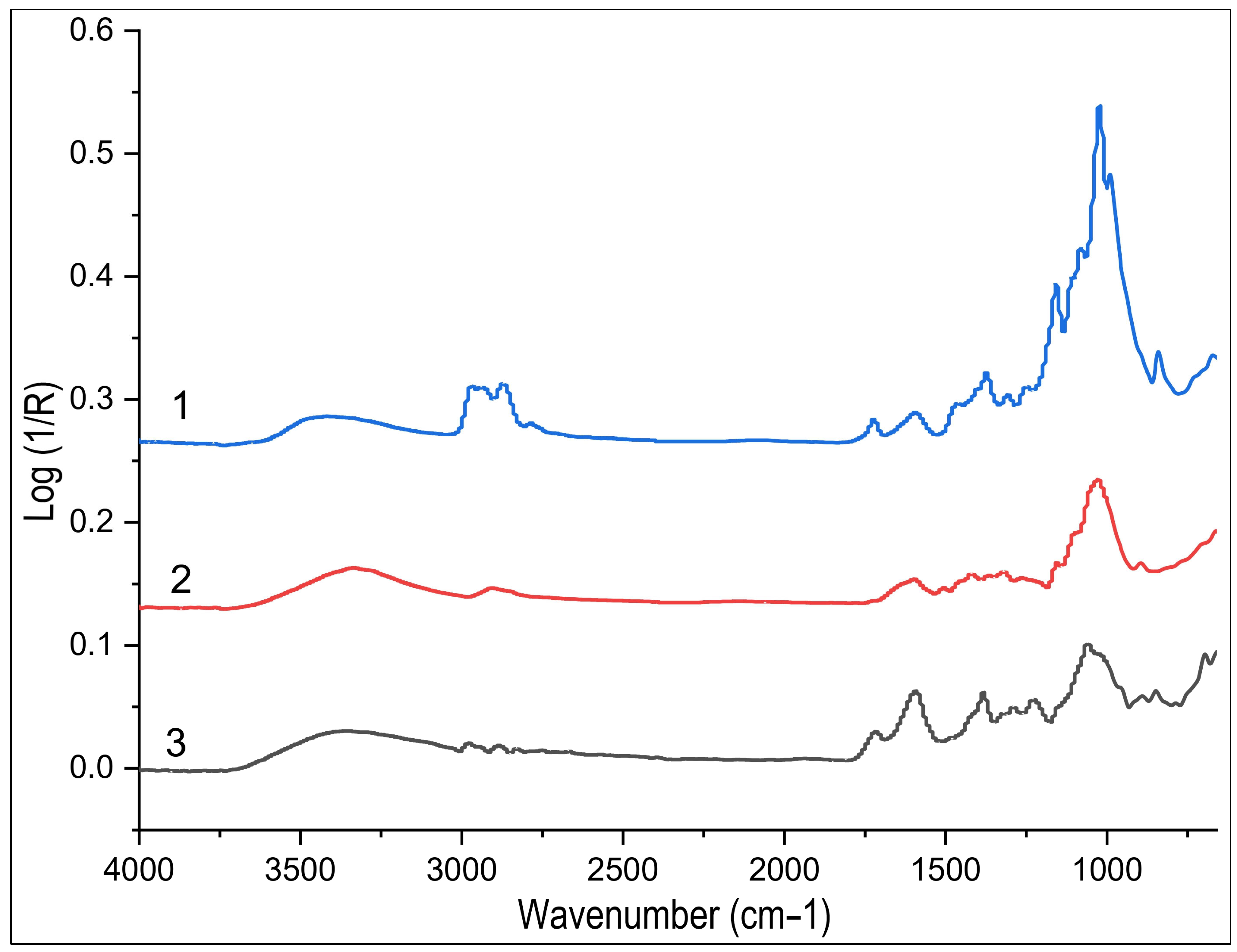
The properties of cellulose obtained from different types of raw materials vary due to the molecular heterogeneity of its structure, which is determined by the nature and characteristics of inter- and intramolecular interactions. To study the structure and hydrogen bonding in cellulose, the highly sensitive method of FTIR spectroscopy is commonly used [
58]. In this study, FTIR spectra were recorded for lignocellulose (LC-Alf), its carboxymethylated derivative (CMLC-Alf), and NaCMC in Attenuated Total Reflectance mode (FTIR-ATR) within the wavelength range of 600–4000 cm
−1 (
Figure 1).
The main absorption bands in the FTIR spectra (
Figure 1) of the LC-Alf, CMLC-Alf, and commercial NaCMC samples are presented in
Table 3.
The broad absorption band in the range of 3000–3700 cm
−1 in the FTIR spectrum of LC-Alf corresponds to the stretching vibrations of hydroxyl groups involved in hydrogen bonding. The broadening of this peak is attributed to the presence of several types of hydrogen bonds in the cellulose structure—intramolecular (O2–H···O6, O3–H···O5) and intermolecular (O6–H···O3)—which give rise to absorption bands at 3430, 3350, and 3275 cm
−1, respectively [
59]. It should be noted that the hydroxyl groups of lignin also contribute to absorption in this spectral region. The stretching vibrations of the CH
2 and CH groups of cellulose, as well as those associated with lignin, appear in the range of 2800–3000 cm
−1. Due to the strong interaction of CH
2 groups with neighboring structural elements, it is difficult to distinguish between the stretching vibration frequencies of CH
2 and CH groups. The shape of the peak at 2926 cm
−1, its splitting, and its intensity are determined by the presence of different conformers (rotations of the CH
2OH groups around the C5–C6 bond), as well as by the presence of strong bonds between cellulose and lignin [
60]. The broad band at 1580 cm
−1 is attributed to the ν(C=C) vibrations of the aromatic rings of lignin [
19]. The frequency range of 1400–1500 cm
−1 in the spectrum of LC-Alf corresponds to the vibrations of oxymethyl groups present in different conformational states. The FTIR spectra of lignocellulose also contain a band of stretching vibrations at 900 cm
−1. This band is referred to as the “amorphous band” since its intensity changes upon mechanical or chemical modification of cellulose and is associated with alterations in the pyranose ring and deformation of the C1–H bond in the amorphous regions of cellulose [
61]. The absorption band at 1317 cm
−1 corresponds to deformation vibrations of the C–H bond.
In the spectrum of CMLC-Alf, a broad band with a maximum at 3343 cm−1 is observed, corresponding to the stretching vibrations of O–H groups, along with peaks at 2920 cm−1 and 2871 cm−1 associated with CH2 and CH vibrations. The appearance of a band at 1715 cm−1 indicates the presence of carboxyl groups, while the enhancement of signals at 1061 cm−1 confirms modification of the glycosidic structure and the presence of C–O–C bridging bonds.
In the FTIR spectrum of the NaCMC sample, a broad and intense peak of O–H stretching vibrations with a maximum at 3415 cm−1 is observed. The bands in the range of 1605–1637 cm−1 are associated with the bending vibrations of bound water molecules (H–OH), while the signal at 1595 cm−1 corresponds to the presence of the carboxylate anion. The intense peaks in the region of 1157–1059 cm−1 are attributed to C–O–C vibrations of the pyranose ring, and the band at 840 cm−1 reflects β-glycosidic bond vibrations.
It is well known that the swelling ability of cellulose is associated with the presence of amorphous regions, into which liquids can penetrate most easily. Several studies [
62,
63,
64,
65] have proposed using FTIR spectra to calculate the crystallinity index of cellulose.
In the work of O’Connor [
66], the lateral order index was used to determine the crystallinity degree—the ratio of the absorption band intensities D
1430/D
900. These bands are highly sensitive to the degree of crystallinity and amorphousness of cellulose. Nelson and co-authors [
61] introduced the total crystallinity index, defined as the ratio of the absorption band intensities D
1375/D
2900.
Table 4 presents the crystallinity values of the samples calculated from the FTIR spectra using both methods.
The presented data show that the values obtained by both methods are comparable. The LC-Alf sample exhibits the highest crystallinity index of 0.48 (0.42). Upon carboxymethylation of LC-Alf, the crystallinity decreases to 0.22 (0.18) for the CMLC-Alf sample, indicating that the chemical modification leads to the disruption of ordered regions in lignocellulose and an increase in the proportion of the amorphous phase.
Based on a review of the literature, the crystallinity index of alfalfa-derived lignocellulose (LC–Alf) has been reported to be approximately 77% [
40]. Following carboxymethylation of cellulose, a decrease in the crystallinity index is commonly observed, which is attributed to disruption and distortion of the crystalline structure caused by swelling of the cellulose macromolecules. This structural transformation results in a further reduction in crystallinity; reported crystallinity index values for sodium carboxymethyl cellulose (NaCMC) typically decrease to approximately 32–45%, depending on the degree of substitution and the preparation method. Such behavior is well documented in the scientific literature and is supported by X-ray diffraction studies, which demonstrate the disappearance of sharp crystalline peaks and an increase in the amorphous fraction after carboxymethylation [
67,
68,
69]. The reduction in crystallinity is generally attributed to the introduction of carboxymethyl groups, which disrupt the hydrogen-bonding network stabilizing the crystalline lattice of native cellulose. As a result, the amorphous phase content increases, enhancing accessibility for chemical modification and, consequently, improving the functional properties of the material.
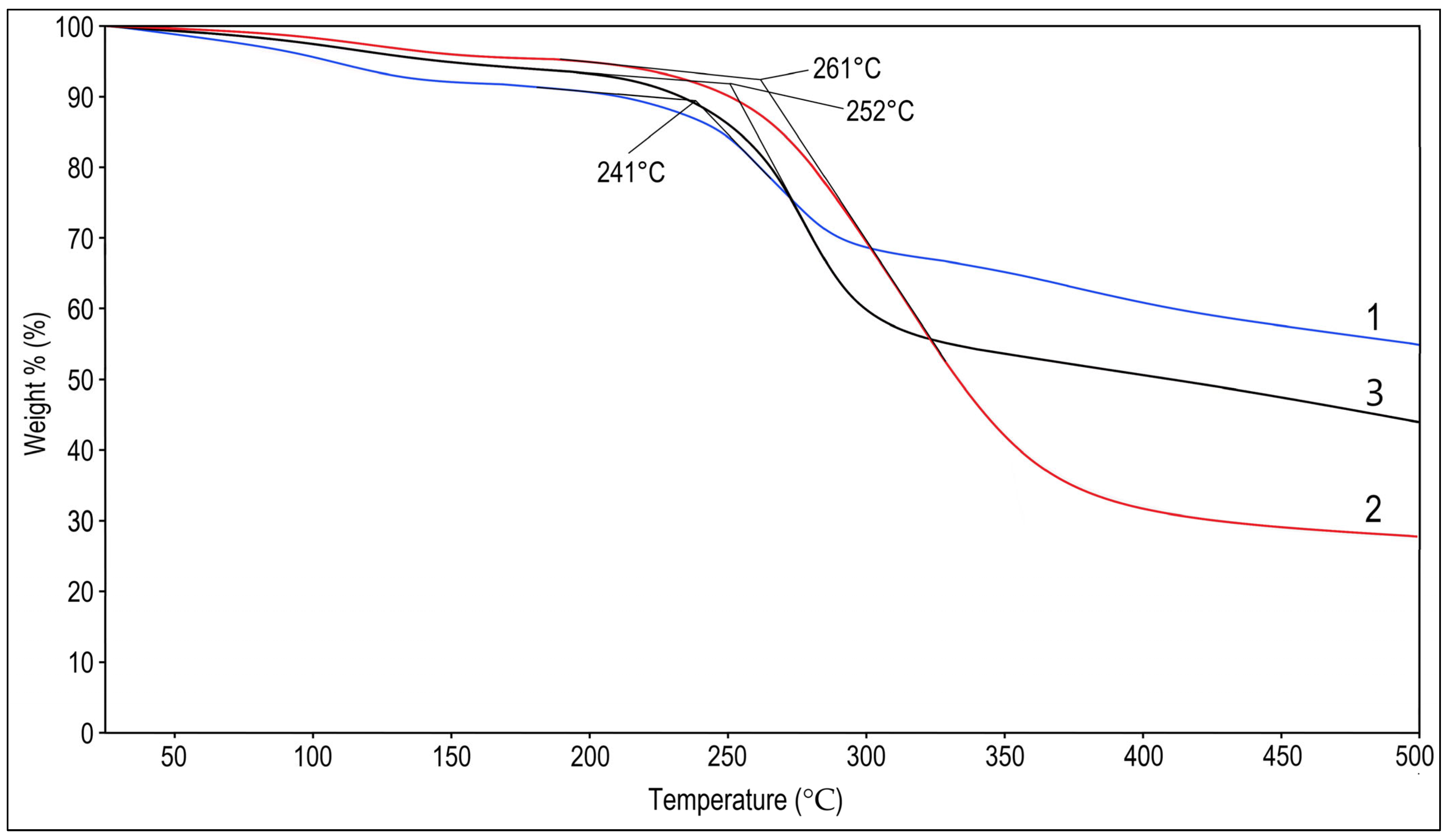
An important criterion for the use of additives in composite formulations is their thermal stability, since rubber compounds are processed at a temperature of 160 °C. Thermograms were recorded in a nitrogen atmosphere over the temperature range of 25–500 °C at a heating rate of 5 °C/min (
Figure 2).
On the thermogram of the LC-Alf sample, a mass loss of about 4% was observed up to 150 °C, associated with the desorption of residual moisture. A rapid mass-loss region in the temperature range of 250–350 °C corresponded to the thermochemical degradation of the sample. This was followed by a slow mass-loss stage, reaching a plateau at around 450 °C. The residual mass of the sample at 500 °C was approximately 28%. Carboxymethylation of LC-Alf shifted the temperature range of the rapid decomposition stage for CMLC-Alf toward lower temperatures (240–318 °C). At the same time, the residual mass of the CMLC-Alf sample at 500 °C was significantly higher (45%) compared to LC-Alf, indicating that pyrolysis of the carboxymethylated cellulose derivative results in the formation of a more thermally stable carbonaceous structure than that produced from LC-Alf. These results are consistent with literature data, which report a noticeably higher yield of carbonaceous residue for carboxymethylated cellulose (34.2% at 600 °C) compared to cellulose (19.6%) [
70].
For comparison, a thermogram of the commercial NaCMC sample was recorded. On the TG curve, desorption of residual moisture was observed up to 150 °C, during which the sample lost about 10% of its mass. Rapid thermochemical decomposition with the formation of volatiles began at temperatures above 240 °C, which is comparable to CMLC-Alf, and was completed at 303 °C. This was followed by a region of slow mass loss. The inflection points observed in our study are close to those reported in [
68]. The residual mass of the sample at 500 °C is approximately 55% of the initial mass ℃.
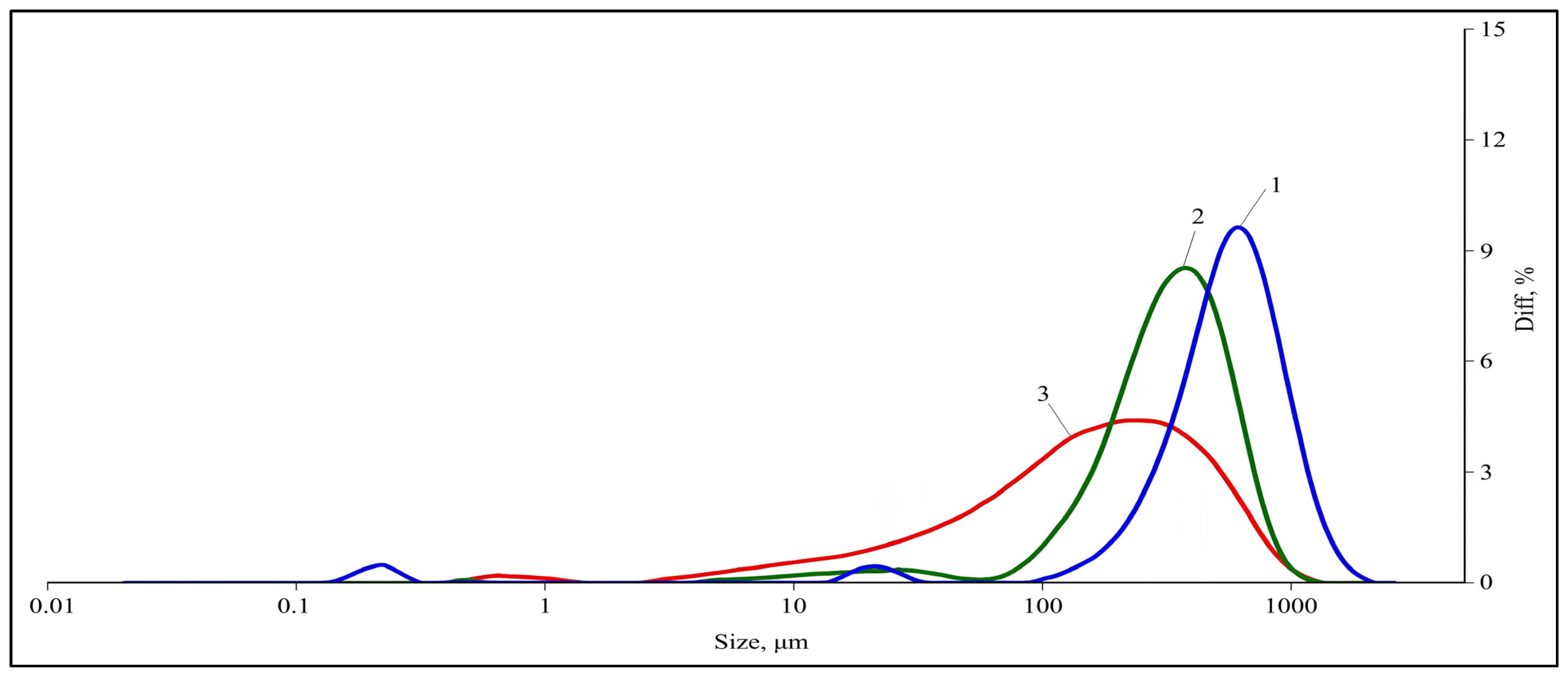
Analysis of the particle size distribution of the investigated cellulose-containing materials revealed pronounced differences in the granulometric composition of NaCMC, alfalfa-derived lignocellulose (LC-Alf), and carboxymethylated lignocellulose (CMLC-Alf) (
Figure 3). The particle size characteristics exhibit broad ranges, reflecting different degrees of dispersibility and material heterogeneity. The largest particles were observed for the NaCMC sample, with a median particle size D
50 of 560.8 µm and an upper percentile D90 approaching 1 mm (999.8 µm). The wide distribution range (from D
10 = 244.3 µm to D90 = 999.8 µm) indicates pronounced polydispersity, which can be attributed to the specific features of the industrial production process of this type of carboxymethyl cellulose. The presence of large agglomerates may be associated with incomplete hydration and secondary particle aggregation in the aqueous medium. The LC-Alf sample exhibited a coarser particle size distribution with a median diameter D
50 = 325.1 µm and a shift in the distribution curve toward larger particle sizes. The values of D
10 = 130 µm and D
90 = 598.6 µm indicate a more uniform structure compared with NaCMC, although with lower dispersibility than CMLC-Alf. The CMLC-Alf. sample was characterized by the smallest median particle size (D
50 = 161 µm) and the narrowest distribution, with D
10 and D
90 23.25 and 503.3 µm, respectively. This indicates a high degree of dispersion and a predominance of fine fractions, which is also supported by the shape of the distribution curve. The presence of a substantial fraction of particles smaller than 100 µm suggests enhanced reactivity of the material due to an increased specific surface area.
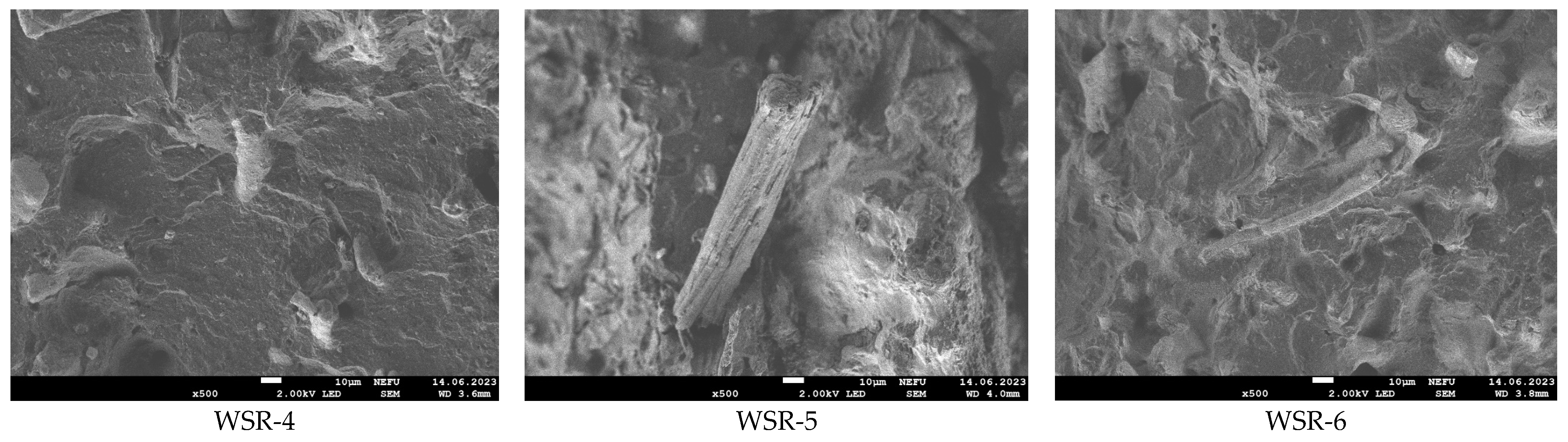
The high content of swelling filler (SF) (150 parts per 100 rubber) in the vulcanizates significantly affects the formation of the composite’s microstructure. Increasing the filler concentration was typically accompanied by the formation of particle agglomerates and deterioration of their dispersion, which is confirmed by studies on the filling of rubber composites with cellulose-containing fillers and the observed morphology of compounds of a similar nature [
71]. The micrographs (
Figure 4) clearly show pronounced phase boundaries, localized filler accumulations, and a distinct surface microrelief of the vulcanizates, indicating non-uniform phase distribution and limited wetting of the filler by the rubber matrix.
Similar morphological features associated with structural heterogeneity have also been reported for composites with high cellulose fiber content, where impaired dispersion leads to the formation of noticeable agglomerates within the polymer matrix [
72]. These microstructural characteristics suggest weak interfacial adhesion between the filler and the matrix, which may result in stress concentration in agglomerated regions and negatively affect the physicomechanical properties of the composites due to defect formation and uneven stress distribution [
18].
Given the differences in the structure—and consequently in the properties—of the obtained swelling filler samples, differences in the properties of the swelling rubbers can also be expected.
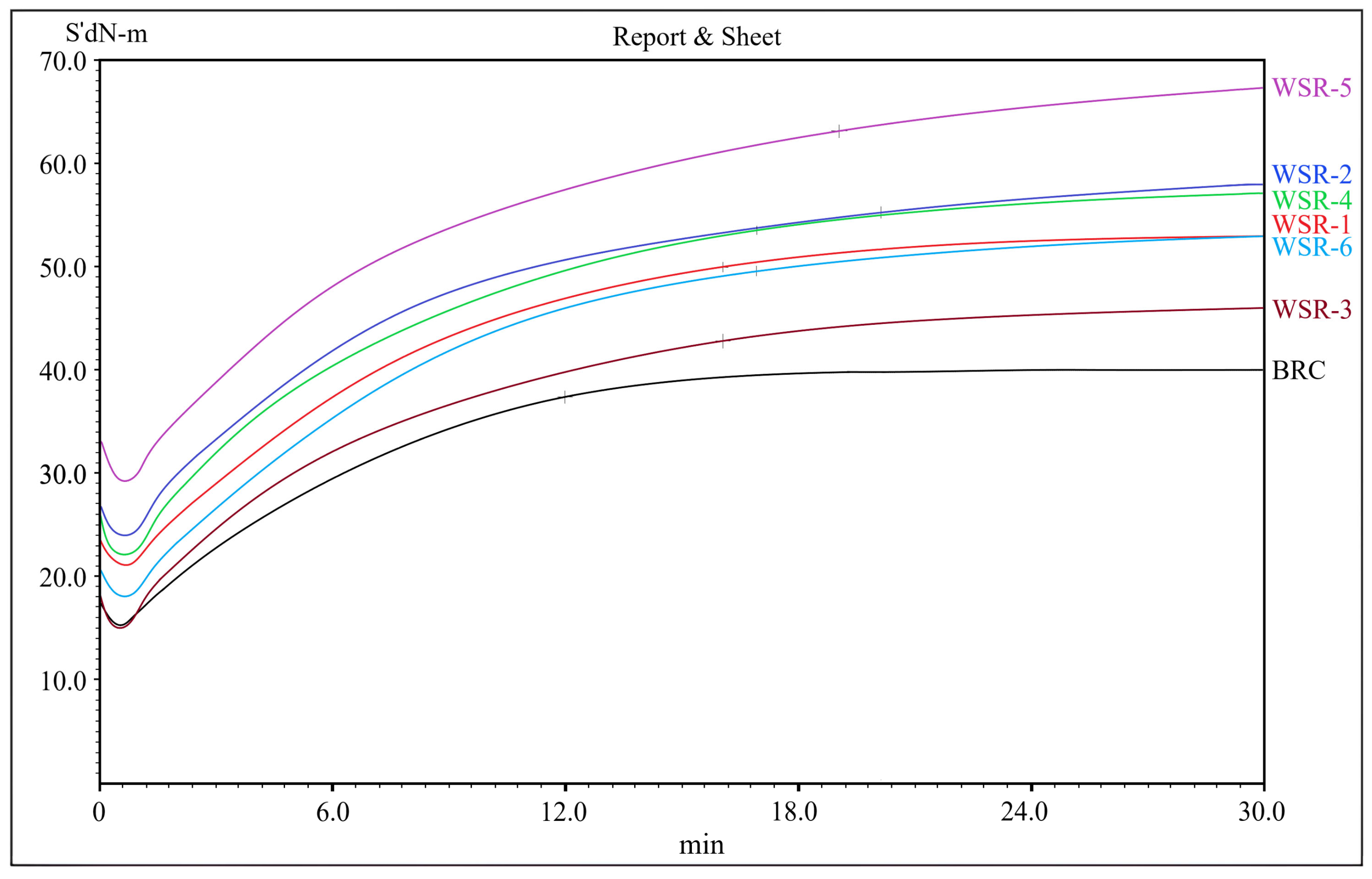
Table 5 presents (
Figure 5) the results of rheometric analysis of rubber compounds based on nitrile–butadiene rubber BNKS-28 AMN grade filled with various swelling fillers. The main parameters include the scorch time (t
s), the minimum (ML) and maximum (MH) torque values, and the time required to reach 90% of the vulcanization degree—optimum cure time (t
90). The measurements were carried out at 160 °C with a test duration of 30 min. Samples WSR-1–WSR-3 contain 100 phr of the swelling filler, while samples WSR-4–WSR-6 contain 150 phr of the swelling filler (
Table 1).
According to the obtained data, the scorch time of the samples filled with the swelling fillers remains at the level of the control sample that contains no filler. This indicates the chemical inertness of the introduced swelling fillers with respect to the vulcanization process. In general, the incorporation of the swelling filler (SF) into the rubber compound leads to an increase in the maximum torque [
72]. This effect is due to the fact that cellulose is a rigid-chain polymer characterized by a Kuhn segment exceeding 140 Å [
73], as it contains a cyclic repeating unit and highly polar OH-groups that participate in strong intermolecular interactions. Therefore, the incorporation of cellulose-containing swelling fillers into the rubber formulation leads to a significant restriction of deformation and chain mobility, thereby increasing the compound viscosity. The time required to reach the optimum degree of vulcanization for the samples filled with the swelling fillers increases compared to the base rubber compound, which may be associated with the high filler loading. Therefore, the incorporation of cellulose-containing swelling fillers into the rubber formulation significantly restricts chain deformation and mobility, thereby increasing the compound viscosity. The time required to reach the optimum degree of vulcanization for the samples filled with the swelling fillers increases compared to the base rubber compound, which may be attributed to the high filler loading.
The decrease in minimum torque (ML) observed for sample WSR-3 containing carboxymethylated lignocellulose (CMLC-Alf), compared with sample WSR-2 containing unmodified lignocellulose (LC-Alf), may indicate a reduction in the crystallinity of lignocellulose after carboxymethylation. According to reported literature data, carboxymethylation of cellulose leads to a significant decrease in its crystallinity, and at high degrees of substitution the crystalline phase may disappear completely [
74,
75]. This reduction in crystallinity is attributed to the disruption of hydrogen bonds that stabilize the crystalline lattice. In the context of rubber compounds, this implies that the swelling filler becomes less rigid and offers lower resistance to shear in the uncured matrix, which is reflected in a lower ML value for the compound containing carboxymethylated lignocellulose compared with the non-carboxymethylated counterpart.
The amount of the swelling filler also affects the rheometric properties of the samples. Increasing the filler content to 150 phr (WSR4–WSR6) leads to an increase in torque values compared with the samples containing 100 phr (WSR1–WSR3).
In
Table 6, the results illustrating the influence of the type and amount of the swelling filler on the physical and mechanical properties of the rubbers are presented. The control sample (BRS) is characterized by the following physicomechanical properties. The tensile strength (TS) was 13.8 MPa, the elongation at break (ε) was 480%, the rebound resilience (R) was 34%, and the Shore A hardness (HSA) was 65 units. These values indicate a balanced combination of strength and elasticity, as well as a relatively high ability of the material to recover after tensile deformation.
According to the experimental data, the highest
TS is observed for the swelling rubber filled with 100 phr of LC-Alf (WSR-2, 9.1 MPa). This result is apparently due to the fact that LC-Alf contains about 14% lignin. The obtained results are consistent with literature reports indicating the reinforcing properties of lignin. In particular, ref. [
76] presents data on the reinforcing ability of lignin and the resulting improvement in the physical–mechanical properties of polymer materials. According to ref. [
77], the incorporation of Klason lignin into natural-rubber-based composites leads to an increase in tensile strength compared with the composite without lignin. Ref. [
72] further emphasizes that lignin, owing to its phenolic and aromatic structure as well as its relative hydrophobicity, can enhance interfacial adhesion and improve the mechanical properties of rubber biocomposites. The tensile strength of the rubber filled with CMLC-Alf (WSR-3, 6.4 MPa) decreases due to the reduced lignin content (7%) and the lower degree of crystallinity. The rubber containing NaCMC, which is characterized by the absence of lignin and a low crystallinity level, exhibits the lowest strength (WSR-1, 4.0 MPa). The presence of a rigid-chain structure in the swelling filler restricts the mobility of the polymer chains, which is reflected in the low elongation at break (ε) and the high Shore A hardness (HSA). The rubber filled with LC-Alf (WSR-2) exhibits an elongation at break of ε = 60% and a hardness of 95 Shore A units. Amorphization of the filler structure and the reduction in hydrogen-bond strength during carboxymethylation increase the segmental mobility of the polymer chains, which is reflected in the higher elongation at break and lower hardness of the rubber filled with CMLC-Alf (WSR-3, ε = 160%, HSA = 79). The highest elongation at break was observed for the sample containing NaCMC (WSR-1), which has a high degree of carboxymethylation. Its elongation reached 280% at a comparatively low hardness of 72 Shore A units.
When the amount of the rigid-chain swelling fillers is increased to 150 phr (WSR-4, WSR-5, WSR-6), a decrease in tensile strength and elongation at break is observed, along with an increase in Shore A hardness. This is due to the fact that adding larger amounts of a rigid-chain filler leads to an increase in compound viscosity. The higher viscosity, in turn, creates unfavorable conditions for the uniform distribution of the ingredients and the applied load, which results in reduced material strength and elasticity. In particular, the tensile strength of the sample containing 150 phr of LC-Alf (WSR-5) decreased from 9.1 to 7.9 MPa, while ε decreased from 60% to 50%, and the hardness increased from 95 to 102 Shore A units. When the amount of NaCMC was increased, the tensile strength and elongation at break of the rubber (WSR-4) decreased to 3.5 MPa and 220%, respectively, while the HSA value increased from 72 to 78 Shore A units. A similar trend was observed for the sample containing CMLC-Alf (WSR-6): the tensile strength decreased to 5.8 MPa, the elongation at break decreased to 130%, and the Shore A hardness increased to 84 units. The obtained trends are consistent with the results reported in the literature [
78,
79].
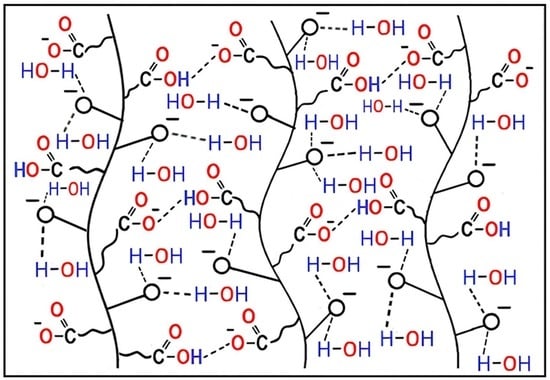
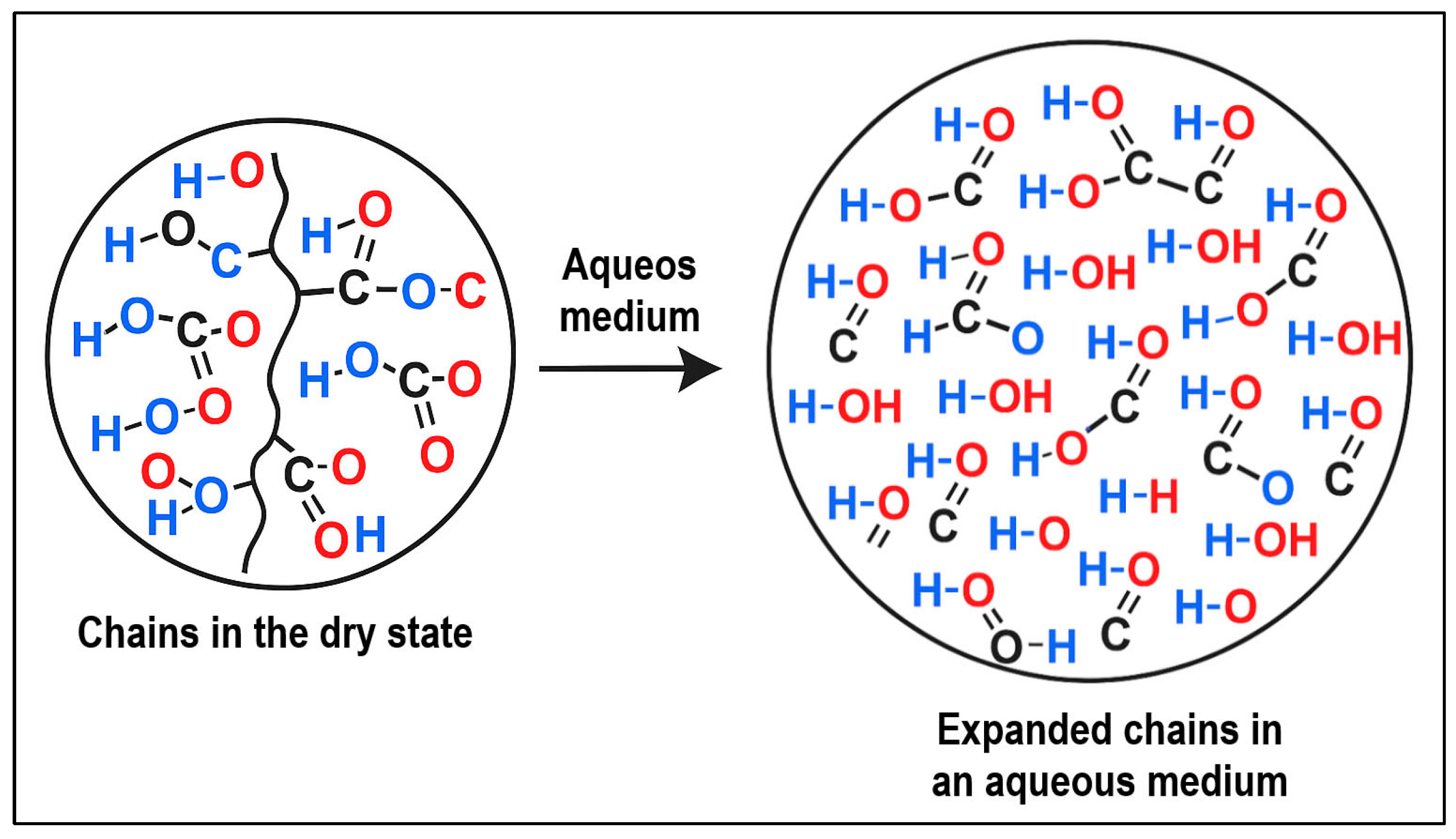
Next, the swelling behavior of the rubber samples in mineralized water was investigated. The swelling capacity of the polymer was evaluated based on the mass of liquid absorbed by the polymer relative to its initial mass. The swelling mechanism involves the penetration of water molecules into the near-surface layers of the polymer and the solvation of specific segments of the polymer chain. As a result, the macromolecules become “loosened,” which facilitates further ingress of water molecules and leads to an increase in the mass and volume of the polymer. In the samples containing swelling fillers, the filler particles interact with water molecules through hydrogen bonding—this serves as the primary driving force for water uptake by the polymer chains. Water is drawn into the elastomer network due to the activity of the filler; however, the dispersion of water is limited by the crosslinks in the elastomer chains, as well as by the intrinsic absorption capacity of the swelling filler. As a result, resistance to swelling is formed. An energetic imbalance arises, and the system tends to achieve equilibrium by establishing a diffusion gradient between the swelling polymer and the surrounding solution, which ultimately leads to a balanced state.
Each repeating unit of the cellulose molecule contains three hydroxyl groups—two secondary (at positions C-2 and C-3) and one primary (at position C-6), which differ in their electrolytic reactivity [
80,
81]. Since in carboxymethylated cellulose the primary hydroxyl group is substituted with a carboxyl group, differences in the swelling behavior of the filler can be expected.
Not only the type of swelling filler but also its amount influences the swelling capacity of the rubbers, as further examined in this work.
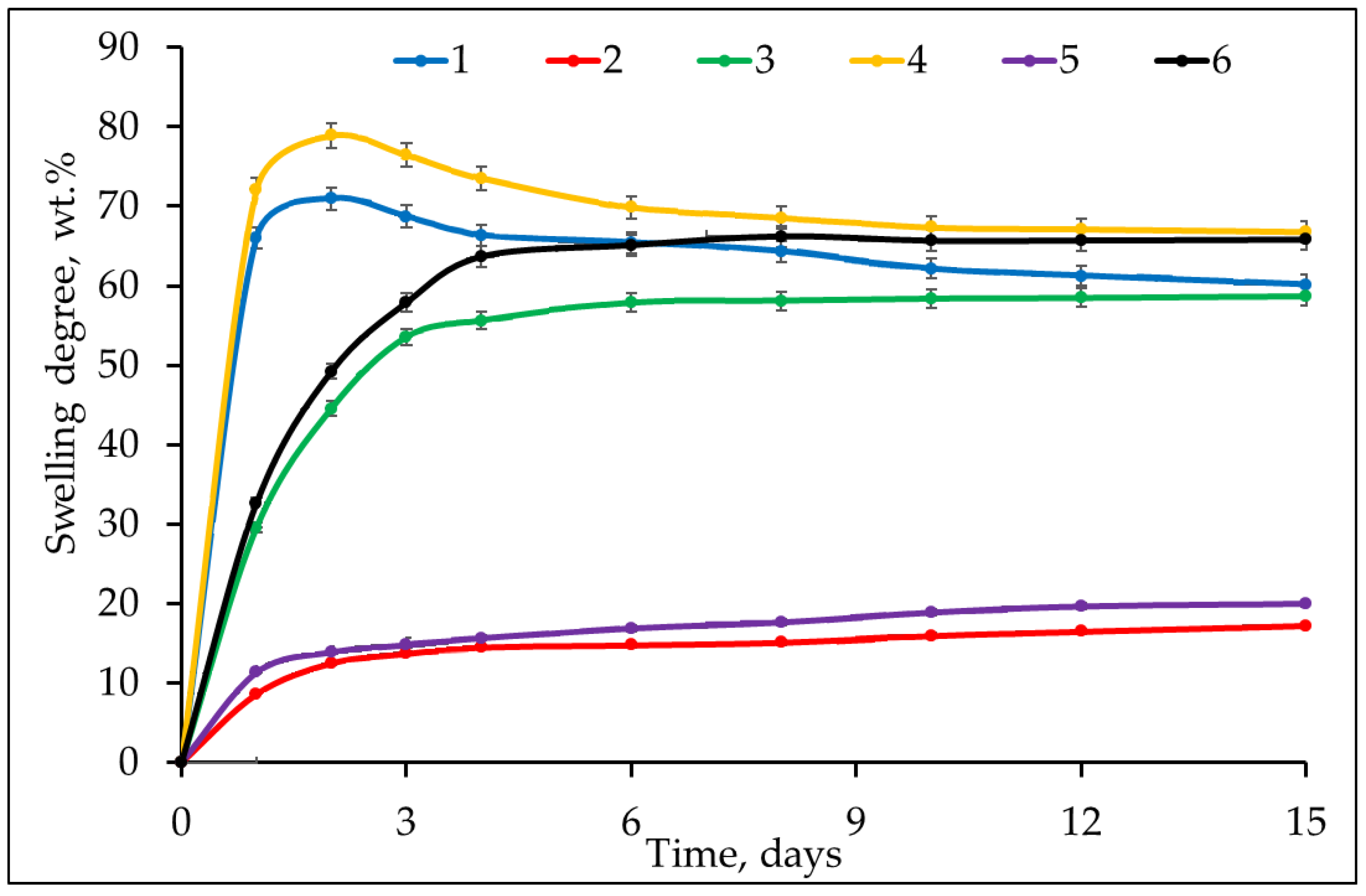
Figure 6 shows the swelling kinetics of the rubber samples filled with different swelling fillers during exposure to formation water (pH 6.3). The highest initial swelling in the saline solution was observed for the sample filled with 150 phr of NaCMC (WSR-4). During the first 2–3 days, the swelling degree reached 78%, after which partial dissolution and leaching of the swelling filler occurred, and the value stabilized at about 65% for the remainder of the test period. For the sample containing 100 phr of NaCMC (WSR-1), the swelling during the first two days was 71%, followed by stabilization at around 61%. This behavior is attributed to the high degree of carboxymethylation (0.9). Carboxyl groups, being electrolytic in nature, enhance the swelling capacity of the polymer material.
The swelling capacity of the rubber filled with CMLC-Alf during the first 2–3 days is lower compared to that of NaCMC due to its lower degree of carboxymethylation (0.64). In addition, CMLC-Alf contains about 7% lignin. Since lignin is known to be hydrophobic, it can reduce the water absorption of lignocellulose-based materials [
39,
82]. At equilibrium, the swelling of sample WSR-3 (100 phr of CMLC-Alf) in formation water reached 58%, while for sample WSR-6 (150 phr of CMLC-Alf) it was 65%. In this case, however, no dissolution or leaching of the swelling filler was observed.
The samples filled with LC-Alf (WSR-2 and WSR-5) exhibit low swelling values. The relative mass increase of these samples was 17–20%. This behavior is attributed to their high degree of crystallinity, the absence of carboxyl groups—which enhance hydrophilicity by converting the filler into a polyelectrolyte—as well as the presence of lignin (14%) in the structure of the swelling filler. Lignin contributes to the formation of a denser, less water-permeable polymer network.
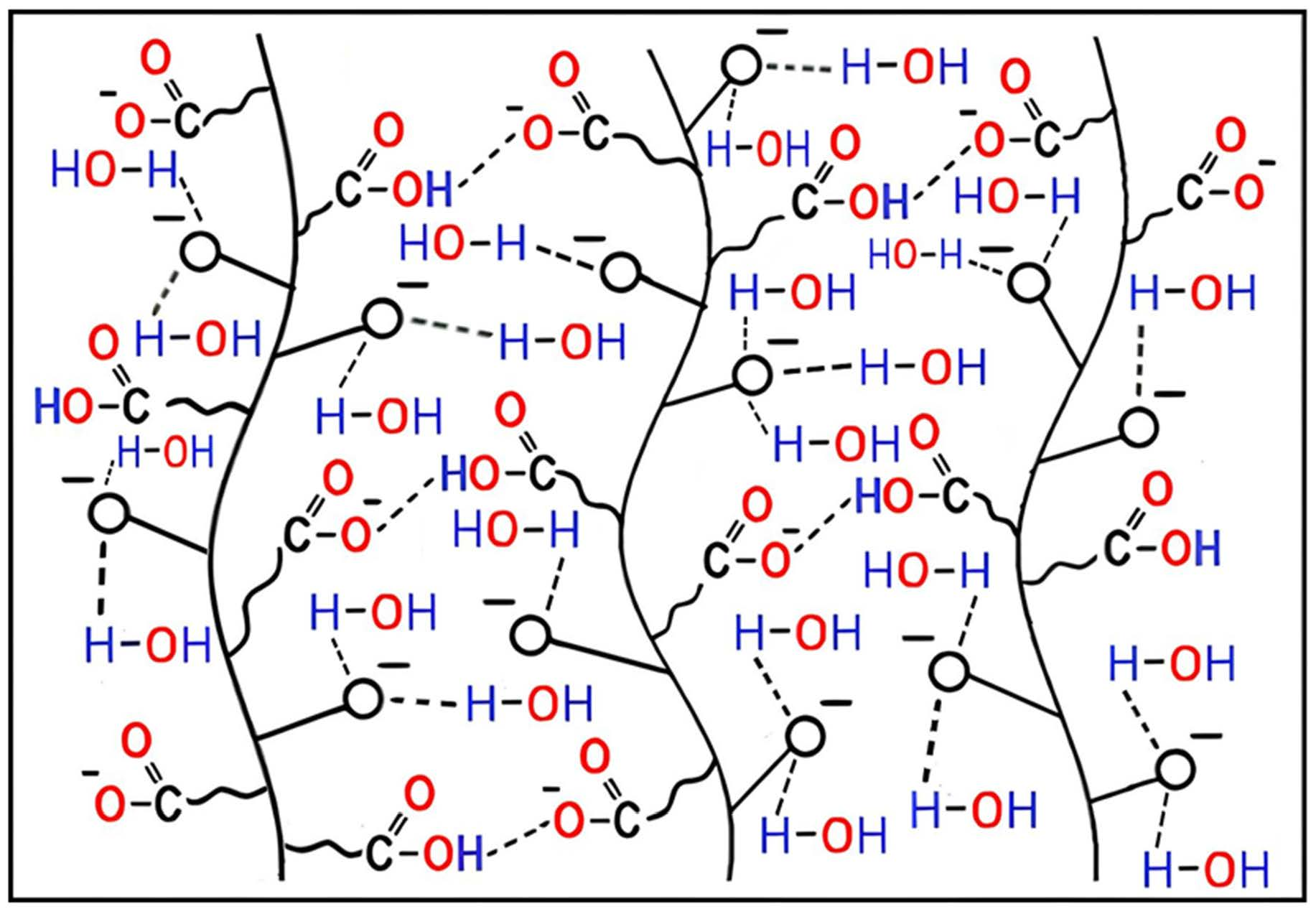
Thus, it can be concluded that the swelling degree of the rubber composites is determined not only by the nature and chemical composition of the filler (including the content of hydrophobic lignin and hydrophilic carboxyl groups). When carboxyl groups interact with an ionic medium, carboxylate forms (–COO
−) are generated. The resulting carboxylates have increased polarity and are capable of binding significant amounts of water through ion–dipole interactions. As a result, the swelling degree increases (
Figure 7).
The physical and mechanical properties of the rubbers were further examined after a 3-day exposure to formation water (
Table 7). After exposure to formation water, the samples containing lignocellulosic fillers (LC-Alf and CMLC-Alf) retained their tensile strength to a greater extent. In contrast, the samples with NaCMC showed a significant reduction in strength (up to 50%), whereas the water-swelling rubbers filled with LC-Alf and CMLC-Alf lost only 8–19%. This effect is associated with the presence of lignin, which enhances interfacial adhesion and increases the hydrophobicity of the system [
83]. Lignin present in the lignocellulosic fillers provides a pronounced reinforcing effect, thereby ensuring the preservation of the mechanical properties of the composite when exposed to an aqueous medium. Several review studies have demonstrated that, under appropriate processing conditions and with good dispersion, lignin can provide a noticeable reinforcement of the mechanical properties of rubber composites, acting as an environmentally friendly alternative to conventional fillers [
84,
85]. An increase in the amount of swelling filler from 100 to 150 phr slightly improves the stability of the tensile strength parameter; however, higher filler loadings lead to partial loss of structural integrity and a decrease in the absolute tensile strength values.
According to the results of the conducted studies, the optimal content of the swelling filler in water-swelling rubbers—providing the best balance between physical–mechanical properties and swelling capacity—is 100 phr of the filler. This dosage is more preferable compared with 150 phr. Such a ratio ensures uniform distribution of the filler particles within the polymer matrix, promotes the formation of strong interfacial bonds, and prevents agglomeration of solid particles, which is observed at higher filler concentrations and leads to a decrease in the elastic and strength properties of the composite.




 ,
,