


Numerical Investigation of Thermodynamic Performance in Gradient-Pitch Twisted Square Ducts with Variable Aspect Ratio



Abstract
1. Introduction
2. Governing Equations
2.1. Definition of Parameters
2.2. Analysis of Entropy and Exergy
3. Methodology
3.1. Physical Models
3.2. Boundary Conditions
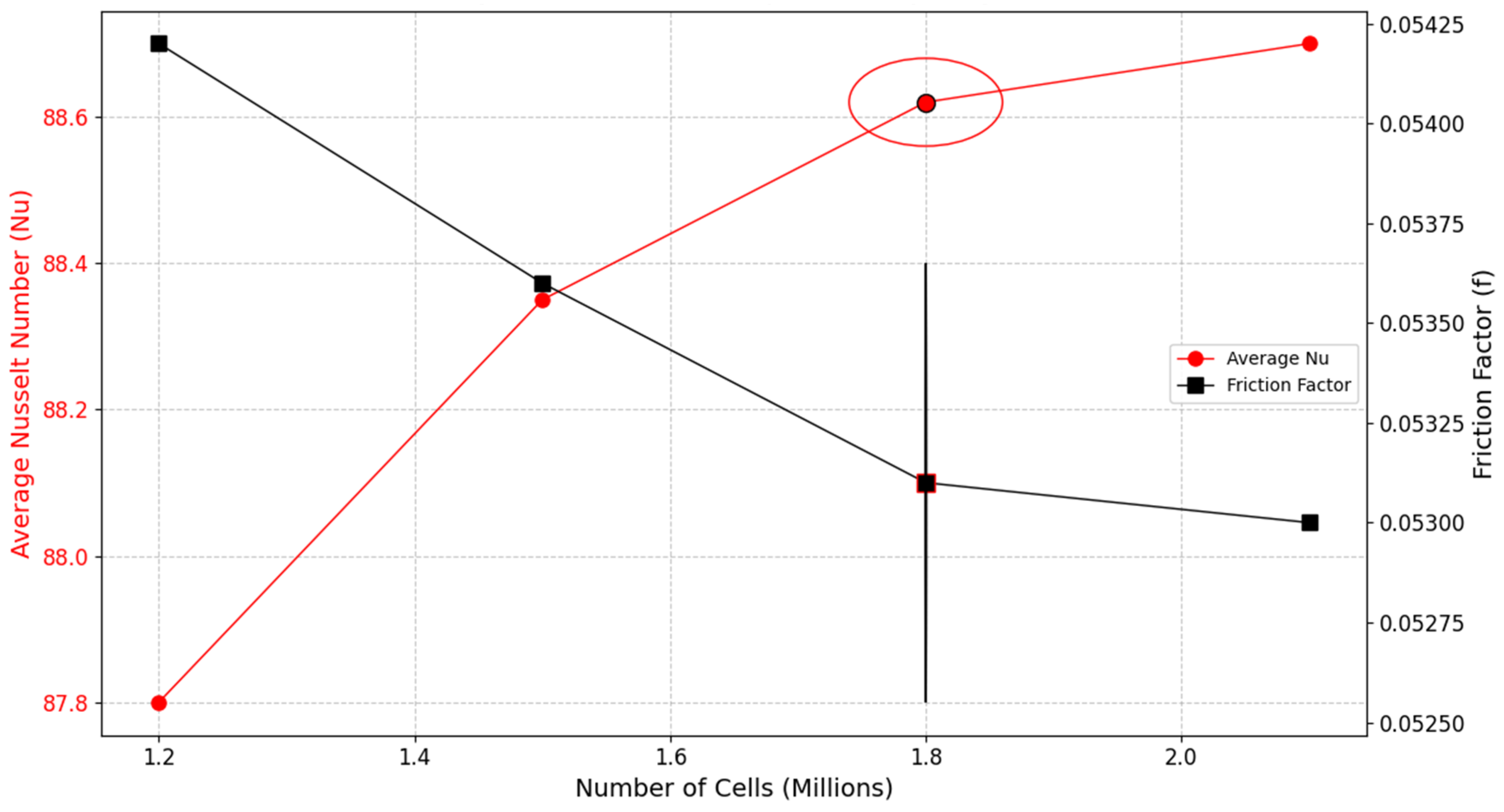
3.3. Grid Independence
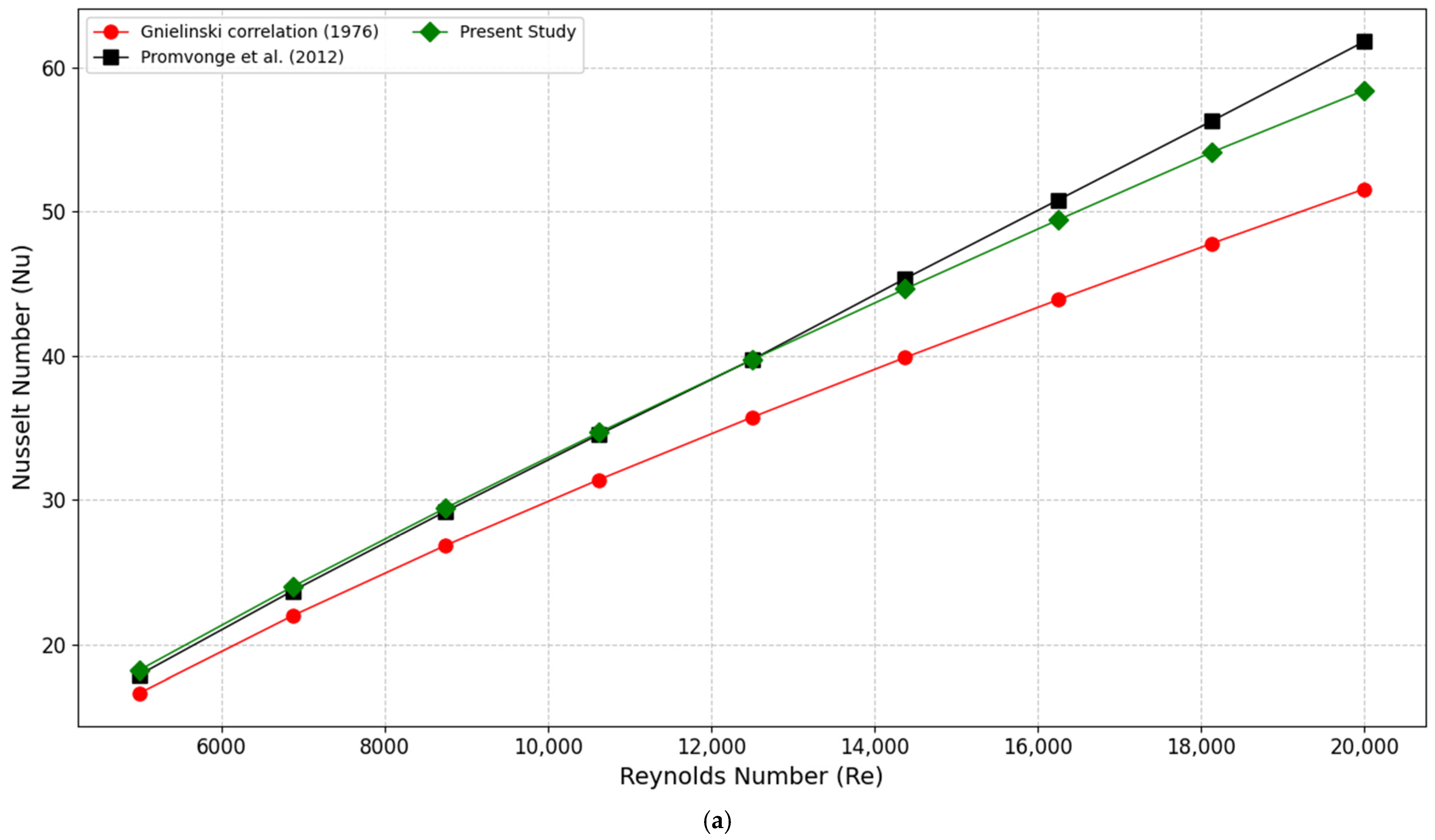
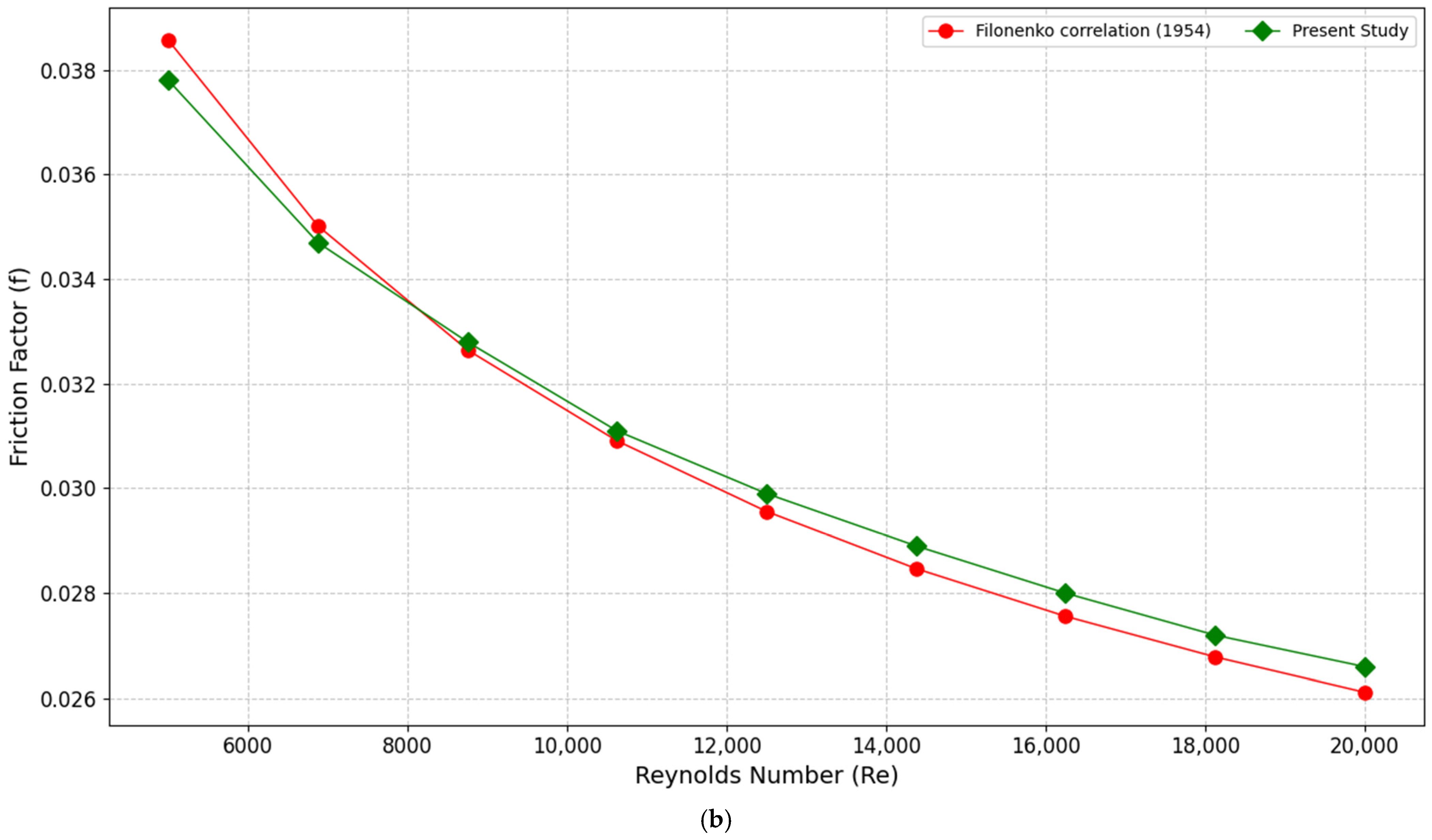
3.4. Method Validation
4. Results and Discussion
4.1. Overall Trends with Reynolds Number
4.2. First-Law Thermo-Hydraulic Performance
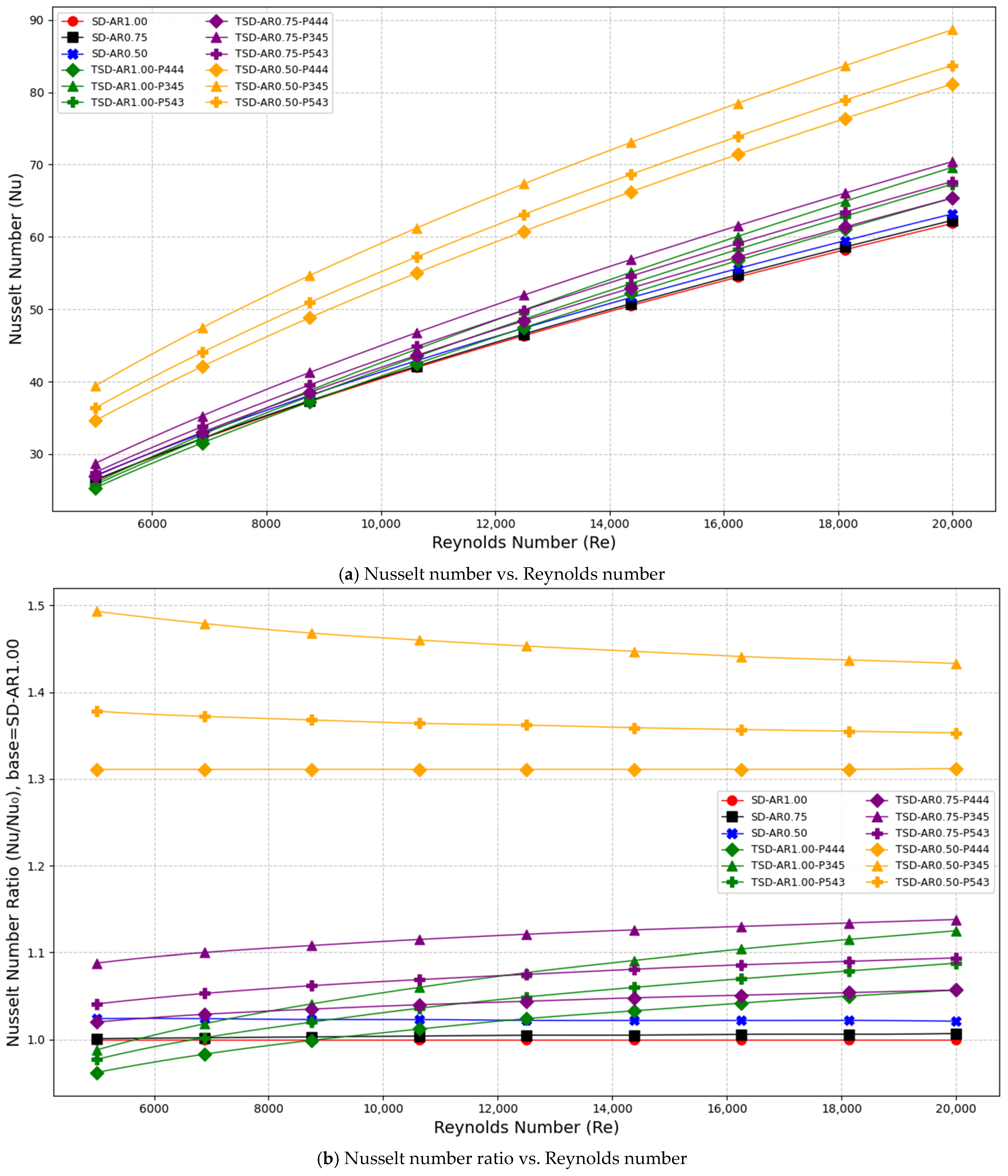
4.2.1. Heat Transfer and Pressure Loss (Nu, f)
4.2.2. Nusselt Number Ratio and Friction Factor Ratio (Nu/Nu0, f/f0)
4.2.3. Thermal Performance Factor (TPF)
4.3. Second-Law Thermodynamic Performance
4.3.1. Entropy Generation Analysis (Sht, Sf, Stotal)
4.3.2. Bejan Number Analysis (Be)
4.3.3. Exergy Destruction Analysis (ExD)
4.4. Parametric Effects of Physical Models
4.4.1. Effect of Aspect Ratio (AR = 1.00, 0.75, 0.50)
4.4.2. Effect of Pitch Pattern (P444 vs. P345 vs. P543)
4.4.3. Interaction Between AR and Pitch Pattern
4.5. Integrated Assessment and Optimal Configuration
4.5.1. Overall Ranking Using Combined First- and Second-Law Metrics
4.5.2. Recommended Design and Practical Guidance
4.6. Comparison with Other Studies
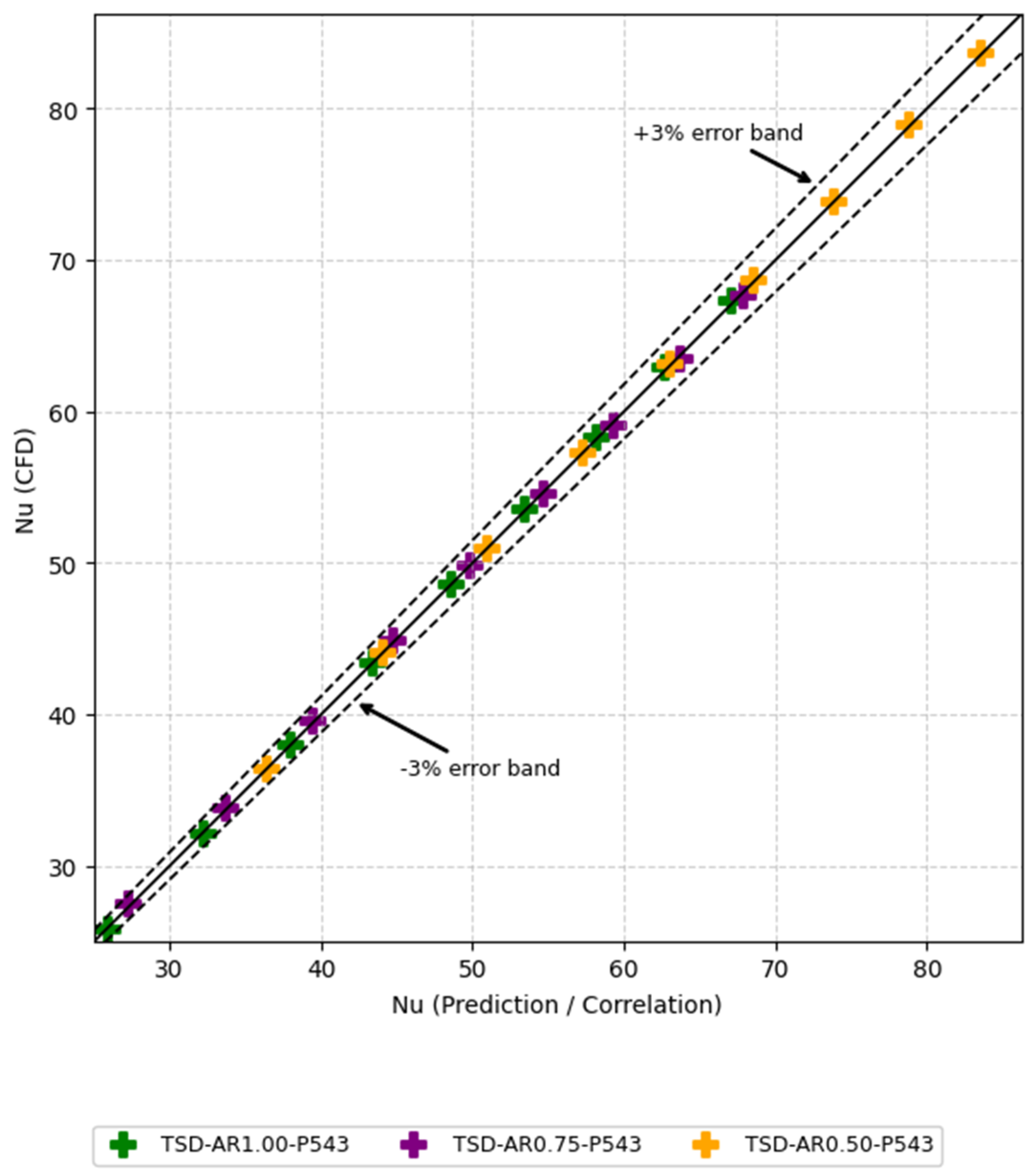
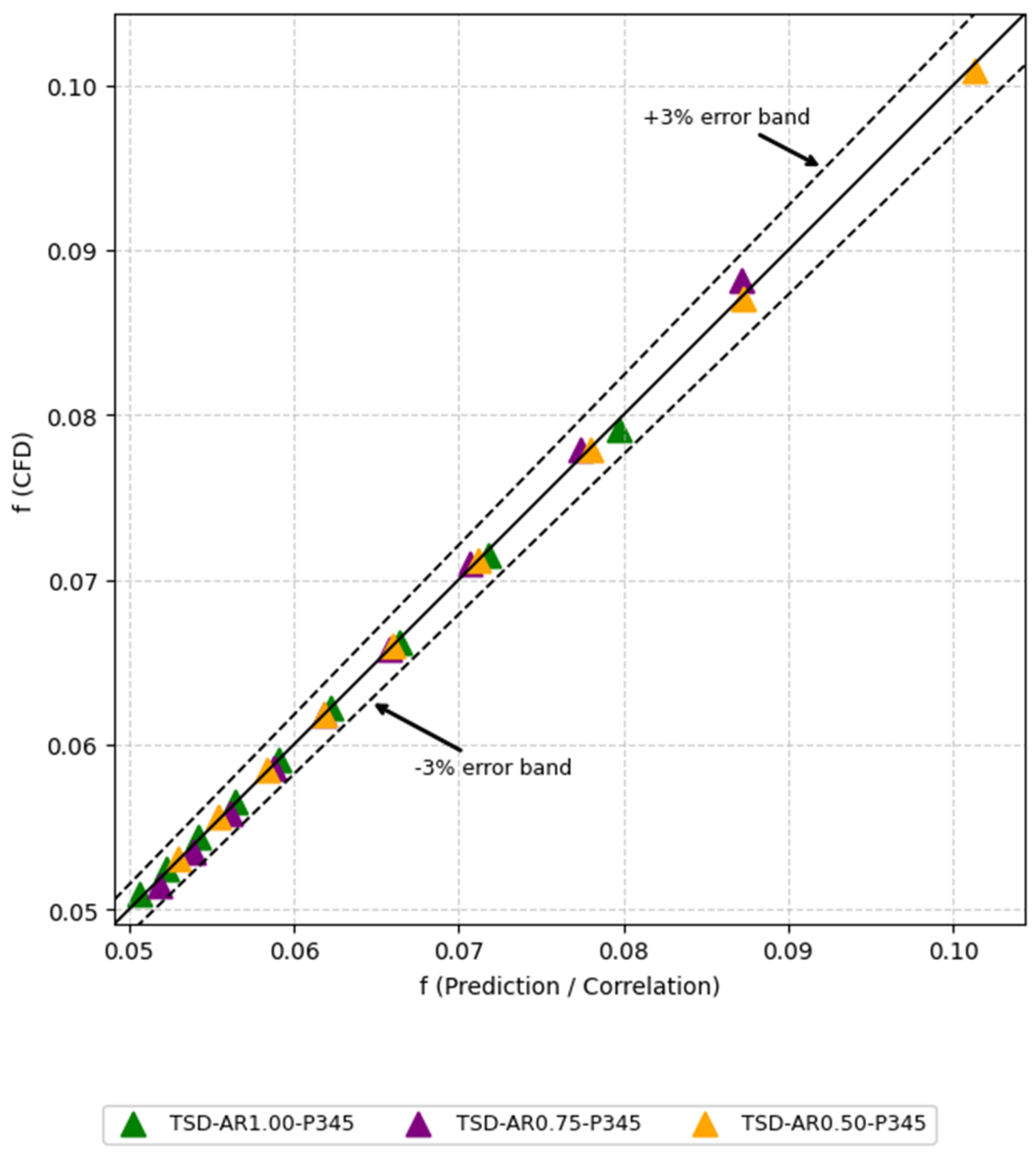
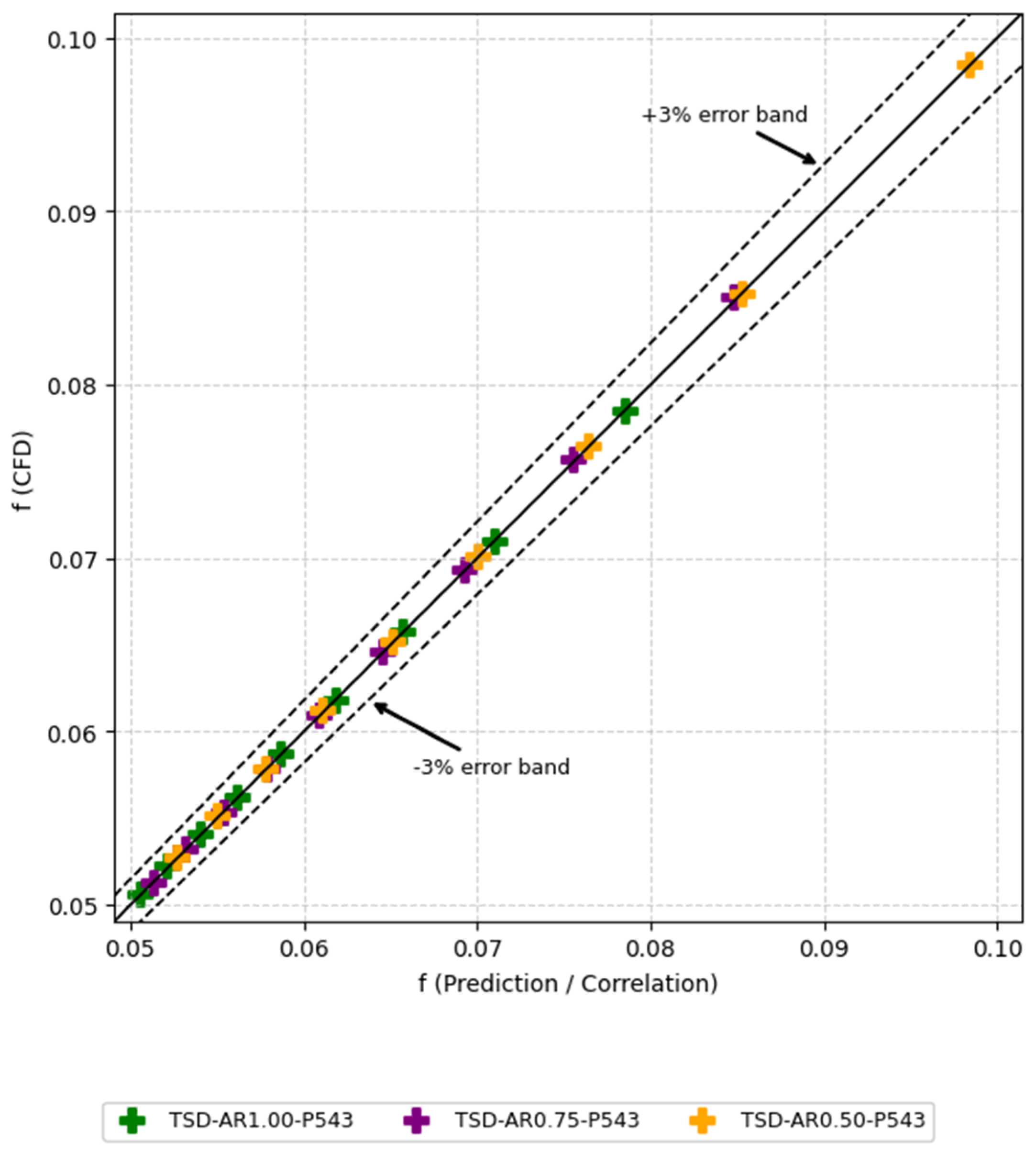
4.7. Correlations
5. Conclusions
- ○
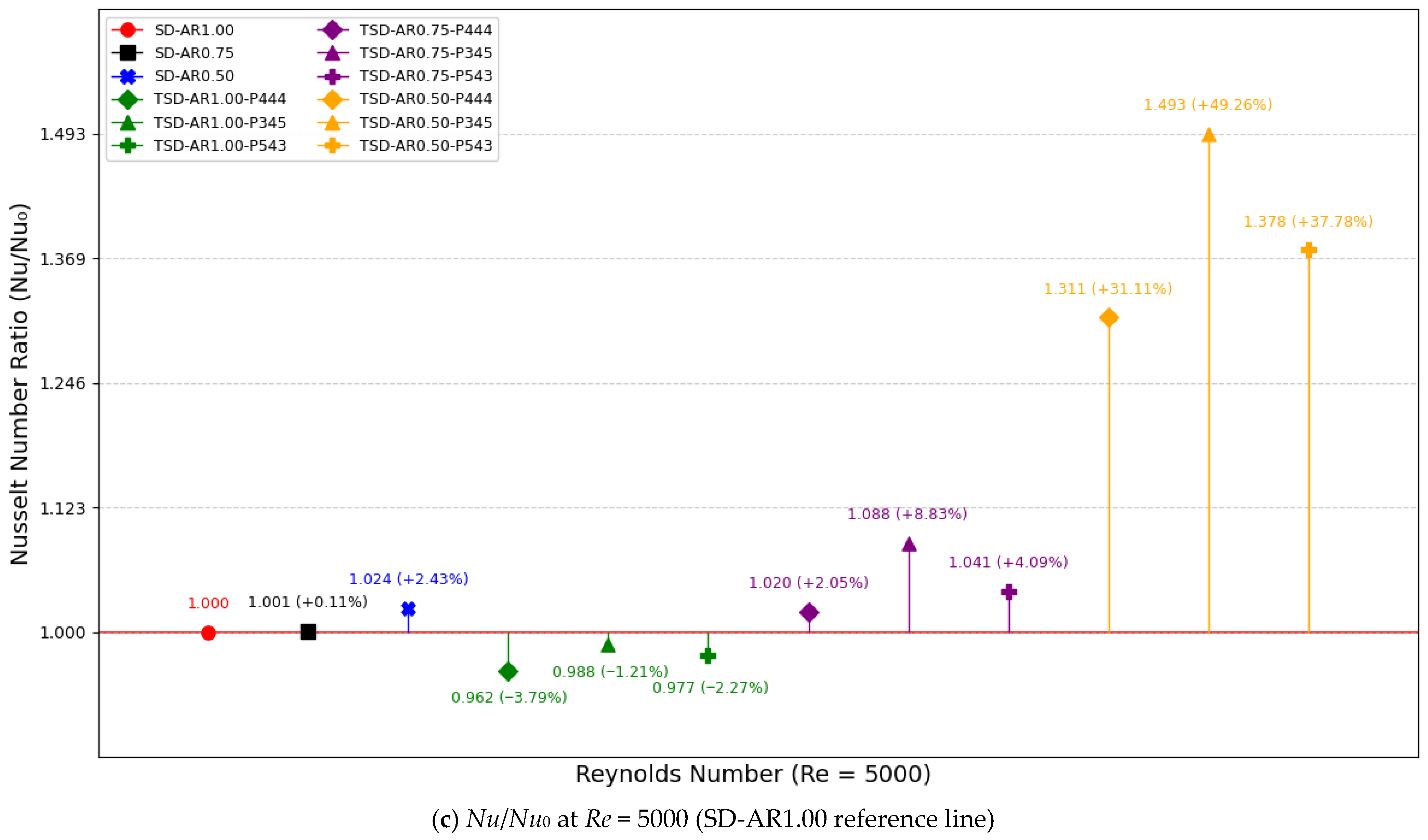
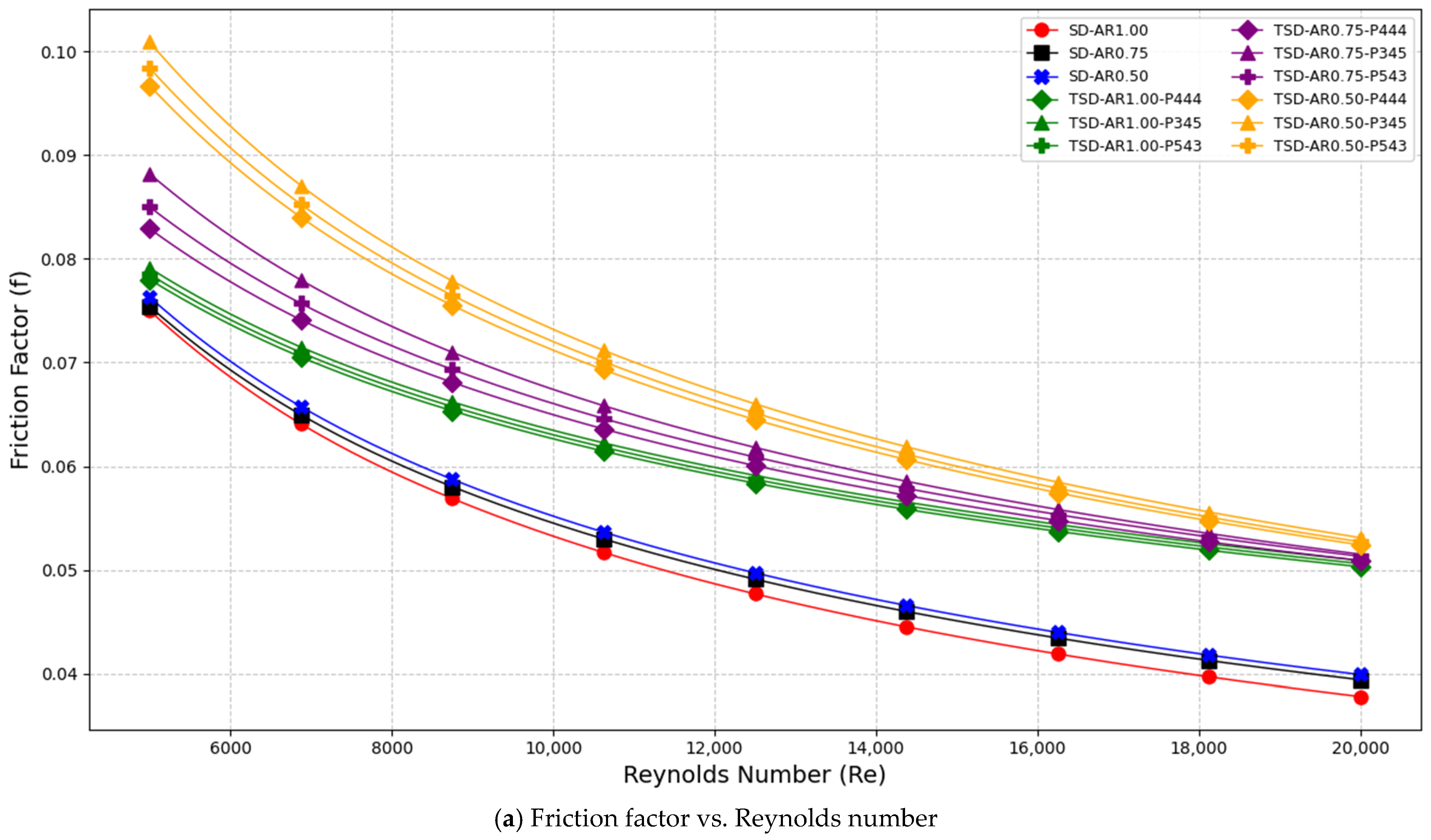
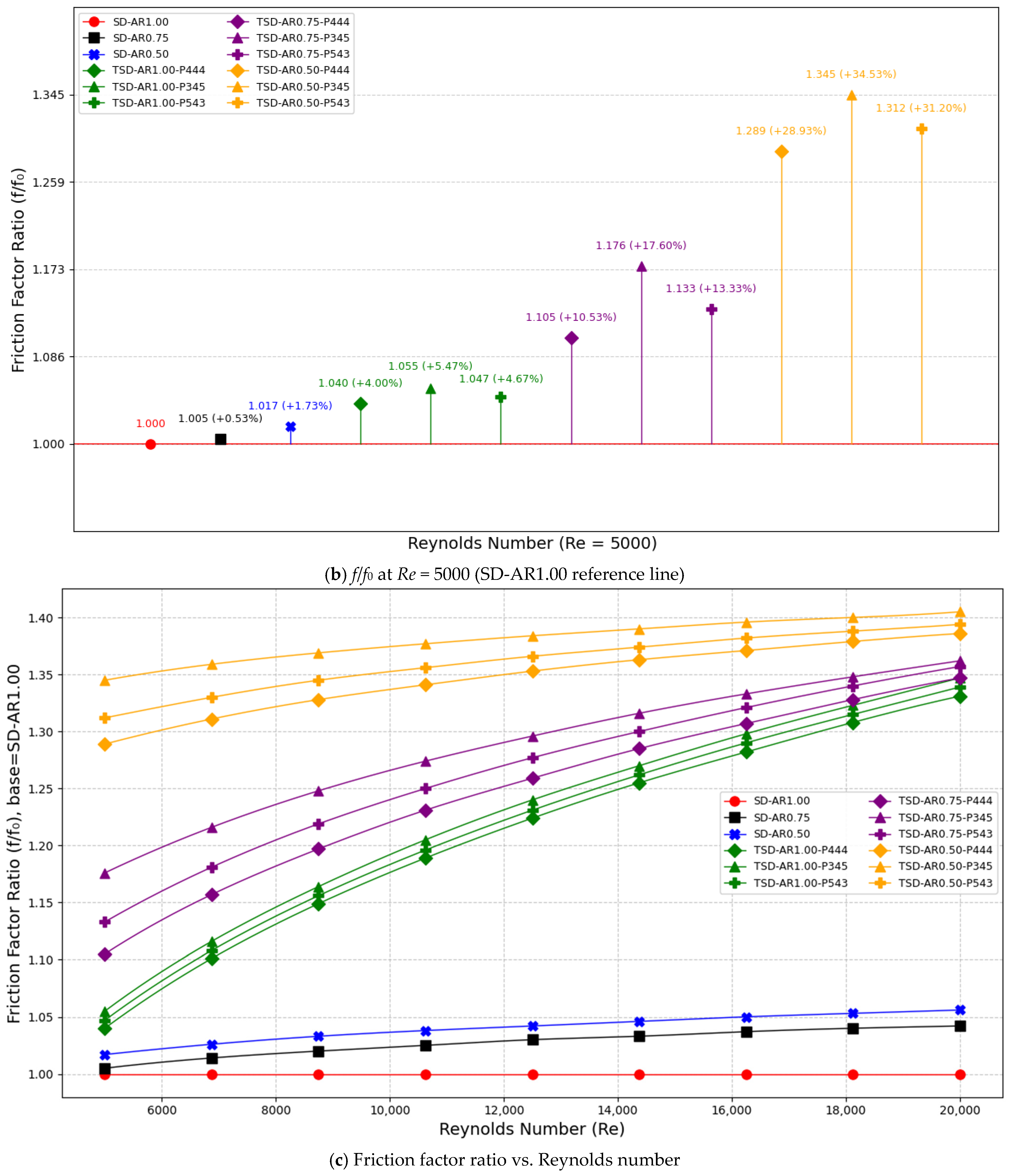
- Nusselt number (Nu) and friction factor (f): For all configurations, Nu increases with Reynolds number. The twisted ducts generally provide higher Nu than the straight ducts, but this enhancement is accompanied by an increase in the friction factor. The strongest heat-transfer enhancement is obtained at the lowest aspect ratio, especially for TSD-AR0.50-P345, where Nu increases by 49.3% at Re = 5000 and 43.2% at Re = 20,000 compared with the baseline SD-AR1.00. The corresponding friction penalties are 34.5% and 40.5%, respectively.
- ○
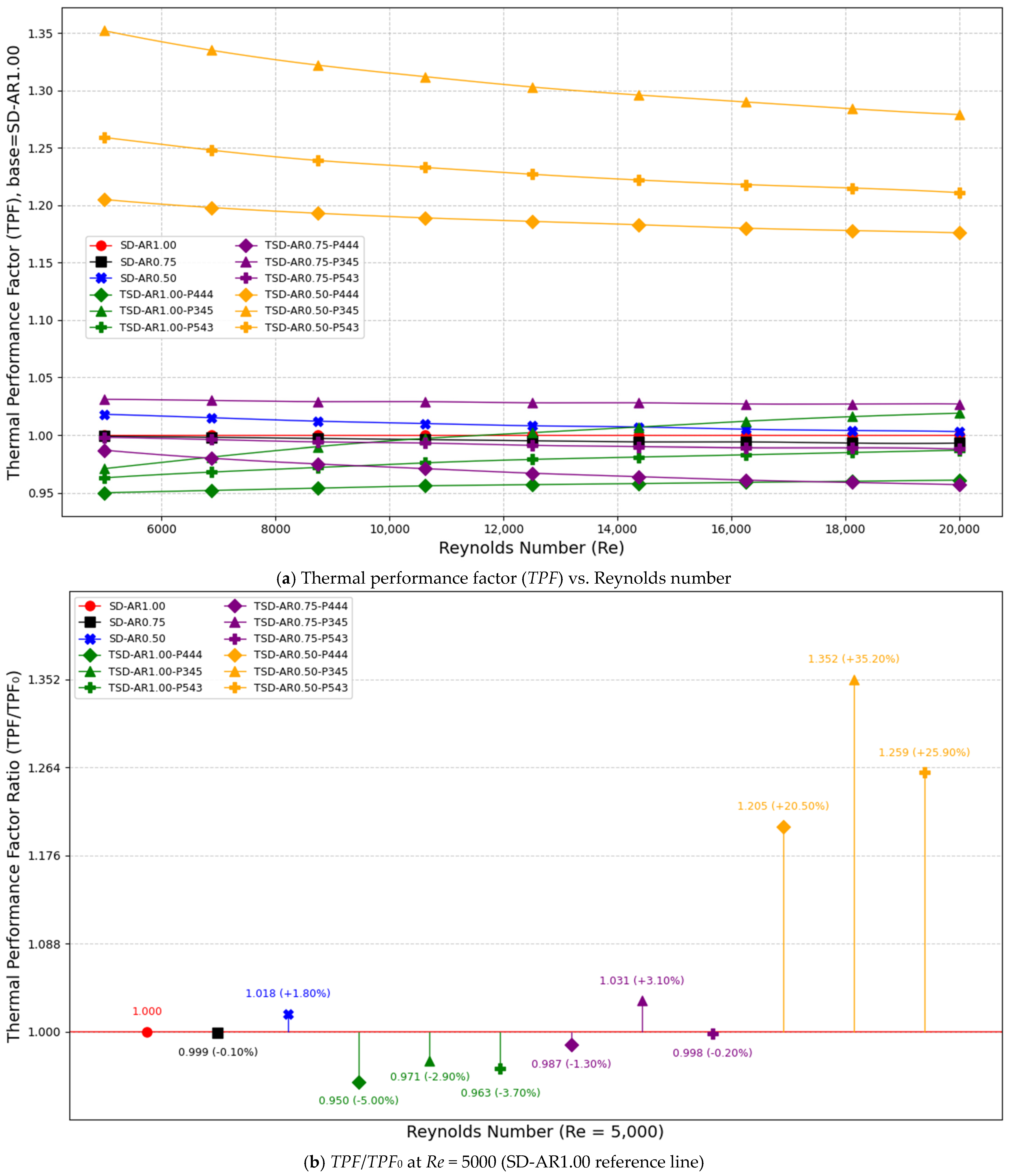
- Thermal performance factor (TPF): When heat-transfer gain and pumping-power penalty are combined, most twisted cases remain beneficial (TPF > 1.0), particularly at lower AR. The best overall thermal performance is again achieved by TSD-AR0.50-P345, with TPF = 1.352 at Re = 5000 and TPF = 1.279 at Re = 20,000, indicating a consistently favorable trade-off across the studied Reynolds range.
- ○
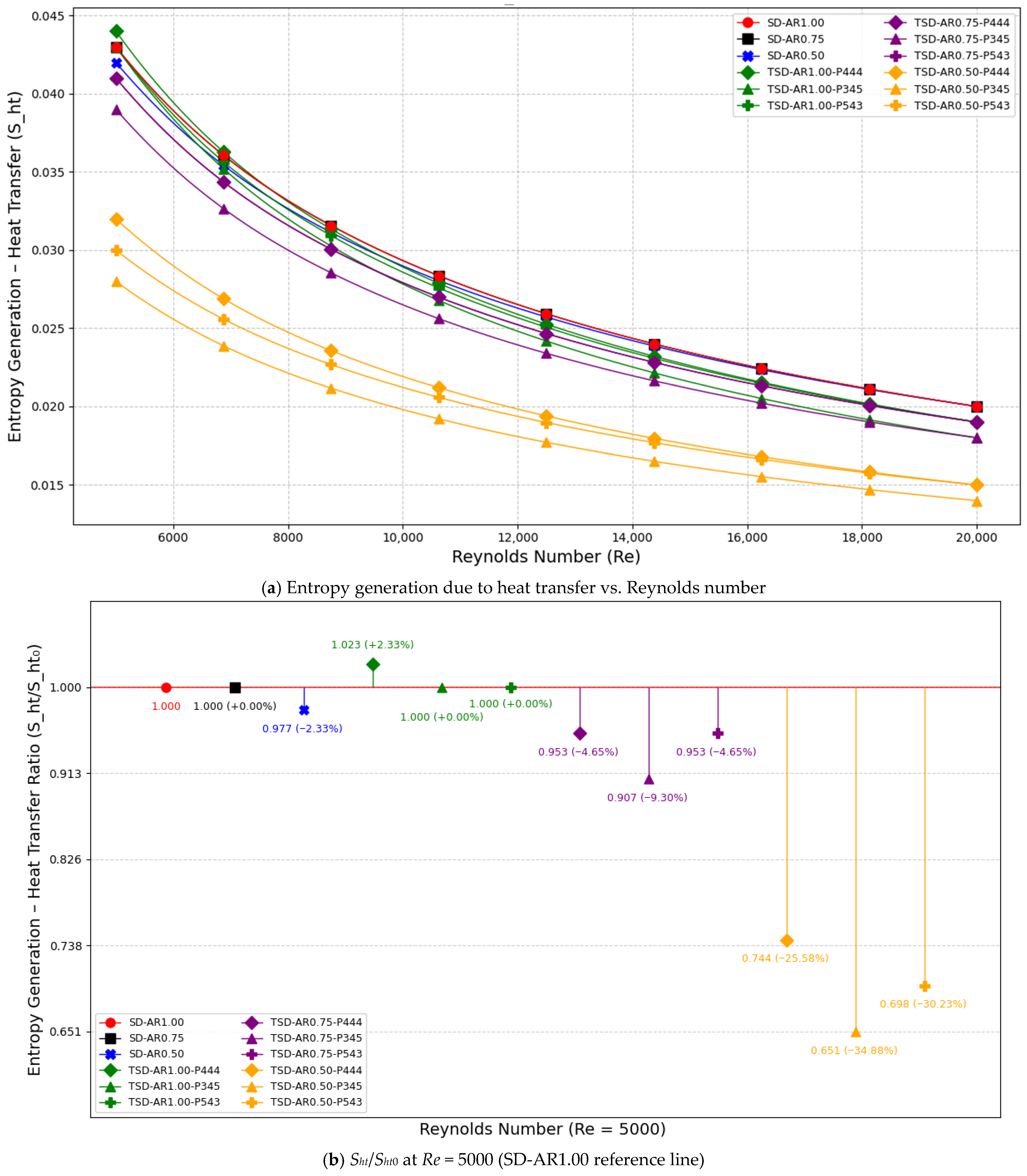
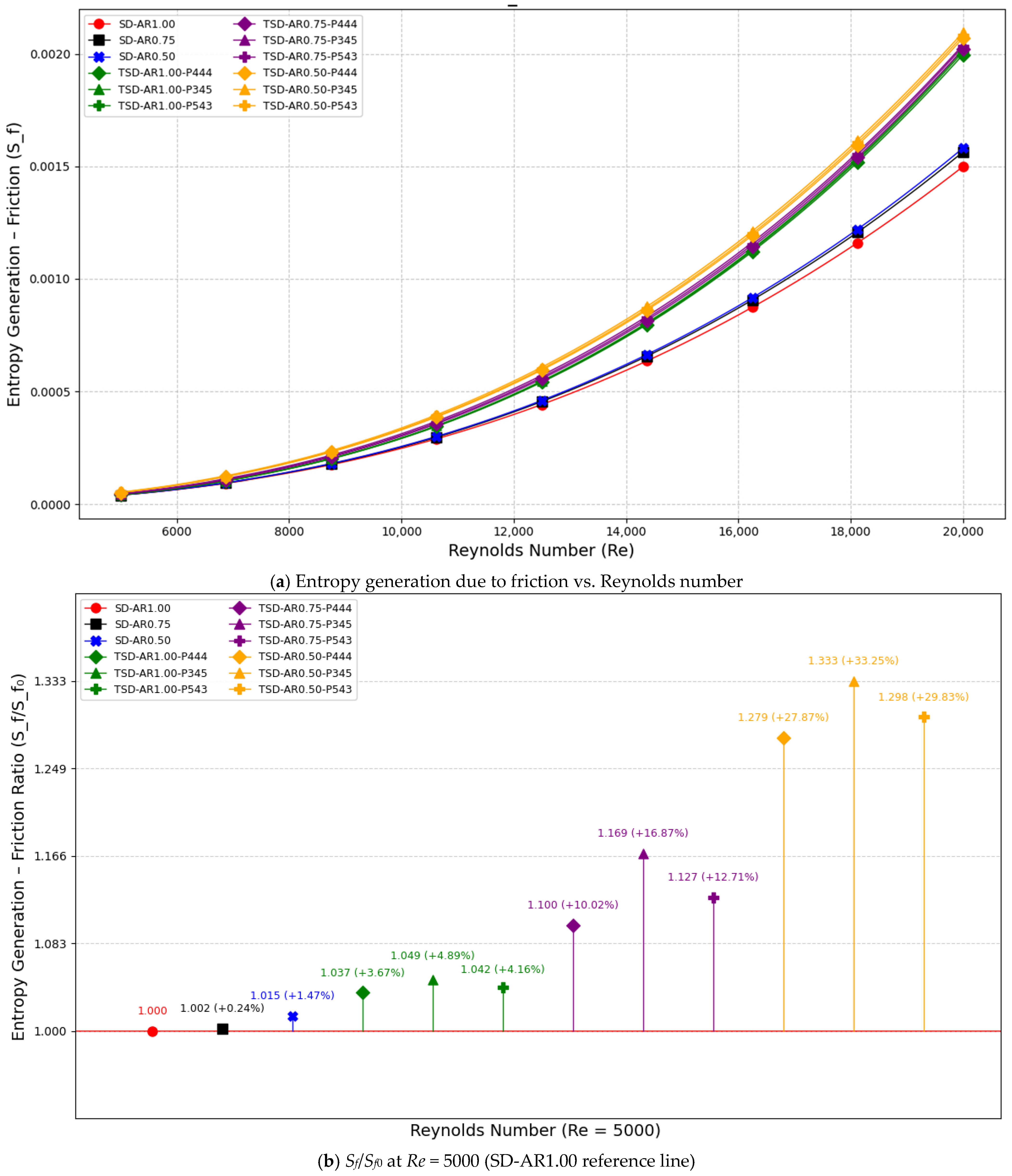
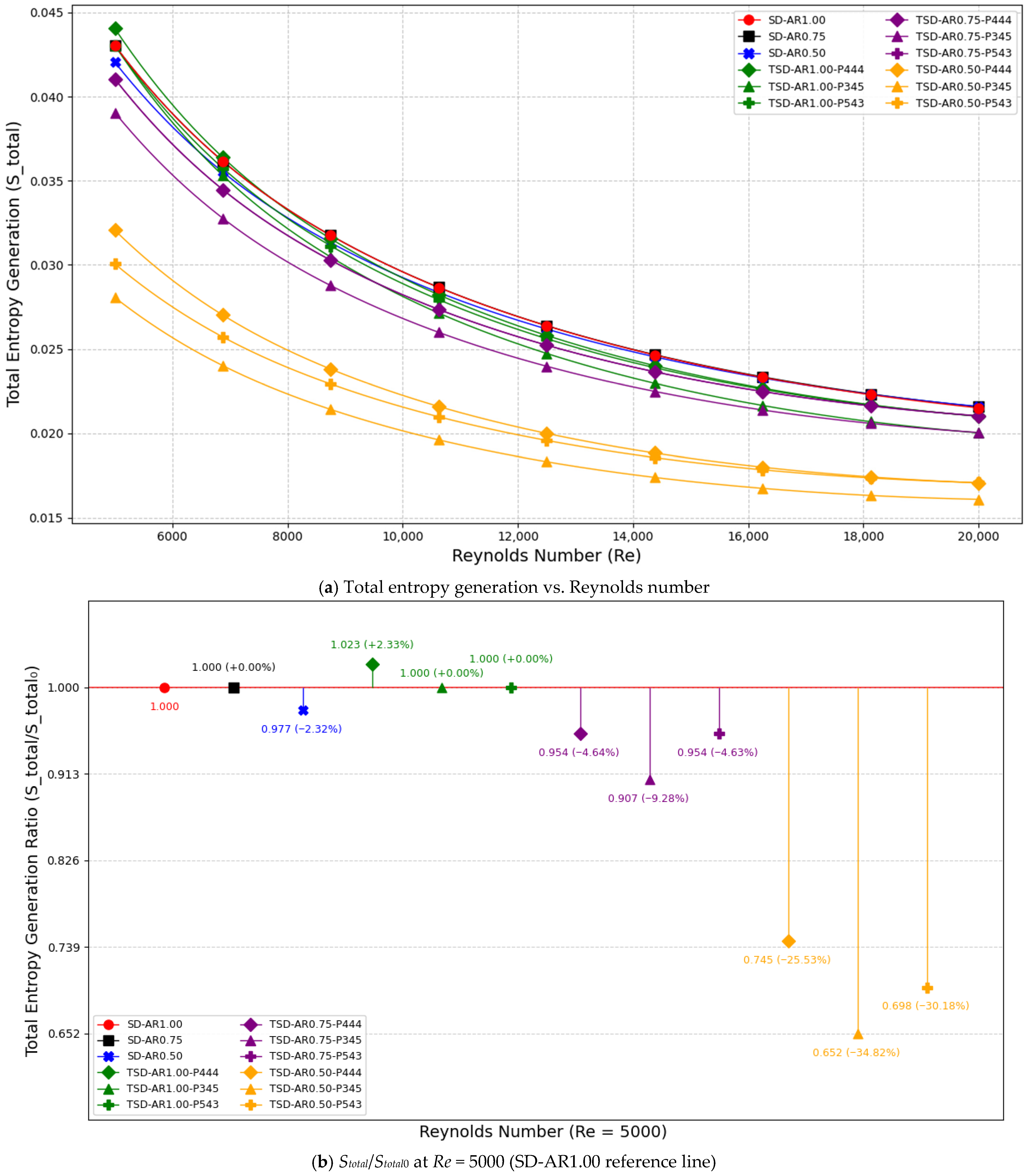
- Total entropy generation: The total entropy generation shows a clear sensitivity to the geometry. In this dataset, reducing AR and applying the gradient pitch can reduce the overall irreversibility relative to the baseline. For TSD-AR0.50-P345, the total entropy generation decreases by 34.8% at Re = 5000 and 25.1% at Re = 20,000 compared with SD-AR1.00, suggesting that the improvement is not only energetic (first law) but also thermodynamically meaningful (second law).
- ○
- Optimization outcome: Considering the results together (high Nu, acceptable f, high TPF, and low total entropy generation), the best overall design within the tested domain is TSD-AR0.50-P345. This case provides the highest Nu and TPF while also yielding one of the lowest total entropy generation levels, making it the most balanced option for practical use under the current operating range.
- ○
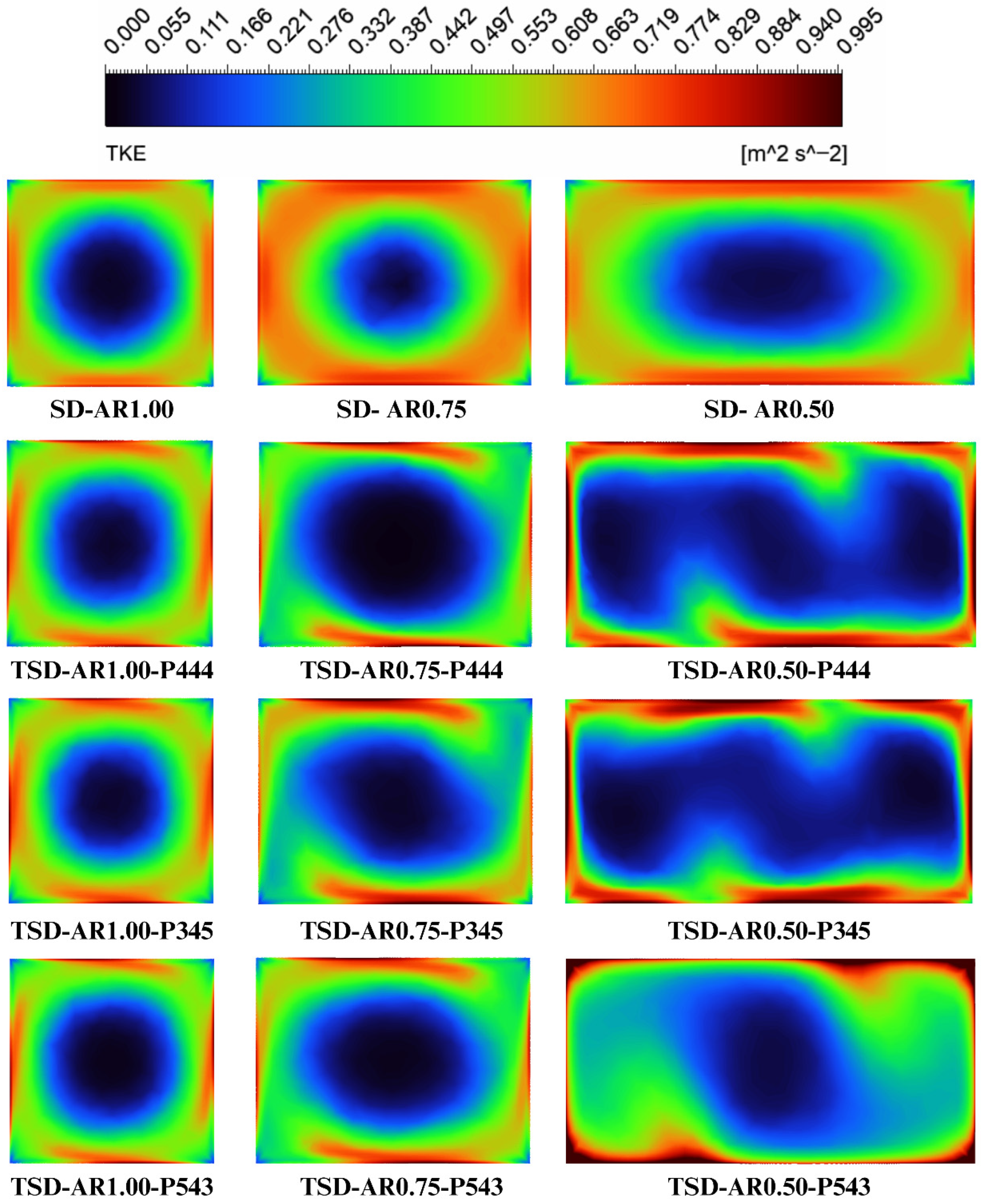
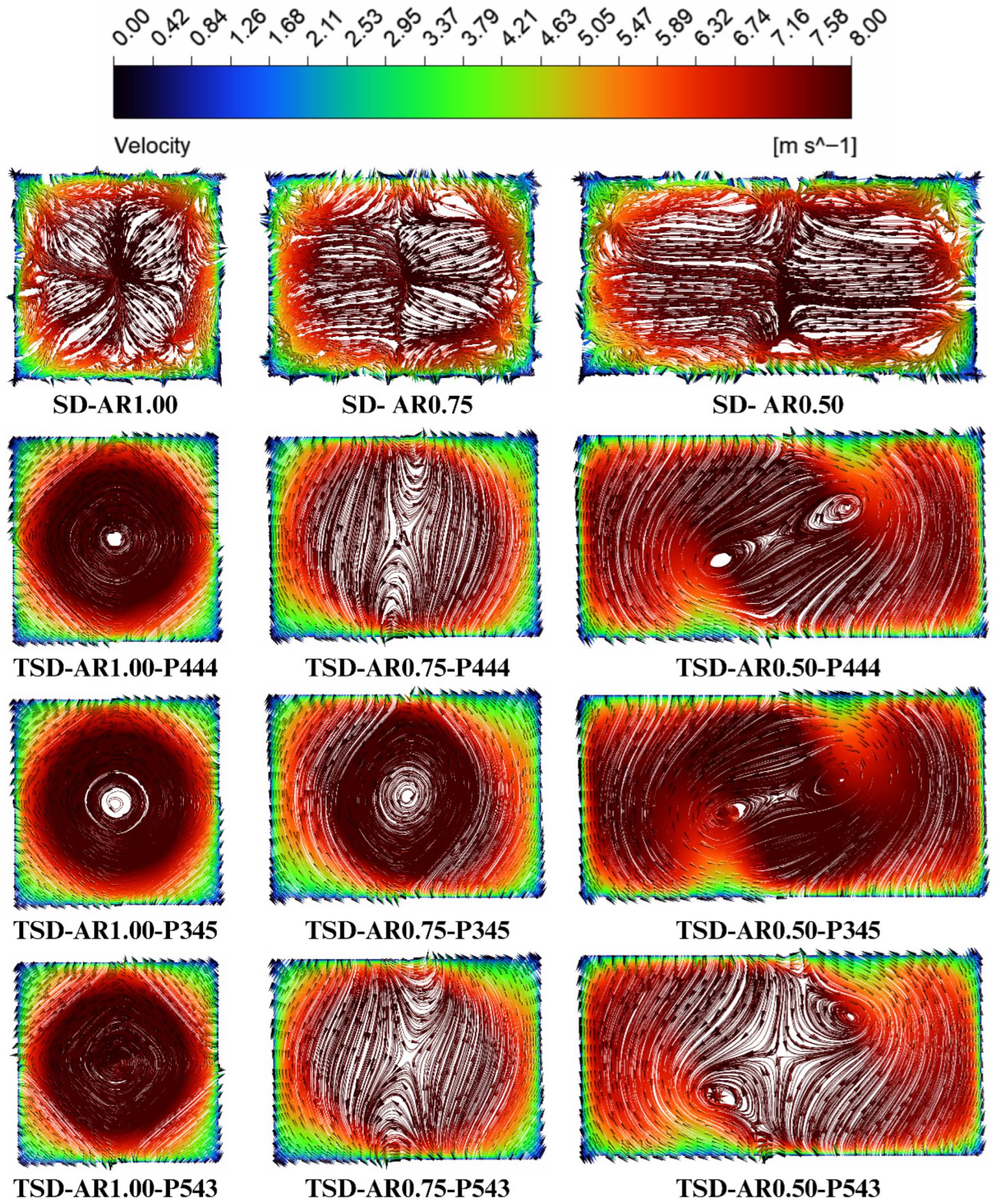
- Effect of the parameters studied: (i) Aspect ratio (AR) is the dominant geometric parameter: lowering AR from 1.00 to 0.50 strengthens secondary flow and mixing, which improves heat transfer but also increases pressure loss. (ii) Pitch strategy influences performance even when the same three pitch values are used: the P345 sequence generally produces slightly higher Nu than P543 (about 6–8% for AR = 0.50 at the two Reynolds endpoints), with a similar or slightly higher f, resulting in a higher TPF for P345 within this dataset.
Author Contributions
Funding
Institutional Review Board Statement
Informed Consent Statement
Data Availability Statement
Acknowledgments
Conflicts of Interest
Nomenclature
| A | internal surface area of the test tube [m2] |
| Be | Bejan number [−] |
| cp | specific heat of fluid [J/kg·K] |
| D | inner diameter of tube [m] |
| f | friction factor [−] |
| h | average convection coefficient [W/m2·K] |
| k | fluid thermal conductivity [W/m·K] |
| L | test tube length [m] |
| Lx | Winglet streamwise length measured on the tape [mm] |
| Hy | Winglet height measured normal to the tape edge/midline [mm] |
| Lr | Dimensionless winglet length, Lr = Lx/W [−] |
| Hr | Dimensionless winglet height, Hr = Hy/W [−] |
| rate of mass airflow [kg/s] | |
| Nu | Nusselt number [−] |
| Ns | entropy generation number [−] |
| ΔP | pressure differential [Pa] |
| Pr | Prandtl number [−] |
| q′ | heat flux per tube length [W/m] |
| Q | rate of transferring heat [W] |
| Re | Reynolds number [−] |
| rate of entropy generation [W/m3·K1] | |
| T | temperature [K] |
| U | average fluid velocity [m/s] |
| rate of volume airflow [m3/s] | |
| W | tape width [m] |
| Greek letters | |
| μ | dynamic viscosity [Ns/m−2] |
| σk | turbulent Prandtl numbers for k, dimensionless |
| σε | turbulent Prandtl numbers for ε, dimensionless |
| ε | turbulent dissipation rate [m2 s−3] |
| ρ | fluid density [kg/m−3] |
| ηEx | exergy efficiency |
| ν | kinematic viscosity [m2 s−1] |
| Subscripts | |
| 0 | plain/smooth tube |
| s | surface |
| m | mean |
| a | air |
| conv | convection |
| i, j, k | directions of the coordinate system |
| Superscripts | |
| — | average |
| Abbreviations | |
| SD | Straight duct (untwisted); baseline. |
| TSD | Twisted duct. |
| AR | Aspect ratio, AR = a/b. |
| P444 | Pitch 400–400–400 mm in three segments (inlet → outlet). |
| P345 | Pitch 300–400–500 mm in three segments (inlet → outlet). |
| P543 | Pitch 500–400–300 mm in three segments (inlet → outlet). |
| SD-ARx.xx | Straight duct with aspect ratio AR = x.xx. |
| TSD-ARx.xx-Pabc | Twisted duct with aspect ratio AR = x.xx and pitch code Pabc (three segments from inlet → outlet). |
References
- Gupta, A.; Uniyal, M. Review of heat transfer augmentation through different passive intensifier methods. IOSR J. Mech. Civ. Eng. 2012, 1, 14e21. [Google Scholar] [CrossRef]
- Yang, S.; Zhang, L.; Xu, H. Experimental study on convective heat transfer and flow resistance characteristics of water flow in twisted elliptical tubes. Appl. Therm. Eng. 2011, 31, 2981–2991. [Google Scholar] [CrossRef]
- Chang, K.S.; Choi, J.S.; Kim, J.S. Laminar fluid flow in a twisted elliptic tube. KSME J. 1988, 2, 44–51. [Google Scholar] [CrossRef]
- Arasteh, H.; Rahbari, A.; Mashayekhi, R.; Keshmiri, A.; Mahani, R.B.; Talebizadehsardari, P. Effect of pitch distance of rotational twisted tape on the heat transfer and fluid flow characteristics. Int. J. Therm. Sci. 2021, 170, 106966. [Google Scholar] [CrossRef]
- Mashoofi, N.; Pourahmad, S.; Pesteei, S.M. Study the effect of axially perforated twisted tapes on the thermal performance enhancement factor of a double tube heat exchanger. Case Stud. Therm. Eng. 2017, 10, 161–168. [Google Scholar] [CrossRef]
- Harish, H.; Manjunath, K. Heat and fluid flow behaviors in a laminar tube flow with circular protruded twisted tape inserts. Case Stud. Therm. Eng. 2022, 32, 101880. [Google Scholar] [CrossRef]
- Saysroy, A.; Eiamsa-ard, S. Enhancing convective heat transfer in laminar and turbulent flow regions using multi-channel twisted tape inserts. Int. J. Therm. Sci. 2017, 121, 55–74. [Google Scholar] [CrossRef]
- Natarajan, A.; Venkatesh, R.; Gobinath, S.; Devakumar, L.; Gopalakrishnan, K. CFD simulation of heat transfer enhancement in circular tube with twisted tape insert by using nanofluids. In Materials Today: Proceedings; Elsevier Ltd.: Amsterdam, The Netherlands, 2020; Volume 21, pp. 572–577. [Google Scholar]
- Nakhchi, M.E.; Esfahani, J.A. Numerical investigation of rectangular-cut twisted tape insert on performance improvement of heat exchangers. Int. J. Therm. Sci. 2019, 138, 75–83. [Google Scholar] [CrossRef]
- Nakhchi, M.E.; Esfahani, J.A. Performance intensification of turbulent flow through heat exchanger tube using double V-cut twisted tape inserts. Chem. Eng. Process.-Process Intensif. 2019, 141, 107533. [Google Scholar] [CrossRef]
- Abed, A.M.; Majdi, H.S.; Hussein, Z.; Fadhil, D.; Abdulkadhim, A. Numerical analysis of flow and heat transfer enhancement in a horizontal pipe with P-TT and V-Cut twisted tape. Case Stud. Therm. Eng. 2018, 12, 749–758. [Google Scholar] [CrossRef]
- Dandoutiya, B.K.; Kumar, A. W-cut twisted tape’s effect on the thermal performance of a double pipe heat exchanger: A numerical study. Case Stud. Therm. Eng. 2022, 34, 102031. [Google Scholar] [CrossRef]
- He, Y.; Liu, L.; Li, P.; Ma, L. Experimental study on heat transfer enhancement characteristics of tube with cross hollow twisted tape inserts. Appl. Therm. Eng. 2018, 131, 743–749. [Google Scholar] [CrossRef]
- Paneliya, S.; Khanna, S.; Patel, U.; Prajapati, P.; Mukhopadhyay, I. Systematic investigation on fluid flow and heat transfer characteristic of a tube equipped with variable pitch twisted tape. Int. J. Thermofluids 2020, 1, 100005. [Google Scholar] [CrossRef]
- Eiamsa-ard, S.; Changcharoen, W. Flow structure and heat transfer in a square duct fitted with dual/quadruple twisted-tapes: Influence of tape configuration. J. Mech. Sci. Technol. 2015, 29, 3501–3518. [Google Scholar] [CrossRef]
- Chang, S.W.; Wu, P.S.; Liu, J.H. Aerothermal performance of square duct enhanced by twisted tape with inclined ribs and slots. Int. J. Heat Mass Transf. 2021, 177, 121547. [Google Scholar] [CrossRef]
- Patil, S.V.; Babu, P.V.V. Heat transfer and pressure drop studies through a square duct fitted with increasing and decreasing order of twisted tape. Heat Transf. Eng. 2014, 35, 1380–1387. [Google Scholar] [CrossRef]
- Saha, S.K.; Mallick, D.N. Heat transfer and pressure drop characteristics of laminar flow in rectangular and square plain ducts and ducts with twisted-tape inserts. J. Heat Transf. 2005, 127, 966–977. [Google Scholar] [CrossRef]
- Patil, S.V.; Vijaybabu, P.V. Heat transfer enhancement through a square duct fitted with twisted tape inserts. Heat Mass Transf. 2012, 48, 1803–1811. [Google Scholar] [CrossRef]
- Khoshvaght-Aliabadi, M.; Khaligh, S.F.; Tavassoli, Z. An investigation of heat transfer in heat exchange devices with spirally-coiled twisted-ducts using nanofluid. Appl. Therm. Eng. 2018, 143, 358–375. [Google Scholar] [CrossRef]
- Promthaisong, P.; Chuwattanakul, V.; Eiamsa-ard, S. 3D numerical analysis of thermal-hydraulic behaviors of turbulent flow inside twisted square ducts. Thermophys. Aeromech. 2020, 27, 345–357. [Google Scholar] [CrossRef]
- Bhadouriya, R.; Agrawal, A.; Prabhu, S.V. Experimental and numerical study of fluid flow and heat transfer in a twisted square duct. Int. J. Heat Mass Transf. 2015, 82, 143–158. [Google Scholar] [CrossRef]
- Bhadouriya, R.; Agrawal, A.; Prabhu, S.V. Experimental and numerical study of fluid flow and heat transfer in an annulus of inner twisted square duct and outer circular pipe. Int. J. Therm. Sci. 2015, 94, 96–109. [Google Scholar] [CrossRef]
- Promvonge, P.; Sripattanapipat, S.; Suchatawat, M.; Nakhchi, M.E.; Skullong, S. Effect of louver-perforated V-type baffles on thermal effectiveness and entropy in round tube. Int. J. Therm. Sci. 2025, 214, 109939. [Google Scholar] [CrossRef]
- Promvonge, P.; Thianpong, C.; Jayranaiwachira, N.; Nakhchi, M.E.; Skullong, S. Effect of trapezoidal louvered winglets on increased heat transfer and exergy in tubular heat exchanger. Int. J. Therm. Sci. 2024, 204, 109214. [Google Scholar] [CrossRef]
- Alsharifi, T.; Aljibori, H.S.S.; Mahdi, J.M. Design optimization and performance evaluation of a photovoltaic/thermal collector with porous twisted tape inserts: A comprehensive energy and exergy analysis. Int. Commun. Heat Mass Transf. 2024, 159, 108104. [Google Scholar] [CrossRef]
- Elmasry, Y.; Chaturvedi, R.; Ali, A.; Mamun, K.; Hadrawi, S.K.; Smaisim, G.F. Numerical analysis and RSM modeling of the effect of using a V-cut twisted tape turbulator in the absorber tube of a photovoltaic/thermal system on the energy and exergy performances of the system. Eng. Anal. Bound. Elem. 2023, 155, 340–350. [Google Scholar] [CrossRef]
- Kalateh, M.R.; Kianifar, A.; Sardarabadi, M. Energy, exergy, and entropy generation analyses of a water-based photovoltaic thermal system equipped with clockwise counter-clockwise twisted tapes: An indoor experimental study. Appl. Therm. Eng. 2022, 215, 118906. [Google Scholar] [CrossRef]
- Jayranaiwachira, N.; Promvonge, P.; Tongyote, P.; Skullong, S.; Nakhchi, M.E. Analysis of exergy and heat transfer in a tube fitted with flapped V-baffles. Case Stud. Therm. Eng. 2024, 59, 104483. [Google Scholar] [CrossRef]
- Eiamsa-ard, S.; Kiatkittipong, K. Heat transfer enhancement by multiple twisted tape inserts and TiO2/water nanofluid. Appl. Therm. Eng. 2014, 70, 896–924. [Google Scholar] [CrossRef]
- Bucak, H.; Yilmaz, F. Heat transfer augmentation using periodically spherical dimple-protrusion patterned walls of twisted tape. Int. J. Therm. Sci. 2022, 171, 107211. [Google Scholar] [CrossRef]
- Kaood, A.; Fadodun, O.G. Numerical investigation of turbulent entropy production rate in conical tubes fitted with a twisted-tape insert. Int. Commun. Heat Mass Transf. 2022, 139, 106520. [Google Scholar] [CrossRef]
- Gnielinski, V. New equations for heat transfer in turbulent pipe and channel flows. Int. Chem. Eng. 1976, 16, 359–368. [Google Scholar]
- Promvonge, P.; Skullong, S.; Kwankaomeng, S.; Thiangpong, C. Heat transfer in square duct fitted diagonally with angle-finned tape-Part 1: Experimental study. Inter. Com. Heat Mass Transf. 2012, 39, 617–624. [Google Scholar] [CrossRef]
- Flionenko, G.K. Hydraulic resistance in pipes. Teploenergetika 1954, 1, 40–44. (In Russian) [Google Scholar]
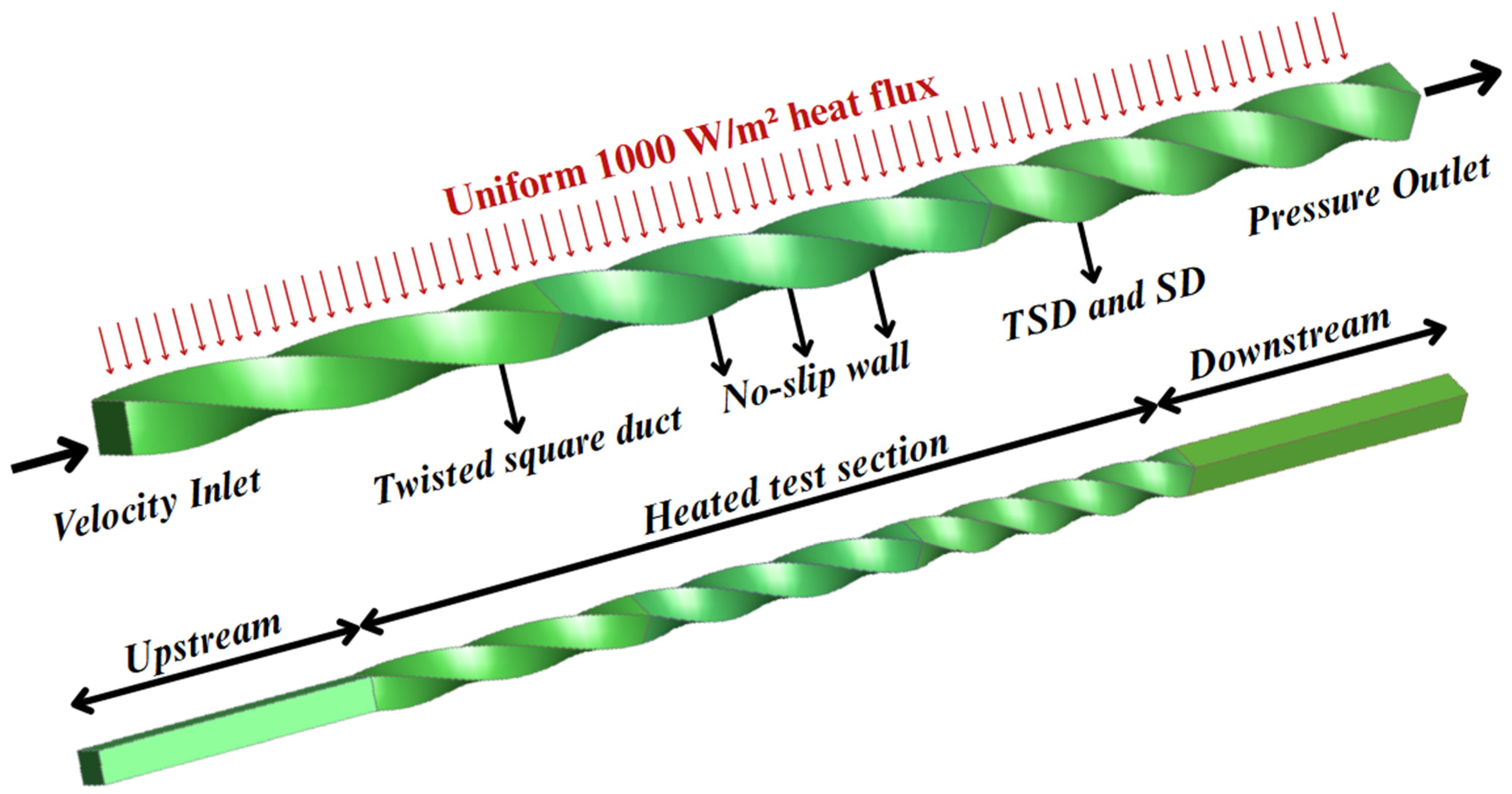
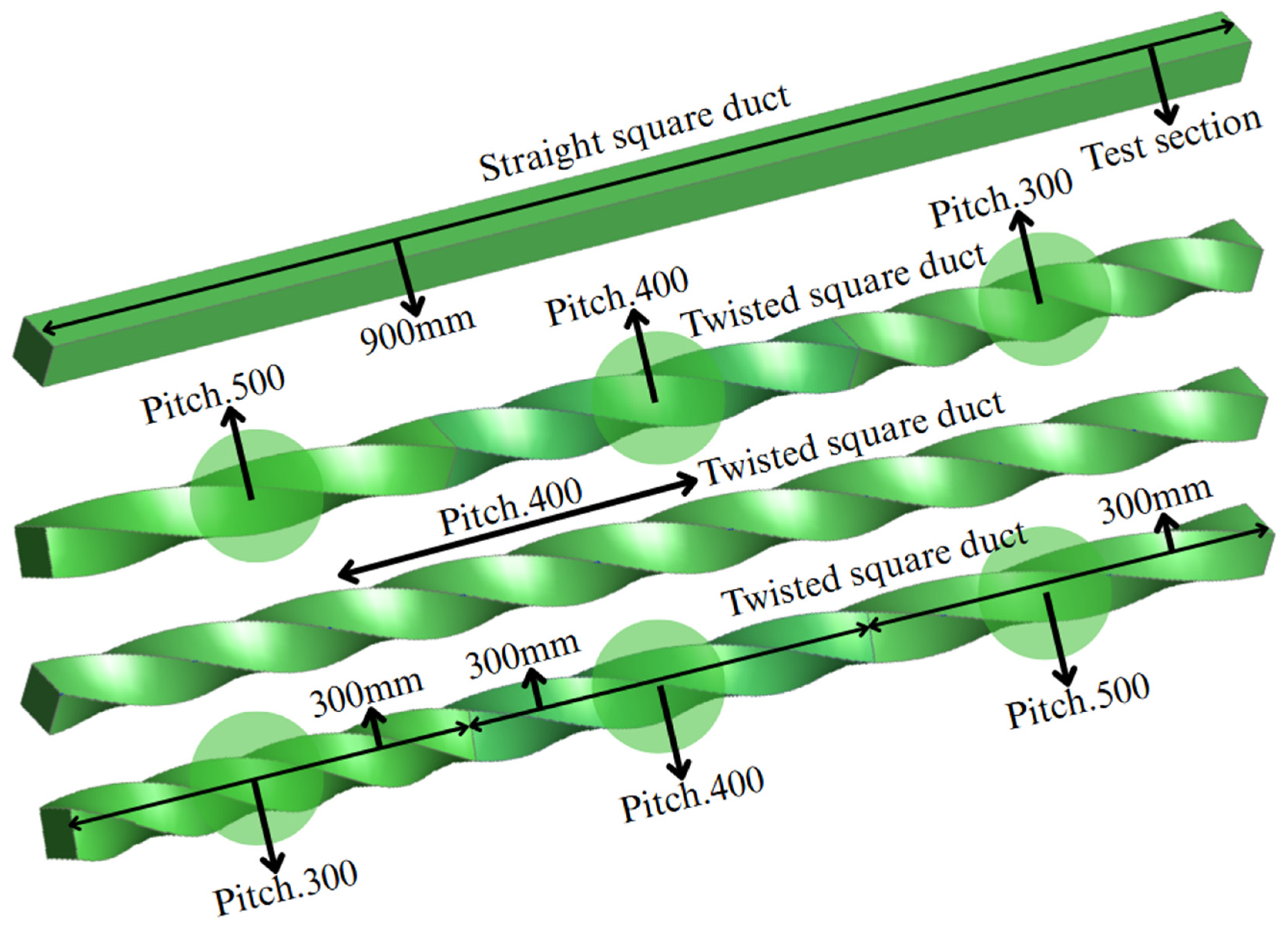
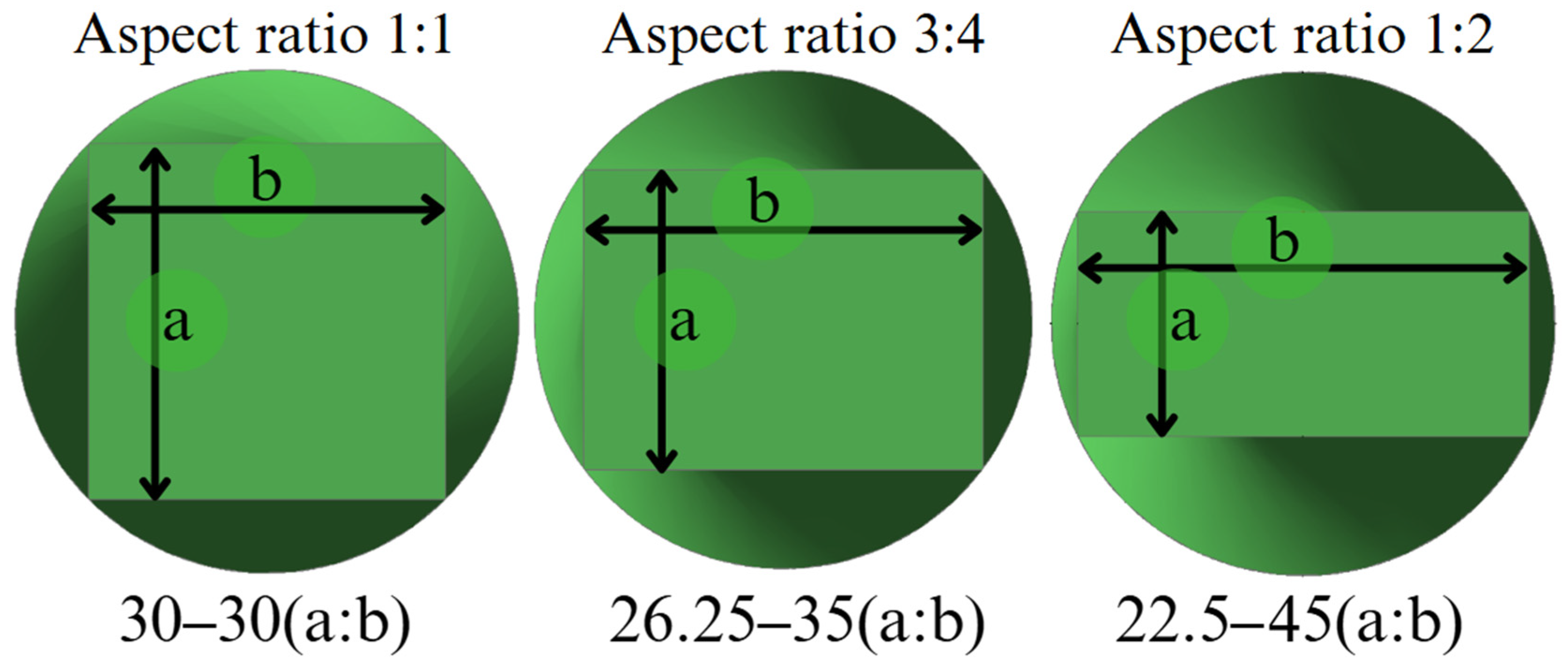
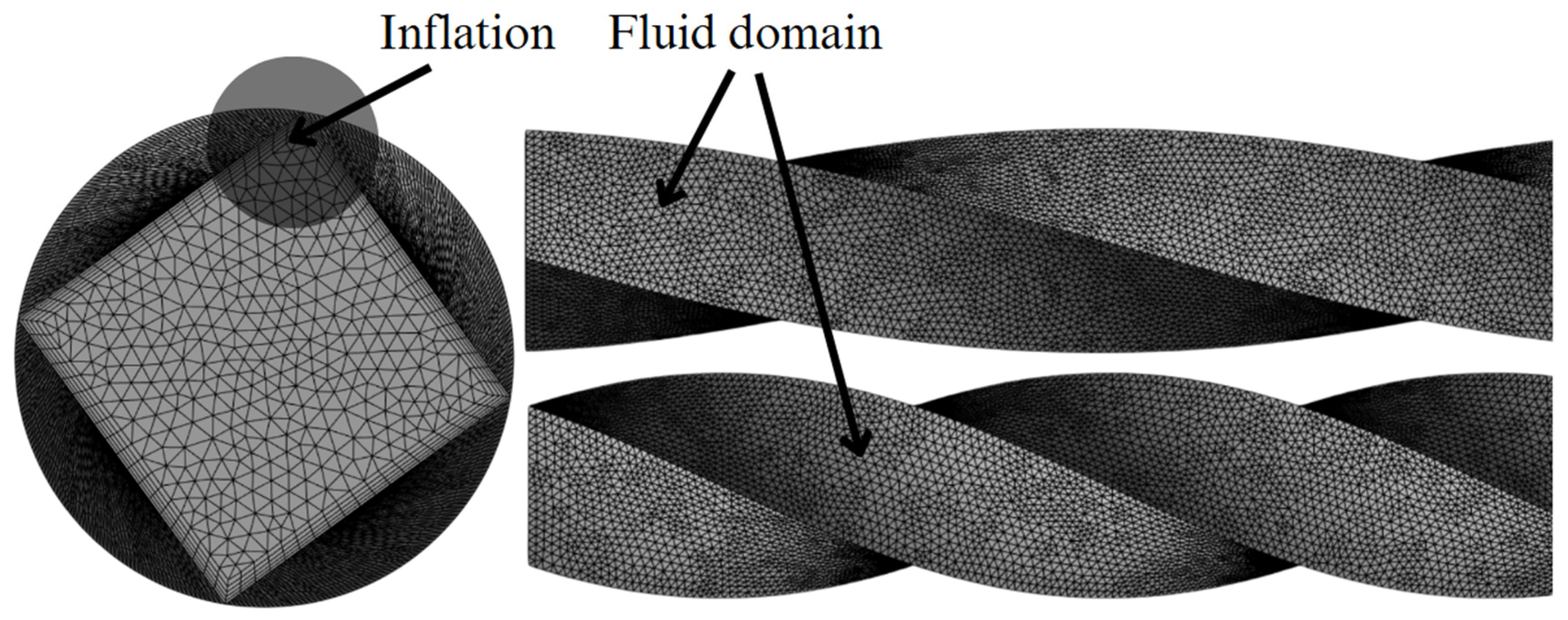
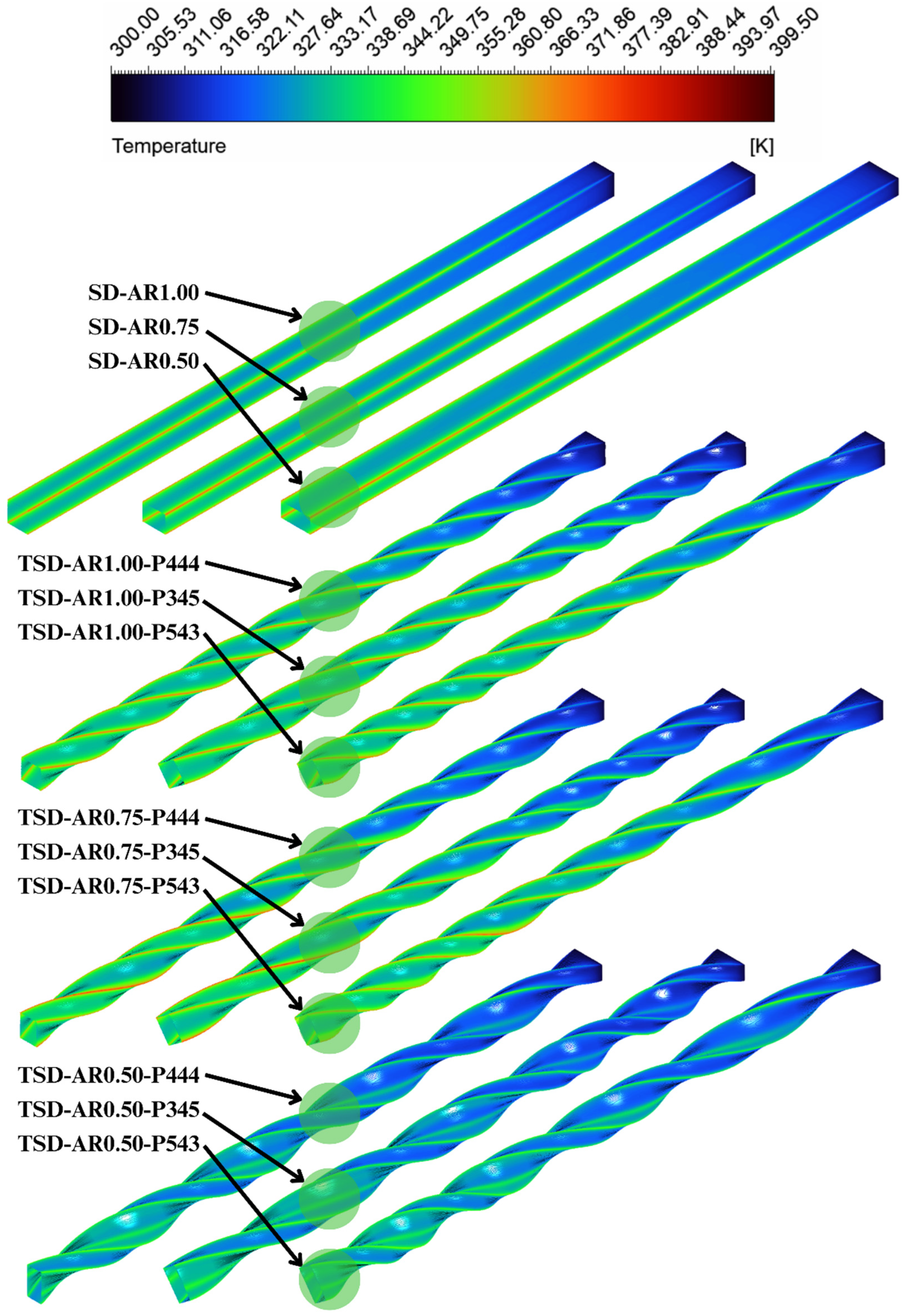
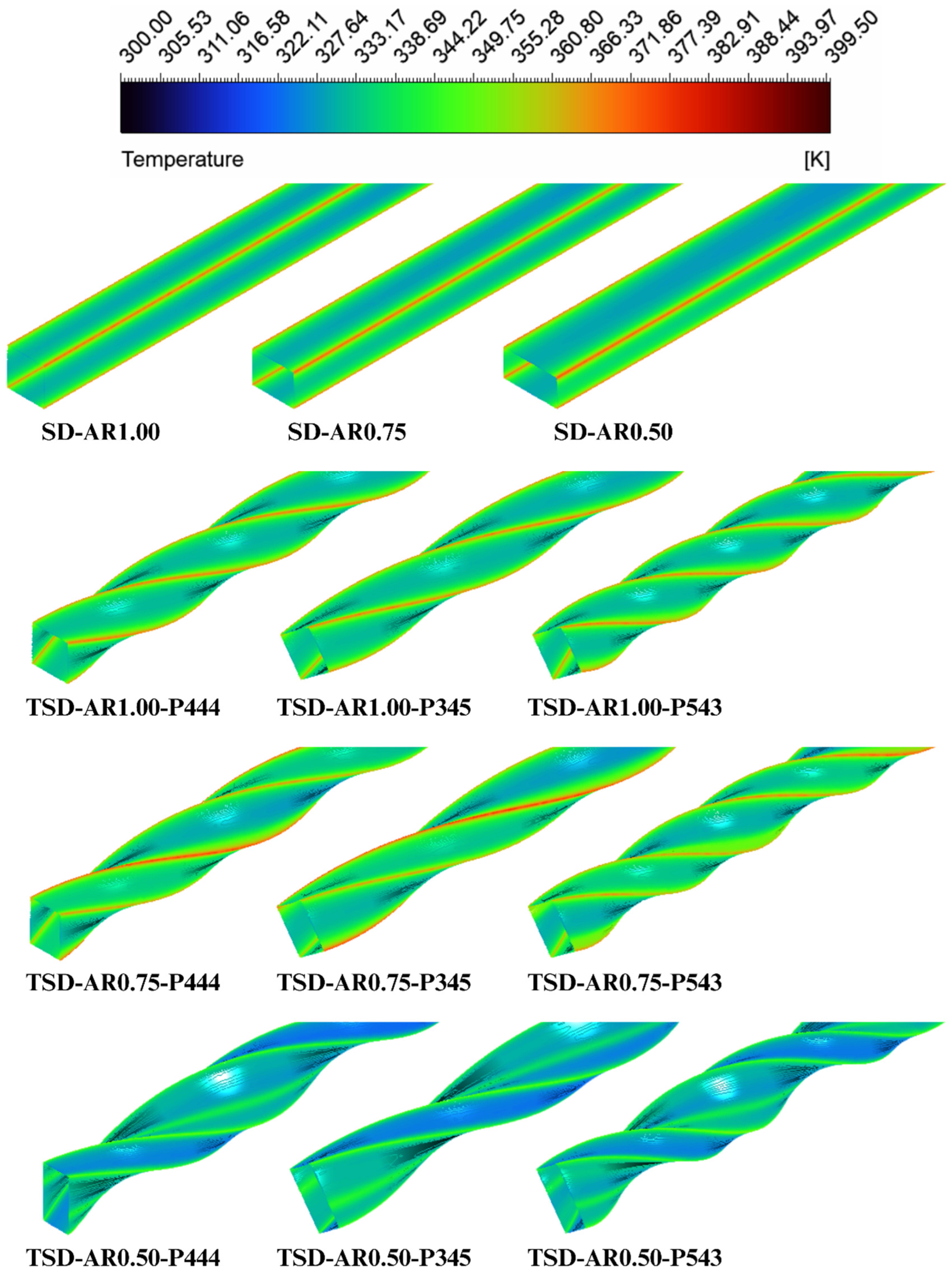
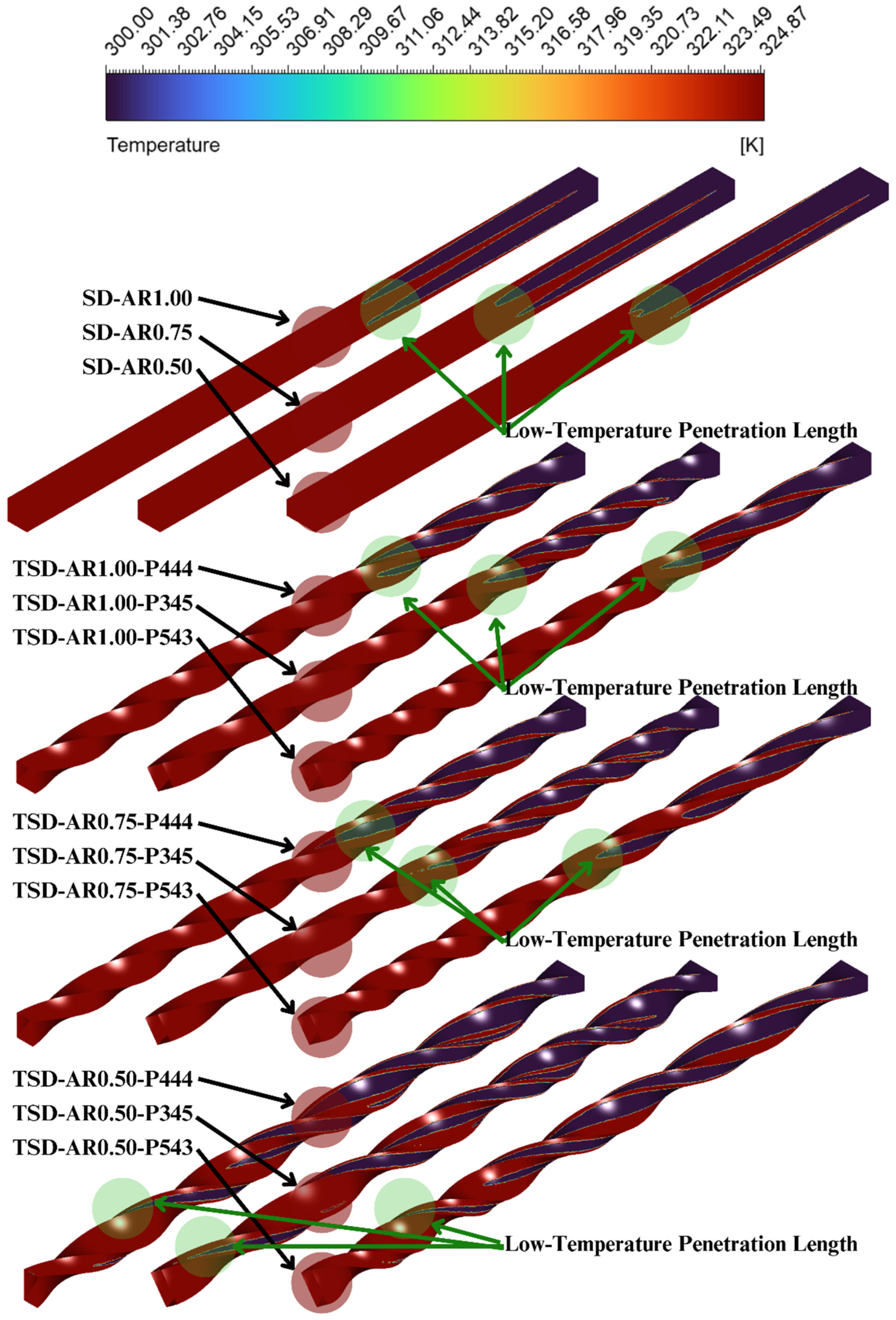
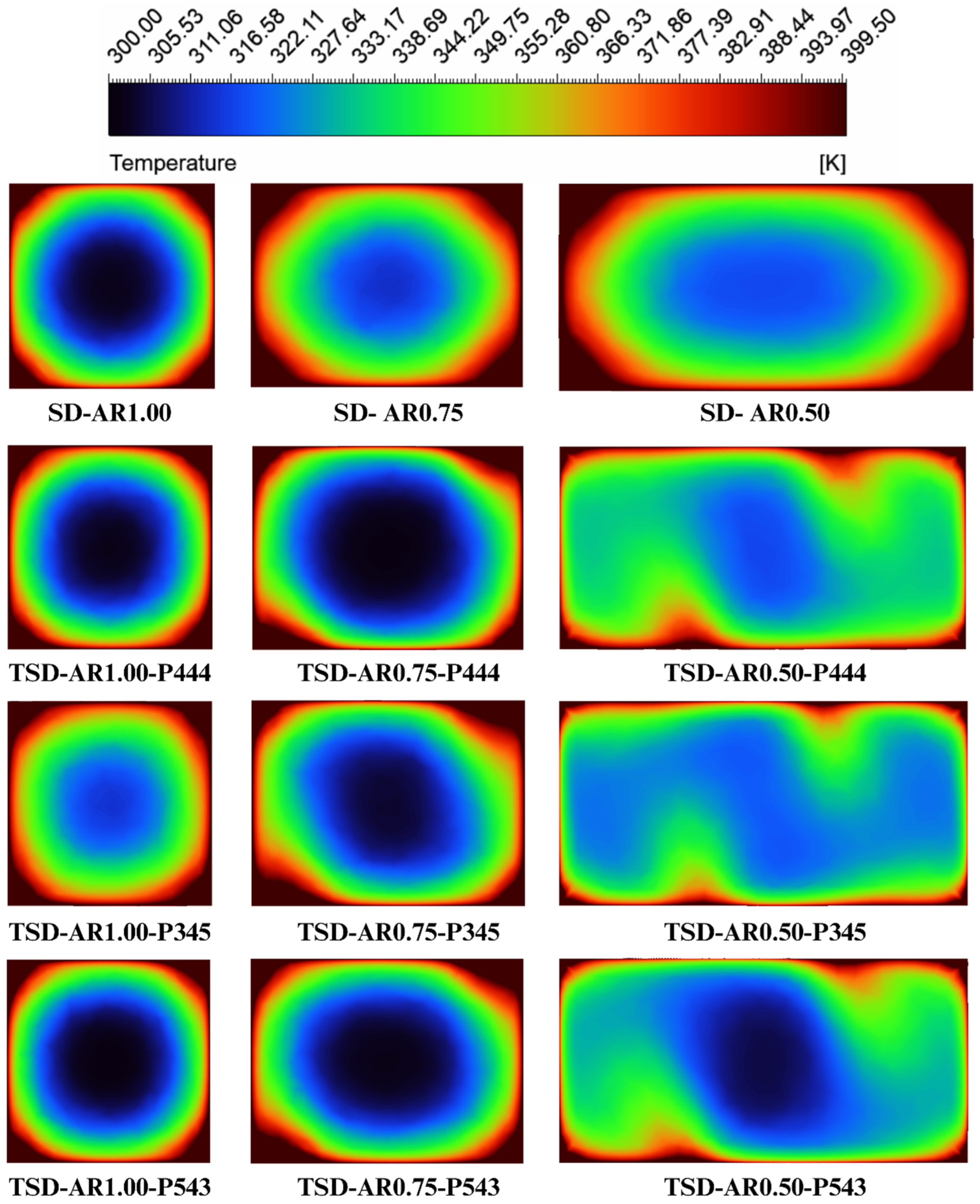

| Case | Description | AR = a/b | Pitch Code |
|---|---|---|---|
| SD-AR1.00 | Straight square duct, a = 30 mm, b = 30 mm (1:1); no twist, baseline. | 1.00 | - |
| SD-AR0.75 | Straight square duct, a = 26.25 mm, b = 35 mm (3:4); no twist, baseline. | 0.75 | - |
| SD-AR0.50 | Straight square duct, a = 22.5 mm, b = 45 mm (1:2); no twist, baseline. | 0.50 | - |
| TSD-AR1.00-P444 | Twisted square duct, a = 30 mm, b = 30 mm (1:1); P444: pitch 400–400–400 mm in three segments. | 1.00 | P444 |
| TSD-AR1.00-P345 | Twisted square duct, a = 30 mm, b = 30 mm (1:1); P345: pitch 300–400–500 mm from inlet to outlet. | 1.00 | P345 |
| TSD-AR1.00-P543 | Twisted square duct, a = 30 mm, b = 30 mm (1:1); P543: pitch 500–400–300 mm from inlet to outlet. | 1.00 | P543 |
| TSD-AR0.75-P444 | Twisted rectangular duct, a = 26.25 mm, b = 35 mm (3:4); P444: pitch 400–400–400 mm in three segments. | 0.75 | P444 |
| TSD-AR0.75-P345 | Twisted rectangular duct, a = 26.25 mm, b = 35 mm (3:4); P345: pitch 300–400–500 mm from inlet to outlet. | 0.75 | P345 |
| TSD-AR0.75-P543 | Twisted rectangular duct, a = 26.25 mm, b = 35 mm (3:4); P543: pitch 500–400–300 mm from inlet to outlet. | 0.75 | P543 |
| TSD-AR0.50-P444 | Twisted rectangular duct, a = 22.5 mm, b = 45 mm (1:2); P444: pitch 400–400–400 mm in three segments. | 0.50 | P444 |
| TSD-AR0.50-P345 | Twisted rectangular duct, a = 22.5 mm, b = 45 mm (1:2); P345: pitch 300–400–500 mm from inlet to outlet. | 0.50 | P345 |
| TSD-AR0.50-P543 | Twisted rectangular duct, a = 22.5 mm, b = 45 mm (1:2); P543: pitch 500–400–300 mm from inlet to outlet. | 0.50 | P543 |
| Mesh Designation | Number of Elements (Millions) | Nu | % Nu (vs. G4) | (f) | % f (vs. G4) |
|---|---|---|---|---|---|
| G1 | 1.2 | 82.80 | 1.31% | 0.0526 | 1.74% |
| G2 | 1.5 | 83.50 | 0.48% | 0.0520 | 0.58% |
| G3 (Selected) | 1.8 | 83.82 | 0.10% | 0.0518 | 0.19% |
| G4 | 2.1 | 83.90 | - | 0.0517 | - |
| Investigator | Study | Nu/Nu0 | Re |
|---|---|---|---|
| Promthaisong et al. [21] TR = 6 | Experimental | 1.42 | 5000 |
| Bhadouriya et al. [22] H = 16.5 | Experimental and Numerical | 1.49 | 5000 |
| Bhadouriya et al. [23] H = 11.5 | Experimental and Numerical | 1.60 | 5000 |
| Present study, TSD-AR0.50-P444 | Numerical | 1.37 | 5000 |
| Present study, TSD-AR0.50-P345 | Numerical | 1.49 | 5000 |
| Present study, TSD-AR0.50-P543 | Numerical | 1.41 | 5000 |
Disclaimer/Publisher’s Note: The statements, opinions and data contained in all publications are solely those of the individual author(s) and contributor(s) and not of MDPI and/or the editor(s). MDPI and/or the editor(s) disclaim responsibility for any injury to people or property resulting from any ideas, methods, instructions or products referred to in the content. |
© 2026 by the authors. Licensee MDPI, Basel, Switzerland. This article is an open access article distributed under the terms and conditions of the Creative Commons Attribution (CC BY) license.
Share and Cite
Samruaisin, P.; Liengsirikul, S.; Phila, A.; Maruyama, N.; Shoon Wai, T.; Hirota, M.; Naphon, P.; Chuwattanakul, V.; Chokphoemphun, S.; Eiamsa-ard, S. Numerical Investigation of Thermodynamic Performance in Gradient-Pitch Twisted Square Ducts with Variable Aspect Ratio. Eng 2026, 7, 166. https://doi.org/10.3390/eng7040166
Samruaisin P, Liengsirikul S, Phila A, Maruyama N, Shoon Wai T, Hirota M, Naphon P, Chuwattanakul V, Chokphoemphun S, Eiamsa-ard S. Numerical Investigation of Thermodynamic Performance in Gradient-Pitch Twisted Square Ducts with Variable Aspect Ratio. Eng. 2026; 7(4):166. https://doi.org/10.3390/eng7040166
Chicago/Turabian StyleSamruaisin, Prachya, Sathaporn Liengsirikul, Arnut Phila, Naoki Maruyama, Thiri Shoon Wai, Masafumi Hirota, Paisan Naphon, Varesa Chuwattanakul, Suriya Chokphoemphun, and Smith Eiamsa-ard. 2026. "Numerical Investigation of Thermodynamic Performance in Gradient-Pitch Twisted Square Ducts with Variable Aspect Ratio" Eng 7, no. 4: 166. https://doi.org/10.3390/eng7040166
APA StyleSamruaisin, P., Liengsirikul, S., Phila, A., Maruyama, N., Shoon Wai, T., Hirota, M., Naphon, P., Chuwattanakul, V., Chokphoemphun, S., & Eiamsa-ard, S. (2026). Numerical Investigation of Thermodynamic Performance in Gradient-Pitch Twisted Square Ducts with Variable Aspect Ratio. Eng, 7(4), 166. https://doi.org/10.3390/eng7040166

