
The Model and Burner Development for Crude Glycerol and Used Vegetable Mixing: Cube Mushroom Steaming Oven


Abstract
1. Introduction
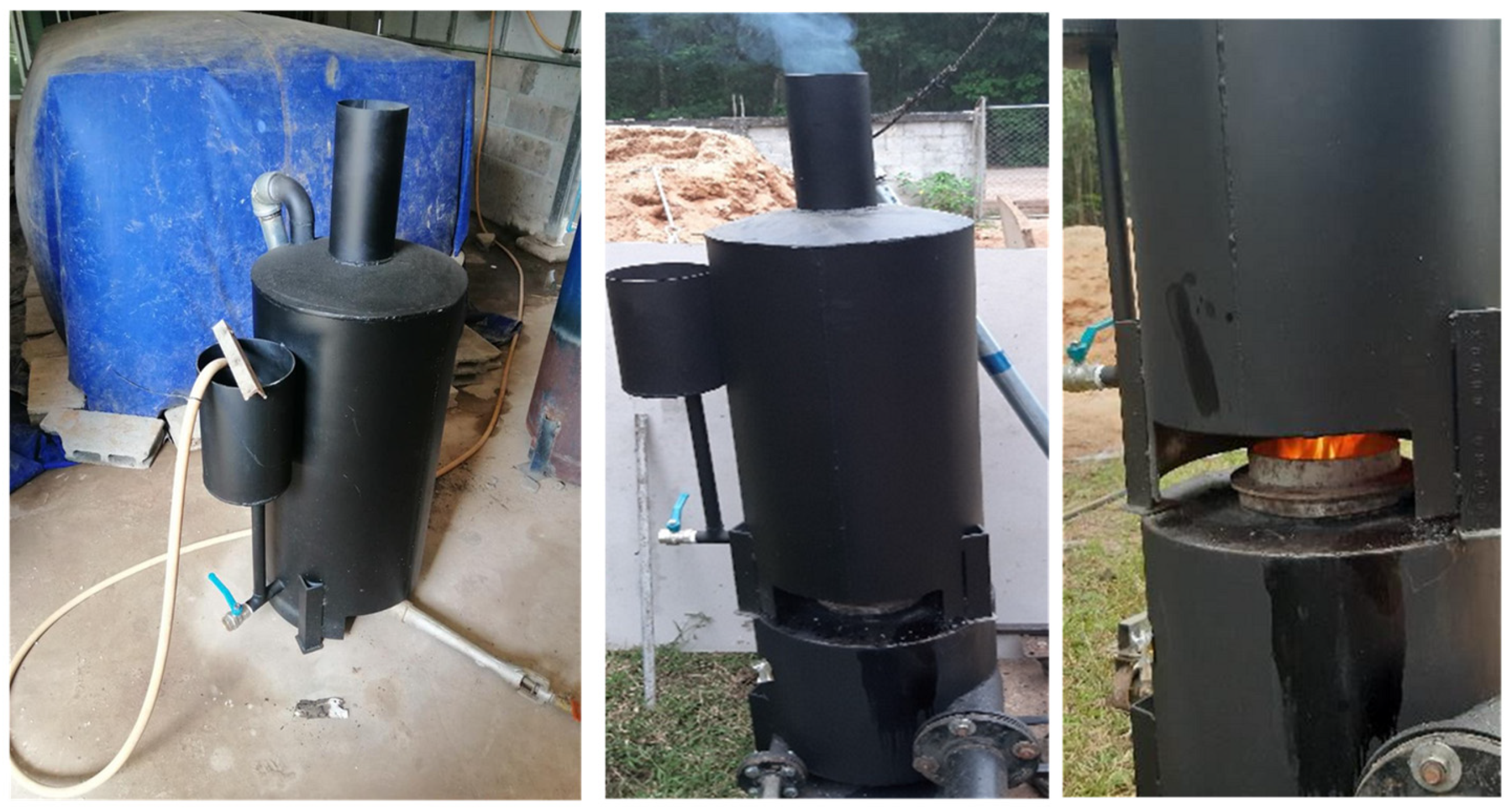
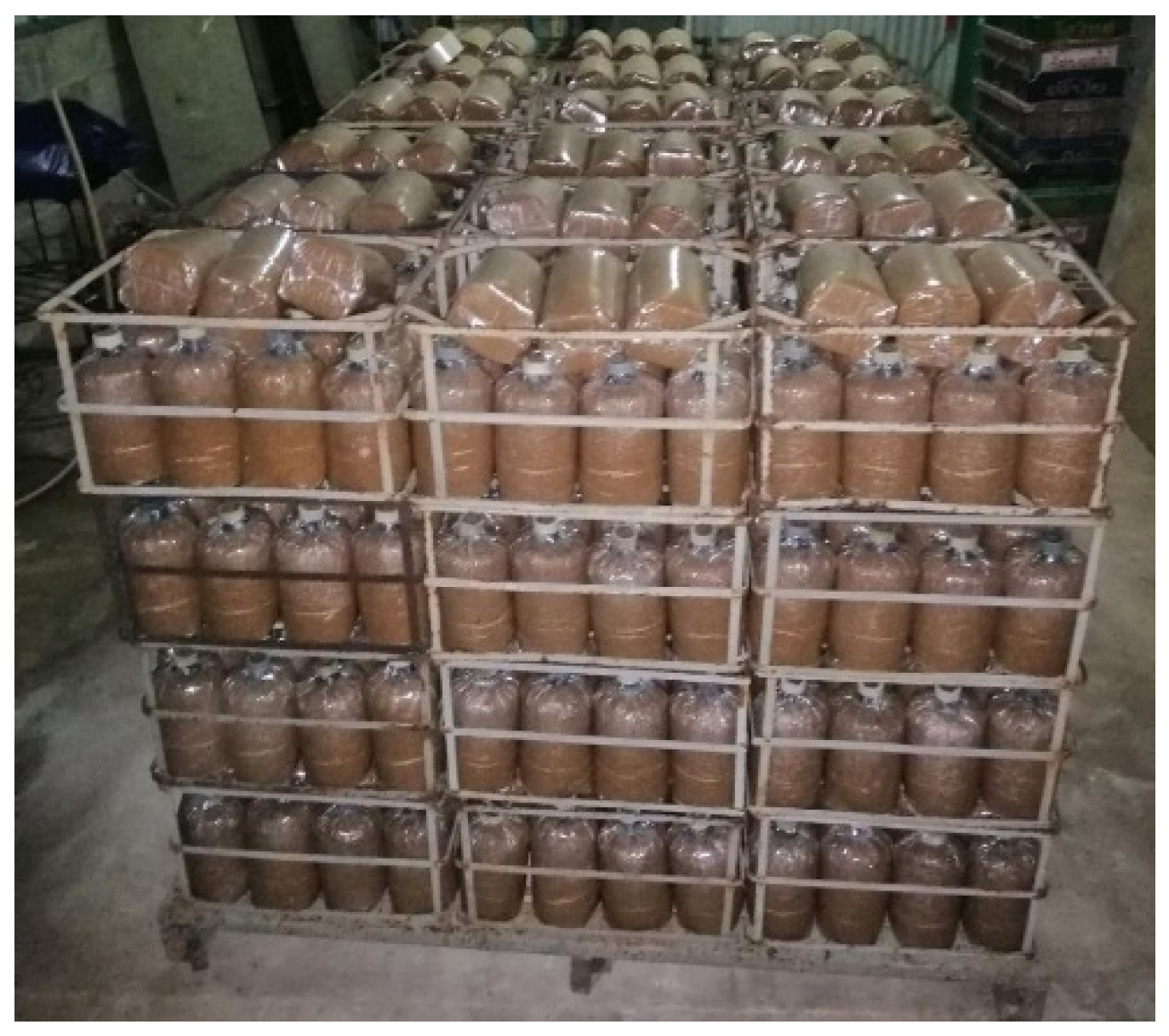
2. Experimental Apparatus and Procedure
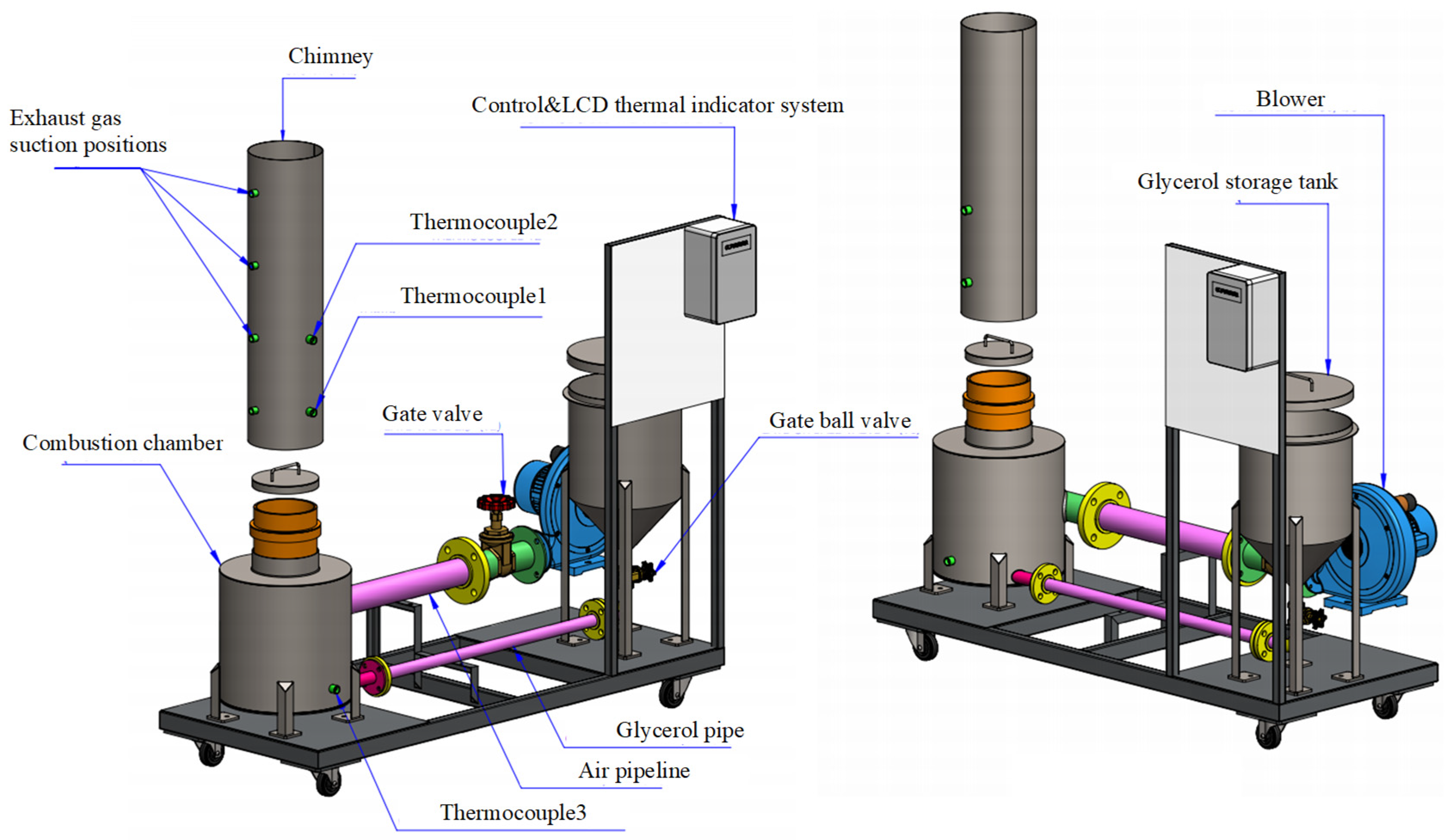
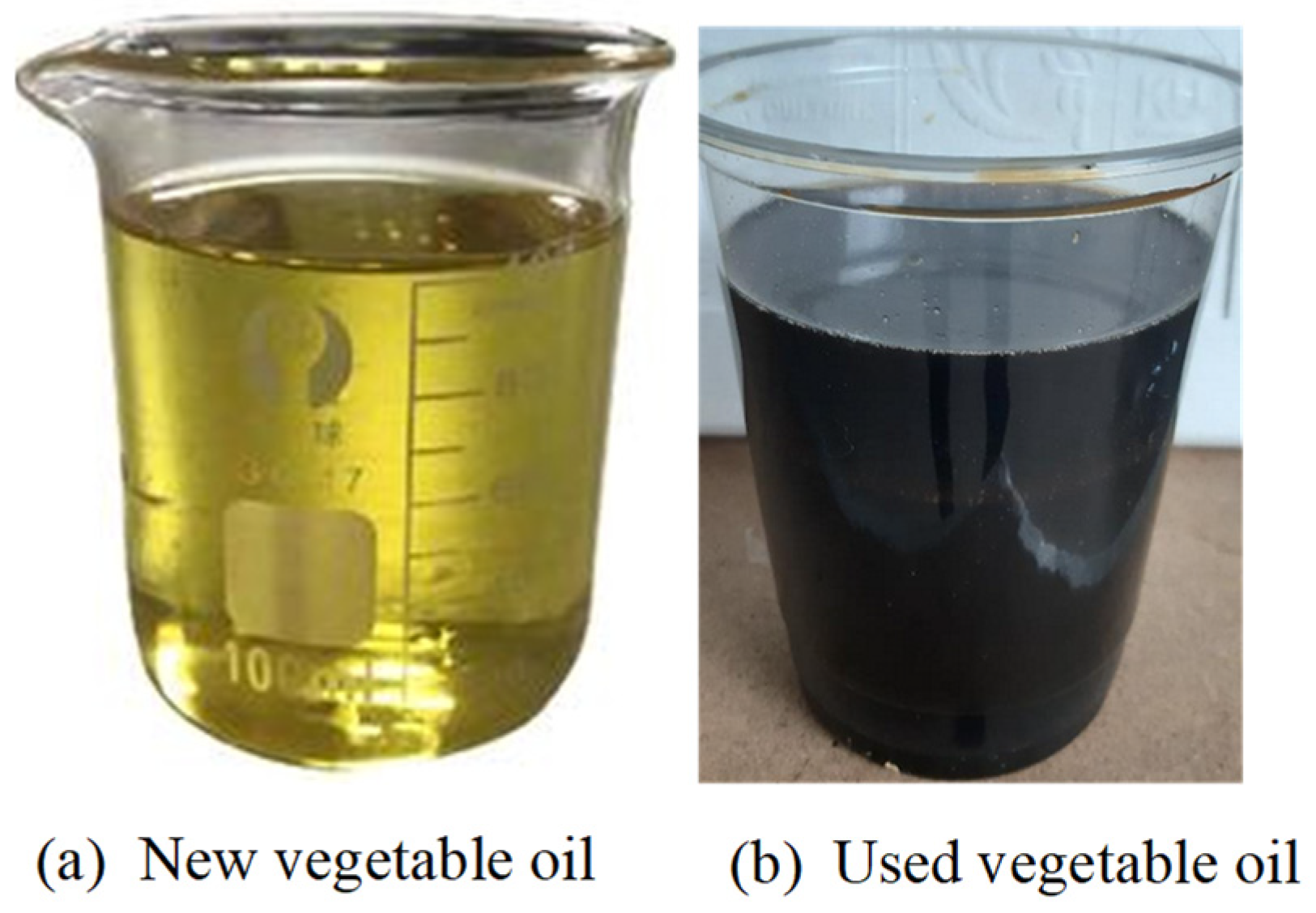
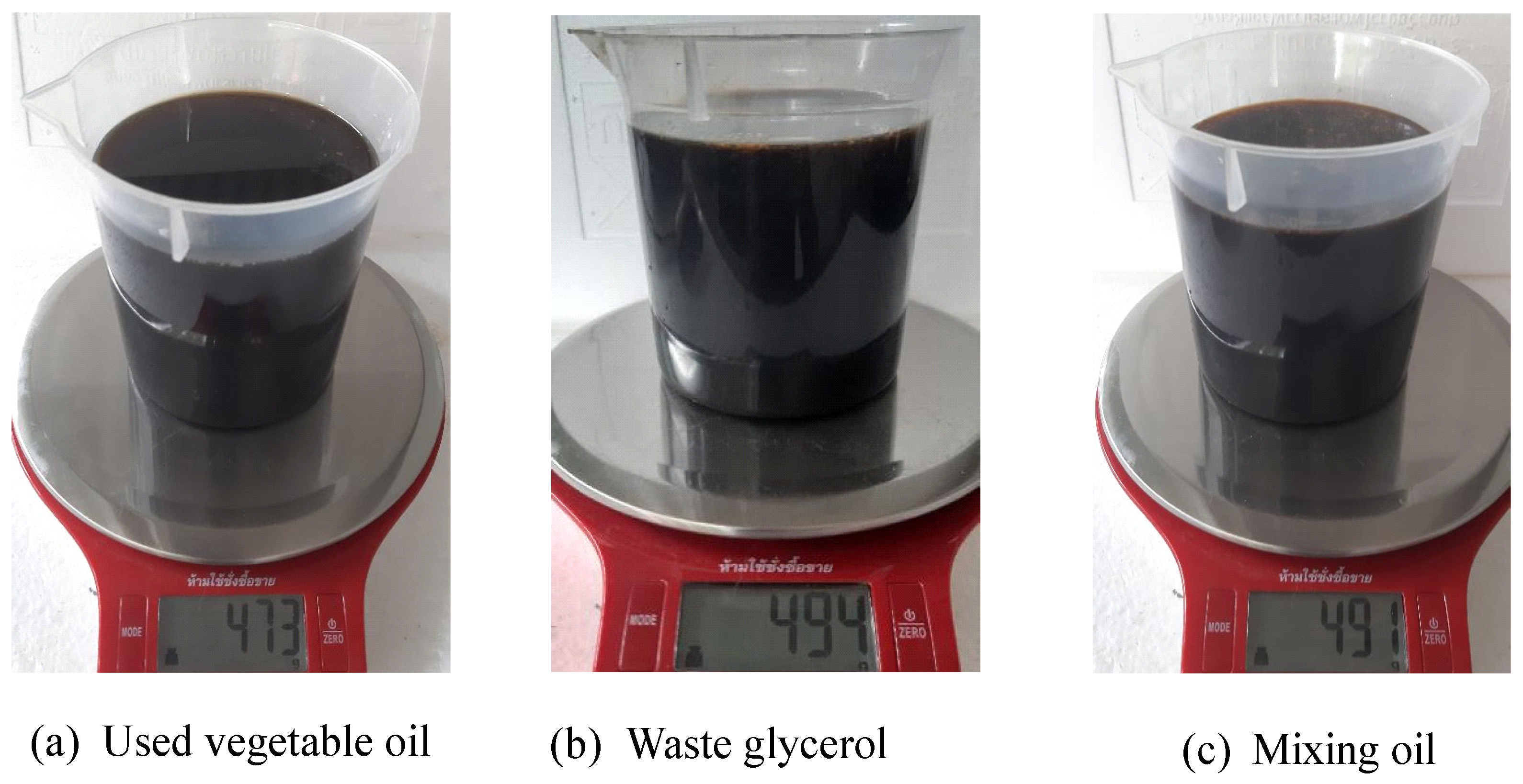
2.1. Experimental System
2.2. Standard Test
2.2.1. Combustion Efficiency Test
2.2.2. Thermal Efficiency Test
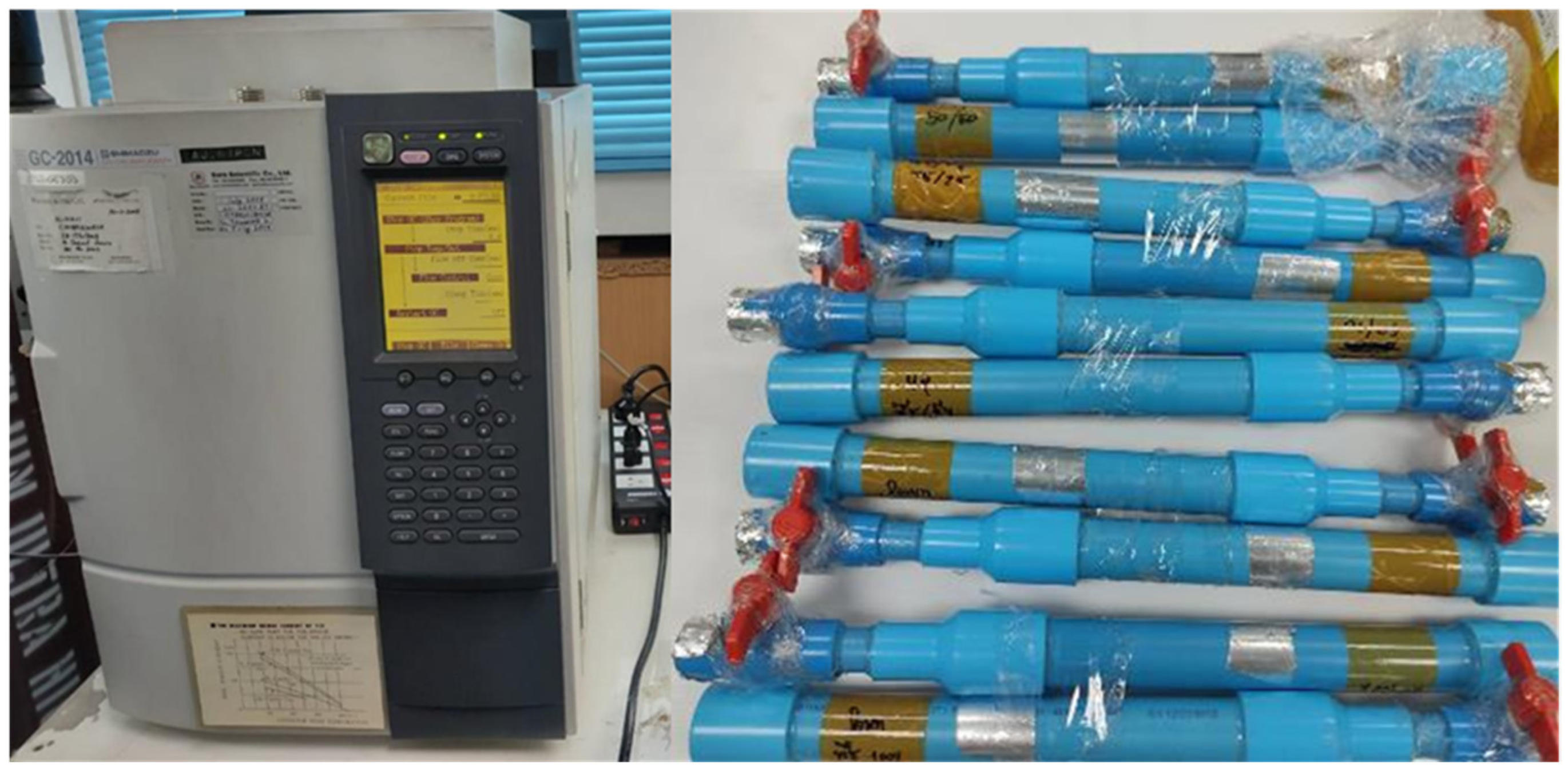
2.3. Experimental Procedure
3. Analytical Analysis
- -
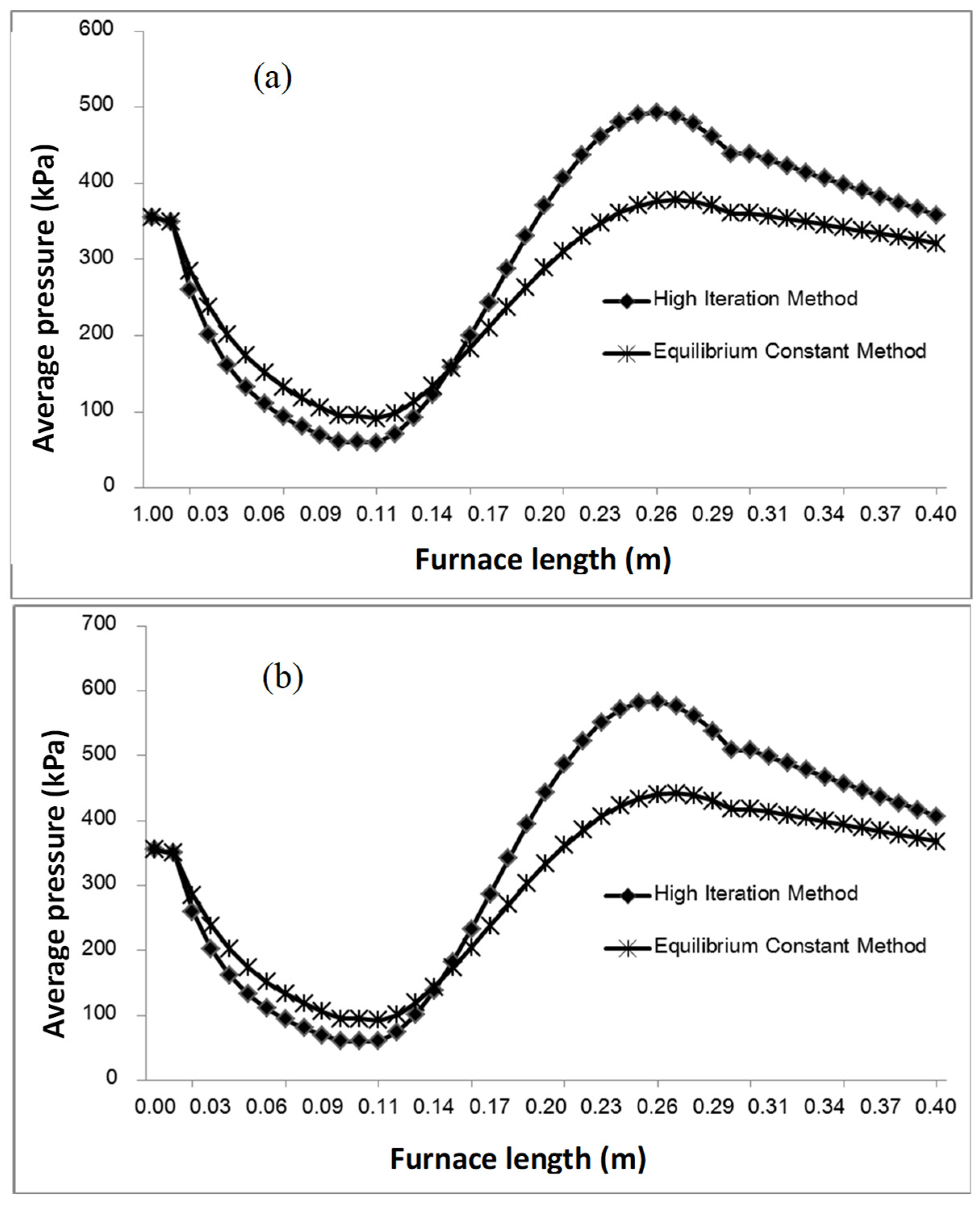
- Pressure per distance
- -
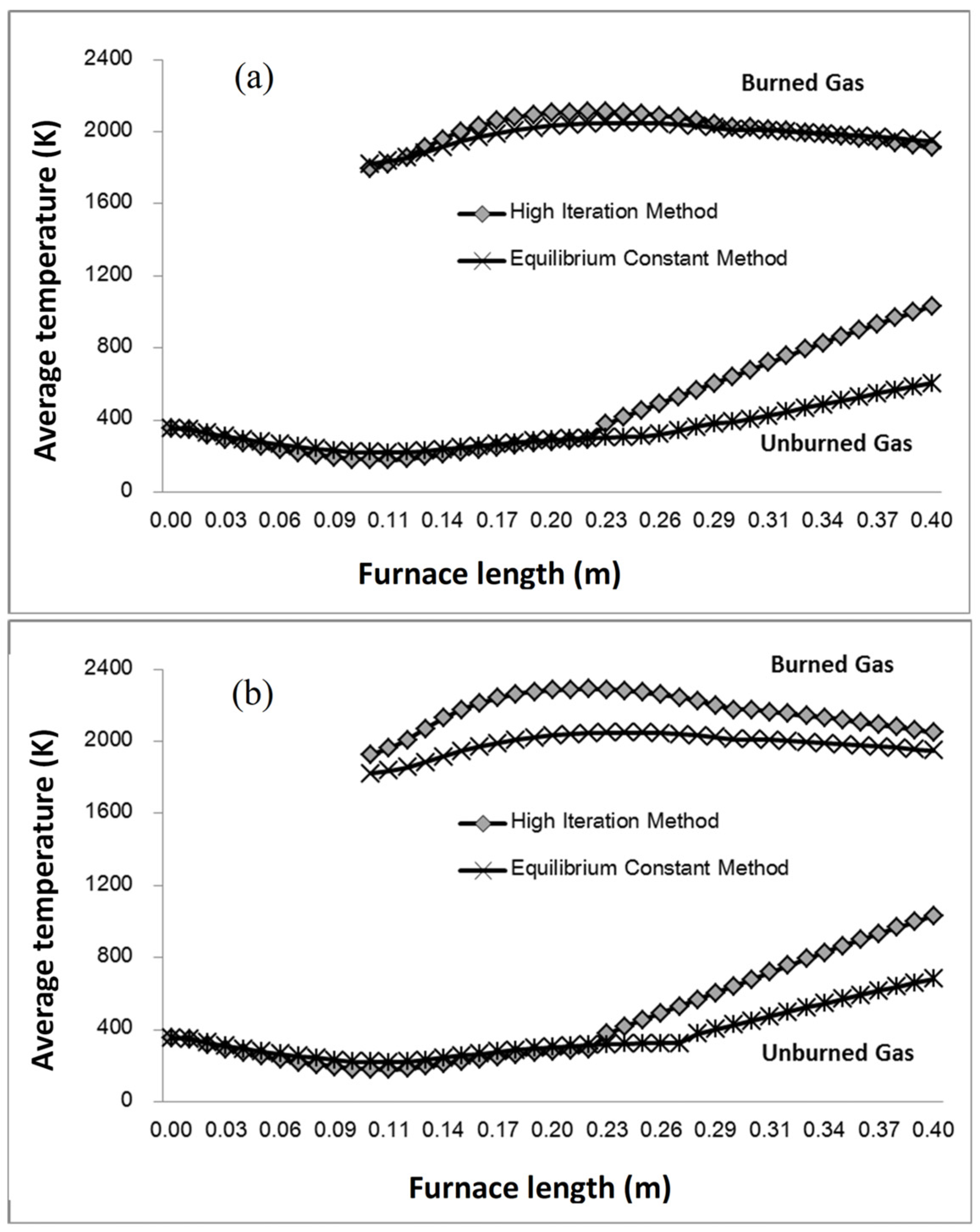
- Burning and unburned gas temperature
- -
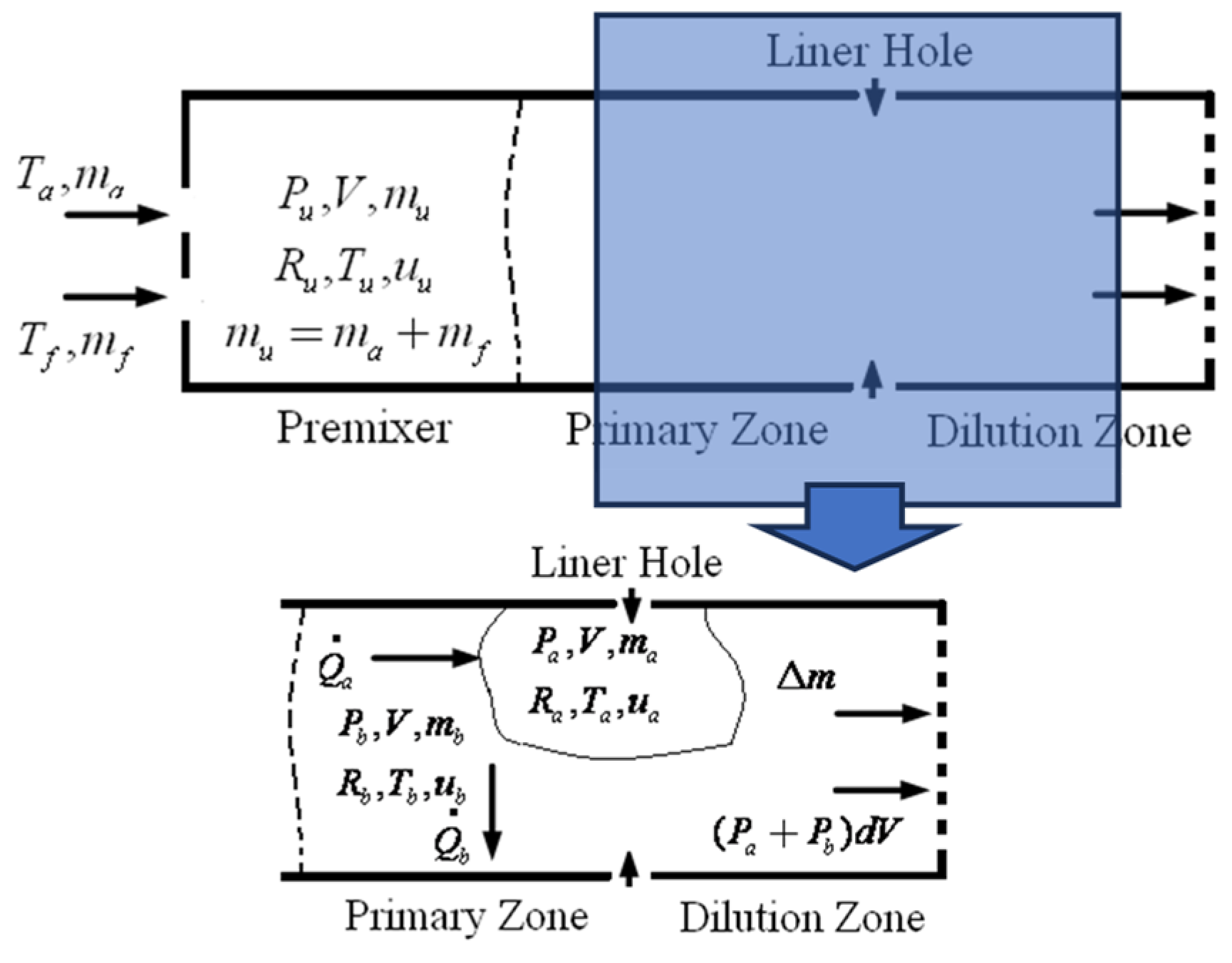
- First, we will look at the enhanced procedure in the zone where the fuel and air combine. Two distinct zones: the combustion zone and the dilution zone. In every zone, the combustion process is exhaustive.
- -
- The combustion equation of the mixed fuel () under the fuel–air ratio ε and the equivalent of air, one mole can be written as an equation.
4. Results and Discussion
4.1. Predicted Results
4.2. Measured Data
4.3. Economic Analysis
- -
- Fuel collection cost: Used vegetable oil and crude glycerol are waste-derived fuels whose market prices are typically low or zero at the source, but logistics introduce non-negligible costs. These include transportation from restaurants or biodiesel plants, labor for collection, and container handling. In rural agricultural regions, collection distances are short and often integrated into existing supply chains, keeping costs low; however, in urban or dispersed regions, transportation can significantly affect fuel economics.
- -
- Pretreatment and conditioning costs: Although the present system is designed to operate with unrefined fuels, minimal pretreatment is still required, including filtration to remove food residues, water separation, and viscosity control (preheating). These processes incur costs related to energy consumption, filters, and maintenance. Compared to chemical purification or transesterification, these pretreatment steps are relatively inexpensive but should be included in long-term operational cost models.
- -
- Storage and handling costs: Waste oils and crude glycerol require dedicated storage tanks, spill prevention measures, and periodic cleaning to prevent contamination or phase separation. Capital costs for tanks, piping, and safety accessories, as well as depreciation and maintenance costs, should be amortized over the system’s lifetime. These costs are generally modest for small-scale agricultural systems but increase with scale.
- -
- Regional energy price dependency: The economic advantage of the mixed-fuel system is highly sensitive to regional LPG prices, electricity tariffs, and the availability of waste fuel. In regions where LPG prices are high or waste oils are subsidized, the payback period is shorter. Conversely, in areas with low fossil-fuel prices or limited waste-fuel supply, the economic margin may narrow. Therefore, incorporating region-specific energy price indices and sensitivity analysis would strengthen the generalizability of the results.
- -
- Labor and operational overhead: Additional labor for fuel handling, system monitoring, and cleaning—although minimal—should be considered in a complete techno-economic analysis. These costs are often absorbed into routine farm operations in small agricultural settings but may become significant in larger or commercial-scale installations.
5. Conclusions
Author Contributions
Funding
Institutional Review Board Statement
Informed Consent Statement
Data Availability Statement
Acknowledgments
Conflicts of Interest
Nomenclatures
| A | cross-sectional area, m2 | C | initial gases’ blow-by is the constant |
| specific heat of water, kJ/(kg °C) | latent heat of vaporization, kJ/kg, | ||
| D | diameter, m | lower heat value of fuel, kJ/kg | |
| L | length, m | mf | mass of the fuel (Mixture), kg |
| ma | mass of air, kg | m | mass, kg |
| mu | mass of air and fuel, kg | mass flow rate of used oil, kg/s | |
| l | momentary mass loss. Kg | ||
| P | pressure, kPa | ru | constant value of the gas, |
| heat loss, Kw | Uu | internal energy, kJ/kg | |
| testing time, s | v | average gas velocity, m/s | |
| V | volume, m3 | Tb | combustion gas temperature, K |
| Tu | unburned gas temperature, K | thermal efficiency | |
| Tw | wall temperature of the furnace, K | ||
| water weight, kg, | |||
| temperature difference between the start and final test state, K | |||
| combustion efficiency |
References
- Reed, T.B.; Graboski, M.S.; Gaur, S. Development and commercialization of oxygenated diesel fuels from waste vegetable oils. Biomass Bioenergy 1992, 3, 111–115. [Google Scholar] [CrossRef]
- Çetinkaya, M.; Karaosmanoǧlu, F. Optimization of Base-Catalyzed Transesterification Reaction of Used Cooking Oil. Energy Fuels 2004, 18, 1888–1895. [Google Scholar] [CrossRef]
- Kaminski, P. The Application of Copper-Gold Catalysts in the Selective Oxidation of Glycerol at Acid and Basic Conditions. Catalysts 2021, 11, 94–102. [Google Scholar] [CrossRef]
- Rubianto, L.; Sudarminto, H.P.; Udjiana, S.S. Combination of biodiesel, glycerol, and methanol as liquid fuel. Conf. Ser. Mater. Sci. Eng. 2021, 1073, 012005. [Google Scholar] [CrossRef]
- Samanta, A.; Adhikary, A.; Roy, P.C. Waste Cooking Oil Biodiesel: Its Testing, Performance and Emission in an Unaltered Diesel Engine. Conf. Ser. Mater. Sci. Eng. 2021, 1080, 012034. [Google Scholar] [CrossRef]
- Jensani, M.K.N.; Sadikin, A.N.; Ngadi, N.; Azman, M.F.; Ab Muis, Z.; Asli, U.A. Anaerobic Co-Digestion of Food Waste with Crude Glycerol for Biogas Production. Chem. Eng. Trans. 2021, 83, 577–582. [Google Scholar]
- Elgharbawy, A.S.; Sadik, W.A.; Sadek, O.M.; Kasaby, M.A. Maximizing biodiesel production from high free fatty acids feedstocks through glycerolysis treatment. Biomass Bioenergy 2021, 146, 105997. [Google Scholar] [CrossRef]
- Kurdi, M.A.I.; Sitohy, M.; Hefnawy, H.T.; Gomaa, A.M. Characterization of biodiesel prepared from waste cooking oil. J. Agric. Res. 2021, 48, 481–487. [Google Scholar] [CrossRef]
- Lima, P.J.M.; da Silva, R.M.; Neto, C.A.C.G.; Silva, N.C.G.E.; Souza, J.E.d.S.; Nunes, Y.L.; dos Santos, J.C.S. An overview on the conversion of glycerol to value-added industrial products via chemical and biochemical routes. Biotechnol. Appl. Biochem. 2021, 69, 2794–2818. [Google Scholar] [CrossRef]
- Kumar, L.R.; Yellapu, S.K.; Tyagi, R.D.; Drogui, P. Biodiesel production from microbial lipid obtained by intermittent feeding of municipal sludge and treated crude glycerol. Syst. Microbiol. Biomanuf. 2021, 1, 344–355. [Google Scholar] [CrossRef]
- Chilakamarry, C.R.; Sakinah, A.M.M.; Zularisam, A.W.; Pandey, A. Glycerol waste to value added products and its potential applications. Syst. Microbiol. Biomanuf. 2021, 1, 378–396. [Google Scholar] [CrossRef]
- Syahputra, R.A.; Pulungan, A.F. Isolation and characterization of glycerol by transesterification of used cooking oil. Rasayan J. Chem. 2023, 16, 648–652. [Google Scholar] [CrossRef]
- Rizky, Y.; Panggabean, S.; Sigalingging, R. Purification of glycerol from biodiesel byproduct by using kitchen vinegar. J. Phys. Conf. Ser. 2023, 2421, 012006. [Google Scholar] [CrossRef]
- Moklis, M.H.; Cheng, S.; Cross, J.S. Current and Future Trends for Crude Glycerol Upgrading to High Value-Added Products. Sustainability 2023, 15, 2979. [Google Scholar] [CrossRef]
- SNI 01-3741-2002; Minyak Goreng (Indonesian National Standard for Cooking Oil Quality). Badan Standardisasi Nasional (BSN) (National Standardization Agency of Indonesia): Jakarta, Indonesia, 2002.
- Nugroho, B.S.; Agnesty, S.Y.; Aulia, H.N. Test of biodiesel from used cooking oil from dormitory x on opacity and exhaust emissions hc, CO and CO2. Edusaintek J. Pendidik. Sains dan Teknol. 2023, 10, 439–456. [Google Scholar] [CrossRef]
- Kumar, A.S.; Harish, P.; Sriram, R.C.P. Reducing the Waste Oil Decomposition and Producing a useful Energy Conversion Process. Int. J. Mod. Trends Sci. Technol. 2023, 9, 33–37. [Google Scholar] [CrossRef]
- Samadov, E. Analysis of vegetable oil refining technology. Chem. Technol. Control Manag. 2023, 1, 5–18. [Google Scholar] [CrossRef]
- Armylisas, A.H.N.; Hoong, S.S.; Ismail, T.N.M.T. Characterization of crude glycerol and glycerol pitch from palm-based residual biomass. Biomass Convers. Biorefinery 2023, 14, 28341–28353. [Google Scholar] [CrossRef] [PubMed]
- Parmar, M.; Soni, B.; Shah, A.J.; Karmee, S.K. Pyrolysis of pellets prepared from groundnut shell and crude glycerol: In-situ utilization of pyro-gas and characterization of products. Detritus 2023, 22, 60–71. [Google Scholar] [CrossRef]
- Dhabhai, R.; Koranian, P.; Huang, Q.; Scheibelhoffer, D.S.B.; Dalai, A.K. Purification of glycerol and its conversion to value-added chemicals: A review. Sep. Sci. Technol. 2023, 58, 1383–1402. [Google Scholar] [CrossRef]
- Pámanes, C.G.; Páez-Lerma, J.B.; Herrera-Torres, E.; Araiza-Rosales, E.E.; Hernández-Vargas, V.; Medrano-Roldán, H.; Reyes-Jáquez, D. Effect of Vegetable Oils or Glycerol on the In Vitro Ruminal Production of Greenhouse Gases. Ruminants 2023, 3, 140–148. [Google Scholar] [CrossRef]
- Wu, Z.; Cai, J.; Liu, Z.; Liang, X.J.; Yu, S.; Nie, Y. Utilization of biodiesel and glycerol for the synthesis of epoxidized acyl glycerides and its application as a plasticizer. J. Am. Oil Chem. Soc. 2023, 100, 733–741. [Google Scholar] [CrossRef]
- Borówka, G.; Krasodomski, W.; Lubowicz, J. Purified Glycerine from Biodiesel Production as Biomass or Waste-Based Green Raw Material for the Production of Biochemicals. Energies 2023, 16, 4889. [Google Scholar] [CrossRef]
- Silva, S.S.O.; Nascimento, M.R.; Lima, R.J.P.; Luna, F.M.T.; Cavalcante Júnior, C.L. Experimental and Simulation Studies for Purification and Etherification of Glycerol from the Biodiesel Industry. AppliedChem 2023, 3, 492–508. [Google Scholar] [CrossRef]
- Rahman, H. Purifying Crude Glycerol from Biodiesel Production for Sustainable Energy Solutions. J. Teknol. 2023, 11, 85–99. [Google Scholar] [CrossRef]
- Perez, F.M.; Gatti, M.N.; Fermanelli, C.S.; Saux, C.; Renzini, M.S.; Pompeo, F. Crude glycerol esterification using biomass-derived carbon acid catalysts. Next Mater. 2024, 2, 100125. [Google Scholar] [CrossRef]
- Sidhu, M.S.; Roy, M.; Elsanusi, O.A. Comparative Analysis of Water and Glycerin Emulsification: Particle Size, Stability, Engine Performance, and Emissions in Biodiesel Fuels. J. Renew. Energy 2024, 1, 2357238. [Google Scholar] [CrossRef]
- Bansod, Y.; Crabbe, B.; Forster, L.; Ghasemzadeh, K.; D’Agostino, C. Evaluating the environmental impact of crude glycerol purification derived from biodiesel production: A comparative life cycle assessment study. J. Clean. Prod. 2024, 437, 140485. [Google Scholar] [CrossRef]
- Roschat, W.; Donrussamee, S.; Smanmit, P.; Jikjak, S.; Leelatam, T.; Phewphong, S.; Namwongsa, K.; Moonsin, P.; Promarak, V. Quality Improvement of Crude Glycerol from Biodiesel Production Using Activated Carbon Derived from Krabok (Irvingia malayana) Seed Shells. Korean J. Mater. Res. 2024, 34, 1–11. [Google Scholar] [CrossRef]
- Agrawal, P.S.; Tiwari, R. Synthesis of Solketal: A Potent Fuel Additive from A Glycerol, A Byproduct of Biodiesel Industries. In The Production of Biodiesel and Related Fuel Additives; Bentham Science Publishers: Sharjah, United Arab Emirates, 2024; Volume 5, pp. 371–402. [Google Scholar]
- Ruzibayev, A.; Abdurakhimov, A.; Calvo-Gómez, O.; Akhmedova, S.; Kurambayev, S. Purification of Crude Glycerol Derived from Hydrogenated Cottonseed and Its Use in Confectionary Products. Rural Sustain. Res. 2024, 51, 81–93. [Google Scholar] [CrossRef]
- Pilicita, J.; Domínguez, J.A.; Torresano, C.; Salazar, B. Analysis of the use of waste cooking oil as an alternative fuel. Multidisciplinar 2025, 3, 204–212. [Google Scholar] [CrossRef]
- Naumova, N.L.; Bec, Y. Development of vegetable oil blends with a balanced fatty acid composition. Vestn. Krasn. Gos. Agrar. Univ. 2025, 12, 203–210. [Google Scholar] [CrossRef]
- DIN EN 203-1; Gas Heated Catering Equipment—Part 1: General Safety Requirements. Deutsches Institut für Normung e. V. (DIN)—German Institute for Standardisation: Berlin, Germany, 2024.
- Ferguson, C.R. Internal Combustion Engines: Applied Thermosciences; John Wiley & Sons: New York, NY, USA, 1986. [Google Scholar]
- Metzger, B. Glycerol Combustion. Master’s Thesis, Department of Mechanical Engineering, North Carolina State University, Raleigh, NC, USA, 2007. [Google Scholar]
- Grill, M.; Chiodi, M.; Berner, H.; Bargende, M. Calculating the thermodynamic properties of burnt gas and vapor fuel for user-defined fuels. MTZ 2007, 68, 30–35. [Google Scholar] [CrossRef]
- Xing, H.; Lu, S.; Tao, J.; Zhou, Y.; Zhao, J.; Zhang, H. Insight into C6F12O fire suppression mechanism on coaxial n-heptane flame: Combined experimental and ReaxFF molecular dynamics simulation. Process Saf. Environ. Prot. 2025, 200, 107383. [Google Scholar] [CrossRef]





| No. | Fuels | Ratios (%) |
|---|---|---|
| 1 | Upper; used vegetable oil | 100 |
| 2 | Lower; used vegetable oil | 100 |
| 3 | Upper; oil mixture (used vegetable oil/waste glycerol) | 90:10 |
| 4 | Lower; oil mixture (used vegetable oil/waste glycerol) | 90:10 |
| 5 | Upper; oil mixture (used vegetable oil/waste glycerol) | 50:50 |
| 6 | Lower; oil mixture (used vegetable oil/waste glycerol) | 50:50 |
| 7 | Upper; oil mixture (used vegetable oil/waste glycerol) | 75:25 |
| 8 | Lower; oil mixture (used vegetable oil/waste glycerol) | 75:25 |
| 9 | Upper; waste glycerol | 100 |
| 10 | Lower; waste glycerol | 100 |
| Instrument | Accuracy (%) | Uncertainly |
|---|---|---|
| Infarad EXTECH 42509 | 0.5 | ±0.5 |
| Gas chromatography (GC) analyzer | 0.2 | ±0.2 |
| Thermocouple type-K | 0.5 | ±0.5 |
| Data logger (°C) | 0.1 | ±0.2 |
| Digital weighing scale, kg | 0.1 | ±0.2 |
| Specific Internal Energy, Volume, Entropy, Enthalpy, [36] | Fuels [37] (Glycerol and Vegetable Oil (Vapor Phase) |
|---|---|
| Air & Gas Combustion product, [38] | |
| No. | Sample Name | Ratio | H2 (%) | Air (%) | CH4 (%) | CO2 (%) |
|---|---|---|---|---|---|---|
| 1 | Up Oil | 100 | nd. | 74.295 | nd. | 25.705 |
| 2 | Down Oil | 100 | nd. | 73.050 | nd. | 26.950 |
| 3 | Up Oil:Gly | 90:10 | 2.442 | 74.183 | nd. | 23.375 |
| 4 | Down Oil:Gly | 90:10 | 2.497 | 74.076 | nd. | 23.427 |
| 5 | Up Oil:Gly | 50:50 | 4.805 | 75.019 | 4.360 | 15.816 |
| 6 | Down Oil:Gly | 50:50 | 5.419 | 75.720 | 4.378 | 14.483 |
| 7 | Up Oil:Gly | 75:25 | nd. | 75.222 | nd. | 24.778 |
| 8 | Down Oil:Gly | 75:25 | nd. | 74.916 | nd. | 25.084 |
| 9 | Up Gly | 100 | 3.902 | 73.173 | 4.323 | 18.601 |
| 10 | Down Gly | 100 | nd. | 79.149 | nd. | 20.851 |
| No. | Air Flow Rate (m3/min.) | Fuel Weight (g) | Surface Temperature (°C) | Flame Temperature (°C) | Combustion Efficiency (%) |
|---|---|---|---|---|---|
| 1 | 1.30 | 1000 | 200 | 490 | 91 |
| 2 | 1.31 | 1000 | 195 | 485 | 90 |
| 3 | 1.32 | 1000 | 198 | 485 | 92 |
| Details | Test I | Test II | Test III |
|---|---|---|---|
| mw = Remaining water (kg) | 2.7 | 2.4 | 3.6 |
| mS = Evaporated water (kg) | 3.3 | 3.6 | 2.4 |
| mf = mass of fuel; (kg) | 6.3 | 6.8 | 5.8 |
| hw = Enthalpy of residual water (kJ.kg−1) | 117.4 | 109.1 | 109.1 |
| hf = Enthalpy of saturated liquids (kJ.kg−1) | 417.5 | 417.5 | 417.5 |
| hS = Enthalpy of saturated vapor (kJ.kg−1) | 2674 | 2674 | 2674 |
| HV = Calorific value of fuel (kJ.kg−1) | 13,476 | 13,476 | 13,476 |
| Combustion furnace efficiency (%) | 99.4 | 99.3 | 99.1 |
| Boiling steam flow rate (m3/min) | 6.1 | 6 | 6.1 |
| Boiling steam temperature (°C) | 112 | 115 | 114 |
| Stove Efficiency | 81.3 | 88.6 | 83.5 |
| Heat exchange area m2 (Radius = 0.2 m) | 0.5 | 0.5 | 0.5 |
| Heat exchange efficiency (%) | 90 | 90 | 90 |
| Boiler efficiency (%) | 72.8 | 73.1 | 72.2 |
| Details | LPG | Glycerol Oil and Used Vegetable Oil % (25/75) |
|---|---|---|
| Stove and boiler cost (Baht) | 21,000 | 30,000 |
| Steaming time for mushroom cubes per time (hours) | 6 | 4 |
| Amount of fuel consumed per time (kg) | 40 | 28 |
| Fuel price per 1 year (Baht) | 23,040 | 6720 |
| Electricity price per year (Baht) | 0 | 2400 |
| Cost including stove and boiler (Baht) | 44,040 | 39,120 |
| Revenue from the sale of mushroom cubes per year (Baht) | 144,000 | 144,000 |
| The difference in the cost of one mushroom per year (Baht) | 99,960 | 104,880 |
| Payback period (Months) | 3.67 | 3.26 |
| Time difference in hours per year | 0 | 96 |
Disclaimer/Publisher’s Note: The statements, opinions and data contained in all publications are solely those of the individual author(s) and contributor(s) and not of MDPI and/or the editor(s). MDPI and/or the editor(s) disclaim responsibility for any injury to people or property resulting from any ideas, methods, instructions or products referred to in the content. |
© 2026 by the authors. Licensee MDPI, Basel, Switzerland. This article is an open access article distributed under the terms and conditions of the Creative Commons Attribution (CC BY) license.
Share and Cite
Siricharoenpanich, A.; Juntarakod, P.; Naphon, P. The Model and Burner Development for Crude Glycerol and Used Vegetable Mixing: Cube Mushroom Steaming Oven. Eng 2026, 7, 56. https://doi.org/10.3390/eng7020056
Siricharoenpanich A, Juntarakod P, Naphon P. The Model and Burner Development for Crude Glycerol and Used Vegetable Mixing: Cube Mushroom Steaming Oven. Eng. 2026; 7(2):56. https://doi.org/10.3390/eng7020056
Chicago/Turabian StyleSiricharoenpanich, Anumut, Paramust Juntarakod, and Paisarn Naphon. 2026. "The Model and Burner Development for Crude Glycerol and Used Vegetable Mixing: Cube Mushroom Steaming Oven" Eng 7, no. 2: 56. https://doi.org/10.3390/eng7020056
APA StyleSiricharoenpanich, A., Juntarakod, P., & Naphon, P. (2026). The Model and Burner Development for Crude Glycerol and Used Vegetable Mixing: Cube Mushroom Steaming Oven. Eng, 7(2), 56. https://doi.org/10.3390/eng7020056