

Green Surface Engineering of Spun-Bonded Nonwovens Using Polyphenol-Rich Berry Extracts for Bioactive and Functional Applications

 , , ,
, , ,  ,
,  , and
, and
Abstract
1. Introduction
2. Materials and Methods
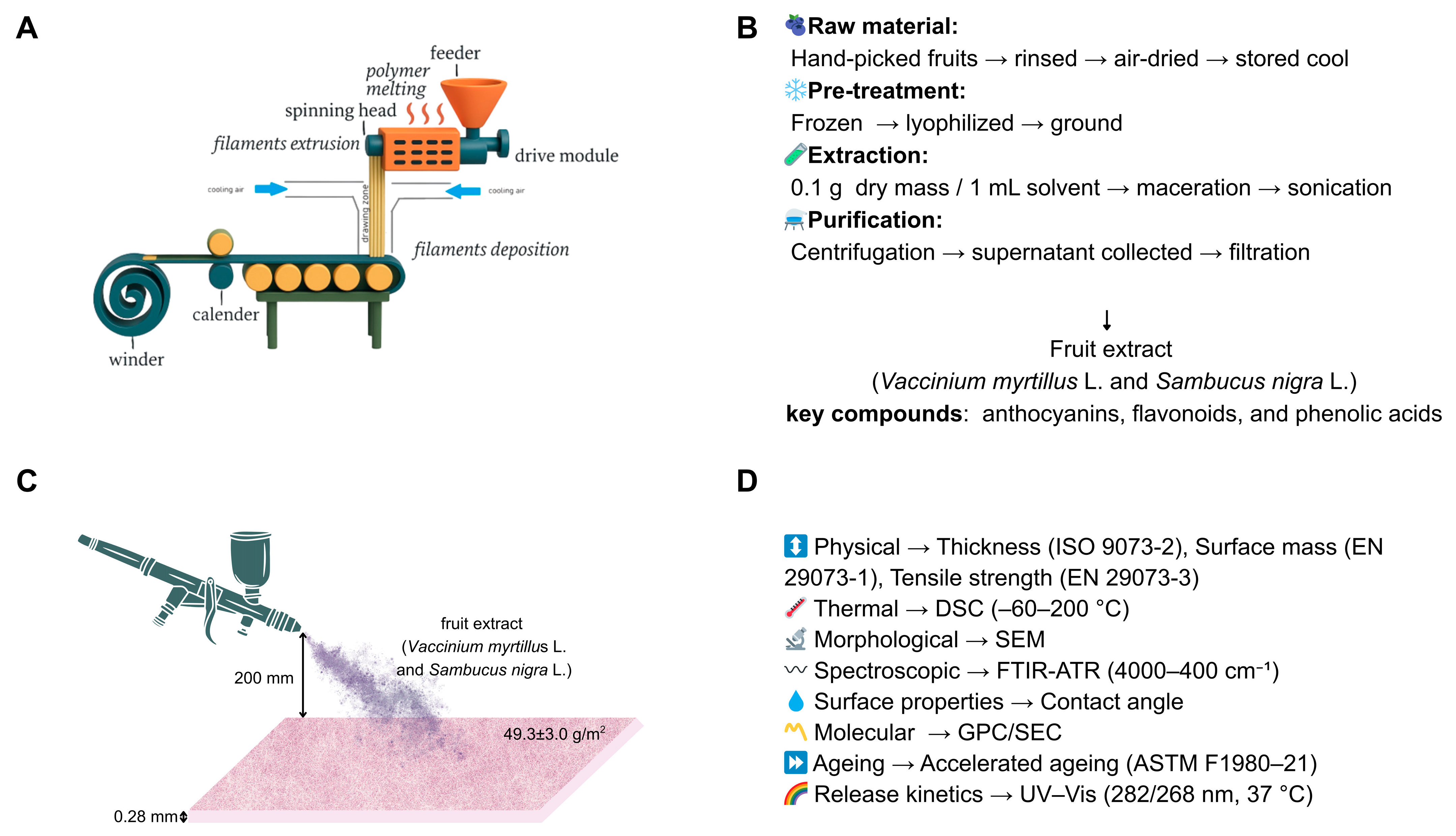
2.1. Spun-Bonded Nonwoven
2.2. Preparation of Extracts from Vaccinium myrtillus L. and Sambucus nigra L.
2.3. Surface Functionalization
2.4. Methods
3. Results
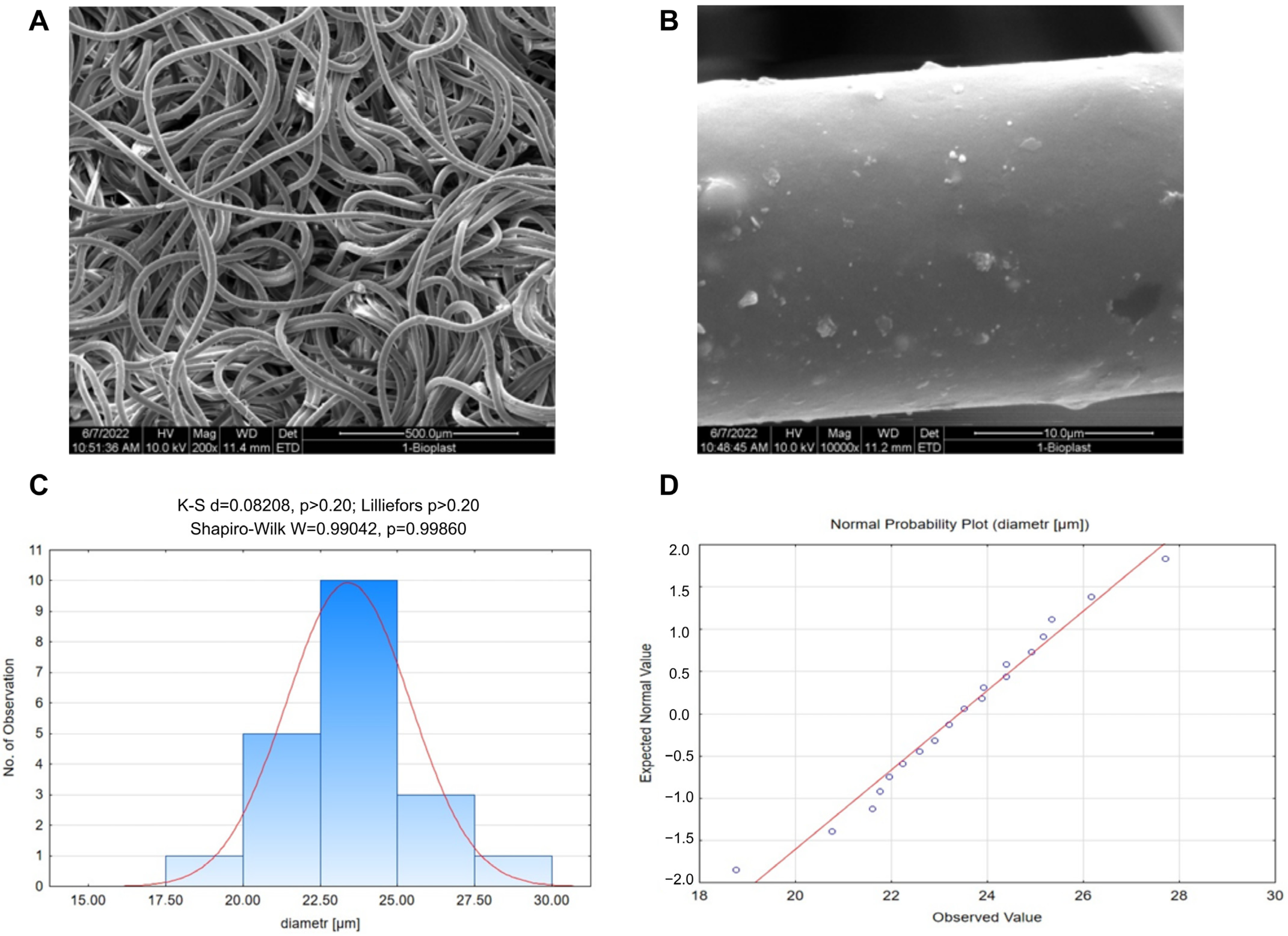
3.1. Spun-Bonded Matrix
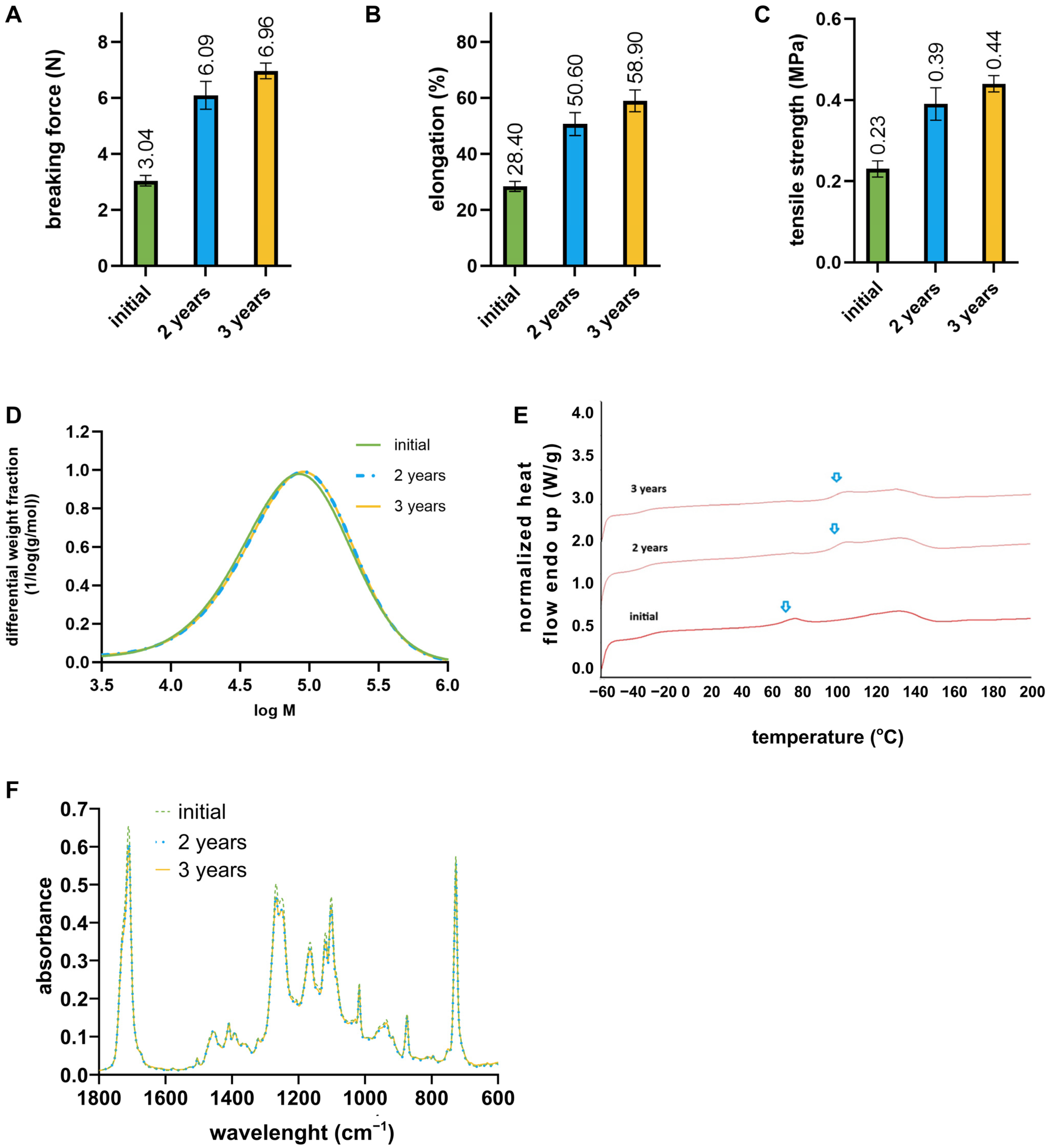
3.1.1. Simulation of the Accelerated Ageing Process
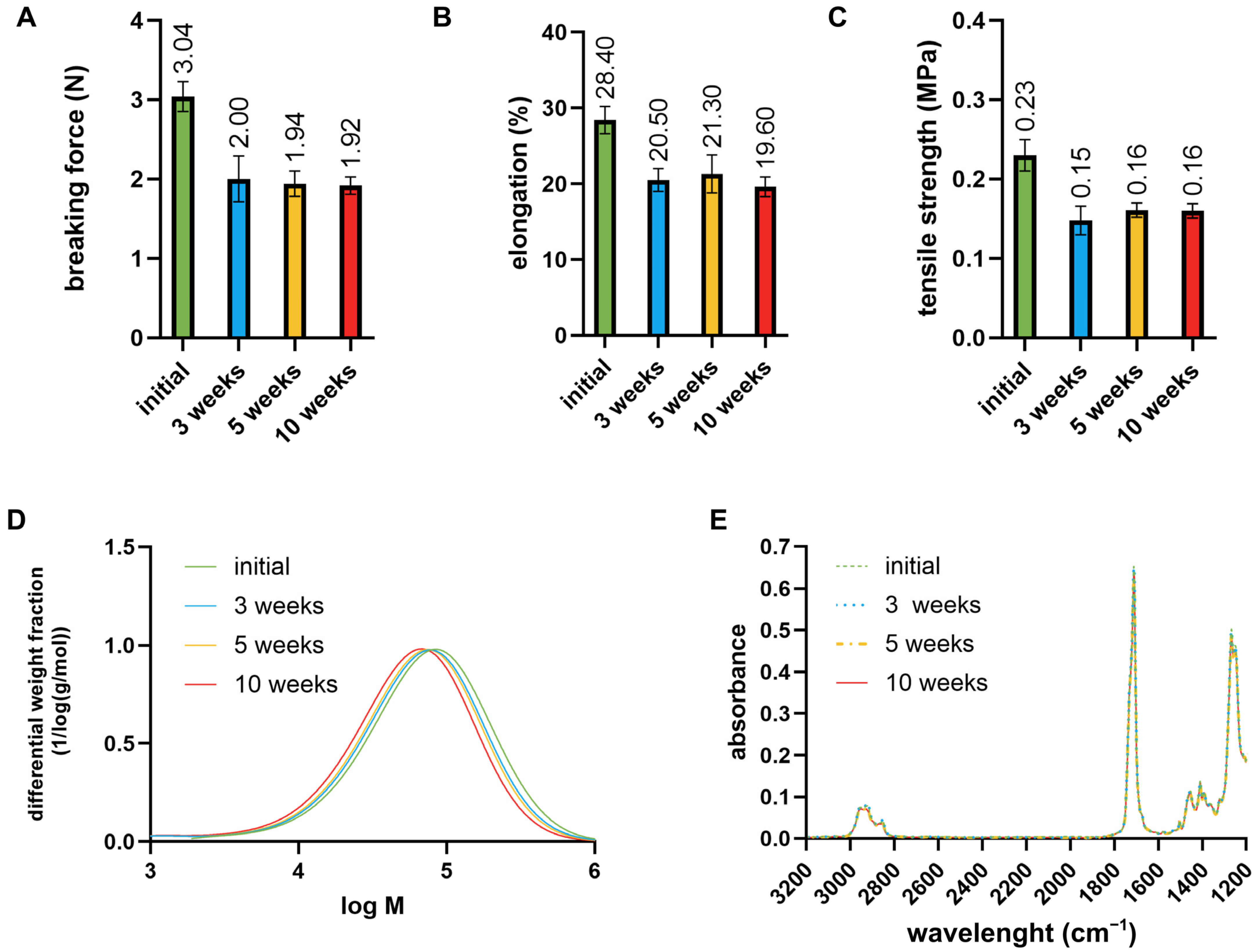
3.1.2. Hydrolysis of Spun-Bonded
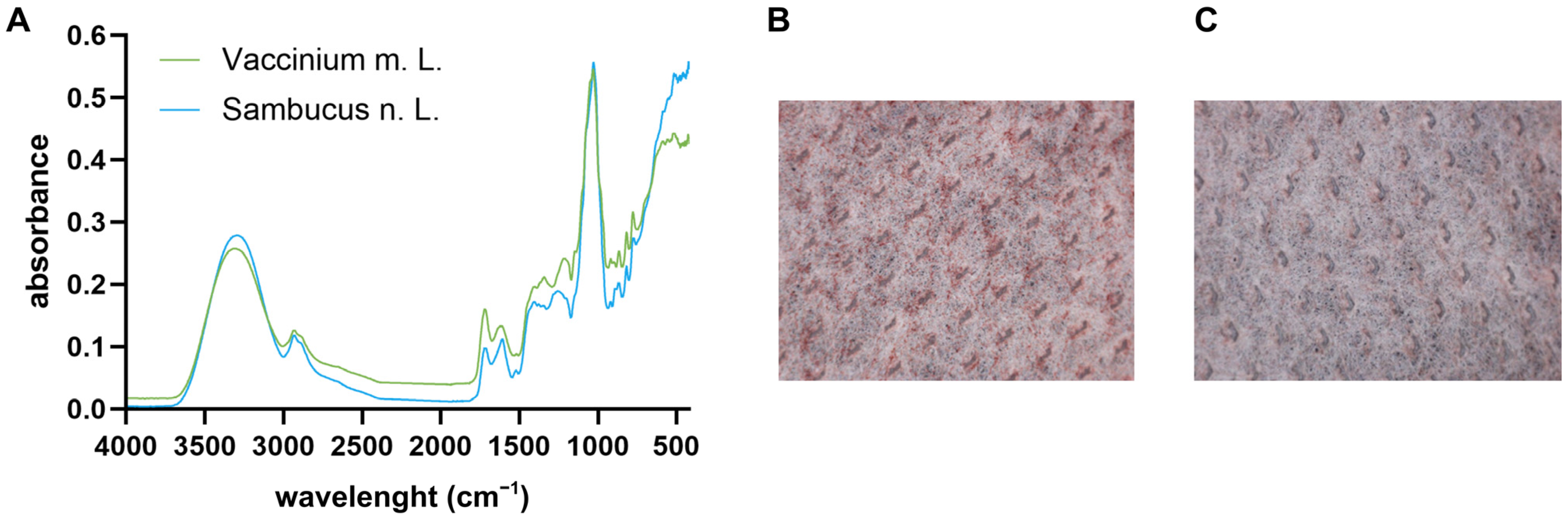
3.2. Vaccinium myrtillus L. and Sambucus nigra L. Extracts
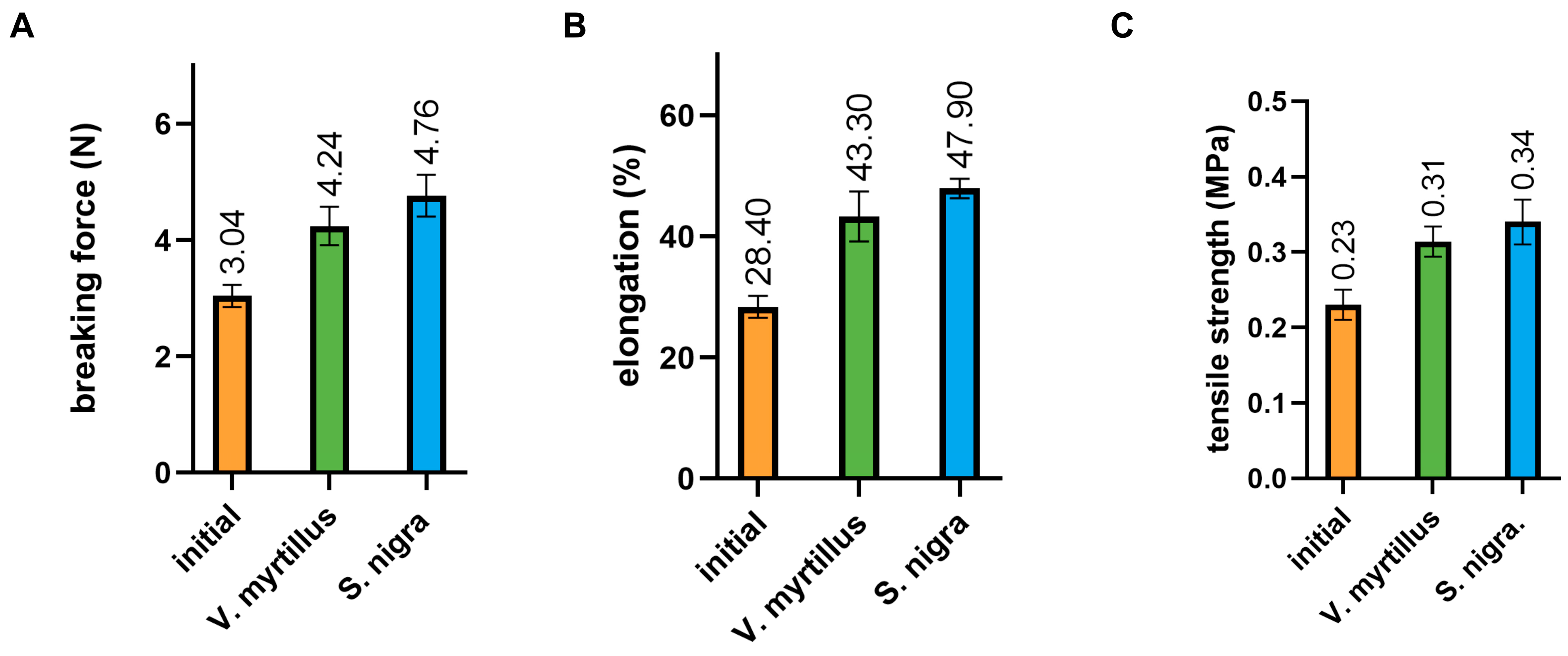
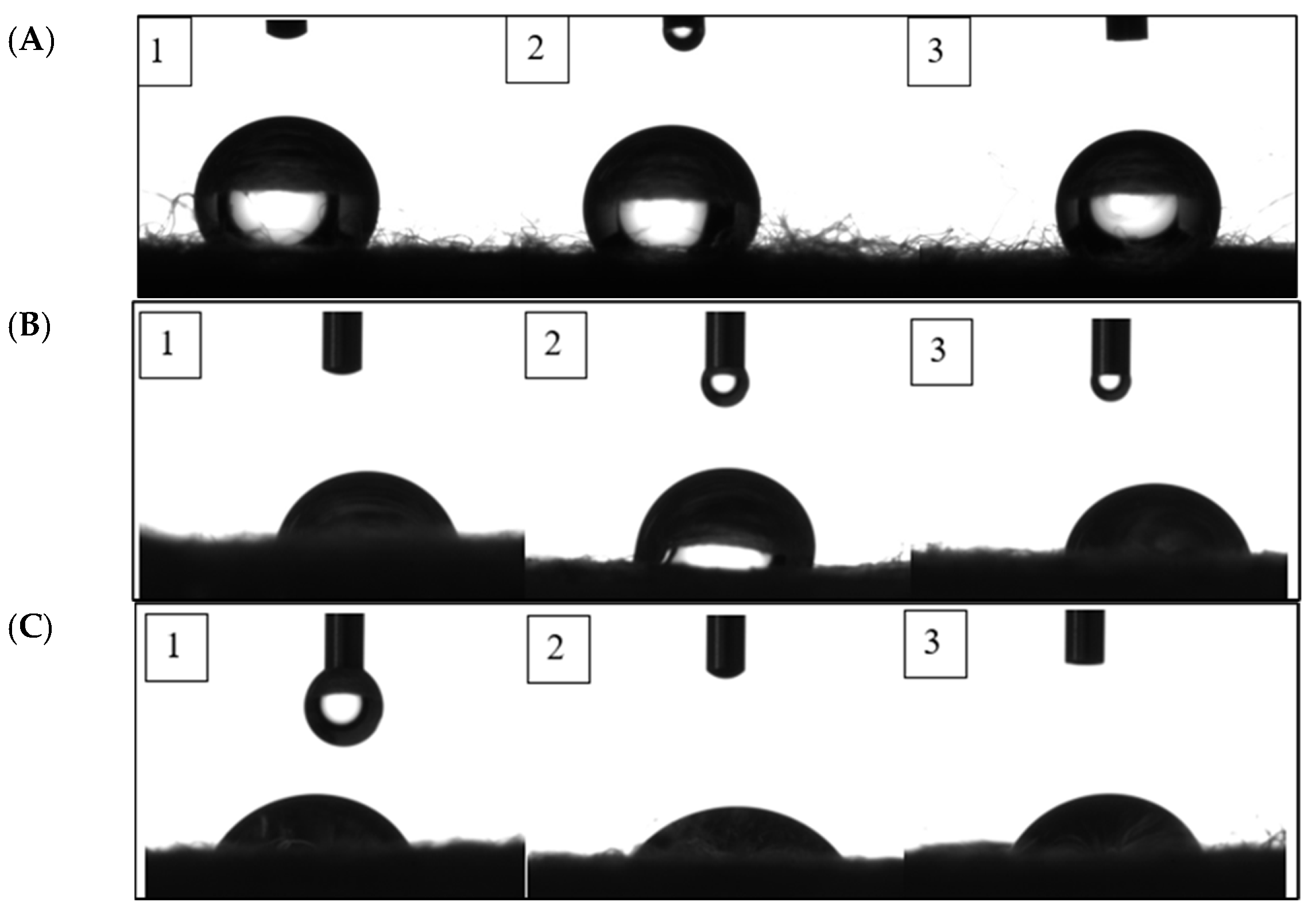
3.3. Surface Engineering of Spun-Bonded Nonwovens Using Extracts
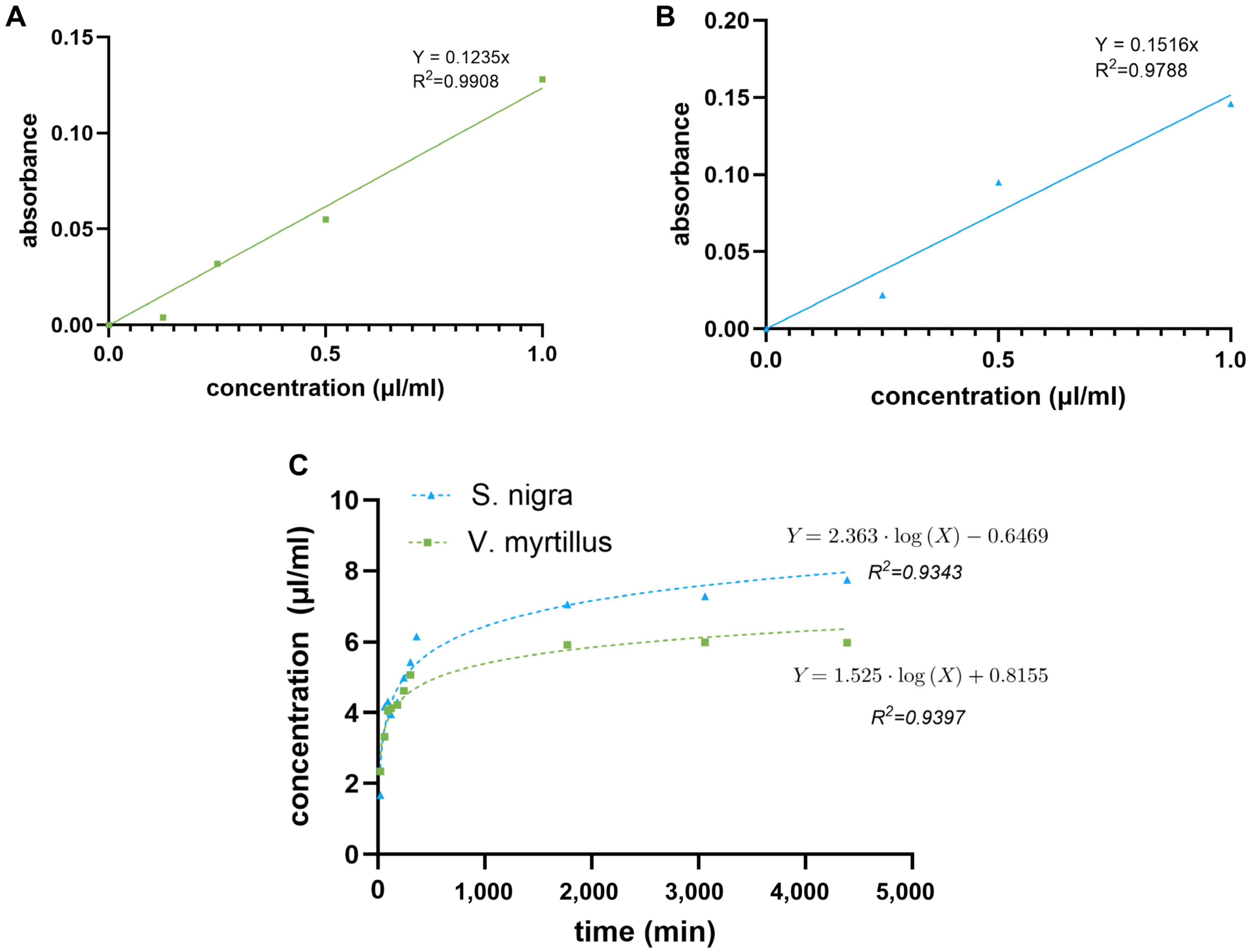
3.4. Evaluation of Active Substance Release from the Nonwoven System
4. Discussion
5. Conclusions
Author Contributions
Funding
Institutional Review Board Statement
Informed Consent Statement
Data Availability Statement
Acknowledgments
Conflicts of Interest
References
- Fadilah, N.I.M.; Phang, S.J.; Kamaruzaman, N.; Salleh, A.; Zawani, M.; Sanyal, A.; Maarof, M.; Fauzi, M.B. Antioxidant Biomaterials in Cutaneous Wound Healing and Tissue Regeneration: A Critical Review. Antioxidants 2023, 12, 787. [Google Scholar] [CrossRef] [PubMed]
- Pedro, A.C.; Paniz, O.G.; Fernandes, I.D.A.A.; Bortolini, D.G.; Rubio, F.T.V.; Haminiuk, C.W.I.; Maciel, G.M.; Magalhães, W.L.E. The Importance of Antioxidant Biomaterials in Human Health and Technological Innovation: A Review. Antioxidants 2022, 11, 1644. [Google Scholar] [CrossRef] [PubMed]
- Wang, L.; Zhang, X.; Xu, P.; Yan, J.; Zhang, Y.; Su, H.; Sun, C.; Lu, Q.; Liu, W. Exploration of sea anemone-inspired high-performance biomaterials with enhanced antioxidant activity. Bioact. Mater. 2022, 10, 504–514. [Google Scholar] [CrossRef] [PubMed]
- Rivera, L.R.; Cochis, A.; Biser, S.; Canciani, E.; Ferraris, S.; Rimondini, L.; Boccaccini, A.R. Antibacterial, pro-angiogenic and pro-osteointegrative zein-bioactive glass/copper based coatings for implantable stainless steel aimed at bone healing. Bioact. Mater. 2021, 6, 1479–1490. [Google Scholar] [CrossRef]
- Chen, Z.Y.; Gao, S.; Zhang, Y.W.; Zhou, R.B.; Zhou, F. Antibacterial biomaterials in bone tissue engineering. J. Mater. Chem. B 2021, 9, 2594–2612. [Google Scholar] [CrossRef]
- Kurtuldu, F.; Mutlu, N.; Boccaccini, A.R.; Galusek, D. Gallium containing bioactive materials: A review of anticancer, antibacterial, and osteogenic properties. Bioact. Mater. 2022, 17, 125–146. [Google Scholar] [CrossRef]
- Tan, S.; Wang, Y.; Du, Y.; Xiao, Y.; Zhang, S. Injectable bone cement with magnesium-containing microspheres enhances osteogenesis via anti-inflammatory immunoregulation. Bioact. Mater. 2021, 6, 3411–3423. [Google Scholar] [CrossRef]
- Shang, S.; Zhuang, K.; Chen, J.; Zhang, M.; Jiang, S.; Li, W. A bioactive composite hydrogel dressing that promotes healing of both acute and chronic diabetic skin wounds. Bioact. Mater. 2024, 34, 298–310. [Google Scholar] [CrossRef]
- Liu, W.; Wang, M.; Cheng, W.; Niu, W.; Chen, M.; Luo, M.; Xie, C.; Leng, T.; Zhang, L.; Lei, B. Bioactive antiinflammatory antibacterial hemostatic citrate-based dressing with macrophage polarization regulation for accelerating wound healing and hair follicle neogenesis. Bioact. Mater. 2021, 6, 721–728. [Google Scholar] [CrossRef]
- Iviglia, G.; Torre, E.; Cassinelli, C.; Morra, M. Functionalization with a polyphenol-rich pomace extract empowers a ceramic bone filler with in vitro antioxidant, anti-inflammatory, and pro-osteogenic properties. J. Funct. Biomater. 2021, 12, 31. [Google Scholar] [CrossRef]
- Yong, H.; Liu, J. Active packaging films and edible coatings based on polyphenol-rich propolis extract: A review. Compr. Rev. Food Sci. Food Saf. 2021, 20, 2106–2145. [Google Scholar] [CrossRef] [PubMed]
- Valero, L.; Gainche, M.; Esparcieux, C.; Delor-Jestin, F.; Askanian, H. Vegetal Polyphenol Extracts as Antioxidants for the Stabilization of PLA: Toward Fully Biobased Polymer Formulation. ACS Omega 2024, 9, 7725–7736. [Google Scholar] [CrossRef] [PubMed]
- Botanicae, N.; Agrobotanici, H.; Bunea, A.; Rugină, D.O.; Pintea, A.M.; Sconţa, Z.; Bunea, C.I.; Socaciu, C. Comparative Polyphenolic Content and Antioxidant Activities of Some Wild and Cultivated Blueberries from Romania. Not. Bot. Horti Agrobot. Cluj-Napoca 2011, 39, 70–76. [Google Scholar] [CrossRef]
- Skrovankova, S.; Sumczynski, D.; Mlcek, J.; Jurikova, T.; Sochor, J. Bioactive compounds and antioxidant activity in different types of berries. Int. J. Mol. Sci. 2015, 16, 24673–24706. [Google Scholar] [CrossRef]
- Nile, S.H.; Park, S.W. Edible berries: Bioactive components and their effect on human health. Nutrition 2014, 30, 134–144. [Google Scholar] [CrossRef]
- Rudrapal, M.; Khairnar, S.J.; Khan, J.; Dukhyil, A.B.; Ansari, M.A.; Alomary, M.N.; Alshabrmi, F.M.; Palai, S.; Deb, P.K.; Devi, R. Dietary Polyphenols and Their Role in Oxidative Stress-Induced Human Diseases: Insights Into Protective Effects, Antioxidant Potentials and Mechanism(s) of Action. Front. Pharmacol. 2022, 13, 806470. [Google Scholar] [CrossRef]
- Bešlo, D.; Golubić, N.; Rastija, V.; Agić, D.; Karnaš, M.; Šubarić, D.; Lučić, B. Antioxidant Activity, Metabolism, and Bioavailability of Polyphenols in the Diet of Animals. Antioxidants 2023, 12, 1141. [Google Scholar] [CrossRef]
- Rathod, N.B.; Elabed, N.; Punia, S.; Ozogul, F.; Kim, S.K.; Rocha, J.M. Recent Developments in Polyphenol Applications on Human Health: A Review with Current Knowledge. Plants 2023, 12, 1217. [Google Scholar] [CrossRef]
- Manso, T.; Lores, M.; de Miguel, T. Antimicrobial Activity of Polyphenols and Natural Polyphenolic Extracts on Clinical Isolates. Antibiotics 2022, 11, 46. [Google Scholar] [CrossRef]
- Shahidi, F.; Athiyappan, K.D. Polyphenol-polysaccharide interactions: Molecular mechanisms and potential applications in food systems—A comprehensive review. Food Prod. Process. Nutr. 2025, 7, 42. [Google Scholar] [CrossRef]
- Feng, Y.; Jin, C.; Lv, S.; Zhang, H.; Ren, F.; Wang, J. Molecular Mechanisms and Applications of Polyphenol-Protein Complexes with Antioxidant Properties: A Review. Antioxidants 2023, 12, 1577. [Google Scholar] [CrossRef]
- Xue, H.; Du, X.; Fang, S.; Gao, H.; Xie, K.; Wang, Y.; Tan, J. The interaction of polyphenols-polysaccharides and their applications: A review. Int. J. Biol. Macromol. 2024, 278, 134594. [Google Scholar] [CrossRef] [PubMed]
- Lim, J.; Lee, M.H.; Ahn, A.; Kim, J. Sequential Self-Polymerization of Phenolic Compounds with Alkanedithiol Linkers as a Surface-Independent and Solvent-Resistant Surface Functionalization Strategy. Adv. Mater. Interfaces 2025, 12, 2400561. [Google Scholar] [CrossRef]
- Nedela, O.; Slepicka, P.; Švorcík, V. Surface modification of polymer substrates for biomedical applications. Materials 2017, 10, 1115. [Google Scholar] [CrossRef] [PubMed]
- Sun, W.; Liu, W.; Wu, Z.; Chen, H. Chemical Surface Modification of Polymeric Biomaterials for Biomedical Applications. Macromol. Rapid Commun. 2020, 41, e1900430. [Google Scholar] [CrossRef]
- Shoushtari, A.M.; Haji, A.; Jafari, A. Surface Modification of Polypropylene Nonwoven Fabric with Plasma Activation and Grafting. In Proceedings of the Second International Conference on Advanced Textile Materials & Manufacturing Technology, Hangzhou, China, 1–24 October 2010. [Google Scholar] [CrossRef]
- Choy, K.L.; Schnabelrauch, M.; Wyrwa, R. Bioactive Coatings. In Biomaterials in Clinical Practice: Advances in Clinical Research and Medical Devices; Zivic, F., Affatato, S., Trajanovic, M., Schnabelrauch, M., Grujovic, N., Choy, K.L., Eds.; Springer: Cham, Switzerland, 2018; pp. 361–406. [Google Scholar] [CrossRef]
- Sandhu, H.S.; Goyal, D.; Sharma, A.; Goyal, T.; Jarial, S.; Sharda, A. Sustainable development in cold gas dynamic spray coating process for biomedical applications: Challenges and future perspective review. Int. J. Interact. Des. Manuf. 2023. [Google Scholar] [CrossRef]
- Ahmed, A.G.; Fatalla, A.A. Differential analyses of ginger extract implant coating material. Int. J. Health Sci. 2022, 6, 4711–4719. [Google Scholar] [CrossRef]
- Zhao, W.; Trung, V.D.; Li, H.; Natsuki, J.; Tan, J.; Yang, W.; Natsuki, T. Enhanced functionalization of nonwoven fabric by spray coating AgNPs/CNTs solution prepared by a one-step method. Chem. Eng. J. 2024, 494, 153101. [Google Scholar] [CrossRef]
- Zhang, Y.; Li, T.-T.; Shiu, B.-C.; Sun, F.; Ren, H.-T.; Zhang, X.-F.; Lou, C.-W.; Lin, J.-H. Processing and characterizations of Short fluoroalkyl chain/polyurethane- polylactic acid/low melt polylactic acid Janus nonwoven Medical covers using spray coating. Prog. Org. Coat. 2020, 147, 105736. [Google Scholar] [CrossRef]
- Alatawi, R.A.S.; Bukhari, A.A.H.; Al-Sayed, H.M.A.; Alenazi, D.A.K.; Alnawmasi, J.S.; Abomuti, M.A.; Faridi, U. Production of biologically active non-woven textiles from recycled polyethylene terephthalate. Luminescence 2023, 38, 350–359. [Google Scholar] [CrossRef]
- Xu, J.; Xin, B.; Du, X.; Wang, C.; Chen, Z.; Zheng, Y.; Zhou, M. Flexible, portable and heatable non-woven fabric with directional moisture transport functions and ultra-fast evaporation. RSC Adv. 2020, 10, 27512–27522. [Google Scholar] [CrossRef] [PubMed]
- Czajka, M.; Stawski, D.; Herczyńska, L.; Puchalski, M. Polymer-Metallic Systems Functionalizing Polylactide Nonwovens as a Greener Alternative to Modified Polypropylene-Based Textiles. Coatings 2025, 15, 996. [Google Scholar] [CrossRef]
- Priyadarshini, B.; Rama, M.; Chetan; Vijayalakshmi, U. Bioactive coating as a surface modification technique for biocompatible metallic implants: A review. J. Asian Ceram. Soc. 2019, 7, 397–406. [Google Scholar] [CrossRef]
- Zikeli, F.; Jusic, J.; Palocci, C.; Mugnozza, G.S.; Romagnoli, M. Spray Coating of Wood with Nanoparticles from Lignin and Polylactic Glycolic Acid Loaded with Thyme Essential Oils. Polymers 2024, 16, 947. [Google Scholar] [CrossRef] [PubMed]
- Tronci, G.; Russell, S.J. Raw materials and polymer science for nonwovens. In Handbook of Nonwovens, 2nd ed.; Woodhead Publishing: Cambridge, UK, 2022; pp. 49–88. [Google Scholar] [CrossRef]
- Cicogna, F.; Passaglia, E.; Elainaoui, E.; Bramanti, E.; Oberhauser, W.; Casini, B.; Tuvo, B.; Coltelli, M.B.; Panariello, L.; Coiai, S. Coating of Polypropylene Non-Woven Fabric with Layered Double Hydroxides Bearing Antioxidant and Antibacterial Natural Compounds. Macromol. Chem. Phys. 2023, 224, 2300148. [Google Scholar] [CrossRef]
- Guo, J.; Park, E.J.; Abbas, A.; Nguyen, H.T.L.; Makio, H.; Goh, D.; Neo, Z.W.; Yeong, J.P.S.; Tan, C.H.; Lo, Z.J.; et al. Bioactive polyethylene-coated nonwovens for wound healing application. Next Mater. 2024, 3, 100088. [Google Scholar] [CrossRef]
- Pabjańczyk-Wlazło, E.K.; Puszkarz, A.K.; Bednarowicz, A.; Tarzyńska, N.; Sztajnowski, S. The Influence of Surface Modification with Biopolymers on the Structure of Melt-Blown and Spun-Bonded Poly(lactic acid) Nonwovens. Materials 2022, 15, 7097. [Google Scholar] [CrossRef]
- Singh, S.S.; Zaitoon, A.; Arvaj, L.; Balamurugan, S.; Manickavasagan, A.; Lim, L.-T. Biobased Antiviral Nonwoven Mask Filter with High Filtration Performance. ACS Appl. Eng. Mater. 2023, 1, 646–659. [Google Scholar] [CrossRef]
- Aghazadeh, M.R.; Delfanian, S.; Aghakhani, P.; Homaeigohar, S.; Alipour, A.; Shahsavarani, H. Recent Advances in Development of Natural Cellulosic Non-Woven Scaffolds for Tissue Engineering. Polymers 2022, 14, 1531. [Google Scholar] [CrossRef]
- Chonsakorn, S.; Chombhuphan, R.; Rattanaporn, K.; Srivorradatphisan, S.; Ruangnarong, C.; Khojitmate, S. A novel non-woven fabric from bamboo fiber in medical lifestyle products. Heliyon 2024, 10, e29893. [Google Scholar] [CrossRef]
- Kubíčková, J.; Medek, T.; Husby, J.; Matonohová, J.; Vágnerová, H.; Marholdová, L.; Velebný, V.; Chmelăr, J. Nonwoven textiles from hyaluronan for wound healing applications. Biomolecules 2022, 12, 16. [Google Scholar] [CrossRef]
- Syranidou, E.; Pyrilli, F.; Fountoulakis, A.; Constantinides, G.; Kalogerakis, N.; Koutinas, M. Biodegradation of thermoplastic starch by a newly isolated active microbial community: Deciphering the biochemical mechanisms controlling bioprocess robustness. Chem. Eng. J. 2024, 499, 155957. [Google Scholar] [CrossRef]
- Sikora, J.W.; Majewski, Ł.; Puszka, A. Modern biodegradable plastics—Processing and properties part ii. Materials 2021, 14, 2523. [Google Scholar] [CrossRef] [PubMed]
- Yarram, S. Investigation of Anaerobic Digestion of Selected Bioplastics in Pilot-Scale Biodigesters. Master’s Thesis, Rhine-Waal University of Applied Sciences, Kleve, Germany, 2025. Available online: https://opus4.kobv.de/opus4-rhein-waal/frontdoor/deliver/index/docId/2167/file/8510_20250202141947_20373.pdf (accessed on 13 October 2025).
- Nowak, A.J.; Waśkiewicz, S.; Baszczeńska, O.; Niesporek, K.; Król, M.; Hajnyš, J. DSC of biodegradable plastic composites material. J. Therm. Anal. Calorim. 2025, 150, 911–921. [Google Scholar] [CrossRef]
- Malińska, K.; Pudełko, A.; Postawa, P.; Stachowiak, T.; Dróżdż, D. Performance of Biodegradable Biochar-Added and Bio-Based Plastic Clips for Growing Tomatoes. Materials 2022, 15, 7205. [Google Scholar] [CrossRef]
- Santos, C.; Mateus, A.; Mendes, A.; Malça, C. Processing and Characterization of Thin Wall and Biodegradable Injected Pots. Procedia Manuf. 2017, 12, 96–105. [Google Scholar] [CrossRef]
- Umerah, C.O.; Kodali, D.; Head, S.; Jeelani, S.; Rangari, V.K. Synthesis of carbon from waste coconutshell and their application as filler in bioplast polymer filaments for 3D printing. Compos. Part B Eng. 2020, 202, 108428. [Google Scholar] [CrossRef]
- Müller, D.H.; Krobjilowski, A. Meltblown Fabrics FromBiodegradable Polymersbiodegradable-polymers. Int. Nonwovens J. 2001, 10, 11–17. [Google Scholar] [CrossRef]
- Jouyandeh, M.; Seidi, F.; Habibzadeh, S.; Hasanin, M.S.; Wiśniewska, P.; Rabiee, N.; Vahabi, H.; Ramakrishna, S.; Saeb, M.R. An overview of green and sustainable polymeric coatings. Surf. Innov. 2023, 12, 268–281. [Google Scholar] [CrossRef]
- Sharif, N.U.; Habibu, S.; Wang, H.; Singham, G.V.; Huang, H.K.; Hu, C.; Zeng, G.S.; Tay, G.S. Advancing renewable functional coatings: Sustainable solutions for modern material challenges. J. Coat. Technol. Res. 2025, 23, 173–199. [Google Scholar] [CrossRef]
- Madej-Kiełbik, L.; Gzyra-Jagieła, K.; Jóźwik-Pruska, J.; Wiśniewskia-Wrona, M.; Dymel, M. Biodegradable Nonwoven Materials with Antipathogenic Layer. Environments 2022, 9, 79. [Google Scholar] [CrossRef]
- Kopyciński, B.; Duda, A.; Langer, E.; Kamińska-Bach, G. Color Photostability Assessment of Ultrasound-Assisted Extracts From European Blueberry (Vaccinium myrtillus L.) Obtained with The Use of Non-Toxic Solvents. Doniesienia. Komunikaty 2024, 67, 19. [Google Scholar] [CrossRef]
- PN-EN ISO 139:2006; Textile—Normal Climates for Acclimatization and Research. Polish Committee for Standardization: Warsaw, Poland, 2006.
- PN-EN ISO 9073-2:2002; Textile—Test Methods for Nonwovens—Part 2: Determination of Thickness. Polish Committee for Standardization: Warsaw, Poland, 2002.
- PN-EN 29073-1:1994; Textiles—Test Methods for Nonwoven—Part 1: Determination of Surface Density. Polish Committee for Standardization: Warsaw, Poland, 1994.
- PN-EN 29073-3:1994; Textiles—Test Methods for Nonwoven—Determination of Tensile Strength and Elongation at Break. Polish Committee for Standardization: Warsaw, Poland, 1994.
- ASTM F1980-16; Standard Guide for Accelerated Aging of Sterile Barrier Systems and Medical Devices. ASTM International: West Conshohocken, PA, USA, 2016.
- Miros-Kudra, P.; Gzyra-Jagieła, K.; Kudra, M. Physicochemical assessment of the biodegradability of agricultural nonwovens made of PLA. Fibres Text. East. Eur. 2021, 29, 26–34. [Google Scholar] [CrossRef]
- Madej-Kiełbik, L.; Bednarowicz, A.; Zielińska, D.; Gzyra-Jagieła, K.; Kęska, S.; Czarnecki, P.; Tarzyńska, N. Pathogen-resistant biodegradable SMS materials: A solution for medical applications. J. Achiev. Mater. Manuf. Eng. 2024, 127, 60–75. [Google Scholar] [CrossRef]
- Sharma, A.; Zafar, S.; Nirala, C.K. Mechanical, Viscoelastic and Soil Degradation Performance of Hemp Fiber Reinforced Bio-PBS Composites Developed via Microwave Processing. Fibers Polym. 2025, 26, 2175–2188. [Google Scholar] [CrossRef]
- Lim, H. A Review of Spun Bond Process*, n.d. Available online: http://www.kasen.co.jp/english/product/line/ (accessed on 13 October 2025).
- Bhat, G.S.; Malkan, S.R. Polymer-laid web formation. In Handbook of Nonwovens; Woodhead Publishing: Cambridge, UK, 2007; pp. 143–200. [Google Scholar] [CrossRef]
- Midha, V.K.; Dakuri, A. Spun bonding Technology and Fabric Properties: A Review. J. Text. Eng. Fash. Technol. 2017, 1, 126–133. [Google Scholar] [CrossRef]
- Höhnemann, T.; Schnebele, J.; Arne, W.; Windschiegl, I. Nanoval Technology—An Intermediate Process between Meltblown and Spunbond. Materials 2023, 16, 2932. [Google Scholar] [CrossRef]
- Abdel-Mouttalib, K.; Nadi, A.; Tetouani, S.; Hajjaji, A.; Cherkaoui, O.; Touhtouh, S. Experimental analysis on fiber diameter of spunbond nonwoven fabrics through Plackett–Burman and Box–Behnken designs and its impact on mechanical properties. SPE Polym. 2025, 6, e10163. [Google Scholar] [CrossRef]
- Hatem, G.; Zeidan, J.; Goossens, M.; Moreira, C. Normality Testing Methods and the Importance of Skewness and Kurtosis in Statistical Analysis. BAU J.-Sci. Technol. 2022, 3, 7. [Google Scholar] [CrossRef]
- Fulton, M.; Rezazadeh, M.; Torvi, D. Tests for evaluating textile aging. In Advanced Characterization and Testing of Textiles; Elsevier: Amsterdam, The Netherlands, 2017; pp. 93–125. [Google Scholar] [CrossRef]
- Franco, Y.B.; Valentin, C.A.; Kobelnik, M.; da Silva, J.L.; Ribeiro, C.A.; da Luz, M.P. Accelerated Aging Ultraviolet of a PET Nonwoven Geotextile and Thermoanalytical Evaluation. Materials 2022, 15, 4157. [Google Scholar] [CrossRef] [PubMed]
- Wei, J.; Meyer, C. Degradation rate of natural fiber in cement composites exposed to various accelerated aging environment conditions. Corros. Sci. 2014, 88, 118–132. [Google Scholar] [CrossRef]
- Abidi, H.; Rana, S.; Chaouch, W.; Azouz, B.; Aissa, I.B.; Hassen, M.B.; Fangueiro, R. Accelerated weathering of textile waste nonwovens used as sustainable agricultural mulching. J. Ind. Text. 2021, 50, 1079–1110. [Google Scholar] [CrossRef]
- Wei, Y.; Wan, Z.; Su, Z.; Yuan, H.; Li, G.; Yang, J.; Liu, K.; Pan, W. Study on the Aging Mechanism of Textile Relics in Museum Collection Environment by Accelerated Aging Experiment. J. Nat. Fibers 2024, 21, 2296912. [Google Scholar] [CrossRef]
- Fidelis, M.E.A.; Filho, R.D.T.; de Andrade Silva, F.; Mechtcherine, V.; Butler, M.; Hempel, S. The effect of accelerated aging on the interface of jute textile reinforced concrete. Cem. Concr. Compos. 2016, 74, 7–15. [Google Scholar] [CrossRef]
- Lemmi, T.S.; Barburski, M.; Kabziński, A.; Frukacz, K. Effect of thermal aging on the mechanical properties of high tenacity polyester yarn. Materials 2021, 14, 1666. [Google Scholar] [CrossRef]
- Zain, S.N.Z.M.; Ismarrubie, Z.N.; Zainudin, E.S. The effect of aging temperature on mechanical properties of banana pseudostem fiber reinforced polymer composite. Key Eng. Mater. 2011, 471–472, 444–448. [Google Scholar] [CrossRef]
- Mumenya, S.W.; Tait, R.B.; Alexander, M.G. Mechanical behaviour of Textile Concrete under accelerated ageing conditions. Cem. Concr. Compos. 2010, 32, 580–588. [Google Scholar] [CrossRef]
- Flamini, M.D.; Lima, T.; Corkum, K.; Alvarez, N.J.; Beachley, V. Annealing post-drawn polycaprolactone (PCL) nanofibers optimizes crystallinity and molecular alignment and enhances mechanical properties and drug release profiles. Mater. Adv. 2022, 3, 3303–3315. [Google Scholar] [CrossRef]
- Elnabawy, E.; Sun, D.; Shearer, N.; Toptaş, A.; Kılıç, A.; Shyha, I. The role of annealing in enhancing crystallinity, mechanical properties, piezoelectricity, and air filtration performance of polylactic acid nanofibers. Mater. Chem. Phys. 2025, 343, 131000. [Google Scholar] [CrossRef]
- Fouly, A.; Albahkali, T.; Abdo, H.S.; Salah, O. Investigating the Mechanical Properties of Annealed 3D-Printed PLA–Date Pits Composite. Polymers 2023, 15, 3395. [Google Scholar] [CrossRef]
- Pervez, M.N.; Talukder, M.E.; Datta, M.K.; Mia, M.S.; Zaman, A.; Khan, M.M.R.; Cai, Y.; Lin, L. The Influence of Annealing Process on Crystallinity and Structural Properties of Cotton/Spandex Fabric. In MATEC Web of Conferences; EDP Sciences: Les Ulis, France, 2017. [Google Scholar] [CrossRef][Green Version]
- North, M.J.; Jenkins, M.J. The mechanisms of the secondary crystallisation process in polymers: A narrative review. Polymer 2025, 321, 128122. [Google Scholar] [CrossRef]
- Silverstein, R.M.; Bassler, G.C. Spectrometric Identification of Organic Compounds; Wiley&Sons, Inc.: Hoboken, NJ, USA, 2005. [Google Scholar]
- Fayyazbakhsh, A.; Hajinajaf, N.; Bakhtiari, H.; Feuchter, M.; Improta, I.; Salehi, E.; Shahsavar, S.K.; Julinova, M.; Ghasemi, A.; Ghasemi, B.; et al. Eco-friendly additives for biodegradable polyesters: Recent progress in performance optimization and environmental impact reduction. Sustain. Mater. Technol. 2025, 44, e01395. [Google Scholar] [CrossRef]
- Dostál, J.; Kašpárková, V.; Zatloukal, M.; Muras, J.; Šimek, L. Influence of the repeated extrusion on the degradation of polyethylene. Structural changes in low density polyethylene. Eur. Polym. J. 2008, 44, 2652–2658. [Google Scholar] [CrossRef]
- Pielichowski, K.; Njuguna, J.; Majka, T.M. Thermal degradation during the processing of polymers. In Thermal Degradation of Polymeric Materials; Elsevier: Amsterdam, The Netherlands, 2023; pp. 327–338. [Google Scholar] [CrossRef]
- Morozov, A.G.; Razborov, D.A.; Egiazaryan, T.A.; Baten’kin, M.A.; Aleynik, D.Y.; Egorikhina, M.N.; Rubtsova, Y.P.; Charikova, I.N.; Chesnokov, S.A.; Fedushkin, I.L. In Vitro Study of Degradation Behavior, Cytotoxicity, and Cell Adhesion of the Atactic Polylactic Acid for Biomedical Purposes. J. Polym. Environ. 2020, 28, 2652–2660. [Google Scholar] [CrossRef]
- Limsukon, W.; Auras, R.; Selke, S. Hydrolytic degradation and lifetime prediction of poly(lactic acid) modified with a multifunctional epoxy-based chain extender. Polym. Test. 2019, 80, 106108. [Google Scholar] [CrossRef]
- Limsukon, W.; Rubino, M.; Rabnawaz, M.; Lim, L.T.; Auras, R. Hydrolytic degradation of poly(lactic acid): Unraveling correlations between temperature and the three phase structures. Polym. Degrad. Stab. 2023, 217, 110537. [Google Scholar] [CrossRef]
- Vaid, R.; Yildirim, E.; Pasquinelli, M.A.; King, M.W. Hydrolytic degradation of polylactic acid fibers as a function of ph and exposure time. Molecules 2021, 26, 7554. [Google Scholar] [CrossRef]
- Mujanović, I.; Balijagić, J.; Bajagić, M.; Poštić, D.; Đurović, S. Variations in polyphenol content and anthocyanin composition in bilberry populations (Vaccinium myrtillus L.) due to environmental factors. J. Food Compos. Anal. 2024, 136, 106732. [Google Scholar] [CrossRef]
- Manninen, O.H.; Martz, F.; Sorvari, J.; Merilä, P. Fruit quality of bilberry (Vaccinium myrtillus L.) in boreal forests: Effects of forest stand, understorey, and soil characteristics. For. Ecol. Manag. 2025, 596, 123077. [Google Scholar] [CrossRef]
- Wang, J.; Tian, J.; Tian, Q.; Li, D.; Gao, N.; Yang, X.; Wang, L.; He, Y.; Li, B.; Wang, L. Metabolomic insights into antioxidant properties of blueberry (Vaccinium croymbosum) leaves and a preliminary exploration of their in vitro lipid-lowering activity. Food Chem. 2025, 495, 146200. [Google Scholar] [CrossRef] [PubMed]
- Satoh, Y.; Ishihara, K.; Kubota, T. Characterization of the anti-Porphyromonas gingivalis compound in bilberry (Vaccinium myrtillus L.) and comparison with its analogs. J. Oral Biosci. 2025, 67, 100610. [Google Scholar] [CrossRef] [PubMed]
- Januškevičė, V.; Saunoriūtė, S.; Ondrášek, I.; Petrikaitė, V.; Štreimikytė, P.; Liaudanskas, M.; Žvikas, V.; Daubaras, R.; Viškelis, P.; Viškelis, J.; et al. Biochemical diversity and anticancer potential of phenolic compounds in Sambucus nigra L. cultivars. Appl. Food Res. 2025, 5, 101404. [Google Scholar] [CrossRef]
- Banach, M.; Khaidakov, B.; Korewo, D.; Węsierska, M.; Cyplik, W.; Kujawa, J.; Ahrné, L.M.; Kujawski, W. The chemical and cytotoxic properties of sambucus Nigra extracts—A natural food colorant. Sustainability 2021, 13, 12702. [Google Scholar] [CrossRef]
- Ferreira, S.S.; Silva, A.M.; Nunes, F.M. Sambucus nigra L. Fruits and Flowers: Chemical Composition and Related Bioactivities. Food Rev. Int. 2020, 38, 1237–1265. [Google Scholar] [CrossRef]
- Rutkowska, J.; Godlewska, M.; Antoniewska-Krzeska, A.; Nawirska-Olszańska, A. Phenolic composition, volatile profile, and in vitro antioxidative potential of hydroethanolic flower extracts of Sambucus nigra L. as a valuable food ingredient. NFS J. 2025, 41, 100248. [Google Scholar] [CrossRef]
- Sidor, A.; Gramza-Michałowska, A. Advanced research on the antioxidant and health benefit of elderberry (Sambucus nigra) in food—a review. J. Funct. Foods 2015, 18, 941–958. [Google Scholar] [CrossRef]
- Li, H.; Zhang, Z.; Liang, T.; Duan, C.; Liu, Y.; Lu, M. Facile dip-coating of silk fibroin/tannic acid@CaCO3 hybrid film with superhydrophilicity on the surface of polypropylene nonwovens for oil–water separation. Sep. Purif. Technol. 2025, 353, 128319. [Google Scholar] [CrossRef]
- Hassan, M.M. Enhanced insect-resistance, UV protection, and antibacterial and antistatic properties exhibited by wool fabric treated with polyphenols extracted from mango seed kernel and feijoa peel. RSC Adv. 2021, 11, 1482–1492. [Google Scholar] [CrossRef]
- Li, Z.; Guo, Q.; Chen, R.; Yan, E.; Wang, Y.; Zhu, M.; Shi, G.; Hao, Z.; Li, J.; Zhu, S. Tannic acid coated core-shell fibers with antibacterial and antioxidant properties for diabetic wound healing. Mater. Des. 2025, 253, 113874. [Google Scholar] [CrossRef]
- Li, Y.; Zhao, W.; Chen, S.; Zhai, H.; Wu, S. Bioactive electrospun nanoyarn-constructed textile dressing patches delivering Chinese herbal compound for accelerated diabetic wound healing. Mater. Des. 2024, 237, 112623. [Google Scholar] [CrossRef]
- Pai, C.L.; Boyce, M.C.; Rutledge, G.C. On the importance of fiber curvature to the elastic moduli of electrospun nonwoven fiber meshes. Polymer 2011, 52, 6126–6133. [Google Scholar] [CrossRef]
- Li, Z.; Chen, Z.; Chen, H.; Chen, K.; Tao, W.; Ouyang, X.K.; Mei, L.; Zeng, X. Polyphenol-based hydrogels: Pyramid evolution from crosslinked structures to biomedical applications and the reverse design. Bioact. Mater. 2022, 17, 49–70. [Google Scholar] [CrossRef]





| Parameter | Spun-Bonded Nonwoven |
|---|---|
| Thickness (mm) | 0.27 ± 0.01 |
| Surface density (g/m2) | 49.8 ± 0.9 |
| Breaking force, along (N) | 3.04 ± 0.19 |
| Elongation, along (%) | 28.4 ± 1.8 |
| Tensile strength, along (MPa) | 0.23 ± 0.02 |
| Parameter | Initial | 2 Years | 3 Years |
|---|---|---|---|
| Mw (g/mol) | 105,400 | 84,100 | 82,500 |
| RSD (%) | 1.3 | 1.0 | 2.2 |
| Index D (Mw/Mn) | 2.5 | 2.6 | 2.4 |
| RSD (%) | 1.5 | 0.5 | 2.0 |
| Parameter | Initial | 3 Weeks | 5 Weeks | 10 Weeks |
|---|---|---|---|---|
| Mw (g/mol) | 105,400 | 92,700 | 88,100 | 79,500 |
| RSD (%) | 1.3 | 3.1 | 2.7 | 2.9 |
| Index D (Mw/Mn) | 2.55 | 4.58 | 4.93 | 4.70 |
| RSD (%) | 1.5 | 2.8 | 2.8 | 3.1 |
| Parameter | V. myrtillus L. | S. nigra L. |
|---|---|---|
| Density (g/cm3) | 0.993 | 0.960 |
| Surface tension (mN/m) | 30.46 | 29.04 |
| pH | 3.7 | 4.7 |
| Band (cm−1) | Chemical Group |
|---|---|
| 3307–3280 | -OH symmetric stretching |
| 2930 | -CH asymmetric stretching |
| 2885 | -CH symmetric stretching |
| 1717 | C=O in the aglycone-pyranoside combination |
| 1612 | C=C scissoring on pyran and phenolic group |
| 1519 | C-H scissoring |
| 1406 | C=C stretching in the aromatic ring |
| 1300–1223 | -CO-/C–O–C symmetric stretching |
| 1150 | -CH2 |
| 1028 | Glycosidic bonding and -CO group in polysaccharides |
| 900–675 | Out-of-plane bending vibration of hydrogen atoms in ring |
| 600–400 | Deformation vibration of the phenol ring |
| Model | Model Equation | R2 | |
|---|---|---|---|
| V. myrtillus L. | S. nigra L. | ||
| Higuchi | Q = KHt1/2 | 0.7363 | 0.7607 |
| First order | dC/dt = −Kt | 0.8894 | 0.8843 |
| Korsmeyer–Peppas | Mt/Mα = Ktn | 0.8664 | 0.7982 |
Disclaimer/Publisher’s Note: The statements, opinions and data contained in all publications are solely those of the individual author(s) and contributor(s) and not of MDPI and/or the editor(s). MDPI and/or the editor(s) disclaim responsibility for any injury to people or property resulting from any ideas, methods, instructions or products referred to in the content. |
© 2026 by the authors. Licensee MDPI, Basel, Switzerland. This article is an open access article distributed under the terms and conditions of the Creative Commons Attribution (CC BY) license.
Share and Cite
Gzyra-Jagieła, K.; Kopyciński, B.; Czarnecki, P.; Kęska, S.; Słabęcka, N.; Bednarowicz, A.; Tarzyńska, N.; Zielińska, D.; Madej-Kiełbik, L.; Śniarowski, P. Green Surface Engineering of Spun-Bonded Nonwovens Using Polyphenol-Rich Berry Extracts for Bioactive and Functional Applications. Eng 2026, 7, 49. https://doi.org/10.3390/eng7010049
Gzyra-Jagieła K, Kopyciński B, Czarnecki P, Kęska S, Słabęcka N, Bednarowicz A, Tarzyńska N, Zielińska D, Madej-Kiełbik L, Śniarowski P. Green Surface Engineering of Spun-Bonded Nonwovens Using Polyphenol-Rich Berry Extracts for Bioactive and Functional Applications. Eng. 2026; 7(1):49. https://doi.org/10.3390/eng7010049
Chicago/Turabian StyleGzyra-Jagieła, Karolina, Bartosz Kopyciński, Piotr Czarnecki, Sławomir Kęska, Natalia Słabęcka, Anna Bednarowicz, Nina Tarzyńska, Dorota Zielińska, Longina Madej-Kiełbik, and Patryk Śniarowski. 2026. "Green Surface Engineering of Spun-Bonded Nonwovens Using Polyphenol-Rich Berry Extracts for Bioactive and Functional Applications" Eng 7, no. 1: 49. https://doi.org/10.3390/eng7010049
APA StyleGzyra-Jagieła, K., Kopyciński, B., Czarnecki, P., Kęska, S., Słabęcka, N., Bednarowicz, A., Tarzyńska, N., Zielińska, D., Madej-Kiełbik, L., & Śniarowski, P. (2026). Green Surface Engineering of Spun-Bonded Nonwovens Using Polyphenol-Rich Berry Extracts for Bioactive and Functional Applications. Eng, 7(1), 49. https://doi.org/10.3390/eng7010049