Article

An Investigation on Leakage Rate of Hard Sealing Ball Valve

1
Center for Nuclear and Radiation Safety, Ministry of Ecology and Environment, Beijing 100082, China
2
Institute of Advanced Equipment, College of Energy Engineering, Zhejiang University, Hangzhou 310027, China
3
China Nuclear Power Engineering Co., Ltd., Shenzhen 518124, China
4
State Key Laboratory of Fluid Power and Mechatronic Systems, College of Mechanical Engineering, Zhejiang University, Hangzhou 310058, China
*
Author to whom correspondence should be addressed.
Submission received: 5 November 2025 / Revised: 23 December 2025 / Accepted: 30 December 2025 / Published: 16 January 2026

Abstract

With the rapid development of industries, hard sealing ball valves are increasingly adopted in extreme working conditions, especially for the advantage of high sealing performance. However, current research works on ball valves are lack of leakage rate prediction, which is an important issue. In this paper, a typical hard sealing ball valve is selected as the research object. Mathematical equations for sealing pressure are derived on both fixed and floating ball valves. The sealing pressure on the hard sealing side of the ball valve is analyzed, and the accuracy of the theoretical equation is verified. Meanwhile, the relationship between sealing performance factor and sealing pressure is fitted, and a prediction method of hard sealing ball valve is proposed, and also is validated experimentally. Results indicate that the sealing pressure obtained from the theoretical equation is conservative, as the actual pressure on the sealing surface exhibits a U-shaped distribution. The sealing performance factor varies with sealing pressure according to a piecewise function. It increases in the form of a power function when the pressure is less than 110 MPa and decreases in the form of a quadratic function when the pressure is higher than 110 MPa. The R2 of the fitting equation is greater than 0.98%. Furthermore, the theoretical predictions are consistent with the experimental results in magnitude, confirming the reliability of the proposed prediction method. When the roughness is below 0.2, further reduction in the roughness has little effect on the sealing performance. Both roughness and sealing pressure should be considered comprehensively to enhance sealing performance. This work can benefit the leakage rate prediction and further study for the sealing performance improvement of hard sealing ball valves.

1. Introduction

With the rapid development of nuclear industry, valves play an increasingly important role in the hydraulic system [1,2,3], especially for ball valves, which have simple structure, small flow resistance and reliable sealing performance. At present, the extreme conditions in hydraulic system have put forward high requirements for valve sealing performance [4,5,6,7]. However, since there is inadequate research on the sealing performance of ball valves, the sealing usually cannot meet the needs in actual workings. Therefore, it is of great significance to study sealing performance, among which predicting leakage rate is one of the important ways. Due to the existence of surface roughness, a leakage channel is formed when the sealing surface is in contact with each other. On account of pressure difference, the fluid flows out of the valve through the leakage channel and forms leakage. Based on the different sealing materials, the valve sealing can be divided into hard sealing and soft sealing. Lin et al. [8] studied the contact characteristics of soft sealing on valves. Although the soft sealing has great sealing performance, its temperature adaptability is poor. The hard sealing is suitable for working conditions. Therefore, relevant scholars have carried out plenty of research on the hard sealing valve.
Internal flow is the dynamic load acting on the sealing surface and a potential source of damage, so it is essential to study the flow characteristics in the pipeline. Zhang et al. [9] put research on the flow characteristics of a globe valve used in nuclear industry. Zhong et al. [10] proposed a novel proportional valve to achieve dynamic fast-response performance. Lin et al. [11] researched the flow dynamic characteristics of cryogenic ball valve during the opening and closing process at different valve core rotational speeds. Iravani et al. [12] investigated the flow characteristics of ball valve through a designed high-pressure test system. The flow coefficient and loss coefficient in the valve were determined by fluid pressure and velocity. Chen et al. [13] investigated gas–solid–fluid multiphase flow through simulation and experiment methods. Results indicated that the flow coefficient increases with the increase in gas content. Gao et al. [14] improved the original V-ball valve by adding two types of gaps. The flow characteristic comparison between the original structure and the optimal structure was carried out. Jin et al. [15] studied the influence of valve core shape on the flow of sleeve regulating valve. Viard et al. [16] presented the normally-off magneto-mechanical micro-valve, which can achieve the active control of flow. Chen et al. [17] studied the superheated steam flow of the pressure reducing valve, and showed the effect of parameters on the pressure drop and Mach number. Guan et al. [18] proposed the wear performance of a sleeve control valve. Mao et al. [19] used digital fabrication method to increase the output pressure and flow rate of the pump. Amer et al. [20] developed a measurement standard, which used the pressure operated by a quick-opening valve. Zhang et al. [21] put research on the unbalanced valve core force in a hydraulic slide valve. Han et al. [22] investigated the dynamic flow rate performance of the control valve in the nuclear energy field. Blasiak et al. [23] designed a novel pneumatic directional control valve that has high flow rate and low pressure drop. Mitra et al. [24] put research on the compressible flow on the choke valve to solve the vortex shedding problem in the actual industry. Li et al. [25] designed a new Tesla valve with capillary structures that can reach directional two-phase flow. Ameen et al. [26] proposed a novel screen valve, which can minimize the loss caused by the working gas flowing through the valve. Gao et al. [27] proposed an intelligent control strategy for the air compressor (AC) and back pressure valve (BPV) in a PEMFC system, utilizing an asynchronous advantage actor-critic (A3C) algorithm.
The quality of sealing performance essentially depends on whether the sealing structure can maintain effective adhesion and integrity under specific flow conditions, so it is also necessary to study sealing structure. Li et al. [28] detected the effect of different hardness of nitrile butadiene rubber on the hydraulic O-ring rod seals. Amenta et al. [29] investigated the sliding behavior of polytetrafluoroethylene (PTFE) under seal condition. Gehlen et al. [30] studied the tribological performances of high-velocity oxygen fuel (HVOF) sprayed coatings. Zong et al. [31] improved the sealing structure of a pressure relief valve and developed a polynomial chaos expansion (PCE) model which can predict the sealing pressure of valves. Freixa et al. [32] analyzed the performance of the ASVAD valve through a leakage experiment. Morad et al. [33] investigated the sealing performance on marine lip seals. The contact temperature, fractional torque and typical operating conditions were discussed. Teles et al. [34] developed research on the leakage of the ball valve and gate valve, by spray coating and tribological investigation. Qian et al. [35] investigated the cavitation flow inside a sleeve control valve numerically and experimentally. Feuchtmüller et al. [36] studied the generation of oil film on the hydraulic rod seal experimentally. Hanaei et al. [37] optimized the leakage of five pressure reducer valves using genetic algorithm (GA). Results showed that the network leakage reduced 21% after optimization. Hou et al. [38] proposed a method of multi-leakage source localization of safety valve by acoustic emission (AE). The results showed that the relative errors of the leakage location results are all within 10%. Sim et al. [39,40] detected and estimated the valve leakage in reciprocating compressor by using AE technique. Ding et al. [41] developed a new type of leakage rate calibration device to simulate the working condition of valve. The new device had better calibration results, better repeatability and less uncertainty. Brenner et al. [42] proposed a target-oriented evaluation and optimization procedure to analyze the leakage experimentally and numerically.
To sum up, there are few studies on the establishment of leakage prediction through mathematical model in ball valves. This study focuses on the typical sealing structures of hard sealing ball valve. The sealing pressure equation is deduced based on the sealing characteristics of ball valve. The accuracy of the theoretical calculation equation is verified through numerical simulation. The distribution patterns of sealing pressure on ball valve sealing surface are analyzed. Based on the contact mechanics theory and Roth contact model, a micro rough peak model is developed. The relationship between sealing performance factor and sealing pressure is fitted, followed by the correlation between sealing pressure and gap height. Finally, a leakage rate prediction method for hard sealing ball valve is proposed. The accuracy of the prediction method is verified by experiment.

2. Leakage Rate Prediction Under Mathematical Methods

2.1. Sealing Pressure Equation in Hard Sealing Ball Valve

The average pressure acting on per unit of the sealing surface is called sealing pressure. It directly affects the size of the sealing gap and then affects sealing performance. Therefore, it is of great significance to derive the sealing pressure equation on the ball valve.
According to the fixed form of the valve core, there are two types of hard sealing ball valves, namely floating ball valve and fixed ball valve. Floating ball valves rely solely on medium pressure for sealing and feature a simple structure. In contrast, fixed ball valves utilize both medium pressure and disc spring preload force to achieve sealing, making them ideal for complex working conditions. In this section, the sealing pressure equations of the two valve types are derived, and the leakage rate prediction method is deduced.

2.1.1. Sealing Pressure Equation in Fixed Hard Sealing Ball Valve

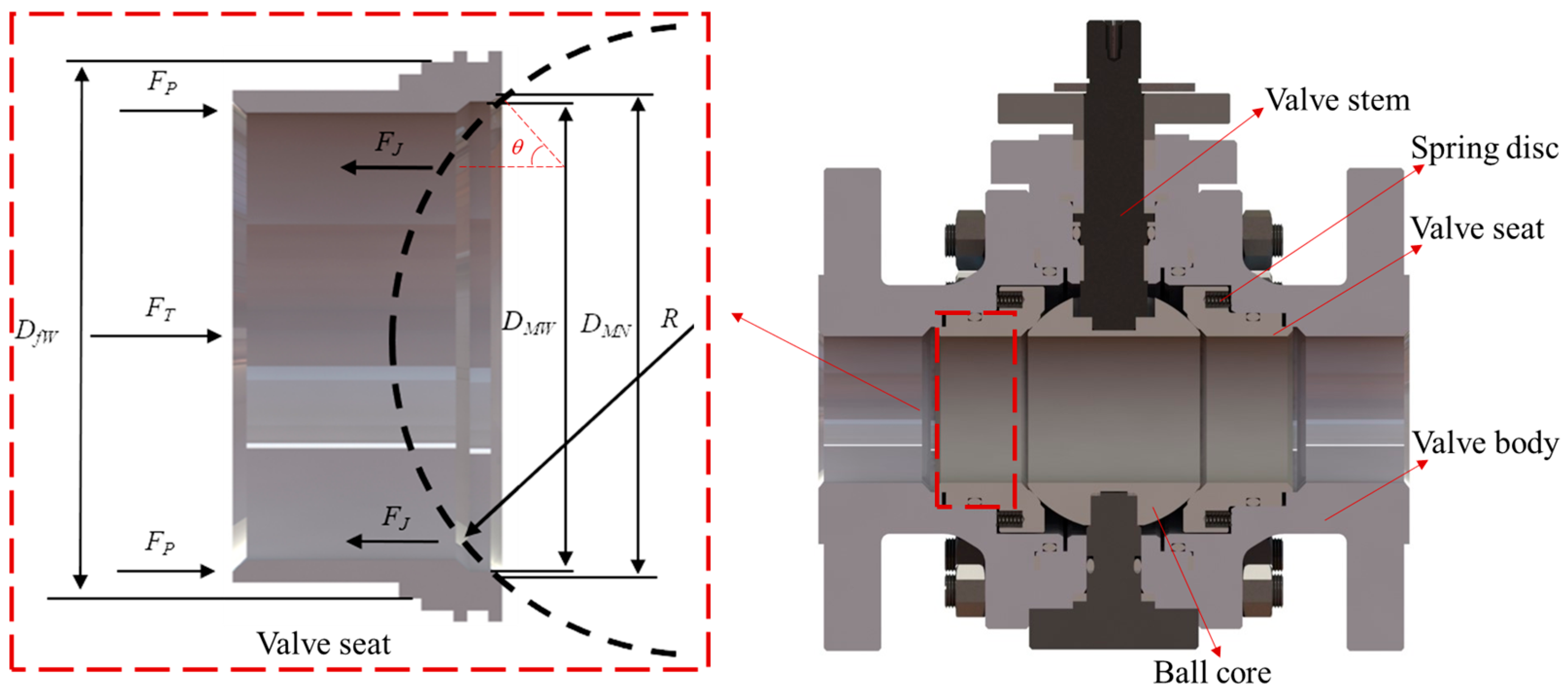
The force analysis on the valve seat is conducted to get sealing force, and then to derive sealing pressure equation. The detailed force analysis on the valve seat of a fixed hard sealing ball valve is shown in Figure 1.
In the flow direction, the valve seat is subject to the pressing force FP from flow, preload force FT from disc spring, sliding friction force Ff between seals, and axial driving force FJ from medium pressure in the gap of the sealing surface, respectively. Therefore, the equation of sealing force F is as follows:
F = F P + F T F J F f
The calculation equation of pressing force FP from flow on valve seat is shown as follows.
F P = π 4 P D f W 2 D M W 2
where P is medium pressure, DfW is outer diameter of valve seat, DMW is inner diameter of sealing surface.
The axial driving force FJ is equal to the force of medium pressure within the average diameter of the sealing surface. The calculation equation is shown as follows.
F J = π 4 P D A 2 D M W 2
where DA is average diameter of the sealing surface on valve seat, D A = D M N + D M W 2 , DMN is outer diameter of sealing surface on valve seat.
The sliding friction force Ff on the valve seat is shown as follows [43].
F f = π μ m D f W P l m
where μm is friction coefficient between seals and metal, and is usually 0.3~0.4, lm is width of seals.
The preload force FT from disc spring is generally available directly. The calculation equation is shown as follows [42].
F T = 4 E 1 μ 2 t 4 K 1 D d 2 K 4 2 f t K 4 2 h 0 t f t h 0 t f 2 t + 1
where E is elastic modulus, μ is Poisson’s ratio, t is thickness of disc spring, Dd is outer diameter of disc spring, f is deflection of disc spring, h0 is the deflection of disc spring at maximum depression, and K1, K4 are calculation coefficients.
The normal force N in the sealing surface between valve seat and valve ball is obtained based on the sealing force F, as follows.
N = F cos θ
where θ is the normal angle between the centerline of the valve flow domain and the sealing surface, cos θ = l 1 + l 2 2 R , l1, l2 are distance from valve core centerline to both ends of the valve seat sealing surface, respectively, l 1 = 4 R 2 D M N 2 4 , l 2 = 4 R 2 D M W 2 4 .
The calculation equation of sealing pressure is shown as follows.
p = N A
where A is the area of the annular contact surface between the valve core and valve seat, A = 2 π R d , d is the width of the sealing surface on axial projection.
Combining Equations (1)–(7), the sealing pressure equation in the fixed hard sealing ball valve is obtained as follows.
p g = π P ( D f W 2 D A 2 - 4 μ m D f W l m ) + 4 F T 8 π R d cos θ
From Equation (8), in ideal conditions, the parameters affecting sealing pressure in the fixed hard sealing ball valve include load (FT, P), structure parameters (DfW, DMW, DMN) and normal angle (cosθ).

2.1.2. Sealing Pressure Equation in Floating Hard Sealing Ball Valve

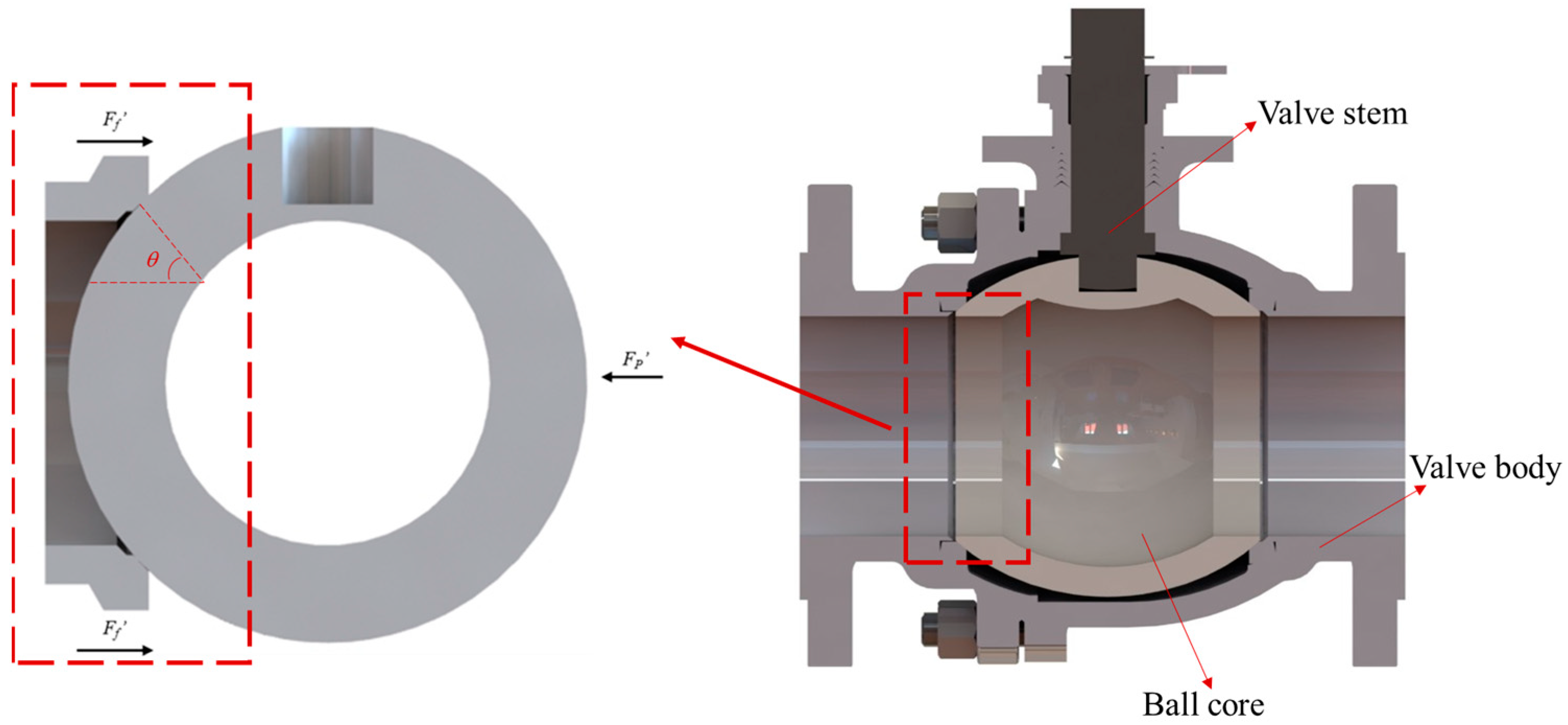
The main sealing region of the floating hard sealing ball valve is the seal pair formed by the contact between the valve seat and valve core at the outlet end. As the moving part, the force analysis of the seal pair is conducted on the valve core. Detailed analysis is shown in Figure 2.
In the flow direction, the valve core is subject to a pressing force F P from flow, and axial driving force F J from medium pressure in the gap of the sealing surface. The equation of sealing force F is shown as follows.
F = F P F J
The pressing force F P from flow on the valve core is shown as follows.
F P = π 4 P D M W 2
where P is the medium pressure, and DMW is inner diameter of the sealing surface on valve seat.
The axial driving force F J is also the force of medium pressure within the average diameter of the sealing surface. The calculation equation is as follows.
F J = π 4 P D M N 2 D A 2
where DMN and DA are outer diameter and average diameter of sealing surface on valve seat, respectively.
Combining Equations (9)–(11), the sealing pressure equation in the floating hard sealing ball valve is obtained as follows.
p f = P D A 2 8 π R d cos θ
From Equation (12), in ideal conditions, the parameters affecting sealing pressure in the floating hard sealing ball valve include load (P), structure parameters (DMW, DMN) and normal angle (cosθ).

2.2. Relationship Between Sealing Pressure and Gap Height

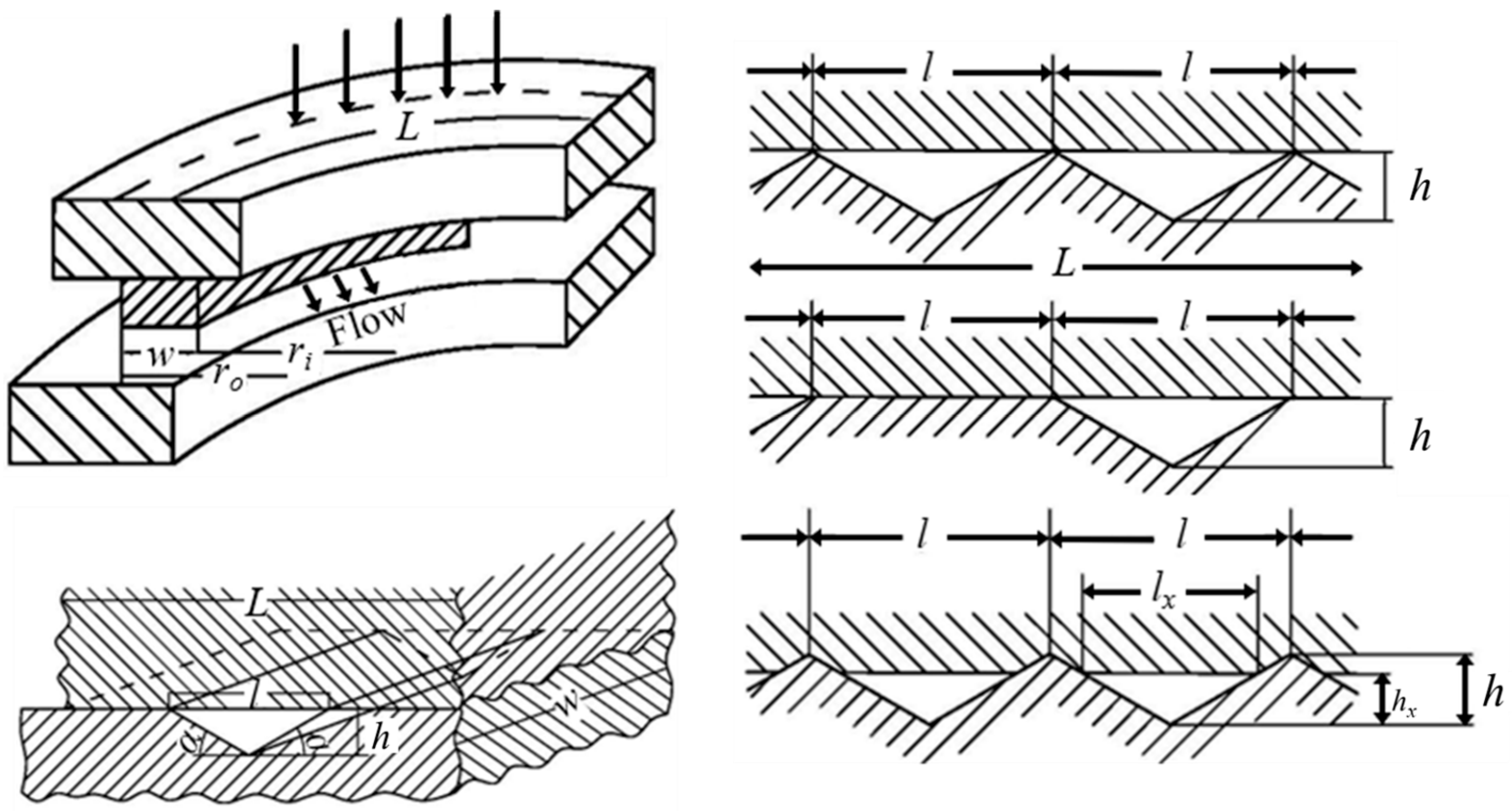
Based on the Roth model, the two rough contacting surfaces are regarded as an equivalent rough surface and a smooth surface, as shown in Figure 3. The equivalent rough surface is regarded as being composed of many micro-convex bodies. The relationship between sealing pressure and gap height is established. The mathematical method for leakage rate prediction is derived from the fixed form of ball valves, accounting for working conditions and structure parameters. This method quantifies leakage rate variations across micro-scale to macro-scale.
The gap height equation is as follows.
h = h 0 exp p R c
where h0 is the gap height of sealing surface without loading. Rc is the sealing performance factor, which is related to the yield strength of the material and the characteristic parameters of the rough surface. p is the average sealing pressure on sealing surface.
According to the 3σ principle, the initial gap height is selected as h0 = 3σ, and σ = 1.25 Ra. Therefore, Equation (13) can be expressed as follows.
h = 3.75 R a   exp p R c
where σ = σ 1 2 + σ 2 2 , σ1, σ2 are surface roughness of valve core and valve seat, respectively.
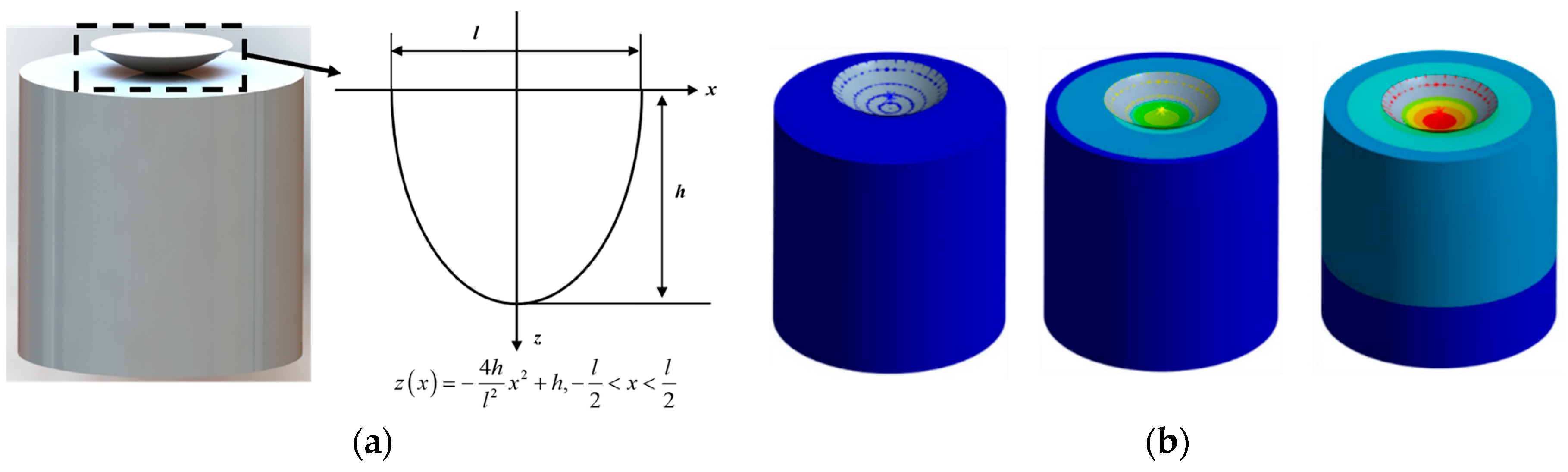
The two-dimension profile of micro-convex body on rough surface can be regarded as a quadratic function, as shown in Figure 4a. To obtain the sealing performance factor, the micro-convex body is set as rigid body, and the cylinder is set as deformable body, as shown in Figure 4b. The three cylinders, respectively, represent the initial contact, continue contact and stable contact. Based on the deformation, the sealing performance factor under the corresponding sealing pressure can be obtained by using Equation (14). The relationship between the sealing pressure and the sealing performance factor under different deformations is plotted as a graph, as shown in Figure 5.
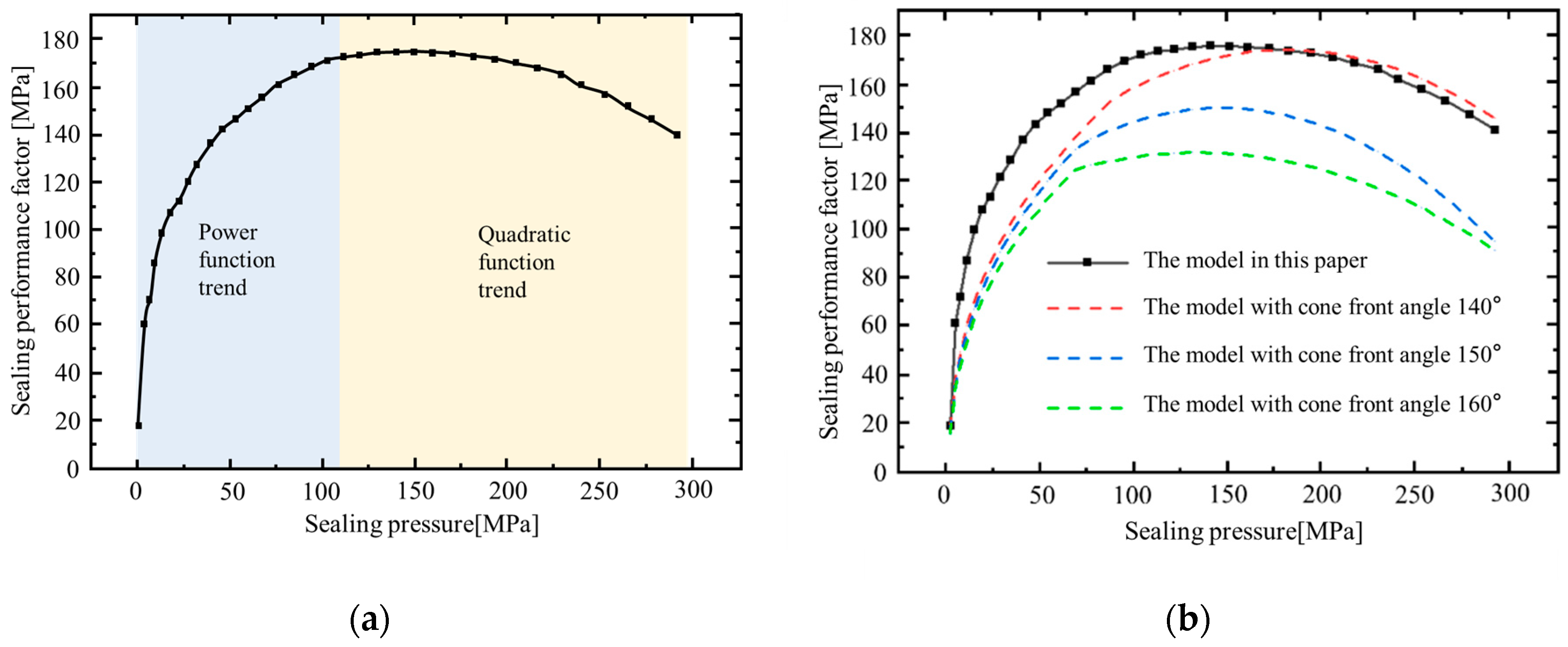
The variation of sealing performance with sealing pressure is illustrated in Figure 5a. From the figure, the sealing performance factor has different relationships with sealing pressure in different sections. With the increase in sealing pressure, the sealing performance factor shows a piecewise function variation trend. In the ascending stage, it shows a power function trend. While in the descending stage, it takes the form of a quadratic function. The critical points at the rising and falling regions are the critical points at which the function form changes. The reason why the curve shows a piecewise trend is that, once the sealing pressure exceeds a critical threshold, the material will undergo significant deformation, leading to plastic deformation or even yield. The micro-convex body with different cone front angles is selected to simulate sealing performance factor in different rough peaks. The trends of different sealing performance factors with sealing pressure are shown in Figure 5b.
Due to the different angle, the sealing performance factor of different models is diverse in numerical value, but the overall trend is the same. Therefore, it is necessary to consider not only the physical properties difference of materials, but also the model selection of single rough peak simulation. Selecting a more realistic micro-convex model for surface topography measurement will make the results more accurate.
The sealing performance factor curve is fitted as a piecewise function: a power function for the rapidly rising region and a quadratic function for the gently decreasing region. The relationship between sealing performance factor and sealing pressure is shown in Equation (15).
R c = 43.3926 p 0.3036     p 110 MPa R c = 175.0635 0.0022 ( p 158.6967 ) 2 p 110 MPa
The equation fitting optimization levels are 98.678% and 99.416% through MATLAB R2023b, respectively, indicating that the equation can explain the data results well.

2.3. Prediction Method of Leakage Rate on Ball Valve

Combing Equations (1)–(15), the prediction method of leakage rate on ball valve is obtained. The details are as follows.
STEP.1. According to the fixed form of valve core and structural parameters, the sealing pressure is obtained, as shown in Equations (8) and (12).
STEP.2. Substituting the sealing pressure into Equation (15), the sealing performance factor is obtained.
STEP.3. Substituting the sealing pressure and sealing performance factor into Equation (14), the gap height is obtained.
STEP.4. Substituting the gap height into following Equation (16) [44], the leakage rate of the ball valve is obtained. In the equation, D is fractal dimension, ϕ is flow factor, which is used to describe the influence of rough surfaces on the flow of the medium. Both the surface roughness (Ra) and fractal dimension (D) can be obtained by measuring the surface morphology using an atomic force microscope.
Q = ϕ Q q = 1 exp 10.1490 h 0.3692 R a 0.9372 D 2.9655 π h 3 Δ p 3 μ ln 1 1 r 2 R 2 1 + 1 r 2 R 2 1 + 1 r 1 R 2 1 1 r 1 R 2

3. Materials and Methods

3.1. Boundary Conditions

The simulation software used in this paper is the Ansys Workbench 2022R2. The materials of the ball core and the valve seat are both structural steel, whose material properties are shown in Table 1. Friction contact is set between the ball core and the valve seat, the friction coefficient is set at 0.2. A fixed support is set on the surface of the valve core connected to the valve stem. The medium pressure and disc spring force are set on the surface of the valve seat in flow direction. The axial freedom is set at vertical flow direction.
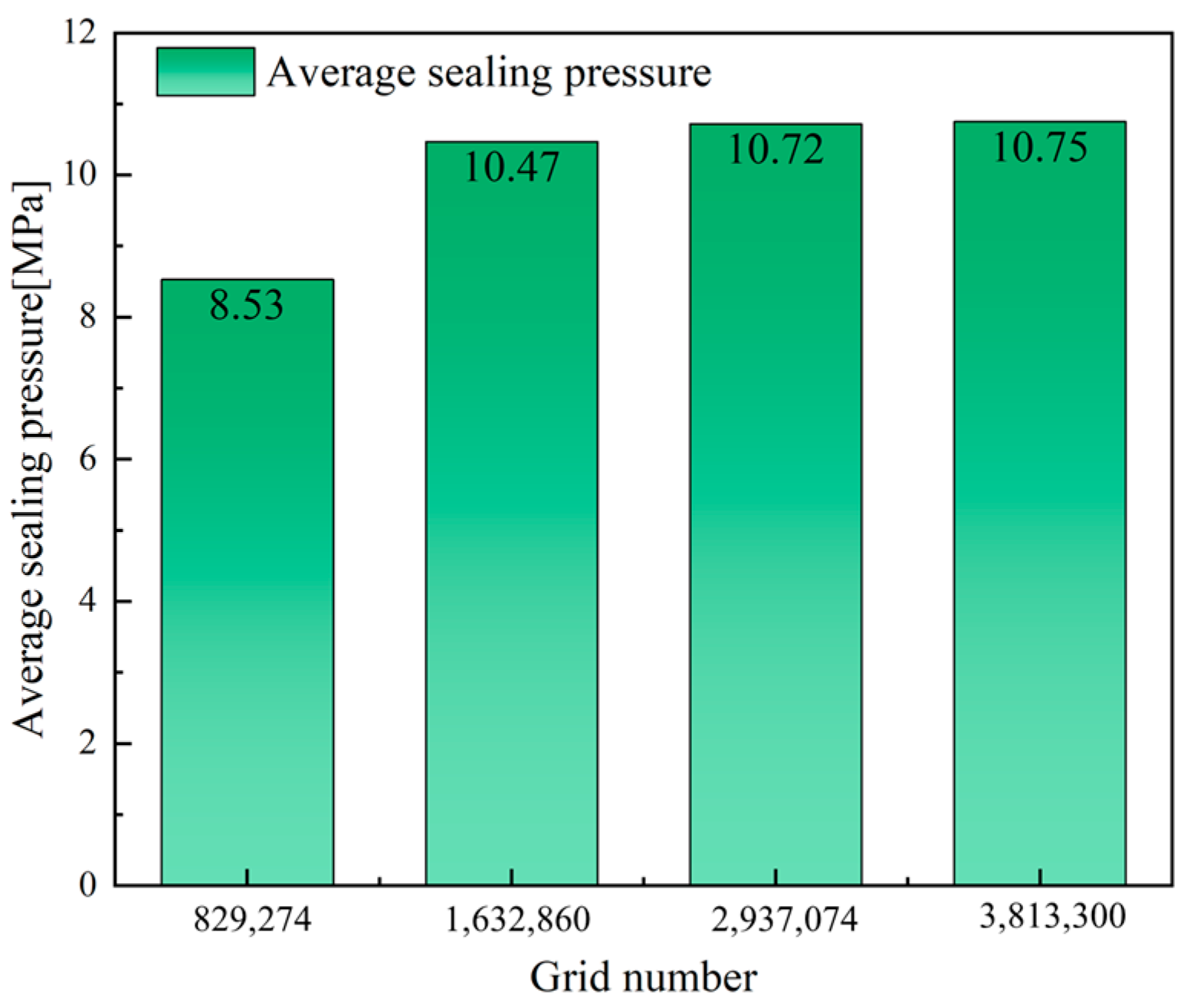
When meshing, the contact surface between the ball core and the valve seat is refined. The average sealing pressure is used as the reference value for grid independence verification, as shown in Figure 6. When the number of grids changes from 2,937,074 to 3,813,300, the average sealing pressure of the sealing surface basically remains unchanged. Considering the computational efficiency and cost, the 2,937,074 grids are selected for the subsequent simulation calculation.

3.2. Experimental Setup

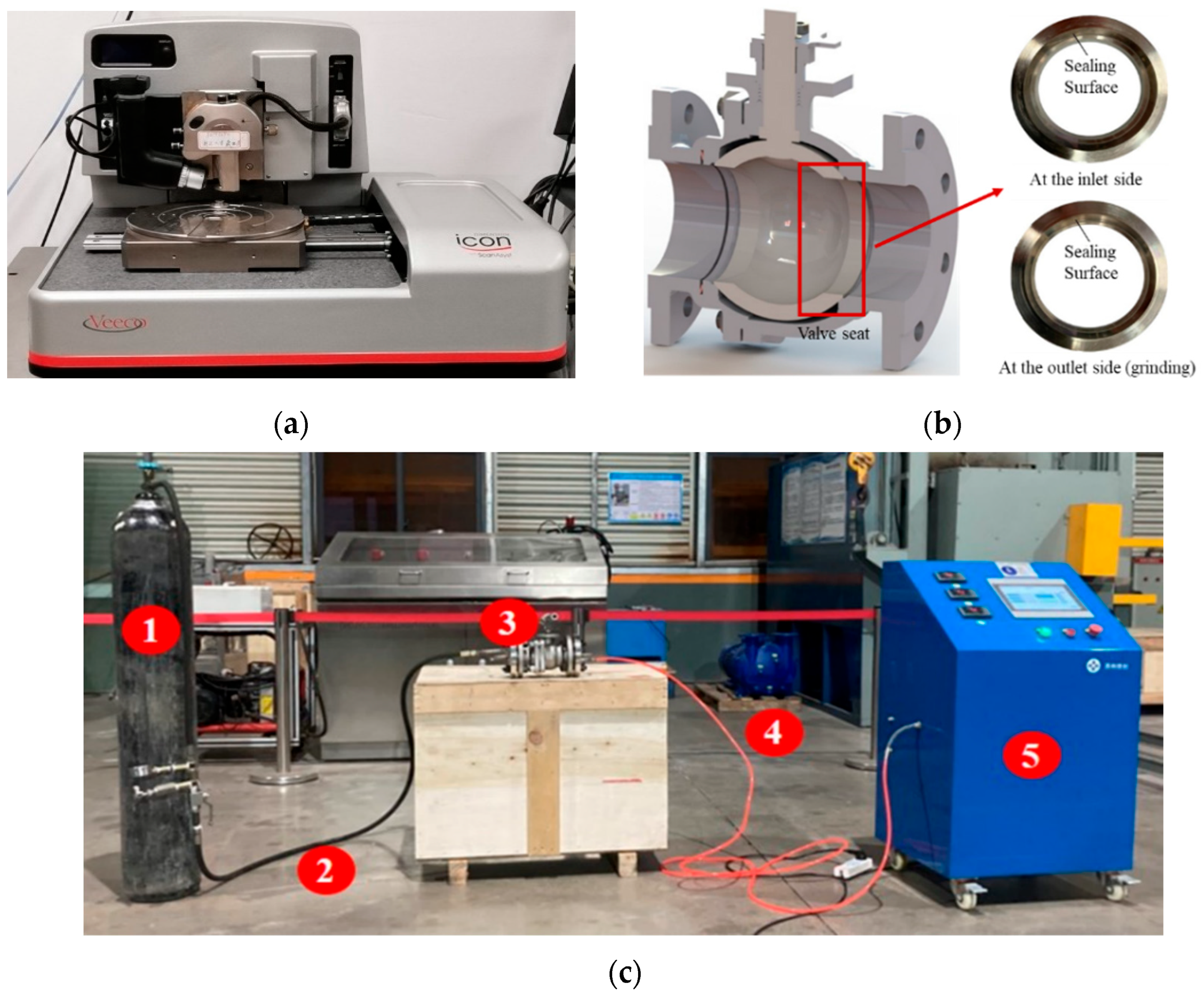
Firstly, an atomic force microscope (AFM) is used to analyze the surface morphology of the core and seat of the ball valve, so the surface parameters (roughness Ra and fractal dimension D) are obtained. The AFM used in this paper is the product of American Veeco Company, with the model number ICON, and the specific photos are shown in Figure 7a.
As shown in Figure 7b, the valve used in the experiment is Q41Y-150LB hard sealing ball valve from Jiangsu Zhongce Valve Co., Ltd., Changzhou, China, which is fixed in floating mode. The floating ball valve is actually unilateral seal, which can better verify the leakage rate prediction method proposed in this paper. In order to exclude the influence of the inlet seal pair, the inlet side seat does not grind with the ball core on the experimental ball valve. Therefore, the valve seat and ball core at the inlet side are unable to fit tightly. The inlet side seal pair does not exist in reality.
The leakage experimental setup of ball valve is shown in Figure 7c. The setup is mainly composed of ①—Nitrogen cylinder, providing a maximum pressure of 10 MPa; ②—Inlet pipe; ③—Experimental ball valve; ④—Outlet pipe; ⑤—Leakage detection device, whose model number is GBS-SC-CL from Suzhou Sichuang Xima Control System Co., Ltd., Suzhou, China. The medium is nitrogen, and the temperature is room temperature.
The intake method is used to detect the leakage rate of ball valve under different medium pressure. The test principle is to connect the experimental ball valve to the test bench when the ball valve is closed, and inject nitrogen with a certain pressure into the inlet side of the ball valve. As the ball valve is closed, pressure difference will be generated on both sides of the sealing surface of the ball valve, and the medium can only flow through the gap channel between the valve seat and the valve core. Therefore, nitrogen flows out of the valve body through the gap of the sealing surfaces under the action of the pressure difference on both sides, and it indicates that there is a leakage. The outflow gas will flow into the leakage detection device. When the amount of leakage gas reaches a stable level, the data of the leakage detection device will be read as the leakage rate of the ball valve under the medium pressure.
The uncertainty analysis of the leakage detection device is shown in Table 2.

4. Results and Discussion

4.1. Verification of Sealing Pressure Equation

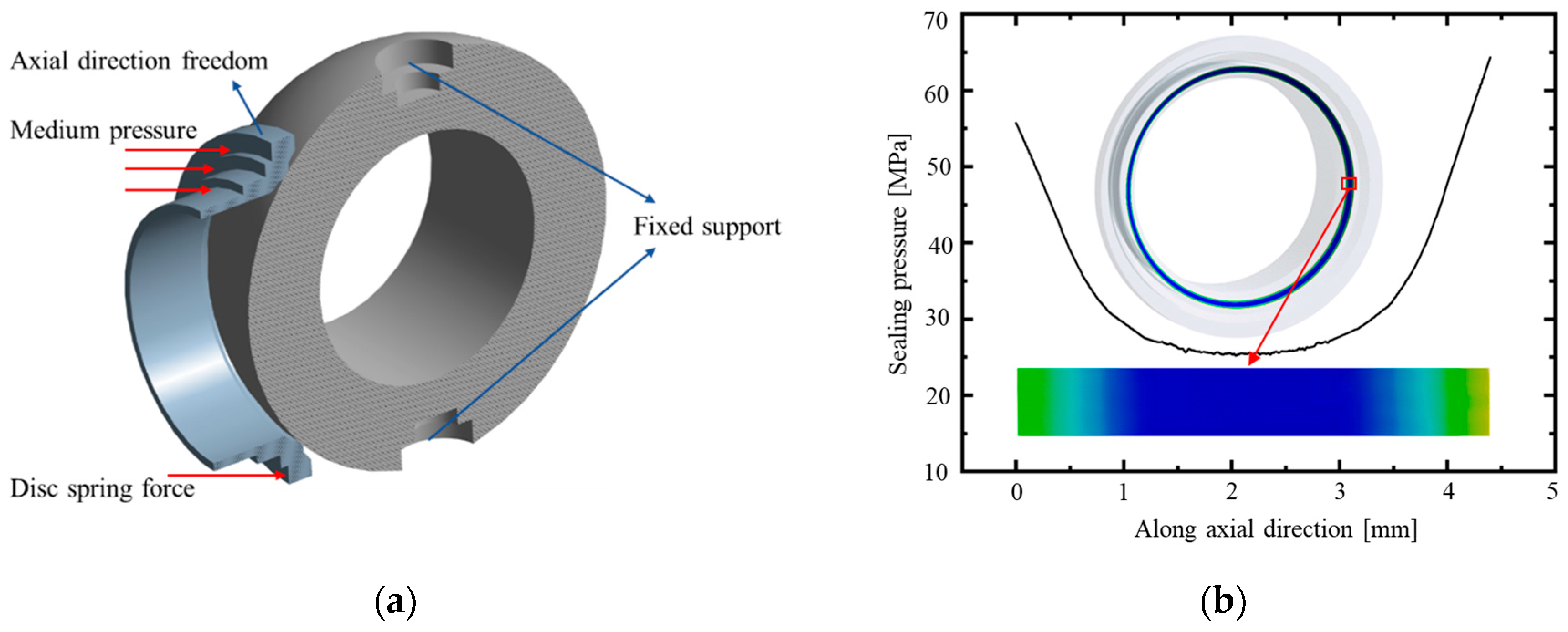
To verify the accuracy of the theoretical sealing pressure equation and obtain the sealing pressure distribution on the hard sealing ball valve, a contact model of valve core and valve seat is established, as shown in Figure 8a.
The sealing pressure distribution of valve ball sealing surface is shown in Figure 8b. From the figure, the sealing pressure in the circumferential direction is almost equal. In the axial direction, the sealing pressure presents a U-shaped distribution, which means the sealing pressure is large on both sides and is small in the middle. The reason is that the deformation margin on both sides is smaller than that in the middle, the extrusion pressure on both sides is larger and the sealing pressure is larger. In the middle, the distribution is better and the pressure fluctuation is smaller. Therefore, the contact between the valve seat and the valve core is more stable in the middle of the sealing surface. In addition, the stress concentration exists in the structural mutation at the edge, forming the edge stress effect. During the operation of the valve, edge stress may cause excessive wear, potentially affecting sealing performance. Therefore, edge stress effects must be account for in sealing pressure design.
Set the medium pressure 10 MPa and the disc spring force 1000 N, a fixed hard sealing ball valve is simulated. Under different structural parameters, the sealing pressure comparison between theoretical equation and numerical simulations is shown in Table 3. Since the sealing surface gap and sliding friction are not simulated, the two items are also discarded in the theoretical calculation.
From the table, the calculated results are smaller than the simulated results. The maximum error is about 5.5%, and the error is allowed. The error is that the sealing pressure on sealing surface is calculated as evenly distributed, while it is not uniform due to the existence of edge stress. The higher sealing pressure at both sides makes the sealing surface fit more tightly, reducing the leakage of the medium. Therefore, the calculation results are more conservative and reliable in predicting the leakage rate.

4.2. Experimental Verification of Leakage Rate Prediction

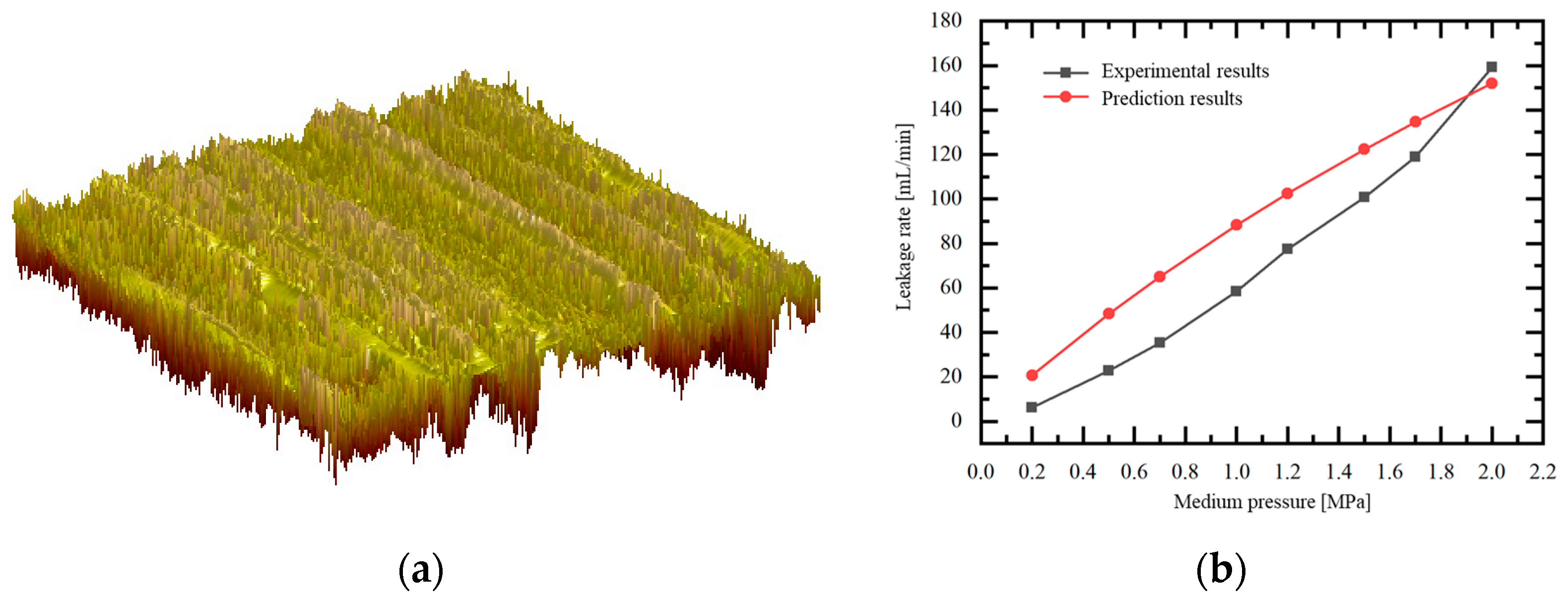
The sealing sample is selected for surface measurement to obtain the surface morphology. The measured size is 32 μm × 32 μm, as shown in Figure 9a.
The experimental image is analyzed to extract surface topography parameters, including roughness (Ra) and fractal dimension (D). For the experimental ball valve, the valve core and seat exhibit an Ra of 0.4 μm and a D of 2.5. The Ra of equivalent rough surface is taken as 0.4 2 μm. These values (Ra = 0.4 2 μm, D = 2.5) are adopted as the theoretical prediction inputs for the equivalent rough surface model.
The leakage rate data of experimental results and prediction results are shown in Table 4. The comparison of leakage rate between experimental results and prediction results is illustrated in Figure 9b. In the condition of 0.2 MPa, the error between the two results is relatively large. This is because in this condition, the medium pressure is too small. The seal pair capillary generated by the fluid medium makes the contact of the valve ball and the valve seat more closely. Except for the condition of 2.0 MPa, the leakage rate of the experiment is significantly lower than the prediction results. There are many reasons. First of all, the established contact model is simplified to a certain degree. The micro gap channels are interconnected to form more complex flow domain, and in fact the flow resistance is relatively large. Secondly, as mentioned above, the sealing pressure equation selected in this paper is relatively conservative. The prediction method does not consider the influence of the U-shaped distribution of the sealing pressure and capillary phenomenon. All the above results in large data are obtained by using prediction method. Under a pressure of 2.0 MPa, the experimental leakage rate exceeds the predicted value. The reason is that at high pressure, the valve core of floating ball valve experiences slight displacement due to its inherent floating design, significantly increasing the leakage rate. On the whole, although there is a certain deviation between the experimental results and prediction results, the magnitude of the two is the same, and the trend of leakage rate with the medium pressure is basically the same. Academically, this is in line with the results of related papers [45,46], and the accuracy of the current models derived based on mathematical methods is all at this level, which proves its initial validity. In engineering applications, the sealing performance of the product is generally considered qualified when the leakage rate falls within specified thresholds. The theoretical model developed in this study can be used to predict the leakage rate of ball valves in engineering. In future work, we will focus on incorporating more working condition parameters to expand the applicability of the model and integrating machine learning methods to enhance prediction accuracy.

4.3. Influencing Factors of Leakage Rate

From Equation (16), the leakage rate of ball valve is related to structural parameters (r1, r2, R), rough surface morphology (Ra, D), sealing performance factor (Rc), and load (p, Δp). A floating hard sealing ball valve is selected as the simulation object, which is also used in experiment.
Considering Equation (12), the sealing pressure of floating hard sealing ball valve is mainly provided by medium pressure. Taking actual working conditions into account, the medium pressure P and the roughness Ra are selected to analysis the influence on leakage rate of ball valve.
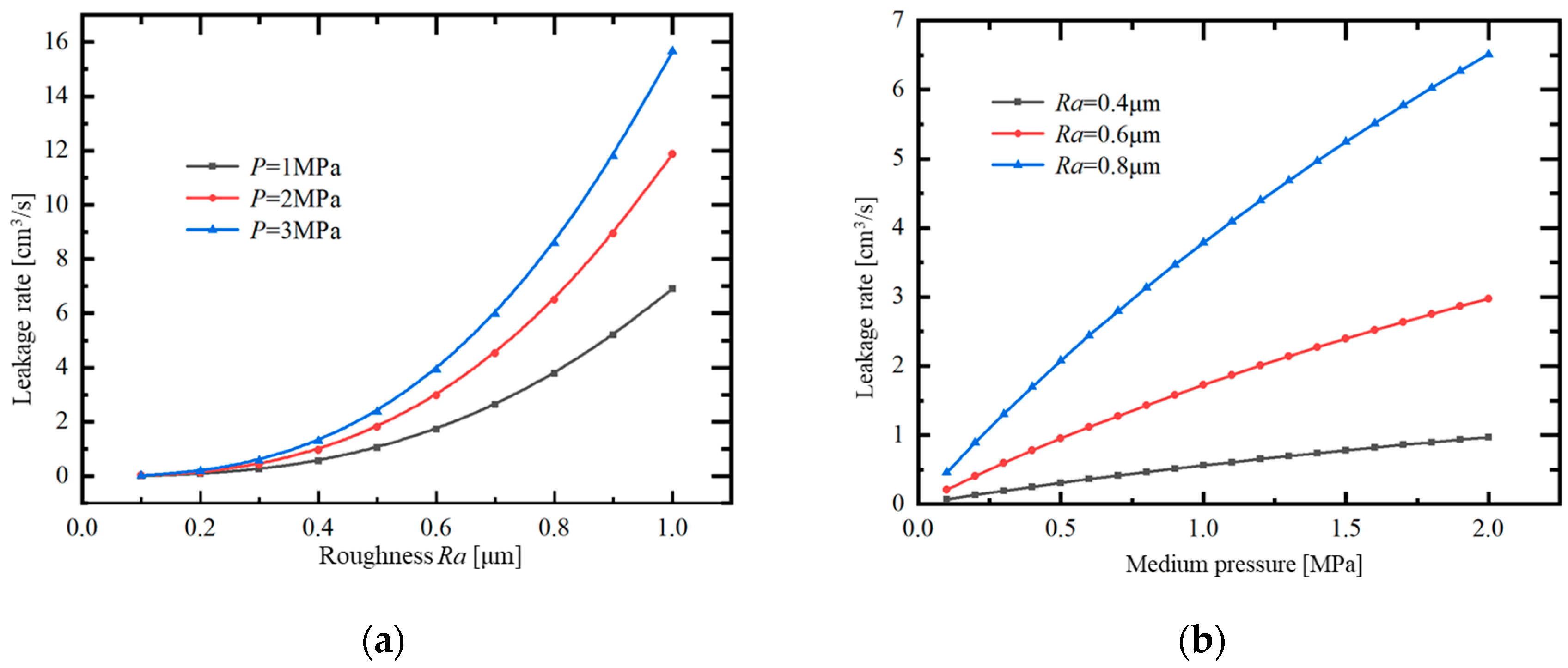
Figure 10a illustrates the variation of leakage rate with surface roughness under different medium pressures. With the increase in roughness, the leakage rate increases and shows a tendency of power function. The higher the pressure, the faster the rising trend of leakage rate. However, with the increase in pressure, the increment of leakage rate decreases. That is because when the pressure increases, the sealing pressure on the seal pair also increases. When the roughness Ra is less than 0.4 μm, the leakage rate under different pressure tends to be the same, which is basically close to 0. Therefore, in actual working conditions, it is unreasonable to reduce the roughness blindly. When the roughness reaches a certain value, reducing the roughness not only does not improve the sealing performance, but also increases the cost of processing.
Figure 10b shows how the leakage rate changes with medium pressure under different roughness. With the increase in medium pressure, the leakage rate increases almost linearly. As surface roughness increases, the leakage rate exhibits a pronounced upward trend, with progressively larger increments. When the roughness is 0.4 μm, the leakage rate is nearly 0. For the floating hard sealing ball valve, when the roughness is less than a certain value, the sealing pressure is determined by the medium pressure. For this reason, the floating ball valve cannot adapt to high pressure conditions. The sealing surface performance is very important for improving the sealing performance of the ball valve. From Figure 10, the improvement of valve sealing performance should be carried out in two aspects: roughness and sealing pressure. There is a suitable combination of sealing pressure and roughness to achieve optimal valve sealing performance and reasonable cost reduction.

5. Conclusions

In this paper, a leakage rate prediction method of a hard sealing ball valve is studied, which makes the prediction method change from micro-scale to macro-scale, providing an interpretable benchmark for the verification and comparison of more complex models in the future, and offering new solutions to the complex problem of ball valve leakage rate prediction. The proposed theoretical sealing pressure equation is conservative, since sealing pressure is calculated evenly while it actually distributes as U-shape on sealing surface. The sealing performance factor shows a piecewise change with sealing pressure. It firstly shows a rapid increasing trend with power function, and then shows a steady decreasing trend with quadratic function. The leakage rate obtained from proposed theoretical method is consistent with the experimental results in magnitude. Therefore, the model proposed in this paper is consistent with the experimental results within a specific working condition range, verifying the initial validity of the model. According to leakage requirements, the design of sealing pressure and roughness can be guided through the leakage rate prediction method of hard sealing ball valve. When the roughness is reduced to a certain value, the improvement of the sealing performance is very limited. The same is true for increasing the sealing pressure. Therefore, the improvement of the sealing performance of the ball valve should be carried out from two aspects: roughness and sealing pressure. It is necessary to choose a suitable combination of sealing pressure and roughness to achieve optimal sealing performance and reasonable cost reduction. In future work, we will focus on incorporating more working condition parameters to expand the model’s applicability, integrating machine learning methods to enhance prediction accuracy, and verifying the model’s robustness through industrial field data. This work can be referred to the leakage prediction of the hard sealing ball valve.

Author Contributions

Conceptualization, W.-Q.L.; Methodology, H.S., Z.-T.W., X.-H.J., W.S. and J.-Y.Q.; Validation, Z.-T.W. and Y.-D.L.; Formal analysis, H.S., X.-H.J. and W.S.; Investigation, H.S., Z.-T.W., Y.-D.L. and W.-Q.L.; Resources, Z.-J.J. and J.-Y.Q.; Writing—original draft, H.S. and Z.-T.W.; Writing—review & editing, Y.-D.L., W.-Q.L., Z.-J.J. and J.-Y.Q.; Visualization, Z.-J.J.; Supervision, W.-Q.L., Z.-J.J. and J.-Y.Q. All authors have read and agreed to the published version of the manuscript.

Funding

This work is supported by the National Natural Science Foundation of China (NSFC) through Grant No. 52422506, Zhejiang Provincial Key Research and Development Program through Grant No. 2024C01235, and the Postdoctoral Fellowship Program of CPSF under Grant Number GZC20241478.

Institutional Review Board Statement

Not applicable.

Informed Consent Statement

Not applicable.

Data Availability Statement

The original contributions presented in this study are included in the article. Further inquiries can be directed to the corresponding author.

Conflicts of Interest

Author Xiao-Hong Jiang was employed by the company China Nuclear Power Engineering Co., Ltd. The remaining authors declare that the research was conducted in the absence of any commercial or financial relationships that could be construed as a potential conflict of interest.

Nomenclature

A [mm2]Area of contact surface between the valve core and valve seat
DA [mm]Average diameter of the sealing surface on valve seat
Dd [mm]Outer diameter of disc spring
DfW [mm]Outer diameter of valve seat
DMN [mm]Outer diameter of sealing surface on valve seat
DMW [mm]Inner diameter of sealing surface.
E [GPa]Elastic modulus
F [N]Sealing force
Ff [N]Sliding friction force between seals
FJ [N]Axial driving force from medium pressure
FP [N]Pressing force from flow
FT [N]Preload force from disc spring
f [mm]Deflection of disc spring
h0 [mm]Deflection of disc spring at maximum depression
lm [mm]Width of seals
N [N]Normal force in the sealing surface between valve seat and ball
P [MPa]Medium pressure
t [mm]Thickness of disc spring
μPoisson’s ratio
μmFriction coefficient between seals and metal
θNormal angle between the centerline of the valve flow domain and the sealing surface

References

  1. Huang, X.; Anufriev, R.; Jalabert, L.; Watanabe, K.; Taniguchi, T.; Guo, Y.; Ni, Y.; Volz, S.; Nomura, M. A graphite thermal Tesla valve driven by hydrodynamic phonon transport. Nature 2024, 634, 1086–1090. [Google Scholar] [CrossRef] [PubMed]
  2. Shen, Q.; Jiang, M.; Wang, R.; Song, K.; Vong, M.; Jung, W.; Krisnadi, F.; Kan, R.; Zheng, F.; Fu, B.; et al. Liquid metal-based soft, hermetic, and wireless-communicable seals for stretchable systems. Science 2023, 379, 488–493. [Google Scholar]
  3. Cui, L.X.; Du, Y.M.; Sun, C.P. On quantum reliability characterizing systematic errors in quantum sensing. J. Reliab. Sci. Eng. 2025, 1, 015004. [Google Scholar] [CrossRef]
  4. Ben-Mansour, R. Reducing Carbon Footprint in Petrochemical Plants by Analysis of Entropy Generation for Flow in Sudden Pipe Contraction. Eng 2025, 6, 216. [Google Scholar] [CrossRef]
  5. Phila, A.; Keaitnukul, W.; Kumar, M.; Pimsarn, M.; Chokphoemphun, S.; Eiamsa-Ard, S. Heat Transfer Analysis in a Channel Mounted with In-Line Downward-Facing and Staggered Downward-Facing Notched Baffles. Eng 2025, 6, 229. [Google Scholar]
  6. Jeyanthi, S.; Venkatakrishnaiah, R.; Raju, K.V.B. Multilayer geocell-reinforced soils using mayfly optimisation predicts circular foundation load settlement. Int. J. Hydromechatron. 2024, 7, 31–48. [Google Scholar]
  7. Fan, B.; Zhao, H.; Meng, L. Obstacle detection for intelligent robots based on the fusion of 2D lidar and depth camera. Int. J. Hydromechatron. 2024, 7, 67–88. [Google Scholar]
  8. Lin, Z.H.; Yu, L.J.; Hua, T.F.; Jin, Z.J.; Qian, J.Y. Seal contact performance analysis of soft seals on high-pressure hydrogen charge valves. J. Zhejiang Univ.-Sci. A 2022, 23, 247–256. [Google Scholar] [CrossRef]
  9. Zhang, A.; Li, Q.Y.; Zong, C.Y.; Liu, F.W.; Xue, T.H.; Xiao, J.; Song, X.G. Numerical analysis of fluid force on orifice structure of valve disc for nuclear globe valve. Ann. Nucl. Energy 2024, 197, 110246. [Google Scholar] [CrossRef]
  10. Zhong, Q.; Xu, E.G.; Jia, T.W.; Yang, H.Y.; Zhang, B.; Li, Y.B. Dynamic performance and control accuracy of a novel proportional valve with a switching technology-controlled pilot stage. J. Zhejiang Univ.-Sci. A 2022, 23, 272–285. [Google Scholar]
  11. Lin, Z.H.; Li, J.Y.; Jin, Z.J.; Qian, J.Y. Fluid dynamic analysis of liquefied natural gas flow through a cryogenic ball valve in liquefied natural gas receiving stations. Energy 2021, 226, 120376. [Google Scholar] [CrossRef]
  12. Iravani, M.; Toghraie, D. Design a high-pressure test system to investigate the performance characteristics of ball valves in a compressible choked flow. Measurement 2020, 151, 107200. [Google Scholar] [CrossRef]
  13. Chen, D.; Jiang, J.; Ming, L.; Zhang, G.; Lin, Z.; Li, H. Study on gas–liquid–solid multiphase flow and erosion in ball valves. Eng. Fail. Anal. 2025, 167, 108945. [Google Scholar] [CrossRef]
  14. Gao, Z.X.; Yue, Y.; Yang, J.M.; Li, J.Y.; Wu, H.; Jin, Z. Numerical Study of the Microflow Characteristics in a V-ball Valve. Micromachines 2021, 12, 155. [Google Scholar] [CrossRef]
  15. Jin, Z.J.; Qiu, C.; Jiang, C.H.; Wu, J.Y.; Qian, J.Y. Effect of valve core shapes on cavitation flow through a sleeve regulating valve. J. Zhejiang Univ.-Sci. A 2020, 21, 1–14. [Google Scholar]
  16. Viard, R.; Talbi, A.; Ghouila-Houri, C.; Kourta, A.; Merlen, A.; Pernod, P. Magneto-mechanical micro-valve for active flow control. Sens. Actuators A Phys. 2020, 316, 112387. [Google Scholar] [CrossRef]
  17. Chen, F.Q.; Jin, Z.J. Throttling components effect on aerodynamic performance of superheated steam flow in multi-stage high pressure reducing valve. Energy 2021, 230, 120769. [Google Scholar] [CrossRef]
  18. Guan, A.Q.; Zhong, F.P.; Qiu, C.; Jin, Z.J.; Qian, J.Y. Erosion wear analysis on valve cage of cage-typed sleeve control valve for coal liquefaction. J. Fluids Eng. 2024, 146, 101206. [Google Scholar] [CrossRef]
  19. Mao, Z.B.; Asai, Y.; Wiranata, A.; Kong, D.Q.; Man, J. Eccentric actuator driven by stacked electrohydrodynamic pumps. J. Zhejiang Univ.-Sci. A 2022, 23, 329–334. [Google Scholar]
  20. Amer, E.; Jönsson, G.; Arrhén, F. Secondary measurement standard for calibration of dynamic pressure sensor to bridge the gap between existing static and dynamic standards. Measurement 2025, 242, 116253. [Google Scholar]
  21. Zhang, S.Z.; Lin, Z.H.; Chen, S.J.; Jin, Z.J.; Qian, J.Y. Unbalanced force analysis on valve core clamping in hydraulic spool valves. Ann. Nucl. Energy 2024, 203, 110505. [Google Scholar] [CrossRef]
  22. Han, J.; Xie, Y.; Wang, Y.; Wang, Q.; Zhang, Y.; Ju, J. Research on dynamic flow rate self-sensing in control valves. Prog. Nucl. Energy 2024, 176, 105377. [Google Scholar] [CrossRef]
  23. Blasiak, S.; Laski, P.A.; Takosoglu, J.E. Rapid prototyping of pneumatic directional control valves. Polymers 2021, 13, 1458. [Google Scholar] [CrossRef]
  24. Mitra, H.; Gabel, T.; Williams, D.; Koeck, F.; Mónico, R.O.; Alba, K. Computational study of compressible flow through choke valve. J. Fluids Struct. 2022, 113, 103670. [Google Scholar] [CrossRef]
  25. Li, W.; Yang, S.; Chen, Y.; Li, C.; Wang, Z. Tesla valves and capillary structures-activated thermal regulator. Nat. Commun. 2023, 14, 3996. [Google Scholar] [CrossRef]
  26. Ameen, M.T.; Smallbone, A.; Roskilly, A.P.; Carpenter, E. The development of a screen valve for reciprocating heat pump/engine applications. J. Renew. Sustain. Energy 2020, 12, 054101. [Google Scholar] [CrossRef]
  27. Gao, L.; Wang, X. Intelligent Control of the Air Compressor (AC) and Back Pressure Valve (BPV) to Improve PEMFC System Dynamic Response and Efficiency in High Altitude Regions. Eng 2025, 6, 19. [Google Scholar] [CrossRef]
  28. Li, X.; Wang, B.; Peng, X.; Li, Y.; Li, X.; Chen, Y.; Jin, J. Effect of nitrile butadiene rubber hardness on the sealing characteristics of hydraulic O-ring rod seals. J. Zhejiang Univ.-Sci. A 2024, 25, 63–78. [Google Scholar] [CrossRef]
  29. Amenta, F.; Bolelli, G.; D’Errico, F.; Ottani, F.; Pedrazzi, S.; Allesina, G.; Bertarini, A.; Puddu, P.; Lusvarghi, L. Tribological behaviour of PTFE composites: Interplay between reinforcement type and counterface material. Wear 2022, 510, 204498. [Google Scholar] [CrossRef]
  30. Gehlen, L.R.; Bolelli, G.; Puddu, P.; Forlin, E.; Colella, A.; Pintaude, G.; Lusvarghi, L. Tribological and electrochemical performances of HVOF sprayed NbC-NiCr coatings. Surf. Coat. Technol. 2023, 474, 130098. [Google Scholar]
  31. Zong, C.Y.; Shi, M.L.; Li, Q.Y.; Xue, T.H.; Song, X.G.; Li, X.F.; Chen, D.J. Sealing design optimization of nuclear pressure relief valves based on the polynomial chaos expansion surrogate model. Nucl. Eng. Technol. 2023, 55, 1382–1399. [Google Scholar] [CrossRef]
  32. Freixa, J.; Laborda, A.; Martinez-Quiroga, V. Effectiveness of the ASVAD valve in a reactor vessel bottom leak scenario. Ann. Nucl. Energy 2021, 160, 108387. [Google Scholar] [CrossRef]
  33. Morad, O.; Viitala, R.; Saikko, V. Behavior of marine thruster lip seals under typical operating conditions. Tribol. Int. 2025, 201, 110195. [Google Scholar]
  34. Teles, D.B.; de Castro, V.V.; dos Reis Tagliari, M.; de Souza, A.J.; de Fraga Malfatti, C. Effect of HVOF spray coating on the tribological surface of onshore gate valves. Wear 2024, 546–547, 205322. [Google Scholar] [CrossRef]
  35. Qian, J.Y.; Xu, J.X.; Fang, L.; Zhao, L.; Wu, J.Y.; Jin, Z.J. Effects of throttling windows on cavitation flow of sleeve control valve. Ann. Nucl. Energy 2023, 189, 109841. [Google Scholar] [CrossRef]
  36. Feuchtmüller, O.; Hörl, L.; Bauer, F. Oil film generation of a hydraulic rod seal: An experimental study using ellipsometry. Tribol. Int. 2021, 162, 107102. [Google Scholar] [CrossRef]
  37. Hanaei, S.; Lakzian, E. Numerical and experimental investigation of the effect of the optimal usage of pump as turbine instead of pressure-reducing valves on leakage reduction by genetic algorithm. Energy Convers. Manag. 2022, 270, 116253. [Google Scholar] [CrossRef]
  38. Hou, J.; Li, S.; Yang, L.; Zhang, X.; Zhao, Q. Multi-leakage source localization of safety valve based on improved KDE algorithm. Process Saf. Environ. Prot. 2023, 171, 493–506. [Google Scholar]
  39. Sim, H.Y.; Ramli, R.; Saifizul, A.; Soong, M.F. Detection and estimation of valve leakage losses in reciprocating compressor using acoustic emission technique. Measurement 2020, 152, 107315. [Google Scholar] [CrossRef]
  40. Sim, H.Y.; Ramli, R.; Saifizul, A. Assessment of characteristics of acoustic emission parameters for valve damage detection under varying compressor speeds. Proc. Inst. Mech. Eng. Part C J. Mech. Eng. Sci. 2020, 234, 3521–3540. [Google Scholar] [CrossRef]
  41. Ding, D.; Chen, L.; Sun, D.; Zhao, L.; Wang, N. New device for calibration of leakage rate of spacecraft cabin balance valve. Vacuum 2021, 183, 109796. [Google Scholar] [CrossRef]
  42. Brenner, L.; Jenni, C.; Guyer, F.; Stähli, P.; Eberlein, R.; Huber, M.; Zahnd, A.; Schneider, M.; Tillenkamp, F. Analysis of pressure drop and blast pressure leakage of passive air blast safety valves: An experimental and numerical study. J. Loss Prev. Process Ind. 2022, 75, 104706. [Google Scholar] [CrossRef]
  43. Lu, P.W. Practical Valve Design Handbook, 2nd ed.; China Machine Press: Beijing, China, 2017. (In Chinese) [Google Scholar]
  44. Xu, J.X. Research on Prediction Method for Leakage of Hard Sealing Pair in Ball Valves and Improvement of Sealability. Master’s Thesis, Zhejiang University, Hangzhou, China, 2024. (In Chinese) [Google Scholar]
  45. Zhang, W.; Wang, J.; Huang, X.; Xu, G.; Zhou, D. A new cross-scale model for leakage-rate prediction of metal-to-metal seals under high-pressure conditions. Nucl. Eng. Des. 2025, 436, 113981. [Google Scholar] [CrossRef]
  46. Shi, M.; Cao, Z.; Ye, T. Internal leakage rate prediction and failure diagnosis of buried pipeline ball valve based on valve cavity pressure detection. Flow Meas. Instrum. 2023, 89, 102303. [Google Scholar] [CrossRef]
Figure 1. Valve seat force analysis of a fixed hard sealing ball valve.
Eng 07 00050 g001
Figure 2. Valve seat force analysis of a floating hard sealing ball valve.
Eng 07 00050 g002
Figure 3. Schematic diagram of Roth model.
Eng 07 00050 g003
Figure 4. Schematic diagram of contact deformation setting on micro-convex body: (a) two-dimension profile of micro-convex body; (b) deformation setting on micro-convex body.
Eng 07 00050 g004
Figure 5. Sealing performance factor varies with sealing pressure: (a) model simulation result in this paper; (b) a comparison of different models.
Eng 07 00050 g005
Figure 6. Grid independence verification.
Eng 07 00050 g006
Figure 7. The experimental setup: (a) atomic force microscope (AFM); (b) ball valve under experiment; (c) leakage experimental setup of ball valve.
Eng 07 00050 g007
Figure 8. Sealing pressure distribution of sealing surface: (a) contact model of the valve core and seat; (b) sealing pressure distribution of the valve ball sealing surface.
Eng 07 00050 g008
Figure 9. The comparison of the leakage rate between experimental and prediction results: (a) Measured rough surface; (b) Comparison of the measured leak rate with the model prediction.
Eng 07 00050 g009
Figure 10. The leakage rate varies with pressure and roughness: (a) the leakage rate varies with roughness under different pressures; (b) the leakage rate varies with medium pressure under roughness.
Eng 07 00050 g010
Table 1. Physical properties of structural steel.
Density [kg/m3]Elastic Modulus [GPa]Poisson’s RatioVolume Modulus [GPa]Shear Modulus [GPa]
78002000.3166.67769.23
Table 2. Uncertainty analysis of the leakage detection device.
Device NameUncertainty
Average flow rateAbout 110 Ln/min
Working pressure range200–2100 bar
Working mediumNitrogen cylinder group supplies gas, maximum pressure 15 MPa
High-pressure sensor × 2Range 0–2500 bar, accuracy 0.25% FS, 4–20 mA
Middle-pressure sensorRange 0–1500 bar, accuracy 0.5% FS, 4–20 mA
Low-pressure sensorRange 0–200 bar, accuracy 0.5% FS, 4–20 mA
Drive pressure sensorRange 0–16 bar, accuracy 0.5% FS, 4–20 mA
High-pressure gaugeRange 0–2500 bar, accuracy 1.0% FS, dial diameter 100 mm
Middle-pressure gaugeRange 0–1600 bar, accuracy 1.0% FS, dial diameter 100 mm
Drive pressure gaugeRange 0–16 bar, accuracy 1.6% FS, dial diameter 63 mm
Table 3. Sealing pressure comparison between theoretical results and simulation results.
NumR [mm]DfW [mm]DHN [mm]DMW [mm]DMN [mm]Calculated Sealing Pressure [MPa]Simulated Sealing Pressure [MPa]
1509060708032.0132.78
275110809010040.8742.43
310016012013014041.9143.79
412518715016017038.1740.28
515022518019220438.6240.08
Table 4. Comparison between experimental results and prediction results of leakage rate.
Medium Pressure [MPa]Experimental Results [mL/min]Prediction Results [mL/min]
0.26.120.74
0.522.848.35
0.735.465.09
1.058.088.20
1.277.0102.45
1.5101.0122.33
1.7119.0134.67
2.0159.0151.96
Disclaimer/Publisher’s Note: The statements, opinions and data contained in all publications are solely those of the individual author(s) and contributor(s) and not of MDPI and/or the editor(s). MDPI and/or the editor(s) disclaim responsibility for any injury to people or property resulting from any ideas, methods, instructions or products referred to in the content.