Article

Slope Stability Assessment Using an Optuna-TPE-Optimized CatBoost Model

1
Faculty of Land Resources Engineering, Kunming University of Science and Technology, Kunming 650093, China
2
Pangang Group Mining Co., Ltd., Panzhihua 617063, China
*
Author to whom correspondence should be addressed.
Eng 2025, 6(8), 185; https://doi.org/10.3390/eng6080185
Submission received: 28 June 2025 / Revised: 30 July 2025 / Accepted: 31 July 2025 / Published: 4 August 2025

Abstract

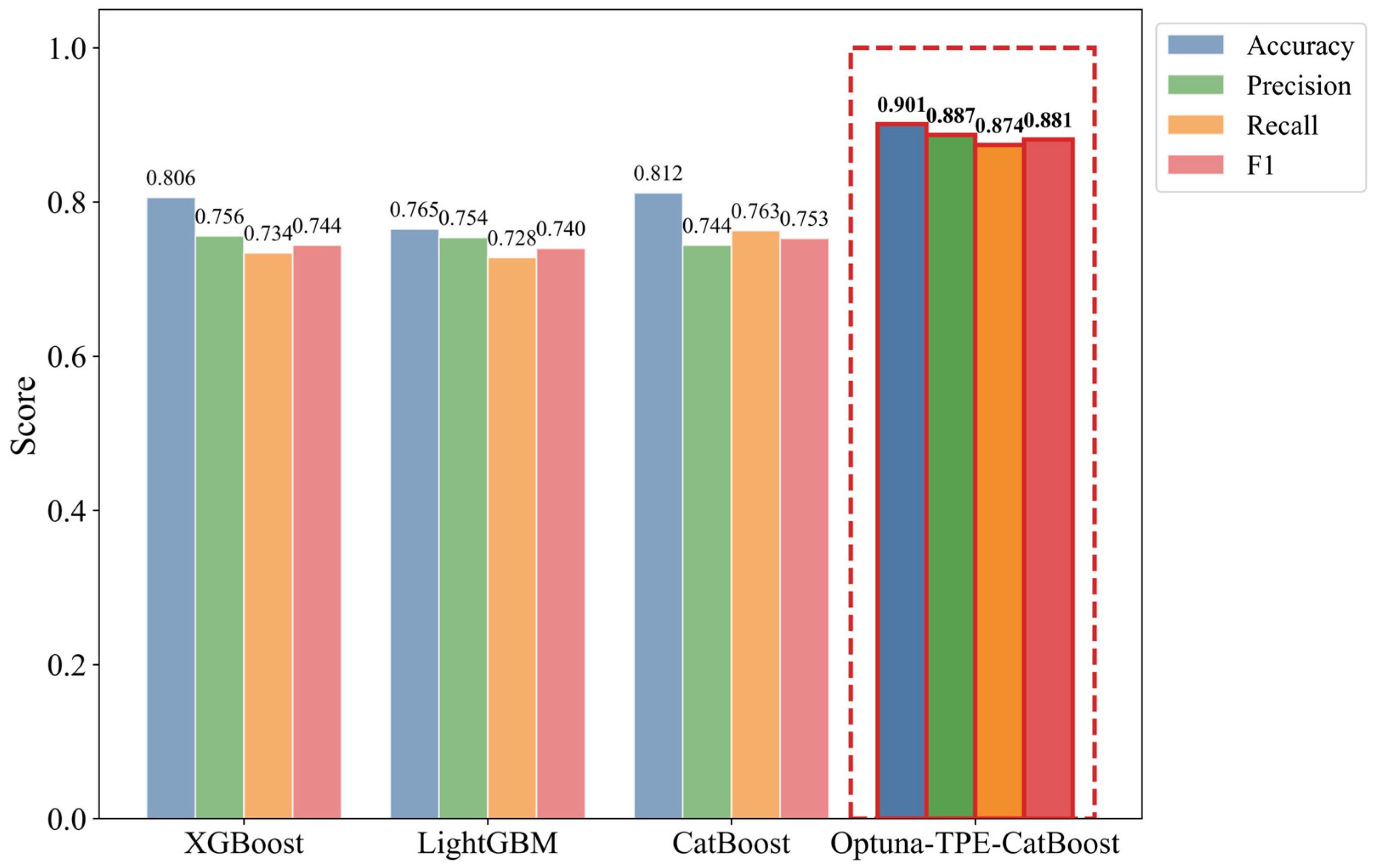
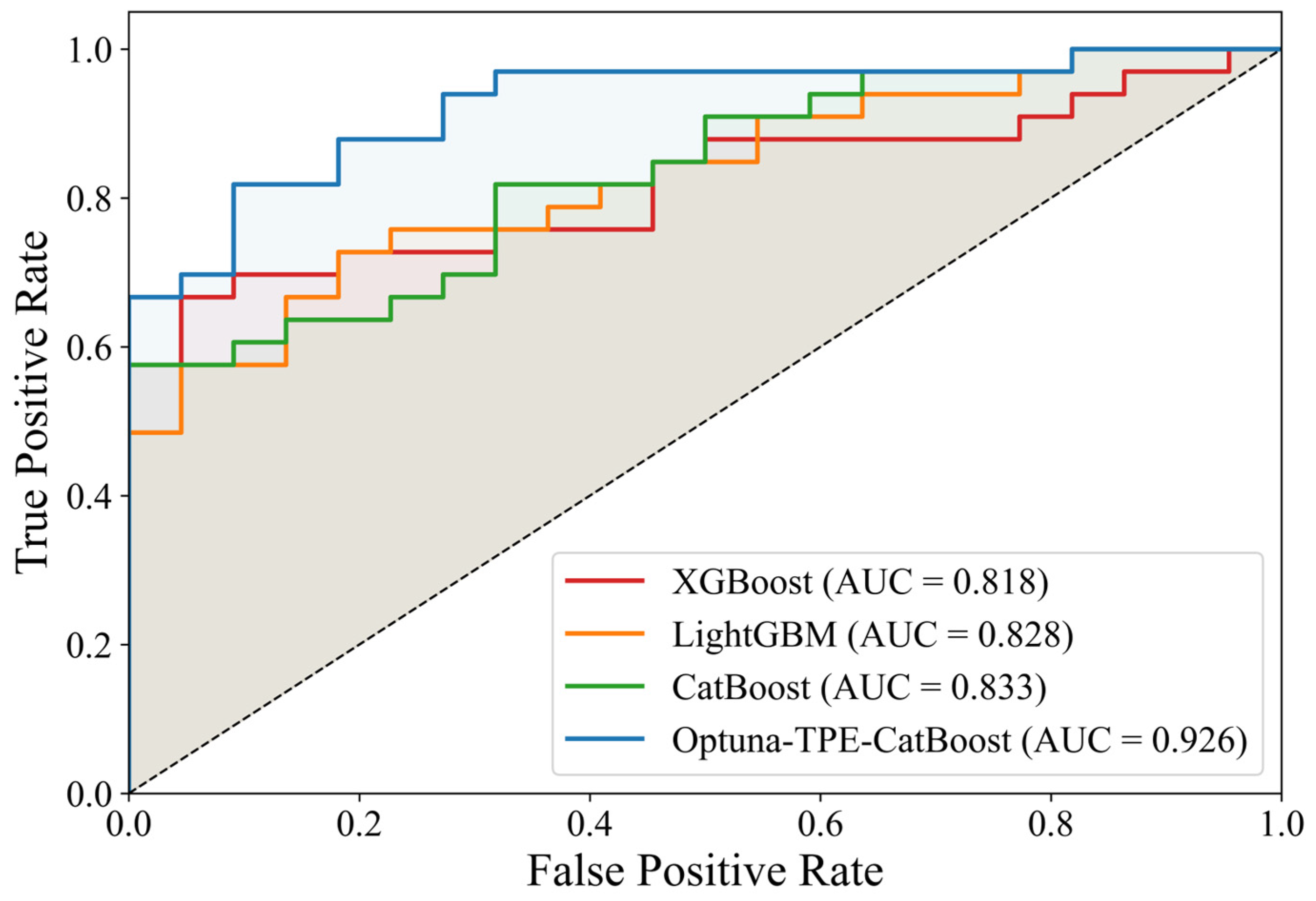
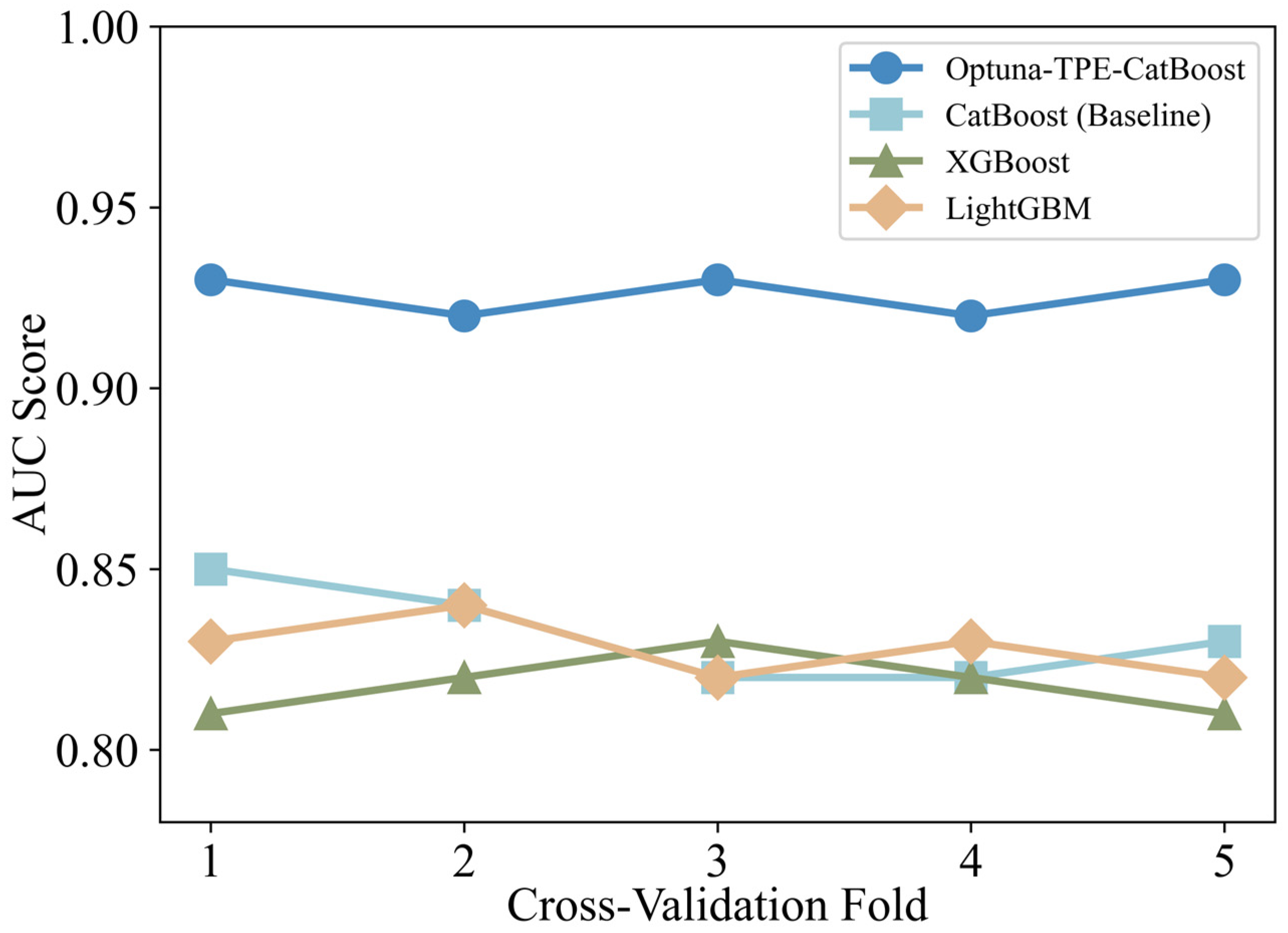
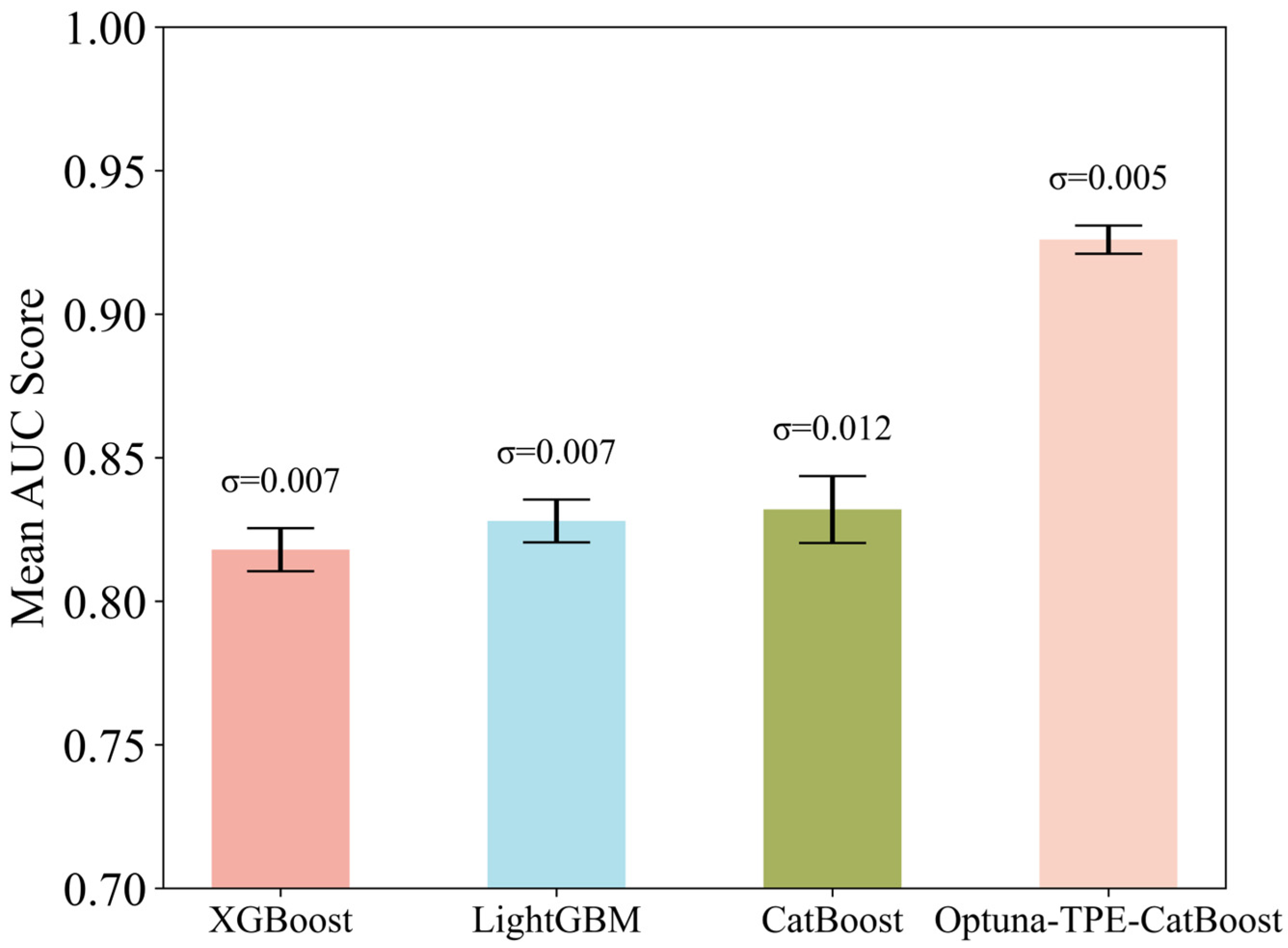
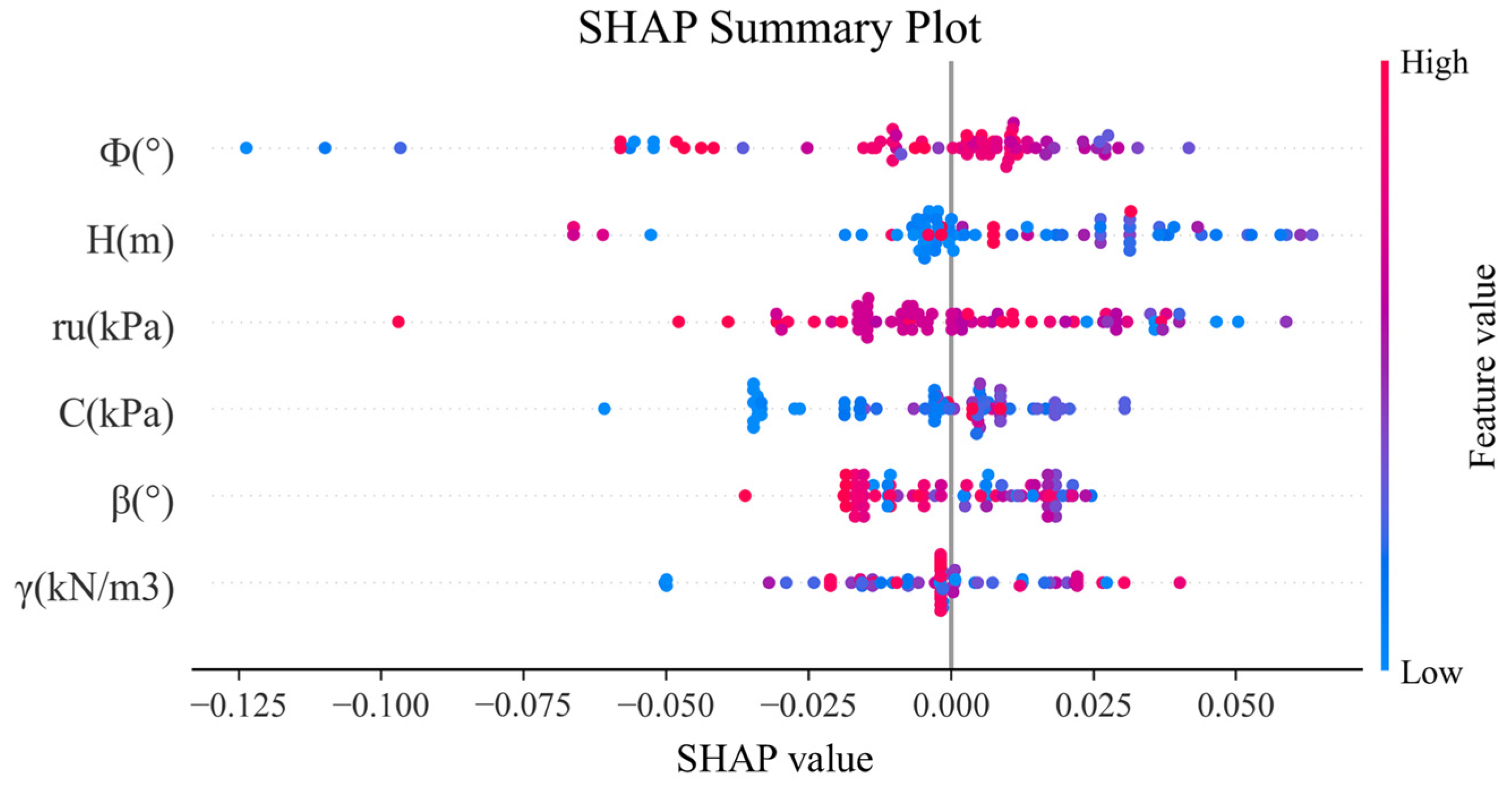
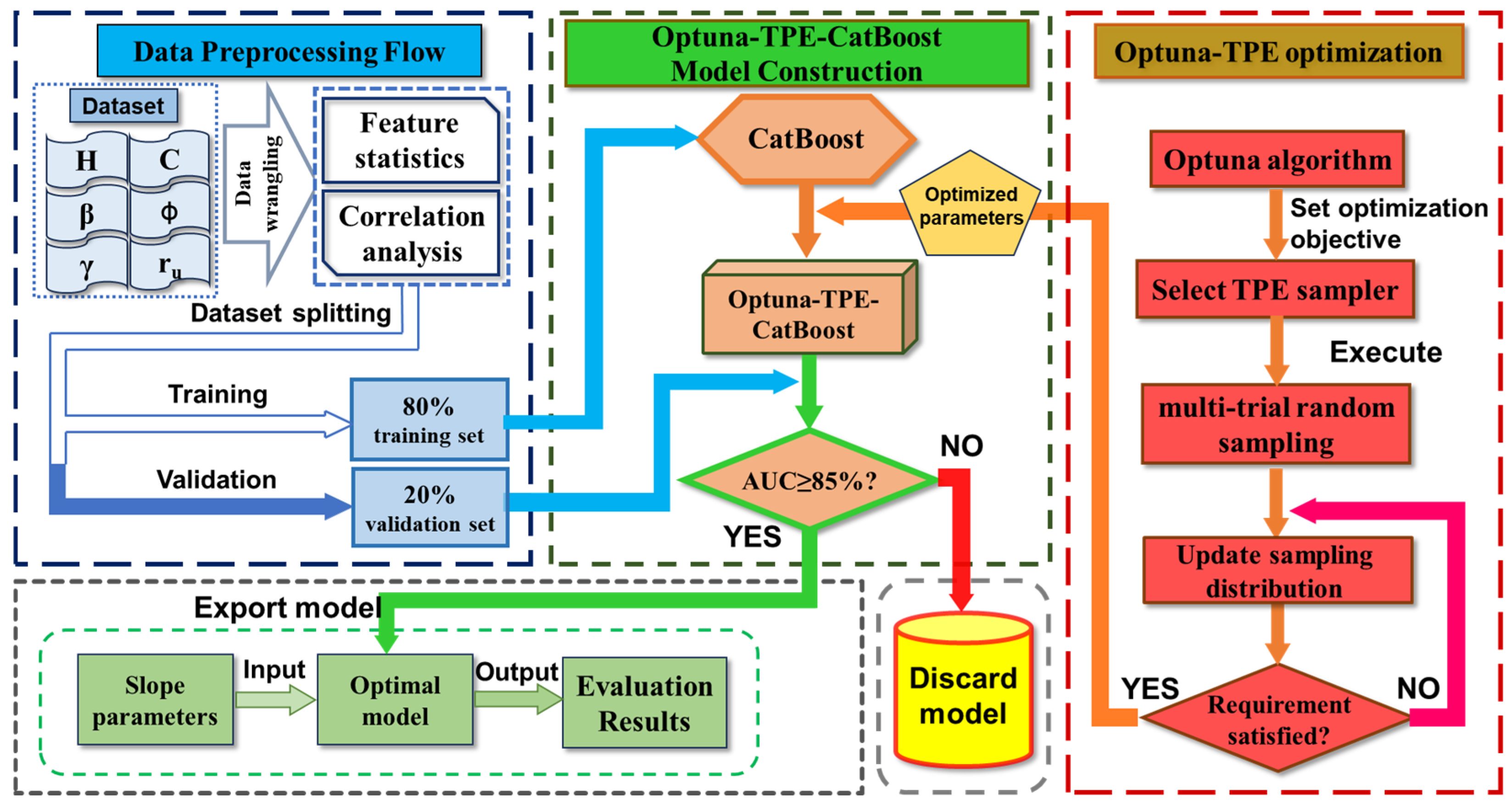
Slope stability assessment is a critical component of engineering safety. Conventional analytical methods frequently struggle to integrate heterogeneous slope data and model intricate failure mechanisms, thereby constraining their efficacy in practical engineering scenarios. To tackle these issues, this study presents a novel slope stability classification model grounded in the Optuna-TPE-CatBoost framework. By leveraging the Tree-structured Parzen Estimator (TPE) within the Optuna framework, the model adaptively optimizes CatBoost hyperparameters, thus enhancing prediction accuracy and robustness. It incorporates six key features—slope height, slope angle, unit weight, cohesion, internal friction angle, and the pore pressure ratio—to establish a comprehensive and intelligent assessment system. Utilizing a dataset of 272 slope cases, the model was trained with k-fold cross-validation and dynamic class imbalance strategies to ensure its generalizability. The optimized model achieved impressive performance metrics: an area under the receiver operating characteristic curve (AUC) of 0.926, an accuracy of 0.901, a recall of 0.874, and an F1-score of 0.881, outperforming benchmark algorithms such as XGBoost, LightGBM, and the unoptimized CatBoost. Validation via engineering case studies confirms that the model accurately evaluates slope stability across diverse scenarios and effectively captures the complex interactions between key parameters. This model offers a reliable and interpretable solution for slope stability assessment under complex failure mechanisms.
Keywords: slope stability assessment; optuna-TPE algorithm; CatBoost; hyperparameter optimization; machine learning; geotechnical engineering slope stability assessment; optuna-TPE algorithm; CatBoost; hyperparameter optimization; machine learning; geotechnical engineering