1. Introduction
Breast cancer is the most diagnosed malignancy among women worldwide, with approximately 2.3 million new cases and 685,000 deaths annually [
1]. Advances in early detection and systemic therapies, including targeted agents and adjuvant chemotherapy, have improved survival, with five-year overall survival exceeding 85–90% for early-stage disease [
2]. Alongside these gains, attention has increasingly focused on survivorship, quality of life, and aesthetic outcomes, as up to 40–50% of women undergoing mastectomy are candidates for reconstruction, which mitigates psychological distress such as anxiety, depression, and social withdrawal [
3].
Mastectomy remains indicated for multicentric tumors, diffuse ductal carcinoma in situ, BRCA1/2 mutation carriers, or contraindications to breast-conserving therapy [
4]. Skin-reducing mastectomy (SRM) is favored in patients with macromastia or significant ptosis, as it preserves dermal and subcutaneous tissue to optimize breast shape, projection, and symmetry [
5]. However, SRM poses technical challenges, particularly at the inverted-T junction, where vascular compromise may lead to ischemia, wound dehiscence, or delayed healing [
6].
Immediate implant-based reconstruction is the most common post-mastectomy approach [
7]. Subpectoral placement beneath the pectoralis major provides vascularized coverage but is associated with increased pain, longer recovery, animation deformity, and functional limitations, which are exacerbated in unilateral reconstructions receiving radiotherapy [
8]. Prepectoral implant placement avoids muscle dissection, preserves chest wall function, and eliminates animation deformity, offering reduced pain, shorter hospitalization, and improved aesthetic outcomes. Adequate flap perfusion and thickness are critical to prevent skin necrosis, implant exposure, or reconstruction loss [
9].
Acellular dermal matrices (ADMs), often porcine-derived, are widely used to support implants, enhance lower-pole coverage, improve contour, and stabilize the prosthesis [
10]. Integration with surrounding tissues optimizes shape but increases cost [
11] and may predispose to seroma or inflammatory reactions [
12]. Hybrid approaches combining ADM with autologous tissue leverage the vascular reliability of a de-epithelialized inferior dermal flap to reinforce the lower pole, reduce tension at the inverted-T junction, and limit ADM usage [
13,
14].
In this context, the present study evaluates clinical outcomes of SRM with immediate prepectoral implant-based reconstruction using a dual-layer technique combining porcine-derived ADM and an inferior autologous dermal sling, analyzing perioperative outcomes, complications, and patient-reported satisfaction.
2. Materials and Methods
This retrospective single-center study was carried out at the Breast and Plastic Reconstructive Surgery Department of ASST Nord Hospital, Milan, between January 2023 and May 2025. The study was purely observational in nature and involved no experimental intervention, randomization, or modification of standard clinical management. All surgical procedures and perioperative protocols reflected routine institutional practice. Data were retrospectively extracted from prospectively maintained clinical records and fully anonymized prior to analysis. The study population consisted of a total of 20 women undergoing SRM with immediate prepectoral implant-based reconstruction using a dual-layer technique, combining a porcine-derived acellular dermal matrix (ADM, Native™, Raise Healthcare, Sutton Coldfield, UK) with an inferior autologous dermal sling.
2.1. Patients’ Data Selection
All patients received comprehensive preoperative counseling regarding the risks and benefits of mastectomy, reconstructive options, and potential complications. Written informed consent was obtained for surgical treatment and for the scientific use of anonymized clinical data. Patients were informed that refusal to authorize data use would not affect their medical care in any way. Preoperative evaluation followed a standardized institutional protocol, including a complete physical examination, detailed medical history, and multimodal imaging with ultrasound, mammography, and magnetic resonance imaging to define tumor extent and exclude multifocal disease. Histopathologic confirmation was obtained via core needle biopsy. Each case was reviewed by a multidisciplinary team comprising plastic surgeons, pathologists, physiatrists, and clinical and radiation oncologists. The team jointly assessed oncologic safety, reconstructive feasibility, and the potential need for adjuvant radiotherapy. When radiotherapy was indicated, discussions with the patient ensured her understanding and allowed individualized planning of the therapeutic course.
2.1.1. Inclusion Criteria
Female patients aged 18–70 years.
Undergoing skin-reducing mastectomy with immediate prepectoral implant-based reconstruction using Native™ ADM and an inferior autologous dermal sling.
Indications included: (a) therapeutic mastectomy for invasive carcinoma or ductal carcinoma in situ, or (b) prophylactic mastectomy in carriers of confirmed pathogenic BRCA1/2 mutations.
Adequate mastectomy flap thickness, clinically estimated and verified during surgery as ≥2 cm, ensuring safe implant coverage. Flap thickness was assessed intraoperatively by direct clinical measurement using a sterile surgical caliper at multiple predefined points (upper, central, and lower pole) after glandular excision and before implant placement.
Willingness and ability to provide written informed consent and comply with follow-up, including BREAST-Q administration.
2.1.2. Exclusion Criteria
Prior ipsilateral mastectomy or breast reconstruction.
Evidence of nipple–areola complex (NAC) or skin involvement on imaging or frozen section analysis.
Intraoperative assessment of flap thickness < 2 cm or inadequate perfusion by clinical inspection (performed using a sterile disposable ruler).
Active infection, uncontrolled systemic disease (e.g., poorly controlled diabetes, severe cardiopulmonary pathology).
BMI > 35 kg/m2.
Current pregnancy or breastfeeding.
Active smoking within 4 weeks before surgery.
Inability to complete follow-up, including BREAST-Q administration.
Prior chest wall radiation therapy or previous breast reconstruction on the same side.
2.1.3. Data Collection and Analysis
A comprehensive dataset was collected for all patients included in the study. Demographic variables included age, body mass index (BMI), sternal notch-to-nipple (SNN) distance and laterality of surgery. Clinical information included the indication for mastectomy (therapeutic vs. prophylactic), tumor histopathology, tumor size and stage, receptor status (ER, PR, HER2), presence of BRCA1/2 mutations, and relevant comorbidities. Smoking history, prior breast irradiation, and administration of neoadjuvant or adjuvant systemic therapies, including chemotherapy, hormonal therapy, and targeted therapy, were also recorded.
Operative data included mastectomy specimen weight, selected implant size and type, use of acellular dermal matrix (ADM) and/or autologous dermal sling, operative time, number and placement of surgical drains, and length of hospital stay. These variables were captured to allow correlation between patient characteristics, surgical parameters, and postoperative outcomes.
Postoperative complications were recorded and categorized as wound or implant-related events. Wound complications included dehiscence, infection, hematoma, and seroma, while implant-related complications comprised malposition, exposure, and capsular contracture, defined as Baker grade III–IV when surgical correction was required.
The primary outcome, nipple–areola complex (NAC) necrosis, was classified by depth as superficial, partial-thickness, or full-thickness. Superficial necrosis (epidermolysis only) was treated conservatively, partial-thickness necrosis (involving dermis and subdermal tissue) required local debridement, and full-thickness necrosis represented complete loss of NAC viability. Ultrasound evaluation was performed when necessary to assess for fluid collections or seromas.
Skin integrity was evaluated by daily clinical examination during hospitalization and at scheduled outpatient follow-up visits at 1 week, 1 month, 3 months, 6 months, and 12 months. Assessment parameters included skin color, capillary refill, edema, epidermolysis, and any evidence of tissue breakdown. Ultrasonographic assessment was performed when clinically indicated to evaluate tissue viability or fluid collections.
Patient-reported outcomes were measured using the BREAST-Q Reconstruction Module administered preoperatively and at 1, 3, 6, and 12 months postoperatively. Evaluated domains included satisfaction with breast and nipple appearance, overall reconstruction outcome, physical well-being of the chest and upper body, psychosocial well-being, and sexual well-being, providing a structured assessment of aesthetic and functional recovery.
Oncologic outcomes were documented through analysis of surgical margins and the need for re-excision or additional oncologic intervention. Reoperation rates were recorded for all complications necessitating further surgery, including hematoma evacuation, wound revision, or implant replacement.
Data analysis was performed using STATA version 17 (StataCorp LLC, College Station, TX, USA). Continuous variables were expressed as mean ± standard deviation (SD) or median with interquartile range (IQR), depending on data distribution assessed with the Shapiro–Wilk test. Categorical variables were summarized as frequencies and percentages. Comparisons of continuous variables between baseline and follow-up time points were performed using paired-sample t-tests for normally distributed data and the Wilcoxon signed-rank test for non-normally distributed data. Statistical significance was defined as p < 0.05. Effect sizes for within-subject comparisons were calculated using Cohen’s dz, and correlation analyses were performed using Pearson’s correlation coefficient where appropriate.
All data were extracted retrospectively from institutional medical records and were fully anonymized prior to analysis. No directly or indirectly identifiable personal information was collected, and data were analyzed in aggregate form only.
2.2. Surgical Technique
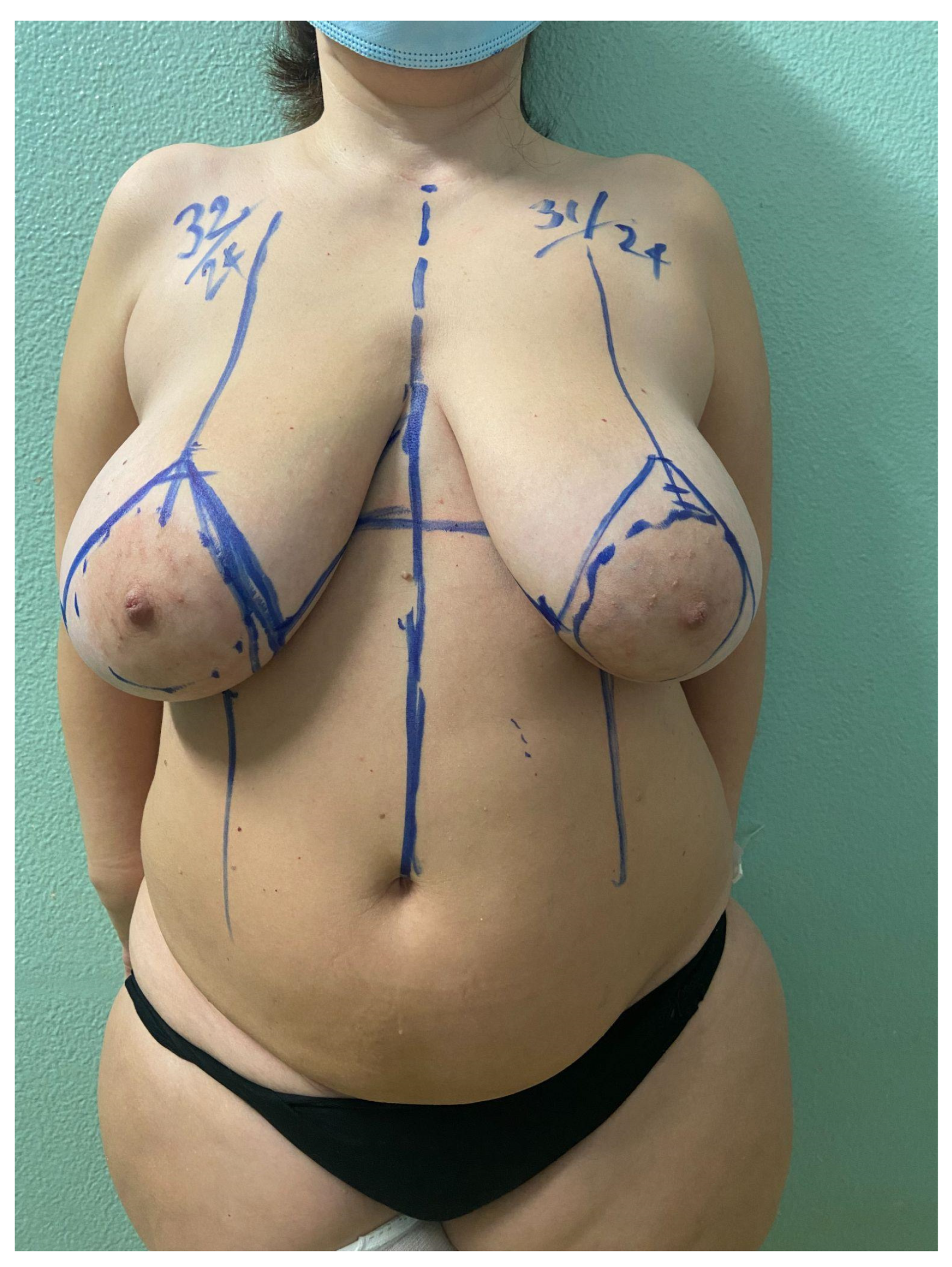
All procedures were performed under general anesthesia with the patient in the supine position and arms abducted at 90°. Preoperative markings were completed the day before surgery with the patient in both the standing and supine positions. (
Figure 1) The new nipple–areola complex (NAC) position was set along the midclavicular line, 18–21 cm from the sternal notch, and aligned with the contralateral inframammary fold. A Wise-pattern inverted-T incision was outlined to achieve skin reduction and breast envelope reshaping, with vertical limbs adjusted to breast size and degree of ptosis.
After infiltration, tumescent solution (500 mL of saline solution, 20 mL of 2% lidocaine, 2 mL of epinephrine 1:1000 and 10 mL of sodium bicarbonate) in volumes varying between 30–100 mL depending on the size of the gland, subcutaneous dissection proceeded along the anterior breast capsule, with careful delineation of the mastectomy flap to maintain subcutaneous tissue integrity. The glandular tissue was excised en bloc and weighed. In nipple-sparing procedures, the NAC was harvested as a thin skin graft and preserved in saline-soaked gauze. Retroareolar frozen sections were examined intraoperatively, and the NAC was removed if malignant involvement was detected.
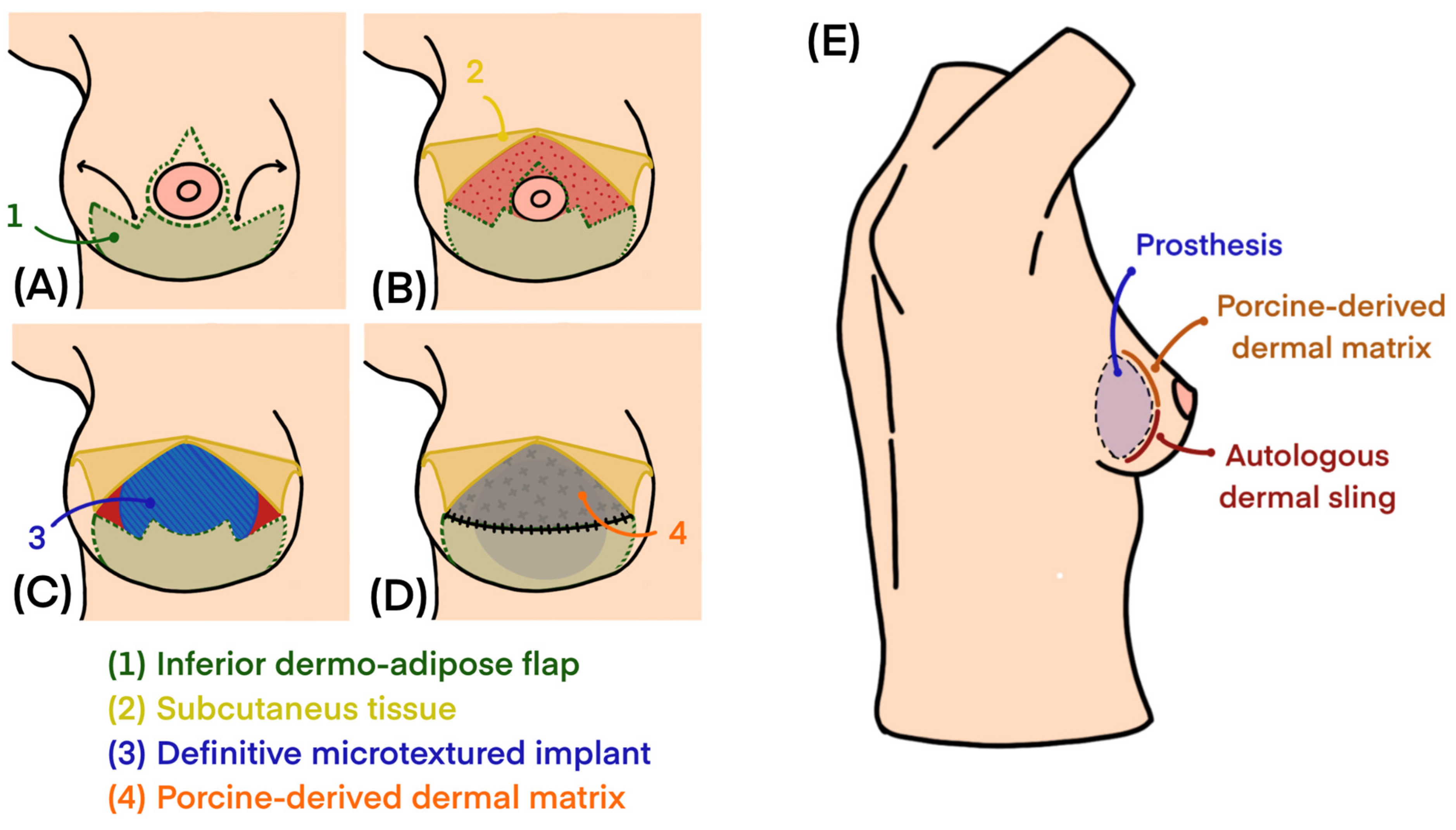
An inferior dermo-adipose flap was created by de-epithelializing the lower pole between the vertical limbs while preserving the subdermal vascular plexus. This vascularized sling was advanced to provide autologous support for the implant pocket. A porcine-derived acellular dermal matrix (ADM; Native™) was rehydrated, tailored to implant dimensions, and fixed to the chest wall fascia to cover the entire upper implant pole. The inferior dermal sling was sutured to the lower ADM edge, forming a continuous dual-layer hammock for prepectoral implant placement.
Temporary sizers were used to assess projection and symmetry in a semi-sitting position. After adjustments, definitive microtextured implants (Mentor®, Worldwide LLC, Irvine, CA, USA) were irrigated in 20 mL of 160 mg gentamicin/500 mL saline and inserted into the dual-layer pocket as institutional protocol. Skin flaps were closed in layers with absorbable sutures, and one or two closed-suction drains were positioned. When a NAC graft was performed, it was inset and secured with a tie-over bolster dressing.
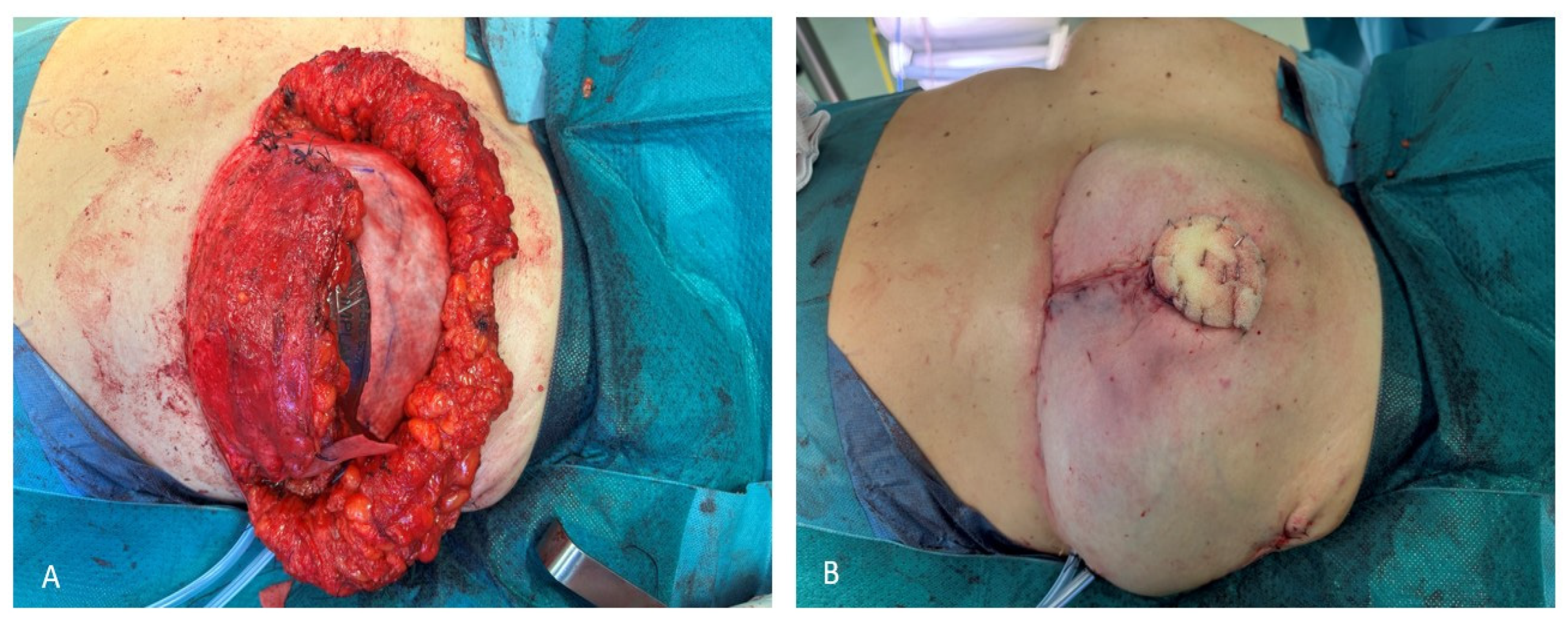
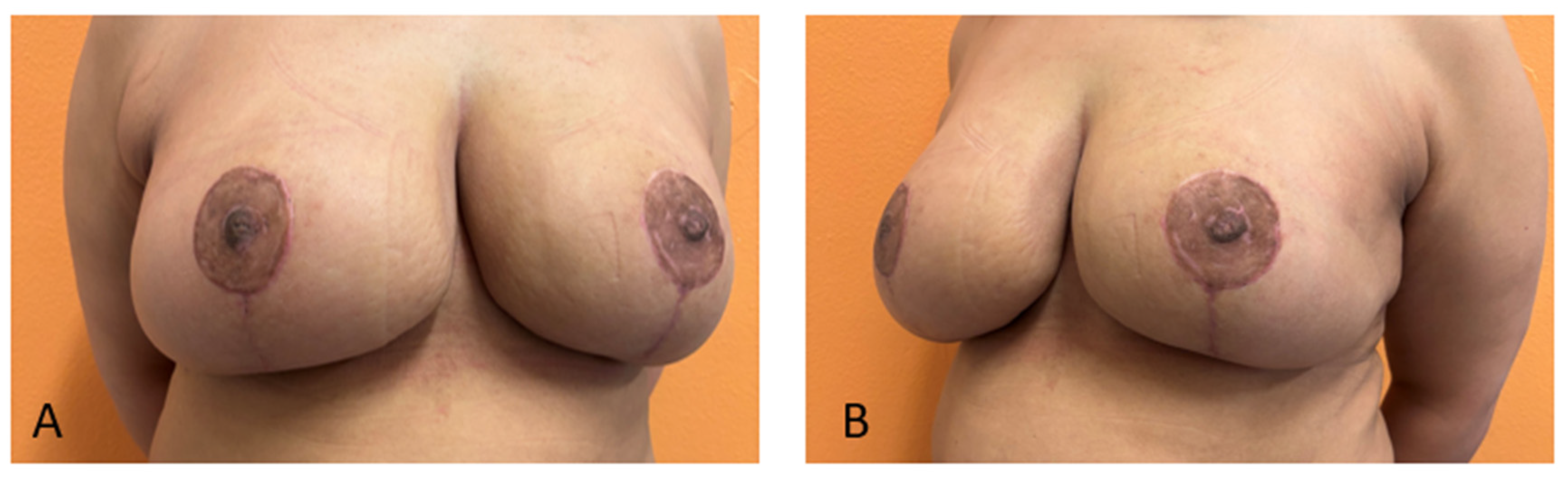
Tie-over dressings for the NAC were applied and removed on postoperative day 7. All patients wore a compressive sports bra with anterior closure and a superior strap to maintain implant position. Drains were removed when daily output was <30 mL for two consecutive days. (
Figure 2 and
Figure 3)
4. Discussion
In this retrospective observational study, we evaluated the clinical, aesthetic, and patient-reported outcomes of immediate prepectoral implant-based breast reconstruction following skin-reducing mastectomy using a dual-layer technique that combines a porcine-derived acellular dermal matrix (ADM) with an inferior vascularized autologous dermal sling.
Although limited by its retrospective single-center design and the absence of a control group, our findings suggest that this approach may represent a safe and feasible reconstructive option in carefully selected patients. The present study was not designed to compare the dual-layer technique with alternative reconstructive strategies such as subpectoral reconstruction or ADM-only coverage. Consequently, the results should not be interpreted as demonstrating superiority, but rather as providing preliminary evidence supporting the safety and clinical applicability of this hybrid construct in the setting of skin-reducing mastectomy.
In our cohort of 20 patients (24 breasts), the dual-layer technique was associated with a low incidence of early postoperative complications, no implant loss, and no reconstruction failures during the follow-up period. These results are consistent with previously reported advantages of prepectoral implant placement over traditional subpectoral techniques [
15], including reduced postoperative pain, shorter recovery, and avoidance of animation deformity [
16,
17,
18]. However, given the absence of a control group, our data should not be interpreted as demonstrating superiority over subpectoral or alternative prepectoral strategies, but rather as supporting the feasibility and safety of this hybrid construct in the context of skin-reducing mastectomy.
Skin-reducing mastectomy remains technically demanding, particularly at the inverted-T junction, where compromised perfusion and increased wound tension predispose to ischemic complications and delayed healing [
5,
6]. In this setting, the rationale for combining ADM with a vascularized autologous dermal sling is to leverage the complementary properties of both materials.
From a biomechanical perspective, the interaction between the ADM and the inferior dermal sling may create a composite support structure with complementary properties. The acellular dermal matrix provides immediate tensile strength and structural reinforcement [
10], helping to distribute mechanical forces generated by implant weight across the superior and anterior portions of the pocket. In contrast, the vascularized autologous dermal sling functions as a dynamic biologic scaffold capable of adapting to physiological stress while maintaining perfusion [
13]. The interface between the ADM and the dermal flap may therefore facilitate both mechanical stabilization and biologic integration, potentially reducing localized stress on the mastectomy flaps. This dual-layer configuration can theoretically improve load distribution along the lower pole, where gravitational forces and skin tension are greatest following skin-reducing mastectomy. Although direct biomechanical measurements were not performed in the present study, the absence of implant malposition, lower-pole stretching, or pocket instability in our cohort is consistent with the hypothesis that the combined construct provides balanced mechanical and biologic support to the prepectoral implant pocket [
13,
14,
19].
Although the exact contribution of each component cannot be quantified in the present study, the consistency of outcomes across the cohort supports the plausibility of this synergistic effect.
In contrast to techniques employing circumferential ADM coverage, the present approach selectively positioned the porcine-derived ADM over the superior-anterior pole of the implant, while the inferior pole was supported by the autologous dermal flap. This configuration was chosen to use the patient’s own autologous tissue whenever possible while preserving ADM structural benefits in regions most susceptible to implant displacement and contour irregularities. While this strategy may theoretically optimize load distribution and reduce shear stress on the mastectomy flaps, this mechanistic explanation remains hypothetical and warrants confirmation in comparative and biomechanical studies. Nevertheless, previous literature supports the role of porcine ADMs in improving implant stability [
20,
21], contour control, and soft-tissue reinforcement in prepectoral reconstruction [
22,
23], lending indirect support to the present configuration.
The absence of implant exposure, infection, or full-thickness nipple–areola complex (NAC) necrosis in our series is notable, particularly given the inherent risks associated with skin-reducing mastectomy. Preservation of adequate mastectomy flap thickness (≥2 cm) and meticulous respect for the subdermal vascular plexus were integral to patient selection and surgical execution. These factors are well recognized as critical determinants of flap viability and reconstructive success in nipple-sparing and skin-reducing procedures [
24,
25]. Within this well-vascularized environment, the addition of a perfused inferior dermal sling may further enhance tissue resilience at the most vulnerable points of the reconstruction, particularly the lower pole and the inverted-T junction.
One illustrative case in our cohort involved a patient with advanced liver cirrhosis who developed a postoperative hematoma requiring surgical evacuation. Despite the well-documented hemostatic and microcirculatory impairments associated with hepatic dysfunction [
26,
27], complete recovery was achieved without wound breakdown, infection, or implant loss. This observation is purely descriptive and should not be interpreted as evidence of efficacy in high-risk populations. Nonetheless, it suggests that the presence of a vascularized autologous component may contribute to local tissue tolerance in the setting of systemic comorbidity, a hypothesis that merits further investigation [
28].
Patient-reported outcomes, assessed longitudinally using the BREAST-Q Reconstruction Module, demonstrated significant and sustained improvements across all evaluated domains, including satisfaction with breasts, overall outcome, physical well-being of the chest, psychosocial well-being, and sexual well-being. While patient-reported outcomes are inherently subjective and may be influenced by expectation bias, the magnitude and consistency of improvement over multiple follow-up intervals support the clinical relevance of these findings. Moreover, the observed correlation between psychosocial well-being and overall satisfaction underscores the close interrelationship between aesthetic restoration and emotional recovery following mastectomy.
Importantly, patients undergoing bilateral prophylactic reconstruction for BRCA1/2 mutations reported satisfaction levels comparable to those undergoing therapeutic procedures. This finding aligns with prior evidence suggesting that immediate reconstruction following risk-reducing mastectomy offers not only aesthetic benefits but also significant psychosocial reassurance in genetically predisposed patients. However, given the limited number of bilateral cases, these observations should be interpreted with caution.
An additional consideration is the broader reproducibility of this surgical technique across different clinical settings. The dual-layer construct relies on steps that are already familiar to most breast and reconstructive surgeons performing skin-reducing mastectomy and implant-based reconstruction, including Wise-pattern skin reduction, preparation of an inferior dermal sling, and ADM-assisted implant coverage. As such, the procedure does not require specialized equipment beyond materials already commonly used in contemporary reconstructive practice. The most technically relevant aspects relate to careful intraoperative assessment of mastectomy flap thickness and perfusion, precise tailoring of the ADM, and appropriate tensioning of the dermal sling to avoid excessive compression or pocket laxity. When these principles are respected, the technique could be standardized through reproducible operative steps and may be integrated into routine practice with a relatively short learning curve for surgeons experienced in prepectoral reconstruction. Nevertheless, multicenter experience will be important to confirm the consistency of outcomes and to further define procedural standardization.
The present results should be considered applicable to a carefully selected population, namely non-irradiated patients with moderate BMI and adequate mastectomy flap thickness. As all reconstructions were performed in the absence of prior or planned radiotherapy, the generalizability of this technique to irradiated settings remains uncertain. Similarly, patients with severe obesity were underrepresented, and further studies are required to assess outcomes in higher-risk cohorts.
Finally, the mean follow-up of approximately 12 months provides insight into early and intermediate outcomes but does not allow assessment of long-term complications such as capsular contracture, late implant malposition, or oncologic recurrence. Accordingly, terms implying long-term durability should be avoided, and ongoing follow-up is essential to determine the sustained performance of this dual-layer approach.
Although economic considerations were not a primary endpoint of the present study, the cost implications of ADM use in implant-based breast reconstruction warrant brief discussion. ADMs represent one of the main contributors to the procedural cost of prepectoral reconstruction, with several analyses reporting a substantial increase in direct operative expenses when compared with traditional implant placement without biologic matrices [
11]. However, the overall cost-effectiveness of ADM-assisted reconstruction remains debated, as economic evaluations must also account for potential downstream benefits such as reduced complication rates, fewer revision procedures, improved aesthetic outcomes, and shorter recovery times [
29]. Although ADM increases initial operative cost, this may be partially offset by reductions in postoperative morbidity and reoperation rates, particularly in carefully selected patients undergoing prepectoral reconstruction [
30]. In addition, hybrid approaches combining ADM with autologous tissue, such as the dual-layer configuration employed in the present study, may offer a pragmatic strategy to limit the amount of biomaterial required while preserving its structural advantages. By using the patient’s own vascularized dermal sling to support the lower pole and reserving ADM coverage primarily for the superior implant surface, the total matrix surface area can be reduced compared with circumferential ADM coverage techniques [
31]. This approach may therefore contribute to improved resource utilization while maintaining the biomechanical and contouring benefits associated with ADM use. Nevertheless, the present study did not include a formal health-economic analysis, and conclusions regarding cost-effectiveness should be interpreted cautiously. Future prospective studies incorporating detailed cost modeling and long-term outcomes, including revision surgery, capsular contracture rates, and patient-reported satisfaction, will be essential to better define the economic value of hybrid ADM-assisted techniques within contemporary implant-based breast reconstruction.
5. Limitations
This study has several limitations that must be acknowledged. Its retrospective, single-center design introduces potential selection and reporting bias, and the absence of a control group precludes direct comparison with alternative reconstructive strategies such as ADM-only coverage or autologous techniques. Although all consecutive eligible patients were included, the relatively small sample size and the specific patient characteristics, including moderate BMI, adequate mastectomy flap thickness, and absence of prior radiotherapy, may limit the generalizability of these findings to broader and more heterogeneous breast reconstruction populations.
The mean follow-up of approximately 12 months provides insight primarily into early and intermediate outcomes but does not allow reliable assessment of long-term complications such as capsular contracture, late implant malposition, implant rupture, or delayed oncologic events. A longer follow-up will therefore be necessary to determine the durability of the reconstructive outcomes observed in this cohort.
Therefore, late events such as capsular contracture, implant malposition, or oncologic recurrence cannot yet be evaluated. Moreover, all reconstructions were performed in non-irradiated patients using a standardized dual-layer technique, ensuring procedural consistency but limiting generalizability to irradiated or more heterogeneous populations.
While our cohort included both unilateral and bilateral reconstructions, the small number of bilateral cases limits the generalizability of our findings to this subgroup. Similarly, patients with higher BMI (>30 kg/m2) were underrepresented, and therefore conclusions regarding the safety and aesthetic outcomes in these populations should be interpreted cautiously.
Patient-reported outcomes obtained through the BREAST-Q offered valuable information on satisfaction and quality of life, yet remain subjective and context-dependent. Finally, the reproducibility of this method relies on factors closely tied to surgical expertise, including flap assessment, dermal-sling preparation, and ADM handling.
Larger, prospective, multicenter studies with extended follow-up are required to validate these preliminary results and define the long-term role of the dual-layer prepectoral technique in implant-based breast reconstruction.
Although formal Ethics Committee approval was not required under national regulations for this type of retrospective anonymized analysis, adherence to ethical principles in data handling and patient confidentiality was strictly maintained throughout the study.
6. Conclusions
Immediate prepectoral implant-based breast reconstruction following skin-reducing mastectomy, using a dual-layer technique combining porcine-derived acellular dermal matrix and an inferior vascularized autologous dermal sling, was associated with low perioperative morbidity and favorable early to mid-term outcomes in this limited retrospective cohort.
The technique provided stable implant positioning, satisfactory aesthetic results, and meaningful improvements in patient-reported quality of life across all BREAST-Q domains.
Within a carefully selected population of non-irradiated patients with adequate mastectomy flap thickness, this hybrid approach appears to represent a reliable and reproducible reconstructive option after both therapeutic and prophylactic mastectomy, including in BRCA1/2 mutation carriers. The combination of a biologic matrix with an autologous perfused dermal component may offer complementary mechanical support and tissue tolerance in the challenging setting of skin-reducing mastectomy.
Given the retrospective design, limited sample size, and relatively short follow-up, these findings should be interpreted cautiously and cannot be considered definitive.
Larger prospective and comparative studies with longer follow-up will be necessary to confirm the long-term durability and broader applicability of this dual-layer prepectoral technique.