


Abstract
This review explores the foundations of non-relativistic quantum electrodynamics (QED) and its application to atoms and molecules. It follows the traditional route of placing classical electrodynamics in an Hamiltonian framework, followed by Dirac’s canonical quantisation algorithm. The properties of the resulting quantum Hamiltonian are reviewed from a non-perturbative perspective. It discusses the gauge invariance of the S-matrix, the Coulomb interaction, and the challenges posed by infinities in classical and quantum electrodynamics. The paper examines the mathematical frameworks used to address these issues, including the use of distributions and the Colombeau algebra. The review also highlights the limitations of the Coulomb Hamiltonian in explaining molecular structure and chemistry, emphasizing the need for additional theoretical modifications to bridge quantum mechanics and chemical phenomena.
1. Introduction
Lorentz invariant quantum electrodynamics is a theory of electrons and photons; nuclei are treated largely as classical spectators [1]. It is a mathematical idealisation of a scattering experiment in which the S-matrix calculated through the Feynman rules for perturbation theory is related to experimental cross-sections of scattered particles. Atoms and molecules are characterised minimally by the specification of a definite number of nuclei and electrons, particles with electric charge, which clearly at a fundamental level require electrodynamics for their description. There is no Lorentz and gauge invariant account of atoms, molecules, condensed matter etc. interacting with the electromagnetic field. The non-relativistic Hamiltonian focusses essentially on the bound states associated with the Coulombic interactions of electrons and nuclei that are coupled to electromagnetic radiation, and cannot be viewed simply as a defined limit of the Lorentz invariant theory. Of course, the generic molecule is defined precisely in terms of a ‘classical structure’ and this chemical fact sets a comprehensive molecular quantum theory [2,3,4,5,6] apart from the well established quantum theory of the atom. Although bound states can be incorporated in an S-matrix theory it is not possible as a practical procedure to obtain bound states through perturbation theory starting from the continuum. Importantly, the non-relativistic Hamiltonian is of interest in its own right; for example the question as to whether it has a ground state, which cannot be answered by perturbation theories, is important for understanding the stability of matter [7].
We begin with a classical description in the knowledge that the canonical quantisation scheme due to Dirac, based on a correspondence between the classical Poisson brackets (P.B.s) and quantum commutators, is a standard procedure for obtaining a quantum theory from a classical analogue that has been cast in Hamiltonian form. It has long been recognised however that the scheme is based on an asymptotic correspondence (’’) which may not be reliable, since the resulting quantum theory may or may not turn out to be satisfactory. There is no classical limit for spin so it is added to non-relativistic quantum theory ad hoc. The classical theory is thus a recognizable starting point towards a quantum theory, the required endpoint. A very recent review of the development and applications of molecular QED based on the Power-Zienau-Woolley (PZW) Hamiltonian, particularly in optical physics, is complementary to this account [8].
The outline of the paper is as follows. In Section 2, we summarise the fundamental equations of classical electromagnetism. In view of some elementary relations in vector calculus and the Maxwell equations, the field variables , can be expressed in terms of the field ‘potentials’ which are only defined up to a ‘gauge transformation’. Likewise the charge-current density for the charged particles can be related to so-called electric, (), and magnetic, , polarisation fields, which have a similar arbitrary character. The field potentials and the polarisation fields are best thought of as ‘auxiliary’ or ‘working’ variables as they cannot be chosen so as to describe a specific experimental setup. In this context the independence of the physical quantities from the auxiliary variables is usually referred to as gauge invariance. A conventional account of the electric polarisation field follows in Section 3.
The Hamiltonian formulation of the classical electrodynamics of charged particles and the electromagnetic field can be obtained via the intermediate step of a Lagrangian and appeal to the Principle of Least Action. This is reviewed in Section 4. We meet for the first time the functional scalar product of the electric polarisation field and the vector potential,
which is a quantity with dimensions of the mechanical variable action that turns out to be of fundamental significance in both classical and quantum electrodynamics. There are several subtle changes of viewpoint here; the original equations of motion, modelled on macroscopic classical electrodynamics, describe the electromagnetic fields associated with prescribed sources through Maxwell’s equations, while Newton’s laws are used to describe the motion of charged particles in space in a prescribed electromagnetic field. The Lagrangian formalism based on Section 4, Equation (44), however, describes a closed system of charges and field for which , so that by the usual arguments the Hamiltonian H is the constant energy of the whole system. It is important to note that the customary starting point for Lagrangian electrodynamics involves symbols for the electric charges and masses of the particles which are parameters that cannot be assumed to have the experimentally determined values at this stage of the formalism.
In the next section, Section 5, we describe the transition to a Hamiltonian scheme using Dirac’s method for dealing with a Lagrangian that leads to constraints, equations between the Hamiltonian variables. An important consequence of transforming to the Hamiltonian formalism is that the scalar potential is eliminated, and gauge transformations involve only the vector potential . The classical Hamiltonian for a collection of charges interacting with electromagnetic radiation may be put in the conventional form
where is the standard Coulomb Hamiltonian for charged particles, describes the free electromagnetic field, and describes their interaction (cf. Equations (105)–(107)). Every term in the interaction Hamiltonian is gauge-dependent; nevertheless the classical equations of motion that follow from H are properly gauge-invariant.
The quantisation of the classical Hamiltonian for electrodynamics is described in Section 6; it follows from the application of the usual canonical quantisation rules for the particle and field variables. They are to be regarded as linear operators on some Hilbert space; the classical P.B.s are transformed into commutators which are of a purely algebraic nature,
The question arises as to how the Dirac constraint , Equation (64), which is a ‘weak’ equality, should be dealt with in quantum theory. Two different methods are described; in the first, the classical variables in are interpreted as operators, and physical states of the system, {} are required to satisfy the condition
This leads to the identification of the operator that generates gauge transformations, and the operator relationship between the general Hamiltonian (arbitrary obtained from (Equation (78))) and the familiar Coulomb gauge Hamiltonian () with interaction terms of the form Equation (120)—the Power-Zienau-Woolley (PZW) transformation operator (138).
The condition (4) however is difficult to implement for practical calculations; these are usually based on the quantisation of the reduced classical Hamiltonian obtained with Dirac’s method of handling the constraint . This leads to the PZW Hamiltonian (141). In the quantum mechanics of systems with a finite number of degrees of freedom it is a theorem that the Hilbert space is essentially unique, and different representations are related by unitary transformation. The theorem is not valid for field theories like QED which have an infinite number of degrees of freedom, so that the physical Hilbert space is not known a priori. One has to make a choice (guess); the usual choice is the free field Fock space.
Some of the properties of the Hamiltonian for non-relativistic QED are summarized in Section 7. The field operators like the Coulomb gauge vector potential, , are represented as Fourier integrals satisfying the field commutation relations. Firstly, the infinite energy of the field vacuum state is recalled. Although the offending infinity is commonly waved away, its occurence points to a deeper problem in the formalism that reappears when interactions between charges and the field are addressed. This is illustrated with a simple ’chain’ calculation using the Recursion Method which has the aim of representing the Hamiltonian as an infinite dimensional tri-diagonal matrix. The usual reponse to appearance of infinities is simply to cut-off the large momentum contributions to sums (integrals) over photon momenta. The resulting Hamiltonian is then properly defined as a linear, self-adjoint operator on Fock space, and a considerable mathematical literature devoted to non-perturbative methods of studying its properties has developed in the twenty first century.
In the literature of atomic, molecular and optical physics as well as theoretical chemistry perturbation methods, based on scattering theory (the diagram technique for the S-matrix) or response theory, are more or less universal. The two popular forms for the Hamiltonian either involve the Coulomb gauge () or the ‘multipolar’ (or Poincaré) gauge with the polarisation field expressed as a (truncated) multipole series. While there has been much discussion as to which is to be preferred, the reality is that is arbitrary, so that there are infinitely many possible choices, and a ’beauty contest’ between just two familiar formalisms does not address the deeper issue. What are the conditions that guarantee that the results of a calculation are independent of the choice of ? This is considered in Section 8 with some remarks on the conditions for the invariance of the S-matrix.
In the limit of point charges the unitarity of the PZW transformation is lost, and gauge invariance cannot be assumed. The origin of the problem is the occurrence of the Dirac ‘delta function’, , in the original definitions of the charge and current density for point charges from which the polarisation fields are derived, and in the commutation relations of the electric and magnetic fields. The must be handled with great care since it is a distribution; there is no continuous function with the properties Dirac postulated when he introduced the ‘delta function’. All the fields are distributions and they occur in quadratic combinations in the Hamiltonian.The particular difficulty here is that the product of two distributions is not generally defined. A sketch is given in Section 8 of how this problem can be overcome in non-relativistic QED by construction of a Colombeau algebra; a brief account of distribution theory and Colombeau’s extension of it is given in Appendix A.
The unperturbed Hamiltonian in the S-matrix theory is composed of just those terms in the full Hamiltonian that have no coupling between the charges and the electromagnetic field. This is the topic for the final Section 9. The properties of the field are well-known and need not be repeated. Some work has to be done to show in a gauge-invariant fashion that the Hamiltonian for the charges is the familiar Coulomb Hamiltonian. In the special case of one nucleus this is the basis for the quantum theory of the atom, one of the great successes of the early work in quantum theory. With more than one nucleus one has the Isolated Molecule model which is usually approached through versions of the ‘Born-Oppenheimer approximation’ discussed here from a modern viewpoint. The crucial step in their approach was to modify the Coulomb Hamiltonian by simply replacing the nuclear position operators with fixed classical position vectors which were then treated as parameters in the resulting purely electronic Hamiltonian. This leads directly to the idea of a ‘potential energy surface’, a cornerstone in chemistry. Calculations that make no reference to the Born-Oppenheimer idea remain limited to only the simplest molecules. How all of this relates to a quantum mechanical understanding of chemistry is an open question.
2. Classical Electromagnetism
The microscopic classical electrodynamics of a collection of charged particles with charge-current density () is modelled on the Maxwell equations for the electromagnetic fields () associated with this charge-density (For simplicity the space-time variables are suppressed)
where c is the speed of light, is the vacuum permittivity, and is the vacuum permeability, and the Lorentz force density
required for Newton’s mechanics for the particles in the field ().
The classical Maxwell equations for the field of a point charge at rest at the origin of the coordinates reduce to
where is the Dirac ‘delta function’ (see Appendix A). The ‘solution’ that vanishes at ∞ for the electric field at the point , E(x),is
where is a unit vector. This leads to a divergent energy integral
a troubling result that is a harbinger of much of the subsequent story.
The third equation in Equation (5) is usually referred to as Gauss’s Law; in the following it will turn out to play a fundamental role in the discussion of gauge invariance. The fields () describe six degrees of freedom (at each space-time point) which are not all independent by virtue of the Maxwell equations. This redundancy is reduced by the introduction of a pair of auxiliary variables called field potentials as follows. In view of standard vector identities and the Maxwell equations, the fields () can be reconstructed from the fields () according to
It is easily seen that the potentials ( are arbitrary since equally good ones ( can be defined by the relationships
for any suitably smooth scalar field f that is consistent with the behaviour of the field-strengths ( at infinity. This arbitrary character of the potentials is referred to as their gauge dependence and Equation (11) defines a gauge transformation.
The general solutions of Equations (10) and (11) can be expressed in terms of the field-strengths by setting [9]
with an arbitrary choice for the divergence of the vector potential; any such linear condition on the vector potential defines a gauge condition. Then, from the last line in Equation (12), we have that f is a solution of the Poisson equation with an arbitrary source term
This arbitrariness can be removed by making a definite choice for . A particularly important choice of gauge leads to the ‘Coulomb’ or ’radiation’ gauge characterised by the condition,
so that . In the particular case of the free field () we also have , from Equation (12), and so the field-strengths in this case can be described by the potentials (Throughout the review, we use for the transverse Coulomb gauge vector potential)
Thus the free field is described completely by the transverse vector field , that is, with two degrees of freedom that correspond to the two independent polarisation states of the radiation. On the other hand the general potentials in the presence of sources are still four degrees of freedom so there is a redundancy in the chosen auxiliary variables. The Hamiltonian scheme described in Section 5 removes this redundancy.
In a similar way, the charge-current density can be represented by a pair of vector fields according to
and again there is a transformation rule
where u and are arbitrary fields (with appropriate derivatives). and are conventionally referred to as the ‘electric polarisation’ and ‘magnetisation’ fields respectively. The terminology is traditional though these two fields have nothing to do with the classical electromagnetism of bulk condensed matter. Any two pairs {} and {} related by Equations (18) and (19) will satisfy Equation (17) and so cannot be distinguished. The polarisation fields have no explicit time dependence and are treated as functions of the coordinates and velocities of the charged particles.
3. The Electric Polarisation Field
In early formulations of the electrodynamics of atoms and molecules, the electric polarisation field was thought of as derived from a multipole expansion of an atomic/molecular charge density made about some privileged point within the charge density which, for example, could be the centre-of-mass of the atom. Commonly, the expansion would be restricted to just the leading terms [10]
where and are the electric dipole and quadrupole moments of the charge density respectively and the delta function locates the point about which the expansion is made. Later it was shown that the complete multipole series can be summed up into an integral which again retains the arbitrary origin [11]
where ; Taylor series expansion of the integral [12] about leads back to Equation (20).
The integral can also be recognised as a parametric form for the sum of line integrals of the Dirac delta function taken over straight paths from the arbitrary origin to the particle positions (It is often convenient to omit the space point and write formulae with · as a simple place-holder. is the three-dimensional Dirac delta function in which appears as a parameter; later on we will need to view the Dirac delta as a distribution. In this expression the integral is taken along a path ; on such a curve, is a definite function of the particle coordinates and a real parameter which varies between upper and lower limits corresponding to the endpoints of the line integral. Provided is bounded and piecewise continuous on , the integral is well defined. The path is a purely spatial curve
In Equations (20)–(22) the symbol · is to be understood as a placeholder for the space variable in the delta function. Evaluation of this integral is straightforward; for the straight line path from to one finds [13]
and otherwise 0, where , and is the angle between the vectors and . has dimensions of since is dimensionless. This particular path however has no physical significance, and any other path is just as valid. Let and be two distinct paths from the charge at to the charge at with the straight line path between the two charges so that – is a closed loop. Then formally
where is a surface bounded by the closed path formed from and . The arbitrariness in is carried by the surface integral.
The electric polarisation field, , of N charged particles {} is any solution of the divergence equation
For point charges at positions {} it is customary to take to be given by
where the {} are parameters. Since Equation (25) is linear we may write
so that
This equation is, to within a constant, the defining equation for the Green’s function or fundamental solution for the divergence equation,
so if we can find a Green’s function we have
Equation (28) is also, to within a constant, the same as Gauss’s Law for the electric field intensity, , in the Maxwell equations, so what is said about here also applies to . The correspondence between their Green’s function solutions is just . The difference between the two cases is that there is only the divergence Equation (25) to specify the electric polarisation field. This is enough to fix the longitudinal component (and likewise Gauss’s Law determines ) but the transverse component of the polarisation field is left undetermined, whereas the physical electric field is constrained by the other Maxwell equations. Thus in addition to Gauss’s Law we have for example
which must be satisfied by the transverse component .
The literature identifies the vector-valued function
valid for as a Green’s function for Equation (29); it is not defined when and coincide. The solution set of Equation (29) is much more general than purely (32). A transverse vector field defined by Curlxf(x,x′) where is any differentiable vector field in the variable can be added to along with any solution of the homogeneous equation associated with Equation (29).
The line integral form
for paths from some origin to the field point is particularly important in electrodynamics. If the Dirac delta function is multiplied by the unit dyadic and then decomposed into longitudinal and transverse components [14,15]
Equation (33) becomes, in component form ()
The first two terms combine to give precisely (32) and the third term is purely transverse by construction.
If one chooses the polarisation field (27) is that appropriate to electrostatics because its Curl vanishes in accordance with the Maxwell equations (zero magnetic field). When radiation is involved (moving charges) the polarisation field may have a transverse component and this can be accommodated with the use of the line integral form (33) for . The Coulomb gauge version of electrodynamics corresponds to choosing the purely longitudinal polarisation field. Since the origin and the choice of path in Equation (33) are arbitrary, this freedom is an expression of gauge symmetry.
A useful simplification for the line integral Green’s function follows from the recognition that the arbitrary origin should not appear in the final result. For an overall neutral system of charges this can be achieved by a reordering of the terms in the charge density so that the limits in every line integral are associated with coordinates of charges, and terms involving no longer appear [16]. Thus for the neutral two-particle system, the function
derived directly from the Green’s function, and the charge density
yields the polarisation field in the well-known form (38)
The vector was used by Dirac [17] in a manifestly gauge-invariant formulation of quantum electrodynamics (The quantity in ref. [17], Dirac’ s equations [14,15,18], is essentially ); he considered the example of a single electron located at a point and examined the electric field around it. At a point in space this turns out to exceed the electric field of the vacuum state by an amount . The choice of specified in Equation (32) leads to the result that the excess field is precisely the Coulomb field of the charge; a more general choice such as Equation (33) leads to the Coulomb field plus a field of pure electromagnetic radiation as the excess. Furthermore the line integral form implies that the excess electric field is concentrated purely on the path ending at the charge.
Dirac interpreted the electric field associated with the path as a single Faraday line of force extending from the charge to the reference point , which he took to be spatial infinity. He also noted that a closed path would describe a state of the electromagnetic field that is connected with the particles because the elementary charge e occurs in the coefficient of the integral. He further conjectured that a novel quantum electrodynamics might be constructed using the lines of force (the paths ) as the basic dynamical variables from which our conventional notions of charged particles and electromagnetic fields would be derived. This radical idea has recently been pursued in a different direction inspired by modern string theory [19,20] which has an obvious visual relationship to Faraday’s pictorial representation. Faraday’s picture of electromagnetism in which the lines of force were physical objects (strings of electric flux) held sway for many years in the nineteenth century and only really gave way to the Maxwellian picture of charged particles as sources and currents leading to electromagnetic fields after Heaviside had cast Maxwell’s theory into the vector equations that are now so familiar.
4. Classical Electrodynamics in Lagrangian Form
The Principle of Least Action asserts that a dynamical system can be characterised by a function of coordinates and velocities called the Lagrangian, , such that the integral
has its minimum value for the actual motion of the system. The extremum can be found by the usual Calculus of Variations with the restriction that the variations vanish at the endpoints; the condition for the minimum
leads to the Euler-Lagrange equations, which are the equations of motion. The Lagrangian formalism can be extended to work with second (or higher) derivatives of the coordinates with a method originally due to Ostrogradsky [21].
The potential role of the involvement of the particle acceleration in electrodynamics is suggested by the fact that in the point-particle limit it is known that the vector potential for the interacting system contains a term proportional to it because of self-interaction [22]. Consider the simple one-dimensional system described by the following Lagrangian
in which the particle acceleration makes an explicit appearance. L is a highly simplified abstraction of the dynamics of a charged particle interacting with its own electromagnetic field. Application of Ostrogradsky’s method [21] yields the equation of motion as
that is, L describes free motion of a particle with a modified mass. In this ‘toy’ example we see that Equation (41) may be rewritten as
which leads directly to Equation (42) in the usual approach since a total time derivative makes no contribution to the variation of the action S and may be dropped. The actual situation in classical electrodynamics is unfortunately much more complicated [23,24].
The Lagrangian variables for electrodynamics are customarily identified as the ‘coordinates’ and their time derivatives. The conventional Lagrangian for the complete system of N charges + field may be written [15,25,26] in an obvious notation
where
Implementing Equation (40) with Equations (44)–(47) yields the expected equations of motion for the charged particles and the electromagnetic field provided only that the field and particle variables can be varied independently in the derivation of the Euler-Lagrange equations. There is no requirement for the potentials to be restricted by a specific gauge condition (see below) since the action is gauge-invariant.
If we make the gauge transformation (11) in this Lagrangian, Equation (44) is augmented by an additional term
Varying f in the corresponding term in the action integral then yields
which must vanish for the actual motion. This requires that
which is the equation of continuity for electric charge. If we integrate Equation (50) over a small volume with boundary surface S we have
that is, the flux of charge through the surface S is precisely equal to the rate of change of charge inside the volume ; no net charge is created or destroyed. This is the law of conservation of electric charge, expressed locally. Taking the integral in Equation (51) over all space leads to
Thus not only does the Lagrangian (44) lead to the equations of motion but it also encodes a fundamental conservation law. In the modern viewpoint the argument is reversed; the fundamental property of conservation of electric charge is incorporated by coupling the conserved quantity, the electric charge of the particles described by the charge-current density (), to a commensurate set of ‘gauge variables’, (), in a Lagrangian formalism, with the Euler-Lagrange equations providing the equations of motion.
Using the freedom to change the field potentials according to Equation (11) it is straightforward to show using the equation of continuity (50), that a more general form of Equation (46) is [27]
where the action F is,
A total time-derivative in the Lagrangian does not affect the equations of motion obtained from the Principle of Least Action. In other words, if the potentials () are transformed to new potentials () according to Equation (11) then the corresponding is obtained by simply replacing () by () in every term including the time derivative; the interaction Lagrangian (53) is form-invariant under such a gauge transformation. However if the time derivative in Equation (53) is explicitly evaluated the result can be put in the form [28]
The other parts of the Lagrangian are not altered by these transformations.
According to Equations (17)–(19) the transverse component of is quite arbitrary and all possible paths in Equation (21) should be taken on an equal footing. Obviously any physical quantity should be independent of any particular choice of path; this is no more than a restatement of the requirement for physical quantities to be gauge-invariant. For the case of a single point charge e with position we have
so that
The general vector potential may be written in terms of the unique Coulomb gauge vector potential, and an arbitrary longitudinal vector field
according to Equation (11), and so the action F is
The differential 1-form
is defined in terms of an infinitesimal path element along a path from the arbitrary reference point to the particle’s position .
Its most important property is demonstrated by evaluating for two different paths and connecting to the position of the charge . We have
where is the area bounded by the curves and . Thus if lies in a region where the magnetic field is non-zero, the action does not have a definite value. This is not important for the classical Lagrangian; whatever path is specified for the evaluation of the time-derivative, it ends up in the modified interaction Lagrangian (55), and the equations of motion are unaffected. The differential 1-form turns out to be of fundamental significance in the Hamiltonian formalism particularly for quantum charges interacting with either classical or quantised electromagnetic fields.
5. Classical Electrodynamics in Hamiltonian Form
The Lagrangian description is based on a configuration space in which the familiar Euclidean notions of distance and angles derived from a metric are valid. The Hamiltonian description introduces ‘momenta’ defined as , and regards x and p as independent variables on an equal footing. The resulting ‘phase-space’ has no natural metric with which to define distances and angles; its geometry is altogether more abstract, so-called symplectic geometry. A characteristic feature of the Hamiltonian description is its use of the P.B. in, for example, the statement of Hamilton’s equations of motion. The P.B. provides a rule for differentiation of functions of the phase-space variables, that is, their variation under infinitesimal displacement. We must compare the value of the function at one point, , with its value at an infinitesimally displaced point, ; infinitesimal displacements are evaluated with the differential operators .
The assumption in the Lagrangian formalism that the particle and field variables can be varied independently in the action for the derivation of their equations of motion, translates into the statement in the Hamiltonian scheme that their mutual P.B.s vanish. In the case of a field described by a ‘field coordinate’ , the corresponding canonical ‘momentum’ variable is defined as a functional derivative, . Thus taking the customary Lagrangian coordinates for electrodynamics (Section 4), the corresponding Hamiltonian momentum variables are
An important fact about the Lagrangian (53) is that the time-derivative of the scalar potential is absent which means its corresponding momentum, , is null and can play no role in the dynamics; such a Lagrangian is said to be degenerate because its associated Hessian matrix is singular. On passing to the Hamiltonian in the usual way one cannot then eliminate all the velocities in favour of the momenta. Lagrangian degeneracy implies the presence of degrees of freedom which are not all linearly independent. The Hamiltonian formulation for a degenerate Lagrangian is due to Dirac; it is most simply understood as a mathematical procedure for systematically removing the redundancies among the variables. Dirac’s method is well described in the literature [1,29,30,31,32,33,34] and its application to non-relativistic electrodynamics is too [12,18,34,35].
The Hamiltonian that results from the Lagrangian (44) with the assumption that the charge-current density ( describes point charged particles is [35]
where
and is an arbitrary coefficient. The particle and field conjugate momenta, {}, , have canonical P.B.s with their coordinate partners
The canonical momenta in these relations may be expressed in terms of their conjugate positions as derivatives (functional derivatives for the field variable)
At this stage both and have three components with no gauge specified for the vector potential; the scalar potential is a redundant variable in the canonical formalism and has been eliminated. is an equation of constraint which we write with Dirac’s ‘weak’ equality symbol ≈ to emphasise its special status. The Hamiltonian equation of motion in P.B. notation,
for any dynamical variable is valid only when the equation of constraint (64) is valid.
The P.B. of H and vanishes ‘strongly’ that is, as an ordinary equation (or definition),
and so is a symmetry of the system—it is in fact responsible for gauge transformations of the vector potential. To see this, take the general linear superposition of with a suitably smooth field f
as the generator of a canonical transformation of the dynamical variables; for the vector potential there results
as in Equation (11), while the particle momentum pn transforms as
and so compensates in the Hamiltonian H for the change in Equation (70) to leave H invariant. The particle coordinates {} and the field canonical momentum, , are left unchanged since their P.B.s with G vanish. If we put in Equation (64) these equations are applicable to the electromagnetic field in a volume where there are no charges, that is, the free-field; the corresponding quantities for the free-field will be denoted by adding a subscript 0 to and G, so that for example the canonical transformation with again gives (70), and obviously there is nothing to be said about particle variables. The relationship between and G is actually another canonical transformation as will be described later (see Equation (118)).
For a classical theory this scheme is an essentially complete replacement of the Maxwell-Lorentz account of charged particles and the electromagnetic field. The classical Hamiltonian incorporates the possibility of an ‘external free field’ since the field variables can have contributions from an electromagnetic field due to sources that are far from the volume of physical space that the ‘system’ (the collection of N charged particles) is supposed to reside in. Looking towards quantisation however one has to recognise that the occurrence of the arbitrary coefficient w in the Hamiltonian (63) is problematic since it is not clear how w could be interpreted as an operator, although Equation (64) may be imposed as a condition that picks out physical states.
Dirac’s method offers a solution to this problem by demonstrating that we are free to introduce a second equation of constraint subject only to the condition that it should have a non-zero P.B. with Equation (64). Then it is possible to redefine the P.B.s of all the dynamical variables so that the two equations of constraint can be taken as ordinary equations and the equations of motion for physical quantities are preserved.
The modified P.B.s are called ‘Dirac-brackets’; to distinguish them from the classical P.B. of two phase-space variables A and B, we write a Dirac-bracket as . The Dirac-brackets have the same algebraic properties as the usual P.B.s; they are antisymmetric, associative, obey Jacobi’s identity, and satisfy the product rule
which is a non-commutative version of the familiar Leibniz product rule in calculus. They are to be used in exactly the same way as the standard P.B.s and the equation of motion of a dynamical variable takes the usual form
A possible second constraint introduces the electric polarisation field through the action F discussed in Section 4
since the pair have a non-vanishing P.B. [18]. A simpler constraint equation to work with, independent of the charges, that can be derived from Equations (27) and (30) is
where the square brackets denote functional dependence. With the introduction of the Dirac-brackets, the two constraint equations become ordinary equations:
The first equation in Equation (76) is essentially Gauss’s Law, while the second, which should be understood as a gauge condition on the vector potential, , makes (74) an ordinary equation, .
Equation (76) implies that the last term in Equation (63) may be dropped provided the reduced Hamiltonian is used with the Dirac-brackets instead of the original P.B.s. Once the equations of constraint are interpreted as ordinary equations, the field canonical variable, , is seen to be proportional to the electric field by virtue of Gauss’s Law, and so we make the identification
The reduced Hamiltonian scheme then reads
with Dirac-brackets
However it is important to keep in mind in the following that , as essentially the conjugate momentum to the vector potential , is related to it by the Dirac-bracket (80) and that the scalar potential has been eliminated. Thereby nothing has been lost.
The notation reminds us that the Hamiltonian expressed in terms of the original canonical variables is also a functional of . Note that a change of gauge will no longer be implemented as a canonical transformation since the Dirac-brackets are different in every gauge if the variables depend on , while the form of the Hamiltonian (78) remains fixed. It is evident that the only changes in gauge that are possible in the Hamiltonian theory are those involving the vector potential . Choosing a particular form for the polarisation field , that is , fixes a particular vector potential through the condition . Obviously without a scalar potential it makes no sense to return to the gauge transformations of the original Maxwell equations (10).
Since a particle coordinate variable, , has vanishing P.B.s with both constraints, its Hamiltonian equation of motion yields the velocity, , as
is independent of the gauge of the vector potential. Thus the Hamiltonian structure (78)–(81) can be written in explicitly gauge-invariant form (that is no dependence on ), with
Evidently the Coulomb interaction between the charges is left implicit in the Hamiltonian (83). At the classical level this is unimportant since Newton’s law of motion with the Lorentz force for the charges, and Maxwell’s equations with and as sources, may be derived formally from Hamilton’s equations of motion with Equation (83) as the Hamiltonian generating the motion. Of course one of these equations is Gauss’s Law relating the longitudinal electric field to the sources, . Hamilton’s equations for the charge would be expected to be a pair of first-order differential equations for its position and momentum variables; However once their self-interactions are made explicit they are seen to be pathological since they include a term proportional to the particle’s acceleeration, which leads to a runaway solution for the orbit [22].
Superficially the Hamiltonian (83) appears to describe ‘free’ charges and the electromagnetic field. However their interaction is carried through the Dirac-bracket relations of the modified momentum components
As expected, the fundamental Dirac-bracket for the field strengths is independent of the Green’s function (equivalently, is gauge-invariant),
Here is the usual antisymmetric Levi-Civita symbol.
We noted earlier that the significance of the P.B. is that it provides the rule for differentiation of a function of the phase-space variables. According to the last Dirac bracket in (84) we may still identify as the generator of an infinitesimal translation of the particle
through an infinitesimal canonical transformation with the relation
An infinitesimal translation of a general phase-space function is given by
If one transports around an infinitesimal rectangle with sides the result after one complete circuit is a change in of
With the aid of Equation (84), this becomes
where the area is
A non-zero value for Equation (90) implies that translation of by followed by a translation of is not the same as translation first by followed by ; it is a basic geometrical fact that successive translations on curved surfaces do not commute, so we conclude that classical electrodynamics involves a curved phase-space characterised in some way by the vector potential.
Corresponding to the infinitesimal version (90) there is a finite integrated form involving the integral
where the integral is taken over a surface bounded by a closed curve . By Stokes theorem this is also
where
expresses the usual relationship between the magnetic field and a vector potential. The close connection with Equations (58)–(60) is evident. In the terms of differential geometry the 1-form is the ’connection’ that specifies how to make infinitesimal displacements in the phase-space, and the magnetic field is the associated ’curvature’ of the space.
An alternative approach to the formulation of an Hamiltonian theory of electrodynamics originated in the work of Fermi [36]. Fermi didn’t actually write down a Lagrangian as an intermediate step towards the Hamiltonian; however his method amounts to subtracting the Lorentz gauge condition
from the original Lagrangian L (44) used here. Thereby the time derivative, , of the scalar potential, , is introduced, and one can define non-vanishing field canonical momenta by the usual calculus [15,37]. A variant is to replace the 0 on the right-hand side (RHS) of Equation (95) with an arbitrary function and add the whole combination to L with a Lagrange multiplier as a coefficient [38]. Equation (95) is an equation of constraint and one must verify that it remains valid for all times, and is consistent with the equations of motion (as Fermi did), so one is essentially back with Dirac’s method; of course the final answer for the Hamiltonian is the same independently of how it is developed and in the end the scalar potential is eliminated.
The Coulomb gauge condition (14) can be related to the polarisation field by choosing the gauge condition in the form
since vector fields orthogonal to are purely transverse. One thus obtains the usual P.B. of the Coulomb gauge vector potential and the transverse electric field strength, proportional to the transverse delta function [14]
We may also write Equation (81) as
This suggests that we should separate the electric field vector according to
where is independent of the particle variables. The longitudinal part of the electric field is due purely to the charges () but in the polarisation field description the transverse field is shared between the field variable and the transverse part of the polarisation field for the charges (). Since the latter is arbitrary so to is , while their difference, Equation (99) is of course definite.
The electromagnetic field contribution to H may then be expanded as
The classical Hamiltonian, expressed in this way, contains the Hamiltonian for free radiation, and terms that are linear and quadratic in . With the path-dependent form for the polarisation field, the linear term can be seen as a particle-field interaction in which the transverse component, , is integrated along paths between pairs of charges. The familiar electric dipole interaction
is recovered if it is assumed that is effectively constant along the path, and the path is of finite length. These assumptions remove the path-dependence. The quadratic term is the functional scalar product of the polarisation field with itself and involves only the particle coordinates; the evaluation of its contribution to the Hamiltonian (100),
is a delicate matter and is left for now; it will be discussed later. The full classical Hamiltonian (83) may be written in terms of the particle variables, the Coulomb gauge vector potential and its conjugate , and the electric polarisation field , while maintaining complete freedom in the vector potential . The general vector potential satisfying the gauge condition (76), may be expressed in terms of the Coulomb gauge vector potential, , and the Green’s function as
There then results
where the three terms are defined as
The Dirac bracket relations for the particle and field variables are
Only the arbitrary transverse component of contributes here; it occurs in every term in the ‘perturbation’ .
As an example of Equation (103), suppose we specify the straight-line path in ; then evaluation of the gradient in Equation (103) yields
Direct computation shows that is indeed a vector potential since it satisfies . The gauge condition (75) can then be put in the simple form
Thus in this gauge the vector potential at the position, , of a charge is such [39] that its component along the straight line connecting to the fixed point vanishes, by Equation (111).
If we take Equation (103) at the position of a charge and multiply through with we may interpret the result as the transformation
in P.B. notation, with the ‘0’ indicates that since this implies .
Although the first line of Equation (112) has the form of a gauge transformation, it is more instructive to associate Equation (99) with Equation (112), and view these changes together as a classical canonical transformation leading to modified particle and field canonical momenta. This is because we know from general arguments that the modification of the field potentials leading to the Lagrangian (53) becomes a finite canonical transformation of the Hamiltonian based on the integral . According to Equation (59) it may be expressed as a line integral over the 1-form with the vector potential in the Coulomb gauge ( here).
The differential 1-form may be taken as the generator of an infinitesimal canonical transformation of a phase-space variable , according to the usual rule
with determined by the P.B. (or Dirac-bracket as required)
Composition of this continuous transformation along some path ending at the particle with charge e, leads to a finite canonical transformation which may be expressed using ; indeed if we define the Lie derivative operator by
then is the new phase-space function obtained by transforming using the power series expansion of the exponential according to
It is readily verified that the P.B. relations are preserved under such a transformation so it is canonical.
A simple illustration of the relationship (117) is afforded by the Gauss’s Law constraints, and G defined by Equation (69). Recall that as weak equations the vector potential is not constrained by a gauge condition, and its conjugate acts as the functional derivative operator (66). Then the relationship
is easily established, using Equations (17) and (66) with Equation (117).
In the notation of Equation (104) the Coulomb gauge Hamiltonian is ; the Hamiltonian for an arbitrary displayed in Equations (105)–(107) is obtained by setting
in Equation (117). In this case the ⋯ in the series (117) are zero since with this choice of the second order term is purely a function of the ‘position’ variables for the particles and field, and so has vanishing P.B. with the generator .
In the Coulomb gauge we have and the interaction operator (107) reduces to the familiar form
This defines the Coulomb gauge Hamiltonian from Equation (104). The field variables in are purely transverse and describe radiation; they have Fourier expansions in terms of running waves [22] in a box of volume ,
The {} are the usual rectangular polarisation unit vectors, orthogonal to the wavevector . The Fourier coefficient and its complex conjugate are not a canonical pair; they have a non-zero P.B.
They can be related to canonically conjugate oscillator variables () for the field modes through the relation
where . The P.B.s of the particle variables with the Fourier coefficients are zero.
A gauge-invariant theory guarantees charge conservation and at non-relativistic energies there are no physical processes that can modify the value of the charge e; this is true in both classical and quantum theories. The charge parameter would therefore be expected to be the experimentally observed charge of a particle n. The situation with the mass parameter for a particle is quite different since the conventional Lagrangian includes a charge-field interaction that leads to an arbitrary ‘electromagnetic mass’ additional to the ‘mechanical mass’ m; this is the problem of self-interaction. It is possible for the electromagnetic mass due to self-interaction to become arbitrarily large and this requires m to be negative so that the observed mass = mechanical mass + electromagnetic mass has its observed (positive) value. This pathology certainly occurs in the point charge limit, and is the origin of so-called ‘runaway’ solutions to the classical equations of motion for a point charged particle interacting with its own electromagnetic field; it reappears in a different form in the quantum theory [22,23,24,40].
6. Quantisation
The closed curve in Equation (93) can be taken to be a closed trajectory of a charged particle in an electromagnetic field; such an integral was considered in the years covering the transition from the Old Quantum Theory to Quantum Mechanics with a motivation that came from a quite different area of theoretical physics due to Weyl [41]. Schrödinger observed that it could be fitted in with the Bohr-Sommerfeld quantisation rule
and considered [42] several elementary situations involving a charge in an electromagnetic field based on the quantisation of a modified action integral
The quantisation of action integrals was interpreted as part of a ‘particle’ picture of subatomic processes; in the late version of the Old Quantum Theory a corresponding ‘wave’ picture could be accessed through the de Broglie wavefunction associated with the particle. Thereby a phase is attached to the particle that is determined by its action integrals; this step was taken by London [43] and it was eventually recognised that the line integral of the field potential played a fundamental role in the quantum mechanics of charged particles in electromagnetic fields through a modification of the phase of the Schrödinger wavefunction. Thus was born modern gauge theory.
The quantisation of the classical Hamiltonian formalism for electrodynamics described in Section 5 follows from the application of the usual canonical quantisation rules to the particle and field variables which become operators subject to a non-commutative algebra defined by the commutation relations. The resulting formal quantum theory is then a Heisenberg representation in which the state vectors are fixed in time, and the operators carry the time dependence encoded in the operator forms of the equations of motion. For practical calculations it is customary to transform to the Schrödinger representation in which the Hamiltonian is time independent and the states vary in time according to
Formal quantisation can be approached in two different ways, depending on how the Dirac constraint for the interacting system of charges and field (64), is dealt with in the quantum theory.
- 1.
- Classical variables such as and are reinterpreted as Hilbert space operators and respectively, and no gauge condition is imposed. The vector potential operator then has a longitudinal degree of freedom in addition to the two transverse degrees of freedom that describe polarised photons; similarly its conjugate also has three degrees of freedom. Since the commutation relations fix the Hilbert space of states, the Hilbert space will be ‘too large’ and at the outset the calculations will involve the extra degrees of freedom; an extra condition on the state space is thus required to pick out the physically significant statesTheir mutual commutator remains canonicaland so the vector potential operator’s canonical conjugate, , may be realised as a functional derivativeThe Hamiltonian operator is given by the canonical quantisation of Equation (63).
- 2.
- The canonical Poisson-brackets are redefined as Dirac-brackets by the imposition of a gauge condition for the vector potential so that is valid as an ordinary equation (one of the Maxwell equations). The reduced Hamiltonian and the Dirac-brackets given by Equations (78)–(85) are then reinterpreted as operator relations on a Hilbert space. Two such choices, corresponding to taking as either the purely longitudinal form (96) (the Coulomb gauge) or the line integral form (22), and the multipolar expansion associated with it (the ‘multipolar’ or Poincaré gauge), have been widely used in practical calculations [15,44,45,46].
In the first method we can define the generator, , of a unitary gauge transformation operator as the quantised form of the classical variable G (69), when charges are present. The resulting unitary operator is
In a representation which is diagonal in the particle coordinates and the vector potential, a state is a wavefunctional
and under the action of
where
that is, in the transformed representation the state is a functional of the translated vector potential and acquires a phase determined by the charges present. Provided that charge is conserved there is unrestricted validity for the quantum-mechanical superposition principle because the phase factor is the same for all possible states. Conversely one cannot have superpositions of states associated with different charge densities since their relative phases could be changed by a gauge transformation; this is the quantum-mechanical formulation of the principle of charge conservation in terms of the states of the system.
The states {} of the free-field transform in the same way under the operator obtained from Equation (131) with , except that there is no phase factor. By analogy with the classical canonical transformation (118) we assume that and are unitary equivalent, that is,
The operator is easily found by direct computation to be
This means that if is a physical state of the free field, then with given by Equation (136) is a physical state of the interacting system, by Equation (128).
In quantum electrodynamics the same unitary transformation applied to the Hamiltonian corresponds to Equation (117). The original idea of Power and Zienau [10] was that the electric polarisation field, (20), could be regarded as a source representation of the whole atom (or molecule) and it was this quantity that should be coupled to the radiation field rather than the conventional interaction through individual charged particles. They proposed a unitary transformation of the usual gauge-fixed atom/molecule-electromagnetic field Hamiltonian in the Coulomb gauge with an operator ,
where
Here is the Coulomb gauge vector potential operator for the field, and is the electric polarisation field operator.
Equation (138) will be recognised as the fully quantised form of the classical generator F discussed in Section 5 with the vector potential chosen specifically in the Coulomb gauge. The (formally) unitary transformation equations corresponding to the classical canonical transformation (117) are
This transformation is known as the Power-Zienau-Woolley (PZW) transformation in non-relativistic quantum electrodynamics [44,45,47,48]. The result of the transformation, , is precisely what one would have obtained if the classical Hamiltonian were reinterpreted as a quantum operator with the replacements
It is conventional to follow the second approach to quantisation since it is obviously easier to formulate calculations; introducing the polarisation fields using Equation (100) the general non-relativistic quantum Hamiltonian for electrodynamics obtained from the canonical quantisation of Equation (104), may be written for a closed system of spinless charges in a radiation field () as,
This is the general form of the PZW Hamiltonian [6,16].
In Equation (141), the first term accounts for the total kinetic energy for N free charges, and the second term is the usual Hamiltonian for free radiation. The next three terms couple the charges to the radiation, while the last term has no dependence on the field nor on the particles’ motion; it is of a purely static nature. One must keep in mind the involvement of the charges in the transverse electric field described by Equation (99). Using Equation (110) with Equation (107) leads directly to the explicit forms for and . is a magnetisation density linear in the charge e that involves the particles’ position and momentum variables, and is a generalised diamagnetic susceptibility tensor that is proportional to . Their particular forms depend on the choice made for the electric polarisation field which is also linear in the charge e.
In quantum mechanics, systems with a finite number of degrees of freedom, the Stone-von Neumann theorem guarantees that there is essentially a unique Hilbert space and that different representations of the conjugate operators (,) are related by unitary transformation. Thus the physical interpretation is also unique. For a quantised field with an infinite number of degrees of freedom this is no longer true and different representations are generally unitary inequivalent and lead to different physical pictures. The Hilbert space for is a priori unknown; we have to choose. On the grounds of simplicity and experience the usual choice is the free electromagnetic field’s Fock space.
The Hamiltonian scheme is completed by giving the equal-time commutators of the dynamical variables, which for QED are
Routine calculation yields the equations of motion as the Maxwell equations for the fields associated with the polarisation fields (), and the Lorentz force law for the particle motion in the fields () [6]. Of course these must be solved in a self-consistent manner for the closed system, and one learns from the conventional calculations that both classical and quantum formulations lead to infinite quantities, which physically is a nonsense. We explore in the next section some ideas about the origin of the infinities which can be traced to invalid assumptions in the calculations, and what might be done to ameliorate them.
7. The Hamiltonian
In the usual development of non-relativistic QED in atomic, molecular and optical physics, the transverse electromagnetic field variables (the Coulomb gauge vector potential), and the fields are represented as Fourier series derived from the standing waves in a ’box’ of finite volume (the usual quantisation of Equations (121) and (122)). On passing to the continuum limit these quantities satisfy the bracket relation (144). As operator valued quantities the transverse electric field operator for example is given the Fourier expansion [7,34]
where
The vector satisfies and so can be expressed in terms of components with respect to the usual polarisation unit vectors {}. The components are the familiar annihilation, , and creation, , operators for a photon with momentum and polarisation , with commutator
There are similar expansions for the transverse vector potential
where the Fourier coefficient is
and for the magnetic field operator ()
with coefficient
In terms of the photon operators the free field Hamiltonian is [34]
so that even in the vacuum state the field energy is infinite,
The delta function arises from the integration over all space (, and the momentum integral diverges for large k. Although the practical response is simply to wave away the offending infinite contribution, this does not really dispose of the underlying reasons for its occurrence, which manifest themselves again when interactions are introduced.
To see this we make a simple innocent calculation modelled on quantum mechanics. For simplicity we consider a single charge with canonical operators . The full Hamiltonian in the Coulomb gauge is then
where the zero point energy of the free-field has been dropped in the conventional way. This Hamiltonian is easily extended to the many-particle case with appropriate sums over the particle variables and the inclusion of the contribution of Equation (102).
In quantum mechanics the Hamiltonian, , is taken to be a self-adjoint operator on a Hilbert space, . An orthonormal basis for the space can be constructed from a three-term recurrence relation generated from a specified initial state in the space,
with starting coefficients,
Imposing the condition leads to
that is, the first off-diagonal coefficient is the variance of the Hamiltonian in the initial state. In the basis {}, becomes a symmetric tri-diagonal matrix T, whose diagonal elements are the {}, and the sub-diagonals are populated by the {}; this is the Recursion Method [49,50,51].
The construction (155) was discussed briefly in ref. [6] for the case where is chosen as a product of a normalised state of the particle, , and the photon Fock space vacuum, ,
The normalisation requirement for the particle state is satisfied minimally by a wave-packet
for any square integrable function . Since the recurrence relation introduces arbitrarily high powers, n, of the Hamiltonian there will be matrix elements of to evaluate, so must tend to zero faster than any polynomial to ensure finite matrix elements. Straightforward calculations show that both and contain infinities because of the vector potential. The free-field Hamiltonian and the interaction make no contribution to and one is left with
where the second term comes from and is the fine structure constant. This term also contributes to at order , and additionally the squaring of is similarly divergent in the continuum limit,
Thus the recurrence breaks down at the first step and the full Hamiltonian including interactions, , as commonly understood is shown to be not a well defined operator on the usual choice of Hilbert (Fock) space.
The difficulties in perturbation theory are of two different sorts. Firstly, the involvement of intermediate states with virtual photons of unrestricted momentum is allowed, and hence there are energies far beyond the regime of validity of the non-relativistic theory. These are the ‘ultraviolet’ divergences dealt with, for example, by a maximum momentum cut-off so as to suppress their contributions. Secondly, charged particles in the field can be associated with an arbitrarily large number of virtual photons with energy close to zero and an infrared cut-off must be imposed.
With the full apparatus of covariant QED and an invariant method of calculation (for example, Feynman diagrams) one can extract finite values for particular observable quantities. When that is done for interacting electrons and photons the agreement with experiment is remarkable, perhaps the most accurate quantities that can be calculated in physics [1]. Nevertheless the occurrence of infinities is an ugly feature which hints at underlying problems in the formalism of QED. Furthermore there are important questions in QED which cannot be answered using a perturbation expansion, for example, the demonstration of the existence of a ground state for interacting charges and field required for an explanation of the stability of bulk matter in the presence of the field, and the nature of the excitations. Such questions cannot even be formulated in the Lorentz invariant formalism, and in any case require analytical techniques that are not based on perturbation methods. The use of a cut-off is a realisation of the notion that high momentum (high energy) states must be eliminated in order to construct an ‘effective’ theory that is adequate for the low-energy physics of interest. This can be better achieved with the systematic use of Feshbach projection (also known as Löwdin’s partitioning technique) which can reduce the problem to an investigation of only a limited portion of the energy spectrum. Over the past several decades a mathematical approach to non-relativistic QED has been developed using the techniques of modern functional analysis; there is now a considerable research literature, and several monographs available too [7,52,53].
The use of the Coulomb gauge condition is the normal choice in the mathematical literature, though as we will see the PZW transformation makes an appearance. The full Hamiltonian for charged particles interacting with the quantised electromagnetic field can be written in the form
where the coupling constant is proportional to the fundamental charge e. Here is the same as the unperturbed Hamiltonian used in the perturbation theory approach, that is, the sum of the first two terms and the last term in Equation (141). The terms in Equation (162) involving and are, respectively the familiar and terms in this gauge, the quantised version of Equation (120). The nuclei are treated as spin-zero particles, while the electrons are properly regarded as spin fermions with the ‘semi-relativistic’ Pauli interaction for the electrons sometimes included in the interaction Hamiltonian; it is of order . Importantly if this is done, the operator in it is the quantised field operator. Thus the terms in Equation (162) are explicitly
where the sums are over electrons and nuclei, while those over are restricted to the electrons; the are the usual Pauli matrices. We suppose there are N electrons (so ) and M nuclei with charges ; the total charge is then
The total linear momentum of the system of charges and photons is
It commutes with , which is an expression of the translation invariance of the whole system. If is the Hamiltonian at fixed total momentum , the full Hamiltonian may be written as a direct integral (this is the conventional symbol for the total momentum; it must not be confused with the electric polarisation field which is not involved in this discussion),
It is then sufficient to analyse the properties of for some fixed , and in particular it is essential to establish whether has an eigenvalue (that is a bound state) at the bottom of its spectrum. The obvious physical interpretation of such a state is a stable atom/molecule dressed with a cloud of photons in motion [54,55].
When the radiation field is involved one may reasonably surmise that the overall charge Q of the particles will be a crucial parameter to be considered, not least because of the infrared singularity for a charged particle in QED, and the observation that if not up close, a charged molecule looks much like a charged ‘particle’, and the (spatial) far-field is related to the limit of the modes. If , the photons see an electrically neutral charge distribution and the resulting vector potential (which determines the fields) decays faster than which can be accommodated in the Fock space description. Then there is no infrared divergence, and a stable ground state is found for some range of values [54] of . The situation is more delicate if ; classically the radiation field reduces to the free field if the ion is at rest (being at rest means where is the velocity of the ion’s centre-of-mass (cm)). In the quantum theory account the equivalent condition is expressed in terms of an expectation value of the momentum being zero. Otherwise for and there is no ground state unless an infrared cut-off is applied. When electrons and nuclei interact through purely the Coulombic part of the electromagnetic field, the specification of the total momentum is not required since it is physically reasonable that neutral and positively charged species are much more likely to be stable than ones with an excess of electrons.
In order to make the vector potential a well defined operator in the Fock space of the free field, its mode expansion must be modified by the inclusion of an ultraviolet cut-off in the Fourier expansion; thus we write
The precise form of is often unimportant but typical examples are:
where . They define a non-relativistic regime where such effects as pair production and polarisation of the vacuum, which result in charge renormalisation in standard QED, cannot occur, while giving an energy, much greater than the typical ionisation energies of the atomic system [56].
The electrons are treated in a fully quantum mechanical way (as fermions) using 2-component wavefunctions; in early work the nuclei were regarded as fixed classical sources of a Coulomb field. This is unimportant in atoms since one can reinterpret the origin (the nucleus) as the true centre-of-mass and bring in the reduced mass of the electron without losing any symmetries of the atomic states. For molecules however this would be a highly non-trivial assumption since nuclear permutation symmetry is a feature of the generic molecule if the nuclei are quantum mechanical particles. However in more recent work, attention has changed to moving atoms and ions so that the nuclei are treated as quantum particles. This is important since, as noted above, a distinction between neutral and charged species becomes apparent. The earliest investigations required much smaller values for the coupling constant than the actual physical values for electrons and nuclei determined by the fine structure constant [57], but many of these restrictions have been removed in later calculations, for example [58]. The systematic analysis of the consequences of the quantum mechanical Hamiltonian (162) can be traced back at least as far as a pioneering investigation by Pauli and Fierz [59]; in the mathematical literature is commonly known as ‘the Pauli-Fierz Hamiltonian’.
Even with the restriction of Equation (167) to the non-relativistic regime there is still the problem of its behaviour as which gives rise to the infrared divergence problem for a charged particle interacting with the quantised electromagnetic field. For the neutral atom/molecule this may be ameliorated by making a unitary transformation of with a generator used by Pauli and Fierz [57,58]; in the mathematical physics literature this transformation commonly bears their name. In atomic/molecular physics it is known as the electric dipole approximation to the PZW transformation (Section 6) but with the Coulomb gauge vector potential replaced by the operator form including the cut-off , and its spatial variation suppressed so there is no magnetic field,
The cost of making such a transformation is an interaction term, , that increases as . The Combes dilatation transformation [60] of both the particle coordinates and the photon momenta, described below, acts sufficiently to control this growth. Alternatively, one can argue that since one is interested in bound states in which the charges are exponentially localised this is sufficient to bound the dipole contribution. More recently a ‘generalised’ Pauli-Fierz transformation has been describe [56]; for charges {} with position operators {} this involves the following quantity as the generator to be used in Equation (169) in place of the dipole approximation
where
A simple form for which controls the long distance behaviour is if and if [61]. This reduces to Equation (169) if is taken as a linear function, and the exponential factors are neglected as required for the dipole approximation. As usual we write
and this is evaluated by expanding the exponentials; as with the PZW transformation, commutes with the field and particle ‘position’ variables, and produces new terms from the particle and field ‘momenta’.
It is useful to keep in mind a qualitative description of the spectrum of the QED Hamiltonian beginning with the reference Hamiltonian . The spectrum of the particle Hamiltonian, , is described by the HVZ theorem [62,63,64]; there is a continuum corresponding to the half-axis for some , and isolated discrete energy levels below the continuum, that is, . The spectrum of the free electromagnetic field Hamiltonian (the zero-point energy has been dropped for this review) consists of a simple eigenvalue at 0, corresponding to the vacuum state, , and absolutely continuous spectrum on the half-axis . The ‘eigenstates’ of corresponding to the eigenvalues are simple products of these independent states; what happens to them in the presence of interactions is of course a significant question in the quantum theory of radiation [57]. These facts about the unperturbed spectra of the particles and field mean that the reference Hamiltonian, , has the same discrete spectrum as , that is {}, and a continuous spectrum covering the half-axis consisting of a union of branches starting at the energy levels and the branch . Thus all the discrete energy levels of the atomic system including become thresholds of continuous spectra; they are said to be ‘embedded’ eigenvalues. This is the mathematical reason for the difficulties in perturbation theory; non-relativistic QED, which is focused on the behaviour of the discrete states of atoms and molecules in the presence of electromagnetic radiation, requires the perturbation theory of continuous spectra.
The spectrum of the full Hamiltonian, , is most usefully defined in terms of matrix elements of its resolvent; the discrete and continuous spectra are the poles and cuts respectively of
where z is a complex variable. The structure of the resolvent can be exposed by using the idea of dilatation (or complex coordinate rotation [65]) transformations. Consider the family of transformed Hamiltonians defined by [56]
where is a real parameter, and is chosen to transform the particle positions and photon momenta as
The transformed Hamiltonian, has an analytic continuation in the variable in a disc about in the complex plane. If then for (that is )
The quantity
has an analytic continuation [60] into a neighbourhood of , and subject to certain technical requirements the same is true for the untransformed resolvent (the LHS of Equation (176)).
The real eigenvalues of give real poles of the RHS of Equation (176), and so they are the real eigenvalues of ; the point of the complex coordinate rotation transformation however is that it reveals new structure in the RHS of Equation (176), namely complex eigenvalues for . These are the poles of the meromorphic continuation of the LHS of Equation (176) across the essential spectrum of onto the second Riemann sheet, that is, into the lower complex half-plane. They are interpreted as the resonances of and since the transformation (172) is unitary these are also the resonances of the original Hamiltonian, . Every eigenvalue of apart from the ground state behaves in this way; thus all excited stationary states of the free atomic/molecular system become metastable states because of the interaction with the quantised electromagnetic field. Every resonance of the transformed QED Hamiltonian is attached to a branch of the essential spectrum; this occurs because the photon has zero mass, and leads to the problem of infrared divergences. In the Coulomb Hamiltonian case, that is, in the absence of radiation, the resonances are isolated. These spectral features are illustrated in Figure 1.
Figure 1.
The spectrum of the rotated Hamiltonian, ; : discrete eigenvalues of ; is the ground state, b: continuum embedded eigenvalues, c: thresholds, d: discrete, complex eigenvalue (resonance), e: complex threshold of . is the start of the essential spectrum of the atomic system in the absence of the field; the solid line is the spectrum of the electromagnetic field. .
An essential idea used in the characterisation of the spectrum of is to concentrate on a limited energy range. A similar idea is used in the mathematical analysis of the Born-Oppenheimer approximation (Section 9); it is based on the systematic reduction of the degrees of freedom of the Hilbert space to the energy range of interest using projection operator techniques. This is the precise formulation of the idea of using cut-offs to eliminate unwanted degrees of freedom. We sketch some of the ideas below; the formidable technical details can be found in the original literature references. The formal setting, which is essentially that familiar from Löwdin’s partitioning technique [66], is as follows [57]; suppose we have an Hamiltonian acting on a Hilbert space . A pair of projection operators and are defined such that
and used to construct the projected Hamiltonians
which are operators on and respectively. Now let denote the resolvent set of , that is the set of complex numbers z such that has a bounded inverse. Then provided 0 lies in , the inverse operator exists on , and is bounded.
A Feshbach map, , is defined on the reduced space by
provided 0 belongs to . Then we have for example
- 1.
- belonging to the resolvent set implies 0 belongs to .
- 2.
- For an eigenstate of we have
We now focus on a particular discrete state of the unperturbed Hamiltonian for the charges with energy obtained from the Schrödinger equation
and enquire about its fate in the presence of quantised radiation using a Feshbach map constructed as follows. We define a new field operator by the relation
which describes photons with energies . The projection operator required for the Feshbach map is then
which is combined with Equation (180) and the Hamiltonian ; the maximum photon energy is related to the coupling constant . Iteration of Feshbach maps is like using a microscope to inspect tiny regions of the spectrum and gain ever finer information as the energy interval examined is reduced; in the limit of an infinite sequence of such maps one can in principle obtain the exact ground state of the Hamiltonian of interest and the precise location of its resonances [67,68].
The Feshbach map construction outlined above has a straightforward physical interpretation but suffers from a technical disadvantage for computation because the sharp cut-off in the photon energies implies that it is not differentiable. A significant improvement is apparent with the introduction of so-called ‘smooth’ Feshbach maps, which though lacking a straightforward interpretation in terms of a block diagonalisation of the Hamiltonian, have much nicer mathematical properties. In place of and in Equation (178) one introduces a pair of operators and with
The Hamiltonian may be decomposed in the usual perturbation theory form
where is independent of the coupling between the field and charges. One requires that commutes with both and and then the ‘smooth’ Feshbach map can be defined in exactly the same way as in Equation (180) with and replacing and respectively [56,67,69,70].
The main results of detailed mathematical analysis of the iterated Feshbach map construction are summarised below. They refer to a neutral atomic or molecular system with linear momentum less than some critical value [54,58]:
- 1.
- There is a ground state of derived from the ground state of ; it is exponentially localised in the coordinates of the charges. The existence of the ground state can be demonstrated for the physical coupling constant, .
- 2.
- There are complex eigenvalues {} associated with each eigenvalue of with multiplicity ; they are independent of the angle used in the dilatation described above. The energy with the smallest real part is real, and is the ground state energy of . Under certain further technical assumptions all the {} for non-zero can be shown to be complex quantities with negative imaginary parts, that is they are the complex resonance energies of .
- 3.
- The radiative corrections are of the formwhere is given by Bethe’s formula for the Lamb shift in the case of the hydrogen atom, and is given by Fermi’s golden rule for the decay rate. This identification is valid when allowance is made for the effects of the ultraviolet cut-off in Equation (168).
The demonstration that the non-relativistic QED Hamiltonian for a system of N electrons and M nuclei has a lowest energy eigenvalue confirms ‘stability of the first kind’. The demonstration of ‘stability’ of the second kind’ is also an important result since it is the guarantee that the energy of a n-body system is extensive, that is, proportional to the number of particles. What is required is the inequality
for some constant that does not depend on N and M, but will generally involve the basic physical parameters of the system (mass, charge, Planck’s constant etc.); means that the binding energy per particle is positive.
To begin with consider the charges in the absence of radiation, that is the Coulomb Hamiltonian, which can be put in the form,
where represents all the nuclear kinetic energy operators. Let be any electronic wavefunction with nuclear positions as parameters, and be any square integrable wavefunction of finite energy (The contribution of the overall centre-of-mass motion is assumed to be removed,
otherwise the spectrum is purely continuous) for . Lieb and Seiringer [7] show that satisfies a lower bound
where the expectation valuers involve solely integrations over the electronic variables. Since C does not depend on the nuclear variables we have
and so also
where both electronic and nuclear variables are integrated over. The nuclear kinetic energy operator is non-negative and so
which proves stability of the second kind.
Now introduce the charge-radiation interactions; the Coulomb Hamiltonian is replaced by the Pauli Hamiltonian for properly fermionic electrons, so the interaction is included, and is the quantised magnetic field operator. The nuclei are initially considered to be fixed; will involve electronic variables, including spin, and the field variables are represented in the usual Fock space manner. With this new interpretation of and the states we can essentially repeat the steps in the argument above for , starting by replacing Equation (190) by
for some new constant and the argument above can be continued with an appropriate state for the QED system. A similar lower bound, Theorem 11.1, is given in ref. [7].
If the spin-zero nuclei are taken as dynamical (quantum) particles then we must introduce a new state in place of to allow for the additional nuclear variables, and make the change:
to include the nuclear kinetic momentum; the symbols stand for all the nuclei so a sum over them is understood. The contribution of Equation (195) to the expectation value is non-negative: is as before, the term linear in the vector potential, , contributes nothing to the expectation value since is off-diagonal in the Fock space number basis, while the term is divergent and must be cut off at some maximum momentum, but anyway is non-negative. Thus one concludes that a lower bound on the energy satisfying (188) holds also in the case of electrons and spin-zero moving nuclei interacting with the quantised electromagnetic field at .
8. The S-Matrix and Gauge Invariance
Perturbation theory in the Dirac or interaction representation is based on the perturbation operator carrying the time dependence induced by the ‘unperturbed’ Hamiltonian, ,
and a time evolution operator, , satisfying the operator differential equation [6]
We take the initial condition to be that the reference state of the unperturbed problem at initial time , is the same as the solution of the perturbed problem, . This initial condition is encoded in the integral equation
which can be solved (at least formally) by iteration [34] yielding a perturbation series (the Dyson series) in powers of .
The issue of gauge invariant calculation in the perturbation approach to QED can be formulated succinctly [71] by considering the dependence of the time development operator on the Green’s function inherited from the coupling terms in Equation (141). Consider two arbitrary gauges specified by and for which in general
since are arbitrary. Physical observables are obtained from squared matrix elements of so a transition is a physical process if and only if
whatever and may be. The operator is the S-matrix. It is of special importance for the calculation of physical quantities, particularly cross-sections for light scattering.
We choose the Coulomb gauge Hamiltonian as the reference case () and as arising from any Hamiltonian obtained from a PZW transformation with determining the generator (138). The first-order approximation for is linear in the coupling constant
In the energy representation defined by the reference Hamiltonian
this becomes the matrix equation,
This result implies definite restrictions on the kinds of questions that can be asked about the time evolution of an ‘atom’ in the presence of electromagnetic radiation. For example, suppose the state describes an atom initially in its ground-state , with the radiation field in a specified state ; the probability that the atom is in a state while the field is in a state at a later time t is determined by,
This will only be gauge invariant if either or since the integral never vanishes for . Any state in the Hilbert space is a possible final state however, and the difficulty for time-dependent perturbation theory is that it does not generally restrict the final states to those that give gauge invariant amplitudes in Equation (204). The customary appeal in time-dependent perturbation theory to the time-energy uncertainty relation as the guarantee of approximate energy conservation is not sufficient to eliminate the gauge dependent contribution.
Although a question about the probability (205) may seem very natural it evidently may have no physically meaningful answer. Crucially there is an exceptional case. Gauge invariance may be ensured, irrespective of the matrix elements of , through the matrix having a zero coefficient; this occurs in the asymptotic limit because
The first-order perturbation calculation just discussed can be substantially generalised [71]; the main conclusion is the same however. Probability amplitudes for transitions induced by electromagnetic radiation are gauge invariant provided that the initial and final states are stable, that is, stationary [45].
The gauge invariance of the S-matrix for QED is the expected result. The gauge invariance of the S-matrix in the full Lorentz invariant QED is a well established and fundamental result [1]. However we cannot use the Lorentz invariant theory to calculate S-matrix amplitudes for processes involving atoms and molecules, and then take the non-relativistic limit; instead we adopt the Hamiltonian (141) and start all over again with a non-covariant perturbation theory, We use the same methods as the ones actually used in practice for light scattering calculations. The quantisation of both particles and radiation is essential for the logical consistency of the theory since the S-matrix is a quantum mechanical probability amplitude for the combined system of charged particles and the electromagnetic field described by the Schrödinger equation for (141).
The literature of specific perturbation theory calculations is very extensive; it includes absorption/emission of radiation, spectral lineshapes, the Kramers-Heisenberg formula for light scattering, nonlinear optical processes, intermolecular forces and atomic self-energies [15,44,46,72,73,74,75,76,77,78]. The majority of such calculations use only the leading terms of a multipole expansion of the interaction, usually just the electric dipole contribution (the long-wavelength approximation), and are based on either the Coulomb gauge interaction, or the multipolar Hamiltonian that arises from the PZW transformation. It is obviously of interest to establish the circumstances in which these two formulations yield the same observables, and also when different answers might be expected. A familiar example of the first case is afforded by the calculation of light scattering cross-sections. For example, the identity of the generalised Kramers-Heisenberg dispersion formula obtained from either of these gauge choices can be demonstrated by a direct transformation of the matrix elements of the two different forms of without any multipole approximation [79]; this result can also be obtained by a more formal method involving the PZW transformation theory [80]. Such calculations have been limited to low order perturbation theory and just two specific gauges. On the other hand the two gauges give different results in, for example, line shape calculations based on time-dependent perturbation theory [10]—hardly surprising in view of the above discussion.
From the theoretical point of view it is very desirable to investigate the gauge invariance of the perturbation theory in a general way that goes beyond the low-order theory that is sufficient for most experiments, and is not tied to any particular gauge. One reason is to exclude possible gauge dependent contributions in higher orders of perturbation theory; these cannot be ruled out just on the grounds of the smallness of the coupling constant (the dimensionless fine structure constant since terms involving in perturbation theory have a polynomial dependence on it, and so can be arbitrarily large ( is potentially unbounded).
The idea of the argument in ref. [71] is to show that the difference between the T-matrices in two different gauges can be written as a commutator involving the reference Hamiltonian and powers of (138); the -matrix elements of the difference term are then always proportional to and so will be annihilated by the energy conservation Dirac delta function (cf. Equation (206)) provided the matrix element containing does not have a pole at . A proof by induction shows that this is true in every order of perturbation theory.
As we have seen the Hamiltonian (141) is related to the familiar Coulomb gauge Hamiltonian by the Power-Zienau-Woolley transformation with the operator
where is the Coulomb gauge vector potential as usual. One can view the PZW transformation as a coherent state boson translation which, for any choice of polarisation field, creates a corresponding Fock space from the original Fock space of the Coulomb gauge theory. The resulting coherent state operators involve a mixture of the original particle and field variables, and the coupling constants {}; they only make sense for the interacting system. The integration in Equation (207) has always been interpreted using the usual product for continuous functions. For point charges and using Equation (38) one finds that the transformed space and the original Fock space have orthogonal vacuum states
because in this limit [6,16]
Thus the transformation is no longer unitary and the proof of the gauge invariance of the S-matrix fails.
Consideration must be given to the infinities found in non-relativistic quantum electrodynamics based on the Hamiltonian (141); they are due to the neglect of the true mathematical nature of the field operators (electromagnetic and matter polarisation) that it is formulated in terms of. Since the familiar Coulomb gauge form is simply a special case of Equation (141) this remark is quite general. Calculation treating the operators as ordinary continuous functions in the point-particle model leads to an infinite ‘electromagnetic mass’, and to problems for the energy . Even without considering interactions there is the infinite zero-point energy of the free electromagnetic field. In mathematical terms the electromagnetic field operators are neither absolutely integrable, nor square integrable; consequently the conventional Fourier representations (145), (148), (150) are simply formal expressions. The field variables are however locally integrable on any compact subspace of so may be viewed as tempered distributions in the space variable (see Appendix A for a short description of Schwartz distributions). One must give up the idea that these fields are continuous vector-valued functions/operators, and reinterpret them as distributions [7]. This means ‘smearing’ the field variables with a function belonging to the Schwartz space, ; in the notation of Appendix A this is explicitly, for the vector potential
as in Equation (A4), and similarly for the electric field, , and the magnetic field, .
At non-relativistic energies the electrons and nuclei appear to have no structure, and it is natural to describe them as ‘point-like’. Having said that there is something paradoxical about associating mass to entities that have no extension in space. This tension manifests itself in the appearance of the Dirac ‘delta function’ in the formalism, an object that needs to be handled with great care. The Dirac delta is a distribution, and since Equation (144) is an equality the LHS of the commutator must also involve distributions. Likewise with Equation (147). The electric polarisation field (33) is also a distribution, and the vector potential does not belong to the Schwartz space so the usual interpretation of the PZW transformation operator does not respect the distributional nature of the polarisation field. Recognition that we are dealing with distributions on its own does not solve the problem of giving meaning to the non-linear terms in the Hamiltonian (141), nor indeed to the PZW transformation operator since multiplication of distributions may not be defined.
The Colombeau algebra described in Appendix A offers a means to address these foundational problems at the expense of an unfamiliar mathematical framework [81,82]. The ambiguity in the multiplication of the field distributions that appear in the non-linear terms in the Hamiltonian is solved by embedding them in a Colombeau algebra by convolution with a so-called mollifier . So for example, a Colombeau representative, , of the vector potential is constructed by convolution with a mollifier, , which is chosen as a test function, (a Schwartz function with compact support). The final result is that is obtained from Equation (148) by the simple inclusion of a factor
where is the Fourier transform of s. Furthermore, is required to have the value 1 in a finite neighbourhood of ; the {} functions are referred to as dampers [83] and are also used as test functions (in the sense of Schwartz). is absolutely integrable for , and the Fourier integral (211) is defined properly. The general idea of this approach is that a representative replaces in all calculations with non-zero until the end of the calculation. One has
so the usual theory is recovered in the limit . The occurrence of divergences indicates a singular limit and one must keep for such cases. The singular quantities do not arise in perturbation calculations involving only real photons, for example, the Kramers-Heisenberg formula for light scattering; they appear to be confined to the contributions of virtual photons in the sense of perturbation theory. Thus if both factors in the integrand of Equation (207) are considered as distributions they can be transferred to a Colombeau algebra such that the integral (207) becomes finite for non-zero; this is sufficient to regularise and then the proof of gauge invariance goes through.
The work in ref. [83] is concerned with translating the formal calculations of a model quantum field theory - the original Heisenberg-Pauli (HP) quantum theory of a scalar boson field - into the Colombeau algebra to start a mathematically rigorous justification for what is done conventionally. The boson field operator and its conjugate are reinterpreted as distributions in the space variable and then transformed into elements of the Colombeau algebra. The ‘free-field’ part of the HP Hamiltonian is closely related to the free-field part of the QED Hamiltonian (141) since both involve only quadratic combinations of the field operators. They can be written as Hamiltonian densities which, interpreted as distributions so that when integrated over all space () with a suitable ‘damper’ acting as a test function, give the Hamiltonian as the energy operator. The zero-point energy of the free HP Hamiltonian was shown to be finite, and one can reasonably expect the same result for the free quantised electromagnetic field since it is also quadratic in the field operators.
The self-interactions of charged particles can also be expected to be finite. The Colombeau construction is sufficient to render divergent integrals like in Equations (160) and (161) finite; such regularised integrals have to be understood as ‘generalised numbers’. They cannot be given a definite value since there is no unique choice of the mollifier s. Such contributions to the matrix element have no dependence on any of the physical variables and so do not contribute to the equations of motion; they can therefore be dropped quite properly. The contribution to can be removed by mass renormalisation with the replacement of the parameter m by the experimental mass of the charge, and the omission of the (now finite) integral.
9. The Coulomb Hamiltonian and Chemical Physics
In the perturbation theory approach the charge-field coupling terms are separated off from the full Hamiltonian (141), and the remainder is taken to be the ‘unperturbed’ Hamiltonian, ; it described the dynamics of the charges, and of the free-field. The free-field Hamiltonian was discussed in Section 7, and it remains to consider the Hamiltonian for the charges,
Some results for specific choices for the polarisation field were discussed in Refs. [6,16] and, in particular, the second term in Equation (213) was examined. Although it was noted that the components of the vector in the point particle model were distributions, the subsequent calculations were performed as though they were continuous functions. These calculations were entirely classical. The properties of are determined (Section 3) by a vector quantity, , which is a Green’s function or fundamental solution of the divergence equation. Writing the polarisation field in terms of the Green’s function, can be put in the form
This results in not only the Coulomb interaction between pairs of charges and the usual infinite ‘self-energies’ (with ) but also a variety of other divergent terms; with the line-integral form, for example, one can obtain
where l is the arc length along the integration path, and is the singular spatial delta function in two dimensions evaluated at the origin with dimension . This is the leading term in the non-relativistic limit of a result obtained by string theory techniques [16,20]. What is surprising about Equation (215) is that the familiar Coulomb interaction found in the longitudinal polarisation field’s contribution has been precisely cancelled by an equal and opposite sign term coming from the squared transverse polarisation field contribution, leaving only a ‘contact’ type of interaction. Such a result seems to depend on exactly how the calculation is done; for example one may also obtain just the Coulomb interaction form but with the same divergent coefficient [84] as in Equation (215).
However once one recognises that the Green’s function is really a distribution with which is associated it becomes clear why the calculation of in the usual manner is problematic. As noted in Appendix A the Schwartz ‘impossibility theorem’ shows that, in general, distributions cannot be multiplied unambiguously unlike the continuous functions we are used to; thus there is the obvious question: how should (214) be understood? This observation was the initial motivation for an appeal to the Colombeau algebra [82]. In the special case of the Coulomb gauge, , the result is that , is precisely the usual Coulomb energy of distinct pairs of charges for together with a finite self-energy contribution. For any , the integral in general yields a dependence modulated by a function of r that depends on the precise expression for . However with the understanding that the PZW transformation operator is regularized in the same way, Section 8, the transformation is unitary and the physical picture cannot change. To show this explicitly one must isolate and combine it with the contribution to the Hamiltonian of the interaction term
again treating both factors as distributions transferred into the Colombeau algebra framework (this calculation remains to be done).
The quantum theory of the atom is based on the Coulomb Hamiltonian for a specified number of electrons interacting with a given nucleus such that the overall system is electrically neutral. A molecule is composed of atoms and an obvious extension of the formalism offers a possible description of the molecule and its properties. The Coulomb Hamiltonian for the electrons and nuclei specified by a chemical formula of a chemical substance is modeled on the quantum theory of the atom through the inclusion of terms arising from the additional nuclei associated with the molecules of the chosen substance. Written out in full for a system of N electrons with position variables, , and a set of A nuclei with position variables it may be written, in the Schrödinger (position) representation, as
in which the position operators are simple time-independent multiplicative operators acting on functions of the coordinate variables (‘wavefunctions’). The primes on the second and last summations require the diagonal () terms to be omitted; they refer to the (finite) self-energy of each charge. It is assumed that the charge and mass parameters are the experimentally observed values for the particles. The Hamiltonian may be written symbolically in the form
where is the sum of the kinetic energy operators for the nuclei, is the analogous sum for the electrons, and is the Coulombic (electrostatic) energy operator for all pairs of charges.
‘Free space’ boundary conditions are assumed so the full Galilean symmetry group of an isolated system can be realised. The Hamiltonian (217) is the time-translation generator for that group. The other nine generators are the components of the vector operators describing space translations (the total momentum ), space rotations (the total angular momentum ), and the relationship between reference frames moving at different velocities (the ‘booster’ ).The group generators can all be separated into centre-of-mass and internal contributions which are uncoupled, so that the dynamics of the centre-of-mass can be discussed quite separately from the internal (‘spectroscopic’) dynamics of the charges. There are no explicit spin interactions; spin enters indirectly through the permutation symmetry of identical particles, bosons or fermions. Additionally, the Hamiltonian commutes with the operator for space inversions, so all non-degenerate states can be assigned definite parity.
In 1929 Dirac wrote famously [85]
The underlying physical laws necessary for the mathematical theory of a large part of physics and the whole of chemistry are thus completely known, and the difficulty is only that the exact application of these laws leads to equations much too complicated to be soluble. It therefore becomes desirable that approximate practical methods of applying quantum mechanics should be developed, which can lead to an explanation of the main features of complex atomic systems without too much computation.
In 1928 just before Dirac wrote this he’d been in Leipzig in the company of Debye and London, and Sidgwick and Hinshelwood. He might just have heard London speak of treating the nuclei as classical clamped particles in quantum mechanical calculations of the simplest molecules like H2, and it is the clamped nuclei form of the Coulomb Hamiltonian that he was possibly thinking of when he wrote the famous quotation. Certainly this clamped-nuclei Hamiltonian was the relevant one for all of the above mentioned company.
There was scant evidence for his sweeping claim, “the whole of chemistry”, but even so the quotation still resonates in Physics today, for example [86],
Of course no one doubts the importance of the periodic table as an organizing principle for the rational classification of the elements, but the claim that the “whole of chemistry” can be obtained from the solutions of the main equation of quantum mechanics has never been demonstrated. The devil is in the detail !At one stroke, everything makes sense, and you can calculate everything. Take one example: do you remember the periodic table, devised by Mendeleev, which lists all the possible elementary substances of which the universe is made, from hydrogen to uranium, and which was hung on so many classroom walls? Why are precisely these elements listed there, and why does the periodic table have this particular structure, with these periods, and with the elements having these specific properties ? The answer is that each element corresponds to one solution of the main equation of quantum mechanics. The whole of chemistry emerges from a single equation.
Clamping the nuclei in the Coulomb Hamiltonian and treating them as classical particles in order to calculate a potential energy surface (PES) on which the nuclei can move is nowadays usually called ‘making the Born-Oppenheimer approximation’. The clamped-nuclei Hamiltonian is the one used in almost all modern computational chemistry, and in the following we discuss its relationship to the Coulomb Hamiltonian. It is convenient to follow Born and Oppenheimer’s simplified notation, using to stand for the electronic positions and momenta, and X for the nuclear positions, and consider the Schrödinger equation for in a position representation [87]
The argument can be summarized as follows. Born and Oppenheimer had two main ideas: firstly to regard as a small perturbation of with the quantity
where is any nuclear mass, , or their mean, chosen as the small parameter in a perturbation series. Rewriting the total Hamiltonian (218) with displayed explicitly one has
where the terms can be identified from Equation (218). So far, no approximation has been made.
The crucial second idea is the introduction of the clamped-nuclei Hamiltonian. They put Equation (221) into Equation (219) and commented
If one sets … one obtains a differential equation in the x alone, the X appearing as parameters:
is now referred to as the ‘clamped-nuclei Hamiltonian’; it is not the same as in Equation (221) which regards the position variables for the nuclei as quantum operators, whereas in the above quotation they have become simply classical parameters.“Sie stellt offenber die Bewegung der Elektronen bei festgehaltenen Kernen dar” - “evidently this represents the electronic motion for stationary nuclei”.
Consider the unperturbed electronic Hamiltonian at a fixed nuclear configuration . The Schrödinger equation for this is
For every , is self-adjoint on the electronic Hilbert space ; thus its spectrum lies on the real energy axis. This Hamiltonian’s natural domain, , is the set of square integrable electronic wavefunctions {} with square integrable first and second derivatives; is independent of . We may suppose the {} are orthonormalized independently of
The clamped-nuclei Hamiltonian can be analyzed with the HVZ theorem [62,63,64] and has both discrete and continuous parts to its spectrum
where the {} are isolated eigenvalues of finite multiplicities. Their associated normalized eigenvectors form a complete orthonormal system for a subspace of the electronic Hilbert space. is the bottom of the essential spectrum marking the lowest continuum threshold. In the case of a diatomic molecule the electronic eigenvalues depend only on the internuclear separation r, and have the form of the familiar potential curves shown in Figure 2.
Figure 2.
Potential energy curves for a diatomic molecule.
The continuous spectrum lies in the orthogonal complement, ; its description requires the use of spectral projectors, rather than a set of ‘eigenvectors’.
Born and Oppenheimer used the set {} to calculate, by perturbation theory, approximate eigenvalues of the full molecular Hamiltonian on the assumption that the nuclear motion is confined to a small vicinity of a special (equilibrium) configuration . They obtained the energy levels of the low-lying states typical of small polyatomic molecules as an expansion in powers of
where is the minimum value of the electronic energy which characterized the molecule at rest, is the energy of the nuclear vibrations, and contains the rotational energy. The corresponding approximate wavefunctions are simple products of an electronic function and a nuclear wavefunction. This is known as the adiabatic approximation. In the original perturbation formulation the simple product form is valid through , but not for higher order terms.
About 25 years later Born gave a modified formulation of the ‘adiabatic approximation’. Making the assumption that the functions and arising from Equation (222), which represent the energy and wavefunction of the electrons in the state m for a fixed nuclear configuration X, are known Born proposed to solve the wave equation (219) by using them in an expansion [88,89]
with coefficients {} that play the role of nuclear wavefunctions. Substituting this expansion into the full Schrödinger equation (219), multiplying the result by and integrating over the electronic coordinates x leads to a system of coupled equations for the nuclear functions {},
where the coupling coefficients {} have a well-known form. In this formulation the adiabatic approximation consists of retaining only the diagonal terms in the coupling matrix , for then
Some comments seem pertinent. A perturbation expansion in powers of is a singular perturbation method because is a coefficient of differential operators of the highest order occurring in the original Schrödinger equation. It is now known that the energy level expansion (225) is an asymptotic series, of the character of the semiclassical WKB approximation [90]. An obvious problem, which Born was aware of, is the neglect of the overall centre-of-mass of the molecule because all solutions of the full Schrödinger equation lie in the continuum. However one can simply interpret their coordinates as referring to the internal Hamiltonian obtained by transformation to centre-of-mass and internal coordinates (see below). Much more important however is that the tacit assumption in Equation (226) that the expansion is over a ‘complete set of states’ is not mathematically correct. There is no known calculational algorithm for the spectral projectors required for the continuous part of the spectrum of the clamped-nuclei Hamiltonian. As they have unknown analytic properties one is unable to check (by functional analysis) the calculation, and something that cannot be checked cannot rationally be claimed to be ‘exact’.
The key idea in the Born-Oppenheimer approach is the decomposition of the Coulomb Hamiltonian into a part containing all contributions of the nuclear momenta, and a remainder, as in Equation (221). Let us reconsider their argument [3,4,5,91]. It is easily seen from Equation (217) that the Coulomb interaction is translation invariant. Thus the total momentum operator
commutes with , and has purely continuous spectrum. Physically the centre-of-mass of the whole system, with position operator
behaves like a free particle. It is helpful to introduce and its conjugate , together with appropriate internal coordinates, into to make explicit the separation of the centre-of-mass and the internal dynamics
may then be written as a direct integral
where
is the Hamiltonian at fixed total momentum . The internal Hamiltonian is independent of the centre-of-mass variables and acts on ; it is explicitly translation invariant.
A simple procedure to make the internal Hamiltonian explicit is to refer the particle coordinates to a point moving with the system, for example, the centre-of-mass itself, the centre-of-nuclear-mass or one of the moving particles. As a result of the transformation to internal variables the kinetic energy operators are no longer diagonal in the particle indices and certain choices of the moving point, for example the choice of a single nucleus, result in an operator in which the nuclear and electronic indices are mixed. However the choice of the centre-of-nuclear-mass as the point of origin avoids this mixing, so this is a practical choice since the implementation of the permutation symmetry of identical particles is then feasible, should an actual calculation be attempted.
There are translationally invariant coordinates expressed entirely in terms of the original that may be associated with the nuclei, and there are N translationally invariant coordinates for the electrons which are simply the original electronic coordinates referred to the centre-of-nuclear-mass. There are corresponding canonically conjugate internal momentum operators.
The total kinetic energy operator separates in the form
is the kinetic energy for the centre-of-mass and, for example, only involves electronic variables
with
After this unitary transformation the original Coulomb Hamiltonian operator for the molecule can be rewritten in the form
where is composed of Equation (235) together with all the Coulomb interaction operators expressed in terms of the {} position operators. The internal Hamiltonian is
with Schrödinger equation
The Hamiltonian has the same invariance under the rotation-reflection group O(3) as does the full translationally invariant Hamiltonian . In a position representation its Schrödinger equation is
where is used to denote a set of quantum numbers : J and M for the angular momentum state: p specifying the parity of the state: r specifying the permutationally allowed irreps within the group(s) of identical particles and k to specify a particular energy value if there are any discrete energy levels.
Let be some eigenvalue of the corresponding to choices {} in the laboratory-fixed frame; then the {} describe a classical nuclear geometry. The set, X, of all is . We denote the Hamiltonian evaluated at the nuclear position eigenvalue as for short; this is very like the usual clamped-nuclei Hamiltonian but it is explicitly translationally invariant, and has an extra term, the second term in Equation (235) which is often called the Hughes-Eckart term, or the mass polarisation term. The Schrödinger equation for is of the same form as Equation (222), with eigenvalues and corresponding eigenfunctions , and with spectrum analogous to Equation (224),
To every solution of Equation (241) there corresponds a ‘wavefunction’
in the position representation which is a formal solution of the Schrödinger equation for . The energy, of the function (242) is independent of the orientation of the Figure 3 defined by the , and is also unaltered by the parity operation , and by permutations of the labelling of any identical nuclei. however depends on the orientation of the body-fixed frame defined by the configuration with respect to some space-fixed reference frame. Let the Euler angles relating these two frames be so that
in an obvious notation, so we have a continuous family of degenerate states. The dependence on orientation is eliminated by forming a continuous superposition through integration over the Euler angles with some weight function
Similarly one may form superpositions of the space-inverted and permuted states in order to form a new basis that displays the corresponding symmetries that leave the energy eigenvalue unchanged.
Figure 3.
Definition of translation invariant coordinates for a diatomic molecule.
As with the clamped-nuclei Hamiltonian, is self-adjoint on an electronic Hilbert space , so we have a family of Hilbert spaces {} which are parameterized by the nuclear position vectors that are the ‘eigenspaces’ of the family of self-adjoint operators . From them we can construct a big Hilbert space as a direct integral over all the values
and this is the Hilbert space for in Equation (237). As before, the nuclear kinetic energy operator is proportional to , so the internal Hamiltonian is seen to be of the same form as Equation (221). There is however a fundamental difference between Equations (221) and (237) which may be seen as follows; with the centre-of-nuclear-mass chosen as the electronic origin is independent of the nuclear momentum operators and so it commutes with the nuclear position operators
Equation (243) leads directly to a fundamental result; since commutes with all the {}, it has the direct integral decomposition
The internal molecular Hamiltonian in Equation (233) and the clamped-nuclei like operator just defined can be shown to be self-adjoint (on their respective Hilbert spaces) by reference to the Kato-Rellich theorem because in both cases there are kinetic energy operators that dominate the (singular) Coulomb interaction. This argument cannot be made for because it contains nuclear position operators in some Coulombic terms but there are no corresponding nuclear kinetic energy terms to dominate those Coulomb potentials. Reassuringly, the abstract direct integral operator (245) is indeed self-adjoint since the resolvent of the clamped-nuclei Hamiltonian is integrable. This is demonstrated in Theorem XIII.85 in the book by Reed and Simon [92]. It is in this direct integral form that the operator is used in mathematically rigorous accounts of the Born-Oppenheimer approximation in, for example, refs. [90,93,94].
The direct integral representation (245) implies at once that the spectrum of lies on the real axis and is purely continuous
where is the minimum value of ; in the diatomic molecule case this is the minimum value of the potential energy curve, . has no normalizable eigenvectors [3,4,5]. The same conclusion about a purely continuous spectrum is demonstrated in a less formal way in Weinberg’s book [34]. Hence an expansion analogous to the one proposed by Born is not feasible.
The decomposition of the molecular Hamiltonian into a nuclear kinetic energy contribution, proportional to , and a remainder does not yield molecular potential energy surfaces. Allowing the nuclear masses to increase without limit in does not produce an operator with a discrete spectrum since this would just cause the mass polarisation term to vanish and the effective electronic mass to become the rest mass. It is thus not possible to reduce the molecular Schrödinger equation to a system of coupled differential equations of classical type for nuclei moving on potential energy surfaces as suggested by Born. An extra choice of fixed nuclear positions must be made to give any discrete spectrum and normalizable eigenfunctions. This choice, that is, the introduction of the clamped-nuclei Hamiltonian by hand, into the molecular theory is the essence of the ‘Born-Oppenheimer approximation’. If the molecular Hamiltonian were classical, the removal of the nuclear kinetic energy terms would indeed leave a Hamiltonian representing the electronic motion for stationary nuclei, as claimed by Born and Oppenheimer. The argument is a subtle one, for subsequently, once the classical energy surface has emerged, the nuclei are treated as quantum particles; while the classical limit of a collection of fermions is a system of classical particles, the corresponding limit for bosons is a classical field theory [26]. In practice, indistinguishably of the nuclei is rarely carried through.
Functions of the type (242) have been used as the basis of a Rayleigh-Ritz calculation being, hopefully, well-adapted to the construction of useful trial functions. Several different lines have been developed; in the adiabatic model the trial function is written as the continuous linear superposition
where the square-integrable weight factor may be determined by reducing Equaton (239) to an effective Schrödinger equation for the nuclei in which appears as the eigenfunction [95].
One can replace the unnormalizable delta function in Equation (247) by a continuous function, , where the only constraint required is that should be square integrable. One thereby arrives at trial wavefunctions
for some suitably chosen parameter . This is the basis of the molecular Generator Coordinate Method (GCM) which is a non-adiabatic formalism since the electronic and nuclear variables are no longer separable; as before the weight factor is determined by appeal to the Rayleigh-Ritz quotient, although part of its structure can be determined purely by symmetry arguments. In the GCM the effective Schrödinger equation for the weight function becomes an integral equation (the Hill-Wheeler equation) [96]. Again the trial function may be improved, in the sense of a variational calculation, by forming linear superpositions of the wavefunctions {}; this has been done for simple diatomic molecules for which a fairly complete GCM account has been developed [96,97]. Usually however the dependence on the nuclear variables {} is not expressed through functions adapted to nuclear permutation symmetry, and the GCM weight functions are determined by molecular structure considerations.
The rigorous mathematical analysis of the original perturbation approach proposed by Born and Oppenheimer for a molecular Hamiltonian with Coulombic interactions was initiated by Combes and co-workers [93,94,98] with results for the diatomic molecule. Some properties of the operator (245) seem to have been first discussed in this work. A perturbation expansion in powers of leads to a singular perturbation problem because is a coefficient of differential operators of the highest order in the problem; the resulting series expansion of the energy is an asymptotic series, closely related to the WKB approximation obtained by a semiclassical analysis of the effective Hamiltonian for the nuclear dynamics. This requires a more complete treatment than the adiabatic model using the partitioning technique to project the full Coulomb Hamiltonian, , onto the adiabatic subspace. A comprehensive account can be found in the recent review by Jecko [91]. A normalized electronic eigenvector is associated with a projection operator by the usual correspondence
In view of our earlier discussion of the ‘big Hilbert space’ , we can form a direct integral over all nuclear positions
to yield a projection operator on the adiabatic subspace. If we want to include m electronic levels we can form a direct sum of the contributing {}
This is an Hermitian projection operator and it, and its complement, , have the usual properties
Using these projection operators the original molecular Schrödinger equation for the internal dynamics can be transformed into a pair of coupled equations
where
Solving Equation (254) for
and substituting in Equation (253) yields the usual Löwdin partitioned equation [66]
Further progress depends crucially on establishing the properties of the energy dependent operator in Equation (257). A detailed consideration of the diatomic molecule case can be found in refs. [94,99]. The main result is that Equation (257) is a generalized version of the effective nuclear Schrödinger equation in the adiabatic model, so it contains the nuclear kinetic energy operators and an effective potential . Thus a rigorous quantum mechanical calculation yields estimates of the energies of the bound states of the internal Hamiltonian of the isolated molecule model that retains the spirit of Born and Oppenheimer while overcoming the mathematical weaknesses of the earlier treatments. Its accuracy depends crucially on what one can make of the second term in Equation (257). Of course it is a spectroscopic account.
Computational quantum chemists started to investigate the Coulomb Hamiltonian without reference to the Born-Oppenheimer (clamped-nuclei) approach in the late 1960s, particularly after the use of Gaussian orbitals became common in electronic structure calculations. A brief summary with references to the early work can be found in ref. [100]. As with the GCM approach described earlier the computational load is considerable, and progress beyond simple diatomic molecules is still very limited [101,102,103]. As the distinguished spectroscopist Arthur Schawlow is reputed to have remarked “A diatomic molecule is a molecule with one atom too many”, a jocular comment that reflects the sheer complexity of the energy level spectrum of the simplest molecules [104].
The generic molecule has a molecular formula that allows for more than one sensible chemical structure; ‘sensible’ here means that the proposed structures have typical chemical bonds. The distinct species are isomers; one expects to be able to prepare such isomeric substances in the synthesis laboratory. Obviously diatomic molecules fall outside this description; although their spectroscopy was traditionally discussed in terms of potential energy curves, it can be treated within quantum mechanics based on the Coulomb Hamiltonian for the isolated molecule [96]. Of course for a diatomic molecule to have any chemistry one has to have other atoms/molecules available to interact with it, and then there is no longer an isolated diatomic molecule, and one has the possibility of isomerism. Here’s a typical example.
The cyanogen radical, CN, has two reaction pathways with the hydrogen atom yielding the isomers HCN (hydrogen cyanide) and its zwitterion, HNC (hydrogen isocyanide). It is well known to astronomers being abundant in the tails of comets, in the interstellar medium, and in some stellar atmospheres. Its characteristic spectrum gives information about the chemical composition in these environments. A typical recent spectroscopic study of the Helix planetary nebula reported the details of the emission spectrum at frequencies around 270, 179 and 90 GHz respectively [105], transitions attributed to HCN and its isomer HNC. They are easily distinguished by their microwave spectra, and the intensities of their emission lines give information about the gas temperature in that environment.
It was already remarked 20 years ago that it was not explained how the unique set of energy levels obtained from a non-Born-Oppenheimer calculation on the Coulomb Hamiltonian for (H+C+N) (treating all the particles as quantum mechanical) could account for the distinct spectra of the two isomers [106]. To the writer’s knowledge it has never been explained. That prospect gets ever more distant as the complexity of the isomer family grows. Some may be ‘polar’, some ‘non-polar’, and in quite simple families (by chemical standards) some may even be chiral, for example the isomers of C3H2D2, all of which have been prepared by suitable syntheses [6].
Towards the end of his life, P.-O. Löwdin made an extended study of a quantum mechanical definition of a molecule; in one of his late papers he lamented [107]
The Coulombic Hamiltonian does not provide much obvious information or guidance, since there is [sic] no specific assignments of the electrons occurring in the systems to the atomic nuclei involved—hence there are no atoms, isomers, conformations etc. In particular one sees no molecular symmetry, and one may even wonder where it comes from. Still it is evident that all this information must be contained somehow in the Coulombic Hamiltonian.
Löwdin seems to be echoing the sentiment in the famous Dirac quotation. In the light of the analysis given here it does not seem evident that the Coulombic Hamiltonian on its own will give rise to the chemically interesting features Löwdin required of it, nor will they be approachable by regular perturbation theory (supposedly convergent) starting from its eigenstates. Fundamental modifications of the quantum theory of the Coulomb Hamiltonian for a generic molecule have to be made for a chemically significant account of dipole moments, functional groups and isomerism, optical activity and so on. In other words one should not expect useful contact between the quantum theory of an isolated molecule (which is what the eigenstates of the Coulombic Hamiltonian refer to) and a quantum account of individual molecules, as met in ordinary chemical situations. If the molecule is not isolated it must be interacting with something; that something is loosely referred to as the ‘environment’. It might be other molecules, the macroscopic substance the molecule finds itself in, or quantized electromagnetic radiation (blackbody radiation is all pervasive), or all of them. Moreover chemistry occurs at finite temperatures, , whereas the Isolated Molecule model is a account. The characteristic feature of discussions of individual molecules, is that the crucial idea of structure is put in by hand at the outset. This is a feature of many-body physics (condensed matter, nuclei, chemistry) and results in remarkably powerful and fruitful theoretical formalisms [108].
This year we celebrate the International Year of Quantum Science and Technology to mark the centenary of Heisenberg’s trip to Helgoland where he conceived the idea of basing quantum theory purely on observable quantities: atomic emission spectra might be described purely in terms of the frequency and intensity of the emitted radiation, combined somehow with an array of probabilities. The unobservable orbits of the Bohr-Rutherford ‘planetary model’ of the atom would henceforth be banished, and there would be no picture of what was happening in spectroscopy. This approach was eventually formalized in a fundamental postulate of quantum mechanics [109],
There is no such operator for the orbits.All observable physical quantities correspond to Hermitian operators. The only measurable values of a physical observable are the various eigenvalues of the corresponding operator.
This year is also the 150 anniversary of the publication by J.H. van ‘t Hoff of La Chimie dans l’Espace which marked the beginning of stereochemistry, an all pervasive concept in chemistry thereafter; the physicochemical properties of a chemical substance was to be rationalized in terms of the three-dimensional structure of the molecules associated with it [110]. The American physical chemist G.N. Lewis once wrote [111]
Today no one doubts that molecular structure is a key concept in chemical science—perhaps the key concept. The important point is that the molecular structure hypothesis offers a representation of chemical phenomena that has enabled chemists to grasp fresh and significant relationships in their experimental findings. The unresolved paradox for a fundamental account of chemistry from the point of view of quantum mechanics is that, like Bohr’s orbits, there is no Hermitian operator for molecular structure which is not, according to the fundamental postulate just quoted, an ‘observable’.No generalization of science, even if we include those capable of exact mathematical statement, has ever achieved a greater success in assembling in a simple way a multitude of heterogeneous observations than this group of ideas we call structural theory.
Funding
This research received no external funding.
Conflicts of Interest
The author declares no conflicts of interest.
Appendix A. Generalised Functions
The Schwartz space, , is the vector space of smooth, complex-valued functions on that, together with all their derivatives, decrease at infinity faster than any polynomial; the (n-dimensional) function , for any polynomial is an example. More precisely this means that such a function f has the property that for any partial derivative and any integer m, there is a constant such that for all x
We denote a general element of S by ; they are essential elements of the mathematical theory of ‘generalised functions’. From their definition it follows that Schwartz functions have well defined Fourier transforms {} which are also elements of . The same is true for the sum, product and convolution of two Schwartz functions. The subset of elements, {}, of that are not only smooth but have compact support are usually referred to as ‘test functions’. This subset is also a vector space that is usually denoted .
A distribution is a particular type of linear functional and can be thought of as a development of the classical idea of a function. Instead of f ‘acting on’ point values to give an outcome, a distribution ‘acts on’ elements of a set of functions [112]. A regular distribution is a continuous, linear functional on the set, ; it is associated with a locally integrable function f according to the pairing formula
In general the result of such an integration is a complex number. The collection of such functionals on is a vector space denoted . A simpler notation which maintains the distinction between a distribution and the function it is associated with is to write the distribution in a different typeface so that for example using fraktur
A tempered distribution may be defined in the same way as Equation (A2) except that the integrand involves the elements {s} of the whole Schwartz space ,
Such functionals belong to a vector space denoted . The tempered distributions are important because they provide the basis for the modern account of the Fourier transform for functions that fall outside the classical definition. The Fourier transform of a tempered distribution is another tempered distribution, , acting on s as
where is the usual classical Fourier transform of s.
The framework expressed by Equation (A5) can be applied to give a meaning to the Fourier transform of the Coulomb potential which in the classical function framework is ill-defined. In the Coulomb potential is locally integrable and bounded at infinity so we may view it, and its Fourier transform, as tempered distributions, specifically
From Equation (A5) we have
Now for
The integral involving the cosine factor in Equation (A8) vanishes for , as follows from the properties of s and an integration by parts. Hence
where the Fourier transform of the Coulomb potential is understood as the distribution associated with the function .
The convolution of a tempered distribution with a function is given by
where is the reflection of about the origin. The distributional derivative is defined in similar fashion by passing the differentiation through to the Schwartz function; we set
If f is a differentiable function, the derivative of the distribution associated with it, , is defined to be the distribution associated with the usual derivative of the function f. That is the RHS of Equation (A11) is simply . This follows from an integration by parts and recognition that the boundary term vanishes because s belongs to the Schwartz space.
There are numerous distributions that have no associated function and cannot be represented as in Equation (A4); familiar examples are the Cauchy principal value and the Dirac delta function, which perhaps is the most well-known generalised function. The ‘delta function’, was introduced by Dirac for handling the continuous spectrum in quantum mechanics with the definition [113]
but with no value defined at . That the conventional description of the Dirac delta function is problematic can be seen as follows; the definition (A12) is consistent with the criterion for a function to be integrable. However the associated tempered distribution defined by Equation (A4) is trivial, , since an integral over an interval of zero length (the point 0) is zero whatever is; instead the precise definition of the delta function relies on its action on elements s of S, that is
however by analogy with Equation (A4) one commonly writes
This is a purely formal statement since there is no function satisfying Equation (A12) according to the classical definition of a function, and the ‘integral’ in Equation (A14) cannot be interpreted in the usual way as a Riemann or Lebesgue integral. To indicate that the ‘delta function’ is a distribution we write it as .
The Fourier transform of the delta distribution is simply a constant, the value of which depends on how the factor of is shared between the transform and its inverse. The tempered distribution is the identity operation for convolution in the sense that
Distributions can be given a concrete realisation in the following way which is an alternative view to the ‘abstract’ description above. For simplicity of exposition we restrict the discussion to distributions on . Let be a normalised function in the Schwartz space
and note that its translations, , also belong to the set of Schwartz functions, . By dilation of s with a parameter , we obtain the scaled function
with the same normalisation. can be viewed as a representation of the Dirac which has been ‘broadened out’ or mollified about . It has area 1 (normalisation (A16)), approximate height , and approximate width . A function such as Equation (A17) is called a mollifier.
Given a continuous function or distribution f we can construct ‘representatives’ of it as a sequence of functions that are smooth in the variable x using the convolution integral with ,
which is an obvious echo of the ‘sifting property’ of the Dirac delta. With a change of integration variable we have
which is such that
irrespective of the particular Schwartz function s in the convolution. Such representatives are very convenient when derivatives of distributions are required, but as they stand there is a severe limitation, namely, representatives when multiplied together do not give a representative of a distribution.
As an example, consider the Dirac delta which is the limit of (A17). According to the above discussion its square should be available from the square of its representative, so taking we should have for a distribution
which is evidently ∞. Thus does not belong to the space of distributions, . This illustrates a quite general result: there is no multiplication on all of giving a result that is in .
As another example, take two functions, , on some set . When considered as distributions they are the linear forms
Their product is then
while the classical product of interpreted as a distribution leads to
which in general is not the same as Equation (A23); thus the notion of ‘product’ is ambiguous. The idea of a distribution as a generalisation of the classical notion of a function has been very fruitful in analysis; however some non-linear problems require new mathematics that goes beyond the notion of a distribution as a linear form so that the problem that multiplication is not defined for distributions [114] can be overcome.
An essential mathematical notion that is required for this development is that of ‘embedding’ elements of a set into another set. Roughly speaking the relationship between two sets and is an embedding if the map has the properties:
- For every such that , that is, different elements of correspond to distinct elements of .
- If some property holds for the same property holds for .
A subgroup in a larger group, the integers in relation to the rational numbers, the rationals in relation to real numbers are all examples of embeddings.
The aim is to define an embedding that gives a set, , of generalised functions containing the distributions and ordinary functions such that the usual rules of differentiation apply, and multiplication is defined; such a set is called a differential algebra. The Schwartz impossibility theorem [114] is the demonstration that there is no differential algebra in which the ordinary product of continuous functions is equal to the corresponding product of generalised functions they are related to ref. [115]. The Schwartz theorem can be evaded if the factors in the distributional product satisfy certain regularity conditions. For example Hörmander gave a criterion in terms of the ‘wave front sets’ of the two distributions. Roughly speaking when the Fourier transform of a factor, u, around any point does not decay exponenetially in the direction of a particular wave vector (an element of its wave-front set), the Fourier transform of the other factor, v, must decay exponentially in the opposite direction of that wave vector [116]. This idea can be used to regularise the singular Feynman diagrams in the usual perturbation theory approach to Lorentz invariant QED and to carry through the renormalisation programme [1,117]. The key insight is the recognition that the Schwartz theorem did not apply to the smooth functions usually denoted by the set (). Using the properties of the Schwartz space he demonstrated that the product of two smooth functions embedded in coincides with their ordinary product (in ).
The details of the algebra are given in several monographs [81,118,119], and applications, developments and further literature can be found in refs. [83,115,120]. The first step in constructing an element of an algebra of generalised functions from f (function or distribution) is the definition of representatives as in Equation (A18); such representatives can be freely multiplied. Colombeau’s aim was to replace f by some (a generalised function) with an infinitesimal error for finite , and this requires further restrictions on the admissible functions {s}. Note however that there is not a single s to be considered; the construction is available to any element of the set of mollifiers. For ease of presentation the following is restricted to the one-variable case (); it can be extended to many variables (). If one puts the conventional account in terms of functions and/or distributions is recovered.
- 1.
- Let be the Fourier transform of Equation (A17)A mollifier s is said to be ‘suitable’ if the transform in a finite neighbourhood of and not just at the point 0. Such a transform has height 1, approximate area and approximate width . It can be viewed as a ‘cut-off’ for large k values that vanishes smoothly as ; for this reason the Fourier transforms are referred to as dampers. As with the mollifiers a product of dampers belongs to the set of dampers. A Fourier transform of an element of belongs to ; in the following we will require the further condition that the transform be a test function, that is, has compact support ( [83] (see below, Equation (A29)).
- 2.
- Since is smooth it has a Taylor series expansion in powers of with remainderwhere as usual is the mth derivative of evaluated at x. It follows that
- 3.
- Colombeau showed that it is possible to construct a set of Schwartz functions {s} such that their first m moments vanish [118],This means that the sum term in Equation (A27) can be made to vanish and . Hence the remainder can be made as small as we please for m large enough for any .
- 4.
- An equivalent formulation of the conditions (A28) can be expressed in terms of the Fourier transformation [115]; using the ‘hat’ notation for the transform of any function in the Schwartz space S, we have the relationswhere D stands for any derivative operator. Taking with , the conditions (A28) are satisfied for any m as large as we like. All the mollifiers can be assumed to belong to the setwhere ‘0’ implies a finite neighbourhood of zero, not just the point 0. This is the viewpoint adopted in ref. [83].
- 5.
- Among the functionals we focus on two categories, , called moderate, and , called negligible. The precise distinction between these two categories can be found in the references to the Colombeau algebra cited previously. The important point is that the Colombeau algebra is the quotient . The moderate functionals have polynomial growth in as , whereas the negligible ones decay faster than any power of as . Heuristically, the moderate functionals are the ones of interest, and the negligible ones effectively play the role of the generalised number ‘0’ in the algebra.The product of two moderate functionals is again moderate, whereas if the product contains at least one negligible functional the result is negligible. Two functionals are said to be ‘equivalent’ if their difference, , is negligible.
A generalised function is associated with a distribution if it has a representative belonging to the class of moderate functionals such that
Every distribution can be converted to a moderate family through the construction of a representative by convolution as above. However not every moderate family is the regularisation of a distribution. The square of the Dirac delta is not a distribution (A21), but its representative (A17) squared is moderate. Whereas there is only one Dirac distribution in there is an infinity of Dirac like generalised functions in , and likewise for any other distribution. Colombeau emphasised that ‘equivalent’ functionals in are not necessarily equal, in the sense of the classical equality denoted by =, because they may differ by infinitesimal quantities; rather there is a weak equality for which he proposed the relational symbol ≈ [120].
The general idea then is that the functions {f} are transformed to {} as in Equation (A18) with mollifiers taken from Equation (A30), and the appropriate is used in all calculations with finite until the end of the calculation. If the model is linear the results will be the same as though one stayed within distribution theory which is recovered in the limit . In linear or nonlinear models which result in divergences as , the parameter can be kept finite, and the results will be ‘generalised numbers’ or ‘generalised functions’, genuinely new mathematical objects.
References
- Weinberg, S. The Quantum Theory of Fields. Volume I: Foundations; Cambridge University Press: Cambridge UK, 1995. [Google Scholar] [CrossRef] [Scilit]
- Woolley, R.G.; Sutcliffe, B.T.P.-O. Löwdin and the quantum mechanics of molecules. In Fundamental World of Quantum Chemistry: A Tribute to the Memory of Per-Olov Löwdin. Volume 1; Brändas, E.J., Kryachko, E.S., Eds.; Kluwer Academic: Springer Science+Business Media: Dordrecht, The Netherlands, 2003; pp. 21–65. [Google Scholar]
- Sutcliffe, B.T.; Woolley, R.G. On the quantum theory of molecules. J. Chem. Phys. 2012, 137, 22A544. [Google Scholar] [CrossRef] [Scilit]
- Sutcliffe, B.T.; Woolley, R.G. Comment on “On the quantum theory of molecules”. J. Chem. Phys. 2014, 140, 037101. [Google Scholar] [CrossRef] [Scilit]
- Sutcliffe, B.T.; Woolley, R.G. The potential energy surface in molecular Quantum Mechanics. In Advances in Quantum Methods and Applications in Chemistry, Physics, and Biology; Hotokka, M., Brändas, E.J., Maruani, J., Delgado-Barrio, G., Eds.; Springer International Publishing Switzerland: Cham, Switzerland, 2013; pp. 3–40. [Google Scholar] [CrossRef] [Scilit]
- Woolley, R.G. Foundations of Molecular Quantum Electrodynamics; Cambridge University Press: Cambridge, UK, 2022. [Google Scholar] [CrossRef] [Scilit]
- Lieb, E.H.; Seiringer, R. The Stability of Matter in Quantum Mechanics; Cambridge University Press: Cambridge, UK, 2010. [Google Scholar] [CrossRef] [Scilit]
- Andrews, D.L. Molecular quantum electrodynamics: Developments of principle and progress in applications. Physics 2025, 7, 49. [Google Scholar] [CrossRef] [Scilit]
- Belinfante, F.J. Consequences of the postulate of a complete commuting set of observables in quantum electrodynamics. Phys. Rev. 1962, 128, 2832–2837. [Google Scholar] [CrossRef] [Scilit]
- Power, E.A.; Zienau, S. Coulomb gauge in non-relativistic quantum electro-dynamics and the shape of spectral lines. Philos. Trans. R. Soc. A Math. Phys. Engin. Sci. 1959, 251, 427–454. [Google Scholar] [CrossRef] [Scilit]
- Fiutak, J. The multipole expansion in quantum theory. Can. J. Phys. 1963, 41, 12–20. [Google Scholar] [CrossRef] [Scilit]
- Atkins, P.W.; Woolley, R.G. The interaction of molecular multipoles with the electromagnetic field in the canonical formulation of non-covariant quantum electrodynamics. Proc. R. Soc. A Math. Phys. Engin. Sci. 1970, 319, 549–563. [Google Scholar] [CrossRef] [Scilit]
- Woolley, R.G. On the hamiltonian theory of the molecule-electromagnetic field system. Mol. Phys. 1971, 22, 1013–1023. [Google Scholar] [CrossRef] [Scilit]
- Belinfante, F.J. On the longitudinal and the transversal delta-function, with some applications. Physica 1946, 12, 1–16. [Google Scholar] [CrossRef] [Scilit]
- Power, E.A. Introductory Quantum Electrodynamics; Longmans: London, UK, 1964; Available online: https://archive.org/details/introductoryquan0000unse_d5h5 (accessed on 4 November 2025).
- Woolley, R.G. Power–Zienau–Woolley representations of nonrelativistic QED for atoms and molecules. Phys. Rev. Res. 2020, 2, 013206. [Google Scholar] [CrossRef] [Scilit]
- Dirac, P.A.M. Gauge-invariant formulation of quantum electrodynamics. Can. J. Phys. 1955, 33, 650–660. [Google Scholar] [CrossRef] [Scilit]
- Woolley, R.G. A reformulation of molecular quantum electrodynamics. J. Phys. B 1974, 7, 488–499. [Google Scholar] [CrossRef] [Scilit]
- Mansfield, P.R.W. Faraday’s lines of force as strings: From Gauss’s law to the arrow of time. J. High Energy Phys. 2012, 2012, 149. [Google Scholar] [CrossRef] [Scilit]
- Edwards, J.P.; Mansfield, P.R.W. Delta-function interactions for the bosonic and spinning strings and the generation of Abelian gauge theory. J. High Energy Phys. 2015, 2015, 127. [Google Scholar] [CrossRef] [Scilit]
- Ostrogradsky, M. Mémoires sur les équations différentielles, relatives au problème des isopérimètres. Mém. Acad. Sci. St.-Petersburg 1850, 6, 385–517. Available online: https://archive.org/details/mmoiresdelacad6461850impe/page/384/mode/2up (accessed on 4 November 2025).
- Woolley, R.G. The electrodynamics of atoms and molecules. Adv. Chem. Phys. 1975, 33, 153–233. [Google Scholar] [CrossRef] [Scilit]
- Schiller, R.; Schwartz, M. Structure-independent electrodynamics in the electric-dipole approximation. Phys. Rev. 1962, 126, 1582–1588. [Google Scholar] [CrossRef] [Scilit]
- Moniz, E.J.; Sharp, D.H. Absence of runaways and divergent self-mass in nonrelativistic quantum electrodynamics. Phys. Rev. D 1974, 10, 1133–1136. [Google Scholar] [CrossRef] [Scilit]
- Schwarzschild, K. Zur Elektrodynamik. II. Die elementare elektrodynamische Kraft. Nachr. Gesell. Wissen. Göttingen Math.-Phys. Kl. 1903, 1903, 132–141. Available online: https://eudml.org/doc/58547 (accessed on 4 November 2025).
- Heitler, W. The Quantum Theory of Radiation; Clarendon Press/Oxford University Press: Oxford, UK, 1936; Available online: https://archive.org/details/in.ernet.dli.2015.37198 (accessed on 4 November 2025).
- Woolley, R.G. Classical electrodynamics. In Handbook of Molecular Physics and Quantum Chemistry, Volume 1: Foundations; Wilson, S., Bernath, P.F., McWeeny, R., Eds.; John Wiley & Sons: Chichester, UK, 2003; pp. 623–645. Available online: https://archive.org/details/handbookofmolecu0001unse_c8a7 (accessed on 4 November 2025).
- Woolley, R.G. On non-relativistic electron theory. Ann. Inst. Henri Poincaré A Phys. Théor. 1975, 23, 365–378. Available online: https://www.numdam.org/item/AIHPA_1975__23_4_365_0/ (accessed on 4 November 2025).
- Dirac, P.A.M. Generalized Hamiltonian dynamics. Can. J. Math. 1950, 2, 129–148. [Google Scholar] [CrossRef] [Scilit]
- Dirac, P.A.M. The Hamiltonian form of field dynamics. Can. J. Math. 1951, 3, 1–23. [Google Scholar] [CrossRef] [Scilit]
- Dirac, P.A.M. Les transformations de jauge en Électrodynamique. Ann. Inst. Henri Poincaré 1952, 13, 1–42. Available online: http://www.numdam.org/item?id=AIHP_1952__13_1_1_0 (accessed on 4 November 2025).
- Dirac, P.A.M. Lectures on Quantum Mechanics; Dover Publications, Inc.: Mineola, NY, USA, 2001; Available online: https://archive.org/details/lecturesonquantu0000dira_h7c5 (accessed on 4 November 2025).
- Rothe, H.J.; Rothe, K.D. Classical and Quantum Dynamics of Constrained Hamiltonian Systems; World Scientific Co. Pte. Ltd.: Singapore, 2010. [Google Scholar] [CrossRef]
- Weinberg, S. Lectures on Quantum Mechanics; Cambridge University Press: Cambridge, UK, 2013. [Google Scholar] [CrossRef] [Scilit]
- Woolley, R.G. Molecular quantum electrodynamics. Proc. R. Soc. Lond. A Math. Phys. Engin. Sci. 1971, 321, 557–572. [Google Scholar] [CrossRef] [Scilit]
- Fermi, E. Quantum theory of radiation. Rev. Mod. Phys. 1932, 4, 87–132. [Google Scholar] [CrossRef] [Scilit]
- Dirac, P.A.M. Lectures on Quantum Field Theory; Belfer Graduate School of Science, Yeshiva University: New York, NY, USA, 1966; p. 73ff. Available online: https://archive.org/details/lecturesonquantu0000dira (accessed on 4 November 2025).
- Mandal, A.; Hunt, K.L.C. Gauge-invariant expectation values of the energy of a molecule in an electromagnetic field. J. Chem. Phys. 2016, 144, 044109. [Google Scholar] [CrossRef] [Scilit]
- Valatin, J.G. Singularities of electron kernel functions in an external electromagnetic field. Proc. R. Soc. A Math Phys. Engin. Sci. 1954, 222, 93–108. [Google Scholar] [CrossRef] [Scilit]
- Kramers, H.A. Non-relativistic quantum-electrodynamics and correspondence principle. In Proceeding of the Solvay Conference “Les Particules Elémentaires” (1948); Reprinted in Kramers, H.A. Collected Scientific Papers; North-Holland Publishing Co.: Amsterdam, The Netherlands, 1948; pp. 241–265. Available online: https://www.lorentz.leidenuniv.nl/IL-publications/Kramers.html (accessed on 4 November 2025).
- Weyl, H. Gravitation und Elektrizität. Sitzungsber. Preuss. Akad. Wissen. Phys. Math. Kl. 1918, 26, 465–480, English translation: Gravitation and electricity. In O’Raifeartaigh, L. The Dawning of Gauge Theory; Princeton University Press: Princeton, NJ, USA, 1997; pp. 24–37. [Google Scholar] [CrossRef] [Scilit]
- Schrödinger, E. Über eine bemerkenswerte Eigenschaft der Quantenbahnen eines einzelnen Elektrons. Z. d. Phys. 1922, 12, 13–23, English translation: On a remarkable property of the quantum-orbits of a single electron. In O’Raifeartaigh, L. The Dawning of Gauge Theory; Princeton University Press: Princeton, NJ, USA, 1997; pp. 77–86.. [Google Scholar] [CrossRef] [Scilit]
- London, F. Quantenmechanische Deutung der Theorie von Weyl. Z. d. Phys. 1927, 42, 375–389, English translation: Quantum-mechanical interpretation of Weyl’s theory. In O’Raifeartaigh, L. The Dawning of Gauge Theory; Princeton University Press: Princeton, NJ, USA, 1997; pp. 94–106.. [Google Scholar] [CrossRef] [Scilit]
- Loudon, R. The Quantum Theory of Light; Oxford University: New York, NY, USA, 2001; Available online: https://www.scribd.com/document/671415430/Quantum-Theory-of-Light (accessed on 4 November 2025).
- Cohen-Tannoudji, C.; Dupont-Roc, C.; Grynberg, G. Photons and Atoms: Introduction to Quantum Electrodynamics; Wiley–VCH Verlag GmbH Co. KGaA: Weinheim, Germany, 2004. [Google Scholar] [CrossRef] [Scilit]
- Barron, L.D. Molecular Light Scattering and Optical Activity; Cambridge University Press: Cambridge, New York, NY, USA, 2004. [Google Scholar] [CrossRef] [Scilit]
- Babiker, M.; Power, E.A.; Thirunamachandran, T. Atomic field equations for maxwell fields interacting with non-Relativistic quantal sources. Proc. Roy. Soc. A Math. Phys. Engin. Sci. 1973, 332, 187–197. [Google Scholar] [CrossRef] [Scilit]
- Babiker, M.; Power, E.A.; Thirunamachandran, T. On a generalization of the Power–Zienau–Woolley transformation in quantum electrodynamics and atomic field equations. Proc. R. Soc. A Math. Phys. Engin. Sci. 1974, 338, 235–249. [Google Scholar] [CrossRef] [Scilit]
- Haydock, R. The recursive solution of the Schrödinger equation. Solid State Phys. 1980, 35, 215–294. [Google Scholar] [CrossRef] [Scilit]
- Pettifor, D.G.; Weaire, D.L. (Eds.) The Recursion Method and Its Applications; Springer: Berlin/Heidelberg, Germany, 1985. [Google Scholar] [CrossRef] [Scilit]
- Haydock, R.; Nex, C.M.M. Densities of states, moments, and maximally broken time-reversal symmetry. Phys. Rev. B 2006, 74, 205121. [Google Scholar] [CrossRef] [Scilit]
- Spohn, H. Dynamics of Charged Particles and Their Radiation Field; Cambridge University Press: Cambridge, UK, 2004. [Google Scholar] [CrossRef] [Scilit]
- Gustafson, S.; Sigal, I.M. Mathematical Concepts of Quantum Mechanics; Springer Nature Switzerland AG: Cham, Switzerland, 2020. [Google Scholar] [CrossRef] [Scilit]
- Loss, M.; Miyao, T.; Spohn, H. Lowest energy states in nonrelativistic QED: Atoms and ions in motion. J. Funct. Anal. 2007, 243, 353–393. [Google Scholar] [CrossRef] [Scilit]
- Hasler, D.; Herbst, I. Absence of ground states for a class of translation invariant models of non-relativistic QED. Commun. Math. Phys. 2008, 279, 769–787. [Google Scholar] [CrossRef] [Scilit]
- Sigal, I.M. Ground state and resonances in the standard model of the non-relativistic QED. J. Stat. Phys. 2009, 134, 899–939. [Google Scholar] [CrossRef] [Scilit]
- Bach, V.; Fröhlich, J.; Sigal, I.M. Quantum electrodynamics of confined nonrelativistic particles. Adv. Math. 1998, 137, 299–395. [Google Scholar] [CrossRef] [Scilit]
- Lieb, E.H.; Loss, M. Existence of atoms and molecules in non-relativistic quantum electrodynamics. Adv. Theor. Math. Phys. 2003, 7, 667–710. [Google Scholar] [CrossRef] [Scilit]
- Pauli, W.; Fierz, M. Zur Theorie der Emission langwelliger Lichtquanten. Nuovo Cim. 1938, 15, 167–188. [Google Scholar] [CrossRef] [Scilit]
- Balslev, E.; Combes, J.-M. Spectral properties of many-body Schrödinger operators with dilatation-analytic interactions. Commun. Math. Phys. 1971, 22, 280–294. [Google Scholar] [CrossRef] [Scilit]
- Faupin, J.; Sigal, I.M. On Rayleigh scattering in non-relativistic quantum electrodynamics. Commun. Math. Phys. 2014, 328, 1199–1254. [Google Scholar] [CrossRef] [Scilit]
- Hunziker, W. The essential spectrum of relativistic multi-particle operators. Helv. Phys. Acta 1966, 39, 451–462. Available online: https://www.e-periodica.ch/digbib/view?pid=hpa-001%3A1966%3A39%3A%3A453 (accessed on 4 November 2025).
- van Winter, C.; Brascamp, H.J. The N-body problem with spin–orbit or Coulomb interactions. Commun. Math. Phys. 1968, 11, 19–55. [Google Scholar]
- Zhislin, G.M. A study of the spectrum of the Schrödinger operator for a system of several particles. Tr. Mosk. Mat. Obs. [Proc. Moscow Math. Soc.] 1960, 9, 81–120. Available online: https://www.mathnet.ru/eng/mmo/v9/p81 (accessed on 4 November 2025). (In Russian)
- Reinhardt, W.P. Complex coordinates in the theory of atomic and molecular structure and dynamics. Ann. Rev. Phys. Chem. 1982, 33, 223–255. [Google Scholar] [CrossRef] [Scilit]
- Löwdin, P.-O. The calculation of upper and lower bounds of energy eigenvalues in the perturbation theory by means of partitioning techniques. In Perturbation Theory and Its Application in Quantum Mechanics; Wilcox, C.H., Ed.; John Wiley & Sons, Inc.: New York, NY, USA, 1966; pp. 255–294. [Google Scholar]
- Fröhlich, J.; Griesemer, M.; Sigal, I.M. Spectral renormalization group and local decay in the standard model of the non-relativistic quantum electrodynamics. Rev. Math. Phys. 2011, 23, 179–209. [Google Scholar] [CrossRef] [Scilit]
- Ballesteros, M.; Faupin, M.J.; Fröhlich, J.; Schubnel, B. Quantum electrodynamics of atomic resonances. Commun. Math. Phys. 2015, 337, 633–680. [Google Scholar]
- Bach, V.; Chen, T.; Fröhlich, J.; Sigal, I.M. Smooth Feshbach map and operator-theoretic renormalization group methods. J. Funct. Anal. 2003, 203, 44–92. [Google Scholar] [CrossRef] [Scilit]
- Griesemer, M.; Hasler, D. On the smooth Feshbach–Schur map. J. Funct. Anal. 2008, 254, 2329–2335. [Google Scholar] [CrossRef] [Scilit]
- Woolley, R.G. Gauge invariance of the S-matrix for atoms, molecules and electromagnetic radiation. Mol. Phys. 1998, 94, 409–416. [Google Scholar] [CrossRef] [Scilit]
- Craig, D.P.; Thirunamachandran, T. Molecular Quantum Electrodynamics: An Introduction to Radiation–Molecule Interactions; Dover Publications, Inc.: Mineola, NY, USA, 1998. [Google Scholar]
- Andrews, D.L.; Allcock, P. Optical Harmonics in Molecular Systems: Quantum Electrodynamical Theory; Wiley–VCH Verlag GmbH: Weinheim, Germany, 2002. [Google Scholar] [CrossRef] [Scilit]
- Salam, A. Molecular Quantum Electrodynamics: Long-Range Intermolecular Interactions; John Wiley & Sons, Inc.: Hoboken, NJ, USA, 2010. [Google Scholar] [CrossRef] [Scilit]
- Atkins, P.W.; Barron, L.D. Quantum field theory of optical birefringence phenomena. I. Linear and nonlinear optical rotation. Proc. R. Soc. A Math. Phys. Engin. Sci. 1968, 304, 303–317. [Google Scholar]
- Atkins, P.W.; Barron, L.D. Quantum field theory of optical birefringence phenomena. II. Birefringence induced by static and optical electric fields. Proc. R. Soc. A Math. Phys. Engin. Sci. 1968, 306, 119–134. [Google Scholar] [CrossRef] [Scilit]
- Atkins, P.W.; Miller, M.H. Quantum field theory of optical birefringence phenomena. III. Birefringence induced by magnetic fields. Mol. Phys. 1968, 15, 491–502. [Google Scholar]
- Atkins, P.W.; Miller, M.H. Quantum field theory of optical birefringence phenomena. IV. The inverse and optical Faraday effects. Mol. Phys. 1968, 15, 503–514. [Google Scholar] [CrossRef] [Scilit]
- Healy, W.P. A generalization of the Kramers-Heisenberg dispersion formula. Phys. Rev. A 1977, 16, 1568–1574. [Google Scholar] [CrossRef] [Scilit]
- Healy, W.P.; Woolley, R.G. On the derivation of the Kramers–Heisenberg dispersion formula from non-relativistic quantum electrodynamics. J. Phys. B 1978, 11, 1131–1136. [Google Scholar] [CrossRef] [Scilit]
- Colombeau, J.F. New Generalised Functions and Multiplication of Distributions; North-Holland: Amsterdam, The Netherlands, 1984; Available online: https://www.sciencedirect.com/bookseries/north-holland-mathematics-studies/vol/84/suppl/C (accessed on 4 November 2025).
- Woolley, R.G. Infinities in molecular quantum electrodynamics, and generalized functions. Phys. Rev. A 2024, 110, 012204. [Google Scholar] [CrossRef] [Scilit]
- Colombeau, J.F.; Gsponer, A. The Heisenberg–Pauli canonical formalism of quantum field theory in the rigorous setting of nonlinear generalized functions (Part I). arXiv 2008, arXiv:0807.0289. [Google Scholar] [CrossRef] [Scilit]
- Reinhardt, H.; Quandt, M.; Burgio, G. Temporal Wilson loop in the Hamiltonian approach in Coulomb gauge. Phys. Rev. D 2012, 85, 025001. [Google Scholar] [CrossRef] [Scilit]
- Dirac, P.A.M. Quantum mechanics of many-electron systems. Proc. R. Soc. A Math. Phys. Engin. Sci. 1929, 123, 714–733. [Google Scholar] [CrossRef] [Scilit]
- Rovelli, C. Seven Brief Lessons on Physics; Penguin Books: London, UK, 2014; p. 15. Available online: https://vialogue.wordpress.com/wp-content/uploads/2020/06/seven-brief-lessons-on-physics-carlo-rovelli_4482.pdf (accessed on 4 November 2025).
- Born, M.; Oppenheimer, J.R. Zur Quantentheorie der Molekeln. Ann. d. Phys. 1927, 84, 457–484, English translation: On the quantum theory of molecules. In Quantum Chemistry: Classic Scientific Papers; Hettema, H., Ed.; pp. 1–24. [Google Scholar] [CrossRef] [Scilit]
- Born, M. Kopplung der Elektronen- und Kernbewegung in Molekeln und Kristallen. Nachr. Akad. Wissen. Göttingen Math.-Phys. K1. 1951, 6, 1–3, English translation: Coupling of electron and nuclear motion in molecules and crystals. Available online: https://truhlar.chem.umn.edu/courses/chemistry-8565-chemical-reaction-dynamics (accessed on 4 November 2025).
- Born, M.; Huang, K. Dynamical Theory of Crystal Lattices; Clarendon Press: Oxford, UK, 1954; Available online: https://archive.org/details/dynamical-theory-of-crystal-lattices (accessed on 4 November 2025).
- Klein, M.; Martinez, A.; Seiler, R.; Wang, X.P. On the Born–Oppenheimer expansion for polyatomic molecules. Commun. Math. Phys. 1992, 143, 607–639. [Google Scholar] [CrossRef] [Scilit]
- Jecko, T. On the mathematical treatment of the Born–Oppenheimer approximation. J. Math. Phys. 2014, 55, 053504. [Google Scholar] [CrossRef] [Scilit]
- Reed, M.; Simon, B. Methods of Modern Mathematical Physics. IV: Analysis of Operators; Academic Press, Inc.: New York, USA, 1978; Available online: https://archive.org/details/methodsofmodernm0000reed_b5n6 (accessed on 4 November 2025).
- Combes, J.-M. On the Born–Oppenheimer approximation. In Proceedings of the International Symposium on Mathematical Problems in Theoretical Physics, Kyoto University, Kyoto, Japan, 23–29 January 1975; Araki, H., Ed.; Springer: Berlin, Heidelberg, Germany, 1975; pp. 467–471. [Google Scholar] [CrossRef] [Scilit]
- Combes, J.-M.; Seiler, R. Spectral properties of atomic and molecular systems. In Quantum Dynamics of Molecules. The New Experimental Challenge to Theorists; Woolley, R.G., Ed.; Plenum Press/Springer Science+Business Media: New York, NY, USA, 1980; pp. 435–482. [Google Scholar] [CrossRef] [Scilit]
- Messiah, A. Quantum Mechanics; Dover Publications, Inc.: Mineola, New York, USA, 1999; Available online: https://archive.org/details/quantummechanics0000mess (accessed on 4 November 2025).
- Lathouwers, L.; van Leuven, P. Generator coordinate theory of nuclear motion in molecules. Adv. Chem. Phys. 1982, 49, 115–189. [Google Scholar] [CrossRef] [Scilit]
- Broeckhove, J.; Lathouwers, L.; van Leuven, P. The generator coordinate approximation for molecules: A review. J. Math. Chem. 1991, 6, 207–241. [Google Scholar] [CrossRef] [Scilit]
- Combes, J.-M. The Born–Oppenheimer approximation. In The Schrödinger Equation; Thirring, W., Urban, P., Eds.; Springer: Vienna, Austria, 1977; pp. 139–159. [Google Scholar] [CrossRef] [Scilit]
- Combes, J.-M.; Duclos, P.; Seiler, R. The Born–Oppenheimer approximation. In Rigorous Atomic and Molecular Physics; Velo, G., Wightman, A.S., Eds.; Plenum Press/Springer: New York, NY, USA, 1981; pp. 185–212. [Google Scholar] [CrossRef] [Scilit]
- Sutcliffe, B.T.; Woolley, R.G. Molecular structure calculations without clamping the nuclei. Phys. Chem. Chem. Phys. 2005, 7, 3664–3676. [Google Scholar] [CrossRef] [Scilit]
- Cafiero, M.; Bubin, S.; Adamowicz, L. Non Born–Oppenheimer calculations of atoms and molecules. Phys. Chem. Chem. Phys. 2003, 5, 1491–1501. [Google Scholar] [CrossRef] [Scilit]
- Nasiri, S.; Bubin, S.; Adamowicz, L. Treating the motion of nuclei and electrons in atomic and molecular quantum mechanical calculations on an equal footing: Non–Born–Oppenheimer quantum chemistry. Adv. Quant. Chem. 2020, 81, 143–166. [Google Scholar] [CrossRef] [Scilit]
- Lang, L.; Cezar, H.M.; Adamowicz, L.; Pedersen, T.B. Quantum definition of molecular structure. J. Amer. Chem. Soc. 2024, 146, 1760–1764. [Google Scholar] [CrossRef] [Scilit]
- Schawlow, A. 1981. Available online: https://www.nobelprize.org/prizes/physics/1981/schawlow/lecture (accessed on 4 November 2025).
- Bublitz, J.; Kastner, J.H.; Hily-Blant, P.; Forveille, T.; Santander-Garcia, M.; Alcolea, J.; Bujarrabal, V. Sampling molecular gas in the Helix planetary nebula: Variation in HNC/HCN with UV flux. Astron. Astrophys. 2022, 659, A197. [Google Scholar] [CrossRef] [Scilit]
- Sutcliffe, B.T.; Woolley, R.G. Comment on “Molecular structure in non-Born–Oppenheimer quantum mechanics”. Chem. Phys. Lett. 2005, 408, 445–447. [Google Scholar]
- Löwdin, P.-O. On the long way from the Coulombic Hamiltonian to the electronic structure of molecules. Pure Appl. Chem. 1989, 61, 2065–2074. [Google Scholar] [CrossRef] [Scilit]
- Anderson, P.W. Basic Notions in Condensed Matter Physics; CRC Press/Taylor & Francis Group: Boca Raton, FL, 1984. [Google Scholar] [CrossRef] [Scilit]
- Roman, P. Advanced Quantum Theory: An Outline of the Fundamental Ideas; Addison–Wesley Publishing Company: Reading, MA, USA, 1965; Available online: https://archive.org/details/advancedquantumt0000roma (accessed on 4 November 2025).
- van’t Hoff, J.H. La Chimie dans l’Espace; P.M. Bazendijk: Rotterdam, The Netherlands, 1875. Available online: https://books.google.ch/books?id=5ho4AQAAIAAJ (accessed on 4 November 2025).
- Lewis, G.N. Valence and the Structure of Atoms and Molecules; Chemical Catalog Company, Inc.: New York, NY, USA, 1923; Available online: https://www.scribd.com/document/311289340/Lewis-Valence-and-the-Structure-of-Atoms-and-Molecules-ACS (accessed on 4 November 2025).
- Roman, P. Some Modern Mathematics for Physicists and Other Outsiders: An Introduction to Algebra, Topology, and Functional Analysis. Volume 2: Functional Analysis with Applications; Pergamon Press, Inc.: Elmsford, NY, USA, 1975; Available online: https://archive.org/details/somemodernmathem0002roma (accessed on 4 November 2025).
- Dirac, P.A.M. The Principles of Quantum Mechanics; Clarendon Press/Oxford University Press: Oxford, UK, 1958; Available online: https://www.scribd.com/document/395899045/DIRAC-The-Principles-of-Quantum-Mechanics (accessed on 4 November 2025).
- Schwartz, L. Sur l’impossibilité de la multiplication des distributions. Comp. Rend. Acad. Sci. 1954, 239, 847–848. Available online: http://sites.mathdoc.fr/OCLS/ (accessed on 4 November 2025).
- Gsponer, A. The sequence of ideas in a re-discovery of the Colombeau algebra. arXiv 2008, arXiv:0807.0529. [Google Scholar] [CrossRef] [Scilit]
- Hörmann, G.; Kunzinger, M. Microlocal properties of basic operations in Colombeau algebras. J. Math. Anal. Appl. 2001, 261, 254–270. [Google Scholar] [CrossRef] [Scilit]
- Delamotte, B. A hint of renormalization. Am. J. Phys. 2004, 72, 170–184. [Google Scholar] [CrossRef] [Scilit]
- Colombeau, J.F. Elementary Introduction to New Generalised Functions; North-Holland: Amsterdam, The Netherlands, 1985; Available online: https://www.sciencedirect.com/bookseries/north-holland-mathematics-studies/vol/113/suppl/C (accessed on 4 November 2025).
- Colombeau, J.F. Multiplication of Distributions. A Tool in Mathematics, Numerical Engineering and Theoretical Physics; Springer: Berlin/Heidelberg, Germany, 1992. [Google Scholar] [CrossRef] [Scilit]
- Colombeau, J.F. Generalized functions as a tool for nonsmooth nonlinear problems in mathematics and physics. arXiv 2006, arXiv:math-ph/0612077. [Google Scholar] [CrossRef] [Scilit]
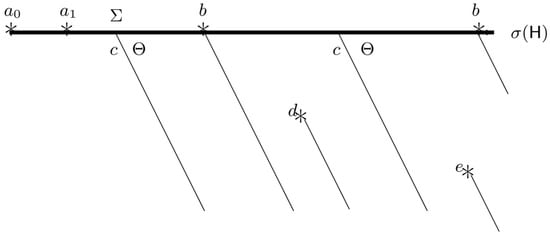
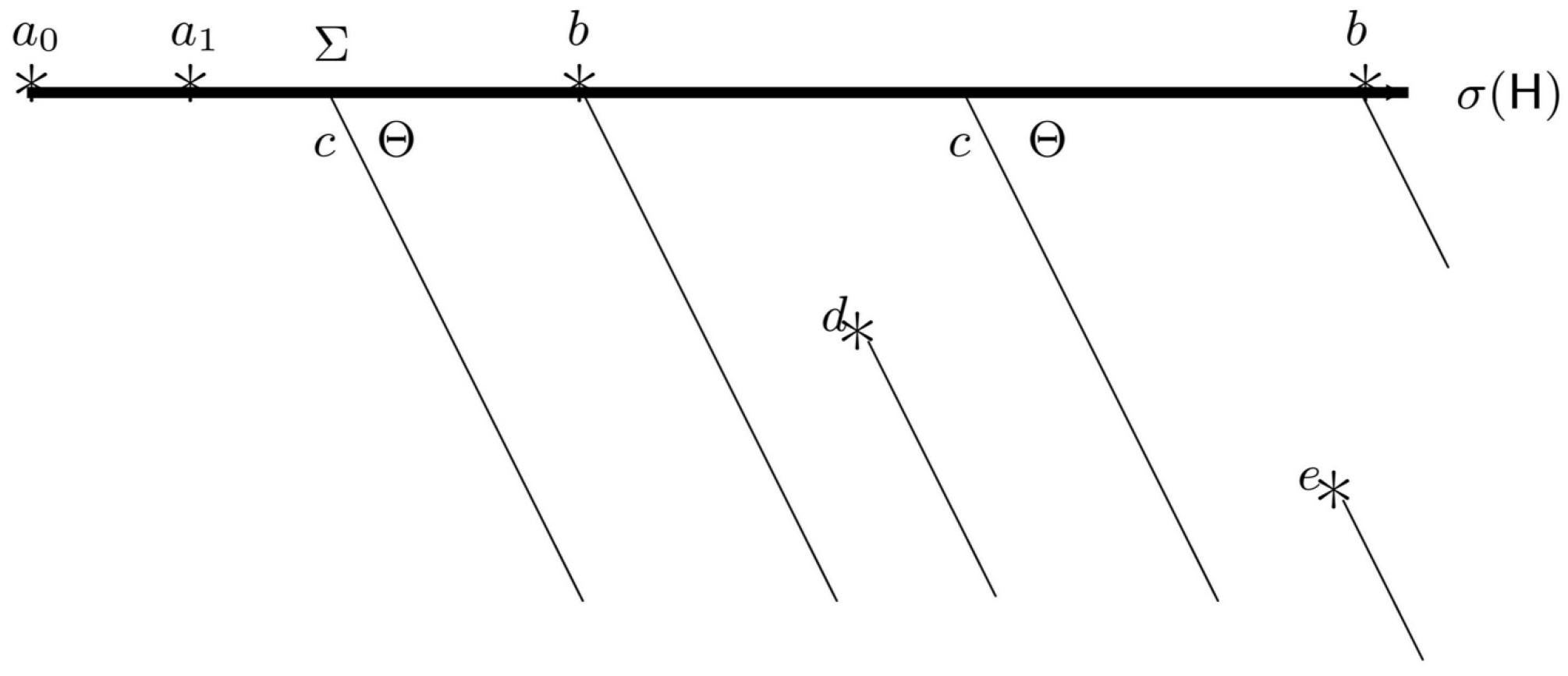
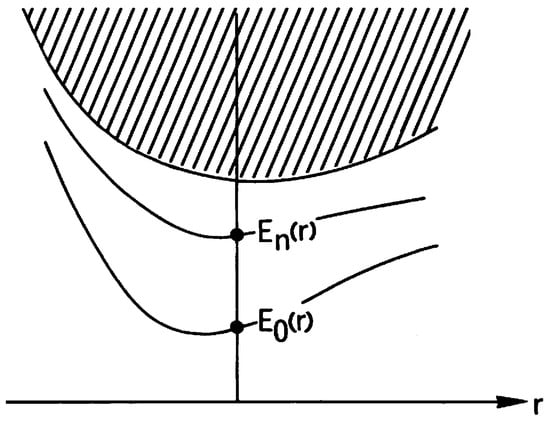
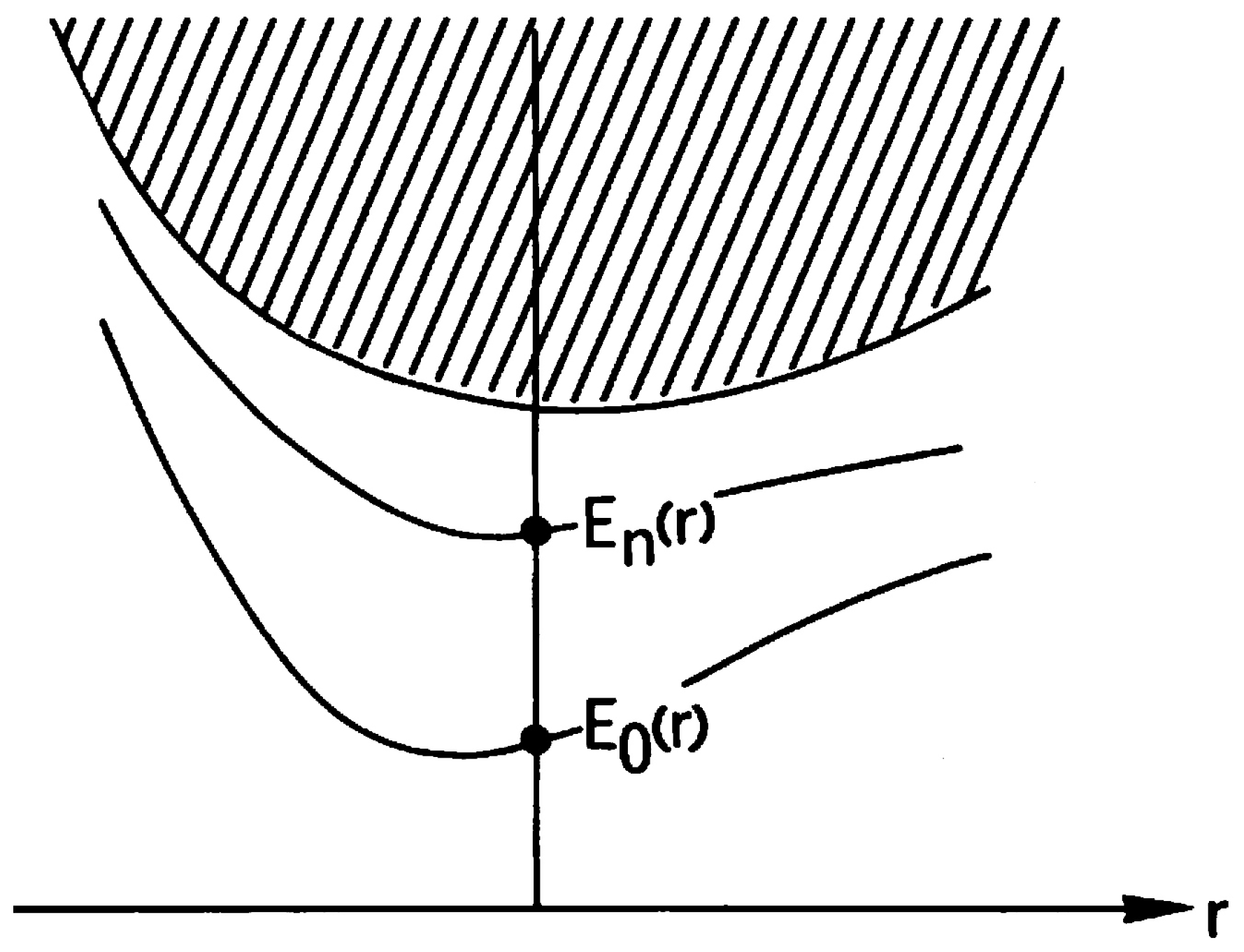
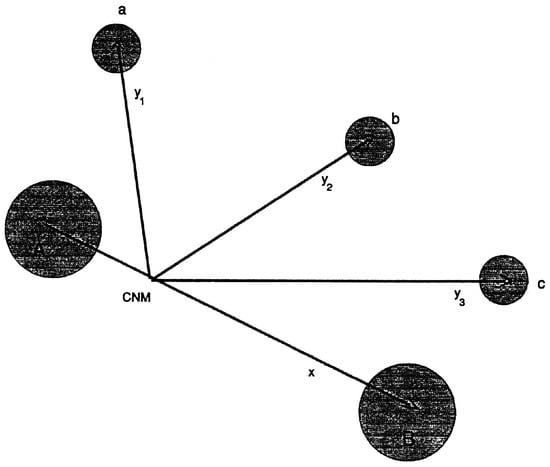
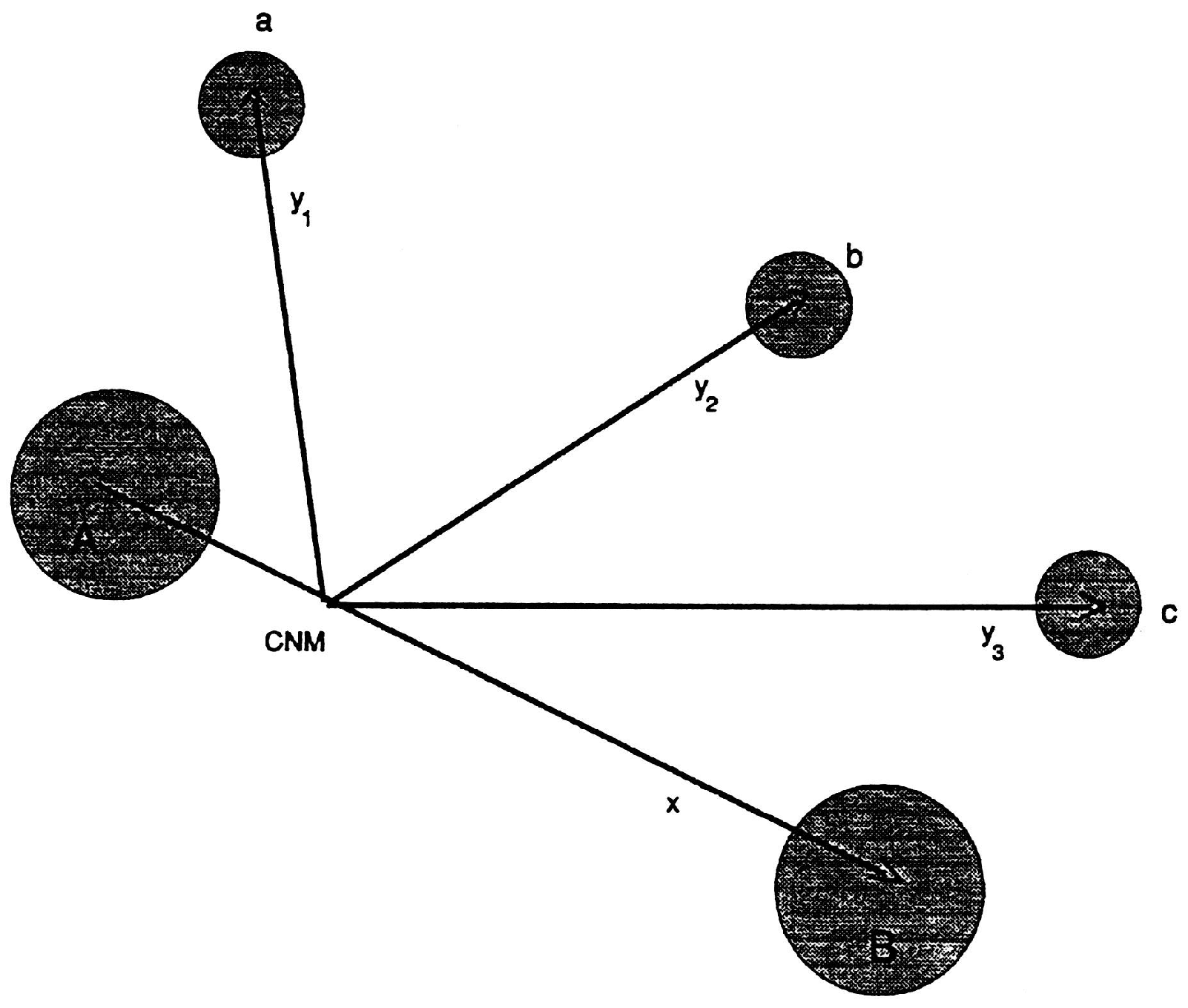
Disclaimer/Publisher’s Note: The statements, opinions and data contained in all publications are solely those of the individual author(s) and contributor(s) and not of MDPI and/or the editor(s). MDPI and/or the editor(s) disclaim responsibility for any injury to people or property resulting from any ideas, methods, instructions or products referred to in the content. |
© 2026 by the author. Licensee MDPI, Basel, Switzerland. This article is an open access article distributed under the terms and conditions of the Creative Commons Attribution (CC BY) license.