Review

Green Strategies for the Synthesis of Heterocyclic Derivatives with Potential Against Neglected Tropical Diseases


by
Vinícius Augusto Campos Péret
and
Renata Barbosa de Oliveira
*
Departamento de Produtos Farmacêuticos, Faculdade de Farmácia, Universidade Federal de Minas Gerais, Belo Horizonte 31270-901, Brazil
*
Author to whom correspondence should be addressed.
Reactions 2025, 6(4), 66; https://doi.org/10.3390/reactions6040066 (registering DOI)
Submission received: 22 October 2025 / Revised: 25 November 2025 / Accepted: 27 November 2025 / Published: 2 December 2025
(This article belongs to the Special Issue Advances in Organic Synthesis for Drug Discovery and Development)

Abstract

Neglected tropical diseases (NTDs) remain a significant global health burden, exacerbated by the ongoing climate emergency, which alters disease distribution and increases vulnerability in affected populations. The urgent need for novel therapeutics demands innovative approaches in drug discovery, with heterocyclic compounds serving as versatile scaffolds due to their diverse electronic and structural properties that enable potent biological activity. This review highlights how green chemistry principles have been applied to the construction of bioactive heterocyclic cores relevant to NTD drug development. Key sustainable methodologies are discussed, including microwave-assisted solvent-free and green-solvent reactions, ultrasound-assisted synthesis, mechanochemical one-pot multistep strategies, and the use of ionic liquids and deep eutectic solvents as environmentally benign catalysts and reaction media. By focusing on these approaches, the review emphasizes how green synthetic strategies can accelerate the development of pharmacologically relevant heterocycles while minimizing environmental impact, resource consumption, and hazardous waste generation.

1. Introduction

The accelerating climate crisis has emerged as one of the greatest challenges to global health in the 21st century, exacerbating pre-existing social and economic inequalities while reshaping the epidemiological landscape of infectious diseases [1,2,3]. Extreme weather events, rising global temperatures, and shifting rainfall patterns have expanded the geographical range of vectors and pathogens, directly influencing the transmission dynamics of Neglected Tropical Diseases (NTDs) [2,4,5]. Affecting more than one billion people worldwide, primarily in low- and middle-income countries, NTDs symbolize the intersection between environmental vulnerability and health inequity [1,2].
Given this scenario, there is an urgent need for novel chemotherapeutic agents capable of addressing the persistent burden of NTDs under changing climatic conditions. Heterocyclic compounds represent a cornerstone in the discovery and optimization of bioactive molecules, functioning as versatile drug-like scaffolds with diverse electronic and structural properties that facilitate molecular recognition and biological activity [6,7]. Their synthetic flexibility, capacity for electronic modulation, and prevalence in natural products make them indispensable tools in the design of new therapeutics targeting parasitic and viral pathogens.
This review highlights recent advances from the past decade in the green synthesis of bioactive heterocyclic scaffolds with potential activity against NTDs. Special emphasis is placed on environmentally benign and low-cost strategies for constructing heterocyclic rings suitable for early hit-to-lead efforts. By integrating efficiency, sustainability, and affordability, these approaches support innovative yet practical pathways for drug discovery in resource-limited settings most affected by NTDs.

2. Neglected Tropical Diseases and the Climate Emergency

Neglected Tropical Diseases (NTDs) represent a group of diseases that primarily affect low-resource countries in the Global South, mainly in tropical and subtropical areas of the globe, though some have a much wider geographic distribution. Collectively, these diseases affect over one billion people worldwide, incurring devastating health, economic, and social consequences [1]. Furthermore, the same communities disproportionately burdened by NTDs are also disproportionately affected by climate change [2].
Climate factors such as temperature and precipitation, exacerbated by global warming, generate heatwaves and floods that modify the habitats and reproductive cycles of vectors of the etiological agents. These changes contribute to population displacement and infrastructural damage, exposing communities to higher risks of infection through increased contact with contaminated water and closer proximity to wildlife. Such conditions facilitate transmission and emergence of vector-borne diseases [2,4].
Additionally, climate change creates new breeding grounds for vectors, accelerates their life cycles, extends transmission seasons, and enhances pathogen virulence. Simultaneously, populations affected by extreme climate events show reduced resilience to infections, as thermal stress and rapid temperature shifts can impair immune function and physiological adaptation [5]. Vulnerable populations are often forced to live in unsafe environments, increasing exposure to pathogens and reducing access to healthcare services [3].
In Brazil, for example, the increasing frequency of summer heatwaves correlates with a year-long rise in dengue incidence due to the accelerated reproduction of mosquitoes. Elevated temperatures have also led to the appearance of dengue outbreaks in previously unaffected high-altitude regions, indicating a geographic expansion of endemic transmission [8].

3. Heterocycles in the Development of New Treatments for NTDs

More than 90% of newly approved drugs contain at least one heterocyclic moiety, and over 85% of known bioactive compounds are based on heterocyclic scaffolds [9,10]. These structures exhibit essential physicochemical properties, including electron-donating and -withdrawing behavior, hydrogen-bonding capabilities, and participation in π–π interactions with biological targets [6].
In chemotherapy for NTDs, the importance of heterocycles is evident. Established treatments rely heavily on such frameworks, as in the case of benznidazole and nifurtimox for Chagas disease, paromomycin for cutaneous leishmaniasis, and praziquantel for schistosomiasis, as well as quinoline derivatives for malaria, such as mefloquine, among several other examples of drugs used in the treatment of various neglected diseases, as illustrated in Figure 1.
Furthermore, heterocyclic cores have guided the development of new drug candidates, serving as the foundational scaffolds in hit-to-lead processes. Fused five- and six-membered systems such as benzimidazoles, benzoxazoles, benzothiazoles, and indoles have demonstrated notable bioactivity against pathogens responsible for dengue virus [11,12,13,14,15], Trypanosoma cruzi [16,17,18,19,20,21], Leishmania spp. [21,22,23,24], and Schistosoma spp. [25,26,27,28]. The ability to chemically combine a wide variety of moieties with different substituents to generate these rings is crucial for the synthetic relevance of these systems in the early stages of drug development. Five-membered ring systems continue to attract considerable interest among medicinal chemists due to their distinctive geometries and electrostatic properties. Nitrogen-containing rings, including 1,2,3-triazoles and 1,2,4-triazoles, serve as pharmacophoric moieties or linker structures, and numerous studies have highlighted their utility against NTDs [29,30,31,32,33,34,35,36,37,38,39,40]. Pyrazoles, an emerging scaffold, have increasingly appeared in newly approved drugs over the past decade [41], whereas oxadiazoles offer a versatile platform for addressing diverse challenges in drug development [10]. Collectively, these heterocycles have been demonstrated to play a critical role in drug discovery and optimization.
Altogether, these heterocyclic frameworks have demonstrated significant pharmacological potential against multiple NTD targets.

4. Green Chemistry Principles

Although heterocycles offer considerable advantages in drug discovery, their conventional synthesis often relies on hazardous reagents, toxic solvents, heavy-metal catalysts, and high-energy conditions that raise significant environmental and safety concerns [42,43,44,45,46]. Therefore, implementing green chemistry methodologies is essential to advance the development of sustainable pharmaceuticals.
Green chemistry, formally conceptualized by Paul T. Anastas and John C. Warner in 1998, refers to the design of chemical products and processes that reduce or eliminate the use and generation of hazardous substances [47,48]. Rather than constituting a new discipline, it represents an evolution of chemical practice guided by environmental responsibility and process efficiency [49].
The Twelve Principles of Green Chemistry provide a practical framework for minimizing the environmental footprint of chemical processes. They encompass concepts such as waste prevention, atom economy, the use of safer reagents and solvents, energy efficiency, renewable feedstocks, catalysis, and the design of degradable and inherently safe products. Collectively, these principles shift the focus from pollution control to pollution prevention, promoting safer and more resource-efficient chemical transformations. Concise summaries and extensive discussions of these principles can be found elsewhere [48,49,50].
In this context, the following sections illustrate how these principles can be concretely applied to the construction of heterocyclic cores in molecules that display activity against parasites responsible for neglected tropical diseases. Specific case studies highlight microwave- and ultrasound-assisted reactions, mechanochemical strategies, ionic liquid, and deep eutectic solvents, techniques that exemplify how moder synthetic chemistry can align efficiency, scalability, and sustainability.

5. Heterocyclic Scaffolds for NTD Drug Discovery: Green Synthetic Approaches

Given the central role of heterocyclic scaffolds in medicinal chemistry, developing concise, efficient, and environmentally responsible synthetic strategies is essential. The following sections highlight representative examples of green synthetic methodologies that directly embody the principles outline above, particularly those related to energy efficiency, waste prevention, safer solvents, catalysis, and atom economy.

5.1. Microwave-Assisted Sustainable Synthesis: Solvent-Free and Green-Solvent Pathways

Microwave-assisted organic synthesis (MAOS) exemplifies the design for energy efficiency and waste minimization principles of green chemistry. By delivering rapid, homogeneous heating directly to the reaction medium, microwave irradiation dramatically reduces reaction times, often from hours to minutes, while improving yields and reproducibility [51,52,53,54].
Furthermore, microwave-driven protocols frequently operate under solvent-free conditions or use benign media such as water or bio-derived solvents, thus reducing the environmental impact associated with volatile organic solvents. These attributes, combined with enhanced selectivity and minimal purification requirements, make MAOS an attractive and sustainable strategy for the synthesis of pharmacologically relevant heterocycles. A representative example of a microwave-assisted protocol for constructing benzimidazole frameworks, which are key structural motifs in several approved drugs and experimental candidates for neglected tropical diseases (NTDs), is presented below.
Bandyopadhyay and colleagues (2017) described the synthesis of benzimidazole derivatives using a simple and eco-friendly method, affording compounds with promising activity against Chagas disease and leishmaniasis. Their approach employs bismuth nitrate pentahydrate as a Lewis acid catalyst in aqueous medium under microwave irradiation (Figure 2), offering several advantages, including mild reaction conditions, high atom economy, ease of product isolation, and minimal waste generation, thus representing a valuable green protocol for this class of heterocycles. Initially, the authors evaluated which catalyst would be the most effective for the reaction (BiI3, BiBr3, BiCl3, Bi(OTf)3, BiO5(OH)9(NO3)3, Bi(NO3)3·5H2O) in comparison with the reaction carried out without a catalyst. A significant increase in yield was observed when Bi(NO3)3·5H2O was used as the catalyst (81% yield) compared to the reaction without a catalyst (37%). Continuing the optimization of the reaction conditions, the reaction was then tested in different solvents, using bismuth nitrate pentahydrate as the catalyst in all cases. The solvents evaluated were tetrahydrofuran, ethanol, methanol, DMSO, acetonitrile, dichloromethane, toluene, and water, including a neat condition. Fortuitously, the best solvent was water (89% yield), which is consistent with the principles of green chemistry. Finally, the authors evaluated the optimal amount of catalyst to be used in the reaction, achieving the highest yield (94%) when bismuth nitrate pentahydrate was employed at a concentration of 5 mol% [21].
Nine benzimidazole derivatives were synthesized using this technique. The compounds were evaluated against the INC-5 strain of Trypanosoma cruzi, showing IC50 values ranging from 4.9 to 46.7 µg/mL. They were also tested against Leishmania mexicana, with IC50 values ranging from <5 to 51.8 µg/mL [21].
This case study illustrates how microwave irradiation not only accelerates and simplifies synthetic routes but also contributes to the discovery of bioactive molecules with significant therapeutic potential.
Numerous other examples of microwave-assisted protocols for the synthesis of heterocyclic scaffolds are reported in the literature [55,56,57,58,59], further highlighting the versatility of this approach. Overall, microwave irradiation represents a promising and sustainable technique aligned with the principles of green chemistry, offering significant potential for the efficient development of bioactive compounds.

5.2. Ultrasound as a Green Tool for the Synthesis of Heterocyclic Scaffolds

Ultrasound-assisted reactions have emerged as a valuable tool in green chemistry due to their ability to accelerate chemical transformations under milder reaction conditions. The underlying principle of sonochemistry, acoustic cavitation, promotes the rapid formation and collapse of microscopic bubbles, generating localized hotspots with transiently high temperatures and pressures, as well as intense micro-mixing. These effects enhance reaction rates and yield without the need for harsh reagents or elevated temperatures, making ultrasound an attractive and environmentally friendly strategy for heterocycle construction [54,60,61]. The following examples integrate representative applications of ultrasound in the synthesis of diverse heterocyclic frameworks, including benzopyrazine, thiazole, and imidazolinone derivatives, all reported to exhibit activity against pathogens responsible for neglected tropical diseases.
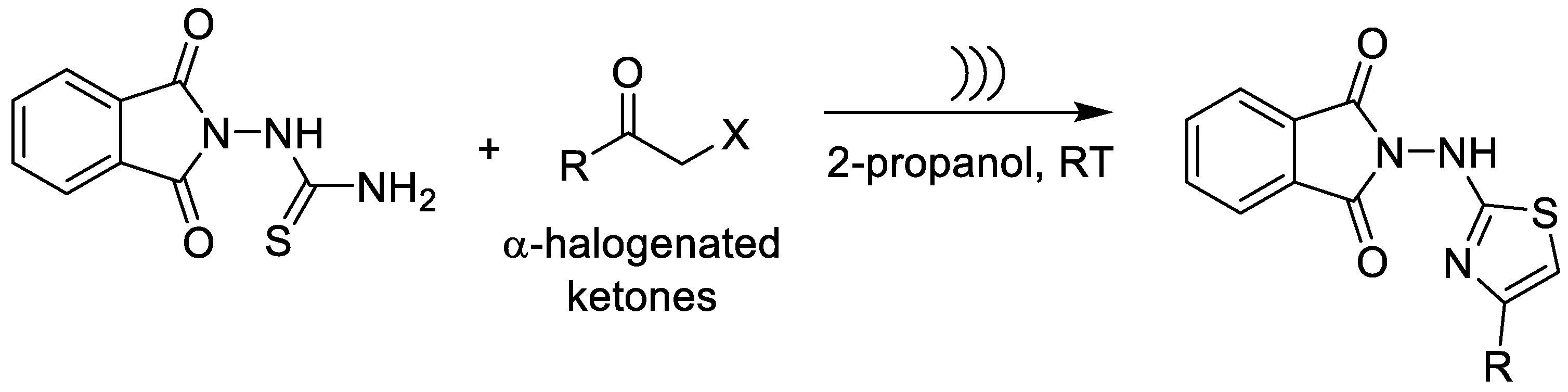
The synthesis of phthalimido-thiazole derivatives displaying in vitro trypanocidal and leishmanicidal activity was reported by Gomes et al. (2016) [62] and Aliança et al. (2017) [63], respectively. The key step involving thiazole-ring formation was carried out through a Hantzsch cyclization under ultrasound irradiation at room temperature. After 1 h of reaction, the derivatives were obtained in yields ranging from 36% to 65%. The synthetic scheme for the thiazole-core construction is shown in Figure 3.
A total of 14 compounds from this series were evaluated against Trypanosoma cruzi (epimastigotes of the Dm28c strain and trypomastigotes of the Y strain). The most active compound against the epimastigote form (Figure 3, R = 4-Ph-Ph) exhibited an IC50 value of 4 μM. Regarding the activity against the trypomastigote form, the most potent derivative (Figure 3, R = 2-Naph; IC50 = 4.7 μM) was also the least cytotoxic toward BALB/c mouse spleen cells (CC50 = 269.2 μM), showing comparable potency to benznidazole (IC50 4.7 vs. 6.3 μM), used as the positive control [62].
These derivatives were also tested against amastigote and promastigote forms of Leishmania infantum, employing non-infected VERO cells, J774 macrophages and peritoneal macrophages to determine the selectivity index (SI = CC50/IC50). In line with the trypanocidal activity results, the most active compound, and the one with the highest selectivity index (SI) against both promastigote and amastigote forms of L. infantum (Figure 3, R = 2-Naph; IC50 promastigotes = 9.8 μM; CC50 = 12.5 μM for Vero cells and 17.7 μM for J774 macrophages; IC50 amastigotes = 15.2 μM; SI = 24), was also the most active derivative against T. cruzi trypomastigotes, as described above. Parasites exposed to this derivative displayed marked ultrastructural alterations, including contraction of the cell body, disruption of plasma membrane integrity, cytoplasmic vacuolization, the appearance of membranous profiles around organelles, and pronounced mitochondrial swelling. In addition, treatment of non-infected macrophages led to an increase in nitric oxide production compared with untreated controls [63].
Overall, the results were highly promising, supporting the potential of phthalimido–thiazole derivatives as antiparasitic agents.
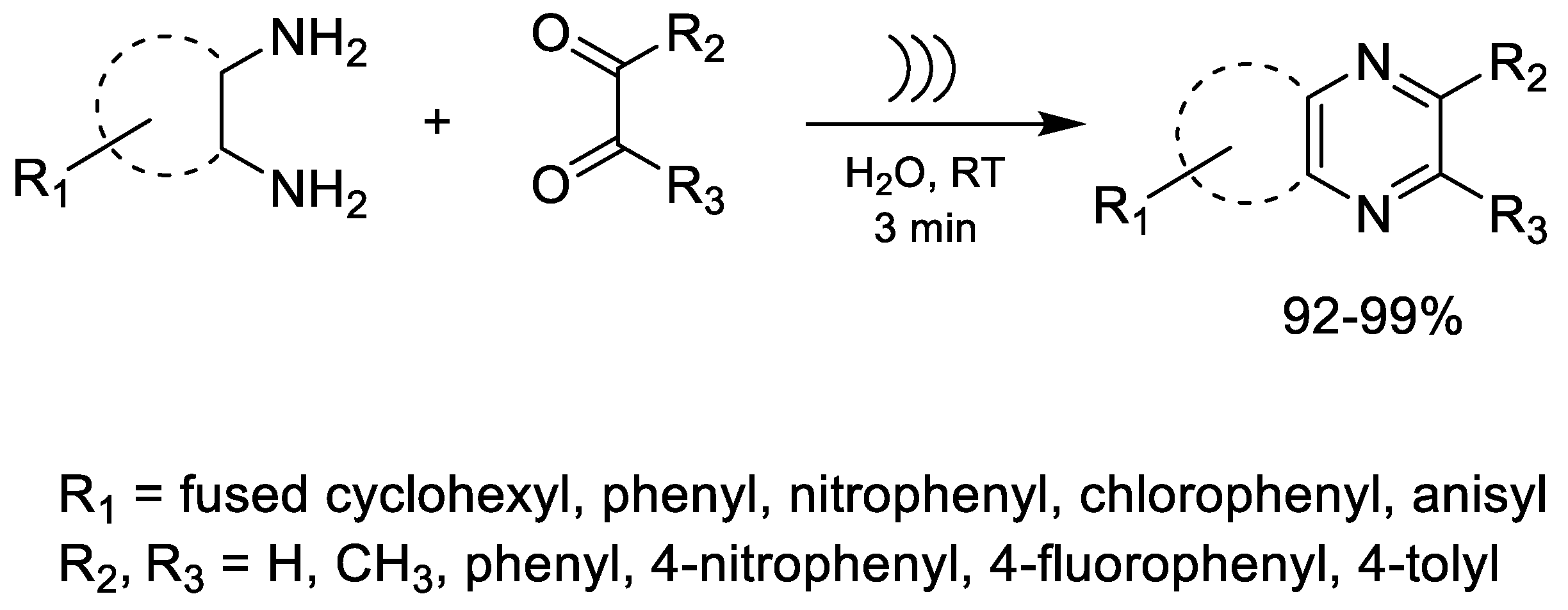
Rock et al. (2021) reported the synthesis of a series of benzopyrazines with leishmanicidal and trypanocidal activity using an ultrasound-assisted, environmentally friendly methodology that eliminates the need for catalysts, supports, additives, or hazardous solvents. According to the authors, this is the first example of benzopyrazine synthesis under such conditions, showing very promising results. The benzopyrazine derivatives were obtained in high yields (above 92%) within a short reaction time (~3 min) using water as the solvent. Variation in the substituents R1, R2, and R3 (Figure 4) did not significantly affect the progress of the reaction, indicating that the method exhibits high applicability for the synthesis of a wide range of benzopyrazine derivatives [64].
The compounds in this series were evaluated against promastigotes of L. mexicana (MHOM/MX/ISETGS), as well as against epimastigotes of T. cruzi (MHOM/MX/1994/NINOA). The benzopyrazine derivative fused cyclohexyl group (Figure 4, R1 = fused cyclohexyl, R2 = H, R3 = phenyl) emerged as the most active compound in the series against both strains, displaying IC50 values of 12.6 µM against L. mexicana and 37.85 µM against T. cruzi. Its potency was close to that of the reference drugs miltefosine (IC50 = 9.32 µM) and nifurtimox (IC50 = 19.56 µM), respectively.
Following a similar approach, Torres-Jaramillo et al. (2024) synthesized a series of imidazoline derivatives using a green-chemistry-based strategy for the construction of the heterocyclic ring. In this case, the authors compared reactions conducted under microwave irradiation and ultrasound, used as alternative energy sources, with those performed under conventional thermal heating. As expected, the reaction times under conventional heating were substantially longer (4–5 h). In contrast, the ultrasound-assisted protocol using NBS and acetonitrile as solvent afforded the desired products within only 20 min. Microwave irradiation provided nearly comparable yields; however, the reaction required twice as much time as the ultrasound method (40 min) [65]. The reaction scheme is presented in Figure 5.
The activity of these derivatives was evaluated in vitro against L. mexicana promastigotes and T. cruzi epimastigotes. To determine the selectivity index (SI), the cytotoxicity of the compounds was also assessed in murine macrophages. Among the eight imidazolines selected for leishmanicidal evaluation, five displayed high potency, with IC50 values < 1 µg/mL and SI values ranging from 13.12 to 166.31. The most active imidazoline (R = C6H13) showed an IC50 of 0.175 µg/mL and SI = 166.31. In contrast, this same imidazoline exhibited a low SI (1.16) when considering its cytotoxicity toward J774 macrophages (CC50) relative to its activity against T. cruzi INC-5 epimastigotes. The most promising imidazoline against T. cruzi (R = C8H17) presented an IC50 of 0.6284 µg/mL and SI = 15.46 [65].

5.3. Mechanochemical Advances Enabling One-Pot Multistep Organic Synthesis

Mechanochemistry has emerged as a powerful and sustainable alternative to traditional solution-based synthesis, providing an efficient route for the preparation of structurally complex and biologically active compounds. In mechanochemical reactions, mechanical energy, typically applied by ball milling or grinding, replaces conventional heating or solvent-mediated activation, enabling chemical transformations to occur under solvent-free or minimal-solvent conditions. This significantly reduces the generation of hazardous waste and the environmental footprint of synthetic processes [66,67,68].
The integration of mechanochemical methods with one-pot multistep strategies represents an important advance in sustainable synthesis. Such approaches allow consecutive transformations to occur in a single vessel, minimizing purification steps, improving atom economy, and reducing energy consumption. These advantages are particularly relevant for the synthesis of heterocyclic compounds, which constitute key structural motifs in numerous active molecules with potential applications in the treatment of neglected tropical diseases [66].
Quinoline-containing drugs are widely used in the treatment of several neglected diseases, such as malaria (quinine, quinidine, chloroquine, mefloquine, primaquine, etc.), tuberculosis (bedaquiline), and fungal or protozoal infections (clioquinol). Moreover, the presence of quinoline rings in the structure of antiviral agents such as saquinavir and indinavir suggests that quinoline derivatives may also display activity against a broad spectrum of viral infections, including those caused by Zika virus, enteroviruses, herpesvirus, Ebola virus, MERS-CoV and SARS-CoV [69].
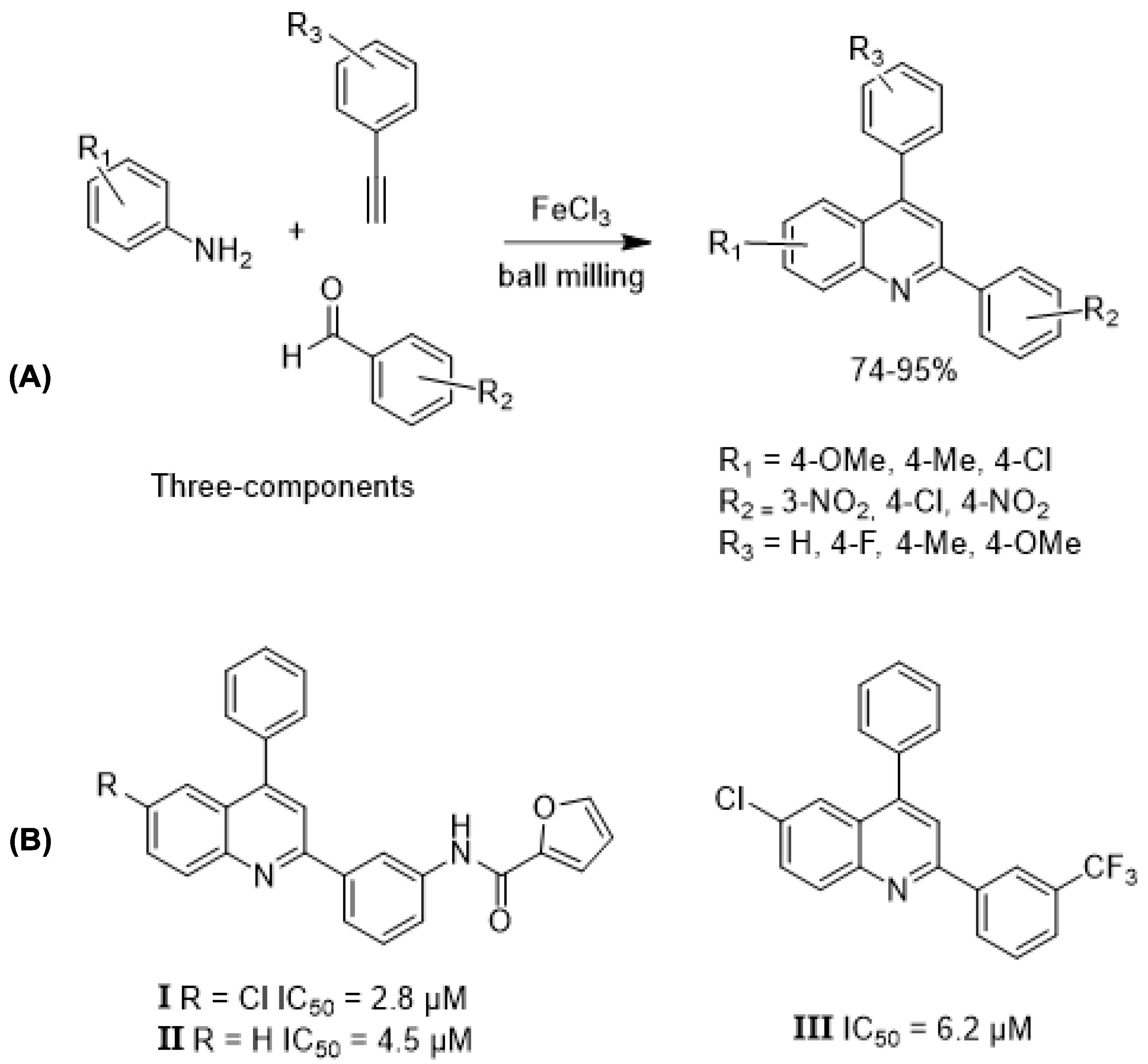
Given the broad pharmacological relevance of the quinoline scaffold, the development of efficient and sustainable synthetic methodologies for its construction is of great importance. A relevant example of the application of mechanochemical one-pot multistep synthesis for the preparation of quinoline derivatives was described by Tan et al. (2017). In this work, 2,4-diphenylquinolines were synthesized through a solvent-free multicomponent strategy using aniline derivatives, benzaldehydes, and phenylacetylenes. The reaction was carried out in the presence of FeCl3 as a Lewis acid catalyst under ball milling conditions. To standardize the methodology, different Lewis acids were initially tested as catalysts (ZnCl2, AlCl3, FeCl3, and BF3·OEt2), with FeCl3 being selected as the most efficient. The influence of different substituents on the benzaldehyde, phenylacetylene, and aniline reagents was also investigated. Electron-donating substituents on the aniline moiety and electron-withdrawing substituents on the aldehyde or phenylacetylene components led to better yields. The reaction time was 2 h, and the product was easily isolated by washing the reaction mixture with a dilute hydrochloric acid solution, without the need for further purification. The general reaction scheme is shown in Figure 6 [70].
The trypanocidal activity of 2,4-diarylquinolines against T. brucei brucei was evaluated by Oluwafemi et al. (2021). Three derivatives, compounds I, II, and III, showed promising activity, with IC50 values of 2.8 µM and 4.5 µM, respectively (Figure 6), and no detectable toxicity at 20 µM toward human cervix adenocarcinoma (HeLa) cells [71].

5.4. Ionic Liquids as Catalysts in Green Chemistry Approaches

Ionic liquids (ILs) have emerged as versatile and environmentally friendly alternatives to conventional organic solvents and catalysts in modern synthetic chemistry. Defined as salts that remain liquid below 100 °C, ILs possess unique physicochemical properties such as negligible vapor pressure, high thermal stability, tunable polarity, and excellent solvating ability for both organic and inorganic compounds. These characteristics make them particularly attractive for promoting reactions under mild, solvent-free, or recyclable conditions, in line with the principles of green chemistry [72].
In the synthesis of heterocyclic compounds, ILs have been successfully employed, enhancing reaction rates, selectivity, and yields while minimizing waste generation. Imidazolium-, pyridinium-, and ammonium-based ionic liquids, in particular, have shown remarkable efficiency in multicomponent and one-pot reactions, often enabling metal-free or solvent-free protocols [73,74]
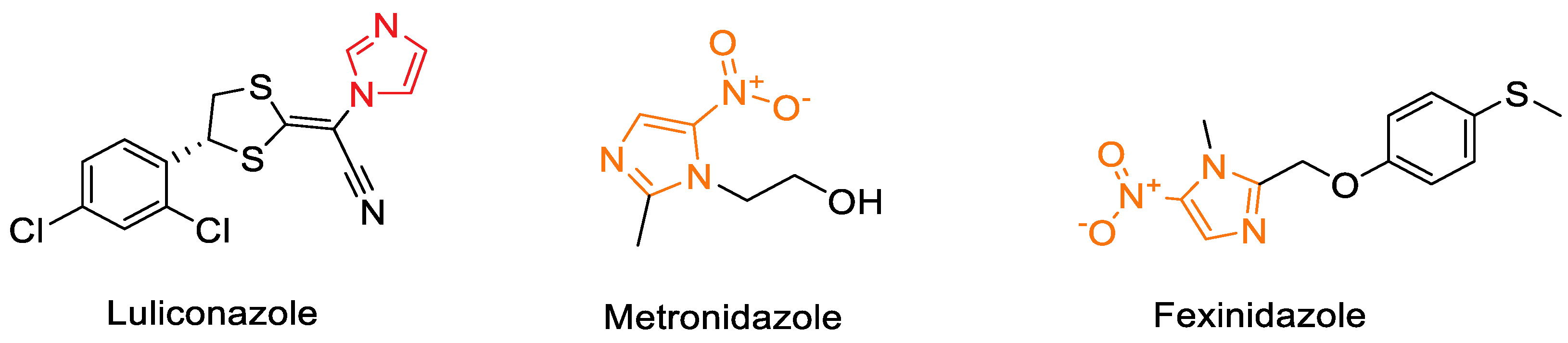
A variety of therapeutics employed against neglected tropical diseases incorporate an imidazole ring as a key structural element. This heterocycle appears in well-known agents such as metronidazole, widely prescribed for protozoal infections; fexinidazole, the first oral treatment approved for human African trypanosomiasis; and luliconazole, an antifungal compound that has also demonstrated notable in vitro efficacy against Leishmania major [75] (Figure 7). Benznidazole (Figure 1), a frontline drug for Chagas disease, likewise contains an imidazole-based motif. Given the prominence of this ring system across clinically relevant antiparasitic agents, the development of environmentally benign strategies for assembling imidazole scaffolds, such as those employing ionic liquids, has become an increasingly important area of research within green heterocyclic synthesis.
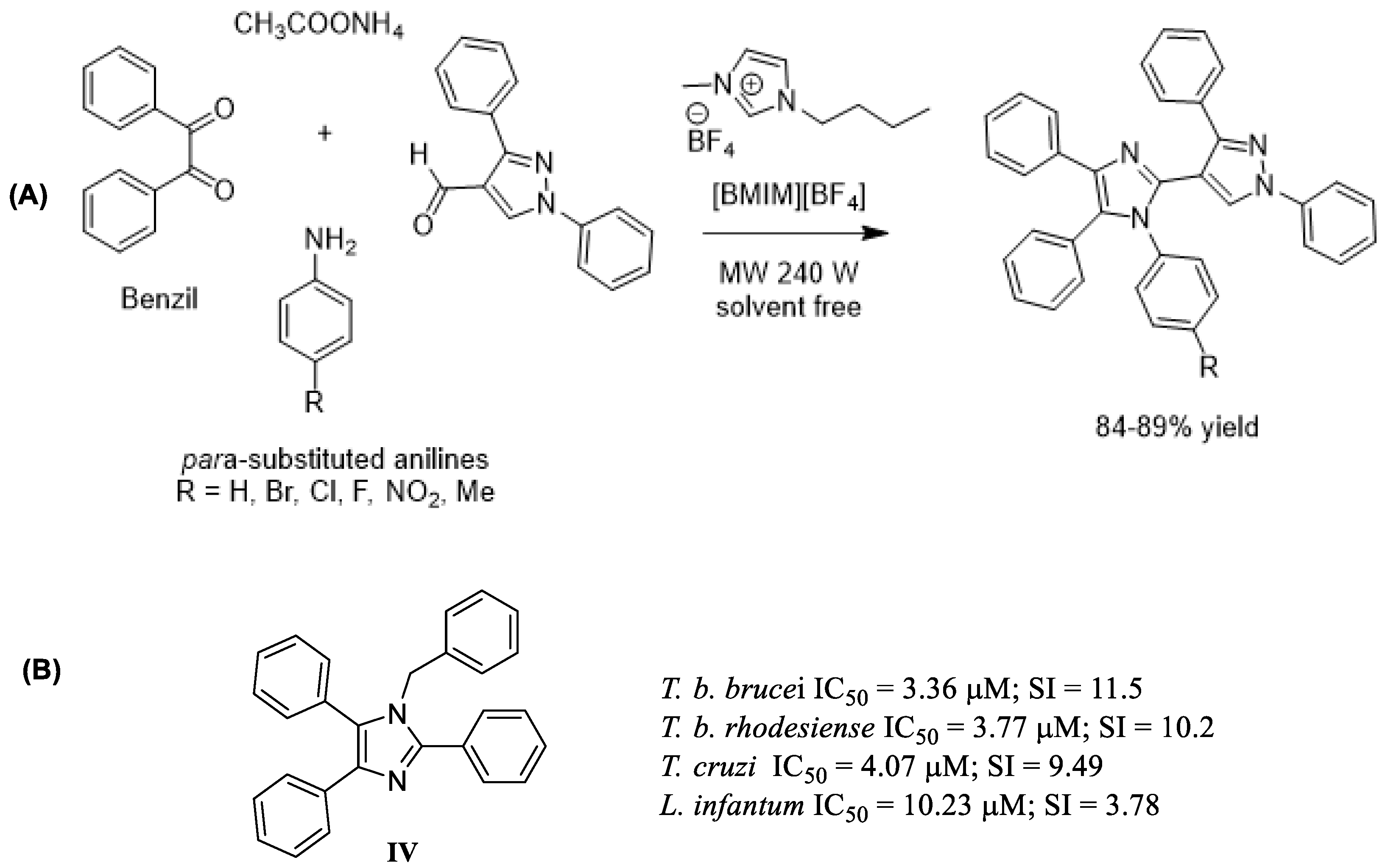
Shirole et al. (2016) described the synthesis of new 1,2,4,5-tetrasubstituted imidazole derivatives by combining key strategies for sustainable chemistry: a multicomponent reaction using the ionic liquid 1-butyl-3-methylimidazolium tetrafluoroborate ([BMIM][BF4]) as a catalyst under microwave irradiation. For comparison purposes, the authors also carried out the same synthesis under conventional reflux conditions. The protocol involved a multicomponent reaction between benzil, various para-substituted anilines, 1-phenyl-3-p-tolyl-1H-pyrazole-4-carbaldehyde, and ammonium acetate under different conditions: (a) conventional reflux or microwave heating; (b) in the presence of p-toluenesulfonic acid, the ionic liquid [BMIM][BF4], or without any catalyst; (c) using ethanol as solvent or under solvent-free conditions. Among the tested conditions, the one that provided the best results was microwave irradiation at 240 W, using the ionic liquid as catalyst under solvent-free conditions. Under these conditions, the reaction time ranged from 10 to 12 min, and the yields varied between 84% and 89% [76] (Figure 8).
To illustrate the potential activity of this class of imidazole-based compounds, one representative example is the study conducted by Vargas et al. (2019), who described the antiparasitic activity of tetra-substituted imidazole derivatives and proposed sterol 14α-demethylase (CYP51) from Trypanosoma cruzi, Leishmania infantum, and Trypanosoma brucei as the likely molecular target. Among the fourteen imidazole derivatives evaluated, seven displayed activities against all three Trypanosoma species, T. cruzi, T. b. brucei, and T. b. rhodesiense. Compound IV (Figure 8) was the most selective to the Trypanosoma family, as determined by cytotoxicity assays using human fibroblasts (MRC-5 cell line). Compound I also exhibited significant activity against L. infantum, comparable to the positive control miltefosine (IC50 = 10.23 μM); however, its selectivity index was low [77].
The findings described by Vargas et al. (2019) [77] highlight that this scaffold can yield promising broad-spectrum candidates for the treatment of neglected tropical diseases.

5.5. Deep Eutectic Solvents in Sustainable Heterocycle Synthesis

Deep eutectic solvents (DESs) have gained increasing attention as a new generation of environmentally benign media for organic synthesis. Formed by combining a hydrogen bond donor (HBD) and a hydrogen bond acceptor (HBA), DESs exhibit a melting point significantly lower than that of their individual components, resulting in a liquid phase at or near room temperature. Compared to many conventional ionic liquids, DESs are typically easier to prepare, less expensive, and often biodegradable, which enhances their appeal for sustainable chemical processes [78].
In heterocyclic synthesis, DESs have demonstrated remarkable versatility as solvents, catalysts, or co-catalysts, promoting various transformations such as condensation, cyclization, and multicomponent reactions under mild and often solvent-free conditions. Their tunable physicochemical properties and compatibility with both organic and inorganic substrates enable efficient reaction pathways with reduced environmental impact [79,80,81].
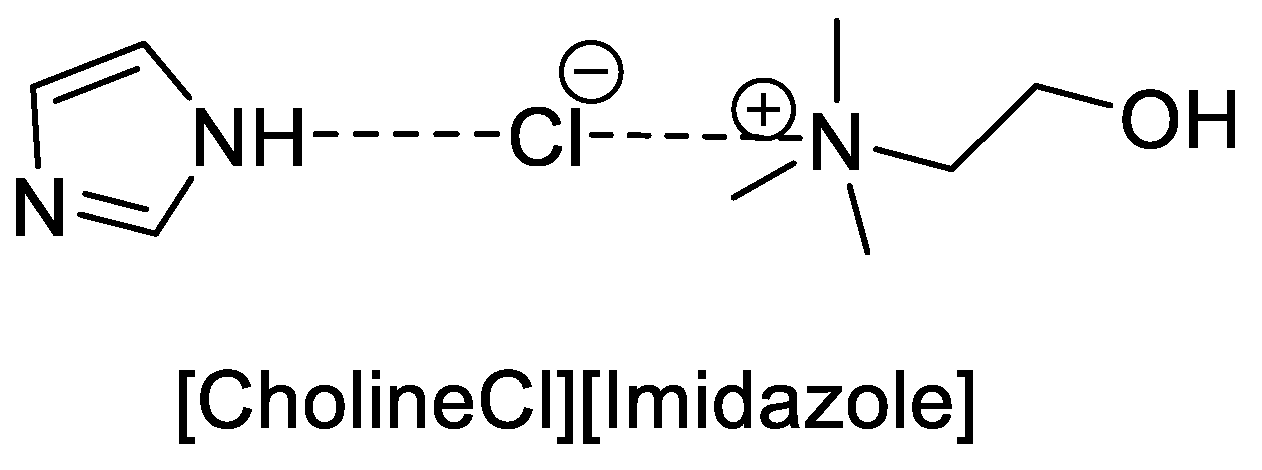
The benzothiazole ring represents a common heterocyclic framework found in a wide range of compounds, many of which exhibit notable biological activities, including antiparasitic and antiviral activities with potential applications in the treatment of neglected diseases [12,25,82,83]. An example of the synthesis of 2-phenylbenzothiazoles using a deep eutectic solvent (DES) was recently reported by Truong et al. (2024). The optimal reaction conditions were established by varying the catalysts and their ratios, as well as the solvent, temperature, reaction time, and sulfur concentration, which was used as the redox reagent in the condensation step. The DES catalyst selected after optimization was [CholineCl][Imidazole]2, prepared from a mixture of choline chloride (CholineCl) and imidazole (IM) in different molar ratios. The hydrogen-bond interaction between CholineCl and IM leads to the formation of the DES (Figure 9) [79].
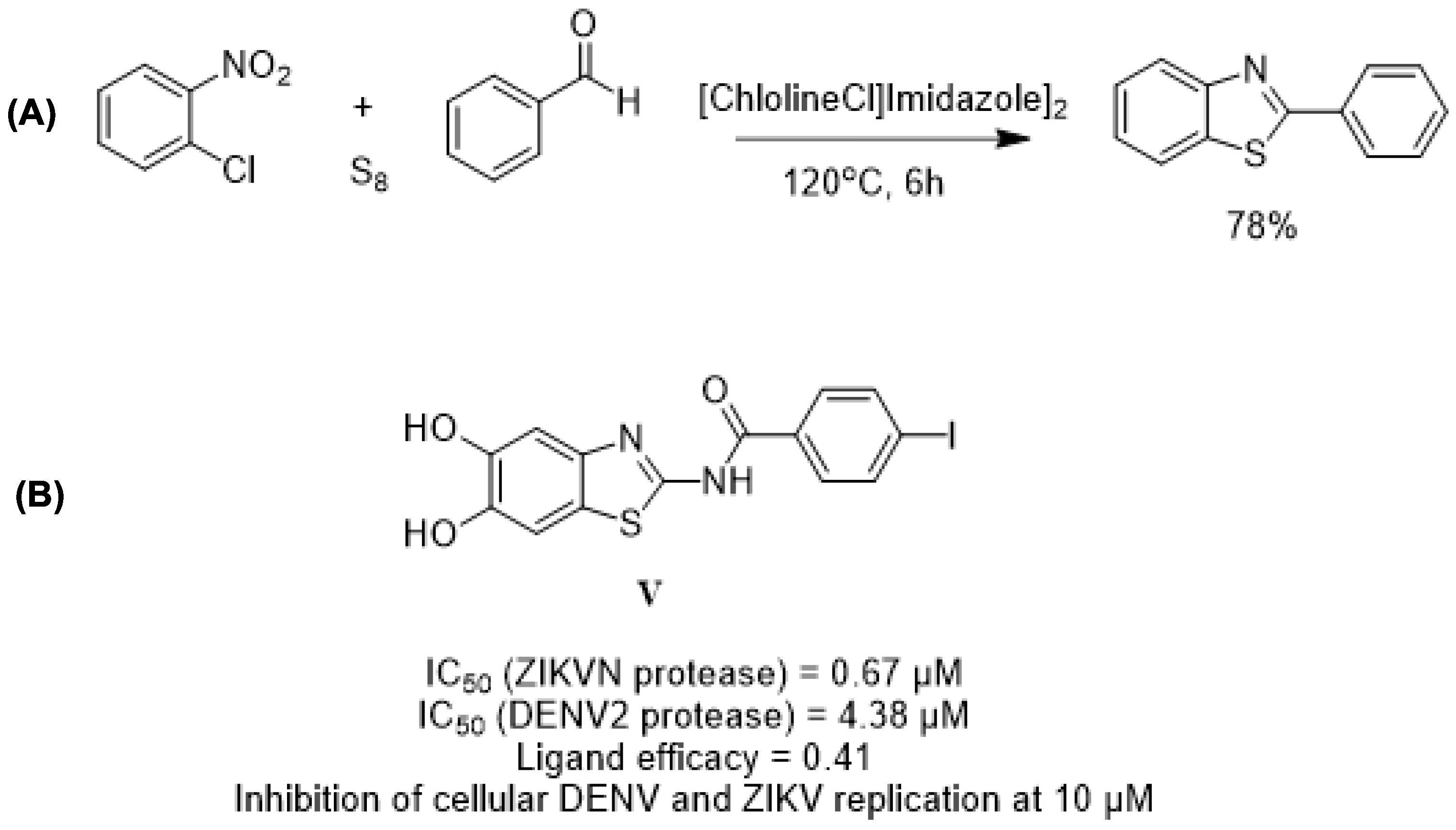
After evaluating the impact of different solvents on the synthesis (DMSO, DMF, 1,4-dioxane, sulfolane, and solvent-free conditions), the solvent-free condition was selected as the most suitable, as it provided the highest yield. Regarding the reaction times tested (1, 2, 4, 6, and 8 h), the yields tended to increase with longer reaction times, with the highest yield obtained after 6 h, showing only a slight difference compared to 8 h. The reaction was carried out at four different temperatures (80 °C, 100 °C, 120 °C, and 140 °C), and 120 °C was selected as the optimal temperature due to its most significant positive effect on the yield. The effect of catalyst loading (0.15 mol%, 0.25 mol%, 0.35 mol%, and 0.50 mol%) was also evaluated by comparing the results with the reaction carried out in the absence of a catalyst. It was demonstrated that the reaction does not proceed without the catalyst, and the optimal catalyst loading was determined to be 0.35 mol%. The sulfur concentration was varied from 1 to 5 mmol, with 2 mmol being selected as the optimal amount. The reaction scheme, including the reagents used during the optimization steps, is illustrated in Figure 10. After optimizing the conditions, the reaction was carried out with various aldehydes, leading to the formation of a wide range of benzothiazole derivatives, thereby confirming the scope of the synthesis [79].
As mentioned earlier in this section, benzothiazole derivatives have broad relevance in antiviral research. A representative example is the study by Maus et al. (2021), which reported benzo[d]thiazole-based allosteric inhibitors targeting the NS2B/NS3 protease, a well-established and promising target for the development of selective anti-flaviviral agents. In addition to their ability to inhibit the NS2B/NS3 protease, these compounds also demonstrated antiviral activity, as evaluated by ZIKV and DENV2 RNA replication quantified by luciferase activity assays [12]. The benzothiazole derivative V proved to be the most promising compound in this series (Figure 10).

5.6. Comparative Summary of Green Approaches in Heterocyclic Synthesis

After discussing representative examples of how different green methodologies have been applied to the construction of heterocyclic scaffolds with potential activity against NTD-related parasites, it becomes clear that each strategy offers distinct advantages and practical considerations. To provide a consolidated view of these methodologies and facilitate comparison across the approaches described, we summarize the key green chemistry principles, reaction conditions, and outcomes in Table 1.

6. Conclusions

The synthesis of heterocyclic scaffolds under green chemistry paradigms offers a promising avenue for the discovery of new therapeutic agents against NTDs, particularly in the context of climate-driven shifts in disease burden. Sustainable methodologies, including microwave and ultrasound-assisted reactions, mechanochemical one-pot processes, and the application of ionic liquids and deep eutectic solvents, demonstrate that high-yielding, efficient, and environmentally responsible synthesis is feasible for complex bioactive molecules. By aligning medicinal chemistry innovation with ecological considerations, these approaches not only enhance the development of drug candidates for NTDs but also contribute to broader efforts toward climate-conscious pharmaceutical research, underscoring the critical role of green chemistry in the future of global health.
Declaration of generative AI and AI-assisted technologies in the writing process: During the preparation of this work, the authors used ChatGPT 5.1to assist with language editing. The authors have reviewed and revised all content and takes full responsibility for the published article.

Author Contributions

Conceptualization, V.A.C.P. and R.B.d.O., writing—review and editing. All authors have read and agreed to the published version of the manuscript.

Funding

This research received no external funding.

Data Availability Statement

No new data were created or analyzed in this study.

Conflicts of Interest

The authors declare no conflict of interest.

References

  1. World Health Organization. Neglected Tropical Diseases. Available online: https://www.who.int/health-topics/neglected-tropical-diseases#tab=tab_1 (accessed on 12 October 2025).
  2. Tidman, R.; Abela-Ridder, B.; de Castañeda, R.R. The Impact of Climate Change on Neglected Tropical Diseases: A Systematic Review. Trans. R. Soc. Trop. Med. Hyg. 2021, 115, 147–168. [Google Scholar] [CrossRef]
  3. Mora, C.; McKenzie, T.; Gaw, I.M.; Dean, J.M.; von Hammerstein, H.; Knudson, T.A.; Setter, R.O.; Smith, C.Z.; Webster, K.M.; Patz, J.A.; et al. Over Half of Known Human Pathogenic Diseases Can Be Aggravated by Climate Change. Nat. Clim. Change 2022, 12, 869–875. [Google Scholar] [CrossRef] [PubMed]
  4. IPCC. Global Warming 1.5 °C; IPCC: Geneva, Switzerland, 2018; Available online: https://www.ipcc.ch/sr15/ (accessed on 12 October 2025).
  5. Liu, Q.; Tan, Z.-M.; Sun, J.; Hou, Y.; Fu, C.; Wu, Z. Changing Rapid Weather Variability Increases Influenza Epidemic Risk in a Warming Climate. Environ. Res. Lett. 2020, 15, 044004. [Google Scholar] [CrossRef]
  6. Ward, M.; O’Boyle, N.M. Analysis of the Structural Diversity of Heterocycles amongst European Medicines Agency Approved Pharmaceuticals (2014–2023). RSC Med. Chem. 2025, 16, 4540–4570. [Google Scholar] [CrossRef] [PubMed]
  7. Shearer, J.; Castro, J.L.; Lawson, A.D.G.; MacCoss, M.; Taylor, R.D. Rings in Clinical Trials and Drugs: Present and Future. J. Med. Chem. 2022, 65, 8699–8712. [Google Scholar] [CrossRef]
  8. Barcellos, C.; Matos, V.; Lana, R.M.; Lowe, R. Climate Change, Thermal Anomalies, and the Recent Progression of Dengue in Brazil. Sci. Rep. 2024, 14, 5948. [Google Scholar] [CrossRef]
  9. Peerzada, M.N.; Hamel, E.; Bai, R.; Supuran, C.T. Deciphering the Key Heterocyclic Scaffolds in Targeting Microtubules, Kinases and Carbonic Anhydrases for Cancer Drug Development. Pharmacol. Ther. 2021, 225, 107860. [Google Scholar] [CrossRef]
  10. Desai, N.; Monapara, J.; Jethawa, A.; Khedkar, V.; Shingate, B. Oxadiazole: A Highly Versatile Scaffold in Drug Discovery. Arch. Pharm. 2022, 355, 2200123. [Google Scholar] [CrossRef]
  11. De, S.; Aamna, B.; Sahu, R.; Parida, S.; Behera, S.K.; Dan, A.K. Seeking Heterocyclic Scaffolds as Antivirals against Dengue Virus. Eur. J. Med. Chem. 2022, 240, 114576. [Google Scholar] [CrossRef]
  12. Maus, H.; Barthels, F.; Hammerschmidt, S.J.; Kopp, K.; Millies, B.; Gellert, A.; Ruggieri, A.; Schirmeister, T. SAR of Novel Benzothiazoles Targeting an Allosteric Pocket of DENV and ZIKV NS2B/NS3 Proteases. Bioorg. Med. Chem. 2021, 47, 116392. [Google Scholar] [CrossRef]
  13. Byrd, C.M.; Grosenbach, D.W.; Berhanu, A.; Dai, D.; Jones, K.F.; Cardwell, K.B.; Schneider, C.A.; Yang, G.; Tyavanagimatt, S.; Harver, C.; et al. Novel Benzoxazole Inhibitor of Dengue Virus Replication That Targets the NS3 Helicase. Antimicrob. Agents Chemother. 2013, 57, 1902–1912. [Google Scholar] [CrossRef]
  14. Nobori, H.; Toba, S.; Yoshida, R.; Hall, W.W.; Sawa, H.; Sato, A. Identification of Compound-B, a Novel Anti-Dengue Virus Agent Targeting the Non-Structural Protein 4A. Antiviral Res. 2018, 155, 60–66. [Google Scholar] [CrossRef] [PubMed]
  15. Nie, S.; Zhao, J.; Wu, X.; Yao, Y.; Wu, F.; Lin, Y.-L.; Li, X.; Kneubehl, A.R.; Vogt, M.B.; Rico-Hesse, R.; et al. Synthesis, Structure-Activity Relationship and Antiviral Activity of Indole-Containing Inhibitors of Flavivirus NS2B-NS3 Protease. Eur. J. Med. Chem. 2021, 225, 113767. [Google Scholar] [CrossRef] [PubMed]
  16. Francesconi, V.; Rizzo, M.; Schenone, S.; Carbone, A.; Tonelli, M. State-of-The-Art Review on the Antiparasitic Activity of Benzimidazolebased Derivatives: Facing Malaria, Leishmaniasis, and Trypanosomiasis. Curr. Med. Chem. 2023, 31, 1955–1982. [Google Scholar] [CrossRef] [PubMed]
  17. Vázquez-Jiménez, L.K.; Juárez-Saldivar, A.; Gómez-Escobedo, R.; Delgado-Maldonado, T.; Méndez-Álvarez, D.; Palos, I.; Bandyopadhyay, D.; Gaona-Lopez, C.; Ortiz-Pérez, E.; Nogueda-Torres, B.; et al. Ligand-Based Virtual Screening and Molecular Docking of Benzimidazoles as Potential Inhibitors of Triosephosphate Isomerase Identified New Trypanocidal Agents. Int. J. Mol. Sci. 2022, 23, 10047. [Google Scholar] [CrossRef]
  18. Téllez-Valencia, A.; Ávila-Ríos, S.; Pérez-Montfort, R.; Rodríguez-Romero, A.; Tuena de Gómez-Puyou, M.; López-Calahorra, F.; Gómez-Puyou, A. Highly Specific Inactivation of Triosephosphate Isomerase from Trypanosoma cruzi. Biochem. Biophys. Res. Commun. 2002, 295, 958–963. [Google Scholar] [CrossRef]
  19. Flores Sandoval, C.A.; Cuevas Hernández, R.I.; Correa Basurto, J.; Beltrán Conde, H.I.; Padilla Martínez, I.I.; Farfán García, J.N.; Nogueda Torres, B.; Trujillo Ferrara, J.G. Synthesis and Theoretic Calculations of Benzoxazoles and Docking Studies of Their Interactions with Triosephosphate Isomerase. Med. Chem. Res. 2012, 22, 2768–2777. [Google Scholar] [CrossRef]
  20. Choi, J.Y.; Calvet, C.M.; Gunatilleke, S.S.; Ruiz, C.; Cameron, M.D.; McKerrow, J.H.; Podust, L.M.; Roush, W.R. Rational Development of 4-Aminopyridyl-Based Inhibitors Targeting Trypanosoma Cruzi CYP51 as Anti-Chagas Agents. J. Med. Chem. 2013, 56, 7651–7668. [Google Scholar] [CrossRef]
  21. Bandyopadhyay, D.; Samano, S.; Villalobos-Rocha, J.C.; Enid Sanchez-Torres, L.; Nogueda-Torres, B.; Rivera, G.; Banik, B.K. A Practical Green Synthesis and Biological Evaluation of Benzimidazoles against Two Neglected Tropical Diseases: Chagas and Leishmaniasis. Curr. Med. Chem. 2018, 24, 4714–4725. [Google Scholar] [CrossRef]
  22. Nieto-Meneses, R.; Castillo, R.; Hernández-Campos, A.; Maldonado-Rangel, A.; Matius-Ruiz, J.B.; Josué Trejo-Soto, P.; Nogueda-Torres, B.; Dea-Ayuela Ma, A.; Bolás-Fernández, F.; Méndez-Cuesta, C.; et al. In Vitro Activity of New N-Benzyl-1H-Benzimidazol-2-Amine Derivatives Against Cutaneous, Mucocutaneous and Visceral Leishmania Species. Exp. Parasitol. 2018, 184, 82–89. [Google Scholar] [CrossRef]
  23. De Luca, L.; Ferro, S.; Buemi, M.R.; Maria Monforte, A.; Gitto, R.; Schirmeister, T.; Maes, L.; Rescifina, A.; Micale, N. Discovery of Benzimidazole-Based Leishmania mexicana Cysteine Protease CPB2.8ΔCTE Inhibitors as Potential Therapeutics for Leishmaniasis. Chem. Biol. Drug Des. 2018, 92, 1585–1596. [Google Scholar] [CrossRef]
  24. da Silva, P.R.; de Oliveira, J.F.; da Silva, A.L.; Queiroz, C.M.; Feitosa, A.P.S.; Duarte, D.M.F.A.; da Silva, A.C.; de Castro, M.C.A.B.; Pereira, V.R.A.; da Silva, R.M.F.; et al. Novel Indol-3-Yl-Thiosemicarbazone Derivatives: Obtaining, Evaluation of in Vitro Leishmanicidal Activity and Ultrastructural Studies. Chem. Biol. Interact. 2020, 315, 108899. [Google Scholar] [CrossRef]
  25. Mahran, M.; William, S.; Ramzy, F.; Sembel, A. Synthesis and In Vitro Evaluation of New Benzothiazole Derivatives as Schistosomicidal Agents. Molecules 2007, 12, 622–633. [Google Scholar] [CrossRef] [PubMed]
  26. Mayoka, G.; Keiser, J.; Häberli, C.; Chibale, K. Structure–Activity Relationship and In Vitro Absorption, Distribution, Metabolism, Excretion, and Toxicity (ADMET) Studies of N-Aryl 3-Trifluoromethyl Pyrido[1,2-A]Benzimidazoles That Are Efficacious in a Mouse Model of Schistosomiasis. ACS Infect. Dis. 2018, 5, 418–429. [Google Scholar] [CrossRef] [PubMed]
  27. El Bialy, S.A.; Taman, A.; El-Beshbishi, S.N.; Mansour, B.; El-Malky, M.; Bayoumi, W.A.; Essa, H.M. Effect of a Novel Benzimidazole Derivative in Experimental Schistosoma Mansoni Infection. Parasitol. Res. 2013, 112, 4221–4229. [Google Scholar] [CrossRef] [PubMed]
  28. Moreira, B.P.; Gava, S.G.; Haeberlein, S.; Gueye, S.; Santos, E.S.S.; Weber, M.H.W.; Abramyan, T.M.; Grevelding, C.G.; Mourão, M.M.; Falcone, F.H. Identification of Potent Schistosomicidal Compounds Predicted as Type II-Kinase Inhibitors against Schistosoma Mansoni C-Jun N-Terminal Kinase SMJNK. Front. Parasitol. 2024, 3, 1394407. [Google Scholar] [CrossRef]
  29. Vernekar, S.K.V.; Qiu, L.; Zhang, J.; Kankanala, J.; Li, H.; Geraghty, R.J.; Wang, Z. 5′-Silylated 3′-1,2,3-Triazolyl Thymidine Analogues as Inhibitors of West Nile Virus and Dengue Virus. J. Med. Chem. 2015, 58, 4016–4028. [Google Scholar] [CrossRef]
  30. Kumar Vishvakarma, V.; Shukla, N.; Kumari, K.; Patel, R.; Singh, P. A Model to Study the Inhibition of NsP2B-NsP3 Protease of Dengue Virus with Imidazole, Oxazole, Triazole Thiadiazole, and Thiazolidine Based Scaffolds. Heliyon 2019, 5, e02124. [Google Scholar] [CrossRef]
  31. Saudi, M.; Zmurko, J.; Kaptein, S.; Rozenski, J.; Gadakh, B.; Chaltin, P.; Marchand, A.; Neyts, J.; Aerschot, A.V. Synthetic Strategy and Antiviral Evaluation of Diamide Containing Heterocycles Targeting Dengue and Yellow Fever Virus. Eur. J. Med. Chem. 2016, 121, 158–168. [Google Scholar] [CrossRef]
  32. Benmansour, F.; Eydoux, C.; Quérat, G.; de Lamballerie, X.; Canard, B.; Alvarez, K.; Guillemot, J.-C.; Barral, K. Novel 2-Phenyl-5-[(E)-2-(Thiophen-2-Yl)Ethenyl]-1,3,4-Oxadiazole and 3-Phenyl-5-[(E)-2-(Thiophen-2-Yl)Ethenyl]-1,2,4-Oxadiazole Derivatives as Dengue Virus Inhibitors Targeting NS5 Polymerase. Eur. J. Med. Chem. 2016, 109, 146–156. [Google Scholar] [CrossRef]
  33. Hamdani, S.S.; Khan, B.A.; Hameed, S.; Batool, F.; Saleem, H.N.; Mughal, E.U.; Saeed, M. Synthesis and Evaluation of Novel S-Benzyl- and S-Alkylphthalimide-Oxadiazole-Benzenesulfonamide Hybrids as Inhibitors of Dengue Virus Protease. Bioorg. Chem. 2020, 96, 103567. [Google Scholar] [CrossRef]
  34. Monteiro, M.; Curty Lechuga, G.; Lara, L.S.; Souto, B.A.; Viganò, M.; Cabral Bourguignon, S.; Calvet, C.M.; Oliveira, F.J.; Alves, C.; Souza-Silva, F.; et al. Synthesis, Structure-Activity Relationship and Trypanocidal Activity of Pyrazole-Imidazoline and New Pyrazole-Tetrahydropyrimidine Hybrids as Promising Chemotherapeutic Agents for Chagas Disease. Eur. J. Med. Chem. 2019, 182, 111610. [Google Scholar] [CrossRef]
  35. Papadopoulou, M.V.; Bloomer, W.D.; Rosenzweig, H.S.; Chatelain, E.; Kaiser, M.; Wilkinson, S.R.; McKenzie, C.; Ioset, J.-R. Novel 3-Nitro-1H-1,2,4-Triazole-Based Amides and Sulfonamides as Potential Antitrypanosomal Agents. J. Med. Chem. 2012, 55, 5554–5565. [Google Scholar] [CrossRef]
  36. Campo, V.L.; Sesti-Costa, R.; Carneiro, Z.A.; Silva, J.S.; Schenkman, S.; Carvalho, I. Design, Synthesis and the Effect of 1,2,3-Triazole Sialylmimetic Neoglycoconjugates on Trypanosoma Cruzi and Its Cell Surface Trans-Sialidase. Bioorg. Med. Chem. 2012, 20, 145–156. [Google Scholar] [CrossRef] [PubMed]
  37. Fernandes, F.S.; Santos, H.; Lima, S.R.; Conti, C.; Rodrigues, M.T.; Zeoly, L.A.; Ferreira, L.L.G.; Krogh, R.; Andricopulo, A.D.; Coelho, F. Discovery of Highly Potent and Selective Antiparasitic New Oxadiazole and Hydroxy-Oxindole Small Molecule Hybrids. Eur. J. Med. Chem. 2020, 201, 112418. [Google Scholar] [CrossRef] [PubMed]
  38. Ricardo Teixeira, R.; Rodrigues, A.; Socorro, A.; Paula, M.; Rossi Bergmann, B.; Salgado Ferreira, R.; Vaz, B.G.; Vasconcelos, G.A.; Luís, W. Synthesis and Leishmanicidal Activity of Eugenol Derivatives Bearing 1,2,3-Triazole Functionalities. Eur. J. Med. Chem. 2018, 146, 274–286. [Google Scholar] [CrossRef] [PubMed]
  39. Patil, S.R.; Asrondkar, A.; Patil, V.; Sangshetti, J.N.; Kalam Khan, F.A.; Damale, M.G.; Patil, R.H.; Bobade, A.S.; Shinde, D.B. Antileishmanial Potential of Fused 5-(Pyrazin-2-Yl)-4H-1,2,4-Triazole-3-Thiols: Synthesis, Biological Evaluations and Computational Studies. Bioorg. Med. Chem. Lett. 2017, 27, 3845–3850. [Google Scholar] [CrossRef]
  40. Cleghorn, L.A.T.; Woodland, A.; Collie, I.T.; Torrie, L.S.; Norcross, N.; Luksch, T.; Mpamhanga, C.; Walker, R.G.; Mottram, J.C.; Brenk, R.; et al. Identification of Inhibitors of the Leishmania Cdc2-Related Protein Kinase CRK3. ChemMedChem 2011, 6, 2214–2224. [Google Scholar] [CrossRef]
  41. Alam, M.A. Pyrazole: An Emerging Privileged Scaffold in Drug Discovery. Future Med. Chem. 2023, 15, 2011–2023. [Google Scholar] [CrossRef]
  42. Dai, J.; Tian, S.; Yang, X.; Liu, Z. Synthesis Methods of 1,2,3-/1,2,4-Triazoles: A Review. Front. Chem. 2022, 10, 891484. [Google Scholar] [CrossRef]
  43. Soni, S.; Sahiba, N.; Teli, S.; Teli, P.; Kumar Agarwal, L.; Agarwal, S. Advances in the Synthetic Strategies of Benzoxazoles Using 2-Aminophenol as a Precursor: An Up-to-Date Review. RSC Adv. 2023, 12, 24093–24111. [Google Scholar] [CrossRef] [PubMed]
  44. Bowman, W.R.; Bridge, C.F.; Brookes, P. Synthesis of Heterocycles by Radical Cyclisation. J. Chem. Soc. Perkin Trans. 2000, 1, 1–14. [Google Scholar] [CrossRef]
  45. Lu, S.-H.; Liu, P.-L.; Wong, F.F. Vilsmeier Reagent-Mediated Synthesis of 6-[(Formyloxy)Methyl]-Pyrazolopyrimidines via a One-Pot Multiple Tandem Reaction. RSC Adv. 2015, 5, 47098–47107. [Google Scholar] [CrossRef]
  46. Chahal, M.; Dhillon, S.; Rani, P.; Kumari, G.; Kumar Aneja, D.; Kinger, M. Unravelling the Synthetic and Therapeutic Aspects of Five, Six and Fused Heterocycles Using Vilsmeier–Haack Reagent. RSC Adv. 2023, 12, 26604–26629. [Google Scholar] [CrossRef]
  47. Anastas, P.T.; Kirchhoff, M.M. Origins, Current Status, and Future Challenges of Green Chemistry. Acc. Chem. Res. 2002, 35, 686–694. [Google Scholar] [CrossRef]
  48. Anastas, P.T.; Warner, J.C. Green Chemistry; Oxford University Press: Oxford, UK, 2000; Volume 1. [Google Scholar] [CrossRef]
  49. Tucker, J.L. Green Chemistry, a Pharmaceutical Perspective. Org. Process Res. Dev. 2006, 10, 315–319. [Google Scholar] [CrossRef]
  50. Erythropel, H.C.; Zimmerman, J.B.; de Winter, T.M.; Petitjean, L.; Melnikov, F.; Lam, C.H.; Lounsbury, A.W.; Mellor, K.E.; Janković, N.Z.; Tu, Q.; et al. The Green ChemisTREE: 20 Years after Taking Root with the 12 Principles. Green Chem. 2018, 20, 1929–1961. [Google Scholar] [CrossRef]
  51. Dayanand Katre, S. Microwaves in Organic Synthetic Chemistry—A Greener Approach to Environmental Protection: An Overview. Asian J. Green Chem. 2024, 8, 68–80. [Google Scholar] [CrossRef]
  52. Tiwari, S.; Talreja, S. Green Chemistry and Microwave Irradiation Technique: A Review. J. Pharm. Res. Int. 2022, 34, 74–79. [Google Scholar] [CrossRef]
  53. Gawande, M.B.; Shelke, S.N.; Zboril, R.; Varma, R.S. Microwave-Assisted Chemistry: Synthetic Applications for Rapid Assembly of Nanomaterials and Organics. Acc. Chem. Res. 2014, 47, 1338–1348. [Google Scholar] [CrossRef]
  54. Chatel, G.; Varma, R.S. Ultrasound and Microwave Irradiation: Contributions of Alternative Physicochemical Activation Methods to Green Chemistry. Green Chem. 2019, 21, 6043–6050. [Google Scholar] [CrossRef]
  55. Farmani, H.R.; Mosslemin, M.H.; Sadeghi, B. Microwave-Assisted Green Synthesis of 4,5-Dihydro-1H-Pyrazole-1-Carbothioamides in Water. Mol. Divers. 2018, 22, 743–749. [Google Scholar] [CrossRef] [PubMed]
  56. Algul, O.; Kaessler, A.; Apcin, Y.; Yilmaz, A.; Jose, J. Comparative Studies on Conventional and Microwave Synthesis of Some Benzimidazole, Benzothiazole and Indole Derivatives and Testing on Inhibition of Hyaluronidase. Molecules 2008, 12, 736–748. [Google Scholar] [CrossRef] [PubMed]
  57. Mohamed Al-Zaydi, K. A Simplified Green Chemistry Approaches to Synthesis of 2-Substituted 1,2,3-Triazoles and 4-Amino-5-Cyanopyrazole Derivatives Conventional Heating versus Microwave and Ultrasound as Ecofriendly Energy Sources. Ultrason. Sonochem. 2009, 16, 805–809. [Google Scholar] [CrossRef] [PubMed]
  58. Patil, S.A.; Patil, R.; Miller, D.D. Microwave-Assisted Synthesis of Medicinally Relevant Indoles. Curr. Med. Chem. 2011, 18, 615–637. [Google Scholar] [CrossRef]
  59. Chui, W.-K.; Dolzhenko, A.V.; Dolzhenko, A.V. Microwave-Assisted Synthesis of S-Triazino[2,1-B][1,3]Benzoxazoles, S-Triazino[2,1-B][1,3]Benzothiazoles, and S-Triazino[1,2-A]Benzimidazoles. Synthesis 2006, 2006, 597–602. [Google Scholar] [CrossRef]
  60. Cintas, P.; Luche, J.-L. Green Chemistry. The sonochemical approach. Green Chem. 1999, 1, 115–125. [Google Scholar] [CrossRef]
  61. Chatel, G. How Sonochemistry Contributes to Green Chemistry? Ultrason. Sonochem. 2018, 40, 117–122. [Google Scholar] [CrossRef]
  62. Gomes, P.A.T.M.; Oliveira, A.R.; Cardoso, M.V.O.; Santiago, E.F.; Barbosa, M.O.; Siqueira, L.R.P.; Moreira, D.R.M.; Bastos, T.M.; Brayner, F.A.; Soares, M.B.P.; et al. Phthalimido-Thiazoles as Building Blocks and Their Effects on the Growth and Morphology of Trypanosoma cruzi. Eur. J. Med. Chem. 2016, 111, 46–57. [Google Scholar] [CrossRef]
  63. Aliança, A.S.S.; Oliveira, A.R.; Feitosa, A.P.S.; Ribeiro, K.R.C.; de Castro, M.C.A.B.; Leite, A.C.; Alves, L.C.; Brayner, F.A. In vitro evaluation of cytotoxicity and leishmanicidal activity of phthalimido-thiazole derivatives. Eur. J. Pharm. Sci. 2017, 105, 1–10. [Google Scholar] [CrossRef]
  64. Rock, J.; Garcia, D.; Espino, O.; Shetu, S.A.; Chan-Bacab, M.J.; Moo-Puc, R.; Patel, N.B.; Rivera, G.; Bandyopadhyay, D. Benzopyrazine-Based Small Molecule Inhibitors as Trypanocidal and Leishmanicidal Agents: Green Synthesis, In Vitro, and In Silico Evaluations. Front. Chem. 2021, 9, 725892. [Google Scholar] [CrossRef] [PubMed]
  65. Torres-Jaramillo, J.; Blöcher, R.; Chacón-Vargas, K.F.; Hernández-Calderón, J.; Sánchez-Torres, L.E.; Nogueda-Torres, B.; Reyes-Arellano, A. Synthesis of Antiprotozoal 2-(4-Alkyloxyphenyl)-Imidazolines and Imidazoles and Their Evaluation on Leishmania mexicana and Trypanosoma cruzi. Int. J. Mol. Sci. 2024, 25, 3673. [Google Scholar] [CrossRef] [PubMed]
  66. Biedermann, N.; Schnürch, M. Advances in Mechanochemical Methods for One-Pot Multistep Organic Synthesis. Chem. Eur. J. 2025, 31, e202500798. [Google Scholar] [CrossRef] [PubMed]
  67. Zhang, P.; Liu, C.; Yu, L.; Hou, H.; Sun, W.; Fang, K. Synthesis of Benzimidazole by Mortar–Pestle Grinding Method. Green Chem. Lett. Rev. 2021, 14, 612–619. [Google Scholar] [CrossRef]
  68. EL-Sayed, T.; Aboelnaga, A.; Hagar, M. Ball Milling Assisted Solvent and Catalyst Free Synthesis of Benzimidazoles and Their Derivatives. Molecules 2016, 21, 1111. [Google Scholar] [CrossRef]
  69. Kaur, R.; Kumar, K. Synthetic and Medicinal Perspective of Quinolines as Antiviral Agents. Eur. J. Med. Chem. 2021, 215, 113220. [Google Scholar] [CrossRef]
  70. Tan, Y.; Wang, F.; Asirib, A.M.; Marwanib, H.M.; Zhang, Z. FeCl3-Mediated One-Pot Cyclization–Aromatization of Anilines, Benzaldehydes, and Phenylacetylenes Under Ball Milling: A New Alternative for the Synthesis of 2,4-Diphenylquinolines. J. Chin. Chem. Soc. 2017, 65, 65–73. [Google Scholar] [CrossRef]
  71. Oluwafemi, K.A.; Phunguphungu, S.; Gqunu, S.; Isaacs, M.; Hoppe, H.C.; Klein, R.; Kaye, P.T. Synthesis and Trypanocidal Activity of Substituted 2,4-DiaryIquinoline Derivatives. Arkivoc 2021, viii, 277–285. [Google Scholar] [CrossRef]
  72. Dwivedi, J.; Jaiswal, S.; Kapoor, D.U.; Sharma, S. Catalytic Application of Ionic Liquids for the Green Synthesis of Aromatic Five-Membered Nitrogen Heterocycles. Catalysts 2025, 15, 931. [Google Scholar] [CrossRef]
  73. Mohamed, M.A.A.; Kadry, A.M.; Bekhit, S.A.; Abourehab, M.A.S.; Amagase, K.; Ibrahim, T.M.; El-Saghier, A.M.M.; Bekhit, A.A. Spiro Heterocycles Bearing Piperidine Moiety as Potential Scaffold for Antileishmanial Activity: Synthesis, Biological Evaluation, and In Silico Studies. J. Enzym. Inhib. Med. Chem. 2022, 38, 330–342. [Google Scholar] [CrossRef]
  74. Maity, P.; Mitra, A.K. Ionic Liquid-Assisted Approaches in the Synthesis of Nitrogen-Containing Heterocycles: A Focus on 3- to 6-Membered Rings. J. Ion. Liq. 2025, 5, 100146. [Google Scholar] [CrossRef]
  75. Shokri, A.; Abastabar, M.; Keighobadi, M.; Emami, S.; Fakhar, M.; Teshnizi, S.H.; Makimura, K.; Rezaei-Matehkolaei, A.; Mirzaei, H. Promising Antileishmanial Activity of Novel Imidazole Antifungal Drug Luliconazole Against Leishmania Major: In Vitro and In Silico Studies. J. Glob. Antimicrob. Resist. 2018, 14, 260–265. [Google Scholar] [CrossRef]
  76. Shirole, G.D.; Kadnor, V.A.; Tambe, A.S.; Shelke, S.N. Brønsted-Acidic Ionic Liquid: Green Protocol for Synthesis of Novel Tetrasubstituted Imidazole Derivatives under Microwave Irradiation via Multicomponent Strategy. Res. Chem. Interm. 2016, 43, 1089–1098. [Google Scholar] [CrossRef]
  77. Vargas, R.; Torres-Gutiérrez, E.; Hernández-Núñez, E.; Gutiérrez-Castro, C.; Nogueda-Torres, B.; Hernández-Luis, F.; Giles-Rivas, C.G. In vitro evaluation of arylsubstituted imidazoles derivatives as antiprotozoal agents and docking studies on sterol 14α-demethylase (CYP51) from Trypanosoma cruzi, Leishmania infantum, and Trypanosoma brucei. Parasitol. Res. 2019, 118, 1533–1548. [Google Scholar] [CrossRef] [PubMed]
  78. Domingues, L.; Duarte, A.R.C.; Jesus, A.R. How Can Deep Eutectic Systems Promote Greener Processes in Medicinal Chemistry and Drug Discovery? Pharmaceuticals 2024, 17, 221. [Google Scholar] [CrossRef] [PubMed]
  79. Truong, V.A.; Tran, M.H.; Nguyen, T.H.; Nguyen, H.T. Deep Eutectic Solvent as a Green Catalyst for the One-Pot Multicomponent Synthesis of 2-Substituted Benzothiazole Derivatives. RSC Adv. 2024, 14, 39462–39471. [Google Scholar] [CrossRef]
  80. Perrone, S.; Messa, F.; Troisi, L.; Salomone, A. N-, O- and S-Heterocycles Synthesis in Deep Eutectic Solvents. Molecules 2023, 28, 3459. [Google Scholar] [CrossRef]
  81. Falcini, C.; de Gonzalo, G. Deep Eutectic Solvents as Catalysts in the Synthesis of Active Pharmaceutical Ingredients and Precursors. Catalysts 2024, 14, 120. [Google Scholar] [CrossRef]
  82. Velásquez-Torres, M.; Trujillo-Ferrara, J.G.; Godínez-Victoria, M.; Jarillo-Luna, R.A.; Tsutsumi, V.; Sánchez-Monroy, V.; Posadas-Mondragón, A.; Cuevas-Hernández, R.I.; Santiago-Cruz, J.A.; Pacheco-Yépez, J. Riluzole, a Derivative of Benzothiazole as a Potential Anti-Amoebic Agent Against Entamoeba Histolytica. Pharmaceuticals 2023, 16, 896. [Google Scholar] [CrossRef]
  83. Delmas, F.; Di Giorgio, C.; Robin, M.; Azas, N.; Gasquet, M.; Detang, C.; Costa, M.; Timon-David, P.; Galy, J.-P. In Vitro Activities of Position 2 Substitution-Bearing 6-Nitro- and 6-Amino-Benzothiazoles and Their Corresponding Anthranilic Acid Derivatives against Leishmania infantum and Trichomonas vaginalis. Antimicrob. Agents Chemother. 2002, 46, 2588–2594. [Google Scholar] [CrossRef]
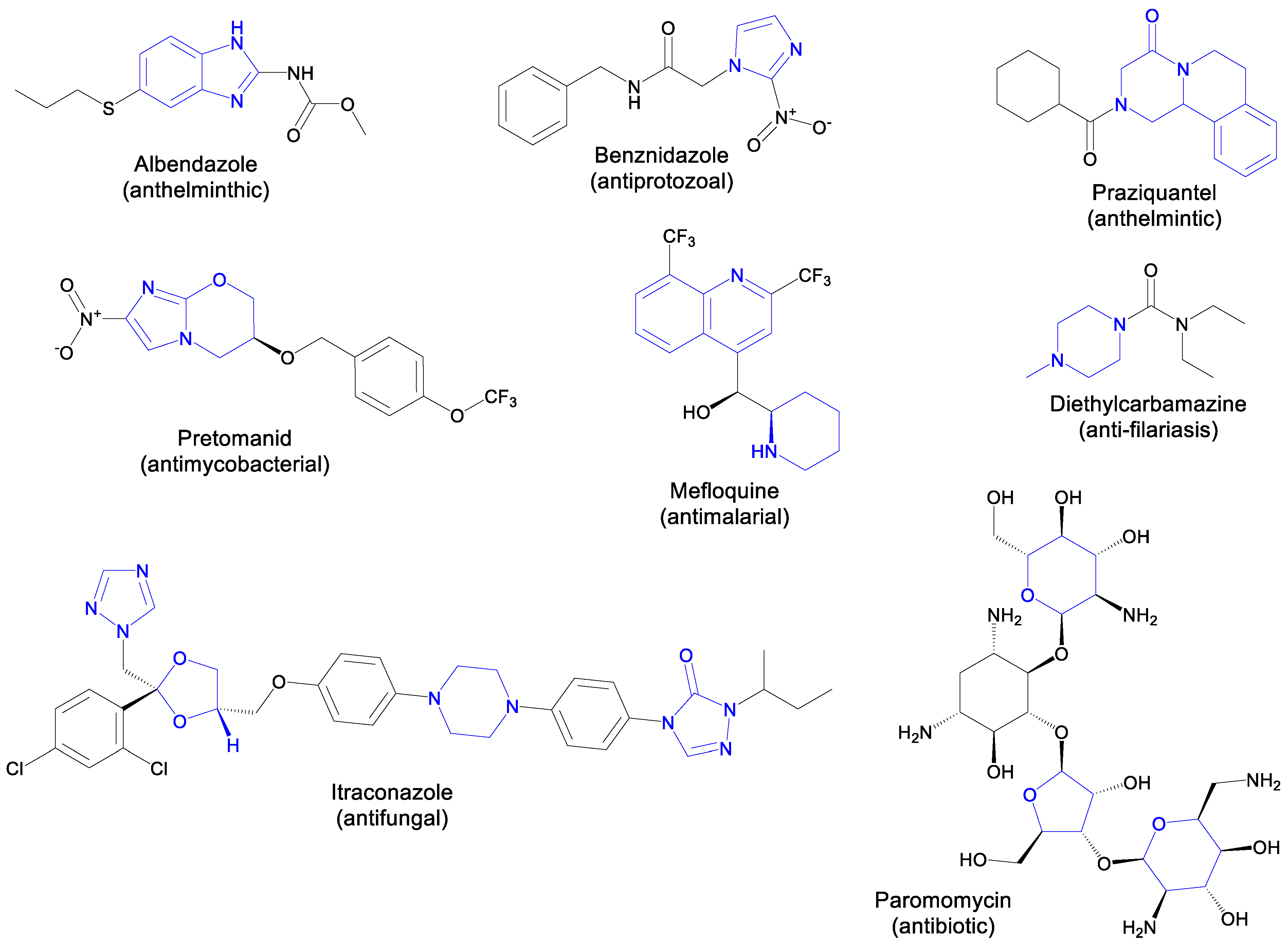
Figure 1. Representative heterocyclic drugs employed in the treatment of neglected diseases, with the heterocyclic ring shown in blue.
Reactions 06 00066 g001
Figure 2. General scheme for the synthesis of benzimidazoles using microwave irradiation and bismuth nitrate pentahydrate-catalyzed reaction [21].
Reactions 06 00066 g002
Figure 3. Ultrasound-assisted Hantzsch cyclization used for the construction of the 1,3-thiazole nucleus.
Reactions 06 00066 g003
Figure 4. General Synthetic Route for the Ultrasound-Assisted Preparation of Benzopyrazine Derivatives.
Reactions 06 00066 g004
Figure 5. Reaction scheme illustrating the green-chemistry-based strategy used for the synthesis of imidazoline derivatives.
Reactions 06 00066 g005
Figure 6. General scheme for the synthesis of 2,4-diphenylquinolines via a three-component reaction under ball-milling conditions (A), and chemical structures of the bioactive 2,4-diarylquinoline derivatives I, II, and III active against T. brucei brucei (B).
Reactions 06 00066 g006
Figure 7. Examples of drugs containing imidazole ring (shown in red) and 5-nitroimidazole derivative (shown in orange).
Reactions 06 00066 g007
Figure 8. General synthesis of imidazole derivatives via a multicomponent reaction under microwave irradiation using [BMIM][BF4] as catalyst (A), and structure of a representative tetra-substituted imidazole derivative exhibiting antiparasitic activity (B).
Reactions 06 00066 g008
Figure 9. Proposed formation of a deep eutectic solvent (DES) between CholineCl and IM via hydrogen-bond interactions.
Reactions 06 00066 g009
Figure 10. Deep eutectic solvent-mediated synthesis of a benzothiazole derivative under optimized conditions (A), and structure of derivative V along with its corresponding antiviral activity values (B).
Reactions 06 00066 g010
Table 1. Overview of Green Chemistry Principles in Heterocyclic Synthesis for NTD-Oriented Research.
Green Chemistry PrincipleExample of Application in Heterocyclic SynthesisAdvantagesPotential Relevance for NTD Drug DiscoveryRefs.
Energy Efficiency/Solvent-Free or Green Solvents (Microwave-Assisted Organic Synthesis—MAOS)Synthesis of benzimidazole derivatives using Bi(NO3)3·5H2O in aqueous medium under microwave irradiation.Fast reactions; high yields (up to 94%); use of water or solvent-free conditions; high atom economy; reduced waste; minimal purification.Access to benzimidazole scaffolds with activity against Chagas disease and leishmaniasis.[21,51,52,53,54,55,56,57,58,59]
Alternative Energy Sources/Mild Reaction Conditions (Ultrasound-Assisted Synthesis)Ultrasound-assisted synthesis of benzopyrazines in water without catalysts or hazardous solvents (~3 min).High yields (>92%); catalyst-free; eco-friendly solvent; mild conditions; broad substrate tolerance.Generates benzopyrazine derivatives with leishmanicidal and trypanocidal activity.[54,60,61,62]
Alternative Energy Sources/Ultrasound-Assisted Hantzsch CyclizationConstruction of phthalimido–thiazole derivatives via ultrasound-assisted Hantzsch cyclization at room temperature (1 h, 36–65% yield).Mild conditions; reduced energy input; shorter reaction times vs. thermal processes; avoids harsh reagents; suitable for scale-up.Derivatives showed potent trypanocidal and leishmanicidal activity; best hits comparable to benznidazole and showing favorable SI values.[62,63]
Ultrasound-Assisted, Catalyst-Free Heterocycle Formation in WaterEco-friendly synthesis of benzopyrazines in aqueous medium without additives, catalysts, or hazardous solvents; reaction completed in ~3 min.Very high yields (>92%); no catalyst or toxic solvent required; excellent functional-group tolerance; minimal waste.Benzopyrazine analogs exhibited activity against L. mexicana and T. cruzi, with potencies comparable to miltefosine and nifurtimox.[64]
Alternative Energy Sources/Comparative Use of Ultrasound vs. Microwave for Imidazoline ConstructionConstruction of imidazoline derivatives using ultrasound (20 min) or microwave (40 min), outperforming conventional heating (4–5 h).Major reduction in reaction time; high yields (60–80%); lower energy consumption; milder conditions; compatibility with diverse substituents.Several imidazolines displayed IC50 < 1 µg/mL against L. mexicana and promising activity against T. cruzi; some derivatives exhibited very high selectivity (SI > 100).[65]
Waste Prevention/Solvent-Free One-Pot Approaches (Mechanochemistry)Solvent-free mechanochemical synthesis of 2,4-diphenylquinolines via multicomponent reaction using FeCl3.Solvent-free; reduced energy consumption; fewer purification steps; high atom economy; efficient one-pot route.Quinoline scaffolds are key in drugs for malaria, TB, parasites, and viruses.[66,67,68,70]
Use of Alternative Solvents and Catalysts (Ionic Liquids)Multicomponent synthesis of tetrasubstituted imidazoles using [BMIM][BF4] under microwave irradiation and solvent-free conditions.Recyclable medium; high yields (84–89%); short time (10–12 min); metal-free/solvent-free possible.Imidazole-containing drugs treat HAT, Chagas disease, fungal infections, and other NTDs.[72,73,74,76];
Benign, Biodegradable Solvents (Deep Eutectic Solvents—DESs)DES-catalyzed synthesis of 2-phenylbenzothiazoles using CholineCl/Imidazole DES under solvent-free conditions.Biodegradable, low-cost medium; solvent-free; tunable catalytic environment; high yields; low environmental impact.Benzothiazole derivatives showed antiparasitic and antiviral activity relevant for NTD discovery.[78,79,80,81]
Disclaimer/Publisher’s Note: The statements, opinions and data contained in all publications are solely those of the individual author(s) and contributor(s) and not of MDPI and/or the editor(s). MDPI and/or the editor(s) disclaim responsibility for any injury to people or property resulting from any ideas, methods, instructions or products referred to in the content.