Review

Furo[3,2-b]pyrrole-5-carboxylate as a Rich Source of Fused Heterocycles: Study of Synthesis, Reactions, Biological Activity and Applications


by
Renata Gašparová
Department of Chemistry, Institute of Chemistry and Environmental Science, Faculty of Natural Sciences, University of Ss. Cyril and Methodius in Trnava, Nám. J. Herdu 2, SK-917 01 Trnava, Slovakia
Reactions 2025, 6(4), 67; https://doi.org/10.3390/reactions6040067
Submission received: 20 October 2025 / Revised: 26 November 2025 / Accepted: 28 November 2025 / Published: 2 December 2025

Abstract

Furo[3,2-b]pyrroles (FPs) are important members of the heteropentalene family. In particular, furo[3,2-b]pyrrole-5-carboxylates (FPcs) are commonly used as versatile building blocks for the synthesis of a large library of FP derivatives. Their structure with five potential reaction centres and an electron-rich character enables a wide range of transformations, from simple substitutions to multi-step reactions, yielding complex compounds with a furo[3,2-b]pyrrole scaffold. Many furo[3,2-b]pyrrole derivatives exhibit promising biological activity, while others have been employed in the construction of π-conjugated fused systems for optoelectronics. Efficient synthetic routes to furo[3,2-b]pyrrole derivatives are therefore of considerable interest. This review focuses on the synthetic methods leading to furo[3,2-b]pyrrole-5-carboxylates (FPcs), from the first successful attempts in the 1970s to recent approaches. Various methodologies are reported for the construction of complex molecules built from furo[3,2-b]pyrrole-5-carboxylates, emphasising their utility in the synthesis of fused heterocycles. This review also covers recent advances in screening for biological activity and applications such as fluorescent dyes.

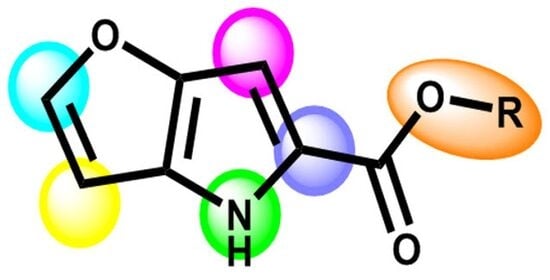
Graphical Abstract

1. Introduction

Heteropentalenes are a broad class of heterocyclic compounds comprising two fused five-membered rings containing at least two heteroatoms at a 1:1 ratio [1], with four possible modes of fusion [2]. Intensive research on heteropentalenes is driven by their properties, which lead to a range of applications [3]. Their importance is evident from their use in applied sciences, such as in organic optoelectronic devices [4] and semiconductors [5]. Additionally, they show potential for pharmacological use due to their notable biological activity [6,7]. Among the heteropentalenes, those with the [3,2-b] fusion pattern have been extensively studied and remain of significant interest, as they serve as key scaffolds for constructing π-conjugated fused systems for optoelectronic applications [8].
Many heteropentalenes exhibit significant biological activity [9,10]. The furo[3,2-b]pyrrole moiety, along with its thiophene and selenophene analogues, represents an important scaffold in many biologically active molecules. For example, an FP-derived carboxylic acid exhibited significant enzyme inhibitory activity, which is crucial for treating mental disorders [9]. Additionally, a natural tetrabrominated benzo[b]furo[3,2-b]pyrrole exhibited significant antimicrobial activity against resistant bacterial strains [11]. Furo[3,2-b]pyrrole derivatives have also been screened for analgesic and anti-inflammatory activity [12], and they also exhibit antibacterial [10,13] or anti-allergy [14] activities.
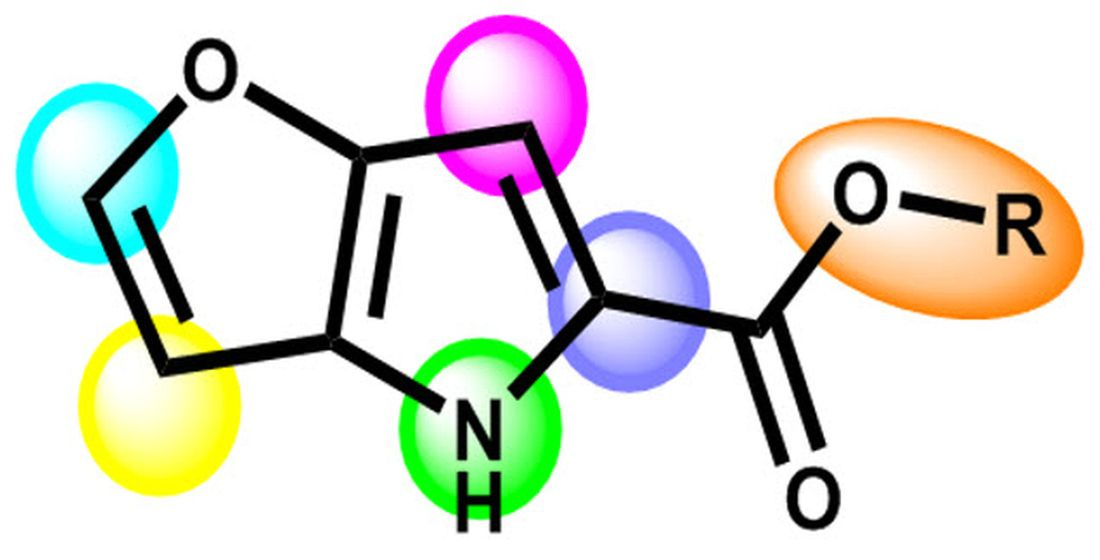
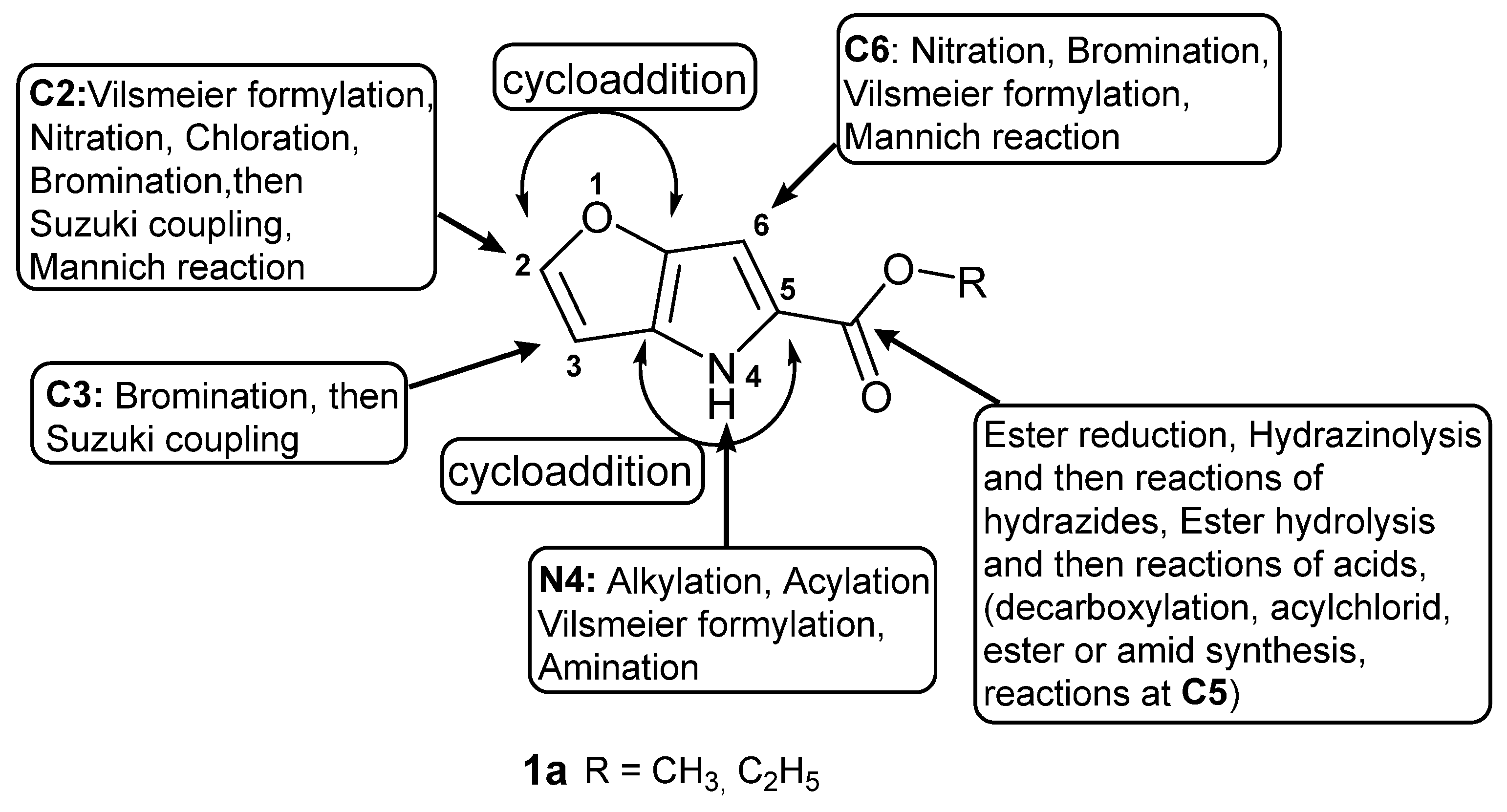
Since Hemetsberger and Knittel [15] first reported the convenient synthesis of heteropentalenes, the furo[3,2-b]pyrrole core has attracted considerable interest. Methyl or ethyl FPc 1a has become a versatile synthon for the synthesis of a wide array of FP derivatives. The FPc core enables multiple chemical reactions. Its five potential reactive sites facilitate the construction of a large library of heterocyclic compounds [16], as partially illustrated in Figure 1.
The reactivity of furo[3,2-b]pyrroles (FPc) enables the formation of diverse heterocyclic scaffolds. Their significant biological activities and π-conjugated properties allow for applications in both medicinal chemistry and organic electronics. While heteropentalenes have been extensively reviewed [2,3,4], furo[3,2-b]pyrrole derivatives received comparatively less attention in [4], which provides only a description of their synthesis via the Hemetsberger–Knittel process and a few selected reactions. This article presents a comprehensive overview of synthetic methods that lead to the FPc skeleton. It emphasises the synthetic versatility of FPc as a starting material for the synthesis of a wide variety of heterocycles and explores their applications and biological activity.

2. Synthesis of Furo[3,2-b]pyrrole-5-carboxylates

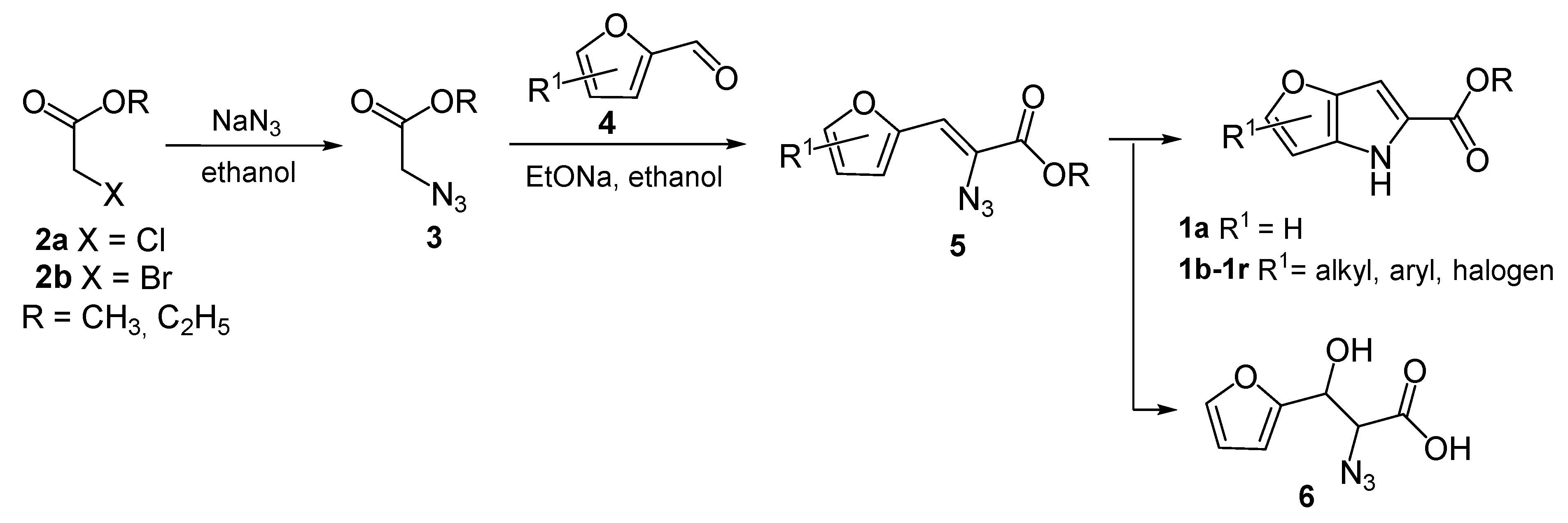
The three-step Hemetsberger–Knittel reaction [15] was originally developed for the synthesis of indoles [17,18] or their aza-analogues [19,20] and later became widely used for the synthesis of various fused nitrogen-containing heterocycles [21,22,23]. Among these, FPc 1a was successfully synthesised (Scheme 1). Initially, azidoacetates 3 were synthesised from 2-halogenated acetates 2 and sodium azide using various polar solvents [24,25,26].
In the second step, azidoacetate 3 undergoes condensation with furan-2-carbaldehyde 4a (R1 = H) to form 2-azido-3-(furan-2-yl)acrylate 5a in a low yield, which has been attributed [27] to decomposition of azidoacetate 3 under basic conditions. The starting aldehydes 4 may be mono- or disubstituted with various alkyl (4b), aryl (4c), or halogen (4d) substituents, resulting in a range of 2- or 3-monosubstituted or 2,3-disubstituted FPcs 1. It was briefly noted [27] that the yield of the desired product 5 was diminished by the formation of by-product 6 (Scheme 1) in a relatively high ratio (40%); however, its formation has not been confirmed in other studies.
The reaction sequence ends with the thermolysis of azide 5, which typically occurs in non-polar media [15,26,28,29] and forms the FP ring. A notable limitation of the Hemetsberger–Knittel reaction is the instability of azides 3 and 5 and the often low yields of intermediates [27].
The use of organometallic catalytic systems offers a novel approach to the final step of Hemetsberger’s method for the formation of indoles and other fused pyrroles. Three studies have described the synthesis of FPcs 1. Stokes et al. [30] reported the conversion of azidoacrylate 5 to FPc 1a in a good yield using rhodium(II) perfluorobutyrate in toluene.
Das et al. [31] recently explored the application of iron(tetraporphyriinato)chloride as a catalyst for the amination reaction to synthesise various N-heterocyclic scaffolds, including 1a. The catalyst Fe(TPP)Cl, zinc dust (as the reductant), and azide 5 were heated in dry benzene, affording FPc 1a.
Baykal and Plietker [32] reported nucleophilic complex Bu4N[Fe(CO)3(NO)](TBA[Fe]) as a catalyst for transforming azidoacrylates into indoles in dry chloroform. These reactions can be performed under thermal conditions (24 h) or efficiently under microwave irradiation (1 h) with no significant impact on yield or selectivity. Using this method, 2,3-dimethyl-derived FPc 1b was obtained.
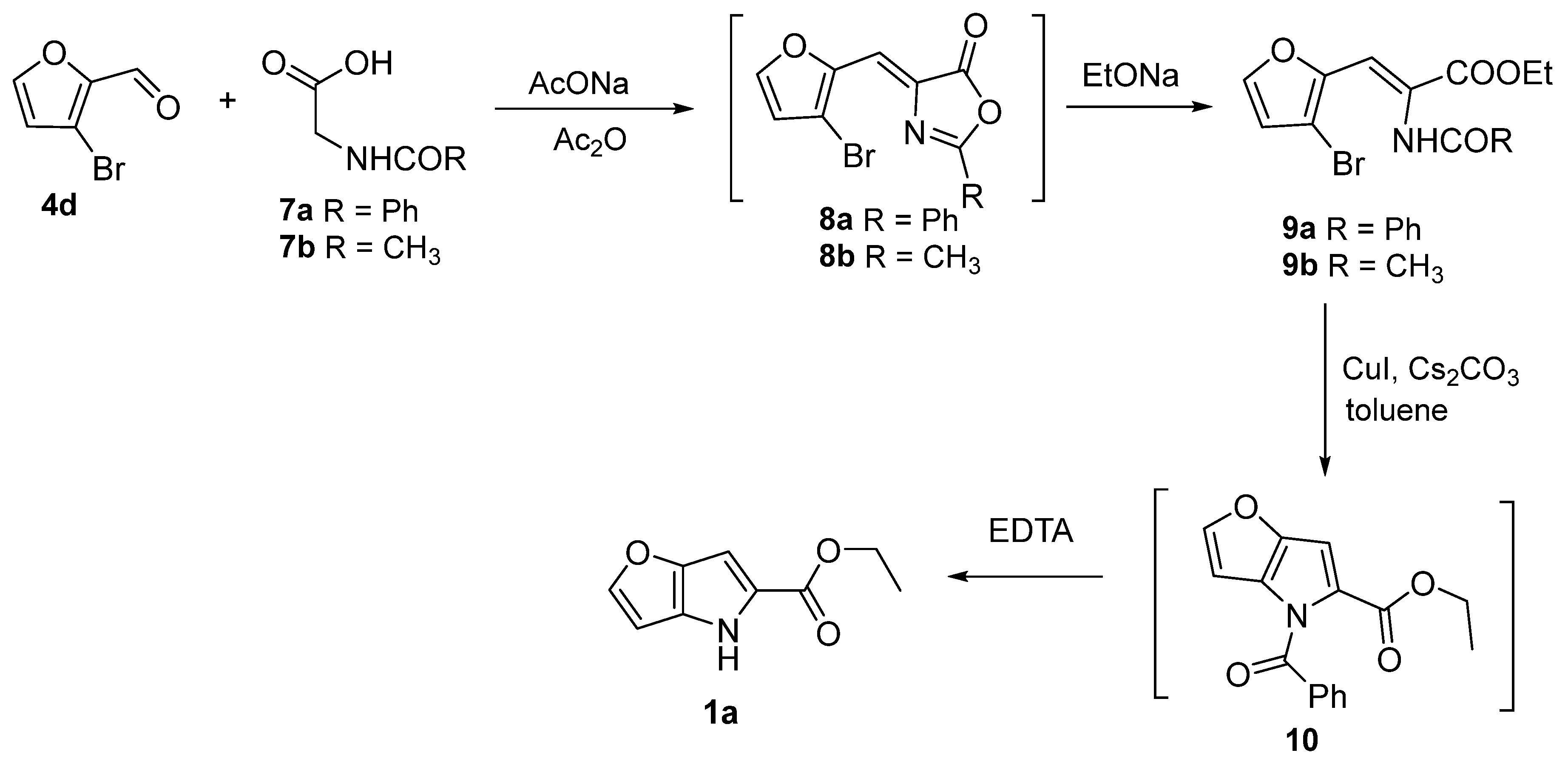
Zhao et al. [33] developed a non-azide route to compound 1a (Scheme 2), involving the Erlenmeyer-Plöchl azlactone reaction of 3-bromo-2-furaldehyde 4d with hippuric acid 7a in toluene-acetic anhydride/sodium acetate to form azlactone 8a.
Ring opening with sodium ethoxide furnished a key intermediate 9a. The pyrrole ring of 10 was formed under ligand-free Cu(I) amination conditions (CuI, CsCO3) in toluene. The benzoyl group deprotection and removal of residual copper catalyst using ethylenediamine (EDTA) yielded compound 1a. Using acetylglycine 7b was less effective due to the moisture sensitivity of azlactone 8b and challenging purification of 9b.
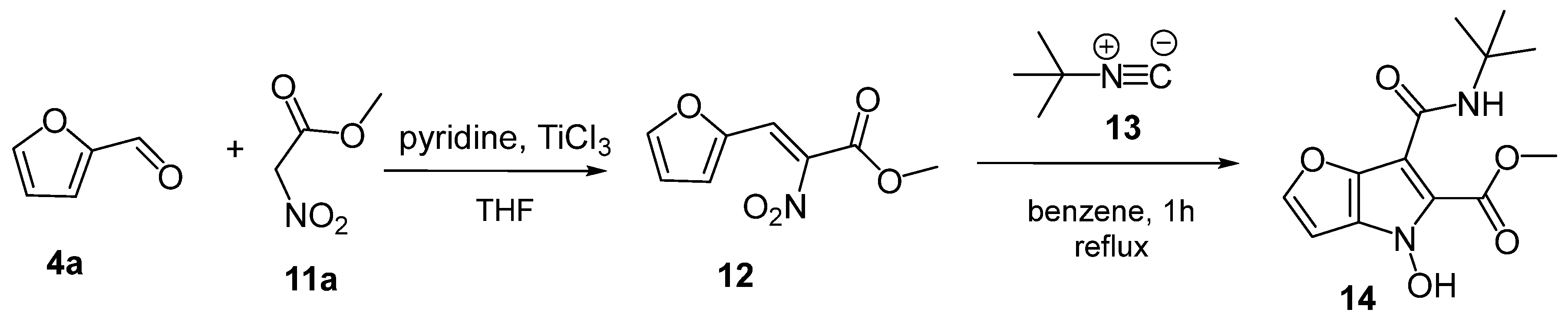
Foucaud et al. [34] synthesised methyl 4-hydroxy-6-[(t-butylamino)carbonyl]-derived FPc 14 via a [1 + 4] cycloaddition of t-butylisocyanide 13 with methyl 3-(furan-2-yl)-2-nitropropenoate 12 in benzene (Scheme 3). Intermediate 12 was synthesised using Lehnert’s procedure [35] from aldehyde 4a and methyl 2-nitroacetate 11a in tetrahydrofuran/TiCl3/CCl4 with N-methylmorpholine or pyridine.
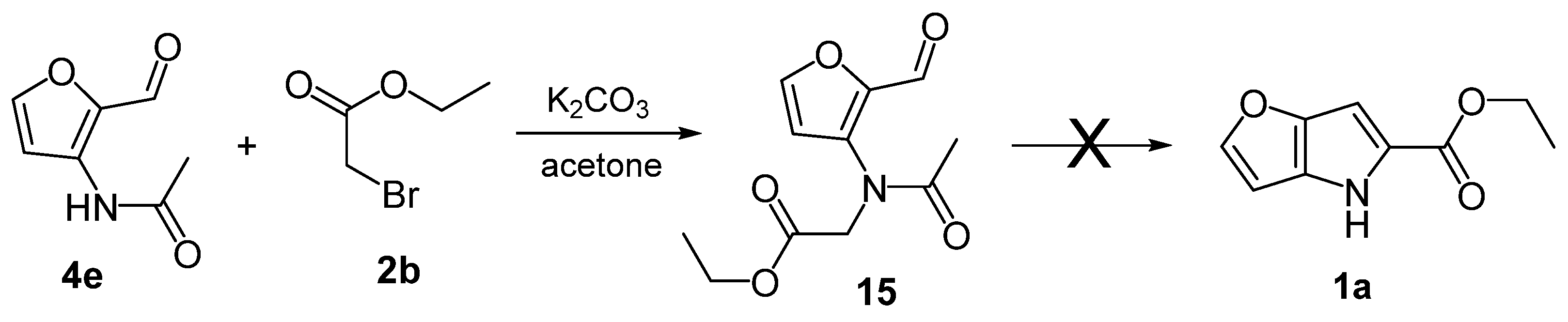
Soth et al. [36] reported an unsuccessful attempt to synthesise FPc 1a via N-alkylation of 3-acetamidofuran-2-carbaldehyde 4e with bromoacetate 2b. The method is limited by the low yield of the key glycinate 15 and its subsequent decomposition during cyclisation in sodium ethanolate. Soth’s approach is suitable for the synthesis of thieno- and selenopheno[3,2-b]pyrrole analogues, for which high yields were achieved (Scheme 4).

3. Properties of Furo[3,2-b]pyrrole-5-carboxylate

Heteropentalenes are aromatic owing to their 10π-electron system with a planar bicyclic core and the involvement of heteroatom electron pairs in conjugation [37]. Cyrański et al. [38] studied the aromaticity of [3,2-b] and [2,3-b] FPcs by applying X-ray-determined molecular geometry together with ab initio B3LYP/6-311+G** and RHF/6-311+G** calculations. Two models were used: HOMA (Harmonic Oscillator Model of Aromaticity) and NICS (Nucleus Independent Chemical Shift). The study found that the [3,2-b] isomers are more aromatic than the [2,3-b] isomers. The topological nature of molecules is the primary factor, and the stability and aromaticity of these molecules strongly depend on substituent effects. The nature of the neighbouring ring atom has no influence on the aromaticity of the ring.
X-Ray diffraction studies showed that the furan and pyrrole rings of FPc 1a are nearly coplanar (dihedral angle of 1.0(2)°). The molecules are linked by intermolecular hydrogen bonds between the N-4 pyrrole proton and the C-5 carbonyl oxygen atom [39].
A DC polarographic assay using α-lipoic acid (D,L-6,8-thioctic acid) was employed to assess the potential carcinogenicity of FP derivatives (2- and/or 3-alkyl- or aryl-substituted FPcs and 5-carboxylic acids). The results indicated that all FP derivatives exhibit only negligible carcinogenic potential under the conditions used [40].

4. Reactions of Furo[3,2-b]pyrrole-5-carboxylates

4.1. Alkylation and Related Reactions at N-4

Alkyl substituents can be readily introduced at the N-4 nitrogen of the FP core using alkyl halides under efficient phase-transfer catalysis, giving a range of N-alkyl-FPcs 16a16r (Scheme 5). Phase-transfer catalysts, such as ammonium salts or crown ethers are used. Substitution reactions at N-4 are not limited to alkyl halides. Acrylonitrile, as well as aromatic sulfonyl chlorides and aromatic fluorides, can be employed, affording the corresponding product 16, as illustrated by entries 6, 8, 9, and 13 in Table 1. Reactions at N-4 are summarised in Table 1.
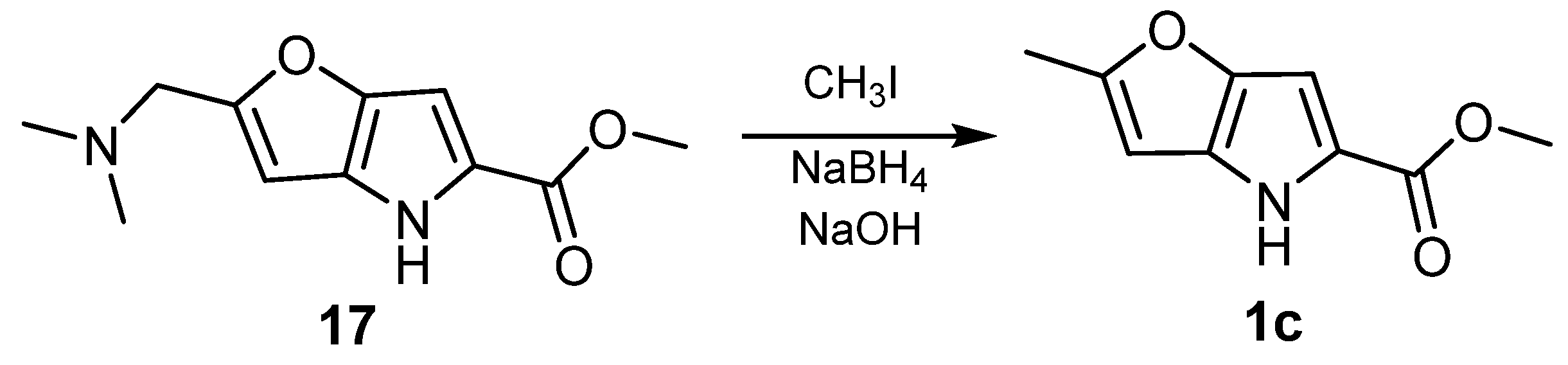
Direct alkylation of the furo[3,2-b]pyrrole core at the C-2, C-3, or C-6 positions via electrophilic substitution has not been reported. An alkyl or aryl substituent is typically introduced using the appropriate furan-2-carbaldehyde 4b or 4c in the Hemetsberger–Knittel method (Scheme 1). Arylation of the starting aldehyde 4a can be achieved either via the Meerwein reaction with aryldiazonium salts [56] or by reaction of 4a with aryl halides under palladium(II) chloride catalysis [57]. Alkyl- and aryl-substituted aldehydes 4 can also be accessed through the Suzuki coupling of halogenated furan-2-carbaldehydes 4d with an appropriate arylboronic acid [8,16,58]. However, a methyl substituent can be attached at C-2 via the Mannich reaction. 2-Methyl-substituted FPc 1c was obtained in moderate yield from the N,N-dimethylaminomethyl-derived FPc 17 by treatment with methyl iodide, followed by NaBH4 in methanol [58], as illustrated in Scheme 6.
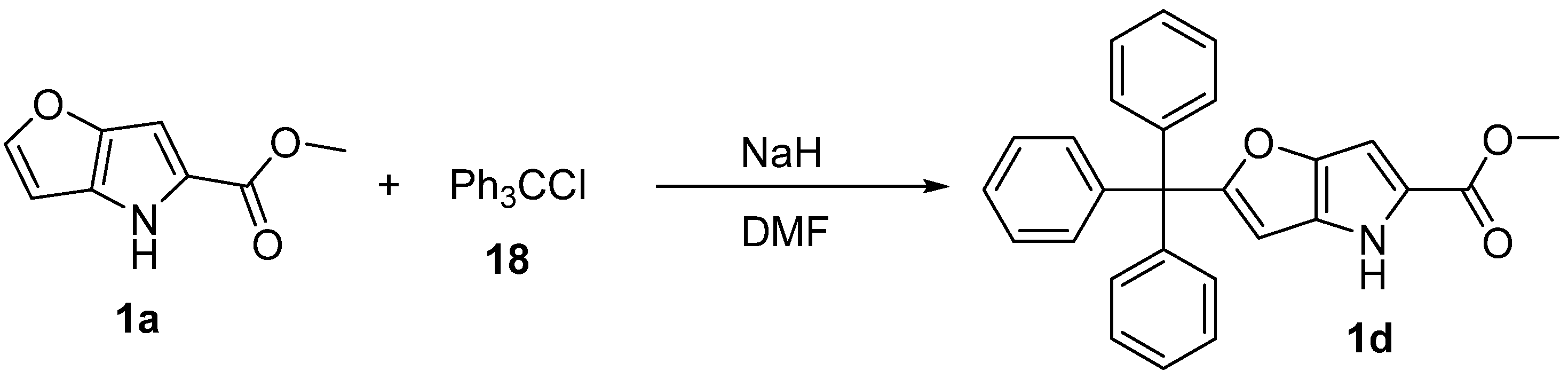
The unexpected alkylation occurred at C-2 rather than at N-4 when 1a was treated with triphenylmethyl chloride 18 in dimethylformamide and sodium hydride, resulting in the formation of 2-triphenylmethyl-FPc 1d in high yield (Scheme 7). The authors [10] explained the formation of 1d by the steric hindrance of the adjacent ester group and the furan ring, which prevents the direct interaction between the bulky tritylium ion and the initially formed pyrrole N-anion. The relatively stable tritylium ion moves towards the most electron-rich C-2 carbon due to the suitable mesomerism and a sterically more advantageous position.

4.2. Acylation and Subsequent Reactions

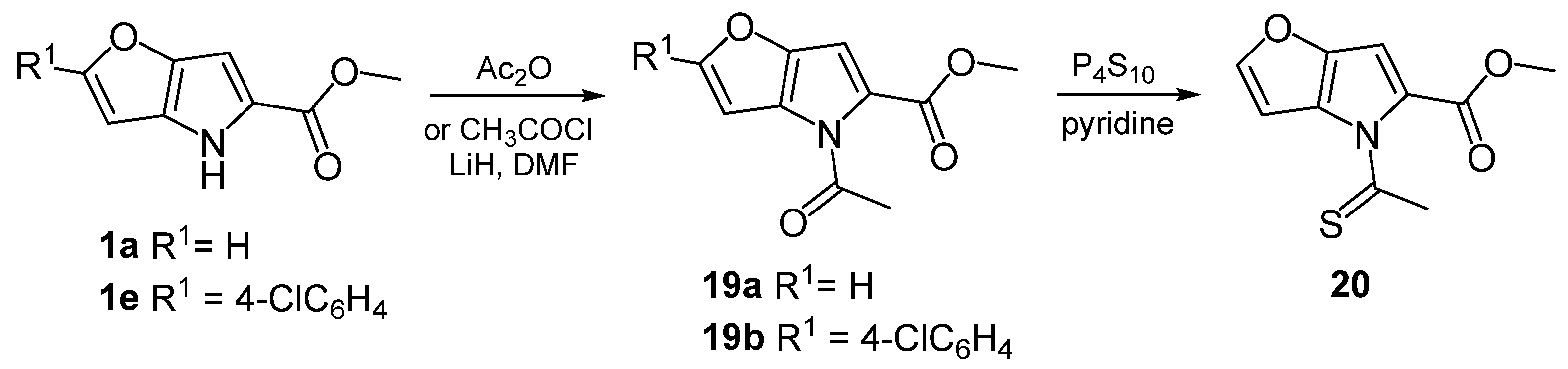
Acylation of FPcs is limited to the introduction of an acetyl substituent at N-4. N-Acetylfuro[3,2-b]pyrrole-5-carboxylates 19 were synthesised either by reacting FPcs 1a and 1e with acetyl chloride and lithium hydride (LiH) in dimethylformamide [59], or by heating them in acetic anhydride [60,61] (Scheme 8). The resulting 4-acetyl group of 19a was converted to a thioacetyl group by reaction with phosphorus pentasulfide in pyridine. 4-Ethanethioyl-FPc 20 was obtained in good yield [13] (Scheme 8).

4.3. Mannich Reaction

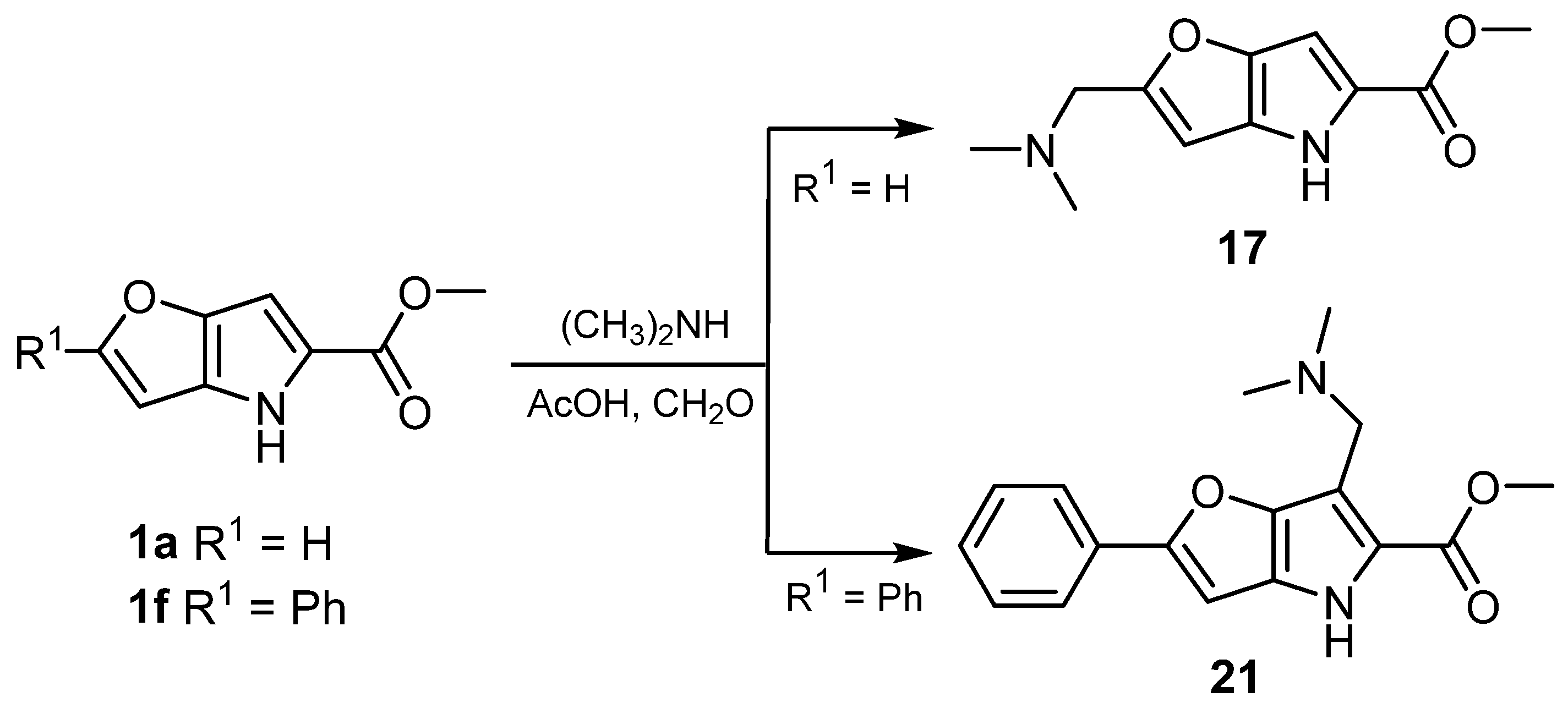
The Mannich reaction was studied using either unsubstituted or 2-phenyl-substituted FPcs 1a and 1f. The reaction was directed towards C-2 or C-6 carbons, with a preference for C-2. When FPc 1a (with an unoccupied C-2 position) is used, the Mannich reaction with N,N-dimethylamine and formaldehyde produced the C-2 substituted compound 17 [58]. When 2-phenyl-FPc 1f was employed, electrophilic substitution occurred at the C-6 carbon, yielding FPc 21. Both FPcs 17 and 21 were obtained in low yields [61] (Scheme 9).

4.4. Formylation and Subsequent Reactions

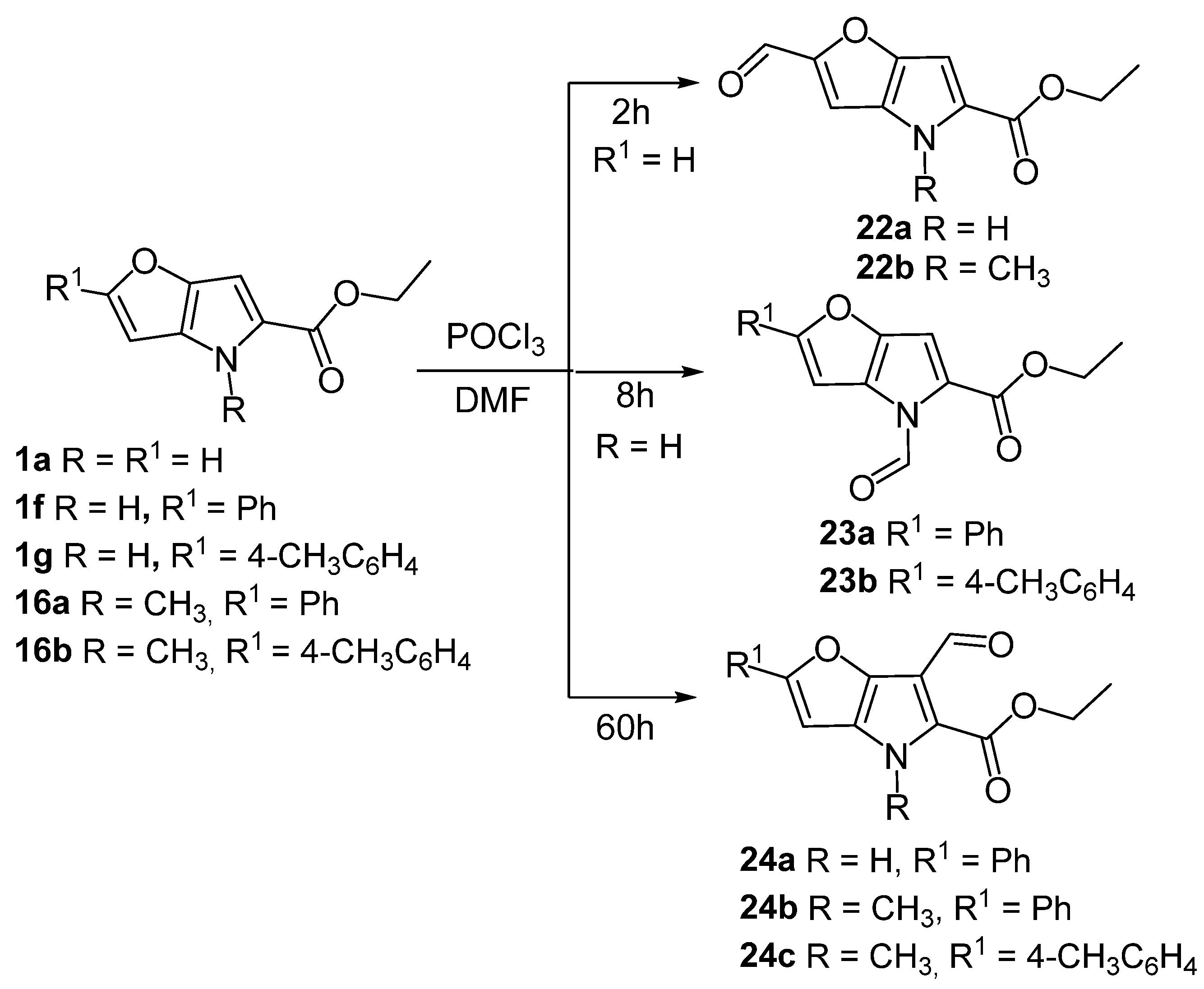
Krutošíková et al. [61] investigated the Vilsmeier–Haack formylation of FPcs 1 and 4-methyl-FPcs 16. Formylation occurs preferentially at the C-2 position, followed by N-4, and finally at C-6, giving the corresponding aldehydes 2224 in varying yields (Scheme 10).
Carboxylate 1a and its 4-methyl analogue 16a produced the 2-formylated compounds 22a and 22b after 2 h of heating at 60 °C. If position C-2 was occupied (as in 1f and 1g), the 4-formylated products 23a and 23b were obtained after 8 h of heating at 80 °C. To access C-6-formylated FPcs 24a24c, it was necessary to extend the reaction time to 60 h for the formylation of FPcs 1f, 17a, and 17b.
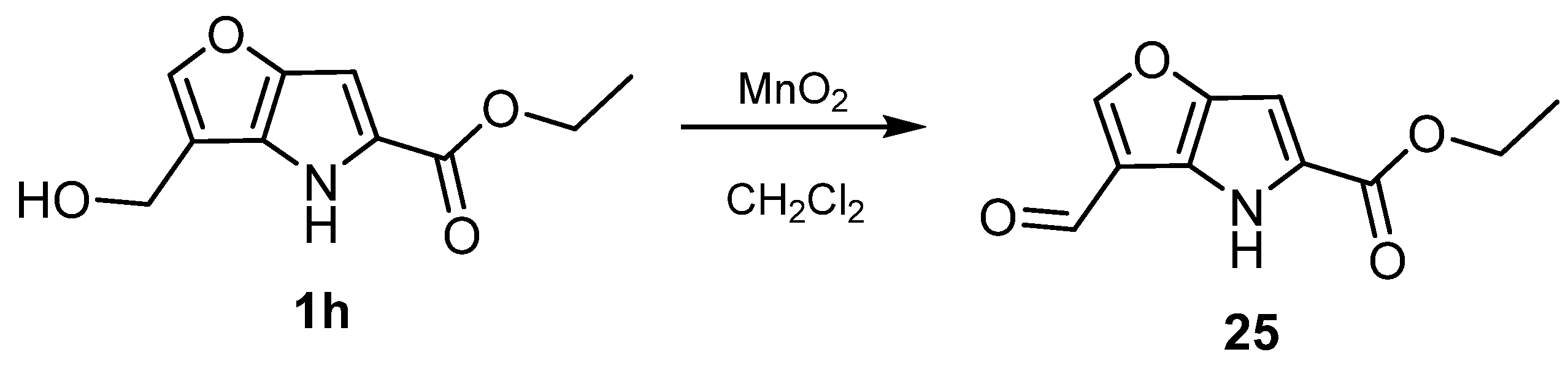
Vilsmeier–Haack formylation does not directly target the C-3 carbon of the FPc core [61]. However, 3-formyl-FPc 25 can be obtained in high yield through oxidation of 3-hydroxymethyl-FPc 1h using manganese dioxide (MnO2) in dichloromethane at room temperature overnight [58] (Scheme 11).
For the benzo[b]furo[3,2-b]pyrrole derivative 26, Vilsmeier formylation proceeds regioselectively at the pyrrole ring, yielding the 3-formylated product 27. The adjacent formyl and ester groups in compound 27 enable the synthesis of a new fused heterocycle 28 via reaction with hydrazine in ethanol [60] (Scheme 12).
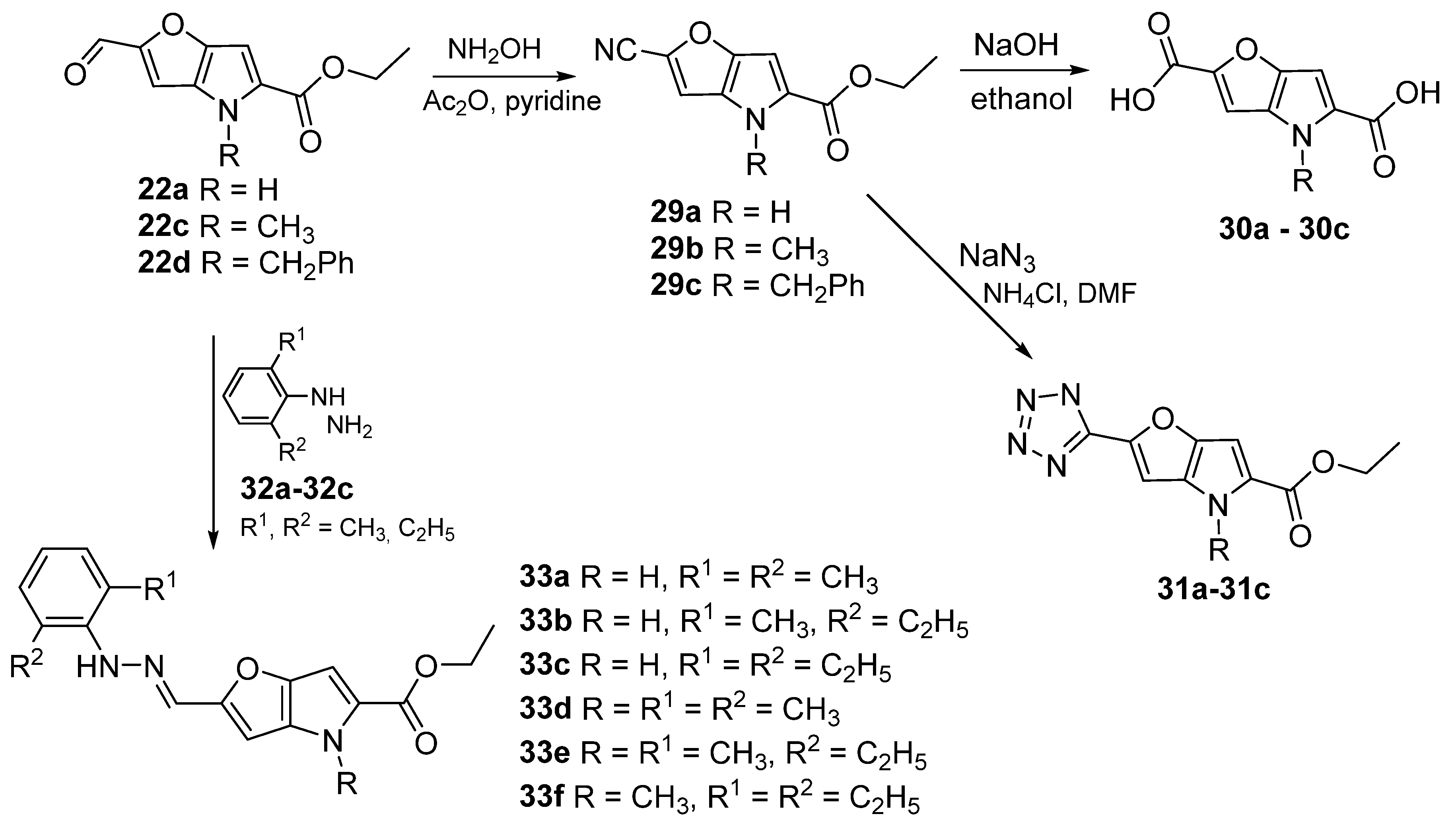
The reaction of aldehydes 22 with hydroxylamine hydrochloride in acetic anhydride and pyridine afforded the corresponding 2-cyano-substituted FPc 29 (Scheme 13). The 2-cyano group enables two subsequent transformations of 29. Firstly, alkaline hydrolysis of both -CN and -COOEt groups of 29 with NaOH in ethanol produced the 2,5-dicarboxylic acid 30 in good yields. Alternatively, the reaction of 29 with sodium azide and ammonium chloride in dimethylformamide led to the formation of tetrazoles 31. Additionally, the 2-formyl group of 22 was utilised to form hydrazones 33 in high yields by a reaction with phenylhydrazines 32 [62].
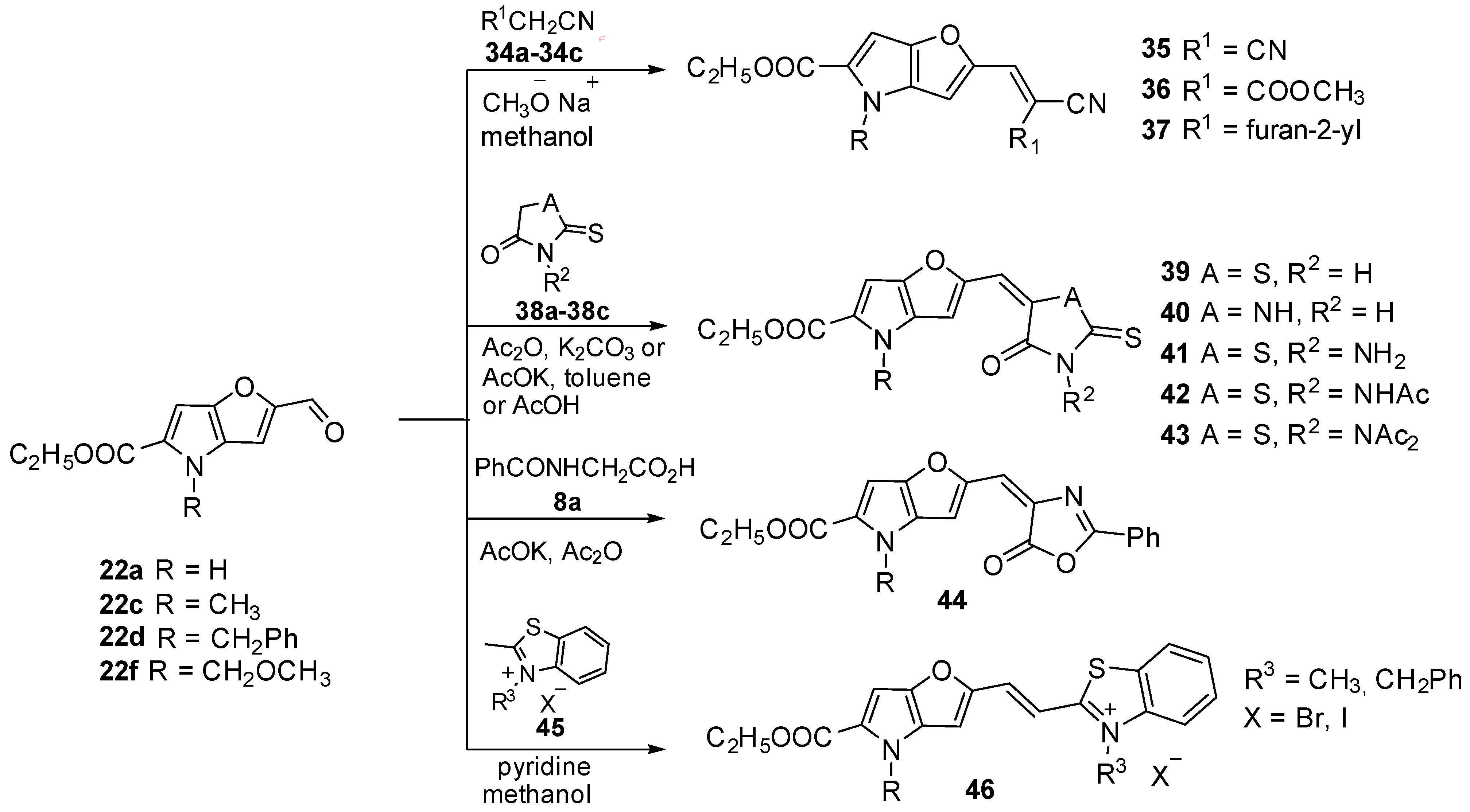
FP-derived aldehyde 22 can undergo Knoevenagel-type condensations with a wide spectrum of active methylene [43,63,64,65] or methyl [66] compounds under either conventional or microwave heating (Scheme 14).
The reactions of 2-formyl-FPcs 22 with substituted acetonitriles (malonodinitrile 34a, cyanoacetate 34b, and 2-furylacetonitrile 34c) were carried out in methanol with sodium methoxide as a catalyst. The corresponding products 3537 were obtained in high yields [63,64].
Five-membered heterocycles with active methylene units (rhodanine 38a, thiohydantoin 38b, and 3-aminorhodanine 38c) underwent Knoevenagel condensations with aldehyde 22a and its 4-substituted analogues 22c22f (R = CH3, CH2Ph, CH2OCH3) underwent both classical heating and microwave irradiation. Although the yields of resulting products 3943 were comparable, the reactions under microwave conditions were considerably faster. Condensations were performed under base catalysis (potassium acetate or carbonate) in various solvents (acetic acid, acetic anhydride, toluene, or a toluene/dimethylformamide mixture).
Condensations of aldehydes 22 with rhodanine 38a in acetic acid/potassium acetate furnished FPcs 39, and analogously, FPcs 40ad were formed by reacting 22 with thiohydantoin 38b in toluene and dimethylformamide using potassium acetate as a catalyst [43] (Scheme 14). The reactions of 22 with 3-aminorhodanine 38c were studied under various conditions. Using potassium acetate in toluene yielded FPcs 41 (R2 = NH2). Using acetic anhydride/potassium carbonate afforded the diacetylated compounds 43 (R2 = NAc2). Finally, using acetic acid as the solvent under “classical” conditions, furnished the N-monoacetylated compound 42 (R2 = NHAc) [43] (Scheme 14).
The Erlenmeyer condensation of aldehydes 22 with hippuric acid 8a was carried out in acetic anhydride/potassium acetate. The condensation products 44 were obtained after 30–60 min of classical reflux or after 1–2 min of microwave irradiation [65] (Scheme 14). 3-Methyl- and 3-benzyl-2-methylbenzothiazolium salts 45 underwent condensation reactions with aldehydes 22 in methanol using pyridine as a catalyst to form salts 46 [66] (Scheme 14).
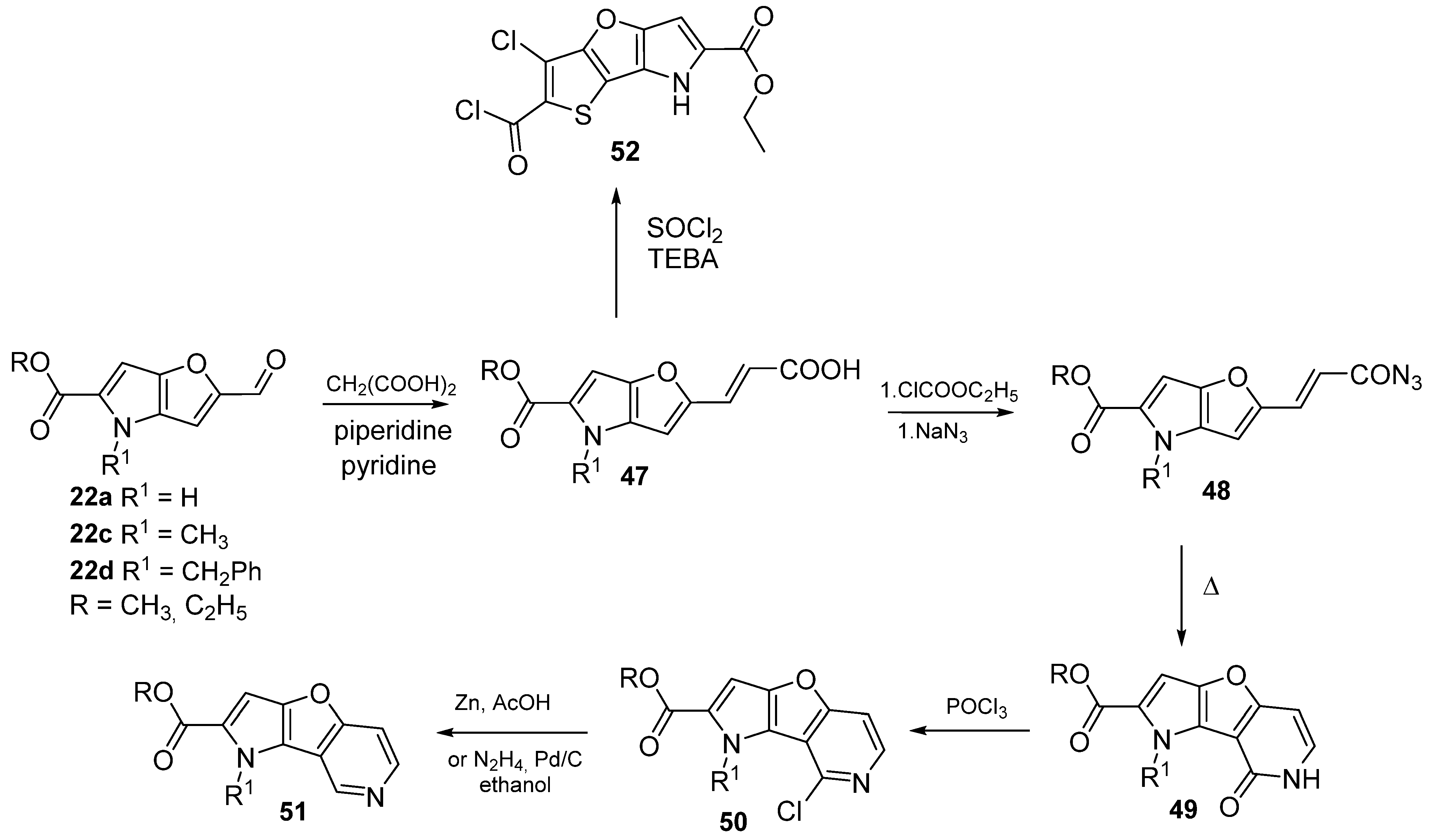
The Doebner condensation of aldehydes 22c and 22d [67] with malonic acid in pyridine and piperidine afforded FPc-derived propenoic acids 47, which were subsequently converted into the tricyclic compounds 51 or 52 (Scheme 15). Pyrrolo[2′,3′:4,5]furo[3,2-c]pyridines 51 were formed in four steps. First, acids 47 were transformed into azides 48 using ethyl chloroformate/sodium azide. Thermal cyclisation of 48 in tributylamine/diphenyl ether resulted in 5:5:6 tricyclic systems 49. In the next step, the chloroderivatives 50 were obtained by reacting 49 with phosphorus oxychloride. Reduction of 50 using zinc in acetic acid gave the desired products 51 in moderate yields, whereas a more efficient dehalogenation of 50a to 51a was achieved using hydrazine in absolute ethanol with the palladium on carbon (Pd/C) as a catalyst [68] (Scheme 15). The synthesis of thieno[2′,3′:4,5]furo[3,2-b]pyrrole derivative 52 from propenoic acid 47a was notable for the mutually fused furan, thiophene, and pyrrole rings, despite a low yield (14%). The reaction involved heating acid 47a with an excess of thionyl chloride and triethylbenzylammonium chloride (TEBA) [69] (Scheme 15).
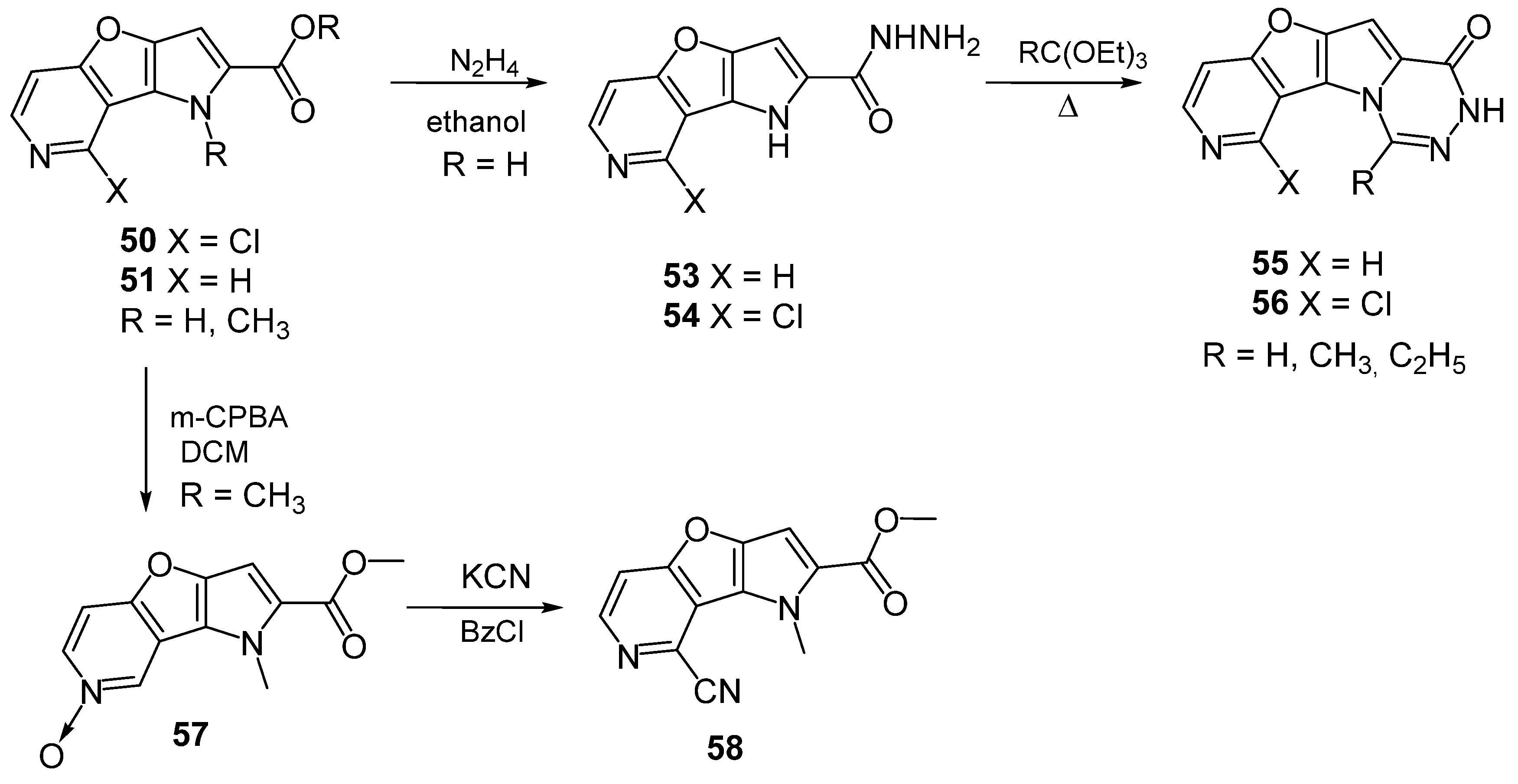
Hydrazinolysis of esters 50 and 51 afforded carbohydrazides 53 and 54, which subsequently underwent ring closure using orthoesters in dimethylformamide, yielding 1,2,4-triazinones 55 and 56 [68] (Scheme 16).
Ester 51 served as a precursor to compound 58 [68] via the N-oxide 57 intermediate, which was formed from 51 by oxidation with m-CPBA (m-chloroperbenzoic acid) in dichloromethane. The pyridine ring of 57 was modified through simultaneous N-deoxygenation and α-cyanation by treatment with benzoyl chloride and potassium cyanide in a biphasic water/dichloromethane system. The cyano-substituted product 58 was obtained in good yield (Scheme 16).
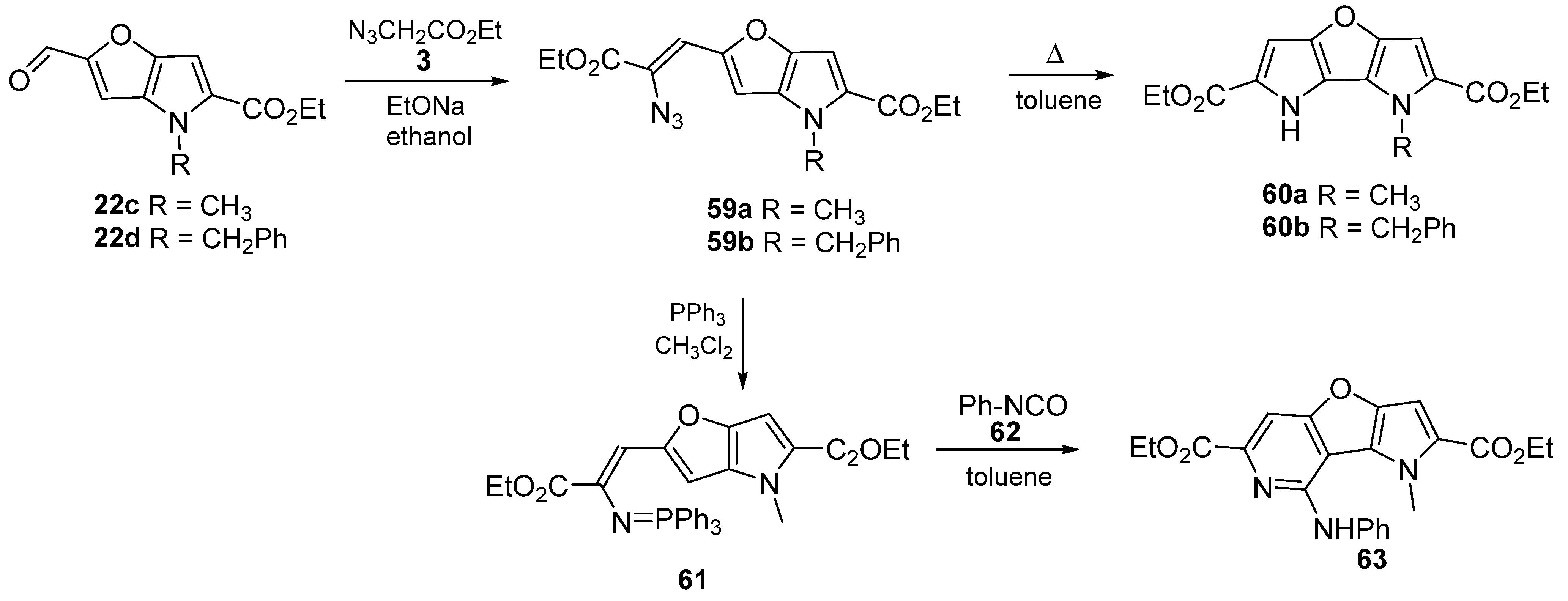
The 2-formyl group of FPcs 22 allows the formation of azide 59, analogous to that described in Scheme 1. Azides 59 were then processed via two pathways [29]. The first followed the Hemetsberger–Knittel procedure, affording tricyclic diester 60. The second pathway involved treating azide 59a with triphenylphosphine in dry dichloromethane. The resulting iminophosphorane 61 was subsequently transformed into pyrrolo[2′,3′:4,5]furo[3,2-c]pyridine 63 by heating with phenyl isocyanate 62 in toluene (Scheme 17).
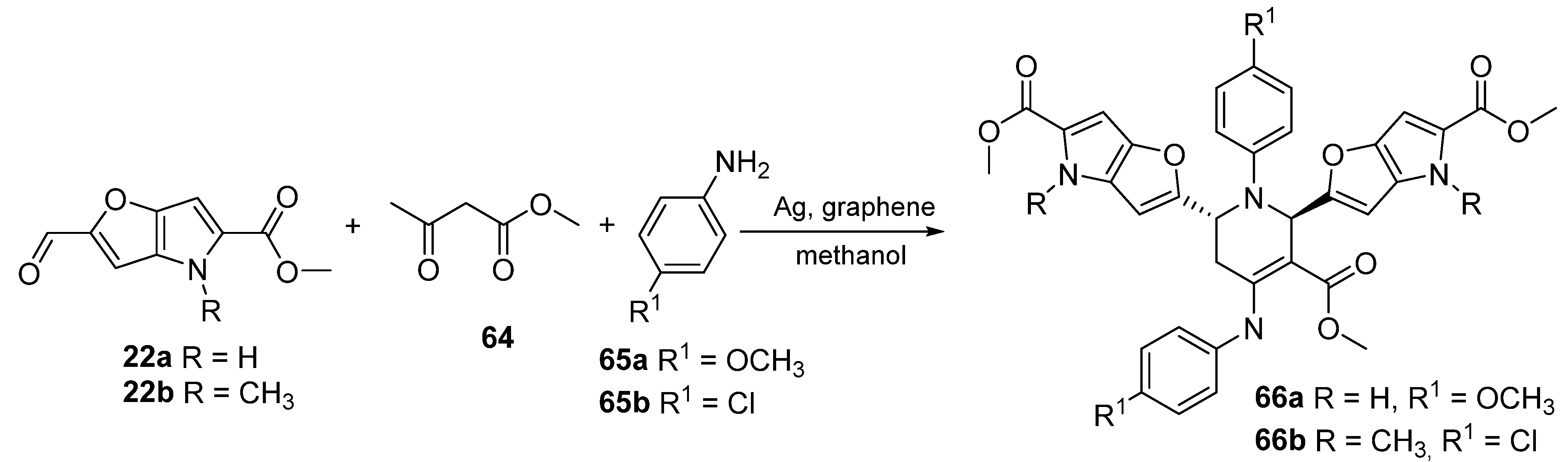
The one pot synthesis of complex piperidine derivatives under ultrasonic irradiation was described by Dandia et al. [70]. A silver nanoparticle (AgNP)-containing reduced graphene oxide (rGO) composite catalyst proved most effective. By sonicating a mixture of aromatic aldehydes, methyl acetoacetate 64, aromatic amines 65, and an AgNPs/rGO nanocomposite in methanol at room temperature, the corresponding piperidines were obtained. Two FPc-derived aldehydes 22 were employed, yielding two piperidine derivatives 66 containing FPc structural units in high yields (Scheme 18).

4.5. Nitration and Subsequent Reactions

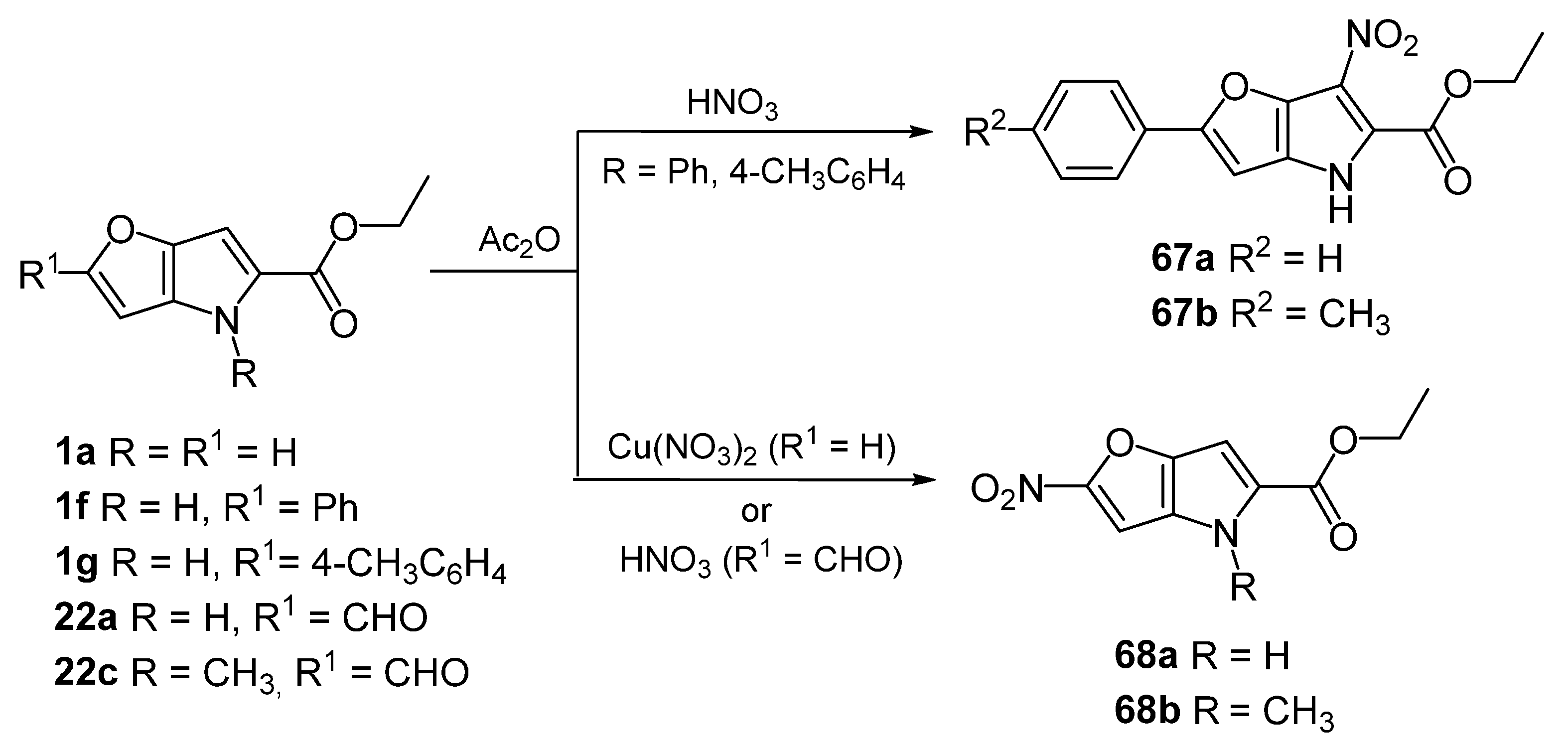
Krutošíková et al. [61] found that the position of the nitro group on the FPc core under standard nitration conditions (nitric acid/acetic anhydride) depends on the structure of the starting FPcs (1a, 1f1g, and aldehydes 22a and 22c). 2-Aryl-FPcs 1f and 1g underwent nitration at C-6, forming 6-nitro-FPcs 67, whereas nitration of aldehydes 22 led to substitution of the 2-formyl group, producing 2-nitro-FPcs 68, both in low yields. Alternatively, the use of copper(II)nitrate in acetic anhydride enables the synthesis of 2-nitro-FPc 68a when the C-2 carbon of FPc (1a) is unoccupied [71] (Scheme 19).

4.6. N-Amination and Subsequent Reactions

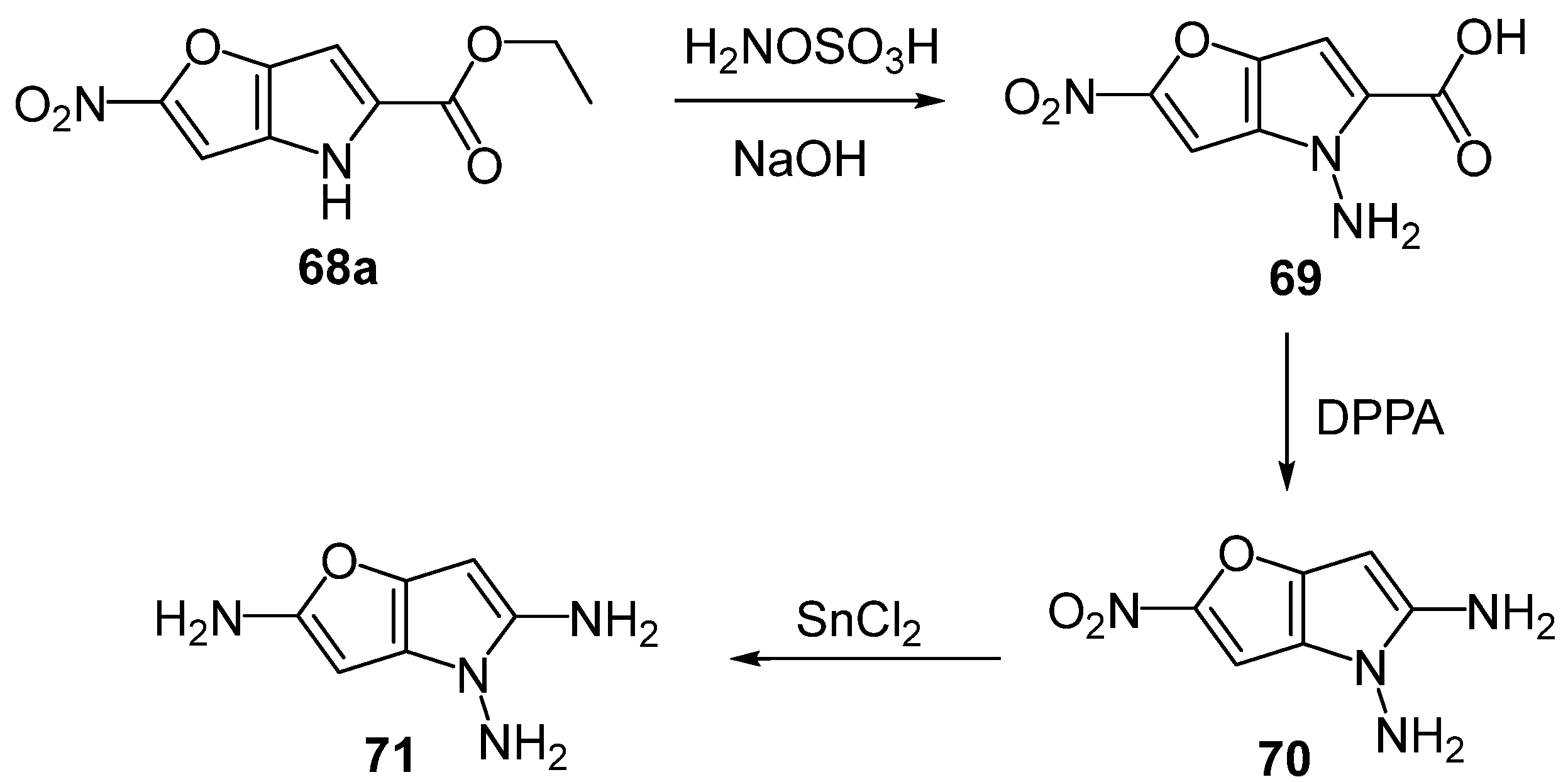
2-Nitro-FPc 68a underwent amination at N-4 by using hydroxylamine-O-sulfonic acid in NaOH, with simultaneous ester hydrolysis affording acid 69. The Curtius rearrangement of acid 69 with DPPA (diphenylphosphoryl azide) gave amine 70. Final reduction of the 2-nitro group of 70 yielded 2,4,5-triamino-FP 71 [71] (Scheme 20).

4.7. Halogenation and Subsequent Reactions

Incorporation of a halogen substituent into the FPc core is typically achieved by using suitable 4- or 5-halogen-substituted furan-2-carbaldehydes 4 in the Hemetsberger–Knittel process [9,16,44] (Scheme 1).
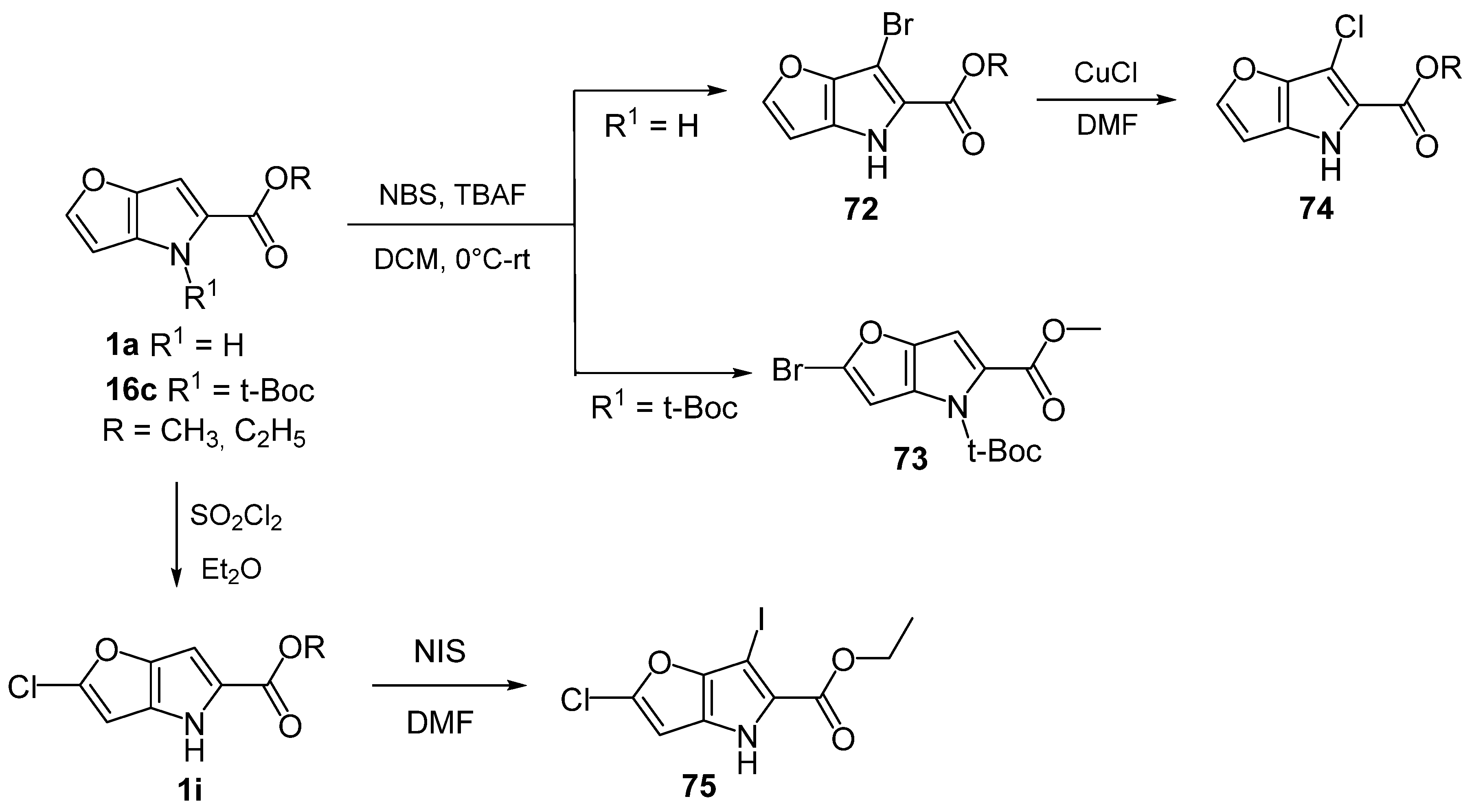
Direct halogenation (chlorination, bromination, or iodination) of FPc 1a can be directed to the C-2, C-3, and/or C-6 carbons. Chlorination of 1a with sulfuryl chloride in diethylether produced 2-chloro-FPc 1i [72] (Scheme 21). The regioselectivity of bromination using N-bromosuccinimide (NBS) and tetrabutylammonium fluoride (TBAF) depends on the FPcs employed: 6-Bromo-FPc 72 was obtained from 1a, whereas bromination of 4-(t-boc)-FPc 16c occurred at the C-2, yielding 2-bromo-4-(t-boc)-FPc 73 (Scheme 21).
Subsequent reactions of halogenated FPcs may involve either halogen exchange or the introduction of an additional halogen substituent. 6-Bromo-FPc 72 was converted into the 6-chloro-derivative 74 using CuCl and dimethylformamide [72]. Iodination of 1i with N-iodosuccinimide in dimethylformamide produced 2-chloro-6-iodo-FPc 75 [73] (Scheme 21).
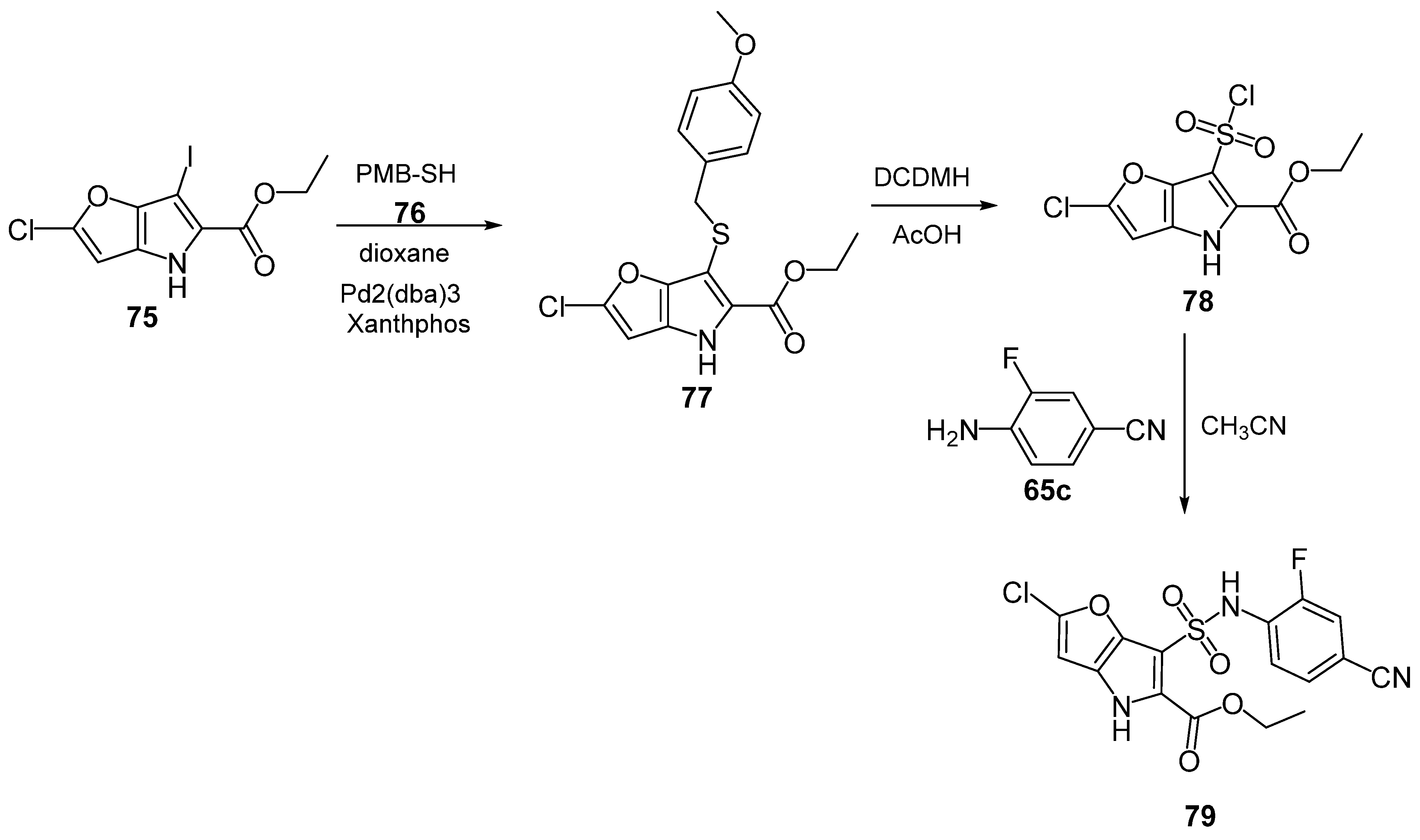
The iodine substituent of dihalogenated FPc 75 can be transformed into sulfonamide 79. The reaction pathway begins with the reaction of 75 with 4-methoxy-α-toluenethiol (PMB-SH) 76, yielding sulphide 77. This step was carried out using (tris(dibenzylideneacetone)dipalladium(0) (Pd2(dba)3), Xanthphos (9,9-Dimethyl-9H-xanthene-4,5-diyl)bis(diphenylphosphane)) in dioxane. The subsequent steps involved treatment of 77 with 2,4-dichloro-5,5-dimethylhydantoin (DCDMH) in acetic acid, followed by reaction with aniline 65c in acetonitrile. The desired sulfonamide 79 was formed via the intermediate 6-sulfonyl chloride 78 [73] (Scheme 22).
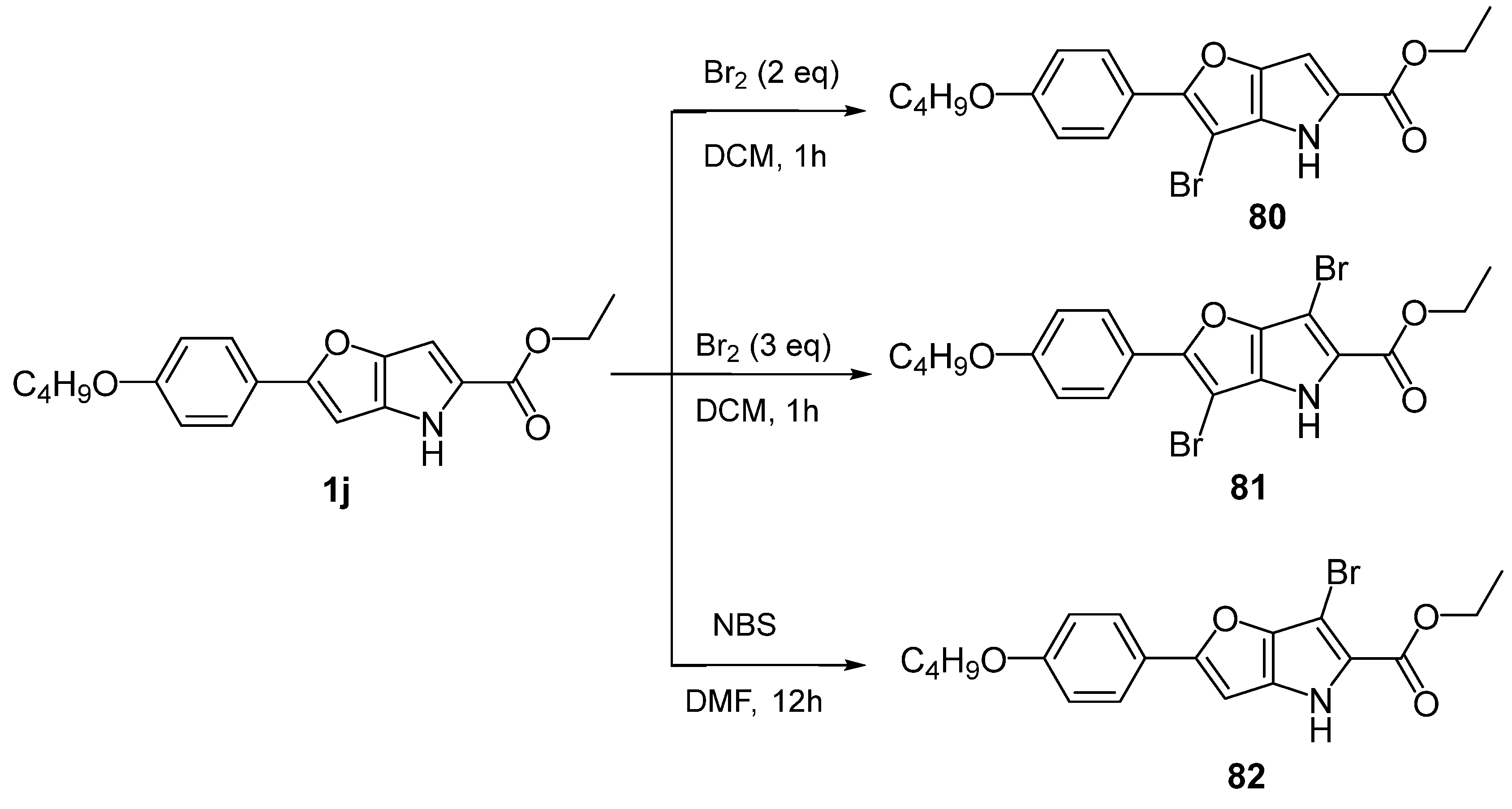
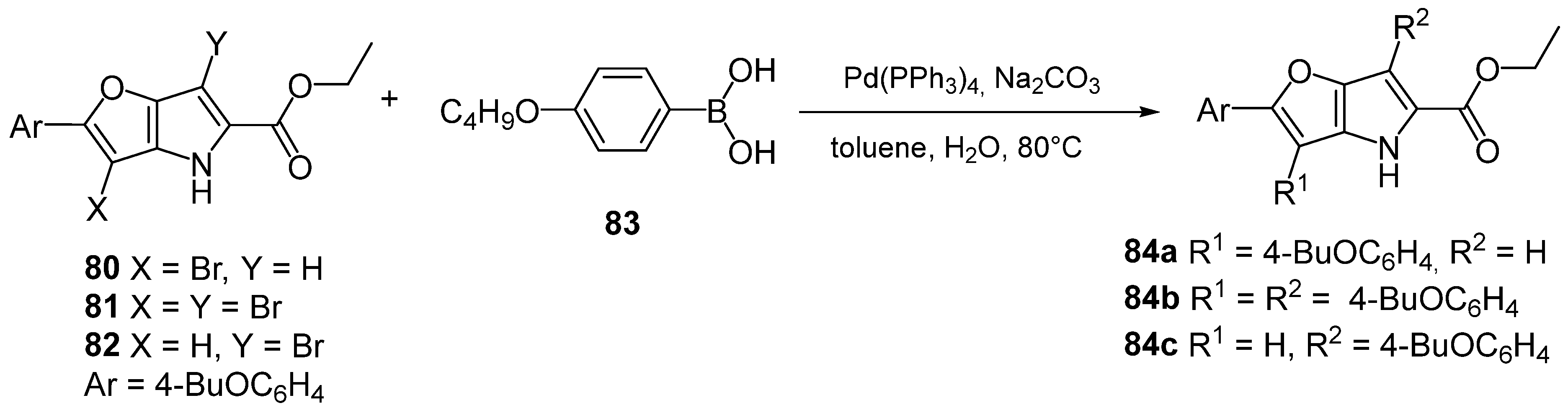
Bromination of the 2-(4-butoxyphenyl)-FPc 1j can be achieved at either the C-3 or C-6 positions, using bromine in dichloromethane or N-bromosuccinimide in dimethylformamide [74].
The regioselectivity of bromination of 1j depended on the reagent: excess bromine afforded 3-bromo-substituted FPc 80 (2 equivalents of Br2) or 3,6-dibromo-FPc 81 (3 equivalents of Br2), whereas N-bromosuccinimide in dimethylformamide produced 6-bromo-FPc 82 (Scheme 23).
The brominated FPcs 8082 underwent the Suzuki–Miyaura cross-coupling with (4-butoxyphenyl)boronic acid 83, Pd(PPh3)4 and Na2CO3 in toluene and H2O. The corresponding 2,3,6-tris-, 2,3-bis- and 2,6-bis(4-butoxyphenyl)-FPcs 84a84c were obtained in high yields [74] (Scheme 24).
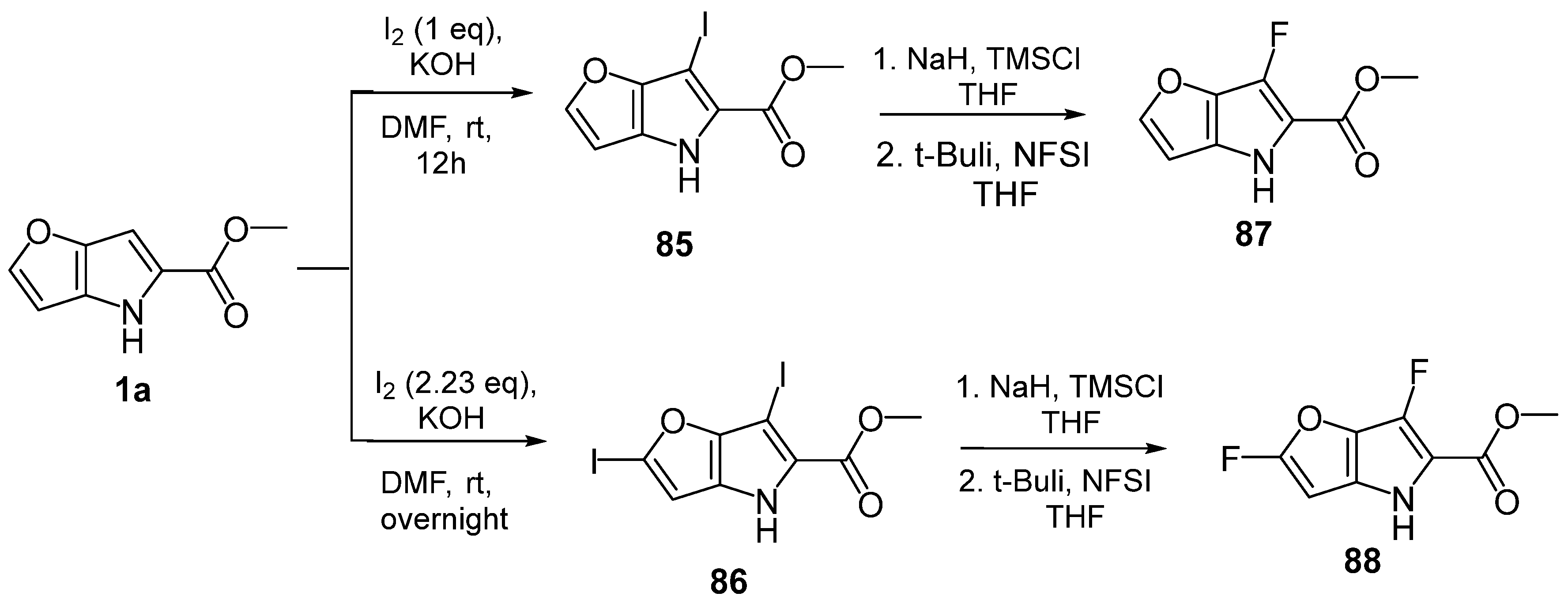
Iodination of 1a can be directed to either the C-6 or both the C-2 and C-6 positions using iodine in KOH/dimethylformamide. 6-Monoiodo-FPc 85 was isolated after 12 h, with 1 equivalent of iodine, whereas an excess of iodine (2.23 equivalents) and extended reaction time produced the 2,6-diiodo derivative 86 after an [72] (Scheme 25).
The subsequent conversion of iodinated FPcs 85 and 86 into the corresponding fluoro-substituted FPcs 87 and 88 was achieved via a two-step process. In the first step, 85 or 86 was treated with NaH and trimethylsilyl chloride (TMSCl) in THF. Rapid fluorination was then effected using t-BuLi and N-fluorobenzenesulfonimide (NFSI) in THF at low temperatures [72] (Scheme 25).

4.8. Reactions of C5 Ester Group

4.8.1. Reduction of Ester Group

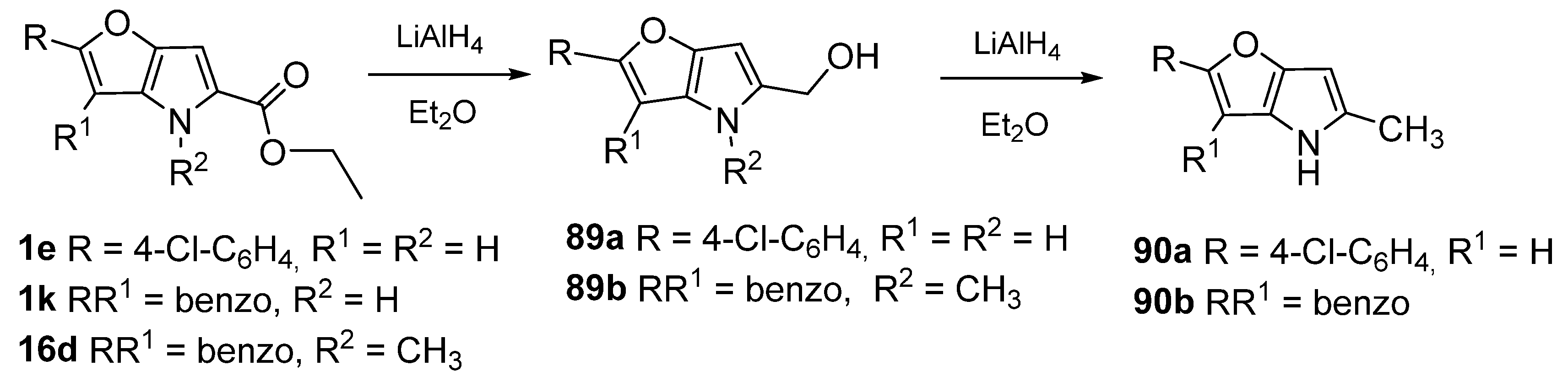
Reduction of 2-(4-chlorophenyl)-substituted FPc 1e with LiAlH4 at ambient temperature produced a mixture of the corresponding 5-methyl- and 5-hydroxymethyl- derivatives 89a and 90a. Pure 2-(4-chlorophenyl)-FPc 90a was obtained by heating the mixture in diethyl ether [59] (Scheme 26).
A notable difference in product formation was observed during the reduction of benzo[b]furo[3,2-b]pyrrole-5-carboxylates 1k and 16d, depending on the N-4 substituent (Scheme 26). The N-unsubstituted ester 1k was reduced with LiAlH4 to 2-methylbenzo[b]furo[3,2-b]pyrrole 90b, whereas the N-methylated ester 16c afforded the 1-methyl-2-hydroxymethyl derivative 89b under the same conditions. The authors [48] attributed this difference to the electron-donating effect of the pyrrole N-methyl group within the FPc 16d framework.

4.8.2. Hydrazinolysis and Subsequent Reactions

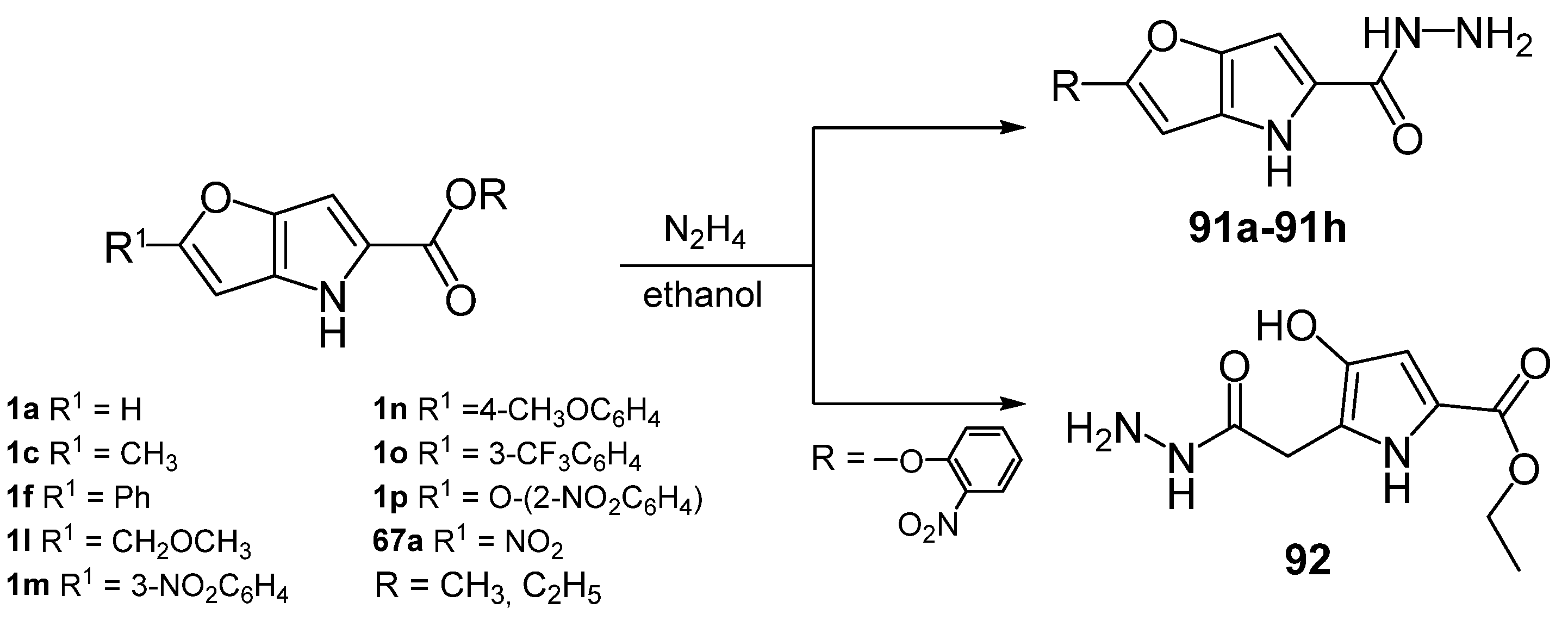
FPcs 1 underwent hydrazinolysis in ethanol for varying reaction times (20–44 h) [41,48,75], affording the corresponding hydrazides 91 in high yields. An unexpected hydrazinolysis pathway was observed for the 2-(o-nitrophenoxy)-derived FPc 1p [76], resulting in furan-ring opening and formation of pyrrole derivative 92 (Scheme 27).
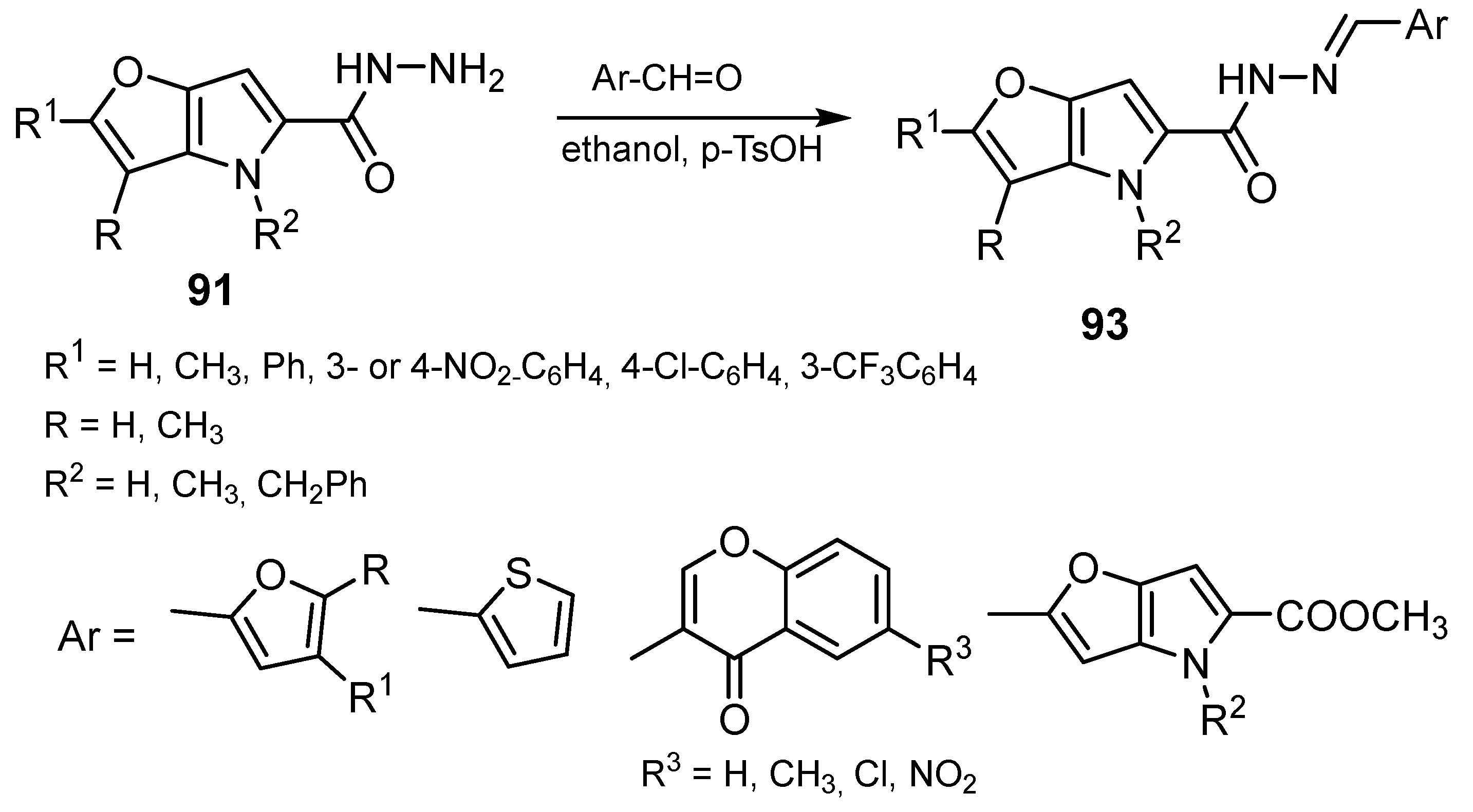
Carbohydrazides 91 react with various heteroaromatic aldehydes [77,78,79]. The optimal conditions involve heating the reactants in ethanol/p-toluenesulfonic acid for 10 min to 1 h. This transformation produces the desired derivatives 93 in varying yields (21–97%) (Scheme 28).
Microwave irradiation was proven to be highly effective for the synthesis of carbohydrazides 91, reducing reaction times to 2–5 min, with yields of 93 comparable to, or higher than, thermal methods [77,78,79].
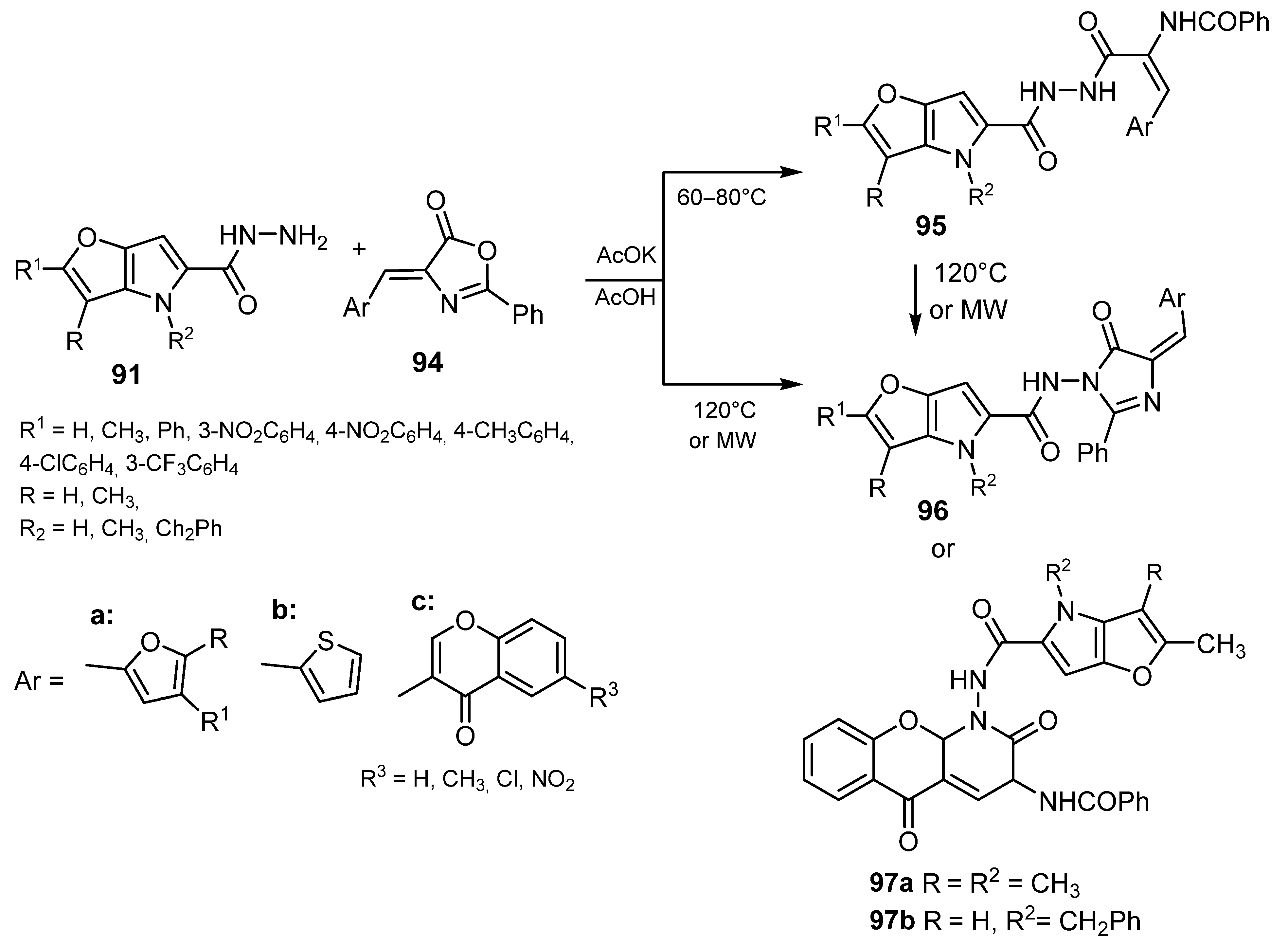
Condensation of hydrazides 91 with aryl-derived 1,3-oxazol-5(4H)-ones 94a94c (where the aryl group is furan-2-yl, thiophen-2-yl, or 4-oxochromen-3-yl) provides an efficient synthetic strategy for the construction of 1,3-imidazoles 96 or 2H-chromeno[2,3-b]pyridones 97. Base-catalysed treatment of oxazolones 94 with carbohydrazides 91 in acetic acid at 60–80 °C afforded diacylhydrazines 95 exclusively. Heating 91 with oxazolones 94a or 94b at 120 °C for 2h, or microwave irradiation for 3–11 min, produced imidazoles 96 [77,78] (Scheme 29). The reaction of 91 with chromene-derived 94c instead yielded pyranopyridone 97 under both thermal (120 °C) or microwave heating, attributed to nucleophilic attack at the chromene C-2 carbon [79] (Scheme 29).
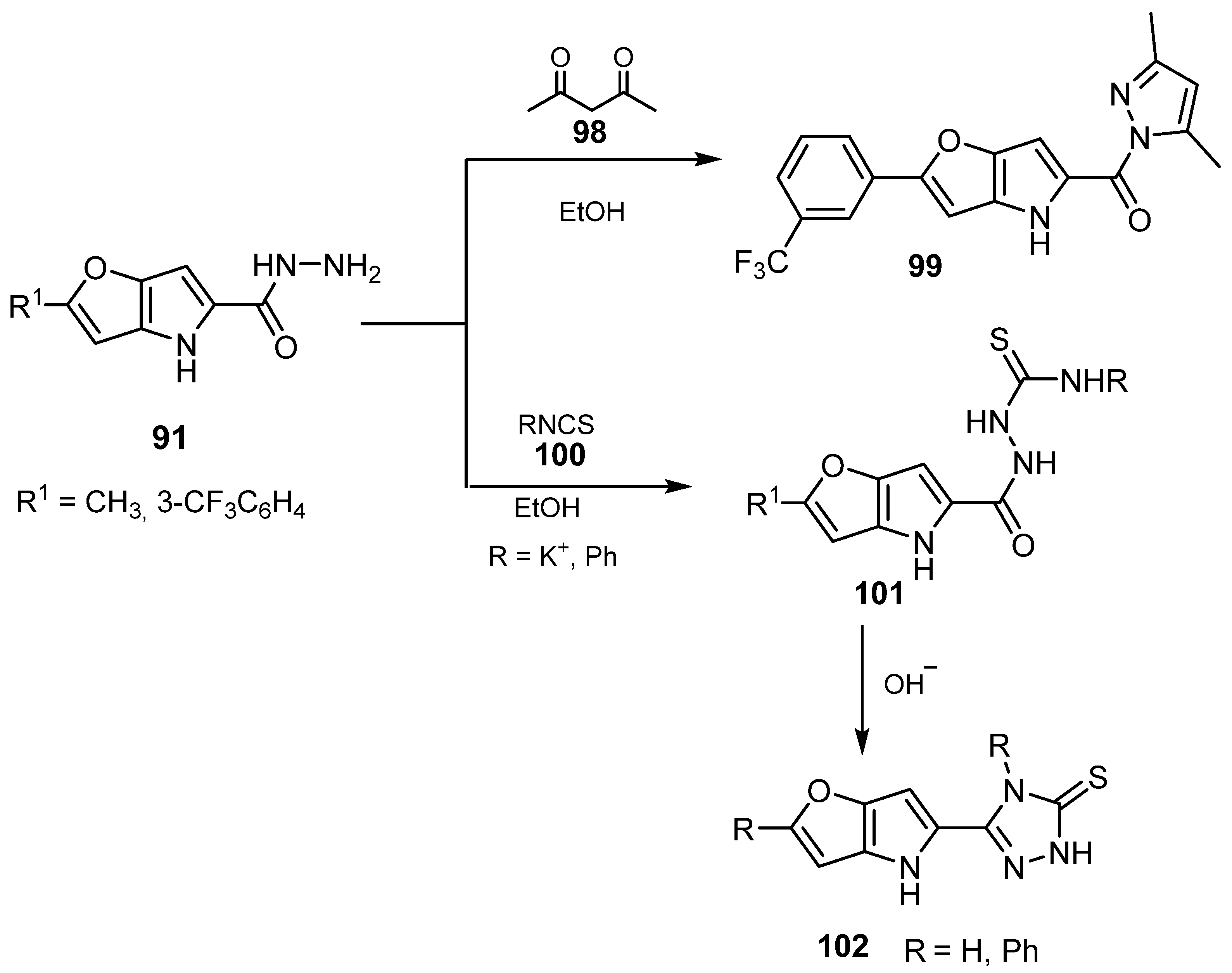
Carbohydrazides 91 are versatile building blocks for five-membered heterocycles [78]. A rapid, microwave-mediated, acid-catalysed condensation of 91 with pentane-2,4-dione 98 produced pyrazole 99 [78]. FP-derived 1,2,4-triazole-3-thiones 102 were synthesised via condensation of 91 with isothiocyanates 100a and 100b to form thiosemicarbazides 101, followed by base-catalysed cyclisation in aqueous potassium or sodium hydroxide afforded 1,2,4-triazole-3-thiones 102, either under convenient heating (6 h) or by microwave irradiation (4–9 min) [77,78] (Scheme 30).
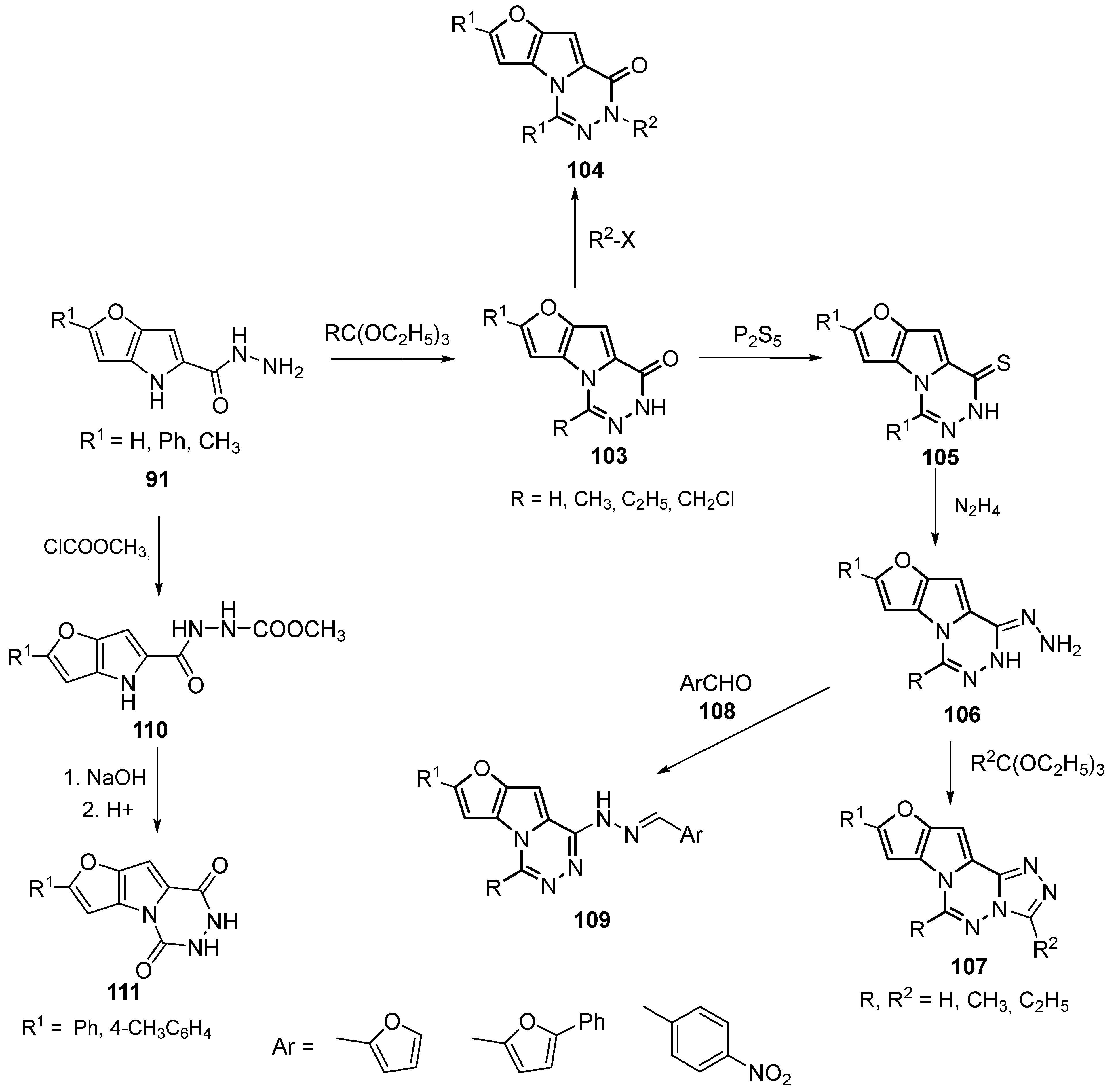
The presence of N-4 amino and C-5 hydrazine groups on FP 91 enables ring-closure reactions with orthoesters (orthoformate, orthochloroacetate, or orthoacetate), forming fused 1,2,4-triazines 103 in good yields (Scheme 31) [10,13,41,80].
The C-8 carbonyl oxygen and the N-7 nitrogen sites of 103 act as reactive centres, allowing the synthesis of diverse triazine derivatives [10,41,48,75,81,82,83,84]. Alkylation of triazines 103 with alkyl halides (CH3I, n-C6H9Br, and ClCH2COOEt) in dimethylformamide, catalysed by sodium hydride, afforded 7-alkylated triazines 104 under mild conditions.
The C-8 carbonyl group of 103 was readily converted to thiones 105 using phosphorus pentasulfide in pyridine. Thiones 105 reacted with hydrazine hydrate to give hydrazones 106, which underwent reaction with orthoesters in dry dimethylsulfoxide, producing fused tetracyclic compounds 107. Hydrazines 106 were also employed to synthesise aryl-substituted hydrazides 109 by reaction with aromatic aldehydes 108 in dimethylformamide [81]. N-Methoxycarbonylhydrazides 110 were prepared via the reaction of 2-aryl-substituted carboxhydrazides 91b and 91c (R1 = Ph, 4-CH3C6H4) with methyl chloroformate. The unsubstituted hydrazide 91a (R1 = H) proved unstable under these conditions likely due to sensitivity of 91a to in situ-generated hydrogen chloride. Subsequent alkaline hydrolysis of the stable intermediates 91b and 91c successfully yielded triazines 111 [85] (Scheme 31).
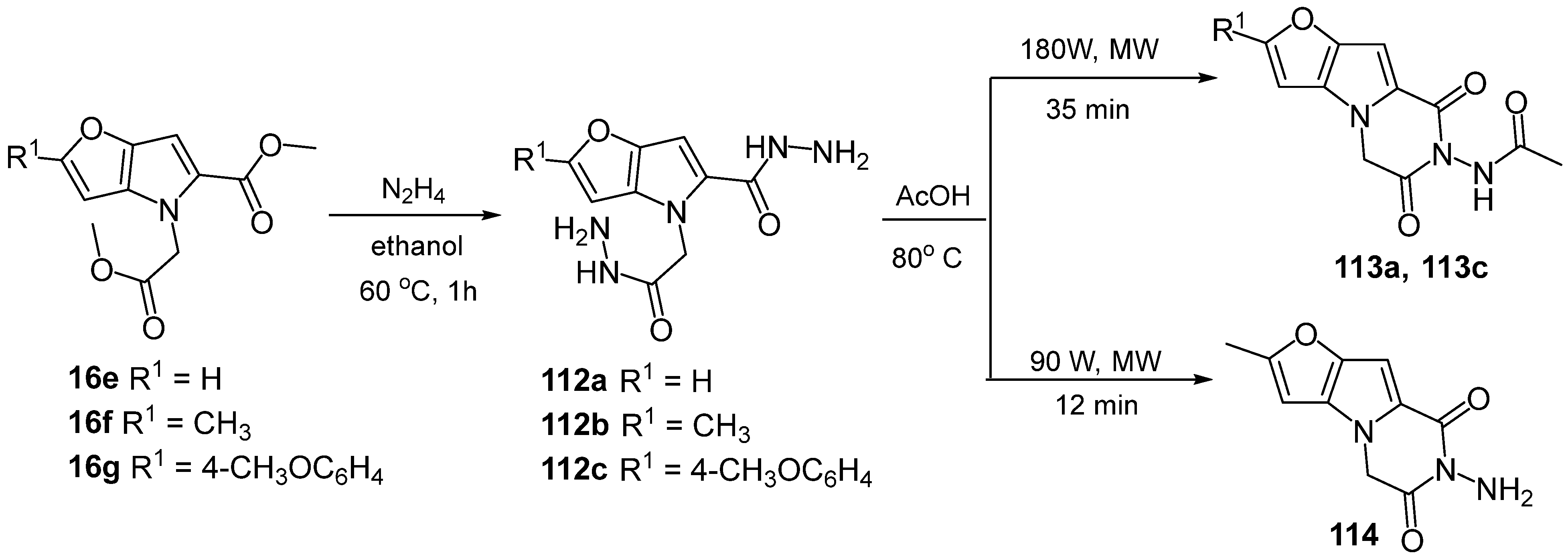
The presence of two ester groups on FPcs 16e16g enables formation of bis-hydrazides 112 under standard hydrazinolysis conditions [10] (Scheme 32).
Cyclisation of bis-hydrazides 112 to form pyridazines was accomplished under acidic conditions. Initial attempts using conventional thermal heating proved unsuccessful. The reaction was optimised using microwave irradiation. The power and duration of the irradiation determined the product obtained. Acetamides 113 were produced when bis-hydrazides 112 were subjected to microwave irradiation at 80 °C (35 min, 180 W). In contrast, shorter, lower-power irradiation (12 min, 90 W) of 112b favoured the formation of pyrazine 114. Both approaches afforded comparable yields, up to 85% [10] (Scheme 32).

4.8.3. Ester Hydrolysis and Subsequent Reactions of Acids

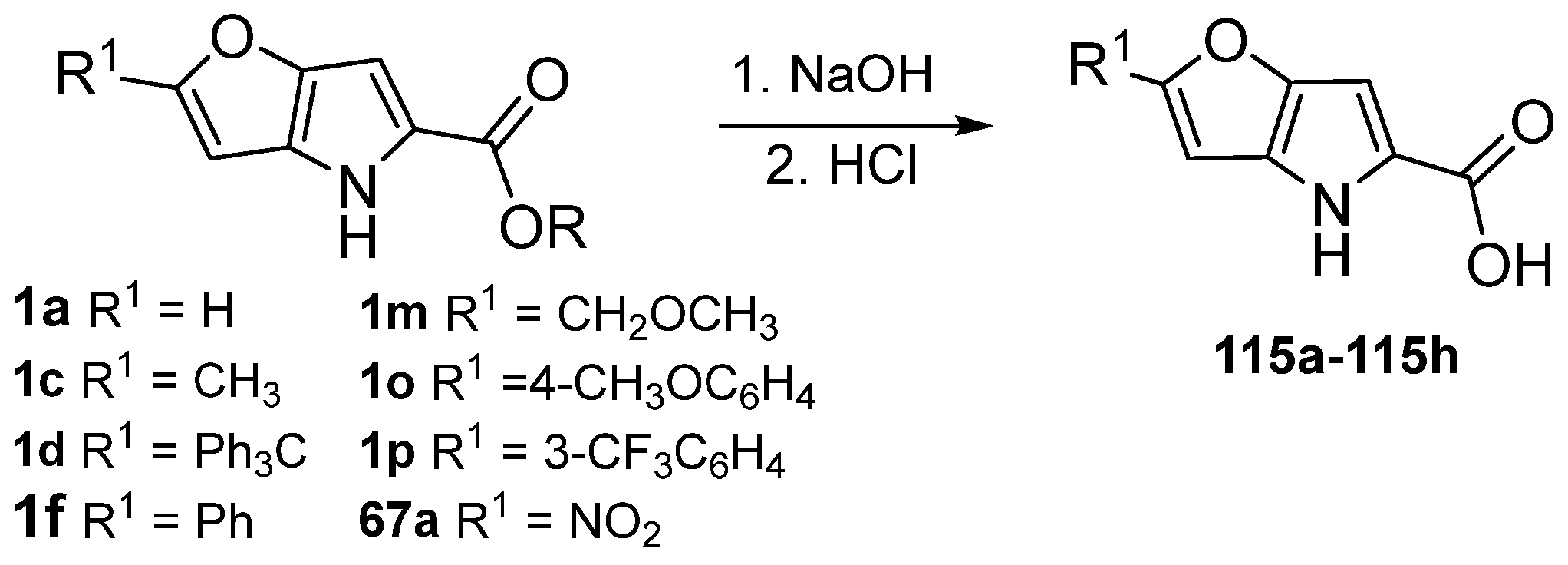
Furo[3,2-b]pyrrole-5-carboxylic acids 115 are readily accessible in high yields from FPcs 1 via base-catalysed hydrolysis in aqueous NaOH, followed by acidification of the resulting salts with concentrated hydrochloric acid [9,10,24,29,44,86,87] (Scheme 33).

4.8.4. Synthesis of Acyl Chlorides, Esters, and Anhydrides

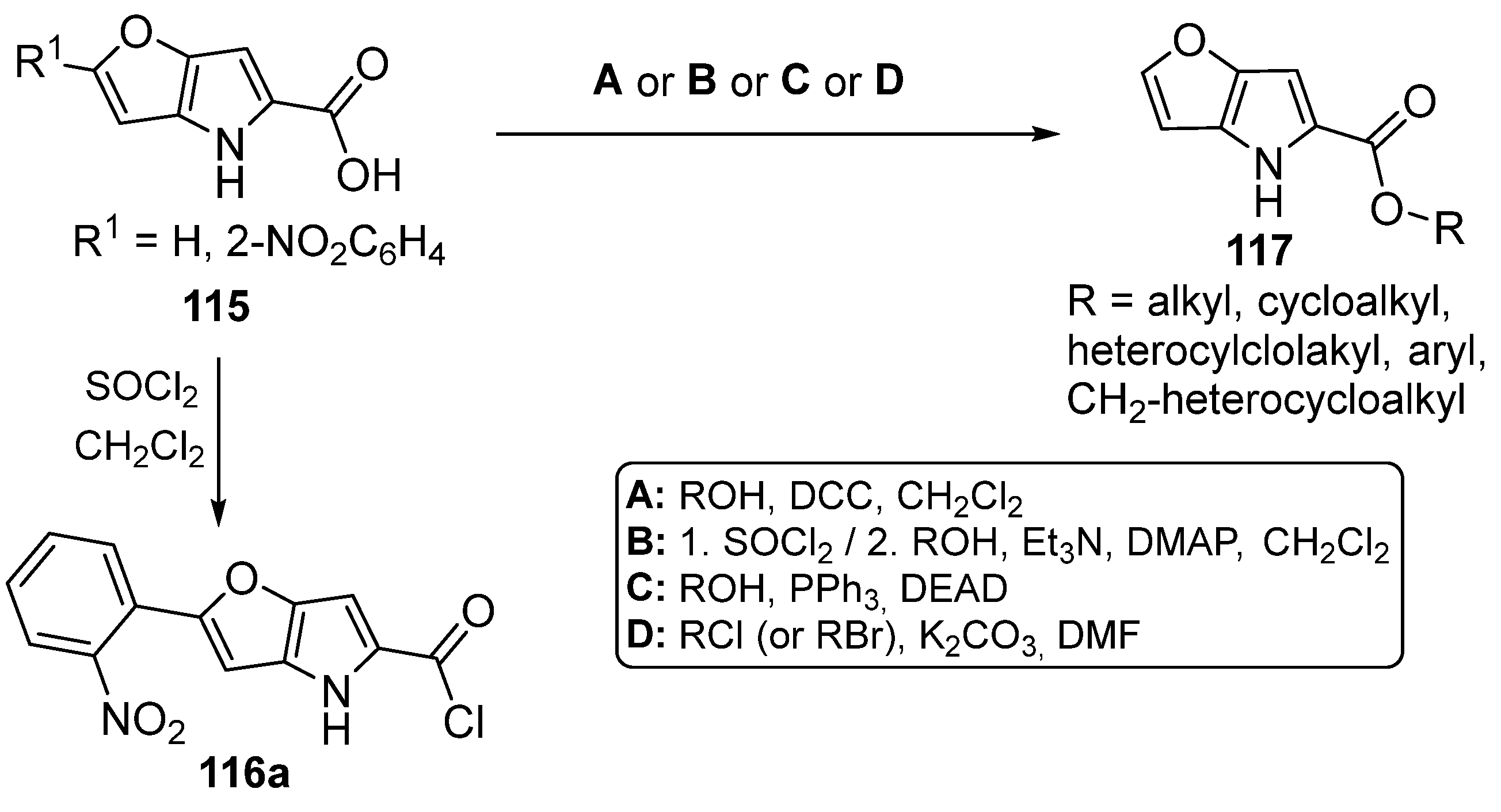
Acids 115 are versatile precursors for the synthesis of diverse functional derivatives. Acyl chlorides 116 are generally generated in situ by refluxing the corresponding carboxylic acid 115 with thionyl chloride and are immediately used in subsequent synthetic steps. However, 2-(2-nitrophenyl)-4-ethylfuro[3,2-b]pyrrole-5-carbonyl chloride 116a was isolated and crystallised from light petroleum in good yield [88] (Scheme 33).
The synthesis of functionalised esters, anhydrides, or amides of FP is described in several patents [88,89,90,91], which detail the development of new therapeutics [89,90] or functional materials [91]. Esters 117 with various R groups (alkyl, aryl, heterocyclic as well as methylene- or ethylene-linked cycloalkyl, aryl or heterocyclic rings), were prepared from acids 115 and alcohols using either N,N′-dicyclohexylcarbodiimide (DCC) in dichloromethane, or triphenylphosphine/diethyl azodicarboxylate (DEAD), as shown in Scheme 34. The third established method involved a two-step sequence: the formation of acyl chlorides 116 followed by reaction with alcohols in the presence of triethylamine and 4-(dimethylamino)pyridine (DMAP) in dichloromethane. The fourth method involved the direct reaction of acids 115 with alkyl or aryl chlorides or bromides in dimethylformamide or acetone with K2CO3 as the base [89,90].
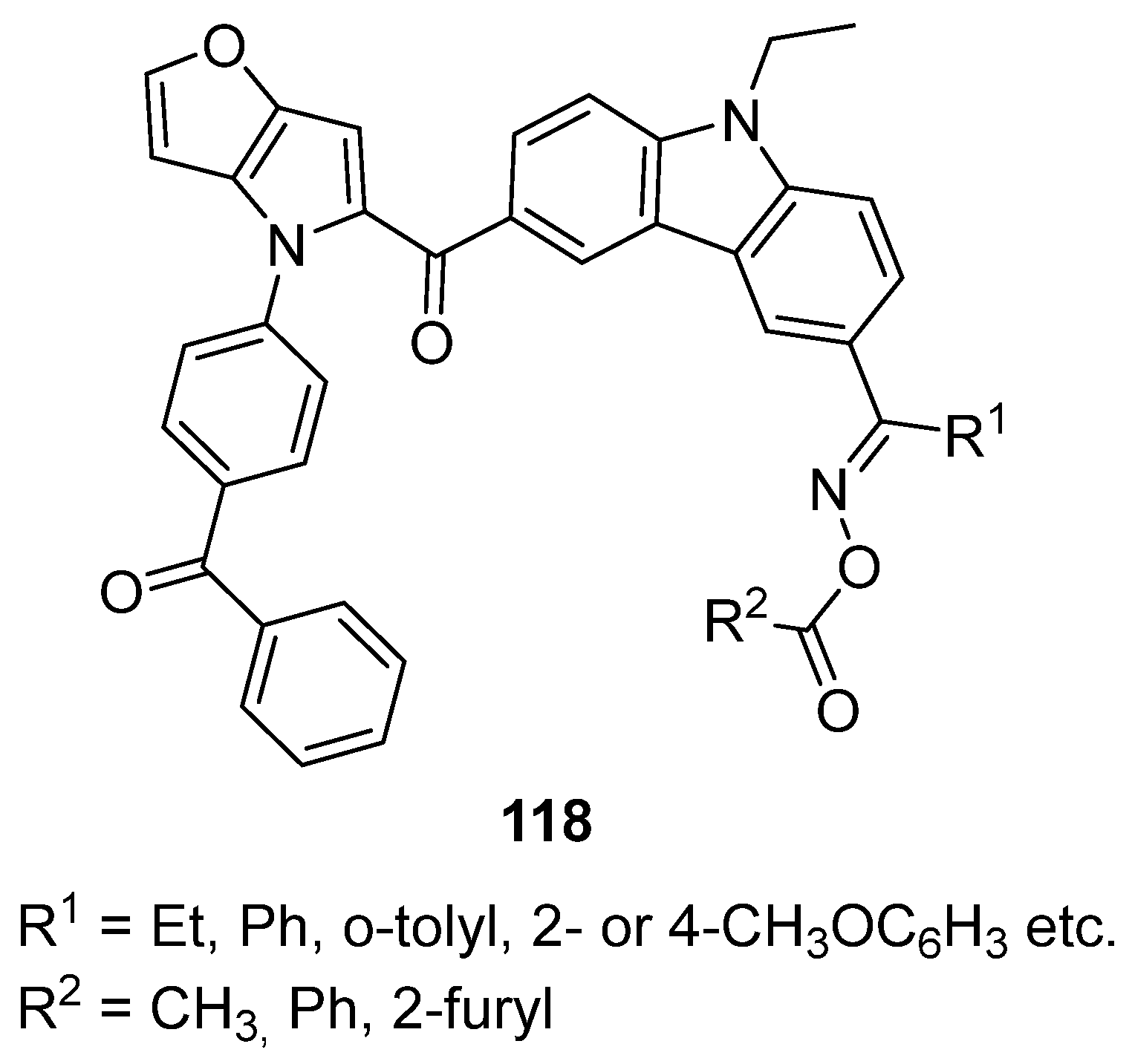
A recent Chinese patent [91] described the use of FP-derived products 118 (Figure 2) as curing initiators in polymer-based adhesive curing agents for the construction industry. Compounds 118 were prepared via the Friedel-Crafts acylation reaction of 9-ethylcarbazoles with the appropriate acyl chlorides 116.
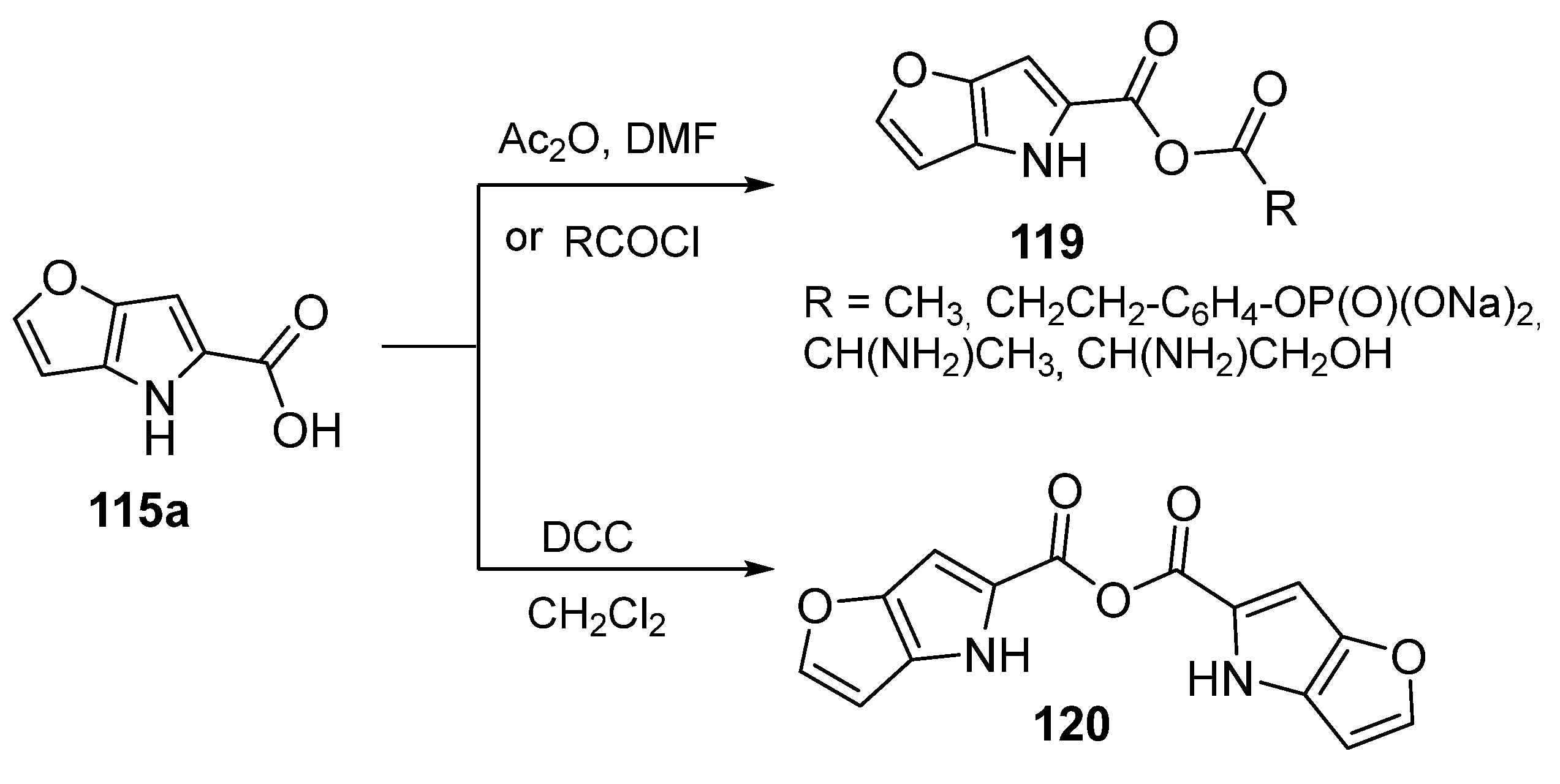
Mixed anhydrides such as 119 were synthesised from acid 115a either by reacting it with Ac2O in DMF or via the corresponding acyl chlorides. To prepare the symmetrical anhydride 120, acid 115a was subjected to a dehydration reaction in the presence of N,N’-dicyclohexylcarbodiimide (DCC) in dichloromethane [89] (Scheme 35).

4.8.5. Synthesis of S-Acid and Thioester

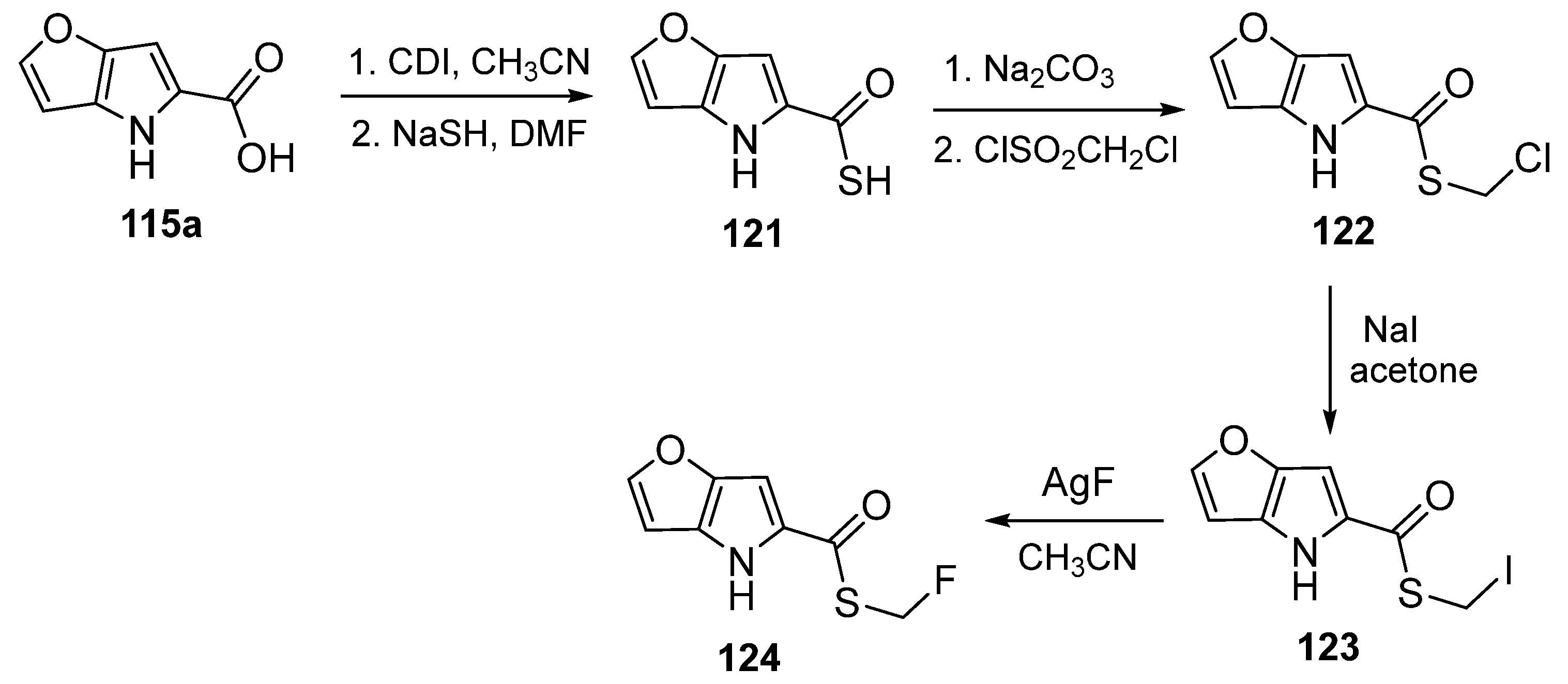
Carboxylic acid 115a was employed as a reagent in the synthesis of S-fluoromethyl 4H-furo[3,2-b]pyrrole-5-carbothioate 124. The initial conversion of 115a into S-acid 121 was achieved using 1,1′-carbonyldiimidazole (CDI) in acetonitrile, followed by the addition of NaSH. S-Acid 121 was then functionalised with chloromethyl chlorosulfonate to produce the S-chloromethyl derivative 122. A Finkelstein-type halogen exchange subsequently yielded iodide 123 by heating 122 with NaI in acetone. The final transformation into the target fluoride 124 was accomplished by reacting 123 with AgF in acetonitrile [89] (Scheme 36).

4.8.6. Synthesis of Amides

Numerous studies [42,87,90,92] have focused on the synthesis of furo[3,2-b]pyrrole-5-carboxamides, primarily owing to their bioactivity, particularly as enzyme inhibitors.
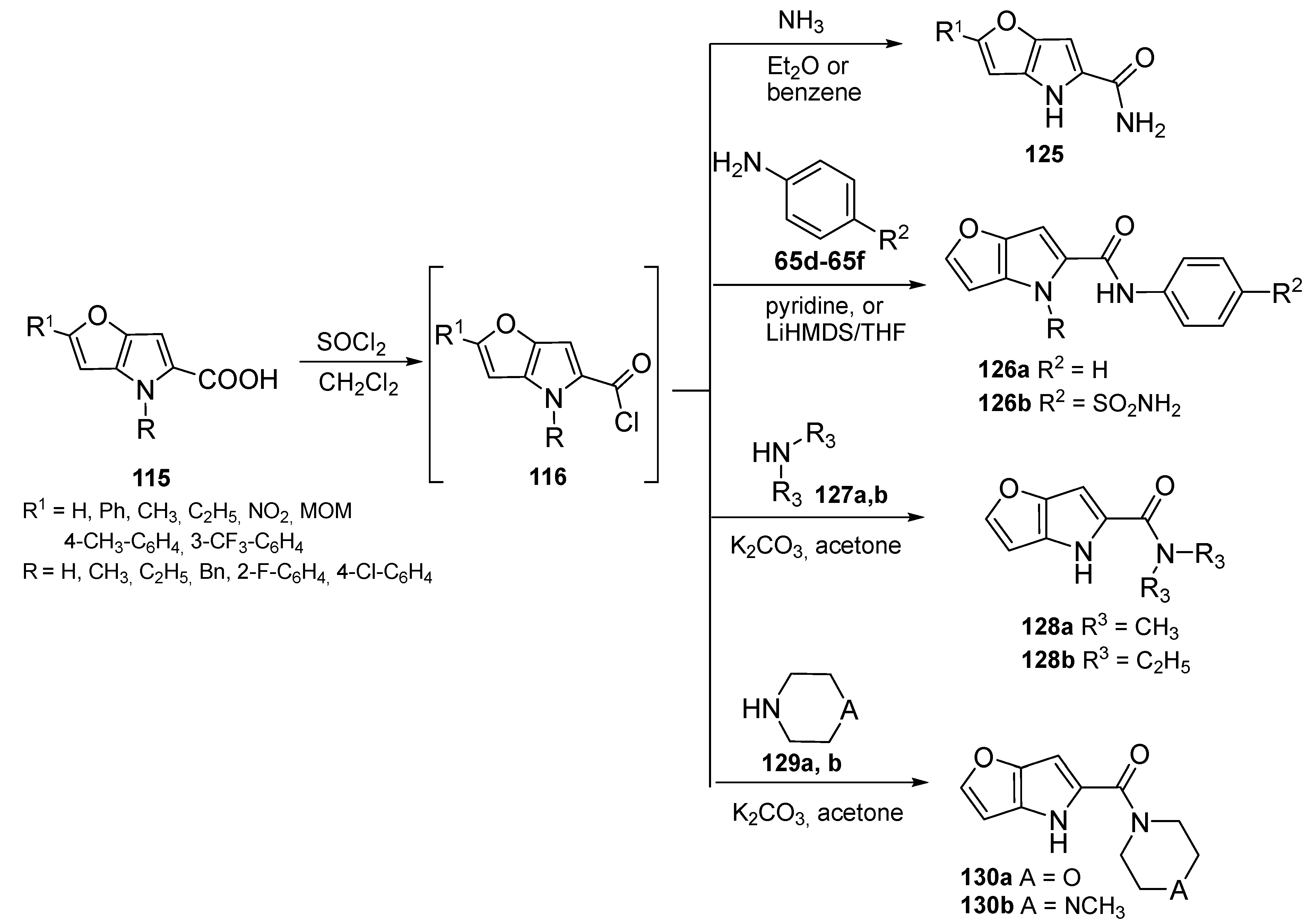
The standard procedure for preparing carboxamides 125 involves the initial conversion of acids 115 into corresponding acyl chlorides 116, followed by saturation of the acyl chloride solution (in benzene or diethyl ether) with gaseous ammonia [88,90] (Scheme 37).
Two pathways were used to synthesise N-phenylamides derived from various 1:1 or 2:1 heteropentalenes, including FP 126a [42]: direct amidation of esters [88] or synthesis via the corresponding acyl chloride [42]. The first method requires treating FPcs 1 with aniline 65d (R2 = H) and lithium 1,1,1-trimethyl-N-(trimethylsilyl)silanaminide (LiHMDS) in THF at low temperatures. The second, more conventional route involves the synthesis of chloride 116 from acid 115 using SOCl2 and DMF in CH2Cl2/THF, followed by addition of aniline 65d in pyridine under reflux (Scheme 37).
The synthesis of sulfonamides 126b was achieved from acids 115 via the relatively unstable acyl chlorides 116, which were treated in situ with aniline 65f (R2 = SO2NH2) to form the N-[4-(aminosulfonyl)phenyl]-derived carboxamides 126b in high yields [92]. N,N-Dialkylamides 128 were similarly synthesised via acyl chlorides 116 followed by reaction with N,N-dimethyl- or N,N-diethylamine 127 in K2CO3/acetone. The use of morpholine or N-methylpiperazine 129 under identical conditions led to amides 130 [90] (Scheme 37).
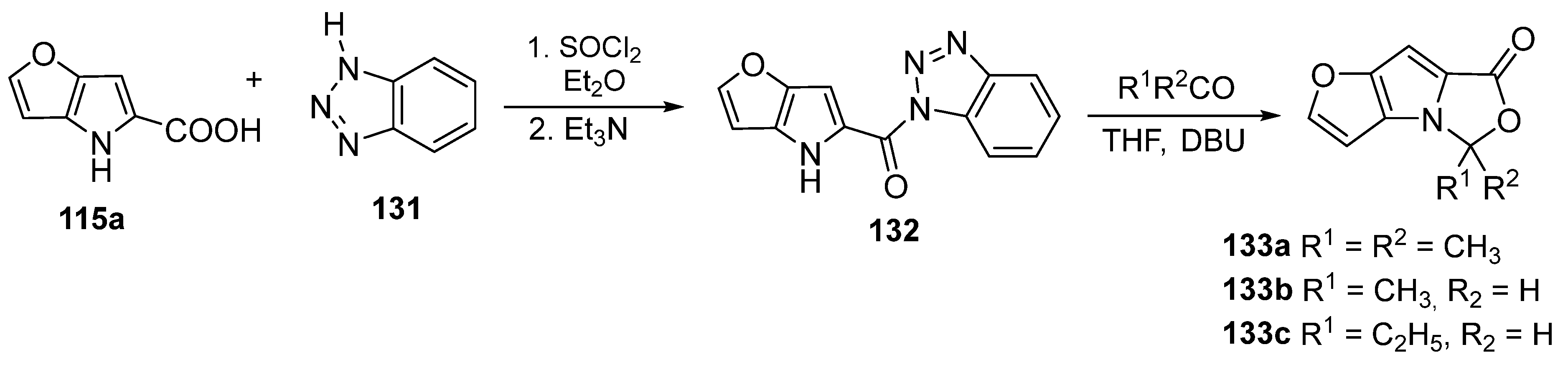
A versatile synthetic method for oxazolone formation, initially developed by Katritzky [93] for pyrroles or indoles, was later employed to synthesise FP-derived oxazolones 133 [90]. The process begins with stirring acid 115a, SOCl2, and benzotriazole 131 in diethyl ether, followed by treatment with triethylamine. The intermediate 132 was then used in situ and treated with carbonyl compounds (acetone, acetaldehyde, or propanal) in 1,8-diazabicyclo[5.4.0]undec-7-ene (DBU)/tetrahydrofuran, rapidly yielding product 133 (Scheme 38).
Ethyl 2-(4H-furo[3,2-b]pyrrole-5-carboxamido)acetate 134 was synthesised from acid 115a and 2-aminoacetate 11b using BOP (benzotriazol-1-yl-oxy-tris(dimethylamino)phosphonium hexafluorophosphate) and triethylamine in dimethylformamide. The resulting crude ester 134 was then treated with gaseous ammonia in an ethanolic solution to give the amide 135 [90] (Scheme 39).
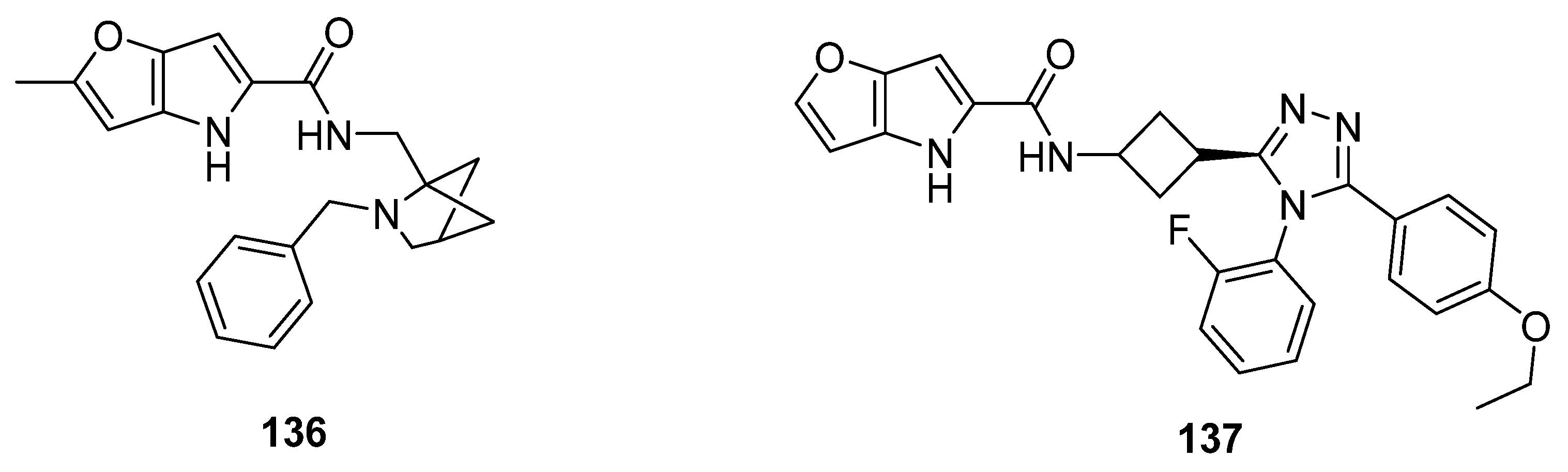
Diverse amides, including the FP-derived compound 136 (Figure 3), were synthesised from the 1-(aminomethyl)-2-benzyl-2-azabicyclohexane scaffold. The coupling reagents HATU (1-[bis(dimethylamino)methylene]-1H-1,2,3-triazolo[4,5-b]-pyridinium-3-oxide hexafluorophosphate) or COMU (1-cyano-2-ethoxy-2-oxoethylidenaminooxy)-dimethylamino-morpholino-carbenium hexafluorophosphate) were employed in amide-forming reactions [94].
Waaler and co-workers [95] synthesised a large collection of amides with a central 1,2,4-triazole core linked to a trans-cyclobutyl moiety. The collection included the FP-derived amide 137 (Figure 3), prepared from acid 115a and an appropriate amine using HATU/N,N-diisopropylethylamine (DIPEA) in acetonitrile.
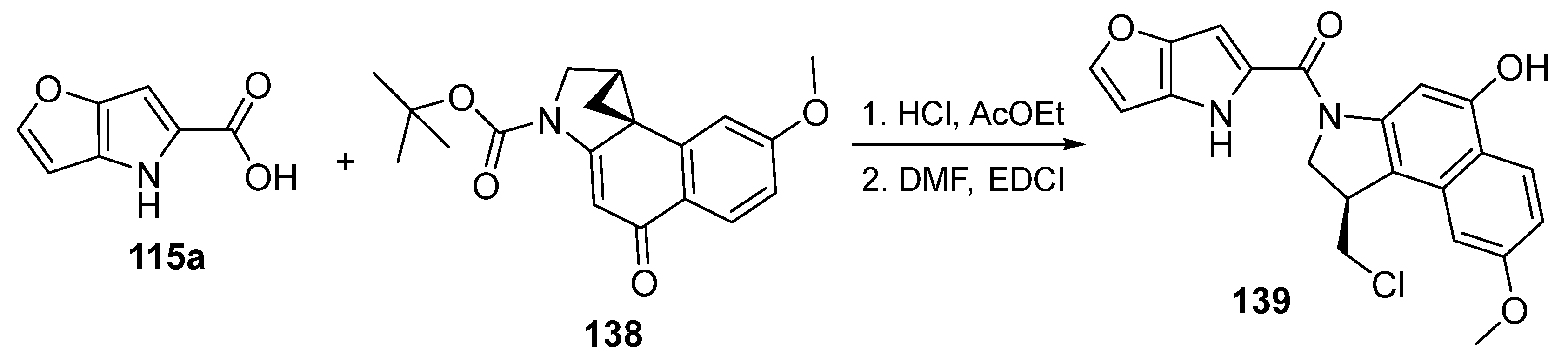
As part of a study on amides derived from (S)-1-(chloromethyl)-8-methoxy-2,3-dihydro-1H-benzo[e]indol-5-ol (seco-MCBI), the FP moiety was employed. Compound 139 was prepared via an initial reaction of t-Boc-MCBI 138 with HCl in ethyl acetate. The resulting salt was then treated with acid 115a in the presence of 1-ethyl-3-(3-dimethylaminopropyl)carbodiimide (EDCI) in DMF, yielding amide 139 [96] (Scheme 40).
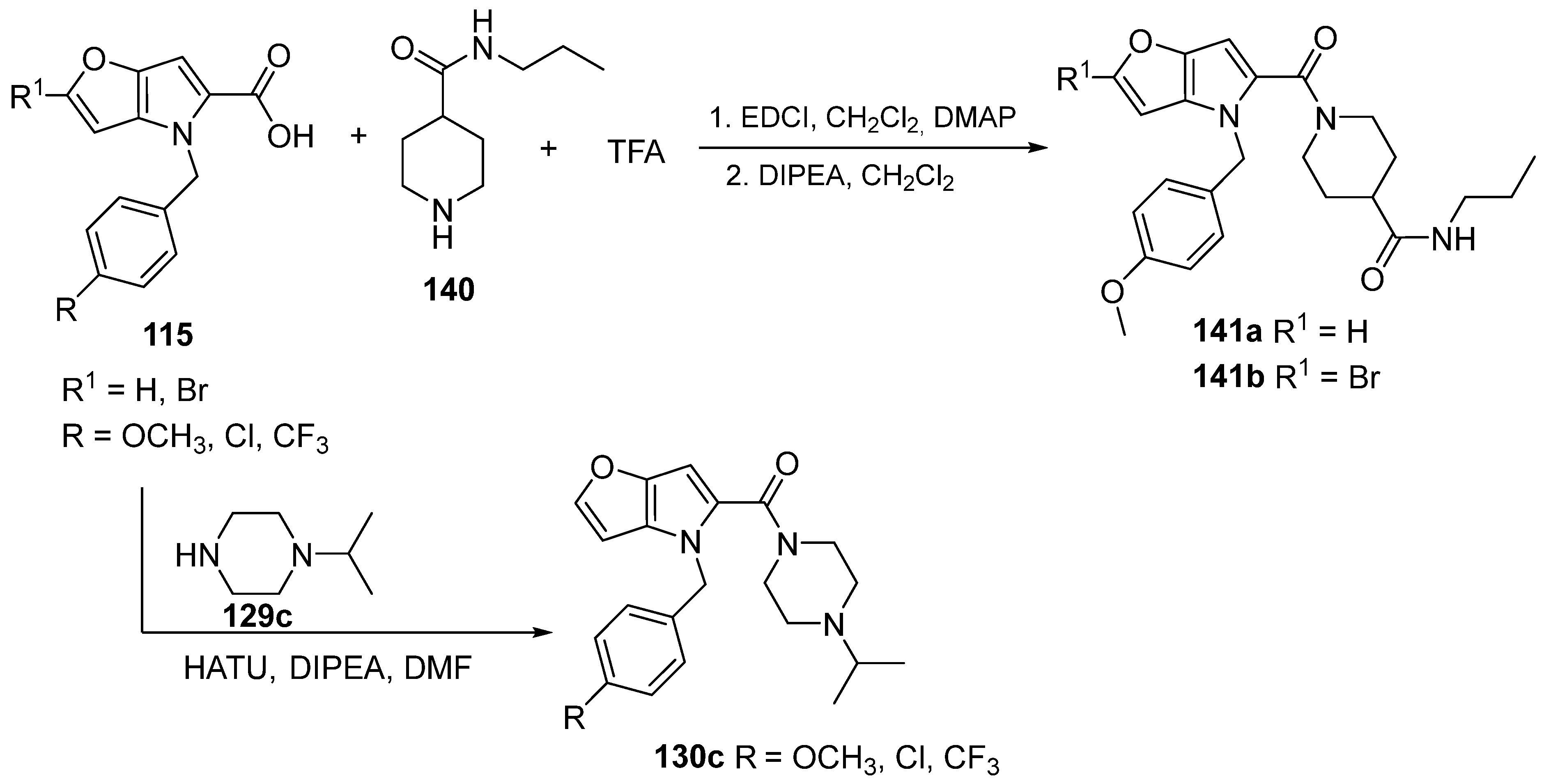
A series of heteropentalene-derived carboxamides with an N-propylpiperidine scaffold, including the FP-derived compound 141 [97], were prepared. The reaction involved the in situ generation of 4-(propylcarbamoyl)-piperidin-1-ium trifluoroacetic salt from amide 140 and trifluoroacetic acid in the presence of 4-(dimethylamino)pyridine (DMAP), N,N-diisopropylethylamine (DIPEA), and 1-ethyl-3-(3′-dimethylaminopropyl)carbodiimide (EDCI) (Scheme 41).
Durante [98] recently investigated the synthesis and structure-activity relationships (SAR) of a series of fused pyrroles, including novel FP-derived amides. The synthetic pathway involved the treatment of 4-benzyl-substituted acids 115 with functionalised aromatic, heterocyclic, carbocyclic, or acyclic primary or secondary amines, including 129c. The reaction utilised HATU and DIPEA in dimethylformamide, rapidly yielding the target amides, such as 130c, in moderate yields (Scheme 41).

4.8.7. Ugi Reaction

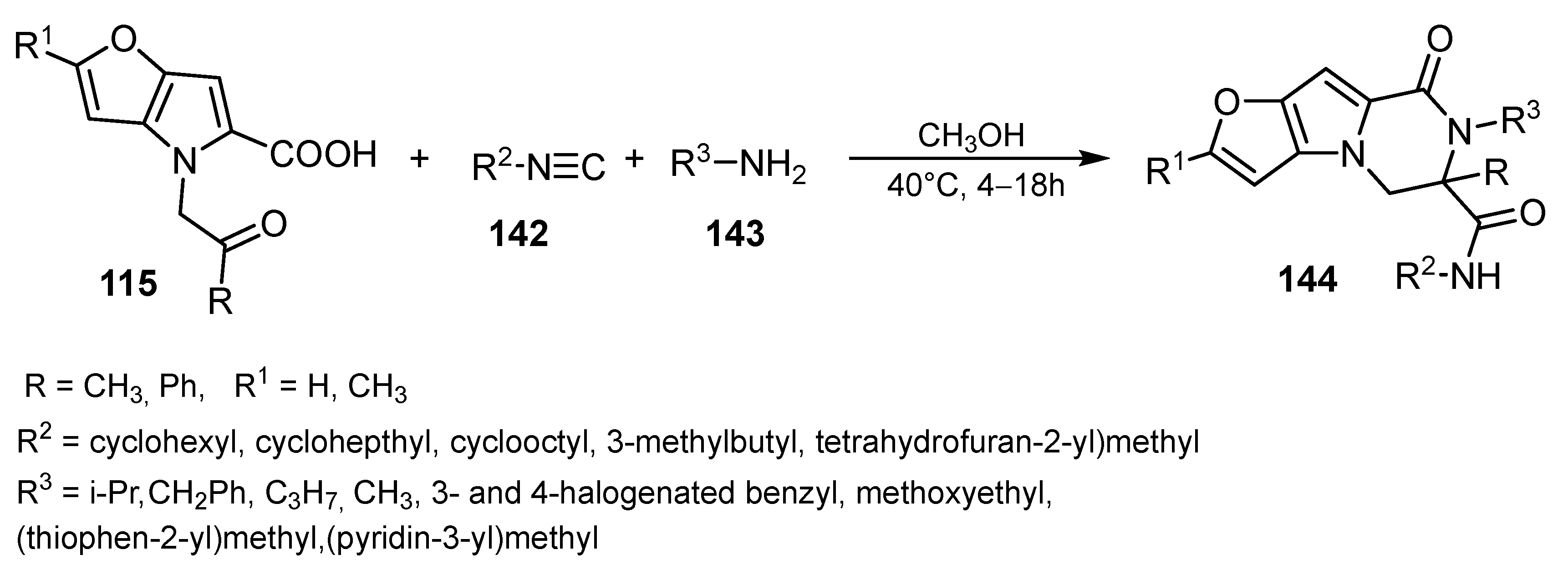
The four-component (4-CR) Ugi process represents a one-pot treatment of an aldehyde, an amine, an isonitrile, and a carboxylic acid. The main declared disadvantage is the limited availability of commercially or synthetically accessible isonitriles. The Ugi reaction was adapted for the synthesis of a library of fused pyrazines 144 [51] (Scheme 42).
The 4-substituted acids 115 were synthesised in high yields from FPc 1 (see Table 1, entry 10), followed by ester hydrolysis using aqueous NaOH in methanol. The desired carboxamides 144 were obtained in moderate yields by stirring equimolar amounts of N-substituted acid 115, isonitrile 142, and amine 143 in methanol [51] (Scheme 42).

4.8.8. Decarboxylation of Acids and Subsequent Reactions at C5

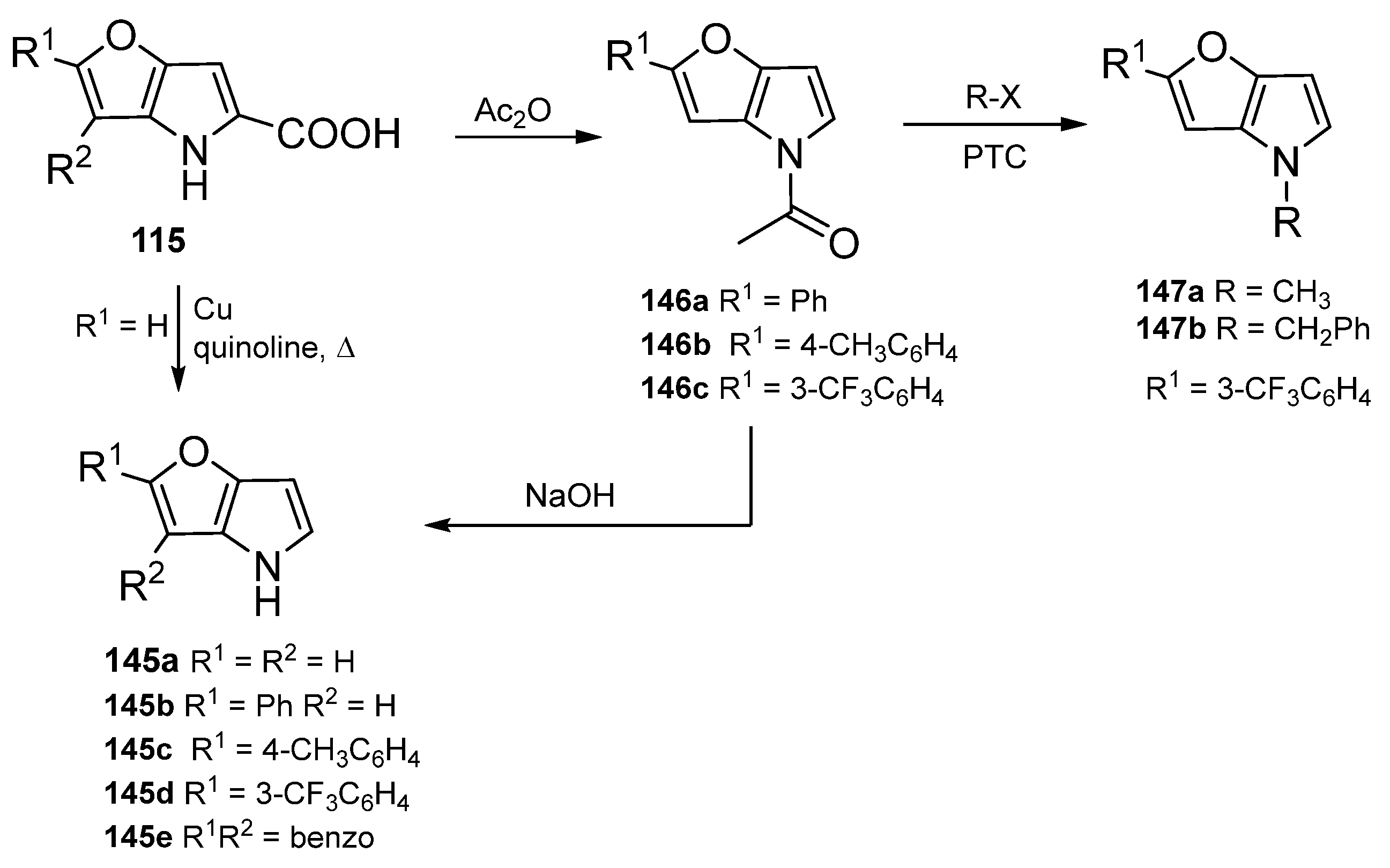
The decarboxylation of furo-, thieno-, and selenopheno[3,2-b]pyrrole-5-carboxylic acids 115 was first reported by Soth et al. [35], who carried out the reaction in quinoline in the presence of a copper chromite barium-promoted catalyst. Welch and Phillips [24] later achieved the decarboxylation of 115a in refluxing ethanolamine (Scheme 43). The resulting FP 145a was found to be less stable at room temperature than its selenopheno- and thieno- analogues; however, all compounds eventually degraded.
Heating acid 115a in boiling acetic anhydride produced 4-acetyl-FP 146a [60]. Similar acetylation was observed for the 2-aryl-substituted FP-acids 115 (Ar = Ph, 4-CH3-, or 3-CF3-C6H4) [41,99], providing derivatives 146b146d. The acetyl derivative 146c could be rapidly hydrolysed to FP 145d using ethanol and aqueous sodium hydroxide. Subsequent N-alkylation of 146c with methyl iodide or benzyl chloride furnished products 147a and 147b in moderate yields (Scheme 43).
  • Azo-coupling reaction
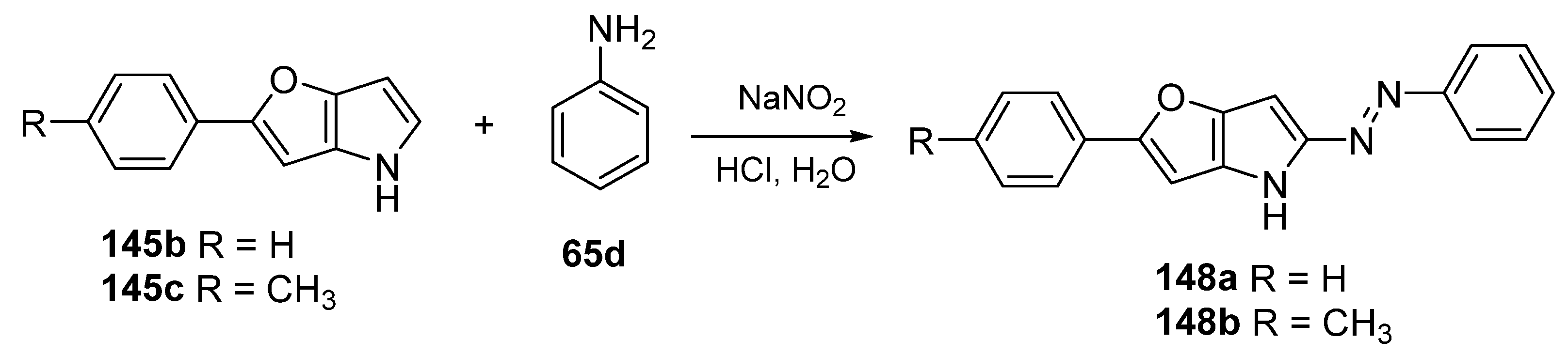
2-Aryl-4H-furo[3,2-b]pyrroles 145b and 145d readily underwent azo-coupling with benzenediazonium chloride, generated in situ from aniline 65d using hydrochloric acid and sodium nitrite in water. The coupling occurred at the C-5 position, giving the azo-compounds 148a and 148b [61] (Scheme 44).
  • Formylation and acetylation at C5
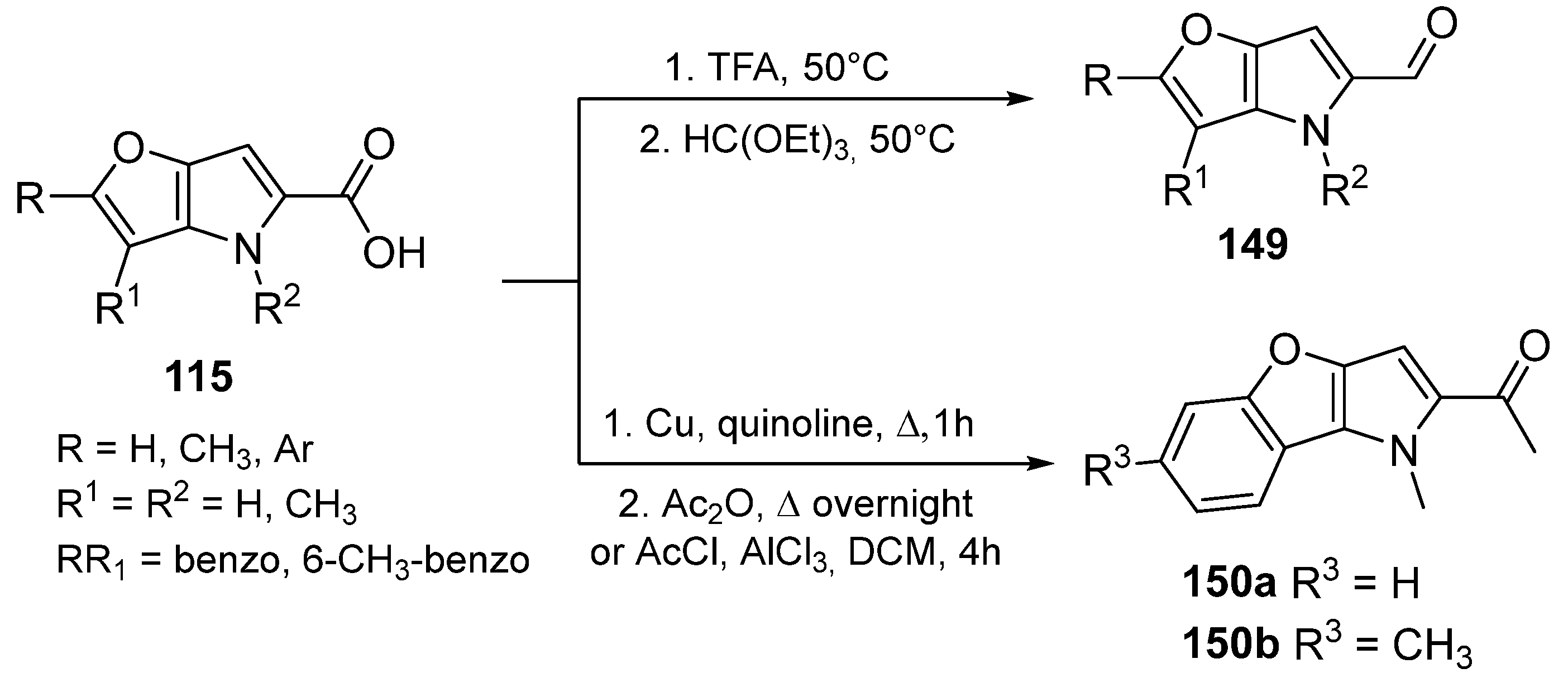
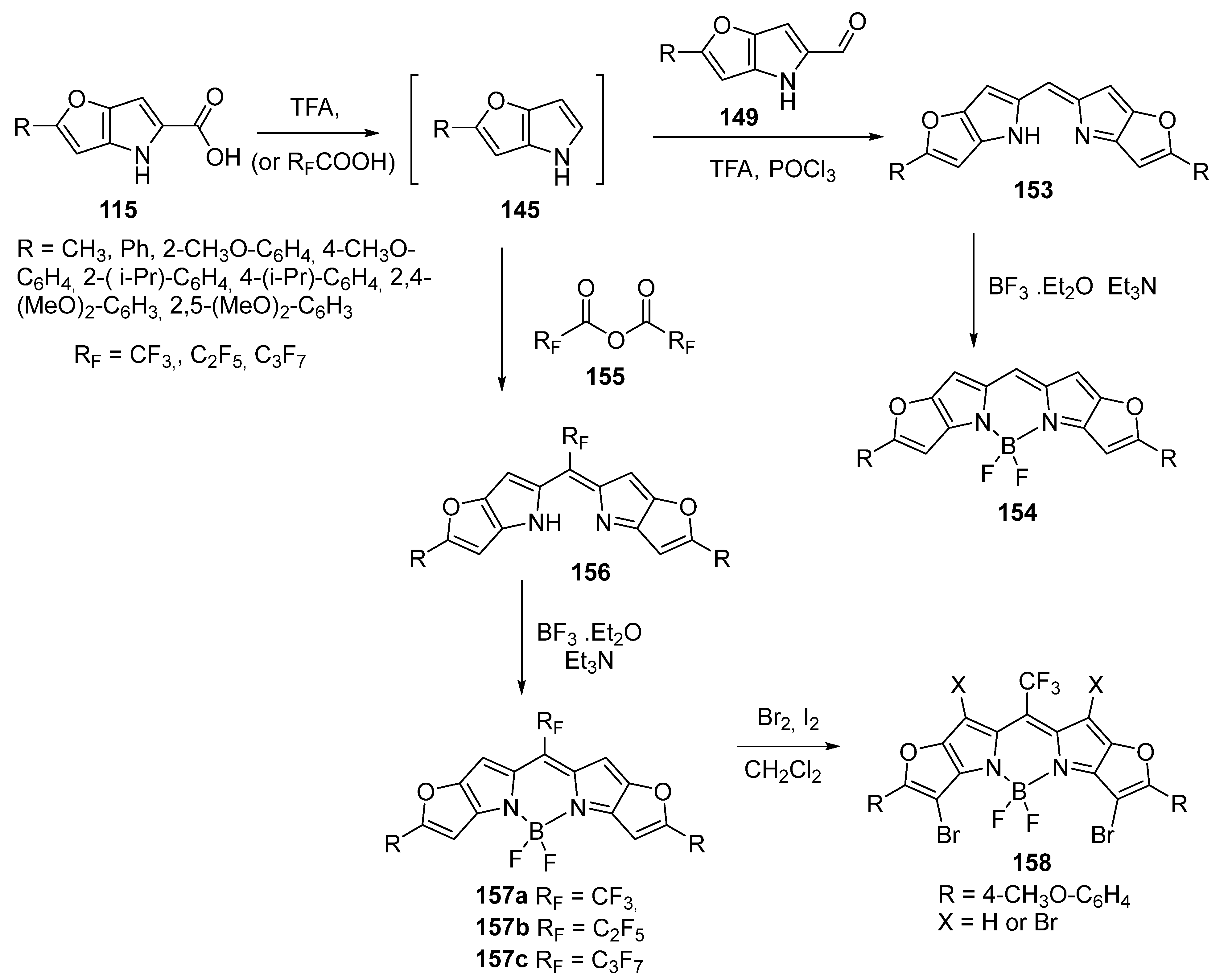
The synthesis of FP-5-carbaldehydes 149 proceeded via the initial decarboxylation of acids 115 with trifluoroacetic acid. The resulting in situ-generated FP intermediate 145 was subsequently formylated with triethyl orthoformate [8,10,13], affording aldehydes 149 (Scheme 45).
Webert et al. [100] reported the synthesis of 5-acetylbenzo[b]furo[3,2-b]pyrroles 150. The acid 115 first underwent rapid decarboxylation in the presence of Cu/quinoline. The resulting in situ-formed benzo[b]furo[3,2-b]pyrrole 145e was then acetylated to give FP 150, either with acetic anhydride (Ac2O) or with acetyl chloride in AlCl3 and dichloromethane (Scheme 44). The products 150 were obtained in low or moderate yields. Notably, acetylation of 145e occurred regioselectively at C2, whereas the thieno- and selenopheno- analogues furnished mixtures of 2- and 3-acetyl derivatives (Scheme 45).
  • Enzymatic synthesis of 6-(4H-furo[3,2-b]pyrrolyl)-L-alanine
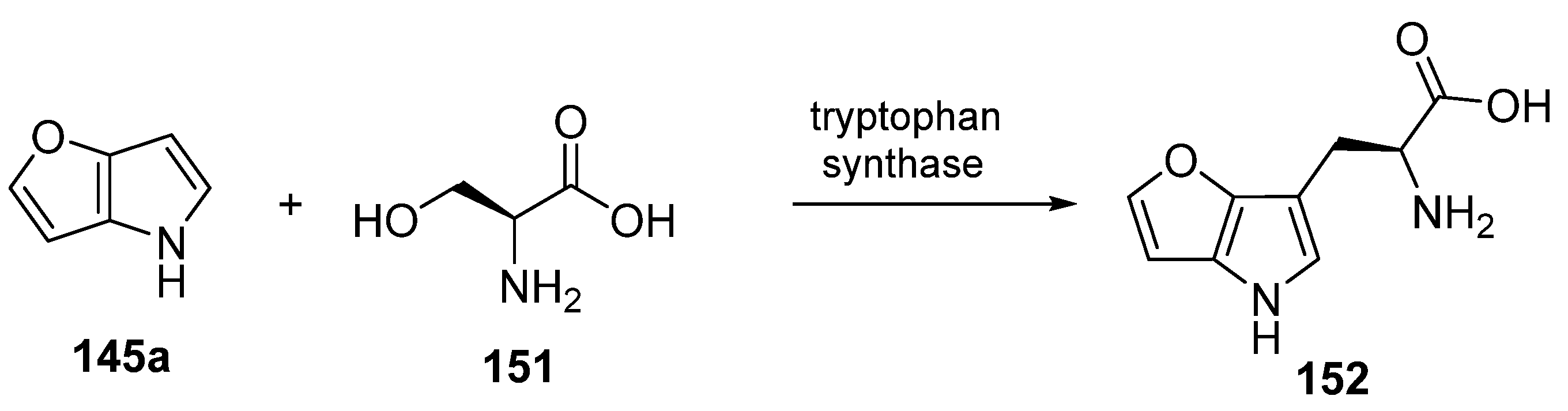
Enzymatic catalysis was applied to reactions involving selenopheno[3,2-b]pyrrole, its [2,3-b] isomer, and FP 145a as a substrate [101]. These heterocycles were incubated with pyridoxal-5′-phosphate, L-serine 151, and the enzyme Salmonella typhimurium tryptophan synthase in a potassium phosphate-buffer solution at 37 °C in the dark, giving L-alanine derivatives, including FP 152 (Scheme 46). The authors [101] noted that selenophene-containing L-tryptophan analogues may be useful in X-ray crystallographic studies of proteins, as selenium atoms can be readily distinguished from the lighter elements present in proteins.
  • Synthesis of BODIPY and related fluorescent dyes
Organic fluorescent dyes have found widespread applications as biological probes, molecular sensors, and components of optoelectronic devices [102]. Tetracoordinate organoboron complexes BODIPY (4,4-difluoro-4-borata-3a,4a-diaza-s-indacenes) are particularly popular fluorescent dyes. Their excellent properties (intense absorption, narrow absorption and emission bands, photostability, high solubility, etc.) render them well suited for biological applications [103]. Extending the π-conjugation of BODIPY by replacing the simple pyrrole unit with a fused pyrrole moiety induces a redshift of both absorption and fluorescence maxima [104].
FP-derived BODIPY 154 and 158, termed KFL (Keio Fluors), were extensively studied by Umezawa [8,105]. Their synthesis begins from FP-5-carboxylic acids 115, which serve as precursors for the furopyrroles 145 and aldehydes 149.
The formation of both symmetrical and unsymmetrical meso-unsubstituted BODIPY dyes 154 involves the reaction of in situ-generated FP 145 with aldehydes 149 in the presence of POCl3, followed by complexation of intermediate 153. The standard procedure for BODIPY formation involves complexation using boron trifluoride etherate (BF3.Et2O) in the presence of triethylamine in toluene [8,105,106] (Scheme 47).
Precursors 156 were obtained in good yields via the decarboxylation of acid 115 using various perfluorocarboxylic acids (trifluoroacetic, pentafluoropropionic, and heptafluorobutyric acids), followed by reaction with the corresponding perfluorocarboxylic anhydride 155. Subsequent boron complexation of 156 afforded meso-perfluoroalkyl-substituted BODIPY dyes 157 [107]. The synthesis of a brominated FP-derived BODIPY 158 was achieved through aromatic electrophilic bromination using bromine with a trace of iodine (Scheme 47). Incorporation of two or four bromine atoms onto the FP- and thienopyrrole-modified BODIPY cores induces a bathochromic shift towards the near-infrared (NIR) region [108].
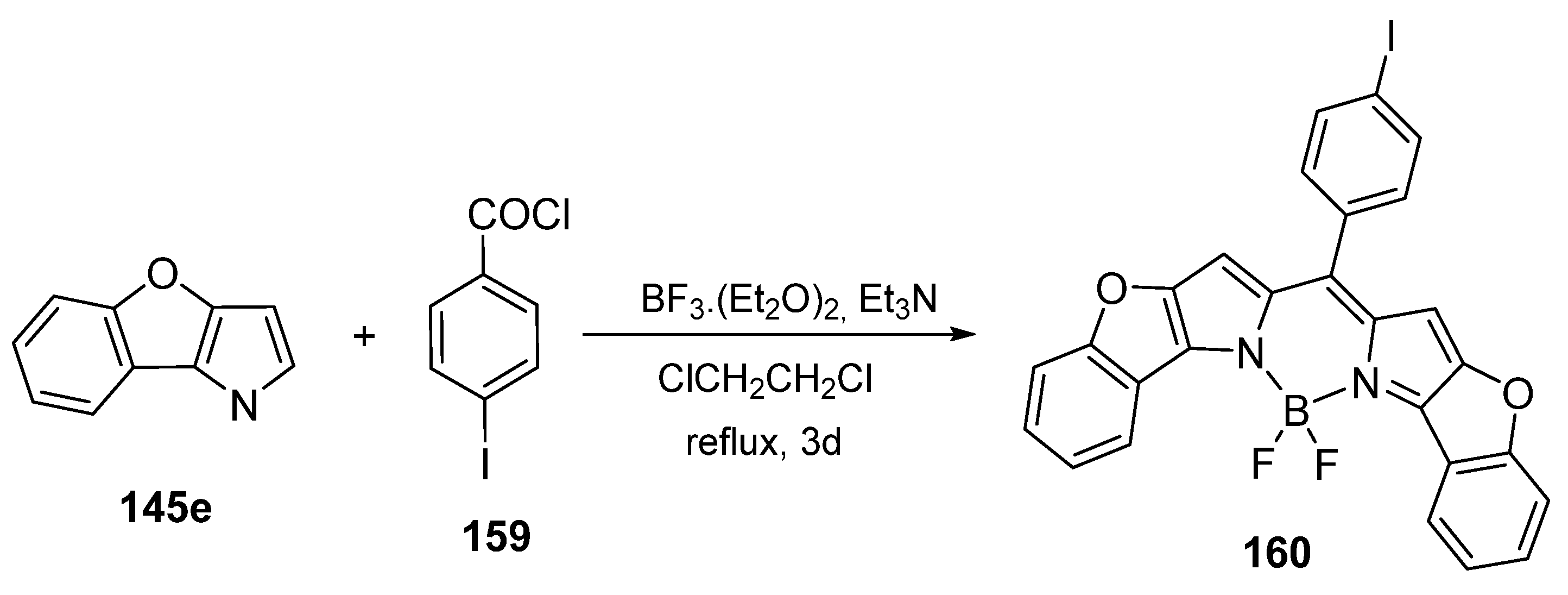
Meso-substituted BODIPY can be synthesised from FP 145 and acyl chlorides. Chen et al. [109] developed a series of BODIPY dyes with extended conjugation and restricted bond rotations. Their rigid conformations, imposed by heteroatom-bridge linkers, result in more intense absorption and fluorescence at longer wavelengths compared with flexible structures. Among these, the benzofuro[3,2-b]pyrrole-derived dye 160 was synthesised via the initial condensation of 4-iodobenzoyl chloride 159 with FP 145e, followed by the standard boron complexation procedure. (Scheme 48).
The KFL dyes exhibit broad fluorescence spectra [8,110]. The parent KFL dye 154a (R = H) shows a bright emission at 583 nm, with a notable redshift and sharp spectral bands. Incorporation of a strong electron acceptor (e.g., CF3) at the meso site and an electron donor (e.g., 4-MeO-C6H4) at the furo site shifts the spectral wavelengths into the NIR region. Variation in electron-donating groups on the furan rings of the KFL dyes enables fine-tuning of absorption and emission maxima, rendering these far-red and NIR BODIPY-based probes particularly suitable for cell imaging and bio-labelling applications [110].
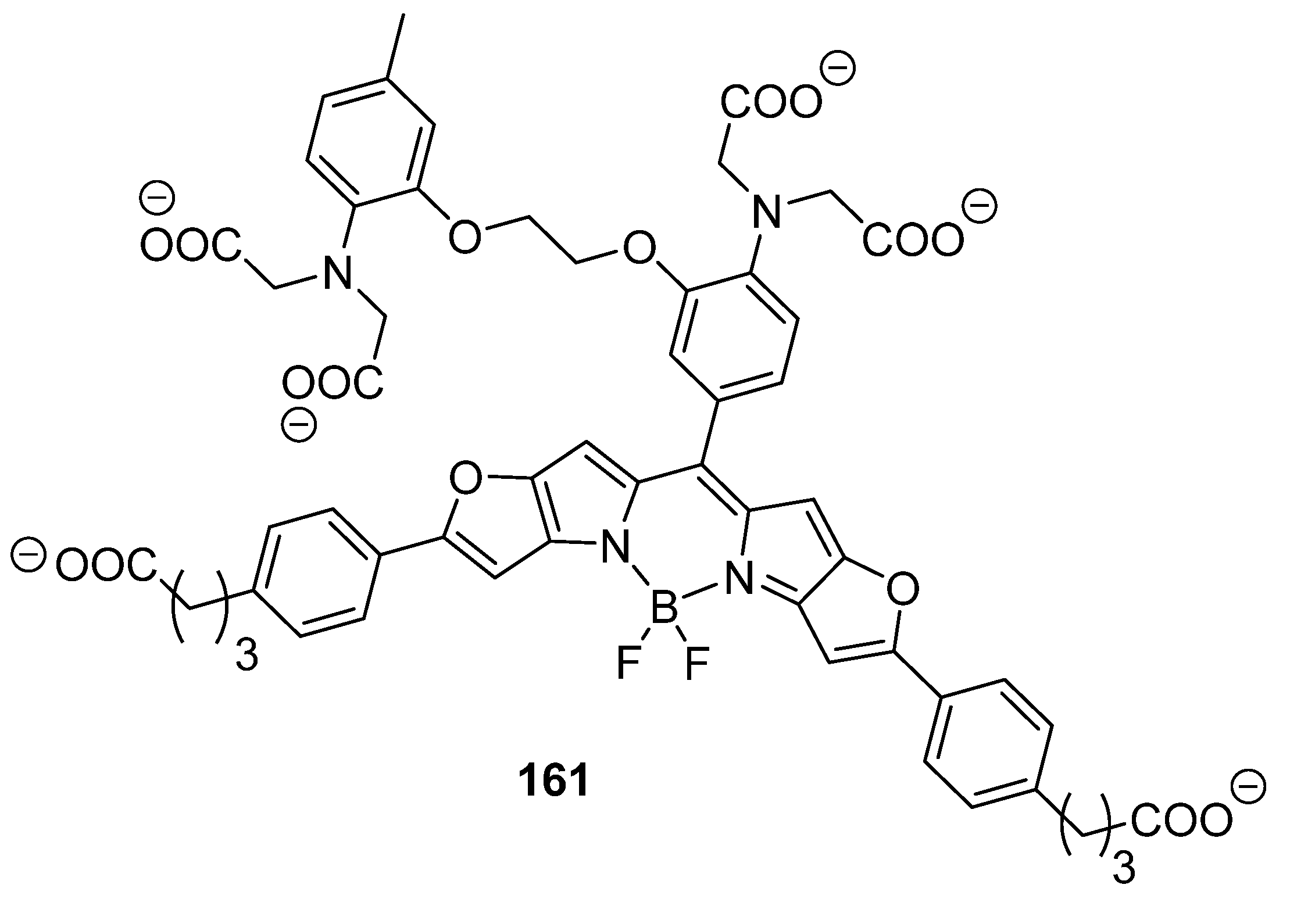
Matsui et al. [111] introduced a new near-infrared (NIR) fluorescent probe 161, termed KFCA (Figure 4). Based on Keio Fluors and designed for advanced Ca2+ detection, KFCA is a promising tool for Ca2+ imaging applications. The probe incorporates the well-known Ca2+-chelating moiety BAPTA (O,O′-bis(2-aminophenyl)ethyleneglycol-N,N,N′,N′-tetraacetic acid) attached at the meso site, enabling selective Ca2+ recognition and binding.
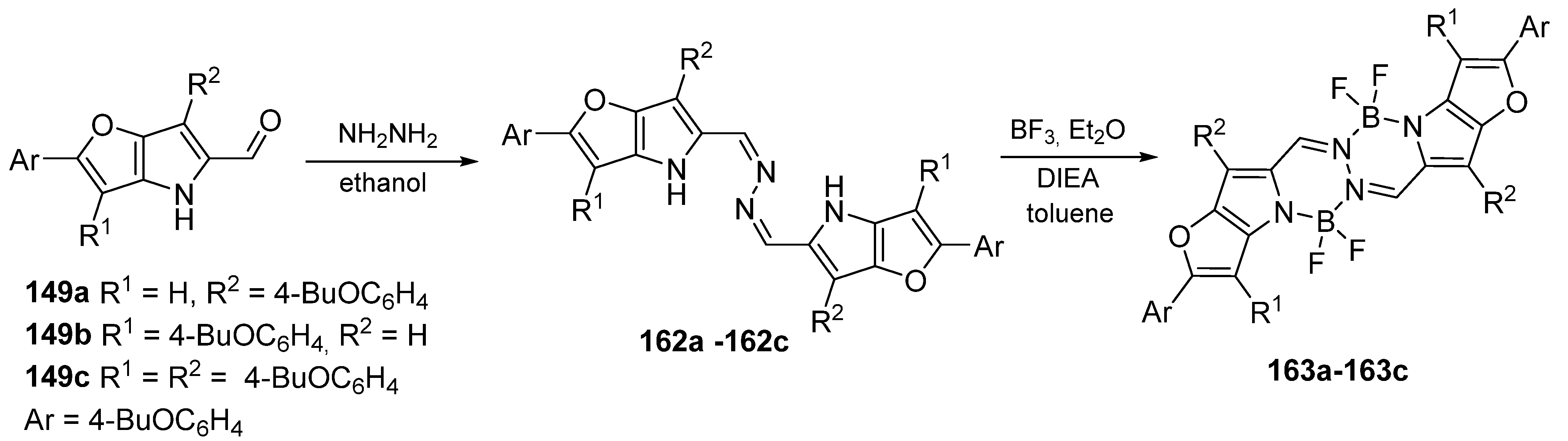
The dyes F-BOPHY1–3 163 (Scheme 49) were synthesised from aldehydes 149, which readily react with hydrazine to yield dimeric hydrazones 162. The target dyes 163 were subsequently prepared via standard boron complexation of 162 [74]. Dyes 163 exhibit excellent optical properties, displaying strong absorption and emission in solution.
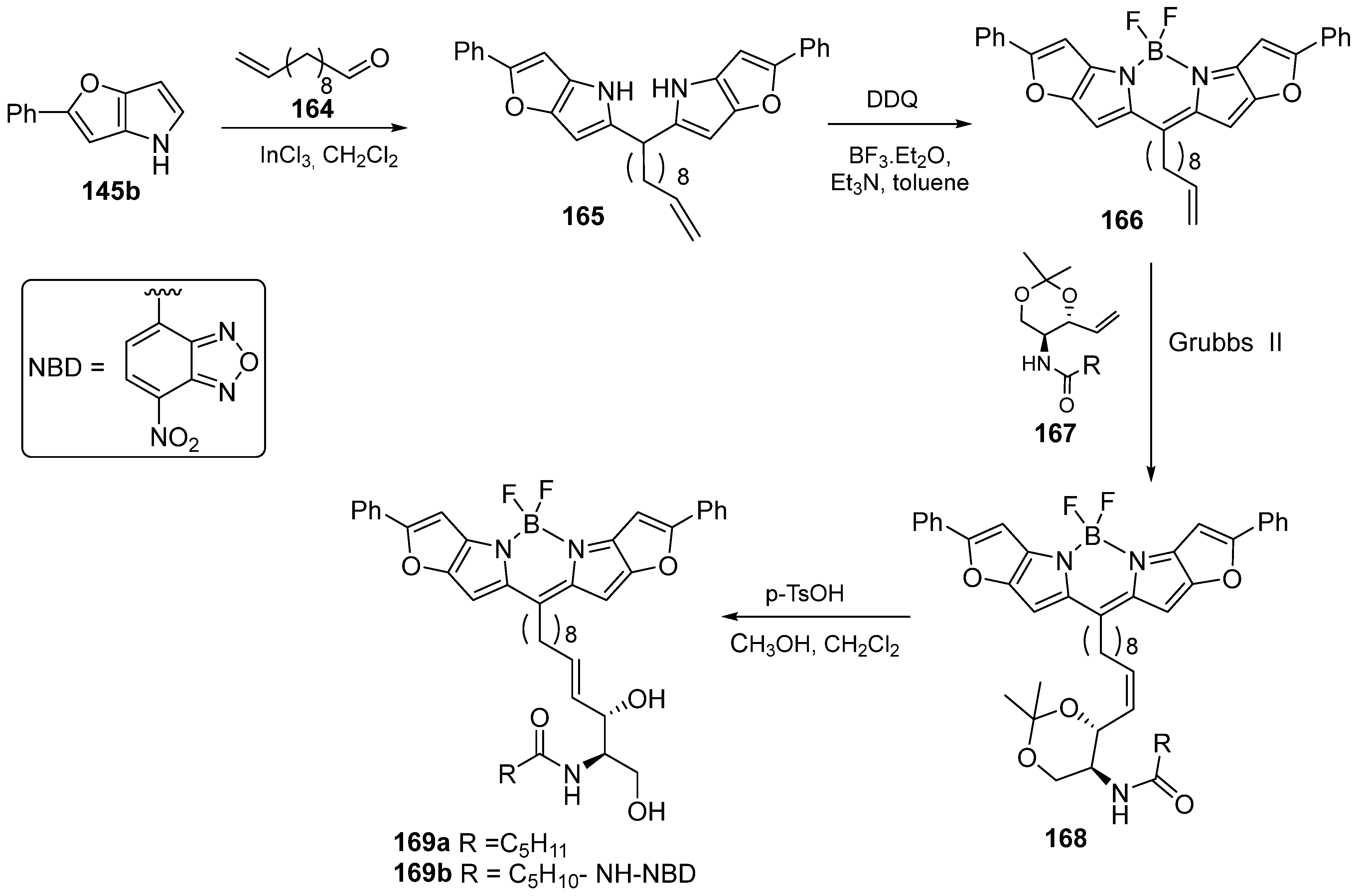
The singly labelled fluorescent ceramide probe 169a and its dual-labelled analogue 169b were synthesised via a multi-step pathway [112]. Compound 169b contains two fluorescent moieties: a 4-nitrobenzo[c][1,2,5]oxadiazol-7-yl group (NBD) in the N-acyl part and KFL5 (154, R = Ph) attached to the alkyl part. The synthesis of 1-decene-KFL5 166 begins with the indium-catalysed condensation of FP 145b and undecenal 164 to afford intermediate 165. A subsequent two-step process—oxidation with DDQ (2,3-dichloro-5,6-dicyano-p-benzoquinone) followed by boron complexation—transforms 165 into 166.
The synthesis of derivative 169a (R = C5H11) proceeds from 166 via cross metathesis with N-acylated alkenes 167 (synthesised in four steps) to yield intermediate 168. The dual-labelled ceramide probe 169b (R = C5H10NH-NBD) was synthesised following the same pathway (Scheme 50). Probe 169b was designed for convenient monitoring of sphingolipid metabolism in cells. Ceramide, a core component of sphingolipids, plays a key role in their metabolism, undergoing transformation into numerous metabolites.

4.9. Cyclisations of FPc

Cyclisations within the FP core, enabled by two suitably positioned reactive groups, give rise to tricyclic systems. The first established approach employs an ortho-nitrophenyl substituent, attached either at C-2 or at N-4 of the FP core. The nitro-group can subsequently be reduced to an amine [45,54] or converted into a nitrene intermediate [88]. This methodology allows the formation of nitrogen heterocycles ranging from five- to seven-membered rings, with the ring size dictated by the position of the ortho-nitrophenyl substituent.
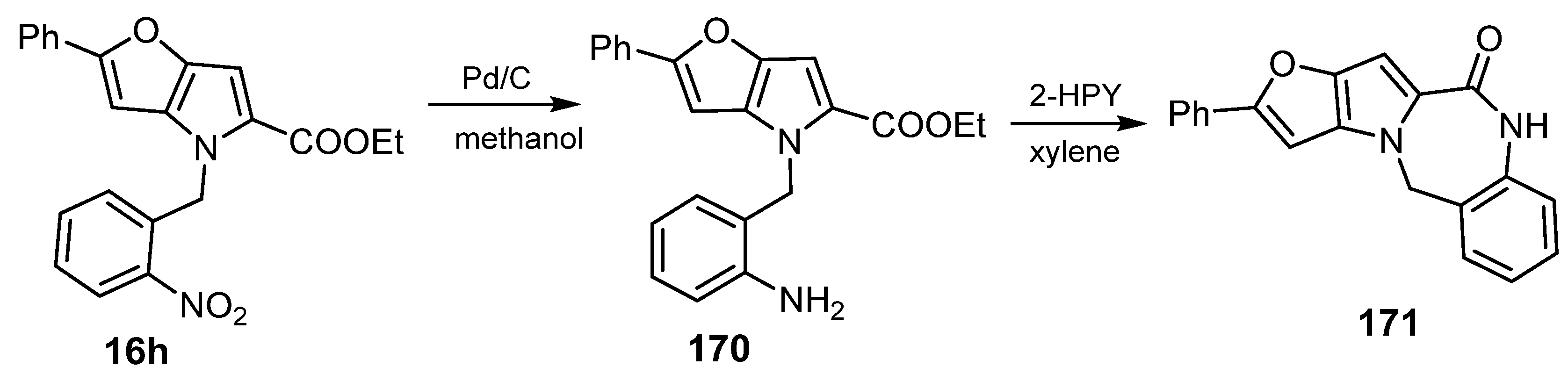
4-(2-Nitrobenzyl)-FPc 16h (Table 1, entry 4) was reduced to the corresponding amino derivative 170 by hydrogenation over palladium on charcoal in methanol. Subsequent cyclisation of 170 in 2-hydroxypyridine (2-HPY)/xylene afforded diazepin-2-one 171 in high yield [45] (Scheme 51).
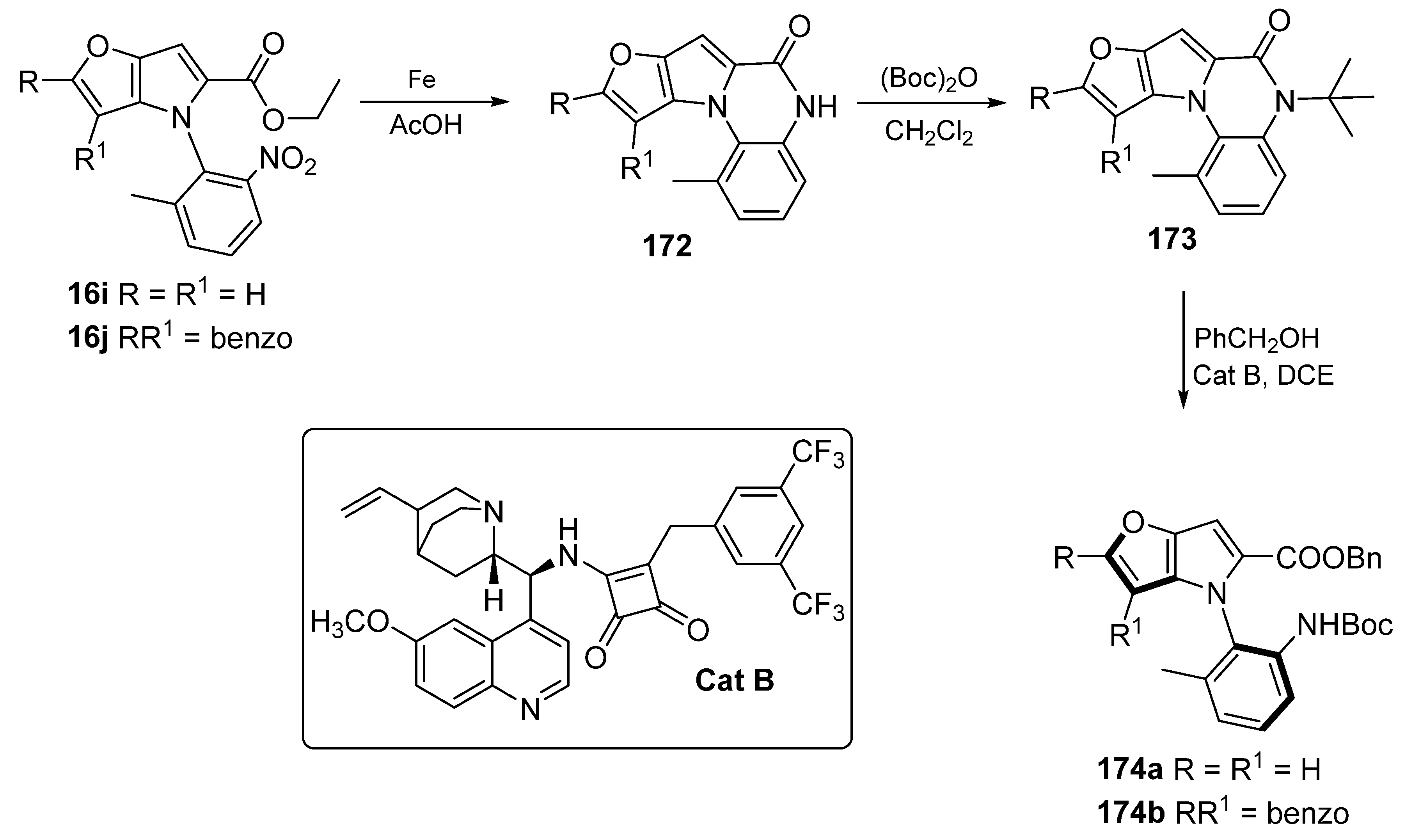
A similar synthetic strategy was reported by Hong et al. [54]. 6-Nitrophenyl-FPc 16i or its benzo analogue 16j (Table 1, entry 13) readily underwent concomitant reduction and cyclisation with iron powder in acetic acid, affording quinoxalin-6(5H)-ones 172 in high yields. Subsequent reaction of 172 with di-tert-butyl dicarbonate (Boc2O), 4-(dimethylamino)pyridine (DMAP), and triethylamine yielded the tert-butyl derivatives 173. The final lactam ring opening was carried out with benzyl alcohol in dichloroethane (DCE) in the presence of 3-(3,5-bis(trifluoromethyl)benzyl)-4-(((1S)-(6-methoxyquinolin-4-yl)((2S)-5-vinylquinuclidin-2-yl)methyl)amino)cyclobut-3-ene-1,2-dione, referred to as “catalyst B” (Cat B). The axially chiral benzyl (S)-4-(2-((tert-butoxycarbonyl)amino)-6-methylphenyl)-FPcs 174a and 174b were obtained in high yields (up to 85%) and enantioselectivity (95% ee) (Scheme 52).
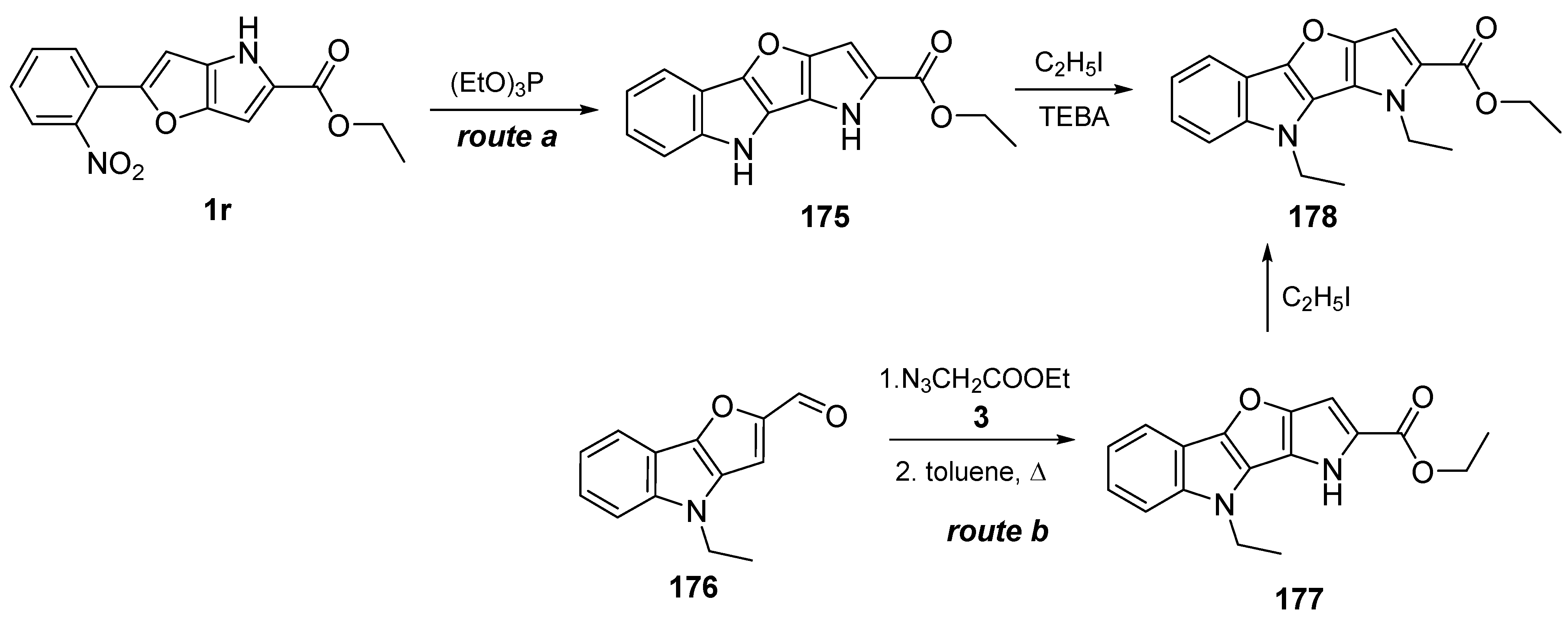
The ortho-nitrogroup of FPc 1r is suitable for the synthesis of pyrrolo[2′,3′:4,5]furo[3,2-b]indole derivative 175 via nitrene intermediate generated in situ using trivalent phosphorus [88]. Refluxing a solvent-free mixture of FPc 1r in excess triethylphosphite yielded indole-fused FPc 175. Subsequent alkylation of 175 afforded the corresponding diethyl derivative 178 (Scheme 53, route a).
An alternative synthesis of the diethyl derivative 178 involves the Hemetsberger–Knittel process (Scheme 1). This pathway commences from 4-ethylfuro[3,2-b]indole-2-carbaldehyde 176, which is converted into the ester intermediate 177. Subsequent alkylation of 177 affords the final product 178 (Scheme 53, route b).
The next synthetic strategy for constructing fused FP-derived tricyclic 5:5:6 systems is illustrated in Scheme 31 and Scheme 32. This approach is based on cyclisation of the C5-hydrazide group and the pyrrole NH group (synthesis of FP 103 or 111, Scheme 31). Alternatively, the N-4 position is first substituted with an appropriate reactive group, such as hydrazide (FP 112, Scheme 32) [10] or oxirane [50].
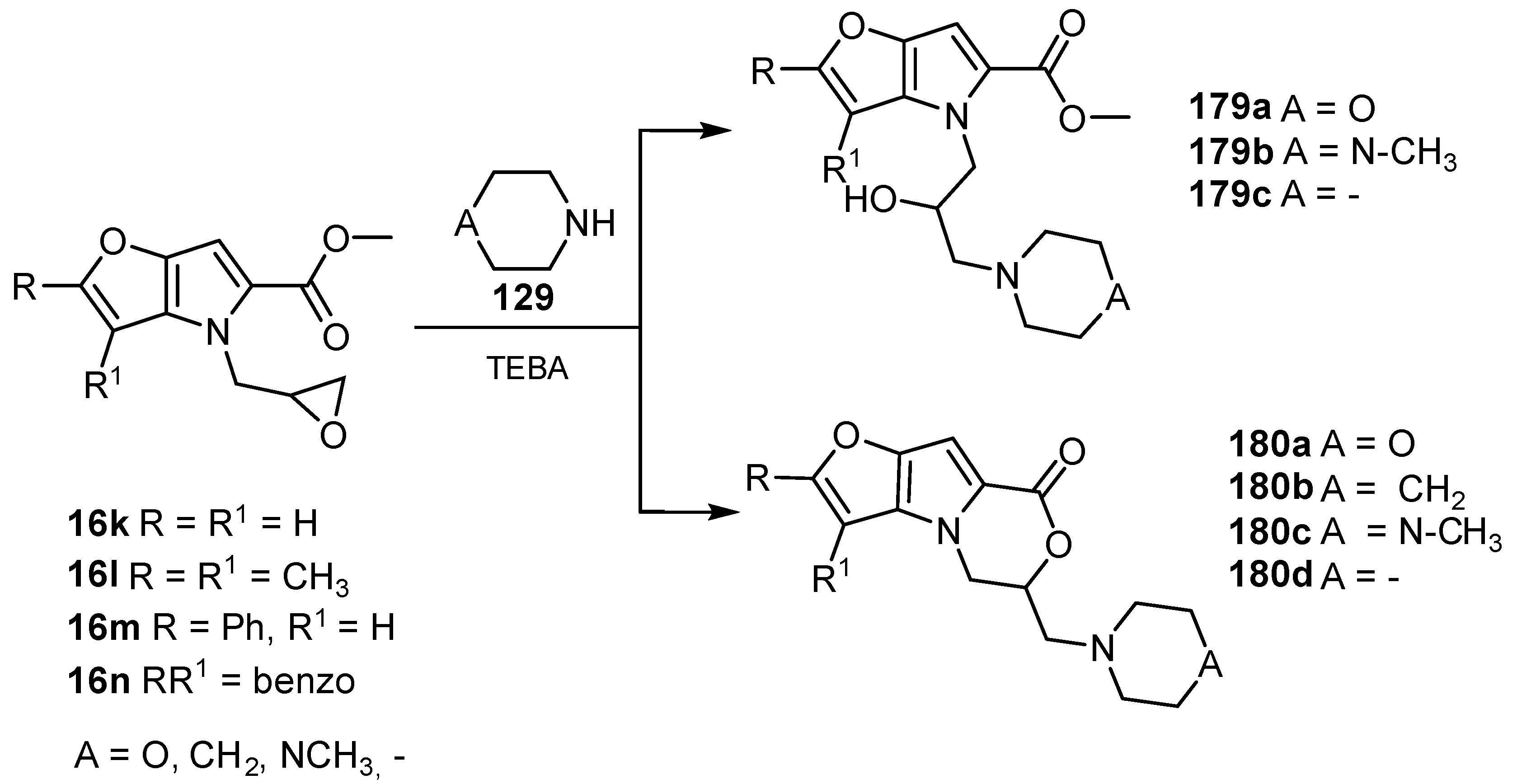
Upon reaction with heterocyclic amines 129, e.g., morpholine (129a), 4-methylpiperazine (129b), piperidine (129d), or pyrrolidine (129e), 4-oxiranylmethyl-substituted FPcs 16k16n (Table 1, entry 7) underwent oxirane ring opening, yielding two distinct products 179 and 180. Formation of 4,5-dihydrofuro[2′,3′:4,5]pyrrolo[2,1-c][1,4]oxazin-8-ones 180 occurs via an intramolecular reaction of the hydroxy and the C-5 ester groups, with elimination of methanol. The authors [50] observed that the substitution pattern of the FPcs 16 influences product formation: the unsubstituted C-2 compound 16a produced both 179 and 180 depending on the amine employed; the 2-phenyl-substituted FPc 16m predominantly afforded the oxazines 180. When both C-2 and C-3 positions were substituted (16l or 16n), only N-2-hydroxy-3-heteroaminopropyl-substituted compounds 179 were formed (Scheme 54).

4.10. Dimerisation of FPc

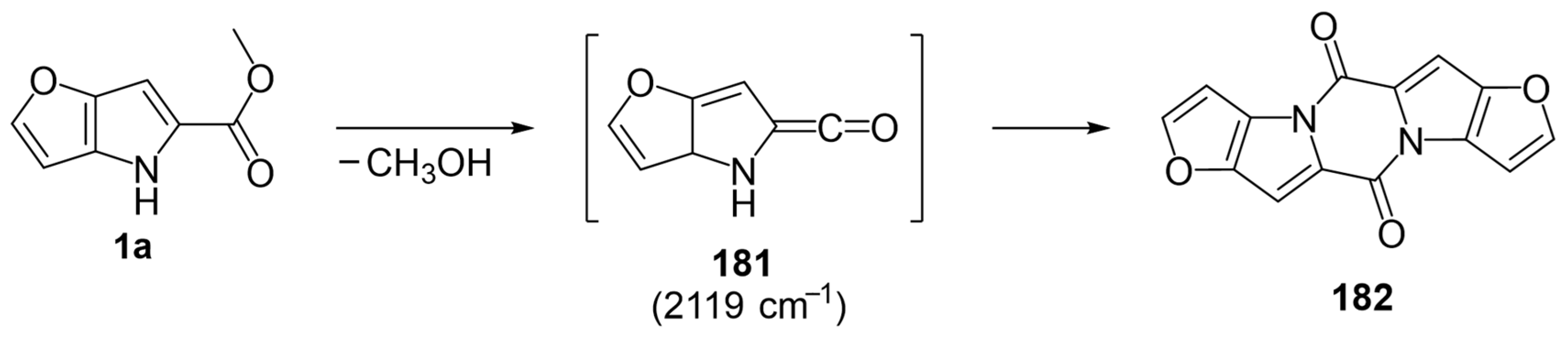
Carboxylate 1a was subjected to flash vacuum pyrolysis at 850 °C using an apparatus designed for direct, low-temperature IR spectroscopic observation of products. Pyrolysis of 1a generated the highly reactive ketene 181, which rapidly dimerised upon cooling at −100 to −80 °C, forming product 182 [113] (Scheme 55).

4.11. Reduction of FPc

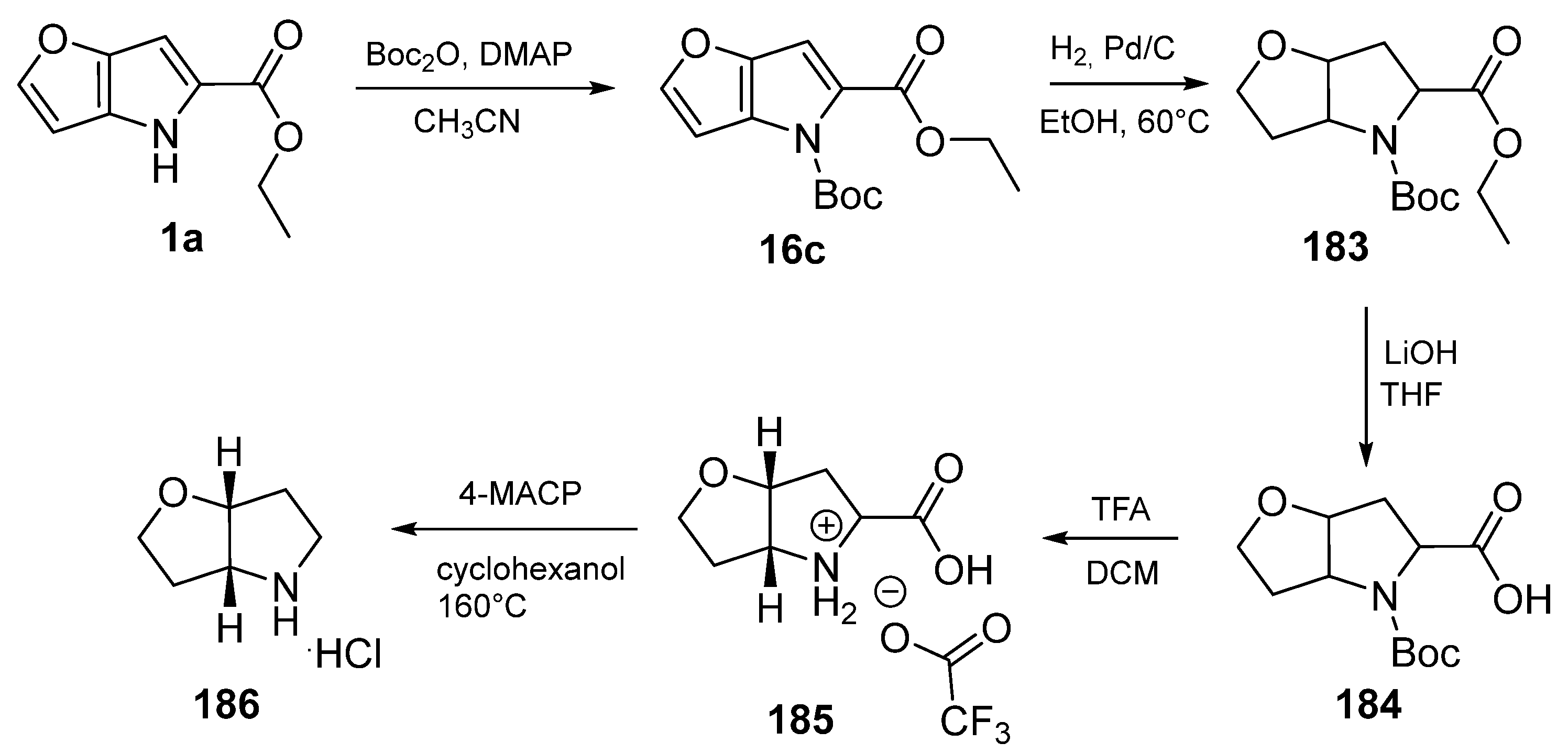
Carboxylate 1a was reduced to produce compound 186. The sequence involved protecting the NH group with di-tert-butyl dicarbonate (Boc2O)/4-dimethylaminopyridine (DMAP) in acetonitrile. Subsequent rapid hydrogenation with Pd/C in ethanol produced the ester 183, which was hydrolysed with LiOH in THF. The resulting acid 184 underwent deprotection with trifluoroacetic acid in dichloromethane to form amphion 185. Thermal decarboxylation of 185 in cyclohexanol in the presence of 4-methylacetophenone (4-MACP) afforded the desired (3aR,6aR)-hexahydrofuro[3,2-b]pyrrole isolated as its hydrochloride salt 186 [114] (Scheme 56). Compound 186 represents the structural unit present in several patented antiviral agents [114,115,116].

4.12. Cycloadditions of FPcs and FPs

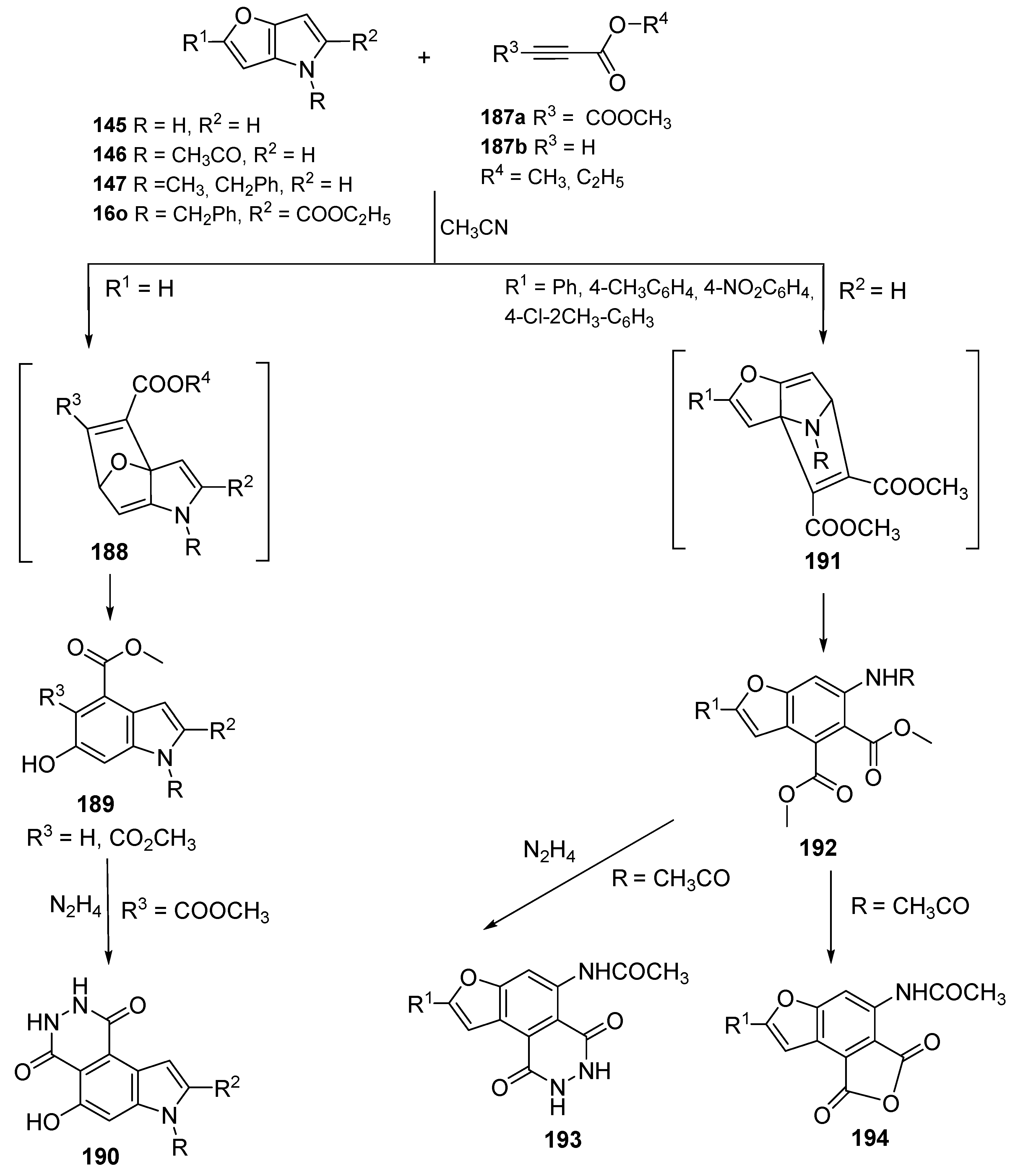
The reaction of FPs 145147 and their benzo[b] analogues with but-2-ynedioate 187a and prop-2-ynolate 187b in acetonitrile was investigated. The reaction proceeds via either a [4+2] cycloaddition or a Michael addition, with the pathway dictated by the FP substituents [99,117,118]. Cycloaddition selectivity is controlled by the C-2 position: unsubstituted FPs (R1 = H) undergo cycloaddition at the furan ring to form indoles 189 via the intermediate 188 [117], whereas cycloaddition occurs at the pyrrole ring, forming benzofurans 192 via intermediate 191, when the C-2 carbon of the starting FP is substituted (R1 = aryl) [99,118] (Scheme 57).
Furo[3,2-b]pyrroles 145 and 146 and esters 1 and 16 underwent cycloaddition with alkyne 187a in acetonitrile to yield indole-4,5-dicarboxylates 192 over a period ranging from 1 h to 2 weeks. High regioselectivity was observed when the asymmetric alkyne 187b was used. Reactions of 4-acetyl-FP 146 or 4-benzyl-FPc 16o exclusively afforded 6-hydroxyindole-4-carboxylates 189 (R3 = H) after extended reaction times (Scheme 57).
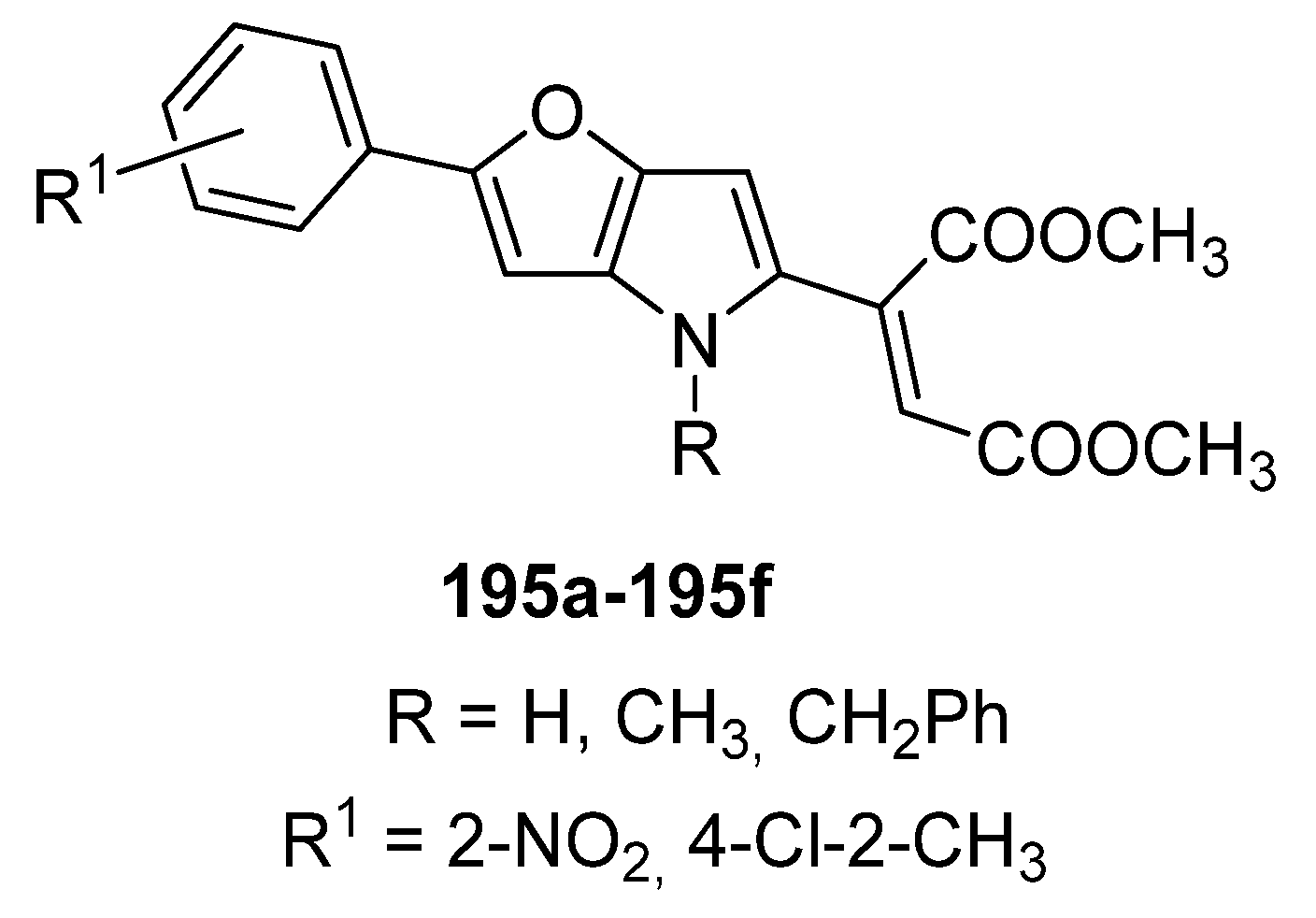
Refluxing 2-aryl-FPs 145 (Ar = Ph, 4-CH3-C6H4, 2-NO2-C6H4, 4-Cl-2-CH3-C6H3O) and their N-substituted analogues 146 (COCH3) and 147 (CH3, CH2Ph) with alkyne 187a in acetonitrile yielded two distinct product types depending on the N-4 substitution. 4-Acetyl-FP 146 furnished benzo[b]furans 191 in low yields. In contrast, unsubstituted FP 145 and N-methyl or N-benzyl-FP 147 preferentially underwent Michael addition at the C-5 carbon, forming products 195 (Figure 5) in slightly higher yields [99,118].
The vicinal carbonyl groups of 6-acetamino-substituted indole 189 or benzo[b]furan 192 reacted with hydrazine hydrate in ethanol, affording diazines 190 or 193. Alkaline hydrolysis of the ester groups of 192 resulted in the formation of a fused dihydrofuran ring system 194 in varying yields [99,117] (Scheme 57).
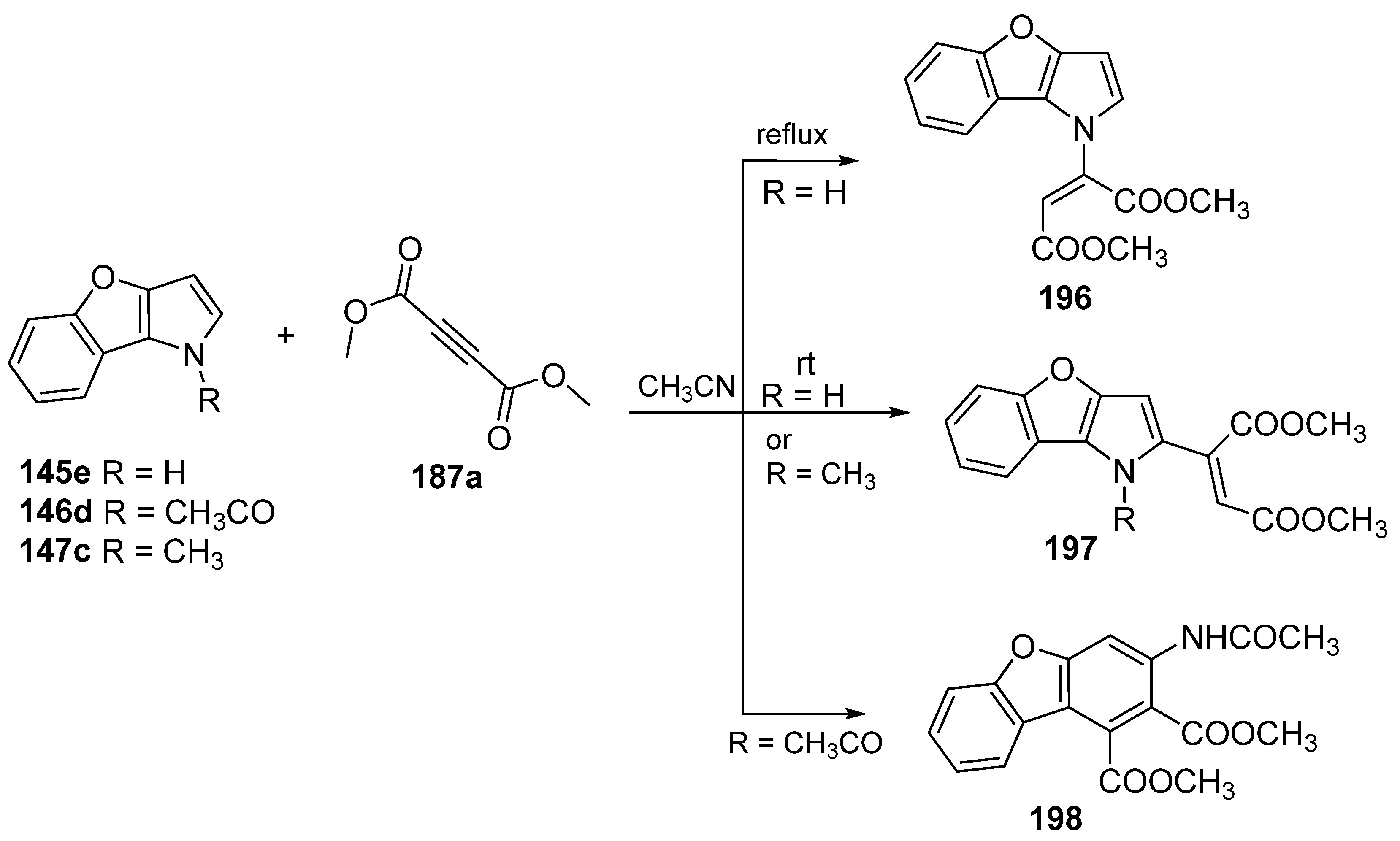
The benzo[b]furo[3,2-b]pyrrole system typically undergoes Michael addition with dimethyl but-2-ynedioate 187a rather than cycloaddition [117]. The reaction temperature influenced the product distribution: when the reaction of 145e was carried out at room temperature, the 2-addition product 197 was obtained. The N-substituted product 196 was formed either by heating 145e or by using N-methyl-FP 147c as the reagent. Formation of the cycloaddition product 198 was specific to the N-acetyl-substituted reagent 146d, which can be rationalised by the diene character of the pyrrole ring, enhanced through conjugation of the acetyl group with the FP π-electron system (Scheme 58).

4.13. Borylation of FPc and Subsequent Arylation

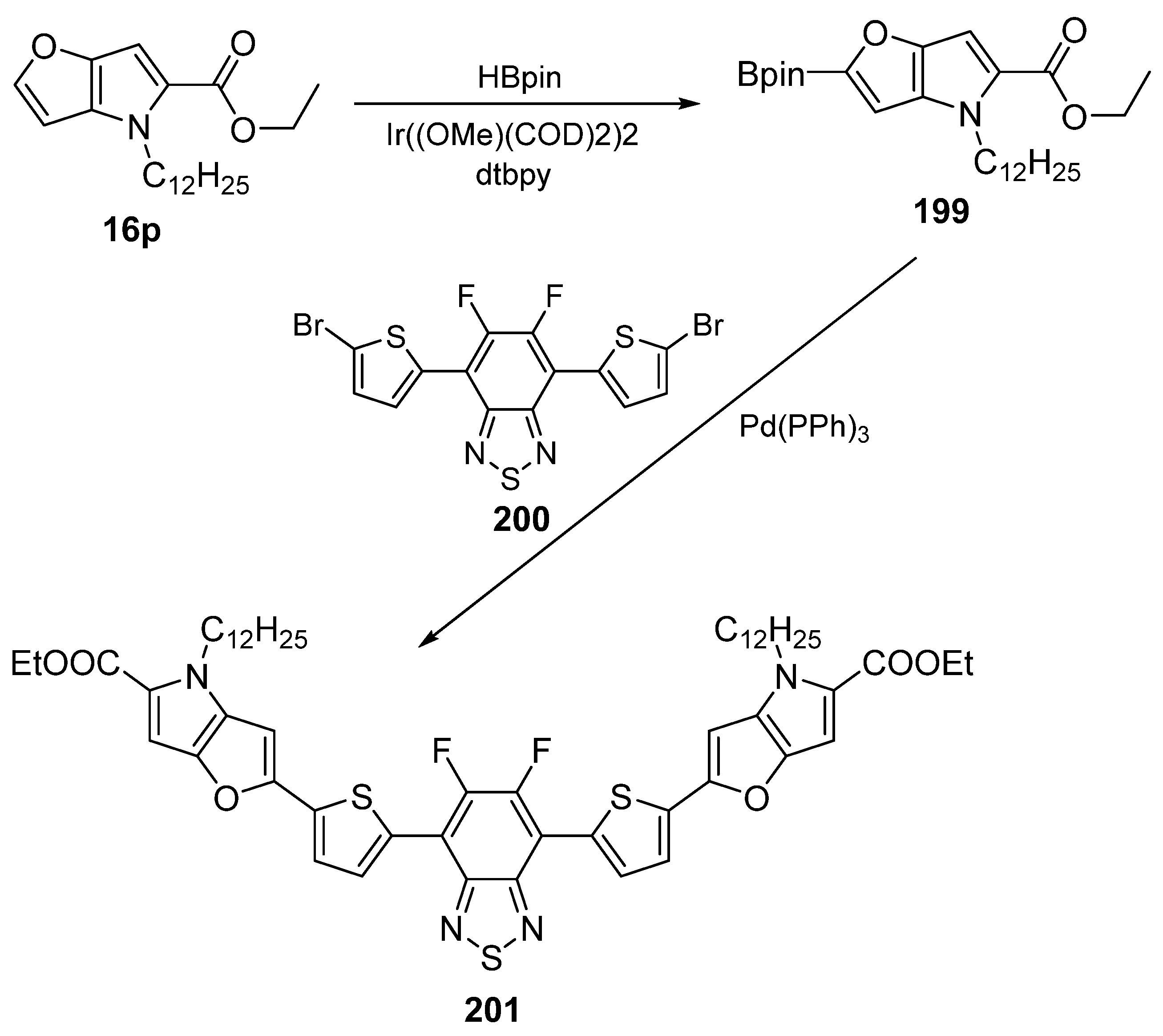
The S,N- and O,N-heteroacenes were investigated for use in organic field-effect transistors (OFETs). Molecules with terminal thieno- or furo[3,2-b]pyrrole moieties linked by a central 5,6-difluorobenzo[c][1,2,5]thiadiazole were synthesised. The FPc-containing molecule 201 exhibited enhanced absorption in the NIR I and NIR II regions and was identified as a promising low bandgap semiconductor [53].
The target FP-FBT2T-FP derivative 201 was synthesised via a three-step process [53]. 4-Dodecyl-FPc 16p was first prepared (see Table 1, entry 12) and then borylated using pinacolborane in the presence of 4,4′-di-tert-butyl-2,2′-dipyridyl (dtbpy) and Ir[(μ2-OMe)(COD)]2 in dry hexane. The resulting 2-borylated FPc 199 underwent a Suzuki cross-coupling reaction of 199 with dibromide 200 in the presence of Pd(PPh3)4 and sodium carbonate in THF, yielding product 201 (Scheme 59).

4.14. Claisen-Type Condensation of FPc and Subsequent Reactions

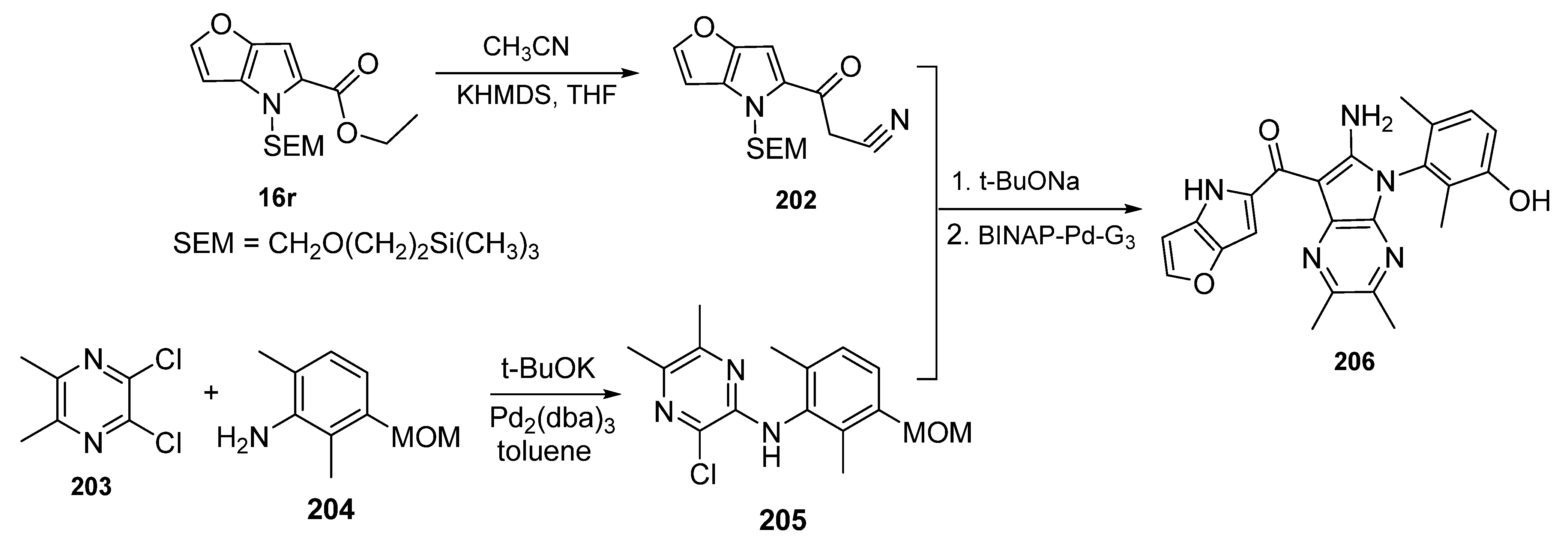
As part of research on enzyme inhibitors [55], four novel FPc derivatives 206 were synthesised starting from 4-((2-(trimethylsilyl)ethoxy)methyl)-FPc 16r (see Table 1, entry 14). Compound 16r was converted into nitrile 202 via a Claisen-type condensation with acetonitrile in tetrahydrofuran, using potassium bis(trimethylsilyl)amide (KHMDS) as the base.
The pyrrolo[2,3-b]pyrazine scaffold of 206 was subsequently formed via initial treatment of nitrile 202 with sodium tert-butoxide (t-BuONa) in dioxane, followed by heating the resulting anion with 3-chloro-2-(N-arylamino)pyrazine 205 under rac-BINAP-Pd-G3 catalysis. Reagent 205 was synthesised by the reaction of dichloropyrazine 203 with the appropriate aniline 204, potassium tert-butoxide (t-BuOK), and Pd2(dba)3 in toluene (Scheme 60).

5. Biological Activity of Furo[3,2-b]pyrrole Derivatives

Furo[3,2-b]pyrrole derivatives represent an important scaffold for numerous biologically active molecules. Various FPs exhibit potent activity, most notably as enzyme inhibitors. Their antiviral or antibacterial activities have also been evaluated, often with significant results.

5.1. Inhibitory Activity

Enzyme inhibitors are used in medicine to treat specific diseases by interacting with enzymes to block their normal function. Each inhibitor is typically specific to a single enzyme, which is either essential for the life cycle of a pathogen or, in the case of a human enzyme, exhibits abnormal activity. Furo[3,2-b]pyrrole derivatives have been screened for inhibitory activity against various enzymes, with carboxylic acids and amides identified as the most promising inhibitors.
D-amino acid oxidase (DAAO) is responsible for the degradation of D-amino acids in the brain, including the neurotransmitter D-serine, and its activity has been linked to certain neurodegenerative diseases. As noted [9], FP-5-carboxylic acid 115a (Scheme 33) has been identified as a potent DAAO inhibitor. Further studies [87] revealed that 115a may be effective in managing chronic neuropathic and inflammatory pain in rat models due to its DAAO inhibitory activity. Research [9] indicates that the inhibitory potency of heteropentalenes is influenced by structural modifications of the core or by substitution patterns. Replacement of the furan ring of FP with thiophene or thiazole is generally tolerated, whereas its replacement with azole heterocycles (oxazole, thiazole, or pyrazole) typically results in a significant or complete loss of inhibitory activity. Likewise, the substituents on the furan or thiophene ring often reduce potency, limiting the potential for modification of the core structure.
The search for novel DAAO inhibitors has also included halogenated FP derivatives or FP-amides. Fluoro-substituted FPcs 87 and 88 (Scheme 25) were found to be more potent DAAO inhibitors in mice than the corresponding bromo- or iodo- derivatives [72].
Numerous FP-derived amides have been identified as potential enzyme inhibitors. Among a large series, FP-derived amide 137 (Figure 3) was evaluated for inhibitory activity against tankyrases. Tankyrases 1 and 2 (TNKS1/2) are members of the enzyme family that regulate protein activities and interactions, and TNKS1/2 inhibitors have demonstrated anticancer efficacy in mouse models [95].
Structurally distinct heteropentalene-derived N-phenylamides were evaluated for their inhibitory activity against histone lysine demethylase KDM1A/LSD1, a potential therapeutic target in oncology. N-phenylamide 126a (Scheme 37) exhibited modest inhibitory activity (IC50 89.5 ± 6.2 µM) compared to the thieno-analogue (25.7 ± 3.4 µM) but was more potent than other heteropentalenes screened [42]. The sulfonamides 126b (Scheme 37) were evaluated for their inhibitory activity against four human carbonic anhydrase (hCA) isoforms. All compounds exhibited activity against isozyme I (hCA I), with thieno- derivatives exhibiting superior potency [92].
The therapeutic potential of selected Ugi products 144 (Scheme 42) for Hao-Fountain syndrome was recently investigated [119]. Studied compounds 144 are presumed to act via activation of ubiquitin-specific peptidase 7 (USP7), the deficiency of which is implicated in autism spectrum disorders and other neurodevelopmental conditions. (Scheme 42).
Protein kinase, membrane associated tyrosine/threonine 1 (PKMYT1), functions as a key regulator of the cell cycle and DNA damage repair in cancer cells. Its inhibition may induce cell death, thereby suppressing cancer cell activity. FP-derivative 206 (Scheme 60) was screened within a library of structurally related pyrrolo[2,3-b]pyrazines, all of which exhibited potent inhibitory activity [55].

5.2. Antiviral Activity and Cytotoxicity

The discovery of novel antiviral agents remains a major objective in medicinal chemistry due to the threat posed by often lethal viral infections. Cytotoxic compounds are extensively employed in the treatment of cancer. FP-derived amides 139 (Scheme 39) were screened for cytotoxicity against human gastric NCI-N87 and human ovarian SK-OV3 cancer cell lines; however, they exhibited only modest activity [96].
Screening for cytotoxicity and antiviral activity against the mosquito-borne Chikungunya virus indicated that while thienopyrrole derivatives are potent antivirals, two FP compounds 141 (Scheme 40) retained potency (EC50 = 6 and 2 μM) and showed improved cytotoxic profiles (CC50 = 22 and 37 μM) relative to analogous thienopyrroles (EC50 = 7 and 3 μM, CC50 = 19 and above 100 μM) [97].
The antiviral activity of a series of fused pyrroles against filoviruses was recently investigated [98]. The filoviridae family encompasses highly pathogenic human viruses. In this study, novel FP-derived amides were tested against Ebola, Sudan, and Marburg viruses. Among these, the most potent inhibitor was [4-[(4-chlorophenyl)methyl]-4H-furo[3,2-b]pyrrol-5-yl][4-(dimethylamino)-1-piperidinyl]methanone 130c (Scheme 41), with an EC50 of 1.05 μM against Ebola virus and an EC50 of 0.50 μM against Sudan virus.

5.3. Antiplasmodial Activity

The ability of compounds to act against Plasmodium species is crucial for malaria treatment. A series of diverse amide derivatives based on the 1-(aminomethyl)-2-benzyl-2-azabicyclo[2.1.1]hexane scaffold were evaluated for antimalarial activity using a 3D7 SYBR Green I in vitro assay. Among the derivatives tested, compound 136 (Figure 3) exhibited activity with an IC50 of 11 μM [94].

5.4. Antibacterial Activity

The search for novel antibacterial agents is enhanced by the growing resistance of bacterial strains to existing antibiotics. The antibacterial activity of diesters 16e16g (Scheme 32) and dihydrazides 112a112c was evaluated against Escherichia coli CCM 7929 and Micrococcus luteus CCM 732. Compound 16g displayed antibacterial activity comparable to the standard 6-aminopenicillanic acid (6-APA) against both strains. Furthermore, the dihydrazide 112c (2-CH3OC6H4) proved more potent than 6-APA, with MIC 3.84 and 5.12 mM. Carboxylic acid 115d (R1 = Ph3C) (Scheme 33) exhibited notable antibacterial activity with MIC values in the micromolar range (0.16 mM) against E. coli and below 0.1 mM against M. luteus, significantly surpassing the 6-APA standard (MIC 3.84 and 5.12 mM) [10].

6. Conclusions and Future Perspectives

This review provides a comprehensive overview of the synthesis, properties, reactions, and applications of furo[3,2-b]pyrrole derivatives. The discussed furo[3,2-b]pyrroles are readily accessible via the Hemetsberger–Knittel reaction and serve as versatile synthons, offering five potential reaction sites. This versatility enables the construction of diverse heterocyclic libraries, from simple FP derivatives through the core substitutions to complex molecules incorporating the FP structural unit.
Furo[3,2-b]pyrroles are particularly important in applied sciences, serving as components of optoelectronic materials and as structural motifs in organoboron fluorescent probes, such as Keio Fluors, due to their unique electronic properties. Beyond materials science, many FP derivatives exhibit promising biological activities, rendering them attractive candidates for pharmacological research. Notably, furo[3,2-b]pyrrole-5-carboxylic acid exhibits significant D-amino acid oxidase (DAAO) inhibitory activity, positioning it as a potential lead compound for therapeutics targeting neurological disorders such as schizophrenia. The pharmacological relevance of FP derivatives is further demonstrated by their significant antiviral, antimicrobial, or cytotoxic activities.
The significance of furo[3,2-b]pyrroles is also reflected in numerous patents covering their synthesis, derivatization, and applications, highlighting industrial interest. Future research directions include the development of novel synthetic pathways for appropriately functionalised FP derivatives, guided by structure-activity relationship (SAR) studies for pharmacologically relevant compounds and drug candidates. A second research focus involves exploring the optoelectronic, fluorescent, and sensor applications of FP derivatives. In particular, functionalised FPs could serve as scaffolds for next-generation organic semiconductors or bioactive probes, potentially leading to innovative materials. In conclusion, furo[3,2-b]pyrroles represent a highly versatile and biologically relevant heterocyclic scaffold. Continued research is likely to yield novel FP derivatives with substantial pharmacological potential and/or optoelectronic properties.

Funding

This research was funded by The Slovak Research and Development Agency, project No. APVV-24-0180.

Data Availability Statement

Not applicable.

Conflicts of Interest

The author declares no conflicts of interest.

References

  1. Ramsden, C.A. Mesomeric betaine derivatives of heteropentalenes. Tetrahedron 1977, 33, 3193–3202. [Google Scholar] [CrossRef]
  2. Krutošíková, A. Bicyclic 5-5 Systems: Two heteroatoms. In Comprehensive Heterocyclic Chemistry II, 1st ed.; Katrizky, A.R., Reeds, C., Scriven, E.F.V., Eds.; Elsevier: Amsterdam, The Netherlands, 1996; Volume 7, pp. 1–47. [Google Scholar]
  3. Stecko, S.; Gryko, T.G. Multifunctional Heteropentalenes: From Synthesis to Optoelectronic applications. J. Am. Chem. Soc. 2022, 2, 1290–1305. [Google Scholar] [CrossRef] [PubMed]
  4. Tokárová, Z.; Gašparová, R.; Kabaňová, M.; Gašparová, M.; Balogh, R. Hemetsberger–Knittel and Ketcham Synthesis of Heteropentalenes with Two (1:1), Three (1:2)/(2:1) and Four (2:2) Heteroatoms. Reactions 2023, 4, 254–273. [Google Scholar] [CrossRef]
  5. Jones, C.; Boudinet, D.; Xia, Y.; Denti, M.; Das, A.; Facchetti, A.; Driver, T.G. Synthesis and Properties of Semiconducting Bispyrrolothiophenes for Organic Field-Effect Transistors. Chem. Eur. J. 2014, 20, 5938–5945. [Google Scholar] [CrossRef]
  6. Deng, H.; Hu, J.; Hu, H.; He, M.; Fang, Y. Thieno [3,2-b]thiophene-2-carboxylic acid derivatives as GPR35 agonists. Bioorg. Med. Chem. Lett. 2012, 22, 4148–4152. [Google Scholar] [CrossRef]
  7. Ching, K.-C.; Kam, Y.-W.; Merits, A.; Ng, L.F.P.; Chai, C.L.L. Trisubstituted thieno [3,2-b]pyrrole 5-carboxamides as potent inhibitors of alphaviruses. J. Med. Chem. 2015, 58, 9196–9213. [Google Scholar] [CrossRef]
  8. Umezawa, K.; Matsui, A.; Nakamura, Y.; Citterio, D.; Suzuki, K. Bright, color-tunable fluorescent dyes in the VIS/NIR region: Establishment of new „Tailor-Made” multicolor fluorophores based on borondipyrromethene. Chem. Eur. J. 2009, 15, 1096–1103. [Google Scholar] [CrossRef]
  9. Sparey, T.; Abeywickrema, P.; Almond, S.; Brandon, N.; Byrne, N.; Campbell, A.; Hutson, P.H.; Jacobson, M.; Jones, B.; Munshi, S.; et al. The discovery of fused pyrrole carboxylic acids as novel, potent d-amino acid oxidase (DAO) inhibitors. Bioorg. Med. Chem. Lett. 2008, 18, 3386–3391. [Google Scholar] [CrossRef]
  10. Gašparová, R.; Boháč, A.; Maliar, T.; Kraic, F.; Addová, G. Synthesis and antibacterial activity of furo [3,2-b]pyrrole derivatives. Arkivoc 2017, 204–215. [Google Scholar] [CrossRef]
  11. Féher, D.; Barlow, R.; McAtee, J.; Hemscheidt, T.K. Highly brominated antimicrobial metabolites from a Marine Pseudoalteromonas sp. J. Nat. Prod. 2010, 73, 1963–1966. [Google Scholar] [CrossRef]
  12. Kawashima, Y.; Amanuma, F.; Sato, M.; Okuyama, S.; Nakashima, Y.; Sota, K.; Moriguchi, I. Structure-Activity Studies of 4,6-Disubstituted 2-(Morpholinocarbonyl)furo [3,2-b]indole Derivatives with Analgesic and Antiinflammatory Activities. J. Med. Chem. 1986, 29, 2284–2290. [Google Scholar] [CrossRef] [PubMed]
  13. Zemanová, I.; Gašparová, R.; Kraic, F.; Kružlicová, D.; Maliar, T.; Boháč, A.; Addová, G. Synthesis of furo [2′,3′:4,5]pyrrolo [1,2-d][1,2,4]triazine derivatives and theirantibacterial activity. Arkivoc 2017, 184–193. [Google Scholar] [CrossRef]
  14. Unangst, P.C.; Carethers, M.E.; Webster, K.; Janik, G.M.; Robichaudt, L.J. Acidic Furo [3,2-b]indoles. A New Series of Potent Antiallergy Agents. J. Med. Chem. 1984, 27, 1629–1633. [Google Scholar] [CrossRef] [PubMed]
  15. Hemetsberger, H.; Knittel, D. Synthese und Thermolyse von α-Azidoacrylestern. Monatsh. Chem. 1972, 103, 194–204. [Google Scholar] [CrossRef]
  16. Milkiewicz, L.K.; Parks, J.D.; Lu, T. Synthesis of a novel series of tetrasubstituted furan [3,2-b]pyrrols. Tetrahedron Lett. 2003, 44, 4257–4260. [Google Scholar] [CrossRef]
  17. Bingul, M.; Kumar, N.; StCBlack, D. The Hemetsberger reaction: A new approach to the synthesis of novel dihydroindoloindole systems. Arkivoc 2020, 16–26. [Google Scholar] [CrossRef]
  18. Bingul, M.; Arndt, G.M.; Marshall, G.M.; Cheung, B.B.; Kumar, N.; StCBlack, D. Synthesis, characterization and biological evaluation of novel dihydropyranoindoles improving the anticancer effects of HDAC inhibitors. Molecules 2020, 25, 1377. [Google Scholar] [CrossRef]
  19. Roy, P.J.; Dufresne, C.; Lachance, N.; Leclerc, J.-P.; Boisvert, M.; Wang, Z.; Leblanc, Y. The Hemetsberger–Knittel Synthesis of Substituted 5-, 6-, and 7-Azaindoles Synthesis of Substituted 5-, 6-, and 7-Azaindoles. Synthesis 2005, 16, 2751–2757. [Google Scholar] [CrossRef]
  20. Ranasinghe, N.; Jones, G.B. Extending the versatility of the Hemetsberger–Knittel indole synthesis through microwave and flow chemistry. Bioorg. Med. Chem. Lett. 2013, 23, 1740–1742. [Google Scholar] [CrossRef]
  21. Shafiee, A.; Mazloumi, A.; Cohen, V.I. Selenium heterocycles. XXVIII. Synthesis of pyrrolo [3,2-d]selenazole and pyrrolo [3,2-d]thiazole. Two novel heterocycles. J. Heterocycl. Chem. 1979, 16, 1563–1566. [Google Scholar] [CrossRef]
  22. Athmani, S.; Farhat, M.F.; Iddon, B. Azoles. Part 9. Synthesis of derivatives of thieno [2,3-d]thiazole, 4H-pyrrolo-[2,3-d]thiazole, 2H-pyrazolo [3,4-d]thiazole and isoxazolo [3,4-d]thiazole from thiazolidine-2,4-dione. J. Chem. Soc. Perkin Trans. 1 1992, 973–977. [Google Scholar] [CrossRef]
  23. Eras, J.; Galvez, C.; Garcia, F. Reactivity of thienopyrroles. Synthesis of isomeric nitro and bromothienopyrroles. J. Heterocycl. Chem. 1984, 21, 215–217. [Google Scholar] [CrossRef]
  24. Welch, M.; Phillips, R.S. Improved Syntheses of [3,2-b]- and [2,3-b]-fused Selenolo- and Thienopyrroles, and of Furo [3,2-b]pyrrole. Heterocycl. Commun. 1999, 5, 305–310. [Google Scholar] [CrossRef]
  25. Jacobs, L.; Kock, C.; Taylor, D.; Pelly, S.C.; Blackie, M.A.L. Synthesis of five libraries of 6,5-fused heterocycles to establish the importance of the heterocyclic core for antiplasmodial activity. Bioorg. Med. Chem. 2018, 26, 5730–5741. [Google Scholar] [CrossRef]
  26. Roy, P.; Boisvert, M.; Leblanc, Y. Preparation of substituted 5-azaindoles: Methyl 4-chloro-1H-pyrrolo [3,2-c]pyridine-2-carboxylate. Org. Synth. 2007, 84, 262–271. [Google Scholar]
  27. Heaner, W.L., IV; Gelbaum, C.S.; Gelbaum, L.; Pollet, P.; Richman, K.W.; DuBay, W.; Butler, J.D.; Wells, G.; Liotta, C.L. Indoles via Knoevenagel–Hemetsberger reaction sequence. RSC Adv. 2013, 3, 13232–13242. [Google Scholar] [CrossRef]
  28. Gajdoš, P.; Miklovič, J.; Krutošíková, A. Reactions of 5-[3-(Trifluoromethyl)-phenyl]furan-2-carbaldehyde. Chem. Heterocycl. Compd. 2006, 42, 719–725. [Google Scholar] [CrossRef]
  29. Krutošíková, A.; Dandárová, M.; Chýlová, J.; Végh, D. Condensed O-, N-heterocycles by the transformation of azidoacrylates. Monatsh. Chem. 1992, 123, 807–815. [Google Scholar] [CrossRef]
  30. Stokes, B.J.; Dong, H.; Leslie, B.E.; Pumphrey, A.L.; Driver, T.G.J. Intramolecular C− H amination reactions: Exploitation of the Rh2 (II)-catalyzed decomposition of azidoacrylates. Am. Chem. Soc. 2007, 129, 7500–7501. [Google Scholar] [CrossRef]
  31. Das, S.K.; Das, S.; Ghosh, S.; Roy, S.; Pareek, M.; Roy, B.; Sunoj, R.B.; Chattopadhyay, B. An iron (II)-based metalloradical system for intramolecular amination of C (sp2)–H and C (sp3)–H bonds: Synthetic applications and mechanistic studies. Chem. Sci. 2022, 13, 11817–11828. [Google Scholar] [CrossRef]
  32. Baykal, A.; Plietker, B. A Bu4N[Fe(CO)3(NO)]-Catalyzed Hemetsberger–Knittel Indole Synthesis. Eur. J. Org. Chem. 2019, 2020, 1145–1147. [Google Scholar] [CrossRef]
  33. Zhao, H.; Koenig, S.G.; Dankwardt, J.W.; Singh, S.P. Practical Nonazide Synthesis of a d-Amino Acid Oxidase Inhibitor via a Sequential Erlenmeyer–Plöchl Reaction and Ligand-Free Copper(I) Amination Protocol. Org. Proc. Res. Develop. 2014, 18, 198–204. [Google Scholar] [CrossRef]
  34. Foucaud, A.; Razorilalana-Rabearivony, C.; Loukakou, E.; Person, H. [1 + 4] Cycloaddition of Isocyanides with 1-Aryl-2-nitro-1-propenes, Methyl 2-Nitro-3-arylpropenoates, and Methyl 2-Nitro-2,4-pentadienoates. Synthesis of 1-Hydroxyindoles and 1-Hydroxypyrroles. J. Org. Chem. 1983, 48, 3639–3644. [Google Scholar] [CrossRef]
  35. Lehnert, W. Knoevenagel-kondensationen mit titantetrachlorid/base—II. Tetrahedron 1972, 28, 663–666. [Google Scholar] [CrossRef]
  36. Soth, S.; Farnier, M.; Paulmier, C. Recherches en série hétérocyclique. XXIX. Sur des voies d’accès à des thiéno, sélénolo, furo et pyrrolopyrroles. Can. J. Chem. 1978, 56, 1429. [Google Scholar] [CrossRef]
  37. Alkorta, I.; Blanco, F.; Elguero, J. Heteropentalenes aromaticity. J. Mol. Struct. THEOCHEM 2008, 851, 75–83. [Google Scholar] [CrossRef]
  38. Cyrański, M.K.; Krygowski, T.M.; Krutošíková, A.; Sleziak, R. Aromaticity of dihetero analogues of pentalene dianion. X-Ray and ab initio studies of eight methyl furo [3,2-b]pyrrole-5-carboxylate derivatives and five methyl furo [2,3-b]pyrrole-5-carboxylate derivatives. Tetrahedron 2001, 57, 8867–8873. [Google Scholar] [CrossRef]
  39. Sivý, P.; Koreň, B.; Valach, F.; Krutošíková, A. Structure of a furo [3,2-b]pyrrole derivative. Acta Cryst. 1988, C44, 2032–2033. [Google Scholar] [CrossRef]
  40. Romanová, D.; Vachálková, A.; Horváthová, K.; Krutošíková, A. DC Polarographic and UV Spectrometric Studies of Substituted Furo [3,2-b]- and Furo [2,3-b]pyrroles. Collect. Czechoslov. Chem. Commun. 2001, 66, 1615–1622. [Google Scholar] [CrossRef]
  41. Gajdoš, P.; Pavlíková, S.; Bureš, F.; Krutošíková, A. 2-[3-(Trifluoromethyl)phenyl]furo [3,2-b]pyrroles: Synthesis and reactions. Cent. Eur. J. Chem. 2005, 3, 311–325. [Google Scholar] [CrossRef]
  42. Sartori, L.; Mercurio, C.; Amigoni, F.; Cappa, A.; Fagá, G.; Fattori, R.; Legnaghi, E.; Ciossani, G.; Mattevi, A.; Meroni, G.; et al. Thieno [3,2-b]pyrrole-5-carboxamides as New Reversible Inhibitors of Histone Lysine Demethylase KDM1A/LSD1. Part 1: High-Throughput Screening and Preliminary Exploration. J. Med. Chem. 2017, 60, 1673–1692. [Google Scholar] [CrossRef]
  43. Krutošíková, A.; Lácová, M.; Dandárová, M.; Chovancová, J. Effect of microwave irradiation on reaction of furo [3,2-b]pyrrole and furo [2,3-b]pyrrole-2-carbaldehydes with some active methylene compounds. Arkivoc 2000, 409–420. [Google Scholar] [CrossRef]
  44. Krutošíková, A.; Kováč, J.; Dandárová, M.; Leško, J.; Ferík, Š. Synthesis and reactions of substituted furo [3,2-b]pyrrole derivatives. Collect. Czechoslov. Chem. Commun. 1981, 46, 2564–2572. [Google Scholar] [CrossRef]
  45. Krutošíková, A.; Hanes, M. Substituted 4-Benzylfuro [3,2-b]pyrroles. Collect. Czechoslov. Chem. Commun. 1991, 57, 1487–1494. [Google Scholar] [CrossRef]
  46. Krutošíková, A.; Dandárová, M.; Alföldi, J. Substituted Vinyl Azides in the Synthesis of Condensed Nitrogen Heterocycles. Chem. Pap. 1994, 48, 268–273. [Google Scholar]
  47. Krutošíková, A.; Dandárová, M.; Bobošík, V. Derivatives of Furo [3,2-b]pyrrole. Collect. Czechoslov. Chem. Commun. 1994, 59, 473–481. [Google Scholar] [CrossRef]
  48. Krutošíková, A.; Kováč, J.; Dandárová, M.; Bobálová, M. Synthesis and reactions of substituted benzofuro [3,2-b]pyrrole derivatives. Collect. Czechoslov. Chem. Commun. 1982, 47, 3288–3296. [Google Scholar] [CrossRef]
  49. Bobošík, V.; Krutošíková, A. Synthesis of N-Phenylsulfonyl protected furo [3,2-b]pyrroles. Collect. Czechoslov. Chem. Commun. 1994, 59, 499–502. [Google Scholar] [CrossRef]
  50. Krutošíková, A.; Kryštofová-Labudová, L.; Dandárová, M. Synthesis and reactions of 4-oxiranylmethylfuro [3,2-b]pyrroles and their benzo derivatives. Chem. Heterocycl. Compd. 2001, 37, 1511–1517. [Google Scholar] [CrossRef]
  51. Ilyin, A.P.; Kobak, V.V.; Dmitrieva, I.G.; Peregudova, Y.N.; Kustova, V.A.; Mishunina, Y.S.; Tkachenko, S.E.; Ivachtchenko, A.V. Synthesis of annelated azaheterocycles containing a 5-carbamoylpyrazin-3-one fragment by a modification of the four-component Ugi reaction. Eur. J. Org. Chem. 2005, 21, 4670–4679. [Google Scholar] [CrossRef]
  52. Garzan, A.; Willby, M.J.; Green, K.D.; Tsodikov, O.V.; Posey, J.E.; Garneau-Tsodikova, S. Discovery and Optimization of Two Eis Inhibitor Families as Kanamycin Adjuvants against Drug-Resistant, M. tuberculosis. Med. Chem. Lett. 2016, 7, 1219–1221. [Google Scholar] [CrossRef]
  53. Bulumulla, C.; Gunawardhana, R.; Yoo, S.H.; Mills, C.R.; Kularatne, R.N.; Jackson, T.N.; Biewer, M.C.; Gomez, E.D.; Stefan, M.C. The effect of single atom replacement on organic thin film transistors: Case of thieno [3,2-b]pyrrole vs. furo [3,2-b]pyrrole. J. Mater. Chem. C 2018, 6, 10050–10058. [Google Scholar] [CrossRef]
  54. Hong, X.; Guo, J.; Liu, J.; Cao, W.; Wei, C.; Zhang, Y.; Zhang, X.; Fu, Z. Organocatalytic dynamic kinetic resolution of N-arylindole lactams: Atroposelective construction of axially chiral amino acids bearing a C–N chiral axis. Sci. China Chem. 2022, 65, 905–911. [Google Scholar] [CrossRef]
  55. Jo, S.; Kim, D. Preparation of Pyrazine Derivatives as PKMYT1 and/or CCNE1 Inhibitors. US20250092052 A1. 2025. Available online: https://worldwide.espacenet.com/patent/search/family/094976772/publication/US2025092052A1?q=US20250092052A1 (accessed on 27 November 2025).
  56. Janda, Ľ.; Votický, Z. Semisynthetic cephalosporines. I. An improved synthesis of 5-aryl-2-furancarboxylic acids. Chem. Pap. 1984, 38, 507–513. [Google Scholar]
  57. McClure, M.S.; Glover, B.; McSorley, E.; Millar, A.; Osterhout, M.H.; Roschangar, F. Regioselective Palladium-Catalyzed Arylation of 2-Furaldehyde. Org. Lett. 2001, 3, 1677–1680. [Google Scholar] [CrossRef]
  58. Heffernan, M.L.R.; Dorsey, J.M.; Fang, Q.K.; Foglesong, R.J.; Hopkins, S.C.; Jones, M.L.; Jones, S.W.; Ogbu, C.O.; Perales, J.B.; Soukri, M.; et al. Fused Heterocyclic Inhibitors of D-Amino Acid Oxidase. U.S. Patent US20080058395A1, 6 March 2008. [Google Scholar]
  59. Krutošíková, A.; Kováč, J.; Chudobová, M.; Ilavský, D. Reactions of ethyl 2-(4-chlorophenyl)-4H-furo [3,2-b]pyrrole-5-carboxylate. Collect. Czechoslov. Chem. Commun. 1980, 45, 2949–2957. [Google Scholar] [CrossRef]
  60. Krutošíková, A.; Kráľovičová, E.; Dandárová, M.; Kelemen, P. Reactions of furo [3,2-b]pyrroles and their benzo[b] analogues. Chem. Pap. 1988, 42, 89–95. [Google Scholar]
  61. Kráľovičová, E.; Krutošíková, A.; Kováč, J.; Dandárová, M. Electrophilic substitution reactions of furo [3,2-b]pyrrole derivatives. Collect. Czechoslov. Chem. Commun. 1986, 51, 106–111. [Google Scholar] [CrossRef]
  62. Krutošíková, A.; Dandárová, M.; Alföldi, J. Synthesis and Reactions of Furo [3,2-b]pyrrole Type Aldehydes. Collect. Czechoslov. Chem. Commun. 1993, 58, 2139–2149. [Google Scholar] [CrossRef]
  63. Sleziak, R.; Balážiová, S.; Krutošíková, A. Reactions of furo [2,3-b]pyrrole and Furo [3,2-b]pyrrole-Type Aldehydes. Collect. Czechoslov. Chem. Commun. 1999, 64, 1135–1146. [Google Scholar] [CrossRef]
  64. Krutošíková, A.; Dandárová, M. Reactions of Methyl 2-Formylfuro [3,2-b]pyrrole-5-carboxylates. Chem Pap. 1996, 50, 72–76. [Google Scholar]
  65. Puterová, Z.; Sterk, H.; Krutošíková, A. Reaction of Substituted Furan-2-carboxaldehydes and Furo[b]pyrrole Type Aldehydes with Hippuric Acid. Molecules 2004, 9, 11–21. [Google Scholar] [CrossRef] [PubMed]
  66. Puterová, Z.; Krutošíková, A.; Lyčka, A.; Ďurčeková, T. Reactions of substituted furan-2-carboxaldehydes and furo[b]pyrrole type aldehydes with benzothiazolium salts. Molecules 2004, 9, 241–255. [Google Scholar] [CrossRef] [PubMed]
  67. Bencková, M.; Krutošíková, A. Synthesis of pyrrolo [2′,3′:4,5]furo [3,2-c]pyridines. Monatshefte Chem. 1995, 126, 753–758. [Google Scholar] [CrossRef]
  68. Bencková, M.; Krutošíková, A.; Pullman, J.; Prónayová, N. Pyrrolo [2′,3′:4,5]furo [3,2-c]pyridine Derivatives Reactions in the Pyridine and Pyrrole Ring. Chem. Pap. 1999, 53, 118–122. [Google Scholar] [CrossRef]
  69. Kráľovičová, E.; Krutošíková, A.; Kováč, J. Preparation and reactions of thieno [3,2-b]furan derivatives. Collect. Czechoslov. Chem. Commun. 1986, 51, 1685–1691. [Google Scholar] [CrossRef]
  70. Dandia, A.; Indora, A.; Parewa, V.; Rathore, K.S. An Ultrasound-assisted Nanocatalysis: Ag NPs/rGO Nanocomposite Catalyzed One-pot Diastereoselective Synthesis of Functionalized Tetrahydropyridines. Indian J. Heterocycl. Chem. 2018, 28, 103–112. [Google Scholar]
  71. Glenn, W.R.; Lim, I.M. Keratin Dyeing Compounds, Keratin Dyeing Compositions Containing Them, and Use Thereof. U.S. Patent US2006/0042025A1, 2 March 2006. [Google Scholar]
  72. Heffernan, M.L.R.; Foglesong, R.J.; Hopkins, S.C.; Soukri, M.; Jones, S.W.; Spear, K.L.; Varney, M.A. Fluoro-Substituted Inhibitors of D-Amino Acid Oxidase. U.S. Patent US2008/0004327A1, 3 January 2008. [Google Scholar]
  73. Pinto, R.M.G.C.; Duvey, G.A.J.; Vanherck, J.-C.A.L.; Marchand, A.D.M.; Pericolle, V.H.D. Fused Pyrrolyl-Sulfonamide Compounds. WO2024115733A1. 2024. Available online: https://patentscope.wipo.int/search/en/detail.jsf?docId=WO2024115733 (accessed on 27 November 2025).
  74. Zhou, L.; Xu, D.; Gao, H.; Zhang, C.; Ni, F.; Zhao, W.; Cheng, D.; Liu, X.; Han, A. β-Furan-Fused bis(Difluoroboron)-1,2-bis((1H-pyrrol-2-yl)methylene)hydrazine Fluorescent Dyes in the Visible Deep-Red Region. J. Org. Chem. 2016, 81, 7439–7447. [Google Scholar] [CrossRef]
  75. Krutošíková, A.; Kováč, J.; Dandárová, M. Synthesis and reactions of furocondensed derivatives. Collect. Czechoslov. Chem. Commun. 1984, 49, 65–70. [Google Scholar] [CrossRef]
  76. Koreňová, A.; Krutošíková, A.; Kováč, J. Furan derivatives CCIV. Synthesis and reactions of 5-(2-nitrophenoxy)-2-furaldehyde. Chem. Pap. 1985, 39, 503–511. [Google Scholar]
  77. Gašparová, R.; Zbojek, D.; Lácová, M.; Kráľová, K.; Gatial, A.; Horváth, B.; Krutošíková, A. Reactions of substituted furo [3,2-b]pyrrole-5-carboxhydrazides and their biological activity. Cent. Eur. J. Chem. 2005, 3, 622–646. [Google Scholar]
  78. Gašparová, R.; Moncman, M.; Horváth, B. Microwave assisted reactions of 2-[3-(Trifluoromethyl)phenyl]-4-R1-furo [3,2-b]pyrrole-5-carboxhydrazides. Cent. Eur. J. Chem. 2008, 6, 180–187. [Google Scholar] [CrossRef]
  79. Gašparová, R.; Lácová, M.; Krutošíková, A. Reactions of substituted furo [3,2-b]pyrrole-5-carbohydrazides under classical and microwave conditions. Collect. Czechoslov. Chem. Commun. 2005, 70, 2101–2111. [Google Scholar] [CrossRef]
  80. Bobošík, V.; Krutošíková, A.; Dandárová, M. Synthesis of Substituted Furo [2′,3′:4,5]pyrrolo [1,2-d][1,2,4]triazolo [3,4-f][1,2,4]triazines. Collect. Czechoslov. Chem. Commun. 1995, 60, 709–714. [Google Scholar] [CrossRef]
  81. Krutošíková, A.; Mastik, S.; Dandárová, M.; Lyčka, A. Synthesis and Reactions of 8-Hydrazinofuro [2′,3′:4,5]pyrrolo-[1,2-d][1,2,4]triazines. Collect. Czechoslov. Chem. Commun 1997, 62, 1612–1622. [Google Scholar] [CrossRef]
  82. Krutošíková, A.; Dandárová, M. Synthesis of substituted Furo [2′,3′: 4,5]pyrrolo [1,2-d][1,2,4]triazolo [3,4-f][1,2,4]triazines. Chem. Pap. 1999, 53, 123–125. [Google Scholar]
  83. Sleziak, R.; Krutošíková, A. Synthesis of substituted benzo [4′,5′]furo [2′,3′:4,5]pyrrolo [1,2-d][1,2,4]triazolo [3,4-f][1,2,4]triazines. Chem. Pap. 1997, 51, 412–415. [Google Scholar] [CrossRef]
  84. Bencková, M.; Krutošíková, A.; Dandárová, M. Synthesis of 4-methoxyphenyl-substituted furo-fused derivatives. Chem. Pap. 1997, 51, 398–402. [Google Scholar]
  85. Krutošíková, A.; Kováč, J.; Kraľovičová, E. The synthesis and reactions of arylfurocondensed derivatives. Collect. Czechoslov. Chem. Commun. 1983, 48, 1878–1884. [Google Scholar] [CrossRef]
  86. Krutošíková, A.; Kováč, J.; Kraľovičová, E. 2-Arylfluoro [3,2-b]pyrroles. Collect. Czechoslov. Chem. Commun. 1983, 48, 772–777. [Google Scholar] [CrossRef]
  87. Hopkins, S.C.; Zhao, F.-Y.; Bowen, C.A.; Fang, X.; Weim, H.; Heffernan, M.L.R.; Spear, K.L.; Spanswick, D.C.; Varney, M.A.; Large, T.H. Pharmacodynamic Effects of a d-Amino Acid Oxidase Inhibitor Indicate a Spinal Site of Action in Rat Models of Neuropathic Pain. J. Pharmacol. Exp. Ther. 2013, 45, 502–511. [Google Scholar] [CrossRef] [PubMed]
  88. Krutošíková, A.; Kováč, J.; Dandárová, M.; Veverka, M. Reactions of ethyl 2-(nitrophenyl)-4H-furo [3,2-b]pyrrole-5-carboxylate. Collect. Czechoslov. Chem. Commun. 1979, 44, 1805–1809. [Google Scholar] [CrossRef]
  89. Tsai, G.E.; Wang, C.-C.; Hsieh, Y.-T. D-Amino Acid Oxidase Inhibitors and Therapeutic Uses Thereof. WO Patent WO 2019/076329 A1, 25 April 2019. [Google Scholar]
  90. Heffernan, M.L.R.; Dennis, R.; Dorsey, J.M.; Foglesong, R.J.; Jones, M.L.; Ogbu, C.O.; Soukri, M.; Spear, K.L.; Orsini, M.A. Prodrugs of Fused Heterocyclic Inhibitors of D-Amino Acid Oxidase. WO Patent WO 2011/017634 A2, 14 February 2011. [Google Scholar]
  91. Cheng, X.; Zeng, S.; Liu, S.; Ling, Y.; Yuan, L.; Zhou, D.; Sun, Y. Polymer Adhesive Curing Agent for Buildings and Preparation Method Thereof. CN120310492 A. 2025. Available online: https://worldwide.espacenet.com/patent/search/family/096336403/publication/CN120310492A?q=CN120310492A (accessed on 27 November 2025).
  92. Angeli, A.; Kartsev, V.; Petrou, A.; Pinteala, M.; Vydzhak, R.M.; Panchishin, S.Y.; Brovarets, V.; De Luca, V.; Capasso, C.; Geronikaki, A.; et al. New Sulfanilamide Derivatives Incorporating Heterocyclic Carboxamide Moieties as Carbonic Anhydrase Inhibitors. Pharmaceuticals 2021, 14, 828. [Google Scholar] [CrossRef] [PubMed]
  93. Katritzky, A.R.; Singh, S.K.; Bobrov, S. Novel Synthesis of Bicycles with Fused Pyrrole, Indole, Oxazole, and Imidazole Rings. J. Org. Chem. 2004, 69, 9313–9315. [Google Scholar] [CrossRef]
  94. Cox, B.; Duffy, J.; Zdorichenko, V.; Bellanger, C.; Hurcum, J.; Laleu, B.; Booker-Milburn, K.I.; Elliott, L.D.; Robertson-Ralph, M.; Swain, C.J.; et al. Escaping from Flatland: Antimalarial Activity of sp3-Rich Bridged Pyrrolidine Derivatives. ACS Med. Chem. Lett. 2020, 11, 2497–2503. [Google Scholar] [CrossRef]
  95. Waaler, J.; Leenders, R.G.G.; Sowa, S.T.; Brinch, S.A.; Lycke, M.; Nieczypor, P.; Aertssen, S.; Murthy, S.; Galera-Prat, A.; Damen, E.; et al. Preclinical Lead Optimization of a 1,2,4-Triazole Based Tankyrase Inhibitor. J. Med. Chem. 2020, 63, 6834–6846. [Google Scholar] [CrossRef]
  96. Mhetre, A.B.; Sreedhar, E.; Dubey, R.; Sable, G.A.; Lee, H.; Yang, H.; Lee, K.; Nam, D.-H.; Lim, D. Synthesis and biological evaluation of potent benzoselenophene and heteroaromatic analogues of (S)-1-(chloromethyl)-8-methoxy-2,3-dihydro-1H-benzo[e]indol-5-ol (seco-MCB). RSC Adv. 2019, 9, 29023–29036. [Google Scholar] [CrossRef]
  97. Ching, K.-C.; Tran, T.N.Q.; Amrun, S.N.; Kam, Y.-W.; Ng, L.F.P.; Chai, C.L.L. Structural Optimizations of Thieno [3,2-b]pyrrole Derivatives for the Development of Metabolically Stable Inhibitors of Chikungunya Virus. J. Med. Chem. 2017, 60, 3165–3186. [Google Scholar] [CrossRef]
  98. Durante, D.; Bott, R.; Cooper, L.; Owen, C.; Morsheimer, K.M.; Patten, J.J.; Zielinski, C.; Peet, N.P.; Davey, R.A.; Gaisina, I.N.; et al. N-Substituted Pyrrole-Based Heterocycles as Broad-Spectrum Filoviral Entry Inhibitors. J. Med. Chem. 2024, 67, 13737–13764. [Google Scholar] [CrossRef]
  99. Kraľovičová, E.; Krutošíková, A.; Kováč, J.; Dandárová, M. Reactions of 2-aryl-4H-furo [3,2-b]pyrrole derivatives. Collect. Czechoslov. Chem. Commun. 1986, 51, 1455–1461. [Google Scholar] [CrossRef]
  100. Webert, J.-M.; Cagniant, D.; Cagniant, P.; Kirsch, G.; Weber, J.-V. Réactivité d’analogues bihétérocycliques du phénanthrène, vis-à-vis des agents d’acétylation et de lithiation. J. Heterocycl. Chem. 1983, 20, 61–64. [Google Scholar] [CrossRef]
  101. Welch, M.; Phillips, R.S. Enzymatic Syntheses of 6-(4H-SelenoloI3,2-b]pyrrolyl)-L-Alanine, 4-(6H-Selenolo [2,3-b]pyrrolyl)-L-Alanine, And 6-(4H-Furo [3,2-b]pyrrolyl)-L-Alanine. Bioorg. Med. Chem. Lett. 1999, 9, 637–640. [Google Scholar] [CrossRef] [PubMed]
  102. Ooyama, Y.; Yagi, S. (Eds.) Progress in the Science of Functional Dyes, 1st ed.; Springer Nature: Singapore, 2021; pp. 3–597. [Google Scholar]
  103. Li, D.; Zhang, H.; Wang, Y. Four-coordinate organoboron compounds for organic light-emitting diodes (OLEDs). Chem. Soc. Rev. 2013, 42, 8416–8433. [Google Scholar] [CrossRef] [PubMed]
  104. Ni, Y.; Wu, J. Far-red and near infrared BODIPY dyes: Synthesis and applications for fluorescent pH probes and bio-imaging. Org. Biomol. Chem. 2014, 12, 3774–3791. [Google Scholar] [CrossRef]
  105. Umezawa, K.; Nakamura, Y.; Makino, H.; Citterio, D.; Suzuki, K.J. Bright, color-tunable fluorescent dyes in the visible− near-infrared region. Am. Chem. Soc. 2008, 130, 1550–1551. [Google Scholar] [CrossRef]
  106. Li, T.; Benduhn, J.; Qiao, Z.; Liu, Y.; Li, Y.; Shivhare, R.; Jaiser, F.; Wang, P.; Ma, J.; Zeika, O.; et al. The Effect of H- and J-Aggregation on the Photophysical and Voltage Loss of Boron Dipyrromethene Small Molecules in Vacuum-Deposited Organic Solar Cells. J. Phys. Chem. Lett. 2019, 10, 2684–2691. [Google Scholar] [CrossRef]
  107. Li, T.; Benduhn, J.; Li, Y.; Jaiser, F.; Spoltore, D.; Zeika, O.; Ma, Z.; Neher, D.; Vandewal, K.; Leo, K. Boron Dipyrromethene (BODIPY) with meso-perfluorinated Alkyl Substituents as Near Infrared Donors in Organic Solar Cells. J. Mater. Chem. A 2018, 6, 18583–18591. [Google Scholar] [CrossRef]
  108. Awuah, S.G.; Polreis, J.; Biradar, V.; You, Y. Singlet Oxygen Generation by Novel NIR BODIPY Dyes. Org. Lett. 2011, 13, 3884–3887. [Google Scholar] [CrossRef]
  109. Chen, J.; Burghart, A.; Derecskei-Kovacs, A.; Burgess, K. 4,4-Difluoro-4-bora-3a,4a-diaza-sindacene (BODIPY) dyes modified for extended conjugation and restricted bond rotations. J. Org. Chem. 2000, 65, 2900–2906. [Google Scholar] [CrossRef]
  110. Umezawa, K.; Citterio, D.; Suzuki, K. New trends in near-infrared fluorophores for bioimaging. Anal. Sci. 2014, 30, 327–349. [Google Scholar] [CrossRef]
  111. Matsui, A.; Umezawa, K.; Shindo, Y.; Fujii, T.; Citterio, D.; Oka, K.; Suzuki, K. A near-infrared fluorescent calcium probe: A new tool for intracellular multicolour Ca2+ imaging. Chem. Commun. 2011, 47, 10407. [Google Scholar] [CrossRef]
  112. Wang, Y.; Kasahara, J.; Yamagata, K.; Nakamura, H.; Murayama, T.; Suzuki, N.; Nishida, A. Development of a new doubly-labeled fluorescent ceramide probe for monitoring the metabolism of sphingolipids in living cells. Bioorg. Med. Chem. Lett. 2018, 28, 3222–3226. [Google Scholar] [CrossRef] [PubMed]
  113. Gross, G.; Wentrup, C. Direct Observation of 1-Azafulven-6-one and Annelated Derivatives. J. Chem. Soc. Chem. Commun. 1982, 360–361. [Google Scholar] [CrossRef]
  114. Smrcina, M.; Li, R.; Nair, A.; August, P.; Bjergarde, K.; Ludington, J. PIKFYVE Kinase Inhibitors. WO Patent WO 2021/163727 A1, 25 September 2021. [Google Scholar]
  115. Venkateshappa, C.; Bera, K.; Samadjar, S.; Törmäkangas, O.; Turku, A. CBL-b Inhibitors. WO Patent WO 2024/156938 A1, 15 July 2024. [Google Scholar]
  116. Ichida, J.K.; Stremlau, M.; Zhou, H. Treatment of Viral Infections with Combination of PIKfyve Kinase Inhibitors and TMPRSS-2 Inhibitors. U.S. Patent US2021/0338683 A1, 25 November 2021. [Google Scholar]
  117. Krutošíková, A.; Dandárová, M.; Alföldi, J.; Kováč, J. Addition and cycloaddition reactions of furo [3,2-b]pyrroles and their benzo[b] analogues: An NMR study of structure of products. Collect. Czechoslov. Chem. Commun. 1988, 53, 1770–1778. [Google Scholar] [CrossRef]
  118. Koreňová, A.; Krutošíková, A.; Dandárová, M.; Kováč, J. Preparation of 2-substituted furo [3,2-b]pyrroles and their reactions with dimethyl butynedioate. Chem. Pap. 1989, 43, 457–464. [Google Scholar]
  119. Buhrlage, S.; Maisonet, I.J.; Sharafi, M. Preparation of Substituted Furopyrrolopyrazinecarboxamides and Thienopyrrolopyrazinecarboxamides as USP7 Activators. WO2025154015 A1. 2025. Available online: https://patentscope.wipo.int/search/en/WO2025154015 (accessed on 27 November 2025).
Figure 1. FPc 1a and its reactivity.
Reactions 06 00067 g001
Scheme 1. Hemetsberger–Knittel synthesis of FPcs 1.
Reactions 06 00067 sch001
Scheme 2. Zhao’s synthesis of FPc 1a from azlactones.
Reactions 06 00067 sch002
Scheme 3. Foucaud’s synthesis of methyl 4-hydroxy-6-[(t-butylamino)carbonyl]furo[3,2-b]pyrrole-5-carboxylate 14.
Reactions 06 00067 sch003
Scheme 4. Soth’s attempt to synthesis ethyl 4H-furo[3,2-b]pyrrole-5-carboxylate 1a from 3-acetamidofuran-2-carbaldehyde 4e.
Reactions 06 00067 sch004
Scheme 5. N-Alkylation of FPcs 1 and related reactions at N-4.
Reactions 06 00067 sch005
Scheme 6. Synthesis of 2-methylfuro[3,2-b]pyrrole-5-carboxylate 1c from the Mannich product 17.
Reactions 06 00067 sch006
Scheme 7. Synthesis of 2-triphenylmethyl-4H-furo[3,2-b]pyrrole-5-carboxylate 1d.
Reactions 06 00067 sch007
Scheme 8. N-Acetylation of FPcs 1 and subsequent reaction with P4S10.
Reactions 06 00067 sch008
Scheme 9. Products of the Mannich reactions of FPc 1.
Reactions 06 00067 sch009
Scheme 10. Products of Vilsmeier–Haack formylation of FPcs 1 and 16.
Reactions 06 00067 sch010
Scheme 11. Transformation of 3-hydroxymethyl-4H-furo[3,2-b]pyrrole-5-carboxylate 1h to aldehyde 25.
Reactions 06 00067 sch011
Scheme 12. Formylation of benzo[b]furo[3,2-b]pyrrole-5-carboxylate 26 and subsequent cyclisation to 28.
Reactions 06 00067 sch012
Scheme 13. Reactions of 2-formylated FPcs 22.
Reactions 06 00067 sch013
Scheme 14. Knoevenagel condensation of 2-formylated FPcs 22.
Reactions 06 00067 sch014
Scheme 15. Doebner reaction of 2-formylated FPcs 22 and subsequent cyclisations.
Reactions 06 00067 sch015
Scheme 16. Transformations of pyrrolo[2′,3′:4,5]furo[3,2-c]pyridines 50 and 51.
Reactions 06 00067 sch016
Scheme 17. Hemetsberger–Knittel reaction of aldehyde 22 and its reaction with PPh3.
Reactions 06 00067 sch017
Scheme 18. One pot synthesis of piperidines 66.
Reactions 06 00067 sch018
Scheme 19. Nitration of FPcs 1 and aldehydes 22.
Reactions 06 00067 sch019
Scheme 20. N-Amination of 2-nitrofuro[3,2-b]pyrrole-5-carboxylate 68a and subsequent reactions.
Reactions 06 00067 sch020
Scheme 21. Chlorination of FPc 1 with SO2Cl2, bromination of 1a and 16c with NBS and chlorination of 72.
Reactions 06 00067 sch021
Scheme 22. Synthesis of PFc-derived sulfonamide 79.
Reactions 06 00067 sch022
Scheme 23. Bromination of FPc 1j with bromine or NBS.
Reactions 06 00067 sch023
Scheme 24. Suzuki–Miyaura coupling of brominated FPcs 8082.
Reactions 06 00067 sch024
Scheme 25. Iodination and subsequent fluorination of FPc 1a.
Reactions 06 00067 sch025
Scheme 26. Reduction of FPcs 1 and 16 with LiAlH4.
Reactions 06 00067 sch026
Scheme 27. Synthesis of carbohydrazides 91 and 92.
Reactions 06 00067 sch027
Scheme 28. Reactions of carbohydrazides 91 with heteroaromatic aldehydes.
Reactions 06 00067 sch028
Scheme 29. Reactions of carbohydrazides 91 with azlactones.
Reactions 06 00067 sch029
Scheme 30. Reactions of carbohydrazides 91.
Reactions 06 00067 sch030
Scheme 31. Synthesis of triazine derivatives 103 and 111 and their subsequent reactions.
Reactions 06 00067 sch031
Scheme 32. Synthesis and subsequent cyclisation of bis-hydrazides 112.
Reactions 06 00067 sch032
Scheme 33. FPc hydrolysis to form 4H-furo[3,2-b]pyrrole-5-carboxylic acid 115.
Reactions 06 00067 sch033
Scheme 34. Synthesis of acylchloride 116a or esters 117 from acids 115.
Reactions 06 00067 sch034
Figure 2. FP-derived curing initiators 118.
Reactions 06 00067 g002
Scheme 35. Synthesis of anhydrides 118 and 119 from acid 115a.
Reactions 06 00067 sch035
Scheme 36. Synthesis of S-fluoromethyl 4H-furo[3,2-b]pyrrole-5-carbothioate 124.
Reactions 06 00067 sch036
Scheme 37. Synthesis of FP-derived amides via acylchlorides 116.
Reactions 06 00067 sch037
Scheme 38. Synthesis of oxazolones 133 from acid 115a.
Reactions 06 00067 sch038
Scheme 39. Synthesis of amide 135.
Reactions 06 00067 sch039
Figure 3. Structures of amides 138 and 139 with FP moiety.
Reactions 06 00067 g003
Scheme 40. Synthesis of amide 139.
Reactions 06 00067 sch040
Scheme 41. Synthesis of amides 130c and 141.
Reactions 06 00067 sch041
Scheme 42. Synthesis of 6,7-dihydrofuro [2′,3′:4,5]pyrrolo[1,2-a]pyrazin-8(5H)-ones 144 by the Ugi reaction.
Reactions 06 00067 sch042
Scheme 43. Decarboxylation of furo[3,2-b]pyrrole-5-carboxylic acids 115.
Reactions 06 00067 sch043
Scheme 44. Azo-coupling reaction of FPs 145.
Reactions 06 00067 sch044
Scheme 45. Synthesis of aldehydes 149 and acetyl-FP 150 from acids 115.
Reactions 06 00067 sch045
Scheme 46. Synthesis of 6-(4H-furo[3,2-b]pyrrolyl)-L-alanine.
Reactions 06 00067 sch046
Scheme 47. Keio Fluor (154, 157) synthesis.
Reactions 06 00067 sch047
Figure 4. Structure of the KFCA probe 161.
Reactions 06 00067 g004
Scheme 48. Synthesis of meso-substituted BODIPY.
Reactions 06 00067 sch048
Scheme 49. Synthesis of F-BOPHY1–3 dyes 163.
Reactions 06 00067 sch049
Scheme 50. Synthesis of fluorescent ceramide probes 169.
Reactions 06 00067 sch050
Scheme 51. Synthesis of diazepin-2-one 171.
Reactions 06 00067 sch051
Scheme 52. Synthesis of axially chiral N-phenyl-FPc 174.
Reactions 06 00067 sch052
Scheme 53. Synthesis of pyrrolo[2′,3′:4,5]furo[3,2-b]indoles 175, 177 and 178.
Reactions 06 00067 sch053
Scheme 54. Reactions of 4-oxiranylmethyl-FPcs 16k16n.
Reactions 06 00067 sch054
Scheme 55. Dimerisation of FPc 1a.
Reactions 06 00067 sch055
Scheme 56. Reduction of FPc 1a to hexahydrofuro[3,2-b]pyrrole 186.
Reactions 06 00067 sch056
Figure 5. Products of Michael addition of 2-aryl-FP with but-2-ynedioate.
Reactions 06 00067 g005
Scheme 57. Cycloadditions of FP.
Reactions 06 00067 sch057
Scheme 58. Michael addition of benzo[b]furo[3,2-b]pyrroles 145147.
Reactions 06 00067 sch058
Scheme 59. Reaction of FPc 16p with pinacolborane and subsequent reaction.
Reactions 06 00067 sch059
Scheme 60. Synthesis of the pyrrolo[2,3-b]pyrazines 206 with the FP moiety.
Reactions 06 00067 sch060
Table 1. Reagents and reaction conditions for FPcs 1 at N-4.
EntryReagentsR2-XConditionsRef.
1NaH/DMFCH3I
CH3OCH2Cl
CH3OCOCH2Cl
r.t., 15 min–1 h[10,41,42,43]
2NaH/NaIRCH2Br or RCH2Cl
(R = Ph, 4-NO2Ph, furan-2-yl, 2-pyridyl, 3-pyridyl, CH2NEt2, tetrahydropyran-2-yl, morpholin-1-yl, pyrrolidin-1-yl)
60 °C, 16 h[16]
3triethylbenzylammonium chloride/NaOH/benzeneCH3CH2Br65 °C, 4 h[44]
4triethylbenzylammonium bromide/Na2CO3/benzene2-NO2-C6H4CH2Br60 °C, 7 h[45]
5triethylbenzylammonium chloride/NaOH/tolueneCH3I, PhCH2Br65 °C, 4 h[46,47,48]
6tetrabutylammonium bromide/NaOH/toluenePhSO2Clr.t., 1 h[49]
7trimethylbenzylammonium hydroxide/EtOHchloromethyloxiranereflux, 6 h[50]
8trimethylbenzylammonium hydroxide/pyridine/EtOHacrylonitrilereflux, 20 min[44]
9triethylbenzylammonium hydroxide/pyridineacrylonitrilereflux, 20 min[48]
10K2CO3/[18]crown-6/1,4-dioxaneCH3COCH2Cl
R-C6H4COCH2Br (R = H, 2-F, 3-F, 4-F, 3-Cl, 4-Cl, 4-Br, 3-CH3)
2-naphtyl-CH2Br
reflux, 5–7 h[51,52]
11K2CO3/DMFR1COCH2Br (R1 = Et, tert-Bu)
R-C6H4COCH2Br (R = 3-Br, 3-OCH3)
r.t., overnight,[52]
12K2CO3/[18]crown-6/DMFC12H25Brreflux, 24 h[53]
13CsCO3/DMF2-NO2-6-CH3-1-F-C6H3150 °C, 2 h[54]
14NaH/THF(CH3)3Si(CH2)2OCH2Cl0 °C, 30 min, 12 h, r.t.[55]
Disclaimer/Publisher’s Note: The statements, opinions and data contained in all publications are solely those of the individual author(s) and contributor(s) and not of MDPI and/or the editor(s). MDPI and/or the editor(s) disclaim responsibility for any injury to people or property resulting from any ideas, methods, instructions or products referred to in the content.