1. Introduction
1.1. Traffic Calming: State of the Art
The implementation of Traffic calming measures (TCMs) such as speed cushions, speed humps, raised pedestrian crossings, and perceptual treatments has played a fundamental role in reducing operating speeds and mitigating crash frequency and severity [
1,
2].
The relationship between speed and safety is strongly non-linear, and even modest reductions in mean speed can yield disproportionate reductions in injury and fatal crashes [
3,
4,
5]. These findings confirm that speed management remains a core element of urban road safety strategies.
A wide variety of traffic calming devices has been tested under different contexts and geometries, often producing heterogeneous results [
6]. The literature consistently indicates that vertical deflection measures reduce speeds and associated risks through behavioral adaptations induced in drivers [
7,
8]. Common measures include speed humps, speed cushions, and raised intersections or crossings [
9,
10], often implemented in residential environments [
11] and urban “30 km/h zones”. In these settings, empirical observations frequently show systematic speed limit exceedances on higher-volume urban roads [
12], showing the need for solutions compatible with public transport operations, emergency vehicles, and corridor constraints.
Perceptual and visual traffic calming measures have also been proposed. Importantly, the relationship between speed reduction and crash reduction depends on intervention type and initial speed level. Hirst et al. [
13] reported that on roads with mean speeds around 30 mph, visual measures were associated with about a 4% crash reduction per mph of speed reduction, while horizontal measures achieved around 7–8% per mph. Vertical deflection schemes, however, were associated with larger injury crash reductions, reported as less dependent on the observed change in mean speed. These results show that different devices may influence not only the magnitude of speed reduction but also the underlying control strategy through which drivers negotiate the roadway.
In urban environments, Gonzalo-Orden et al. [
8] showed that speed reductions associated with TCMs are often highly localized: speeds decrease in proximity to devices and rapidly return to baseline levels downstream. In contrast, corridor-scale measures such as lane narrowing can show more persistent effects.
Route familiarity is another relevant factor, as repeated exposure tends to promote automation and overconfidence, which may translate into higher speeds [
14,
15,
16]. Simulator studies have shown that traffic calming devices can alter driver workload and control patterns beyond speed alone [
17].
The literature provides strong evidence on average traffic calming effects. However, the multivariate control strategies adopted by drivers when interacting with speed cushions (considering speed regulation, braking demand, and lateral management) remain insufficiently quantified in a device-centered framework.
1.2. Use of Driving Simulators
Driving simulators are well established in road safety research because they enable controlled, repeatable scenarios and detailed telemetry collection. They allow researchers to isolate the effect of geometric and traffic control changes while maintaining constant traffic and environmental conditions.
Galante et al. [
18] reported speed reductions up to 16–17 km/h in response to traffic calming interventions using a driving simulator, demonstrating that design alternatives can be assessed before field implementation.
Prior work indicates that traffic calming interventions affect multiple behavioral parameters simultaneously [
17], supporting the need for multidimensional analyses.
More recent studies confirm the suitability of simulator-based approaches for systematically evaluating combinations of traffic calming measures under controlled conditions. Pirdavani et al. [
19] showed that physical measures induce substantial speed reductions and pronounced changes in deceleration profiles, whereas perceptual interventions alone may have limited effects. Such evidence supports the simulator as a tool for isolating the contribution of individual design elements.
The present study uses simulator telemetry not only to quantify changes in speed but also to reconstruct the control strategies characterizing driver interaction with speed cushions, focusing on approach, traversal, and immediate recovery phases.
1.3. Clustering Approaches in Road Safety Research
Although there is substantial evidence on the effects of traffic calming measures on speed and trajectories [
9,
10,
20], clustering-based identification of multivariate driver control strategies remains comparatively limited. Behavioral evaluation of speed cushions motivates moving beyond point measurements to interpret how drivers regulate longitudinal and lateral control in device proximity.
In recent years, road safety research has increasingly employed statistical learning and clustering techniques to identify recurrent behavioral patterns and safety levels [
18,
21].
Feature selection is central to interpretability and robustness in driving behavior clustering [
22].
Several studies have shown that a limited number of kinematic indicators can capture the main behavioral states in driving tasks. For example, Yang et al. [
23] identified safety behavior classes using simulator-based variables, including speed and braking characteristics, while trajectory-based analyses have shown that longitudinal and lateral control variables can capture meaningful behavioral variability [
12,
24].
Studies on aggressive driving and safety monitoring similarly highlight speeding behavior, abrupt braking, and vehicle trajectory control as key indicators of driving performance and safety risk [
25].
In addition, vehicle dynamic parameters such as speed, acceleration/deceleration, and lateral position have been widely used to characterize driver control behavior and detect unsafe driving states in both simulator and naturalistic driving studies [
23,
26].
In this context, indicators related to speed regulation, braking demand, and lateral positioning capture complementary aspects of vehicle control and are suitable for compact behavioral representations in exploratory clustering analyses.
Despite this growing body of work, no study has directly linked multivariate behavioral patterns to interaction with local geometric devices, such as speed cushions, using device-centered spatial segmentation that explicitly includes approach and traversal phases and includes robustness checks.
1.4. Objectives of the Study
This study aims to provide a behavior-oriented framework for analyzing driver traversal strategies in the vicinity of speed cushions using simulator telemetry. The proposed approach focuses on identifying recurrent control approaches through device-centered spatial segmentation and multivariate clustering of kinematic indicators.
The methodological contribution lies in combining:
device-centered segmentation capturing the approach, traversal, and immediate recovery phases,
a compact set of interpretable indicators describing longitudinal and lateral vehicle control,
a transparent clustering procedure supported by internal validation and stability checks.
The study complements traditional evaluations of traffic calming measures based mainly on average speed reduction by providing a behavioral perspective on how drivers regulate vehicle control when interacting with vertical deflection devices.
From a smart-city perspective, the proposed approach supports data-driven evaluation of local traffic calming interventions by characterizing how design elements and operating conditions shift the distribution of behavioral strategies, beyond changes in mean speed alone.
2. Materials and Methods
2.1. Experimental Setup
The experimental phase was conducted using the fixed-base SimEasy® driving simulator (AVSimulation), located at the DiLaRS (Digital Laboratory of Road Safety). The simulator includes ScanerStudio® software (version 2023.1), a force-feedback steering wheel, a manual transmission, pedal set, and three projection screens providing an approximately 130-degree field of view.
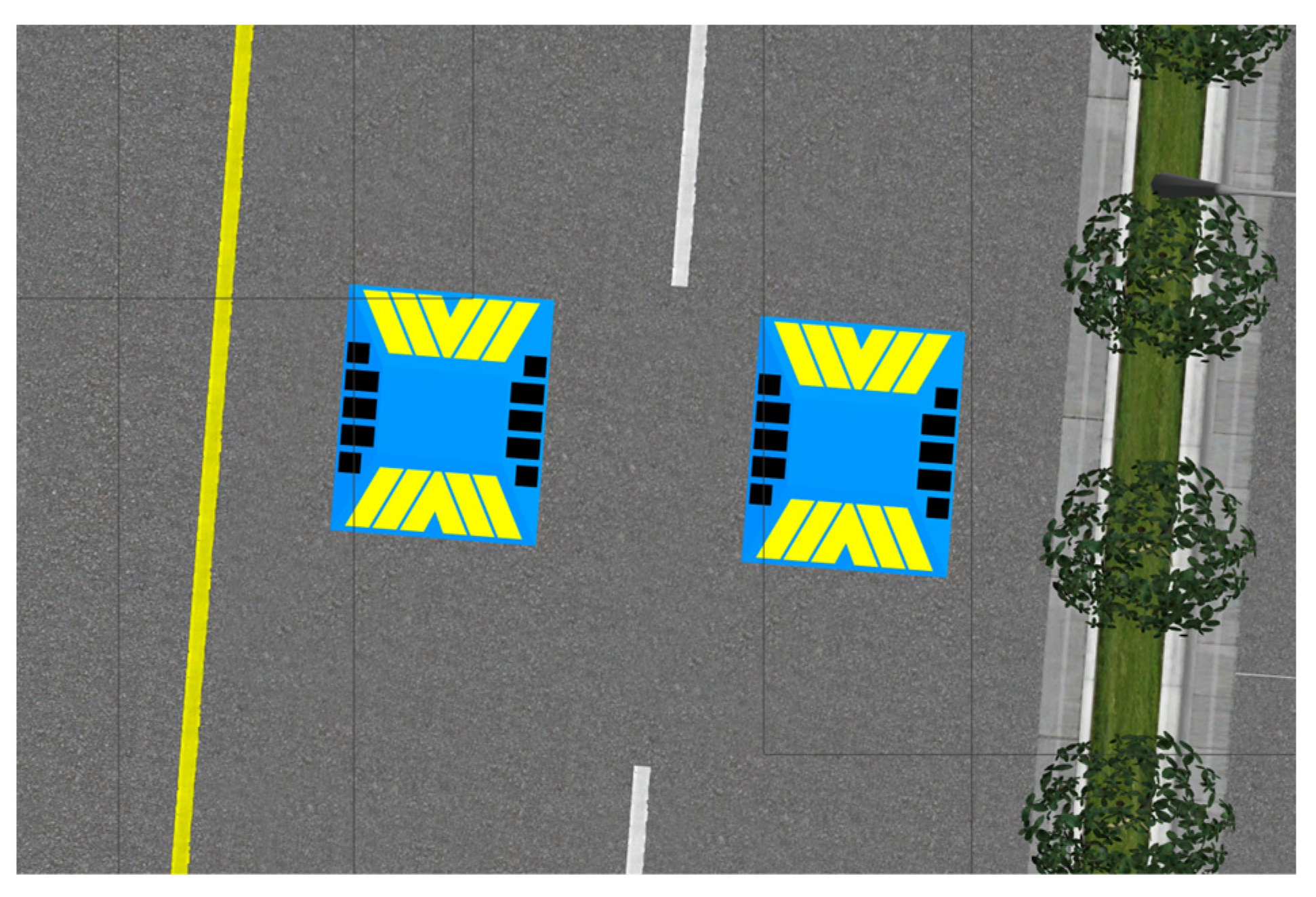
A 2.2 km urban corridor based on Via G. Garibaldi (Messina, Italy) was modeled. The simulated roadway included three lanes per direction (including bus lanes or longitudinal parking), a posted speed limit of 50 km/h, a central median, urban lighting, and roadside vegetation. Six speed cushions were inserted along the corridor (as shown in
Figure 1) at varying spacings, with a minimum inter-device distance of 240 m.
Pérez-Acebo et al. [
7] showed that speed recovery between consecutive vertical deflections increases with spacing and that beyond 200 m the residual influence of the preceding device becomes negligible. As all inter-device distances in this study were at least 240 m, we treated behavioral responses at each device as approximately independent for the purposes of device-centered segmentation and clustering.
The speed cushions were designed in accordance with international guidelines and experimental regulations [
27,
28,
29]. Two color schemes (blue, red) and three widths (1.5 m, 1.8 m, 2.1 m; measured perpendicular to the travel direction) were implemented, while height (0.07 m) and length (1.8 m) were kept constant (
Table 1).
Each participant completed three driving sessions following a familiarization run on a separate scenario. The first session was conducted without speed cushions (baseline). The second and third sessions included speed cushions under daylight or nighttime conditions; 13 participants experienced nighttime first, and 12 experienced daylight first. Simulations were conducted under free-flow conditions to isolate device effects from interactions with other road users.
Recorded telemetry included instantaneous speed, longitudinal position, time, lateral position relative to the lane center, and brake pedal force. These signals are widely employed in the driving behavior literature to describe longitudinal and lateral control aspects and to support behavioral analysis under different experimental conditions [
8,
9,
21,
24].
As with most fixed-base simulators, the physical sensation associated with vertical deflection may be attenuated compared with real-world driving. The absence of full-body vibration may reduce perceived ride discomfort and could therefore influence the frequency of higher-speed traversal behaviors.
Each cushion was centered within the travel lane and occupied the central portion of the lane width, consistent with the typical configuration of Berlin speed cushions designed to allow wider vehicles such as buses or emergency vehicles to partially straddle the device.
2.2. Participants
Twenty-five licensed drivers took part in the driving simulator experiment. The sample included both female and male participants (44% and 56%, respectively), with ages ranging from 19 to 41 years. All participants held a valid category B driving license for passenger vehicles, consistent with the characteristics of the simulated car.
Prior to the experimental sessions, participants completed pre-drive questionnaires, including informed consent procedures and information on driving habits. The mean age of the sample was 29.6 years.
84% of the participants reported predominantly using a passenger car rather than a motorcycle. The primary purpose of vehicle use was work- or study-related for approximately 80% of the sample, while the remaining participants reported mainly leisure-oriented use.
Annual driving exposure was heterogeneous: 56% of participants reported driving between 10,000 and 20,000 km per year, 36% less than 10,000 km, and 8% more than 20,000 km annually. Most participants (88%) reported driving predominantly during daytime hours, while only 12% reported mainly nighttime driving.
Nine participants also possessed a motorcycle driving license, and one participant held additional driving license categories. Only one participant reported a reduced driving license point balance below 20; however, this remained within a range associated with minor infractions and no severe penalties.
To ensure participant safety and data reliability, individuals reporting previous episodes of simulator sickness were excluded during recruitment. For privacy and traceability purposes, each participant was assigned an anonymous alphanumeric identifier throughout data processing and analysis.
This study was conducted in accordance with the Declaration of Helsinki and received approval from the Ethics Committee of Messina (AOU “G. Martino”, Deliberation No. 786, 16 May 2024).
2.3. Segmentation and Feature Extraction
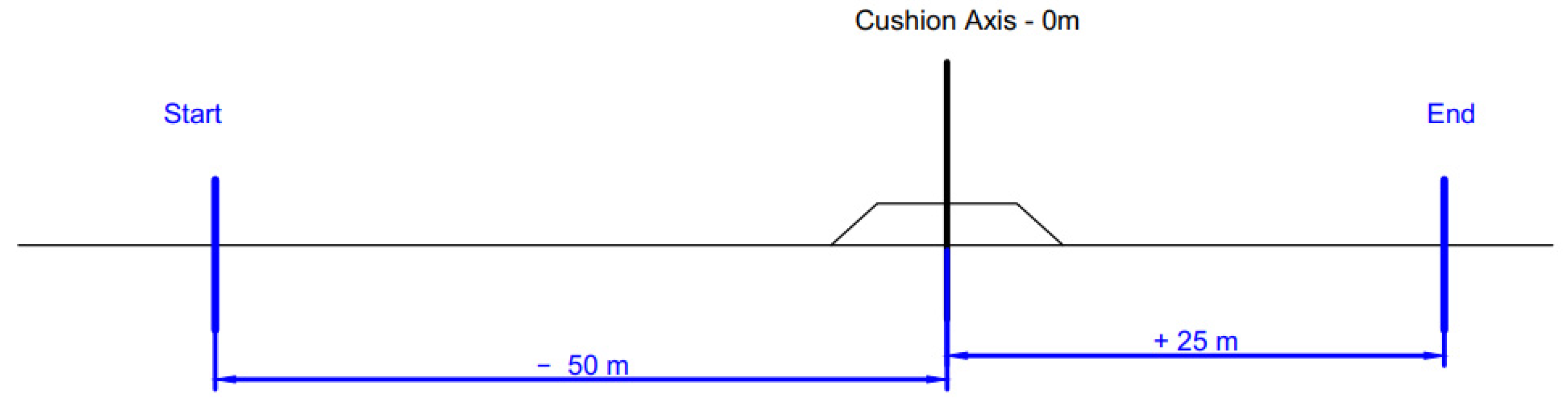
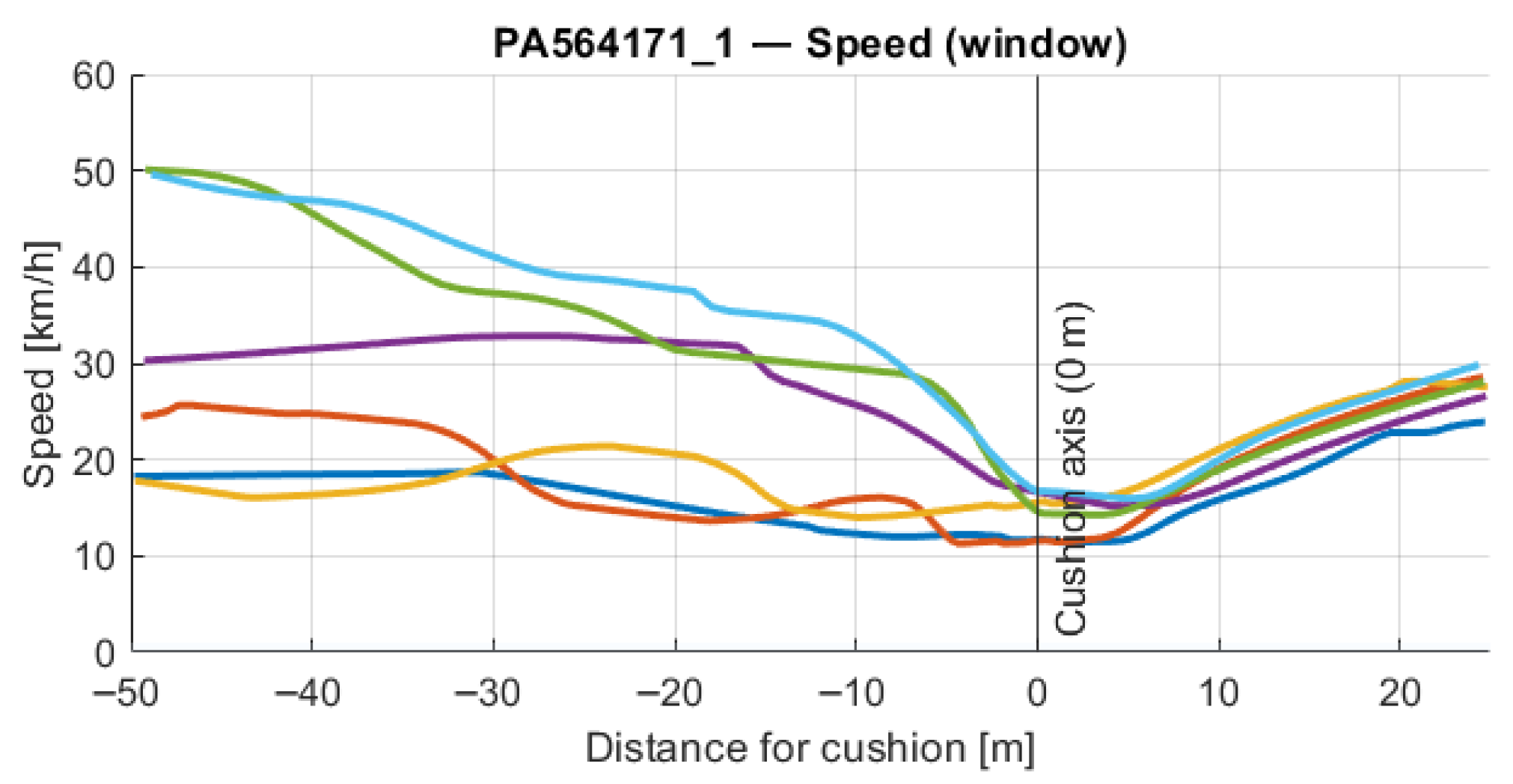
Device-centered spatial segmentation was adopted to isolate local behavioral effects from global driving patterns. The roadway was divided into analysis windows centered on each speed cushion. Data were expressed in a local coordinate system where 0 m denotes the cushion reference location (mid-point of the device in the simulated scenario). As shown in
Figure 2, the analysis window extended from −50 m upstream to +25 m downstream, capturing the approach and immediate post-traversal recovery.
The analysis window was defined after inspection of the telemetry profiles across participants, in order to identify a spatial interval that consistently captured the anticipatory approach, the traversal phase, and the immediate post-traversal recovery. The upstream portion captures the anticipatory approach phase, during which drivers begin adjusting speed and braking in response to the upcoming device, while the downstream portion captures the immediate recovery after traversal. The selected window balances behavioral completeness with locality, ensuring that the extracted indicators mainly reflect the interaction with the device rather than broader driving behavior along the corridor.
In the baseline condition without speed cushions, the analysis windows were centered on the same spatial locations corresponding to the device positions used in the experimental scenarios. This ensured that behavioral segments refer to the same roadway locations across conditions, allowing direct comparison between baseline and traffic calming configurations.
Each window was treated as an independent behavioral segment. From telemetry signals, three aggregated indicators were computed for each segment:
Speed: mean value over the window (km/h), representing the overall level of speed moderation;
Braking: maximum brake pedal force within the window (daN), representing peak braking demand;
Lane position: mean lateral deviation from the lane center (m), representing average lateral control strategy.
This compact feature set supports interpretability and replicability, consistent with feature selection recommendations for driving behavior clustering [
22].
2.4. Clustering Pipeline and Model Selection
All analyses were implemented in MATLAB R2024b. Before clustering, features were standardized using z-score normalization to prevent scale-driven distortions in distance-based metrics. A k-means clustering approach was adopted due to its interpretability and widespread use in behavioral analyses [
30].
Although k-means assumes approximately spherical clusters in standardized feature space, the objective of the analysis was primarily exploratory and aimed at identifying interpretable behavioral groupings rather than performing probabilistic density modeling. Inspection of within-cluster covariance structures in standardized space indicated moderate anisotropy in two clusters and more marked anisotropy in one cluster. Alternative clustering formulations were considered only as complementary diagnostics rather than as primary methods.
The number of clusters k was explored in the range 2–5, reflecting typical values used in driving behavior studies and acknowledging that there is no universal criterion for cluster number selection [
23,
30].
The primary criterion for selecting k was the mean silhouette score, which captures within-cluster compactness and between-cluster separation [
31]. Additional checks were used as supportive evidence: a bootstrap assessment of the mean silhouette for the selected k and Gaussian mixture models (GMMs) with BIC comparisons across k. These complementary analyses were not treated as competing decision rules but as robustness-oriented diagnostics to interpret the stability/complexity trade-off.
In particular, although the GMM-based comparison favored k = 4, the corresponding solution was not retained as the main representation because the k = 4 partition showed a lower mean silhouette than the selected k = 3 solution (0.449 vs. 0.462), produced a small cluster comprising about 8% of the observations, and showed substantial instability across repeated initializations (instability fraction ≈ 0.649). Accordingly, the k-means solution with k = 3 was retained as the most interpretable and behaviorally coherent representation of the present dataset.
2.5. Behavioral Labeling and Crosstab Analyses
Clusters were interpreted behaviorally using centroid values of the aggregated indicators and labeled as traversal profiles characterized by different combinations of speed moderation, braking demand, and lane position management.
Cluster distributions were compared across experimental conditions to quantify how the presence of speed cushions and visibility influenced the likelihood of adopting each profile. To assess intra-driver concentration, each participant was assigned a majority profile, defined as the most frequent cluster across all segments. In addition, device-level cluster distributions were computed, and dominant profiles were identified for each speed cushion.
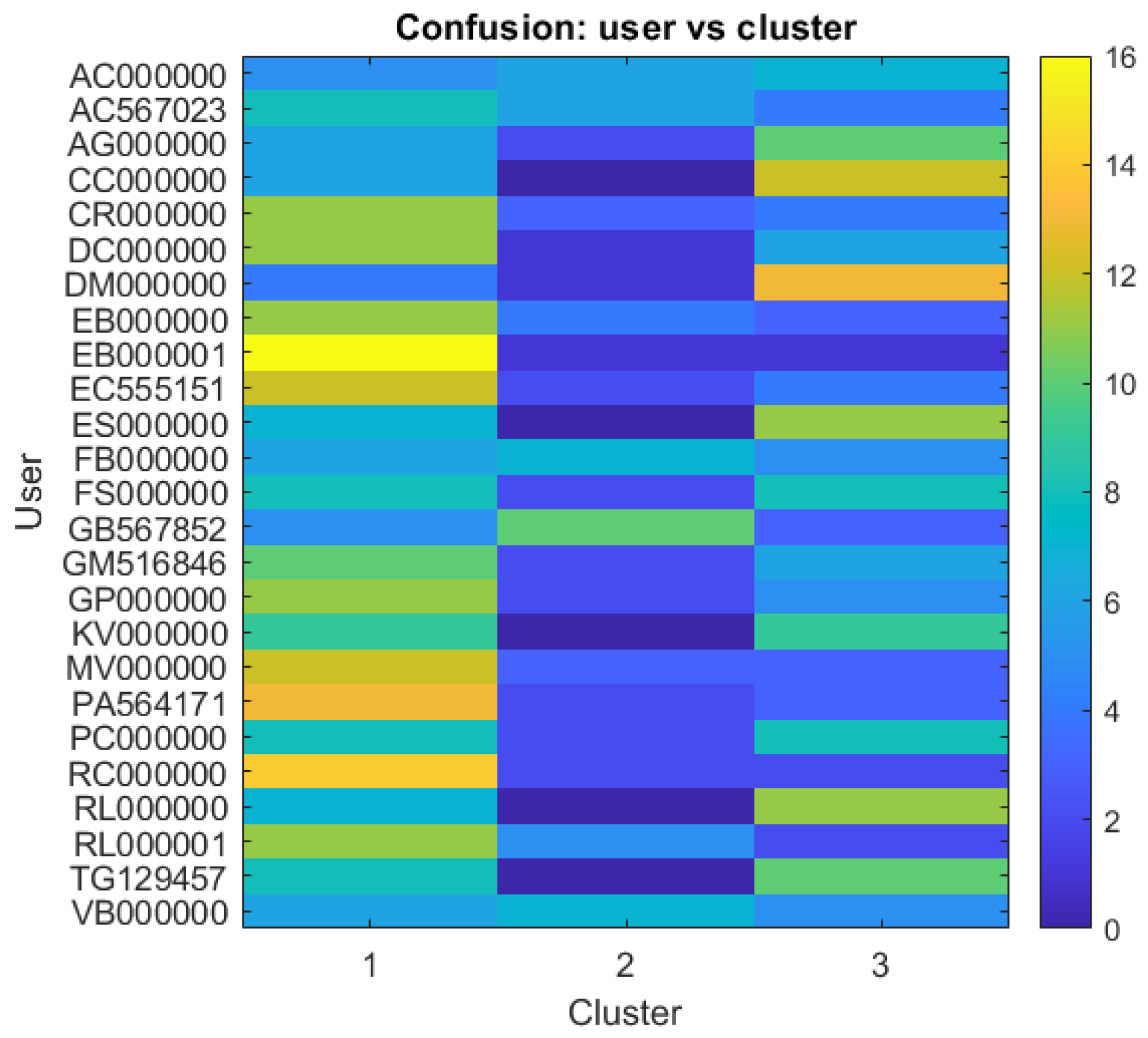
A user-by-cluster confusion matrix was produced by counting the number of segments per driver assigned to each cluster. From this matrix, overall purity was computed as a synthetic measure of the concentration of each driver’s segments in a single profile.
Because multiple segments were obtained from the same participants across devices and conditions, observation-level independence cannot be assumed. The present analysis, therefore, treats segments as behavioral instances for exploratory pattern identification rather than as statistically independent units for formal inferential comparison. Future work could extend this framework using hierarchical or mixed-effects approaches that explicitly account for within-driver dependence.
3. Results
3.1. Clustering Results and Behavioral Profiles
A total of 450 behavioral segments were analyzed, obtained from 25 drivers, six speed cushions, and three experimental conditions. Each segment was described by three indicators (speed, braking, lane position) computed over the device-centered spatial window (−50 m to +25 m).
Figure 3 shows, as an illustrative example, the speed profiles for driver PA564171 during the daylight session with speed cushions installed. Local speed reductions are visible near each device (each color represents a different cushion).
The number of clusters was explored for k = 2–5.
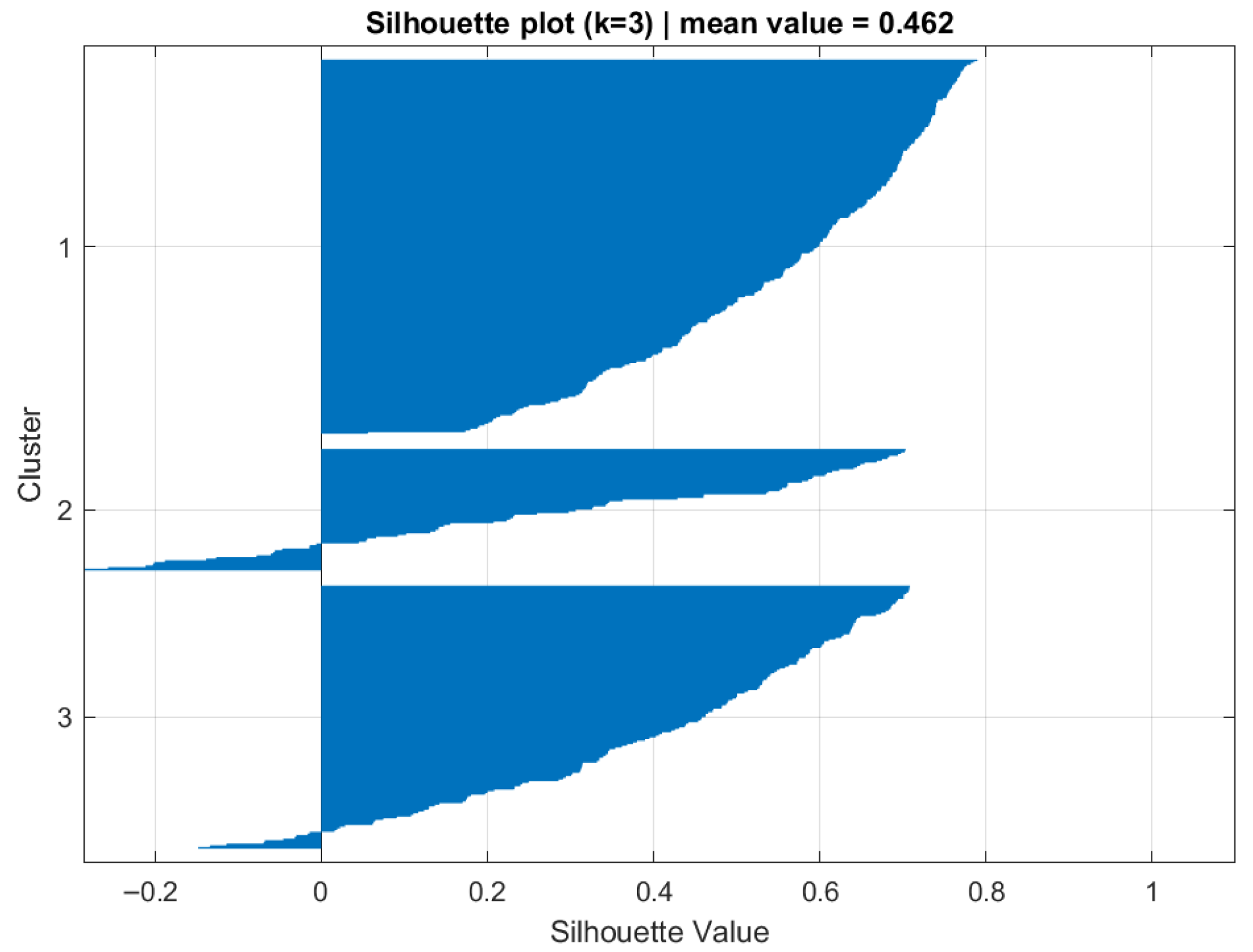
Figure 4 shows the silhouette plot for the selected solution. According to the mean silhouette criterion, the preferred solution was k = 3, with an average silhouette of 0.462, indicating a moderately defined cluster structure. This magnitude is consistent with behavioral datasets where strategies often overlap rather than forming sharply separated categories [
23,
30,
31].
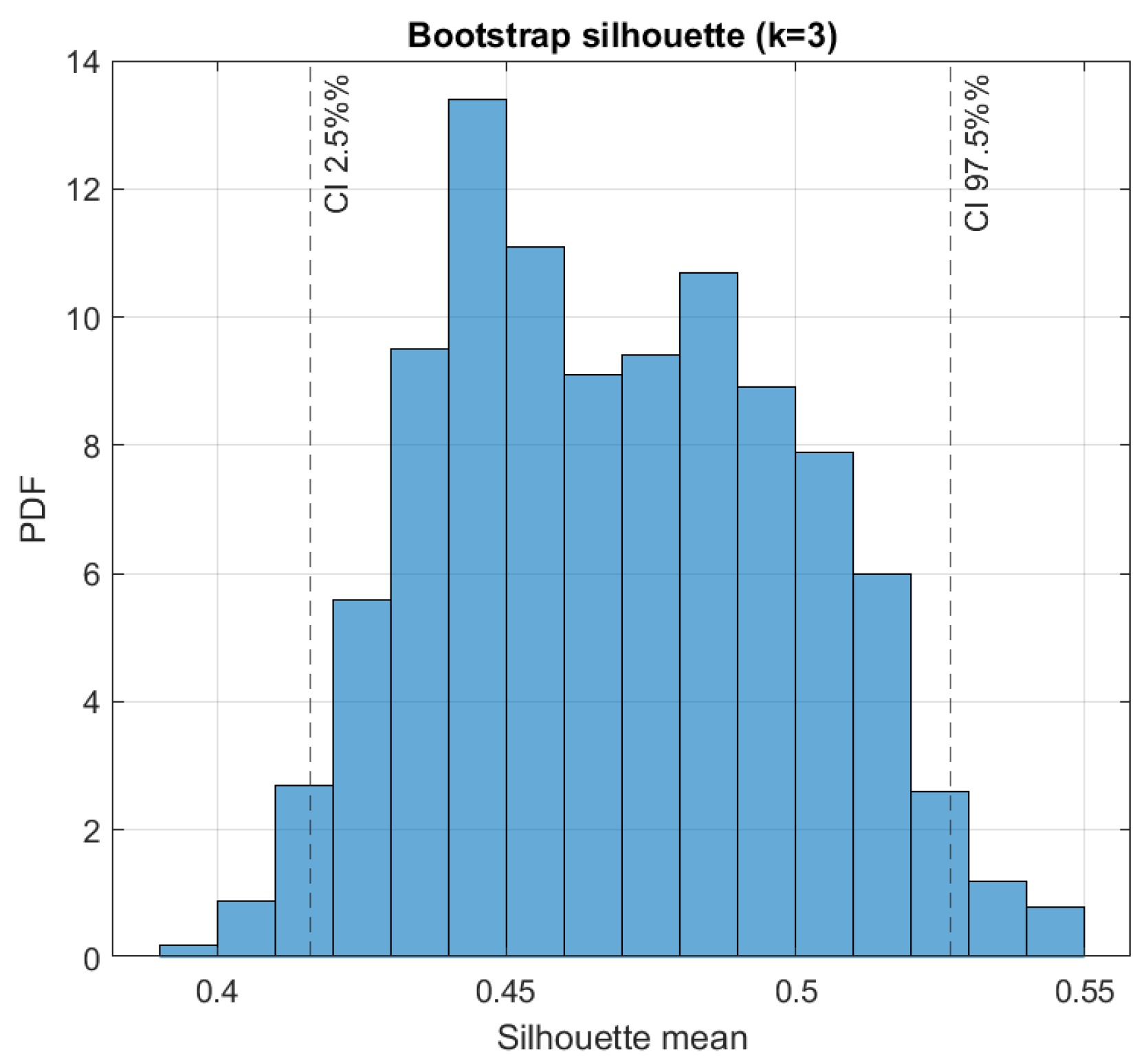
A bootstrap analysis of the mean silhouette for k = 3 produced a mean value of 0.469 with a 95% confidence interval of [0.416, 0.527] (
Figure 5), indicating that the separation quality is stable under resampling and not driven by idiosyncratic samples, consistent with cluster stability principles based on resampling [
32].
Secondary internal criteria and the GMM-BIC comparison favored solutions with k = 4; however, the k = 4 alternative showed a lower mean silhouette (0.449), the emergence of a very small cluster (~8% of observations), and substantial instability across repeated initializations (instability fraction ≈ 0.649 in a two-run comparison).
These diagnostics suggest that the additional cluster primarily reflects partition instability rather than a distinct behavioral pattern. In light of these results, and to preserve behavioral interpretability and cluster robustness, the k = 3 solution was retained as the main representation of traversal strategies.
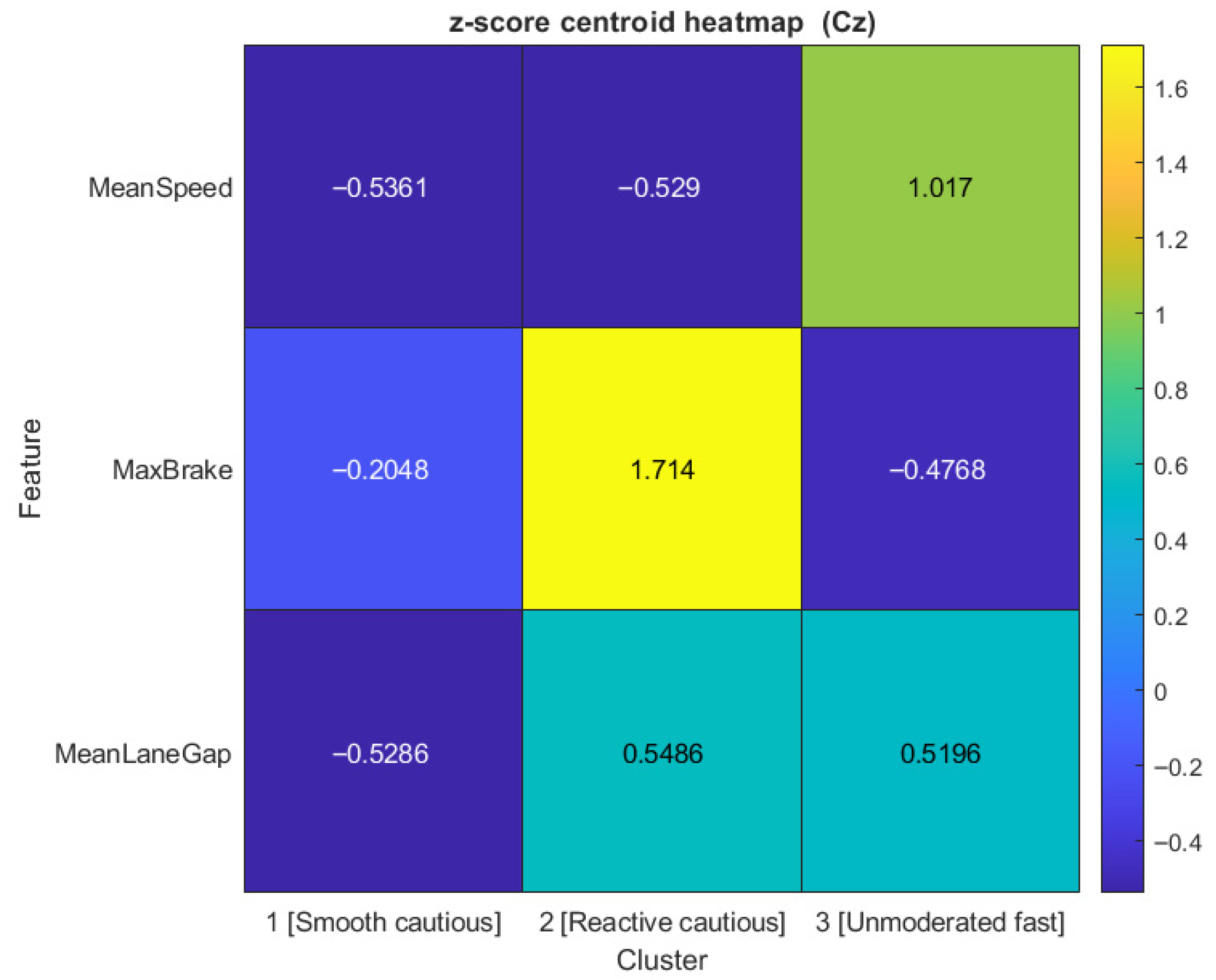
Figure 6 reports the z-score centroid heatmap for the selected solution, highlighting how the combined effects of speed, braking, and lane position differentiate the three profiles.
Centroids and within-cluster dispersion in original units are reported in
Table 2 (mean ± standard deviation).
The three clusters can be described as follows. The smooth, cautious profile combines low mean speed, modest braking peaks, and stable lateral control, consistent with a smooth and anticipatory strategy when approaching the device. The reactive cautious profile shows a similar mean speed but substantially higher braking peaks, suggesting that speed moderation is achieved through stronger braking closer to the device rather than through early speed adjustment.
The unmoderated fast profile exhibits markedly higher mean speed, together with limited braking demand and lateral behavior comparable to the reactive cautious profile, representing a weakly moderated traversal strategy.
Although the two cautious clusters exhibit comparable mean speeds (≈27–28 km/h), they differ substantially in braking demand. In particular, the reactive cautious profile shows markedly higher peak braking values. Within-cluster variability in peak braking remains non-negligible, which is expected for a peak-based indicator; however, both the mean and the median braking values remain clearly higher for the reactive cautious cluster than for the other profiles, supporting its behavioral interpretation.
3.2. Clustering Distribution Across Conditions, Drivers, and Devices
3.2.1. Cluster Distribution Across Experimental Conditions
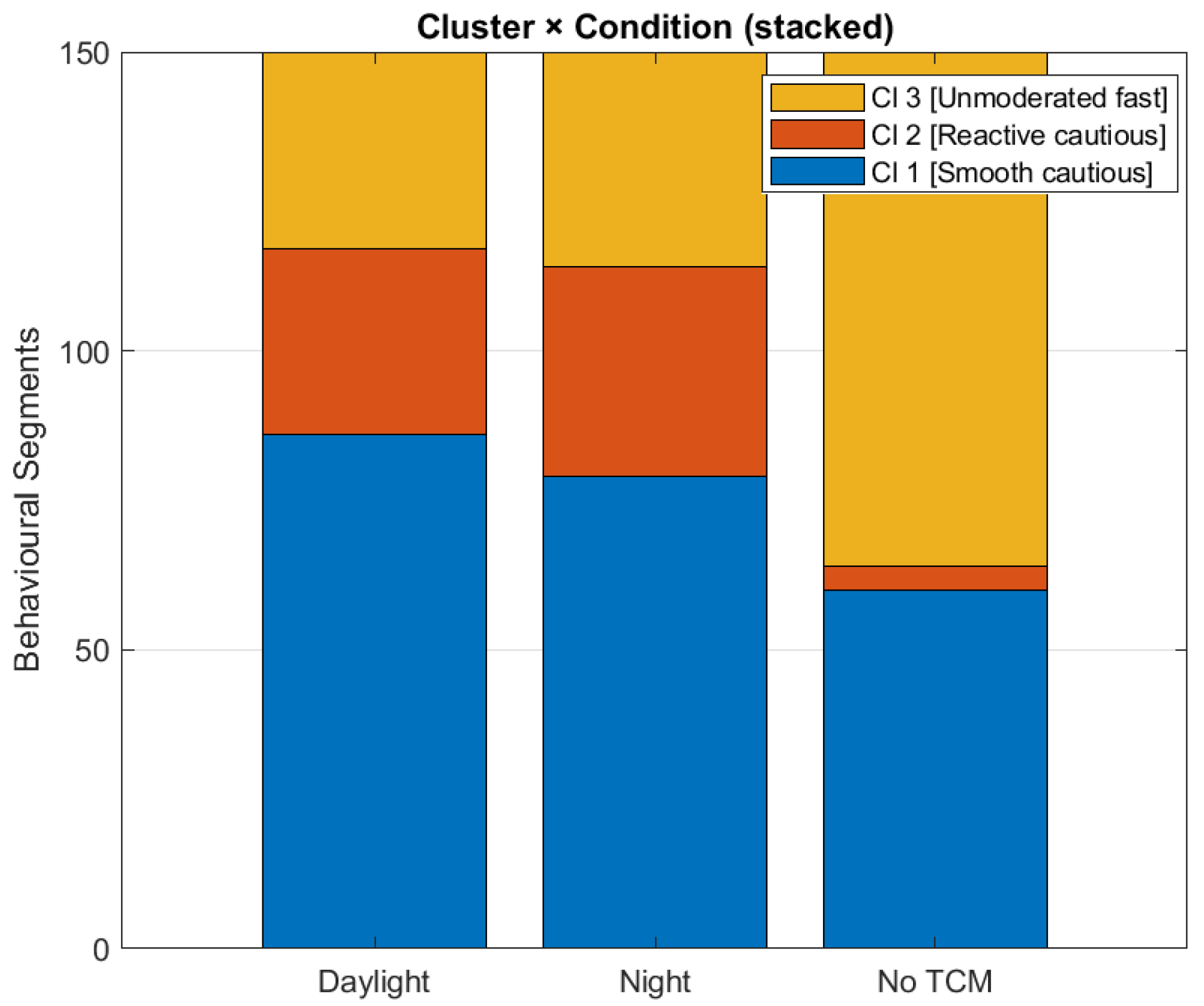
Figure 7 reports the stacked distribution of segments by condition. In the baseline condition without speed cushions, a large share of segments belongs to the unmoderated fast profile, while the reactive cautious profile is marginal.
When speed cushions are introduced, the distribution shifts towards cautious strategies, with the smooth cautious profile becoming dominant in both daylight and nighttime conditions. Nighttime shows a slight increase in the reactive cautious profile. As simulations were conducted under free-flow conditions, differences between daylight and night are attributable to visibility rather than traffic interactions.
These comparisons are primarily descriptive and aim to illustrate behavioral shifts in cluster distributions across experimental conditions rather than to establish formal causal relationships. The present analysis focuses on identifying recurring behavioral patterns in the simulator dataset, whereas formal inferential modeling accounting for driver-level dependence (e.g., mixed-effects approaches) would require a different analytical framework and is therefore left for future work
3.2.2. Intra-Driver Analysis: Majority Profiles
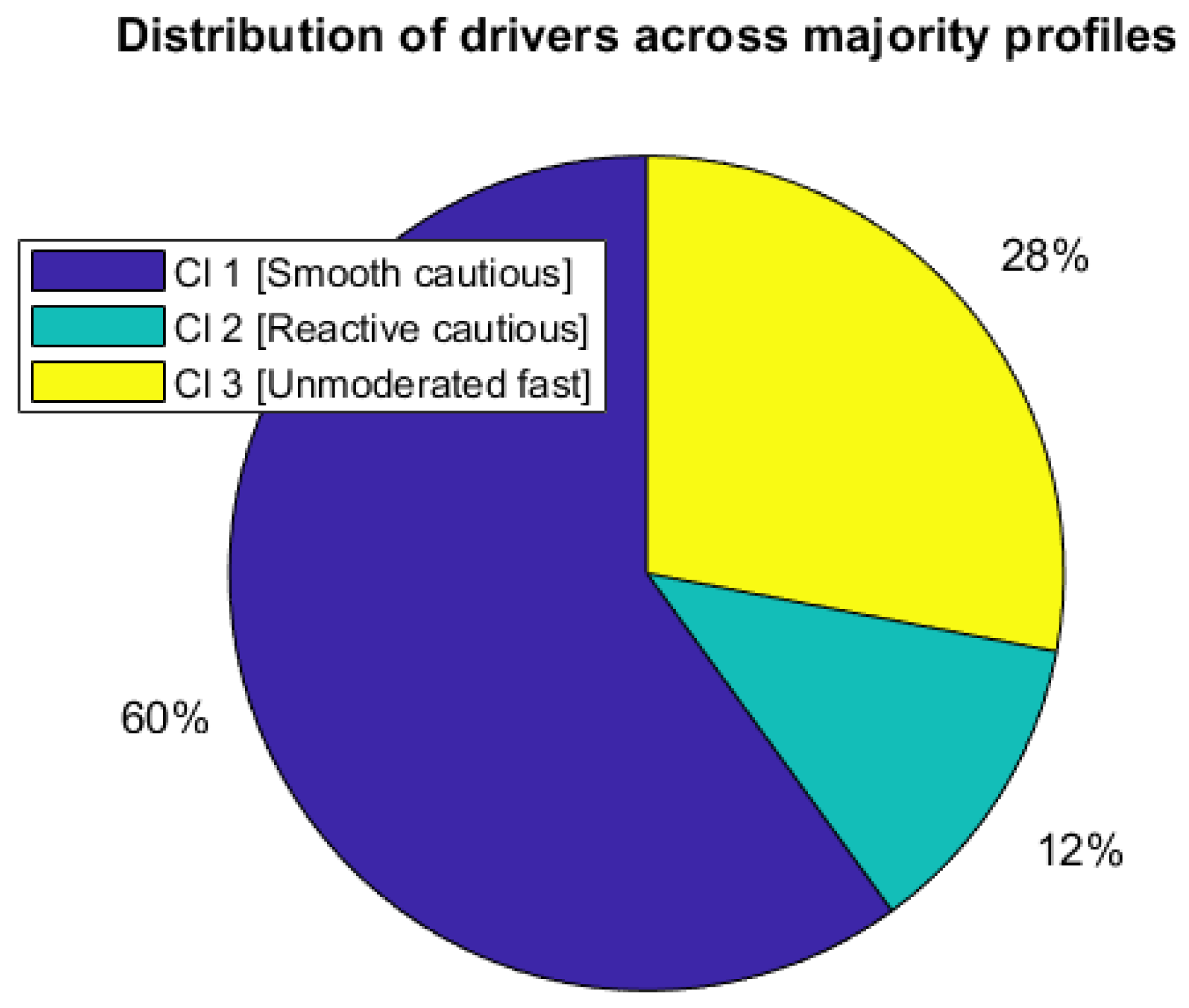
To explore intra-driver concentration, each driver was assigned a majority profile.
Figure 8 reports the distribution of drivers across the majority profiles.
Most drivers are classified as smooth cautious, around 28% fall into the unmoderated fast profile, and reactive cautious is the least represented. Overall, this pattern suggests that many drivers exhibit a prevailing traversal style while still showing adaptation across devices and sessions.
3.2.3. Device-Level Cluster Distribution
Table 3 shows device-level distributions of user profiles for each cushion. Differences across devices are visible, suggesting that local device characteristics may influence traversal behavior.
Cushions are labeled using an alphanumeric code, where numbers (1–3) indicate increasing width and letters denote color (B = blue, R = red).
For example, cushion 3B is associated with cautious strategies for more than 80% of the sample, while cushion 3R shows a higher proportion of unmoderated behavior. These device-level observations are reported as exploratory patterns that motivate future controlled comparisons.
Because the six cushions were presented in a fixed order along the route and their width–color combinations were not randomized across participants, the observed differences between devices should not be interpreted as isolated effects of geometry or color. Instead, they should be regarded as exploratory device-specific patterns within the present simulator configuration. Controlled experiments with randomized or factorial designs would be required to disentangle the separate contributions of width, color, and device position along the corridor.
3.2.4. Confusion Matrix and Purity
Figure 9 presents the driver-by-cluster confusion matrix.
The overall purity was 0.584, indicating a moderate concentration of segments within a single profile for each driver and therefore non-negligible intra-driver variability in traversal strategies.
4. Discussion
4.1. Main Findings and Implications for Urban Road Safety
This study shows that, in proximity to speed cushions, three distinct traversal strategies emerge, corresponding to different combinations of speed regulation, braking demand, and lane position management. This supports the broader conclusion that driver interaction with traffic calming devices cannot be fully described through a single average indicator such as mean speed.
A first implication concerns behavioral heterogeneity. Although speed cushions shift the population toward cautious strategies, a non-negligible subset of segments remains associated with higher-speed, weakly moderated crossings, while another subset shows low mean speed combined with intense braking peaks. From a road safety standpoint, the unmoderated fast profile is potentially critical because it combines high operating speeds with limited braking demand, suggesting limited adaptation to the device. The reactive cautious profile reduces mean speed but concentrates braking into peaks, which may reflect late braking and could be less desirable than smoother moderation in dense urban contexts.
The smooth, cautious profile aligns more closely with the objectives of traffic calming and “30 km/h zones”, combining lower speeds with smoother braking and stable lateral control. This points to a practical evaluation perspective: device effectiveness may be described not only by average speed reduction but also by its ability to shift drivers toward smooth and predictable control strategies.
The identified profiles may help practitioners distinguish whether a traffic calming configuration is mainly associated with smooth anticipatory speed moderation, late reactive braking, or weakly moderated crossings. In this sense, the proposed framework is intended as a behavioral diagnostic and evaluation-support tool for comparing alternatives, rather than as a direct basis for prescriptive design decisions.
The device-centered segmentation and compact feature set provide an interpretable behavioral framework suitable for comparative evaluation across devices, conditions, and contexts. Including a lateral control indicator complements purely longitudinal assessments and supports the conclusion that speed cushions can influence the broader control strategy, not only speed.
4.2. Comparison with Literature
The driving simulator experiment conducted in this study fits within a well-established body of research using controlled and repeatable environments to evaluate traffic calming measures.
The findings are consistent with previous studies reporting speed reductions in the vicinity of speed cushions and other vertical deflection devices [
6,
7,
8,
9], particularly for more cautious behavioral profiles.
However, the present work extends these findings by showing that speed reduction is not uniform and the distinct behavioral profiles coexist even in the presence of the same device. Moreover, the observed distributions suggest that traversal strategies may vary as a function of geometric and visual characteristics of the cushions. In this sense, the study goes beyond approaches based exclusively on average indicators or aggregate uniformity measures [
10] by providing a behaviorally differentiated interpretation of traffic calming effectiveness.
The emergence of three recurrent behavioral states is also consistent with previous driving behavior classification studies based on simulator and telemetry data [
23]. This supports the notion that driving behavior can be described through a limited number of dominant strategies, which is particularly relevant for design-oriented evaluations and for optimizing traffic calming solutions according to the urban context.
4.3. Limitations and Future Research Directions
Some limitations should be considered when interpreting the results of this study. The experiment was conducted using a fixed-base driving simulator, which, despite offering high repeatability and experimental control, cannot fully reproduce the physical and social dynamics of real-world driving.
Second, the selected features were intentionally few and aggregated. While this choice enhances interpretability and replicability, it does not capture finer-grained phenomena such as the temporal evolution of braking or micro-steering corrections. The inclusion of temporal indicators, physiological measures, or visual behavior metrics could further enrich the classification of control strategies.
Mean speed plays an important role in separating clusters, particularly in distinguishing the “unmoderated fast” profile from the two cautious profiles. This reflects the behavioral relevance of speed regulation when approaching vertical deflection devices.
However, the two cautious clusters exhibit very similar mean speed levels (≈27–28 km/h) and remain primarily differentiated by braking demand. In particular, the reactive cautious profile shows substantially higher peak braking values than the smooth cautious profile, suggesting that similar speed levels may be achieved through different control strategies, namely anticipatory speed moderation versus reactive braking near the device.
Lateral deviation contributes less strongly to cluster separation. MeanLaneGap values remain relatively small and partially overlapping across clusters, indicating that lateral positioning plays a secondary role compared with longitudinal control variables. Nevertheless, it provides complementary information on lane positioning behavior during device traversal and was therefore retained as part of the compact behavioral representation adopted in this exploratory analysis.
Another limitation concerns the absence of interactions with other road users. This design choice was adopted to isolate the effects of the traffic calming devices, but under real traffic conditions, the presence of pedestrians, cyclists, or maneuvering vehicles may substantially alter driving strategies.
A further limitation is that the 450 analyzed segments were nested within 25 drivers, so residual intra-subject correlation is likely. This does not prevent exploratory clustering of segment-level behavior, but it limits the inferential interpretation of differences in profile frequencies across conditions and devices. Driver-aware inferential frameworks would therefore be a natural extension of the present study.
Future research could therefore focus on:
Systematic comparison between different geometries, layouts, and color schemes of traffic calming devices;
Longitudinal analyses of behavioral adaptation with increasing route familiarity;
Integration with surrogate safety indicators to enable a more direct assessment of road safety outcomes;
Application of formal inferential frameworks to quantify distributional shifts across experimental conditions, for example, through permutation-based tests, confidence intervals, or mixed-effects models explicitly accounting for driver-level nesting.
5. Conclusions
This study proposed a behavior-oriented evaluation of speed cushion traversal based on simulator telemetry and multivariate clustering of device-centered segments. Three profiles emerged (smooth cautious, reactive cautious, and unmoderated fast), capturing distinct combinations of speed modulation, braking intensity, and lateral control.
The results highlight heterogeneity in driver responses: speed cushions shift the distribution of behaviors toward caution, yet a non-negligible subset of segments remains weakly moderated. The clustering solution showed moderate separation with stable silhouette estimates under resampling.
Beyond average speed reduction, the proposed framework provides a structured way to characterize how drivers interact with traffic calming devices and supports behavior-oriented comparisons across conditions and devices. Its main practical value lies in supporting behavioral diagnostics and comparative evaluation of traffic calming solutions in smart-city mobility planning, rather than in providing direct design prescriptions.