Historic Urban Landscape Literature (2010–2024): A Scoping Review and Bibliometric Mapping of Conceptual Evolution and Research Trends


Abstract
1. Introduction
2. Methods
2.1. Review Design and Reporting
2.2. Eligibility Criteria
2.3. Information Sources and Search Strategy
2.4. Bibliometric Analysis and Data Charting
2.5. Thematic Review and Definition of the Core Corpus
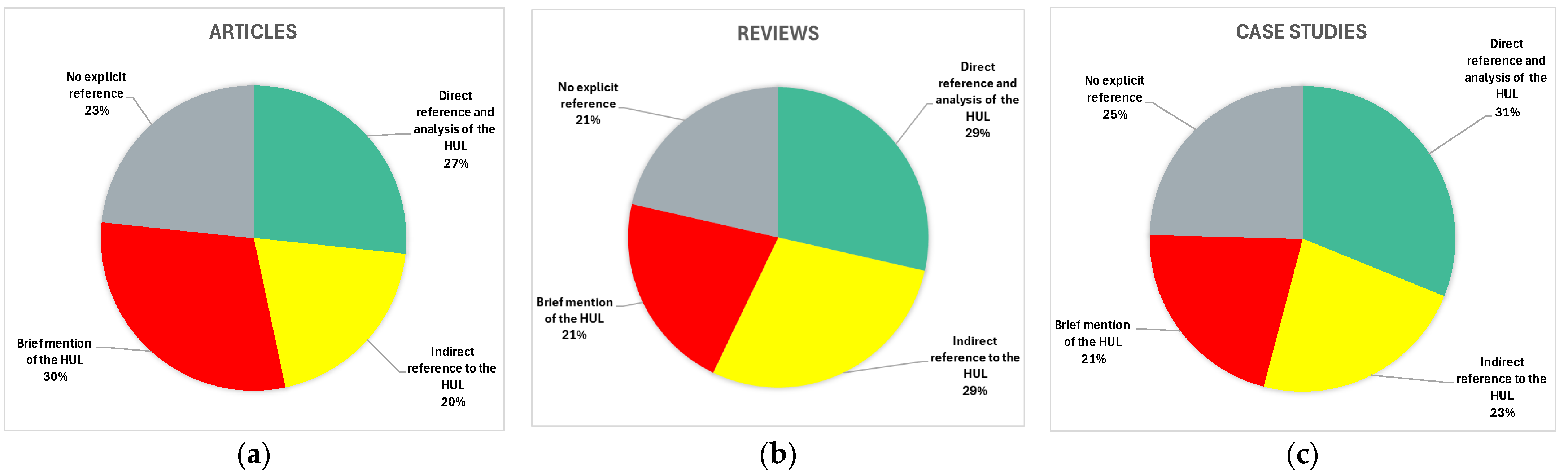
- Direct reference and analysis of the HUL, comprising publications (articles, reviews, or case studies) that refer to the term HUL in the title, keywords, and main text. These works analyze HUL’s theoretical foundations or practical implementation. For case studies, this includes those that actively follow the HUL approach or aim to develop tools and methodologies to enhance its execution.
- Indirect reference to the HUL, involving publications that refer to HUL in the title, keywords, or text only occasionally, employing instead analogous terms such as “urban landscape,” “urban heritage,” “heritage conservation,” or “adaptive reuse.” For case studies, this includes works that reference HUL without applying the approach in practice, or those that follow the logic of the HUL approach while using alternative terminology.
- Brief mention of the HUL, where HUL is cited in passing without significant analytical focus.
- No explicit reference, consisting of contextual literature with no direct conceptual or terminological connection to HUL.
3. Results
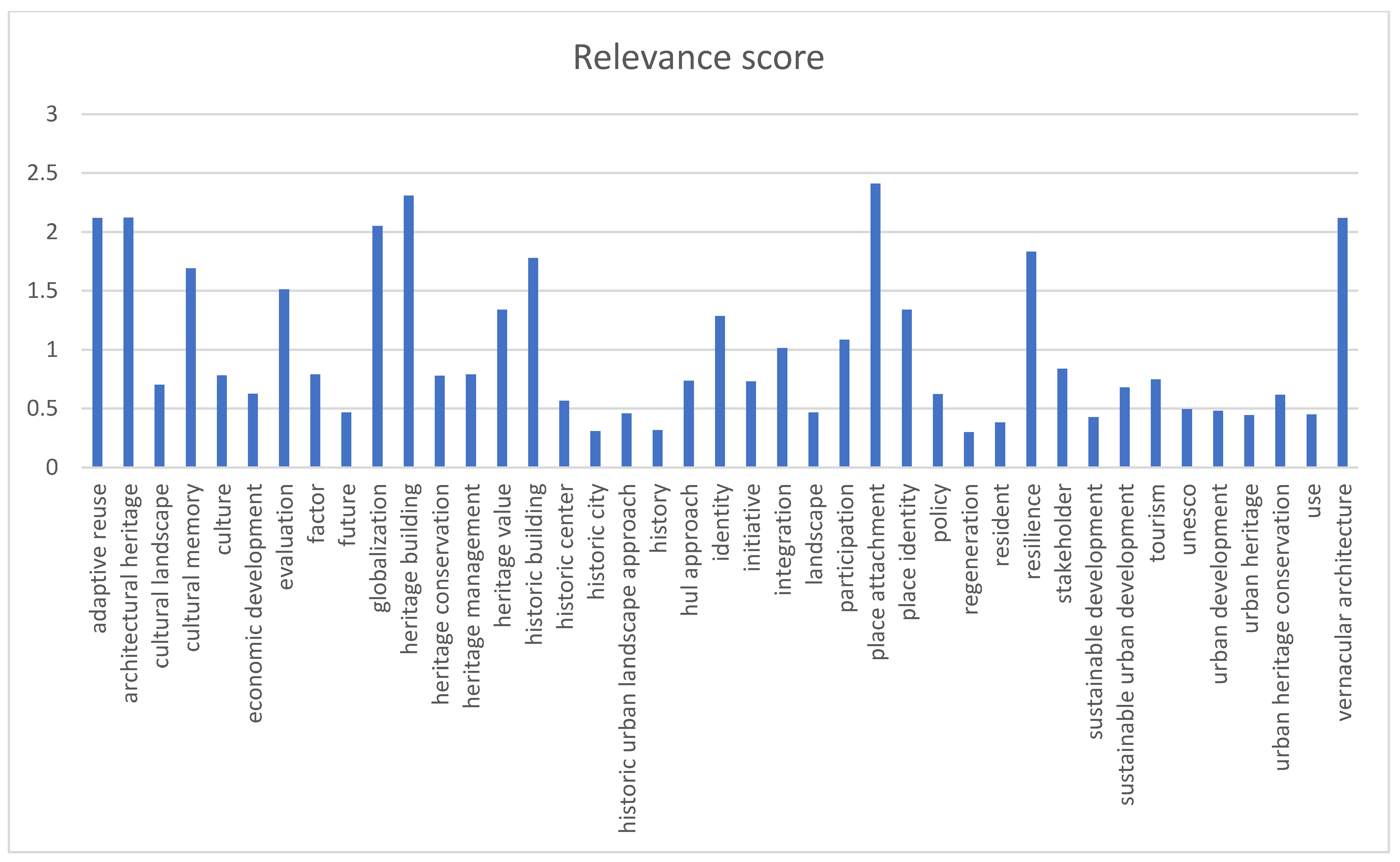
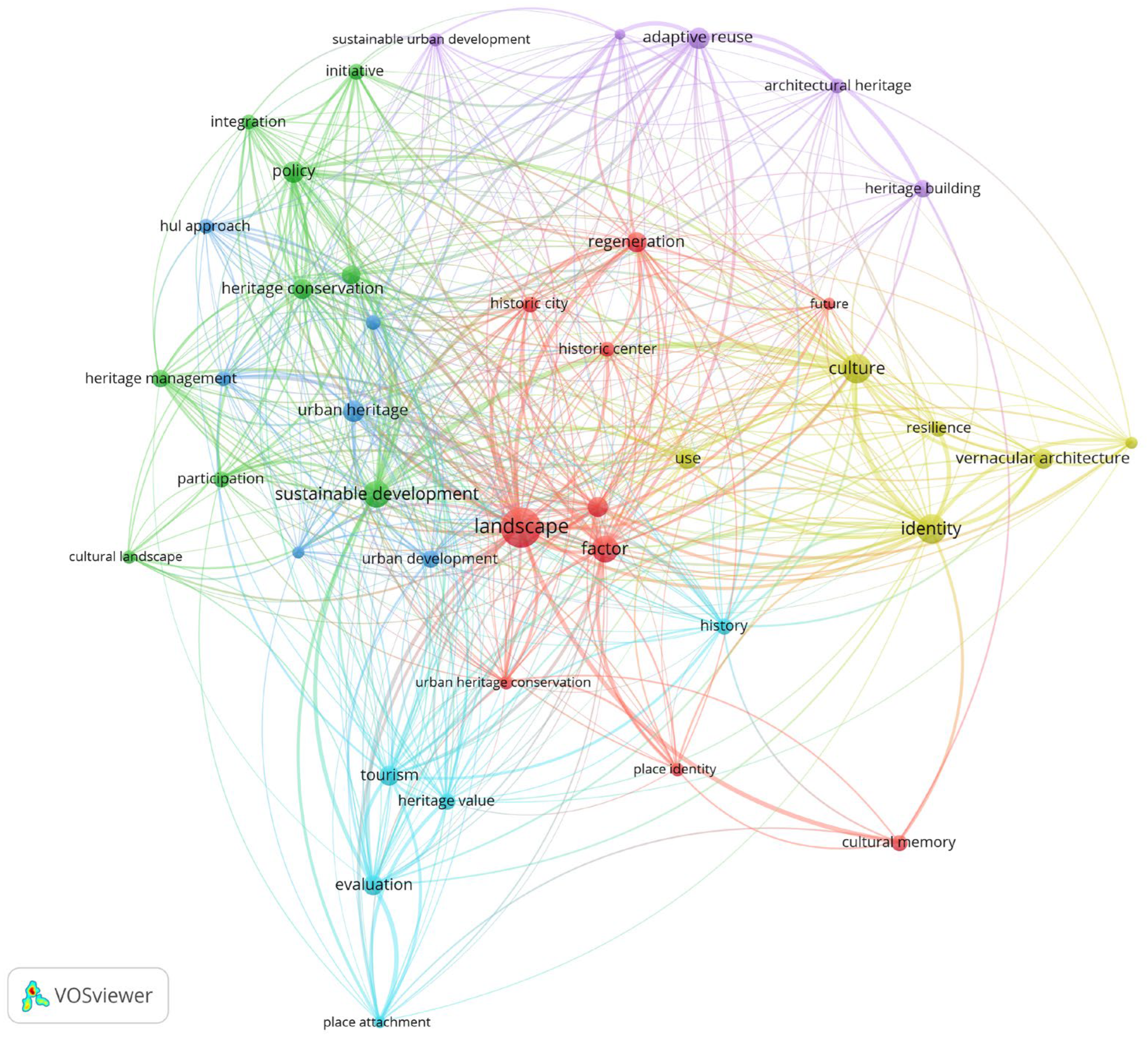
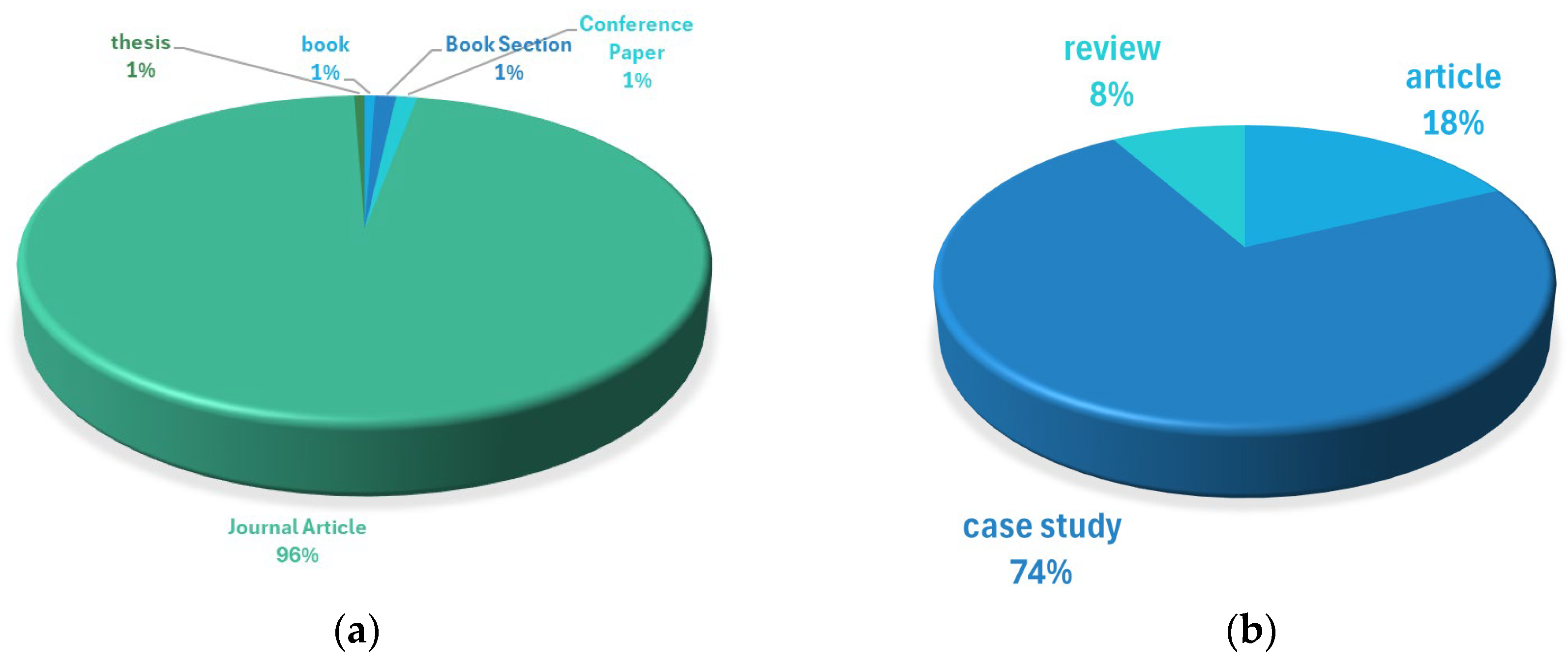
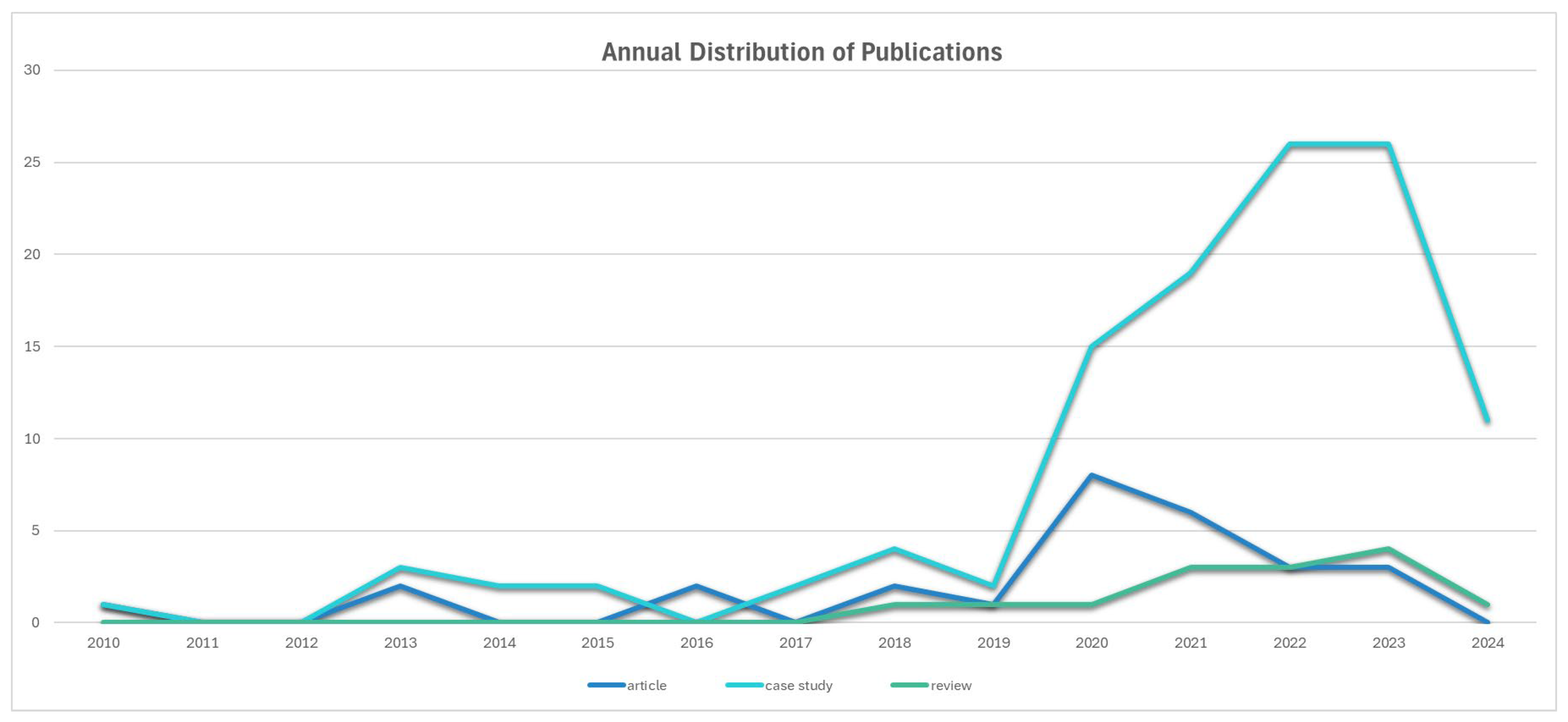
3.1. Bibliometric Analysis of HUL Research (2010–2024)
3.2. Thematic Review of the Core Publications on the HUL Approach
3.2.1. Theoretical Foundations and Conceptual Evolution
3.2.2. Methodological Baselines and Implementation Gaps
3.2.3. Governance Models and Regulatory Integration
3.2.4. Spatial Continuity and Territorial Management
3.2.5. Social Sustainability and the Human Factor
4. Discussion
4.1. Summary of Evidence
4.2. Interpretation of Findings
4.3. Implications for Research and Practice
4.4. Limitations of the Review
5. Conclusions
Author Contributions
Funding
Data Availability Statement
Acknowledgments
Conflicts of Interest
Abbreviations
| HUL | Historic Urban Landscape |
| UNESCO | United Nations Educational, Scientific and Cultural Organization |
| GIS | Geographic Information Systems |
| SDG | Sustainable Development Goals |
| HOU | Hellenic Open University |
| TLS | Total Link Strength |
| PPP | Public–Private Partnership |
| PPPP | Public–Private–People Partnership |
Appendix A

| Articles | |||||
|---|---|---|---|---|---|
| Level of Relevance | Description | No | Percentage | Chromatic Representation | References |
| Direct reference and analysis of the HUL | The article refers to the term HUL in its title, keywords, and main text. Furthermore, it studies and analyses issues related to the Historic Urban Landscape concept or the HUL approach, emphasizing its theoretical foundations and/or practical implementation. | 8 | 27% | Agisheva & Pokka, 2020 [13]; Fusco Girard, 2013 [4]; Hussein et al., 2020 [31]; Huybrechts, 2018 [34]; Ramírez Eudave & Ferreira, 2021 [14]; Taylor, 2016 [15]; Teng et al., 2022 [16]; Veldpaus et al., 2013 [9] | |
| Indirect reference to the HUL | The article refers to the term HUL in the title, keywords, or text only occasionally; instead, it employs analogous terms such as urban landscape, urban heritage, cultural heritage, heritage conservation, or adaptive reuse. | 6 | 20% | Khalaf, 2016 [35]; Nocca et al., 2021 [36]; Prabowo et al., 2023 [37]; Prabowo & Salaj, 2023 [38]; Rosetti et al., 2022 [39]; Stepanchuk et al., 2020 [40] | |
| Brief mention of the HUL | HUL is cited in passing without significant analytical focus. | 9 | 30% | Angelidou & Stylianidis, 2020 [41]; González Martínez, 2020 [42]; Guerrero Baca & Soria López, 2018 [43]; Gustafsson & Lazzaro, 2021 [44]; R. W. Khalaf, 2021 [45]; Lerario, 2022 [46]; Olukoya, 2021 [47]; Prabowo & Salaj, 2021 [48]; D. Rodwell, 2009 [49]. | |
| No explicit reference | No direct conceptual or terminological connection to HUL | 7 | 23% | Al-Zo’by, 2019 [50]; Bradley, 1970 [51]; Coch, 1998 [52]; Galan et al., 2020 [53]; Matar et al., 2023 [54]; Tu, 2020 [55]; Vecco, 2010 [56] | |
| Total | 30 |
| Reviews | |||||
|---|---|---|---|---|---|
| Level of Relevance | Description | No | Percentage | Chromatic Representation | References |
| Direct reference and analysis of the HUL | The review refers to the term HUL in its title, keywords, and main text. Furthermore, it studies and analyses issues related to the Historic Urban Landscape concept or the HUL approach, emphasizing its theoretical foundations and/or practical implementation. | 4 | 29% | Azpeitia Santander et al., 2018 [17]; Ginzarly et al., 2019 [5]; Prabowo et al., 2021 [7]; Rey-Pérez & Pereira Roders, 2020 [6] | |
| Indirect reference to the HUL | The review refers to the term HUL in the title, keywords, or text only occasionally; instead, it employs analogous terms such as urban landscape, urban heritage, cultural heritage, heritage conservation, or adaptive reuse. | 4 | 29% | Bai et al., 2021 [57]; Li et al., 2021 [58]; Liang et al., 2023 [59]; Su et al., 2024 [60] | |
| Brief mention of the HUL | HUL is cited in passing without significant analytical focus. | 3 | 21% | Lazar & Chithra, 2022 [61]; Naheed & Shooshtarian, 2022 [62]; Wen et al., 2023 [63] | |
| No explicit reference | No direct conceptual or terminological connection to HUL | 3 | 21% | Lanz & Pendlebury, 2022 [64]; Pardo, 2023 [65]; Vafaie et al., 2023 [66] | |
| Total | 14 |
| Case Studies | |||||
|---|---|---|---|---|---|
| Level of Relevance | Description | No | Percentage | Chromatic Representation | References |
| Direct reference and analysis of the HUL | The case study refers to the term HUL in its title, keywords, and main text. This category includes case studies that follow the HUL approach or aim to develop tools and methodologies that enhance its effective implementation. | 38 | 31% | Auquilla & Siguencia, 2020 [67]; Hussein et al., 2020 [11,28,29]; Prabowo et al., 2020 [68]; Ricca, 2018 [69]; Acri et al., 2021 [70]; Ji et al., 2020 [30]; Muminović et al., 2020 [18]; Pintossi et al., 2021 [19]; Prihantoro, 2021 [26]; Rey-Pérez & Domínguez-Ruiz, 2020 [71]; Abouelmagd & Elrawy, 2022 [72]; García-Esparza, 2022 [20]; Jiang et al., 2022 [73]; Lv et al., 2022 [74]; Marović et al., 2022 [75]; Mrak et al., 2022 [76]; Lei & Zhou, 2022 [77]; X. Li et al., 2022 [78]; Shen & Dong, 2022 [79]; Wang et al., 2022 [27]; Y. El-Bastawissi et al., 2022 [25]; Zhao et al., 2023 [80]; Cunha Ferreira et al., 2023 [21]; Dimelli & Kotsoni, 2023 [81]; Dong & Shen, 2023 [82]; Jiang et al., 2023 [23]; Karray et al., 2023 [83]; Tarrafa Silva et al., 2023 [84]; Duangputtan & Mishima, 2024 [32]; El Faouri & Sibley, 2024 [85]; Ghanbari et al., 2024 [86]; Macamo et al., 2024 [33]; Prabowo et al., 2024 [87]; Trusiani & D’Onofrio, 2024 [22]; L. Tu, 2024 [24]; Yusuf et al., 2023 [88] | |
| Indirect reference to the HUL | The case study refers to the term HUL in the title, keywords, or text only occasionally, employing analogous terms such as urban landscape, urban heritage, cultural heritage, heritage conservation, or adaptive reuse. This category includes case studies which, despite referencing HUL, do not apply the HUL approach in practice, or those that follow the logic of the HUL approach but use alternative terminology in their description. | 28 | 23% | Cattaneo et al., 2020 [89]; Fadli & AlSaeed, 2019 [90]; Hasibuan & Fitri, 2021 [91]; Maria et al., 2021 [92]; Messaoudi et al., 2021 [93]; Tucunan & Perkasa, 2021 [94]; Udeaja et al., 2020 [95]; Awad et al., 2022 [96]; Bai et al., 2022 [97]; Gravagnuolo et al., 2021 [98]; Luo & Chiou, 2021 [99]; Teng et al., 2021 [100]; Wosiński, 2022 [101]; Zhang et al., 2022 [102]; Akbar et al., 2023 [103]; Bay et al., 2022 [104]; Golestani et al., 2023 [105]; X. Liang et al., 2022 [106]; Shehata, 2022 [107]; Sukwai et al., 2022 [108]; Zhu & Chiou, 2022 [109]; Bai et al., 2023 [110]; Barrett, 2023 [111]; Ji et al., 2023 [112]; X. Liang et al., 2023 [106]; Rossiter & Gu, 2023 [113]; Siountri & Anagnostopoulos, 2023 [114]; Vileikis, 2023 [115] | |
| Brief mention of the HUL | HUL is cited in passing without significant analytical focus. | 26 | 21% | Bramiana et al., 2020 [116]; Bykowa & Dyachkova, 2021 [117]; De Medici et al., 2019 [118]; Domínguez-Ruíz et al., 2020 [119]; Fredholm et al., 2021 [120]; Giovinazzi et al., 2021 [121]; Nikolić et al., 2020 [122]; Ali et al., 2022 [123]; Bosone & Ciampa, 2021 [124]; Della Spina & Giorno, 2021 [125]; El Faouri & Sibley, 2022 [126]; Kern et al., 2021 [127]; Peng & Marinos, 2022 [128]; Zitouni-Petrogianni et al., 2022 [129]; Bernardo et al., 2023 [130]; Jones & Pappas, 2023 [131]; H. Li et al., 2023 [132]; Mazzetto & Vanini, 2023 [133]; Szromek et al., 2023 [134]; Tira & Türkoğlu, 2023 [135]; Zhou et al., 2023 [136]; Kennet et al., 2015. [137]; Konstantinidou, 2023. [138]; Ornelas et al., 2023 [139]; Teklemariam, 2024 [140]; Y. Zhao et al., 2024 [141] | |
| No explicit reference | No direct conceptual or terminological connection to HUL | 30 | 25% | AlSulaiti, 2013 [142]; Gharib, 2014 [143]; Maghsoudi Nia et al., 2014 [144]; Radoine, 2013 [145]; Saljoughinejad & Rashidi Sharifabad, 2015 [146]; Sun, 2013 [147]; Vural Arslan, 2015 [148]; Yildirim & El-Masri, 2010 [149]; Abdulameer & Abbas, 2020 [150]; Afiqah Md. Azmi et al., 2018 [151]; Alves, 2017 [152]; Awad & Boudiaf, 2020 [153]; Boudiaf & Awad, 2020 [154]; Dayaratne, 2018 [155]; Hobbs, 2017 [156]; Mazzetto, 2018 [157]; Al-Hammadi, 2023 [158]; Benkari, 2024 [159]; Ibrahim & Eltarabishi, 2021 [160]; Linas, 2024 [161]; Mazzetto, 2022 [162,163]; Naima, 2021 [164]; Samalavičius & Traškinaitė, 2021 [165]; Al-Zubaidi, 2007 [166]; Abedi & Soltanzadeh, 2014 [167]; Ashley, 2011 [168]; Boussaa, 2014 [169]; Ijla & Broström, 2015 [170]; Senthil, 2016 [171] | |
| Total | 122 |
References
- UNESCO. Recommendation on the Historic Urban Landscape; United Nations Educational, Scientific and Cultural Organization: Paris, France, 2011. [Google Scholar]
- Bandarin, F.; Van Oers, R. The Historic Urban Landscape: Managing Heritage in an Urban Century, 1st ed.; Wiley: Hoboken, NJ, USA, 2012. [Google Scholar] [CrossRef]
- Bandarin, F.; Van Oers, R. (Eds.) Reconnecting the City, 1st ed.; Wiley: Hoboken, NJ, USA, 2014. [Google Scholar] [CrossRef]
- Fusco Girard, L. Toward a Smart Sustainable Development of Port Cities/Areas: The Role of the “Historic Urban Landscape” Approach. Sustainability 2013, 5, 4329–4348. [Google Scholar] [CrossRef]
- Ginzarly, M.; Houbart, C.; Teller, J. The Historic Urban Landscape approach to urban management: A systematic review. Int. J. Herit. Stud. 2019, 25, 999–1019. [Google Scholar] [CrossRef]
- Rey-Pérez, J.; Pereira Roders, A. Historic urban landscape: A systematic review, eight years after the adoption of the HUL approach. J. Cult. Herit. Manag. Sustain. Dev. 2020, 10, 233–258. [Google Scholar] [CrossRef]
- Prabowo, B.N.; Salaj, A.T.; Lohne, J. Urban Heritage Facility Management: A Scoping Review. Appl. Sci. 2021, 11, 9443. [Google Scholar] [CrossRef]
- van Eck, N.J.; Waltman, L. VOSviewer Manual; Leiden University Centre for Science and Technology Studies (CWTS): Leiden, The Netherlands, 2022; Available online: https://www.vosviewer.com (accessed on 10 June 2024).
- Veldpaus, L.; Pereira Roders, A.R.; Colenbrander, B.J.F. Urban Heritage: Putting the Past into the Future. Hist. Environ. Policy Pract. 2013, 4, 3–18. [Google Scholar] [CrossRef]
- Sonkoly, G. Historical Urban Landscape; Springer International Publishing: Cham, Switzerland, 2017. [Google Scholar] [CrossRef]
- Hussein, F.; Stephens, J.; Tiwari, R. Cultural Memories and Sense of Place in Historic Urban Landscapes: The Case of Masrah Al Salam, the Demolished Theatre Context in Alexandria, Egypt. Land 2020, 9, 264. [Google Scholar] [CrossRef]
- Rodwell, D. Reconnecting the city: The historic landscape approach and the future of urban heritage. J. Archit. Conserv. 2015, 21, 136–138. [Google Scholar] [CrossRef]
- Agisheva, S.; Pokka, E. Urban landscape in sustainable transformation: Cultural heritage and contemporary architecture integration within urban area. IOP Conf. Ser. Mater. Sci. Eng. 2020, 890, 012022. [Google Scholar] [CrossRef]
- Ramírez Eudave, R.; Ferreira, T.M. Characterisation of the Historic Urban Landscape through the Aristotelian Four Causes: Towards Comprehensive GIS Databases. Remote Sens. 2021, 13, 1879. [Google Scholar] [CrossRef]
- Taylor, K. The Historic Urban Landscape paradigm and cities as cultural landscapes. Challenging orthodoxy in urban conservation. Landsc. Res. 2016, 41, 471–480. [Google Scholar] [CrossRef]
- Teng, Y.; Huang, Y.; Yang, S. Applying Knowledge Graph to Analyze the Historical Landscape Based on CiteSpace. Wirel. Commun. Mob. Comput. 2022, 2022, 3867541. [Google Scholar] [CrossRef]
- Azpeitia Santander, A.; Azkarate Garai-Olaun, A.; De La Fuente Arana, A. Historic Urban Landscapes: A Review on Trends and Methodologies in the Urban Context of the 21st Century. Sustainability 2018, 10, 2603. [Google Scholar] [CrossRef]
- Muminović, E.; Radosavljević, U.; Beganović, D. Strategic Planning and Management Model for the Regeneration of Historic Urban Landscapes: The Case of Historic Center of Novi Pazar in Serbia. Sustainability 2020, 12, 1323. [Google Scholar] [CrossRef]
- Pintossi, N.; Ikiz Kaya, D.; Pereira Roders, A. Identifying Challenges and Solutions in Cultural Heritage Adaptive Reuse through the Historic Urban Landscape Approach in Amsterdam. Sustainability 2021, 13, 5547. [Google Scholar] [CrossRef]
- García-Esparza, J.A. Urban Scene Protection and Unconventional Practices—Contemporary Landscapes in World Heritage Cities of Spain. Land 2022, 11, 324. [Google Scholar] [CrossRef]
- Cunha Ferreira, T.; Rey-Pérez, J.; Pereira Roders, A.; Tarrafa Silva, A.; Coimbra, I.; Breda Vazquez, I. The Historic Urban Landscape Approach and the Governance of World Heritage in Urban Contexts: Reflections from Three European Cities. Land 2023, 12, 1020. [Google Scholar] [CrossRef]
- Trusiani, E.; D’Onofrio, R. Urban Guidelines and Strategic Plan for a UNESCO World Heritage Candidate Site: The Historical Centre of Sharjah (UAE). Sustainability 2024, 16, 7461. [Google Scholar] [CrossRef]
- Jiang, J.; Zang, T.; Xing, J.; Ikebe, K. Spatial Distribution of Urban Heritage and Landscape Approach to Urban Contextual Continuity: The Case of Suzhou. Land 2023, 12, 150. [Google Scholar] [CrossRef]
- Tu, L. Optimization of Heritage Management Mechanisms through the Prism of Historic Urban Landscape: A Case Study of the Xidi and Hongcun World Heritage Sites. Sustainability 2024, 16, 5136. [Google Scholar] [CrossRef]
- El-Bastawissi, I.Y.; Raslan, R.; Mohsen, H.; Zeayter, H. Conservation of Beirut’s Urban Heritage Values Through the Historic Urban Landscape Approach. Urban Plan. 2022, 7, 101–115. [Google Scholar] [CrossRef]
- Prihantoro, F. A Cultural Heritage Management Perspective: Kotabaru, Yogyakarta, between A Protected Cultural Site and A Commercial Area. Humaniora 2021, 33, 146. [Google Scholar] [CrossRef]
- Wang, S.; Chen, S.; Gao, W. Information Services as a Method to Evaluate the Sustainability of Intangible Dimensions of a Historic Urban Landscape: A Case Study in Guangzhou, China. Sustainability 2022, 15, 8. [Google Scholar] [CrossRef]
- Hussein, F.; Stephens, J.; Tiwari, R. Memory for Social Sustainability: Recalling Cultural Memories in Zanqit Alsitat Historical Street Market, Alexandria, Egypt. Sustainability 2020, 12, 8141. [Google Scholar] [CrossRef]
- Hussein, F.; Stephens, J.; Tiwari, R. Grounded Theory as an Approach for Exploring the Effect of Cultural Memory on Psychosocial Well-Being in Historic Urban Landscapes. Soc. Sci. 2020, 9, 219. [Google Scholar] [CrossRef]
- Ji, X.; Shao, L.; Du, Y. Collaborating with Local Communities to Identify Improvement Priorities for Historic Urban Landscape Based on Residents’ Satisfaction: An Application of Asymmetric Impact-Performance Analysis in Dandong, China. Sustainability 2020, 12, 1463. [Google Scholar] [CrossRef]
- Hussein, F.; Stephens, J.; Tiwari, R. Towards Psychosocial Well-Being in Historic Urban Landscapes: The Contribution of Cultural Memory. Urban Sci. 2020, 4, 59. [Google Scholar] [CrossRef]
- Duangputtan, P.; Mishima, N. Adapting the Historic Urban Landscape Approach to Study Slums in a Historical City: The Mae Kha Canal Informal Settlements, Chiang Mai. Buildings 2024, 14, 1927. [Google Scholar] [CrossRef]
- Macamo, S.; Raimundo, M.; Moffett, A.; Lane, P. Developing Heritage Preservation on Ilha de Moçambique Using a Historic Urban Landscape Approach. Heritage 2024, 7, 2011–2030. [Google Scholar] [CrossRef]
- Huybrechts, E. The Historic Urban Landscape and the Metropolis. Built Herit. 2018, 2, 20–30. [Google Scholar] [CrossRef]
- Khalaf, M. Urban Heritage and Vernacular Studies Parallel evolution and shared challenges. ISVS e-J. 2016, 4, 39–51. [Google Scholar]
- Nocca, F.; De Toro, P.; Voysekhovska, V. Circular economy and cultural heritage conservation: A proposal for integrating Level(s) evaluation tool. Aestimum 2021, 78, 105–143. [Google Scholar] [CrossRef]
- Prabowo, B.N.; Temeljotov Salaj, A.; Lohne, J. Identifying Urban Heritage Facility Management Support Services Considering World Heritage Sites. Urban Sci. 2023, 7, 52. [Google Scholar] [CrossRef]
- Prabowo, B.N.; Salaj, A.T. Urban heritage and the four pillars of sustainability: Urban-scale facility management in the World Heritage sites. IOP Conf. Ser. Earth Environ. Sci. 2023, 1196, 012105. [Google Scholar] [CrossRef]
- Rosetti, I.; Bertrand Cabral, C.; Pereira Roders, A.; Jacobs, M.; Albuquerque, R. Heritage and Sustainability: Regulating Participation. Sustainability 2022, 14, 1674. [Google Scholar] [CrossRef]
- Stepanchuk, A.; Gafurova, S.; Latypova, M. «Genius Loci» as a resource for the development of historical areas of the city. IOP Conf. Ser. Mater. Sci. Eng. 2020, 890, 012013. [Google Scholar] [CrossRef]
- Angelidou, M.; Stylianidis, E. Cultural Heritage in Smart City Environments: The Update. ISPRS Ann. Photogramm. Remote Sens. Spat. Inf. Sci. 2020, V-2–2020, 957–964. [Google Scholar] [CrossRef]
- González Martínez, P. Conference Review: ACHS FUTURES 2020. 5th Association of Critical Heritage Studies Biennial Conference. University College London, 26–30 August 2020. Built Herit. 2020, 4, 18. [Google Scholar] [CrossRef]
- Guerrero Baca, L.F.; Soria López, F.J. Traditional architecture and sustainable conservation. J. Cult. Herit. Manag. Sustain. Dev. 2018, 8, 194–206. [Google Scholar] [CrossRef]
- Gustafsson, C.; Lazzaro, E. The Innovative Response of Cultural and Creative Industries to Major European Societal Challenges: Toward a Knowledge and Competence Base. Sustainability 2021, 13, 13267. [Google Scholar] [CrossRef]
- Khalaf, R.W. World Heritage on the Move: Abandoning the Assessment of Authenticity to Meet the Challenges of the Twenty-First Century. Heritage 2021, 4, 371–386. [Google Scholar] [CrossRef]
- Lerario, A. The Role of Built Heritage for Sustainable Development Goals: From Statement to Action. Heritage 2022, 5, 2444–2463. [Google Scholar] [CrossRef]
- Olukoya, O.A.P. Framing the Values of Vernacular Architecture for a Value-Based Conservation: A Conceptual Framework. Sustainability 2021, 13, 4974. [Google Scholar] [CrossRef]
- Prabowo, B.N.; Salaj, A.T. Identifying Overtourism Impacts on the Informal Sector’s Livelihoods in Urban Heritage Area. IOP Conf. Ser. Earth Environ. Sci. 2021, 738, 012044. [Google Scholar] [CrossRef]
- Rodwell, D. Urban morphology, historic urban landscapes and the management of historic cities. Urban Morphol. 2009, 13, 78–79. [Google Scholar] [CrossRef]
- Al-Zo’by, M. Culture and the politics of sustainable development in the GCC: Identity between heritage and globalisation. Dev. Pract. 2019, 29, 559–569. [Google Scholar] [CrossRef]
- Bradley, R.V.V. A Critical Analysis of the Writings of Amos Rapoport. J. Archit. Educ. 1970, 24, 16–25. [Google Scholar] [CrossRef]
- Coch, H. Chapter 4—Bioclimatism in vernacular architecture. Renew. Sustain. Energy Rev. 1998, 2, 67–87. [Google Scholar] [CrossRef]
- Galan, J.; Bourgeau, F.; Pedroli, B. A Multidimensional Model for the Vernacular: Linking Disciplines and Connecting the Vernacular Landscape to Sustainability Challenges. Sustainability 2020, 12, 6347. [Google Scholar] [CrossRef]
- Matar, F.; Palaiologou, F.; Richards, S. Urban sustainability assessment for vernacular and traditional built environments. J. Urban Manag. 2023, 12, 129–140. [Google Scholar] [CrossRef]
- Tu, H.-M. Sustainable Heritage Management: Exploring Dimensions of Pull and Push Factors. Sustainability 2020, 12, 8219. [Google Scholar] [CrossRef]
- Vecco, M. A definition of cultural heritage: From the tangible to the intangible. J. Cult. Herit. 2010, 11, 321–324. [Google Scholar] [CrossRef]
- Bai, N.; Nourian, P.; Pereira Roders, A. Global Citizens and World Heritage: Social Inclusion of Online Communities in Heritage Planning. Int. Arch. Photogramm. Remote Sens. Spat. Inf. Sci. 2021, XLVI-M-1–2021, 23–30. [Google Scholar] [CrossRef]
- Li, Y.; Zhao, L.; Huang, J.; Law, A. Research frameworks, methodologies, and assessment methods concerning the adaptive reuse of architectural heritage: A review. Built Herit. 2021, 5, 6. [Google Scholar] [CrossRef]
- Liang, W.; Ahmad, Y.; Mohidin, H.H.B. The development of the concept of architectural heritage conservation and its inspiration. Built Herit. 2023, 7, 21. [Google Scholar] [CrossRef]
- Su, J.; Wang, M.; Razi, M.A.M. A Comprehensive Review of Studies Focusing on the Intersection of Urban Flooding and Historic Urban Landscapes. IOP Conf. Ser. Earth Environ. Sci. 2024, 1347, 012036. [Google Scholar] [CrossRef]
- Lazar, N.; Chithra, K. Role of culture in sustainable development and sustainable built environment: A review. Environ. Dev. Sustain. 2022, 24, 5991–6031. [Google Scholar] [CrossRef]
- Naheed, S.; Shooshtarian, S. The Role of Cultural Heritage in Promoting Urban Sustainability: A Brief Review. Land 2022, 11, 1508. [Google Scholar] [CrossRef]
- Wen, Y.; Haider, S.A.; Boukhris, M. Preserving the past, nurturing the future: A systematic literature review on the conservation and revitalization of Chinese historical town environments during modernization. Front. Environ. Sci. 2023, 11, 1114697. [Google Scholar] [CrossRef]
- Lanz, F.; Pendlebury, J. Adaptive reuse: A critical review. J. Archit. 2022, 27, 441–462. [Google Scholar] [CrossRef]
- Pardo, J.M.F. Challenges and Current Research Trends for Vernacular Architecture in a Global World: A Literature Review. Buildings 2023, 13, 162. [Google Scholar] [CrossRef]
- Vafaie, F.; Remøy, H.; Gruis, V. Adaptive reuse of heritage buildings; a systematic literature review of success factors. Habitat Int. 2023, 142, 102926. [Google Scholar] [CrossRef]
- Auquilla, S.; Siguencia, M. Territorial Exploration to Implement the Recommendation on Historic Urban Landscapes for the Development Area of EL Ejido in Cuenca, Ecuador. Int. Arch. Photogramm. Remote Sens. Spat. Inf. Sci. 2020, XLIV-M-1–2020, 505–512. [Google Scholar] [CrossRef]
- Prabowo, B.N.; Pramesti, P.U.; Ramandhika, M.; Sukawi, S. Historic urban landscape (HUL) approach in Kota Lama Semarang: Mapping the layer of physical development through the chronological history. IOP Conf. Ser. Earth Environ. Sci. 2020, 402, 012020. [Google Scholar] [CrossRef]
- Ricca, S. Urban Heritage in the Arabian Peninsula, the Experiences of Jeddah and Dubai. Built Herit. 2018, 2, 108–122. [Google Scholar] [CrossRef]
- Acri, M.; Dobričić, S.; Debevec, M. Regenerating the Historic Urban Landscape through Circular Bottom-Up Actions: The Urban Seeding Process in Rijeka. Sustainability 2021, 13, 4497. [Google Scholar] [CrossRef]
- Rey-Pérez, J.; Domínguez-Ruiz, V. Multidisciplinarity, Citizen Participation and Geographic Information System, Cross-Cutting Strategies for Sustainable Development in Rural Heritage. The Case Study of Valverde de Burguillos (Spain). Sustainability 2020, 12, 9628. [Google Scholar] [CrossRef]
- Abouelmagd, D.; Elrawy, S. Cultural Heritage and Sustainable Urban Development: The Case of Port Said city in Egypt. Cogent Soc. Sci. 2022, 8, 2088460. [Google Scholar] [CrossRef]
- Jiang, J.; Zhou, T.; Han, Y.; Ikebe, K. Urban Heritage Conservation and Modern Urban Development from the Perspective of the Historic Urban Landscape Approach: A Case Study of Suzhou. Land 2022, 11, 1251. [Google Scholar] [CrossRef]
- Lv, R.; Liu, Y.; Zhang, L.; Kong, D. Urban historic heritage buffer zone delineation: The case of Shedian. Herit. Sci. 2022, 10, 64. [Google Scholar] [CrossRef]
- Marović, I.; Mrak, I.; Ambruš, D.; Krstičević, J. Building Interventions in Mediterranean Towns—Developing a Framework for Selecting the Optimal Spatial Organization and Construction Technology from a Sustainable Development Perspective. Buildings 2022, 12, 1233. [Google Scholar] [CrossRef]
- Mrak, I.; Ambruš, D.; Marović, I. A Holistic Approach to Strategic Sustainable Development of Urban Voids as Historic Urban Landscapes from the Perspective of Urban Resilience. Buildings 2022, 12, 1852. [Google Scholar] [CrossRef]
- Lei, H.; Zhou, Y. Conducting Heritage Tourism-Led Urban Renewal in Chinese Historical and Cultural Urban Spaces: A Case Study of Datong. Land 2022, 11, 2122. [Google Scholar] [CrossRef]
- Li, X.; Hou, W.; Liu, M.; Yu, Z. Traditional Thoughts and Modern Development of the Historical Urban Landscape in China: Lessons Learned from the Example of Pingyao Historical City. Land 2022, 11, 247. [Google Scholar] [CrossRef]
- Shen, D.; Dong, S. Transition of Urban Morphology in the Mountainous Areas Since Early-Modern Times from the Perspective of Urban Historic Landscape—A GIS Tools and Historical Map Translation Approach. Sustainability 2022, 14, 12896. [Google Scholar] [CrossRef]
- Zhao, L.; Li, Y.; Zhang, N.; Zhang, Z. Public policies and conservation plans of historic urban landscapes under the sustainable heritage tourism milieu: Discussions on the equilibrium model on Kulangsu Island, UNESCO World Heritage site. Built Herit. 2023, 7, 6. [Google Scholar] [CrossRef] [PubMed]
- Dimelli, D.; Kotsoni, A. The Reconstruction of Post-War Cities—Proposing Integrated Conservation Plans for Aleppo’s Reconstruction. Sustainability 2023, 15, 5472. [Google Scholar] [CrossRef]
- Dong, S.; Shen, D. A Study of Historical Urban Landscape Layering in Luoyang Based on Historical Map Translation. Land 2023, 12, 663. [Google Scholar] [CrossRef]
- Karray, S.; Ruiz Pulpón, Á.R.; Rejeb, H. New Socio-Spatial Reading of a Remarkable Landscape Located in Testour, toward a Heritage Setting of a Moorish Site. Heritage 2023, 6, 2247–2267. [Google Scholar] [CrossRef]
- Tarrafa Silva, A.; Pereira Roders, A.; Cunha Ferreira, T.; Nevzgodin, I. Critical Analysis of Policy Integration Degrees between Heritage Conservation and Spatial Planning in Amsterdam and Ballarat. Land 2023, 12, 1040. [Google Scholar] [CrossRef]
- El Faouri, B.F.; Sibley, M. Balancing Social and Cultural Priorities in the UN 2030 Sustainable Development Goals (SDGs) for UNESCO World Heritage Cities. Sustainability 2024, 16, 5833. [Google Scholar] [CrossRef]
- Ghanbari, E.; Lotfi, S.; Sholeh, M. HUL values in practice: A character area designation model for the conservation of built heritage in less-developed regions. J. Cult. Herit. 2024, 70, 41–53. [Google Scholar] [CrossRef]
- Prabowo, B.N.; Temeljotov Salaj, A.; Lohne, J. Urban Heritage Facility Management: A Conceptual Framework for the Provision of Urban-Scale Support Services in Norwegian World Heritage Sites. Heritage 2024, 7, 1372–1399. [Google Scholar] [CrossRef]
- Yusuf, D.A.; Zhu, J.; Nashe, S.A.; Usman, A.M.; Sagir, A.; Yukubu, A.; Hamma, A.S.; Alfa, N.S.; Ahmed, A. A Typology for Urban Landscape Progression: Toward a Sustainable Planning Mechanism in Kano Metropolis, Nigeria. Urban Sci. 2023, 7, 36. [Google Scholar] [CrossRef]
- Cattaneo, T.; Giorgi, E.; Flores, M.; Barquero, V. Territorial Effects of Shared-Living Heritage Regeneration. Sustainability 2020, 12, 8616. [Google Scholar] [CrossRef]
- Fadli, F.; AlSaeed, M. A Holistic Overview of Qatar’s (Built) Cultural Heritage; Towards an Integrated Sustainable Conservation Strategy. Sustainability 2019, 11, 2277. [Google Scholar] [CrossRef]
- Hasibuan, D.G.L.; Fitri, I. Revitalization of the ex-Warenhuis of Medan through a historic urban landscape approach. IOP Conf. Ser. Earth Environ. Sci. 2021, 780, 012067. [Google Scholar] [CrossRef]
- Maria, M.D.; Fiumi, L.; Mazzei, M.; Bik, O.V. A System for Monitoring the Environment of Historic Places Using Convolutional Neural Network Methodologies. Heritage 2021, 4, 1429–1446. [Google Scholar] [CrossRef]
- Messaoudi, S.; Messaci, N.; Chennaoui, Y. Classifying Heritage Resources of Territories. Case of Bejaia. Urban. Arhit. Construcţii 2021, 12, 107. [Google Scholar]
- Tucunan, K.P.; Perkasa, M.I. Heritage management: The value discontinuation of heritage sites in indonesia: Problem and challenges. IOP Conf. Ser. Earth Environ. Sci. 2021, 778, 012037. [Google Scholar] [CrossRef]
- Udeaja, C.; Trillo, C.; Awuah, K.G.B.; Makore, B.C.N.; Patel, D.A.; Mansuri, L.E.; Jha, K.N. Urban Heritage Conservation and Rapid Urbanization: Insights from Surat, India. Sustainability 2020, 12, 2172. [Google Scholar] [CrossRef]
- Awad, J.; Arar, M.; Jung, C.; Boudiaf, B. The Comparative Analysis for the New Approach to Three Tourism-Oriented Heritage Districts in the United Arab Emirates. Heritage 2022, 5, 2464–2487. [Google Scholar] [CrossRef]
- Bai, N.; Nourian, P.; Luo, R.; Pereira Roders, A. Heri-Graphs: A Dataset Creation Framework for Multi-Modal Machine Learning on Graphs of Heritage Values and Attributes with Social Media. ISPRS Int. J. Geo-Inf. 2022, 11, 469. [Google Scholar] [CrossRef]
- Gravagnuolo, A.; Micheletti, S.; Bosone, M. A Participatory Approach for “Circular” Adaptive Reuse of Cultural Heritage. Building a Heritage Community in Salerno, Italy. Sustainability 2021, 13, 4812. [Google Scholar] [CrossRef]
- Luo, H.; Chiou, B.-S. Framing the Hierarchy of Cultural Tourism Attractiveness of Chinese Historic Districts under the Premise of Landscape Conservation. Land 2021, 10, 216. [Google Scholar] [CrossRef]
- Teng, Y.; Yang, S.; Huang, Y. Structural features of the streetscape of Macau across four different spatial scales based on historical maps. PLoS ONE 2021, 16, e0258086. [Google Scholar] [CrossRef] [PubMed]
- Wosiński, M.M. New perspectives on World Heritage management in the GCC legislation. Built Herit. 2022, 6, 14. [Google Scholar] [CrossRef] [PubMed]
- Zhang, L.; Tang, Y.; Chen, Y. Integrating historic preservation into a wider framework of urban development through comprehensive planning: An evaluation of local comprehensive plans in U.S. state capitals. Herit. Sci. 2022, 10, 192. [Google Scholar] [CrossRef]
- Akbar, S.H.; Iqbal, N.; Van Cleempoel, K. Saddar Bazar Quarter in Karachi: A Case of British-Era Protected Heritage Based on the Literature Review and Fieldwork. Heritage 2023, 6, 3183–3210. [Google Scholar] [CrossRef]
- Bay, M.A.; Alnaim, M.M.; Albaqawy, G.A.; Noaime, E. The Heritage Jewel of Saudi Arabia: A Descriptive Analysis of the Heritage Management and Development Activities in the At-Turaif District in Ad-Dir’iyah, a World Heritage Site (WHS). Sustainability 2022, 14, 10718. [Google Scholar] [CrossRef]
- Golestani, N.; Khakzand, M.; Faizi, M. Evaluation of the quality of participatory landscape perception in neighborhoods of cultural landscape to achieve social sustainability. Aestimum 2023, 81, 71–91. [Google Scholar] [CrossRef]
- Liang, X.; Qin, W.; Dellapiana, E. Enhancing the Connection Between People and Heritage Through Social Media in China. ISPRS Ann. Photogramm. Remote Sens. Spat. Inf. Sci. 2023, X-M-1–2023, 165–171. [Google Scholar] [CrossRef]
- Shehata, A.M. Current Trends in Urban Heritage Conservation: Medieval Historic Arab City Centers. Sustainability 2022, 14, 607. [Google Scholar] [CrossRef]
- Sukwai, J.; Mishima, N.; Srinurak, N. Balancing Cultural Heritage Conservation: Visual Integrity Assessment to Support Change Management in the Buffer Zone of Chiang Mai Historic City Using GIS and Computer-Generated 3D Modeling. Land 2022, 11, 666. [Google Scholar] [CrossRef]
- Zhu, X.; Chiou, S.-C. A Study on the Sustainable Development of Historic District Landscapes Based on Place Attachment among Tourists: A Case Study of Taiping Old Street, Taiwan. Sustainability 2022, 14, 11755. [Google Scholar] [CrossRef]
- Bai, N.; Ducci, M.; Mirzikashvili, R.; Nourian, P.; Pereira Roders, A. Mapping Urban Heritage Images with Social Media Data and Artificial Intelligence, a Case Study in Testaccio, Rome. Int. Arch. Photogramm. Remote Sens. Spat. Inf. Sci. 2023, XLVIII-M-2–2023, 139–146. [Google Scholar] [CrossRef]
- Barrett, H. Conservation Planning and the Development Trajectory of the Historic Core of Worcester, England. Urban Plan. 2023, 8, 151–164. [Google Scholar] [CrossRef]
- Ji, X.; Du, Y.; Li, Q. How Does the Historic Built Environment Influence Residents’ Satisfaction? Using Gradient Boosting Decision Trees to Identify Critical Factors and the Threshold Effects. Sustainability 2023, 16, 120. [Google Scholar] [CrossRef]
- Rossiter, L.; Gu, K. The Impact of Special Character Areas on Property Values and Homeowners’ Experiences: Cases from Auckland, New Zealand. Land 2023, 12, 1181. [Google Scholar] [CrossRef]
- Siountri, K.; Anagnostopoulos, C.-N. The Classification of Cultural Heritage Buildings in Athens Using Deep Learning Techniques. Heritage 2023, 6, 3673–3705. [Google Scholar] [CrossRef]
- Vileikis, O. A Strategy Using Heritage Documentation for Managing Change of the Historic Centre of Bukhara. ISPRS Ann. Photogramm. Remote Sens. Spat. Inf. Sci. 2023, X-M-1–2023, 269–276. [Google Scholar] [CrossRef]
- Bramiana, C.N.; Darmawan, E.; Hasan, M.I. Stakeholder involvement in developing strategic planning for heritage buildings in Kota Lama heritage site, Semarang. IOP Conf. Ser. Earth Environ. Sci. 2020, 402, 012015. [Google Scholar] [CrossRef]
- Bykowa, E.; Dyachkova, I. Modeling the Size of Protection Zones of Cultural Heritage Sites Based on Factors of the Historical and Cultural Assessment of Lands. Land 2021, 10, 1201. [Google Scholar] [CrossRef]
- De Medici, S.; De Toro, P.; Nocca, F. Cultural Heritage and Sustainable Development: Impact Assessment of Two Adaptive Reuse Projects in Siracusa, Sicily. Sustainability 2019, 12, 311. [Google Scholar] [CrossRef]
- Domínguez-Ruíz, V.; Rey-Pérez, J.; Rivero-Lamela, G. Contribution to the Knowledge of Cultural Heritage via a Heritage Information System (HIS). The Case of “La Cultura del Agua” in Valverde de Burguillos, Badajoz (Spain). Sustainability 2020, 12, 1141. [Google Scholar] [CrossRef]
- Fredholm, S.; Dore, M.; Brorström, S. Strategic Responses to Wicked Problems of Heritage Management: Experiences from the West Link Infrastructure Project in Gothenburg, Sweden. Land 2021, 10, 1032. [Google Scholar] [CrossRef]
- Giovinazzi, S.; Marchili, C.; Di Pietro, A.; Giordano, L.; Costanzo, A.; La Porta, L.; Pollino, M.; Rosato, V.; Lückerath, D.; Milde, K.; et al. Assessing Earthquake Impacts and Monitoring Resilience of Historic Areas: Methods for GIS Tools. ISPRS Int. J. Geo-Inf. 2021, 10, 461. [Google Scholar] [CrossRef]
- Nikolić, M.; Drobnjak, B.; Kuletin Ćulafić, I. The Possibilities of Preservation, Regeneration and Presentation of Industrial Heritage: The Case of Old Mint “A.D.” on Belgrade Riverfront. Sustainability 2020, 12, 5264. [Google Scholar] [CrossRef]
- Ali, S.H.; Sherzad, M.F.; Alomairi, A.H. Managing Strategies to Revitalize Urban Cultural Heritage after Wars: The Center of the Old City of Mosul as a Case Study. Buildings 2022, 12, 1298. [Google Scholar] [CrossRef]
- Bosone, M.; Ciampa, F. Human-Centred Indicators (HCI) to Regenerate Vulnerable Cultural Heritage and Landscape towards a Circular City: From the Bronx (NY) to Ercolano (IT). Sustainability 2021, 13, 5505. [Google Scholar] [CrossRef]
- Della Spina, L.; Giorno, C. Cultural Landscapes: A Multi-Stakeholder Methodological Approach to Support Widespread and Shared Tourism Development Strategies. Sustainability 2021, 13, 7175. [Google Scholar] [CrossRef]
- El Faouri, B.F.; Sibley, M. Heritage-Led Urban Regeneration in the Context of WH Listing: Lessons and Opportunities for the Newly Inscribed City of As-Salt in Jordan. Sustainability 2022, 14, 4557. [Google Scholar] [CrossRef]
- Kern, K.; Irmisch, J.; Odermatt, C.; Haupt, W.; Kissling-Näf, I. Cultural Heritage, Sustainable Development, and Climate Policy: Comparing the UNESCO World Heritage Cities of Potsdam and Bern. Sustainability 2021, 13, 9131. [Google Scholar] [CrossRef]
- Peng, L.; Marinos, A. Exploration of cooperative management system of transregional cultural landscape heritage: A case study of Loire Valley between Sully-sur-Loire and Chalonnes. Built Herit. 2022, 6, 8. [Google Scholar] [CrossRef]
- Zitouni-Petrogianni, G.; Paraschou, A.; Maistrou, H. Abandoned or Degraded Areas in Historic Cities: The Importance of Multifunctional Reuse for Development through the Example of the Historic Commercial Triangle (Emporiko Trigono) of Athens. Land 2022, 11, 114. [Google Scholar] [CrossRef]
- Bernardo, F.; Loupa-Ramos, I.; Coelho, R. How to Capture Place Identity Contents? A Tool for Planning Interventions. Sustainability 2023, 15, 15535. [Google Scholar] [CrossRef]
- Jones, Z.M.; Pappas, T. Developing an identities-based approach to support more robust resilience and recovery in heritage planning and management. Built Herit. 2023, 7, 2. [Google Scholar] [CrossRef] [PubMed]
- Li, H.; Chen, J.; Ikebe, K.; Kinoshita, T. Survey of Residents of Historic Cities Willingness to Pay for a Cultural Heritage Conservation Project: The Contribution of Heritage Awareness. Land 2023, 12, 2058. [Google Scholar] [CrossRef]
- Mazzetto, S.; Vanini, F. Urban Heritage in Saudi Arabia: Comparison and Assessment of Sustainable Reuses. Sustainability 2023, 15, 9819. [Google Scholar] [CrossRef]
- Szromek, A.R.; Walas, B.; Kruczek, Z. Identification of Challenges for the Reconstruction of Heritage Tourism—Multiple Case Studies of European Heritage Cities. Heritage 2023, 6, 6800–6821. [Google Scholar] [CrossRef]
- Tira, Y.; Türkoğlu, H. Circularity-based decision-making framework for the integrated conservation of built heritage: The case of the Medina of Tunis. Built Herit. 2023, 7, 16. [Google Scholar] [CrossRef]
- Zhou, T.; Zang, T.; Jiang, J.; Yang, X.; Ikebe, K. Analysis of the Influencing Factors of Social Participation Awareness on Urban Heritage Conservation: The Example of Suzhou, China. Sustainability 2023, 15, 2713. [Google Scholar] [CrossRef]
- Hilal, A.; Kennet, D.; Humble, L. Towards a heritage management strategy for Ras al-Khaimah (UAE). Proc. Semin. Arab. Stud. 2015, 45, 149–158. [Google Scholar]
- Konstantinidou, E. Architectural Heritage Management Issues: Identification-Protection—Integration-Sustainability. In Proceedings of the BIOCULTURA 2015, Sustainability in Architectural Heritage, Nicosia, Cyprus, 11–12 December March 2015. [Google Scholar]
- Ornelas, C.; Miranda Guedes, J.; Breda-Vázquez, I.; Gallego Guinea, V.; Turri, A. Urban Heritage Rehabilitation: Institutional Stakeholders’ Contributions to Improve Implementation of Urban and Building Regulations. Urban Plan. 2023, 8, 137–150. [Google Scholar] [CrossRef]
- Teklemariam, N. Historic Preservation as Sustainable Urban Development in African Cities: A Technical and Technological Framework. Sustainability 2024, 16, 5949. [Google Scholar] [CrossRef]
- Zhao, Y.; Jin, K.; Zhang, D.; Wang, L.; Li, J.; Dai, T. Transforming Urban Landscapes: Reuse of Heritage Sites through Multi-Value Interpretations in Xi’an, China. Land 2024, 13, 948. [Google Scholar] [CrossRef]
- AlSulaiti, F. The National Commitment Towards Conserving the Heritage (Documentation of Historical and Cultural Sites in GCC Countries). Int. Arch. Photogramm. Remote Sens. Spat. Inf. Sci. 2013, XL-5/W2, 25–30. [Google Scholar] [CrossRef]
- Gharib, R.Y. Sustainable Assessment Tool of Historic Centers: The Cases of Bath and Cambridge. Archnet-IJAR Int. J. Archit. Res. 2014, 8, 108–119. [Google Scholar] [CrossRef]
- Nia, E.M.; Abd Rahman, N.; Yazid, M.Y. Roofs Functions in Vernacular Residential Buildings: Case Study in Kashan, Iran. Archnet-IJAR Int. J. Archit. Res. 2014, 8, 251–265. [Google Scholar] [CrossRef]
- Radoine, H. Cultural resilience in contemporary urbanism: The case of Sharjah, UAE. Int. Dev. Plan. Rev. 2013, 35, 241–260. [Google Scholar] [CrossRef]
- Saljoughinejad, S.; Rashidi Sharifabad, S. Classification of climatic strategies, used in Iranian vernacular residences based on spatial constituent elements. Build. Environ. 2015, 92, 475–493. [Google Scholar] [CrossRef]
- Sun, F. Chinese Climate and Vernacular Dwellings. Buildings 2013, 3, 143–172. [Google Scholar] [CrossRef]
- Arslan, T.V. Developing a Strategic Approach for Managing Sustainable Revitalisation in World Heritage Sites: Historical Bazaar and Khans District, Bursa—Turkey. Archnet-IJAR Int. J. Archit. Res. 2015, 9, 289–304. [Google Scholar] [CrossRef]
- Yildirim, E.; El-Masri, S. Master Planning for Heritage Conservation in Al Ain Oasis, UAE. In Proceedings of the Sustainable City—Developing Countries, Nairobi, Kenya, 19–23 September 2010. [Google Scholar]
- Abdulameer, Z.A.; Abbas, S.S. Adaptive reuse as an approach to sustainability. IOP Conf. Ser. Mater. Sci. Eng. 2020, 881, 012010. [Google Scholar] [CrossRef]
- Azmi, F.A.M.; Ismail, S.; Rahman, R.A.; Tahir Sabit, M.; Mohammad, J. A Sustainable Model for Heritage Property: An Integrative Conceptual Framework. Int. J. Eng. Technol. 2018, 7, 274. [Google Scholar] [CrossRef]
- Alves, S. The Sustainable Heritage of Vernacular Architecture: The Historic Center of Oporto. Procedia Environ. Sci. 2017, 38, 187–195. [Google Scholar] [CrossRef]
- Awad, J.; Boudiaf, B. Re-Using Heritage Elements in New Buildings: Cases from the United Arab Emirates; WIT Press: Southampton, UK, 2020; pp. 27–37. [Google Scholar] [CrossRef]
- Boudiaf, B.; Awad, J. The Socio-Environmental Metamorphoses: U.A.E. as a Case Study. IOP Conf. Ser. Mater. Sci. Eng. 2020, 960, 042061. [Google Scholar] [CrossRef]
- Dayaratne, R. Toward sustainable development: Lessons from vernacular settlements of Sri Lanka. Front. Archit. Res. 2018, 7, 334–346. [Google Scholar] [CrossRef]
- Hobbs, J.J. Heritage in the Lived Environment of the United Arab Emirates and the Gulf Region. Archnet-IJAR Int. J. Archit. Res. 2017, 11, 55–82. [Google Scholar] [CrossRef]
- Mazzetto, S. Heritage Restoration as a Tool to Promote Architectural Identity in the Gulf Regions. Preserv. Digit. Technol. Cult. 2018, 47, 3–11. [Google Scholar] [CrossRef]
- Al-Hammadi, M.I. Deterritorialization in the context of cultural heritage and globalizing Msheireb downtown Doha. Front. Sustain. Cities 2023, 5, 1186781. [Google Scholar] [CrossRef]
- Benkari, N. The built heritage as a resource for architectural education: Documentation of the vernacular settlements and architecture in Oman. J. Cult. Herit. Manag. Sustain. Dev. 2024, 14, 710–729. [Google Scholar] [CrossRef]
- Ibrahim, I.; Eltarabishi, F. Adaptive Reuse Heritage Buildings Addressing Sustainability Potentials: Analytical Case Studies in Sharjah, United Arab Emirates; WIT Press: Southampton, UK, 2021; pp. 237–248. [Google Scholar] [CrossRef]
- Linas, F.A.; Chithra, K. Exploring Vernacular Architecture: Unravelling Characteristics and Typologies Through Expert Survey. SCIRES-IT—Sci. Res. Inf. Technol. 2024, 14, 97–110. [Google Scholar] [CrossRef]
- Mazzetto, S. Sustainable Heritage Conservation in the Gulf Regions. Proc. Int. Struct. Eng. Constr. 2022, 9, 1–6. [Google Scholar] [CrossRef]
- Mazzetto, S. Assessing heritage reuse interventions in the Gulf Countries. IOP Conf. Ser. Earth Environ. Sci. 2022, 1026, 012044. [Google Scholar] [CrossRef]
- Naima, B. Community-led initiatives for the rehabilitation and management of vernacular settlements in Oman: A phenomenon in the making. Built Herit. 2021, 5, 21. [Google Scholar] [CrossRef] [PubMed]
- Samalavičius, A.; Traškinaitė, D. Traditional Vernacular Buildings, Architectural Heritage and Sustainability. J. Archit. Des. Urban. 2021, 3, 49–58. [Google Scholar] [CrossRef]
- Al-Zubaidi, M.S.S. Sustainability Potential in Traditional Architecture in the Arab World. Ph.D. Thesis, University of Huddersfield, Huddersfield, UK, 2007. [Google Scholar]
- Abedi, M.; Soltanzadeh, H. The Interaction between Tradition and Modernity in Contemporary Architecture of Persian Gulf States: Case Study of United Arab Emirates. Int. J. Res. Humanit. Soc. Stud. 2014, 1, 24–34. [Google Scholar]
- Ashley, C. Improving the implementation of adaptive reuse strategies for historic buildings. In The IX International Forum of Studies—S.A.V.E. Heritage; Institute of Sustainable Development and Architecture: Naples, Italy, 2011; pp. 1–10. [Google Scholar]
- Boussaa, D. Cultural Heritage in the Gulf: Blight or Blessing? A Discussion of Evidence from Dubai, Jeddah and Doha. Middle East—Top. Argum. 2014, 3, 55–70. Available online: https://archiv.ub.uni-marburg.de/ep/0003/article/view/2176 (accessed on 13 October 2024).
- Ijla, A.; Broström, T. The Sustainable Viability of Adaptive Reuse of Historic Buildings: The experiences of Two World Heritage Old Cities; Bethlehem in Palestine and Visby in Sweden. Int. Invent. J. Arts Soc. Sci. 2015, 2, 52–66. [Google Scholar]
- Senthil, R.B. Sustainable Heritage Management- Need and Challenges. PARIPEX-Indian J. Res. 2016, 5, 478–483. [Google Scholar]





Disclaimer/Publisher’s Note: The statements, opinions and data contained in all publications are solely those of the individual author(s) and contributor(s) and not of MDPI and/or the editor(s). MDPI and/or the editor(s) disclaim responsibility for any injury to people or property resulting from any ideas, methods, instructions or products referred to in the content. |
© 2026 by the authors. Licensee MDPI, Basel, Switzerland. This article is an open access article distributed under the terms and conditions of the Creative Commons Attribution (CC BY) license.
Share and Cite
Karagkouni, M.; Sakantamis, K.; Vitopoulou, A. Historic Urban Landscape Literature (2010–2024): A Scoping Review and Bibliometric Mapping of Conceptual Evolution and Research Trends. Heritage 2026, 9, 254. https://doi.org/10.3390/heritage9070254
Karagkouni M, Sakantamis K, Vitopoulou A. Historic Urban Landscape Literature (2010–2024): A Scoping Review and Bibliometric Mapping of Conceptual Evolution and Research Trends. Heritage. 2026; 9(7):254. https://doi.org/10.3390/heritage9070254
Chicago/Turabian StyleKaragkouni, Maria, Konstantinos Sakantamis, and Athina Vitopoulou. 2026. "Historic Urban Landscape Literature (2010–2024): A Scoping Review and Bibliometric Mapping of Conceptual Evolution and Research Trends" Heritage 9, no. 7: 254. https://doi.org/10.3390/heritage9070254
APA StyleKaragkouni, M., Sakantamis, K., & Vitopoulou, A. (2026). Historic Urban Landscape Literature (2010–2024): A Scoping Review and Bibliometric Mapping of Conceptual Evolution and Research Trends. Heritage, 9(7), 254. https://doi.org/10.3390/heritage9070254