
Analytical Characterization of the Geomaterials Used in the Construction of the Late Antique Wall in Emerita Augusta (Mérida, Spain)
 , and
, and
Abstract
1. Introduction
2. Historical and Geological Settings
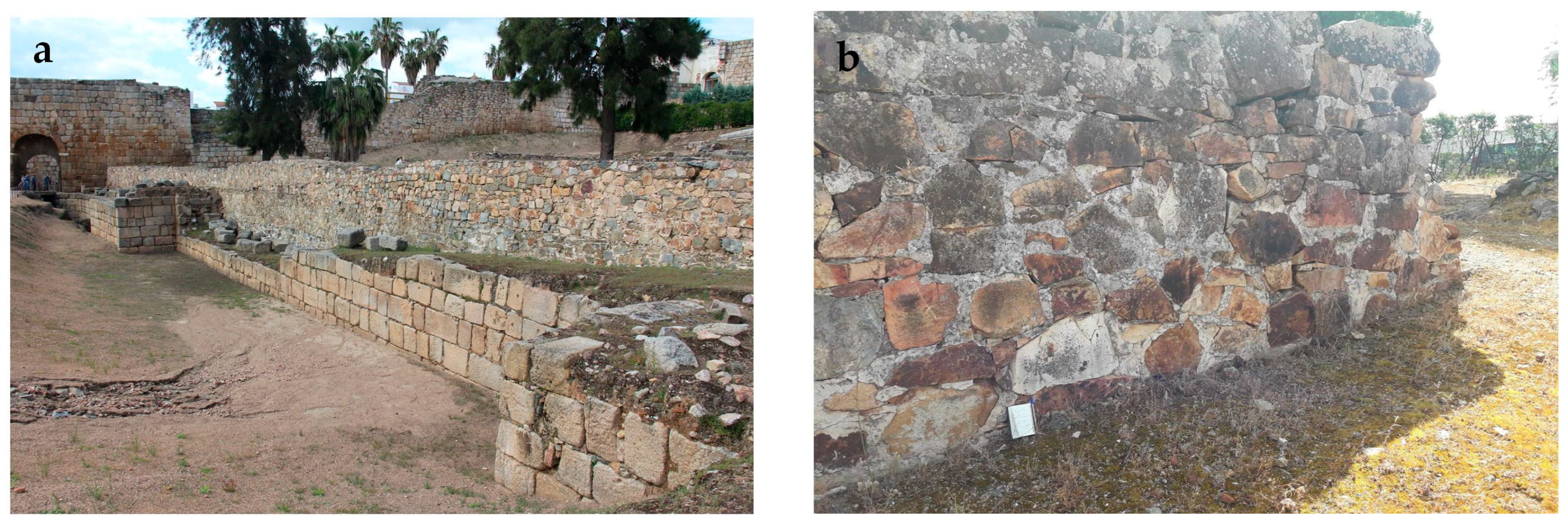
2.1. The Late Antique Wall: Historical Sequence of Its Construction
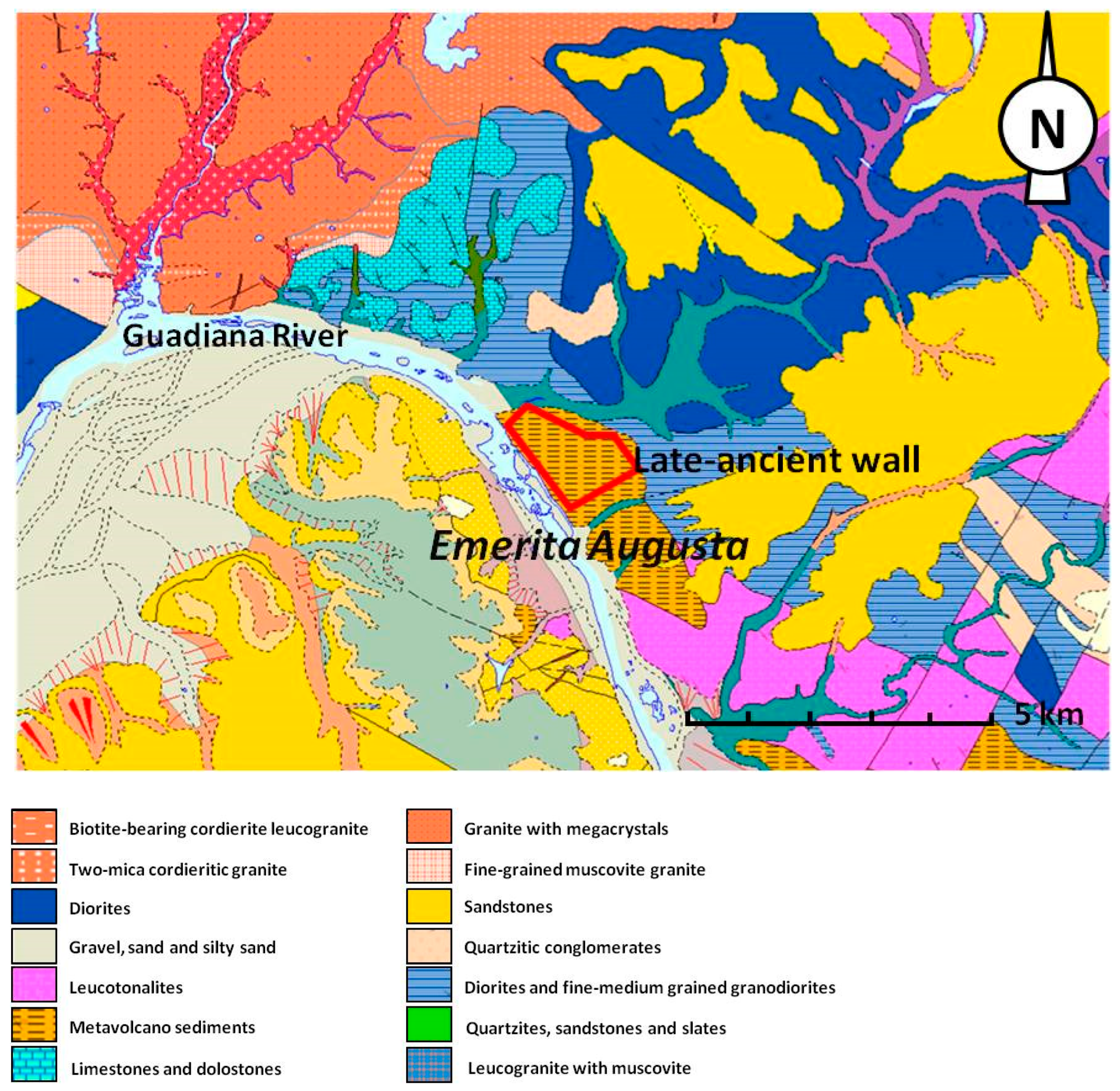
2.2. Geological Setting
3. Materials and Methods
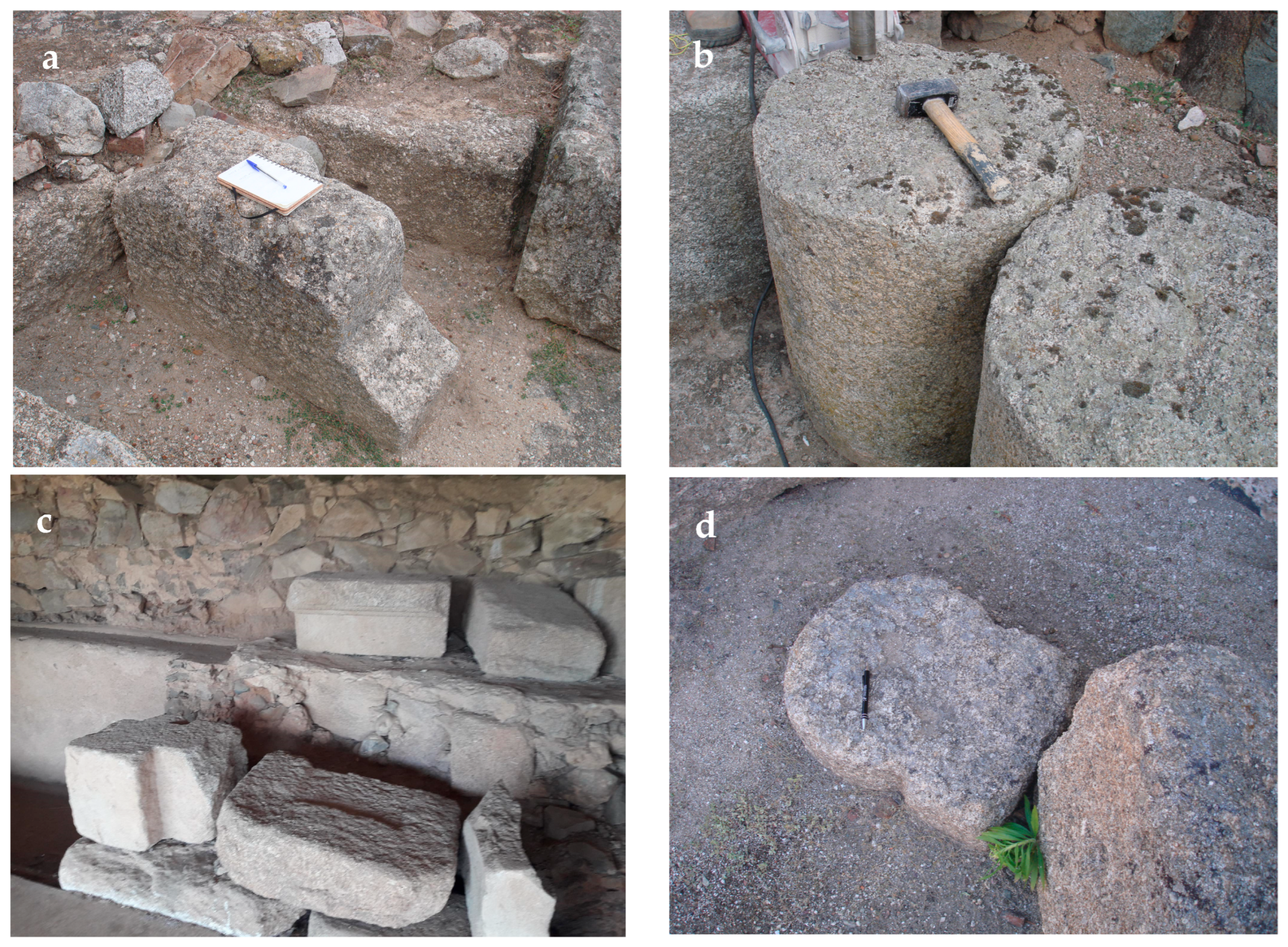
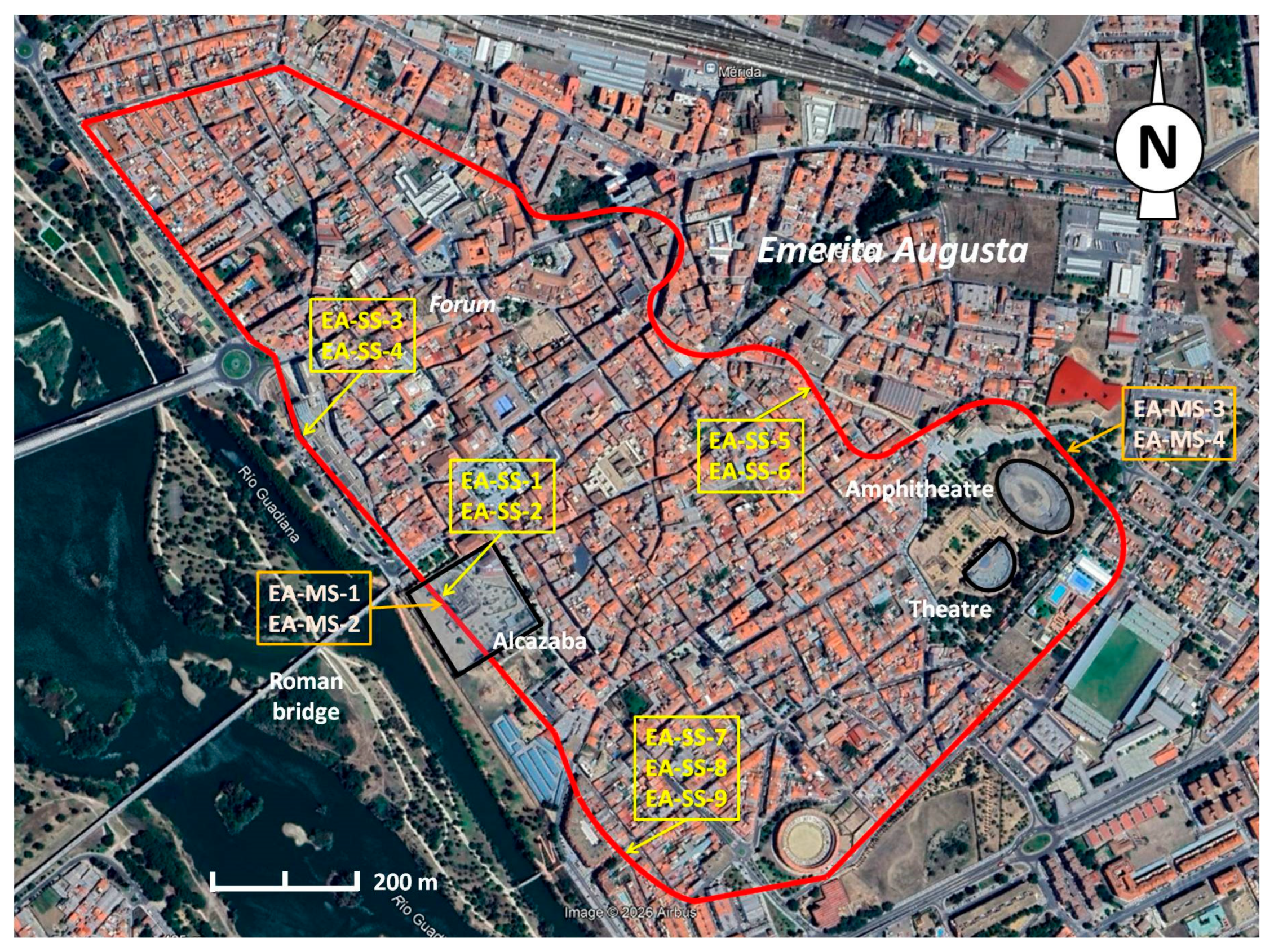
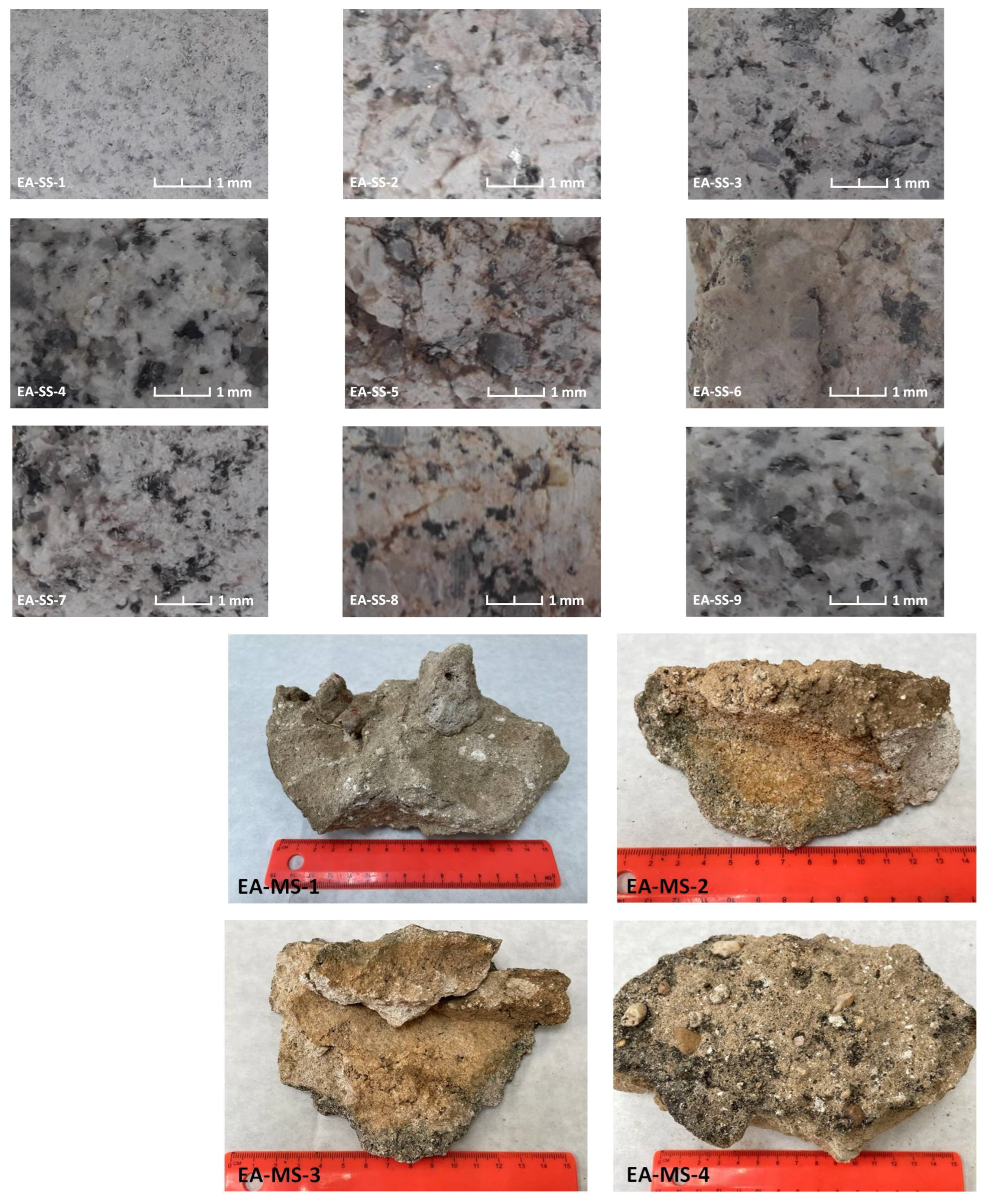
3.1. Sampling
3.2. Optical Microscopy
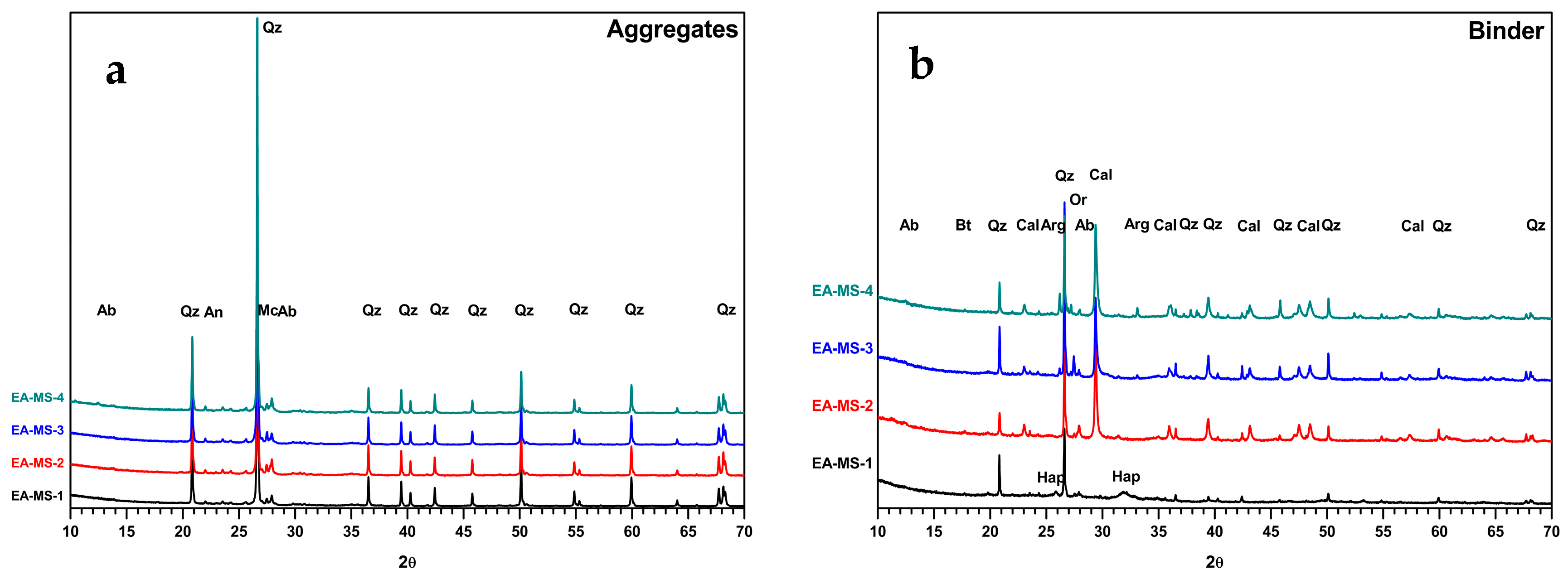
3.3. X-Ray Diffraction
3.4. TGA-DTA Analysis
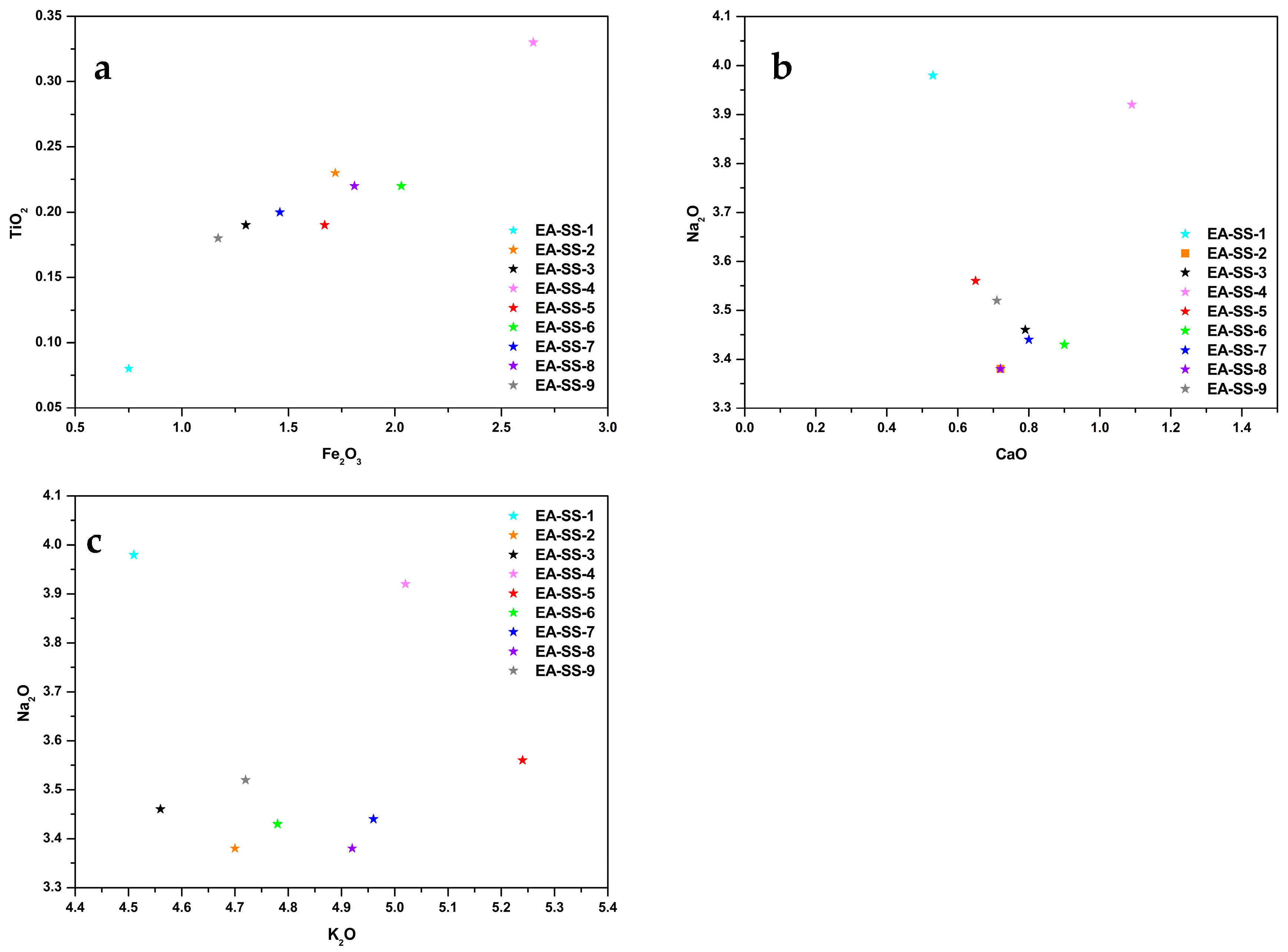
3.5. XRF Analysis
3.6. ICP-MS Analysis
3.7. Scanning Electron Microscopy
4. Results
5. Discussion
6. Conclusions
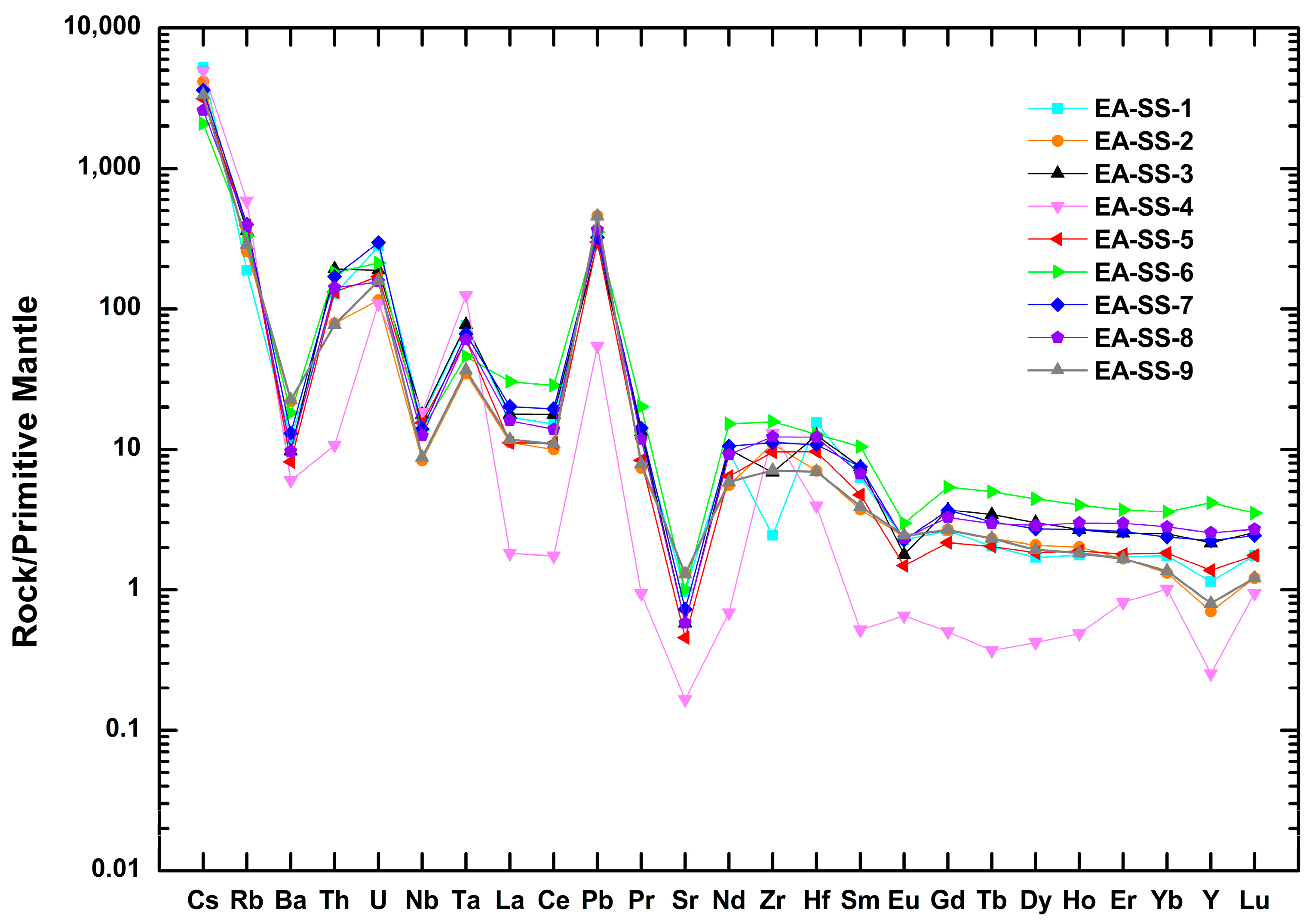
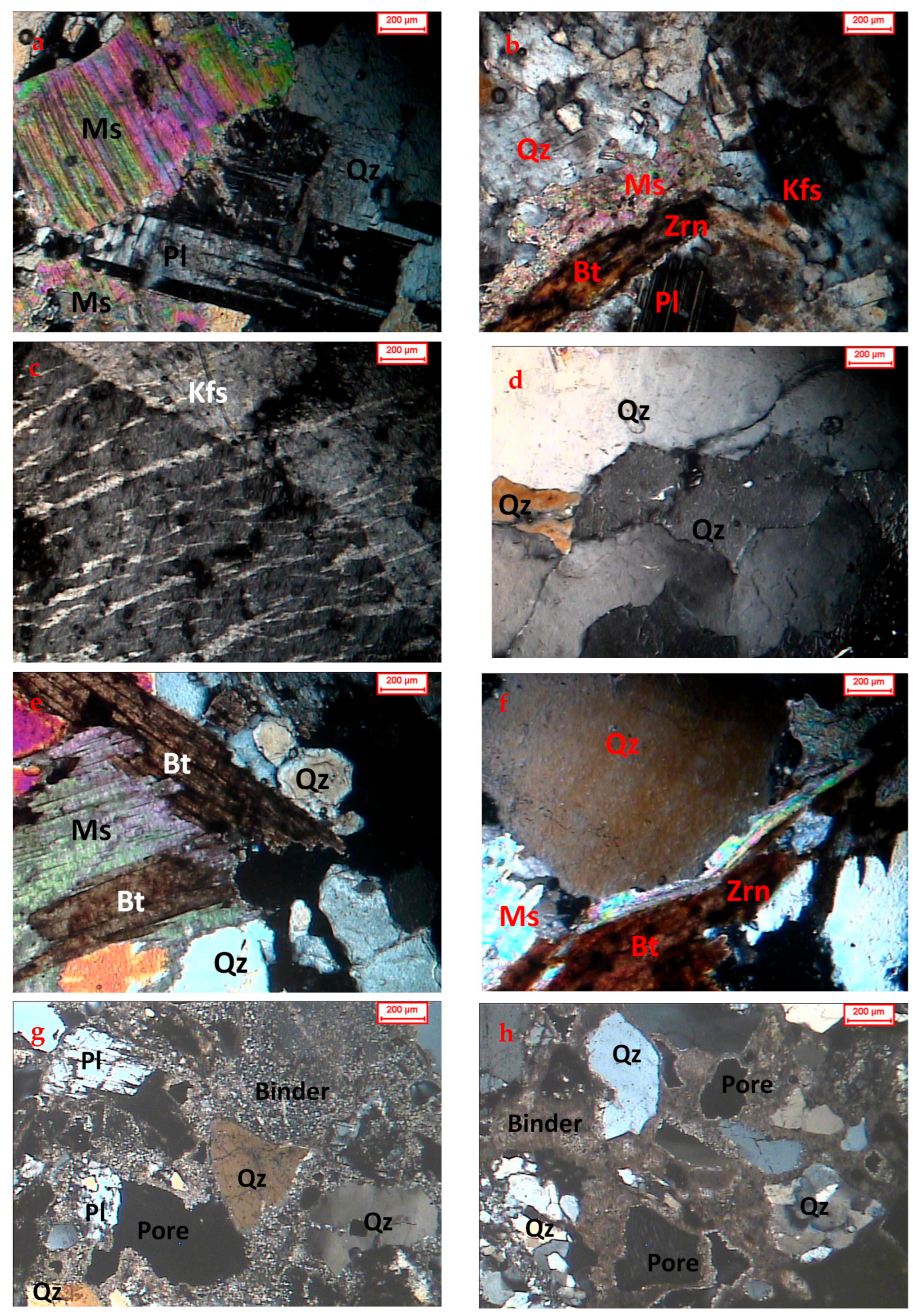
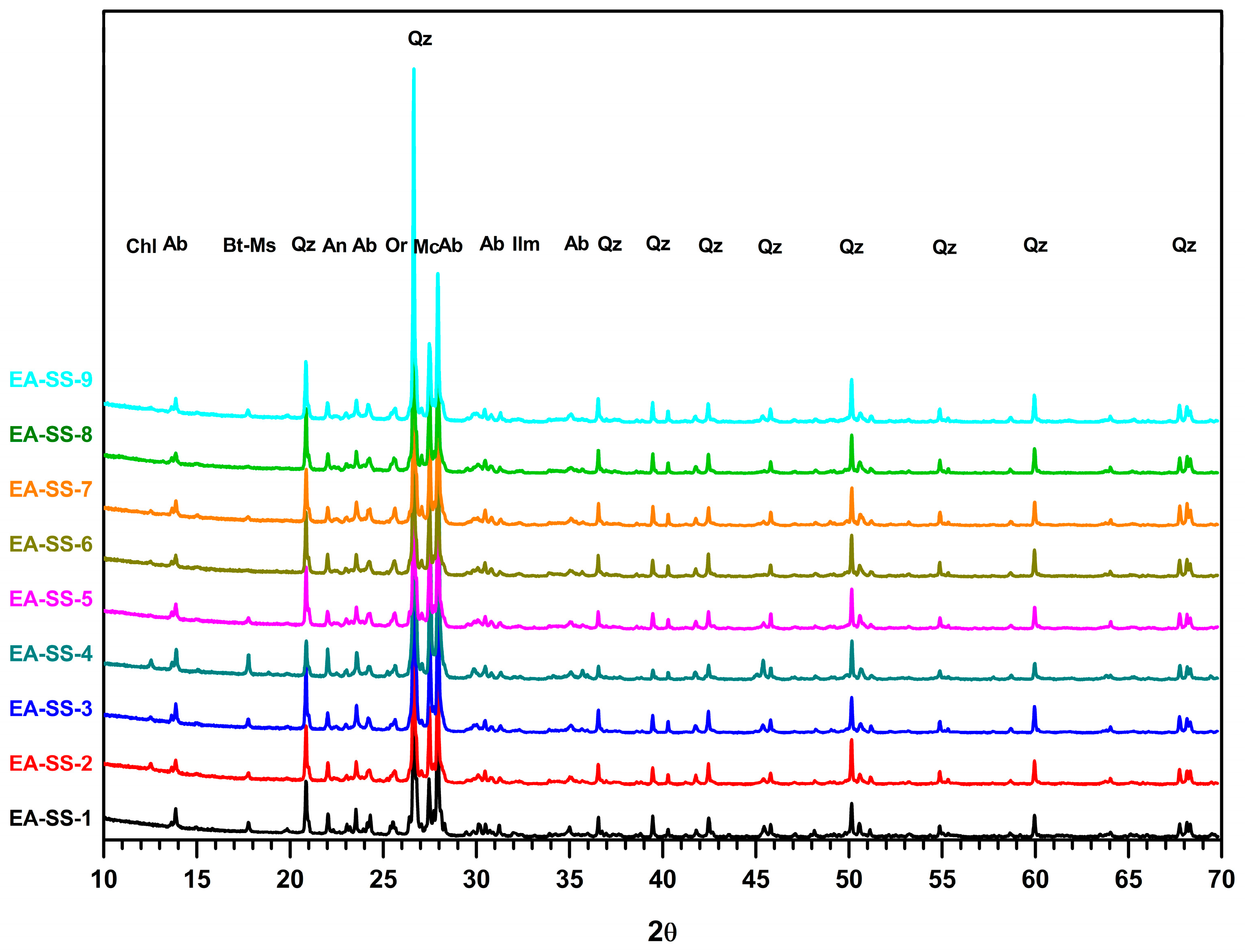
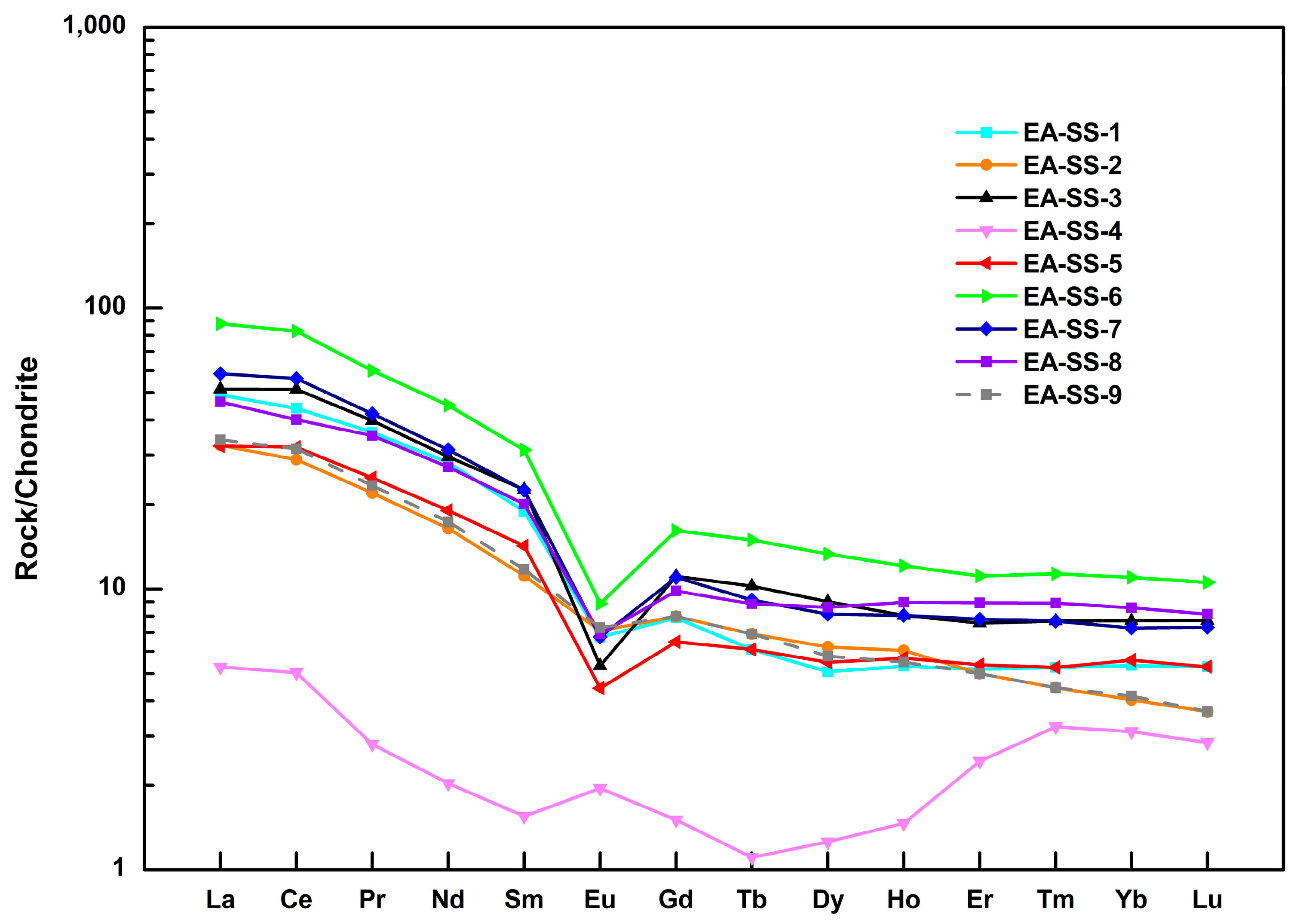
- Mineralogical and geochemical analyses revealed that most of the granitic stones are similar to those used in older structures, such as the Roman theatre and amphitheatre. This suggests that the Late Antique wall was constructed by incorporating stones from local historical quarries—matching the lithologies outcropping in areas adjacent to Emerita Augusta—or stones repurposed from abandoned buildings in the surrounding area, the latter being a common practice during Late Antiquity.
- The mortars were mainly composed of calcite and siliceous aggregates, coming from quarries near the city, or from river sands near the city (Guadiana and Albarregas Rivers), or produced through crushing granitic stones spoliated from other nearby monuments. The occurrence of hydroxyapatite in one of the samples is noteworthy, as it suggests the potential use of bone meal or calcined bone as an additive to enhance the mortar’s properties. However, the presence of hydroxyapatite could also be attributed to the use of modern restoration mortars; nevertheless, this possibility is less likely given that previous archaeological studies have identified these mortars as historic. The binder/aggregate ratios of the studied mortars were consistent with those obtained for other ancient mortars.
- The use of incompatible materials to restore historic buildings can cause premature deterioration of heritage structures. For this reason, a careful approach to the application of compatible restoration geomaterials with original materials is essential through a prior study of the latter, suggesting compatible raw materials that perfectly match the original materials, avoiding the need for recurrent repairs.
- The characterization of the geomaterials used in this monument is the starting point for accurately determining the provenance of the raw materials, which will be the subject of future work. Furthermore, knowledge of the original materials is essential for the formulation of compatible mortars, ensuring proper restoration and the long-term conservation of this ancient wall.
Supplementary Materials
Author Contributions
Funding
Data Availability Statement
Conflicts of Interest
References
- United Nations Educational, Scientific and Cultural Organization. Operational Guidelines for the Implementation of the World Heritage Convention; World Heritage Centre, UNESCO World Heritage Centre: Paris, France, 2024; pp. 45–53. [Google Scholar]
- United Nations Educational, Scientific and Cultural Organization. World Heritage List number (664) Archaeological Ensemble of Mérida. WHC-93/CONF.002/14. In Convention Concerning the Protection of the World Cultural and Natural Heritage; United Nations Educational, Scientific and Cultural Organization: Cartagena, Colombia, 1993. [Google Scholar]
- Šcekic, J.; Tilinger, D.; Milovanovic, A. The notion of value in cultural heritage preservation: A systematic review of foundational sources published by renowned international organizations. J. Cult. Herit. 2025, 76, 52–64. [Google Scholar] [CrossRef]
- International Scientific Committee on the Analysis and Restoration of Structures of Architectural Heritage. Guidelines for the Analysis, Conservation and Structural Restoration of Architectural Heritage. Available online: https://iscarsah.org/wp-content/uploads/2025/04/iscarsah-guidelines.-approved-september-2024-1.pdf (accessed on 5 October 2025).
- Loke, M.E.; Pallav, K.; Cultrone, G.; Di Filippo, C. Investigating the standard design and production procedure of heritage mortars for compatible and durable masonry restoration. J. Build. Eng. 2024, 94, 110012. [Google Scholar] [CrossRef]
- Kubica, J. Development of masonry materials and structures from ancient times, through the present times and the future perspective. J. Build. Eng. 2025, 116, 114682. [Google Scholar] [CrossRef]
- Dogruyol, M.; Gonül, A.; Basboga, M. Comparative analysis of cement-based and historic gypsum-based mortars for historical Restoration: Implications on mechanical and thermal compatibility. J. Build. Eng. 2025, 109, 112982. [Google Scholar] [CrossRef]
- Misiewicz, J.; Kwiatkowska, L.; Wojcik, R.; Ballai, G. Investigation of mortars from historical monuments of North-East Poland and assessment of compatibility between historic and restoration mortars. Constr. Build. Mater. 2025, 474, 141075. [Google Scholar] [CrossRef]
- Sandu, I.; Deak, G.; Ding, Y.; Ivashko, Y.; Sandu, A.V.; Moncea, M.A.; Sandu, I.G. New materials for finishing of ancient monuments and process of obtaining and applying. Int. J. Conserv. Sci. 2021, 12, 1249–1258. [Google Scholar]
- Tyrer, M.; Moreno-Maroto, J.M. Geomaterials: Latest Advances in Materials for Construction and Engineering Applications. Appl. Sci. 2023, 13, 9129. [Google Scholar] [CrossRef]
- Possenti, E.; Catrambone, M.; Colombo, C.; Cantaluppi, M.; Merlini, M.; Vaughan, G.M.B.; Di Michiel, M.; Marinoni, N. Potential of synchrotron X-ray diffraction computed tomography (XRDCT) for a 3D non-destructive and/or non-invasive characterisation of cultural heritage geomaterials (CHG). J. Cult. Herit. 2025, 68, 28–37. [Google Scholar] [CrossRef]
- Fort, R.; Varas, M.J.; Álvarez de Buergo, M.; Freire, D. Determination of anisotropy to enhance the durability of natural stone. J. Geophys. Eng. 2011, 8, S132–S144. [Google Scholar] [CrossRef]
- Milanesio, E.; Storta, E.; Gambino, F.; Appolonia, L.; Borghi, A.; Glarey, A. Petrographic characterization of historic mortar as a tool in archaeologic study: Examples from two medieval castles of Aosta Valley, Northwestern Italy. J. Archaeol. Sci. Rep. 2022, 46, 103719. [Google Scholar] [CrossRef]
- Heckert-Schuleri, M.; Baragona, A.; Enghardt, S.; Weber, J. Multi-Energy CT—Nondestructive investigation of historic mortars. J. Cult. Herit. 2025, 76, 21–28. [Google Scholar] [CrossRef]
- Sium, A.H.; Zachary, G.; Raphael, M.; Mwero, J. Minero-petrographical, chemical and physical characterisation of the ancient mortars from Fort Jesus Heritage Site, In Mombasa, Kenya. Case Stud. Constr. Mater. 2025, 22, e04483. [Google Scholar] [CrossRef]
- Anand, N.J.; Singhal, V.; Manohar, S. Ancient mortar technology of the 1600-year-old renowned Buddhist University and UNESCO world heritage site. Case Stud. Constr. Mater. 2025, 22, e04412. [Google Scholar] [CrossRef]
- Bevins, R.E.; Pearce, N.J.G.; Hillier, S.; Pirrie, D.; Ixer, R.A.; Ando, S.; Barbarano, B.; Power, M.; Turner, P. Was the Stonehenge Altar Stone from Orkney? Investigating the mineralogy and geochemistry of Orcadian Old Red sandstones and Neolithic circle monuments. J. Archaeol. Sci. Rep. 2024, 58, 104738. [Google Scholar] [CrossRef]
- Mateos, P.; Pizzo, A. La reutilización de materiales en la muralla tardoantigua de Augusta Emerita. In La Reutilización Arquitectónica en la Transformación del Paisaje Urbano de las Ciudades Históricas; Mateos, P., Morán, C., Eds.; Instituto de Arqueología de Mérida: Mérida, Spain, 2020; pp. 55–64. [Google Scholar]
- Ortiz, P.; Antúnez, V.; Martín, J.M.; Ortiz, R.; Vázquez, M.A.; Galán, E. Approach to environmental risk analysis for the main monuments in a historical city. J. Cult. Herit. 2014, 15, 432–440. [Google Scholar] [CrossRef]
- Detry, C.; Bustamante-Alvarez, M.; Heras Mora, F.J. The animal remains from Calle Almendralejo nr. 41 (Mérida, Spain): A contribution to our understanding of animal husbandry in the capital of Roman Lusitania. Quat. Int. 2024, 699, 65–83. [Google Scholar] [CrossRef]
- Ramírez Sádaba, J.L.; Mateos Cruz, P. Catálogo de inscripciones cristianas de Mérida. Cuad. Emerit. 2000, 16, 7–323. [Google Scholar]
- Alba, M. Evolución y final de los espacios romanos a la luz de los datos arqueológicos (pautas de transformación de la ciudad tardoantigua y altomedieval). In Augusta Emerita. Territorios, Espacios, Imágenes y Gentes en Lusitania Romana; Nogales Basarrate, T., Ed.; Ministerio de Educación, Cultura y Deporte: Madrid, Spain, 2005; pp. 207–255. [Google Scholar]
- Alba, M. Consideraciones arqueológicas en torno al siglo V en Mérida: Repercusiones en las viviendas y en la muralla. In Excavaciones Arqueológicas en Mérida 1996 MEMORIA; Consorcio de la Ciudad Monumental de Mérida: Badajoz, Spain, 1998; Volume 2, pp. 361–385. [Google Scholar]
- Bandres, A.; Eguiluz, L.; Gil Ibarguchi, J.L.; Palacios, T. Geodynamic evolution of a Cadomian arc region: The northern Ossa-Morena zone, Iberian massif. Tectonophysics 2002, 352, 105–120. [Google Scholar] [CrossRef]
- García-Lobón, J.L.; Rey-Moral, C.; Ayala, C.; Martín-Parra, L.M.; Matas, J.; Reguera, M.I. Regional structure of the southern segment of Central Iberian Zone (Spanish Variscan Belt) interpreted from potential field images and 2.5 D modelling of Alcudia gravity transect. Tectonophysics 2014, 614, 185–202. [Google Scholar] [CrossRef]
- Gonzalo, J.C. Petrología y Estructura del Basamento en el área de Mérida (Extremadura Central). Ph.D. Thesis, Universidad de Salamanca, Salamanca, Spain, 1987. [Google Scholar]
- Mota-López, M.I.; Fort, R.; Alvarez de Buergo, M.; Pizzo, A. Provenance analysis of the granitic ashlars used in the construction of the Roman theatre in Emerita Augusta (Mérida, Spain). Archaeol. Anthropol. Sci. 2020, 12, 236. [Google Scholar] [CrossRef]
- Mota-López, M.I.; Fort, R.; Álvarez de Buergo, M.; Pizzo, A. Analytical characterisation of the granitic rocks used in the vomitoria of the Roman amphitheatre in Emerita Augusta. Rend. Lincei Sci. Fis. Nat. 2022, 33, 57–70. [Google Scholar] [CrossRef]
- Tůmová, H.; Kucharová, A.; Cirelli, E.; Cerníková, A. Unveiling the origins: Multi-analytical study on the provenance determination of white marble from the ecclesiastical complex of Beati Severi basilica in Classe (Ravenna, Italy). J. Archaeol. Sci. Rep. 2025, 66, 105275. [Google Scholar] [CrossRef]
- Dunwen, L.; Kunpeng, C.; Yu, T.; Jun, Z.; Xianqing, M.; Tao, A.; Huanlin, Z. Study on weathering corrosion characteristics of red sandstone of ancient buildings under the perspective of non-destructive testing. J. Build. Eng. 2024, 85, 108520. [Google Scholar] [CrossRef]
- Stickland, J.; Schroer, L.; Buyse, F.; Guedes, A.; Haugen, H.; Mathiesen, R.; Breiby, D.W.; Cnudde, V.; Chattopadhyay, B. Advanced microscopy probes for geomaterials—Current state of the art and future perspectives. Tomogr. Mater. Struct. 2025, 9, 100173. [Google Scholar] [CrossRef]
- Rispoli, C.; Montesano, G.; Verde, M.; Balassone, G.; Columbu, S.; De Bonis, A.; Di Benedetto, C.; D’Uva, F.; Esposito, R.; Graziano, S.F.; et al. The key to ancient Roman mortars hydraulicity: Ceramic fragments or volcanic materials? A lesson from the Phlegrean archaeological area (southern Italy). Constr. Build. Mater. 2024, 411, 134408. [Google Scholar] [CrossRef]
- Del Hierro, I.; Reyes-Téllez, F.; Herrera, R.; Lillo, J.; Ortiz-Bustos, J.; Pérez-Cortes, Y.; Polo-Romero, A.; Viñuales-Ferreiro, G. Analyzing lime mortars from a historic construction in Magan (Toledo, Spain): Insights into mineralogy and firing temperatures. J. Archaeol. Sci. Rep. 2024, 60, 104812. [Google Scholar] [CrossRef]
- Fort, R.; Varas-Muriel, M.J.; Zoghlami, K.; Ergenç, D.; Zaddem, A. Analytical characterisation of 1st- and 2nd-century Roman mortars at the Utica archaeological site (Tunisia): Construction phases and provenance of the raw materials. J. Archaeol. Sci. Rep. 2024, 54, 104404. [Google Scholar] [CrossRef]
- Mota-López, M.I.; Meneses-Rodríguez, J.M.; Maderuelo-Sanz, R. New Contributions to the Building Materials Used in the Almohad Wall of Cáceres (Spain): Mortars. Geoheritage 2025, 17, 162. [Google Scholar] [CrossRef]
- Perez-Montserrat, E.M.; Cultrone, G.; Rincón, J.M.; Perla, A.; Fort, F. Multidisciplinary study of glazed ceramics from Chamberí Metro Station (Madrid, Spain): A knowledge base with technological and heritage value. Appl. Clay Sci. 2019, 175, 102–114. [Google Scholar] [CrossRef]
- Ergenç, D.; Fort, R. Multi-technical characterization of Roman mortars from Complutum, Spain. Measurement 2019, 147, 106876. [Google Scholar] [CrossRef]
- Green, T.H. Significance of Nb/Ta as an indicator of geochemical processes in the crust-mantle system. Chem. Geol. 1995, 120, 347–359. [Google Scholar] [CrossRef]
- Harker, A. The Natural History of Igneus Rocks; Hafner Publishing Company: New York, NY, USA, 1909; pp. 1–384. [Google Scholar]
- Sun, S.S.; McDonough, W.F. Chemical and isotopic systematics of oceanic basalts: Implications for mantle composition and processes. Geol. Soc. Spec. Publ. 1989, 42, 313–345. [Google Scholar] [CrossRef]
- Medeghini, L.; Calzolari, L.; Botticelli, M.; Di Fazio, M.; DeVito, C.; Pettiti, I.; Bardelli, F.; Mignardi, S. The secret of ancient Roman hydraulic mortar: The lesson learnt from the past for future cements. Cem. Concr. Compos. 2024, 148, 105484. [Google Scholar] [CrossRef]
- Wang, X.; Wang, L.; Wang, Z.; Liu, Y.; Yang, F.; Zhang, K.; Sun, M.; Shen, Y.; Yan, X. Two birds with one stone: The method for both surface protection and integral reinforcement of gypsum mortar in historic constructions. J. Cult. Herit. 2026, 77, 15–25. [Google Scholar] [CrossRef]
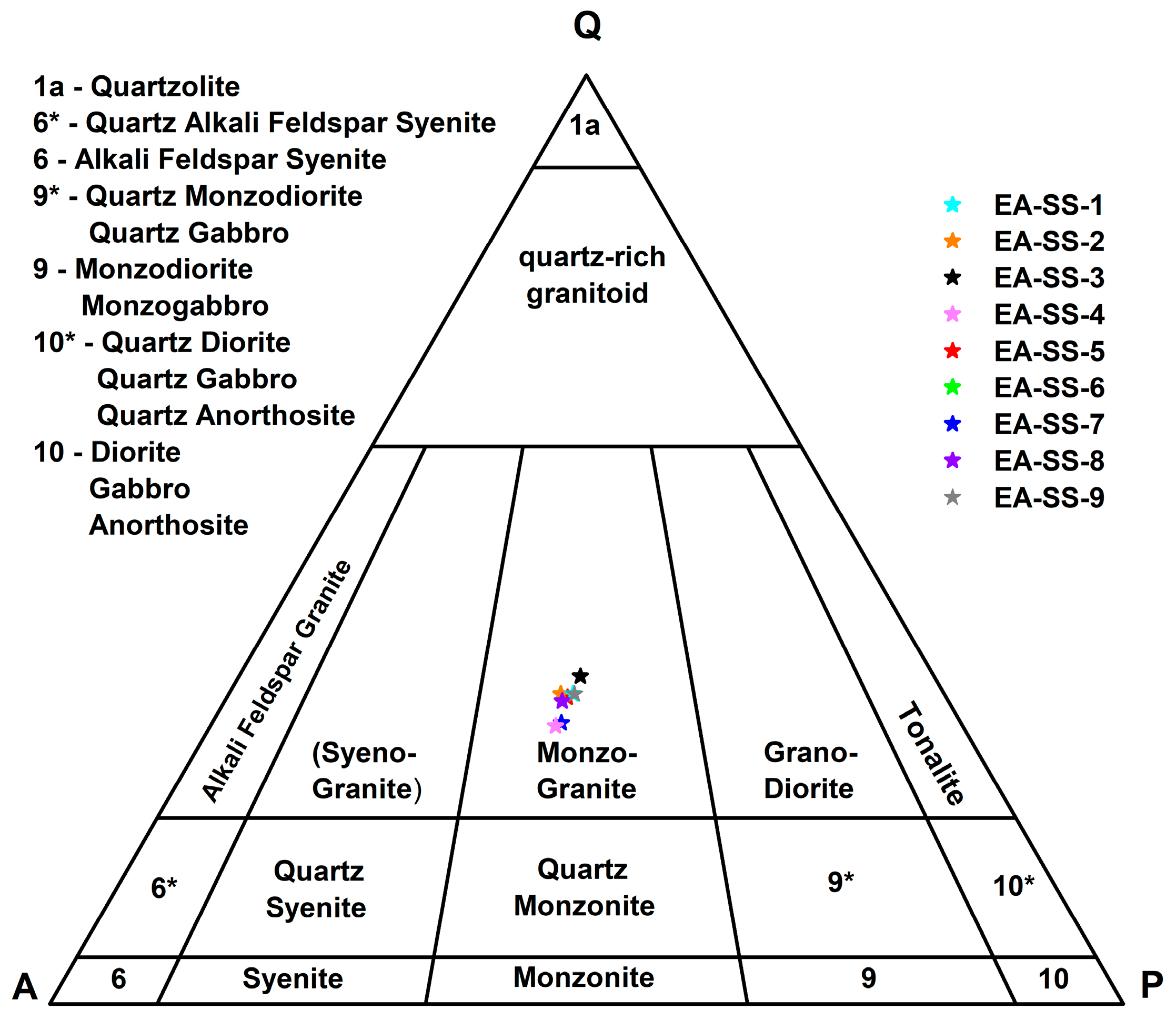
- Streckeisen, A. To each plutonic rock its proper name. Earth. Sci. Rev. 1976, 12, 1–33. [Google Scholar] [CrossRef]
- Fort, R.; Ergenç, D.; Aly, N.; Alvarez de Buergo, M.; Hemeda, S. Implications of new mineral phases in the isotopic composition of Roman lime mortars at the Kom el-Dikka archaeological site in Egypt. Constr. Build. Mater. 2021, 268, 121085. [Google Scholar] [CrossRef]
- Whitney, D.L.; Evans, B.W. Abbreviations for names of rock-forming minerals. Am. Min. 2010, 95, 185–187. [Google Scholar] [CrossRef]
- Zen, E.A. Aluminum enrichment in silicate melts by fractional crystallization: Some mineralogic and petrographic constraints. J. Petrol. 1986, 27, 1095–1117. [Google Scholar] [CrossRef]
- Morales Camera, M.M.; Dahlquist, J.A.; Garcia-Arias, M.; Moreno, J.A.; Galindo, C.; Basei, M.A.S.; Molina, J.F. Petrogenesis of the F-rich peraluminous A-type granites: An example from the Devonian Achala batholith (Characato Suite), Sierras Pampeanas, Argentina. Lithos 2020, 378–379, 105792. [Google Scholar] [CrossRef]
- Bonin, B. A-type granites and related rocks: Evolution of a concept, problems and prospects. Lithos 2007, 97, 1–29. [Google Scholar] [CrossRef]
- McDonough, W.F.; Sun, S. The composition of the Earth. Chem. Geol. 1995, 120, 223–253. [Google Scholar] [CrossRef]
- Williams-Thorpe, O.; Potts, P.J. Geochemical and Magnetic Provenancing of Roman Granite Columns from Andalucía and Extremadura, Spain. Oxf. J. Archaeol. 2002, 2, 167–194. [Google Scholar] [CrossRef]
- Girotto, C.; Dilaria, S.; Previato, C.; Bonetto, J.; Mazzoli, C. The Use of Stone Resources in the Roman Architecture of Oderzo (Treviso, Italy). Heritage 2025, 8, 44. [Google Scholar] [CrossRef]
- Martínez-Martínez, J.; Corbí, H.; Fusi, N.; Molina Vidal, J.; Moya-Montoya, J.A.; Lorrio, A.J.; Lozano Quijada, F.; Pérez Burgos, J.M. Multiproxy Petrological Analysis for Provenance Determination of Two Granitic Stone Anchors in the Western Mediterranean. Minerals 2025, 15, 675. [Google Scholar] [CrossRef]
- Tirelli, M. Spolia dalla necropoli opitergina: Monumenta. In La Necropoli di Opitergium, Atti della Giornata di Studi Intorno alla Mostra L’anima delle Cose, Oderzo, 25 Maggio 2021; Mascardi, M., Tirelli, M., Vallicelli, M.C., Eds.; Edizioni Ca’ Foscari: Venezia, Italy, 2023; pp. 11–30. [Google Scholar]
- Rochette, P.; Ambrosi, J.P.; Amraoui, T.; Andrieu, V.; Badie, A.; Borgard, P.; Gattacceca, J.; Hartmann-Virnich, A.; Panneau, M.; Planchon, J. Systematic sourcing of granite shafts from Gallia Narbonensis and comparison with other western Mediterranean areas. J. Archaeol. Sci. Rep. 2022, 42, 130372. [Google Scholar] [CrossRef]
- Rajdeo Singh, M.; Ganaraj, K.; Damodar Sable, P. Surface mediated Ca-phosphate biomineralization and characterization of the historic lime mortar, Janjira Sea Fort, India. J. Cult. Herit. 2020, 44, 110–119. [Google Scholar] [CrossRef]
- Secco, M.; Dilaria, S.; Bonetto, J.; Addis, A.; Tamburini, S.; Preto, N.; Ricci, G.; Artioli, G. Technological transfers in the Mediterranean on the verge of Romanization: Insights from the waterproofing renders of Nora (Sardinia, Italy). J. Cult. Herit. 2020, 44, 63–82. [Google Scholar] [CrossRef]
- Talib, H.; Bilal Nasar Khan, R.; Khitab, A.; Benjeddou, O.; Akhtar Khan, R. Scanning through multidisciplinary techniques and recreation of historic mortar: Case study of Rohtas Fort. Case Stud. Constr. Mater. 2023, 18, e02052. [Google Scholar] [CrossRef]
- Kapur, S.; Akça, E.; Kadir, S.; Previtali, F.; Billor, Z.; Zucca, C.; Casati, E.; Eren, M.; Karagoz, A.; Nazik, A.; et al. Pedogenic evidence sheds light on the post-Roman pedo-sedimentological and human history of Tarsus, the Roman capital of CE 60, Cilicia, Mersin, Türkiye. Catena 2025, 248, 108544. [Google Scholar] [CrossRef]
- Saggu, K.; Pal, S.; Dev, N. Exploring the role of organic additives in ancient lime mortars: Current knowledge and implications. J. Cult. Herit. 2025, 76, 317–326. [Google Scholar] [CrossRef]
- Chul-Woo, C.; Jae-Yong, L.; Ji-Hyun, K. Formation of Hydroxyapatite in Portland Cement Paste. J. Korea Inst. Build. Constr. 2014, 14, 68–75. [Google Scholar] [CrossRef][Green Version]
- Sassoni, E. Hydroxyapatite and Other Calcium Phosphates for the Conservation of Cultural Heritage: A Review. Materials 2018, 11, 557. [Google Scholar] [CrossRef]
- Moropoulou, A.; Bakolas, A.; Bisbikou, K. Investigation of the technology of historic mortar. J. Cult. Herit. 2000, 1, 45–58. [Google Scholar] [CrossRef]
- Corti, C.; Rampazzi, L.; Bugini, R.; Sansonetti, A.; Biraghi, M.; Castelletti, L.; Nobile, I.; Orsenigo, C. Thermal analysis and archaeological chronology: The ancientmortars of the site of Baradello (Como, Italy). Thermochim. Acta 2013, 572, 71–84. [Google Scholar] [CrossRef]
- Bakolas, A.; Biscontin, A.; Moropoulou, A.; Zendri, E. Characterization of structural byzantine mortars by thermogravimetric analysis. Thermochim. Acta 1998, 321, 151–160. [Google Scholar] [CrossRef]
- Genestar, C.; Pons, C.; Más, A. Analytical characterisation of ancient mortars from the archaeological Roman city of Pollentia (Balearic Islands, Spain). Anal. Chim. Acta 2006, 557, 373–379. [Google Scholar] [CrossRef]
- Pizzo, P.; Válek, J.; Frankeová, D. Waterproof, hydraulic or natural hydraulic?—Characterization of a set of historic mortars from Paphos (Cyprus). J. Archaeol. Sci. Rep. 2025, 65, 105235. [Google Scholar] [CrossRef]
- Maravelaki-Kalaitzaki, P.; Galanos, A.; Doganis, I.; Kallithrakas-Kontos, N. Physico-chemical characterization of mortars as a tool in studying specific hydraulic components: Application to the study of ancient Naxos aqueduct. Appl. Phys. A 2011, 104, 335–348. [Google Scholar] [CrossRef]
- Belfiore, C.M.; Montalto, G.; Finocchiaro, C.; Cultrone, G.; Mazzoleni, C. Durability tests on lime-based mortars from the historic built heritage of Catania (Eastern Sicily, Italy): An experimental study. J. Build. Eng. 2023, 80, 108137. [Google Scholar] [CrossRef]
- Sanjurjo-Sánchez, J.; Guasch-Ferré, N.; Pitarch Martí, A.; Badia, M.; Menchone, J.; Casas, L.; Prada, J.L. New insights into the chronology of the Les Ferreres Aqueduct (Tarragona, Spain) by combining petrographic analyses and OSL dating on lime mortars. J. Cult. Herit. 2025, 76, 327–337. [Google Scholar] [CrossRef]
- Mota-López, M.I.; Fort, R.; Alvarez de Buergo, M.; Pizzo, A.; Maderulo-sanz, R.; Meneses-Rodríguez, J.M.; Ergenç, D. Characterization of concrete from Roman buildings for public spectacles in Emerita Augusta (Mérida, Spain). Archaeol. Anthropol. Sci. 2018, 10, 1007–1022. [Google Scholar] [CrossRef]
- Athira, V.S.; Lekshmi, S.; Sharanya, A.G.; Tripathi, A.; Manohar, S. Potential application of bio-admixtures in synthesizing traditional lime binders—A comprehensive review. J. Build. Eng. 2024, 90, 109464. [Google Scholar] [CrossRef]






| Sample Identification | Location | Optical Microscopy | XRD | XRF | ICP-MS | SEM | TGA-DTA |
|---|---|---|---|---|---|---|---|
| Stones | |||||||
| EA-SS-1 | Arab Citadel | x | x | x | x | - | - |
| EA-SS-2 | Arab Citadel | x | x | x | x | - | - |
| EA-SS-3 | Morería Street | x | x | x | x | - | - |
| EA-SS-4 | Morería Street | x | x | x | x | - | - |
| EA-SS-5 | José Ramón Mélida Street | x | x | x | x | - | - |
| EA-SS-6 | José Ramón Mélida Street | x | x | x | x | - | - |
| EA-SS-7 | Anas Street | x | x | x | x | - | - |
| EA-SS-8 | Anas Street | x | x | x | x | - | - |
| EA-SS-9 | Anas Street | x | x | x | x | - | - |
| Mortars | |||||||
| EA-MS-1 | Arab Citadel | - | x | - | - | x | x |
| EA-MS-2 | Arab Citadel | x | x | - | - | x | x |
| EA-MS-3 | Roman amphitheatre wall | x | x | - | - | x | x |
| EA-MS-4 | Roman amphitheatre wall | - | x | - | - | x | x |
| Sample Identification | Quartz | Calcite | K-Feldspars | Plagioclases | Muscovite | Biotite | Chlorite | Aragonite | Hydroxyapatite |
|---|---|---|---|---|---|---|---|---|---|
| Stones | |||||||||
| EA-SS-1 | +++ | - | ++ | ++ | ± | - | - | - | - |
| EA-SS-2 | +++ | - | ++ | ++ | ± | ± | ± | - | - |
| EA-SS-3 | +++ | - | ++ | ++ | ± | ± | - | - | - |
| EA-SS-4 | +++ | - | ++ | ++ | ± | ± | - | - | - |
| EA-SS-5 | +++ | - | ++ | ++ | ± | ± | ± | - | - |
| EA-SS-6 | +++ | - | ++ | ++ | - | ± | ± | - | - |
| EA-SS-7 | +++ | - | ++ | ++ | ± | ± | - | - | - |
| EA-SS-8 | +++ | - | ++ | ++ | - | - | ± | - | - |
| EA-SS-9 | +++ | - | ++ | ++ | ± | ± | - | - | - |
| Mortars | |||||||||
| EA-MS-1 | +++ | - | ± | ± | - | - | - | - | + |
| EA-MS-2 | +++ | +++ | ± | ± | - | - | - | - | - |
| EA-MS-3 | +++ | +++ | ± | ± | - | - | - | ± | - |
| EA-MS-4 | +++ | +++ | ± | ± | - | - | - | ± | - |
| Sample Identification | 30–120 °C | 120–200 °C | 200–600 °C | >600 °C | Loss of Ignition | CO2/H2O | Binder/Aggregate Ratio |
|---|---|---|---|---|---|---|---|
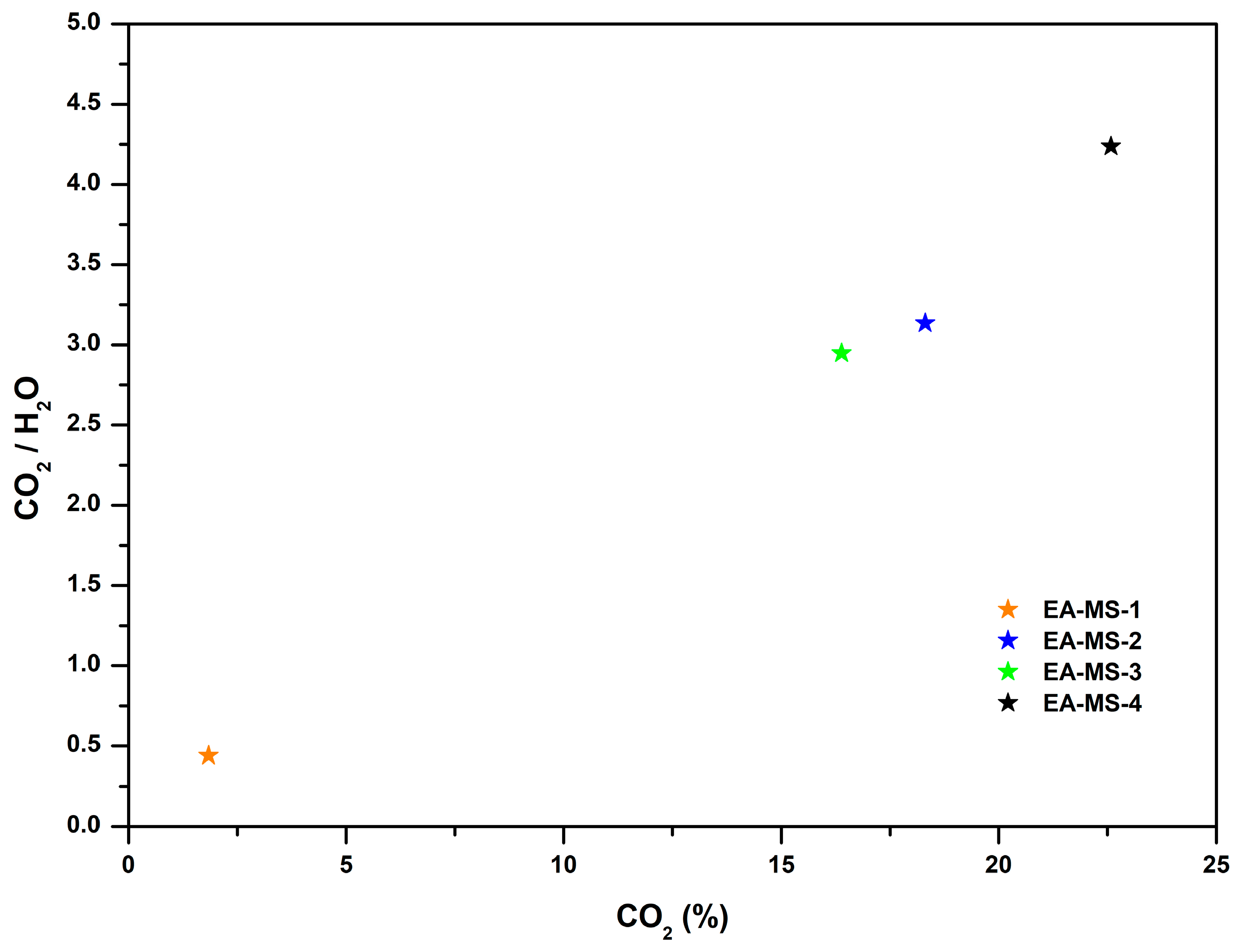
| EA-MS-1 | 11.10 | 1.59 | 4.18 | 1.84 | 18.71 | 0.44 | 1/13 |
| EA-MS-2 | 2.13 | 0.82 | 5.84 | 18.31 | 27.10 | 3.14 | 1/5 |
| EA-MS-3 | 3.93 | 0.58 | 5.56 | 16.39 | 26.46 | 2.95 | 1/3 |
| EA-MS-4 | 2.99 | 0.61 | 5.33 | 22.58 | 31.51 | 4.24 | 1/3 |
Disclaimer/Publisher’s Note: The statements, opinions and data contained in all publications are solely those of the individual author(s) and contributor(s) and not of MDPI and/or the editor(s). MDPI and/or the editor(s) disclaim responsibility for any injury to people or property resulting from any ideas, methods, instructions or products referred to in the content. |
© 2026 by the authors. Licensee MDPI, Basel, Switzerland. This article is an open access article distributed under the terms and conditions of the Creative Commons Attribution (CC BY) license.
Share and Cite
Mota-López, M.I.; Meneses-Rodríguez, J.M.; Delgado Molina, P.; Maderuelo-Sanz, R.; Mateos Cruz, P. Analytical Characterization of the Geomaterials Used in the Construction of the Late Antique Wall in Emerita Augusta (Mérida, Spain). Heritage 2026, 9, 180. https://doi.org/10.3390/heritage9050180
Mota-López MI, Meneses-Rodríguez JM, Delgado Molina P, Maderuelo-Sanz R, Mateos Cruz P. Analytical Characterization of the Geomaterials Used in the Construction of the Late Antique Wall in Emerita Augusta (Mérida, Spain). Heritage. 2026; 9(5):180. https://doi.org/10.3390/heritage9050180
Chicago/Turabian StyleMota-López, Maria Isabel, Juan Miguel Meneses-Rodríguez, Pedro Delgado Molina, Rubén Maderuelo-Sanz, and Pedro Mateos Cruz. 2026. "Analytical Characterization of the Geomaterials Used in the Construction of the Late Antique Wall in Emerita Augusta (Mérida, Spain)" Heritage 9, no. 5: 180. https://doi.org/10.3390/heritage9050180
APA StyleMota-López, M. I., Meneses-Rodríguez, J. M., Delgado Molina, P., Maderuelo-Sanz, R., & Mateos Cruz, P. (2026). Analytical Characterization of the Geomaterials Used in the Construction of the Late Antique Wall in Emerita Augusta (Mérida, Spain). Heritage, 9(5), 180. https://doi.org/10.3390/heritage9050180