

Digitization, Interpretation, and Valorization of Ruined Architecture: Case Studies of IT Strategies in the Archeological Field

 , , , and
Abstract
1. Introduction
2. Theoretical Framework and Related Works
2.1. The Digital Revolution in Archeology: From Data Capture to Data Management
2.2. Survey and Representation: Potentials and Risks of Digital Applications for Ruinous Architecture
3. It Strategies in Archeological Fields: Two Different Case Studies
3.1. Pantalica: High-Resolution LiDAR-Based 3D Surveying of Rock-Cut Churches for Analysis and Conservation
3.1.1. Technological Advancements and LiDAR Integration
- Automated Modeling: The device automatically generates spatial models and high-resolution texture maps, facilitating rapid data acquisition without the need for extensive manual processing [26].
3.1.2. Applications in Cultural Heritage
- Digital Museums and Accessibility: The Pro3 enables the creation of lightweight digital models that can be hosted on platforms like Matterport Discover, allowing for web-based access to heritage sites via mobile or desktop browsers. This capability supports the creation of virtual walkthroughs for inaccessible or private spaces, enhancing interpretive diversity [26].
- Multi-modal Integration: Current workflows often combine the Pro3 with other technologies. For example, while the Pro3 is used for efficient interior scanning, it is frequently integrated with photogrammetry or other sensors to document exterior streetscapes or complex archeological details, creating a unified digital narrative [26].
3.1.3. Digital Documentation and Interpretive Perspectives on Rupestrian Heritage
3.1.4. A Stratified Medieval Settlement and His Rock-Cut Churches
3.1.5. Church of San Nicolicchio
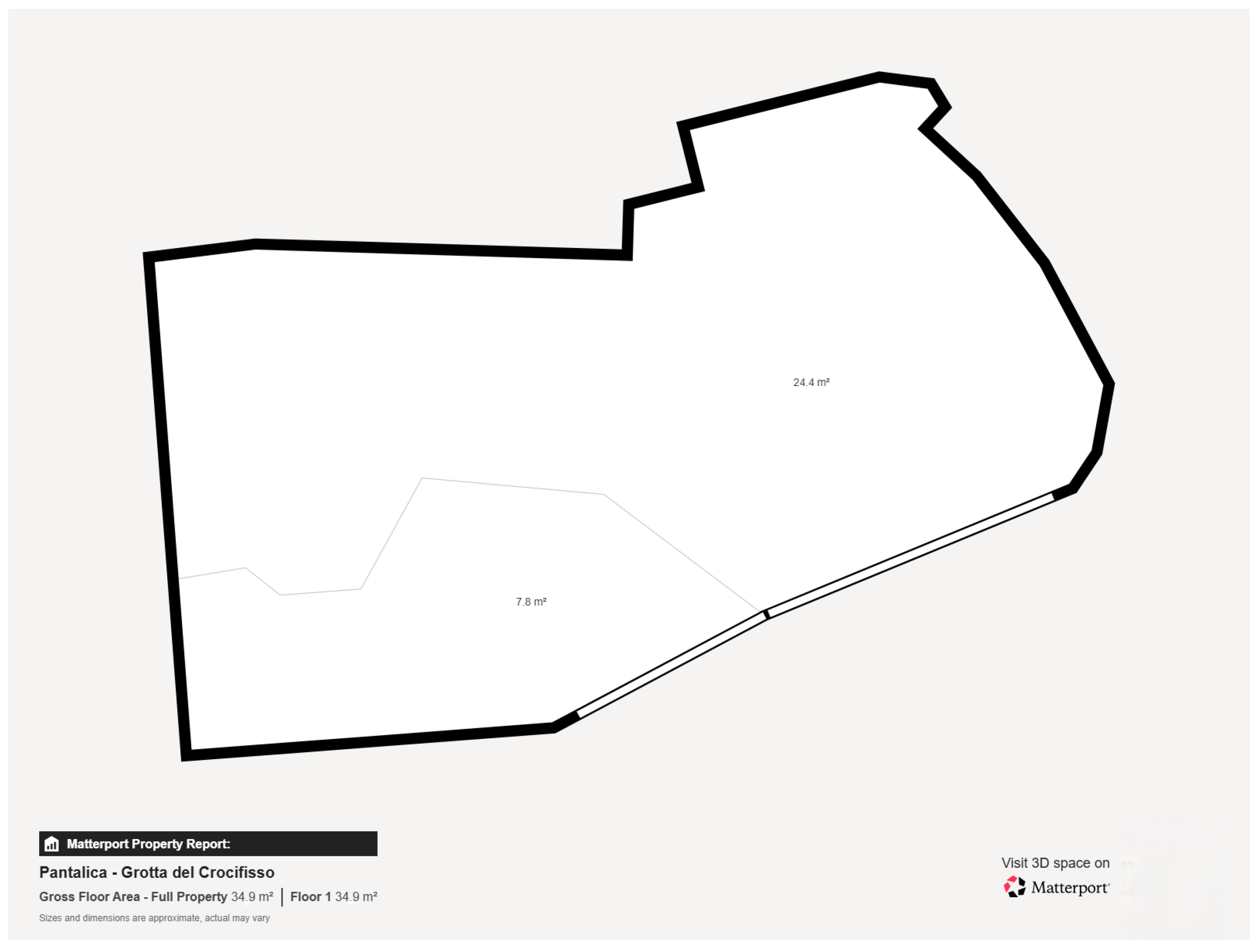
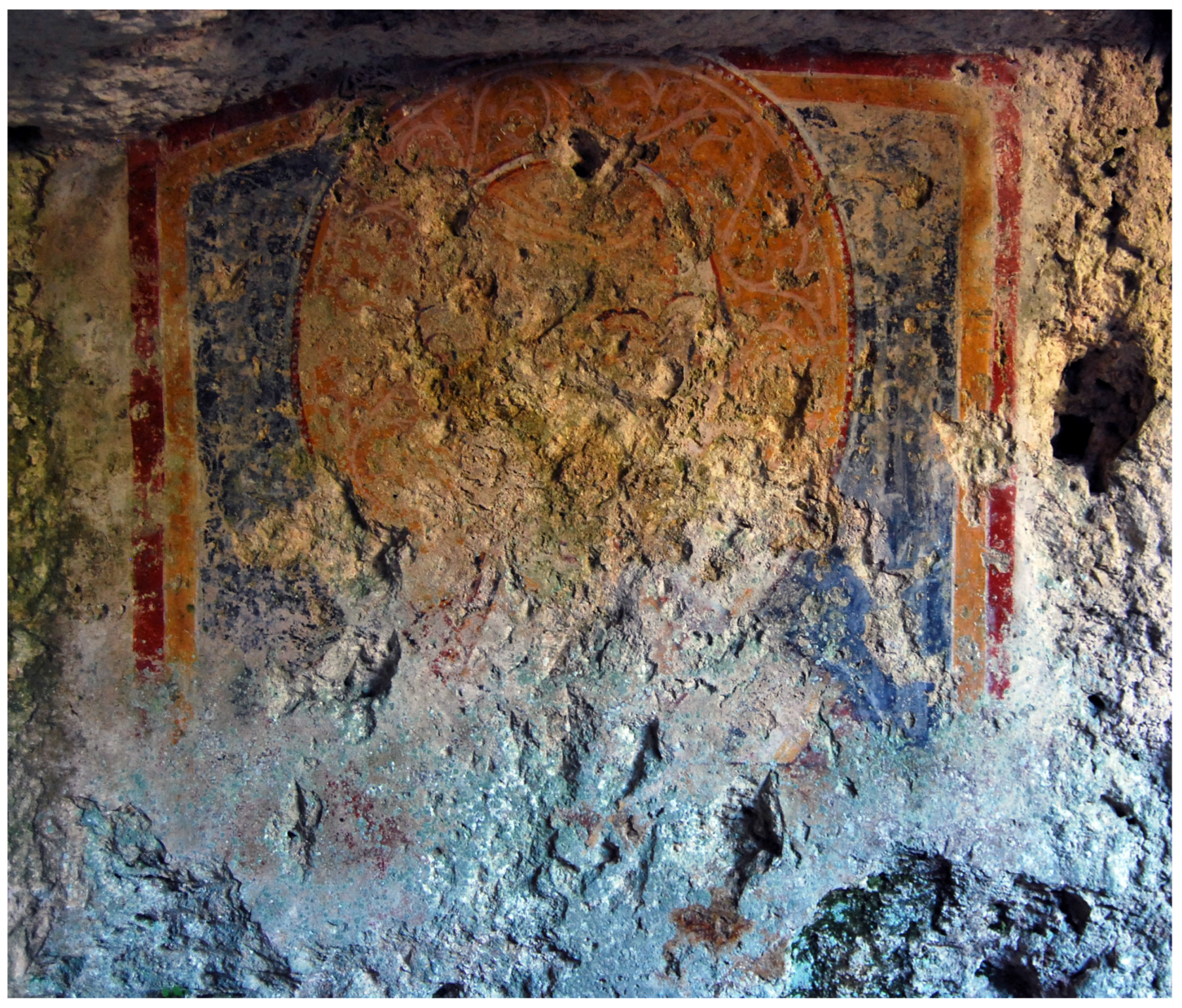
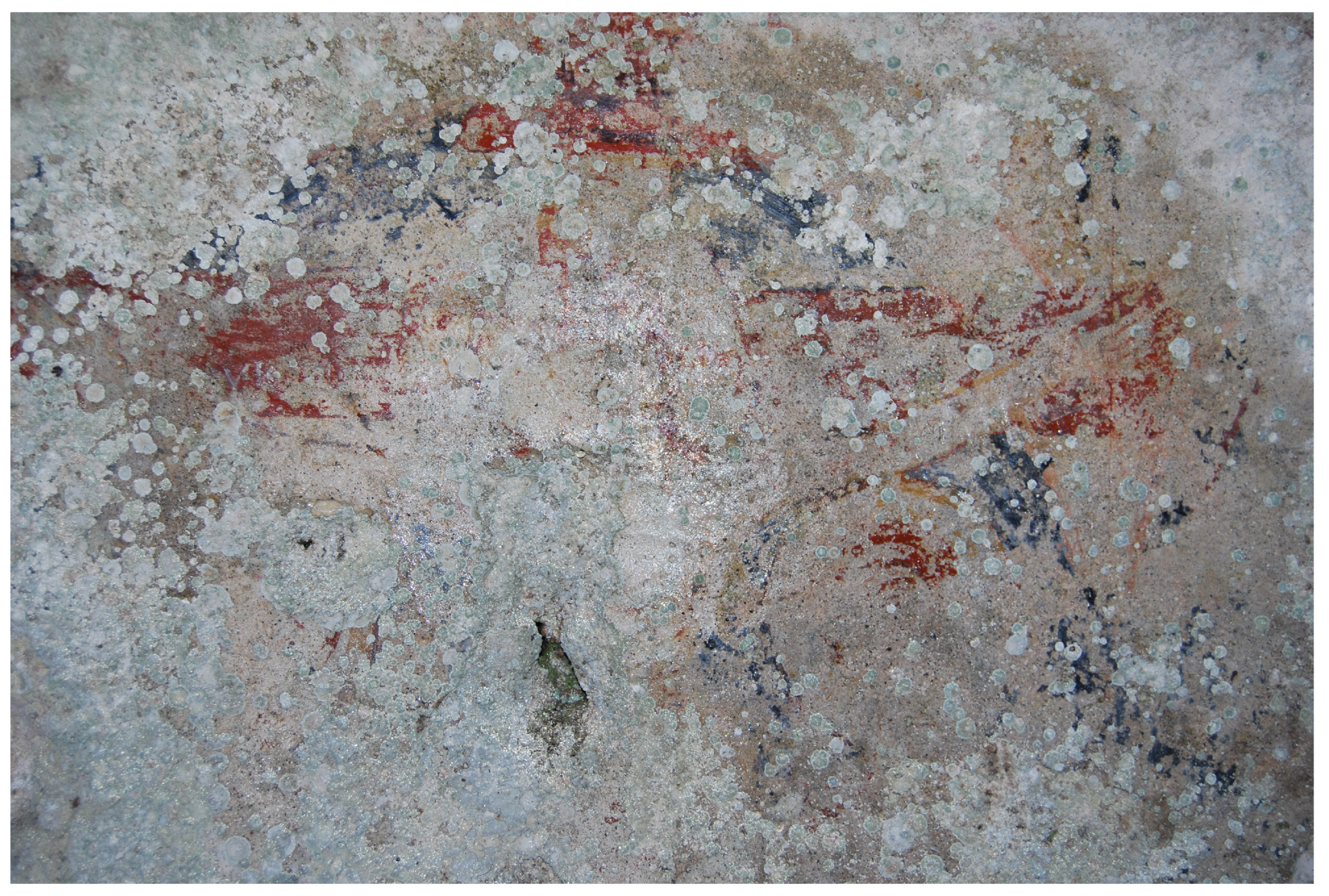
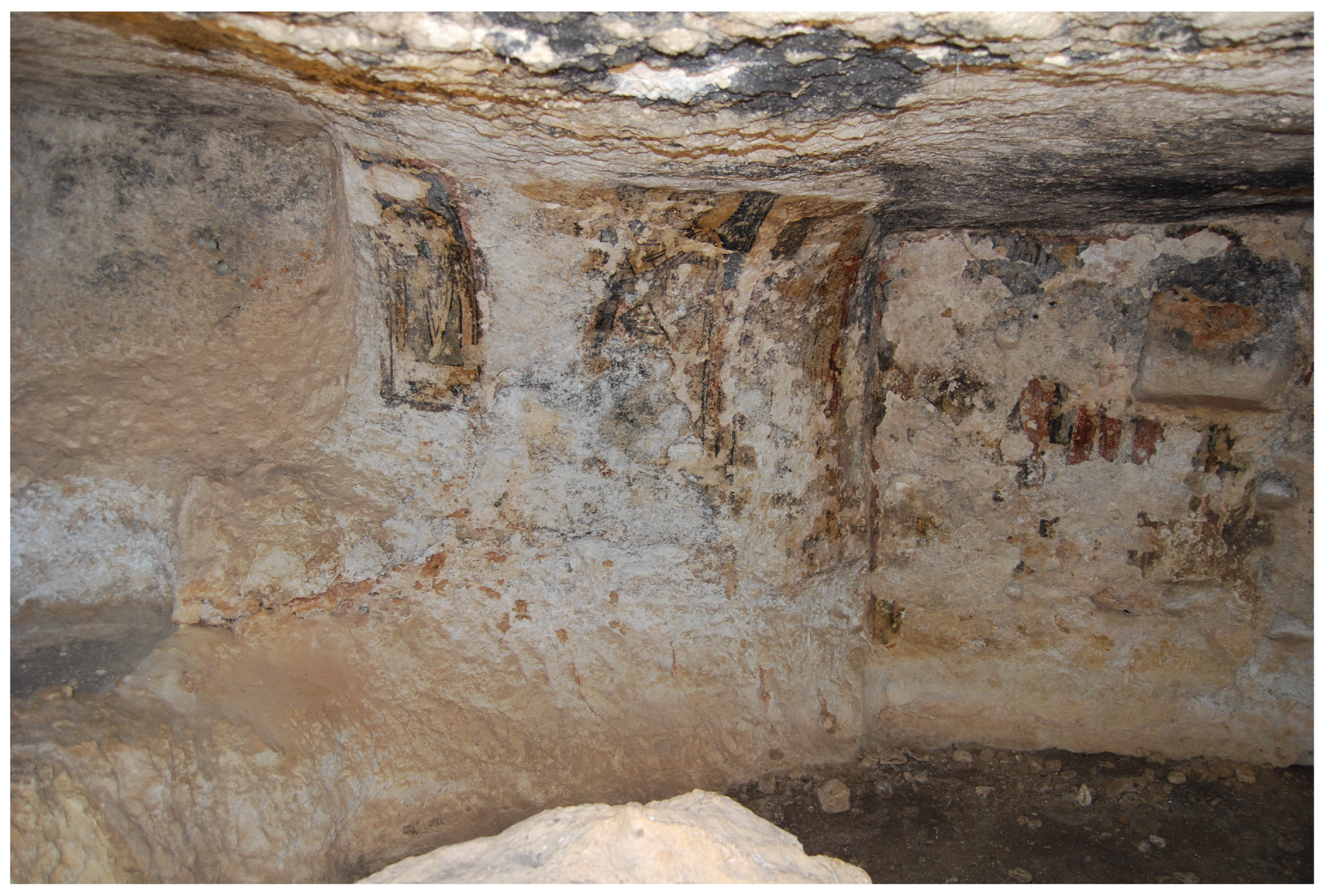
3.1.6. Church of the Crocifisso
3.1.7. Pantalica’s Rock-Cut Churches: Research and New Perspectives from Historical to Digital Memory
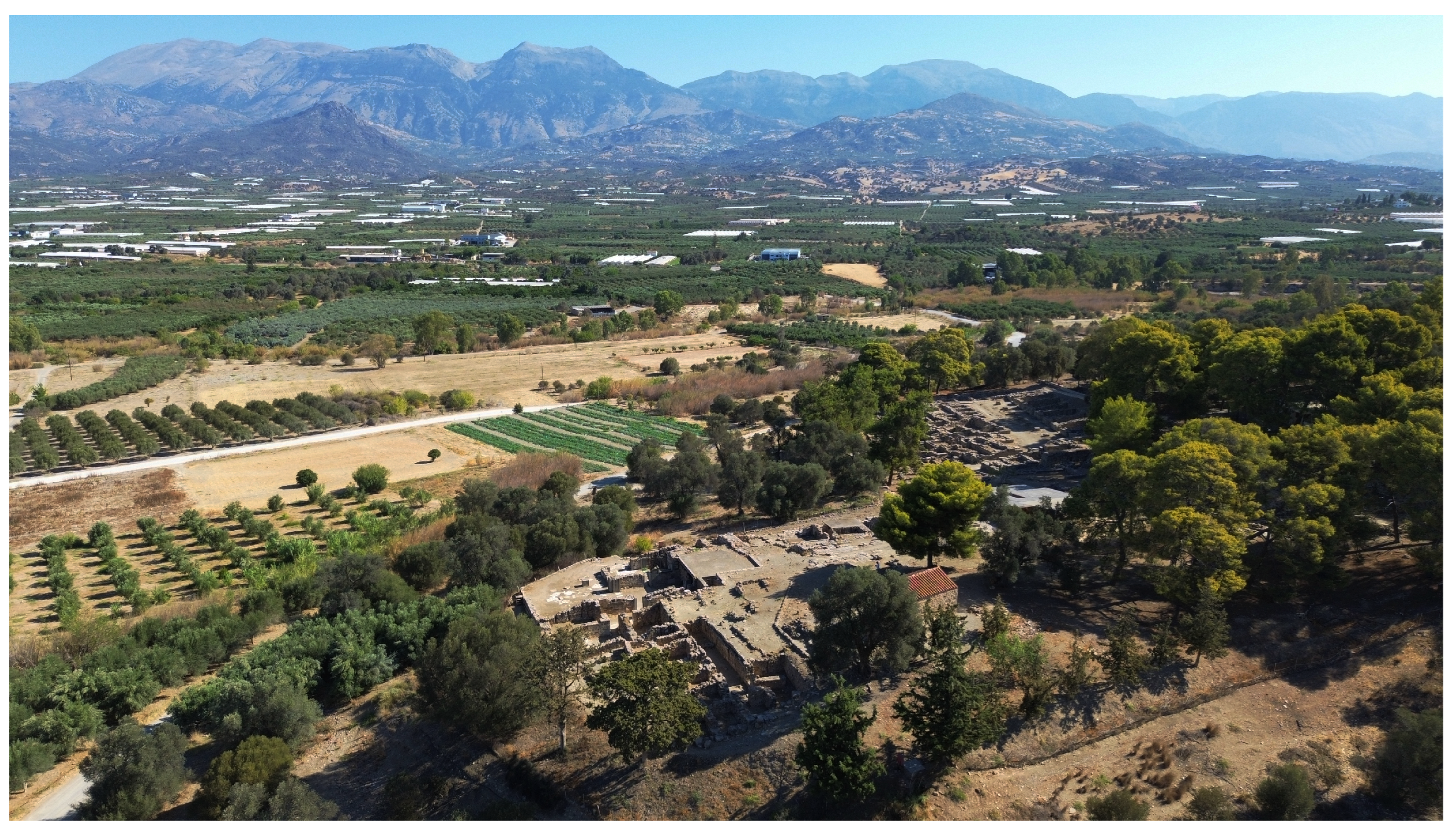
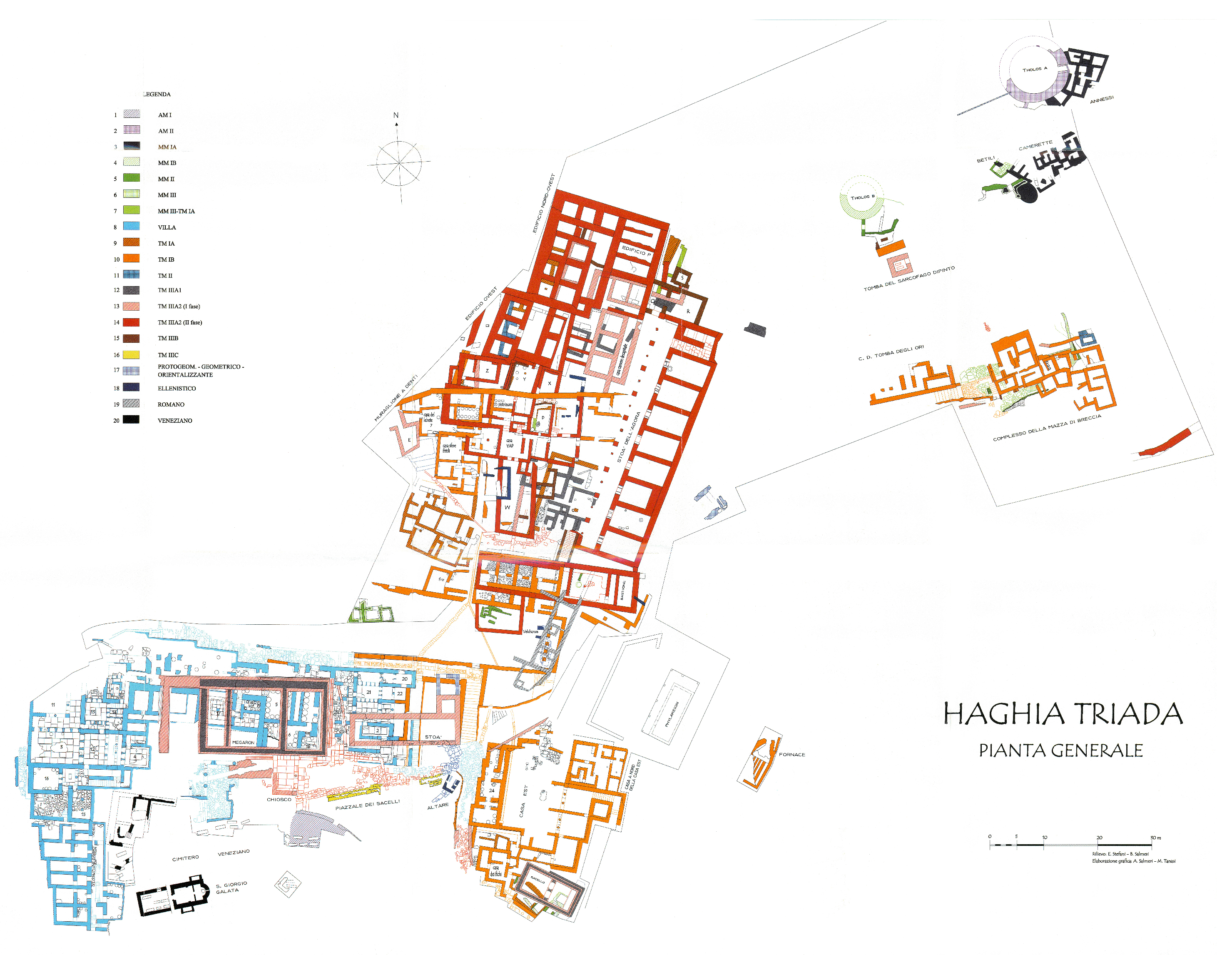
3.2. Haghia Triada
3.2.1. New Perspectives on Multi-Storey Protohistoric Architecture: The Case of Minoan Palatial Buildings
3.2.2. Graphic Reconstruction and Virtual Restoration: Applications to Minoan Architectural Practice
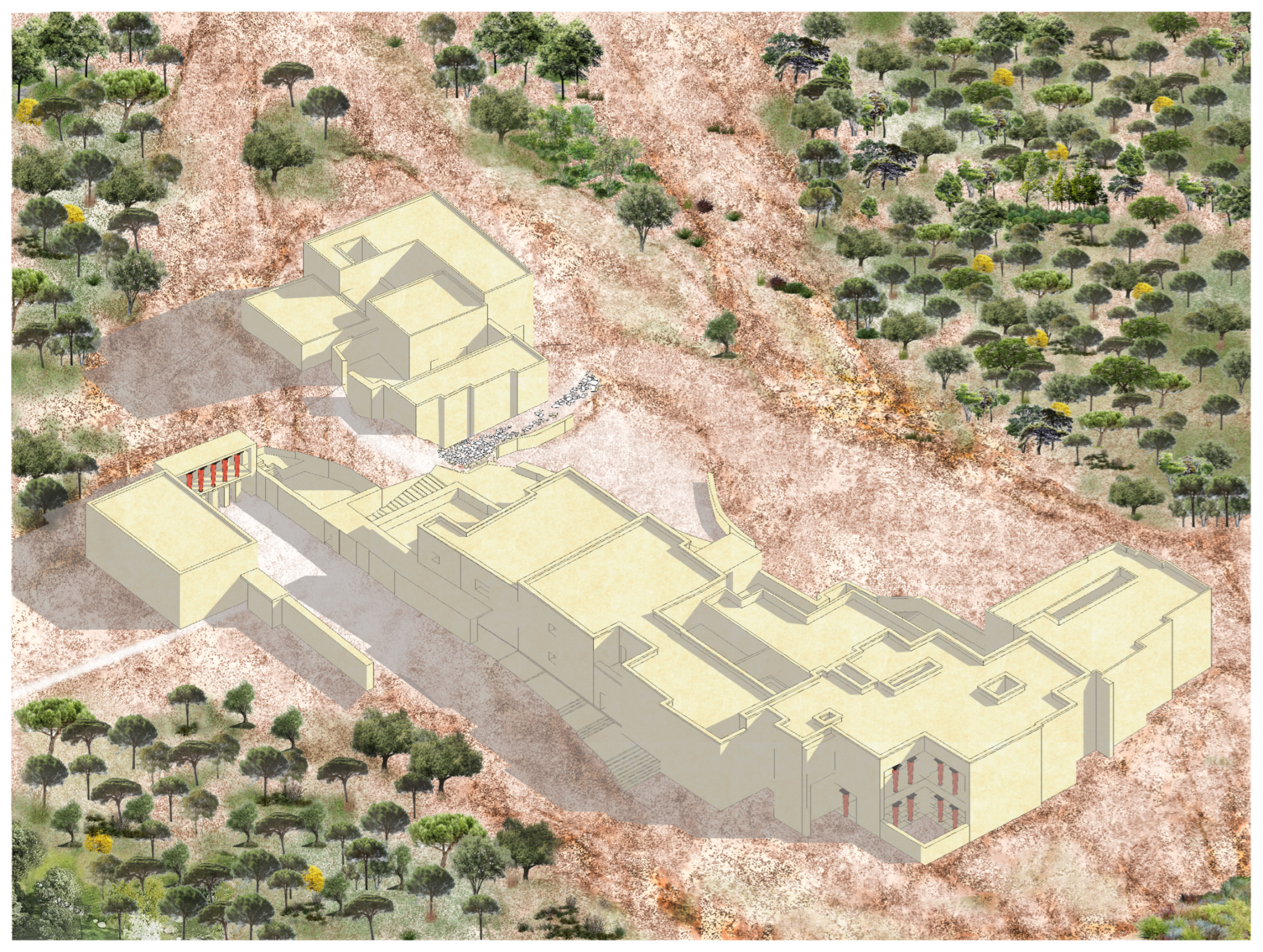
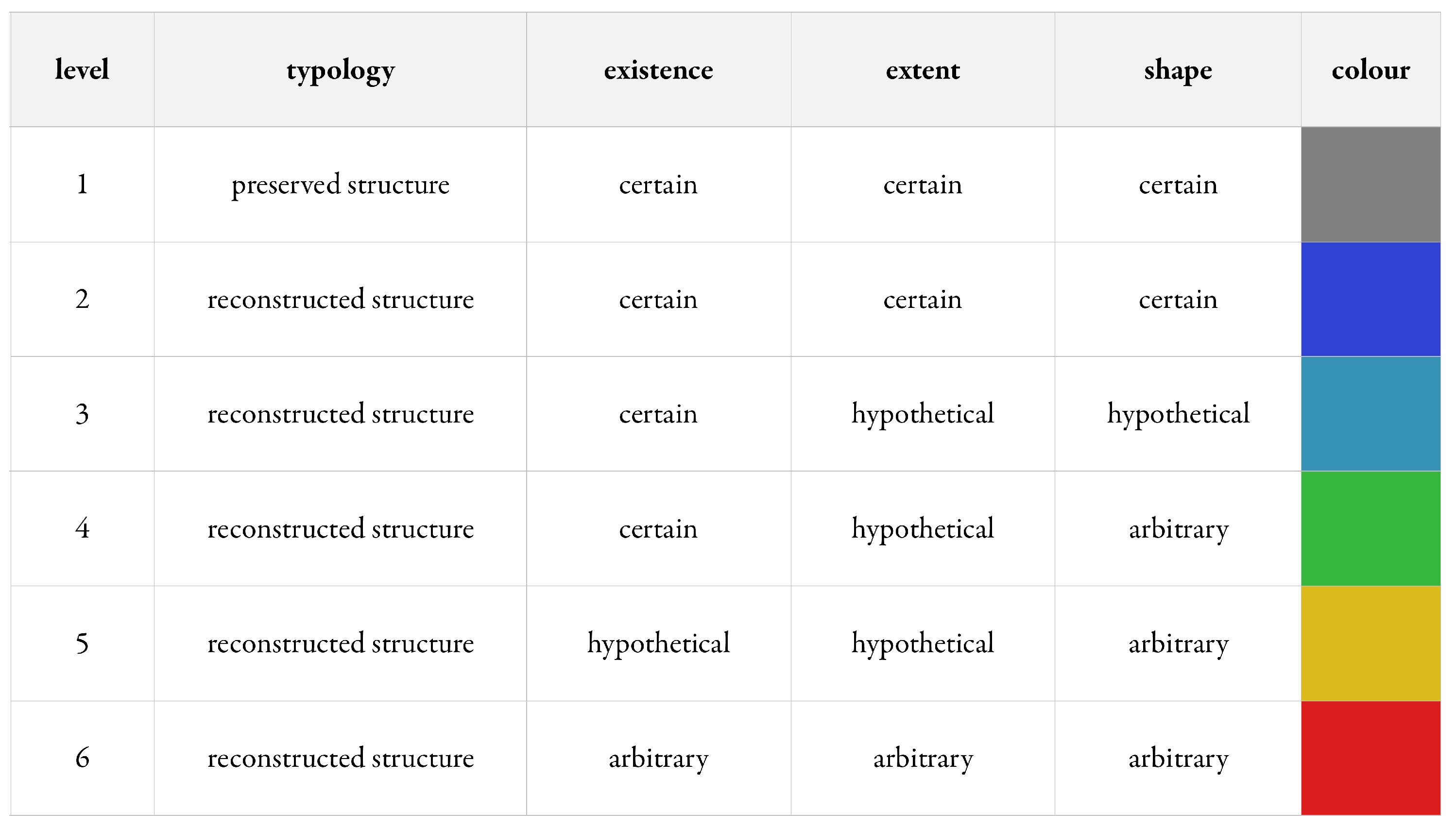
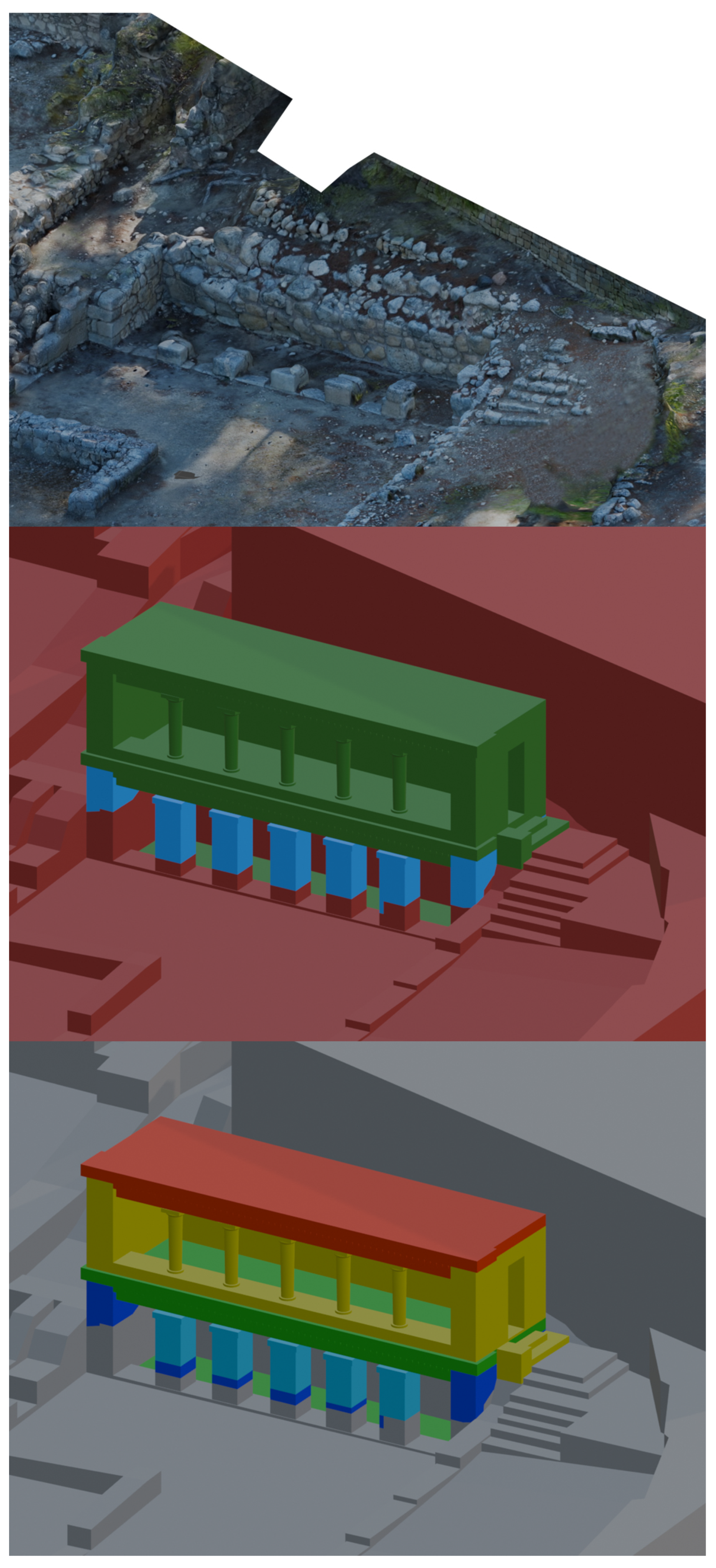
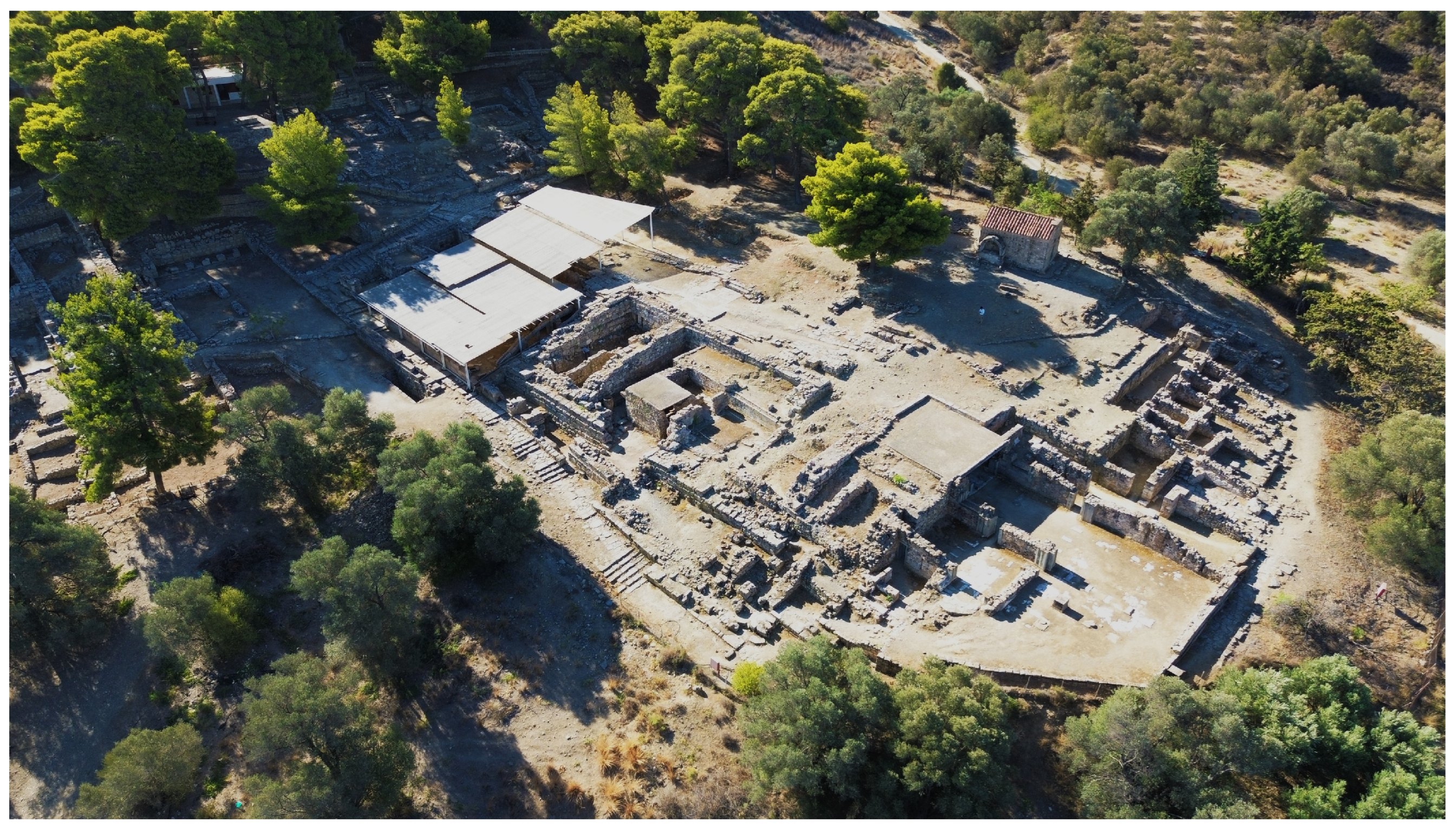
3.2.3. Haghia Triada in Late Minoan IB: An Ideal Case for IT Experimentation
4. Results and Future Perspectives
4.1. Pantalica
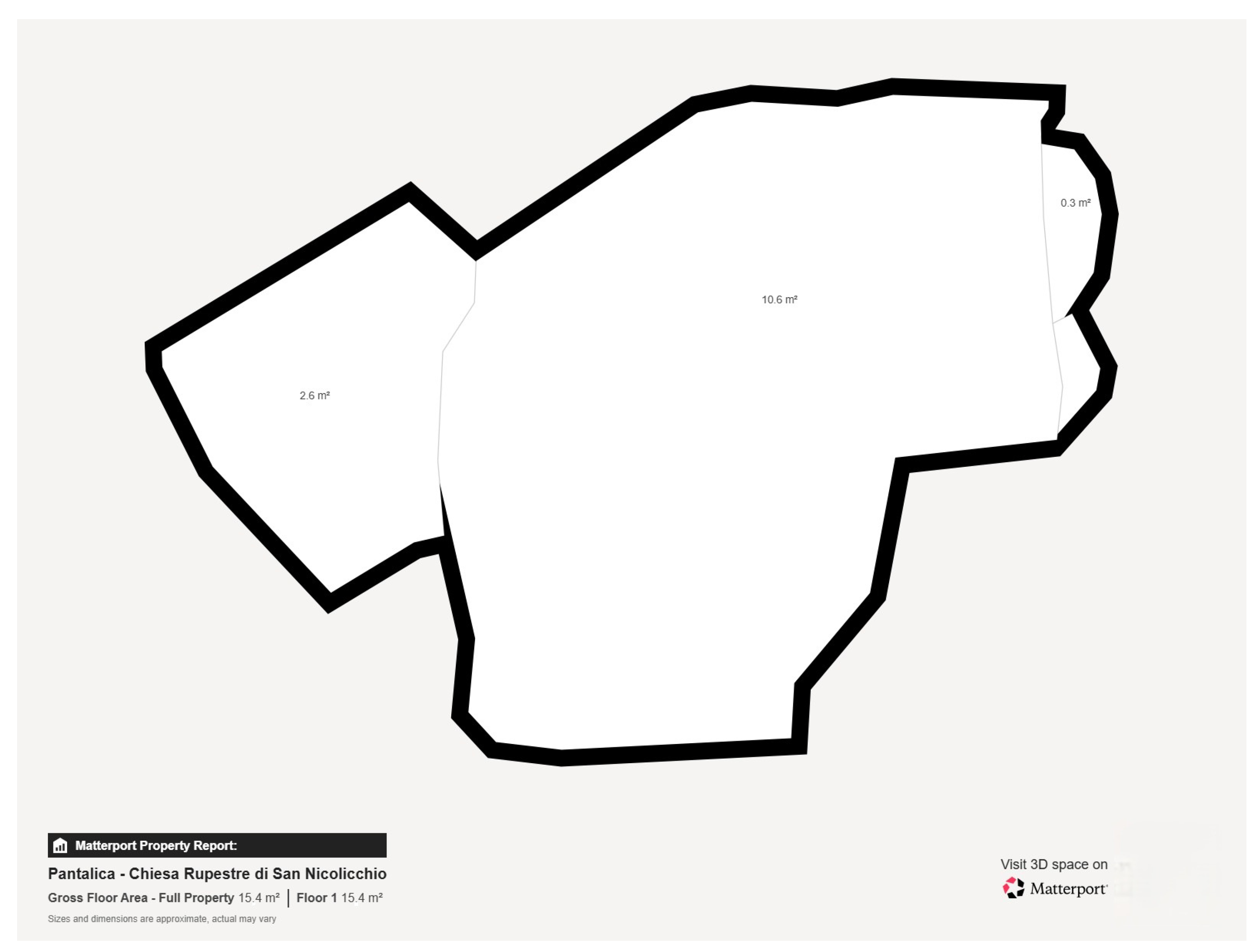
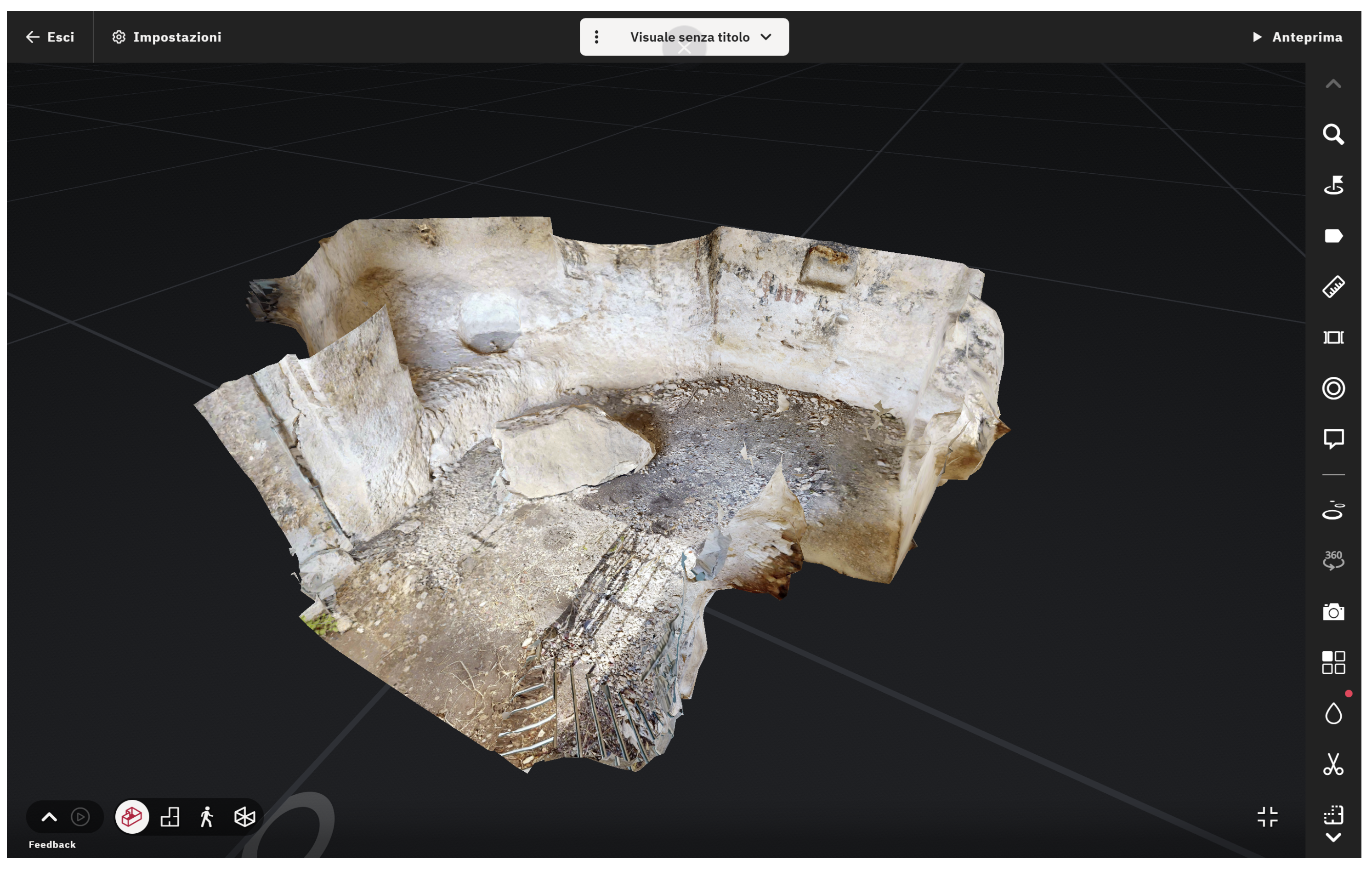
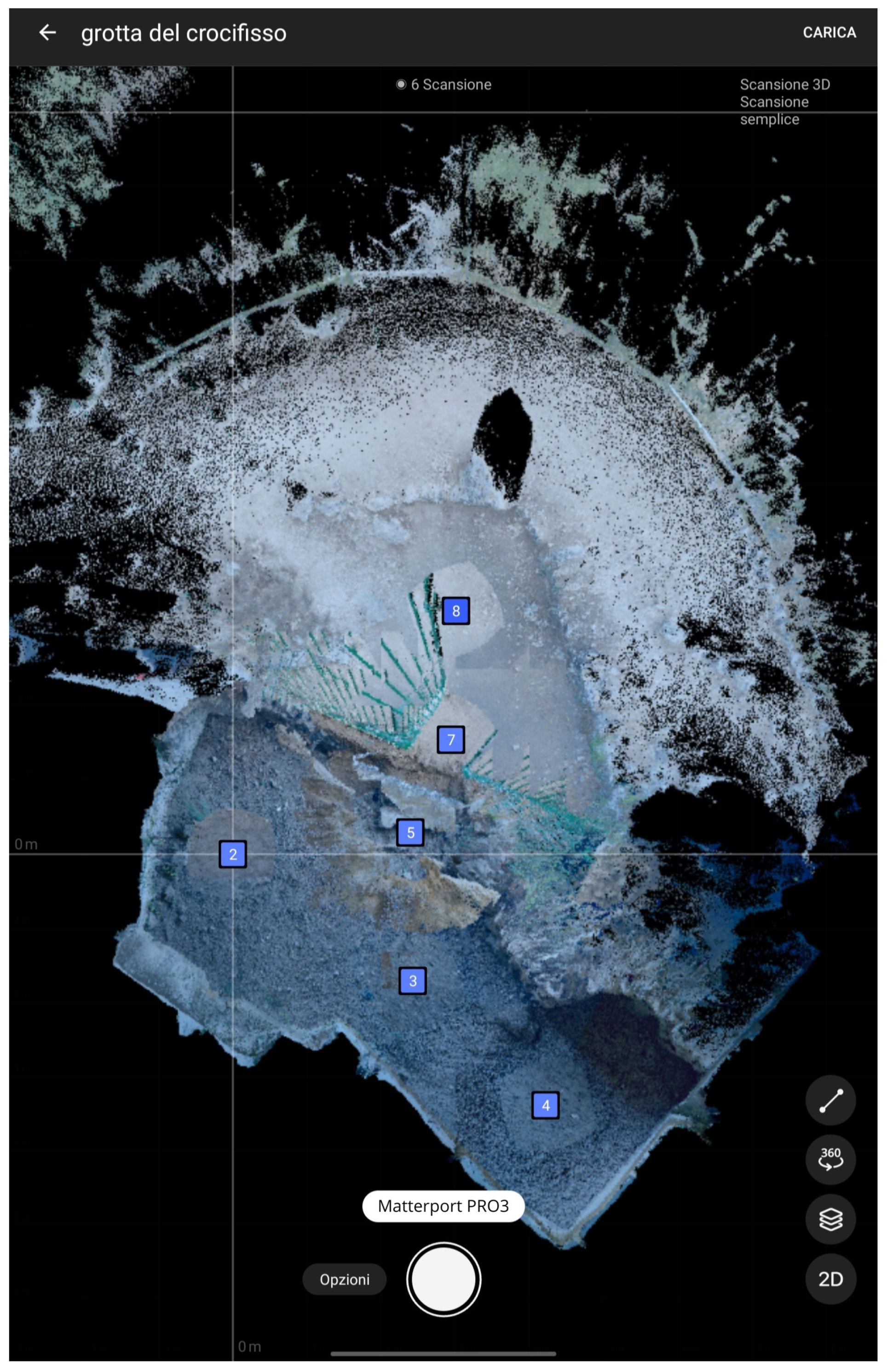
4.1.1. Acquisition Methodology: The Application of Matterport Pro3 to the Churches of San Nicolicchio and the Crocifisso at Pantalica
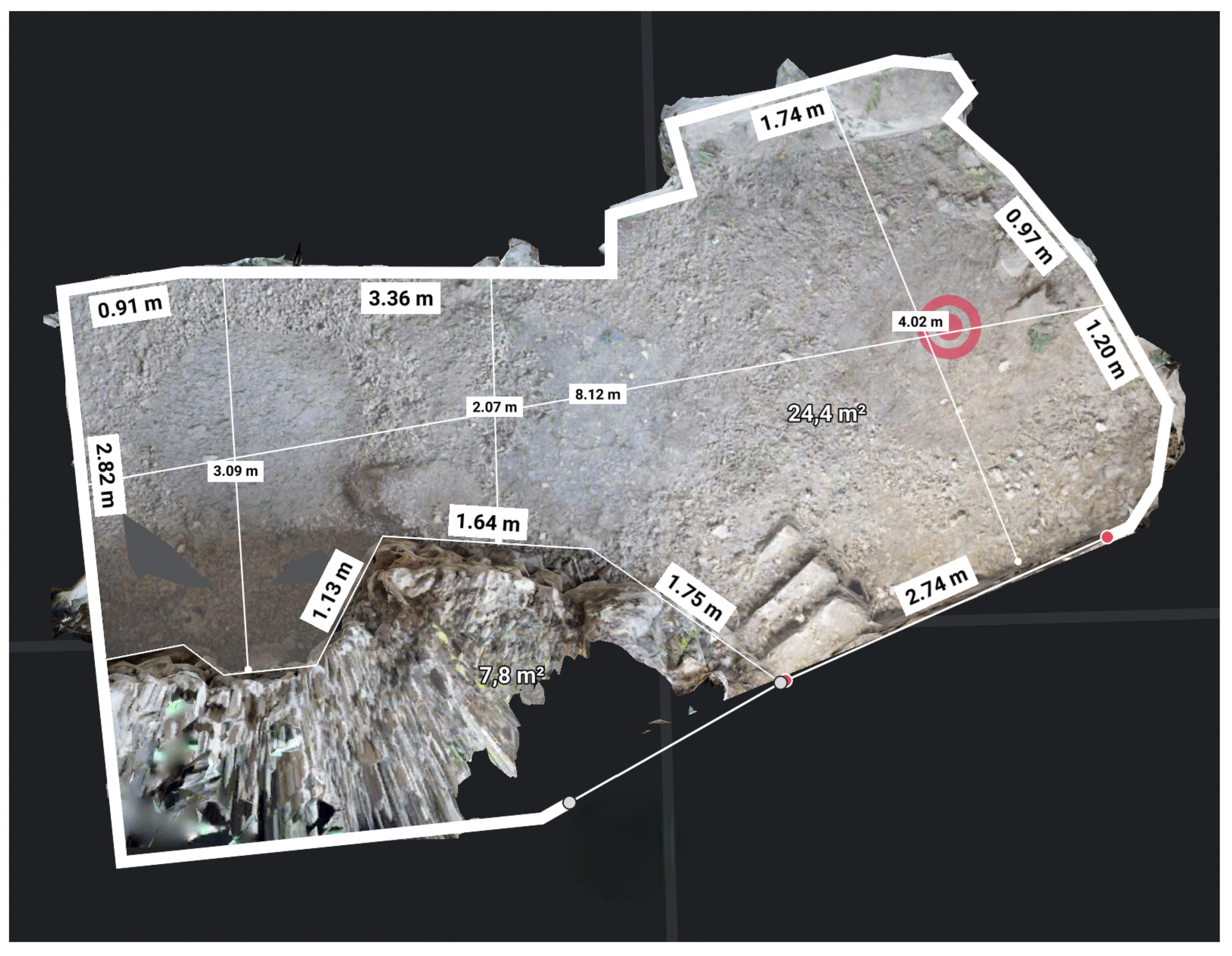
4.1.2. Assessing the Performance and Reliability of the Matterport Pro3 System
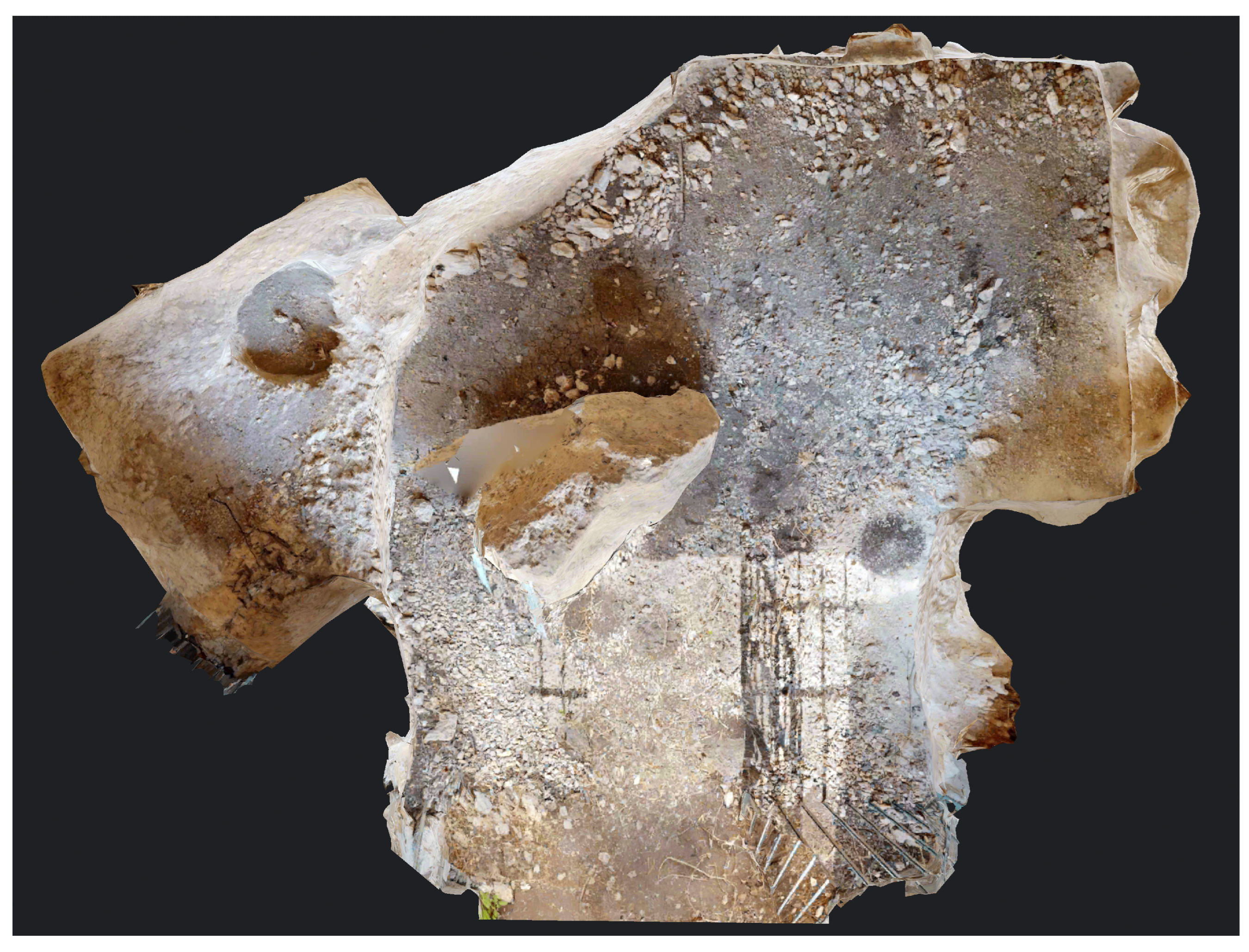
4.1.3. Processing, Conservation Monitoring, and Digital Restoration
- Archival and Preservation. It ensures the archiving and conservation of the visual memory of the environment.
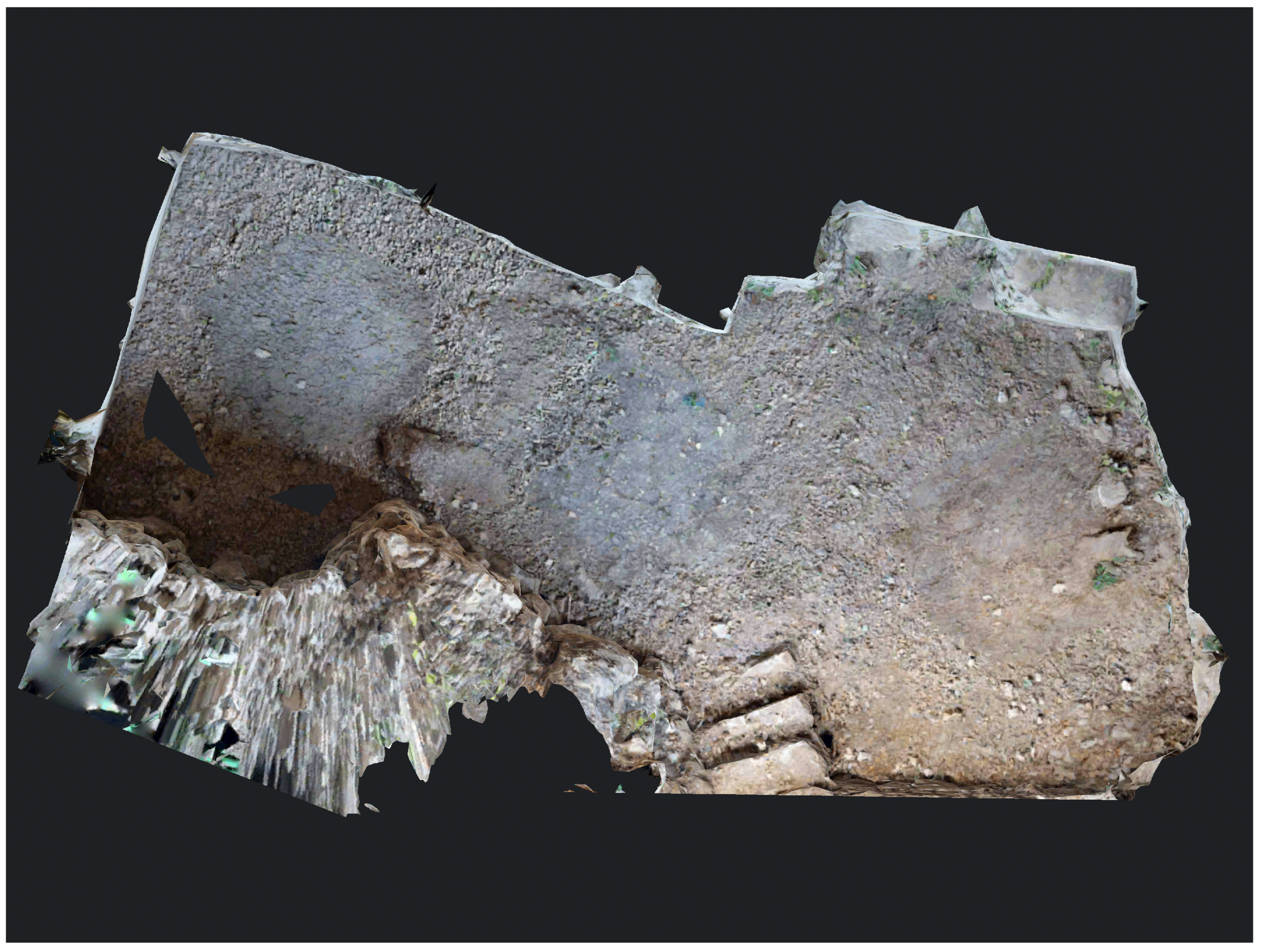
- Macro-Scale Monitoring. The 3D model provides a metric and spatial reference, capturing the current state of structural and painted elements. While it does not achieve sub-millimeter precision for pigment or chromatic analysis, it allows comparisons over time of macro-scale variations and visible surface changes. This information supports the evaluation of risk status and the formulation of sustainable safeguarding strategies.
- Conservation Support. The cloud platform further facilitates the tagging and annotation workflow, linking spatial elements to diagnostic analysis. The integration of annotations and stratigraphic or diagnostic data can support digital restoration and the planning of urgent conservative interventions.
- Research and Public Engagement. The 3D model allows scholars to test interpretive hypotheses regarding spatial relationships, phasing of use over time, pictorial remnants, or functional transformations. It further supports comparative investigations across sites, contributing to broader typological and historical studies of rupestrian heritage. Tags and annotation workflows provide detailed information on iconography, chronology, and object description, making the 3D model a resource for both scholars and the general public.
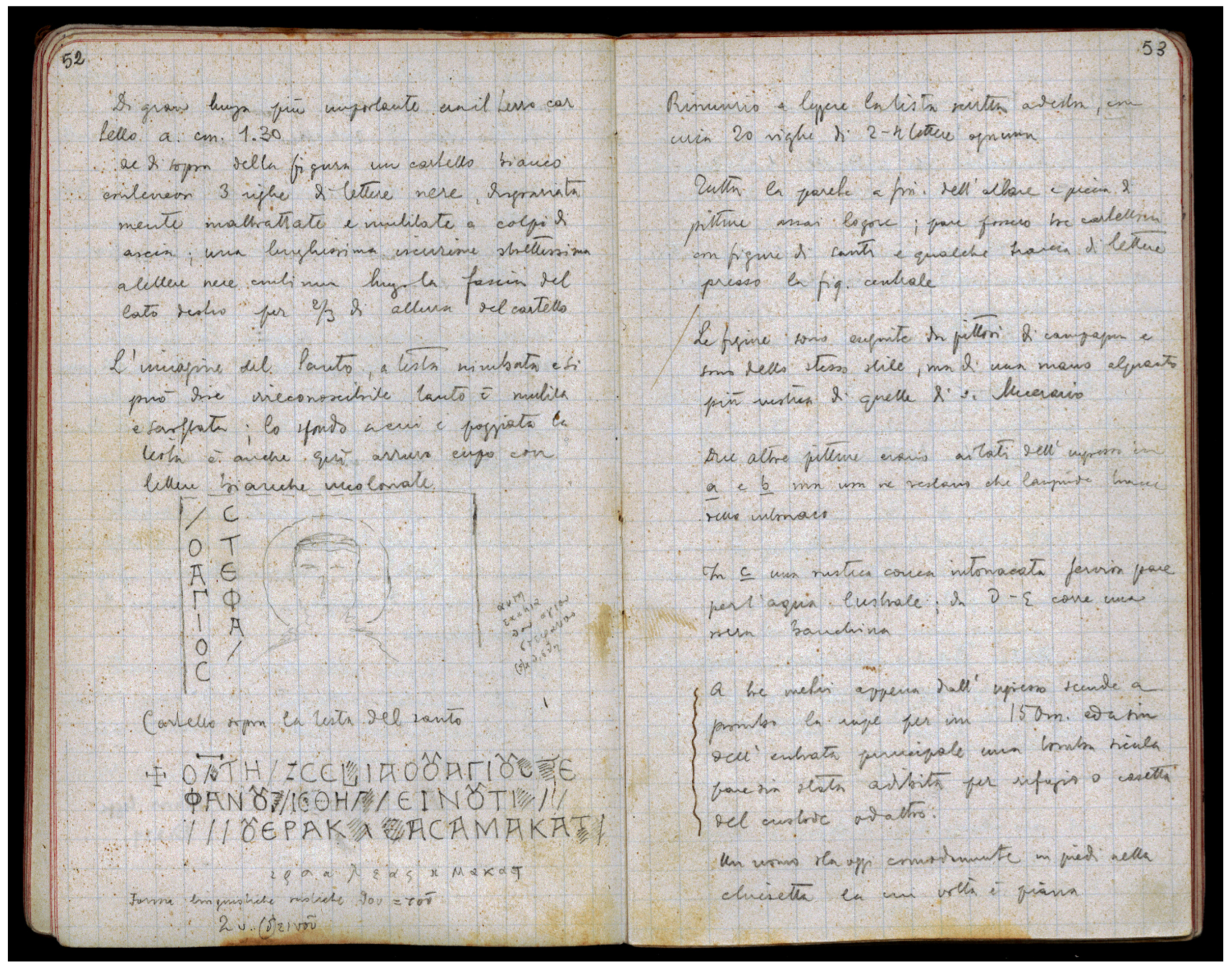
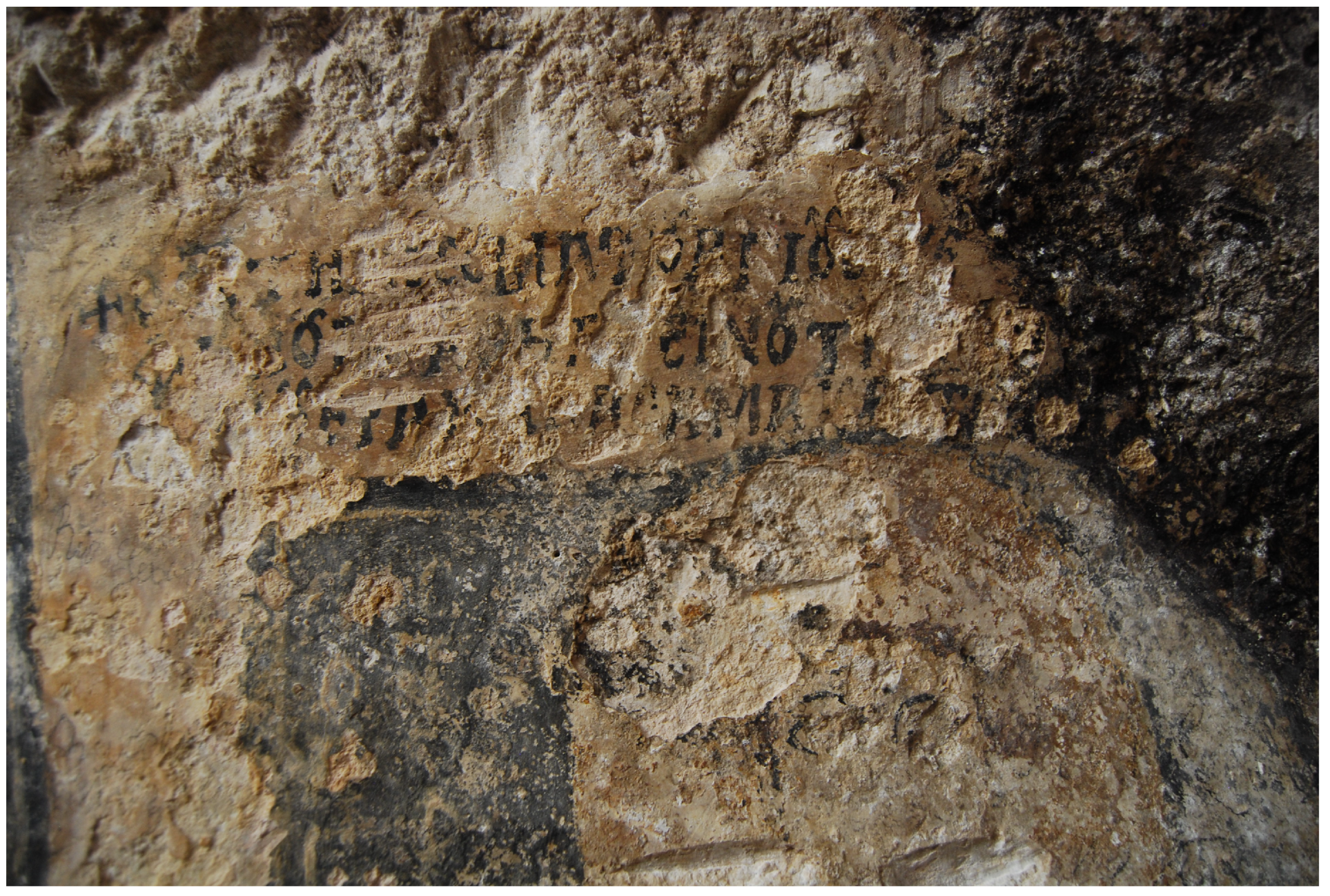
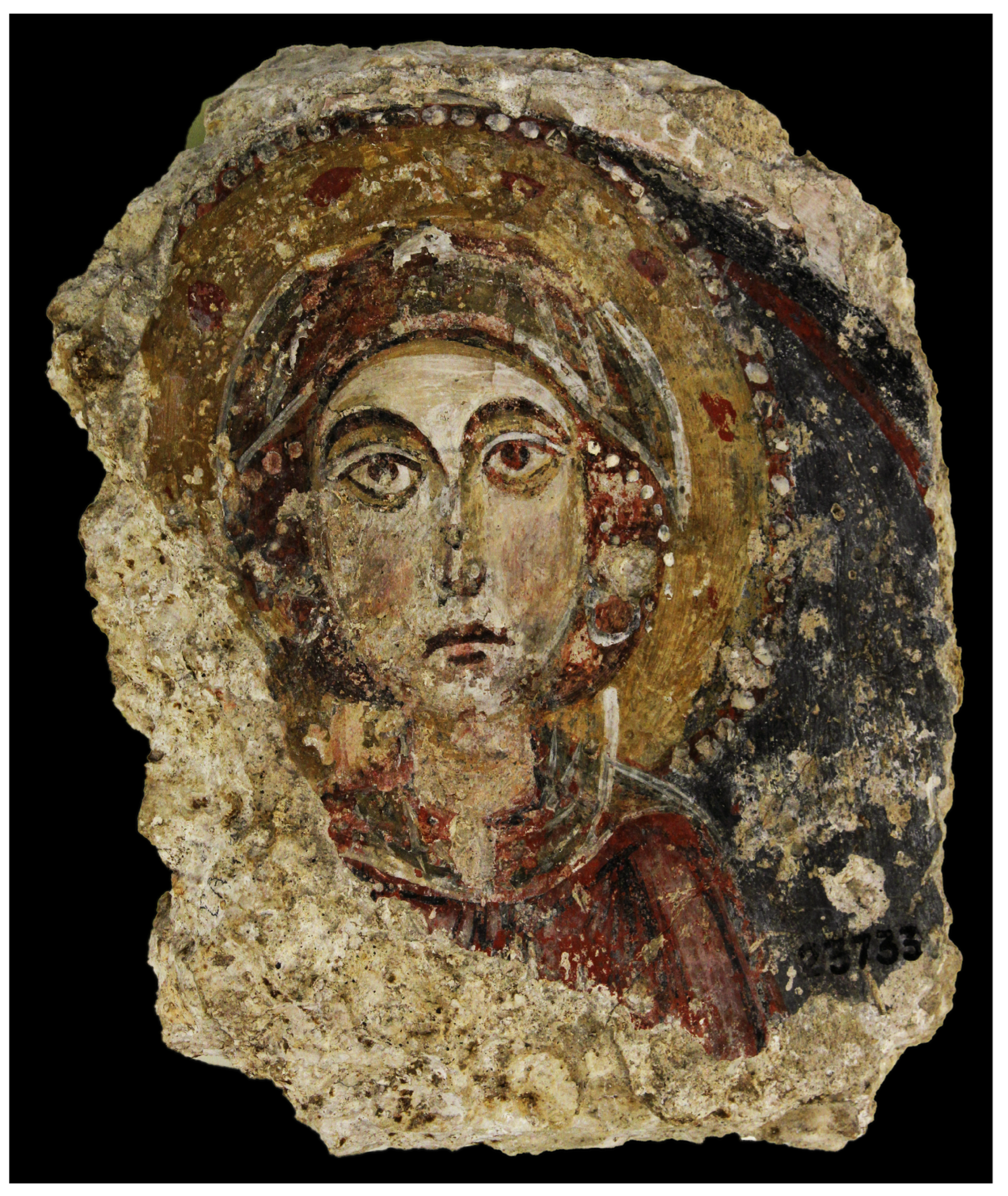
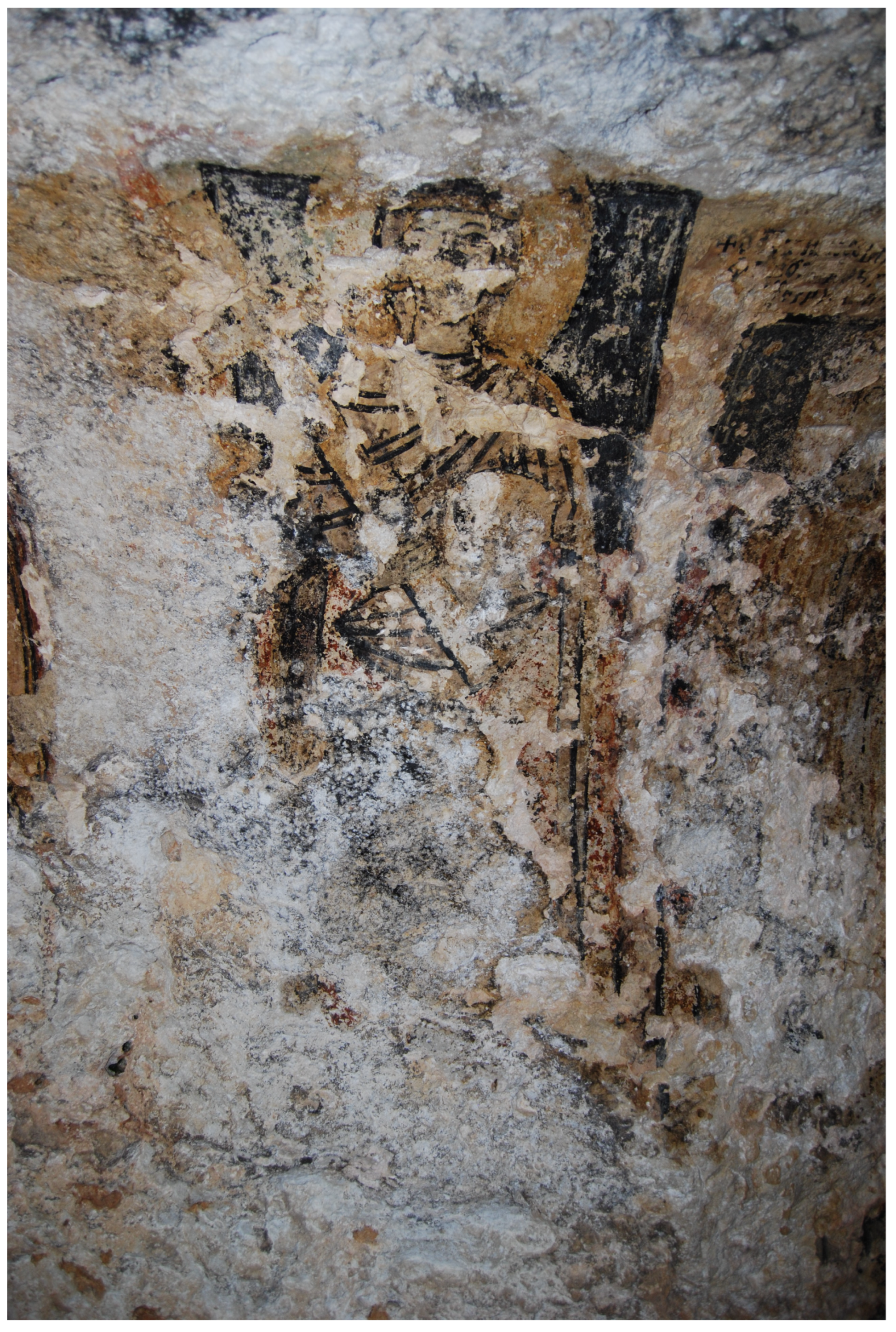
- Virtual Recontextualization. The digital model supports the process of digital remediation by allowing the virtual reconnection of musealized objects to their original context. For example, a 3D scan of the “head of a saint” fragment, currently displayed at the Paolo Orsi Museum, is intended for virtual recontextualization back into the Church of the Crocifisso, based on historical and archival sources.
- Interactive Access and shared memory. The three-dimensional model acts as a dynamic copy of the original object, permitting interactive access independent of spatial or geographic limitations and ensuring accessibility for various audiences.
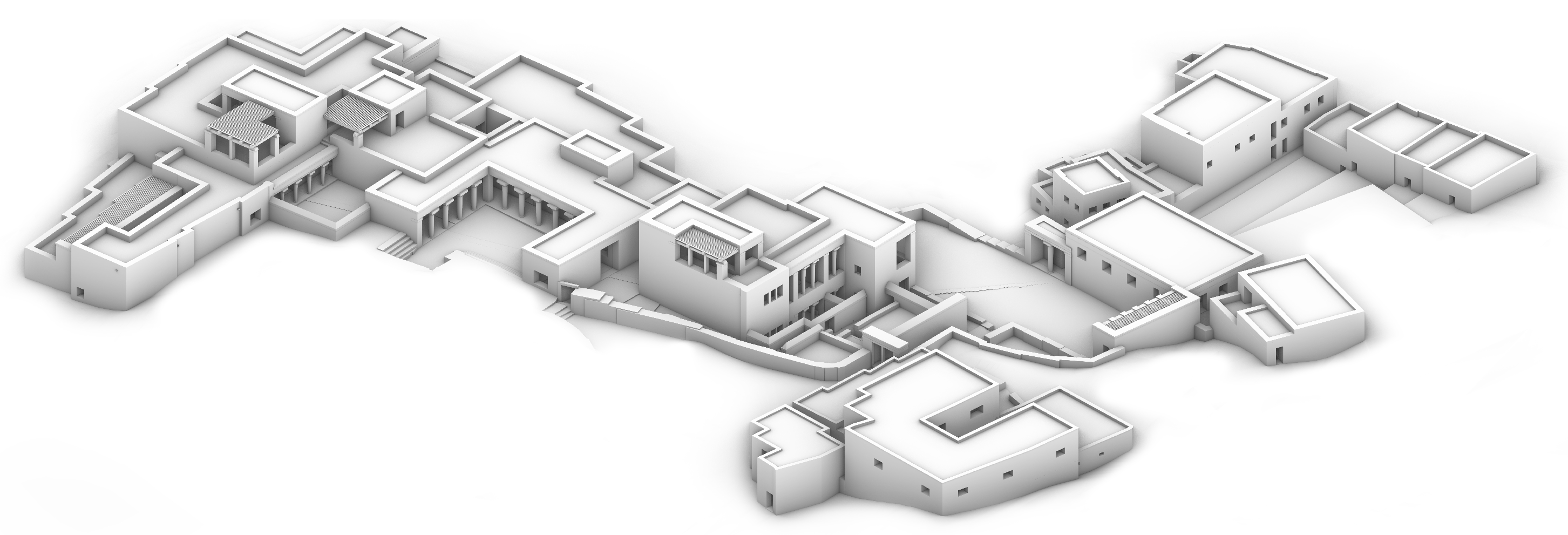
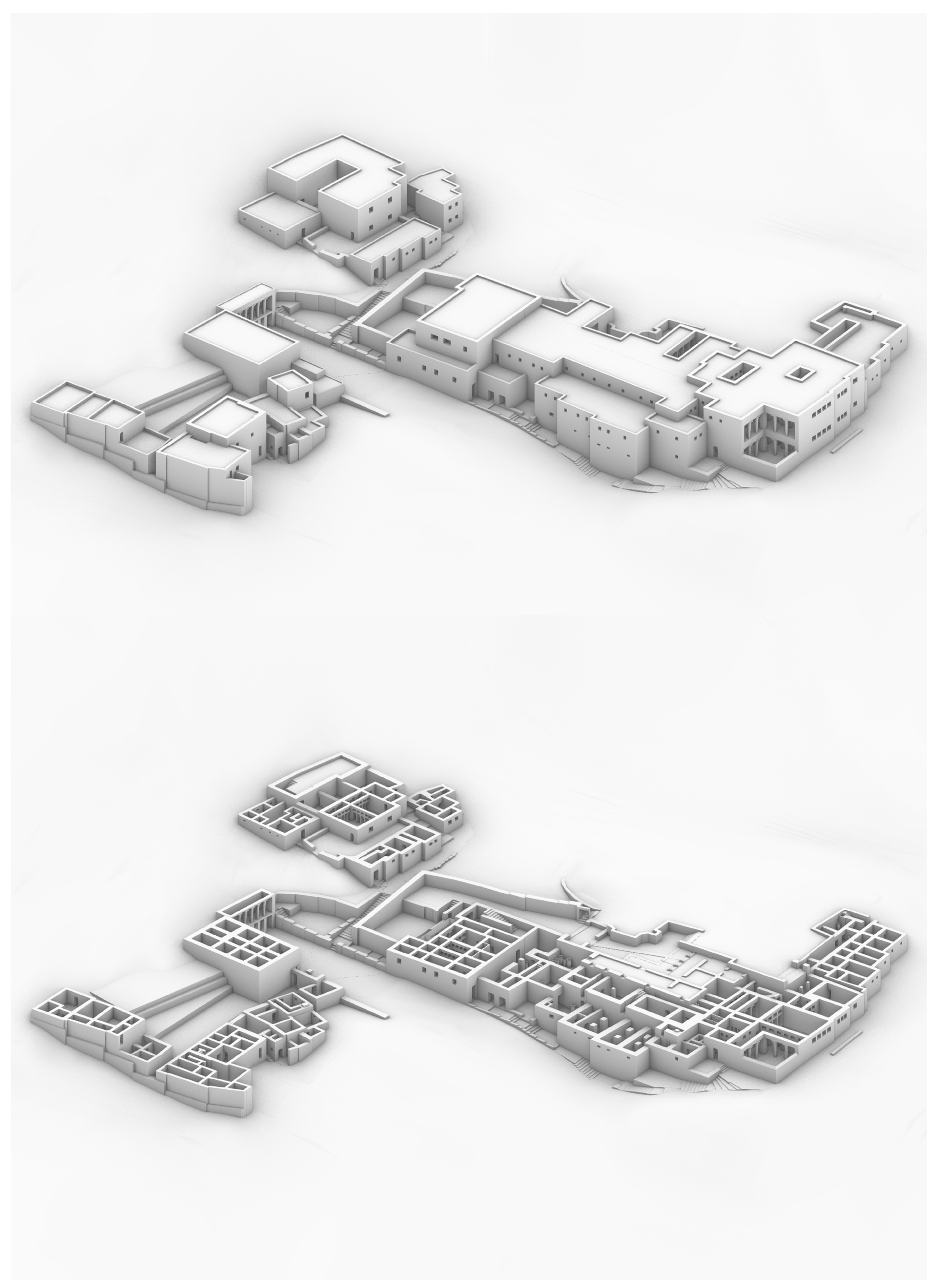
4.2. Haghia Triada: The Digital Restoration of a Protohistoric Multistory Building
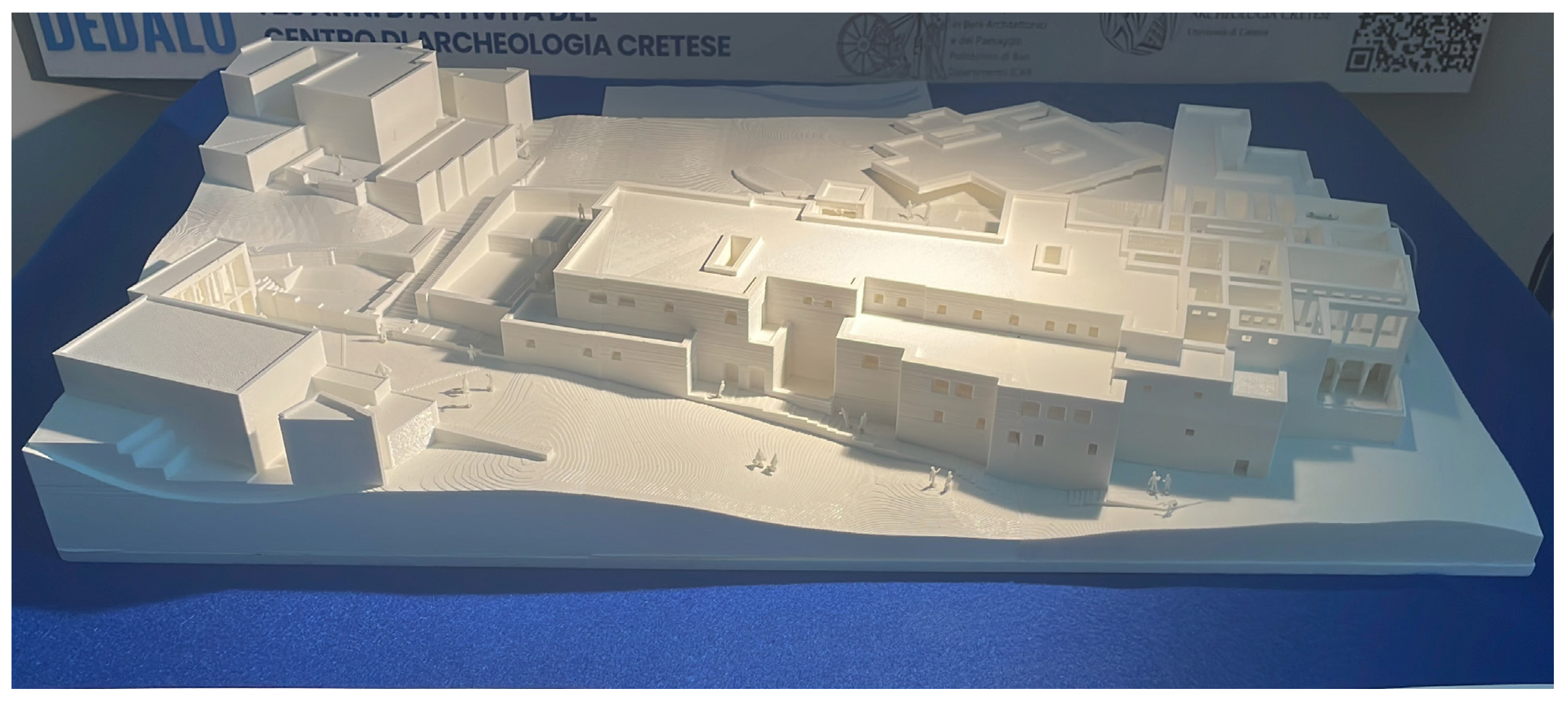
4.2.1. Three-Dimensional Modeling at Haghia Triada
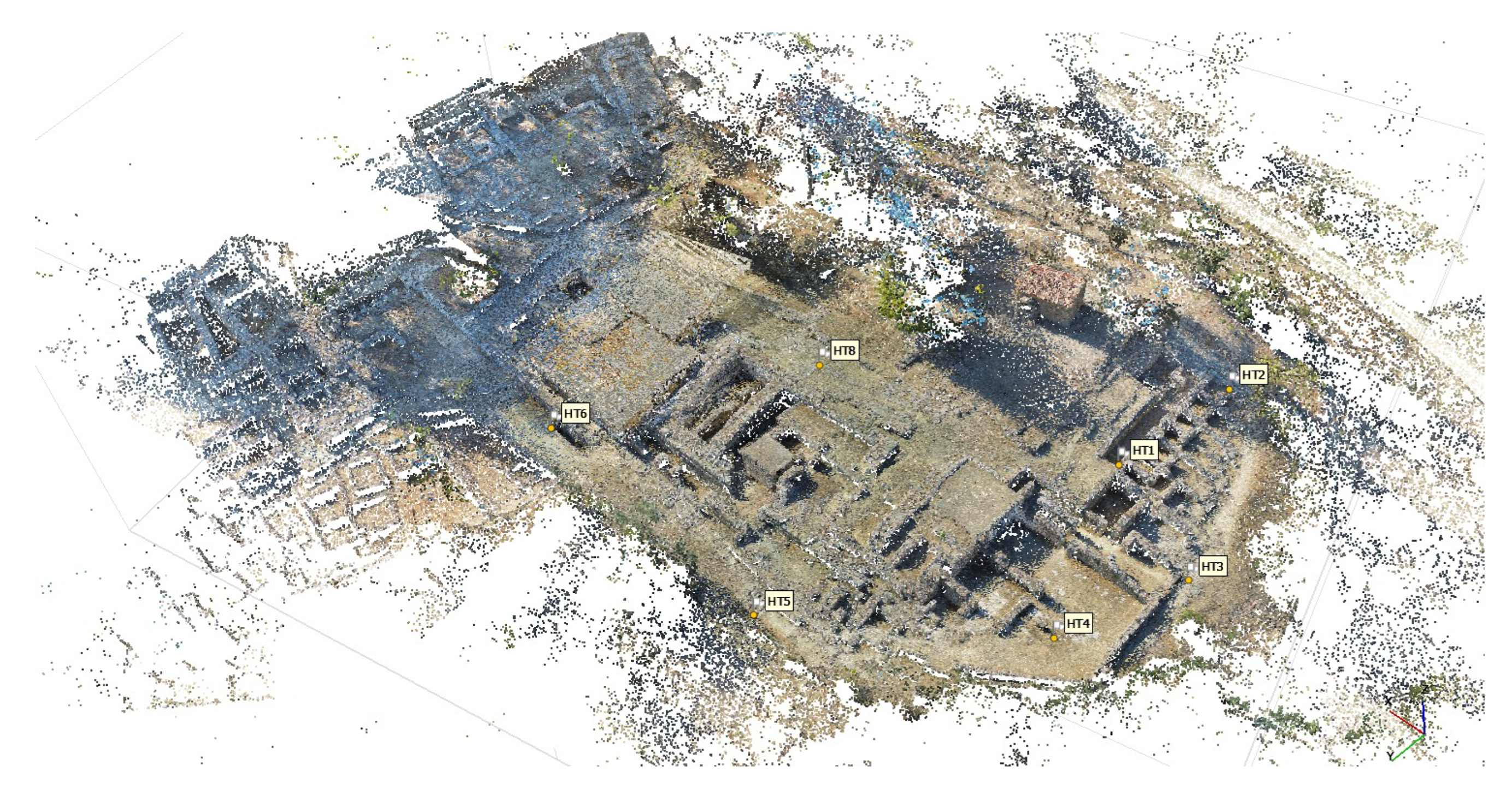
4.2.2. New Data Survey at Haghia Triada
4.2.3. New Data Processing at Haghia Triada
5. Conclusions
Author Contributions
Funding
Data Availability Statement
Acknowledgments
Conflicts of Interest
| 1 | For a brief overview about the earlier development of VR technologies for cultural heritage, see [7]. |
| 2 | An exception is the so-called palace of Gournia: see [65]. |
| 3 | This part of the work is still under development and will be presented separately. |
References
- Ronchi, D.; Limongiello, M.; Demetrescu, E.; Ferdani, D. Multispectral UAV Data and GPR Survey for Archaeology: Anomaly Detection Supporting 3D Reconstruction. Sensors 2023, 23, 2769. [Google Scholar] [CrossRef]
- Touati, A.-M.L.; Staub, T.; Forsell, R. From 2D and 3D Documentation to 4D Interpretation: Building Archaeological Conclusions and Workflow Strategies Gained by Remote Study of Insula V 1, Pompeii. Opuscula 2021, 14, 181–226. [Google Scholar] [CrossRef]
- Caliò, L.M.; Fino, A.; Gerogiannis, G. MLS con sensore LiDAR Apple per lo scavo archeologico: Applicazioni pratiche. In Proceedings of the MeTe Digital: Mediterranean Networks Between Texts and Contexts (AIUCD 2024), Catania, Italy, 28–30 May 2024. [Google Scholar]
- Demetrescu, E.; Ferdani, D. From Field Archaeology to Virtual Reconstruction: A Five Steps Method Using the Extended Matrix. Appl. Sci. 2021, 11, 5206. [Google Scholar] [CrossRef]
- Demetrescu, E.; Fanini, B.; Cocca, E. An Online Dissemination Workflow for the Scientific Process in CH through Semantic 3D: EMtools and EMviq Open Source Tools. Heritage 2023, 6, 1264–1276. [Google Scholar] [CrossRef]
- Barceló, J.A. Virtual Reality for Archaeological Explanation. Beyond “Picturesque” Reconstruction. Archeologia e Calcolatori 2001, 12, 221–244. [Google Scholar]
- Sanders, D. A Brief History of Virtual Heritage. In Picturing the Past: Imaging and Imagining the Ancient Middle East; Institute for the Study of Ancient Cultures: Chicago, IL, USA, 2012. [Google Scholar]
- Münster, S.; Apollonio, F.I.; Bluemel, I.; Fallavollita, F.; Foschi, R.; Grellert, M.; Ioannides, M.; Jahn, P.H.; Kurdiovsky, R.; Kuroczyński, P.; et al. (Eds.) Handbook of Digital 3D Reconstruction of Historical Architecture; Springer: Cham, Switzerland, 2024. [Google Scholar]
- Denard, H. A New Introduction to the London Charter. In Paradata and Transparency in Virtual Heritage; Bentkowska-Kafel, A., Denard, H., Baker, D., Eds.; Farnham: Surrey, UK, 2012; pp. 57–71. [Google Scholar]
- Doerr, M. The CIDOC Conceptual Reference Model: An Ontological Approach to Semantic Interoperability of Metadata. AI Mag. 2003, 24, 75–92. [Google Scholar]
- Wilkinson, M.D.; Dumontier, M.; Aalbersberg, I.J.; Appleton, G.; Axton, M.; Baak, A.; Blomberg, N.; Boiten, J.W.; da Silva Santos, L.B.; Bourne, P.E.; et al. The FAIR Guiding Principles for Scientific Data Management and Stewardship. Sci. Data 2016, 3, 160018. [Google Scholar] [CrossRef]
- Yang, X.; Lu, Y.-C.; Murtiyoso, A.; Koehl, M.; Grussenmeyer, P. HBIM Modeling from the Surface Mesh and Its Extended Capability of Knowledge Representation. ISPRS Int. J. Geo-Inf. 2019, 8, 301. [Google Scholar] [CrossRef]
- Messaoudi, Y.; Véron, P.; Halin, G. A Semantic-Based Approach for the Interpretation and 3D Reconstruction of Building Archaeology Data. Comput.-Aided Des. Appl. 2018, 15, 239–249. [Google Scholar]
- Guillem, A.; Ruymbeke, M.V.; Eide, Ø.; Luca, L.D. Spatio-Temporal Reasoning on Stratigraphic Data in Archaeology: Formalization of the Harris Laws as Inferences Using CIDOC CRM. In Proceedings of the SWODCH’24—4th International Workshop on Semantic Web and Ontology Design for Cultural Heritage, Tours, France, 30–31 October 2024. [Google Scholar]
- Aparicio-Resco, P.; Figueiredo, C. El grado de evidencia histórico-arqueológica de las reconstrucciones virtuales: Hacia una escala de representación gráfica. Revista Otarq Otras Arqueologías 2016, 235. [Google Scholar] [CrossRef]
- Apollonio, F.I. Classification Schemes and Model Validation of 3D Digital Reconstruction Processes. In Proceedings of the 20th International Conference CHNT, Vienna, Austria, 16–18 November 2016. [Google Scholar]
- Bassoli, I.; Fallavollita, F.; Fuchs, W. Hypothesis of Reconstruction of the Roman Theater of Urbs Salvia. SCIRES-it 2022, 12, 151–164. [Google Scholar]
- Demetrescu, E. Archaeological Stratigraphy as a Formal Language for Virtual Reconstruction: Theory and Practice. J. Archaeol. Sci. 2015, 57, 42–55. [Google Scholar] [CrossRef]
- Demetrescu, E.; Fanini, B. A White-Box Framework to Oversee Archaeological Virtual Reconstruction in Space and Time: Methods and Tools. J. Archaeol. Sci. Rep. 2017, 14, 500–514. [Google Scholar] [CrossRef]
- Fanini, B.; Ferdani, D.; Demetrescu, E.; Berto, S.; D’Annibale, E. ATON: An Open-Source Framework for Creating Immersive, Collaborative and Liquid Web-Apps for Cultural Heritage. Appl. Sci. 2021, 11, 11062. [Google Scholar] [CrossRef]
- Berto, S.; Cocca, E.; Demetrescu, E. Extended Matrix Manager: An Open Tool for EM-Based Knowledge Graphs Management. Archeologia e Calcolatori 2024, 35, 167–176. [Google Scholar]
- Mancuso, G. ArcheoBIM ed Extended Matrix. Analisi e potenzialità di due processi per l’elaborazione di modelli informativi. Archeologia e Calcolatori 2023, 34, 123–142. [Google Scholar]
- Garagnani, S.; Gaiani, M.; Gaucci, A.; Moscati, P. ArchaeoBIM. Theory, Processes and Digital Methodologies for the Lost Heritage; Bononia University Press: Bologna, Italy, 2021. [Google Scholar]
- Liu, J.; Willkens, D.; López, C.; Cortés-Meseguer, L.; García-Valldecabres, J.L.; Escudero, P.A.; Alathamneh, S. Comparative Analysis of Point Clouds Acquired from a TLS Survey and a 3D Virtual Tour for HBIM Development. Int. Arch. Photogramm. Remote Sens. Spat. Inf. Sci. 2023, XLVIII-M-2-2023, 959–968. [Google Scholar] [CrossRef]
- Hutson, J.; Weber, J.; Russo, A. Digital Twins and Cultural Heritage Preservation: A Case Study of Best Practices and Reproducibility in Chiesa dei SS Apostoli e Biagio. Art Des. Rev. 2023, 11, 15–41. [Google Scholar] [CrossRef]
- Chen, W.; Shimoda, I. Enhancing the Interpretation of Industrial Heritage and Cultural Landscape of Iwami Ginzan through Digital Technologies. Int. Arch. Photogramm. Remote Sens. Spat. Inf. Sci. 2025, XLVIII-M-9-2025, 225–232. [Google Scholar] [CrossRef]
- Syracuse, Archaeological Museum “Paolo Orsi”, P. Orsi, Taccuini di Paolo Orsi, notebook 3. 1889. Available online: https://www.parcoarcheologicosiracusa.it/taccuino-3/ (accessed on 21 January 2026).
- Orsi, P. I taccuini, 1: Riproduzione anastatica e trascrizione dei taccuini 1-4; Lamagna, G., Monterosso, G., Eds.; L’Erma di Bretschneider Roma, Italy, 2018. [Google Scholar]
- Arcidiacono, G. Dalla ricerca sul campo alle nuove tecnologie digitali: Conoscenza, tutela e valorizzazione della pittura medievale rupestre in Sicilia. In Ipogei 4.0. I paesaggi rupestri dell’Italia meridionale tra ricerca, innovazione e gestione del patrimonio culturale, Atti del convegno, Mottola, Italy, 26–27 May 2023; D’Auria, C., Giorgi, M.D., Eds.; Posa Edizioni: Mottola, Italy, 2024; pp. 85–113. [Google Scholar]
- Arcifa, L. Pantalica altomedievale: Per una nuova stagione delle ricerche. In Pantalica e la Sicilia nelle età di Pantalica, Atti del convegno, Sortino (Syracuse), Italy, 15–16 December 2017; Blancato, M., Militello, P., Palermo, D., Panvini, R., Eds.; Creta Antica; Bottega d’Erasmo: Padova, Italy, 2019; pp. 177–201. [Google Scholar]
- Militello, P.; Castagnino, E.F. L’anaktoron di Pantalica: Le indagini 2017 (con appendice di Viola Lentini). In Pantalica e la Sicilia nelle età di Pantalica, Atti del convegno, Sortino (Syracuse), Italy, 15–16 December 2017; Blancato, M., Militello, P., Palermo, D., Panvini, R., Eds.; Creta Antica; Bottega d’Erasmo: Padova, Italy, 2019; pp. 117–143. [Google Scholar]
- Orsi, P. Sicilia Bizantina; Agnello, G., Ed.; Arti grafiche A. Chicca: Tivoli, Italy, 1942. [Google Scholar]
- Orsi, P. Chiese bizantine nel territorio di Siracusa. Byzantinische Zeitschrift 1898, VII, 1–28. [Google Scholar] [CrossRef][Green Version]
- Messina, A. Le chiese rupestri del Val di Noto; Istituto Siciliano di Studi Bizantini e Neoellenici: Palermo, Italy, 1994. [Google Scholar]
- Arcidiacono, G. Le ultime fasi di Pantalica: Le chiese rupestri e la loro decorazione pittorica. In Pantalica e la Sicilia nelle età di Pantalica, Atti del convegno, Sortino (Syracuse), Italy, 15–16 December 2017; Blancato, M., Militello, P., Palermo, D., Panvini, R., Eds.; Creta Antica; Bottega d’Erasmo: Padova, Italy, 2019; pp. 203–228. [Google Scholar]
- Arcidiacono, G. Pittura medievale rupestre in Sicilia. Il territorio di Siracusa tra Oriente e Occidente; Centro Italiano di Studi sull’Alto Medioevo–CISAM: Spoleto, Italy, 2020. [Google Scholar]
- Messina, A. Le chiese rupestri del Siracusano; Istituto Siciliano di Studi Bizantini e Neoellenici: Palermo, Italy, 1979. [Google Scholar]
- Giglio, S. La cultura rupestre di età storica in Sicilia e a Malta: I luoghi del culto; Lussografica: Caltanissetta, Italy, 2002. [Google Scholar]
- Rizzone, V.G.; Sammito, A.M. Le chiese rupestri nel contesto dell’insediamento. In Insediamenti rupestri di età medievale: Abitazioni e strutture produttive. Italia centrale e meridionale, Atti del Convegno di studi, Grottaferrata, Italy, 27–29 October 2005; De Minicis, E., Ed.; Centro Italiano di Studi sull’Alto Medioevo–CISAM: Spoleto, Italy, 2008; Volume I, pp. 103–128. [Google Scholar]
- Rizzone, V.G.; Sammito, A.M. Per una definizione dello sviluppo delle chiese rupestri del Val di Noto: Articolazione planivolumetrica e relazioni con l’insediamento. In Insediamenti rupestri di età medievale nell’Italia centrale e meridionale: L’organizzazione dello spazio nella mappatura dell’abitato. Proceedings of the II Atti del Convegno nazionale di Studi, Vasanello, Italy, 24–25 October 2009; De Minicis, E., Ed.; Kappa: Roma, Italy, 2011; pp. 147–162. [Google Scholar]
- Agnello, G. Le arti figurative nella Sicilia bizantina; Istituto Siciliano di Studi Bizantini e Neoellenici: Palermo, Italy, 1962. [Google Scholar]
- Syracuse, Archaeological Museum “Paolo Orsi”, P. Orsi, Taccuini di Paolo Orsi, notebook 28. 1895, pp. 52–53. Available online: https://www.parcoarcheologicosiracusa.it/category/taccuini/ (accessed on 21 January 2026).
- Peers, G. Finding Faith Underground: Visions of the Forty Martyrs Oratory at Syracuse. In Looking Beyond: Visions, Dreams, and Insights in Medieval Art and History; Hourihan, C., Ed.; Princeton: Princeton, NJ, USA, 2010; pp. 84–106. [Google Scholar]
- Jolivet-Lévy, C. L’arte della Cappadocia; Jaca Book: Milano, Italy, 2001. (In Italian) [Google Scholar]
- Leighton, R. Pantalica (Sicily) from the Late Bronze Age to the Middle Ages: A New Survey and Interpretation of the Rock-Cut Monuments. Am. J. Archaeol. 2011, 115, 447–464. [Google Scholar] [CrossRef][Green Version]
- Agnello, S.L. Il riordinamento del materiale cristiano bizantino del Museo Archeologico di Siracusa. Nuovo Didask. 1947, I, 81–87. [Google Scholar]
- Musumeci, M. (Ed.) Il Cristianesimo a Siracusa e nel territorio; Regione Siciliana, Assessorato dei Beni Culturali e dell’Identità Siciliana, Dipartimento dei Beni Culturali e dell’Identità Siciliana: Palermo, Italy, 2023. [Google Scholar]
- Andaloro, M.; Pogliani, P. Fotografare come “specchio”. L’Università della Tuscia nella Caria e nella Cappadocia bizantina. In Fotografare Bisanzio. Arte bizantina e dell’Oriente mediterraneo negli archivi italiani, Atti della XVII Giornata di Studi dell’Associazione Italiana di Studi Bizantini, Roma, Italy, 15–16 October 2021; Iacobini, A., Bevilacqua, L., Eds.; Campisano Editore: Roma, Italy, 2022; pp. 179–202. [Google Scholar]
- Mendoza, M.A.D.; Franco, E.D.l.; Gómez, J.E.G. Technologies for the Preservation of Cultural Heritage. A Systematic Review of the Literature. Sustainability 2023, 15, 1059. [Google Scholar] [CrossRef]
- Olivito, R.; Taccola, E.; Albertini, N. Cultural Heritage and Digital Technologies: Theory, Methods and Tools for the Study and Dissemination of Knowledge in the Archaeological Practice. In Digital Methods and Remote Sensing in Archaeology—Archaeology in the Age of Sensing; Forte, M., Campana, S., Eds.; Springer: Cham, Switzerland, 2016; pp. 475–494. [Google Scholar]
- Boboc, R.G.; Băutu, E.; Gîrbacia, F.; Popovici, N.; Popovici, D.-M. Augmented Reality in Cultural Heritage: An Overview of the Last Decade of Applications. Appl. Sci. 2022, 12, 9859. [Google Scholar] [CrossRef]
- Masciotta, M.G.; Morais, M.J.; Ramos, L.F.; Oliveira, D.V.; Sanchez-Aparicio, L.J.; Gonzalez-Aguilera, D. A Digital-Based Integrated Methodology for the Preventive Conservation of Cultural Heritage: The Experience of the HeritageCare Project. Int. J. Archit. Herit. 2021, 15, 844–863. [Google Scholar] [CrossRef]
- Limoncelli, M.; Potenza, F. Virtual Restoration, 2. The Frescoes of the Rock-Cut Church of Lama d’Antico near Fasano (Italy); L’Erma di Bretschneider: Roma, Italy, 2020. [Google Scholar]
- Belting, H. Image, Medium, Body: A New Approach to Iconology. Crit. Inq. 2005, 31, 302–319. [Google Scholar] [CrossRef]
- Sanders, D. Architecture: The Neglected Artifact. In Problems in Greek Prehistory; French, E.B., Wardle, K.A., Eds.; Bristol Classical Press: Bristol, UK, 1988; pp. 489–498. [Google Scholar]
- Graham, J.W. The Palaces of Crete; Princeton: Princeton, NJ, USA, 1962. [Google Scholar]
- Palyvou, C. Akrotiri, Thera: An Architecture of Affluence 3,500 Years Old; Casemate Group: Philadelphia, PA, USA, 2005. [Google Scholar]
- McEnroe, J.C. Architecture of Minoan Crete: Constructing Identity in the Aegean Bronze Age; University of Texas Press: Austin, TX, USA, 2010. [Google Scholar]
- Shaw, J.W. Elite Minoan Architecture: Its Development at Knossos, Phaistos and Mallia; INSTAP: Philadelphia, PA, USA, 2015. [Google Scholar]
- Gros, P. La restitution monumentale en architecture romaine: Quelques problèmes de méthode. Revue Archéologique 1985, 1, 177–185. [Google Scholar]
- Alušík, T.; Chalupka, M.; Kopernicky, D. 3D Virtual Reconstructions of Minoan Rural Sites: The Case of Livari Cheromylia (East Crete). Int. Arch. Photogramm. Remote Sens. Spat. Inf. Sci. 2011, XXXVIII-5, 537–544. [Google Scholar]
- Chiricallo, M. L’architettura minoica nella sua tridimensionalità: Per una verifica scientifica della sua immagine. Ph.D. Thesis, University of Bari (PASAP_Med), Bari, Italy. in progress.
- Alušík, T.; Sovarova, D. The Accuracy Requirements and Sources for 3D Reconstructions of the Prehistoric Archaeological Sites: The Case of Agios Antonios Chomatas (Crete). Int. Arch. Photogramm. Remote Sens. Spat. Inf. Sci. 2015, XL-5, 437–444. [Google Scholar] [CrossRef]
- Palyvou, C. Akrotiri, Thera: The Architecture of the West House; Melissa Publishing House: Athens, Greece, 2019. [Google Scholar]
- Soles, J.S. The Gournia Palace. Am. J. Archaeol. 1991, 95, 17–78. [Google Scholar] [CrossRef]
- Rosa, V.L. “Il colle sul quale sorge la chiesa ad Ovest è tutto seminato di cocci…” Haghia Triada: Vicende e temi di uno scavo di lungo corso. Creta Antica 2003, 4, 11–68. [Google Scholar]
- Halbherr, F.; Stefani, E.; Banti, L. Haghia Triada nel periodo tardo-palaziale. ASAtene 1977, 55, 7–296. [Google Scholar]
- Puglisi, D. Haghia Triada nel periodo Tardo Minoico I. Creta Antica 2003, 4, 145–198. [Google Scholar]
- Barbagallo, S.P.; Stanco, F.; Tanasi, D. Modeling memory: Ethical reuse and AI training with archaeologist-produced 3D reconstructions. In Proceedings of the 2025 IMEKO TC26 International Conference on Metrology for Archaeology and Cultural Heritage, Bergamo, Italy, 15–17 October 2025. [Google Scholar]
- Shults, R.; Levin, E.; Habibi, R.; Shenoy, S.; Honcheruk, O.; Hart, T.; An, Z. Capability of Matterport 3D Camera for Industrial Archaeology Sites Inventory. Int. Arch. Photogramm. Remote Sens. Spat. Inf. Sci. 2019, XLII-2/W11, 1059–1064. [Google Scholar] [CrossRef]
- Stanco, F.; Tanasi, D.; Allegra, D.; Milotta, F.L.M. 3D Digital Imaging for Knowledge Dissemination of Greek Archaic Statuary; STAG: St Albans, UK, 2016; pp. 133–141. [Google Scholar]
- Tanasi, D. The Digital (Within) Archaeology: Analysis of a Phenomenon. Historian 2020, 82, 22–36. [Google Scholar] [CrossRef]
- Matterport. Matterport Adds Scanning Mode for Pro3 Scanner that Captures High-Density, High-Resolution Point Clouds. Available online: https://matterport.com/news/matterport-adds-scanning-mode-for-pro3-scanner-that-captures-high-density (accessed on 15 November 2025).
- International Electrotechnical Commission (IEC). IEC 60529: Degrees of Protection Provided by Enclosures (IP Code). Available online: https://webstore.iec.ch/en/publication/3587 (accessed on 21 January 2026).
- Matterport Inc. Matterport Pro3 Technical Specifications. Available online: https://support.matterport.com/s/article/Pro3-Technical-Specifications (accessed on 15 November 2025).
- Barbagallo, S.P.; Fugazzotto, M.; Longhitano, L.; Occhipinti, R.; Allegra, D.; Barone, G.; Mazzoleni, P.; Stanco, F. Hidden monuments revealed: 3D digitisation of the Benedictine Monastery of Catania and its stratified spaces. In Proceedings of the 2025 IMEKO TC26 International Conference on Metrology for Archaeology and Cultural Heritage, Bergamo, Italy, 15–17 October 2025. [Google Scholar]
- Puglisi, D.; Chiricallo, M. Modellazione 3D ad Haghia Triada: Note per un approccio tridimensionale all’architettura minoica. Thiasos 2023, 12, 309–325. [Google Scholar]
- Puglisi, D.; Chiricallo, M. La modellazione 3D al servizio dell’archeologia: Nuove prospettive per l’applicazione ad edifici multipiano di età protostorica. In Proceedings of the MeTe Digital: Mediterranean Networks between Texts and Contexts (AIUCD 2024), Catania, Italy, 28–30 May 2024. [Google Scholar]
- Michailidou, A. Aκρωτήρι Θήρα. H μελέτη των ορόφων στα κτήρια του οικισμού; The Library of the Archaeological Society at Athens: Athens, Greece, 2001. [Google Scholar]
- Puglisi, D.; Chiricallo, M. Testing a three-dimensional approach to Minoan monumental architecture: A preliminary report on the Villa Reale at Haghia Triada. Annuario della Scuola Archeologica Italiana di Atene. in press.
- Militello, P.; Buscemi, F.; Cucuzza, N.; Koukouraki, A.; Puglisi, D.; Pestarino, M. Lavori della Università di Catania a Festòs e Haghia Triada 2019–2021. Annuario della Scuola Archeologica Italiana di Atene. in press.







Disclaimer/Publisher’s Note: The statements, opinions and data contained in all publications are solely those of the individual author(s) and contributor(s) and not of MDPI and/or the editor(s). MDPI and/or the editor(s) disclaim responsibility for any injury to people or property resulting from any ideas, methods, instructions or products referred to in the content. |
© 2026 by the authors. Licensee MDPI, Basel, Switzerland. This article is an open access article distributed under the terms and conditions of the Creative Commons Attribution (CC BY) license.
Share and Cite
Barbagallo, S.P.; Arcidiacono, G.; Chiricallo, M.; Puglisi, D.; Stanco, F. Digitization, Interpretation, and Valorization of Ruined Architecture: Case Studies of IT Strategies in the Archeological Field. Heritage 2026, 9, 65. https://doi.org/10.3390/heritage9020065
Barbagallo SP, Arcidiacono G, Chiricallo M, Puglisi D, Stanco F. Digitization, Interpretation, and Valorization of Ruined Architecture: Case Studies of IT Strategies in the Archeological Field. Heritage. 2026; 9(2):65. https://doi.org/10.3390/heritage9020065
Chicago/Turabian StyleBarbagallo, Simone Pio, Giulia Arcidiacono, Marco Chiricallo, Dario Puglisi, and Filippo Stanco. 2026. "Digitization, Interpretation, and Valorization of Ruined Architecture: Case Studies of IT Strategies in the Archeological Field" Heritage 9, no. 2: 65. https://doi.org/10.3390/heritage9020065
APA StyleBarbagallo, S. P., Arcidiacono, G., Chiricallo, M., Puglisi, D., & Stanco, F. (2026). Digitization, Interpretation, and Valorization of Ruined Architecture: Case Studies of IT Strategies in the Archeological Field. Heritage, 9(2), 65. https://doi.org/10.3390/heritage9020065