1. Introduction
Though intuited by Alan Turing [
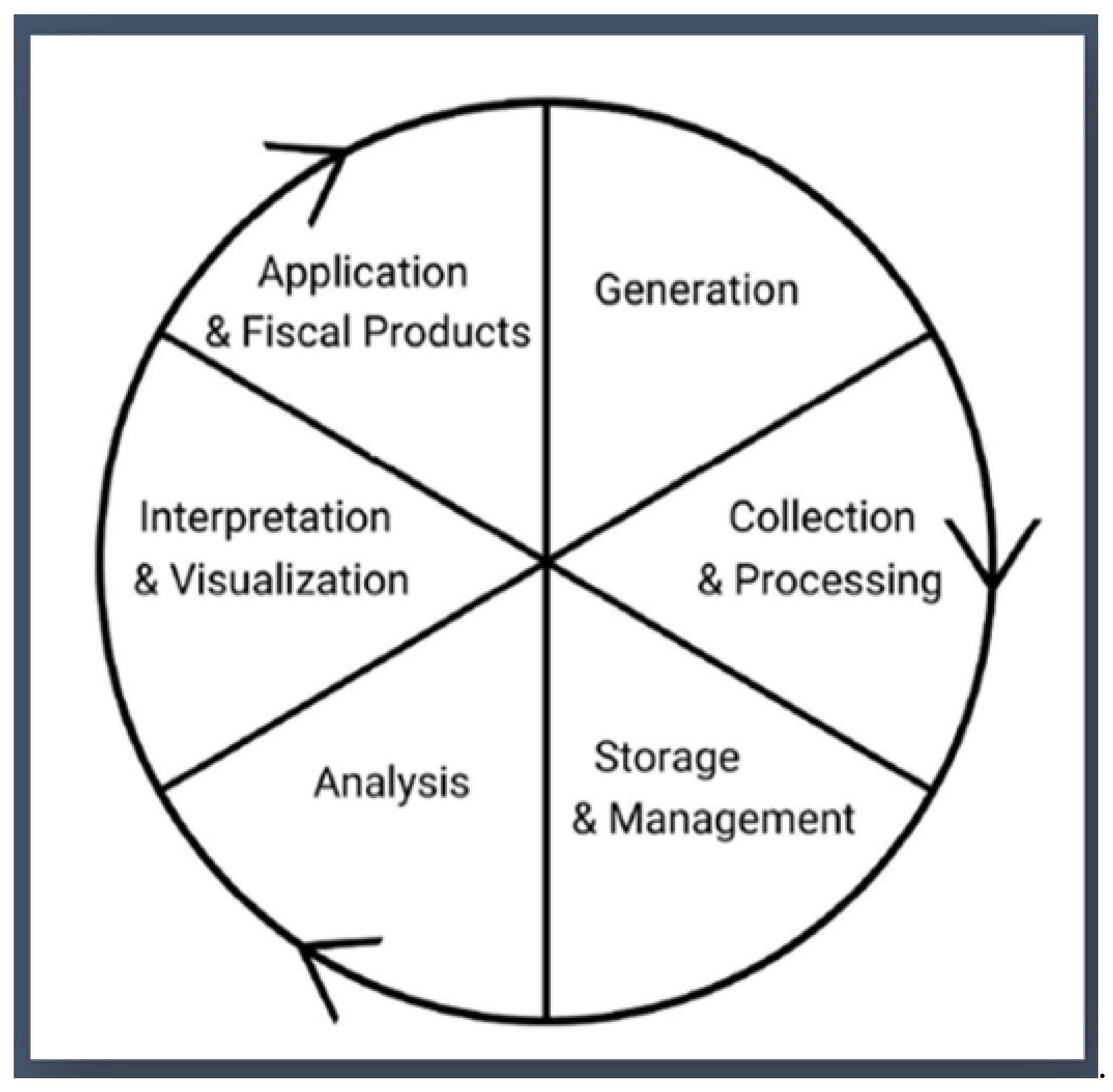
1] and academically introduced at the Dartmouth conference in 1956, it is only over the past few years that data-fed AI has become the driver of the Fourth Industrial Revolution. “Data is the new currency and access to data—rather than money, natural resources, or advanced weaponry—is now the most valuable asset available to nation-states and corporations” [
2]. The advent of AI has had sweeping implications in every sector, including museums, from now on characterized as “socio-technical ensembles that constitute, stabilize, and transform the constantly changing relations between AI technologies (computer vision, natural language processing, artificial neural networks, et cetera), human beings (museum staff, researchers, IT experts, visitors, users, artists), material objects (historical artefacts, artworks), and real or virtual environments (exhibition spaces, digital archives)” [
3]. These dynamics raise ethical concerns regarding transparency, copyright, algorithm bias, privacy, human oversight and data ownership [
4]; especially so in Africa where museums, once colonial institutions, have continued after independence to rely on Northern actors for financial aid, technological support, and professional expertise [
5].
A cursory glance at the cartography of AI in Africa unveils conspicuous paradoxes even to the untrained eye. Africa is far from “lagging behind”, as is often assumed in development or museum cooperation literature. It currently holds five museums, well distributed across North, West, East and South Africa, primarily dedicated to or relying on AI—Iziko Museums’ Planetarium and Digital Dome (Cape Town, 2017); Ethiopia’s Science Museum (Addis Ababa, 2022); the Grand Egyptian Museum (Cairo, 2024); Dar Gnawa Museum (Marrakech, 2024); and the International Museum of the Prophet’s Biography and Islamic Civilization (Dakar, 2025). Contrary to all previous phases of technological transfers in museum cooperation, none of these five leading institutions relies on direct Eurocentric North–South cooperation. Ethiopia cooperates with China; Senegal with Saudi Arabia; South Africa relies on its own AI capacities; Morocco and Egypt—who obtained loans and capacity transfers from Japan—even portray themselves as technological leaders in Africa [
6,
7]. However, a more disturbing reality emerges when looking at the distribution of AI data centers across the world. While North America and Europe, respectively, host 41% and 23% of them, Africa only has 233 data centers—56 of them in South Africa alone—spread across 38 countries, that is, 2% of the world’s total [
8].
This raises the familiarly uncomfortable question of who ultimately stores and owns African heritage and knowledge, this time encoded in AI software, hardware and infrastructures. Underlying this topical concern lies a vacuum in the literature whereby scholars and practitioners have underestimated the extent to which technology and capacity transfers in museum cooperation with Africa—from the dioramas in the 1930s to most recent digital initiatives since the 2010s—constituted an insidious lever of coloniality within institutions originally imported from the North [
9]. As a result, the hypothesis whereby technologies could be a catalyst for (de)coloniality within cultural institutions such as museums has been obliterated. But in the present context where a growing number of African institutions resort to AI—in addition to the abovementioned museums, the Museum Africa (Johannesburg), the Egyptian Museum (Cairo) and the National Museum of Egyptian Civilization (Fustat), either hosted temporary exhibitions or have ongoing AI programs—bridging this conceptual terra incognita between the inherent colonialities of AI [
10,
11] and museums [
12,
13] seems necessary, especially at a time when new South–South and intra-African diplomatic allegiances are reshaping the continent’s museumscape.
This paper offers comparative perspectives on the Dar Gnawa Museum (Morocco) and the GEM (Egypt). The Dar Gnawa Museum emerged in Marrakech’s Derb Jdid district during the 1960s, alongside the establishment of another Dar Gnawa center in Tangier. It traces the history of how enslaved sub-Saharan communities settled in the Maghreb since the late 19th century. While its collections include guembris, ritual attire, and a variety of artifacts that reflect both the continuities and the transformations of Gnawa society over time, its main focus is on music, traditional ceremonies and other forms of intangible heritage. The museum extends its reach beyond Marrakech by showcasing pieces at international events, such as the Dakar Biennale held in November 2024 [
6,
14]. Construction of the Grand Egyptian Museum began in 2005. Although sections of the complex were opened to the public in 2024, the official inauguration took place in November 2025. The museum occupies a site in Giza, approximately two kilometers from the Pyramids and the Sphinx, thereby forging a deliberate symbolic connection between Egypt’s ancient monuments and its most ambitious contemporary cultural project [
15]. Covering almost 480,000 square meters, the GEM is designed to be the world’s largest archaeological museum. Its holdings exceed 100,000 objects—including the entire funerary assemblage of Tutankhamun—and trace the span of Egypt’s Pharaonic civilization. Both institutions emerged in countries that suffered from colonization. Between 1912 and 1956, Morocco was under French and Spanish rule, while Egypt was occupied by Britain from 1882 to 1956. Colonial-era acquisitions, excavations, and trade dispersed their heritage across Northern museums [
16,
17]. After independence, Morocco’s Gnawa culture remained marginal until its revalorization in the 1990s [
18]. In Egypt, museum policies alternated between the nationalization of the 1950s, restitution demands and, conversely, tourism-oriented expansion and ODA-financed mega-projects promoting heritage branding and soft power [
15]. Today, both countries’ museumscapes continue to reflect “a local history of colonial museology and, at the same time, (…) political ambivalence over the role the museum should play in the nation’s postcolonial life” [
19].
Based on these two case studies, this paper addresses a double-layered research question. At a curatorial level, it explores the extent to which these institutions have integrated AI functionalities and whether these changes reshape and decolonize existing curatorial practices. While necessary to understand these institutions, this technical perspective yields incomplete answers to the core question of our investigation, that is, whether the Dar Gnawa Museum and the GEM suffer from enduring or renewed forms of coloniality. Indeed, coloniality, briefly defined as a persistent system of domination that may subsist after the historical period of colonization ended [
20,
21,
22], can be polymorphous and invisible, all the more so in its AI variant often portrayed as neutral [
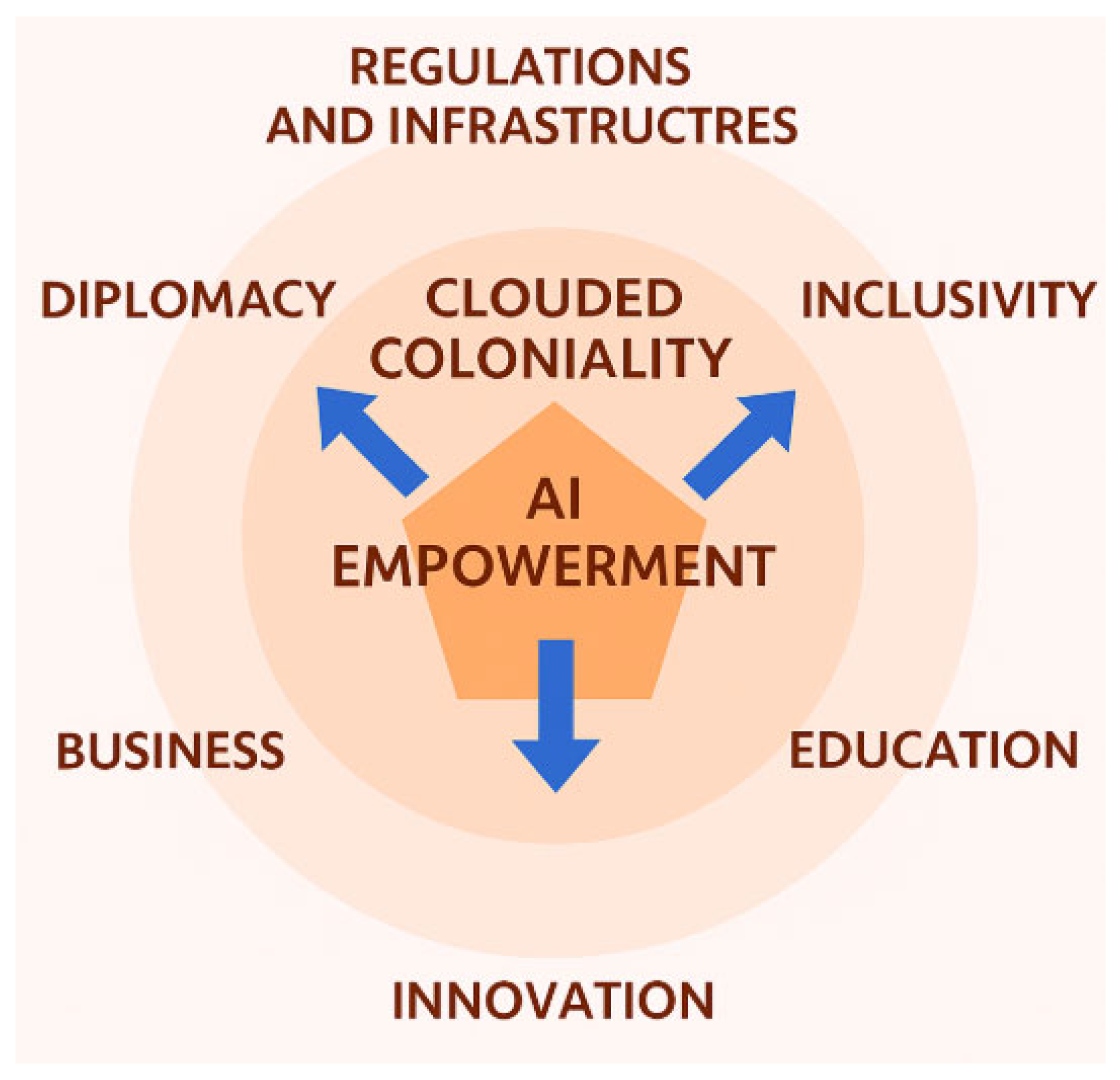
23]. In a second phase, our investigation thus examines how the Dar Gnawa Museum and the GEM respond to what we term clouded coloniality—a term that seeks to capture both the elusive nature of coloniality and the fact that heritage data is now literally hosted on cloud infrastructures. The discussion focuses on six dimensions of techno-cultural empowerment: legal frameworks and infrastructures, social inclusivity, STEM education, innovation capacity, private partnerships, and AI diplomacy. After setting out a comparative discussion, this paper ends with concluding remarks on the need to bring together the technological and cultural facets of museum cooperation so that AI becomes an empowering tool for African institutions.
3. Materials and Methodology
The new definition of museums approved by the International Council of Museums (ICOM) in 2022 makes no reference to the use of digital technologies [
83]. This absence is all the more conspicuous given that a growing number of institutions are either directly dedicated to the NICTs or increasingly rely on them, especially AI. As astutely noted by de Mello et al. [
54], turning a blind eye to technologies in museums will “not make them disappear, but rather deepens the gap between different institutional realities and institutional and geographical asymmetries”. Museums have long embraced technological innovation, from the panopticon (1791), panorama (1792), and diorama (1823), which introduced new modes of interactivity [
84], to the consistent integration of contemporary advances—from industrial machinery and space exploration to wartime technologies, telecommunications, and early digital computing [
85]. The latest wave of innovations integrating the museum microcosm is naturally dominated by the advent of AI. Smart museums based on AI technologies now “animate otherwise static collections, creating an experience that connects people, education, culture, and art” [
4].
Though ultimately focused on the Dar Gnawa Museum and the GEM, our methodology counterintuitively takes non-African institutions as starting points or rather as starting counterpoints. The reason for this preliminary step is simple: if African museums were not to deploy the whole spectrum of functions other AI-enabled museums deploy elsewhere, this gap could be interpreted as a technological lag propitious to asymmetrical relations in potential capacity transfers—either through ODA or museum-to-museum cooperation—identified above as markers of coloniality. On the contrary, should this hypothesis proved unfounded or should African museums partially address coloniality within conventional curatorial functions, it would signify that other benchmarks are necessary for the purpose of assessing a potentially (neo)colonial presence driven by AI. The aim here is not to impose Northern prisms on African museums, but rather to establish a preliminary taxonomy of AI functionalities across museums worldwide and detect potential divergences between the Dar Gnawa Museum and the GEM, and non-African institutions.
Drawing on publicly available museum documents, websites, and exhibition descriptions [
Appendix A], it emerges that a first category of AI applications revolves around inventorying, archiving, cataloguing and, in general, managing information related to collections [
23]. Indeed, inventorying collections within museums seemed to be predestined for automated indexing processes [
85]. By way of illustration, the Harvard Art Museum [
86] applied computer vision and natural language processing to generate over 66 million machine-generated descriptions and tags. However, transformative technologies extend well beyond operational efficiency [
4]. Still related to collections but for research purposes, a second category relates to how machine learning and computer vision are being used to analyze “deep features” and virtually reconstruct original artworks. By automating the identification of objects, people, clothing, landscapes, and iconographic motifs in paintings for instance, scholars may examine an artist’s line work with unprecedented granularity. At the Rijksmuseum [
87], neural networks now quantify stylistic variations, resolve attribution disputes, and support conservation through digital reconstruction. Here, AI-driven automation helps advance research by revealing previously unexplored dimensions of collections.
Moving from collection-centric to visitor-centric functions, machine learning for visitor data analysis creates customer predictions based on previous visitors’ behavior or conducts a sentiment analysis of a museum’s visitors. Various digital touchpoints, which integrate cloud-based analytics through software—like the MoMa cloud-based CRM platform powered by Salesforce [
88]—gather pre-, during, and post-visit data not only to dissect preferences and predict trends [
89,
90], but also to tailor narratives, content, and interfaces for future exhibits [
4]. In this vein, “museums evolve from being collection-based and information-oriented repositories of knowledge, with visitors as passive recipients, to adopting participatory approaches that position the audience as central to experiences, making them active participants in value co-creation” [
89]. This expanding field has been labeled edutainment, straddling, as its name suggests, the borders between educating audiences and captivating them in the ever more competitive landscape of the entertainment industry. Examples of edutainment devices may include immersive rooms (Museum of the Future, Dubai) [
91], holograms (Illinois Holocaust Museum & Education Center, Skokie, IL, USA) [
92], interactive screens, objects and murals (The World of Leonardo da Vinci, Milan, Italy) [
93], 3-D models (Smithsonian Institution, Washington, DC, USA) [
94], Virtual Reality (VR) and Augmented Reality (AR) devices (DuSable Museum, Chicago, IL, USA) [
95]. In this respect, gamification plays an essential role here as it increases “engagement with cultural content through affective triggers, and [creates] immersive and memorable experiences that improve users’ learning capabilities” [
4].
Mixed reality (MR) produces a new phygital environment where the real and virtual tend to form a continuum [
96]. Here, artistic creation with the assistance of AI emerges within the fluctuating frontier and interactions between real and virtual environments. Indeed, such works often merge physical materials and algorithmic generation, thereby creating hybrid spaces in which the analogue and the digital are constantly negotiated. AI provides new avenues by assisting artists in co-creating, thus “positioning technology as a catalyst for human creativity and collaboration rather than merely a tool for efficiency” [
89]. In this line, “Data Dreams” or the Karlsruhe Center for Art and Media (Germany) seek to actively reshape the environment by addressing pressing issues such as how algorithms and datasets challenge our perception of reality; the immense environmental costs of the data-driven economy; and the co-evolution of humans and machines [
97,
98]. This intertwining between oneiric and material dimensions, long practiced by Aboriginal Australians, is now re-explored at the Museum of Contemporary Art Australia where artists directly engage with AI technologies. In this vein, Seoul Robot and AI Museum [
99] also tries to fill the void between physicality and the virtual with various media as artistic materials. The media artist group TeamVOID designs experimental systems through kinetic sculpture, light sculpture, and robots to explore the fusion of technology and art.
These reflections highlight the fact that museums are not microcosms in and on themselves [
100]. While they seek to capture the world, they remain connected to their external environment. As underlined by the ICOM [
83], museums are “open to the public, accessible and inclusive”; and operate (…) with the participation of communities”. Whether through ethical concerns reflected by society, financial entanglements with their sponsors, political messages they may convey or broader missions as cultural mediators, museums are porous institutions. It would therefore seem justified to add a final category consisting of the extensions museums weave with the outside world beyond their core curatorial, educative and artistic functions. These extensions are understood here as commercial applications, diplomatic initiatives and all other activities that consolidates a museum’s agency in its cross-sectoral collaboration [
101]. To develop market opportunities, the RAIM [
102] is collaborating for R&D and commercial AI applications with,
inter alia, Korea Telecom, Korea Institute for Science and Technology and Hyundai Robotics. At a public diplomacy level, the Smithsonian Institution [
103] leverages AI—through partnerships with Amazon Web Services and Microsoft—to digitize and translate vast collections, positioning itself as a global digital heritage hub that advances U.S. cultural diplomacy through the projection of soft power. These instances suggest that AI, even from a museum perspective, has to be understood as a tentacular tool with extensions far beyond the museum precincts.
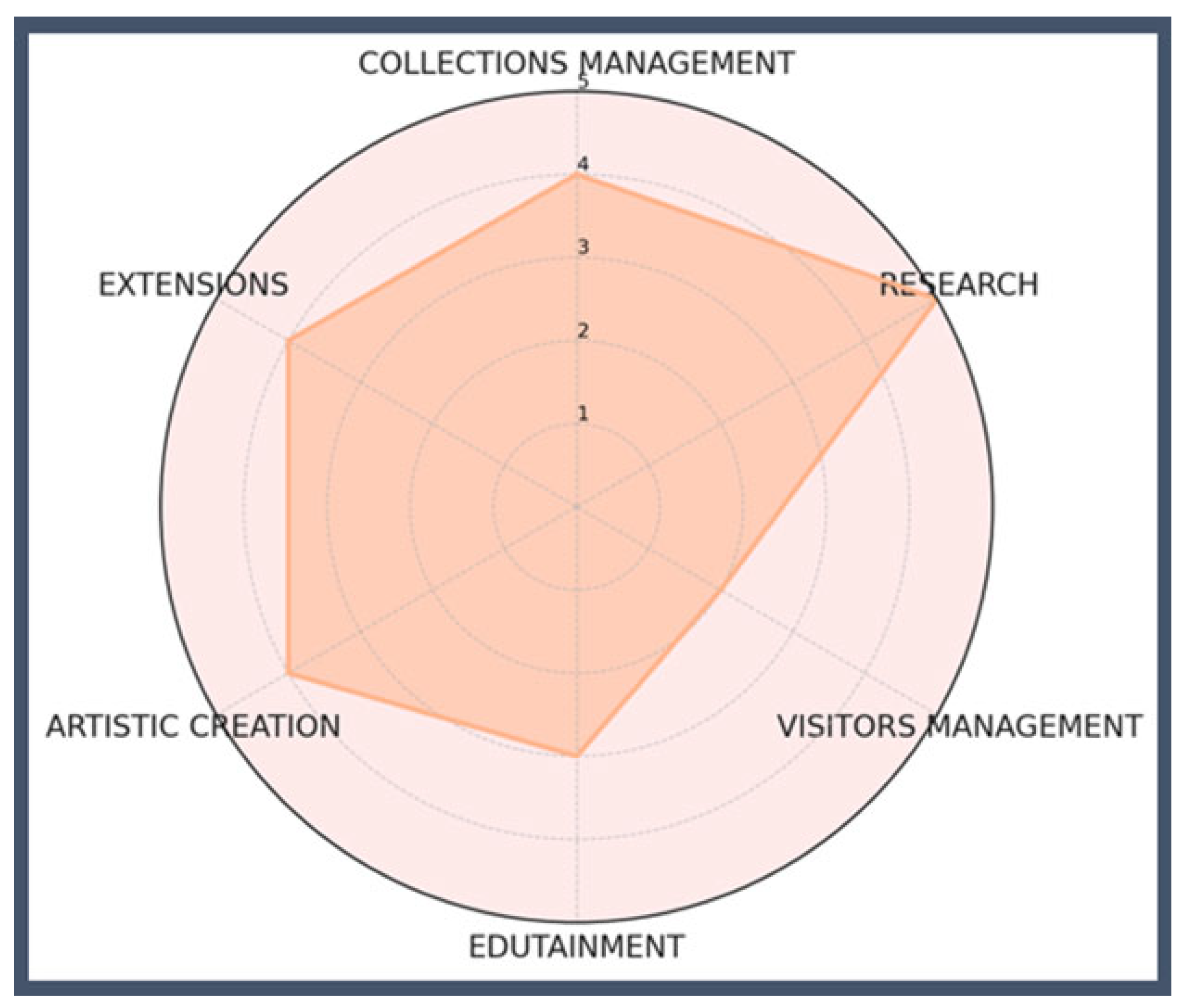
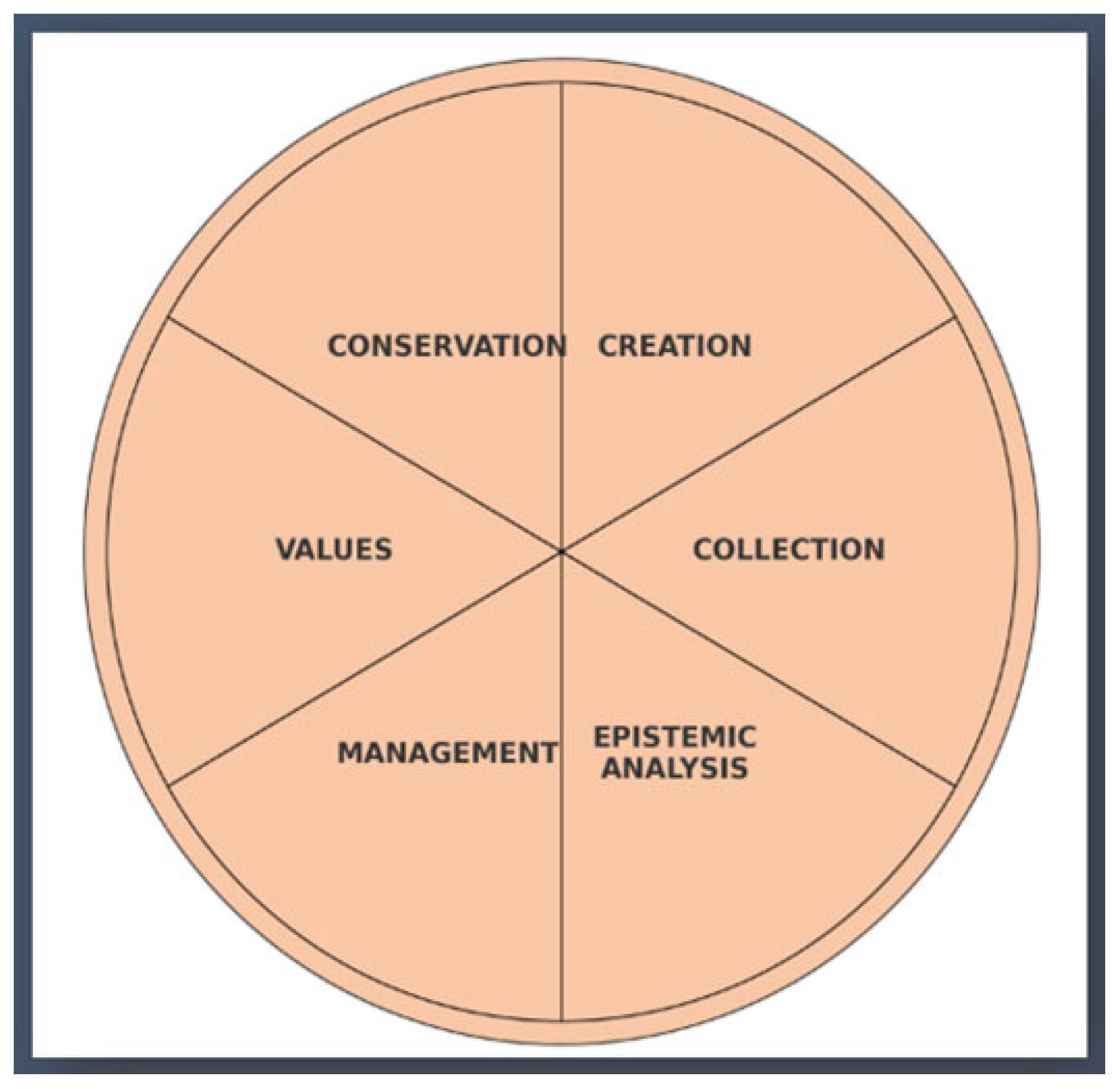
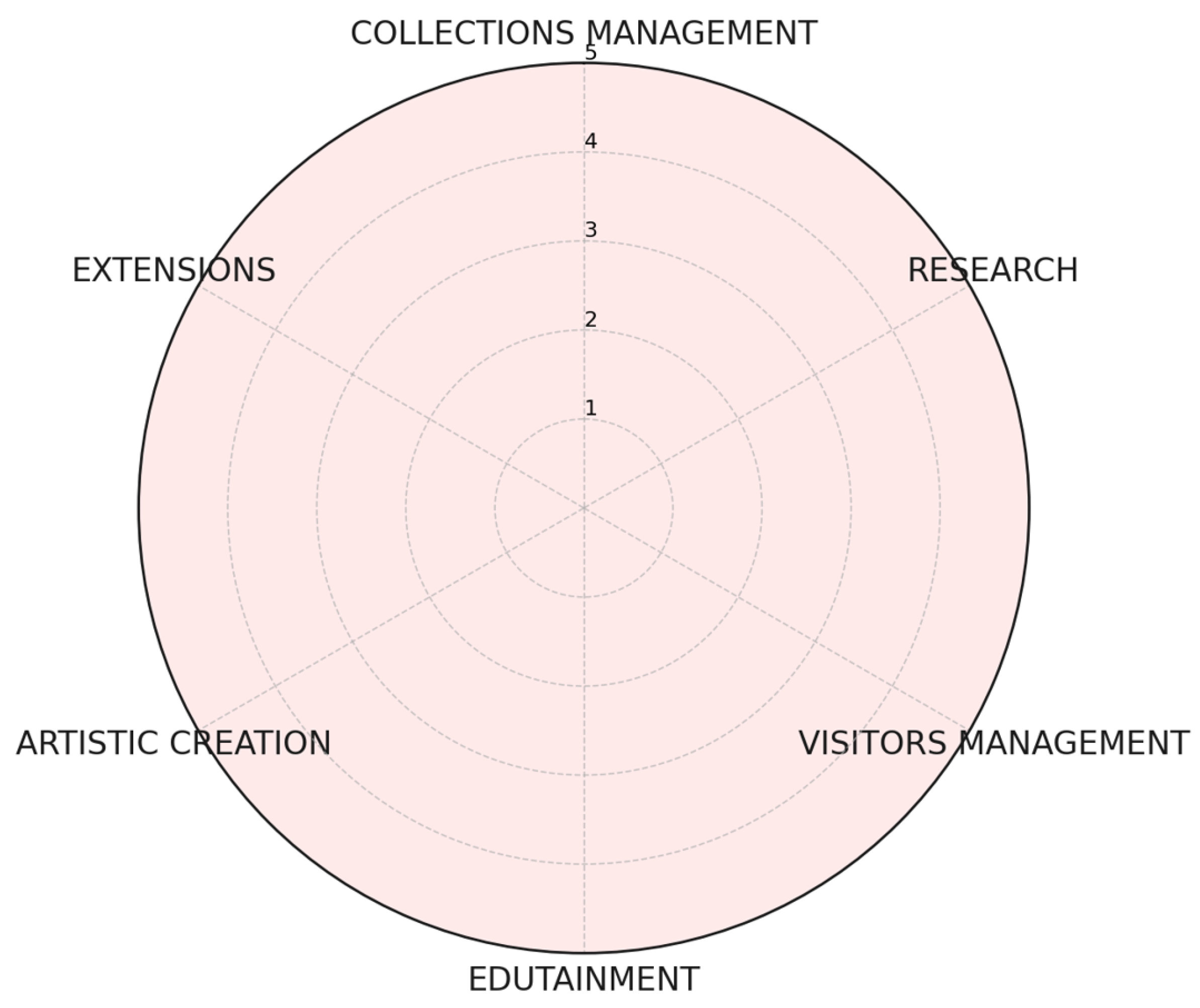
This brief overview indicates that museums resort to AI for the following purposes: inventorying; research; visitor management; edutainment; artistic creation; and other extensions, whether diplomatic, commercial or others. In order to evaluate the extent to which African AI-assisted museums resort to these AI functionalities and whether these reshape and decolonize conventional curatorial practices, it may be visually and analytically more helpful to project these functions on a radar chart whose radiuses work as benchmarks scoring from 0 to 5, detailed in
Table 1. The idea here is not to implement a relative assessment (i.e., how do African museums rate versus non-African ones) but rather an absolute one (given the possibilities that AI opens, to what extent African museums make use of them to decolonize curatorial practices). For each axis, repeatable criteria will be used as outlined in all the AI-generated figures, as here in
Figure 3.
Currently, the list of AI-enabled museums in Africa includes five institutions: the Digital Dome and Planetarium of Iziko Museums in Cape Town (South Africa, inaugurated in 2017, with AI applications later integrated); Ethiopia’s Science Museum (2022), financed by China but now independently run by Ethiopia; the Dar Gnawa Museum in Marrakech (Morocco, 2024); the Grand Egyptian Museum (GEM) in Cairo (Egypt, 2024); and the International Museum of the Prophet’s Biography and Islamic Civilization (IMPBIC) in Dakar (Senegal, 2025). The reasons for selecting the Dar Gnawa Museum and the Grand Egyptian Museum (GEM) as case studies are as follows. As we already conducted a research on Ethiopia’s Science Museum [
38], we decided not to replicate our findings in this present study. The Iziko Museums were also discarded because AI applications were partially grafted to the Digital Dome and Planetarium rather than fully integrated into the eleven Iziko public museums. As for the International Museum of the Prophet, the fact that it was just inaugurated at the time of the writing would compromise the longitudinal depth of our assessment.
The Dar Gnawa Museum was chosen as case study because our Korea-based research team just signed a Memorandum of Understanding (MoU) with this institution under the global multidisciplinary initiative “Decolonizing a Southern Donor: AI Curation and Archiving in Museum” (NRF-2025S1A5C3A02004512), funded by the National Research Foundation of Korea. Through this collaboration, we wish to explore ways of merging cultural heritage with technological innovation. As for the GEM, it stands as a flagship project of more than two decades in the making, setting a benchmark for how African institutions are adopting cutting-edge AI technologies into museum practice. Egypt and Morocco both position themselves as cultural and technological hubs bridging Africa and the Global North. Moreover, the Dar Gnawa Museum and the GEM were selected because, having suffered from colonization and heritage looting—with objects dispersed across numerous museums in the Global North [
16,
17]—, Morocco and Egypt’s museumscape still reflect “a local history of colonial museology and, at the same time, (…) political ambivalence over the role the museum should play in the nation’s postcolonial life” [
19]. As both Morocco and Egypt consider themselves as regional AI leaders with ambitious museum policies [
6,
7,
46], we wondered what role did the above-identified AI functions play in decolonizing curatorial practices and in building synergies between the recovery of cultural and technological sovereignties. To this end, we conducted two rounds of semi-structured interviews with local museum staff and AI professionals, some of which can be found in the
Supplementary Material [
6,
7,
46,
81,
82,
104,
105]. The first round concentrated on the specific AI functionalities within museums and was guided by the following set of open-ended questions.
Has your institution fully archived and catalogued its collections using AI?
Could you describe how AI engineers and curators collaborate within your institution?
Have machine learning, neural networks, or computer vision been used to analyze ‘deep features’ for research or restoration purposes? Has AI been employed to study or predict visitor behavior?
In what ways do visitors benefit from AI applications in your institution?
Does your institution promote artistic creation through AI, whether by visitors or by artists?
What upcoming AI-related projects are planned for your institution?
As stressed earlier, while necessary to understand how these museums integrate AI, these questions did not sufficiently unveil the potential colonial frictions between these institutions and their partners. Therefore, a second round of semi-structured interviews was dedicated to a broader discussion on the bridges between museums and their AI ecosystem. It consisted of the open-ended questions listed below.
How has the transfer of equipment and expertise in digital and AI technologies taken place? Were AI-related tools and capacities imported from abroad (and if so, from which countries), or were they developed locally?
Where is your institution’s heritage data stored and managed? Is it hosted abroad or within national data centers?
Given that a significant portion of your country’s heritage is located abroad, how do you see AI in relation to the restitution debate? Can it serve as a substitute for material restitutions, or rather as a catalyst for them? In what ways?
Would you consider AI to be inclusive or exclusive for marginalized groups?
In your view, does AI contribute to the decolonization of museums, or does it risk reinforcing colonial dynamics? How so?
How are your institution’s AI initiatives aligned with your country’s national AI policies?
What solutions is your institution considering to ensure the financial sustainability of its AI ecosystem?
Your country has been proactive in pursuing AI diplomacy. Are there Pan-African or bilateral projects in the field of AI museum diplomacy?
On the basis of the answers, as well as publicly available museum documents, websites, exhibition descriptions, academic articles and field reports, we conducted qualitative content analysis and comparative cross-case comparison based on the abovementioned AI functionality grid (
Figure 3). There are of course some inherent limitations to our approach, the first one being that the Dar Gnawa Museum and the GEM have been inaugurated for just over a year at the time of our writing, reducing the scope for longitudinal observation. Besides, our non-African positionality may lead to involuntary but significant interpretation biases, as we can only offer an external standpoint. Having said that, the lack of visibility of AI African museums in the literature and their emergence as new techno-cultural agencies on the continent encouraged us to proceed with our investigation, whose results are detailed in the next section.
5. Discussion
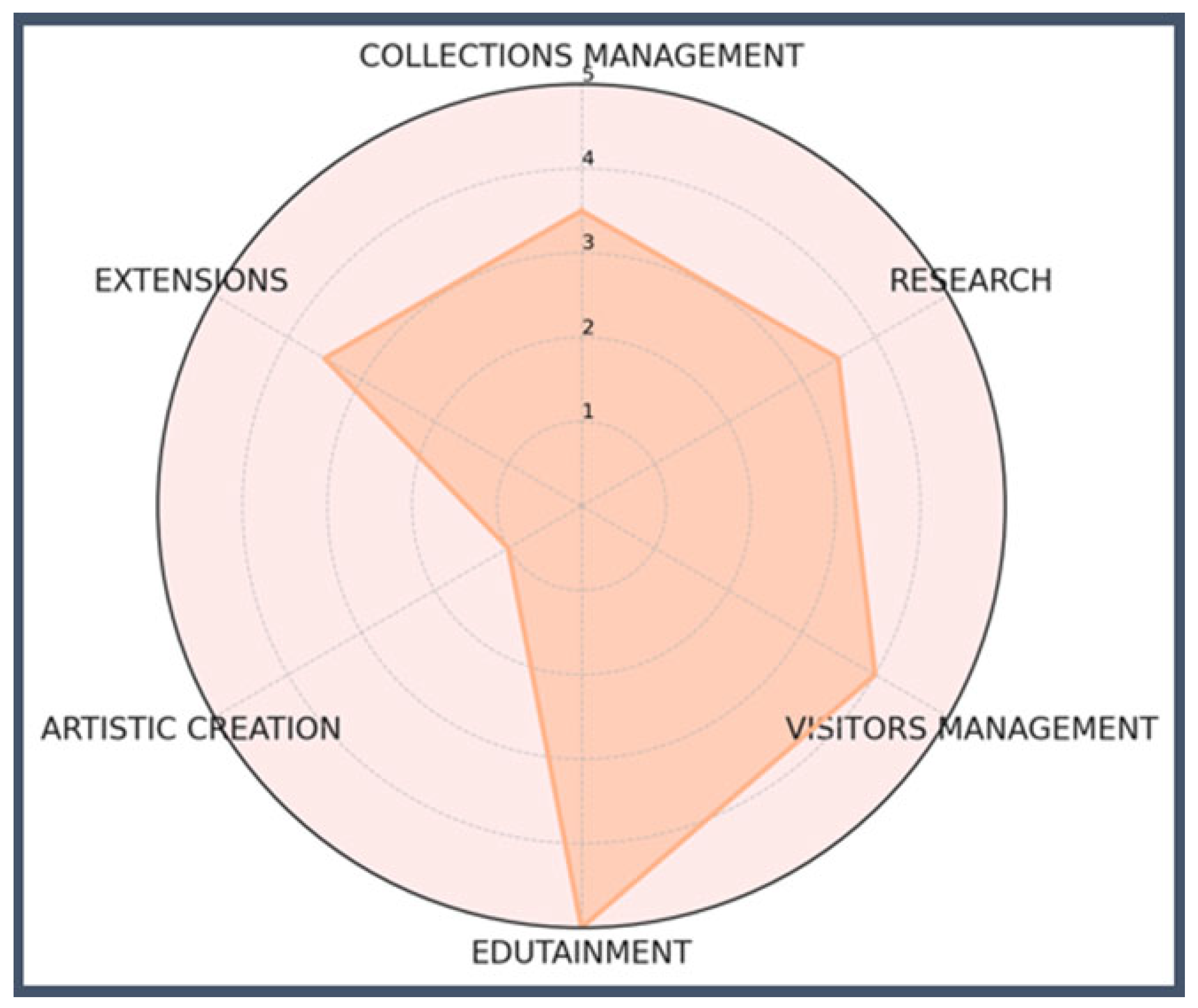
The findings of our investigation thus far indicate that the two African AI-assisted museums under study are—to varying degrees according to each institution—implementing the same functional capacities as their non-African counterparts (
Appendix A;
Figure 4 and
Figure 5). While a technological lag might allow coloniality to resurface in other African institutions willing to develop AI functions through ODA or museum-to-museum cooperation in the future, as far as our two institutions are concerned, AI functionalities are on a par with worldwide standards and do not corroborate a North–South AI divide. But the outcomes revealed by our analytical model, though essential for understanding the museum operations, offer no conclusive evidence that the institutions can effectively advance Morocco and Egypt’s techno-cultural sovereignty. In a few instances, the Dar Gnawa Museum integrated AI functionalities with a clear decolonial potential—multi-lingual metadata over monolingual curatorial frameworks; focus on the Gnawa community marginalized in colonial and post-independence contexts; ongoing research programs and performances involving source communities; community support through handicraft sales and sponsorship at festivals; and above all, development of 100% home-made technology [
105]. In others, both institutions valued curatorial pragmatism over historical self-introspection. The GEM, in particular, seems oblivious to the history of tomb-raiding in Egyptology [
111]. In other cases yet, it may be necessary to move from a purely functional approach to a more process-oriented one so as to unveil the correlations between decolonial curatorship in the strict sense of the term and the colonial threat posed by the broader AI environment. While the Dar Gnawa museums prides itself on having developed a 100% Moroccan AI chatbot, Kouyou, the GEM resorted to different types of capacity transfers for its CMS and AI inventorying tools [
107]. Well aware of the risks of data colonialism, Dar Gnawa Museum’s curator, Oussama Elasri, stressed that Kouyou was not a mere innovation, but an act of cultural resistance against global uniformization [
112]. On the contrary, the GEM’s staff did not see reliance on foreign partners like ARCE, USAID and Meta, as a symptom of coloniality but rather as a necessary step towards achieving “Egypt’s AI autonomy” [
107,
110].
Some lingering paradoxes still remain to be fully addressed. The Dar Gnawa museum does not engage with colonialization or coloniality as curatorial themes within its exhibitions, yet fully aware of the threats posed by data colonialism, developed its own sovereign algorithm; as for the GEM, it seems willing to cloud its data through platforms run by the very countries that looted its artefacts, while at the same time claiming to regain cultural and technological sovereignty. It would seem that stigmas of a clouded coloniality transcend the museums’ precincts as they are not automatically correlated to their curatorial functions. Clouded coloniality should hence be unveiled through a broader lens. As Morocco and Egypt embed their respective cultural heritage within AI-driven systems of curation and interpretation, how are they securing its control and ownership through AI tools without exposing what is now becoming an interconnected techno-cultural sovereignty? Specifically, the discussion will seek to answer the following questions. Considering the enduring influence of digital colonialism on infrastructures and regulatory frameworks, what policies have been adopted to prevent cultural estrangement and foreign interference? At a domestic level, are Morocco and Egypt reproducing center-periphery hierarchies, as posited by data colonialism theories, or promoting inclusivity across diverse social groups? In this vein, to what extent do education projects guarantee equitable access to AI-powered tools and meaningful participation in digital transformation? Are public investments and state-led incentives sufficient to reduce reliance on foreign technology providers and business partners? Finally, in light of the inherently interconnected nature of AI networks and infrastructures, are Egypt and Morocco developing a coherent and competitive AI diplomacy to navigate this era-defining technological landscape?
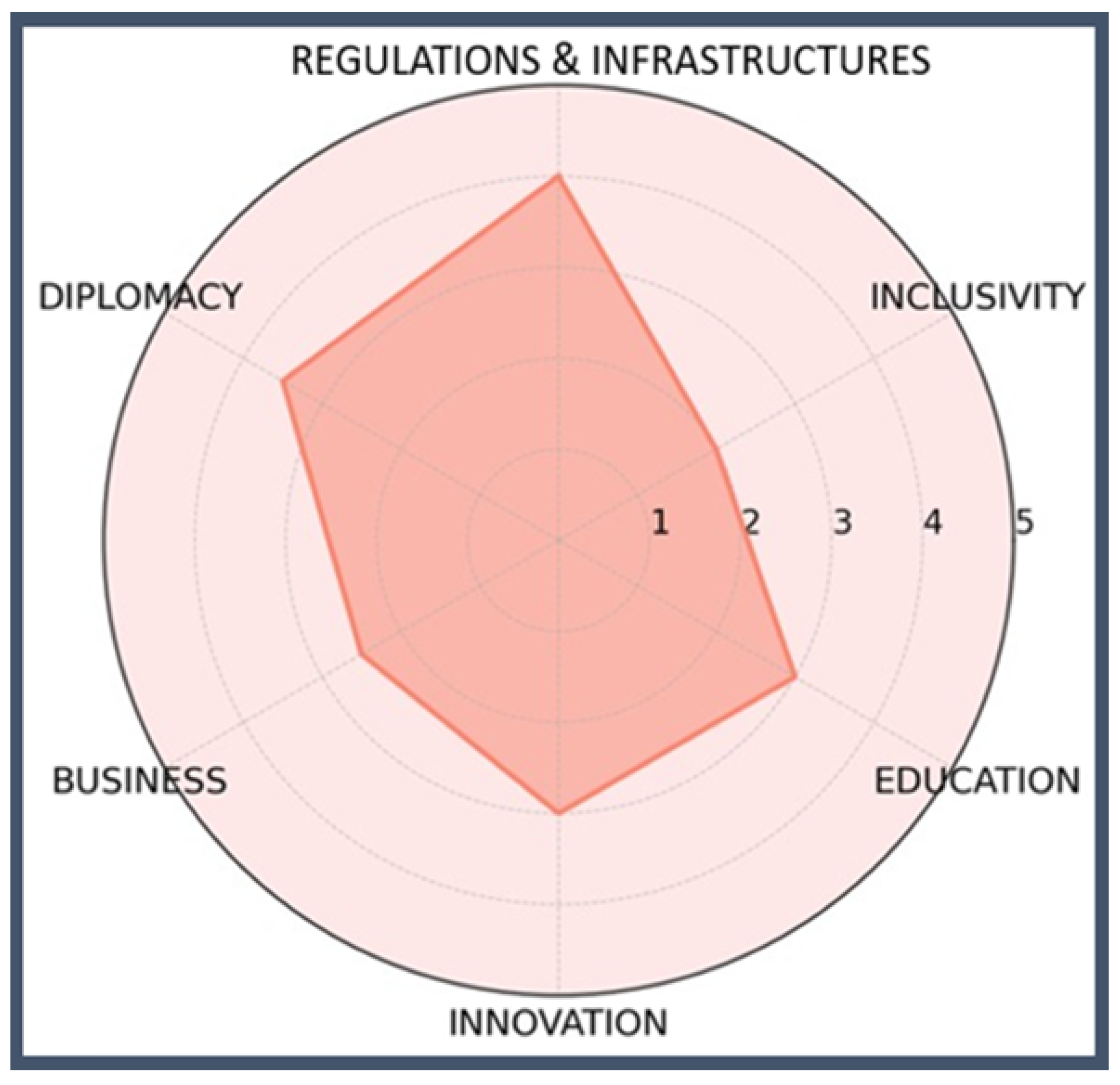
To evaluate how these challenges affect the two institutions under review, the following section will introduce six refined criteria. These criteria do not evaluate each country’s AI readiness, as the Oxford Insights [
113], the Egypt National Council for AI [
114], and UNESCO [
115] do. Instead, they aim to assess the synergies between each museum and its AI ecosystem. In particular, they evaluate the degree of techno-cultural empowerment, in the face of clouded coloniality, the Dar Gnawa Museum and the GEM reached through synergies with the domains of regulations and infrastructures, inclusivity, education, innovation, economic integration, and diplomacy (
Figure 6).
5.1. Regulations and Infrastructures
In its continental AI Strategy, the African Union warns against “an AI divide between and within countries and globally” due to, among other factors, data “sourced from developed countries and from non-diverse and non-inclusive developers’ teams” [
116]. Immediately afterwards, it encourages member states to establish “an appropriate AI governance system and regulations at regional and national levels”. As of today, 39 out of 55 African countries have enacted data protection laws, with various enforcement levels [
117].
Despite the Digital Morocco 2030 blueprint and the expected creation of a National Artificial Intelligence Agency (both approved in 2024), experts signal that Morocco does not have a unified AI strategy [
118]. As for Egypt, it already designed two national AI strategies (2021–2025; 2025–2030). As of mid-2025, neither Morocco nor Egypt have adopted a dedicated AI law, though both are armed with a battery of domestics acts on electronic transactions, data protection and privacy, and fintech laws [
114,
115]. Egypt’s 2020 Personal Data Protection Law (PDPL, no. 151) restricts cross-border transfers and encourages the retention of sensitive data within national infrastructures, while intellectual property rights (IPR) are being progressively reinforced through updated legislation [
46]. Likewise, Morocco’s cybersecurity law (05.20) mandates that all sensitive data be hosted within Morocco’s borders, driving significant data repatriation since its application in 2021 [
115,
116,
117]. This clear pivoting toward internalizing critical data is fomented by Morocco’s most powerful supercomputer in Africa and its 26 national data centers, compared to Egypt’s 14. Out of the whole African continent’s data center capacity—(400 MW) by the end of 2025—Morocco accounts for 140 MW, that is 35% of that capacity [
118].
But in either country, it is unclear what percentage of data has been repatriated and even local data centers are run by a mix of domestic and foreign operators. Following the enactment of Morocco’s Cybersecurity Law 05.20, priority has been given to securing strategic sectors like government and bank-related data. In this regard, Digital Morocco 2030 states that cloud services managed by Moroccan operators will be reserved for the public sector and Organizations of Vital Importance (OVI) [
119]. Likewise in Egypt, the government cloud computing data center inaugurated by President Abdel Fattah El-Sisi in April 2024 serves as a central repository for all ministry data [
120]. However, heritage-related data has not been identified as “sensitive” by Moroccan or Egyptian officials [
7], leaving it exposed to potential offshore processing, external control, or even commodification.
As a private institution, the Dar Gnawa Museum took it upon itself that all data are stored locally, within certified Moroccan data centers to ensure that cultural data remains under national stewardship and safeguard Morocco’s digital sovereignty. Its curator Oussama Elasri further stresses that “we are aware of the risks of data colonialism and have taken steps to avoid them” [
6]. But nothing guarantees that Morocco’s fourteen public museums follow suit. As for Egypt, through the Centralized Museum Repository Project, which includes the GEM, it seeks to gradually enhance oversight of metadata and collections tracking. This central information system strengthens institutional capacity to manage digital representations of its heritage in-house, supporting local control and reducing risks of narrative displacement [
46].
Current Moroccan and Egyptian legislations were not crafted to address the recent transformations of AI-era heritage undertaken by the Dar Gnawa Museum and the GEM, namely, the ownership of AI-generated outputs (e.g., voice clones, 3D reconstructions, translated manuscripts); consent and agency of source communities; and long-term archival access. There are therefore concerns that, as Morocco and Egypt graft European legal standards such as the General Data Protection Regulation (GDPR) on their own laws [
121,
122], they may reproduce the import of European laws upon and after independence. In the heritage field, former colonizers made sure the 1970 UNESCO Convention on the Means of Prohibiting and Preventing the Illicit Import, Export and Transfer of Ownership of Cultural Property remained non-retroactive, blocking restitution claims. And the 2007 United Nations Declaration on the Rights of Indigenous Peoples (UNDRIP) Convention has no law-enforcing mechanisms. Until Morocco and Egypt promulgate AI laws that ensure the domestic storage of heritage data for their national museums, there will be risks that this legislative vacuum prolongs asymmetries of ownership and sovereignty in the heritage sphere.
5.2. Inclusivity
In order to give themselves a postcolonial veneer, many Northern museums have offered multi-vocal narratives on their extra-territorial collections [
123,
124]. Yet, as Fuchsgruber points out [
125], “museum collections do not automatically become more diverse by being described in more diverse ways”. And technologies add a new layer of ambiguity in the ethical becoming of collections. Mbembe argues that Afro-Computation has the potential of transcending Northern dichotomies between objects, values and virtuality [
126]. He argues that “the plasticity of digital forms speaks powerfully to the plasticity of African precolonial cultures and to ancient ways of working with representation and mediation, of folding reality (…) Things and objects, the animal and organic worlds were also repositories of energy, vitality and virtuality” belonging to the world of interfaces. Yet, how can the complexity of African identities—theorized in decentralized paradigms based on multi-allegiance networks, “mosaic of peoples and organizations”, “ethnolinguistic fragmentation”, and “intergenerational solidarities” [
127]—be channeled and reflected through ethical technologies? And from an AI perspective, how can data reverse the patterns of underrepresentation and domination that have infused the museum culture in Africa? Decolonizing museums through appropriate AI, understood as an extension of appropriate technology, could be mutually reinforcing insofar as both share a moral injunction: challenging epistemic injustice through “a new relational ethics” [
73,
128]. To this end, the concept of “data solidarity”—i.e., “the willingness to share datasets and resources with others while acknowledging the invisible processes that take place during the creation, production and sharing of data sets” [
125,
129]—opens the possibility for inclusive AI within museums. In light of these considerations, what stance do Morocco and Egypt adopt in this debate?
Egypt and Morocco have both insisted on democratizing access to culture through AI; and both seek to positions themselves as leader in ethical innovation in Africa [
46,
106]. Since 2019, Morocco launched an online portal listing 7000 cultural heritage items to promote and broaden access to its national heritage. More recently, the “culture.ma” platform was introduced to further democratize access to cultural content [
106]. Meanwhile, Egypt’s AI strategy is underpinned by the Egyptian Charter for Responsible AI. Its minister of Culture “called for international cooperation to establish ethical standards for the use of artificial intelligence (AI) in culture and arts, ensuring content authenticity and respect for cultural contexts” [
130]. Translating intention into action, Egypt’s Ministry of Culture established the National Archive for Intangible Cultural Heritage, a digital platform that enables communities to contribute photographs, videos, and narratives while safeguarding intellectual property rights and ensuring public accessibility [
46]. In parallel, another research initiative collaborated with Bedouin groups in North-Central Egypt to develop a mobile application for the self-documentation of their intangible heritage, including oral epics and traditional games. By privileging local agency, the model fosters culturally authentic documentation and broadens access for underrepresented rural populations [
46]. But Egypt’s wish to make content creation more accessible to marginalized groups—especially women, youth in remote areas, and cultural minorities—has remained aspirational within the GEM where Egyptian culture is presented as a monolithic Arab-Egyptian bloc straddling over the Nubian, Bedouin, Beja, Amazigh, Copt and Dom minorities. In fact, Egypt has been keener on leveraging AI in the tourism industry at large than on designing tailor-made practices for the GEM and museums in general [
110,
131]. On the contrary, Dar Gnawa Museum [
106] is taking concrete steps to “democratize access to Lila rituals, mystical poems, and the history of the Gnawa”. Indeed, after the Royal Institute of Amazigh Culture (IRCAM) was instrumental in granting official language status to Tamazight-the language spoken by the Gnawa community-in the 2011 Moroccan constitution, the Dar Gnawa Museum is now working in partnership with IRCAM and the Ministry of Culture to expand the application of the Kouyou algorithms beyond the spiritual and artistic Gnawa community onto the
Ahwach (Atlas Mountains),
Al-Malhoun (imperial cities), and
Al-Hassania (Sahara) repertoires. By deciphering Morocco’s linguistic landscape, Kouyou’s AI engine mirrors the diversity of its communities. Here, the ethical dimension of Dar Gnawa Museum’s AI practice preempts legal initiatives and lays the foundations of an indigenous peoples right to possess, govern, access, and maintain control over data that originate from them and relate to their communities, cultural practices, knowledge systems, or territories [
132].
5.3. Education
As early as 2019, Egypt and Morocco were among the 50 governments that endorsed the Beijing Consensus on AI and Education, adopted by the UNESCO [
133], with a special focus on “multi-stakeholder, and inter-sectoral approach”. As for the African Union 2063 Agenda, its second goal calls for “well-educated citizens and skills revolution underpinned by Science Technology and Innovation” [
134].
Morocco, in collaboration with the United Nations Development Program (UNDP), already established an International AI Centre in Rabat that host fellowships, hackathons, pilot projects and provides technical support to governments in the MENA region [
128]. It has unveiled plans to launch a dedicated AI university by 2026, positioning itself as a continental hub for AI training, research, and advanced education. The institution will offer Master’s and PhD programs in fields such as machine learning, computer vision, AI law, and the application of AI for development [
131]. Besides, it is worth noting that 72% of the country’s scholarship recipients are in the fields of Exact and Natural Sciences, particularly in Engineering and Computer Science; and 27.23% of graduates in science, technology, engineering, and mathematics (STEM) [
115]. The objective is to triple the number of graduates trained annually in the digital sector, increasing from 8000 to 22,000 by 2027, with an ambitious target of 50,000 graduates by 2030 [
115].
As for Egypt, it has stressed that education policies must prioritize youth empowerment [
130], while deploring the lack of AI proficiency and basic digital skills among professionals [
110]. One of the main strategic orientations of its National AI policy Plans (2019; 2025) is the importance granted to education and universities [
110,
135]. The Ministry of Communications and the National Council on AI aim at developing innovative, cross-sectoral, and sustainable teaching skills compatible with sectorial applications [
7]. To this end, Egypt has deployed four initiatives, namely Senior AI Expert Cultivation and Attraction, International Academic Alliances, Cross Discipline Course Development, and Comprehensive Qualification Certification System [
114]. The state-funded Digital Egypt Builders Initiative (DEBI), the Egypt FWD program with Udacity to train 100,000 people in 18 months, and a nationwide network of Applied Technology Schools launched in 2023 are but a few initiatives which show that Egypt is placing AI and digital capabilities at the heart of its education strategies. In this vein, the Egypt University of Informatics (2021), the first ICT-focused university in MENA, is offering advanced education in AI, computer science, and digital design. But how do these macro-level policies translate into museum-level strategies?
The Dar Gnawa Museum has deliberately expanded the scope of its Kouyou software, positioning it as more than a museum tool and turning it into a driver of educational engagement. In practice, Kouyou now serves both “as a digital resource for schools, and as a pilot application for the 2030 Football World Cup aligning with Morocco’s national digital education strategy to make cultural learning more engaging and widely accessible”, offering access to an open-source library of traditional sounds from across the continent [
109]. Building on this trajectory, the museum is also backing AI-driven workshops at international cultural gatherings such as the Essaouira Gnaoua Festival and Zanzibar’s Sauti za Busara, while preparing to launch AI Academies in Rabat and Nairobi designed to train African musicians and engineers in cutting-edge heritage preservation technologies through reverse tutelage [
106].
What stands out from Egypt education initiatives in museums is a high level of cooperation between domestic and foreign partners. The Ministry of Communications and Information Technology (MCIT), in collaboration with Dell and Egyptian universities, launched the AI Capacity Building Initiative to train professors in AI fields such as data science and engineering, develop curricula, and provide students with workshops, hackathons, and access to high-performance computing through the Applied Innovation Center. This program equips trainees with AI skills transferable to cultural heritage [
46]. Through the Digital Heritage Portal, MCIT and the American University in Cairo (AUC) students and staff digitize collections and enhances them with metadata since 2023. At Alexandria University, the Edu-MUST (Education and Capacity Building in Museum Studies) Program offers postgraduate diplomas and master’s degrees in museum studies while developing a VR interface with 3D models of collections. Conducted in partnership with Egyptian universities (Ain Shams, Helwan, Damanhour, Université Française d’Égypte, and the Ministry of Antiquities) and European institutions (University of Southampton, École du Louvre, among others), it directly trains future museum professionals in digital curation, VR interaction, and interdisciplinary heritage technologies [
46]. The GEM has been keen on targeting the youngest, pre-university level generations through its Children’s Museum. Through robotics, programming, simulation techniques and serious games it wishes to enable young visitors “to develop invaluable inter-personal skills like problem-solving, logical reasoning, critical thinking and creativity” [
107].
Nevertheless, contrary to the Dar Gnawa Museum who developed its own software and extends its use not only in Moroccan schools and museums but also across Africa, the GEM does not break away from a pattern of importing skills and technologies, as evidenced by the national AI workforce development program launched by the Ministry of Communication in partnership with Microsoft and its Azure-based model development. Morocco seems more inclined to rely on its own capacities. By way of illustration, Mohammed VI Polytechnic University established a Digital Interactive Center as a public–private partnership, serving as an innovative academy for training and deploying digital economy professions, particularly in Virtual and Augmented Reality (VR/AR) technologies; but it is not cooperating with museums as of now. With the advent of AI, museums are likely to rely more heavily on universities, but also incubators and private firms—a trend explored in the following two sections.
5.4. Innovation
At the junction between education and the private sector, innovation is vital to the AI ecosystem. In 2023 Morocco allocated 0.85% of its GDP to Research and Development [
134]. Though the country does not provide specific figures for public spending on AI, significant initiatives are noteworthy. The International Center for Artificial Intelligence in Morocco is the first UNESCO Category 2 center dedicated to AI in Africa. Established in 2020 within the Mohammed VI Polytechnic University (UM6P), the Center aims to promote applied research, training, skills development, and capacity building in AI. Besides, with two branches in Berkane (2023) and Taroudant (2024), the National School of Artificial Intelligence and Digital Technologies is the first public institution entirely dedicated to AI and digital technologies [
136]. The Al Khawarizmi program with a 4,600,000 EUR budget, is structured around sector-specific use cases in big data, health, media, digital economy, but not culture [
137].
However, as aptly stressed by the UNESCO [
115], there is a noticeable lack of initiatives on digital anthropology and culture, philosophy of technology, or AI ethics. In this respect, the Dar Gnawa Museum is actively seeking partners who understand the cultural and digital stakes and are willing to invest in experimentation, not just outcomes [
105]. Irrespective of the lack of state-sponsored AI programs in the cultural field, the Dar Gnawa Museum could benefit from individual researchers’ initiatives. The JEEM Benchmark and Visual-Language Models program, for instance, evaluates vision-language AI models across four Arabic dialects with tasks like image captioning and VQA on culturally rich visual material [
138]. Likewise, the DaToBS OCR for Amazigh (Berber) Signs, a deep learning-based system developed to automatically recognize and transcribe Tifinagh script from natural images, facilitates cultural preservation and literacy in the Amazigh language [
139]. Such synergies could upgrade the Kouyou algorithm, whose strength is its potential transferability to other traditions (Ahwach, Al Malhoun) [
140].
In 2023, Egypt allocated 1% of its GDP to research and development expenditure [
141]. Egypt’s AI National Strategy focuses on fostering innovation by promoting the development of indigenous language foundation model to gain autonomy in the field of AI [
114]. The Applied Innovation Center (AIC), as the primary implementation arm of the Ministry of Communications and Information Technology’s AI strategy, is actively developing projects across multiple sectors, including culture. Its initiatives underscore Egypt’s commitment to leveraging AI for heritage preservation, digitization, and enhanced public engagement. A research team developed EgyBERT, a large language model pretrained on over 10.4 GB of Egyptian dialect text, primarily sourced from tweets and online forums—the largest corpus of its kind to date. In parallel, the Egyptian University of Informatics created a text-to-speech model in Egyptian Arabic. Designed for applications such as interactive museum guides and accessibility tools, this model also supports the production of audio educational content for visually impaired users. Public GitHub projects such as “ASR_for_Egyptian_dialect” illustrate ongoing efforts to develop Automatic Speech Recognition (ASR) systems tailored to Egyptian Arabic. Leveraging synthetic data, pretrained architectures, and multi-stage training, these initiatives advance the state of speech-based AI and provide a foundation for future applications [
46].
In this context, Egypt is introducing a patent licensing system specifically for AI to promote innovation and safeguard intellectual property rights, with the aim of spurring innovation but also drawing in both foreign and domestic investment [
114]. Furthermore, Egypt seeks to boost innovation by strengthening “in-depth cooperation between Egypt’s industry, universities and research institutes, from platform start-ups, to research labs and technological transfers mechanisms, aligning research endeavors with industrial needs” [
114]. Egypt also inaugurated innovation centers and industry hubs such as the abovementioned Applied Innovation Center (AIC) which fosters pilot projects in AI, big data, HPC, IoT, and cybersecurity to support scalable solutions. As with Morocco, it is worth noting that these innovation centers are not primarily focused on culture, thought their findings may be transferable. Besides, in Egypt’s case, they heavily rely on foreign partnerships (IBM’s EGNC and SkillsBuild programs; Capgemini AI Center for Excellence in Cairo; or the partnership between the government and Microsoft to train and certify 100,000 individuals).
Though not directly related to the GEM, three initiatives bode well for the heritage sector in Egypt. Egypt’s Center for Documentation of Cultural and Natural Heritage [
142], housed within the Bibliotheca Alexandrina, uses AI-supported digital documentation, computer vision, and heritage cataloguing technologies to preserve and share Egypt’s tangible and intangible heritage. Moreover, the Creativa Innovation Hubs organized the first Metaverse Hackathon across its multiple university-based hub (in cities like Mansoura, Monufia, Minia, Sohag, Qena, and Aswan), mobilized students, developers, and creators to design digital experiences tied to Egyptian culture and heritage [
142]. Last but not least, the MCIT and the Ministry of Culture have spearheaded ambitious digitization initiatives across major cultural institutions, most prominently through Egypt’s Digital Heritage Platform, which integrates collections from the National Library and Archives, the Cairo Opera House, and others [
46].
5.5. Business
In 2018, Google, IBM and Meta all inaugurated AI labs in Ghana, Kenya and South Africa, and Nigeria, respectively. In 2023, Google for Startups Accelerator granted ten startups from South Africa, Ghana, Senegal, Uganda, Ethiopia, Kenya, and Nigeria a total of
$8.488 million USD in funding [
53]. Mazzanti et al. note that, for museums, the benefits of investments in AI “often remain inaccessible to smaller institutions due to the high costs, limited funding, and the perception of AI as being non-essential” [
4]. In the absence of frugal innovation from local businesses, most African museums therefore remain in a state of dependence [
52]. Here, the ability for museums to adjust to the AI ecosystem depends to a great extent to their ability to create partnerships with the private sector [
115]. Following its Digital Morocco 2030 strategy [
119], the Kingdom is creating incentives for Income Tax (IR) and Corporate Tax (IS) through the start-up label as well as other incentives like life grants, incubation grants, honor loans and seed loans and subsidies for digital transformation projects. But once again, as noted by the UNESCO [
115], the sectors that are receiving significant investment in Morocco are not culture but healthcare and biotechnology, media, marketing and social platforms, as well as IT infrastructure. Here, Morocco must tread a thin line between protecting its own interests and companies, and attracting foreign capitals and skills to upgrade its AI sector, at the risk of undermining its techno-cultural sovereignty. While the education ministry (MESRI) and the digital transition ministry (MTNRA) have already established partnerships with Oracle and Orange [
115], Morocco is in parallel seeking to retain the initiative on the African continent. In 2023, 2024, and 2025, for instance, it held the GITEX Africa, a major technology and innovation event that brings together government officials, tech giants, startups, investors, and researchers to showcase and discuss the latest developments in AI, positioning Morocco as a regional hub for exporting AI compute services in and beyond Africa.
As an independent institution relying on sponsors and private partnerships, the Dar Gnawa Museum is experiencing financial difficulties. So far, the museum has been sustained almost entirely through limited private and personal resources, driven more by ambition than by institutional support. There is no stable funding model in place yet, which makes long-term planning precarious [
105]. By partnering with Casablanca fintech startups to tokenize traditional music and ensure royalties return to communities (e.g., Tiznit’s Ahwach troupes), the latest museum’s initiative acts as a catalyst for inclusive growth—creating skilled jobs in AI, heritage tourism, and creative industries while supporting the New Development Model and Generation Green 2030′s vision of a resilient, identity-driven, and innovative economy. But as a note of caution, the curator stresses that “the ultimate goal is to support creativity, not to commodify it” [
6].
Under the Egyptian Ministry of Communications and Information Technology (MCIT), Egypt’s national AI strategy aims at raising ICT’s contribution to GDP to 7.7% by 2030. Yet, integrating AI in businesses, comes with a number of challenges, especially in terms of the unaffordability of digital transition for small and medium-sized enterprises (SMEs) [
110]. To achieve this goal, Egypt’s AI strategy (2025–2030) has created an AI venture fund to give financial support to start-ups, a fund to which governments, the private sector, and overseas investors can all contribute. In addition, Egypt has established AI incubators and accelerators to offer specialized services to startups-from office space and technical support to entrepreneurial advice and market docking [
114]. In parallel, Egypt is currently working with international partners such as NVIDIA, the Gates Foundation, and UNDP [
131]. To celebrate the 122nd anniversary of the Egyptian Museum, the “Revival” initiative was launched in November 2024. Born out of a collaboration between the Ministry of Tourism and Antiquities and Meta, this digital innovation initiative resorts to Instagram’s augmented reality (AR) filters to virtually restore and animate artifacts from both the Egyptian Museum and the National Museum of Egyptian Civilization (NMEC). This initiative aims to deepen public engagement and advance the digital preservation of Egypt’s cultural heritage [
110]. Besides, through its architecture and operational model, the GEM incorporates commercial areas featuring Egyptian-owned shops and restaurants, establishing itself as a contemporary cultural and retail hub that blends heritage display with economic activity [
142]. The museum is also envisioned as a tool contributing to sustainable tourism by channeling visitors toward the nearby archaeological sites of the Memphite Necropolis. It also plays a key role in supporting local industries and handicrafts, such as papyrus workshops in Giza and the renowned weaving tradition of Al-Harraniya Village, known for its carpets and kilims. The Harraniya modern art school further enriches this landscape with batik wall tapestries and ceramic wall hangings. Yet, these heritage crafts face the threat of decline, as artisans increasingly abandon them in favor of other professions, reflecting both economic pressures and the fragility of traditional knowledge transmission [
15]. Having said that, compared to the Dar Gnawa Museum, the GEM enjoys a more stable business model which beyond public funding is also more exposed to and reliant on foreign capital. In facing frictions between clouded coloniality and techno-cultural empowerment, both Egypt and Morocco have turned to AI diplomacy—through their museums too—a trend to which we now turn.
5.6. Diplomacy
Given the interconnected dimension of AI, museum diplomacy is a key instrument to wield influence and strengthen museum networks on the international stage. In 2019, the originally non-AI-driven Dar Gnawa Museum managed to inscribe the Gnawa music on UNESCO’s (2019) Representative List of the Intangible Cultural Heritage of Humanity. This international visibility enabled the Dar Gnawa Museum to attract the attention of African diasporas. Since its AI reconversion in 2024, the Dar Gnawa Museum is part of a broader ecosystem that is being currently structured under the banner of SMIALLIANCE, a certified initiative based in Canada, dedicated to bringing together stakeholders of intangible heritage in Africa and the diaspora around innovative, inclusive, and sustainable tools. This ecosystem notably includes: SMIAart, a label dedicated to the recognition and transmission of heritage know-how with high cultural and creative value; SmiAfrica, a pan-African network for cultural and technological cooperation, based on the pooling of resources, local expertise, and community dynamics; and Kouyou, the intelligent museum assistant, designed as an ethical tool to support mediation, documentation, and participatory promotion of living heritage [
104]. The museum has successfully adapted the different facets of its diplomacy to each geographic area in Africa. In the Sahara region, it built a partnership with Laayoune’s Regional Center for Saharan Arts to clone the voice of Sahrawi griots; and it is collecting and preserving nomadic soundscapes linking Al-Hassania melodies to historical trans-Saharan trade routes. In the mid-term (2026–2030), it aims at building a Pan-African Music-Tech Alliance in West Africa, East and Southern Africa based on reverse tutelage. Together with the National Museum of Bamako and Dakar’s Ecole des Arts, it is adjusting Kouyou to preserve, respectively, Mali’s traditional griots (Mandé jeli) and Wolof mbalax rhythms. Supported by Mombasa’s Swahili Cultural Center and the AU’s African Music Council, it will map the Arab-African fusion of Taarabl music and compare Moroccan Sufi chants with South African gospel harmonies. Its diplomacy through music initiative also envisions to turn Morocco into the headquarters for a UNESCO-backed AI for Intangible Heritage initiative and to connect African and global artists for AI-assisted fusion projects [
112]. The Pan-African dimension of the Dar Gnawa Museum diplomacy is therefore in line with the African Union Agenda 2063′s Aspiration 5, which envisions “Africa with a strong cultural identity, common heritage, shared values and ethics” [
143].
The GEM is far from lagging behind when it comes to museum diplomacy. Working alongside the National Research Institute for Cultural Properties in Tokyo, JICA spearheaded extensive capacity-building programs between July 2011 and March 2016 to advance conservation expertise and strengthen the GEM Conservation Center’s position as a leading regional hub for conservation research and practice. More than 100 specialized training sessions were delivered, benefiting some 2250 participants across various conservation disciplines [
108]. In February 2024, the Grand Egyptian Museum earned the distinction of becoming the first museum in Africa and the Middle East to obtain the EDGE Advanced Green Building Certification from the World Bank’s IFC, with support from SECO (Switzerland) and the UK Government. Incorporating measures such as reflective roofing, high-efficiency lighting, intelligent shading systems, and water-saving installations, the museum has cut its energy consumption by more than 60% and reduced water use by 34% [
144]. The GEM has also engaged in AI-focused cultural diplomacy: its Learning Center director, Gehane Nabil, participated in the UNESCO High-Level Forum for Museums in Hangzhou (April 2025), which brought together over 190 cultural leaders from 60 countries to discuss AI’s potential in collection management, conservation, and personalized exhibitions, as well as ethical concerns such as copyright, bias, and human oversight [
46]. It has also developed its own strand of museum-to-museum cooperation with Paris Centre Georges Pompidou to enhance AI-power audio guide services; and with the ARCE (American Research Center in Egypt) Database Museums Project to modernize the management of its collections [
107]. In parallel, Egypt plays an active role in regional AI governance, chairing both the African Union Working Group on AI, tasked with developing a unified continental strategy and joint capacity-building projects, and the League of Arab States (LAS) Working Group on AI, which seeks to establish shared guidelines and regional frameworks across Arab states [
46].
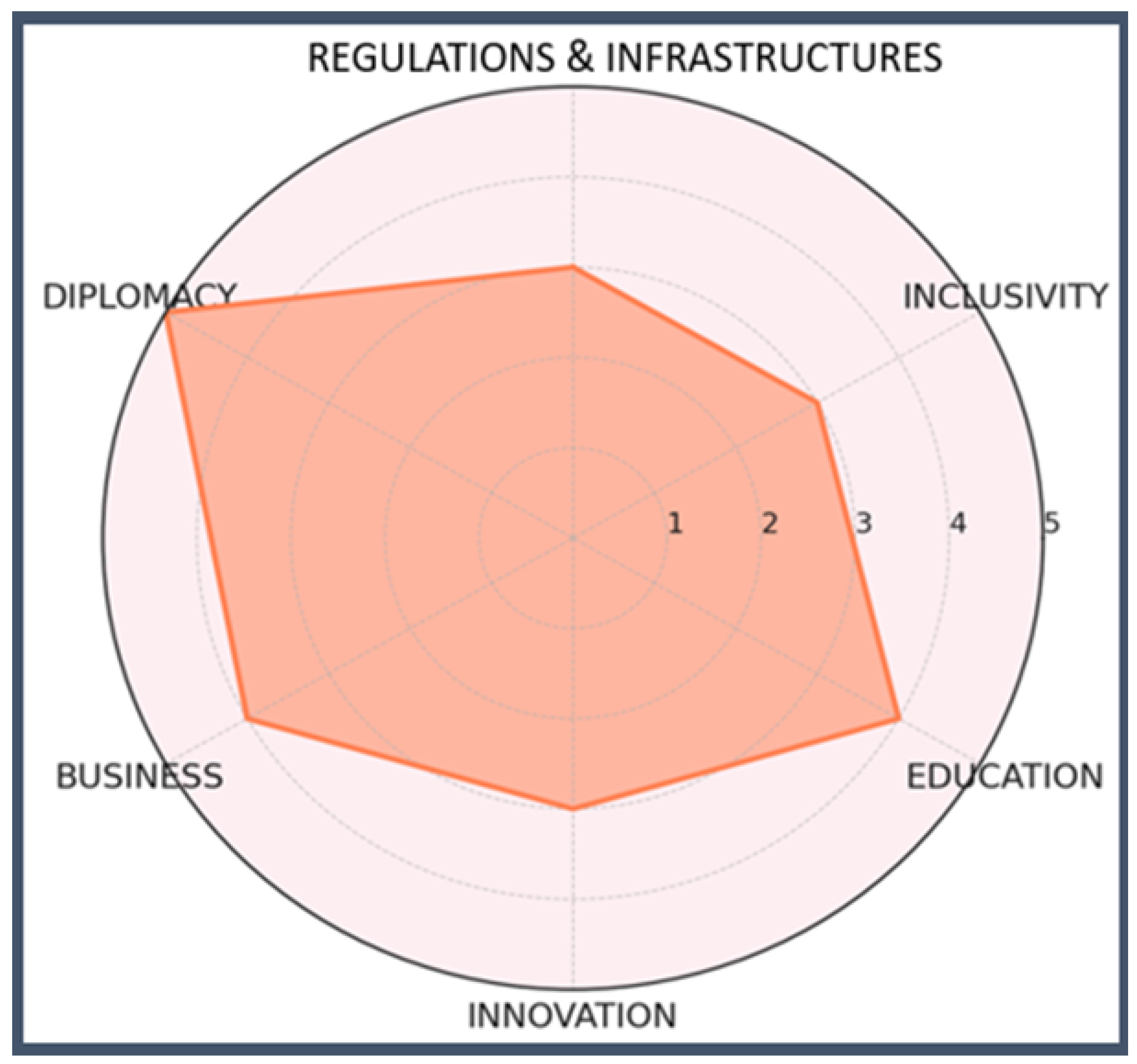
Morocco and Egypt’s museum diplomacy illustrate distinct expressions of AI diplomacy. In the case of Morocco, the Dar Gnawa Museum grounds its diplomatic role in the promotion of formerly marginalized identities to foster Pan-African and diasporic alliances. As an independent institution, the Dar Gnawa museum seeks to compensate for limited governmental support with private partnerships, and thus advances a bottom-up model of engagement. This configuration suggests that the museum is resisting clouded coloniality by crafting a form of techno-cultural empowerment model that derives from diverse stakeholders rather than from state-driven initiatives alone. By contrast, the GEM, while enjoying strong governmental backing, has pursued a more North-oriented trajectory by aligning itself with Japan and with a string of Northern-based corporations such as IBM, Meta, Microsoft, Capgemini, among others. In doing so, the GEM appears less attuned to the paradox that its AI-driven heritage is, to a greater extent than the Dar Gnawa Museum, being modelled but not entirely managed by external stakeholders. This dynamic reinforces our argument that a strand of decentralized neo-coloniality insidiously operates under the guise of technological solutionism—what we conceptualized as a friction between clouded coloniality and techno-cultural empowerment in African AI-enabled museums (
Figure 7 and
Figure 8).
6. Conclusions
This article provides a comparative analysis of the Dar Gnawa Museum and the GEM. It contributes to the literature by introducing two analytical frameworks that assess the AI functions within museums and their degree of techno-cultural empowerment in a given AI ecosystem. As far as curatorial functions are concerned, the findings reveal that, despite their respective focus on intangible and tangible heritage, both museums are collection-centric, thereby confirming Thiel’s hypothesis according to which AI technologies are inherently predisposed to indexing and research tasks [
85]. Both institutions pursue extensive collection management and research agendas, less so the GEM, perhaps due to the fact that its official inauguration was in November 2025. At the same time, the GEM stands out as more visitor-centric, operating a Content Management System (CMS) and offering a broader range of edutainment activities, which the Dar Gnawa Museum is only set to expand after its renovation in August–September 2025. Contrary to the GEM, the Dar Gnawa Museum resorts to AI for artistic creation initiatives, a dimension absent at the GEM. Both institutions, however, engage in diverse educative, commercial and diplomatic activities that extend their reach far beyond the museum grounds, underscoring their environment-centric orientation. Overall, the Dar Gnawa Museum and the GEM feature no significant gaps in AI functionalities compared to non-African AI institutions, yet their state-of-the-art technological capabilities do not necessarily protect them from a clouded form of coloniality which transcends conventional curatorial content.
This paper cautions against the longstanding ahistorical bias that has treated technological and cultural sovereignties as distinct domains. At a policy-making level, the import of museum infrastructures and equipment long maintained African museums in a state of dependence; today, given the high costs of AI technologies and the modest budgets usually allocated to culture, museums are likely to become ever more dependent on public–private partnerships. While corporate sponsorship in museums is hardly new, the scale and scope of private-sector involvement may expand to the point of redefining the very concept and practice of technology transfers in museum cooperation. In the broader ODA landscape, policy-makers have already called for a shift away from traditional aid toward “a wider range of financial instruments and South–South cooperation” [
145]. This reorientation further stresses the need for apprehending museum cooperation through new theoretical lenses.
At a theoretical level, coloniality, as we have sought to re(de)fine its acceptations, may not be as clearly identifiable as a mere imbalance in technological capacity may suggest. Where museums and AI converge, coloniality may indeed be concealed under a clouded veneer. Ceding AI capacities to external actors effectively entails the deterritorialization of heritage management. In a literal sense, heritage data is clouded and therefore potentially stored, managed, or worse, owned by foreign stakeholders. Indeed, AI is often mistakenly considered as a mere tool where the promise of cultural empowerment acts as a smokescreen behind which technological dependence and hence coloniality might creep in. As the GEM and Dar Gnawa Museum cases show, this strand of coloniality may furthermore be clouded by the fact that it is decorrelated from exhibition content and not necessarily exerted by former colonizers but by a transversality of fields and actors with whom local governments cooperate, albeit at the expense of their very museums and heritage.
Mostly aware of these notes of caution, the Dar Gnawa Museum and the GEM have designed singular strategies to pursue techno-cultural empowerment. The GEM is using AI to empower the youth through its Children’s Museum and SNS-friendly activities. Moreover, Egypt’s ambitious AI policies are gradually bringing R&D and the private sector closer to the heritage field. In this respect, the GEM has been conceived as a launchpad for AI in the tourism industry. As for the Dar Gnawa Museum, not only did it design Kouyou to collect and generate its own algorithmic heritage, but Kouyou’s primary strength lies in its transferability to other communities within and beyond Morocco. To further safeguard the Gnawa heritage, all of the museum’s data is stored in certified national data centers. Most promisingly, the Dar Gnawa Museum is advancing an ambitious AI diplomacy that places strong emphasis on accessibility, reverse tutelage, and creativity on a Pan-African scale. In this sense, unlike the imported museums of the colonial and post-independence eras, the Dar Gnawa Museum and the GEM function less as threatening mirrors of a clouded coloniality shaped by external actors with encroaching interests than as loci of techno-cultural empowerment.