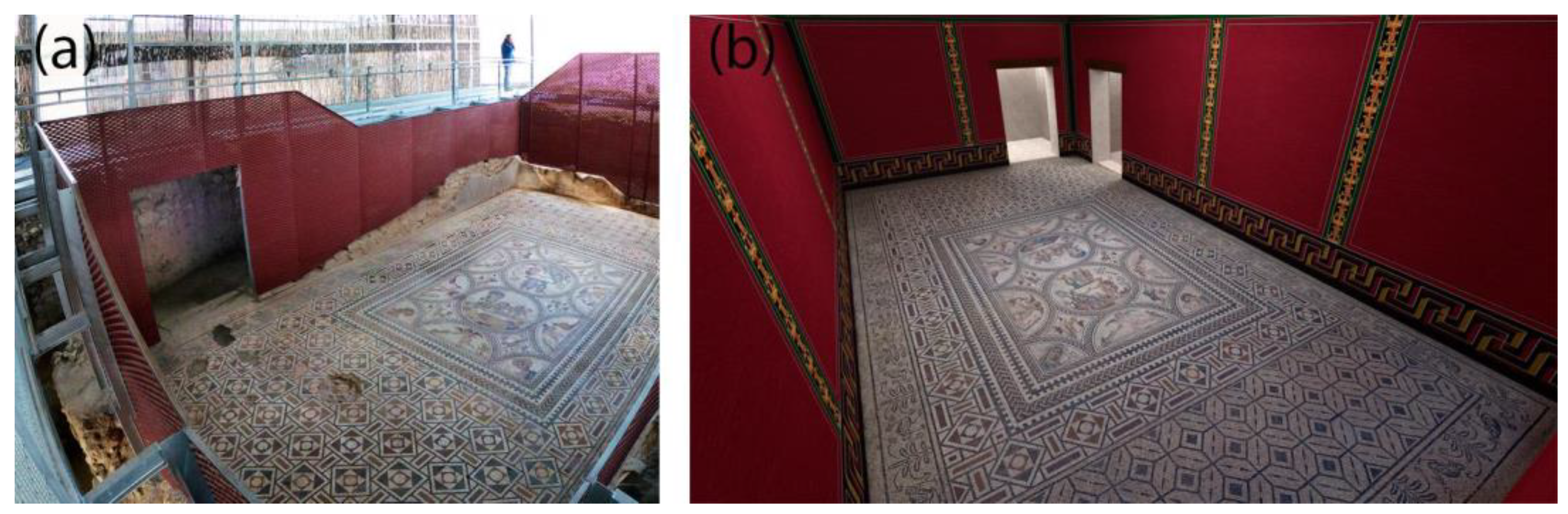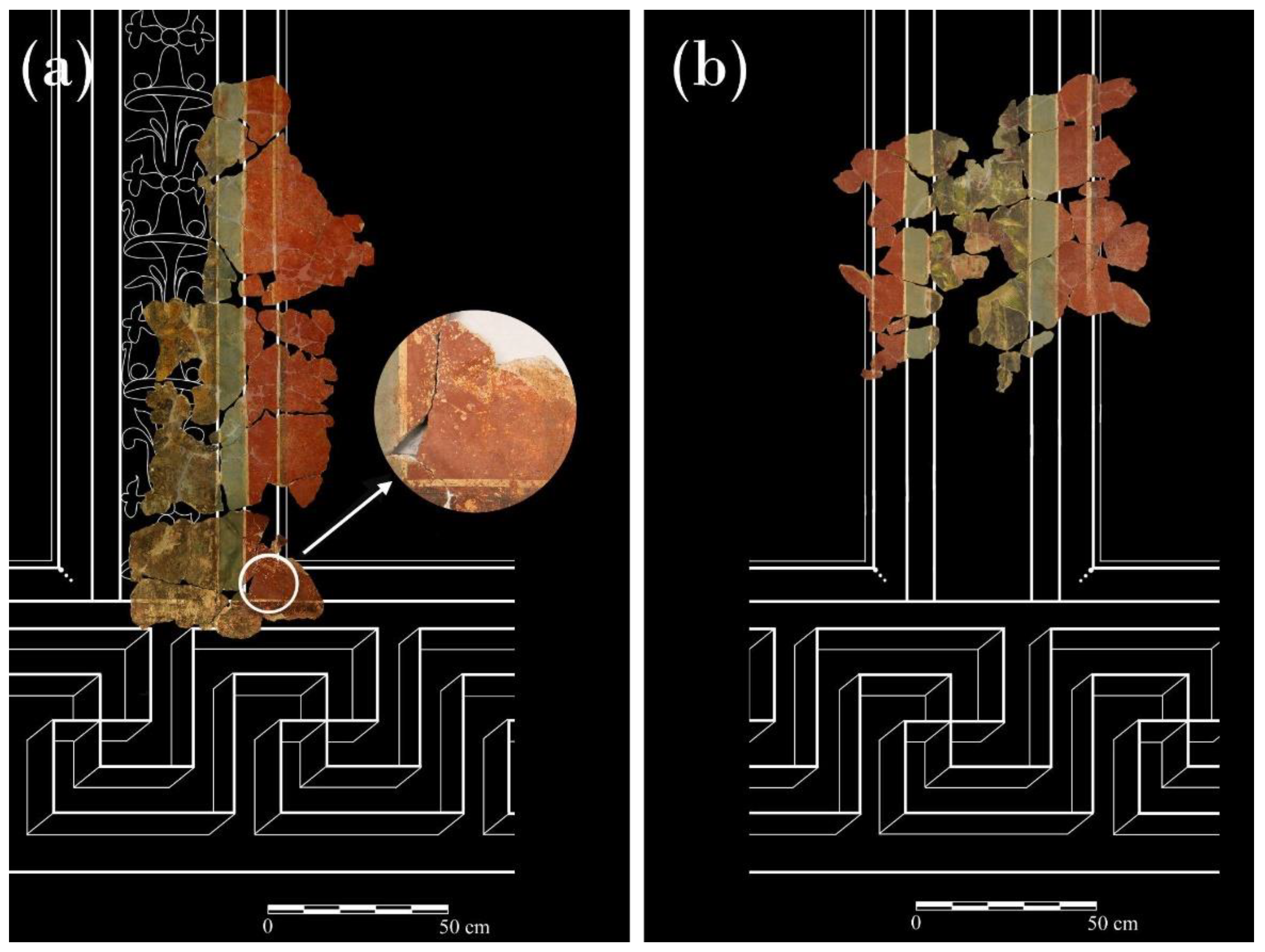


Virtual 3D Reconstruction Hypothesis of the Mural Decorations in the Sala de los Amores, Castulo Archeological Site (Linares, Jaén, Spain)

 ,
,  ,
, Abstract
Share and Cite
Carrasco-Huertas, A.; Calero-Castillo, A.I.; Domínguez Rubio, D.; López-Martínez, T. Virtual 3D Reconstruction Hypothesis of the Mural Decorations in the Sala de los Amores, Castulo Archeological Site (Linares, Jaén, Spain). Heritage 2025, 8, 73. https://doi.org/10.3390/heritage8020073
Carrasco-Huertas A, Calero-Castillo AI, Domínguez Rubio D, López-Martínez T. Virtual 3D Reconstruction Hypothesis of the Mural Decorations in the Sala de los Amores, Castulo Archeological Site (Linares, Jaén, Spain). Heritage. 2025; 8(2):73. https://doi.org/10.3390/heritage8020073
Chicago/Turabian StyleCarrasco-Huertas, Ana, Ana I. Calero-Castillo, David Domínguez Rubio, and Teresa López-Martínez. 2025. "Virtual 3D Reconstruction Hypothesis of the Mural Decorations in the Sala de los Amores, Castulo Archeological Site (Linares, Jaén, Spain)" Heritage 8, no. 2: 73. https://doi.org/10.3390/heritage8020073
APA StyleCarrasco-Huertas, A., Calero-Castillo, A. I., Domínguez Rubio, D., & López-Martínez, T. (2025). Virtual 3D Reconstruction Hypothesis of the Mural Decorations in the Sala de los Amores, Castulo Archeological Site (Linares, Jaén, Spain). Heritage, 8(2), 73. https://doi.org/10.3390/heritage8020073