Article

Valorization of Waste Hemp Hurd as Reinforcement in Extruded Thermoset Composites

by
Sodiq B. Yusuf
1,
Michael R. Maughan
2 and
Armando G. McDonald
1,*
1
Forest and Sustainable Products Program, Department of Forest, Rangeland and Fire Sciences, University of Idaho, Moscow, ID 83844, USA
2
Department of Mechanical Engineering, University of Idaho, Moscow, ID 83844, USA
*
Author to whom correspondence should be addressed.
Clean Technol. 2026, 8(1), 18; https://doi.org/10.3390/cleantechnol8010018
Submission received: 18 November 2025 / Revised: 10 January 2026 / Accepted: 15 January 2026 / Published: 2 February 2026

Abstract

Biobased composites from fast growing hemp have drawn significant attention because they are inexpensive, biodegradable, sustainable, promote the circular economy, and have good mechanical properties. This proof-of concept study focused on utilizing low value hemp hurd (H), a byproduct of hemp fiber production, as a reinforcement for use in biocomposite materials. The H was characterized by particle size, surface area and chemical composition. Mixtures of 30–50% H and 70–50% phenol-resorcinol-formaldehyde (PRF) resin were blended and subsequently extruded on a single screw extruder. The uncured (wet) blends were evaluated for their rheological properties and showed pseudoplastic behavior. The extruded biocomposites were cured and their water absorption, flexural strength/modulus, and thermal properties were determined. The water absorption properties increased with H content 17% after 12 days for 30 H to 44% for 50 H. The biocomposites containing 40% H had a flexural strength of 41 MPa, while lower values were obtained at 50% and 30% H. These results show that underutilized H can be valorized in extrudable biocomposites.

1. Introduction

Housing is a basic need of man, but buildings worldwide contribute up to 40% of global greenhouse gas emissions [1]. Environmental concerns about current building materials and technology have become popular recently [2]. As a result, there is an increasing interest in sustainable manufacturing [3] from sustainable and bio-based composites, especially derived from waste and renewable resources [4,5,6]. The world produces about 1 billion tons of lignocellulosic waste annually [7]. Burning this waste in the open has been widely practiced [8], liberating smoke particles into the environment.
Research has explored the partial replacement of traditional building materials, such as cement, with metakaolin, coal, agricultural waste ash and municipal solid waste fly-ash, quarry dust, blast furnace slag, and reservoir sediments, in order to lower costs and environmental impact with the aim of improving long-term strength and durability [9,10,11,12]. Biobased materials, especially natural fibers, are sustainable, eco-friendly, have improved mechanical properties, have good insulation and hygroscopicity, which allows for improving air quality and comfort when used as building materials [13,14]. Therefore, it is essential to explore natural fibers, particularly waste fibers, for use in structural composites that offer excellent mechanical properties, lower environmental impact, and potentially reduced costs, as a means of addressing the challenge of unaffordable housing while minimizing the environmental footprint of buildings.
Hemp is a widely used reinforcing fiber because it is fast growing and has excellent mechanical properties [15]. It has been used as an organic fiber in mortars since the 6th century in India according to archeological mortar samples from the Elora cave [11]. More specifically, industrial hemp is becoming very popular in the green housing industry because of its energy-efficient cultivation, great mechanical properties and because hemp-based composites have no negative effects on human health [12,16]. Hempcrete, which is made from hemp hurd (H) shives and lime, is a widely known natural fiber-reinforced composite in construction [11,12]. To meet demand, hemp cultivation in the U.S. produces an estimated 30,000 tons of fiber with a value of $445 million [17].
Industrial hemp plants are the source of both bast fibers (20–40%) and H (60–80%) [18]. The long bast fibers are used extensively in the textile industry, paper, and as a reinforcement in biobased composites. The hemp stalk pith, H, is of low value and often considered to be a waste product [16,19]. The hemp bast fibers are composed of 57–77% cellulose, while the lower strength H contains 40–48% cellulose [1,16,20].
Extrusion of biocomposites involves mixing resin and reinforcing fibers, then forcing them through a die to make a uniform product [21,22]. Composite extrusion ensures proper mixing and fiber alignment, which leads to better mechanical properties of the extrudates [23,24]. These extrudate properties can be tailored by varying the composition of the matrices and fillers [25,26] and improving surface quality [27,28]. Some additive manufacturing (AM) or 3D printing processes involve extrusion of materials in order to deposit a layer-to-layer addition of these materials to make a product based on a model [29,30,31]. The use of H-filled polylactic acid (PLA) and polybutylene-adipate-co-terephthalate (PBAT) in 3D printing of furniture has been successfully reported [32]. 3D Printed H, together with a fast-setting binder (gypsum), a variation of hempcrete, for load bearing applications in construction has been developed [33]. Therefore, there is a need to use a more durable cold-setting thermoset binder for H-based composites with improved load bearing performance.
Thermoset resins are widely preferred to thermoplastics in composites due to their higher mechanical strength and thermal stability, provided by covalently bonded crosslinks at the molecular level [34,35,36]. Extruded composites with thermoset resins have been successfully used in automobile [37], aerospace [38], wind turbine blades [39], oil and gas engineering [40], construction and furniture [41,42,43,44] applications, with promising properties. Phenol resorcinol formaldehyde (PRF) is a cold-setting thermoset resin for structural application, favored because of its high strength and durability [45]. Using a cold setting resin reduces the energy required to cure the product. The use of PRF with wood and hemp fibers in extrusion-based applications has been investigated and shows promise for use in AM for construction applications [46,47].
The aim of this proof-of-concept study was to develop extrudable cold setting composites using waste H-reinforced PRF resin in extrudable composites with good exterior performance, for potential construction applications, such as AM of walls in situ. The rheological, thermal, and mechanical properties and the dimensional stability of these composites were determined to evaluate their performance and suitability.

2. Materials and Methods

2.1. Materials

The hemp hurd (H) was a fine powder and sourced from United Fiber Company (Wichita falls, TX, USA). PRF resin (Cascophen™ 4001-8) and hardener (Cascoset™ 5830 E) were provided by Hexion (Columbus, OH, USA). The physicochemical information of the resin was reported by [48].

2.2. Fiber Characterization

2.2.1. Physical Characterization

The moisture content of the H was determined in triplicate via an HB43-S Halogen moisture analyzer (Mettler Toledo, Columbus, OH, USA) using 3 g of the sample. The particle size distribution of the fibers was determined using a Bettersizer-2600 instrument in water (Costa Mesa, CA, USA). The density of H and the composites was determined by gas pycnometry (Quantachrome Ultra-Pycnometer 1000, Boynton Beach, FL, USA) with N2. The specific surface area analysis of the H (0.5 g) was determined using a FlowSorb 2300 instrument (Micromeritics, Norcross, GA, USA) following ASTM D6556 [49]. All analysis was carried out in triplicate.

2.2.2. Chemical Characterization

The extractives content was determined following ASTM D1108 by Soxhlet extraction of 4.5 g of the sample with dichloromethane (CH2Cl2) for 16 h and the yield was determined gravimetrically after the extract was concentrated to dryness [50]. The ash content was determined gravimetrically on 2 g of oven dried sample at 600 °C for 16 h.
Lignin content was determined for the extractive free fiber following ASTM D1106 [51]. This was performed by digesting 200 mg of the extractive free fiber in 72% H2SO4 (2 mL) for 1 h at 30 °C, then diluting to 4% H2SO4 and subjecting to secondary hydrolysis in a pressure cooker at 120 °C for 30 min. Klason lignin content was obtained gravimetrically from the filtered hydrolysate and the acid soluble lignin was determined colorimetrically at 205 nm on a UV-Vis spectrophotometer (Genesys 50, ThermoScientific, Madison, WI, USA) applying an extinction coefficient (ε) of 110 L/g.cm. All analysis was carried out in duplicate.
Carbohydrate analysis was carried out following ASTM E1758 on the secondary hydrolysates by High performance Liquid Chromatography (HPLC), using inositol as an internal standard. Separation was achieved using two Rezex RPM columns (7.8 mm × 300 mm, Phenomenex, Torrance, CA, USA), at 90 °C and a water flowrate of 0.5 mL/min, equipped with a differential refractive index detector (Waters model 2414, Millford, MA, USA) [52].

2.3. Rheological Measurements

Dynamic rheology was performed on disks of blended H and resin (see Section 2.4) and neat resins by rheometry (DHR2, TA instruments, New Castle, DE, USA). Blended samples were tested between two 25 mm Ø serrated parallel stainless-steel plates. In the case of the neat resins, disposable smooth aluminum plates were used. The effect of frequency (shear rate) on complex viscosity was investigated using an isothermal (30 °C) run with 0.1% strain and with frequency sweep from 0.01 to 100 Hz. The effect of temperature on complex viscosity was also investigated using a temperature ramp from 30 °C to 150 °C at 2 °C/min with 0.1% strain and a frequency of 1 Hz. Yield stress experiments were conducted using strain sweeps (0.01 to 5%) on pressed discs at a frequency of 1 Hz and 25 °C. The yield stress was calculated from storage modulus (G′) versus stress plots using a 10% drop in G′. To investigate the shear thinning behavior, the η* data were fitted using a modified power law model:
|η*(ω)| = K(ω)n−1
where, K is the consistency coefficient and n is the flow behavior or non-Newtonian index.

2.4. Composites Preparation

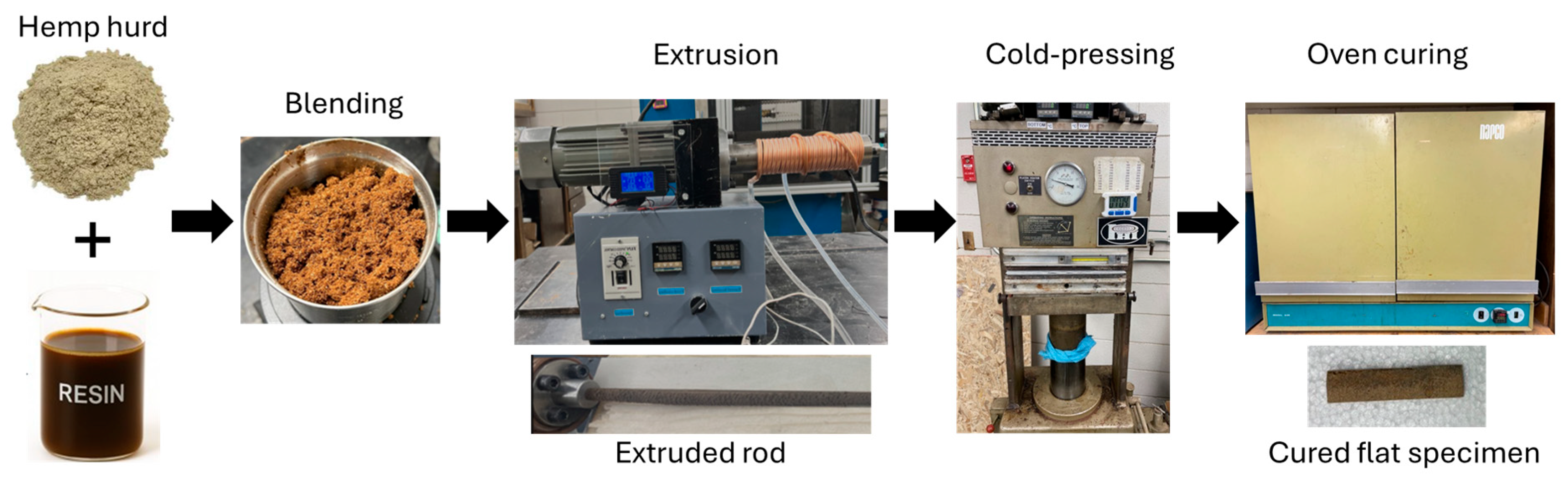
The H (30 to 50%) was blended with the liquid PRF resin plus hardener (2.5:1 ratio; 50–70%), all on a dry weight basis. Composite samples with 30, 40 and 50% H were coded as 30 H, 40 H and 50 H, respectively. Small samples of 2 g total mass were mixed using an herb grinder for 2 min to prepare dynamic rheology specimens (2 mm × 25 mm Ø) by cold pressing in a 25 mm pellet die at 6.2 MPa. Larger batches of hurd resin for extrusion (50 g total weight on a dry basis) were mixed using a coffee grinder (Pinlo, 200 W, Mongkok, China) for 2 min until fully blended [49]. The wet blends were then manually fed into a 20 mm Ø single screw extruder with a barrel length of 200 mm, 300 W motor and screw speed of 17 rpm (RoboDig (Shanghai, China)). The extruder barrel was cooled with pumped ice water passing through a copper tube coil tightly wound around the barrel to prevent premature resin curing due to friction heating. The extrudate was passed through a 9 mm Ø die for a run time of about 10 min. The pliable extruded rods were then cold-pressed (PHI hydraulic press, City of Industry, CA, USA) to a thickness of 3.1 mm using stops to obtain flat ribbons. The ribbons were then cured in an oven (105 °C for 24 h). A flow diagram illustrating composite preparation is shown in Figure 1.

2.5. Composites Characterization Methods

2.5.1. Flexural Testing

The composite ribbon was machined into rectangular specimens (63.5 mm × 12.5 mm × 3.1 mm) for 3-point flexural testing according to ASTM D790 using a Mecmesin MultiTest-dV2.5 test machine (Sterling, VA, USA), equipped with a 2.5 kN load cell, support span of 50 mm and crosshead speed of 1.1 mm/min [53]. The flexural strength and modulus were collected for each sample using 6 replicates. Data were acquired and analyzed using the Vector Pro v6.11 software (Sterling, VA, USA).

2.5.2. Compression Testing

Compression testing was performed on extruded cylindrical specimens (9 mm Ø × 18 mm), 6 replicates, according to ASTM D695 [54] using an Instron 5500R-1137 testing machine (Instron, Norwood, MA, USA), equipped with a 10 kN load cell and using a crosshead speed of 0.1 mm/min.

2.5.3. Thermal Analysis

The H-resin blends were freeze-dried prior to differential scanning calorimetry (DSC) analysis. Samples (5 mg) were loaded into hermetically sealed Tzero aluminum pans and analyzed on a Q200 DSC instrument (TA instruments, New Castle, DE, USA) under nitrogen (50 mL/min) in modulated mode and ramped from 40 °C (2 min) to 250 °C at 10 °C/min. Dynamic mechanical analysis (DMA) was carried out on cured composites, in triplicate, in 3-point bending mode (3 mm × 4 mm × 18 mm), on a Perkin Elmer DMA-7 (Shelton, CT, USA) instrument (15 mm span, 1 Hz and 0.1% strain) and heated from 30 °C to 350 °C at 3 °C/min. The data were analyzed using Pyris v13.3.1 software (Perkin Elmer, Shelton, CT, USA). Thermogravimetric analysis (TGA) of the cured extruded samples, pulverized using a small ball mill (5 mg), were analyzed on a Perkin Elmer TGA-7 instrument (Shelton, CT, USA) under N2 (30 mL/min) from 30 °C to 900 °C at a heating rate of 20 °C/min and the results analyzed as described above. All tests were performed in triplicate.

2.5.4. Scanning Electron Microscopy

Scanning electron microscopy (SEM) was performed on gold coated fractured composite samples after a 3-point bending test using a Zeiss Supra 35 VP (Dublin, CA, USA) SEM equipped with a secondary electron detector at 10 kV.

2.5.5. Dimensional Stability

A water soak test was performed on composite samples (15 mm × 15 mm × 3 mm) to determine their thickness swell (TS) and water absorption (WA) over a period of 12 d using 5 replicates. Fick’s diffusion coefficient (Df) [15,55] was calculated using the following equation:
Df = π(h/4M)2 (∂MC/(∂√t))2
where Df is in m2/s, M is the maximum water content at the end of the water soak experiment in %, h is the sample thickness at equilibrium moisture content in m, MC is the moisture content in %, and t is the time in s required for the composite to reach maximum water absorption M. (∂MC/(∂√t)) is the slope of the plot of WA in percentage vs. square root of time before reaching M.
Statistical analysis using pairwise T-test comparisons with p-value < 0.05 were performed using Microsoft Excel.

3. Results and Discussion

3.1. Characterization of Hurd

The chemical composition, fiber size distribution, and density (Table 1) of the H was determined. The H ash content was high at 17%, but within the reported range of 11.6–18.4% [56,57,58]. The extractive content was 2.75% and comparable to the literature [58]. Extractives in natural fillers have been reported to reduce flexural properties of composites [59,60].
The total lignin content was determined as 24.0%, which was slightly higher than other studies for H and hemp fiber (21–22%) [61,62,63]. Glucan (cellulose) content was 36.9% and less than reported for industrial hemp fiber (42.5–48.4%) [58,63,64,65]. Hurd xylan (major hemicellulose component) content was 9.4% and slightly less than reported in the literature at 10.6–15.5% [58,65].
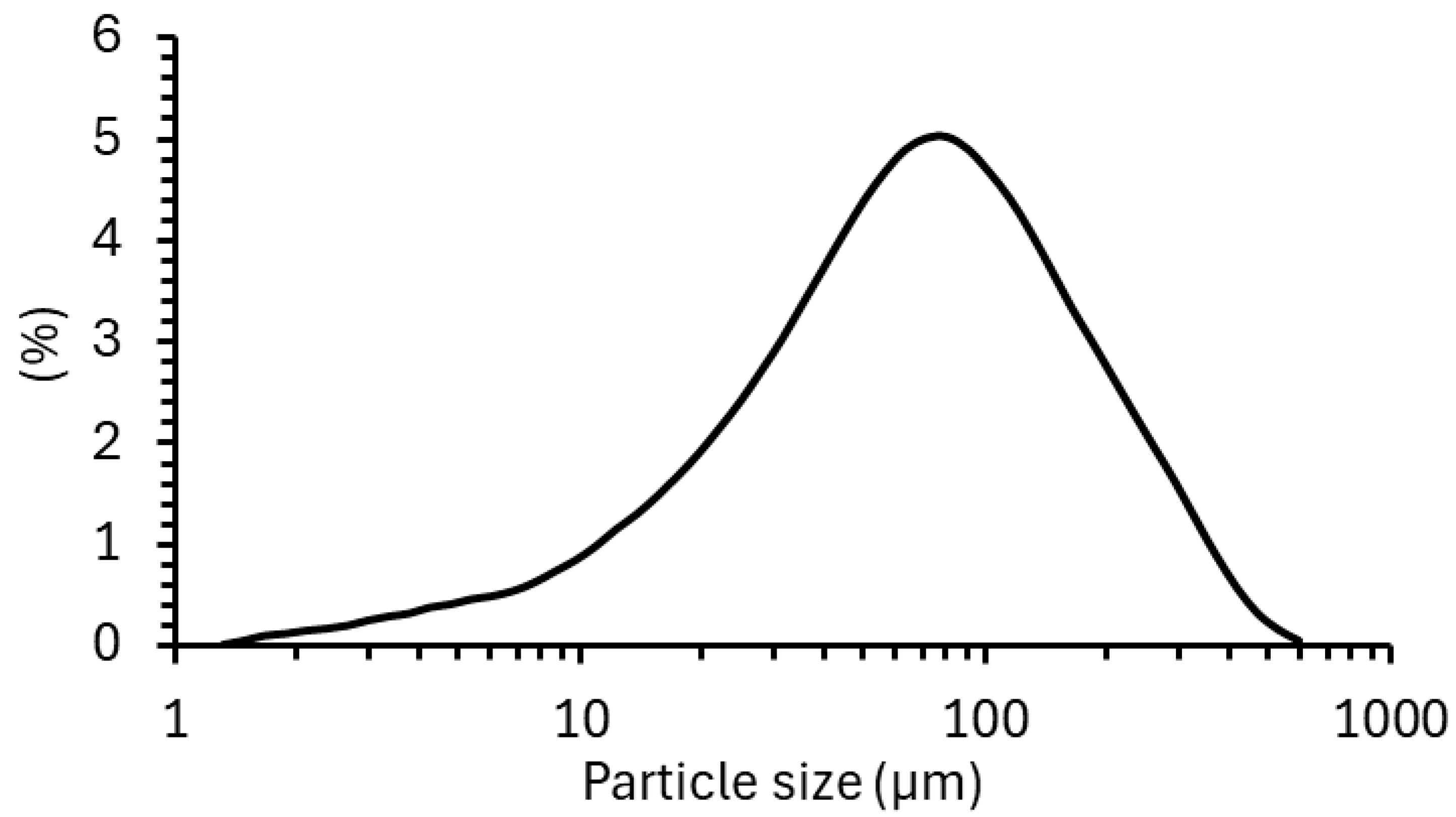
The Brunauer-Emmett-Teller (BET) surface area and true density of the H were 2.32 m2/g and 1.15 g/cm3, respectively. Particle size analysis gave a volume average particle size of 64 µm and the distribution is shown in Figure 2.

3.2. Composites Characterization

3.2.1. Rheology of Composites

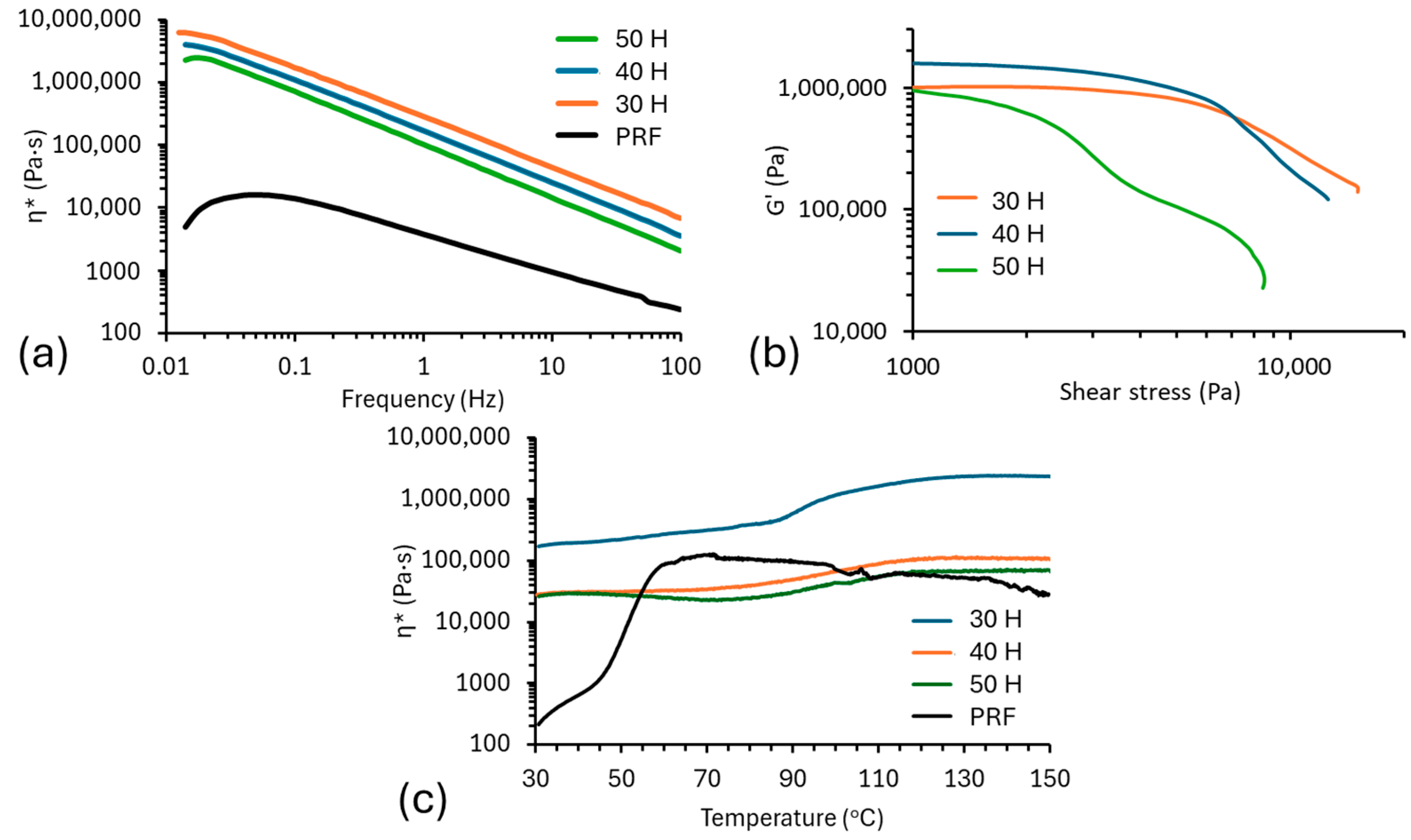
Blends of H–PRF resin were successfully prepared with fiber loadings of 30 to 50% for rheological testing. The effect of complex viscosity (η*) versus shear rate (frequency), storage modulus (G′) vs. shear stress, and η* versus temperature for the composite samples and PRF resin are shown in Figure 3. Shear thinning (pseudoplastic) behavior in the flow curves was observed for PRF resin and the composite formulations and this shows that the samples were non-Newtonian fluids and suitable for extrusion (Figure 3a) [66,67,68]. To compare results between samples, the η* at 1 Hz was used. The η* for PRF was 3.3 kPa∙s and increased to 289 kPa∙s with the addition of 30% H (Table 2). Interestingly, the η* decreased to 102 kPa∙s with H content of 50%. This observation of decreasing η* has been observed with H content in polylactic acid (PLA) composites [69,70]. This phenomenon is likely due to wall slip and plug flow in highly filled suspensions, where viscosity can decrease with filler content [71]. Rheological data (η* at 1 Hz, n, K and R2) obtained from the flow curves are given in Table 2. Hurd composite mixtures had goodness-of-fit values of R2 ≥ 0.97. PRF resin does not follow the power-law model at low frequencies with a poor fit (R2 = 0.53); however, the plot follows a Carreau–Yasuda model, and this phenomenon has previously been reported [48]. The n values for the composites were shown to linearly decrease from 0.211 to 0.166 with H content increasing from 30 to 50%, indicating increasing pseudoplastic behavior associated with strong H–PRF interactions [70]. This phenomenon of n decreasing with filler has been observed in phenolic and epoxy-amine thermosets resins [72,73] and in wood plastic composites (WPC) associated with filler–matrix interactions [68,69,74].
The yield stress, which is a measure of the force needed to start material flow during extrusion, was determined from strain sweep experiments (Figure 3b) [75,76]. This was shown to reduce with increasing H content from 15 kPa at 30 H to 8.4 kPa at 50 H, and could be attributable to wall slip and plug flow [71]. The yield stress values were of a putty-like consistency (>2 kPa) and therefore the composite should retain its structural integrity after extrusion [77]. These findings imply that extrudability improves with increasing H content, which is promising for industrial applications such as AM [78,79,80]. Twite-Kabamba et al. [79] and Jubinvile et al. [32] both reported that hemp fiber and H improved extrudability of polypropylene and PLA–PBAT composites.
The cure characteristics of the resin and composites were monitored for η* against temperature to establish a suitable temperature processing window for extrusion (Figure 3c). For PRF, gelation onset occurred around 45 °C, confirming that it was a cold-setting resin, and vitrification occurred above 60 °C. The addition of H to PRF led to an increase in gelation onset (70–90 °C) and vitrification above 110 °C. These results were similar to those of wood/natural fiber–PRF composite studies [46,48]. These results suggest that extrusion of H–PRF composites below 45 °C is required so that the composite does not gel or vitrify in the extruder or die, which can cause damage to equipment.

3.2.2. Differential Scanning Calorimetry of Composites

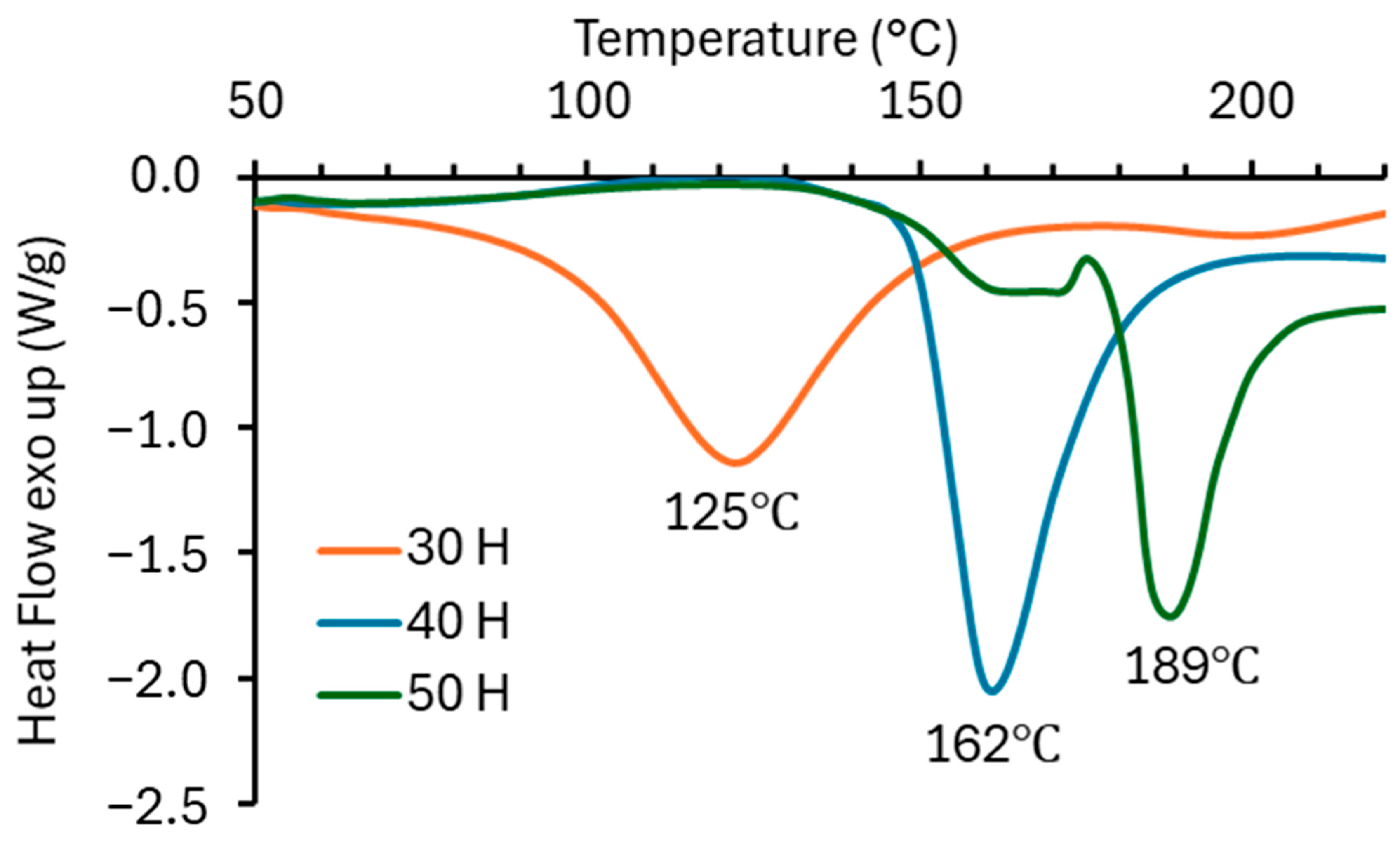
The curing characteristics of the H–PRF composites were also monitored by modulated DSC (Figure 4). The main endothermic peaks for the 30 H, 40 H and 50 H blends were 125 °C, 162 °C and 189 °C, respectively. The DSC values showed clearer vitrification behavior with H content than that obtained by rheology. These results show that H content increased the curing temperature of these composite blends. This trend has also been observed with increasing wood fiber content in PRF composites [48].

3.2.3. Flexural Properties

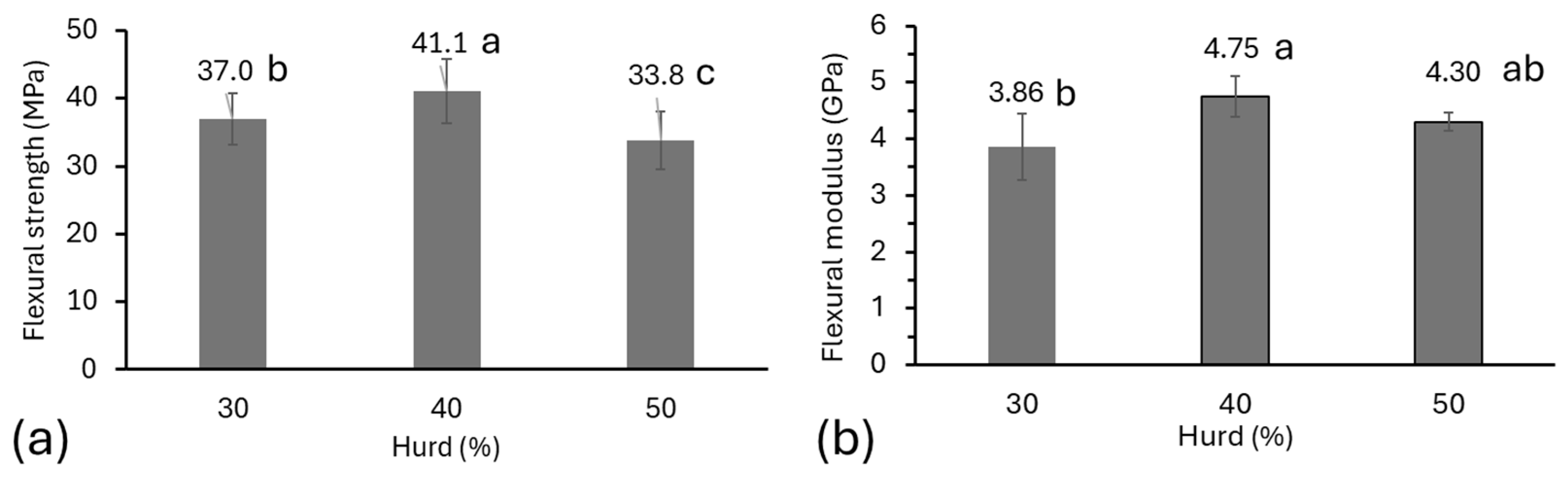
The flexural properties (strength and modulus) of the cured composites were determined and the results are shown in Figure 5. The flexural strength of the H composites was between 33.9 and 41.1 MPa with the highest made with 40 H. The flexural strength of 30 H composites was higher than those made with hemp fiber–PRF [46] and hempcrete (6.8–17.5 MPa) [12]. The mechanical properties of PLA and polybutylene–adipate–terephthalate composites were improved with the addition of 40% H [32,79]. The highest flexural modulus was for the 40 H composite at 4.75 GPa and the lowest at 3.86 GPa for 30 H. The 40 H composite had the highest density (1.47 ± 0.01 g/cm3) compared to 30 H (1.42 ± 0.01 g/cm3) and 50 H (1.44 ± 0.01 g/cm3) composites and this could explain why it had the highest flexural properties. These flexural modulus values were comparable to 40% hemp fiber–PRF (4.55 GPa) and 40% wood fiber–PRF (6.09 GPa) composites [46,48] and higher than WPC (2.5 GPa) [74]. These results show that these H–PRF composites perform more adequately than other construction materials.
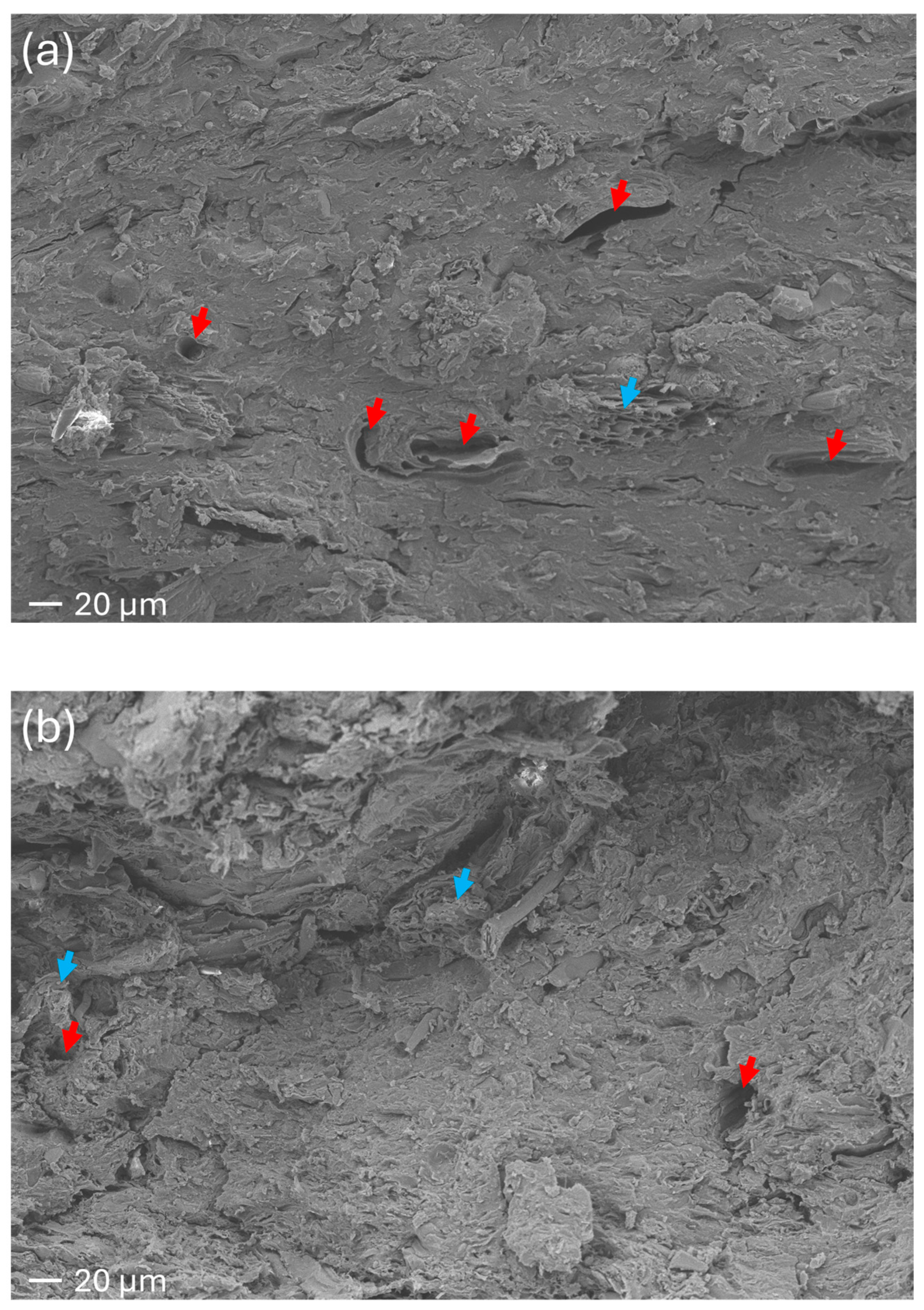
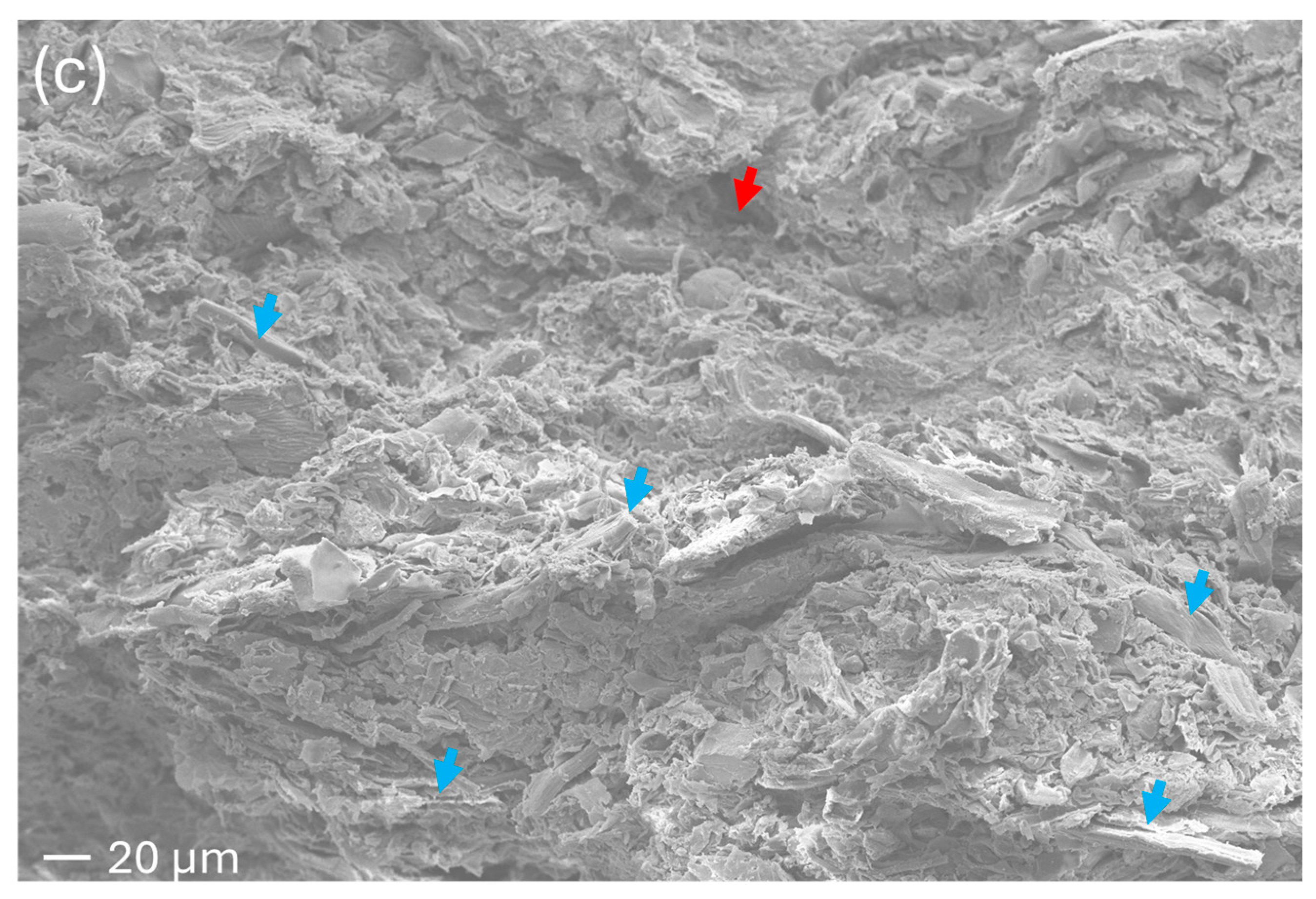
The fractured composite samples were examined by SEM to establish the modes of failure (Figure 6) [81]. The 30 H composite generally showed a clean break, with some broken fibers and cavities showing fiber pull-out (red arrows). The 40 H and 50 H composites showed a rough surface break indicative of broken fibers (blue arrows), indicating deviation from the path of crack propagation [82].

3.2.4. Compressive Properties

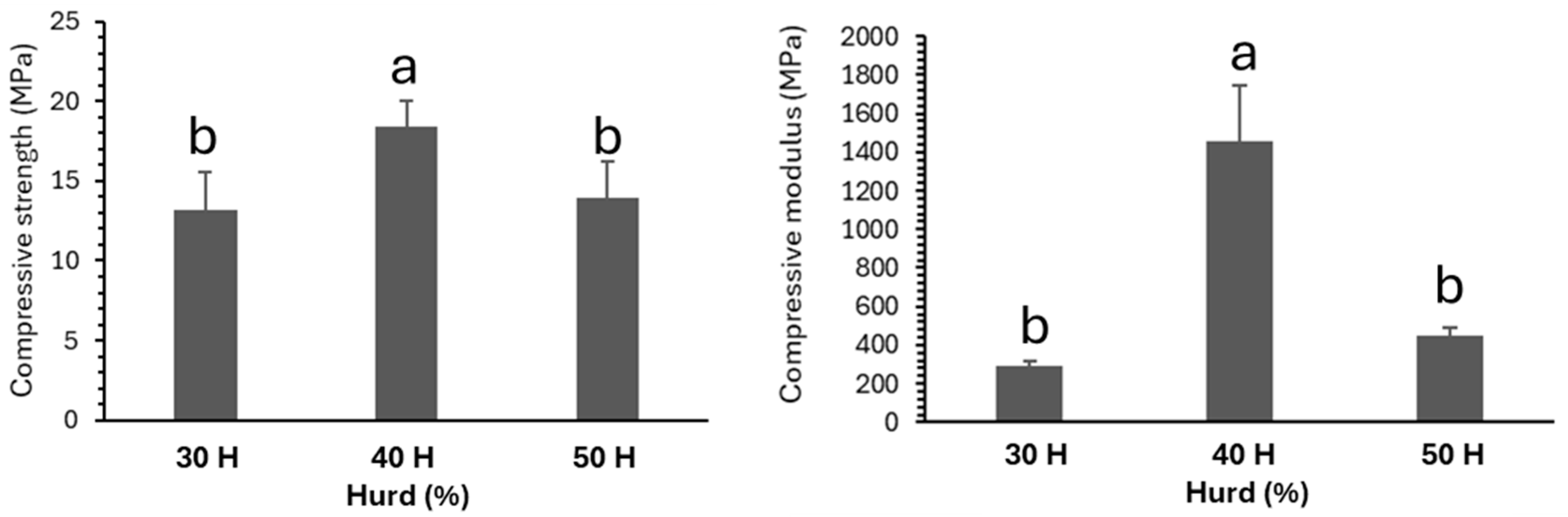
The compressive strength and modulus of the cured composites were determined, and the results are shown in Figure 7. 40 H had the best compressive strength and modulus of 18.4 MPa and 1.45 GPa, respectively. Both the 30 H and 50 H composites had significantly lower values. These results follow the same trend as the flexural properties, suggesting that composite density (fiber-matrix packing) was the main contributor to the compressive properties. The compressive strength of the H–PRF composites was higher than hempcrete (3.0 MPa) [12] and 3D printed hempcrete (9.5 MPa) [33], clearly showing that these H–PRF composites are suitable as construction materials.

3.2.5. Dynamic Mechanical Analysis

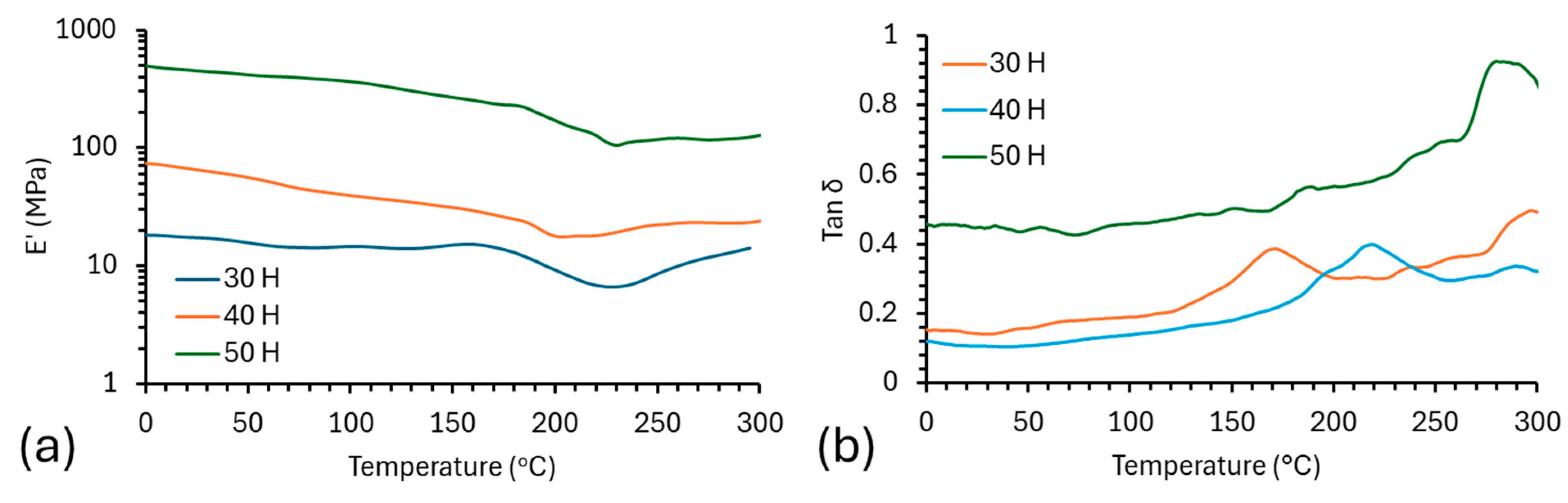
The viscoelastic properties (elastic modulus (E′) and tan δ) of the hemp hurd–PRF composites were measured by DMA (Figure 8). The E′ was shown to increase (0.02 GPa to 0.46 GPa, at 20 °C) with hemp hurd content (30% to 50%) and this was characteristic of fiber reinforced polymer composites [56]. Higher E′ values indicate higher stiffness and better stress transfer between the fiber and resin matrix [68,74,83,84]. The glass transition temperature (Tg) for the composite samples was determined from tan δ maxima values [85,86,87]. The Tg values increased from 174 °C for 30 H to 283 °C for 50 H. These Tg values were in the range of 168 to 280 °C, as reported for fiber PRF composites [46,48,88,89].

3.2.6. Thermogravimetric Analysis

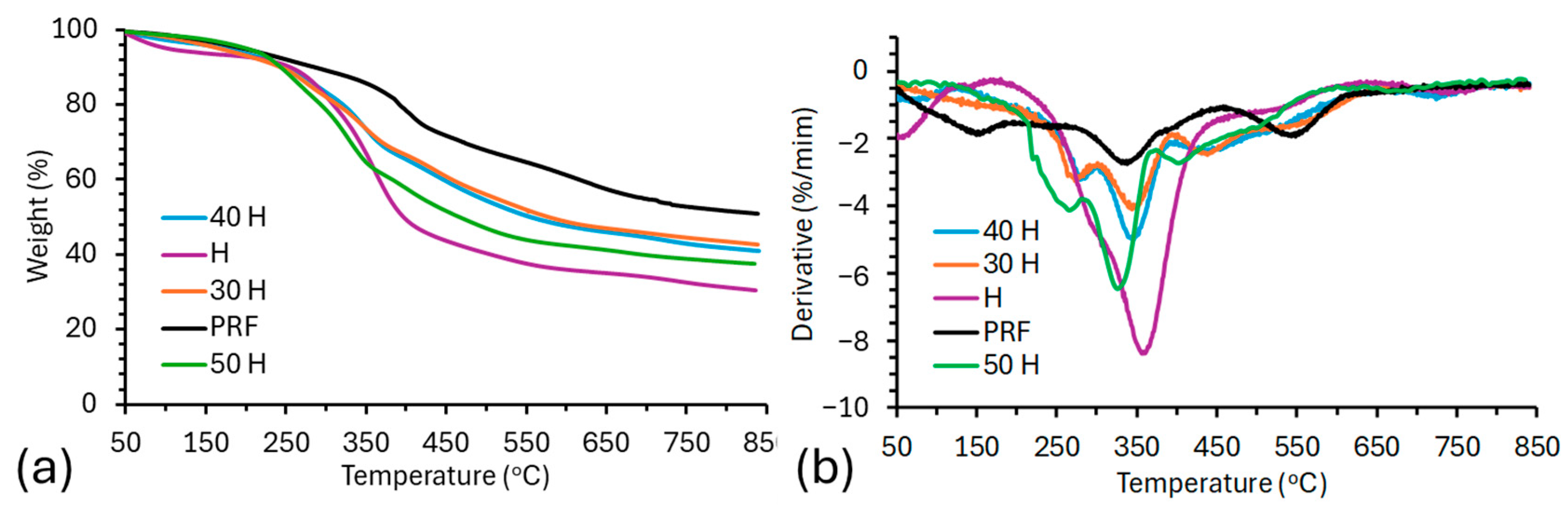
The thermal stability of H, PRF and H–PRF were determined by TGA and differential TGA (DTG) (Figure 9 and Table 3). All the samples show a minor amount of weight loss below 200 °C and due to moisture loss and/or degradation products. The main onset temperature (Tonset) for PRF and H were 338 °C and 360 °C, respectively. The H thermal degradation is a combination of hemicellulose, cellulose and lignin decomposition, while the hurd–PRF composites had Tonsets between 325 °C and 350 °C. These Tonsets values were comparable to those of hemp fiber– and wood fiber–PRF composites [48,49]. The residual mass of PRF at 850 °C was 51%, while the H was 30%. The TGA residual mass of materials under N2 is typically made up of fixed carbon (pyrolysis of organic material to char) and inorganic material (ash). The H had a high ash content of 16.9% and PRF has a high Na content. The residual weight of the composites was between 37% (50 H) and 43% (30 H). The thermal stability of the composites was comparable with that of wood–PRF composites [48].

3.2.7. Water Soak Tests

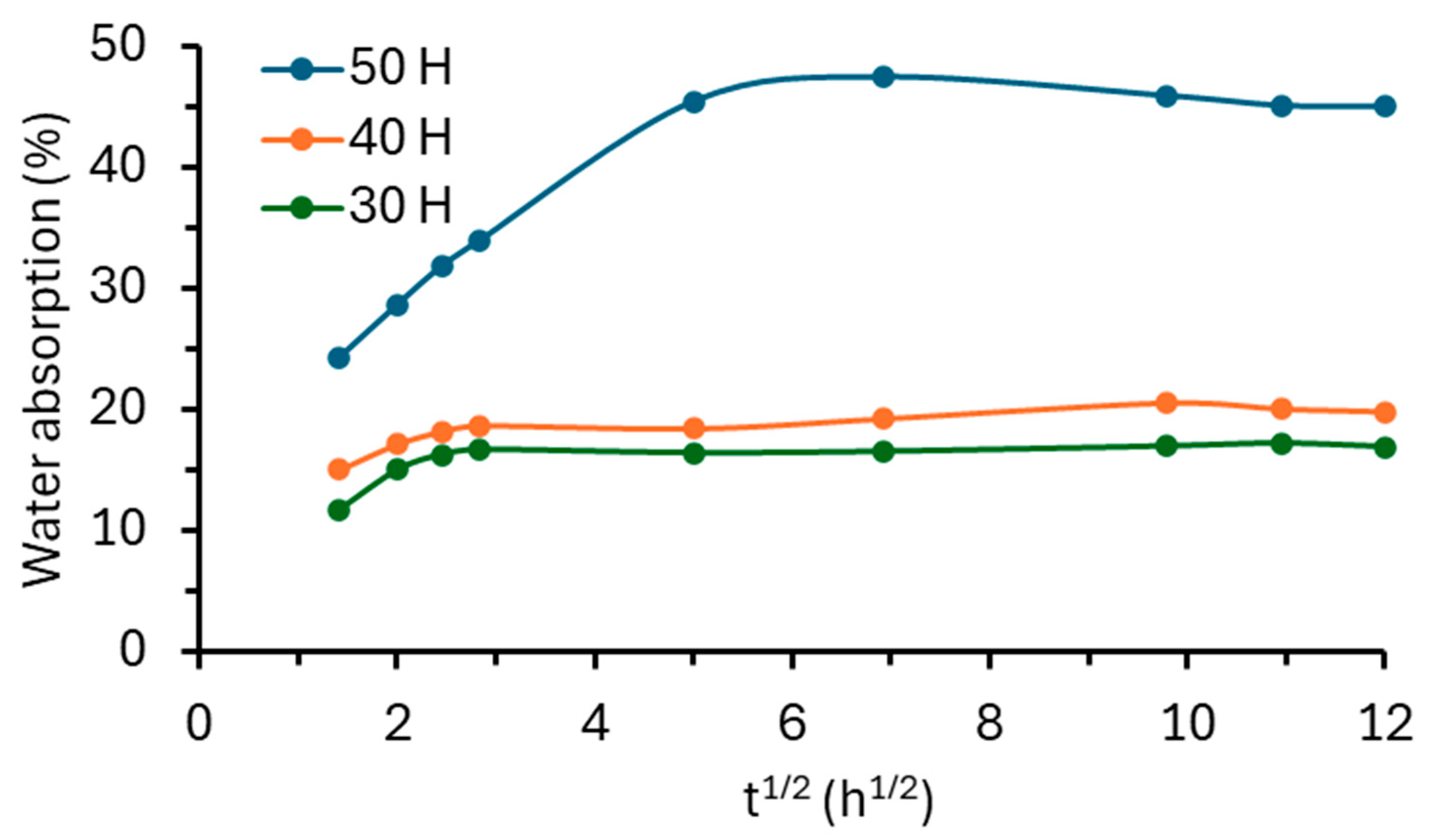
The dimensional stability of the H–PRF composites was assessed by determining the water absorption and thickness swelling after soaking for 12 d (Table 4). A plot of WA with time is shown in Figure 10. The WA and TS values at 2 h, 5 d and 12 d are given in Table 4. The WA for 50 H, 40 H and 30 H after 5 d were 45%, 20% and 17%, respectively, and clearly shows that H content increased WA. For comparison, the WA for 50% wood–PRF composites (1 d) was 24% [48], 50% hemp fiber–PRF (3 d) was 30% [46], and hempcrete (1 d) was 28% (1025 g/cm3) to 118% (330 g/cm3) [12]. From the WA data given in Figure 8, the Fick’s diffusion coefficient (Df) was calculated, ranging between 1.15 × 10⁻¹² m2/s for 30 H composite and 1.48 × 10⁻¹³ m2/s for 40 H composite, and these were higher than wood–plastic composite (Df of 4.6 × 10⁻¹³ m2/s) [15]. Higher diffusivity indicates shorter time to reach equilibrium absorption [68,84]. Hence, 30 H will absorb less water over time and will be the most dimensionally stable of these composites and important for exterior applications. Further testing is required, such as for weathering, fungal bio-durability and fire resistance, to establish exterior application performance in house construction settings.

3.3. Comparison with Concrete

Comparing the properties of the extruded H composite produced in this study to concrete and hempcrete is necessary to justify it as a proposed application in construction, such as for walls. Mechanical properties of extruded concrete vary depending on processes, type of cement used, and standards. Standards employed for a particular material property (e.g., flexural and compressive strength) between studies may give slightly different values because of test conditions (e.g., crosshead speed, sample geometry, and relative humidity), which are useful comparisons, though some care is required in comparing values. The flexural strength of 40 H prepared in this study was 564% higher than that of 3D printed concrete [90,91], 295% higher than that of extruded wood-sodium silicate composites cured under the same condition [92], and nearly twice higher than that of hempcrete [12]. In terms of compressive strength, 40 H is 74% higher than 3D printed concrete reported by Pan, et al. [93], but 33% less than reported by [92]. Furthermore, 40 H was also twice as strong as 3D-printed hempcrete [33]. These mechanical properties show that the H composite produced in this preliminary study is suitable for load bearing applications (e.g., cavity walls), as used in 3D printed concrete residential structures. Utilizing H in materials (up to 50%) will sequester carbon in the structure and is a sustainable alternative to concrete, which currently accounts for 8% of green-house gas emissions worldwide [94,95], for structural applications. To improve the sustainably of composites, an increase in their biobased content from 50% is required. A recent study has shown that PRF resin can be substituted with bark tannins (at 50% and 100%) and this shows promise as a viable solution to improve H-based composites [96]. The limitation of this proof-of-concept study was that only flexural, compression and water soak tests were used to evaluate the composites’ performance. This preliminary study clearly shows that additional tests are required for the H composites to assess in-service performance, such as bio-durability, fire resistance, weather resistance, creep behavior, screw pull-out, etc., compared to concrete, and will be part of future work.

4. Conclusions

Hemp hurd (H) was successfully incorporated in PRF to form extrudable composite materials with up to a 50% biobased content. The H–PRF blends with 30 to 50% H content showed good rheological behavior suitable for extrusion. The thermal and dimensional stability of the composites were shown to reduce with H content. Composites made with 40% H had the highest flexural and compressive strength and best flexural strength (41 MPa) and modulus (4.7 GPa) values. Composite density, with best fiber-matrix packing at 40 H, was a contributor to mechanical properties. The 40 H composites generally had good all-round performance based on the limited mechanical testing performed. These preliminary results show that H–PRF composites can be extruded at high fiber loadings for producing extruded profile products and can possibly be used in 3D printing applications in construction. To validate whether these composite materials have the required performance in 3D printed construction applications, additional testing is required. Future work will focus on (i) 3D printing these formulations for ease of printing and interlayer bonding, (ii) accelerated weathering testing, fungal bio-durability tests, and fire resistance (mass-loss cone testing) to establish exterior application performance, and (iii) increasing the biobased content and sustainability of the composites by using biobased resins.

Author Contributions

Conceptualization, M.R.M. and A.G.M.; methodology, A.G.M. and S.B.Y.; validation, M.R.M. and A.G.M.; formal analysis, S.B.Y.; investigation, S.B.Y.; resources, A.G.M.; data curation, A.G.M.; writing—original draft preparation, S.B.Y.; writing—review and editing, M.R.M. and A.G.M.; supervision, A.G.M.; project administration, A.G.M. All authors have read and agreed to the published version of the manuscript.

Funding

This research was funded by (i) the National Science Foundation (NSF) Track II, award number 2119809, (ii) the University of Idaho P3-R1 grant matching program, and (iii) Idaho State Board of Education IGEM award 20-002 for supporting the acquisition of the rheometer.

Data Availability Statement

The original contributions presented in this study are included in the article. Further inquiries can be directed to the corresponding author.

Conflicts of Interest

The authors declare no conflicts of interest.

References

  1. UN. United Nations Environment Programme Building Materials and the Climate: Constructing a New Future; UN: New York, NY, USA, 2023. [Google Scholar]
  2. Patra, B.R.; Mukherjee, A.; Nanda, S.; Dalai, A.K. Biochar Production, Activation and Adsorptive Applications: A Review. Environ. Chem. Lett. 2021, 19, 2237–2259. [Google Scholar] [CrossRef]
  3. Patra, B.R.; Nanda, S.; Dalai, A.K.; Meda, V. Slow Pyrolysis of Agro-Food Wastes and Physicochemical Characterization of Biofuel Products. Chemosphere 2021, 285, 131431. [Google Scholar] [CrossRef]
  4. He, X.; Liu, Z.; Niu, W.; Yang, L.; Zhou, T.; Qin, D.; Niu, Z.; Yuan, Q. Effects of Pyrolysis Temperature on the Physicochemical Properties of Gas and Biochar Obtained from Pyrolysis of Crop Residues. Energy 2018, 143, 746–756. [Google Scholar] [CrossRef]
  5. Wu, Y.; Gao, X.; Nguyen, T.T.; Wu, J.; Guo, M.; Liu, W.; Du, C. Green and Low-Cost Natural Lignocellulosic Biomass-Based Carbon Fibers—Processing, Properties, and Applications in Sports Equipment: A Review. Polymers 2022, 14, 2591. [Google Scholar] [CrossRef] [PubMed]
  6. Lamm, M.E.; Wang, L.; Kishore, V.; Tekinalp, H.; Kunc, V.; Wang, J.; Gardner, D.J.; Ozcan, S. Material Extrusion Additive Manufacturing of Wood and Lignocellulosic Filled Composites. Polymers 2020, 12, 2115. [Google Scholar] [CrossRef]
  7. Kan, T.; Strezov, V.; Evans, T.J. Lignocellulosic Biomass Pyrolysis: A Review of Product Properties and Effects of Pyrolysis Parameters. Renew. Sustain. Energy Rev. 2016, 57, 1126–1140. [Google Scholar] [CrossRef]
  8. Raza, M.H.; Abid, M.; Faisal, M.; Yan, T.; Akhtar, S.; Mehedi Adnan, K.M. Environmental and Health Impacts of Crop Residue Burning: Scope of Sustainable Crop Residue Management Practices. Int. J. Environ. Res. Public Health 2022, 19, 4753. [Google Scholar] [CrossRef]
  9. Stevulova, N.; Cigasova, J.; Schwarzova, I.; Sicakova, A.; Junak, J. Sustainable Bio-Aggregate-Based Composites Containing Hemp Hurds and Alternative Binder. Buildings 2018, 8, 25. [Google Scholar] [CrossRef]
  10. Juenger, M.C.G.; Siddique, R. Recent Advances in Understanding the Role of Supplementary Cementitious Materials in Concrete. Cem. Concr. Res. 2015, 78, 71–80. [Google Scholar] [CrossRef]
  11. Siouta, L.; Apostolopoulou, M.; Bakolas, A. Natural Fibers in Composite Materials for Sustainable Building: A State-of-the-Art Review on Treated Hemp Fibers and Hurds in Mortars. Sustainability 2024, 16, 10368. [Google Scholar] [CrossRef]
  12. Sassoni, E.; Manzi, S.; Motori, A.; Montecchi, M.; Canti, M. Novel Sustainable Hemp-Based Composites for Application in the Building Industry: Physical, Thermal and Mechanical Characterization. Energy Build. 2014, 77, 219–226. [Google Scholar] [CrossRef]
  13. Ardanuy, M.; Claramunt, J.; Toledo Filho, R.D. Cellulosic Fiber Reinforced Cement-Based Composites: A Review of Recent Research. Constr. Build. Mater. 2015, 79, 115–128. [Google Scholar] [CrossRef]
  14. Przybek, A. The Role of Natural Fibers in the Building Industry—The Perspective of Sustainable Development. Materials 2025, 18, 3803. [Google Scholar] [CrossRef]
  15. Wang, X.; Yu, Z.; McDonald, A.G. Effect of Different Reinforcing Fillers on Properties, Interfacial Compatibility and Weatherability of Wood-Plastic Composites. J. Bionic Eng. 2019, 16, 337–353. [Google Scholar] [CrossRef]
  16. Momeni, S.; Safder, M.; Khondoker, M.A.H.; Elias, A.L. Valorization of Hemp Hurds as Bio-Sourced Additives in Pla-Based Biocomposites. Polymers 2021, 13, 3786. [Google Scholar] [CrossRef]
  17. Available online: https://www.nass.usda.gov/Statistics_by_State/Idaho/Publications/Census_Press_Releases/2025/HEMP.pdf (accessed on 23 October 2025).
  18. Thygesen, A.; Daniel, G.; Lilholt, H.; Thomsen, A.B. Hemp Fiber Microstructure and Use of Fungal Defibration to Obtain Fibers for Composite Materials. J. Nat. Fibers 2006, 2, 19–37. [Google Scholar] [CrossRef]
  19. Stevulova, N.; Cigasova, J.; Estokova, A.; Terpakova, E.; Geffert, A.; Kacik, F.; Singovszka, E.; Holub, M. Properties Characterization of Chemically Modified Hemp Hurds. Materials 2014, 7, 8131–8150. [Google Scholar] [CrossRef]
  20. Gümüşkaya, E.; Usta, M.; Balaban, M. Carbohydrate Components and Crystalline Structure of Organosolv Hemp (Cannabis sativa L.) Bast Fibers Pulp. Bioresour. Technol. 2007, 98, 491–497. [Google Scholar] [CrossRef]
  21. Bengtsson, M.; Le Baillif, M.; Oksman, K. Extrusion and Mechanical Properties of Highly Filled Cellulose Fibre–Polypropylene Composites. Compos. Part A Appl. Sci. Manuf. 2007, 38, 1922–1931. [Google Scholar] [CrossRef]
  22. Rodrigues, A.D.S.L.; Pires, A.C.B.; Barbosa, P.A.; Silveira, Z.d.C. Polymeric Composites in Extrusion-Based Additive Manufacturing: A Systematic Review. Polym. Compos. 2024, 45, 6741–6770. [Google Scholar] [CrossRef]
  23. Tu, K.; Yan, H.; Xiong, J.; Wei, Z.; Hu, Z.; Wan, J.; Wang, Z. Influence of Hot Extrusion on the Microstructure and Mechanical Properties of Al2O3/7075 Aluminum Matrix Composites. Int. J. Mater. Res. 2022, 113, 161–171. [Google Scholar] [CrossRef]
  24. Lokesh, G.N.; Prasad, G.P.; Raghavendra, S.; Prashanth, K.P. A Study on Particle Weight Fraction and Extrusion on the Mechanical Properties and Microstructural Evaluation of Al-Cu/Fly Ash Composite. Adv. Mat. Res. 2020, 1159, 100–111. [Google Scholar] [CrossRef]
  25. Singh, P.; Singari, R.M.; Mishra, R.S. Enhanced Mechanical Properties of MWCNT Reinforced ABS Nanocomposites Fabricated through Additive Manufacturing Process. Polym. Adv. Technol. 2024, 35, e6308. [Google Scholar] [CrossRef]
  26. Veerasundaram, J.; Kani, K.; Nallumuthu, R.; Thangaraj, M. Experimental and Theoretical Investigation of Extrusion Load for AA6063/SiC Extruded Composite Billet. Proc. Inst. Mech. Eng. Part E J. Process Mech. Eng. 2023, 237, 848–855. [Google Scholar] [CrossRef]
  27. Yang, T.H.; Leu, S.Y.; Yang, T.H.; Lo, S.F. Optimized Material Composition to Improve the Physical and Mechanical Properties of Extruded Wood–Plastic Composites (WPCs). Constr. Build. Mater. 2012, 29, 120–127. [Google Scholar] [CrossRef]
  28. Jang, S.; Boddorff, A.; Jang, D.J.; Lloyd, J.; Wagner, K.; Thadhani, N.; Brettmann, B. Effect of Material Extrusion Process Parameters on Filament Geometry and Inter-Filament Voids in as-Fabricated High Solids Loaded Polymer Composites. Addit. Manuf. 2021, 47, 102313. [Google Scholar] [CrossRef]
  29. Wong, K.V.; Hernandez, A. A Review of Additive Manufacturing. ISRN Mech. Eng. 2012, 2012, 208760. [Google Scholar] [CrossRef]
  30. Bhatia, A.; Sehgal, A.K. Additive Manufacturing Materials, Methods and Applications: A Review. Mater. Today Proc. 2021, 81, 1060–1067. [Google Scholar] [CrossRef]
  31. Abdulhameed, O.; Al-Ahmari, A.; Ameen, W.; Mian, S.H. Additive Manufacturing: Challenges, Trends, and Applications. Adv. Mech. Eng. 2019, 11, 1687814018822880. [Google Scholar] [CrossRef]
  32. Jubinville, D.; Sharifi, J.; Fayazfar, H.; Mekonnen, T.H. Hemp Hurd Filled PLA-PBAT Blend Biocomposites Compatible with Additive Manufacturing Processes: Fabrication, Rheology, and Material Property Investigations. Polym. Compos. 2023, 44, 8946–8961. [Google Scholar] [CrossRef]
  33. Sinka, M.; Zorica, J.; Bajare, D.; Sahmenko, G.; Korjakins, A. Fast Setting Binders for Application in 3d Printing of Bio-Based Building Materials. Sustainability 2020, 12, 8838. [Google Scholar] [CrossRef]
  34. Chilali, A.; Zouari, W.; Assarar, M.; Kebir, H.; Ayad, R. Analysis of the Mechanical Behaviour of Flax and Glass Fabrics-Reinforced Thermoplastic and Thermoset Resins. J. Reinf. Plast. Compos. 2016, 35, 1217–1232. [Google Scholar] [CrossRef]
  35. Bakare, F.O.; Skrifvars, M.; Åkesson, D.; Wang, Y.; Afshar, S.J.; Esmaeili, N. Synthesis and Characterization of Bio-Based Thermosetting Resins from Lactic Acid and Glycerol. J. Appl. Polym. Sci. 2014, 131, 40488. [Google Scholar] [CrossRef]
  36. Minchenkov, K.; Vedernikov, A.; Safonov, A.; Akhatov, I. Thermoplastic Pultrusion: A Review. Polymers 2021, 13, 180. [Google Scholar] [CrossRef] [PubMed]
  37. Li, M.X.; Mo, H.L.; Lee, S.K.; Ren, Y.; Zhang, W.; Choi, S.W. Rapid Impregnating Resins for Fiber-Reinforced Composites Used in the Automobile Industry. Polymers 2023, 15, 4192. [Google Scholar] [CrossRef]
  38. Ramon, E.; Sguazzo, C.; Moreira, P.M.G.P. A Review of Recent Research on Bio-Based Epoxy Systems for Engineering Applications and Potentialities in the Aviation Sector. Aerospace 2018, 5, 110. [Google Scholar] [CrossRef]
  39. Ahrens, A.; Bonde, A.; Sun, H.; Wittig, N.K.; Hammershøj, H.C.D.; Batista, G.M.F.; Sommerfeldt, A.; Frølich, S.; Birkedal, H.; Skrydstrup, T. Catalytic Disconnection of C–O Bonds in Epoxy Resins and Composites. Nature 2023, 617, 730–737. [Google Scholar] [CrossRef]
  40. Yang, J.; Bai, Y.; Sun, J.; Lv, K.; Lang, Y. Recent Advances of Thermosetting Resin and Its Application Prospect in Oil and Gas Drilling and Production Engineering. Geoenergy Sci. Eng. 2023, 230, 212222. [Google Scholar] [CrossRef]
  41. Agarwal, S.; Gupta, R.K. The Use of Thermosets in the Building and Construction Industry. In Thermosets: Structure, Properties, and Applications, 2nd ed.; Elsevier: Amsterdam, The Netherlands, 2018; pp. 279–302. [Google Scholar] [CrossRef]
  42. Irfan, M.H. Polyesters in the Construction Industry. In Chemistry and Technology of Thermosetting Polymers in Construction Applications; Springer: Dordrecht, The Netherlands, 1998; pp. 230–239. ISBN 978-94-011-4954-9. [Google Scholar]
  43. Irfan, M.H. Polyurethanes in the Construction Industry. In Chemistry and Technology of Thermosetting Polymers in Construction Applications; Springer: Dordrecht, The Netherlands, 1998; pp. 123–144. ISBN 978-94-011-4954-9. [Google Scholar]
  44. Irfan, M.H. Epoxies in the Construction Industry. In Chemistry and Technology of Thermosetting Polymers in Construction Applications; Springer: Dordrecht, The Netherlands, 1998; pp. 78–122. ISBN 978-94-011-4954-9. [Google Scholar]
  45. Pizzi, A.; Ibeh, C.C. Phenol-Formaldehyde Resins. In Handbook of Thermoset Plastics; William Andrew Publishing: New York, NY, USA, 2022; pp. 13–40. [Google Scholar] [CrossRef]
  46. Yusuf, S.B.; Maughan, M.R.; McDonald, A.G. Carbonized Hemp Fiber for Use in Composites. Materials 2025, 18, 2509. [Google Scholar] [CrossRef]
  47. Shanmugam, V.; Mensah, R.A.; Försth, M.; Sas, G.; Restás, Á.; Addy, C.; Xu, Q.; Jiang, L.; Neisiany, R.E.; Singha, S.; et al. Circular Economy in Biocomposite Development: State-of-the-Art, Challenges and Emerging Trends. Compos. Part C Open Access 2021, 5, 100138. [Google Scholar] [CrossRef]
  48. Orji, B.O.; McDonald, A.G. Flow, Curing and Mechanical Properties of Thermoset Resins–Wood-Fiber Blends for Potential Additive-Manufacturing Applications. Wood Mater. Sci. Eng. 2023, 18, 1487–1504. [Google Scholar] [CrossRef]
  49. ASTM D D6556-21; Standard Test Method for Carbon Black—Total and External Surface Area by Nitrogen Adsorption. ASTM International: West Conshohocken, PA, USA, 2021; pp. 1–6. [CrossRef]
  50. ASTM D1108-21; Standard Test Method for Dichloromethane Solubles in Wood. West Conshohocken, PA, USA, 2021. [CrossRef]
  51. ASTM D1106-21; Standard Test Method for Acid-Insoluble Lignin in Wood. West Conshohocken, PA, USA, 2021. [CrossRef]
  52. ASTM E1758-24; Test Method for Determination of Carbohydrates in Biomass by High Performance Liquid Chromatography. West Conshohocken, PA, USA, 2024. [CrossRef]
  53. ASTM D790-15; Test Methods for Flexural Properties of Unreinforced and Reinforced Plastics and Electrical Insulating Materials. ASTM International: West Conshohocken, PA, USA, 2015; pp. 1–12. [CrossRef]
  54. ASTM D695-23; Standard Test Method for Compressive Properties of Rigid Plastics. ASTM International: West Conshohocken, PA, USA, 2023. [CrossRef]
  55. Bond, D.A. Moisture Diffusion in a Fiber-Reinforced Composite: Part I—Non-Fickian Transport and the Effect of Fiber Spatial Distribution. J. Compos. Mater. 2005, 39, 2113–2142. [Google Scholar] [CrossRef]
  56. Rahman, M.; Rahman, M.; Nemoto, K.; Sarwar, A.G. Proximate Composition and Thermal Properties of Hemp and Flax Fibres. Bangladesh J. Sci. Ind. Res. 2023, 58, 65–70. [Google Scholar] [CrossRef]
  57. Zhao, J.; Griffin, J.; Roozeboom, K.; Lee, J.; Wang, D. Lignin, Sugar, and Furan Production of Industrial Hemp Biomass via an Integrated Process. Ind. Crops Prod. 2021, 172, 114049. [Google Scholar] [CrossRef]
  58. Antorán, D.; Alvira, D.; Peker, M.E.; Malón, H.; Irusta, S.; Sebastián, V.; Manyà, J.J. Waste Hemp Hurd as a Sustainable Precursor for Affordable and High-Rate Hard Carbon-Based Anodes in Sodium-Ion Batteries. Energy Fuels 2023, 37, 9650–9661. [Google Scholar] [CrossRef]
  59. Wang, Z.; Hu, C.; Gu, J.; Cherdchim, B.; Tu, D.; Guan, L. Effects of Extractives on Mechanical Properties and Durability of Rubberwood-HDPE Composites. Holzforschung 2020, 74, 1061–1070. [Google Scholar] [CrossRef]
  60. Saputra, H.; Simonsen, J.; Li, K. Effect of Extractives on the Flexural Properties of Wood/Plastic Composites. Compos. Interfaces 2004, 11, 515–524. [Google Scholar] [CrossRef]
  61. Kidalova, L.; Stevulova, N.; Terpakova, E. Influence of Water Absorption on the Selected Properties of Hemp Hurds Composites. Pollack Period. 2015, 10, 123–132. [Google Scholar] [CrossRef]
  62. Bokhari, S.M.Q.; Chi, K.; Catchmark, J.M. Structural and Physico-Chemical Characterization of Industrial Hemp Hurd: Impacts of Chemical Pretreatments and Mechanical Refining. Ind. Crops Prod. 2021, 171, 113818. [Google Scholar] [CrossRef]
  63. Ahmed, A.T.M.F.; Islam, M.Z.; Mahmud, M.S.; Sarker, M.E.; Islam, M.R. Hemp as a Potential Raw Material toward a Sustainable World: A Review. Heliyon 2022, 8, e08753. [Google Scholar] [CrossRef]
  64. Ranalli, P.; Venturi, G. Hemp as a Raw Material for Industrial Applications. Euphytica 2004, 140, 1–6. [Google Scholar] [CrossRef]
  65. Viswanathan, M.B.; Park, K.; Cheng, M.H.; Cahoon, E.B.; Dweikat, I.; Clemente, T.; Singh, V. Variability in Structural Carbohydrates, Lipid Composition, and Cellulosic Sugar Production from Industrial Hemp Varieties. Ind. Crops Prod. 2020, 157, 112906. [Google Scholar] [CrossRef]
  66. Tian, S.Q.; Zhao, R.Y.; Chen, Z.C. Review of the Pretreatment and Bioconversion of Lignocellulosic Biomass from Wheat Straw Materials. Renew. Sustain. Energy Rev. 2018, 91, 483–489. [Google Scholar] [CrossRef]
  67. Orji, B.O.; McDonald, A.G. Evaluation of the Mechanical, Thermal and Rheological Properties of Recycled Polyolefins Rice-Hull Composites. Materials 2020, 13, 667. [Google Scholar] [CrossRef]
  68. Ewurum, L.I.; Jokic, D.; Bar-Ziv, E.; McDonald, A.G. Evaluation of the Rheological and Mechanical Properties of Mixed Plastic Waste-Based Composites. Waste Biomass Valorizat. 2022, 13, 4625–4637. [Google Scholar] [CrossRef]
  69. Xiao, X.; Chevali, V.S.; Song, P.; He, D.; Wang, H. Polylactide/Hemp Hurd Biocomposites as Sustainable 3D Printing Feedstock. Compos. Sci. Technol. 2019, 184, 107887. [Google Scholar] [CrossRef]
  70. Lewandowski, K.; Piszczek, K.; Zajchowski, S.; Mirowski, J. Rheological Properties of Wood Polymer Composites at High Shear Rates. Polym. Test 2016, 51, 58–62. [Google Scholar] [CrossRef]
  71. Rueda, M.M.; Auscher, M.-C.; Fulchiron, R.; Périé, T.; Martin, G.; Sonntag, P.; Cassagnau, P. Rheology and applications of highly filled polymers: A review of current understanding. Prog. Polym. Sci. 2017, 66, 22–53. [Google Scholar] [CrossRef]
  72. Feng, M.W.; He, G.; Andersen, A.W. Effects of Esters and Resorcinol on Phenolic Resins as Adhesives in Medium-Density Fiberboard Manufacturing. Wood Fiber Sci. 2010, 42, 192–201. [Google Scholar]
  73. Manning, K.B.; Wyatt, N.; Hughes, L.; Cook, A.; Giron, N.H.; Martinez, E.; Campbell, C.G.; Celina, M.C. Self Assembly–Assisted Additive Manufacturing: Direct Ink Write 3D Printing of Epoxy–Amine Thermosets. Macromol. Mater. Eng. 2019, 304, 1800511. [Google Scholar] [CrossRef]
  74. Talcott, S.; Uptmor, B.; McDonald, A.G. Evaluation of the Mechanical, Thermal and Rheological Properties of Hop, Hemp and Wood Fiber Plastic Composites. Materials 2023, 16, 4187. [Google Scholar] [CrossRef]
  75. Maldonado-Rosas, R.; Tejada-Ortigoza, V.; Cuan-Urquizo, E.; Mendoza-Cachú, D.; Morales-de la Peña, M.; Alvarado-Orozco, J.M.; Campanella, O.H. Evaluation of Rheology and Printability of 3D Printing Nutritious Food with Complex Formulations. Addit. Manuf. 2022, 58, 103030. [Google Scholar] [CrossRef]
  76. Biggerstaff, A.; Fuller, G.; Lepech, M.; Loftus, D. Determining the Yield Stress of a Biopolymer-Bound Soil Composite for Extrusion-Based 3D Printing Applications. Constr. Build. Mater. 2021, 305, 124730. [Google Scholar] [CrossRef]
  77. Karvinen, J.; Kellomäki, M. Design Aspects and Characterization of Hydrogel-Based Bioinks for Extrusion-Based Bioprinting. Bioprinting 2023, 32, e00274. [Google Scholar] [CrossRef]
  78. Kuder, K.G.; Shah, S.P. Processing of High-Performance Fiber-Reinforced Cement-Based Composites. Constr. Build. Mater. 2010, 24, 181–186. [Google Scholar] [CrossRef]
  79. Twite-Kabamba, E.; Mechraoui, A.; Rodrigue, D. Rheological Properties of Polypropylene/Hemp Fiber Composites. Polym. Compos. 2009, 30, 1401–1407. [Google Scholar] [CrossRef]
  80. Long, W.J.; Lin, C.; Tao, J.L.; Ye, T.H.; Fang, Y. Printability and Particle Packing of 3D-Printable Limestone Calcined Clay Cement Composites. Constr. Build. Mater. 2021, 282, 122647. [Google Scholar] [CrossRef]
  81. Zhang, Z.; Provis, J.L.; Reid, A.; Wang, H. Mechanical, Thermal Insulation, Thermal Resistance and Acoustic Absorption Properties of Geopolymer Foam Concrete. Cem. Concr. Compos. 2015, 62, 97–105. [Google Scholar] [CrossRef]
  82. Hossain, M.K. Scanning Electron Microscopy Study of Fiber Reinforced Polymeric Nanocomposites. In Scanning Electron Microscopy; Kazmiruk, V., Ed.; IntechOpen: London, UK, 2012. [Google Scholar]
  83. Stark, N.M.; Rowlands, R.E. Effects of wood fiber characteristics on mechanical properties of wood/polypropylene composites. Wood Fiber Sci. 2003, 35, 167–174. [Google Scholar]
  84. Adefisan, O.O.; McDonald, A.G. Evaluation of the Strength, Sorption and Thermal Properties of Bamboo Plastic Composites. Maderas Cienc. Tecnol. 2019, 21, 3–14. [Google Scholar] [CrossRef]
  85. Emekwisia, C.C.; Alade, O.E.; Yusuf, B.S.; Afolabi, S.O.; Olowookere, A.M.; Tommy, B.D. Empirical Study on the Developmental Process of Banana Fiber Polymer Reinforced Composites. Eur. J. Adv. Eng. Technol. 2024, 11, 41–49. [Google Scholar]
  86. Nwankwo, N.E.; Nwoye, C.I.; Yusuf, S.B.; Alade, O.E.; Badmus, W.A.; Author, C. The Reliability Level in Determining the Yield Strength of Glass Fibre-SiC Reinforced Epoxy Resin Based on Input Volume Fractions of Glass Fibre and SiC. J. Inven. Eng. Technol. 2024, 5, 60–70. [Google Scholar]
  87. Nguyen, H.T.H.; Qi, P.; Rostagno, M.; Feteha, A.; Miller, S.A. The Quest for High Glass Transition Temperature Bioplastics. J. Mater. Chem. A Mater. 2018, 6, 9298–9331. [Google Scholar] [CrossRef]
  88. Lisperguer, J.; Droguett, C.; Ruf, B.; Nunez, M. Differential Scanning Calorimetry and Dynamic Mechanical Analysis of Phenol-Resorcinol-Formaldehyde Resins. J. Chil. Chem. Soc. 2005, 50, 451–453. [Google Scholar] [CrossRef]
  89. Özparpucu, M.; Windeisen-Holzhauser, E.; Wegener, G.; Richter, K. A New Analytical Approach to Investigate the Influence of Wood Extracts on the Curing Properties of Phenol-Resorcinol–Formaldehyde (PRF) Adhesives. Wood Sci. Technol. 2022, 56, 349–365. [Google Scholar] [CrossRef]
  90. Rahul, A.V.; Santhanam, M.; Meena, H.; Ghani, Z. Mechanical Characterization of 3D Printable Concrete. Constr. Build. Mater. 2019, 227, 116710. [Google Scholar] [CrossRef]
  91. Alchaar, A.S.; Al-Tamimi, A.K. Mechanical Properties of 3D Printed Concrete in Hot Temperatures. Constr. Build. Mater 2021, 266, 120991. [Google Scholar] [CrossRef]
  92. Carne, R.H.R.; Alade, A.A.; Orji, B.O.; Ibrahim, A.; McDonald, A.G.; Maughan, M.R. A Screw Extrusion-Based System for Additive Manufacturing of Wood: Sodium Silicate Thermoset Composites. Adv. Mech. Eng. 2023, 15, 16878132231210373. [Google Scholar] [CrossRef]
  93. Pan, Z.; Si, D.; Tao, J.; Xiao, J. Compressive Behavior of 3D Printed Concrete with Different Printing Paths and Concrete Ages. Case Stud. Constr. Mater. 2023, 18, e01949. [Google Scholar] [CrossRef]
  94. Dyson, A.; Keena, N.; Lokko, M.-L.; Reck, B.K.; Ciardullo, C. United Nations environment programme. In Building Materials and the Climate: Constructing a New Future; United Nations Environment Programme: Nairobi, Kenya, 2023; Available online: https://wedocs.unep.org/handle/20.500.11822/43293 (accessed on 12 October 2025).
  95. York, I.N.; Europe, I. Concrete needs to lose its colossal carbon footprint. Nature 2021, 597, 593–594. [Google Scholar] [CrossRef] [PubMed]
  96. Ahmed, S.; McDonald, A.G. Pine Bark Tannin-Based Resins for Wood Composite Applications. ACS Omega 2025, 10, 57520–57531. [Google Scholar] [CrossRef] [PubMed]
Figure 1. Flow diagram of composite preparation.
Cleantechnol 08 00018 g001
Figure 2. Particle size distribution of hemp hurd (H) powder.
Cleantechnol 08 00018 g002
Figure 3. (a) Flow curves (η* vs. shear rate/frequency), (b) yield stress plots (G′ vs. shear stress), and (c) curing curves (η* vs. temperature) of PRF resin and hurd (H)–PRF blends.
Cleantechnol 08 00018 g003
Figure 4. Differential scanning calorimetry thermograms of hurd–PRF composites.
Cleantechnol 08 00018 g004
Figure 5. (a) Flexural strength and (b) flexural modulus of hurd–PRF composites. Statistical differences were measured using a pair-wise test (p-value < 0.05) and are shown by letters.
Cleantechnol 08 00018 g005
Figure 6. SEM micrographs (200× magnification) of PRF–hurd composites’ fractured surface containing (a) 30% hurd, (b) 40% hurd, and (c) 50% hurd. Red arrows—fiber pull-out and blue arrows—broken fibers.
Cleantechnol 08 00018 g006aCleantechnol 08 00018 g006b
Figure 7. Compressive properties of hemp hurd–PRF composites. Statistical differences between samples were determined via an ANOVA test (p-value < 0.05) and differences shown by letters.
Cleantechnol 08 00018 g007
Figure 8. Dynamic mechanical thermograms of (a) elastic modulus and (b) Tan δ.
Cleantechnol 08 00018 g008
Figure 9. (a) TGA thermograms and (b) DTG thermograms of hurd, cured resin and cured hurd–PRF composites.
Cleantechnol 08 00018 g009
Figure 10. Plot showing water absorption of composites with respect to √time.
Cleantechnol 08 00018 g010
Table 1. Composition and physical properties of hemp hurd (H).
PropertyValue
Density (g/cm3)1.15 ± 0.01
Surface area (m2/g)2.32 ± 0.2
Ash content (%)16.9 ± 0.8
CH2Cl2 Extractives content (%)2.75 ± 0.3
Klason lignin (%)21.5 ± 1.9
Acid soluble lignin (%)3.0 ± 0.2
Total lignin (%)24.5 ± 2.1
Glucan/cellulose (%)36.9 ± 1.2
Xylan (%)9.4 ± 0.2
Galactan (%)5.2 ± 0.4
Arabinan (%)0.8 ± 0.05
Mannan (%)1.1 ± 0.2
Total neutral carbohydrates (%)53.4 ± 2.05
Table 2. Rheological kinetics of composites.
η* (kPa∙s) at 1 HzK (kPa∙S)nR2
PRF3.33.100.5030.592
30 H2892760.2110.982
40 H1711650.1890.988
50 H10299.60.1660.970
Table 3. Major degradation onset temperature (Tonset) and residual weight at 500 and 850 °C of hurd (H), cured resin and cured hurd–PRF composites determined by TGA.
SampleMajor Tonset (℃)Residual Weight at 500 °C (%)Residual Weight at 850 °C (%)
H3604030
30 H3505643
40 H3455441
50 H3254737
PRF3386851
Table 4. Dimensional stability of composites using water soak test.
WA (%)WA (%)WA (%)TS (%)TS (%)TS (%)Df (m2/s)
2 h5 d12 d2 h5 d12 d
50 H24.3 ± 0.545.1 ± 4.043.9 ± 2.98.3 ± 0.220.95 ± 3.422.0 ± 4.41.15 × 1012
40 H15.0 ± 1.720.0 ± 0.819.9 ± 1.26.4 ± 0.18.56 ± 1.67.15 ± 3.11.48 × 10−13
30 H11.8 ± 1.117.2 ± 2.216.8 ± 3.22.7 ± 0.76.05 ± 1.46.02 ± 1.11.14 × 10−13
Disclaimer/Publisher’s Note: The statements, opinions and data contained in all publications are solely those of the individual author(s) and contributor(s) and not of MDPI and/or the editor(s). MDPI and/or the editor(s) disclaim responsibility for any injury to people or property resulting from any ideas, methods, instructions or products referred to in the content.