
Article

Research on Fire Performance Evaluation of Fire Protection Renovation for Existing Public Buildings Based on Bayesian Network
1
School of Emergency Management and Safety Engineering, China University of Mining and Technology (Beijing), Beijing 100083, China
2
China Academy of Building Research Co., Ltd., Beijing 100013, China
3
CABR Fire Technology Co., Ltd., Beijing 100013, China
*
Author to whom correspondence should be addressed.
Submission received: 3 December 2025 / Revised: 22 January 2026 / Accepted: 24 January 2026 / Published: 27 January 2026
(This article belongs to the Special Issue Fire and Explosion Safety with Risk Assessment and Early Warning)

Abstract

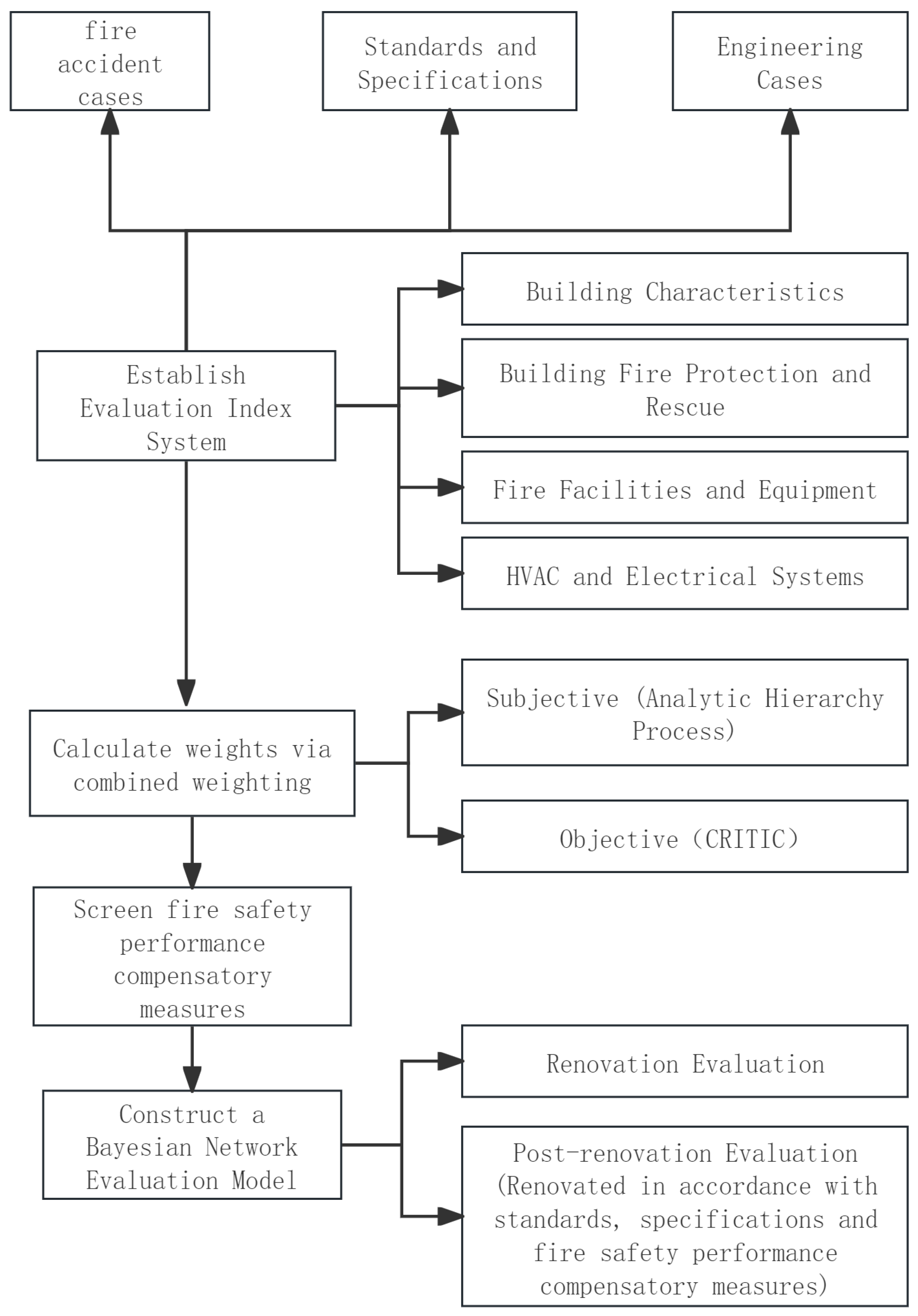
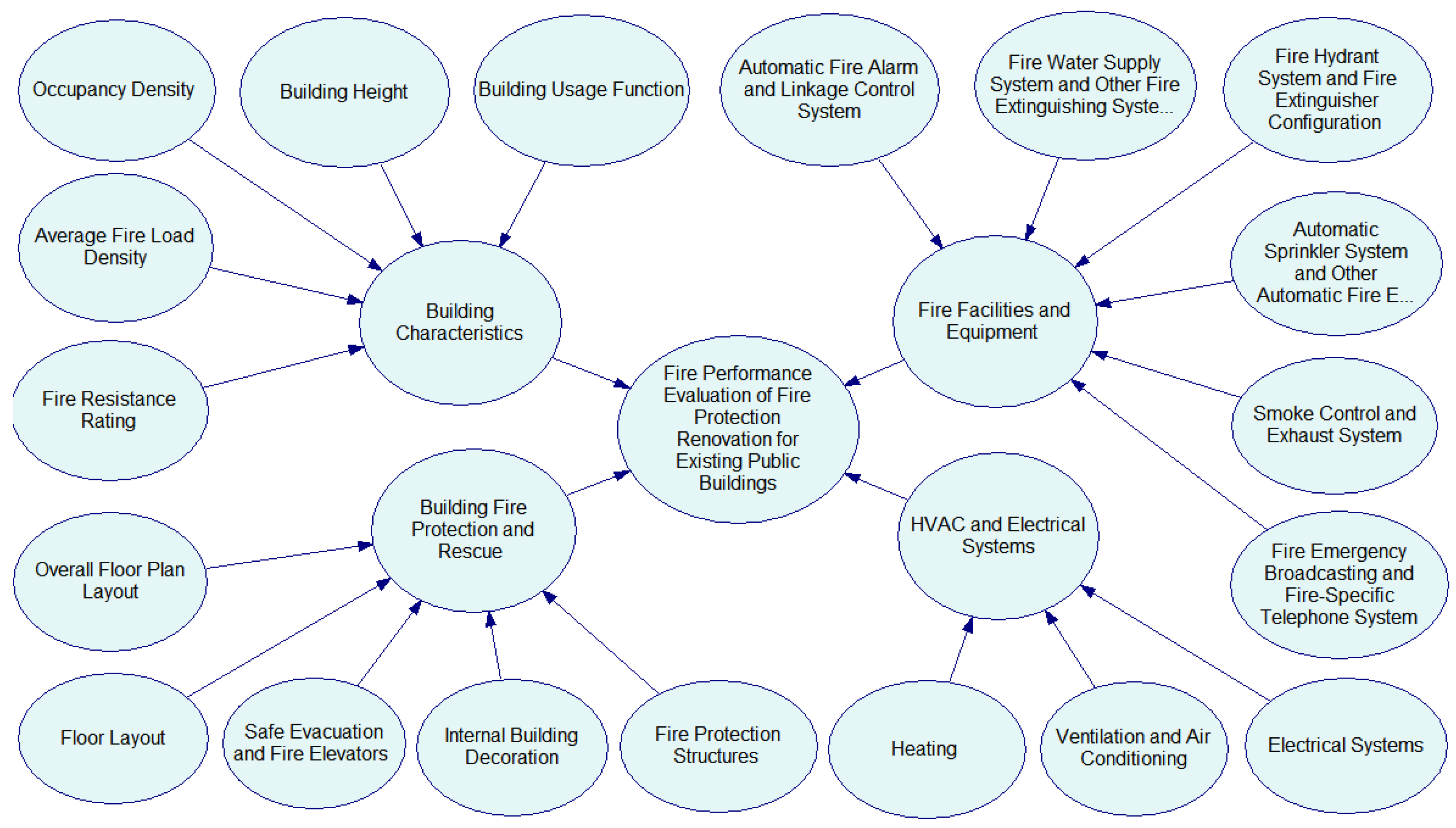
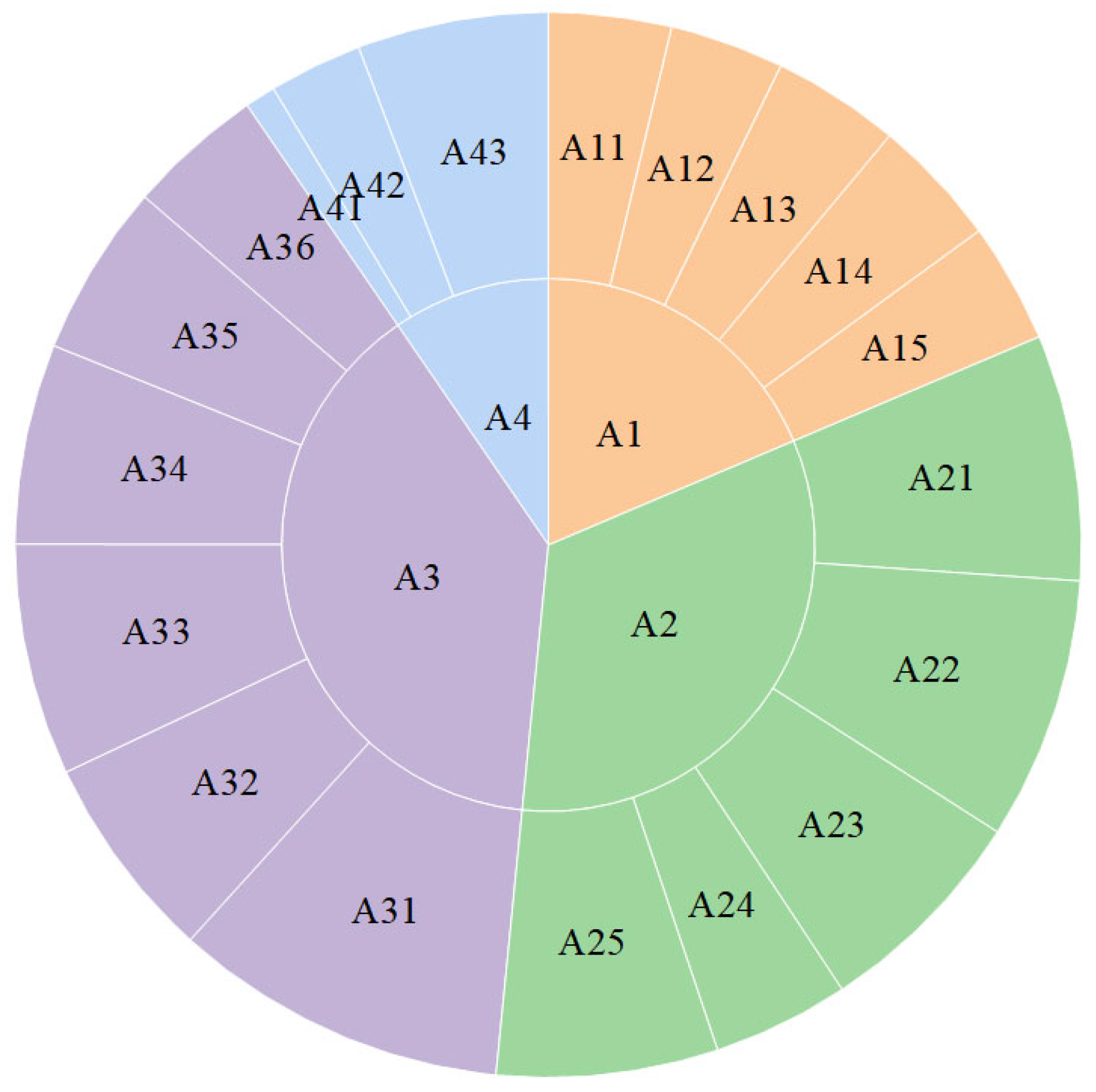
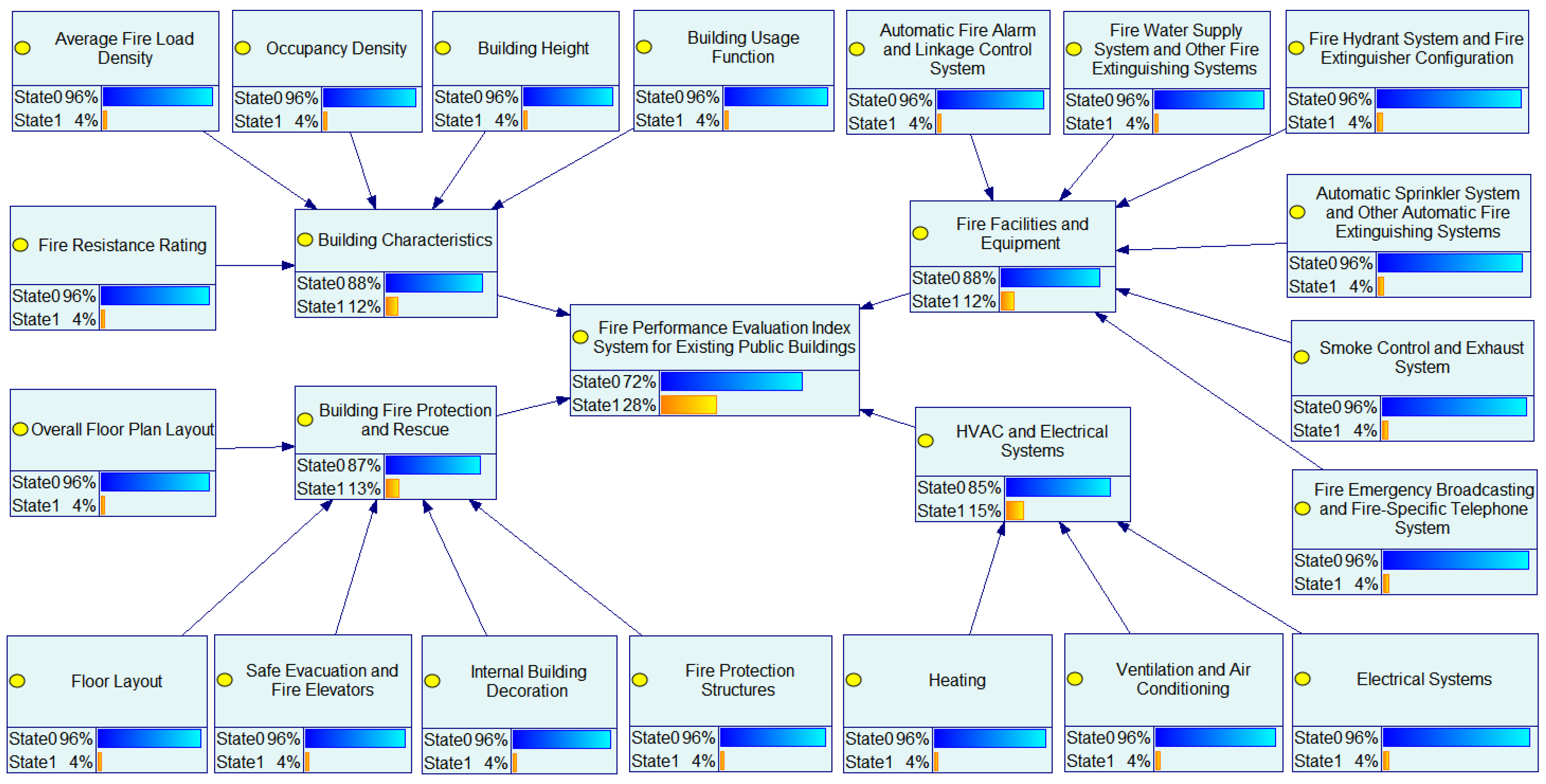
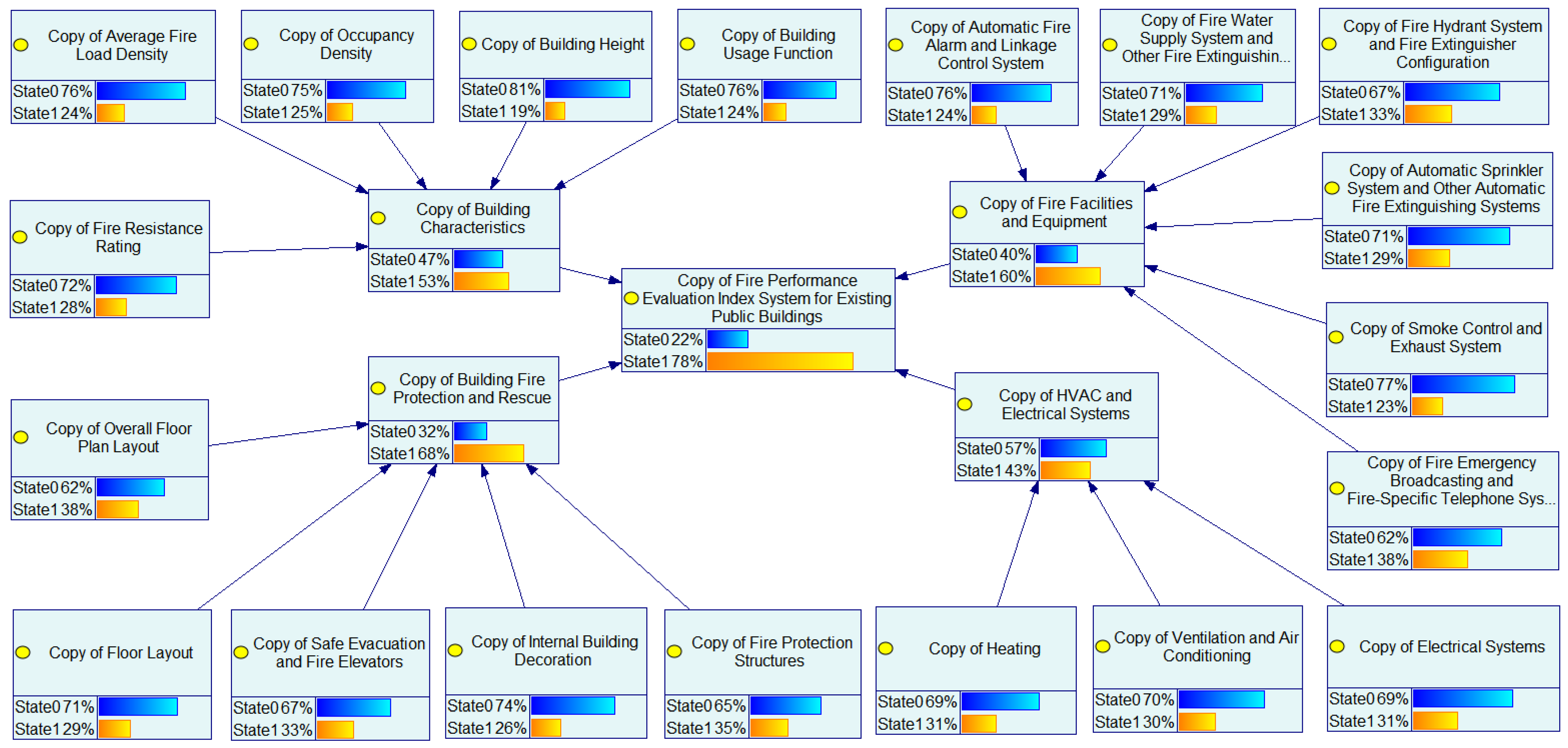
To improve the fire safety performance of fire protection renovation projects for existing public buildings, this paper systematically sorts out and analyzes relevant research studies, accident reports, and fire protection renovation codes and guidelines. It constructs a fire performance evaluation system for such projects, including 4 first-level indicators—”Building Characteristics”, “Building Fire Protection and Rescue”, “Fire Facilities and Equipment”, and “Heating, Ventilation, Air Conditioning (HVAC) and Electrical Systems”—and 19 second-level indicators such as “Building Usage Function”. The subjective–objective combined weighting method of Analytic Hierarchy Process (AHP)-CRITIC is adopted to determine the weights of indicators at all levels. Four high-weight second-level indicators are selected as core remediation objects: average fire load density, floor layout, automatic fire alarm and linkage control system, and electrical systems. Meanwhile, the evaluation system is converted into a Bayesian Network model, with an empirical verification analysis carried out on a shopping mall in Chaoyang District, Beijing, as a case study. Results show that the approach of combining partial codes with the rectification of high-weight indicators can reduce the fire occurrence probability of the mall from 78%, before renovation, to 24%. Therefore, the constructed evaluation system and Bayesian Network model can realize the accurate quantification of fire risks, provide scientific and feasible technical schemes for the fire protection renovation of existing public buildings, and lay a foundation for enriching and improving fire protection assessment theories.
Keywords: existing public buildings; fire protection renovation; fire performance evaluation; AHP-CRITIC method; Bayesian Network; fire performance compensation existing public buildings; fire protection renovation; fire performance evaluation; AHP-CRITIC method; Bayesian Network; fire performance compensation