1. Introduction
With the continuously increasing global demand for carbon-neutral and sustainable energy, carbon dioxide emissions arising from the combustion of conventional fossil fuels have emerged as a critical challenge in the energy and environmental sectors. As representative carbon-free fuels, hydrogen and ammonia exhibit significant technical and economic advantages as alternatives to traditional fossil fuels, while also playing an important role in achieving environmental sustainability. Among them, ammonia, as a promising clean energy carrier and storage medium [
1], offers a broader range of production pathways, including fossil fuels, biomass, renewable energy sources such as wind and solar energy, and nuclear energy. Moreover, ammonia has been produced, transported, stored, handled, and distributed through established industrial infrastructures for more than a century, rendering its production and utilization technologies relatively mature [
2].
In addition, the transportation and storage of hydrogen remain major challenges, whereas ammonia can be liquefied more readily, which significantly reduces transportation costs and associated infrastructure investments [
3]. However, pure ammonia as a fuel faces several inherent limitations, most notably its relatively low laminar burning velocity, narrow flammability limits, and low chemical reactivity. These characteristics may result in poor flame stability, reduced heat release rates, and lower combustion efficiency [
4].
Due to the high minimum ignition energy, low flame temperature, and slow flame propagation velocity of NH
3, blending ammonia with combustion promoters has been widely regarded as an effective strategy to enhance combustion performance. Consequently, the development of fundamental theories and technologies for ammonia and ammonia-blended combustion has become a research frontier in this field [
5]. China possesses abundant natural gas resources, and methane-dominated natural gas, characterized by low impurity content, economic feasibility, and high combustion efficiency, is extensively used as industrial fuel, urban gas, and engine fuel. Studies have shown that adding natural gas as a combustion promoter to NH
3 fuel can significantly extend the flame stability limits [
6].
Luo Zhenmin [
7] experimentally investigated the effect of NH
3 on the upper explosion limit of CH
4, demonstrating that the addition of NH
3 weakens methane explosions near the upper flammability limit. The study also revealed that NH
3 reduces the peak flame propagation velocity of methane, followed by a kinetic analysis of the underlying mechanisms. Liu Feng [
8] systematically examined the combustion mechanisms of ammonia and ammonia-blended fuels, including reaction pathways, reaction equations, and kinetic models, and analyzed the effects of equivalence ratio and initial temperature on flame propagation velocity and flame temperature. Mathematical models describing reaction, flow, and energy transport were evaluated, and nitrogen oxide formation and control strategies were summarized.
Paul et al. [
9] investigated the burning velocities and combustion products of ammonia–methane–air premixed mixtures at ambient temperature and pressure. Their results indicated that when the ammonia content reached 4%, the burning velocity decreased by approximately 10–20%. Additionally, the introduction of ammonia into methane–air mixtures led to an increase in NO emissions, while exerting only a minor influence on CO formation. Hua et al. [
10] conducted comprehensive modeling of ammonia/methane combustion over an ammonia mole fraction range of 0–100%. Flame structure analysis revealed that increasing the ammonia volumetric fraction reduced chemical reactivity, thereby decreasing flame speed. Han et al. [
11] experimentally measured the laminar burning velocities of ammonia/methane/air premixed flames using the heat flux method, examining methane mole fractions of 0.2, 0.4, 0.6, and 0.8. Their results showed an approximately linear relationship between laminar burning velocity and the mole fraction of the ammonia/methane mixture.
From an environmental perspective, substantial progress has also been made in understanding ammonia combustion mechanisms and pollutant emissions. Dagaut et al. [
12] proposed a relatively recent ammonia oxidation mechanism applicable to NH
3 ignition prediction under general conditions. This mechanism was later extended by Mathieu and Petersen [
13], who developed a reduced mechanism and validated ignition delay times using reflected shock tube experiments at high temperatures (1560–2455 K) and under fuel-lean to fuel-rich conditions at various pressures. The mechanism involved 35 species and 159 reaction pathways. Stagni et al. [
14] conducted combined experimental, theoretical, and kinetic modeling studies on ammonia decomposition and product formation using jet-stirred and flow reactors, demonstrating that at high temperatures, NH
2-related reactions leading to HNO formation and decomposition significantly affect flame propagation characteristics and the NO/N
2 ratio in combustion products.
The main contributions of this study are summarized as follows. First, real multicomponent natural gas from an operating pipeline is used instead of simplified methane-based mixtures, providing combustion and explosion characteristics that are more representative of practical engineering conditions. Second, the effects of ammonia blending on combustion and explosion behaviors are investigated under both atmospheric and sub-atmospheric initial pressures, covering safety-relevant conditions such as leakage and confined environments. Third, closed-vessel explosion experiments are combined with CHEMKIN 2021 R1(ANSYS Inc., Canonsburg, PA, USA)-based reaction pathway analysis to interpret the influence of ammonia on combustion intensity, burning velocity, and product formation, with numerical simulations serving as a mechanistic supplement rather than direct validation. Finally, the study offers new insights into carbon–nitrogen reaction pathways in ammonia-blended natural gas, particularly regarding CO suppression and nitrogen conversion behavior, providing experimental and theoretical support for safety assessment and risk evaluation.
In summary, existing studies have primarily focused on the premixed combustion of NH3 and CH4 and their effects on combustion efficiency, including laminar burning velocity, ignition delay time, and emissions of NO, CO, and CO2. However, relatively limited attention has been devoted to the effects on explosion temperature and pressure characteristics. Moreover, most studies have employed pure methane as a surrogate for natural gas, neglecting the influence of ethane, propane, and other components present in real natural gas, which may result in deviations from practical conditions. Therefore, in this study, a combustible gas explosion characteristics test system was developed to experimentally investigate the combustion characteristics of ammonia-enriched natural gas mixtures under various initial conditions. The objective is to provide scientific guidance for safety assessment and consequence prediction of ammonia-enriched natural gas leakage and explosion hazards.
2. Experimental Method
In this study, real multicomponent natural gas from the West–East Gas Pipeline Project (Line II) in China was employed, with a composition of CH
4 (91%), C
2H
6 (5%), C
3H
8 (1%), and N
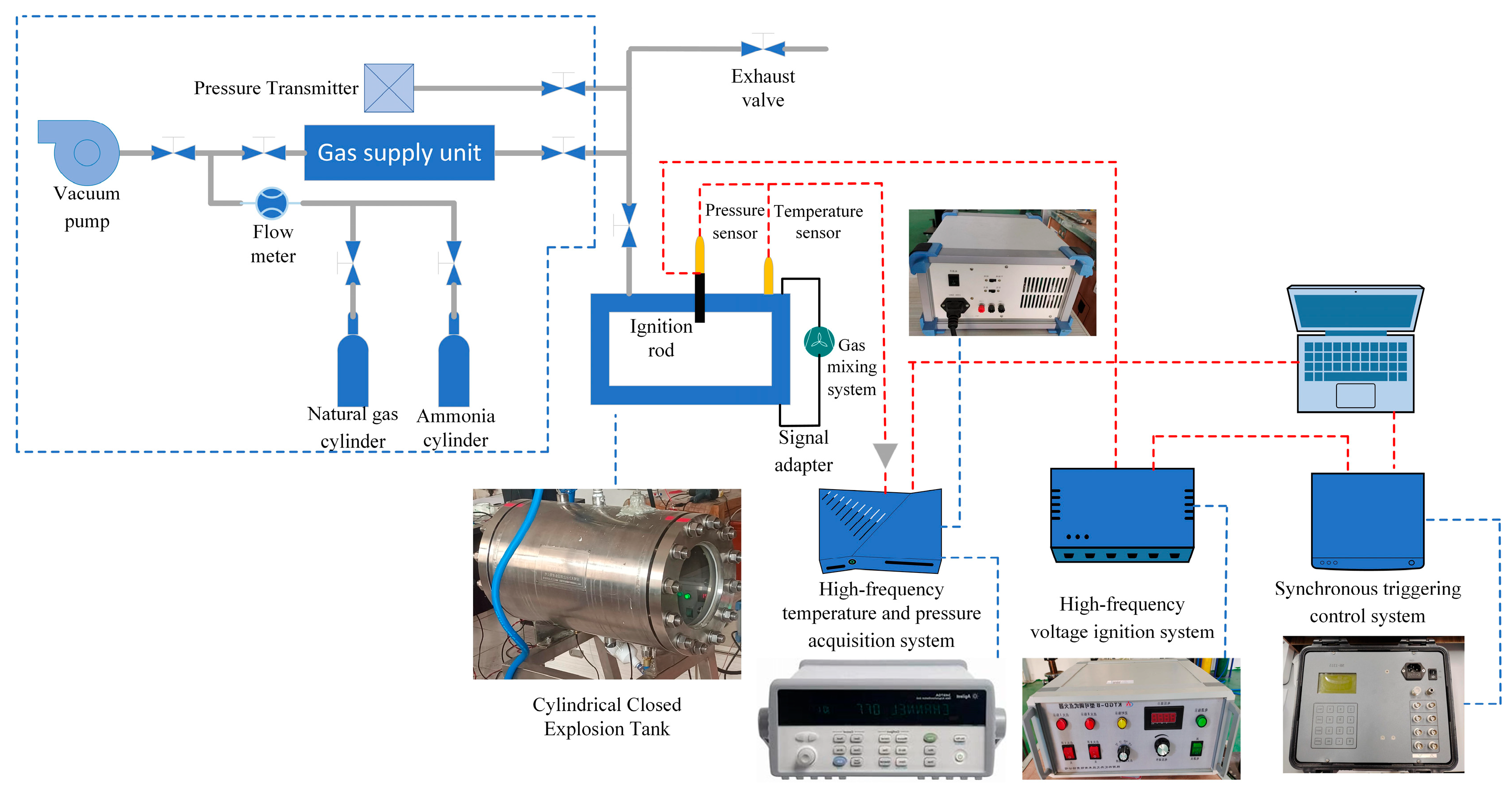
2 (3%). The ammonia used for blending had a purity of 99.999%. Ammonia was supplied in gaseous form from a compressed gas cylinder and, owing to its low boiling point (−33.34 °C at atmospheric pressure), it remained in the gas phase under the ambient experimental conditions. Therefore, ammonia, natural gas, and air were premixed as a homogeneous gaseous mixture prior to ignition, and all reactions investigated in this study occurred in the gas phase. The combustible gas explosion characteristics test system used in this study is schematically illustrated in
Figure 1. The main experimental apparatus consists of a 24 L cylindrical closed explosion vessel. The ignition system includes a KTGD-B adjustable igniter (Shaanxi Kehui Thermal Engineering Technology Co., Ltd., Xi’an, China) and an LXI-5405A 16/1M data acquisition unit (Chengdu Huatai Measurement and Control Technology Co., Ltd., Chengdu, China) with a sampling frequency of 10 MHz, positioned at the center of the upper part of the vessel.
The test system comprises temperature and pressure measurement subsystems and an ignition system. Pressure measurements were conducted using a pressure transducer with a measurement range of 0–1 bar (Yangzhou Kedong Electronics Co., Ltd., Yangzhou, China), while temperature measurements were obtained using a WRe-526 tungsten–rhenium thermocouple. The pressure sensor was co-located with the igniter, and the temperature sensor was positioned adjacent to the ignition electrode. Data were recorded at intervals of 0.00001 s. A synchronous triggering control system, consisting of an NH-1315 digital pulse delay detonator (Chengdu Nanhui Technology Co., Ltd., Chengdu, China), provided a pulse width range of 1–3000 ms. In addition, the system included gas distribution and mixing subsystems.
Prior to each experiment, a vacuum pump was activated to evacuate both the gas distribution system and the closed explosion vessel to −1 bar. Natural gas, ammonia, and air were then introduced into the vessel through the gas distribution system according to the designed experimental conditions. The mixture was circulated and premixed using the mixing system fan for 5 min, followed by a 5 min quiescent period to ensure homogeneity. The igniter located at the center of the combustion chamber was subsequently triggered via the synchronous control system to initiate combustion, while the data acquisition system was simultaneously activated to record and store experimental data. After each experiment, the explosion vessel was purged through the exhaust system to eliminate residual gases and prevent interference with subsequent tests.
Ignition experiments were conducted under four initial pressure conditions, i.e., 0.3 bar, 0.5 bar, 0.7 bar, and atmospheric pressure (1 bar). For each pressure level, premixed ammonia–natural gas–air mixtures with six uniformly distributed ammonia blending ratios ranging from 0 to 1.0 were tested. Each experimental condition was repeated three times to ensure reproducibility.
Table 1 summarizes the designed experimental conditions.
Here, the ammonia blending ratio (η) is defined as the molar fraction of NH3 in the ammonia-enriched natural gas mixture. φ denotes the equivalence ratio, defined as the ratio of the actual fuel–oxidizer ratio to the stoichiometric fuel–oxidizer ratio.
Table 1.
Experimental working conditions of ammonia-doped natural gas at an equivalence ratio of 1.2. For each ammonia blending ratio, the partial pressure fractions of individual gas components (natural gas, hydrogen, ammonia, and air) corresponding to different initial pressures are presented in the same row and separated by “/”. The values are listed in the order of increasing initial pressure.
Table 1.
Experimental working conditions of ammonia-doped natural gas at an equivalence ratio of 1.2. For each ammonia blending ratio, the partial pressure fractions of individual gas components (natural gas, hydrogen, ammonia, and air) corresponding to different initial pressures are presented in the same row and separated by “/”. The values are listed in the order of increasing initial pressure.
| Initial Pressure (P0) | Ammonia Blending Ratio (η) | NH3 Partial Pressure (Bar) | Natural Gas Partial Pressure (Bar) | Air Partial Pressure (Bar) |
|---|
| 0.3/0.5/0.7/1.0 | 0 | 0/0/0/0 | 0.0325/0.0541/0.0757/0.1082 | 0.2676/0.4459/0.6243/0.8919 |
| 0.2 | 0.0073/0.0122/0.0171/0.0244 | 0.0293/0.0488/0.0684/0.0977 | 0.2634/0.4390/0.6146/0.8779 |
| 0.4 | 0.0168/0.0280/0.0392/0.0560 | 0.0252/0.0420/0.0588/0.0841 | 0.2580/0.4300/0.6019/0.8599 |
| 0.6 | 0.0296/0.0493/0.0690/0.0986 | 0.0197/0.0329/0.0460/0.0657 | 0.2507/0.4178/0.5850/0.8356 |
| 0.8 | 0.0477/0.0795/0.1113/0.1590 | 0.0119/0.0199/0.0278/0.0398 | 0.2404/0.4006/0.5608/0.8012 |
| 1.0 | 0.0755/0.1258/0.1761/0.2515 | 0/0/0/0 | 0.2246/0.3743/0.5240/0.7485 |
4. Reaction Analysis of Ammonia-Blended Natural Gas Under Different Ammonia Blending Ratios
4.1. Software Analysis and Condition Settings
The numerical simulations of burning velocity, reaction pathways, and combustion products in this study were conducted to provide mechanistic interpretation and complementary analysis to the experimental observations, rather than to directly reproduce the transient explosion process.
The simulations were performed using the PREMIX module in CHEMKIN 2021 R1(ANSYS Inc.), based on the detailed GRI-Mech 3.0 kinetic mechanism. The initial conditions adopted in the simulations, including gas composition, equivalence ratio, initial temperature, and initial pressure, were set to be consistent with those used in the corresponding experimental cases. This ensured that the numerical analysis was conducted under representative thermodynamic and mixture conditions relevant to the experiments.
GRI-Mech 3.0 has been widely applied in combustion studies involving methane-based fuels and fuel-blending scenarios. For example, Wang et al. [
15] successfully employed GRI-Mech 3.0 to investigate methane/air combustion characteristics in porous media, while Liu et al. [
16] applied a reduced GRI-Mech 3.0 mechanism to simulate hydrogen-enriched natural gas combustion with satisfactory agreement to experimental results. These studies demonstrate that GRI-Mech 3.0 remains a reliable and widely adopted mechanism for analyzing combustion characteristics of methane-dominated fuel mixtures.
Furthermore, the constant-volume, homogeneous premixed combustion model inherently neglects non-ideal experimental factors such as ignition energy input, flame kernel development, and spatial temperature and concentration gradients. While these simplifications may affect absolute quantitative predictions, they do not compromise the ability of the model to reveal the dominant reaction pathways and the comparative influence of ammonia blending on combustion behavior.
4.2. Reaction Pathway Analysis
Reaction pathway analysis provides insight into the fundamental framework of combustion chemistry and facilitates a mechanistic understanding of reaction evolution. As the primary objective of this study is to elucidate the dominant reaction pathways of ammonia-blended natural gas and the variation in product formation with ammonia blending ratio, simulations were performed using the constant-volume, homogeneous premixed combustion module in CHEMKIN, based on the detailed GRI-Mech 3.0 kinetic mechanism. Considering the relatively low contribution of intermediate species involving simultaneous C-N interactions, such pathways were neglected to simplify the analysis without compromising overall accuracy.
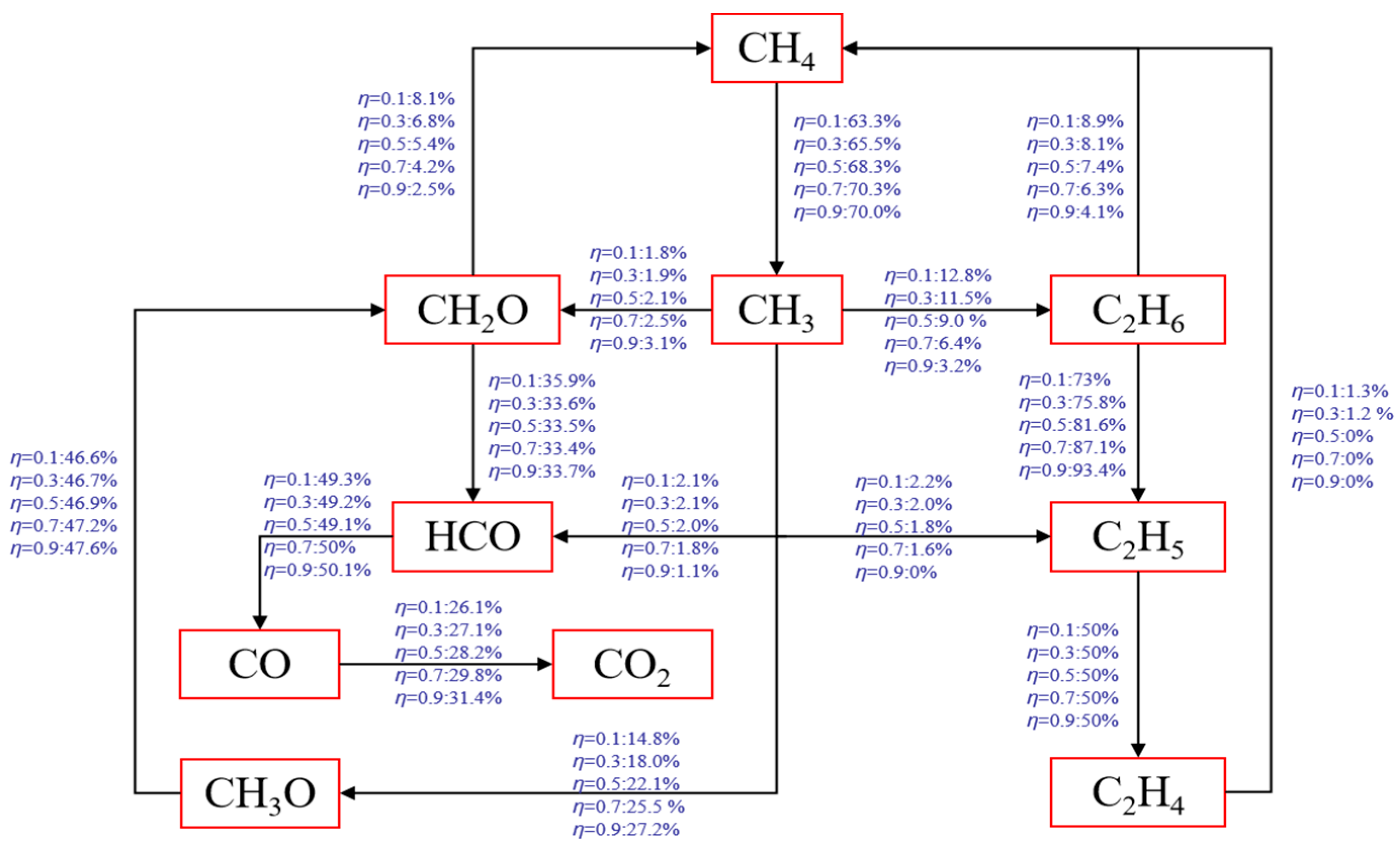
As shown in
Figure 8, the main component of natural gas, CH
4, is predominantly converted into CH
3, and the conversion efficiency increases with increasing ammonia blending ratio. Subsequently, CH
3 mainly decomposes into C
2H
6 and CH
3O, with their formation rates also enhanced by ammonia addition. A small fraction of C
2H
6 is reconverted to CH
4 and re-enters the combustion cycle, whereas the majority is transformed into C
2H
5, which further converts into C
2H
4 with an approximately constant conversion ratio of 50%, independent of operating conditions. Meanwhile, CH
3O is further oxidized to CH
2O, which, together with the minor amount of CH
2O directly formed from CH
3, is converted into HCO. With increasing ammonia blending ratio, the subsequent oxidation of HCO to CO and CO
2 is significantly promoted.
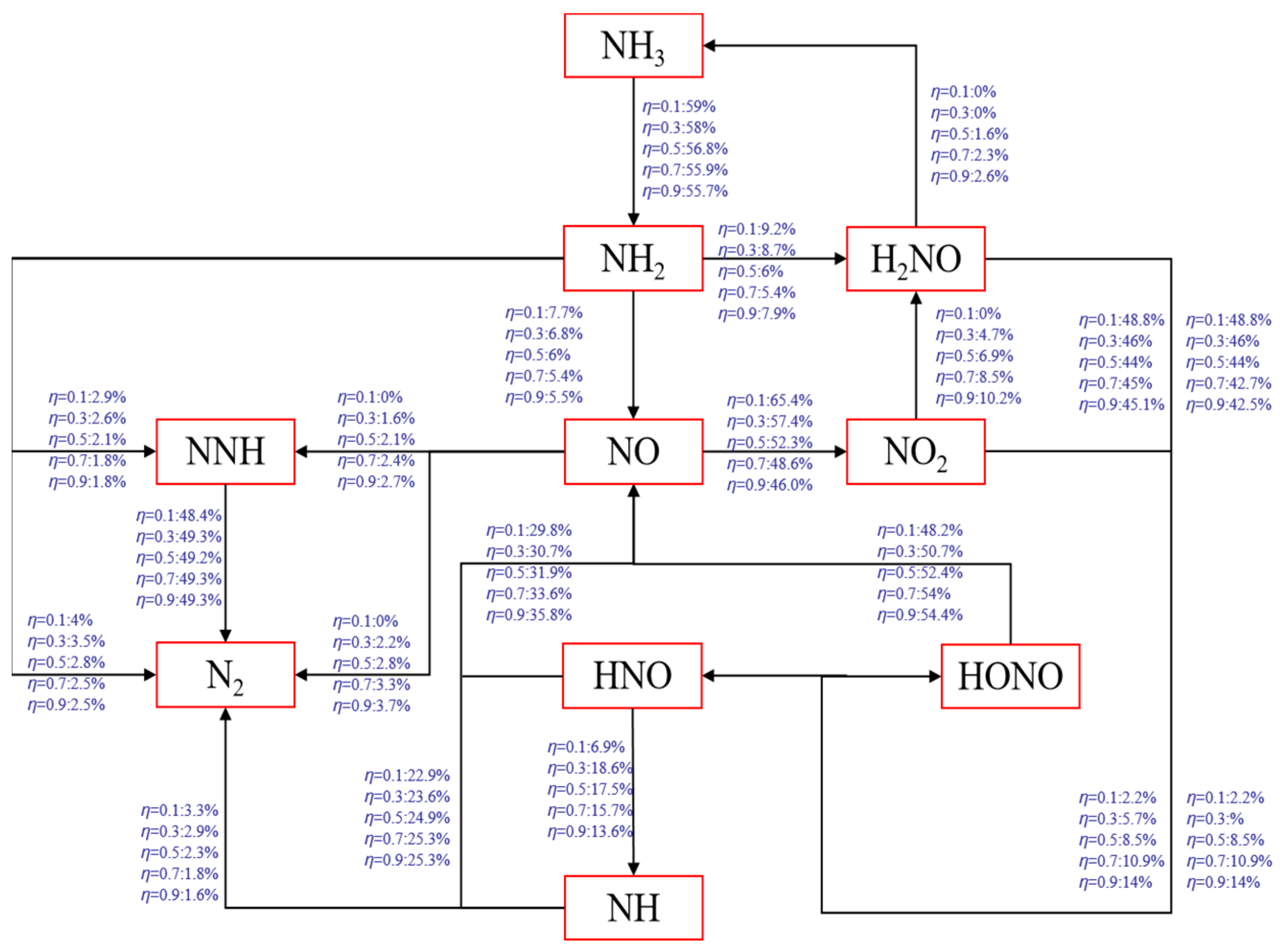
The nitrogen-related reaction pathways are illustrated in
Figure 9. As the ammonia blending ratio increases, the fraction of NH
3 converted to NH
2 gradually decreases. NH
2 is primarily consumed through the formation of NO and H
2NO, where NO is further oxidized to NO
2. A small portion of NO
2, together with previously formed H
2NO, is converted into HNO and HONO, which are produced in comparable amounts. Both HNO and HONO subsequently decompose to regenerate NO, while HNO can also be converted into NH, further promoting NO formation. Overall, the simulation results indicate that NO production increases monotonically with increasing ammonia blending ratio. In parallel, a minor fraction of NH
2 and part of NO participate in NNH formation, which ultimately leads to the generation of N
2, serving as a terminal nitrogen sink.
4.3. Combustion Characteristics and Product Analysis
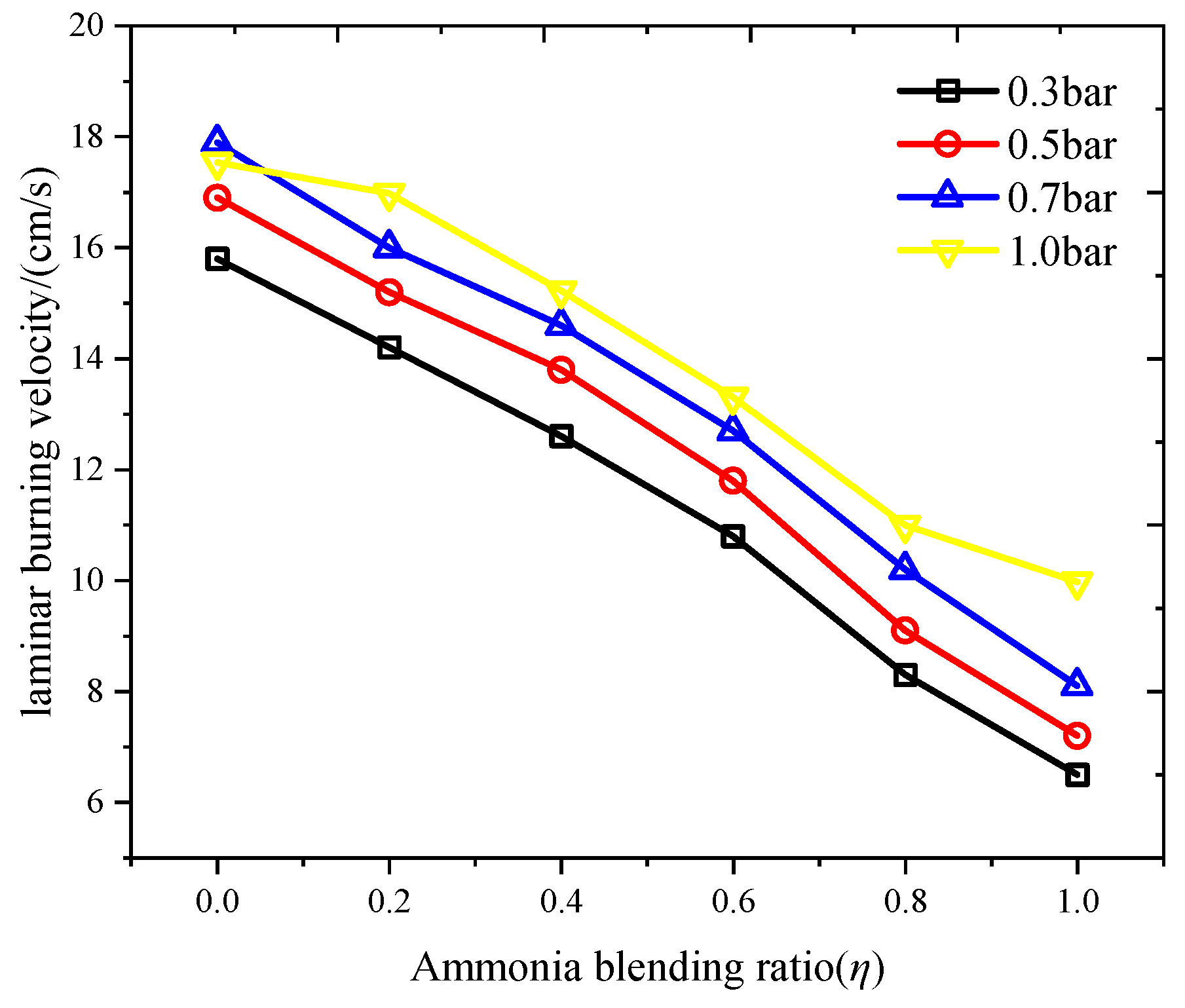
As illustrated in
Figure 10, the numerically predicted laminar burning velocity, obtained from CHEMKIN-PREMIX simulations, decreases monotonically with increasing ammonia blending ratio under all investigated initial pressure conditions. This trend reflects the combined dilution effect and kinetic inhibition introduced by ammonia addition. For a given ammonia blending ratio, the calculated burning velocity increases with increasing initial pressure, indicating that elevated pressure enhances the overall reaction intensity in premixed ammonia–natural gas mixtures within the framework of the adopted one-dimensional steady-state combustion model.
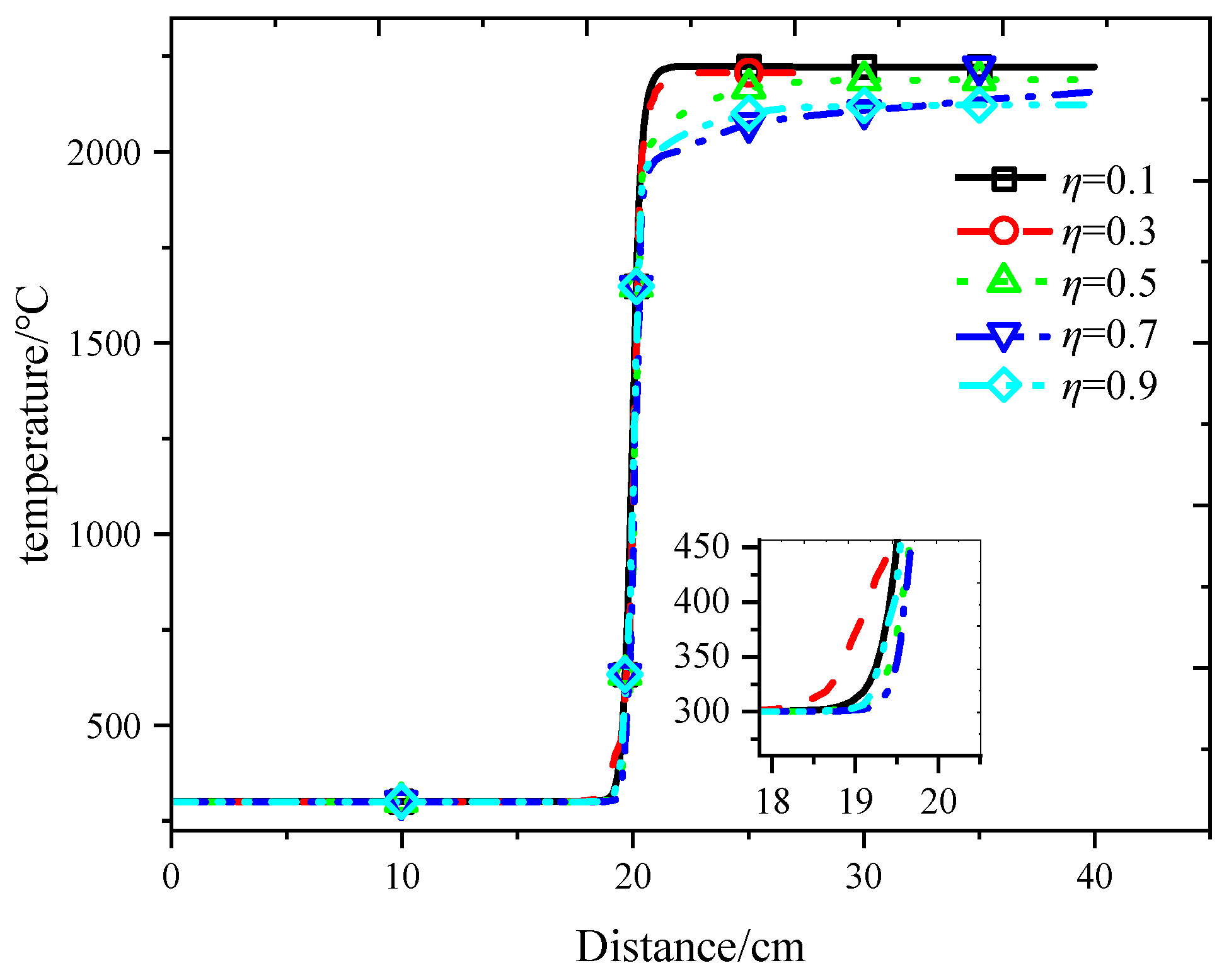
As shown in
Figure 11, the axial temperature profiles inside the burner for ammonia-blended natural gas at different ammonia blending ratios were measured as a function of distance from the burner exit. The results indicate that mixtures with lower ammonia blending ratios achieve the highest peak flame temperatures, whereas the maximum temperature decreases progressively with increasing ammonia content, which is consistent with the overall temperature reduction observed in the explosion and combustion experiments.
Notably, for certain intermediate ammonia blending ratios, the location of peak temperature occurs closer to the burner exit than that of pure natural gas, and the variation in flame development distance does not exhibit a strictly linear dependence on the ammonia blending ratio. However, this effect remains relatively weak, suggesting that ammonia addition primarily influences the thermal intensity rather than the macroscopic flame stabilization distance.
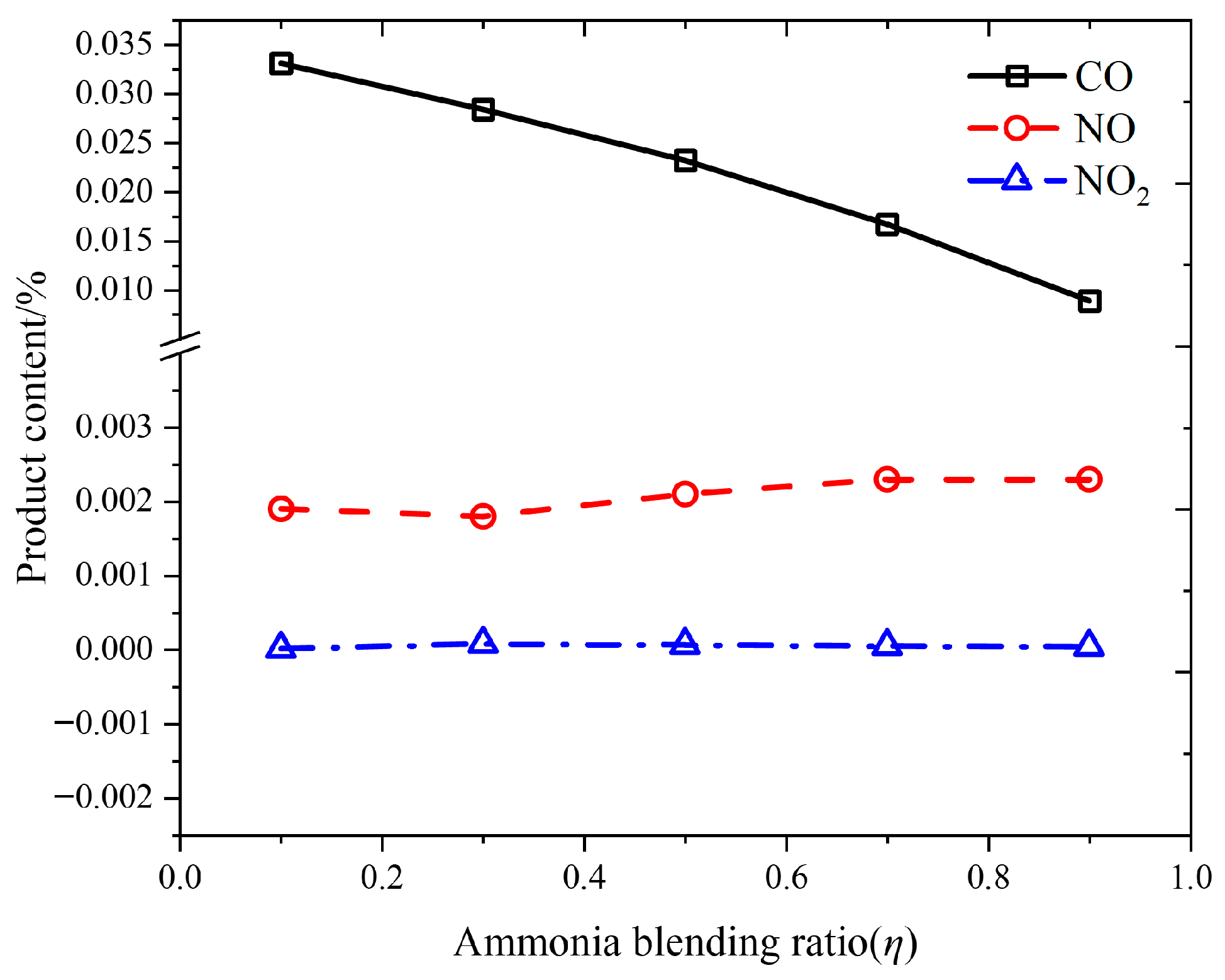
As illustrated in the
Figure 12, variations in the ammonia blending ratio exert a direct influence on the composition of combustion products. When the ammonia fraction increases from 10% to 90%, the NO concentration first decreases and then gradually increases to a stable maximum, with an overall increase of approximately 27.78%. In contrast, the NO
2 concentration exhibits an opposite trend, initially increasing to a peak value and subsequently decreasing with further ammonia addition.
The evolution of CO concentration follows the same tendency predicted by the reaction pathway analysis. With increasing ammonia blending ratio, the conversion of CO to CO2 is progressively enhanced, resulting in a continuous reduction in CO concentration in the products, with a total decrease of approximately 71.11%.
Reaction pathway analysis further reveals that the formation and interconversion of NO and NO2 involve multiple competitive reaction routes, leading to a relatively complex nitrogen oxidation chemistry. As a result, although the concentrations of NO and NO2 vary with ammonia blending, the overall sensitivity to ammonia addition remains limited. When the ammonia content in the fuel reaches high levels, the NO concentration increases sharply, with a maximum growth rate of up to 484.892%.
Overall, the concentrations of NO and NO
2 increase to a maximum and then either stabilize or slightly decrease as the ammonia blending ratio continues to rise. This behavior is in good agreement with trends reported in the literature [
17], further supporting the reliability of the present experimental and kinetic analysis.
5. Conclusions
In this study, the combustion characteristics and product formation of multicomponent ammonia-blended natural gas were experimentally investigated under varying initial pressures and ammonia blending ratios. Based on the experimental observations and subsequent analyses, the main conclusions are summarized as follows:
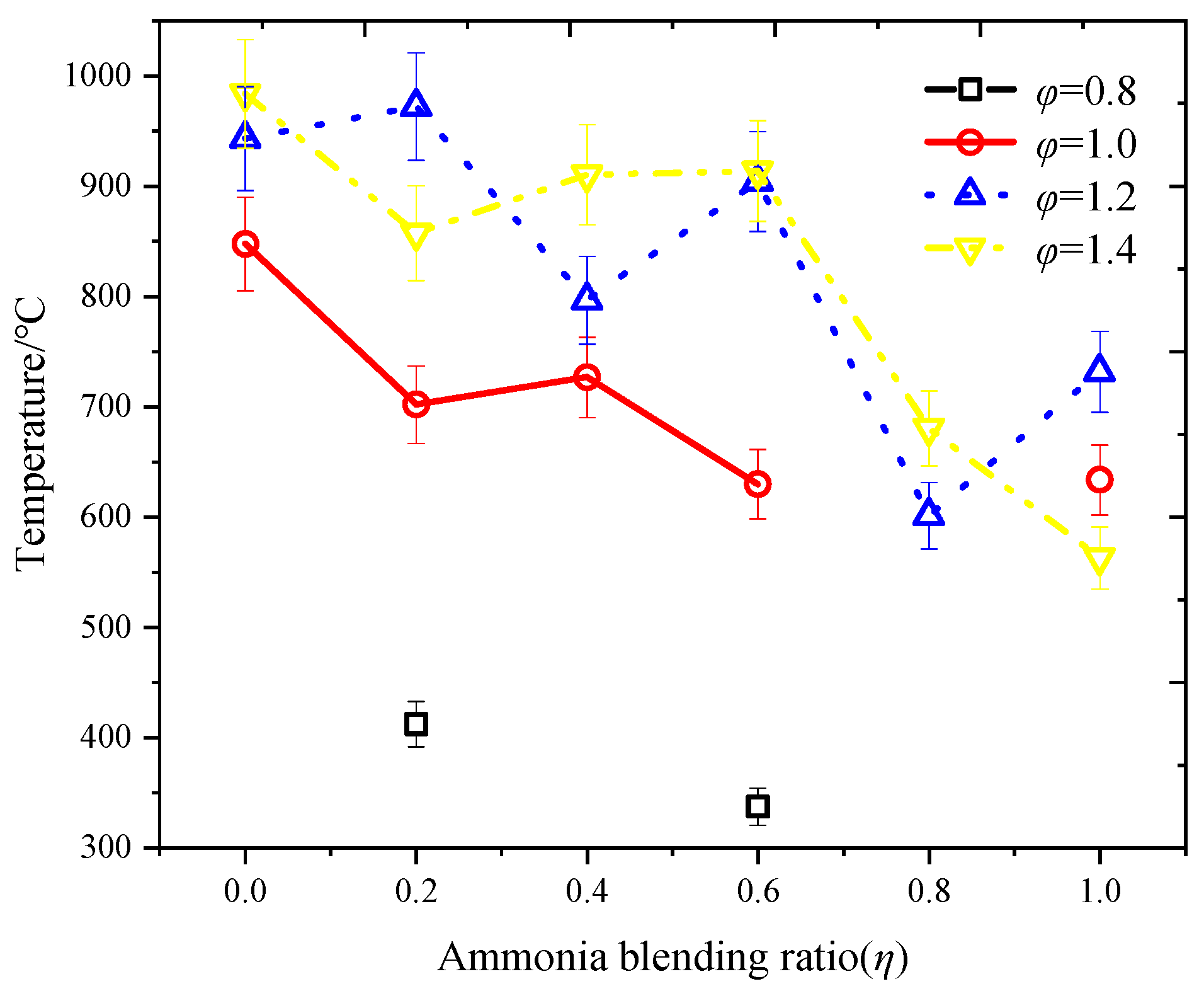
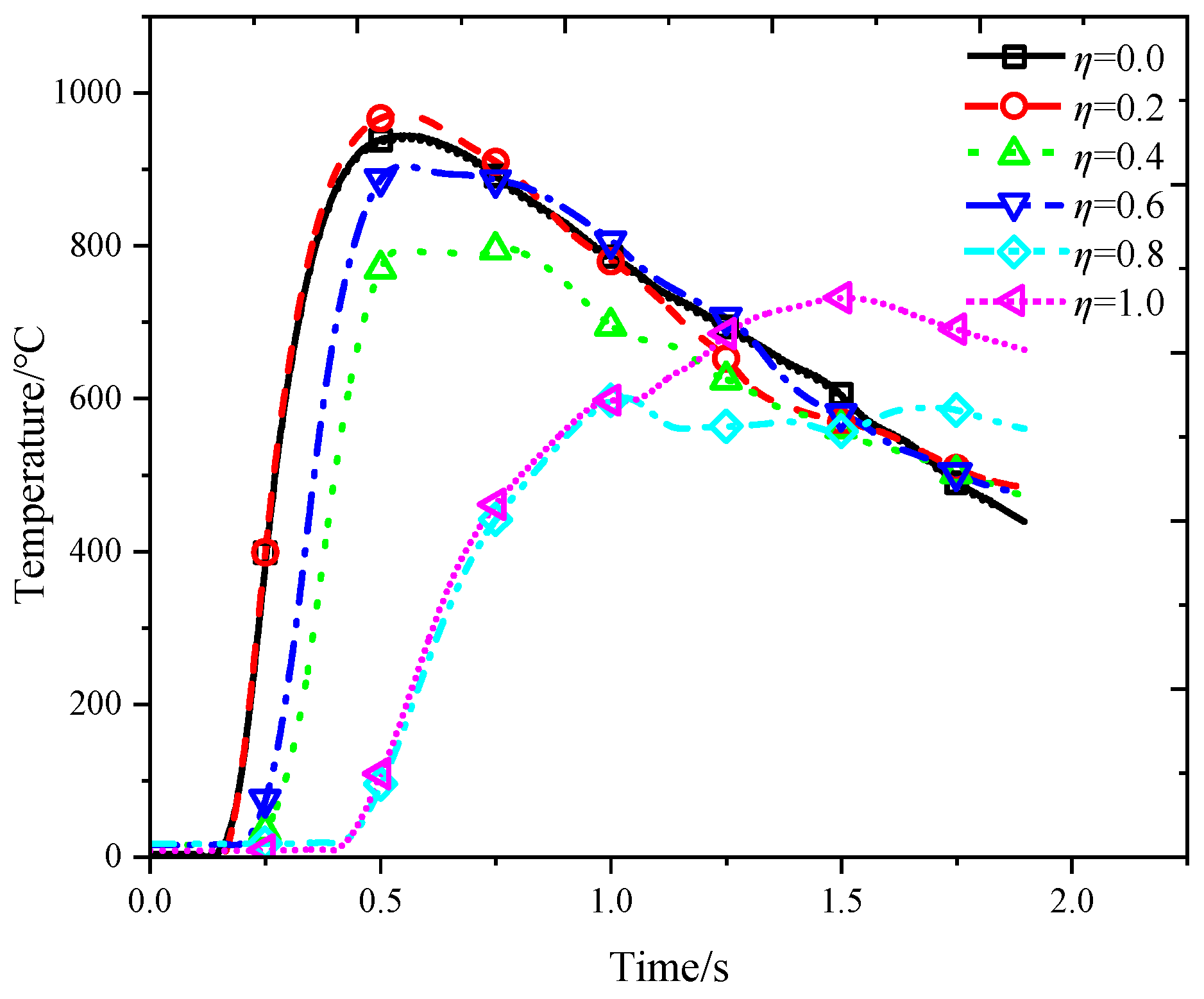
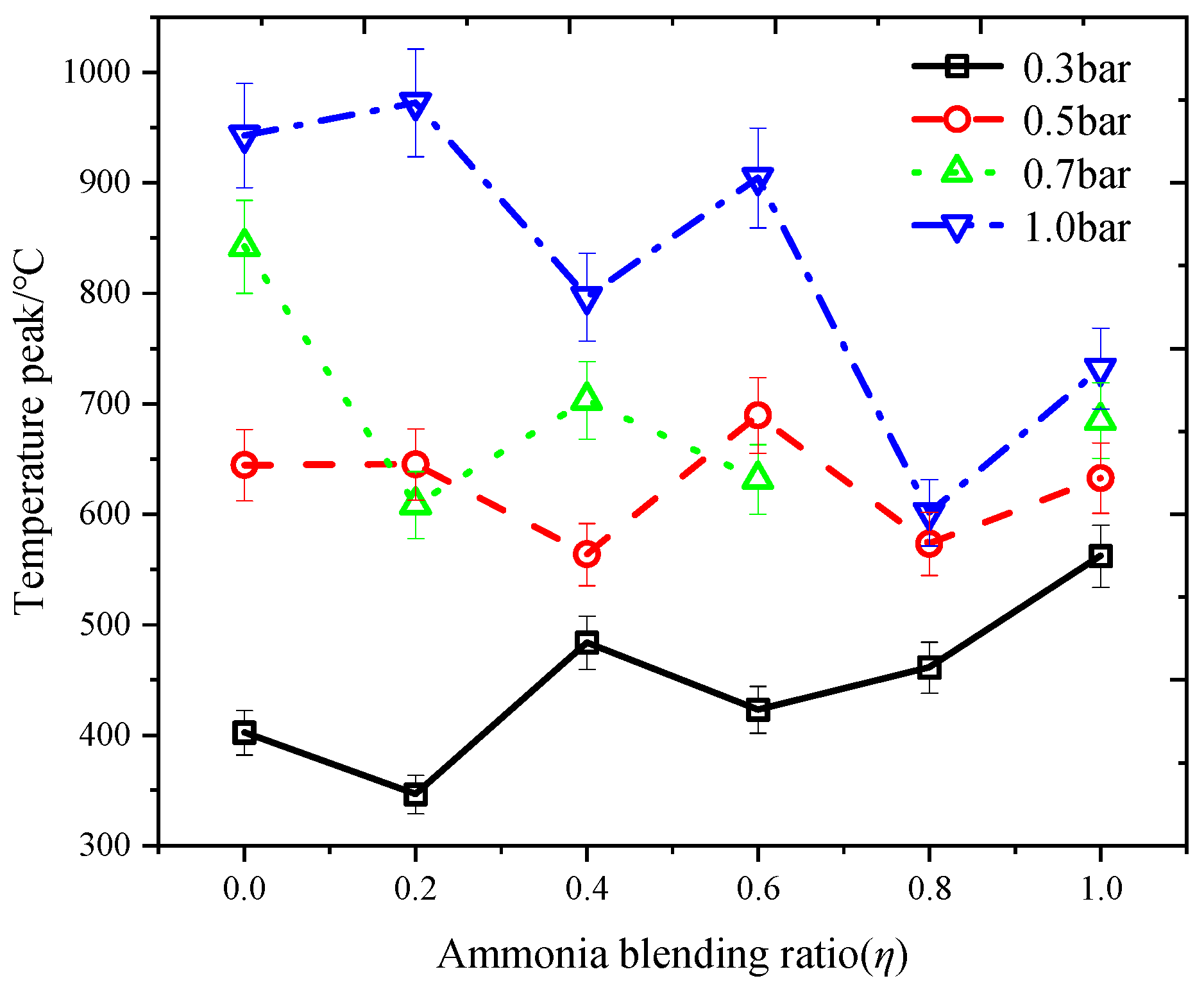
High-speed flame imaging combined with burning velocity measurements demonstrates that ammonia blending significantly weakens flame propagation and overall reaction intensity under all investigated equivalence ratios. As the ammonia blending ratio increases from 0 to 1 under atmospheric pressure, the peak combustion temperature decreases by approximately 25%, while the laminar burning velocity is reduced by nearly 50%. These results confirm that ammonia acts as an effective flame suppressant in multicomponent natural gas systems, primarily through dilution effects and kinetic inhibition.
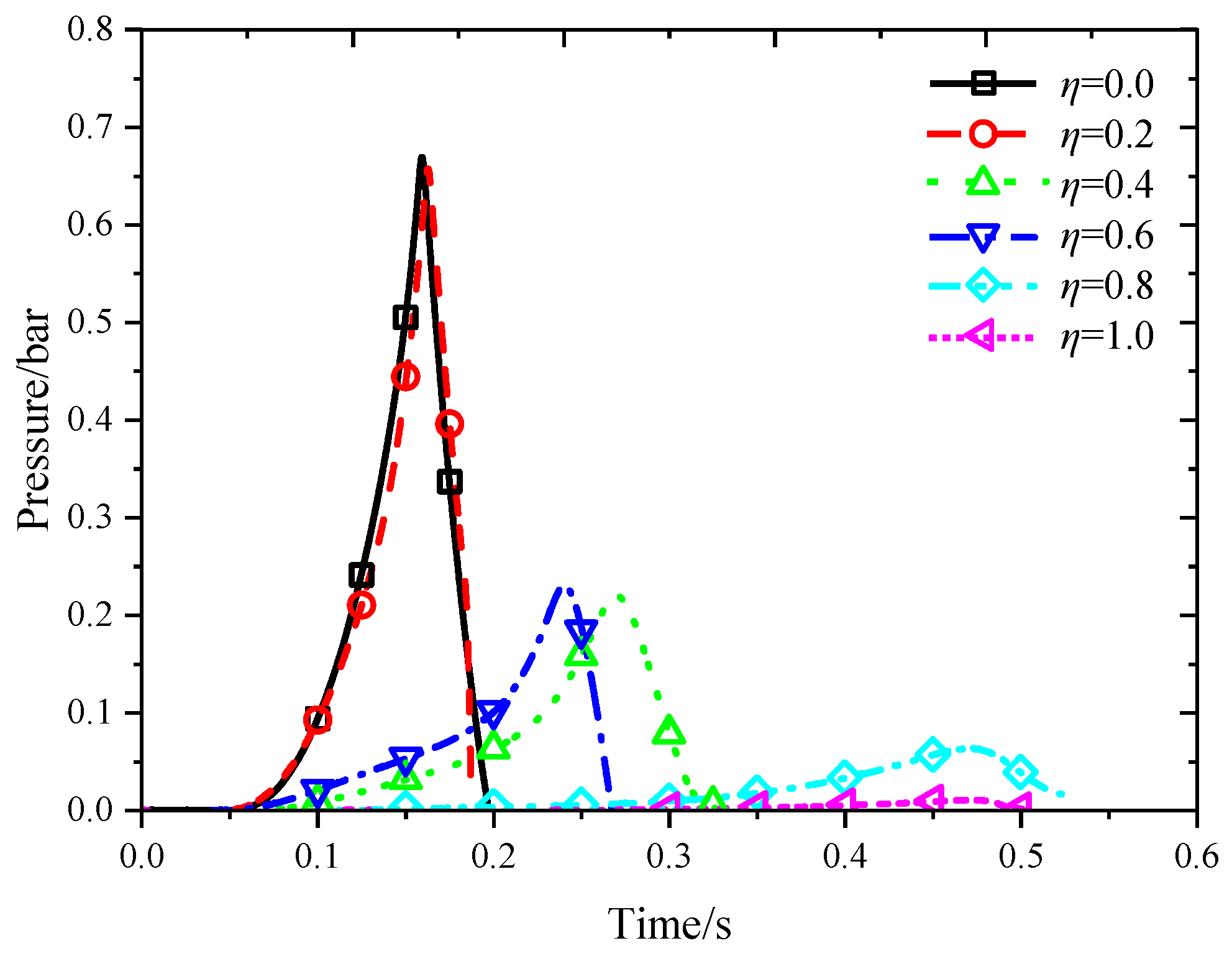
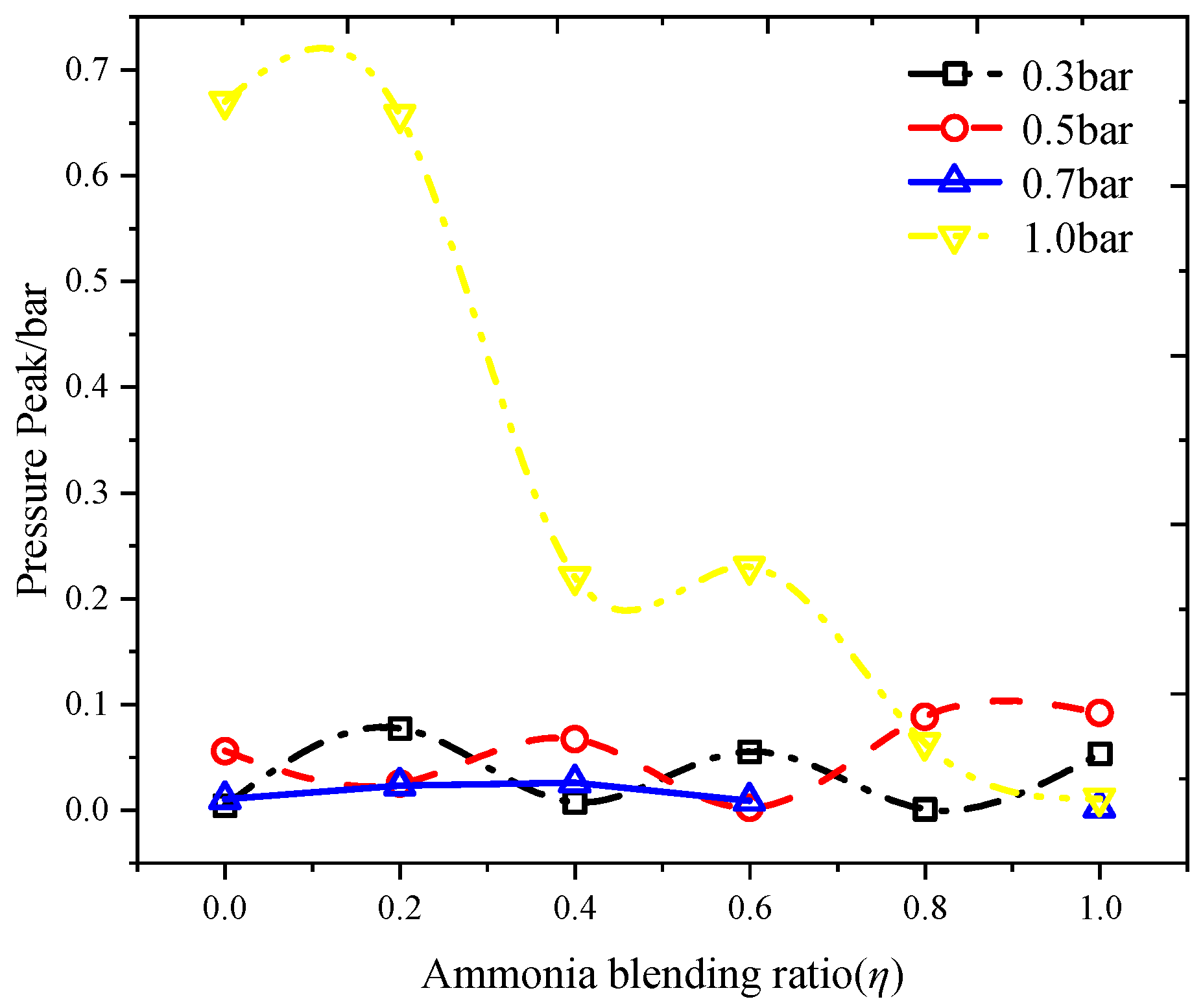
For all ammonia blending ratios, increasing the initial pressure leads to higher peak combustion temperatures and explosion pressures, indicating enhanced reaction intensity. However, under sub-atmospheric conditions, pure ammonia combustion exhibits higher peak temperatures than ammonia–natural gas mixtures, and the temperature increase induced by pressure elevation remains below 15%, suggesting relatively stable combustion behavior. As the initial pressure rises, the inherently low chemical reactivity of ammonia becomes more influential, resulting in a more pronounced decrease in combustion temperature with increasing ammonia content.
Reaction pathway analysis reveals a monotonic reduction in CO concentration with increasing ammonia blending ratio, confirming the beneficial effect of ammonia addition in mitigating incomplete combustion products. In contrast, nitrogen-related reaction pathways exhibit more complex behavior. The NO concentration increases slightly and subsequently stabilizes at approximately 23 ppm, while NO2 shows a large relative growth rate (up to 484.892%) due to its low initial baseline, although its absolute concentration remains limited. These findings indicate that ammonia blending alters nitrogen oxidation chemistry without leading to a proportional increase in overall NOx emissions.