Article

Foaming Capability, Structural Stability, and Fire Extinguishing Performance Optimization of Short-Chain Fluorocarbon Foam by Modulating Gas–Liquid Ratio

1
Institute of Disaster Prevention Science and Safety Technology, School of Civil Engineering, Central South University, Changsha 410075, China
2
State Key Laboratory of Fire Science, University of Science and Technology of China, Hefei 230026, China
*
Author to whom correspondence should be addressed.
Submission received: 31 December 2025 / Revised: 19 January 2026 / Accepted: 21 January 2026 / Published: 27 January 2026

Abstract

Petrochemical fires pose severe threats to public safety and environmental sustainability, necessitating urgent advancements in efficient and eco-friendly fire suppression technologies. This study systematically investigated the influence of gas–liquid ratio (GLR) on the foam properties and fire suppression efficacy of a novel short-chain fluorocarbon (PFH-BZ) foam fire extinguishing agent. Through comprehensive experimental analysis, the underlying mechanism governing foam performance was elucidated, and the burn-back resistance of optimized formulation was evaluated. The results indicate that GLR significantly impacts PFH-BZ foam performance. Foaming capacity and structural stability exhibit a positive correlation with increasing GLR until reaching a plateau. Low GLRs result in insufficient foam formation and thermal stability, while inducing detrimental combustion intensification. Conversely, excessively high GLRs impair foam spreading capacity, hindering rapid extinguishment. The optimal fire extinguishing performance is achieved at a GLR of 12, where PFH-BZ foam attains an excellent balance among drainage characteristics, spreading capacity, and structural stability. This optimized formulation achieves complete extinguishment within 26.16 s and maintains burn-back resistance of 662.37 s while effectively mitigating the vapor explosion phenomenon. These findings provide critical guidance for the application of a PFH-BZ-based foam extinguishing agent and deepen understanding of the influence of system parameters on suppression performance.

1. Introduction

Petrochemical fires pose a severe threat to human health, ecological conservation, and social development, necessitating urgent advancements in high-efficiency and environmentally friendly fire extinguishing technologies [1,2,3]. Petrochemical fires, predominantly liquid fires, are characterized by high mobility, volatility, intense combustion, and the generation of substantial toxic smoke and gases, presenting significant challenges to firefighting technologies [4,5,6]. Foam extinguishing agents serve as highly effective tools for combating liquid fires, demonstrating excellent cooling, thermal insulation, and smothering effects across various industries, including petrochemicals, aviation, and transportation [7,8,9,10].
In our previous work, a novel foam extinguishing agent formulated with short-chain fluorocarbon surfactant (PFH-BZ) was successfully developed, exhibiting considerable biodegradability and outstanding fire extinguishing potential [11]. Notably, the addition of 0.02 wt.% xanthan gum to PFH-BZ foam substantially enhanced its cooling and suppression efficacy, evidenced by a cooling rate of 16.8 °C/s and an extinction time of 35.4 s in small-scale diesel fire. However, beyond the intrinsic composition of the foam extinguishing agent, foam performance is also significantly influenced by fire scenarios, environmental conditions, and foam extinguishing system parameters [12,13,14]. Among these factors, the operator-controllable factors, such as gas source, mixing method, discharge pressure, flow rate, spray angle, and gas–liquid ratio (GLR), directly influence the physicochemical properties and discharge behavior of firefighting foams. For instance, compared to traditional aspirating-type nozzles, compressed air foam systems effectively mitigate the impact of high-temperature fire environments on foam generation and discharge, producing high-quality foam with greater kinetic energy and improved penetration into fire plumes [15,16]. The selection of gas source is equally critical. Due to its low diffusivity, nitrogen enhances foam stability while forming an inert gas barrier that effectively dilutes oxygen and fuel vapors [17,18]. Beyond an excellent cooling effect, carbon dioxide reacts with sodium silicate to promote gel foam formation, demonstrating exceptional efficacy in coal fires [19]. Mixing chamber design is another critical factor. Wang [20] reported that coaxial chambers reduced the liquid displacement effect caused by gases during mixing, achieving more efficient fire suppression compared to T-shape chambers. Increasing discharge pressure and flow rate enhances agent delivery efficiency and extends effective range [15,21]. Spray angle affects foam discharge range and area, with vertical spraying yielding optimal fire extinguishing efficacy [22,23,24].
Among these critical system parameters, GLR serves as the core parameter, directly influencing the liquid volume fraction by regulating the mixing proportions between the gas phase and liquid phase (foam extinguishing agent) [25]. Research indicated that variations in liquid fraction not only determine foam density but also significantly impact foam destabilization processes [26,27,28]. Consequently, as a key factor governing foam generation and stability, GLR plays a decisive role in fire extinguishing performance [29]. It is noteworthy that foam extinguishing agents with different compositions may exhibit distinct formation and destabilization kinetics, as well as varying physicochemical properties, potentially leading to different responses to GLR variations. Therefore, a systematic investigation of the performance of a novel PFH-BZ-based foam extinguishing agent under different GLR conditions is essential for optimizing its fire extinguishing efficacy and practical application.
This study systematically investigated the influence of GLR on the foaming capability, structural stability, combustion intensification, and fire extinguishing efficacy of PFH-BZ-based foam extinguishing agent. By elucidating the underlying mechanism and determining optimal GLR, this study provides scientific basis for the effective application of PFH-BZ foam. Furthermore, the burn-back resistance of the optimized PFH-BZ foam was evaluated and compared with a commercial benchmark product, offering crucial insights for its practical promotion.

2. Materials and Methods

2.1. Materials

The synthetic route of the zwitterionic short-chain fluorocarbon surfactant (PFH-BZ) has been established in our previous work, with detailed information provided in the Supplementary Materials [30]. N,N-dimethyldodecan-N-amine oxide (OB-2, purity: 30%) was acquired from Lvsen Chemical Co., Ltd. (Linyi, China). Sodium hydroxide (NaOH, purity ≥ 96.0%) was procured from Xilong Scientific Co., Ltd. (Shantou, China). Xanthan gum (XG, USP grade), urea (purity ≥ 99.0%), ethylene glycol (purity ≥ 98.0%), and 2-(2-butoxyethoxy)ethanol (CP grade) were supplied by Macklin Biochemical Technology Co., Ltd. (Shanghai, China). The 0# diesel was provided by China Petroleum & Chemical Co., Ltd. (Beijing, China). A commercial foam extinguishing agent (S-3-AB-F500) was obtained from Hengde Fire-fighting Co., Ltd. (Zibo, China).

2.2. Preparation of PFH-BZ-Based Foam Extinguishing Agent

The PFH-BZ-based foam extinguishing agent consisted of surfactants and additives. The additive concentrate contained 0.1 wt.% XG, 15 wt.% urea, 15 wt.% ethylene glycol, and 5 wt.% 2-(2-butoxyethoxy)ethanol. The surfactant concentrate was a mixture of 10 mmol/L PFH-BZ and 20 mmol/L OB-2, with the pH adjusted to 7–8 using NaOH solution. The additive concentrate and surfactant concentrate were mixed in a 1:1 volume ratio and then diluted with water. Through systematic optimization, the final concentrations of components in the PFH-BZ-based foam extinguishing agent were determined as 2 mmol/L PFH-BZ, 4 mmol/L OB-2, 0.02 wt.% XG, 1 wt.% 2-(2-butoxyethoxy)ethanol, 3 wt.% urea, and 3 wt.% ethylene glycol [11].

2.3. Experimental System and Procedures

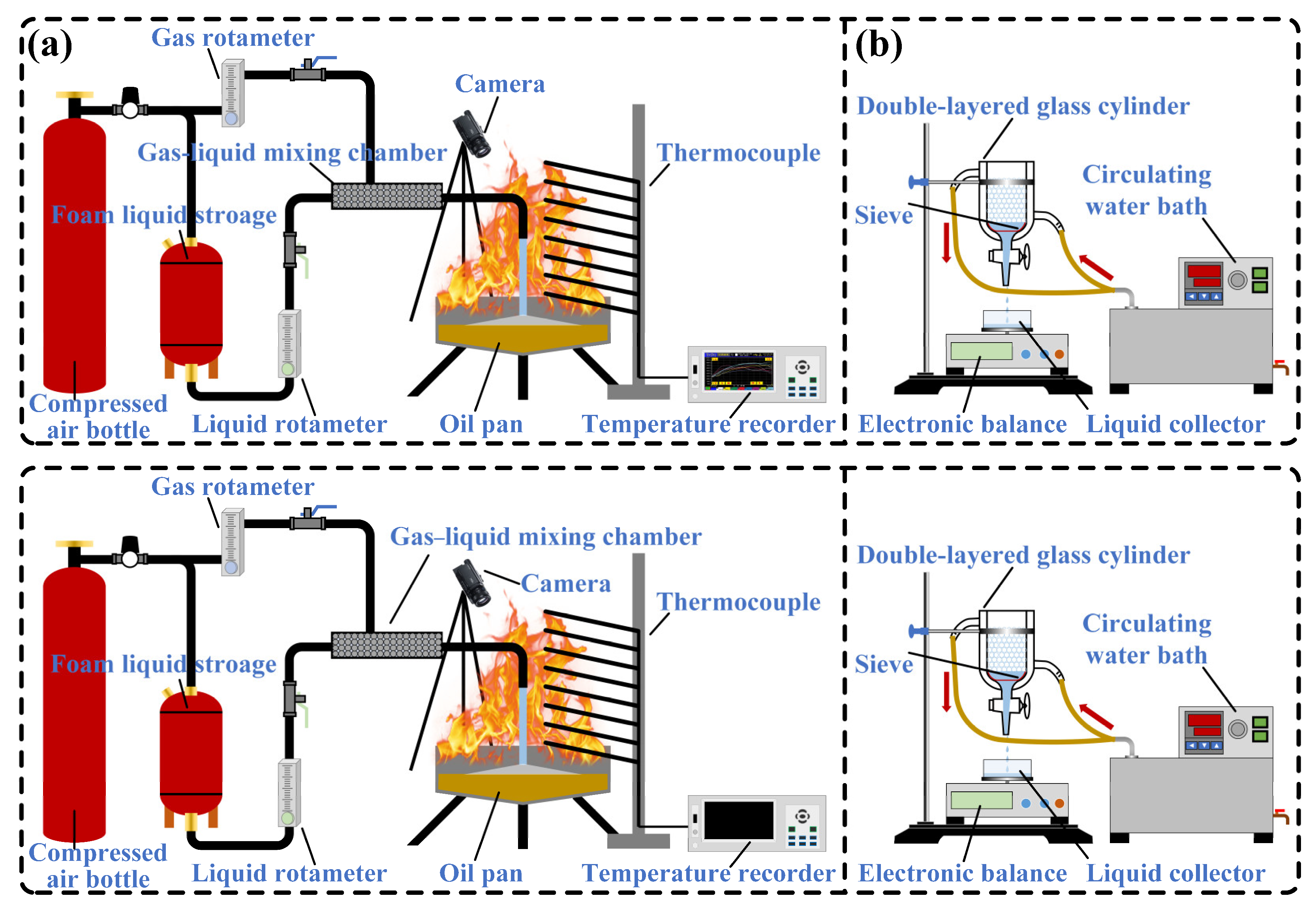
According to GB15308-2006, the foam properties and fire extinguishing efficacy were evaluated using a self-made small-scale compressed air foam system and a drainage property tester, as shown in Figure 1 [31]. This system maintained a constant outlet pressure of 0.70 MPa via compressed air bottle, ensuring consistent gas–liquid mixing for foam generation.
The expansion ratio and 25% drainage time (t25%) are critical performance indicators for evaluating the foam properties of foam extinguishing agents [11]. To assess foaming capability, 250 mL foam was weighed using a YP203B electronic balance (Shanghai Puchun Scales Instrument Co., Ltd., Shanghai, China), and the expansion ratio was calculated according to Equation (1). Under ideal mixing conditions where gas is completely dispersed in the liquid phase and gas dissolution is negligible, the theoretical expansion ratio can be determined using Equation (2) to quantify gas–liquid mixing efficiency. Subsequently, the foam was transferred to the drainage property tester, as shown in Figure 1b. The t25% was measured as the time required for the drained liquid mass to reach 25% of the total foam mass.
E = ρ × V / m f o a m
E i d e a l = V ˙ l + V ˙ g V ˙ l = 1 + G L R
where E and Eideal are the experimental expansion ratio and theoretical expansion ratio, respectively. mfoam represents the mass of the collected 250 mL foam. ρ denotes the density of the foam fire extinguishing agent, ρ = 1 g/mL; V is the volume of the collected foam, V = 250 mL.
The foam extinguishing performance was evaluated using a 0.25 m2 oil pan containing 1 L diesel. The flame morphology was recorded using an FDR-AX45 camera (SONY (China) Ltd., Beijing, China). The temperature monitoring system comprised an MT500P multiplex temperature recorder (Shenzhen Shenhua Technology Co., Ltd., Shenzhen, China) and WRNK-191-BO2P thermocouples (φ 1.5 mm × 200 mm × 1500 mm, Shanghai Songdao Heating Sensor Co., Ltd., Shanghai, China). As illustrated in Figure 1a, eight thermocouples were positioned 0.3 m above the center of the oil pan with 0.1 m spacing. Upon diesel ignition, the timer, temperature recorder, and camera were synchronously activated. Following complete fuel surface ignition, a 60 s pre-burn period was implemented to establish stable combustion conditions. The foam application was then initiated, with the extinction time defined as the interval from initial foam application to complete flame suppression.
Burn-back resistance test utilized 9 L diesel as fuel. Upon fuel ignition, the timer, temperature recorder, and camera were synchronously activated. Following a 60 s pre-burn period, foam was continuously applied for 180 s to form a stable foam blanket. After a 60 s waiting period, an ignited burn-back pot (120 mm diameter × 90 mm depth) containing 1 L diesel was carefully positioned at the center of the oil pan. The burn-back time is defined as the interval from burn-back pot placement to complete reignition of the fuel surface.
The experimental conditions are summarized in Table 1. In accordance with GB 15308-2006, the foam discharge rate was maintained at 750 g/min (45 L/h) using a liquid rotameter. To meet specific GLR requirements under varying experimental conditions, the gas flow rate was carefully adjusted to 180–1000 L/h using a gas rotameter.
To facilitate systematic comparisons across different experimental conditions, dimensionless temperature (T*) and dimensionless flame height (H*) were employed and calculated as follows [32]:
T * = T T 0 T s T 0
H * = H H s
where T and H denote instantaneous temperature and flame height, respectively. Ts and Hs correspond to the average temperature and flame height measured during the 10 s interval preceding foam application, respectively. T0 represents ambient temperature.
The foam cooling efficacy was evaluated using the cooling rate (Rcool), calculated as follows [33]:
R c o o l = T m a x * T e x t * t m a x t e x t
where T m a x * represents the maximum T*, and tmax is the time corresponding to T m a x * . T e x t * denotes the T* at complete flame extinction, and text is the time corresponding to complete flame suppression.

3. Results and Discussion

3.1. Effect of GLR on Foaming Capability and Drainage Characteristics

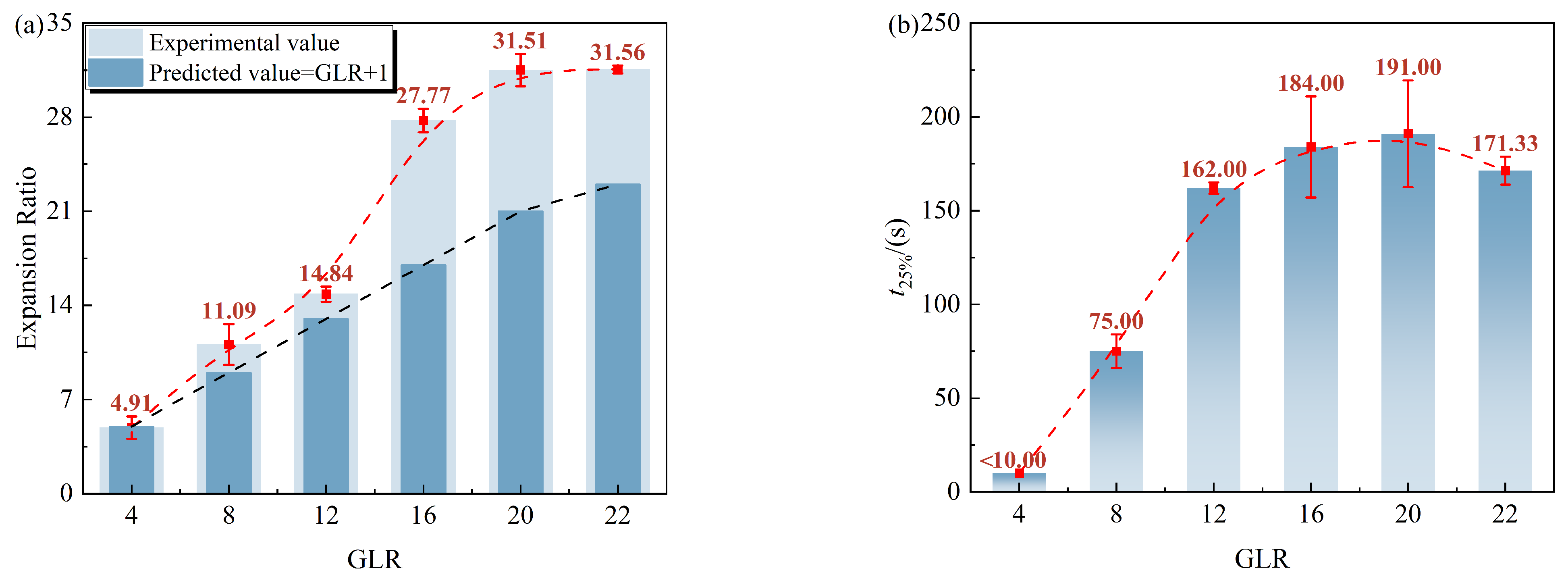
The expansion ratio and t25% of the PFH-BZ-based foam extinguishing agent under different GLR conditions are illustrated in Figure 2. The results reveal that the expansion ratio exhibits a progressive increase with rising GLR, ultimately stabilizing at 31.54 ± 0.81 when GLR exceeds 16. Notably, the discrepancy between experimental and theoretical expansion ratios gradually widens with rising GLR, indicating enhanced air entrainment and the formation of more loosely packed foam structures. Similarly, the t25% exhibits an increasing trend, ultimately stabilizing at 174.63 ± 22.13 s when GLR surpasses 12.
These phenomena can be attributed to the flow regime transitions within the gas–liquid system influenced by GLR [34]. At low GLR conditions, the gas–liquid system predominantly exhibits a wavy flow pattern, which limits the gas–liquid interfacial area and results in insufficient mixing efficiency. As a result, the foaming capability of PFH-BZ foam is markedly reduced, with an expansion ratio of merely 4.91 at GLR of 4. This inferior foam is characterized by large and non-uniform bubbles with thick lamella and high liquid volume friction, indicating poor foam quality. Indeed, the observed foam quality issues align with predictions from drainage models (such as plateau boundary-dominated and vertex-dominated models), which reveal a positive correlation between foam liquid fraction and drainage rate [25,35,36]. Consequently, foam produced at low GLR conditions undergoes rapid drainage, evidenced by a significantly reduced t25% value (<75.00 s). It is noteworthy that such low GLR foam is predominantly discharged in liquid form, posing significant safety hazards when extinguishing liquid fuel fires [37]. To mitigate safety risks including oil pan deformation and fuel splashing, the 4 GLR foam was excluded from subsequent foam extinguishing experiments.
With increasing GLR, elevated gas flow rate and enhanced turbulent mixing promote a transition to more efficient flow regimes, such as slug flow or agitated flow. The resulting shear forces facilitate more thorough gas dispersion within the liquid phase, significantly increasing the gas–liquid interfacial area and promoting the formation of smaller bubbles. These microstructural improvements substantially enhance foaming capability and expansion ratio. Concurrently, the reduced liquid fraction and thinner foam lamella effectively retard foam drainage and structural collapse, thereby enhancing foam stability.

3.2. Effect of GLR on Foam Fire Extinguishing Performance

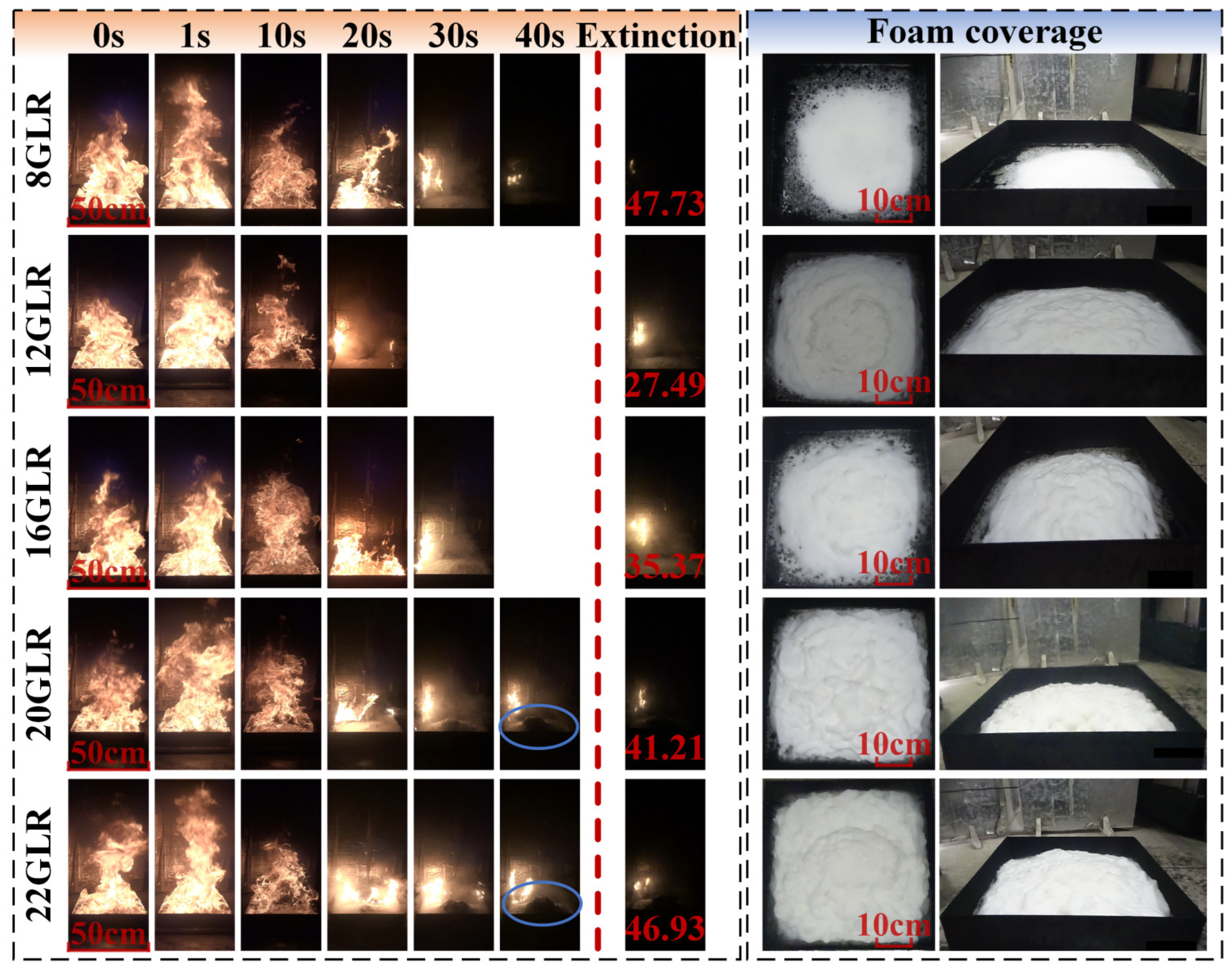
The foam fire extinguishing process and post-extinguishment foam coverage morphology of PFH-BZ-based foam extinguishing agent under different GLRs are depicted in Figure 3. The results reveal that PFH-BZ foam exhibits similar extinguishing progression under varying GLR conditions. Upon initial application, PFH-BZ foam contacts the high-temperature diesel surface, triggering a transient vapor explosion that intensifies combustion [38,39]. As PFH-BZ foam continues to accumulate and spread, the combustion area and intensity gradually diminish, ultimately achieving complete fire suppression.
Comparative analysis reveals significant performance variations among different GLR conditions. The 8 GLR foam exhibits the lowest fire extinguishing efficacy, requiring 47.73 s for complete flame suppression and displaying non-uniform foam coverage. This inferior performance stems from compromised foam stability and structural integrity at low GLR conditions, which hinders the formation of a durable and stable foam blanket. As a result, 8 GLR foam fails to effectively isolate fuel from air, prolonging extinction time and reducing suppression efficiency.
The optimal performance is observed at a GLR of 12, where the PFH-BZ foam achieves complete flame suppression within 27.49 s while forming a uniform and continuous foam blanket over the fuel surface. However, further GLR elevation results in diminishing extinguishing efficacy, with extinction time extending by 28.66–70.72% compared to the 12 GLR condition. Particularly at 20 and 22 GLR conditions, pronounced foam accumulation near the discharge center severely impedes radial spreading across the diesel surface. This phenomenon stems from reduced liquid volume fractions at high GLR conditions, deteriorating foam drainage and spreading characteristics. The resulting increased viscosity and reduced fluidity promote localized foam accumulation rather than uniform coverage, thereby necessitating higher extinguishing agent consumption for complete suppression.
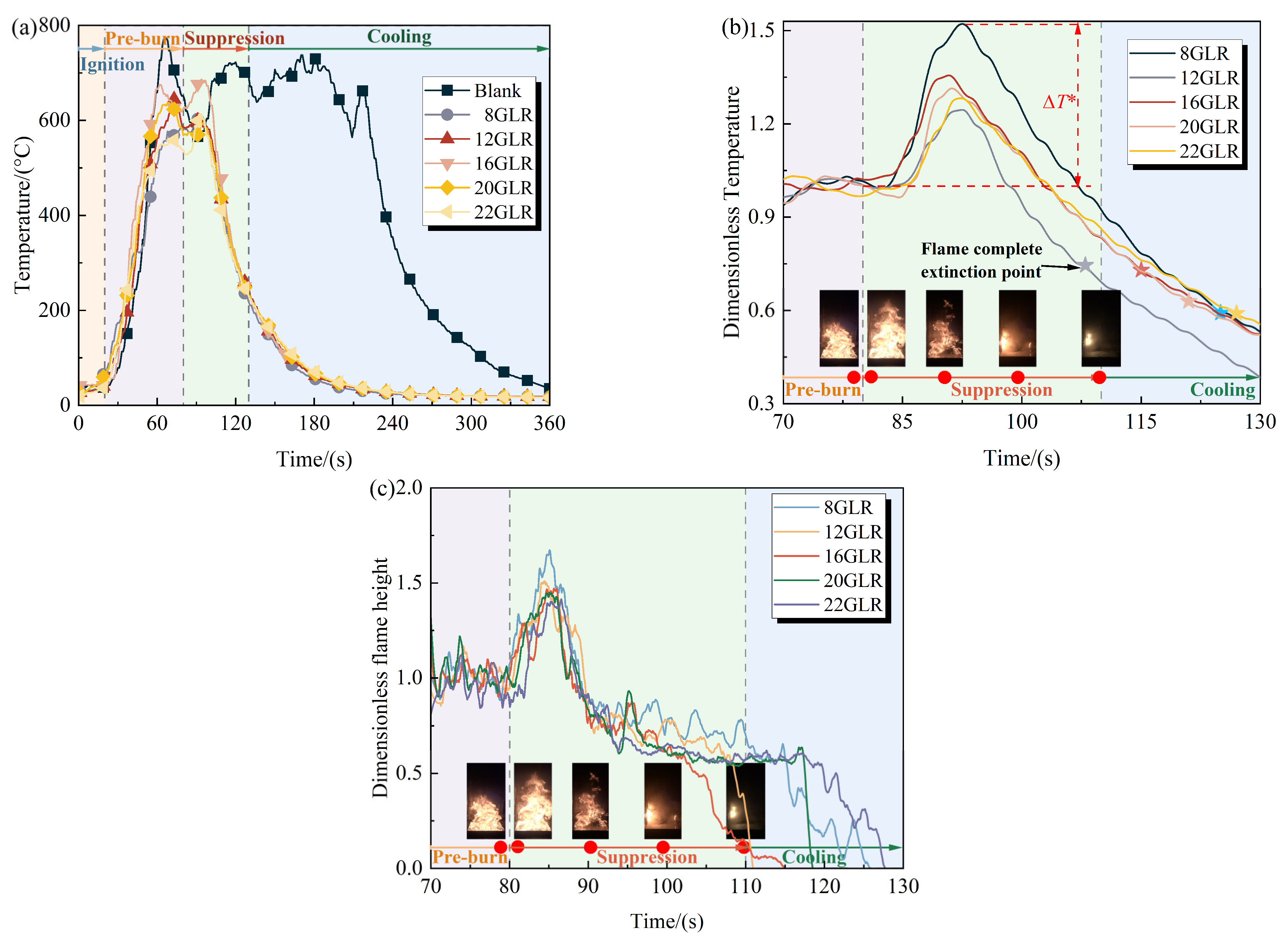
The evolution of temperature and flame height during the foam extinguishing process under different GLR conditions are demonstrated in Figure 4, with key parameters summarized in Table 2. Based on the flame behavior and experimental procedures, the extinguishing process can be divided into four distinct stages, including ignition stage, pre-burn stage, suppression stage, and cooling stage. Although GLR exerts negligible influence on overall temperature trends, it exhibits pronounced differences in vapor explosion intensity. The 8 GLR foam induces the most severe vapor explosion, corresponding to maximum increases of 43.09% for T* and 57.08% for in H*. Conversely, 12 GLR foam demonstrates reduced vapor explosion intensity, with maximum increases for T* and H* being 19.91% and 9.22% lower, respectively, than those for 8 GLR foam. Progressive increased GLR further attenuates these adverse effects, manifested as maximum increases in T* and in H* decreased by 6.23–24.46% and 0.14–16.44%, respectively, relative to the 12 GLR condition.
This phenomenon stems from the violent interaction between the low-temperature foam liquid and high-temperature diesel, involving rapid vaporization and dramatic volumetric expansion (up to 1700-fold). Prior studies have confirmed that vapor explosion intensity depends on droplet characteristics, liquid velocity, fuel temperature, and interfacial tension [33,38,40]. At low GLR conditions, insufficient foam formation and rapid drainage increase liquid–fuel contact. In contrast, higher GLR promotes bubble formation with better structural stability, lower liquid fraction, and reduced drainage. This effectively minimizes the direct and large-scale contact between foam liquid and hot fuel, attenuating the combustion intensification caused by vapor explosions as GLR increases.
Regarding cooling effectiveness, the 12 GLR foam achieves the optimal performance, with an Rcool value of 3.45%/s. In contrast, the 8 GLR foam exhibits a 26.38% reduction in Rcool due to insufficient foam blanket formation. When GLR exceeds 12, although foam properties significantly improved, the diminished spreading capability results in a 31.01–40.00% decrease in Rcool.
Collectively, these results indicate that foam properties profoundly influence the potential for combustion intensification during suppression, while the overall fire extinguishing performance is collectively determined by foam properties and spreading capacity. At a GLR of 12, the PFH-BZ foam attains an optimal balance between structural stability and spreading performance, minimizing the adverse effects of vapor explosions while ensuring rapid fuel coverage, ultimately delivering superior extinguishing efficacy.

3.3. Mechanism of GLR on Foam Performance

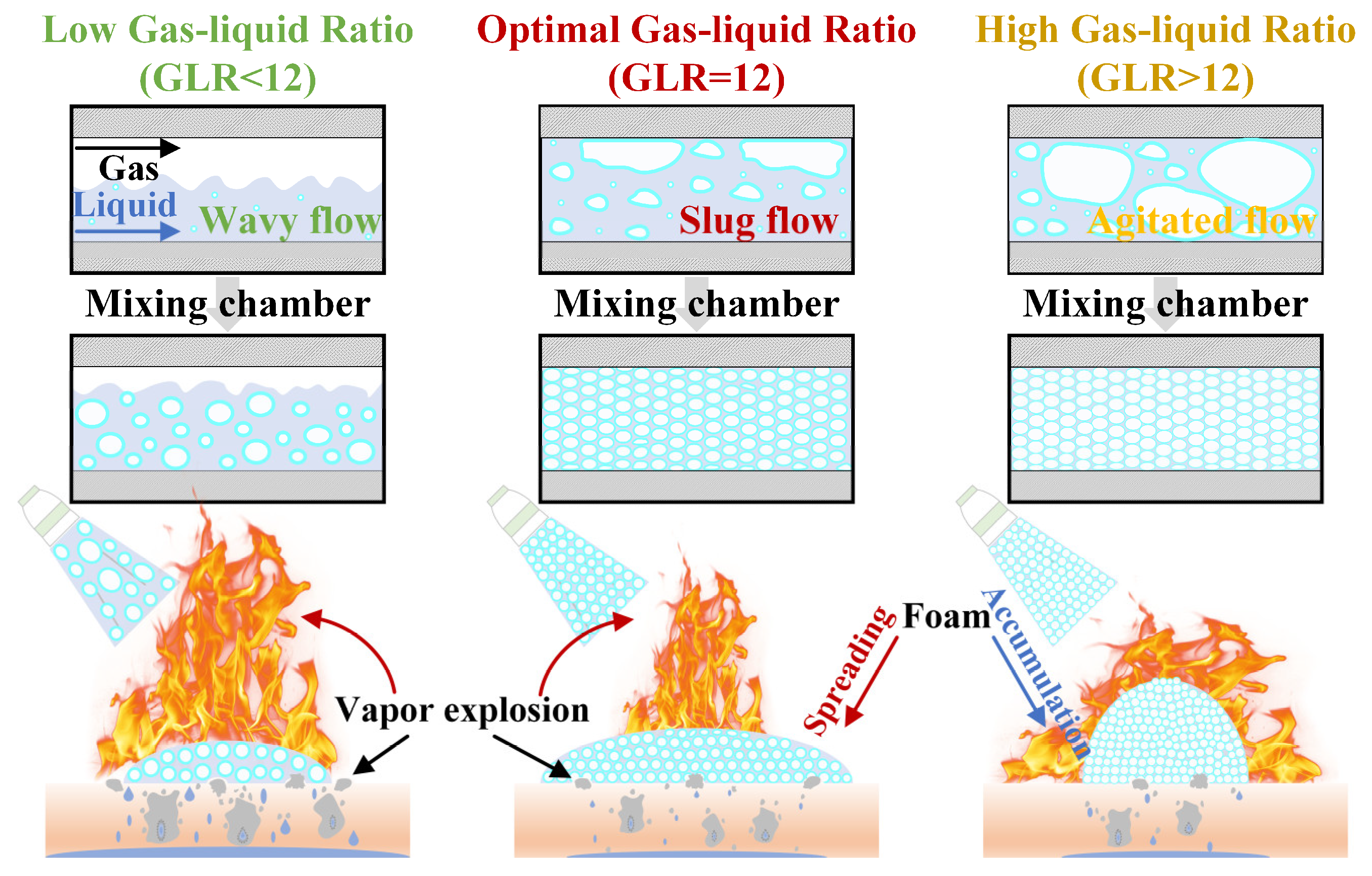
Based on the comprehensive analysis presented above, the GLR significantly influences the foam properties and the fire extinguishing efficacy of PFH-BZ-based foam extinguishing agent. The underlying mechanism is illustrated in Figure 5.
Under low GLR conditions, the gas–liquid system predominantly exhibits wavy flow with limited interfacial turbulence, resulting in insufficient gas–liquid mixing. This leads to the formation of PFH-BZ foams with poor expansion capacity, characterized by a high liquid fraction and low structural stability. When applied to high-temperature diesel fires, the substantial liquid phase rapidly vaporizes, triggering violent vapor expansion that intensifies combustion. Moreover, the inferior foam properties hinder the formation of a stable and continuous foam blanket over the fuel surface, ultimately reducing fire suppression efficiency.
At the optimal GLR of 12, PFH-BZ foam exhibits superior performance due to enhanced turbulence intensity and shear stress within the gas–liquid system. This high-velocity and high-shear environment improves foam quality via two key ways. Firstly, the gas–liquid mixing efficacy is markedly enhanced, transforming large and unstable bubbles into numerous smaller ones with higher structural stability. Secondly, the reduced liquid fraction and thinner lamella effectively retard foam drainage and destabilization. Compared to low GLR conditions, the 12 GLR foam exhibits superior fire extinguishing capability. Its stable and well-dispersed foam structure promotes more controlled interaction with hot diesel, greatly mitigating vapor explosion and combustion intensification. During fire suppression, this optimized foam rapidly covers the entire fuel surface, simultaneously providing cooling, isolation, and smothering effects to achieve rapid suppression.
Under high GLR conditions, the enhanced gas–liquid turbulence further promotes foam generation while reducing liquid fraction and lamella thickness. When applied to high-temperature diesel fires, such foams exhibit reduced drainage and combustion intensification. However, an excessively low liquid fraction restricts fluid mobility within the foam lamella, hindering uniform spreading across the fuel surface. This limitation leads to pronounced foam accumulation near the discharge point, resulting in reduced extinguishing efficacy and longer extinction times compared to the optimal GLR condition.

3.4. Comparison Evaluation of Burn-Back Resistance Between PFH-BZ and Commercial Foams

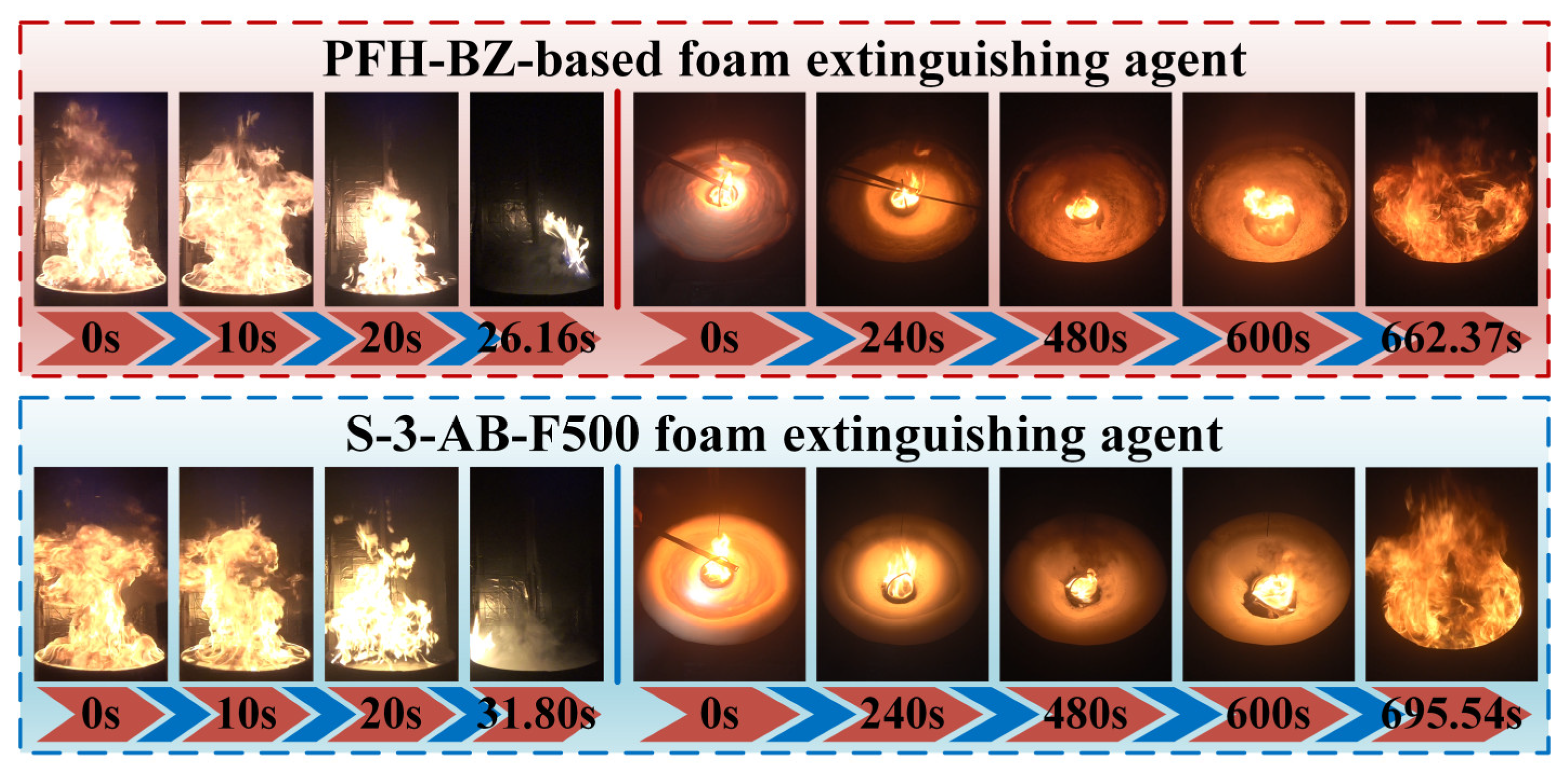
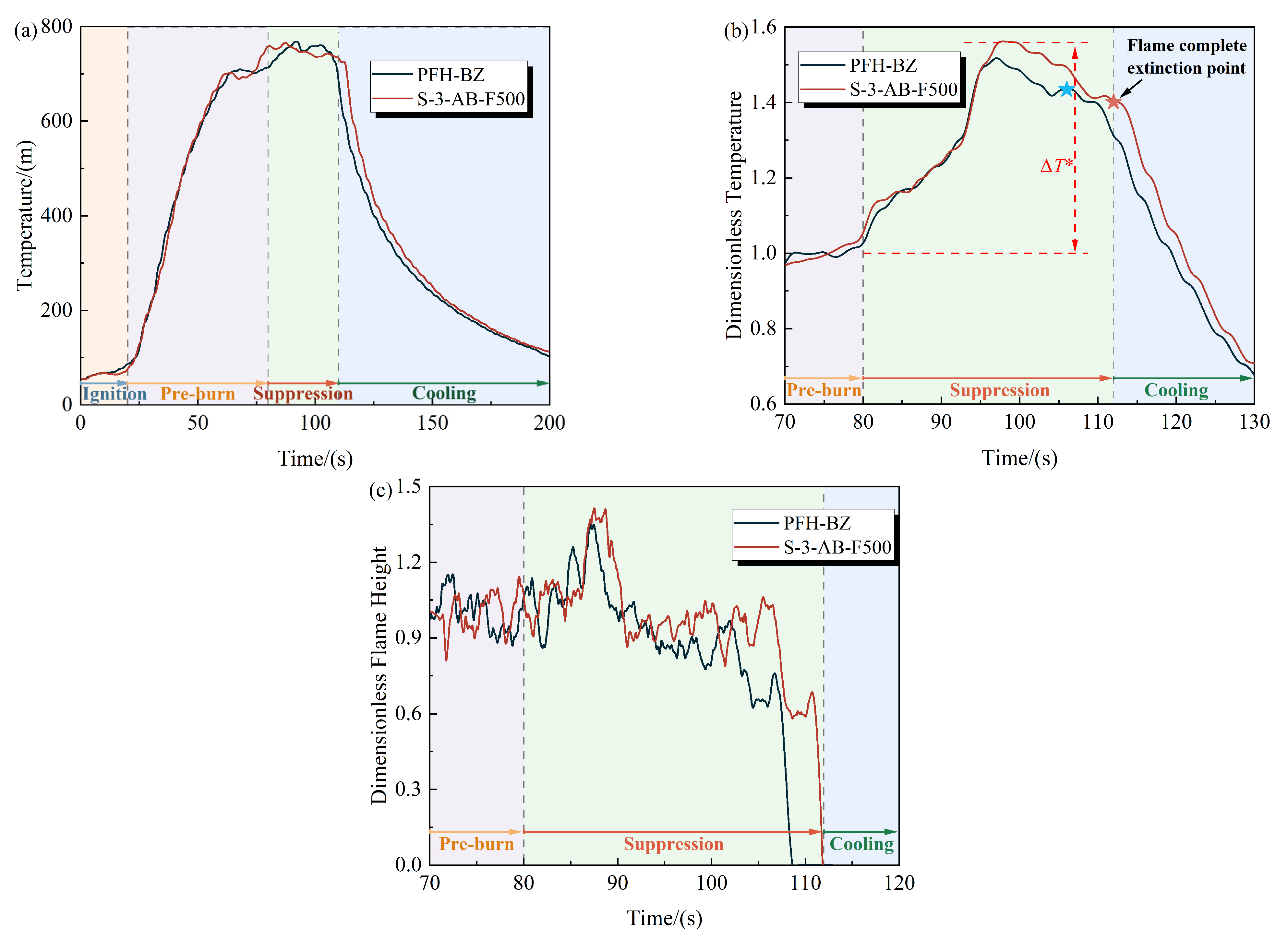
A comparative experiment was conducted to evaluate the fire extinguishing performance and burn-back resistance of the PFH-BZ foam and commercial foam (S-3-AB-F500) at the optimal GLR of 12. The experiment results are illustrated in Figure 6 and Figure 7, with key parameters summarized in Table 3. The initial extinguishing process follows a pattern consistent with the preceding analysis. After continuous foam discharge for 3 min followed by a 1 min waiting period, the burn-back resistance was assessed using a burn-back pot containing 1 L diesel placed at the center of the oil pan.
The results reveal that the PFH-BZ foam exhibits outstanding fire extinguishing efficacy and burn-back resistance, achieving an extinction time of 26.16 s and a burn-back time of 662.37 s. These values significantly exceed the requirements for Class IA foam extinguishing agents [31]. Benefiting from the thermal insulation and cooling characteristics, the PFH-BZ foam effectively mitigates temperature rise in the diesel, thereby preventing reignition. However, under sustained flame heating, the central foam blanket gradually thins, leading to localized fuel exposure. Thanks to its excellent spreading capacity, foam from the periphery flows inward spontaneously, maintaining continuous coverage and forming a dynamic protective barrier. Nevertheless, around 600 s, substantial foam collapse occurs, impairing its spreading and coverage capabilities. This deterioration results in significant exposure of the diesel surface, accompanied by a sharp temperature increase and eventual reignition.
Comparative analysis with the commercial S-3-AB-F500 foam indicates that although the PFH-BZ foam shows a modestly shorter burn-back time by 33.17 s, it offers superior overall extinguishing performance. Its advantages are characterized by enhanced fire suppression capability, considerable cooling efficiency, and reduced combustion intensification. Specifically, the PFH-BZ foam exhibits a 6.42% lower maximum increase in T*, a 15.53% reduction in the maximum increase in H*, and a comparable Rcool of 1.02%/s. These findings strongly suggest that the PFH-BZ-based foam extinguishing agent represents a promising environmentally friendly alternative for fire suppression applications.

4. Conclusions

This study systematically investigates the influence of GLR on the foam properties and fire extinguishing performance of PFH-BZ-based foam extinguishing agent. The results demonstrate that GLR critically governs gas–liquid mixing efficiency, thereby substantially affecting foam properties. Both the expansion ratio and t25% of PFH-BZ foam increase with rising GLR until reaching a plateau. At the optimal GLR of 12, the PFH-BZ foam attains an excellent balance among foaming capability, structural stability, spreading capacity, and drainage characteristic. During fire suppression, this optimized foam rapidly covers the high-temperature diesel surface, simultaneously cooling the flame zone and fuel to enable fast flame extinction. Moreover, its outstanding burn-back resistance is attributed to the formation of a persistent foam blanket that isolates the fuel from the flame and provides continuous cooling, thereby significantly retarding fuel temperature rise and preventing re-ignition.
In contrast, under low GLR conditions, the PFH-BZ foam not only exhibits weakened smothering and isolating effects but also provokes severe vapor explosions due to extensive contact between the foam liquid phase and the hot diesel, ultimately impairing fire-control effectiveness. Conversely, while high GLR conditions enhance foam performance by reducing drainage and vapor explosion risk, the associated low liquid fraction adversely compromises foam spreading. This leads to pronounced localized foam accumulation, hindering complete coverage of the fuel surface and thus reducing suppression efficiency.
In summary, the PFH-BZ foam demonstrates exceptional fire extinguishing performance at the optimal GLR of 12, achieving a short extinction time of 26.16 s and a burn-back time of 662.37 s. These findings confirm the strong potential of PFH-BZ-based foam extinguishing agent as an environmentally friendly candidate for liquid fuel fires and provide an important practical reference for its effective application.

Supplementary Materials

The following supporting information can be downloaded at https://www.mdpi.com/article/10.3390/fire9020059/s1, Figure S1: Synthetic route of C6F13CH2COOH; Figure S2: FTIR spectra of 1H,1H,2H,2H-perfluorooctanol and C6F13CH2COOH; Figure S3: Synthetic route of C6F13CH2COCl and C6F13CH2CONH(CH2)3N(CH3)2; Figure S4: Synthetic route of PFH-BZ; Figure S5: FTIR spectra of C6F13CH2CONH(CH2)3N(CH3)2 and PFH-BZ.

Author Contributions

Conceptualization, Z.X.; methodology, W.Z.; software, L.Y.; validation, W.Z.; formal analysis, W.Z.; investigation, W.Z.; resources, L.Y.; data curation, W.Z.; writing—original draft preparation, W.Z.; writing—review and editing, L.Y.; visualization, W.Z.; supervision, L.Y.; project administration, Z.X.; funding acquisition, L.Y. and Z.X. All authors have read and agreed to the published version of the manuscript.

Funding

This research was funded by the National Natural Science Foundation of China under Grant No. 52474279, the Opening Fund of State Key Laboratory of Fire Science (SKLFS) under Grant No. HZ2025-KF04, the Science and Technology Innovation Program of Hunan Province under Grant No. 2025RC3039.

Institutional Review Board Statement

Not applicable.

Informed Consent Statement

Not applicable.

Data Availability Statement

The data presented in this study are available on request from the corresponding author due to privacy.

Conflicts of Interest

The authors declare no conflicts of interest.

References

  1. Shebeko, Y.N.; Bolodian, I.A.; Molchanov, V.P.; Deshevih, Y.I.; Gordienko, D.M.; Smolin, I.M.; Kirillov, D.S. Fire and Explosion Risk Assessment for Large-Scale Oil Export Terminal. J. Loss Prev. Process Ind. 2007, 20, 651–658. [Google Scholar] [CrossRef]
  2. Ginestet, S.; Le Bot, C. Evaporation Flow Assessment from Petroleum Product Storage Tanks Exposed to Fire Conditions. Oil Gas Sci. Technol. 2018, 73, 27. [Google Scholar] [CrossRef]
  3. Zavareh, R.D.; Dana, T.; Roayaei, E.; Monavari, S.M.; Jozi, S.A. The Environmental Risk Assessment of Fire and Explosion in Storage Tanks of Petroleum Products. Sustainability 2022, 14, 10747. [Google Scholar] [CrossRef]
  4. Fadeyibi, I.O.; Jewo, P.I.; Opoola, P.; Babalola, O.S.; Ugburo, A.; Ademiluyi, S.A. Burns and Fire Disasters from Leaking Petroleum Pipes in Lagos, Nigeria: An 8-Year Experience. Burns 2011, 37, 145–152. [Google Scholar] [CrossRef]
  5. Chaudhary, A.; Gupta, A.; Kumar, S.; Kumar, R. Pool Fires of Jatropha Biodiesel and Their Blends with Petroleum Diesel. Exp. Therm. Fluid Sci. 2019, 101, 175–185. [Google Scholar] [CrossRef]
  6. Okamoto, K.; Yamasaki, H.; Matsuoka, I.; Ichikawa, T.; Matsuoka, H.; Saeki, Y.; Honma, M. Burning Behavior and Fire Hazards of Petroleum Liquid Combustible Spills. J. Loss Prev. Process Ind. 2024, 90, 105346. [Google Scholar]
  7. Laundess, A.J.; Rayson, M.S.; Dlugogorski, B.Z.; Kennedy, E.M. Small-Scale Test Protocol for Firefighting Foams DEF(AUST)5706: Effect of Bubble Size Distribution and Expansion Ratio. Fire Technol. 2010, 47, 149–162. [Google Scholar]
  8. Mawhinney, J.R. Fixed Fire Protection Systems in Tunnels: Issues and Directions. Fire Technol. 2013, 49, 477–508. [Google Scholar]
  9. Li, J.; Li, Y.; Bi, Q.; Li, Y.; Chow, W.; Cheng, C.; To, C.; Chow, C. Performance Evaluation on Fixed Water-Based Firefighting System in Suppressing Large Fire in Urban Tunnels. Tunn. Undergr. Space Technol. 2019, 84, 56–69. [Google Scholar] [CrossRef]
  10. Zabelin, I.V.; Shkola, M.V.; Shlegel, N.E.; Strizhak, P.A. Using Hydrate Foam to Extinguish Petroleum Product Tank Fires. J. Loss Prev. Process Ind. 2025, 98, 105730. [Google Scholar]
  11. Zhao, W.; Xu, Z.; Yan, L. Optimizing Xanthan Gum for Enhanced Fire Extinguishing Performance of Eco-Friendly Short-Chain Fluorocarbon Surfactant Foam. Fire 2025, 8, 463. [Google Scholar] [CrossRef]
  12. Wang, H.; Du, Z.; Zhang, T.; Wang, Q.; Li, Y.; Kang, Q. Performance of Foam Agents on Pool Fires at High Altitudes. Fire Technol. 2021, 58, 1285–1304. [Google Scholar] [CrossRef]
  13. Dahlbom, S.; Mallin, T.; Bobert, M. Fire Test Performance of Eleven PFAS-Free Class B Firefighting Foams Varying Fuels, Admixture, Water Types and Foam Generation Techniques. Fire Technol. 2022, 58, 1639–1665. [Google Scholar] [CrossRef]
  14. Li, Z.; Zhu, H.; Zhao, J.; Zhang, Y.; Hu, L. Experimental Research on the Effectiveness of Different Types of Foam of Extinguishing Methanol/Diesel Pool Fires. Combust. Sci. Technol. 2024, 196, 1791–1809. [Google Scholar] [CrossRef]
  15. Kim, A.K.; Crampton, G.P. Evaluation of the Fire Suppression Effectiveness of Manually Applied Compressed-Air-Foam (CAF) System. Fire Technol. 2009, 48, 549–564. [Google Scholar] [CrossRef]
  16. Arvidson, M.; Mindykowski, P. Fire Testing of Alternative Fixed Fire-Extinguishing Systems for Ro-Ro Spaces Onboard Ships. Ships Offshore Struct. 2023, 18, 423–428. [Google Scholar] [CrossRef]
  17. Singh, R.; Ray, S.K. Study on Control of Disastrous Open Fires in Underground Coalmines. J. Sci. Ind. Res. 2004, 63, 1010–1018. [Google Scholar]
  18. Tian, F.; Wang, K.; Fang, J.; Shah, H.R.; Lang, X.; Mu, S.; Wang, J.; Wang, J. Suppression Behavior Difference Between Compressed Air/Nitrogen Foam over Liquid Fuel Surface Under Constant Radiation Heat Flux. Fire Technol. 2022, 60, 1225–1243. [Google Scholar] [CrossRef]
  19. Xue, D.; Hu, X.; Cheng, W.; Wu, M.; Shao, Z.; Li, Y.; Zhao, Y.; Zhang, K. Carbon Dioxide Sealing-Based Inhibition of Coal Spontaneous Combustion: A Temperature-Sensitive Micro-Encapsulated Fire-Retardant Foamed Gel. Fuel 2020, 266, 117036. [Google Scholar] [CrossRef]
  20. Wang, X.; Liao, Y.; Lin, L. Experimental Study on Fire Extinguishing with a Newly Prepared Multi-Component Compressed Air Foam. Chin. Sci. Bull. 2009, 54, 492–496. [Google Scholar] [CrossRef]
  21. Shang, F.; Zhang, J.; Zhu, T.; Su, W.; Li, K.; Zou, Y.; Guo, Y. Analysis of Fire Extinguishing Performance and Mechanisms in Transformer Oil Pool Fires by Large-Scale Compressed Nitrogen Foam: Impact of Different Nozzle Pressures. J. Fire Sci. 2024, 42, 281–296. [Google Scholar] [CrossRef]
  22. Kang, W.; Yan, L.; Ding, F.; Guo, X.; Xu, Z. Experimental Study on Fire-Extinguishing Efficiency of Protein Foam in Diesel Pool Fire. Case Stud. Therm. Eng. 2019, 16, 100557. [Google Scholar] [CrossRef]
  23. Zhang, J.; Shang, F.; Zhang, S.; Wang, L.; Ke, Y.; Huang, J.; Su, W.; Liu, R.; Sheng, Y. Research on Key Parameters and Fire Extinguishing Effectiveness of Compressed Air Foam System Used for UHV Substation. Fire Technol. 2024, 61, 1969–1990. [Google Scholar] [CrossRef]
  24. Jeon, K.S.; Kim, H.S.; Sim, J.U.; Yoo, Y.H.; Park, J.O. CFD Analysis Study on Aqueous Film Foaming Foam Injection Optimization to Respond to Oil Fires in Naval Ship Compartment. Appl. Chem. Eng. 2024, 35, 239–247. [Google Scholar]
  25. Isabelle, C.; Sylvie, C.A.; Florence, E.; François, G.; Reinhard, H.; Olivier, P.; Florence, R.; Arnaud, S.J. Foams: Structure and Dynamics, 1st ed.; Oxford University Press: Oxford, UK, 2013; pp. 113–134. [Google Scholar]
  26. Lorenceau, E.; Louvet, N.; Rouyer, F.; Pitois, O. Permeability of Aqueous Foams. Eur. Phys. J. E 2009, 28, 293–304. [Google Scholar] [CrossRef]
  27. Isert, N.; Maret, G.; Aegerter, C.M. Coarsening Dynamics of Three-Dimensional Levitated Foams: From Wet to Dry. Eur. Phys. J. E 2013, 36, 116. [Google Scholar] [CrossRef]
  28. Badve, M.; Barigou, M. Local Description of Foam Flow, Deformation and Pressure Drop in Narrow Constricted Channels. Int. J. Multiph. Flow 2020, 128, 103279. [Google Scholar] [CrossRef]
  29. Ding, F.; Kang, W.; Yan, L.; Xu, Z.; Guo, X. Influence of Gas–Liquid Ratio on the Fire-Extinguishing Efficiency of Compressed Gas Protein Foam in Diesel Pool Fire. J. Therm. Anal. Calorim. 2020, 146, 1465–1472. [Google Scholar] [CrossRef]
  30. Zhao, W.; Xu, Z.; Yan, L. Zwitterionic Short-Chain Fluorocarbon Surfactant: Synthesis, Synergy with Hydrocarbon Surfactants, and Effects of Inorganic Salts on Surface Activity and Foam Performance. Surf. Interfaces 2025, 72, 107125. [Google Scholar] [CrossRef]
  31. GB 15308-2006; Foam Extinguishing Agent. Standardization Administration of the People’s Republic of China: Beijing, China, 2006.
  32. Qi, D.; Wang, L.; Ji, J.; Li, M. Dimensionless analytical solutions for steady-state fire smoke spread through high-rise shaft. Fire Saf. J. 2017, 93, 12–20. [Google Scholar] [CrossRef]
  33. Liu, Z.; Carpenter, D.; Kim, A.K. Cooling Characteristics of Hot Oil Pool by Water Mist during Fire Suppression. Fire Saf. J. 2008, 43, 269–281. [Google Scholar] [CrossRef]
  34. Li, H.; Liu, S.; Jin, C.; Xu, P.; Wang, J.; Xie, Q. Experimental Investigation of Flow Patterns and Rheological Characteristics of Compressed Air Foam in Horizontal Tube. Phys. Fluids 2024, 36, 033118. [Google Scholar] [CrossRef]
  35. Koehler, S.A.; Hilgenfeldt, S.; Stone, H.A. A Generalized View of Foam Drainage: Experiment and Theory. Langmuir 2000, 16, 6327–6341. [Google Scholar] [CrossRef]
  36. Stevenson, P. Dimensional Analysis of Foam Drainage. Chem. Eng. Sci. 2006, 61, 4503–4510. [Google Scholar] [CrossRef]
  37. Garo, J.P.; Koseki, H.; Vantelon, J.P.; Fernandez-Pello, C. Combustion of Liquid Fuels Floating on Water. Therm. Sci. 2007, 11, 119–140. [Google Scholar] [CrossRef]
  38. Xu, M.; Zhang, J.; Wu, C.; Li, C.; Chen, X.; Lu, S. Collision Dynamics of a Single Water Droplet Impinging on a High-Temperature Pool of Oil. Acta Mech. 2017, 229, 1567–1577. [Google Scholar] [CrossRef]
  39. Liu, Y.; Fu, Z.; Zheng, G.; Chen, P. Study on the Effect of Mist Flux on Water Mist Fire Extinguishing. Fire Saf. J. 2022, 130, 103601. [Google Scholar] [CrossRef]
  40. Ebrahim, M.; Elkenani, B.; Ortega, A. Transient Surface Temperatures upon the Impact of a Single Droplet onto a Heated Surface in the Film Evaporation Regime. Int. J. Heat Mass Transf. 2022, 186, 122463. [Google Scholar] [CrossRef]
Figure 1. Schematics of the self-made small-scale compressed air foam system (a) and the drainage property tester (b).
Fire 09 00059 g001
Figure 2. Expansion ratio (a) and t25% (b) of PFH-BZ-based foam extinguishing agent under different GLR conditions.
Fire 09 00059 g002
Figure 3. Fire extinguishing process and post-extinguishment foam coverage morphology of PFH-BZ-based foam extinguishing agent under different GLR conditions.
Fire 09 00059 g003
Figure 4. Temperature at 1 m (a), dimensionless temperature (T*) at 0.3 m (b), and dimensionless flame height (H*) (c) over time during foam fire extinguishment under different GLR conditions. (The star corresponds to the moment when the flame is completely extinguished).
Fire 09 00059 g004
Figure 5. Schematic of the impact of GLR on PFH-BZ-based foam extinguishing agent performance.
Fire 09 00059 g005
Figure 6. Fire extinguishing and burn-back experiment processes of PFH-BZ-based and commercial foam extinguishing agents.
Fire 09 00059 g006
Figure 7. Temperature at 1 m (a), dimensionless temperature (T*) at 0.3 m (b), and dimensionless flame height (H*) (c) over time during foam fire extinguishment of PFH-BZ and S-3-AB-F500 foams. (The star corresponds to the moment when the flame is completely extinguished).
Fire 09 00059 g007
Table 1. Summary of experimental conditions.
GLRSystem Pressure/(MPa)Gas Flow Rate/(L/h)Liquid Flow Rate/(L/h)
40.7018045
80.7036045
120.7054045
160.7072045
200.7090045
220.70100045
Table 2. Key fire extinguishing parameters of PFH-BZ-based foam extinguishing agents under different GLR conditions.
GLRExtinction Time
/(s)
Maximum Increase in T*/(%)Maximum Increase in H*/(%)Rcool
/(%/s)
847.73 ± 1.9143.09 ± 9.2657.08 ± 14.452.54 ± 0.40
1227.49 ± 2.3134.51 ± 13.8651.82 ± 1.343.45 ± 0.28
1635.37 ± 0.7132.36 ± 5.7751.75 ± 6.602.38 ± 0.11
2041.21 ± 2.7727.91 ± 6.2244.49 ± 0.442.21 ± 0.01
2246.93 ± 1.2426.07 ± 3.1943.30 ± 2.592.07 ± 0.04
Table 3. Fire extinguishing and burn-back resistance parameters of PFH-BZ and S-3-AB-F500 foams.
Foam Extinguishing AgentPFH-BZ FoamS-3-AB-F500 Foam
Extinction time/(s)26.1631.80
Burn-back time/(s)662.37695.54
Maximum increase in T*/(%)52.6656.27
Maximum increase in H*/(%)35.1841.65
Rcool/(%/s)1.021.07
Disclaimer/Publisher’s Note: The statements, opinions and data contained in all publications are solely those of the individual author(s) and contributor(s) and not of MDPI and/or the editor(s). MDPI and/or the editor(s) disclaim responsibility for any injury to people or property resulting from any ideas, methods, instructions or products referred to in the content.