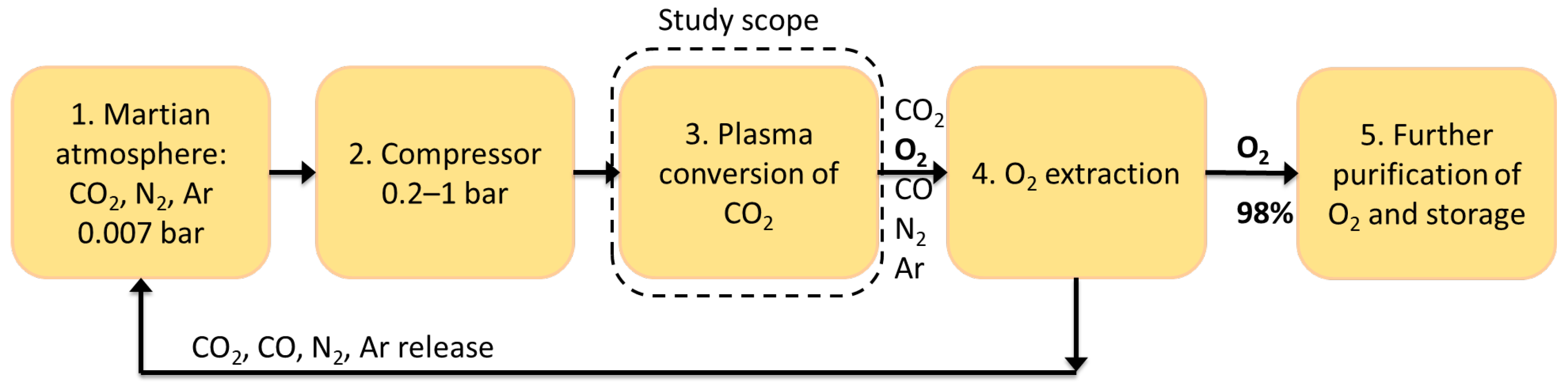
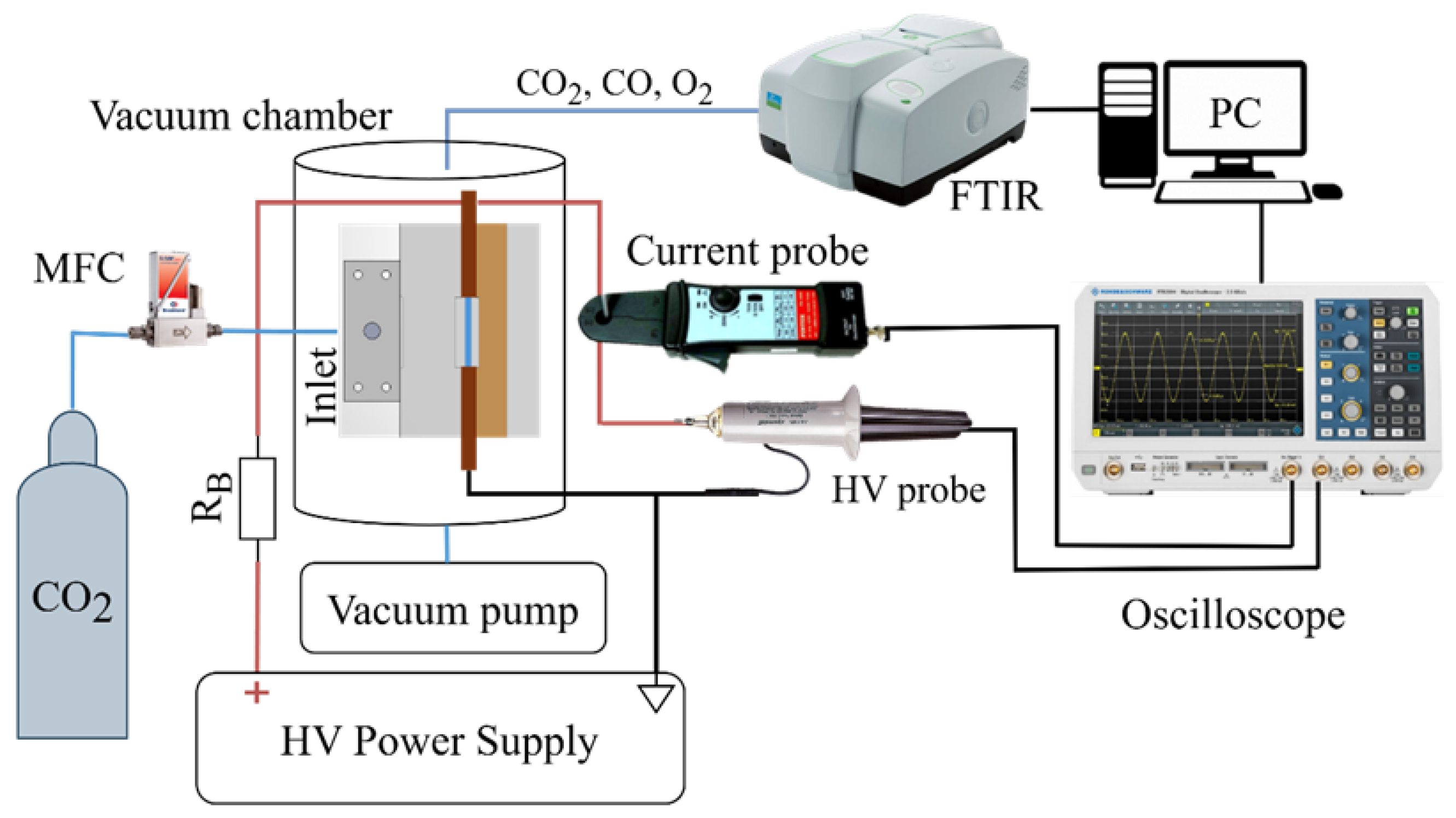
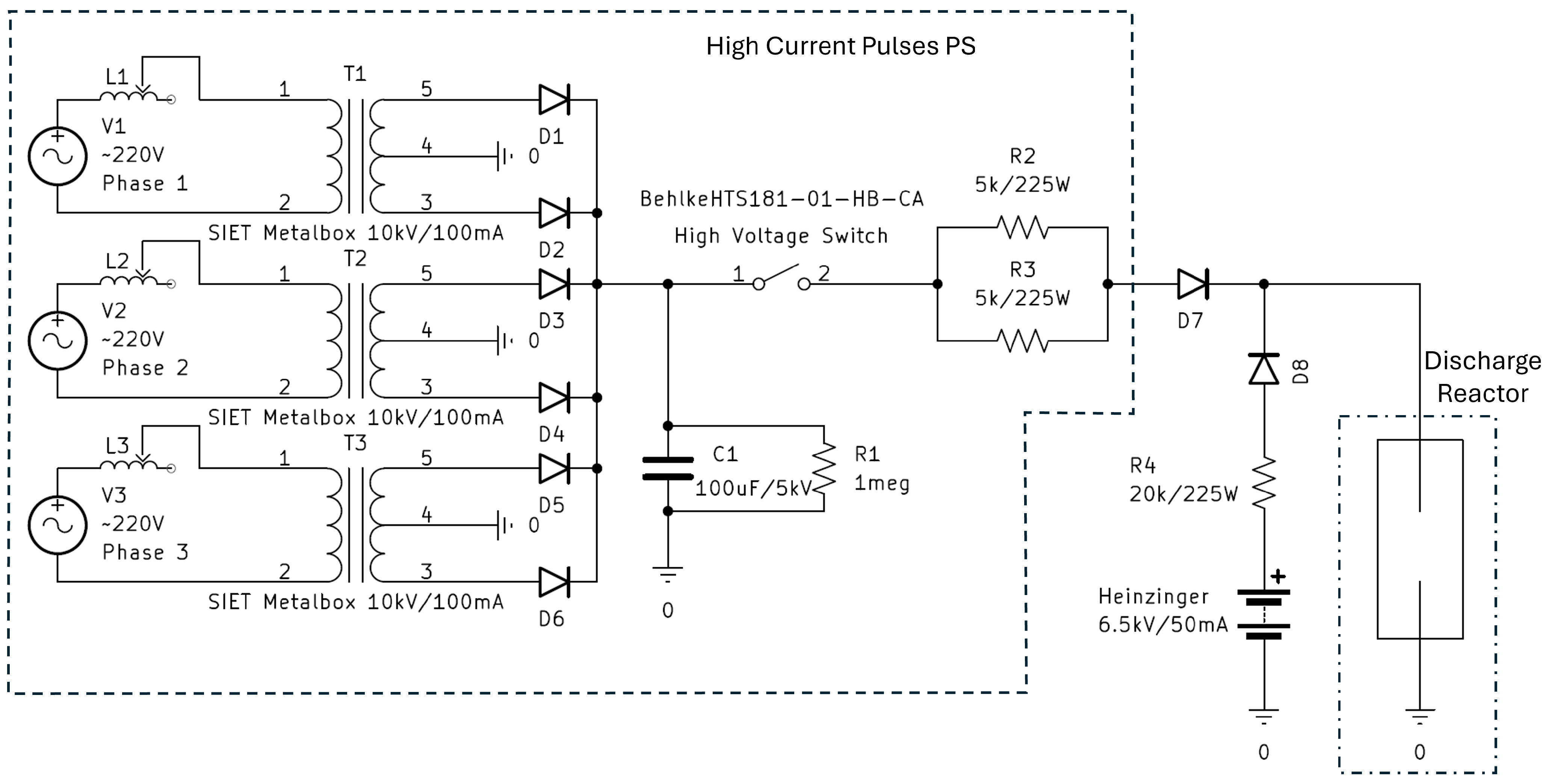
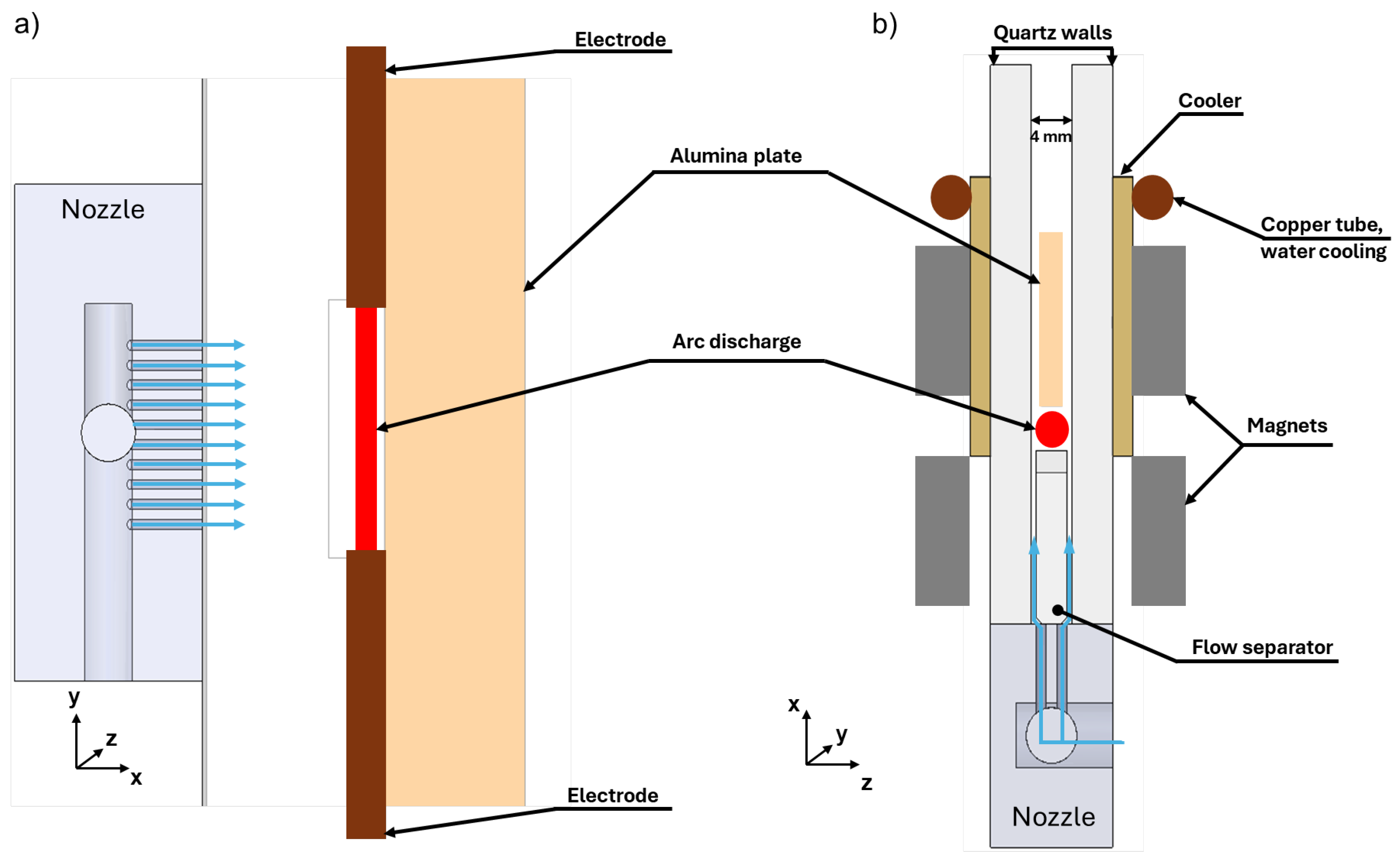
In this work, we study multiple discharge geometries and multiple discharge operational parameters. If we study all of the combinations, the amount of data would become overwhelming. Therefore, to avoid collecting and presenting an excessive amount of data, we limit the studied parameter ranges. The selection was based on criteria such as discharge stability and the priority of specific operating conditions. This is discussed in every section where relevant. Moreover, not all of the measured results are presented here, but rather, a selected set that are important and worth showing.
3.1. DC and Pulsed Current Operation
Initially, the discharge was designed to operate with a DC power supply with fixed discharge current. However, during the DC operation of the discharge, we observed instabilities in the discharge regime at lower pressures (200 mbar) and currents (<200 mA), caused by stochastic transitions between glow and arc regimes. In this work, the terms “glow” and “arc” refer to different cathode-spot formation mechanisms. The glow regime is characterized by a large spot sustained by secondary electron emission, whereas the arc regime features a smaller, hotter spot sustained by thermo-field emission. We assume that the different regimes do not affect significantly the plasma column, as was shown in several studies for stabilized arc and glow discharge at atmospheric pressure [
35,
36]. The change in the discharge regime leads to a strong variation in the voltage drop at the cathode region—in the arc regime, the voltage drop is typically 10–15 V, while in the glow regime it is in the order of 300–500 V for CO
2 gas [
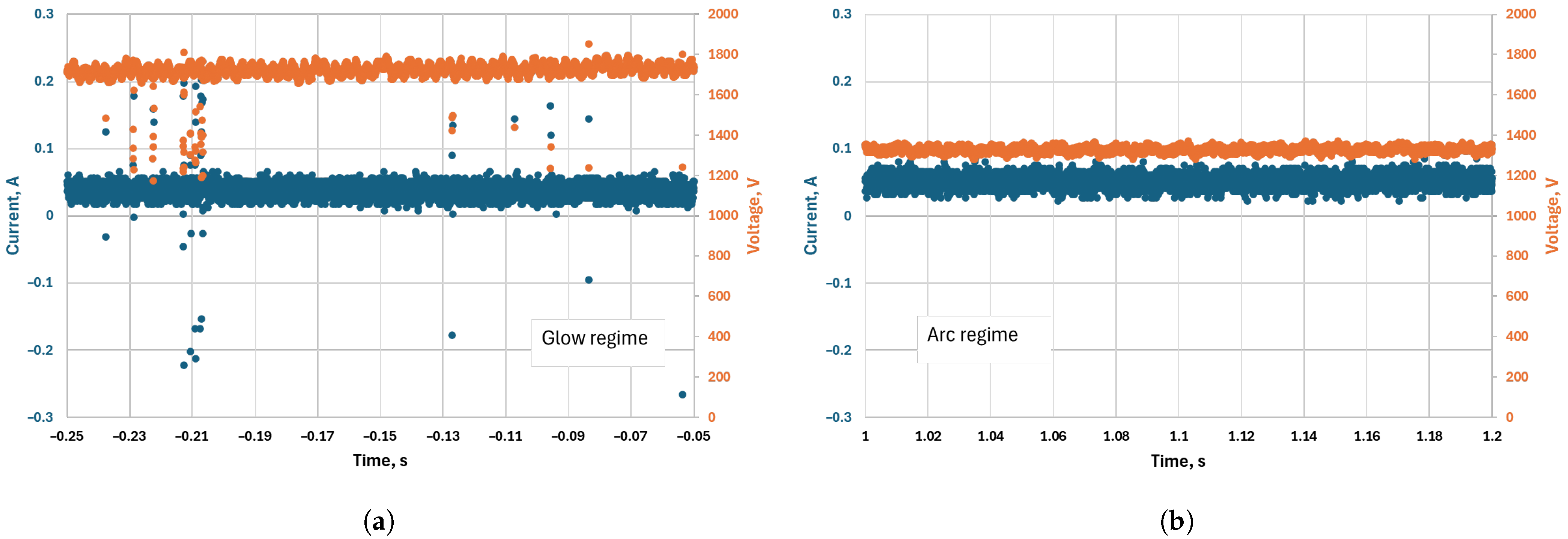
37]. This leads to a significant increase in the overall voltage drop between the electrodes for the same current in the glow regime, which leads to an increase in power without an increase in the conversion rate, therefore lowering the energy efficiency. The difference between the two regimes can be seen in the oscillograms (
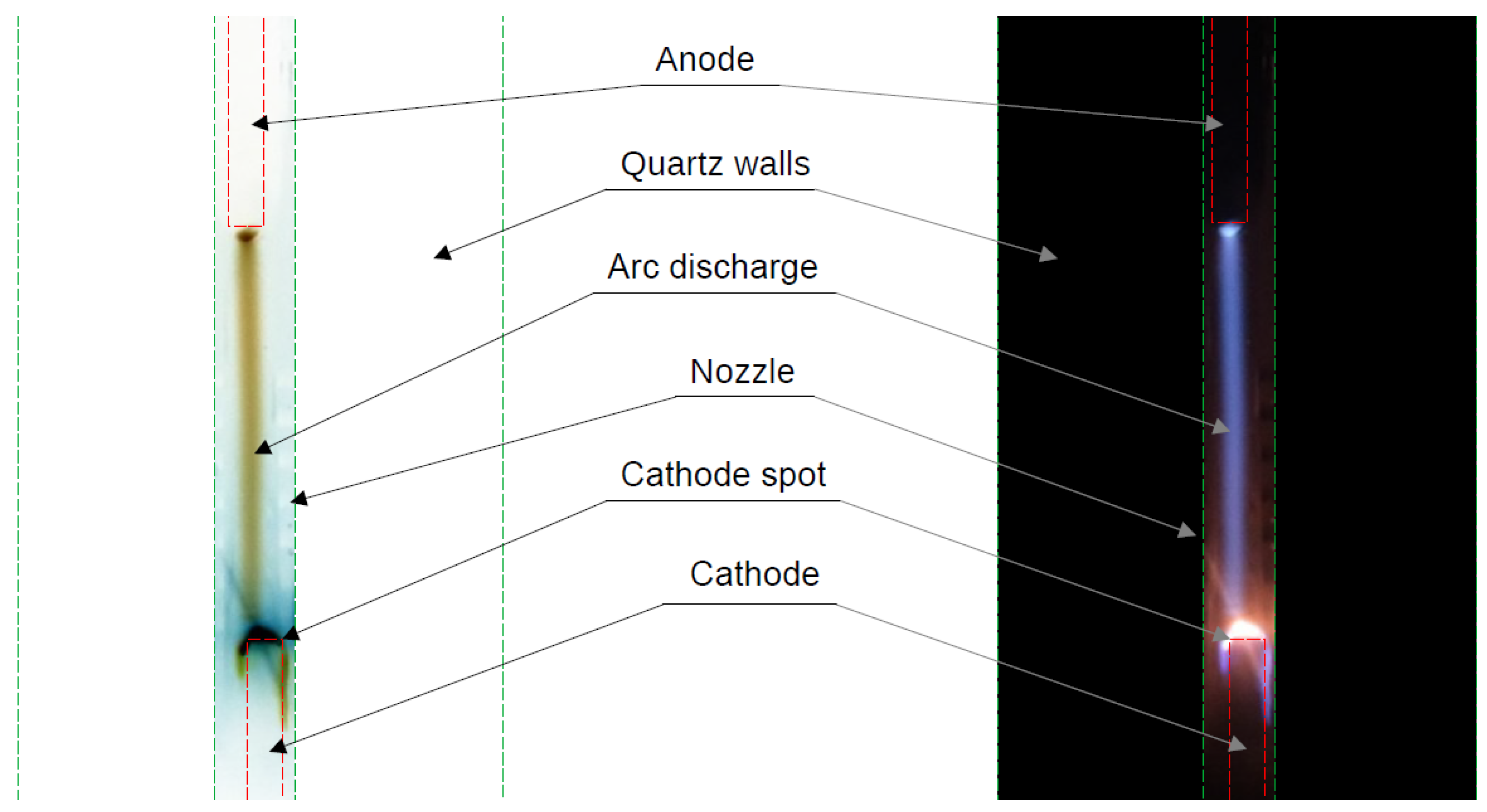
Figure 7). The oscillograms were taken at a pressure of 350 mbar, a current of 50 mA, and a gas flow rate of 4 L/min. In this case the voltage was around 1800 V in the glow regime and 1400 V in the arc regime, i.e., a 400 V difference and, thus, around 25% lower power for the arc regime. The different regimes were accompanied by different visual behavior observed during the experiments. A large dim cathode region (spot), covering the whole available cathode area, indicated the glow regime, while a highly localized cathode spot producing very bright light from a point light source indicated the arc regime. A photograph of the discharge while it was operating in the glow regime was also taken, where the glow cathode spot is clearly visible (
Figure 8). At higher pressures and currents, the discharge was operating predominantly in the arc regime, albeit still having short transitions depending on the current value, the time of operation, and other unknown factors. The discharge voltage was lower at higher currents and dropped down to 500 V at 500 mA, even at higher pressure (612 mbar).
Since the operation at lower pressures is crucial in the context of Mars applications due to the lower power consumption needed for compressing the Martian atmosphere, it is important for us to achieve stable and efficient operation at pressures as low as possible—not only at high pressures close to atmospheric. In order to enforce the arc regime, we can simply increase the discharge current to values higher than 300–400 mA, at which the discharge typically operates in arc regime even at 200 mbar.
However, this significantly increases the discharge power per unit length. As a result, the discharge may be destroyed due to overheating, or very large gas flow rates must be used to prevent damage. Such high flow rates limit the range of conditions available for optimizing CO2 conversion and can even break the stabilization of the discharge. A much more flexible way is to use pulsing at high current and to control the overall power by adjusting the duty cycle. With respect to discharge optimization, pulsing provides additional degrees of freedom, and the CO2 conversion can be optimized with respect to several parameters (gas flow, duty cycle, frequency, discharge current, etc.). This is why we developed a pulsed power supply that produces high-current pulses around 500 mA and maintains a current of 50 mA between the pulses. The sustained low current of 50 mA between the high-current pulses is necessary in order to preserve the plasma channel and, thus, to avoid the necessity of gas breakdown at every pulse, i.e., the necessity of very high voltage. This ensures operation of the discharge in the arc regime during the pulses and gives the experiment stability and reproducibility while maintaining similar discharge power. During the low-current period, the discharge is normally in the glow regime, although this is not guaranteed, since it is possible to operate in the arc regime if the cathode is hot enough.
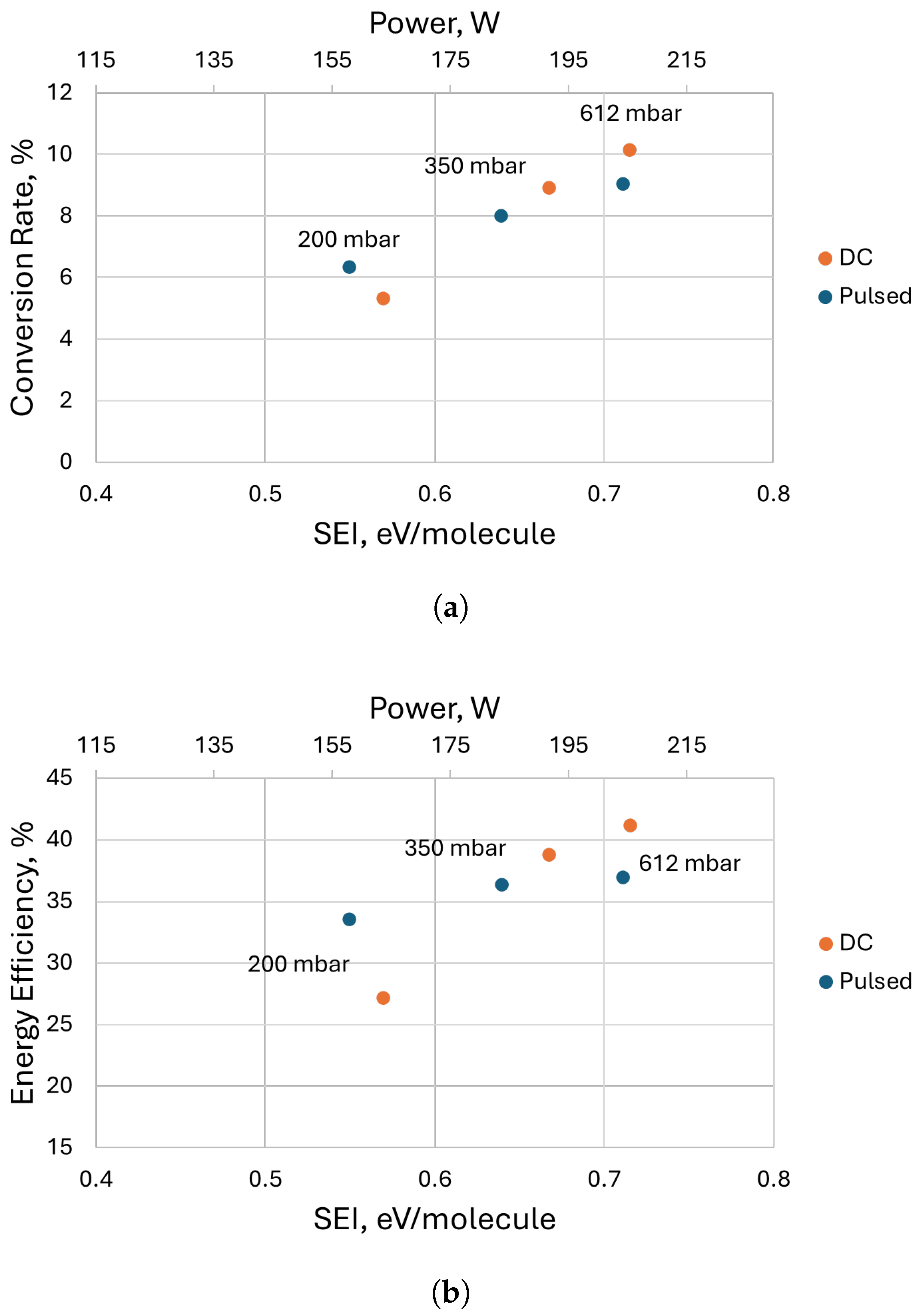
A comparison between the obtained results for the CO
2 conversion and efficiency with both pulsed and DC power supplies at pressures of 200, 350, and 612 mbar, with a mass flow rate of 4 L/min, is shown in
Figure 9. In the experiment shown, the pulsed power supply was operated at a frequency of 5000 Hz and a duty cycle of
= 0.25. The current values of the measurements made with the DC supply were chosen such that the power consumption of the DC discharge was similar to that obtained with the pulsed power supply. It can be seen that, at 200 mbar, the pulsed power supply performed much better than the DC power supply in terms of both energy efficiency and conversion rate for similar power and
values. At higher pressures, the results obtained with the DC power supply were similar or even slightly better. We are not sure of the reason for the latter. Assuming that both discharges operate predominantly in the arc regime at high pressure, the slightly better performance of the DC operation is probably related to the suboptimal current value for the CO
2 conversion, i.e., lower current values in the DC operation are more optimal compared to higher current values. We have seen previously in a gliding arc discharge that, under a certain range of conditions, the current value can have an optimal value producing the best energy efficiency at a significant conversion rate [
27]. This effect is probably related to the stronger plasma column contraction at higher current and pressure and, thus, reduced gas treatment.
As this study is a comprehensive examination of multiple parameters of a system, designed for the purpose of oxygen extraction on Mars, operation at lower pressures is critical and beneficial; therefore, the next results were obtained by using only a pulsed power supply.
3.2. Frequencies
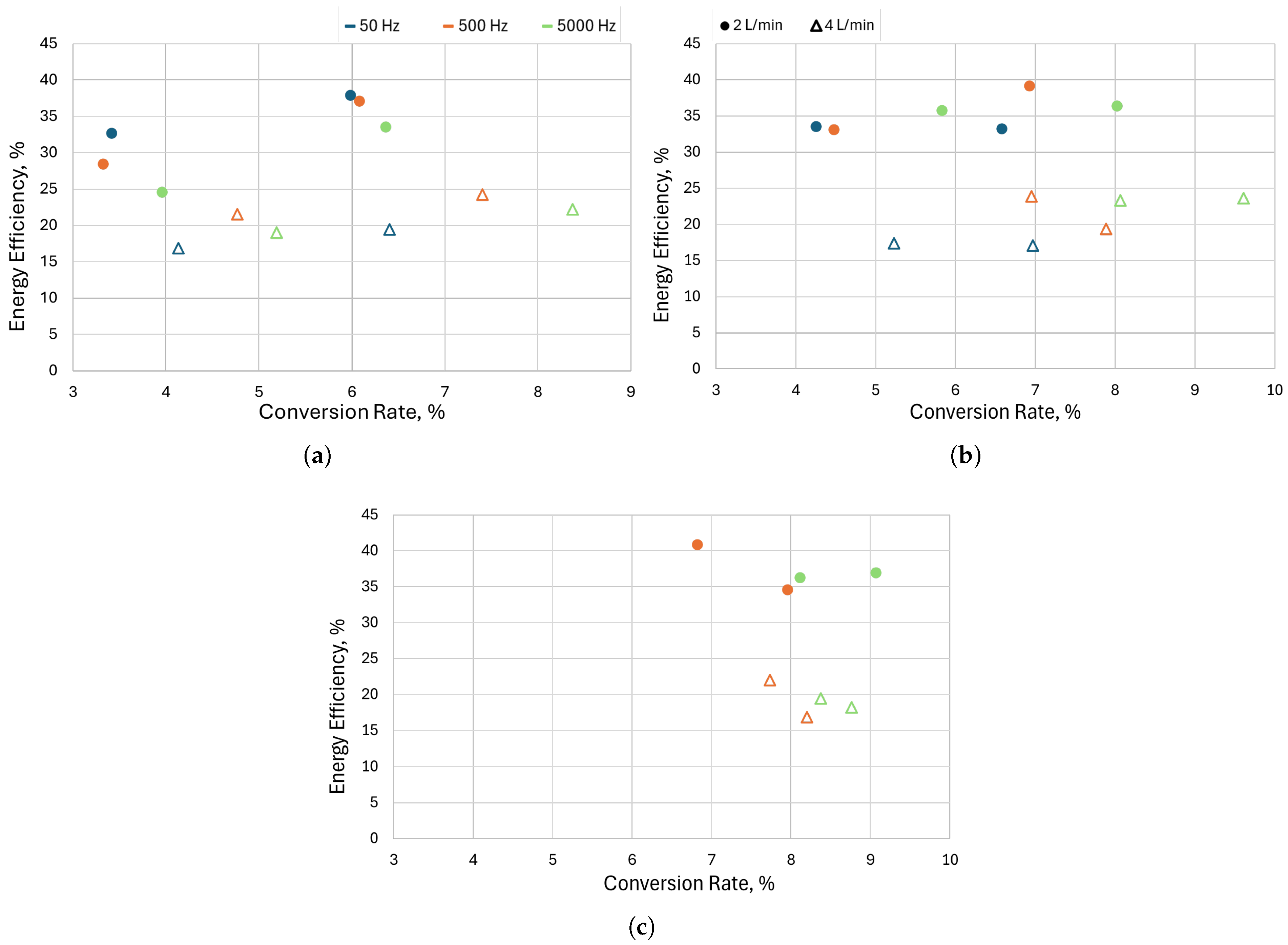
As mentioned, using a pulsed power supply offers additional degrees of freedom in terms of input parameters. One of them is the frequency of the pulses. In this subsection, we present the results obtained with different frequencies (50, 500, and 5000 Hz) at different pressures (200, 350, and 612 mbar) and different mass flow rates (2 and 4 L/min). The results are shown in
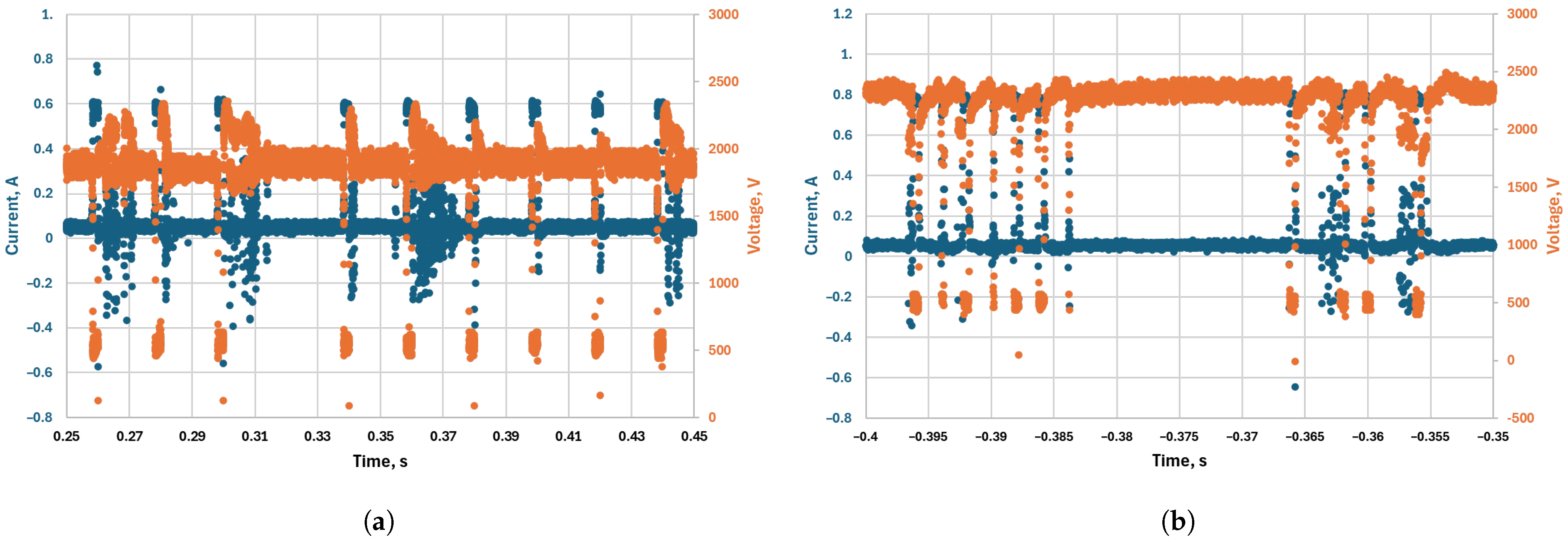
Figure 10. Apart from the results at 200 mbar and 4 L/min, where lower frequencies perform better, there is not a strong dependency of the conversion rate and energy efficiency on the frequency of the pulses. At 612 mbar, there are no results for 50 Hz because the discharge operation is not stable, as can be seen from the oscillogram (
Figure 11a); thus, we omitted these points as unreliable.
Figure 11a shows that many high-current pulses are not realized, and the discharge remains at low current for a long time. At high pressure, the discharge resistance is higher, and the voltage (∼2 kV) of capacitor C1 supplying the high current is not sufficient to sustain a stable transition to high current. The results obtained for 500 Hz are worse than those obtained at 5000 Hz, again for the same reason—some of the high-current pulses are not realized at high pressure (
Figure 11b). At the highest frequency (5000 Hz), the discharge achieves stable operation, with consistent transition between low and high current. We suspect that this is due to a residual ionization from the high-current pulses.
We prioritized stability of the discharge under all operating conditions (flow rate, pressure, duty cycle, etc.) and, thus, decided to continue with the next results only at 5000 Hz.
3.3. Quenching Configurations
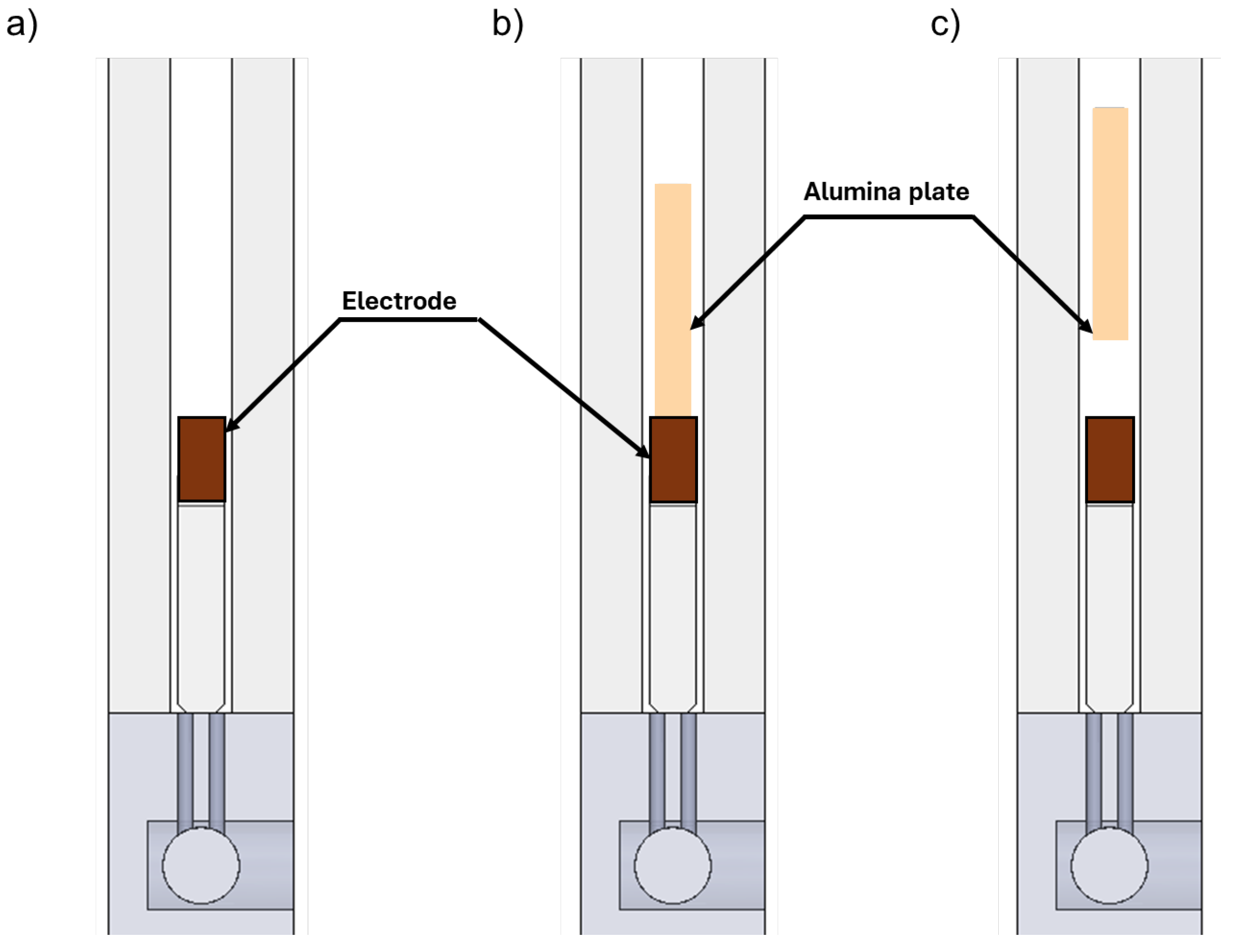
In this section, a comparison between the different quenching configurations is presented. The configurations were as follows: “None” (without quenching alumina); “0 mm”, i.e., the alumina is in contact with the electrodes; and “5 mm”, i.e., the quenching alumina is placed at a distance of 5 mm from the electrodes.
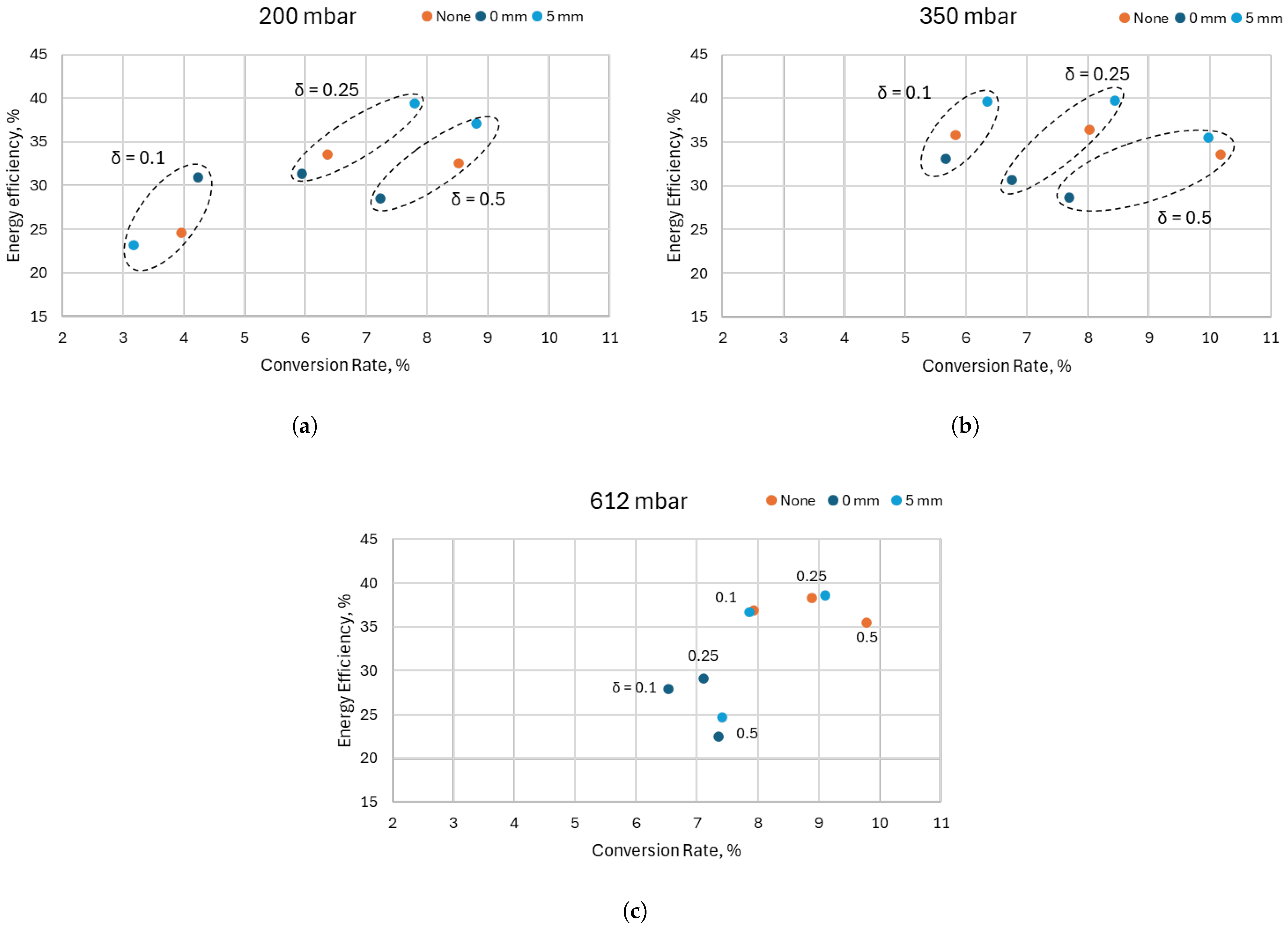
Figure 12 presents the results obtained for the three cooling configurations at different pressures (200, 350, and 612 mbar), a flow rate of 4 L/min, frequency of 5 kHz, and three different values of the duty cycle (0.1, 0.25, and 0.5).
Here, the best results for the conversion rate were achieved by both the “5 mm” and “None” configurations at a pressure of 350 mbar and duty cycle 0.5—around 10%—while still retaining a relatively high energy efficiency of 35%. The highest energy efficiency at this flow rate was around 40% at a conversion rate of slightly above 8%, achieved by the “5 mm” configuration at a pressure of 350 mbar and duty cycle 0.25.
Increasing the duty cycle (and therefore, the plasma power) in all configurations and at all pressures leads to an increase in the conversion rate, as expected. An exception to this trend is visible at the highest pressure in
Figure 12c for the “5 mm” configuration at a duty cycle of 0.5, where the conversion rate is around 7.5%—lower than the conversion rate obtained with a duty cycle of 0.25 (around 9%). This is a result of the discharge arc column attaching to one of the quartz walls instead of remaining in the middle between both walls. Here, again, only a part of the arc column is attached to the wall, and the current path between the electrodes is not disconnected. We suspect that the reason for this attachment is the higher temperature of the gas and the quartz walls when working at higher power. Increasing the temperature at one wall more than the other, due to unavoidable asymmetric imperfections of the reactor’s construction, leads to the discharge attaching to the “hotter” wall, as this position is more energetically favorable, i.e., lower discharge power and probably also lower gas friction, as shown in [
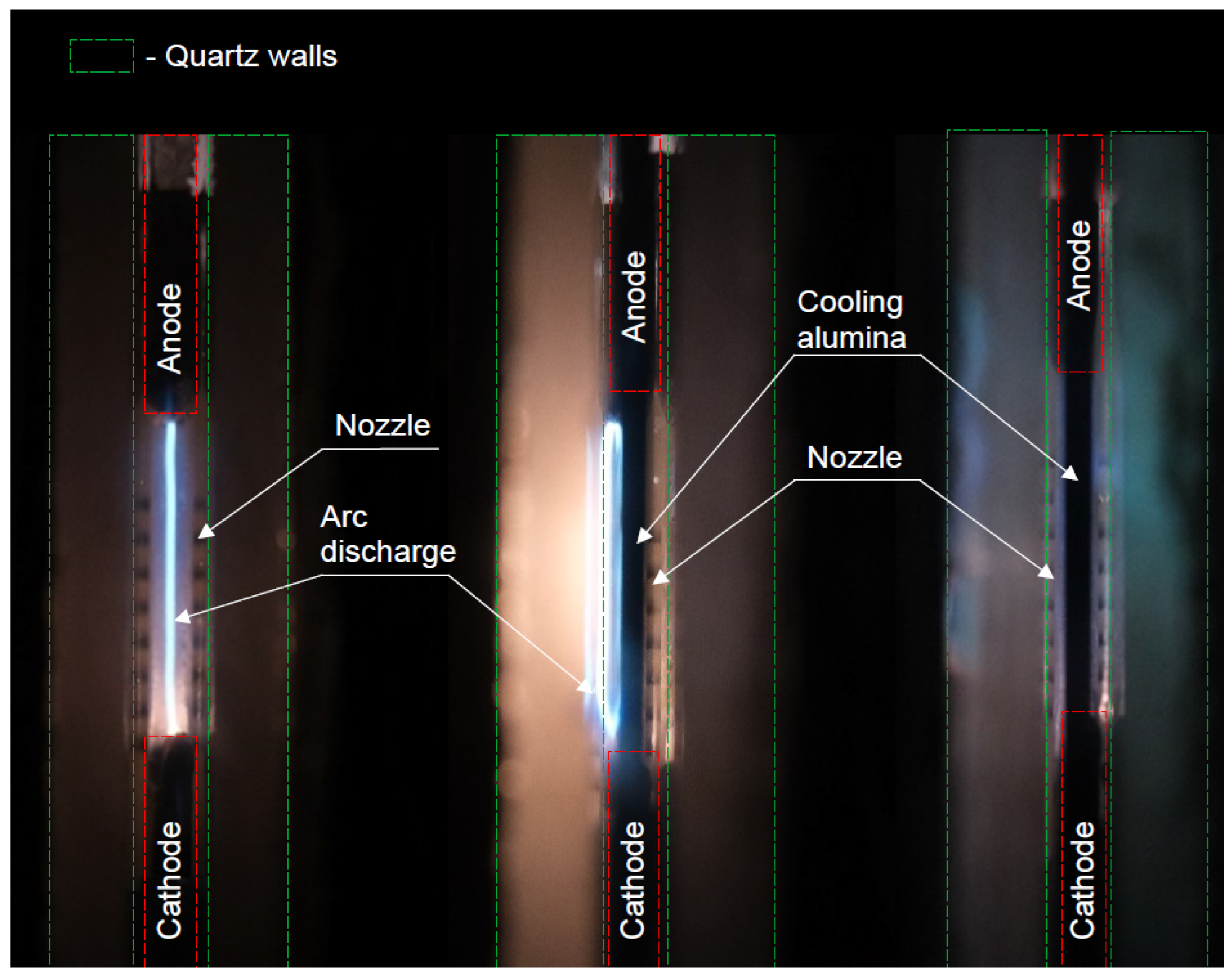
28]. As this effect was found to be critical, photographs of the discharge were taken during most of the measurements. In
Figure 13, pictures of different possible situations are shown. The left picture shows a stabilized arc column in the middle of the gas channel in the case without quenching alumina. The middle picture shows a discharge with quenching alumina, where the arc column is attached to the left quartz glass. In the right picture, the arc column is behind the quenching alumina and is not visible.
This effect occurs mainly at low gas flow rates and high pressure, where the gas velocity is the lowest. At lower pressures, the attachment to the glass is prevented due to the higher gas velocity. For a given mass flow (for example 4 L/min), the decrease in the pressure (and thus, the gas density) leads to an increase in the volumetric flow and, thus, the gas velocity. For example, reducing the pressure from 600 mbar to 200 mbar would increase the gas velocity threefold.
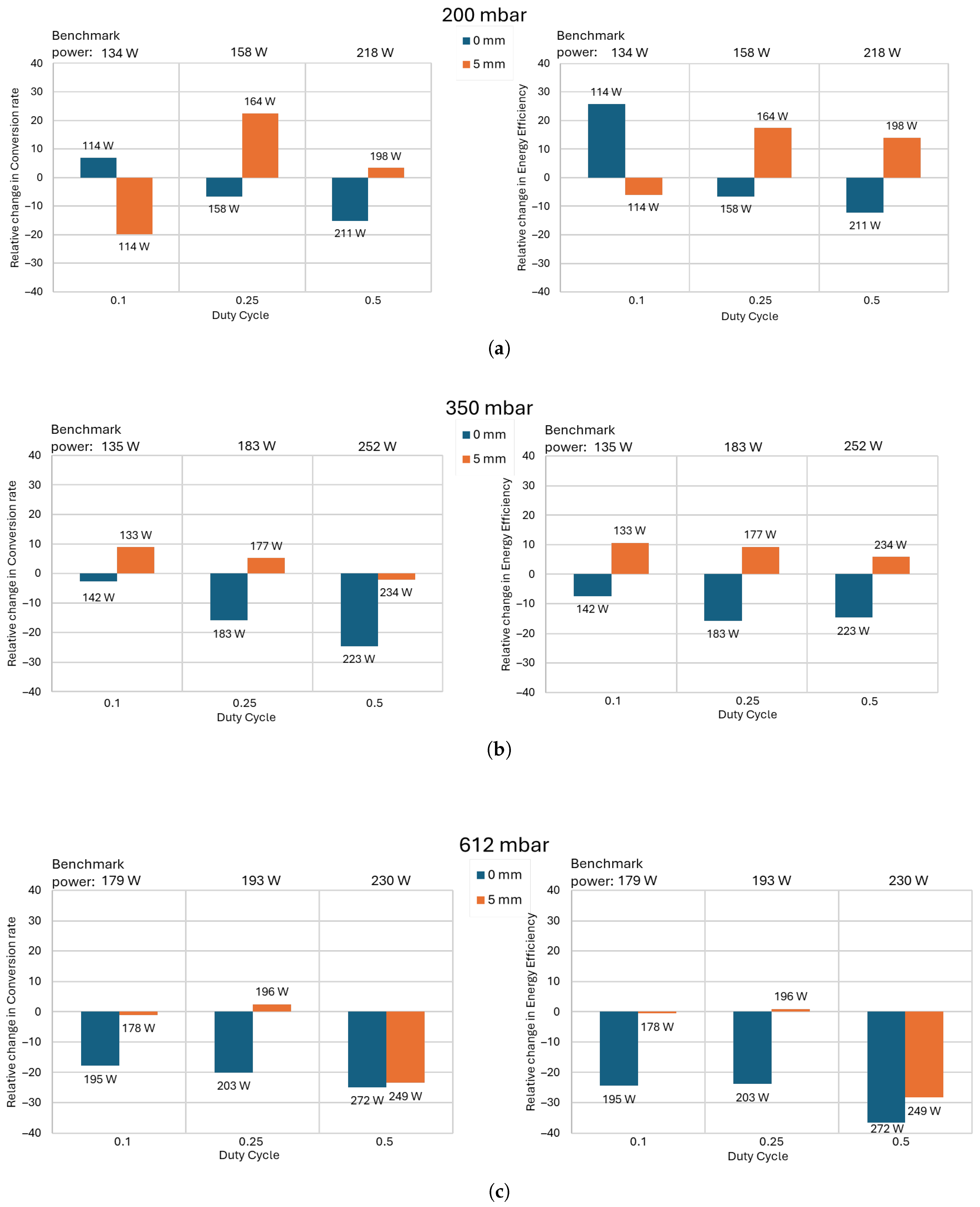
An easier way to visualize the difference in the results between the configurations is to look at the relative change in the conversion rate and energy efficiency of the quenching configurations compared to the benchmark “None” configuration. We calculated the relative change
in a quantity by using
where
is the quantity achieved by one of the configurations with quenching alumina, and
is the quantity achieved by the benchmark “None” configuration. The results are presented in
Figure 14.
In addition to the change in the conversion rate and energy efficiency, this figure also provides data for the discharge power, which is proportional to the
, since the gas mass flow rate is fixed (4 L/min). In
Figure 14, the power values measured with the benchmark configuration are shown above each graph. The power measured under each cooling configuration is displayed above its corresponding column.
3.3.1. Detrimental Quenching
Figure 14 shows that, overall, the configuration “0 mm”, where the quenching region is closest to the discharge, performs the worst. It results in lower energy efficiencies and conversion rates, even compared to the “None” configuration with no quenching region. While quenching the gas after it passes through the discharge lowers the recombination reaction, it also lowers the thermal dissociation. If the cooling region is situated too close to the discharge, i.e., where dissociation is the dominant reaction (not recombination), it can decrease the overall conversion rate and energy efficiency. This effect of detrimental rapid cooling has been observed in other studies, including experimental and numerical studies [
24,
26]. This is why adding a certain amount of distance between the discharge and the cooling region is necessary—in our case, 5 mm from the electrodes. We suspect that for every discharge reactor, plasma power, and flow rate, there exists an optimal distance between the discharge and the cooling region. Finding that distance would require numerical simulations and/or in situ measurements of the spatial evolution of CO concentration, both of which are outside the scope of this paper and may be objects of future studies.
3.3.2. The Effect of Gas Velocity on Quenching
The benefit of the cooling alumina, placed at a distance of 5 mm from the electrodes (the “5 mm” configuration), is more prominent at lower pressures. The relative improvement reaches a maximum at 200 mbar (
Figure 14a) and a duty cycle of
= 0.25, where the conversion rate increases by 22% and the energy efficiency by 17%. At 350 mbar (
Figure 14b), the highest improvements in terms of conversion rate and energy efficiency are achieved at
= 0.1 duty cycle, and both are around 10%. At 612 mbar (
Figure 14c), the relative change is insignificant and is in the order of the uncertainty. The exception is the relative change at a duty cycle of
= 0.5, where the discharge is attached to one of the quartz walls (as explained in
Section 3.3 and shown in
Figure 13) for both configurations.
The most probable explanation for the decrease in improvement with the increase in pressure is the decrease in gas velocity. As mentioned in
Section 3.3, the increase in pressure for the same mass flow rate leads to a decrease in gas velocity. This means that the molecules travel further before reaching the cooling region, which can significantly reduce the quenching rate and, therefore, the benefits of quenching. This hypothesis was further confirmed when, instead of using a mass flow rate of 4 L/min, we used 2 L/min. At this flow rate, at all pressures and duty cycles, the relative change is in the order of the uncertainty.
3.4. Oxygen Production Rate and Energy Cost
In this section, we present the results, in the context of oxygen production on Mars, achieved by the “5 mm” configuration for mass flow rates of 2, 4, and 8 L/min; pressures of 200, 350, and 612 mbar; and duty cycles of 0.1, 0.25, and 0.5. The frequency of the high-current pulses was again 5 kHz. First, we present
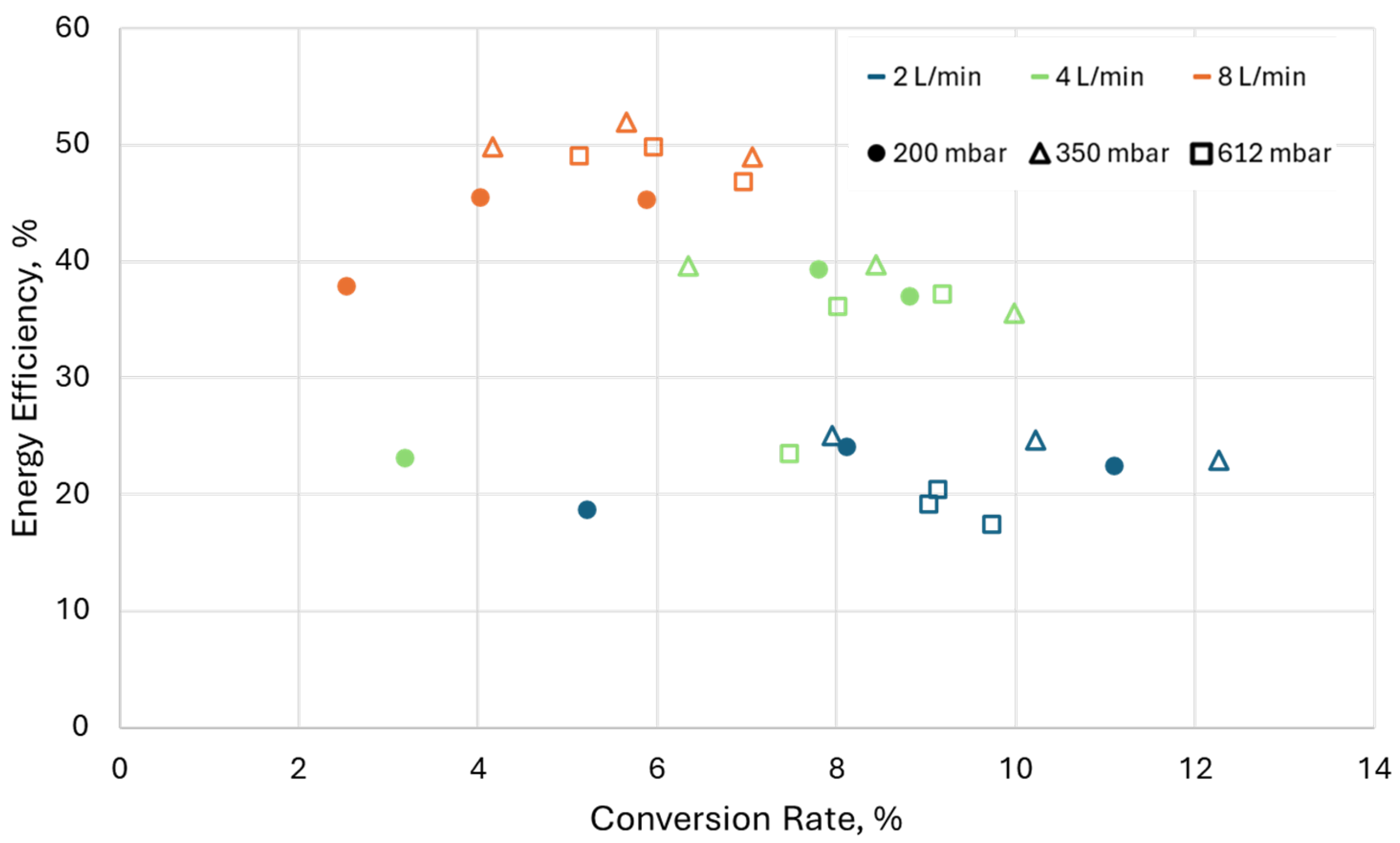
Figure 15 for the traditional CO
2 conversion results’ dependence— energy efficiency as a function of conversion rate. Then, we show the same data, but in terms of energy cost as a function of oxygen production rate. Finally, we add a presentation of the overall energy cost for oxygen production, including a conservative estimation of the energy required for compressing the Martian atmosphere at ambient pressure (7 mbar) to the discharge operational pressure, and we discuss how it affects the energy cost for the same oxygen production rate.
Figure 15 shows the energy efficiency as a function of the CO
2 conversion rate. A maximum conversion rate of slightly above 12% at a corresponding energy efficiency of 23% is achieved at a pressure of 350 mbar, a flow rate of 2 L/min, and a duty cycle of 0.5. On the other hand, a maximum energy efficiency of around 50% is achieved at a flow rate of 8 L/min and a maximum conversion rate of 7%. Overall, the results show the expected dependencies—an increase in mass flow rate increases the energy efficiency but lowers the conversion rate. The lowering of the conversion rate is due to the decrease in the residence time of the gas in the discharge. An interesting result is the overlap of the conversion rates between different flow rates, especially when comparing 2, 4, and 8 L/min, where for the same conversion rate we achieved higher energy efficiency at higher mass flow rates. For example, at 2 L/min and a conversion rate of around 8%, we achieved an energy efficiency of 25%, while for the same conversion rate we achieved an energy efficiency of around 35–40% when using 4 L/min. This is most probably a result of the quenching, which allows for increasing the thermal dissociation without sacrificing the conversion rate via the recombination reaction. Another observation is the lack of strong dependency of the results on the pressure part of the result, where the arc is attached to the quartz wall.
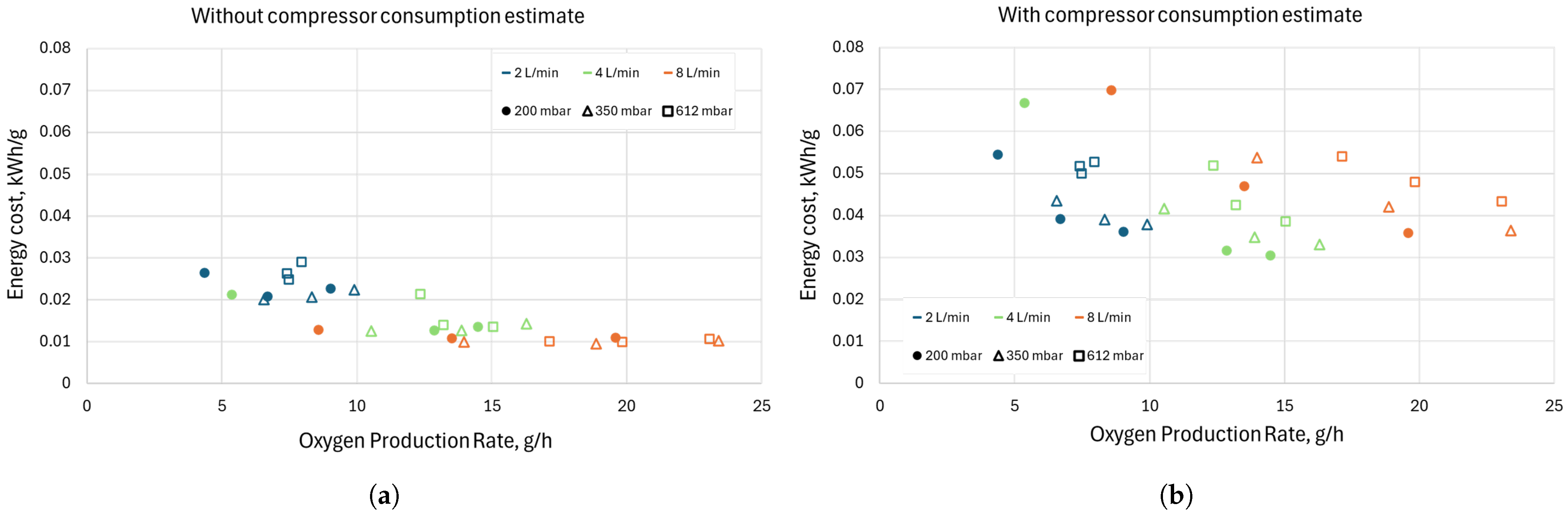
Figure 16a presents the energy cost and oxygen production for all the aforementioned conditions. In terms of oxygen production rate and energy cost, the highest values were obtained at a mass flow rate of 8 L/min for all studied pressure values. The maximum oxygen production rate was around 23 g/h, while the energy cost was around 0.01 kWh/g (duty cycle 0.5). Looking at these results without adding an energy cost for compression of the Martian atmosphere, it would seem that higher mass flow rates increase the production of oxygen while also lowering the energy cost. Thus, it seems that, for the best results, the energy efficiency is a more important parameter than the CO
2 conversion rate (at 8 L/min the conversion is lower but energy efficiency is higher). For comparison, the case with the highest conversion rate of 12% and energy efficiency of 22%, achieved at 2 L/min and 350 mbar, corresponds to an oxygen production rate of around 10 g/h at an energy cost of 0.022 kWh/g. This is a direct consequence of the abovementioned observation that, at the same conversion rate, higher efficiency is achieved at a higher mass flow rate.
If we look at the problem on a system level and consider the energy cost for sustaining a particular operational pressure, one should in some way account for the energy cost of compressing the Martian atmosphere and achieving a certain mass flow rate. In this paper, we make a conservative estimate of this cost. The baseline is the power required for an adiabatic gas compression process. We then multiply this value by an efficiency coefficient derived from the performance of an industrial vacuum pump (Leybold Varodry VD65, operating between 1 atm and 7 mbar [
38]). The added power is then
Here,
= 7 mbar is the Martian ambient pressure,
is the initial volumetric flow of the gas,
is the volumetric flow of the gas after the compression,
is the heat capacity ratio, and
is the coefficient of efficiency. The coefficient was calculated by taking the ratio between the power consumed by the pump to reduce the pressure from 1 atm to 7 mbar and the power calculated by using the adiabatic process approximation.
This is a conservative estimate, as there are multiple different compressors and ways of decreasing the overall power consumption (e.g., a two-stage compression). Nevertheless, even when using this conservative estimate, the overall conclusion is not entirely reversed.
Figure 16b shows the energy cost and oxygen production rate of our discharge when using the compressor power consumption estimates mentioned above. The maximum oxygen production rate of 23 g/h achieved with a mass flow rate of 8 L/min and at 350 mbar now comes at a cost of 0.036 kWh/g—a 360% increase. Even with that increase, the 10 g/h achieved at 2 L/min and 350 mbar comes at a similar if not higher energy cost of 0.038 kWh/g. The lowest energy cost was achieved operating at 4 L/min and pressures of 200 and 350 mbar at the highest duty cycle and, thus, the highest conversion rate. Under these conditions the energy cost is around 0.030 kWh/g, while the oxygen production rate is around 14–17 g/h. Thus, for the discharge studied here and a system for oxygen production on Mars, operation at higher flow rates is beneficial and optimal even when taking into account the energy cost for compression. Of course, there is still the need to extract the oxygen from the gas mixture of CO
2, CO, and O
2 by means of extraction methods like fuel cells and membranes. The extraction system’s energy requirements and dependencies on the mass flow rate and the conversion rate may further change the overall energy cost at a system level, but this is outside the scope of this paper and will be topic for further investigation.
3.5. Comparison with the Literature
In this section, we present a brief comparison with other works in the context of plasma oxygen production on Mars. Due to the lack of studies directly focused on oxygen production on Mars, we have included other results for plasma conversion of CO
2 at reduced pressure and/or that also use an oxygen extraction system, both of which are relevant for a system that would be used on Mars. The results are presented in
Table 1.
For most of the results, we used Equations (9)–(11) to calculate the oxygen production rate and energy cost, as the authors did not include the values. Apart from this work, Kelly et al.’s [
9,
10] are the only values obtained directly by the authors. Overall, the results obtained here are among the best in the literature.
Mori et al. [
18,
19] utilized a DBD combined with an oxygen extraction system—in this case, a solid-oxide electrolyzer cell (SOEC)—at three different pressures (10, 100, and 1000 mbar). The best performance was achieved at 1000 mbar, where the conversion rate reached the full 100% with a power consumption of 30 W. On the other hand, the mass flow rate was several orders of magnitude lower than the one that we studied, resulting in a lower oxygen production rate—0.017 g/h at an energy cost of 1.75 kWh/g. Nevertheless, the results show the potential benefits of combining gas discharges and oxygen separation systems to increase the overall conversion rate by reducing the recombination reaction.
Kelly et al. [
9,
10] studied an MW discharge at two different pressures—340 and 25 mbar. With a power consumption of 1000 W and a mass flow rate of 10 L/min, they achieved conversion rates of 9.4% (at 340 mbar) and 15.9% (at 25 mbar), resulting in an oxygen production rate of 47 and 75.7 g/h at an energy cost of 0.021 and 0.013 kWh/g, respectively. These studies further reaffirm the hypothesis that a higher mass flow rate at the cost of a reduced conversion rate results in better performance in terms of oxygen production rate and energy cost.
Chen et al. [
17] combined an MW discharge and an oxygen extraction membrane—mixed ion-electron conductor (MIEC)—at atmospheric pressure. At a power of 1000 W and a mass flow rate of 6 L/min, they achieved a conversion rate of 13%, resulting in an oxygen production rate of 31.4 g/h at an energy cost of 0.032 kWh/g. The lower conversion rate compared to the MW discharge mentioned above was most probably due to the operation at higher pressure, where it is well known that MW discharge operates in a contracted regime, resulting in a lower conversion rate and energy efficiency [
1]. The work of Chen et al. proves that oxygen extraction systems can be incorporated even in warm discharges, like MW and arcs, where the temperature can reach several thousand Kelvin.
Ogloblina et al. [
7] explored a glow discharge operating at Martian ambient pressure. With a discharge power of 100 W at a flow rate of ∼0.02 L/min, they obtained a 35% conversion rate, resulting in an oxygen production rate of 0.245 g/h at an energy cost of 0.407 kWh/g. The authors mentioned that this discharge is not optimized for industrial application but for fundamental research of the processes inside the plasma. They showed that the addition of N
2 and Ar (both present in the Martian atmosphere) to the inlet gas can improve the conversion rate and energy efficiency.
All of the above results demonstrate that plasma technologies can be effectively utilized for oxygen production on Mars under a wide range of operating parameters, including pressure, flow rate, and power consumption. The optimal operating conditions will ultimately be decided by different mission parameters, such as available power, size, and weight constraints. The results presented for the arc discharge developed in this study show that this type of discharge is a competitive option for oxygen production. Furthermore, additional investigations, such as integrating an oxygen extraction system (e.g., SOEC or MIEC) downstream of the discharge, are warranted.