
Article

Properties of WC-Co Cemented Carbide Reinforced with Yttria-Stabilized Zirconia Nanoparticles

1
Institute of Geology and Oil and Gas K. Turysova, Satbayev University, Satpaev Str. 22, Almaty 050013, Kazakhstan
2
V. Bakul Institute for Superhard Materials, National Academy of Science of Ukraine, Avtozavodska Str. 2, 04074 Kyiv, Ukraine
3
Faculty of Mechanical Engineering, Casimir Pulaski Radom University, Stasieckiego Str. 54, 26-600 Radom, Poland
4
Institute of Mechanical Science, Vilnius Gediminas Technical University, Sauletekio al. 11, LT-10223 Vilnius, Lithuania
5
Faculty of Safety Engineering and Civil Protection, Fire University, 52/54 Słowackiego Street, 01-629 Warsaw, Poland
6
Department of Reactor Engineering Materials and Physical Technologies, V. N. Karazin Kharkiv National University, 4 Svobody Sq., 61022 Kharkiv, Ukraine
7
Mining and Metallurgical Institute Named After O.A. Baikonurov, Satbayev University, Satpaev Str. 22, Almaty 050013, Kazakhstan
8
Department of Mechanics and Oil and Gas Engineering, Faculty of Engineering, Toraighyrov University, Pavlodar 140008, Kazakhstan
*
Author to whom correspondence should be addressed.
J. Compos. Sci. 2026, 10(3), 156; https://doi.org/10.3390/jcs10030156
Submission received: 17 February 2026 / Revised: 8 March 2026 / Accepted: 11 March 2026 / Published: 12 March 2026
(This article belongs to the Special Issue Recent Advancements in Mechanical Properties of Composites)

Abstract

To produce strong and wear-resistant tools for the rock drilling industry, the most commonly used metal matrix composites contain the reinforcing phase of cemented carbide. There are numerous research reports on attempts to improve the performance of WC-Co composites. The paper is a continuation of previously reported research on the SPS-processed WC–6 wt.%Co metal matrix composites with yttria-stabilized zirconia (YSZ) addition in amounts of 4 wt.% and 10 wt.%. The sintered specimens were polished and underwent the microindentation tests with a Vickers shape diamond tip. The following parameters were measured: stiffness S, the Poisson number ν, indentation creep CIT, relaxation RIT, indentation hardness HIT, indentation Vickers hardness HVIT, Martens hardness HM, reduced modulus E*, and indentation elastic modulus EIT. The tests revealed hardness values of 16.2–17.0 GPa and indentation elastic moduli in the range of 607–670 GPa. Moreover, respective plastic and elastic parts of the indentation work Wplast and Welast were determined. It was found that YSZ addition slightly reduced hardness and modulus, but all the three wear parameters, H/E, H3/E2, and 1/(E2H), increased after addition of zirconia. Specifically, for 10 wt.% ZrO2 H/E increased by 5%, H3/E2 by 7%, while 1/(E2H) by 27% compared to 94WC–6Co composition.

1. Introduction

To produce strong and wear-resistant tools for the rock drilling industry, most commonly used metal matrix composites contain the reinforcing phase of cemented carbide. The matrices often contain several metal powders of different kinds with various melting temperatures, hardness, density, and particle sizes. Among the metals, Co, Fe, Ni, and Mn have melting temperatures ca. 1200–1500 °C, and they are usually used as binding phases [1]. The widely used carbide phase is the tungsten carbide of hexagonal structure, which is combined with cobalt (WC–Co), where the metal increases the wettability of the WC particles, improving the strength of their binding [2]. Even though WC is not the hardest one among carbides nor is cobalt the toughest metal, the WC-Co combination is widely recognized as the best system for hardmetals. Among the reasons, da Silva et al. [3] named the low dihedral angle, close to zero, of the WC-Co system, and the fact that Co is able to dissolve a significant amount of WC, while Co is not dissolved in WC. Due to this outstanding coupling, globally, around 54–72% of the produced tungsten is used in the form of WC monocarbide to manufacture cemented WC-Co carbides [4].
The WC-Co composite for cutting tools with a hard WC phase and tough Co binding phase is successfully fabricated by powder metallurgy techniques [5]. For instance, Matviichuk et al. [6] published results on WC–20 wt.%Co material fabricated using free liquid-phase sintering, while Sheremet and colleagues [7] reported research on cold isostatic pressing of WC-15 wt.%Co powder. Li with co-authors [8] investigated WC–13 wt.%Co composite with 2–4% Fe addition prepared by pressureless sintering, while Mariani with his team [9] produced and examined WC–12 wt.%Co, using binder jetting technique with subsequent densification by sintering at 1400 °C. However, it has been recognized that methods such as Field-Assisted Sintering Technique (FAST) or Spark Plasma Sintering (SPS), where electric current pulses heat the powder, are more efficient than other technologies due to the ability to reach higher heating rates [10]. Niu and team [11] demonstrated that superior properties could be obtained by the SPS process at a lower temperature, compared with conventional methods, and in a shorter time. Thus, in this study, WC-Co sintered using the SPS method was chosen as the material to be investigated in terms of improvement of its mechanical properties.
Common strategies to improve the mechanical performance of WC-Co composites are to refine the WC grain size, add grain-growth inhibiting metal carbides, e.g., TiC, VC, or Cr3C2, and alter the processing parameters via different sintering techniques [12]. Other researchers [13] reported results on sintering WC–Co composite with the addition of 316 L SS powder in order to enhance the bonding between phases. A successful attempt to strengthen the Co metal phase with CeO2 was reported [14], demonstrating that the additive inhibited WC grain growth, thus improving the overall performance of the WC-Co composite. Also the sintering processes of WC-Co nanopowders were investigated with the addition of Cr2(C,N), and the nitrogen-containing cemented carbide was obtained with a uniform microstructure and enhanced interfacial bonding [15].
Moreover, the overall supply risk of Co is assessed at a high level [16], so that the European Union and the International Energy Agency have identified cobalt among the critical raw materials [17], making more favorable materials with less percentage of cobalt. Thus, Ju with collaborators [18] examined the effects of Co content on the microstructural features and related mechanical properties of the cemented carbides and found that SPS-processed WC–8 wt.% Co composition exhibited favorable synergic mechanical performance. Low cobalt WC-based hard materials have also been investigated, including 1 wt.% and less [19]. Thus, in this study, a reduced Co proportion of 6 wt.% was chosen.
Utilizing various additives, it is possible to obtain desired properties of WC-Co based compositions for specific applications. In particular, the addition of Cr3C2, VC, TaC, NbC, Nb, and Y2O3 was reported to promote densification and enhance the mechanical properties of sintered cemented carbide [20,21]. Moreover, zirconia, being itself an excellent material for engineering ceramic fabrication, additionally promotes densification of tungsten carbide powders [22], and it was proved feasible to be used as a reinforcement in WC–6Co composite [23].
The paper is a continuation of previously reported research on the SPS-processed WC–6 wt.%Co metal matrix composites with yttria-stabilized zirconia (YSZ) addition in amounts of 4 wt.% and 10 wt.% [24]. The YSZ additives were demonstrated to promote the formation of very thin layers of metallic phase binding the carbide grains, thus enhancing the strength of interfaces.
Despite extensive research on WC–Co cemented carbides, the combined influence of reduced cobalt content and ceramic nanoadditives on elastic–plastic balance and respective wear resistance remains insufficiently explored. The scientific novelty of this work lies in the systematic investigation of YSZ-modified WC–6Co composites produced by electroconsolidation, with emphasis on wear-related parameters rather than hardness or strength alone. This approach enables purpose-oriented tailoring of cemented carbides for drilling and cutting tools operating under severe abrasive and cyclic loading conditions.

2. Materials and Methods

2.1. Starting Powders

The composite samples for the investigations were fabricated out of the mixtures of powdered tungsten carbide (WC), cobalt (Co), and yttria-stabilized zirconia (YSZ) consisting of ZrO2 with 3 wt.% of Y2O3. The tungsten carbide powder was delivered by Global Tungsten & Powders spol. s.r.o. (Bruntal, Czech Republic). Its average particle size was 2.0–8.0 μm, according to the specification. The cobalt and zirconia powders were the same as the ones described in [25]. Particle dimensions of cobalt were ca. 2–3 μm, while YSZ consisted of nanoparticles of 30–60 nm size that formed agglomerates of diameters reaching 30 and even 100 μm. However, under the mixing process, these agglomerates got broken, providing YSZ in the form of a nanoadditive.
The composition of refractory matrix 94WC-6Co was chosen due to the numerous engineering applications of this composite material [26]. Moreover, due to high level of cobalt supply risk [16] and ongoing works concerning the optimized recovery of Co and WC from a binary-phase WC-6Co [27], this composition was considered an optimal one.
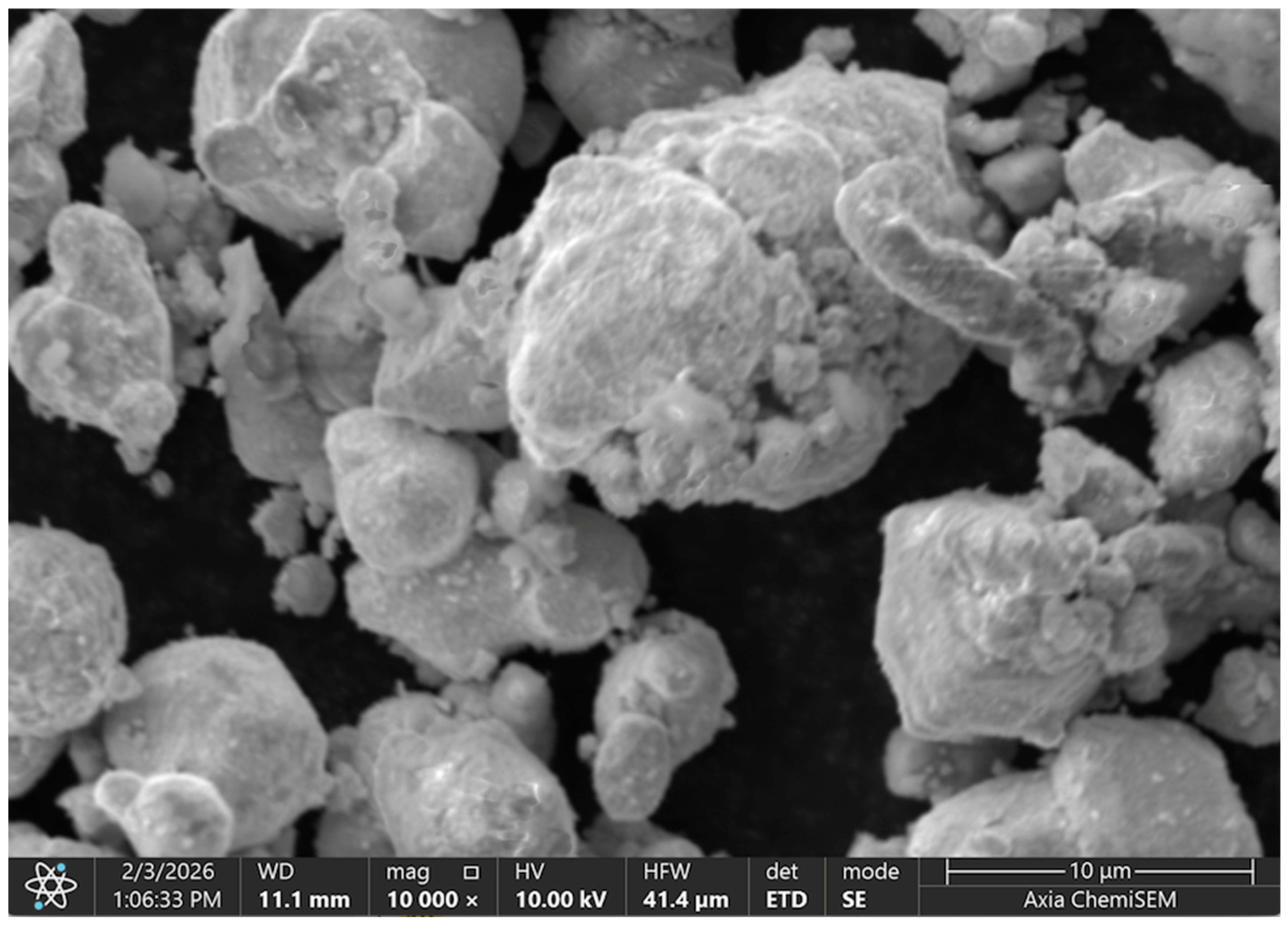
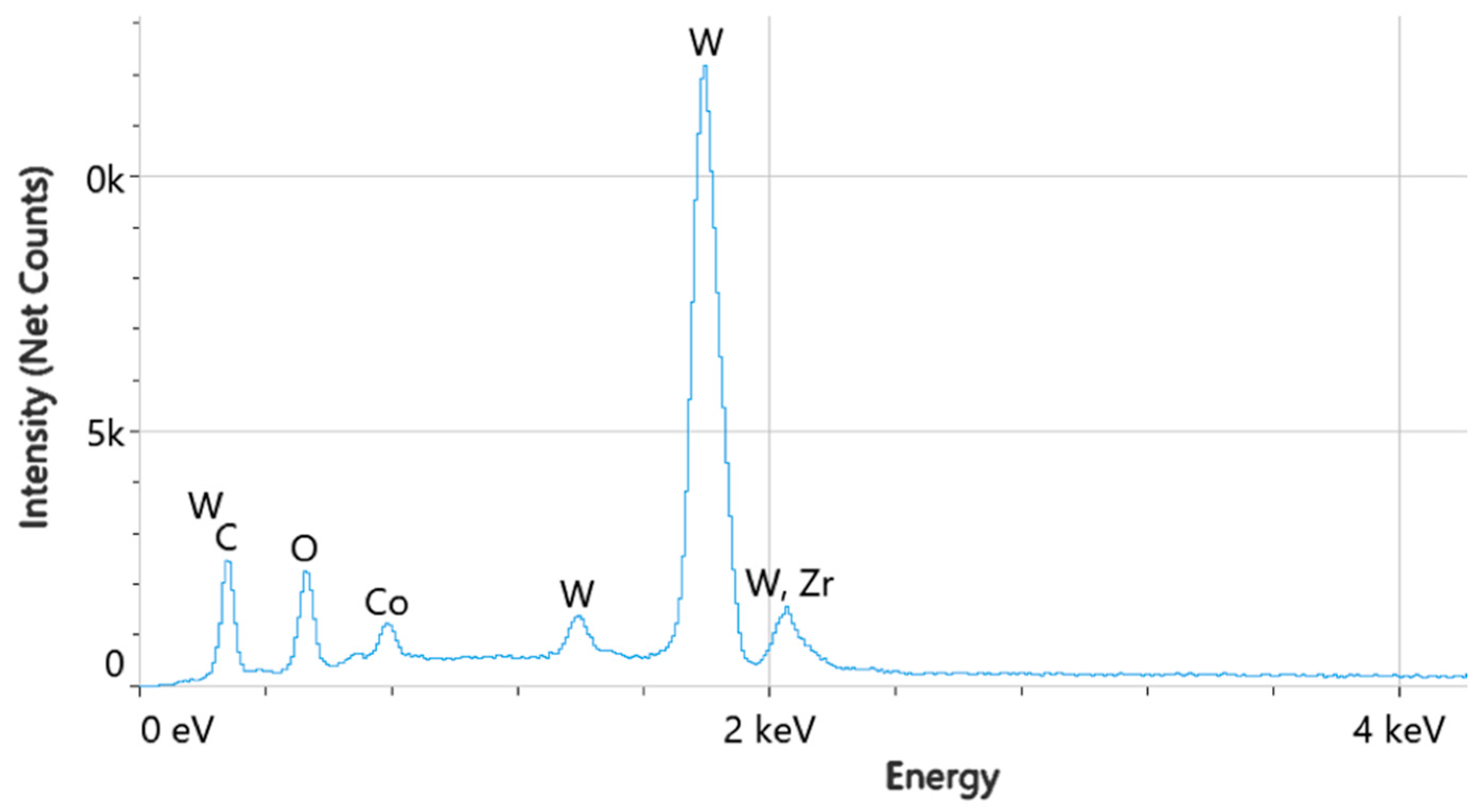
The mixtures of basic material WC–6 wt.% Co were prepared for the comparative analysis with WC-Co-ZrO2 composites, where YSZ was added in different proportions. Addition of 4 wt.% YSZ made up a mixture 90.24WC–5.76Co–4ZrO2 and addition of 10 wt.% YSZ nanoparticles provided the composition of 84.6WC–5.4Co–10ZrO2. The powders underwent dispersion in the distilled water with application of ultrasound, and then milled with the planetary micro mill Pulverisette 7 produced by Fritsch GmbH (Idar-Oberstein, Germany) for 20 min. The ball diameters were 1.5 mm, and acceleration was 640 m/s2. The as-prepared mixtures were dried for 24 h at a temperature of 80 °C. Figure 1 demonstrates an example of the as-prepared mixture 84.6WC–5.4Co–10ZrO2, where some agglomerates of size ca. 10 μm are seen along with numerous submicron particles. An example of EDS diagram confirming the elemental composition is shown in Figure 2.
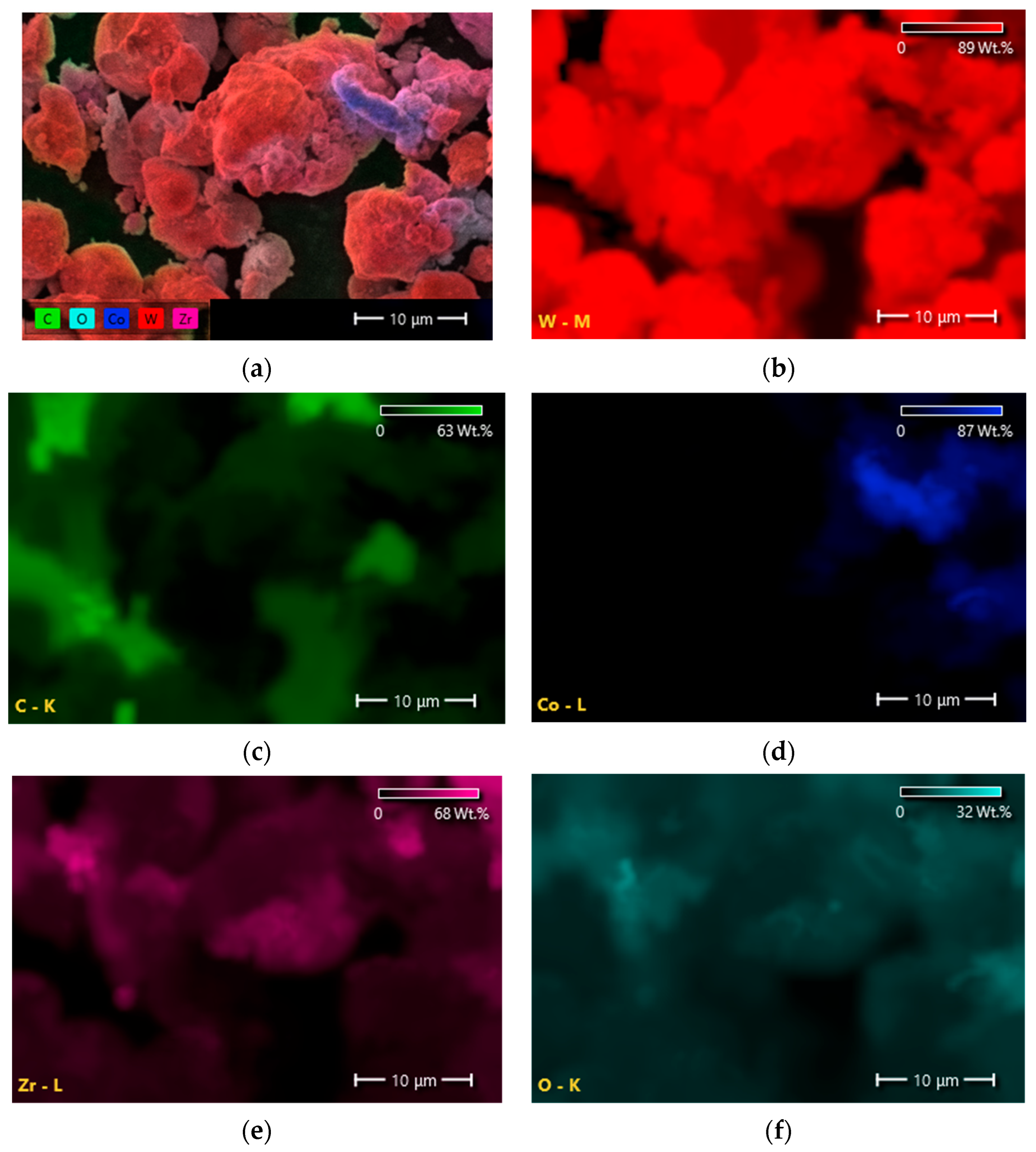
The EDS spectrum in Figure 2 confirms the presence of all key elements of the system, tungsten (W), cobalt (Co), zirconium (Zr), oxygen (O) and carbon (C). The main peak in the spectrum is represented by W line (ca. 1.775 keV), which correlates with the highest percentage by mass, 68.2 wt.% of tungsten. The peaks of cobalt and zirconium are not high, but clearly identified, which indicates the successful introduction of alloying additives and bonding. According to the data of semi-quantitative analysis, the mixture consisted of high content of tungsten and carbon, which corresponded to the tungsten carbide phase. The content of oxygen (5.9 wt.%) and zirconium (8.2 wt.%) is in a stoichiometric ratio close to zirconium dioxide ZrO2. Low values of statistical error with At.% Error below 0.6 for all elements indicated high reliability of the obtained results and sufficient spectrum acquisition time with more than 141,000 pulses for tungsten. Distribution of elements is shown in Figure 3.
The mixture shown in Figure 3a consisted of particles of different shapes and sizes. The main element of matrix was tungsten represented by red color in Figure 3b. It exhibited large conglomerates and individual irregularly shaped particles with tungsten (W), indicating the tungsten carbide (WC) dominating phase. Carbon (C) distribution is shown in green color in Figure 3c. A uniform background of carbon confirms the stoichiometry of the carbide phase and the presence of adsorbed carbon compounds on the surface. Cobalt (Co) being added as a binder was distributed unevenly, as it is seen in Figure 3d. Some individual inclusions and zones of cobalt localization are observed on the surface of the WC particles, which is a typical feature after mechanical mixing of the powders. Zirconia additive is represented by Zr and O maps in Figure 3e,f. The distributions correlate with each other, which confirms the presence of zirconia particles. The identified ZrO2 particles had a smaller fraction compared to WC and were distributed mainly in the interstitial space. The scale bar of 10 μm indicates that most of the aggregates are between 2 and 8 μm in size. The mixture demonstrates sufficient homogenization suitable for subsequent liquid-phase or solid-phase sintering [28].

2.2. Sample Preparation

The as-prepared powders were then sintered by the electroconsolidation method to fabricate cylindrical specimens of 25 mm diameter and height of 5 mm. The sintering process described in detail elsewhere [29] represented a modified spark plasma method (SPS) with direct application of alternating electrical current. The initial results concerning the effect of various parameters on the final properties of the sintered composites published earlier [30] provided solid ground for the choice of the experimental conditions. In the present research, the sintering temperature was Ts = 1350 °C and the holding time was 3 min. This combination of relatively low sintering temperature and short holding time has been proven experimentally to provide sufficient densification of the material. The relative density above 98% can be reached, and at the same time, the excessive grain growth can be prevented. The heating rate of 500 °C/min was ensured by the electric current of 5000 A at voltage 5 V applied directly to the powders through the graphite molds. The uniaxial mechanical pressure was 30 MPa while the vacuum in the chamber was kept at 6 Pa. Proper control of the process parameters helped to avoid the grain recrystallization and to obtain equilibrium, ensuring smaller grain size and high density. These features are extremely important when fabricating enhanced composite materials.
The sintered specimens underwent a grinding procedure with diamond disks 1A1-200 × 20 × 51 D213 (K50) G. Then the surfaces were polished for 3 h and 20 min using the single wheel automatic polishing machine ATM Saphir 550 (ATM Qness GmbH, Mammelzen, Germany) dedicated for the metallographic sample preparation. Platinum and silver disks and diamond suspension were applied to obtain a mirror surface of the samples with Ra below 0.1 μm, according to ISO 4287 standard [31].

2.3. Materials Characterization

Scanning Electron Microscopy (SEM) and Energy-dispersive X-ray spectroscopy (EDS) analyses were performed using Axia Chemi SEM (Thermo-Fisher Scientific, Eindhoven, The Netherlands). The system employs the secondary and backscatter electron signals that allow for acceleration of the EDS analysis with reduced noise.
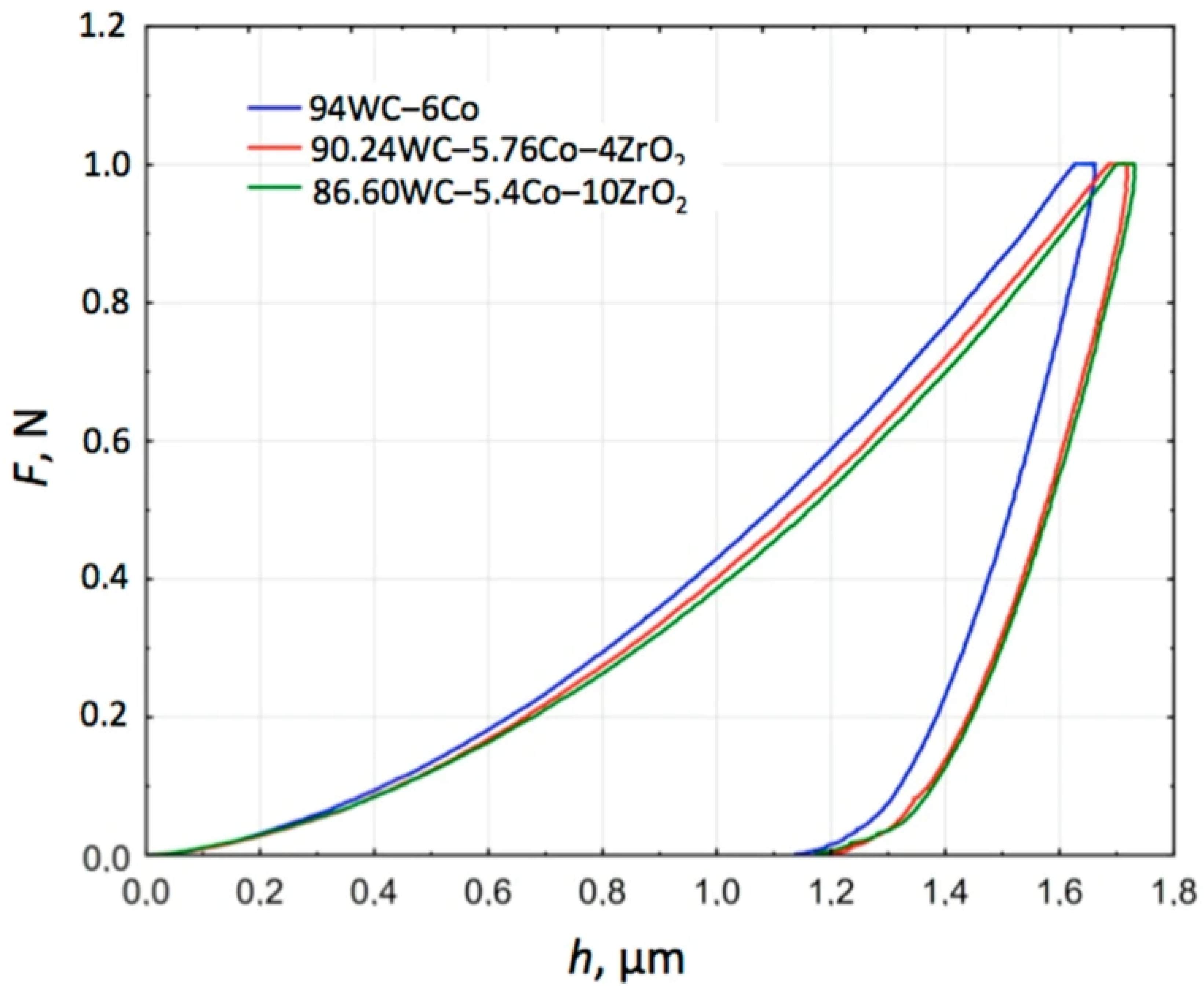
The specimens underwent the microindentation tests using a universal device, Micro Combi Tester (MCT, Anton Paar GmbH, Ostfildern, Germany), with a Vickers shape diamond tip. The tests were performed under maximal load of 1 N with loading/unloading rates of 1 N/min and a holding time under 1 N load of 30 s. The parameters corresponding with ISO 14577-1:2015 [32], including stiffness S, the Poisson number ν, indentation creep CIT, and relaxation parameter RIT, were calculated accordingly. The values of indentation hardness HIT, indentation Vickers hardness HVIT, reduced modulus E*, and indentation elastic modulus EIT, were determined using Oliver & Pharr method [33]. Martens hardness HM, related to plastic and elastic deformation, was determined by the applied loading force. HM is defined as the quotient of loading force F and indenter area As(h) at depth h [32]. For the Vickers indenter, HM was calculated from the following equation:
H M = F 26.43   h 2
Moreover, respective plastic and elastic parts of the indentation work Wplast and Welast were determined. The measurement was repeated 10 times, so each parameter was processed statistically, determining arithmetic mean values, standard deviations, and range from minimal to maximal values.
Since the investigated composites with nanoadditives were inhomogenous, surface mapping was performed to assess mechanical properties of the matrix and inclusions of the particulate reinforcement ZrO2. For that purpose, Hysitron TS 77 Select nanoindenter was used (Bruker, Billerica, MA, USA). The measurement was performed in testing mode, In Situ SPM Imaging with Berkovich indenter and projected contact area A = 24.5 hc2 [34]. This mode allowed for topography imaging and the collection of nanomechanical characteristics.

3. Results and Discussion

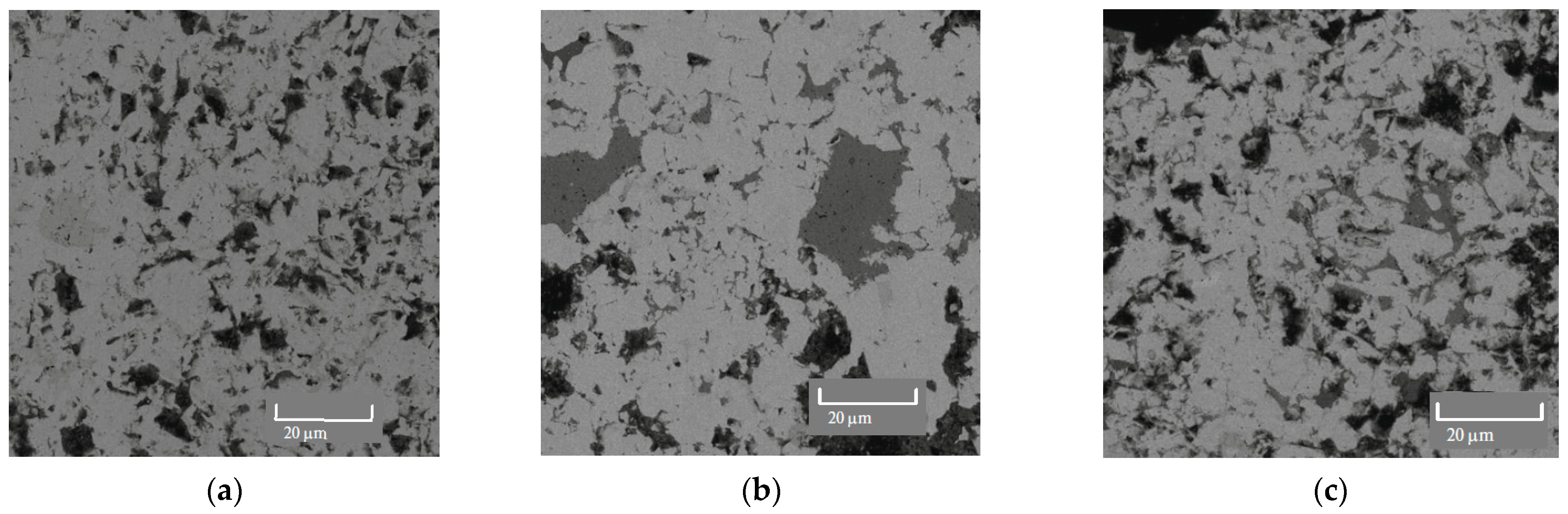
SEM images in Figure 4 illustrate the microstructures of the analyzed composites, and Table 1 shows the results of their phase compositions.
Comparing images in Figure 4a,b, important differences can be noted between WC-Co and WC-Co-ZrO2 structures, respectively. On the one hand, the carbide grains became larger after addition of zirconia. On the other hand, the metal binder between grains appears to be thinner, which probably contributed to the improvement of mechanical properties of composites with zirconia reinforcement, described below. And importantly, microstructure in Figure 4c exhibits smaller grains than that in Figure 4b, but still thinner cobalt binder layers than those in Figure 4a. Thus, further improvement of the mechanical properties can be expected with increase in zirconia proportion from 4 wt.% up to 10 wt.%.
Phase compositions of the specimens without zirconia, shown in Table 1, consisted of the hexagonal tungsten carbide, hexagonal form of carbon (graphite), and the cubic phase of Co3W3C compound. In turn, the specimens with zirconia reinforcement consisted of two main phases of structural WC and Co3W3C. The carbon phase was represented by amorphous C, and the zirconia additive formed hexagonal ZrO2.
The diagrams Fh of application of the test force and its removal for the three tested materials are presented in Figure 5. Significant shift in the peaks is seen for both composites with YSZ compared to the WC-Co basic composition. In turn, the curves for zirconia-reinforced composites appeared very close to one another. It corresponds with the differences between the calculated parameters collected in Table 2, Table 3 and Table 4.
Table 2 presents the values for hardness HIT, HVIT, and HM. It should be noted that the maximal hardness, measured by all three methods, exhibited the composition WC–6 wt.%Co with no zirconia additive. In particular, HIT, HVIT, and HM were 17,933.594 MPa, 1692.679, and 13,042.417 MPa, respectively. Notably, the Vickers hardness of the recently reported novel ultrafine WC–15Co cemented carbides was lower, 1579 kg/mm2, i.e., 15,484 MPa, and it was increased up to 1652 kg/mm2, i.e., 16,201 MPa, after increase of carbon content up to 6.16 wt.% [35]. Decrease in the hardness after zirconia was added could be expected, since ZrO2 itself exhibited lower hardness than WC. Moreover, to some extent, reduction in hardness and modulus could be attributed to the appearance of the nanoscale pores around the agglomerated zirconia particles, as indicated in [36,37].
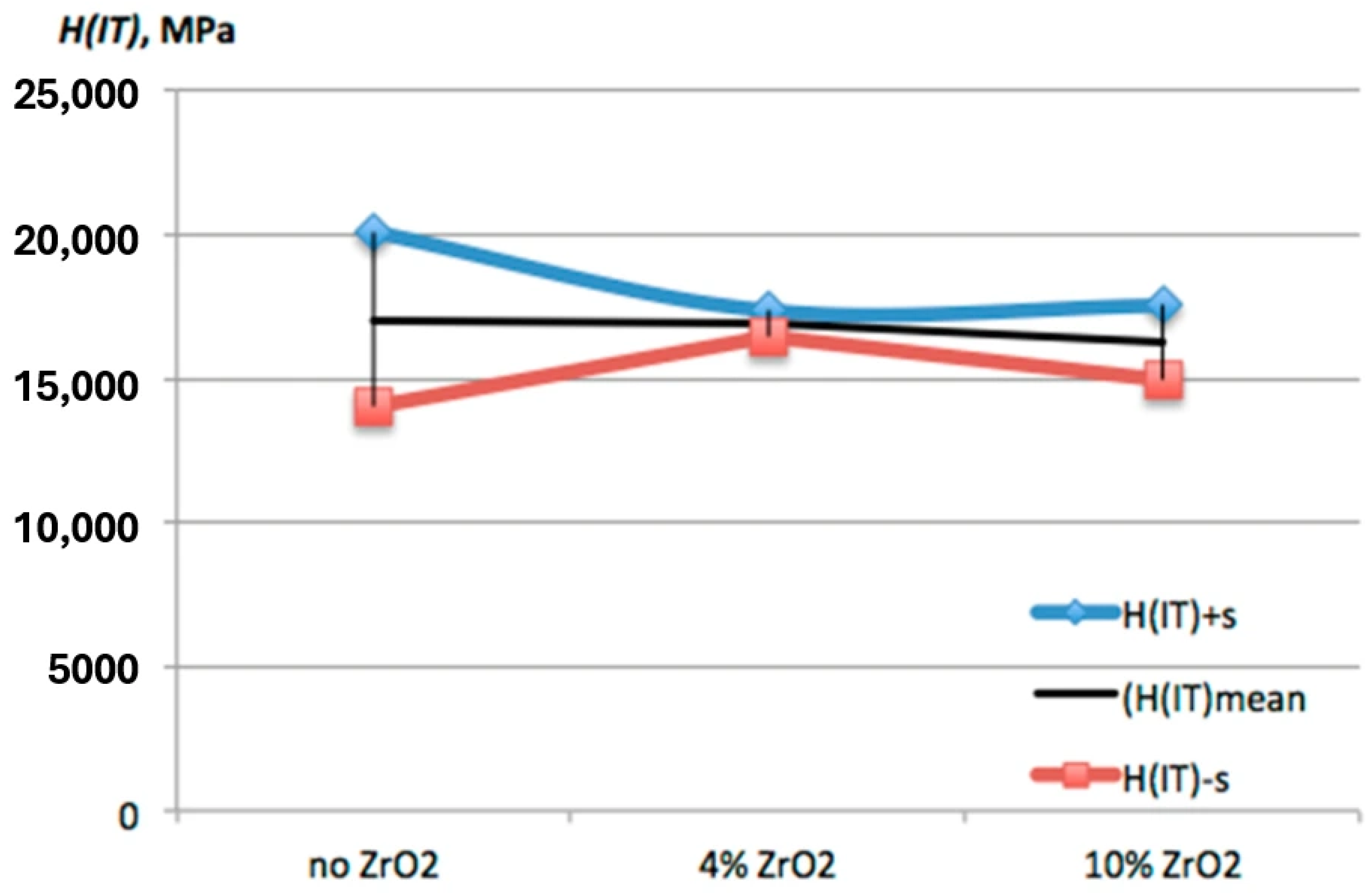
An important observation is that a significant drop of standard deviation of all three hardness methods took place after YSZ addition. The smallest standard deviation exhibited hardness of the composite with 4 wt.% of zirconia, which proved a more homogeneous structure and better distribution of reinforcement phases in the matrix. Compared to that of WC–Co ceramic, indentation hardness HIT of WC–Co–4ZrO2 composite decreased by less than 1%, while its standard deviation decreased by 85%. For the composition WC–Co–10ZrO2 this difference is not so dramatic. Thus, taking into account the overlapping of the areas covered by standard deviation, decrease in the hardness can be considered negligible. It is seen in the diagram of HIT(mean) ± s presented in Figure 6.
The reduction in hardness observed after YSZ addition can be generally attributed to the lower intrinsic hardness of zirconia compared to WC, as well as to nanoscale porosity localized near zirconia agglomerates. More importantly, the elastic indentation work and wear-related indices should be used to assess the ability of the composite to elastically accommodate contact stresses. Such an elastic–plastic balance is particularly beneficial for rock drilling tools subjected to cyclic impact and abrasive wear, where crack deflection and interfacial energy dissipation determine the service life.
In the case of the values of modulus shown in Table 3, they were higher than the recently reported ones, namely, 466.0–516.5 GPa for the commercial WC–Co cemented carbide [38]. Both reduced E* and indentation EIT moduli after addition of 4 wt.% zirconia exhibited decrease below 3% compared to WC–Co, while standard deviation remained almost the same. However, addition of 10 wt.% reduced indentation elastic modulus EIT by ca. 10% compared to that of WC–6 wt.%Co composition, while the respective standard deviation reduced by ca. 45%. Thus, in terms of zirconia effect on the hardness and modulus, some reduction can be noted, but it was accompanied by significant homogenization throughout the material’s volume and it did not drop below the typical values for the commercial WC–Co.
The results generally correlate with widely known physical properties of tungsten carbide, which consists of hexagonal layers of W atoms separated by C layers one-half of the interstices, so that a six-fold trigonal prismatic structures emerge. As a result, individual phases and the crystallographic orientation have an effect on the hardness of WC and its indentation modulus [39]. For instance, variation in hardness from 8 GPa in the metal matrix to 25 GPa in WC η phase was reported along with modulus values different for the WC prismatic planes (700–900 GPa) and for WC basal plane (450–550 GPa) [40]. The modulus above 600 GPa obtained in this study is closer to that of prismatic plane phase.
The highest values of stiffness S and creep CIT were also exhibited by the material without zirconia additive. At the same time, the creep values of both composites with zirconia added are almost the same, 1.799% and 1.781%, which corresponds with the diagrams of indentation in Figure 5. Along with the decrease in the indentation work Wtotal, zirconia additive contributed to the increase in the values of its elastic part Welast, presented in Table 4.
Unlike in the case of hardness, the indentation work Wtotal exhibited the largest standard deviation for the composite with 4 wt.% YSZ. Nevertheless, reliable results were obtained for the plastic part of work Wplast with comparable standard deviations between 0.16 and 0.18 μJ. In that case, mean values of Wplast significantly decreased when zirconia was added to WC-Co composite and further decreased when amount of YSZ additive reached 10 wt.%.
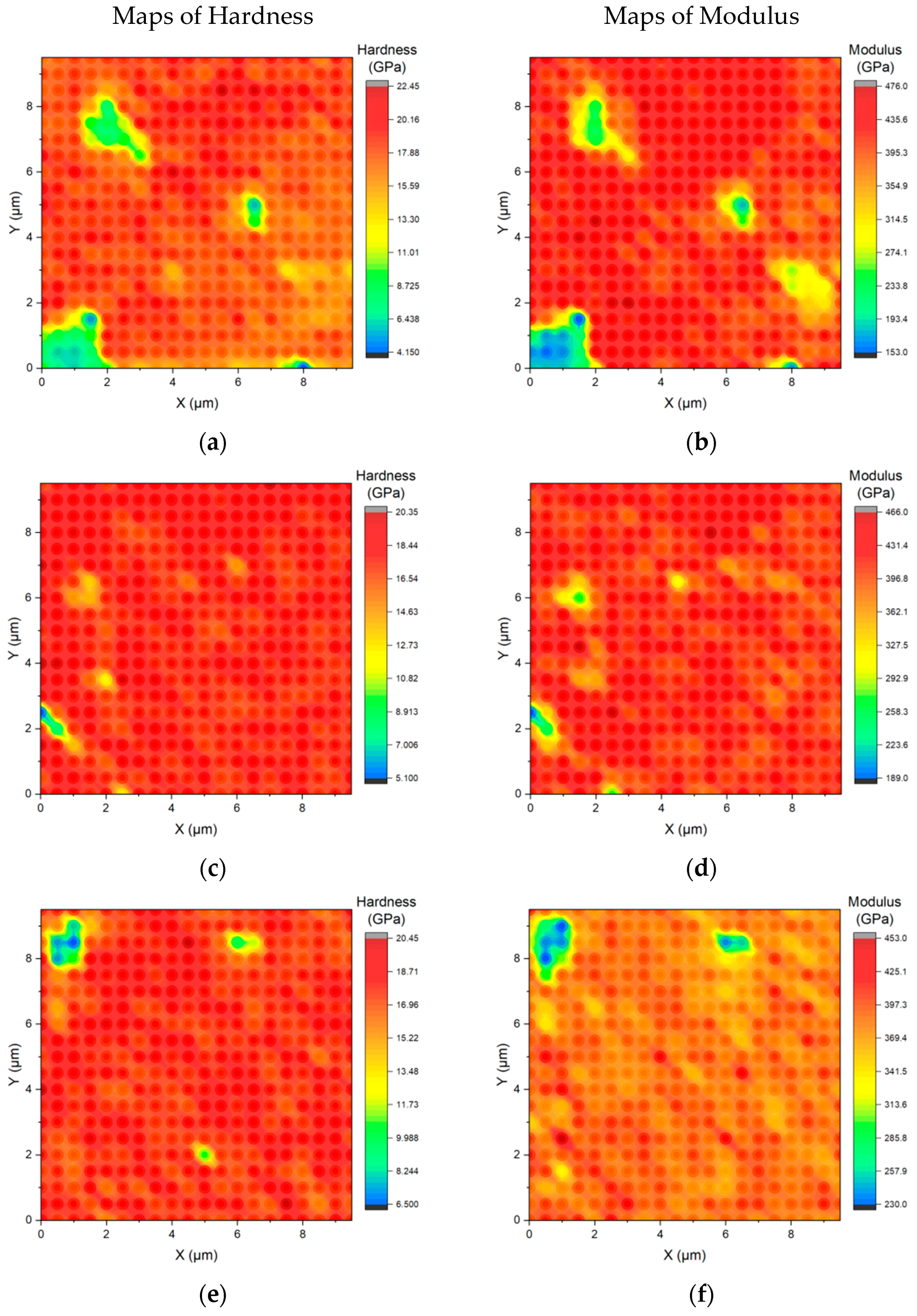
Considering high dispersion of the measured values, it was found necessary to make the hardness and modulus mapping to check the structural homogeneity of the samples. Figure 7 shows the examples of the SPM mapping of tested composites after nanoindentation. The presence of micron-sized softer inclusions and nanoscale inclusions of extremely high hardness appeared to be the decisive factor influencing dispersion of microhardness results.
The differences in hardness demonstrated that the maximal values of 22.45 GPa belonged to the WC–Co material, while maximal values of the other two composites with zirconia were almost the same, 20.35 GPa and 20.45 GPa. Similarly, maximal modulus of 476 GPa was found in the map of WC–Co, while it was 466 GPa for 4 wt.% of zirconia and 453 GPa for 10 wt.% ZrO2. However, the specimen with no zirconia had many areas of lower modulus, 153 GPa, compared to the respective values of 189 GPa and 230 GPa. It can be seen that the WC–Co matrix had higher hardness than that of the zirconia additive.
It is also noteworthy that the tested composite materials exhibited high homogeneity. All maps of hardness revealed several single submicron-sized points of significantly higher hardness corresponding with the particulate reinforcement. This feature indicates that the applied sintering technology allowed for retaining some nanoscale structures in the composites. The presence of hard inclusions in the soft matrix is always beneficial for the composite, and the submicron dimensions of the particles increase the interfacial effect. It can be expected that the fracture energy will be dissipated by debonding on interfacial and particulate levels, which is crucial for the resistance of the composite to wear and catastrophic failure [41].
From Table 4 it is seen that some reduction in hardness and modulus caused by zirconia additive was accompanied by the increase in elastic part of indentation work. This trend could contribute to the improvement of the parameters related to the wear resistance. The ratio of elastic strain to failure H/E and index of resistance to plastic deformation H3/E2 are the two key indexes of mechanical properties of a material [42], and index of tolerance to abrasion damage 1/(E2H) is used for determining the resistance of materials to abrasive wear [43]. These parameters calculated for the tested composites after indentation are presented in Table 5.
The results are comparable to the values recently reported for high entropy alloy coatings AlCoCrFeNiSi/WC, where H/E indexes were between 0.0116 and 0.0343, and specifically for the coating denoted H20, it was 0.0281 [44]. Also electrodeposited Ni–SiC nanocomposite coatings exhibited H/E ratios between 0.013 and 0.026 for various compositions [45].
It is seen in Table 5 that all the three wear parameters increased after addition of zirconia. Specifically, for 10 wt.% ZrO2 H/E increased by 5%, H3/E2 by 7%, while 1/(E2H) by 27% compared to 94WC–6Co composition. It is closely connected with the fact that some decrease in modulus is accompanied by much smaller, almost negligible decrease in hardness. From the perspective of abovementioned indexes, it can be assumed that the composite with 10 wt.% of zirconia is the optimal one, even though its hardness was not the highest one among the tested materials. This assumption seems to be confirmed by the results of the plastic part of work Wplast which appeared to be the smallest for this composite.
Though the H/E ratio may overestimate the wear resistance [46], it was demonstrated that optimized indexes H/E and H3/E2 could be more effective than achievement of extremely high hardness [47]. Anyway, from the indexes shown in Table 5, some improvement in the performance after zirconia addition can be expected. Thus, in future research, it is planned to perform tribological tests to check the trend indicated by the obtained data.

4. Conclusions

The presented results demonstrated that it was possible to produce metal matrix composites WC-Co with zirconia additive obtaining different combinations of the plastic and elastic characteristics. Thus, it will be possible to adjust the composites with required properties dependent on the planned applications.
Addition of YSZ in amounts of 4 wt.% and 10 wt.% resulted with slight decrease in the hardness of WC-6Co composites and their modules. Correspondingly, the elastic part of the work Welast slightly increased. Presence of small, nanoscale inclusions of hardness and modulus significantly higher than that of the matrix, appeared to be favorable from the perspective of the composite performance.
It is important to note that the indexes related to wear and plastic deformation resistances, H/E, H3/E2, and 1/(E2H), appeared several percent higher in the case of composites with 4 wt.% zirconia and further improved when YSZ content was increased up to 10 wt.%. From the perspective of application in tools for drilling hard and abrasive rocks, the composite 84.60WC–5.4Co–10ZrO2 appeared to be the most promising one, though requiring further investigations. It is planned to perform some tribological and wear tests to check the validity of the obtained indexes.

5. Patents

Patent of Republic of Kazakhstan: Ratov, B.T.; Mechnik, V.A.; Hevorkian, E.S.; Bondarenko, N.A.; Rucki, M.; Seidaliev, A. A.; Kuvanov, E.U.; Kalzhanova, A.B.; Morozov, D.; Samociuk, W. Diamond-reinforced composite material. No. 37698, Submission no. 2024/0909.1, 01.11.2024. Published 19.12.2025, Bulletin No. 51.

Author Contributions

Conceptualization, V.M. and E.H.; methodology, B.R., E.H., D.P., V.K. and V.C.; software, D.P., S.S., G.A. and A.A.; validation, V.M., M.R., D.P., V.K. and G.A.; formal analysis, B.R., M.R. and A.K.; investigation, V.M., E.H., M.B. and S.S.; resources, M.B., V.C., A.K. and A.A.; data curation, V.M., V.K., S.S. and V.C.; writing—original draft preparation, V.M.; writing—review and editing, all authors.; visualization, E.H., M.R., G.A. and A.A.; supervision, B.R.; project administration, B.R.; funding acquisition, M.B. and A.K. All authors have read and agreed to the published version of the manuscript.

Funding

This research was funded by the Science Committee of the Ministry of Science and Higher Education of the Republic of Kazakhstan, grant No. AP23484450, and Ministry of Education and Science of Ukraine, grant No. 0126U000548.

Data Availability Statement

The raw data supporting the conclusions of this article will be made available by the authors on request.

Conflicts of Interest

The authors declare no conflicts of interest.

Abbreviations

The following abbreviations are used in this manuscript:
EDSEnergy-dispersive X-ray spectroscopy
FASTField-Assisted Sintering Technique 
SEMScanning Electron Microscopy 
SPSSpark Plasma Sintering
YSZYttria-stabilized zirconia 

References

  1. Tan, S.; Li, C.; Fang, X.; Shi, H.; Duan, L.; Li, C. Investigation of Filling Phase Percentages on the Performance of WC-Cu Based Hot-Pressing Diamond Bit Matrices. Metals 2019, 9, 1305. [Google Scholar] [CrossRef]
  2. Koczkodaj, S.; Mizera, J.; Moszczynska, D.; Zdunek, J.; Plocinska, M.; Szpyrka, J.; Burkot, M.; Szpak, M. Comparison of the performance properties of commercially produced roller cone bit coatings. Mater. Sci.-Pol. 2023, 41, 110–123. [Google Scholar] [CrossRef]
  3. da Silva, A.G.P.; Schubertb, W.D.; Lux, B. The role of the binder phase in the WC-Co sintering. Mat. Res. 2001, 4, 59–62. [Google Scholar] [CrossRef]
  4. Polini, R.; Marcucci, A.; D’Ottavi, C.; Nunziante, P.; De Filippis, P.; Marcheselli, G.C. Toward Greener Synthesis of WC Powders for Cemented Tungsten Carbides Manufacturing. ACS Sustain. Chem. Eng. 2021, 9, 8458–8466. [Google Scholar] [CrossRef]
  5. Lu, Z.Y.; Du, J.; Sun, Y.; Su, G.; Zhang, C.; Kong, X. Effect of ultrafine WC contents on the microstructures, mechanical properties and wear resistances of regenerated coarse grained WC-10Co cemented carbides. Int. J. Refract. Met. Hard Mater. 2021, 97, 105516. [Google Scholar] [CrossRef]
  6. Matviichuk, O.O.; Turkevych, V.Z.; Kuz’menko, Y.F.; Hnatenko, I.O. Thermal Conductivity of WC–20% Co and WC–20% Ni Alloys with Mesostructure. J. Superhard Mater. 2025, 47, 246–248. [Google Scholar] [CrossRef]
  7. Sheremet, V.I.; Akimov, G.Y.; Andreev, I.V.; Trosnikova, I.Y.; Loboda, P.I. Cold Isostatic Pressing Effect on the WC-15 wt.% Co Hard Alloy Strength. Strength Mater. 2024, 56, 551–558. [Google Scholar] [CrossRef]
  8. Li, X.; Zhang, J.; Zhang, Q.; Zhang, X.; Ji, V.; Liu, J. Microstructure Evolution and Hardness Improvement of WC-Co Composites Sintered with Fe Substituting Part of Co Binder. Coatings 2023, 13, 116. [Google Scholar] [CrossRef]
  9. Mariani, M.; Goncharov, I.; Mariani, D.; De Gaudenzi, G.P.; Popovich, A.; Lecis, N.; Vedani, M. Mechanical and microstructural characterization of WC-Co consolidated by binder jetting additive manufacturing. Int. J. Refract. Met. Hard Mater. 2021, 100, 105639. [Google Scholar] [CrossRef]
  10. Wachowicz, J.; Bałaga, Z.; Dembiczak, T.; Náprstková, N.; Kuśmierczak, S. Effect of U-FAST Technology on Basic Properties of WC-Co Composites Designed for Particleboard Milling Tools. Mil. Technol. Sci. 2024, 73, 9–13. [Google Scholar] [CrossRef]
  11. Niu, Y.; Gong, P.; Xu, X.; Wang, X.; Ma, Y.; Li, M.; Lu, Q.; Yang, H.; Liu, Z.; Zhang, Z.; et al. Preparation of WC-Co cemented carbide by spark plasma sintering: Microstructure evolution, mechanical properties and densification mechanism. Int. J. Refract. Met. Hard Mater. 2025, 126, 106964. [Google Scholar] [CrossRef]
  12. Wang, Y.; Xiang, F.; Yuan, X.; Yang, B.; Wang, F.; Li, Y. Effects of Processing Parameters on the Microstructure and Mechanical Properties of Nanoscaled WC-10Co Cemented Carbide. Materials 2022, 15, 4472. [Google Scholar] [CrossRef] [PubMed]
  13. Basílio, L.; Guimarães, B.; Carvalho, Ó.; Fernandes, C.; Figueiredo, D.; Silva, F.; Miranda, G. WC–Co/316L stainless steel bonding enhancement by laser surface texturing and pressure-assisted sintering. Int. J. Adv. Manuf. Technol. 2023, 128, 4189–4206. [Google Scholar] [CrossRef]
  14. Li, B.; Li, Y.; Guo, Y.; Chen, H.; Guo, X.; Ren, H.; Huang, N.; Guo, S. Preparation of Rare Earth Modified Cobalt Powders by Ball Milling and Its Effects on Microstructure and Properties of WC-Co Cemented Carbide. J. Mater. Eng. Perform. 2025, 34, 18634–18647. [Google Scholar] [CrossRef]
  15. Chen, X.; Liu, Y.; Ye, J.; Wang, L. Effect of Sintering Temperature on the Microstructure and Mechanical Properties of Nanocrystalline Cemented Carbide. J. Wuhan Univ. Technol.-Mat. Sci. Edit. 2024, 39, 664–672. [Google Scholar] [CrossRef]
  16. Jia, S.; Meng, W.; Li, S. Risks of mineral resources in the supply of renewable energy batteries. Sci. Rep. 2025, 15, 10142. [Google Scholar] [CrossRef] [PubMed]
  17. Ruan, W.; Zou, B. Optimal strategies of critical mineral depletion and recycling. Resour. Conserv. Recycl. 2024, 209, 107793. [Google Scholar] [CrossRef]
  18. Ju, J.; Huang, D.; Xu, H.; Dong, D.; Lou, J.; Xu, Y.; Shi, J.; Zhu, L. Effects of Sintering Pressure and Co Content on the Microstructure and Mechanical Performance of WC–Co Cemented Carbides. Metals 2025, 15, 930. [Google Scholar] [CrossRef]
  19. Jiang, X.; Bao, S.; Cui, Y.; Dong, Y.; Wang, W. Microstructure and Properties of Vacuum Sintered Low Co Content WC Hard Materials. J. Wuhan Univ. Technol.-Mat. Sci. Edit. 2025, 40, 1005–1013. [Google Scholar] [CrossRef]
  20. Chen, W.; Yin, Z.; Li, X.; Yuan, J. Effect of co-doped additives on microstructure and mechanical properties of microwave-sintered WC-10Co cemented carbide tool materials. J. Alloys Compd. 2023, 962, 171148. [Google Scholar] [CrossRef]
  21. Lin, T.; Li, Q.; Han, Y.; Song, K.; Wang, X.; Shao, H.; Dong, J.; Wang, H.; Deng, X. Effects of Nb and NbC additives on microstructure and properties of WC-Co-Ni cemented carbides. Int. J. Refract. Met. Hard Mater. 2022, 103, 105782. [Google Scholar] [CrossRef]
  22. Ratov, B.; Rucki, M.; Hevorkian, E.; Mechnik, V.; Bondarenko, M.; Bialkowska, A.; Kroisova, D. Analysis of WC-Co and ZrO2-WC matrices from perspective of wear resistance of diamond-reinforced composites. In Proceedings of the Conference Engineering for Rural Development ERDev 2025, Jelgava, Latvia, 21–23 May 2025. [Google Scholar] [CrossRef]
  23. Bao, J.; Yu, Y.; Jia, C. Microstructural evolution and mechanical properties of WC–6CO cemented carbide prepared via SPS: Incorporation of YSZ as a reinforcer. RSC Adv. 2021, 11, 6304–6311. [Google Scholar] [CrossRef]
  24. Ratov, B.; Mechnik, V.; Hevorkian, E.; Rucki, M.; Pieniak, D.; Bondarenko, N.; Kolodnitskyi, V.; Starik, S.; Bilorusets, V.; Chishkala, V.; et al. Wear Resistance of the Refractory WC–Co Diamond-Reinforced Composite with Zirconia Additive. Materials 2025, 18, 1965. [Google Scholar] [CrossRef]
  25. Ratov, B.; Mechnik, V.A.; Rucki, M.; Hevorkian, E.; Bondarenko, N.; Prikhna, T.; Moshchil, V.E.; Kolodnitskyi, V.; Morozow, D.; Gusmanova, A.; et al. Enhancement of the refractory matrix diamond-reinforced cutting tool composite with zirconia nanoadditive. Materials 2024, 17, 2852. [Google Scholar] [CrossRef] [PubMed]
  26. Salvide-González, U.; Puertas-Arbizu, I.; Luis-Pérez, C.J. Experimental Analysis of the Machinability of 94 WC–6 Co by Die-Sinking EDM. Materials 2024, 17, 6032. [Google Scholar] [CrossRef]
  27. Shemi, A.; Ndlovu, S.; Sacks, N. An optimized recovery of cobalt and tungsten carbide (WC) from a binary-phase WC-6 wt%Co cemented tungsten carbide hardmetal using design of experiments. Miner. Eng. 2025, 233, 109597. [Google Scholar] [CrossRef]
  28. Skoczylas, P.; Gulbinowicz, Z.; Goroch, O. Microstructure and Properties of Tungsten Heavy Alloy Connections Formed during Sintering with the Participation of the Liquid Phase. Materials 2020, 13, 4965. [Google Scholar] [CrossRef] [PubMed]
  29. Hevorkian, E.S.; Nerubatskyi, V.P.; Rucki, M.; Kilikevicius, A.; Mamalis, A.G.; Samociuk, W.; Morozow, D. Electroconsolidation Method for Fabrication of Fine-Dispersed High-Density Ceramics. Nanotechnol. Percept. 2024, 20, 100–113. [Google Scholar]
  30. Gevorkyan, E.; Rucki, M.; Krzysiak, Z.; Chishkala, V.; Zurowski, W.; Kucharczyk, W.; Barsamyan, V.; Nerubatskyi, V.; Mazur, T.; Morozow, D.; et al. Analysis of the Electroconsolidation Process of Fine-Dispersed Structures Out of Hot Pressed Al2O3–WC Nanopowders. Materials 2021, 14, 6503. [Google Scholar] [CrossRef]
  31. ISO 4287:1997; Geometrical Product Specifications (GPS)—Surface Texture: Profile Method—Terms, Definitions and Surface Texture Parameters. ISO: Geneva, Switzerland, 1997.
  32. ISO 14577-1:2015; Metallic Materials—Instrumented Indentation Test for Hardness and Materials Parameters—Part 1: Test Method. ISO: Geneva, Switzerland, 2015.
  33. Oliver, W.C.; Pharr, G.M. Measurement of hardness and elastic modulus by instrumented indentation: Advances in understanding and refinements to methodology. J. Mater. Res. 2004, 19, 3–20. [Google Scholar] [CrossRef]
  34. Hardiman, M.; Vaughan, T.J.; McCarthy, C.T. The effects of pile-up, viscoelasticity and hydrostatic stress on polymer matrix nanoindentation. Polym. Test. 2016, 52, 157–166. [Google Scholar] [CrossRef]
  35. Huang, Y.; Yang, Q.; Deng, T.; Li, M.; Chen, L.; Tang, Y.; Zhang, L.; Wang, S.; Xu, G. Effect of carbon content on the microstructure and mechanical properties of ultrafine WC-15Co cemented carbides using a Co-based solid solution binder phase. J. Alloys Compd. 2025, 1010, 177233. [Google Scholar] [CrossRef]
  36. Mechnik, V.A.; Rucki, M.; Ratov, B.T.; Bondarenko, N.A.; Gevorkyan, E.S.; Kolodnitskyi, V.M.; Chishkala, V.A.; Morozova, O.M.; Kulich, V.G. Structure of Cdiamond–(WC–6Co)–ZrO2 composites formed by electrical plasma spark sintering. J. Superhard Mater. 2022, 44, 301–322. [Google Scholar] [CrossRef]
  37. Jang, B.-K.; Kim, S.-H.; Fisher, C.A.J.; Kim, H.-T. Effect of isothermal heat treatment on nanoindentation hardness and Young’s modulus of 4 mol% Y2O3-ZrO2 EB-PVD TBCs. Mater. Today Commun. 2022, 31, 103330. [Google Scholar] [CrossRef]
  38. Fu, Z.; Koc, R. Nanoindentation mechanical properties of TiB2-TiC-TiNiFeCrCoAl high-entropy alloys cermet: A comparison study with WC-Co. Int. J. Refract. Met. Hard Mater. 2021, 98, 105564. [Google Scholar] [CrossRef]
  39. Duszová, A.; Halgaš, R.; Bľanda, M.; Hvizdoš, P.; Lofaj, F.; Dusza, J.; Morgiel, J. Nanoindentation of WC–Co hardmetals. J. Eur. Ceram. Soc. 2013, 33, 2227–2232. [Google Scholar] [CrossRef]
  40. Bonache, V.; Rayón, E.; Salvador, M.D.; Busquets, D. Nanoindentation study of WC–12Co hardmetals obtained from nanocrystalline powders: Evaluation of hardness and modulus on individual phases. Mater. Sci. Eng. A 2010, 527, 2935–2941. [Google Scholar] [CrossRef]
  41. Li, J.; Huang, C.; Shi, Z.; Wang, Z.; Xu, L.; Huang, S.; Qu, M.; Xu, Z.; Zhang, D.; Guo, B.; et al. Enhanced properties of binderless titanium carbonitride based ceramic nanocomposites: An integrated study of microstructure, performance, and mechanisms. Int. J. Refract. Met. Hard Mater. 2025, 131, 107232. [Google Scholar] [CrossRef]
  42. Zhu, J.; Li, S.; Zhong, L.; Zhao, N.; Zhao, Z.; Xu, Y. Wear performance of layered (TiNb)C reinforcement in surface of TiNb alloy. Surf. Coat. Technol. 2021, 410, 126955. [Google Scholar] [CrossRef]
  43. Lozynskyi, V.; Trembach, B.; Hossain, M.M.; Humaun Kabir, M.; Silchenko, Y.; Krbata, M.; Sadovyi, K.; Kolomiitse, O.; Ropyak, L. Prediction of phase composition and mechanical properties Fe–Cr–C–B–Ti–Cu hardfacing alloys: Modeling and experimental Validations. Heliyon 2024, 10, e25199. [Google Scholar] [CrossRef] [PubMed]
  44. Bello, Z.A.; Kang, M.; Ndumia, J.N.; Geng, C.; Jibril, A.N.; Liu, Z. Microstructure and wear behavior of WC-reinforced AlCoCrFeNiSi high entropy alloy coatings prepared by high-velocity arc spraying. Surf. Coat. Technol. 2024, 494, 131421. [Google Scholar] [CrossRef]
  45. Pinate, S.; Ghassemali, E.; Zanella, C. Strengthening mechanisms and wear behavior of electrodeposited Ni–SiC nanocomposite coatings. J. Mater. Sci. 2022, 57, 16632–16648. [Google Scholar] [CrossRef]
  46. Kumar, A.; Li, D.Y. Can the H/E ratio be generalized as an index for the wear resistance of materials? Mater. Chem. Phys. 2022, 275, 125245. [Google Scholar] [CrossRef]
  47. Beake, B.D. The influence of the H/E ratio on wear resistance of coating systems—Insights from small-scale testing. Surf. Coat. Technol. 2022, 442, 128272. [Google Scholar] [CrossRef]
Figure 1. SEM image of the powder composition 84.6WC–5.4Co–10ZrO2.
Jcs 10 00156 g001
Figure 2. EDS diagram of the powder composition 84.6WC–5.4Co–10ZrO2.
Jcs 10 00156 g002
Figure 3. Elemental distribution map of the initial powder: (a) Superposition of all elements; (b) Carbon; (c) Oxygen; (d) Cobalt; (e) Tungsten; (f) Zirconium.
Jcs 10 00156 g003
Figure 4. SEM images of the sintered specimens: (a) 94WC–6Co; (b) 90.24WC–5.76Co–4ZrO2; (c) 86.60WC–5.4Co–10ZrO2.
Jcs 10 00156 g004
Figure 5. Diagrams Fh of application and removal of the test force for the three tested materials.
Jcs 10 00156 g005
Figure 6. Decrease in hardness HIT compared with standard deviation s.
Jcs 10 00156 g006
Figure 7. Nanoindentation mapping of the three tested materials: (a) Hardness of 94WC–6Co; (b) Modulus of 94WC–6Co; (c) Hardness of 90.24WC–5.76Co–4ZrO2; (d) Modulus of 90.24WC–5.76Co–4ZrO2; (e) Hardness of 86.60WC–5.4Co–10ZrO2; (f) Modulus of 86.60WC–5.4Co–10ZrO2.
Jcs 10 00156 g007
Table 1. Phase composition of the tested specimens, wt.%.
Phase94WC–6Co90.24WC–5.76Co–4ZrO286.60WC–5.4Co–10ZrO2
WC97.9794.6891.39
C0.771.603.25
Co3W3C1.261.391.35
ZrO22.334.01
Table 2. Results of hardness from microindentation measurement.
ParameterSpecimen Composition
94WC–6Co90.24WC–5.76Co–4ZrO286.60WC–5.4Co–10ZrO2
HIT
[MPa]
Mean17,033.59416,920.03316,241.339
Std Dev3007.783440.3021291.676
Min15,720.13015,440.52113,952.075
Max25,866.06616,547.33817,127.111
HVIT
[Vickers]
Mean1692.6791512.0661483.515
Std Dev283.89241.558101.916
Min1483.7591457.3681316.880
Max2441.3931561.8361573.190
HM
[MPa]
Mean13,042.41712,042.51911,947.111
Std Dev2002.895389.368815.055
Min11,623.48411,664.13610,657.615
Max18,446.53112,944.98212,992.006
Table 3. Results of modulus, stiffness, creep, and relaxation from microindentation measurement.
ParameterSpecimen Composition
94WC–6Co90.24WC–5.76Co–4ZrO286.60WC–5.4Co–10ZrO2
EIT
[MPa]
Mean669,580.875649,884.813606,737.938
Std Dev97,791.117102,174.41435,051.184
Min587,612.313564,093.250543,561.500
Max922,189.375920,274.688664,891.563
E*
[MPa]
Mean696,279.875682,938.038637,596.688
Std Dev102,764.938102,764.93836,833.961
Min617,499.250592,784.000571,208.000
Max969,093.500967,081.375698,709.125
S
[N/μm]
Mean3.8943.6443.685
Std Dev0.3140.1450.095
Min3.6183.4683.480
Max4.6663.8713.710
CIT
[%]
Mean2.0721.7991.781
Std Dev0.2780.1760.201
Min1.6851.5891.497
Max2.6142.1172.184
RIT
[%]
Mean–0.058–0.064–0.055
Std Dev0.0360.0850.052
Min–0.127–0.202–0.130
Max–0.0170.0780.032
Table 4. Results of elastic and plastic works from microindentation measurement.
ParameterSpecimen Composition
94WC–6Co90.24WC–5.76Co–4ZrO286.60WC–5.4Co–10ZrO2
Welast
[μJ]
Mean0.1630.1670.171
Std Dev0.0090.0080.005
Min0.1440.1570.151
Max0.1760.1860.193
Wplast
[μJ]
Mean0.4620.4210.410
Std Dev0.0180.0170.016
Min0.4330.4240.419
Max0.4930.4180.411
Wtotal
[μJ]
Mean0.6250.5880.581
Std Dev0.0210.1260.023
Min0.5960.5680.670
Max0.6640.5940.585
Table 5. Experimental parameters related to the wear resistance.
ParameterSpecimen Composition
94WC–6Co90.24WC–5.76Co–4ZrO286.60WC–5.4Co–10ZrO2
H/E0.02540.02600.0268
H3/E2, MPa11.0211.4711.84
1/(E2H), MPa−31.31 × 10−161.40 × 10−161.67 × 10⁻¹⁶
Disclaimer/Publisher’s Note: The statements, opinions and data contained in all publications are solely those of the individual author(s) and contributor(s) and not of MDPI and/or the editor(s). MDPI and/or the editor(s) disclaim responsibility for any injury to people or property resulting from any ideas, methods, instructions or products referred to in the content.