Article

Elastic Recovery and Thickness Effect in Vacuum Infusion Molding Process

1
College of Aerospace Science and Engineering, National University of Defense Technology, Changsha 410073, China
2
The 68th Base of Rocket Force, Luoyang 471300, China
*
Authors to whom correspondence should be addressed.
J. Compos. Sci. 2026, 10(2), 83; https://doi.org/10.3390/jcs10020083
Submission received: 5 January 2026 / Revised: 23 January 2026 / Accepted: 27 January 2026 / Published: 5 February 2026
(This article belongs to the Section Composites Modelling and Characterization)

Abstract

Vacuum infusion experiments were conducted to characterize the elastic recovery and thickness effect in the vacuum infusion molding process (VIMP). The results indicate that both the local fluid pressure and the part thickness increment increase with flow propagation until filling completion, and subsequently decrease during the post-filling stage. The maximum thickness increment increases with the number of reinforcement layers, while the thickness-increment rate decreases due to the enhanced compliance of the reinforcement. Specifically, for reinforcements with 10, 20, and 30 layers under in-plane 1D (One-Dimensional) flow, the thickness-increment rates are 4.97%, 4.74%, and 3.86%, respectively. In out-plane 1D flow, a distinct progressive three-stage thickness growth is observed, with corresponding increment rates of 43.7%, 23.0%, and 15.8% for 10, 20, and 30 layers, highlighting a significantly more pronounced effect. In contrast, for both coupled seepage-flow configurations (A and B), the thickness-increment rate shows no significant variation with layer number and remains consistently around 6%. This suggests that the thickness effect is offset by the coupled seepage-flow interaction of in-plane, out-plane, and distribution medium (DM) flows. It can be concluded that elastic recovery decreases with increasing part thickness. The thickness effect exerts a positive influence on the vacuum infusion molding of large-scale (thick-section) composite structures. Both elastic recovery and thickness effect are closely related to the injection mode (process strategy), with the effect in out-plane 1D flow being significantly greater than that in in-plane flow and coupled seepage flow.

1. Introduction

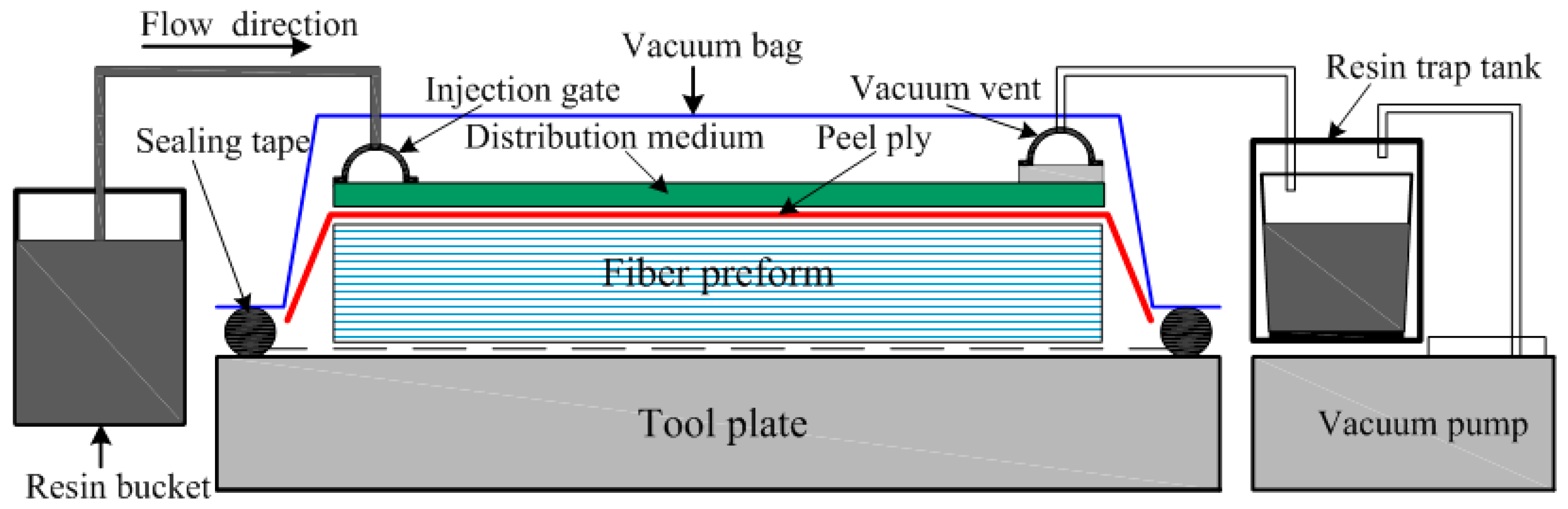
Vacuum infusion molding process (VIMP) is a cost-effective manufacturing technique for large-scale composite structures, such as megawatt (MW) wind turbine blades [1,2]. Vacuum infusion molding has been widely adopted in numerous engineering projects. For instance, in the 2022 ZEBRA collaborative project, a 100% recyclable wind turbine blade prototype was manufactured using Arkema’s Elium® (Colombes, France) liquid thermoplastic resin combined with high-performance glass fabrics. Additionally, Denmark’s DTU Wind Energy, in partnership with LM Wind Power, produced an 88.4 m long carbon–glass hybrid thermoplastic composite blade via the vacuum infusion process, among other examples. In this process, a fiber preform is placed into the mold cavity and sealed with a vacuum bag. A vacuum is then applied to compact the preform and drive the resin to fill the mold cavity [3,4,5,6]. Since the vacuum-driven pressure alone is often insufficient to meet the fabrication requirements of large components, a distribution medium (DM) [7] is typically employed to enhance resin flow. To facilitate the removal of auxiliary materials after curing, a peel-ply [8] is generally placed between the preform and auxiliary layers (e.g., vacuum bag and DM). A schematic of the VIMP setup is shown in Figure 1.
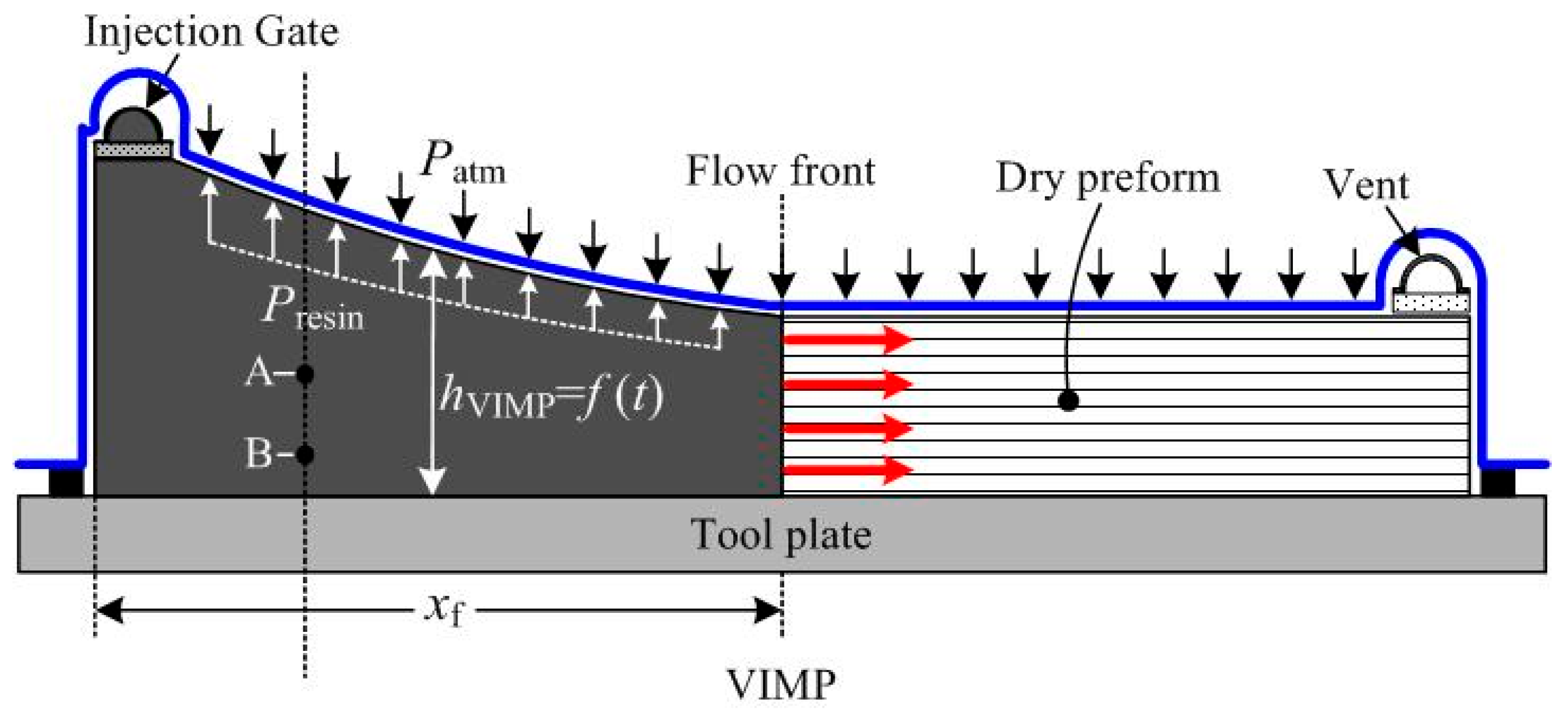
The vacuum bag, serving as a flexible membrane, acts as an elastic mold. The fiber preform is a porous elastomer whose compaction pressure Pcomp equals the difference between atmospheric pressure Patm and resin pressure Presin (i.e., Pcomp = Patm − Presin ) [9]. As resin infiltrates the porous preform, the atmospheric compaction force is gradually counterbalanced by the resin pressure. Consequently, the compaction pressure Pcomp varies with the resin pressure Presin during injection. Due to the flexible nature of the vacuum bag, which cannot fully constrain deformation, the thickness of the preform hVIMP changes with the progression of resin flow through the porous medium, as illustrated in Figure 2. This behavior is referred to as elastic recovery in the VIMP [9,10,11,12].
Elastic recovery is a result of the interaction between resin flow behavior and the compaction response of the fabric preform. This phenomenon is closely linked to two major manufacturing challenges: achieving complete infiltration of the reinforcement before resin gelation and controlling the final part thickness within acceptable dimensional tolerances [13,14]. To ensure successful reinforcement infiltration, researchers have developed various process models to analyze the underlying physics and optimize process parameters [9,15,16,17,18,19,20,21,22,23,24]. Correia [9] et al. focused on fluid flow in compressible porous media; analytical and numerical solutions for 1D (One-Dimensional) flow were established, and the impact of material compressibility on filling time was quantified using the characteristic constant Cα. Caglar [15] et al. studied the filling stage after vacuum infusion. Based on the law of mass conservation and Darcy’s law, they established a two-dimensional numerical model using the finite element method. Through 1D and 2D scenario experiments, it was demonstrated that this model can replace trial-and-error methods for optimizing process parameters. Hammamip [16,17] et al. experimentally analyzed the effects of four key process parameters: the compaction characteristics of reinforcement materials, permeability, infusion strategy, and the use of flow-enhancing layers. Their study verified that linear infusion is twice as fast as point infusion, and that employing flow-enhancing layers can reduce filling time from 16 min to 5 min. Han [18] et al. proposed a hybrid flow model integrating 2.5D and 3D approaches for the SCRIMP (Seemann composites resin infusion molding process) process. Simulations and experimental validation were conducted on hull structures with four different groove layouts using the finite element-control volume method, and the results showed excellent agreement between simulations and experiments. Kang [19] et al. simulated resin flow in deformable fiber preforms using the control volume finite element method. They found that continuous vacuum extraction helps avoid dry spots, and the use of injection channels can reduce the filling time for large structures from 3250 s to 1764 s. This work provides an effective tool for optimizing the VBRTM (Vacuum bag resin trasnfer molding) process of large composite structures. Simacek [20] et al. proposed an integrated modeling framework to simulate the transport and kinetic behavior of volatile content (dissolved state or nucleated bubbles) during resin impregnation. Based on material properties, process parameters, and part geometry, the model can predict the final location and size of voids. Mangus [21] et al. focused on the impregnation stage of the vacuum infusion process and developed a full 3D numerical model based on the commercial CFD software CFX-4. By developing a custom subroutine to couple the flow equations with the fiber reinforcement stiffness equations, modifying the momentum equation for porous media flow, and performing remeshing at each time step to account for deformations induced by pressure changes, the model incorporates anisotropic and spatiotemporally varying permeability as well as fiber reinforcement compressibility. The discrepancy between the model predictions and analytical solutions was less than 1%. Modi [22,23] et al. developed analytical formulas for pressure distribution in both 1D linear flow and 2D radial flow for the vacuum infusion (VI) process, and designed novel experimental setups for 1D linear flow and 2D radial flow to validate the previously derived analytical formulas. Govignon [24] et al. addressed the issue of mold cavity thickness variation caused by the flexibility of vacuum bags. Through experiments, they established a nonlinear elastic compaction model encompassing three stages: dry compaction, wet unloading, and wet recompaction. By integrating this model with the finite element method, they developed a 1D simulation tool covering the entire process—pre-filling, filling, and post-filling. The model’s accuracy was validated, and four post-filling strategies were compared. Gajjar et al. [25] focused on the vacuum infusion process to investigate the effects of key process parameters such as ply count (4, 8, and 12 plies), part thickness, and resin pressure. Through experimental measurements and numerical simulations using FLUENT software, they observed that the part thickness gradually decreases while the fiber volume fraction progressively increases from the resin inlet to the outlet. The rate of resin pressure change showed good agreement between experiments and simulations, with discrepancies within 10%. Furthermore, they established an empirical power-law relationship between compaction pressure and fiber volume fraction. These models are typically implemented through numerical simulation based on a seepage differential equation that couples Darcy’s law with the continuity equation. Darcy’s law serves as a constitutive equation relating seepage velocity to permeability, resin viscosity, and pressure gradient.
The final part thickness is primarily governed by the compaction behavior of the reinforcement during the manufacturing process. To achieve the desired dimensional tolerances and mechanical properties, a fundamental understanding of the process physics linking process models to compaction behavior is essential. Yenilmez [4] et al. experimentally established a database for the dry/wet compaction characteristics and permeability at different thicknesses of fabrics, and validated that the model proposed by Correia et al. shows better agreement with actual processes in compaction experiments under dry loading and wet unloading conditions. To this end, numerous studies [4,26,27,28,29,30,31] have been conducted to characterize compaction behavior, which largely depends on the reinforcement structure and its dry or wet state, and to establish correlations between process models and such behavior. Zhang [26] et al. designed a thin, flexible platinum-coated PVDF capacitive sensor capable of embedded monitoring throughout the entire liquid composite molding process. It accurately captures unsaturated/saturated resin flow fronts, local thickness variations, air leakage faults, and curing progress, without introducing defects within the material. Hammami [27] et al. investigated the compaction behavior of reinforcement materials, such as unidirectional fabrics and knitted fabrics, along with three types of flow-enhancing layers using an Instron testing machine. They found that due to their higher areal density, the compaction characteristics of flow-enhancing layers dominate the overall behavior of hybrid stack-ups. Additionally, the lubrication effect—specifically, fiber rearrangement in the wet state—significantly influences the fiber volume fraction. Kruckenberg [28] et al. experimentally investigated the static and vibratory compaction behaviors of carbon fiber and glass fiber plain-weave fabrics. They found that static compaction follows a power-law model, while vibratory compaction can significantly increase fiber volume fraction by enhancing yarn flattening and yarn packing fraction (with glass fiber showing up to a 16% increase, and carbon fiber exhibiting a 6% increase under high load). Additionally, lubrication reduces friction but provides no further enhancement to the fiber volume fraction achieved through vibratory compaction. Korkiakoski [29] et al. investigated the compaction behavior of stitched quasi-unidirectional non-crimp fabrics and found that stitching parameters and post-filling strategies have a significant effect on the thickness of both the preform and the laminate. Kelly [30] et al. experimentally investigated the through-thickness compression response of a glass fiber continuous filament mat in both dry and wet states. They found that the material exhibits significant viscoelastic characteristics—compaction stress increases with higher compaction rates, and wet-state compaction stress is approximately 40% lower than in the dry state. Based on these findings, they developed a single nonlinear viscoelastic model capable of simultaneously describing both the compaction and relaxation stages. Additionally, several investigations [4,10,31,32,33] have been carried out to determine the elastic recovery of the preform in vacuum infusion molding. Akif [31] et al. compared the filling times of Vacuum Infusion (VI) and Resin Transfer Molding (RTM). They found that the experimental filling time for VI was 9.5% shorter than for RTM, and the simulated filling time using a simplified VI model was 31% shorter (918 s vs. 1327 s) compared to the analytical solution for RTM. The core reason identified is that in VI, the thickness of the wetted region increases over time, thereby enhancing the effective permeability. This validates the rationality of the simplified model and provides an efficient solution for predicting the filling time in the VI process. Simacek [32] et al. established a 1D theoretical model coupling resin flow with preform deformation to simulate pressure distribution and part thickness evolution under post-filling scenarios. They found that the initial pressure distribution has a permanent effect on the final thickness only when there is no resin exchange due to membrane sealing. Additionally, a decrease in preform permeability prolongs the equilibration time, whereas reduced compliance shortens it. Zhu [33] et al. investigated the effects of high-permeability medium (HPM) permeability and the role of release films and process parameters on mold filling through visualization experiments. They identified metal mesh MM2 as the optimal HPM, with a permeability of 15.5 × 10⁻⁶ cm2 and a filling time of only 70 s. Based on the insights gained from process optimization, control methods may then be implemented to minimize thickness variation during the filling stages.
In summary, elastic recovery may increase the risk of manufacturing defects and reduce the overall performance of composite components, especially large-scale structural parts. Studies have found that the elastic recovery effect is correlated with part thickness, a relationship known as the thickness effect. This effect describes the systematic changes in the mechanical properties of components and their physicochemical behavior during manufacturing as thickness increases. The thickness effect significantly influences resin flow and curing behavior during the manufacturing process and ultimately affects the final performance of the composites. However, existing research has primarily focused on elastic recovery under specific process configurations or attributed thickness variations mainly to the compaction characteristics of the materials themselves. Although the major manufacturing challenges arising from elastic recovery have been extensively studied, the thickness effect has rarely been systematically explored in the existing literature.
Therefore, this study aims to address this research gap by designing systematic vacuum infusion experiments. It not only focuses on the transient evolution of local resin pressure and part thickness but also, for the first time, conducts a cross-comparative study of the thickness effect and three fundamental flow configurations (in-plane unidirectional flow, through-thickness unidirectional flow, and coupled infiltration flow). The specific objectives of this study are (1) to quantitatively characterize the degree of elastic recovery in parts of different thicknesses during the VIMP; (2) to reveal the intrinsic relationship between the thickness effect and flow configurations, clarifying which process strategies can more effectively suppress or utilize thickness variations; and (3) to provide direct experimental evidence and theoretical insights for the selection and optimization of vacuum infusion molding processes for large composite components.

2. Materials and Experimental Procedure

2.1. Materials

The main materials used in the experiments are listed in Table 1. The reinforcement material consists of an E-glass unidirectional fabric with an areal density of 1250 g/m2, which is commonly employed in large wind turbine blades and supplied by Chongqing International Composite Co., Ltd. (Chongqing, China).
A DM, provided by Shanghai Leadgo-tech Co., Ltd. (Shanghai, China), was utilized to facilitate resin flow during infusion. Its thickness, porosity, and permeability are summarized in Table 2.
To eliminate the influence of viscosity variation during the filling process, mobile oil CF-4 (Exxon, Spring, TX, USA) was used in place of resin in these vacuum infusion experiments. The density, viscosity, and state of oil CF-4 are provided in Table 3.

2.2. Vacuum Infusion Experiments

Vacuum infusion (VI) experiments were conducted to investigate the elastic recovery and thickness effect during the VIMP. To reflect practical manufacturing scenarios, four distinct process strategies, corresponding to different product types, were examined. Based on their respective flow patterns, these strategies are designated as in-plane 1D flow, out-plane 1D flow, coupled seepage-flow A, and coupled seepage-flow B. Pressure sensors embedded in the mold plate were used to monitor fluid pressure throughout the filling stage. The thickness variation in the fabric reinforcement was recorded using dial gauges. Data acquisition commenced at the onset of fluid filling and continued into the post-filling stage.
In all VI experiments, the reinforcement material was a unidirectional glass-fiber fabric (1250GUD) (Chongqing, China), and the fluid used was mobile oil CF-4 (see Table 3 for properties).

2.3. Fiber Volume Fraction of Fabric Preform

Based on the measured thickness (h) and the number of fabric layers (n), the fiber volume fraction (Vf) of the preform is calculated using the following expression:
V f = ρ a n ρ h
where the areal density (ρa) of the fabric is 1250 g/m2 and the density of the glass fiber is 2540 kg/m3.

3. Results and Discussion

3.1. In-Plane 1D Flow

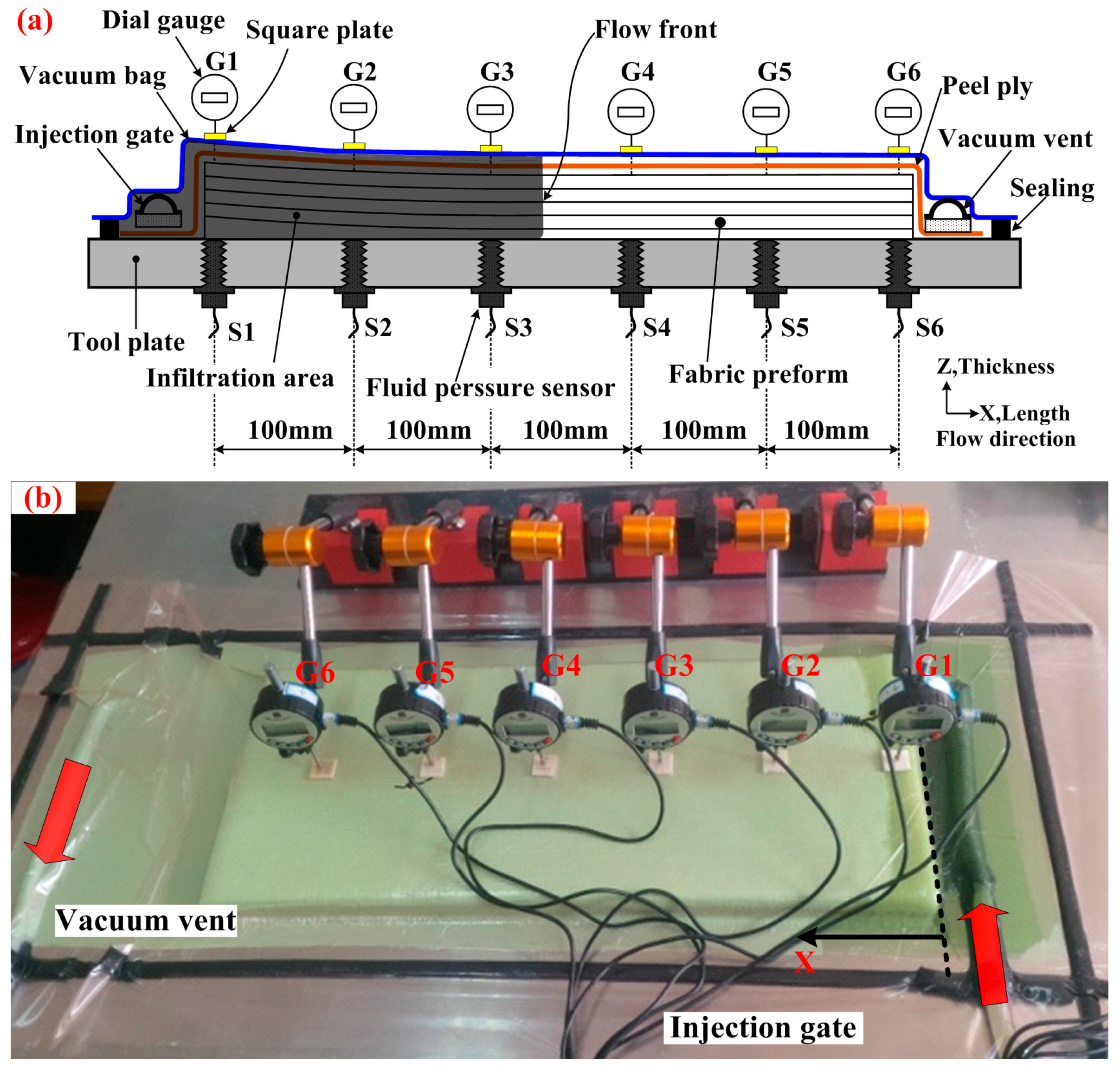
In-plane unidirectional (1D) injection is a common process strategy for manufacturing panel-type components. This method produces a characteristic in-plane unidirectional flow pattern. The experimental setup is illustrated in Figure 3. The fabric preform has in-plane dimensions of 600 mm (length) × 300 mm (width). To investigate the influence of thickness on flow behavior, three preforms consisting of 10, 20, and 30 layers of 1250GUD fabric were prepared. Prior to data acquisition, the preform was compacted under vacuum for at least 30 min. It should be noted that no DM was used in these in-plane 1D flow experiments. A small square plate was placed beneath the tips of the dial gauges to average out local variations in thickness deformation. Consequently, no lubrication effect [3,4] was observed during the vacuum infusion experiments, as shown in Figure 4.
Figure 4 presents the characteristic curves of fluid pressure and part thickness increment during the injection process in the in-plane unidirectional flow experiments. The local fluid pressure increases progressively with flow propagation until the fluid front reaches the outlet; the local pressure gradient exhibits a similar trend. Correspondingly, the thickness increment rises as the compaction stress decreases, governed by the relation Pcomp = PatmPresin. Owing to the compaction hysteresis of the reinforcement, the maximum thickness increment typically occurs after the filling stage, followed by a gradual decline.
As summarized in Table 4, the maximum thickness increment (Δh) increases with the number of fabric layers. In contrast, the normalized increment rate (Δh/h) decreases with increasing layer count, which is attributed to the enhanced compliance of the reinforcement. The measured increment rates are 4.97%, 4.74%, and 3.86% for 10, 20, and 30 layers, respectively.
The trend observed in this study—where the thickness increment increases with the number of layers in in-plane unidirectional flow—aligns with the findings of Yenilmez [4] et al. Their dry/wet compaction experiments demonstrated that lubrication effects in the wet state led to a significant initial reduction in thickness, followed by gradual recovery as resin pressure rises. Although no distribution medium was used in our experiments, a similar thickness response mechanism was observed, indicating that the lubrication effect continues to influence compaction behavior through reduced inter-fiber friction even in simple flow configurations.
Furthermore, the compressible porous media flow model proposed by Correia [9] et al. highlights that thickness variation driven by pressure gradients is closely related to the compaction characteristics of the material. The decrease in normalized thickness increment rate with increasing layer count (10 layers: 4.97%; 30 layers: 3.86%) is consistent with the findings of Wang [11] et al. on the compaction behavior of multi-layer preforms: as the number of layers increases, the overall stiffness of the preform increases, leading to reduced deformability per unit pressure.
The absence of a pronounced “initial thickness drop due to lubrication” in our experiments may be attributed to the fact that no high-permeability medium was used and the preform had reached a near-steady state after vacuum compaction. This differs from the sandwich structure with a core layer used in Yenilmez [4] et al., suggesting that preform architecture and medium configuration play a significant role in modulating elastic recovery behavior.

3.2. Out-Plane One-Dimensional Flow

To reduce resin infiltration distance, Z-direction injection (also referred to as out-of-plane injection) is an effective processing strategy for manufacturing large-scale, thick-section components. The flow pattern in Z-direction injection is a typical 1D out-of-plane flow. In in-plane injection, the resin flow is predominantly perpendicular to the direction of compaction pressure and gravity. When gravity is negligible, the resin pressure gradient through the thickness can be considered zero. In contrast, in out-of-plane injection, the resin flow is primarily parallel to the compaction pressure and gravity, resulting in a non-zero resin pressure gradient through the thickness that evolves with flow advancement. Based on this reasoning, the elastic recovery behavior must differ between in-plane and out-of-plane injection processes.
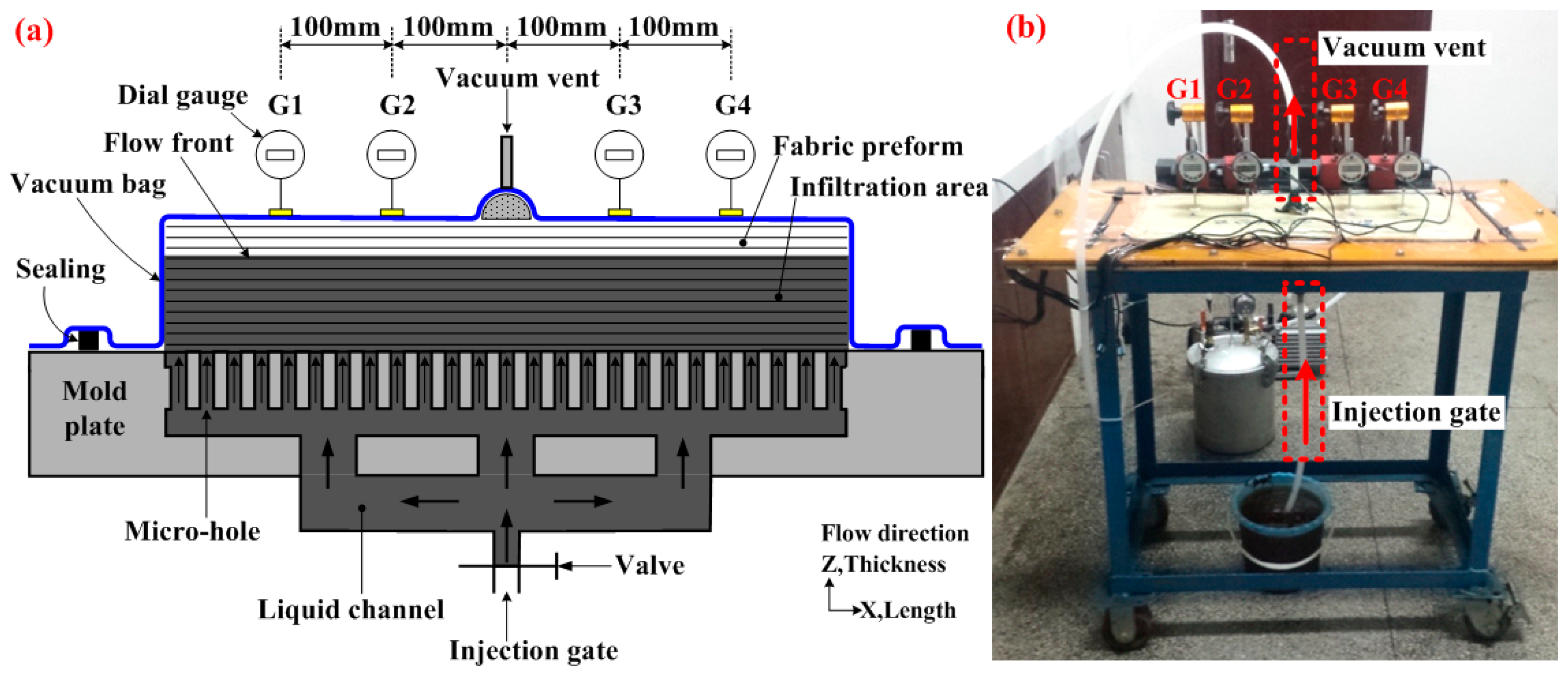
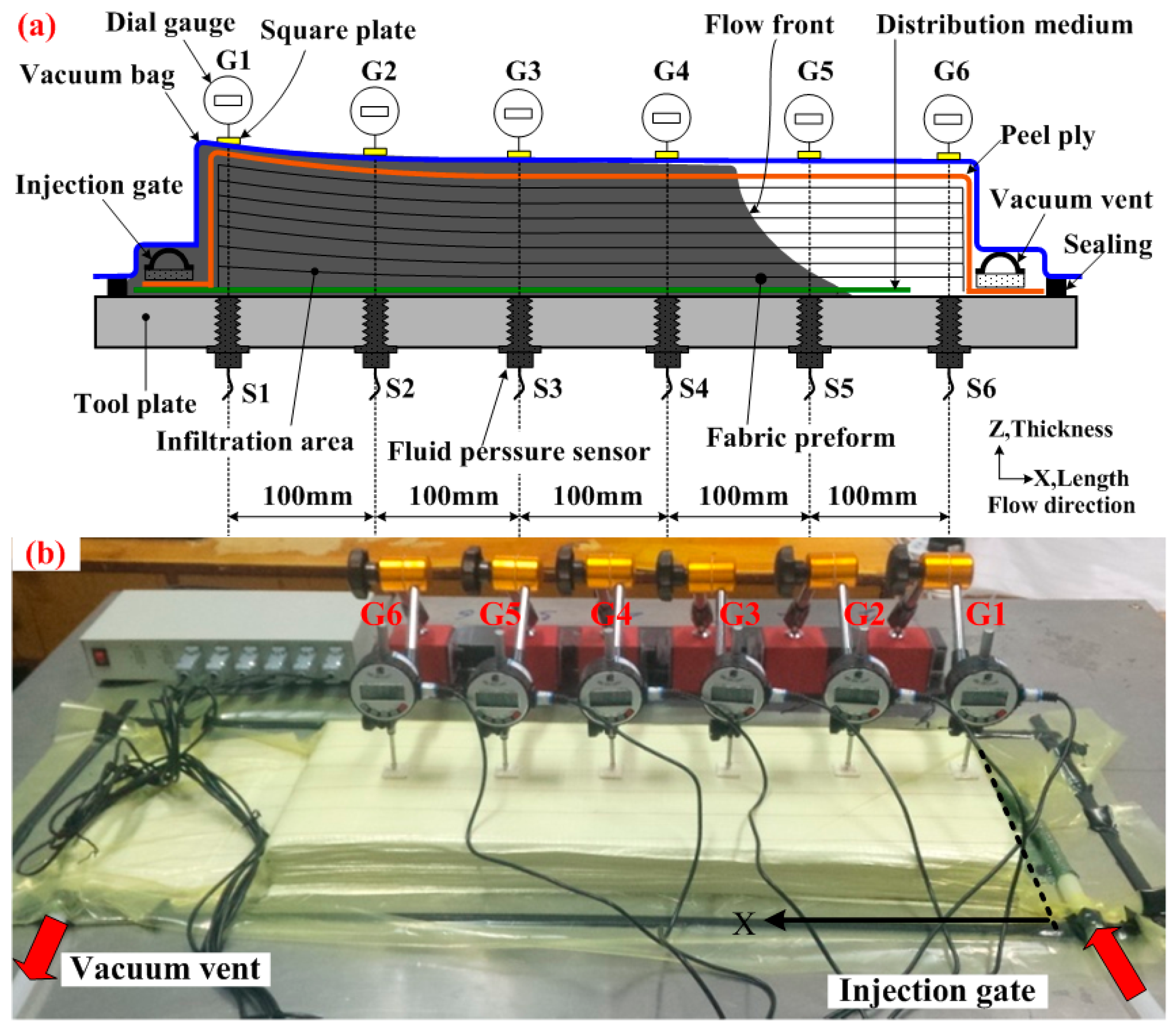
The setup for the out-of-plane 1D flow experiments is illustrated in Figure 5. The fabric preforms measured 600 mm × 300 mm in the in-plane directions. To examine the effect of thickness on flow behavior, five preforms were prepared with 10, 20, 30, 50, and 90 layers of 1250GUD fabric. Dial gauges G1 and G4 were positioned symmetrically on the preform, as were G2 and G3. Due to the inability to install pressure sensors along the thickness direction within the preform, no pressure data were recorded during the flow experiments.
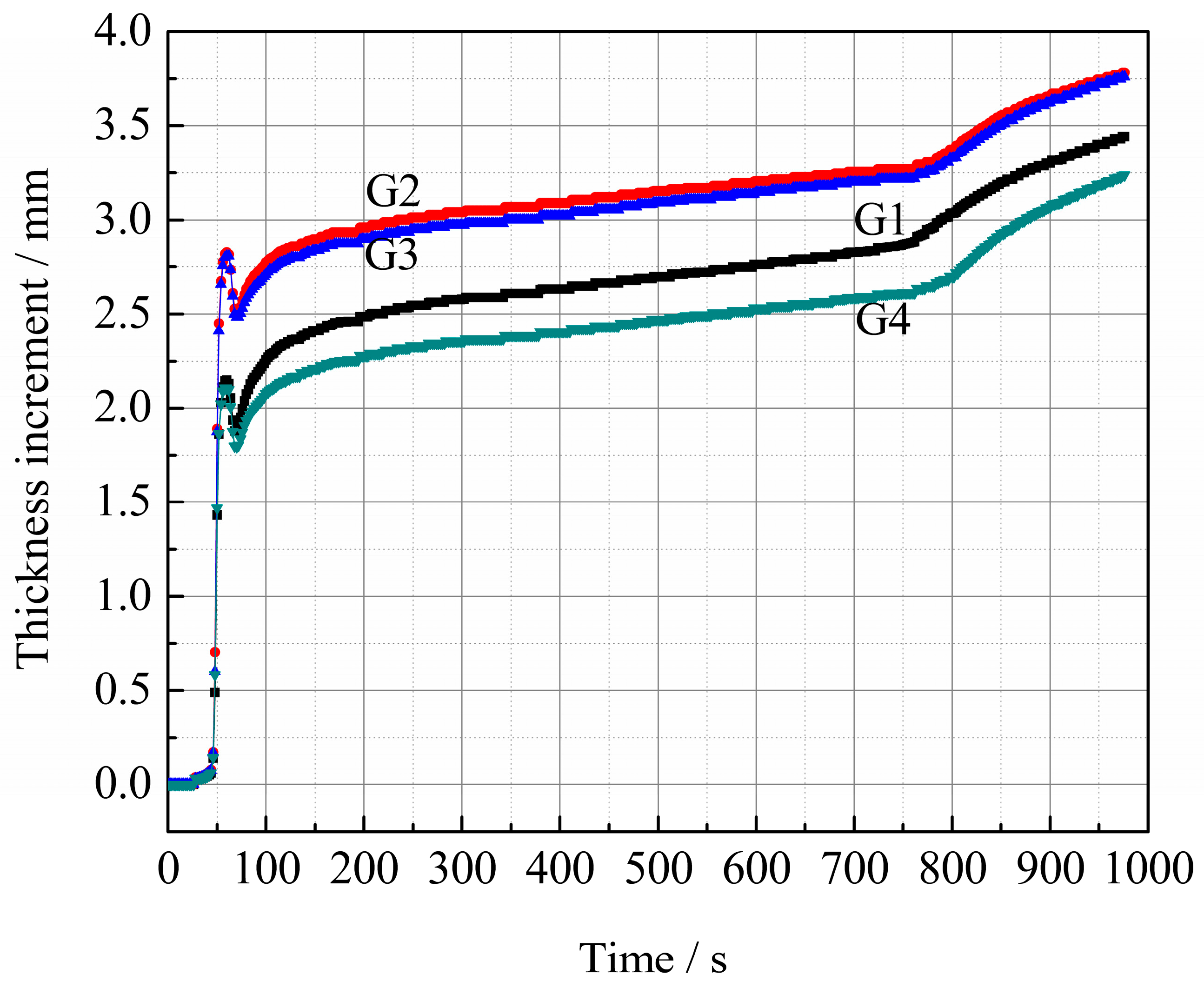
The evolution of thickness increment during injection in out-of-plane 1D flow experiments differs markedly from that observed in in-plane 1D flow, as illustrated in Figure 6. The thickness increase exhibits a distinct three-stage growth process until filling is complete. In the first stage, the thickness increment follows an S-shaped curve, rising from 0 mm to approximately 3 mm within a 50 s filling period. During the second stage, for preforms with 10, 20, and 30 layers, the thickness decreases rapidly by about 0.5 mm and then remains at a steady level for a duration that correlates with the number of layers. This rapid decrease is not observed in preforms with 50 and 90 layers. Subsequently, in the third stage, the thickness increment increases gradually until it reaches its maximum value.
Although the maximum thickness increment (Δh) increases with the number of layers, the variation remains minor, as presented in Table 5. In contrast, the normalized increment rate (Δh/h) decreases significantly as the number of layers rises, which can be attributed to the increasing compliance of the reinforcement and the influence of thickness. Specifically, the Δh/h values for preforms with 10, 20, 30, 50, and 90 layers are 43.7%, 23.0%, 15.8%, 11.1%, and 7.62%, respectively.
The three-stage thickness growth behavior observed in out-of-plane flow closely aligns with the numerical simulations of the post-filling stage by Caglar [15] et al. Their study indicated that a redistribution of resin pressure after filling completion leads to dynamic adjustments in compaction pressure, resulting in further thickness evolution. The transient thickness decrease (≈0.5 mm) in the second stage can be explained by local compaction recovery due to the incomplete equilibration of resin pressure gradients.
Compared to in-plane flow, the thickness variation in out-of-plane flow is significantly more pronounced (10 layers: 43.7%). This is consistent with the argument by Correia [9] et al. regarding the influence of flow direction on compaction response: in out-of-plane flow, resin motion is parallel to the compaction direction, making the effect of pressure gradients on thickness more direct and pronounced.
Moreover, experiments by Wang [15] et al. showed that fluid viscosity significantly affects thickness evolution. In our study, the use of mobile oil (viscosity 185 mPa·s) as the fluid medium—with its relatively low viscosity—likely accelerated pressure transmission and thickness response, thereby amplifying the observable changes throughout the three-stage process.

3.3. Coupled Seepage-Flow A

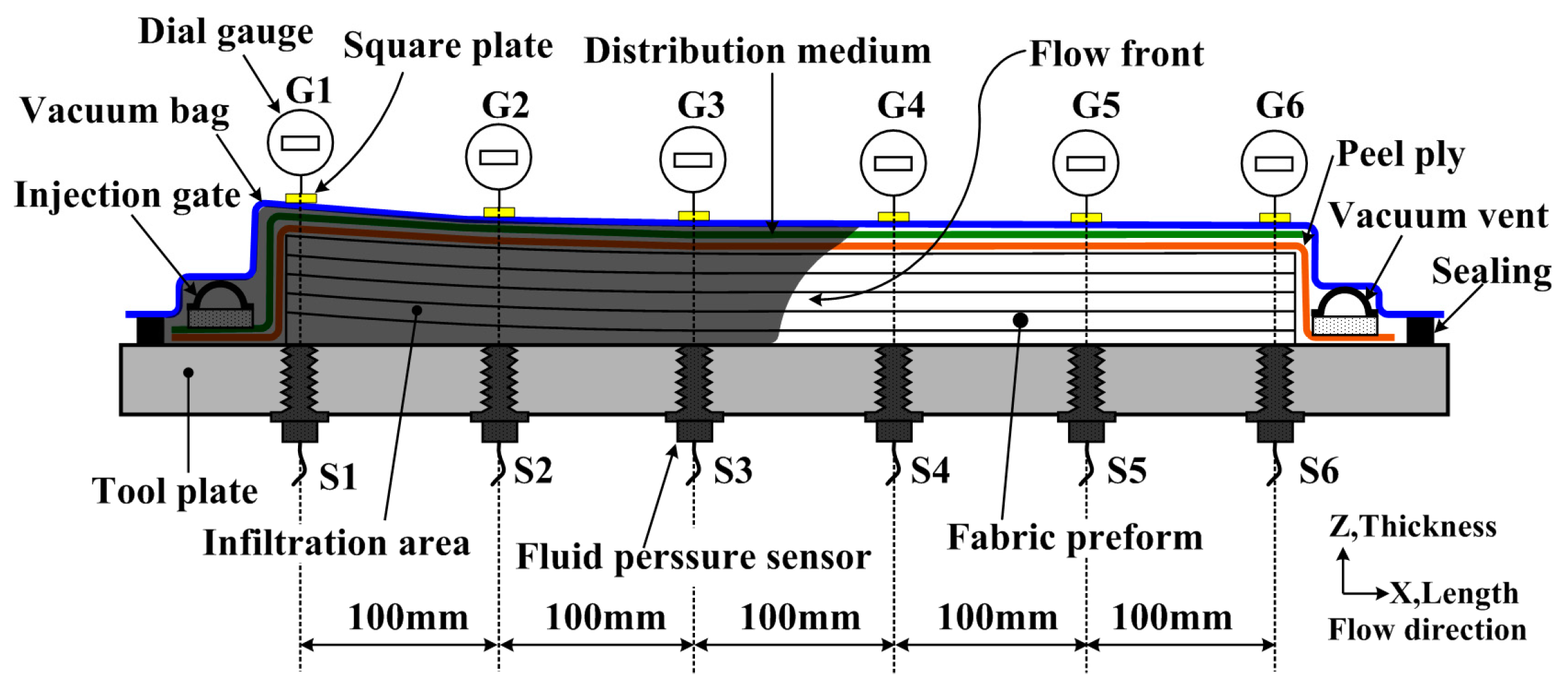
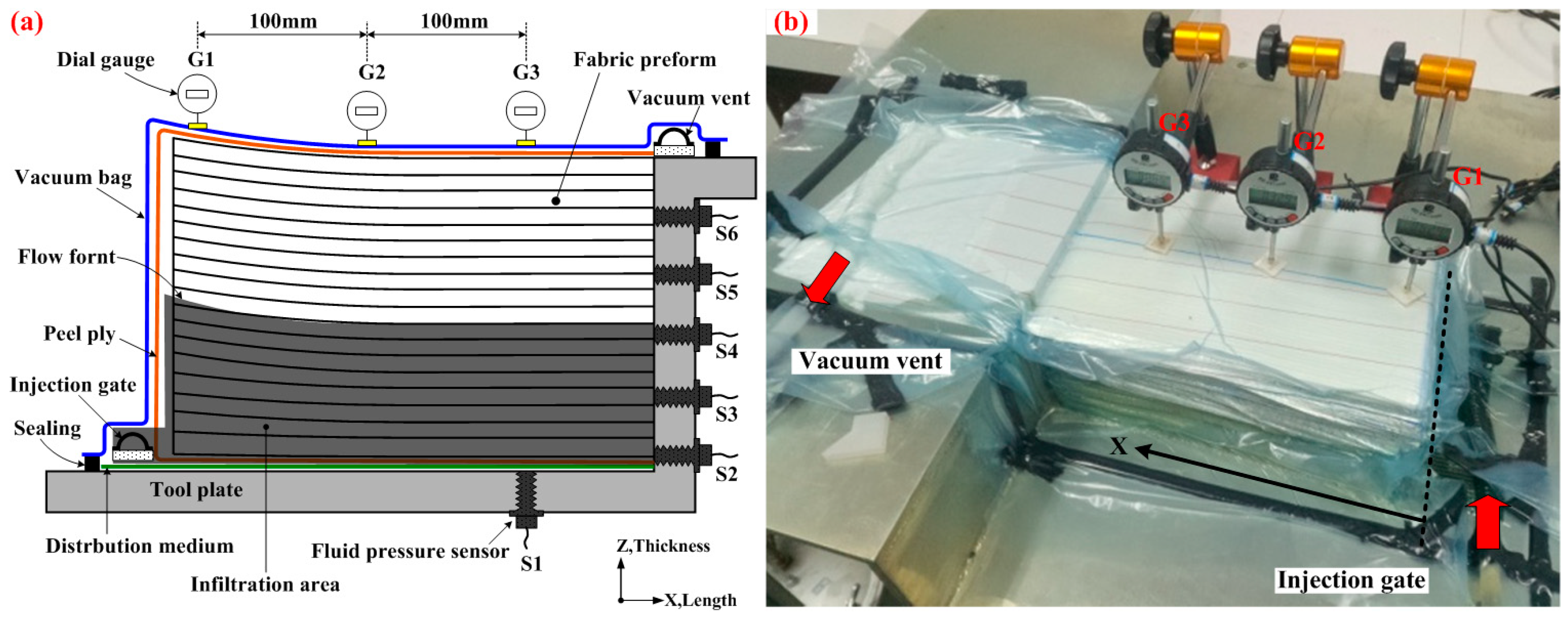
In VIMP, a DM is typically placed over the preform to facilitate resin flow. This approach is widely adopted in manufacturing large-scale panels and sandwich structures. Consequently, numerous studies [34,35,36] have investigated this configuration and proposed leakage models to characterize resin flow behavior and optimize the manufacturing process. Figure 7 illustrates the experimental setup and the lead–lag effect at the resin flow front resulting from the permeability contrast between the DM and the preform. Given the substantial existing research on this strategy, it is not further examined in the present study.
Alternatively, the DM may be positioned beneath the preform to provide equivalent processing assistance. This configuration is particularly suitable for fabricating thick-section structures with non-smooth surfaces. Figure 8 illustrates the experimental setup and the resulting flow pattern. Owing to its high permeability, the resin rapidly disperses within the DM before infiltrating the porous preform in both in-plane and out-of-plane directions. A lead–lag effect is also evident, as shown in Figure 8, which contrasts with the flow behavior depicted in Figure 7. This flow mechanism is designated as “coupled seepage-flow A” in the present study. The fabric configuration matches that used in the in-plane 1D flow experiments, with in-plane dimensions of 600 mm × 300 mm. To examine the influence of thickness on flow behavior, five preforms were prepared using 10, 20, 30, 40, and 50 layers of 1250GUD fabric.
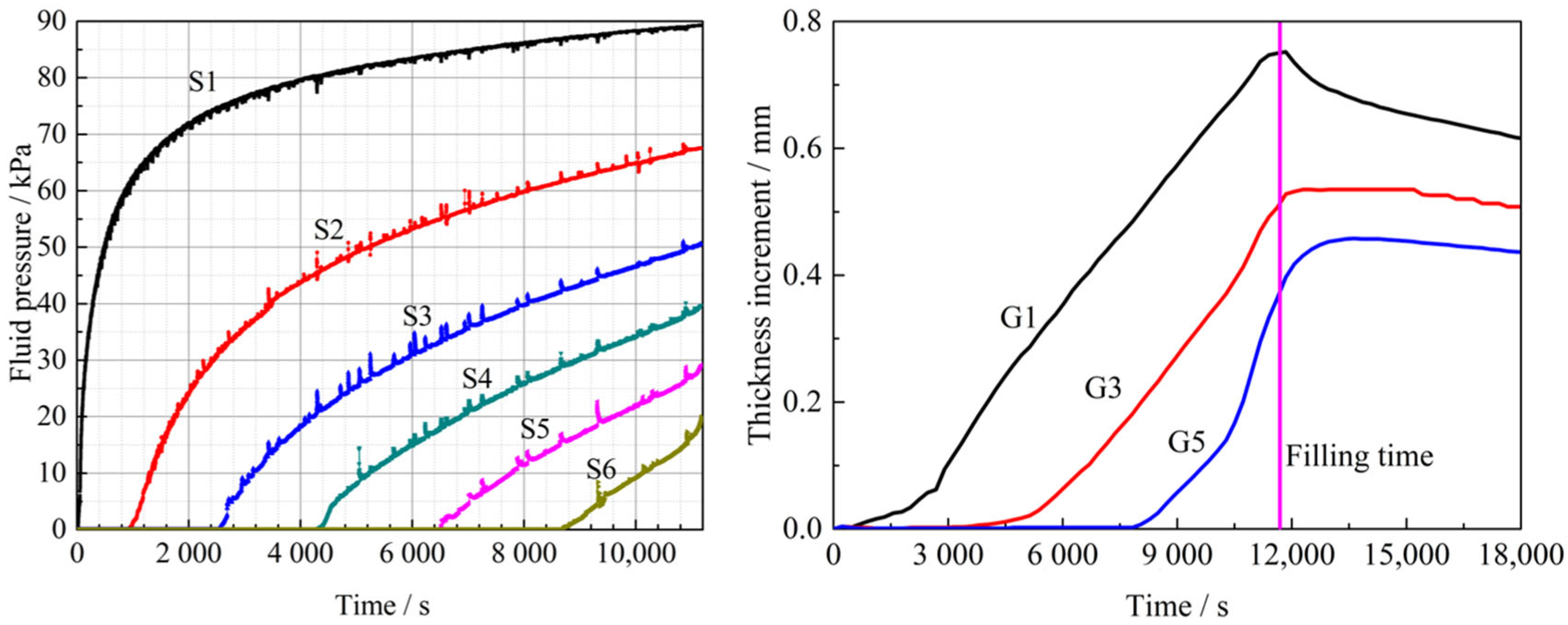
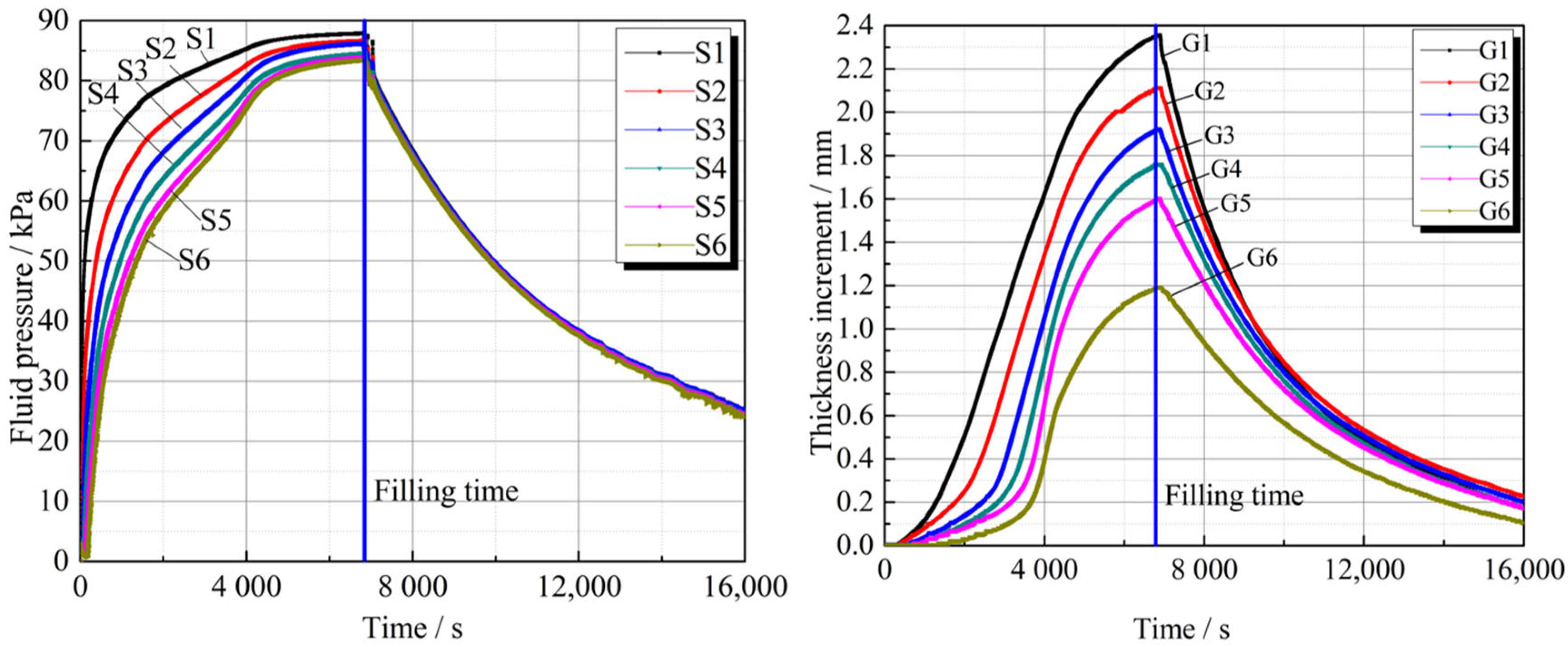
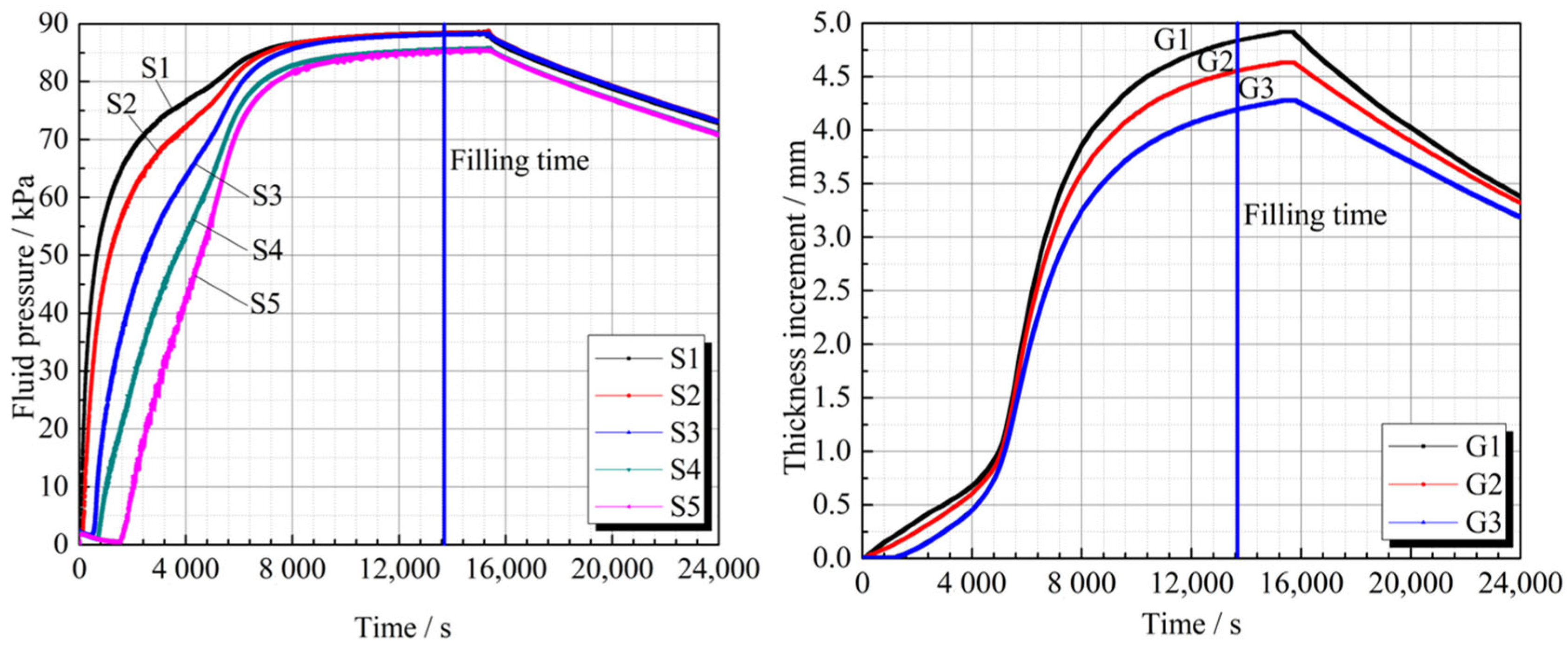
As shown in Figure 9, the typical curves of local fluid pressure and thickness increment both rise with flow propagation until filling is completed, after which they decline in the post-filling stage. At the point of complete filling, all local fluid pressure readings (S1~S6) exceed 80 kPa, with variations within 10 kPa. A clear decreasing trend in local thickness increment is also observed from the inlet to the outlet.
As shown in Table 6, the maximum thickness increment (Δh) increases with the number of layers, while the normalized increment rate (Δh/h) shows no significant difference and remains approximately 6%. This indicates that the thickness effect is offset by the coupled seepage-flow effect resulting from the interaction of in-plane flow, out-of-plane flow, and DM flow.

3.4. Coupled Seepage-Flow B

For the manufacturing of large-scale, thick-section components, employing a DM with vacuum venting offers an effective means to control resin flow along the thickness direction and reduce infiltration distance. The resulting flow pattern, referred to in this study as coupled seepage-flow B, is illustrated in Figure 10 along with the corresponding experimental setup and fabric configuration. The fabric preforms have in-plane dimensions of 300 mm × 200 mm. To examine the influence of thickness on flow behavior, four preforms were prepared with 10, 50, 100, and 150 layers of 1250GUD fabric.
Figure 11 illustrates the typical evolution of local fluid pressure (measured along the thickness direction) and thickness increment during flow propagation, exhibiting behavior analogous to that observed in coupled seepage-flow A. Both the local fluid pressure and the thickness increment rise with advancing flow until filling completion, after which they decline in the post-filling stage. At the moment of complete filling, the local fluid pressure exceeds 80 kPa, while the thickness increment exhibits a gradual decrease from the inlet toward the outlet.
As shown in Table 7, the maximum thickness increment (Δh) increases with the number of layers. In contrast, the normalized increment rate (Δh/h) shows no significant variation, remaining consistently around 6%. This further indicates that the thickness effect is counterbalanced by the coupled seepage-flow effect arising from the interaction among in-plane flow, out-of-plane flow, and flow through the DM, Shanghai Leadgo-tech Co., Ltd., Shanghai, China.

4. Conclusions

Vacuum infusion experiments were conducted to characterize elastic recovery and thickness effects in the VIMP. The results indicate that local fluid pressure rises with flow propagation until the fluid front reaches the outlet, accompanied by an increasing fluid pressure gradient from the inlet to the outlet. These findings confirm the hypothesis that the pressure gradient drives thickness variation during vacuum infusion molding. Beyond these physical insights, the study delivers direct practical value for engineering applications.
Experimental results show that the maximum thickness increment (Δh) increases with the number of reinforcement layers, while the normalized increment rate (Δh/h) decreases due to enhanced reinforcement compliance. The measured rates are 4.97%, 4.74%, and 3.86% for 10, 20, and 30 layers, respectively.
The thickness increment exhibits distinct three-stage growth until filling completion. Initially, it follows an S-shaped increase within the first 50 s, then undergoes a rapid decrease of approximately 0.5 mm for 10-, 20-, and 30-layer preforms before stabilizing. This rapid decrease phase is absent in 50- and 90-layer preforms. Thereafter, thickness increases gradually until reaching its maximum. Although Δh rises with layer count, Δh/h declines substantially owing to increased reinforcement compliance and thickness effects, with values of 43.7%, 23.0%, 15.8%, 11.1%, and 7.62% for 10, 20, 30, 50, and 90 layers, respectively.
Both local fluid pressure and thickness increment increase during filling and decrease in the post-filling stage. At filling completion, local fluid pressure exceeds 80 kPa, and the thickness increment decreases from the inlet to the outlet. While Δh grows with layer number, Δh/h shows no significant difference across configurations, remaining around 6%. This suggests that the thickness effect is offset by the coupled influence of in-plane, out-plane, and distribution-medium flows.
Elastic recovery decreases with increasing part thickness, indicating that the thickness effect benefits the vacuum infusion manufacturing of large-scale (thick-section) composite structures. Both elastic recovery and thickness effect are strongly influenced by the injection mode (process strategy), with effects in out-plane unidirectional flow being markedly greater than those in in-plane and coupled seepage flows.

Author Contributions

Conceptualization, J.Y., C.Y. and S.X.; Methodology, J.Y. and S.L.; Validation, J.Y., Shan Liu and C.Y.; Investigation, J.Y., S.L., C.Y. and S.X.; Resources, J.Y.; Data curation, S.L., C.Y. and S.X.; Writing – original draft, J.Y.; Project administration, J.Y. All authors have read and agreed to the published version of the manuscript.

Funding

This work was funded by the Major Science and Technology Project of Hunan Province (2023ZJ1040).

Data Availability Statement

No new data was created.

Conflicts of Interest

The authors declare no conflict of interest.

References

  1. Pierce, R.S. Challenges in permeability characterization for modelling the manu-facture of wind turbine blades. IOP Conf. Ser. Mater. Sci. Eng. 2023, 1293, 012009. [Google Scholar] [CrossRef]
  2. Cheng, X.; Du, B.; He, J.; Long, W.; Su, G.; Liu, J.; Fan, Z.; Chen, L. A Review of Thermoplastic Composites on Wind Turbine Blades. Compos. Part B 2025, 299, 112411. [Google Scholar] [CrossRef]
  3. Yang, J.; Xiao, J.; Zeng, J.; Jiang, D.; Peng, C. Compaction Behavior and Part Thickness Variation in Vacuum Infusion Molding Process. Appl. Compos. Mater. 2012, 19, 443–458. [Google Scholar] [CrossRef]
  4. Yenilmez, B.; Senan, M.; Murat Sozer, E. Variation of Part Thickness and Compaction Pressure in Vacuum Infusion Process. Compos. Sci. Technol. 2009, 69, 1710–1719. [Google Scholar] [CrossRef]
  5. Laborderie, L.M.; Pierce, R.S.; Haselbach, P.U. Avoiding Air Entrapment in Multi-Inlet through-Thickness Flow: Analytical Development of Spacing Criteria and Experimental Application to Vacuum Infusion and Release Film Design. Compos. Part A 2026, 201, 109431. [Google Scholar] [CrossRef]
  6. Simacek, P.; Eksik, Ö.; Heider, D.; Gillespie, J.W.; Advani, S. Experimental Validation of Post-Filling Flow in Vacuum Assisted Resin Transfer Molding Processes. Compos. Part A 2012, 43, 370–380. [Google Scholar] [CrossRef]
  7. Sas, H.S.; Šimáček, P.; Advani, S.G. A methodology to reduce variability during vacuum infusion with optimized design of distribution media. Compos. Part A 2015, 78, 223–233. [Google Scholar] [CrossRef]
  8. An, S.; Kim, J.; Roh, H.D.; Kim, W.-D.; Lee, J.; Um, M.-K. Effect of Peel Ply on Resin Flow during Vacuum Infusion. Materials 2023, 16, 4421. [Google Scholar] [CrossRef]
  9. Correia, N.C.; Robitaille, F.; Long, A.C.; Rudd, C.D.; Šimáček, P.; Advani, S.G. Analysis of the Vacuum Infusion Moulding Process: I. Analytical Formulation. Compos. Part A 2005, 36, 1645–1656. [Google Scholar] [CrossRef]
  10. Tackitt, K.D.; Walsh, S.M. Experimental study of thickness gradient formation in the VARTM process. Mater. Manuf. Process. 2005, 20, 607–627. [Google Scholar] [CrossRef]
  11. Wang, C.; Yue, G.; Bai, G.; Pan, L.; Zhang, B. Compaction Behavior and Permeability Property Tests of Preforms in Vacuum-Assisted Resin Transfer Molding Using a Combined Device. Measurement 2016, 90, 357–364. [Google Scholar] [CrossRef]
  12. Lee, D.; Lee, I.Y.; Park, Y.-B. Real-Time Process Monitoring and Prediction of Flow-Front in Resin Transfer Molding Using Electromechanical Behavior and Generative Adversarial Network. Compos. Part B 2025, 298, 112382. [Google Scholar] [CrossRef]
  13. Yenilmez, B.; Caglar, B.; Sozer, E.M. Pressure-Controlled Compaction Characterization of Fiber Preforms Suitable for Viscoelastic Modeling in the Vacuum Infusion Process. J. Compos. Mater. 2017, 51, 1209–1224. [Google Scholar] [CrossRef]
  14. Ali, M.A.; Irfan, M.S.; Khan, T.; Ubaid, F.; Liao, K.; Umer, R. In-Situ Monitoring of Reinforcement Compaction Response via MXene-Coated Glass Fabric Sensors. Compos. Sci. Technol. 2022, 227, 109623. [Google Scholar] [CrossRef]
  15. Caglar, B.; Yenilmez, B.; Sozer, E.M. Modeling of Post-Filling Stage in Vacuum Infusion Using Compaction Characterization. J. Compos. Mater. 2015, 49, 1947–1960. [Google Scholar] [CrossRef]
  16. Hammami, A.; Gebart, B. A model for the vacuum infusion molding process. Plast. Rubber Compos. 1998, 27, 185–189. [Google Scholar]
  17. Hammami, A.; Gebart, B. Analysis of the vacuum infusion molding process. Polym. Compos. 2000, 21, 28–40. [Google Scholar] [CrossRef]
  18. Han, K.; Jiang, S.; Zhang, C.; Wang, B. Flow Modeling and Simulation of SCRIMP for Composites Manufacturing. Compos. Part A Appl. Sci. Manuf. 2000, 31, 79–86. [Google Scholar] [CrossRef]
  19. Kang, M.K.; Lee, W.I.; Hahn, H.T. Analysis of Vacuum Bag Resin Transfer Molding Process. Compos. Part A 2001, 32, 1553–1560. [Google Scholar] [CrossRef]
  20. Simacek, P.; Kermani, N.N.; Advani, S.G. A Comprehensive Framework for Modeling Volatile Transport and Bubble Dynamics in Liquid Composite Molding Processes. Compos. Sci. Technol. 2025, 269, 111254. [Google Scholar] [CrossRef]
  21. Magnus Andersson, H.; Staffan Lundström, T.; Rikard Gebart, B. Numerical Model for Vacuum Infusion Manufacturing of Polymer Composites. Int. J. Numer. Methods Heat Fluid Flow 2003, 13, 383–394. [Google Scholar] [CrossRef]
  22. Modi, D.; Johnson, M.; Long, A.; Rudd, C. Analysis of Pressure Profile and Flow Progression in the Vacuum Infusion Process. Compos. Sci. Technol. 2009, 69, 1458–1464. [Google Scholar] [CrossRef]
  23. Modi, D.; Johnson, M.; Long, A.; Rudd, C. Investigation of Pressure Profile and Flow Progression in Vacuum Infusion Process. Plast. Rubber Compos. 2007, 36, 101–110. [Google Scholar] [CrossRef]
  24. Protz, R.; Kunze, E.; Luplow, T.; Littner, L.; Drummer, J.; Heimbs, S.; Kreutzbruck, M.; Fiedler, B.; Gude, M. Manufacture, Process Simulation, Modelling and Testing of Thick-Walled Thermoset Fibre-Polymer Composite Laminates—A Review. Compos. Struct. 2025, 373, 119678. [Google Scholar] [CrossRef]
  25. Gajjar, T.; Shah, D.B.; Joshi, S.J.; Patel, K.M. Analysis of Process Parameters for Composites Manufacturing using Vacuum Infusion Process. Mater. Today Proc. 2020, 21, 1244–1249. [Google Scholar] [CrossRef]
  26. Govignon, Q.; Bickerton, S.; Kelly, P.A. Simulation of the Reinforcement Compaction and Resin Flow during the Complete Resin Infusion Process. Compos. Part A 2010, 41, 45–57. [Google Scholar] [CrossRef]
  27. Zhang, F.; Guo, H.; Lin, H.; Peng, X.; Zhou, H.; Chen, C.; Huang, Z.; Tao, G.; Zhou, H. Designed Multifunctional Sensor to Monitor Resin Permeation and Thickness Variation in Liquid Composite Molding Process. NDT E Int. 2024, 142, 103023. [Google Scholar] [CrossRef]
  28. Hammami, A. Effect of Reinforcement Structure on Compaction Behavior in the Vacuum Infusion Process. Polym. Compos. 2001, 22, 337–348. [Google Scholar] [CrossRef]
  29. Kruckenberg, T.; Ye, L.; Paton, R. Static and Vibration Compaction and Microstructure Analysis on Plain-Woven Textile Fabrics. Compos. Part A 2008, 39, 488–502. [Google Scholar] [CrossRef]
  30. Korkiakoski, S.; Haavisto, M.; Rostami Barouei, M.; Saarela, O. Experimental Compaction Characterization of Unidirectional Stitched Noncrimp Fabrics in the Vacuum Infusion Process. Polym. Compos. 2016, 37, 2692–2704. [Google Scholar] [CrossRef]
  31. Kelly, P.A.; Umer, R.; Bickerton, S. Viscoelastic Response of Dry and Wet Fibrous Materials during Infusion Processes. Compos. Part A 2006, 37, 868–873. [Google Scholar] [CrossRef]
  32. Akif Yalcinkaya, M.; Murat Sozer, E. Effect of Part Thickness Variation on the Mold Filling Time in Vacuum Infusion Process. J. Reinf. Plast. Compos. 2014, 33, 2136–2150. [Google Scholar] [CrossRef]
  33. Simacek, P.; Heider, D.; Gillespie, J.W.; Advani, S. Post-Filling Flow in Vacuum Assisted Resin Transfer Molding Processes: Theoretical Analysis. Compos. Part A 2009, 40, 913–924. [Google Scholar] [CrossRef]
  34. Ying-dan, Z.; Ji-hui, W.; Zui, Y.; Hua, T. Vacuum Infusion Molding Process Part 1: VIMP Based on a High-Permeable Medium. J. Wuhan Univ. Technol. 2003, 18, 72–75. [Google Scholar] [CrossRef]
  35. Sun, X.; Li, S.; Lee, L.J. Mold Filling Analysis in Vacuum-assisted Resin Transfer Molding. Part I: SCRIMP Based on a High-permeable Medium. Polym. Compos. 1998, 19, 807–817. [Google Scholar] [CrossRef]
  36. Mathuw, R.; Advani, S.G.; Heider, D.; Hoffmann, C.; Gillespie, J.W.; Fink, B.K. Flow Front Measurements and Model Validation in the Vacuum Assisted Resin Transfer Molding Process. Polym. Compos. 2001, 22, 477–490. [Google Scholar] [CrossRef]
Figure 1. The setup schematic of VIMP.
Jcs 10 00083 g001
Figure 2. Elastic recovery in VIMP.
Jcs 10 00083 g002
Figure 3. The experimental setup of in-plane 1D flow: (a) schematic diagram; (b) measurement.
Jcs 10 00083 g003
Figure 4. Typical curves of fluid pressure and thickness increment measured by pressure sensors and dial gauges in the in-plane 1D flow experiments (e.g., 20-layer preform).
Jcs 10 00083 g004
Figure 5. The experimental setup of out-plane 1D flow: (a) schematic diagram; (b) measurement.
Jcs 10 00083 g005
Figure 6. Typical curves of thickness increment measured by dial gauges in the out-plane 1D flow experiments (e.g., 30-layer preform).
Jcs 10 00083 g006
Figure 7. The setup and resin-flow schematic of VIMP with DM laid on the preform.
Jcs 10 00083 g007
Figure 8. The experimental setup of coupled seepage-flow A: (a) schematic diagram; (b) measurement.
Jcs 10 00083 g008
Figure 9. Typical curves of fluid pressure and thickness increment measured by pressure sensors and dial gauges in the coupled seepage-flow A experiments (e.g., 50-layer preform).
Jcs 10 00083 g009
Figure 10. The experimental setup of coupled seepage-flow B: (a) schematic diagram; (b) measurement.
Jcs 10 00083 g010
Figure 11. Typical curves of fluid pressure and thickness increment measured by pressure sensors and dial gauges in the coupled seepage-flow B experiments (e.g., 100-layer preform).
Jcs 10 00083 g011
Table 1. Main materials used in the experiment.
MaterialMarkSupplier
Fabric1250GUD Chongqing International Composite., Ltd.
Vacuum bagV-bagShanghai Leadgo-tech., Ltd.
Peel-plyP-plyShanghai Leadgo-tech., Ltd.
Distribution mediumDMShanghai Leadgo-tech., Ltd.
Mobile oilCF-4Exxon Mobil Oil Co., Ltd.
Table 2. Properties of DM.
DMThickness/mmPorosityX-Permeability/m2Y-Permeability/m2
VI1601.20 ± 0.10.857.27 × 10−92.82 × 10⁻⁹
Table 3. Oil CF-4 properties at room temperature (~25 °C).
Density/g·cm−3Viscosity/mPa·sStateSupplier
0.886185 ± 10Buff liquidExxon Mobil Corporation
Table 4. Maximum thickness increment vs. the layer number in the in-plane 1D flow experiments.
Number of LayersFiber Volume
Fraction/%
Thickness (h)/mmMaximum Thickness Increment (Δh)/mmIncrement Rate
h/h) × 100/%
1059.0 ± 0.18.01 ± 0.020.398 ± 0.0034.97 ± 0.02
2059.5 ± 0.115.88 ± 0.030.752 ± 0.0034.74 ± 0.02
3059.7 ± 0.123.73 ± 0.040.917 ± 0.0033.86 ± 0.02
Table 5. Maximum thickness increment vs. the layer number in the out-plane 1D flow experiments.
Number of LayersFiber Volume
Fraction/%
Thickness (h)/mmMaximum Thickness Increment (Δh)/mmIncrement Rate
h/h) × 100/%
1059.0 ± 0.18.01 ± 0.023.500 ± 0.00343.7 ± 0.3
2059.5 ± 0.115.88 ± 0.033.651 ± 0.00323.0 ± 0.2
3059.7 ± 0.123.73 ± 0.043.758 ± 0.00315.8 ± 0.2
5060.2 ± 0.139.25 ± 0.044.360 ± 0.00311.1 ± 0.1
9060.6 ± 0.170.18 ± 0.055.350 ± 0.0037.62 ± 0.04
Table 6. Maximum thickness increment vs. the layer number in the coupled seepage-flow A.
Number of LayersFiber Volume
Fraction/%
Thickness (h)/mmMaximum Thickness Increment (Δh)/mmIncrement Rate (Δh/h) × 100/%
1057.3 ± 0.18.25 ± 0.020.533 ± 0.0036.46 ± 0.02
2059.2 ± 0.115.97 ± 0.030.975 ± 0.0036.11 ± 0.02
3061.2 ± 0.123.17 ± 0.031.354 ± 0.0035.84 ± 0.02
4061.3 ± 0.130.83 ± 0.041.919 ± 0.0036.22 ± 0.02
5061.3 ± 0.138.56 ± 0.042.355 ± 0.0036.12 ± 0.02
Table 7. Maximum thickness increment vs. the layer number in coupled seepage-flow B.
Number of LayersFiber Volume
Fraction/%
Thickness (h)/mmMaximum Thickness Increment (Δh)/mmIncrement Rate
h/h) × 100/%
1056.7 ± 0.18.33 ± 0.020.544 ± 0.0036.53 ± 0.02
5058.6 ± 0.140.29 ± 0.032.695 ± 0.0036.69 ± 0.02
10058.8 ± 0.180.32 ± 0.044.915 ± 0.0036.12 ± 0.02
15059.1 ± 0.1119.82 ± 0.066.590 ± 0.0035.50 ± 0.02
Disclaimer/Publisher’s Note: The statements, opinions and data contained in all publications are solely those of the individual author(s) and contributor(s) and not of MDPI and/or the editor(s). MDPI and/or the editor(s) disclaim responsibility for any injury to people or property resulting from any ideas, methods, instructions or products referred to in the content.