Article

Optimizing Lap Splice Lengths for GFRP and BFRP Bars in High-Strength Concrete Beams: An Experimental Study


1
Department of the Highway Engineering, Erbil Technical Engineering College, Erbil Polytechnic University, Erbil 44002, Iraq
2
Construction and Materials Technology Engineering Department, Erbil Technology College, Erbil Polytechnic University, Erbil 44002, Iraq
*
Author to whom correspondence should be addressed.
J. Compos. Sci. 2026, 10(2), 82; https://doi.org/10.3390/jcs10020082
Submission received: 22 December 2025 / Revised: 25 January 2026 / Accepted: 30 January 2026 / Published: 4 February 2026
(This article belongs to the Special Issue Advanced Composite Carbon Fibers)

Abstract

In this paper, the bond performance of tensile lap-spliced Glass and Basalt Fiber-Reinforced Polymer bars is investigated in high-strength concrete. Eighteen large-scale GFRP-reinforced concrete beams were fabricated and subjected to four-point loading. Key parameters explored included bar diameter and splice length for both GFRP and BFRP reinforcement. The results indicate that the flexural capacity of GFRP-reinforced beams was comparable to that of BFRP-reinforced beams, though BFRP bars exhibited marginally superior bond and strength with concrete. The bond strength of spliced FRP bars was directly proportional to the splice length. This study also determined that characteristics of development lengths necessitate splice lengths that exceed the bar diameter 40 times to mitigate bond stress. Critical splice lengths, derived from experimental findings, were compared with existing models and code-based equations, specifically, Guide for the Design and Construction of Structural Concrete Reinforced with Fiber-Reinforced Polymer Bars (ACI 440.1R-15) and Canadian standard that provides comprehensive guidelines for incorporating Fiber-Reinforced Polymer reinforcement in concrete structures (CSA S806-12). Both codes were conservative in splice length prediction for GFRP and BFRP bars, with ACI 440.1R-15 showing greater accuracy for BFRP bars with a larger diameter. A modification factor, based on hyperbolic functions, is proposed to enhance the accuracy of ACI 440.1R-15 in predicting splice lengths for various FRP bar diameters.

1. Introduction

The bond behavior of reinforcing bars is crucial in designing reinforced concrete structures, with tension lap splices essential for practical length and joint limitations [1,2]. Despite the efficiency and simplicity of lap splices in transferring forces between reinforcing bars, these regions are prone to bonding problems, often leading to brittle bond failure due to splitting of the concrete cover [3]. While steel reinforcement has been extensively studied, fiber-reinforced polymers present unique challenges and opportunities as a substitute in concrete applications [2]. Fiber-reinforced polymer composites, comprising fibers embedded in a polymer resin, offer notable advantages such as light weight, corrosion resistance, high strength, and cost-effectiveness, and are a viable alternative to traditional steel reinforcement in concrete structures [2]. As a result, considerable research has been conducted into the bond behavior of alternative materials, especially in lap-spliced configurations [4]. Understanding the mechanical properties and bond performance of these composite materials under tensile loads is crucial, particularly for steel–FRP composite SFCB bars. This knowledge ensures that steel reinforcement is effectively integrated into structural design; previous research indicates that rebar diameter and surface treatment significantly influence the bond strength at the SFCB–concrete interface [5]. The presence of stirrups, for instance, has been shown to significantly enhance the bond performance of lap-spliced GFRP bars in concrete beams by providing crucial transverse reinforcement [2]. Furthermore, the selection of appropriate splice length is paramount; an increase in lap splice length has been observed to inversely affect the bond strength of spliced BFRP bars [4]. This phenomenon highlights the importance of optimizing splice length to prevent premature bond failure and ensure adequate force transfer within the composite structure. Additionally, various parameters, such as concrete strength, bar diameter, embedment length, and the presence of transverse reinforcement, significantly influence the bond behavior and lap splice length required for FRP reinforcement in concrete [4]. The incorporation of steel fibers into the concrete mix significantly alters the distribution of bond stress in rebars, leading to a substantial increase in bond strength and improved ductility of bond failure, particularly for post-installed lap splices [6]. Such applications, however, frequently rely on design provisions derived from cast-in-place reinforcing bars, necessitating a thorough understanding of the differences in bond stress distribution and load transfer mechanisms when using high-performance mortars [6]. Given the distinct mechanical properties of FRPs compared to steel, specifically their lower modulus of elasticity and lack of yield, a direct translation of design principles from steel reinforcement to FRPs may not be entirely appropriate, warranting further investigation into their bond behavior [7]. Specifically, the constitutive relationship of bond–slip between steel–CFRP bars and concrete is foundational for analyzing structural properties [8]. This is particularly true for flexural reinforcement bonded to the bottom surfaces of beams or slabs, where mixed-mode conditions involving interaction between shear and opening cracks significantly influence debonding failure [9]. This complexity necessitates rigorous experimental and analytical investigations to characterize the bond performance of tensile lap-spliced FRP bars, considering various factors such as surface roughness, bar diameter, and embedment length, which collectively determine the efficacy of load transfer and structural integrity [4,10]. These considerations are especially pertinent when dealing with Glass Fiber-Reinforced Polymer bars, where premature bond failures have been observed in fire-exposed concrete slabs, underscoring the need for improved understanding of GFRP–concrete bond behavior at elevated temperatures [11]. Therefore, a comprehensive examination of the bond performance of tensile lap-spliced FRP reinforcement in concrete beams, including various types of FRPs and different environmental conditions, is crucial for developing reliable design guidelines [12]. This ongoing research aims to address these gaps by thoroughly investigating the bond performance of tensile lap-spliced Basalt Fiber-Reinforced Polymer bars in high-strength concrete beams, given the increasing recognition of HSC for enhancing structural performance and durability [4]. This study specifically focuses on the bond behavior of basalt FRP bars due to their promising characteristics, including cost-effectiveness, comparable tensile strength, and superior chemical and alkali resistance compared to other FRP types [13]. This includes evaluating their performance in aggressive environments and under sustained loading conditions to ensure long-term structural integrity. Furthermore, the interaction between different hybrid FRP sheets and types of concrete also requires detailed investigation, particularly concerning the bond–slip relationships under various stacking orders and stiffness configurations [14]. This comprehensive review investigates the effects of various simulated environmental conditions, such as alkaline, seawater, acid, salt, and tap water, on the tensile and bonding behaviors of different fiber-reinforced polymer bars, including glass, basalt, carbon, and aramid fiber-reinforced polymer bars, to better understand their durability [15].
The pervasive issue of steel reinforcement corrosion in concrete structures, particularly in aggressive environments such as coastal regions or areas with high humidity, poses a significant challenge to durability and longevity of infrastructure [4,16]. This deterioration leads to the costly, widespread issue of steel reinforcement corrosion in concrete structures. Aggressive environments, such as coastal regions or areas with high humidity, pose a significant challenge to durability and longevity of infrastructure. This deterioration necessitates costly repairs and compromises structural integrity. In response, fiber-reinforced polymers have emerged as a promising alternative to conventional steel reinforcement [4,17]. These advanced composite materials offer superior properties, including resistance to corrosion and chemical exposure, high strength-to-weight ratios, and acceptable mechanical performance [17,18].
Among the various types of FRPs, Glass Fiber-Reinforced Polymer stands out as a favorable alternative for civil engineering applications due to its cost-effectiveness, high strength, low weight, and inherent corrosion resistance [17,18,19,20]. GFRP reinforcement bars are increasingly utilized in concrete structures such as bridge decks, retaining walls, and floor slabs [17]. However, unlike steel, FRP bars exhibit distinct physical and mechanical characteristics, including a lower elastic modulus and a comparatively lower bond strength with concrete [4]. These differences necessitate a thorough understanding of their behavior, particularly the load transfer mechanisms that are crucial for structural performance.
A critical aspect of reinforced concrete design is the effective transfer of tensile forces between reinforcement bars, which is typically achieved through lap splices. For GFRP-reinforced concrete structures, the bond performance and development length of lap splices are paramount for ensuring structural integrity, controlling crack widths, and preventing premature failure [2,4,21]. The effectiveness of a GFRP lap splice is influenced by several factors, including the bar diameter, surface texture, embedment length, concrete strength, and compressive reinforcement [2,4]. Research indicates that the bond strength of spliced FRP bars is inversely related to splice length, and larger diameter bars generally require longer splice lengths to achieve their maximum capacity.
Wambeke and Shield [22] investigated the bond performance of Glass Fiber-Reinforced Polymer bars in concrete, formulating design equations for development length based on extensive beam tests. Their methodology yielded distinct equations for splitting and pullout failures, considering parameters such as bar diameter and concrete strength. Their methods proved conservative and reasonable compared to ACI and Japanese guidelines. This study further addresses the impact of bar location on bond strength, proposing a specific modification factor for bar location.
Thamrin [23] presented experimental and analytical results concerning the flexural and bond behavior of reinforced concrete beams utilizing FRP rods (carbon and glass) under monotonic loading. This research compared the performance of FRP-reinforced beams with that of using traditional steel bars. Additionally, it investigated the bond characteristics of carbon FRP rods by varying development lengths, including analytical computations to predict flexural behavior.
Despite the growing adoption of GFRP in construction, some aspects of its bond behavior and the performance of lap-spliced GFRP bars in concrete still require further investigation to optimize their design and application [2]. While existing design guidelines and codes provide provisions for FRP-reinforced concrete, they may not fully encompass the unique characteristics of different FRP types or specific loading conditions [4]. Therefore, continued research is essential to refine design methodologies, validate existing code provisions, and enhance the reliable implementation of GFRP reinforcement in diverse structural applications. This paper aims to contribute to this understanding by investigating the bond performance of tensile lap-spliced Glass Fiber-Reinforced Polymer bars in high-strength concrete, analyzing the influence of key parameters, and comparing experimental findings with current code recommendations.

2. Materials and Methods

The concept of basalt fibers dates back to the early 1920s, with Frenchman Paul Dhé discovering them from molten rocks. The production of BFRP reinforcement by manufacturers largely increased after 2007, with a higher concentration of production in Asia and Europe compared to the United States. The first synthetic Fiber-Reinforced Polymer was GFRP, which was developed in the mid-1930s. Specifically, the initial glass fiber-reinforced polymers were created in 1935 in Newark, Ohio, USA [2,6,8].
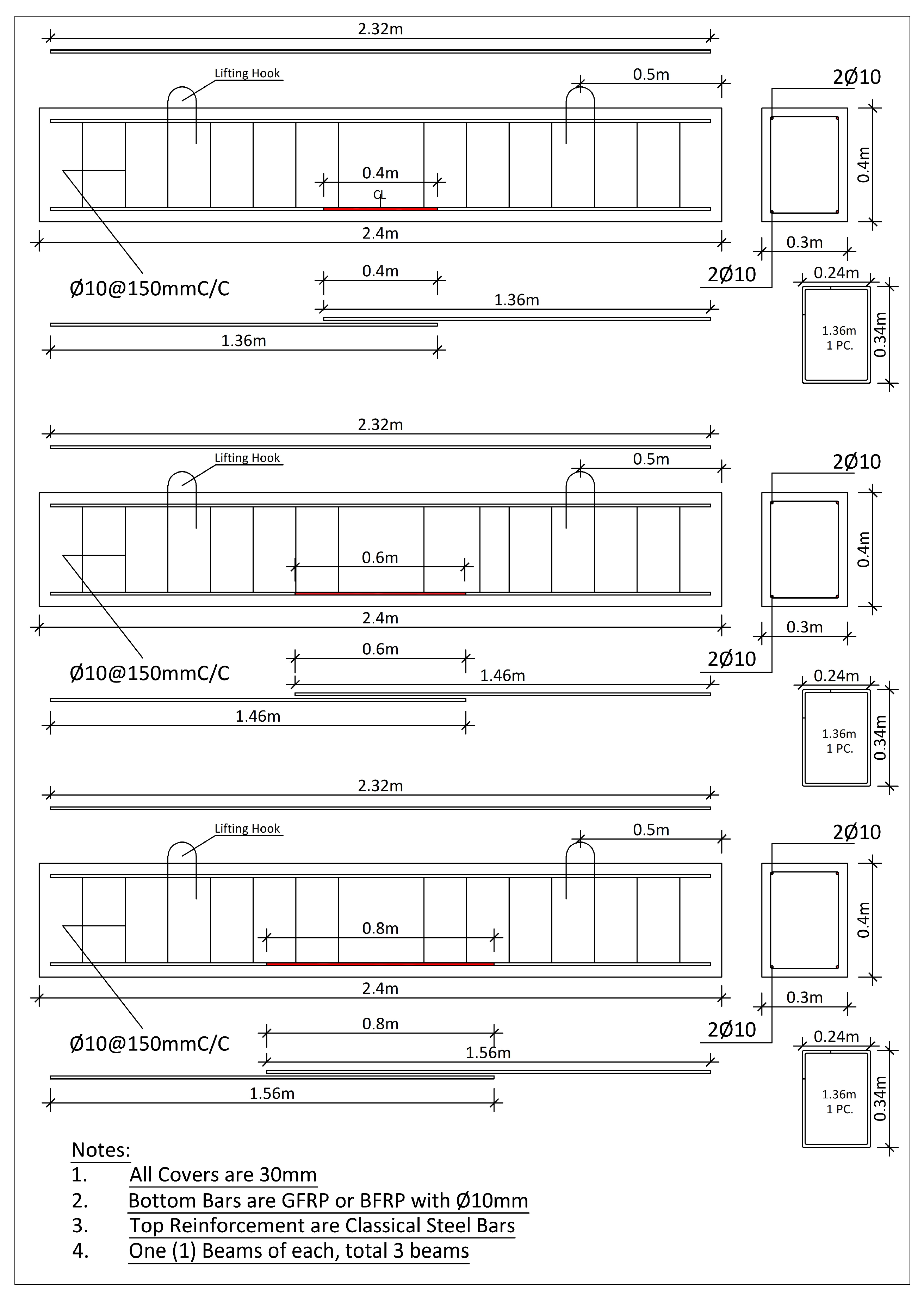
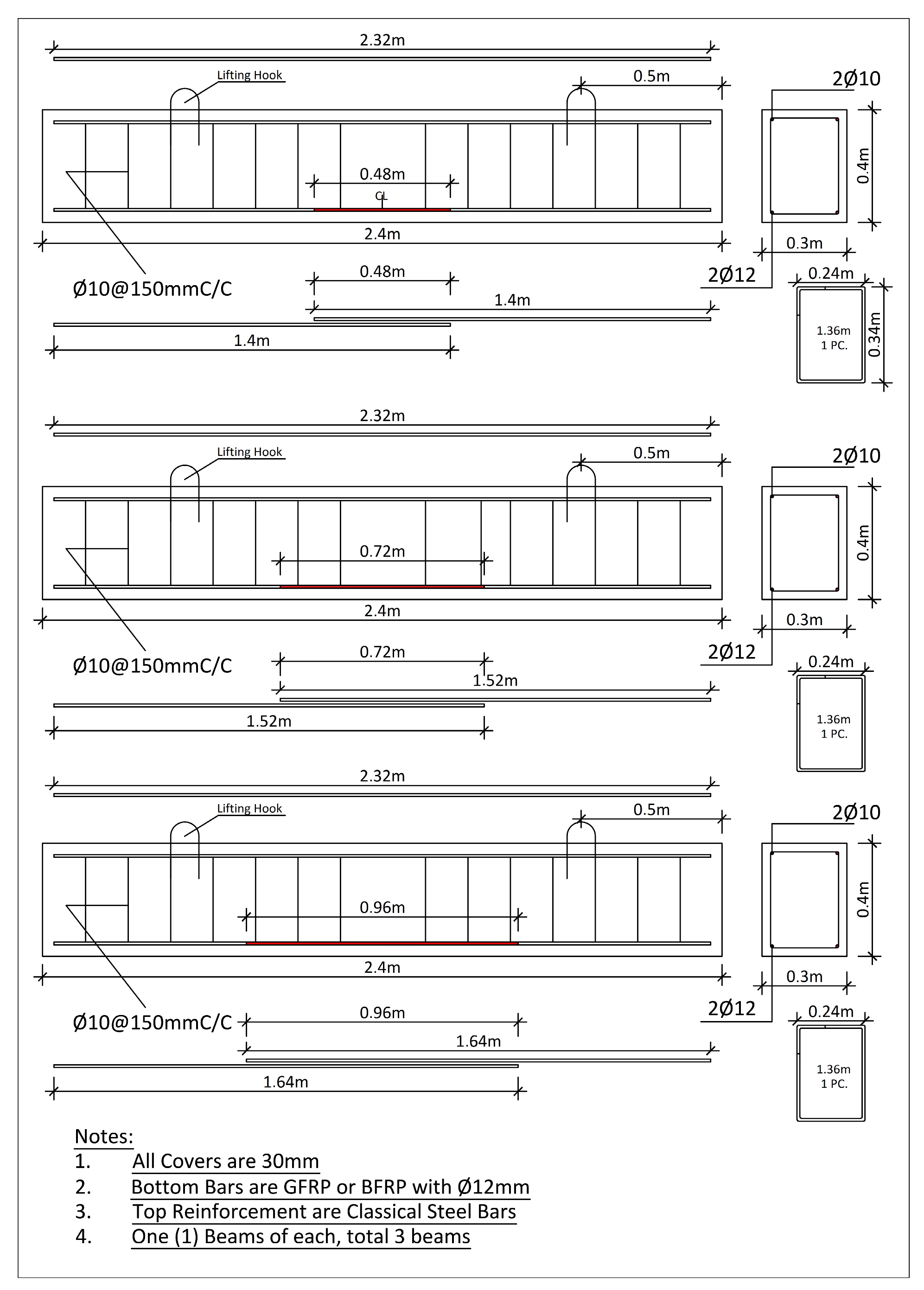
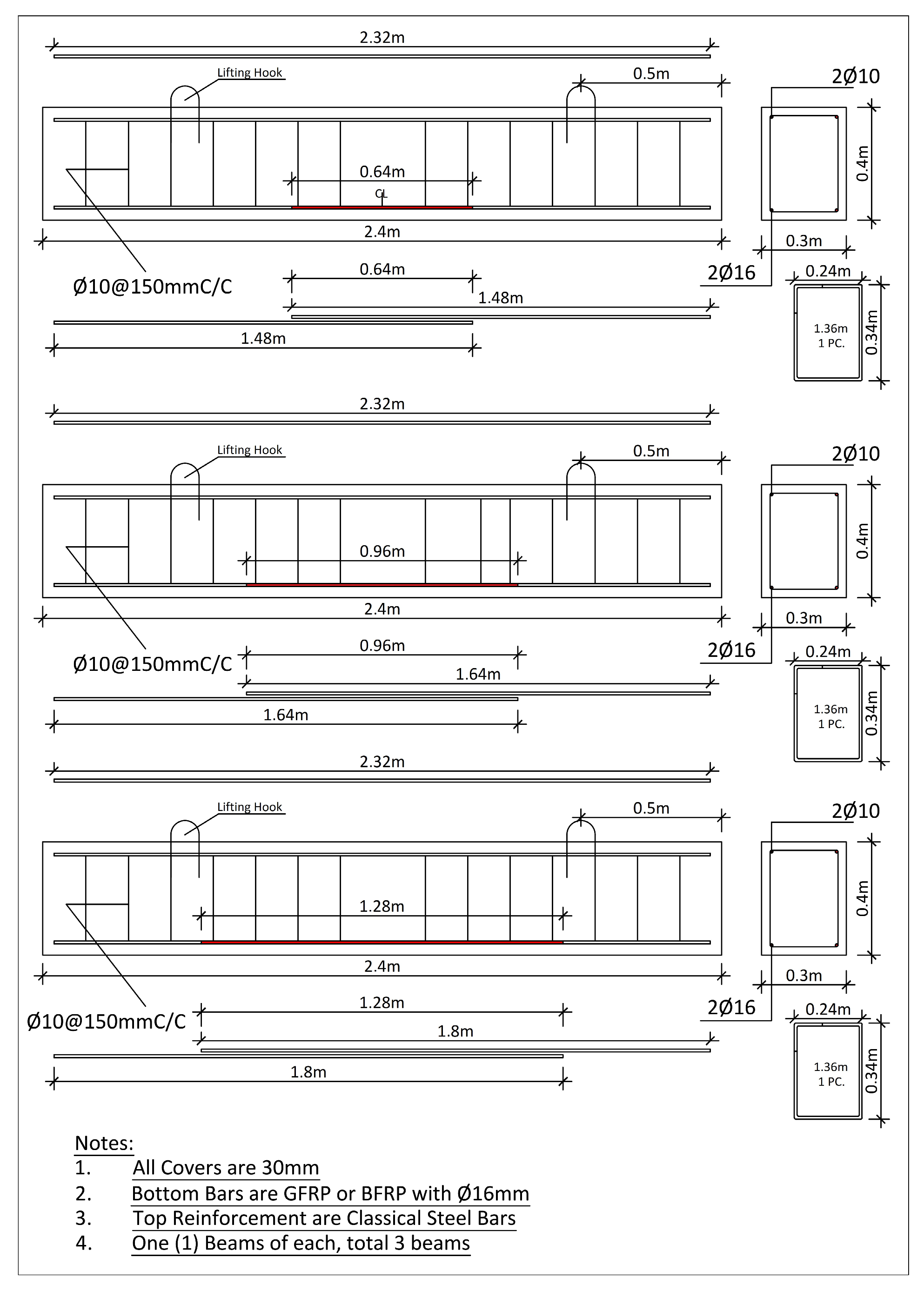
Eighteen large-scale GFRP- and BFRP-reinforced concrete beams were cast according to the properties of large-scale design shown in Figure 1, Figure 2 and Figure 3 to estimate the best lap splice.
In this study, the development length for steel bars was calculated according to the provisions in ACI 318-2019 [24], and CSA-S806-12 [25], as the experiments were performed prior to the release of ACI 440.11-22 [26] and the related updates to ACI 318 design criteria. These standards supply the essential guidance for determining development lengths and upholding structural safety. In established design codes, the development length is conventionally defined as the minimum embedment depth required for a lap splice. According to CSA S806-12, the development length for FRP bars is determined using the following equation:
L d = 1.15 k 1 k 2 k 3 k 4 k 5 d c s f F f c A F b ,
A F b is the area of FRP reinforcement (mm2).
f F is the tensile strength of the FRP bar.
k 1 = 1.3 is the horizontal location reinforcement factor and k 1 = 1.0 is used for other conditions.
k 2 = 1.3 , 1.2 and k 2 = 1 are used, respectively, for low, semi-low and normal densities of concrete factors.
k 3 = 0.8 is used for A F b < 300   mm 2 and k 3 = 1 is used for A F b 300   mm 2 .
k 4 = 1.0 is used for carbon/glass–FRP composites and k 4 = 1.25 is used for aramid–FRP composites.
k 5 = 1.0 is used for braided/roughened/sand-coated surfaces and k 5 = 1.05 is used for surfaces that are ribbed or have a spiral pattern.
d c s is the minimum distance from the nearest concrete surface to the bar center 2 3 to center bar spacing.
The factors d c s and f c should not exceed 2.5 d b and 5   MPa , respectively.
The development length as per ACI 440.1R-15 [27] is given as follows:
l d = α f F r 0.083 f c 340 13.6 + C d b d b ,
where f F r = C E f F u ( C E is an environmental reduction factor); α is the bar location factor ( α = 1.5 when more than 300 mm of fresh concrete is cast below the reinforcement bars, and 1.0 otherwise); and C = min d c , c / c   spacing 2 3.5 d b .
The critical splice lengths, defined as 1.3 times the development lengths, were determined according to the provisions of CSA S806-12 [25], CSA-S6-14 [28], and ACI 440.1R-15, as well as development lengths derived from the respective equations. These calculated critical splice lengths establish the minimum effective bond region necessary to prevent premature bond failure and ensure the full utilization of the FRP bar’s tensile capacity [2,29].
The ACI 440.1R-06 [30] begins with the equilibrium relationship for an embedded bar given as follows:
l e π d b μ = A f , bar   f f ,
where l e is the length of embedment, d b is the diameter of the bar, μ is the average bond stress, A f , bar is the area of the bar, and f f is the stress developed in the bar at the end of the embedded length. The empirical equation used to obtain μ is presented below based on the research of Wambeke and Shield [22]:
μ 0.083 f c = 4.0 + 0.3 c d b + 100 d b l e ,
where μ is the average bond stress, f c is the concrete compressive strength, d b is the diameter of the embedded bar, l e is the length of embedment, and c is the minimum required clear cover to the center of the bar or half of the center-to-center spacing of the bars being developed.
By solving these two equations with two unknowns, a unique solution can be obtained. It should be noted that l e = l d and solving l e involves the following equation results:
l e = A f , b a r f f / π d b f c 100 d b 4.0 + 0.3 c / d b .
ACI 440.1R-06 enhances this equation with an additional calculation for developable bar stress:
f f e = 0.083 f c α 13.6 l e d b + c   l e d b 2 + 340 f f u ,
where α is the bar location factor; f f u is the ultimate tensile stress of the bar; and c / d b should not exceed 3.5.
The minimum thickness requirements for non-prestressed beams and one-way slabs are presented in Table 1. However, the application of GFRP and FRP reinforcement allows for potentially smaller cross-sections, owing to their superior strength-to-weight ratio when compared to steel reinforcing bars.
Three bar diameters—10 mm, 12 mm, and 16 mm—were examined for both GFRP and HW-BFRP bars. Table 2 summarizes the critical splice lengths derived from the design guidelines and code-based equations using quadratic formulations. These estimates align closely with the specified provisions. The test beams had a rectangular cross-section of 300 × 400 mm, an overall length of 2320 mm, and simple supporting structures. Beam details are detailed in Figure 1, Figure 2 and Figure 3. Further experimental studies were conducted on eighteen specimens to investigate the impact of splice length and type of bar reinforcement on compression splice strength, revealing that steel bars exhibit greater compression splice strengths than GFRP bars. The bond behavior of these GFRP bars is a critical factor in the design of reinforced concrete structures, influencing overall structural integrity and performance [1]. High-strength concrete (HSE) was employed to explore more detailed experimental results and delay the onset of beam splitting with a strength of 90 MPa. This approach enabled a more robust assessment of the bond performance, particularly concerning the influence of concrete compressive strength on the efficiency of tensile lap splices in both GFRP- and HW-BFRP-reinforced beams. Similarly, research on strengthened steel structures with CFRP strips has shown that development length is crucial for achieving the full rupture strength of the strips, with thicker strips requiring proportionally longer development lengths [31]. Further experimental investigations, encompassing varying bar diameters and splice lengths, are essential to refine these design guidelines for FRP-reinforced concrete elements [4]. Further research should consider the impact of environmental factors, such as temperature and moisture, on the long-term durability of bonds and splice performance of FRP bars in concrete [31].
The beam height is selected as 400 mm, which satisfies the minimum thickness of the ACI code. This ensures that the flexural member possesses adequate stiffness and deflection control under service loads, consistent with established principles for structural engineering.

3. Results

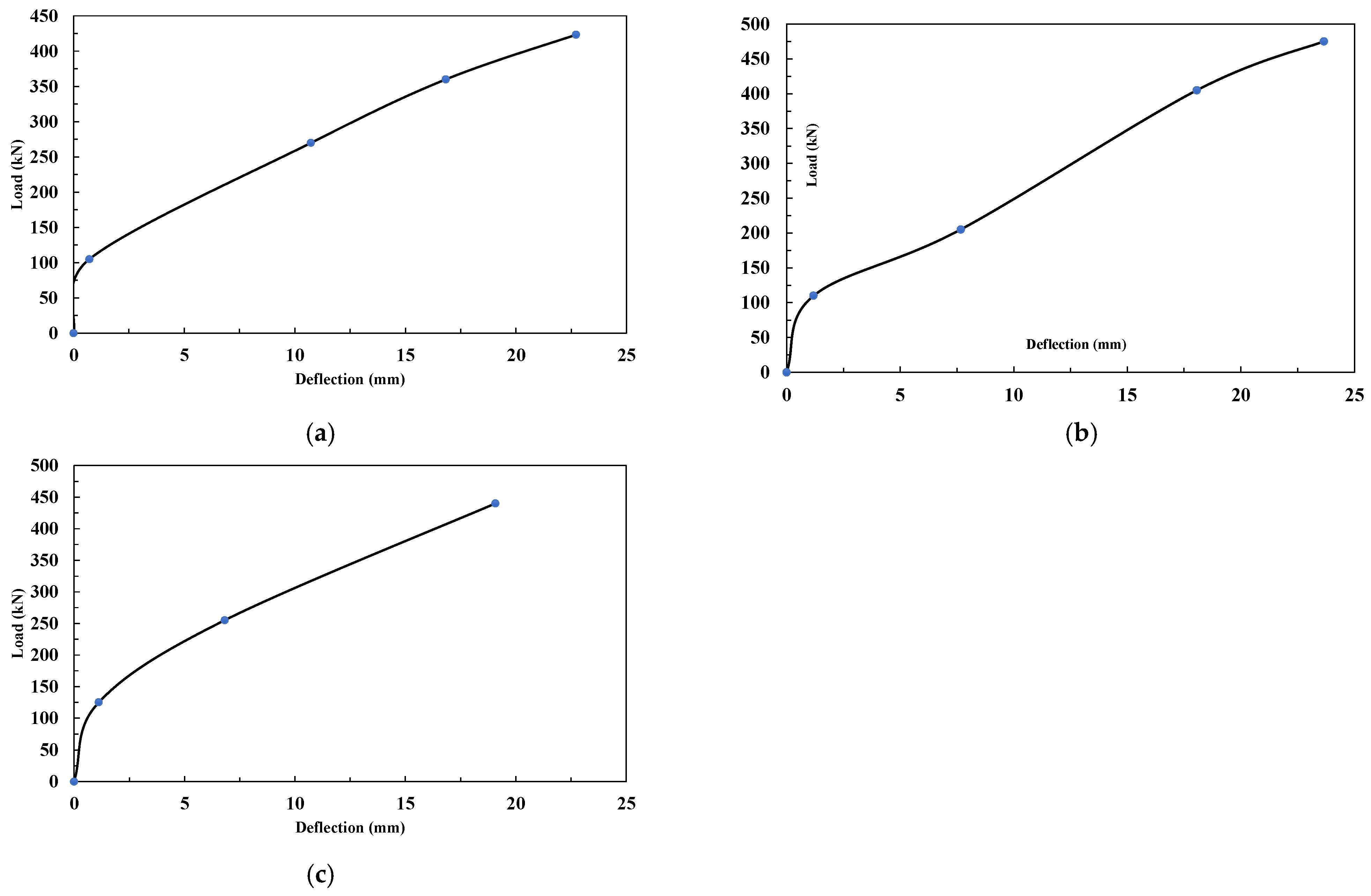
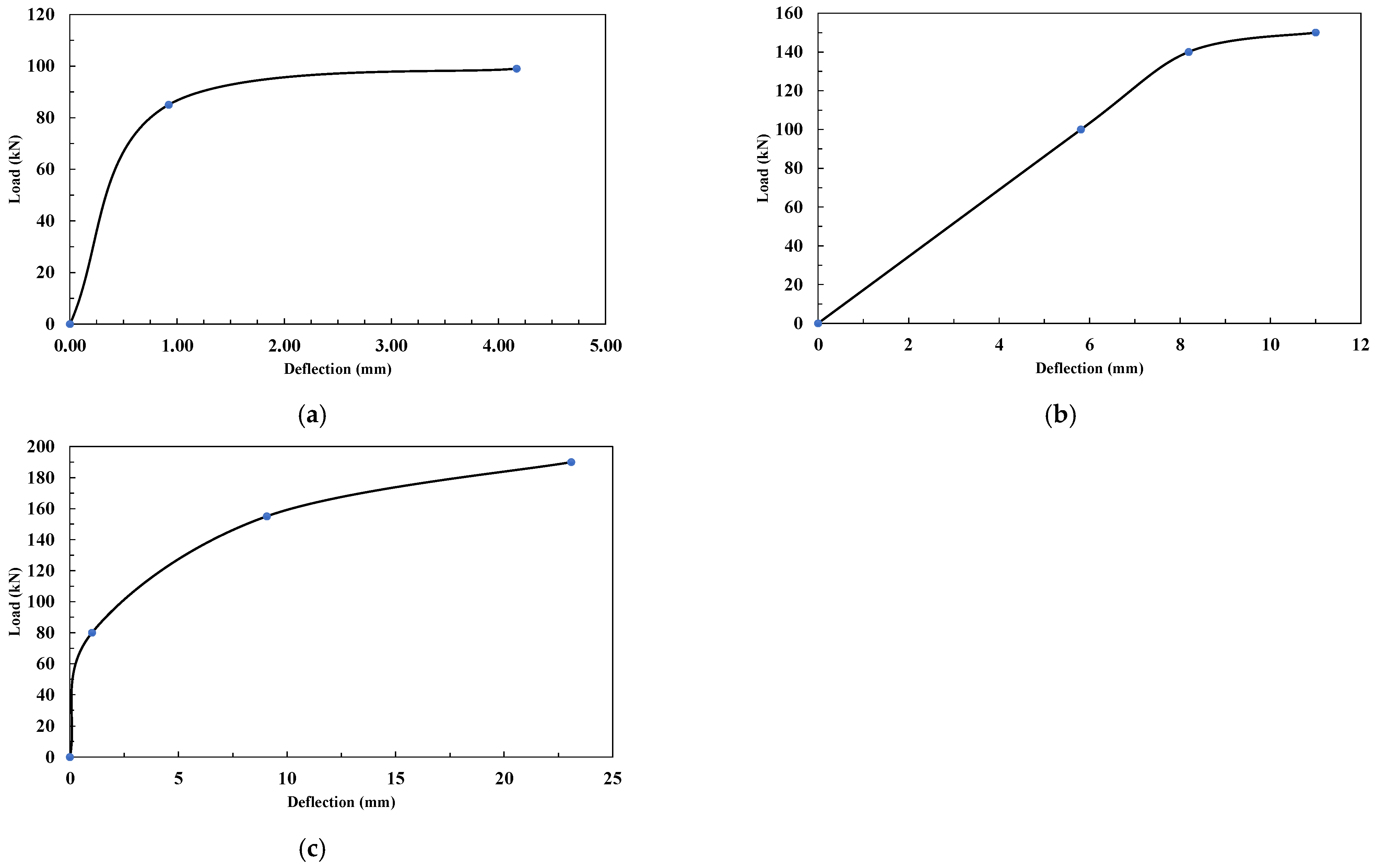
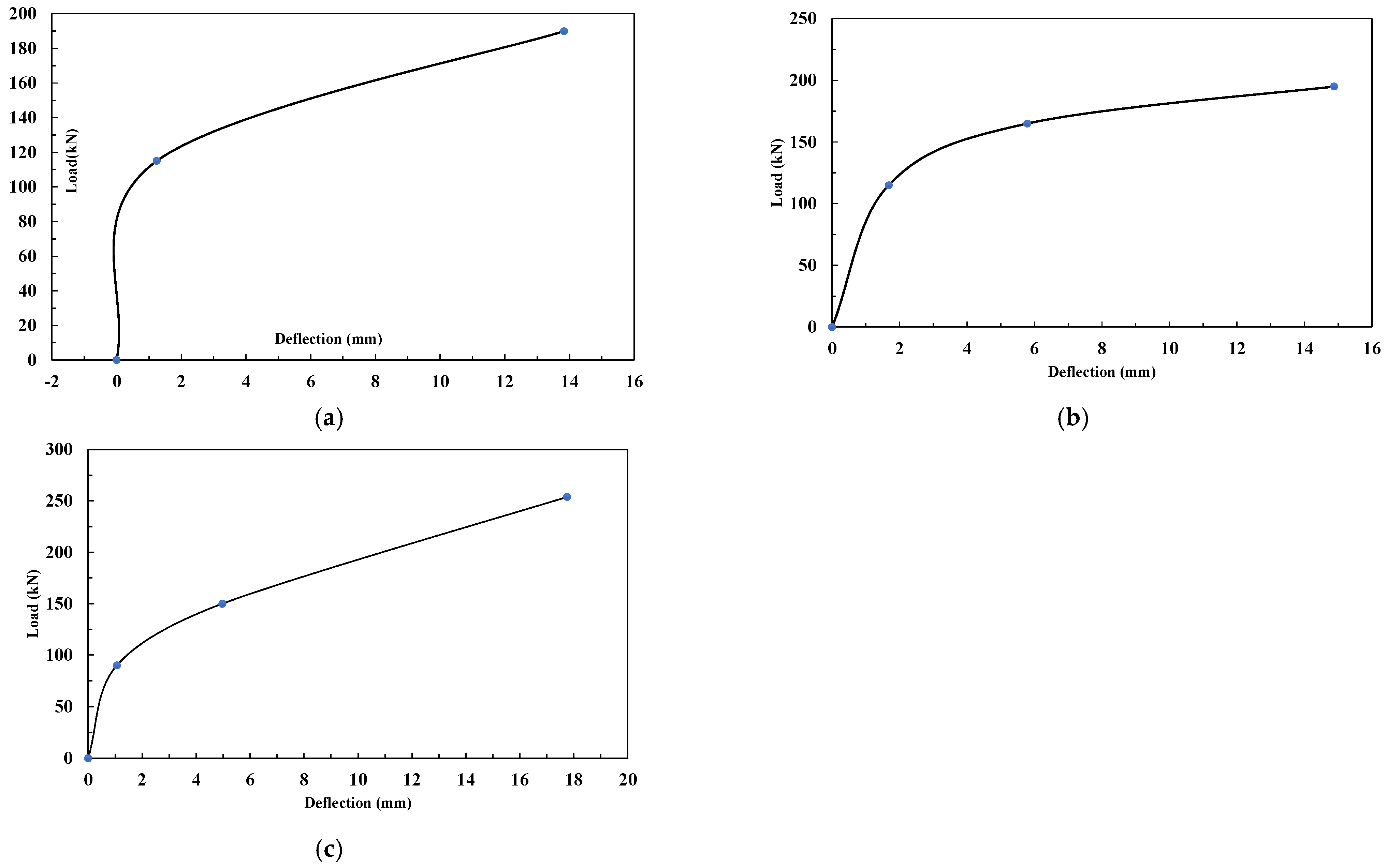
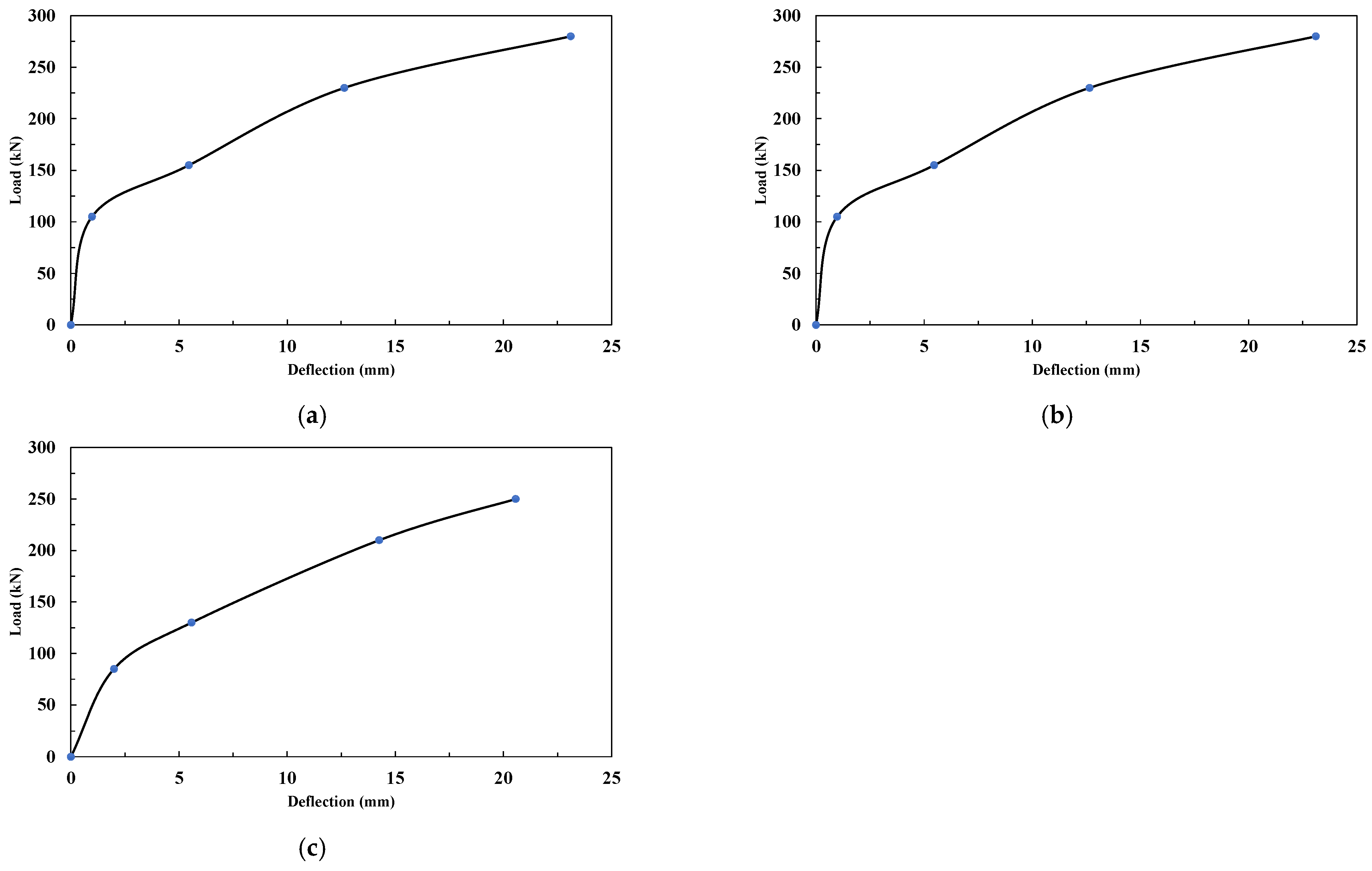
A comprehensive understanding is pivotal for optimizing the structural design and ensuring the longevity of innovative construction materials. Table 2, Table 3 and Table 4 explore the effect of quadratic expression on the behavior of load–deflection curves. The behavior is likely close to but not exactly linear, so the quadratic expression is a better choice for predicting changes. This approach allows for a more accurate representation of the material’s response beyond its initial elastic range, accounting for non-linearities that might otherwise be overlooked in a purely linear model.
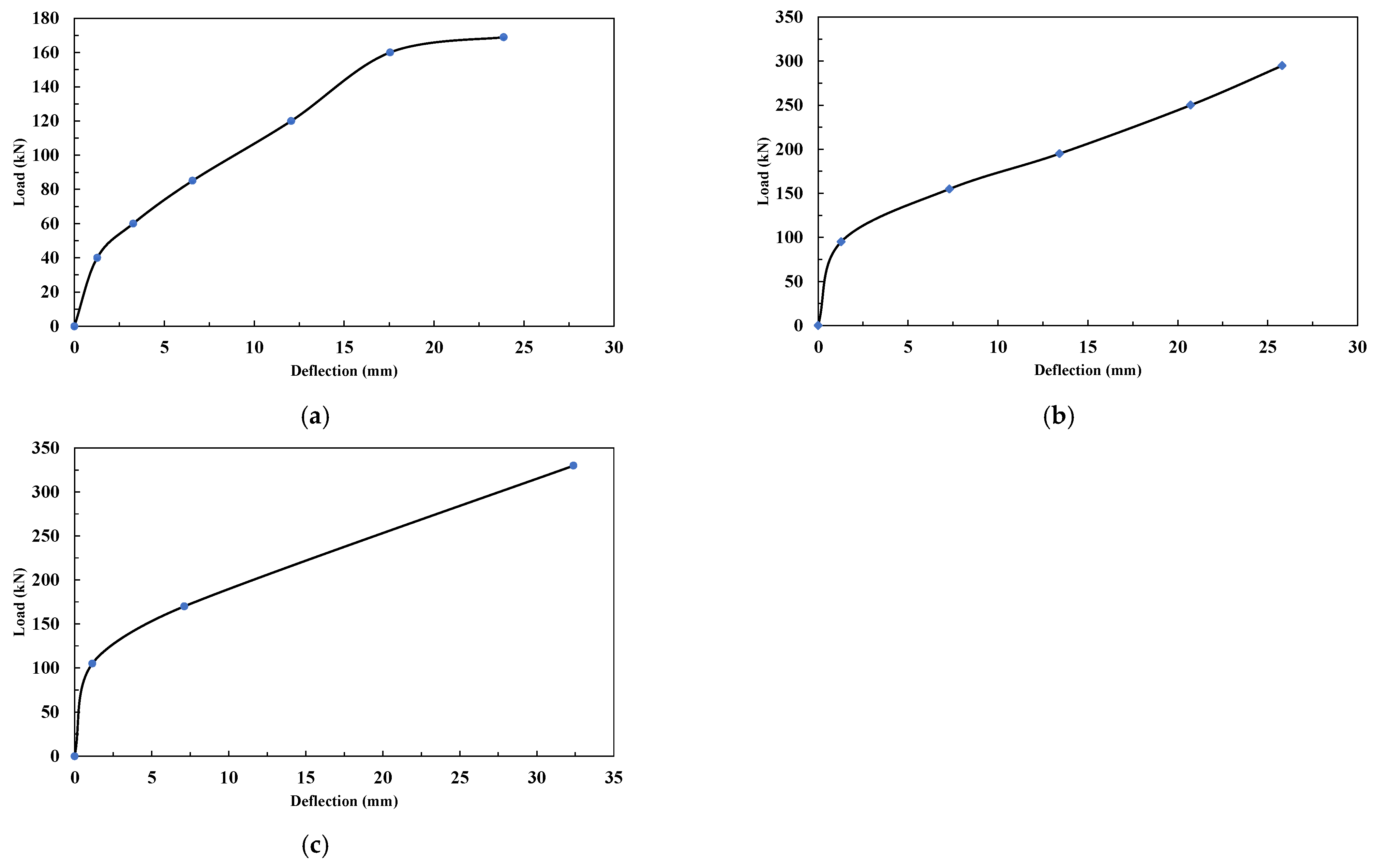
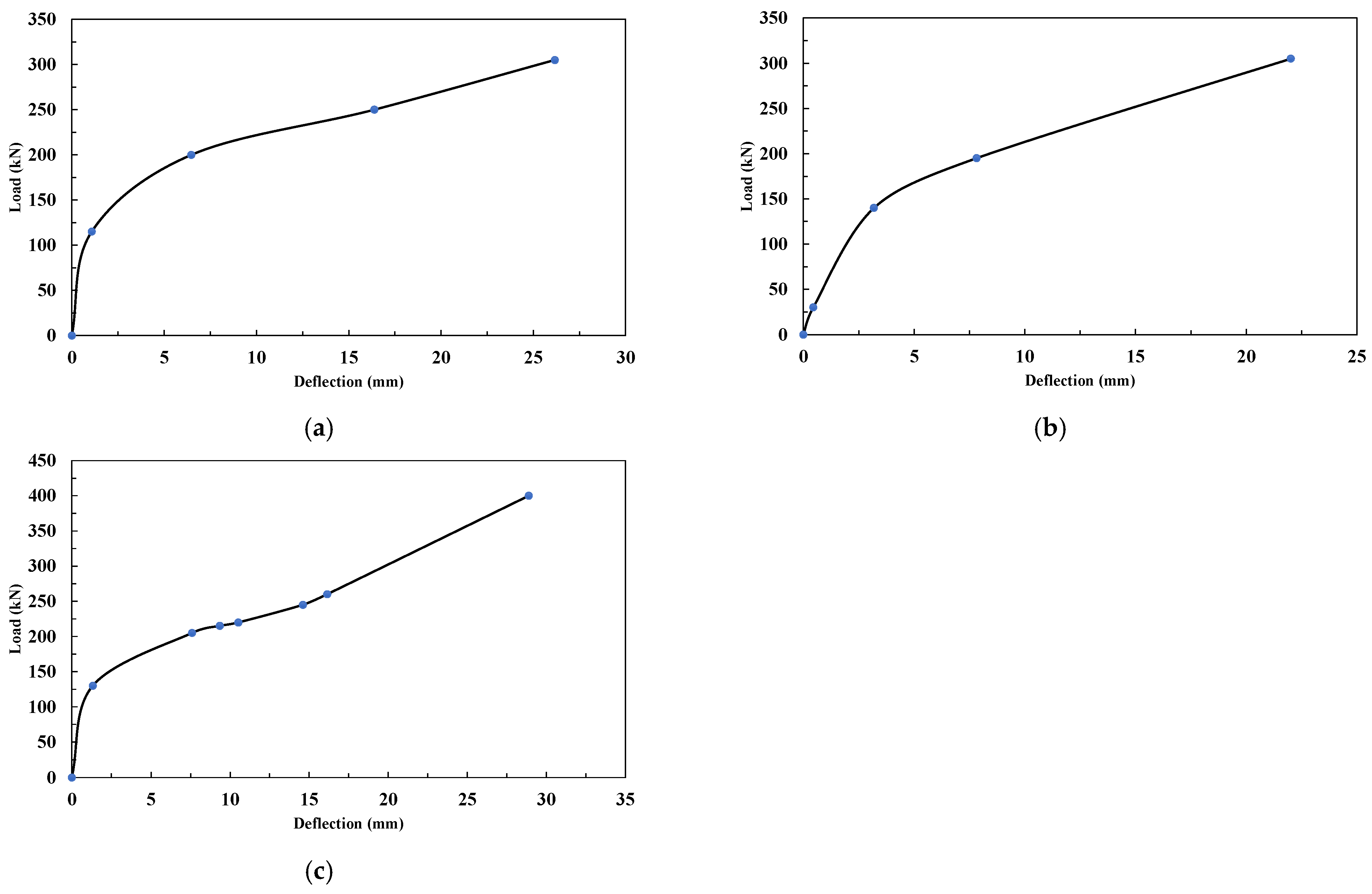
Furthermore, the use of quadratic expressions allows the onset of cracking and subsequent changes in stiffness to be determined, which are critical for predicting the ultimate capacity and failure modes of FRP-reinforced concrete beams. This detailed analytical approach, coupled with ongoing experimental validation, will contribute to the development of more reliable and efficient design methodologies for GFRP- and HW-BFRP-reinforced concrete structures. This rigorous methodology ensures that design codes for FRP reinforcement can be continually refined to meet contemporary engineering expectations, addressing critical issues such as laminate delamination and debonding, while optimizing the balance between load capacity and structural ductility. The load-deflection behavior of GFRP, considering bar diameters of 10 mm, 12 mm, and 16 mm with lap splice lengths of (a) 40d, (b) 60d, and (c) 80d, is depicted in Figure 4, Figure 5 and Figure 6. Furthermore, Figure 7, Figure 8 and Figure 9 display the BFRP load-deflection curves influenced by varying bar diameters and lap splice configurations.
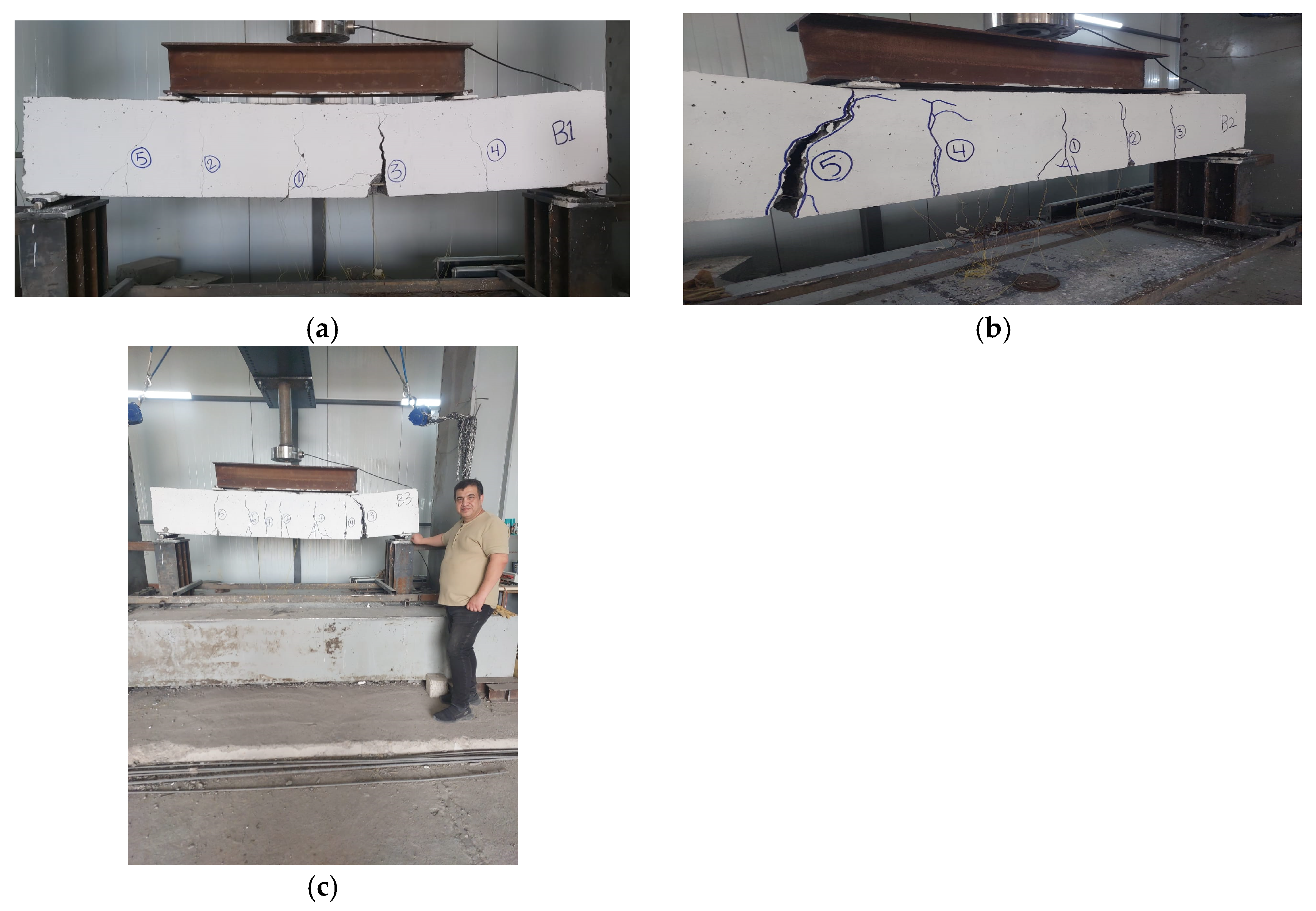
Figure 10 illustrates the crack propagation patterns and the progressive increase in crack widths observed during the four-point bending test of the large-scale beam, detailing the development from the initial crack (designated as Crack 1) to the ultimate failure state, encompassing up to five identified cracks.
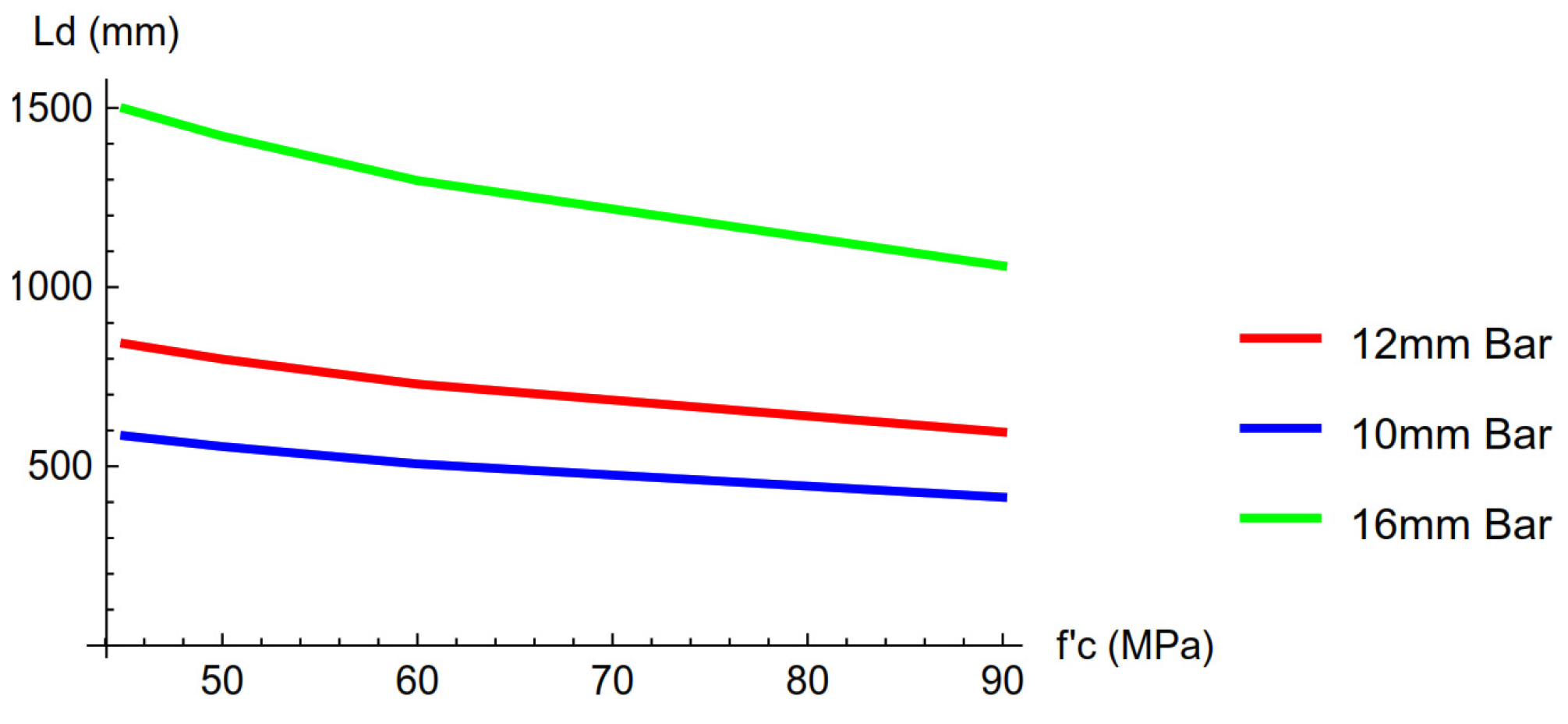
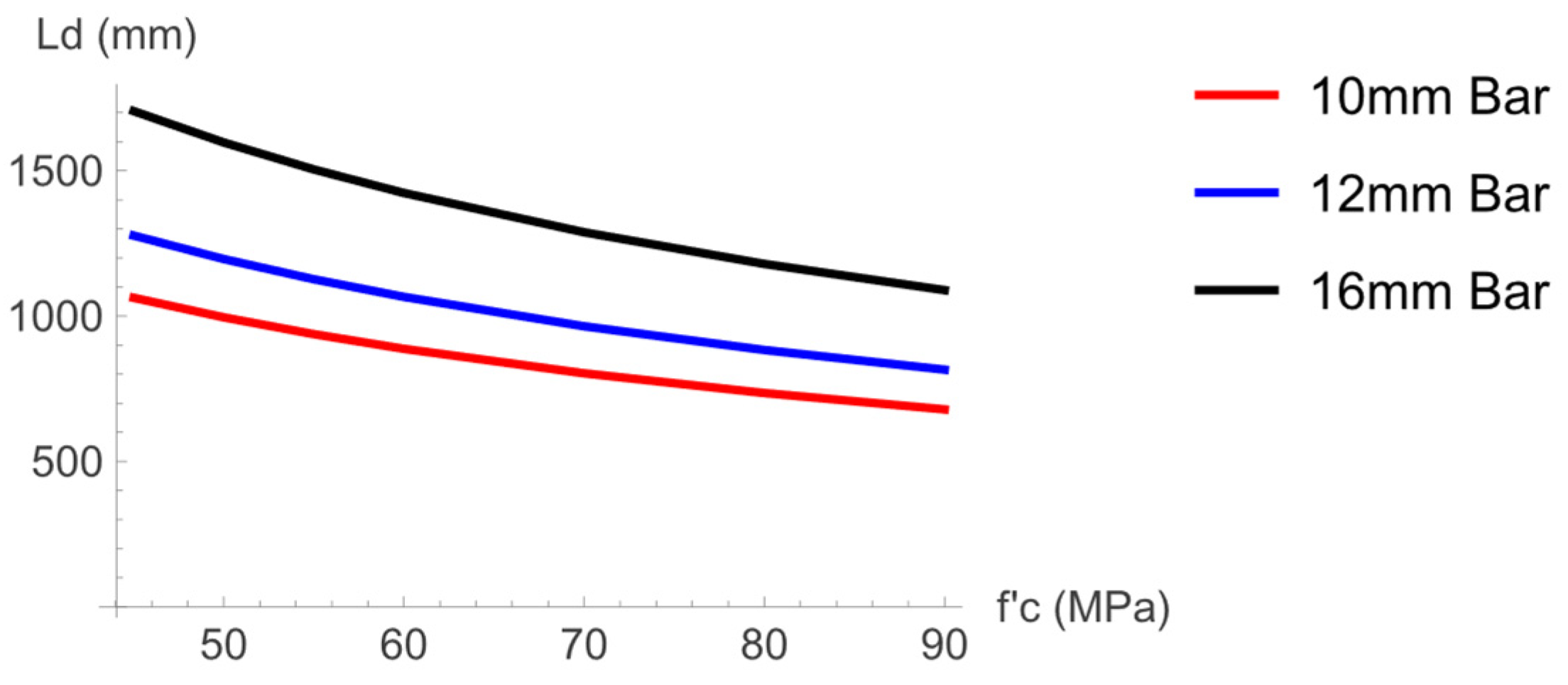
The aforementioned Equation (1) is graphically represented to illustrate variations in development length as a function of concrete compressive strength, as depicted in Figure 11. This formulation is derived from the Canadian standard CSA S806-12. In contrast, Equation (2) delineates the development length according to ACI 440.1R-15, with disparities between the two approaches plotted in Figure 12. These graphical comparisons facilitate a direct assessment of how different code provisions estimate development length under varying concrete strengths, highlighting potential discrepancies or conservatisms inherent in each standard [4]. Specifically, ACI 440.1R-15 and CSA S806-12 frequently overestimate critical splice lengths by approximately 25% for SC-BFRP bars and 15% for HW-BFRP bars, suggesting a conservative approach in these standards.
In Figure 11 and Figure 12, the equation parameters selected as k 1 , k 2 , k 3 , k 4 , k 5 are equal to parameters with fixed stresses at 1000 MPa.
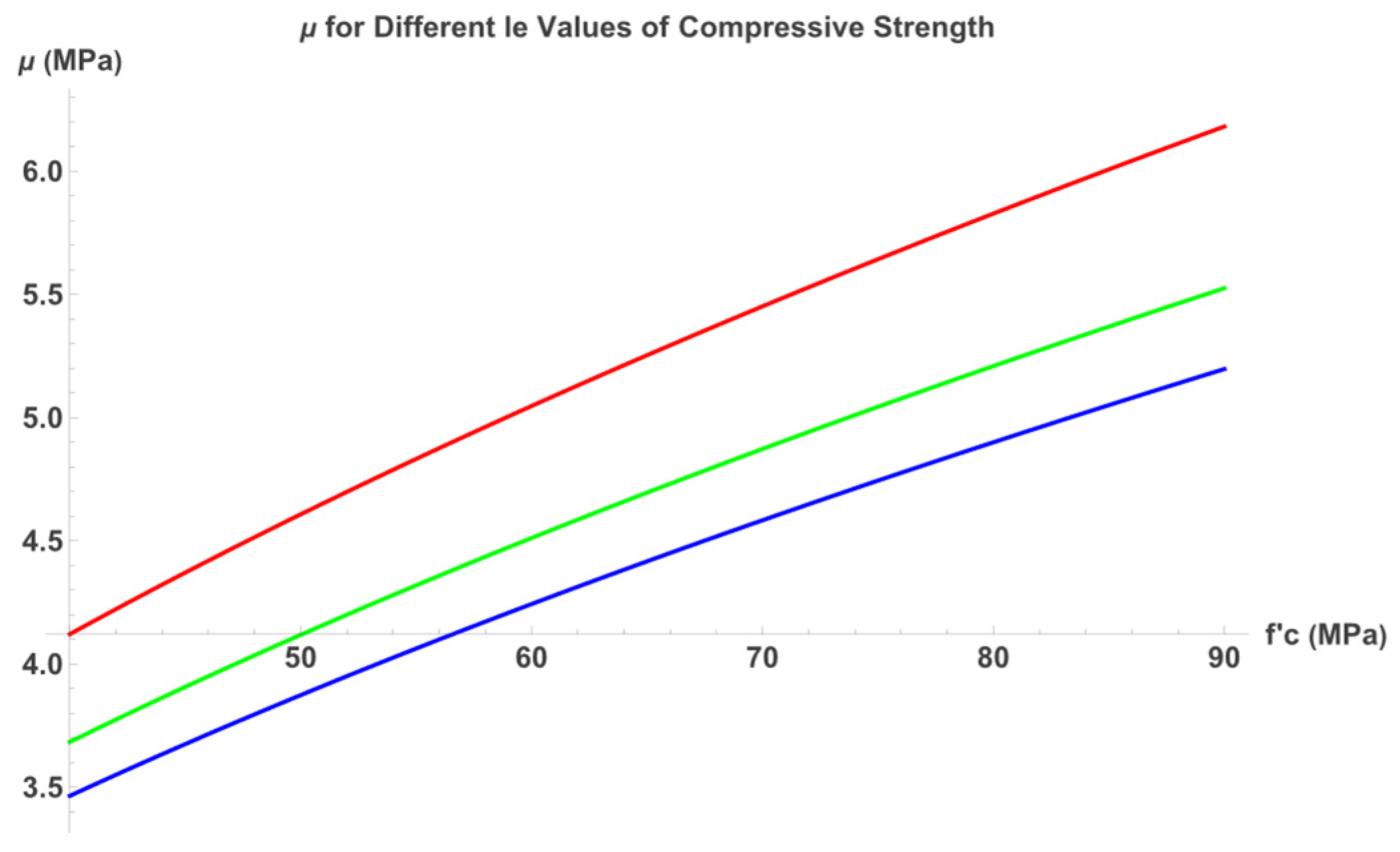
Figure 13 represents the general bond stress for different lap-spliced bars. Here, the red color represents 40d, green represents 60d, and blue represents 80d. Therefore, it is imperative to consider how increasing the bond stress (or strength) in an FRP–concrete system has a positive effect on structural performance, ensuring better interaction and load transfer between the materials.

4. Discussion

The analysis of load–deflection behavior, especially when comparing GFRP-reinforced beams to those reinforced with HW-BFRP and traditional steel, reveals notable differences in stiffness and failure mechanisms. Specifically, GFRP-reinforced beams exhibited greater deflection compared to HW-BFRP-reinforced beams across all tested diameters, as shown by the quadratic equations in Table 2, Table 3 and Table 4. Meanwhile, HW-BFRP beams demonstrated a higher load capacity than GFRP beams. This trend is attributed to the enhanced tensile modulus and bond characteristics of HW-BFRP bars due to helical wrapping, which provide superior stiffness and load-bearing capacity. By contrast, GFRP bars exhibit greater post-cracking deformations due to their relatively lower modulus. This observation highlights the intricate interplay between material properties, such as fiber type and surface morphology, and their direct influence on the overall structural response and serviceability of FRP-reinforced concrete structures.
Accordingly, we recommend employing the hyperbolic sine function as the modifying factor ψ for Equation (2), as demonstrated below:
l d s = ψ α f F r 0.083 f c 340 13.6 + C d b d b .
To refine the equation, a hyperbolic function is employed for factor ψ , which enables the smooth modulation of this parameter comparable to a reference bar diameter of 10 mm.
The hyperbolic function for ψ can be defined as ψ = 1 + 0.1 sinh d b d 0 .
Here, d 0 is a reference diameter used for normalization to control the hyperbolic function’s sensitivity.
The modified Equation (2) becomes the following:
l d = 1 + 0.1 sinh d b d 0 α f F r 0.083 f c 340 13.6 + C d b d b .
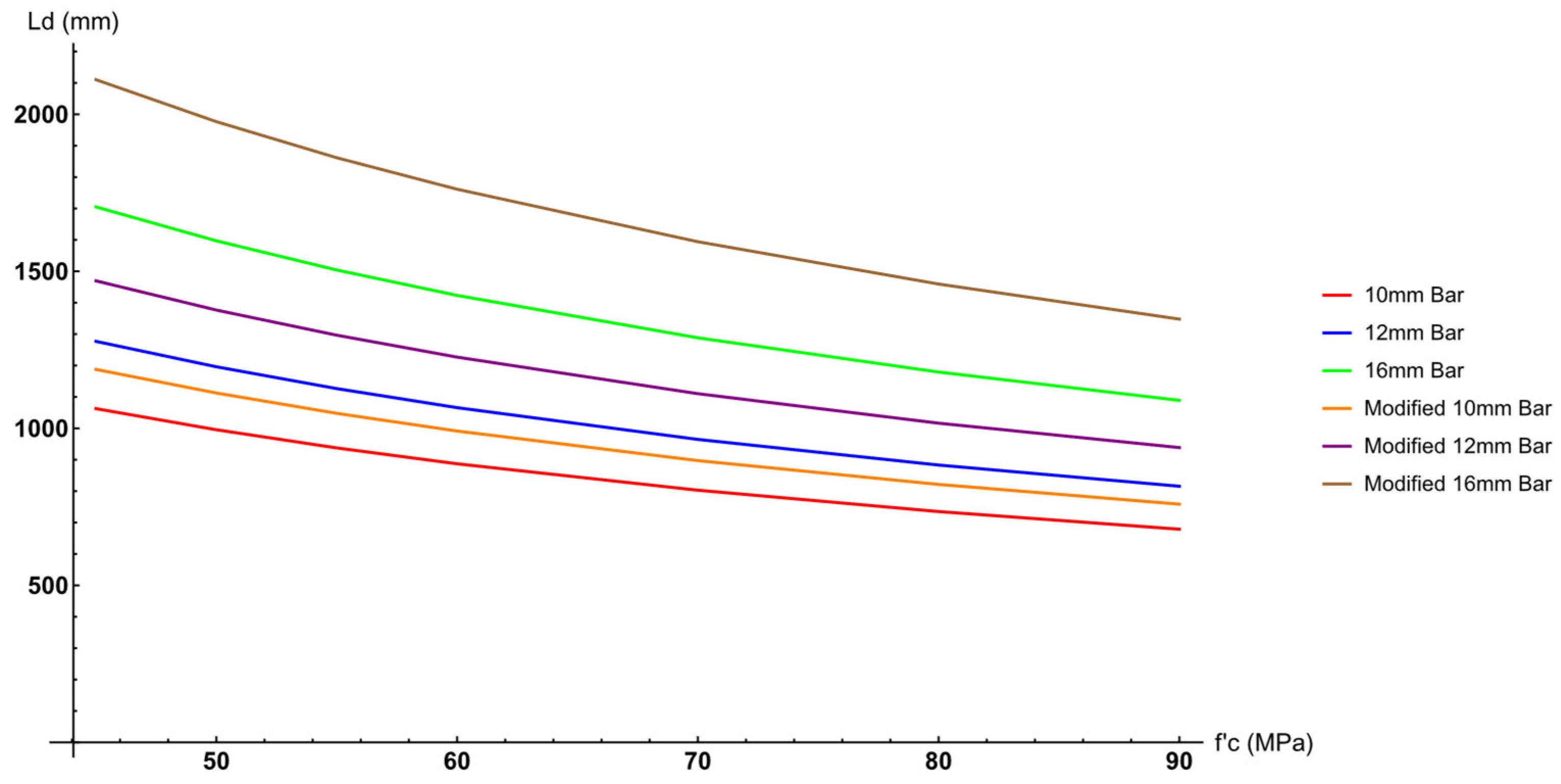
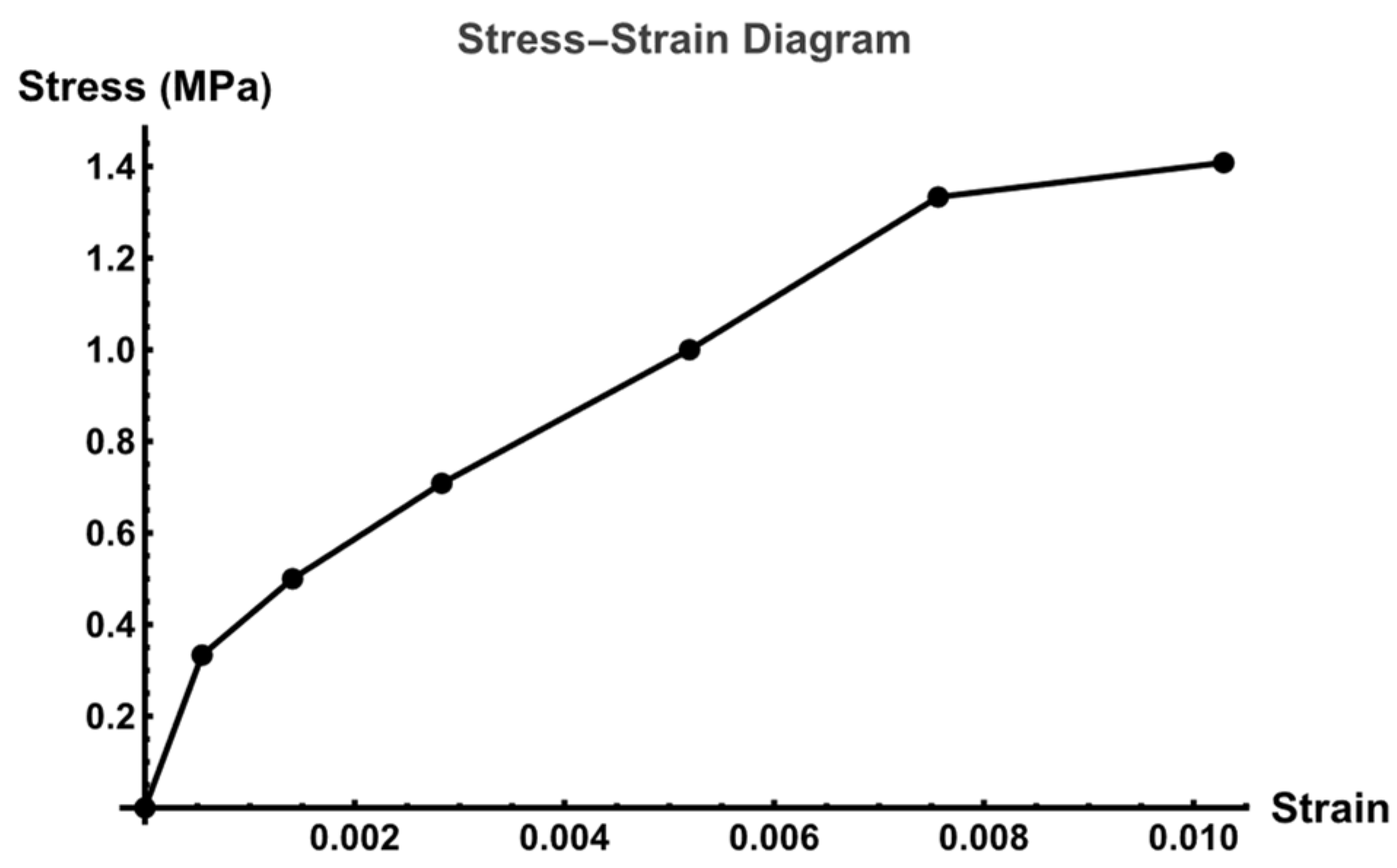
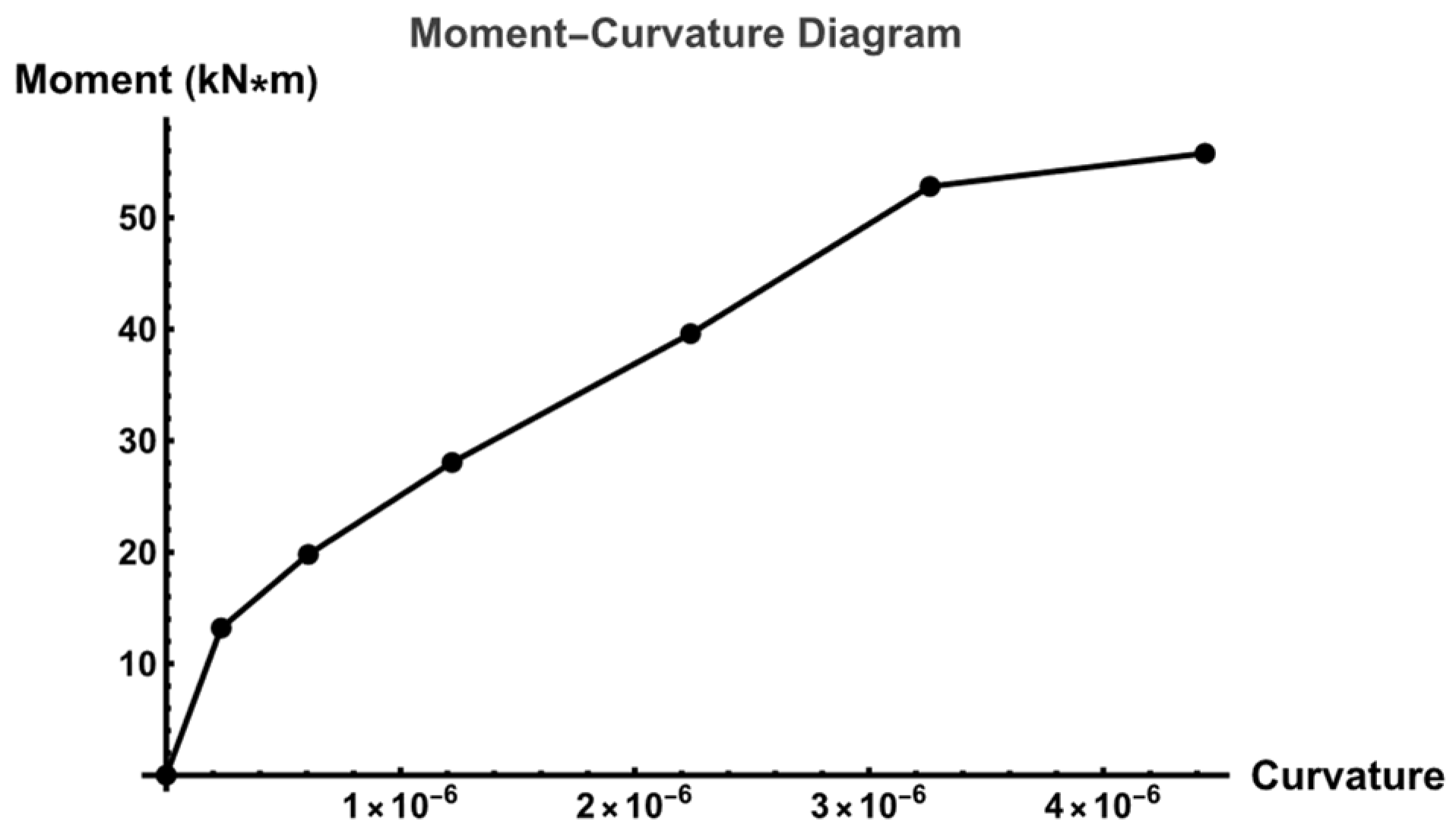
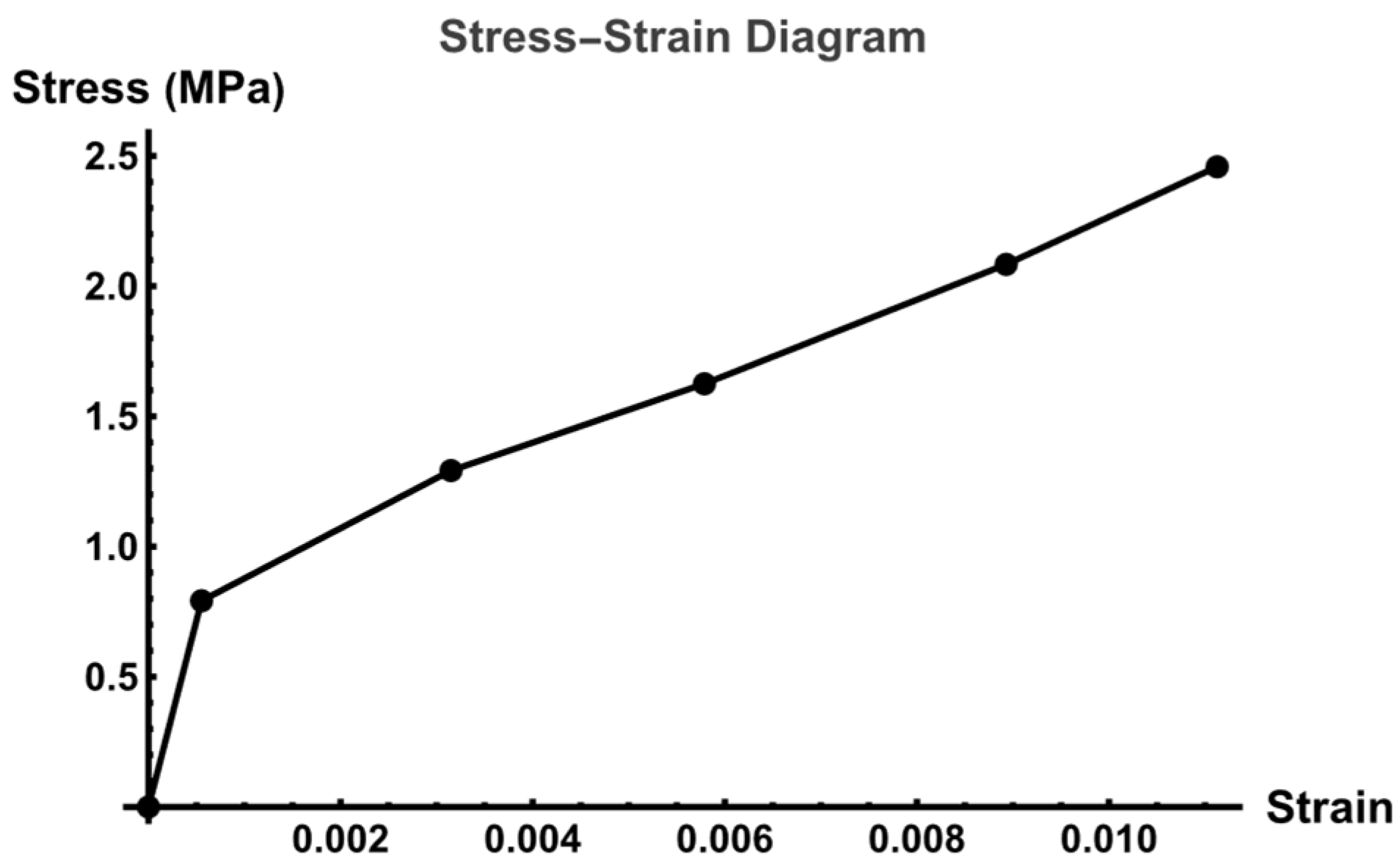
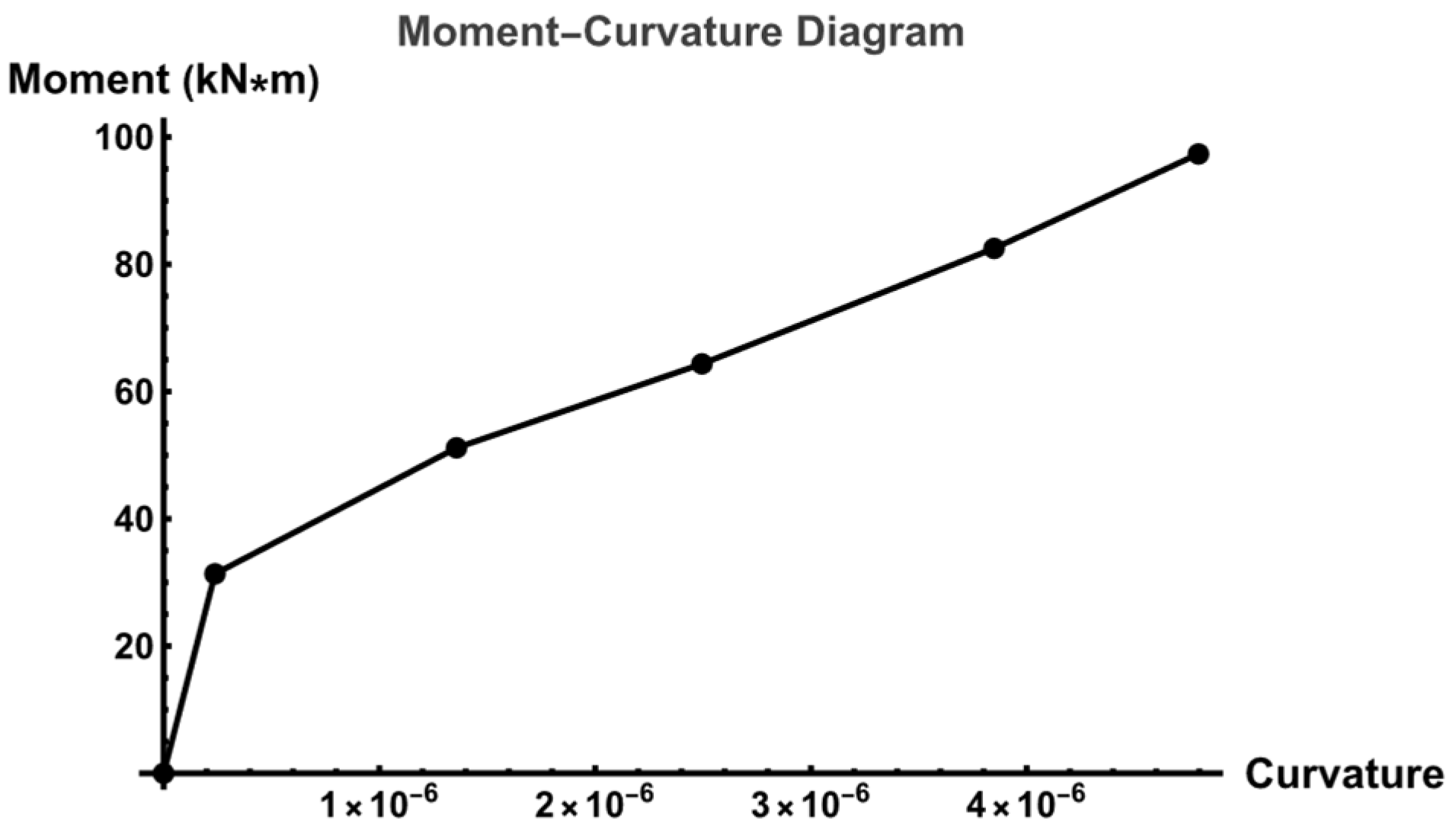
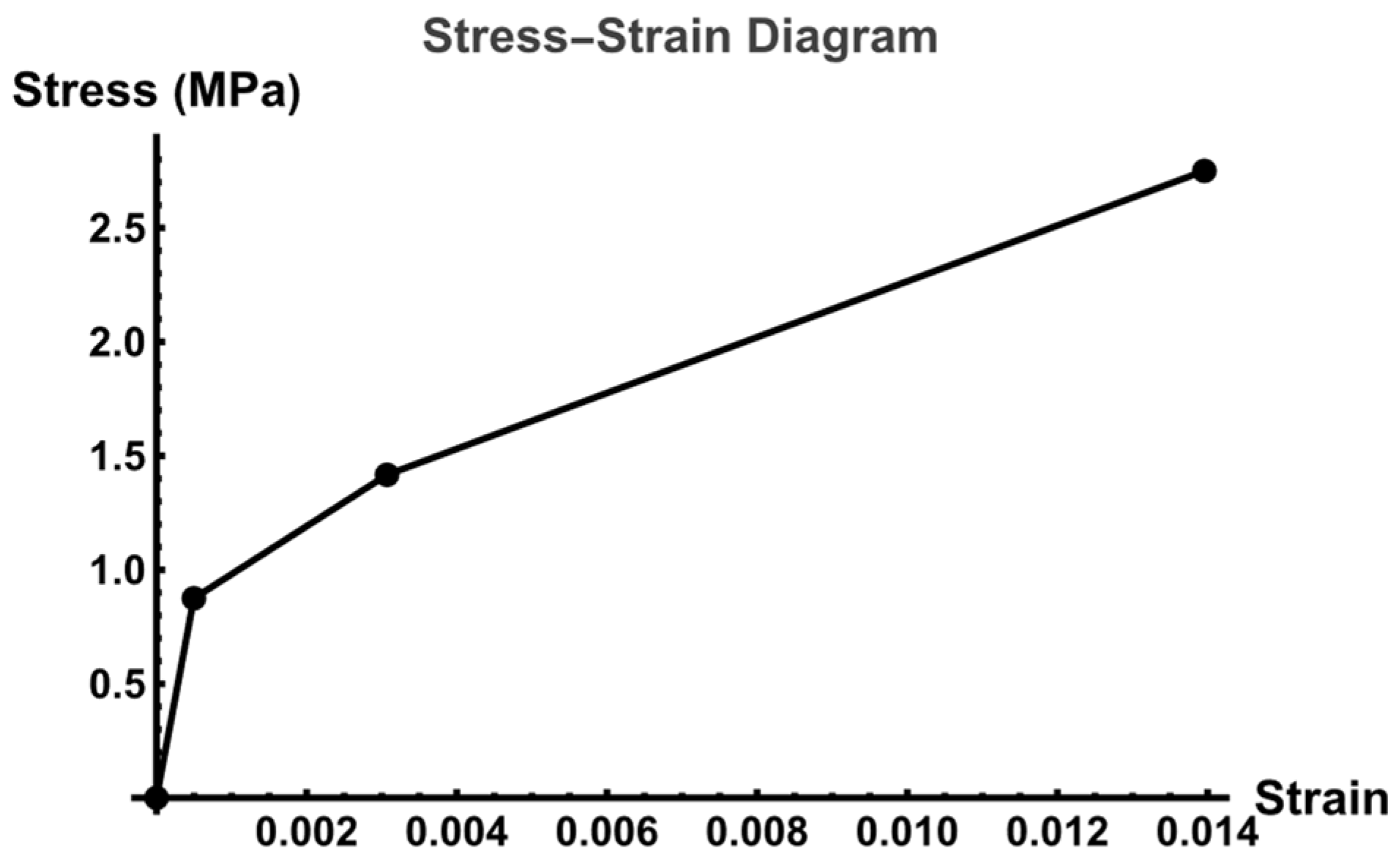
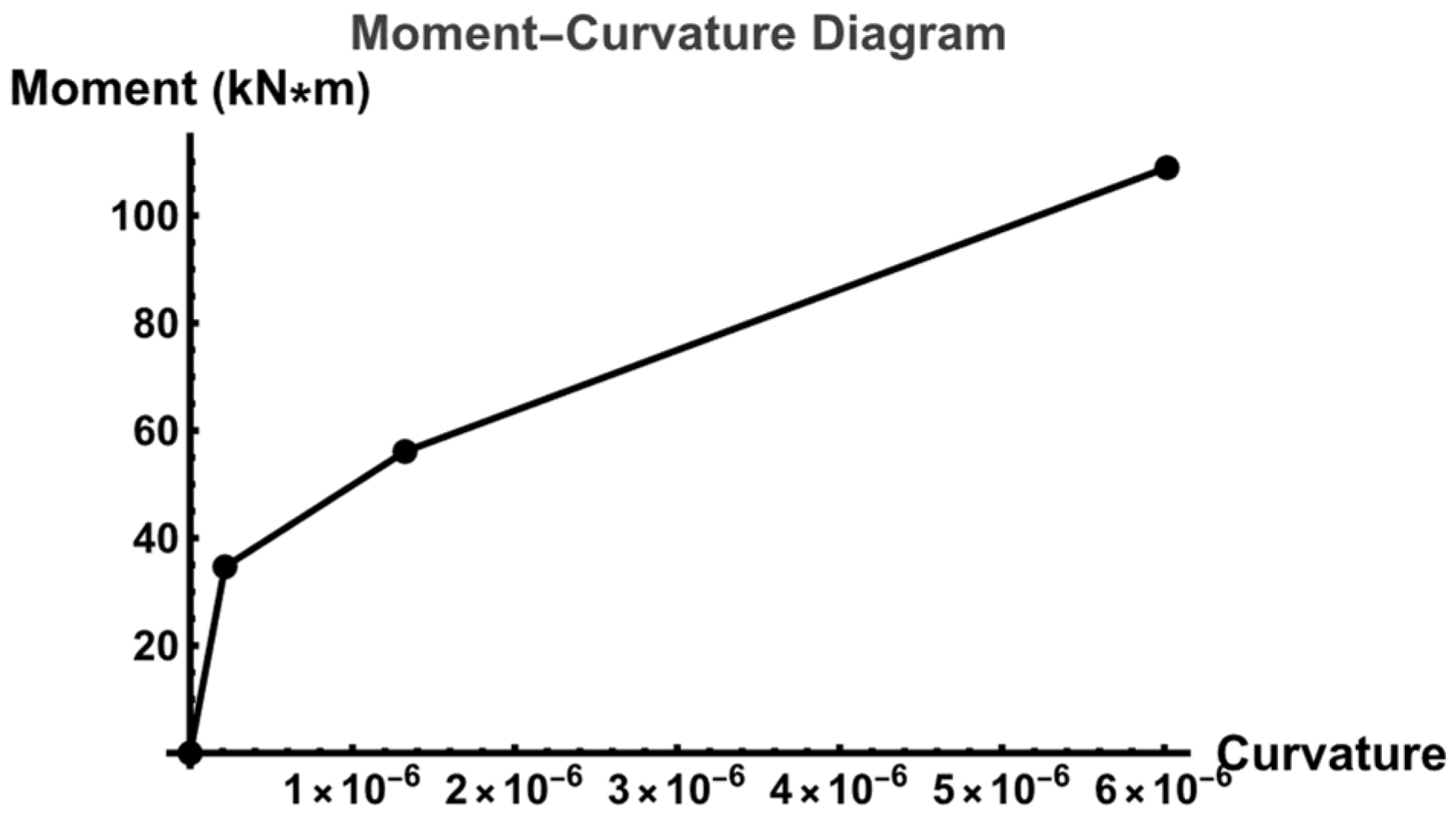
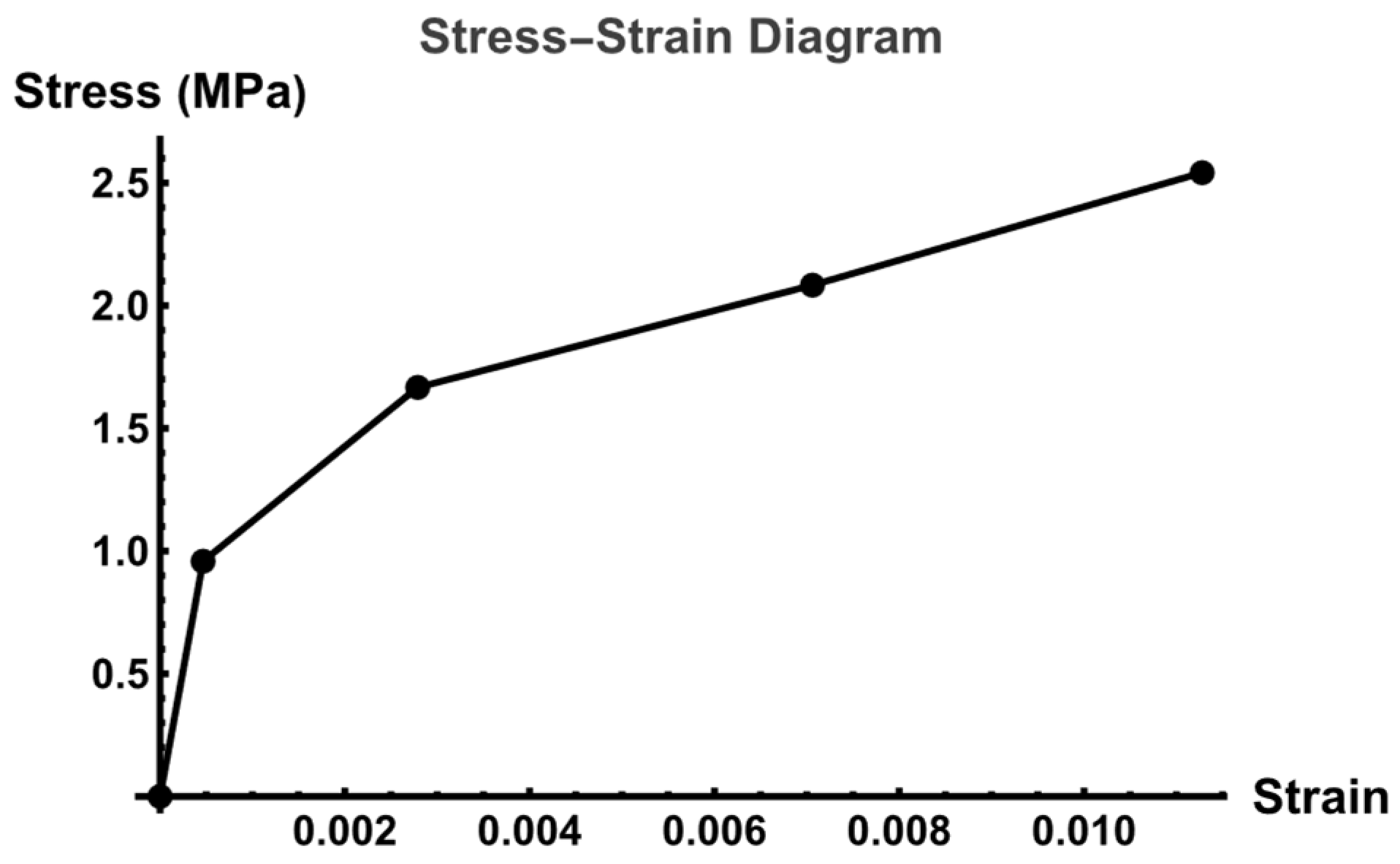
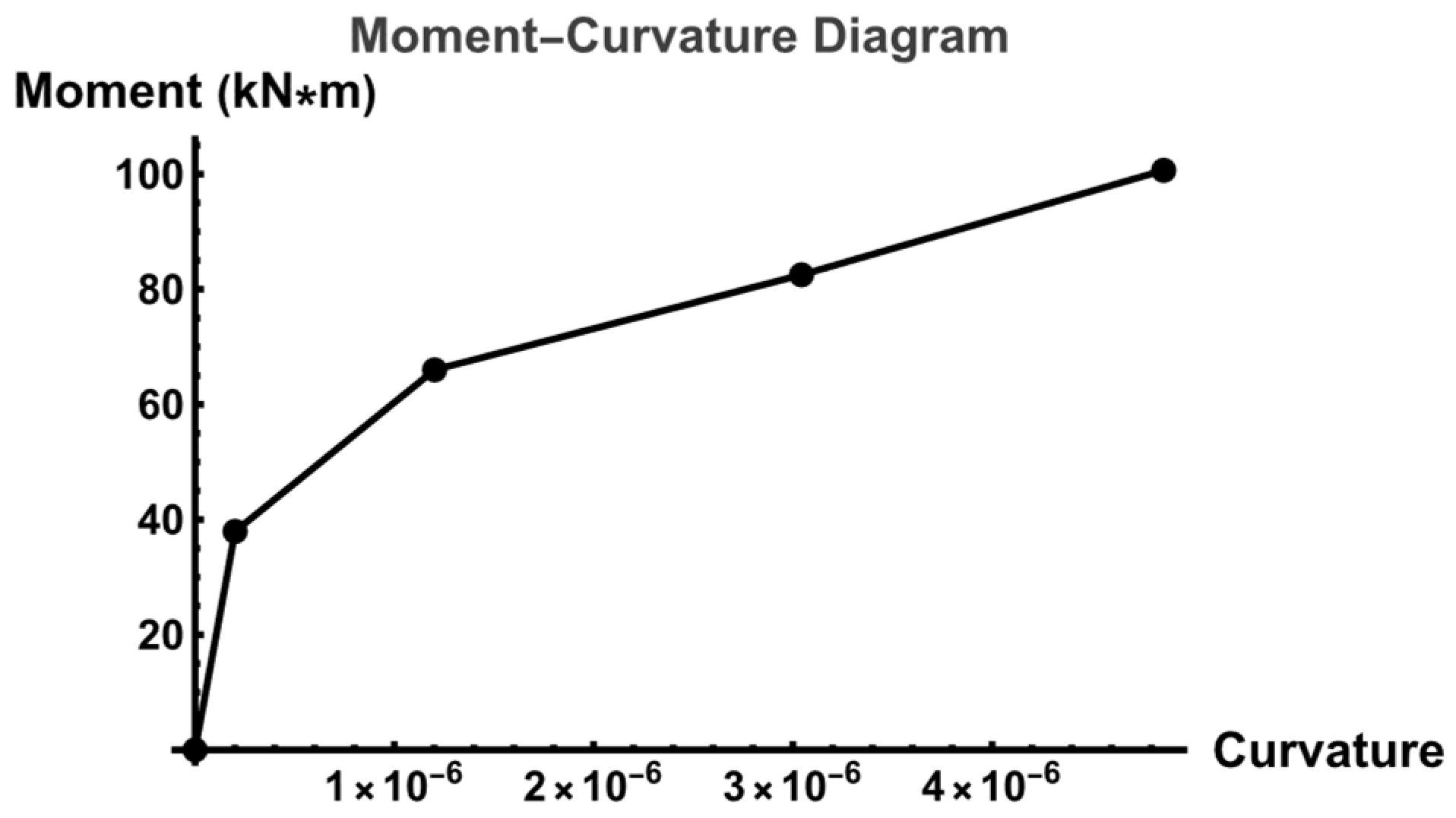
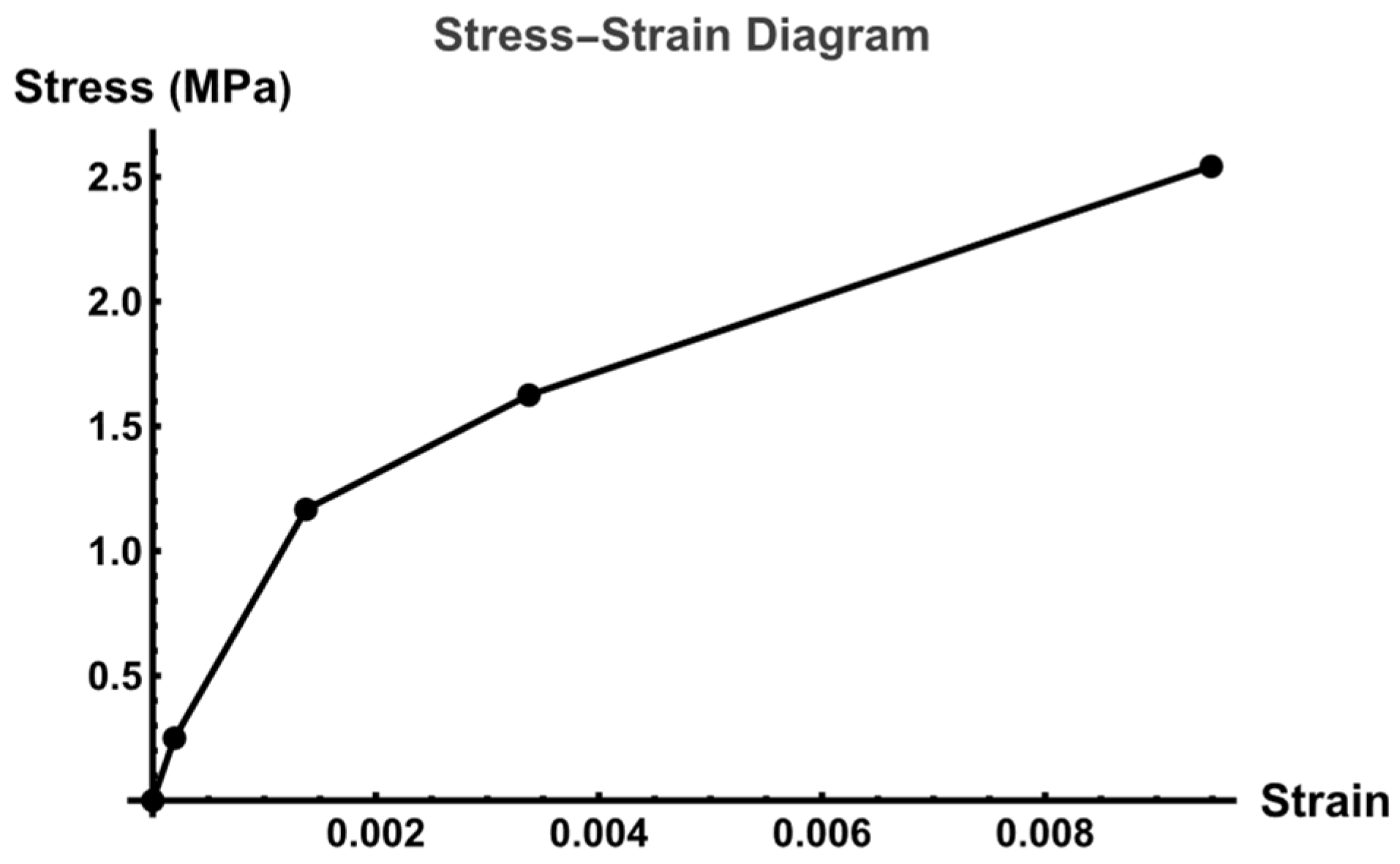
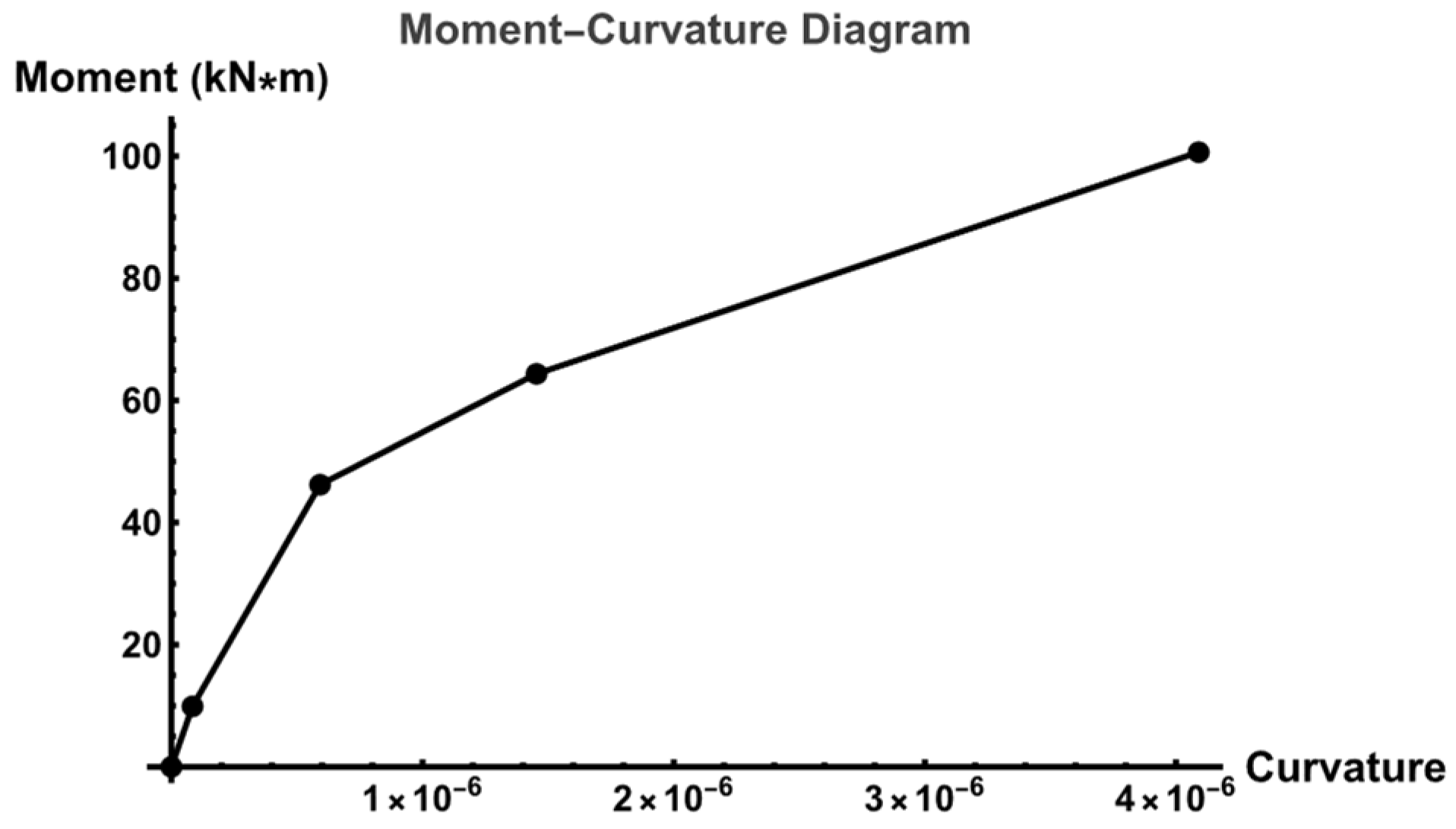
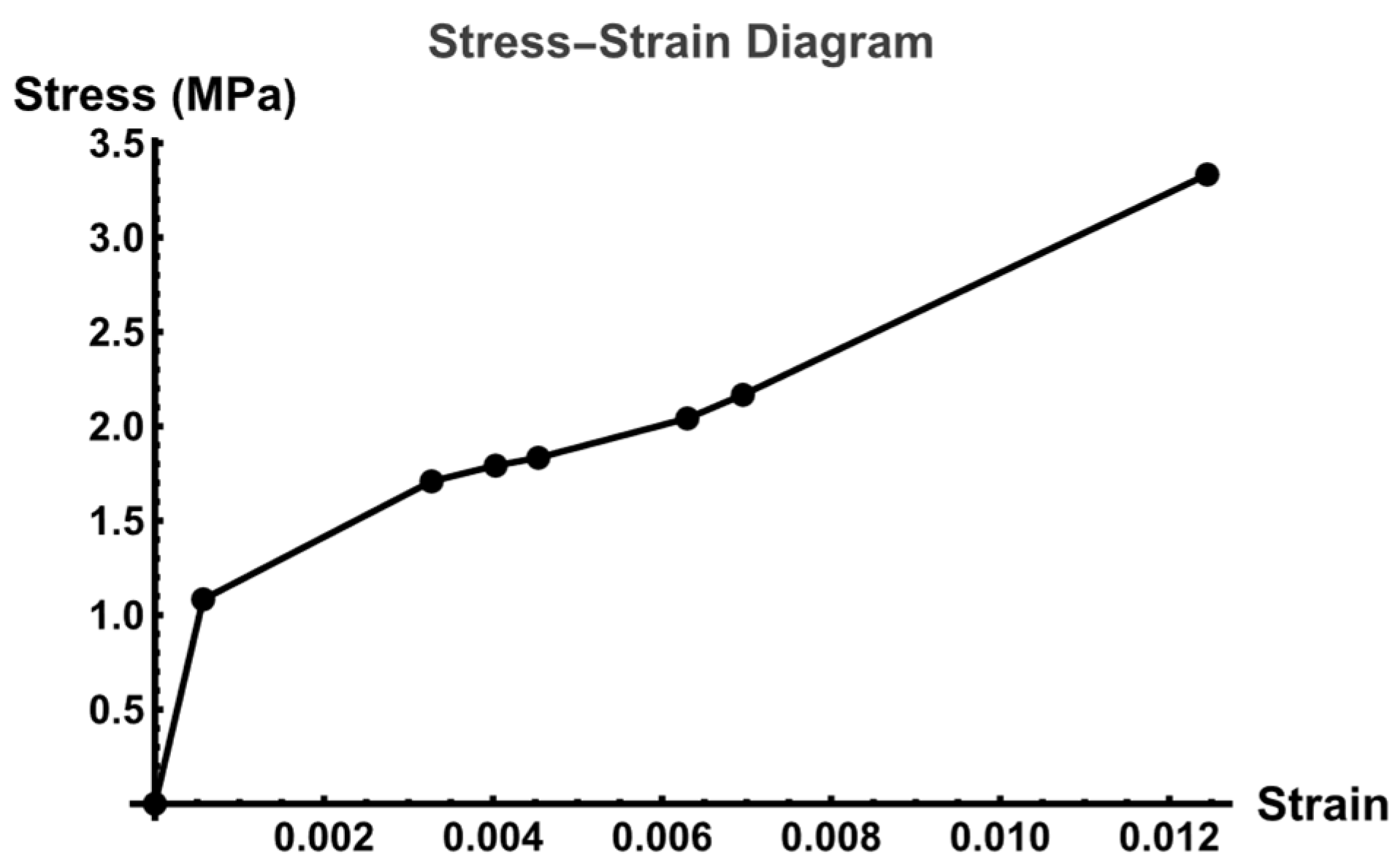
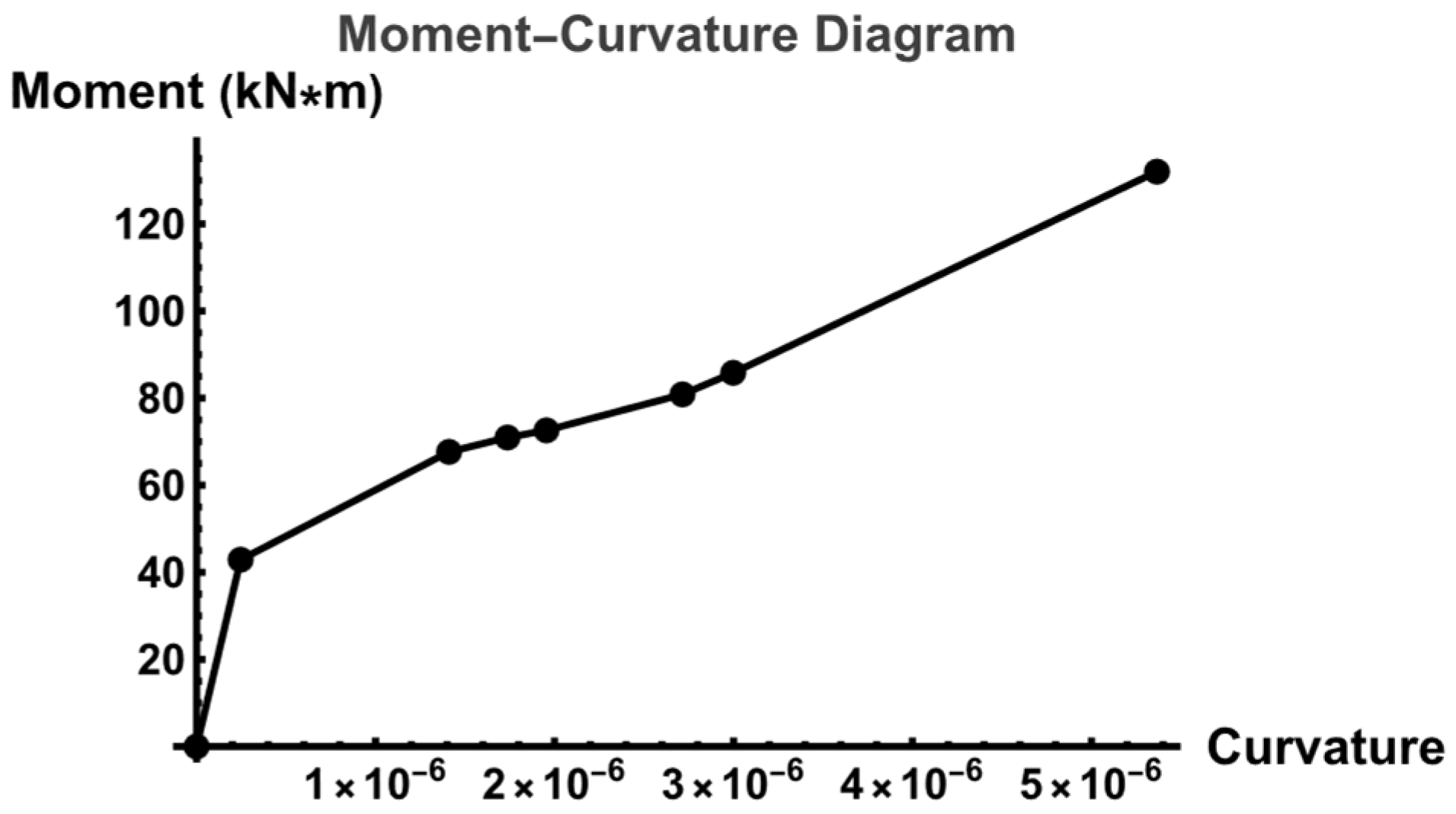
This formulation allows for an accurate representation of the non-linear load–deflection response, particularly in the post-cracking regime. This is possible due to the incorporation of a reference diameter as a normalizing parameter to control the hyperbolic function’s sensitivity. The distinction between the original and modified development lengths is visually presented in Figure 14. Subsequent figures (Figure 15, Figure 16, Figure 17, Figure 18, Figure 19, Figure 20, Figure 21, Figure 22, Figure 23, Figure 24, Figure 25 and Figure 26) provide a comprehensive depiction of the stress–strain diagrams and moment–curvature responses for 10 mm and 12 mm diameter GFRP bars across specified development lengths of 40d, 60d, and 80d. The moment–curvature relationship of a beam typically indicates that increasing the diameter of fiber-reinforced polymer bars enhances the capacity of the bending moment and influences flexural rigidity. Specifically, large-diameter FRP bars possess a higher capacity, although this often necessitates longer splice lengths. The improved flexural performance, particularly when optimized lap splice lengths are employed to ensure effective force transfer and full utilization of the FRP bar’s tensile capacity, contributes to superior overall structural performance.

5. Conclusions

Bond stress values are crucial for assessing the efficacy of various lap splice lengths and ensuring adequate force transfer between the FRP reinforcement and the concrete matrix, thereby preventing premature bond failure. In conclusion, the bond stress decreases as the lap splice length increases; simultaneously, the bar diameter exhibits negligible influence. Conversely, the compressive strength demonstrates a pronounced effect. R 2 was calculated, indicating strong statistical relationships between variables, as shown in Table 2, Table 3 and Table 4. The fitted quadratic curves for the load–deflection behavior of the reinforced concrete beams with GFRP and BFRP bars produced a coefficient of determination ( R 2 ) between 0.812908 and 1.0. Thus, variability in the observed load–deflection response can be explained by the developed quadratic model. The stress–strain diagram demonstrates how stress in a beam increases as the development length of the bars increases, with strain values generally between 0.002 and 0.014. This includes all stages of wear from cracks to failure.
The characteristic failure modes observed in the tested specimens at peak load are visually presented in Figure 10. For all beam types, the region subjected to a constant bending moment, known as the flexural span, was predominantly characterized by the formation of vertical cracks. These cracks developed orthogonally to the orientation of the maximum principal tensile stress, which is a direct consequence of the pure bending moment in this zone.
An investigation into bond strength, utilizing various development length configurations, demonstrated that beams incorporating longer development lengths exhibit superior flexural capacity. This finding aligns with the principle that a longer development length facilitates the more complete mobilization of the reinforcing bar’s tensile strength, thereby enhancing the ultimate flexural capacity of the structure. Effective development length prevents premature bond failure, allowing the reinforcement to reach its full design stress and contribute optimally to a beam’s load-carrying capacity. While design codes provide guidelines for development length, variations exist, and factors such as concrete properties, reinforcement characteristics, and confinement influence the required anchorage lengths. The impact of bond behavior on flexural strength is a critical aspect of reinforced concrete design.

Author Contributions

The conceptualization and methodological framework of this research were collaboratively developed and agreed upon by all authors. The initial draft of the manuscript was prepared by A.J.N., with S.K.E. providing critical review and revisions. The analysis of results, discussions, interpretation of findings, and formulation of conclusions were jointly completed by all authors. All authors have read and agreed to the published version of the manuscript.

Funding

This research received no external funding.

Data Availability Statement

The authors confirm that all data underlying the findings are fully available without restriction. All relevant data are within the paper.

Conflicts of Interest

The authors declare no conflicts of interest.

References

  1. Zemour, N.; Asadian, A.; Ahmed, E.A.; Khayat, K.H.; Benmokrane, B. Experimental study on the bond behavior of GFRP bars in normal and self-consolidating concrete. Constr. Build. Mater. 2018, 189, 869–881. [Google Scholar] [CrossRef]
  2. Mamdouh, H.; Hassan, A.M.; Zenhom, N.; Ali, A.H.; Mohamed, O.A.; Salman, A. Splicing behaviour of GFRP, BFRP, and steel bars in reinforced concrete beams. Discov. Appl. Sci. 2025, 7, 123. [Google Scholar] [CrossRef]
  3. Alabduljabbar, H.; Alyousef, R.; Mohammadhosseini, H.; Topper, T. Bond Behavior of Cleaned Corroded Lap Spliced Beams Repaired with Carbon Fiber Reinforced Polymer Sheets and Partial Depth Repairs. Crystals 2020, 10, 1014. [Google Scholar] [CrossRef]
  4. Eltantawi, I.; Alnahhal, W.; Refai, A.E.; Younis, A.; Al-Nuaimi, N.; Kahraman, R. Bond performance of tensile lap-spliced basalt-FRP reinforcement in high-strength concrete beams. Compos. Struct. 2021, 281, 114987. [Google Scholar] [CrossRef]
  5. Montaser, W.M.; Shaaban, I.G.; Rizzuto, J.P.; Zaher, A.H.; Rashad, A.; Sadany, S.M.E. Steel Reinforced Self-Compacting Concrete (SCC) Cantilever Beams: Bond Behaviour in Poor Condition Zones. Int. J. Concr. Struct. Mater. 2023, 17, 19. [Google Scholar] [CrossRef]
  6. Croppi, J.I.; Ahrens, A.; Palmeri, A.; Piccinin, R.; Mark, P. Experimental investigation on post-installed lap splices in ordinary and steel fiber-reinforced concrete. Mater. Struct. 2024, 57, 180. [Google Scholar] [CrossRef]
  7. Kim, S.; Kim, J.; Park, C. Bond Properties of Glass-Fiber-Reinforced Polymer Hybrid Rebar in Reinforced Concrete with Respect to Bond Length. Appl. Sci. 2024, 14, 4576. [Google Scholar] [CrossRef]
  8. Wang, L.; Shen, N.; Zhang, M.; Fu, F.; Qian, K. Bond performance of Steel-CFRP bar reinforced coral concrete beams. Constr. Build. Mater. 2020, 245, 118456. [Google Scholar] [CrossRef]
  9. Zhelyazov, T. Models analyzing the response of the adhesive joint between FRP and concrete: A comparative analysis. Discov. Mech. Eng. 2024, 3, 23. [Google Scholar] [CrossRef]
  10. Kinjawadekar, T.A.; Patil, S.; Nayak, G. A Critical Review on Glass Fiber-Reinforced Polymer Bars as Reinforcement in Flexural Members. J. Inst. Eng. Ser. C 2023, 104, 501–516. [Google Scholar] [CrossRef]
  11. Rosa, I.C.; Firmo, J.P.; Correia, J.R.; Mazzuca, P. Influence of elevated temperatures on the bond behaviour of ribbed GFRP bars in concrete. Cem. Concr. Compos. 2021, 122, 104119. [Google Scholar] [CrossRef]
  12. Rosa, I.C.; Firmo, J.P.; Correia, J.R.; Barros, J.A.O. Bond behaviour of sand coated GFRP bars to concrete at elevated temperature—Definition of bond vs. slip relations. Compos. B Eng. 2018, 160, 329–340. [Google Scholar] [CrossRef]
  13. Abushanab, A.; Alnahhal, W.; Farraj, M. Experimental and finite element studies on the structural behavior of BFRC continuous beams reinforced with BFRP bars. Compos. Struct. 2021, 281, 114982. [Google Scholar] [CrossRef]
  14. Yuan, C.; Chen, W.; Pham, T.M.; Hao, H. Bond behaviour between hybrid fiber reinforced polymer sheets and concrete. Constr. Build. Mater. 2019, 210, 93–110. [Google Scholar] [CrossRef]
  15. Mirdarsoltany, M.; Abed, F.; Homayoonmehr, R.; Abad, S.V.A.N.K. A Comprehensive Review of the Effects of Different Simulated Environmental Conditions and Hybridization Processes on the Mechanical Behavior of Different FRP Bars. Sustainability 2022, 14, 8834. [Google Scholar] [CrossRef]
  16. Hosseini, S.A.; Eslami, A.; Farghaly, A.S.; Benmokrane, B. Effect of Confinement Using Gfrp Stirrups on Bond Strength of Staggered/Non-Staggered Lap-Spliced Gfrp Bars in Concrete Beams. Eng. Struct. 2025, 345, 121418. [Google Scholar] [CrossRef]
  17. Kareem, H.; Lateef, A.M. Flexural Behavior of Steel and Gfrp-Reinforced Lightweight Concrete Hollow One-Way Slabs under High Temperatures. Kufa J. Eng. 2025, 16, 268–287. [Google Scholar] [CrossRef]
  18. Derlatka, A.; Labocha, S.; Lacki, P. The Load-Bearing Capacity Assessment of GFRP Foundation Piles for Transmission Line Poles Using Experimental Tests and Numerical Calculations. Appl. Sci. 2025, 15, 2231. [Google Scholar] [CrossRef]
  19. Nkurunziza, G.; Debaiky, A.S.; Cousin, P.; Benmokrane, B. Durability of GFRP bars: A critical review of the literature. Prog. Struct. Eng. Mater. 2005, 7, 194–209. [Google Scholar] [CrossRef]
  20. Pranav, M.; Hemalatha, K.; Vardhani, P.S.R.P.S.S.S.; Nadh, V.S. Review on flexural performance of reinforced concrete beams designed with hybrid bars. E3S Web Conf. 2023, 391, 1203. [Google Scholar] [CrossRef]
  21. Mahmoud, A.S.; Ali, Z.M. Behaviour of reinforced GFRP bars concrete beams having strengthened splices using CFRP sheets. Adv. Struct. Eng. 2021, 24, 2472–2483. [Google Scholar] [CrossRef]
  22. Wambeke, B.; Shield, C.K. Development Length of Glass Fiber-Reinforced Polymer Bars in Concrete. ACI Struct. J. 2006, 103, 11–17. [Google Scholar] [CrossRef] [PubMed]
  23. Thamrin, R.; Kaku, T.; Imai, T. Flexural and bond behavior of reinforced concrete beam with FRP Rods. In Proceedings of the Engineering Theoretical Mechanics, New York, NY, USA, 2–5 June 2002; pp. 469–478. [Google Scholar]
  24. ACI 318-19; Building Code Requirements for Structural Concrete (ACI 318-19) and Commentary (ACI 318R-19). American Concrete Institute: Farmington Hills, MI, USA, 2019.
  25. CSA-S806-12; Design and Construction of Building Structures with Fiber Reinforced Polymers. Canadian Standards Association: Rexdale, ON, Canada, 2012.
  26. ACI 440.11-22; Building Code Requirements for Structural Concrete Reinforced with Glass Fiber-Reinforced Polymer Bars. American Concrete Institute: Farmington Hills, MI, USA, 2022.
  27. ACI 440.1R-15; Guide for the Design and Construction of Structural Concrete Reinforced with FRP Bars. American Concrete Institute: Farmington Hills, MI, USA, 2015.
  28. CSA-S6-14; Canadian Highway Bridge Design Code. Canadian Standards Association: Rexdale, ON, Canada, 2014.
  29. Kadhim, M.M.A.; Jawdhari, A.; Peiris, A. Evaluation of lap-splices in NSM FRP rods for retrofitting RC members. Structures 2021, 30, 877–894. [Google Scholar] [CrossRef]
  30. ACI 440.1R-06; Guide for the Design and Construction of Structural Concrete Reinforced with FRP Bars. American Concrete Institute: Farmington Hills, MI, USA, 2006.
  31. Rizkalla, S.; Dawood, M.; Schnerch, D. Development of a carbon fiber reinforced polymer system for strengthening steel structures. Compos. Part A Appl. Sci. Manuf. 2008, 39, 388–397. [Google Scholar] [CrossRef]
Figure 1. Beam dimensions with GFRP and BFRP diameters of 10 mm.
Jcs 10 00082 g001
Figure 2. Beam dimensions with GFRP and BFRP diameters of 12 mm.
Jcs 10 00082 g002
Figure 3. Beam dimensions with GFRP and BFRP diameters of 16 mm.
Jcs 10 00082 g003
Figure 4. Load–deflection curve for GFRP with a diameter of 10 mm: (a) 40d lap splice; (b) 60d lap splice; and (c) 80d lap splice.
Jcs 10 00082 g004
Figure 5. Load–deflection curve for GFRP with a diameter of 12 mm: (a) 40d lap splice; (b) 60d lap splice; and (c) 80d lap splice.
Jcs 10 00082 g005
Figure 6. Load–deflection curve for GFRP with a diameter of 16 mm: (a) 40d lap splice; (b) 60d lap splice; and (c) 80d lap splice.
Jcs 10 00082 g006
Figure 7. Load–deflection curve for BFRP with a diameter of 10 mm: (a) 40d lap splice; (b) 60d lap splice; and (c) 80d lap splice.
Jcs 10 00082 g007
Figure 8. Load–deflection curve for BFRP with a diameter of 12 mm: (a) 40d lap splice; (b) 60d lap splice; and (c) 80d lap splice.
Jcs 10 00082 g008
Figure 9. Load–deflection curve for BFRP with a diameter of 16 mm: (a) 40d lap splice; (b) 60d lap splice; and (c) 80d lap splice.
Jcs 10 00082 g009
Figure 10. Photos for GFRP with a diameter of 10 mm: (a) 40d lap splice; (b) 60d lap splice; and (c) 80d lap splice.
Jcs 10 00082 g010
Figure 11. Development length for FRP bars with three different diameters and various compressive strength values according to the Canadian code.
Jcs 10 00082 g011
Figure 12. Development length for FRP bars with three different diameters and various compressive strength values according to ACI 440-1R.06.
Jcs 10 00082 g012
Figure 13. Bond stress for various compressive strength values with a 10 mm FRP bar according to Equation (4) for 40d (red), 60d (green), and 80d (blue).
Jcs 10 00082 g013
Figure 14. Combination of the original development length according to ACI 440-1R.06 with the modified length.
Jcs 10 00082 g014
Figure 15. The stress–strain curve for highly compressed concrete fiber and tension reinforcement for a beam with a GFRP 10 mm diameter bar and 40d lap splice.
Jcs 10 00082 g015
Figure 16. The moment–curvature relationship in a GFRP 10 mm diameter bar with 40d lap splice.
Jcs 10 00082 g016
Figure 17. The stress–strain curve for highly compressed concrete fiber and tension reinforcement for a beam with a GFRP 10 mm diameter bar and 60d lap splice.
Jcs 10 00082 g017
Figure 18. The moment–curvature relationship for a GFRP 10 mm diameter bar with 60d lap splice.
Jcs 10 00082 g018
Figure 19. The stress–strain curve for highly compressed concrete fiber and tension reinforcement for a beam with a GFRP 10 mm diameter bar and 80d lap splice.
Jcs 10 00082 g019
Figure 20. The moment–curvature relationship of a GFRP 10 mm diameter bar with 80d lap splice.
Jcs 10 00082 g020
Figure 21. The stress–strain curve for highly compressed concrete fiber and tension reinforcement for a beam with a GFRP 12 mm diameter bar and 40d lap splice.
Jcs 10 00082 g021
Figure 22. The moment–curvature relationship for a GFRP 12 mm diameter bar with 40d lap splice.
Jcs 10 00082 g022
Figure 23. The stress–strain curve for highly compressed concrete fiber and tension reinforcement for a beam with a GFRP 12 mm diameter bar and 60d lap splice.
Jcs 10 00082 g023
Figure 24. The moment–curvature relationship for a GFRP 12 mm diameter bar with 60d lap splice.
Jcs 10 00082 g024
Figure 25. The stress–strain curve for highly compressed concrete fiber and tension reinforcement for a beam with a GFRP 12 mm diameter bar and 80d lap splice.
Jcs 10 00082 g025
Figure 26. The moment–curvature relationship for a GFRP 12 mm diameter bar with 80d lap splice.
Jcs 10 00082 g026
Table 1. Recommended minimum thickness of non-prestressed beams or one-way slabs.
TypeMinimum Thickness h
Simply SupportedOne End ContinuousBoth Ends ContinuousCantilever
Solid one-way slabsl/13l/17l/22l/5.5
Beamsl/10l/12l/16l/4
Table 2. Recommended curve fittings bx + cx2 for a bar diameter of 10 mm.
Lap SpliceGFRP 10 mmBFRP 10 mm
40db = 15.0256, c = −0.337369 (R2 = 0.96482)b = 111.626, c = −21.0792 (R2 = 1.0)
60db = 21.3492, c = −0.406349 (R2 = 0.895754)b = 22.9955, c = −0.830074 (R2 = 0.993505)
80db = 30.284, c = −0.621 (R2 =0.908828)b = 24.6475, c = −0.713722 (R2 = 0.850578)
Table 3. Recommended curve fittings bx + cx2 for a bar diameter of 12 mm.
Lap SpliceGFRP 12 mmBFRP 12 mm
40db = 29.5505, c = −0.705816 (R2 = 0.812908)b = 100.598, c = −6.28014 (R2 = 1.0)
60db = 35.3241, c = −0.979203 (R2 = 0.966568) b = 44.0226, c = −2.08862 (R2 = 0.881846)
80db = 24.6892, c = −0.392241 (R2 =0.844049) b = 40.1654, c = −1.45954 (R2 = 0.924764)
Table 4. Recommended curve fittings bx + cx2 for a bar diameter of 16 mm.
Lap SpliceGFRP 16 mmBFRP 16 mm
40db = 31.8848, c = −0.59406 (R2 = 0.944294)b = 29.9347, c = −0.782345 (R2 = 0.860612)
60db = 32.0827, c = −0.515481 (R2 = 0.96562) b = 23.2932, c = −0.708708 (R2 = 0.93708)
80db = 49.3137, c = −1.38137 (R2 = 0.948831)b = 26.1507, c = −0.701602 (R2 = 0.9548)
Disclaimer/Publisher’s Note: The statements, opinions and data contained in all publications are solely those of the individual author(s) and contributor(s) and not of MDPI and/or the editor(s). MDPI and/or the editor(s) disclaim responsibility for any injury to people or property resulting from any ideas, methods, instructions or products referred to in the content.