
Low-CO2 Concrete from Oil Shale Ash and Construction Demolition Waste for 3D Printing

 , ,
, ,  , , and
Abstract
1. Introduction
2. Materials
2.1. Admixtures
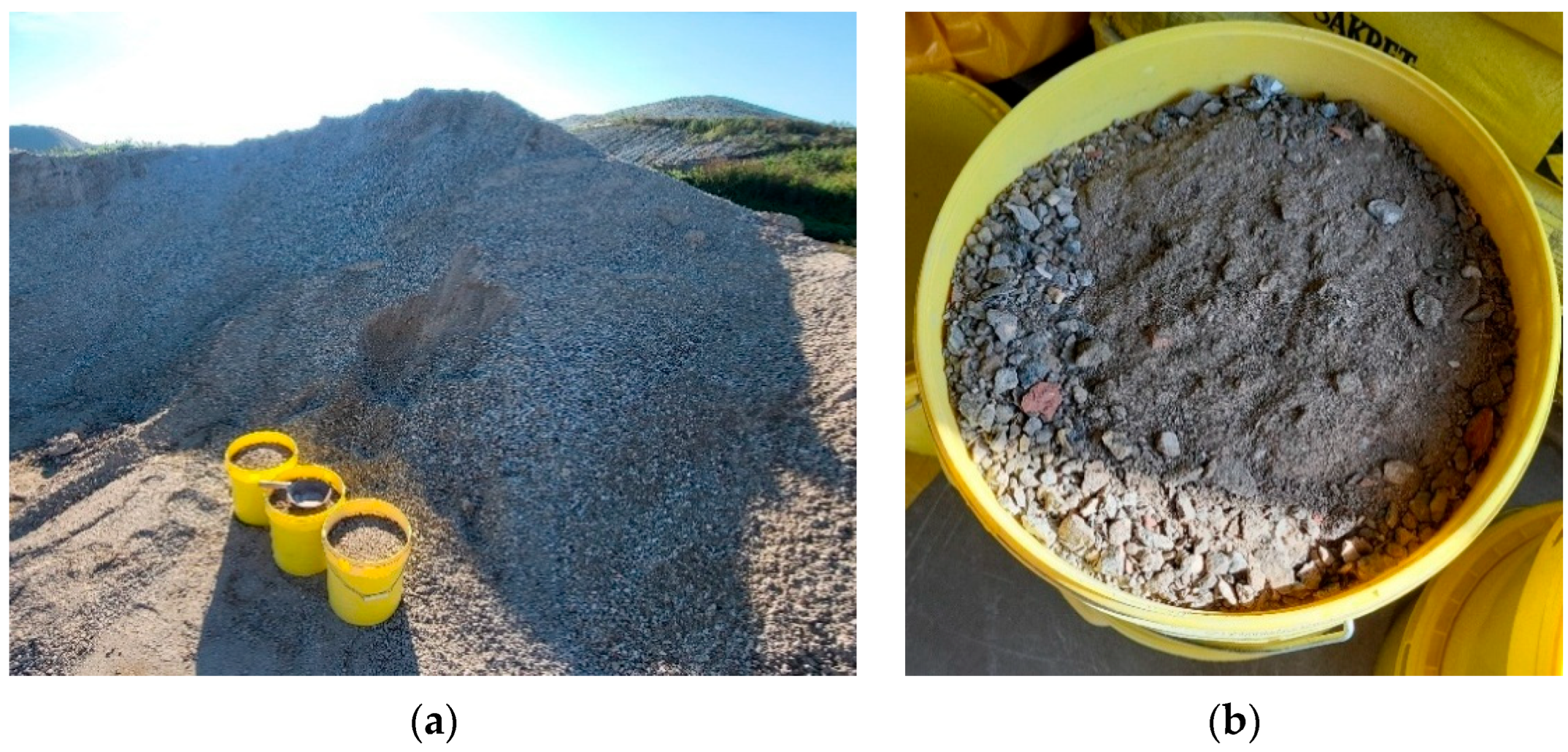
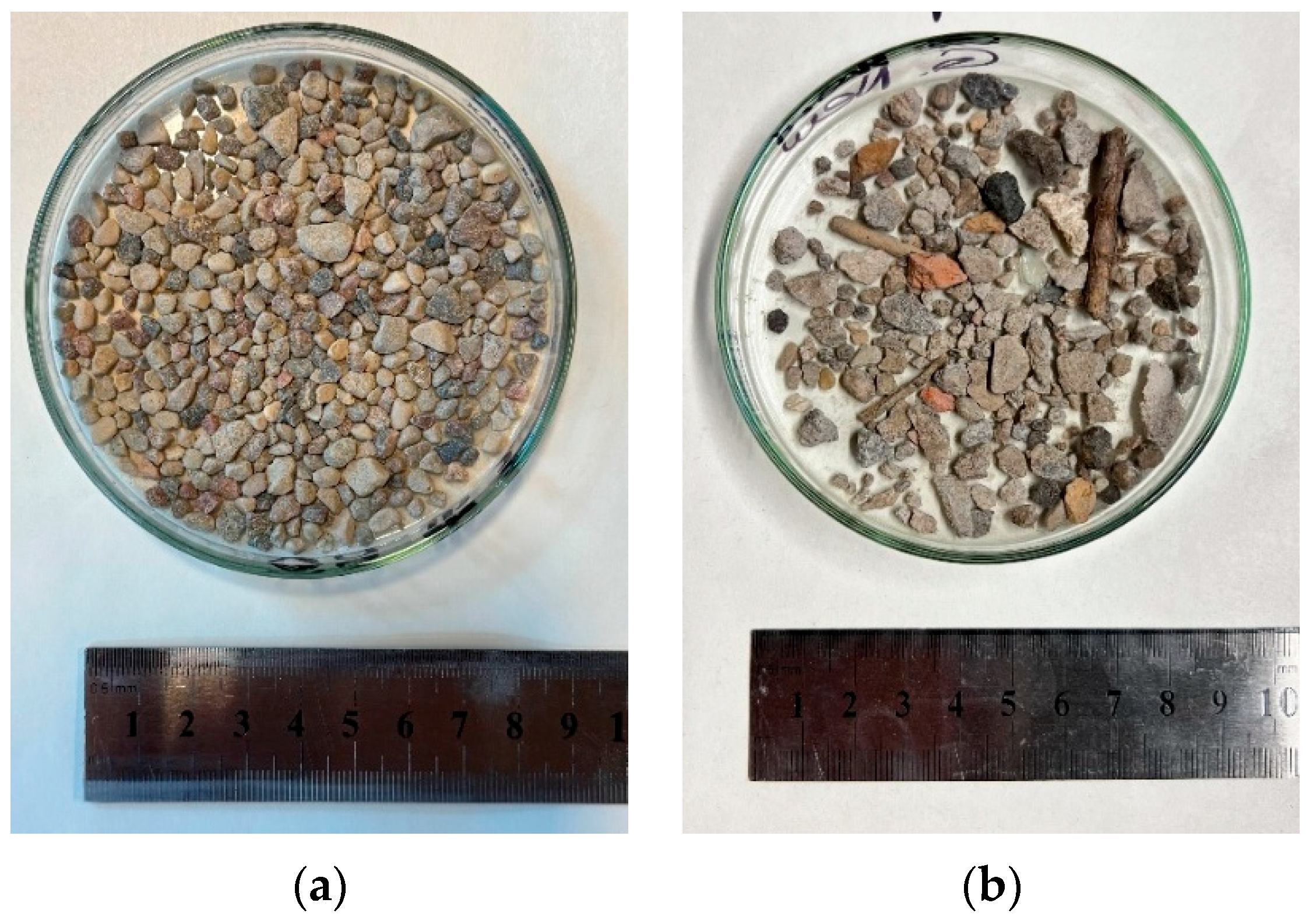
2.2. Aggregates
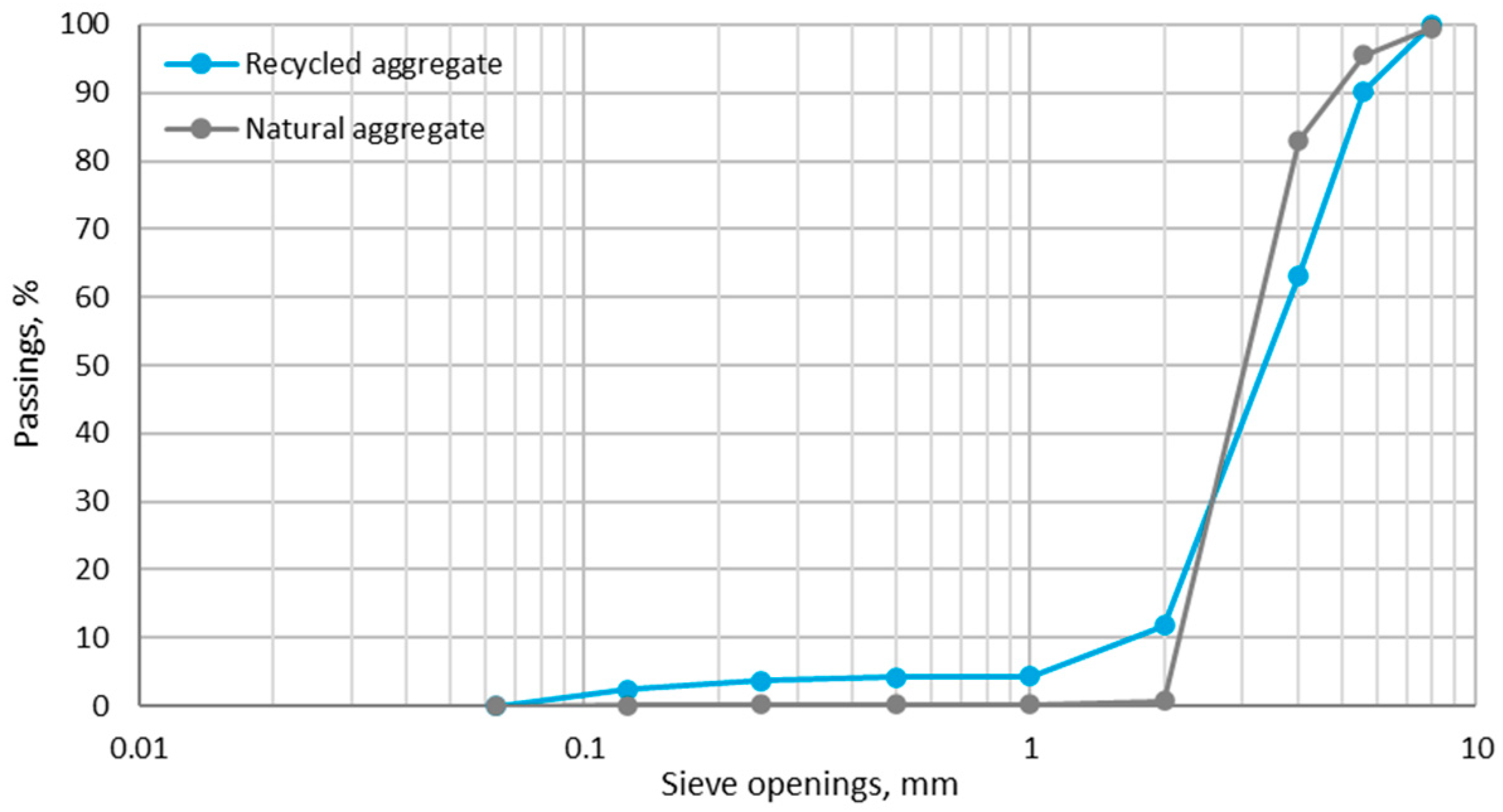
2.2.1. Granulometric Analysis
2.2.2. Physical Properties of Aggregates
2.3. Binders
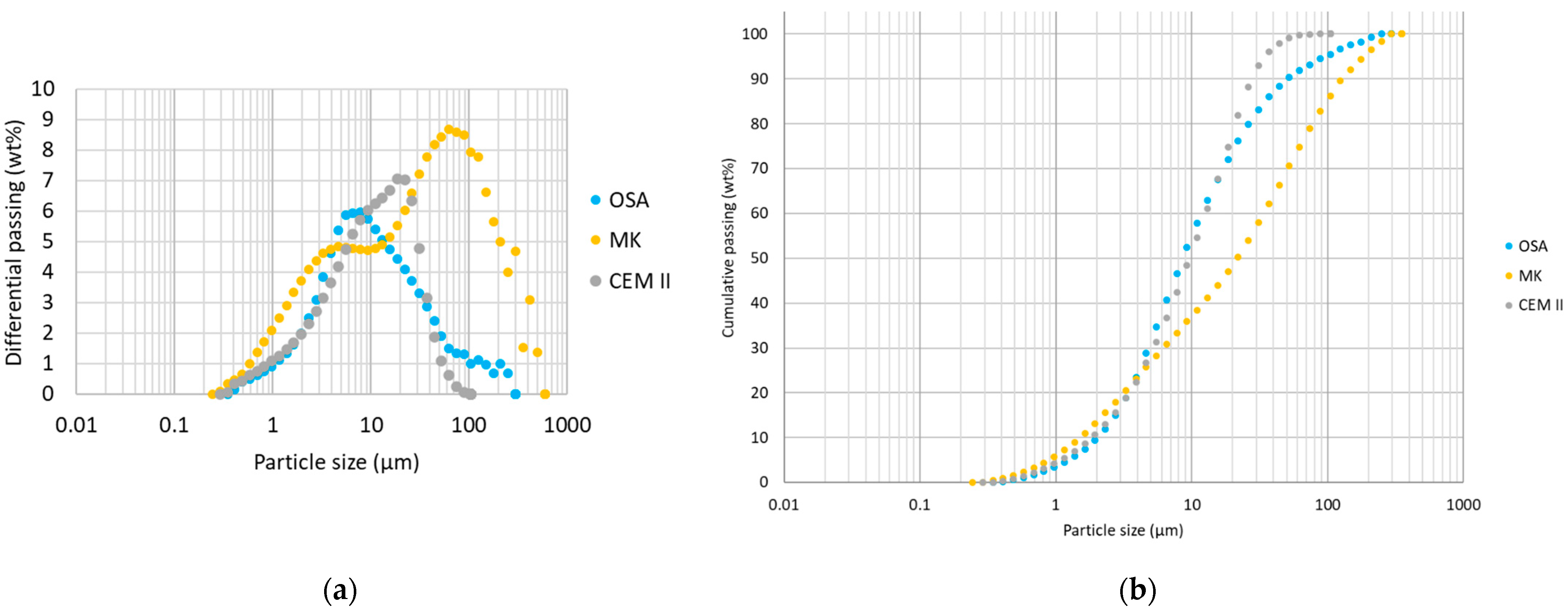
2.3.1. Particle Size Distribution (PSD)
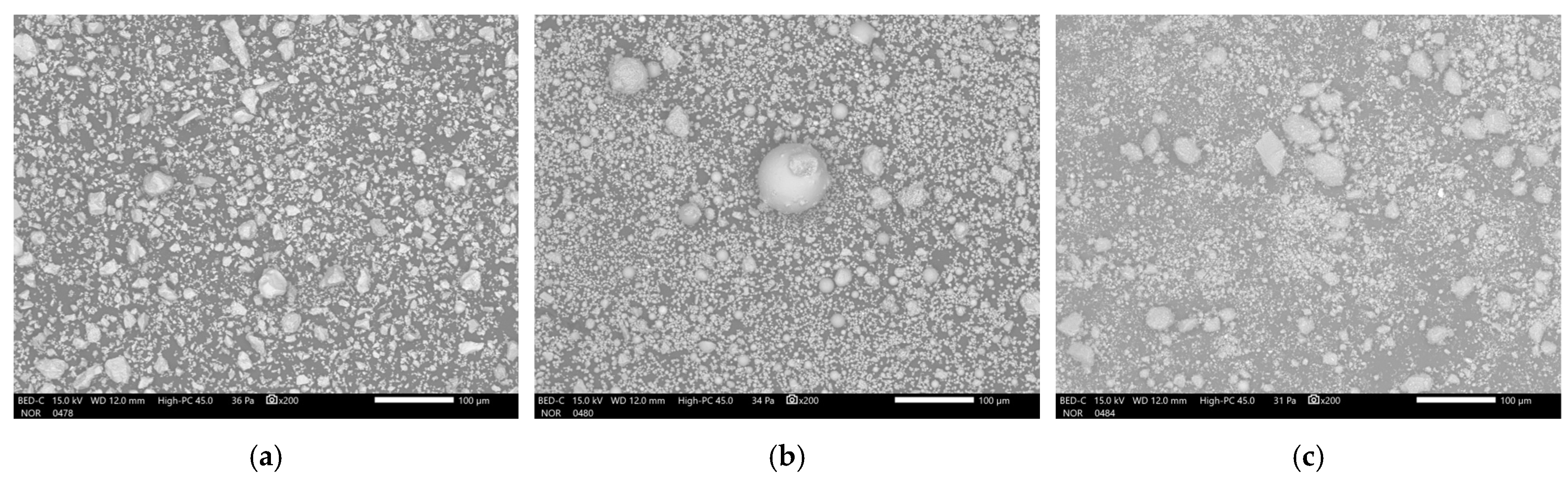
2.3.2. Morphology
3. Methods
3.1. Mix Proportions
3.2. Test Methods
3.2.1. Fresh Properties
3.2.2. Printability Assessment
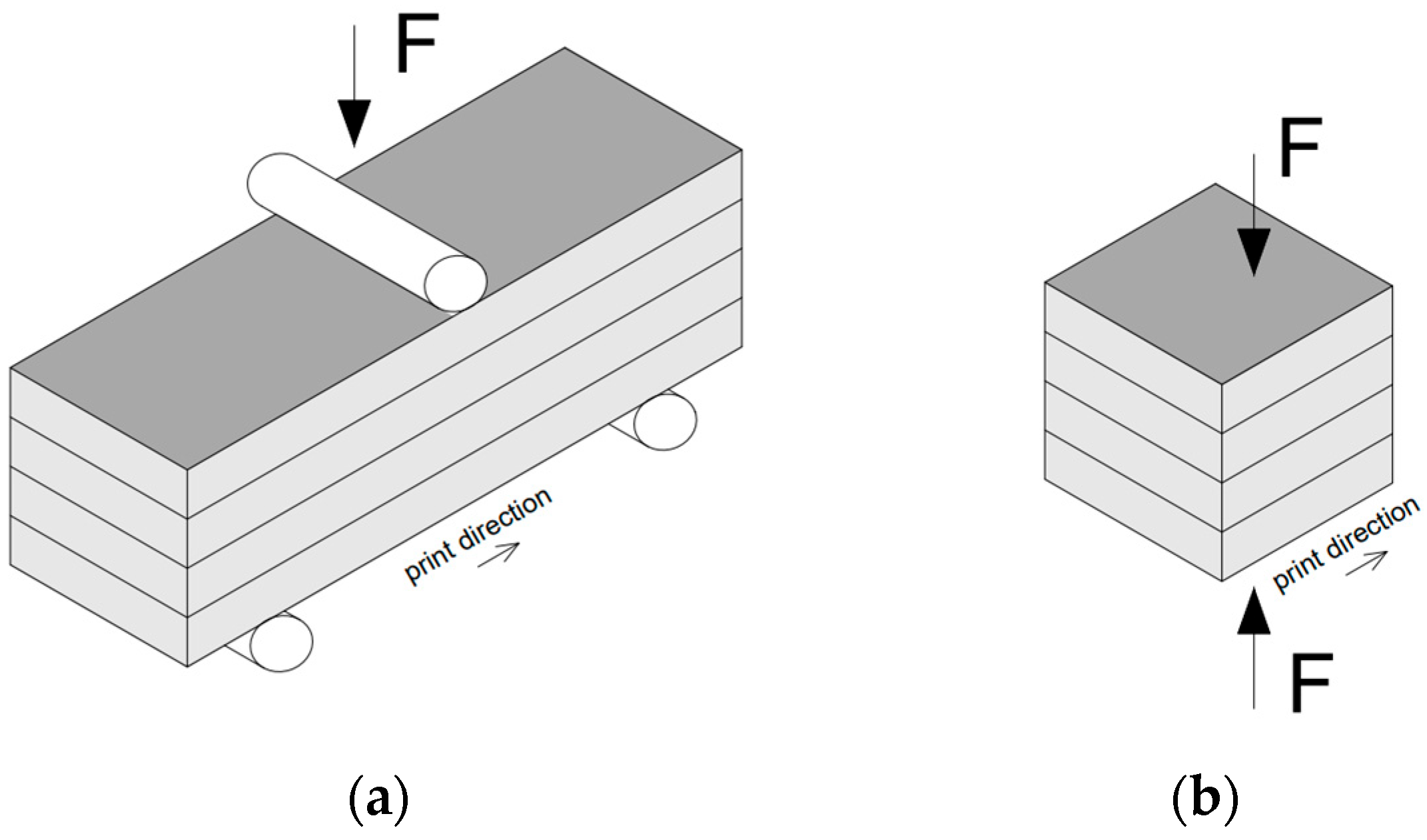
3.2.3. Mechanical Properties and Sample Preparation
3.3. Life Cycle Assessment
3.3.1. Goal and Scope Definition
3.3.2. System Boundary and Modelling Approach
3.3.3. Life Cycle Inventory
3.3.4. Allocation and Cut-Off Rules
3.3.5. Life Cycle Impact Assessment
3.3.6. Assumptions and Limitations
3.3.7. Ecological Intensity Index
4. Results and Discussion
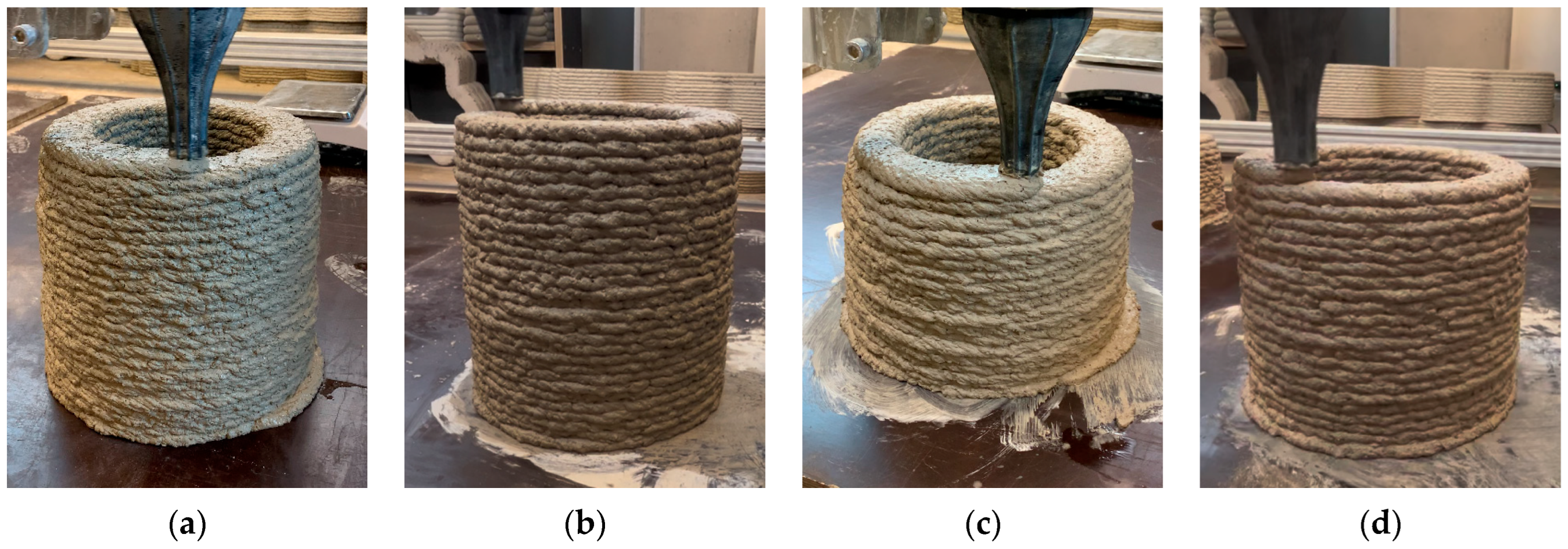
4.1. Fresh Properties and Printability
4.2. Density
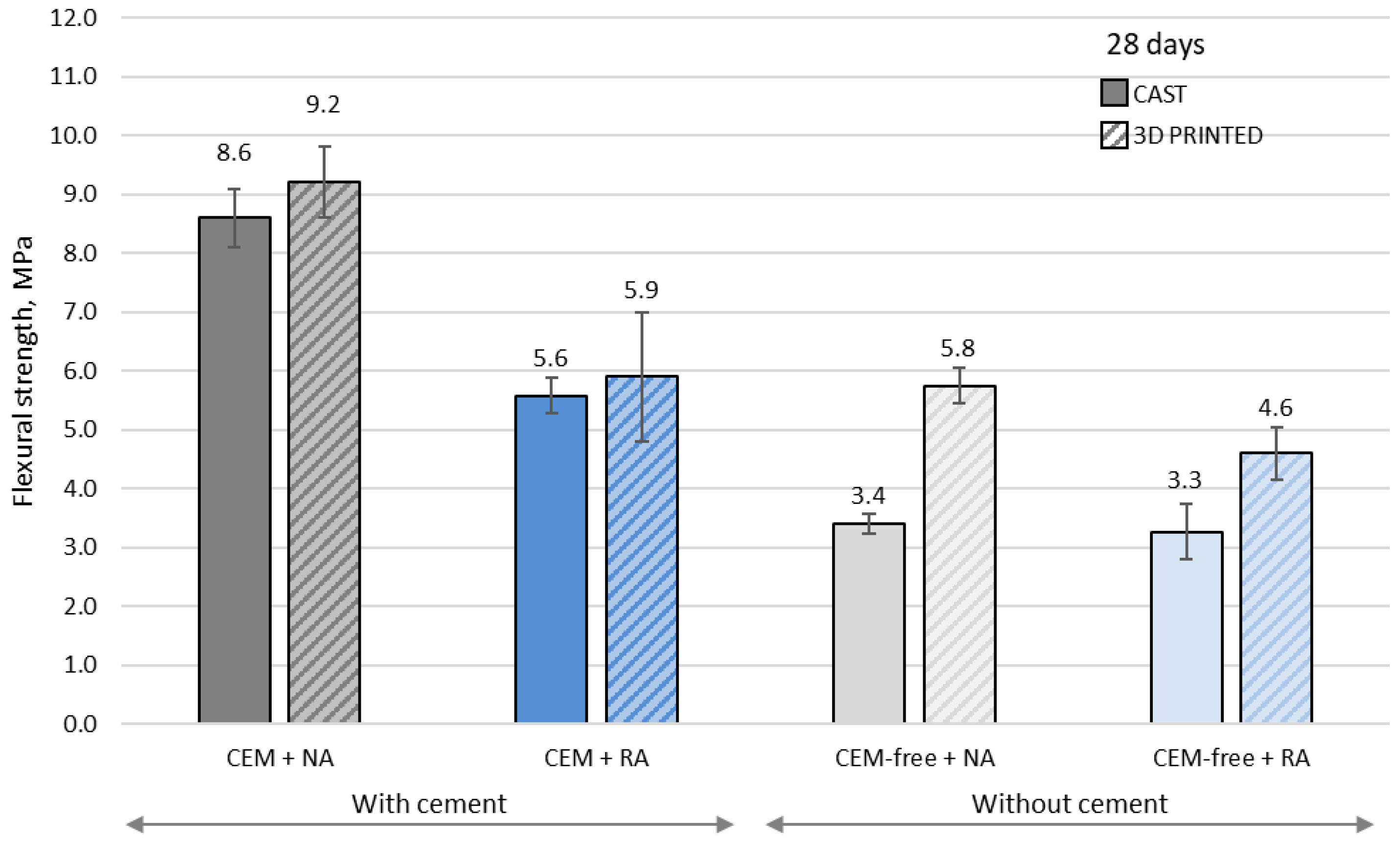
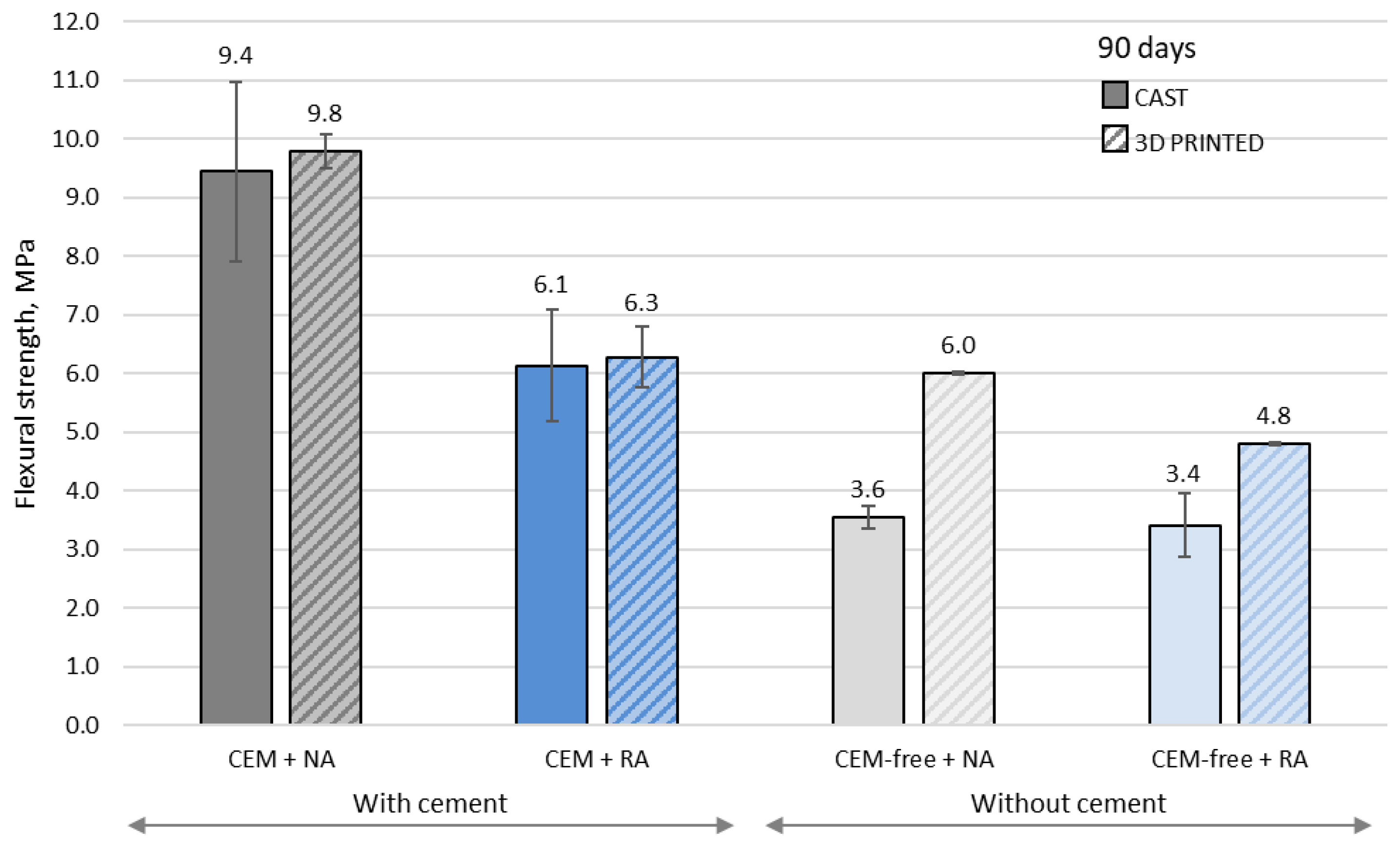
4.3. Flexural Strength
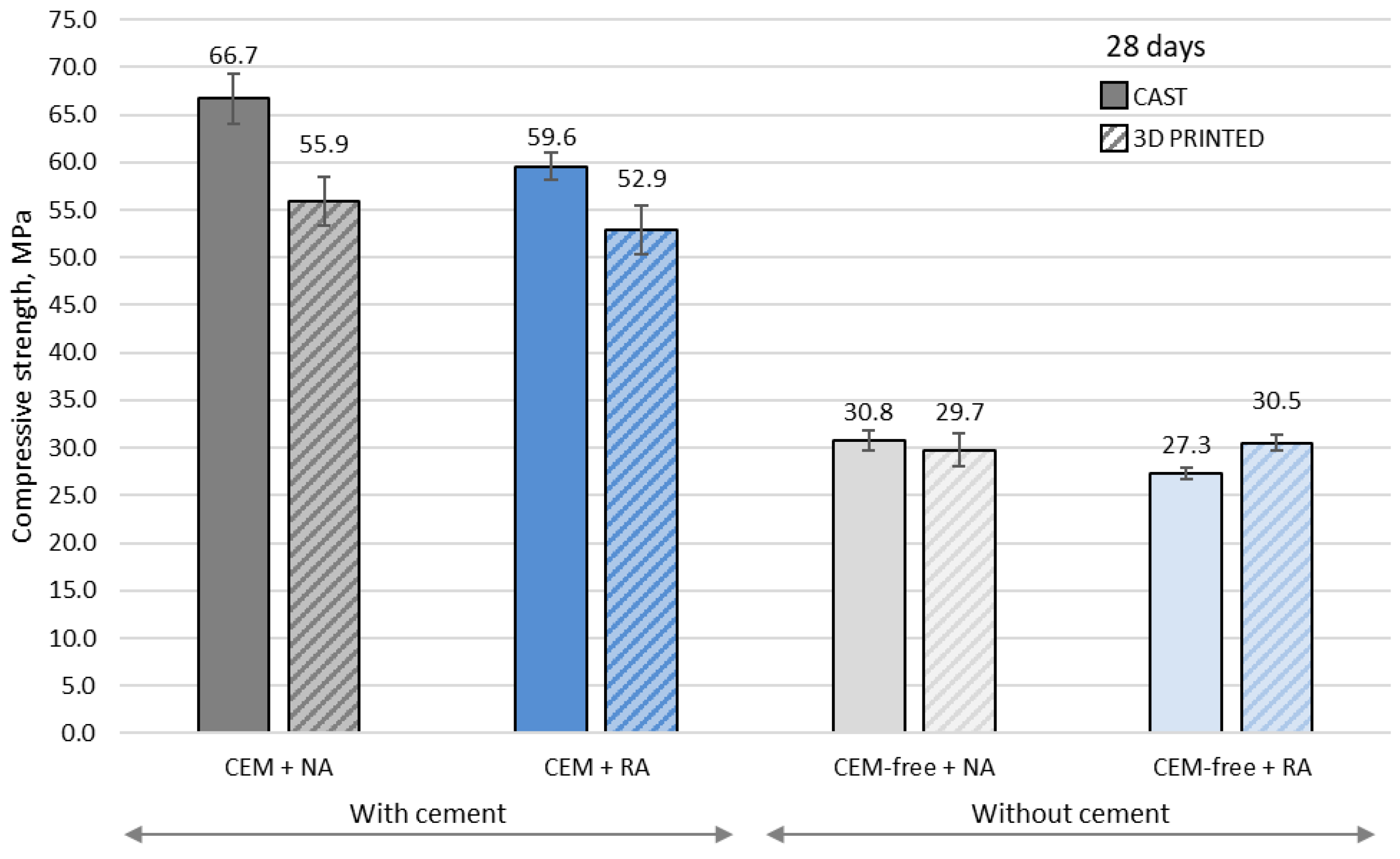
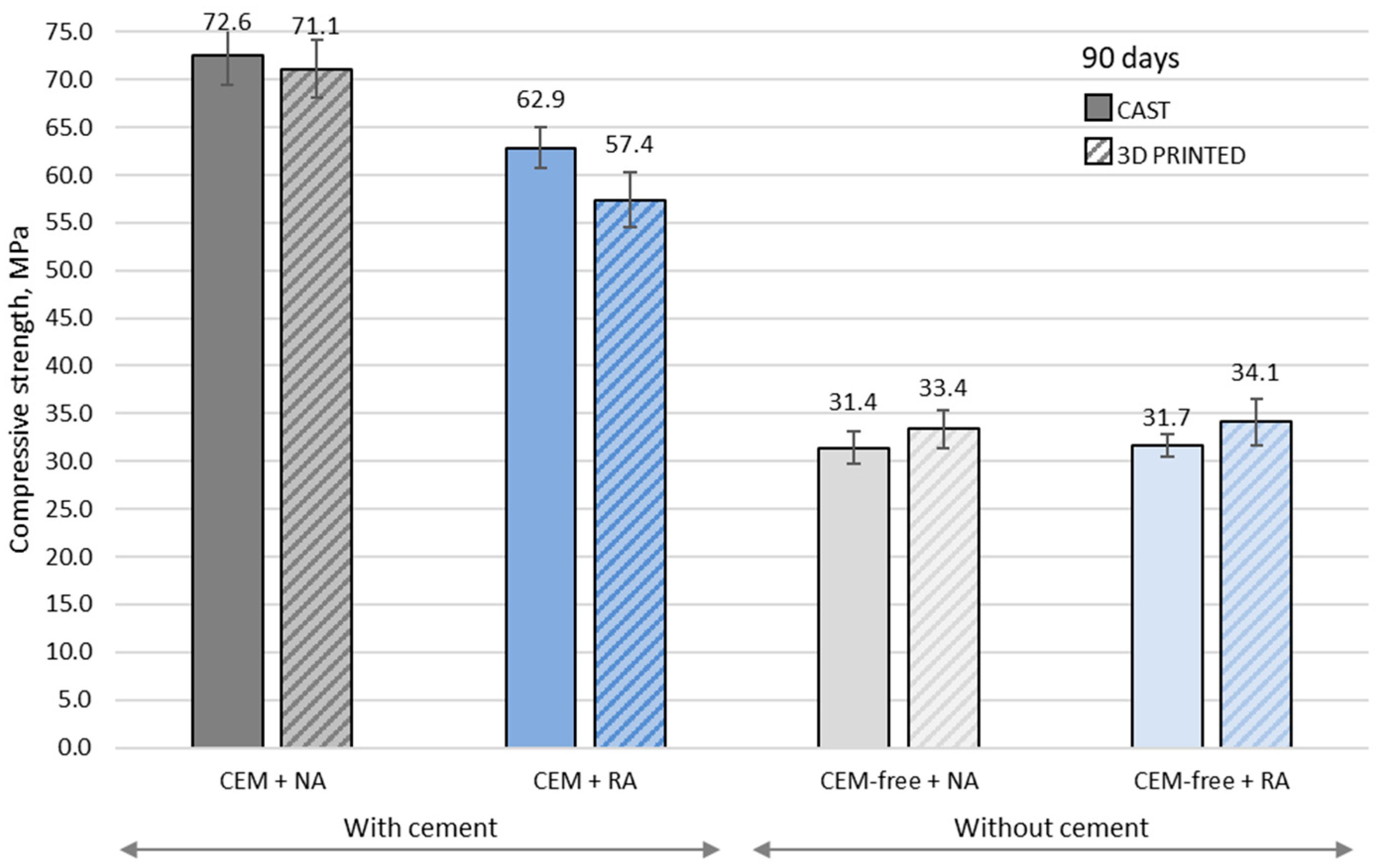
4.4. Compressive Strength
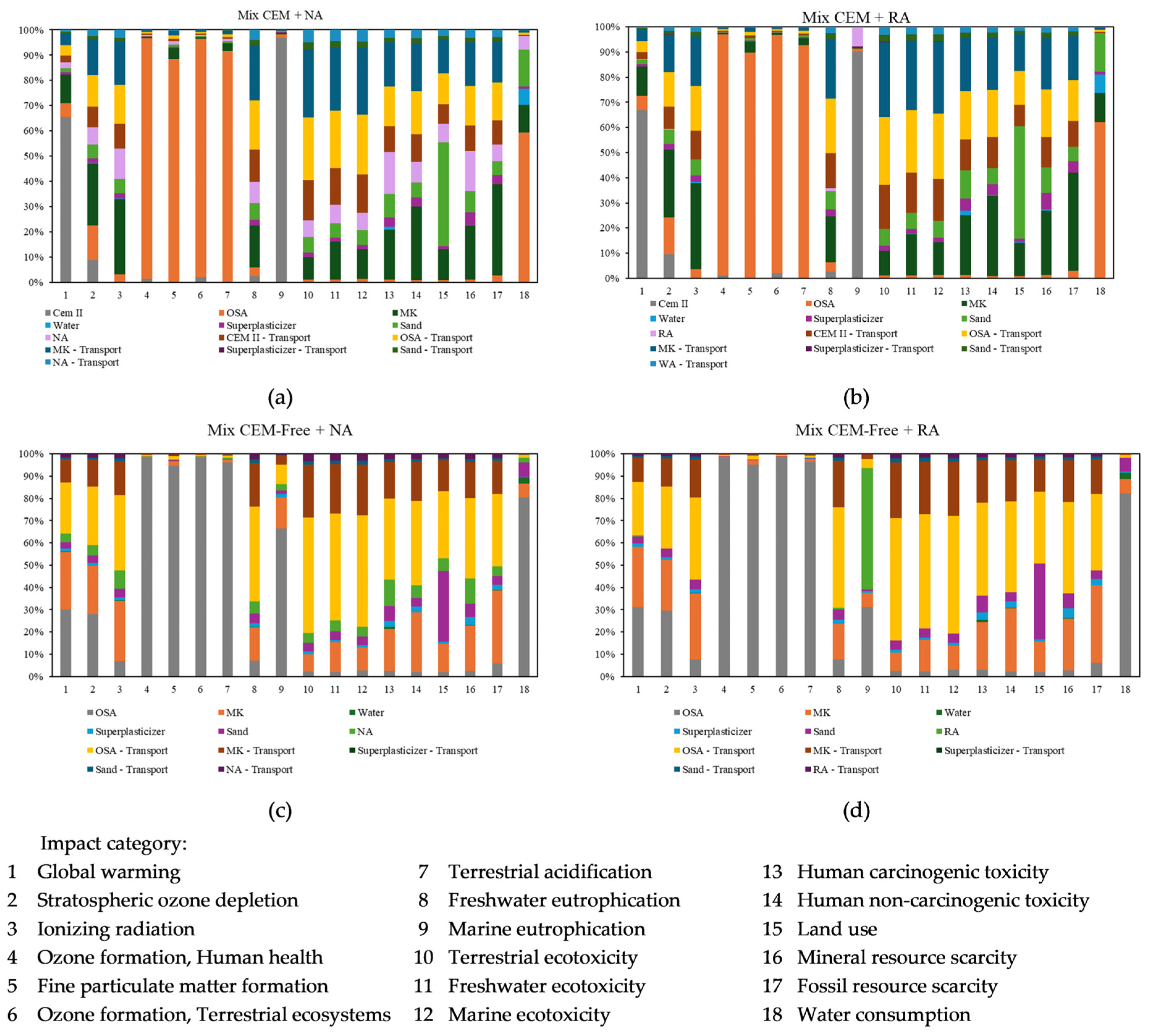
4.5. Life Cycle Impact Assessment
4.5.1. Global Warming and Resource-Related Categories
4.5.2. Air Pollution-Related Impacts
4.5.3. Eutrophication and Ecotoxicity
4.5.4. Human Health, Land Use, and Water Consumption
4.5.5. Synthesis for Decision-Making
4.5.6. Transport Sensitivity of Recycled Aggregates
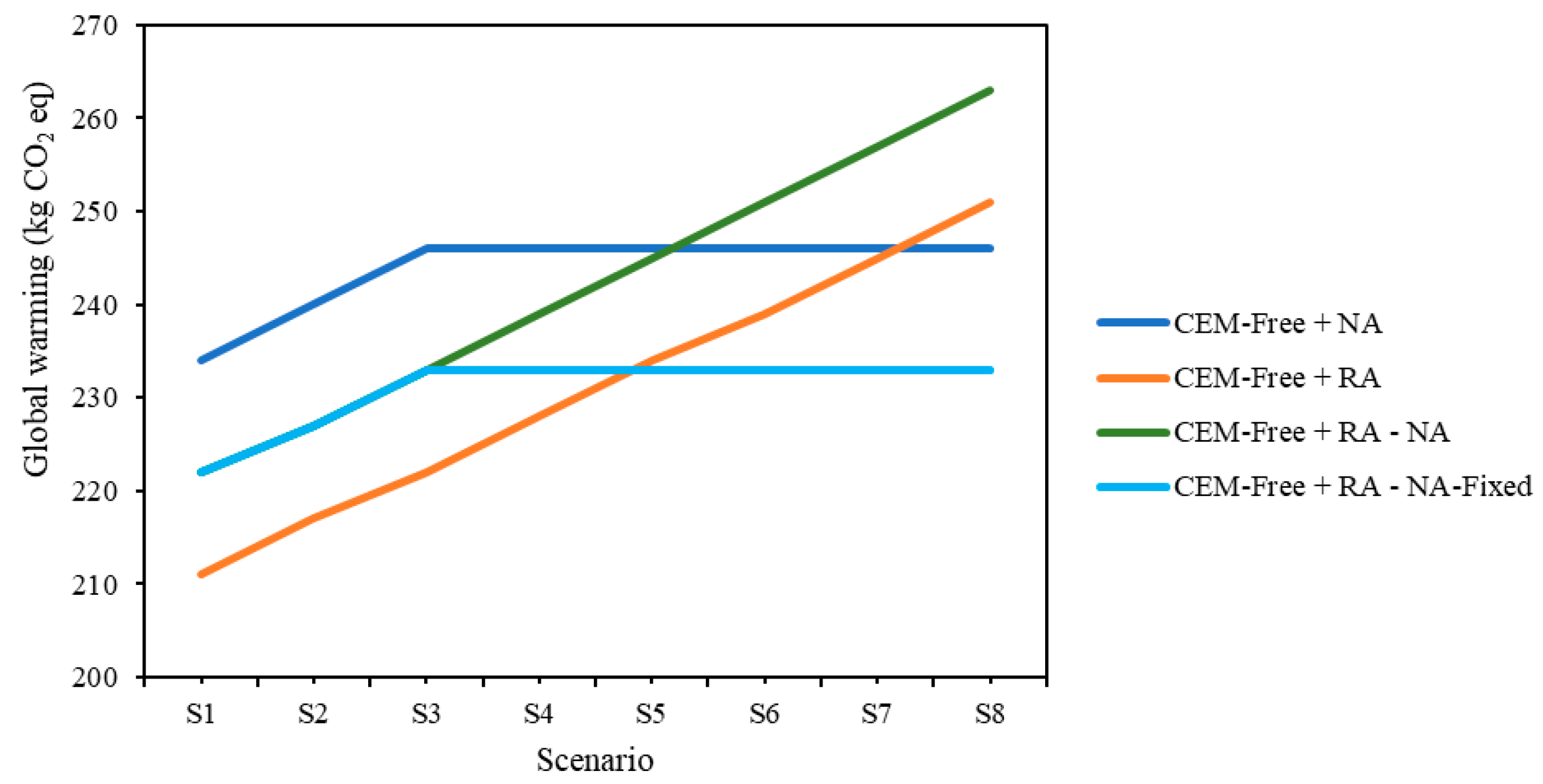
- Mix CEM-Free + NA (NA-based): composed entirely of OSA and MK as binder and NA transported over distances represented by scenarios S1–S3 (0–100 km) (assuming NA queries are located at a maximum distance of 100 km) (NA content 574.756 kg).
- Mix CEM-Free + RA (RA-based): identical binder composition but produced with RA, modelled under all eight scenarios (0–350 km) (RA content 535.098 kg).
- Mix CEM-Free + RA-NA (NA-based): same mix as Mix CEM-Free + RA but assuming NA instead of RA, with transport distances S1–S8 (NA content 535.098 kg).
- Mix CEM-Free + RA-NA-Fixed (NA-based): same as Mix CEM-Free + RA but with transport distances fixed to S1-S3 to parallel Mix CEM-Free + NA’s baseline (NA content 535.098 kg).
4.5.7. Ecological Intensity Index
4.5.8. Performance–Environmental Synthesis and Future Research Directions
5. Conclusions
Author Contributions
Funding
Data Availability Statement
Acknowledgments
Conflicts of Interest
Abbreviations
| CDW | Construction demolition waste |
| EPD | Environmental product declaration |
| FU | Fly ash |
| GGBS | Ground granulated blast furnace slag |
| GHG | Greenhouse gas |
| GWP | Global warming potential |
| ITZ | Interracial transition zone |
| LC3 | Limestone calcined clay cement |
| LCA | Life cycle assessment |
| LCI | Life cycle inventory |
| LCIA | Life cycle impact assessment |
| MK | Metakaolin |
| NA | Natural aggregate |
| NID | Novel integrated desulphurisation |
| OSA | Oil shale ash |
| PSD | Particle size distribution |
| RA | Recycled aggregate |
| RTU | Riga Technical University |
| SCM | Supplementary cementitious materials |
| SEM | Scanning electron microscope |
References
- The European Green Deal: Striving to Be the First Climate-Neutral Continent. Available online: https://commission.europa.eu/strategy-and-policy/priorities-2019-2024/european-green-deal_en (accessed on 10 July 2025).
- Circular Economy Action Plan. Available online: https://environment.ec.europa.eu/topics/circular-economy-topics/first-circular-economy-action-plan_en (accessed on 10 July 2025).
- Net Zero by 2050. A Roadmap for the Global Energy Sector. Available online: https://www.iea.org/reports/net-zero-by-2050 (accessed on 10 July 2025).
- Driver, J.G.; Bernard, E.; Patrizio, P.; Fennell, P.S.; Scrivener, K.; Myers, R.J. Global decarbonization potential of CO2 mineralization in concrete materials. Proc. Natl. Acad. Sci. USA 2024, 121, e2313475121. [Google Scholar] [CrossRef] [Scilit]
- IEA—International Energy Agency. Tracking Clean Energy Progress 2023; IEA: Paris, France, 2023.
- IEA—International Energy Agency. Cement Technology Roadmap: Carbon Emissions Reductions up to 2050; IEA: Paris, France, 2018.
- EU Carbon Permits. Available online: https://tradingeconomics.com/commodity/carbon (accessed on 10 July 2025).
- Live Carbon Prices Today. Available online: https://carboncredits.com/carbon-prices-today/ (accessed on 10 July 2025).
- Blesson, S.; Rao, A.U. Agro-industrial-based wastes as supplementary cementitious or alkali-activated binder material: A comprehensive review. Innov. Infrastruct. Solut. 2023, 8, 125. [Google Scholar] [CrossRef] [Scilit]
- Munir, Q.; Abdulkareem, M.; Horttanainen, M.; Kärki, T. A comparative cradle-to-gate life cycle assessment of geopolymer concrete produced from industrial side streams in comparison with traditional concrete. Sci. Total Environ. 2023, 865, 161230. [Google Scholar] [CrossRef] [Scilit]
- Feng, W.; Li, Z.; Long, Q.; Tang, S.; Zhao, Y. Study on the properties of autoclaved aerated concrete with high content concrete slurry waste. Dev. Built Environ. 2024, 17, 100338. [Google Scholar] [CrossRef] [Scilit]
- Gao, R.; Yang, W.; Duan, Z.; Liu, H.; Deng, Q.; Hua, M. Effect of Ordinary Portland Cement on Mechanical Properties and Microstructures of Metakaolin-Based Geopolymers. Materials 2022, 15, 9007. [Google Scholar] [CrossRef] [Scilit] [PubMed]
- Hanžič, L.; Štefančič, M.; Šter, K.; Serjun, V.Z.; Šinka, M.; Sapata, A.; Šahmenko, G.; Šerelis, E.; Migliniece, B.; Bensa, L.K. Collision Milling of Oil Shale Ash as Constituent Pretreatment in Concrete 3D Printing. Infrastructures 2025, 10, 18. [Google Scholar] [CrossRef] [Scilit]
- Trass, O.; Kuusik, R.; Kaljuvee, T. Activation of Oil Shale Ashes for Sulfur Capture. Oil Shale 2018, 35, 375. [Google Scholar] [CrossRef] [Scilit]
- Anthony, E.J.; Granatstein, D.L. Sulfation phenomena in fluidized bed combustion systems. Prog. Energy Combust. Sci. 2001, 27, 215–236. [Google Scholar] [CrossRef] [Scilit]
- Gougazeh, M. Evaluation the Effect of Adding Oil Shale Ash on the Compressive Strength of Concrete. Adv. Sci. Technol. Res. J. 2022, 16, 130–137. [Google Scholar] [CrossRef] [Scilit]
- Silva, J.V.S.; Reis, E.D.; de Azevedo, R.C.; Poggiali, F.S.J. Towards eco-friendly cement-based materials: A review on incorporating oil shale ash. Discov. Civ. Eng. 2024, 1, 23. [Google Scholar] [CrossRef] [Scilit]
- Khalili, F.I.; El-Eswed, B.; Al Maani, O.; Banat, R.; Amer, M.W.; Muhana, F.; Qteishat, O. Effect of oil shale ash, Al, Zn and H2O2 foaming agents on formation of NASH and CSH cementitious gels in alkali activated reactions of kaolin and metakaolin. Discov. Mater. 2025, 5, 107. [Google Scholar] [CrossRef] [Scilit]
- Haddad, R.H.; Lababneh, Z.K. Geopolymer composites using natural pozzolan and oil-shale ash base materials: A parametric study. Constr. Build. Mater. 2020, 240, 117899. [Google Scholar] [CrossRef] [Scilit]
- Sakthieswaran, N. Study on Effect of Marble Powder and Waste Foundry Sand as Fine Aggregates on The Properties of Metakaolin-Cement Concrete. Rev. Ing. Constr. 2023, 38, 382–396. [Google Scholar] [CrossRef] [Scilit]
- Shah, S.A.; Tantray, M.A.; Bhat, A.R. Wood ash as an eco-friendly alternative for sustainable cement replacement in concrete. Clean. Circ. Bioecon. 2025, 12, 100178. [Google Scholar] [CrossRef] [Scilit]
- Lou, B.; Vrålstad, T. Strength Development of Metakaolin-Based Alkali-Activated Cement. Appl. Sci. 2023, 13, 13062. [Google Scholar] [CrossRef] [Scilit]
- Sousa, M.I.C.; da Silva Rêgo, J.H. Effect of nanosilica/metakaolin ratio on the calcium alumina silicate hydrate (C-A-S-H) formed in ternary cement pastes. J. Build. Eng. 2021, 38, 102226. [Google Scholar] [CrossRef] [Scilit]
- Pillay, D.L.; Olalusi, O.B.; Kiliswa, M.W.; Awoyera, P.O.; Kolawole, J.T.; Babafemi, A.J. Engineering performance of metakaolin based concrete. Clean. Eng. Technol. 2022, 6, 100383. [Google Scholar] [CrossRef] [Scilit]
- Raveendran, N.; Krishnan, V. Engineering performance and environmental assessment of sustainable concrete incorporating nano silica and metakaolin as cementitious materials. Sci. Rep. 2025, 15, 1482. [Google Scholar] [CrossRef] [Scilit] [PubMed]
- Tam, V.W.Y.; Soomro, M.; Evangelista, A.C.J. A review of recycled aggregate in concrete applications (2000–2017). Constr. Build. Mater. 2018, 172, 272–292. [Google Scholar] [CrossRef] [Scilit]
- Munir, M.J.; Wu, Y.-F.; Kazmi, S.M.S.; Patnaikuni, I.; Zhou, Y.; Xing, F. Stress-strain behavior of spirally confined recycled aggregate concrete: An approach towards sustainable design. Resour. Conserv. Recycl. 2019, 146, 127–139. [Google Scholar] [CrossRef] [Scilit]
- Chinnu, S.N.; Minnu, S.N.; Bahurudeen, A.; Senthilkumar, R. Recycling of industrial and agricultural wastes as alternative coarse aggregates: A step towards cleaner production of concrete. Constr. Build. Mater. 2021, 287, 123056. [Google Scholar] [CrossRef] [Scilit]
- Wahab, S.; Abbasi, A.M.; Ahmed, A.; Khan, I.U. Influence of acetic acid treated recycled concrete aggregates on the rheological and mechanical properties of self-compacting concrete: Experiments and machine learning. Constr. Build. Mater. 2025, 491, 142770. [Google Scholar] [CrossRef] [Scilit]
- Miah, M.J.; Babafemi, A.J.; Li, Y.; Kong, S.Y.; Paul, S.C.; Jang, J.G. Impact of overburnt distorted brick aggregate on the performance of concrete at ambient temperature and after exposure to elevated temperatures. Constr. Build. Mater. 2022, 349, 128792. [Google Scholar] [CrossRef] [Scilit]
- Alqahtani, F.K.; Zafar, I. Plastic-based sustainable synthetic aggregate in Green Lightweight concrete—A review. Constr. Build. Mater. 2021, 292, 123321. [Google Scholar] [CrossRef] [Scilit]
- Bide, T.; Novellino, A.; Petavratzi, E.; Watson, C.S. A bottom-up building stock quantification methodology for construction minerals using Earth Observation. The case of Hanoi. Clean. Environ. Syst. 2023, 8, 100109. [Google Scholar] [CrossRef] [Scilit]
- Povetkin, K.; Isaac, S. Identifying and addressing latent causes of construction waste in infrastructure projects. J. Clean. Prod. 2020, 266, 122024. [Google Scholar] [CrossRef] [Scilit]
- Ma, W.; Yuan, H.; Hao, J.L. A bibliometric visual analysis of the system dynamics approach for construction and demolition waste management. Clean. Waste Syst. 2022, 1, 100004. [Google Scholar] [CrossRef] [Scilit]
- Wang, J.; Wu, H.; Tam, V.W.Y.; Zuo, J. Considering life-cycle environmental impacts and society’s willingness for optimizing construction and demolition waste management fee: An empirical study of China. J. Clean. Prod. 2019, 206, 1004–1014. [Google Scholar] [CrossRef] [Scilit]
- Ruviaro, A.S.; Silvestro, L.; Pelisser, F.; de Azevedo, A.R.G.; de Matos, P.R.; Gastaldini, A.L.G. Long-term effect of recycled aggregate on microstructure, mechanical properties, and CO2 sequestration of rendering mortars. Constr. Build. Mater. 2022, 321, 126357. [Google Scholar] [CrossRef] [Scilit]
- European Commission. Construction and Demolition Waste. Available online: https://environment.ec.europa.eu/topics/waste-and-recycling/construction-and-demolition-waste_en (accessed on 20 November 2025).
- Purchase, C.K.; Al Zulayq, D.M.; O’brien, B.T.; Kowalewski, M.J.; Berenjian, A.; Tarighaleslami, A.H.; Seifan, M. Circular Economy of Construction and Demolition Waste: A Literature Review on Lessons, Challenges, and Benefits. Materials 2021, 15, 76. [Google Scholar] [CrossRef] [Scilit] [PubMed]
- Zhang, F.; Li, X.; Wang, D. Mechanical behavior of self-compacting recycled concrete reinforced with recycled disposable medical mask fiber. Constr. Build. Mater. 2024, 429, 136314. [Google Scholar] [CrossRef] [Scilit]
- Wen, Y.; Liu, X.; Sun, G.; Shen, W. Mechanical properties and stress-strain relationship of steel fiber reinforced geopolymer recycled concrete. Structures 2025, 75, 108697. [Google Scholar] [CrossRef] [Scilit]
- Cheng, S.; Chen, K.; Chen, X.; Wu, Q.; Chen, Y.; Lu, J.; Li, S. Utilization of construction and demolition waste in ultra-high performance concrete: Macro-micro properties and environmental impacts. J. Build. Eng. 2024, 97, 110747. [Google Scholar] [CrossRef] [Scilit]
- Ahmed, S.; Alhoubi, Y.; Elmesalami, N.; Yehia, S.; Abed, F. Mechanical and durability evaluation of concrete prepared with recycled aggregate and treated wastewater. Mater. Today Proc. 2023; in press. [CrossRef] [Scilit]
- Xuan, D.; Zhan, B.; Poon, C.S. Assessment of mechanical properties of concrete incorporating carbonated recycled concrete aggregates. Cem. Concr. Compos. 2016, 65, 67–74. [Google Scholar] [CrossRef] [Scilit]
- Safiuddin, M.; Alengaram, U.J.; Rahman, M.M.; Salam, M.A.; Jumaat, M.Z. Use of Recycled Concrete Aggregate in Concrete: A Review. J. Civ. Eng. Manag. 2013, 19, 796–810. [Google Scholar] [CrossRef] [Scilit]
- de Juan, M.S.; Gutiérrez, P.A. Study on the influence of attached mortar content on the properties of recycled concrete aggregate. Constr. Build. Mater. 2009, 23, 872–877. [Google Scholar] [CrossRef] [Scilit]
- Anderson, K.W.; Uhlmeyer, J.S.; Russell, M. Use of Recycled Concrete Aggregate in PCCP: Literature Search; WSDOT: Olympia, WA, USA, 2009.
- Malešev, M.; Radonjanin, V.; Marinković, S. Recycled Concrete as Aggregate for Structural Concrete Production. Sustainability 2010, 2, 1204–1225. [Google Scholar] [CrossRef] [Scilit]
- Mahgoub, M.; Saadeghvaziri, M.; Jamali, A. Behavior of Confined Recycled Aggregate Concrete. In Proceedings of the First Middle East Conference on Smart Monitoring, Assessment and Rehabilitation of Civil Structures, Dubai, United Arab Emirates, 8–10 February 2011. [Google Scholar]
- EN 206:2013+A2:2021; Concrete—Specification, Performance, Production and Conformity. BSI: London, UK, 2021.
- de Andrade Salgado, F.; de Andrade Silva, F. Recycled aggregates from construction and demolition waste towards an application on structural concrete: A review. J. Build. Eng. 2022, 52, 104452. [Google Scholar] [CrossRef] [Scilit]
- Laraia, M. Innovative and conventional techniques for managing the produced wastes. In Sustainability of Life Cycle Management for Nuclear Cementation-Based Technologies; Elsevier: Amsterdam, The Netherlands, 2021; pp. 561–589. [Google Scholar] [CrossRef] [Scilit]
- Wangler, T.; Roussel, N.; Bos, F.P.; Salet, T.A.M.; Flatt, R.J. Digital Concrete: A Review. Cem. Concr. Res. 2019, 123, 105780. [Google Scholar] [CrossRef] [Scilit]
- Guan, J.; Wang, L.; Huang, Y.; Ma, G. 3D printed concrete composite slabs fabricated by prestress reinforced permanent formwork: Design, manufacturing, and performance. Eng. Struct. 2025, 325, 119446. [Google Scholar] [CrossRef] [Scilit]
- Qiu, M.; Qian, Y.; Dai, J.-G. Enhancing the flexural performance of concrete beams with 3D-printed UHP-SHCC permanent formwork via graded fiber volume fraction. Compos. Struct. 2024, 341, 118211. [Google Scholar] [CrossRef] [Scilit]
- Duballet, R.; Baverel, O.; Dirrenberger, J. Space Truss Masonry Walls with Robotic Mortar Extrusion. Structures 2019, 18, 41–47. [Google Scholar] [CrossRef] [Scilit]
- Colyn, M.; van Zijl, G.; Babafemi, A.J. Fresh and strength properties of 3D printable concrete mixtures utilising a high volume of sustainable alternative binders. Constr. Build. Mater. 2024, 419, 135474. [Google Scholar] [CrossRef] [Scilit]
- Fernand, M.; Li, Y.; Qian, Q.; Chi, Y.; Yang, Z. Effects of coarse aggregates on 3D printability and mechanical properties of ultra high performance fiber reinforced concrete. J. Build. Eng. 2024, 96, 110516. [Google Scholar] [CrossRef] [Scilit]
- Abu-Ennab, L.; Dixit, M.K.; Birgisson, B.; Kumar, P.P. Comparative life cycle assessment of large-scale 3D printing utilizing kaolinite-based calcium sulfoaluminate cement concrete and conventional construction. Clean. Environ. Syst. 2022, 5, 100078. [Google Scholar] [CrossRef] [Scilit]
- Liiv, J.; Teppand, T.; Rikmann, E.; Tenno, T. Novel ecosustainable peat and oil shale ash-based 3D-printable composite material. Sustain. Mater. Technol. 2018, 17, e00067. [Google Scholar] [CrossRef] [Scilit]
- Han, Y.; Yang, Z.; Ding, T.; Xiao, J. Environmental and economic assessment on 3D printed buildings with recycled concrete. J. Clean. Prod. 2021, 278, 123884. [Google Scholar] [CrossRef] [Scilit]
- Zhang, H.; Liu, X.; Xiao, J.; Ji, G.; Zhang, S.; Hsu, S.-C.; Poon, C.-S. Comparative eco-efficiency assessment of 3D-printed recycled aggregate concrete structure for mid-rise residential buildings. J. Build. Eng. 2024, 95, 110349. [Google Scholar] [CrossRef] [Scilit]
- CEN/EN 1008; Mixing Water for Concrete—Specification for Sampling, Testing and Assessing the Suitability of Water, Including Water Recovered from Processes in the Concrete Industry, as Mixing Water for Concrete. CEN: Brussels, Belgium, 2002.
- CEN/EN 933-1:2012; Tests for Geometrical Properties of Aggregates—Part 1: DETERMINATION of Particle Size Distribution—Sieving Method. CEN: Brussels, Belgium, 2012.
- CEN/EN 1097-6:2022; Tests for Mechanical and Physical Properties of Aggregates—Part 6: Determination of Particle Density and Water Absorption. CEN: Brussels, Belgium, 2022.
- Kuusik, R.; Uibu, M.; Kirsimae, K.; Motlep, R.; Meriste, T. Open-air deposition of Estonian oil shale ash: Formation, state of art, problems and prospects for the abatement of environmental impact. Oil Shale 2012, 29, 376. [Google Scholar] [CrossRef] [Scilit]
- ISO 13320; Particle Size Analysis—Laser Diffraction Methods. ISO: Geneva, Switzerland, 2020.
- Cho, S.; Kruger, J.; Bester, F.; van den Heever, M.; van Rooyen, A.; van Zijl, G. A Compendious Rheo-Mechanical Test for Printability Assessment of 3D Printable Concrete. In Proceedings of the Second RILEM International Conference on Concrete and Digital Fabrication, Virtual, 6–9 July 2020; pp. 196–205. [Google Scholar] [CrossRef] [Scilit]
- Sapata, A.; Šinka, M.; Šahmenko, G.; Bajāre, D.; Migliniece, B.; Hanzic, L.; Štefančič, M. Development of 3D Printable Cement-Based Composite Containing Oil Shale Ash. In Digital Concrete 2024—Supplementary Proceedings; Publications of TU Braunschweig: Braunschweig, Germany, 2024. [Google Scholar]
- Sinka, M.; Sapata, A.; Spurin, E.; Puzule, L.; Sahmenko, G.; Bajare, D. Proportioning of Oil Shale Ash for Sustainable 3D Printable Mortars. In Proceedings of the CONECT—International Scientific Conference of Environmental and Climate Technologies, Riga, Latvia, 15–17 May 2024; p. 47. [Google Scholar] [CrossRef] [Scilit]
- EN 1015-3; Methods of Test for Mortar for Masonry—Part 3: Determination of Consistence of Fresh Mortar (by Flow Table). CEN: Brussels, Belgium, 1999.
- Suiker, A.S.J.; Wolfs, R.J.M.; Lucas, S.M.; Salet, T.A.M. Elastic buckling and plastic collapse during 3D concrete printing. Cem. Concr. Res. 2020, 135, 106016. [Google Scholar] [CrossRef] [Scilit]
- Tao, Y.; Ren, Q.; Lesage, K.; Van Tittelboom, K.; Yuan, Y.; De Schutter, G. Shape stability of 3D printable concrete with river and manufactured sand characterized by squeeze flow. Cem. Concr. Compos. 2022, 133, 104674. [Google Scholar] [CrossRef] [Scilit]
- EN 1015-11:2019; Methods of Test for Mortar for Masonry—Part 11: Determination of Flexural and Compressive Strength of Hardened Mortar. CEN: Brussels, Belgium, 2019.
- ISO 14040:2006; Environmental Management—Life Cycle Assessment—Principles and Framework. ISO: Geneva, Switzerland, 2020. Available online: https://www.iso.org/standard/37456.html (accessed on 11 August 2025).
- ISO 14044:2006; Environmental Management—Life Cycle Assessment—Requirements and Guidelines. ISO: Geneva, Switzerland, 2020. Available online: https://www.iso.org/standard/38498.html (accessed on 11 August 2025).
- CEN/EN 15804:2012; Sustainability of Construction Works—Environmental Product Declarations—Core Rules for the Product Category of Construction Products. CEN: Brussels, Belgium, 2012.
- Talve, S.; Põld, E. Reduction of life cycle impacts of oil shale electricity caused by the shift to fluidized bed combustion technology. Oil Shale 2022, 39, 252–269. [Google Scholar] [CrossRef] [Scilit]
- McLellan, B.C.; Williams, R.P.; Lay, J.; van Riessen, A.; Corder, G.D. Costs and carbon emissions for geopolymer pastes in comparison to ordinary portland cement. J. Clean. Prod. 2011, 19, 1080–1090. [Google Scholar] [CrossRef] [Scilit]
- Bae, J.-H.; Kim, S.; Amr, I.T.; Seo, J.; Jang, D.; Bamagain, R.; Fadhel, B.A.; Abu-Aisheh, E.; Lee, H. Evaluation of physicochemical properties and environmental impact of environmentally amicable Portland cement/metakaolin bricks exposed to humid or CO2 curing condition. J. Build. Eng. 2022, 47, 103831. [Google Scholar] [CrossRef] [Scilit]
- Tasiopoulou, T.; Katsourinis, D.; Giannopoulos, D.; Founti, M. Production-Process Simulation and Life-Cycle Assessment of Metakaolin as Supplementary Cementitious Material. Eng 2023, 4, 761–779. [Google Scholar] [CrossRef] [Scilit]
- Luca, A.; Antonio, G.; Giada, L.S.; Manuela, L.F.C.; Rosa, M. Life cycle assessment of a new industrial process for sustainable construction materials. Ecol. Indic. 2023, 148, 110042. [Google Scholar] [CrossRef] [Scilit]
- Desli, E.; Gkoulgkoutsika, A.; Sdrolia, E.; Zarotiadis, G. Eco-efficiency: A methodological framework and assessment. Clean. Environ. Syst. 2021, 3, 100049. [Google Scholar] [CrossRef] [Scilit]
- Damineli, B.L.; Kemeid, F.M.; Aguiar, P.S.; John, V.M. Measuring the eco-efficiency of cement use. Cem. Concr. Compos. 2010, 32, 555–562. [Google Scholar] [CrossRef] [Scilit]
- Jiang, P.; Zhao, D.; Jin, C.; Ye, S.; Luan, C.; Tufail, R.F. Compressive strength prediction and low-carbon optimization of fly ash geopolymer concrete based on big data and ensemble learning. PLoS ONE 2024, 19, e0310422. [Google Scholar] [CrossRef] [Scilit]
- Etxeberria, M. Evaluation of Eco-Efficient Concretes Produced with Fly Ash and Uncarbonated Recycled Aggregates. Materials 2021, 14, 7499. [Google Scholar] [CrossRef] [Scilit]
- Sedighi, S.; Rahai, A.; Moodi, F. Multi-criteria optimization for sustainable concrete mix considering the synergistic effect of recycled steel fiber and LC3 concrete. Results Eng. 2025, 28, 107809. [Google Scholar] [CrossRef] [Scilit]
- Zhou, J.; Shi, X.; Zheng, H.; Jin, R.; Ebohon, O.J.; Zhan, Q.; Zhou, D. Investigating the effects of hybrid PVA/BF fibers in low-carbon 3D printed concrete with recycled aggregates: Rheology, strength, and anisotropy. Constr. Build. Mater. 2025, 495, 143743. [Google Scholar] [CrossRef] [Scilit]
- Kisku, N.; Joshi, H.; Ansari, M.; Panda, S.K.; Nayak, S.; Dutta, S.C. A critical review and assessment for usage of recycled aggregate as sustainable construction material. Constr. Build. Mater. 2017, 131, 721–740. [Google Scholar] [CrossRef] [Scilit]
- Cabral, A.E.B. Concrete with construction and demolition wastes (CDW). In Eco-Efficient Concrete; Elsevier: Amsterdam, The Netherlands, 2013; pp. 340–367. [Google Scholar] [CrossRef] [Scilit]
- Laskar, A.I.; Talukdar, S. Rheological behavior of high performance concrete with mineral admixtures and their blending. Constr. Build. Mater. 2008, 22, 2345–2354. [Google Scholar] [CrossRef] [Scilit]
- Sarkar, A.; Rano, R.; Udaybhanu, G.; Basu, A.K. A comprehensive characterisation of fly ash from a thermal power plant in Eastern India. Fuel Process. Technol. 2006, 87, 259–277. [Google Scholar] [CrossRef] [Scilit]
- Jiao, D.; Shi, C.; Yuan, Q.; An, X.; Liu, Y.; Li, H. Effect of constituents on rheological properties of fresh concrete—A review. Cem. Concr. Compos. 2017, 83, 146–159. [Google Scholar] [CrossRef] [Scilit]
- Beycioğlu, A.; Aruntaş, H.Y. Workability and mechanical properties of self-compacting concretes containing LLFA, GBFS and MC. Constr. Build. Mater. 2014, 73, 626–635. [Google Scholar] [CrossRef] [Scilit]
- Sahmenko, G.; Puzule, L.; Sapata, A.; Slosbergs, P.; Bumanis, G.; Sinka, M.; Bajare, D. Gypsum–Cement–Pozzolan Composites for 3D Printing: Properties and Life Cycle Assessment. J. Compos. Sci. 2024, 8, 212. [Google Scholar] [CrossRef] [Scilit]
- Kononova, O.; Krasnikovs, A.; Jafarli, I.; Novakova, I.; Gulik, V.; Vaišnoras, M. Effective Mechanical Properties of a Composite Material Reinforced by Oil Shale Ash Particles. Appl. Sci. 2025, 15, 1281. [Google Scholar] [CrossRef] [Scilit]
- Wolfs, R.; Versteege, J.; Santhanam, M.; Bhattacherjee, S.; Bos, F.; Robens-Radermacher, A.; Muthukrishnan, S.; Menna, C.; Ozturk, O.; Ozyurt, N.; et al. Mechanical properties of 3D printed concrete: A RILEM TC 304-ADC interlaboratory study—Flexural and tensile strength. Mater. Struct. 2025, 58, 182. [Google Scholar] [CrossRef] [Scilit]
- Mechtcherine, V.; Muthukrishnan, S.; Robens-Radermacher, A.; Wolfs, R.; Versteege, J.; Menna, C.; Ozturk, O.; Ozyurt, N.; Roupec, J.; Richter, C.; et al. Mechanical properties of 3D printed concrete: A RILEM 304-ADC interlaboratory study—Compressive strength and modulus of elasticity. Mater. Struct. 2025, 58, 181. [Google Scholar] [CrossRef] [Scilit]
- Abushanab, A.; Vimonsatit, V. Compressive strength, flexural strength, and slump of recycled aggregate fibre-reinforced fly ash concrete using explainable extreme gradient boosting machine learning model with prediction tool. Powder Technol. 2026, 469, 121710. [Google Scholar] [CrossRef] [Scilit]
- Rosales, M.; Rosales, J.; Moreno, S.; Agrela, F.; Díaz-López, J.L. Sustainable concrete manufactured with mixed recycled aggregate and biomass bottom ash, replacing aggregate and cement to a high percentage. Case Stud. Constr. Mater. 2025, 22, e04785. [Google Scholar] [CrossRef] [Scilit]
- Cai, J.; Wang, J.; Zhang, Q.; Du, C.; Meloni, M.; Feng, J. State-of-the-art of mechanical properties of 3D printed concrete. Case Stud. Constr. Mater. 2024, 21, e03847. [Google Scholar] [CrossRef] [Scilit]
- de Andrade Salgado, F.; de Andrade Silva, F. Structural behavior of sustainable recycled aggregate concrete beams. Constr. Build. Mater. 2025, 497, 143938. [Google Scholar] [CrossRef] [Scilit]
- Butler, L.; West, J.S.; Tighe, S.L. The effect of recycled concrete aggregate properties on the bond strength between RCA concrete and steel reinforcement. Cem. Concr. Res. 2011, 41, 1037–1049. [Google Scholar] [CrossRef] [Scilit]
- Sikora, P.; Techman, M.; Federowicz, K.; El-Khayatt, A.M.; Saudi, H.; Elrahman, M.A.; Hoffmann, M.; Stephan, D.; Chung, S.-Y. Insight into the microstructural and durability characteristics of 3D printed concrete: Cast versus printed specimens. Case Stud. Constr. Mater. 2022, 17, e01320. [Google Scholar] [CrossRef] [Scilit]
- Zunino, F.; Scrivener, K. Hydration and strength development of low-clinker (<50%) factor limestone calcined clay cements (LC3): A comparative study with natural pozzolans. Constr. Build. Mater. 2025, 499, 144075. [Google Scholar] [CrossRef] [Scilit]
- Jin, W.; Roux, C.; Ouellet-Plamondon, C.; Caron, J.-F. Life cycle assessment of limestone calcined clay concrete: Potential for low-carbon 3D printing. Sustain. Mater. Technol. 2024, 41, e01119. [Google Scholar] [CrossRef] [Scilit]
- Ye, J.; Zhuang, Z.; Teng, F.; Yu, J.; Zhang, D.; Weng, Y. Comparative environmental assessment of 3D concrete printing with engineered cementitious composites. Virtual Phys. Prototyp. 2024, 19, e2369249. [Google Scholar] [CrossRef] [Scilit]
- Wu, M.; Wang, Z.; Chen, Y.; Zhu, M.; Yu, Q. Effect of steel slag on rheological and mechanical properties of sulfoaluminate cement-based sustainable 3D printing concrete. J. Build. Eng. 2024, 98, 111345. [Google Scholar] [CrossRef] [Scilit]
- Raza, M.H.; Kravchenko, E.; Besklubova, S.; Lazorenko, G.; Markelov, M.; Kasprzhitskii, A.; Zhong, R.Y. 3D printing of recycled materials for sustainable construction: A comprehensive economic and life cycle assessment. Renew. Sustain. Energy Rev. 2025, 223, 116059. [Google Scholar] [CrossRef] [Scilit]
- Wang, Y.; Sun, J.; Wang, X.; Huang, B.; Xu, S.; Shang, J.; Li, S.; Song, C.; Wang, D. Environmental and economic evaluation of a prefabricated 3D-printed structural units using recycled aggregates from construction and demolition waste: A case study in China. Energy Build. 2025, 347, 116405. [Google Scholar] [CrossRef] [Scilit]
- Nair, S.R.; Nagarajan, P.; Thampi, S.G.; Das, S.; Rajesh, P. Life cycle-based sustainability assessment of optimized 3D printable concrete mixes incorporating SCMs and recycled aggregates. Results Eng. 2025, 28, 108002. [Google Scholar] [CrossRef] [Scilit]
- Imtiaz, L.; Kashif-Ur-Rehman, S.; Alaloul, W.S.; Nazir, K.; Javed, M.F.; Aslam, F.; Musarat, M.A. Life Cycle Impact Assessment of Recycled Aggregate Concrete, Geopolymer Concrete, and Recycled Aggregate-Based Geopolymer Concrete. Sustainability 2021, 13, 13515. [Google Scholar] [CrossRef] [Scilit]
- Arrigoni, A.; Panesar, D.K.; Duhamel, M.; Opher, T.; Saxe, S.; Posen, I.D.; MacLean, H.L. Life cycle greenhouse gas emissions of concrete containing supplementary cementitious materials: Cut-off vs. substitution. J. Clean. Prod. 2020, 263, 121465. [Google Scholar] [CrossRef] [Scilit]
- Baqain, M.; Neshumayev, D.; Konist, A. SO2 Emissions from Oil Shale Oxyfuel Combustion in a 60 kWth Circulating Fluidized Bed. Energies 2024, 17, 4567. [Google Scholar] [CrossRef] [Scilit]
- Jia, B.; Su, J. Advancements and Environmental Implications in Oil Shale Exploration and Processing. Appl. Sci. 2023, 13, 7657. [Google Scholar] [CrossRef] [Scilit]
- European Commission. Latvia National Energy and Climate Plan 2021–2030; European Commission: Brussels, Belgium, 2024.
- Alzard, M.; El-Hassan, H.; El-Maaddawy, T. Life Cycle Inventory for the Production of Recycled Concrete Aggregates in the United Arab Emirates. Int. J. Civ. Infrastruct. 2021, 4, 78–84. [Google Scholar] [CrossRef] [Scilit]
- Kurda, R.; Silvestre, J.D.; de Brito, J. Life cycle assessment of concrete made with high volume of recycled concrete aggregates and fly ash. Resour. Conserv. Recycl. 2018, 139, 407–417. [Google Scholar] [CrossRef] [Scilit]
- Si, W.; Khan, M.; McNally, C. Effect of nano silica with high replacement of GGBS on enhancing mechanical properties and rheology of 3D printed concrete. Results Eng. 2025, 27, 106680. [Google Scholar] [CrossRef] [Scilit]
- Long, W.-J.; Lin, C.; Tao, J.-L.; Ye, T.-H.; Fang, Y. Printability and particle packing of 3D-printable limestone calcined clay cement composites. Constr. Build. Mater. 2021, 282, 122647. [Google Scholar] [CrossRef] [Scilit]







| Aggregate | Apparent Density, kg/m3 | Water Absorption, % |
|---|---|---|
| Natural aggregate | 2739 | 2.74 |
| Recycled aggregate | 2625 | 11.61 |
| Mixture | CEM II | OSA | MK | Sand 0–2 mm | NA 2–8 mm | RA 2–8 mm |
|---|---|---|---|---|---|---|
| CEM + NA | 240 | 100 | 60 | 300 | 300 | - |
| CEM + RA | 240 | 100 | 60 | 300 | - | 300 |
| CEM-free + NA | - | 320 | 80 | 300 | 300 | - |
| CEM-free + RA | - | 320 | 80 | 300 | - | 300 |
| Input | Purpose | Amount |
|---|---|---|
| Electricity | Operating the mixer | 4.41 kWh |
| Electricity | Operating the printer | 5 kWh |
| Water | Cleaning the mixer | 15 L |
| Water | Cleaning the pump | 100 L |
| Raw Material | Source of Inventory Data |
|---|---|
| CEM II | EPD (CEM II/A-LL 52.5 N)—Schwenk Ltd., Brocēni, Latvia |
| OSA | Inventory based on the literature data [77] |
| MK | Inventory based on the literature data [25,78,79,80,81] |
| Water | Ecoinvent Database—Market for tap water {Europe without Switzerland} |
| SP | Ecoinvent Database—Market for polycarboxylates, 40% active substance (RoW) |
| Sand (0–2 mm) | Ecoinvent Database—Market for sand, sand (RoW) |
| NA (2–8 mm) | Ecoinvent Database—Market for gravel, crushed (RoW) |
| RA (2–8 mm) | EPD-Mattsson Facility in Upplands Väsby, Sweden |
| Material | Material Origin * | Distance, km | Mode | Type | Source |
|---|---|---|---|---|---|
| CEM II | Schwenk Ltd., Latvia | 113.0 | Road | Lorry | Transport, freight, lorry 7.5–16 metric ton, Euro 4 |
| OSA | Narva, Estonia | 422.0 | |||
| MK | Astra Technologia Betonu, Ltd., Straszyn, Poland | 774.0 | |||
| SP | Vincents Polyline Ltd., Ādažu Municipality, Latvia | 12.7 | |||
| Sand (0–2 mm) | Sakret, Ltd., Rumbula, Latvia | 15.0 | |||
| NA (2–8 mm) | Rumbula, Latvia | 14.0 | |||
| RA (2–8 mm) | Getlini EKO, Ropaži Municipality, Latvia | 16.2 |
| Products | Quantity | Price | Allocation |
|---|---|---|---|
| Electricity (main product) | 2012.5 kWh | EUR 204.97 | 95.3% |
| Oil shale ash (byproduct) | 1000 kg | EUR 10 | 4.7% |
| Mixture | W/B * | Cone Flow, mm | Direct Buildability Test | ||
|---|---|---|---|---|---|
| Buildability, Layers | Compressive Stress, Pa | Yield Stress, Pa | |||
| CEM + NA | 0.35 | 170 | 25 | 5362 | 3096 |
| CEM + RA | 0.39 | 156 | 28 | 5791 | 3343 |
| CEM-free + NA | 0.36 | 175 | 18 | 3744 | 2162 |
| CEM-free + RA | 0.37 | 162 | 22 | 4418 | 2551 |
| Impact Category | Unit | Mix | |||
|---|---|---|---|---|---|
| CEM + NA | CEM + RA | CEM-Free + NA | CEM-Free + RA | ||
| Global warming | kg CO2 eq | 410.1 | 378.7 | 237.7 | 212.9 |
| Stratospheric ozone depletion | kg CFC11 eq | 6 × 10⁻⁵ | 6 × 10⁻⁵ | 1 × 10⁻⁴ | 8 × 10⁻⁵ |
| Ionising radiation | kBq Co-60 eq | 0.9 | 0.7 | 1.3 | 1.1 |
| Ozone formation, human health | kg NOx eq | 11.5 | 10.8 | 35.4 | 32.9 |
| Fine particulate matter formation | kg PM2.5 eq | 1.4 | 1.3 | 4.1 | 3.8 |
| Ozone formation, terrestrial ecosystems | kg NOx eq | 11.6 | 10.9 | 35.4 | 32.9 |
| Terrestrial acidification | kg SO2 eq | 4.3 | 4.1 | 13.1 | 12.1 |
| Freshwater eutrophication | kg P eq | 0.01 | 0.01 | 0.02 | 0.01 |
| Marine eutrophication | kg N eq | 0.02 | 0.02 | 0.001 | 0.003 |
| Terrestrial ecotoxicity | kg 1,4-DCB | 1043 | 900 | 1580 | 1388 |
| Freshwater ecotoxicity | kg 1,4-DCB | 0.2 | 0.2 | 0.3 | 0.2 |
| Marine ecotoxicity | kg 1,4-DCB | 0.8 | 0.7 | 1.2 | 1.1 |
| Human carcinogenic toxicity | kg 1,4-DCB | 1.3 | 1.0 | 1.8 | 1.5 |
| Human non-carcinogenic toxicity | kg 1,4-DCB | 28.7 | 24.6 | 41.1 | 35.8 |
| Land use | m2a crop eq | 6.6 | 5.7 | 8.5 | 7.4 |
| Mineral resource scarcity | kg Cu eq | 0.3 | 0.2 | 0.4 | 0.3 |
| Fossil resource scarcity | kg oil eq | 39.8 | 34.7 | 57.7 | 50.9 |
| Water consumption | m3 | 4.2 | 3.8 | 9.9 | 9.0 |
| Scenario | GWP, kg CO2 eq | |||||||
|---|---|---|---|---|---|---|---|---|
| S1 | S2 | S3 | S4 | S5 | S6 | S7 | S8 | |
| Mix CEM-Free + NA | 234 | 240 | 246 | 246 | 246 | 246 | 246 | 246 |
| Mix CEM-Free + RA | 211 | 217 | 222 | 228 | 234 | 239 | 245 | 251 |
| Mix CEM-Free + RA-NA | 222 | 227 | 233 | 239 | 245 | 251 | 257 | 263 |
| Mix CEM-Free + RA-NA-Fixed | 222 | 227 | 233 | 233 | 233 | 233 | 233 | 233 |
| Mix | GWP, | , | , |
|---|---|---|---|
| kg CO2 eq/m3 | MPa | kg CO2 eq/m3·MPa | |
| CEM + NA | 410.1 | 55.9 | 7.3 |
| CEM + RA | 378.7 | 52.9 | 7.2 |
| CEM-Free + NA | 237.7 | 29.7 | 8.0 |
| CEM-Free + RA | 212.9 | 30.5 | 7.0 |
| Study | Mix | GWP, kg CO2 eq | (28d), MPa | Comments | RA, % | |
|---|---|---|---|---|---|---|
| [87] | P40B10 | 360.71 | 50.2 | 7.19 | Recycled sand used | 100 |
| [117] | M17 | 145 | 21.1 | 6.87 | RA + FA | 50 |
| [117] | M18 | 144 | 21 | 6.86 | RA + FA | 100 |
| [118] | C3G7N1 | 268 | 105 | 2.55 | GGBS | 0 |
| [86] | LC3 | 350 | 53 | 6.60 | LC3 | 0 |
| [58] | Kaolinite-based calcium sulfoaluminate cement concrete | Not reported | Not reported | 6–7.8 | Kaolinite-based calcium sulfoaluminate cement concrete | 0 |
| [105] | LC3 | 251 | 31 | 8.10 | LC3 | 0 |
| [119] | LC3 | 283 | 37 | 7.65 | LC3 | 0 |
| [110] | Optimised mix | 2206.37 | 42.5 | 51.91 | FA, GGBS, and RA | 30 |
| Mix | GWP, | Ci, | 28-Day fc, | 28-Day ff, | Buildability, |
|---|---|---|---|---|---|
| kg CO2 eq/m3 | kg CO2 eq/m3·MPa | MPa | MPa | Layers | |
| CEM + NA | 410.1 | 7.3 | 55.9 | 9.2 | 25 |
| CEM + RA | 378.7 | 7.2 | 52.9 | 5.9 | 28 |
| CEM-free + NA | 237.7 | 8.0 | 29.7 | 5.8 | 18 |
| CEM-free + RA | 212.9 | 7.0 | 30.5 | 4.6 | 22 |
Disclaimer/Publisher’s Note: The statements, opinions and data contained in all publications are solely those of the individual author(s) and contributor(s) and not of MDPI and/or the editor(s). MDPI and/or the editor(s) disclaim responsibility for any injury to people or property resulting from any ideas, methods, instructions or products referred to in the content. |
© 2026 by the authors. Licensee MDPI, Basel, Switzerland. This article is an open access article distributed under the terms and conditions of the Creative Commons Attribution (CC BY) license.
Share and Cite
Sapata, A.; Spurina, E.; Alzard, M.H.; Slosbergs, P.; El-Hassan, H.; Sinka, M. Low-CO2 Concrete from Oil Shale Ash and Construction Demolition Waste for 3D Printing. J. Compos. Sci. 2026, 10, 62. https://doi.org/10.3390/jcs10020062
Sapata A, Spurina E, Alzard MH, Slosbergs P, El-Hassan H, Sinka M. Low-CO2 Concrete from Oil Shale Ash and Construction Demolition Waste for 3D Printing. Journal of Composites Science. 2026; 10(2):62. https://doi.org/10.3390/jcs10020062
Chicago/Turabian StyleSapata, Alise, Ella Spurina, Mohammed H. Alzard, Peteris Slosbergs, Hilal El-Hassan, and Maris Sinka. 2026. "Low-CO2 Concrete from Oil Shale Ash and Construction Demolition Waste for 3D Printing" Journal of Composites Science 10, no. 2: 62. https://doi.org/10.3390/jcs10020062
APA StyleSapata, A., Spurina, E., Alzard, M. H., Slosbergs, P., El-Hassan, H., & Sinka, M. (2026). Low-CO2 Concrete from Oil Shale Ash and Construction Demolition Waste for 3D Printing. Journal of Composites Science, 10(2), 62. https://doi.org/10.3390/jcs10020062