
Article

Plasticizer-Driven Modulation of Processability and Performance in HME-Based Filaments and FDM 3D-Printed Tablets

Vessel-Organ Interaction Research Center (VOICE, MRC), BK21 FOUR Community-Based Intelligence Novel Drug Discovery Education Unit, College of Pharmacy and Research Institution of Pharmaceutical Sciences, Kyungpook National University, Daegu 41566, Republic of Korea
*
Author to whom correspondence should be addressed.
These authors contributed equally to this work.
Present address: College of Pharmacy, Daegu Catholic University, KI Bio, Gyeongsan 38430, Republic of Korea.
J. Compos. Sci. 2026, 10(2), 61; https://doi.org/10.3390/jcs10020061
Submission received: 18 December 2025 / Revised: 18 January 2026 / Accepted: 22 January 2026 / Published: 24 January 2026
(This article belongs to the Section Polymer Composites)

Abstract

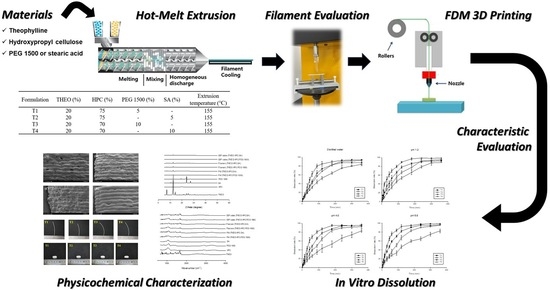
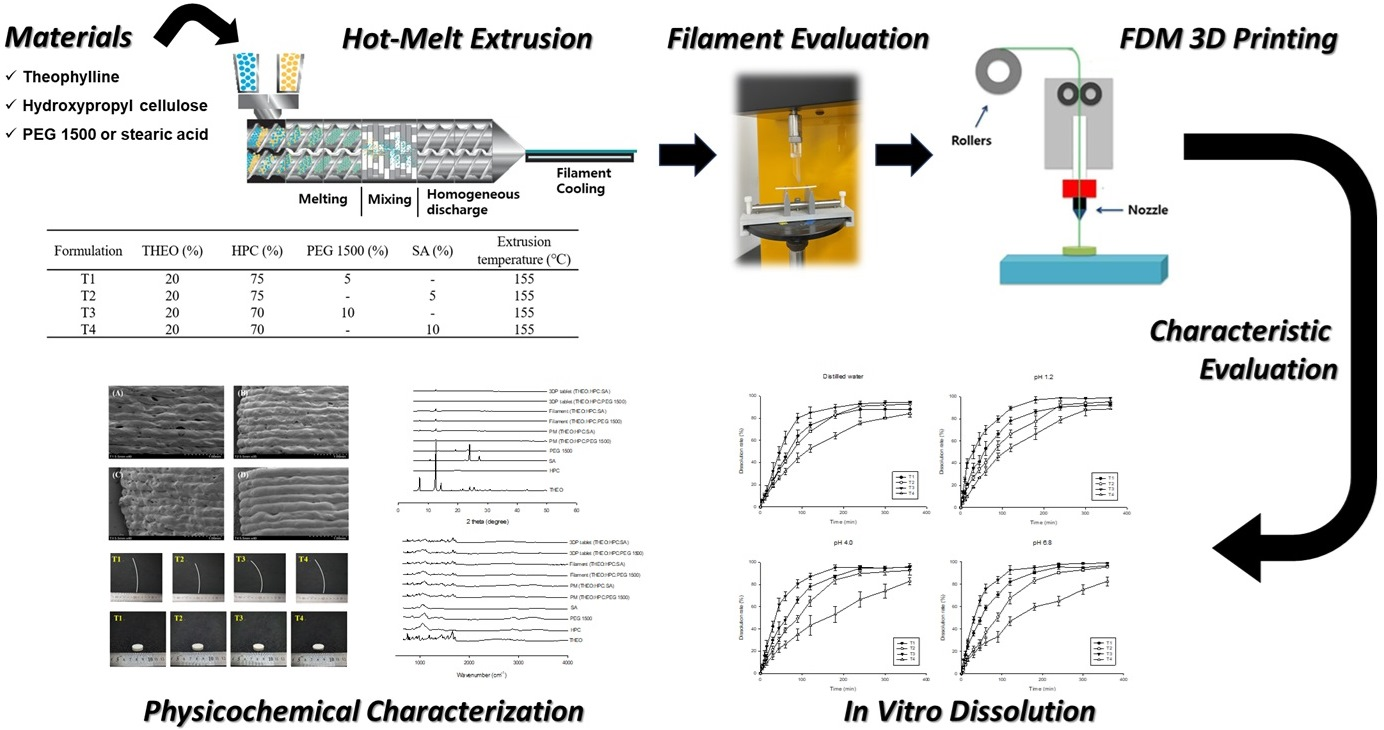
This study investigated the effects of different types and ratios of plasticizers on the fabrication and properties of hot-melt-extruded filaments and fused deposition modeling (FDM) three-dimensional printed tablets containing theophylline (THEO). Polyethylene glycol (PEG) 1500 and stearic acid (SA) were used as plasticizers to prepare THEO-loaded filaments in a hydroxypropyl cellulose matrix via hot melt extrusion (HME), which were subsequently fabricated into tablets using an FDM 3D printer. The physicochemical properties of the filaments and printed tablets were evaluated using scanning electron microscopy, X-ray powder diffraction, and Fourier transform infrared spectroscopy. Drug release behavior was assessed using four tablet formulations (T1–T4) with different plasticizer types and ratios. All fabricated filaments exhibited sufficient hardness and flexibility for reliable 3D printing, and solid-state analyses confirmed partial molecular dispersion of THEO within the polymer matrix. In dissolution studies, PEG-containing formulations showed faster drug release than SA-based formulations, while all 3D-printed tablets achieved approximately 80% drug release within 6 h. Overall, this study demonstrates that the combined use of HME and FDM-based 3D printing, together with rational plasticizer selection, enables the development of personalized pharmaceutical tablets with tunable immediate and sustained drug release profiles.

Graphical Abstract

1. Introduction

As interest in customized patient care increases, there is a growing demand for ways to provide flexibility in formulation customization. Three-dimensional (3D) printing technology provides tools for customizing formulations and is vigorously pioneering the future of oral drug delivery [1,2,3].
3D printing is a manufacturing process used to fabricate three-dimensional objects based on the digitally controlled deposition of material layers upon successive layers until the final structure is fabricated [4]. The 3D printing process begins by creating a virtual model of the product to be printed. The virtual model to be produced can be produced using CAD (Computer-Aided Design) software or photogrammetry, which obtains a model by combining several images, such as a 3D scanner [5]. Current 3DP technologies include (1) powder-based methods, such as selective laser sintering (SLS); (2) photopolymerization methods, such as stereolithography (SLA); (3) lamination methods, such as laminated object manufacturing (LOM); and (4) extrusion-based methods, such as fused deposition modeling (FDM) [6,7,8]. Among them, FDM is one of the most widely used technologies in various pharmaceutical applications.
Recent literature reviews have highlighted extrusion-based pharmaceutical 3D printing, particularly FDM, as a promising platform for fabricating oral dosage forms with flexible geometry, tailored drug release, and on-demand manufacturing capability [9,10]. These reviews consistently emphasize that the performance and reliability of FDM-printed dosage forms are critically dependent on filament-related properties, including melt rheology, mechanical strength, and thermal stability, as well as printing parameters [9,11]. Consequently, the integration of hot melt extrusion (HME) with FDM has been widely reported as an effective strategy to produce drug-loaded polymer filaments with improved printability, drug loading capacity, and reproducibility [10,11,12]. However, recent reviews also point out remaining challenges, such as the limited availability of pharmaceutically acceptable thermoplastic polymers, thermal stress on heat-sensitive drugs, and the need for robust quality control and regulatory frameworks to ensure consistent product performance [9,12].
It is important to consider that FDM printing can significantly reduce energy costs and significantly reduce material waste by using machines that are compatible with thermoplastic materials and consume less energy in additive manufacturing [13]. The filament used in FDM-type 3D printing is supplied to a high-temperature printer nozzle, deposited layer by layer on the build plate, and solidified [14]. FDM 3D printing technology is very versatile as it can deposit many materials, from plastics, ceramics, and food to living cells [15,16]. Additionally, in pharmaceutical applications, FDM 3D printing enables the fabrication of dosage forms with complex geometries through software-based design control [17]. However, FDM 3D printing typically involves elevated processing temperatures relative to other pharmaceutical manufacturing methods, and its applicability is therefore dependent on the thermal and rheological properties of the polymers used [13]. As a result, the selection of suitable pharmaceutical-grade polymers for FDM printing remains a key consideration. To address these challenges, a range of thermoplastic polymers, including polyvinylpyrrolidone, methacrylate-based polymers, and cellulose-based polymers, have been investigated and successfully applied in FDM-based pharmaceutical formulations [18,19,20].
The growing interest in FDM has made filament manufacturing an important research field. Filaments made with HME can achieve relatively higher loadings because it is a continuous process in which heat and pressure are applied to melt and mix the drug and polymer. It is a biodegradable polymer that is widely used to stabilize amorphous drugs and increase their bioavailability. Compared to traditional pharmaceutical manufacturing methods, the combination of HME and FDM holds great potential to integrate the advantages of both technologies and enable on-demand manufacturing of patient-centric medicines with improved bioavailability and complex design [21].
Due to thermoplastic issues, pharmaceutical-grade polymers used for manufacturing existing oral dosage forms cannot extrude filaments using HMEs. Additionally, only a handful of studies have investigated cellulosic-based polymers for use in 3DPs and HMEs [22,23,24]. Hydroxypropyl cellulose (HPC), chemically known as cellulose 2-hydroxypropyl ether, is used as a binder, thickener, and release-controlling agent in tablets, depending on the dosage form. It is a non-ionic, pH-independent polymer, commercially available in several grades with different viscosities and average molecular weight ranges [25]. Additionally, the low glass transition temperature (105 °C) makes extrusion through HME easier [26]. However, pharmaceutical-grade HPC filaments incorporating active pharmaceutical ingredients are not commercially available, and thus, drug-loaded HPC filaments were fabricated in this study to enable systematic investigation using filament-based FDM 3D printing. Although pellet-based or melt-extrusion-based 3D printing platforms that do not require filament fabrication have been reported and are increasingly utilized [3,21], filament-based FDM printing was selected here due to its widespread accessibility, established process control, and compatibility with comparative printability and mechanical evaluations. Theophylline (THEO)-loaded HPC filament is manufactured by adding a plasticizer that is easy to extrude to produce a filament with mechanical properties favorable to extrusion because the 3D printing process is very unstable. Stearic acid (SA) and polyethylene glycol (PEG) 1500 were selected as representative lipophilic and hydrophilic plasticizers, respectively, due to their widespread use in pharmaceutical HME and FDM applications and their suitability for systematically investigating plasticizer-driven effects on filament processability and drug release. SA facilitates melt flow and hydrophobic matrix formation, whereas PEG 1500 enhances filament flexibility and water uptake, thereby enabling controlled modulation of drug release behavior [27].
In this study, a combined approach is presented to fabricate 3D-printed tablets based on FDM 3D printing and HME. THEO, a methylxanthine bronchodilator widely used in the treatment of asthma and chronic obstructive pulmonary disease, was selected as a model drug owing to its narrow therapeutic window and suitability for controlled-release formulation development, as well as its thermostability [28]. To facilitate the fabrication of reliable 3D-printed tablets, filaments and tablets containing different types and ratios of plasticizers were prepared and systematically compared in terms of their physicochemical properties. Approaches to achieve desired doses of THEO were investigated using polymers used for immediate and sustained release, which are widely used in oral drug delivery systems.
While previous HME–FDM studies have demonstrated the feasibility of printed dosage forms, systematic investigations that connect plasticizer type/ratio with filament processability, solid-state drug dispersion, and dissolution performance remain limited [9,10,11]. In this work, PEG 1500 and SA were selected as representative hydrophilic and hydrophobic plasticizers, and their effects were comparatively assessed across multiple ratios to provide practical design guidance for robust FDM printing and controlled drug release.

2. Materials and Methods

2.1. Materials

The abbreviations used throughout this manuscript are summarized in Table 1. THEO was purchased from Tokyo Chemical Industry (Tokyo, Japan). According to the manufacturer’s specifications, THEO was supplied as a white to almost white crystalline powder. THEO is classified as a BCS Class I compound. It has a melting point of 275 °C. L-type HPC was donated by Hanmi Pharmaceutical (Hwaseong, Korea). SA supplied by JUNSEI Chemical Co. (Tokyo, Japan), and PEG 1500 supplied by Daejeong Chemical (Siheung, Korea) were used as plasticizers. All other reagents were high-performance liquid chromatography (HPLC) or analytical grade and used as received without further purification.

2.2. Preparation of THEO-Loaded Filaments

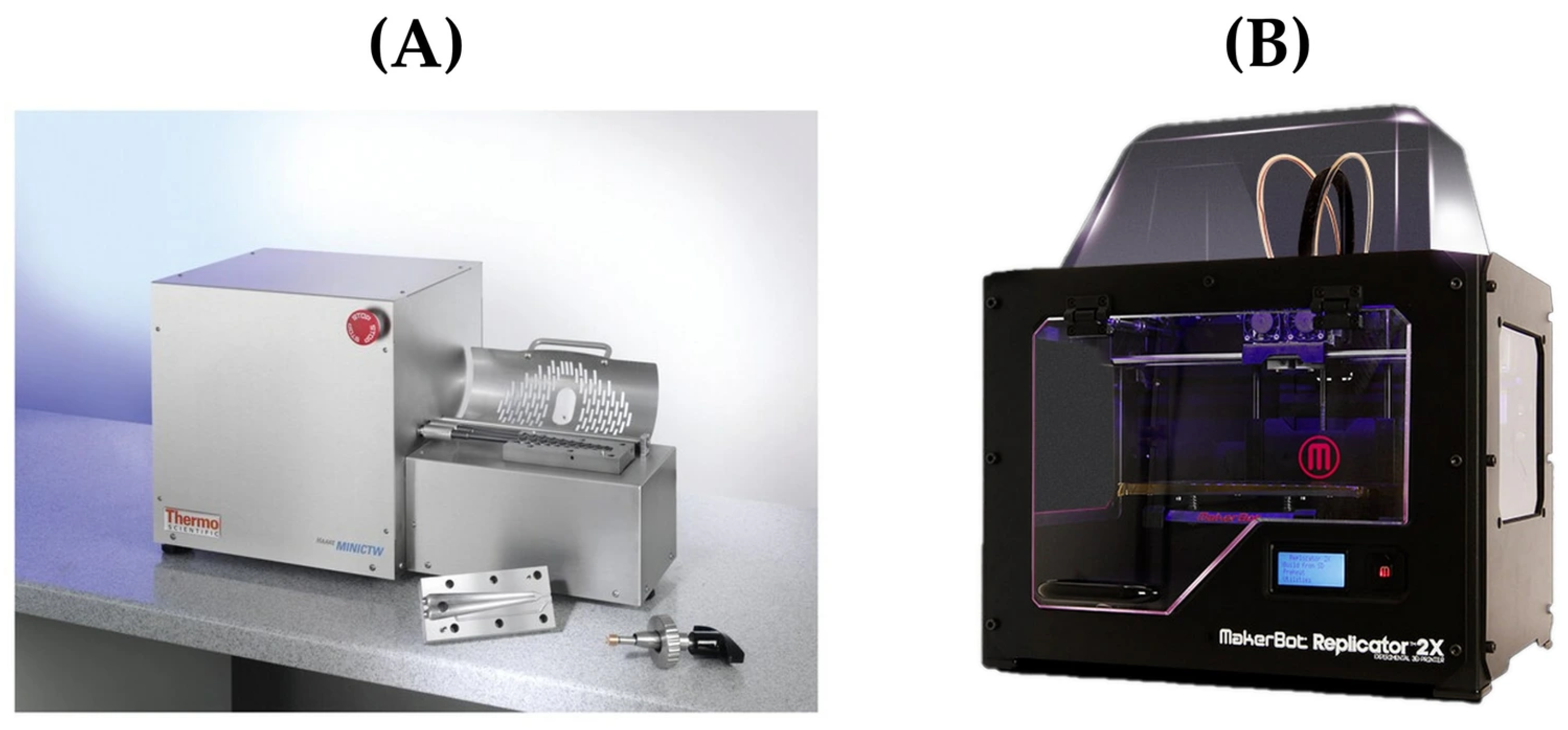
THEO, HPC, SA, and PEG 1500 were mixed in four compositions (Table 2) using a blender. The mixture was then extruded using a twin-screw extruder (Figure 1A, HAAKE™ MiniCTW, Thermo Scientific™, Waltham, MA, USA; NFEC-2021-12-275522 at the Medibio Core Facility of Kyungpook National University) at 155 °C through a nozzle with a diameter of 1.7 mm at a screw speed of 25 rpm, and the torque was maintained between 0.8 and 1.4. The fabricated filament was stored in a vacuum desiccator before printing. Its hardness and flexibility were manually inspected, and its diameter was measured at intervals of 5–10 cm with a digital vernier caliper. THEO loading in the filaments was determined using HPLC analysis.

2.3. Texture Analysis Study

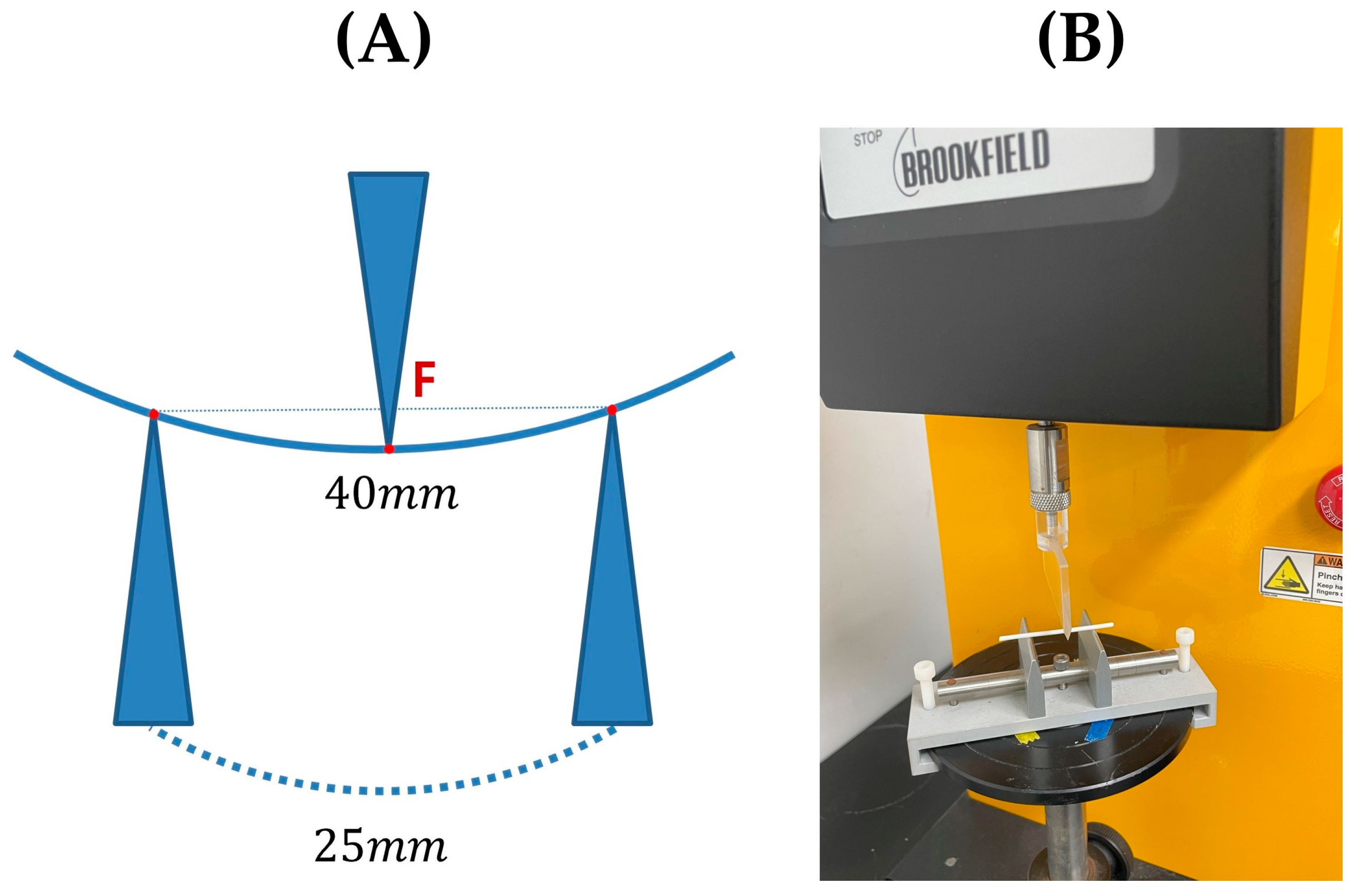
The suitability of filaments for 3D printers (FDM) is determined by various filament properties such as diameter, flexibility, hardness, and moisture sensitivity. Among these factors, flexibility and rigidity are two important characteristics that determine the 3D printing printability of a filament. The mechanical properties of filaments were evaluated according to a previously reported method for assessing pharmaceutical filament printability, as described by Zhang et al. [29]. A texture analyzer (CT3 Texture Analyzer, AMETEK Brookfield, Middleboro, MA, USA) was used for flexibility and hardness tests. For the purpose of texture analysis using the three-point bending test, the filaments were randomly cut into 4 cm lengths. Then, they were placed on the sample holder as shown in Figure 2. After the sample was fixed on the holder, a blade was moved at a speed of 10 mm/s until reaching the target point of 15 mm. Experiments on the hardness and flexibility of all filaments were performed in triplicate.

2.4. Fabrication of FDM 3D-Printed Tablets

Four 3D-printed tablets (T1–T4) with different types and ratios of plasticizers were fabricated with drug-loaded filaments using a standard FDM 3D printer (Figure 1B, MakerBot Replicator 2× Desktop, MakerBot Inc., Brooklyn, NY, USA). The 3D-printed tablets were created using the browser-based 3D design tool Tinkercad (Autodesk Inc., San Rafael, CA, USA), and the designed templates were exported as stereolithography (.stl) files into Cura v. 15.04.04 (Ultimaker B.V., Utrecht, The Netherlands). The tablets were designed as oval-shaped dosage forms with flat upper and lower surfaces, with dimensions of X = 20 mm, Y = 8 mm, and Z = 6 mm. A packing density of 50% was applied to define the internal infill of the tablets, resulting in a partially porous internal structure. In addition, a shell thickness of 0.6 mm was used to define the thickness of the outer perimeter, providing adequate mechanical integrity while maintaining consistent tablet geometry. The printer settings were extrusion temperature of 195–200 °C, platform temperature of 130 °C, extrusion speed of 90 mm/s, travel speed of 150 mm/s, two shells, and a layer height of 0.30 mm, and the raft option was disabled (Table 3). 3D-printed tablets physical dimensions were measured using digital vernier calipers.

2.5. Physicochemical Characterization

2.5.1. Analytical Method

A Dionex UltiMate 3000 HPLC system (Thermo Fisher Scientific, Dreieich, Germany; NFEC-2025-09-308581 at the Medibio Core Facility of Kyungpook National University) equipped with an LPG-3400SD pump, WPS-3000TSL autosampler, TCC-3000SD column compartment, VWD-3100 detector, and Capcell Pak C18 column (Shiseido, Tokyo, Japan; 250 × 4.6 mm, 5 μm) was used at a detection wavelength of 270 nm. Acetonitrile and 50 mM sodium acetate in water at a ratio of 15:85 (v/v) were used as the mobile phase. The mobile phase flow rate was maintained at 1.0 mL/min, and an injection volume of 10 μL was used. The HPLC data were analyzed using Chromeleon 7 software.

2.5.2. Determination of Drug Loading of Filaments and 3D-Printed Tablets

To determine the THEO content, each filament or tablet was crushed into powder, and approximately 0.1 g was weighed out. To ensure complete drug release, the powder was placed in a 100 mL volumetric flask containing methanol under magnetic agitation until complete dissolution. The solution was then diluted (10-fold), and the THEO concentration was measured using HPLC-UV, 270 nm (n = 3).

2.5.3. Scanning Electron Microscopy (SEM)

The morphology and surface of the drug-loaded filaments and 3D-printed tablets were examined using SEM (SU8220; Hitachi, Tokyo, Japan) operating at an accelerated voltage of 5.0 kV. Before analysis, the samples were adsorbed on double-sided adhesive tape and attached to a brass holder. The samples were coated with platinum (6 nm/min) at 15 mA in a vacuum (0.8 Pa) for 4 min using an EmiTeck Sputter Coater K575 K (Quorum Technologies Ltd., Lewes, UK).

2.5.4. X-Ray Powder Diffraction (XRD)

A D/Max-2500 X-ray diffractometer (Rigaku, Canterbury, UK) equipped with a Cu Kα radiation (1.54178 Å, 40 kV, and 40 mA) was used to evaluate the physical morphology of all powder samples. The sample was scanned from 5 to 50 using a step size of 0.05 to obtain a diffraction pattern in the 2θ range.

2.5.5. Fourier Transform Infrared (FTIR) Spectroscopy

All powder samples were analyzed using a Fourier transform infrared spectrophotometer (Cary 630 FTIR, Agilent Technologies, Santa Clara, CA, USA). The wavelength was scanned from 500 cm−1 to 4000 cm−1 with a resolution of 2 cm−1.

2.6. In Vitro Dissolution

In vitro drug release studies were performed in a USP type II dissolution apparatus (ERWEKA; DT 620, Heusenstamm, Germany). 3D-printed tablets were studied in solutions with various pH levels (1.2, 4.0, and 6.8) and distilled water. The dissolution tester maintained a magnetic stirring of 50 rpm and a constant temperature of 36.5 ± 0.5 °C. Approximately 1.5 mL of sample was extracted at defined time intervals (5, 10, 15, 30, 45, 60, 90, 120, 180, 240, and 300 min) and filtered through a 0.45 μm PTFE membrane syringe filter. Afterward, HPLC was performed to quantify the drug in the samples, as described above. The dissolution test was performed in triplicate (n = 3).

3. Results and Discussion

3.1. Preparation of Drug-Loaded THEO Filaments

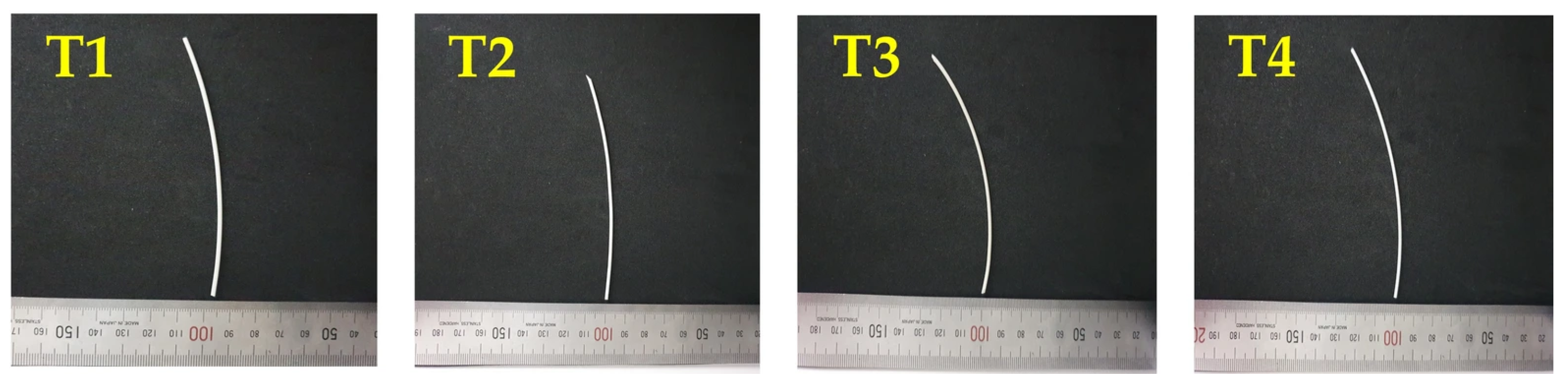
The HME process was employed to prepare drug-loaded filaments suitable for FDM 3D printing by melting and homogeneously mixing the drug, polymer, and plasticizer under controlled thermal and mechanical conditions. HPC is used as a binder, thickener, and extended-release matrix in tablets, depending on the proportions in the formulation. In addition, its favorable thermoplastic behavior and relatively low glass transition temperature (~105 °C) facilitate melt processing and extrusion through HME without thermal degradation [26,30]. THEO was selected as a thermostable model drug, and PEG 1500 and SA were evaluated as plasticizers suitable for producing 3D printable filaments. Specifically, PEG 1500 and SA were employed as representative hydrophilic and hydrophobic plasticizers, respectively, to improve melt processability and impart adequate mechanical properties required for stable filament feeding during FDM printing. In this study, these two plasticizers were selected because they are among the most widely used plasticizers in pharmaceutical and polymer-based extrusion processes, and their effects were systematically evaluated at two representative concentration levels to elucidate the influence of plasticizer type and content on filament printability and drug release behavior. Twin-screw HME was used to fabricate long, rod-shaped filaments. The extruder was operated at a screw speed of 25 rpm and a barrel temperature of 155 °C, conditions selected to ensure sufficient melt flow while minimizing thermal stress on the formulation components. The extruded materials were continuously shaped into long, rod-shaped filaments and allowed to cool under ambient conditions prior to further characterization. As shown in Figure 3, the THEO-loaded filaments were reproducibly obtained with a consistent diameter of 1.51 ± 0.01 mm, which meets the dimensional requirements for subsequent FDM 3D printing.

3.2. Texture Analysis Study

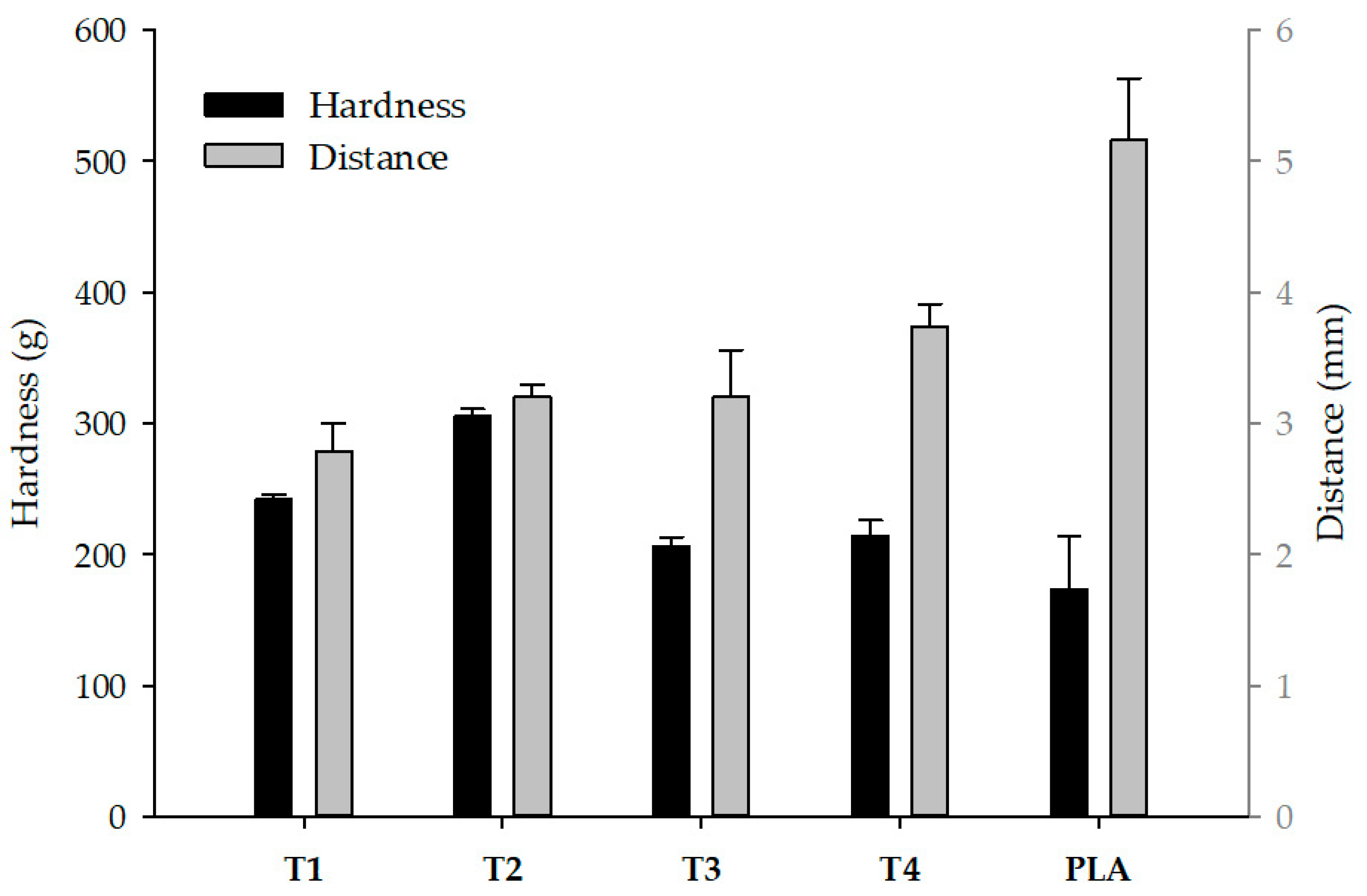
The mechanical properties of filaments are important parameters for evaluating printability in fused deposition modeling (FDM). Because FDM relies on continuous feeding and extrusion of thermoplastic filaments, their mechanical integrity directly affects printing stability. In this study, the prepared drug-loaded filaments were compared with a commercially available PLA filament widely used for 3D printing, which was selected as a reference material because its well-balanced stiffness and flexibility are known to support stable filament feeding and extrusion in FDM printing, as widely reported in the literature [31]. Flexibility and hardness are critical properties for determining the printability of filaments. The three-point bending test provides parameters such as breaking distance and force/stress at the breaking moment. Although these parameters are not direct measures of flexibility and hardness, they are commonly used as practical indicators of filament ductility and stiffness in FDM-related studies. In this context, flexibility can be described as the displacement of the filament center from its initial state to the breaking point under bending, representing the filament’s tolerance to deformation. Hardness, another key parameter for evaluating printability, reflects the resistance of filaments to deformation under an applied load. As long as the elastic limit is not exceeded, hardness values indicate filament stiffness and the force required to induce a given deformation. As shown in Figure 4, the PLA filament exhibited a maximum displacement of 5.16 mm. Compared with the PLA filaments, T1, T2, T3, and T4 filaments exhibited lower displacement of 2.79, 3.22, 3.20, and 3.74 mm, respectively. This reduced displacement indicates lower flexibility, which is consistent with pharmaceutical HME filaments where the drug–polymer network can restrict polymer chain mobility compared with neat PLA, leading to a stiffer and less ductile response [32]. Importantly, FDM filament feedability generally requires a balanced mechanical window, in which filaments must be sufficiently stiff to be gripped and pushed by the drive gears, while remaining flexible enough to avoid brittle fracture during bending and feeding. Consequently, excessively brittle or overly soft filaments may lead to printing failures such as breakage, buckling, or inconsistent extrusion [33]. On the other hand, the PLA filament had a hardness of 173.05 g, whereas T1, T2, T3, and T4 filaments had higher hardness values of 242.13, 305.38, 206.25, and 213.38 g, respectively. The increased hardness of the drug-loaded filaments can be attributed to the presence of a polymer–drug matrix and reduced molecular mobility compared with neat PLA, which enhances resistance to deformation under compressive loading. Similar increases in filament stiffness upon drug incorporation and polymer blending have been widely reported for pharmaceutical filaments developed for FDM 3D printing [33]. Sufficient filament hardness is considered advantageous for FDM printing, as stiffer filaments can be reliably gripped and driven by the printer gears, thereby ensuring stable feeding and continuous extrusion through the nozzle. As the plasticizer content increased, filament flexibility increased while hardness decreased, reflecting the typical plasticizing effect. At a plasticizer content of 5%, the T2 (SA, 5%) filament showed higher flexibility and hardness than the T1 (PEG 1500, 5%) filament. However, when the plasticizer content was increased to 10%, the differences between T3 (PEG 1500, 10%) and T4 (SA, 10%) became markedly reduced, resulting in very similar mechanical properties in terms of both flexibility and hardness. Overall, the prepared drug-loaded filaments exhibited higher hardness and lower flexibility than the commercial PLA filament, yet their mechanical properties remained within a suitable range for FDM processing, as evidenced by successful feeding and printing without filament fracture or interruption.

3.3. 3D Printing of THEO Dosage Forms

Oval-shaped tablets containing two plasticizers at different ratios were designed using a CAD program and successfully printed through the FDM 3D printer. As confirmed by texture analysis, the prepared THEO-loaded filaments exhibited sufficient feedability and dimensional stability, enabling continuous and reproducible tablet fabrication without nozzle clogging or filament breakage during printing. Tablets were difficult to measure with a hardness tester in the plastic-like aspect because of their high strength, which could not be quantified with a conventional tablet hardness tester [18]. As shown in Table 4, tablets with consistent length, width, and thickness were successfully fabricated, indicating good printability and geometric fidelity of the drug-loaded filaments. In the process of manufacturing tablets, the temperature of 3D printing (195–200 °C) was significantly higher than that of HME (155 °C) for manufacturing filaments. This difference can be attributed to the distinct thermal exposure profiles and residence times associated with the two processes. In the process of making filaments, the mixture must be mixed evenly and heated, so the processing temperature is maintained for more than 5 min. However, when using 3D printing, the filament passes through the printer’s nozzle at high speed for a short time, experiencing heat for a short time. Therefore, a relatively higher nozzle temperature is required to transiently soften the filament into a semisolid state that allows stable extrusion through the nozzle. Due to the high temperature, the filament is formed in a semisolid state for a short time and then rapidly solidified at room temperature. As shown in Figure 5, the filament containing THEO produced a successful tablet even when the 3D printing nozzle temperature was increased. The high melting point (273 °C) of THEO compared with the set nozzle temperature of 3D printing (195–200 °C) allowed for the fabrication of tablets. Due to the high temperature of the nozzle, a semisolid filament is constantly output, and solidification occurs due to room temperature (25 °C). However, when the printer nozzle temperature is reduced below the optimized range, the viscosity of the filament increases, leading to unstable extrusion, inconsistent material flow, or interruption of the printing process.

3.4. Physicochemical Characterization

3.4.1. Determination of Drug Loading

The chemical integrity of the drug in the 3D-printed tablets and filaments was analyzed using HPLC. The PEG 1500 filament had a drug load of 20.75 ± 0.61 μg/mL (theoretical loading: 20 μg/mL), whereas the SA filament had a drug load of 21.04 ± 0.54 μg/mL (theoretical loading: 20 μg/mL). Meanwhile, the printed PEG 1500 tablet had a drug load of 20.61 ± 0.04 μg/mL (theoretical loading: 20 μg/mL), whereas the SA tablet had a drug load of 20.97 ± 1.23 μg/mL (theoretical loading: 20 μg/mL). This indicates that no drug loss occurred during the HME and 3D printing procedures.

3.4.2. Scanning Electron Microscopy (SEM)

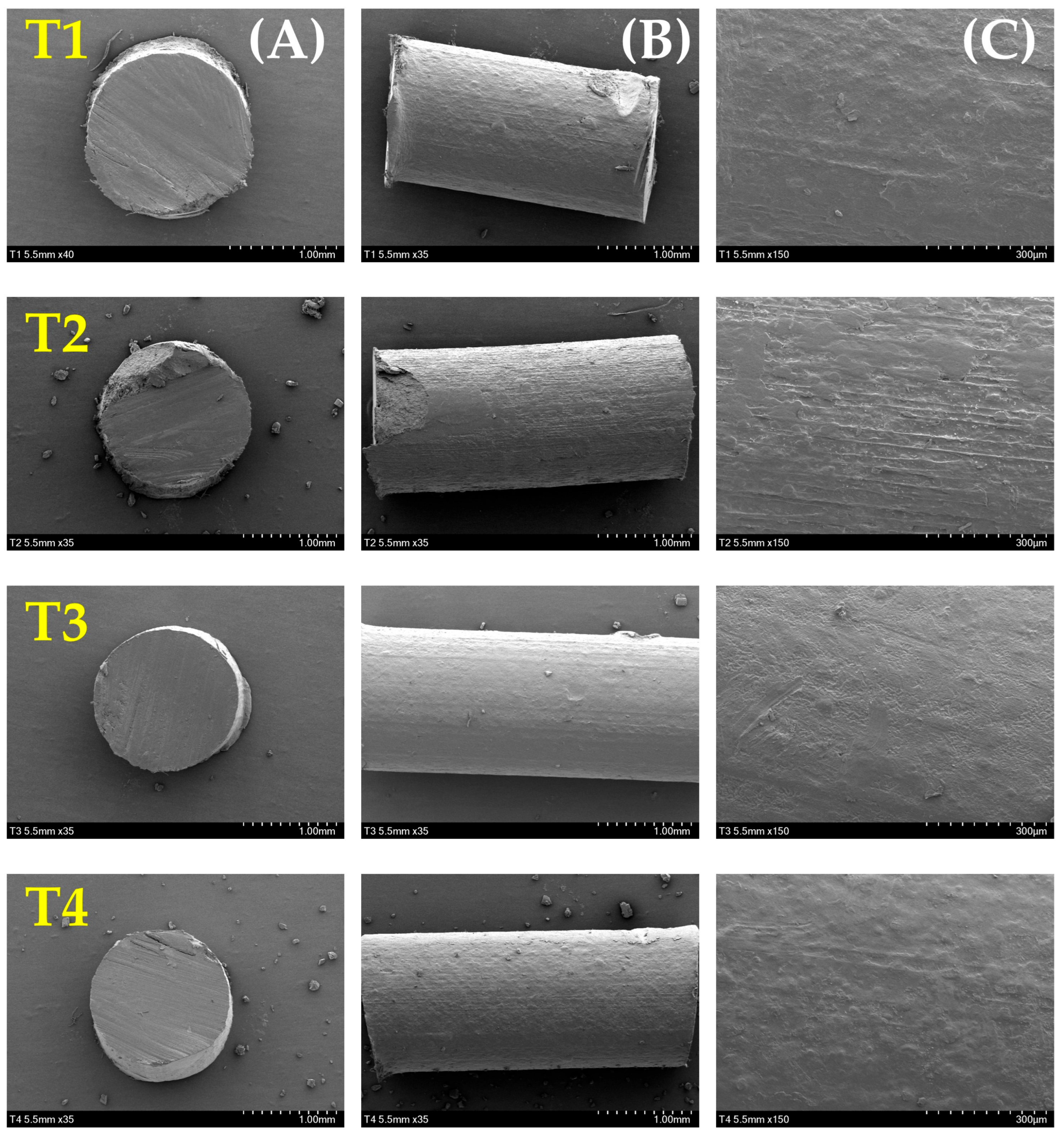
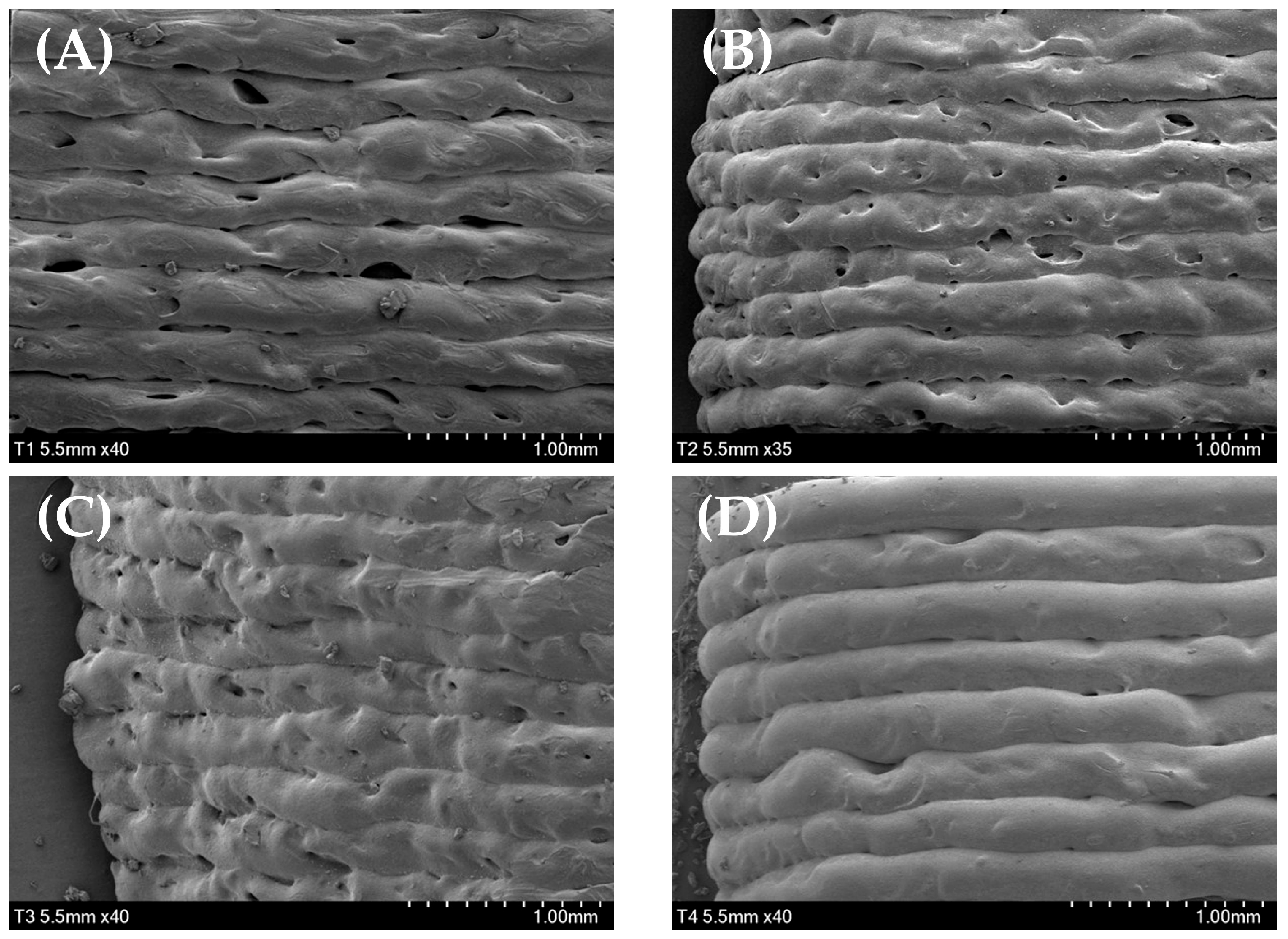
The morphology of THEO-loaded filaments and 3D printing tablets manufactured using SEM was investigated. As shown in Figure 6, the THEO-loaded PEG 1500 and SA filaments had constant thickness, rod shape, smooth surface, and no pores. Figure 7 shows the surface and cross-section of the 3D-printed tablet. Compared with filaments, 3D-printed tablets have a rough surface containing irregular pores and interlayer voids. This may be due to the rapid evaporation of moisture and additives because of exposure to the high temperature of the nozzle during the 3D printing process. PEG 1500 tablets have more irregular pores than SA tablets. In addition, the higher the PEG 1500 content, the more pores can be found. This is because PEG is a hydrophilic polymer that acts as a pore-forming agent [34,35]. In the matrix system, hydrophilic polymers such as PEG can form pores to increase the water content of the particles, thereby improving dissolution and diffusion [36].

3.4.3. X-Ray Powder Diffraction (XRD)

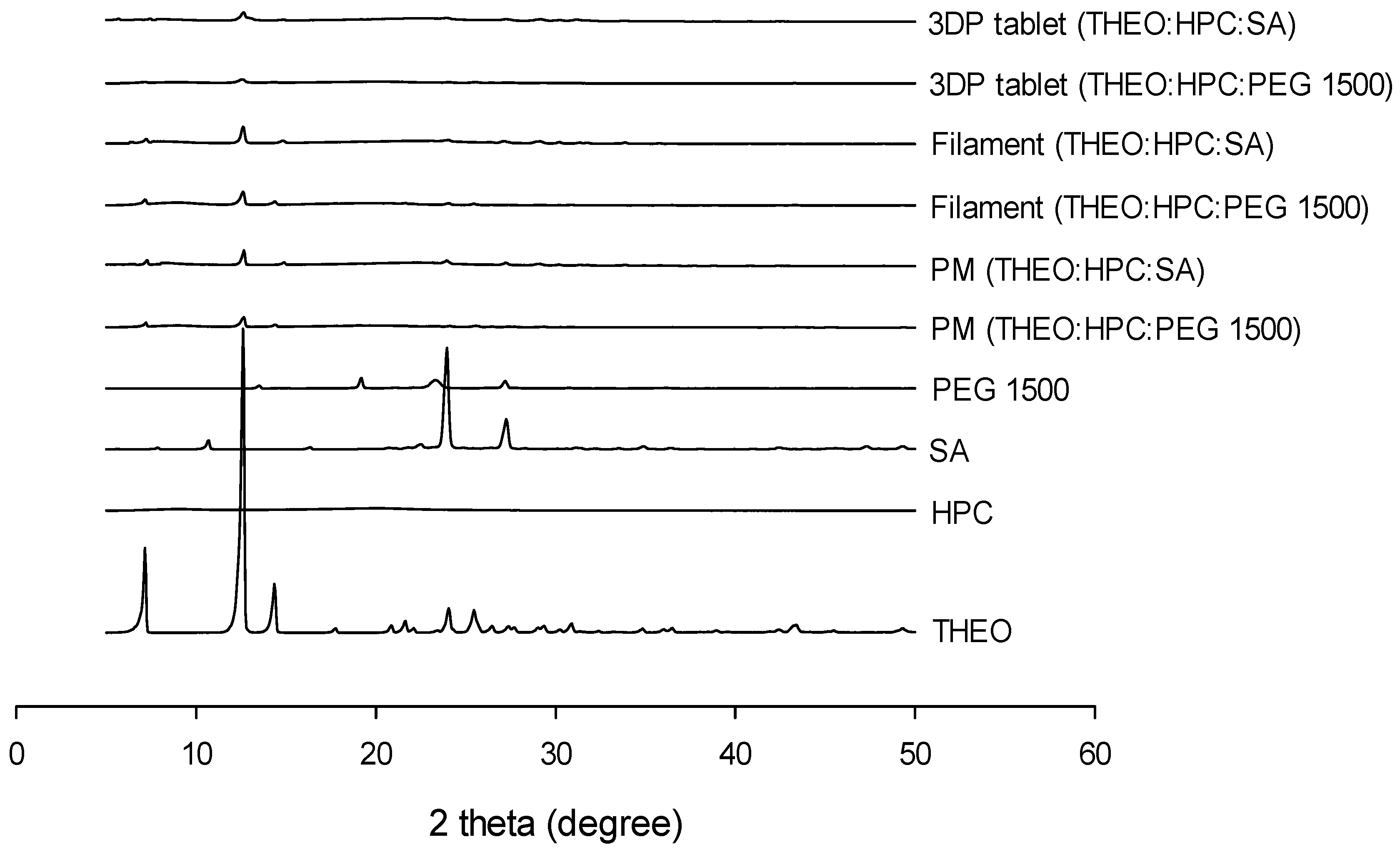
XRD was performed to confirm the physical properties of the samples. The THEO cutoff peak showed main peaks at 2θ = 7, 12, 14, and 24°, which is a typical crystalline form [37]. As shown in Figure 8, the 3D-printed tablets, filaments, and physical mixture all showed reduced diffraction peaks. This finding suggests that THEO crystallites have been converted to a partially crystalline state by dispersing molecules between the HPC polymer matrix.

3.4.4. Fourier Transform Infrared (FTIR) Spectroscopy

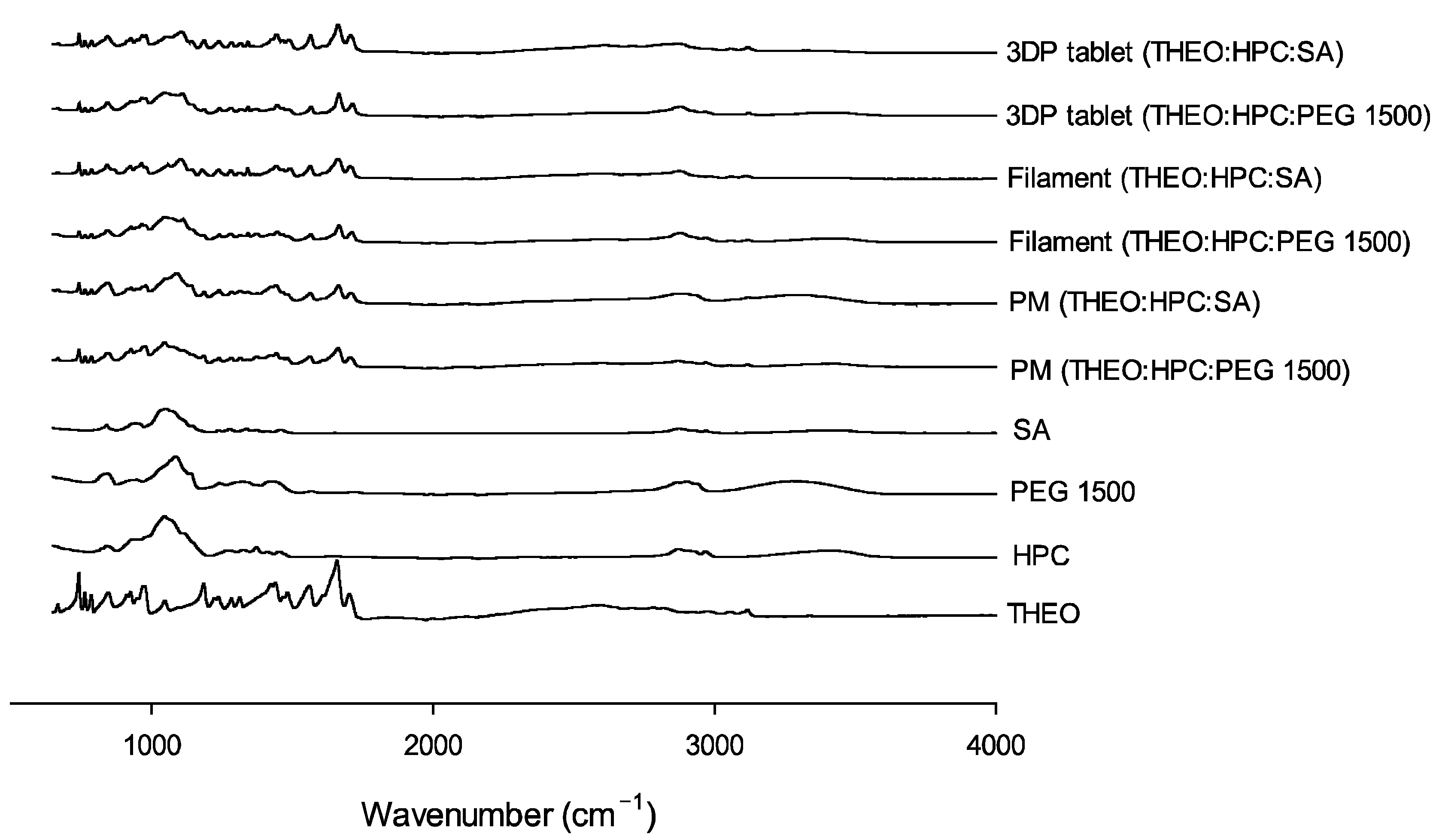
FTIR spectroscopy was performed to confirm the presence of THEO drug in the 3D-printed tablets and filaments. In the spectrum of crystalline THEO powder, the absorption bands at 3500–3100 cm−1 and 1560–1640 cm−1 are due to N-H stretching, the absorption bands at 1670–1660−1 and 1717–1716 cm−1 are due to C-O stretching, and the absorption band at 1566 cm−1 is due to N-C stretching. THEO’s main stretching vibration bands do not appear spectral when interacting with other additives. Figure 9 shows that no interaction occurred between THEO, SA, PEG 1500, and HPC in the 3D printing tablets and filaments containing THEO. In addition, the major stretching vibration bands of THEO were observed in 3D printing tablets and filaments containing THEO, confirming that the molecular structure was not completely damaged.

3.5. In Vitro Dissolution Study

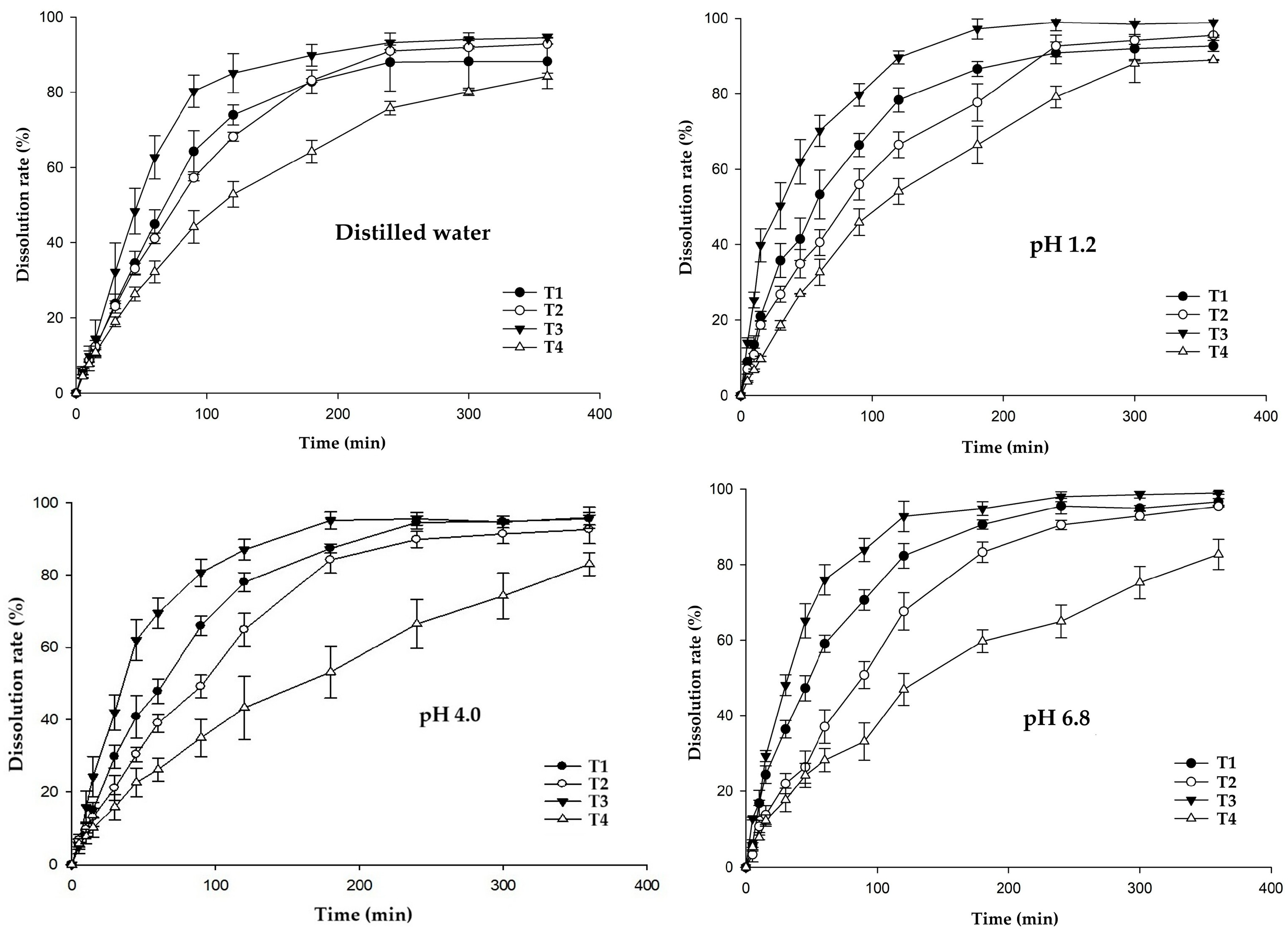
In vitro dissolution studies of all four samples with different ratios of plasticizer SA and PEG 1500 were conducted in solutions of various pH (1.2, 4.0, 6.8) and distilled water. As shown in Figure 10, formulations with the same total plasticizer content but different plasticizer types showed distinct dissolution behaviors; the formulation containing PEG 1500 showed a faster dissolution profile than the formulation containing SA. In addition, as the PEG 1500 content increased, a faster dissolution pattern was observed. In contrast, formulations with higher SA content tended to show relatively slower dissolution behavior. It can be concluded that increasing the amount of PEG 1500 enriches the matrix with water-soluble compounds, increasing the matrix porosity and providing more efficient wetting of the drug and faster drug release. As confirmed through SEM, the formulation containing PEG 1500 had many pores on the surface, facilitating penetration of the dissolution medium. By comparison, the influence of SA on drug release was formulation-dependent, reflecting the combined effects of SA content, its interaction with other excipients, and the resulting matrix structure, rather than being governed solely by its intrinsic hydrophobicity. Differences in dissolution between the two matrix polymers were evident due to the characteristics of the additives. All 3D-printed tablets showed moderate drug release of 80% within 6 h in the in vitro dissolution profile, although the values measured in the hardness tester exceeded the limit.

4. Conclusions

The evaluation of the properties of filaments produced using PEG 1500 and SA confirmed that 3D-printed tablets could be successfully manufactured using both plasticizers. Systematic texture analysis further demonstrated that the drug-loaded filaments exhibited an appropriate balance between hardness and flexibility, which is essential for stable filament feeding and reliable FDM printing. Solid-state characterization indicated that the crystalline drug was partially molecularly dispersed within the cellulosic matrix, resulting in reduced drug crystallinity. An increased PEG 1500 ratio led to faster dissolution, whereas a higher SA content produced a slower drug release profile. Taken together, these results demonstrate that plasticizer type and content critically govern filament mechanical properties, printability, and drug release behavior. Overall, this study demonstrates that integrating HME and FDM-based 3D printing with plasticizers of contrasting physicochemical properties enables precise modulation of drug release in personalized pharmaceutical tablets. From an outlook perspective, the present findings establish a practical formulation framework that can be extended to broader plasticizer types, concentration ranges, and drug candidates in future studies, supporting the continued development of robust and customizable pharmaceutical 3D printing platforms.

Author Contributions

Conceptualization, S.L. and D.W.K.; Methodology, Investigation, Data curation, Software, and Formal analysis, S.L.; Validation and Visualization, S.L. and H.J.P.; Writing—original draft, S.L. and H.J.P.; Writing—review and editing, H.J.P. and D.W.K.; Supervision, Project administration, and Funding acquisition, D.W.K. All authors have read and agreed to the published version of the manuscript.

Funding

This work was supported by the National Research Foundation of Korea (NRF) grants funded by the Korean government (No. RS-2020-NR049556 and No. RS-2021-NR061597), and by a grant from the Korea Basic Science Institute (National Research Facilities and Equipment Center) funded by the Ministry of Education (No. RS-2025-02308336).

Data Availability Statement

The original contributions presented in the study are included in the article; further inquiries can be directed to the corresponding author.

Conflicts of Interest

The authors declare no conflicts of interest.

References

  1. Albed Alhnan, M.; Okwuosa, T.C.; Sadia, M.; Wan, K.W.; Ahmed, W.; Arafat, B. Emergence of 3D printed dosage forms: Opportunities and challenges. Pharm. Res. 2016, 33, 1817–1832. [Google Scholar] [CrossRef] [PubMed]
  2. Goole, J.; Amighi, K. 3D printing in pharmaceutics: A new tool for designing customized drug delivery systems. Int. J. Pharm. 2016, 499, 376–394. [Google Scholar] [CrossRef] [PubMed]
  3. Yang, H.S.; Kim, D.W. Fabrication of gastro-floating famotidine tablets: Hydroxypropyl methylcellulose-based semisolid extrusion 3D printing. Pharmaceutics 2023, 15, 316. [Google Scholar] [CrossRef]
  4. Charoo, N.A.; Barakh Ali, S.F.; Mohamed, E.M.; Kuttolamadom, M.A.; Ozkan, T.; Khan, M.A.; Rahman, Z. Selective laser sintering 3D printing–an overview of the technology and pharmaceutical applications. Drug Dev. Ind. Pharm. 2020, 46, 869–877. [Google Scholar]
  5. Souto, E.B.; Campos, J.C.; Filho, S.C.; Teixeira, M.C.; Martins-Gomes, C.; Zielinska, A.; Carbone, C.; Silva, A.M. 3D printing in the design of pharmaceutical dosage forms. Pharm. Dev. Technol. 2019, 24, 1044–1053. [Google Scholar] [CrossRef] [PubMed]
  6. Berman, B. 3-D printing: The new industrial revolution. Bus. Horiz. 2012, 55, 155–162. [Google Scholar] [CrossRef]
  7. Gu, Y.; Chen, X.; Lee, J.H.; Monteiro, D.A.; Wang, H.; Lee, W.Y. Inkjet printed antibiotic-and calcium-eluting bioresorbable nanocomposite micropatterns for orthopedic implants. Acta Biomater. 2012, 8, 424–431. [Google Scholar] [CrossRef] [PubMed]
  8. Melchels, F.P.; Feijen, J.; Grijpma, D.W. A review on stereolithography and its applications in biomedical engineering. Biomaterials 2010, 31, 6121–6130. [Google Scholar] [CrossRef]
  9. Rattanakit, P.; Moulton, S.E.; Santiago, K.S.; Liawruangrath, S.; Wallace, G.G. Extrusion printed polymer structures: A facile and versatile approach to tailored drug delivery platforms. Int. J. Pharm. 2012, 422, 254–263. [Google Scholar] [CrossRef]
  10. Bandari, S.; Nyavanandi, D.; Dumpa, N.; Repka, M.A. Coupling hot melt extrusion and fused deposition modeling: Critical properties for successful performance. Adv. Drug Deliv. Rev. 2021, 172, 52–63. [Google Scholar] [CrossRef]
  11. Iqbal, H.; Fernandes, Q.; Idoudi, S.; Basineni, R.; Billa, N. Status of polymer fused deposition modeling (FDM)-based three-dimensional printing (3DP) in the pharmaceutical industry. Polymers 2024, 16, 386. [Google Scholar] [CrossRef]
  12. Wang, S.; Chen, X.; Han, X.; Hong, X.; Li, X.; Zhang, H.; Li, M.; Wang, Z.; Zheng, A. A review of 3D printing technology in pharmaceutics: Technology and applications, now and future. Pharmaceutics 2023, 15, 416. [Google Scholar] [CrossRef]
  13. Li, X.; Hong, X.; Shuai, S.; Han, X.; Li, C.; Zhang, H.; Wang, Z.; Ren, M.; Jin, L.; Zheng, A. A review of hot melt extrusion technology: Advantages, applications, key factors and future prospects. J. Drug Deliv. Sci. Technol. 2024, 98, 105884. [Google Scholar] [CrossRef]
  14. Skowyra, J.; Pietrzak, K.; Alhnan, M.A. Fabrication of extended-release patient-tailored prednisolone tablets via fused deposition modelling (FDM) 3D printing. Eur. J. Pharm. Sci. 2015, 68, 11–17. [Google Scholar] [CrossRef]
  15. Pietrzak, K.; Isreb, A.; Alhnan, M.A. A flexible-dose dispenser for immediate and extended release 3D printed tablets. Eur. J. Pharm. Biopharm. 2015, 96, 380–387. [Google Scholar] [CrossRef]
  16. Wegst, U.G.; Bai, H.; Saiz, E.; Tomsia, A.P.; Ritchie, R.O. Bioinspired structural materials. Nat. Mater. 2015, 14, 23–36. [Google Scholar] [PubMed]
  17. Zhu, C.; Han, T.Y.J.; Duoss, E.B.; Golobic, A.M.; Kuntz, J.D.; Spadaccini, C.M.; Worsley, M.A. Highly compressible 3D periodic graphene aerogel microlattices. Nat. Commun. 2015, 6, 6962. [Google Scholar] [CrossRef] [PubMed]
  18. Chen, D.; Xu, X.Y.; Li, R.; Zang, G.A.; Zhang, Y.; Wang, M.R.; Xiong, M.F.; Xu, J.R.; Wang, T.; Fu, H.; et al. Preparation and in vitro evaluation of FDM 3D-printed ellipsoid-shaped gastric floating tablets with low infill percentages. AAPS PharmSciTech 2019, 21, 6. [Google Scholar] [PubMed]
  19. Goyanes, A.; Fina, F.; Martorana, A.; Sedough, D.; Gaisford, S.; Basit, A.W. Development of modified release 3D printed tablets (printlets) with pharmaceutical excipients using additive manufacturing. Int. J. Pharm. 2017, 527, 21–30. [Google Scholar] [CrossRef]
  20. Okwuosa, T.C.; Stefaniak, D.; Arafat, B.; Isreb, A.; Wan, K.W.; Alhnan, M.A. A lower temperature FDM 3D printing for the manufacture of patient-specific immediate release tablets. Pharm. Res. 2016, 33, 2704–2712. [Google Scholar] [CrossRef]
  21. Lee, J.; Song, C.; Noh, I.; Rhee, Y.S. Applications of the design of additive manufacturing (DfAM) in the development of pharmaceutical dosage forms. J. Pharm. Investig. 2024, 54, 175–193. [Google Scholar] [CrossRef]
  22. Tabriz, A.G.; Nandi, U.; Hurt, A.P.; Hui, H.W.; Karki, S.; Gong, Y.; Kumar, S.; Douroumis, D. 3D printed bilayer tablet with dual controlled drug release for tuberculosis treatment. Int. J. Pharm. 2021, 593, 120147. [Google Scholar] [CrossRef]
  23. Dai, L.; Cheng, T.; Duan, C.; Zhao, W.; Zhang, W.; Zou, X.; Aspler, J.; Ni, Y. 3D printing using plant-derived cellulose and its derivatives: A review. Carbohydr. Polym. 2019, 203, 71–86. [Google Scholar] [CrossRef]
  24. Kempin, W.; Franz, C.; Koster, L.C.; Schneider, F.; Bogdahn, M.; Weitschies, W.; Seidlitz, A. Assessment of different polymers and drug loads for fused deposition modeling of drug loaded implants. Eur. J. Pharm. Biopharm. 2017, 115, 84–93. [Google Scholar] [CrossRef]
  25. Zhang, J.; Yang, W.; Vo, A.Q.; Feng, X.; Ye, X.; Kim, D.W.; Repka, M.A. Hydroxypropyl methylcellulose-based controlled release dosage by melt extrusion and 3D printing: Structure and drug release correlation. Carbohydr. Polym. 2017, 177, 49–57. [Google Scholar] [CrossRef] [PubMed]
  26. Potuck, A.; Leming, R.; Lam, S. Dynamic rheology as a quantitative method for real-time tracking of excipient solvation in non-aqueous hydroxypropylcellulose topical gels. Pharm. Dev. Technol. 2019, 24, 521–527. [Google Scholar] [CrossRef] [PubMed]
  27. Giri, B.R.; Song, E.S.; Kwon, J.; Lee, J.H.; Park, J.B.; Kim, D.W. Fabrication of intragastric floating, controlled release 3D printed theophylline tablets using hot-melt extrusion and fused deposition modeling. Pharmaceutics 2020, 12, 77. [Google Scholar] [CrossRef]
  28. Li, D.; Jiang, Y.; Lv, S.; Liu, X.; Gu, J.; Chen, Q.; Zhang, Y. Preparation of plasticized poly (lactic acid) and its influence on the properties of composite materials. PLoS ONE 2018, 13, e0193520. [Google Scholar]
  29. Zhang, J.; Xu, P.; Vo, A.Q.; Bandari, S.; Yang, F.; Durig, T.; Repka, M.A. Development and evaluation of pharmaceutical 3D printability for hot melt extruded cellulose-based filaments. J. Drug Deliv. Sci. Technol. 2019, 52, 292–302. [Google Scholar] [CrossRef]
  30. Kamel, S.; Ali, N.; Jahangir, K.; Shah, S.M.; El-Gendy, A.A. Pharmaceutical significance of cellulose: A review. Express Polym Lett 2008, 2, 758–778. [Google Scholar]
  31. Gómez-Carracedo, A.; Alvarez-Lorenzo, C.; Gómez-Amoza, J.L.; Concheiro, A. Chemical structure and glass transition temperature of non-ionic cellulose ethers. J. Therm. Anal. Calorim. 2003, 73, 587–596. [Google Scholar] [CrossRef]
  32. Lee, S.; Song, E.S.; Lee, E.; Kwon, G.; Kim, D.W. Tunable Drug Release from 3D-Printed Bilayer Tablets: Combining Hot-Melt Extrusion and Fused Deposition Modeling. Polymers 2026, 18, 210. [Google Scholar] [CrossRef]
  33. Govender, R.; Kissi, E.O.; Larsson, A.; Tho, I. Polymers in pharmaceutical additive manufacturing: A balancing act between printability and product performance. Adv. Drug Deliv. Rev. 2021, 177, 113923. [Google Scholar] [CrossRef] [PubMed]
  34. Xu, P.; Li, J.; Meda, A.; Osei-Yeboah, F.; Peterson, M.L.; Repka, M.; Zhan, X. Development of a quantitative method to evaluate the printability of filaments for fused deposition modeling 3D printing. Int. J. Pharm. 2020, 588, 119760. [Google Scholar] [CrossRef] [PubMed]
  35. Danafar, H.; Rostamizadeh, K.; Davaran, S.; Hamidi, M. Drug-conjugated PLA–PEG–PLA copolymers: A novel approach for controlled delivery of hydrophilic drugs by micelle formation. Pharm. Dev. Technol. 2017, 22, 947–957. [Google Scholar] [CrossRef]
  36. Windbergs, M.; Strachan, C.J.; Kleinebudde, P. Tailor-made dissolution profiles by extruded matrices based on lipid polyethylene glycol mixtures. J. Control Release 2009, 137, 211–216. [Google Scholar] [PubMed]
  37. Räsänen, E.; Rantanen, J.; Jørgensen, A.; Karjalainen, M.; Paakkari, T.; Yliruusi, J. Novel identification of pseudopolymorphic changes of theophylline during wet granulation using near infrared spectroscopy. J. Pharm. Sci. 2001, 90, 389–396. [Google Scholar] [CrossRef] [PubMed]
Figure 1. Experimental equipment used in this study: (A) hot melt extruder (HAAKE™ MiniCTW, Thermo Scientific) and (B) FDM 3D printer (MakerBot Replicator 2X, MakerBot, Brooklyn, NY, USA).
Jcs 10 00061 g001
Figure 2. Texture analysis setup for filament force evaluation: (A) schematic illustration of the experimental configuration (F denotes force) and (B) photograph of the actual texture analyzer used in this study.
Jcs 10 00061 g002
Figure 3. Drug-loaded filaments fabricated using HME.
Jcs 10 00061 g003
Figure 4. Hardness and distance at break of manufactured filaments and a commercial PLA filament measured using a texture analyzer.
Jcs 10 00061 g004
Figure 5. Images of 3D-printed tablets.
Jcs 10 00061 g005
Figure 6. SEM images of the (A) cross-section, (B) exterior, and (C) magnified cross-section of the THEO-loaded filament.
Jcs 10 00061 g006
Figure 7. SEM images of the exterior of the 3D-printed tablets. (A) T1, (B) T2, (C) T3, and (D) T4 3D-printed tablets.
Jcs 10 00061 g007
Figure 8. XRD curves of samples. 3DP, three-dimensional printed; HPC, hydroxypropyl cellulose; PEG, polyethylene glycol; PM, physical mixture; SA, stearic acid; THEO, theophylline.
Jcs 10 00061 g008
Figure 9. FTIR spectra of samples. 3DP, three-dimensional printed; HPC, hydroxypropyl cellulose; PEG, polyethylene glycol; PM, physical mixture; SA, stearic acid; THEO, theophylline.
Jcs 10 00061 g009
Figure 10. Drug release profiles of 3D-printed tablets in distilled water and buffer solutions at pH 1.2, 4.0, and 6.8.
Jcs 10 00061 g010
Table 1. Nomenclature.
AbbreviationDefinition
THEOTheophylline
HMEHot Melt Extrusion
FDMFused Deposition Modeling
PEGPolyethylene Glycol
SAStearic Acid
HPCHydroxypropyl Cellulose
SEMScanning Electron Microscopy
XRDX-ray Powder Diffraction
FTIRFourier Transform Infrared Spectroscopy
Table 2. Composition of drug-loaded filaments and extrusion temperature.
FormulationTHEO
(%)
HPC
(%)
PEG 1500
(%)
SA
(%)
Extrusion
Temperature
(°C)
T120755-155
T22075-5155
T3207010-155
T42070-10155
Table 3. FDM printing parameters for tablet fabrication.
ParameterValue
Packing density50%
Shell thickness0.6 mm
Nozzle temperature195–200 °C
Platform temperature130 °C
Extrusion speed90 mm/s
Travel speed150 mm/s
Number of shells2
Layer height0.30 mm
Raft optionDisabled
Table 4. Physical properties of 3D-printed tablets.
Length
(X, mm)
Width
(Y, mm)
Thickness
(Z, mm)
Weight
(mg)
T119.54 ± 0.067.66 ± 0.055.96 ± 0.06471.90 ± 10.54
T219.52 ± 0.077.63 ± 0.055.90 ± 0.07471.33 ± 2.92
T319.48 ± 0.077.63 ± 0.065.98 ± 0.05469.98 ± 2.52
T419.60 ± 0.047.74 ± 0.135.93 ± 0.08468.75 ± 9.74
Disclaimer/Publisher’s Note: The statements, opinions and data contained in all publications are solely those of the individual author(s) and contributor(s) and not of MDPI and/or the editor(s). MDPI and/or the editor(s) disclaim responsibility for any injury to people or property resulting from any ideas, methods, instructions or products referred to in the content.