
Article

Fabrication of Phthalocyanine–Polymer Matrix Composites for Bio-Based Sustainable Devices
by
Héctor Iván Sánchez Moore
1,
María Elena Sánchez Vergara
1,*,
Edgar Alvarez-Zauco
2 and
Yazmín Paola Aguirre Macías
1
1
Facultad de Ingeniería, Universidad Anáhuac, Avenida Universidad Anáhuac 46, Col. Lomas Anáhuac, Huixquilucan 52786, Estado de México, Mexico
2
Facultad de Ciencias, Universidad Nacional Autónoma de Mexico, Circuito Exterior s/n, Ciudad Universitaria, Coyoacán 04510, Ciudad de Mexico, Mexico
*
Author to whom correspondence should be addressed.
J. Compos. Sci. 2026, 10(2), 60; https://doi.org/10.3390/jcs10020060
Submission received: 1 December 2025 / Revised: 14 January 2026 / Accepted: 21 January 2026 / Published: 23 January 2026
(This article belongs to the Special Issue Functional Composites: Fabrication, Properties and Applications)

Abstract

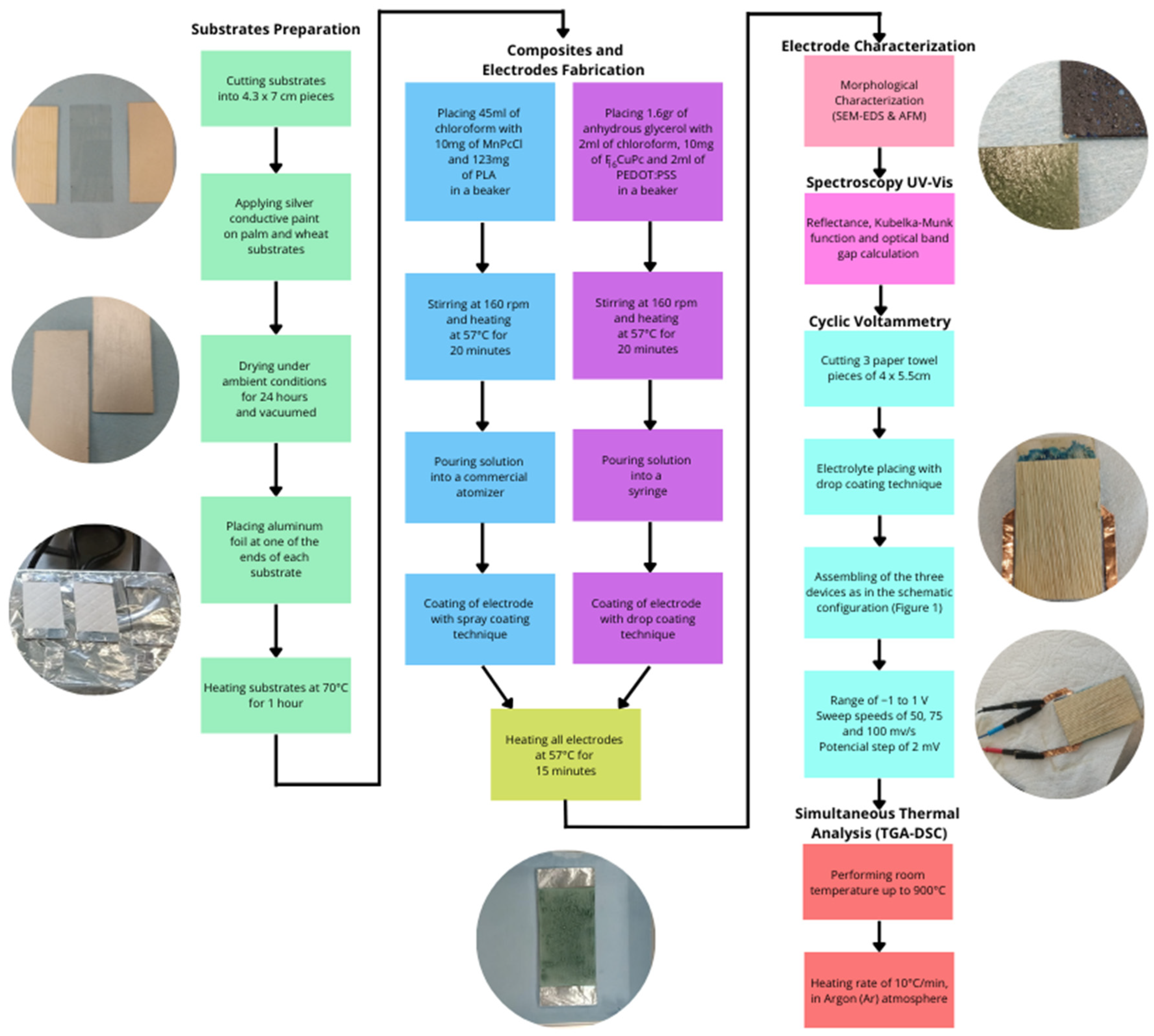
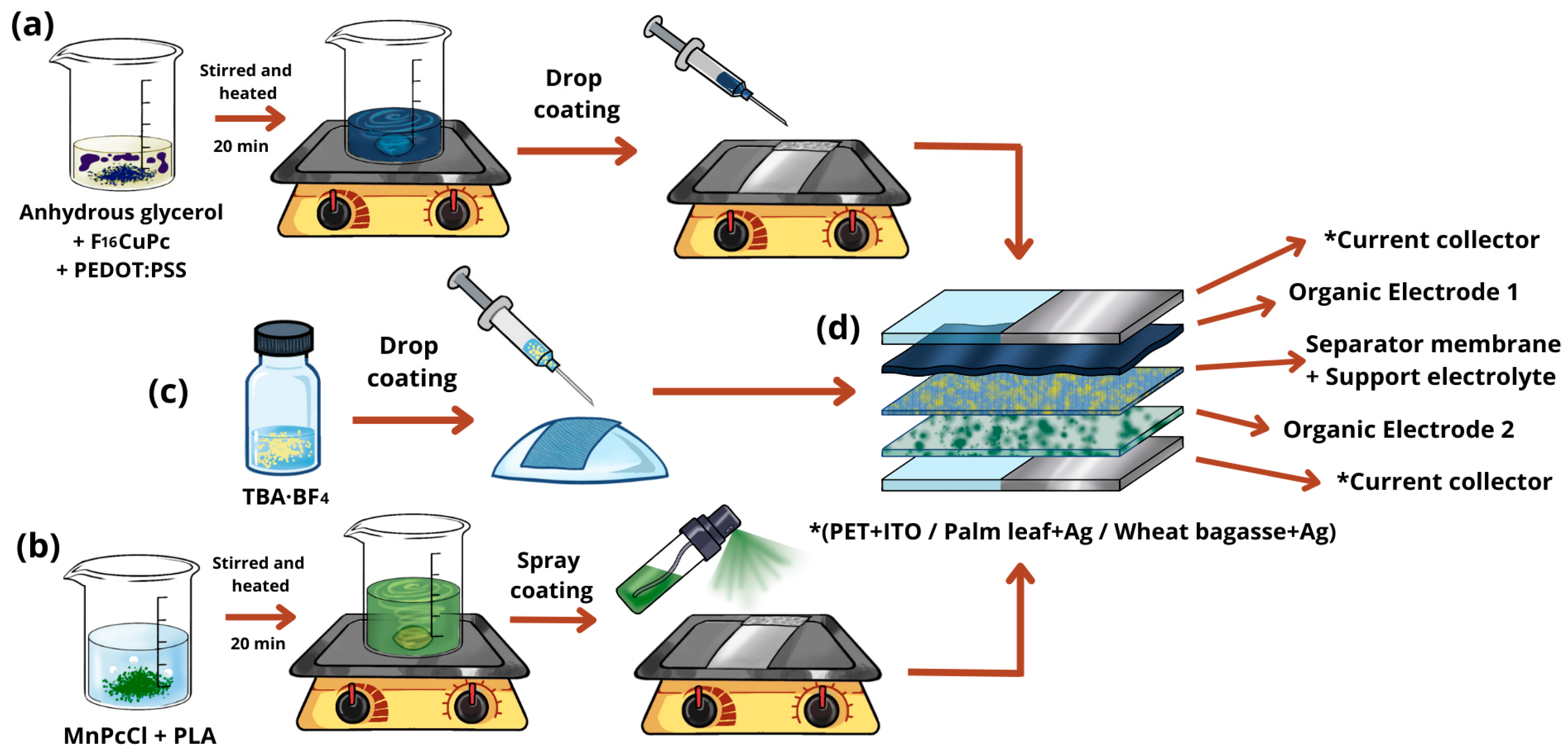
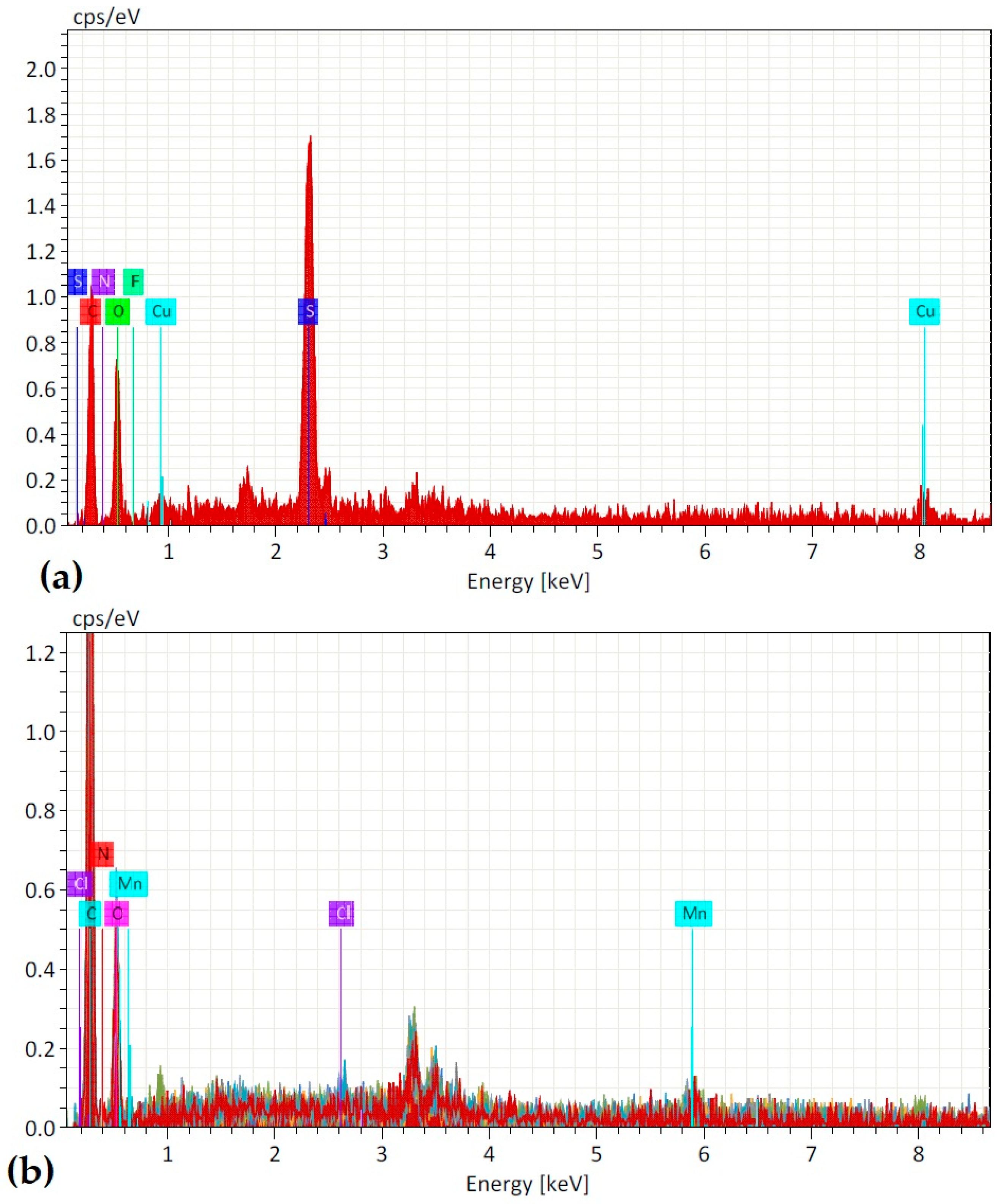
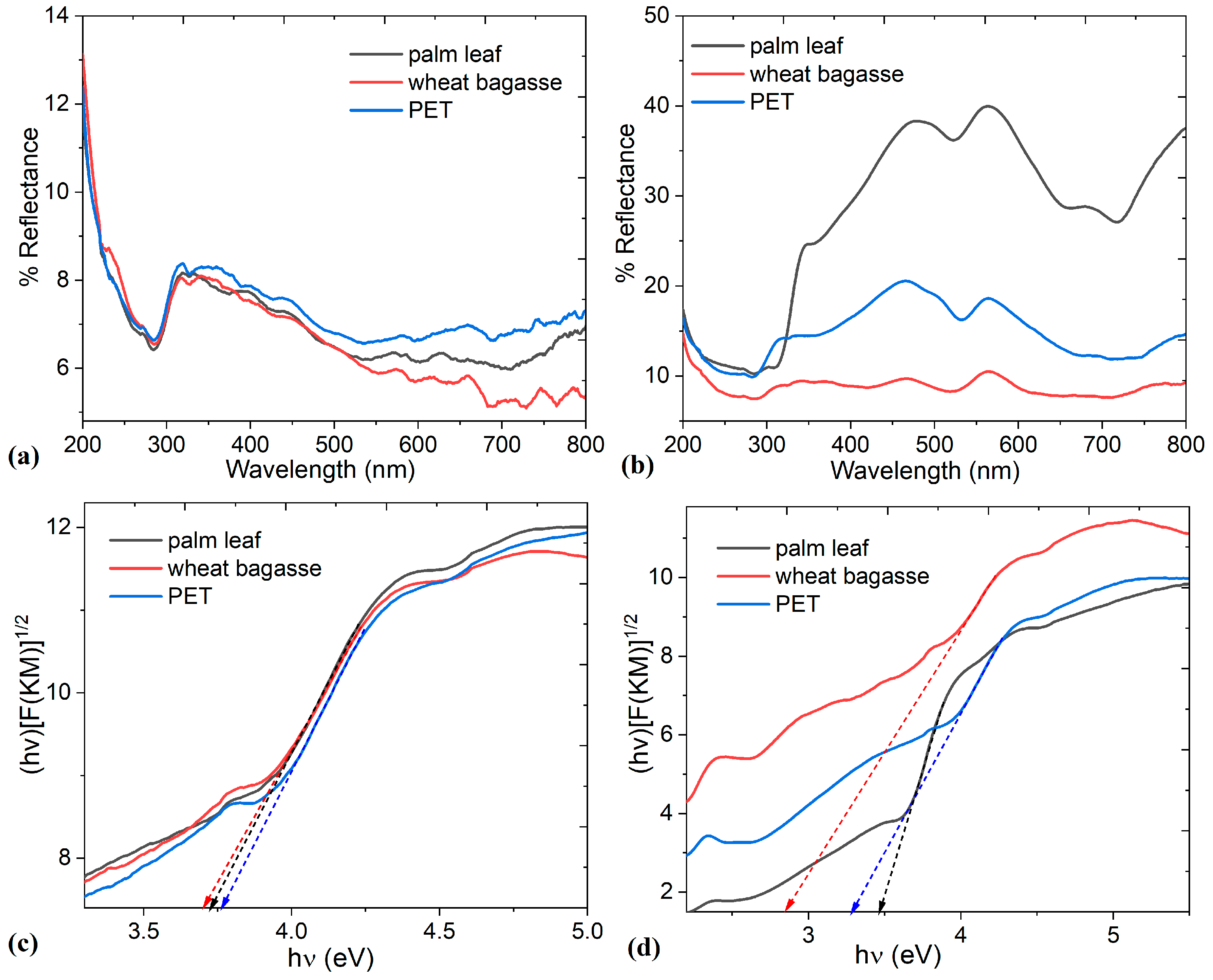
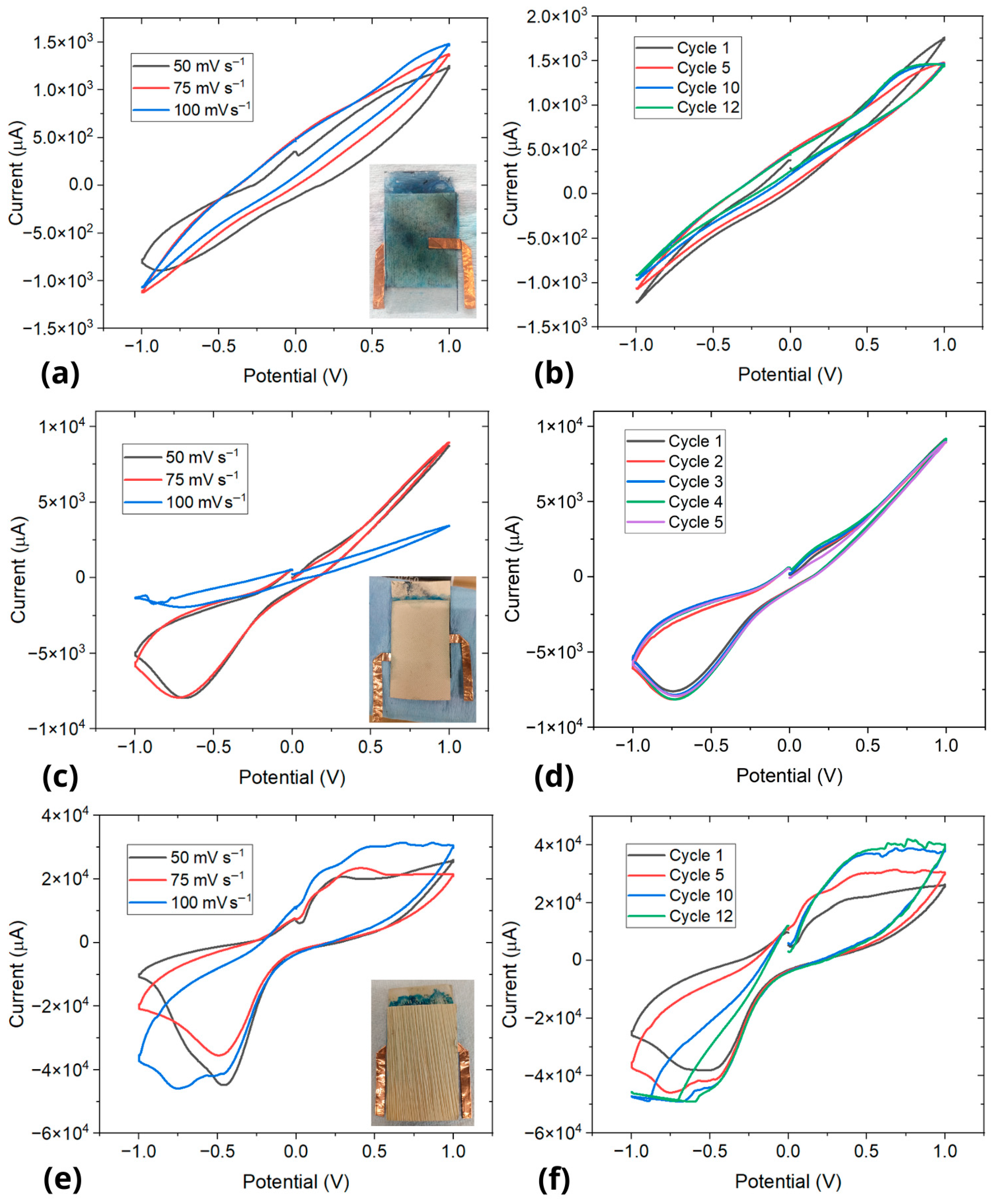
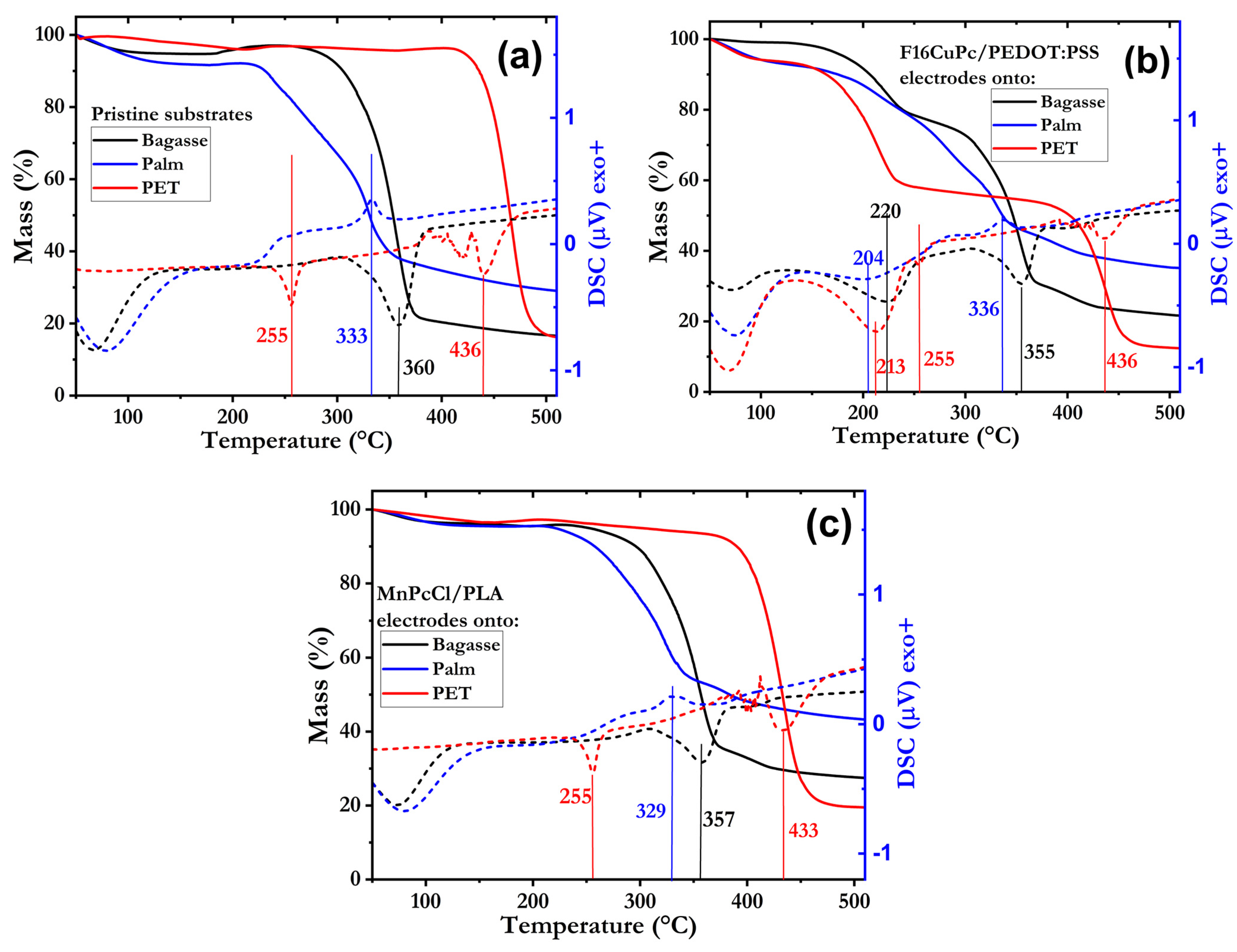
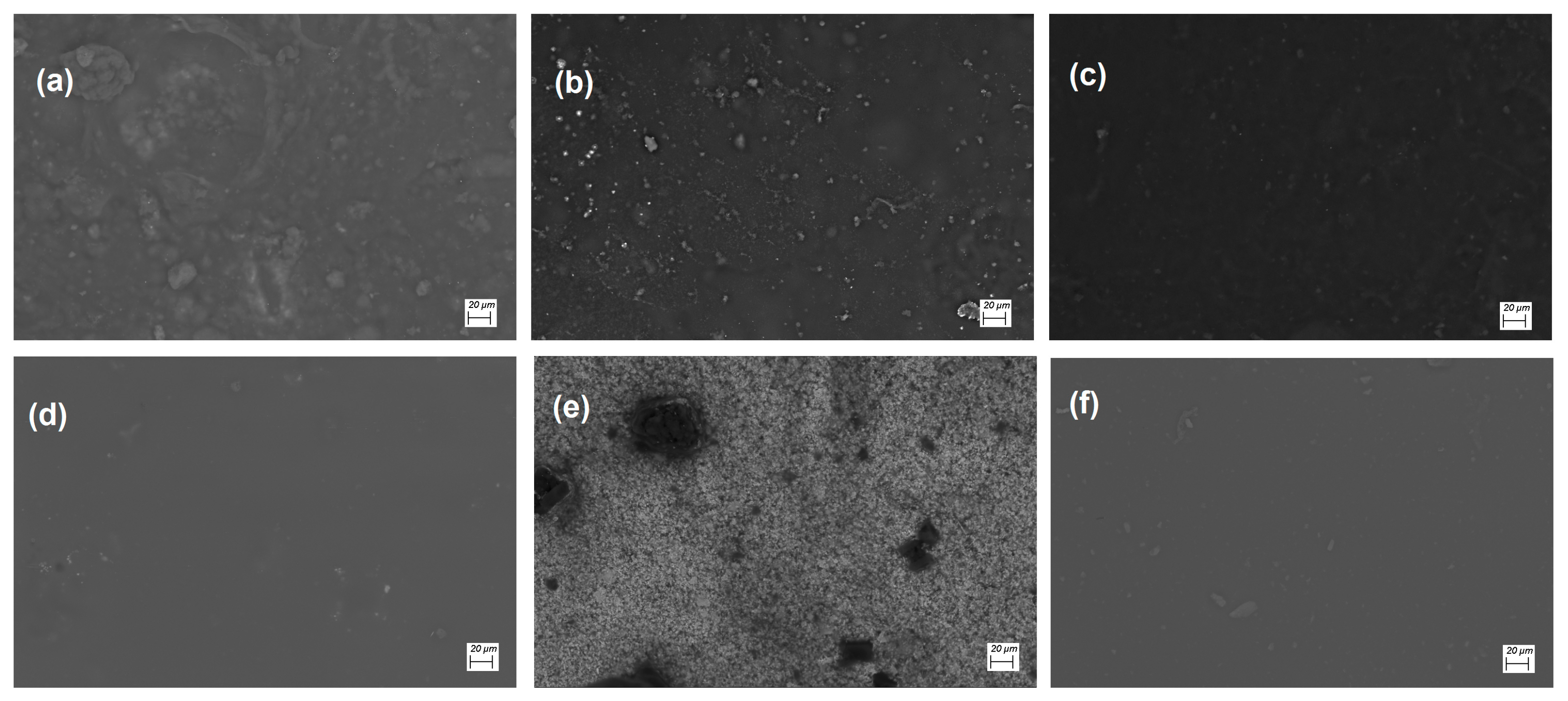
This study presents the fabrication of composite photoelectrodes containing halogenated phthalocyanines (F16CuPc and MnPcCl) embedded in polymeric matrices of PEDOT:PSS (poly(2,3-dihydrothieno-1,4-dioxin)-poly(styrenesulfonate)) and PLA (polylactic acid biopolymer). These composites were deposited on PET, palm leaf, and wheat bagasse recyclable substrates, and were morphologically characterized. The reflectance for F16CuPc/PEDOT:PSS is less than 8.5%, and that for MnPcCl/PLA changes depending on the substrate, ranging between 10% and 40%. Additionally, in the case of F16CuPc/PEDOT:PSS, the Kubelka–Munk band gap is 3.7 eV, and in the case of F16CuPc/PEDOT:PSS, the band gap varied between 2.85 and 3.47 eV. The composites were evaluated as electrodes in bio-based sustainable devices, fabricated with commercially available paper towels used as an organic membrane separator. The palm-device showed the best performance throughout its charge and discharge cycle. The device improves its performance at high speeds and reaches its highest peak at 100 mV s−1 with 3.14 × 10⁴ μA. On the other hand, the greatest thermal stability for the composites is for those deposited onto bagasse substrate, reaching up to 220 °C and 357 °C for F16CuPc/PEDOT:PSS and MnPcCl/PLA, respectively. Also, these composites exhibit charge–discharge behavior when studied in bio-based sustainable devices and can be used as electrodes.
Keywords: polymer matrix; composite film; recyclable substrate; optical properties; photoelectrode; bio-based sustainable device polymer matrix; composite film; recyclable substrate; optical properties; photoelectrode; bio-based sustainable device