1. Introduction
The accelerating transition toward sustainable packaging has driven intense research into biodegradable and bio-based materials that can reduce petroplastic waste while maintaining product quality during storage and distribution [
1]. At the same time, the magnitude of plastic leakage to the environment has reinforced the urgency for scalable alternatives and better end-of-life strategies [
2]. In parallel, interest in smart and active concepts has grown, as packaging is increasingly expected to go beyond containment by contributing to quality preservation and, in some cases, monitoring functions [
3,
4]. Achieving these goals at scale, however, requires formulations that remain cost-effective and compatible with circular-economy strategies based on valorizing low-value residues into higher-value materials [
5].
Cellulose is the most abundant renewable polymer in nature, produced through well-established biosynthetic pathways in plants [
6,
7,
8,
9]. Its hierarchical microstructure and hydrogen-bonding network underpin high intrinsic stiffness and strength, making cellulose-derived platforms attractive for mechanically demanding applications [
10,
11]. In addition, cellulose-based and cellulose-derived materials have long been discussed as key building blocks for the broader shift from fossil-based plastics toward bio-based, higher-performance materials [
12]. Among cellulose derivatives, cellulose acetate (CA) is an industrially available thermoplastic polymer with well-established film-forming ability [
13,
14].
A common route to enhance CA performance is the incorporation of silica-based fillers, which can increase stiffness and improve thermal and barrier-related characteristics relevant to packaging [
15]. Recent CA composite films prepared with commercial nano-SiO
2 have reported promising functional properties for packaging applications [
16,
17]. Nevertheless, the reliance on high-purity commercial nanofillers (or sol-gel precursors) may limit economic viability and weaken alignment with circularity when the target is scalable, low-cost, sustainable packaging [
18]. More broadly, polymer/biopolymer packaging literature highlights that translating green materials into premium applications typically demands concurrent control of optics, mechanics, and stability under realistic exposure conditions [
19].
In this context, agricultural residues are compelling alternative feedstocks for functional fillers in polymer composites [
20]. Rice husk ash (RHA), in particular, is generated in large quantities and is typically silica-rich, making it a practical candidate for upcycling into inorganic reinforcements [
21]. Beyond reinforcement, silica-based films and coatings have also been widely studied for functional effects (including photochemical activity and surface-related behaviors), underscoring the versatility of SiO
2-containing systems [
22]. However, waste-derived silica-rich fillers such as RHA are intrinsically more heterogeneous than commercial nano-SiO
2, which can intensify particle-domain formation and aggregation, thereby reshaping optical scattering and mechanical reliability.
This challenge becomes even more nuanced when the CA matrix is plasticized. Glycerol and other plasticizers can increase chain mobility and modify filler dispersion, but often introduce strong optical and mechanical trade-offs and alter surface interactions with aqueous media [
23]. In addition, chemical exposure remains an important screening dimension, since packaging materials may face moisture, mildly acidic formulations, and aggressive alkaline cleaning or disinfection scenarios [
24,
25].
Despite extensive work on CA/SiO
2 films for packaging [
26], a quantitative understanding remains limited regarding how a waste-derived, silica-rich filler (RHA) interacts with CA when the formulation is simultaneously modulated by a hydrophilic plasticizer such as glycerol. In particular, the combined role of RHA-driven microstructure (particle aggregation) and glycerol-driven dispersion in dictating the balance between reduced transmittance, desirable for light-sensitive products, and mechanical robustness is still insufficiently mapped for scalable, solvent-cast CA films.
The central question is how RHA-driven particle-domain formation and glycerol-driven dispersion during drying translate into an optical-mechanical trade-off that constrains light-protective yet mechanically reliable CA films. Here, we address this gap by upcycling silica-rich RHA as an inorganic filler to engineer CA films via solvent casting from acetic anhydride, systematically varying RHA loading with and without glycerol plasticization. We correlate microstructural observations with optical screening in the visible (including 400 and 633 nm), tensile response, time-resolved wettability in neutral/alkaline media, thermal stability by TGA in an inert atmosphere, and FTIR spectroscopy to verify chemical-structure retention and to assess interfacial interactions.
This integrated framework enables identifying low-filler regimes that preserve mechanical integrity while delivering controlled, application-relevant optical attenuation for premium secondary light-shielding flexible packaging for light-sensitive healthcare products (including photo-curable dental materials and diagnostic reagents) such as protective overwraps or outer layers in multilayer pouches.
2. Materials and Methods
2.1. Materials
Cellulose acetate (CA; reagent grade, ∼39.8 wt% acetyl content, Sigma-Aldrich, St. Louis, MO, USA) was used as the polymer matrix. Silica-rich rice husk ash (RHA) was supplied by Arrozeira Pelotas (Pelotas, RS, Brazil) and used as the inorganic filler (as received). The RHA was generated in an industrial boiler equipped with an inclined moving sliding-grate system operating at 780–840 °C. Reported values for comparable industrial RHA include SiO
2 contents of ∼82–84 wt%, loss on ignition of ∼6 wt%, and BET specific surface areas of ∼27–33 m
2/g [
27]. Acetic anhydride (Sigma-Aldrich, ReagentPlus, Darmstadt, Germany, ≥99%) was used as the solvent for film casting. Glycerol (P.A., ≥99.5%, Synth) was used as plasticizer. Sodium hydroxide pellets (NaOH pellets, ≥97–98%, Synth; prepared as a 0.1 mol
aqueous solution) were used in the wettability tests.
2.2. Film Preparation
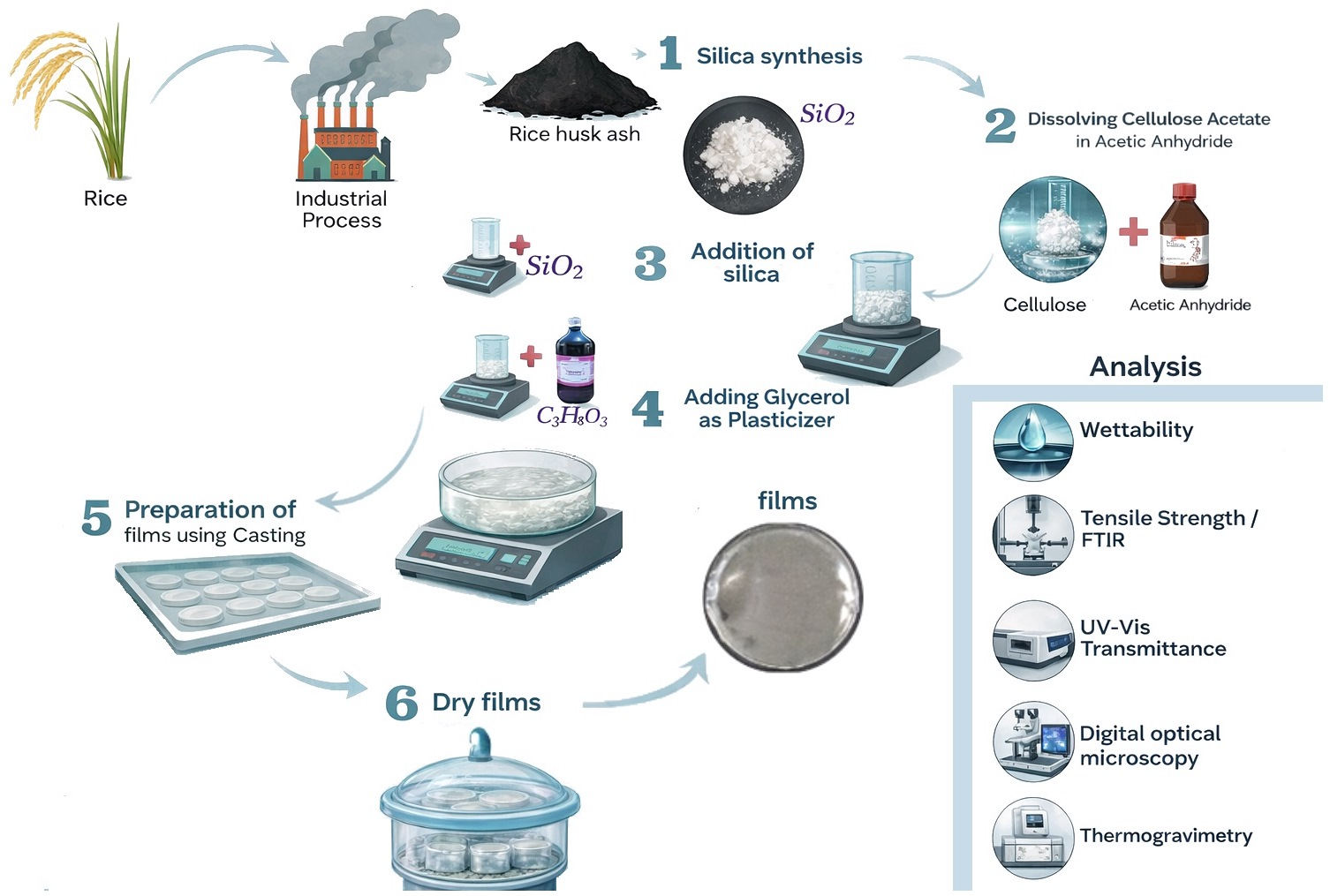
CA films were prepared by the solvent casting method [
28]. Briefly, 0.75 g of CA was gradually dissolved in 10 mL of acetic anhydride under constant magnetic stirring at 600 rpm at room temperature (23 ± 2 °C) for 1 h until complete homogenization and formation of a clear and homogeneous polymer solution.
After complete dissolution, RHA (used as received) first pre-dispersed in ∼2 mL of acetic anhydride and ultrasonicated (40 kHz, 150 W) for 15 min to reduce particle agglomeration and improve its distribution in the CA matrix. When used, glycerol (1.0 g) was incorporated after complete CA dissolution and before RHA addition, to promote prior interaction with the polymer chains. Then, the sonicated RHA suspension was slowly added to the CA solution while maintaining magnetic stirring at 600 rpm. After incorporating all components, the final dispersion was kept under stirring for an additional 60 min to promote system homogenization and subsequently degassed under vacuum (desiccator) for 10 min to remove entrapped air bubbles.
To minimize RHA sedimentation, the dispersion was cast immediately after the final mixing/degassing step (within 5 min). The resulting dispersions were poured into 100 mm-diameter glass Petri dishes placed on a leveled surface and dried in a forced-air oven at 45 °C for 24 h, allowing gradual solvent evaporation and uniform film formation with a rapid viscosity increase that further limited particle settling.
During transfer to the oven, dishes were transported carefully to avoid particle migration during handling. After drying, the films were carefully peeled off and stored in a desiccator until characterization.
Table 1 summarizes all formulations investigated in this study.
The formulation matrix in
Table 1 is a minimal, hypothesis-driven factorial screening set to separate the effects of RHA addition and glycerol plasticization within the same CA casting platform. The CA mass was fixed (0.75 g) and the same solvent volume and drying protocol were used for all casts, while the additive-to-polymer ratio (polymer basis) was varied to span low and high filler contents and to include a strongly plasticized condition.
RHA was tested at two levels to span two physically distinct regimes: a low-filler condition (0.01 g, ≈1.3 wt% relative to CA) aimed at reinforcement with moderate optical attenuation under plausible dispersion, and a high-filler condition (0.10 g, ≈13.3 wt% relative to CA) intended to promote particle-domain aggregation expected for heterogeneous ash, thereby stressing the optical–mechanical trade-off that motivates the study.
This low-vs.-high bracketing is aligned with the way silica-containing CA films are commonly explored in the literature, where low single-digit silica additions are used to tune surface and barrier-relevant properties before heterogeneity effects become dominant [
29].
Glycerol (1.0 g) was introduced as a high-plasticizer condition (≈57 wt% of total CA+glycerol solids, or ≈133% relative to CA) to create a clearly plasticized baseline with a large, measurable mobility shift and to test whether increased chain mobility during drying can mitigate filler coalescence (improving dispersion at low RHA) vs. exacerbate wetting/softening trade-offs.
2.3. Morphological Analysis (Optical Microscopy and Image Analysis)
Digital optical microscopy was used to evaluate surface morphology and the dispersion state of the filler within the films. Micrographs were acquired using an Opticam 0500R (Opticom, Doral, FL, USA) optical microscope at 10× magnification, with image capture and processing performed in TCapture software v5.1. Images were recorded both with and without enhanced light-contrast settings to improve the visualization of surface features and particle domains. The micrographs include a 250 µm scale bar for calibration.
To complement the qualitative inspection, we performed an image analysis routine to quantify the apparent dispersion state of RHA-derived domains in the optical micrographs, converted to physical units using the scale bar (250 µm) for pixel-to-µm calibration.
Each panel in the optical microscopy was processed using a fixed workflow: (i) selection of the micrograph region (excluding edges), (ii) grayscale conversion and contrast normalization, (iii) automatic thresholding to segment dark particulate domains from the CA background, (iv) removal of small objects and noise by applying a minimum-area criterion, and (v) connected-component labeling to measure each segmented domain. For each detected domain, an equivalent circular diameter was computed as , where A is the segmented domain area.
The particle-domain size distribution is summarized by //, while the mean size is reported as mean ± SD with the associated standard error (SEM) based on the number of detected domains (N). We stress that these values represent 2D apparent particle-domain sizes at the optical length scale (not primary particle size), and are therefore best interpreted as comparative dispersion metrics across formulations rather than absolute particle-size measurements.
2.4. UV–Vis Transmittance Spectroscopy
The optical properties of the films were assessed by UV–Vis transmittance spectroscopy. Transmittance spectra were recorded using an Agilent Technologies (Santa Clara, CA, USA) Cary 100 spectrophotometer over the 300–800 nm wavelength range. Circular specimens were fixed in the transmission holder so that the incident beam probed the central region of each film.
2.5. Wettability
Static contact-angle measurements were conducted to assess the surface wettability of the films. Specimens were placed on a glass substrate and analyzed using an optical tensiometer (Theta Lite TL100, Biolin Scientific, Göteborg, Sweden). Sessile droplets (10 μL) of each probe liquid-deionized water, and 0.1 mol
NaOH-were gently dispensed onto the film surface using a microsyringe. Immediately after deposition, the droplet profile was recorded with the instrument camera. Contact angles were calculated in OneAttension software by fitting the droplet shape and extracting the angle at the solid–liquid–vapor three-phase contact line. Time-resolved contact angles were collected at 1, 10, 20, 30, 40, 50, and 60 s to capture wetting dynamics and possible surface/chemical changes during liquid exposure. Measurements were reported as mean values obtained from five different locations on the same specimen, following a protocol similar to that described by Souza et al. [
30].
2.6. Thermogravimetric Analysis (TGA)
Thermogravimetric analysis was carried out using a DTG-60 instrument (Shimadzu, Kyoto, Japan) to assess the thermal stability of the films. Samples were heated from 28 °C to 800 °C at a heating rate of 10 °C under an inert nitrogen atmosphere with a flow rate of 50 mL . The mass loss (TGA) and the derivative mass-loss curve (DTG) were obtained to compare degradation profiles and residual mass among formulations.
2.7. Tensile Mechanical Testing
Tensile properties were measured using a universal testing machine (EMIC DL-500, EMIC, EMIC Corporation, Tokyo, Japan). Tests were performed in accordance with ASTM D882-18 [
31] at a crosshead speed of 0.5 mm
using a 1000 N load cell. Rectangular film specimens were prepared with a width of 20 mm and a total length of 150 mm, using an initial grip separation of 100 mm. Young’s modulus, tensile strength, and crosshead displacement at rupture were determined. Prior to testing, specimens were conditioned at 23 °C and 60% relative humidity for 24 h and kept sealed until measurement. For each formulation, five independent specimens were tested (
), and results are reported as mean ± standard deviation. All tests were carried out at 23 °C (±2 °C) and 60% (
) relative humidity.
2.8. Statistical Analysis
For tensile testing, pairwise differences among formulations were assessed independently for each tensile metric (
,
,
, and
E) using two tailed Welch’s
t-test (unequal variances). To account for multiple pairwise comparisons within each metric,
p values were adjusted using the Holm method. Statistical significance was defined at
. All statistical analyses were performed using OriginPro (student version) [
32].
3. Results and Discussion
3.1. Surface Morphology (Optical Microscopy)
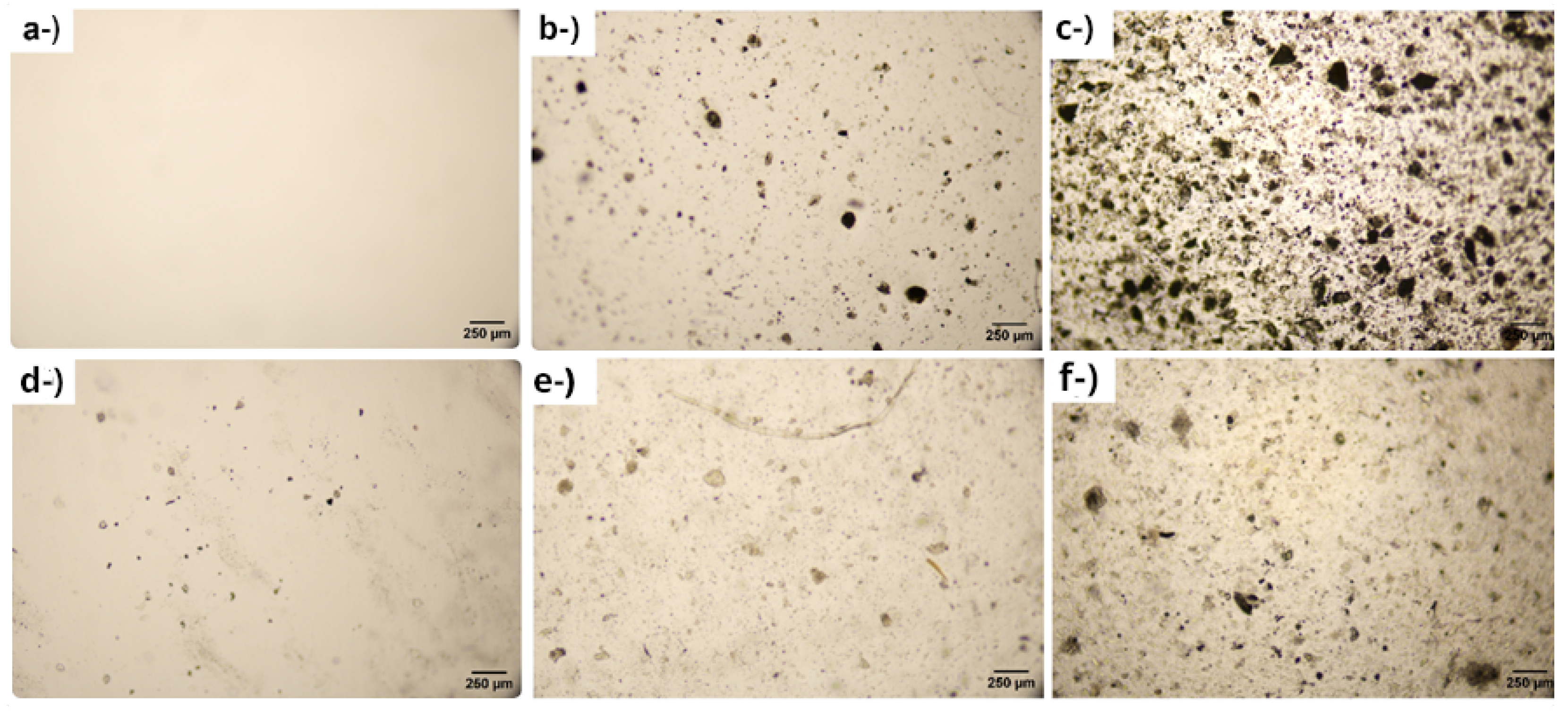
Figure 1 shows optical micrographs of CA films containing different loadings of silica-rich RHA and prepared with/without glycerol plasticization.
The neat CA control (
Figure 1a) exhibits a visually homogeneous and continuous surface, with no detectable particulate domains at this length scale, indicating uniform film formation by solvent casting. Upon incorporation of a low RHA loading (
Figure 1b; CA-0.01RHA, 0.01 g), discrete particles and sporadic micrometric agglomerates become apparent, suggesting only partial filler dispersion and the emergence of potential sites for optical scattering and stress concentration.
Increasing the RHA content (
Figure 1c; CA-0.1RHA) markedly raises both particle density and the extent of aggregation, producing more heterogeneous, coalesced domains consistent with stronger particle–particle interactions and reduced particle–matrix compatibility, which is expected to intensify transparency losses and increase property variability. Adding glycerol in the absence of RHA (
Figure 1d; CA-G) preserves an overall uniform appearance without introducing particulate domains, although it is expected to modify matrix mobility and, consequently, the mechanical response. CA-G also exhibits faint contrast spots, most consistently attributed to normal casting and drying phenomena in plasticized films, such as localized glycerol-rich microdomains or small microvoids formed during solvent evaporation.
In the plasticized composites, the role of glycerol is most evident at low filler loading (
Figure 1e; CA-G-0.01RHA), where the particle population appears finer and more evenly distributed than in the non-plasticized counterpart (
Figure 1b), with fewer large agglomerates, indicating that glycerol favors dispersion and mitigates domain coalescence during drying.
At high filler loading (
Figure 1f; CA-G-0.1RHA), heterogeneity remains pronounced and aggregation is still observed; however, the particulate domains appear less severely coalesced than in
Figure 1c, suggesting that glycerol can attenuate, but not eliminate, aggregation under high-RHA conditions.
To complement the qualitative inspection,
Table 2 summarizes the apparent dispersion state of RHA derived domains using 2D domain size descriptors obtained by image analysis.
When the RHA loading is increased in the non-plasticized series (CA-0.01RHA vs. CA-0.1RHA), the number of particle domains rises markedly and the areal fraction increases from 1.27% to 15.26%. In parallel, the size distribution broadens, with the standard deviation increasing from 12.1 to 17.5 μm and a pronounced high-size tail remaining at ≈ 67.8 μm, which is consistent with aggregation at higher filler contents.
At low RHA loading, adding glycerol (CA-0.01RHA vs. CA-G-0.01RHA) reduces the median domain size and narrows the distribution. Specifically, decreases from 36.8 to 29.4 μm and the standard deviation decreases from 12.1 to 9.3 μm, which is consistent with improved dispersion during drying.
At high RHA loading, glycerol (CA-0.1RHA vs. CA-G-0.1RHA) reduces the domain population and the areal fraction, with N decreasing from 133 to 39 and the areal fraction decreasing from 15.26% to 5.03%. However, the distribution remains broad and the high-size tail persists, with SD = 24.2 μm and ≈ 67.5 μm. This indicates that glycerol attenuates domain formation but does not eliminate it under high-RHA conditions.
3.2. FTIR Spectroscopy
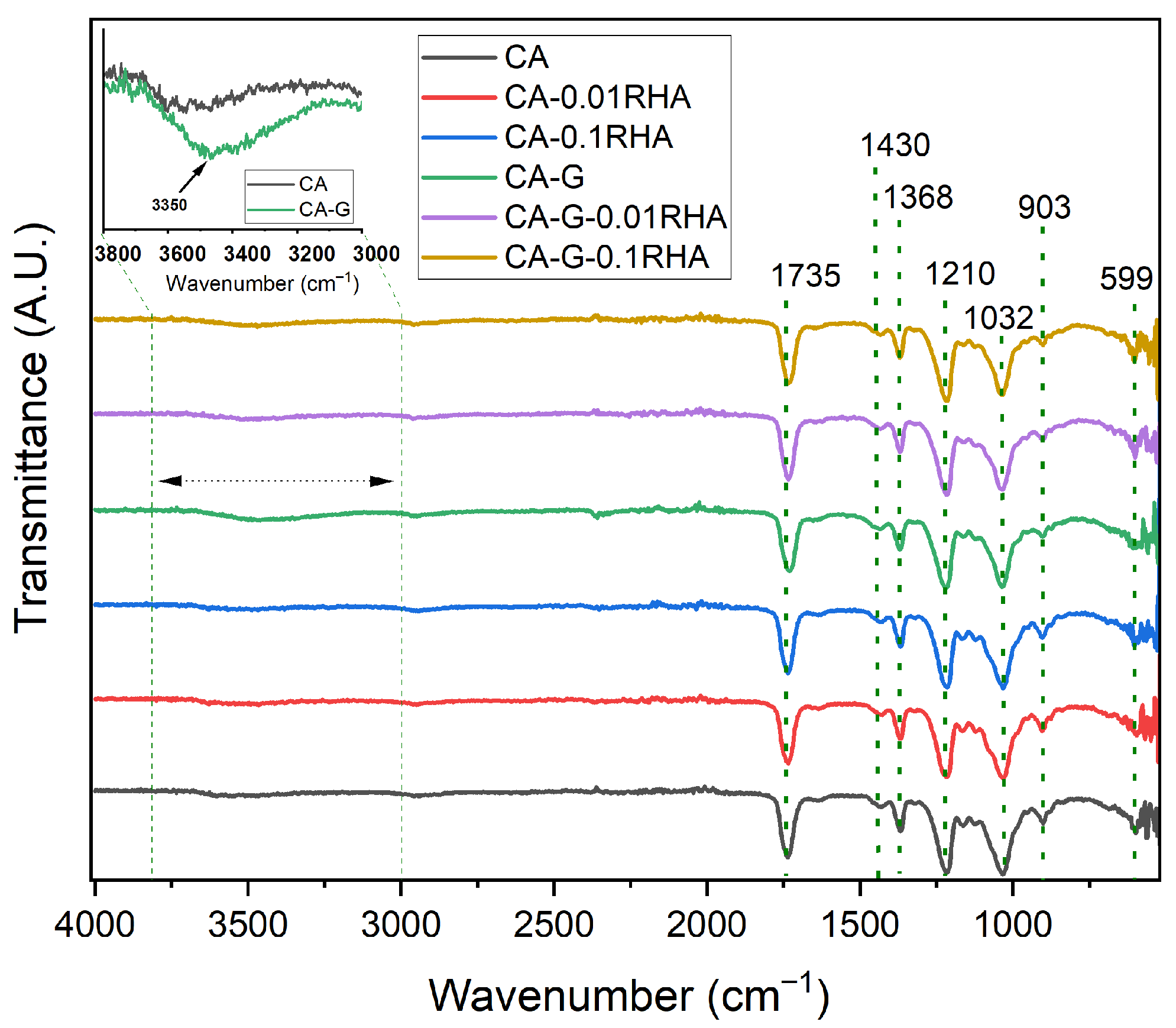
Figure 2 presents the FTIR spectra of the CA-based films produced with and without glycerol and with different RHA loadings. Overall, all formulations exhibit the characteristic bands of cellulose acetate, indicating that the solvent-cast processing preserves the polymer chemical structure within the detection limits of FTIR.
The main features of CA are observed across the series, including the strong carbonyl stretching band of the acetate group at ∼1735
. In the fingerprint region, CA also shows prominent bands at ∼1430 and ∼1368
, attributed to CH
2/CH
3 deformation modes of acetylated segments, together with intense C–O/C–O–C stretching contributions in the ∼1200–1250
window (marked here near ∼1210
) [
33].
Two additional intense bands that are clearly evident in the present plot are located at ∼1030
and in the ∼900–950
region, both commonly associated with C–O/C–O–C and backbone-related vibrations of the polysaccharide-derived framework. Importantly, the overall CA spectral profile is retained after incorporating RHA and/or glycerol, and no new bands emerge in the carbonyl region, indicating that the formulation effects are dominated by physical mixing and interfacial interactions rather than the formation of new covalent bonds [
34].
For the composite films, the main region where RHA-derived silica vibrations can overlap with CA absorptions is the same window where CA already has strong fingerprint bands. In the present spectra, this overlap is expressed most clearly around the intense CA band at ∼1032
, where RHA-containing samples show a small but reproducible change in band shape/intensity balance relative to neat CA. Importantly, no distinct new bands or diagnostic shifts are observed, and therefore the subtle differences in this region are interpreted as spectral superposition (i.e., Si–O–Si/Si–O stretching contributions overlapping CA C–O/C–O–C vibrations), rather than evidence of new chemical bond formation [
35].
Because CA absorbs strongly in this region, any silica-related contributions are expected to overlap with the CA fingerprint bands and are therefore discussed qualitatively as subtle line-shape changes rather than as distinct new peaks, consistent with previous reports on CA–silica composites [
36]. A similar caution applies to the ∼900–950
band. While this feature is compatible with CA backbone vibrations, in RHA-containing films it may also include contributions from silica-related modes in the same neighborhood, making band assignments inherently overlapped [
29].
An additional low-wavenumber band is consistently observed near ∼599
in all spectra, independent of RHA loading or glycerol plasticization. This band is commonly assigned to low-frequency deformation modes of the cellulose acetate backbone, including out-of-plane bending and collective skeletal vibrations involving C–O–C and ring-related motions of the glucopyranose units. Its persistence across all formulations and the absence of systematic intensity or position shifts indicate that this feature is intrinsic to the CA structure and is not associated with silica incorporation or plasticizer-specific interactions [
33].
In contrast, glycerol plasticization yields a clear and chemically meaningful change in the hydroxyl stretching region. As highlighted in the inset of
Figure 2, the plasticized film (CA-G) exhibits a broader and more intense O–H stretching envelope centered around ∼3350
relative to neat CA. This response is consistent with the higher concentration of hydroxyl groups introduced by glycerol and with strengthened hydrogen-bond interactions in the plasticized matrix, which broaden the O–H band by creating a wider distribution of hydrogen-bond strengths. This FTIR evidence aligns with the cross-technique observations in this study showed in the next sections. Glycerol-containing films show enhanced water affinity in contact-angle kinetics (
Section 3.4) and a distinct low-temperature mass-loss stage in TGA (
Section 3.5), attributed primarily to glycerol volatilization (and associated moisture), confirming the presence and functional impact of the plasticizer in the CA matrix.
3.3. UV–Vis Transmittance and Optical Shielding
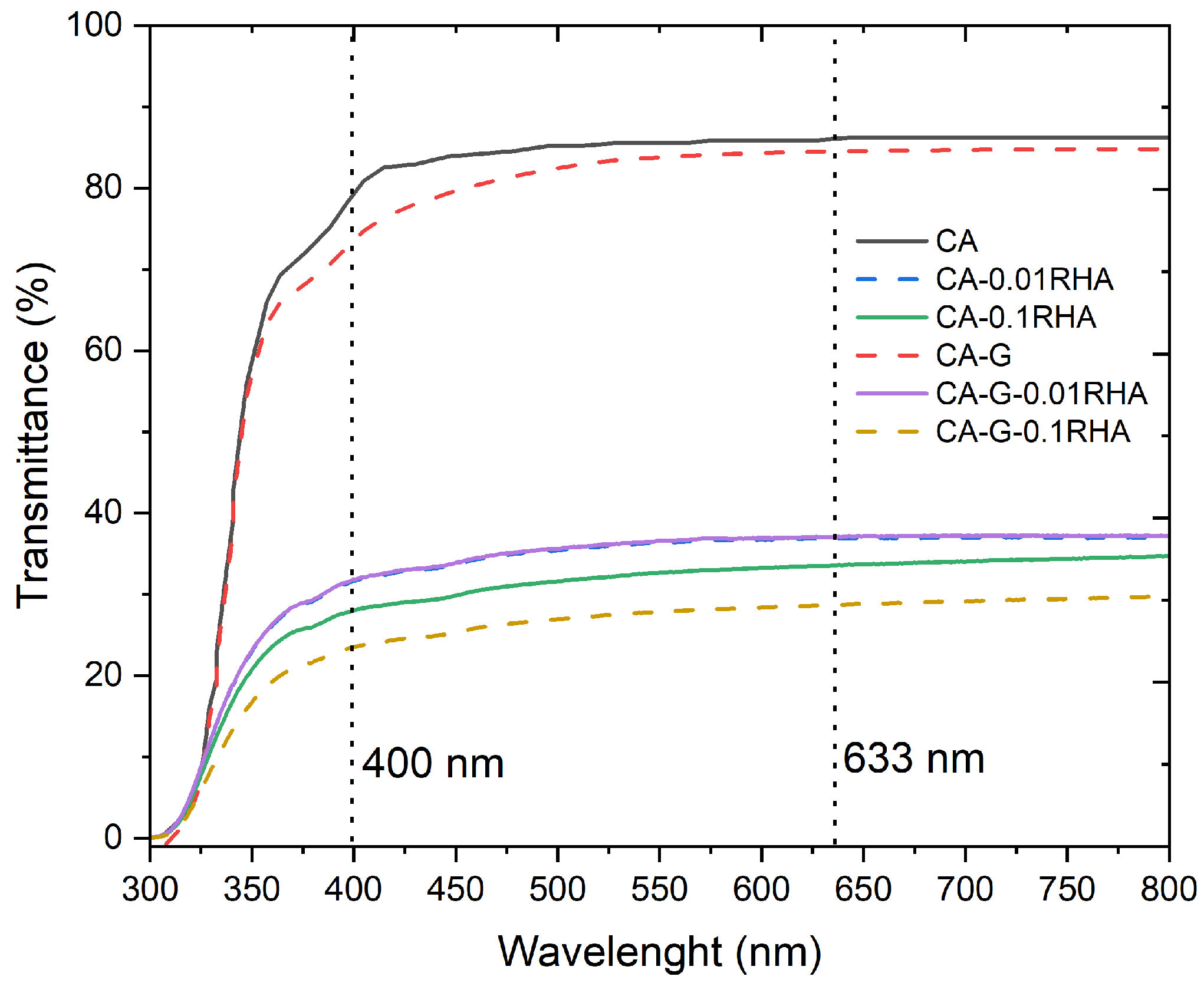
Figure 3 shows the UV–Vis transmittance spectra (300–800 nm) of the CA-based films, while
Table 3 reports transmittance at two selected wavelengths (400 and 633 nm). These wavelengths were highlighted for two practical reasons: (i) 400 nm lies at the violet/near-UV boundary, where many light-sensitive active compounds (such as, pigments, fragrances, vitamins and cosmetic actives) are more prone to photo-oxidation, so attenuation at this edge is a useful proxy for blue/near-UV shielding; and (ii) 633 nm is a representative wavelength in the red visible region, where scattering losses are typically lower and the signal-to-noise is high, making it a convenient benchmark for overall visible transparency and for comparing films under consistent optical conditions.
Neat CA exhibits high transparency, reaching 86.18% at 633 nm and 85.19% at 400 nm (
Table 3), with a nearly flat plateau across the visible range (
Figure 3). The glycerol-plasticized CA film (CA-G) remains highly transparent at 633 nm (85.03%), but shows a pronounced reduction at 400 nm (73.91%), indicating stronger attenuation toward the blue/near-UV edge.
Incorporation of silica-rich RHA markedly decreases transmittance across the entire measured range, consistent with enhanced scattering and absorption from inorganic domains. At low RHA loading, CA-0.01RHA and CA-G-0.01RHA converge to similar visible transmittance values at 633 nm (36.85% and 37.04%, respectively), while their 400 nm transmittance remains lower (31.68% and 31.84%), evidencing increased shielding in the near-UV/blue region.
Increasing the RHA content further suppresses transparency, CA-0.1RHA decreases to 33.52% (633 nm) and 28.05% (400 nm), and the highest-loading plasticized composite (CA-G-0.1RHA) exhibits the lowest transmittance overall (28.66% at 633 nm and 23.53% at 400 nm).
These trends are consistent with the progressive formation of particle-rich domains and aggregation observed by optical microscopy,
Section 3.1, which increases the density and characteristic size of scattering centers and thereby amplifies optical losses.
Overall, the spectra and point-wavelength data show that RHA tunes CA films from highly transparent layers (CA/CA-G) to low-transmittance, light-shielding films (CA-0.01RHA/CA-G-0.1RHA), and even the lowest RHA loading already converts CA into a protective translucent layer without requiring high filler contents. At this low loading, the plasticizer alters transmittance by less than ∼0.6% (relative) at both 400 and 633 nm (CA-0.01RHA vs. CA-G-0.01RHA).
3.4. Wettability
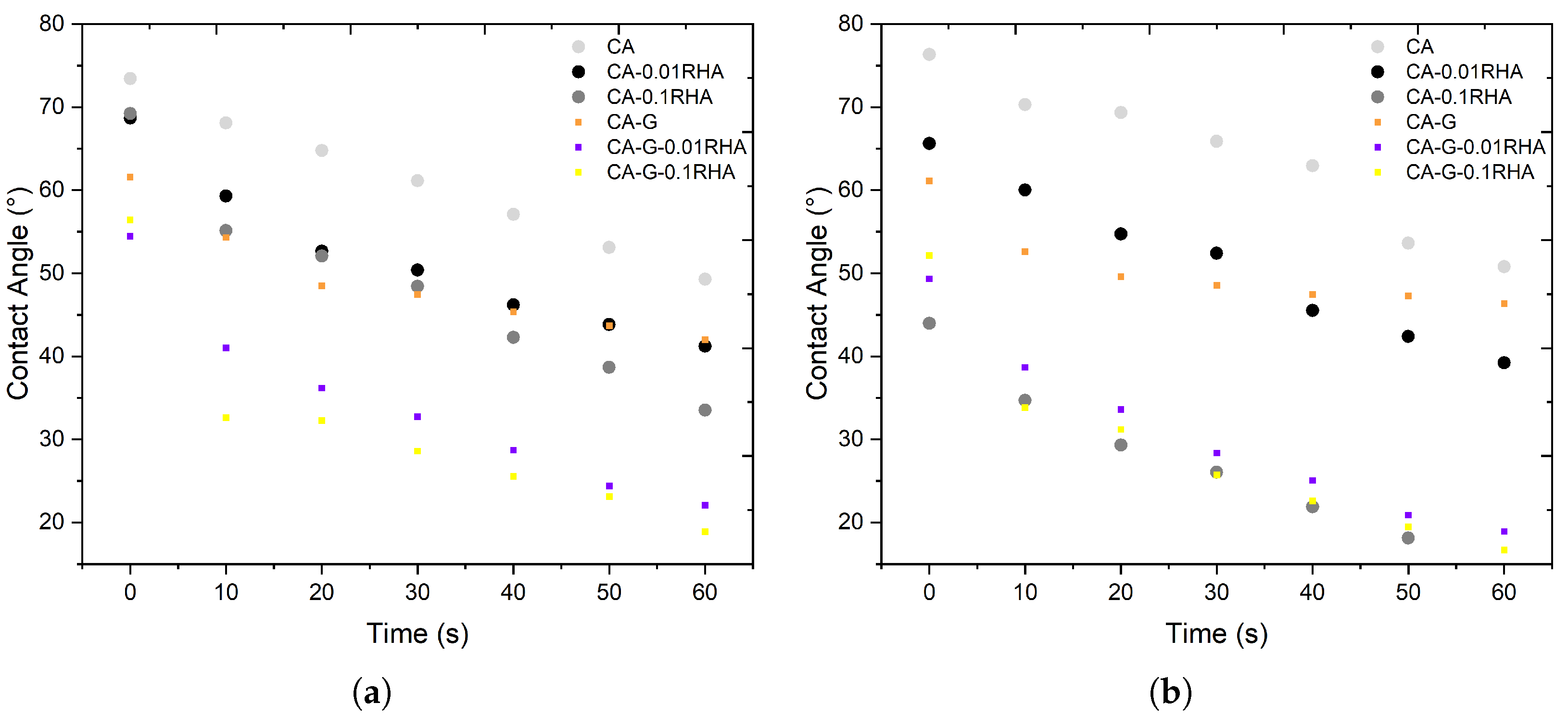
Figure 4 summarizes the time-dependent static contact angle of the CA-based films measured in deionized water (
Figure 4a) and in an alkaline NaOH aqueous solution (
Figure 4b).
In water,
Figure 4a, the neat CA film (CA) shows the highest initial contact angle and the slowest decay over 60 s, indicating a comparatively lower surface affinity for water at short times. Incorporating a low loading of silica-rich rice RHA (CA-0.01RHA) reduces the initial angle and increases the decay rate, consistent with the introduction of polar sites and microstructural heterogeneities that facilitate wetting and capillary penetration [
37].
As the RHA content increases (CA-0.1RHA), the contact angle decreases further and drops more rapidly, suggesting that higher filler contents (and the associated increase in particulate domains and aggregation) promote faster water uptake. The glycerol-plasticized films exhibit systematically lower contact angles than their non-plasticized counterparts, and a steeper time-dependent decrease, which is consistent with the hydrophilic character of glycerol and its tendency to increase chain mobility and water sorption [
38]. This effect is amplified when glycerol is combined with RHA (CA-G-0.01RHA and CA-G-0.1RHA), yielding the lowest angles and fastest wetting.
This plasticizer-driven shift in surface and water affinity is consistent with reports on cellulose acetate systems, where glycerol and related plasticizers alter chain packing and free volume and, depending on formulation and processing, can measurably modify wetting behavior and water-related responses [
39,
40].
In the alkaline medium,
Figure 4b, all formulations display lower contact angles and faster decreases compared with water, evidencing a stronger interaction between the films and NaOH. This behavior is expected because alkaline solutions can accelerate surface hydration and may promote partial deacetylation/hydrolytic processes in cellulose acetate, thereby increasing the density of hydrophilic functionalities at the interface and enhancing wetting over time [
41].
Notably, CA and CA-0.01RHA maintain higher angles throughout the test relative to the glycerol-containing films, indicating a comparatively better short-time resistance to alkaline wetting. From an application standpoint, considering protective translucent overwrap or pouch layer for premium light-sensitive products, the recommended formulation is CA-0.01RHA, which preserves comparatively higher contact angles under alkaline exposure together with reduced visible-light transmittance, making it a strong candidate for the external protective layer in premium flexible packaging.
3.5. Thermal Stability (TGA/DTG)
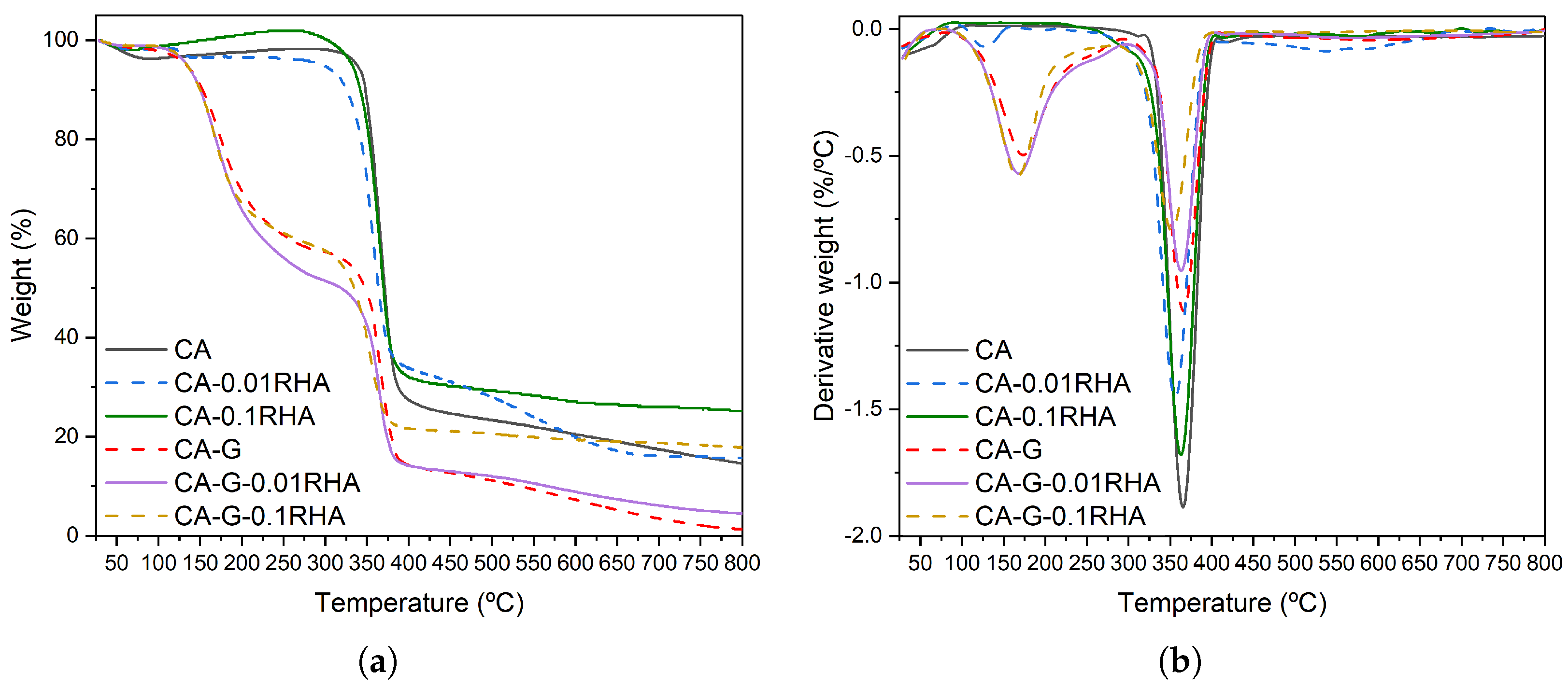
Figure 5 and
Table 4 summarize the thermogravimetric behavior of CA-based films reinforced with silica-rich RHA, prepared with and without glycerol, under inert atmosphere.
Overall, glycerol strongly modifies the degradation pathway: the non-plasticized films (CA, CA-0.01RHA, and CA-0.1RHA) are dominated by the main CA decomposition step in the ∼338–347 °C onset range, whereas the glycerol-plasticized films (CA-G, CA-G-0.01RHA, and CA-G-0.1RHA) exhibit a clear two-step mass-loss profile, with an early event at lower temperatures followed by CA backbone decomposition. A minor mass-loss below ∼120 °C, more noticeable in RHA-containing films, is attributed to desorption of physically adsorbed moisture and trace volatiles associated with the hydrophilic silica-rich ash surface.
For the glycerol-plasticized formulations, the first mass-loss step occurs between ∼137 and 206 °C (
Table 4) and is attributed mainly to glycerol volatilization/dehydration (and possibly desorption of bound moisture), consistent with polyol behavior under heating ramps in inert flow [
34,
42]. The second step, spanning ∼333–381 °C, corresponds to the main thermal decomposition of the cellulose acetate matrix (deacetylation scission and subsequent pyrolysis) [
43]. Accordingly, the DTG curves (
Figure 5b) display an additional low-temperature peak for CA-G, CA-G-0.01RHA, and CA-G-0.1RHA that is absent in the non-plasticized set.
For the non-plasticized films, the neat CA control shows a single major degradation event (
°C;
°C). The RHA-containing films present slightly lower characteristic temperatures (CA-0.01RHA and CA-0.1RHA), with
and
in the ∼338–344 °C and ∼354–361 °C ranges (
Table 4), which can be rationalized by mineral species in ash-derived fillers that may mildly catalyze early scission reactions.
In addition, in the 550–650 °C region, the weak DTG is most clearly resolved for CA-0.01RHA ( ≈ 576 °C). For CA-0.1RHA it approaches the DTG baseline and is therefore only visible as a faint shoulder. In the glycerol-containing formulations CA-G-0.01RHA and CA-G-0.1RHA, this feature is not clearly distinguished, which may reflect masking by the additional plasticizer-related mass-loss profile and the lower amount of high-temperature residue available for slow devolatilization and minor ash-associated transformations. Accordingly, this interpretation is suggestive and supports a filler-associated event rather than a second decomposition step of the cellulose acetate backbone.
Importantly, these relatively small shifts in characteristic temperatures are accompanied by substantial changes in the high-temperature residue, indicating a stronger effect of RHA on thermal resistance (inorganic retention) than on the onset of decomposition. In the non-plasticized set, the residue at 800 °C increases from 14.67% (CA) to 15.74% (CA-0.01RHA) and reaches 25.20% (CA-0.1RHA), consistent with the contribution of a thermally stable inorganic fraction and/or enhanced char formation. In the plasticized set, the same trend is more pronounced. The residue rises from 1.36% (CA-G) to 4.50% (CA-G-0.01RHA) and 17.79% (CA-G-0.1RHA), up to ∼13.1× higher than the plasticized control, highlighting the role of RHA in increasing the final solid fraction.
In addition, the lower residue percentages in glycerol-containing films (CA-G, CA-G-0.01RHA, and CA-G-0.1RHA) should be interpreted considering that residue is reported on an initial-mass basis and that glycerol is largely volatilized at low temperatures. Thus, adding glycerol increases the starting mass but contributes negligibly to the stable solid fraction, which intrinsically reduces the residue fraction by a dilution effect. In addition, plasticizer-driven early mass loss can modify the apparent decomposition pathway and decrease the effective char yield of the CA matrix, further lowering the final solid fraction.
Similar behavior has been reported for plasticized cellulose acetate systems in TGA studies [
44,
45], while silica-containing cellulose acetate composite films consistently show increased high-temperature residue due to the thermally stable inorganic fraction [
46].
3.6. Tensile Mechanical Properties
Table 5 summarize the tensile response of the CA-based films, reporting the maximum tensile stress (
), the maximum crosshead displacement (
), the stress at rupture (
), and Young’s modulus (
E).
For the non-plasticized series (CA, CA-0.01RHA, and CA-0.1RHA), a low RHA loading (CA-0.01RHA) preserves tensile strength relative to neat CA, with no statistically significant difference in between CA-0.01RHA, and CA-0.1RHA while markedly increasing stiffness, with E rising from 23.32 to 33.13 MPa, and this increase is statistically significant. This behavior is consistent with a reinforcement regime in which well-dispersed inorganic domains restrict chain mobility and improve load transfer at low filler contents.
This interpretation is aligned with prior reports on cellulose acetate–silica hybrid films, where modest silica additions can increase stiffness and strength when dispersion is adequate, whereas higher inorganic contents more often compromise performance as microstructural heterogeneity and defect-like domains become dominant [
36].
At higher RHA content (CA-0.1RHA), decreases to 21.78 MPa and this reduction is statistically significant relative to CA-0.01RHA and E drops relative to CA-0.01RHA; however, the CA-0.01RHA vs. CA-0.1RHA difference in E is not statistically significant, indicating a directional trend rather than a confirmed decrease, which is consistent with the formation of particle-rich domains/agglomerates acting as stress concentrators and reducing the reinforcement efficiency at higher loadings.
Glycerol plasticization (CA-G, CA-G-0.01RHA, and CA-G-0.1RHA) leads to the expected softening of the CA matrix, reducing both
and
E for the plasticized control (CA-G) compared with CA, consistent with the lubricating effect of glycerol that increases free volume and chain mobility [
40].
In this dataset, however, the lack of a clear increase in for CA-G suggests that the plasticization response is not purely ductility-driven and may be constrained by casting and drying heterogeneities, as localized glycerol-rich microdomains or small microvoids, which can promote early failure.
Introducing RHA partially offsets the softening effect at low loading. In CA-G-0.01RHA, E increases to 29.13 MPa and this increase is statistically significant relative to CA and increases to 14.48 MPa compared with CA-G, although this difference is not statistically significant, while decreases, indicating that stiffness recovery occurs alongside a reduced deformation capacity. At high loading (CA-G-0.1RHA), the mechanical performance deteriorates again, consistent with a defect-dominated regime in which heterogeneity and agglomerate-like domains limit load transfer and promote premature rupture.
We note that
in this dataset does not scale monotonically with the qualitative amount of agglomerates observed by optical microscopy, because elongation to failure is governed by multiple concurrent factors, including matrix cohesive strength, plasticizer-induced micro-heterogeneity, and defect sensitivity introduced during casting or drying [
47]. In glycerol-containing films, localized glycerol-rich microdomains formed during solvent evaporation can act as early crack initiators [
33]. This effect can limit
even when the apparent RHA domain dispersion is improved (CA-G-0.01RHA vs. CA-0.01RHA). Consistently,
for CA-G-0.01RHA is statistically lower than CA-0.01RHA.
Conversely, although CA-0.1RHA exhibits a higher area fraction (
Table 2) of RHA-derived domains than CA-G-0.1RHA, CA-0.1RHA lacks plasticizer-related heterogeneities and retains a stronger CA matrix, so the presence of more domains does not necessarily translate into lower elongation. In fact,
is statistically higher for CA-0.1RHA than for CA-G-0.1RHA. The mechanical penalty is more strongly associated with defect-like large domains, interfacial weakness, and void-related premature rupture, which are amplified under the combined high-loading and plasticized condition (CA-G-0.1RHA).
From a product-oriented perspective targeting a translucent, mechanically robust, light-protective overwrap/pouch layer, CA-0.01RHA is the most attractive formulation within this set because it combines high tensile strength (25.11 MPa) with the highest stiffness (33.13 MPa), with E statistically higher than CA, while avoiding the softening penalty introduced by glycerol.
3.7. Cross-Technique Structure-Property Interpretation
The combined dataset supports a consistent cause–effect pathway linking dispersion state to performance. As RHA loading increases in the non-plasticized series, optical microscopy quantifies a marked rise in the population of apparent domains (
Table 2), from
and 1.27% area fraction in CA-0.01RHA to
and 15.26% in CA-0.1RHA, with a persistent large-size tail (
≈ 67.8 μm), indicating aggregation at higher filler contents. This structural change aligns with the progressive reduction in UV–Vis transmittance (
Table 3), consistent with a higher density and characteristic size of scattering/attenuating centers along the optical path.
The same dispersion shift rationalizes the mechanical response (
Table 5): the low-loading condition (CA-0.01RHA) shows the highest mean stiffness (
MPa) while maintaining a high mean
(
MPa), whereas the more heterogeneous, aggregation-prone condition (CA-0.1RHA) shows lower mean
(
MPa) and lower mean modulus (
MPa), consistent with agglomerate-driven stress concentration and reduced reinforcement efficiency.
In parallel, wettability kinetics (
Figure 4) show faster wetting upon adding RHA and glycerol, consistent with increased surface heterogeneity and more hydrophilic/plasticized interfaces, while the stronger wetting in NaOH suggests a more reactive/hydrating interface under alkaline exposure [
41]. Overall, these correlations explicitly link (i) RHA-derived domain formation and (ii) matrix plasticization to the observed optical shielding, wetting behavior, and mechanical trade-offs within the same formulation set.
3.8. Limitations and Future Work
We acknowledge that the present study has limitations. This study targets CA-RHA films as secondary, non product contact light shielding layers. Therefore, migration testing and regulatory qualification for direct product contact were not addressed. Any direct contact use would require extractables and leachables testing and a regulatory evaluation aligned with the specific product.
A further limitation is that all formulations were produced under a single, fixed casting and drying protocol to enable a fair comparison within the same processing platform. Therefore, the ductility response of glycerol-containing films should be interpreted as specific to this film-formation route. More tightly controlled drying conditions and post-drying conditioning are expected to help separate plasticizer redistribution effects from filler-related heterogeneity and may better express the expected plasticizing response in future work.
In addition, given that barrier performance is central to the intended packaging application, we recognize that this work does not provide a direct quantification of oxygen permeability. Oxygen transmission rate (OTR) measurements would be the most direct evidence to support oxygen barrier claims and will be prioritized in our follow up experiments, particularly for oxygen sensitive products. Also, DSC and DMA were not available within the timeframe of the study. These techniques should be addressed in future work to quantify thermal transitions, viscoelastic relaxation behavior, and component interactions in the presence of glycerol and RHA, providing complementary support for the interpretation discussed here.
4. Conclusions
Silica-rich RHA was upcycled as an inorganic filler to engineer CA films with tunable properties toward higher-value sustainable packaging. Using a single solvent-casting route, we varied RHA loading with and without glycerol plasticization to map how microstructure governs optical shielding, wetting behavior, and tensile performance.
FTIR confirmed the chemical integrity of CA across all formulations and indicated stronger hydroxyl interactions in glycerol-plasticized films, consistent with a plasticization mechanism driven by physical interactions. Optical microscopy showed that RHA progressively induces particle-domain formation and aggregation, while glycerol promotes improved dispersion and a more uniform surface appearance. These microstructural trends translated into a controllable optical–mechanical trade-off. Neat CA remained highly transparent, whereas RHA reduced transmittance across the UV–Vis range. Glycerol produced only a minor change in transmittance, indicating that shielding is primarily governed by ash-derived inorganic domains.
Tensile testing highlighted an optimal low-filler regime in the non-plasticized series. The formulation with 1.33 wt% RHA preserved strength while maximizing stiffness, whereas higher RHA loading increased heterogeneity and penalized mechanical performance. Contact-angle measurements in neutral and alkaline media indicated pH-sensitive wetting, with faster deterioration under alkaline exposure. Thermogravimetric analysis confirmed increased char residue with RHA addition and showed that glycerol introduces an early mass-loss stage.
The CA/RHA platform provides a simple and potentially scalable route to upcycled, silica-reinforced films. Within the evaluated set, the formulation containing CA and 1.33 wt% RHA without glycerol stands out as a robust secondary layer with low UV–Vis transmittance, supporting its use in high-value light-sensitive flexible healthcare packaging, such as protective overwraps or translucent pouches.




 ,
,