
Deciphering Shale Gas Production Dynamics: A Fractal Theory Approach

Abstract
1. Introduction
2. Research Methods
2.1. Fractal Theory
2.1.1. Hurst Exponent (H)
- H > 0.5: Signifies positive long-range dependence (persistence), where trends are more likely to continue.
- H < 0.5: Indicates anti-persistence (mean-reversion), with fluctuations tending to revert toward long-term averages.
- H = 0.5: Corresponds to a memoryless random walk with no correlation between observations, consistent with classical random processes.
2.1.2. Fractal Dimension (D)
2.1.3. Relationship Between Hurst Exponent (H) and Fractal Dimension (D)
2.2. Methods for Calculating Fractal Characteristics
2.2.1. Calculating H Using R/S Analysis
2.2.2. Calculating D Using the Variogram Method
3. Data Processing
4. Results and Analysis
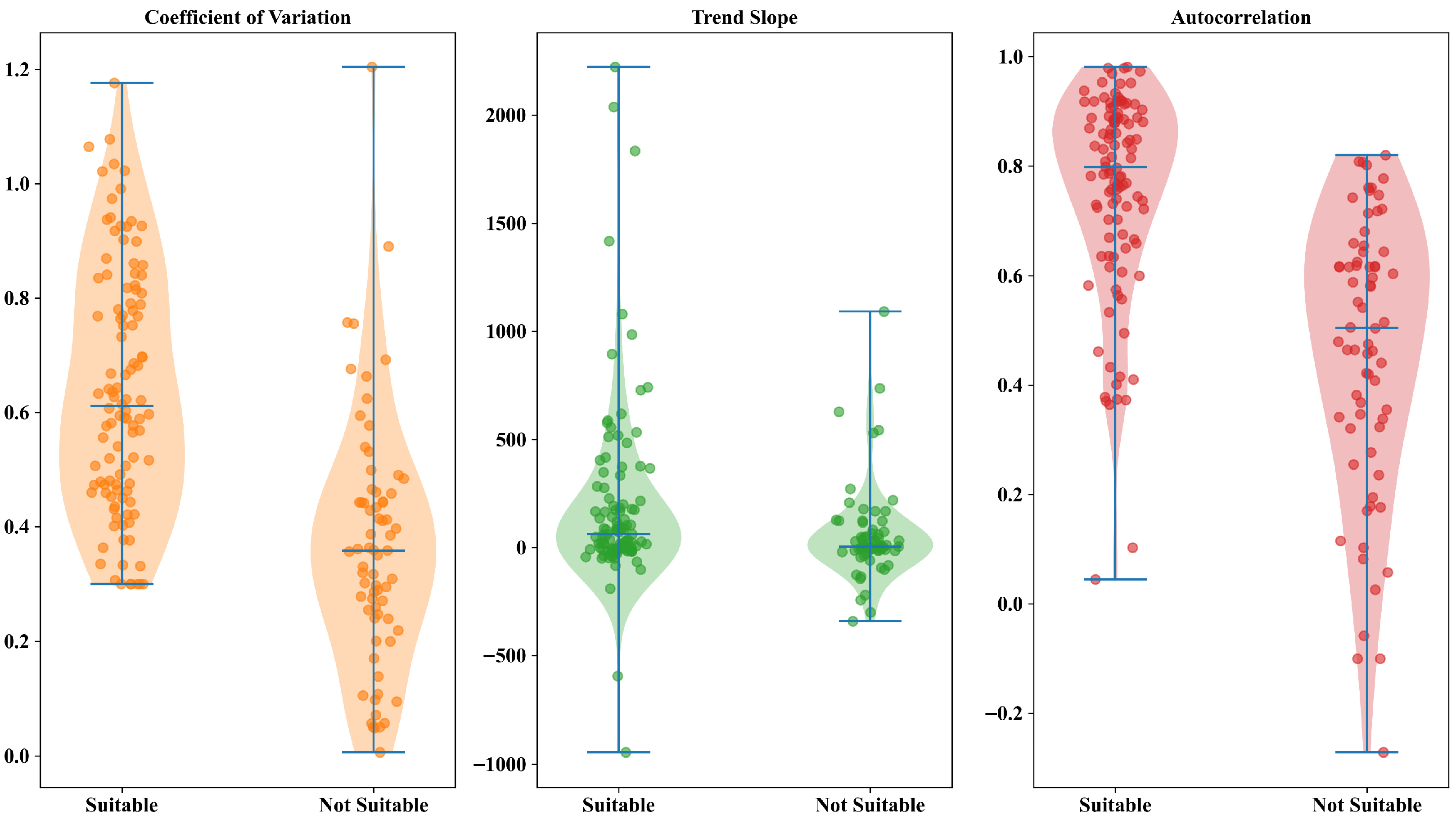
4.1. Applicability Analysis of Fractal Theory
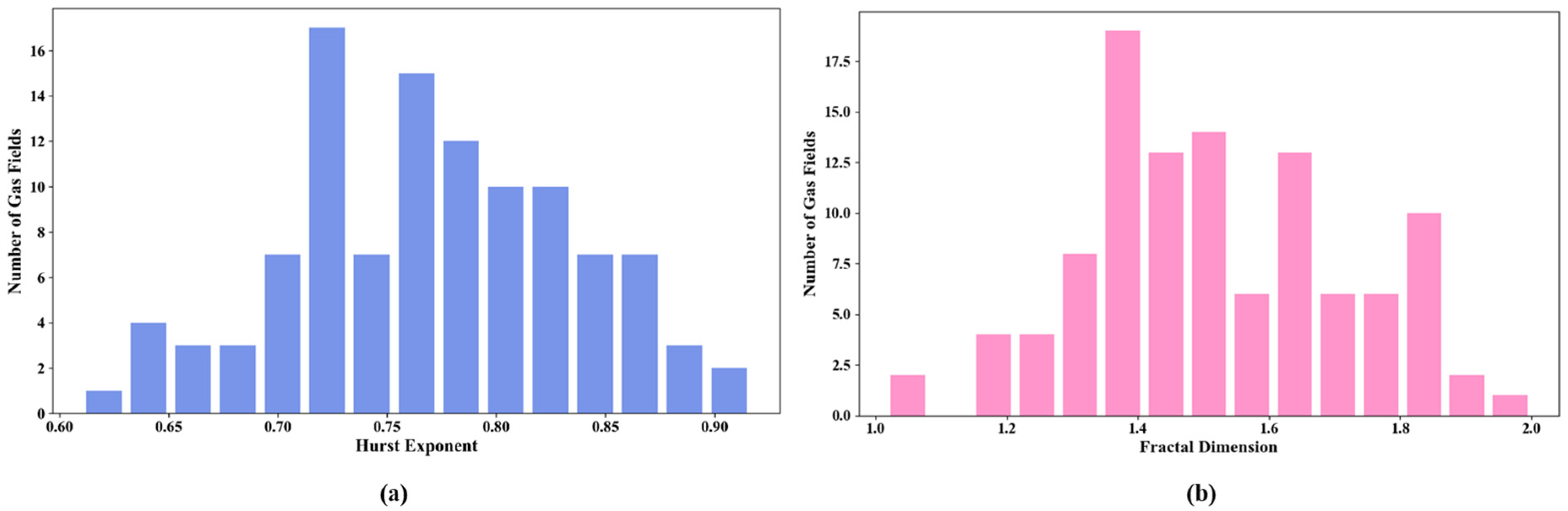
4.2. Distribution Patterns of Fractal Characteristics
4.3. Production Pattern Classification
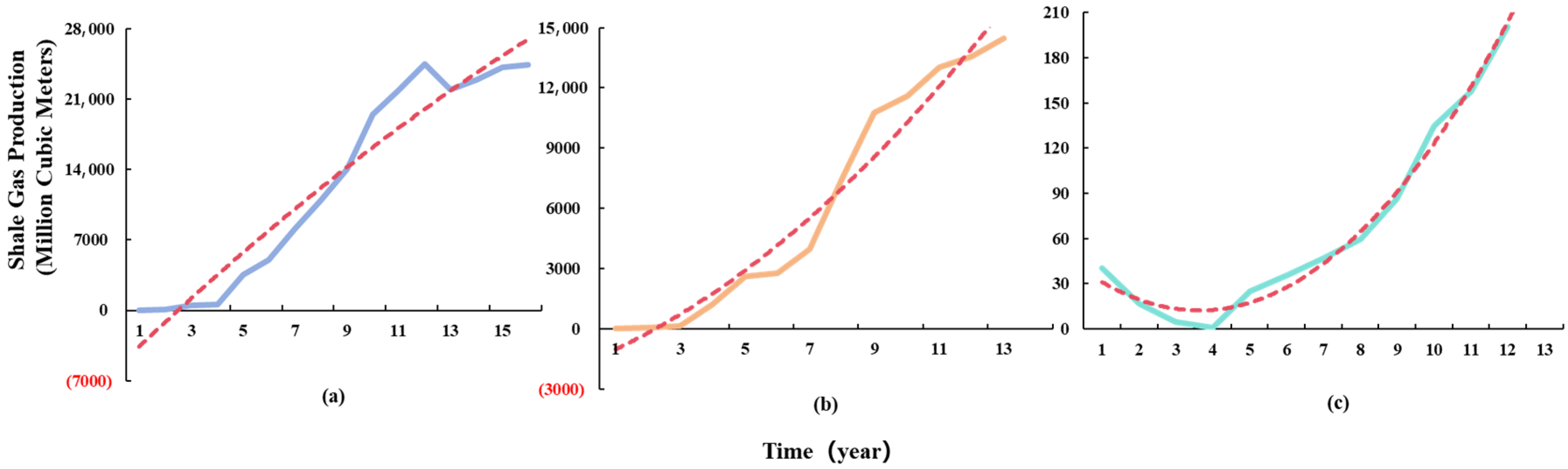
- Stable Growth Type: Comprising 5 shale gas fields, which account for 4.6% of the total. In terms of temporal structure, the H values for this category range between 0.64 and 0.86, indicating strong persistence in the production sequences. The D values primarily fall within a moderate range of 1.0 to 1.2, indicating a discernible regularity in the production dynamics over time. Regarding production volatility, the CV values are all below 0.5, and the autocorrelation coefficients all exceed 0.95, demonstrating a high correlation between production at adjacent time points and further reinforcing the stability and continuity of their trends. From a growth perspective, the trend slopes for these fields are all positive and relatively high, indicating rapid production increase. Moreover, none of these fields reached their production peak during the observation period, demonstrating strong and sustained growth momentum. This pattern is representative of a typical “high-growth, medium-volatility” development type (Figure 3).
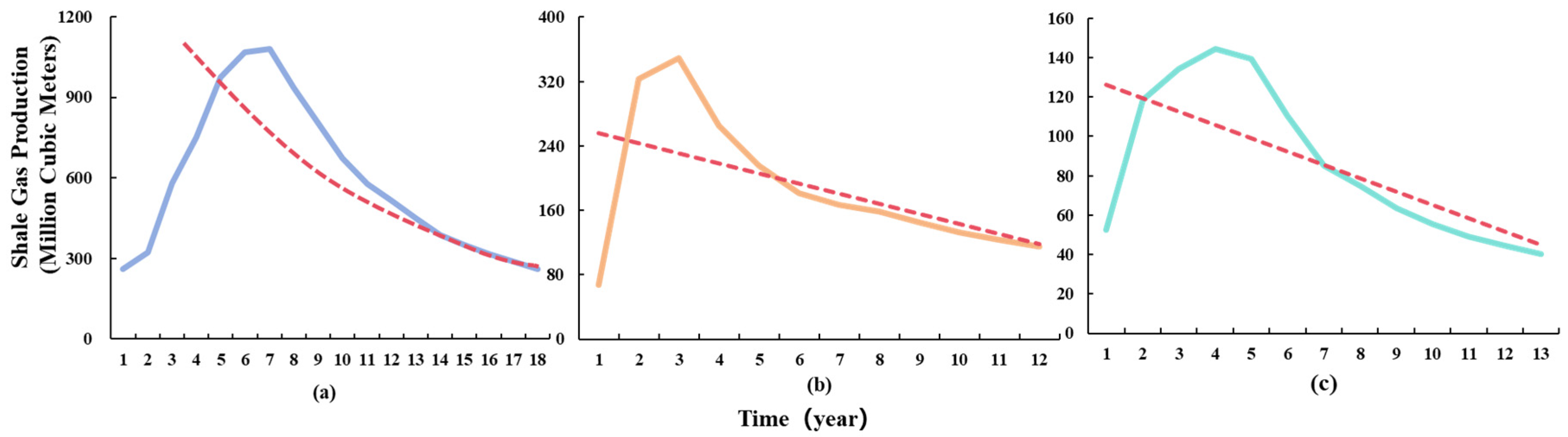
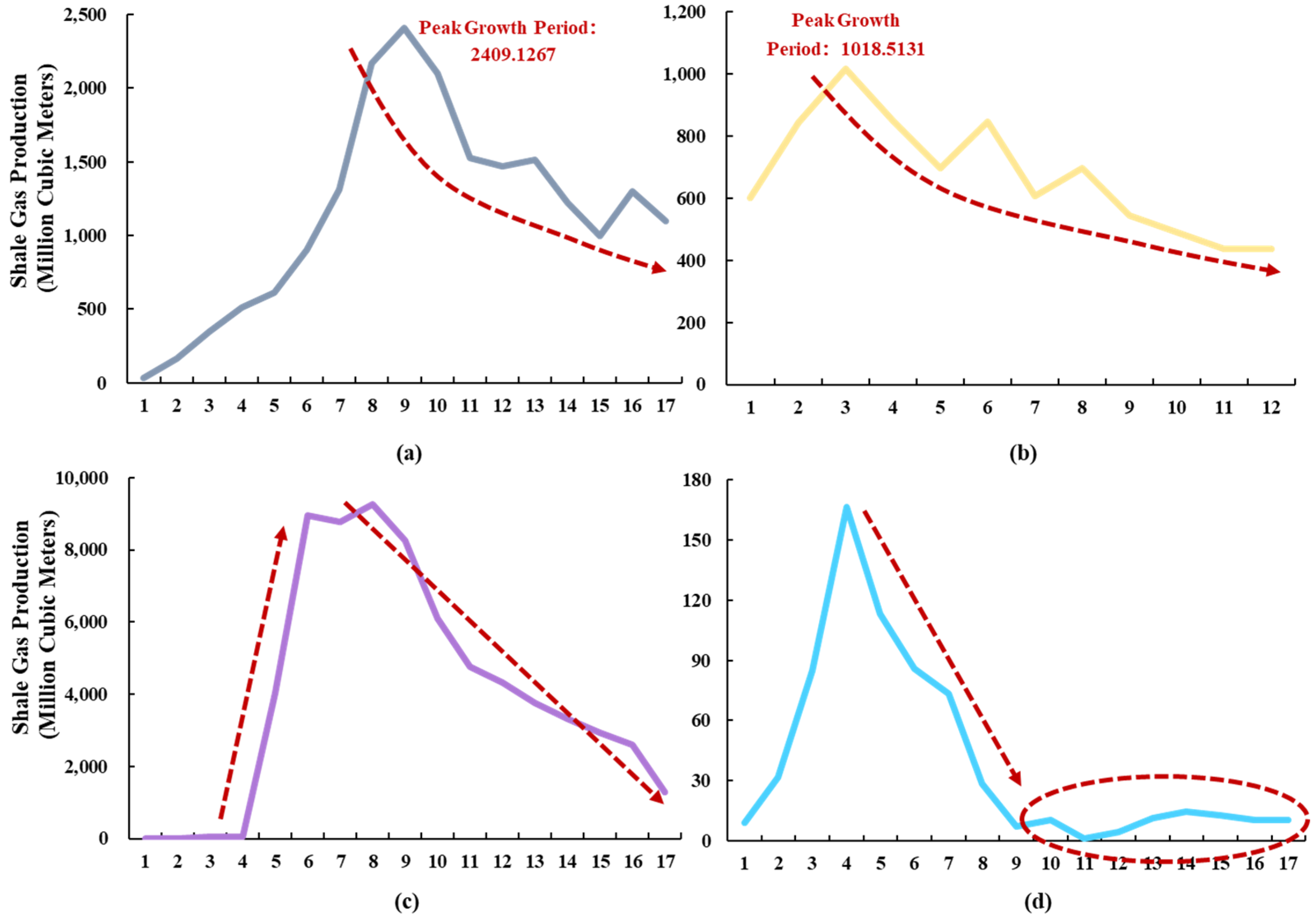
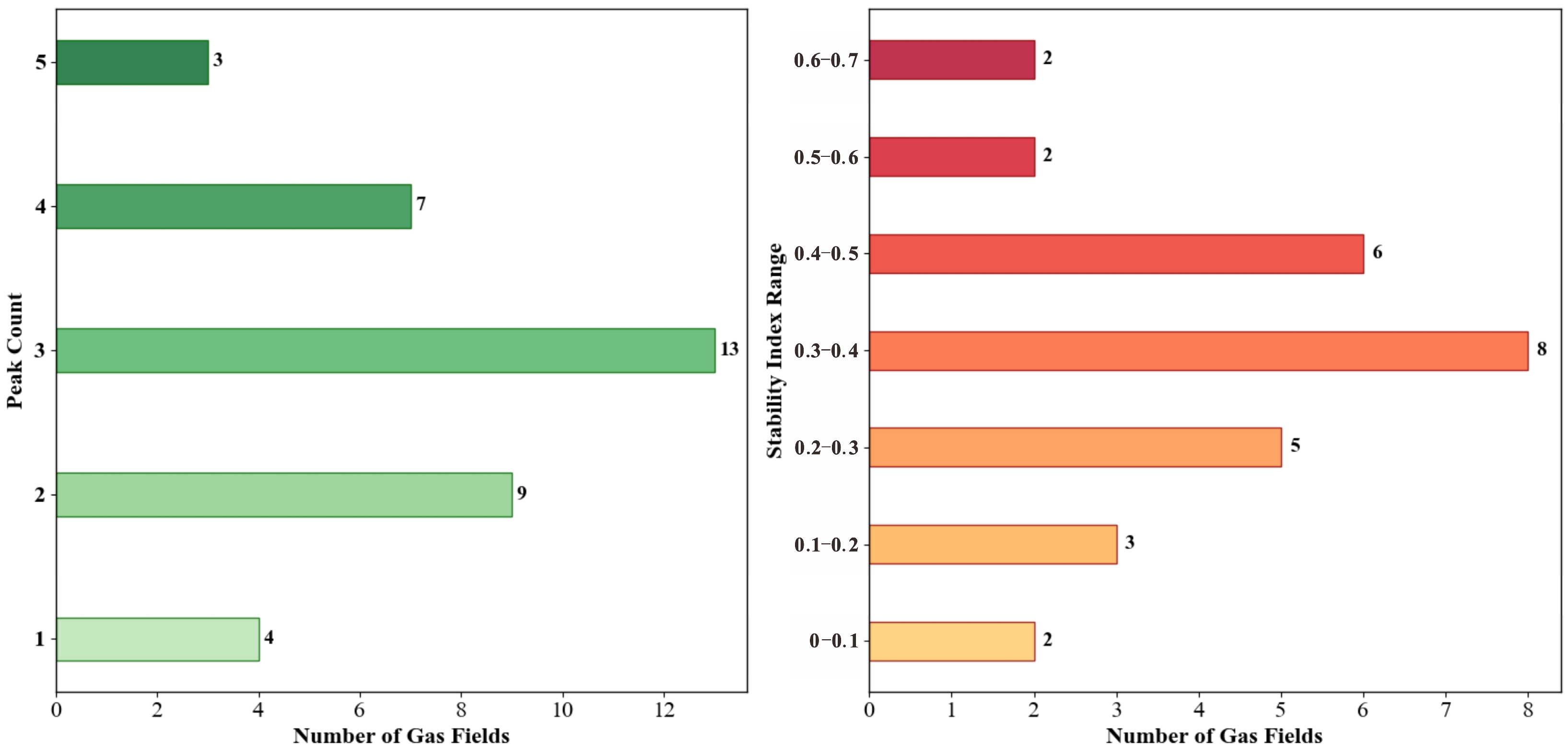
- Stable Decline Type: Comprising 9 shale gas fields, which account for 8.3% of the total. In terms of temporal structure, the H values for this category primarily range from 0.69 to 0.87, while the D values fall between 1.3 and 1.6. This reflects that although the production sequences are structurally complex, they possess strong long-term memory and trend persistence. Regarding production volatility, the CV values for all fields in this category are below 0.6, with most concentrated in the 0.4–0.5 range. Simultaneously, the autocorrelation coefficients all exceed 0.75, indicating that a relatively stable output level is maintained even during the decline phase, and a strong positive correlation exists between production at adjacent time points, which helps ensure the coherence of the declining trend. From the perspective of trend characteristics, the production trend slopes for these fields are consistently negative, indicating an overall moderate decline rate (Figure 4). Furthermore, all fields exhibited only a single production peak during the observation period, further confirming that their production status has entered a systematic and stable decline phase, characteristic of the late development stage.

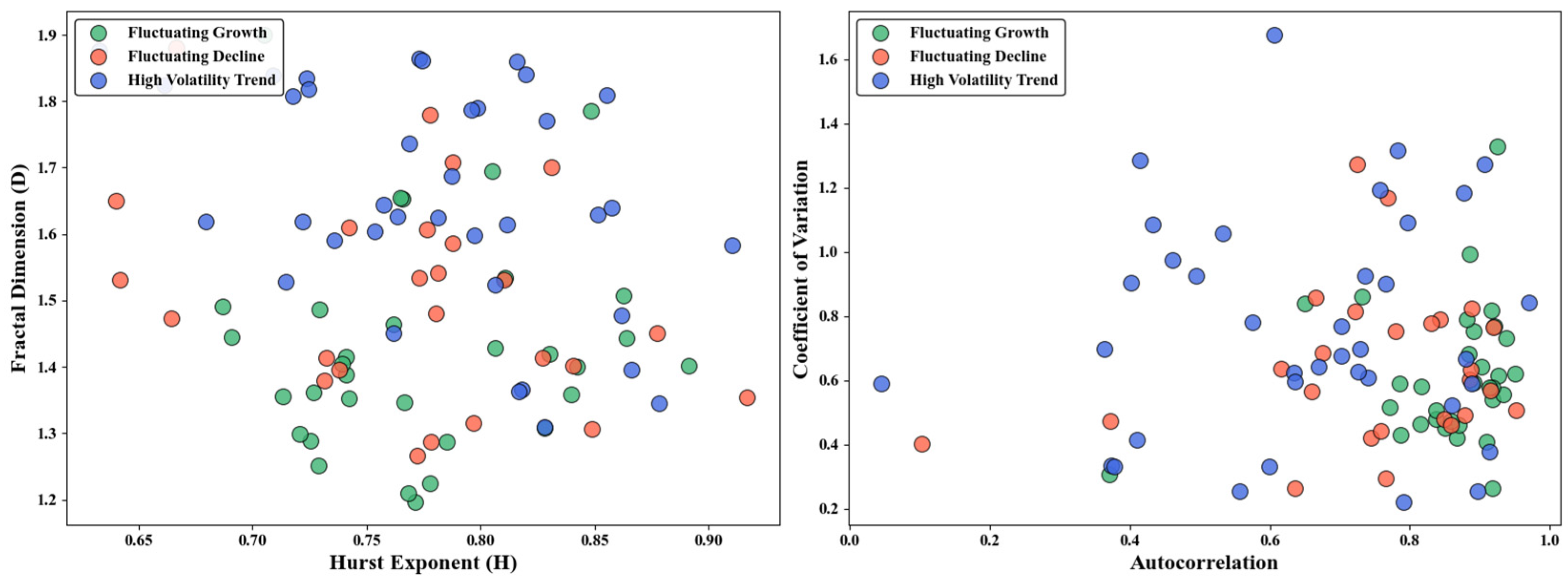
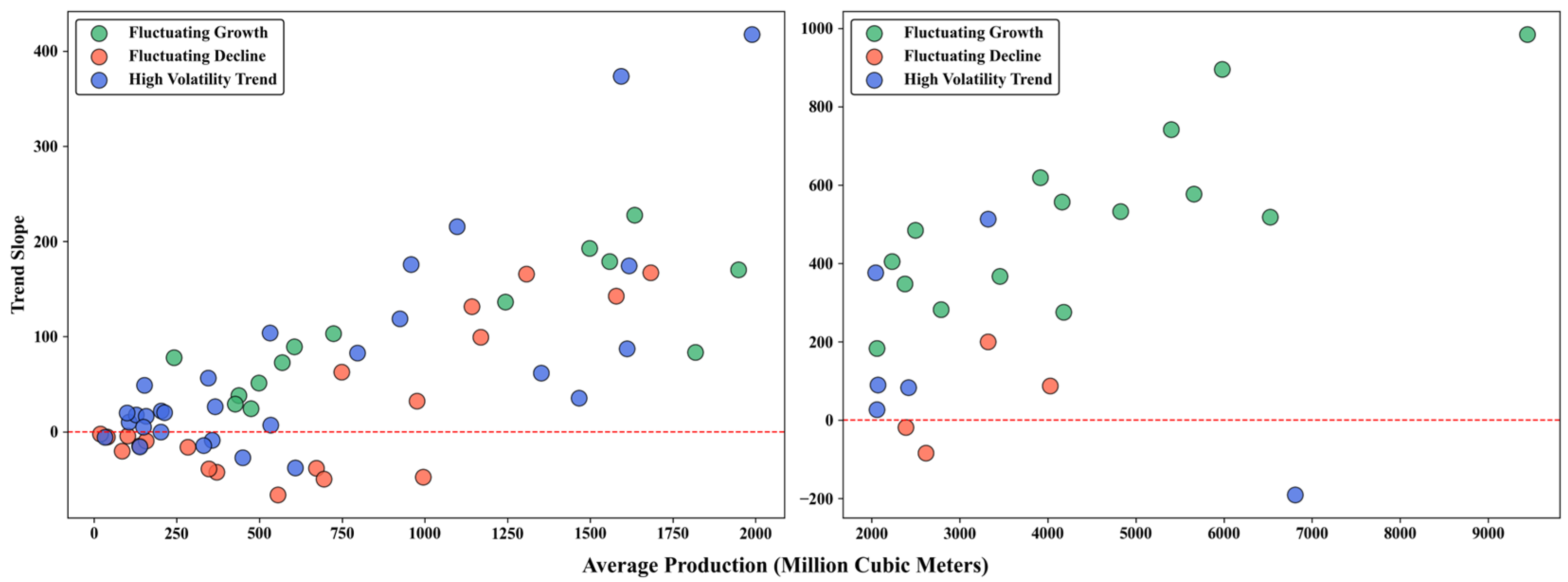
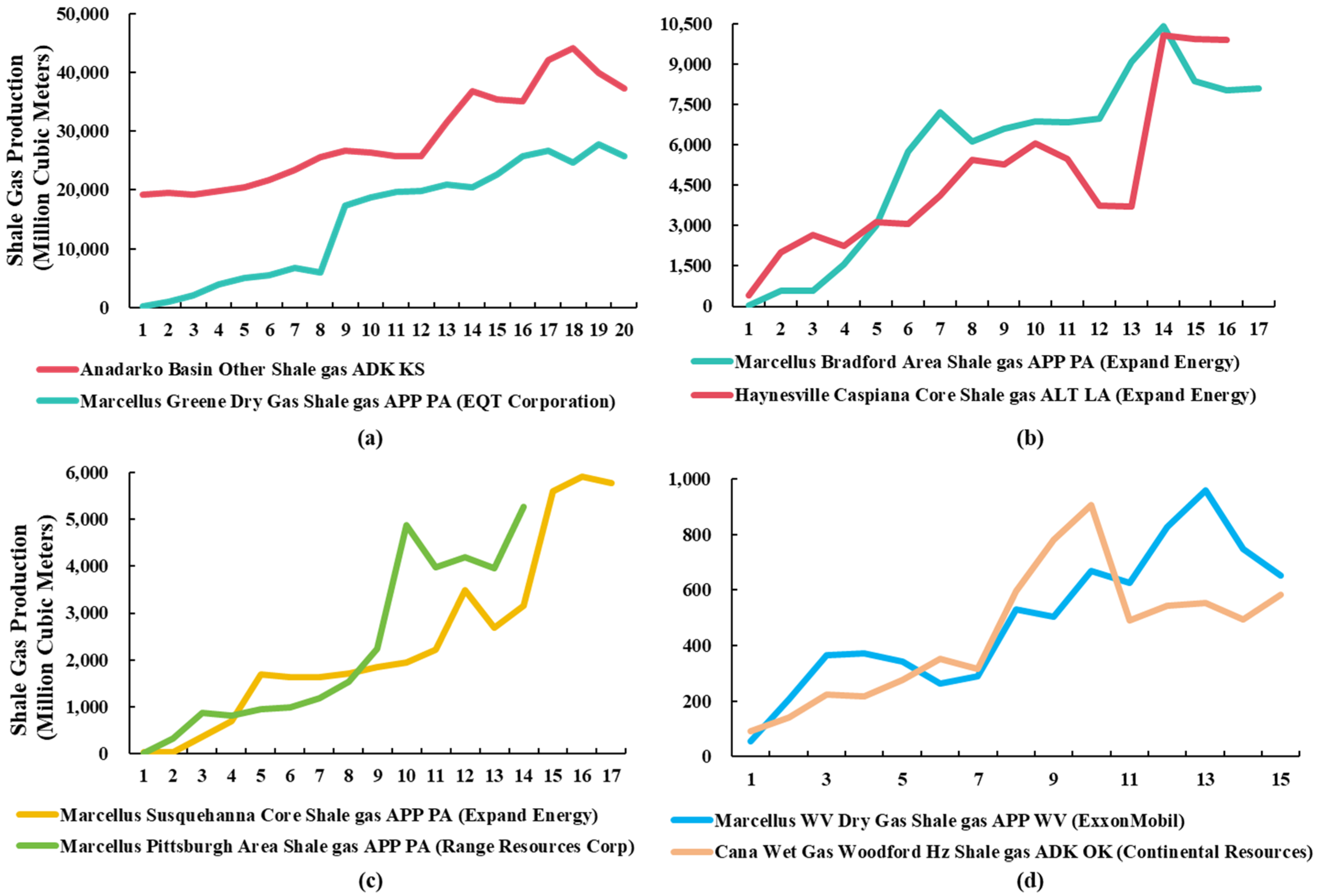
- Fluctuating Growth Type (34.0%): Exhibits an overall upward trajectory during the growth phase, despite the presence of short-term fluctuations.
- Fluctuating Decline Type (26.6%): Displays a general downward trend during the production depletion phase, accompanied by significant volatility.
- High-Volatility Complex Type (39.4%): Lacks a distinct directional trend but is marked by particularly pronounced fluctuation amplitudes, indicating very high uncertainty.
4.4. Constraining Effect of Production Dynamics Classification on EUR Estimation Uncertainty
- Stable Trend Type: Typically exhibit low D, high H, and strong autocorrelation, resulting in DUC < 0.3. Their straightforward dynamics and well-defined trends lead to EUR prediction errors generally below 10%.
- Fluctuating Growth and Decline Type: Increased structural complexity and reduced autocorrelation, with DUC values ranging 0.3–0.6 and 0.4–0.9, respectively, corresponding to elevated prediction uncertainty.
- High-Volatility Complex Type: Characterized by high D, low autocorrelation, and low H, exhibit DUC > 1.0, reaching up to 2.5. These systems demonstrate high uncertainty and chaotic behavior, with EUR prediction errors potentially exceeding 25%, necessitating probabilistic assessment methods for risk quantification.
5. Conclusions
- (1)
- Shale gas production sequences commonly exhibit significant fractal characteristics. Among the 108 gas fields suitable for fractal analysis, the mean H values is 0.78 and the mean D values is 1.5. This indicates that shale gas production sequences possess distinct long-term memory and moderate to high structural complexity, which are difficult to fully characterize using traditional linear models.
- (2)
- Based on fractal characteristics, shale gas fields can be classified into stable-trend and fluctuating-trend types. For the predominant fluctuating-trend category (87.0%), three distinct subclasses were identified according to their fractal features and dynamic behaviors: fluctuating-growth (34.0%), characterized by high growth rates coupled with strong volatility; fluctuating-decline (26.6%), maintaining pronounced decline trends amid fluctuations; and high-fluctuation complex (39.4%), exhibiting both trend persistence and dynamic complexity. This refined classification reveals substantial heterogeneity within fluctuating gas fields, demonstrating how differences in fractal structure directly correspond to distinct production evolution pathways, thereby providing a theoretical foundation for formulating differentiated development strategies.
- (3)
- The fractal-based production pattern classification establishes a quantitative framework for development strategy formulation and EUR uncertainty assessment. The proposed DUC directly correlates classification with EUR prediction accuracy: stable-type fields (DUC < 0.3) show errors below 10%, while high-fluctuation complex fields (DUC > 1.0) may exceed 25% error. This achievement creates a direct link between fractal classification and development risk evaluation, offering valuable references for and probabilistic EUR assessment methods across different field types.
Author Contributions
Funding
Data Availability Statement
Conflicts of Interest
References
- Clarkson, C.R.; Nobakht, M.; Kaviani, D.; Ertekin, T. Production analysis of tight-gas and shale-gas reservoirs using the dynamic-slippage concept. SPE J. 2012, 17, 230–242. [Google Scholar] [CrossRef]
- Lewis, A.M.; Hughes, R.G. Production data analysis of shale gas reservoirs. In Proceedings of the SPE Annual Technical Conference and Exhibition, Denver, CO, USA, 21 September 2008. SPE-116688-MS. [Google Scholar]
- Ma, H.; Yang, Z.; Xie, N.; Ye, C.; Xiong, J.; Zhu, K.; Cheng, J. Dynamic analysis method research and application of shale gas horizontal well. Chem. Technol. Fuels Oils 2021, 57, 289–298. [Google Scholar] [CrossRef]
- Xu, Y.; Liu, X.; Hu, Z.; Duan, X.; Chang, J. A Semianalytical Production Prediction Model and Dynamics Performance Analysis for Shale Gas Wells. Geofluids 2021, 2021, 9920122. [Google Scholar] [CrossRef]
- Sima, Q. Dynamic analysis and optimization strategies for shale oil production. Geogr. Res. Bull. 2024, 3, 96–99. [Google Scholar]
- Dhar, D. Fractals. Bull. Mater. Sci. 1984, 6, 817–822. [Google Scholar] [CrossRef]
- Zhang, L.D. Application of the Multi-fractal Theory in Describing Unconventional Reservoir Characteristics. Liaoning Chem. Ind. 2016, 45, 777–778+781. [Google Scholar] [CrossRef]
- Zhang, C.; Guan, P.; Zhang, J.; Liang, X.; Ding, X.; You, Y. A Review of the Progress on Fractal Theory to Characterize the Pore Structure of Unconventional Oil and Gas Reservoirs. Acta Sci. Nat. Univ. Pekin. 2023, 59, 897–908. [Google Scholar] [CrossRef]
- Guo, L.Q. Research on Evaluation Methods for Complex Reservoir Pore Structure Based on Fractal Theory. In Proceedings of the Second China Petroleum Geophysics Academic Conference (Volume II), Wuhan, China, 24 April 2024; PetroChina Huabei Oilfield Company Exploration and Development Research Institute: Renqiu, China, 2024; pp. 140–143. [Google Scholar] [CrossRef]
- Song, Z.; Lü, M.; Zhao, L.; Zhang, Y.; He, Y.; Jiang, F.; Yang, Z.; Chen, W.; Huo, L.; Wang, R.; et al. Fractal-based Permeability Prediction Model for Tight Sandstone. Acta Sedimentol. Sin. 2023, 41, 1847–1858. [Google Scholar] [CrossRef]
- Tuo, Z.S.; Zhang, S.S.; Luo, J.H.; Wang, X.W. Application of fractal theory in gas-water seepage modeling of fractured reservoir. China Sci. 2023, 18, 97–102. [Google Scholar]
- Xia, B.; Liao, C.; Luo, Y.; Ji, K. Fractal theory-based permeability model of fracture networks in coals. Coal Geol. Explor. 2023, 51, 107–115. [Google Scholar]
- Li, Z.; Wu, X.; Du, Z.; Ren, Q. A mathematical model for productivity calculation of shale-gas multilateral horizontal wells based on fractal theory. Oil Drill. Prod. Technol. 2017, 39, 7–13. [Google Scholar] [CrossRef]
- Liu, L.; Liu, C.; Meng, Q.; Zhang, Y. Application of Fractal Theory to Natural Gas Hydrate Researches. Mar. Geol. Front. 2020, 36, 11–22. [Google Scholar] [CrossRef]
- Jiang, R.; Zhang, F.; Cui, Y.; Pan, H.; Zhang, X.; Zhang, C.G.; Shen, Z.Y. Pressure dynamic analysis of shale gas reservoirs considering stress sensitivity and complex migration. Lithol. Reserv. 2019, 31, 149–156. [Google Scholar]
- Zhang, K. Study on Productivity of Carbonate Matrix Acidizing Based on Fractal Theory. Master’s Thesis, Southwest Petroleum University, Chengdu, China, 2015. [Google Scholar]
- Feng, X.; Zhang, Y.; You, H.; Li, W.; Ma, Y. Study on non-Darcy seepage parameters based on fractal theory. J. Shandong Univ. Technol. Nat. Sci. Ed. 2021, 35, 47–51. [Google Scholar] [CrossRef]
- Zhang, X. Research on Productivity Prediction Method of Network Fractured Horizontal Well Based on Fractal Theory. Master’s Thesis, China University of Petroleum (East China), Qingdao, China, 2014. [Google Scholar]
- Shi, Y.H. Application of Fractal Theory in the Classification of Tight Oil Reservoirs: A Case Study of Lacustrine Carbonate Rocks in Leijia, Liaohe. Neijiang Sci. Technol. 2023, 44, 22–23. [Google Scholar]
- Hurst, H.E. Long-term storage capacity of reservoirs. Trans. Am. Soc. Civ. Eng. 1951, 116, 770–799. [Google Scholar] [CrossRef]
- Gospodinova, E. Fractal time series analysis by using entropy and hurst exponent. In Proceedings of the 23rd International Conference on Computer Systems and Technologies, Ruse, Bulgarien, 17–18 June 2022; pp. 69–75. [Google Scholar]
- Mandelbrot, B.B.; Wallis, J.R. Robustness of the rescaled range R/S in the measurement of noncyclic long run statistical dependence. Water Resour. Res. 1969, 5, 967–988. [Google Scholar] [CrossRef]
- Chen, Z.; Liao, J.X. The Analysis and Application of Hurst Exponent. China Soft Sci. 2005, 3, 134–138. [Google Scholar]
- Sparrow, C. The Fractal Geometry of Nature. J. R. Stat. Soc. 1984, 147, 616–618. [Google Scholar] [CrossRef]
- Xie, J. Development Research Overview of Fractal Theory. Guide Sci. Educ. 2013, 17, 184–185. [Google Scholar] [CrossRef]
- Zhu, Q. Simulation of Fractal Geometric Dimension and Coefficient for Images. China Sci. Technol. Inf. 2016, 20, 70–71. [Google Scholar]
- Guo, P.; Sun, L.; Li, H.; Yuan, J. Research on multi-fractal dimension and its improved algorithm. J. Xi’an Univ. Technol. 2014, 30, 139–144. [Google Scholar] [CrossRef]
- Zhang, T.F.; Wu, Y.Q. Research on Two Fractal Box Dimension. J. Jilin Jianzhu Univ. 2013, 30, 84–85+111. [Google Scholar]
- Meng, Q.K.; Liang, G.Q. The Concept and Measurement Methods of Fractal Dimension. Econ. Trade Pract. 2015, 16, 240. [Google Scholar]
- Bai, M.; Shen, B.; Meng, H.; Huang, L.; Zhang, X. Fractal Characteristics and R/S Analysis of Precipitation and Runoff of Baoji City. J. Eng. Heilongjiang Univ. 2009, 36, 6–10. [Google Scholar] [CrossRef]
- Gneiting, T.; Schlather, M. Stochastic models that separate fractal dimension and the Hurst effect. SIAM Rev. 2004, 46, 269–282. [Google Scholar] [CrossRef]
- Suleymanov, A.A.; Abbasov, A.A.; Ismaylov, A.J. Fractal analysis of time series in oil and gas production. Chaos Solitons Fractals 2009, 41, 2474–2483. [Google Scholar] [CrossRef]
- Zheng, K.; Zheng, W. R/S Method, Modified R/S Method and Their Comparative Study. Commer. Times 2012, 8, 84–85. [Google Scholar]
- Kale, M.D.; Butar, F.B. Fractal Analysis of Time Series and Distribution Properties of Hurst Exponent. Ph.D. Thesis, Sam Houston State University, Huntsville, AL, USA, 2005. [Google Scholar]
- Taqqu, M.S.; Teverovsky, V.; Willinger, W. Estimators for long-range dependence: An empirical study. Fractals 1995, 3, 785–798. [Google Scholar] [CrossRef]
- Qu, G.Z.; Qin, Y.H.; Liu, L.; Huang, Y.J. Analysis of Water Resources Variation of Yellow River and Main River in the Loess Plateau with R/S Method. J. Desert Res. 2010, 30, 467–470. [Google Scholar]
- Suleymanov, A.A.; Abbasov, A.A.; Ismaylov, A.J. Application of fractal analysis of time series in oil and gas production. Pet. Sci. Technol. 2009, 27, 915–922. [Google Scholar] [CrossRef]
- Burrough, P.A. Fractal dimensions of landscapes and other environmental data. Nature 1981, 294, 240–242. [Google Scholar] [CrossRef]



| Fractal Dimension Type | CoreComputational Method | Fundamental Formula | Parameter Description | Applicable Scenarios |
| Applicable Scenarios | Covering Method/ Self-Similarity Analysis | N(ε): Minimum number of covering sets with diameter ε | Theoretical dimension calculation for regular and simple irregular fractals | |
(Self-similarity) | K: Number of copies of the initiator after scaling | |||
| L: Scaling factor of the copies relative to the whole | ||||
| Similarity Dimension | Self-Similarity Scaling Analysis | (Uniform Scaling) | N: Number of non-overlapping subparts after fractal decomposition | Fractals with strict self-similarity |
(Non-uniform Scaling) | λi: Similarity ratio of the i-th part | |||
| Box-counting Dimension | Box-counting Method | Nδ(F): Minimum number of square boxes of side length δ needed to cover set F | Universal application across disciplines | |
| δ: Box size | ||||
| F: Bounded subset to be analyzed | ||||
| Lyapunov Dimension | Dynamical System Chaos Analysis | λi: Lyapunov exponent | Fractal characteritics of dynamical chaotic systems | |
| j: The largest index for which the sum of the first j exponents remains nonnegative | ||||
| Information Dimension | Probability weighted Covering | Pi: Probability of a fractal element falling within the i-th covering cell | Complex fractals with non-uniform distribution | |
| N(ε): Number of covering cells | ||||
| ε: Size of the covering cell | ||||
| Capacity Dimension | Spherical Covering Method | N(δ): Maximum number of spherical caps of radius δ needed to cover the set | Suitable for rapid estimation of fractal dimension | |
| δ: Radius of the spher-ical cap | ||||
| Generalized Dimension (Rényi) | Multifractal Partition | q: Moment order | Multifractal Analysis | |
| Xq(ε): The q-th order partition function | ||||
| Pi(ε): Probability measure in the i-th box of size ε | ||||
| ε: Box size |
| Parameter | Mean | Standard Deviation | Minimum | Maximum |
|---|---|---|---|---|
| H | 0.78 | 0.07 | 0.64 | 0.92 |
| D | 1.51 | 0.25 | 1.01 | 1.88 |
Disclaimer/Publisher’s Note: The statements, opinions and data contained in all publications are solely those of the individual author(s) and contributor(s) and not of MDPI and/or the editor(s). MDPI and/or the editor(s) disclaim responsibility for any injury to people or property resulting from any ideas, methods, instructions or products referred to in the content. |
© 2025 by the authors. Licensee MDPI, Basel, Switzerland. This article is an open access article distributed under the terms and conditions of the Creative Commons Attribution (CC BY) license (https://creativecommons.org/licenses/by/4.0/).
Share and Cite
Liu, B.; Zhang, X.; Zhao, L.; Zhao, L. Deciphering Shale Gas Production Dynamics: A Fractal Theory Approach. Fractal Fract. 2025, 9, 719. https://doi.org/10.3390/fractalfract9110719
Liu B, Zhang X, Zhao L, Zhao L. Deciphering Shale Gas Production Dynamics: A Fractal Theory Approach. Fractal and Fractional. 2025; 9(11):719. https://doi.org/10.3390/fractalfract9110719
Chicago/Turabian StyleLiu, Baolei, Xinyi Zhang, Liang Zhao, and Lingfeng Zhao. 2025. "Deciphering Shale Gas Production Dynamics: A Fractal Theory Approach" Fractal and Fractional 9, no. 11: 719. https://doi.org/10.3390/fractalfract9110719
APA StyleLiu, B., Zhang, X., Zhao, L., & Zhao, L. (2025). Deciphering Shale Gas Production Dynamics: A Fractal Theory Approach. Fractal and Fractional, 9(11), 719. https://doi.org/10.3390/fractalfract9110719