Article

Fractal Evolution of Mining-Induced Fractures in Thick and Hard Roofs Using Similar Simulation and Fractal Theory

1
School of Energy and Mining Engineering, China University of Mining and Technology, Beijing 100083, China
2
Coal Industry Engineering Research Center of Top-Coal Caving Mining, Beijing 100083, China
3
Green Intelligent Mining of Thick Coal Seam Engineering Research Center of Ministry of Education, Beijing 100083, China
4
Geotechnical Institute, TU Bergakademie Freiberg, Gustav-Zeuner-Straße 1, 09599 Freiberg, Germany
5
Gucheng Coal Mine, Lu’an Chemical Group Co., Ltd., Changzhi 046108, China
*
Author to whom correspondence should be addressed.
Fractal Fract. 2026, 10(2), 110; https://doi.org/10.3390/fractalfract10020110
Submission received: 5 December 2025 / Revised: 25 January 2026 / Accepted: 30 January 2026 / Published: 4 February 2026

Abstract

During coal mining, the development of joint fractures in overlying rock strata is one of the key factors that degrade the mechanical properties of rock masses, form water-conducting fracture zones, and induce safety hazards. To investigate the fracture evolution characteristics of overlying strata during coal extraction under thick and hard roof conditions, this study established a mining physical model based on similarity simulation technology, tracked the fracture evolution process, and performed quantitative analysis using fractal theory. The results show that fracture development is significantly correlated with the mining advance distance: the fractal dimension of fractures is small in the initial mining stage and gradually increases as the working face advances. When the mining width exceeds the ultimate span of the roof, local fractures expand rapidly with a sharp rise in the fractal dimension to 1.436; further increasing the mining width triggers large-scale sudden fracture expansion, resulting in severe degradation of rock mass integrity, with the maximum fractal dimension reaching 1.445. The research findings provide theoretical references for safety management and disaster prevention in coal mining under thick and hard roof conditions.

1. Introduction

The exploitation and utilization of coal resources have provided crucial energy support for socio-economic development [1]. However, problems such as rock stratum movement and deformation, fracture development, and surface subsidence induced by mining disturbances not only exacerbate the destruction of the ecological environment in mining areas but also pose a serious threat to the life safety of underground workers [2]. Coal mining activities are constrained by factors such as mine geological environment conditions, coal seam occurrence characteristics, and mining technology methods. The coupling effect of these multiple factors endows the disaster risks and potential safety hazards induced by coal mining with significant complexity and concealment [3]. Mining disturbances induced by coal extraction trigger the movement of overlying strata, leading to rock mass fracture, as well as the development and propagation of joints and fractures. This further forms a connected fracture system, which induces the inrush of overlying aquifers and surface water into the underground mine, easily triggering mine water inrush accidents and causing the loss of surface water resources [4]. Accurate assessment of the influence scope of coal seam mining disturbance, and clear understanding of the movement laws of overlying strata and the development characteristics of joints and fractures can provide a scientific basis for mines to formulate targeted prevention and control measures, effectively mitigate mining-induced impacts, and is crucial for ensuring safe mine production and ecological protection in mining areas [5]. In response to the core issues of overlying strata movement and fracture, and the scope of joint and fracture development induced by mining, researchers in the mining field have conducted systematic scientific investigations and engineering validations, resulting in a wealth of theoretical achievements and practical engineering experience [6,7].
Currently, research methods for addressing issues such as rock stratum movement and fracture development in coal mines mainly include those based on numerical analysis, physical experiments, theoretical calculations, and empirical formulas. Numerical simulation offers the technical advantages of high efficiency and quantifiability. However, the construction of numerical models and the reliability of simulation results are related to factors such as the researchers’ professional background, as well as their modeling capabilities and skills [8]. Similar simulation technology establishes mining models using similar materials, which suffers from low construction efficiency, long cycle, and high cost. However, this technology can intuitively demonstrate the movement process of overlying strata during mining and thus is still widely applied in the field of mining engineering [9,10]. Meanwhile, based on extensive scientific research and engineering practices, researchers in the mining industry have developed a series of theoretical and computational models, such as those for rock mass movement prediction and fracture development height calculation, providing crucial technical support for the safe operation of mines [11]. The activity of overlying strata during coal mining is an extremely complex dynamic process, and the development of mining-induced fracture networks exhibits significant complexity and randomness. The fracture network generated by the mining-induced deterioration of the overlying rock mass exhibits a typical scaling effect and remarkable fractal geometric characteristics [12]. Some researchers in the mining field have introduced fractal methods to investigate the development of fractures in mining-disturbed rock masses and quantitatively characterized the development characteristics and evolution laws of fractures inside the rock mass by means of fractal dimensions [13,14]. By characterizing the evolution features of the overlying rock fracture network system using fractal dimensions and revealing the influence mechanism of mining disturbance on the evolution laws of overlying rock fractures, theoretical support can be provided for mining scheme optimization and mining damage prevention and control [15]. Coal mining is significantly influenced by the geological conditions of the mining area. In particular, when the overlying strata are characterized by large thickness and high uniaxial compressive strength (UCS), such strata exhibit strong disturbance intensity and a wide mining-induced influence range after fracture. When the thickness is greater than 8 m and the UCS is greater than 60 MPa, the rock strata can be classified as thick and hard rock strata [16].
During mining under the occurrence conditions of thick and hard roof strata, the characteristics of rock stratum movement and fracture development are more complex, which are likely to induce safety accidents such as rock stratum instability and fracture, intense ground pressure behavior, and roof collapse, posing severe challenges to the safe mining of coal mines [17]. Focusing on the special occurrence conditions of thick and hard roof strata in coal mines, a physical similarity model was constructed via similar simulation, and the development and evolution characteristics of overlying rock fractures during mining were analyzed by integrating image processing technology and fractal geometry methods. This study reveals the fracture development characteristics and stratum breaking laws of the overlying rock mass under thick and hard roof conditions, providing theoretical support for mine pressure control, disaster prevention and mitigation, and mining scheme optimization.

2. Materials and Methods

2.1. The Similarity Model of Thick and Hard Roofs

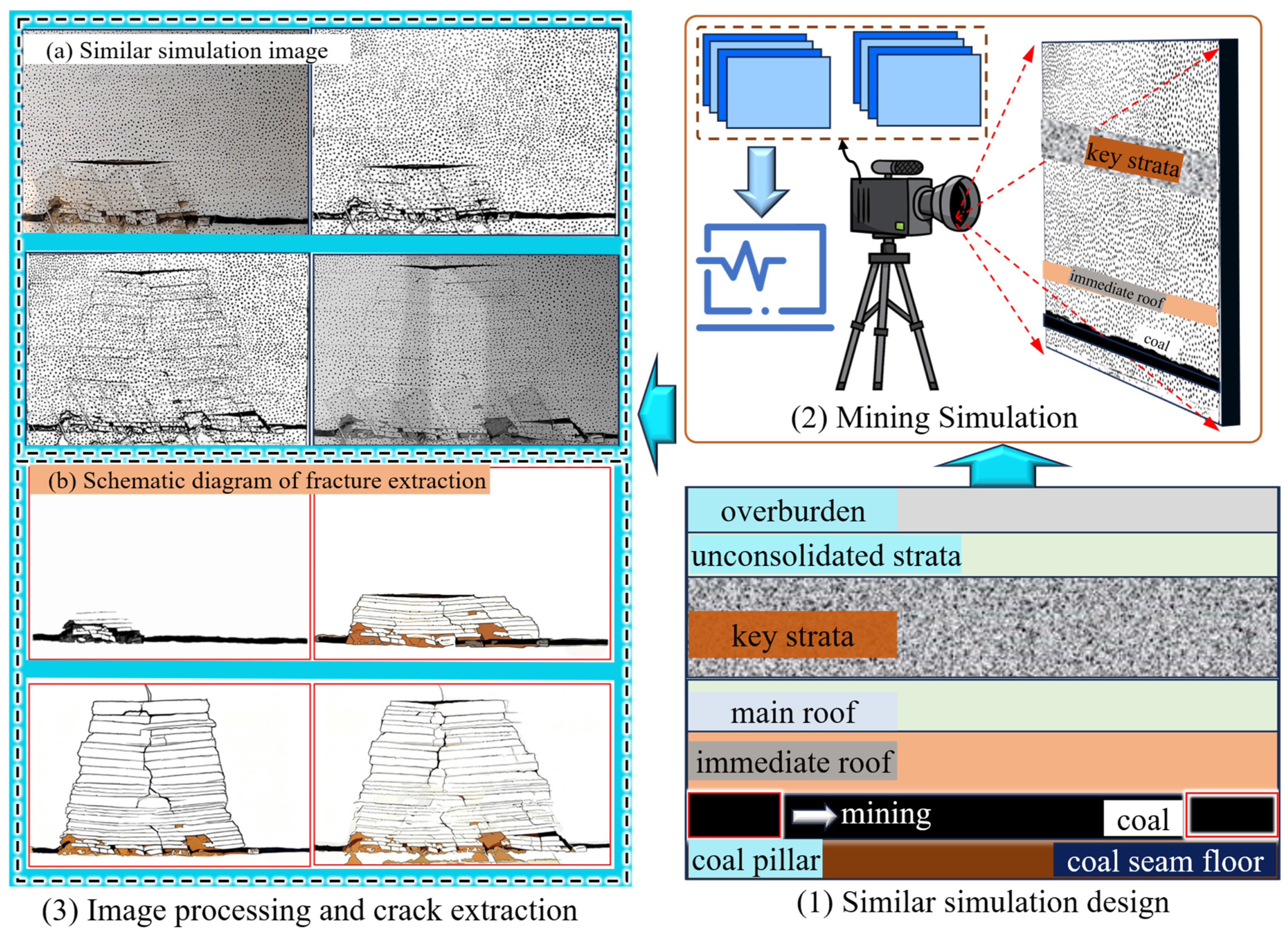
During the underground coal seam mining process, with the continuous advancement of the working face, the underground goaf expands gradually, leading to the gradual fracture and caving of the coal seam roof [18]. Consequently, the original rock stress balance of the overlying strata is disrupted, triggering complex phenomena such as movement, deformation, and fracture of the overlying strata [19]. Under the influence of mining disturbance, joints and fractures in the rock mass develop, expand, and connect rapidly [20]. This not only degrades the mechanical properties of the overlying strata but also induces through-fracture development, which is prone to causing water inrush and loss, thereby seriously endangering the safety of underground operations [21]. The processes of coal seam mining and the movement and failure of the overlying strata are illustrated in (1) of Figure 1. To investigate the movement law of the overlying strata and the development characteristics of rock joints and fractures under the mining condition of thick and hard roofs, this study constructs a similar model for thick and hard roof mining based on similarity theory and using similar materials, as illustrated in (2) of Figure 1 [22]. The material mix ratio parameters of the similar model are mainly based on the specific mechanical parameters of the rock. Rock samples were obtained via on-site drilling and coring, and rock mechanics tests were conducted to determine the basic mechanical parameters of the rock samples such as uniaxial compressive strength and uniaxial tensile strength. The mix ratio of similar materials was finally determined through empirical conversion and optimization [23]. The measured results of the rock samples’ mechanical parameters are shown in Table 1.
By combining the basic parameters, such as the similar model design scheme and material mix ratio, a similar model for coal seam mining was constructed with gypsum as the cementing material and fine sand as the aggregate (with a geometric similarity ratio of 1:150, a bulk density similarity ratio of 1:1.68, and model dimensions of 180 cm × 16 cm × 140 cm). The parameters of each rock stratum in the similar model, such as material mix ratio, thickness, numbering, and position, are shown in Table 2.

2.2. Dataset

The overburden movement induced by coal seam mining is an extremely complex dynamic process, and the development and evolution of joints and fractures in the overlying rock mass exhibit high randomness and complexity [24]. To explore the development characteristics and expansion laws of rock fractures under mining disturbance, this study used similarity simulation technology to conduct coal seam mining simulation research. Firstly, based on the similarity simulation theory and design scheme, a similarity model suitable for the mining conditions of coal seams with thick and hard roofs was established. The stress environment of rock strata was simulated by external counterweight loading, and the coal seam mining process was simulated through model excavation tests to investigate the laws of roof movement and fracture development induced by coal seam mining [25]. Secondly, a high-speed photography system was adopted for continuous image acquisition throughout the entire model mining process, with synchronous implementation of data storage, format standardization, and preprocessing. This provided a standardized dataset for the subsequent quantitative analysis of mining-induced fracture evolution laws and surrounding rock failure patterns using fractal theory. The technical principle of model mining and data acquisition is illustrated in Figure 2. In the similarity simulation experiment of this study, the simulated mining length was set to 140 cm. Throughout the entire model mining process, a total of 10 images of the model’s mining state were uniformly collected at preset mining intervals [26].

2.3. Fractal Dimension Analysis

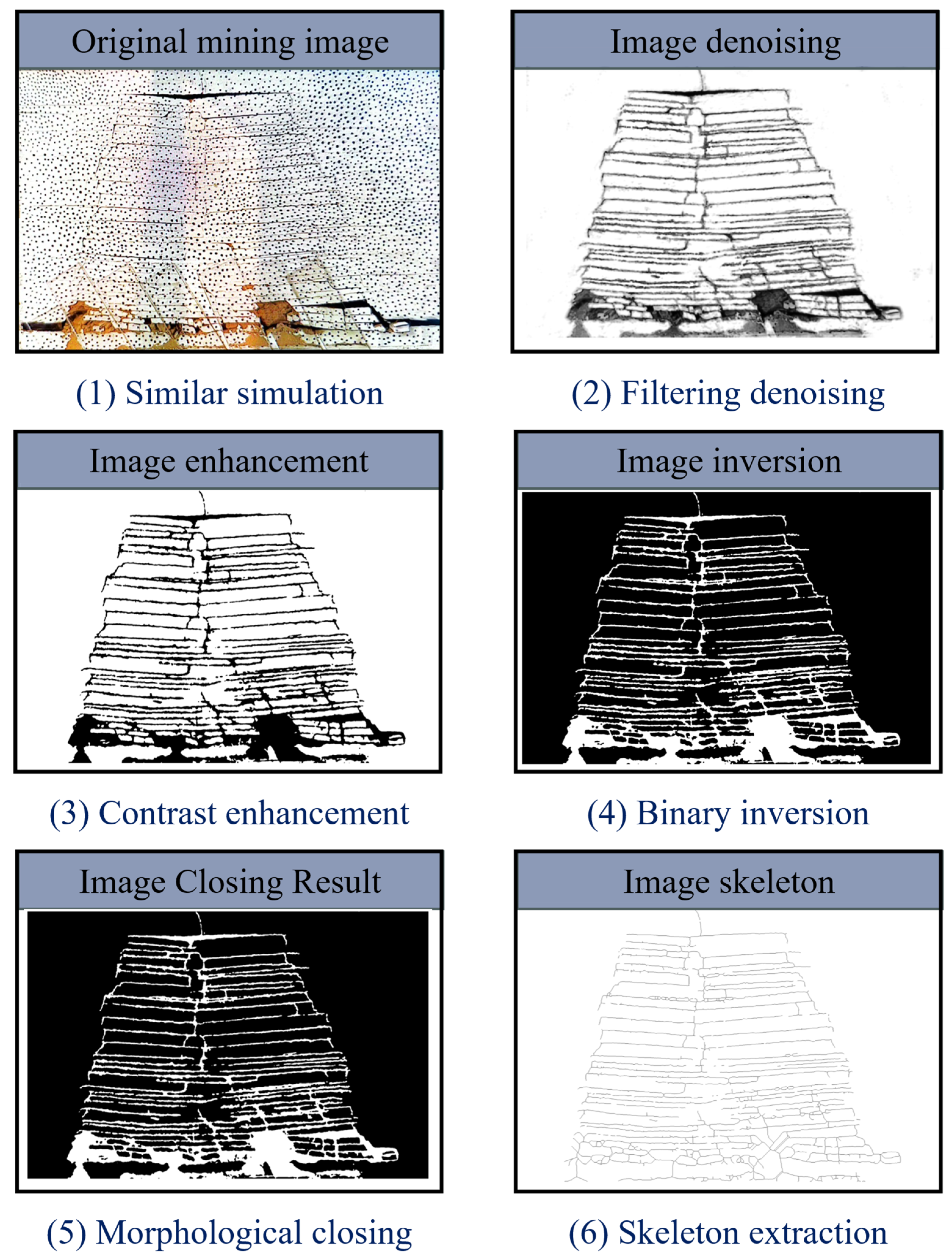
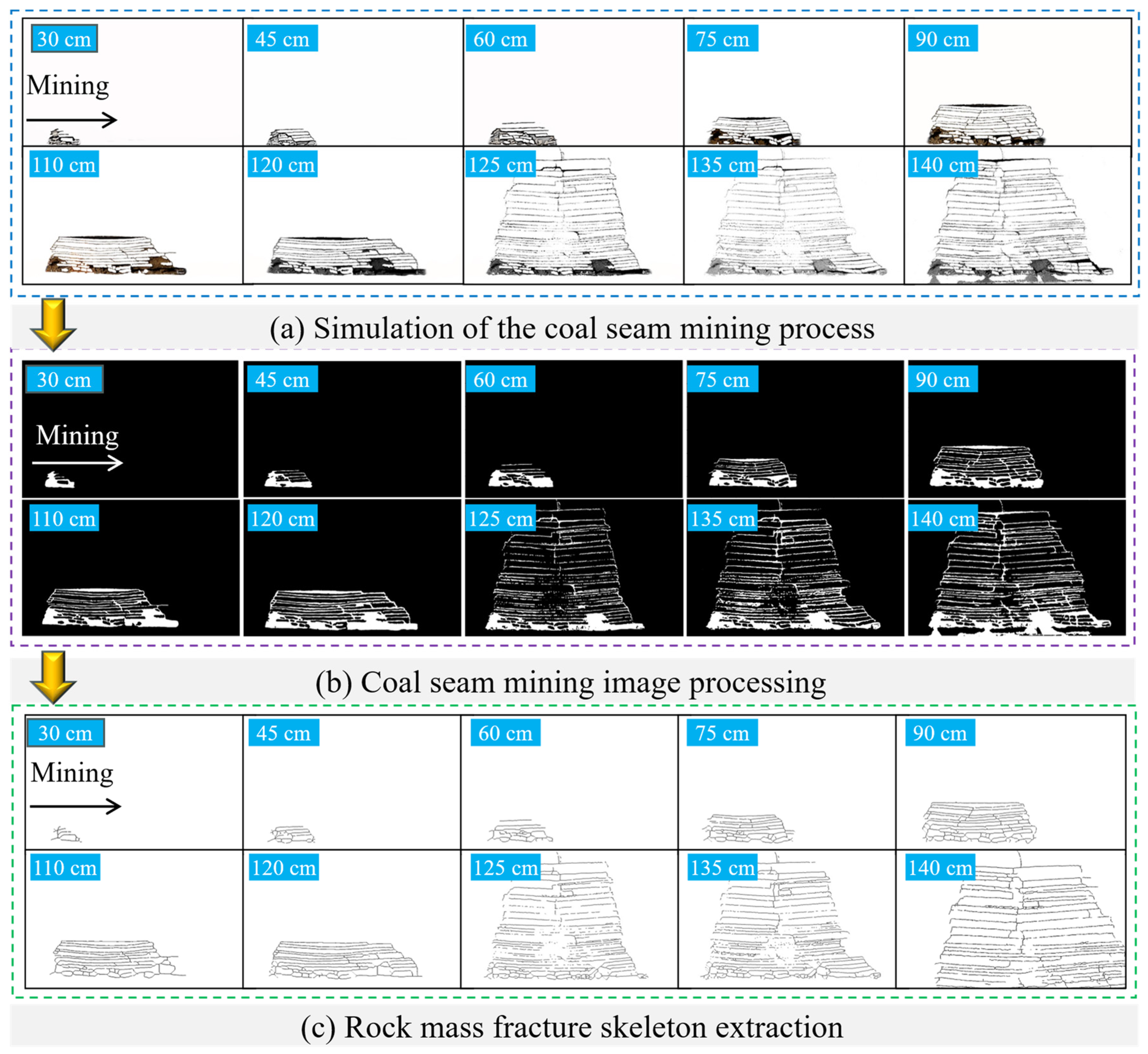
The fractal theory enables the quantitative characterization of the development characteristics and evolution laws of rock stratum fractures and can depict the irregularity, complexity, and randomness of overlying stratum fracture development during coal seam mining [27,28]. The fractal analysis process for fracture in rock stratum images mainly involves several key steps of image processing [29]. First, preprocess the image data to remove damaged regions and redundant features from the image; second, perform filtering denoising and contrast enhancement operations to improve the distinguishability of fracture regions, laying a foundation for subsequent segmentation; finally, utilize binarization processing and skeleton extraction techniques to achieve efficient and accurate extraction of the geometric features of joint fractures, which provides basic data for the calculation of fractal dimensions as shown in Figure 3. After processing the observation images of the similar model mining process, the visual characteristics of the development and evolution of joint fractures in the overlying rock strata induced by coal seam mining under different mining step distances were obtained, as shown in Figure 4.
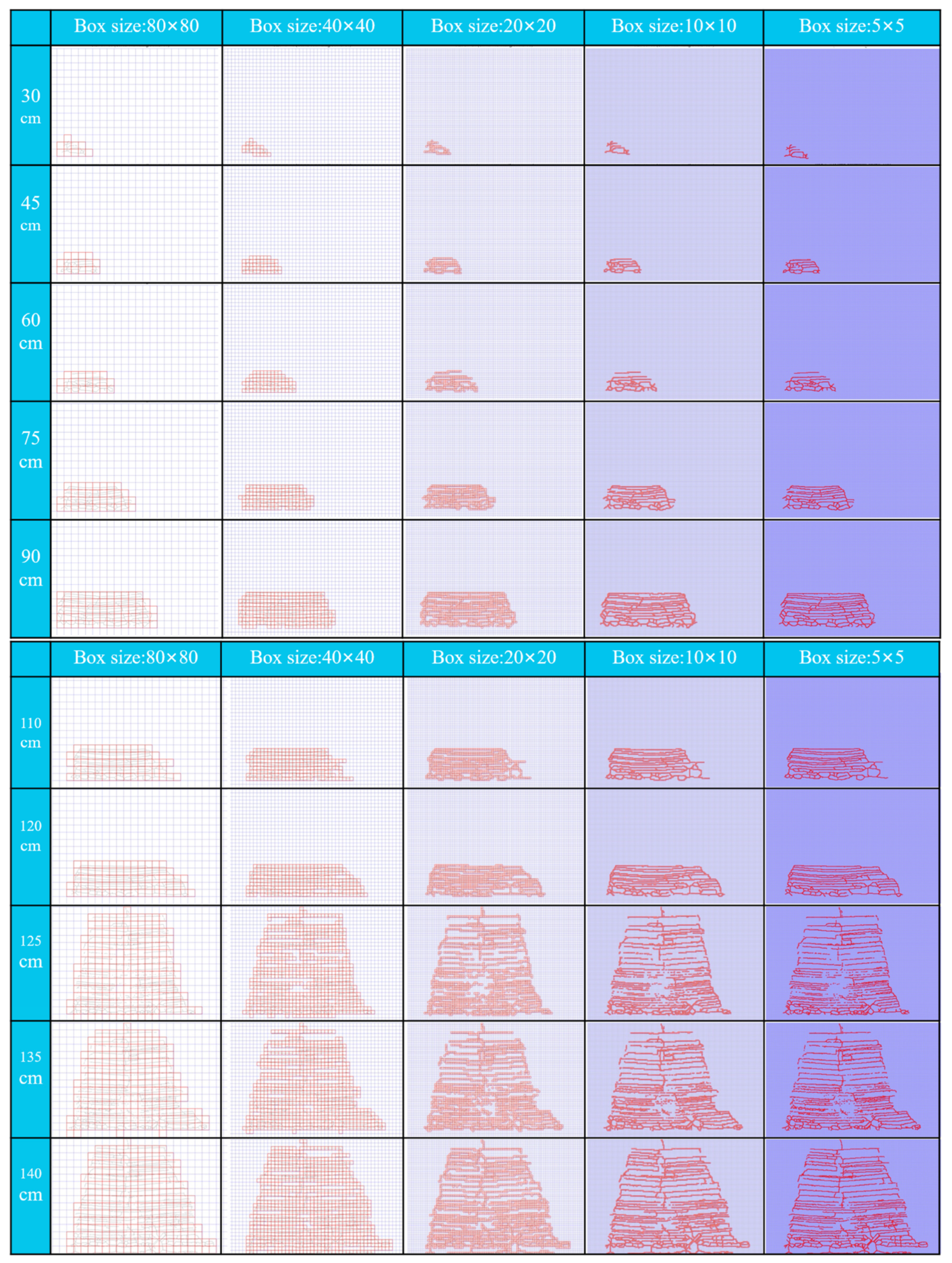
The box-counting method is one of the main approaches widely used in image fractal analysis and fractal dimension calculation in fields such as coastlines and geology. Its basic principle is as follows: place the target figure in a regular grid of a specific size, repeatedly partition the grid by scaling the grid size proportionally, then statistically analyze the variation law of the number of grids containing the figure under different scales. Finally, the fractal dimension (i.e., box-counting dimension) is derived by fitting the logarithmic relationship between the grid scales and the corresponding number of occupied grids [30]. The fractal dimension of a planar image is theoretically constrained to the interval [0, 2]. In this study, the box-counting dimension method is employed to calculate the fractal dimension of rock stratum fracture images, and its core calculation formula is as follows [31,32,33]:
D f = lim log ( N ( r ) ) log ( 1 / r )
where Df is the fractal dimension, N(r) is the number of grids occupied by the image, and r means the size of the grids.

3. Results and Discussion

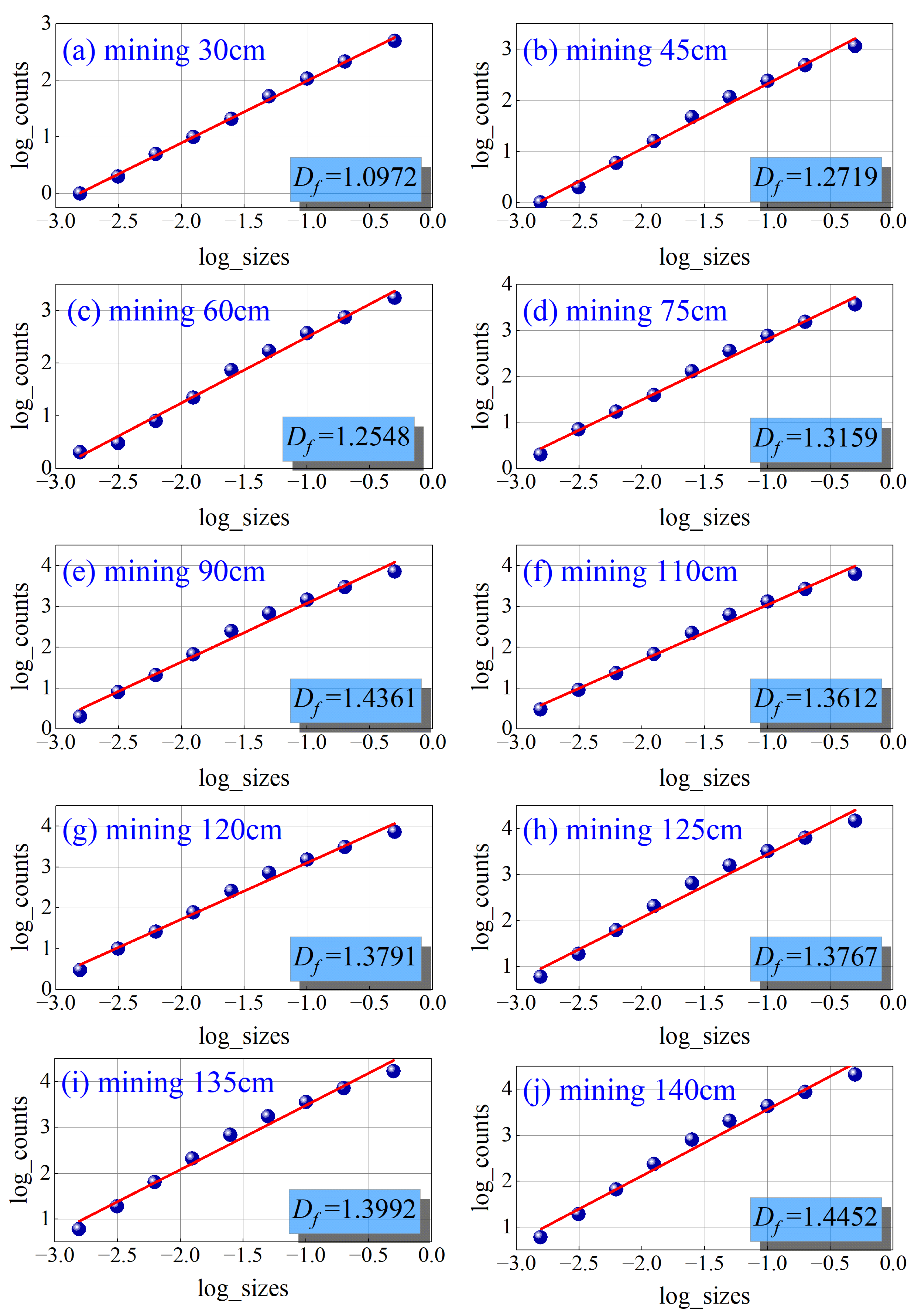
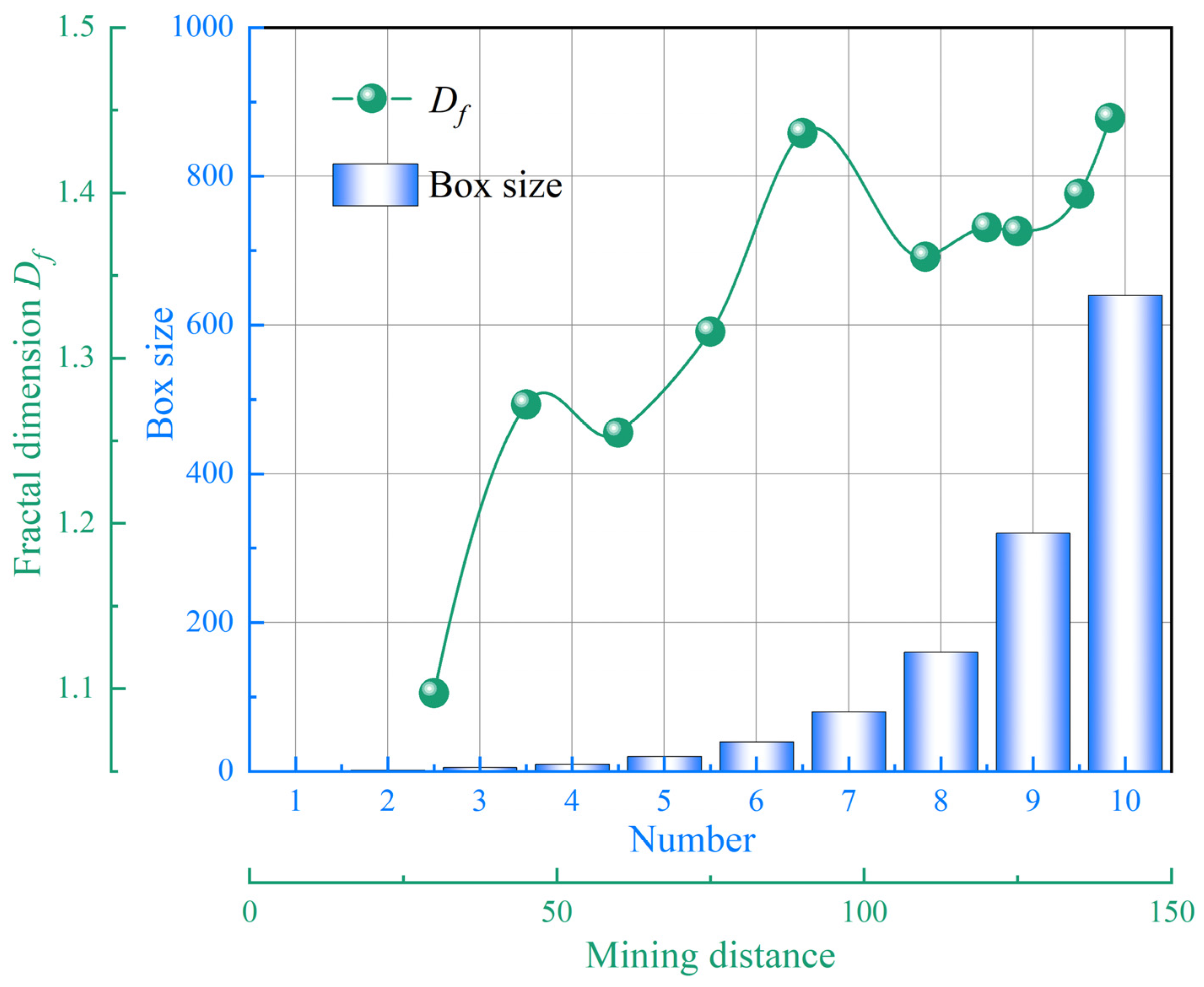
This study combines fractal theory and similar simulation technology to investigate the development and evolution laws of joints and fractures in the overlying strata induced by coal seam mining disturbance under the condition of thick and hard roofs. For the images of the fracture evolution process in mining-disturbed rock strata shown in Figure 4, the box-counting method is adopted to conduct fractal research and quantitatively characterize their fractal laws. Meanwhile, by setting grids of different sizes, the geometric and spatial distribution characteristics of joint fractures are extracted. The fractal analysis process of rock stratum fractures is illustrated in Figure 5. In the initial stage of coal seam mining, the influence range of mining-induced disturbance is limited, and the overlying strata maintain a stable state as a whole. With the continuous advancement of the coal mining face, the immediate roof collapses and fractures, and the rock mass fractures gradually propagate upward into the upper overlying strata; when the mining distance reaches 125 cm, the overall structure of the overlying strata experiences sudden instability, and the mining-induced fractures subsequently develop and propagate rapidly. Their development height, influence range, and quantity all show a significant growth trend. This phenomenon indicates that there is an obvious mutation effect during the evolution of mining-induced fractures. To determine the development regularity of overlying strata fractures during mining disturbance with the advancement of the working face, this study further calculates the fractal dimensions of joint fractures under various mining step lengths via fitting based on fractal principles, quantifying their complex properties, irregular morphologies, and spatial distributions as illustrated in Figure 6.
As shown in the fractal dimension fitting results in Figure 6, there are statistically significant differences in the fractal dimension of the model under different mining step distances: the fractal dimension is the smallest at 1.0972 when the mining step distance is 30 cm, increases to 1.4361 at a mining step distance of 90 cm, and reaches the maximum value of 1.4452 at a mining step distance of 140 cm. In the initial stage of mining (with a mining distance of approximately 30 cm), the fractal dimension of fractures is relatively small (close to 1), indicating a low degree of development and low complexity of fractures, and the fractal characteristics of mining-induced fractures are not yet significant. As shown in Table 3, the standard errors of the fractal dimension fitting results are generally at a low level, and the coefficient of determination R2 for all groups is close to 1. This indicates that the fitting model of the fractal dimension has a high goodness of fit with the experimental data and the reliability of the fitting parameters and the accuracy of the results are satisfactory.
As can be seen from the results presented in Figure 7, there is a significant correlation between the fractal dimension of the rock stratum and the mining distance. With the advancement of coal seam mining, cracks near the working face begin to initiate and propagate, and the fractal dimension shows an overall increasing trend. After reaching a specific threshold, Df remains within a relatively high range, indicating that the crack development has approached the limit state. Under the supporting effect of thick and hard rock strata, the overlying rock can maintain a certain degree of stability as a whole, so the fractal dimension does not increase significantly. With the continuous advancement of the working face, the overlying rock breaks and loses stability after reaching the limit span, forming relatively simple through cracks.
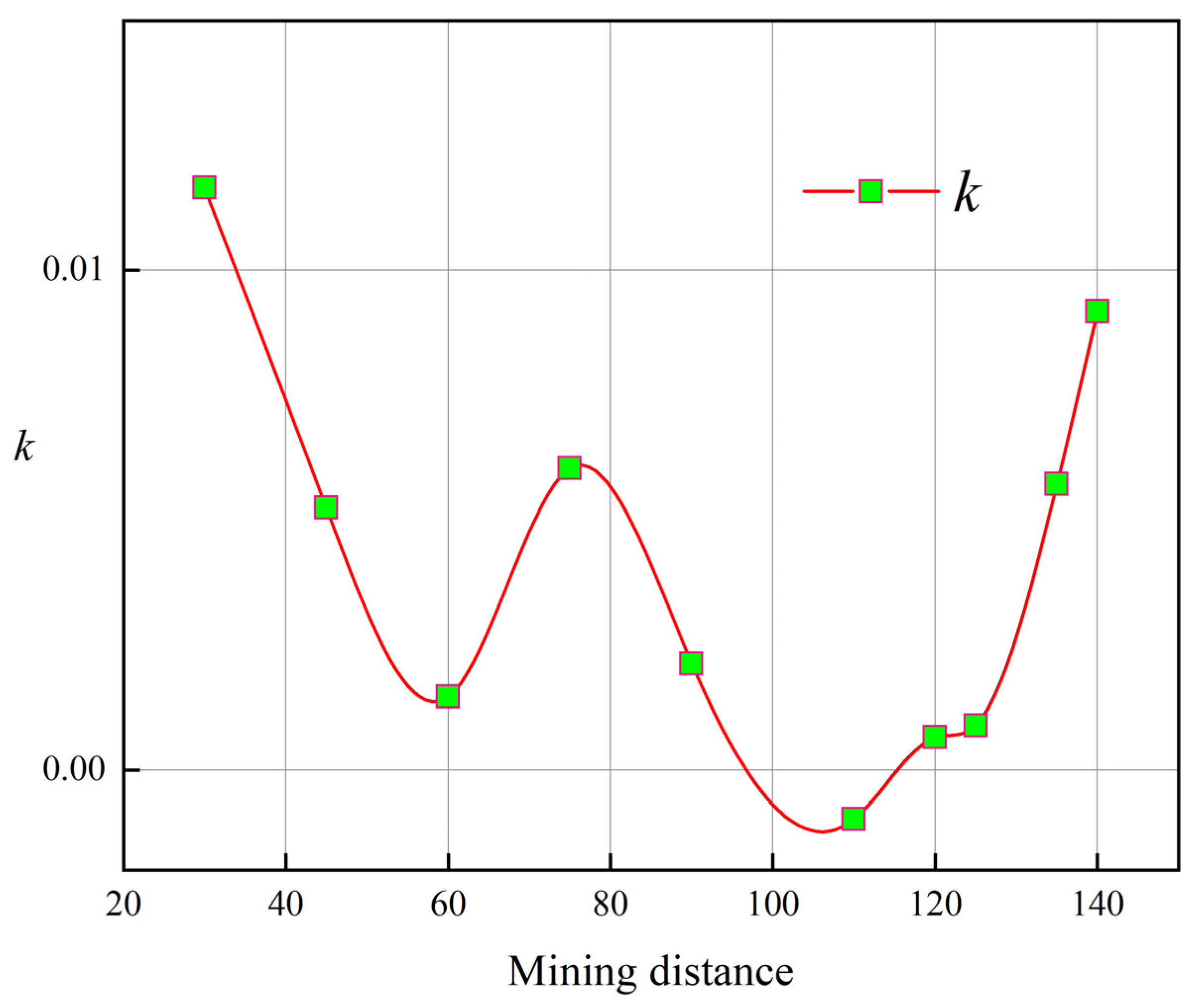
In the field of mining engineering, the fractal dimension can quantitatively characterize the characteristics of rock stratum fractures from dimensions such as spatial distribution, development degree, and evolution trend [34]. It evaluates key indicators including the complexity, connectivity, and expansion range of fractures, reveals the evolution mechanism of rock stratum fractures under mining disturbance, and provides quantitative support for the prediction and early warning of rock stratum stability [35]. As shown in Figure 7, when the mining distance is less than 50 cm, the fractal dimension is close to 1.0. This indicates that during the initial mining stage, the mining disturbance only induces slight expansion of primary joints and no effective connected network has been formed yet, so the rock stratum still maintains high integrity. When the mining distance increases from 50 cm to 100 cm, the fractal dimension jumps from an approximately linear distribution to a highly complex distribution. Meanwhile, combined with the fracture development height in Figure 5, it can be seen that fractures near the working face and goaf rapidly develop, expand, and connect. Due to the strong bearing characteristics of the thick and hard roof and overlying key hard rock strata, the overlying structure still has strong bearing capacity, thus showing significant local instability. As the mining distance continues to increase, the overhang span of the overlying thick and hard roof reaches its own limit, leading to secondary instability. The rock stratum is rapidly damaged, showing significant overall abruptness. To further clarify the process of mining-induced effects, the first-order derivative k of the fractal dimension was calculated, and the corresponding growth rate curve was obtained, as shown in Figure 8. From the growth rate curve in Figure 8, it can be seen that in the initial mining stage (20~60 cm), the value of k shows a downward trend but remains positive, indicating that the fractal dimension is in a state of slow growth. This is because, in the initial stage of mining-induced disturbance, only local stress perturbation occurs in the overlying rock; fractures are mainly initiated and slowly expanded near the working face, without large-scale expansion or connection, so the fracture evolution process is relatively stable. As the working face advances to 60~100 cm, the stress balance of the overlying rock is gradually disrupted. The fractal dimension increases continuously under the cumulative effect of k; when the working face approaches 100 cm, the value of k approaches 0, indicating that the fracture propagation near the working face reaches a critical limit. Subsequently, k becomes negative, and the fractal dimension decreases accordingly, which implies a reduction in the interleaving degree. With the continuous advancement of the working face, overall fracture instability of the rock formation occurs at 125 cm. The cumulative effect of k characterizes the complex evolution and concentrated incubation of the fracture network near the working face, while its decrease and transition to negative values characterize the local connection and structural simplification of the fracture network. The growth rate k fully depicts the transformation process of the mining-induced fracture network from local complexity to macroscopic simple fracture. The local peak of the fractal dimension Df, together with the positive–negative conversion and trend change in its growth rate k, can serve as effective information for working-face stability evaluation and provide a comprehensive precursor criterion for predicting overlying rock instability. When these phenomena occur, safety management should be strengthened to prevent damage caused by overlying rock instability.
Therefore, when mining under such thick and hard roof conditions, more attention should be paid to underground roof support in the early mining stage to prevent problems such as local instability, collapse, and mine pressure manifestation [36]. After mining to a certain distance, attention should be shifted to the movement and damage of the overall rock stratum to prevent disasters such as roof hazards, water hazards, and surface subsidence caused by overall abrupt instability [37]. In addition, since the rock stratum movement and damage process under thick and hard roof mining shows abruptness, the concentrated release of energy can easily cause violent activities of the overlying rock stratum [38]. In engineering practice, reasonable support and safety management measures should be designed to balance the overall and local prevention strategies, so as to ensure the safe mining of the mine.

4. Conclusions

In this study, similar simulation technology combined with fractal theory was employed to characterize the complexity of joint fracture development in overlying strata induced by coal seam mining under the condition of thick and hard roofs. Based on the correlation between mining advance distance and fracture fractal dimension, the development law and evolution process of fractures in overlying strata were systematically analyzed.
Based on the characterization results of fractal dimensions, the evolution of overlying strata fractures during coal seam mining can be divided into three stages: low-dimensional stability, abrupt surge (with the fractal dimension increasing to 1.436), and high-dimensional stability (with the maximum fractal dimension reaching 1.445). In the early stage of mining, fractures mainly initiate and propagate in the vicinity of the working face, and the fractal dimension remains at a low level; as the working face advances continuously, the fractures expand and connect continuously and the fractal dimension rises sharply, eventually triggering large-scale fracture of the overlying strata and exhibiting significant abrupt characteristics overall.
Similar simulation and fractal theory can realize the quantitative characterization of joint and fracture development in mining-induced overlying strata. For future research, numerical simulation methods can be considered for integration to analyze and reveal the evolution law of overlying strata fracture networks under different mining conditions, thereby providing theoretical support for the safe production management of mines.

Author Contributions

X.C.: Investigation, Data curation, Methodology, Writing—original draft, Algorithm design, and Program development. S.Y.: Supervision, Funding acquisition, and Writing—review and editing. H.Y.: Project administration and Conceptualization. A.W.: Investigation. Y.Z.: Investigation. All authors have read and agreed to the published version of the manuscript.

Funding

This work was supported by the National Natural Science Foundation of China (51974320, 51934008, and 52121003), National Key Research and Development Program of China (2022YFC2904001), the China Postdoctoral Science Foundation (2024T171006), and the Fundamental Research Funds for the Central Universities (2023YQTD02).

Data Availability Statement

The datasets generated during and/or analyzed during the current study are available from the corresponding author on reasonable request.

Conflicts of Interest

The authors declare that they have no known competing financial interests or personal relationships that could have appeared to influence the work reported in this paper. Hao Yue is employed by Gucheng Coal Mine in Changzhi, China. The company had no role in the study design; in the collection, analyses, or interpretation of data; in the writing of the manuscript; or in the decision to publish the results.

References

  1. Hu, J. The utilization status, supply and demandpattern, and development trend of global coal resource. China Coal 2024, 50, 153–162. [Google Scholar]
  2. Ma, Y.; Wu, Q.; Yang, J.; Gao, F.; Lou, J.; He, B.; Li, J. Study on the effect of mining height on overburden strata movement in longwall mining. Int. J. Coal Sci. Technol. 2025, 12, 59. [Google Scholar] [CrossRef]
  3. Miao, K.; Tu, S.; Tu, H.; Liu, X.; Li, W.; Zhao, H.; Tang, L.; Ma, J.; Li, Y. Research on fractal evolution characteristics and safe mining technology of overburden fissures under gully water body. Fractal Fract. 2022, 6, 486. [Google Scholar] [CrossRef]
  4. Ma, D.; Duan, H.; Li, X.; Li, Z.; Zhou, Z.; Li, T. Effects of seepage-induced erosion on nonlinear hydraulic properties of broken red sandstones. Tunn. Undergr. Space Technol. 2019, 91, 102993. [Google Scholar] [CrossRef]
  5. Chaoshang, S.; Chaoyang, S.; Zhiming, Z.; Haixiao, L.; Zhenhua, L.; Feng, D.; Zhengzheng, C.; Pengtao, L.; Lin, L. Overburden failure characteristics and fracture evolution rule under repeated mining with multiple key strata control. Sci. Rep. 2025, 15, 28029. [Google Scholar] [CrossRef]
  6. Zhang, Z.; Li, Z.; Xu, G.; Gao, X.; Liu, Q.; Li, Z.; Liu, J. Lateral abutment pressure distribution and evolution in wide pillars under the first mining effect. Int. J. Min. Sci. Technol. 2023, 33, 309–322. [Google Scholar] [CrossRef]
  7. Qian, M.; Shi, P.; Xu, J. Underground Pressure and Strata Control. Ph.D. Thesis, China University of Mining and Technology Press, Xuzhou, China, 2010. [Google Scholar]
  8. Li, S.; Gao, M.; Yang, X.; Zhang, R.; Ren, L.; Zhang, Z.; Li, G.; Zhang, Z.; Xie, J. Numerical simulation of spatial distributions of mining-induced stress and fracture fields for three coal mining layouts. J. Rock Mech. Geotech. Eng. 2018, 10, 907–913. [Google Scholar] [CrossRef]
  9. Ghabraie, B.; Ren, G.; Smith, J. Characterising the multi-seam subsidence due to varying mining configuration, insights from physical modelling. Int. J. Rock Mech. Min. Sci. 2017, 93, 269–279. [Google Scholar] [CrossRef]
  10. Li, X.; He, W.; Xu, Z. Study on law of overlying strata breakage and migration in downward mining of extremely close coal seams by physical similarity simulation. Adv. Civ. Eng. 2020, 2020, 2898971. [Google Scholar] [CrossRef]
  11. Qian, M.; Xu, J. Behaviors of strata movement in coal mining. China Coal Soc. 2019, 44, 973–984. [Google Scholar]
  12. Shan, C.; Cao, S.; Zhang, Z.; Lin, K.; Sun, J. Numerical Investigation on the Yield Pillar Bearing Capacity under the Two-End-Type Cable Reinforcement. Energies 2023, 16, 6418. [Google Scholar] [CrossRef]
  13. Gao, M.; Xie, J.; Guo, J.; Lu, Y.; He, Z.; Li, C. Fractal evolution and connectivity characteristics of mining-induced crack networks in coal masses at different depths. Geomech. Geophys. Geo-Energy Geo-Resour. 2021, 7, 9. [Google Scholar] [CrossRef]
  14. Zhang, Z.; Zhang, Y.; Xu, Y.; Zheng, Q.; Wang, Z.; Guo, L. Fracture development and fractal characteristics of overburden rock under repeated mining. Arab. J. Geosci. 2021, 14, 225. [Google Scholar] [CrossRef]
  15. Zhang, Z.; Xie, H.; Zhang, R.; Gao, M.; Ai, T.; Zha, E. Size and spatial fractal distributions of coal fracture networks under different mining-induced stress conditions. Int. J. Rock Mech. Min. Sci. 2020, 132, 104364. [Google Scholar] [CrossRef]
  16. Yue, H. Study on Mechanism and Control of Space Fracture Instability of Thick and Hard Roof in Coal Mine. Ph.D. Thesis, China University of Mining and Technology, Beijing, China, 2025. [Google Scholar]
  17. Yang, S.; Yue, H.; Li, Q.; Chen, Y. Study on Failure Behaviors of Roofs with Varying Thicknesses in Longwall Coal Mining Working Face. Rock Mech. Rock Eng. 2024, 57, 6259–6282. [Google Scholar] [CrossRef]
  18. Zuo, J.; Yu, M.; Sun, Y.; Wu, G. Analysis of fracture mode transformation mechanism and mechanical model of rock strata with different thicknesses. J. China Coal Soc. 2023, 48, 1449–1463. [Google Scholar]
  19. Ji, S.; He, H.; Karlovsek, J. Application of superposition method to study the mechanical behaviour of overlying strata in longwall mining. Int. J. Rock Mech. Min. Sci. 2021, 146, 104874. [Google Scholar] [CrossRef]
  20. Li, R.; Hou, X.; Chen, L.; Wang, Y.; Huang, F.; Wang, L. A reliability model to predict failure behaviour of overlying strata in groundwater-rich coal mine. Int. J. Coal Sci. Technol. 2025, 12, 60. [Google Scholar] [CrossRef]
  21. Li, L.; Li, F.; Zhang, Y.; Yang, D.; Liu, X. Formation mechanism and height calculation of the caved zone and water-conducting fracture zone in solid backfill mining. Int. J. Coal Sci. Technol. 2020, 7, 208–215. [Google Scholar] [CrossRef]
  22. Ye, Q.; Wang, G.; Jia, Z.; Zheng, C.; Wang, W. Similarity simulation of mining-crack-evolution characteristics of overburden strata in deep coal mining with large dip. J. Pet. Sci. Eng. 2018, 165, 477–487. [Google Scholar] [CrossRef]
  23. Yang, Y.; Yue, H.; Zhao, Y.; Zhang, S.; Zhang, J.; Wang, Z.; Yang, W. Experimental Study on Ratio Optimization of Similar Materials for Underground Mining of Shendong Coalfield: A Case Study of Shangwan Coal Mine. Processes 2023, 11, 1352. [Google Scholar] [CrossRef]
  24. Ran, Q.; Liang, Y.; Zou, Q.; Zhang, B.; Li, R.; Chen, Z.; Ma, T.; Kong, F.; Liu, H. Characteristics of mining-induced fractures under inclined coal seam group multiple mining and implications for gas migration. Nat. Resour. Res. 2023, 32, 1481–1501. [Google Scholar] [CrossRef]
  25. Li, G.; Ma, F.; Guo, J.; Zhao, H.; Liu, G. Difference in Surface Damage between Deep and Shallow Mining of Underground Coal Resources in China. Sustainability 2023, 15, 7296. [Google Scholar] [CrossRef]
  26. Zhang, G.; Fu, S.; Li, Y.; Chi, M.; Zhao, X. Mechanisms of Overburden and Surface Damage Conduction in Shallow Multi-Seam Mining. Eng 2025, 6, 235. [Google Scholar] [CrossRef]
  27. Zhu, D.; Yu, B.; Wang, D.; Zhang, Y. Fusion of finite element and machine learning methods to predict rock shear strength parameters. J. Geophys. Eng. 2024, 21, 1183–1193. [Google Scholar] [CrossRef]
  28. Wu, Z.; Liang, Y.; Miao, K.; Li, Q.; Liu, S.; Ran, Q.; Sun, W.; Yin, H.; Ma, Y. Damage law and reasonable width of coal pillar under gully area: Linking fractal characteristics of coal pillar fractures to their stability. Fractal Fract. 2024, 8, 407. [Google Scholar] [CrossRef]
  29. Du, J.; Zhou, A.; Shen, S.L.; Bu, Y. Fractal-based model for maximum penetration distance of grout slurry flowing through soils with different dry densities. Comput. Geotech. 2022, 141, 104526. [Google Scholar] [CrossRef]
  30. Li, J.; Du, Q.; Sun, C. An improved box-counting method for image fractal dimension estimation. Pattern Recognit. 2009, 42, 2460–2469. [Google Scholar] [CrossRef]
  31. Wang, J. Research on Fatigue Life Prediction and Crack Fractal of Concrete Bridges Based on the Destructive Experiments of Full-Scale Components. Ph.D. Thesis, Chang’an University, Xi’an, China, 2022. [Google Scholar]
  32. Zhang, G.; Guo, J.; Xu, B.; Xu, L.; Dai, Z.; Yin, S.; Soltanian, M. Quantitative analysis and evaluation of coal mine geological structures based on fractal theory. Energies 2021, 14, 1925. [Google Scholar] [CrossRef]
  33. Hu, J.H.; Ren, Q.F.; Yang, D.J.; Ma, S.W.; Shang, J.L.; Ding, X.T.; Luo, Z.Q. Cross-scale characteristics of backfill material using NMR and fractal theory. Trans. Nonferrous Met. Soc. China 2020, 30, 1347–1363. [Google Scholar] [CrossRef]
  34. Wang, J.; Zhang, J.; Feng, Y. Characterizing the spatial variability of soil particle size distribution in an underground coal mining area: An approach combining multi-fractal theory and geostatistics. Catena 2019, 176, 94–103. [Google Scholar] [CrossRef]
  35. Liu, G.; Yu, B.; Ye, D.; Gao, F.; Liu, J. Study on evolution of fractal dimension for fractured coal seam under multi-field coupling. Fractals 2020, 28, 2050072. [Google Scholar] [CrossRef]
  36. Xu, G.; kang, H.; zhang, Z.; feng, Y.; Ma, Y.; huang, Z.; Liu, Q.; Lin, X.; Ma, R. Surrounding rock control technology of 10 m super large mining height working face in Caojiatan Coal Mine. Coal Sci. Technol. 2024, 52, 1–14. [Google Scholar]
  37. Cai, Y.; Jin, Y.; Wang, Z.; Chen, T.; Wang, Y.; Kong, W.; Xiao, W.; Li, X.; Lian, X.; Hu, H. A review of monitoring, calculation, and simulation methods for ground subsidence induced by coal mining. Int. J. Coal Sci. Technol. 2023, 10, 32. [Google Scholar] [CrossRef]
  38. Guo, W.B.; Wang, H.S.; Dong, G.W.; Li, L.; Huang, Y.G. A case study of effective support working resistance and roof support technology in thick seam fully-mechanized face mining with hard roof conditions. Sustainability 2017, 9, 935. [Google Scholar] [CrossRef]
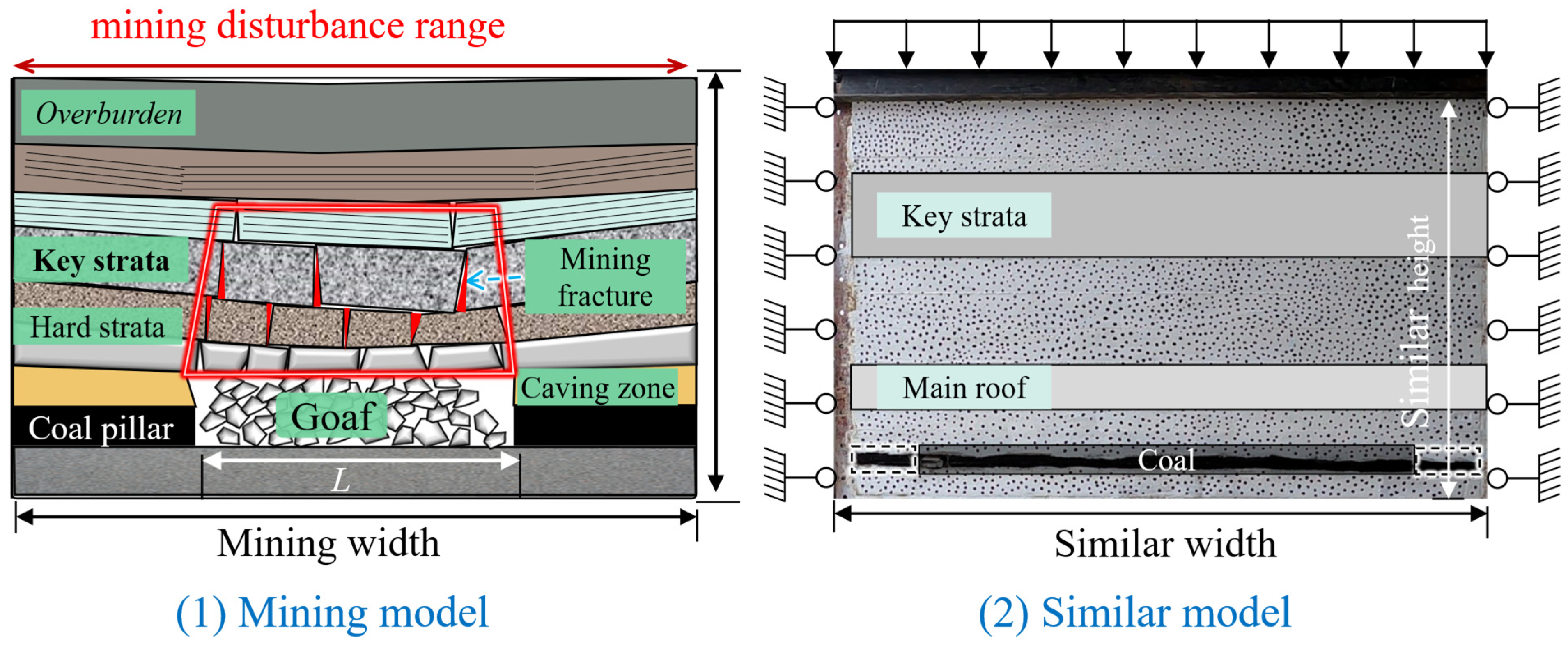
Figure 1. Schematic of overburden failure and similar model construction in mining.
Fractalfract 10 00110 g001
Figure 2. Similarity simulation experiment and image acquisition process.
Fractalfract 10 00110 g002
Figure 3. Main links of rock stratum fracture image processing.
Fractalfract 10 00110 g003
Figure 4. Image processing process for similar model experiments.
Fractalfract 10 00110 g004
Figure 5. Fractal analysis of fracture images from mining similar models of thick and hard roofs.
Fractalfract 10 00110 g005
Figure 6. The fractal dimensions of the similar model with different mining distances.
Fractalfract 10 00110 g006
Figure 7. Variation law of rock stratum fractal dimension with mining process.
Fractalfract 10 00110 g007
Figure 8. Fractal dimension rate evolution curve.
Fractalfract 10 00110 g008
Table 1. Measured rock mechanical parameters of key rock samples.
IDLithologyAverage Uniaxial Compressive Strength (MPa)Average Uniaxial Tensile Strength (MPa)
1coal16.411.75
2mudstone30.523.59
3sandstone97.8312.52
Table 2. Similar simulation experiment material ratios.
Serial No.LithologyThickness
/cm
Number of LayersLayer Thickness/cmRatioSand
/kg
Lime
/kg
Gypsum/kgWater
/kg
15# Coal (Simulated Coal Seam)4.322.159559.480.530.531.05
2Sandy Mudstone1.711.78467.60.380.570.85
3Coal Seam1119554.30.240.240.48
4Sandy Mudstone2.512.584610.950.550.821.23
5Fine Sandstone (Main Roof)3.421.778212.211.40.351.4
6Sandy Mudstone5.222.684611.350.570.851.28
7Mudstone2.212.28559.580.60.61.08
8Fine Sandstone2127828.660.990.250.99
9Mudstone5.522.7585512.20.760.761.37
108# Coal1.811.89557.840.440.440.87
11Mudstone2128558.60.540.540.97
129# Coal0.710.79553.110.170.170.35
13Sandy Mudstone6328468.50.420.640.96
14Mudstone2.312.38559.780.610.611.1
15Sandy Mudstone (Key Strata)301528468.520.430.640.96
16Fine Sandstone4227828.540.980.240.98
Table 3. Fitting calculation results of fractal dimension.
Mining DistanceFractal DimensionStandard ErrorR2
301.09720.020.998
451.27180.040.996
601.25480.050.995
751.31590.040.992
901.43610.050.992
1101.36120.050.995
1201.379100.995
1251.37670.070.991
1351.39920.070.991
1401.44520.070.991
Disclaimer/Publisher’s Note: The statements, opinions and data contained in all publications are solely those of the individual author(s) and contributor(s) and not of MDPI and/or the editor(s). MDPI and/or the editor(s) disclaim responsibility for any injury to people or property resulting from any ideas, methods, instructions or products referred to in the content.