
Article

Urban Greenspace Governance in Three Asian Cities—Seoul, Taipei, and Tokyo—from Actor-Centered Power Perspectives

1
Laboratory of Tourism Information Management, Hanyang University, Seoul 04763, Republic of Korea
2
Department of Tourism, Hanyang University, Seoul 04763, Republic of Korea
*
Author to whom correspondence should be addressed.
Urban Sci. 2026, 10(5), 269; https://doi.org/10.3390/urbansci10050269
Submission received: 24 January 2026 / Revised: 23 February 2026 / Accepted: 25 February 2026 / Published: 13 May 2026
(This article belongs to the Special Issue Urban Governance in the 21st Century: Emerging Models and Challenges)

Abstract

This study applies the Actor-Centered Power (ACP) framework to analyze urban green-space governance in three Asian cities, focusing on how power is distributed and exercised among actors in the management of their representative multipurpose parks: Seoul Forest in Seoul, Da’an Forest Park in Taipei, and Yoyogi Park in Tokyo. Conventionally used in large-scale forest governance in the Global South, ACP is extended here to East Asian cities of the Global North. This can provide nascent insight into how coercion, (dis)incentives, and information operate across different institutions. The study found that the initial formation of the parks was driven by potent actors through coercive measures in all three cities. While Seoul maintains centralized statutory governance under the national act, Taipei adopts a decentralized governance model that foregrounds subordinate actors, notably exemplified by the higher education-oriented foundation. This organization promotes citizen science involvement and community-based stewardship. Tokyo, by contrast, uses a public–private partnership model that supports private sector commercial collaboration. This comparative case study demonstrates that the ACP framework is well-suited for analyzing urban green-space governance, as it distinguishes between power subjects (potentates and subordinates) and power sources (coercion, incentives, and information), providing theoretical and managerial implications. Through the lens of the ACP framework, this study argues that distinct institutional arrangements produce divergent power configurations for urban green-space management even within similarly developed urban contexts.

1. Introduction

The concept of Actor-Centered Power (ACP) focuses on understanding the power dynamics surrounding forests and land resources through the various actors involved in these relations [1]. This theoretical framework has been widely used in the domain of forest policy during the last decade, especially in developing country settings [2], as well as enhancing its idea in the political scenarios to analyze the role of individual actors within various social interactions [3,4,5,6]. The emphasis of the concept lies in situational negotiation, in which power is regarded as an actively created and exercised attribute within a spatiotemporal context [1]. Following the main idea of ACP, forest governance has moved from centralized state control to diversified institutional boundary settings with participatory governance mechanisms.
Krott et al. [1] utilized ACP to assess forest governance across different sociopolitical situations, revealing how power is distributed among stakeholders, bifurcated into potentates and subordinates, and how these power relations influence one another and governance outcomes. Studies applying ACP were mostly theory-driven case studies that illustrated real-world scenarios in which power dynamics were analyzed using the theoretical schema. Specifically, it demonstrates the dynamic power sources in decentralized governance models, emphasizing local community involvement, employing its own knowledge and practices to enhance sustainable management configurations [2]. Furthermore, the recent study exemplified the application of ACP in urban settings through discussing how actors mobilized power sources for urban park governance [7].
The power source of the ACP lies in social contexts, such as laws, policies, and strategic plans, which govern forest resources [1]. Accordingly, the power source involves coercion, (dis)incentives, and information [8], although a recent study suggests four more elements, such as social cohesion, geography, process, and convictions [2]. Despite its academic verification, the ACP approach has rarely been applied to urban parks in the Global North, which are more closely connected to local communities than large-scale rural forestry [9]. Urban greenery today symbolizes civic care, as many cities in developed countries have established various forms of urban parks and promoted residents’ contact with nature [10]. In line with this, it is worthwhile to examine what power sources are embedded in the development and governance of urban parks, ensuring that all actors are engaged in the process. In particular, the recreational domain of park management is closely associated with urban residents, who can be considered care-receiving actors in power dynamics [11].
To address the central research question, how power dynamics influence urban green-space governance, this study compares cases from three East Asian cities that are categorized within the Global North. While recreational administration often emphasizes site-specific characteristics shaped by geopolitical context, international case comparisons can contribute to knowledge-sharing strategies under global environmental agendas [12]. Given that East Asian countries have undergone similar institutional narratives in forest management, from quantitative afforestation to qualitative welfare-oriented forest use [13], it is relevant to analyze the urban park sector through the similarities and differences observed in their governance systems, using an actor-centered lens. The present study also limits the actor boundary to human actors, although the postmodern emergence of coupled human and natural systems shifted attention from a human-centric perspective toward a new materialist concept that recognizes nature itself as a critical actor in governance [14]. This decision reflects the study’s early-stage goal of exploring how various power sources influence the development and management of urban green spaces in the social context, including legal institutions and political challenges for governing natural resources.
Three Asian cities and their representing multipurpose parks, Seoul Forest in Seoul, South Korea, Da’an Forest Park in Taipei, Taiwan, and Yoyogi Park in Tokyo, Japan, are chosen as research destinations, as these three cities share similar urban structures developed during the modernization phase in the early 20th century [15,16]. Japan, South Korea, and Taiwan adopt official strategies to facilitate institutional power allocation within urban planning master plan systems, through which urban green spaces are planned and managed [17]. The present study examines three Global North cases to demonstrate land use applications that serve collective interests through formal planning systems, rather than focusing on interactions between formal planning and informal practices that may lead to uneven realization of collective interests [1].
Qualitative data are sourced from academic research and official documents, including political legislation and public statements [18]. The analytic process focuses on common themes and differences across cases by understanding the relationships among power subjects, power sources, and their synthesis. The study can offer contextual insights into policy making and stakeholder engagement, especially for urban park development and recreational administration in Asian cities under sustainable urban forest management agendas.

2. Power Sources and Subjects of ACP

ACP is about power dynamics in natural resource management and provides a tool for understanding how different power subjects influence each other, involving actors [1,2,8]. It demonstrates how actors use innate power resources and strategic capabilities to influence outcomes in their favor, considering how these actions are constrained or enabled by institutional settings and the broader social and economic environment. This approach helps explain variations in power relations across different situations and understand the mechanisms through which power operates in society. In this regard, asymmetrical actor relations or power dynamics can be analyzed and mapped to reveal how specific power elements determine the ultimate effectiveness of natural resource governance [19].
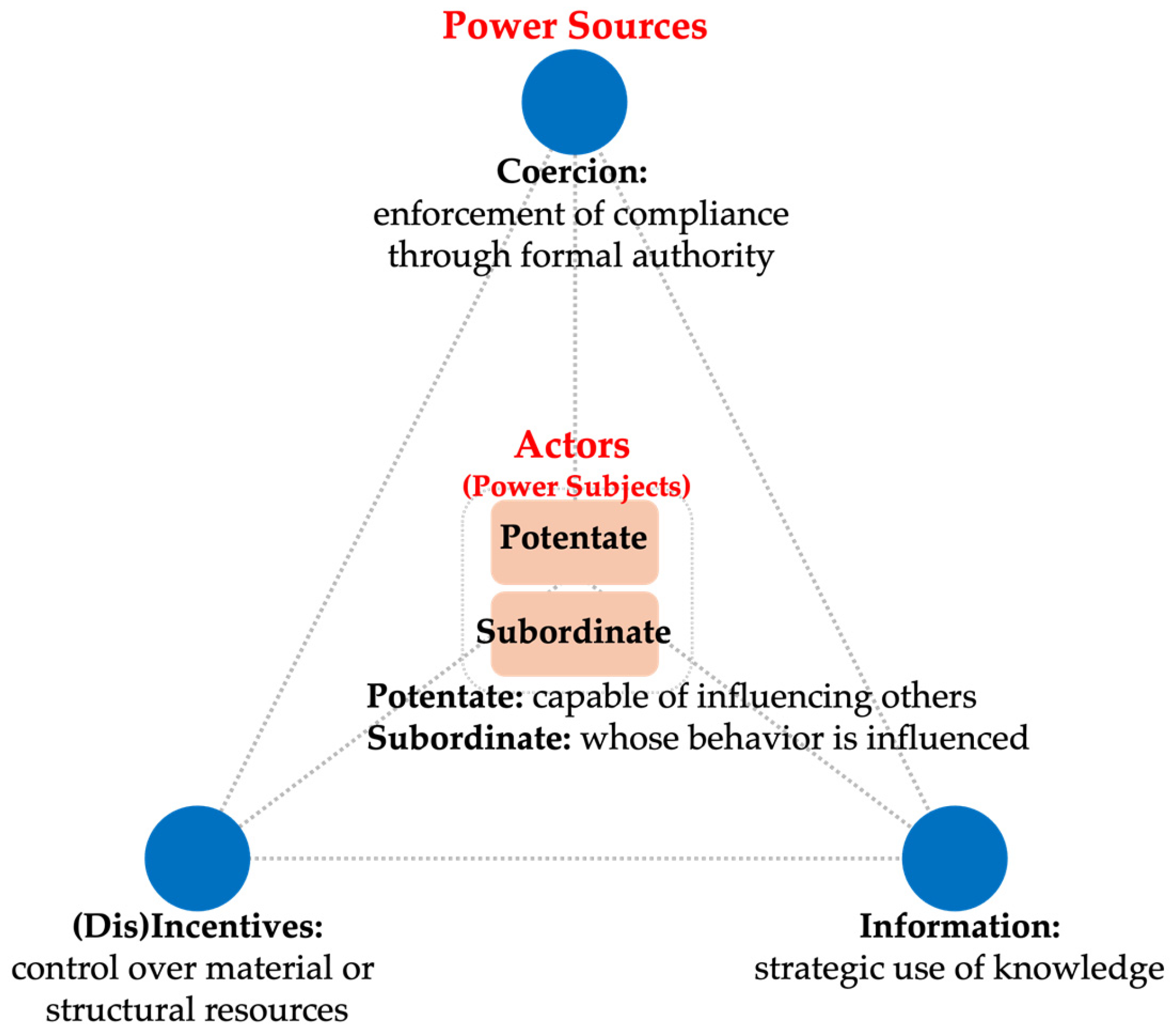
ACP emerged as its theoretical framework in the realm of wild volume forest management a decade ago [1]; however, its application has diversified in the general politicization process [6] and transformation adaptation through multilevel governance regarding climate change and environmental crisis circumstances [3,20]. The emergence of ACP was accompanied by a firm power source structure based on coercion, (dis)incentives, and information [1]. In addition, the power subjects are bifurcated into potentates and subordinates according to their positions of power and influence (Figure 1).
Coercion refers to the ability to enforce obedience and compliance by imposing penalties. This power source determines the actor’s capacity to manipulate others’ actions in the actor’s favor through physical or legal means. (Dis)Incentives are rewards or punishments that motivate actors to comply with regulations, including financial incentives, political benefits, and other forms of inducement aligned with the actor’s desired outcomes. Lastly, dominant information indicates the strategic dissemination that shapes public opinion, organizational behavior, or policy decisions. The manipulation of information can create a knowledge imbalance, positioning particular actors as more authoritative or credible, thereby enhancing their ability to direct governance processes. However, the recent research on ACP consolidates previous studies and proposes hidden power sources, such as social cohesion, geography, political processes, and convictions, alongside the initial categorization of power sources [2]. In connection with power sources, actor subjects are integrated with power enforcement.
Conventionally, power subjects were discussed in bifurcated terms as potentates and subordinates; the former involves coercive power, while the latter connects to information dissemination [21]. Potent actors hold authority and manage significant power, and they typically include government agencies, regulatory bodies, and other institutional actors [22]. These entities can decide and enforce statutory rules that others must follow. Subordinate actors are subject to decisions imposed by potentates and include the general public, private sector companies, local communities, and non-governmental organizations. According to Brodrechtova’s [23] case study in central Slovakia on ACP approaches, there are discrepancies in the use of power elements between government and non-government actors, demonstrating asymmetrical power dynamics between potent and subordinate actors. Especially in trade-offs for ecosystem services affecting forest management, the former use various power elements, such as coercion, incentives, and information, while the latter rely significantly on unverified information.
However, the shift towards a more inclusive and participatory approach has been reflected through the transition of traditional government to new governance models in forest planning. Howlett et al. [24] discussed this shift in the context of the British Columbia Great Bear Rainforest Initiative, where multilevel governance arrangements replaced hierarchical command and control regulations, emphasizing collaborative and sustainable forest management. Capano et al. [25] also explored the blurring boundaries between public institutions and private organizations in governance. These studies underlie a broader concept of governance, differentiating from government, and focus on the situational context of the decision-making process in which diverse actors’ involvement is mandatory.
When the discussion shifts to the context of urban green-space governance, the power elements can also be applied with particular significance [7]. Coercion is evident in environmental regulatory enforcement, in which governmental agencies impose penalties for noncompliance. (Dis) Incentives are witnessed in the form of subsidies for sustainable practices, such as civic engagement challenges. Dominant information may align with the environmental report or scientific data used to justify policy decisions, while certain stakeholders control the narrative to support their interests. By understanding the application of these power elements for urban green-space governance, researchers can verify ACP in the power dynamics of influence and control in various governance contexts [26].
ACP is grounded in perspectives of human actors in natural resource governance. On the contrary, from new materialist perspectives, non-human actants are seen as dominant agents, particularly in addressing environmental crises and global sustainability goals [14]. This study limits its discussion to human actors and their institutional power sources. However, it emphasizes a new institutional perspective, holding that urban nature-based social values can be realized across various sectors of human organizations. Therefore, exploring urban green-space management within the ACP framework can inform strategic planning to foster civic engagement in support of nature’s value.

3. Materials and Methods

The study adopted a theory-driven comparative case study to explore the real-world scenarios in a timely manner. A case study is the most frequently employed research method when the research argues the power dynamics of ACP in natural resource management topics [2,5,8,27,28]. Qualitative data are sourced from academic research and official documents, including political legislation and public statements (Table A1). The analytic process focuses on the common themes and differences in each case by understanding the relationships among power subjects, power sources, and their integration. Documents from state and local government websites were retained in their original languages, Korean, Chinese, and Japanese, during the data collection process, as the English translated version of information may differ from the original website in local languages.
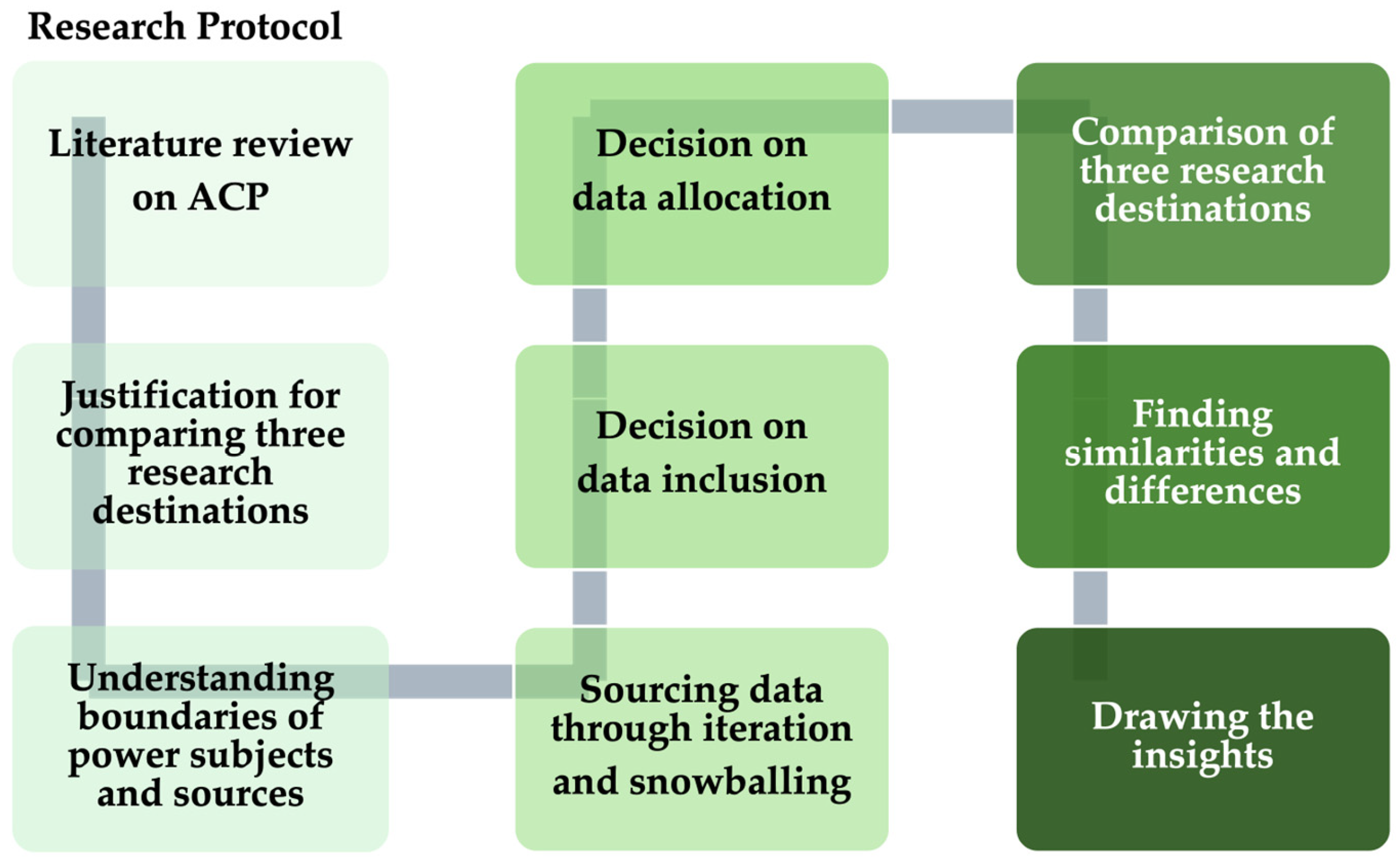
According to Yin [29], a research protocol for a case study ensures the reliability of the research, and the present study adheres to procedures including a literature review on ACP, data collection within the spatial context, and dominant pattern recognition to identify similarities and differences (Figure 2). Specifically, literature synthesis of previous studies and pattern matching based on the collected data confirm internal and external validity, while the use of multiple data sources supports the construct validity of the study. The triangulation process was also applied in order to ensure the accuracy and reliability of the data analysis. Following individual review, the authors engaged in collaborative discussions to identify and reconcile key themes until reaching consensus through iterative dialogue. This methodological approach enhances the credibility and trustworthiness of qualitative analysis by mitigating individual interpretive analytical bias and ensuring intersubjective agreement [30].
Seoul and Taipei experienced overlapping modernization processes during the 20th century [15,31,32]. The urban planning of both cities during the Japanese colonial period, known as the Keijo and Taihoku Urban Improvement Plans, led to the creation of similar urban features, including civic centers, orthogonal road systems, boulevards, rotaries, and plazas [16]. After liberation, South Korea and Taiwan faced civil wars and political turmoil, yet they achieved remarkable economic growth through labor-intensive and export-oriented industries [33]. In both countries, the subsequent influx of populations into cities prompted the development of urban green strategic plans to improve the urban living environment [34]. Tokyo, on the other hand, influenced the urbanization structure of many Asian capitals, and it is now known for its dense population, in which urban green spaces are highly valued by residents [35]. In general terms, urban greenery today represents civic care, as many cities in developed countries have established various forms of urban infrastructure and promoted residents’ contact with nature [10]. In particular, multipurpose parks in Asian cities are considered of notable value, as they signify residents’ quality of life and wellbeing [34]. Therefore, this study focused on three multipurpose parks, Seoul Forest in Seoul, Da’an Forest Park in Taipei, and Yoyogi Park in Tokyo, as site-specific research areas, exploring the foundational process and current governance scheme of these parks. The study focused on identifying similarities and differences in the recreational management of urban green spaces across these cities.

3.1. Seoul Forest, Seoul, South Korea

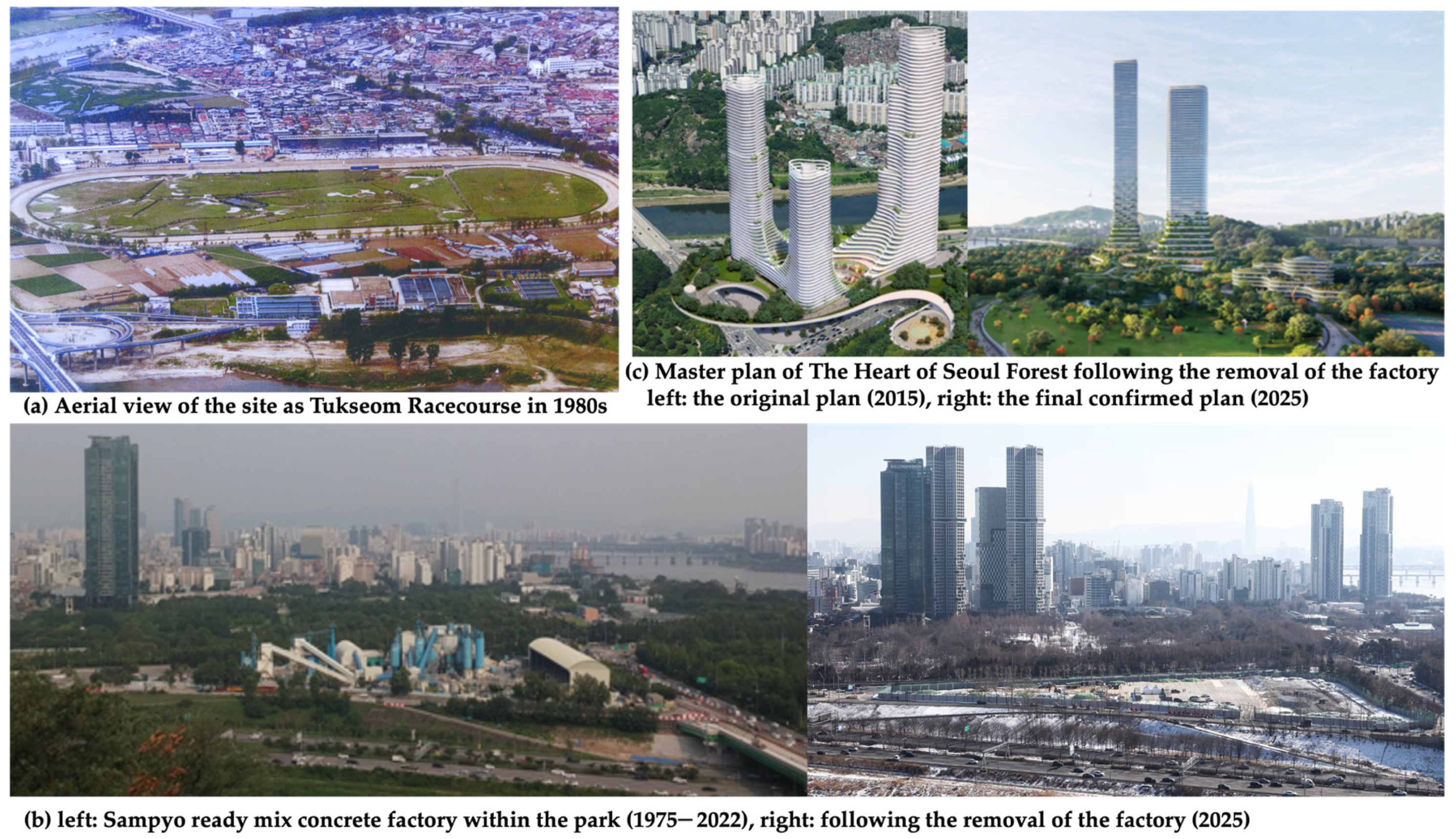
Seoul Forest is located in the center of Seoul and spans 48 hectares adjacent to the Han River. Along with its ecological significance, the park aims to provide high-quality leisure experiences for urban residents through its recreational facilities. It now reportedly attracts 6 million visitors per year, averaging 16,000 per day [36]. In 2024, the Seoul Metropolitan Government announced its grand plan to develop gardens at 1007 locations across the capital by 2026 as part of the garden city Seoul project. Unlike the current municipal government’s vigorous efforts in urban greening, the city adhered to centralized operating systems until the 1980s and 1990s, during which it hosted two mega sports events: the 1986 Asian Games and the 1988 Seoul Olympic Games [15]. In the early 2000s, the area that is now Seoul Forest underwent significant redevelopment, culminating in the park’s official opening in 2005. Historically, the site served various functions, initially as a royal hunting ground, and later as a horse racing track and a golf course (Figure 3a). Conversely, a triangular piece of land adjacent to the park was used as a ready-mix concrete factory owned by a private enterprise from 1977 to 2022. The factory has since been relocated, and plans are underway to develop a multifunctional high-rise for business and commerce, with construction scheduled to begin in 2025 (Figure 3b,c).
In South Korea, strong state policy and collective public engagement have led to successful land greening [40]. Even when discussing urban greenery in the country, the national-level statute remains the Act on Urban Parks and Green Areas [41]. The Green Seoul Bureau is the primary organization responsible for managing parks and green spaces across the city. It consists of seven departments: garden city policy, leisure business, construction, landscaping, ecology, animal protection, and mountain resources, each with specific roles and duties based on its areas of focus and responsibility [42]. Although this organization is meticulously designed to address every aspect of urban greenery management, it works in tandem with management entities for the city’s four districts: east, west, south, and north. These management entities, namely the Parks and Recreation Center of the District, directly manage individual parks and recreational spaces, including Seoul Forest. Literally, the Green Seoul Bureau focuses on broader environmental strategies and urban greening projects that impact the city’s overall green infrastructure, while the Parks and Recreation Centers are responsible for the direct management.
Since the Seoul Forest opened, it has been directly managed by the municipal government. However, from 2016 to 2021, it was once managed by a non-governmental organization, Seoul Green Trust, under a conservancy arrangement. The management returned to the Green Seoul Bureau of the Seoul Metropolitan Government after ethical issues with the foundation were revealed. Currently, the Green Management Center of the Eastern District is responsible for the park’s day-to-day operations. There are collaborations to promote the park’s cultural ecosystem and encourage local residents’ participation to enhance the quality of life. It is noted that the park’s construction is guided by a government decision, even though part of the land belongs to a private enterprise. The management relies on a governmental organization, despite the city’s attempt at governance without direct governmental authority. Now, the dominant parts of the management system remain closely linked to the Seoul Metropolitan Government.
In July 2024, the Green Seoul Bureau was rebranded as the Bureau of Garden City, Seoul, reflecting the city’s vision of transforming into a garden city under the slogan “365 days, everywhere a garden.” This initiative aims to integrate the entire city into an urban garden, linking pedestrian pathways, green spaces, and ecological networks to create a city within a garden [36]. The emergence of the Bureau of Garden City, Seoul, demonstrates a strategy to encourage resident participation in green-space recreation programs, with a strong emphasis on mental restoration. When the initiatives enter Seoul Forest, key initiatives include the Seoul Forest Garden School Project, which will run for the next three years, offering citizen gardener training programs and humanities lectures on urban gardens.
The park master plan is integrated into residents’ wellbeing by promoting increased physical activity; therefore, the involvement of recreation, land use, and transportation professionals is critical [43]. In South Korea, a statutory approach to urban park management fosters effective collaboration among these political entities and promotes public engagement with urban green space as part of daily life by enhancing accessibility. At the initial level of legislation in forests and parks in the 1960s, these natural resources were considered part of construction; however, when the Act on Urban Parks and Green Areas [41] was inaugurated in 2005, it was enacted by the Ministry of Land, Infrastructure, and Transport to promote a healthy, cultural, and comfortable urban lifestyle for citizens through urban nature.
Although these efforts may enhance recreational programs across extensive areas of the city, their impact on ecological networks remains limited due to the lack of citizen science initiatives. Strengthening citizen science programs could elevate public engagement to a professional level, empowering residents with environmental knowledge and active participation in ecological conservation efforts [44].

3.2. Da’an Forest Park, Taipei, Taiwan

Da’an Forest Park, centrally located in Taipei and spanning 26 hectares, offers a diverse array of landscapes, characterized by abundant greenery and well-maintained facilities. The park emulates a forest-like environment through the deliberate planting of tree species and dense vegetation [45]. Its ecological pond serves as a habitat for a variety of wildlife, including over 60 bird species, establishing it as a premier bird-watching destination in Taipei. The park’s inclusion of recreational amenities, such as children’s playgrounds and activity plazas, ensures it serves as a multipurpose park conducive to physical activities and social interactions [34]. The park’s rich biodiversity, in conjunction with built facilities, underscores its critical role in enhancing residents’ quality of life and integrated urban sustainability.
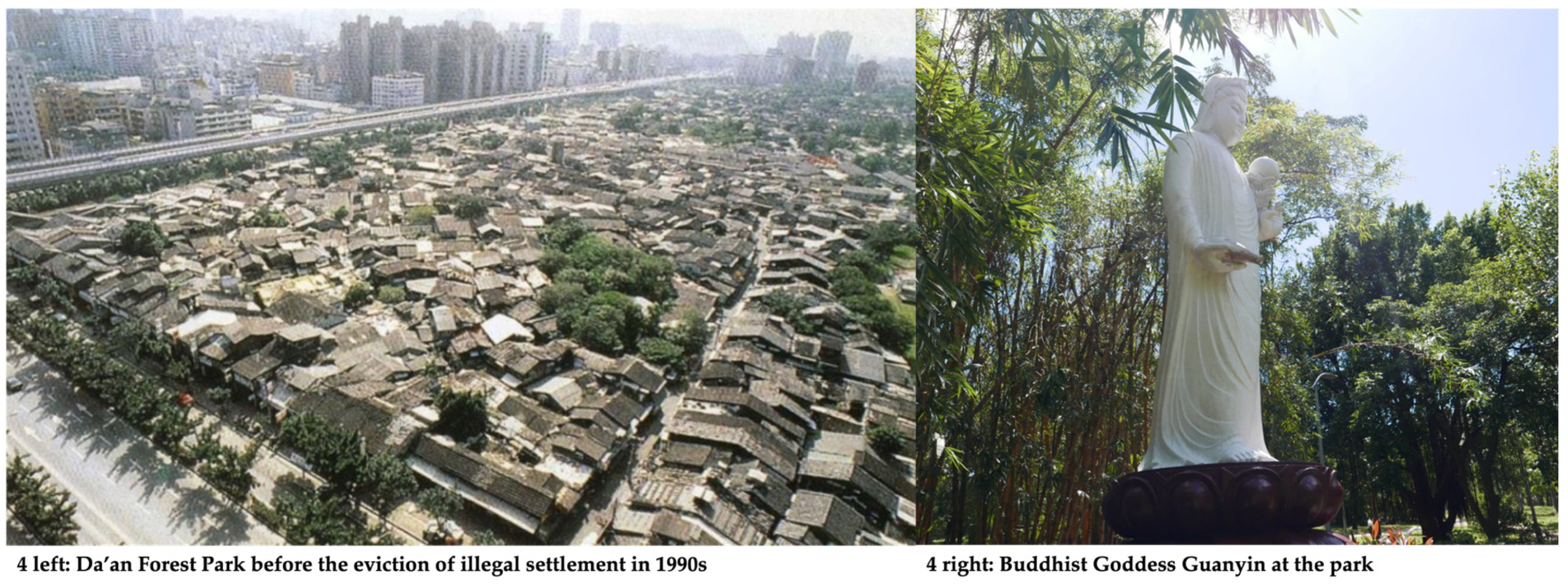
The park was established in 1994; the land was originally designated as urban parkland in 1932 by the Japanese authority. Later, the Taiwan government repurposed the area to build military dependents’ villages and the International House of Taipei, providing housing for individuals, including refugees from the Chinese Civil War [46] (Figure 4 left). By 1989, the City Government proposed converting the area into a park, following opposition from environmentalists against an earlier plan to construct a stadium. After extensive legal disputes, 12,000 informal settlers were evicted to make way for the creation of Da’an Forest Park [32]. Additionally, the statue of the Buddhist Goddess Guanyin on the site became a controversial issue, with former residents seeking its removal while prominent Buddhist leaders opposed it. It finally led the local government to retain the statue as public art, provided it was not used for religious purposes (Figure 4, right). Although the remaining statue does not convey religious meaning, the annual Muslim festival, Eid al-Fitr [47], is held in the park with support from the municipal government, as the Taipei Grand Mosque is located in close proximity to the park and serves as a focal point for Muslim community life.
The Taipei City Government initially implemented the Park Management Ordinance to enhance and maintain the urban green environment, including parks, green spaces, plazas, and children’s playgrounds [49]. This ordinance grants authority to establish park facilities based on environmental needs, including landscape, rest, recreation, sports, social education, and service facilities. Additionally, the local government has developed a park development blueprint aimed at fostering a sustainable city by enforcing the ordinance’s articles [50]. On the contrary, when urban forest recreation areas exceed 50 hectares, the national-level Forestry Act is applied to preserve forest ecology and biodiversity [51]. Therefore, it can be noticed that the management of Da’an Forest Park adheres to local government regulations as its legal context.
The park’s management entity is the Friends of Da’an Forest Park Foundation [52]. The foundation was initiated through the collaborative efforts of five professors from National Taiwan University, from the disciplines of botany, geology, entomology, meteorology, and ecological engineering, to address the ecological consequences of urban development. This non-profit organization now engages a broad public, including various community groups, through cultural events and ecological education programs [53]. The close collaboration with local government entities and organizations across various sectors enhances community-based stewardship of the park’s natural and cultural resources.
When the park was built in 1994, coercion was the primary means of power employed by the local government. However, the emergence of the Friends of Da’an Forest Park, driven by academics, demonstrates the success of grassroots initiatives, with credible information from local authorities and academics, and highlights a sustainable urban green-space management model that exemplifies power dynamics across different social domains [54].

3.3. Yoyogi Park, Tokyo, Japan

Yoyogi Park, centrally located in Shibuya ward of Tokyo, spans 54 hectares and is part of the forest surrounding the neighboring Meiji Shrine, making it one of the most abundant green spaces in Tokyo. Yoyogi Park hosts international events, being adjacent to the Meiji Shrine and the National Olympic Youth Center, a training accommodation facility. Especially after Meiji Jingu-mae and Yoyogi-koen stations opened in 1972, Yoyogi Park has evolved to meet social needs, adding an outdoor stage (1985), a waterfront facility (1991), a rose garden (1997), a dog run (2007), and a daycare center (2018). The event square next to the outdoor stage regularly hosts international festivals and flea markets, supported by regulations that facilitate private company events [55,56].
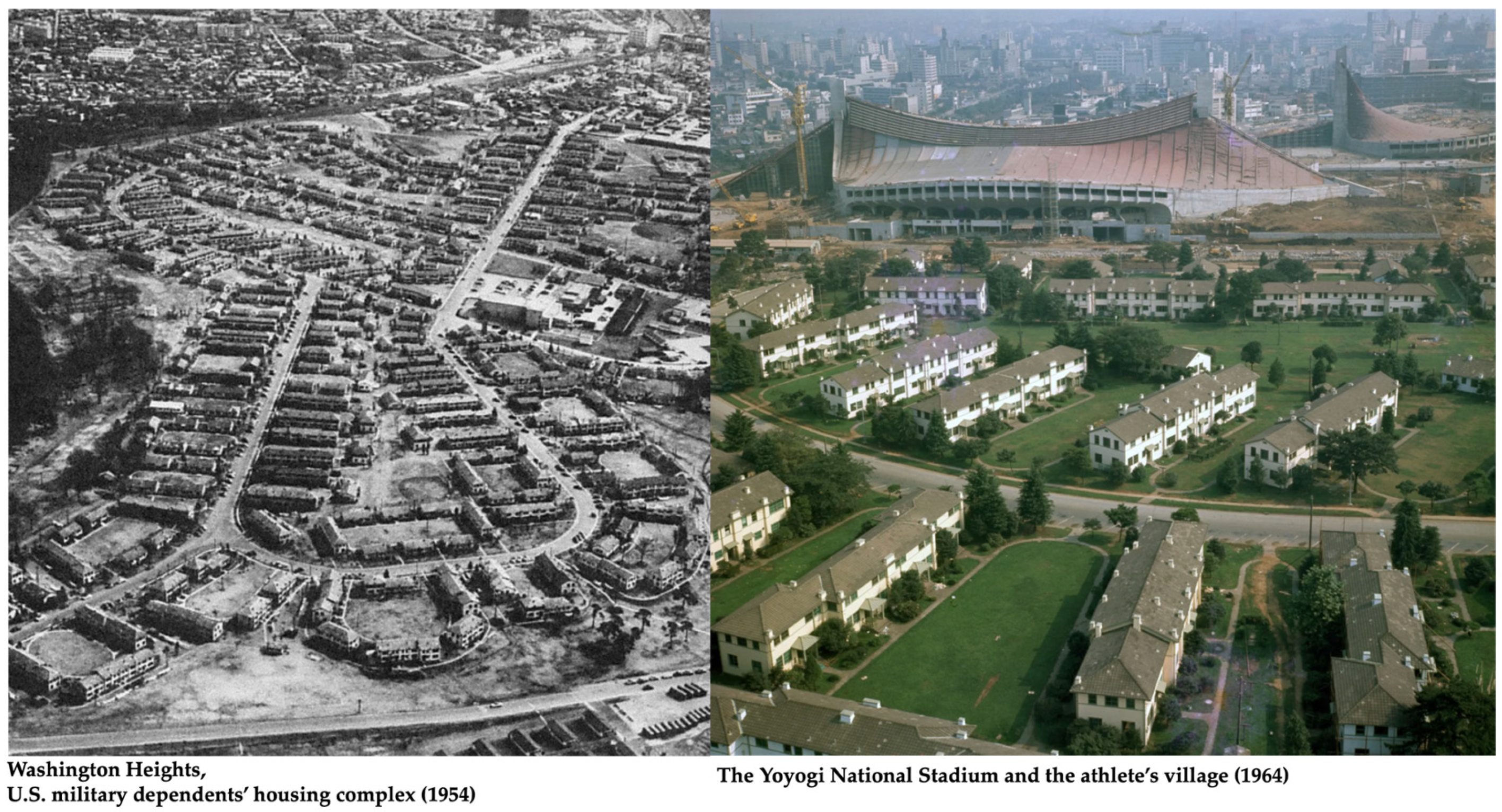
Shibuya ward, a rural area in the Edo period (1603–1868), has become increasingly urbanized and commercialized in modern times, enhancing its status as a subcenter of Tokyo. In this process, large-scale green spaces, such as Metropolitan Yoyogi Park, were created to address social challenges. In 1909, a Yoyogi military training ground was opened on the site of present day Yoyogi Park. After World War II ended in 1945, Washington Heights, a U.S. military dormitory, was constructed on this site (Figure 5). By 1950, the former Yoyogi military training ground and Meiji Shrine Forest were designated as Tokyo Special City Planning and Reconstruction Grand Park. However, due to the U.S. military occupation of the former Yoyogi military training ground, it was not initially converted into a park. In 1957, the city plan was revised to preserve green space, and Meiji Shrine was excluded from the park plan to maintain its cultural and historical significance [57]. The housing complex was demolished in the early 1960s to make way for the 1964 Tokyo Olympics, leading to the development of Yoyogi Park.
Under the Urban Parks Act [59], city parks encompass both national and municipal artificial parks and the major type of city parks are categorized by size: national government parks (standard area 300 hectares), large sized parks (standard area 50 hectares), parks in cities (general parks in 10–50 hectares and athletic parks in 10–75 hectares), and parks in residential districts (standard area 2–4 hectares). Yoyogi Park is categorized as a general park, intended to provide urban residents with spaces for relaxation, viewing, walking, games, and exercise [60]. The designated entity responsible for managing the park is the Tokyo Metropolitan Park Association. This public interest foundation was established in 1961 and began managing Yoyogi Park as a designated manager following the introduction of the Designated Manager System in 2003 [59]. This system, introduced through a revision of the Local Autonomy Act, allowed public facilities to be managed by private organizations, including public interest foundations such as the Tokyo Metropolitan Park Association. The foundation’s collaboration with government organizations and private enterprises fosters cultural appreciation through a range of events.

4. Results

The study compares the urban green-space governance across three Asian cities: Seoul, Taipei, and Tokyo, focusing on the legal and recreational contexts by examining a multipurpose park from each city. Utilizing the ACP approach, it explores how power dynamics shape urban green-space management, emphasizing both similarities and differences in governance practices. The study found that the governance of its representative multipurpose parks in Seoul, Taipei, and Tokyo reflects varying dynamics among potentate and subordinate actors, driven by power source elements, such as coercion, incentives, and information dissemination. Table 1 synthesizes the case comparison and presents the power configurations, representing a step forward in categorizing the attributes of ACP involved in green-space governance across three cities. As the role of potentate actors is commonly shared across three cases, although the intervention level ranges from strong statutory legislation to municipal-level ordinance, the table separately presents the role of subordinate actors, where variable power configurations are empirically observable.
In Seoul, the legal framework for urban green-space management is centralized, with national-level statutes such as the Act on Urban Parks and Green Areas [41] contributing a dominant role. The Seoul Metropolitan Government designates urban parks and green spaces to protect natural scenery and promote citizens’ health. This centralized approach is a legacy of South Korea’s historical adherence to strong state policies, which have shaped successful outcomes in urban green space [40]. The management organization of Seoul Forest, the Green Seoul Bureau, consists of multiple departments organized by expertise and responsibility, including garden city policy, leisure business, construction, landscaping, ecology, animal protection, and mountain resources. Additionally, the direct management center, the Park and Recreation Centers, are organized at the municipal government level as sub-entities of the Green Seoul Bureau. Despite some collaboration with cultural and eco-educational institutions for events, the central government’s power remains predominant, with government policy that encourages public participation and enhances the quality of urban greenery [62].
In contrast, Taipei operates under a decentralized legal framework [63]. The Taipei City Park Management Autonomy Regulations [49] grant the local government the authority to manage urban parks and green spaces in accordance with environmental needs. This localized management contrasts with Seoul’s national-level focus, enabling greater adaptability and responsiveness to local conditions. The Friends of Da’an Forest Park Foundation [52], a management organization founded by academics in ecology at a nearby national university, initiates citizen science involvement in association with urban green leisure practices. This foundation-centric approach emphasizes community engagement and sustainable agendas with a high level of ecological attention. The park’s management also focuses on community resilience by hosting events, including social gatherings, such as the Muslim festival Eid al-Fitr, in collaboration with religious institutions to engage diverse community members. While it may be strong to label Muslims as a socially inferior group, Da’an Forest Park is the only one of the three that uses its governance to explicitly provide a large-scale public ritual space for a religious minority that often faces social marginalization.
Tokyo’s Yoyogi Park is governed by the Urban Parks Act [59], which classifies parks by size and purpose. The Tokyo Metropolitan Park Association [56], a public interest foundation established in 1954, manages urban green spaces under the designated manager system introduced by the Local Autonomy Act [63]. This system allows private organizations to oversee public facilities, suggesting an interaction between government oversight and non-governmental management, while the extent to which private sector involvement enhances efficiency remains subject to further analysis. Yoyogi Park’s management incorporates public–private collaborations, particularly in commercial events. This system specifically allows private businesses to establish and manage commercial facilities, including shops and restaurants, to fund park maintenance. On the other hand, events such as the Sakana and Japan Festival involve both central government power elements and private corporate sponsors, reflecting an integration of social and commercial objectives rather than a purely state- or market-driven approach.
In sum, all three cities involved potentate actors as dominant power subjects in the parks’ initial development stages, using coercion to enforce land acquisition, planning, and construction without public involvement, although profit-driven enterprises played a peripheral role in Seoul Forest. Now, three countries demonstrate varying degrees of power dissemination from potentates and subordinate subjects. Seoul continues to rely heavily on coercive political agendas and government institutions, while Taipei emphasizes community-based participatory governance mechanisms through dominant information, especially about ecological appreciation, and Tokyo balances statutory control with profit-driven incentives in green-space management. Further discussions of the implications of the findings are presented in the following section through a more collective lens.

5. Discussion

5.1. Theoretical Implications

ACP is closely associated with management implications, as it has primarily emerged from applications in natural resource management. However, the present study also proposes theoretical implications that extend previous research findings and offer an analytical framework for future studies on urban green-space governance.
First, the comparative framing of this study confirms the importance of identifying differentiated patterns of urban green-space governance and deriving context-specific governance models. While Derdouri et al. [64] argue that urban green-space exposure varies significantly across cities, with disparities raising equity concerns, the present study examines three cities within a broadly similar spatial and cultural context. By doing so, it minimizes direct equity comparisons and instead elucidates practical governance issues for the general public as a subordinate actor, thereby enriching ACP-based discussions of power relations.
Second, Global North urban green-space governance in the East Asian context provides distinct power dynamic models for further theoretical discussion: a statutory model in Seoul Forest, an academically driven model in Da’an Forest Park, and a private sector collaborative model in Yoyogi Park. These models may serve as analytical frames for future case studies aligned with different operational logics, thereby expanding the conventional application of ACP beyond its predominant focus on Global South contexts, particularly African regions [19].
Third, the urban green-space characteristics examined in this study extend discussions on Nature-based Solution (NbS) [65] by illustrating green leisure infrastructure in Seoul, community-based stewardship boundaries in Taipei, and multifunctional urban green buffer spaces in Tokyo that maximize accessibility and functionality. The Taipei case, in particular, supports recent NbS research trends by demonstrating an urban forest governance, a combination of single responsible public authorities with more decentralized governance arrangements incorporating specific thematic and community-oriented elements.
Taipei’s case supports the idea of new materialist approaches that include nature itself as a dominant actor in spatial management [14], whereas the present study limits the involved actors to human subjects in power source administration. Therefore, the ACP framework observed in the Taipei model can be argued as a real-world application of recent academic strategies that conceptualize nature as a subject, rather than as a causal effect or consequence of governance-centric urban green-space management discussions.

5.2. Practical Implications

The study finds that power dynamics vary across the three cities, reflecting differences in their institutional contexts. From the perspective of sustainable development and environmental priorities, Taipei’s model is argued as the most effective due to its mature community involvement and emphasis on subordinate actors. Notably, the Friends of Da’an Forest Park Foundation, established by ecological academics, initiated local education and promoted citizen science involvement such as iNaturalist [66]. This is an approach not observed in the other two cities, where environmental community engagement remains limited and unstructured.
The three power sources identified in ACP: coercion, (dis)incentives, and information, are evident in both the creation and management of urban green spaces across all cases. In particular, coercion played a central role in establishing the park. For example, the creation of Da’an Forest Park in the 1980s involved the displacement of thousands of residents, although its current management reflects a shift toward autonomous governance. In Seoul, the management of Seoul Forest is led by the Green Seoul Bureau under the statutory Act on Urban Parks and Green Areas, aligning with the city’s broader political initiative to transform into a garden city. In Tokyo, Yoyogi Park is managed through a public–private partnership between the Tokyo Metropolitan Government, Tokyo Metropolitan Park Association, and private actors such as Toku Corporation.
Applying the ACP framework to urban green-space governance in Asian cities offers practical management insights. First, promoting citizen science and community engagement requires empowering subordinate actors, particularly through institutional information. Second, municipal-level greening initiatives benefit from statutory frameworks and the active involvement of local government. Third, incorporating commercial interests can be effectively modeled through a public–private partnership approach. Ultimately, power subjects and sources should be strategically selected based on situational needs and specific sustainability goals.
Zhao et al. [67] claimed a limitation of the ACP framework in community-based conservation initiatives due to its lack of flexibility for responding to the nuanced complexity of community dynamics and suggested the expansion of the theory through the specification of actor typology as well as the application of case studies. While their study compares internal and external actor roles at the communication organization level, the present study draws the comparative attention within the national level, employing the broad spatiotemporal concept of urban green-space management.
International knowledge-sharing in the field of urban green space recreation is scarce. While knowledge exchange in natural resource management has occurred primarily within the international aid sector, such as South Korea’s export of the Saemaeul (New Village) Movement for afforestation strategies in African countries [68], recreational knowledge-sharing or research collaboration at the international level remains limited. Asian countries are not only major sources of outbound tourists but also host some of the most visited urban destinations. As such, urban parks in city centers can be considered tourism resources along with the enhancement of urban residents’ quality of life. A comparative approach to examining the key actors in park management across these three cities can thus provide meaningful managerial insights.

6. Conclusions

The study explores urban green-space management in three East Asian cities using the ACP approach. Through a comparative case study, the study proposes three key findings. First, the construction of urban green spaces, such as multipurpose parks, was primarily driven by coercion in all three cases. Second, the legal frameworks for managing urban green space differ across cities: Seoul adheres to central-level statutes, follows state law, and engages in municipal-level management. Taipei practices decentralized authorization with highly mature community-based governance, while Tokyo employs a composite governance model that allows private entities to manage public facilities under legal acts. Third, the management cases of the three multipurpose parks reveal that Taipei’s model is arguably the most ideal, as it incorporates a broad spectrum of subordinate actors in active roles, including citizen science initiatives supported by an academically founded organization. Furthermore, community resilience is actively fostered by involving local members from diverse cultural backgrounds as key actors in urban green spaces.
These differences highlight the need for governance strategies that leverage local strengths to promote urban green-space development and foster future cooperation among the three cities. In sum, ACP can be operationalized as a diagnostic tool to strategically evaluate coercion, incentives, and information in urban green-space governance, enabling policymakers to design context-sensitive interventions that provide a foundational approach for addressing the collective aspects of urban green-space management.
Although the study’s findings can contribute to the future green space management agenda in Asian cities, it has limitations that can inform future research. The ACP framework may eschew the complexity of stakeholder involvement in governance by designating stakeholders too broadly. Additionally, the study’s primary data source may not fully capture the nuances of governance dynamics. To address these limitations, validation by political experts and frontline management practitioners is necessary. This suggests conducting in-depth interviews with government personnel and practitioners to strengthen the reliability of the study’s findings. Furthermore, future research should incorporate perspectives from local community members and urban residents, key stakeholders in urban forest governance, to explore how different groups interact with and value their surrounding natural resources.

Author Contributions

Conceptualization, L.K., C.J. and M.-H.C.; methodology, L.K., C.J. and M.-H.C.; validation, L.K., C.J. and M.-H.C.; formal analysis, L.K., C.J. and M.-H.C.; investigation, L.K., C.J. and M.-H.C.; data curation, L.K., C.J. and M.-H.C.; writing—original draft preparation, L.K. and M.-H.C.; writing—review and editing, C.J.; visualization, L.K.; supervision, C.J. All authors have read and agreed to the published version of the manuscript.

Funding

This research received no external funding.

Data Availability Statement

The data presented in this study are available on request from the first author.

Conflicts of Interest

The authors declare no conflicts of interest.

Appendix A

Table A1. Official documents included in the study.
Seoul Forest, SeoulDa’an Forest Park, TaipeiYoyogi Park, Tokyo
Government InstitutionState LevelAct on Urban Parks and Green Areas [41] Urban Parks Act [59]
Municipal LevelSeoul’s Parks and Green Spaces Policy [36]Taipei City Park Management Ordinance [49]Tokyo Metropolitan Government Bureau of Construction, Yoyogi Park Management Plan [55]
Green Seoul Bureau Information [42]Taipei City Park Planning and Design [50]
Seoul Metropolitan Government Parks Department, garden city Seoul [36]Taipei Parks and Street Lights Office Public Works Department [61]
Taipei City Government News [47]
Non-government Institution Friends of Da’an Forest Park Foundation [52]Tokyo Metropolitan Park Association [56]
iNaturalist [66]

References

  1. Krott, M.; Bader, A.; Schusser, C.; Devkota, R.R.; Maryudi, A.; Giessen, L.; Aurenhammer, H. Actor-centered power: The driving force in decentralized community-based forest governance. For. Policy Econ. 2014, 49, 34–42. [Google Scholar] [CrossRef]
  2. Kimengsi, J.N.; Charmakar, S.; Balgah, R.A.; Giessen, L. “Missing” power features in the actor-centered power framework: Systematic review and empirical insights from Central Africa’s Dja and Faro landscapes. For. Policy Econ. 2025, 170, 103395. [Google Scholar] [CrossRef]
  3. De Rosa, S.P.; de Moor, J.; Dabaieh, M. Vulnerability and activism in urban climate politics: An actor-centered approach to transformational adaptation in Malmö (Sweden). Cities 2022, 130, 103848. [Google Scholar] [CrossRef]
  4. Gautier, L. From development brokers to diffusion entrepreneurs: A review of concepts designating influential policy actors in global governance. In Policy Diffusion: New Constraints, New Realities; de Oliveira, O.P., Ed.; Balão Editorial: Lisbon, Portugal, 2021; pp. 82–102. [Google Scholar]
  5. Marques, M.; Juerges, N.; Borges, J.G. Appraisal framework for actor interest and power analysis in forest management: Insights from Northern Portugal. For. Policy Econ. 2020, 111, 102049. [Google Scholar] [CrossRef]
  6. Prabowo, D.; Maryudi, A.; Imron, M.A. Enhancing the application of Krott et al.’s (2014) actor-centred power (ACP): The importance of understanding the effect of changes in polity for the measurement of power dynamics over time. For. Policy Econ. 2016, 62, 184–186. [Google Scholar] [CrossRef]
  7. Opoku, P.; Nsor, C.A.; Acquah, E.; Akoto, D.A.; Weber, N. Actor and power analysis in urban forests and green spaces management: Insights from the Garden City of West Africa. For. Policy Econ. 2025, 170, 103389. [Google Scholar] [CrossRef]
  8. Schusser, C. Who determines biodiversity? An analysis of actors’ power and interests in community forestry in Namibia. For. Policy Econ. 2013, 36, 42–51. [Google Scholar] [CrossRef]
  9. Wang, W.; Zhai, D.; Li, X.; Fang, H.; Yang, Y. Conflicts in mangrove protected areas through the actor-centred power framework: Insights from China. For. Policy Econ. 2024, 158, 103122. [Google Scholar] [CrossRef]
  10. Angelo, H. How Green Became Good: Urbanized Nature and the Making of Cities and Citizens; University of Chicago Press: Chicago, IL, USA, 2021. [Google Scholar]
  11. Li, C. Quality of life: The perspective of urban park recreation in three Asian cities. J. Outdoor Recreat. Tour. 2020, 29, 100260. [Google Scholar] [CrossRef]
  12. von Ruschkowski, E.; Burns, R.C.; Arnberger, A.; Smaldone, D.; Meybin, J. Recreation management in parks and protected areas: A comparative study of resource managers’ perceptions in Austria, Germany, and the United States. J. Park Recreat. Adm. 2013, 31, 95. [Google Scholar]
  13. Choi, G. Comparison of Development Process of Forest Recreation Policy in Korea, China, and Japan. Ph.D. Dissertation, Seoul National University, Seoul, Republic of Korea, 2019. [Google Scholar]
  14. Latour, B. Reassembling the Social: An Introduction to Actor-Network-Theory; Oxford University Press: Oxford, UK, 2005. [Google Scholar] [CrossRef]
  15. Kim, L. The Influence of Urban Greenspace Interactions on Place Images in Asian Capitals, Taipei and Seoul. Ph.D. Dissertation, National Taiwan Normal University, Taipei, Taiwan, 2024. [Google Scholar]
  16. Lee, Y. Taipei and Seoul’s modern urbanization under Japanese colonial rule: A comparative study from the present-day context. Sustainability 2020, 12, 4772. [Google Scholar] [CrossRef]
  17. Nakanishi, M.; Fujioka, M. A comparative study on urban planning master plan system in Japan, South Korea and Taiwan. J. City Plan. Inst. Jpn. 2019, 54, 1438–1445. [Google Scholar] [CrossRef]
  18. Dunlop, C.A.; Radaelli, C.M. Policy learning in comparative policy analysis. J. Comp. Policy Anal. 2022, 24, 51–72. [Google Scholar] [CrossRef]
  19. Mairomi, H.W.; Kimengsi, J.N. Mapping actors’ interests and protected area management outcomes in the Campo Ma’an landscape of Cameroon. For. Policy Econ. 2025, 174, 103493. [Google Scholar] [CrossRef]
  20. Ishtiaque, A.; Eakin, H.; Vij, S.; Chhetri, N.; Rahman, F.; Huq, S. Multilevel governance in climate change adaptation in Bangladesh: Structure, processes, and power dynamics. Reg. Environ. Change 2021, 21, 75. [Google Scholar] [CrossRef]
  21. Charmakar, S.; Kimengsi, J.N.; Giessen, L. Power in forest management institutions: A systematic review. Trees For. People 2024, 15, 100465. [Google Scholar] [CrossRef]
  22. Zhang, P.; Zhao, J.; Krott, M. Strictest nature conservation: China’s national park policy underpinned by power shift and turf dynamic. For. Policy Econ. 2023, 154, 103033. [Google Scholar] [CrossRef]
  23. Brodrechtová, Y. Assessing actor power in the trade-offs between ecosystem services affecting forest management: A case study from Central Slovakia. For. Policy Econ. 2024, 163, 103187. [Google Scholar] [CrossRef]
  24. Howlett, M.; Rayner, J.; Tollefson, C. From government to governance in forest planning? Lessons from the case of the British Columbia Great Bear Rainforest initiative. For. Policy Econ. 2009, 11, 383–391. [Google Scholar] [CrossRef]
  25. Capano, G.; Howlett, M.; Ramesh, M. Bringing governments back in: Governance and governing in comparative policy analysis. J. Comp. Policy Anal. 2015, 17, 311–321. [Google Scholar] [CrossRef]
  26. Arts, B.; Buizer, M. Forests, discourses, institutions: A discursive-institutional analysis of global forest governance. For. Policy Econ. 2009, 11, 340–347. [Google Scholar] [CrossRef]
  27. Bach, N.D. Powerful actor identification in community forestry via actor-centered power theory: Case study in Son La Province. J. For. Sci. Technol. 2018, 5, 62–70. [Google Scholar]
  28. Mohammed, A.J.; Inoue, M. A modified actor-power-accountability framework (MAPAF) for analyzing decentralized forest governance: Case study from Ethiopia. Environ. Manag. 2014, 139, 188–199. [Google Scholar] [CrossRef] [PubMed]
  29. Yin, R.K. Case Study Research: Design and Methods, 5th ed.; SAGE Publications: Thousand Oaks, CA, USA, 2014. [Google Scholar]
  30. Patton, M.Q. Enhancing the quality and credibility of qualitative analysis. Health Serv. Res. 1999, 34, 1189–1208. [Google Scholar] [PubMed]
  31. Hsu, J. The evolution of economic base: From industrial city, post-industrial city to interface city. In Globalizing Taipei: The Political Economy of Spatial Development; Kwok, Y., Ed.; Routledge: London, UK, 2004; pp. 16–34. [Google Scholar]
  32. Jou, S. Domestic politics in urban image creation: Xinyi as the “Manhattan of Taipei”. In Globalizing Taipei: The Political Economy of Spatial Development; Kwok, Y., Ed.; Routledge: London, UK, 2004; pp. 120–140. [Google Scholar]
  33. Chu, Y. Democratization, globalization, and institutional adaptation: The developmental states of South Korea and Taiwan. Rev. Int. Political Econ. 2021, 28, 59–80. [Google Scholar] [CrossRef]
  34. Kim, L.; Li, C. Attraction and retention green place images in Taipei City. Forests 2024, 15, 710. [Google Scholar] [CrossRef]
  35. Dasgupta, R.; Basu, M.; Hashimoto, S.; Estoque, R.C.; Kumar, P.; Johnson, B.A.; Mitra, B.K.; Mitra, P. Residents’ place attachment to urban green spaces in Greater Tokyo region: An empirical assessment of dimensionality and influencing socio-demographic factors. Urban For. Urban Green. 2022, 67, 127443. [Google Scholar] [CrossRef]
  36. Garden City Seoul. Seoul Metropolitan Government Parks Department. 2024. Available online: https://parks.seoul.go.kr/ (accessed on 15 November 2025).
  37. Korea Racing Authority. History of Korean Horse Racing. Available online: https://www.kra.co.kr (accessed on 30 November 2025).
  38. Seoul Metropolitan Government. Seoul Forest to Expand After the Relocation of Ready-Mixed Concrete Factory in Seongsu-dong. 2017. Available online: https://english.seoul.go.kr/seoul-forest-expand-relocation-ready-mixed-concrete-factory-seongsu-dong (accessed on 30 November 2025).
  39. Skidmore, Owings & Merrill (SOM). Master Plan of the Heart of Seoul Forest. 2025. Available online: https://www.som.com (accessed on 30 January 2026).
  40. Park, M.S. Interest-based participation requiring accountability in greening. For. Sci. Technol. 2018, 14, 169–180. [Google Scholar] [CrossRef]
  41. Act on Urban Parks and Green Areas. Act on Urban Parks and Green Areas. 2005. Available online: https://elaw.klri.re.kr/eng_mobile/viewer.do?hseq=51379&type=part&key=33 (accessed on 15 November 2025).
  42. Green Seoul Bureau. Green Seoul Bureau Information. 2005. Available online: https://parks.seoul.go.kr/information/list.do?footer=Y#none (accessed on 15 November 2025).
  43. Evenson, K.R.; Aytur, S.; Rodriguez, D.A.; Salveson, D. Involvement of park and recreation professionals in pedestrian plans. J. Park Recreat. Adm. 2009, 27, 132–142. [Google Scholar]
  44. Shirk, J.L.; Ballard, H.L.; Wilderman, C.C.; Phillips, T.; Wiggins, A.; Jordan, R.; Bonney, R. Public participation in scientific research: A framework for deliberate design. Ecol. Soc. 2012, 17, 29. [Google Scholar] [CrossRef]
  45. Jim, C.Y.; Chen, W.Y. Diversity and distribution of landscape trees in the compact Asian city of Taipei. Appl. Geogr. 2009, 29, 577–587. [Google Scholar] [CrossRef]
  46. Kang, M.J. The spatial production of public parks and counter-public non-parks in Taipei. J. Public Space 2019, 4, 101–122. [Google Scholar] [CrossRef]
  47. Taipei City Government. 2025 Eid-al-Fitr in Taipei. 2025. Available online: https://www.gov.taipei/News_Content.aspx?n=F0DDAF49B89E9413&s=DA1146560F54E8B3 (accessed on 30 November 2025).
  48. Huang, D. The Birth of a Park. (n.d.). Available online: http://e-info.org.tw/node/201135 (accessed on 30 November 2025).
  49. Taipei City Government. Taipei City Park Management Autonomy Regulations. 2013. Available online: https://www.laws.taipei.gov.tw/Law/LawSearch/LawInformation?sysNumber=P06H1001&realID=06-08-1001 (accessed on 30 November 2025).
  50. Taipei City Government. Taipei City Park Planning and Design. Laws & Regulations Database of Taipei City. 2021. Available online: https://www.laws.taipei.gov.tw/Law/LawSearch/LawInformation?sysNumber=P06H306 (accessed on 30 November 2025).
  51. Forestry Act. Laws & Regulations Database of Taiwan. 2021. Available online: https://law.moj.gov.tw/ENG/LawClass/LawAll.aspx?pcode=M0040001 (accessed on 30 November 2025).
  52. Friends of Daan Forest Park Foundation. Friends of Daan Forest Park. 2014. Available online: https://www.daanforestpark.org.tw/ (accessed on 30 November 2025).
  53. Böcher, M. How does science-based policy advice matter in policy making? The RIU model as a framework for analyzing and explaining processes of scientific knowledge transfer. For. Policy Econ. 2016, 68, 65–72. [Google Scholar] [CrossRef]
  54. Barcelona, B.; Bocarro, J. The nature and extent of collaboration between park and recreation agencies and higher education institutions. J. Park Recreat. Adm. 2004, 22, 3–24. [Google Scholar]
  55. Yoyogi Park Management Plan. Bureau of Construction, Tokyo Metropolitan Government. 2022. Available online: https://www.kensetsu.metro.tokyo.lg.jp/content/000059543.pdf (accessed on 5 December 2025).
  56. Tokyo Metropolitan Park Association. Yoyogi Park. 2024. Available online: https://www.tokyo-park.or.jp/park/yoyogi/index.html#park (accessed on 5 December 2025).
  57. Fujii, Y. Characteristics and Transitions of Park Development in Comprehensive Parks in Tokyo. Master’s Thesis, Tokyo Metropolitan University, Tokyo, Japan, 2019. [Google Scholar]
  58. The Mainichi Newspapers. Available online: https://www.aflo.com (accessed on 5 December 2025).
  59. Urban Parks Act. Ministry of Land, Infrastructure, Transport and Tourism, Government of Japan. 1956. Available online: https://www.mlit.go.jp/common/000996962.pdf (accessed on 5 December 2025).
  60. Nakamura, K. Parks and Green Spaces in Tokyo: An Introduction; Institute for Environmental Symbiosis, Dokkyo University: Saitama, Japan, 2018. [Google Scholar]
  61. Taipei City Government. Taipei Parks and Street Lights Public Works Department. 2025. Available online: https://pkl.gov.taipei (accessed on 15 November 2025).
  62. Choi, J.; Kim, G. History of Seoul’s parks and green space policies: Focusing on policy changes in urban development. Land 2022, 11, 474. [Google Scholar] [CrossRef]
  63. Local Autonomy Act. Ministry of Internal Affairs and Communications, Government of Japan. 2003. Available online: https://elaws.e-gov.go.jp/document?lawid=322AC0000000067 (accessed on 5 December 2025).
  64. Derdouri, A.; Murayama, Y.; Morimoto, T.; Wang, R.; Haji Mirza Aghasi, N. Urban green space in transition: A cross-continental perspective from eight Global North and South cities. Landsc. Urban Plan. 2025, 253, 105220. [Google Scholar] [CrossRef]
  65. Scheuer, S.; Davies, C.; Roitsch, D. Governance, institutional and economic frameworks for urban forests as a nature-based solution in Europe. J. Environ. Manag. 2024, 354, 120384. [Google Scholar] [CrossRef]
  66. iNaturalist Taiwan. iNaturalist, Taiwan Platform. Available online: https://taiwan.inaturalist.org/ (accessed on 15 November 2025).
  67. Zhao, J.; Zhang, P.; Tian, F.; Shi, W. Enhancing actor-centered power theory through actor typology: Insights from community-based conservation in China. For. Policy Econ. 2025, 172, 103425. [Google Scholar] [CrossRef]
  68. Doucette, J.; Müller, A.R. Exporting the Saemaul spirit: South Korea’s Knowledge Sharing Program and the “rendering technical” of Korean development. Geoforum 2016, 75, 29–39. [Google Scholar] [CrossRef]
Figure 1. Attributes of ACP (Created by authors following Krott et al. [1]).
Urbansci 10 00269 g001
Figure 2. Research Protocol. (Note: The color variation is determined according to the sequential procedure of the research protocol.)
Urbansci 10 00269 g002
Figure 3. The past and future of Seoul Forest (Source: (a), Korea Racing Authority [37]; (b), Seoul Metropolitan Government [38]; (c), Skidmore, Owings & Merrill (SOM) [39]).
Urbansci 10 00269 g003
Figure 4. Controversy surrounding the establishment of Da’an Forest Park in the 1990s (Source: Huang, D. [48]).
Urbansci 10 00269 g004
Figure 5. Yoyogi Park site in the 1950s and 1960s (Source: The Mainichi Newspapers [58]).
Urbansci 10 00269 g005
Table 1. Power configuration in urban green-space governance.
Research
Destination
Seoul Forest, SeoulDa’an Forest Park, TaipeiYoyogi Park, Tokyo
Dominant power sourceCoercionInformation(Dis)Incentives
Institutional structure focusNational statute embedded in municipal bureaucracy [36,41,42]Academically institutionalized civic intermediary [52,61]Market-compatible designated manager system [55,56,59]
Role of subordinate actorsConditional on state-defined legitimacyCommunity stewardship, ecological learningCommercialization without privatization of land
Governance mechanismStatutory administrative, hierarchical municipal executionKnowledge-driven, community-centered, decentralized governancePublic–private partnership: statutory authorization with incentive-based operation
Disclaimer/Publisher’s Note: The statements, opinions and data contained in all publications are solely those of the individual author(s) and contributor(s) and not of MDPI and/or the editor(s). MDPI and/or the editor(s) disclaim responsibility for any injury to people or property resulting from any ideas, methods, instructions or products referred to in the content.