1. Introduction
Over the past decade, the rapid growth of e-commerce has led to a significant increase in direct-to-consumer deliveries. This phenomenon has particularly impacted the so-called last mile, the final stage of the logistics process, where a shipment reaches the recipient from the local distribution center. This segment of urban logistics has become an area of greatest competitive pressure, as it is simultaneously the most costly, operationally complex, and environmentally damaging. High supply fragmentation, rising consumer expectations regarding order fulfillment speed, and limited space in densely populated cities force logistics companies and city authorities to seek new ways of organizing freight transport [
1,
2].
Another key element of this transformation is the development of out-of-home (OOH) delivery options, such as parcel locker machines, pickup points, and logistics micro-hubs. These solutions reduce the number of individual deliveries to customers’ doors, which can contribute to reducing courier traffic in city centers. As a result, cities are increasingly integrating OOH networks into their mobility strategies, spatial planning, and sustainable transport policies. This approach allows for better management of space around curbs, coordination of delivery flows and minimization of the negative impact of urban logistics on the environment [
3] and quality of life of residents [
4]. Recent studies reinforce the primacy of user-centric network design and accessibility [
5,
6], e.g., geometric siting targeting walk/bike catchments [
7,
8], transit co-modality siting, and quality attributes of locker service [
9] and dedicated apps [
10].
The broader implications of last-mile digitalization for sustainable urban development are complex and multifaceted. With the growing importance of e-commerce, the number of parcels delivered directly to end users is increasing, leading to an increase in delivery vehicle traffic in urban areas [
11]. Long-term forecasts by [
12] indicate that in the coming years, an increasing share of urban emissions will be attributed to last-mile deliveries and consumer purchasing behavior. Consequently, the way goods transport is organized in cities will become a key factor in achieving climate and environmental goals.
In response to these challenges, a set of complementary measures is becoming increasingly important, including curb management, the electrification of delivery fleets, shipment consolidation strategies, and the use of alternative modes of transport. Such solutions include cargo bikes, autonomous delivery robots, and drones, which, under certain conditions, can reduce emissions, reduce traffic congestion, and improve the operational efficiency of deliveries. At the same time, their actual environmental impact depends on many factors, such as the degree of integration with existing logistics infrastructure, legal regulations, and the level of social acceptance.
1.1. State of the Research Field and Key Themes
The analysis of the scientific literature allows us to identify the main research trends related to the organization of last-mile deliveries, including the role of digitalization, urban space management and sustainable transport.
1.1.1. OOH Delivery and Lockers
Out-of-home (OOH) deliveries and parcel lockers represent an important development in last-mile logistics and are widely analyzed in the academic literature. Research focuses primarily on three areas. First, operational effects are analyzed, such as delivery turnaround time, delivery vehicle dwell time, and the rate of failed deliveries [
13]. Research findings indicate that consolidating multiple parcels at a single collection point can shorten processing times and reduce the number of failed deliveries.
The second area of research concerns the environmental trade-offs resulting from the operation of OOH systems. Delivery consolidation can reduce the number of courier vehicle trips, but some of the environmental impact is transferred to customer journeys. The third strand concerns the planning of parcel locker locations and capacity under conditions of demand uncertainty [
14].
Taken together, the research indicates that the benefits of using parcel lockers depend primarily on their location [
15], network density, and the digital coordination of available capacity, which enables efficient management of parcel flow.
1.1.2. Network Design and Optimization
A comprehensive body of research focuses on the location, deployment, and routing of parcel machines, including mobile solutions such as mobile parcel lockers. These analyses utilize methods derived from object location theory, queuing models, and optimization and metaheuristic approaches to solve complex decision-making problems related to planning a network of collection points under conditions of limited resources and fluctuating demand. These models take into account, among other factors, the number and distribution of potential users, device throughput, access time to collection points, and the operating costs incurred by logistics operators.
The research also emphasizes the importance of system resilience to demand variability, which is characteristic of the e-commerce market. Due to the seasonality of orders, fluctuating daily load, and the dynamic growth of e-commerce, it is necessary to design parcel machine networks flexibly, allowing for the adaptation of their capacity and location to changing conditions. In this context, mobile solutions and dynamic network capacity management are receiving increasing attention.
At the same time, the literature indicates that traditional optimization models based solely on minimizing logistics costs are insufficient. User-centric accessibility metrics are increasingly being proposed, which take into account factors such as distance to the pickup point, ease of access, integration with users’ daily routes, and accessibility to public transport hubs [
16]. This approach combines logistics with urban planning, emphasizing the need to locate parcel lockers in locations that are well-connected and functionally linked to the urban environment, such as service centers, residential developments, or mobility hubs.
1.1.3. Curb Management and Digital Guidance
Research on urban freight transport indicates that mobile information services, such as curbside parking availability, route guidance, and delivery window data, can significantly influence the behavior of delivery vehicle drivers. Access to up-to-date information reduces the time spent searching for a parking space, improves route planning, and increases the on-time delivery performance [
17]. This can ultimately lead to shorter travel times, reduced congestion, and reduced emissions in urban areas. The literature, therefore, emphasizes that mobile applications are becoming an important tool for managing delivery flows and serve as a coordination and control mechanism in urban logistics systems.
1.1.4. Human–Computer Interaction (HCI), Adoption, and Privacy
On the user side, research on mobile app implementation highlights the importance of factors such as expected usability, ease of use, user habits, and context of use [
18]. In the case of applications related to parcel machines, perceived system reliability, spatial orientation support, and fast and seamless authentication play a key role, facilitating parcel pickup and increasing user retention [
19].
Human–computer interaction (HCI) research also shows that interface design and the timing of notifications influence user engagement and comfort with applications [
20]. However, overly intrusive or ambiguous stimuli can reduce a sense of autonomy and trust, which is particularly important in logistics applications targeted at a broad audience. At the same time, privacy analyses indicate that data collection and sharing practices are not always fully transparent, with dark patterns observed [
21,
22], highlighting the need to design applications with privacy protection and transparent data consent mechanisms in mind [
23].
1.1.5. Alternative Modes and Automation
Research on autonomous delivery methods, both aerial (e.g., drones) [
24,
25] and ground (delivery robots), as well as the use of cargo bikes in urban logistics, indicates that their effectiveness depends largely on the digital coordination of logistics operations [
26]. Systems managing task allocation, routing, and access to urban infrastructure, including curbside spaces and loading and unloading zones, are crucial here. In densely built-up city centers, appropriate management of these elements improves the smoothness of operations, reduces conflicts with other users, and enhances traffic safety.
The literature emphasizes that the effective operation of such solutions requires the integration of digital systems, logistics platforms, and tools available to end users. In this context, mobile applications play a crucial role as an interface enabling delivery monitoring, communication with the logistics system, and access to pickup time information [
27]. They thus become a practical link between the operational side of logistics and the user experience, supporting both the management of delivery processes and the convenience of using new forms of distribution.
1.2. Research Gap and Purpose of This Study
Despite the growing importance of mobile apps in OOH delivery ecosystems, systematic comparative assessments of apps related to parcel lockers remain fragmented. Existing studies typically focus on single features, such as information about available locker capacity, directions, or user notifications, or on operational endpoints, such as delivery vehicle dwell time or traffic volume. However, studies that adopt a holistic, cross-application perspective that integrates multiple dimensions, including user experience (UX) and accessibility, functional reach, system reliability and resilience, privacy safeguards, interoperability between apps, and decision support, are lacking. We therefore provide a holistic, cross-application perspective and discuss plausible implications for users and cities, while explicitly noting that city-scale operational outcomes are not measured in this study. Building on the literature’s emphasis on digitalized urban space management and smart logistics, our study fills this gap through a structured, multidimensional assessment of mobile applications, from a user perspective, that facilitate the use of parcel machines in urban environments. This approach allows us not only to compare the functionality and usability of different systems but also to assess their potential for improving operational efficiency, user comfort, and sustainable management of urban freight flows.
To address these gaps, we develop and apply a comparative, multi-dimensional assessment of mobile applications that front-end urban parcel-locker networks. Using a corridor-testing protocol in real locker contexts and an immediate post-task questionnaire, we evaluate three widely used apps in Poland (InPost, DPD, ORLEN Paczka) on usability and clarity, performance and stability, functional coverage, and overall experience, and we document observed frictions (wayfinding, control discoverability, latency) that arise during actual pick-up, drop-off and locker-search workflows. The goal is to surface design choices (e.g., remote opening flows, map accuracy, accessibility affordances) most associated with better field UX and fewer errors. By centering the mobile app as a control surface for the digitized last mile, this study complements infrastructure-focused optimization with evidence on the front-end layer that ultimately shapes adoption, travel effort, and curb-side dwell, creating a bridge between user-experience measurement and city-scale logistics management.
2. Materials and Methods
2.1. Study Context and Applications
This study aimed to assess user experience (UX) and functional adequacy of three parcel-locker mobile applications: InPost, DPD, and ORLEN Paczka, widely used by residents in Katowice, Poland, during real-world use at locker sites. We employed a cross-sectional, mixed-methods design combining corridor testing (brief, observed tasks in natural settings) with a structured, six-item questionnaire completed immediately after task execution. The design privileges ecological validity and captures both perceived usability and observed friction points.
Fieldwork took place across multiple parcel-locker locations in Katowice (Poland), where the three networks operate. In this agglomeration-like city, the network of parcel lockers is very dense, so using them as OOH PUDO (Pick-Up, Drop-Off) of parcels is very popular. However, only 3 service providers operating shipping and collection points whose mobile application is the most common were selected for the analysis: InPost with 268 parcel locker locations in the town, DPD: 152 and ORLEN Paczka: 178.
The InPost Mobile app (≥10 M downloads and 4.9 rating at Google Play) is a mobile tool that integrates parcel management into the InPost operator’s system. App features enable comprehensive control of the logistics process, from shipment dispatch to pickup, including tracking, modification, and interaction with physical devices such as Paczkomat® (InPost S.A., Kraków, Poland). The app automatically aggregates shipments associated with the user’s phone number, offers push notifications about status changes, and allows remote locker opening and parcel dispatch without printing a label. Additional features, such as the ability to share parcels with other app users and geolocate pickup points, enhance user experience and reduce user interaction time with the service.
The DPD Mobile app (≥1 M downloads and 4.8 rating at Google Play) offers a comprehensive environment for managing parcels within the DPD Polska network. It allows you to track parcel status in real time, change delivery plans (e.g., redirect a shipment, change the pickup date), and drop off/pick up parcels at DPD Pickup points and parcel machines without the need to print labels. The app includes a map of point locations, a parcel history, and allows you to share pickup codes with others. It integrates track and trace functionality with logistics management elements, significantly simplifying delivery planning and execution. It also supports international shipments and various payment methods (e.g., Google Pay, Apple Pay).
The ORLEN Paczka app (≥1 M downloads and 2.2 rating at Google Play) provides a basic set of features for tracking and collecting parcels from the network of parcel points and machines operated by ORLEN. Users can monitor parcel status, receive notifications, locate collection points on a map, and use the remote locker opening feature. The app is more focused on collection and simple status monitoring, without extensive parcel shipping options or advanced delivery management (such as redirects or advanced activity history), although this is indicated as a planned feature expansion.
Table 1 presents a comparative analysis of the basic features of the parcel locker applications.
In terms of user-friendliness and logistics functionality, the InPost Mobile and DPD Mobile apps are more advanced than ORLEN Paczka. InPost Mobile stands out for its extensive parcel management tools and process automation, while DPD Mobile emphasizes delivery flexibility and shipment control. ORLEN Paczka offers a set of standard features, primarily useful for parcel pickup and location.
2.2. Methodological Rationale (Corridor Testing)
In this study, we employed in situ corridor testing to maximize the validity of evaluating parcel delivery applications in their real-world use environments. The literature on mobile usability indicates that field testing accounts for context-dependent factors, such as network and device conditions, location layout, and micro-interruptions in interaction, which are often overlooked in laboratory settings. At the same time, laboratory and field approaches complement each other methodologically, offering complementary insights into user behavior. Particularly in the context of “last-mile” operations, the application’s digital layer can significantly modify behavior in the street (e.g., real-time curb information can reduce driver travel time and distance), justifying evaluation of the client-side interface in a direct operational context [
28,
29].
Corridor testing also meets the comparative objective of this study: it allows for the rapid and low-friction identification of key usability issues and design contrasts across applications, under conditions of real-world variability. It functions as a formative technique, complementing more time-consuming laboratory evaluations or longitudinal studies. Because a dedicated app is a significant factor influencing the perceived quality and availability of the parcel locker service, contextual assessment near the device is particularly relevant.
To reduce recall and anchoring bias, surveys were administered immediately after task completion (approximately 2 min after completion), consistent with evidence from the HCI field indicating that immediate reporting reduces memory reconstruction bias compared to delayed self-assessments. To identify issues, priority was given to small, field-based samples, which effectively reveal high-frequency friction. Larger samples are only necessary for statistical inference or user segmentation, so the results of this study should be considered exploratory and formative.
Threats to data validity were mitigated by: (i) testing on participants’ own Android (Google LLC, Mountain View, CA, USA)/iOS (Apple Inc., Cupertino, CA, USA) devices, (ii) sampling multiple locations with parcel lockers, and (iii) triangulating structured observation with short survey scales administered near the task. This approach is consistent with best practices for evaluating mobile applications in a real-world environment.
2.3. Study Design, Tasks, and Measurement
A cross-sectional, field-based usability study of three parcel-locker mobile applications (InPost Mobile, DPD Mobile, and ORLEN Paczka), combining a short “corridor testing” protocol (observed task performance in real contexts) with a structured user questionnaire, was conducted. The design captured immediate user experience (UX) signals during real pick-up/drop-off tasks at parcel lockers and complemented them with self-reported ratings of usability, clarity, performance, stability, functional coverage, and overall experience. Testing took place at multiple parcel-locker locations in Katowice (PL), where the three networks operate. The materials comprised: the three selected mobile apps installed on participants’ own devices (Android and iOS), and a short six-item questionnaire administered on site. No experimental or beta software was used; all features were those available to end-users at the time of the study. InPost Mobile, DPD Mobile, and ORLEN Paczka applications were selected due to their market prominence in Poland, the breadth of their out-of-home (OOH) delivery networks, and the diversity of feature sets (e.g., remote locker opening, label-free shipping, accessibility options, station-integrated pickup). This ensured variation in functional scope and user journeys while retaining comparability across core tasks (ship, track, collect).
A convenience sample of n = 30 users (13 women, 17 men; age 16–55 years) was recruited at parcel-locker sites; the largest age stratum was 18–24 (43.33%), and the smallest was 48–55 (6.66%). The sample was skewed toward digitally proficient young adults (18–24). Eligibility required prior or current use of any of the evaluated apps and willingness to perform typical app-mediated locker tasks on a personal smartphone. Before participation, individuals were informed about the study aims, anonymity, and voluntary participation; only non-identifiable data was collected.
Task scope was intentionally limited to high-frequency core workflows (locker search/wayfinding and a single operational task: pick-up or drop-off) to maintain comparability across three commercial applications in a brief in situ corridor-testing session. Edge cases such as payment disputes, returns, multi-parcel pick-ups, or exception handling were excluded because they occur less frequently and are difficult to capture reliably in a short field session without artificial simulation, depend on user account states, payment configurations, and carrier-specific policies that are not standardized across participants and apps, and would substantially extend session time and increase fatigue and order effects. These complex interactions are important and are proposed as a dedicated follow-up study using scripted scenarios and/or longitudinal observation.
Each participant completed two standardized tasks in each application. First, all participants performed a common baseline task: locating the nearest parcel locker using the in-app search/map function and verifying the presented location guidance. Second, each participant performed one operational workflow, selected as either parcel pick-up or parcel drop-off (sending). The workflow type was kept constant for a given participant across all three applications to support within-participant comparability. Applications were tested in a fixed order (InPost → DPD → ORLEN). A researcher observed interactions and recorded qualitative notes on hurdles (navigation, wayfinding, delays, errors).
The six questionnaire items captured key UX facets aligned with the article’s evaluation dimensions (usability and accessibility, functional scope, reliability, etc.). Items were phrased as:
Ease of use;
Clarity and readability of the interface;
App speed/performance (loading, smoothness);
Stability (crashes, errors);
Coverage of needed functions (ship, collect, track);
Overall experience.
Each item used a 5-point ordinal scale (higher = better). In parallel, field notes documented context (device/OS, location), friction points, and any workarounds employed by users.
Paper forms (or in-app forms) were digitized immediately after collection. Analyses focused on descriptive statistics by app (means of item scores and a consolidated index computed as the arithmetic mean of the six items), visualized as bar charts. Given the exploratory, small-N design and ordinal responses, we report central tendencies and cross-app contrasts without formal hypothesis testing. Raw qualitative notes were coded inductively to summarize recurring pain points (e.g., inaccurate locker geocoding, lag on older devices) and valued features (e.g., remote opening, clear status notifications). To reduce confounding by device or platform, tasks were performed on participants’ own Android/iOS devices and at multiple locker sites; observations emphasized within-task frictions rather than absolute timings. The questionnaire was short and administered immediately after each task to minimize recall bias. No incentives were tied to app preference.
3. Results
A total of 30 participants (13 women and 17 men) aged 16 to 55 participated in the study, conducted using the corridor method. Respondents aged 18–24 constituted the largest group (43.33%), reflecting the profile of users who most frequently use mobile logistics services. The study was conducted in real-world settings—at municipal parcel lockers in Katowice (PL)—where participants completed typical, task-based scenarios using three target apps: InPost Mobile, DPD Mobile, and ORLEN Paczka.
Data collection in a natural environment allowed for the capture of authentic user experiences, taking into account the situational context, time pressure, and real-world interaction goals. This enabled the identification of both strengths and potential barriers to app use that might not have been revealed in a laboratory setting. Participant assessments, supplemented by the researcher’s observations, provide a multidimensional comparative picture.
The analysis covered key usability aspects, such as ease of use, interface clarity, perceived speed, application stability, completeness of available features, and overall user experience. Additionally, qualitative observations regarding navigation methods, moments of hesitation, errors made, and strategies for correcting them were included, allowing for better interpretation of the quantitative results.
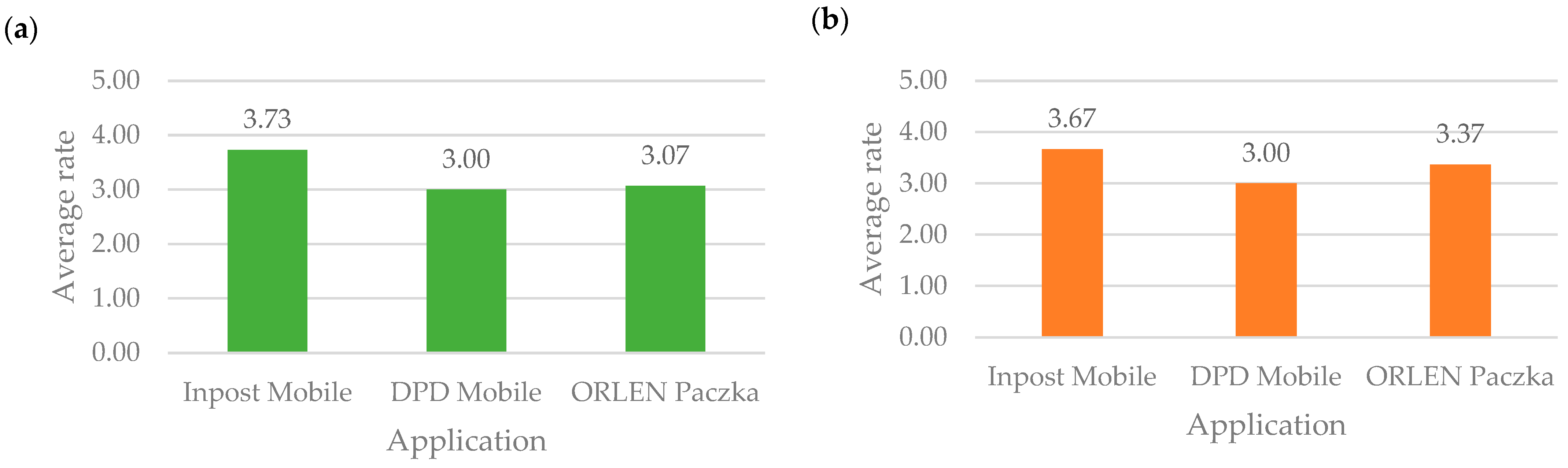
Visual references for the analyzed interfaces with detailed quantitative results for each criterion are presented in
Figure 1.
Across all analyzed dimensions, the InPost Mobile app consistently achieved the highest average ratings, indicating a coherent and well-developed user experience. Particularly high scores were recorded in the categories of ease of use (
Figure 1a: 3.73) and interface clarity (
Figure 1b: 3.67). Study participants emphasized that the app offers an intuitive, minimalistic layout, in which key functions—such as sending, tracking, and receiving shipments—are easily accessible and clearly labeled. This interface organization facilitates rapid learning of the app and efficient task completion, even by less experienced users. As a result, these positive UX features translate into the highest overall experience rating (
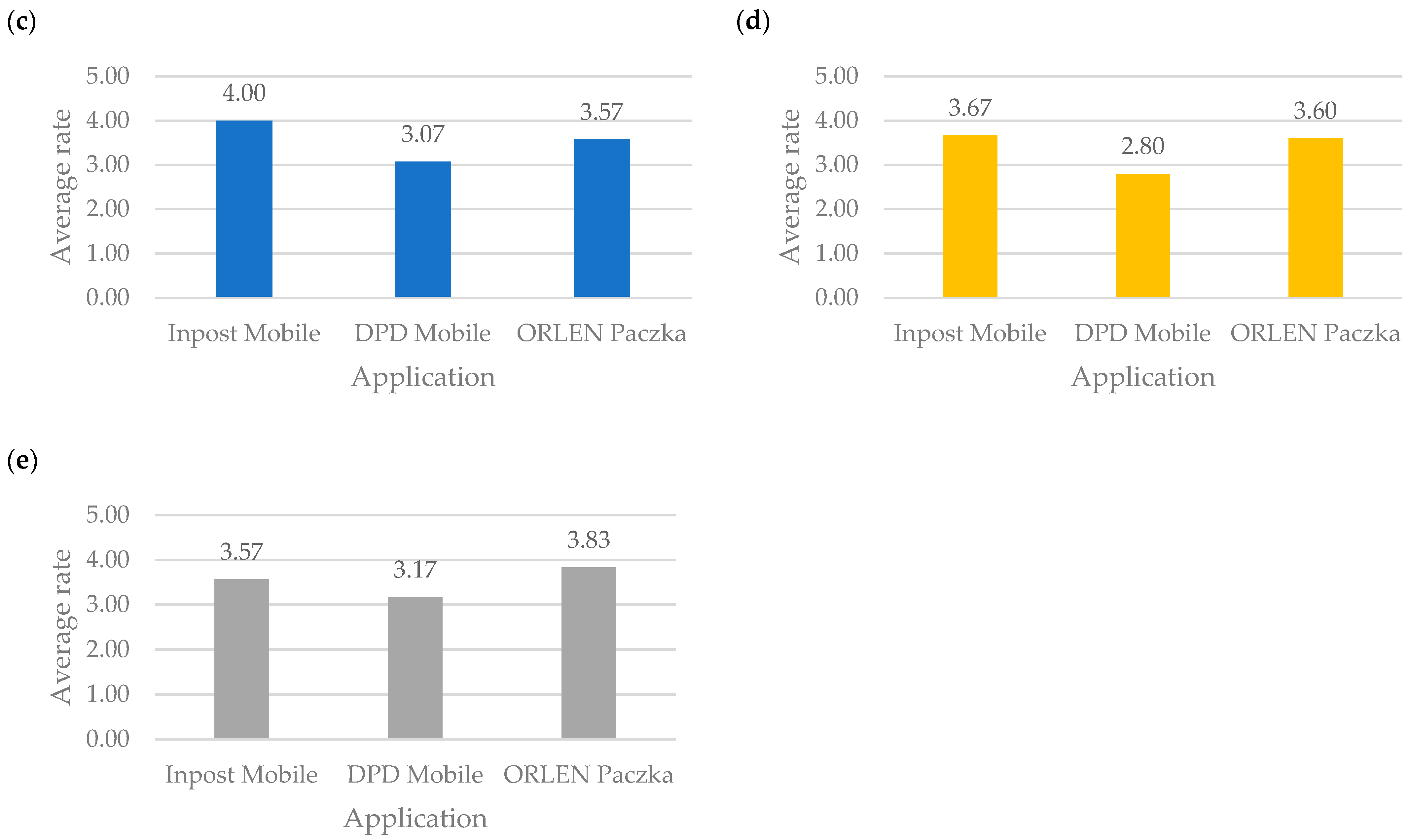
Figure 1c: 4.00), suggesting a high level of satisfaction and trust in the system.
Compared to its competitors, the DPD Mobile app performs the worst in most of the analyzed UX metrics. The lowest mean values were recorded for both ease of use and interface clarity (3.00 each;
Figure 1a,b), as well as for overall user experience (
Figure 1c: 3.07). These results are consistent with qualitative comments from participants, who noted a less intuitive navigation structure and difficult access to more advanced features. It was frequently emphasized that completing certain operations required navigating through additional screens or taking non-obvious steps, which increased cognitive load and increased task completion time. Consequently, the user experience in this app is perceived as less fluid and less predictable compared to other solutions.
The ORLEN Paczka app presents a more mixed profile of results. On the one hand, its interface clarity remains relatively competitive (
Figure 1b: 3.37), but on the other, users indicate greater complexity in interactions. At the same time, the app stands out in terms of the range of available features, as reflected in the highest rating in the “all necessary features” category (
Figure 1e: 3.83). This suggests that the system offers extensive shipment management capabilities, but this may come at the expense of ease of use and speed of basic operations. Participants more often reported the need to perform additional steps or devote more attention to navigating the app’s structure, which led to more moderate ratings for ease of use and dynamic operation.
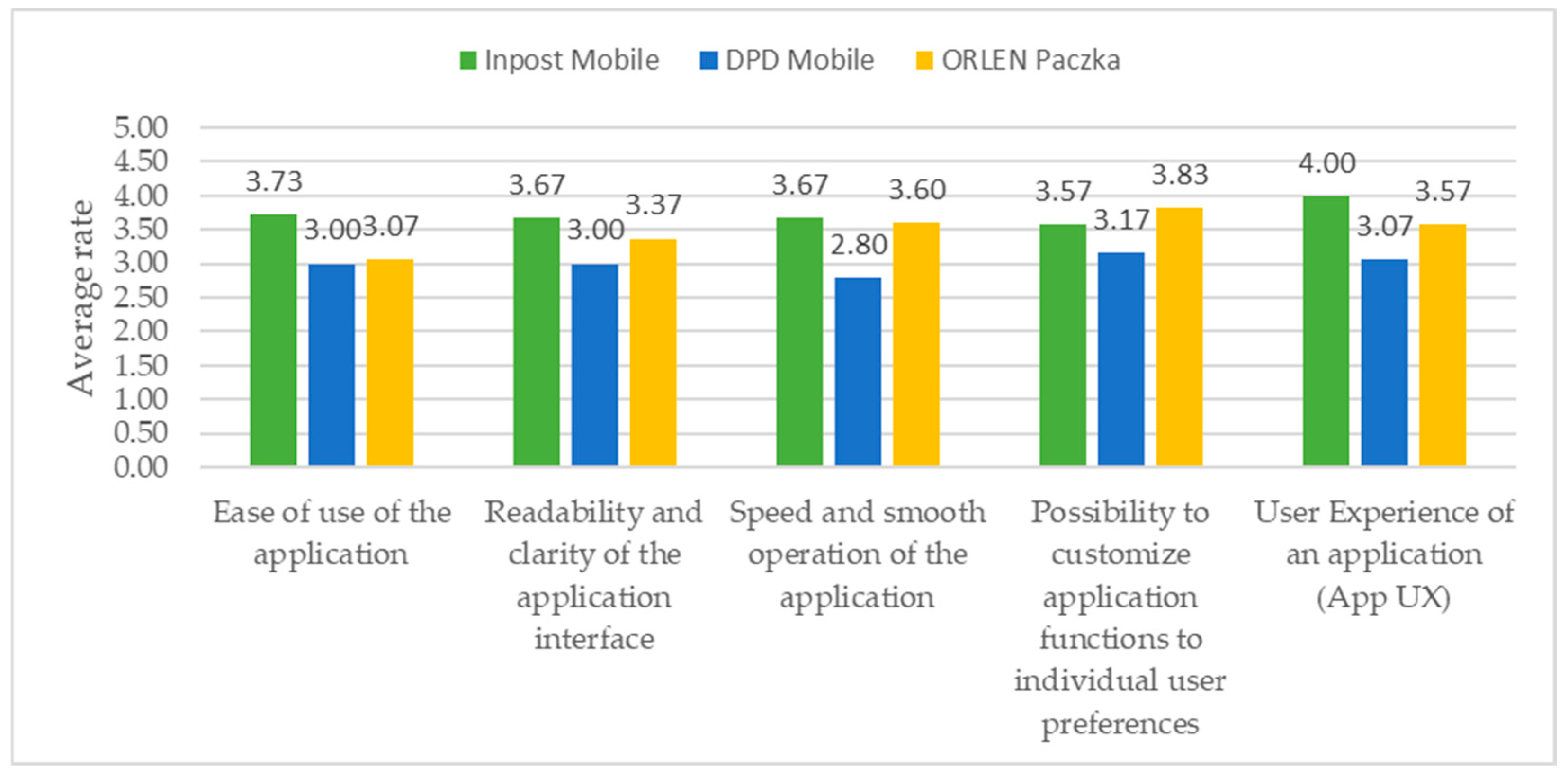
In terms of performance, respondents clearly distinguished two related but distinct aspects: the perceived speed of the app and its stability during task completion. InPost Mobile emerged as the clear leader in perceived speed (average 3.70; see the “Speed” column in the consolidated dashboard,
Figure 2). Users indicated that the app responded quickly to commands, and transitions between screens were smooth and did not require long waits. This is particularly important in the context of using the app in the field—at parcel lockers—where users are often under time pressure and expect an immediate response.
In this context, ORLEN Paczka (2.90) and DPD Mobile (2.80) performed significantly worse. Respondents noted that these apps were more likely to experience delays in loading views or processing actions, which was particularly noticeable on the older mobile devices used during the study. In such conditions, even minor slowdowns negatively impacted the overall experience, increasing frustration and extending task completion times. A slightly different picture emerges when it comes to operational stability. InPost mobile (3.67) and ORLEN Paczka (3.60) were rated as solutions with a similar, relatively high level of reliability. Users rarely reported serious errors or application interruptions, suggesting that both systems perform well in maintaining operational continuity even under changing network conditions. The DPD Mobile app, on the other hand, again received the lowest rating (2.83), which correlates with the qualitative observations of participants. They cited occasional application freezes, delayed responses to user actions, and slow shipment status updates, especially with weak or unstable internet connections (
Figure 1d). These issues impacted not only task efficiency but also the sense of control and trust in the system, which are crucial in the context of logistics services requiring up-to-date and reliable information.
The app’s functional scope reveals a clear tension between the abundance of available options and the simplicity of the user experience. ORLEN Paczka achieved the highest score in the “completeness of functions” category (
Figure 1e: 3.83), reflecting participants’ appreciation of the app’s wide range of capabilities. Participants highlighted features that support accessibility and integration with an extensive network of pickup points, including parcel lockers located at gas stations. However, this extensive functionality also translates into greater complexity of the interface and interactions, which is reflected in moderate ratings for ease of use and speed. In other words, the abundance of features does not always translate into equally high efficiency.
InPost Mobile ranks second in terms of completeness of functions (3.57), but its design approach clearly differs from ORLEN Paczka’s. The app focuses on optimizing key usage scenarios, such as sending, tracking, and receiving parcels, while limiting the number of less important configuration options. An example of this approach is the remote locker opening feature, which significantly simplifies and speeds up the pickup process. This strategy—prioritizing the most frequently performed tasks—likely contributes to the highest overall experience rating (
Figure 1c: 4.00) because users can complete their goals quickly and seamlessly.
The DPD app, on the other hand, receives a lower score for feature completeness (3.17), suggesting that while it offers a basic set of features, it lacks particular innovation or breadth of available options. Importantly, this moderate level of functionality does not compensate for the lower scores in usability and performance. As a result, users perceive the app as less competitive in terms of both feature range and ease of use.
These correlations are clearly visible in the consolidated matrix (
Figure 2), which synthesizes the results across all analyzed dimensions. InPost Mobile ranks first, offering the most balanced and refined user experience. ORLEN Paczka comes in second, with a clearly functionality-focused profile, while DPD Mobile ranks third, reflecting the accumulation of lower scores in key areas of UX and performance.
Figure 2.
Feature consolidated assessment of selected mobile parcel locker applications.
Figure 2.
Feature consolidated assessment of selected mobile parcel locker applications.
Qualitative field notes clearly confirm and complement the trends observed in the quantitative data, creating a coherent picture of user experiences. Participants frequently cited the InPost app as “predictable and seamless to use,” which directly corresponds to its high ratings for ease of use and interface clarity (
Figure 1a,b). The app’s emphasis on “fast response” is also reflected in the highest average for perceived speed in the consolidated data (
Figure 2). Respondents’ statements suggest that not only the speed of operation itself is crucial here, but also a sense of control and predictability of subsequent steps, which significantly reduces cognitive load during task completion.
In the case of ORLEN Paczka, participants primarily appreciated the wide range of features, as expressed through comments such as “I have everything I need in one place.” This is consistent with the highest rating for completeness of functions (
Figure 1e). At the same time, however, some users noted that “there’s a lot of information on the screen,” which can lead to a feeling of overload in the interface and make it difficult to quickly find key options. This ambivalence well explains why high functionality does not directly translate into equally high scores for ease of use—a larger number of available options requires proper organization and presentation.
In contrast, experiences with the DPD Mobile app reveal the most problematic areas of interaction. Although users saw the potential in the concept of more detailed shipment management, in practice, they cited barriers to accessing these features. Some commented on “more clicks needed to reach advanced options,” suggesting a less intuitive navigation structure. Additionally, the reported “occasional slowdowns” and less smooth performance of the app are consistent with its lowest stability and speed ratings (
Figure 1d,e). As a result, even potentially valuable features were not fully utilized because their availability was perceived as too complex or time-consuming.
Taken together, the qualitative data not only corroborates the quantitative results but also helps understand their underlying causes, revealing how specific design decisions impact the actual user experience in the context of everyday interactions.
Taken together, the results indicate that designing digital solutions for last-mile services requires a conscious choice between three distinct strategies: maximizing the simplicity and fluidity of basic user journeys (as in the case of InPost Mobile), developing a broad range of features—including inclusive elements (ORLEN Paczka)—and offering more advanced control and management mechanisms (DPD Mobile). Each of these approaches brings specific benefits, but also potential costs from a user experience perspective.
In the context of urban parcel lockers studied, it is particularly clear that interface simplicity and reliable, fast performance are the factors most strongly associated with higher overall satisfaction ratings. InPost’s profile—characterized by high ratings for ease of use, transparency, speed, and stability—translates directly into the highest scores in overall user experience. This means that in task-oriented situations, often carried out in a rush and under changing environmental conditions, users prefer solutions that are predictable, fast, and require little cognitive effort.
Strategies focused on feature richness, as in the case of ORLEN Paczka, require particularly careful design of the interface layer. While a high score for feature completeness confirms that users appreciate the wide range of options, moderate scores for ease of use and speed indicate the risk of a so-called “complexity penalty.” In other words, an overabundance of information or options can make it difficult to quickly find key functions if not properly organized and prioritized. Therefore, applying the principles of cognitive reduction, progressive feature disclosure, and a clear information architecture becomes crucial in this approach.
In contrast, solutions focused on more advanced user control, represented by DPD Mobile, require particular optimization in terms of both navigation and performance. The results show that even if an application offers potentially valuable management features, their practical usefulness decreases when accessing them requires additional steps or when the system is slower and less stable. In such cases, the user’s cognitive load increases, and the experience becomes less fluid and more frustrating.
In summary, the study indicates that in the context of parcel locker applications, it is not only the features offered that are crucial, but also, and more importantly, how they are delivered. The best results are achieved by solutions that combine functionality with simplicity and efficiency, minimizing user effort while maintaining high efficiency in completing core tasks.
To address the exploratory nature of the initial descriptive analysis and to rigorously verify whether the observed differences in user ratings across the three delivery applications (InPost Mobile, DPD Mobile, ORLEN Paczka) were statistically robust, a non-parametric Kruskal–Wallis H test was conducted. This test is highly appropriate for comparing three independent groups on an ordinal 5-point Likert scale, particularly given the sample size (
n = 30). The degrees of freedom (df) for all tests were 2. As detailed in
Table 2, the analysis revealed highly significant differences (
p < 0.001) across all evaluated UX dimensions.
4. Discussion
The results of the field study indicate that satisfaction with applications for urban parcel vending machine networks is determined more by the quality of core paths (sending, tracking, receiving) and the perception of ease and speed of interaction than by the breadth of functionality. This approach is consistent with mature models of technology acceptance, in which perceived ease of use influences usefulness and intention to use, and reducing friction costs enhances adoption in routine, time-pressured tasks [
30].
In the broader context of last-mile digitalization, a mobile app serves as a kind of operational efficiency multiplier, simultaneously impacting the user experience and efficiency of the entire logistics process. Primarily, it shortens the time it takes to access key information—such as shipment status, pickup point location, or locker availability—enabling users to make quick and informed decisions. At the same time, it stabilizes expectations by providing consistent, up-to-date, and predictable messages regarding delivery progress [
31].
Another significant effect is reducing uncertainty between the user, device, and operator. In practice, this means reducing the number of problematic situations, such as failed pickup attempts, misinterpreted shipment status, or the need to contact customer service. This not only improves the user experience but also reduces the burden on operational infrastructure and support channels.
This is particularly important in the last-mile segment, which remains the most costly and complex link in the supply chain. Any improvement in communication, coordination, and task execution—even at the level of a single in-app interaction—can lead to noticeable economies of scale, reduced operational errors, and increased resource efficiency [
32]. In this perspective, the mobile application is not just a user interface, but an integral element of the logistics system that supports its optimization from the perspective of both the operator and the end user.
Comparing solution profiles reveals a clear “feature-richness-versus-simplicity” trade-off. Strategies emphasizing a wide range of options increase perceived completeness, but without a rigorous information architecture, increase cognitive load and time to destination; while focusing on core flows is more likely to translate into higher overall experience ratings [
33,
34].
The results obtained in this study, combined with field observations, are consistent with a broader stream of European analyses concerning the development of alternative delivery methods in last-mile logistics. In particular, they confirm the growing role of out-of-home (OOH) point networks and parcel vending machines as solutions to counteract the excessive fragmentation (atomization) of delivery streams. Instead of multiple individual deliveries to a specific address, parcels are consolidated at a single collection point, significantly simplifying route organization and increasing predictability.
This approach translates directly into a higher percentage of successful deliveries on the first attempt, eliminating the need for courier return visits and reducing the number of failed deliveries. At the same time, so-called empty runs, i.e., trips made without efficient use of cargo space, are reduced. As a result, operators can better optimize fleet utilization, shorten routes, and reduce the intensity of transport operations. From an environmental and economic perspective, this leads to a favorable balance between operating costs and pollutant emissions. Fewer journeys and more efficient delivery planning contribute to reducing CO
2 emissions and other air pollutants, which is particularly important in densely populated urban areas, as scientists emphasize [
35,
36]. At the same time, end users gain greater flexibility in parcel collection, further enhancing the attractiveness of these solutions. In this context, mobile apps act as integrators of the entire OOH ecosystem—enabling not only access to information but also coordination between the user and the logistics infrastructure. They thus support the efficient utilization of collection points and parcel machines, reinforcing their positive impact on both the operational efficiency and sustainability of delivery systems. Model analyses indicate the potential for further reduction in the environmental footprint in locker scenarios, provided that appropriate density and operational coordination are ensured [
37].
Application performance and stability are crucial to the user experience, especially when using older mobile devices or with limited network connections [
38,
39]. Empirical studies show that delays, stutters, and excessive resource consumption not only reduce user satisfaction but also negatively impact retention and conversion rates. The literature recommends, among other things, the use of “performance budgets” for key screens, data prefetching mechanisms, and degradation-tolerant operating modes, which maintain smooth operation and predictable interactions even under challenging hardware and network conditions [
38].
Accessibility and inclusivity are becoming increasingly important competitive factors in the design of mobile apps for last-mile logistics. Incorporating features that facilitate system use—such as enlarged touch targets, high color contrast, screen reader support, voice guidance, and preferential parcel placement for people with limited mobility—significantly increases app usability. Importantly, these benefits are not limited to those with specific needs; they improve user comfort and efficiency for the entire user population, reducing errors, speeding up interactions, and increasing the sense of control over the parcel pickup process [
40].
Literature reviews and practical implementations in apps supporting mobility and navigation in urban environments confirm that integrating inclusive features translates into better system adaptability to diverse usage scenarios [
41]. This allows operators not only to meet regulatory requirements and design standards but also to build a market advantage through positive user experiences, increasing user satisfaction, retention, and loyalty.
As [
42] research shows, from the perspective of market development, the rapid expansion of the vending machine network in Poland and Europe increases convenience and promotes further migration of demand to OOH channels, but at the same time raises the requirements for the digital layer—the accuracy of the locator, freshness of data and signals about availability.
The implications for design and management are clear: (1) protecting the simplicity of basic paths and limiting the number of steps to achieve the most common goals; (2) designing for performance and degradation (prefetching, local code caching, weak signal mechanisms); (3) progressively exposing advanced options instead of them dominating the main path; (4) incorporating accessibility into publishing gateways (WCAG and assistive technology testing); (5) closing the locator loop through high-quality geodata, operating hours, and load signals. Similar recommendations are found in studies on satisfaction factors in LMD [
43] and last-mile system reviews [
31].
Limitations
External validity is constrained by the convenience sampling approach (n = 30) and the age distribution, with 43.33% of participants aged 18–24. This skew likely over-represents digitally native users who typically display higher mobile-app literacy and tolerance to interface complexity. As a result, perceived usability, learnability, and performance assessments may differ in older age groups or among users with lower digital confidence. Future work should replicate the protocol with stratified sampling and larger, demographically balanced cohorts to assess whether app rankings and UX trade-offs hold across age and digital-literacy segments.
The study’s limitations include its small sample size and single city, device heterogeneity, and the self-report nature of the metrics. In the future, it would be worthwhile to supplement declarative assessments with behavioral telemetry data (time-on-task, remote opening latency, number of interactions), conduct experiments on information architecture and element layout, conduct accessibility audits using assistive technologies, and build carrier selection models that combine UX attributes with distance, price, and locker occupancy—in line with the gaps and recommendations from recent reviews [
44], and the fixed application order (InPost → DPD → ORLEN), which may introduce learning, fatigue, or anchoring effects. Because the sequence of testing the applications was not counterbalanced across participants, the observed usability scores and task friction may be partially influenced by a learning effect.
More complex and exception-prone workflows (returns, multi-parcel pick-ups, payment or code failures) were not tested; future work should incorporate scripted edge-case scenarios and objective telemetry (time-on-task, error rates) to assess robustness under non-routine conditions.
5. Conclusions
A comparative study of three mobile apps supporting digitalized urban parcel locker networks shows that the dimensions most consistently associated with higher user ratings in the “last mile” are: the simplicity of core paths (sending, tracking, receiving), the predictability of information flow, and the efficiency and stability of the interface. In practice, this translates into the highest ratings for apps that minimize the number of steps and interaction time, providing quick access to key features. Based on the collected data, InPost Mobile achieved the highest ratings for overall satisfaction and ease and readability, ORLEN Paczka distinguished itself with the highest level of “complete functionality” (with inclusive features), while DPD Mobile recorded lower scores, particularly in the areas of speed and stability. These profiles confirm that excessive functionality without a rigorous information architecture can increase cognitive load and reduce perceived quality, while focusing on core paths and technical efficiency results in a higher experience rating.
These findings are consistent with technology acceptance models, which have long emphasized the primacy of perceived ease of use and usefulness in shaping the intention to use and satisfaction with digital solutions. In the “last mile” logistics landscape, a mobile app can act as an interaction facilitator: it may support smoother user–locker interaction and user adoption, and improvements in UX and responsiveness can scale across many interactions. However, quantifying operational effects (e.g., turnaround time, dwell time, emissions) requires direct measurement and is outside the scope of this study. This aligns with scientific reviews that highlight the complexity and cost-intensive nature of the last mile and the growing role of digitalization in optimizing it.
This study also confirms that accessibility and inclusivity are no longer “nice-to-haves” but are becoming elements of competitive advantage. Accessibility features (e.g., preferential parcel placement, voice guidance, larger touch targets) increase usability for the entire population, increasing satisfaction and shortening interaction time. Finally, against the backdrop of the dynamic expansion of locker networks in Poland and Europe, improving the quality of the digital service layer (locator accuracy, freshness of accessibility data) is of systemic importance for the efficiency and sustainability of the last mile.
The analysis is based on a sample of 30 participants in a single city (Katowice), which may favor those who use vending machines more frequently and not reflect the full diversity of users. The variety of smartphone models and connectivity quality may have influenced perceptions of speed and stability—critical for UX evaluations. The study relied on self-reports (Likert scales) and field observations, without the support of telemetric behavioral metrics such as task completion time or number of interactions. The focus was on basic usage scenarios; more complex cases (multiple packages, returns, payment issues) were not systematically tested. Within this young-skewed, convenience sample in Katowice, InPost Mobile generally received higher ratings on core-path usability and perceived responsiveness, while ORLEN Paczka was valued for functional breadth and DPD Mobile tended to score lower on perceived speed and stability. These patterns should be treated as exploratory indications requiring confirmation in larger, demographically balanced samples.
The literature on last-mile and locker networks is well-developed in the areas of operational concepts, localization, and routing, while empirical, comparative studies of user experience of mobile apps for urban vending machines—particularly in the context of the Polish market and multiple operators simultaneously—are less well represented. Our study fills this gap by providing in situ data from the use of three leading apps in real-world interaction conditions, and by demonstrating the relationship between path simplicity and technical efficiency and global evaluation. Thus, it contributes to bridging the gap between operational research approaches in city logistics and HCI/UX in the specific locker environment. This paper provides comparative, empirical data on the user experience of three applications competing in a single market and use case (locker networks), filling a gap in the literature, which has so far relied primarily on operational concepts, localization, and optimization models. However, fully closing the gap requires scaling up, incorporating telemetry and experimental testing to causally link micro-design decisions within the application to the performance and sustainability of the entire last-mile delivery system.
Future research directions may include: geographic and demographic scaling through replications across multiple cities and larger samples to compare contexts with varying locker infrastructure density and improve generalizability; telemetric behavioral measures (time-on-task, opening latency, number of interactions, errors) coupled with application logs to link perceptions to objective outcomes and test causal relationships; systematic accessibility audits (tests with assistive technologies, studies with users with diverse needs); carrier choice models combining UX attributes with contextual factors (distance, price, occupancy, walk time) to estimate flexibility and simulate policies/offers; and integration with digital transformation trends, i.e., analyzing the impact of digital maturity and real-time data investments on UX and last-mile operational efficiency.