1. Introduction
The sustainable development of large urban centers brings to the forefront judicious territorial planning in order to reduce the negative impact generated, most often by heavy traffic, and to reduce socio-spatial discrepancies within emerging communities. Taking these considerations into account in the territorial development process, the concept of the 15 minutes city, promoted by Carlos Moreno, has recently been developed and increasingly implemented in urban centers. This concept prioritizes access for the population on foot or by bicycle within a maximum of 15 minutes to the main urban functions: housing, education, recreation, services, and jobs [
1,
2,
3]. The concept of the 15 minutes city is based on urban models defined at the end of the 19th century and the beginning of the 20th century, e.g., Garden City [
4] or Neighborhood Unit [
5], or more recent ones (urban village). It is found in numerous programmatic documents on sustainable urban development, adopted both within the EU [
6] and internationally [
7].
The analysis of territorial development and urban centers, based on sustainability and urban resilience, focuses on multidimensionality. The integrated analysis of multiple dimensions—decongested traffic within everyone’s reach [
8,
9,
10,
11]; improving quality of life through local economic development [
12,
13] and access to specialized medical services [
14]; and reducing environmental impact by decreasing anthropogenic pressure on the environment, encouraging social cohesion among individuals [
15,
16] represent an implementable model in territorial planning whose results can be transformed into strategic tools for achieving the goal of the 15 minutes city as a sustainable and resilient city in the context of the unpredictable and nonlinear challenges of urban change in this period [
17,
18].
Much of the literature highlights significant diversity in terms of the indicators used, spatial units, modes of transport, and types of services analyzed, with a direct impact on the results obtained [
19,
20,
21]. Three categories of indicators used in the analyzed literature can be identified. The first and dominant category is represented by opportunity indicators, which separately or cumulatively assess access to one or more services within a pre-established time threshold [
22,
23,
24].
The advantage of using these indicators stems from their simplicity, reduced qualitative data requirements, and ease of communication to decision-makers [
25,
26]. The second category includes weighted indicators, which integrate distance variation functions and, in some cases, competition effects [
20,
21,
27]. These approaches are more robust from a theoretical point of view but are less commonly used due to high data requirements and complexity of interpretation. The third category is represented by composite indicators, such as walkability scores, functional mix indicators, or density [
22].
The vast majority of studies on the 15 minutes city analysis use small spatial units (census tracts, blocks, parcels, or regular grids) as the points of origin for trips [
24,
26]. In the absence of address-level data, geometric centroids are frequently used, a solution recognized as a source of spatial errors, especially in peripheral or morphologically complex areas [
20,
21]. Pedestrian networks form the basis of most analyses, reflecting the normative emphasis on active mobility. Some studies extend the analysis to cycling and public transport to test multimodal scenarios or to compensate for the limitations of low urban density [
22,
27]. Car accessibility is generally excluded, highlighting the prescriptive nature of the concept.
There is relative consensus on the inclusion of education, health, food, green spaces, and leisure services. However, the classification and level of detail vary significantly between studies [
24,
25]. Metropolitan-level facilities are often excluded, and workplace accessibility is rarely integrated, despite its central role in daily mobility [
22]. The literature highlights several recurring patterns. In dense and functionally mixed cities, particularly in Europe and East Asia, a significant proportion of the population already has access to many daily services within a 10–15 minutes walk [
20,
21,
24]. Many studies in this field indicate that primary education, green spaces, and local shops are generally well served, while specialized medical, cultural, and social services remain deficient [
24,
25].
Numerous studies clearly converge on the analysis of accessibility as the main tool for operationalizing the 15 minutes city [
24,
25,
28]. Accessibility is usually defined as the ease of reaching urban attractions as a result of the interaction between the physical characteristics of the urban structure, the distribution of functions, the transport network, and travel costs or time [
29,
30,
31].
The 15 mintes city offers benefits and challenges, elements highlighted by [
32], which focuses on improving quality of life by ensuring easy access to daily needs, thereby improving the well-being and overall quality of life for their residents, with cities prioritizing active modes of transport, thus reducing dependence on private car transport, which has a significant impact on environmental sustainability. Cities such as Bologna and Paris emphasize community involvement in the urban planning process to promote a sense of belonging and foster economic development by developing local businesses in environments conducive to prosperity. The challenges in implementing the 15 minutes city concept are represented by the implementation of the concept on the outskirts of large urban centers due to the poor collaboration of neighboring administrative units that manage different funds and implement different policies in the spatial planning process.
The vast majority of countries adopt the 15 minutes city concept in their urban planning and development processes, with methodological and terminological variations in the application of the concept. To implement the concept, large urban centers (Paris, Barcelona, Melbourne) are developing projects and public investments in the development of pedestrian and bicycle infrastructure, local facilities, and green spaces [
27], thus allowing the concept to be implemented in different urban contexts due to its greater flexibility. By implementing such urban development strategies and policies in territorial planning, a vital evolution can be observed in the way the urban environment is shaped and the way life organizes and unfolds its daily cycle.
Most existing models that focus on 15 minutes city analysis treat accessibility either using purely quantitative methods (isochrones, network analysis) or using distinct qualitative assessments without integrating the relative weight of services according to the real priorities of residents. Such a model, based on the integration of components based on their weighting, allows for a comparable and nuanced assessment across neighborhoods, combining the spatial rigor of GIS with the flexibility of a weighted scoring system adapted to the local urban context. This differentiates it from models such as [
1] or approaches based exclusively on Euclidean distance.
In this context, the main objective of this research is to develop a methodology, structured in the form of an integrated GIS spatial analysis model, based on spatial and non-spatial databases obtained from open sources (OpenStreetMap databases), for the spatial analysis of the main classes of facilities and essential facilities that define the concept of a 15 minutes city, on the case of two urban centers with different evolution in terms of spatial development and inhabited territory modeling (Cluj–Napoca, Romania, and Pecs, Hungary). In order to achieve the main objective, several specific objectives were developed to be functionally integrated into the proposed methodology in such a way as to spatially identify the locations for each class of facilities in order to implement a network analysis submodel with the main purpose of spatially identifying areas with different degrees of accessibility quantified in minutes. Another specific objective of this research is functional integration analysis to obtain the degree of accessibility, quantified in minutes, for the essential facilities specific to the 15 minutes city, which, when analyzed cumulatively, allow the identification of areas specific to the 0–15 minutes range and form the basis for identifying proposals, solutions, and policies for the harmonious development of the two urban centers.
The implementation of the proposed spatial analysis model will add value to the specialized literature, enriching it with a concrete and easily replicable spatial analysis model in urban areas for which free spatial database structures are developed very quickly and which bring to the fore most of the essential elements for the development of such a spatial analysis with territorially validated results, depending on the purpose of the spatial analysis developed.
2. Study Area
The process of rapid urbanization and spatial development, often chaotic, without a well-established plan and policy, of the main urban centers developed in approximately the same directions for Romania and Hungary in the period prior to 1990, bringing to the fore the relocation of the human component from rural areas to nearby urban areas for its integration into the labor market in the large industrial centers developed mainly on the outskirts of urban centers. The migration of people to urban centers required the provision of housing and facilities to support daily activities, thus shaping the development of residential neighborhoods with their own specific characteristics: a landscape dominated by apartment blocks, the provision of minimum transport and connectivity facilities to other neighborhoods, direct connectivity to the workplace, the provision of minimum community services, etc.
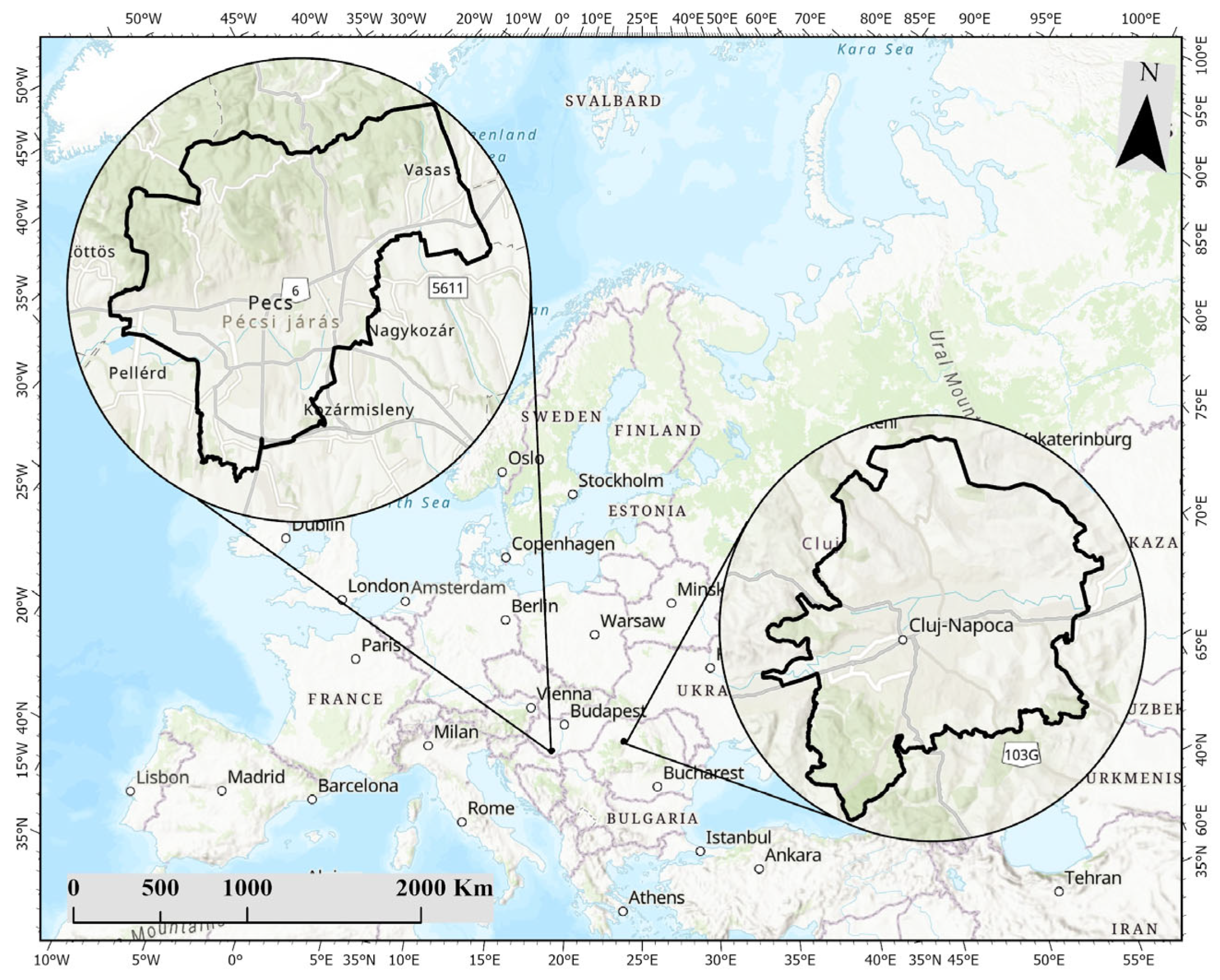
This study focuses on analyzing the current situation in two large urban centers, Cluj–Napoca (Romania) and Pecs (Hungary), which, as a result of territorial development policies implemented after 1990, prioritize the concepts of improving quality of life through the implementation of innovative models of territorial planning (
Figure 1).
This study is implemented in two major urban centers that are important regional centers, Cluj–Napoca in Transylvania, Romania, and Pecs in South Transdanubia, Hungary, and is also a natural continuation of comparative research [
33] based on accessibility assessment, carried out for the two urban centers, whose main purpose is to perform a complex analysis to identify viable solutions for spatial planning and functional organization of space in order to provide a pleasant living environment for the human component.
For both cities, their positioning in a morphological context of low hills longitudinally fragmented by the main hydrographic network, acting as a barrier to accessibility, is noteworthy. The main hydrographic network created a system of terraces that facilitated the location of residential areas while also facilitating a complex system of access roads that influenced the population’s accessibility to essential facilities. The low-lying areas, related to the river valleys, have facilitated, on the outskirts of the cities, the development of industrial areas and a functional mix (storage spaces, transport hubs, etc.), within the lower terraces, which gives specificity in terms of accessibility for the population to essential facilities for the two cities.
The comparative analysis of two urban centers that have identical urban development directions in terms of policies but differ in structure and area of implementation offers the possibility of identifying specific solutions that can be implemented in the process of identifying structural barriers or developing public transport networks, understanding the effect of urban structure on urban mobility, which can lead to the identification of possible spatial planning policies that can be transferred between the two urban centers to support investment planning and decision-making in order to achieve the 15 minutes city goal.
3. Methodology and Database
The development and selection of the appropriate methodology for finalizing the research approach depends mainly on the intended purpose, the databases, and the applications available. In the case of the present research, the methodological approach focuses on the integrated systemic analysis of free spatial database resources obtained by querying the OpenStreetMap database. Spatial analysis proposes the horizontal and vertical integration of databases, considered inputs within the system, in the form of white box systemic analysis to obtain results of the spatial territorial reality. The results obtained are used in the integrated analysis process for spatial comparisons and the issuance of solutions for viable territorial planning based on the 15 minutes city concept for the two urban centers studied, with the main purpose of making decisions and implementing good practice measures in the process of harmonious development in favor of improving the quality of life and ensuring a climate of increased comfort for residents.
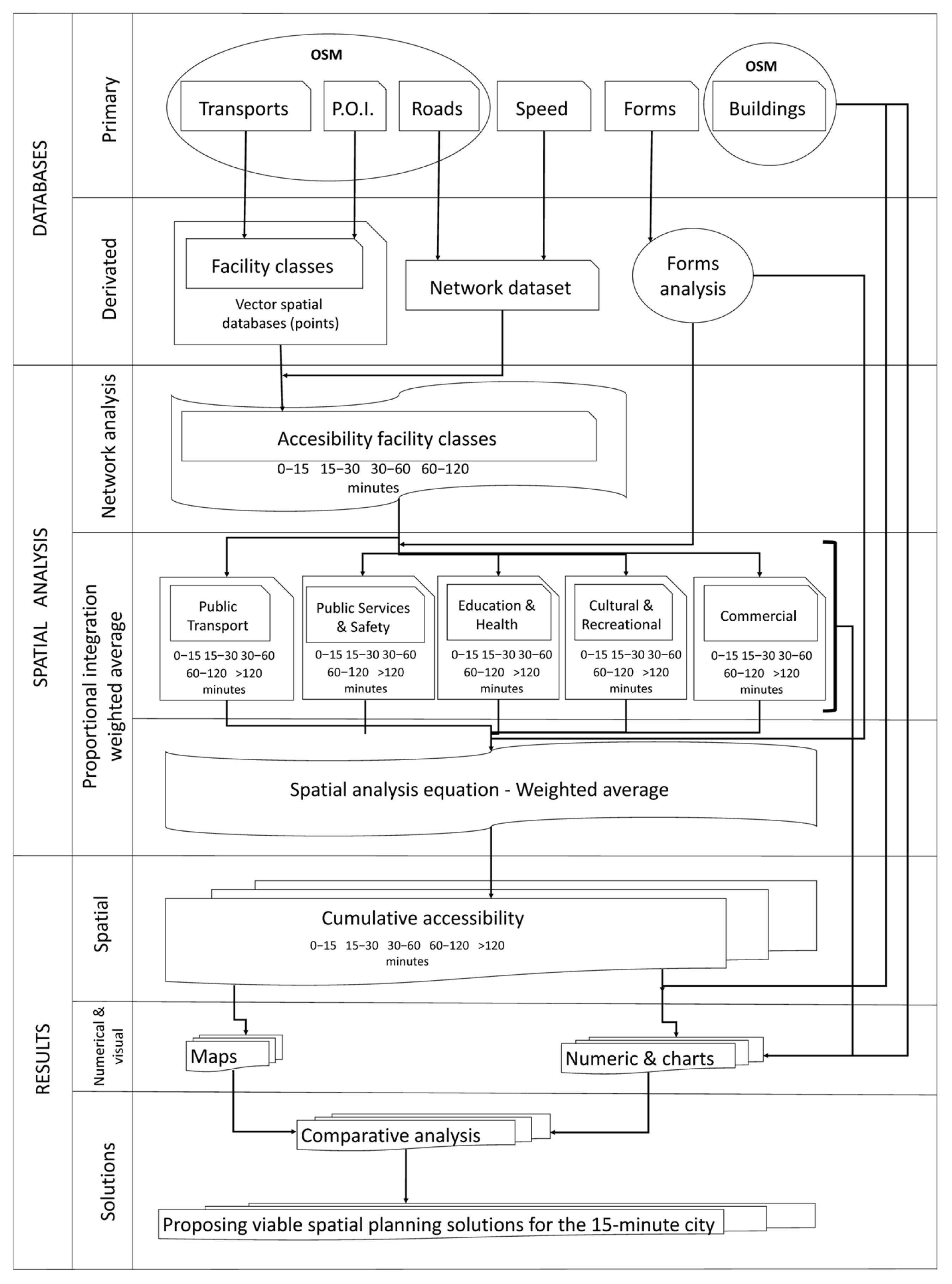
The spatial analysis model is structured around three major components: obtaining spatial and non-spatial databases, implementing spatial analysis, and obtaining final results, components that are supported in the analysis process by specific implementation stages materialized in spatial analysis submodels structurally integrated within the same component and between the main components so that the white box nature of the entire model/system is sustainable and implementable in the territory (
Figure 2 flowchart).
3.1. Database Acquisition
The database structures on which the proposed model is based are structured into two broad categories: primary and derived databases, each of which supports the spatial analysis stages and ensures the logical functionality of the proposed analysis system. The primary databases, both spatial and numerical, were acquired in such a way as to ensure the spatial and perceptual territorial representativeness of the reality within the two urban centers analyzed. For the spatial identification of locations representing facilities and transport infrastructure used in the accessibility identification process, the OpenStreetMap spatial database was used due to the complexity, correctness, and accuracy of the representation of spatial and non-spatial information (attribution) it contains, a database that has been used successfully in other studies focusing on accessibility [
34]. The databases used for the spatial, point-by-point identification of facilities were extracted from two main databases, POI and Transport (point-type spatial vector database structures) and were classified, following the selection of information from the attribute table, into 15 major classes representing the classes of facilities, materialized in derived spatial databases, for daily needs and ensuring viable living comfort for the population in accordance with the methodological requirements of a 15 minutes city (
Table 1).
The OpenStreetMap database is one of the most comprehensive geographic databases available for free globally, providing the user with details regarding the street network, points of interest, and urban facilities with a very high spatial density, which makes it ideal for use in the complex analysis of the essential components of the 15 minutes city without the administrative constraints associated with commercial or government data. OpenStreetMap is continuously updated based on contributions provided by the community, ensuring increased timeliness and accuracy of the mapped details, which are particularly relevant for GIS models that require updated information about the spatial distribution of essential components within an urban structure. OpenStreetMap’s compatibility with the main GIS platforms and the ease of obtaining spatial databases (both by downloading in raw and processed form) facilitates the direct integration of data into spatial analysis flows, allowing the efficient calculation of distances and travel times on the real transport network and the easy spatial identification of urban facilities necessary for the study.
The primary spatial databases include communication routes (line vector structures) and buildings (point vector databases). The integration of these two primary spatial databases into the model structure stems primarily from the fact that accessibility will be analyzed based on population movement on traffic arteries (streets, boulevards, alleys, etc.), given that the OSM database does not provide a vector format for all traffic arteries, and secondly because the comparative analysis in terms of identifying spatial functionality within the 15 minutes perimeter of urban centers will refer to the number of buildings in the accessibility class.
The implementation of the vector database structure of the network dataset type specific to the ArcGIS Pro 3.6.2 geoinformation software, as a derived database that allows the accessibility analysis to be performed, requires the identification of the speed of movement on road network sectors. Given that the entire analysis is based on pedestrian accessibility, in accordance with the 15 minutes city concept, a speed of 5 km/h relative to the metric distance was chosen as the numerical input database, the travel speed also used in other similar studies, which is considered to be the average walking speed of for a person walking under normal conditions [
33]. To ensure that the analysis reflects as accurately as possible the residents’ perception of the importance of access to facilities in the urban center, a questionnaire was developed using the Google Forms application and applied separately to the two urban centers. The questionnaires were sent for completion to representatives of the owners’ associations via email and WhatsApp groups dealing with events in Cluj–Napoca, as well as through the local public authorities for the city of Pecs. Respondents rated each category on a scale of 1 to 5, where 1 represented not important at all, and 5 meant extremely important. The responses were recorded as primary databases, which, as a result of the analysis, provide percentage databases (ranging from 1% to 100%) used in the spatial integration modeling process to obtain spatial areas with different degrees of accessibility.
3.2. Spatial Analysis Methodology
The spatial analysis component of primary and derived database structures focuses on their management based on specific GIS spatial analysis techniques to obtain accessibility, in minutes, specific to each facility class, and integration to obtain spatial structures representing essential facilities and cumulative accessibility.
The network analysis focuses on the use of the Service Area tool, the ArcGIS Pro geoinformation program, as the main method of investigation using the network dataset structure and the point vector database representing the facility classes to obtain the spatial extension of accessibility classified into 5 classes: 0–15 minutes, 15–30 minutes, 30–60 minutes, 60–120 minutes, and more than 120 minutes.
The stage of functional integration of accessibility specific to facility classes to obtain the modeled, intermediate, and final databases used in the comparative analysis for issuing solutions and policies for the spatial planning of the 15 minutes city is based on proportional integration using the weighted average overlay technique through the implementation of spatial analysis equations.
The proportional integration of facility classes to obtain the five categories of essential facilities (Public Transport Facilities, Public Services and Safety, Education and Health, Cultural and Recreational, Commercial) (
Table 2) was achieved using the overlay technique on raster database structures obtained as a result of the conversion from vector to raster format at a resolution of 5 m of the accessibility classes, taking into account the information related to the attribute table, representing the accessibility value in minutes of each class.
The implementation of weighted average equations within GIS models for 15 minutes city analysis allows for adaptive adjustment of the relative importance of each service category (health, education, commerce, green spaces, etc.) according to the demographic profile and specific needs of the analyzed community. The integration of the weighted average improves both the scientific validity and the practical applicability of the model in urban planning processes. Compared to traditional GIS accessibility methods, such as simple network analysis, the integration of the weighted average provides a clear and transparent decision layer, which can be iteratively modified according to empirical data or stakeholder preferences.
The implementation of spatial analysis for the integration of database structures using spatial analysis equations involves the use of two equations developed in the GIS environment, as follows:
where a, b, and c represent the facility classes and x, y, and z represent their weighting in terms of importance in the perception of pedestrian accessibility. To calculate accessibility to essential facilities, the equation is implemented in five phases to integrate specific facility classes;
where A, B, C, D, and E represent the essential facilities and v, w, x, y, and z represent their weight in terms of importance in the perception of pedestrian accessibility for calculating cumulative accessibility.
The results component of the spatial analysis model structure highlights the result of spatial integration for calculating cumulative accessibility, which takes the form of a raster database structure, the first concrete result of the proposed model, which highlights the values of cumulative accessibility distributed across the territory according to the impact that each essential facility has on the other. The database is classified for representation and analysis according to the following accessibility intervals: 0–15 minutes, 15–30 minutes, 30–60 minutes, 60–120 minutes, >120 minutes.
Using the spatial information provided by cumulative accessibility and relating it to the spatial layout of buildings within the two urban centers, statistical and visual analyses are performed to highlight the impact of 0–15 minutes accessibility in relation to other accessibility classes for each urban center analyzed. At the same time, the visual and statistical analysis also focuses on a comparative analysis of the impact of the 0–15 minutes class for the two urban centers, with the main purpose of highlighting the current state of affairs regarding the spatial development of the 15 minutes city concept.
The identification of viable solutions for the implementation of sustainable urban planning policies, with the main purpose of improving accessibility within the two urban centers, is based on the results of comparative analyses and the identification of the best possible solutions that can be transferred and applied to the two urban centers so that the quality of life increases and the implementation of the 15 minutes city concept is easier to achieve by following examples of good practices implemented in urban planning and sustainable spatial planning according to the functional and spatial characteristics defining the territorial areas analyzed comparatively.
The open-system nature of the methodology presented and applied in this study is mainly evident in the horizontal connectivity of the analysis: connecting databases to perform accessibility analysis, connecting for functional integration, connecting to analyze final results and issue solutions, and vertical interconnectivity between main components and stages within components for integration analysis based on weighted averages (raster database structures/percentage of importance), visual and numerical analysis of results of spatial accessibility, issuing solutions and development directions based on numerical and visual analyses, etc., all of which lead to the identification of viable solutions for sustainable spatial planning.
4. Results
The analysis of the results obtained from the implementation of the spatial analysis model follows the logic of its methodological framework. It includes the analysis of questionnaire responses to identify perceptions regarding the importance of accessibility in the two urban centers, a comparative assessment of accessibility for each facility, and a cumulative evaluation of 15 minutes accessibility. The territorial impact of the result is analyzed at the level of facility classes and essential facilities for the two urban centers, with the aim of identifying policy directions and planning actions that support the development of a functional 15 minutes city.
4.1. Questionnaire Analysis
Residents’ perceptions of the importance of pedestrian accessibility were analyzed based on the implementation of questionnaires, 88 applied to the city of Cluj–Napoca and 100 to the city of Pecs. The responses obtained as a result of the questionnaire in the two urban centers analyzed highlight, from the outset, that the perception of the surveyed population is approximately the same for both urban centers analyzed (Cluj–Napoca and Pecs) (
Table 3), with the comparison falling within the general margin of success of the questionnaires of 3%. In terms of reporting on facility classes, it is clear that the greatest importance is given to the proximity of facilities that are necessary and useful in everyday life. The most relevant of all the types of facilities considered are access to public transport stations, food and beverage outlets, and recreational and leisure facilities. This indicates a strong preference for internal mobility and easy access to other vital services, as well as a preference for access to food and basic necessities, highlighting the importance of these services in meeting immediate daily needs (
Table 3). Education, health, cultural and financial services are also considered to be of major importance, thus highlighting the fact that the population has a centralized perception of public and general services provided to citizens by the community, while also reinforcing the perception of access to immediate daily needs, represented in this case by health and education.
When it comes to analyzing perceptions of accessibility to essential facilities, once again, the residents of the two urban centers (Cluj–Napoca and Pecs) have similar perceptions regarding pedestrian accessibility. Thus, in terms of accessibility preferences, essential public transport and education/health facilities are ranked first, with equal weights of 21% in both urban centers. This highlights the preference for easy access to the mobility sector and the sector essential for health monitoring and personal development (health and education), facilities that are at the core of the 15 minutes city concept. The perception of access to essential support facilities, such as commercial, cultural, and recreational facilities, public services, and security services, is highlighted with a lower weighting than the two mentioned above, at a small distance of approximately 1.2%. Noteworthy are the equal weights of 19% calculated for commercial facilities, with the variation of 19–20% for commercial and recreational facilities continuing in the same trend proportional to public administration and security facilities (
Table 3).
The percentages calculated by analyzing the responses to the questionnaires applied to the two urban centers, in part, constitute a numerical input database in the spatial analysis process to identify the current stage of implementation of the 15 minutes city concept, based on the analysis of cumulative accessibility. The homogeneity of the responses given by the subjects in the two cities highlights, once again, the possibility of implementing comparative spatial analysis for the two urban centers and the possibility of implementing viable solutions between the two urban centers, applied in the territorial planning process to achieve the desired 15 minutes city.
4.2. Territorial Accessibility Analysis
Accessibility to essential needs is at the heart of the 15 minutes city concept and is taken up as a theme for urban analysis in most technical spatial planning studies. The unified and comparative analysis of accessibility highlights, on the one hand, negative and positive hotspots in terms of local spatial planning and, on the other hand, viable solutions for remediation, solutions that can be implemented and transferred within the spatial planning policies of the two urban centers analyzed.
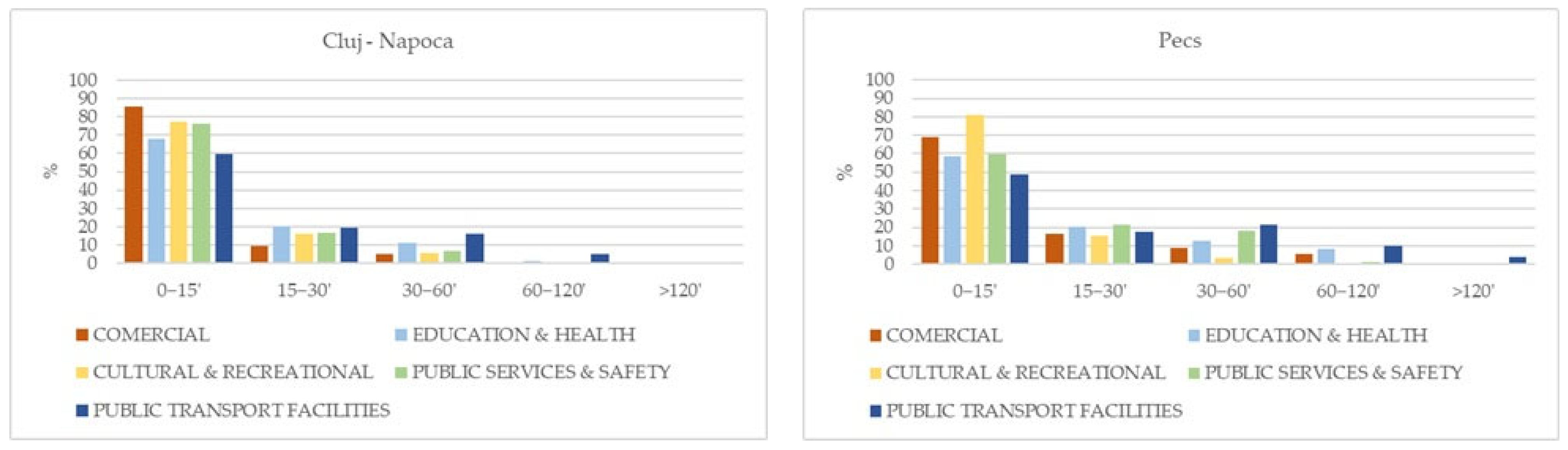
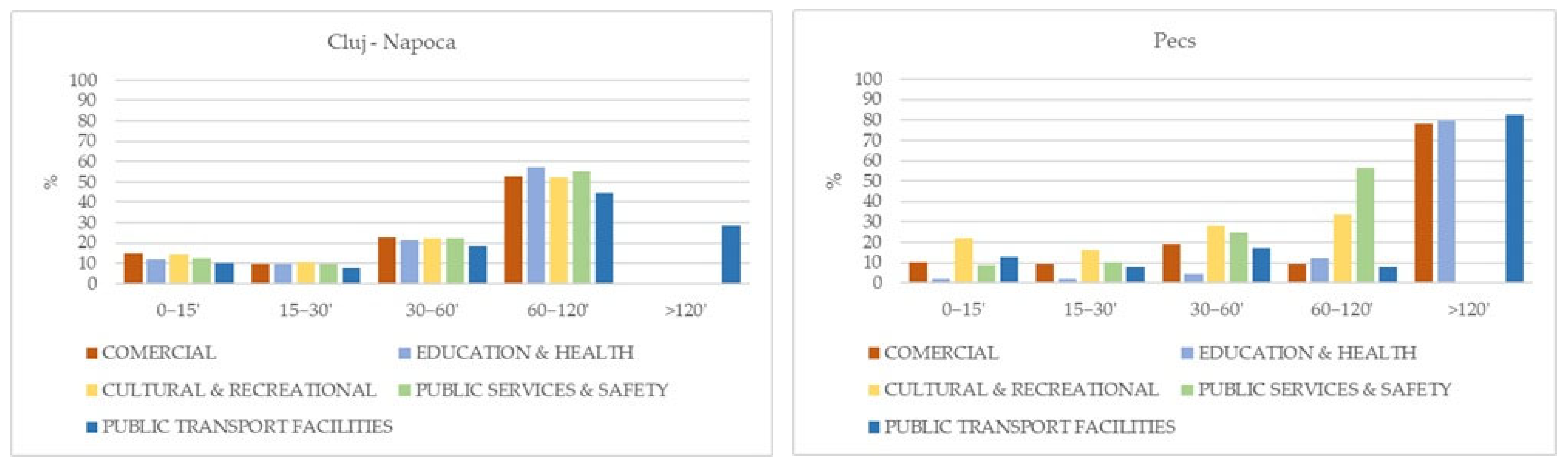
The analysis of data on the distribution of buildings in relation to essential urban facilities reveals the existence of similar spatial patterns but with differences in terms of value and particularities at different levels of pedestrian accessibility. These differences are recorded both in terms of the proportion of buildings served by different classes of urban facilities by accessibility intervals (
Figure 3) and in terms of their number (
Supplementary Materials S1).
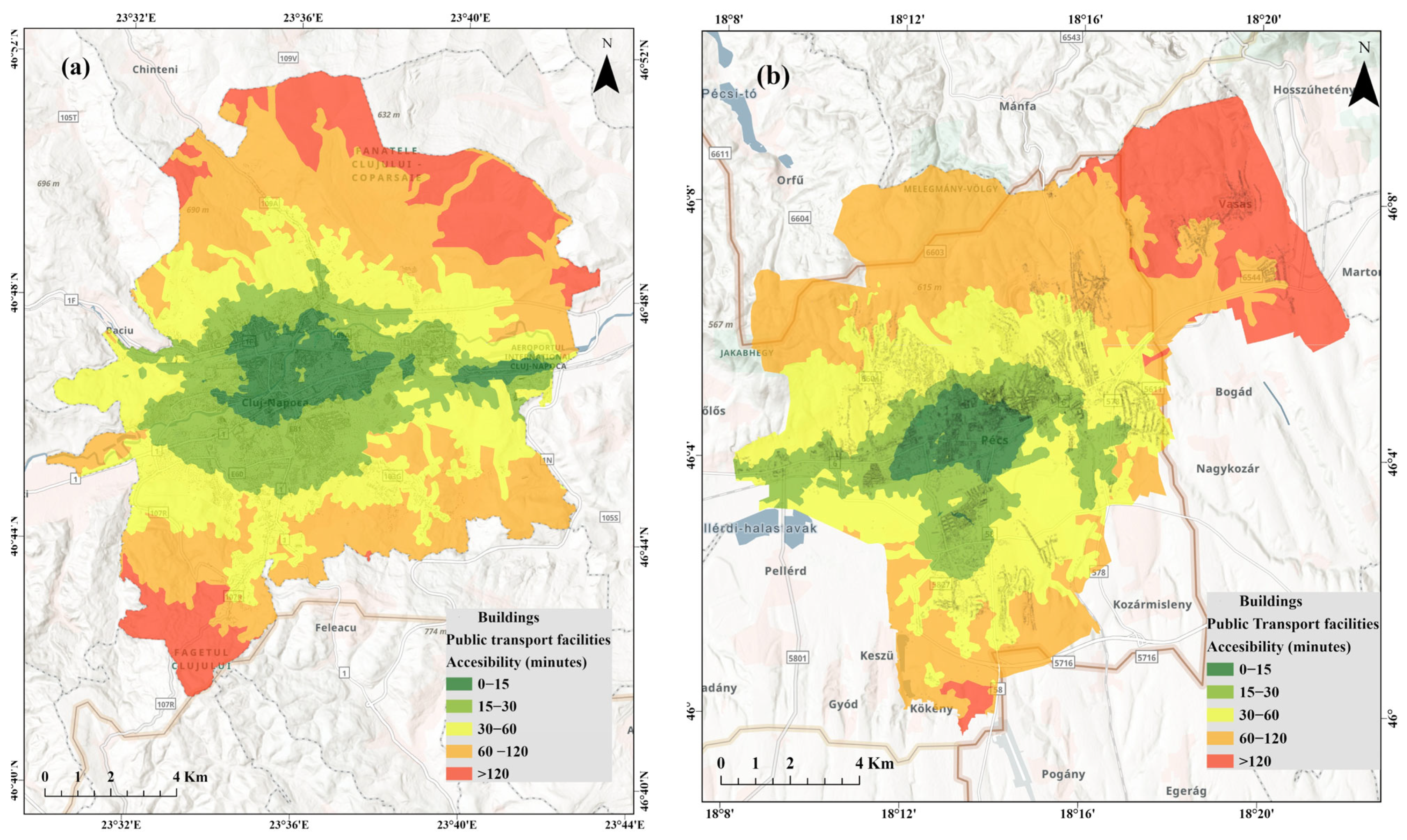
For transport facilities (
Figure 4,
Supplementary Materials S1), it can be seen that the distribution of buildings varies considerably within essential facilities. For the first pedestrian accessibility time interval (0–15 minutes), public transport stations have the best distribution in the territory: in relation to these, 97% of buildings in Cluj–Napoca and 99.7% of buildings in Pecs have an optimal location. Railway stations are associated with lower accessibility, with most buildings (38.5% in Cluj–Napoca and 37.7% in Pecs) falling within the 30–60 minutes range. Taxi stations have different accessibility in the two cities: in Cluj–Napoca, 66.5% of the total number of buildings are located within the first pedestrian accessibility range (0–15 minutes), while in Pecs, 32.4% of buildings are located within the first pedestrian accessibility range. Among transport facilities, the lowest accessibility is for railway stations, with 15.3% of buildings (Cluj–Napoca) and 14.4% of buildings (Pecs) located within the first walking accessibility interval. Given the significant differences between classes of public transport facilities, the average values of the shares of buildings located within the first walking accessibility interval are 59.6% in Cluj–Napoca and 48.7% in Pecs. In Cluj–Napoca, the spatial distribution of buildings shows a main concentration in an area located in the central-western part of the city, which overlaps with the 0–15′ accessibility range. There is also a secondary group, smaller in size, located in the eastern part of the city, which mostly overlaps with the secondary accessibility class (15–30 minutes). Towards the periphery, where areas of reduced accessibility are located, there is also a more dispersed distribution of buildings. This is likely to generate higher pressure on the public transport system. The average density of buildings in areas served by public transport facilities is approximately 187/km
2, but the very high density of buildings located in the first pedestrian accessibility interval (0–15 minutes) is noteworthy. This highlights the extremely important role of the public transport system, which, through high pedestrian accessibility, can contribute to reducing traffic jams and dependence on cars. In the case of the city of Pecs, a polynuclear distribution of buildings is emerging. The average density of buildings in areas served by public transport facilities is approximately 150/km
2, and the first walking distance (0–15 minutes) is characterized by a density of 398 buildings/km
2. The main cluster of buildings is located in the north-central part of the urban structure, with four additional clusters located in pairs to the west and east, approximately 1.5–2 km away. All of these areas of building concentration are located within the first pedestrian accessibility interval. Such a polycentric distribution is likely to relieve pressure on the public transport system in the central area, but on the other hand, it requires the public transport system to adapt to this configuration.
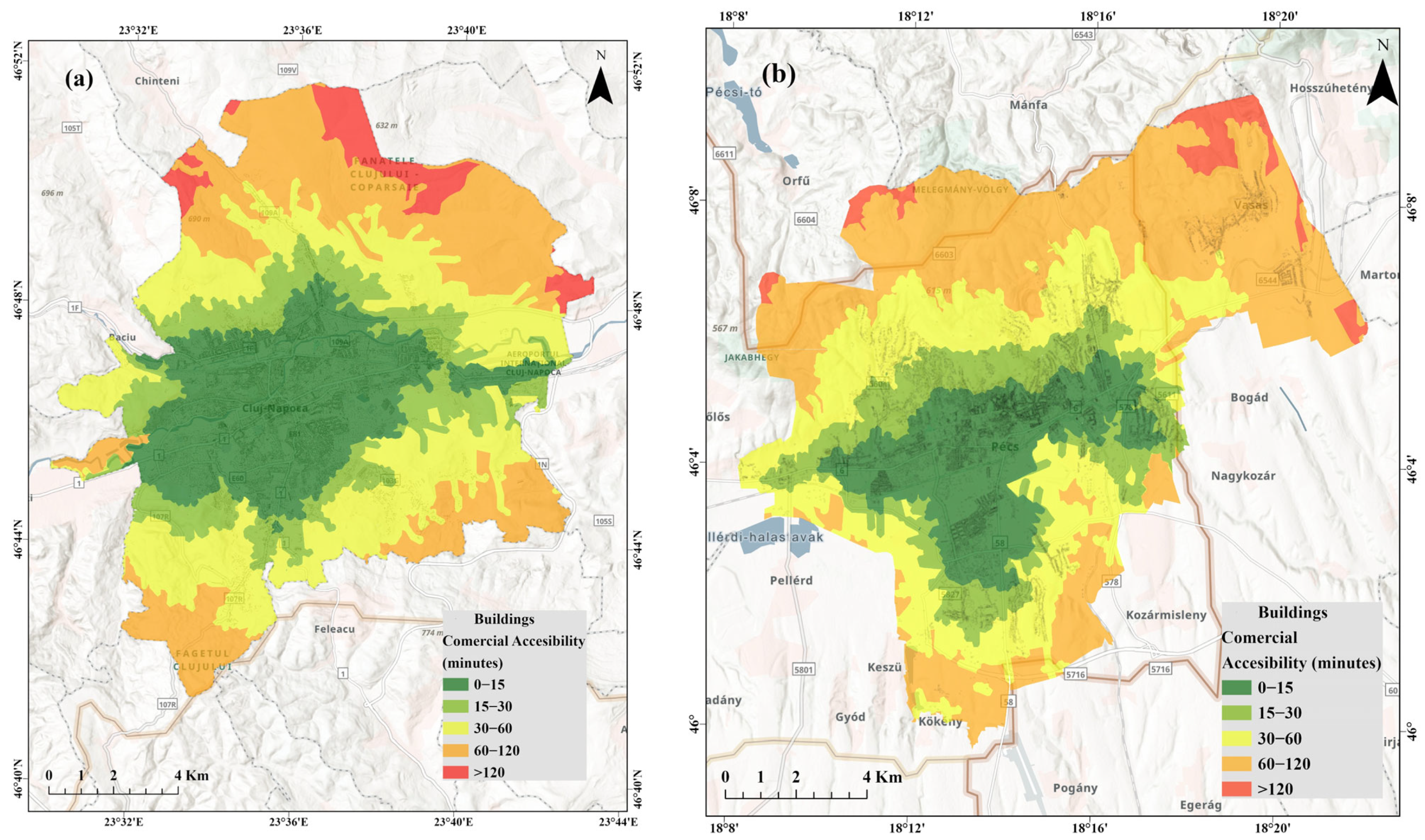
Good pedestrian accessibility is also characteristic of commercial facilities (
Figure 5,
Supplementary Materials S1). These have a very consistent distribution, especially in Cluj–Napoca, where 85.4% of buildings are located within the first pedestrian accessibility interval (0–15 minutes); within this class, the highest values are specific to specialized food and beverage stores, around which 92.8% of the total number of buildings are grouped in the first pedestrian accessibility time interval, followed by retail units (84.3% of the total number of buildings) and mobility services (Services and Mobility) (79.2% of the total number of buildings are located in the first time interval of pedestrian accessibility). In Pecs, commercial facilities are less concentrated in relation to the first time interval of pedestrian accessibility, where only 68.8% of the total number of buildings are located; while in the case of food stores, the value is close to that of Cluj–Napoca (91.8% of the total number of buildings are located within the first walking distance range), the other two subclasses show lower values: 61.7% of the total number of buildings are located in the first pedestrian accessibility range for retail units and only 53% of the total number of buildings are located in the first pedestrian accessibility range for mobility services (Services and Mobility).
The spatial distribution of buildings in relation to commercial facilities is characterized by fairly high values of specific density. Thus, in Cluj–Napoca, the average density of buildings in relation to commercial facilities is 136 buildings/km2, with a similar value recorded in Pecs (121 buildings/km2). More significant differences can be seen when analyzing pedestrian accessibility classes, with maximum values recorded in Cluj–Napoca (521 buildings/km2) and 405 buildings/km in Pecs for the first accessibility class (0–15′). The situation is reversed in the case of the second class of pedestrian accessibility (15–30 minutes), where the maximum value is recorded in Pecs (124 buildings/km2), while in Cluj–Napoca the density is 93 buildings/km2. Such a distribution is likely to encourage non-motorized travel or travel by public transport to access commercial facilities, which is particularly important for the overall urban functionality of both cities.
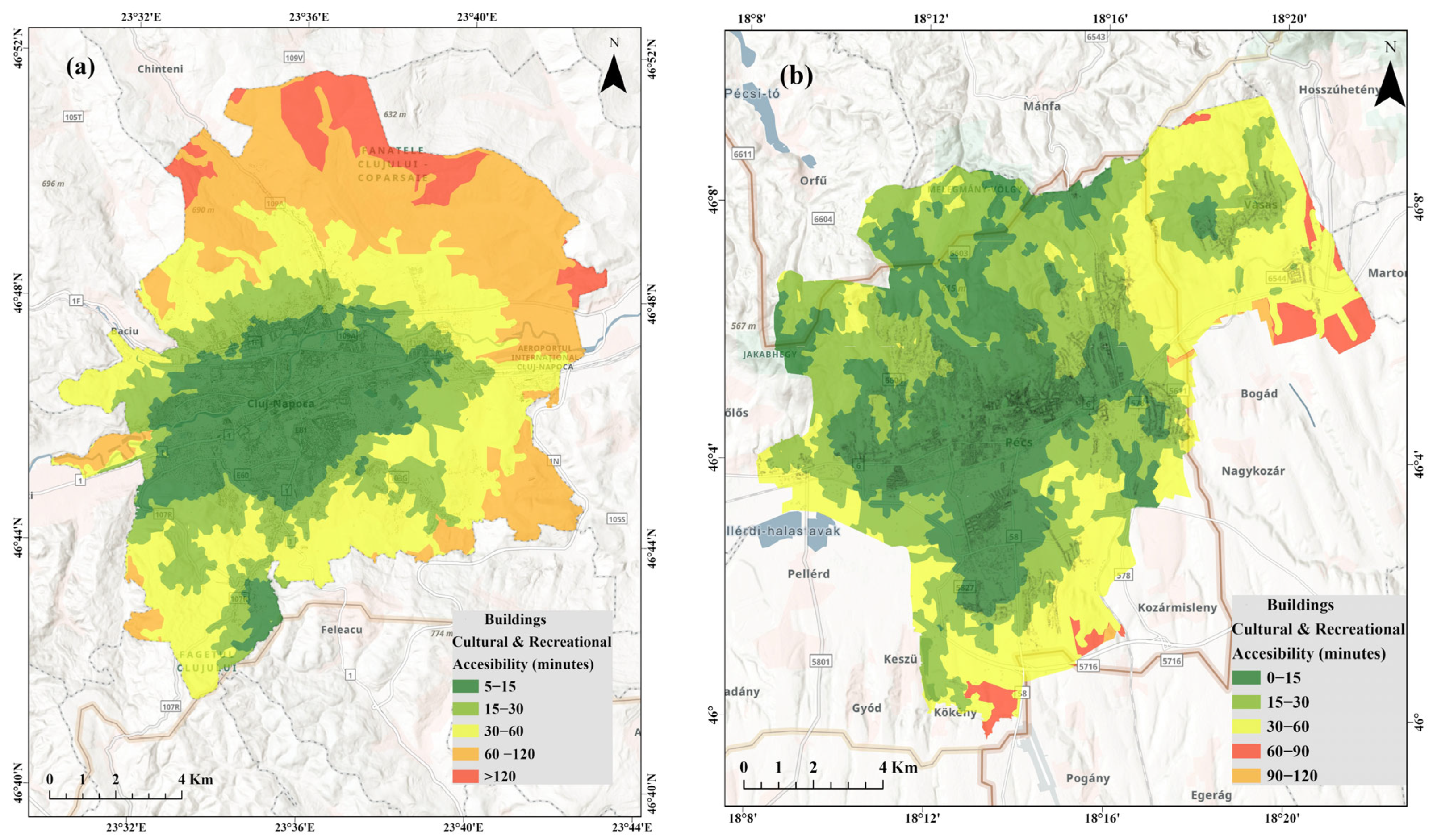
Cultural and recreational facilities (
Figure 6,
Supplementary Materials S1) have quite different accessibility within the two cities. In Cluj–Napoca, 77.6% of the total number of buildings are located within the first time interval of pedestrian accessibility (0–15 minutes), with the subclasses of facilities characterized by similar values for the proportion of buildings located in the vicinity (76.1% for cultural facilities, 77.7% for accommodation and tourist facilities and 78.9% for facilities in the Recreational and Leisure class). In Pecs, 81.1% of buildings are located within the first time interval of pedestrian accessibility, with the highest values in the Recreational & Leisure class (96.3% of the total number of buildings), followed by the cultural facilities class (74.6%) and accommodation and tourist facilities (72.3%).
In terms of spatial distribution, there are significant differences between the two cities, both in terms of the average density of buildings served by these facilities (160 buildings/km2 in Cluj–Napoca vs. 71 buildings/km2 in Pecs) and in terms of the density of buildings within the first class of pedestrian accessibility (416 buildings/km2 in Cluj–Napoca vs. 176 buildings/km2 in Pecs). In Cluj–Napoca, the main core of buildings falls entirely within the first pedestrian accessibility range, and the small secondary core in the east is divided between the first two pedestrian accessibility classes (0–15′ and 15–30′). In Pecs, of the five groups with high building densities, four fall entirely within the first pedestrian accessibility range; the fifth group, in the northeast, is included in the secondary pedestrian accessibility class. There are also several areas characterized by good pedestrian accessibility to cultural services; the largest is located in the central part, while the others are scattered, mainly to the north and east of the main one, which ensures a dispersion of the flows generated by cultural and recreational attractions.
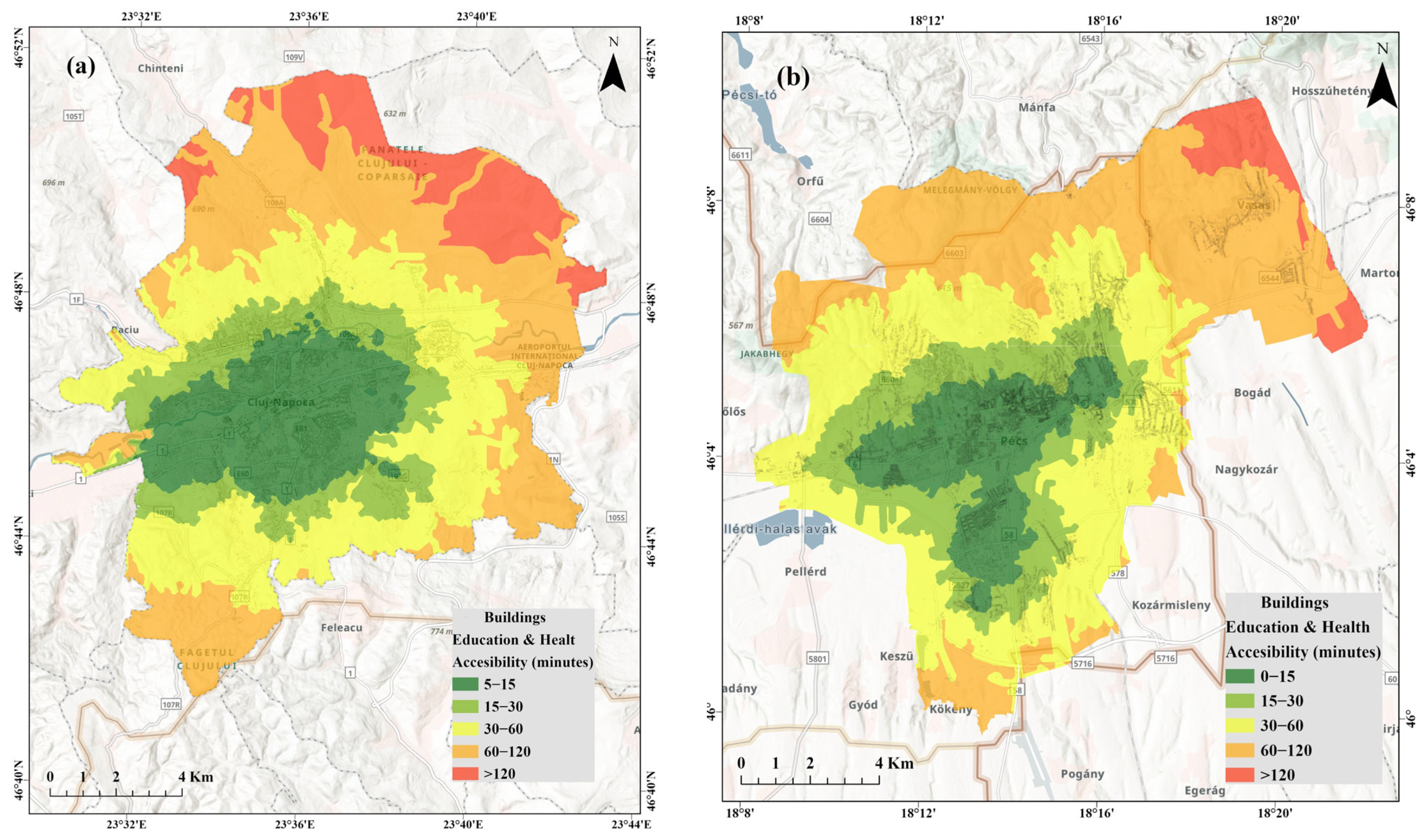
Educational and healthcare facilities (
Figure 7,
Supplementary Materials S1) show significant differences between the two cities in terms of the number of buildings. In terms of the total number of buildings located within the first time interval of pedestrian accessibility (0–15 minutes), the difference between the two cities is almost 10% (67.9% in Cluj–Napoca and 58.8% in Pecs). In Cluj–Napoca, the best accessibility is in relation to the Healthcare–Pharmacy and Optical subclass, which has 80.1% of the total number of buildings within immediate walking distance, a significantly higher percentage than in Pecs (60.8% of the total number of buildings). The second subclass—Healthcare–Medical Services—shows slightly lower accessibility, with 66.6% of buildings within immediate walking distance in Cluj–Napoca and 55.5% in Pecs; educational facilities show closer values: 57.2% in Cluj–Napoca and 60% in Pecs.
There are also significant differences in terms of spatial distribution and building density in the 0–15′ and 15–30′ walking accessibility classes; the highest values are recorded in Cluj–Napoca (588 buildings/km2 and 217 buildings/km2, respectively), while the values for Pecs are lower (114 buildings/km2 and 52 buildings/km2, respectively). The spatial configuration of the areas associated with the first pedestrian accessibility interval is compact in the case of Cluj–Napoca. In Pecs, the configuration is lobed, starting from the central core; the latter takes the form of spatial pockets with high spatial accessibility, which is beneficial in relation to the flows generated by attractors (schools, medical facilities, etc.).
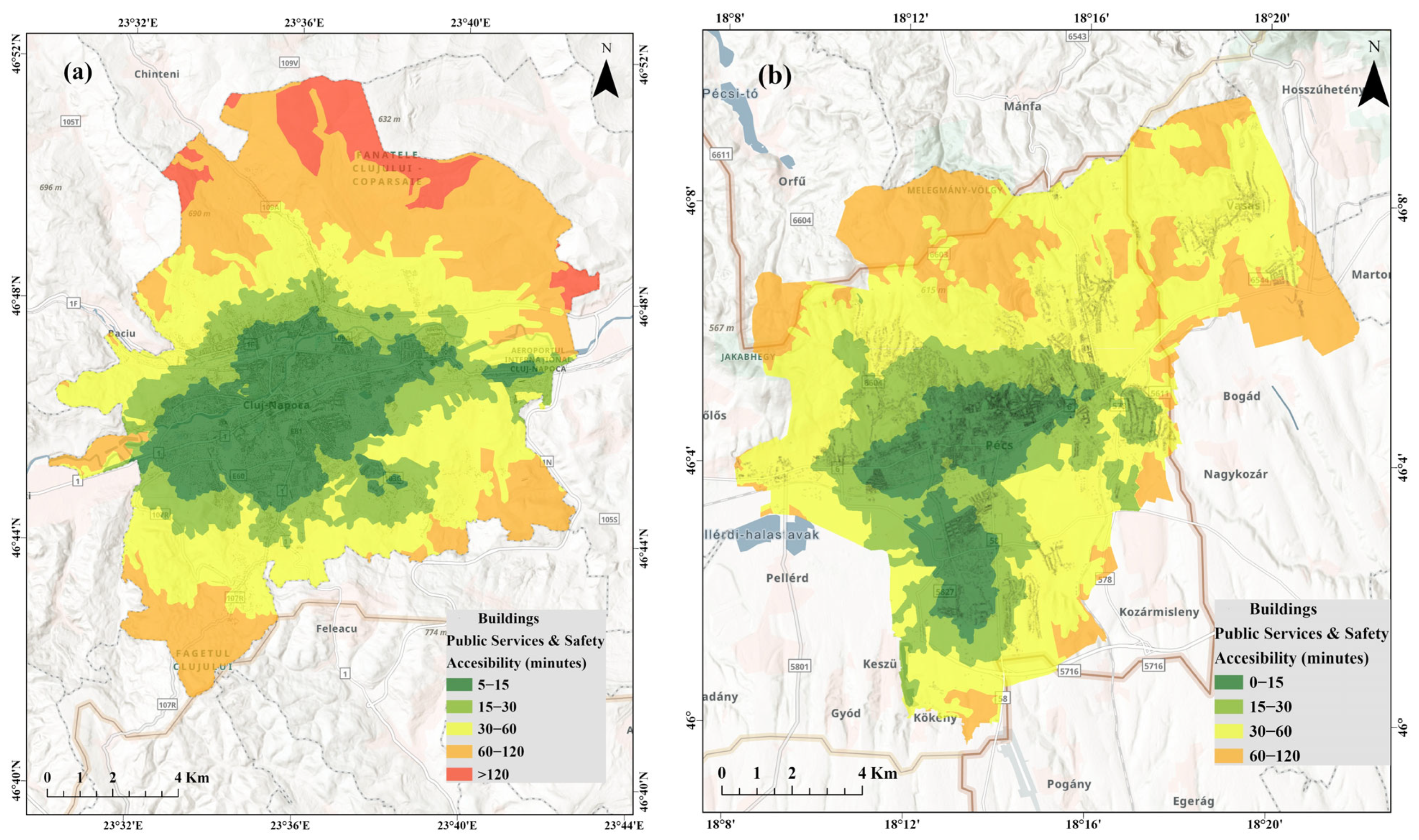
Public services and safety facilities (
Figure 8,
Supplementary Materials S1) also show significant differences between the two cities. The first time interval of pedestrian accessibility (0–15 minutes) groups the highest percentage of buildings in Cluj–Napoca (76.33% of the total number of buildings), while in Pecs the share is 59.5%. At the subclass level, the largest differences between the two cities are in the case of financial facilities (82.5% of the total number of buildings in Cluj–Napoca and 49.3% in Pecs), as well as in the case of the Public Administration and Safety subclass (72.5% of the total number of buildings in Cluj–Napoca and 58.4% in Pecs); the differences are smaller in the case of the Public Amenities subclass (74% of the total number of buildings in Cluj–Napoca and 70.7% in Pecs). The spatial distribution of buildings in relation to these essential urban facilities is characterized by significant differences between the two cities: 198 buildings/km
2 in Cluj–Napoca and 130 buildings/km
2 in Pecs. Also, the average density of buildings located within the first pedestrian accessibility range is higher in Cluj–Napoca (617 buildings/km
2) than in Pecs (591 buildings/km
2). The spatial configuration of the first class of pedestrian accessibility (0–15 minutes) is also compact in Cluj–Napoca, with a vast area located in the central-western part of the city. In Pecs, there is a central core with good pedestrian accessibility (0–15 minutes), but a series of lobes are emerging both to the north and south within the urban structure, as well as an eastern area, well defined especially in the case of financial and administrative services, which facilitates a more balanced distribution of specific flows towards these categories of urban attractors.
4.3. Analysis of the Impact of 15 Minutes Accessibility
The integration of spatial databases representing the population’s accessibility to essential facilities (facilities that underpin the 15 minutes city) based on their weighting according to their importance within the community highlights the overall accessibility of the territory. A comparative analysis of this, both statistically (focusing on the number of buildings relative to the accessibility class) and spatially (the spatial extension of accessibility classes within the administrative-territorial unit), allows the identification of similarities in the spatial planning process as well as the identification of solutions that can be implemented within the two urban centers to reduce territorial disparities and achieve sustainable spatial planning.
From a statistical point of view, the comparative analysis of the standard deviation of the data related to the distribution of the number of buildings by pedestrian accessibility classes reveals a greater variation in values for the lower accessibility classes (0–15 minutes), which is higher in Pecs than in Cluj–Napoca. For the 15–30′ interval, the situation is reversed, with Cluj–Napoca having a greater variation in values than Pecs, and for accessibility intervals of over 30′, Pecs is the city with the greatest variability in values across facility classes (
Table 4).
An analysis of the urban area served by the facilities analyzed reveals that, as a rule, in both cities, the areas associated with pedestrian accessibility classes 0–15′, 15–30′, and 30–60′ have lower weights than the areas associated with higher accessibility classes (60–120′ and over 120′) (
Figure 9). In Cluj–Napoca, it can be seen that the main neighborhoods, with a high density of buildings, are almost entirely included in the area of immediate accessibility, which creates favorable conditions for reducing dependence on motorized transport. It is also noted that in Cluj–Napoca, there is less variability in the proportion of areas served within the same class of urban facilities compared to Pecs. The area of immediate pedestrian accessibility in Pecs covers the central area and part of the neighborhoods, but the more pronounced polycentric urban structure means that the peripheral nuclei usually fall into the higher pedestrian accessibility classes (
Figure 9). In both cities, the standard deviation increases significantly as the time intervals become longer (
Table 5). This indicates that there is much greater variability in the aggregate data associated with the higher classes of temporal pedestrian accessibility (over 60 minutes) compared to the shorter periods (under 30 minutes).
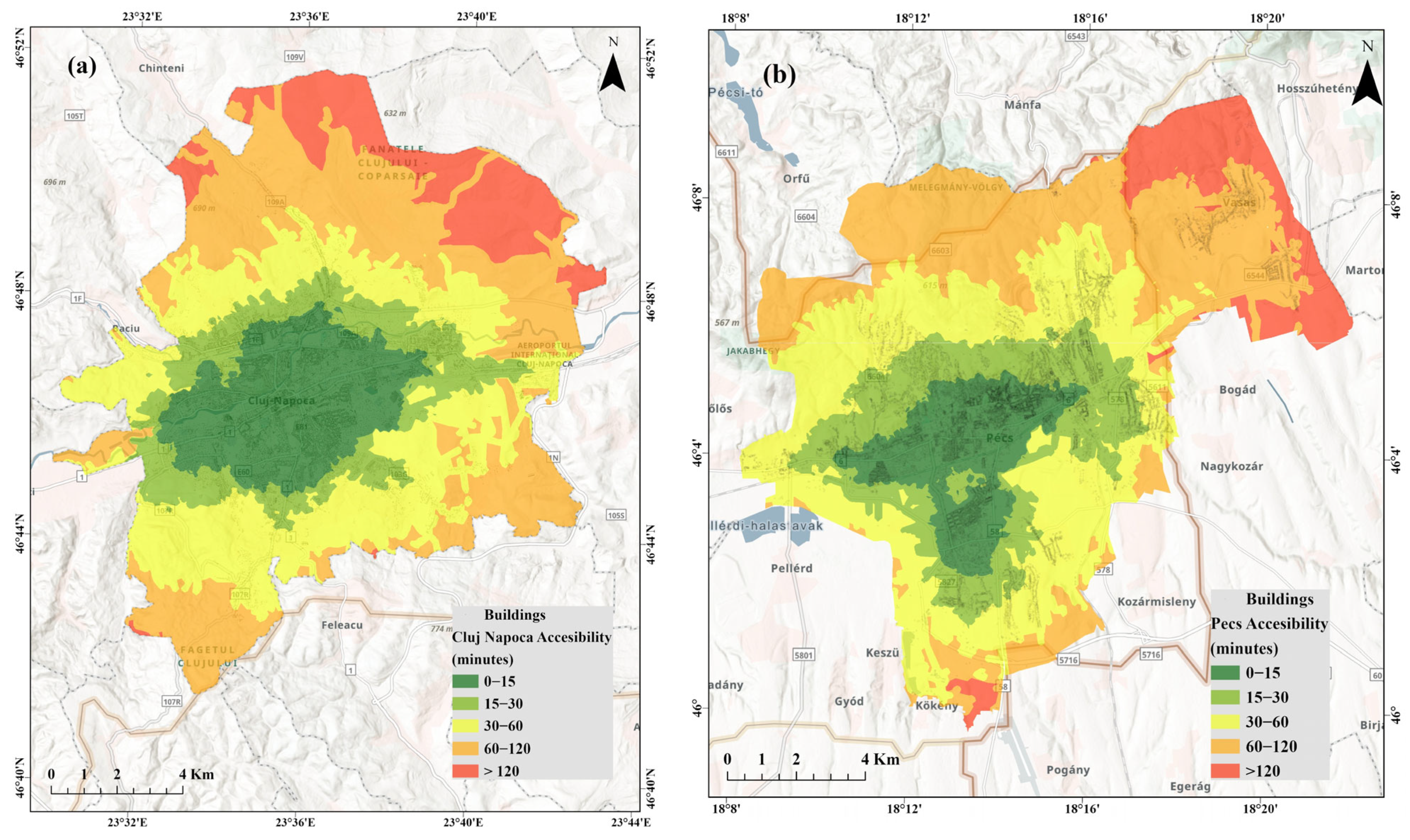
In terms of the spatial configuration of the areas associated with the first class of pedestrian accessibility (0–15 minutes), it can be seen that in Cluj–Napoca, a city located in a morphologically well-defined valley corridor, there is less variability: for all facility classes, the configuration of the area associated with the primary pedestrian accessibility class is an elongated central core in a west–east direction, associated with the main transport axis. In a small number of cases, there are pockets of high accessibility associated with north–south roads (Calea Turzii Street, Oașului Street, and Tăietura Turcului Street).
In the case of the city of Pecs, located in a depression, there is a tendency for the areas associated with the primary class of pedestrian accessibility to extend in a west–east direction. Here, however, the transverse morphological constraints are less pronounced, so, as a rule, the main area associated with the lower accessibility class (0–15′) has a lobed configuration, and the secondary urban centers are associated with insular areas with high accessibility. A particular situation is given by the existence of a fairly extensive insular area corresponding to the 15–30′ accessibility class, present within the central nucleus with 0–15′ accessibility; this situation is generated by the presence of an area with an industrial function in the Észkamegyer area, which induces both functional and structural changes (e.g., the configuration of the road network).
It can be seen that, although both cities have good overall accessibility to most services, Cluj–Napoca has a more concentrated distribution of buildings in the central core, while Pecs tends towards a polycentric structure, with a lower average building density (
Figure 10). These differences in spatial configuration and density influence the pressure on public transport systems and the distribution of urban flows, which outlines the need for specific policies and actions to manage urban traffic.
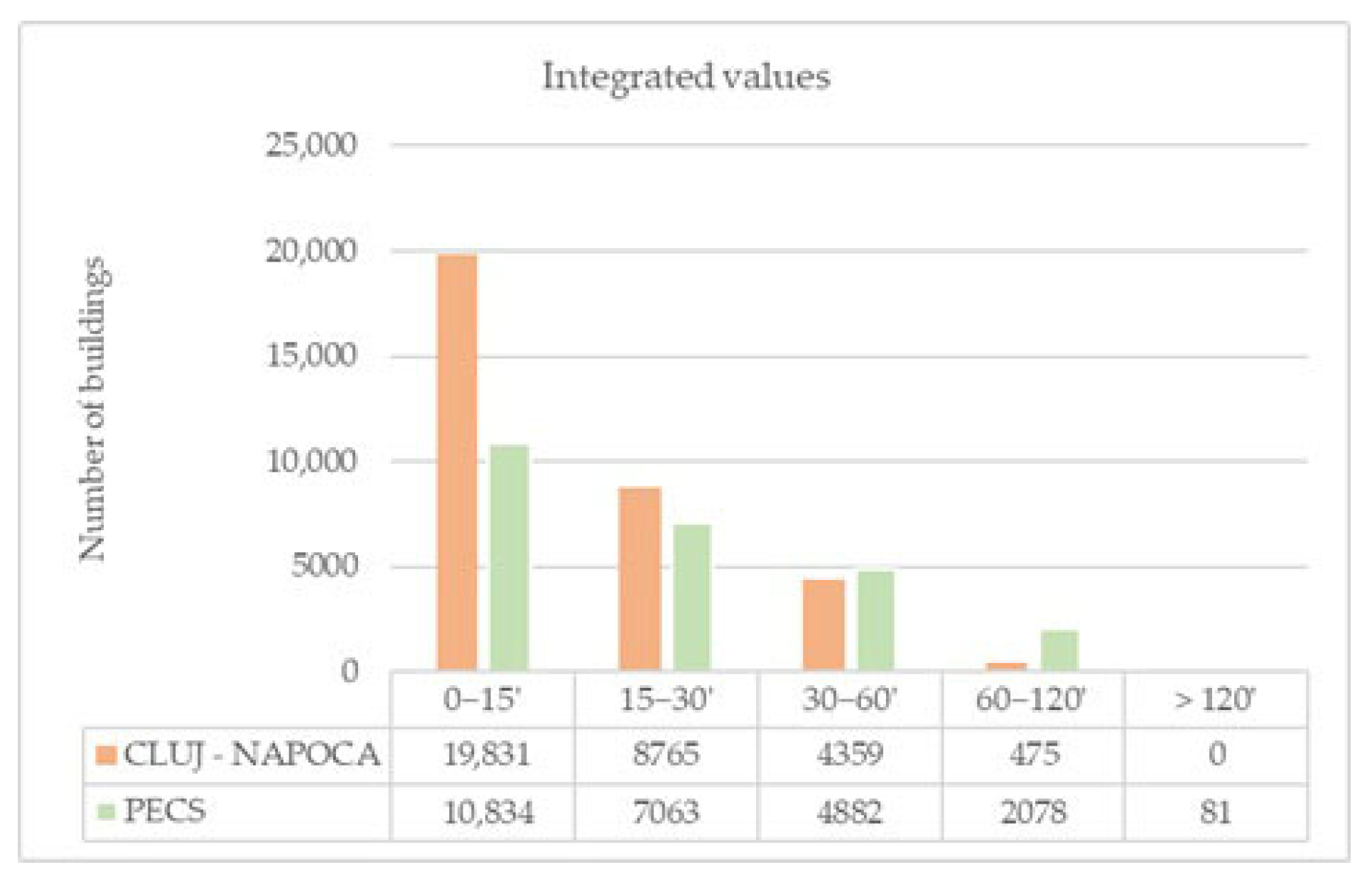
The analysis of the integrated data reveals that, overall, the two cities show a significant concentration of buildings in areas associated with the first class of pedestrian accessibility (0–15 minutes) (
Figure 11). For the lower classes of pedestrian accessibility (0–15 and 15–30 minutes), both the absolute and percentage values are higher in Cluj–Napoca (59.32% and 26.22, respectively) than in Pecs (39.6% and 16.76%). For the median accessibility class, the weights are almost equal: 13.04% in Cluj–Napoca and 11.88% in Pecs. The situation is reversed in the higher accessibility classes, where the city of Pecs has the highest values.
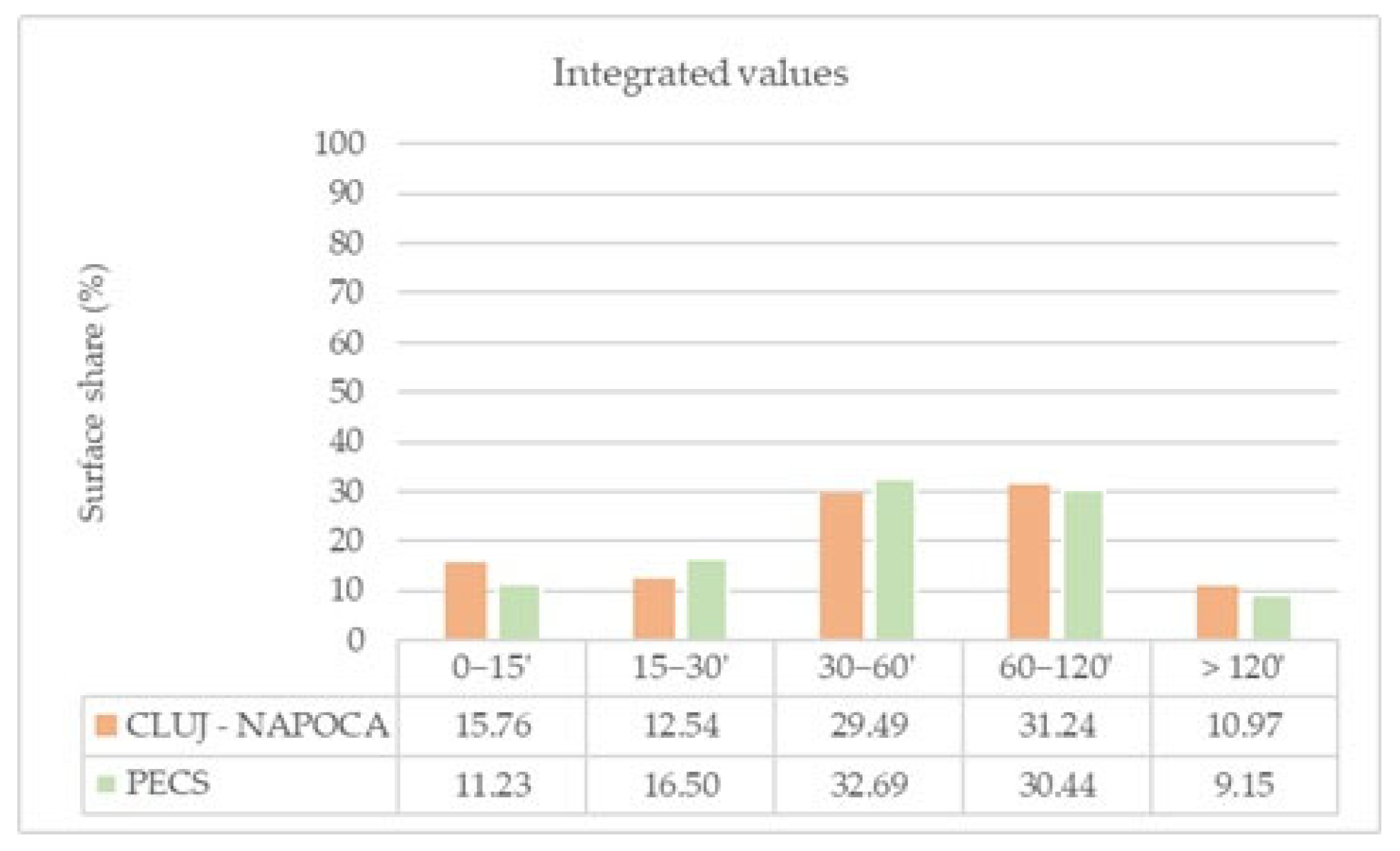
The results are more nuanced in terms of the share of areas corresponding to accessibility classes (
Figure 12): the highest shares are for the 30–60′ and 60–120′ accessibility classes, which account for 61% of the area in Cluj–Napoca and 63% of the area in Pecs, while the lowest pedestrian accessibility class (0–15′) accounts for only 15.7% in Cluj–Napoca and 11.2% in Pecs; for the 15–30′ accessibility class, the higher share is recorded in Pecs (16.5%), while in Cluj–Napoca, the share is 12.5%.
5. Discussion
The concept of the 15 minutes city (and its variants, such as the 20-minutes neighborhood) has rapidly established itself as a dominant paradigm in urban planning and mobility policies, particularly in the context of post-pandemic urban resilience strategies [
2,
22]. These concepts do not represent a radical break with classical theories but rather a contemporary reinterpretation of established ideas such as neighborhood unity, the garden city, central place theory, human-scale urbanism, or public-transport-oriented development [
25,
27]. The 15 minutes threshold is often adopted for symbolic or communicational reasons, without a solid empirical basis, which leads many authors to question its universal character [
20,
21,
26].
In the case of the two cities analyzed, there are a number of nuances and distinctive features, similarities, and differences. Thus, in Cluj–Napoca, the effervescent economic character generates an influx of population and increased dynamics in new residential areas, while in Pecs, which has surpassed the phase of effervescent development, the polycentric structure and the highlighting of specific features of the garden city and urban village urban models are characteristic. The latter model—the urban village—has a number of characteristics that could prove beneficial for the new residential areas in Cluj–Napoca, which should be designed from the outset with a spatial pattern that prioritizes pedestrian traffic within a mixed-use structure (residential spaces, commerce services, recreational spaces, etc.) and optimized housing density.
The comparative analysis of the results, both quantitative (number of buildings by accessibility class) and qualitative spatial (maps created for each essential facility) highlights challenges in the process of implementing spatial planning solutions and policies so that the 15 minutes city goal can be achieved in the next period by the two urban centers, challenges structured around the main directions of spatial planning: identifying structural differences, understanding the effect of urban form on mobility, detecting structural and transport barriers, and supporting planning and investment.
The influence of form and structure focuses on mobility and how it is analyzed within the two urban centers. Analyses focused on urban equity highlight systemic disadvantages for peripheral areas, socio-economically disadvantaged neighborhoods, and populations with reduced mobility [
20,
21,
26].
This aspect is characteristic of both cities analyzed, especially in the case of Cluj–Napoca, where the northern and northeastern areas have reduced accessibility, areas that represent the main periphery of the city, with almost no real estate development in terms of residential spaces. The analysis reveals that the effect of the periphery on the 15 minutes city concept is visible in both cases, but in different ways. In Cluj–Napoca, a compact area with reduced accessibility is emerging in the north-east, while in Pecs the area with reduced accessibility has a fragmented layout (both in the north-east and in the south), conditioned by the urban form and structure. The implementation of general policies for the development of residential areas throughout the peripheral area of the city of Pecs could be successfully implemented in Cluj–Napoca to capitalize on the urban form in functional optimization.
Several authors warn that proximity-based models can exacerbate existing inequalities if they are not accompanied by explicit redistributive policies [
25,
26].
With regard to the effect of urban form on mobility, two different aspects are identified in the two areas analyzed comparatively.
The compact city of Cluj–Napoca facilitates proximity on the east–west axis, while the polycentric and dispersed character of the city of Pecs allows for the redistribution of mobility flows between several functional centers. The compact nature of the city, conditioned by the presence of the valley corridor and the accentuated morphological fragmentation, results in mobility concentrated on the east–west direction, while the city of Pecs, located in a less restrictive morphological context, is characterized by fragmented accessibility of the 0–15 minutes area, being dependent on extensive mobility. This pattern is also highlighted in comparative or unitary research on diverse spatial areas undertaken in several profile studies [
35,
36,
37]. The comparative analysis of the results regarding accessibility in relation to the natural layout highlights a reduced influence of longitudinal and transversal hydrographic networks within the two cities, the morphological component and spatial orientation of communication vectors leaving their mark on accessibility as a result of the positioning of residential areas on river terraces.
The implementation of policies to migrate residential areas to the periphery and the development of daytime and industrial activities lead to changes in the theoretical form of the two cities, causing accessibility to no longer be concentrated only in the city center, but to migrate and become structurally dependent on the new urban configuration and the spatial relationships between the central and peripheral support elements. Such quality-of-life development policies related to the impact of form on mobility have been studied and implemented in the territory by [
29,
38], highlighting the impact of land use and the spatial configuration of administrative-territorial units and network structures on the overall mobility of the population. The fundamental role of urban morphology in ensuring the spatial and functional equity of cities, frequently analyzed in the specialist literature [
39,
40], is also visible in the two cities analyzed comparatively, cities that implement different solutions to optimize economic and social participation in the harmonious development of the territory in order to eliminate territorial disparities in terms of pedestrian access within 0–15 minutes.
The comparative study of the two cities highlights structural obstacles that influence the accessibility and mobility of the anthropic component. Research [
41,
42,
43] highlights the fact that cities with separate and spatially dispersed functions impose the need for long journeys and influence economic and social interactions, facts highlighted in both cities analyzed. An analysis of the public transport network highlights better spatial coverage with public transport stations for the city of Pecs, thus connecting all urban centers, a structure that, if implemented in the process of reorganizing and developing public transport in Cluj–Napoca, would reduce the influence of transport barriers in terms of connecting developed residential areas on the outskirts. The elimination of structural barriers is represented by the fragmented relief specific to the city of Cluj–Napoca through the implementation of spatial planning policies that prioritize recreational and leisure spaces on areas unsuitable for real estate development in the Someș interfluve area—Nadăș area would have the capacity to develop accessibility specific to the 0–15 minutes range in the northern part as well, thus facilitating judicious land management in terms of optimizing the of land use solutions. The absence of such barriers favors the development of housing within the city of Pecs in almost all areas within the administrative-territorial unit, thus facilitating mobility and easy connectivity between residential centers.
Prioritizing investments in public transport (cycle paths, urban conversions, functional mix) allows for viable territorial planning through strategic investments in optimal land management [
44,
45,
46]. Decentralizing public administration and financial services from the center of Pecs to the periphery would lead to better territorial accessibility and service provision for the resident population, a policy successfully implemented in Cluj–Napoca, where most neighborhoods are served by a City Hall office and commercial and banking facilities. Encouraging the development of the commercial sector in the new residential centers of Cluj–Napoca to ensure adequate services for the population and easy access to everyday goods is a locally implementable measure that, in the case of the city of Pecs, has favored the development of the central and peripheral centers. The implementation of urban conversion solutions in the two cities would favor the elimination of islands that fragment easy pedestrian accessibility for the city of Pecs and would also lead to its better optimization within the city of Cluj–Napoca. Prioritizing any investments in accessibility, mobility or essential facilities adds value to the quality of life and helps achieve the 15 minutes goal that both cities are striving for, thus maximizing accessibility and offering multiple opportunities for development in terms of improving quality of life. The direct, favorable impact on the human component as a result of investments in improving quality of life is supported by the 15 minutes city concept, identified in several studies in the field of urban planning [
47,
48,
49].
Most studies [
28] suggest that the main challenge of the 15 minutes city is not conceptual acceptance but methodological refinement and institutional integration. For planning practice, this implies a shift in focus from transport-centric interventions to strategies for localizing and diversifying services, supported by accessibility analyses used as diagnostic and simulation tools [
19,
22,
28].
Existing spatial analysis models in the literature for assessing the 15 minutes city, such as the one developed by [
2] or the isochrone-based approaches proposed by [
25], assess accessibility predominantly in terms of distance or travel time to generic categories of services, without differentiating their relative importance in relation to the specific needs of different population groups. A weighted average model overcomes this limitation by introducing a system of calibrable scores, similar in logic to the Human Development Index [
50] or to the multi-criteria AHP (Analytic Hierarchy Process) models used in urban planning [
51], allowing for a nuanced aggregation of essential components (health, education, commerce, mobility, and green spaces) into a composite index of urban accessibility. Compared to gravity models [
29] or those based exclusively on network analysis [
52], the weighted average approach integrated in GIS offers superior methodological transparency and greater contextual adaptability, essential aspects for the transferability of the model between cities with different urban structures and demographic profiles.
From the perspective of future research, issues such as the integration of service capacity, the inclusion of workplace accessibility, and the correlation of indicators with statutory planning tools remain open [
20,
21].
The need to implement the presented study lies in the fact that the development of new spatial analysis models in the GIS environment is imperative, given the multitude of databases available in free format. The presented model, developed as a white box model, can be adapted for case studies from various areas and can be improved to increase its territorial validation rate. Thus, free databases, identified on other portals, could have been added to the model. One of the shortcomings of the presented model is that it uses databases only from Open Street Map. The model can be improved and designed as a hybrid model by adding proprietary databases or made available by the local public administration, implementing a different average travel speed, etc. Another weak point of the proposed and implemented model is the number of responses to the applied questionnaires, which can be improved through close collaboration between the study designers and the local public administration, which could distribute the questionnaires to the population along with carrying out awareness campaigns on the importance of participating by providing answers to questionnaires that are important in the process of integrated spatial analysis and offering viable solutions to increase quality of life.
The analysis developed in the present study is an integral part of a complex model developed for the two cities, which integrates the results of research based on accessibility for the economic component (identification of functional areas from the perspective of access to the creative industry) [
33]. The study will be continued with spatial analyses that highlight population mobility patterns, taking into account accessibility, transport models based on relational hubs for transport, etc., to highlight the functionality of the cities in terms of access of the human component to essential needs and increasing the quality of life. The comparative results will serve as support for decision-making and the implementation of the best policies and strategies for harmonious territorial development.
6. Conclusions
The need to develop methodologies for analyzing cities that fit and tend towards the 15 minutes city ideal is necessary both for analyzing the current situation and for identifying future urban planning solutions in the context mentioned above. Methodologies that focus on accessibility analysis as the main approach to spatial investigation stand out as the most useful and applicable in a spatial context and also offer the best results for making comparisons between cities that are different in terms of spatial structure but similar in terms of urban development trajectory, cities that have surpassed the emergence stage (Pecs, in the period before and shortly after its status as European Capital of Culture) and Cluj–Napoca, an emerging city, established as a major economic, cultural, educational, and demographic attraction.
The methodology developed in this study is based on network analysis to identify pedestrian accessibility to key facilities in order to identify the 0–15 minutes accessibility range. The methodology takes into account the impact that each essential facility has on the collective perception of the population, in relation to access to the essential elements that ensure a high quality of life and that are defining components of the 15 minutes city concept. The application of the proposed methodology highlights the similar perception of the population in the two cities regarding pedestrian accessibility, which allows for comparison and highlights the fact that it is not only the form and structure of cities that are defining in the comparison process, but that perception can also be taken as an essential element in establishing the pattern subject to comparison. The choice of spatial integration of GIS database structures representing the degree of accessibility to main and essential facilities, taking into account the perception of the population in the two cities regarding access needs, made it possible to obtain final results with a high degree of accuracy, thus giving greater relevance to the proposed method and methodology, linking the population to the spatially/territorially identified needs. The results of the management and analysis of spatial databases correlated with numerical ones, of perception, in the GIS environment based on advanced spatial analysis methods and techniques, highlighted the need for access to essential facilities such as public transport, recreational spaces, educational institutions, hospitals, etc., for both cities analyzed, falling within the classical methodology, in terms of importance, for defining 15 minutes cities.
Although most buildings, approximately 73% for Cluj–Napoca and 63% for Pecs, fall within the 0–15 minutes accessibility class, thus highlighting the compact nature of general accessibility and the cities’ fit within this concept, strategies and policies need to be implemented for both cities in order to develop and achieve the concept in its true meaning. In this regard, we mention the development of the transport network towards the bustling areas of Cluj–Napoca, the decentralization of neighborhood councils for Pecs, and the elimination, as far as possible, of structural barriers for both cities analyzed through the implementation of essential facilities.
Viewed as a whole, the proposed methodology, developed systemically as a white box for analyzing spatial and numerical database inputs obtained free of charge, through network analysis and weighting the importance of each main facility and essential facility, highlights outputs materialized in spatial and numerical database structures that allow spatial and numerical investigation, based on comparison, of accessibility intervals with the main purpose of identifying the current situation and issuing solutions to achieve the objective—a 15 minutes city. Given that the output databases are compatible with the spatial and numerical database structures used in major projects analyzing the sustainable development of large cities, it is clear that both the outputs of the proposed system and the entire methodology can be successfully applied in the continuation of the comparative spatial investigation of the two cities, as well as in projects with similar themes applied to other urban centers.




 ,
,