1. Introduction
Smart cities became a topic of widespread interest at the end of the twentieth century. One of the earliest comprehensive definitions of a smart city was a very technical one: a city that is safe not only for people, but also for the environment—an eco-friendly and efficient urban model in which all infrastructure is designed, built, and maintained using advanced integrated materials, sensors, electronics, and networks interfaced with computerized control systems [
1]. Later, it covered a growing number of domains: technological, management, and policy innovations [
2], communities, human and social connections [
3], and a people-centered approach [
4,
5].
Due to accelerating urbanization and increasing traffic congestion, smart city transport systems face serious challenges. In a constantly changing society, transport networks must be environmentally friendly, socially inclusive, economically efficient, safe, well integrated, and technologically advanced, ensuring convenient, reliable, and secure travel for passengers [
6]. The concept of smart mobility is one of the most important components of a smart city, contributing to the improvement of the quality of life of city residents by increasing mobility, reducing air pollution, promoting traffic safety, and enabling the implementation of innovative transport solutions [
7].
Like any technological advancement, smart mobility is implemented in certain stages. There are three phases of smart mobility development: initial, intermediate, and mature. The initial stage involves uncoordinated actions focused on a small part of the city; the intermediate stage covers integrated mobility plans and the assessment of benefits and negative consequences; and the mature stage is characterized by the creation of a complex, integrated mobility system that uses data collection, processing, and sharing mechanisms [
8]. It is also argued that a smart mobility system must have three higher-level capabilities: prediction, automatic recovery, and prevention. Prediction is the level at which the system can accurately predict a potential problem or scenario; automatic recovery shows how well the system can eliminate issues and fully recover without human intervention, and prevention is a combination of prediction and automatic recovery that allows the system to avoid potential disruptions by anticipating them in advance and applying appropriate preventive measures [
9]. These stages and abilities are important for many smart mobility solutions.
The integration of autonomous buses into public transport services is becoming an increasingly visible and significant part of the smart mobility concept. A significant portion of research on autonomous public transport buses focuses on technical aspects. For example, studies have developed path and speed planning solutions for automated public transport vehicles in unstructured environments [
10], used microscopic traffic simulation to improve service frequency and passenger comfort [
11], and proposed a model to optimize autonomous bus timetables and reduce operating costs [
12]. Other studies have extended this line of analyses by emphasizing that autonomous buses are most beneficial to public transport operators, but at the same time pose a threat to the jobs of traditional bus drivers [
13], the need to combine technological deployment with appropriate regulation and efforts to strengthen public trust [
14], as well as policy interventions and infrastructure development to enhance sustainable transport [
15].
Most articles analyzing case studies in specific countries examine public opinion and the factors that determine the acceptability of autonomous buses. For example, a study conducted in the United States found that residents are less likely to use autonomous buses than traditional buses driven by licensed drivers [
16]. In addition, gender has a significant influence on people’s decision to accept or reject new forms of automated vehicles in their daily lives—men are more likely to trust autonomous buses [
16]. A similar study was conducted by Chinese researchers, who investigated whether individual differences (demographic and personality traits) influence the acceptance of autonomous buses in Nanjing, China. The results showed that young, highly educated, and high-income men are most likely to trust autonomous buses [
17].
There are scientific articles that examine cases of autonomous bus implementation in European cities. These studies also tend to focus on public perception and the effectiveness of technological solutions. The first autonomous bus trial in Austria indicated that, although the results did not fully meet expectations (e.g., the bus unexpectedly stopped on the road or failed to recognize other road users), it had a positive impression among the majority of residents [
18]. A study conducted in the Greek city of Trikala revealed similar results: residents and visitors are favorable toward autonomous public transport vehicles [
19]. However, the acceptance of autonomous vehicles is not entirely positive in all cases. An article by Belgian researchers found that even though respondents living in Brussels are generally favorable towards autonomous vehicles, they would not be willing to pay more for this service than for traditional public transport [
20]. Meanwhile, a study conducted in the Finnish city of Espoo points out that people are much less tolerant of accidents caused by autonomous vehicles, but their attitude may become more favorable if they have the opportunity to try autonomous buses in a real, safe environment [
21].
In addition to case studies of specific cities, there are comparative analyses evaluating autonomous bus pilot projects across multiple cities or countries. An analysis of autonomous bus pilot projects in Europe (Lyon, Geneva, Luxembourg, and Copenhagen) revealed that these buses can help address local mobility gaps and promote sustainable urban transport [
22]. Furthermore, it is even predicted that autonomous vehicles may become the only means of public transport in Copenhagen, Potsdam, and Helsinki in the future [
23]. An analysis of Hungarian cities found that autonomous buses could reduce public transport operating costs by up to 40 percent in larger cities [
24], while an analysis of the cities of Sion, Berlin, Hamburg, and Turin showed that the implementation of autonomous buses contributes to the development of the smart city concept, reduces environmental pollution, and congestion [
25].
However, the number of scientific studies decreases when it comes to analyses of autonomous public transport buses in the Baltic region. It should be noted that the Baltic States (Estonia, Latvia, and Lithuania) are keeping pace with other countries and are involved in the development of autonomous public transport, conducting trials to understand its applicability in domestic conditions. Only one of the Baltic countries, Estonia, has been analyzed in the academic literature to date, and all of these analyses have been conducted by Estonian scientists. They found that autonomous bus trials in Tallinn revealed technological challenges, such as failure to recognize traffic lights and the need for manual control at pedestrian crossings [
26], but at the same time showed a high level of satisfaction among Estonian residents [
27], while pilot project in Ülemiste City emphasized the importance of autonomous public transport bus trials in creating a broader innovation ecosystem in the country [
28]. It should be noted that all of these analyses were conducted quite some time ago, between 2018 and 2020. Since then, numerous autonomous bus trials have been conducted in Estonia and other Baltic countries. No ideas or trials related to autonomous buses in Latvian and Lithuanian cities have yet been analyzed in research literature.
Furthermore, comparative analyses of autonomous public transport initiatives across European countries can already be found in academic articles; however, no scientific study has yet been conducted comparing the trials of autonomous public transport buses in the Baltic countries. Thus, this paper not only supplements existing scientific work on autonomous bus trials in Estonia with the latest data, but also contributes novel insights by extending the analysis to Latvia and Lithuania and offering a comparative assessment across the three Baltic states. Moreover, a comparative case study on the implementation of smart mobility is presented, examining trials of autonomous public transport buses in the Baltic States. It is particularly important in light of the European Union (EU)-level policy frameworks. For example, the Sustainable and Smart Mobility Strategy emphasizes the importance of transport innovation and the large-scale deployment of automated transport as a direction for transforming public transport [
29]. Similarly, the New EU Urban Mobility Framework highlights Sustainable Urban Mobility Plans (SUMP) as a cornerstone of European policy for transforming urban mobility and deploying zero-emission solutions [
30]. Thus, autonomous bus trials in the Baltic States can be considered a practical way to test the implementation of these EU policy frameworks under real-world conditions.
The purpose of this article is to conduct a comparative autonomous public transport bus trials analysis in the Baltic States (Estonia, Latvia, and Lithuania), based on policy documents, pilot project reports, and secondary empirical data, in order to identify governance, regulatory, and operational factors shaping the implementation and outcomes of autonomous mobility in public transport. Accordingly, this paper addresses the following research questions:
How do regulatory frameworks and governance aspects shape the implementation of autonomous public transport bus trials in the Baltic States?
What operational factors influence the outcomes of autonomous bus trials in Estonia, Latvia, and Lithuania?
2. Materials and Methods
This research adopts a qualitative research design to examine autonomous public transport bus trials in the Baltic States. In this article, the term “autonomous public transport bus” is used as a general term to describe the operation of automated route buses/bus services in public transport, regardless of whether supervision was carried out by an operator on the bus, remotely, or both. This term does not imply that the vehicle is completely driverless in all cases. Where appropriate, the paper distinguishes between (1) trials supervised by an operator on board the vehicle and (2) trials involving remote supervision/remote control. This terminology is used consistently across all cases.
The research employs a comparative case study approach, treating each autonomous bus trial as an example of smart mobility implementation and enabling comparison across the three Baltic countries. Data on autonomous public transport bus trials in Estonia, Latvia, and Lithuania were collected and analyzed. For comparative purposes, individual trials conducted within the same country are treated as separate “sub-cases”, as they differ in terms of time periods, routes, operating conditions, and institutional contexts. In total, 14 sub-cases were analyzed: 11 in Estonia, 2 in Latvia, and 1 in Lithuania (detailed coded information is provided in the
Appendix A).
The analysis covers the period from 2017 to 2024. The selected timeframe is not accidental. 2017 marked the beginning of autonomous public transport bus trials in the Baltic region, when Estonia became the first European Union country to allow autonomous vehicle testing on public roads and implemented its first autonomous bus trial. The analysis concludes in 2024, the most recent year for which complete annual data were available at the time the study was conducted. Notably, 2024 also marked the first autonomous public transport bus trial in Lithuania. The Baltic States were chosen because the analysis of their autonomous bus trials in scientific literature is limited; however, they constitute a suitable comparative context. Despite the fact that these countries are geographically close and share similar historical and institutional backgrounds, their experiences with autonomous public transport bus trials differ significantly. It provides the basis for a meaningful comparative analysis.
The data collection process took place from June 2025 to September 2025. During this period, information from various sources was systematically searched, validated, and evaluated. The dataset was finalized in October 2025. In total, more than 100 records were initially identified based on keywords, of which approximately 31 were removed as duplicates or irrelevant items after screening titles and source eligibility. A further 33 records were removed after full-text review (non-official or unverifiable sources). Finally, the analysis consisted of 46 different sources, which were used for coding across the 14 included sub-cases. It should be emphasized that there were a number of excluded cases related to demonstration events, trials conducted only in closed or pedestrian-only areas, and tests that did not involve at least partial operation under regular traffic conditions. Detailed examples of excluded autonomous bus trials are provided at the beginning of
Section 3.
The study relies on the secondary qualitative data obtained from official and verifiable sources, including (1) national legal and policy documents related to autonomous vehicle testing and public transport regulation; (2) documents and official reports from municipalities and transport authorities; and (3) official performance data provided by public institutions, project partners, or media sources (see
Table 1 for a list of the most important sources). All sources of documents and online materials, as well as their access dates, are listed in the References section. No interviews, surveys, or primary technical measurements were conducted.
Google search was used solely as a technical tool to systematically identify and retrieve relevant documents using predefined keywords in English and the respective national languages. Only sources produced by public authorities, transport operators, or official project partners were included in the analysis, while non-official or unverifiable sources, such as personal blogs or residents’ posts on social networks, were excluded. To ensure reliability, the identified information was cross-checked across multiple official sources whenever possible. The key search terms used to identify relevant official sources are listed in
Table 2. It should be noted that various synonyms for the terms were also used in search key phrases (e.g., driverless public transport, self-driving shuttle), as different sources use different terminology.
Before the analysis, a structured coding scheme (codebook) was developed to define categories and coding rules. The coding was conducted by one researcher. Although no formal double coding was performed. Given the exploratory nature of the study and the clearly operationalized coding system, the single-coder approach was considered appropriate. To ensure consistency and reduce interpretation bias, the coding scheme was tested on a subset of documents/sources and iteratively refined before full coding began. The final categories and subcategories used in the analysis are presented in the
Appendix A (
Table A1,
Table A2,
Table A3,
Table A4,
Table A5,
Table A6,
Table A7,
Table A8,
Table A9,
Table A10,
Table A11,
Table A12,
Table A13 and
Table A14).
The collected information was coded using conventional content analysis and then compared between cases and sub-cases. First, Google search was used to find out how many autonomous bus trials were conducted and in which cities. They were grouped into sub-cases. Then coding and comparison were performed according to three analytical dimensions in line with the research questions: (1) regulatory frameworks (e.g., national rules for testing autonomous vehicles and safety requirements), (2) governance aspects (e.g., responsible authorities and partners, source of funding, objectives), and (3) operational factors (e.g., route and schedule, speed limits, capacity, integration into regular traffic, challenges/disruptions, outcomes—number of passengers or distance traveled, if data is available). The initial coding pattern was developed deductively, based on the research questions, and then refined inductively when specific information (e.g., strategic vision, added value, infrastructure innovation) recurred in the sources. Finally, a comparative analysis was performed by comparing coded sub-cases within each country (within-case comparison) and across Estonia, Latvia, and Lithuania (cross-case comparison) to identify patterns, differences, and implementation-related constraints.
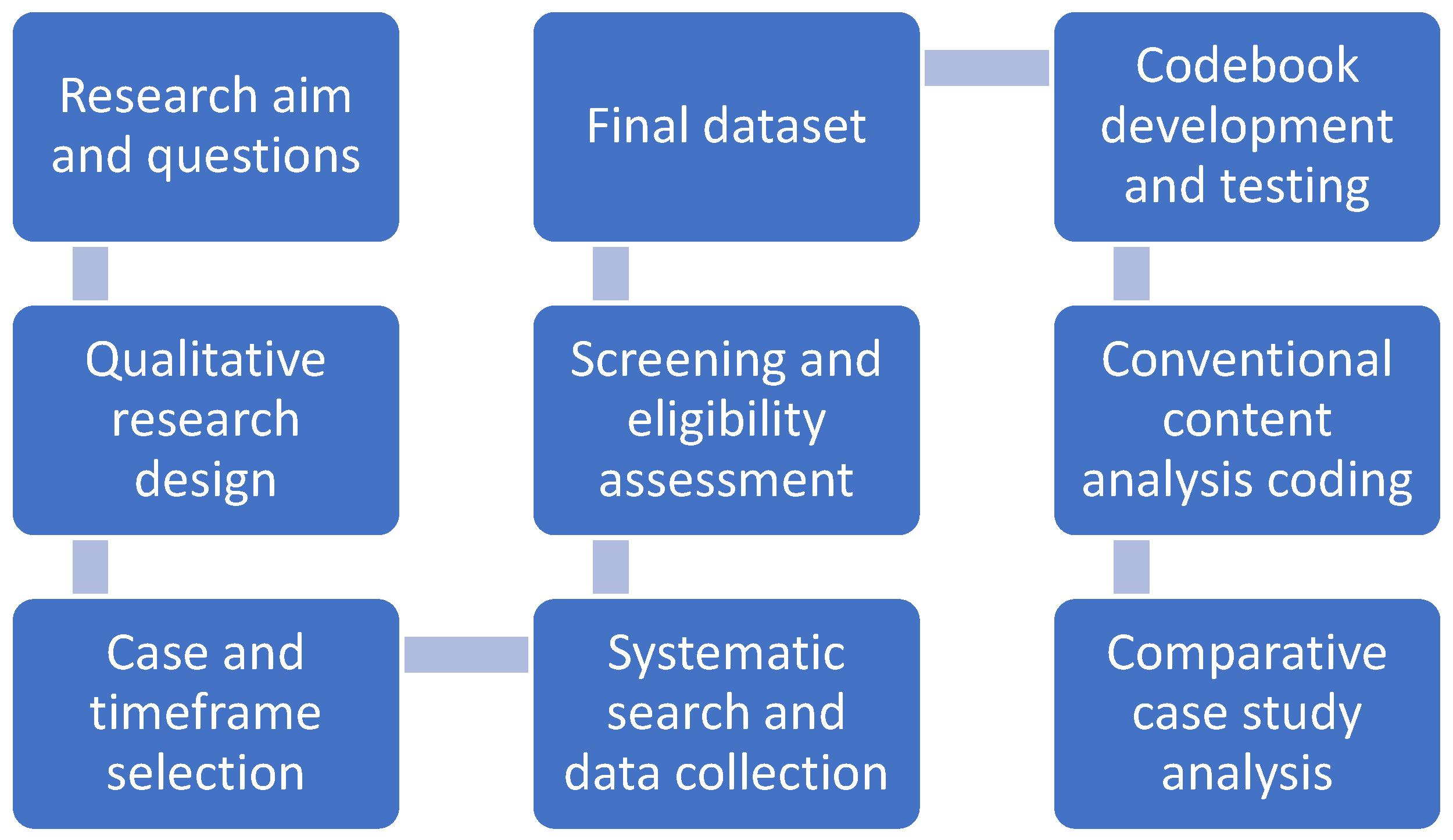
Figure 1 summarizes the methodological workflow of the study, including case selection, source identification and selection, coding, and comparative analysis in the Baltic States.
It should be mentioned that this study does not present a completely new method. Its methodological contribution is that, when analyzing autonomous public transport bus trials, a transparent source selection and verification procedure is combined with a structured coding system that covers governance, regulatory, and operational aspects that have rarely been analyzed in other studies. This approach is particularly useful when information about trials is scattered across legal documents, municipal reports, project reports, and other sources. Furthermore, it allows for a clear demonstration of uneven data availability through transparent labelling of missing data and, where possible, triangulation of sources.
To improve analytical validity and reliability, a consistent coding procedure was applied throughout the study. Each autonomous bus trial period (sub-case) was coded using a set of categories based on research questions, which were refined during the coding process after conducting conventional content analysis. To reduce interpretation bias, the analysis was based solely on official and verifiable documentary sources, and information that was not clearly reported in the source material (e.g., number of passengers, distance traveled, disruptions/incidents) was coded as unavailable rather than inferred. Accordingly, the terms “most/least” or similar comparative words used in this paper refer to the values presented in the dataset being analyzed and, if the data coverage is uneven, should be interpreted with caution.
Where possible, triangulation across multiple data sources was used by cross-checking key factual elements (e.g., trial period, route characteristics, institutional functions, regulatory conditions, etc.) from sources such as policy documents, municipal or transport authorities’ communications, and publications by public institutions or official project partners. However, the degree of triangulation varied from case to case, depending on the availability of sources and the comprehensiveness of the reports. This limitation was addressed by transparently documenting the coding in the
Appendix A and avoiding unjustified comparisons when data were incomplete.
3. Results
The categories coded for each autonomous bus trial are presented in the
Appendix A (
Table A1,
Table A2,
Table A3,
Table A4,
Table A5,
Table A6,
Table A7,
Table A8,
Table A9,
Table A10,
Table A11,
Table A12,
Table A13 and
Table A14). A summary table of the comparative analysis is provided in
Supplementary Table S1. In this article, the results are presented according to analytical categories. Temporal gaps in results (e.g., no cases in 2018) indicate that no trials of autonomous public transport buses were identified in the sources during the period. Moreover, it is important to note that only autonomous bus trials in public transport that involved at least a short section of the route in regular traffic are analyzed. Therefore, for example, the autonomous bus trial at Tallinn Zoo in February 2020 is not included because, even though it may be an ideal environment for testing, it was conducted in a closed area (not in a public space) and was intended for the convenience of visitors rather than for transport between different locations. The following cases were also not included in the analysis:
An autonomous bus tested in Vilnius in November 2017 (although it was referred to as a “car” in the media), as it was brought in for demonstration purposes and did not operate in regular traffic.
An autonomous bus tested in Tallinn (Freedom Square) in July 2021, as traffic restrictions were imposed on other vehicles in the area.
An autonomous bus tested in Tallinn’s Old Town in December 2021, as it operated in a pedestrian zone with no regular traffic.
An autonomous bus tested in Tallinn (Lasnamäe district) in April 2022, as it operated in an open pedestrian zone rather than in regular traffic.
An autonomous bus tested in Tallinn (Mustamäe district) in July 2022, as it operated between multi-storey buildings and shops rather than in regular traffic.
An autonomous bus tested at Tallinn Airport in January 2023, as it took place in a closed area.
Therefore, this paper analyzes only those autonomous bus trials that operated at least partially in regular traffic. It allows for a better understanding of the actual possibilities of integrating these buses into public transport systems and the problems associated with their operation in an everyday urban context.
3.1. Regulatory Frameworks
An analysis showed that in all three Baltic countries, regulation primarily served as an enabling condition for the launch of autonomous bus trials, but at the same time stipulated that these trials must take place under controlled conditions and not as fully autonomous public transport services. Estonia was the first European Union country to allow autonomous vehicles to be tested on its roads and established the legal basis for it in spring 2017; Latvia began regulating in early 2018 when the Latvian Ministry of Transport approved the Guidelines for Testing Automated Vehicle Technologies; and Lithuania also launched testing procedures for autonomous vehicles in 2018, which have changed slightly since then (the main rules are set out in the Description of Conditions and Procedure for Testing of Autonomous Cars and Their Participation in Public Traffic). Although autonomous buses are not specifically highlighted, all of these regulations apply to public transport vehicles. This early regulatory preparedness paved the way for pilot projects in all three countries.
The most important common regulatory feature in all cases was the requirement for human supervision. In Estonia, the legislation stipulates that an autonomous vehicle must be continuously monitored by a human operator, either inside the vehicle or remotely, who can take control if necessary [
31]; a similar approach is found in the regulations of Latvia and Lithuania. Latvian guidelines emphasize driver or operator preparation and training whereas must have a license and be properly qualified [
32], whereas Lithuanian regulations clearly state that autonomous vehicles must be supervised, either directly or remotely, and, if necessary, taken over by a human operator [
33]. This common regulatory condition was directly reflected in the results. Across all the pilot projects examined, autonomous bus trials were supervised by a human operator, so they were conducted as supervised tests rather than as a fully autonomous solution in regular traffic.
When comparing Baltic States, in addition to common safety principles, they also have different regulatory priorities. Latvian guidelines set out detailed requirements for testing automated vehicles on public roads in the country, with the aim of reducing the risks associated with their use in traffic. They state that all possible measures must be taken to reduce potential risks, and that special attention must be paid to the safety of vulnerable road users, including people with disabilities, pedestrians, cyclists, motorcyclists, children, and horse riders [
32]. In addition, Latvia has established a requirement for test vehicles be equipped with devices capable of recording sensor and control system data. Lithuanian regulations also highlight traffic safety, but simultaneously, place emphasis on cybersecurity and data recording requirements that would allow identification of the cause and responsible party in the event of a traffic accident or violation [
33]. It shows that despite the fact that all three countries allowed testing, the regulatory logic differed depending on which aspects of risk and responsibility were most formalized.
The case of Estonia stands out as the regulation adopted in 2017 has remained stable and unchanged to date. In terms of results, this regulatory continuity was important, as it created predictable conditions for repeat testing. While legal factors (in particular, the involvement and active contribution of local manufacturer Auve Tech OÜ, Tallinn, Estonia in the trials) were not the only reason why more pilot projects were implemented in Estonia, regulatory stability probably contributed to the fact that trials could be repeated in various locations and at different times. Thus, in this case, regulation functioned as official permission and as a condition for institutional trust and continuity of testing.
In Lithuania, the 2023 amendment demonstrates that the regulation, without permitting testing, also redistributes responsibility and creates incentives for implementation. Although the changes have simplified the coordination of the technical parameters and routes of autonomous vehicles, they have also imposed greater liability on autonomous vehicle manufacturers in the event of a traffic accident [
34]. It demonstrates that regulatory changes simultaneously increase procedural flexibility, raising the bar for technology providers and pilot projects organizers.
The analysis of regulatory frameworks suggests that regulation in the Baltic countries had a dual effect on autonomous bus trials: it enabled pilot projects (by providing a legal basis for trials) but also defined their nature (supervised, risk-mitigating, controlled trials). Therefore, the impact of regulation on the results was evident both in terms of whether trials could be started and in how they were organized in practice—supervised by a human operator, with a clear focus on safety, data recording requirements, and a limited level of functional autonomy in public traffic.
3.2. Governance Aspects
The analysis shows that autonomous bus trials in the Baltic States have primarily been implemented as pilot projects rather than regular public transport services. Across the examined cases, their implementation relied on cooperation among municipalities, transport authorities, universities, technology companies, and international project partners. However, the continuity and institutional maturity of these arrangements differed across countries. These governance differences were reflected in the number of trials, their frequency, and their geographical distribution. Estonia demonstrates the greatest diversity of institutional partners and trial formats, as well as greater repeatability. In contrast, trials in Latvia and Lithuania tend to be linked to individual project cycles. Thus, a continuous experimentation infrastructure is developing more rapidly in Estonia, while in Latvia and Lithuania, the logic of one-off pilots tends to prevail.
The case of Estonia stands out in that the earliest trial in the summer of 2017 was framed not only as a technological advance, but also as a politically visible showcase linked to Estonia’s Presidency of the Council of the European Union [
35]. It demonstrates that, at the governance level, the autonomous bus trial initially served as a tool for innovation policy and international visibility. The financing model was also important: the pilot project cost around 100,000 euros, two-thirds of which was covered by the Government Chancellery’s partners from the private sector (such as Milrem and Tallink) [
35]. It means that a mixed public–private coordination model was applied at an early stage, allowing the trial to begin even before more systematic project financing mechanisms were established.
Subsequent attempts in Estonia reveal a more institutionalized governance structure based on recurring cooperation between local authorities, academic institutions, and international project platforms. In 2019 and 2020, trials in Kadriorg Park were organized by the Tallinn Transport Department in collaboration with Tallinn University of Technology as part of the EU-funded Interreg Baltic Sea Region program project Sohjoa Baltic [
35,
36]. This framework reflects multi-level governance: the municipality acted as the local implementer, the university as the knowledge and competence partner, and the international project as the funding and coordination platform. The fact that the trial was repeated in the same area for two consecutive years [
37] demonstrates institutional learning and the ability to replicate pilot activities rather than being limited to a one-off experiment. In addition, the involvement of students as operators [
36,
38] indicates that governance in this case also included competence development.
The analysis also reveals that, in Estonia, autonomous bus trials were increasingly linked to clearly defined public transport objectives. For example, the Kadriorg Park trial was presented as a solution for locations where larger buses cannot fit and as a complementary service to the existing faster and more spacious public transport [
39,
40]. Similar logic can be seen in later trials: the case of Pirita emphasized the need for alternative transport solutions in areas not covered by the modern public transport network, supplementing the existing public transport system and bringing public transport closer to everyone [
41,
42], while the Tartu (Roosi Street) trial were related to gaining practical experience and the aim of taking the next step towards making autonomous vehicles a natural part of urban transport [
43,
44]. In Viimsi and the Kodulahe district of Tallinn, autonomous buses were clearly presented as innovative solutions that could make the municipality’s public transport system more efficient and environmentally friendly in the future, and as a “last mile” solution to connect residents to the public transport network [
45,
46]. Thus, governance in Estonia has gradually shifted from general innovation experiments to more targeted solutions to municipal mobility problems.
Another important feature of Estonia’s autonomous bus trials was the interaction between project financing and local technological capabilities. In 2020, the Ülemiste City trial was implemented as part of the European Union’s Horizon 2020 program, the FABULOS project [
47], and it was simultaneously prominent as the first time buses manufactured by the Estonian startup Auve Tech were used [
48,
49]. It means that in Estonia, not only did project-based demand for trials emerge, but also a local technology supplier appeared capable of participating in recurring pilot projects in different locations. Auve Tech’s continued participation in later trials [
41,
42,
50,
51,
52] has likely contributed to the formation of a more consistent experimentation environment. In addition to increasing the number of pilot projects, the presence of a local manufacturer (Auve Tech) appears to have contributed to cumulative institutional learning by enabling repeated trials across different urban areas, which, in turn, reinforced policy continuity within an already stable regulatory framework. Hence, Estonia, through project partnerships, also strengthened the local innovation ecosystem, which created conditions for repeated trials.
In Latvia, governance mechanisms were more concentrated and short-term in nature. Two trials took place in the summer and fall of 2020 (in Jelgava (Pasta Island) and Aizkraukle) and were implemented using project logic and linked to the EU-funded Interreg Baltic Sea Region program project Sohjoa Baltic [
53]. Their objectives combined public communication with future practical application: attempts to introduce people to an environmentally friendly mode of transport, while emphasizing its potential application in places where large buses cannot pass [
53,
54]. It indicates a governance model focused on limited-duration pilot projects with a strong educational and communication function, but with fewer signs of creating a long-term local experimentation infrastructure. Nevertheless, this approach was effective in generating public interest in the short term: the Jelgava trial was evaluated positively [
55], and passenger numbers in Jelgava (3817) and Aizkraukle (1877) over two weeks were relatively high for a short trial period [
56].
In Lithuania, only one autonomous bus trial was implemented (Vilnius (Užupis), 2024); nevertheless, it was significant in that it combined municipal leadership and international project funding. At the municipal level, the autonomous bus was linked to traffic safety, transport efficiency, and as a possible solution to the problem of driver shortages [
57]. The trial in the Lithuanian capital was implemented thanks to the European Union’s Interreg Europe program project EMBRACER [
58], which reveals that, as in Latvia and in a few cases in Estonia, EU project funding was an important condition. However, while this facilitated initial experiments, it also disrupted continuity once the project’s funding ended. It is noteworthy that Vilnius had a fairly formalized approach to planning: the route was selected according to predefined criteria, including public transport infrastructure, the number of potential passengers, and other factors [
59]. It demonstrates that governance decisions were integrated into the pilot design already at the preparation stage.
The Vilnius case also indicates the ability to adapt during implementation. Due to the popularity of the pilot project, the schedule was extended to include Saturday trips, and the route was later adjusted as operational disruptions and challenges became apparent [
60,
61]. Although these issues are discussed in more detail in the next section, they are important from a governance perspective as examples of institutional responsiveness and the review of pilot projects’ conditions. The trial lasted two months, during which the bus operated for more than 216 h and transported 1078 passengers [
62].
The analysis of governance aspects stimulates three main patterns emerging from the governance aspects. First, in all three countries (especially Latvia and Lithuania), the trials were mainly based on project partnerships, with European Union-funded programs serving as the main platform for coordination, funding, and implementation [
35,
36,
44,
47,
53,
59]. Simultaneously, dependence on EU funding seems to have created an implementation model in which pilot projects could be launched effectively, but long-term sustainability and integration into regular services remained less clear once project cycles ended, particularly in Latvia and Lithuania. Second, continuous institutional cooperation and local technological capabilities—especially in Estonia—were associated with more frequent, diverse, and geographically broader pilot projects [
42,
47,
50,
52,
63,
64]. Third, in many cases, governance objectives went beyond technology testing and were linked to accessibility, last-mile mobility, traffic safety, environmental sustainability, and the efficiency of public transport systems [
39,
41,
43,
45,
46,
47,
54,
56,
57,
65]. Consequently, governance structures in these cases acted as an organizational form for the pilot implementation of the project and as a factor shaping the scale, continuity, and public significance of autonomous bus trials.
3.3. Operational Factors
This research shows that in Estonia, Latvia, and Lithuania, the results of autonomous bus trials were most influenced by operational factors related to route design, traffic environment, speed limits, timetables, service organization, and disruption management. While the cases differed in terms of duration, location, and technological approach, most of them followed a conservative testing model: short- or medium-length routes, limited speed, free service, and constant supervision by a human operator. This operational approach reduced risk but also indicated that the trials were primarily focused on testing and learning rather than full integration into regular public transport services.
A key operational factor influencing the trials was the nature of the route and traffic environment. Some trials were conducted in lower-risk environments with minimal interaction with regular traffic, while others took place on mixed-traffic routes, requiring greater interaction with road users and adaptation to real-world conditions. For example, in the 2017 Tallinn trial, the route had regular traffic intersecting at only one intersection [
66]; meanwhile, in the Ülemiste City case, more complex conditions were tested [
49]. In the Latvian city of Jelgava, the route was chosen in a recreational area without heavy traffic [
67], whereas the route in Lithuania was 4 km long and had many stops [
59]. Across the countries examined, Estonia exhibited the greatest diversity of operational conditions. In Latvia, trials were generally shorter conducted more in controlled environments, while in Lithuania, the only trial took place in a relatively complex urban traffic setting.
Route lengths and the number of stops also varied considerably. Latvian routes were the shortest, typically covering only several hundred meters. Estonia showed the greatest variation, ranging from short demonstration routes to routes approaching 5 km. The Lithuanian trial stood out with the highest number of stops (13). These patterns suggest that some of the pilot projects functioned primarily as short experimental demonstrations aimed at familiarizing the public with autonomous transport technology, while others were more like extended versions of route services. Longer and more complex routes provided greater opportunities to test interactions with regular city traffic, but also increased the likelihood of operational disruptions.
Another notable common operational feature was the limited driving speed. In all of the autonomous bus trials analyzed, speed was limited, usually to 20 km/h, and in some cases in Estonia, other limits were also tested (around 15 km/h or up to 30 km/h). In Latvia and Lithuania, the speed did not exceed 20 km/h during the tests [
59,
68,
69], whereas in Estonia, greater variation was observed, depending on the route and traffic conditions [
36,
38,
49,
50]. However, even where it was technically possible to drive faster, practical speed testing was limited by real traffic conditions (e.g., in Tartu, it was not possible to reach maximum speed due to heavy traffic) [
50]. It illustrates that operational results depend on both the technical parameters of the vehicle and the specific urban environment and traffic conditions.
An important operational factor was the service organization model—schedule, accessibility, and capacity. In all cases, the service was free for passengers, which lowered the barrier to trying a new public transport solution and helped attract more interested residents. However, the schedules varied greatly: from a one-day event format (e.g., Tallinn (Open Air Museum) in 2022) [
51] to several months of trials with regular trips (e.g., Tallinn, Tartu, or Vilnius) [
52,
58,
59,
70]. Passenger capacity also varied, ranging from 6 to 12 passengers: the highest capacity was recorded in Latvian trials (12 passengers) [
68,
69], and the lowest in Tallinn (Ülemiste City) and Vilnius (6 passengers each) [
49,
59]. In Vilnius, additional passenger behavior and safety restrictions were implemented (e.g., no bicycles or scooters, mandatory seat belts) [
59], indicating a more formalized organization of the service.
Although the presence of an operator was closely linked to regulatory requirements, from an operational perspective, it is important that the human operator’s function acts as a permanent risk mitigation mechanism. In all the trials examined, the movement of the bus was supervised by a human being who was able to take control; in some cases, this function was supplemented by an information and passenger service role (e.g., in Kadriorg Park, students ensured a safe journey and answered passengers’ questions [
38,
71]. In 2020, Tallinn (Ülemiste City) tested a partially remote method using a remote-control center that allowed a trained operator to take control of the vehicle [
49]. Thus, even with a generally conservative testing approach, different supervision organization solutions were tested at the operational level.
Disruptions and challenges were among the most important factors directly influencing the results of autonomous bus trials. Estonia recorded the widest range of disruptions, from serious safety incidents to technical and infrastructure problems (e.g., traffic violations, collisions with passenger cars, charging infrastructure issues, sensitive automatic braking, weather conditions, and road works) [
50,
51,
52,
72,
73]. In Latvia, there were fewer publicly documented serious disruptions, most of which were isolated cases of deliberate interference during the tests [
55]. In Lithuania (Vilnius), the challenges were intense and multifaceted (heavy traffic, improper parking, traffic violations, vandalism, technical problems, and charging station malfunctions) [
60,
61], and their operational impact was immediate—the route was adjusted within a month, reducing travel time from approximately 50 to 30 min [
61]. Consequently, Estonia showed a greater variety of disruptions across many trials, Latvia demonstrated a lower intensity of publicly recorded disruptions, and in Lithuania, it became clear that several types of disruptions can accumulate during a single trial, requiring rapid adjustment.
Moreover, it can be seen that operational factors affected both the smooth running of the trials and their performance indicators. In simpler and shorter environments (e.g., Jelgava, Aizkraukle), it was possible to attract a relatively large number of passengers in a short time [
74], whereas in Estonia, numbers varied more depending on the specific route, duration, and context [
49,
75]. The case of Tartu shows that a longer route and a longer trial period can lead to a greater distance travelled and passenger flow, even in a more complex urban environment [
52]. Meanwhile, the case of Vilnius demonstrated that greater route complexity and heavy traffic can limit operational stability, but the trial itself remained attractive enough for the schedule to be extended [
59,
62].
The operational factors had a direct and multi-layered impact on the results of the autonomous bus trials in Baltic countries. The course of the trials and their stability depended most on how the route design, traffic environment, and actual urban infrastructure conditions were coordinated, as these factors shaped the nature and frequency of disruptions and the need to adjust the pilot implementation. At the same time, in most cases, the conservative testing approach—restricted speed, free service, and constant supervision—helped reduce risk and ensure greater accessibility of the service to residents, but also limited the possibilities for demonstrating functional autonomy in regular traffic (for example, during Tallinn (Kadriorg Park) trials traffic management principles were changed—two streets became one-way) [
76]. The results also indicate that operational flexibility, especially the ability to adjust the schedule or route during testing, was an important factor in ensuring the continuity of the trial in more complex urban environments [
59,
60,
61,
64]. Therefore, operational factors in these cases acted as technical implementation details and the main mechanism shaping the trial’s results and the practical value of autonomous buses.
4. Discussion
The results of the paper reveal that trials of autonomous public transport buses in the Baltic countries can be considered technological experiments and institutionally organized implementation processes, the outcomes of which are determined by interactions among regulatory, governance, and operational factors. More specifically, the performance of autonomous buses in practical conditions depends not only on the technical capabilities of the vehicle but also on the stability of the legal environment, coordination of partners, financing, and the management of daily safety risks.
Compared to previous studies of European cities, the experience of the Baltic countries largely confirms the general trend that early trials of autonomous buses are mostly conducted on short, low-speed, low-risk routes in order to reduce uncertainty and enable the public to safely familiarize themselves with the new transport solution. It is particularly consistent with the insights presented in [
18,
21] that real-world trial experiences can increase trust, even though technical disruptions and safety sensitivities remain important acceptance factors. The cases in the Baltic States add to this conclusion by showing that free service, constant human operator supervision, and conservative route design were technical safety measures and a strategy for public awareness and social acceptance.
On the other hand, comparative analysis allows for more nuanced and optimistic assessments at the European level. For example, ref. [
22] highlights the potential of autonomous buses to address local mobility gaps and contribute to more sustainable mobility, while [
25] emphasizes their connection to smart city development and reducing pollution and congestion. The results from Estonia, Latvia, and Lithuania confirm these trends mainly within the scope of objectives and political expectations, but at the empirical level, it can be seen that issues of operational stability dominate in the early stages of implementation: route complexity, interaction with mixed traffic, road user behavior, infrastructure constraints, and technical disruption management. It does not mean that environmental or economic benefits are insignificant; rather, it suggests that the realization of these benefits depends on an earlier stage, which first requires stabilizing the operation of the service itself.
This conclusion is important when evaluating arguments and regarding the long-term development of autonomous public transport [
23] and potential reductions in operating costs [
24]. Pilot projects in the Baltic countries show that economic efficiency is not the main aspect in the initial stage, as trials are conducted under constant human supervision, at limited speeds, and often on short routes. Therefore, at this stage, the value of the trials is more closely related to risk reduction, experimental management, and institutional capacity building than to direct cost optimization. It is particularly relevant for municipalities, which may overestimate the short-term economic benefits and underestimate the significance of organizational readiness costs.
Legal regulations in all three countries created conditions for trials to begin. However, the results indicate that formal opportunities alone are not sufficient for the continuity and scale of testing. The case of Estonia stood out for its early regulatory preparedness, combination of regulatory stability, local manufacturer involvement, and repeated trials in different places. It complements previous studies on Estonia: while they mainly focus on technological challenges [
26], public perceptions [
27], or the importance of the innovation ecosystem [
28], this paper demonstrates that the regulatory, governance, and operational structure in which autonomous bus trials are integrated into a more coherent continuity is important. Meanwhile, the cases of Latvia and Lithuania reveal the importance of project funding for initiating trials and show that dependence on project cycles hinders long-term integration into regular public transport systems.
It is essential to highlight that challenges such as interaction with traffic, the impact of weather conditions, or vandalism should not be treated as isolated practical problems. They point to a broader issue of technological maturity and increasing scale. If a smart mobility service only works reliably under relatively controlled conditions, its expansion to longer, more complex, and denser traffic routes becomes both a technical issue and a question of management and infrastructure capacity. In this regard, the results of this study are consistent with the logic of the stages of smart mobility development [
8] and higher-level capabilities [
9]: in most cases, trials in the Baltic countries are still operating within the early-intermediate stage, where the system’s ability to respond and recover is being tested rather than ensuring fully preventive, widely integrated operation.
Moreover, the cases of the Baltic countries contribute to broader discussions on smart mobility governance and innovation in urban transport systems. The results show that the implementation of autonomous buses in the early stages depends not only on the technology itself, but also on the institutional capacity to organize testing as a consistent learning process: coordinating responsibilities, managing risks, adapting to real traffic conditions, and adjusting the parameters of the pilot project. The findings also align with the literature on the development of smart cities: [
77,
78,
79] emphasizes that the transition from pilot projects to wider implementation is determined by combinations of governance conditions and municipal capacity. The Baltic cases provide concrete illustrations of how these capabilities manifest themselves in practice (e.g., distribution of responsibilities, operational adjustments, and risk management). It is also clear that project-based (often EU) funding effectively initiates trials. However, funding alone does not guarantee institutionalization. The insight presented in [
80] is important here: EU-funded smart mobility experiments can steer urban planning towards a project-based logic and do not always ensure the long-term transition to regular service. The case analysis presented in this article shows that this project logic only weakens when coordination is ongoing and local capacity is in place. The Estonian case illustrates this perfectly: regulatory stability combined with a local technology supplier and repeated testing under different conditions creates a cumulative effect contributing to the formation of an innovation ecosystem and increasing governance maturity.
To sum up, the Baltic States case contributes to the existing literature by demonstrating not only that the region is following broader European trends in autonomous public transport, but also how different regulatory, governance, and operational combinations shape diverse implementation pathways. Thus, in the early stages of autonomous bus development, the most important outcome is not so much the technology as the ability of institutions to turn individual pilots into a consistent process of learning, adaptation, and policy refinement, which, should be mentioned, already can be observed in cases such as Estonia, which was achieved through repeated pilot projects and their replication (e.g., in Kadriorg Park) and the constant participation of the local manufacturer Auve Tech; therefore, in Lithuania this was accomplished by adjusting routes and schedules during the pilot project, taking into account demand and operational disruptions.
5. Conclusions
This paper aimed to analyze and compare autonomous bus trials in Estonia, Latvia, and Lithuania. The following methods were used in this research: case study analysis, secondary source analysis, conventional content analysis, and comparative analysis. Moreover, the article addressed two research questions.
The first question concerned regulatory frameworks and governance—how do they shape the implementation of autonomous public transport bus trials in the Baltic States? The analysis indicated that Estonia was the first to allow automated vehicles to be tested on public roads; however, Latvia and Lithuania soon followed with the adoption of detailed testing regulations. Moreover, the article identified that legal regulation enabled pilot projects and defined their nature. The impact of regulation was evident in assessing whether tests could be initiated and how they could be organized practically. Regarding governance aspects, it was noted that trials were mainly based on project partnerships, which were heavily influenced by European Union funding. Continuous institutional cooperation and local technological capabilities—notably in Estonia—were associated with more frequent and diverse pilot projects. The second research question was: what operational factors influence the outcomes of autonomous bus trials in Estonia, Latvia, and Lithuania? The study found that the progress and stability of the trials depended largely on the route design, the traffic environment, and the actual condition of the urban infrastructure. In many cases, a conservative testing approach helped reduce risk and ensure greater service availability for residents, but it also limited opportunities to demonstrate functional autonomy in normal traffic. Finally, operational adaptability was an important factor in ensuring the continuity of testing in a more complex urban environment.
This paper contributes to the scientific literature on smart mobility and autonomous public transport by providing one of the first comprehensive case studies and comparative analyses of autonomous public transport bus trials in the Baltic States. To date, the academic literature has mainly focused on the technical aspects of autonomous buses or on single case studies, with very little attention devoted to the Baltic region, particularly Latvia and Lithuania. This research has attempted to fill this gap in the literature. From a practical perspective, the results of the study may be useful to urban planners, public transport providers, and technology developers in the Baltic countries and beyond. Estonia’s experience demonstrates that local technological expertise and consistent testing across different urban contexts enable faster, larger-scale development of autonomous public transport solutions. Meanwhile, the cases of Latvia and Lithuania illustrate that even occasional trials are valuable in terms of practical insights into infrastructure readiness, road user behavior, and potential technical failures.
The research also has implications for public policymakers, especially when considering the development of smart mobility and public transport. The analysis revealed that autonomous bus trials in the Baltic States were possible due to clear legal regulation and financial support from the European Union, which is particularly important for Latvia and Lithuania, which, unlike Estonia, had neither private sector support nor locally manufactured autonomous buses. It suggests that the further development of autonomous public transport should be linked to consistent regulatory stability, long-term funding programs, and enhanced regional cooperation. While all three Baltic States have made progress in the field of smart mobility, considerable room for improvement remains. The autonomous buses that have been tested exhibited relatively weak technical capabilities, so they required human supervision. Cooperation between the Baltic countries could be beneficial for Estonia, by expanding the geography and conditions of testing, and for Latvia and Lithuania, for whom testing would be easier to access and implement. Finally, autonomous buses could be seen as a long-term complementary rather than an alternative solution to existing public transport, especially when it comes to the problems of the last-mile connectivity, service accessibility, and driver shortages.
Future research could further analyze and compare new trials of autonomous public transport buses in the Baltic countries. When more standardized and comparable data become available or when additional research methods, such as interviews, are included, it would be possible to incorporate more quantitative elements (e.g., operating costs compared to conventional buses, energy efficiency, and emission reductions) and thereby increase the academic reliability of the study. In addition, other research methods could broaden the categories of analysis and help fill gaps in this paper. Finally, the geography of the study could be expanded to include Scandinavian countries such as Denmark, Finland, and Sweden, which are also actively involved in smart mobility and autonomous bus trials in public transport.