4.1. Shenzhen: Urban and Hydrological Context
Shenzhen, located in the Pearl River Delta of southern China, has experienced rapid urban expansion since the 1980s. Since the late twentieth century, the city has transitioned from a small coastal settlement into a major global innovation and manufacturing hub, with a population exceeding 17 million [
38]. Its strategic location within the Pearl River Delta and proximity to Hong Kong have made it a focal point for economic development and urban expansion. This accelerated growth trajectory is analytically significant, as it has intensified land-use pressures and reshaped hydrological risk exposure, creating structural conditions under which Sponge City interventions have been deployed.
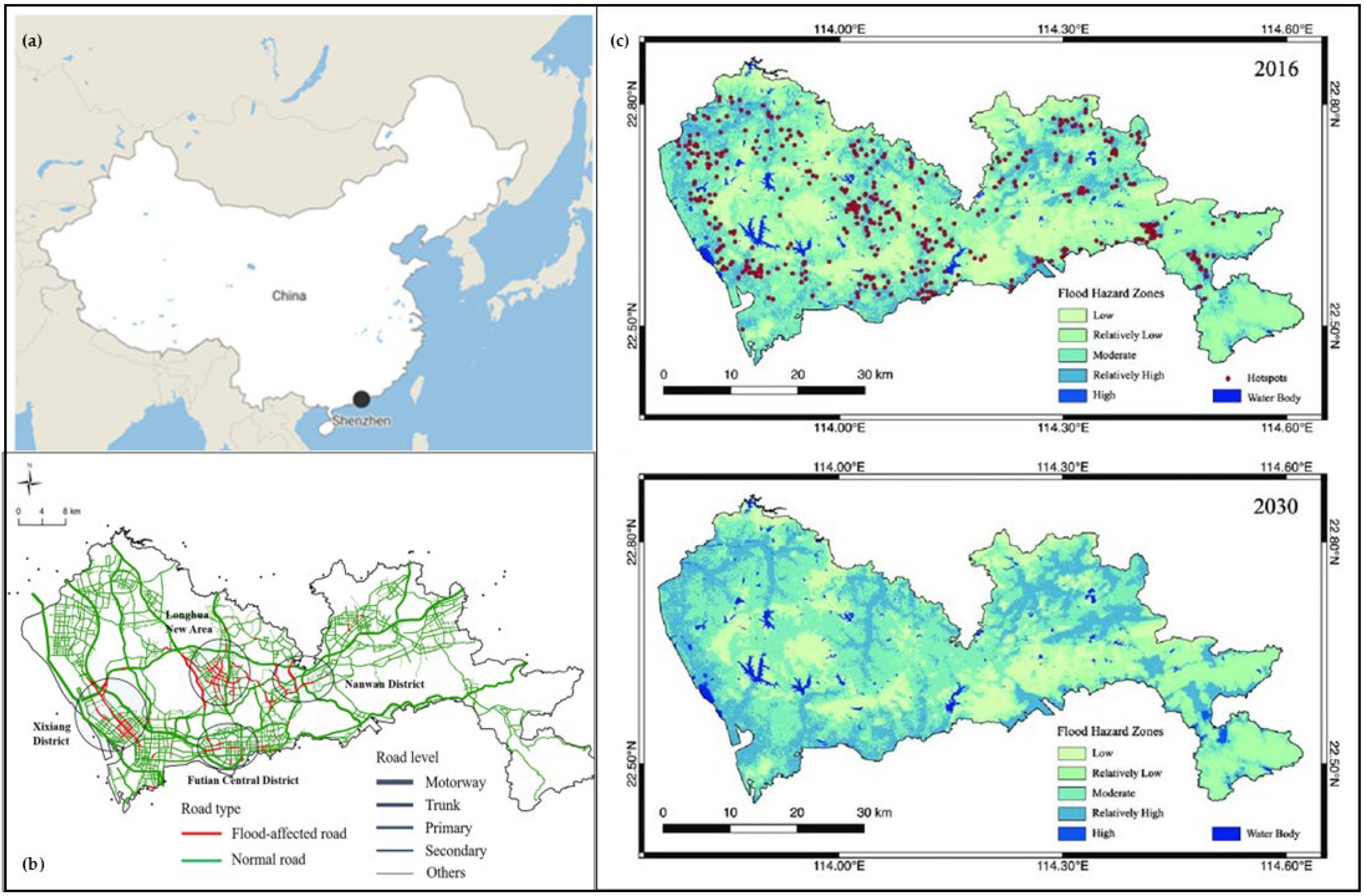
Figure 2 situates Shenzhen spatially and illustrates key dimensions of urban flood exposure, combining geographic location with municipal flood-risk modelling and transport infrastructure overlays that provide essential contextual grounding for the subsequent analysis.
This intense urbanization has significantly altered the city’s natural hydrological systems [
9]. Originally composed of estuarine wetlands, rivers, and lowland floodplains, Shenzhen’s landscape has been profoundly reshaped through large-scale construction and infrastructure expansion. The progressive encroachment on natural waterways and the widespread sealing of soil surfaces through impervious materials have increased surface runoff, heightened flood risk, and disrupted local ecological processes. These changes constitute observed physical conditions that shape baseline flood vulnerability, rather than outcomes attributable to Sponge City interventions.
These hydrological systems are now frequently overwhelmed during storm events, particularly in densely populated districts such as Luohu, Futian, and Bao’an, where impervious surface coverage exceeds 60% [
39]. Groundwater conditions further illustrate the environmental strain facing the city. Although Shenzhen’s groundwater accounts for only around 12% of annual precipitation discharge, it remains a critical component of stream baseflow and a supplementary source of water in peri-urban areas. Despite this role, groundwater resources remain underutilized and poorly protected, with surface and subsurface pollution limiting their suitability for direct use [
42]. Reported groundwater withdrawals remain low, at approximately 5.9 million cubic metres per year, reflecting both institutional management practices and water-quality constraints rather than hydrological availability alone [
42].
Shenzhen experiences a subtropical monsoon climate characterized by high annual precipitation, concentrated during the summer months. This climatic pattern, when combined with high urban density, extensive impervious coverage, and legacy drainage infrastructure in older districts, renders the city particularly vulnerable to pluvial flooding. The city’s mountainous topography further constrains natural infiltration and accelerates surface runoff. In recent decades, Shenzhen has experienced recurrent flood events during the monsoon season, with evidence pointing to an increasing frequency and intensity of extreme rainfall episodes linked to climate variability and change [
43,
44,
45]. These climatic trends are treated in this study as exogenous stressors shaping urban flood risk, rather than as effects of Sponge City implementation. Average annual precipitation is approximately 1935 mm, with the majority occurring between May and September. Together, these interacting climatic and urban factors have resulted in a growing number of reported flood-prone locations across the city, summarized in
Table 3.
In response to these converging hydrological and urban pressures, Shenzhen was designated as one of China’s national pilot cities under the Sponge City Programme. This designation reflects not only the severity of the city’s water-related risks but also its institutional capacity for policy experimentation and implementation at scale. The SCP promotes an integrated urban water management model grounded in ecological principles, with the explicit objectives of flood risk reduction, water quality improvement, and enhanced urban resilience.
In addition to its environmental exposure, Shenzhen exhibits a complex urban governance environment characterized by overlapping administrative responsibilities, strong state-led planning frameworks, and extensive involvement of private developers. These governance conditions are analytically relevant, as they influence the spatial selection of pilot zones, the allocation of financial resources, and the coordination of Sponge City interventions across districts, thereby shaping both performance patterns and implementation outcomes.
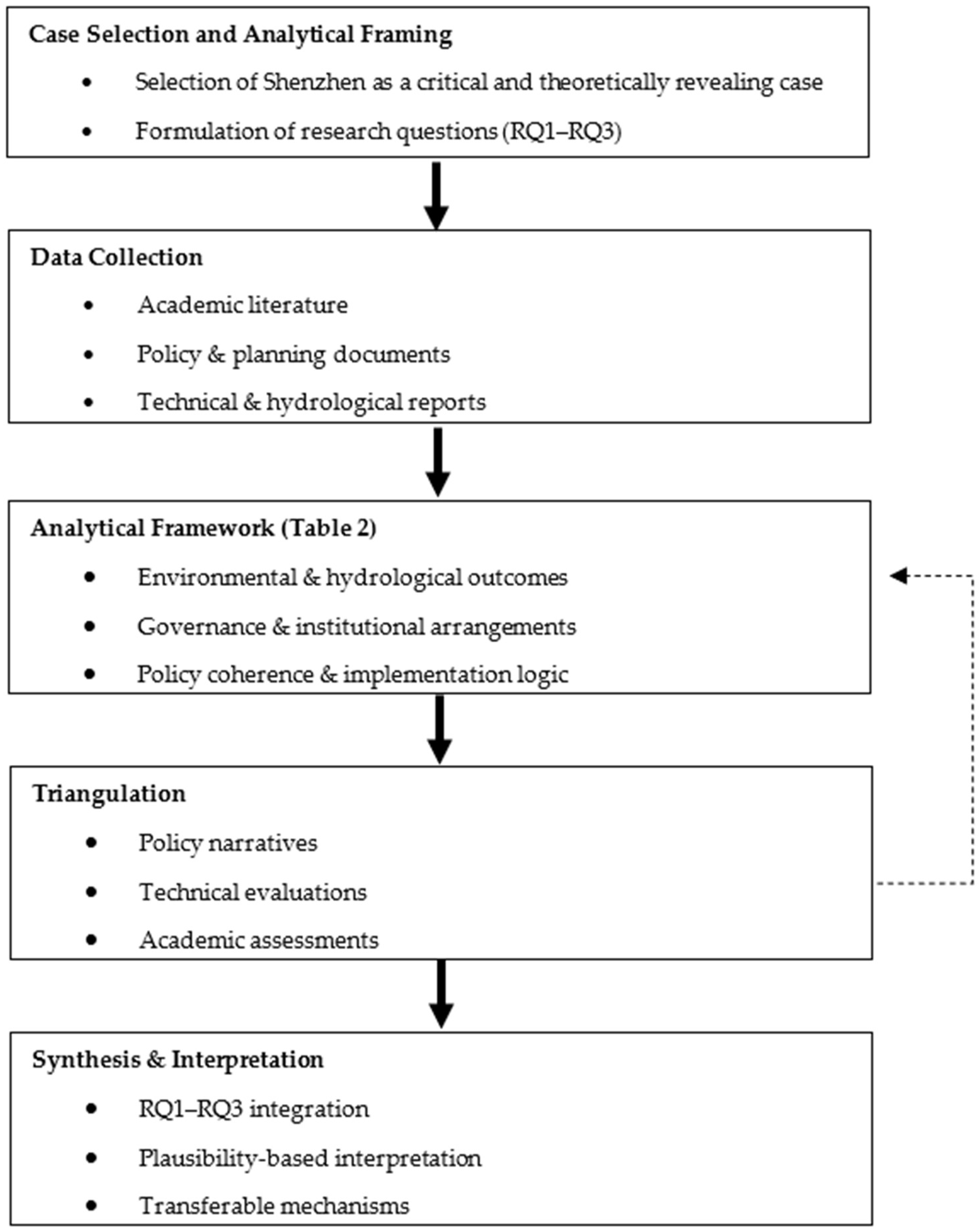
Overall, this urban and hydrological context underscores Shenzhen’s relevance as a critical case for examining the operationalization of Sponge City principles in practice. Rather than serving as descriptive background alone, this section establishes the baseline environmental conditions, reported risk indicators, and governance constraints against which Sponge City performance and implementation dynamics are evaluated. The following sections therefore examine Shenzhen’s Sponge City implementation through the analytical dimensions outlined in
Section 3, focusing on (1) environmental and infrastructural performance patterns, (2) institutional and governance arrangements, and (3) constraints, trade-offs, and scaling challenges, in order to assess the city’s evolving approach to urban water resilience.
4.2. Urban Resilience
Urban flooding represents a critical and persistent challenge in Shenzhen, driven by rapid urbanization, increasing impervious surface coverage, and intensifying climatic variability. Within this context, the Sponge City initiative, implemented from 2016 onward, constitutes a strategic policy response aimed at enhancing urban flood resilience through the integration of green infrastructure and LID principles. This section examines how observed flood patterns, reported performance indicators, and projected risks intersect with Sponge City implementation, rather than treating flood reduction as a direct or isolated outcome of policy intervention.
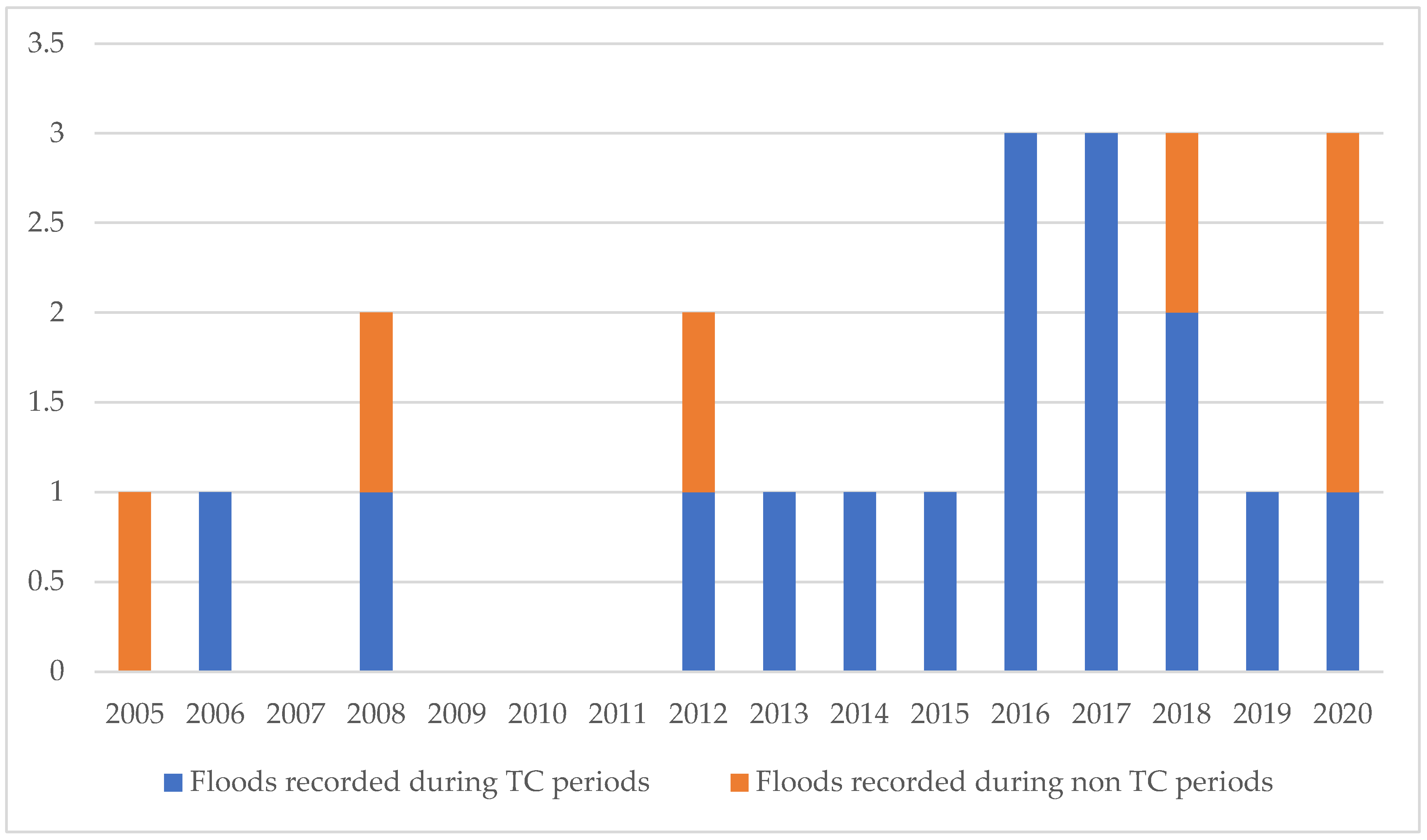
The frequency of flood events in Shenzhen exhibits marked interannual variability over the past two decades, with clear distinctions between events occurring during tropical cyclone (TC) periods and those recorded outside TC influence, based on a national flood event dataset compiled from historical records [
46]. Between 2005 and 2015, flood events were relatively sporadic, averaging approximately one event per year, with a balanced distribution between TC and non-TC periods. These patterns reflect baseline climatic exposure and urban hydrological vulnerability prior to Sponge City implementation. Following the launch of the Sponge City initiative in 2016, flood occurrences initially increased, peaking at two to three events per year between 2016 and 2018, predominantly during TC periods. This short-term increase coincides with intensified extreme rainfall rather than indicating policy underperformance, highlighting the importance of situating flood outcomes within broader climatic dynamics. From 2019 onward, flood frequency stabilized at lower levels relative to the peak years, suggesting an emerging capacity for improved stormwater regulation and adaptive response, although not a definitive reduction in flood occurrence. The temporal distribution of TC versus non-TC floods (
Figure 3) thus illustrates both Shenzhen’s climatic exposure and a gradual shift from reactive flood management toward more anticipatory, infrastructure-supported resilience.
These dynamics are further summarized in
Table 4, which contrasts selected indicators before and after the implementation of the Sponge City Programme. Rather than demonstrating a linear decline in flood events, the reported indicators point to structural changes in how flood risks are monitored, managed, and absorbed within the urban system.
Prior to 2016, Shenzhen’s flood management capacity was characterized by limited hydrological monitoring, low runoff control rates, and widespread vulnerability in densely built districts. Following the adoption of Sponge City principles, reported improvements are observed in runoff regulation, monitoring capacity, and targeted remediation of flood-prone areas, particularly in pilot districts such as Guangming, which served as an early demonstration zone for integrated Sponge City planning and implementation [
47].
Average runoff control rates increased from below 30% to approximately 72% in designated sponge districts, while real-time hydrological monitoring systems enabled earlier detection and response to storm events. These reported changes are interpreted as evidence of institutional and infrastructural learning associated with Sponge City implementation, enhancing the city’s capacity to cope with extreme rainfall under continued climatic pressure. At the same time, these improvements coincide with broader urban redevelopment processes and advances in digital monitoring capacity, which cannot be analytically disentangled from Sponge City interventions alone.
It is important to emphasize that these performance indicators are derived primarily from designated pilot and demonstration zones, rather than representing average hydrological conditions across the entire metropolitan area. These zones were intentionally selected for early implementation based on flood risk exposure, redevelopment opportunities, and policy experimentation objectives. As such, reported performance gains reflect the logic of targeted policy experimentation rather than citywide outcomes, introducing a pilot-zone bias that must be considered when interpreting resilience gains and scaling potential.
Spatially, flood impacts remain concentrated in central districts such as Luohu, Futian, and Bao’an, areas characterized by high-density development and legacy drainage infrastructure. These districts were prioritized for early Sponge City interventions as part of a risk-based implementation strategy, reinforcing the spatial concentration of reported performance outcomes [
41,
48].
Model-based projections provide further insight into the future resilience challenge. Projections based on the SLEUTH urban growth model indicate that Shenzhen’s built-up area could expand from 858 km
2 in 2016 to 1166 km
2 by 2030 [
48]. These projections represent inferred future exposure rather than observed outcomes. If unmanaged, this expansion would substantially increase flood exposure, particularly in peri-urban districts where construction outpaces drainage and green infrastructure provision. Model results suggest that areas classified under the two highest flood hazard levels could increase by approximately 88%, affecting an additional 212 km
2 of land [
48]. In response, the Shenzhen Water Resources Bureau has identified high-risk road corridors, particularly in Bao’an, Guangming, Luohu, and Futian, requiring prioritized intervention due to outdated drainage systems and excessive runoff loads [
40].
To address these projected risks, Shenzhen’s 2025–2030 flood adaptation strategy targets 50% Sponge City coverage across all districts and aims to enhance drainage capacity to withstand rainfall intensities of up to 90 mm h
−1 or 200 mm within three hours [
40]. These targets represent policy aspirations and planned capacity thresholds rather than achieved performance, indicating an ongoing transition from localized pilot projects toward more integrated, citywide resilience planning.
National-scale flood datasets provide a useful contextual benchmark for interpreting Shenzhen’s trajectory. Fu et al. [
49] document a rising trend in urban flood events across China between 2000 and 2022, driven by urban expansion and climate variability. Situated within this national pattern, Shenzhen’s experience appears distinctive not because flood risks have been eliminated but because institutional and technological responses have evolved more rapidly than in many comparable cities. This supports the interpretation of Shenzhen as a proactive Sponge City pilot rather than an outlier in exposure.
Comparative evidence from other pilot cities further contextualizes these findings. While cities such as Wuhan, Beijing, and Xi’an face different hydrological and climatic conditions, Shenzhen stands out for the scale of green infrastructure deployment, advanced monitoring technologies, and integration of flood risk analytics into planning processes [
9,
50]. By 2022, Shenzhen had sponge-adapted approximately 46% of its urban area, above the national pilot average of 30–35 and implemented over 1000 green infrastructure projects [
9]. These comparative indicators are used analytically to situate Shenzhen within the national Sponge City landscape, rather than to imply superior or comprehensive resilience outcomes.
Overall, Shenzhen’s Sponge City strategy reflects a multifaceted approach to urban flood resilience, combining ecological infrastructure, real-time monitoring, and strategic policy coordination. While flood risks persist under continued urban growth and climatic uncertainty, the evidence points to a progressive strengthening of adaptive capacity rather than definitive risk elimination. The following section examines in greater detail the specific green infrastructure components underpinning this transition, focusing on their spatial distribution, ecological functions, and hydrological performance.
4.3. Green Infrastructure for Sustainable Water Management
The implementation of Sponge City infrastructure in Shenzhen has been associated with measurable changes in urban hydrological processes, particularly within designated pilot and demonstration zones. A diverse range of interventions, including permeable pavements, rain gardens, bioretention basins, sunken green spaces, and constructed wetlands, have been strategically deployed to slow, store, and infiltrate stormwater runoff at its source. These interventions are analytically examined here not as isolated technical solutions but as components of an integrated urban water management system whose performance is shaped by spatial configuration, density, and governance context. Performance assessment has relied on a combination of field monitoring and hydrological simulation models applied primarily in pilot areas [
39,
42]. A key objective has been to reduce runoff volumes and attenuate peak flows during storm events, particularly in high-density urban catchments.
Empirical evidence from pilot areas indicates that LID technologies are associated with reductions in runoff volume and flood peaks under modelled and monitored conditions. Tang et al. [
51], for instance, employed a multi-objective optimization algorithm to evaluate alternative spatial configurations of LID measures within a residential catchment in Shenzhen. Their analysis represents model-based inference rather than direct observation and demonstrates that the effectiveness of sponge infrastructure is highly sensitive to both spatial arrangement and infrastructure density, a finding of particular relevance in a city characterized by steep topography and limited natural infiltration capacity.
Their results show that integrated layouts combining green roofs, permeable pavements, and rain gardens reduced total runoff by up to 41% during a two-year design storm and approximately 30% during a ten-year event. Furthermore, modelling using the Storm Water Management Model (SWMM) suggests that optimized LID configurations could attenuate flood peaks by 20% to 35%, depending on catchment slope and infrastructure distribution [
51]. These modelled outcomes are consistent with the intended hydrological functions of Sponge City interventions and suggest that, under favourable spatial and design conditions, green infrastructure can plausibly contribute to stormwater regulation at the catchment scale.
Table 5 summarizes these modelled performance ranges.
While evidence from Shenzhen highlights the potential effectiveness of spatially optimized LID configurations in dense urban catchments, comparative studies from contrasting geographical contexts caution against universal design assumptions. For example, Leng et al. [
53] demonstrate that sponge-based runoff and pollution control in large-scale mountainous watersheds requires substantially different spatial layouts, hydrological thresholds, and performance expectations than those observed in compact coastal megacities. This comparison reinforces the interpretation that Shenzhen’s reported performance gains are contingent on its specific urban morphology, governance capacity, and infrastructural density, rather than indicative of a transferable or uniform model.
In parallel with physical infrastructure deployment, the integration of digital monitoring technologies has strengthened Shenzhen’s capacity to assess and manage hydrological performance in near real time. More than 150 IoT-based sensors have been installed across pilot districts to monitor rainfall intensity, drainage performance, and groundwater dynamics. These monitoring systems provide observed operational data rather than modelled estimates and are embedded within the operational logic of Sponge City management. Their primary contribution lies in enabling adaptive adjustment of infrastructure operation and maintenance, rather than guaranteeing performance outcomes in themselves. As such, digital monitoring functions as a governance and learning tool as much as a technical one.
Beyond runoff control, Sponge City interventions have been associated with reported improvements in urban water quality through reductions in pollutant loads entering receiving waters. Xiong et al. [
53] report that pilot sites equipped with LID technologies recorded reductions in total nitrogen (17.4%), total phosphorus (21.1%), and biochemical oxygen demand (23.2%). These figures represent monitored outcomes at selected sites and should not be interpreted as citywide averages. Performance varied across districts depending on land-use intensity, soil conditions, and maintenance practices, with more densely developed districts such as Futian exhibiting stronger runoff retention outcomes, partly due to the integration of underground storage systems and vegetated rooftops.
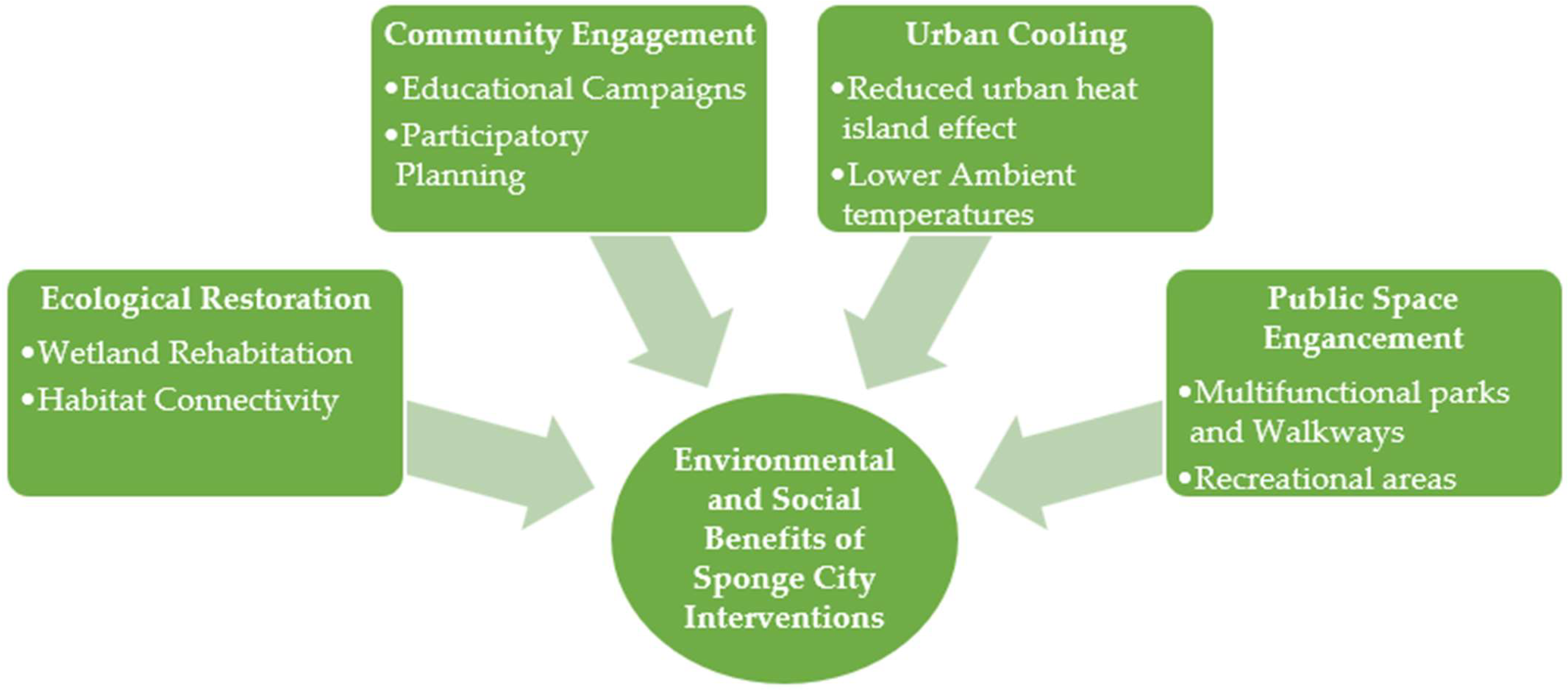
While technical performance remains central, the hydrological functions of Sponge City infrastructure in Shenzhen are closely intertwined with broader environmental and social co-benefits. These co-benefits are analytically relevant insofar as they influence political support, public acceptance, and long-term maintenance incentives, rather than being treated as ancillary outcomes. In addition to improving stormwater regulation, the SCP has contributed to ecological restoration, microclimate regulation, and enhanced access to green space, reflecting an emphasis on multifunctional infrastructure rather than single-purpose drainage solutions.
One of the most visible environmental effects has been the restoration of urban ecosystems within previously sealed or degraded areas. The integration of green infrastructure into Shenzhen’s dense urban fabric has facilitated ecological renewal, particularly in waterfront and redevelopment zones. Notable examples include wetland restoration within the Futian Mangrove Ecological Park and the creation of vegetated corridors in urban renewal areas, which have improved habitat connectivity and supported the re-emergence of native species [
52]. Constructed wetlands in Guangming District further illustrate this multifunctionality, simultaneously retaining stormwater and providing habitat for migratory bird species [
39].
Sponge City infrastructure has also contributed to localized microclimate regulation. By replacing heat-absorbing surfaces with vegetated and water-retaining elements, such as green roofs, sunken green spaces, and urban tree canopies, ambient temperatures in high-density districts including Futian and Luohu have reportedly been reduced by approximately 2–3 °C relative to adjacent grey infrastructure zones [
9,
39]. These effects are spatially limited and context-dependent, but they demonstrate the potential for synergistic climate adaptation benefits alongside hydrological regulation.
Social outcomes form an additional, secondary dimension of sustainable water management in Shenzhen. The conversion of flood-prone or underutilized land into multifunctional parks, walkways, and public spaces has enhanced urban livability while maintaining flood storage capacity. These spaces often incorporate educational elements, such as interpretive signage and water-themed installations, promoting public awareness of sustainable water practices [
52]. While such social benefits do not directly influence hydrological performance, they play a role in legitimizing Sponge City interventions and sustaining public and political support.
Taken together, the evidence suggests that green infrastructure under Shenzhen’s Sponge City Programme operates as an integrated socio-hydrological system, delivering runoff control, water quality improvement, ecological restoration, and localized climate regulation under specific spatial and institutional conditions. These outcomes extend the role of stormwater infrastructure beyond risk mitigation while remaining contingent on design optimization, maintenance capacity, and governance coordination.
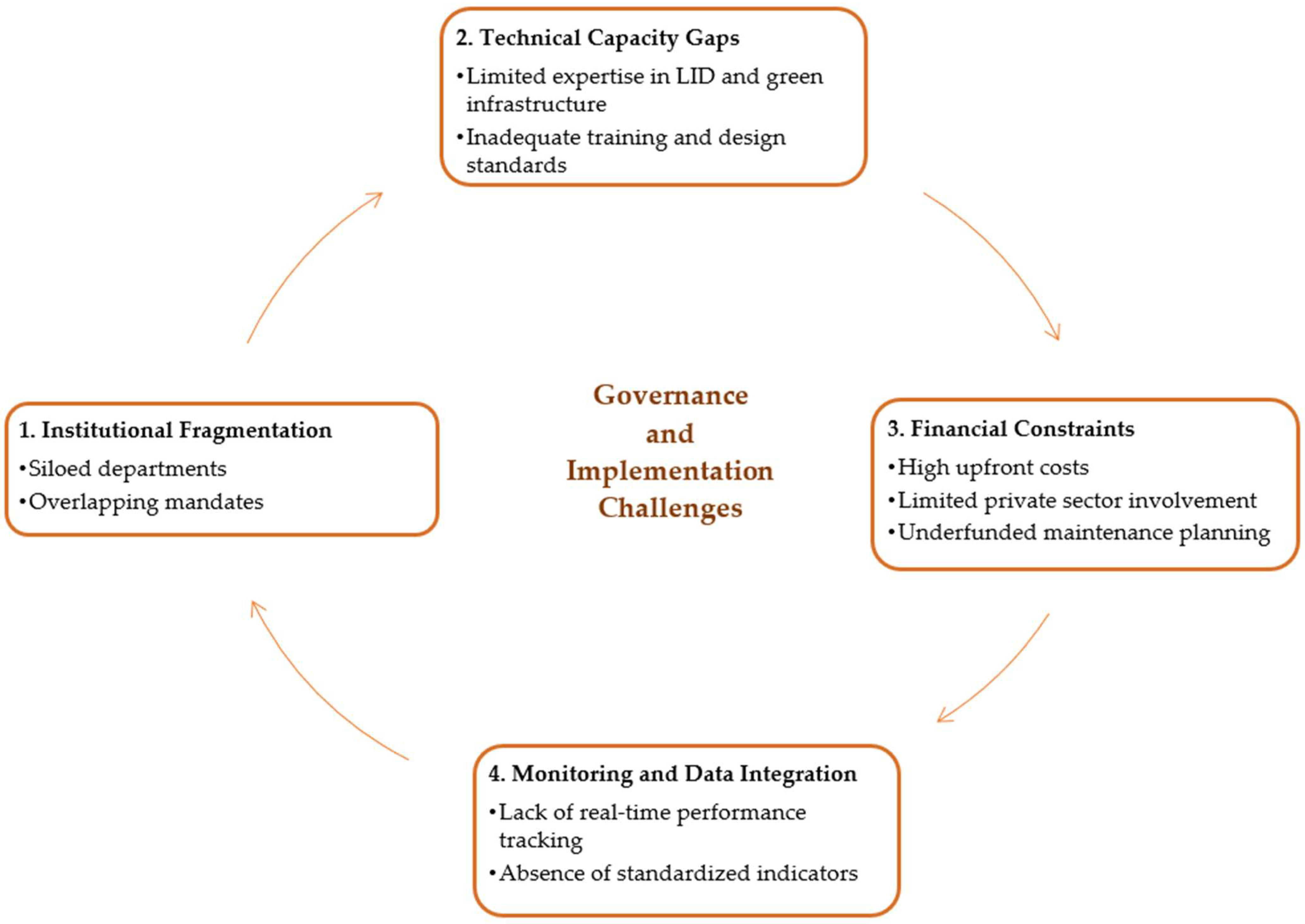
Figure 4 provides a conceptual synthesis of the main governance and implementation challenges identified through the empirical analysis, highlighting their interdependence rather than presenting standalone empirical results.
While the environmental and hydrological performance of green infrastructure in Shenzhen is substantial within pilot contexts, its longer-term effectiveness and scalability are shaped by governance arrangements, institutional coordination, and maintenance regimes. The following section therefore examines the governance mechanisms and institutional structures that have enabled, and in some cases constrained, the implementation of Sponge City interventions across the city.
4.4. Governance and Institutional Arrangements
Despite the documented hydrological, ecological, and social benefits associated with the SCP in Shenzhen, its implementation has been shaped, and in some cases constrained, by persistent governance and institutional challenges. These challenges are not merely operational shortcomings but reflect deeper structural conditions that influence how Sponge City principles are translated from policy ambition into practice. Examining these dynamics is essential for assessing not only current performance but also the long-term sustainability, scalability, and institutional durability of Sponge City interventions, particularly as other cities seek to adapt elements of Shenzhen’s model.
Figure 5 synthesizes triangulated documentary evidence (municipal plans and bulletins; technical evaluations; academic assessments) and links institutional fragmentation, capacity constraints, financing design, and monitoring integration to short-run performance variability in pilot contexts and longer-run risks for scaling and durability.
A central governance challenge lies in the fragmentation of institutional responsibilities. The Sponge City concept inherently requires cross-sectoral coordination among departments responsible for urban planning, water management, transportation, and environmental protection. In practice, however, overlapping mandates and siloed administrative structures have resulted in inconsistent implementation standards and delays in project execution [
39]. In Shenzhen, the absence of clearly delineated responsibilities for the operation and maintenance of specific sponge assets has been particularly problematic, leading to duplicated efforts in some areas and maintenance gaps in others. These governance frictions reveal a misalignment between the integrative logic of Sponge City design and the compartmentalized structure of urban administration. Yin et al. [
9] note that without a unified regulatory framework, or at minimum, stable inter-agency coordination mechanisms, the SCP’s integrative ambitions risk being undermined by fragmented execution.
This institutional fragmentation is further compounded by limited mechanisms for interdepartmental communication and budget alignment. In high-density districts such as Futian and Luohu, where multiple agencies operate simultaneously within constrained urban space, coordination failures have reduced opportunities for integrated planning and timely upkeep of green infrastructure. As a result, some sponge installations have reportedly delivered below their intended performance, not due to design limitations but because of organizational and administrative constraints.
In addition to institutional fragmentation, technical capacity gaps constitute a significant constraint on implementation quality. The planning, construction, and evaluation of sponge infrastructure require interdisciplinary expertise spanning hydrology, landscape architecture, and environmental engineering. Yet many local planning authorities and construction teams continue to lack sufficient experience with low-impact development and sponge technologies, particularly in complex retrofitting contexts [
39]. These capacity limitations have, in some cases, translated into suboptimal design execution, construction deficiencies, and maintenance challenges, reducing the effectiveness of otherwise well-conceived interventions. Xiong et al. [
52] emphasize the importance of targeted training programmes, standardized design guidelines, and pilot projects as institutional learning platforms to address these deficits.
Although Shenzhen has emerged as a national leader in experimentation and technological innovation, the pace and scale of policy rollout have at times exceeded the availability of skilled personnel, especially in older districts where retrofitting must contend with spatial constraints and legacy infrastructure. This imbalance highlights a structural tension between rapid policy ambition and the slower accumulation of institutional and technical expertise, with implications for the consistency and durability of Sponge City outcomes.
Financial arrangements further condition implementation trajectories. While sponge solutions are widely framed as cost-effective over the long term, the upfront capital required for land acquisition, design, and construction remains substantial. In Shenzhen, most pilot projects have relied heavily on public funding through municipal budgets and targeted grants, with relatively limited private-sector involvement [
51]. The absence of robust risk-sharing instruments, long-term revenue models, and maintenance financing mechanisms has constrained private participation, particularly in redevelopment zones characterized by high uncertainty and delayed returns. Moreover, financial planning has frequently prioritized initial construction over long-term operation and maintenance, raising concerns about performance degradation as infrastructure ages.
Monitoring and data integration represent a further institutional challenge. Effective governance of sponge infrastructure depends on the ability to track performance under varying hydrometeorological conditions and to adapt management practices accordingly. However, many sponge installations in Shenzhen lack continuous monitoring systems capable of capturing indicators such as infiltration rates, water-quality dynamics, and ecological responses [
39]. Inconsistent monitoring coverage, limited standardization of performance metrics, and weak data integration reduce the city’s capacity for adaptive management and evidence-based refinement of future projects. Yin et al. [
9] therefore argue for the expansion of sensor networks and integrated digital dashboards to enhance transparency and support iterative learning.
This challenge is particularly salient given Shenzhen’s prior engagement with international standardization initiatives in water management. Earlier river governance efforts in the city, documented through ISO-led case studies, demonstrate how standardized frameworks can enhance inter-agency coordination, monitoring consistency, and accountability when effectively embedded in institutional practice [
54]. The partial disconnection between these standardization experiences and current Sponge City monitoring practices points to an unresolved governance gap between technical ambition and institutional integration.
While initiatives such as IoT-enabled hydrological dashboards have begun to address some of these gaps, coverage remains uneven across districts, and decentralized monitoring installations are not yet fully integrated into a unified, citywide data platform. Taken together, these governance and institutional challenges suggest that the effectiveness of Shenzhen’s Sponge City Programme depends as much on administrative coordination, financial design, and institutional learning as on technical performance. Addressing these systemic issues will be critical to sustaining performance gains over time and determining the extent to which the Sponge City model can be credibly scaled or adapted beyond its current pilot contexts.
4.5. Discussion
The analysis of Shenzhen’s Sponge City Programme reveals a multifaceted transformation of the city’s urban water management paradigm. Rather than representing a purely technical shift, the findings point to a deeper reconfiguration of how urban water risk, ecological infrastructure, and governance capacity are negotiated within a rapidly urbanizing megacity. Synthesizing the empirical results across
Section 4.1,
Section 4.2,
Section 4.3 and
Section 4.4, the discussion highlights how hydrological performance patterns, governance arrangements, and institutional constraints interact to shape Sponge City implementation outcomes. Empirical results presented in this section demonstrate measurable hydrological improvements, significant environmental and social co-benefits, and notable innovations in green infrastructure and monitoring technologies. At the same time, the Shenzhen case exposes structural and institutional tensions that complicate dominant assumptions within Sponge City and nature-based solutions theory.
It is important to emphasize that the hydrological, environmental, and governance outcomes discussed in this section reflect early to mid-stage implementation effects rather than long-term sustainability, lifecycle performance, or institutional stability. The Sponge City Programme in Shenzhen remains in an active implementation and adjustment phase and observed performance patterns should therefore be interpreted as indicative of emerging trajectories rather than consolidated long-term outcomes. As such, claims regarding durability, institutional persistence, or long-term cost-effectiveness remain necessarily provisional.
The extent to which insights from Shenzhen can inform Sponge City implementation elsewhere depends on local institutional, financial, and spatial conditions. Elements that appear strongly context-dependent include the scale of public investment, the capacity for centralized planning coordination, and access to advanced monitoring technologies. By contrast, several mechanisms identified in this study, such as the coupling of green infrastructure performance with governance coordination, the role of pilot zones as policy laboratories, and the integration of hydrological data into planning decisions, are analytically transferable, even if their practical realization will vary across political and economic contexts.
A central empirical contribution of the study lies in its examination of hydrological performance under real-world urban conditions. Data from pilot areas indicate that LID interventions have been associated with reductions in runoff volumes and peak flows during storm events, reaching up to 41.2% and 34.8%, respectively, under optimized scenarios [
51]. These outcomes, supported by field monitoring and hydrological modelling using tools such as SWMM, are consistent with the intended flood-mitigation function of Sponge City interventions and suggest a plausible contribution to improved stormwater regulation, rather than definitive causal attribution. Additionally, reported reductions in total nitrogen, phosphorus, and BOD levels [
52] reinforce theoretical claims that blue–green infrastructure can address flood risk and diffuse pollution simultaneously when deployed at sufficient scale and density.
However, the reliance on pilot and demonstration zones has important implications for interpreting performance outcomes and assessing scalability. Pilot zones are intentionally designed to test technical configurations, governance arrangements, and monitoring systems under relatively favourable conditions, often supported by higher levels of investment and administrative attention. While this experimental logic enables learning and innovation, it also introduces spatial bias, as performance observed in pilot areas may not translate directly to districts characterized by denser development, legacy infrastructure, or weaker institutional capacity. Consequently, the findings should be interpreted as evidence of what Sponge City interventions can achieve under enabling conditions, rather than as indicators of uniform citywide performance.
Isolating the causal effects of Sponge City interventions from broader climatic and urban dynamics remains methodologically challenging in real-world urban systems. Shenzhen’s hydrological outcomes are shaped simultaneously by climate variability, ongoing grey infrastructure upgrades, land-use change, and evolving monitoring practices. As a result, the analysis does not claim to establish direct cause–effect relationships but instead advances a plausibility-based assessment grounded in observed trends, process tracing, and triangulation across multiple data sources. This approach aligns with qualitative case-study logic while explicitly recognizing the limits of causal inference in complex urban transformations.
From a theoretical perspective, the findings support key propositions in Sponge City and nature-based solutions literature, particularly the argument that decentralized, infiltration-based systems can outperform conventional grey infrastructure in managing pluvial flood risk under climatic variability. At the same time, the Shenzhen case refines these propositions by demonstrating that performance gains are not merely design-dependent but critically shaped by spatial configuration, infrastructure density, governance coordination, and monitoring capacity.
The Sponge City initiative has also generated substantial co-benefits. Ecological restoration projects, such as those in Futian Mangrove Ecological Park, have improved biodiversity and habitat connectivity, while microclimate regulation effects have been observed in high-density areas, with local temperature reductions of 2–3 °C [
9,
27]. Furthermore, the transformation of urban spaces into multifunctional public parks has enhanced livability and promoted public awareness of water sustainability [
52]. These co-benefits are analytically relevant insofar as they contribute to public acceptance and political support, rather than being treated as automatic indicators of long-term sustainability.
Recent research has highlighted that cultural ecosystem services associated with sponge city infrastructure remain underexplored relative to hydrological and governance performance, suggesting an important avenue for future research [
55]. At the same time, the Shenzhen case challenges more optimistic or linear interpretations of Sponge City theory, particularly assumptions that institutional adaptation will naturally follow technical innovation. Instead, the findings indicate that institutional change is contingent, uneven, and politically mediated, rather than an automatic consequence of technical success [
9,
27]. The persistence of siloed mandates, fragmented responsibilities, and uneven maintenance regimes underscores that technical effectiveness alone is insufficient to guarantee governance transformation.
Financial constraints further complicate this picture. While Sponge City interventions are often framed as cost-effective over the long term, Shenzhen’s continued reliance on public funding and limited private-sector engagement [
51] reveal a structural gap between theoretical models of sustainable financing and the political–economic realities of urban retrofitting. These findings challenge assumptions that market-based instruments or public–private partnerships will readily emerge in high-density, high-risk urban contexts without stronger regulatory frameworks or incentive structures.
Digital monitoring and data integration represent an additional point of tension. While Shenzhen has implemented advanced monitoring tools in selected districts, with over 150 IoT sensors currently in operation, coverage remains uneven and a fully integrated citywide data platform is still lacking [
9]. This uneven digitalization complicates narratives of “smart sponge cities,” revealing that data-driven governance remains contingent on institutional capacity, interoperability standards, and sustained operational investment.
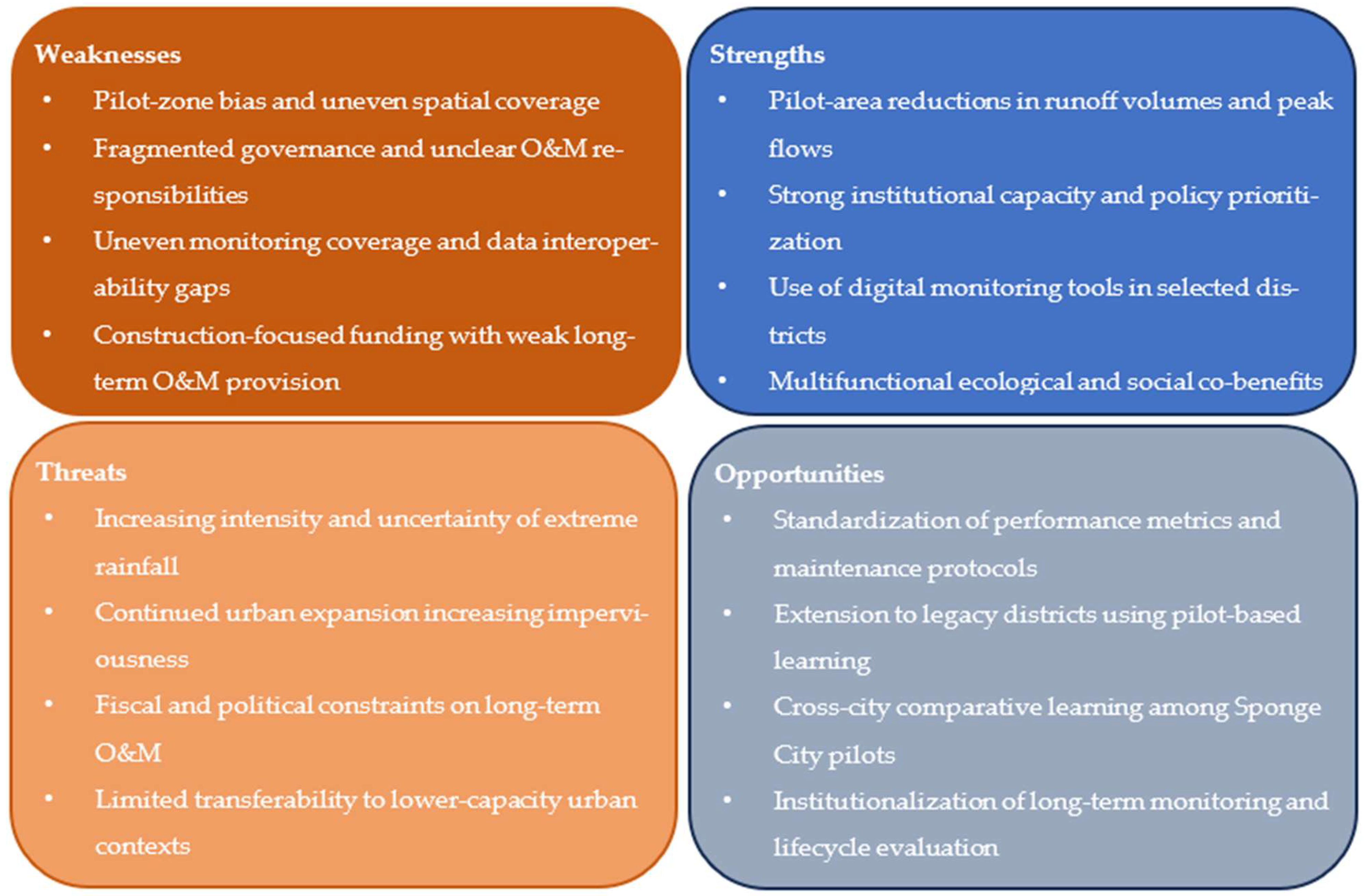
To synthesize these findings and respond explicitly to the need for an integrated evaluative perspective,
Figure 6 presents a SWOT analysis of Shenzhen’s Sponge City implementation. The SWOT matrix does not constitute a definitive success–failure assessment; rather, it provides an analytical synthesis of the main strengths, weaknesses, opportunities, and threats emerging from the empirical results discussed above. By juxtaposing demonstrated hydrological performance signals and co-benefits against pilot-zone bias, governance fragmentation, and long-term operational risks, the figure highlights the conditions under which Sponge City interventions appear most effective, as well as the structural constraints that limit their scalability and transferability.
Comparative insights from other Sponge City pilots indicate that Shenzhen performs strongly in technological experimentation and public engagement yet faces challenges common to many Chinese cities in retrofitting legacy infrastructure and achieving durable inter-institutional coordination [
56]. Recognition as a national model city and the designation of Fenghuangcheng as a demonstration zone [
57] underscore Shenzhen’s role as both a leading example and a critical stress-test for Sponge City theory under real-world governance constraints. This demonstrative role is further reinforced through platforms such as Shenzhen Design Week, where Sponge City projects are framed as urban innovation showcases linking ecological infrastructure, design experimentation, and public engagement [
58].